-
Lot 0161
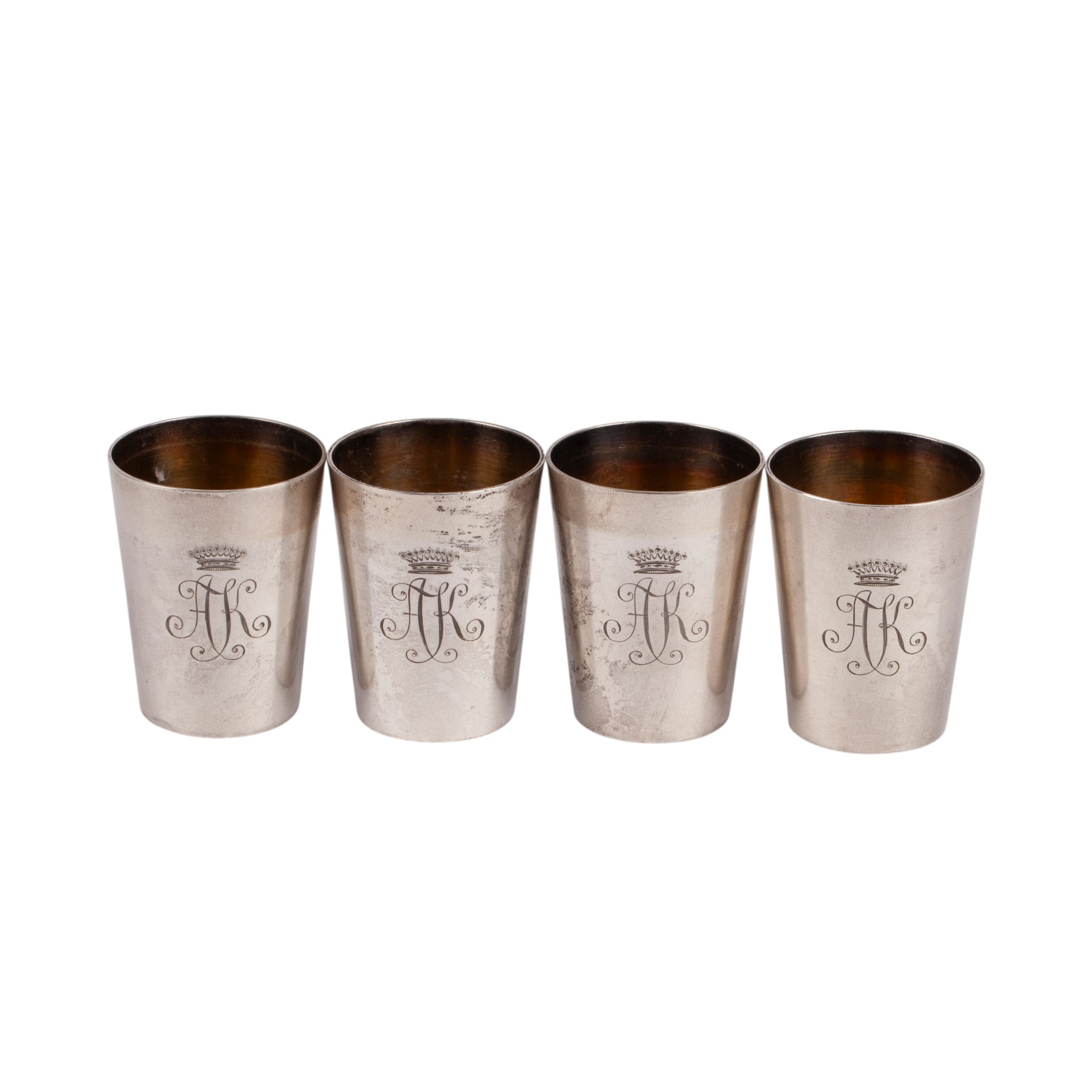
Set of Four Russian Silver Shot Glasses, Grachev Brothers, Russia, late 19th–early 20th century
Estimate: 600-800€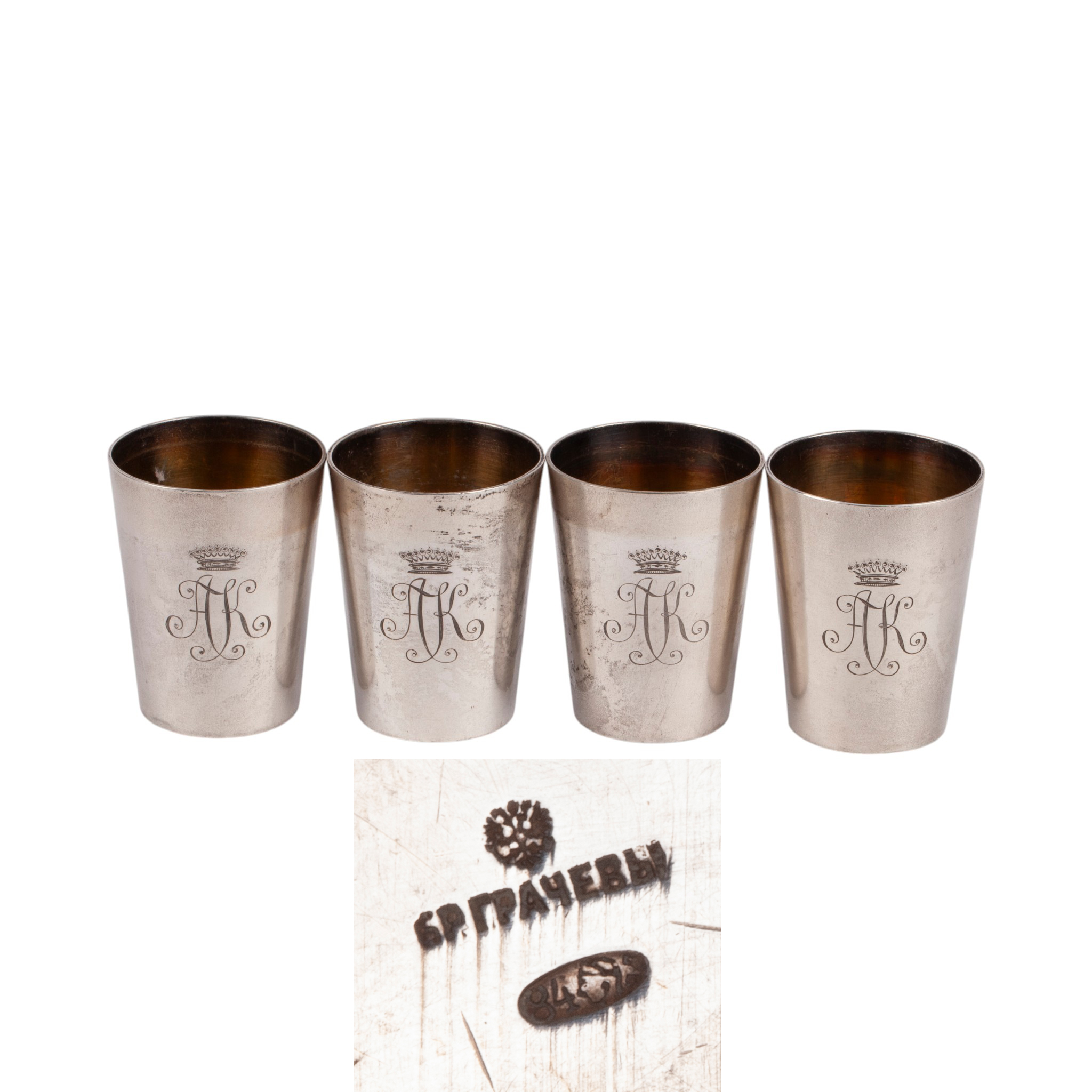
Lot 0161
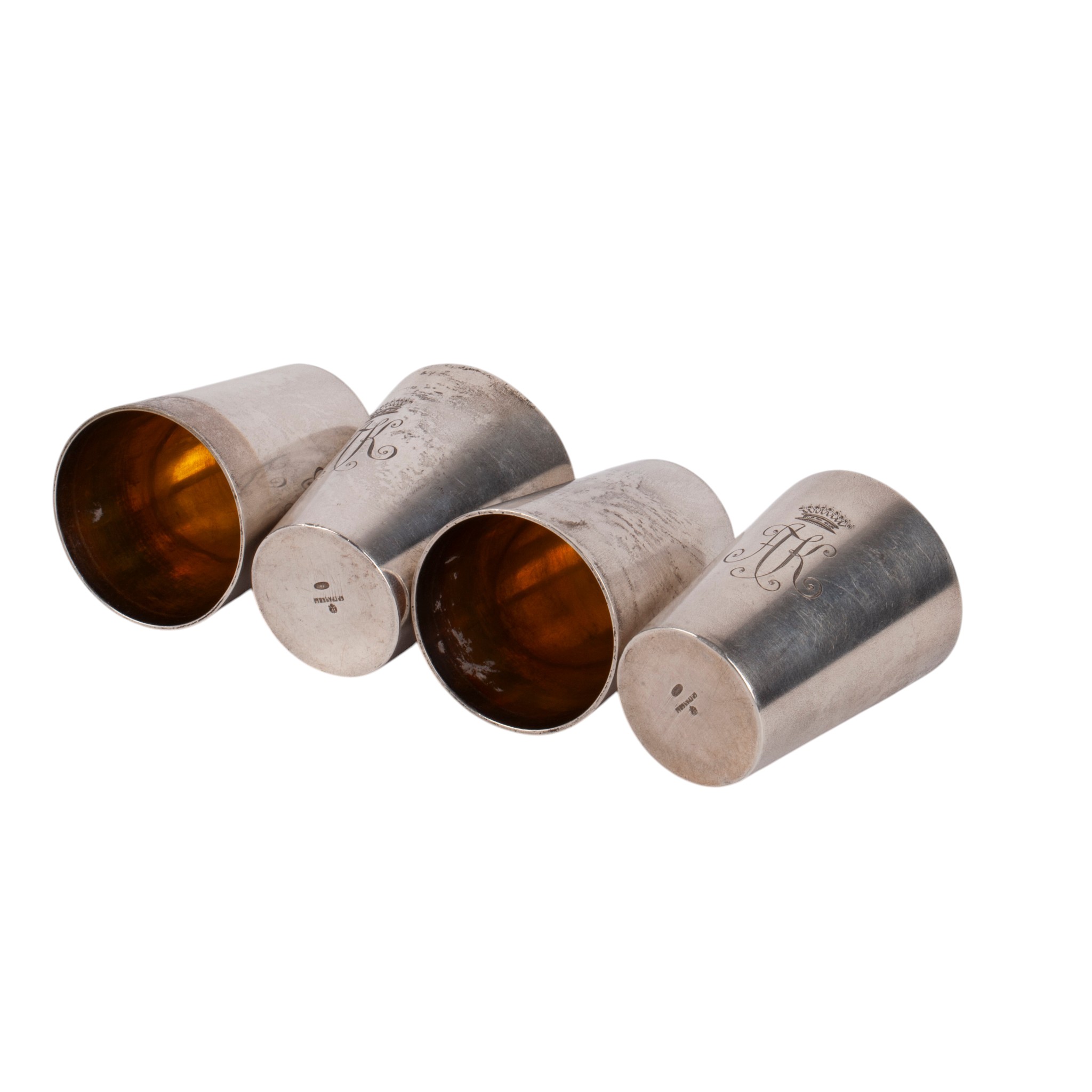
Set of Four Russian Silver Shot Glasses, Grachev Brothers, Russia, late 19th–early 20th century
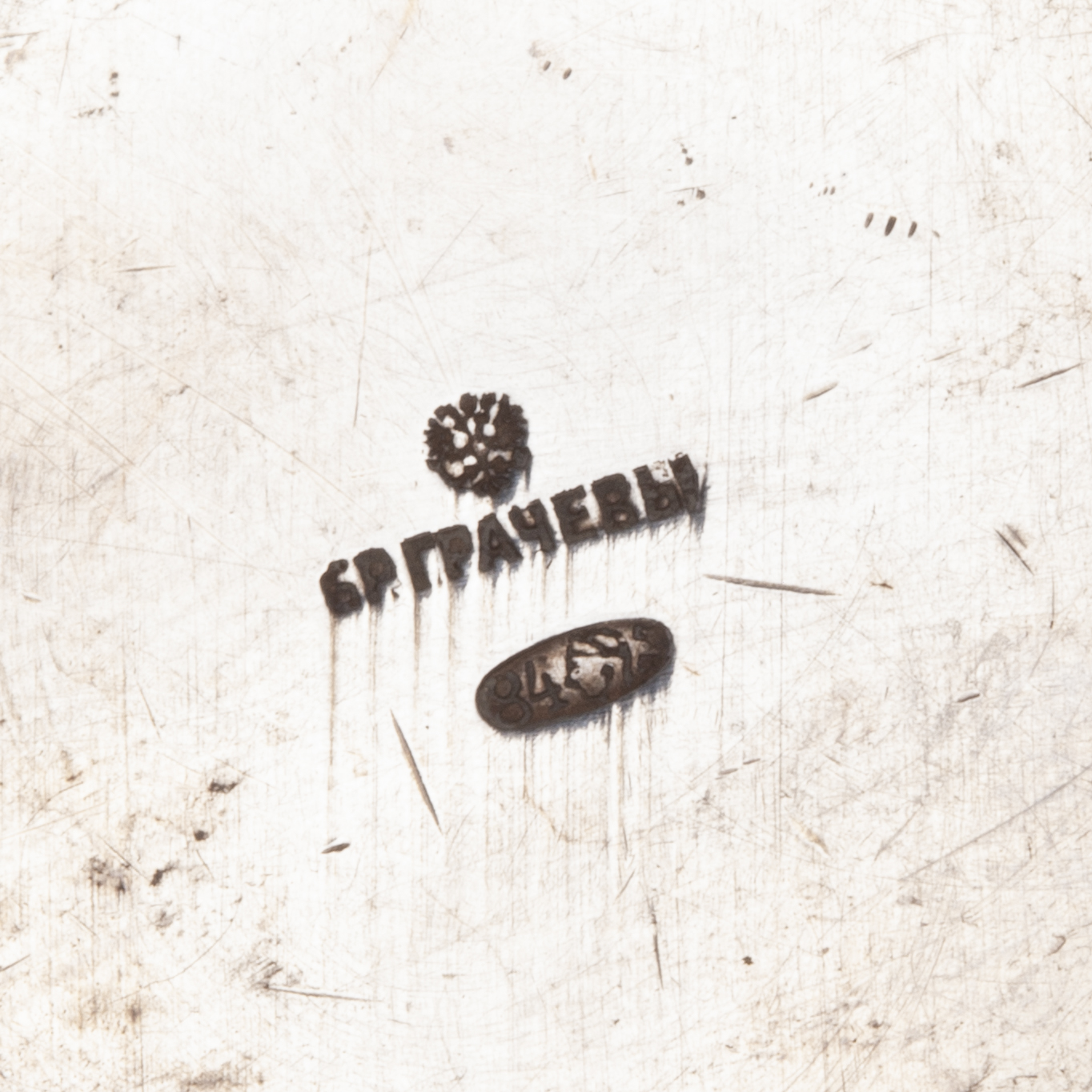
Estimate: 600-800€A set of four Russian silver shot glasses by the Grachev Brothers, each with gilt interior and engraved crowned AK monogram, 84 zolotnik standard.
Height: 5 cm each
Total weight: 171.8 gStarting price: 500€
Estimate: 600-800€
Hammer Price: Not sold -
Lot 0162
Russian Silver Trompe-l’Oeil Beaker / Cup Holder, St Petersburg, Russia, late 19th–early 20th century
Estimate: 150-200€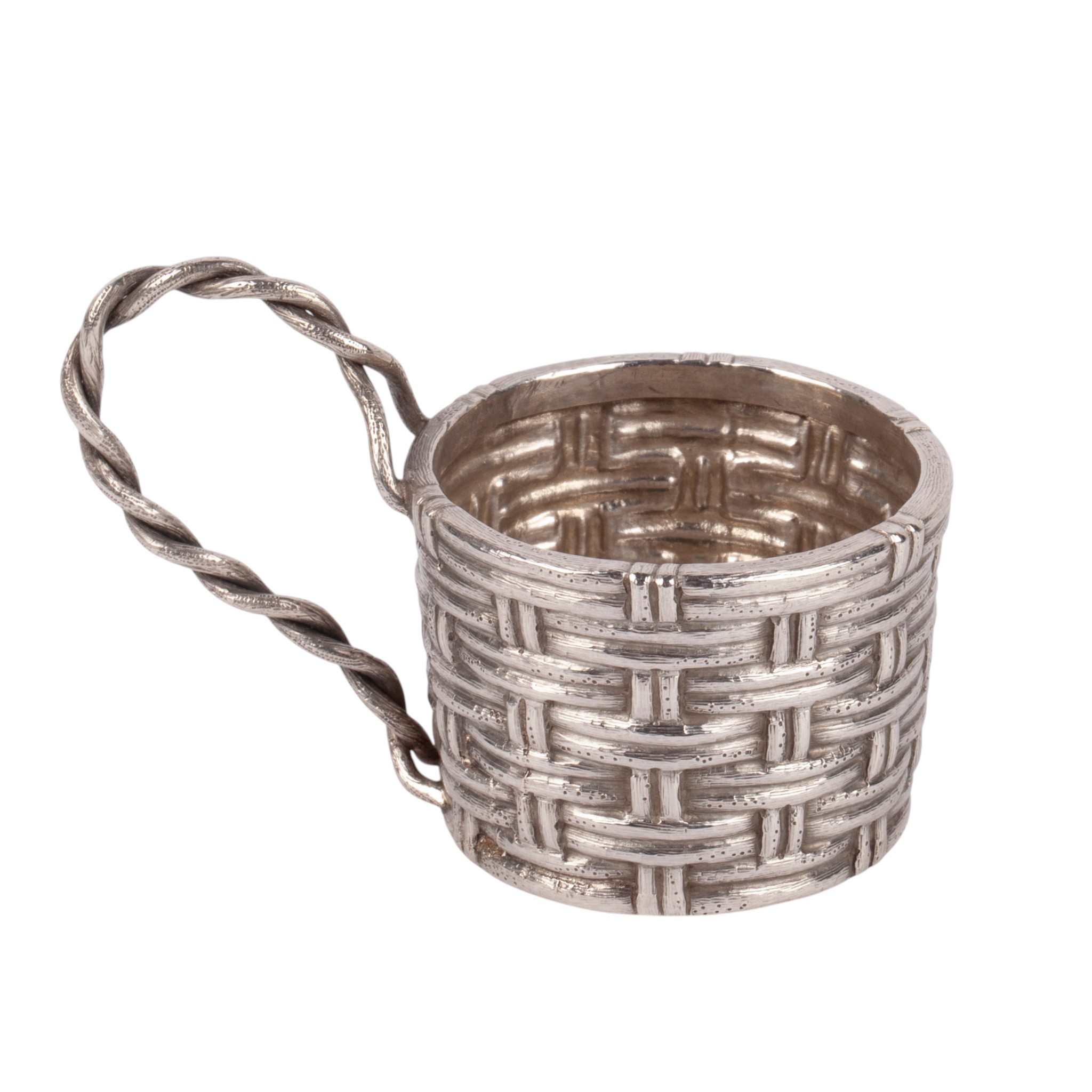
Lot 0162
Russian Silver Trompe-l’Oeil Beaker / Cup Holder, St Petersburg, Russia, late 19th–early 20th century
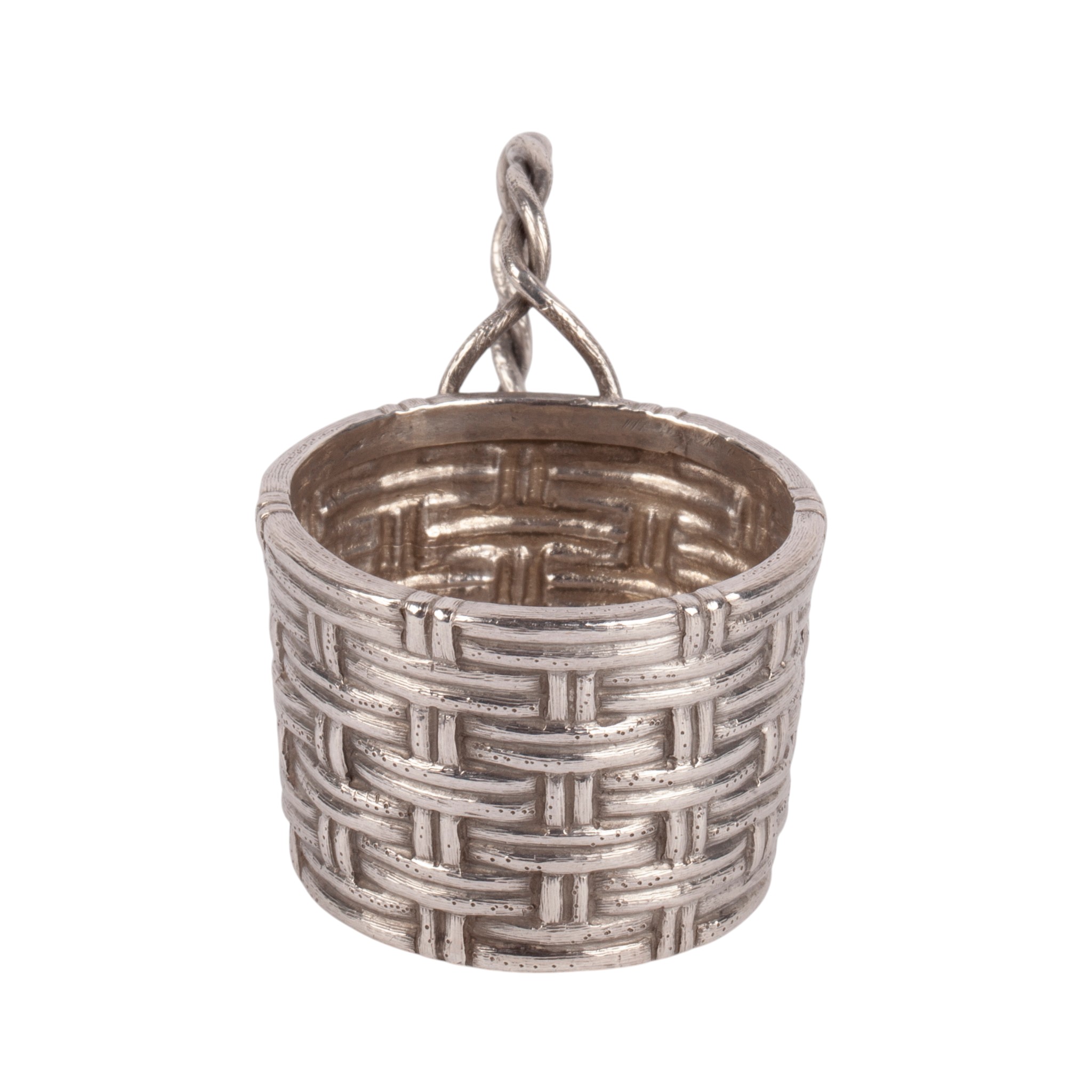
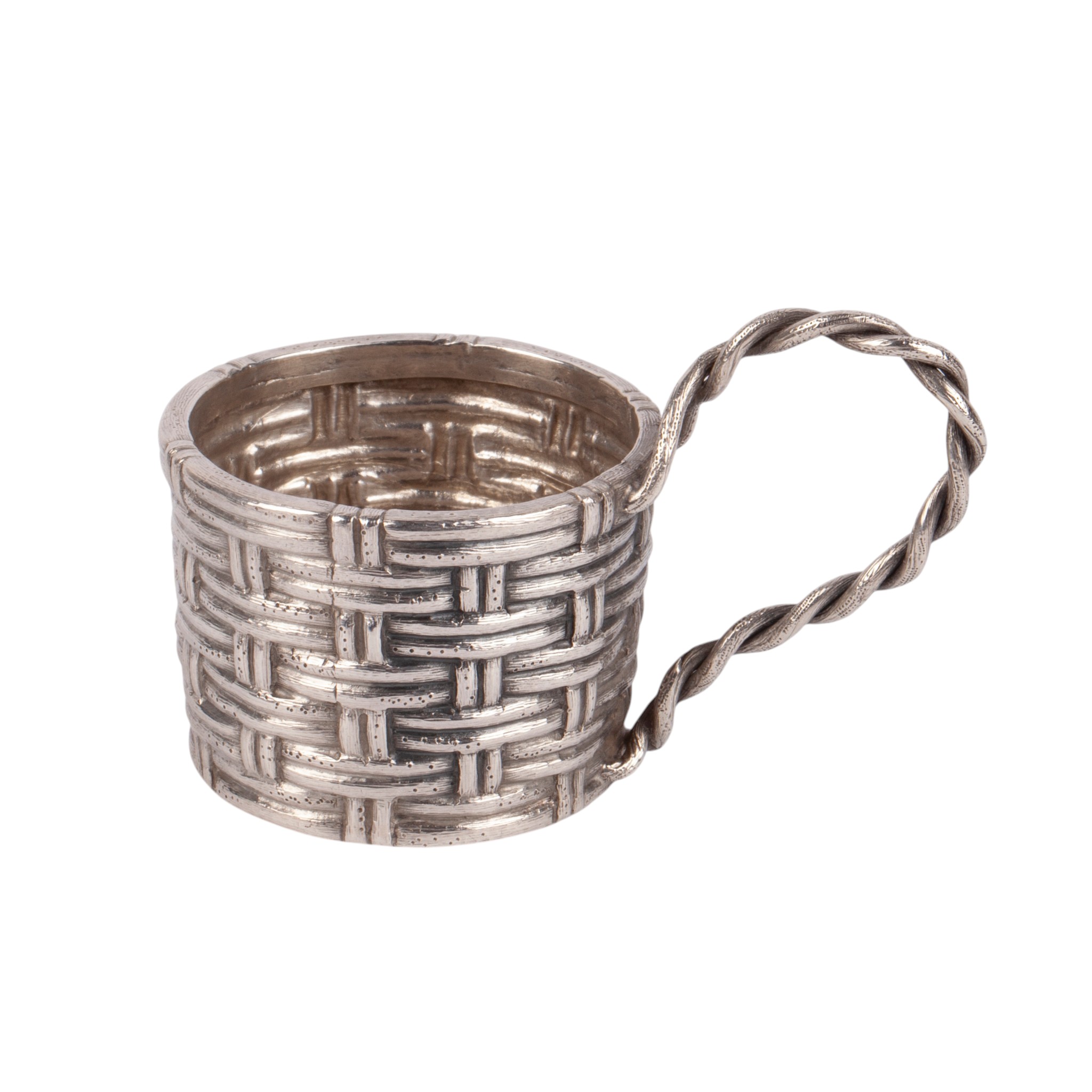
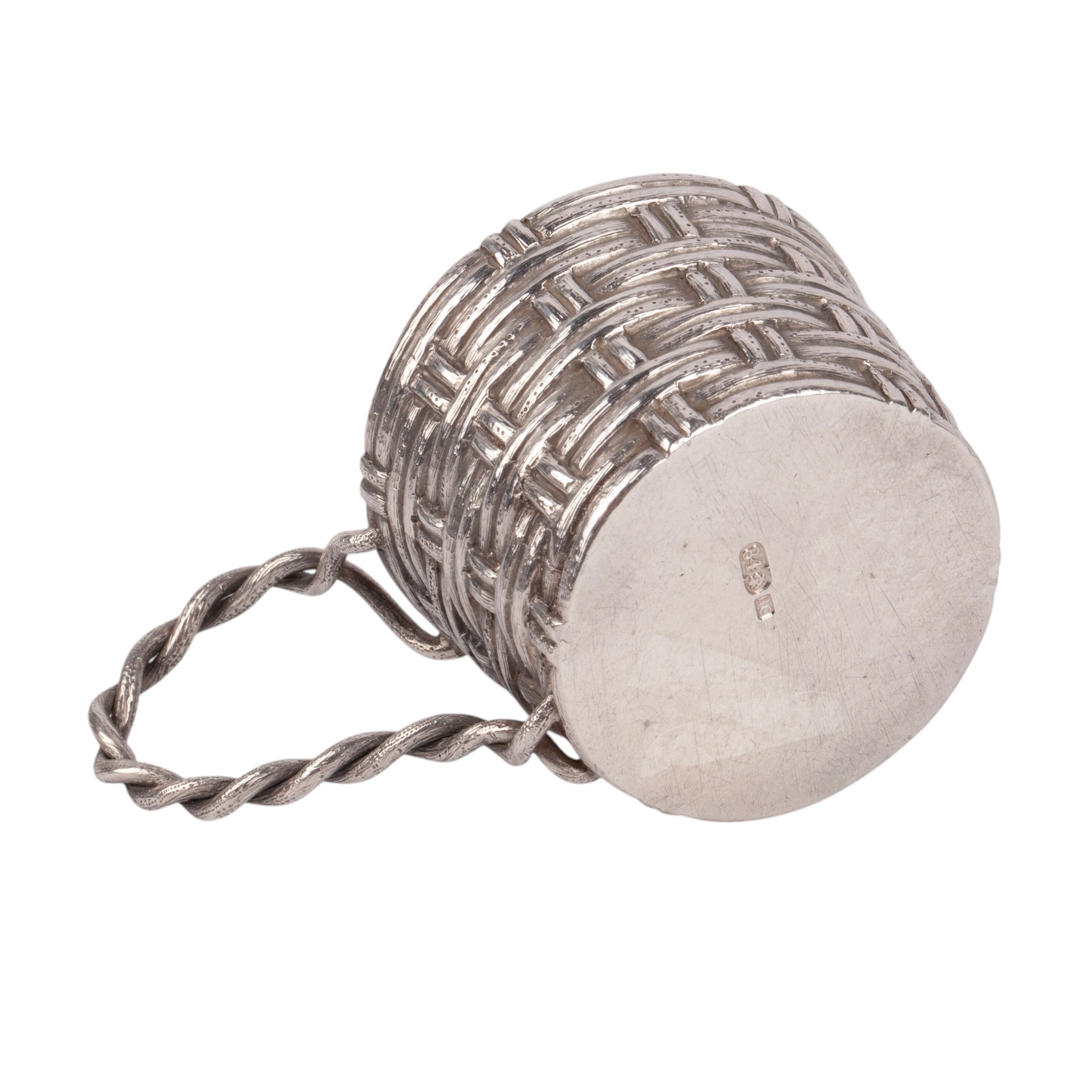
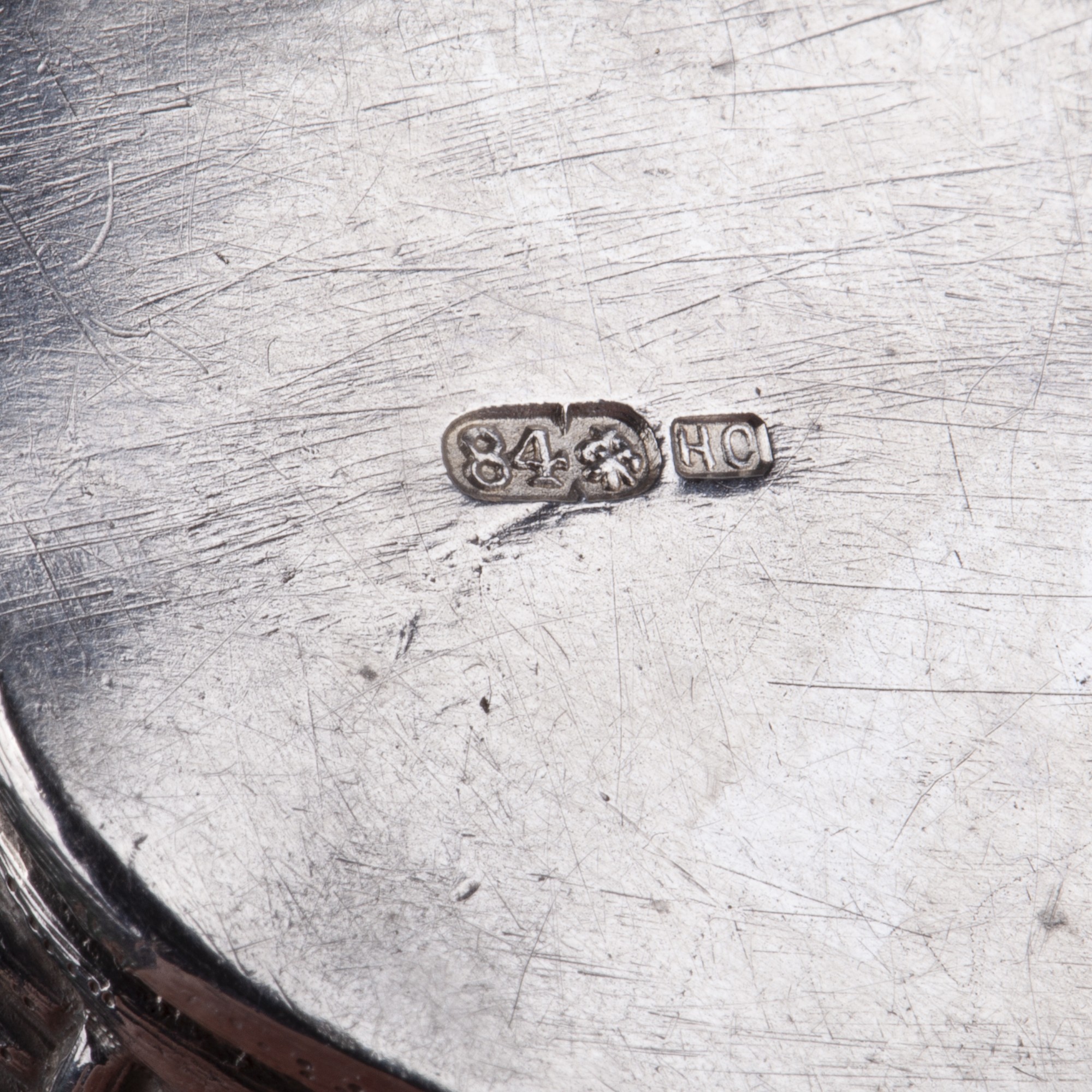
Estimate: 150-200€Russian silver trompe-l’oeil beaker / cup holder, St Petersburg, 84 zolotnik standard. Modelled in the form of a woven basket with twisted handle, the body cast in a basket-weave pattern. Marked 84 and with maker’s initials HC.
Height: 4.3 cm
Weight: 32.6 gStarting price: 100€
Estimate: 150-200€
Hammer Price: Not sold -
Lot 0163
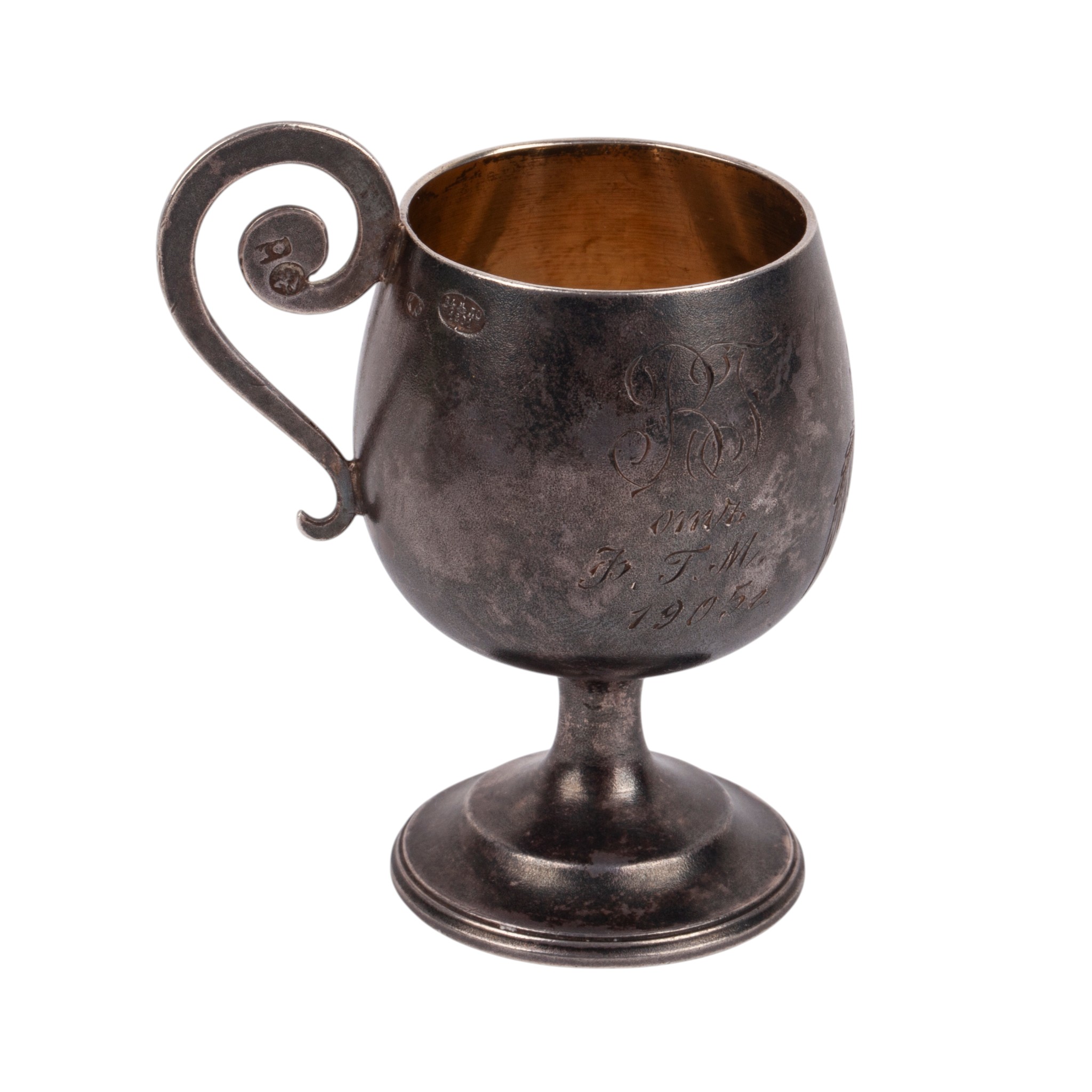
Russian Silver Charka, Moscow, Russia, 1891, 19th Century
Estimate: 300-400€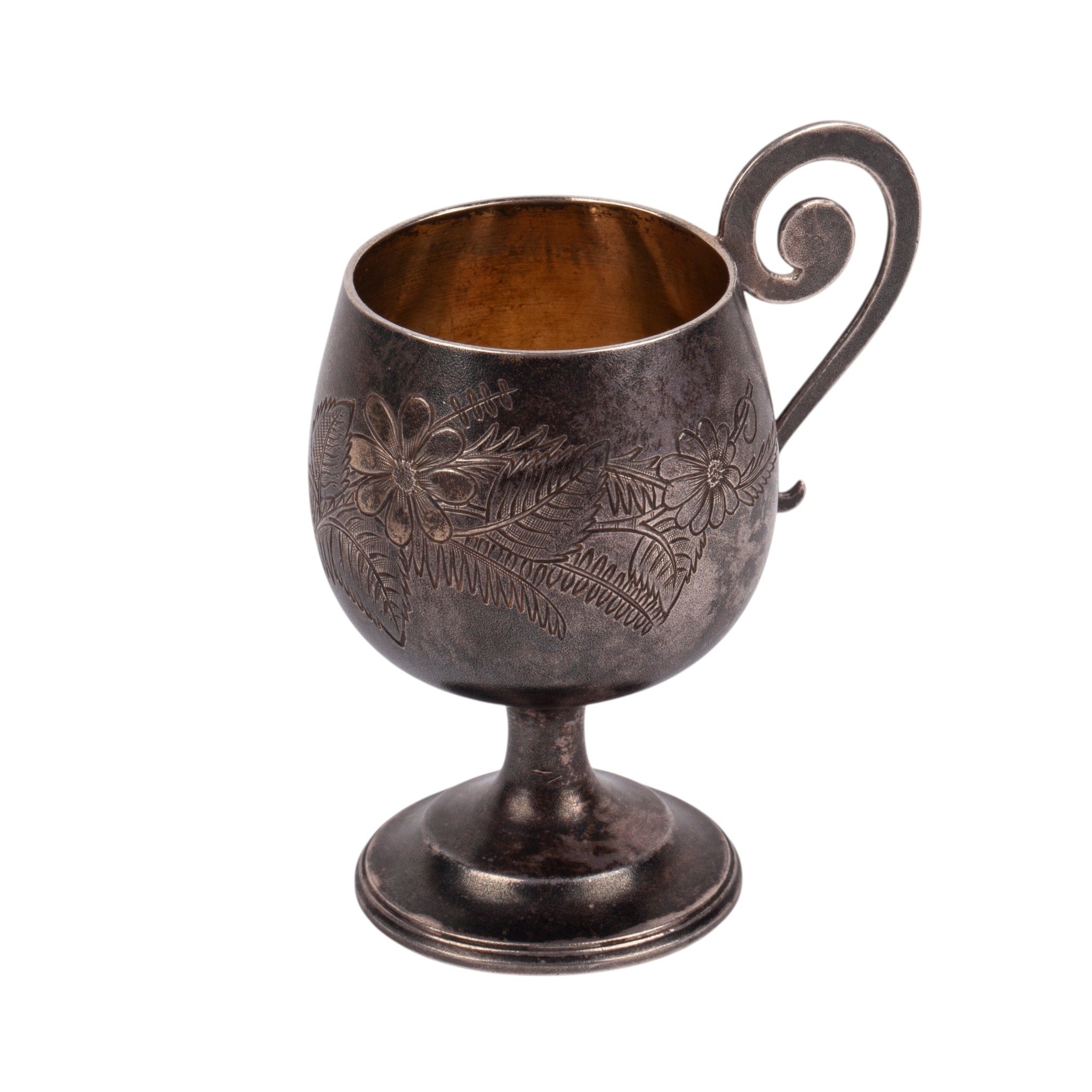
Lot 0163
Russian Silver Charka, Moscow, Russia, 1891, 19th Century
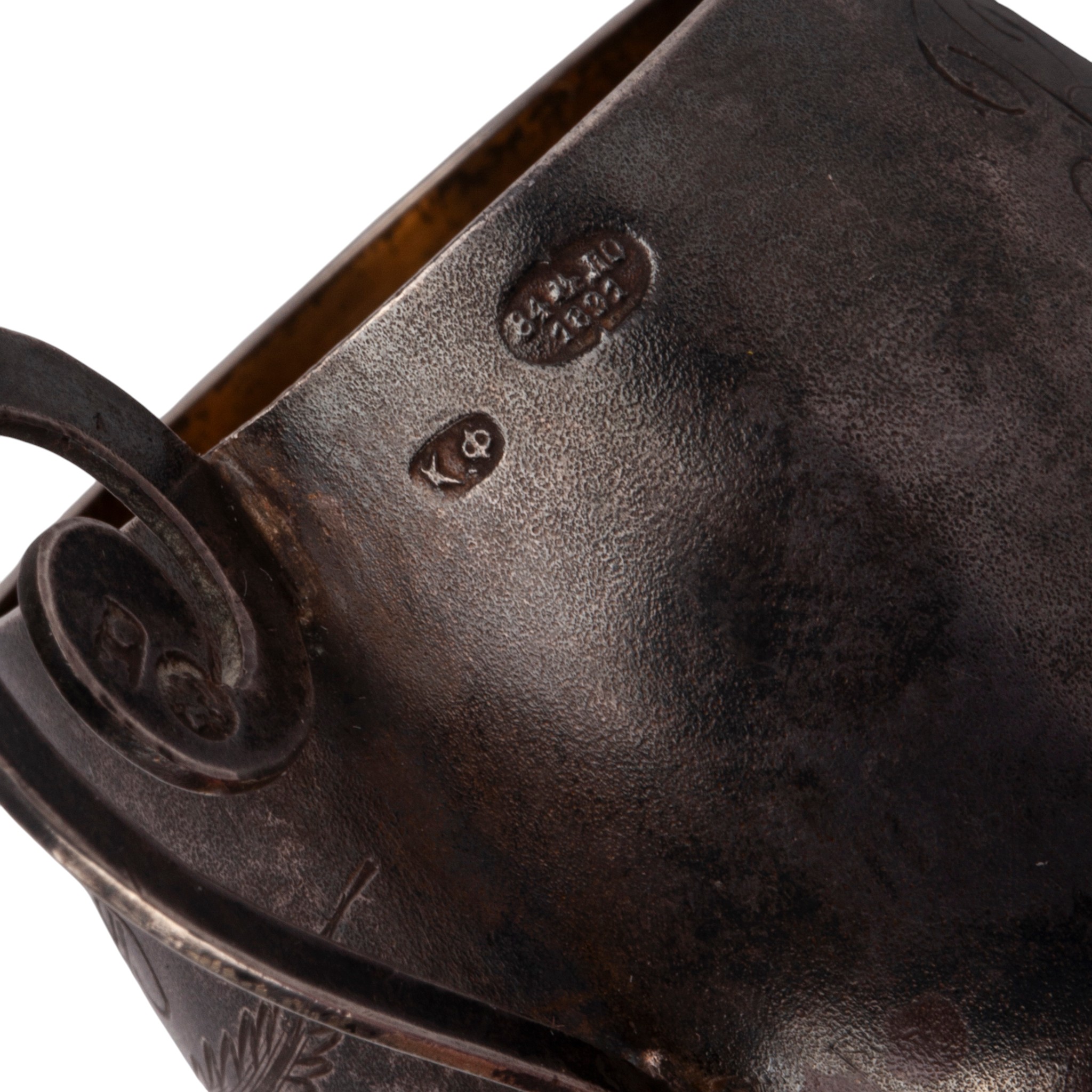
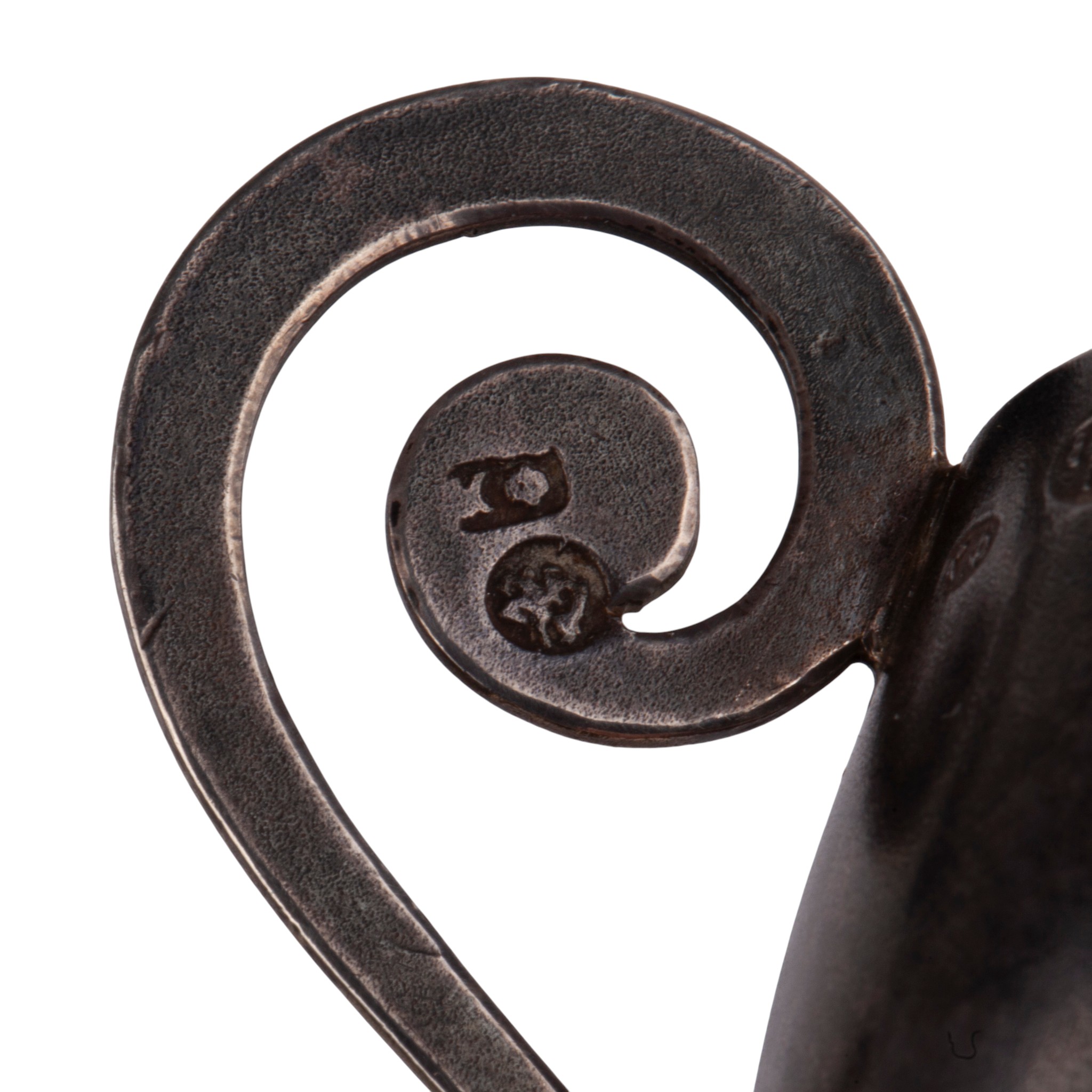
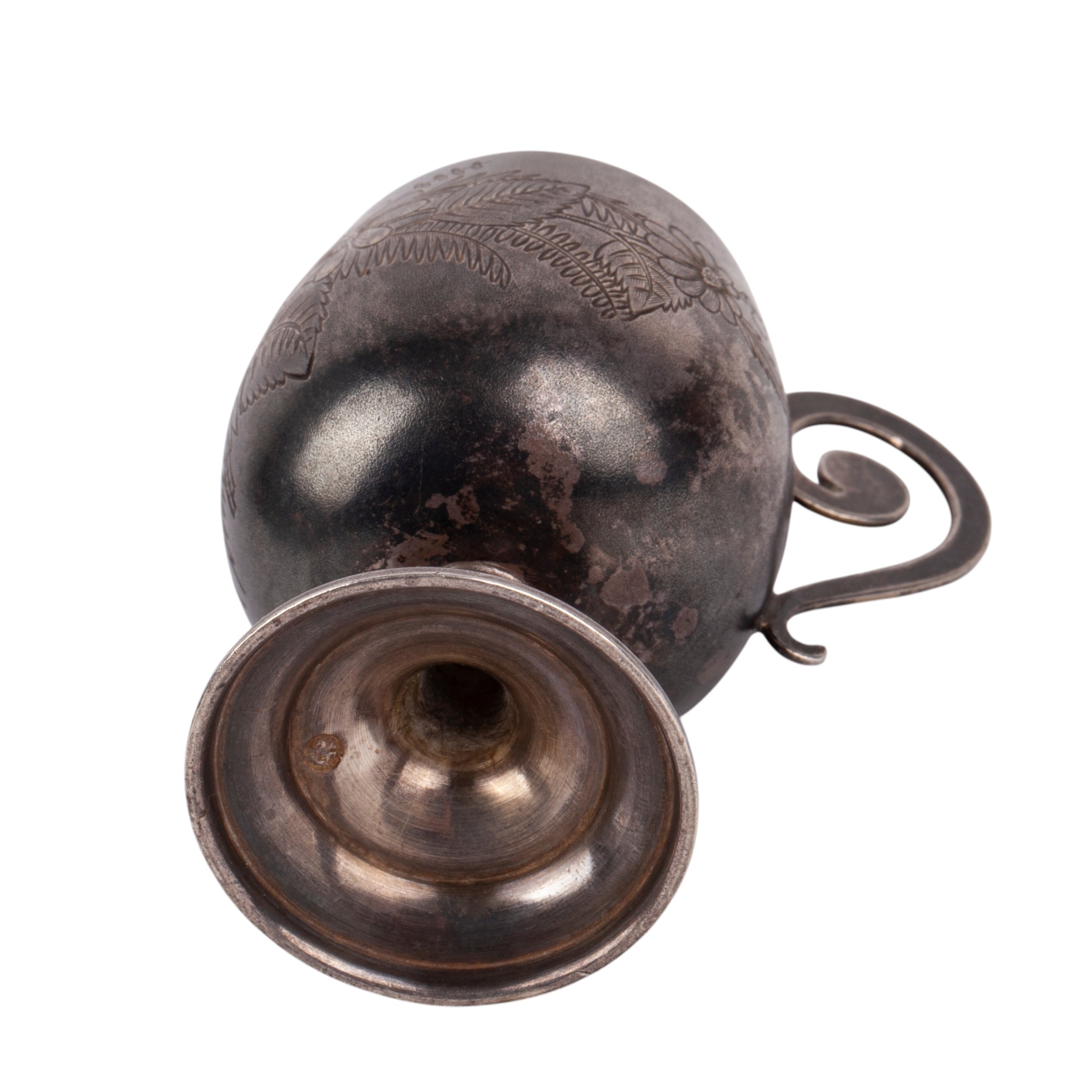
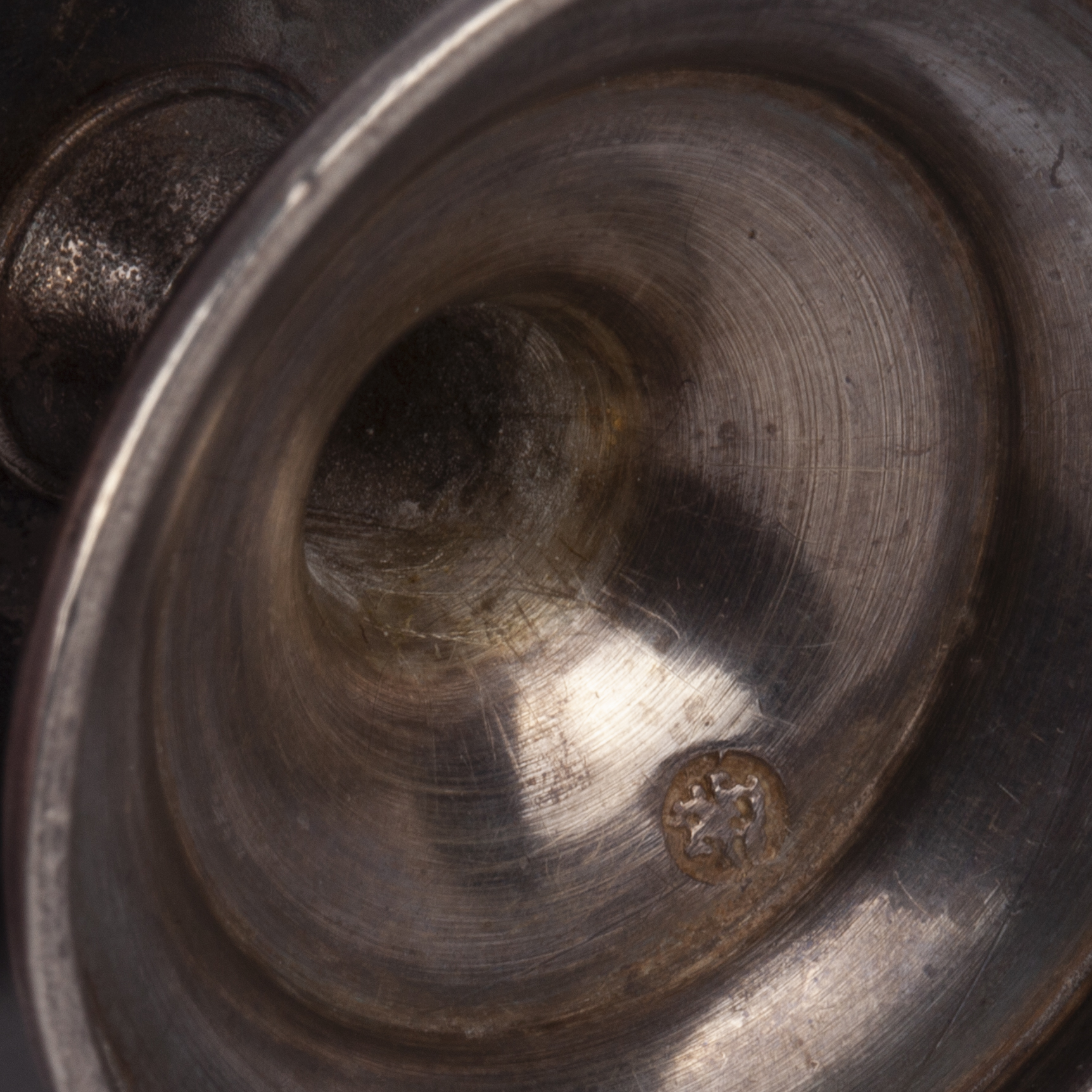
Estimate: 300-400€Russian silver charka, Moscow, 1891, 84 zolotnik standard, K.F mean Fabergé mark. Raised on a circular foot, with scroll handle and engraved floral decoration. Marked 84, Moscow assay year 1891.
Height: 7.3 cm
Weight: 37 gStarting price: 250€
Estimate: 300-400€
Hammer Price: Not sold -
Lot 0164
Russian Silver-Gilt Vodka Tumbler with Guilloché Enamel, Grachev Brothers, St Petersburg, 1908–1917
Estimate: 1000-1200€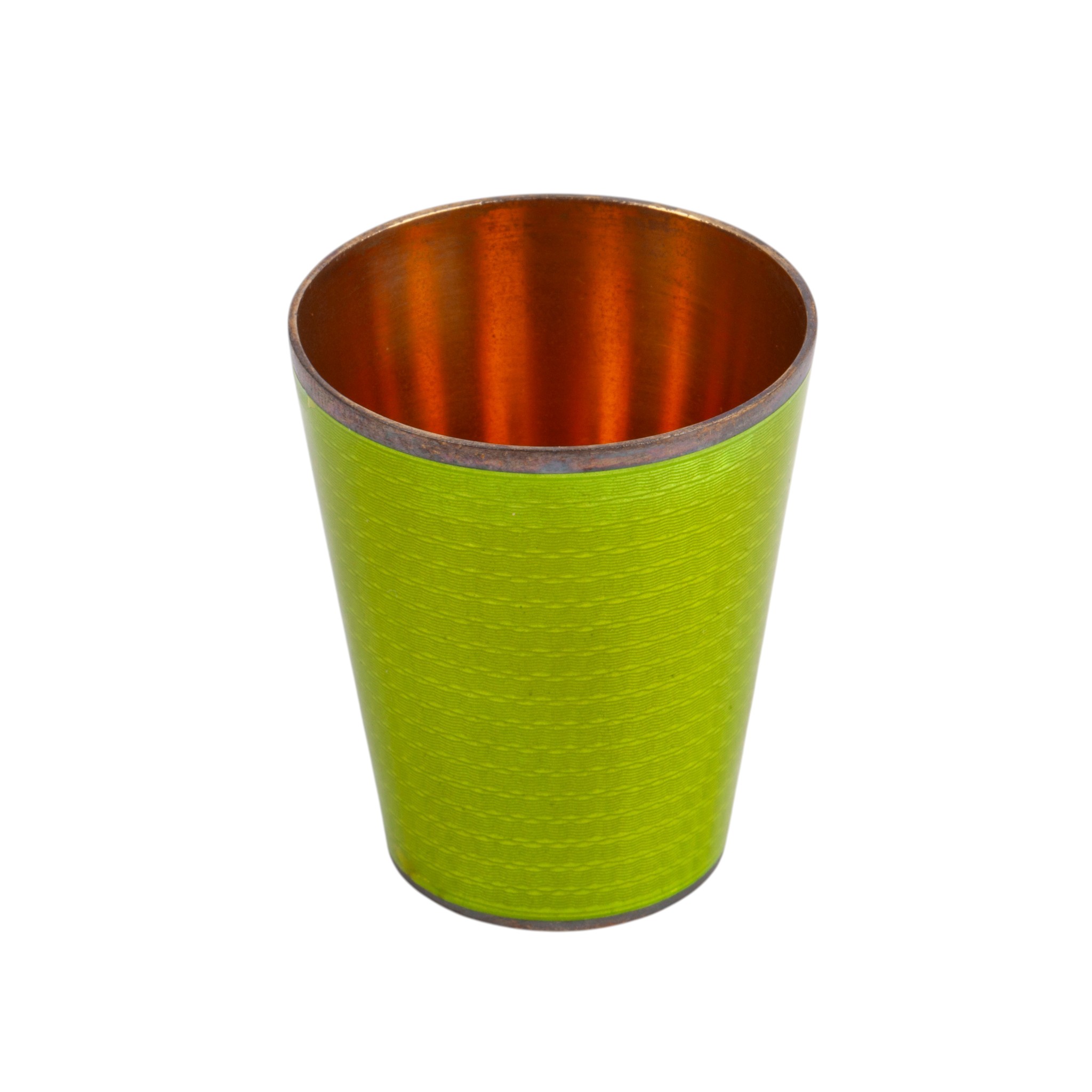
Lot 0164
Russian Silver-Gilt Vodka Tumbler with Guilloché Enamel, Grachev Brothers, St Petersburg, 1908–1917
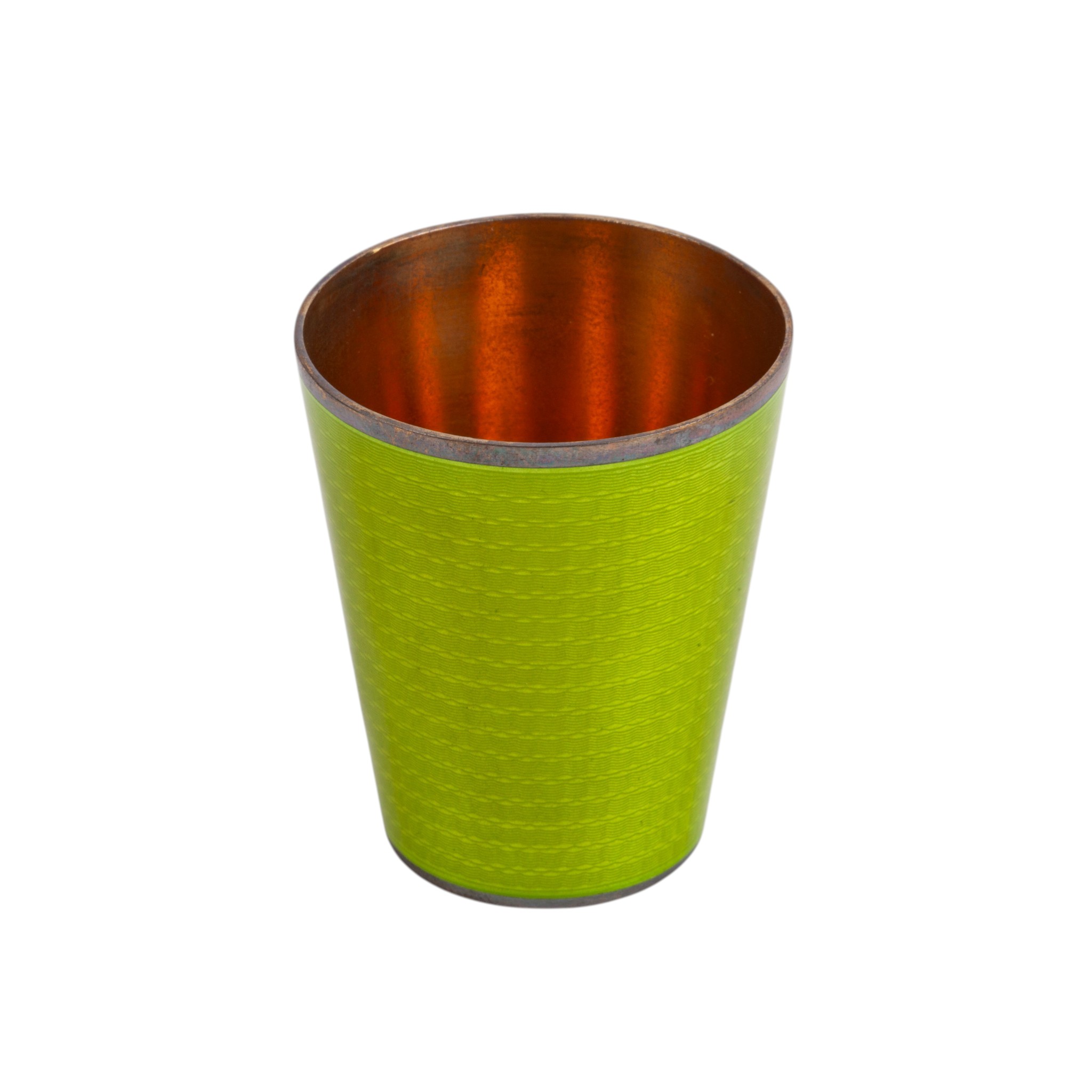
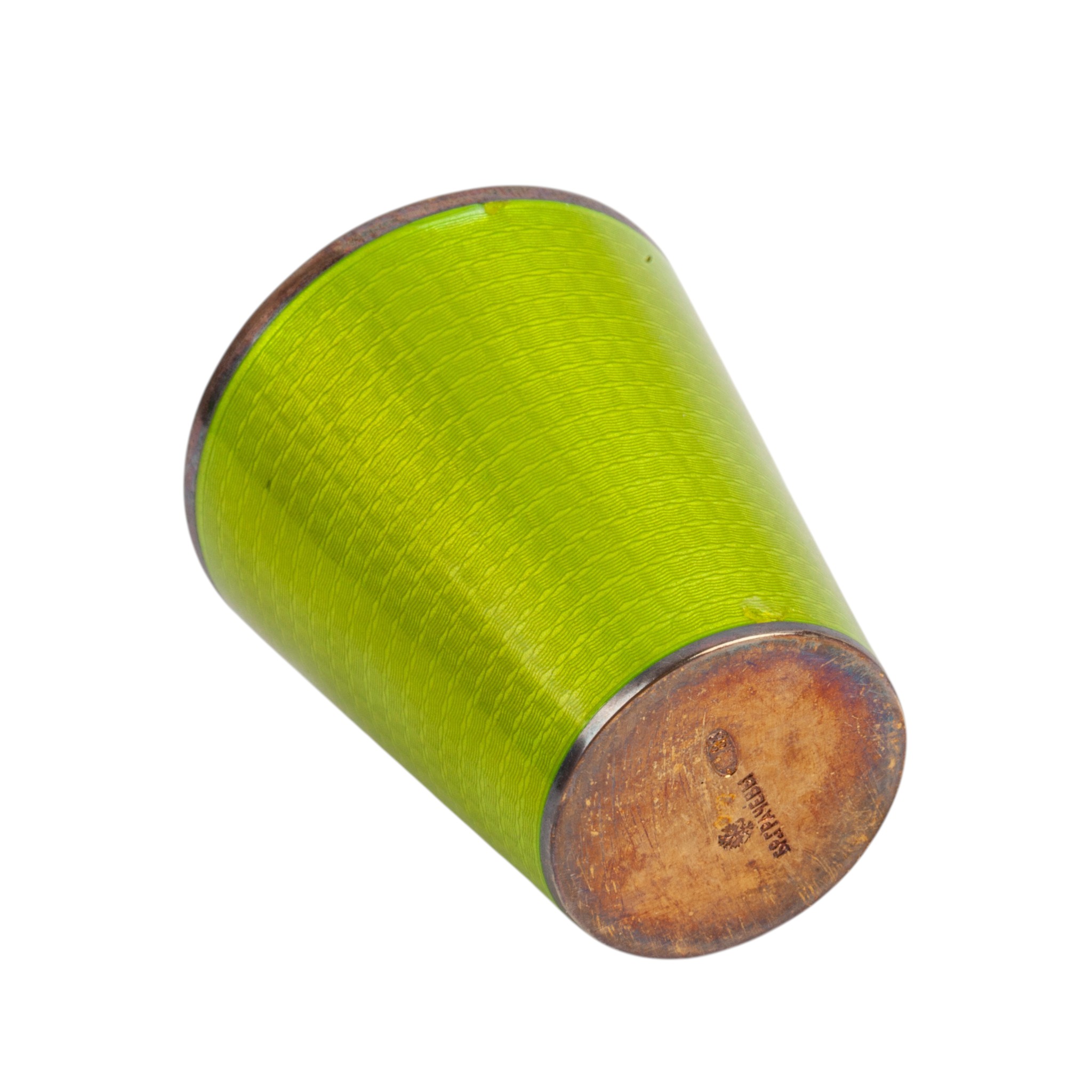
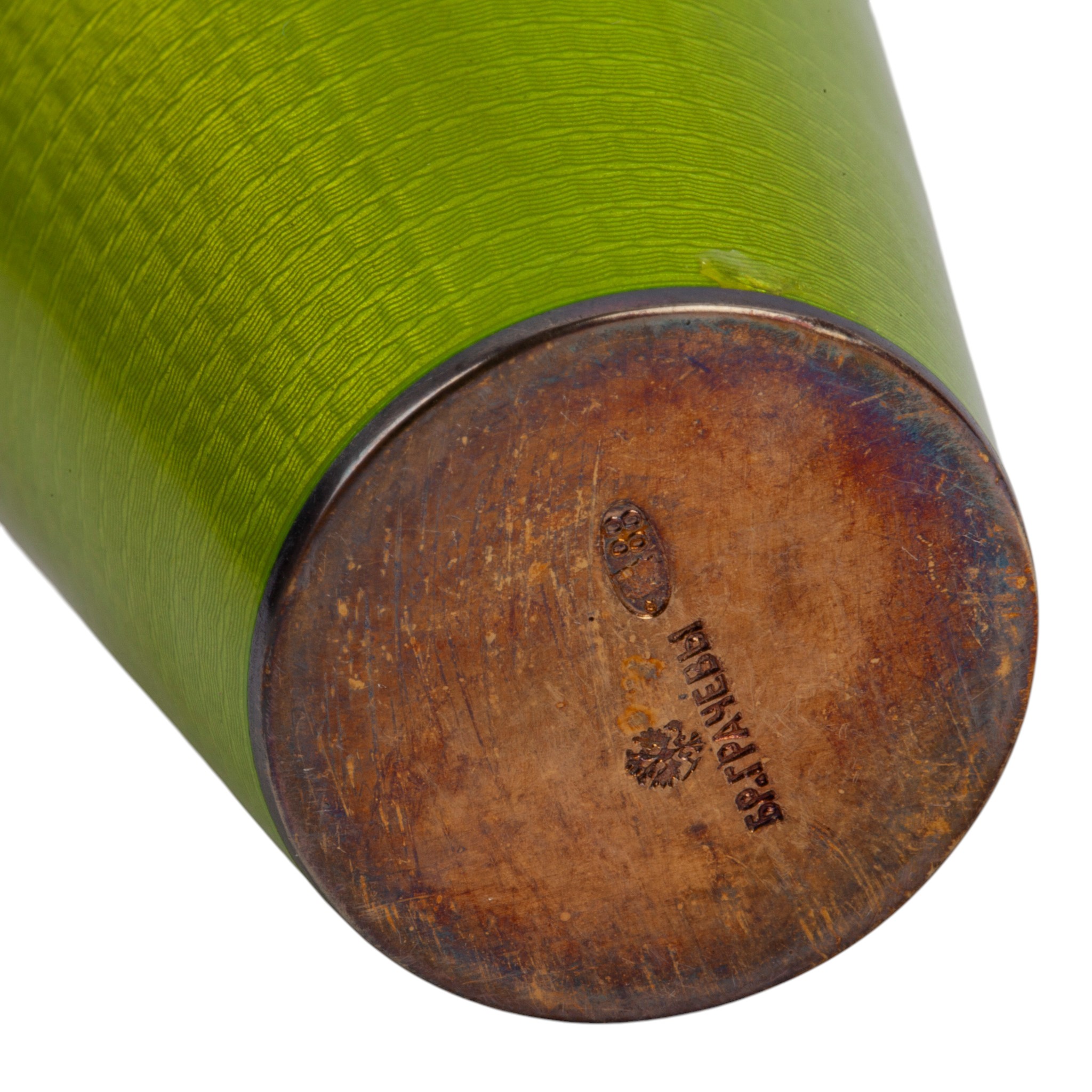
Estimate: 1000-1200€A Russian silver-gilt vodka tumbler with guilloché enamel St Petersburg, Grachev Brothers manufactory, 1908-1917.
Silver, gilding, guilloché enamel. Marked: firm’s mark Br. Grachevy; assay mark of St.Petersburg. Weight: 23,4 g. Dimensions: 4,2 x 3,5 x 3,5 cm.
A small tapering vodka cup of elegant, restrained profile, the body entirely covered with translucent pale green guilloché enamel laid over an engine-turned ground.
The tumbler was produced by the honourable St Petersburg firm of the Brothers Grachev, one of the major Russian silver manufacturers of the late 19th and early 20th centuries. Founded in 1866 by Gavriil Petrovich Grachev, the enterprise was continued by his sons Mikhail, Simon, and Grigory, and from 1892 held the prestigious title of supplier to the Imperial Court, reconfirmed in 1901. Although especially renowned for works in the Russian Revival taste, the firm also produced objects in historicist and modern refined table forms, demonstrating a wide range of silversmithing techniques, including enamelling.Starting price: 800€
Estimate: 1000-1200€
Hammer Price: Not sold -
Lot 0165
Russian Silver-Gilt Vodka Tumbler with Guilloché Enamel, Grachev Brothers, St Petersburg, 1908–1917
Estimate: 1000-1200€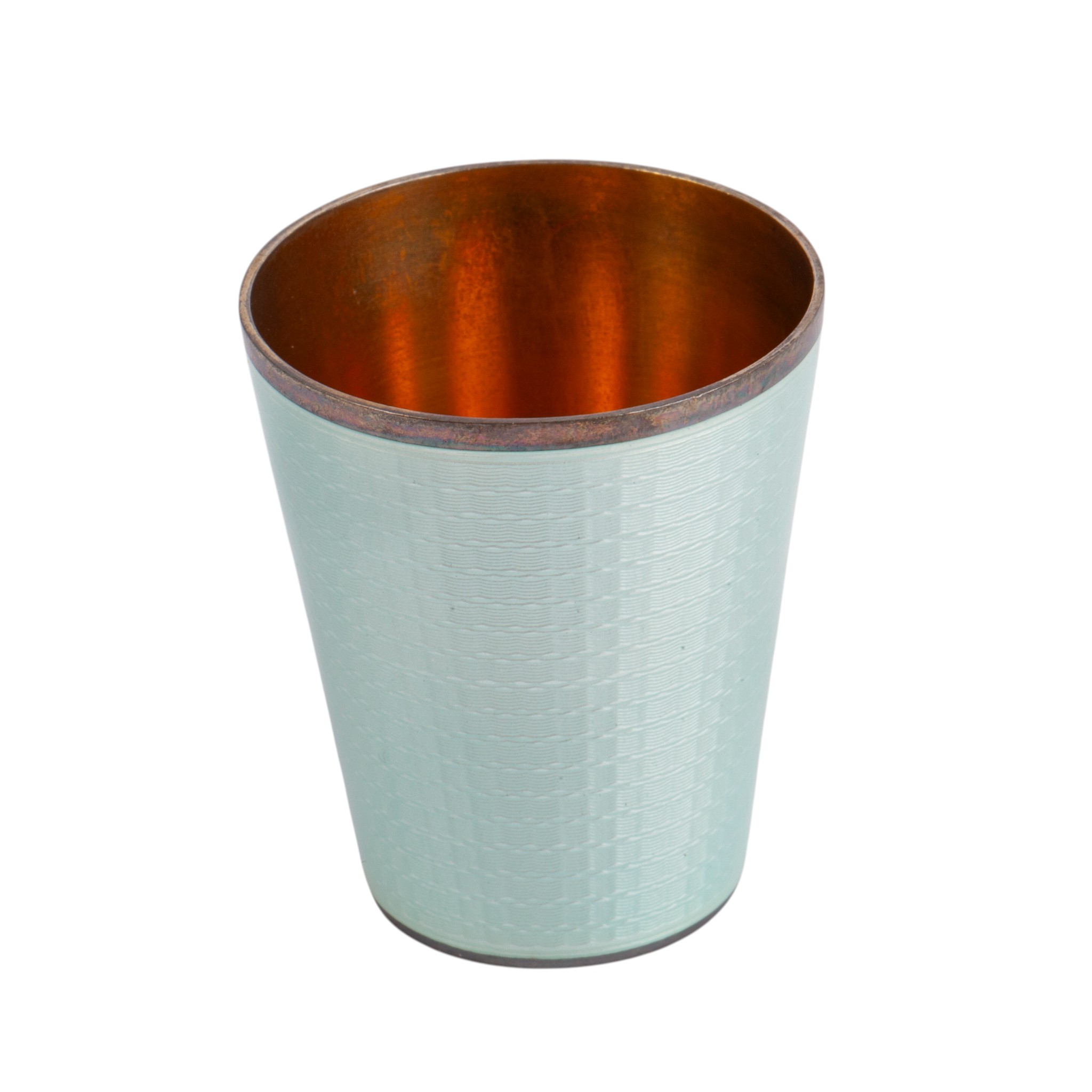
Lot 0165
Russian Silver-Gilt Vodka Tumbler with Guilloché Enamel, Grachev Brothers, St Petersburg, 1908–1917
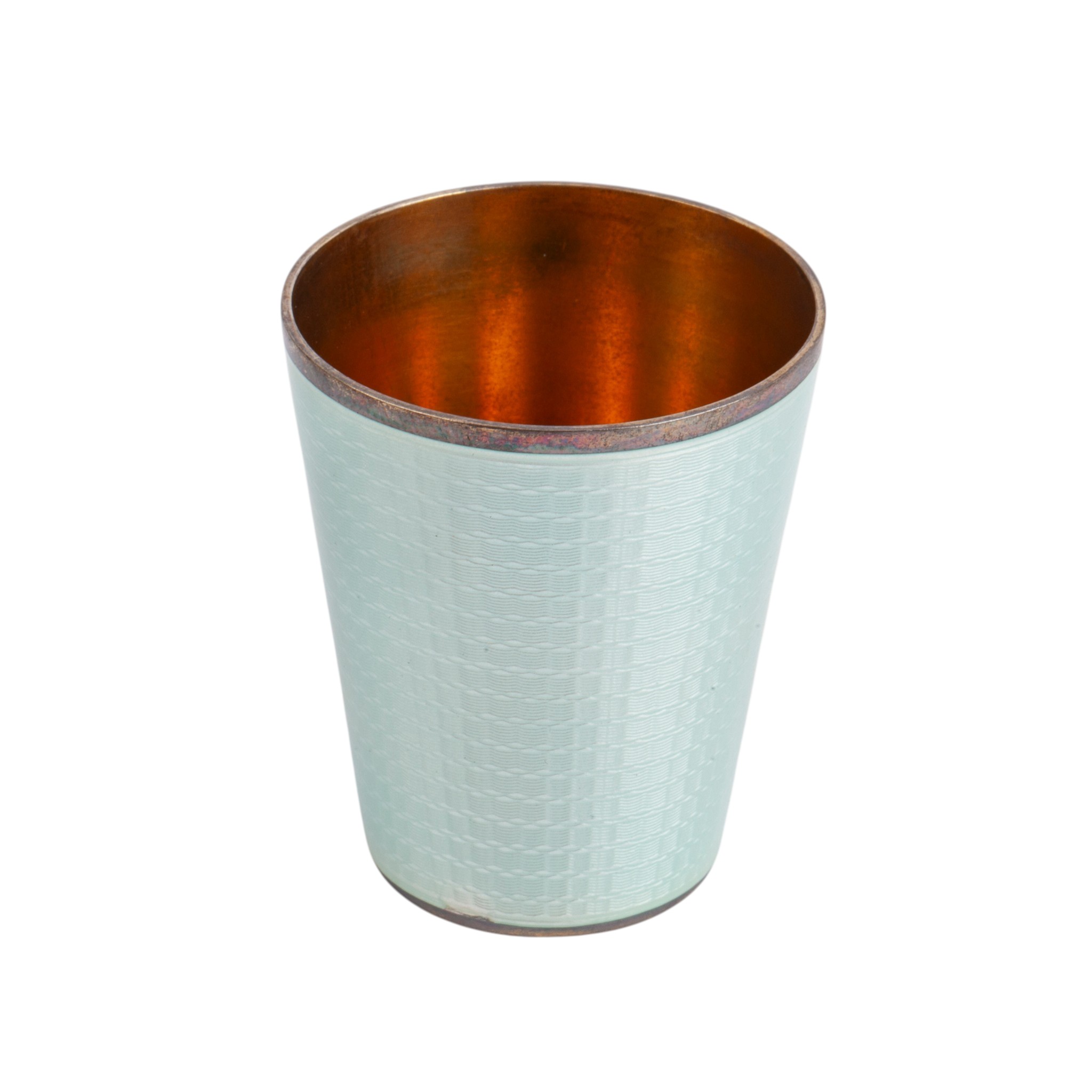
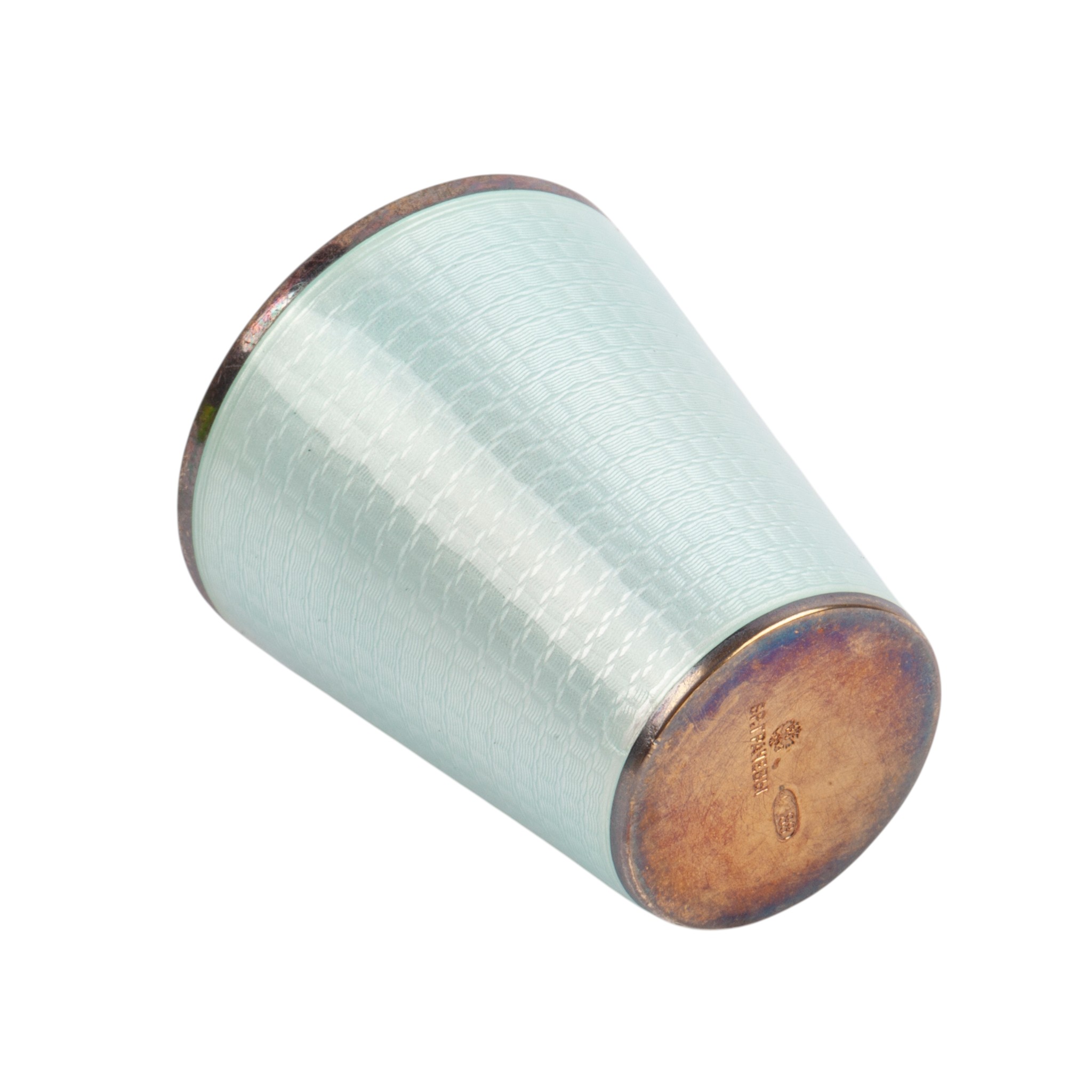
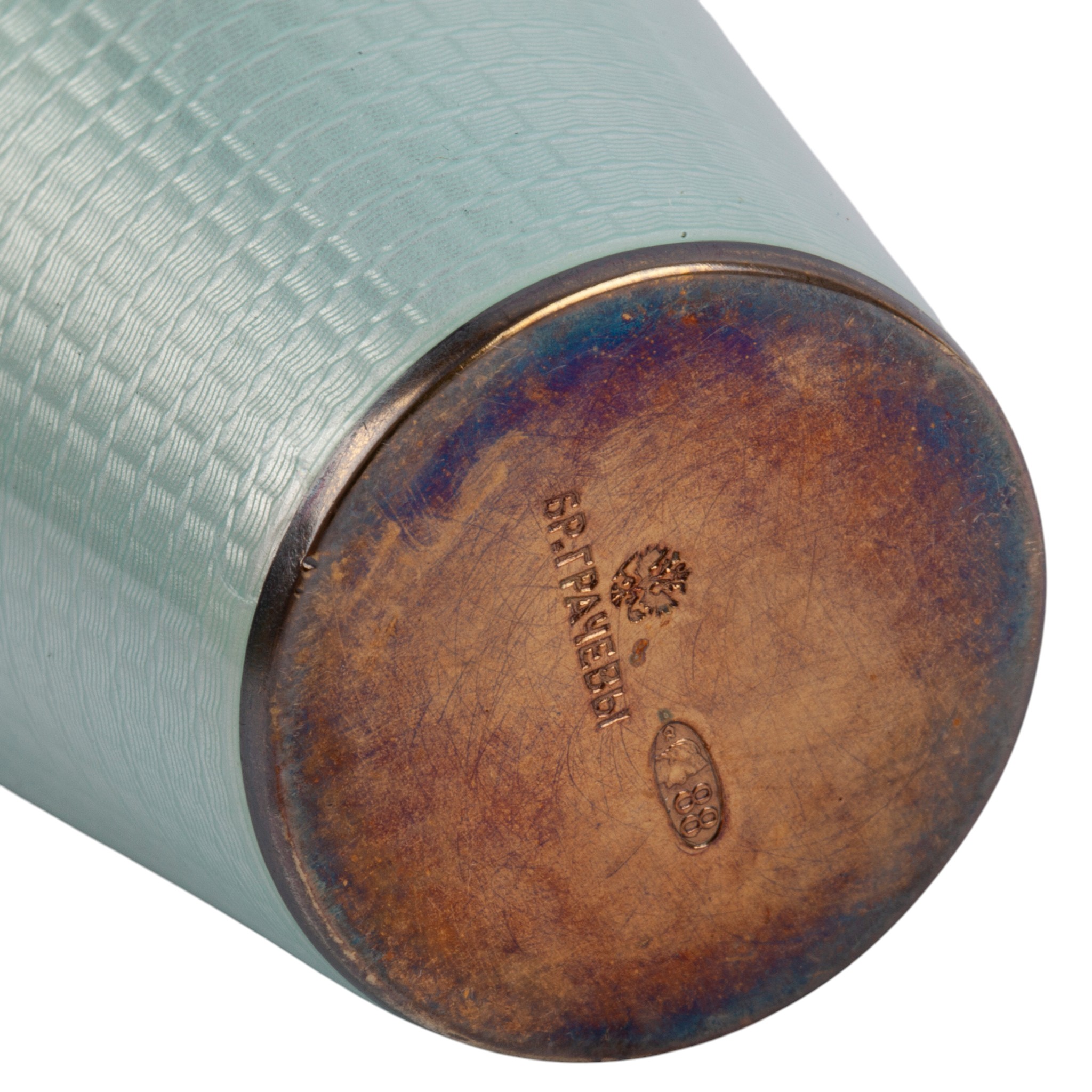
Estimate: 1000-1200€A Russian silver-gilt vodka tumbler with guilloché enamel St Petersburg, Grachev Brothers manufactory, 1908-1917.
Silver, gilding, guilloché enamel. Marked: firm’s mark Br. Grachevy; assay mark of St.Petersburg. Weight: 25,1 g. Dimensions: 4,2 x 3,5 x 3,5 cm.
A small tapering vodka cup of elegant, restrained profile, the body entirely covered with translucent pale blue guilloché enamel laid over an engine-turned ground.
The tumbler was produced by the honourable St Petersburg firm of the Brothers Grachev, one of the major Russian silver manufacturers of the late 19th and early 20th centuries. Founded in 1866 by Gavriil Petrovich Grachev, the enterprise was continued by his sons Mikhail, Simon, and Grigory, and from 1892 held the prestigious title of supplier to the Imperial Court, reconfirmed in 1901. Although especially renowned for works in the Russian Revival taste, the firm also produced objects in historicist and modern refined table forms, demonstrating a wide range of silversmithing techniques, including enamelling.Starting price: 800€
Estimate: 1000-1200€
Hammer Price: Not sold -
Lot 0166
Russian Silver Beer Cup / Tankard, Russia, mid-19th century
Estimate: 800-1000€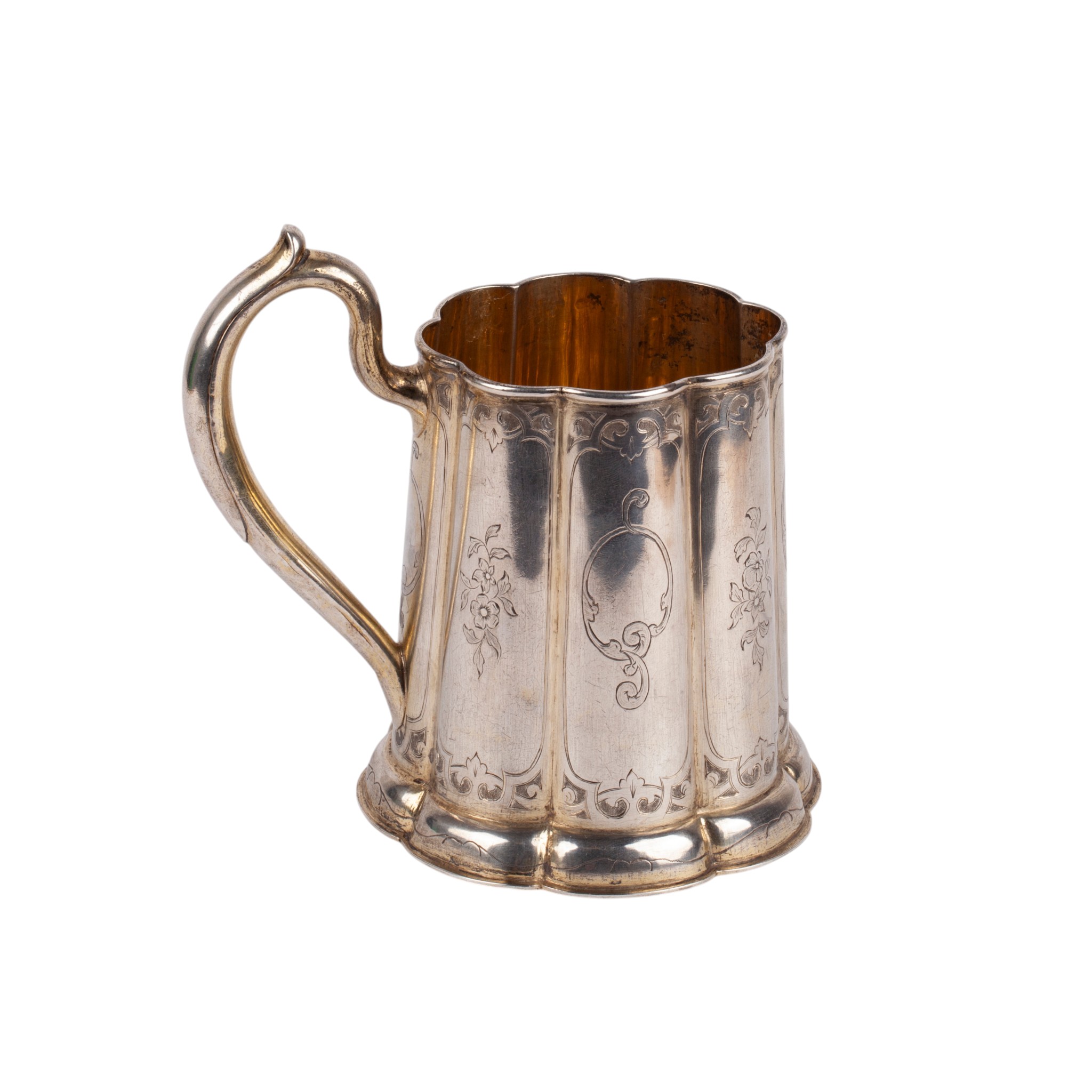
Lot 0166
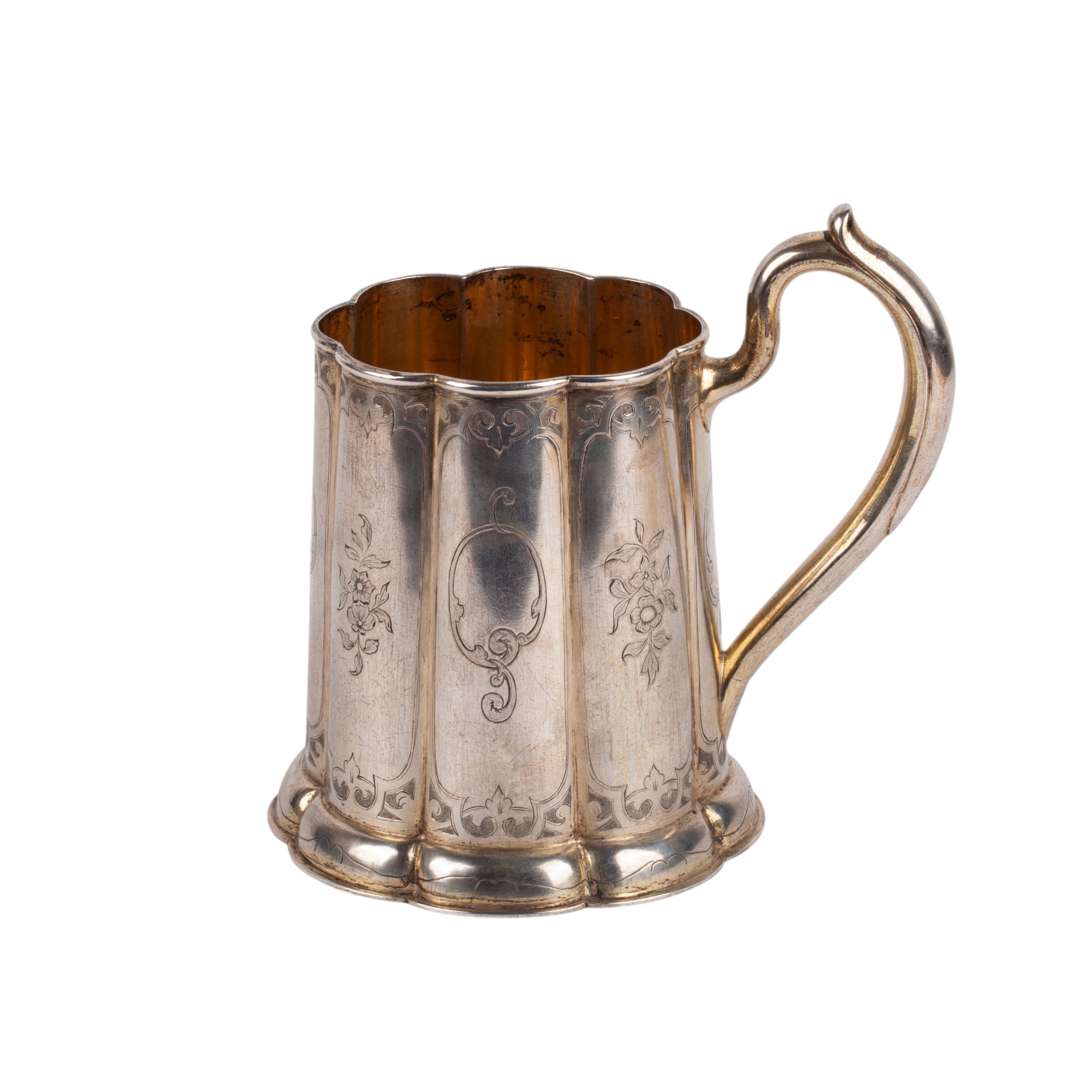
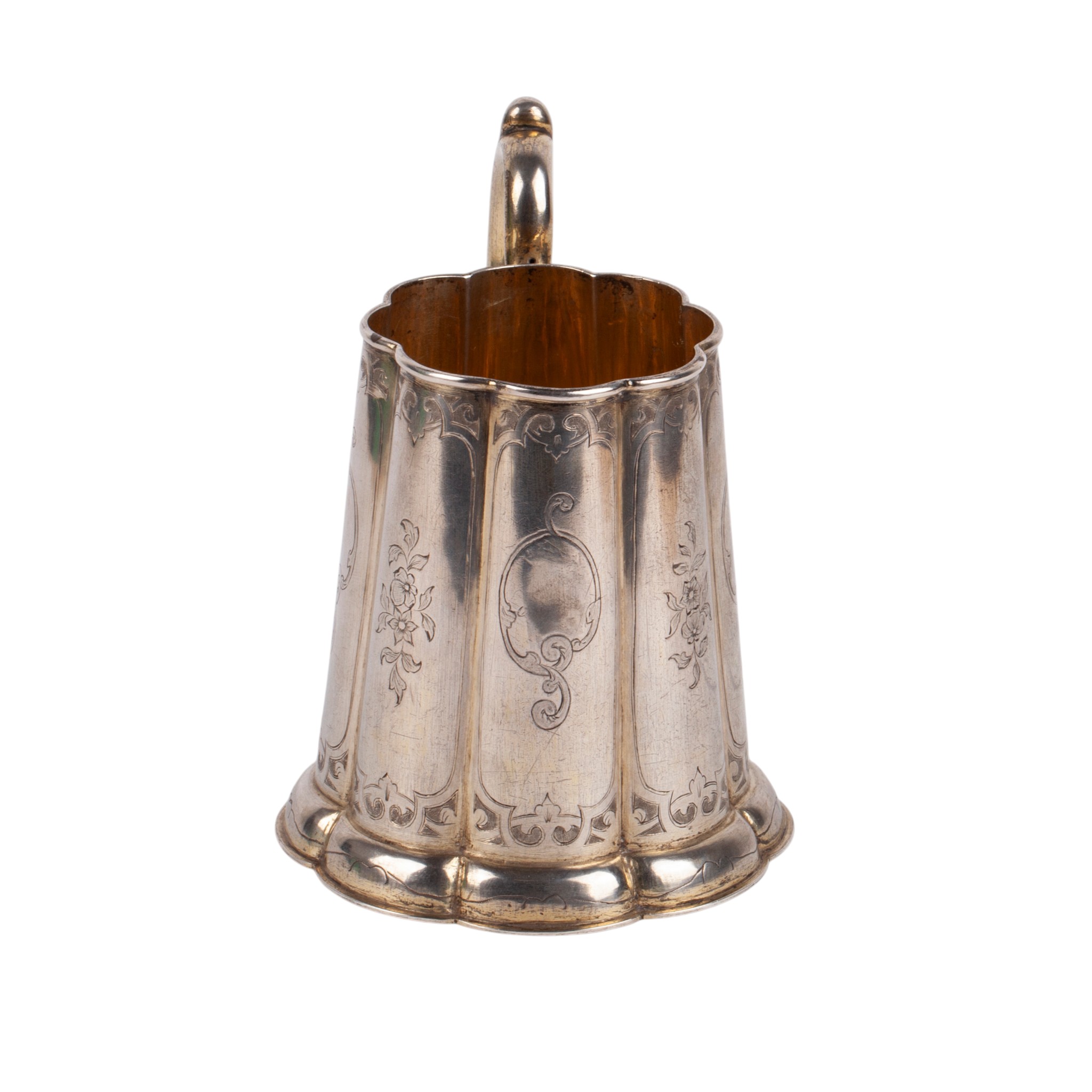
Russian Silver Beer Cup / Tankard, Russia, mid-19th century
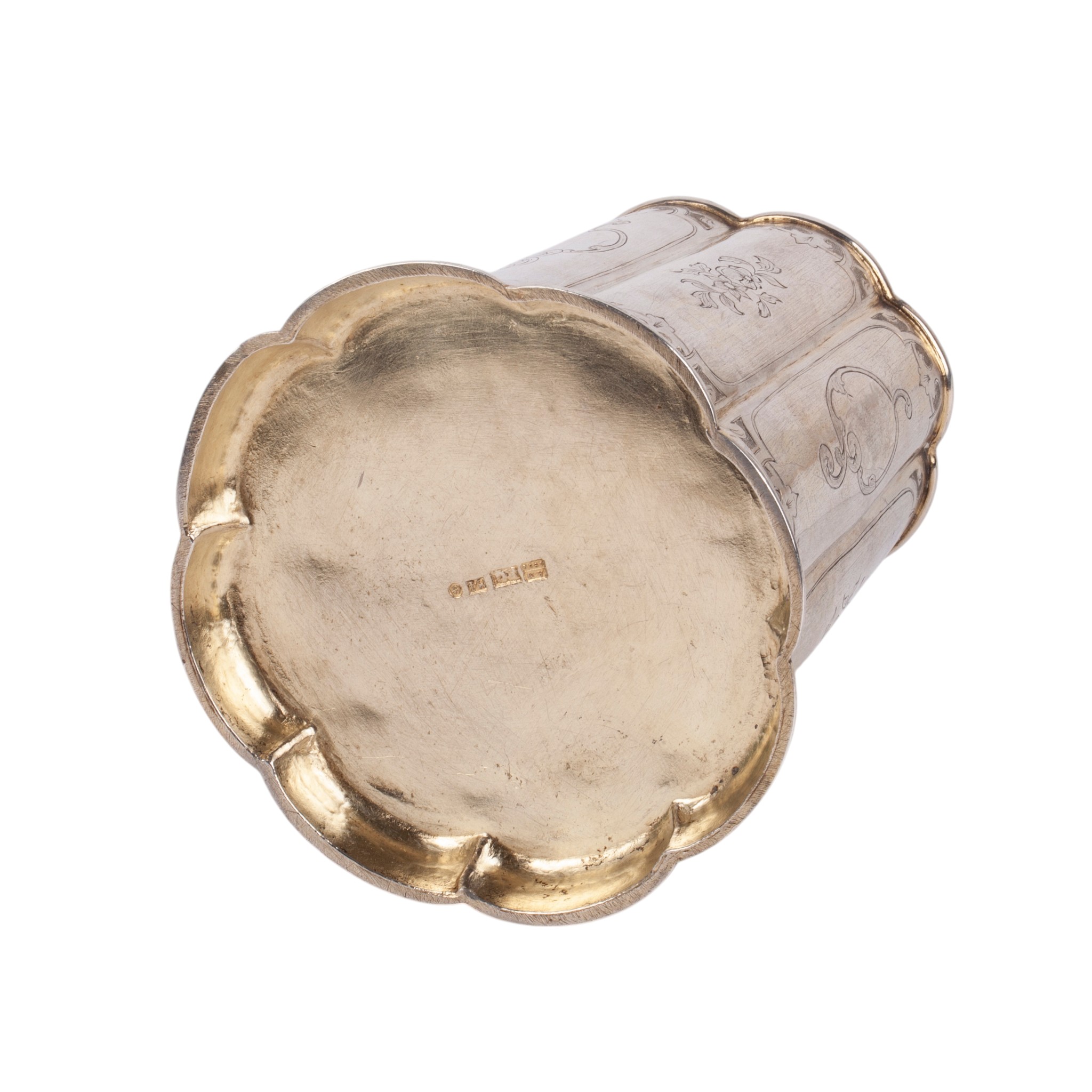
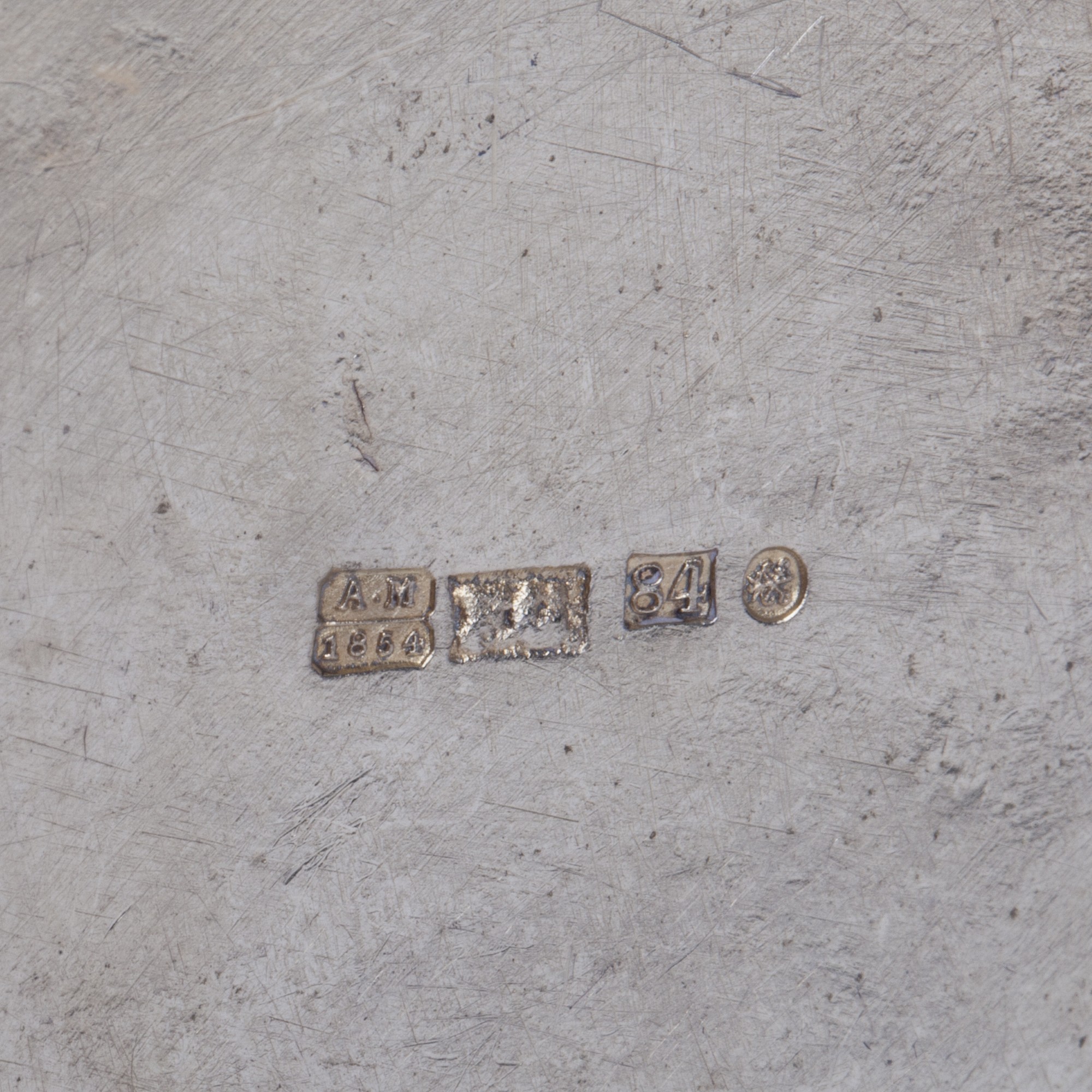
Estimate: 800-1000€Russian silver beer cup or tankard, mid-19th century. Of slightly tapering scalloped form with shaped handle, engraved with ornamental cartouches and floral sprays, and retaining a gilt interior. Marked A.M., dated 1854, and with 84 zolotnik silver standard.
Height: 13 cm
Weight: 219.2 gStarting price: 600€
Estimate: 800-1000€
Hammer Price: 600 € -
Lot 0167
Fabergé Silver Glass Holder in the Neoclassical Style, St Petersburg, 1898–1908
Estimate: 2500-3500€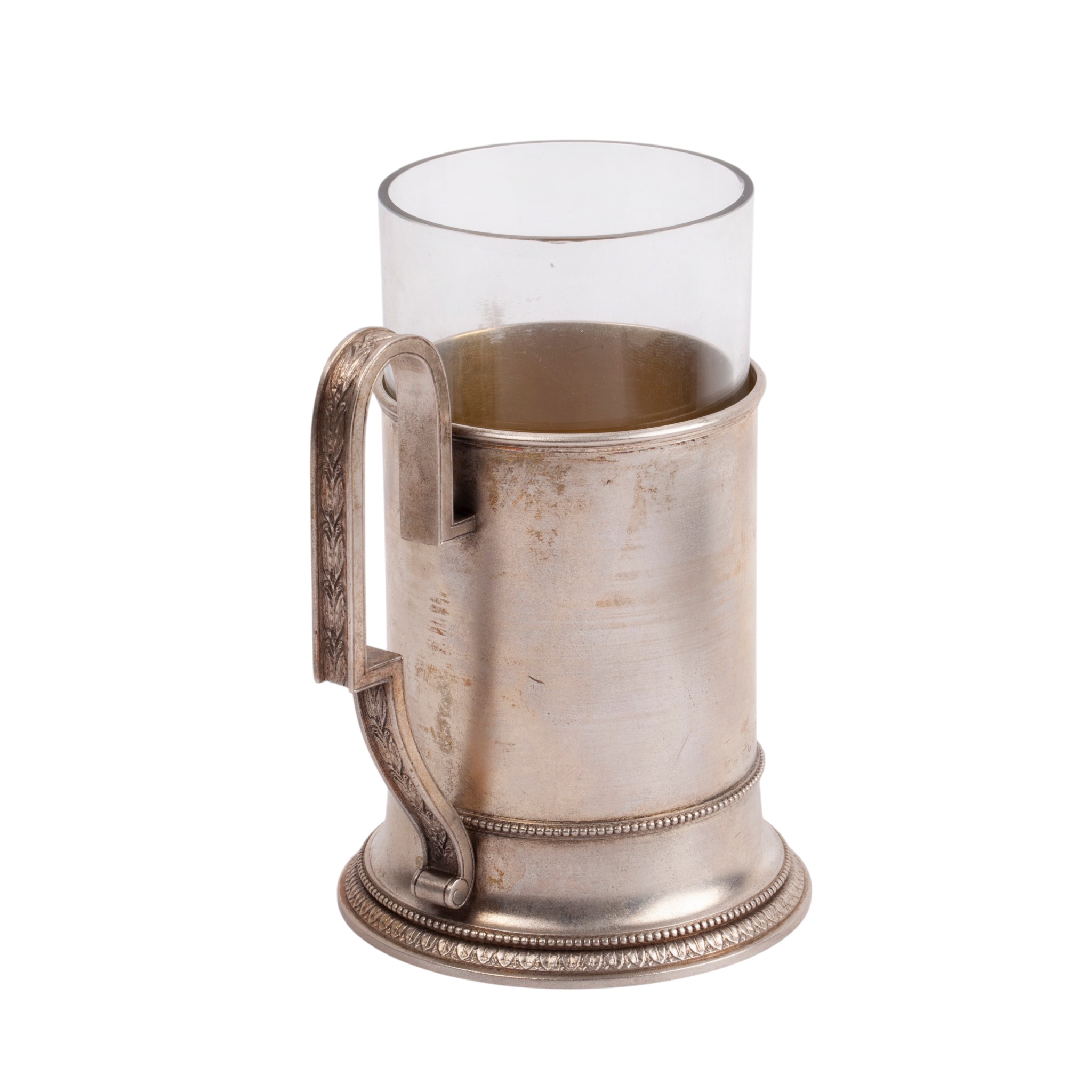
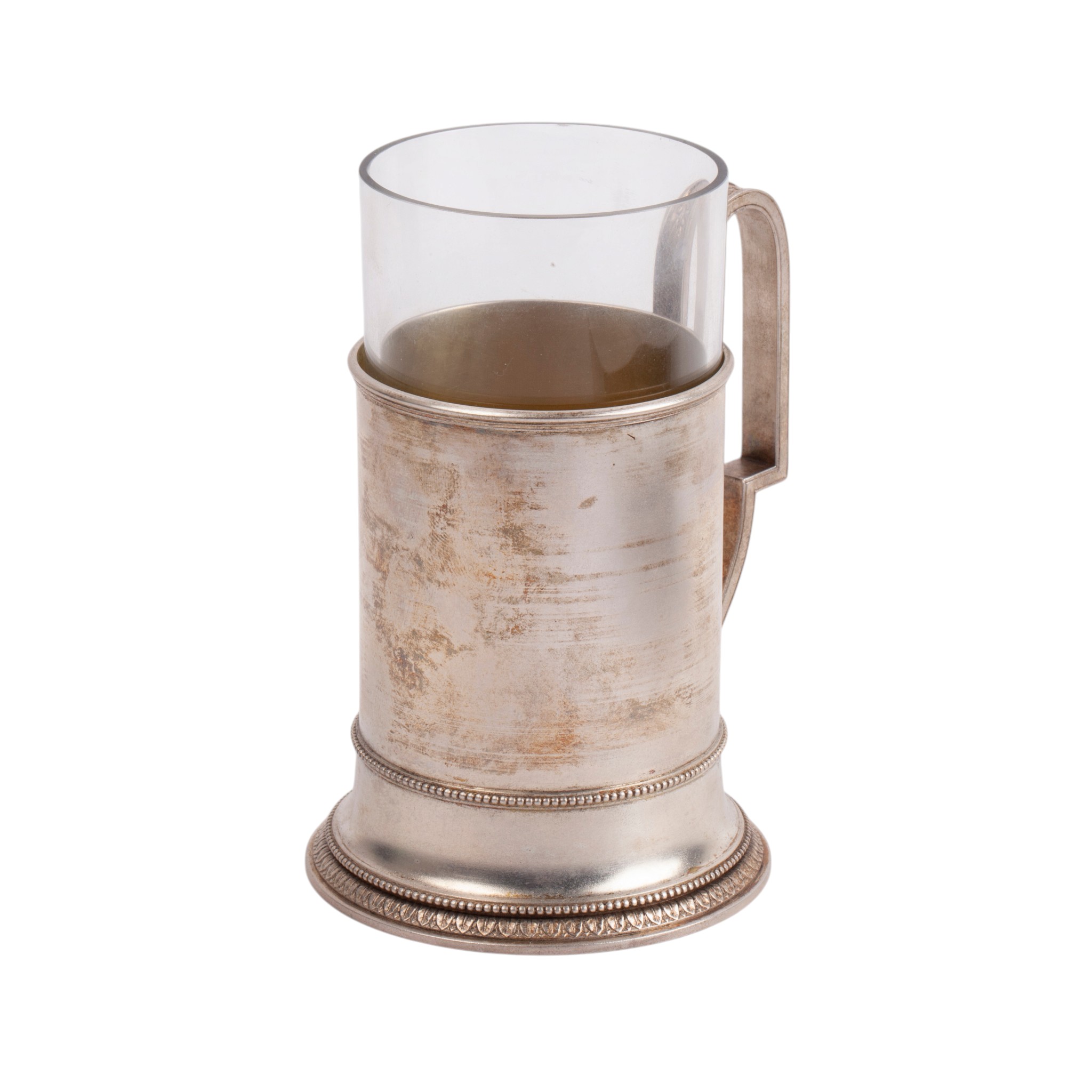
Lot 0167
Fabergé Silver Glass Holder in the Neoclassical Style, St Petersburg, 1898–1908
Estimate: 2500-3500€A Fabergé silver glass holder in the Neoclassical style.
St Petersburg, firm of Karl Fabergé, workmaster Anders (Antti) Nevalainen, 1898-1908.
Silver, glass; casting, chasing, beading.
Silver weight: 182 g.
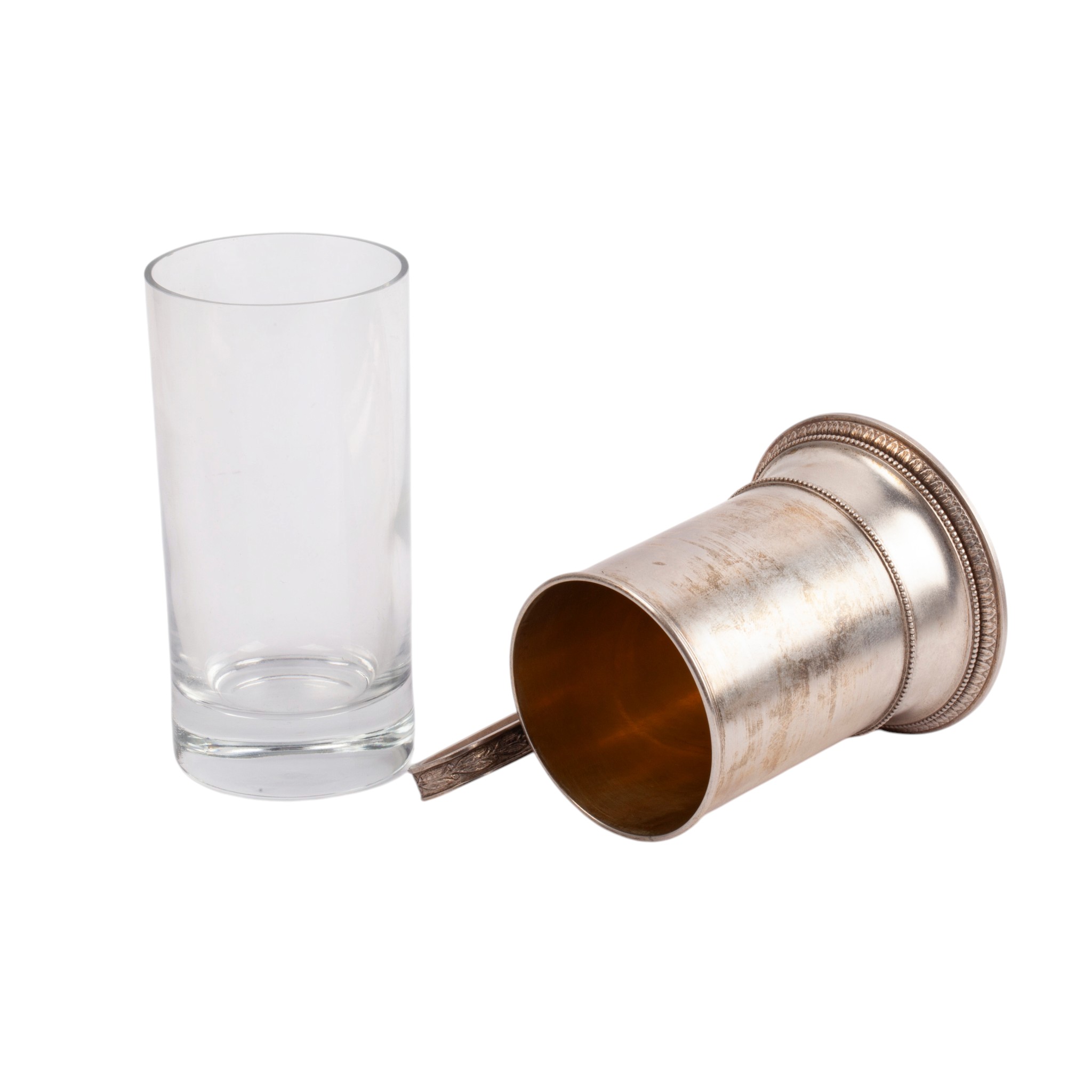
Dimensions without glass: 10.7 × 9.5 × 7.5 cm.
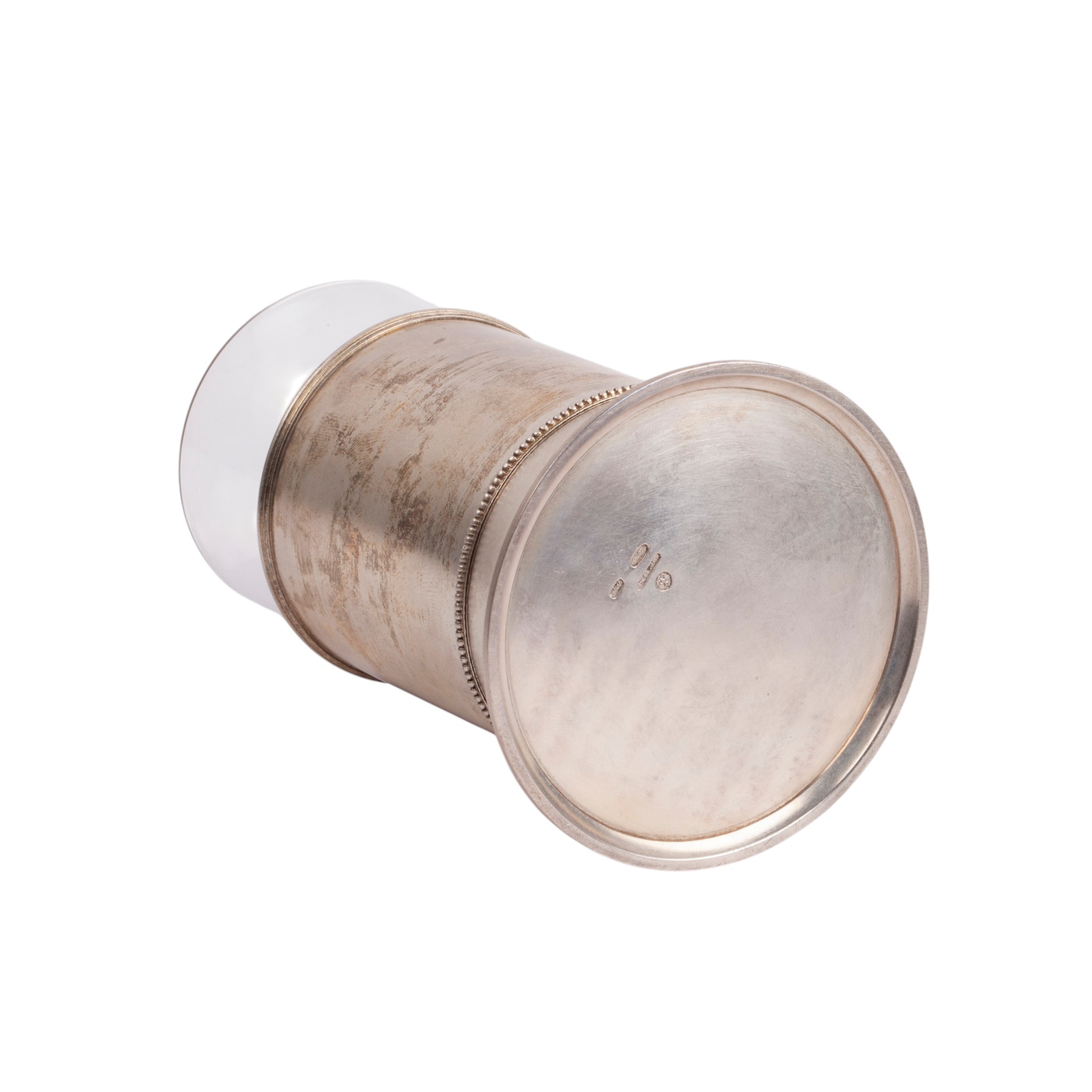
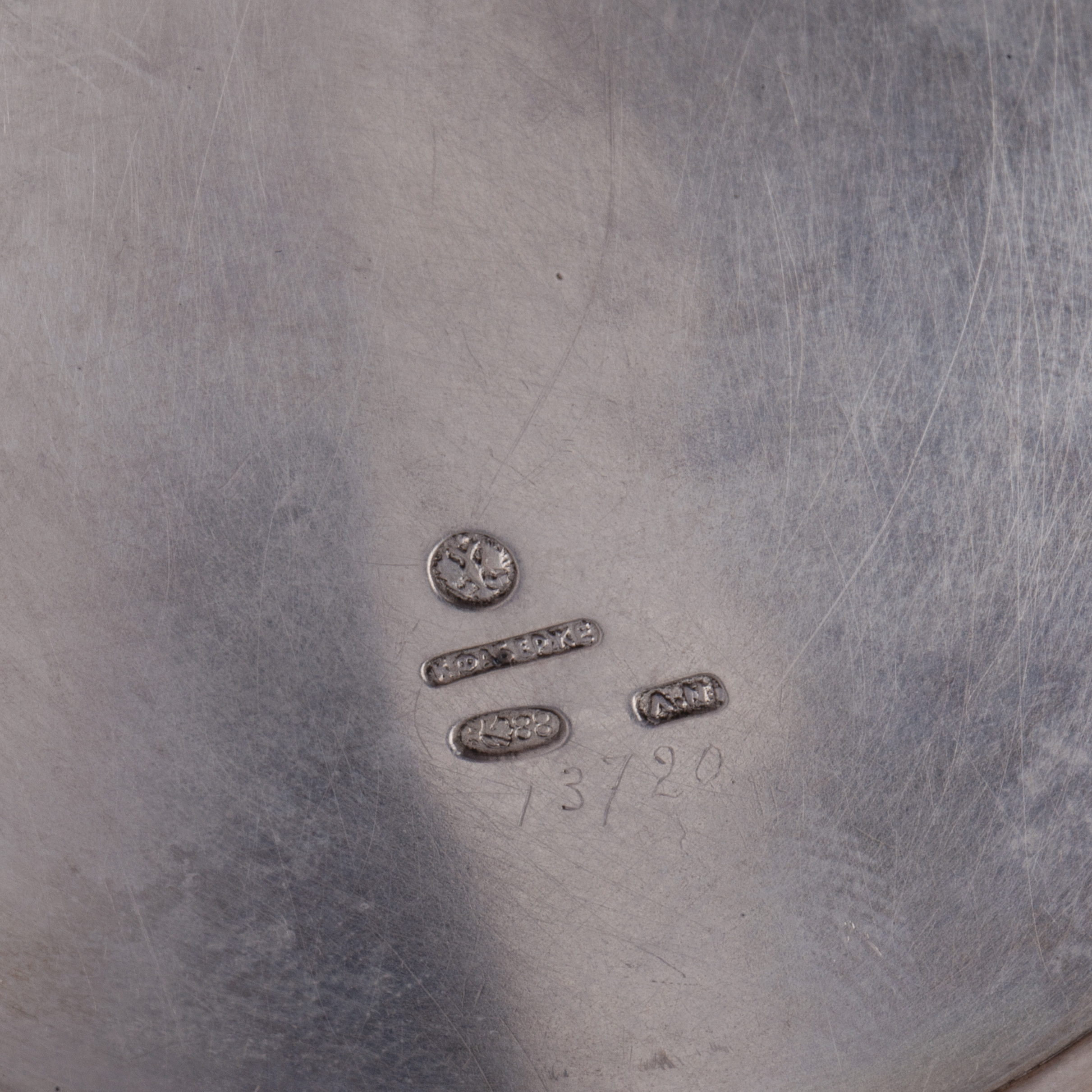
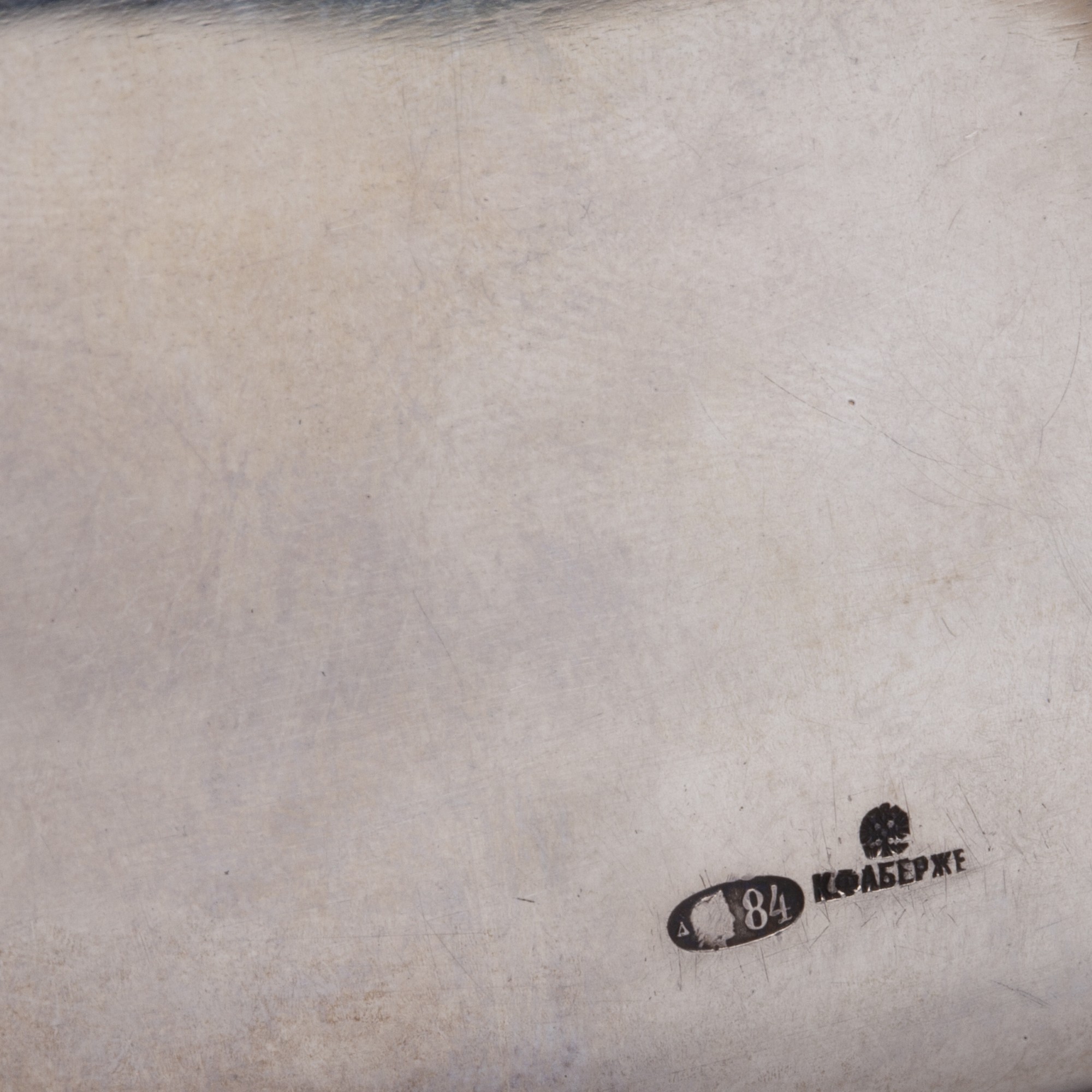
Marks: firm mark К. ФАБЕРЖЕ beneath the Imperial warrant; workmaster’s mark A.N for Anders Nevalainen; St Petersburg assay mark; 88 zolotniki silver standard.
Scratched inventory number: 13720.
A silver tea glass holder of cylindrical form, fitted with a clear glass liner and a plain angular handle. The body is conceived in a restrained Neoclassical manner, with smooth polished walls rising from a stepped circular foot. The lower section is enriched with finely executed beaded borders and a chased palmette frieze, lending the otherwise austere form a discreet architectural rhythm.
Anders, or Antti, Juhaninpoika Nevalainen (1858-1933) was a Finnish gold- and silversmith and one of the notable Fabergé workmasters in St Petersburg. Born in Kylänlahti, Pielisjärvi, Finland, he trained first in Finland and then in St Petersburg, where he became a master goldsmith in 1885. His workshop, located at 35 Kazanskaya Street, worked under contract for the Fabergé firm and produced silver-mounted frames, cigarette cases, small silver-gilt objects, enamelled accessories and mounted works in wood, leather and other materials.Starting price: 2000€
Estimate: 2500-3500€
Hammer Price: Not sold -
Lot 0168
Fabergé Silver-Gilt and Enamel Kovsh Moscow, ca. 1899–1908
Estimate: 6000-8000€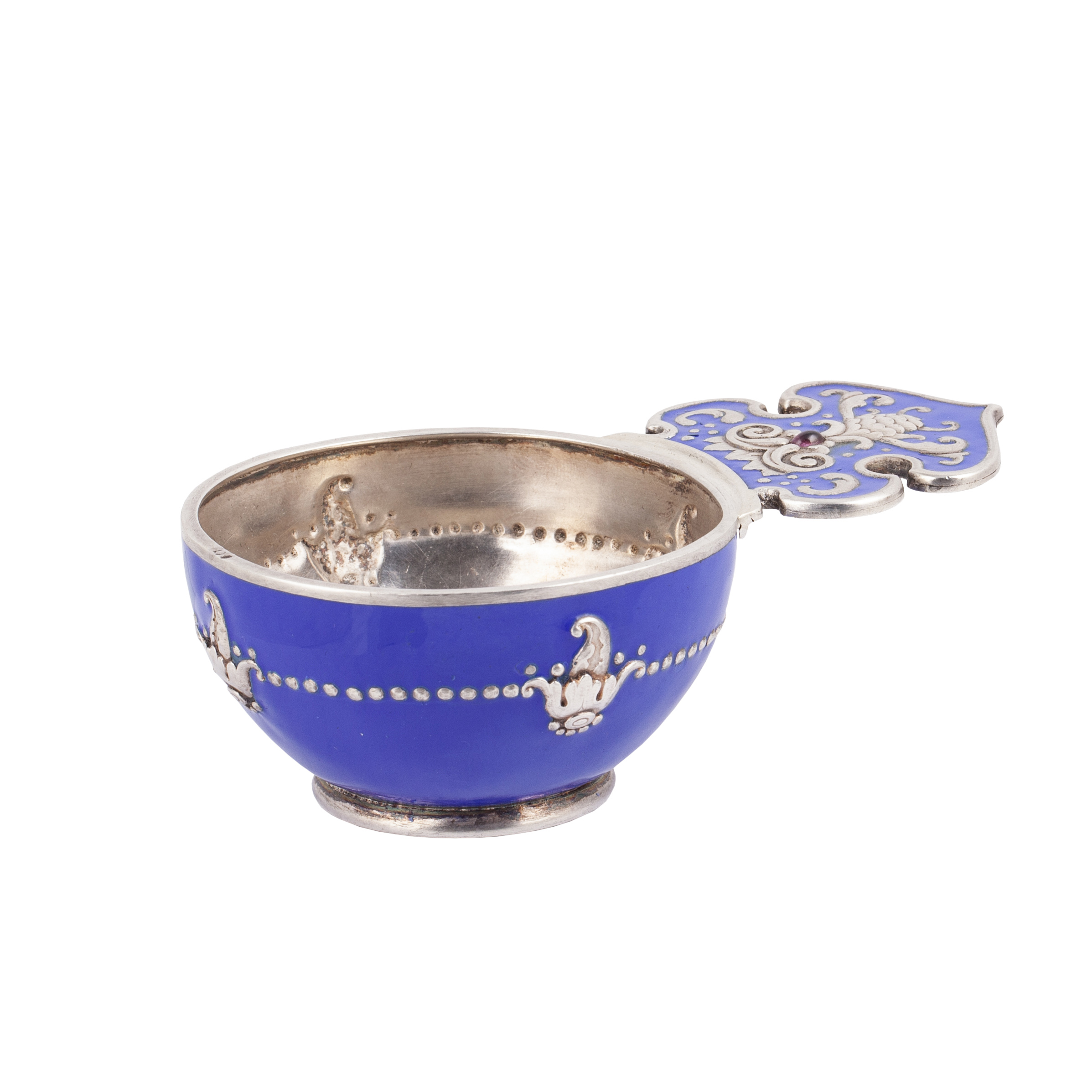
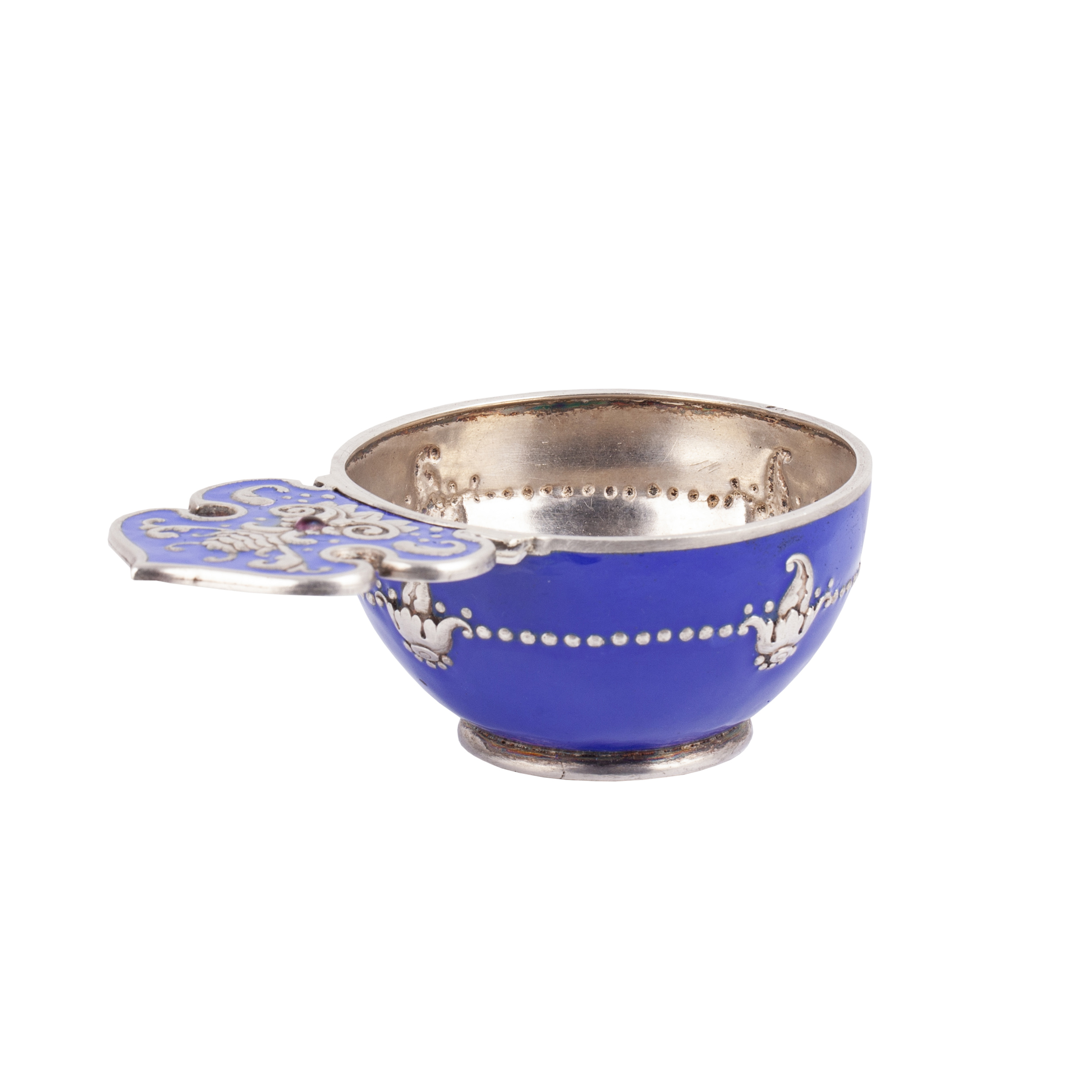
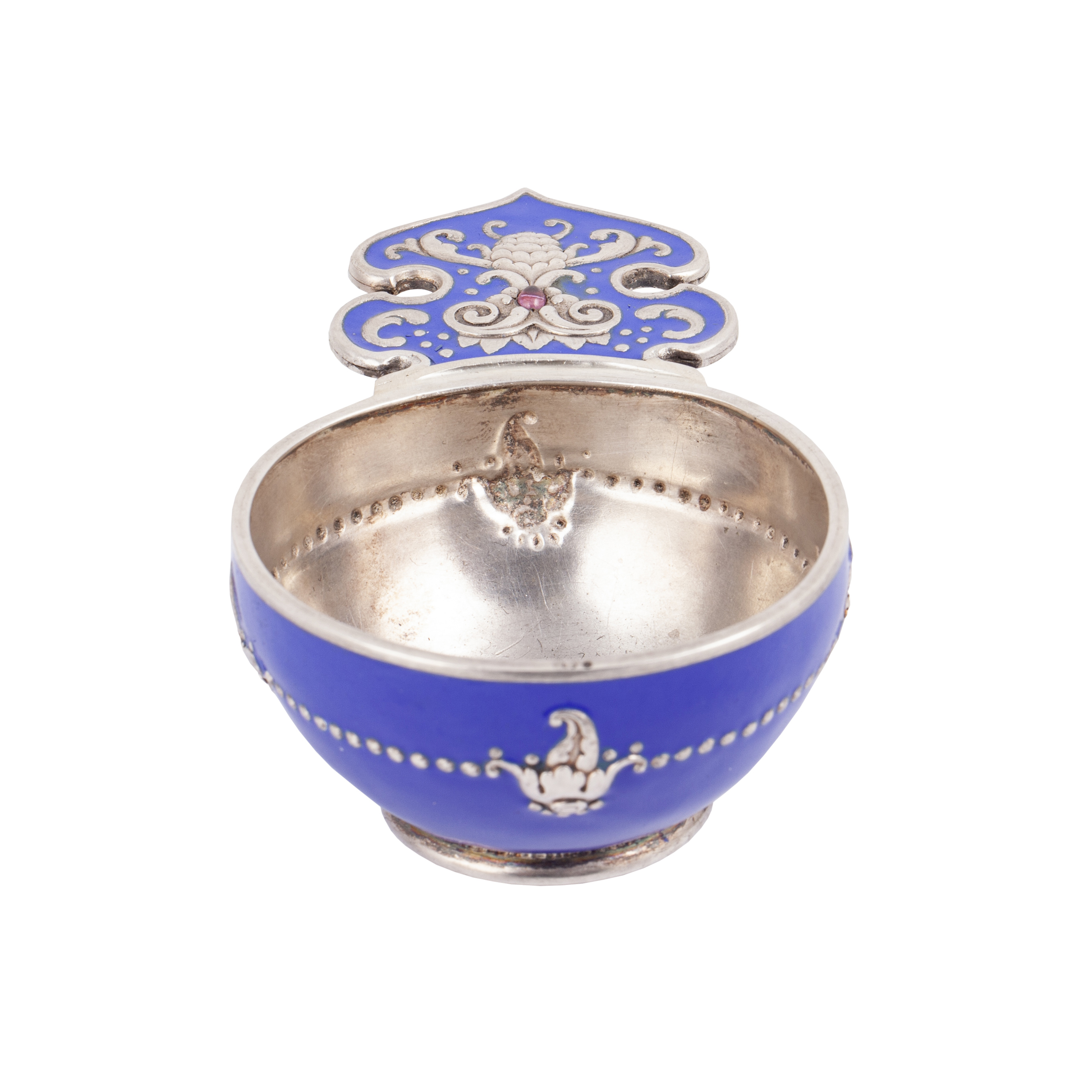
Lot 0168
Fabergé Silver-Gilt and Enamel Kovsh Moscow, ca. 1899–1908
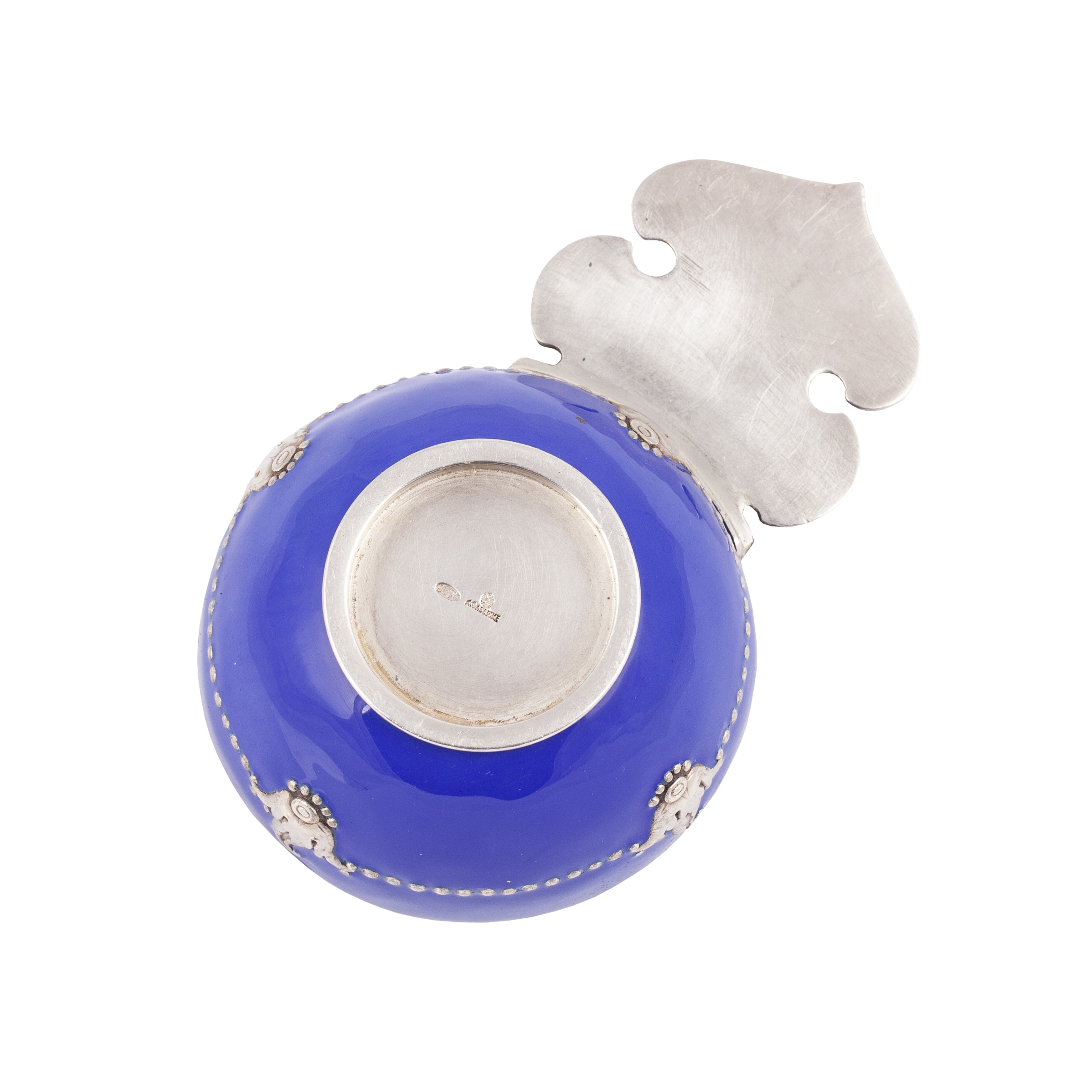
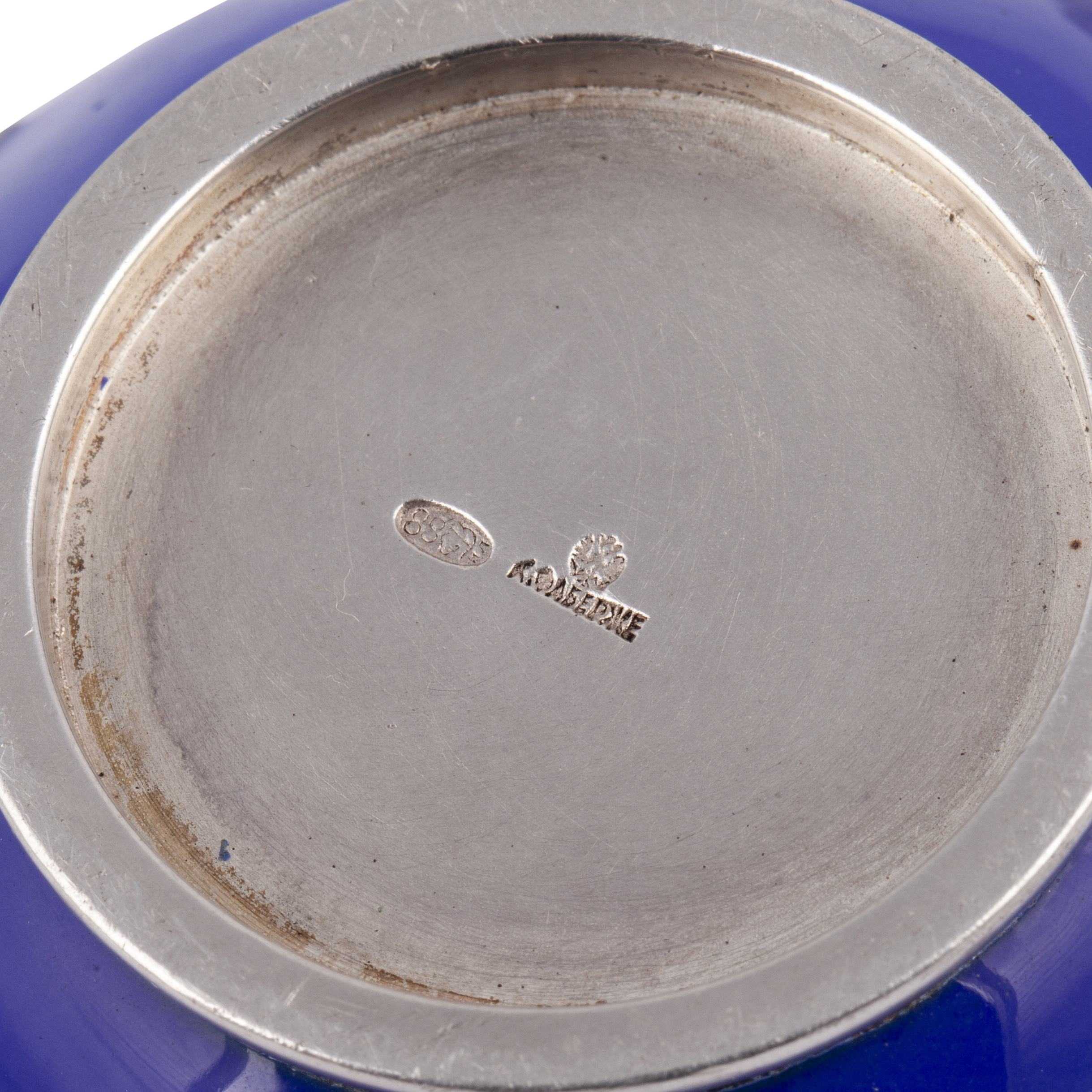
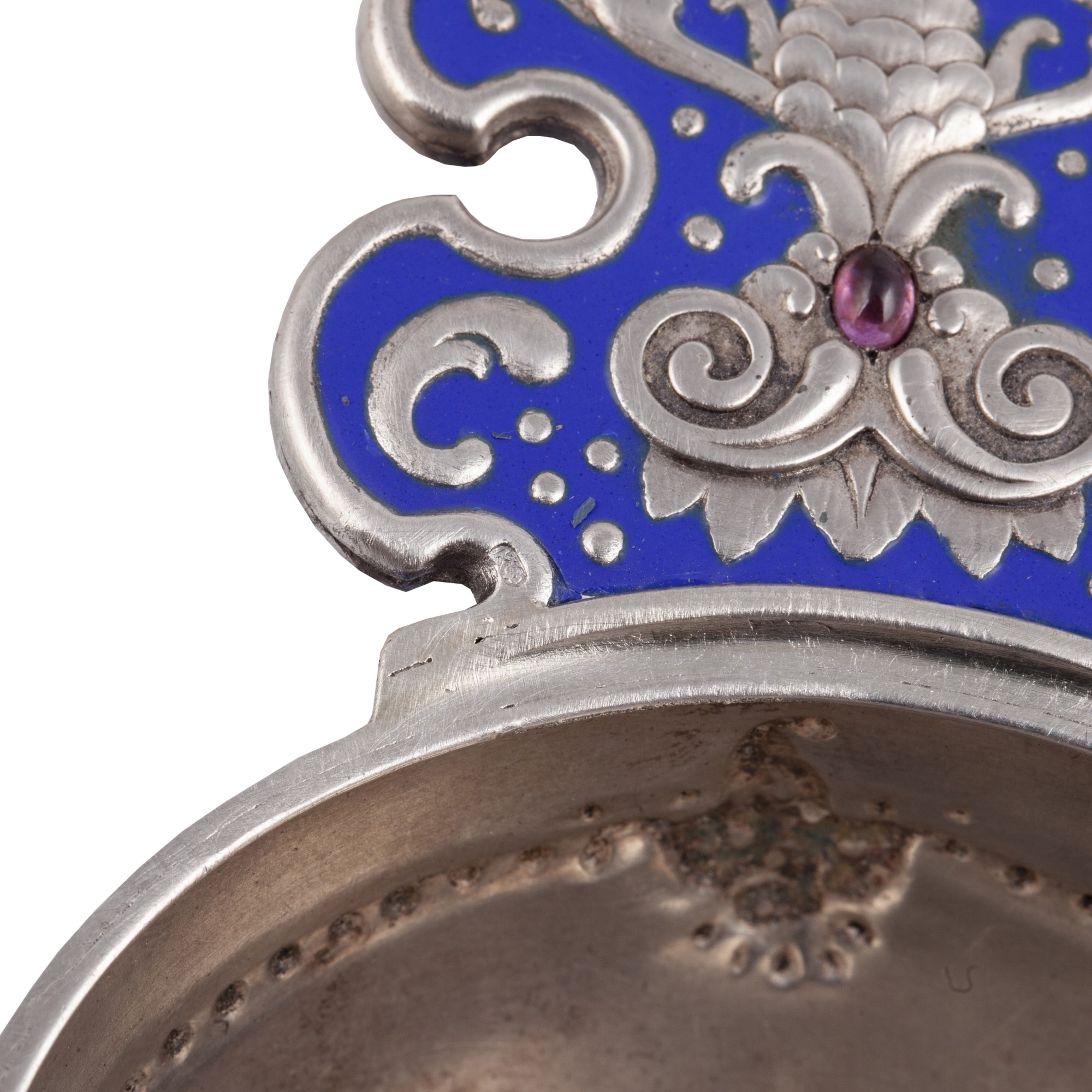
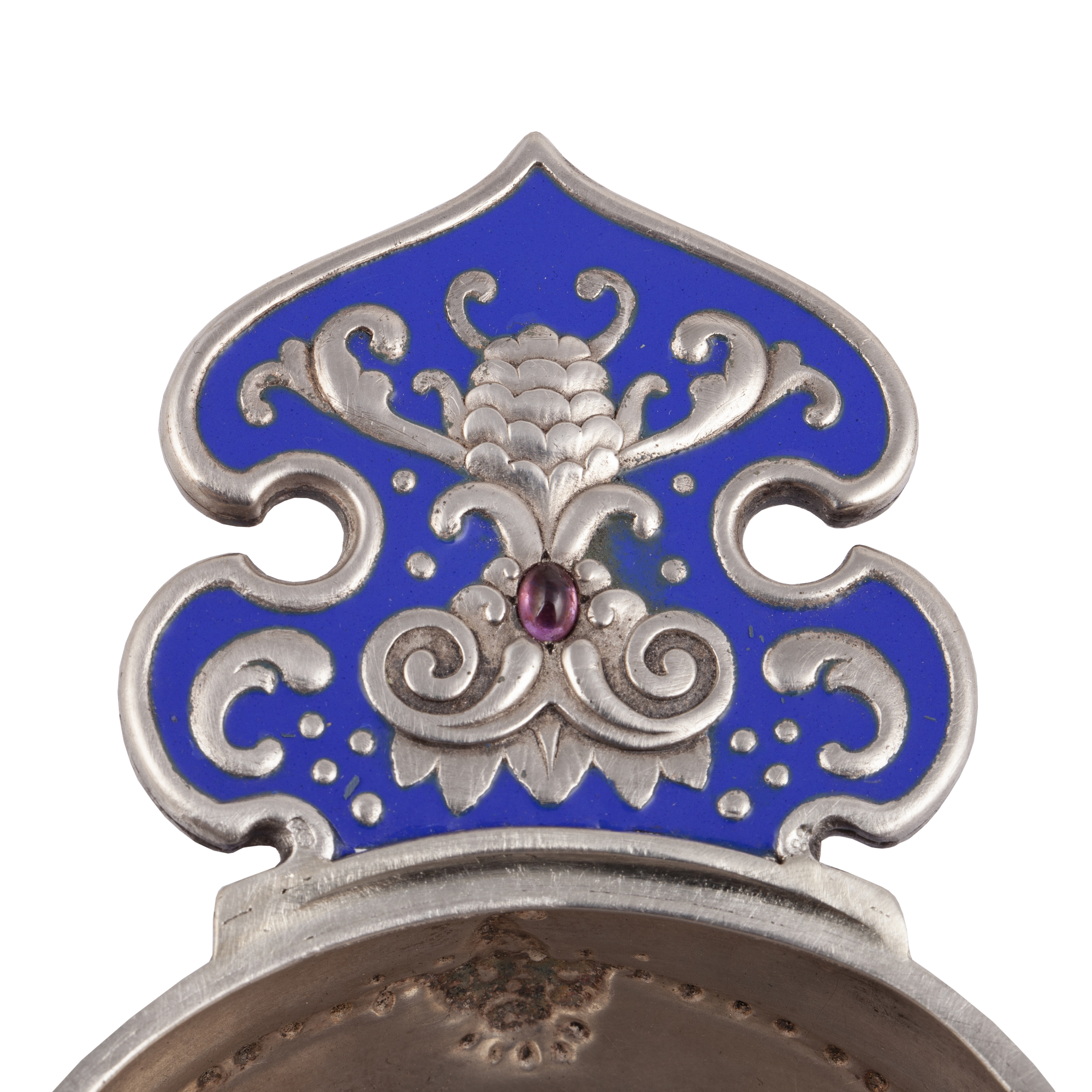
Estimate: 6000-8000€Fabergé Silver-Gilt and Enamel Charka Moscow, ca. 1899–1908. Silver-gilt, opaque enamel. Dimensions: 4 × 11.4 × 7 cm. Weight: 128.6 g
A refined silver-gilt kovsh/charka, its body cloaked in a deep opaque blue enamel, accented with applied silver ornament and bead motifs. Its shaped handle is richly modeled with scrollwork and bears a cabochon accent, uniting traditional Russian form with decorative finesse.
The kovsh, historically a Russian ladle-like vessel, was revived in late 19th-century decorative arts as a symbol of national identity. Fabergé’s Moscow workshops elevated the form by combining classical silhouettes with high-quality enameling and luxurious silver detailing.
Comparable example: A blue opaque enamelled covsh parcel-gilt and set with seed pearls, marked Fabergé with the Imperial warrant (Moscow, 1908–1917, scratched inventory number 24699) was sold at Christie’s for 181,250 GBP. That kovsh features blue biscuit enamel bands, clusters of raised leaves in oxidized silver, and seed-pearl decoration in the Old Russian style. https://www.christies.com/en/lot/lot-5091445Starting price: 5000€
Estimate: 6000-8000€
Hammer Price: 6 000 € -
Lot 0169
Pair of Russian Art Nouveau Silver Champagne Flutes by Antip Kuzmichev
Estimate: 600-700€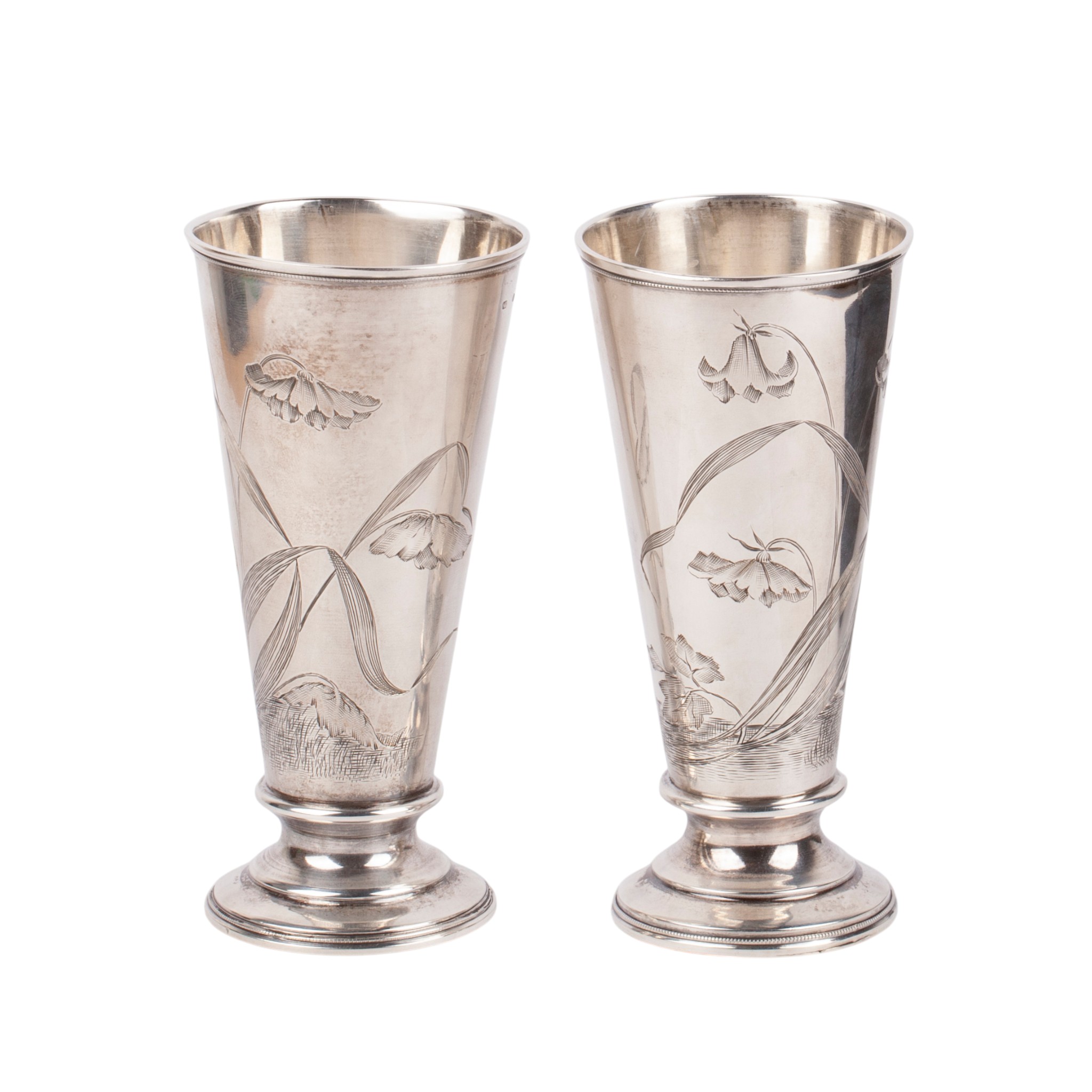
Lot 0169
Pair of Russian Art Nouveau Silver Champagne Flutes by Antip Kuzmichev
Estimate: 600-700€A pair of Russian Art Nouveau silver champagne flutes.
Moscow, workshop of Antip Ivanovich Kuzmichev, 1898-1908.
Silver; engraved and polished.
Height: 13.5 cm.
Total weight: 234 g.
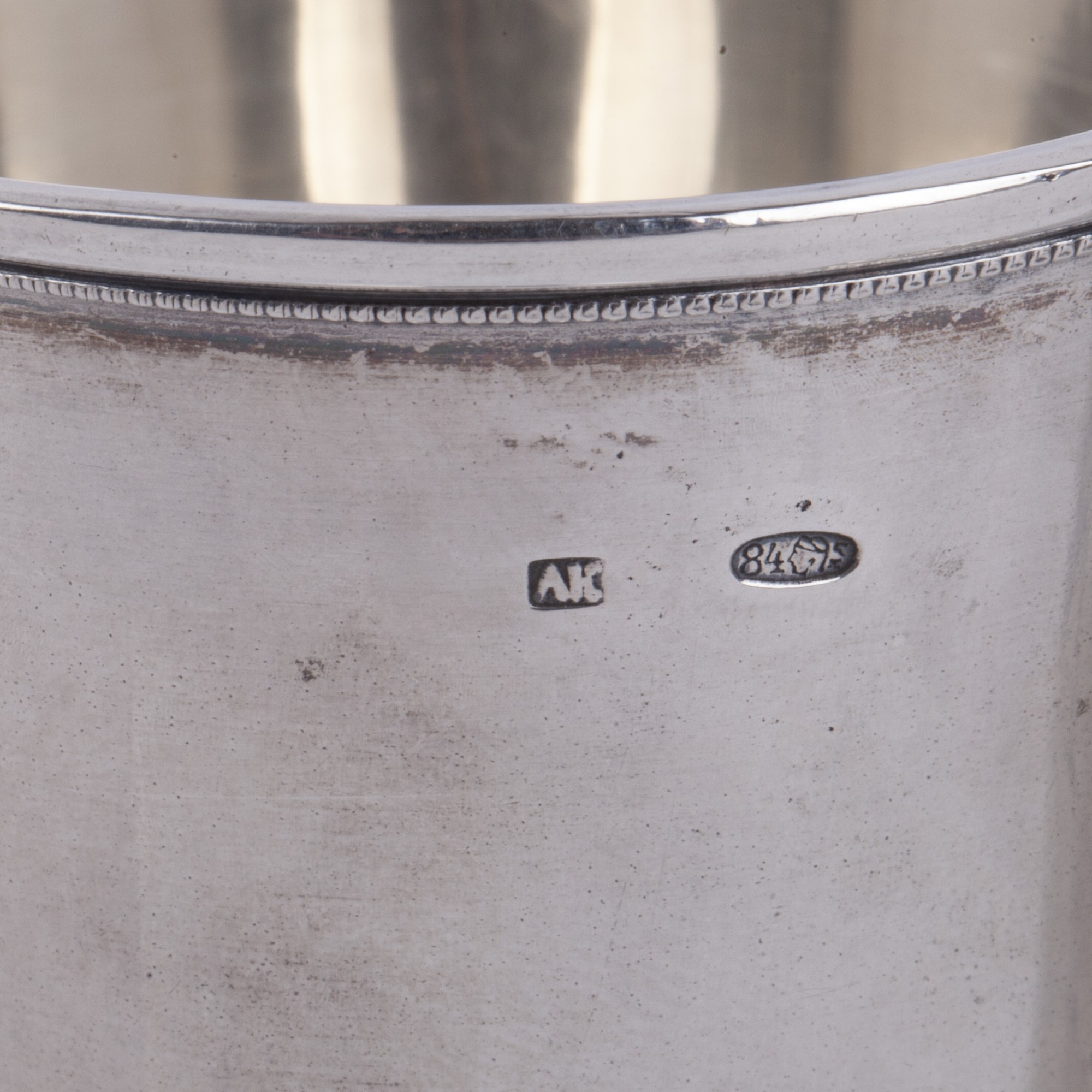
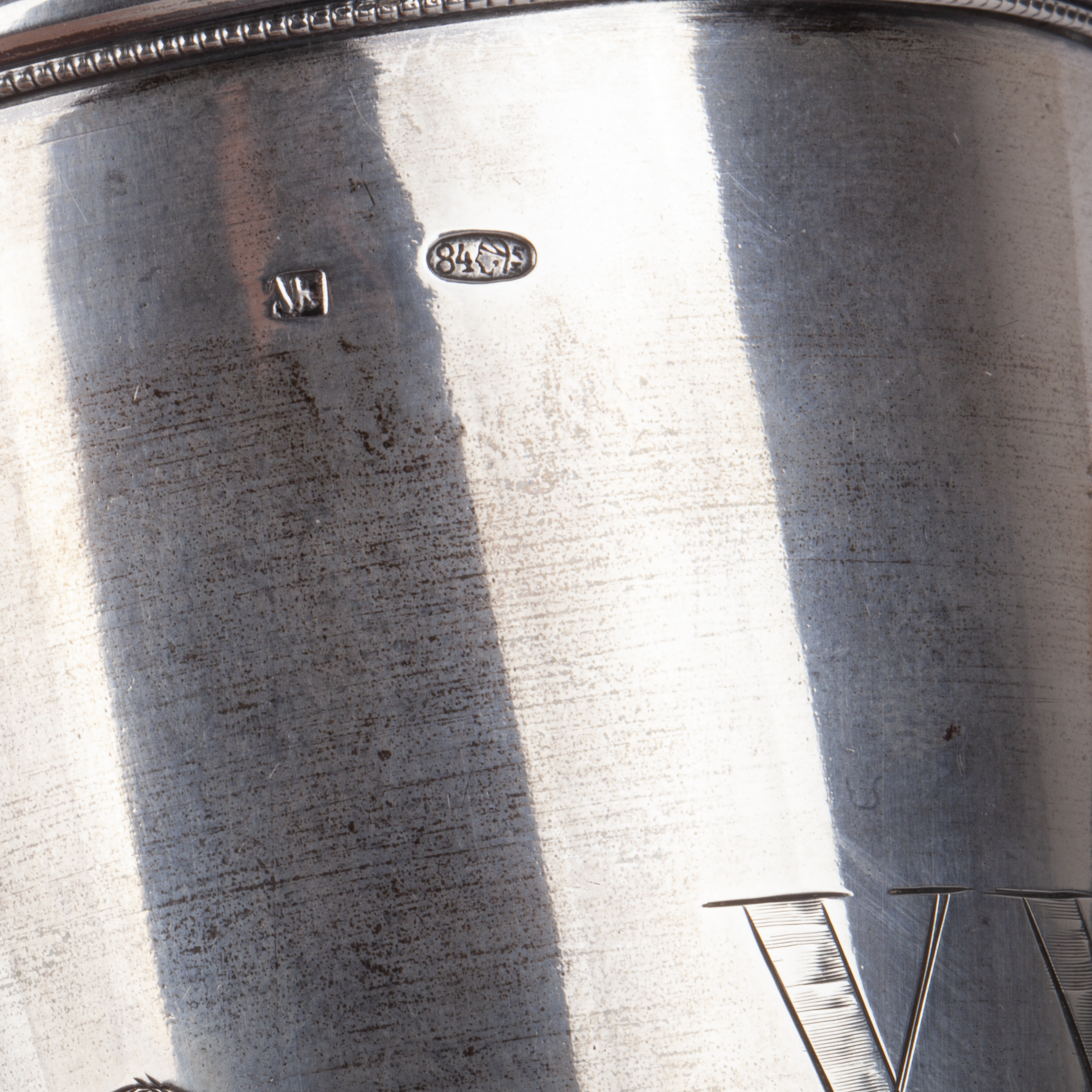
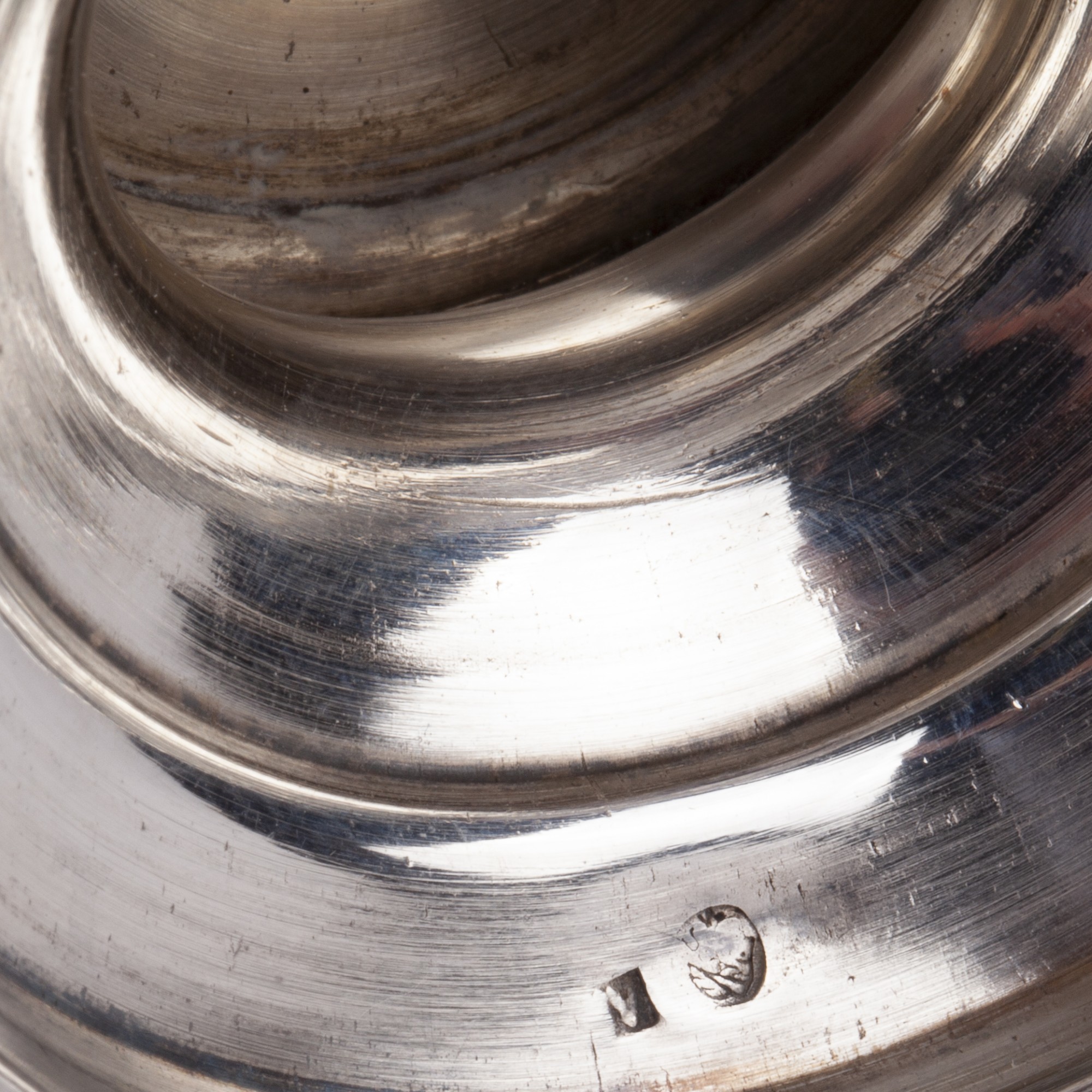
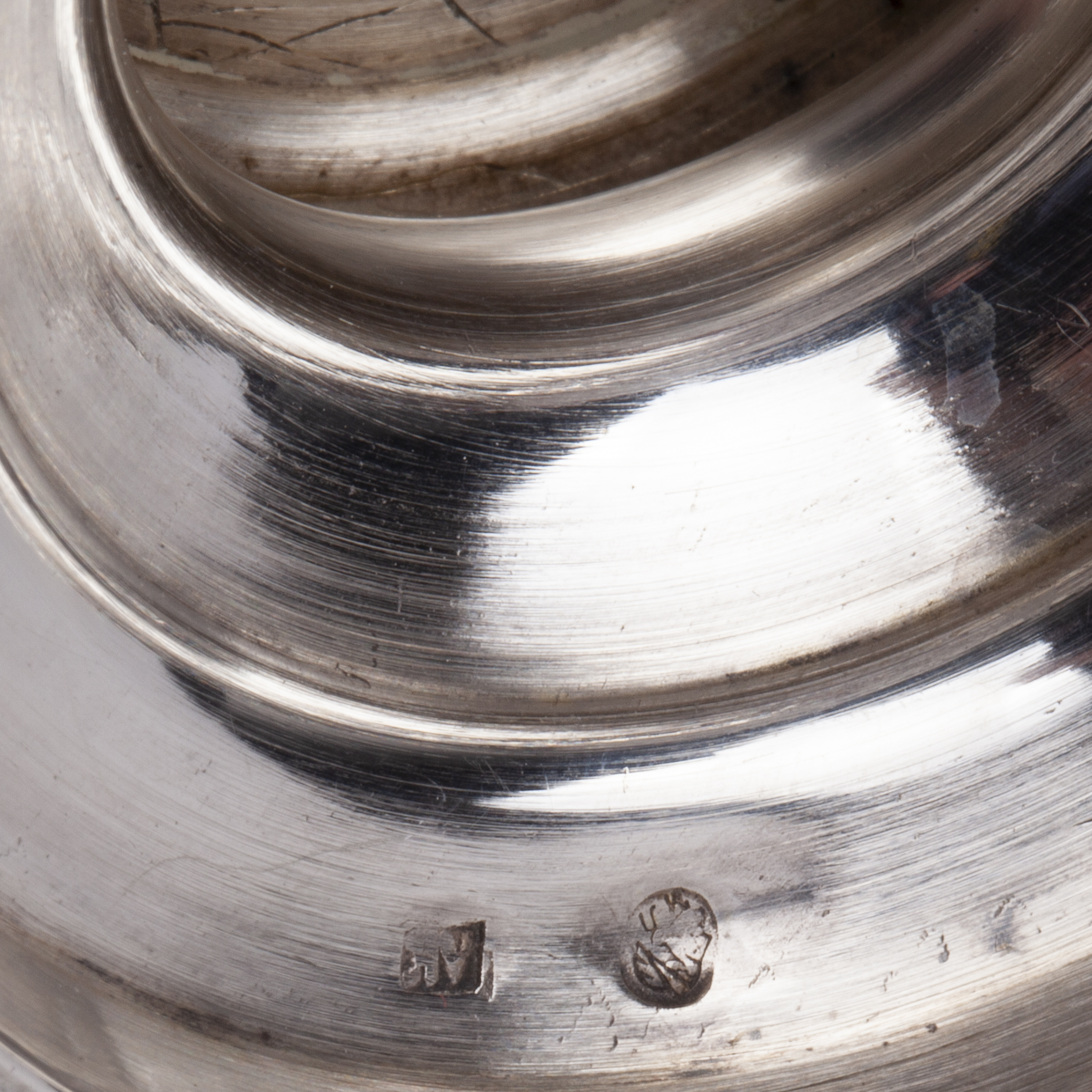
Marks: maker’s mark “АК” for Antip Kuzmichev; Moscow assay mark with 84 zolotnik silver standard.
A pair of elegant silver champagne flutes of tapering conical form, each raised on a circular spreading foot. The vessels are decorated with finely engraved Art Nouveau floral motifs: long curved stems, pendant bell-shaped blossoms and delicate linear foliage, arranged asymmetrically across the polished silver surface.
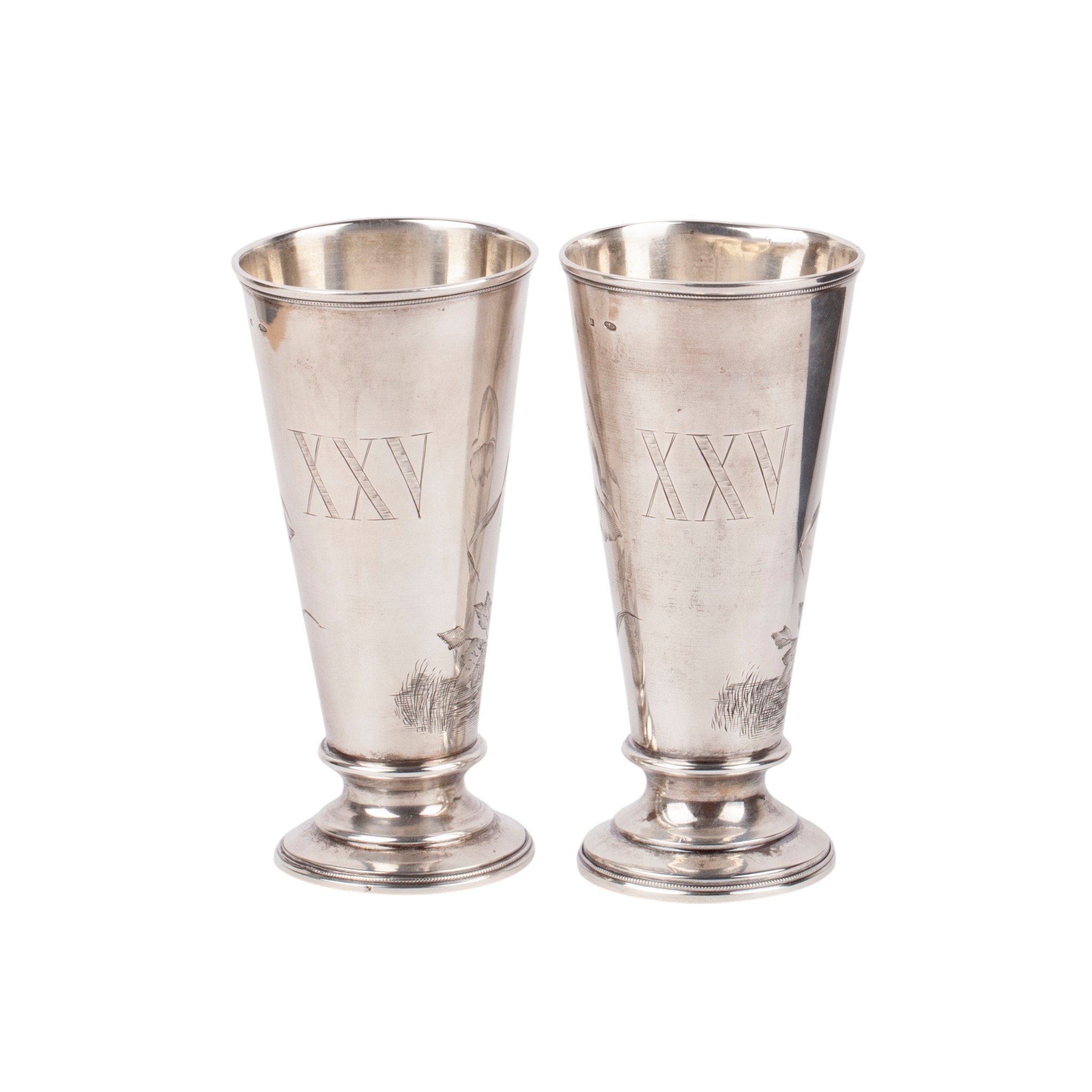
On the reverse of each flute is engraved the Roman numeral “XXV”, most probably indicating a twenty-fifth anniversary or jubilee gift.
Antip Ivanovich Kuzmichev occupies an important, though still insufficiently studied, place in Russian decorative art of the late nineteenth century. His factory, founded in 1856, produced a wide range of artistic works in gold, silver and bronze. By the end of the century it had grown into a substantial Moscow enterprise, known particularly for silver and enamel objects. Kuzmichev’s name is also associated with the export of Russian enamel wares to the United States, including works retailed by Tiffany & Co., which helped introduce Moscow silver and enamel to an international audience.
Although Kuzmichev was not an official supplier to the Imperial Court, his workshop was highly regarded. At the World’s Columbian Exposition in Chicago in 1893, his name was mentioned alongside major Russian silver firms such as Ovchinnikov and Kurlyukov.Starting price: 500€
Estimate: 600-700€
Hammer Price: 550 € -
Lot 0170
Fabergé Tea Glass Holder, St Petersburg, 1908–1917
Estimate: 1200-1500€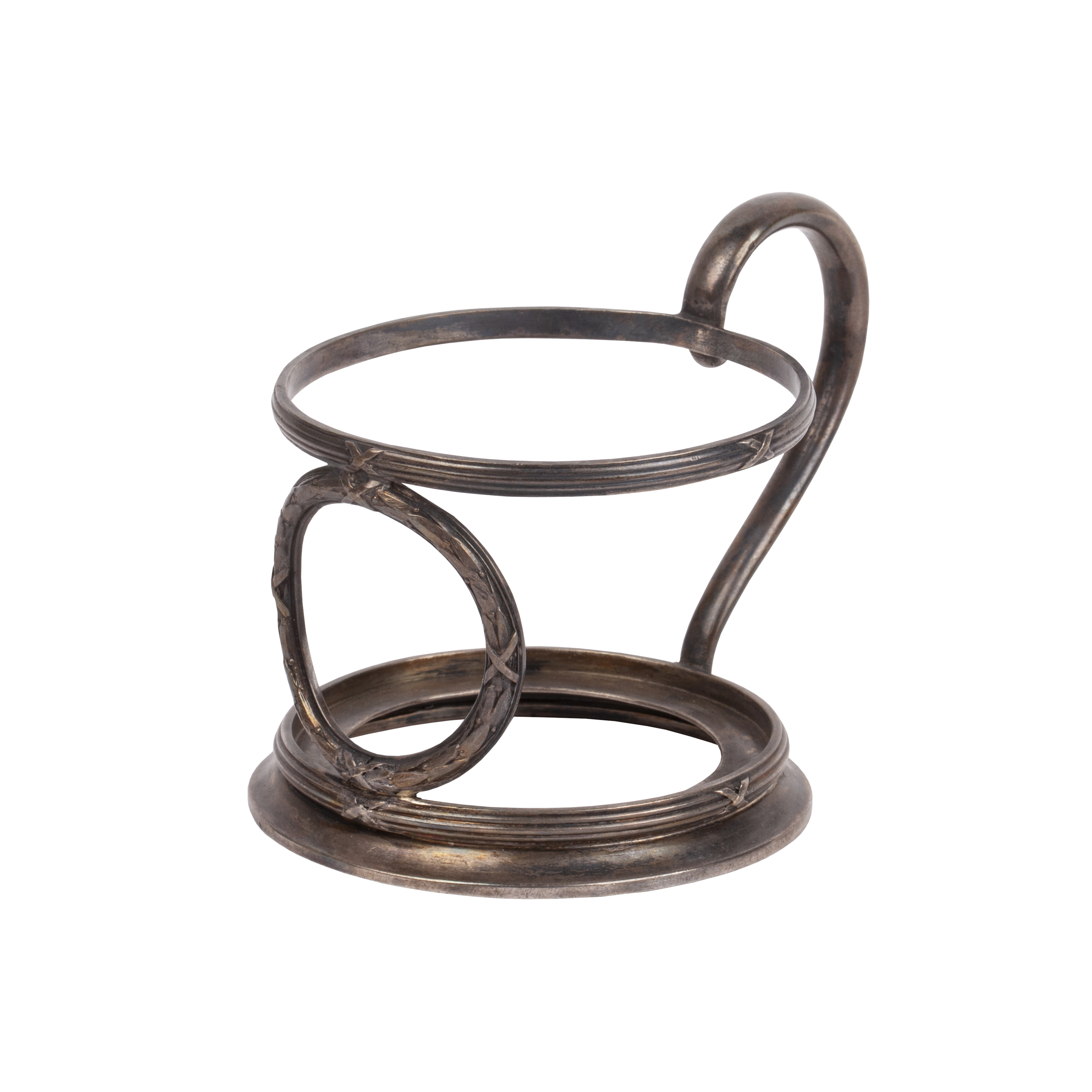
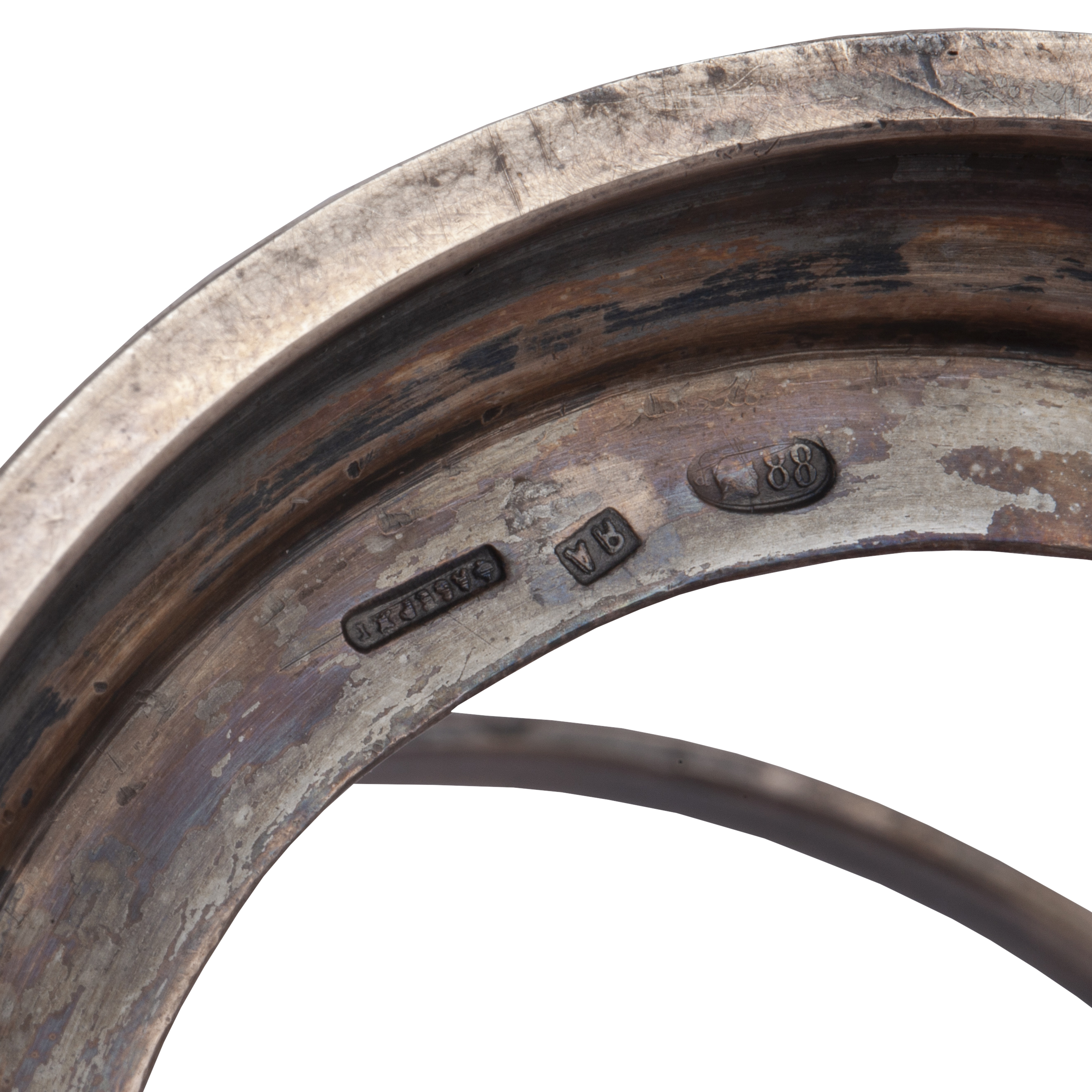
Lot 0170
Fabergé Tea Glass Holder, St Petersburg, 1908–1917
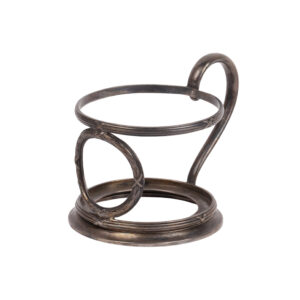
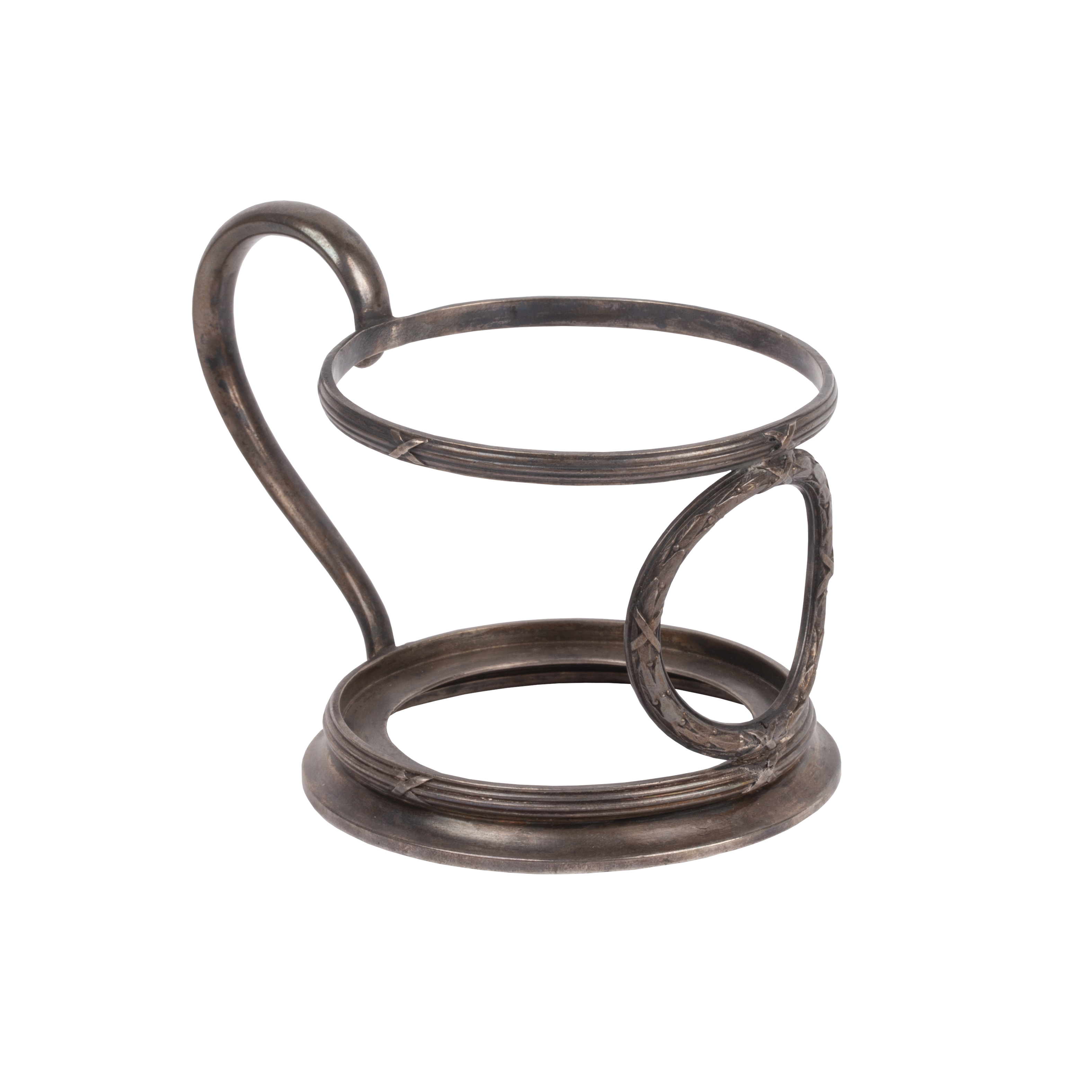
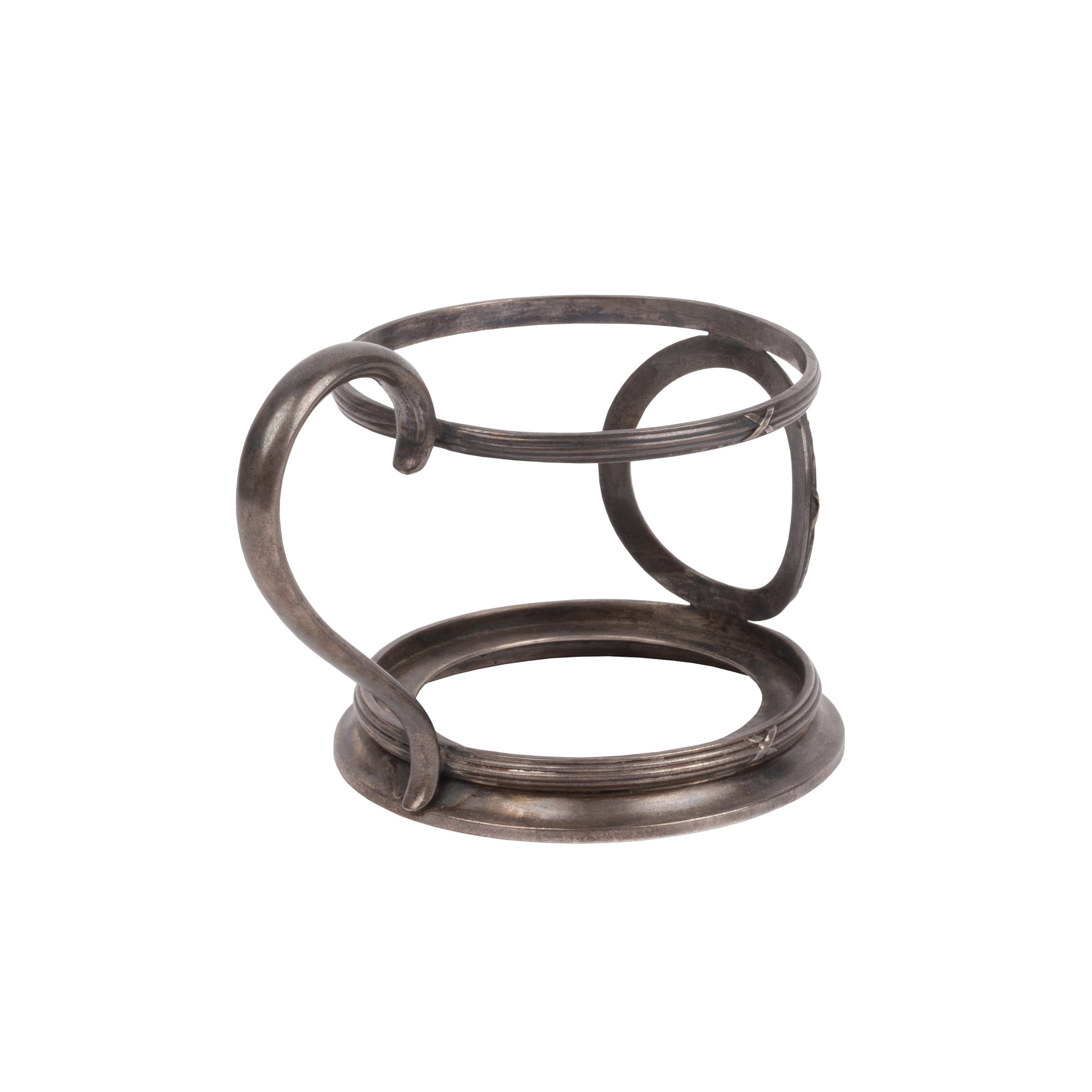
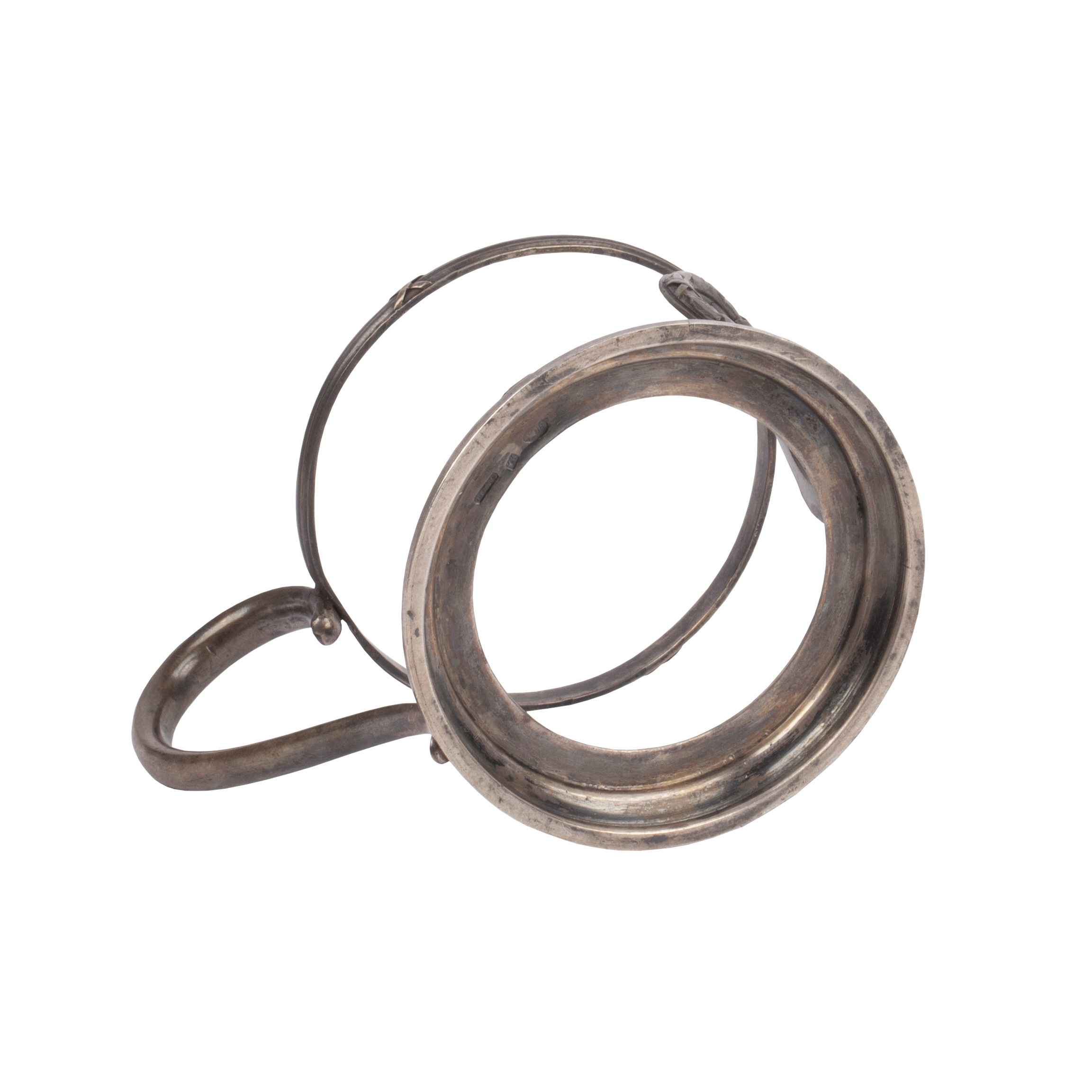
Estimate: 1200-1500€Faberge. Tea glass holder.
Silver, casting, chasing.
Makers mark of «Faberge» and «Ya A». Petersburg, 1908-1917.This elegant glass holder, crafted in silver, exemplifies Fabergé’s refined approach to functional objects. The openwork design features stylized foliate motifs in the form of the wreath, combining simplicity of form with subtle decorative detail.
Karl Gustav Hjalmar Armfelt (1873–1959) was a Finnish-born goldsmith who trained in St. Petersburg and from 1891 worked for Fabergé under Anders Nevalainen. In 1904 he became a master and took over the workshop of Johan Victor Aarne, producing for Fabergé until 1916. His works included jeweled mounts, enamelled gold objects, hardstone carvings, icons, and silver figurines.
Dimensions: 7.5 x 11 x 7.7 cm. Weight: 115.3 g.Starting price: 1000€
Estimate: 1200-1500€
Hammer Price: Not sold -
Lot 0171
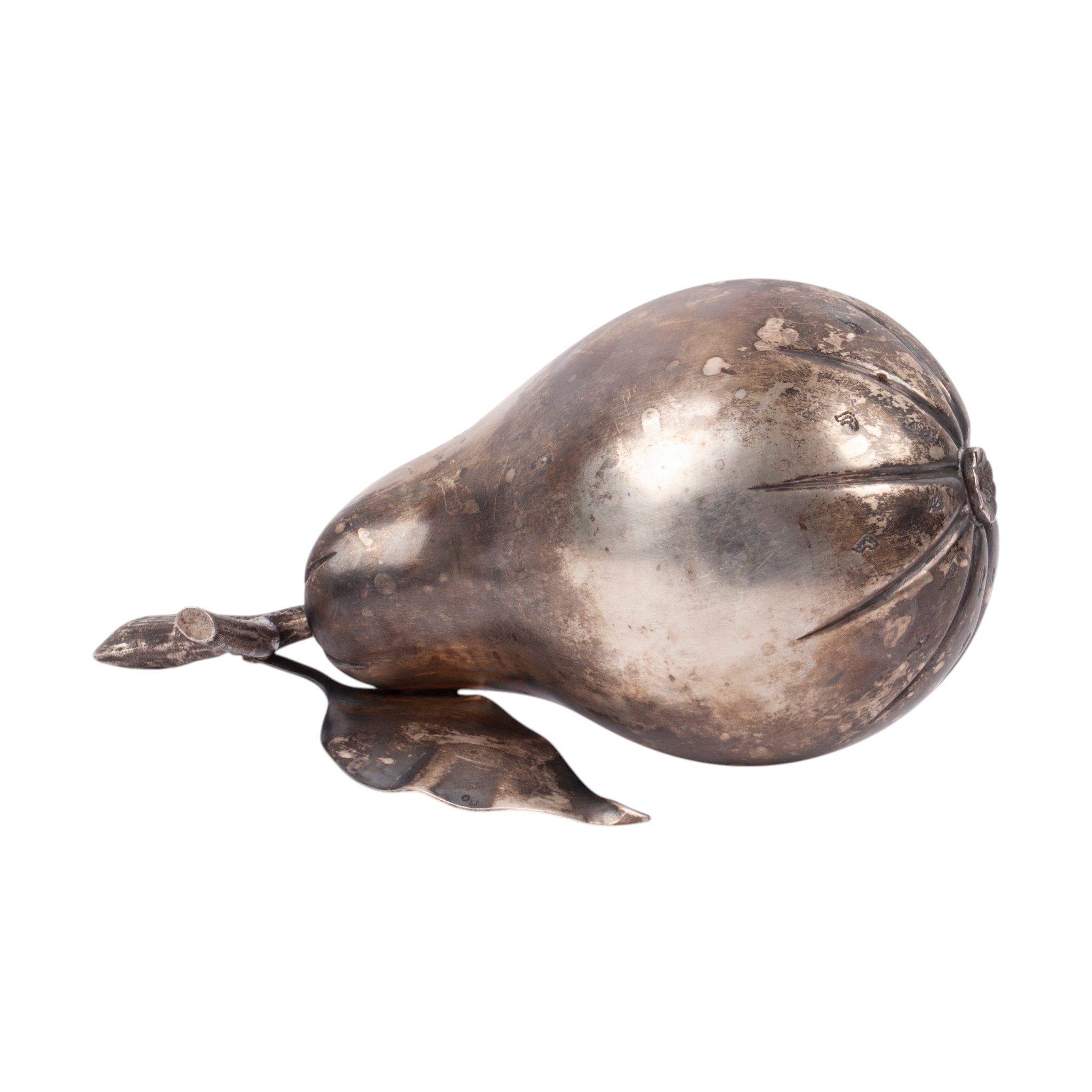
Russian Trompe-l’Oeil Silver Kovsh in the Form of a Half Pear, Moscow, 1908–1917
Estimate: 2500-3500€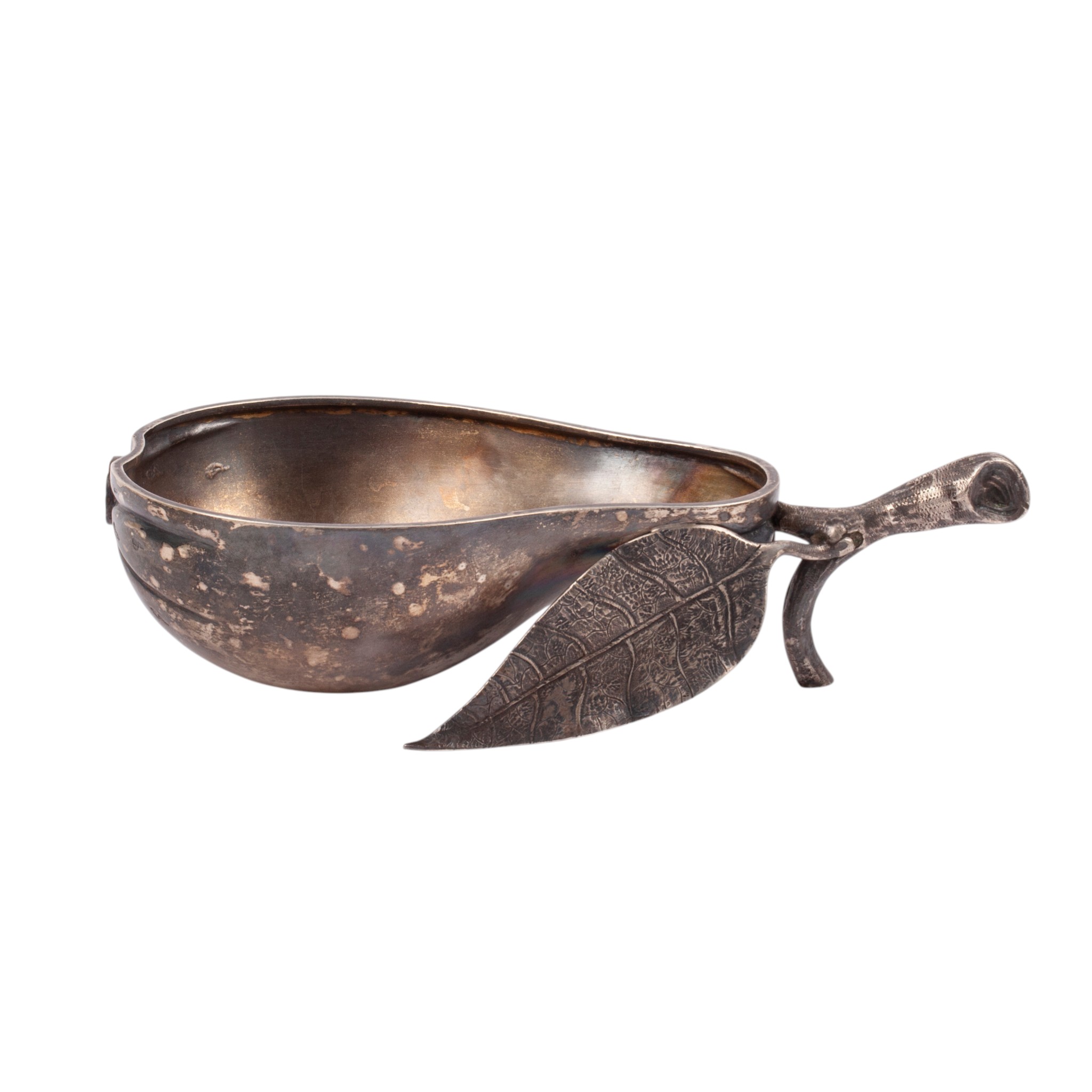
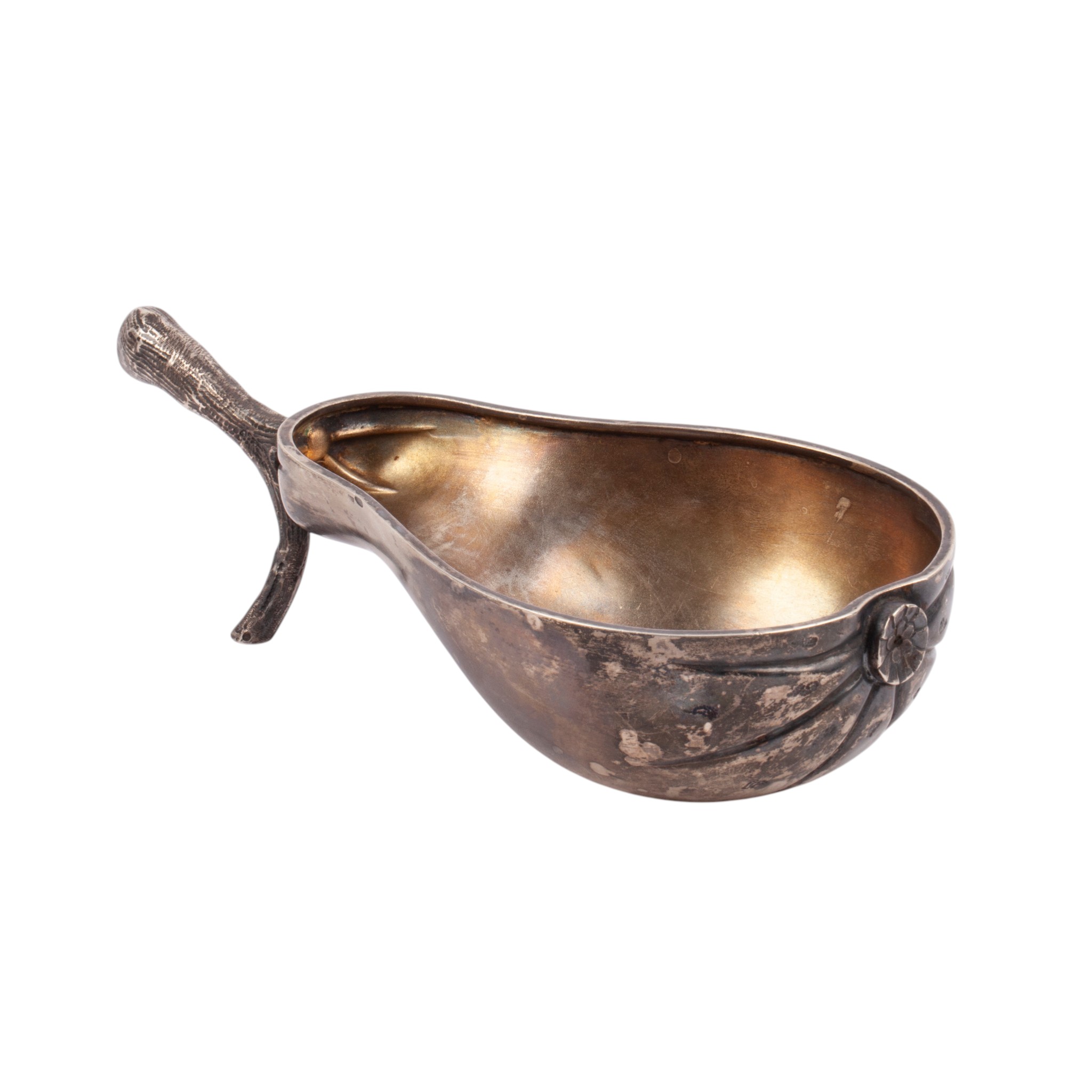
Lot 0171
Russian Trompe-l’Oeil Silver Kovsh in the Form of a Half Pear, Moscow, 1908–1917
Estimate: 2500-3500€A Russian Trompe-l’oeil Kovsh in the Form of a Half Pear
Moscow, master “IV”, 1908-1917.
Silver; cast, chased.
Size: 7.0 × 13.5 × 11.5 cm. Weight: 249 g.
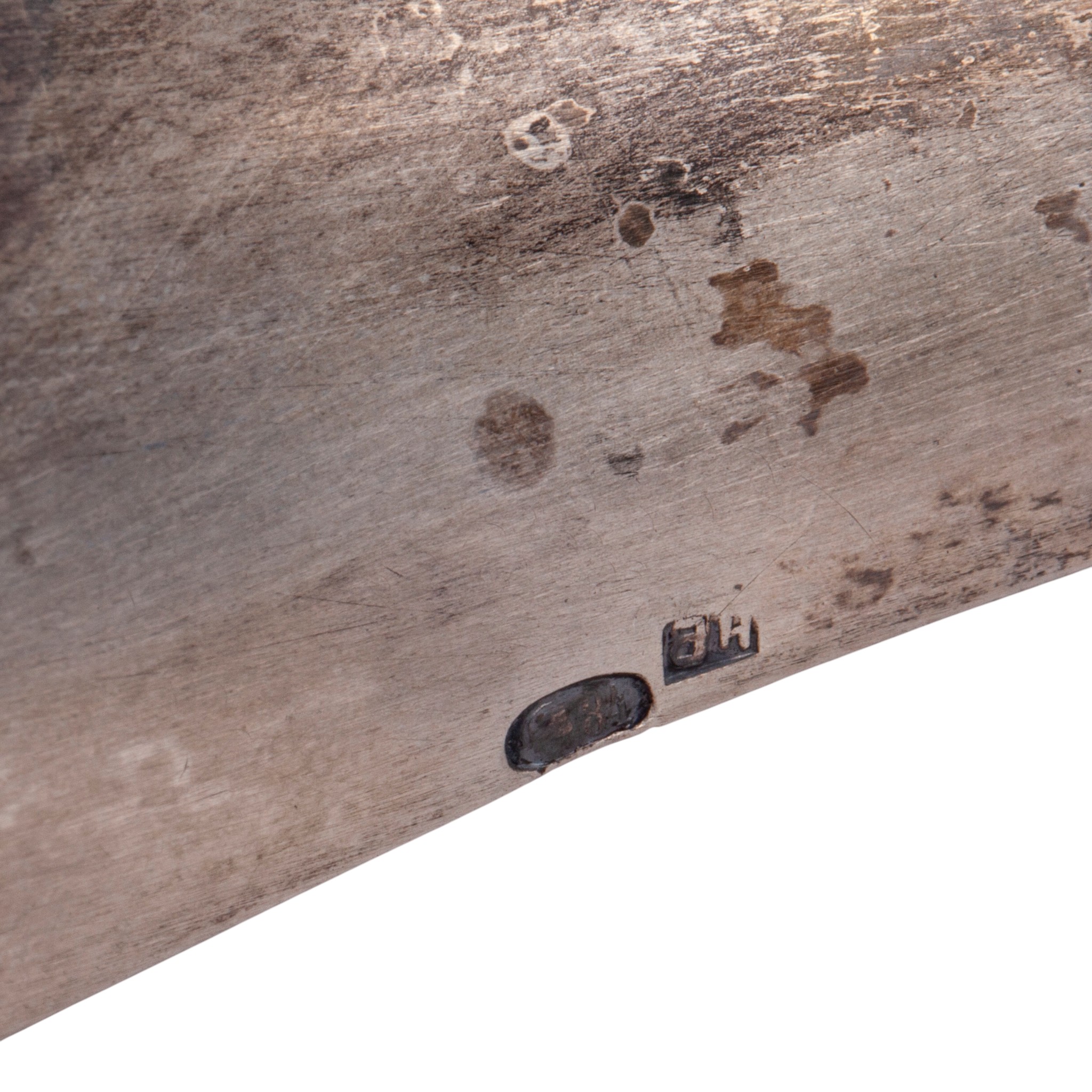
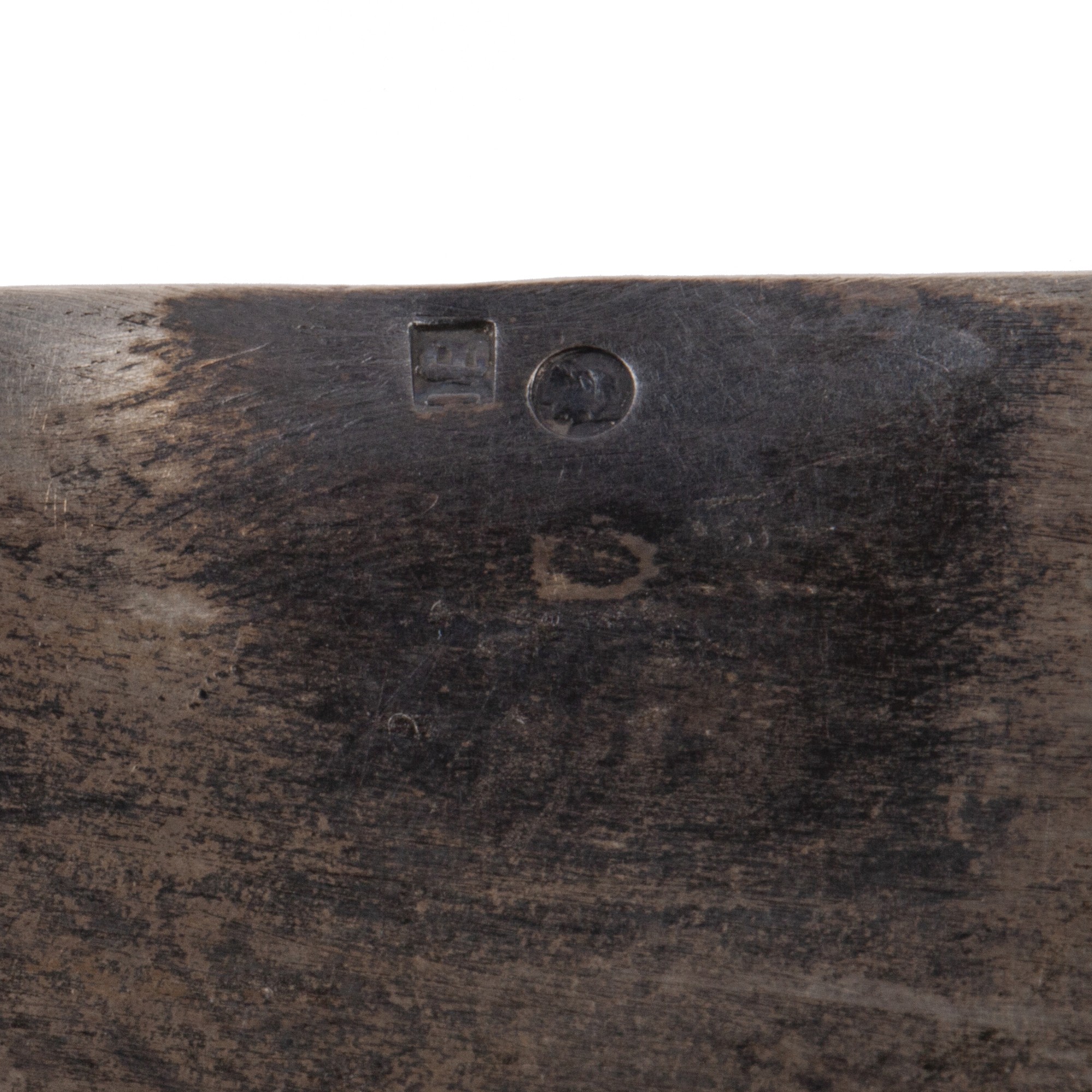
Marks: maker’s mark “IV”; Moscow assay mark; 84 zolotnik silver standard.
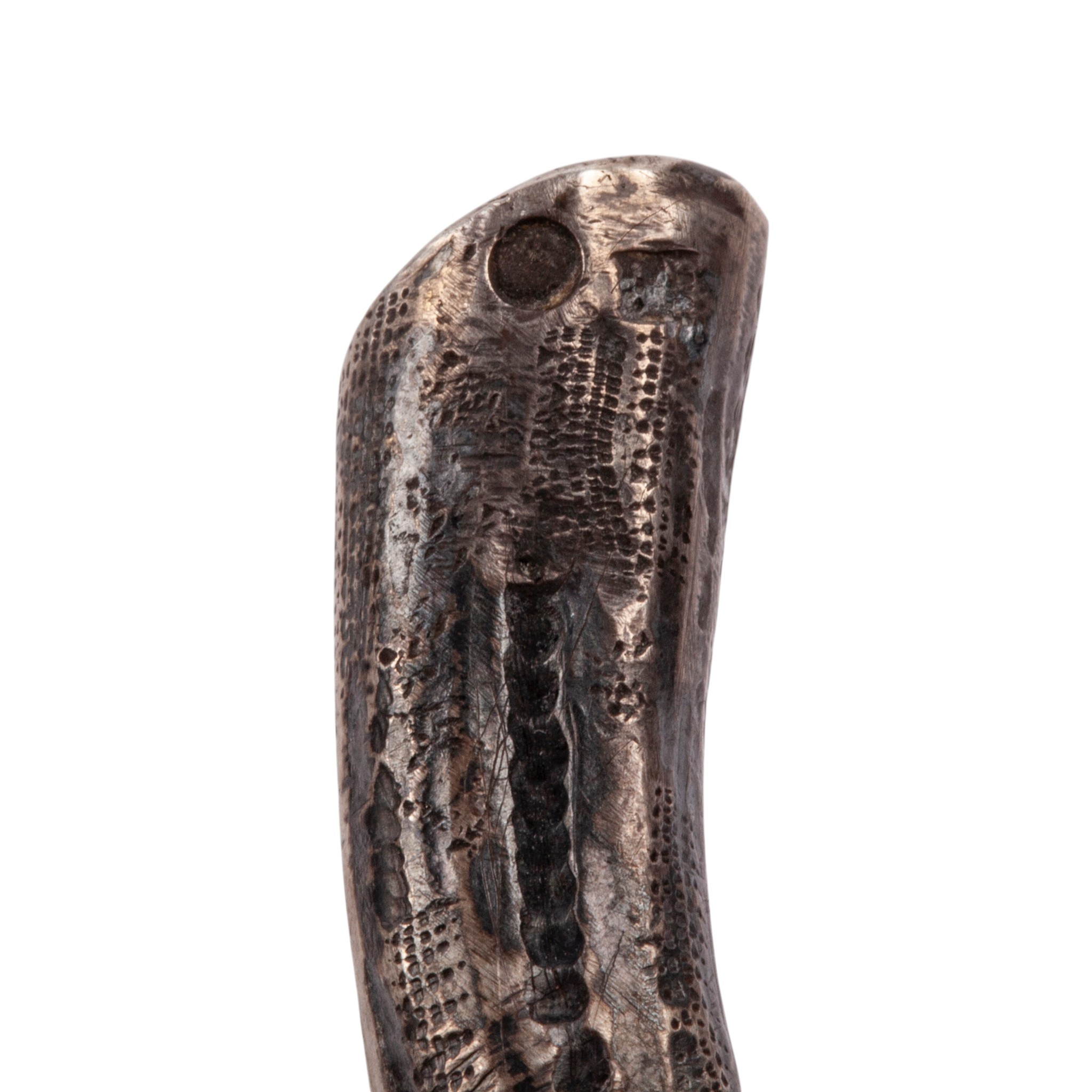
A finely modelled silver kovsh conceived as a trompe-l’oeil half pear, its sculptural body rendered with softly swelling contours and an asymmetrical profile that closely follows the natural form of the fruit. The surface is articulated with restrained linear accents suggesting the pear’s ribs and growth, while the handle is cast as a curving branch and joined to a sharply observed leaf, its veins and serrated edges carefully chased.
The piece belongs to the distinctive current of Moscow silver of the late Imperial period, when masters working in the Art Nouveau idiom turned to organic form, botanical motifs, and fluid silhouette.Starting price: 2000€
Estimate: 2500-3500€
Hammer Price: Not sold -
Lot 0172
Fabergé Silver Presentation Bowl Set with Russian Imperial Roubles, St Petersburg, 1896
Estimate: 15000-18000€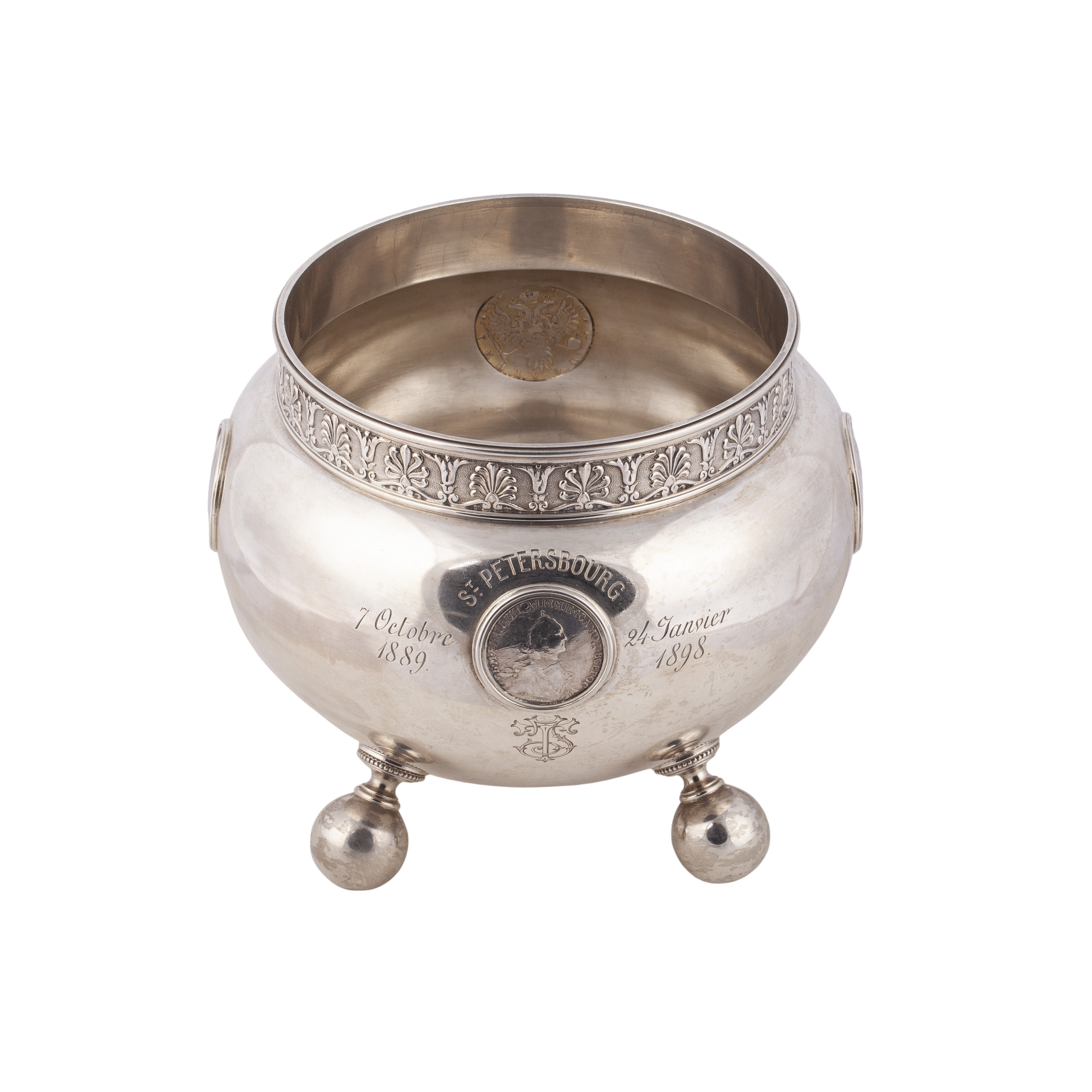
Lot 0172
Fabergé Silver Presentation Bowl Set with Russian Imperial Roubles, St Petersburg, 1896
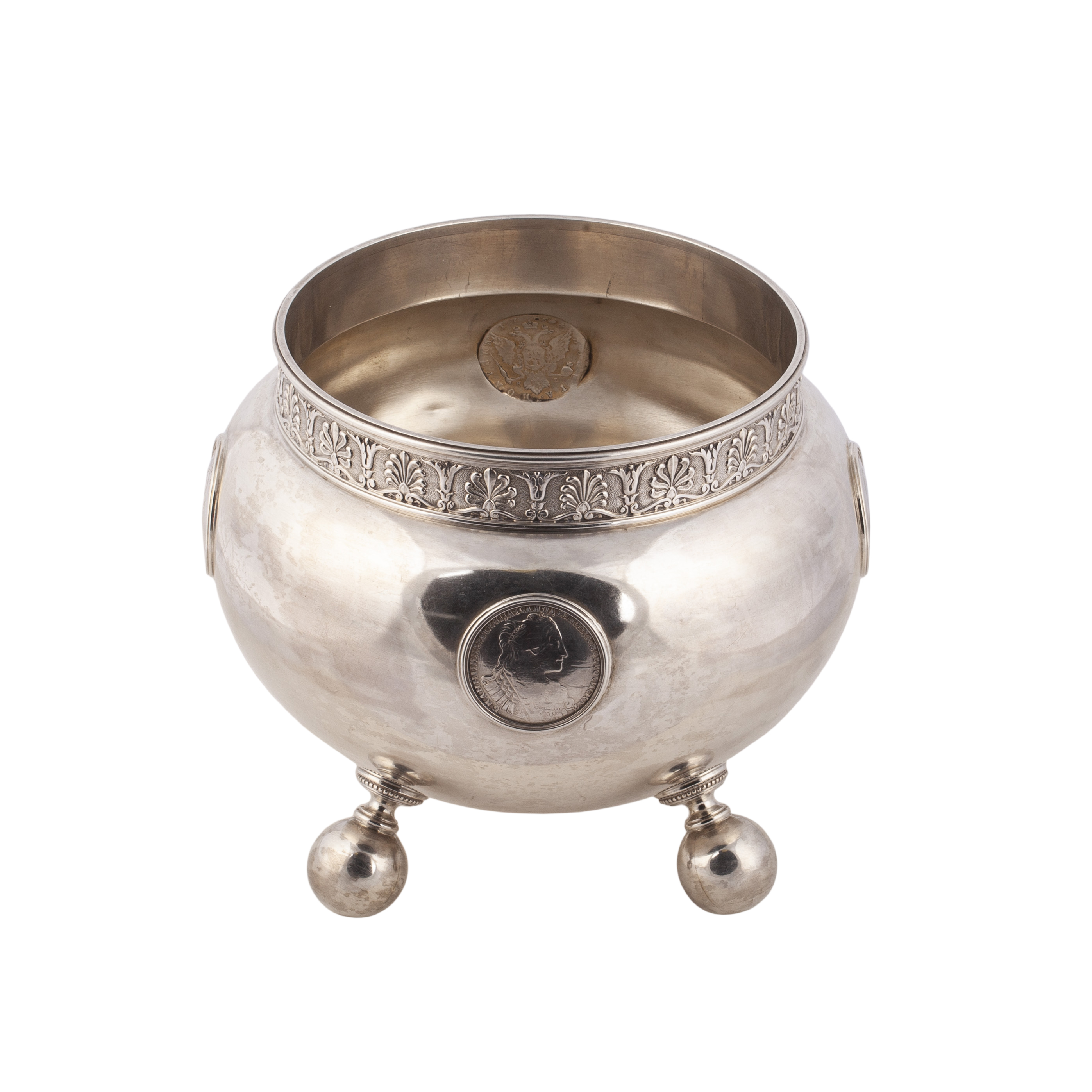
Estimate: 15000-18000€A Fabergé Silver Presentation Bowl Set with Russian Imperial Roubles
St Petersburg, firm of Karl Fabergé, workmaster Stefan Wäkevä, 1896.
Silver, Russian silver rouble coins; casting, repoussé, chasing, engraving, applied coin mounts.
Weight: 864 g.
Dimensions: 15 × 18 × 18 cm.
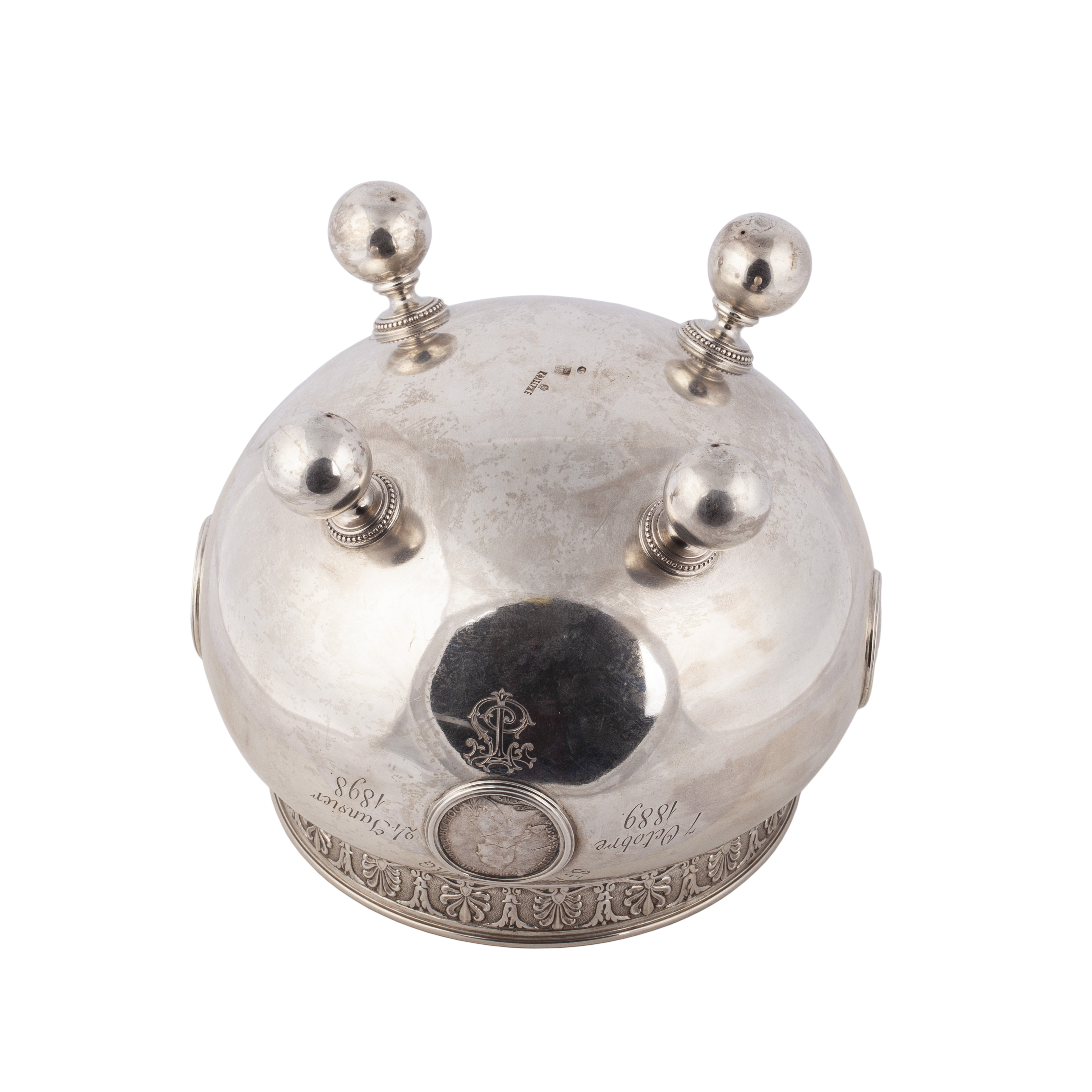
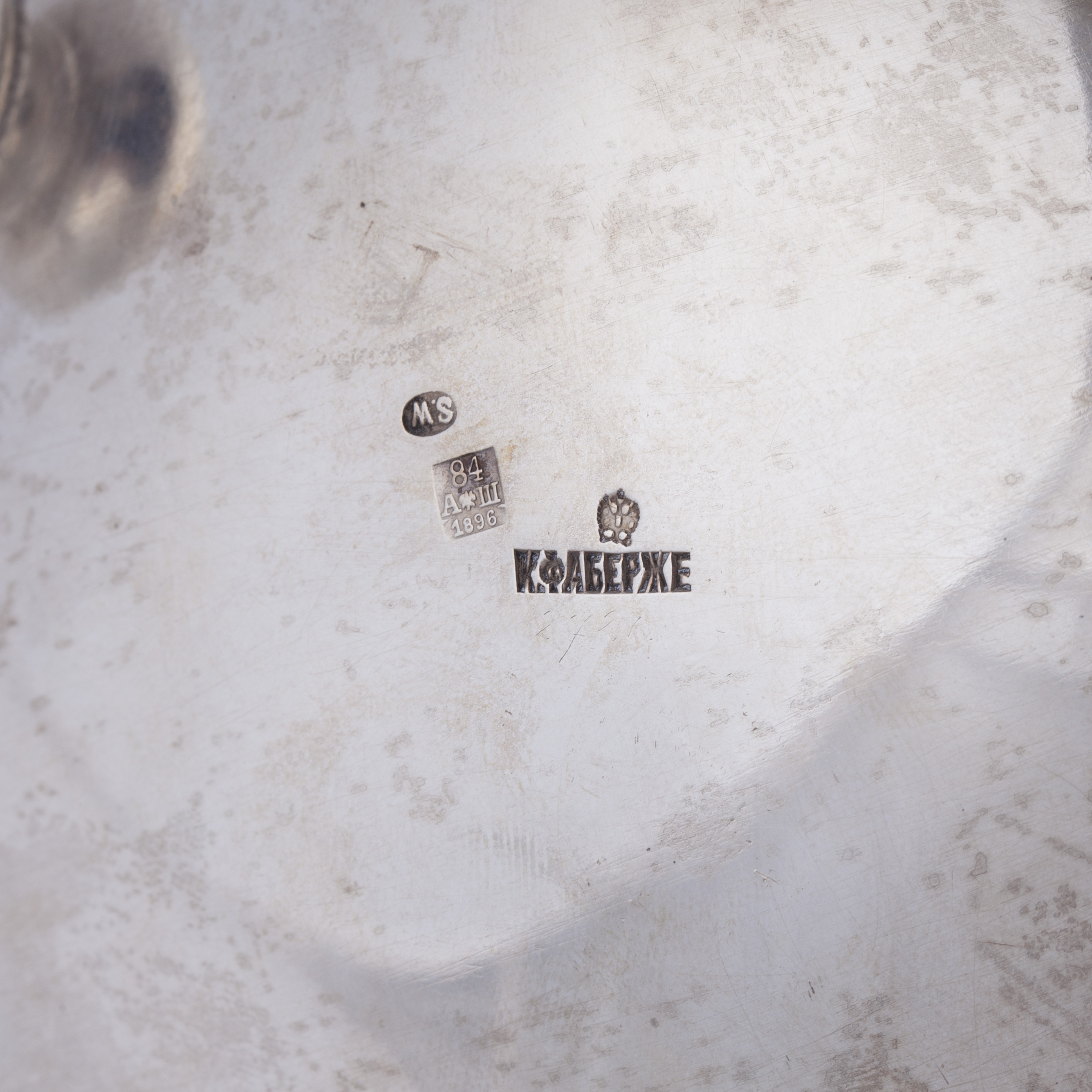
Marks: firm mark К. ФАБЕРЖЕ beneath the Imperial warrant; workmaster’s mark S.W in an oval for Stefan Wäkevä; St Petersburg assay mark, 84 zolotniki silver standard, dated 1896.
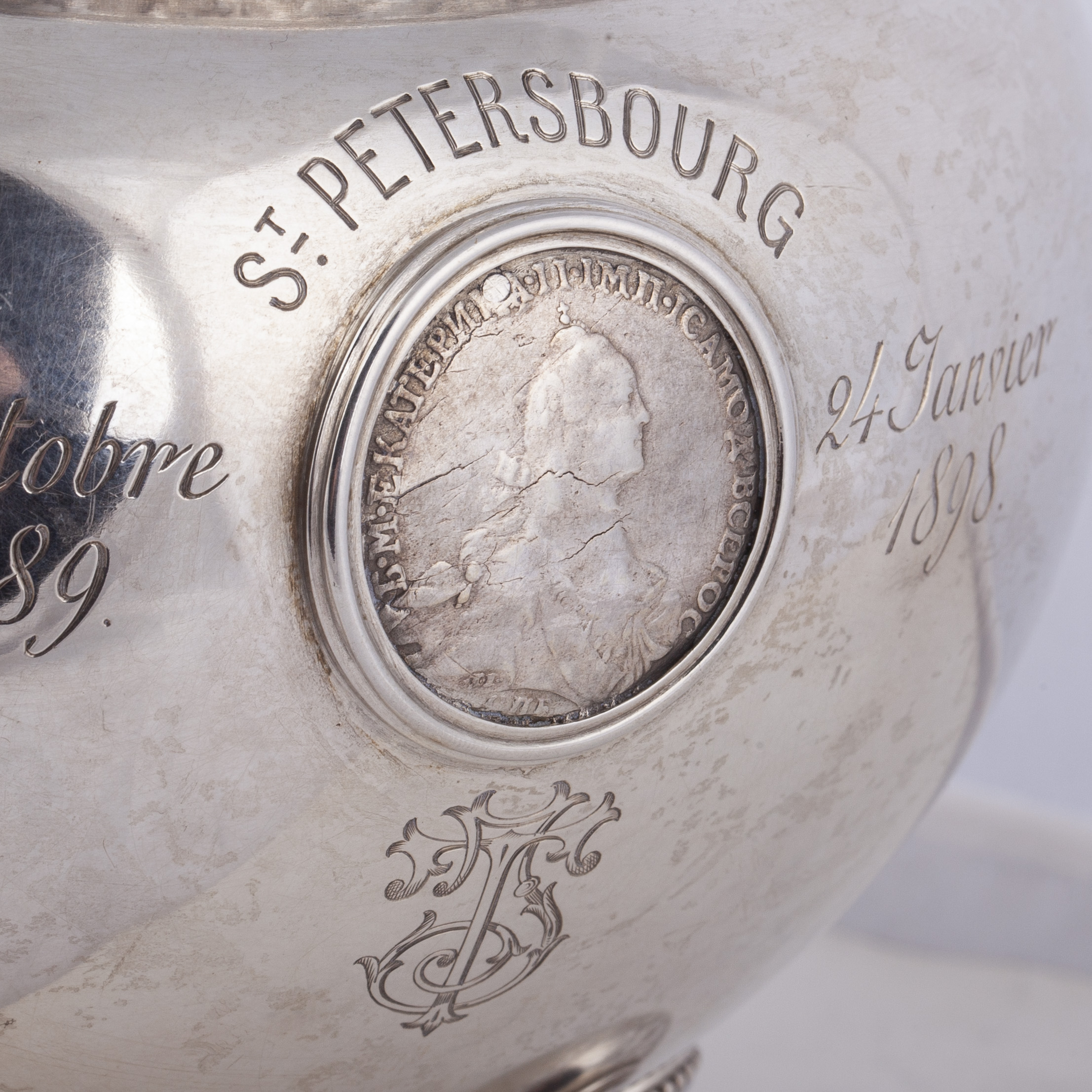
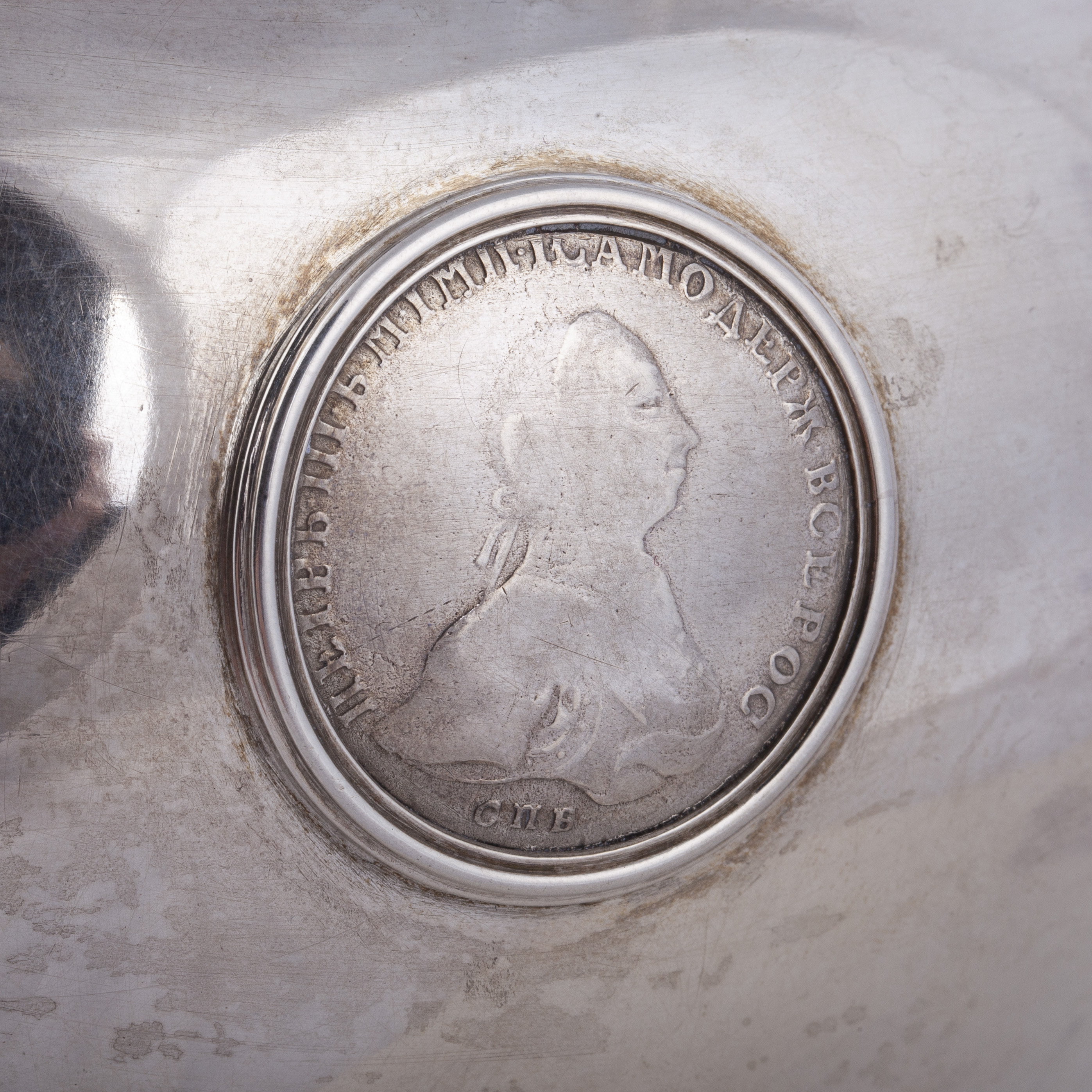
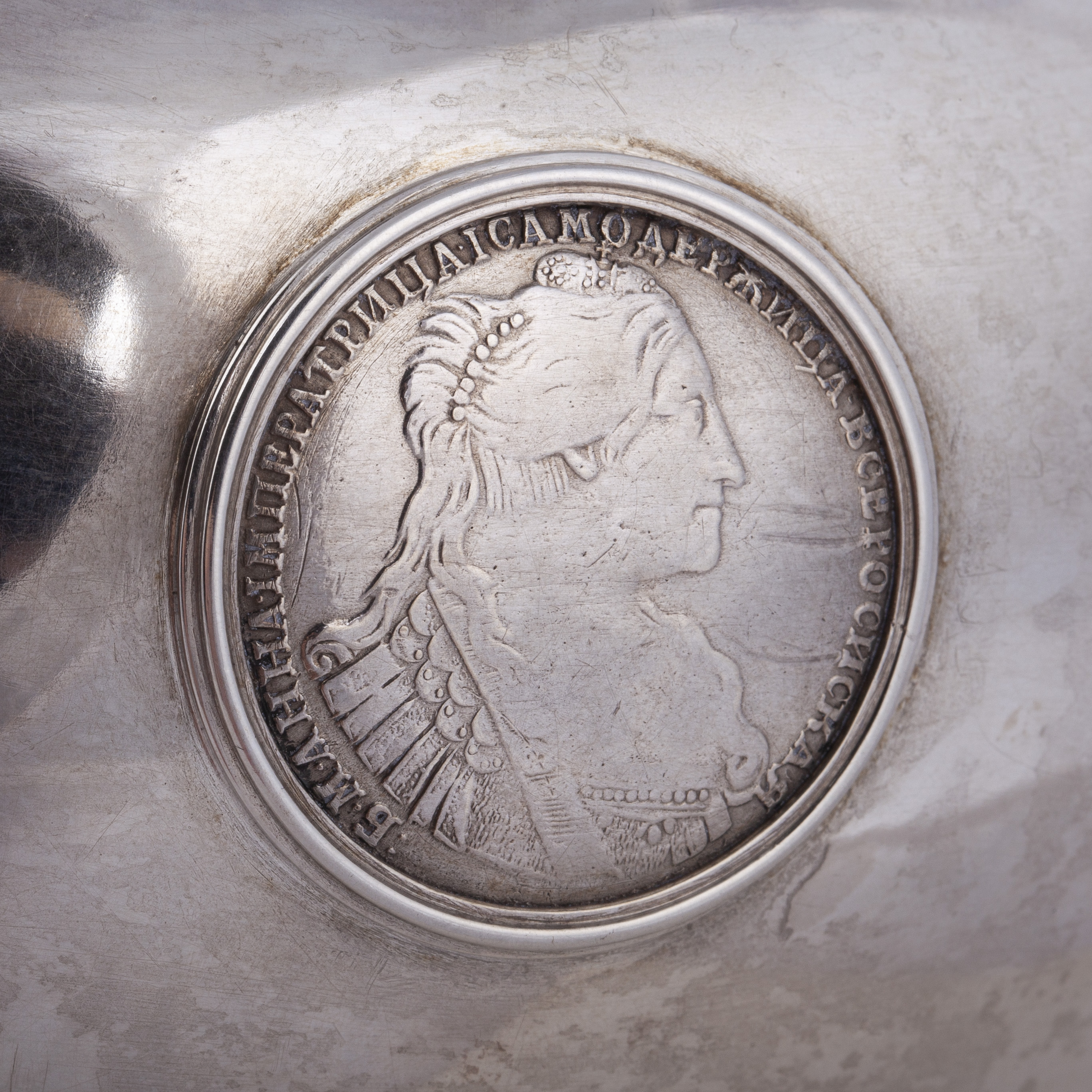
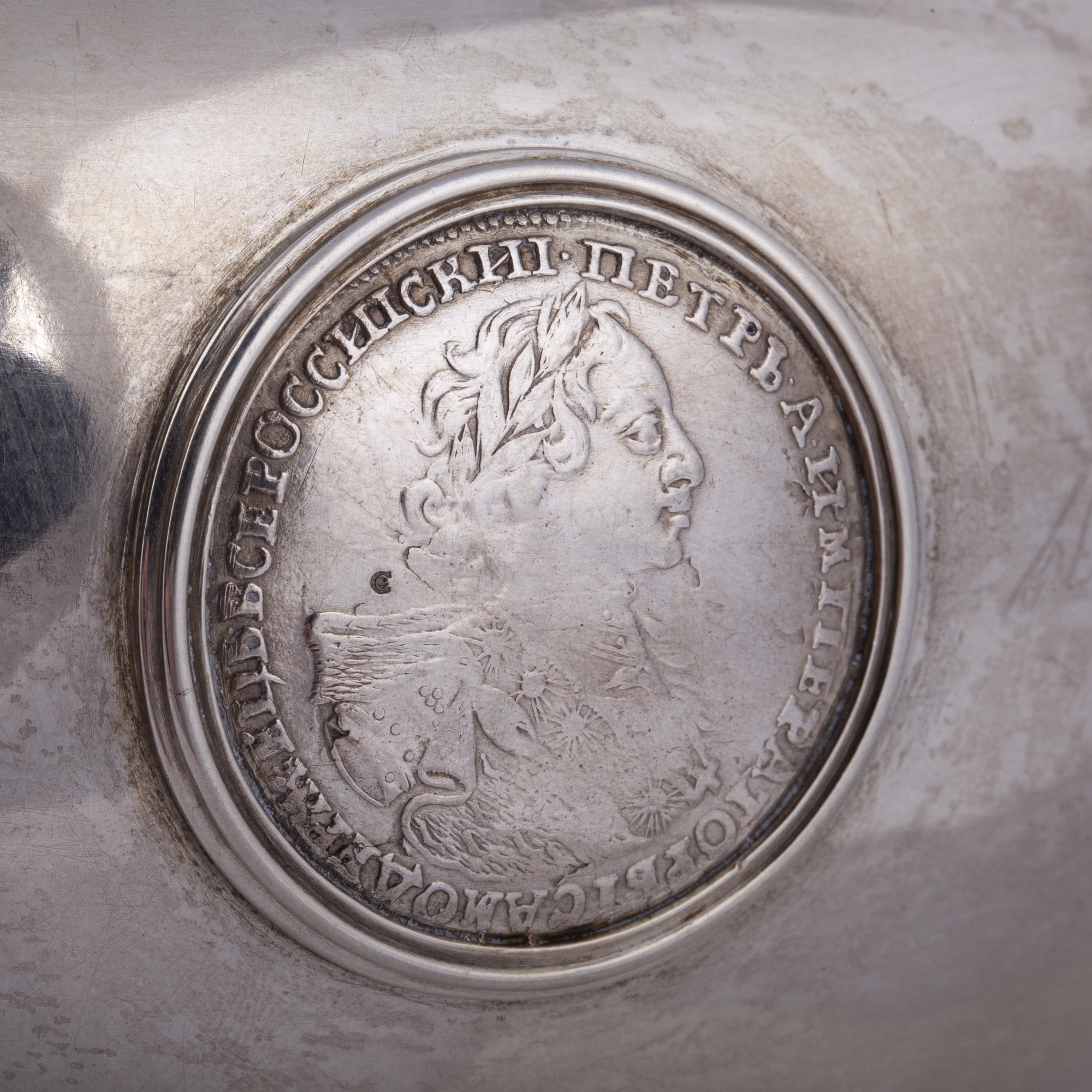
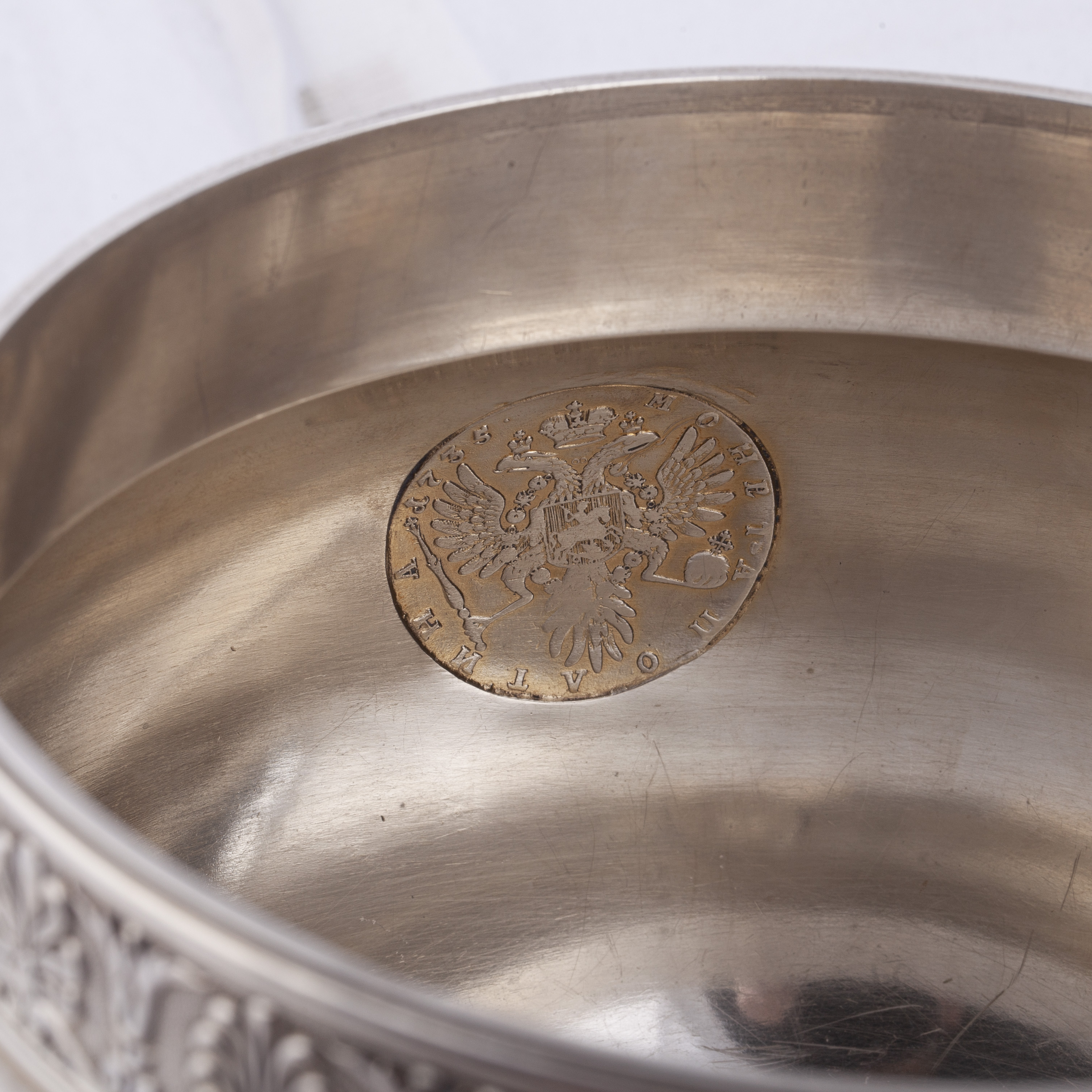
A silver presentation bowl of rounded cauldron form, raised on three spherical feet and decorated with an applied frieze of classical palmettes below the rim. The body is set with four Russian Imperial silver roubles: a rouble of Peter I, a rouble of Anna Ioannovna, a rouble of Peter III and a rouble of Catherine II. The coins are mounted in circular silver frames and arranged around the body as historical medallions, turning the vessel into a dynastic and numismatic object.
The principal side bears the engraved inscription “St. Petersbourg” and the dates 7 Octobre 1889 and 24 Janvier 1898, with a finely engraved monogram below.
Stefan Wäkevä was one of the important St Petersburg silversmiths supplying the Fabergé firm. Born in 1833 in the Viipuri Province of the Grand Duchy of Finland, he trained in St Petersburg and became a master silversmith in 1856. His workshop supplied Fabergé with high-quality silverware, including tea services, tankards and punch bowls.Starting price: 12000€
Estimate: 15000-18000€
Hammer Price: Not sold -
Lot 0173
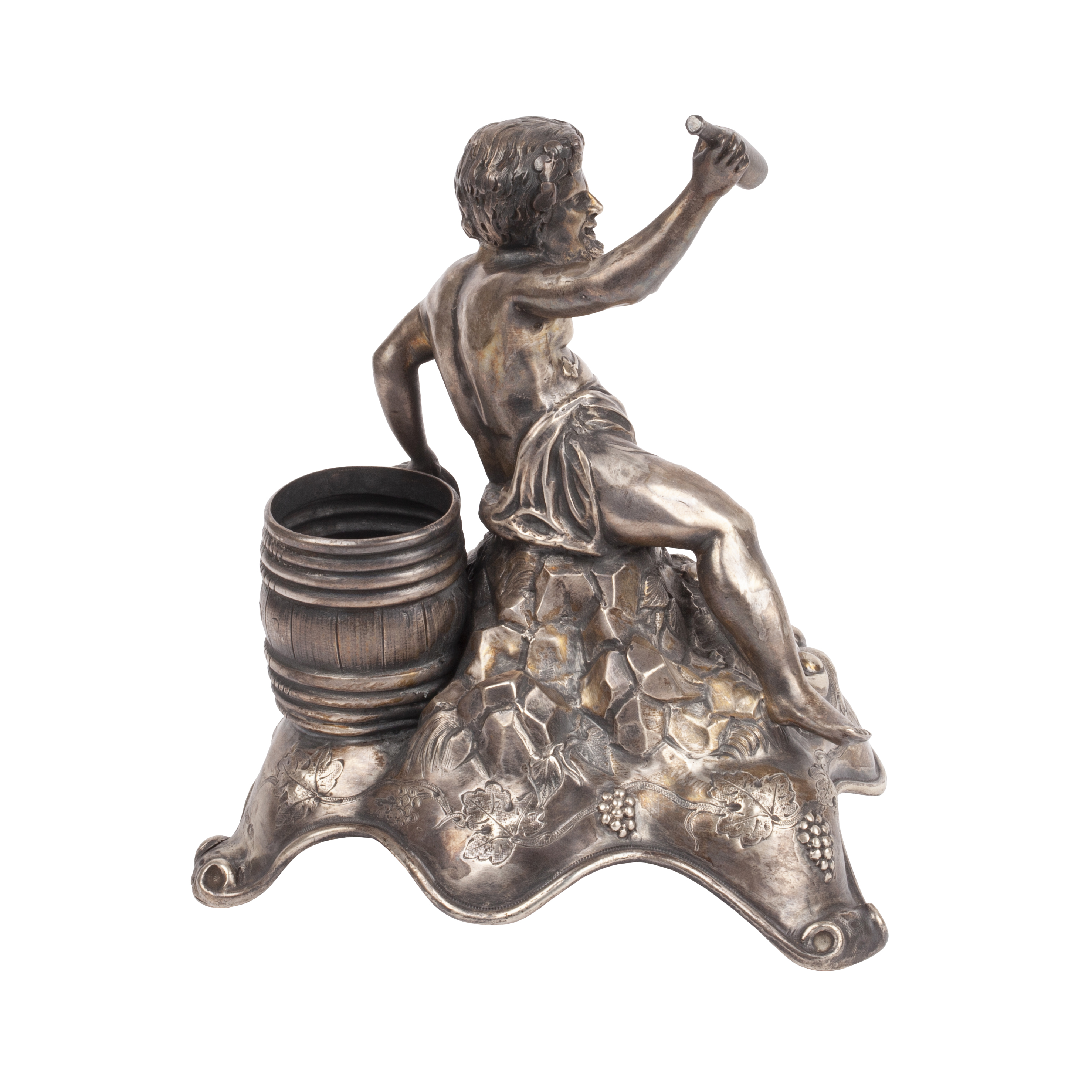
Figure of the Ancient God of Winemaking by First Kiev Artel
Estimate: 3000-4000€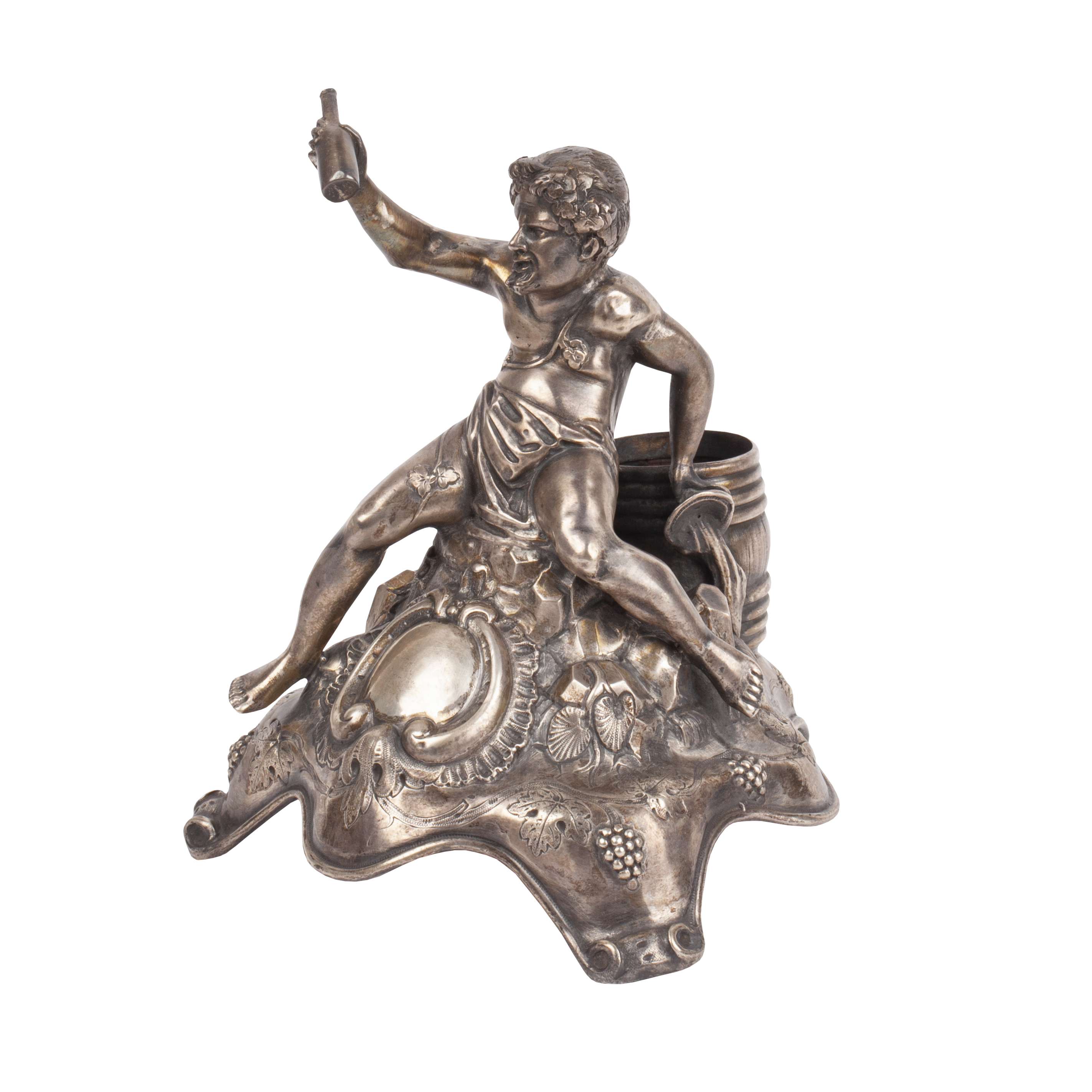
Lot 0173
Figure of the Ancient God of Winemaking by First Kiev Artel
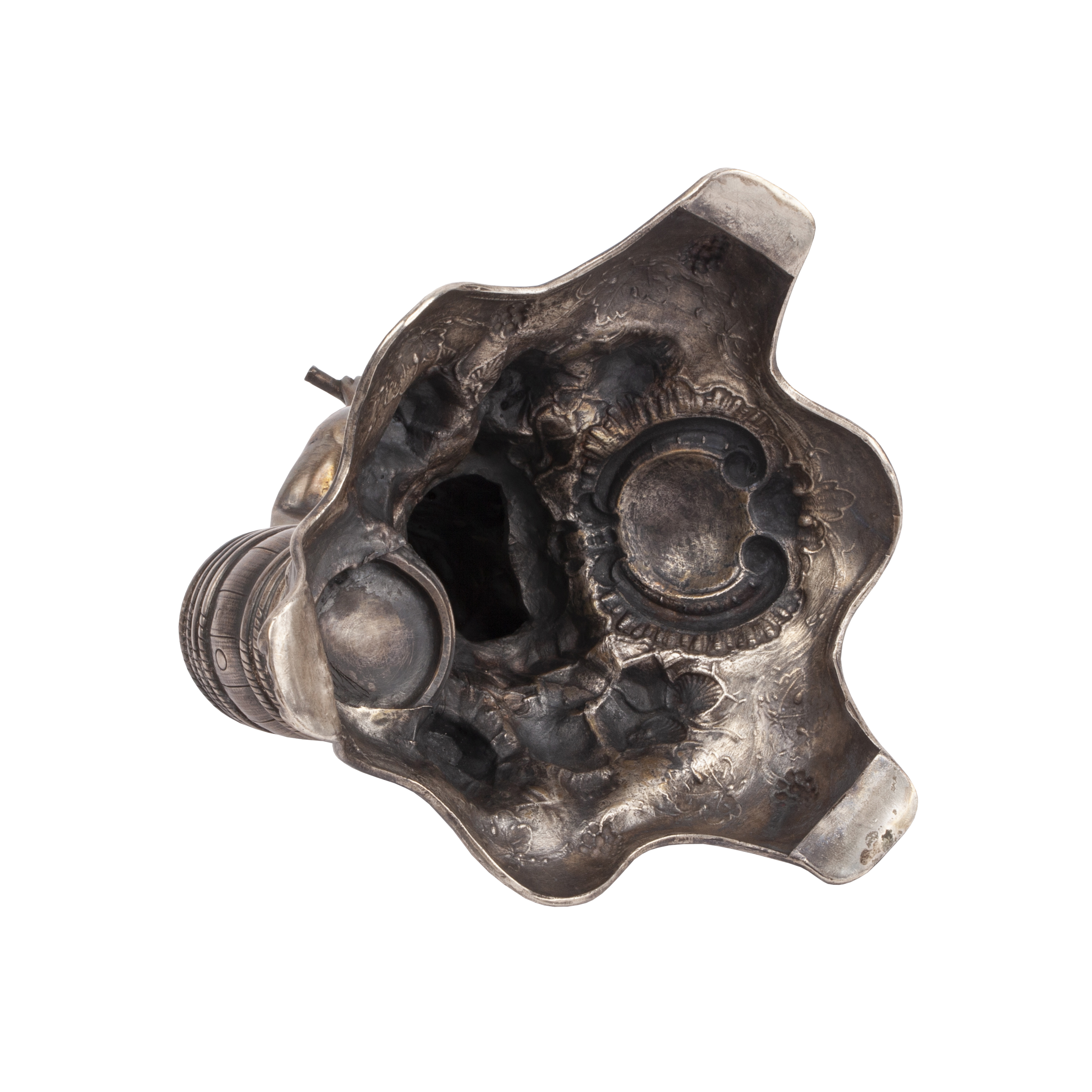
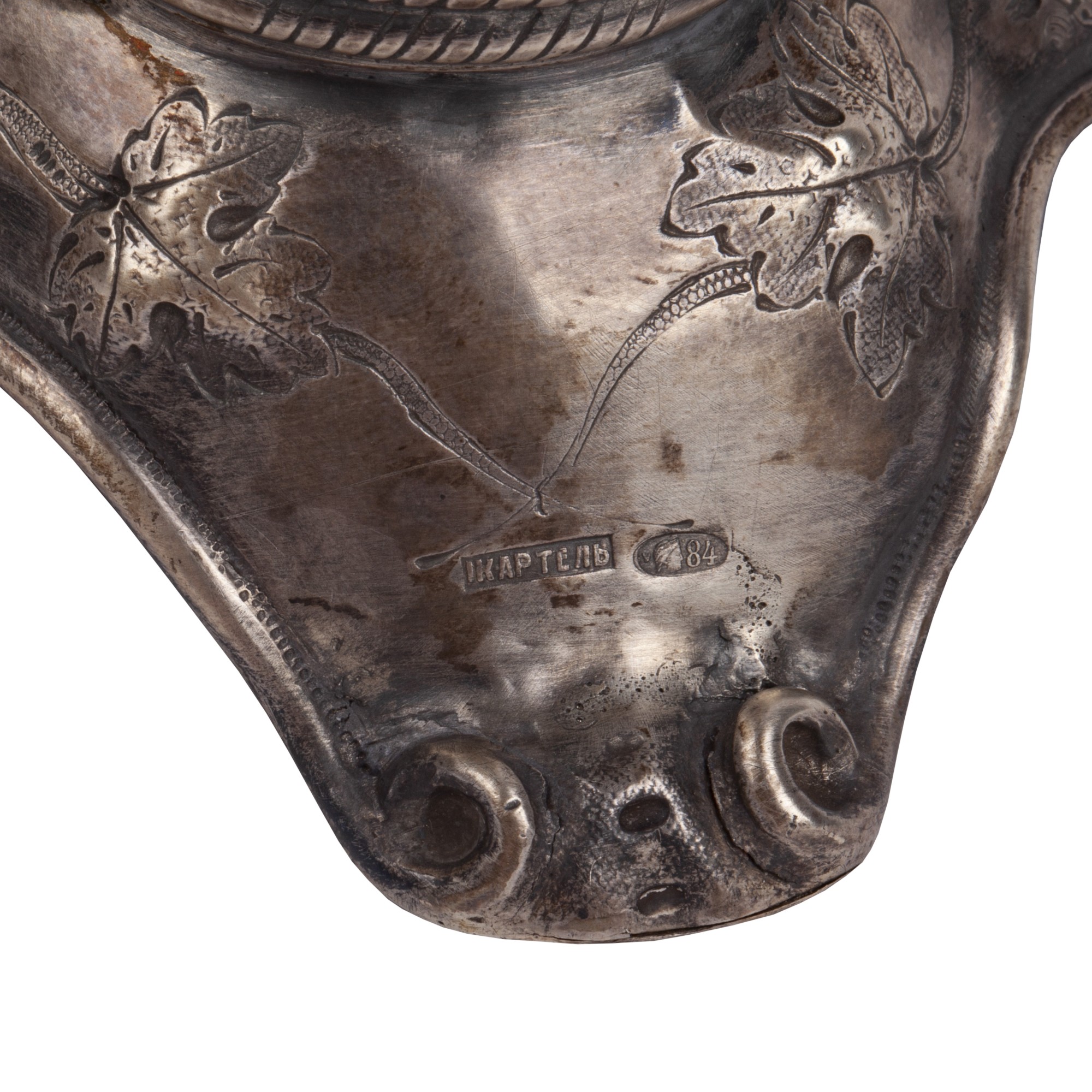
Estimate: 3000-4000€Figure of the ancient god of winemaking. Silver, casting, chasing. Makers mark of «1KARTEL» on the base. Kiev, 1908-1917.
Figure of the ancient god of winemaking and merriment shown in a dynamic pose: Bacchus sits on a raised base, holding a bottle in his right hand as if inviting to a feast. His face is full of vitality, the features slightly grotesque, emphasizing the character of the image. The base is adorned with rich relief decoration: grape clusters, leaves, and neo-Baroque ornaments. At the center of the front side is an oval cartouche framed with scrolls and shells.
Made by the Kiev Artel, founded in 1900 — one of the finest jewelry firms in Russia. In 1905, its craftsmen became part of the Kiev branch of Fabergé, which was located at the same address as the Artel: 15 Khreshchatyk. Dimensions: 15,1 x 12 x 13 cm. Total weight: 211 g.Starting price: 2500€
Estimate: 3000-4000€
Hammer Price: Not sold -
Lot 0174
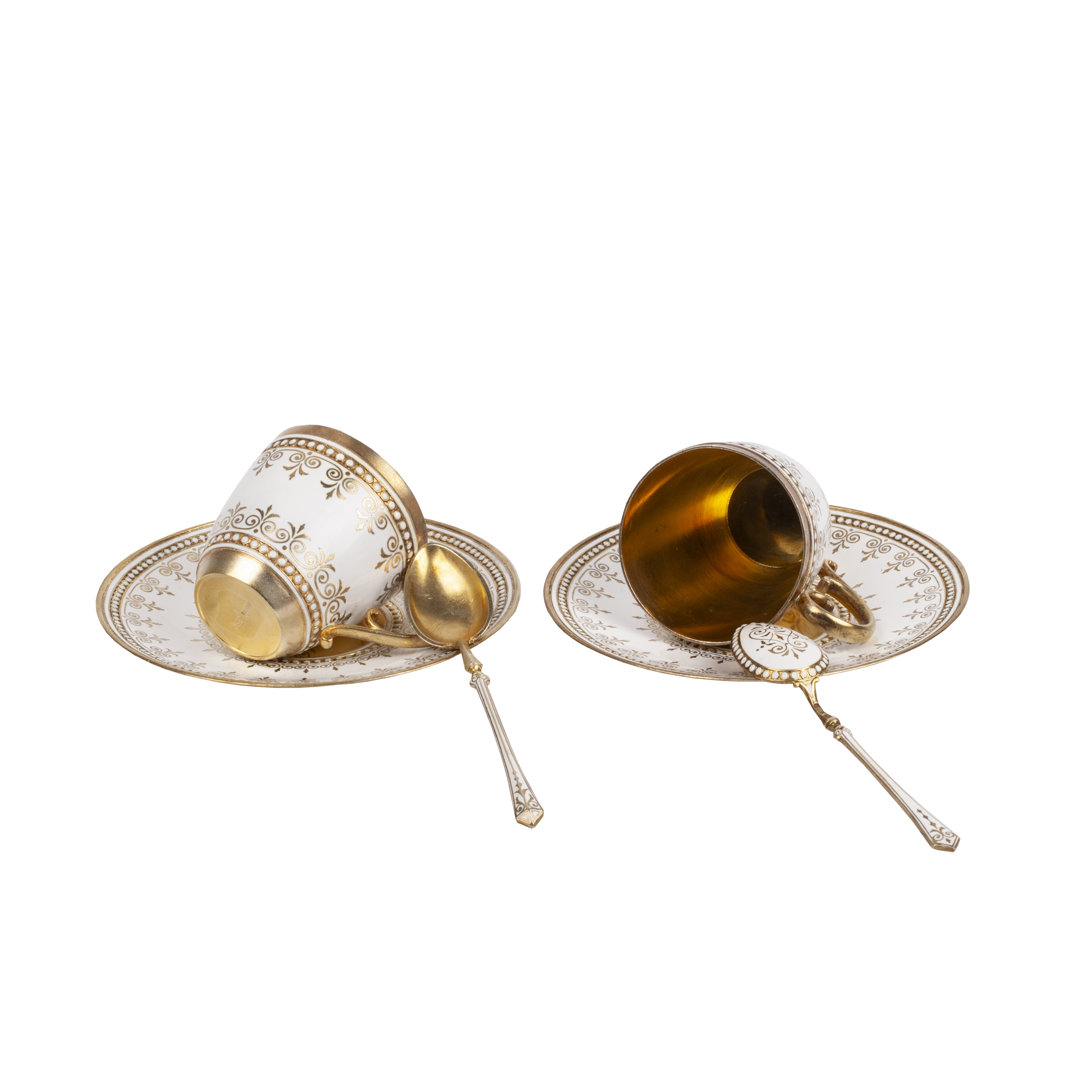
Pair of Russian Silver-Gilt Coffee Cups with Saucers and Spoons, Gustav Klingert, Moscow, 1908–1917
Estimate: 1800-2500€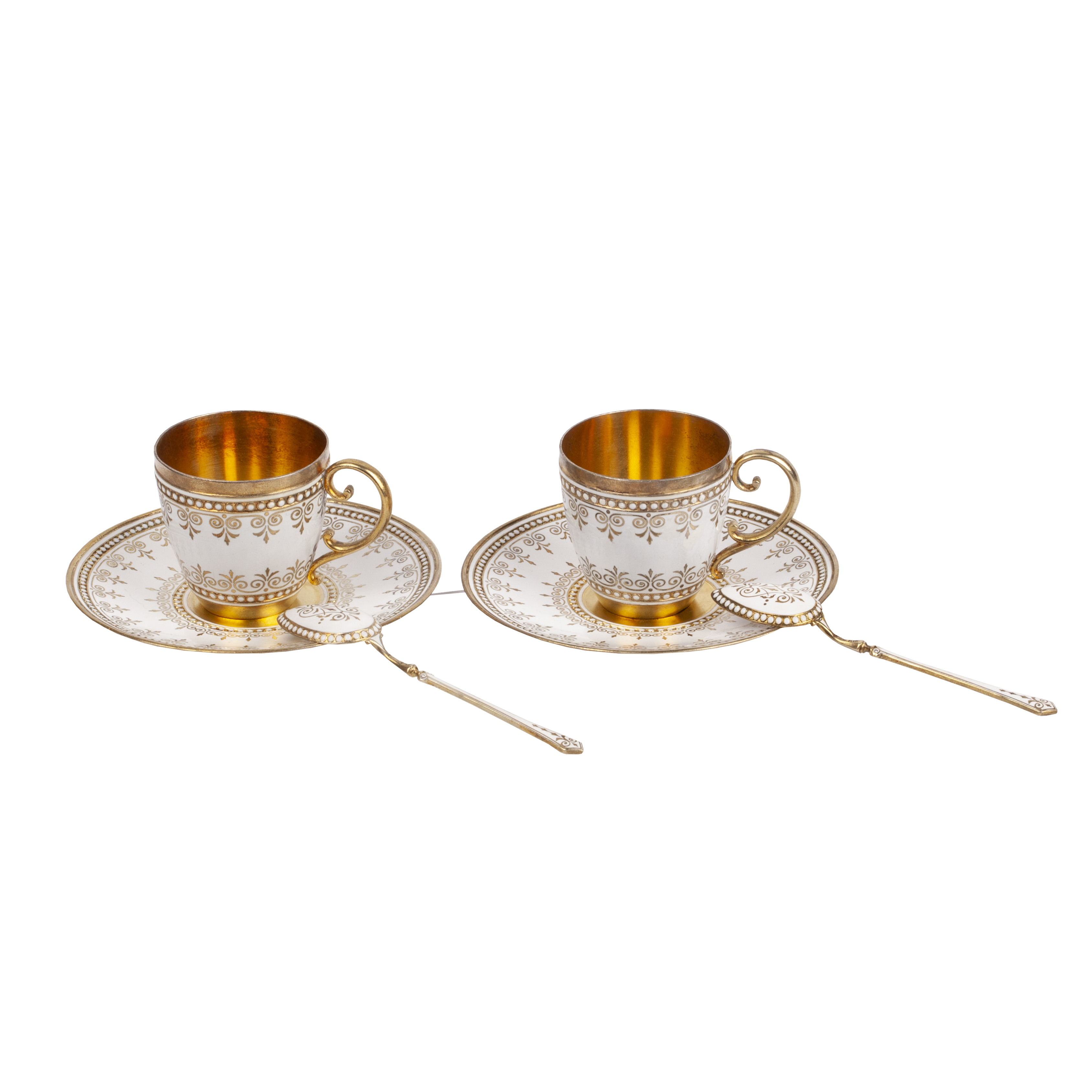
Lot 0174
Pair of Russian Silver-Gilt Coffee Cups with Saucers and Spoons, Gustav Klingert, Moscow, 1908–1917
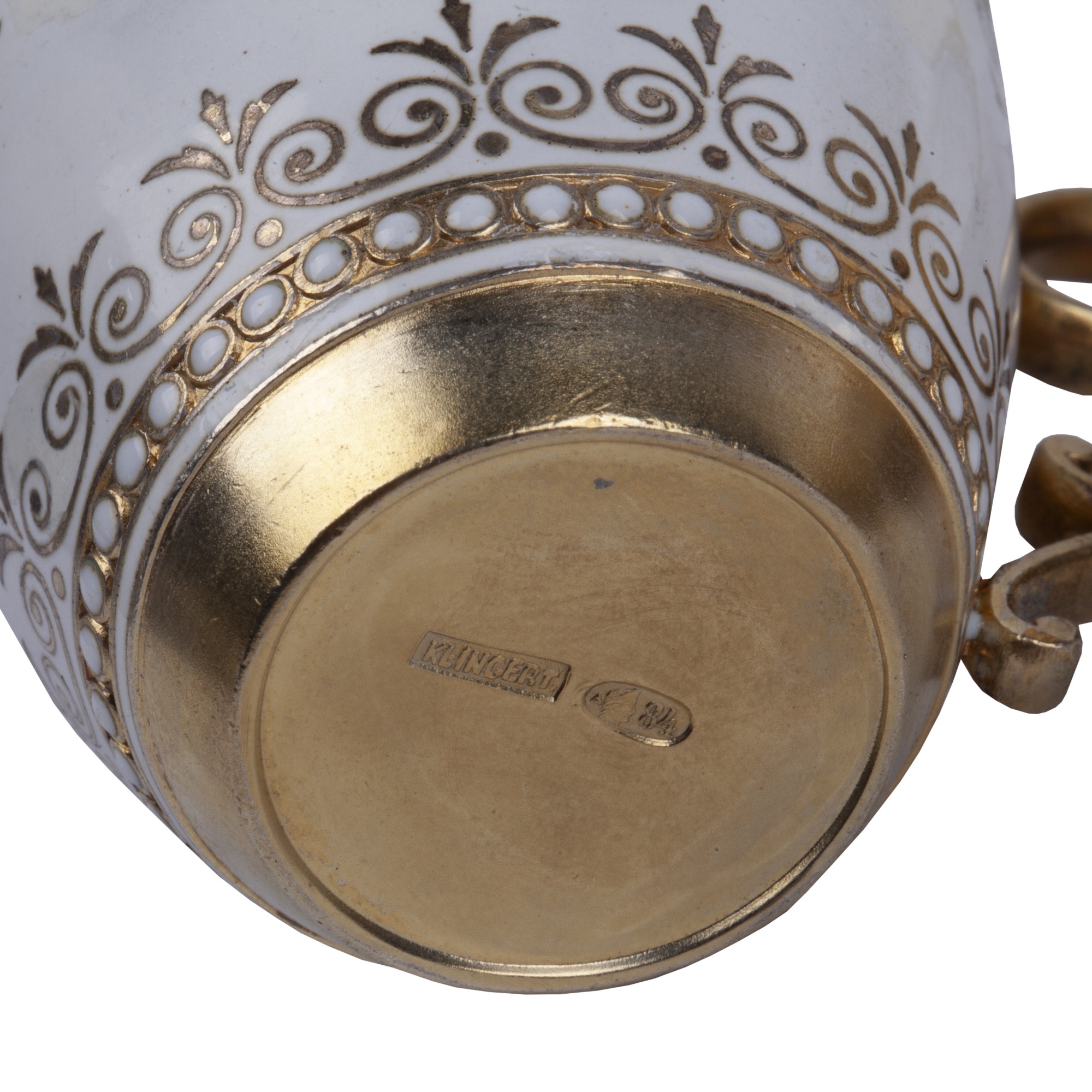
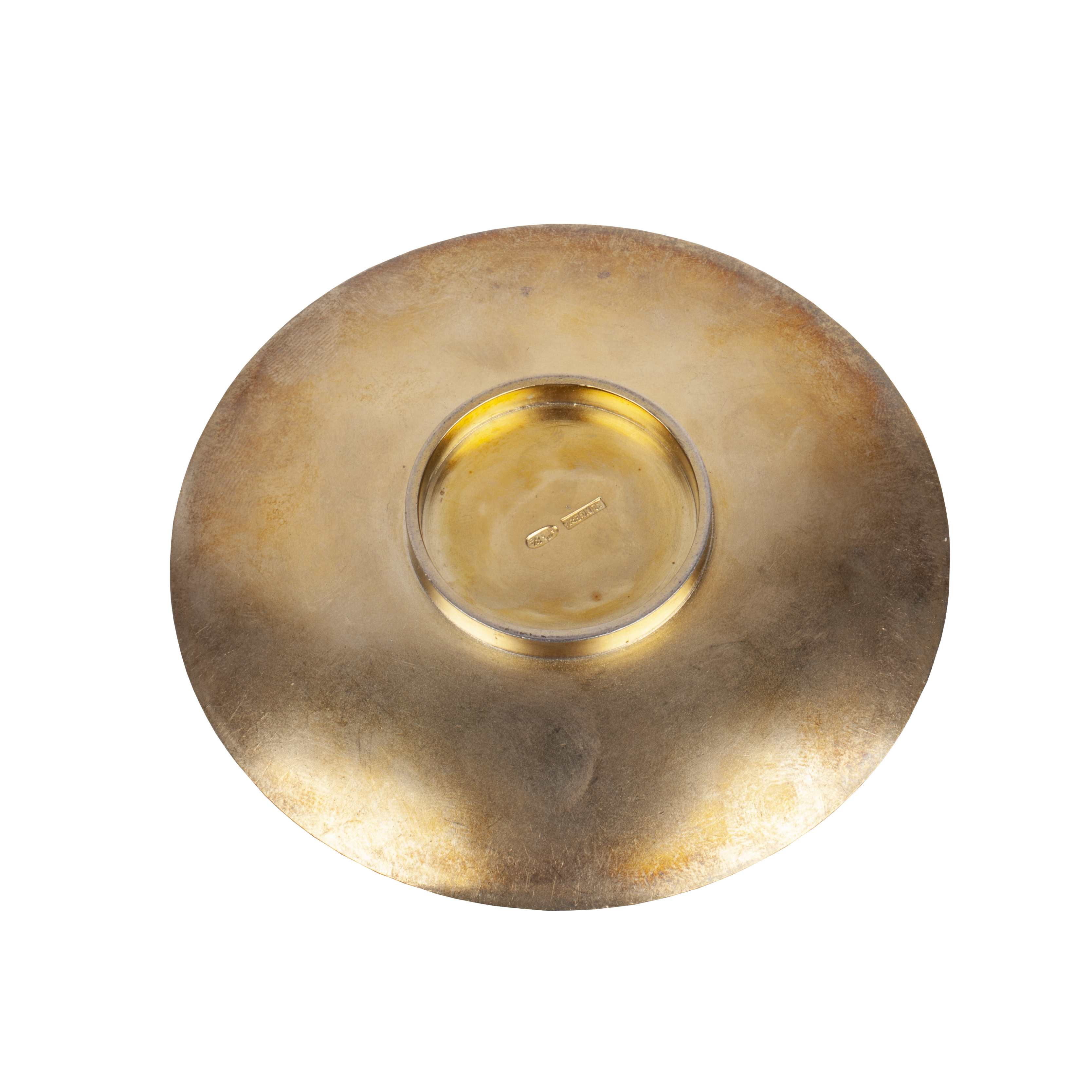
Estimate: 1800-2500€A Pair of Russian Silver-Gilt and Champlevé Enamel Coffee Cups with Saucers and Spoons
Moscow, Gustav Klingert, 1908-1917.
Silver-gilt, champlevé enamel; casting, chasing, engraving, gilding, enamelling.
Dimensions of each cup: 4.5 × 6.3 × 4.6 cm.
Length of each spoon: 9.8 cm.
Diameter of each saucer: 9.8 cm.
Total weight: 330.1 g.
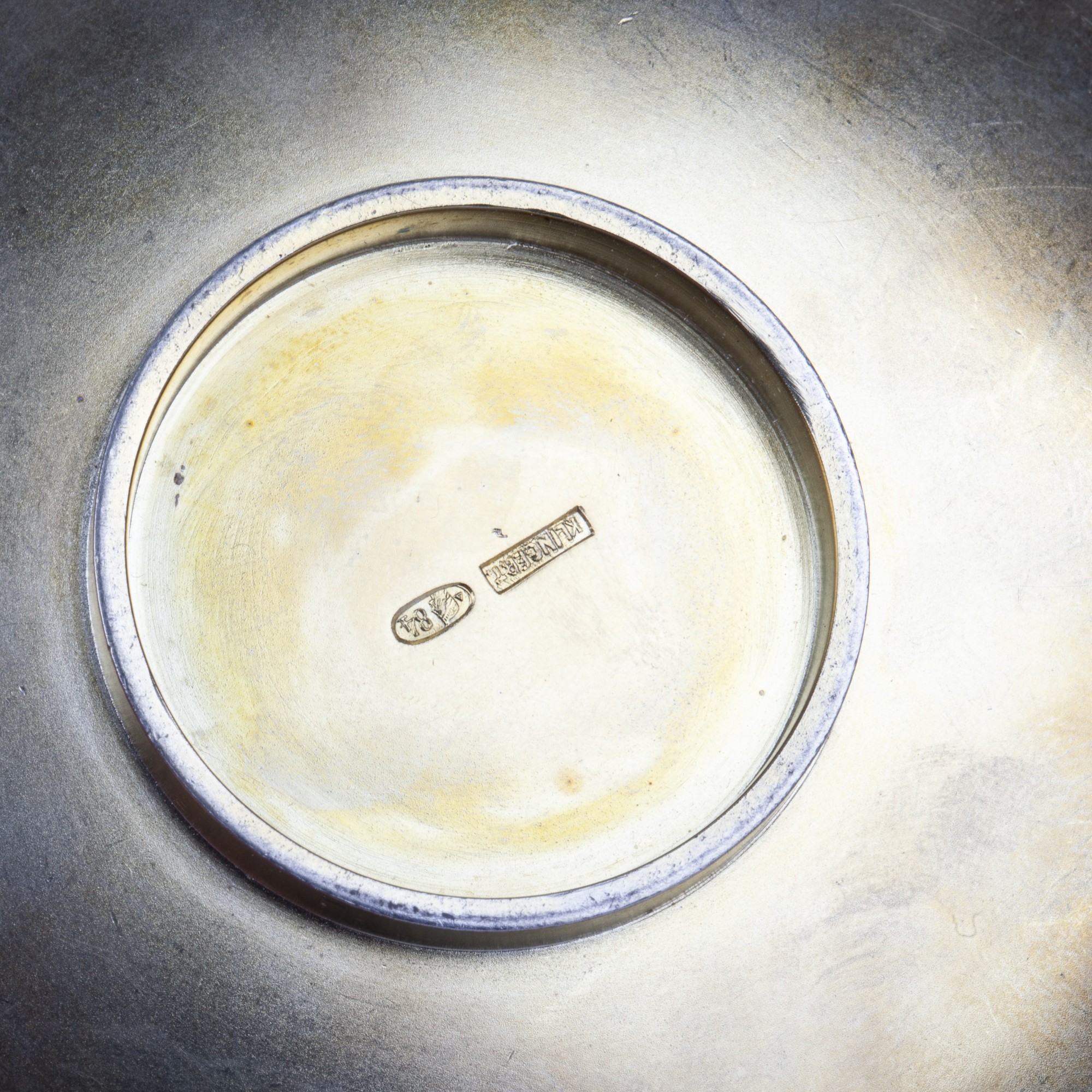
Marks: maker’s mark KLINGERT; Moscow assay mark; 84 zolotniki silver standard.
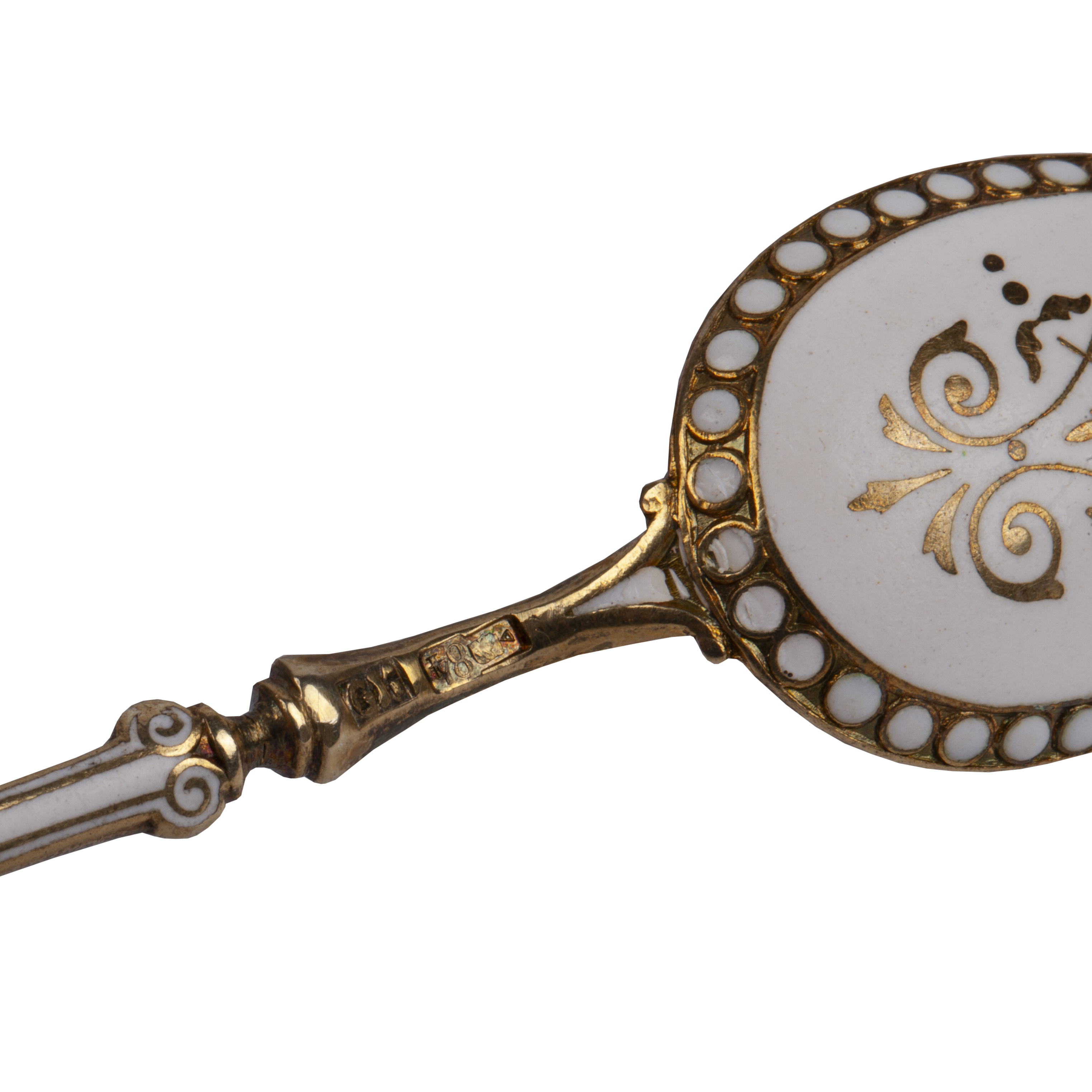
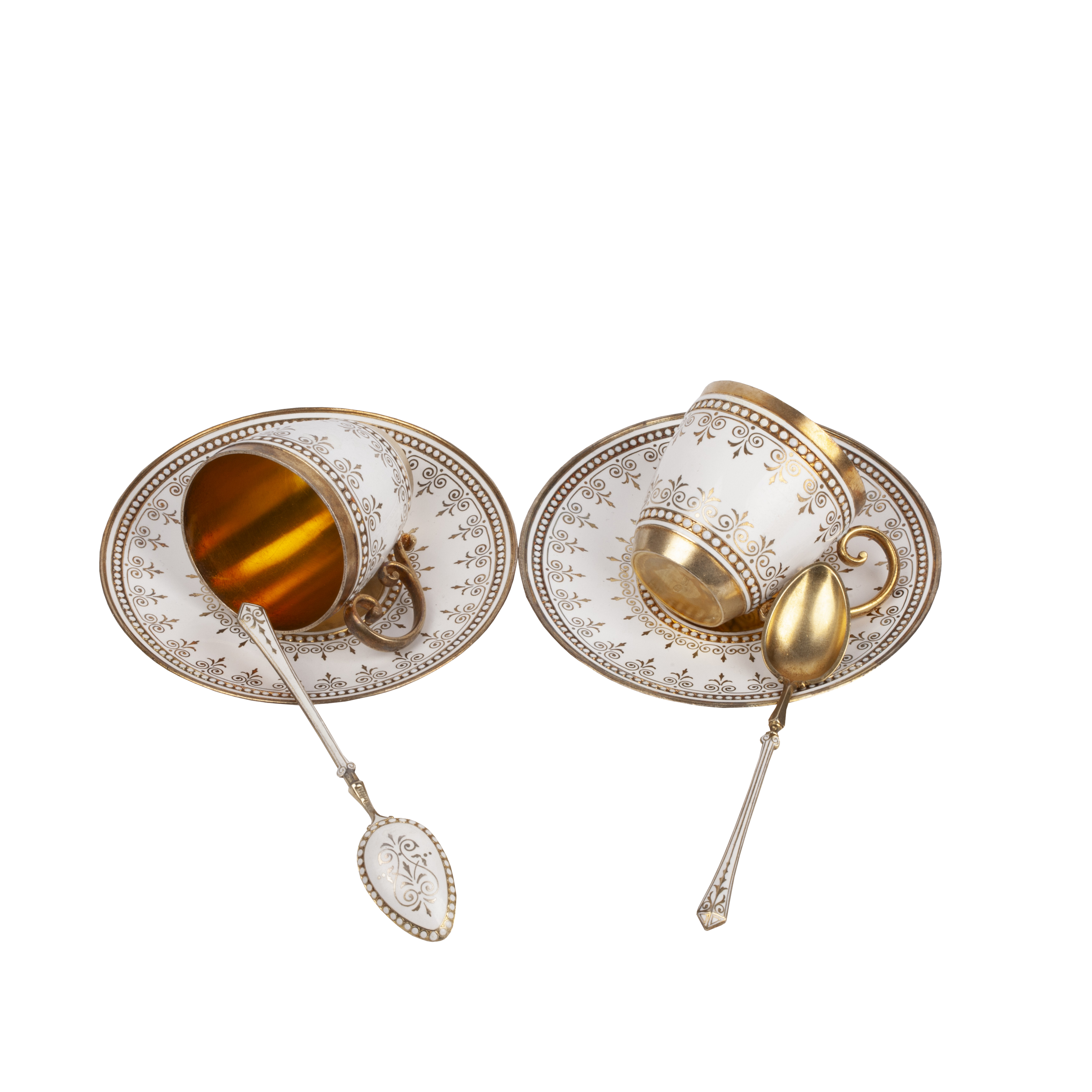
A refined pair of coffee cups with matching saucers and spoons, executed in silver-gilt and white champlevé enamel. Each cup is of small cylindrical form, with a delicate scroll handle and richly gilded interior. The exterior is decorated with finely balanced ornamental bands: white enamel grounds, gilt scrollwork, dotted borders and stylised foliate motifs. The saucers repeat the same decorative vocabulary, forming a complete and harmonious ensemble. The spoons, with round enamelled bowls and slender gilt stems, complete the set.
Gustav Gustavovich Klingert, a hereditary jeweller from the German community in Moscow, was among the most accomplished Moscow masters of enamelled silver. His factory, active from 1865 to 1916, produced silver and later gold objects, including tableware, presentation pieces and cabinet objects. Klingert’s enamel work was especially admired for its precision, delicacy and technical discipline. His firm exhibited at major international exhibitions, including Paris in 1889 and Chicago in 1893, and received high praise and medals.Starting price: 1500€
Estimate: 1800-2500€
Hammer Price: Not sold -
Lot 0175
Pair of Russian Silver-Gilt Coffee Cups with Saucers and Spoons, Gustav Klingert, Moscow, 1908–1917
Estimate: 1800-2500€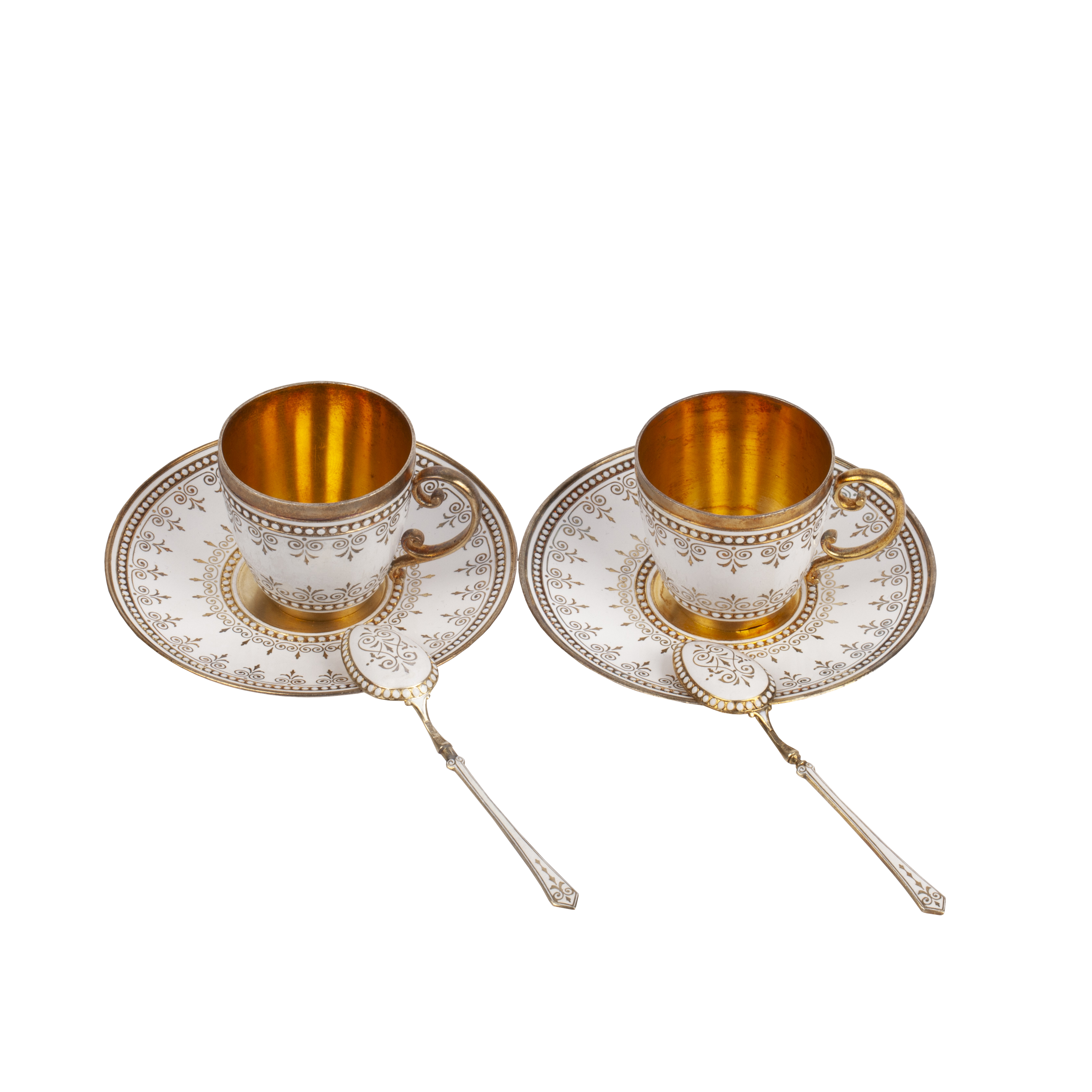
Lot 0175
Pair of Russian Silver-Gilt Coffee Cups with Saucers and Spoons, Gustav Klingert, Moscow, 1908–1917
Estimate: 1800-2500€A Pair of Russian Silver-Gilt and Champlevé Enamel Coffee Cups with Saucers and Spoons
Moscow, Gustav Klingert, 1908-1917.
Silver-gilt, champlevé enamel; casting, chasing, engraving, gilding, enamelling.
Dimensions of each cup: 4.5 × 6.3 × 4.6 cm.
Length of each spoon: 9.8 cm.
Diameter of each saucer: 9.8 cm.
Total weight: 332,9 g.
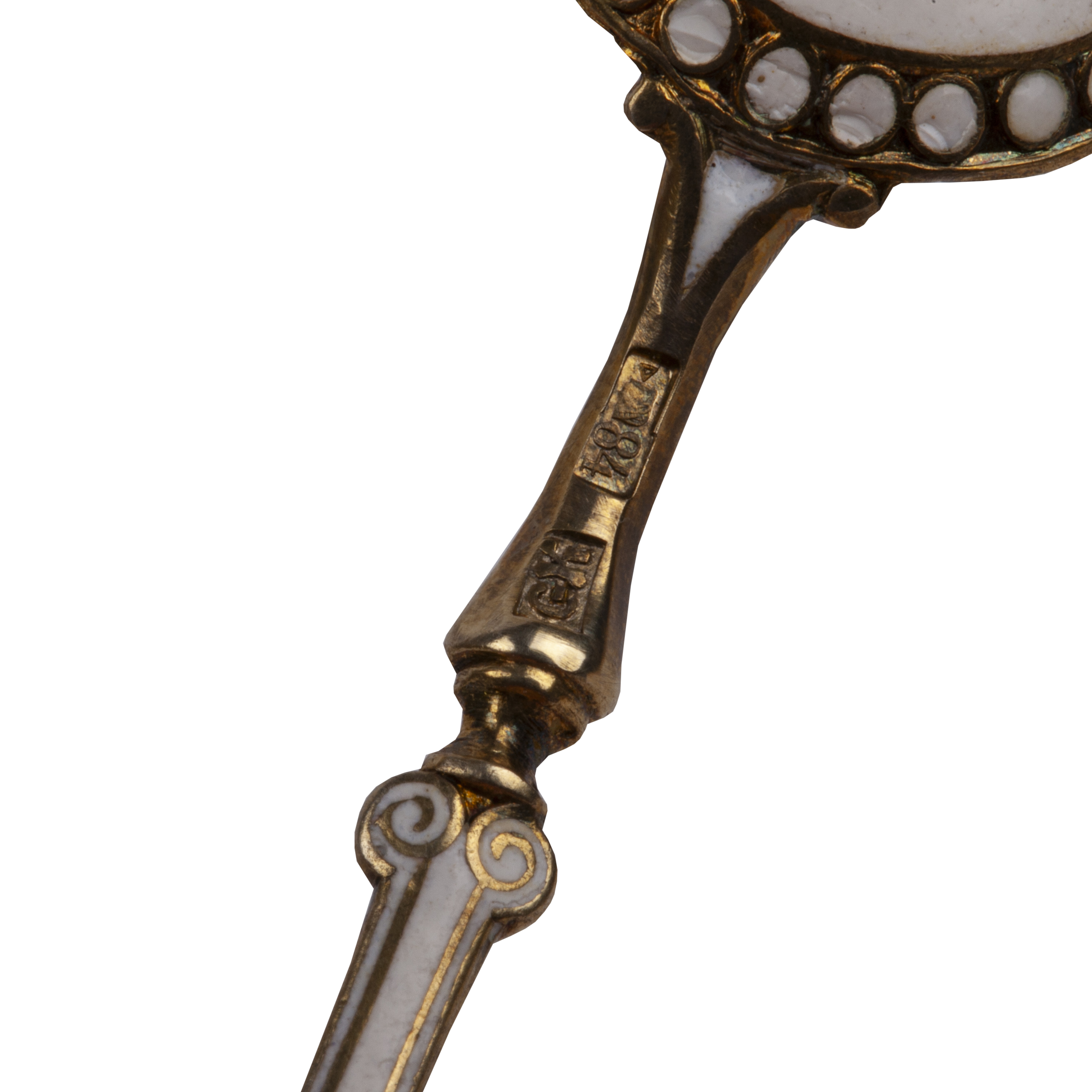
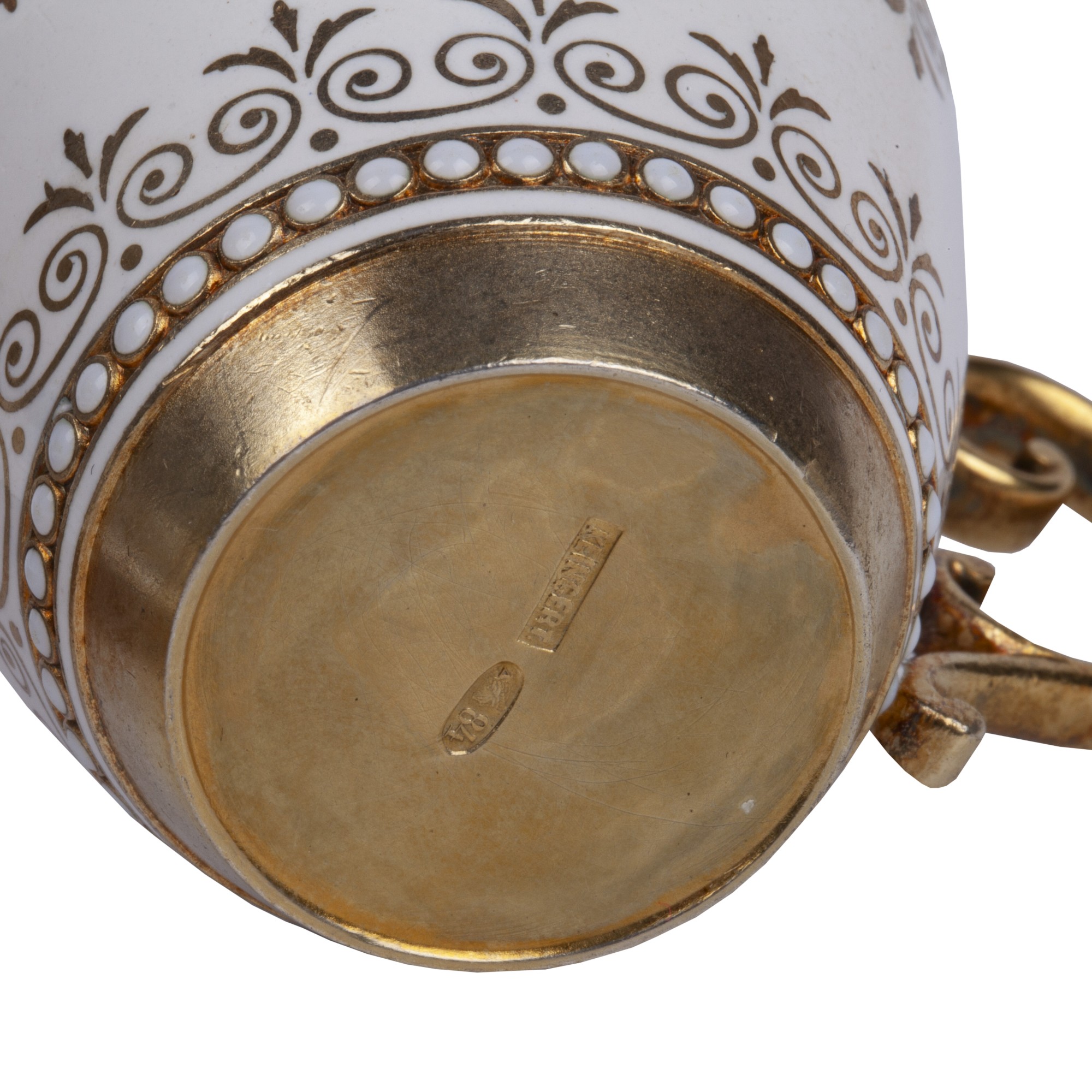
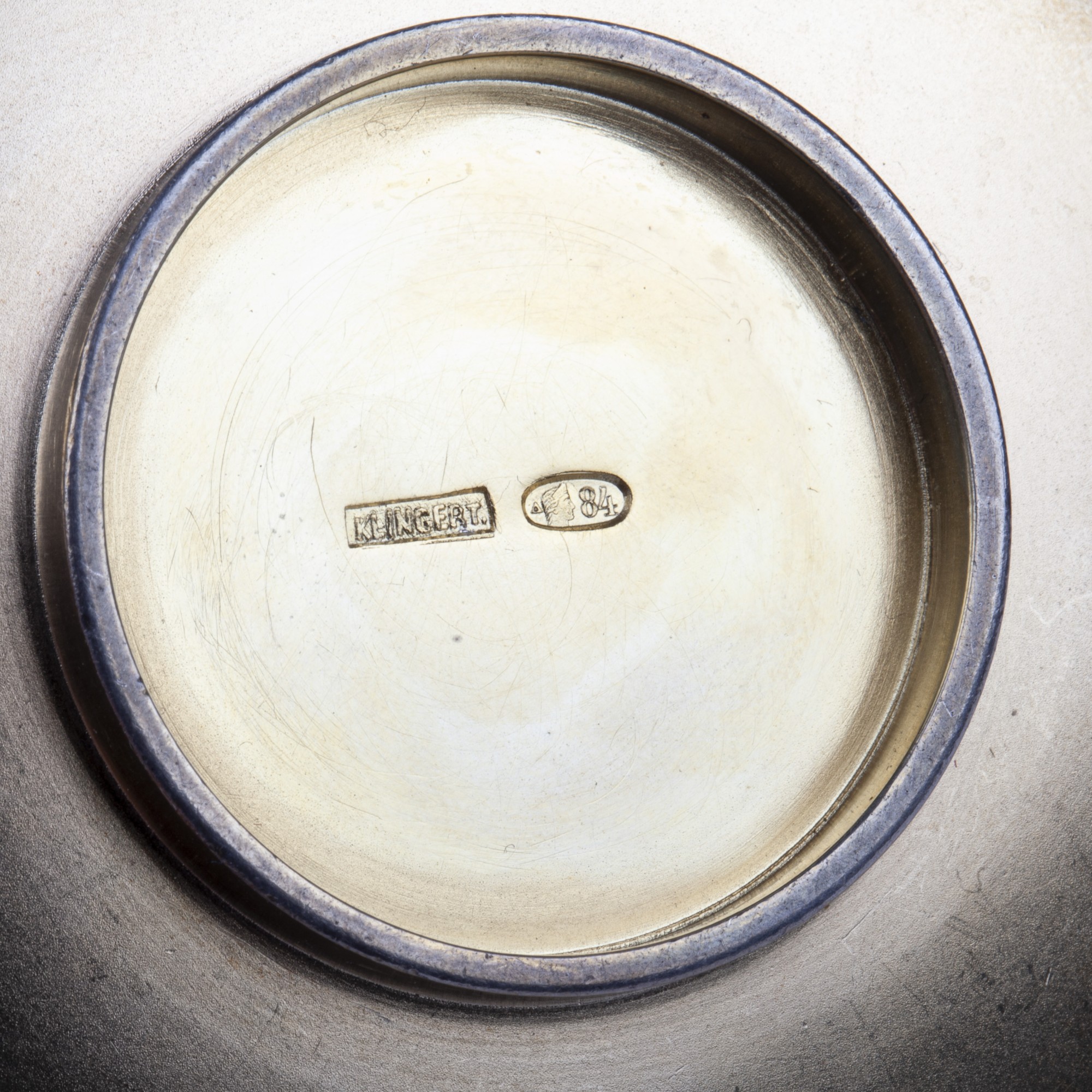
Marks: maker’s mark KLINGERT; Moscow assay mark; 84 zolotniki silver standard.
A refined pair of coffee cups with matching saucers and spoons, executed in silver-gilt and white champlevé enamel. Each cup is of small cylindrical form, with a delicate scroll handle and richly gilded interior. The exterior is decorated with finely balanced ornamental bands: white enamel grounds, gilt scrollwork, dotted borders and stylised foliate motifs. The saucers repeat the same decorative vocabulary, forming a complete and harmonious ensemble. The spoons, with round enamelled bowls and slender gilt stems, complete the set.
Gustav Gustavovich Klingert, a hereditary jeweller from the German community in Moscow, was among the most accomplished Moscow masters of enamelled silver. His factory, active from 1865 to 1916, produced silver and later gold objects, including tableware, presentation pieces and cabinet objects. Klingert’s enamel work was especially admired for its precision, delicacy and technical discipline. His firm exhibited at major international exhibitions, including Paris in 1889 and Chicago in 1893, and received high praise and medals.Starting price: 1500€
Estimate: 1800-2500€
Hammer Price: Not sold -
Lot 0176
Russian Silver-Gilt Fruit Vase. 3rd Moscow Artel, Moscow
Estimate: 1200-1500€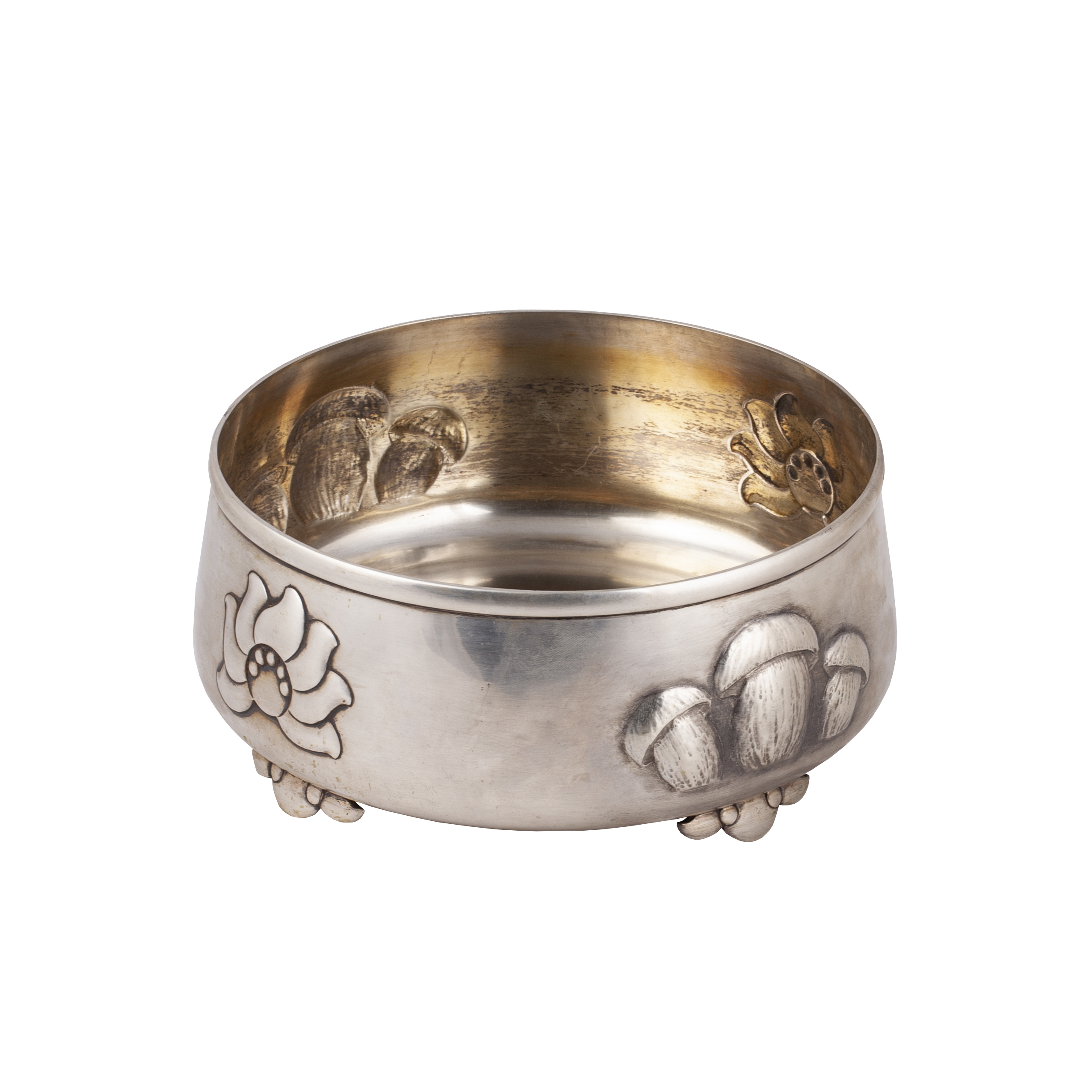
Lot 0176
Russian Silver-Gilt Fruit Vase. 3rd Moscow Artel, Moscow
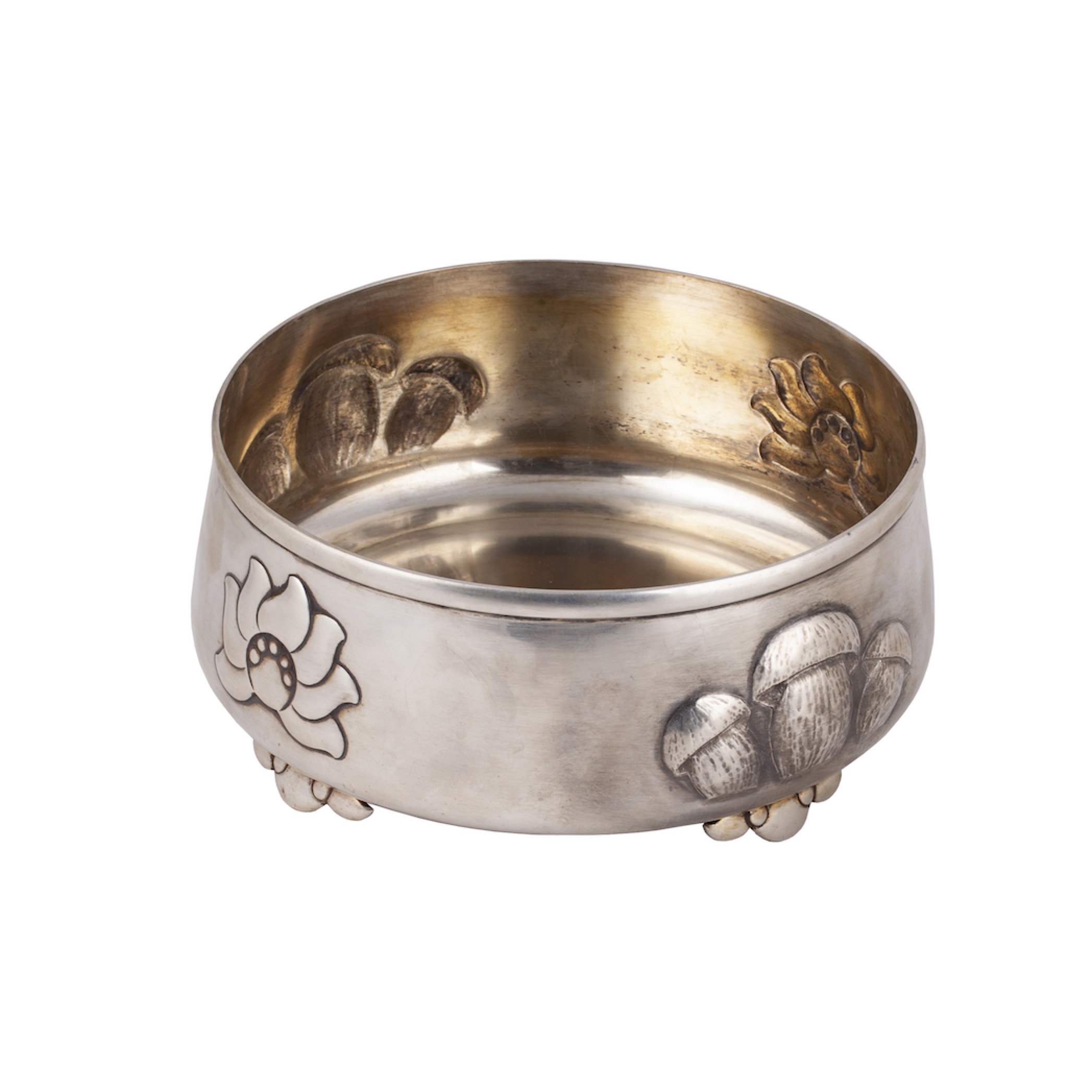
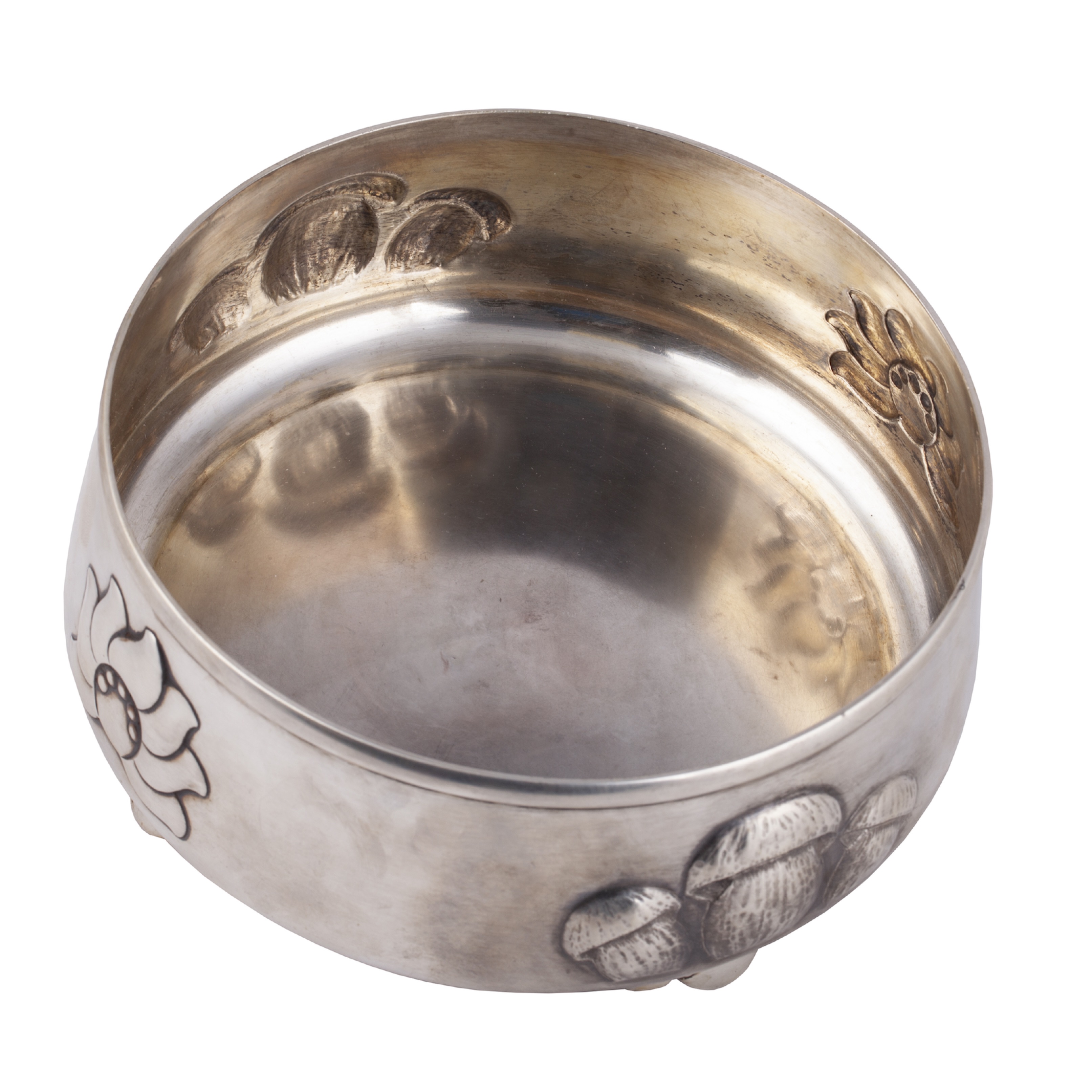
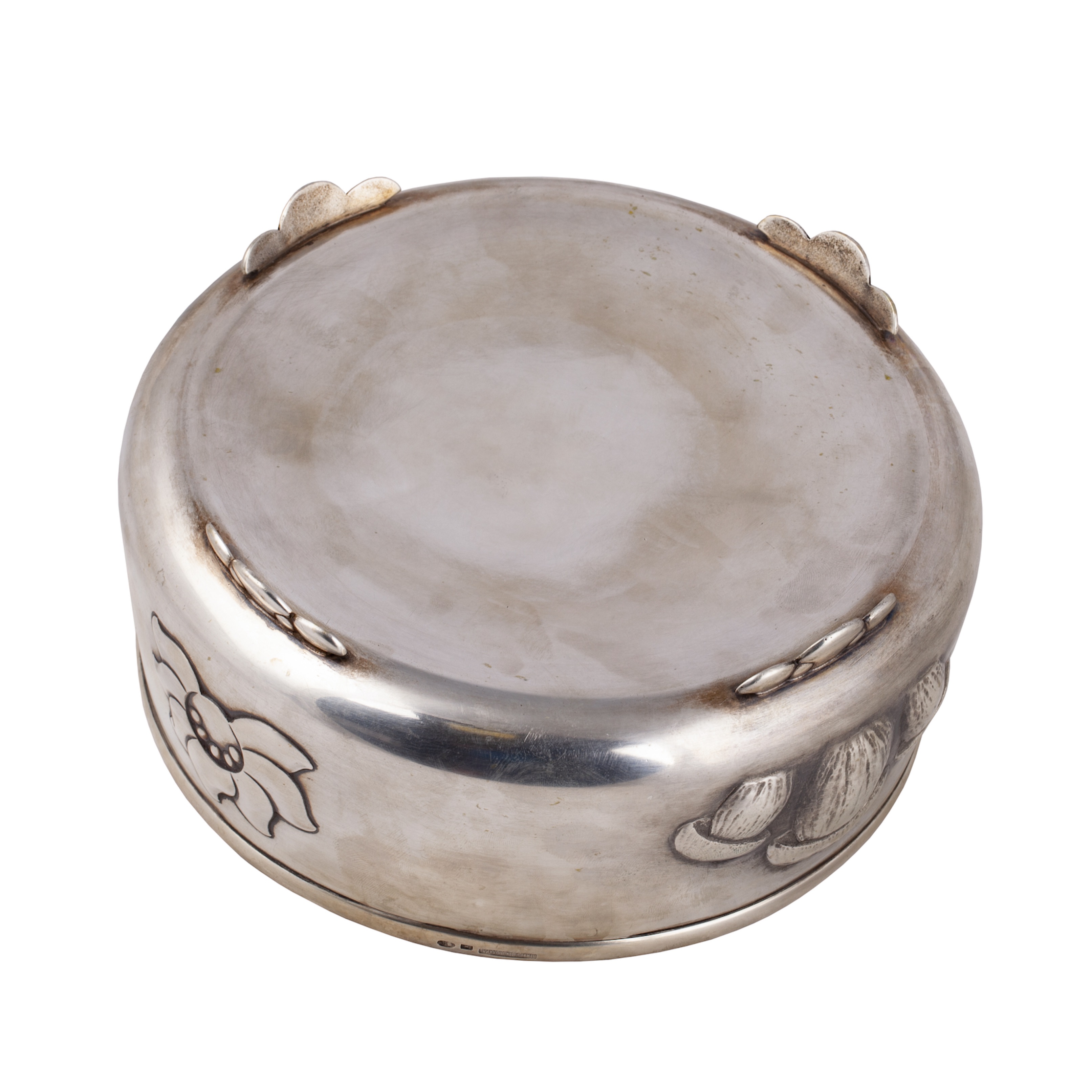
Estimate: 1200-1500€An unusual Russian Art Nouveau silver-gilt fruit bowl.
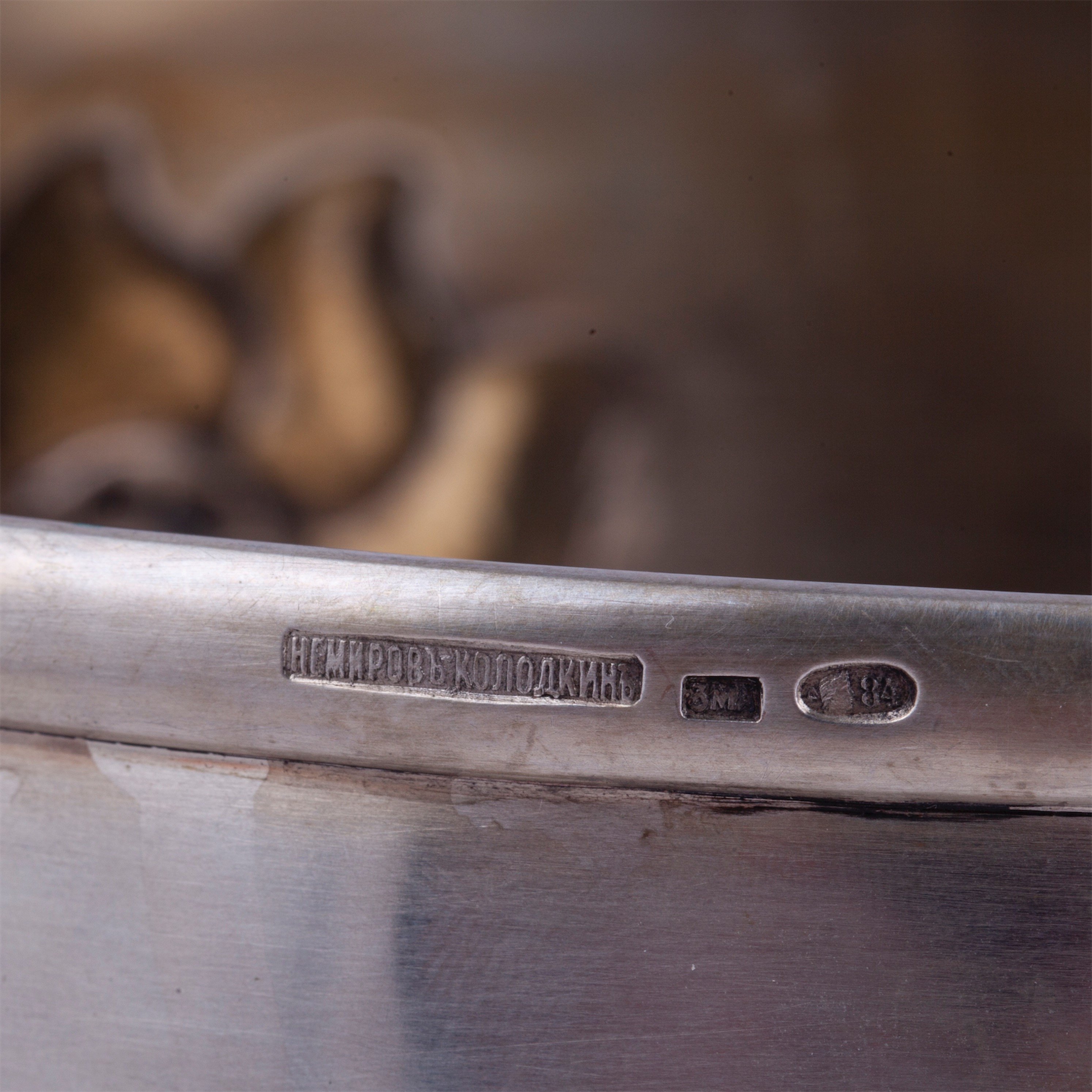
Moscow, Third Moscow Artel, retailed by the firm of N. V. Nemirov-Kolodkin, 1908-1917.
Silver, gilding; raising, chasing, engraving, repoussé, polishing.
Dimensions: 9.3 x 23 x 23 cm.
Weight: 598 g.
Marks: retailer’s mark “Немировъ-Колодкинъ”; maker’s mark of the Third Moscow Artel, “3МА”; Moscow assay mark with 84 zolotnik silver standard.
A rare silver-gilt fruit bowl of rounded circular form, standing on small stylised floral feet. The exterior is decorated with chased and repoussé motifs in the Art Nouveau taste: water lilies, seed pods, broad leaves and mushroom-like natural forms, placed asymmetrically around the softly swelling body.
The piece was made by the Third Moscow Artel, one of the accomplished Moscow silver workshops of the late Imperial period. Artel production occupied an important place in Russian decorative art of the early twentieth century, especially in the field of silver and enamel objects. Such workshops belonged to the same professional milieu that supplied or had previously worked for the great Russian houses, including Fabergé, Ovchinnikov and Khlebnikov.
The retailer, N. V. Nemirov-Kolodkin, was among the significant Moscow suppliers of luxury silver. Founded by Nikolai Vasilievich Nemirov-Kolodkin, merchant, jeweller and philanthropist, the firm became known for high-quality table silver and presentation pieces. From the late nineteenth century it supplied silver objects for the Imperial household, commissioning works from selected Moscow workshops according to the character and level of each order.Starting price: 1000€
Estimate: 1200-1500€
Hammer Price: Not sold -
Lot 0177
Fabergé Silver Kovsh Inset with Coin, St Petersburg, 1908–1917
Estimate: 6000-8000€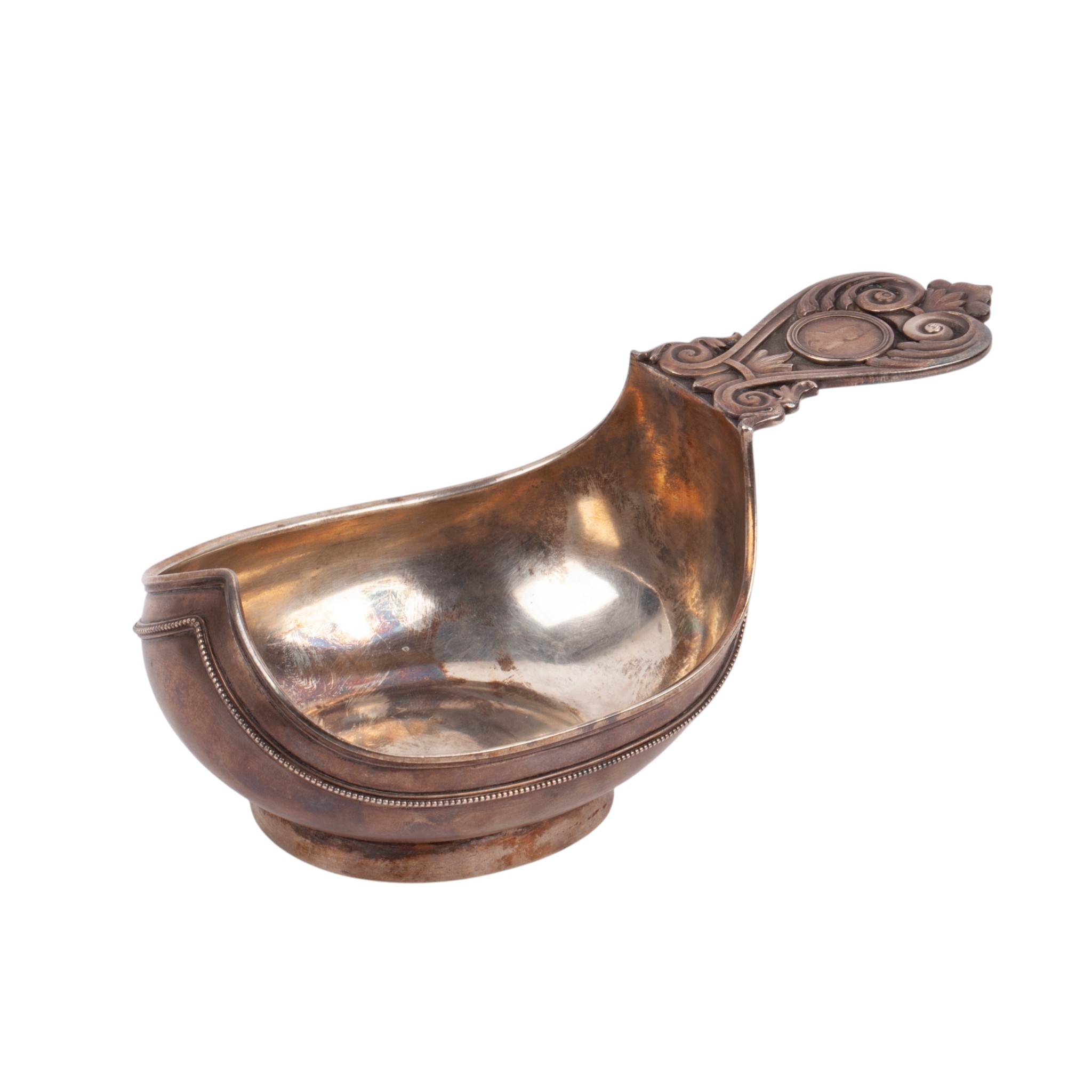
Lot 0177
Fabergé Silver Kovsh Inset with Coin, St Petersburg, 1908–1917
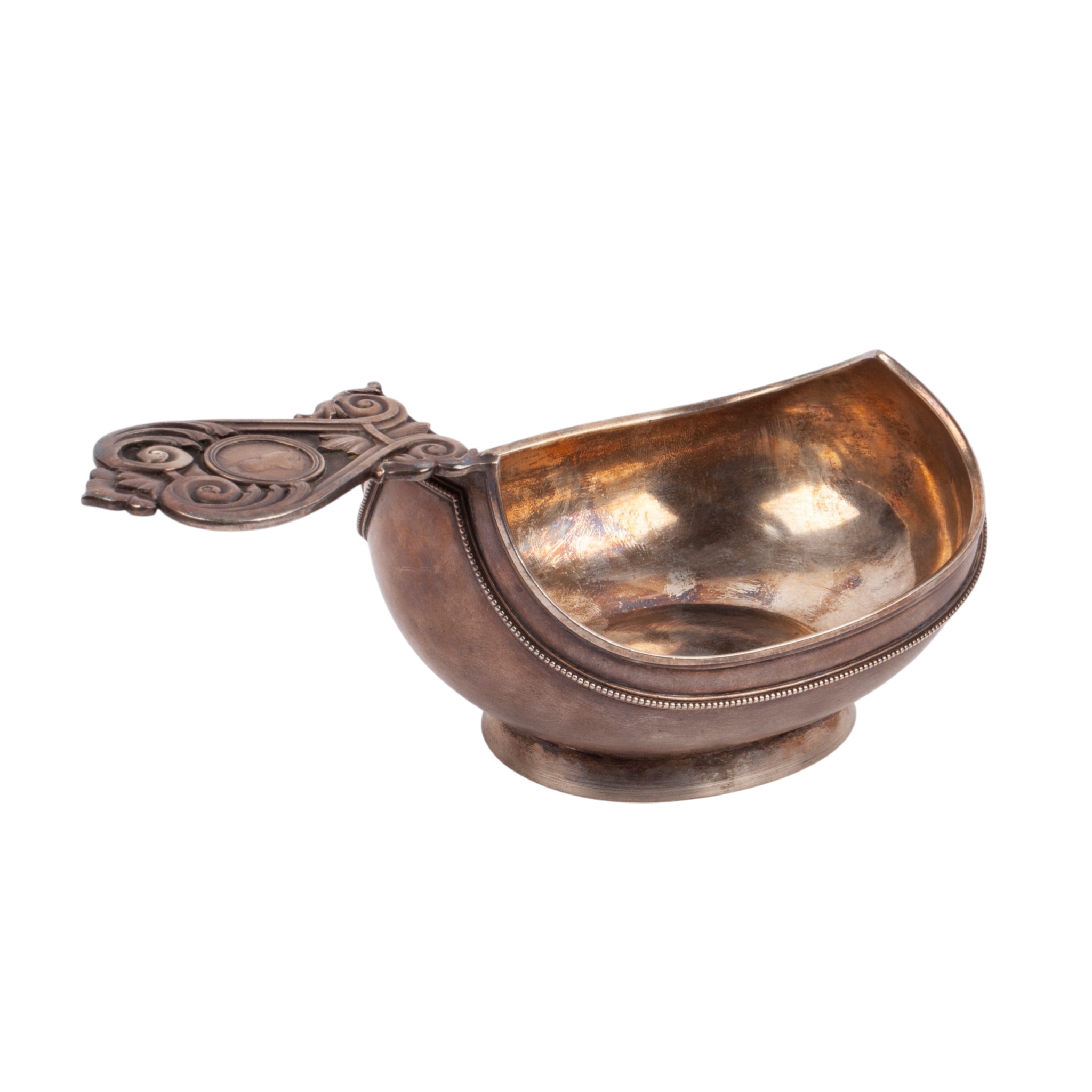
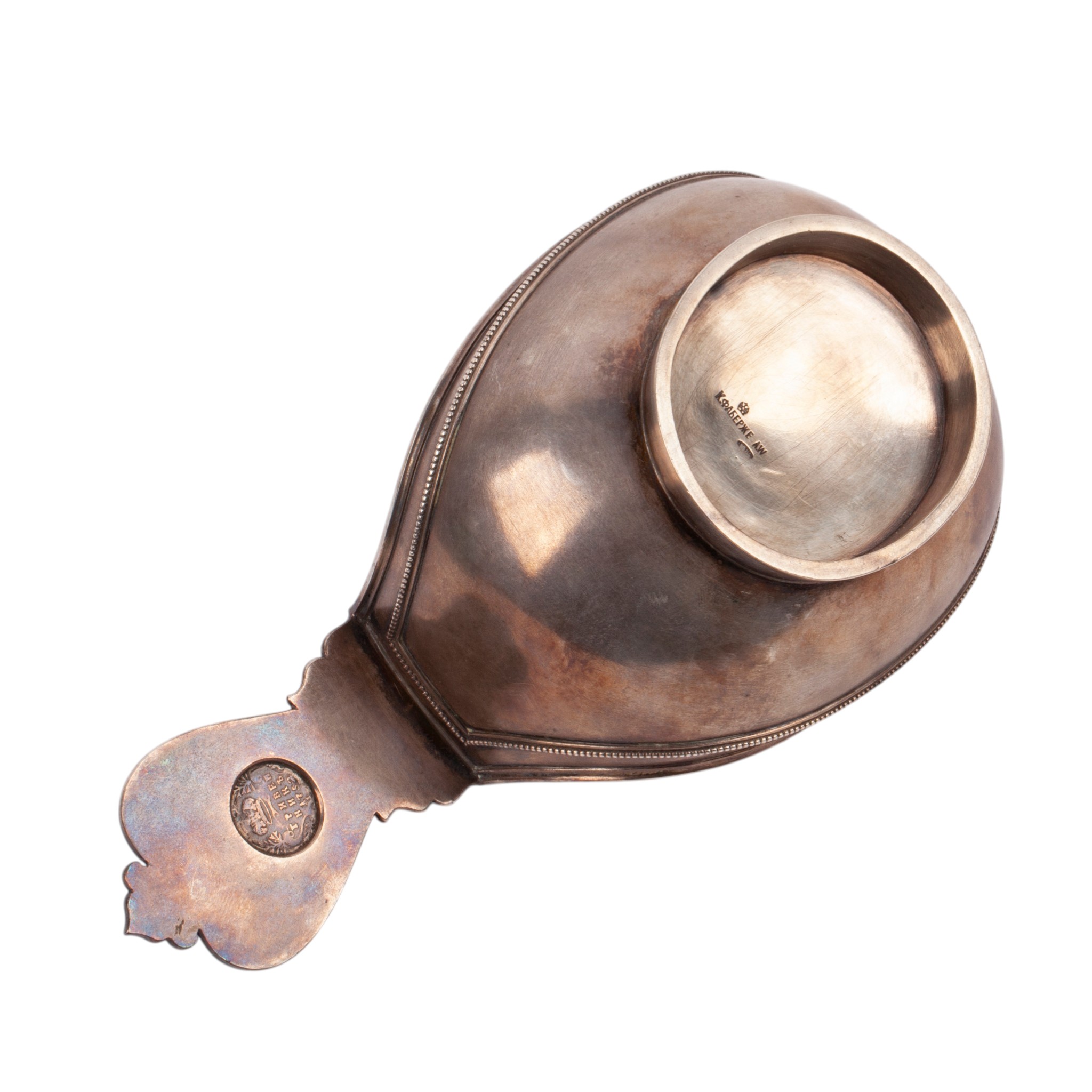
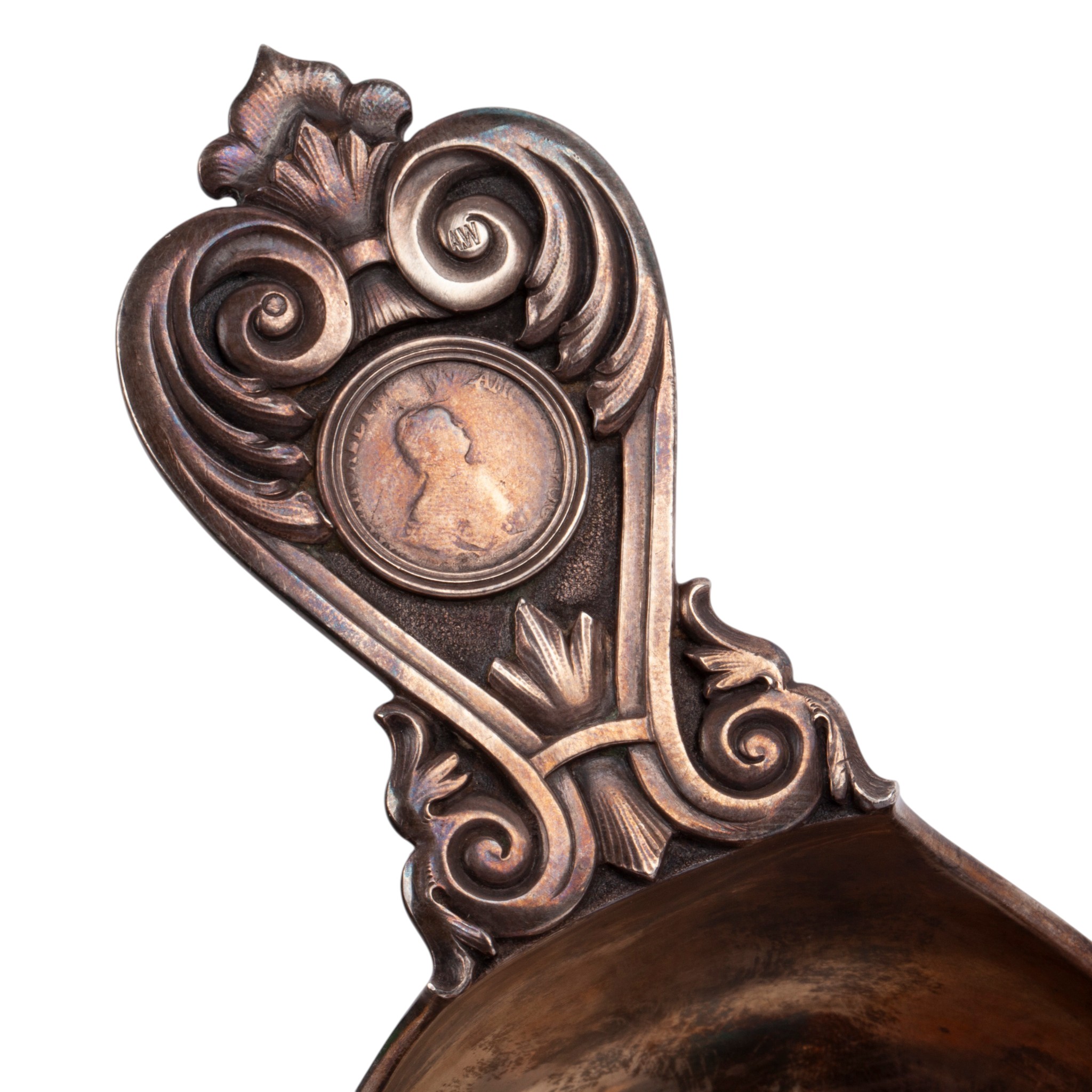
Estimate: 6000-8000€Fabergé. A silver kovsh inset with a coin
St Petersburg, Fabergé, master Alexander Wakewa, 1908-1917
Silver; raised, cast, chased.
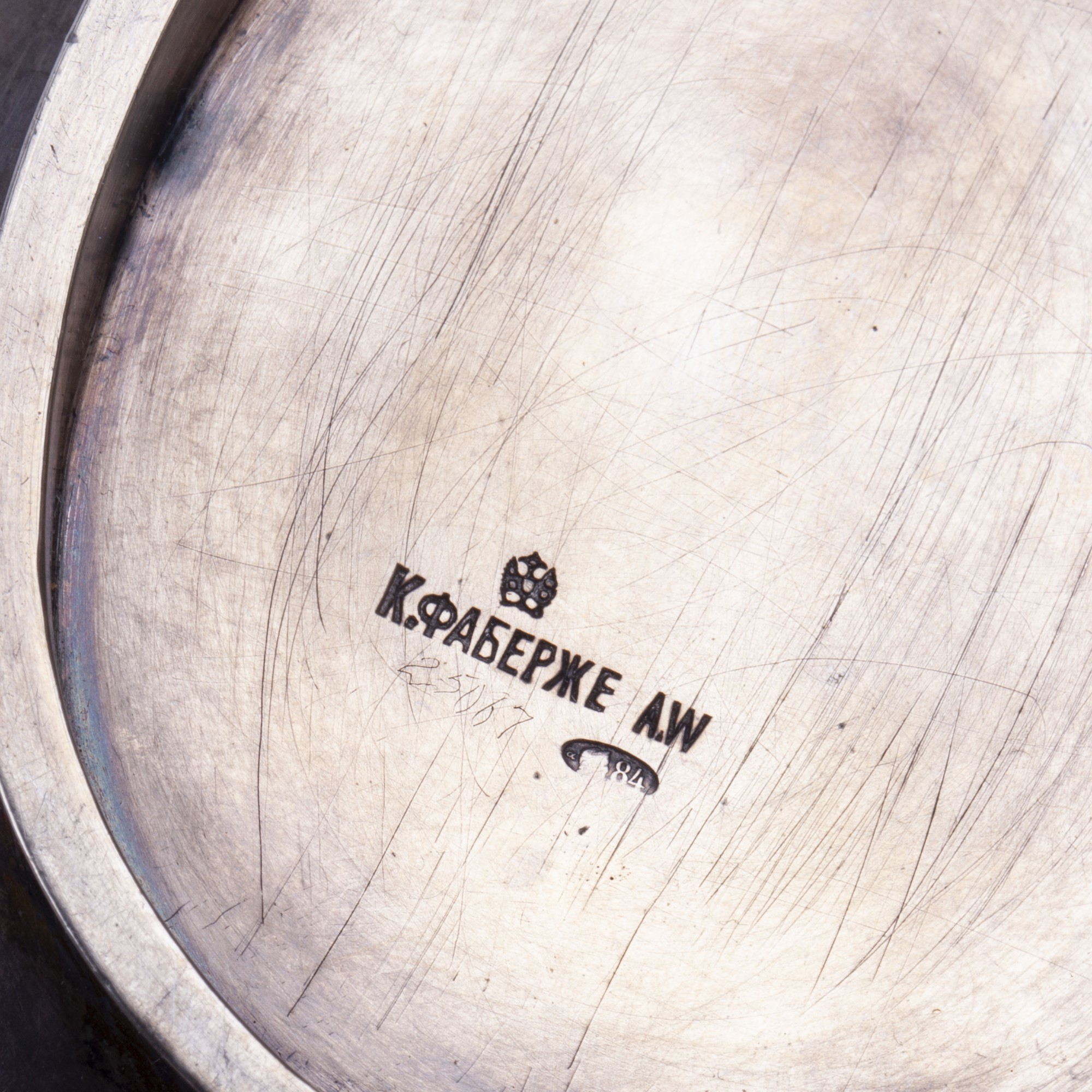
Marked: under the Imperial warrant, K. FABERGÉ in Cyrillic; maker’s mark A.W; St Petersburg assay mark; 84 silver standard; scratched firm’s inventory number 25067. Weight: 244 g. Dimensions: 8,3 x 19,8 x 10 cm.
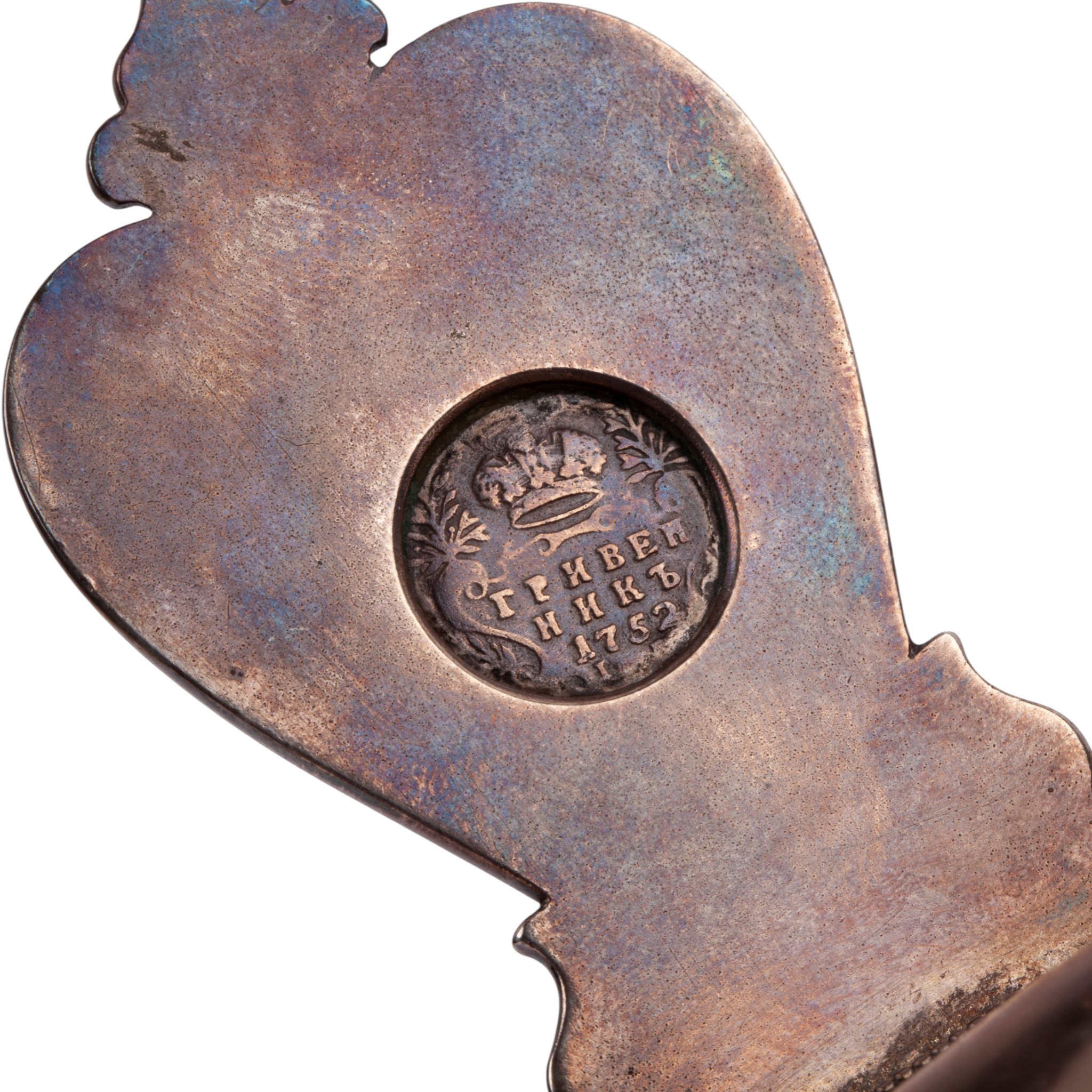
This elegant miniature kovsh takes its form from the ancient Russian korets, or ladle-shaped drinking vessel, recalling the honoured presentation kovshi of the sixteenth and seventeenth centuries. The gently swelling body, set on a low circular foot, is defined by a restrained profile and bordered with a fine beaded rim. Its most distinctive feature is the sculptural handle, enriched with scrolling ornament and inset with a silver grivennik of 1752, struck during the reign of Empress Elizabeth Petrovna.
The choice of coin is significant. Under Elizabeth, richly mounted kovshi of related type were awarded as honorary gifts, notably to distinguished Cossacks of the Zaporozhian Host. In this piece, the eighteenth-century coin functions not merely as an ornamental insert, but as a historical allusion, linking the object to the ceremonial and commemorative traditions of Imperial Russia. The rocaille scrolls of the handle, evocative of the Elizabethan Baroque, reinforce this retrospective character.
This kovsh was produced by Alexander Wakewa manufacturer, one of the Fabergé workmasters active in St Petersburg in the early twentieth century. It reflects the firm’s highly cultivated reinterpretation of Old Russian forms, seen through the lens of late Imperial taste and executed with the clarity and finish associated with Fabergé silver at its best.Starting price: 5000€
Estimate: 6000-8000€
Hammer Price: Not sold -
Lot 0178
Russian Silver-Gilt Delicacies Serving Set, St Petersburg, late 19th century
Estimate: 800-1000€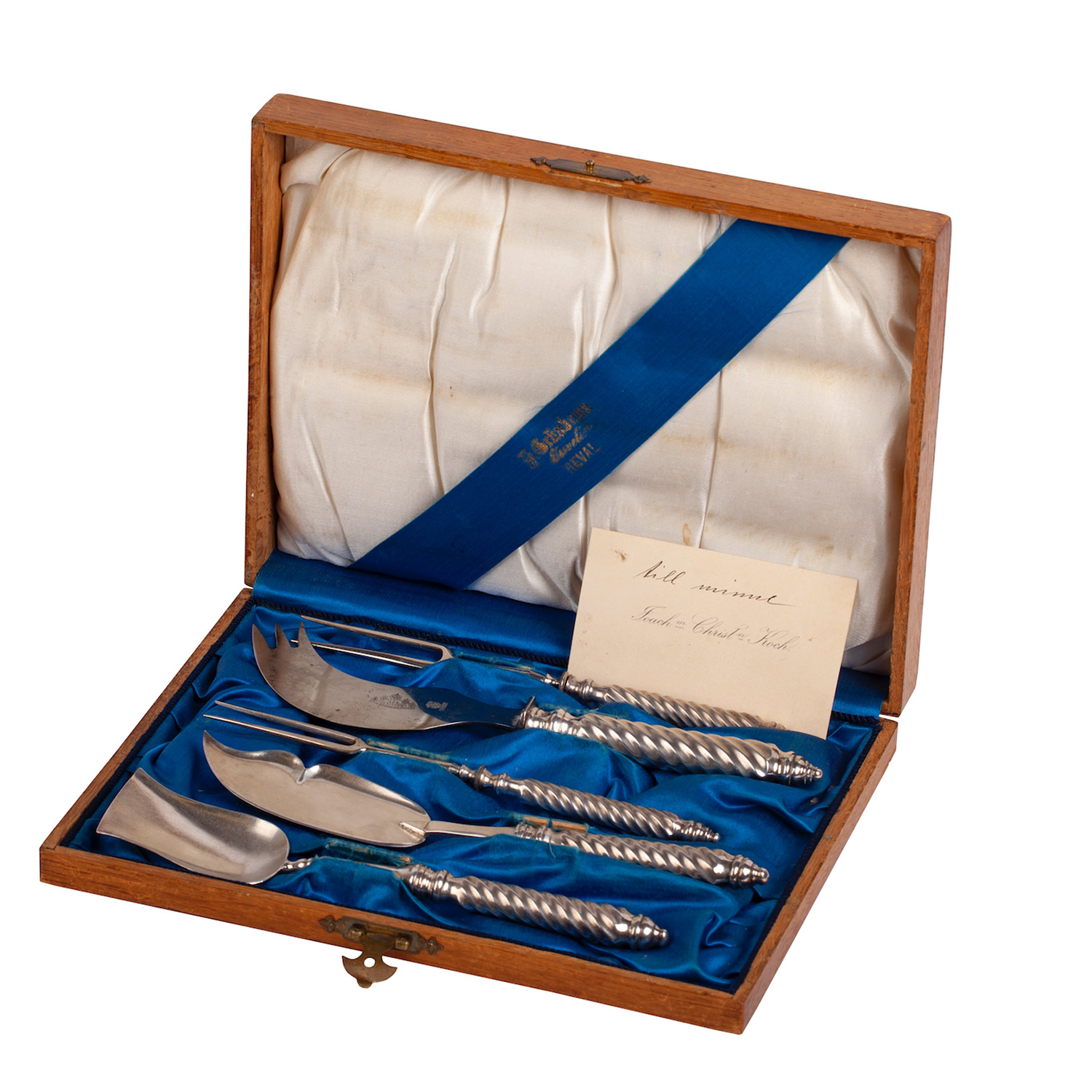
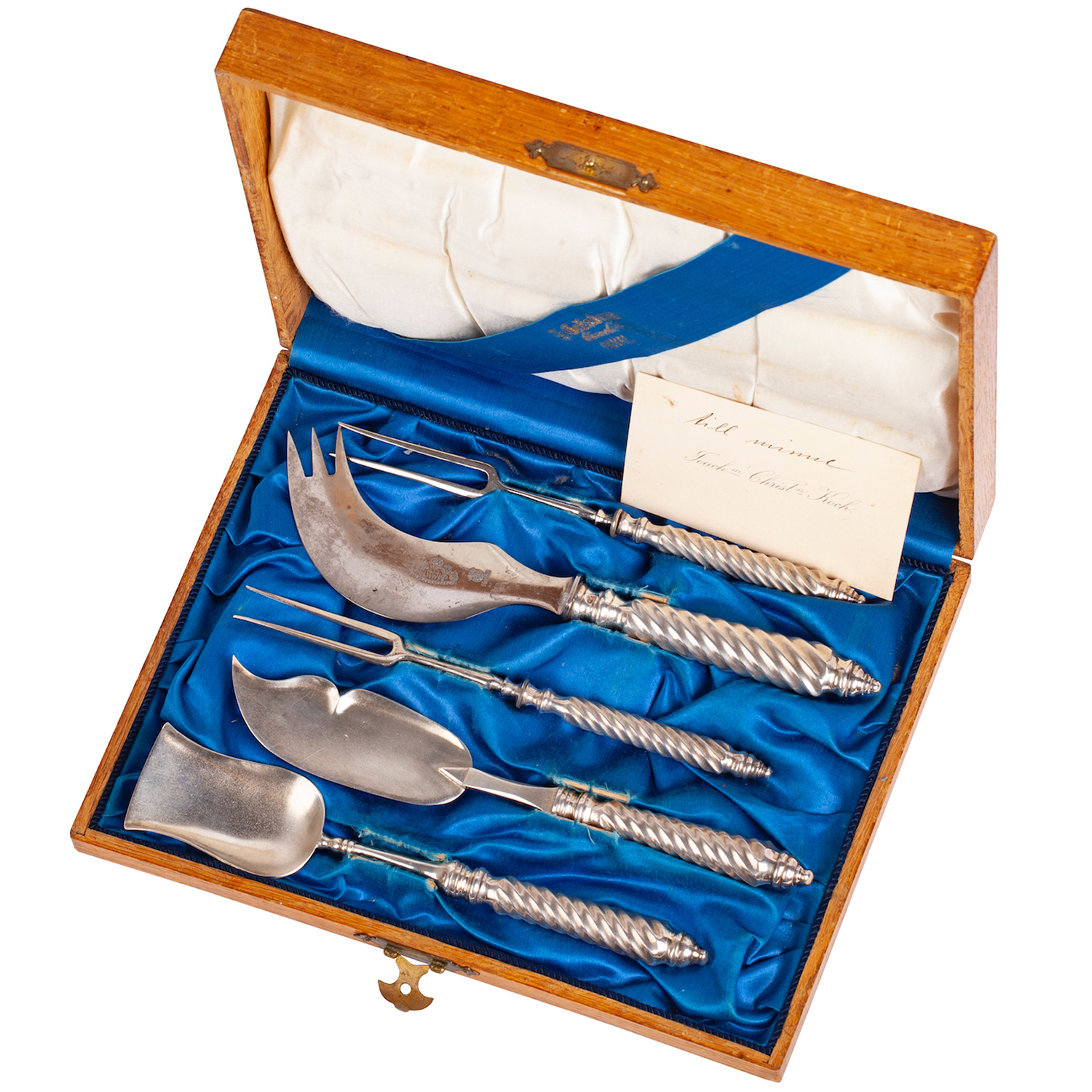
Lot 0178
Russian Silver-Gilt Delicacies Serving Set, St Petersburg, late 19th century
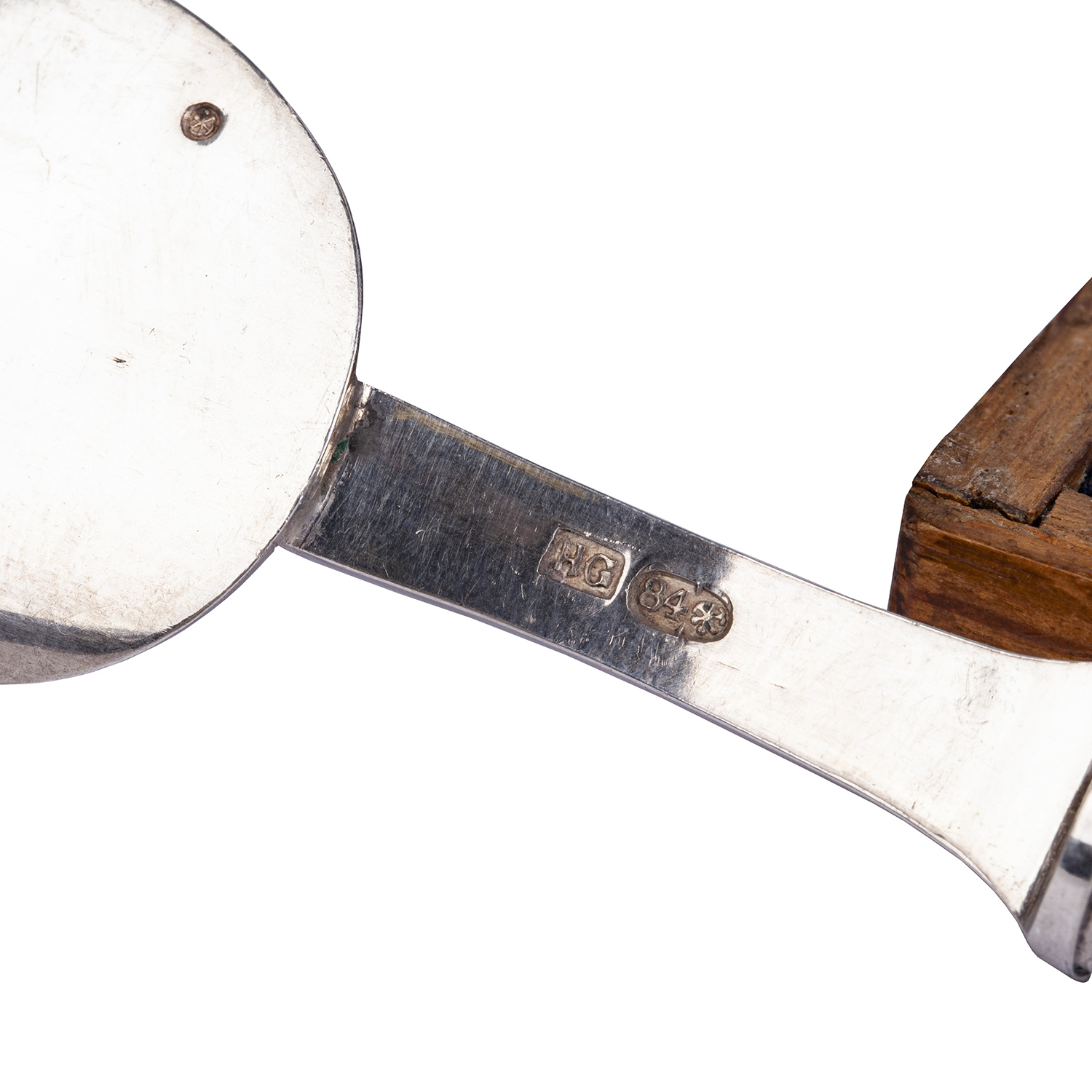
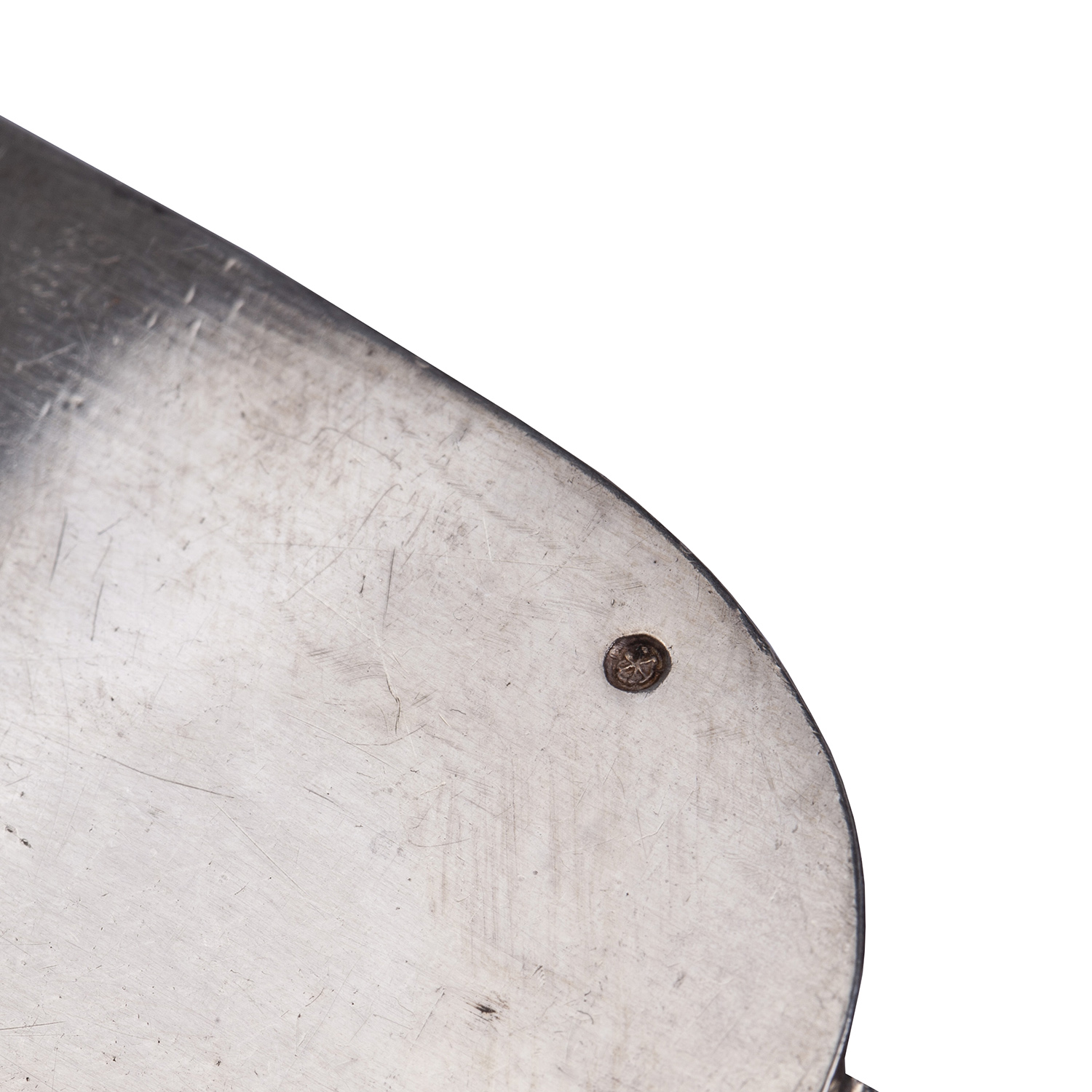
Estimate: 800-1000€An interesting Russian silver-gilt set for delicacies, preserved in its original fitted case with silk and satin lining. The set comprises a caviar trowel, caviar knife, cheese knife, and two snail forks, each with spiral-twist handles. Marked HG, St. Petersburg, late 19th century.
Dimensions of the box: 20.5 × 27 × 4.5 cm
The set was retailed in a jewelry shop in Reval (Tallinn), Estonia, reflecting the wide distribution of Russian luxury silverware throughout the Empire.Starting price: 600€
Estimate: 800-1000€
Hammer Price: Not sold -
Lot 0179
An unusual Russian silver advertising snuff box with en plein enamel panels
Estimate: 2500-3500€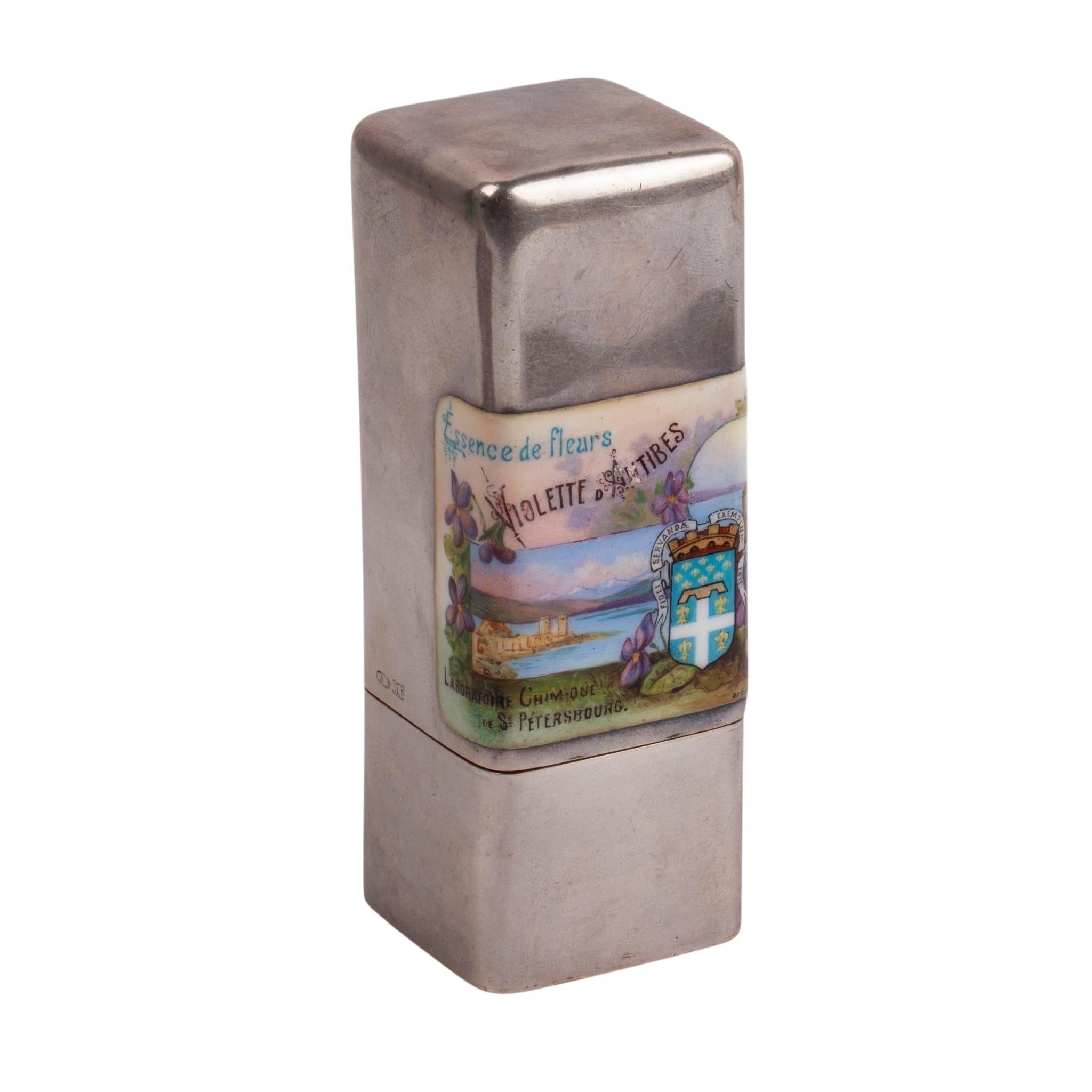
Lot 0179
An unusual Russian silver advertising snuff box with en plein enamel panels
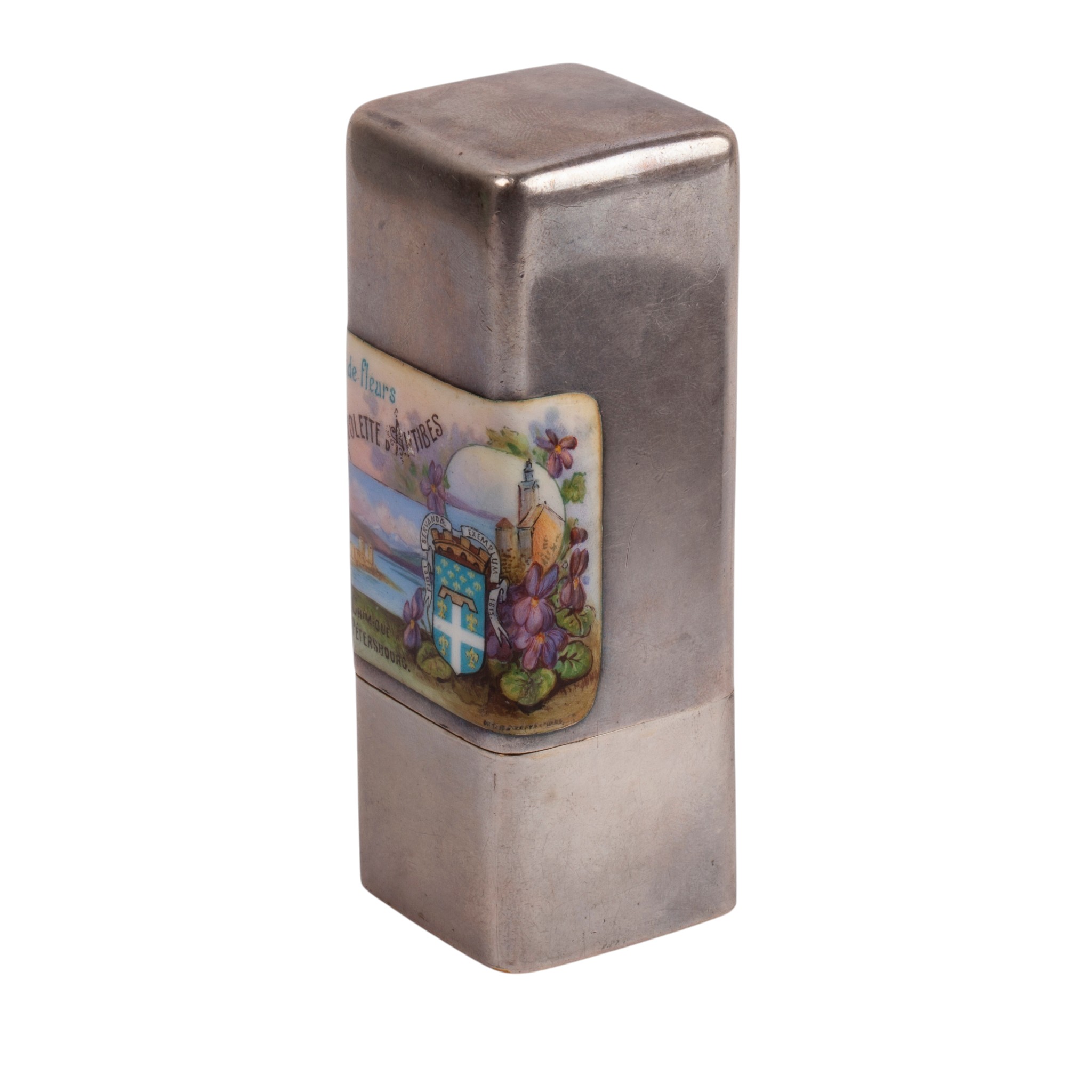
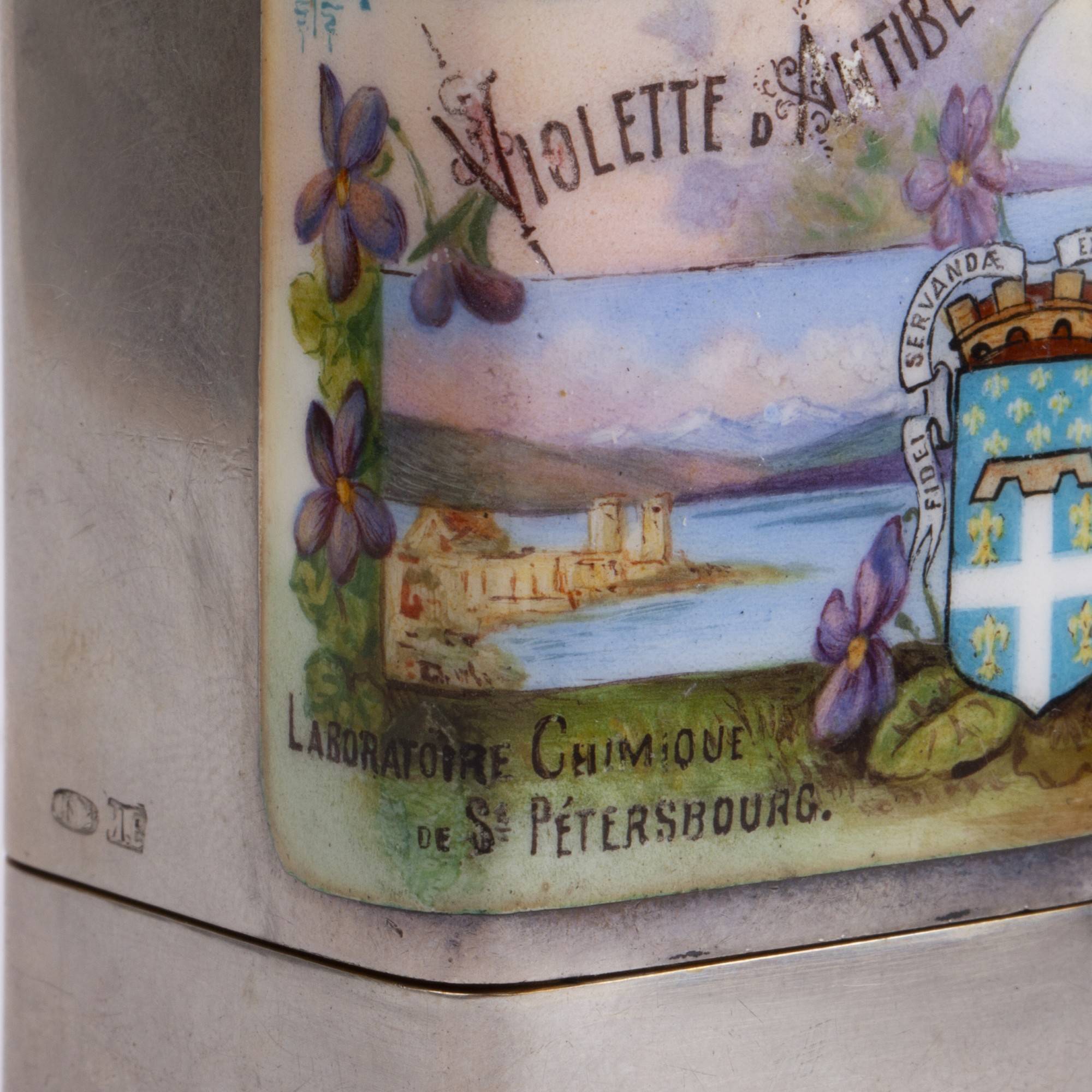
Estimate: 2500-3500€An unusual Russian silver advertising snuff box with en plein enamel panels.
St Petersburg, workshop of Ivan Savelyevich Britsyn, circa 1908-1917.
Silver, enamel; painted en plein enamel, gilding.
Weight: 194 g.
Dimensions: 11.4 x 4.2 x 4.2 cm.
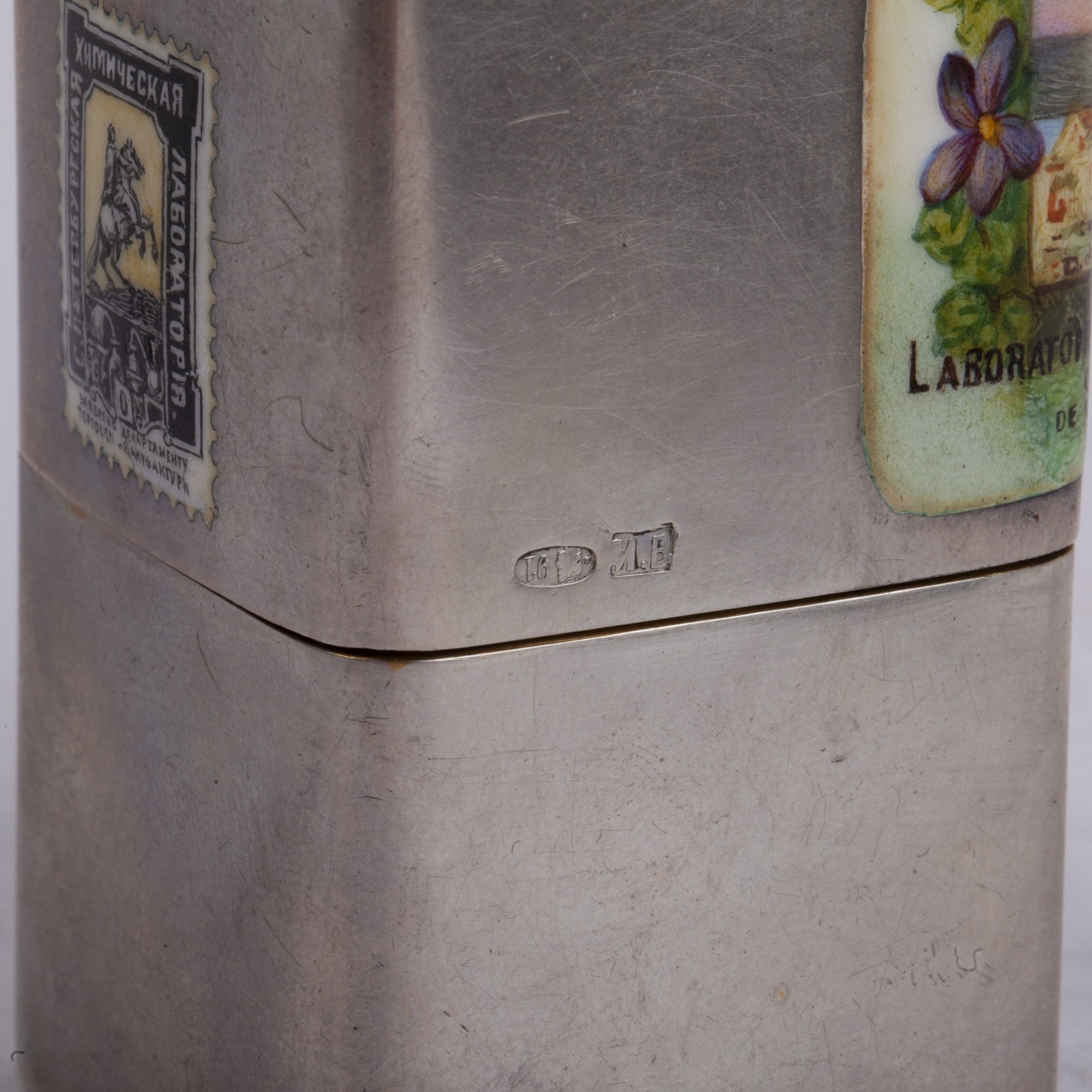
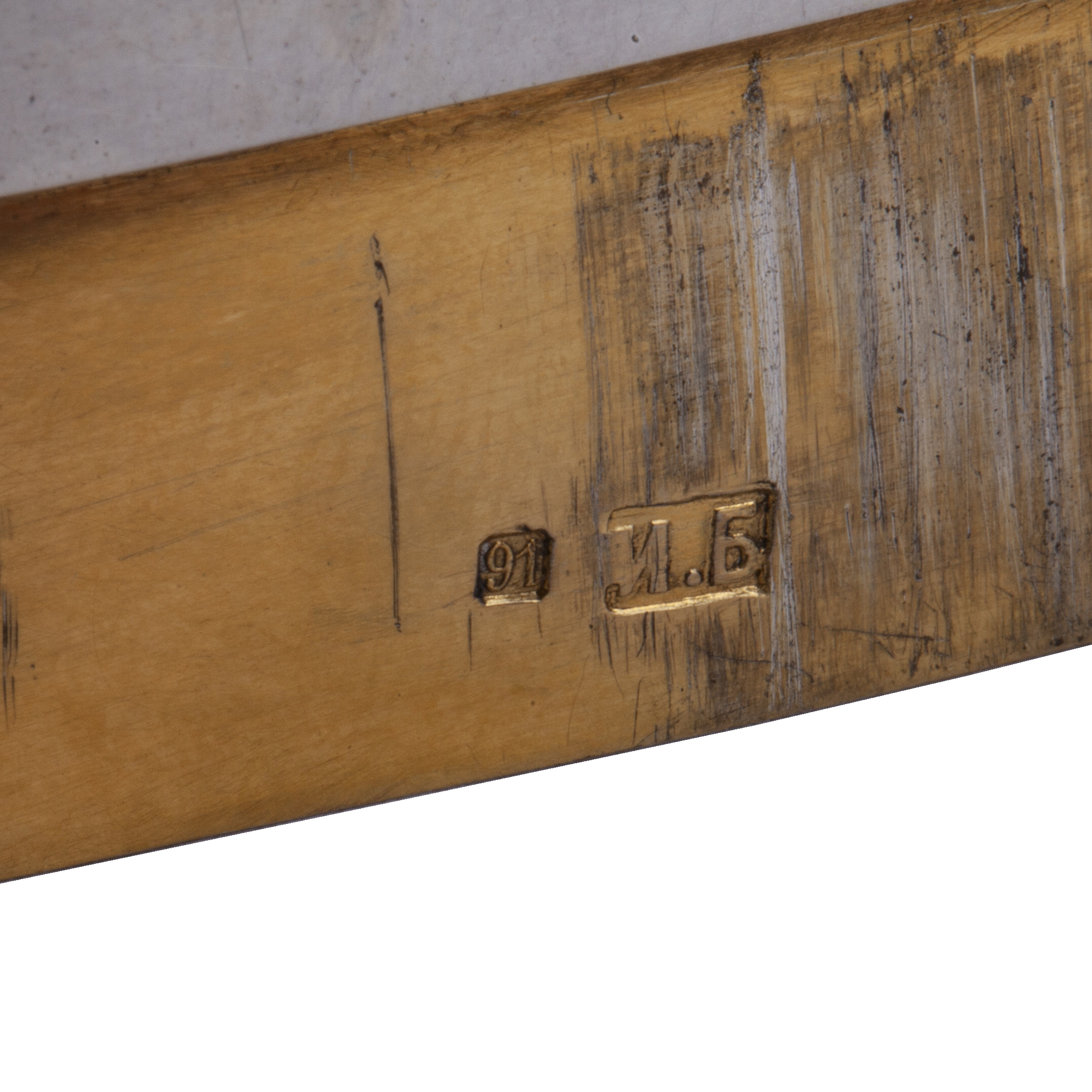
Marks: maker’s mark of Ivan Britsyn, “И.Б.”; Petersburg silver assay mark, 91 zolotnik standard.
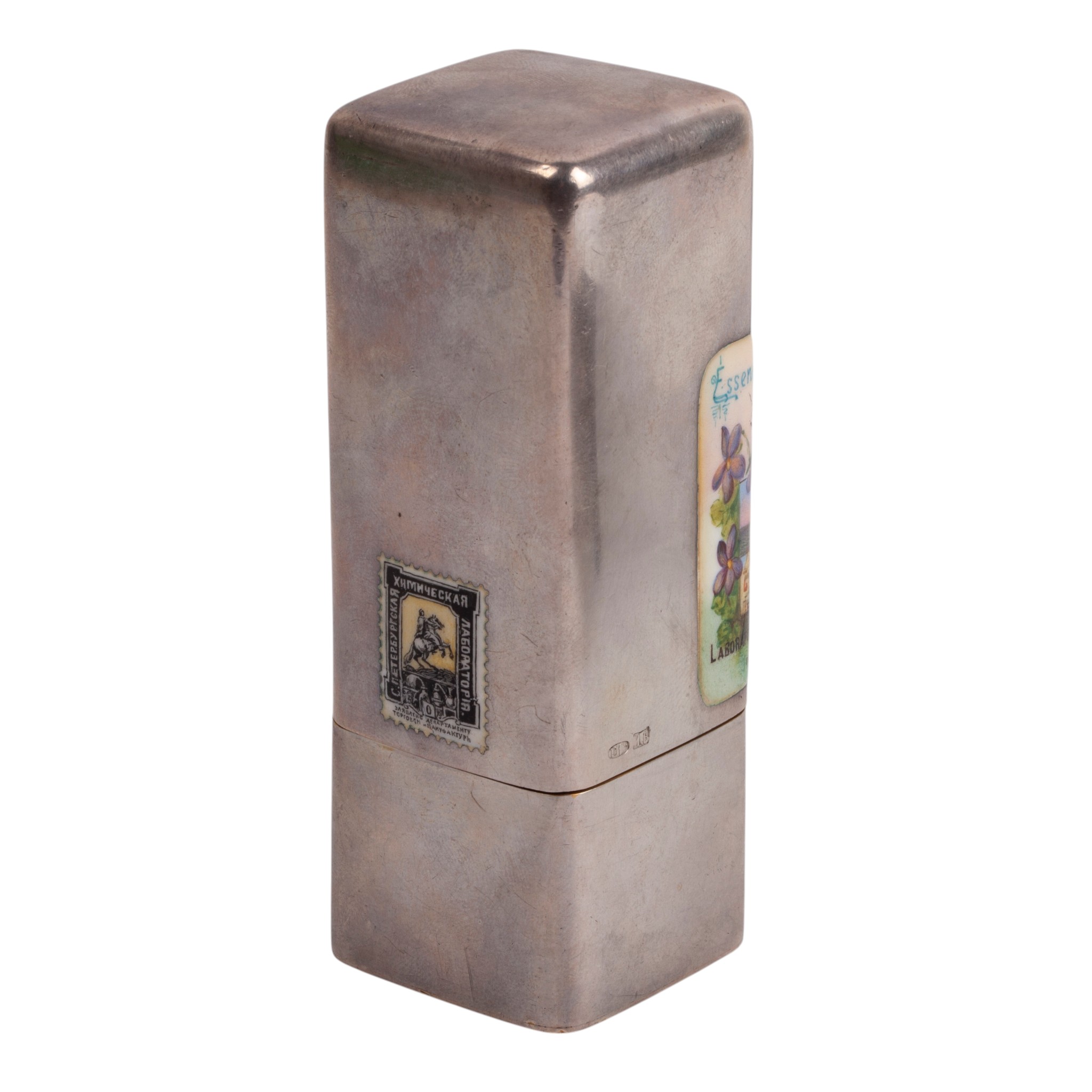
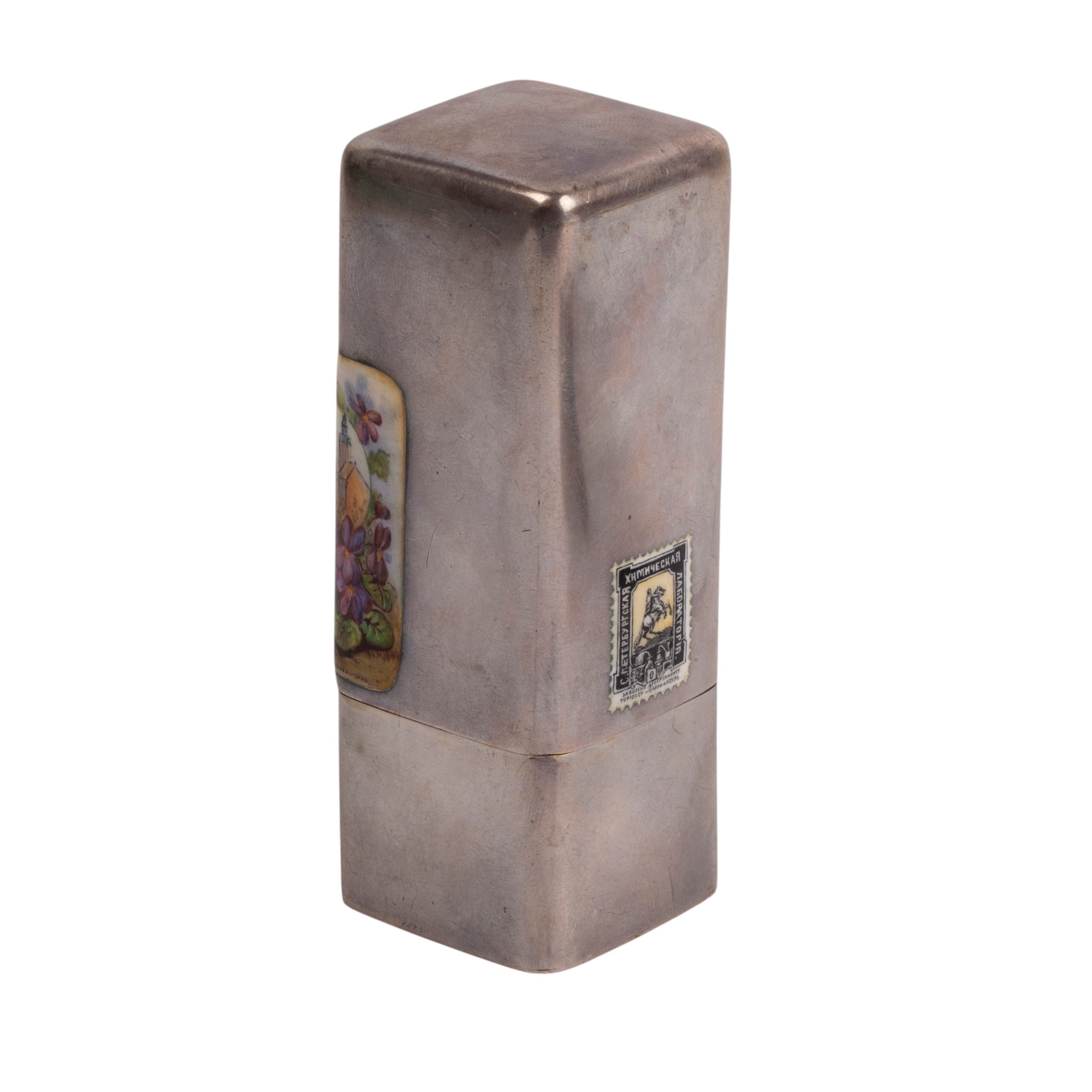
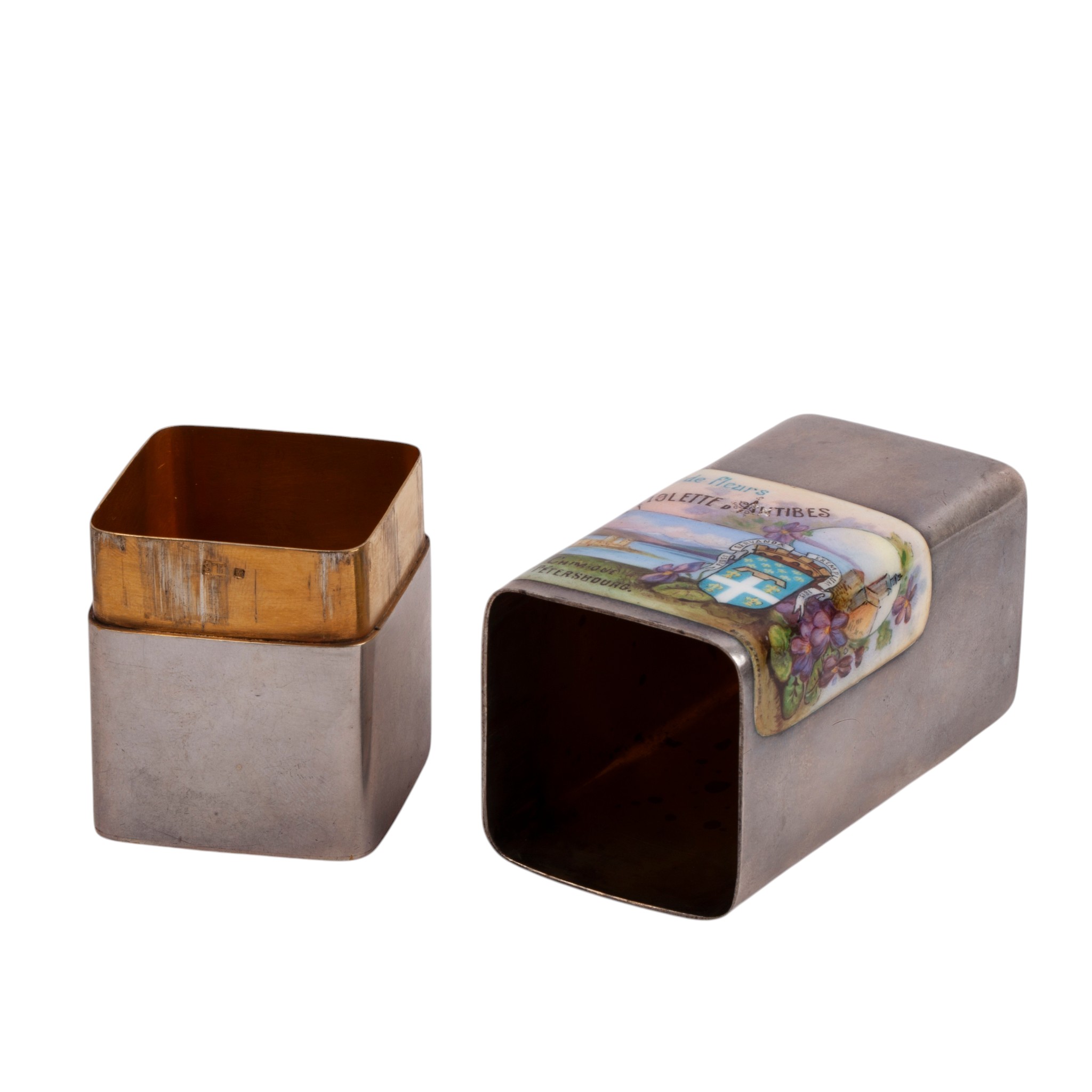
This rare advertising snuff box is executed in the form of a tall rectangular case with rounded corners and a fitted cover.
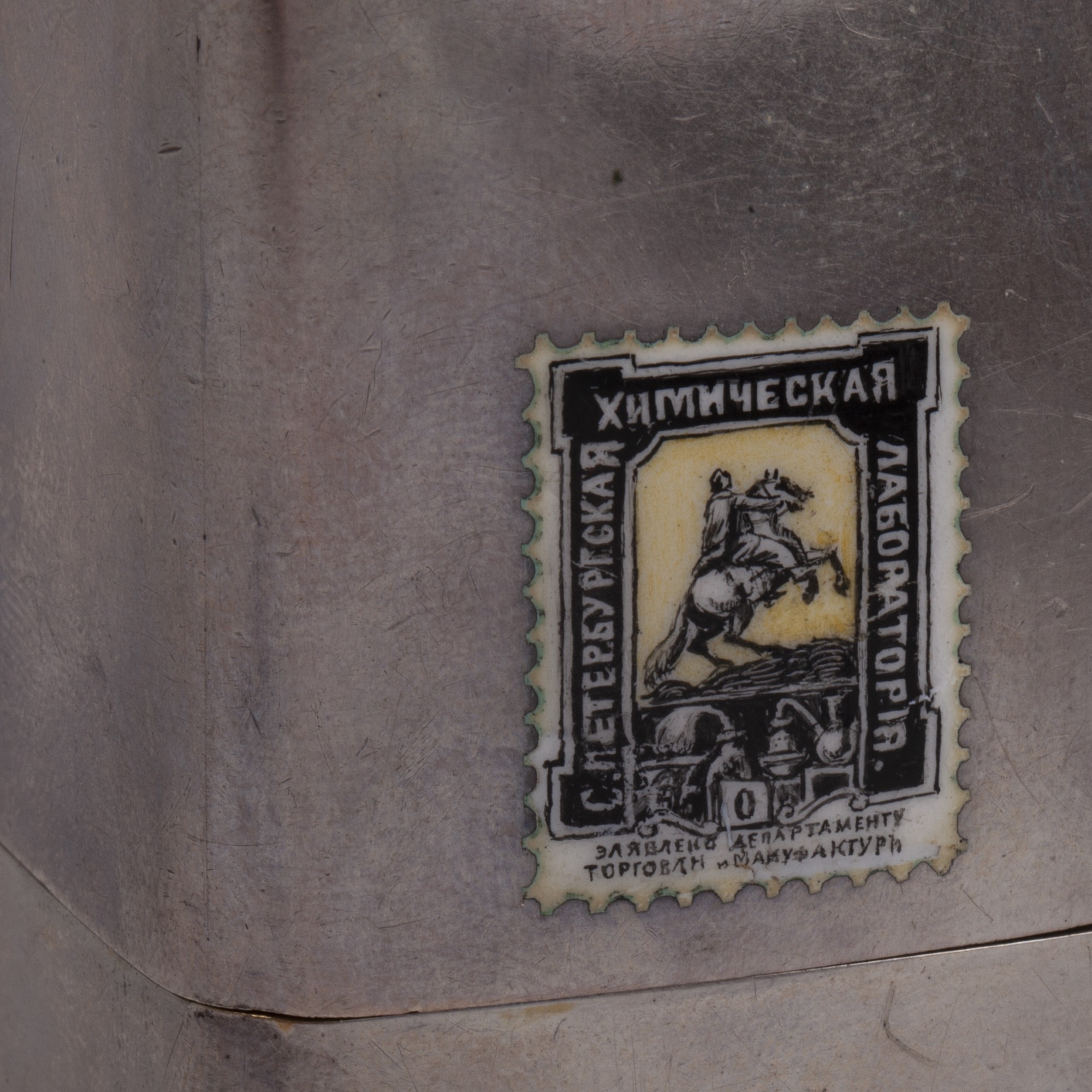
The principal plaque is painted in polychrome enamel and bears the inscription “Essence de fleurs / Violette d’Antibes / Laboratoire Chimique de St Pétersbourg”. The composition combines a picturesque coastal view, sprays of violets, and a heraldic shield. The reverse is decorated with a second enamel panel in the form of a stamp-like label reading “С.-Петербургская Химическая Лаборатория” (“St Petersburg Chemical Laboratory”).
The box was made in the workshop of Ivan Savelyevich Britsyn (1870-1952), a notable St Petersburg jeweller and enameller. Born into a peasant family from Moscow province, Britsyn trained in the workshop of Carl Fabergé and in 1903 passed the examination for the title of master of the silver trade at the St Petersburg Craft Administration. He subsequently established his own workshop, later known as “Russian Enamel”, producing snuff boxes, cigarette cases, desk clocks, cufflinks, buckles, and other luxury objects. From 1909 he participated in exhibitions, including international ones, and eventually became a Supplier to the Imperial Court. After the Revolution he continued to work independently until 1924, later joining cooperative and factory production.Starting price: 2000€
Estimate: 2500-3500€
Hammer Price: Not sold -
Lot 0180
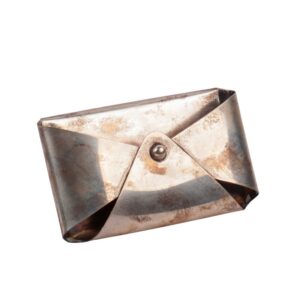
Russian Silver Card Case (Visiting Card Holder), Moscow, 1908–1917
Estimate: 400-500€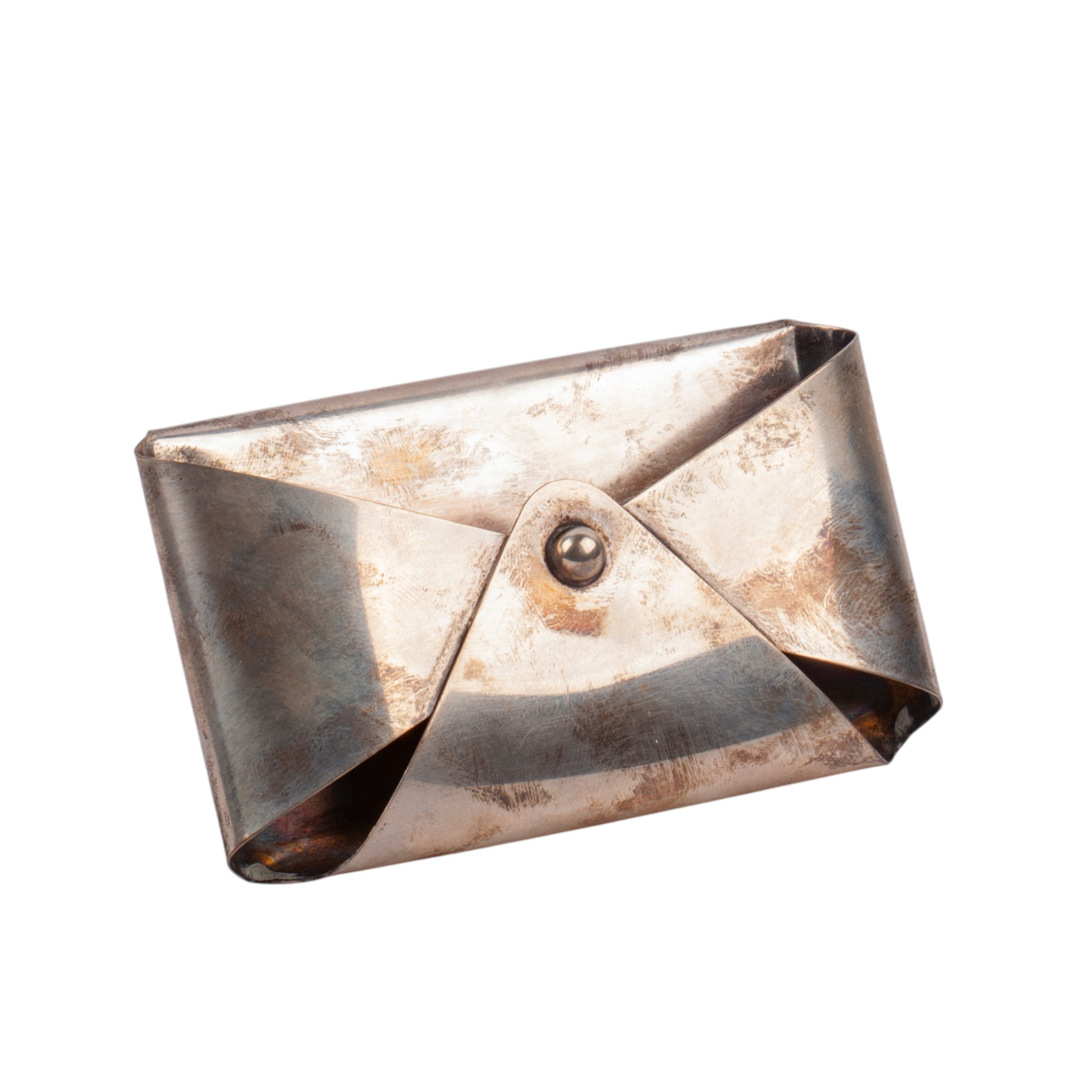
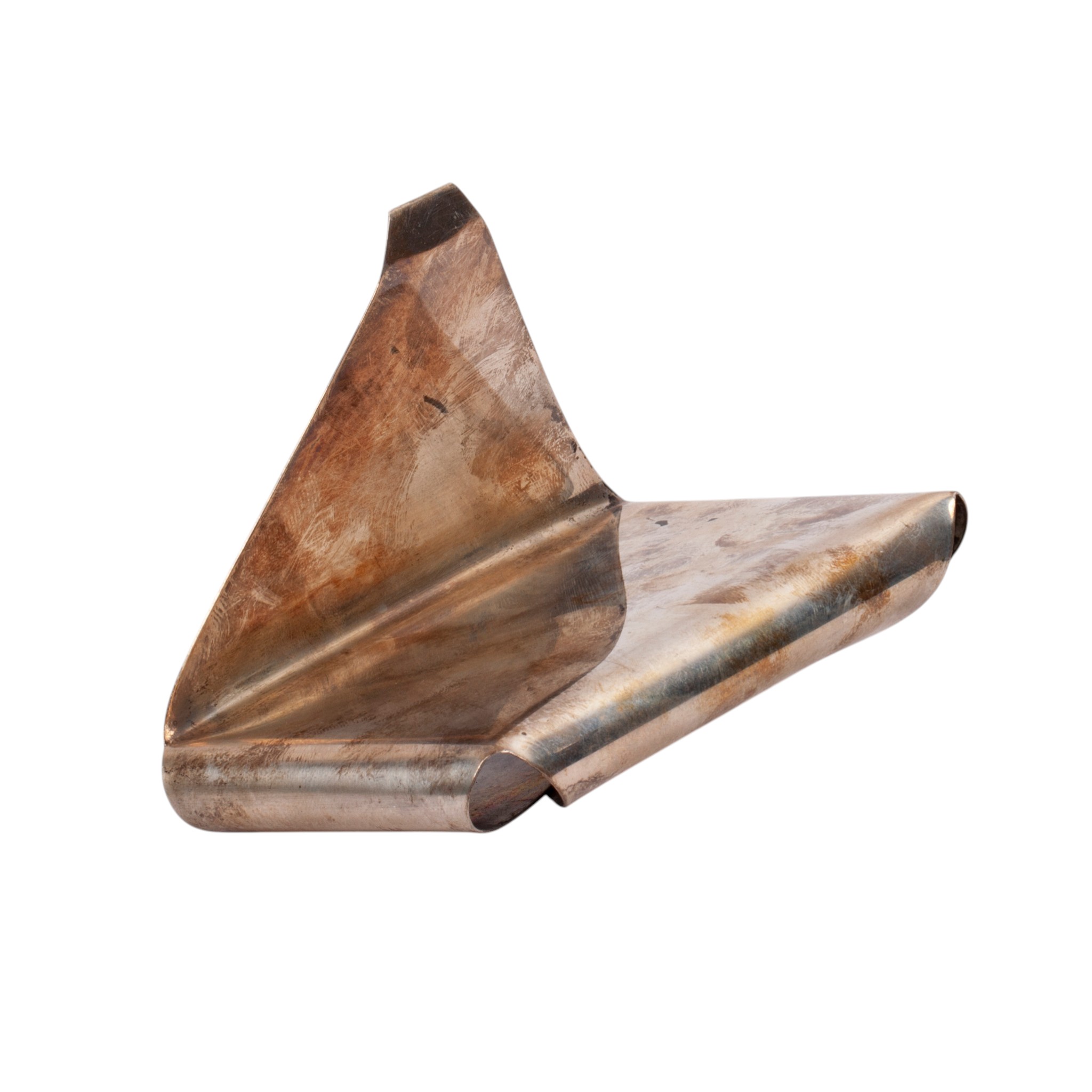
Lot 0180
Russian Silver Card Case (Visiting Card Holder), Moscow, 1908–1917
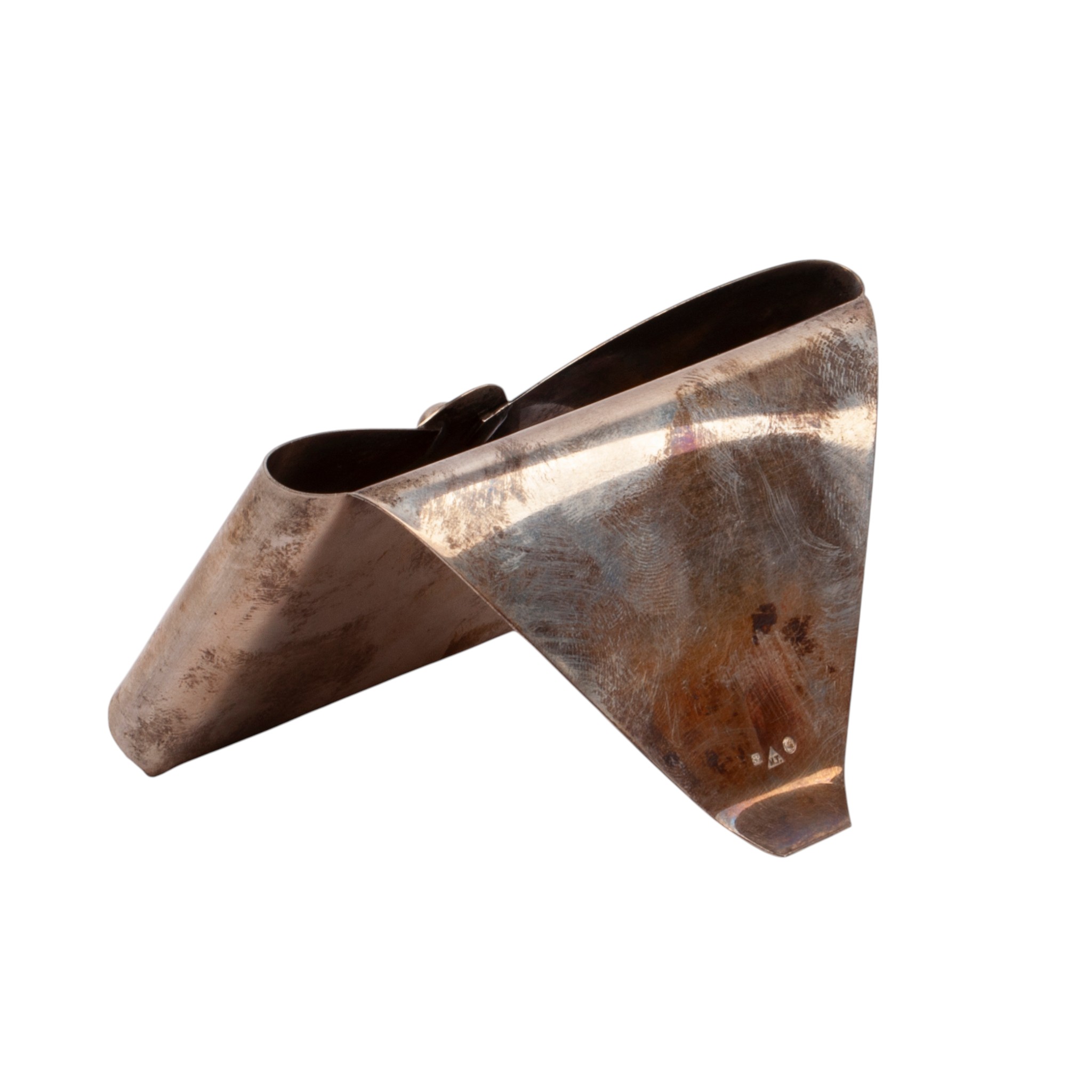
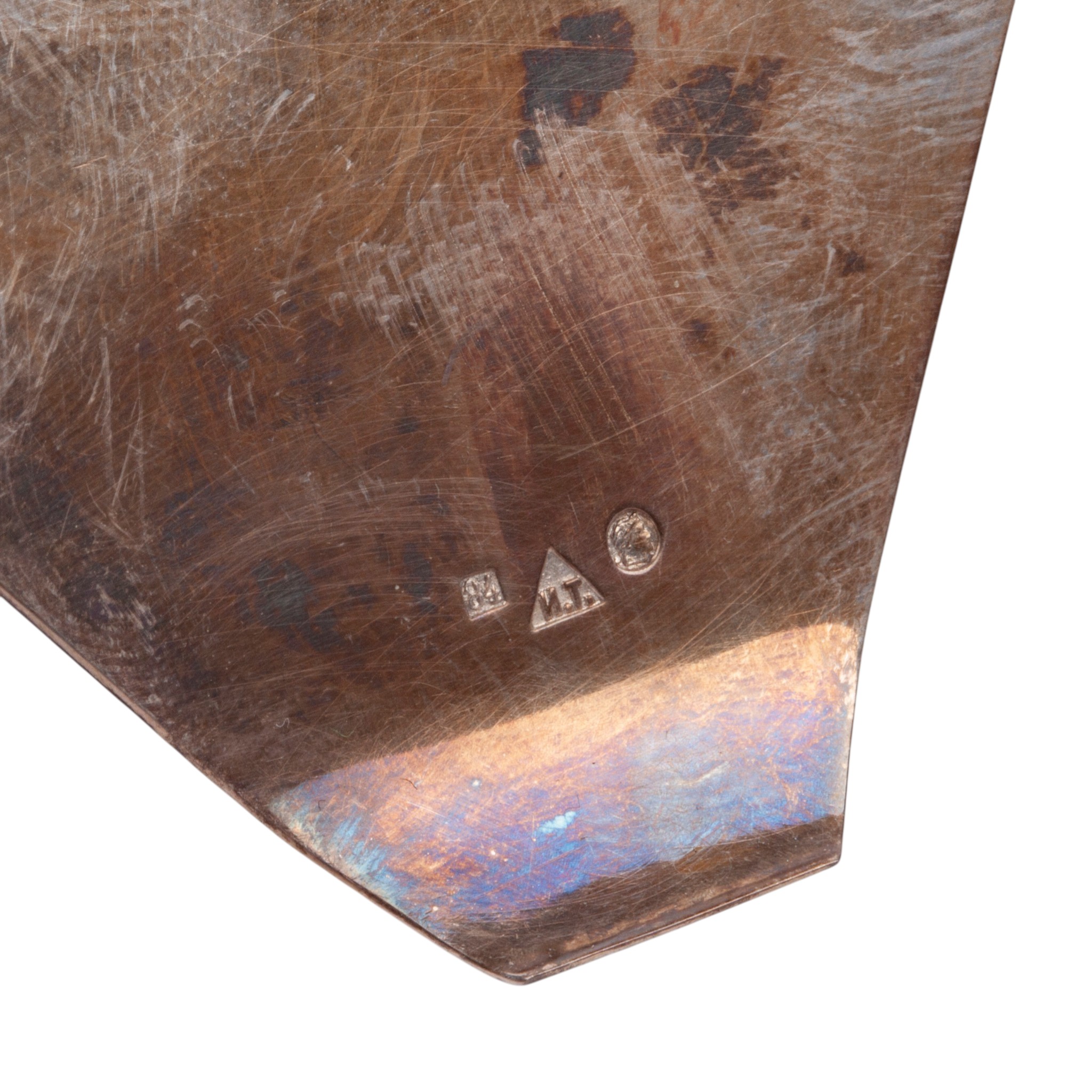
Estimate: 400-500€Silver card case (Visiting Card Holder) in Art-Noveau style. Moscow, Ivan Tarabrov, 1908–1917.
Silver; chasing. Size: 6.2 × 10.1 cm. Weight: 71 g. Marks: maker’s mark “IT» in triangle, Moscow assay mark 1908-1917.
A restrained, elegantly proportioned card case exemplifying the sober refinement of Moscow Art Nouveau. The design relies on pure geometry and impeccable finishing rather than ornament: broad, smoothly polished planes catch and modulate light, turning the silver surface itself into the principal decorative element. Ivan Filippovich Tarabrov operated a workshop (later a factory) of gold and silver objects in Moscow (1893–1917), based in his own house on Bolshaya Dvoryanskaya Street. By the late 1890s his enterprise ranked among the city’s leading jewellery manufacturers, employing dozens of craftsmen and producing a substantial annual output.Starting price: 300€
Estimate: 400-500€
Hammer Price: Not sold -
Lot 0181
Fabergé Silver-Gilt Centrepiece Vase in the Neo-Classical Style, Moscow, 1908–1917
Estimate: 18000-22000€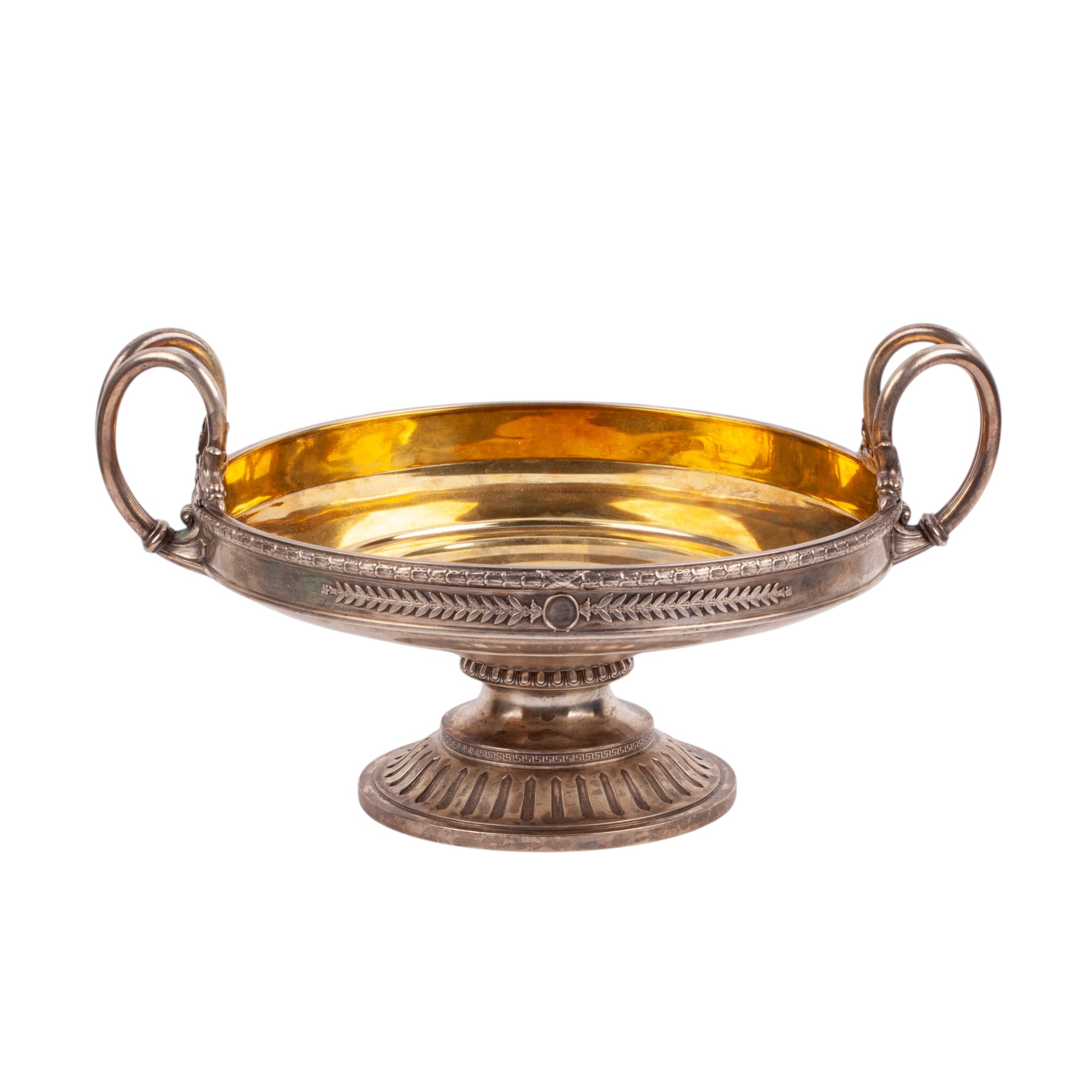
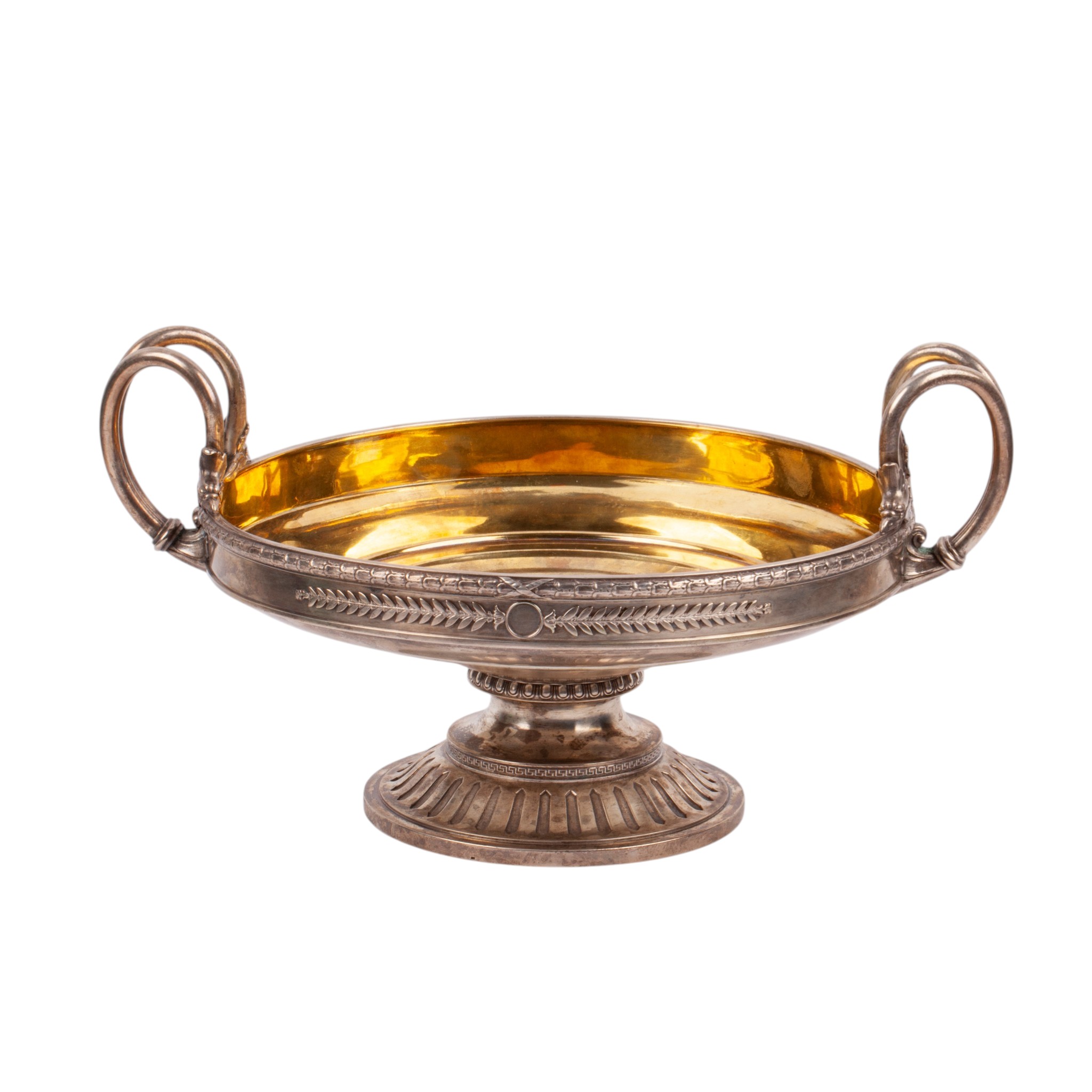
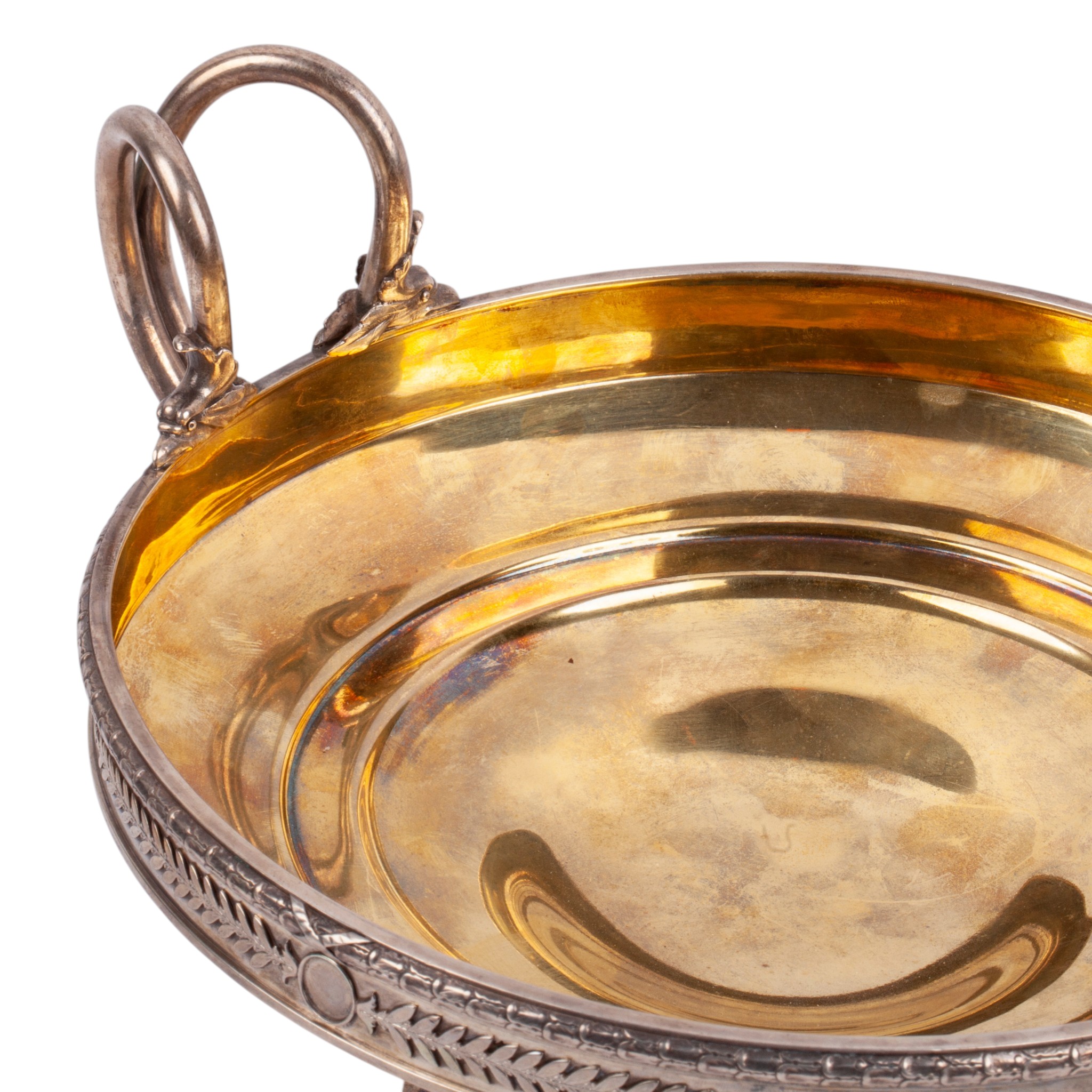
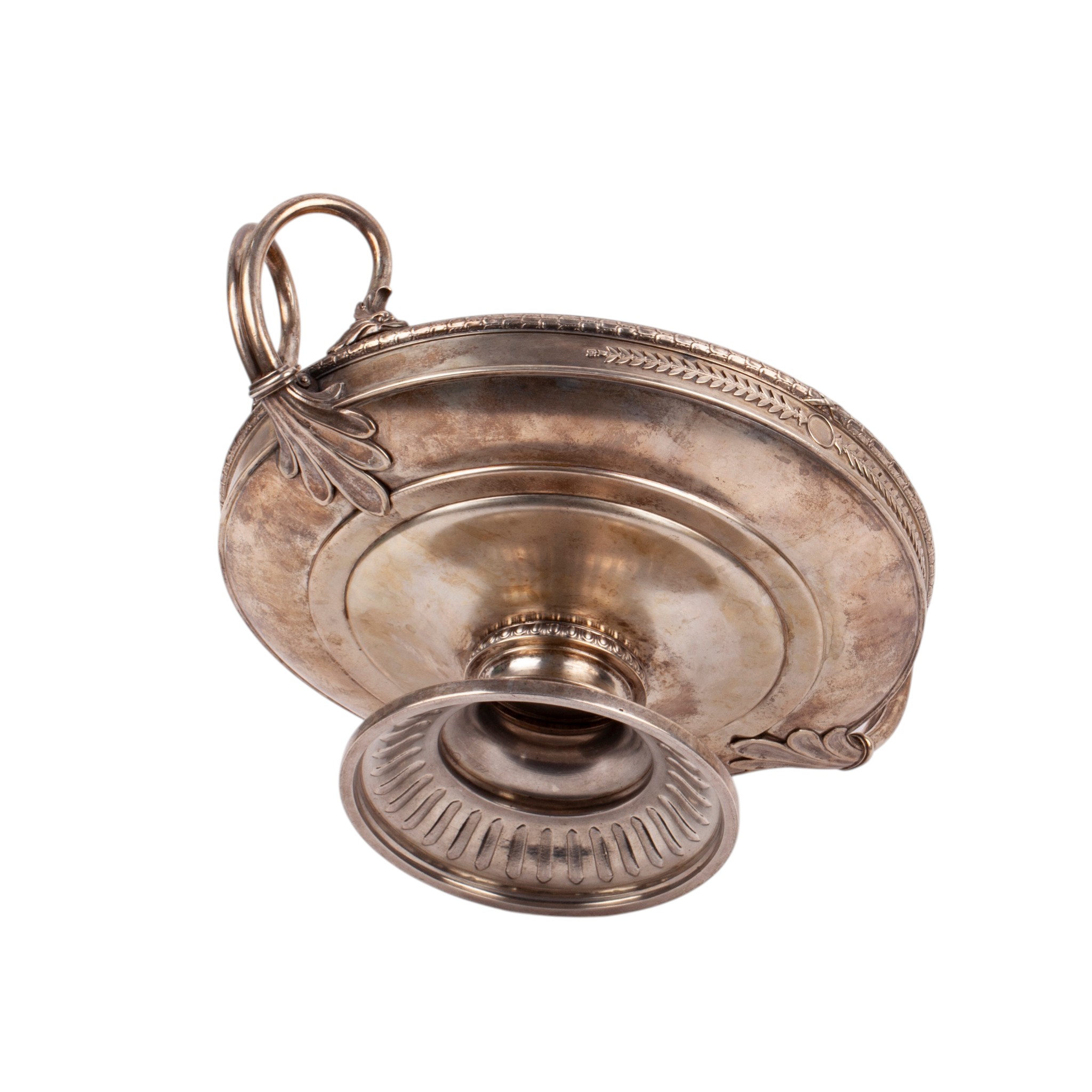
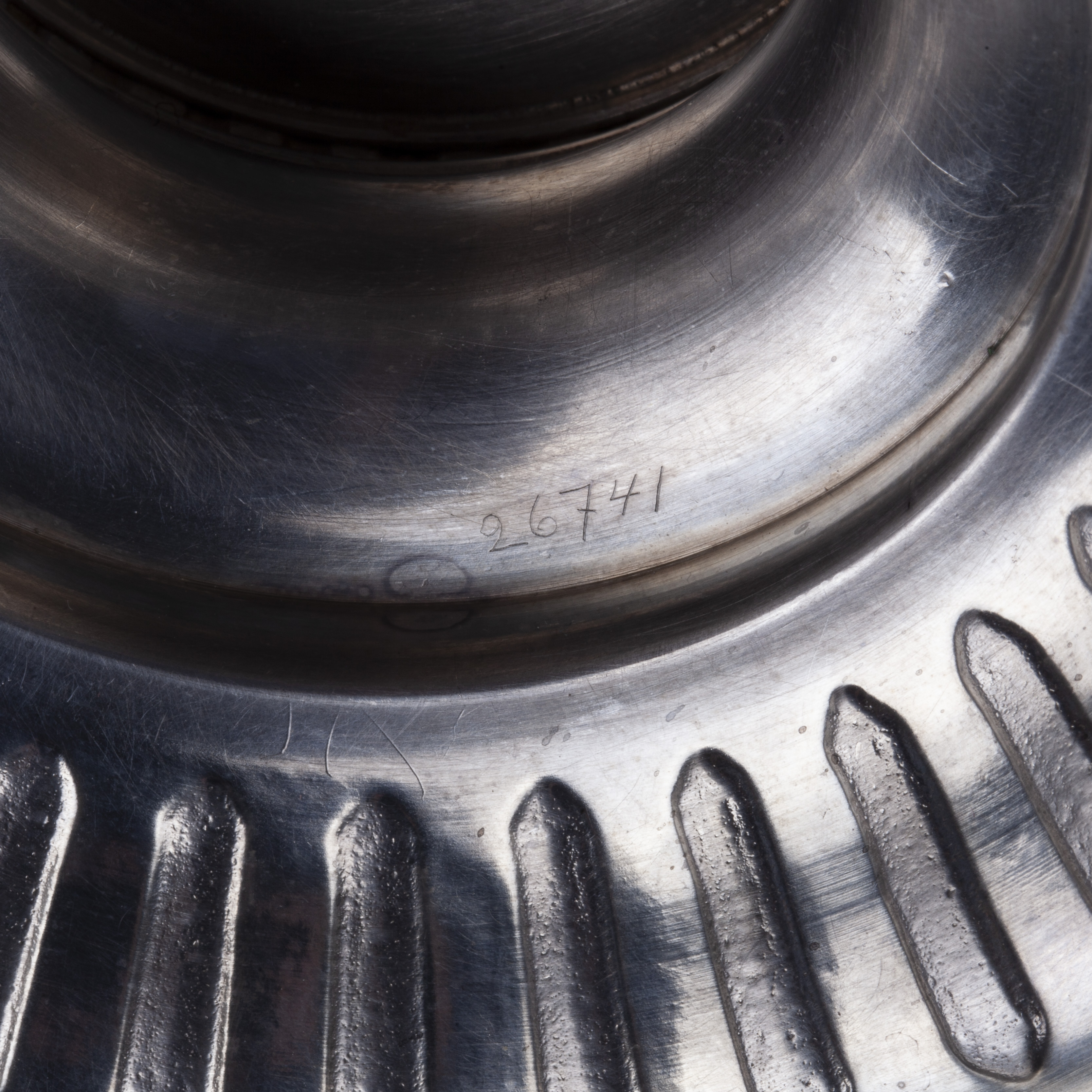
Lot 0181
Fabergé Silver-Gilt Centrepiece Vase in the Neo-Classical Style, Moscow, 1908–1917
Estimate: 18000-22000€Fabergé. A silver-gilt centrepiece vase in the Neo-Classical style
Fabergé Firm, 1908-1917
Silver, gilding, cast, engraving, chased.
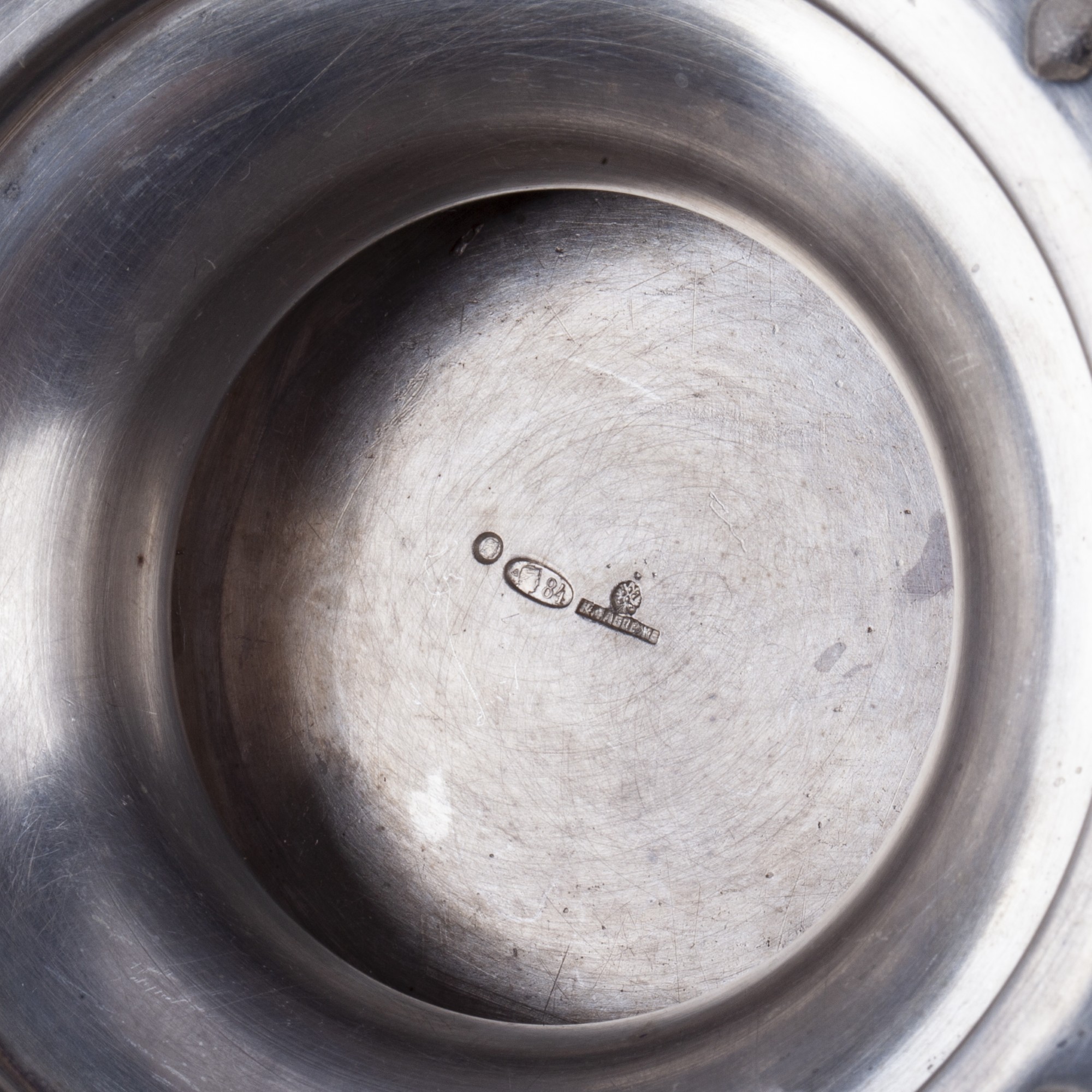
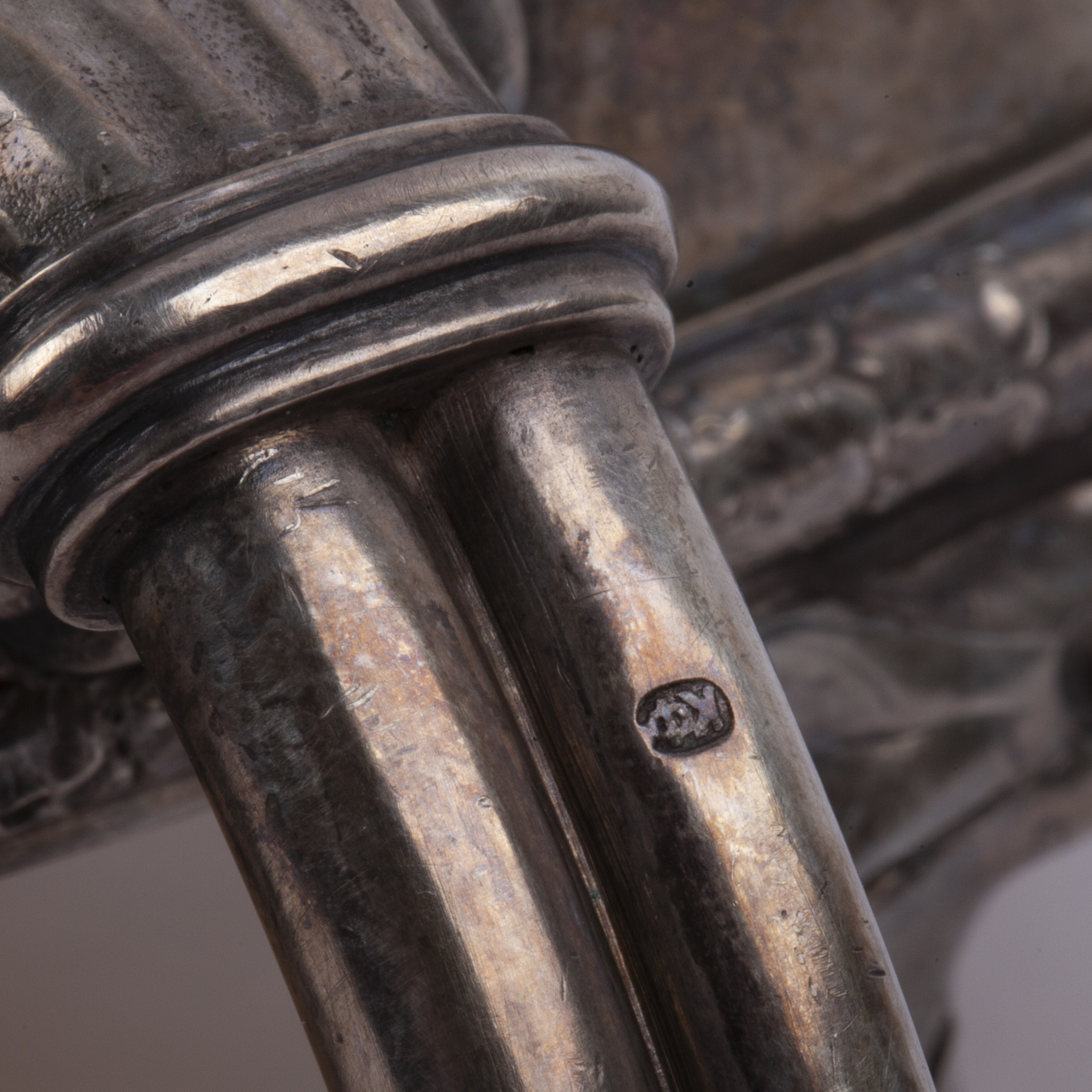
Marked: Fabergé in Cyrillic; 84 standard silver mark; Moscow assay mark. Total weight: 1288 g. Dimensions: 16,5 x 31 x 23,8 cm.
This elegant silver-gilt centrepiece vase, formed and decorated in the Neo-Classical taste. Of shallow circular form, it is raised on a spreading pedestal foot enriched with fluting and meandr border. The rim is encircled by delicate bands of stylised laurel ornament, withe attenuated loop handles formed with eagles heads. The gilt interior provides a luminous contrast to the restrained silver exterior.
The design belongs to the historicising classicism that remained highly popular in Russian decorative art at the turn of the twentieth century. Its measured proportions, controlled ornament, and reference to antique and Empire-derived forms place the object within the tradition of luxury table wares intended for formal domestic or ceremonial display.
The bowl was produced by the Moscow branch of Fabergé, which began operating in 1887 with a workshop and shop on Kuznetsky Most. In 1890 the firm acquired a silver factory formerly owned by the Finnish merchant Christian Lindroos, and by 1891 production was established under Fabergé’s own name. The factory was subsequently modernised with new presses, machinery, and electrification, under the direction of Mikhail Moiseevich Chepurnov. As Franz Birbaum later recalled, while the St Petersburg workshops excelled in jewellery and enamels, the Moscow factory became especially renowned for its large-scale silver production; from about 1900, major silver wares were executed there. Objects from the Moscow branch are comparatively rare today, as large quantities of stock remaining after the Revolution were confiscated in 1919, and only a limited number of pieces have since reappeared on the art market.Starting price: 15000€
Estimate: 18000-22000€
Hammer Price: Not sold -
Lot 0182
Russian Silver Tea Caddy in Oriental Style, I. P. Khlebnikov, Moscow, late 19th century
Estimate: 900-1000€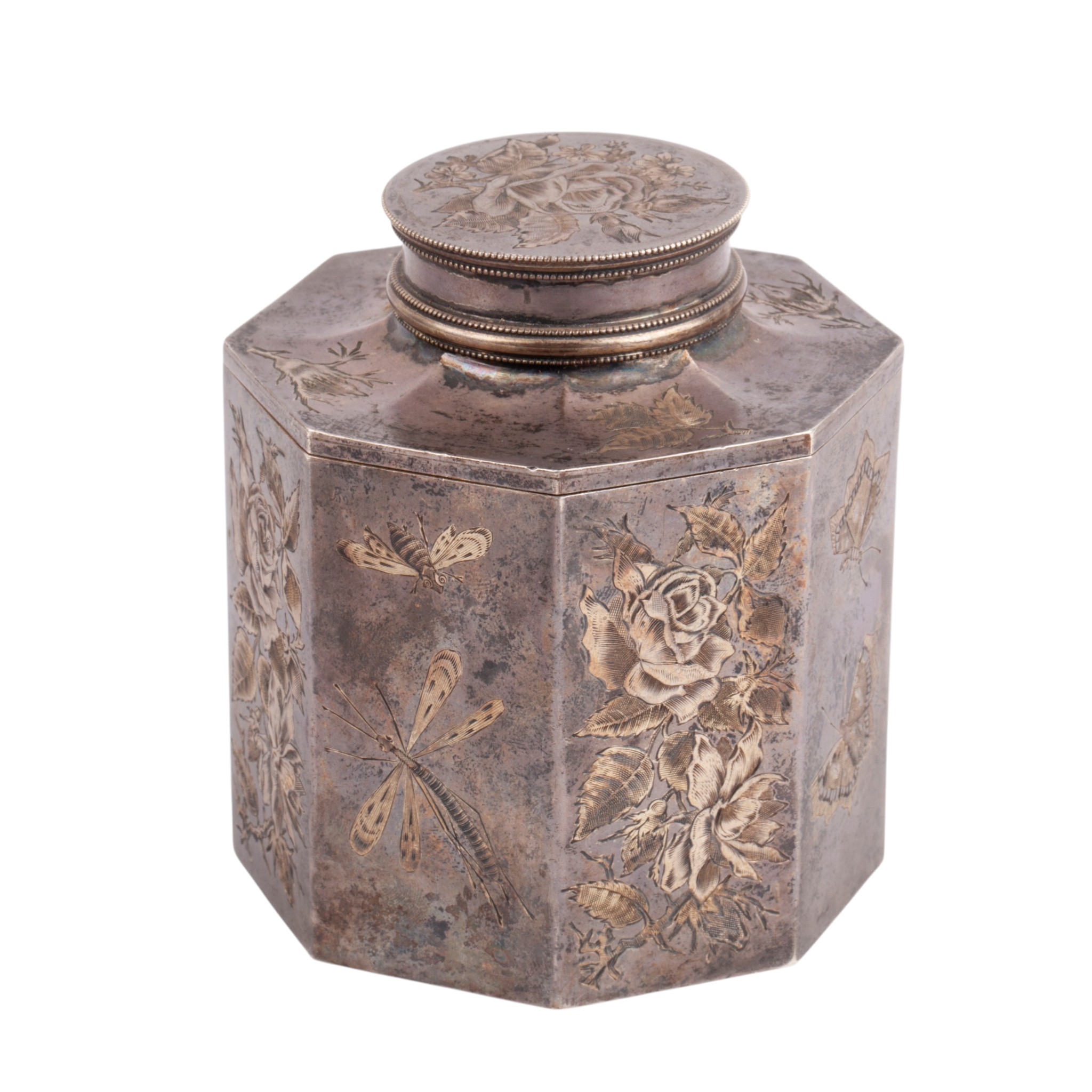
Lot 0182
Russian Silver Tea Caddy in Oriental Style, I. P. Khlebnikov, Moscow, late 19th century
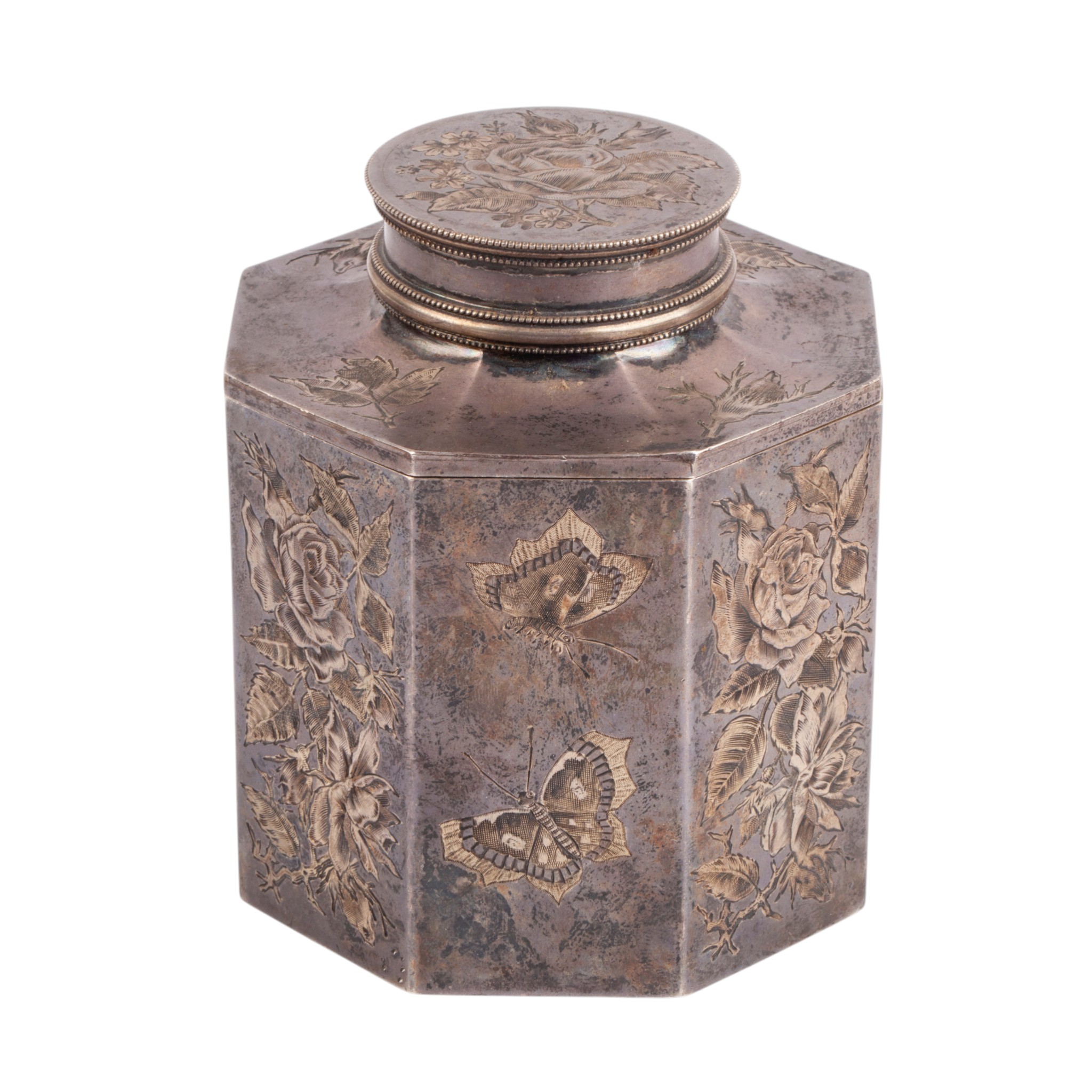
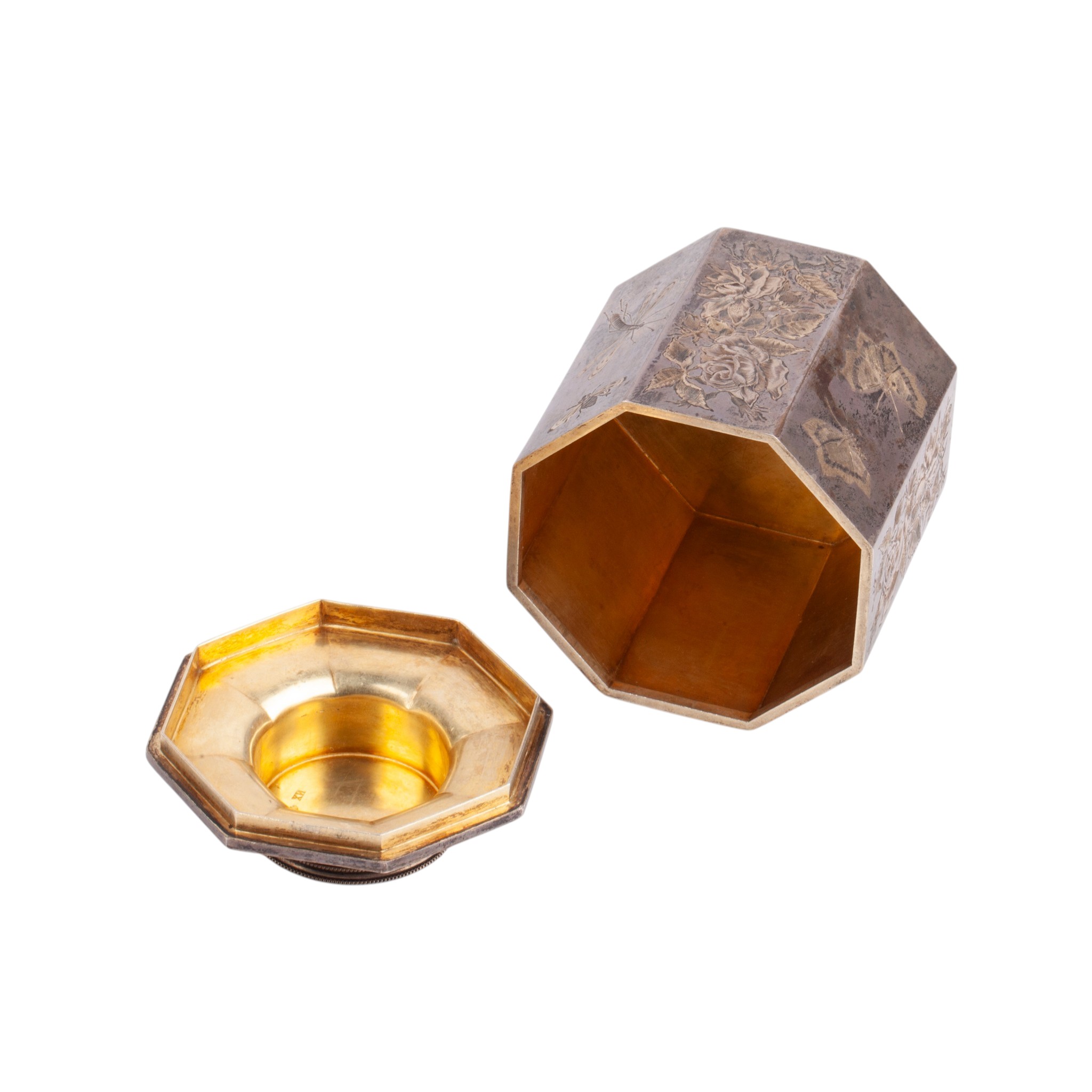
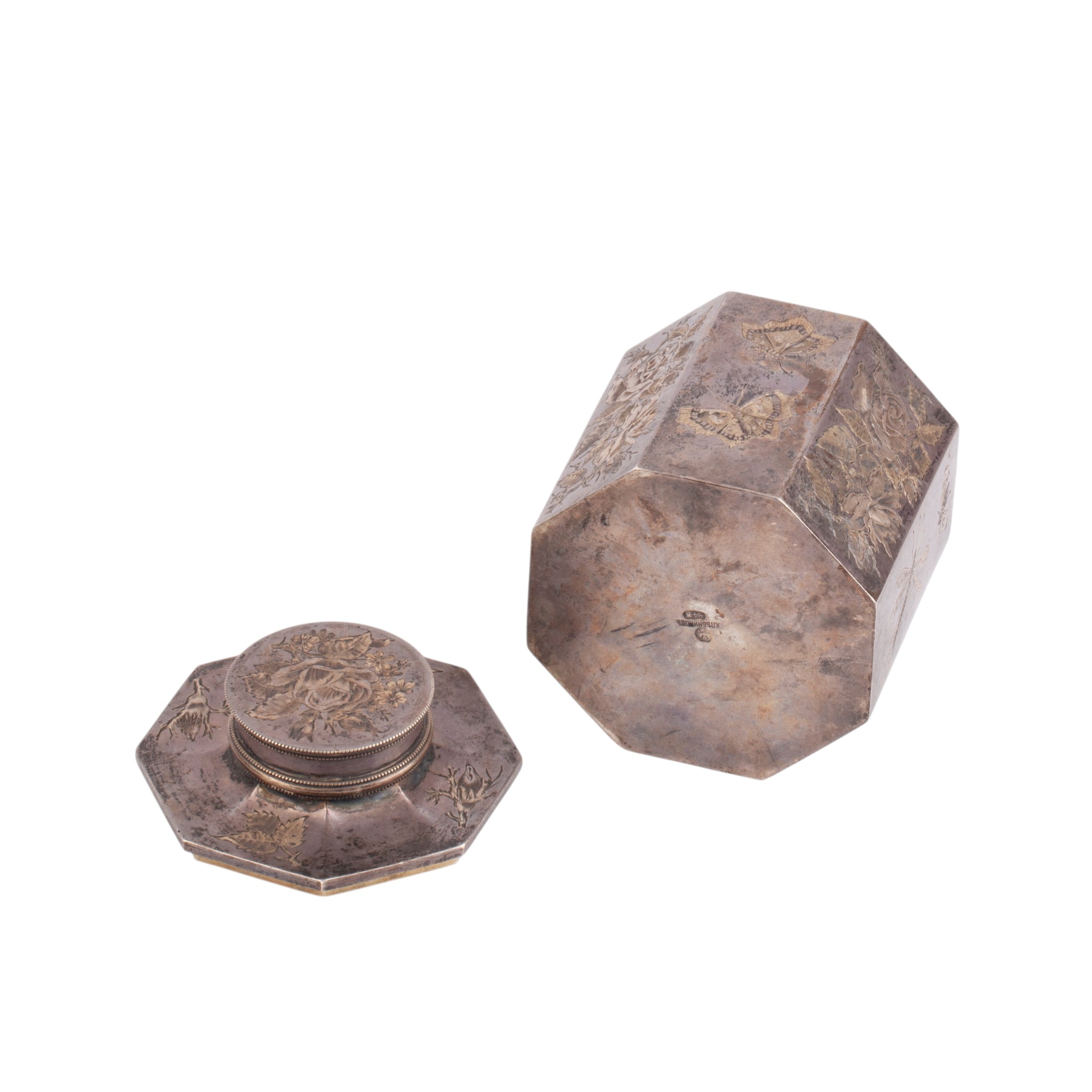
Estimate: 900-1000€A Russian Tea Caddy in oriental style
Moscow, firm of I. P. Khlebnikov, late 19th century
Silver; engraved, gilding.
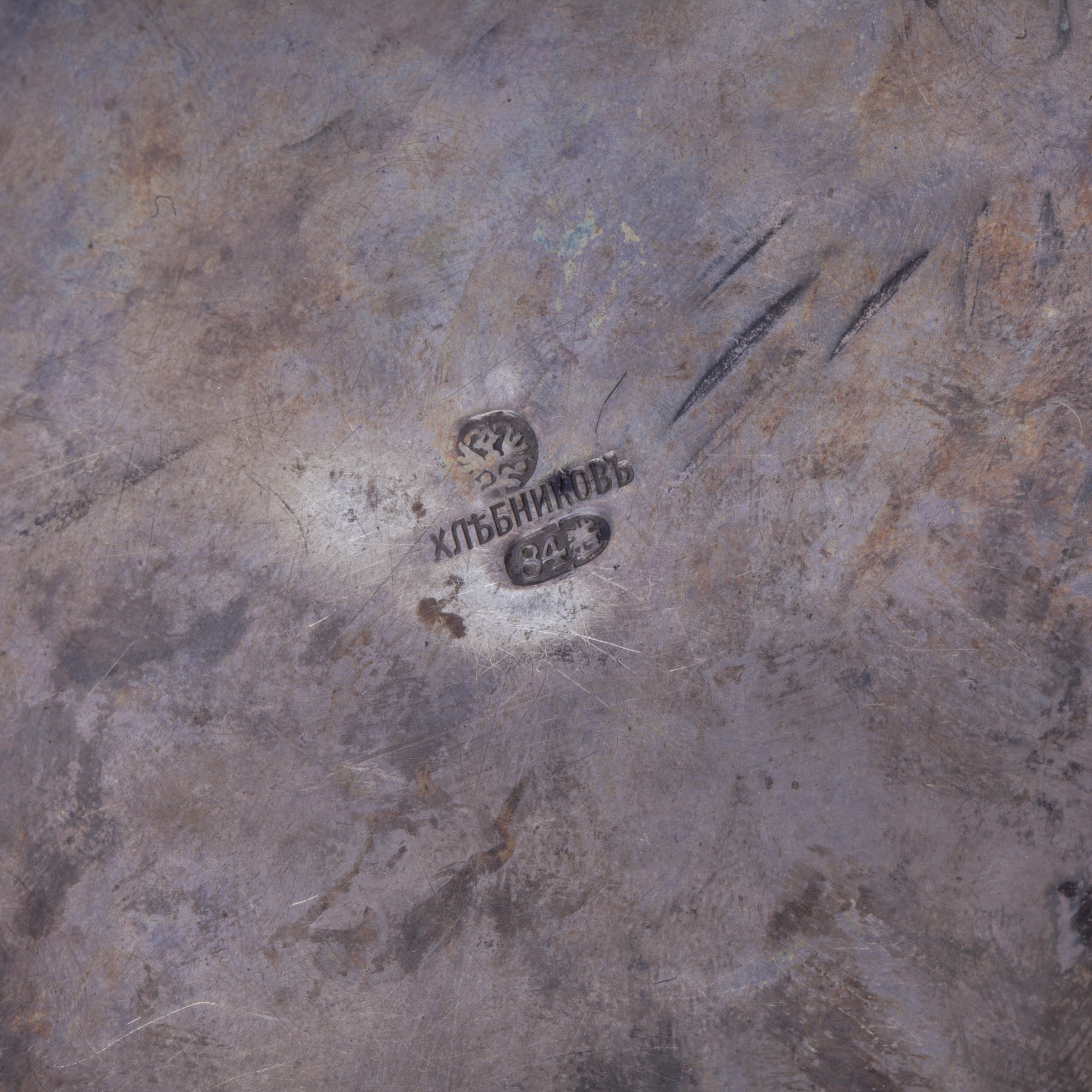
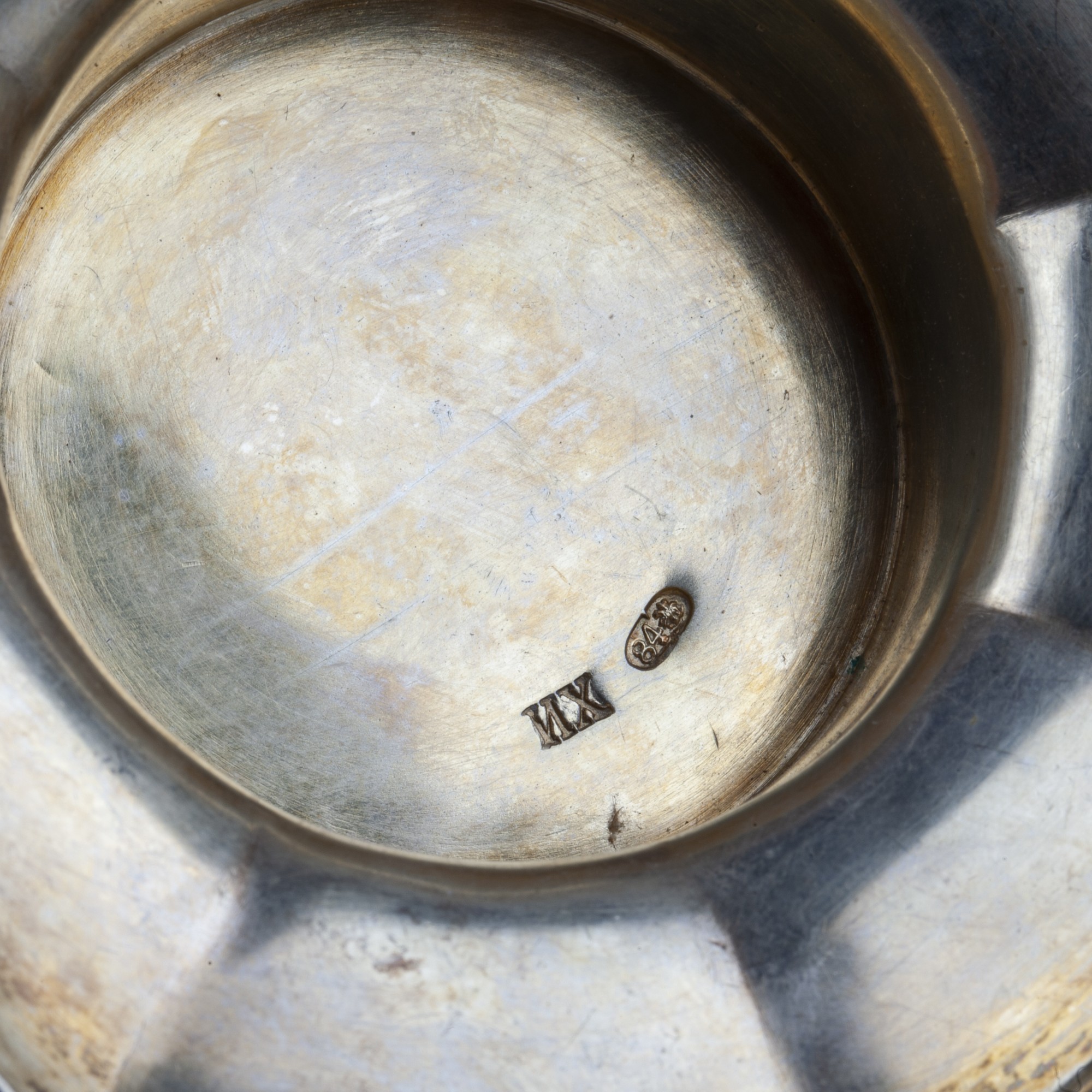
Dimensions: 10.7 × 8.9 × 8.9 cm. Weight 376 g. Marks: stamped on the underside with the firm’s mark “Khlebnikov” under the Imperial warrant, 84 zolotnik silver standard, Moscow assay mark. A finely proportioned silver tea caddy of hexagonal form, rising to a faceted shoulder and a circular neck with a fitted lid. The surface is enriched with delicately engraved floral sprays, roses, butterflies, and a dragonfly, while the lid is centred with a luxuriant bouquet framed by beaded borders.
Tea caddies of this type were intended for the storage of loose-leaf tea and belong to the elegant culture of the Russian tea table in the second half of the 19th century. The present example was produced by the honorable Moscow firm of Ivan Petrovich Khlebnikov, one of the most distinguished Russian silversmithing houses of the Imperial period. Founded in 1871, the firm gained wide renown for the quality of its gold and silver wares, received numerous awards at Russian and international exhibitions, and held the title of Supplier to the Imperial Court. Although especially admired for works in the neo-Russian taste, Khlebnikov’s workshop also excelled in objects of refined domestic silver such as the present caddy.Starting price: 800€
Estimate: 900-1000€
Hammer Price: 800 € -
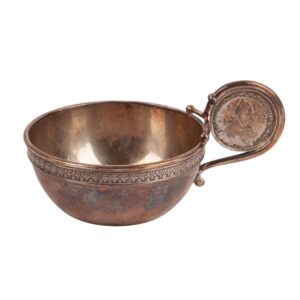
Lot 0183
Fabergé Silver Charka Inset with Coin, St Petersburg, 1899–1904
Estimate: 3500-4500€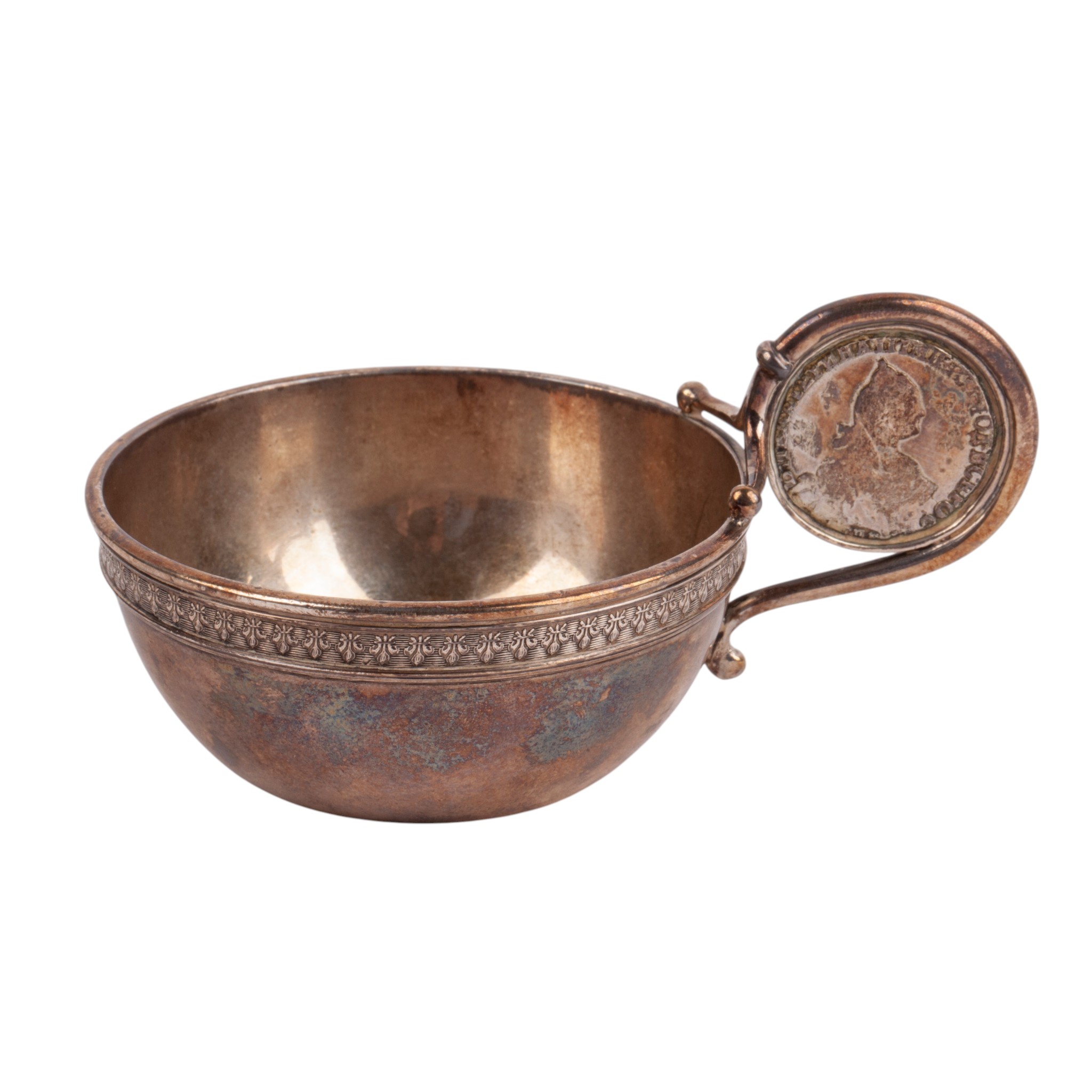
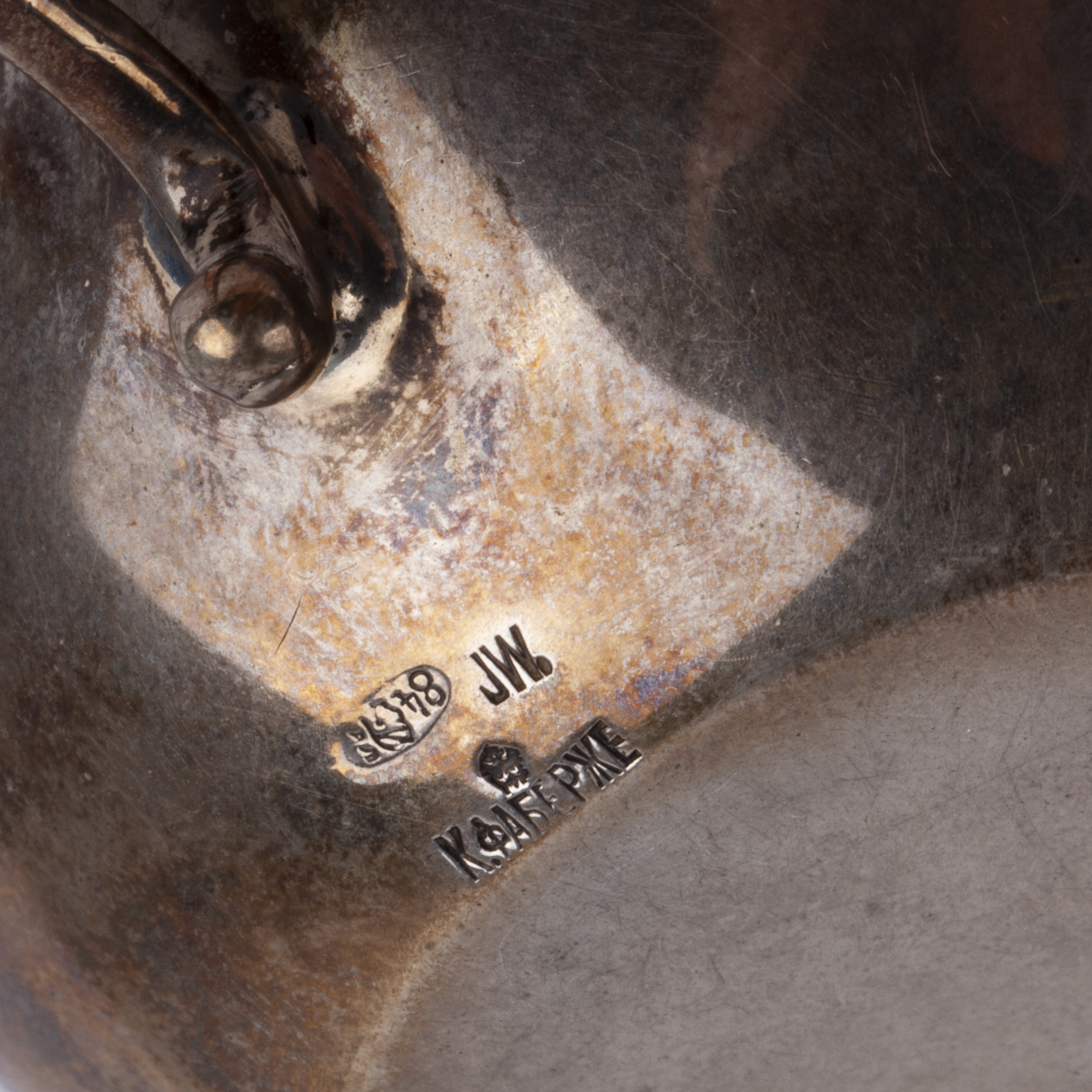
Lot 0183
Fabergé Silver Charka Inset with Coin, St Petersburg, 1899–1904
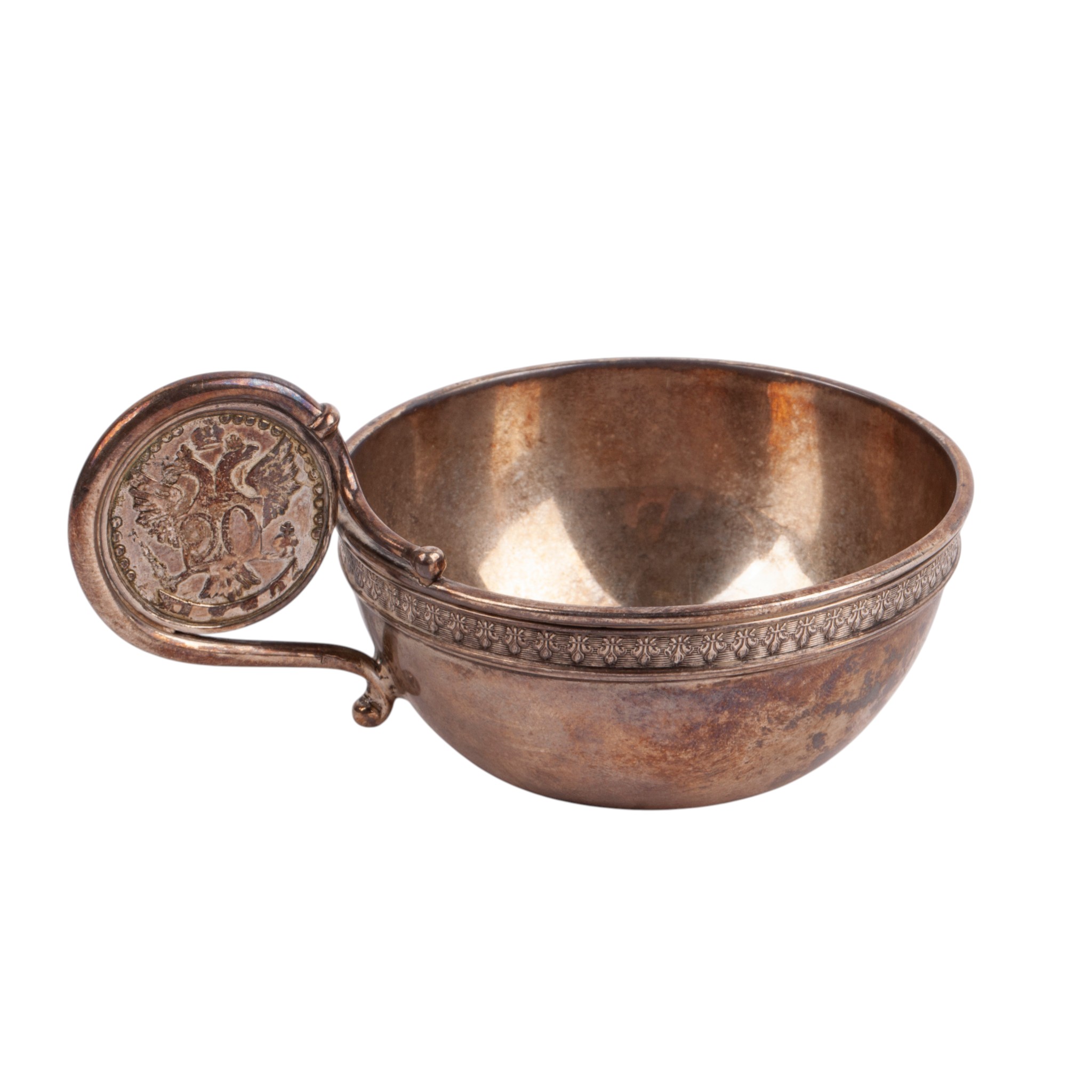
Estimate: 3500-4500€Faberge. Silver charka inset with a coin. St. Petersburg, Fabergé firm, master Jenny Vyakeva, 1899–1904
Silver, engraving, gilding
Dimensions: 4.6 × 9.7 cm; Weight: 66 g
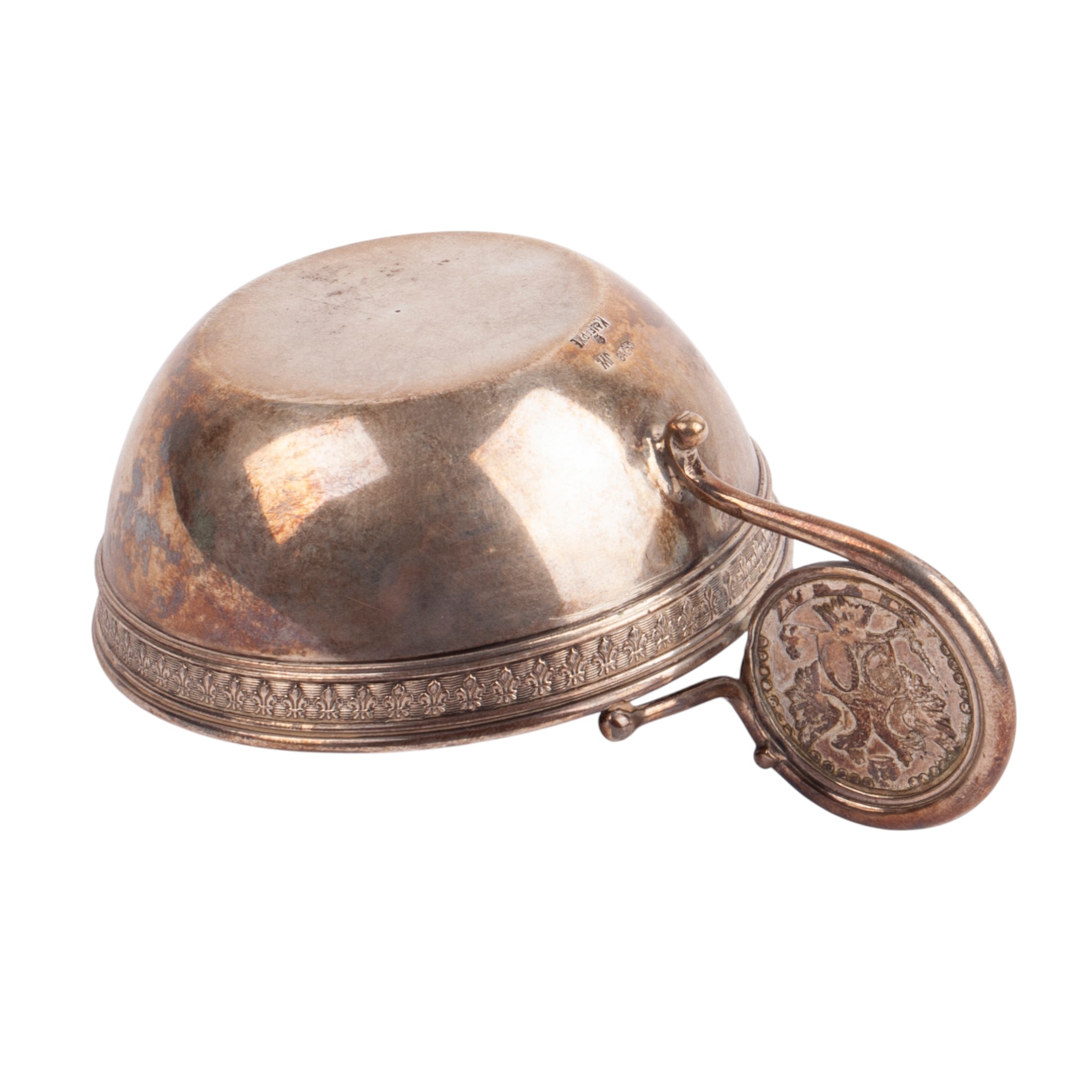
Marks: Firm mark “K. FABERGÉ” with Imperial warrant, master’s mark “JW.”, assay mark of St. Petersburg, 1899–1904, 84 zolotnik silver standard.
The charka is modeled with a rounded body and smooth walls, adorned along the upper edge with an ornamental band featuring stylized floral motifs. Its handle is gracefully curved, ending with a 20 kopeck coin from the reign of Catherine the Great.
Following the death of Konstantin Vyakeva, Jenny Vyakevaa, his young widow, took the responsibility of learning the silverworking craft. In 1902, she acquired the right to mark silver pieces, as she held a stake in the family business. However, after a brief time in the silver industry, Jenny pursued a new path in midwifery. Silver items from Jenny Vyakeva are rare, given her brief career in the trade during the early 1900s.
The incorporation of numismatic items into silver works was common among Russian goldsmiths, especially in award bowls, charkas, kovshes, and mugs. The Fabergé firm frequently featured such coins, worked by renowned masters like Mikhail Perkhin, Erik Kollin, Julius Rappoport, Anders (Antti) Nevalainen, and August Holmström.
Comparable item: https://www.bonhams.com/auction/17810/lot/190/a-presentation-silver-charka-with-coin-faberge-marks-of-alexander-wakeva-st-petersburg-1898-1908-diameter-65cm-2-12in/Starting price: 3000€
Estimate: 3500-4500€
Hammer Price: Not sold -
Lot 0184
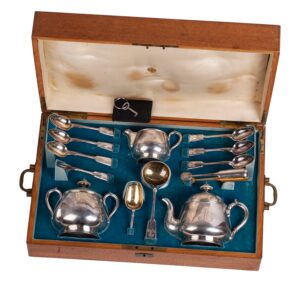
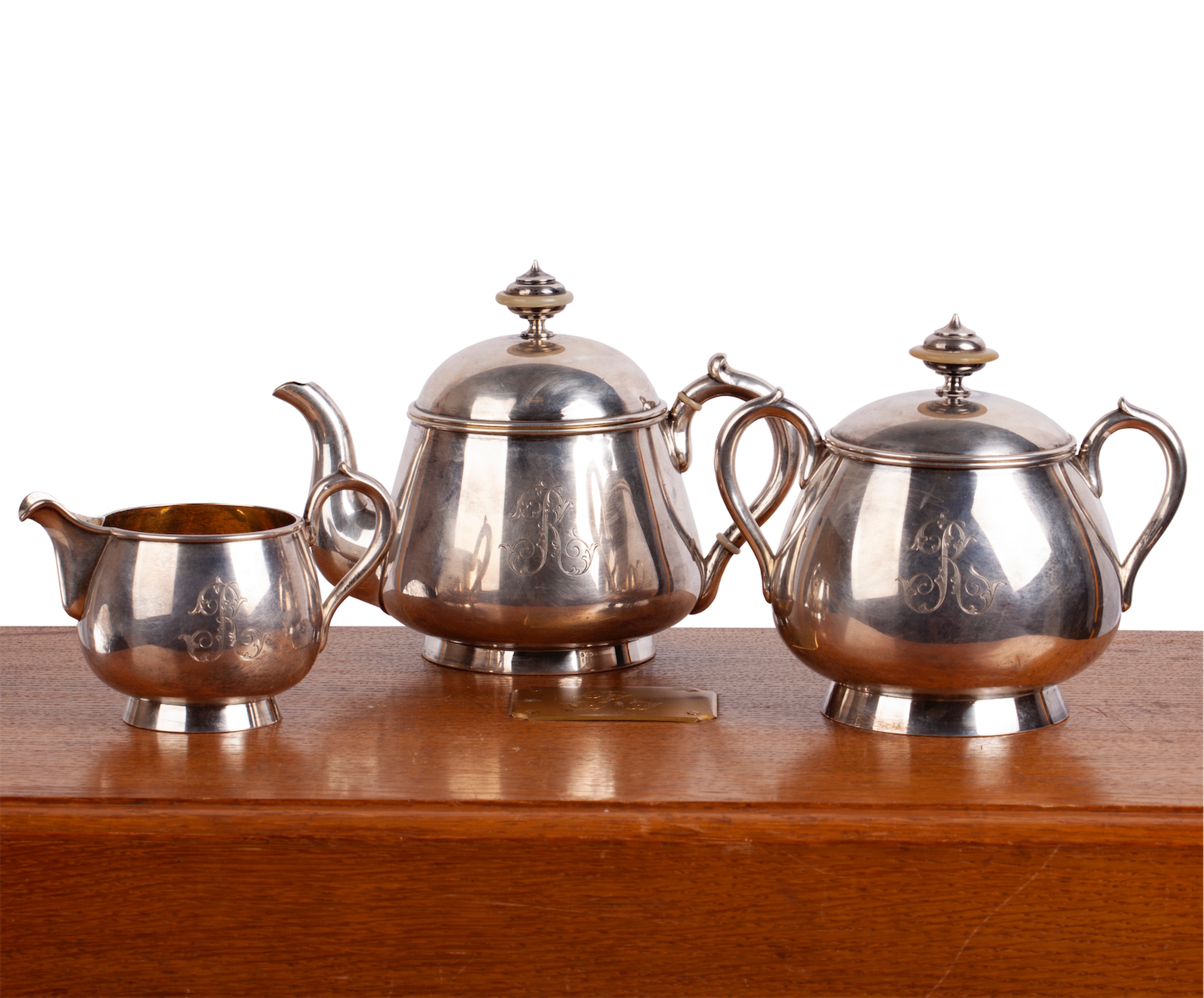
Russian Silver Tea Service in Original Fitted Case, Pavel Ovchinnikov, St Petersburg, 1895
Estimate: 6000-8000€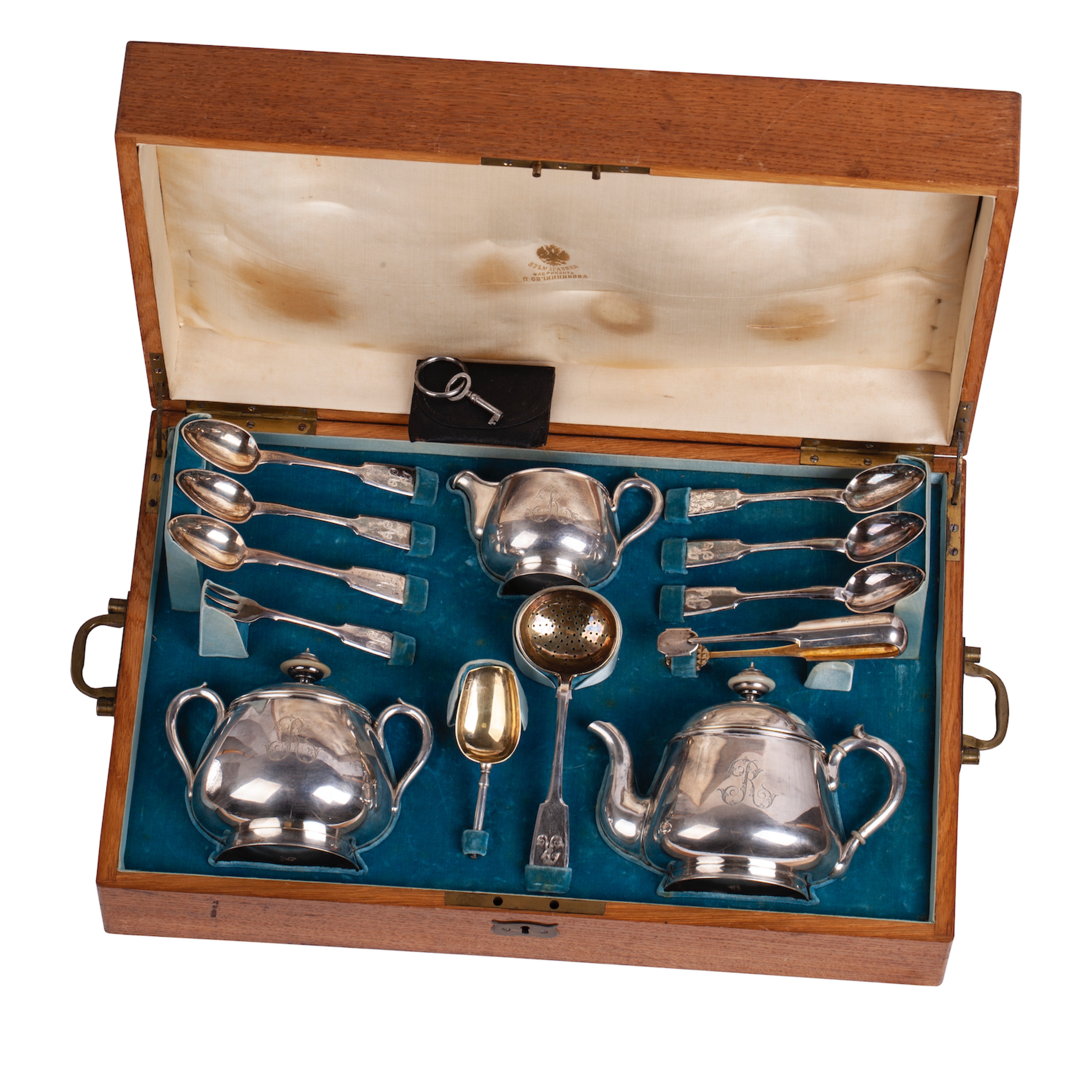
Lot 0184
Russian Silver Tea Service in Original Fitted Case, Pavel Ovchinnikov, St Petersburg, 1895
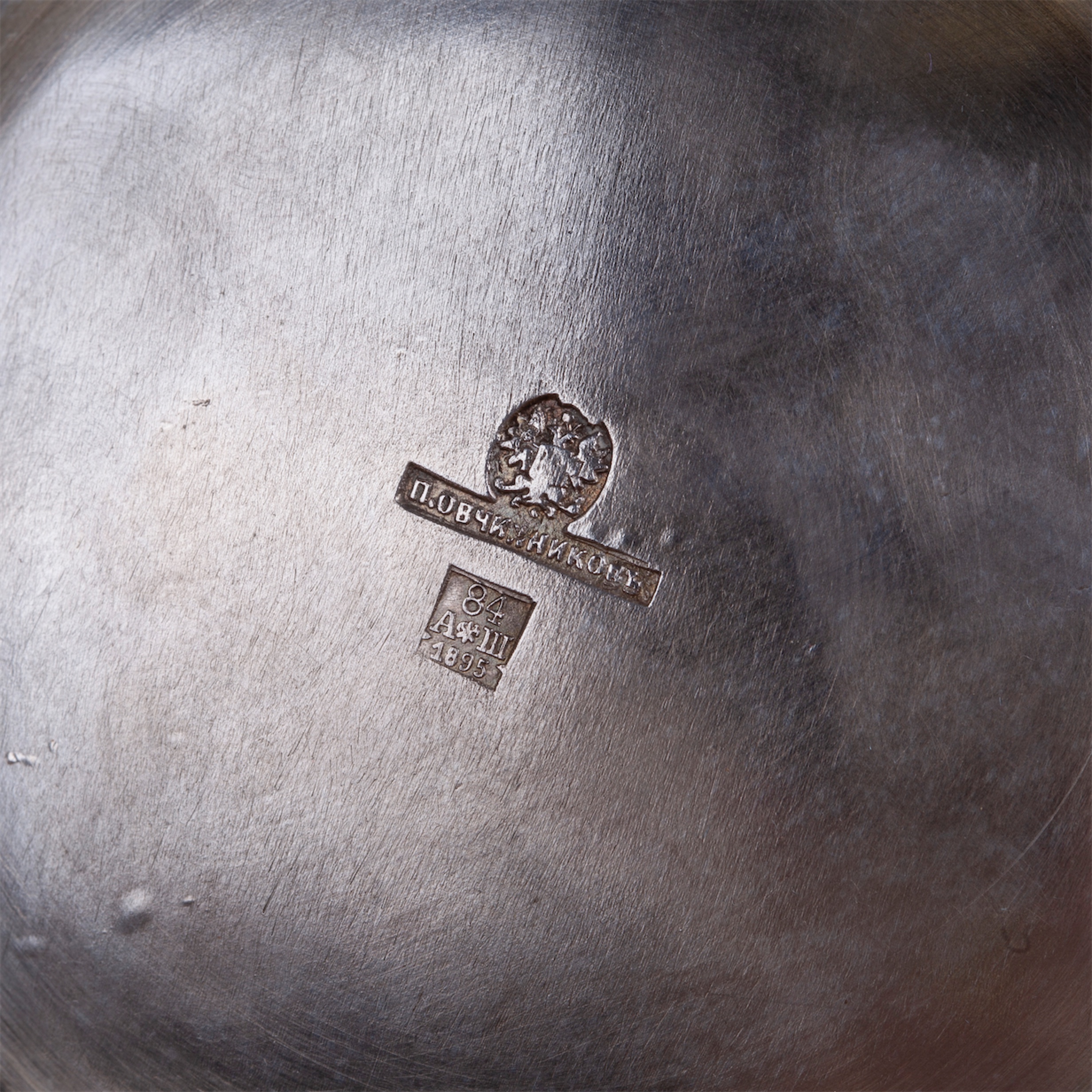
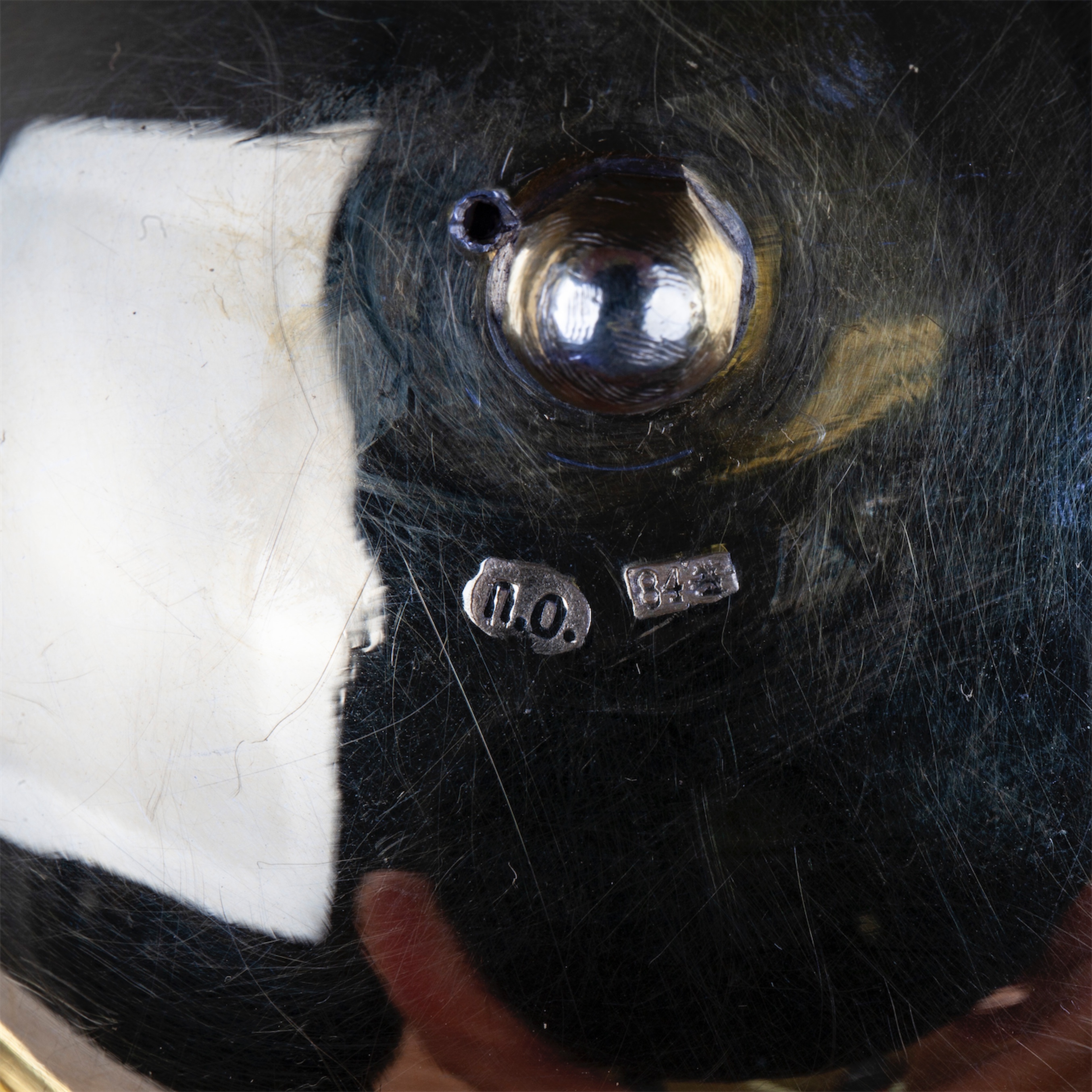
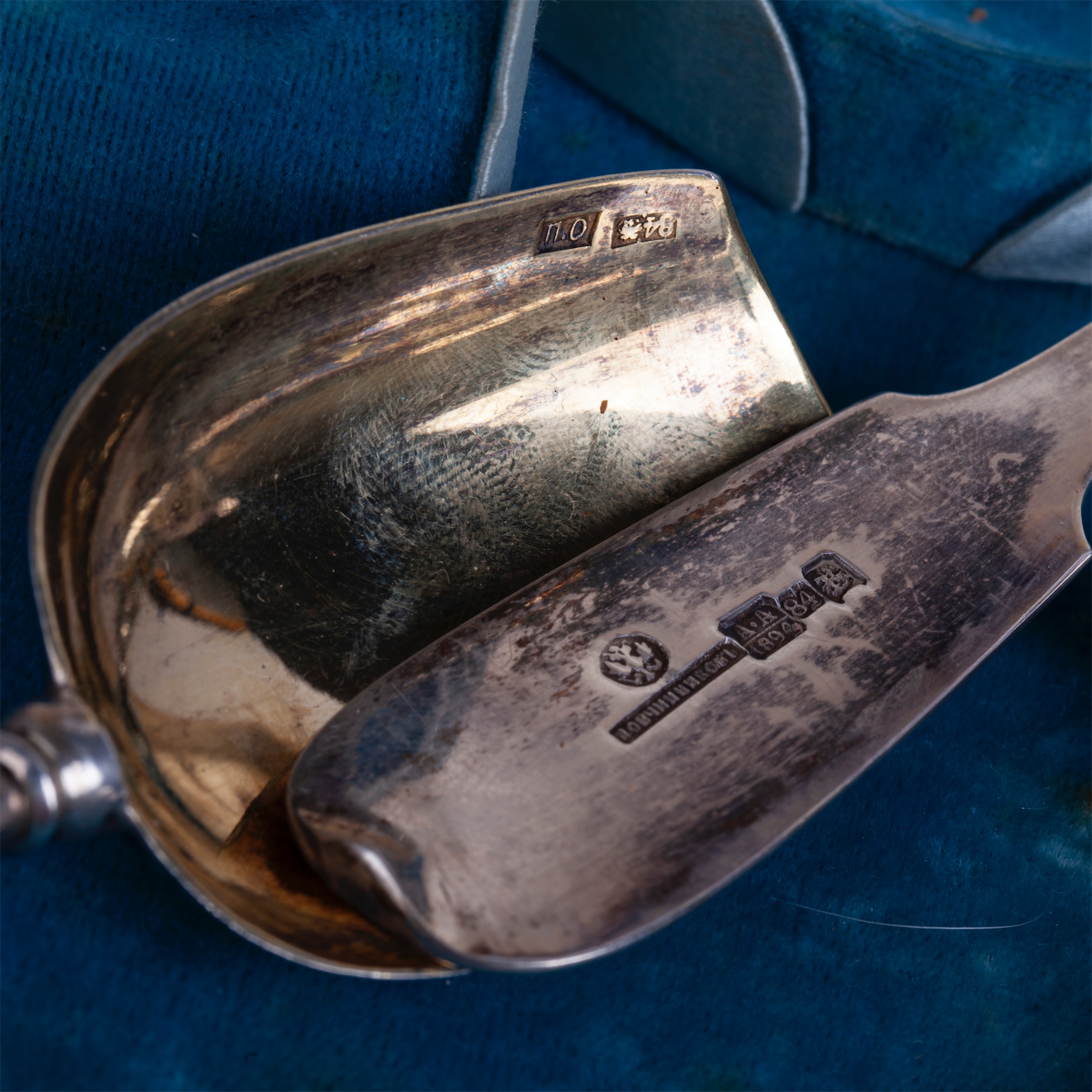
Estimate: 6000-8000€A Russian Silver Tea Service in the Original Fitted Wood Case
Maker’s mark of Pavel Ovchinnikov with Imperial Warrant
St. Petersburg, 1895
Total silver weight: 1302 g
Height of teapot: 14 cm
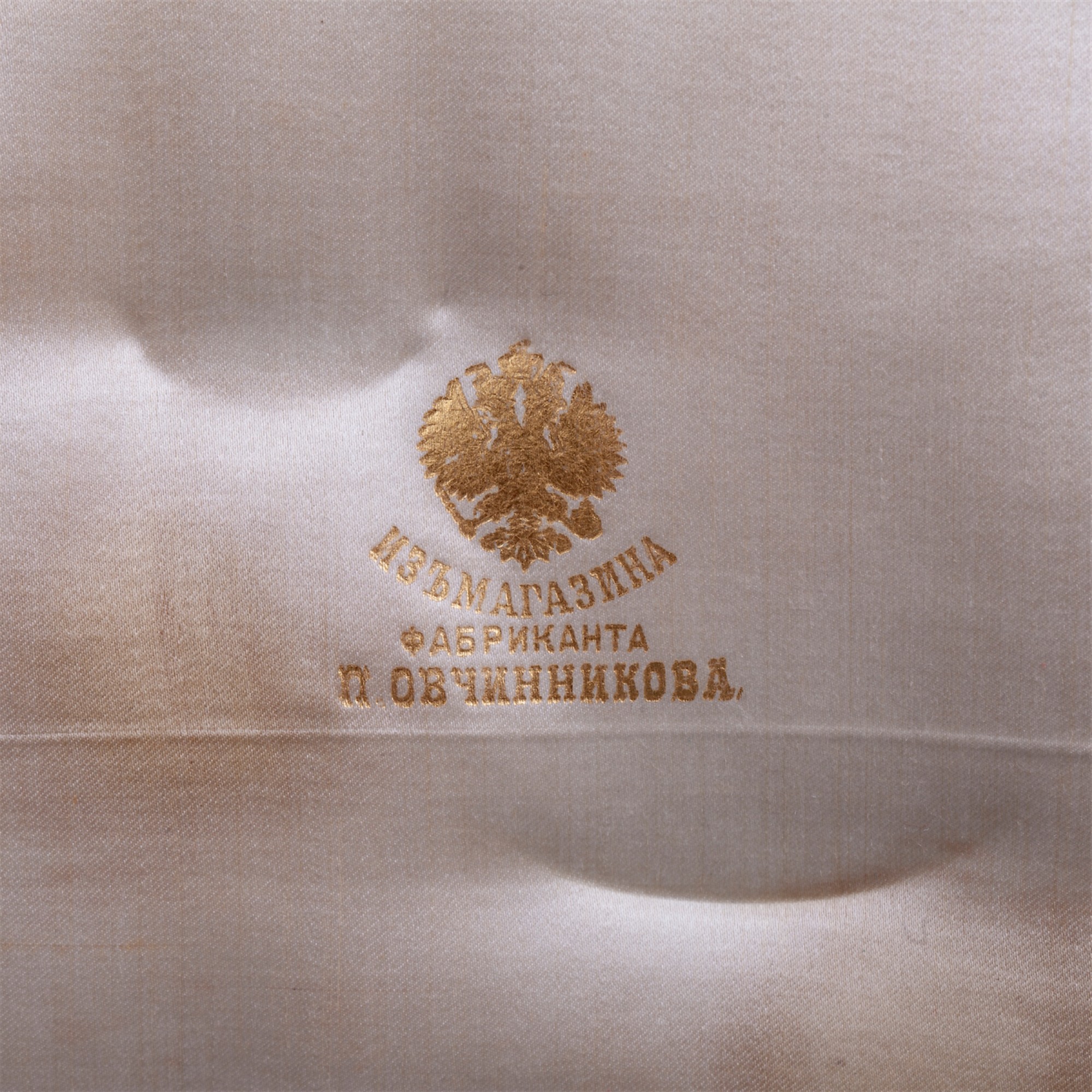
Dimensions of the box: 30.5 × 50.5 × 14 cmComprising a teapot, sugar bowl, cream jug, tea strainer, sugar tongs, and twelve spoons, all finely crafted in silver and preserved in the original velvet-lined wooden traveling case, the interior of the lid stamped in gilt with the Imperial double-headed eagle and the Cyrillic inscription Iz magazina fabrikanta P. Ovchinnikova (“From the shop of the manufacturer P. Ovchinnikov”).
Pavel Akimovich Ovchinnikov (1830–1888) was one of the most distinguished Russian silversmiths and enamel artists of the nineteenth century. Born a serf, he trained in Moscow and, after purchasing his freedom in 1850, founded his own workshop in 1851. By the 1860s, his factory had become one of the largest in Russia, employing over a hundred craftsmen and gaining recognition as the leading innovator of the Neo-Russian style.
Appointed official supplier to the Imperial Court in 1865, Ovchinnikov mastered and revived ancient Russian techniques in silver creations, often decorated with folkloric motifs, became symbols of Russian national identity and artistic revival.
Today, works by Ovchinnikov are represented in the State Hermitage Museum, the State Historical Museum, and the Russian Museum, as well as in major private collections worldwide.
Starting price: 5000€
Estimate: 6000-8000€
Hammer Price: 5 000 € -
Lot 0185
Fabergé Silver Neoclassical Vase, Moscow, 1899–1908
Estimate: 3500-4500€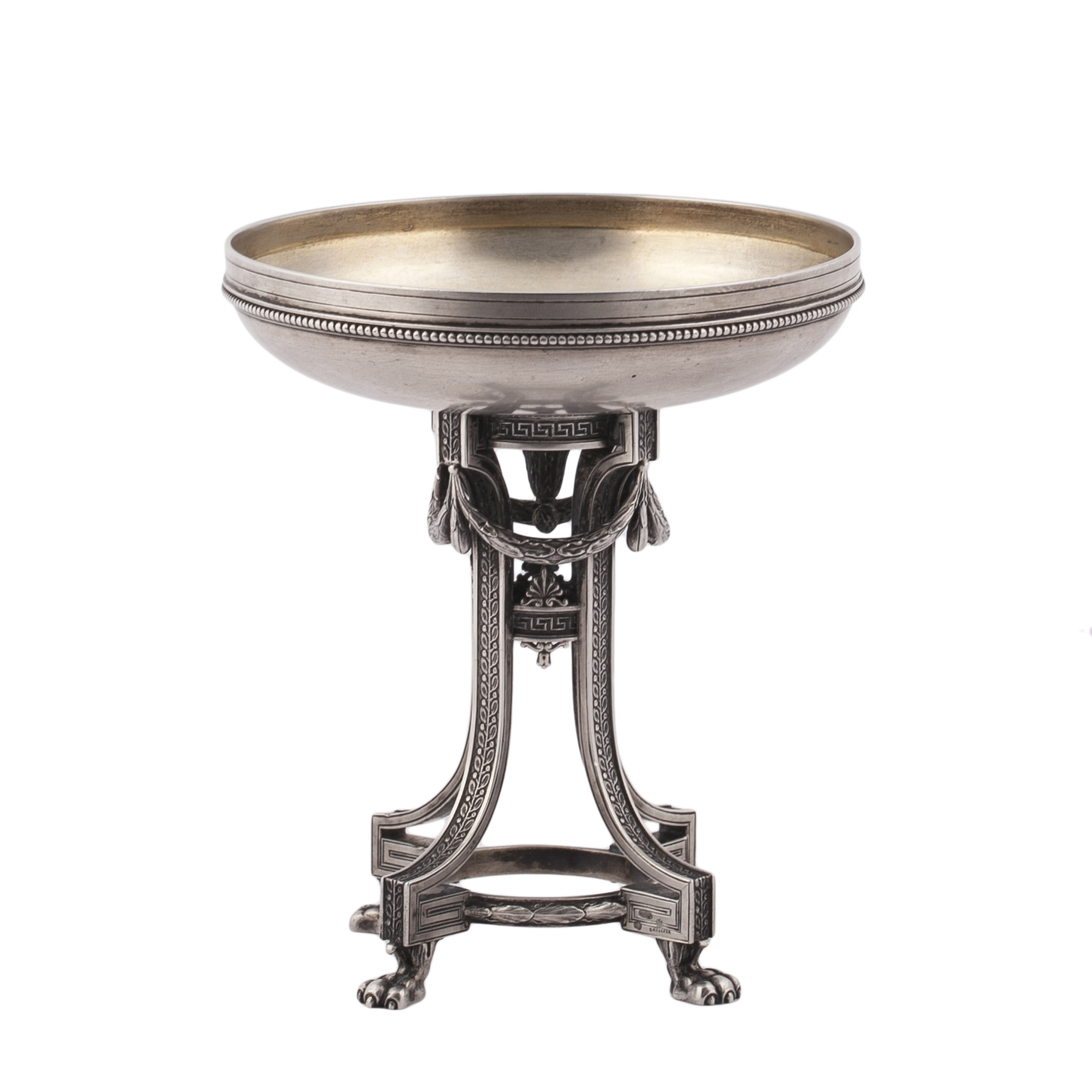
Lot 0185
Fabergé Silver Neoclassical Vase, Moscow, 1899–1908
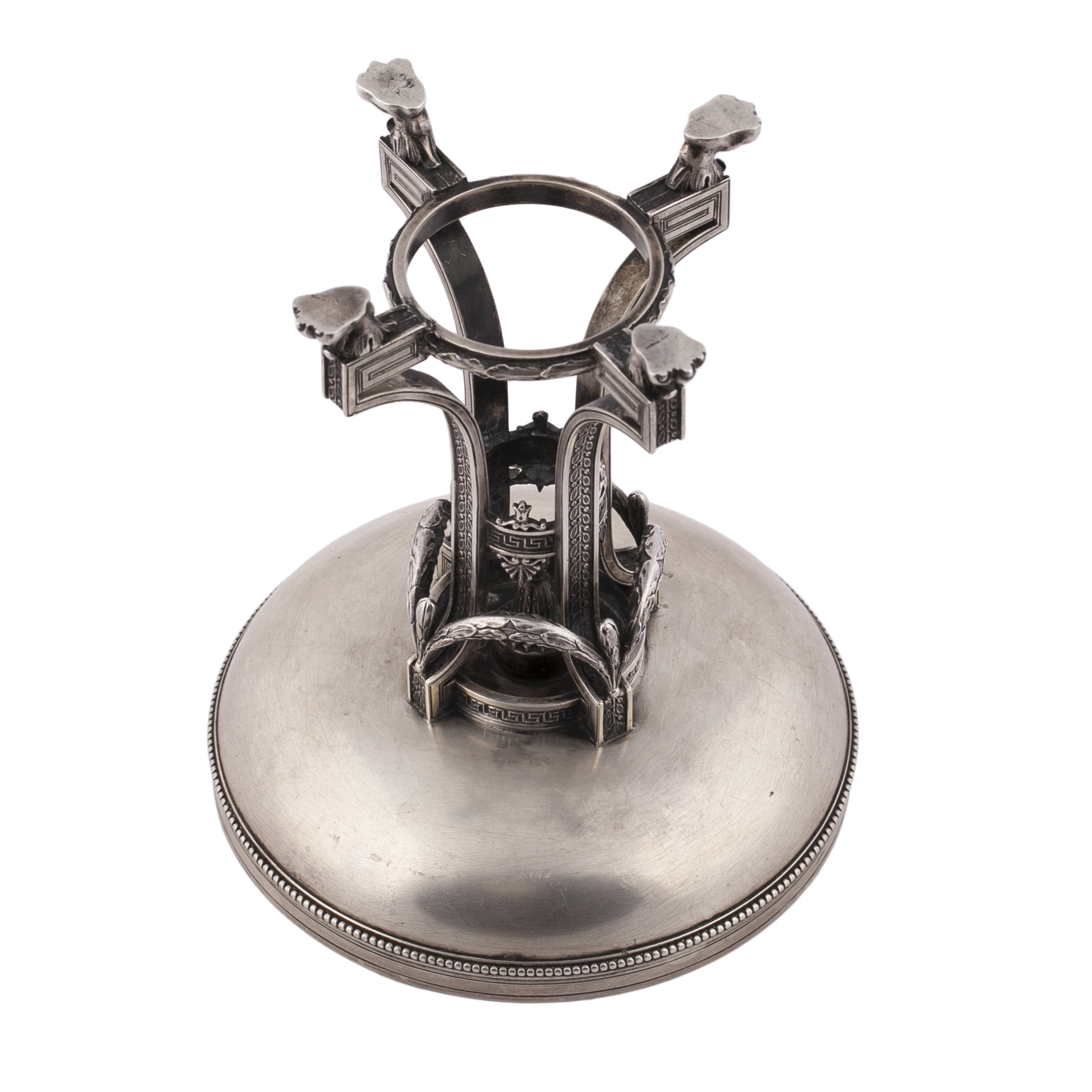
Estimate: 3500-4500€A Fabergé Silver Neoclassical Vase
Moscow, firm of Karl Fabergé, 1899-1908.
Silver, gilding; casting, chasing, engraving.
Dimensions: 13 × 11.5 cm.
Total weight: 328 g.
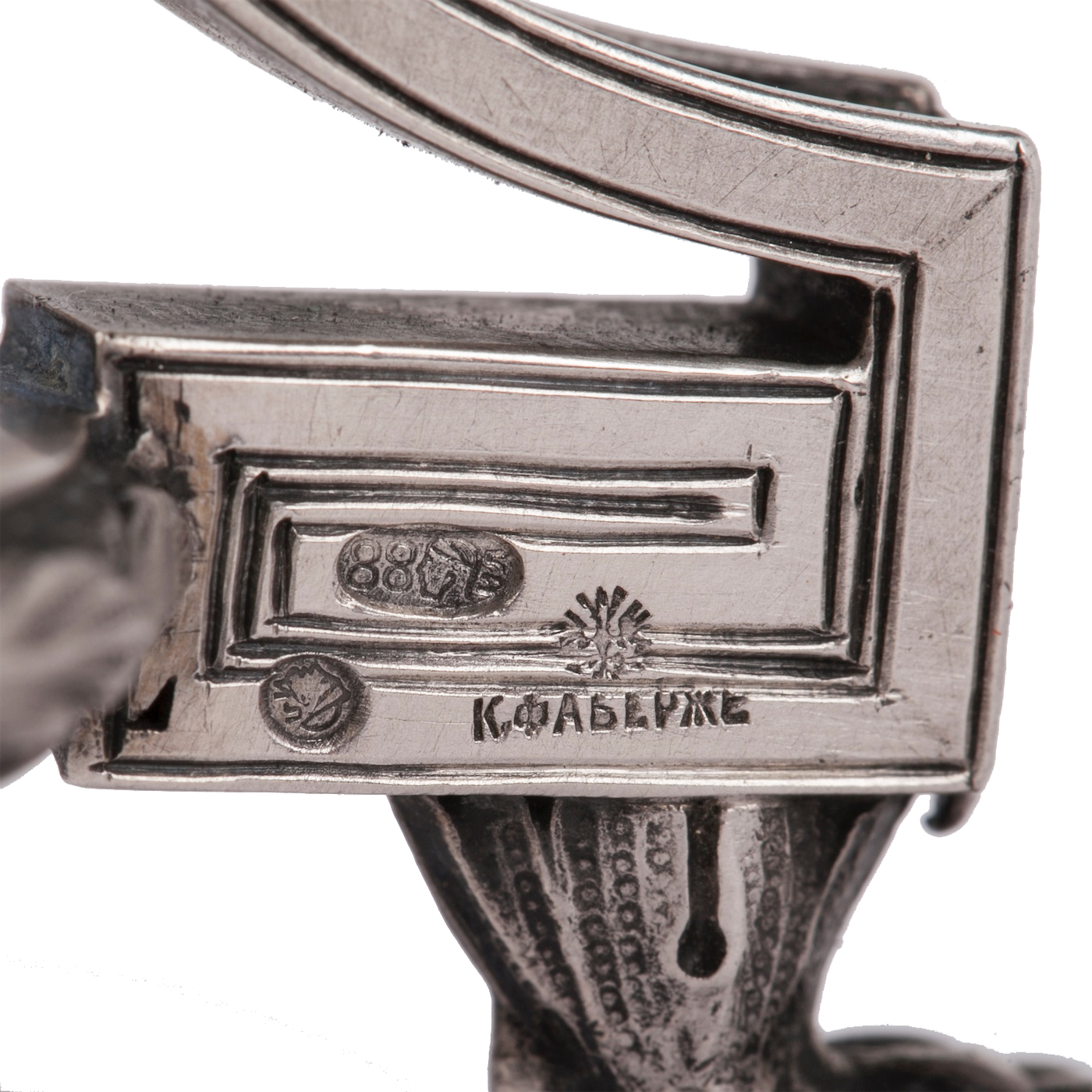
Marks: firm mark К. ФАБЕРЖЕ beneath the Imperial warrant; Moscow assay mark; 84 zolotniki silver standard.
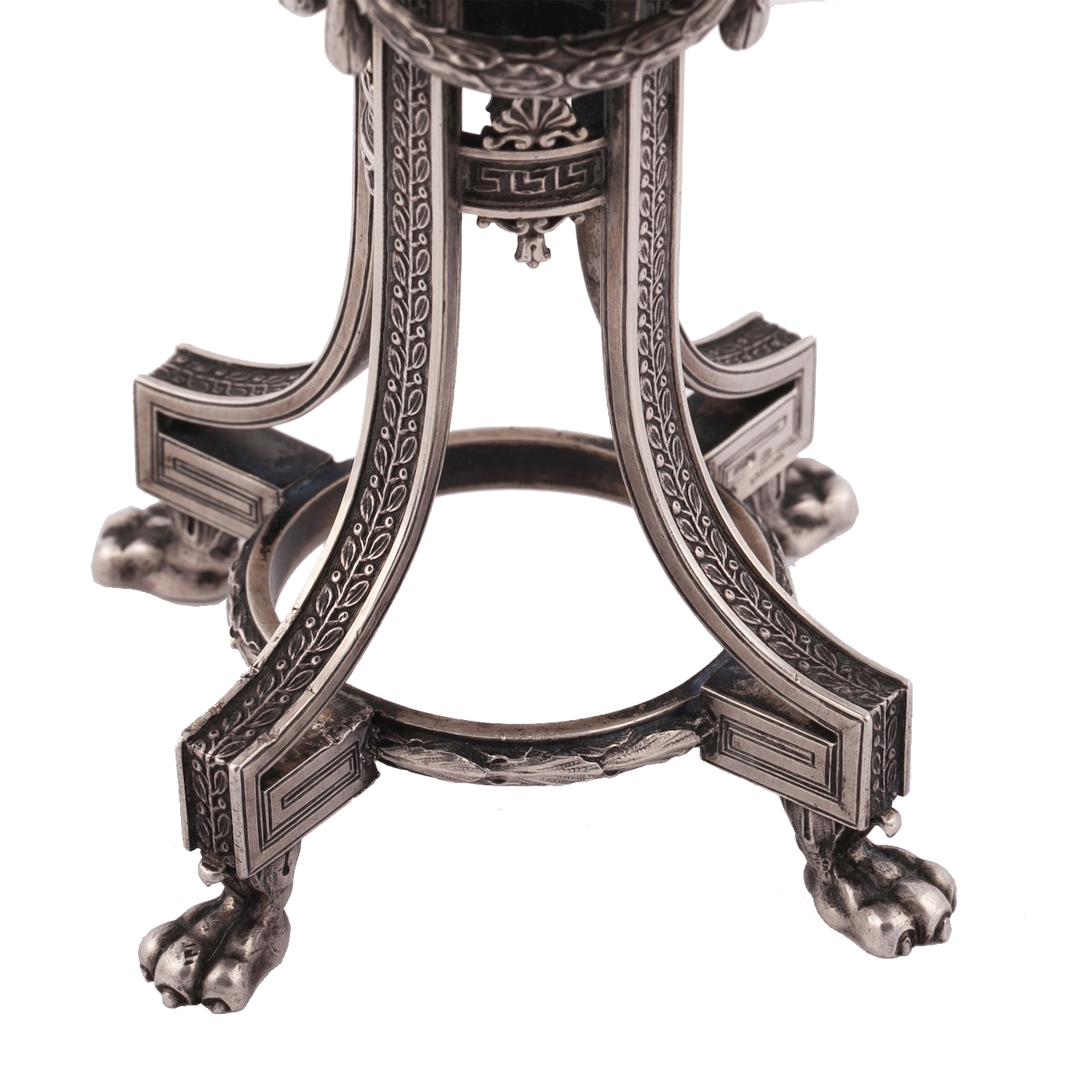
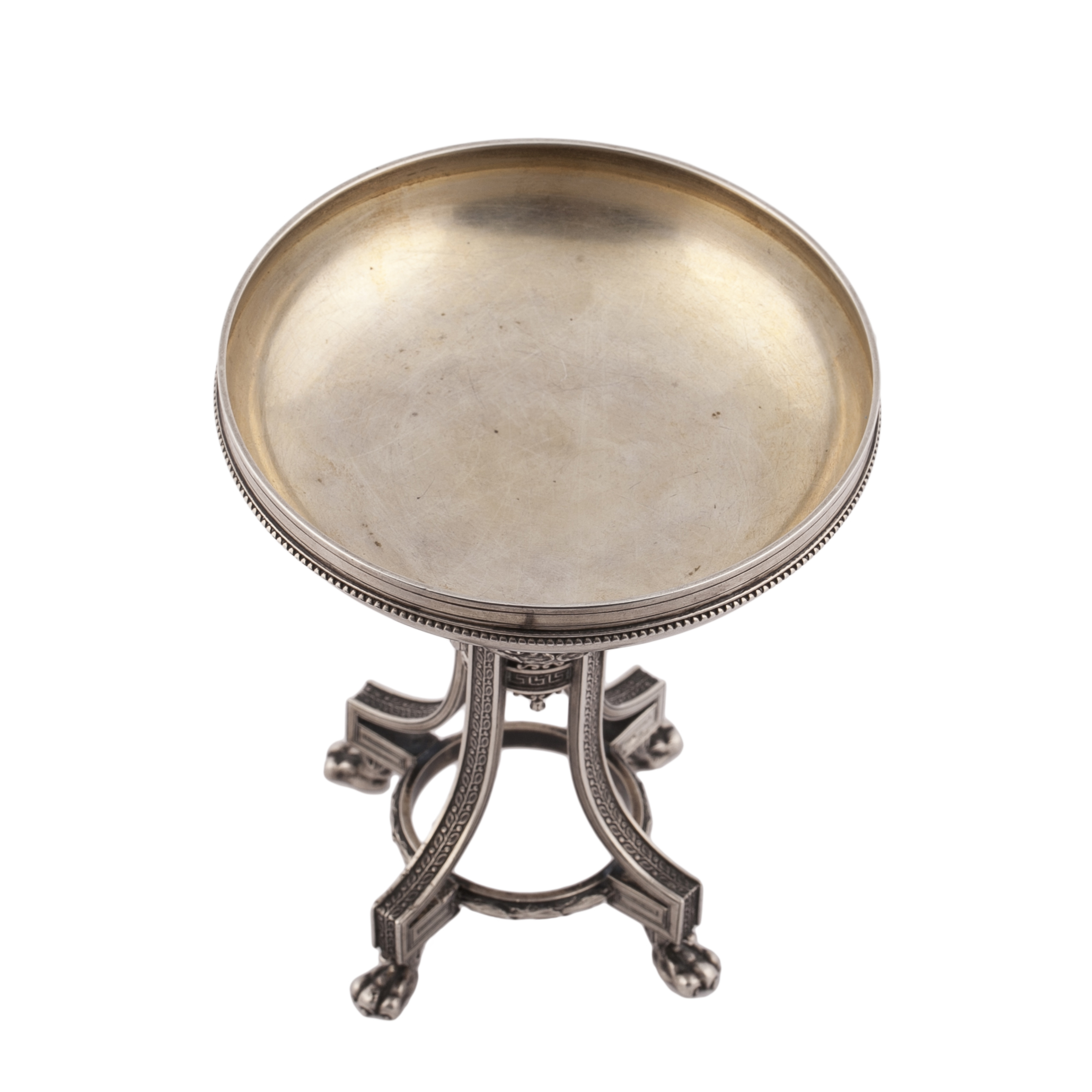
A refined Fabergé silver vase in the Neoclassical taste, formed as a shallow circular bowl raised on an architectural tripod support. The plain, gently rounded upper bowl has a softly gilded interior and is bordered by a fine beaded rim. Its restrained surface contrasts with the elaborately worked stem and base, where curved supports are enriched with laurel garlands, palmettes, Greek-key ornament and delicate engraved foliage.
The three supports terminate in lion-paw feet, a classical motif that gives the object a ceremonial and sculptural presence.
The Moscow branch of Fabergé was especially renowned for silver objects, tableware and decorative works in historical and national styles. Unlike the more discreet St Petersburg establishment, the Moscow branch responded to the taste of a wealthy merchant and cosmopolitan clientele, producing objects that combined technical refinement with visual richness. By the turn of the century, Fabergé’s Moscow factory had become one of the largest jewellery and silver workshops in the Russian Empire.Starting price: 3000€
Estimate: 3500-4500€
Hammer Price: Not sold -
Lot 0186
Pair of Russian Commemorative Silver Goblets with Views of Moscow and St Petersburg, Y. Rabinovich, Vilnius, 1896
Estimate: 12000-15000€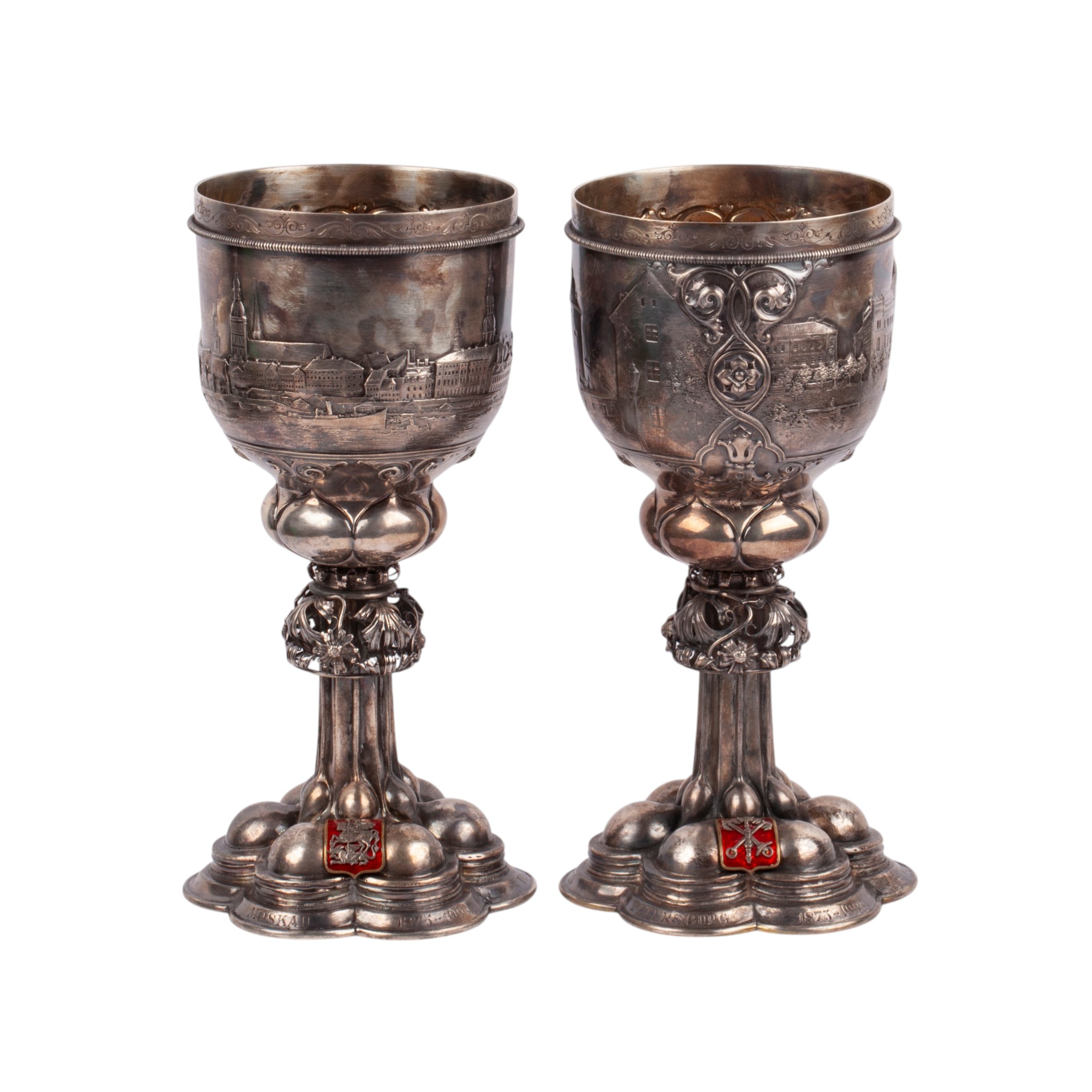
Lot 0186
Pair of Russian Commemorative Silver Goblets with Views of Moscow and St Petersburg, Y. Rabinovich, Vilnius, 1896
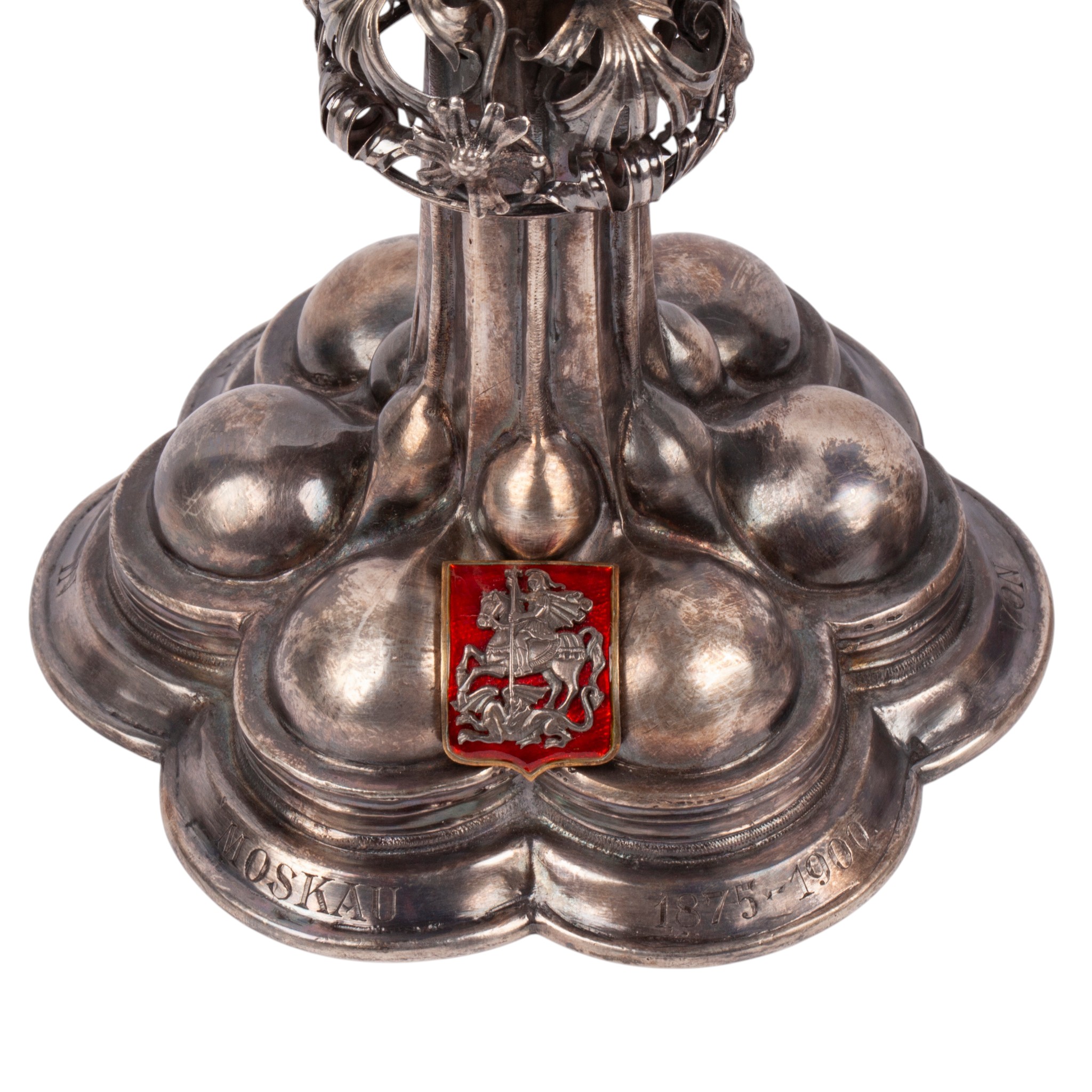
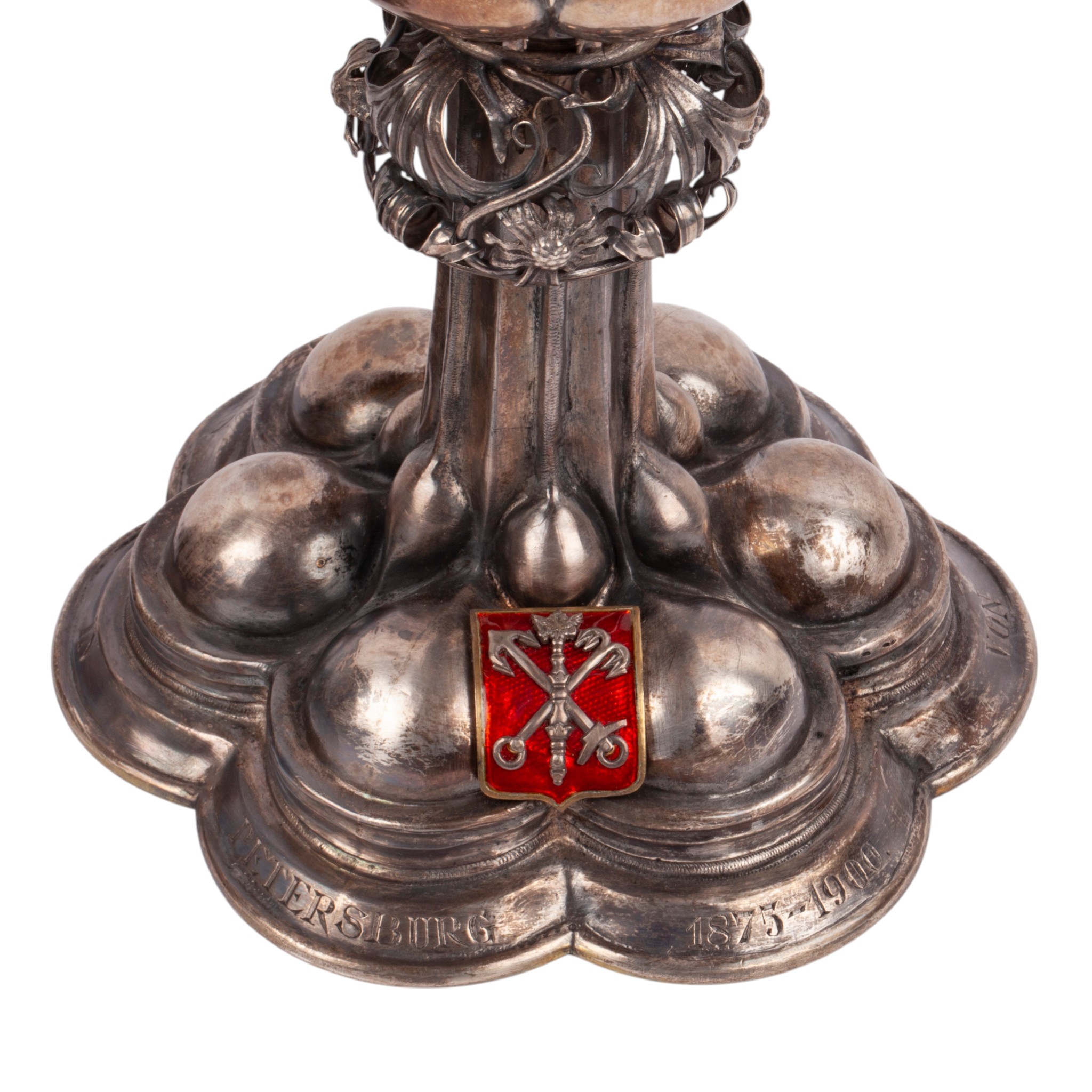
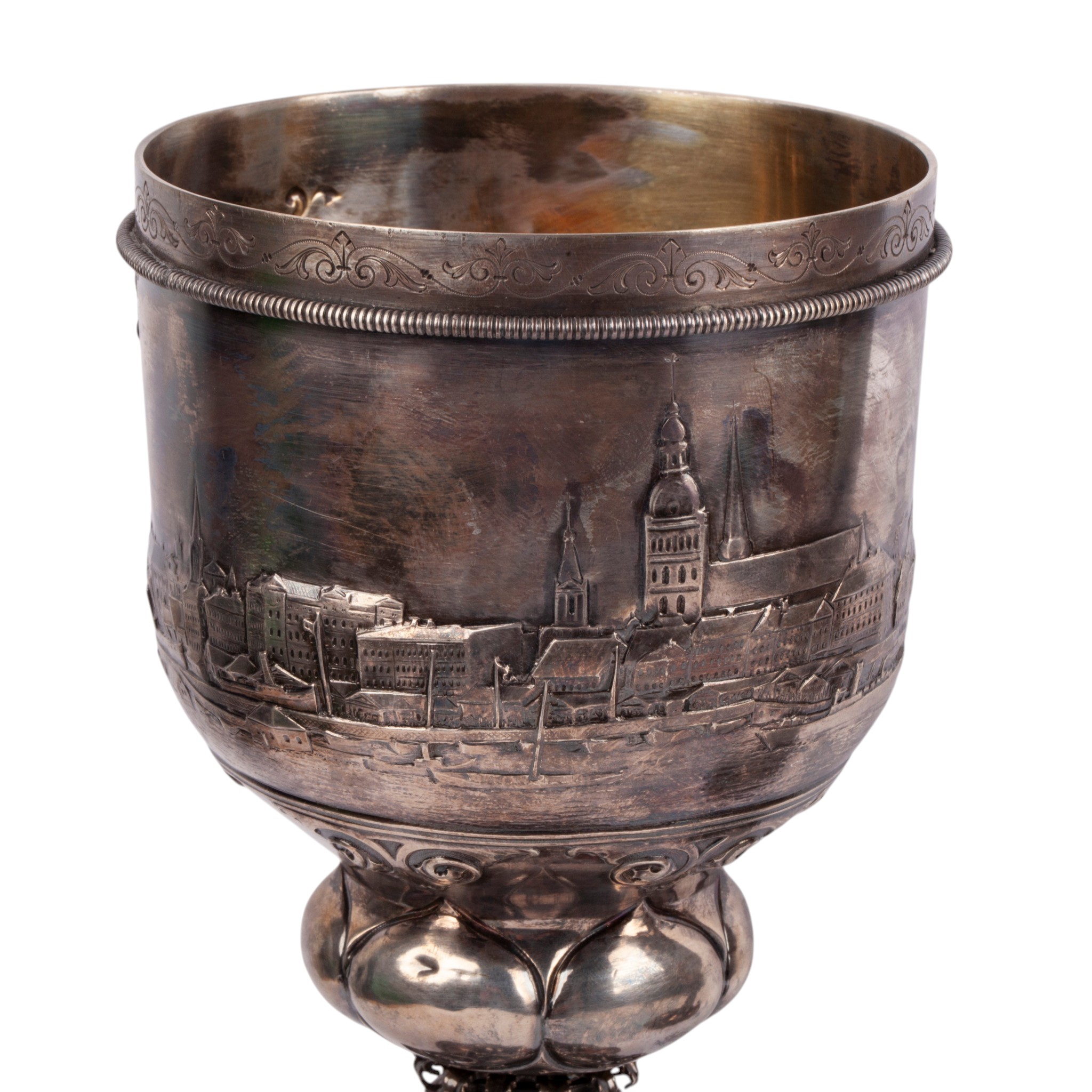
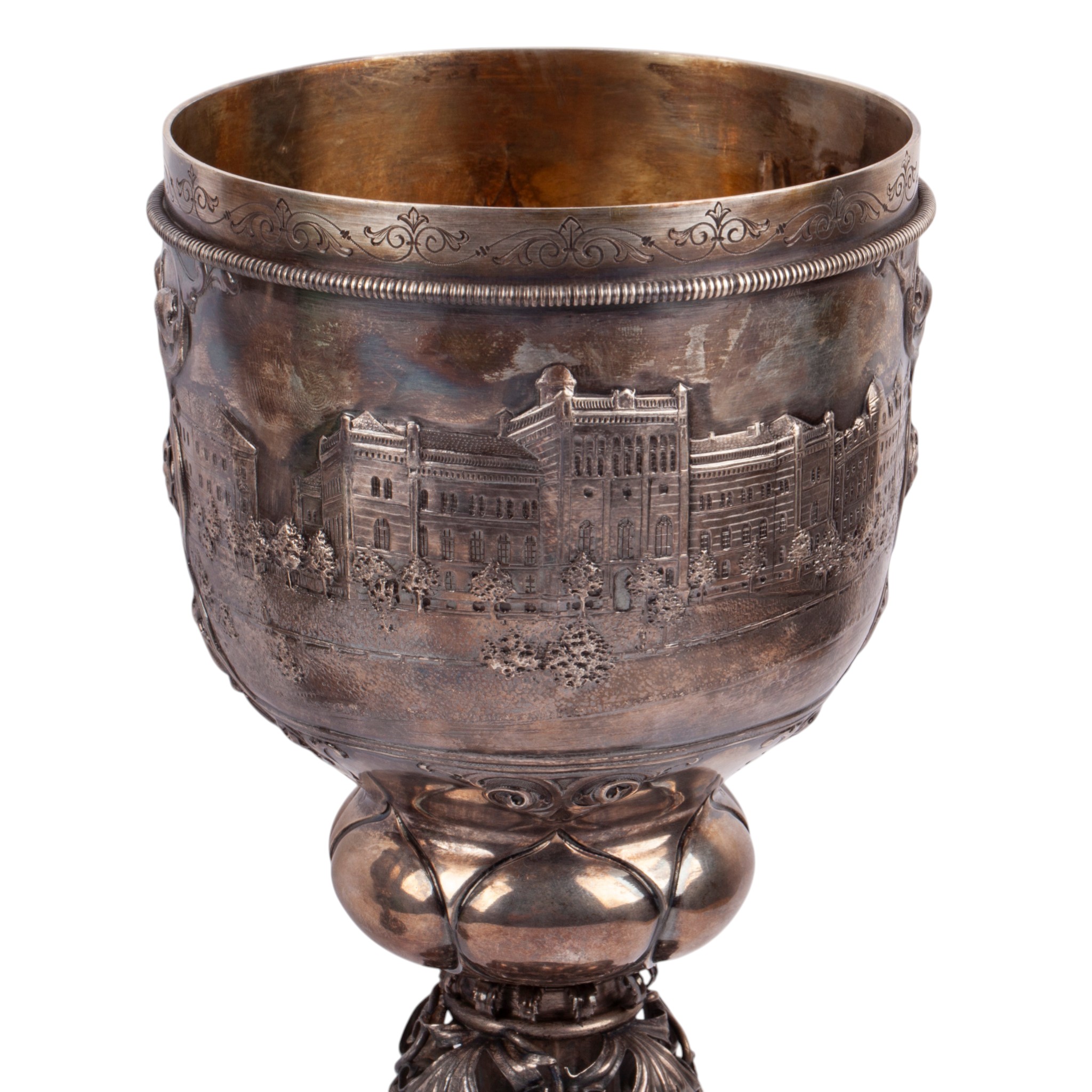
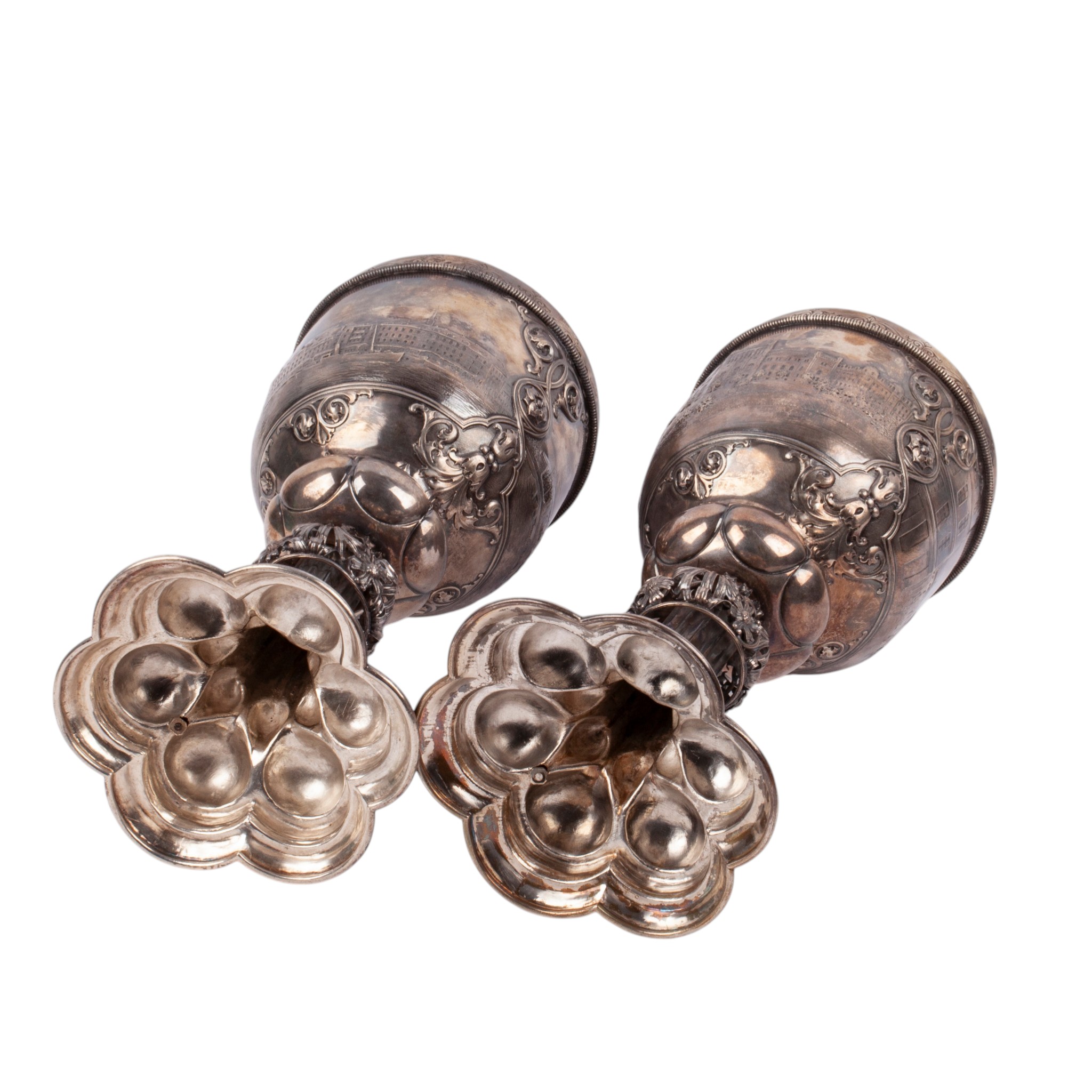
Estimate: 12000-15000€Pair of Russian commemorative goblets with views of Moscow and St Petersburg
Wilna (Vilnius) , workshop of Y. Rabinovich, 1896
Silver, gilding, guiloche enamel; casting, chasing, engraving.
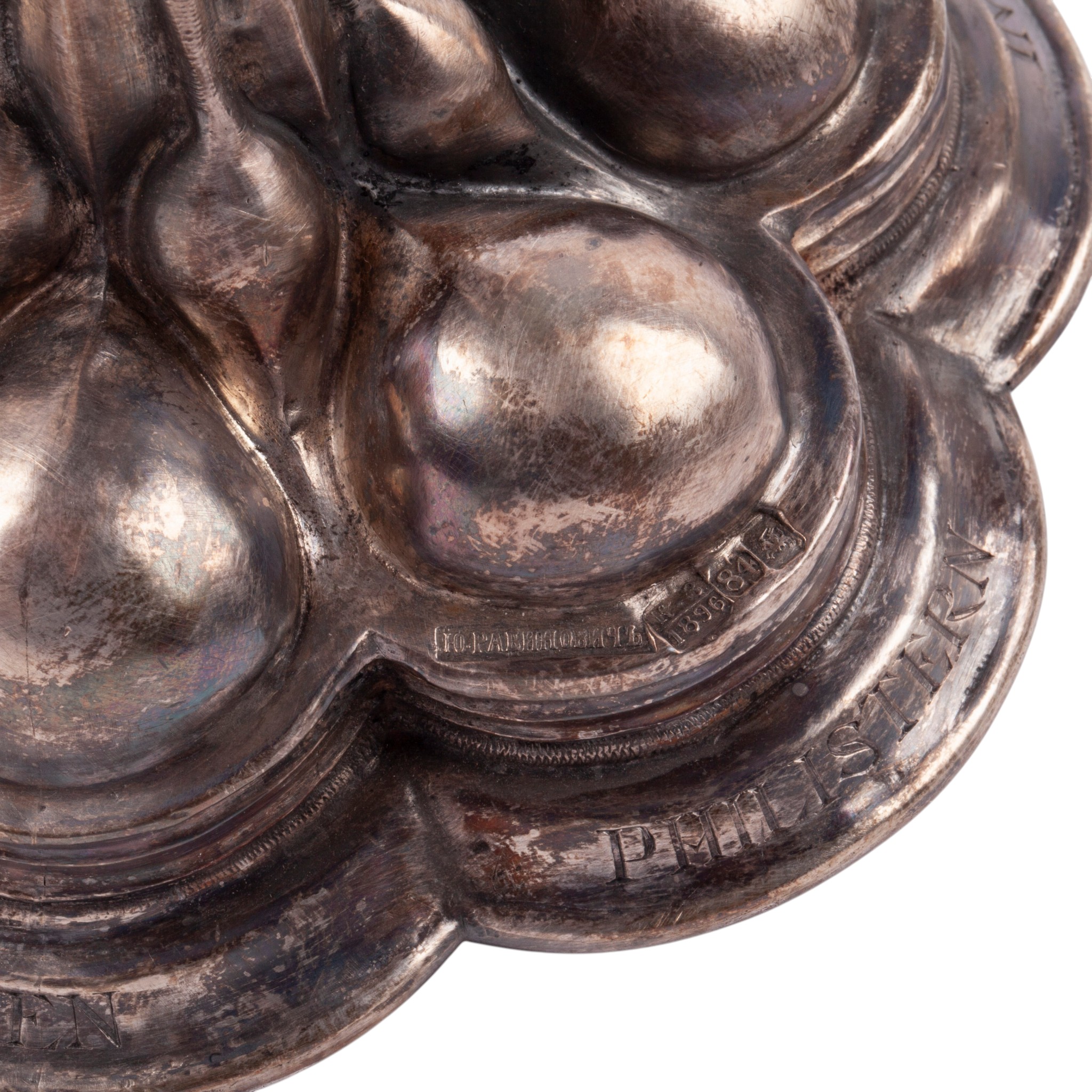
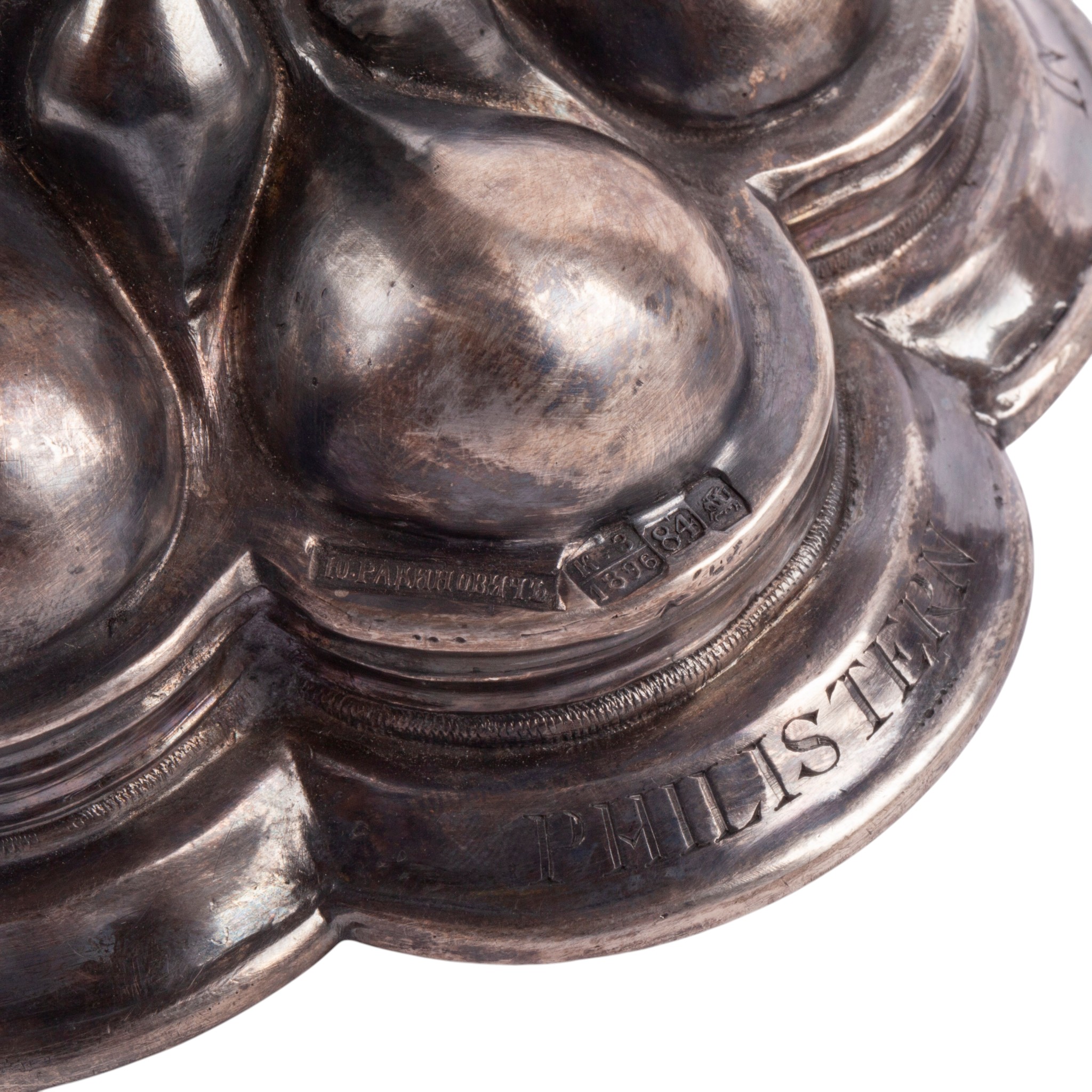
Marked: maker’s mark “Ю. РАБИНОВИЧЬ”; 84 standard silver mark; assay mark. Total weight: 1182 g. Height: 26,5 cm. Diameter: 12,8 cm.
A striking pair of commemorative silver goblets modeled in the Pseudo-Russian style, their forms combining late nineteenth-century historicism with motifs drawn from the ornamental vocabulary of seventeenth-century Russian silverwork. Each goblet is raised on a broad lobed foot and a slender stem enriched with openwork foliate ornament, while the lower body is articulated by bulbous gadroons recalling the plastic, spoon-like chased decoration characteristic of old Russian ceremonial plate (potirs).
The principal decorative field of each vessel is occupied by finely chased panoramic city views. One goblet is dedicated to Moscow, the other to St Petersburg, as indicated by the engraved inscriptions (in German) on the foot rims and by the applied enamelled shields bearing the respective civic emblems. The relief views are rendered with notable topographical clarity, translating urban silhouettes and monumental architecture into a continuous frieze encircling the cups. These commemorative images are paired with scrolling ornamental frames and stylised floral details that reinforce the historicising character of the design. The pair also belongs to a broader and important tradition of Jewish silversmithing in Eastern Europe. Writing on Jewish jewellers of the region, the Ukrainian art historian Pavlo Zholtovsky noted that their works were distinguished by delicacy, elegance, and, above all, harmony of form and ornament. That observation is especially apt here. Jewish masters across the lands of the former Polish-Lithuanian Commonwealth were celebrated for their command of chasing, filigree, and engraving, producing both secular luxury objects and ritual silver. Often working outside the formal guild structure, they preserved workshop practices marked by technical finesse and ornamental sensitivity. In this context, the work of Rabinovich stands within a long and distinguished lineage of Jewish metalworkers active in Vilna and throughout Eastern Europe.
These goblets are therefore significant not only as examples of late Imperial commemorative silver, but also as works that embody several intersecting histories: the Russian national revival in the decorative arts, the representation of the empire’s two capitals, and the enduring contribution of Jewish silversmiths to the artistic culture of Eastern Europe.Starting price: 10000€
Estimate: 12000-15000€
Hammer Price: Not sold -
Lot 0187
Fabergé Rare Silver Kovsh in Historicist Style, Moscow, 1898–1908
Estimate: 6000-8000€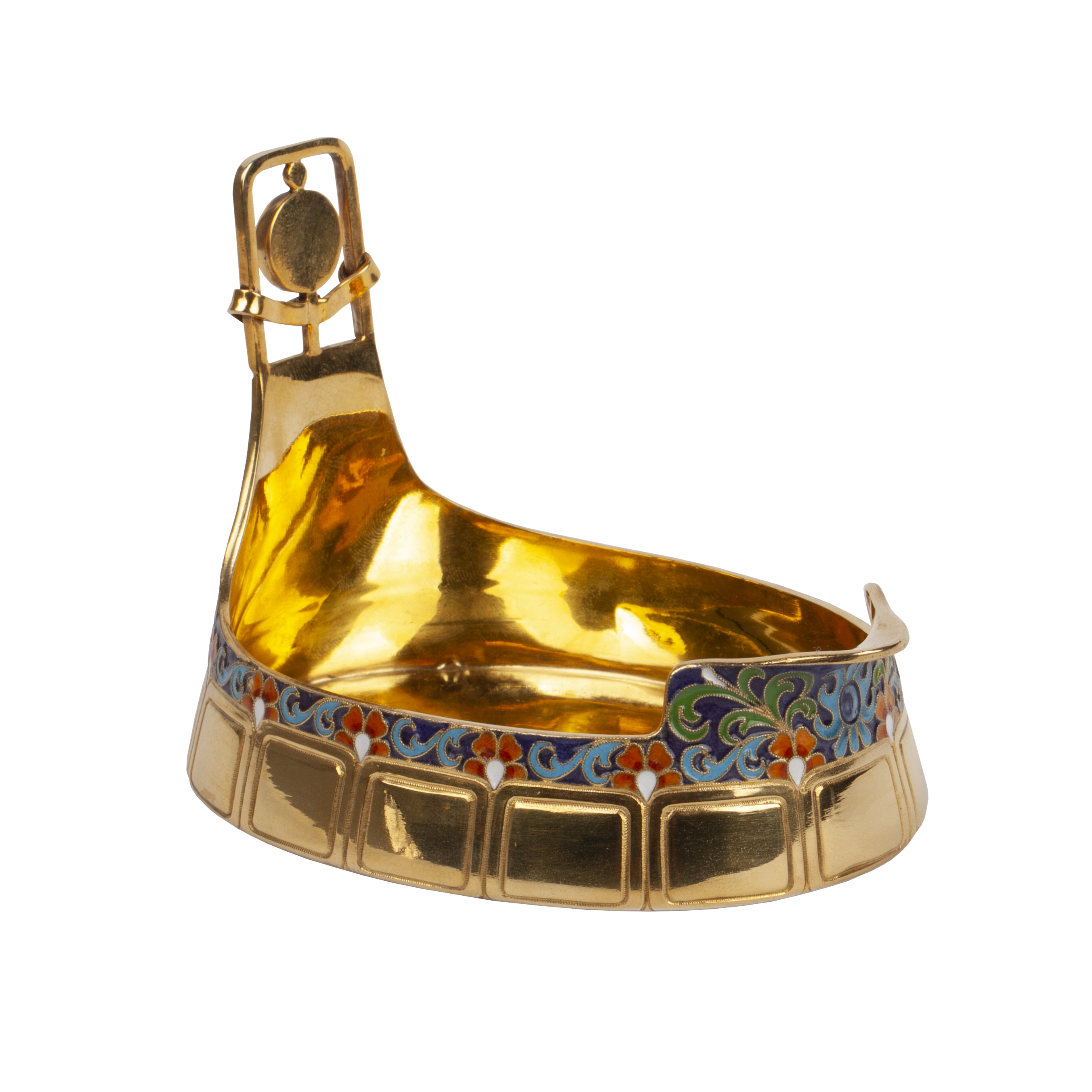
Lot 0187
Fabergé Rare Silver Kovsh in Historicist Style, Moscow, 1898–1908
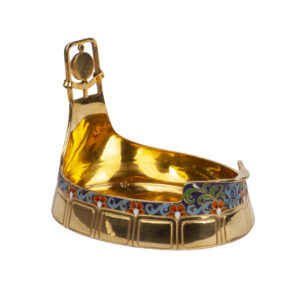
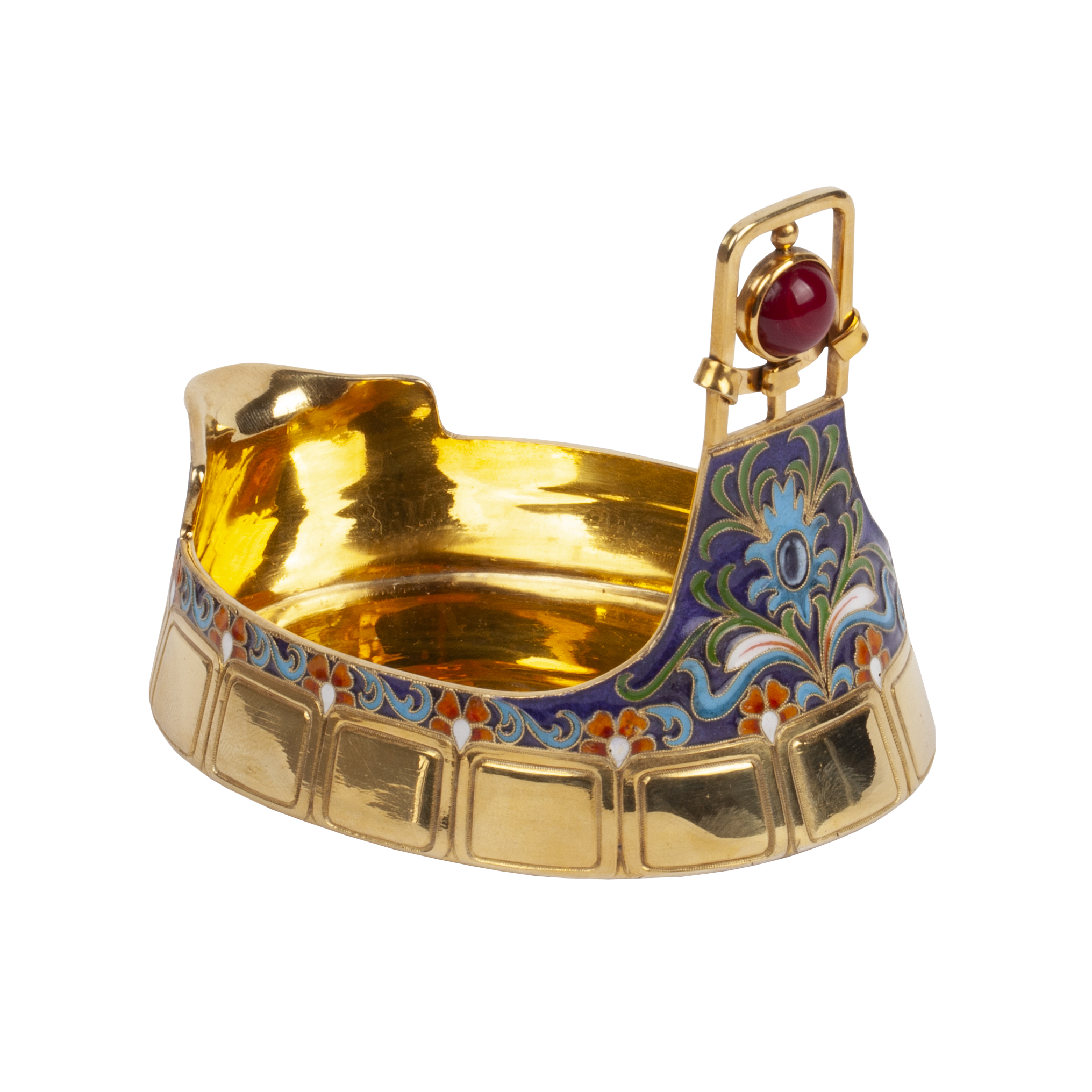
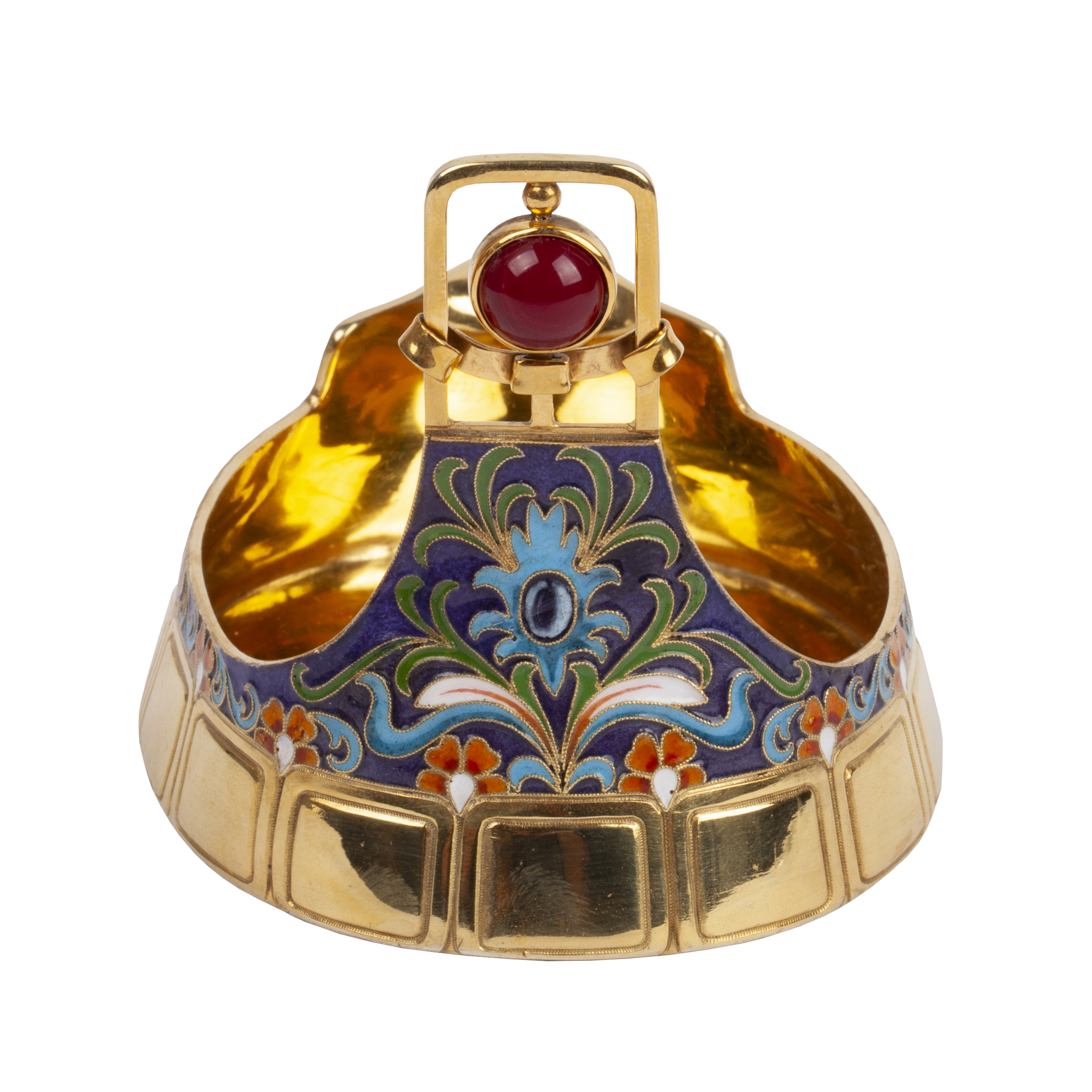
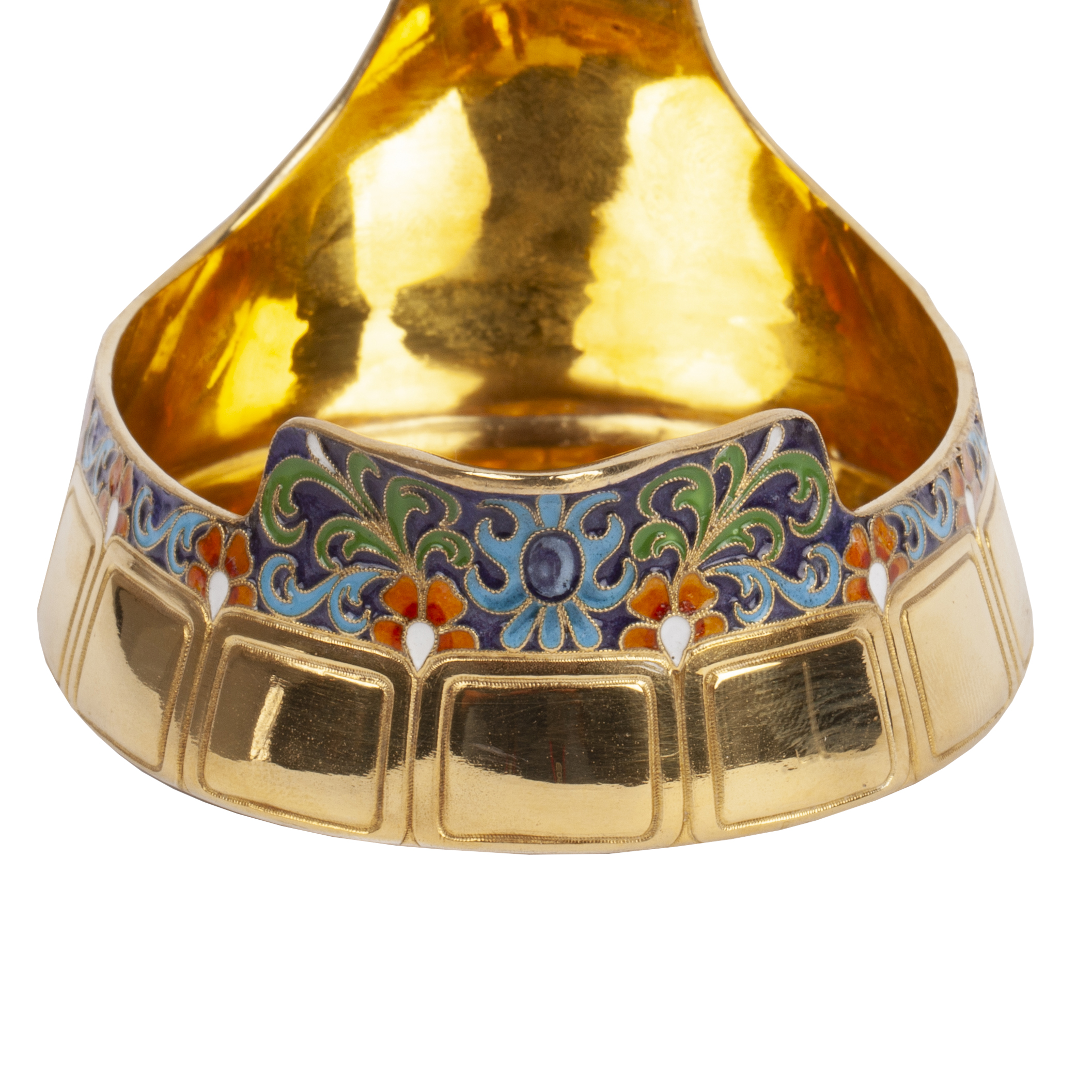
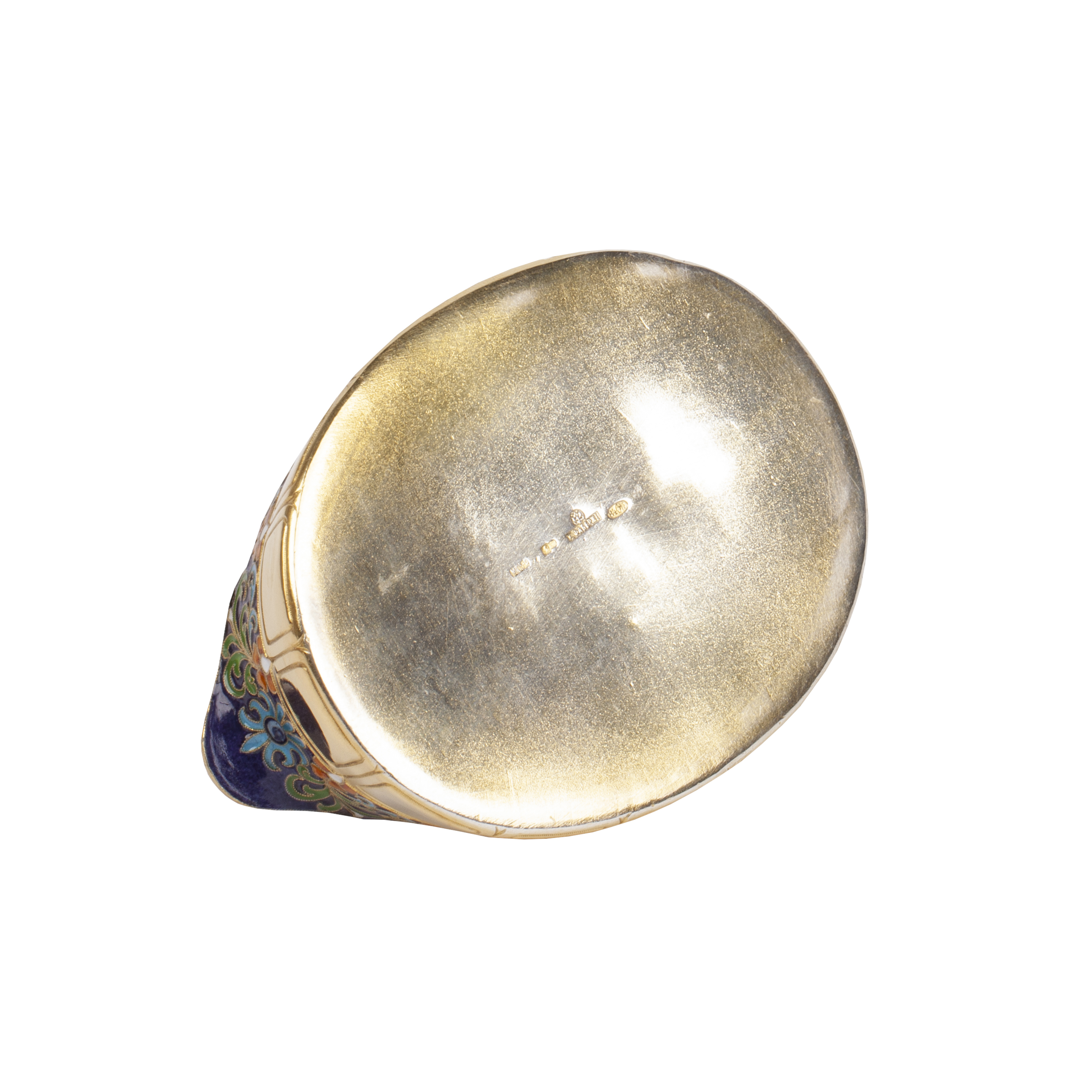
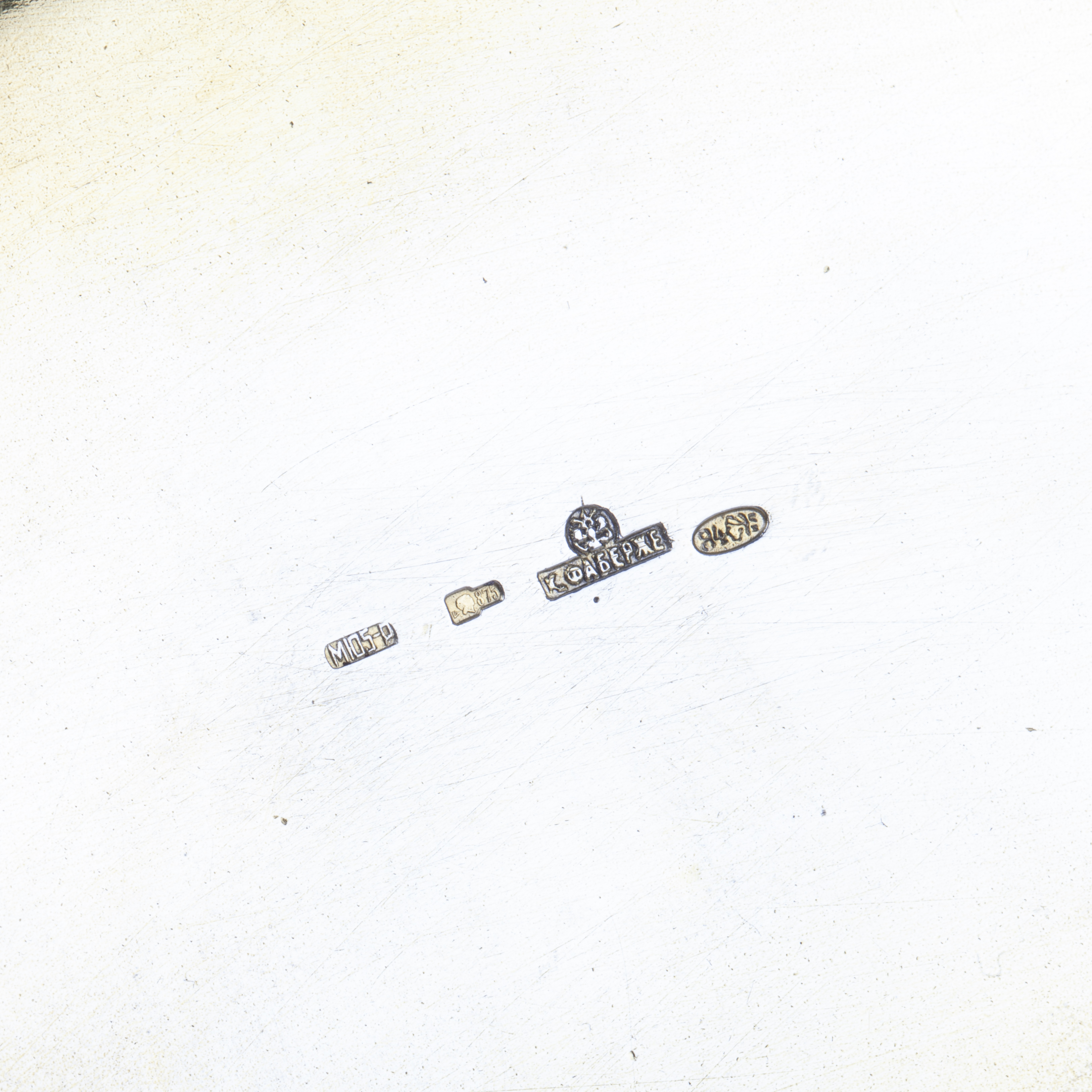
Estimate: 6000-8000€Faberge. A Rare Russian kovsh in historism style. Silver, chasing, gilding, cloisonné enamel, purpurine. Makers mark of «K. Faberge» with Imperial warrant. Moscow, 1898-1908. Of traditional boat-shaped form (ladya) with a handle, the exterior decorated with a frieze of opaque cloisonné enamel in tones of blue, green, and orange against a gilded ground. At the turn of the 20th century, Moscow branch of Fabergé firm embraced the Russian Revival, creating kovshi, cups, icon covers, and tableware inspired by medieval and folk traditions. Silver with filigree, en-plein and polychrome enamels reproduced stylized plant and geometric motifs reminiscent of embroidery and woodcarving. These pieces combined national forms with refined craftsmanship, appealing to the Imperial court and aristocracy. Comparable high-quality silver and enamel kovshes s have been offered at major auctions—see for example a related work in the 2013 Sotheby’s Russian Works of Art & Silver sale, lot 82, and a later example in Sotheby’s 2007 Russian Art sale, lot 570. Dimensions: 10.5 x 7.5 x 7.5 cm. Total weight: 131.2 g.
Starting price: 5000€
Estimate: 6000-8000€
Hammer Price: Not sold -
Lot 0188
Bragin Covered Jar in the Form of an Ushat, St Petersburg, 1892
Estimate: 4500-6000€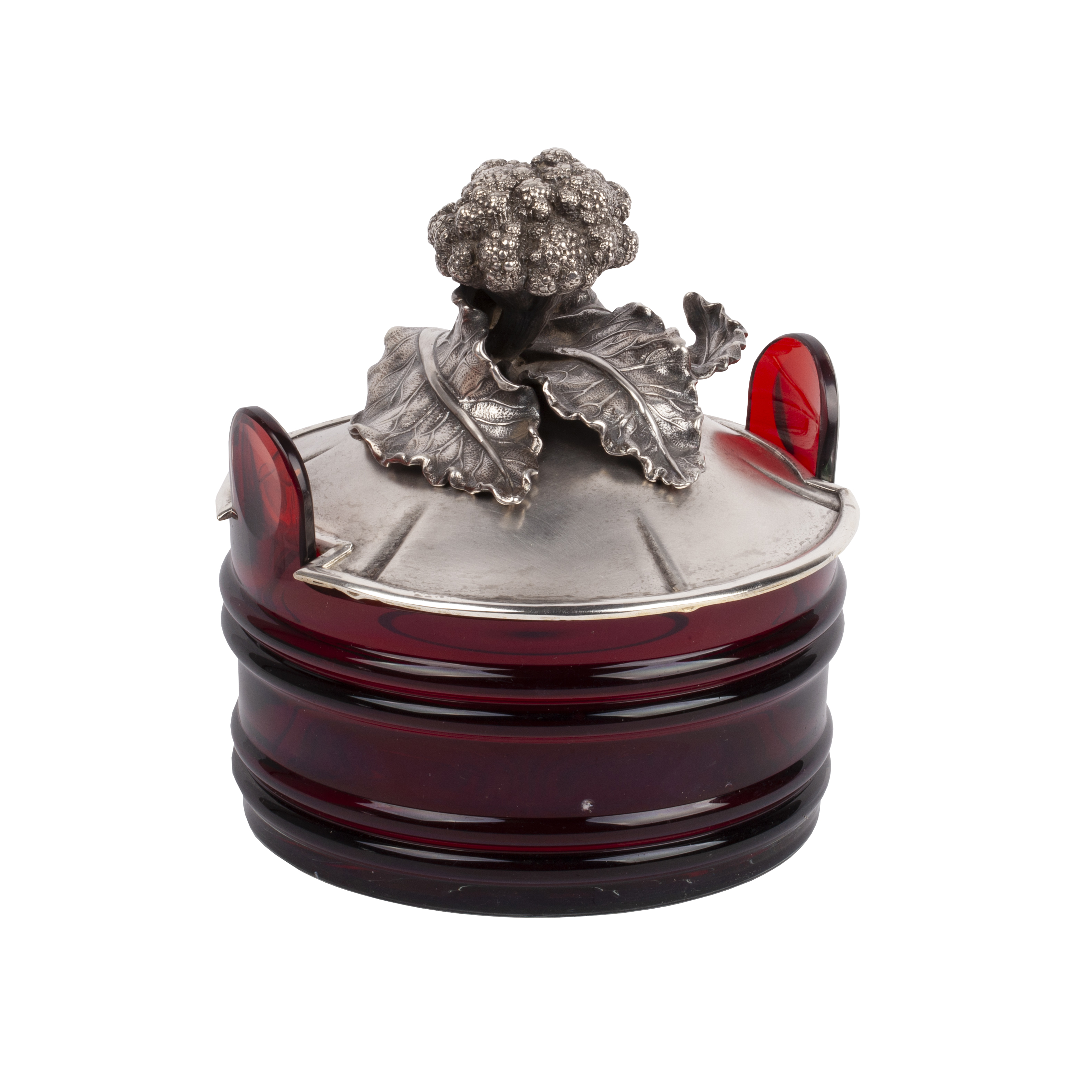
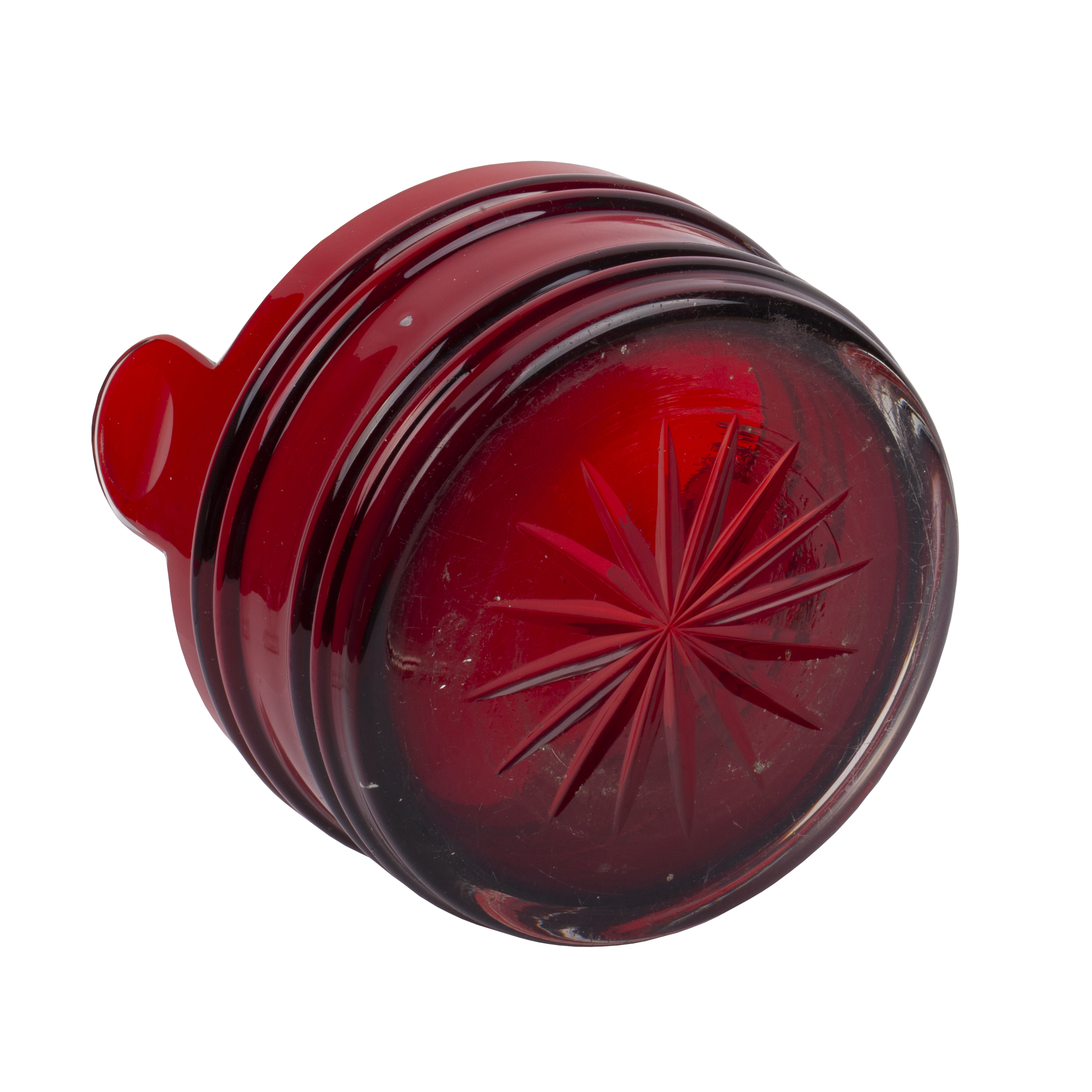
Lot 0188
Bragin Covered Jar in the Form of an Ushat, St Petersburg, 1892
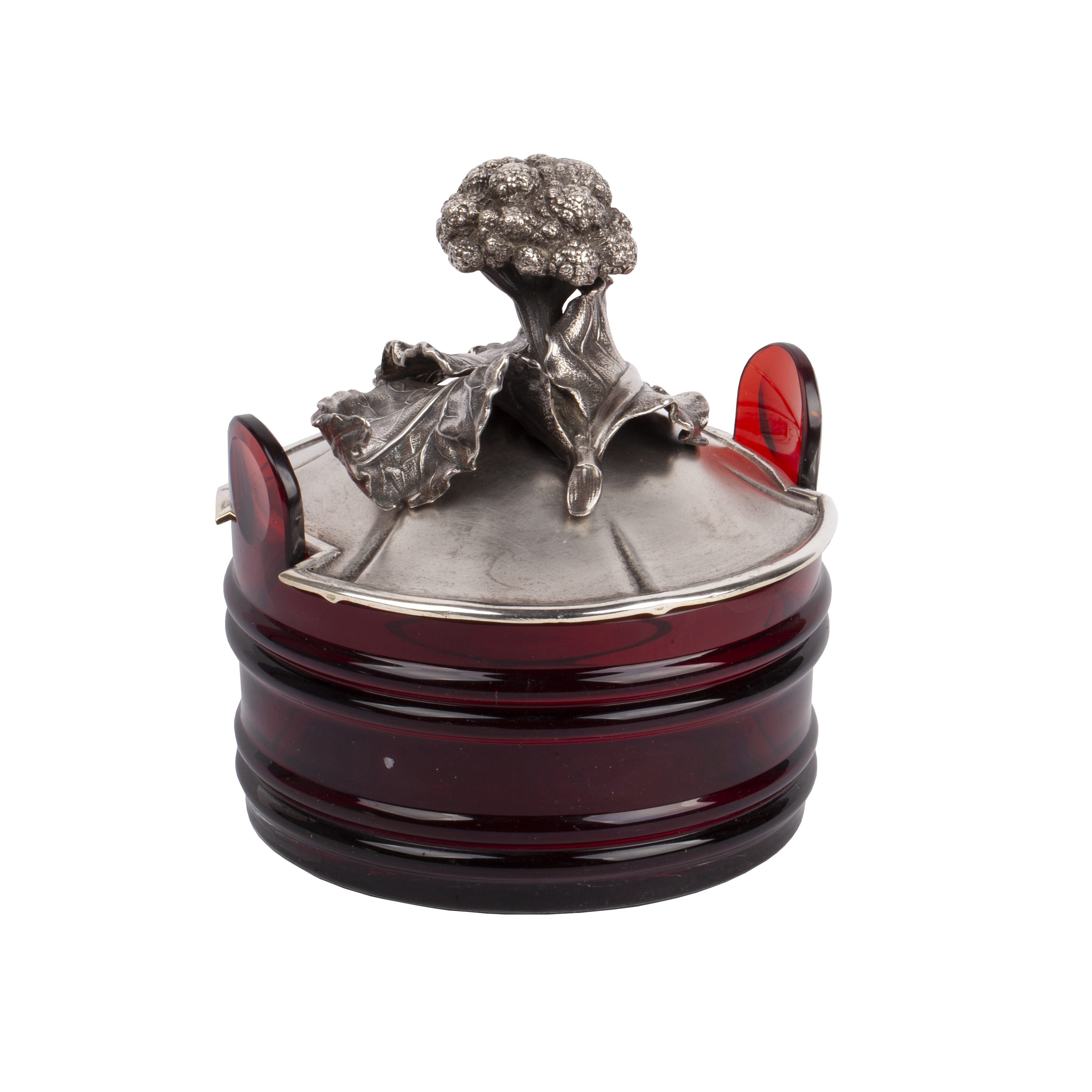
Estimate: 4500-6000€Bragin. Covered jar in the form of ushat.
Silver, casting, chasing, gilding, copper-ruby glass.
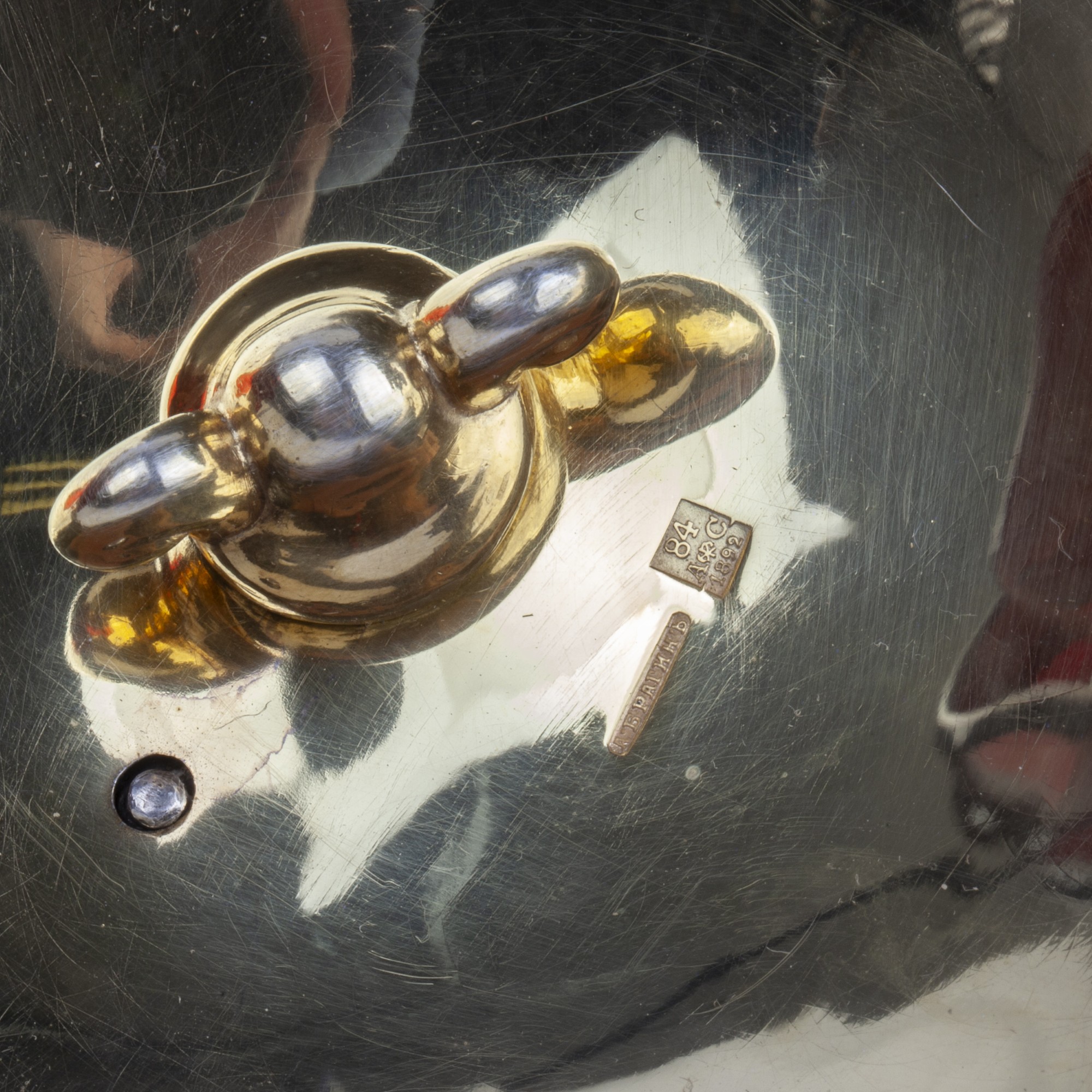
Makers mark of «A.B. Bragin». Petersburg, 1892.
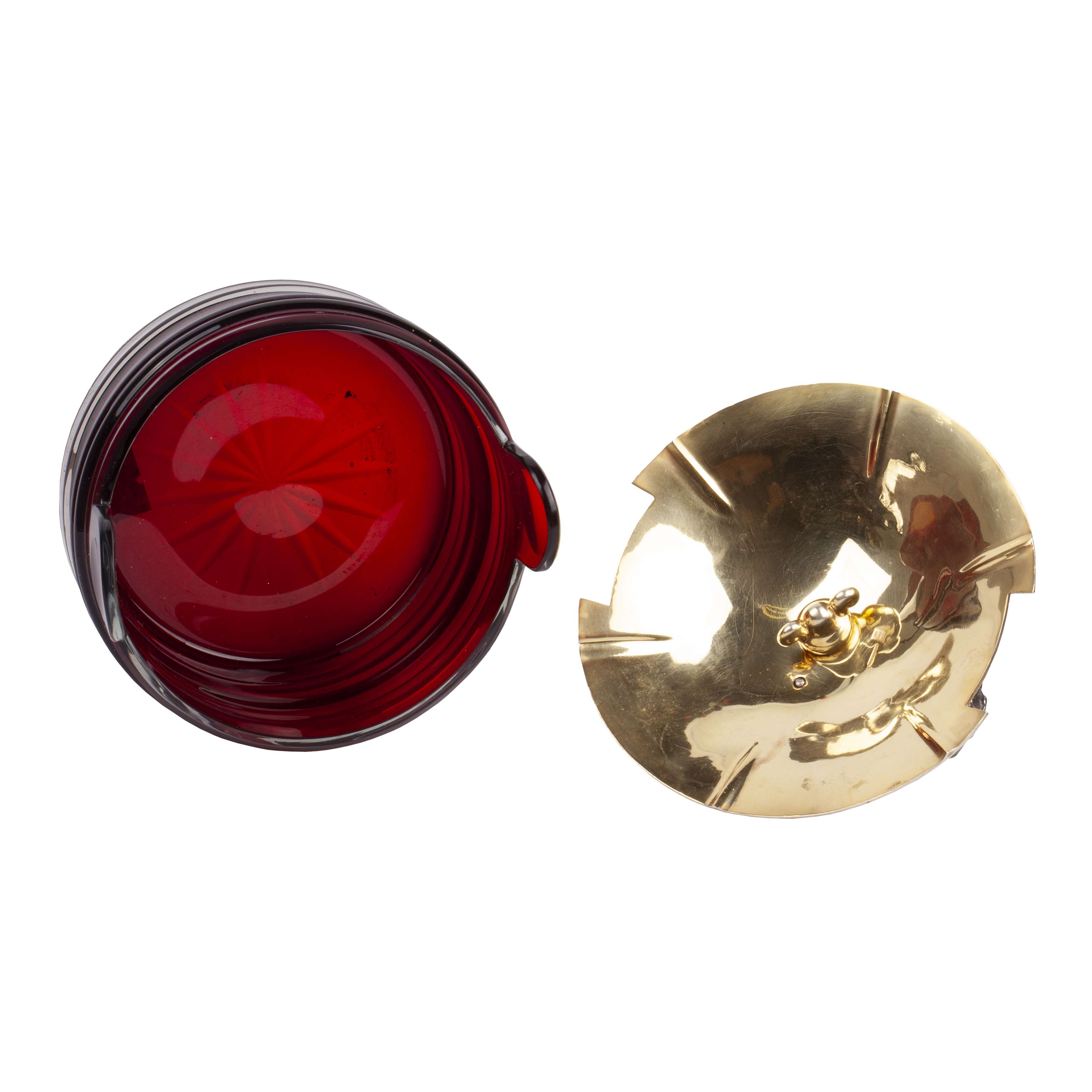
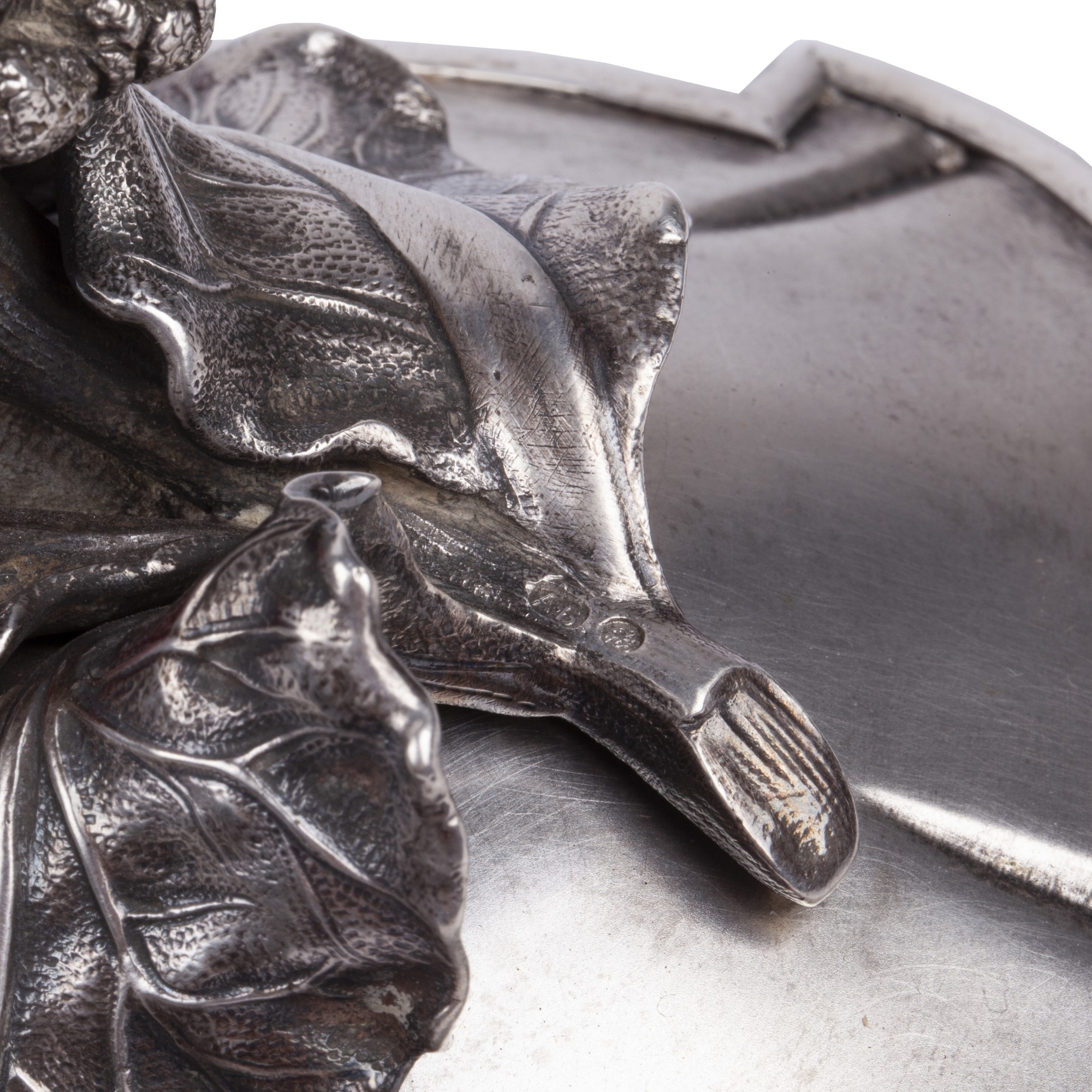
This leaded casket combines deep red copper-ruby glass with finely crafted silver mounts. The lid is topped with a cast silver cauliflower and leaves, serving as both handle and decoration. The transparent red glass body highly like produced by Imperial glass manufactory, shaped in the form of a traditional Russian ushat (water pail).
Andrei Stepanovich Bragin (active late 19th – early 20th century)
A respected St. Petersburg silversmith, Bragin opened his workshop in 1888, producing high-quality silver tableware, flatware, and decorative objects. His pieces, often in the Modern style with Pan-Slavic and natural motifs, gained particular fame for enamelled tea sets inspired by Russian folk embroidery. Though smaller than Fabergé’s firm, Bragin’s workshop earned wide recognition, exhibiting in St. Petersburg and Brussels, and his works are now preserved in major museums and collections. Dimensions: 16.5 x 14.5 x 14.5 cm. Total weight of the lid: 430 g.Starting price: 3500€
Estimate: 4500-6000€
Hammer Price: Not sold -
Lot 0189
Fabergé Extremely Rare Gem-Set Silver and Gold Cigar Cutter in the Form of a Saw, St Petersburg, c. 1890
Estimate: 15000-17000€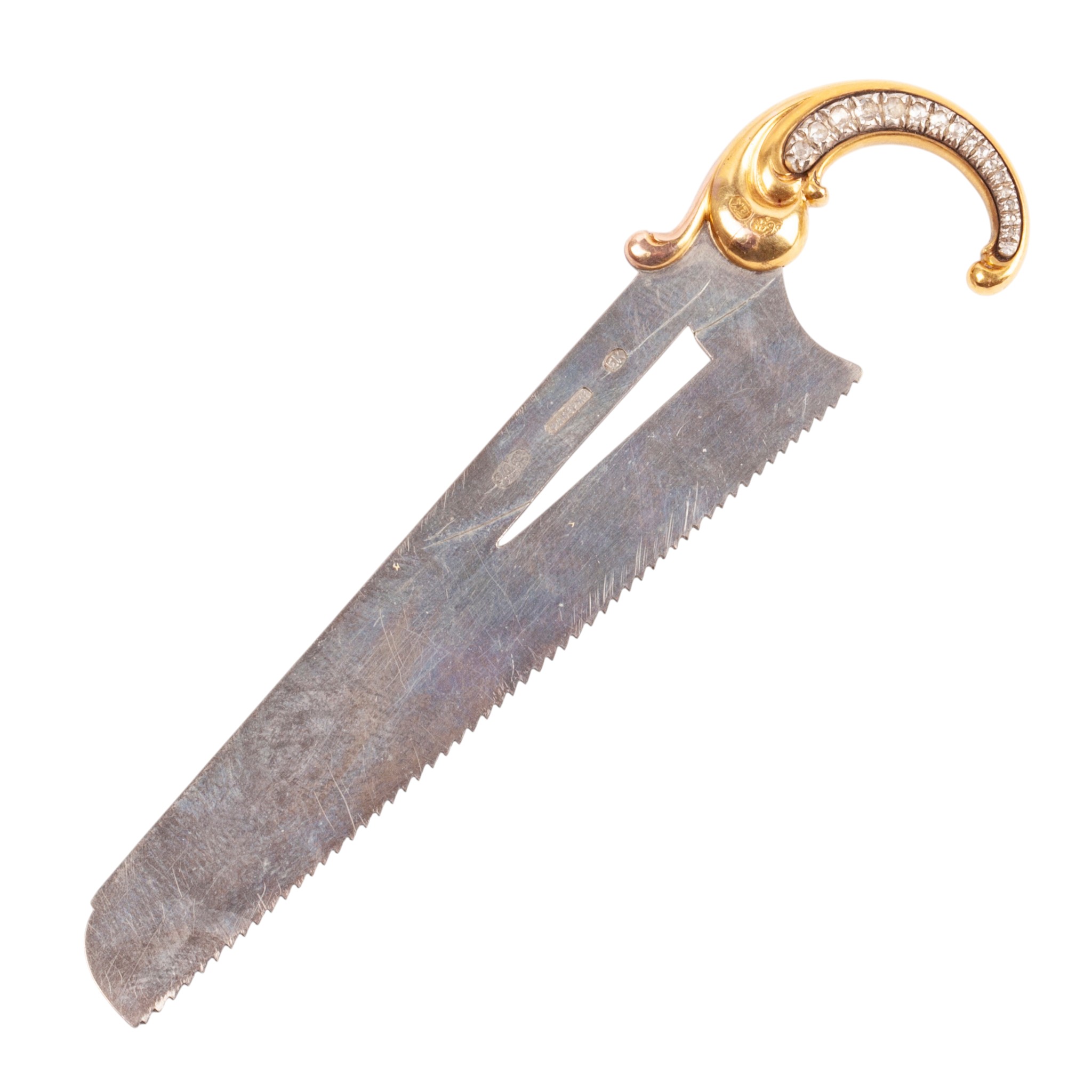
Lot 0189
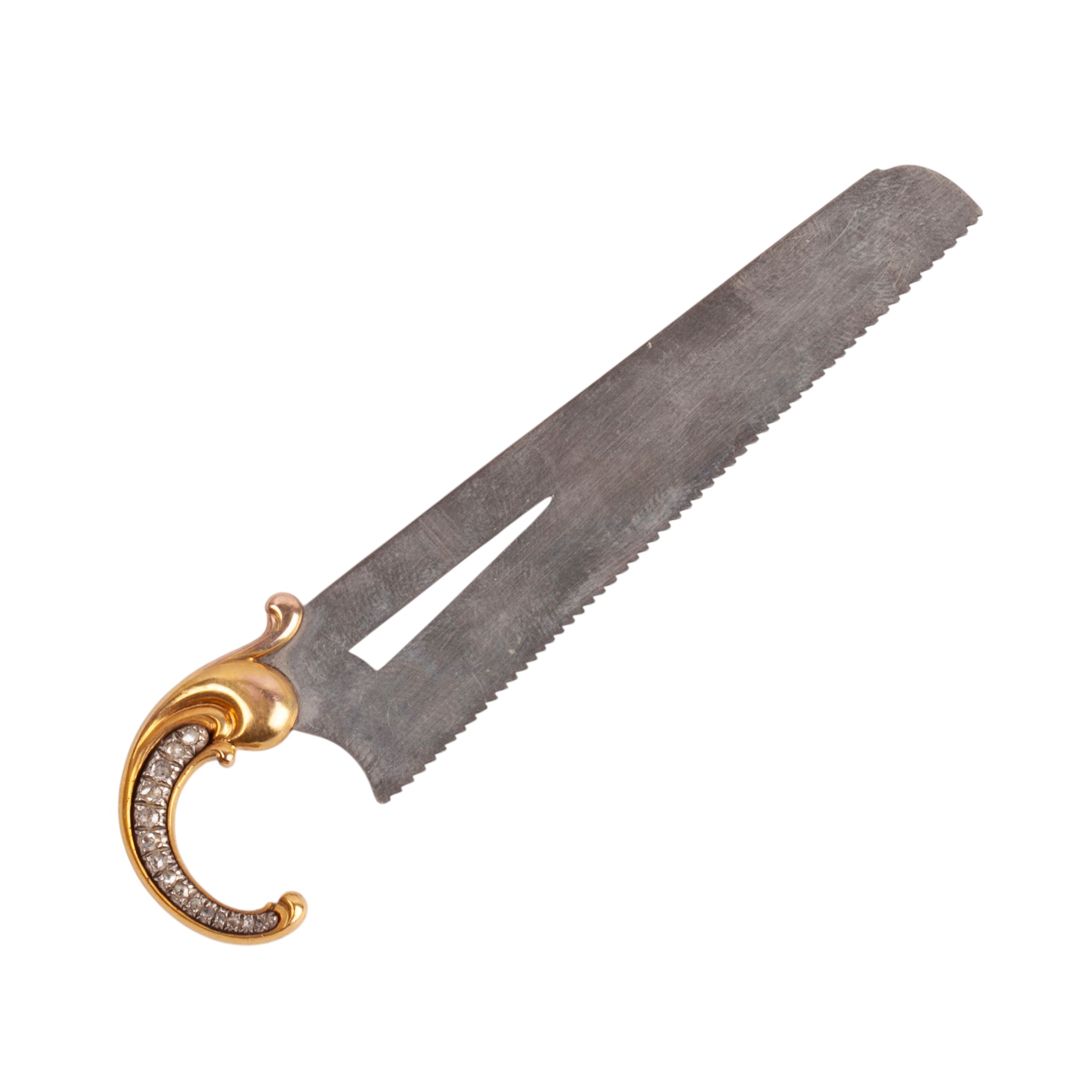
Fabergé Extremely Rare Gem-Set Silver and Gold Cigar Cutter in the Form of a Saw, St Petersburg, c. 1890
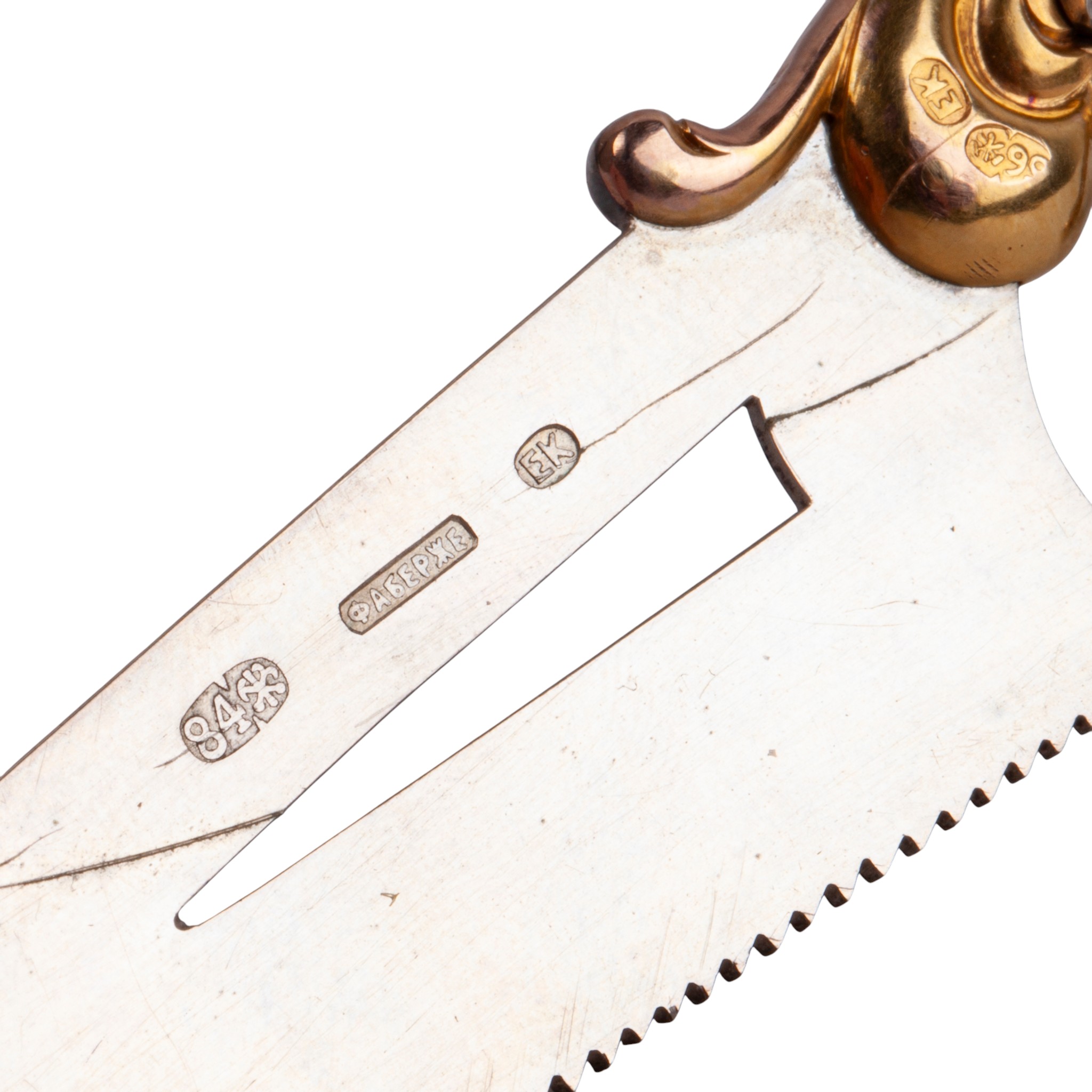
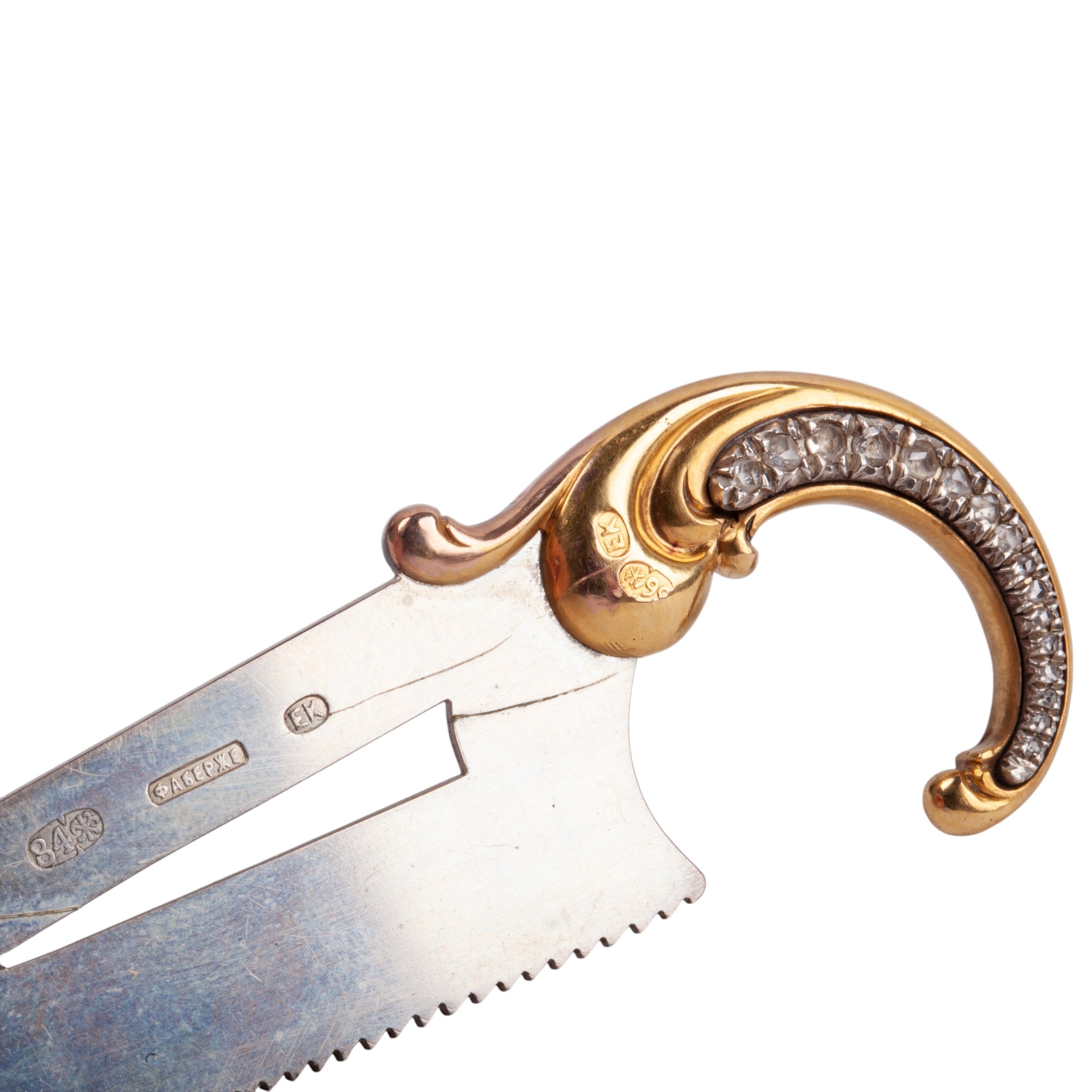
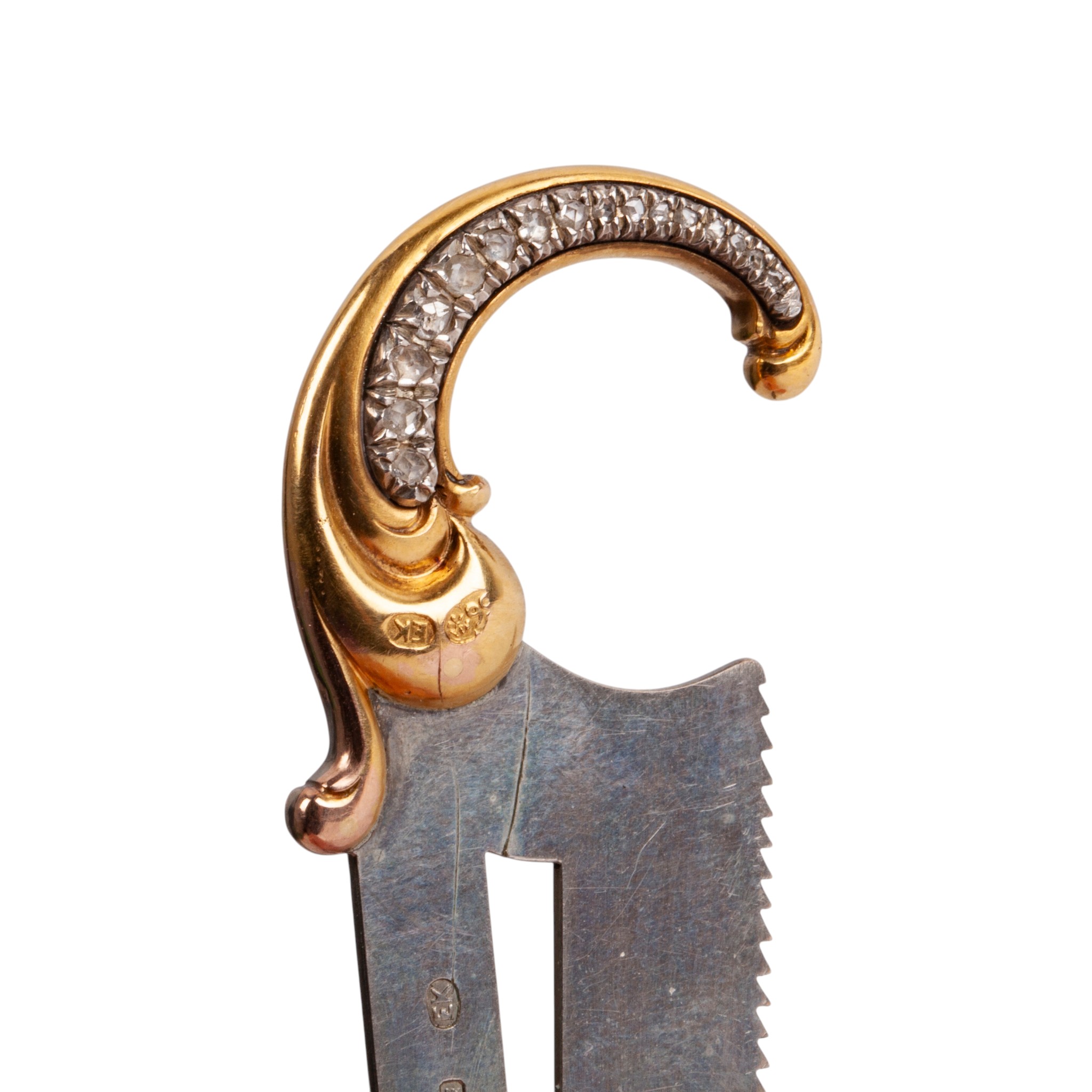
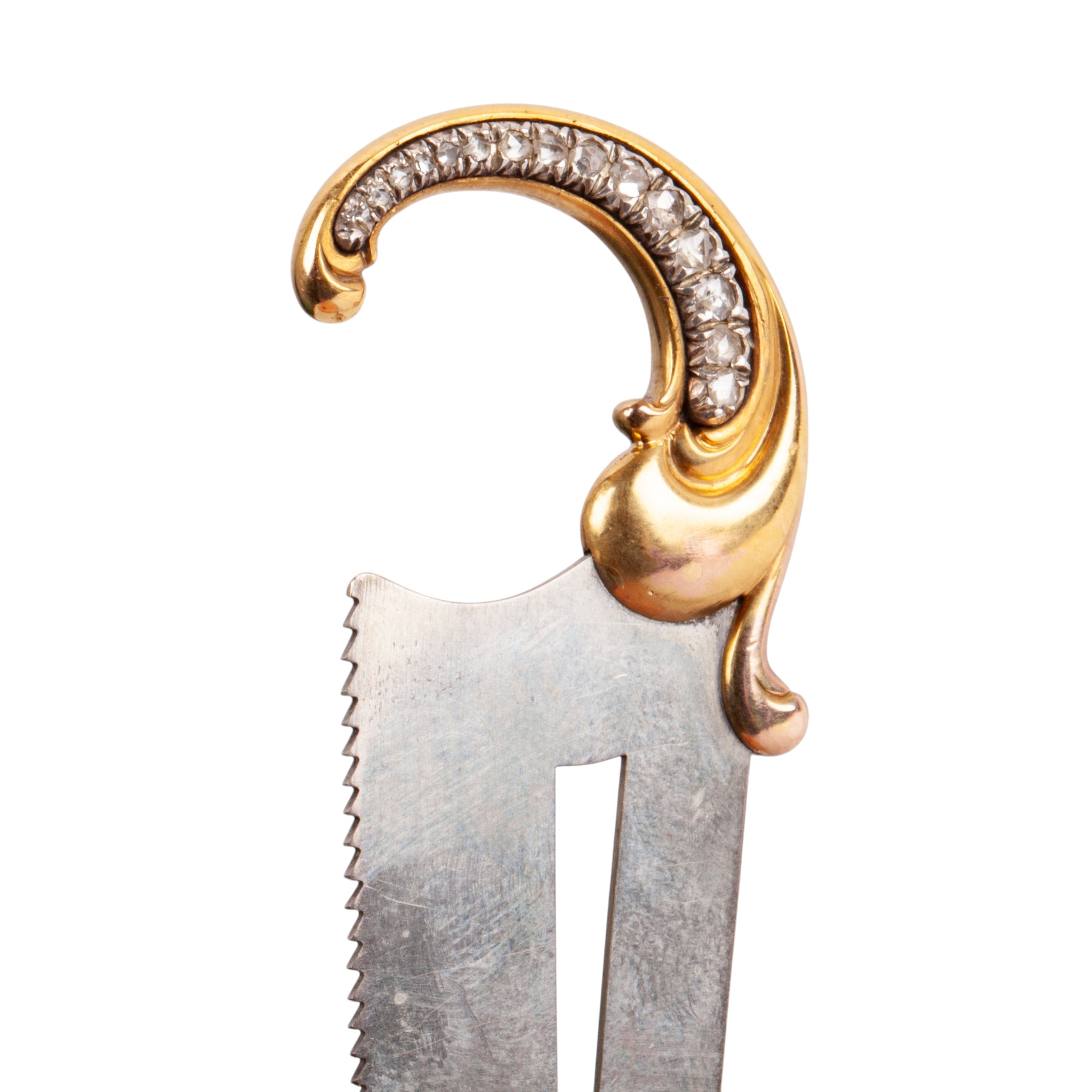
Estimate: 15000-17000€An Extremely Rare Fabergé Gem-Set Silver and Gold Cigar Cutter
St Petersburg, workmaster Erik Kollin, circa 1890.
Silver, gold, diamonds; cutting, casting, chasing, polishing, gem-setting.
Marks: Faberge firm, workmaster’s mark EK for Erik Kollin; St Petersburg assay marks; 84 zolotniki silver standard, 56 gold standart. Weight: 20.5 g. Dimensions: 12 x 2,6 x 0.4 cm.
A rare Fabergé cigar cutter designed in the playful form of a miniature saw. The flat silver blade is pierced with an elongated aperture and cut with a serrated edge, directly evoking the functional shape of a carpenter’s tool. The handle is formed in polished gold as a sweeping scroll, its arched upper section set with a graduated row of diamonds.
The deliberately unexpected choice of a saw as the model for a cigar cutter reflects Fabergé’s taste for trompe-l’oeil, humour and technical exactitude. At the same time, the diamond-set gold handle introduces a courtly elegance, turning a gentleman’s smoking accessory into a small work of jewellery.
Erik August Kollin was one of the most important early masters connected with Fabergé. Born in Finland in 1836, he trained as a goldsmith before moving to St Petersburg, where he qualified as a workmaster in 1868. In 1870 he opened his own workshop and soon became Fabergé’s first chief jeweller, overseeing the firm’s workshops until 1886, when he was succeeded by Michael Perchin.
Kollin specialised in gold and silver objects, many of them in the archaic and historical taste characteristic of Fabergé’s early period.Starting price: 12000€
Estimate: 15000-17000€
Hammer Price: Not sold -
Lot 0190
Russian Presentation Box with Hardstone Cameo of Grand Duke Pavel Petrovich, St Petersburg, 1772–1783
Estimate: 6000-8000€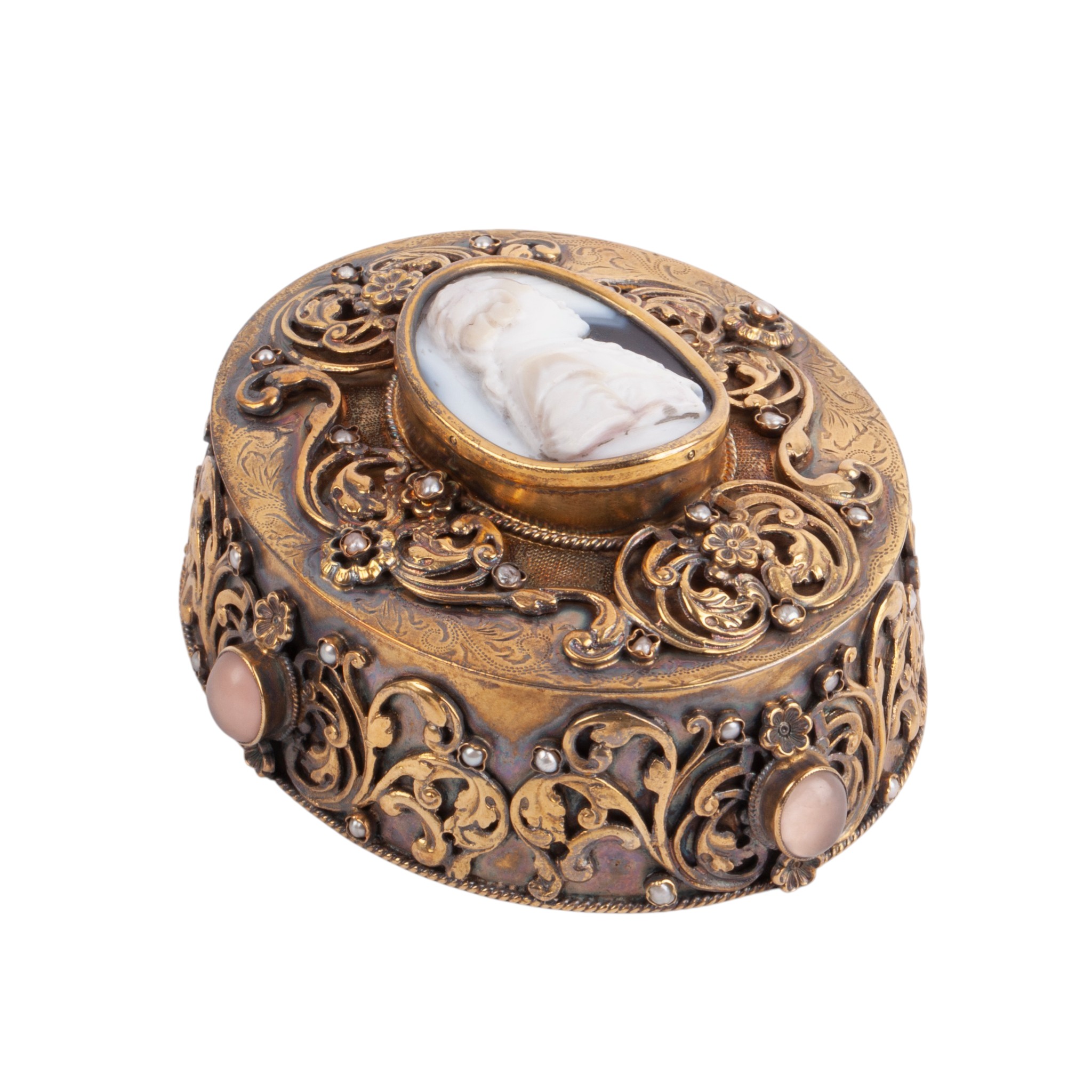

Lot 0190
Russian Presentation Box with Hardstone Cameo of Grand Duke Pavel Petrovich, St Petersburg, 1772–1783
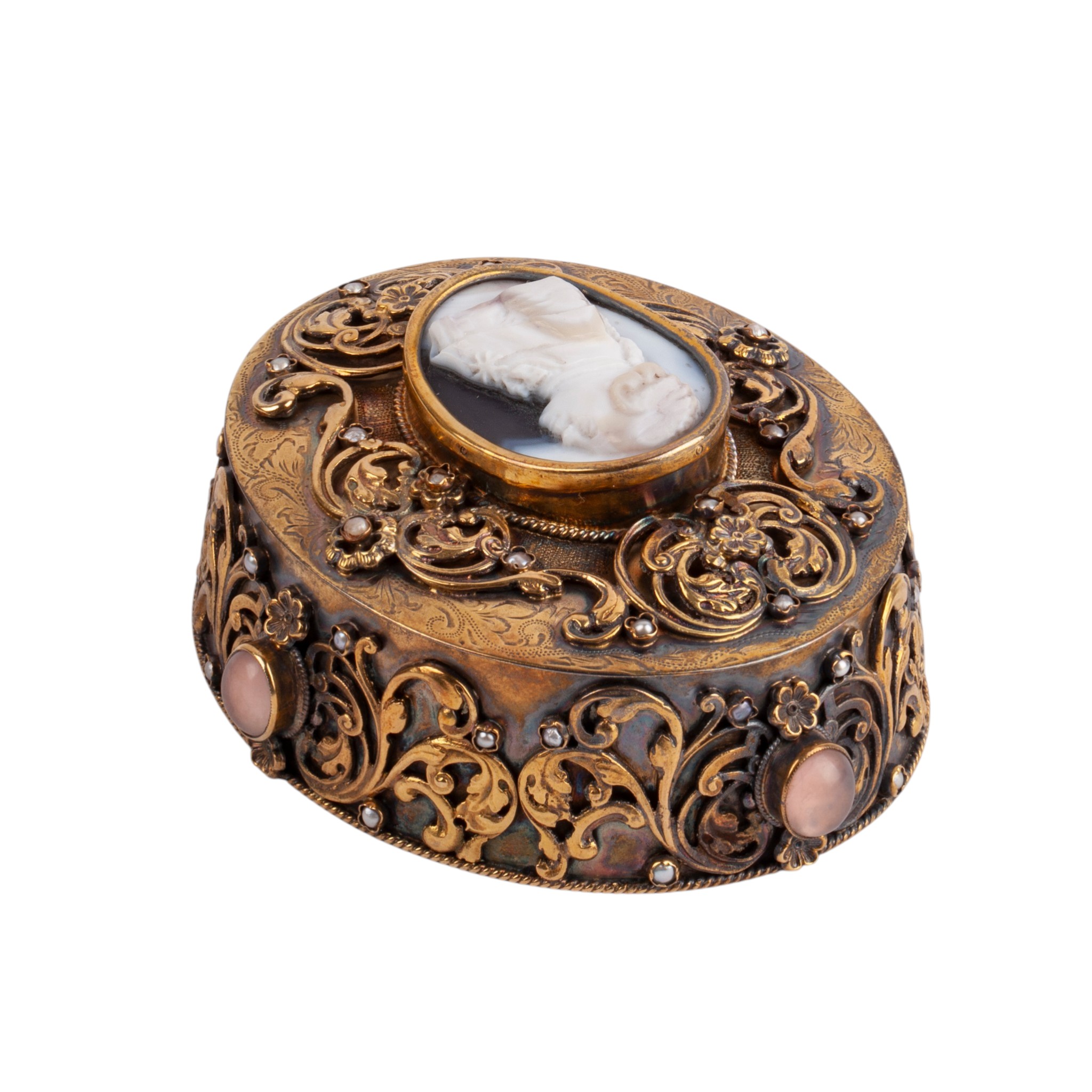
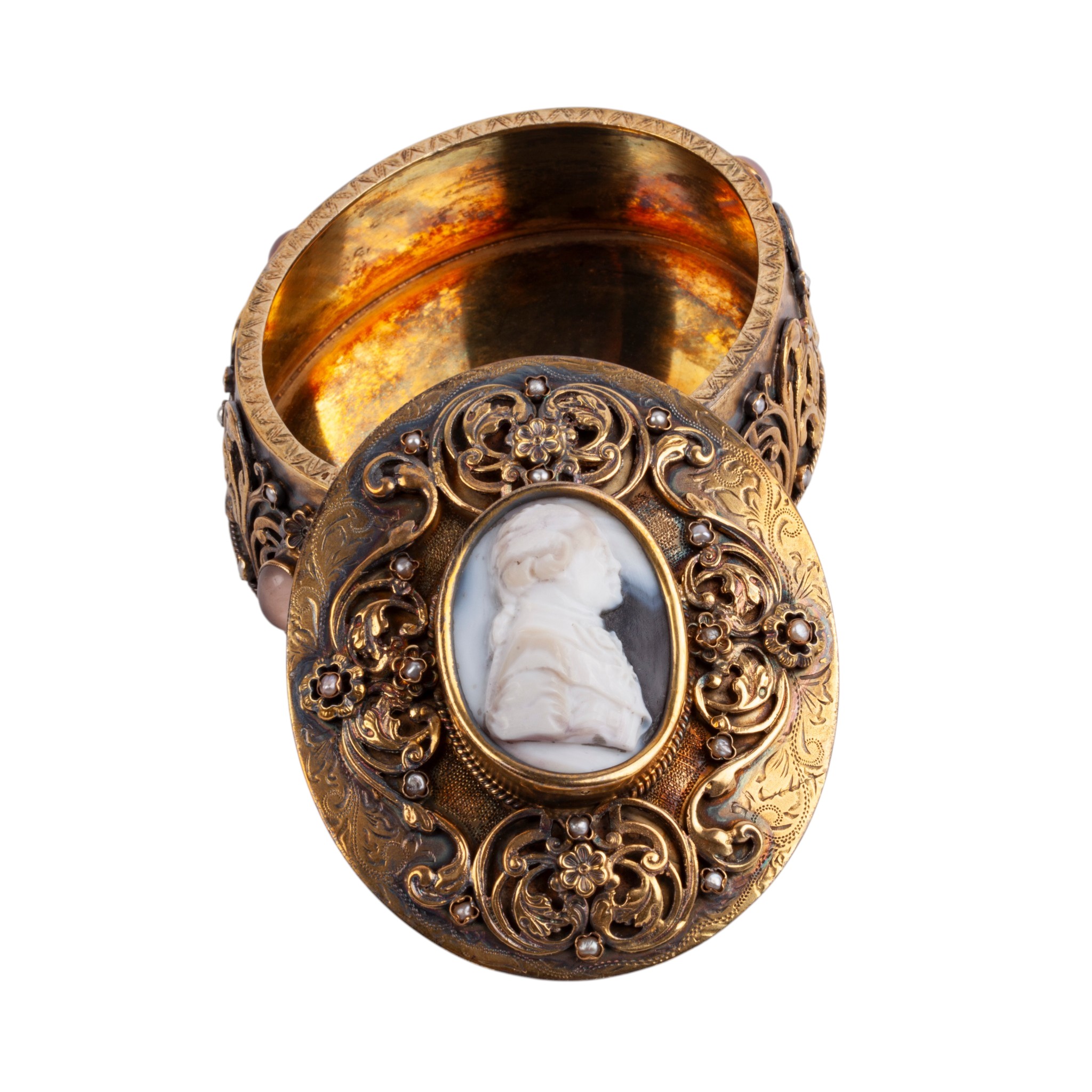
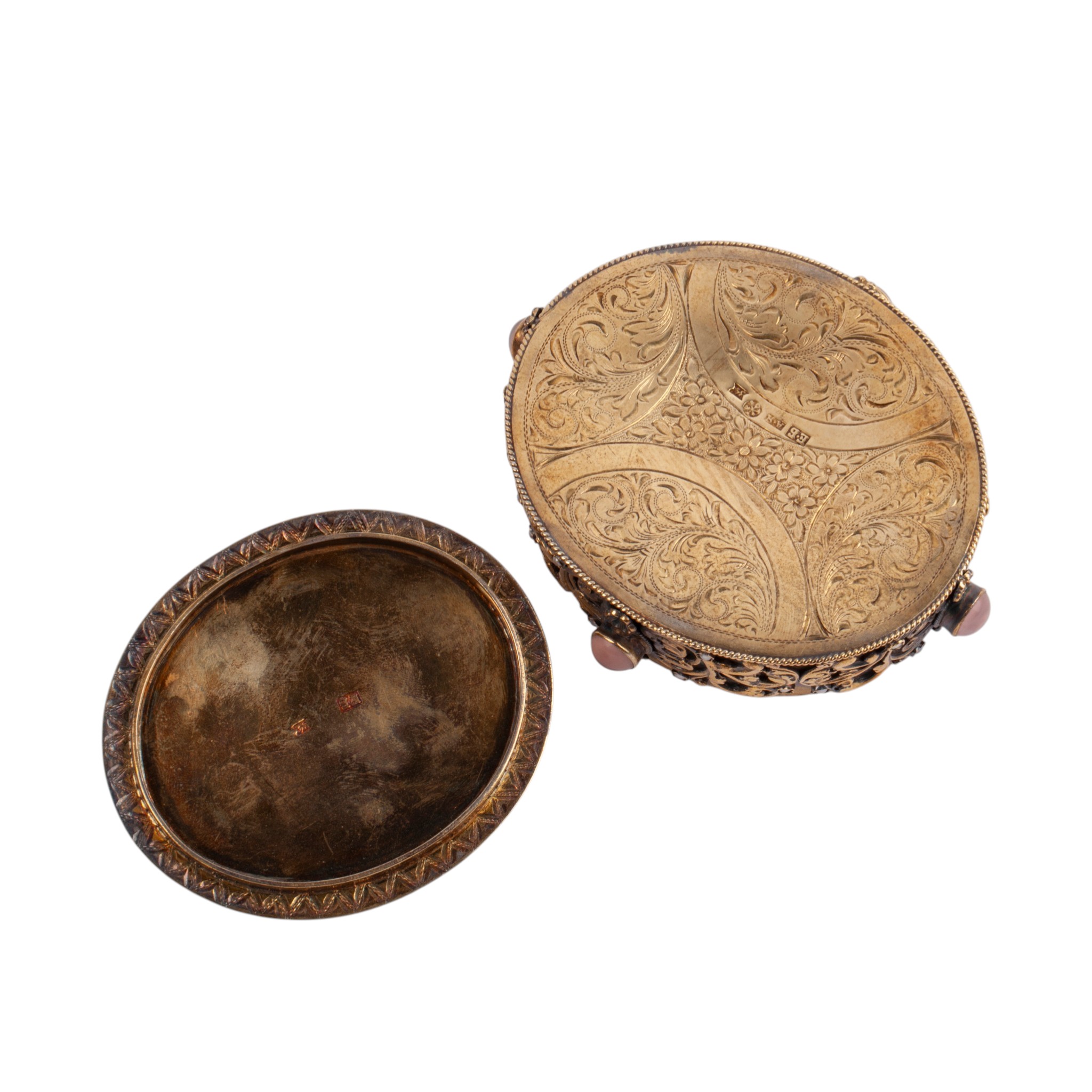
Estimate: 6000-8000€A Russian Presentation Box with Hardstone Cameo of Grand Duke Pavel Petrovich St Petersburg, 1772-1783. Cameo attributed to Giovanni Pichler (1734-1791), gem engraver.
Silver, gilding, engraving, mounting, pearls, cabochons, lapis lazuli carved cameo. Total weight: 259 g. Dimensions: 5 x 11 x 9 cm.
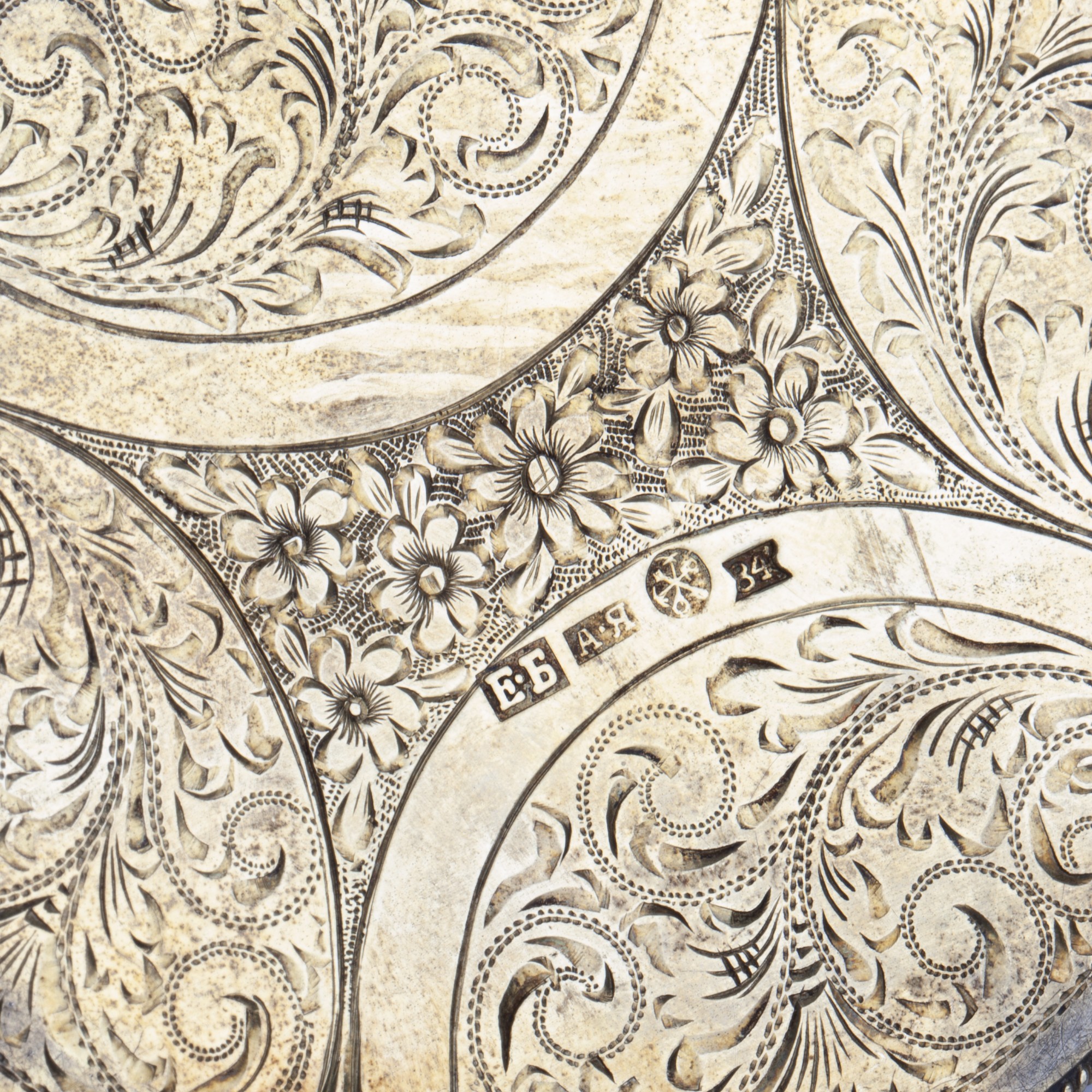
Marks: stamped EB, St. Petersburg assay mark.
An oval presentation box in the Neo-Renaissance taste, executed in richly gilded silver and profusely ornamented with pierced scrollwork, engraved foliage, seed pearls, and cabochon settings. The domed lid is centered with an oval hardstone cameo portraying Grand Duke Pavel Petrovich in profile. The cameo may be attributed to the engraver Giovanni Pichler (1734-1791), one of the most celebrated gem carvers of the later eighteenth century, whose works were prized in aristocratic and courtly circles for their refined classicism and sculptural precision.
The box unites the arts of glyptic carving and goldsmith’s work in a single ceremonial object. The austere profile portrait, rendered in the language of antique-inspired court representation, is set within an elaborate ornamental framework of Renaissance-derived scrolls and rosettes.
By artistic level and character, the piece belongs to the category of precious presentation boxes intended for courtly gift exchange or cabinet display.Starting price: 5000€
Estimate: 6000-8000€
Hammer Price: Not sold -
Lot 0191
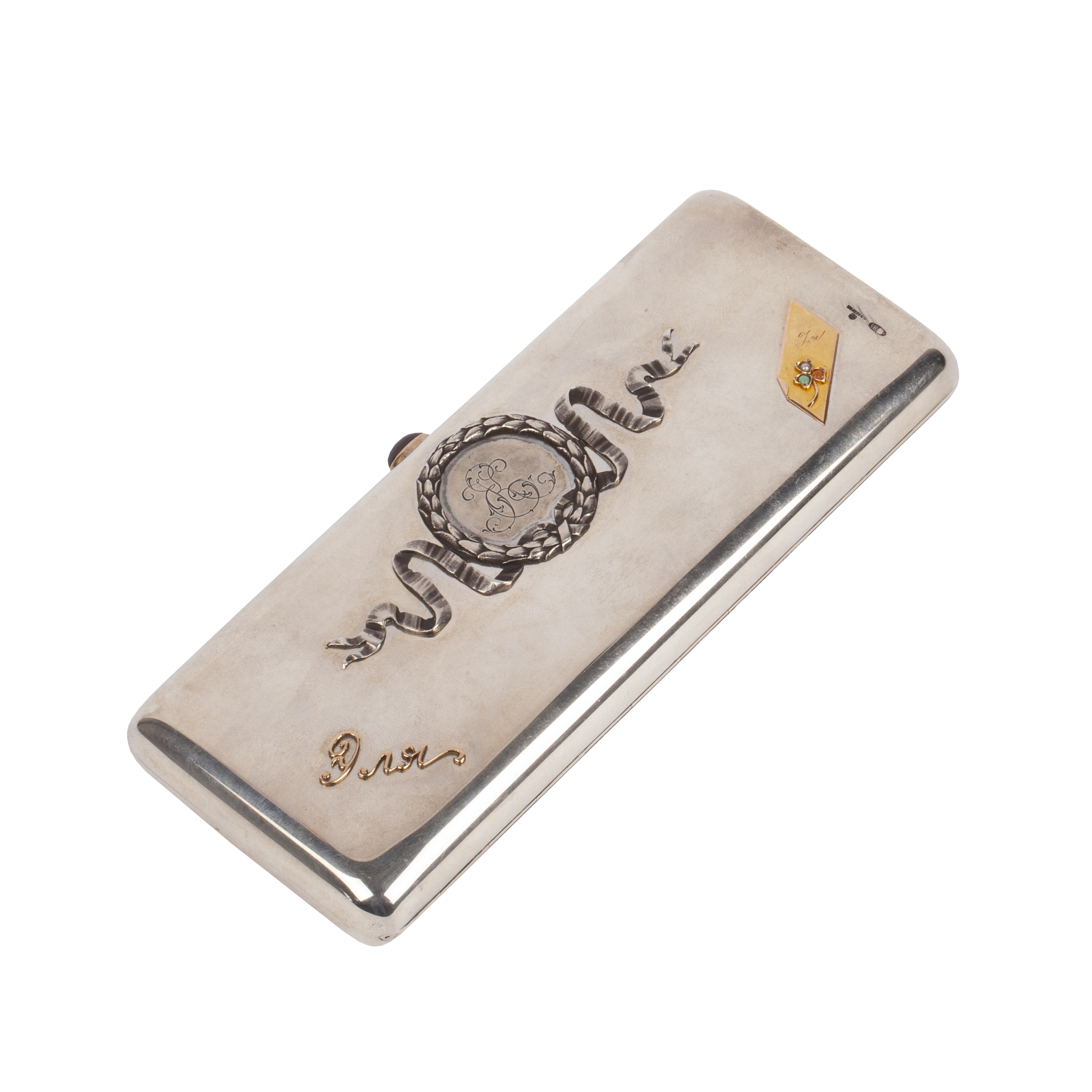
Fabergé Silver Wallet, Neo-Classical Style, Moscow, 1908–1917
Estimate: 2500-3500€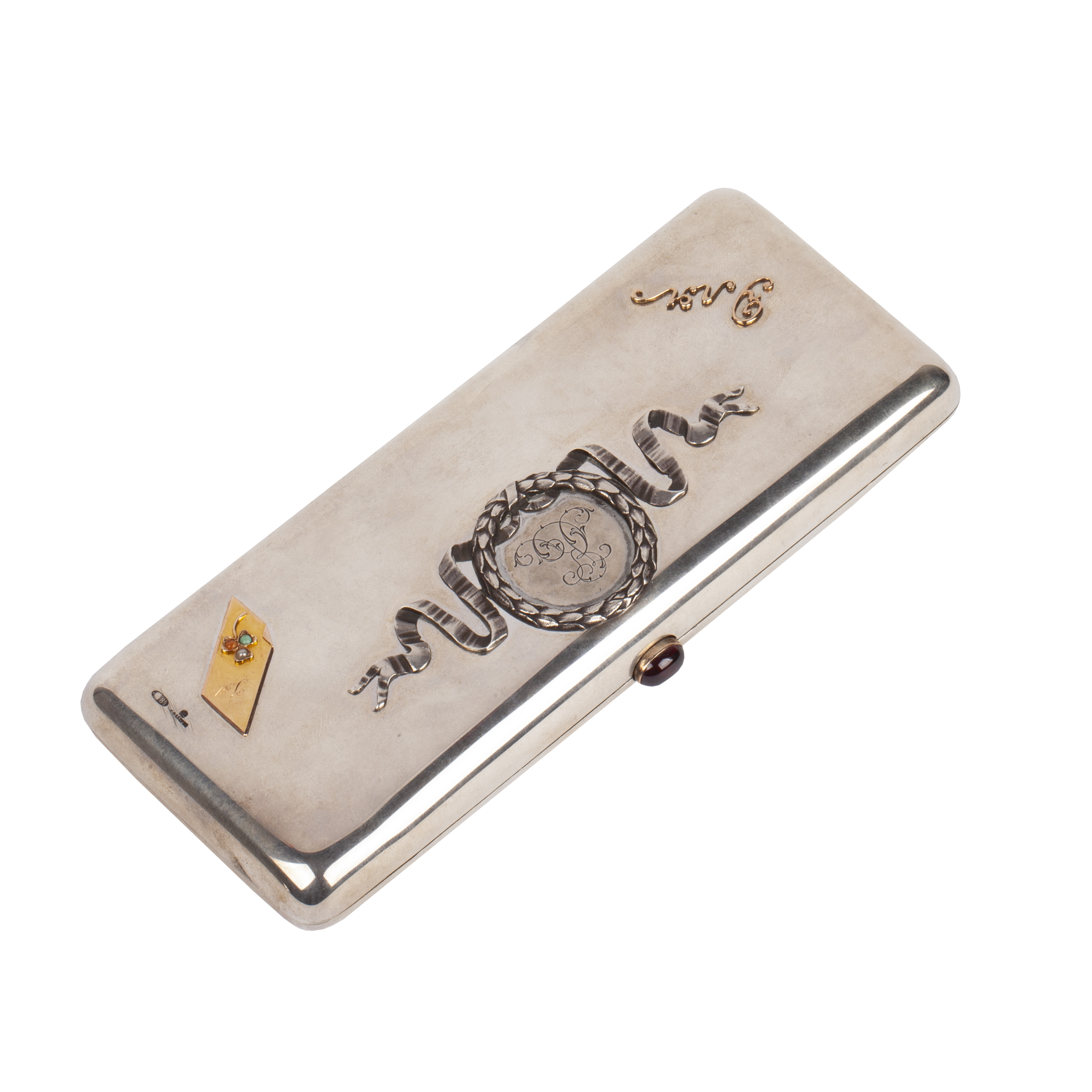
Lot 0191
Fabergé Silver Wallet, Neo-Classical Style, Moscow, 1908–1917
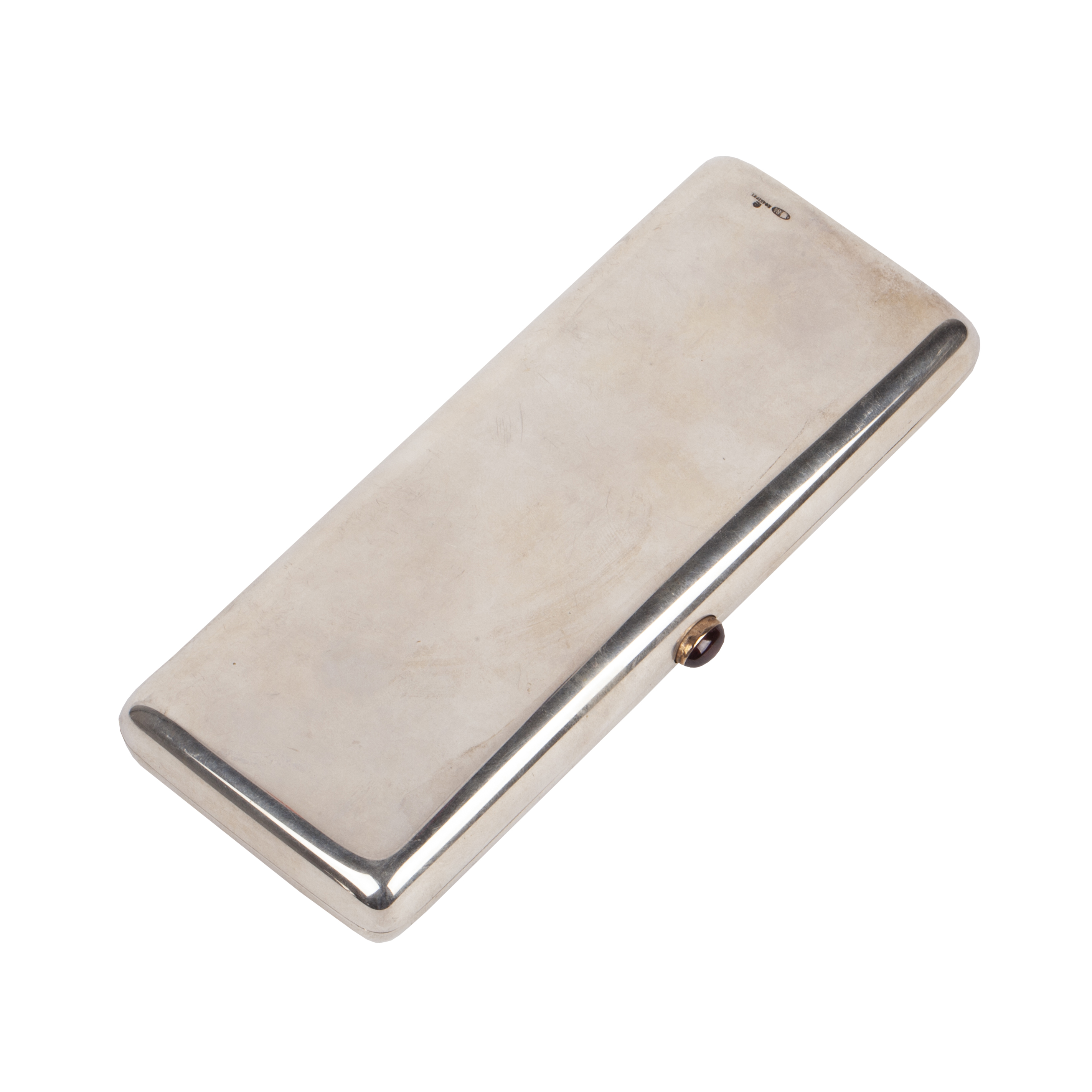
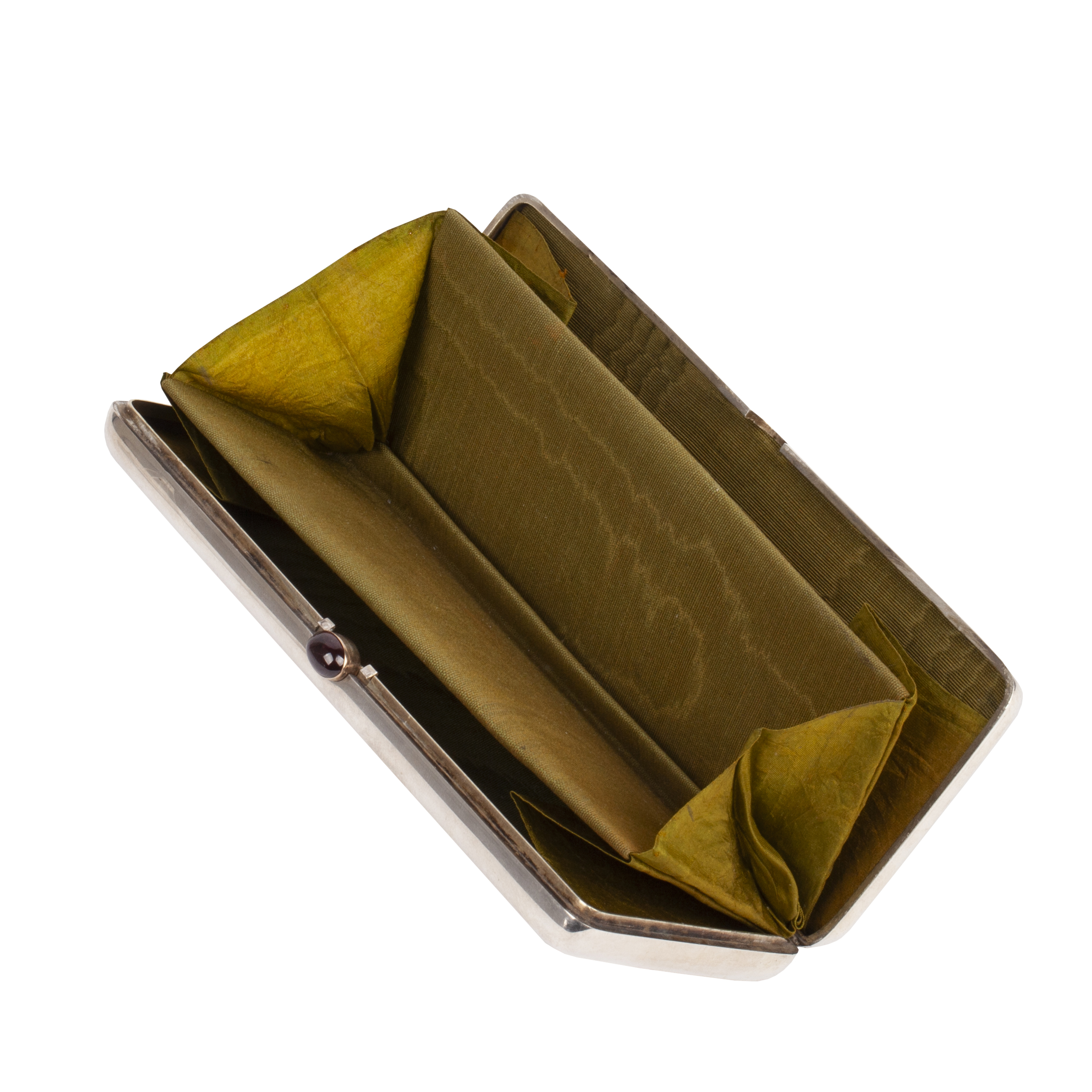
Estimate: 2500-3500€Faberge. Silver wallet in neo-classical style.
Silver, gold, chasing, gilding, semi-precious stones. Dimensions: 16.5 x 7.3 x 2.7 cm. Total weight: 256.3 g.
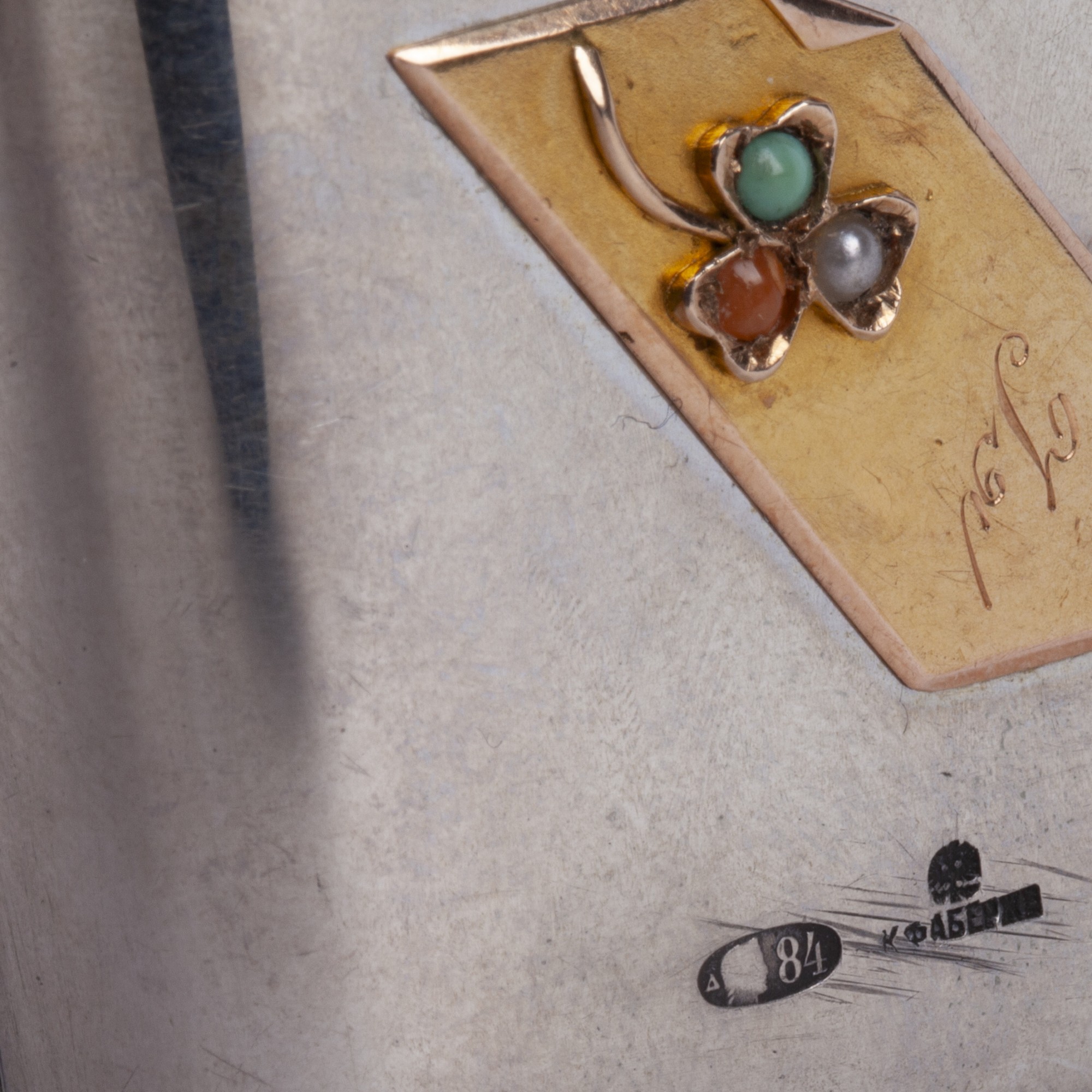
Makers mark of «K. Faberge» with Imperial warrant. Moscow, 1908-1917.
Rectangular silver wallet with hinged lid. The cover is decorated with a cast garland encircling a monogram. In the corner, a gold applique with a name «Allia» inscription and a applied gold sign with a flower incrust with turquoise cabochons.Starting price: 2000€
Estimate: 2500-3500€
Hammer Price: Not sold -
Lot 0192
Russian Gold, Pink Quartz and Jade Table Bell Push, St Petersburg, late 19th century
Estimate: 400-500€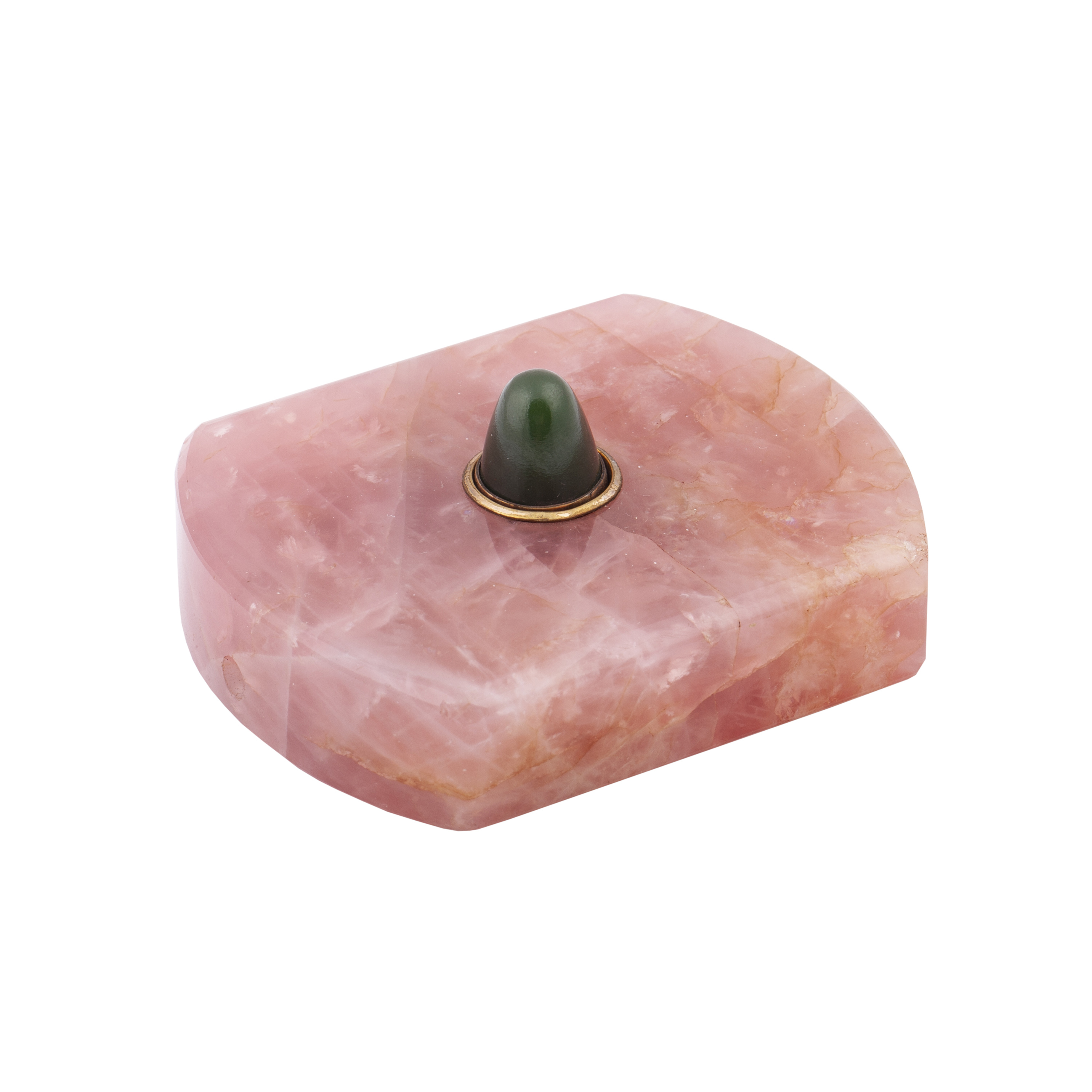
Lot 0192
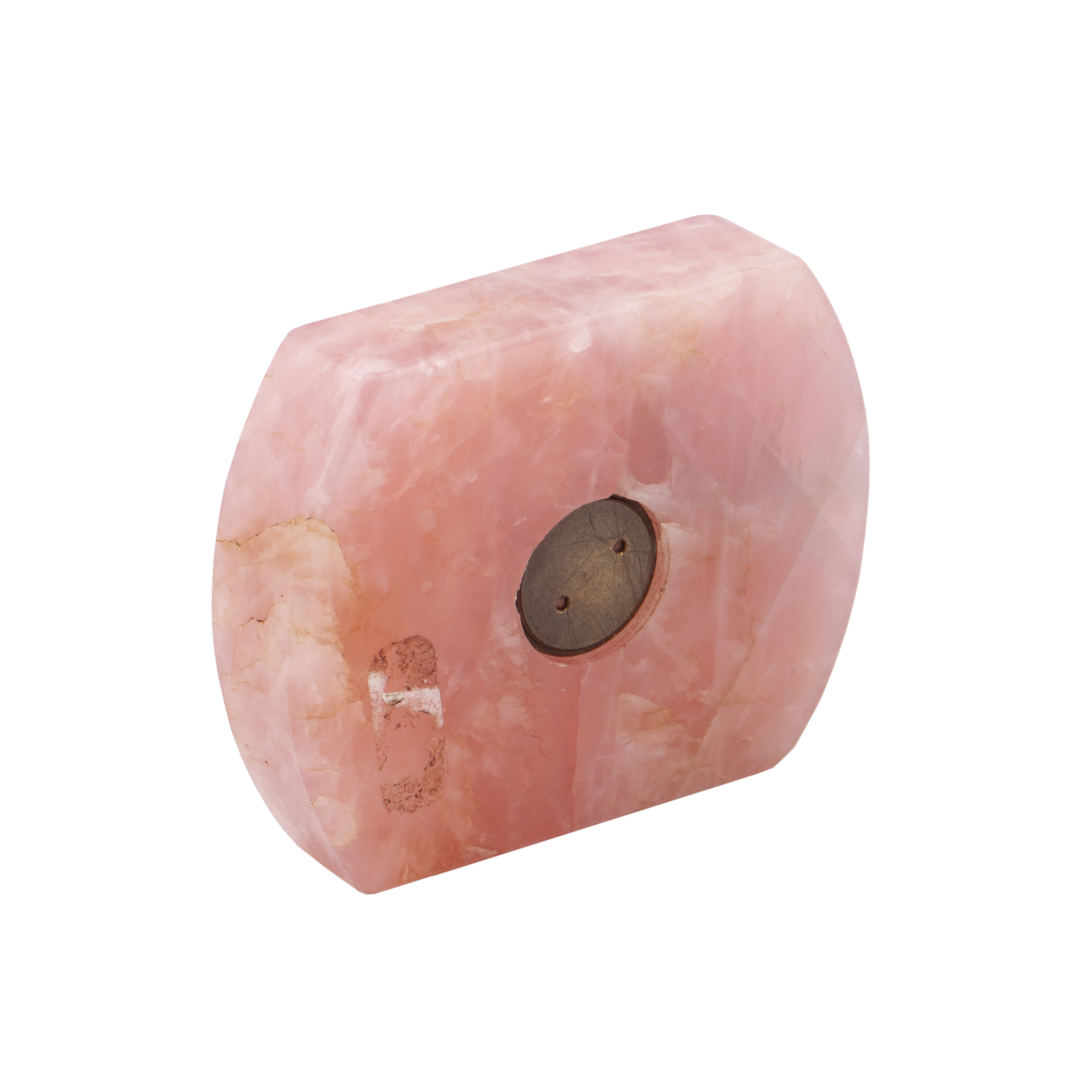
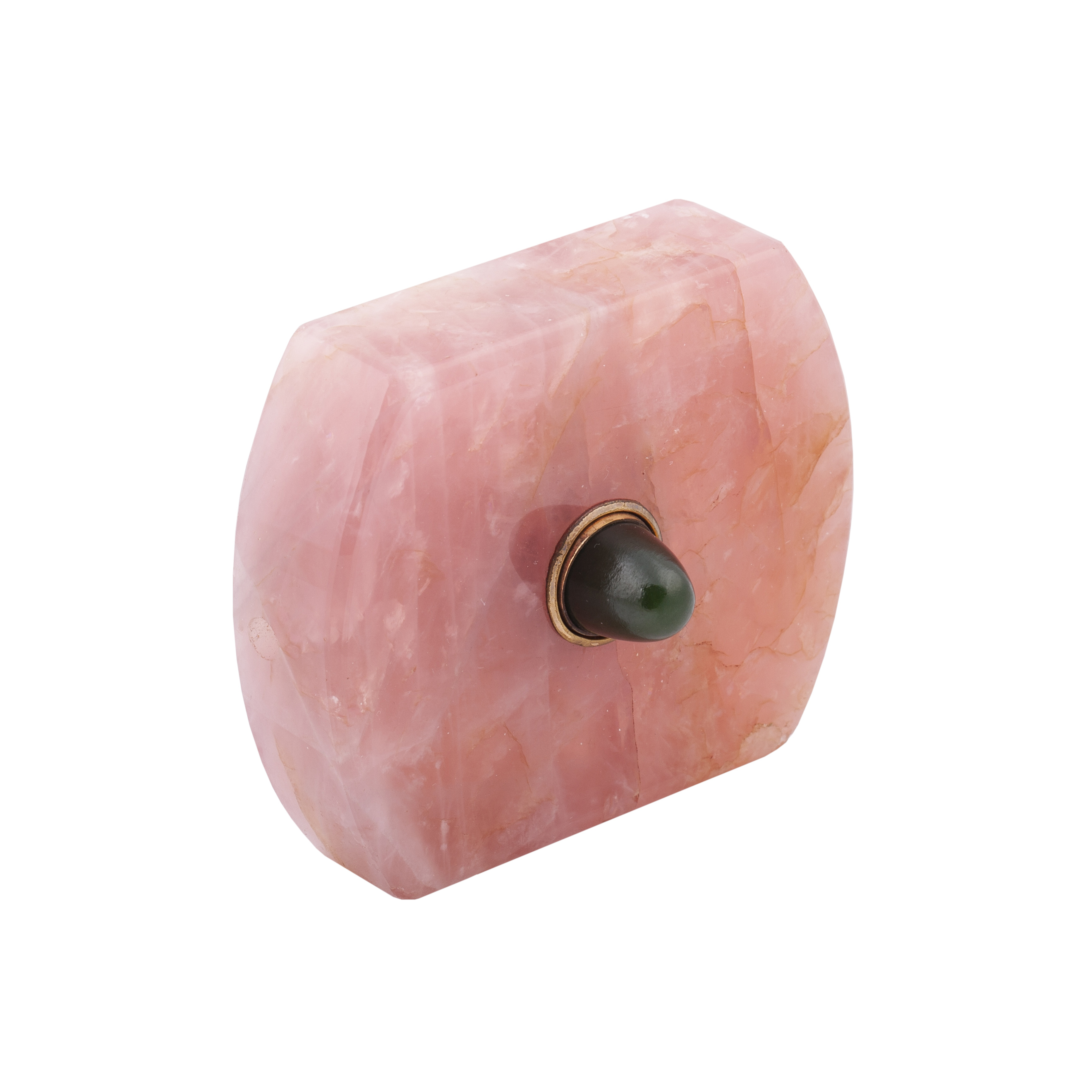
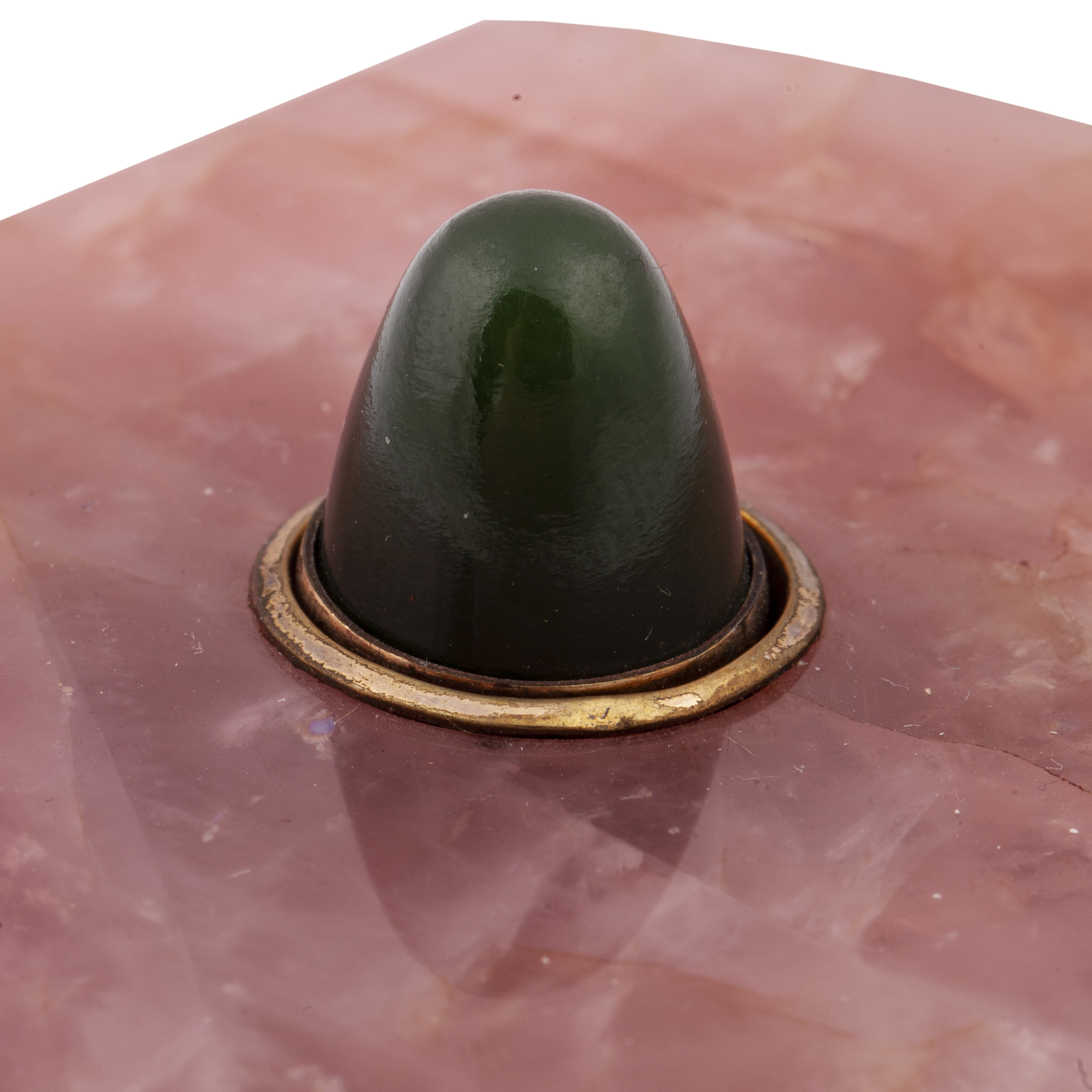
Russian Gold, Pink Quartz and Jade Table Bell Push, St Petersburg, late 19th century
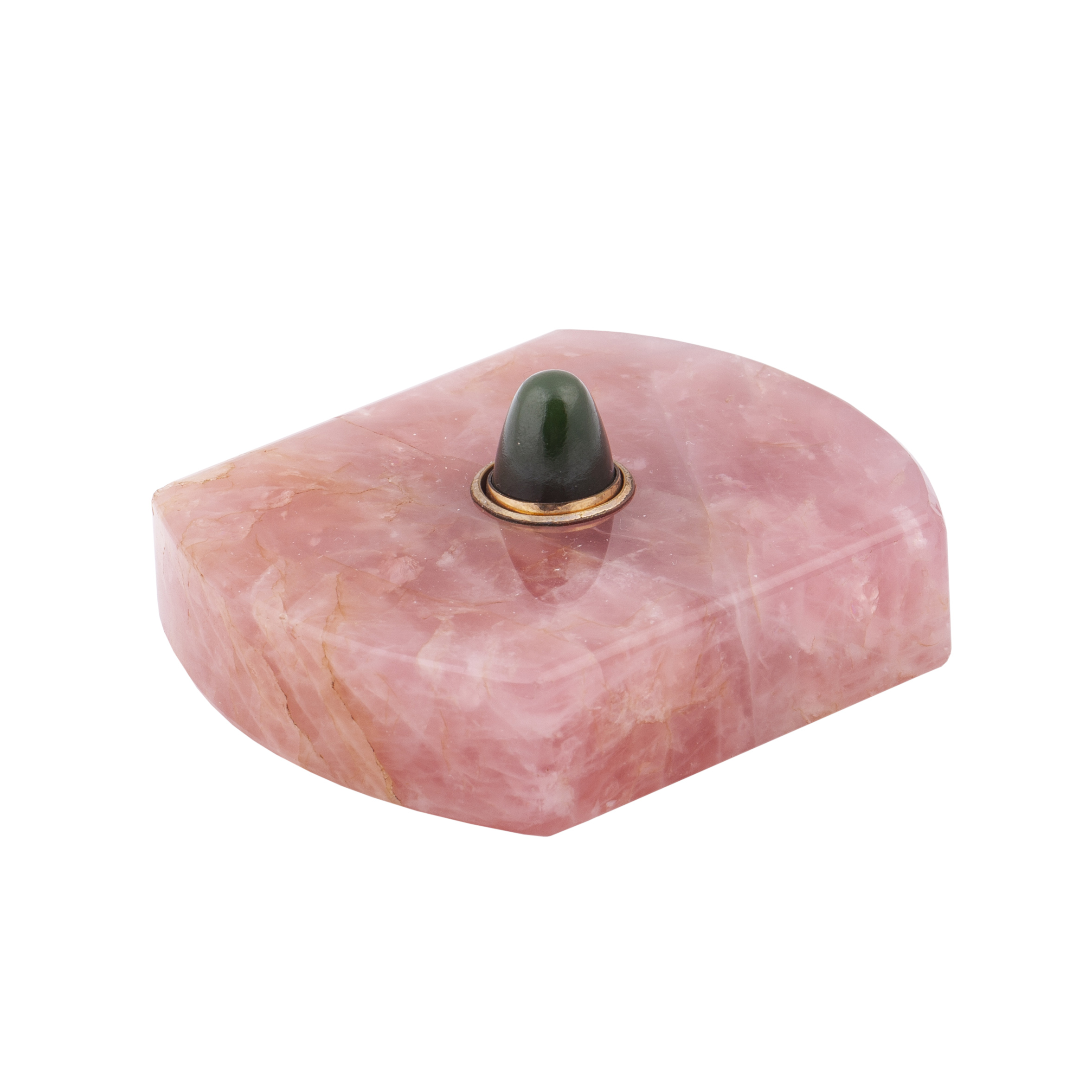
Estimate: 400-500€A Russian Gold, Pink Quartz and Jade Table Bell Push
St Petersburg, late 19th century.
Pink quartz, jade, gold; carving, polishing, mounting.
Dimensions: 3 × 7 × 6 cm.
A refined Russian table bell push of compact rectangular form, carved from translucent pink quartz with softly bevelled edges and a rounded end. At the centre rises a polished dark green jade push-button, mounted within a narrow gold collar.Starting price: 300€
Estimate: 400-500€
Hammer Price: Not sold -
Lot 0193
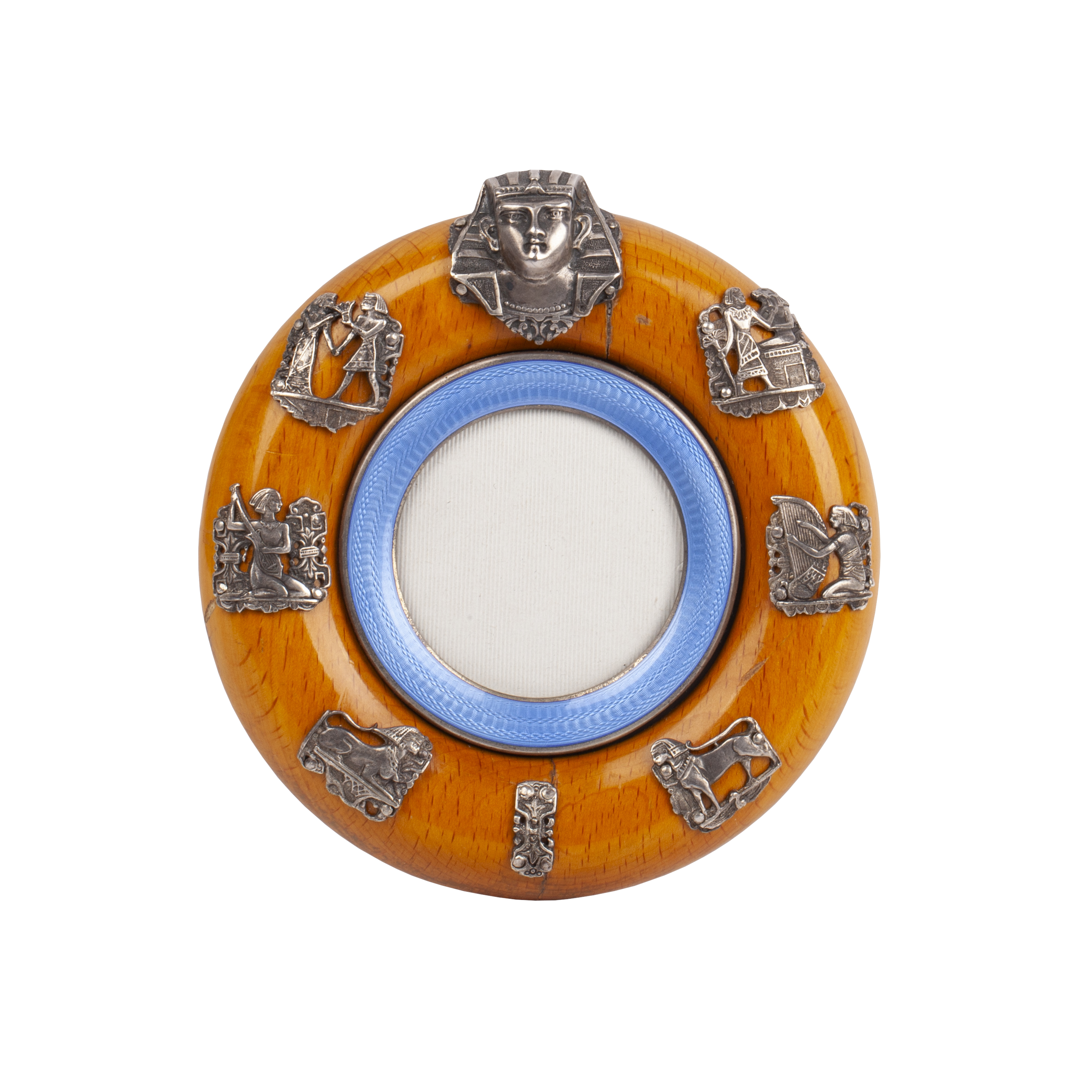
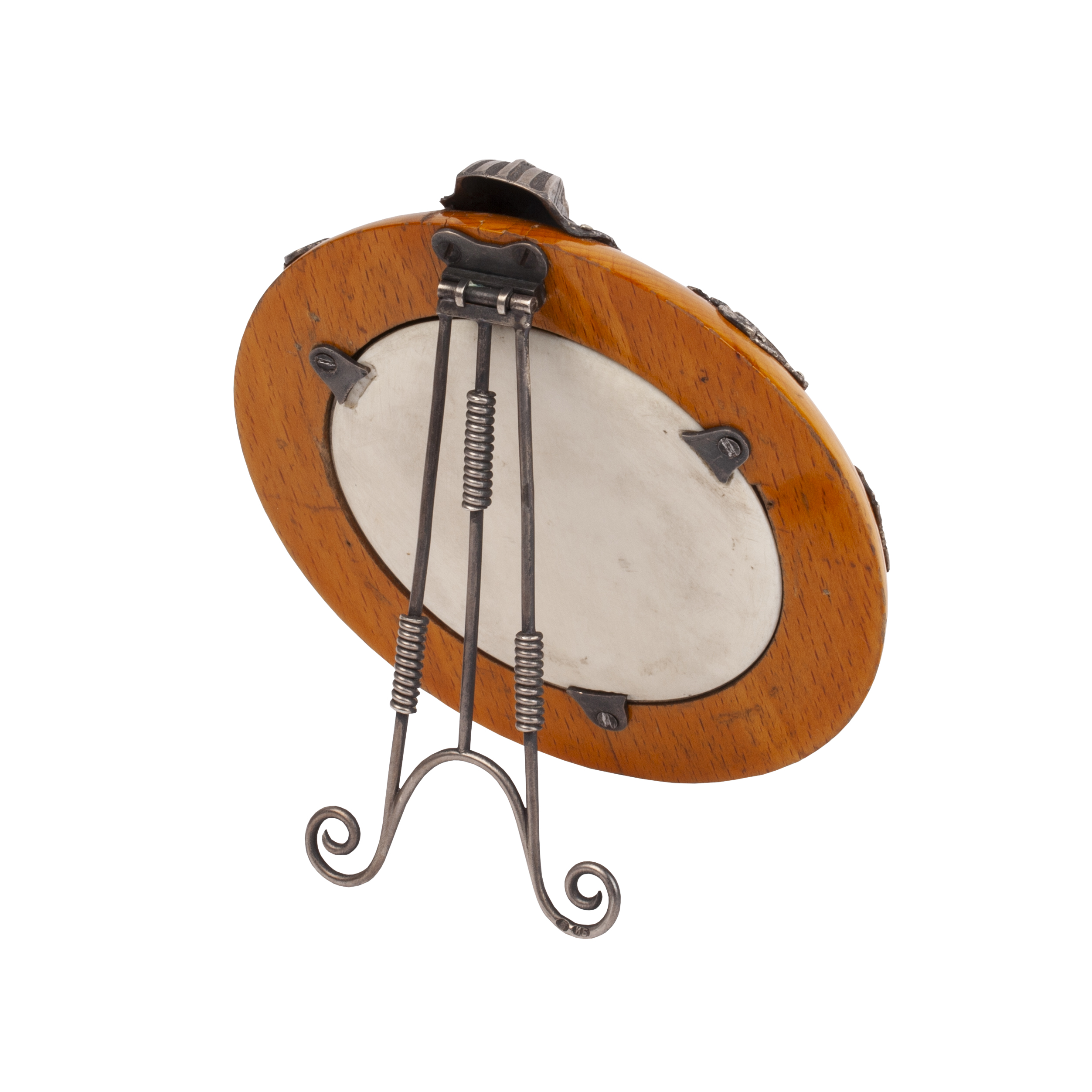
Britzin Egyptian-Style Silver and Enamel Photo Frame, St Petersburg, 1908–1917
Estimate: 2500-3500€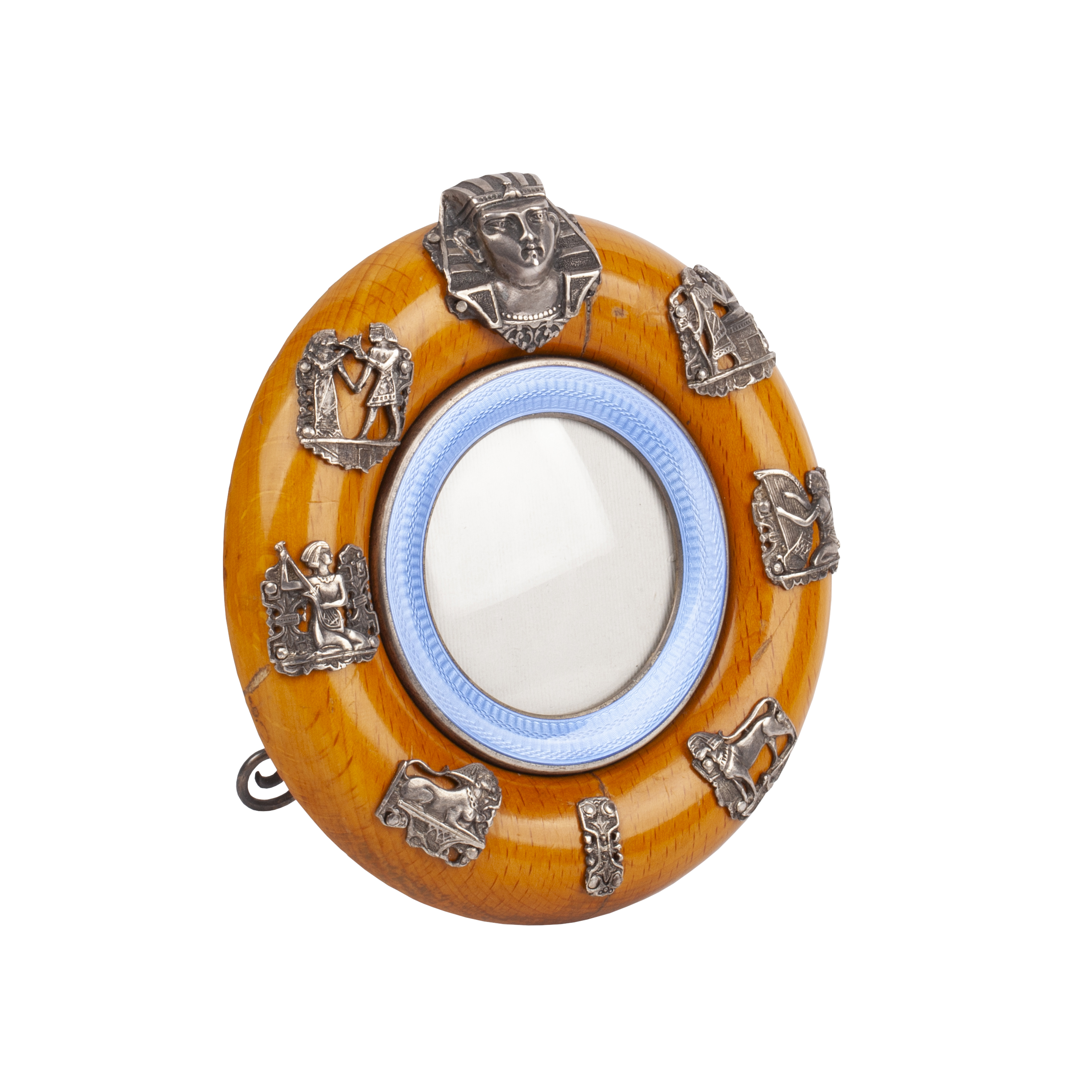
Lot 0193
Britzin Egyptian-Style Silver and Enamel Photo Frame, St Petersburg, 1908–1917
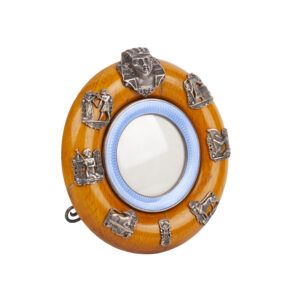
Estimate: 2500-3500€Britzin. An Egyptian style photo frame.
Silver, casting, guilloche enamel, Karelian wood.
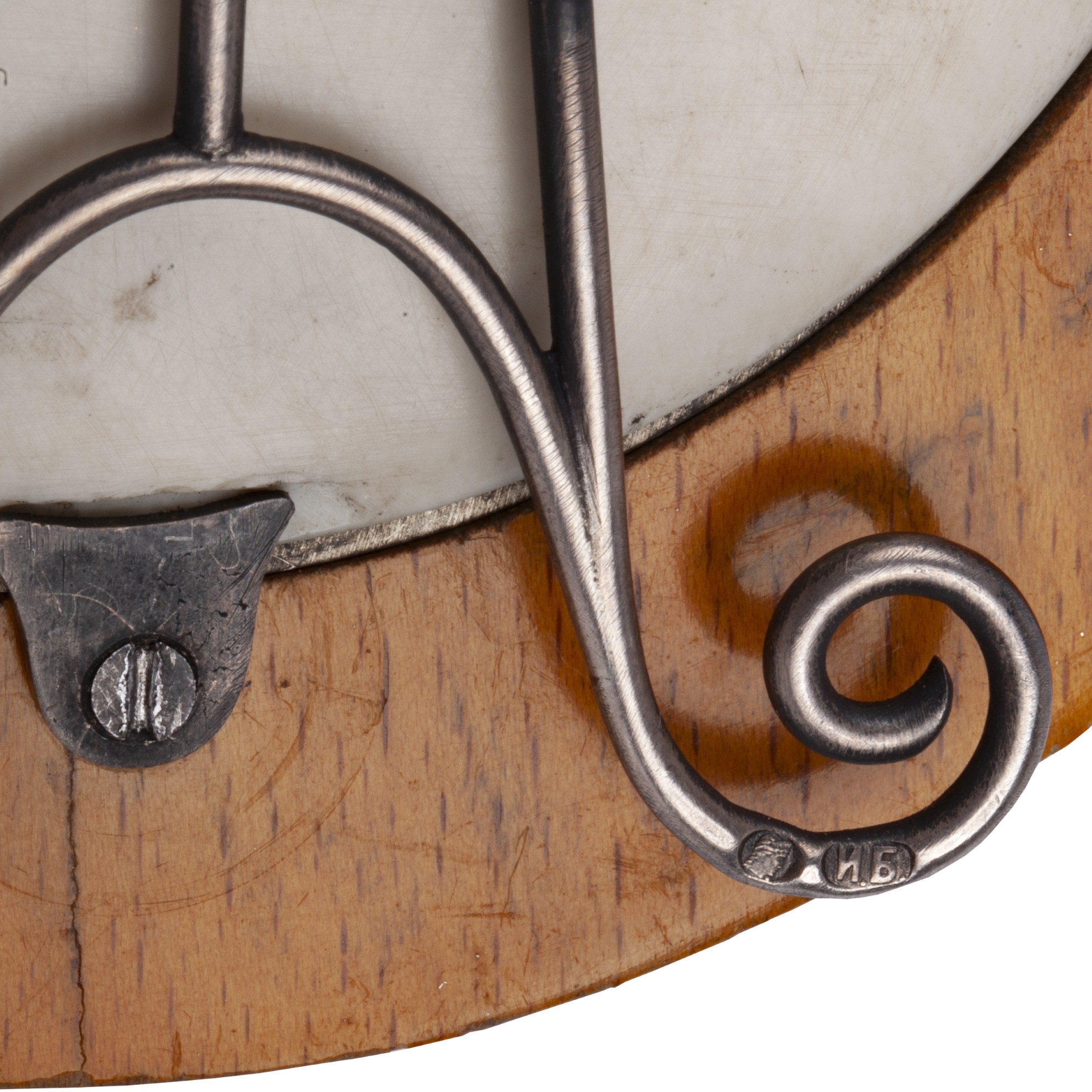
Makers. Mark of «IB». Petersburg, 1908-1917. Dimensions: 12.5 x 11.6 x 2.3 cm. Total weight: 178.6 g
A circular photo frame made of Karelian birch with silver mounts depicting figures and ornamental motifs, referred to Egyptian art. The photograph opening is surrounded by a border of sky-blue guilloché enamel, lending the piece a vivid decorative accent. The interplay of warm wood, cool silver, and vibrant enamel reflects the stylistic tendencies of Russian Art Nouveau in the early 20th century.
Ivan Brytzin (I.B., Britzin) Jeweler. Born in Moscow province. In 1903 earned the title of Master of the Silver Trade in St. Petersburg, possibly apprenticed with Fabergé. Opened his own workshop the same year (6 Spassky Lane). From 1907 — Master of Gold and Silver Work. In 1910 founded the workshop “Russian Enamel” (12 Malaya Konyushennaya Street). Produced snuffboxes, cigarette cases, desk clocks, cufflinks, buckles, and other items. From 1909 participated in Russian and international exhibitions.
g.Starting price: 2000€
Estimate: 2500-3500€
Hammer Price: Not sold -
Lot 0194
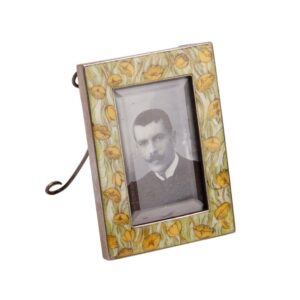
Bolin Silver Art Nouveau Photo Frame with En-Plein Enamel, Moscow, 1908–1917
Estimate: 2500-3500€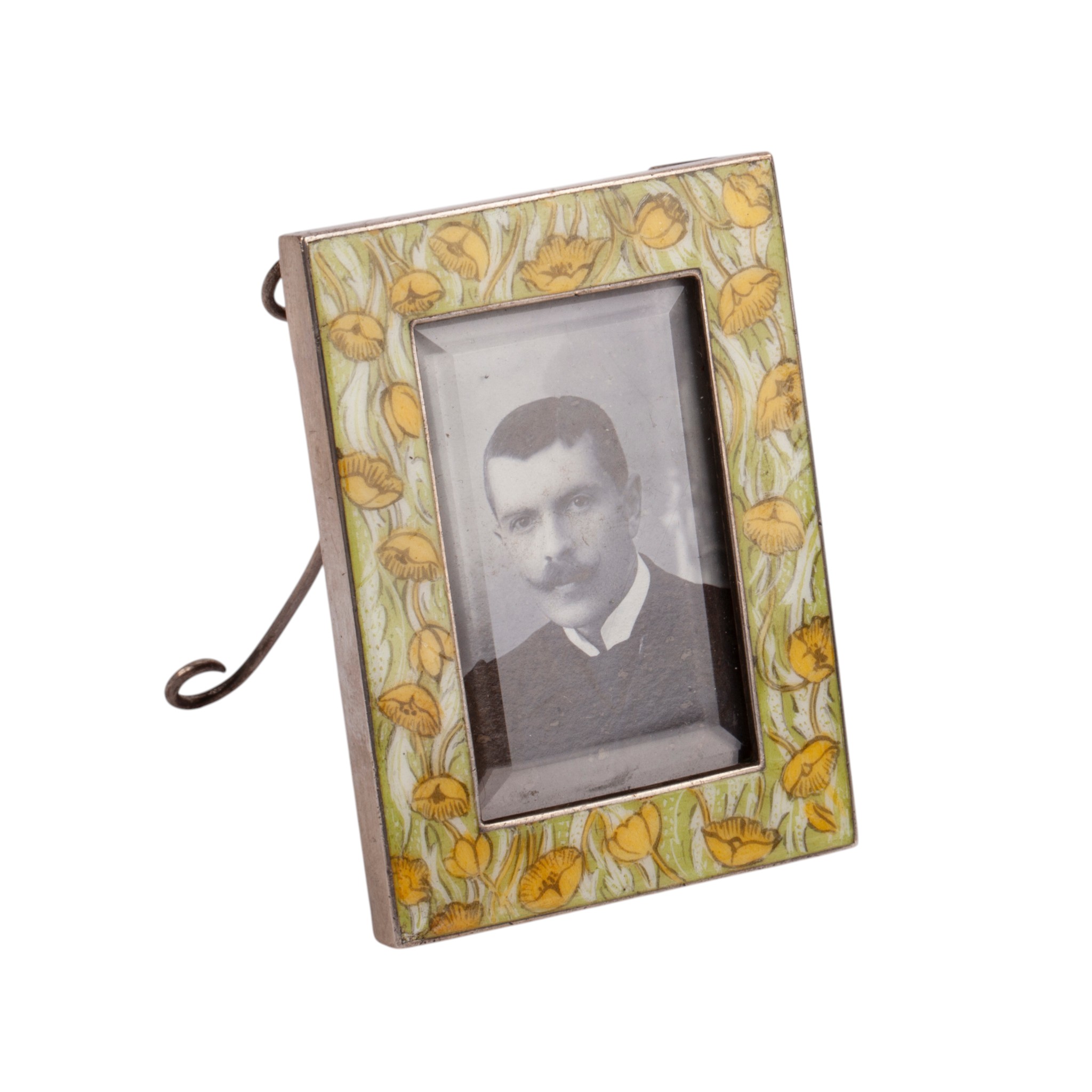
Lot 0194
Bolin Silver Art Nouveau Photo Frame with En-Plein Enamel, Moscow, 1908–1917
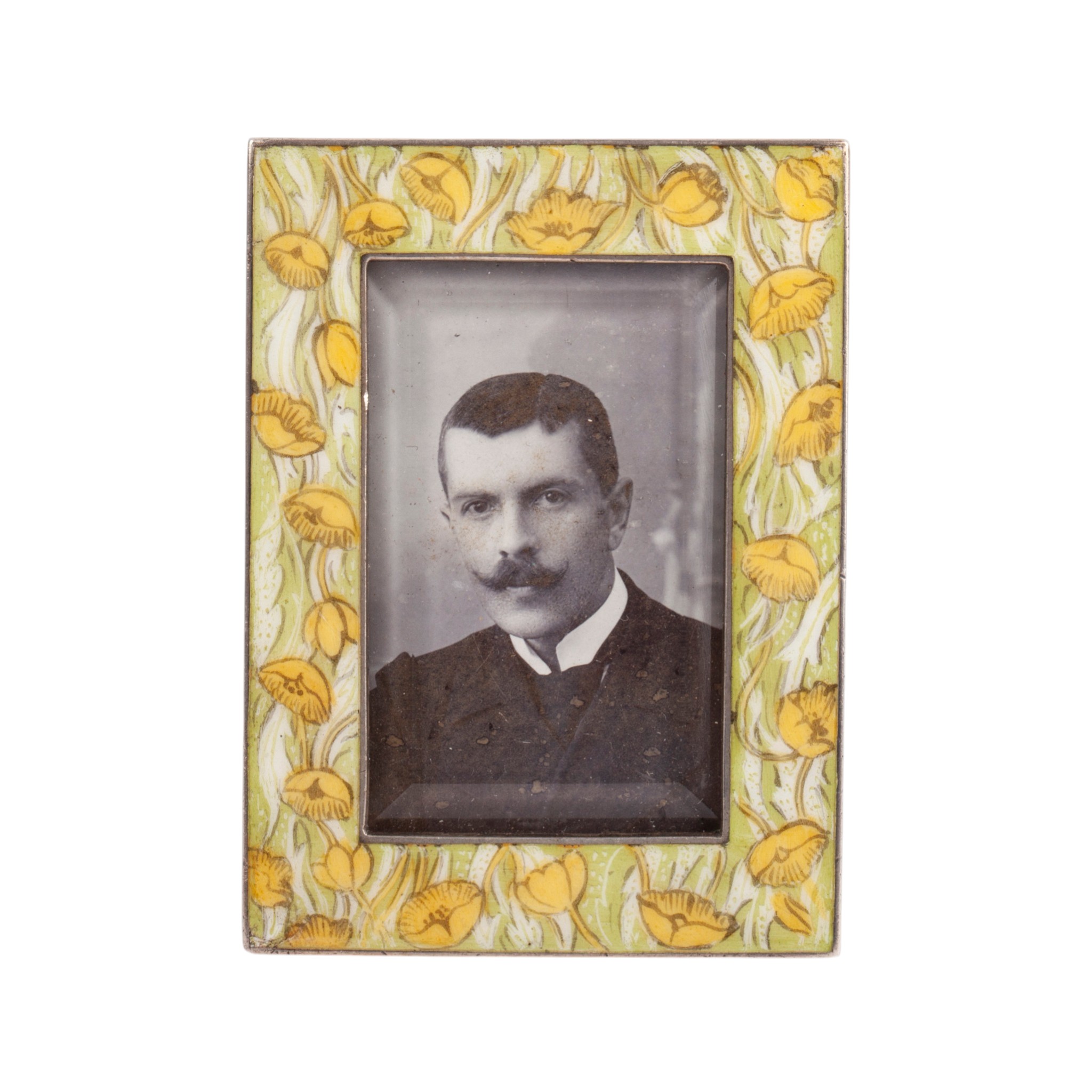
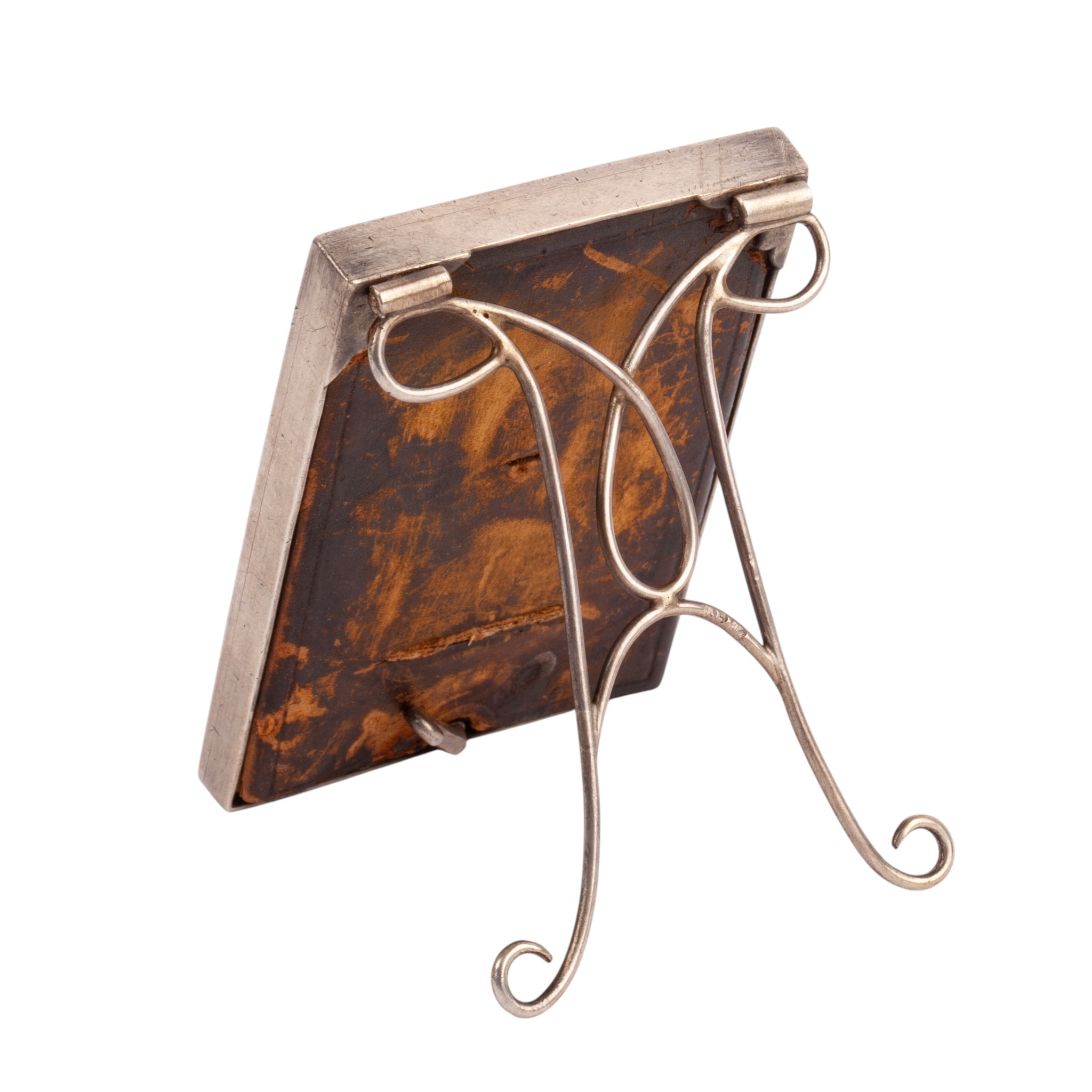
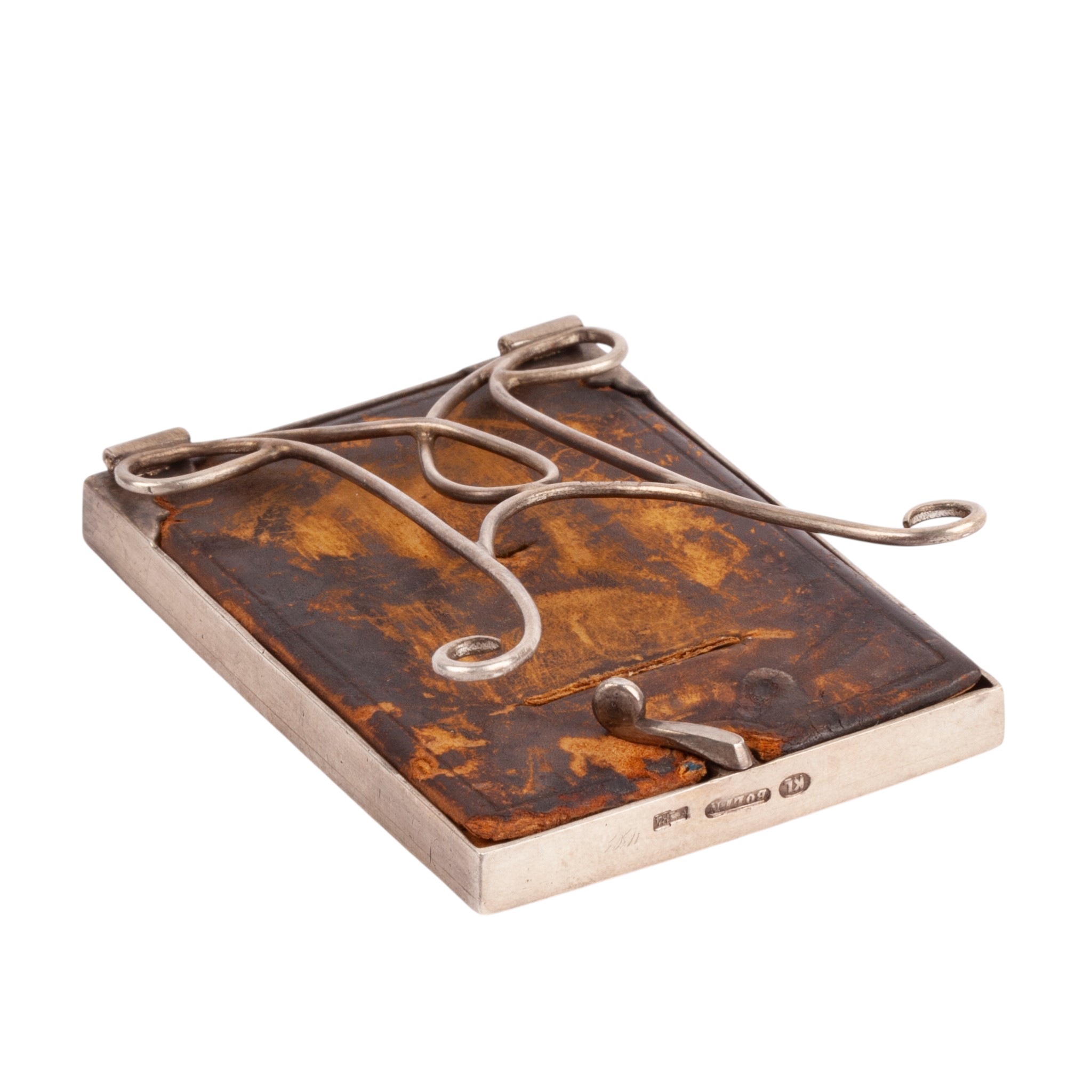
Estimate: 2500-3500€Bolin frim. Silver photo frame in Art-noveau style. Moscow, “Bolin” firm, master Konstantin Linke, 1908–1917
Silver, en-plein enamel, leather Dimensions: 5.2 × 7.1 cm; mirror size: 3.0 × 5.0 cm
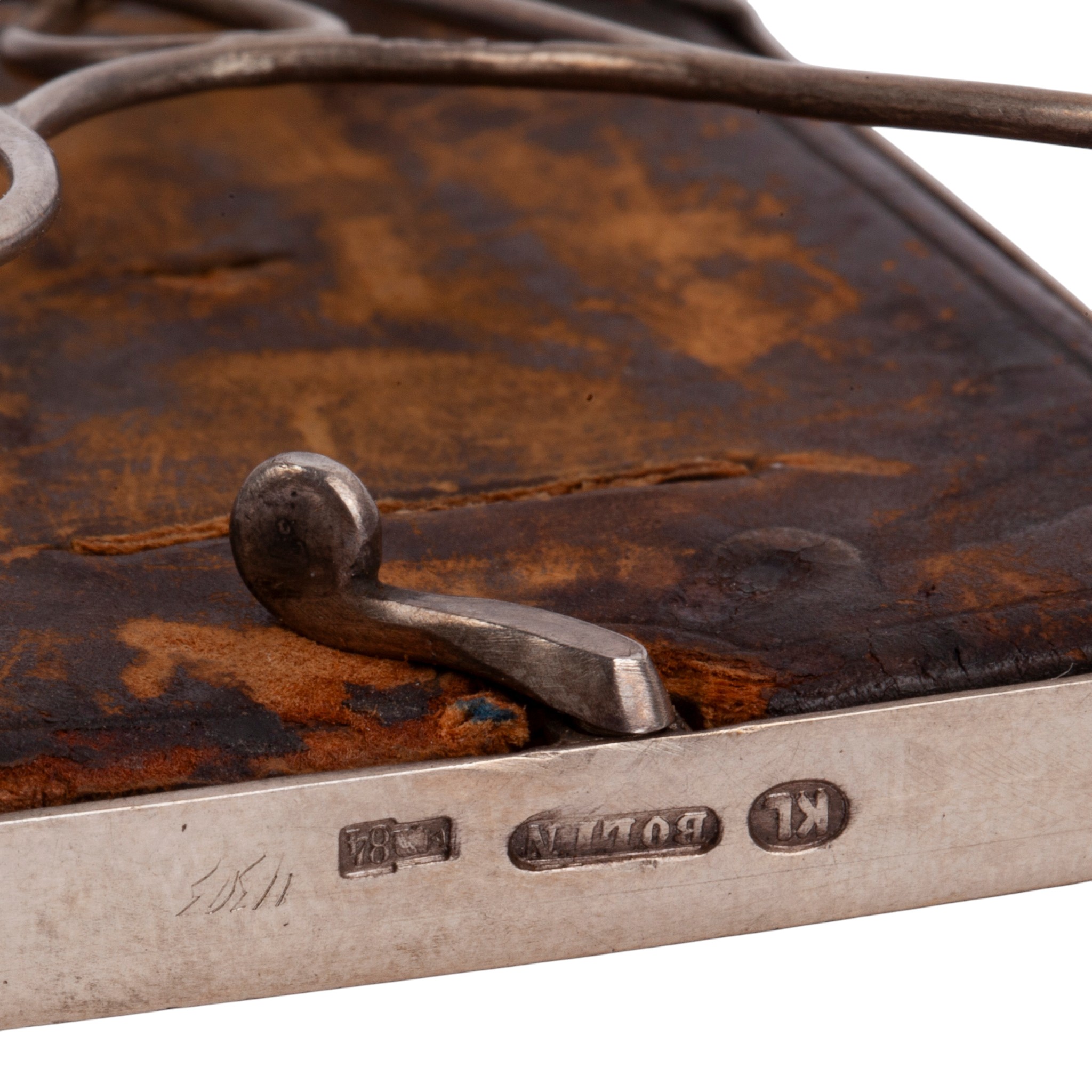
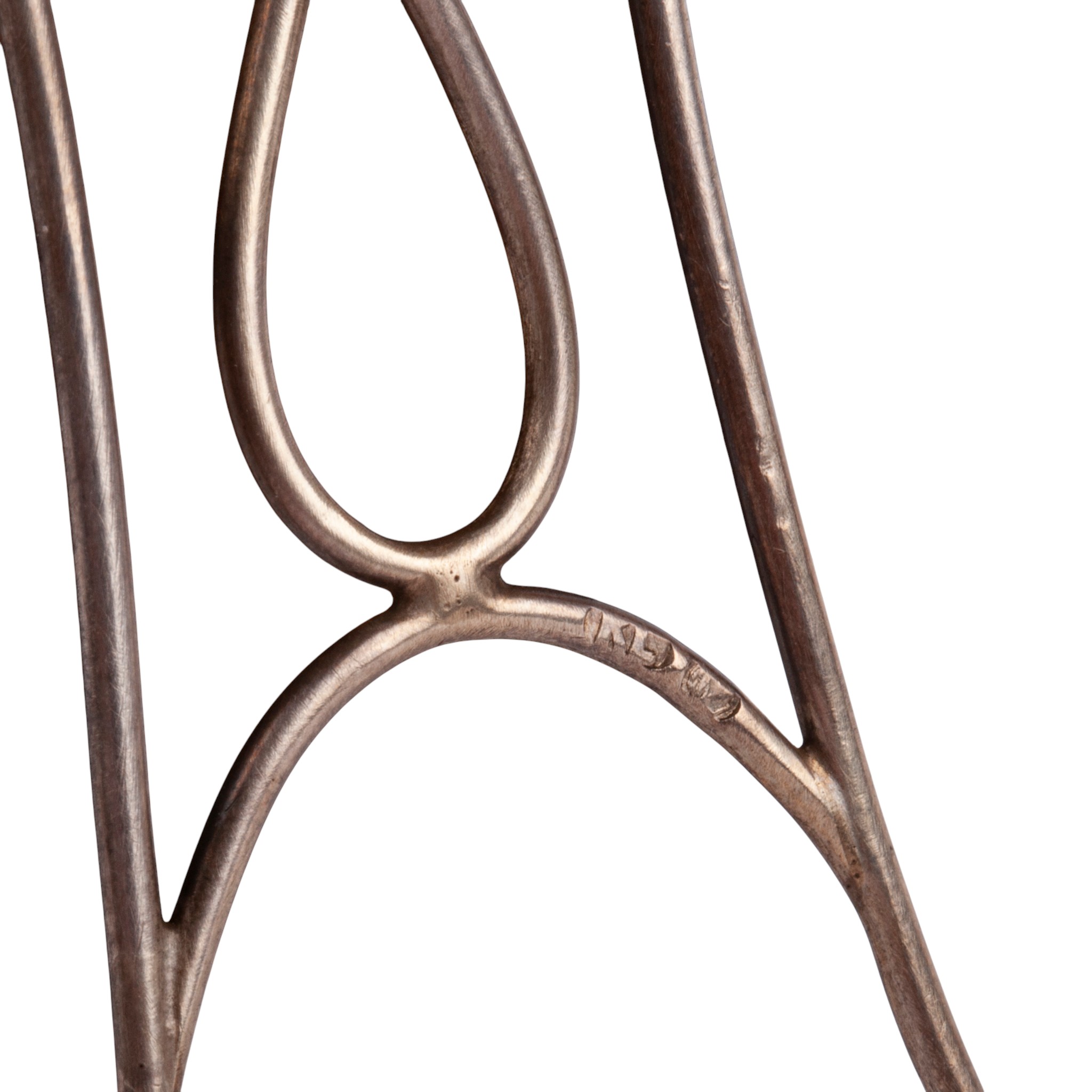
Marks: Master’s mark “KL”, “BOLIN” firm mark, assay mark of Moscow 1908–1917, 84 zolotnik silver standard.
This table photo frame is adorned with beautifully en-plein enamel images of stylized water lilies on curved stems, executed with remarkable virtuosity and artistic skill. Water plant motifs were especially popular in Art Nouveau art, and this frame showcases an elegant and delicate composition of these floral designs. The frame’s painted decor exudes refined artistry, with graceful floral motifs and a delicate enamel palette, epitomizing the “Bolin style”.
Konstantin Linke, the son of Prussian Eduard Linke and Maria Aksakova, was a famous silversmith and engraver. Maria owned her own workshop (1866–1894), and Konstantin took over the family business, becoming a master silversmith in Moscow. He also worked for the renowned “Bolin” firm, where he started in 1903. By 1900, he was a second-guild merchant, and he managed the silver workshop at the firm’s Moscow branch located in the Kruzovskoi house on Kuznetsky Most.
“Bolin” is one of the leading jewelry firms in the Russian Empire, dating back to 1796 and continuing today in Stockholm since 1916. It was granted the prestigious title of “Supplier to the Imperial Court”. The Moscow branch of Bolin was led by Vasily Andreyevich Bolin from 1888, who invited French artists to design pieces that combines classic styles with elements of Art Nouveau.Starting price: 2000€
Estimate: 2500-3500€
Hammer Price: Not sold -
Lot 0195
Fabergé Nephrite Desk Photograph Frame with Gold, Diamonds and Ruby, St Petersburg, 1899–1903
Estimate: 6000-7000€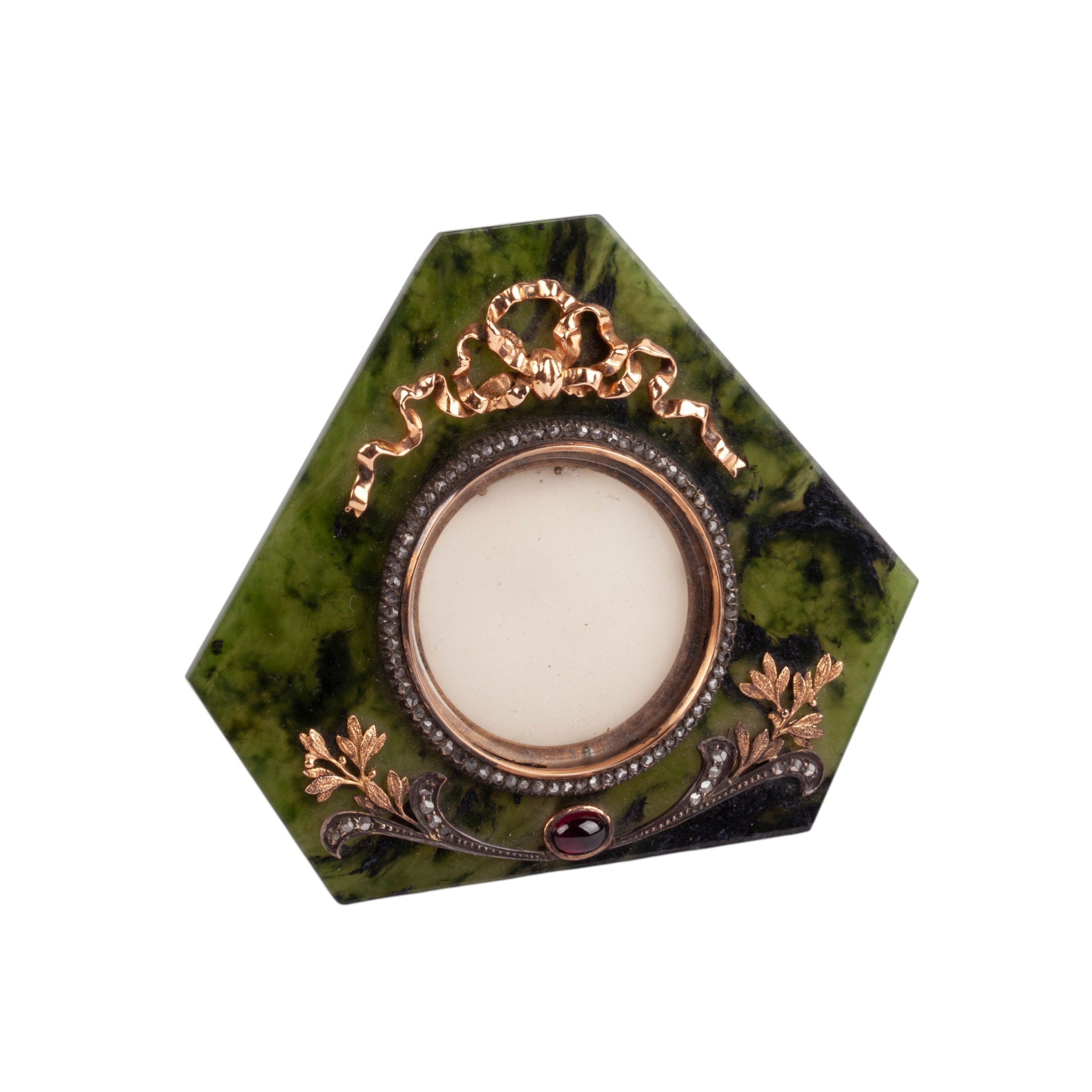
Lot 0195
Fabergé Nephrite Desk Photograph Frame with Gold, Diamonds and Ruby, St Petersburg, 1899–1903
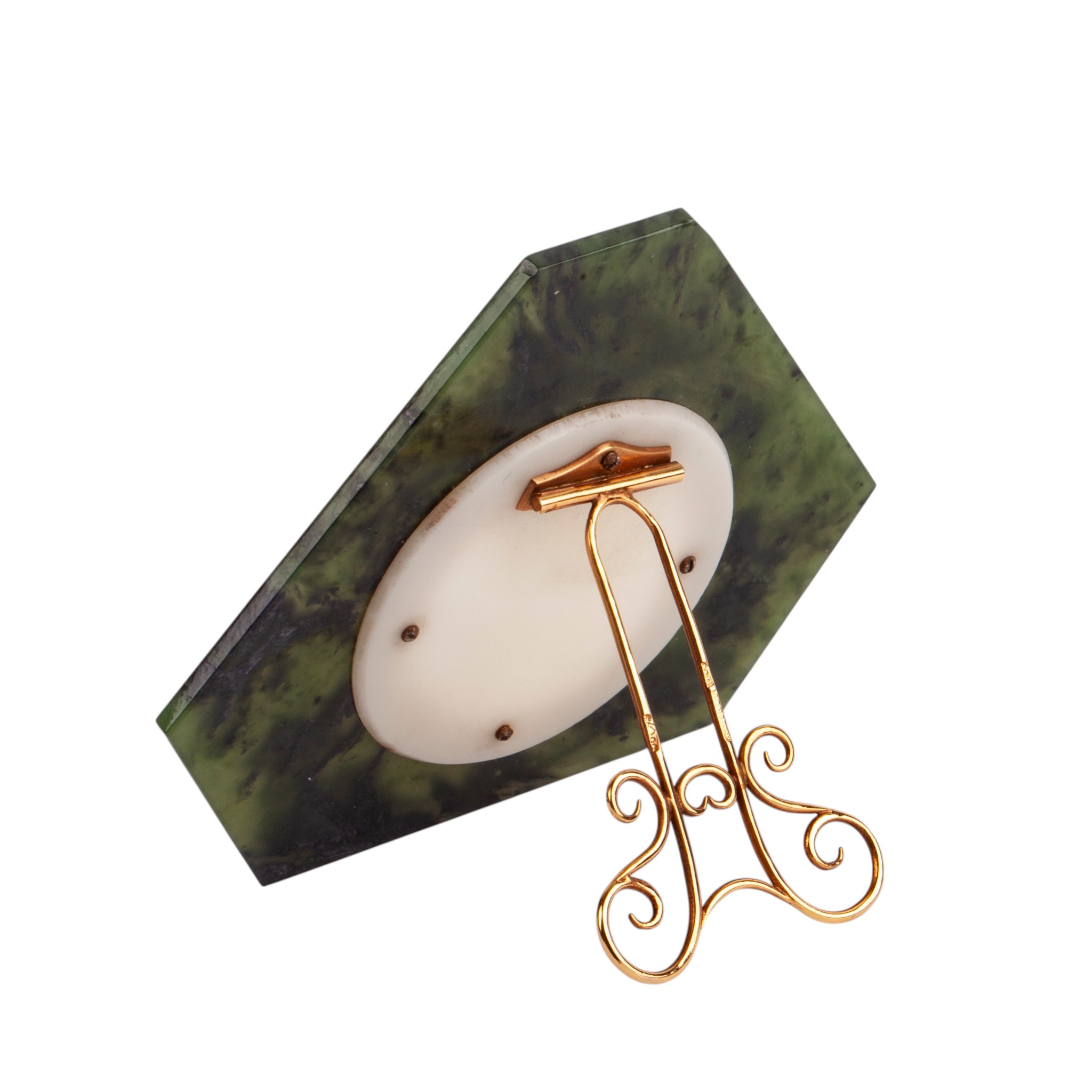
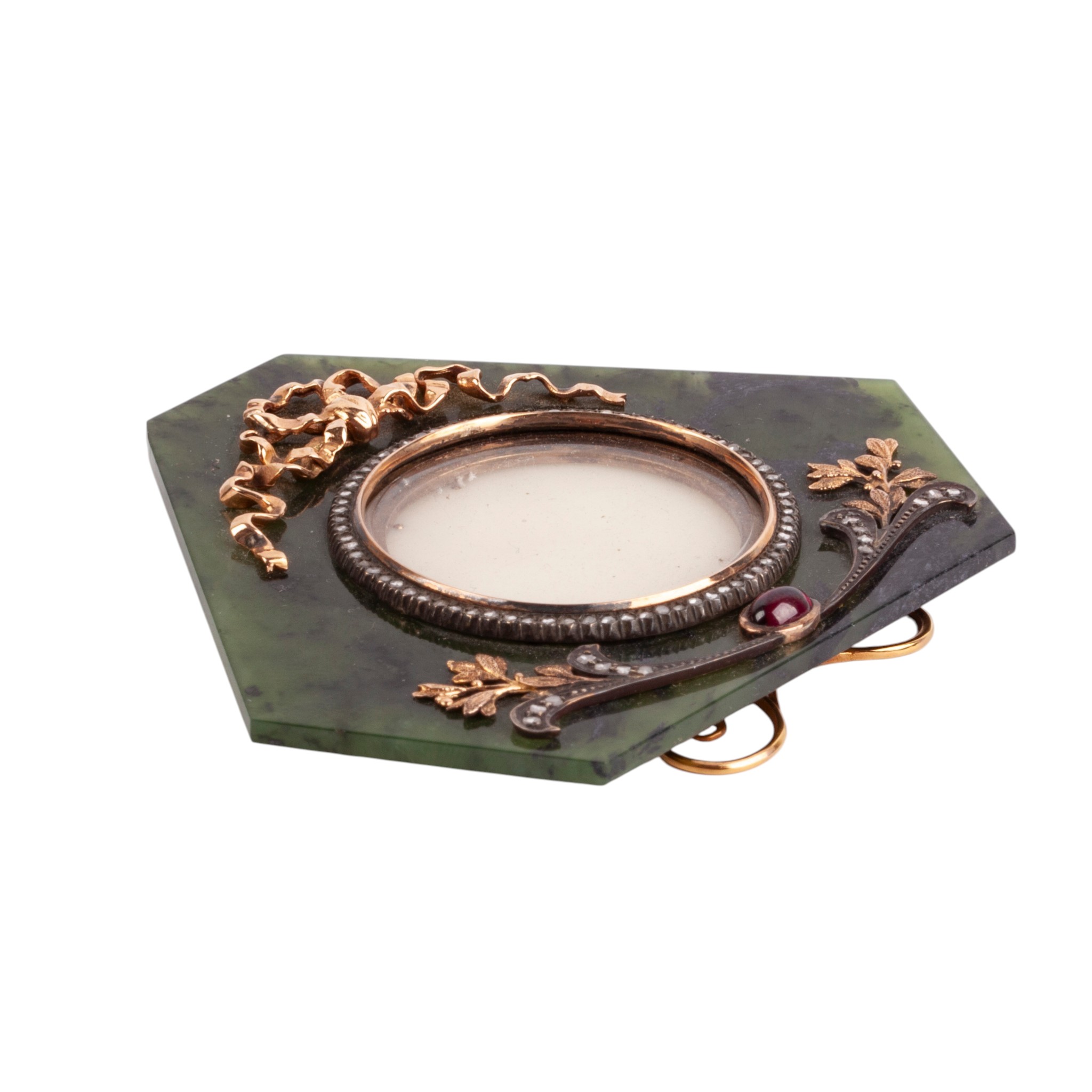
Estimate: 6000-7000€Fabergé. Photograph frame (desk frame) in a nephrite plaque, with gold mount, diamonds and ruby. St Petersburg, 1899-1903.
Nephrite, gold, diamonds, ruby; carving, mounting, chasing, engraving. Total weight: 53 g. Dimensions:7,4 x 8,7 x 1 cm. Diameter for the photo: 3,5 cm.
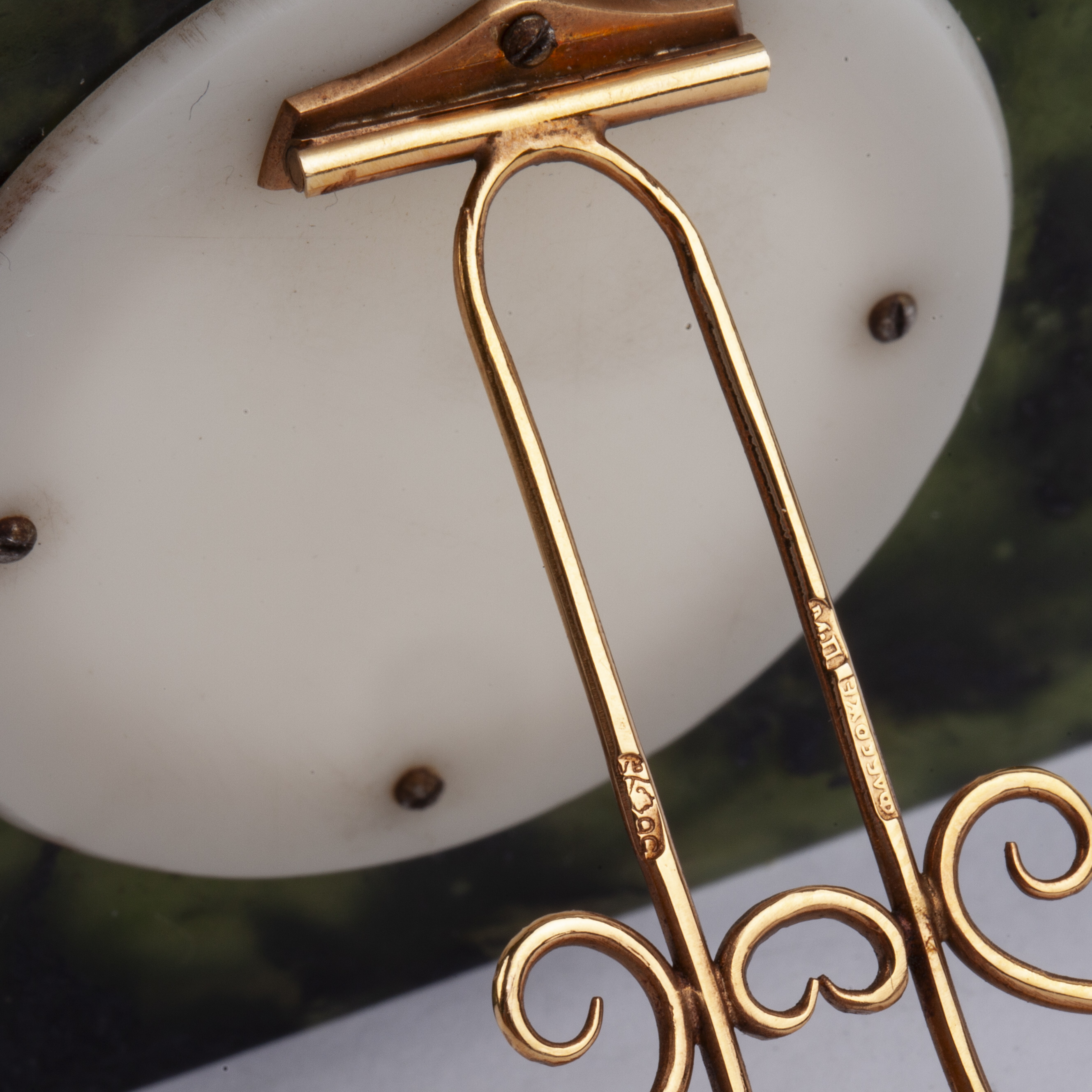
Marks: stamped in Cyrillic “FABERGÉ”; workmaster’s mark “MP”, St Petersburg assay gold marks. A refined tabletop photograph frame composed as a dark-green nephrite tablet, cut to a compact polygonal outline. At the centre is a circular photo window encircled by a narrow gold bezel. The inner rim is enriched with a continuous collar of small diamonds.
The ornament is asymmetrical and distinctly classical in taste. On one sides, a stylised foliate scroll in low relief is accented with a cabochon ruby. Mikhail Perchin (1860–1903) was among the most significant Fabergé workmasters in St Petersburg. Having received his master’s qualification in 1884, he opened his own workshop under Carl Fabergé’s patronage in 1888. Perchin’s atelier produced a wide range of presentation gifts and refined objets de fantaisie, and it was responsible for many of the most celebrated Imperial Easter Eggs. After his death, the workshop’s tradition was continued by Henrik Wigström.
Comparable items:
https://www.christies.com/en/lot/lot-6039564
https://www.sothebys.com/en/auctions/ecatalogue/2014/russian-and-silver-vo-n09134/lot.47.htmlStarting price: 5000€
Estimate: 6000-7000€
Hammer Price: Not sold -
Lot 0196
Russian Cast Silver Napkin Ring from the “Bogatyr Outpost” Series, Moscow, 1908–1917
Estimate: 250-300€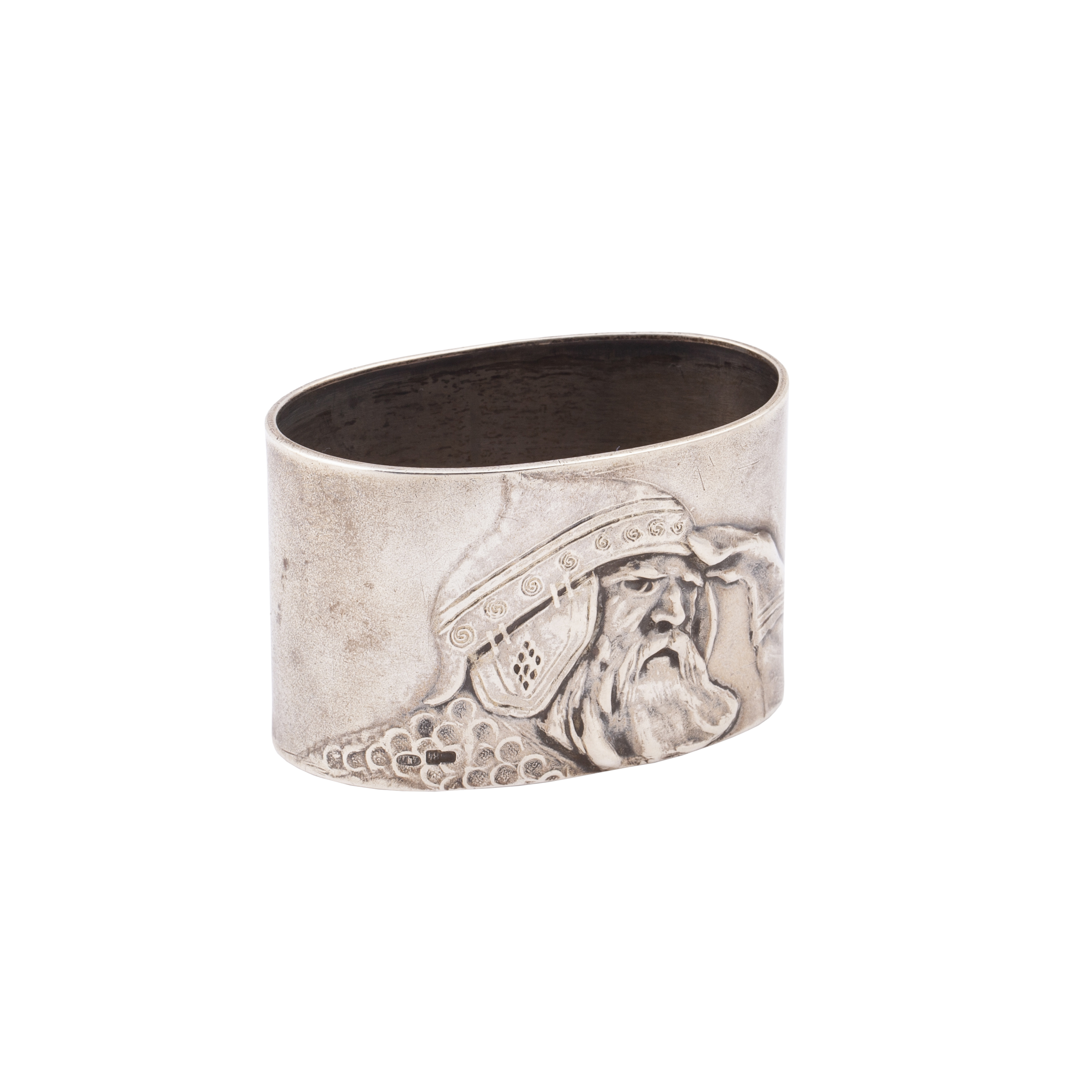
Lot 0196
Russian Cast Silver Napkin Ring from the “Bogatyr Outpost” Series, Moscow, 1908–1917
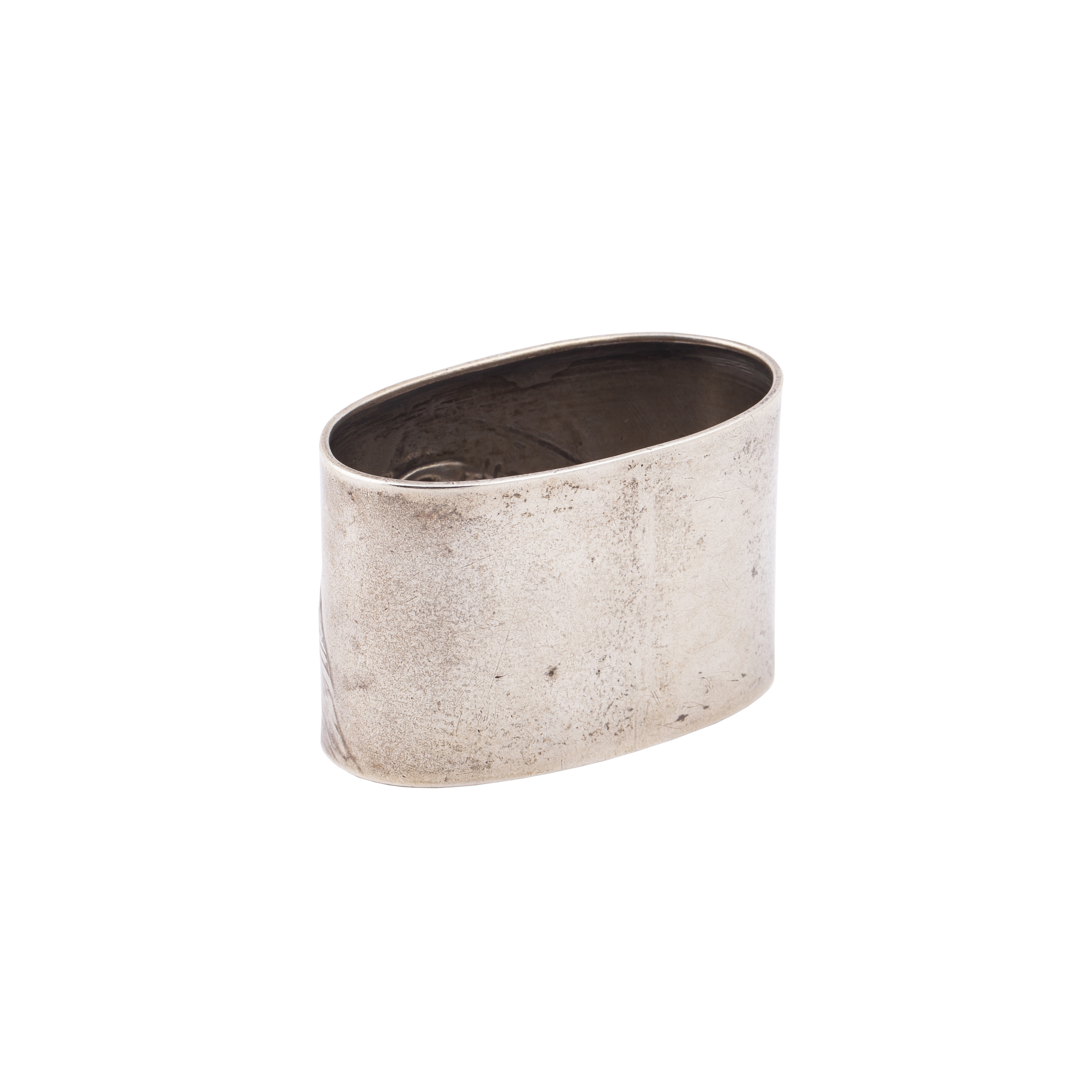
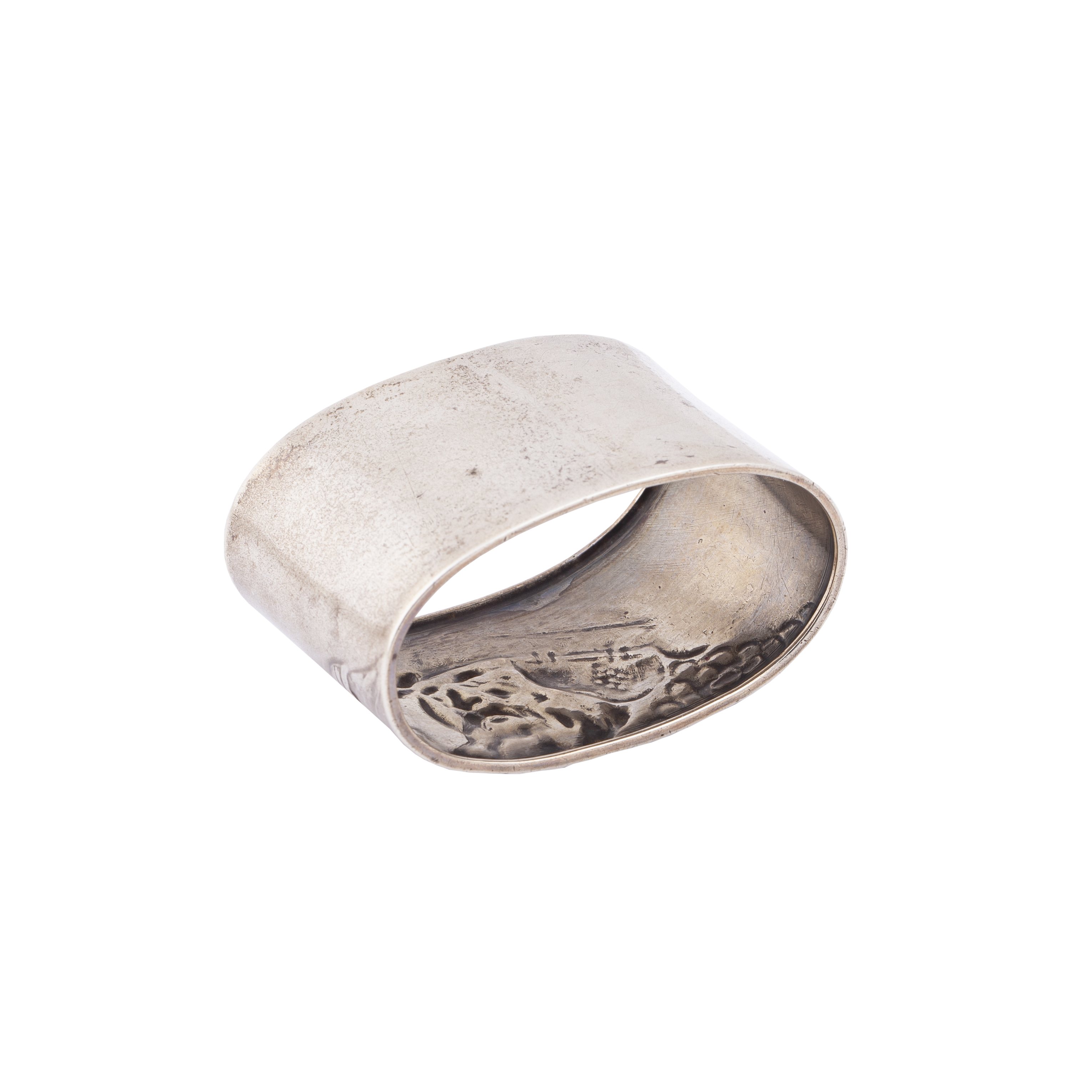
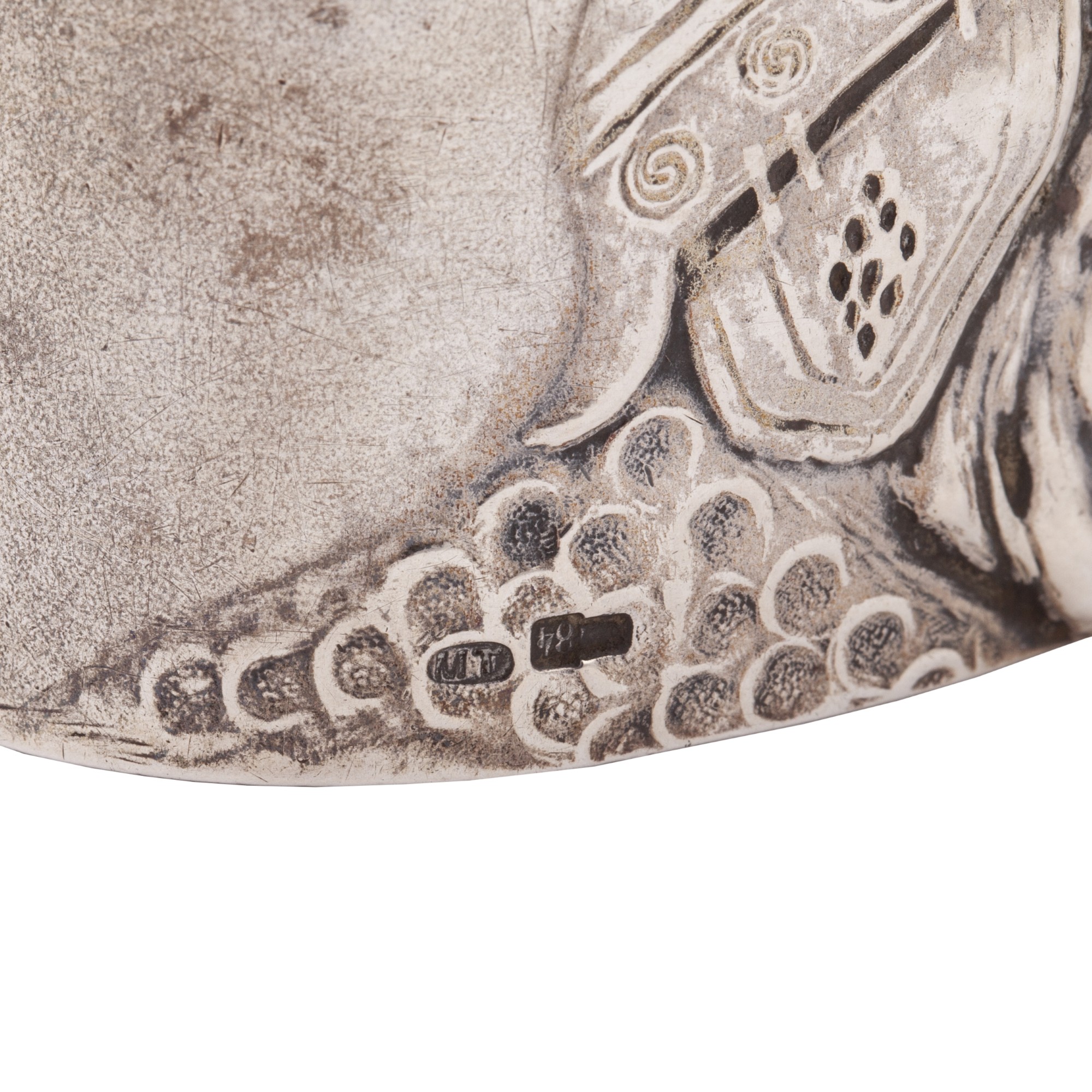
Estimate: 250-300€A Russian Cast Silver Napkin Ring from the “Bogatyr Outpost” Series
Moscow, maker’s mark of Mikhail Tarasov, 1908-1917.
Silver; casting, repoussé, chasing, engraving, patination.
Dimensions: 3.7 × 6 × 3.5 cm.
Weight: 32.5 g.
Marks: maker’s mark of M. Tarasov; Moscow assay mark; 84 zolotniki silver standard.
A Russian cast silver napkin ring of oval form, decorated with a relief composition from the popular late Imperial series known as “Bogatyr Outpost”. The principal scene shows the head of an ancient Russian warrior in helmet and armour, rendered in bold repoussé with darkened recesses and a softly patinated surface. The warrior’s grave expression, heavy beard and stylised helmet evoke the heroic imagery of medieval Rus’ and the world of the bylina epic.
The decoration belongs to the national-romantic current in Russian decorative art of the late nineteenth and early twentieth century.
Mikhail Yakovlevich Tarasov was a Moscow maker of gold and silver objects, known in the first decades of the twentieth century. His workshop produced articles of personal use, tableware, filigree and chased silver. By 1912 he is recorded as the owner of a factory for gold and silver wares. Tarasov’s silver objects are distinguished by their expressive national style, strong relief modelling and original ornamental design.Starting price: 200€
Estimate: 250-300€
Hammer Price: 275 € -
Lot 0197
Russian Silver-Gilt Vodka Cup with Saucer and Guilloché Enamel, Grachev Brothers, St Petersburg, 1908–1917
Estimate: 1500-1700€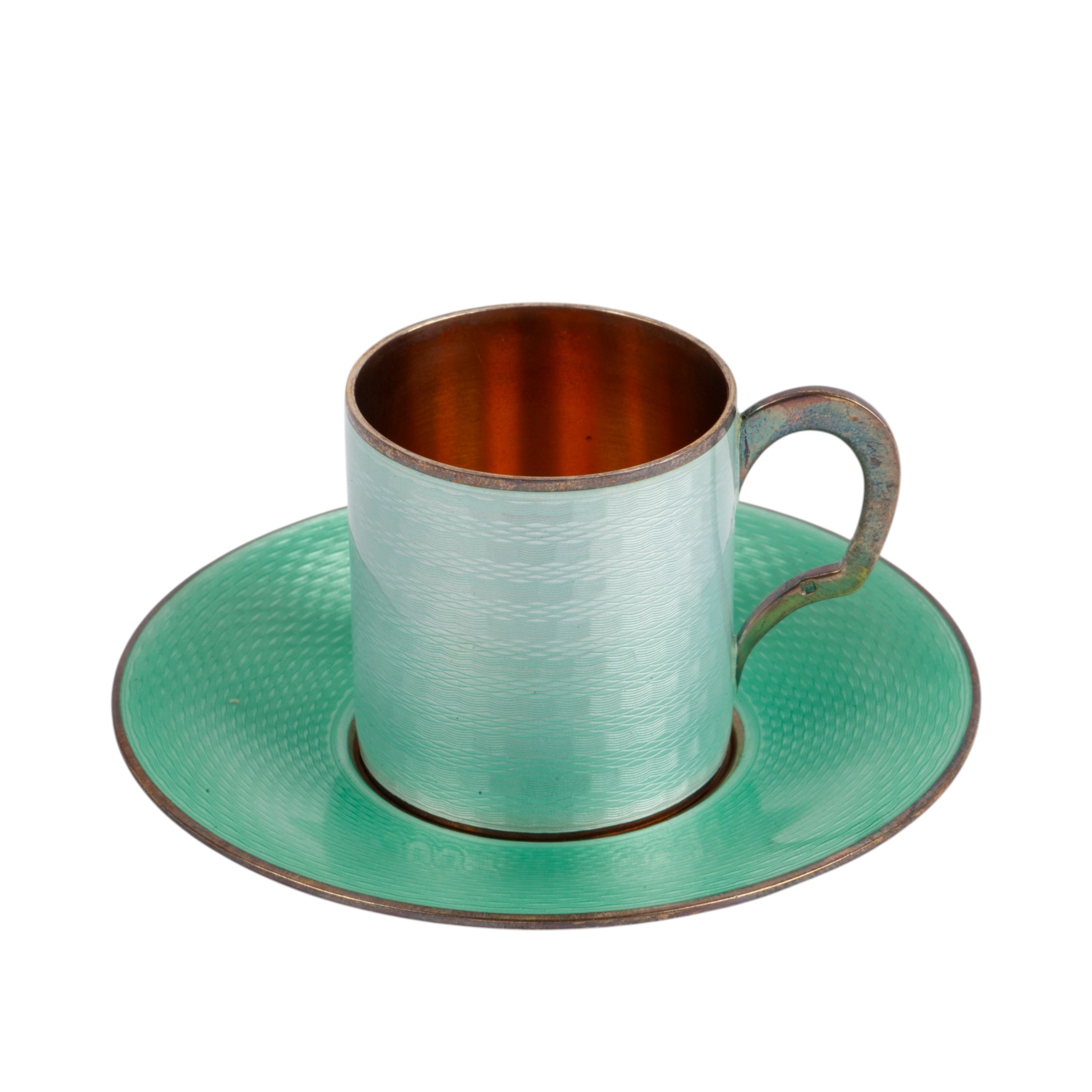
Lot 0197
Russian Silver-Gilt Vodka Cup with Saucer and Guilloché Enamel, Grachev Brothers, St Petersburg, 1908–1917
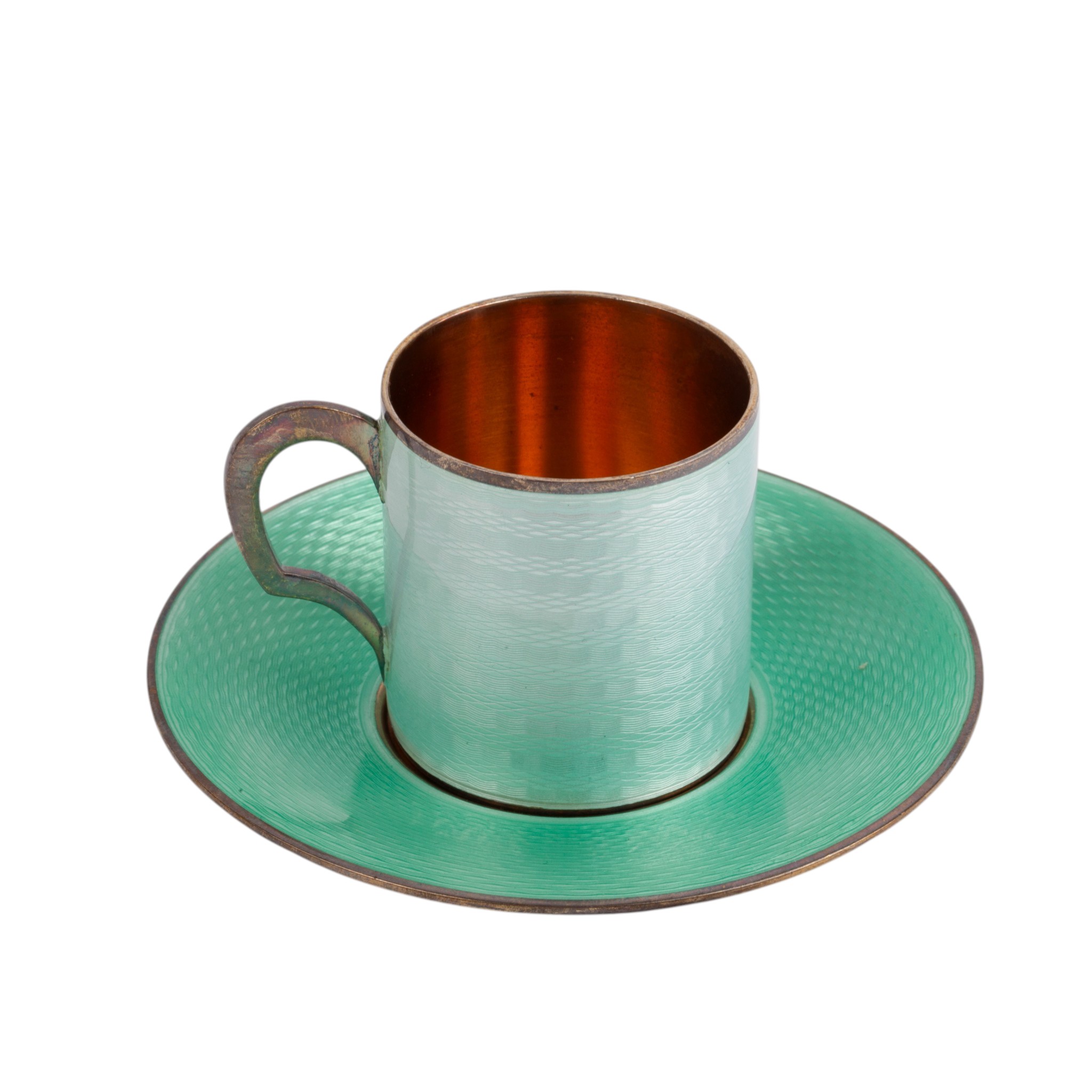
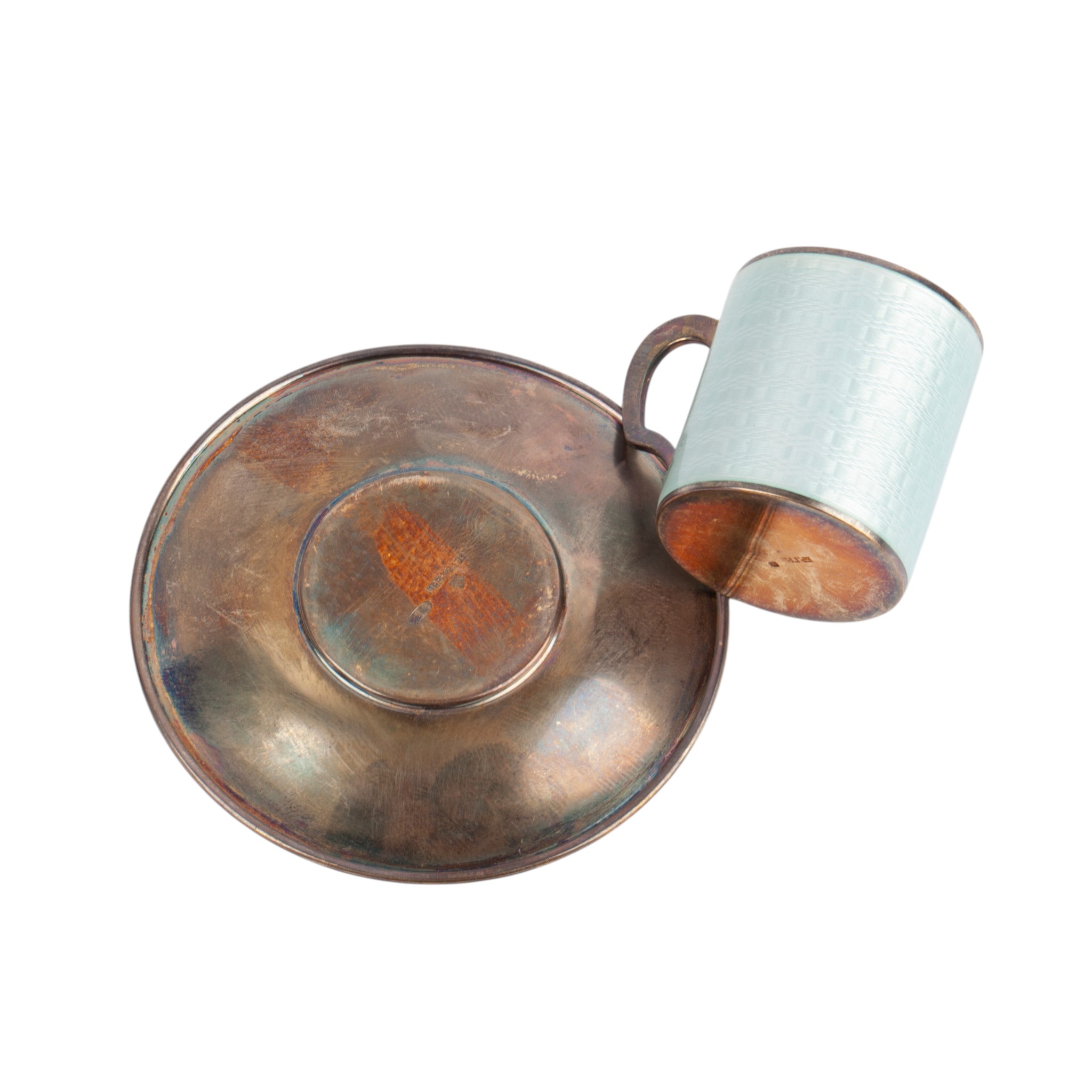
Estimate: 1500-1700€A Russian silver-gilt vodka cup on stand with guilloché enamel St Petersburg, Grachev Brothers manufactory, 1908-1917.
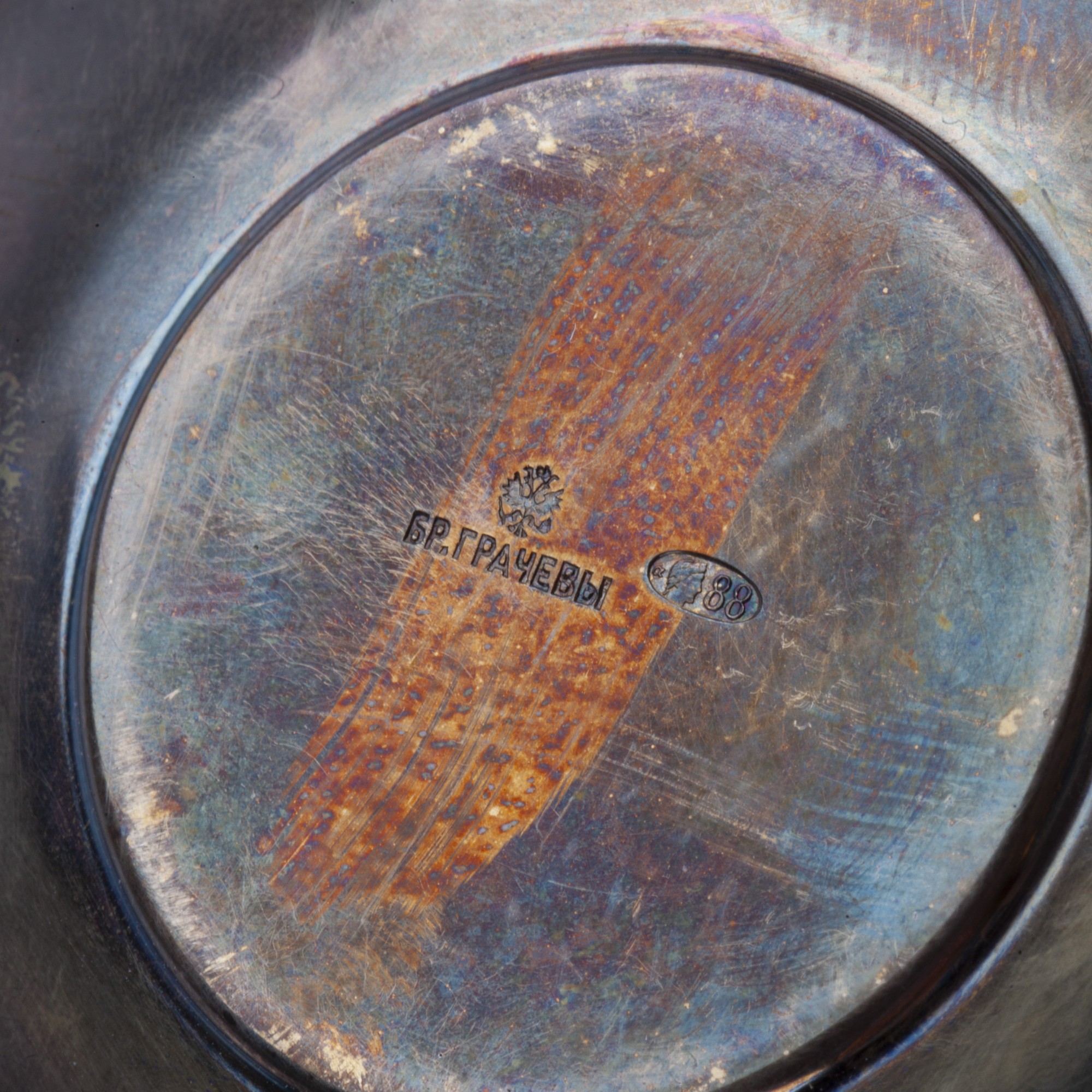
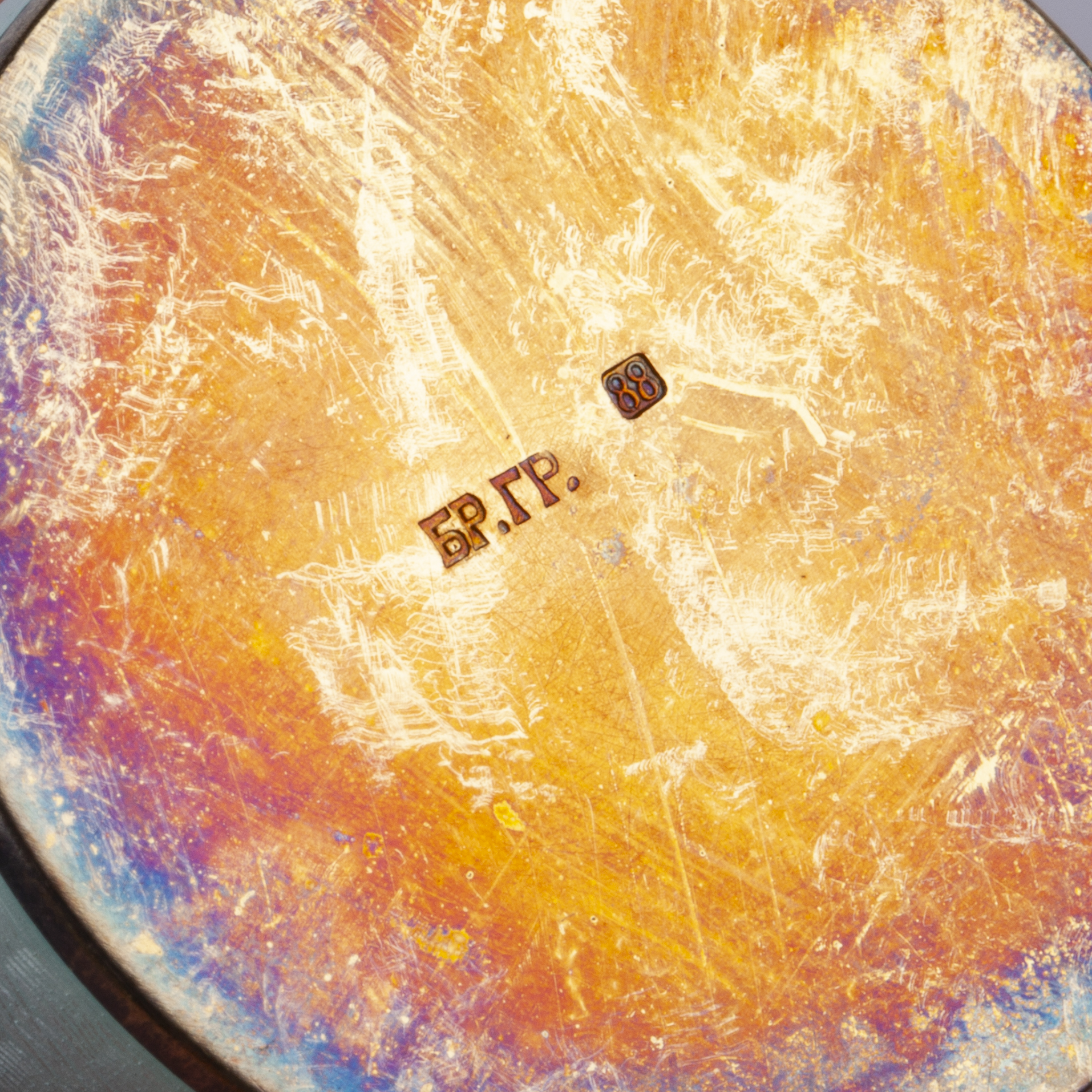
Silver, gilding, guilloché enamel. Marked: firm’s mark Br. Gr, 88 standard; assay mark of St.Petersburg. Weight: 64,4 g. Dimensions of the cup: 3,6 x 5,1 x 3,5 cm. Diameter of the saucer plate: 8 cm.
A refined Russian silver-gilt vodka cup with matching plate in the form of tea pair. Both enriched with translucent guilloché enamel over an engine-turned ground. The cup is of slightly tapering cylindrical form with a plain loop handle, while the plate circular echoes its restrained geometry and understated elegance. The luminous deep blue enamel, laid over a finely waved guilloché surface, creates a soft moiré effect that animates the object with subtle movement and depth.
The ensemble was produced by the celebrated St Petersburg firm of the Brothers Grachev, among the leading Russian silver manufacturers of the late Imperial era. Founded in 1866 by Gavriil Petrovich Grachev, the enterprise was subsequently managed by his sons Mikhail, Simon, and Grigory. In 1892 the firm received the distinction of Supplier to the Imperial Court, a title renewed in 1901. Although particularly admired for works in the Russian Revival style, the Grachev workshop also created table silver of refined historicist and early modern character, distinguished by exceptional technical precision and a sophisticated command of enamelling.
This cup and stand belong to the sphere of intimate luxury tableware produced for an affluent urban clientele in the final years of Imperial Russia. Their restrained silhouette, monochrome brilliance, and finely controlled enamel surface exemplify the discreet elegance of St Petersburg silver at the beginning of the 20th century.Starting price: 1200€
Estimate: 1500-1700€
Hammer Price: Not sold -
Lot 0198
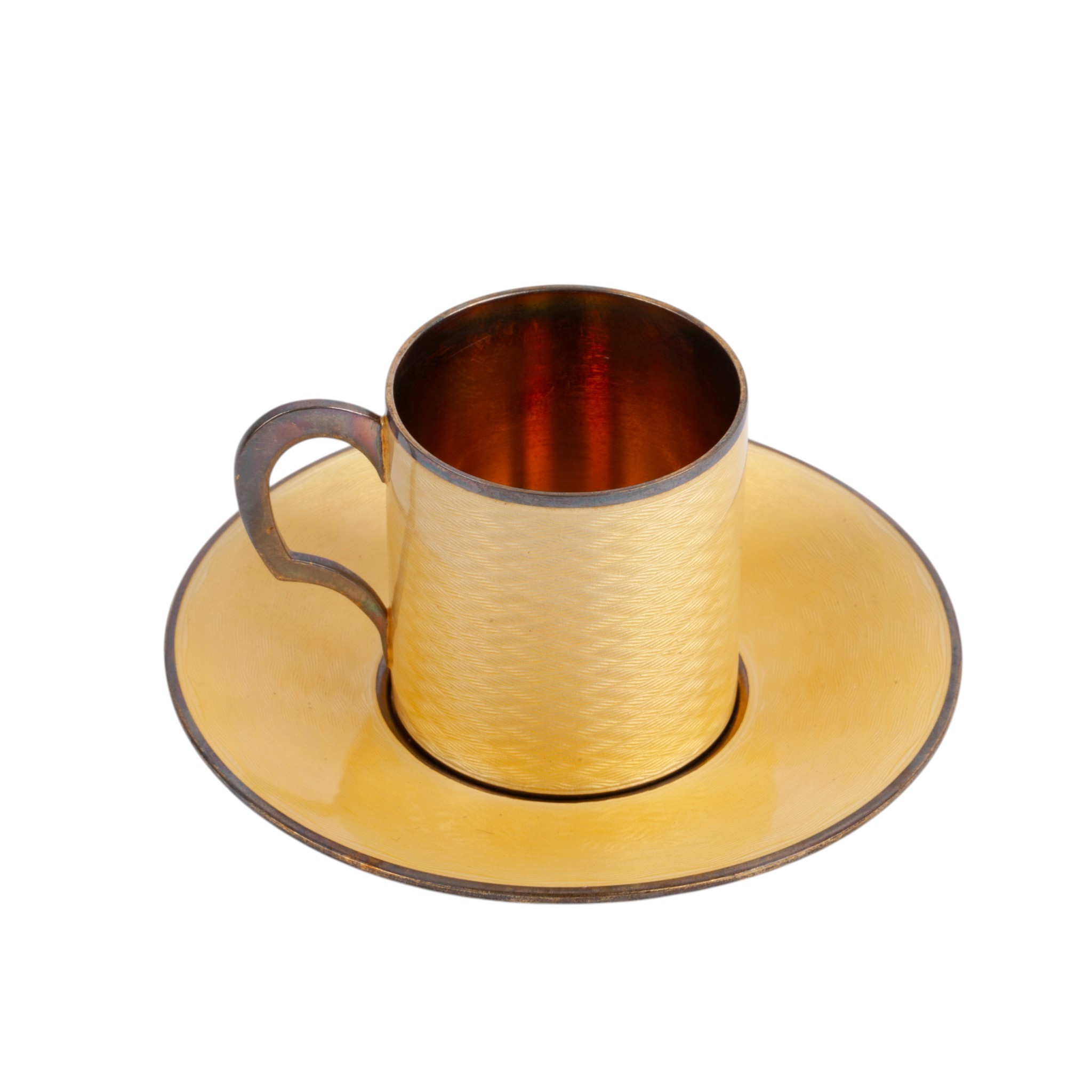
Russian Silver-Gilt Vodka Cup with Saucer and Guilloché Enamel, Grachev Brothers, St Petersburg, 1908–1917
Estimate: 1500-1700€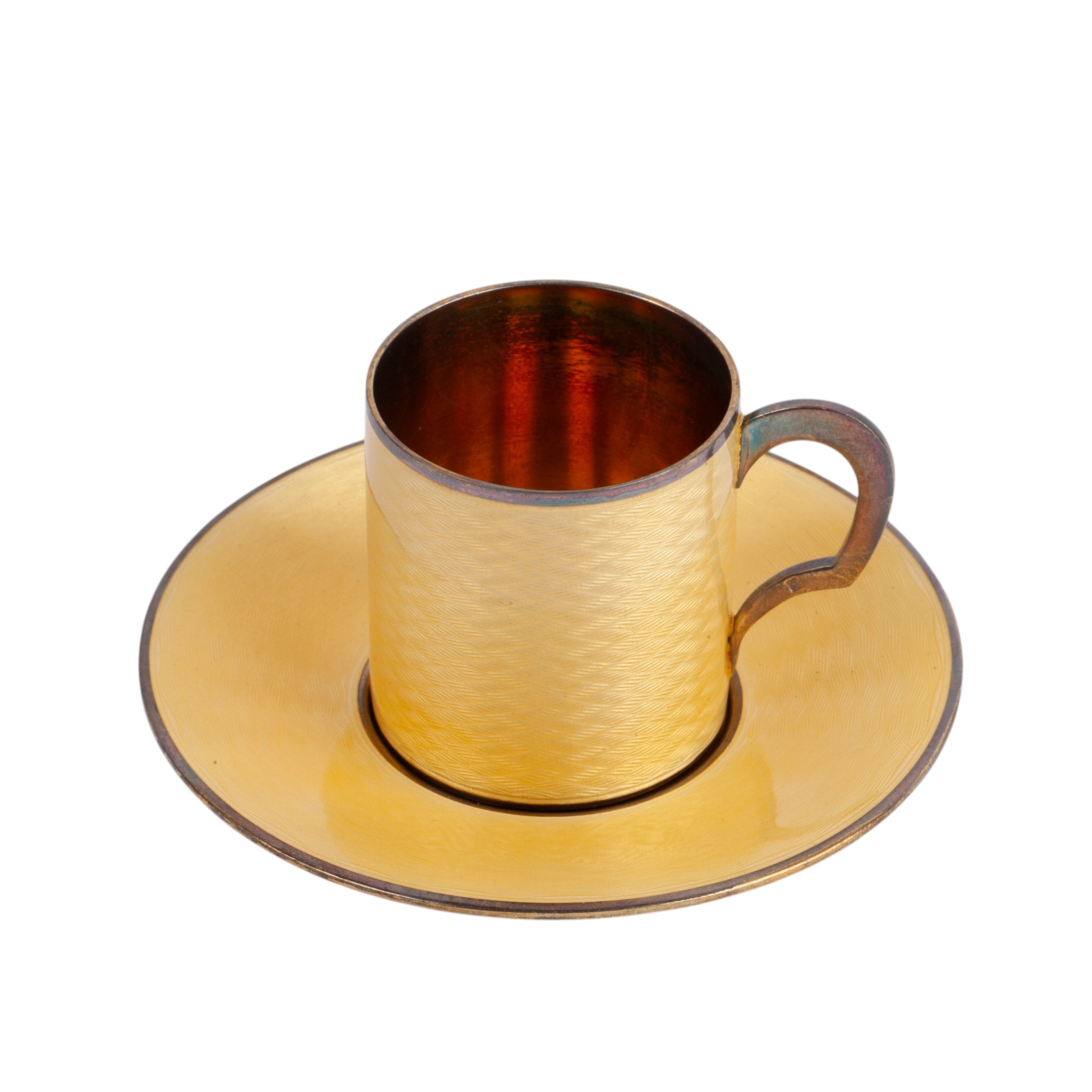
Lot 0198
Russian Silver-Gilt Vodka Cup with Saucer and Guilloché Enamel, Grachev Brothers, St Petersburg, 1908–1917
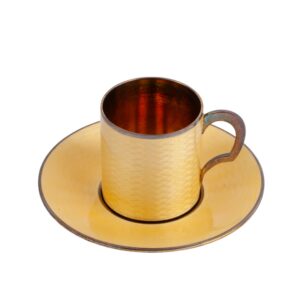
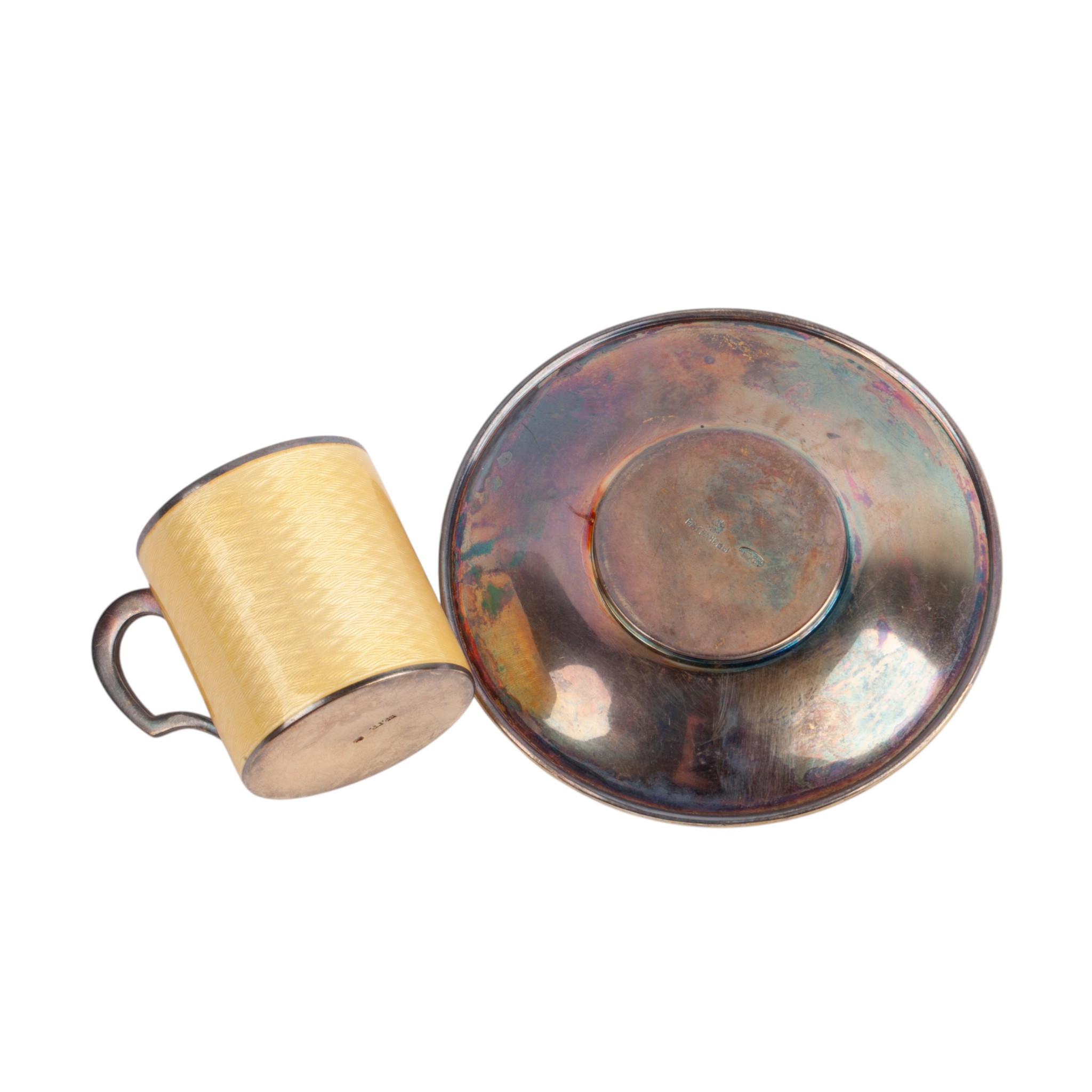
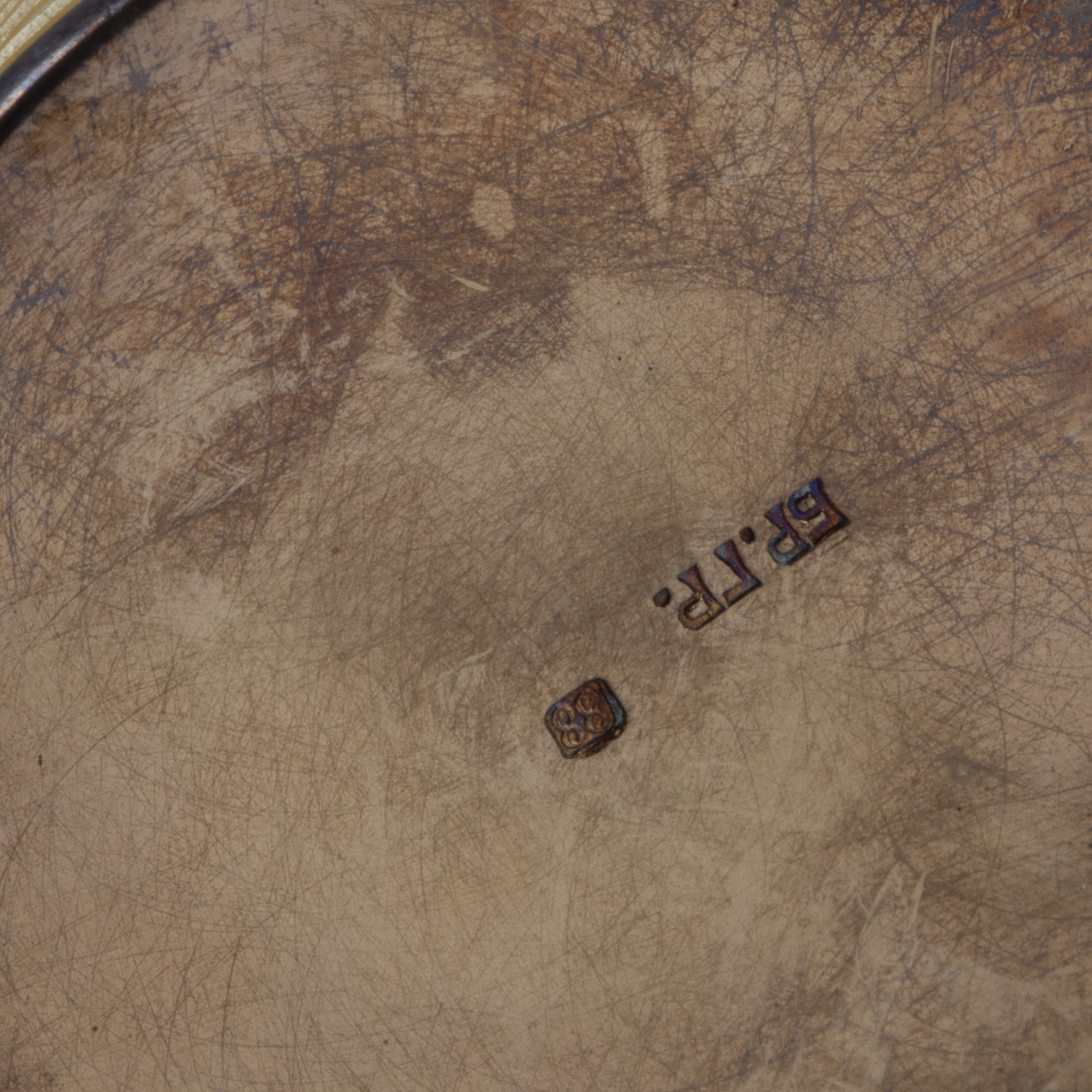
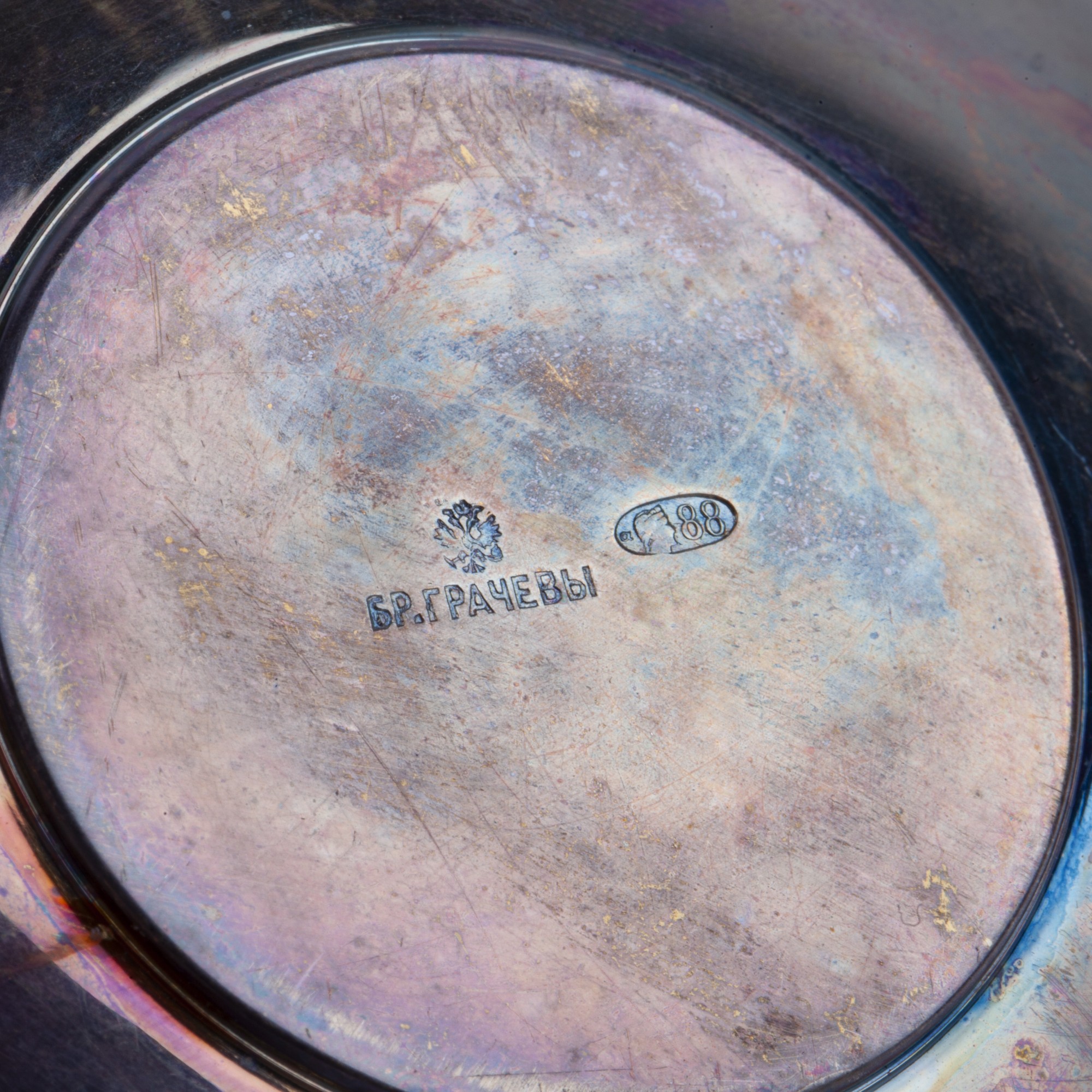
Estimate: 1500-1700€A Russian silver-gilt vodka cup on stand with guilloché enamel St Petersburg, Grachev Brothers manufactory, 1908-1917.
Silver, gilding, guilloché enamel. Marked: firm’s mark Br. Gr& 88 standard; assay mark of St.Petersburg. Weight: 64,1 g. Dimensions of the cup: 3,6 x 5,1 x 3,5 cm. Diameter of the saucer plate: 8 cm.A refined Russian silver-gilt vodka cup with matching plate in the form of tea pair. Both enriched with translucent guilloché enamel over an engine-turned ground. The cup is of slightly tapering cylindrical form with a plain loop handle, while the plate circular echoes its restrained geometry and understated elegance. The luminous lemon-yellow enamel, laid over a finely waved guilloché surface, creates a soft moiré effect that animates the object with subtle movement and depth.
The ensemble was produced by the celebrated St Petersburg firm of the Brothers Grachev, among the leading Russian silver manufacturers of the late Imperial era. Founded in 1866 by Gavriil Petrovich Grachev, the enterprise was subsequently managed by his sons Mikhail, Simon, and Grigory. In 1892 the firm received the distinction of Supplier to the Imperial Court, a title renewed in 1901. Although particularly admired for works in the Russian Revival style, the Grachev workshop also created table silver of refined historicist and early modern character, distinguished by exceptional technical precision and a sophisticated command of enamelling.
This cup and stand belong to the sphere of intimate luxury tableware produced for an affluent urban clientele in the final years of Imperial Russia. Their restrained silhouette, monochrome brilliance, and finely controlled enamel surface exemplify the discreet elegance of St Petersburg silver at the beginning of the 20th century.Starting price: 1200€
Estimate: 1500-1700€
Hammer Price: Not sold -
Lot 0199
Fabergé Silver and Guilloché Enamel Photograph Frame with Original Case, Armfeldt, St Petersburg, 1908–1917
Estimate: 5000-7000€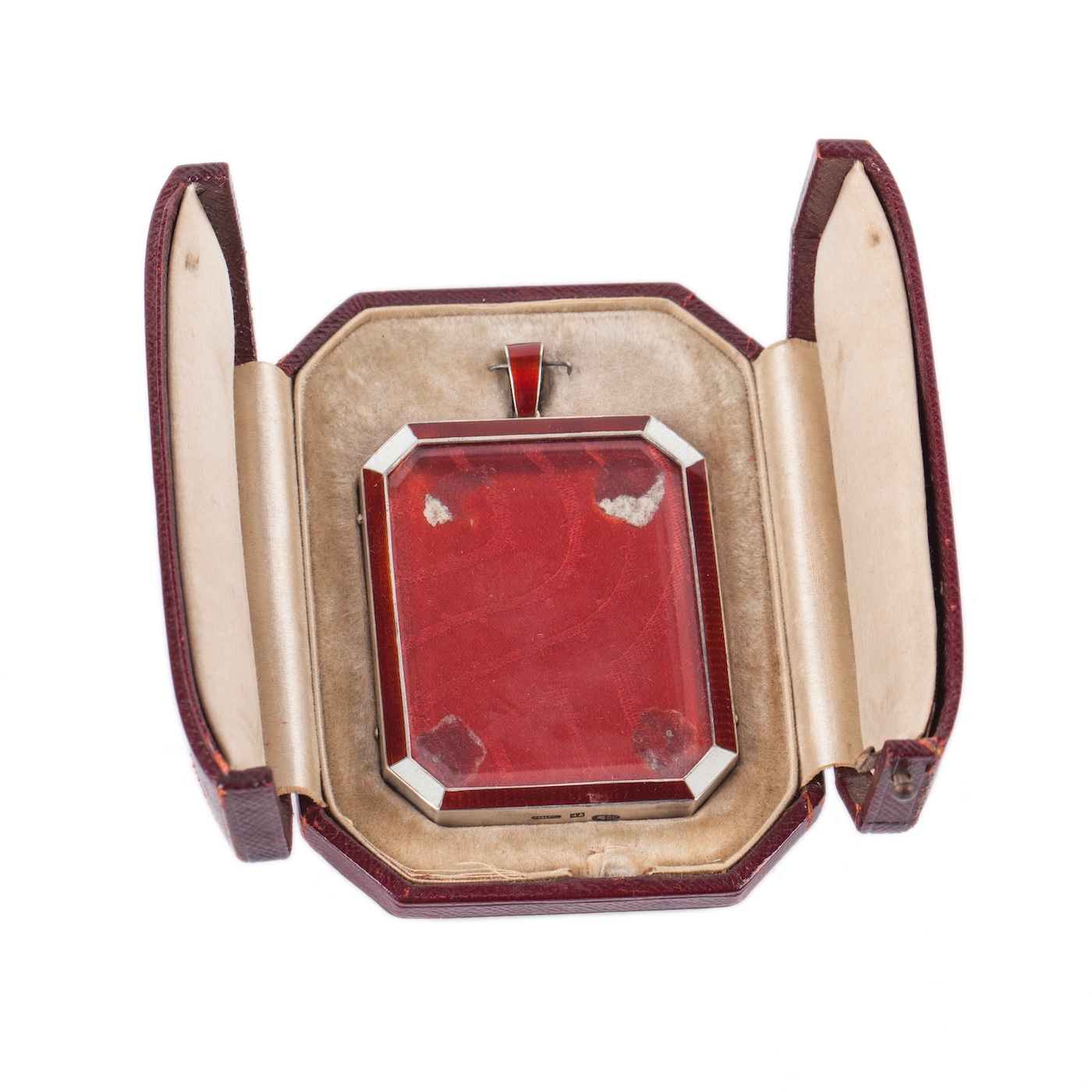
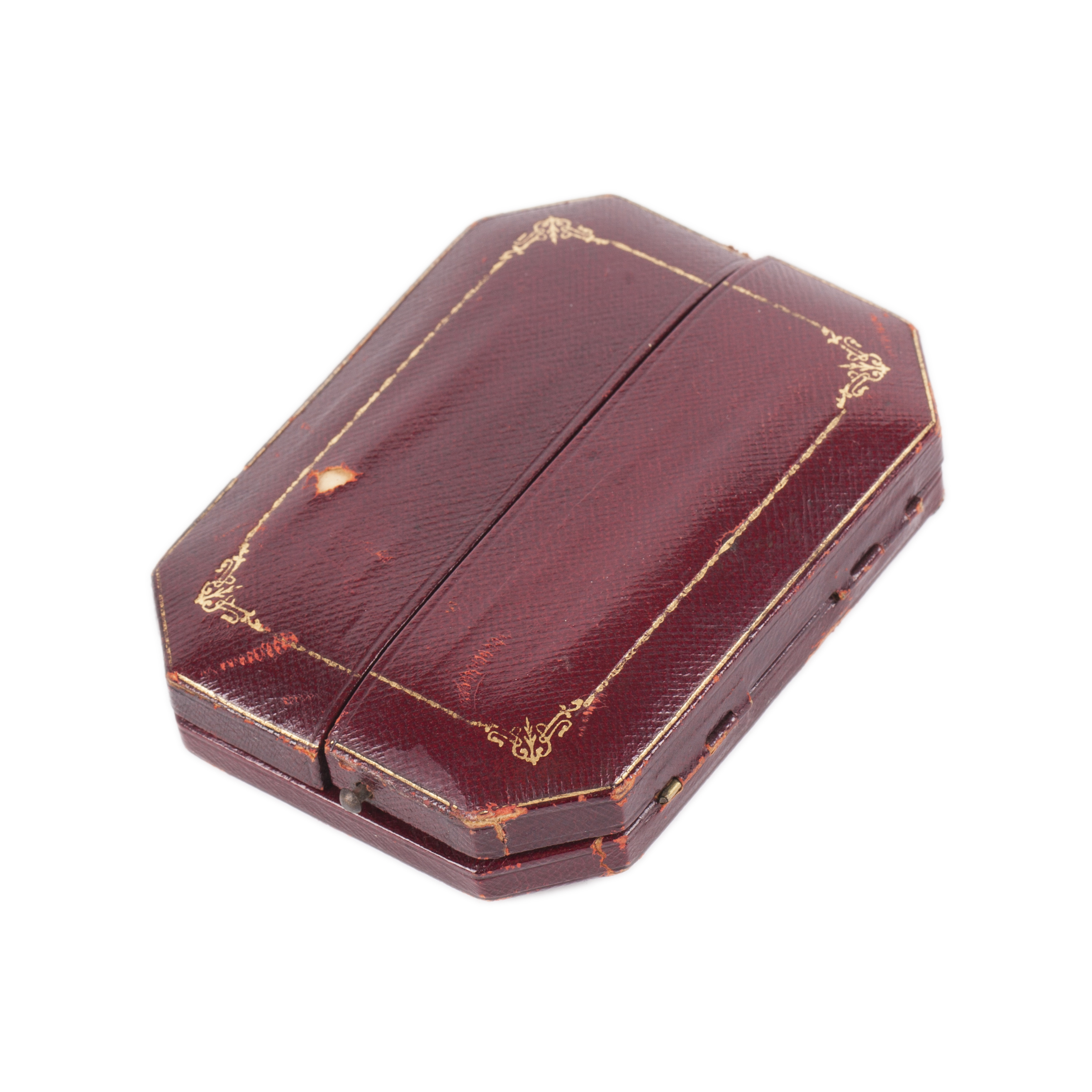
Lot 0199
Fabergé Silver and Guilloché Enamel Photograph Frame with Original Case, Armfeldt, St Petersburg, 1908–1917
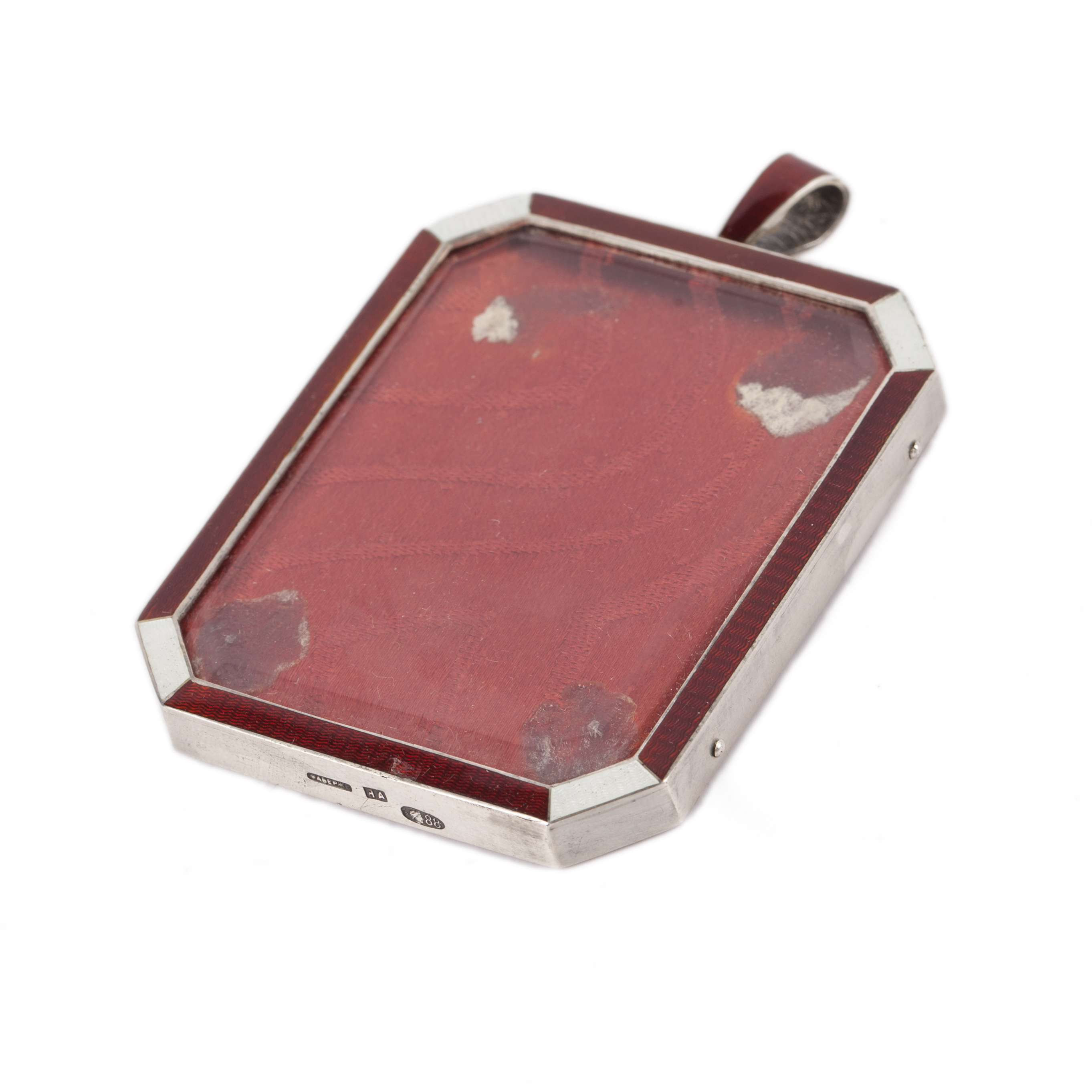
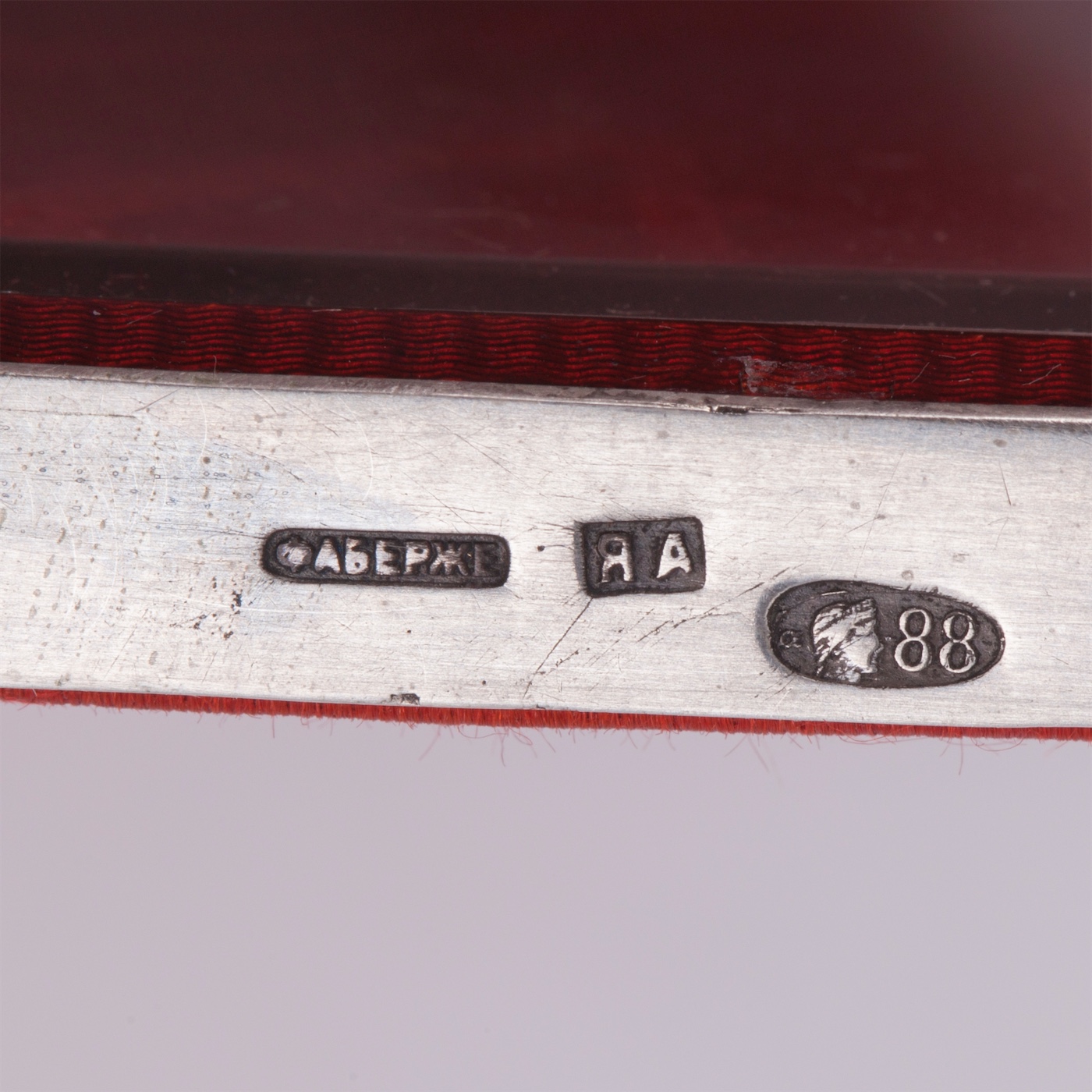
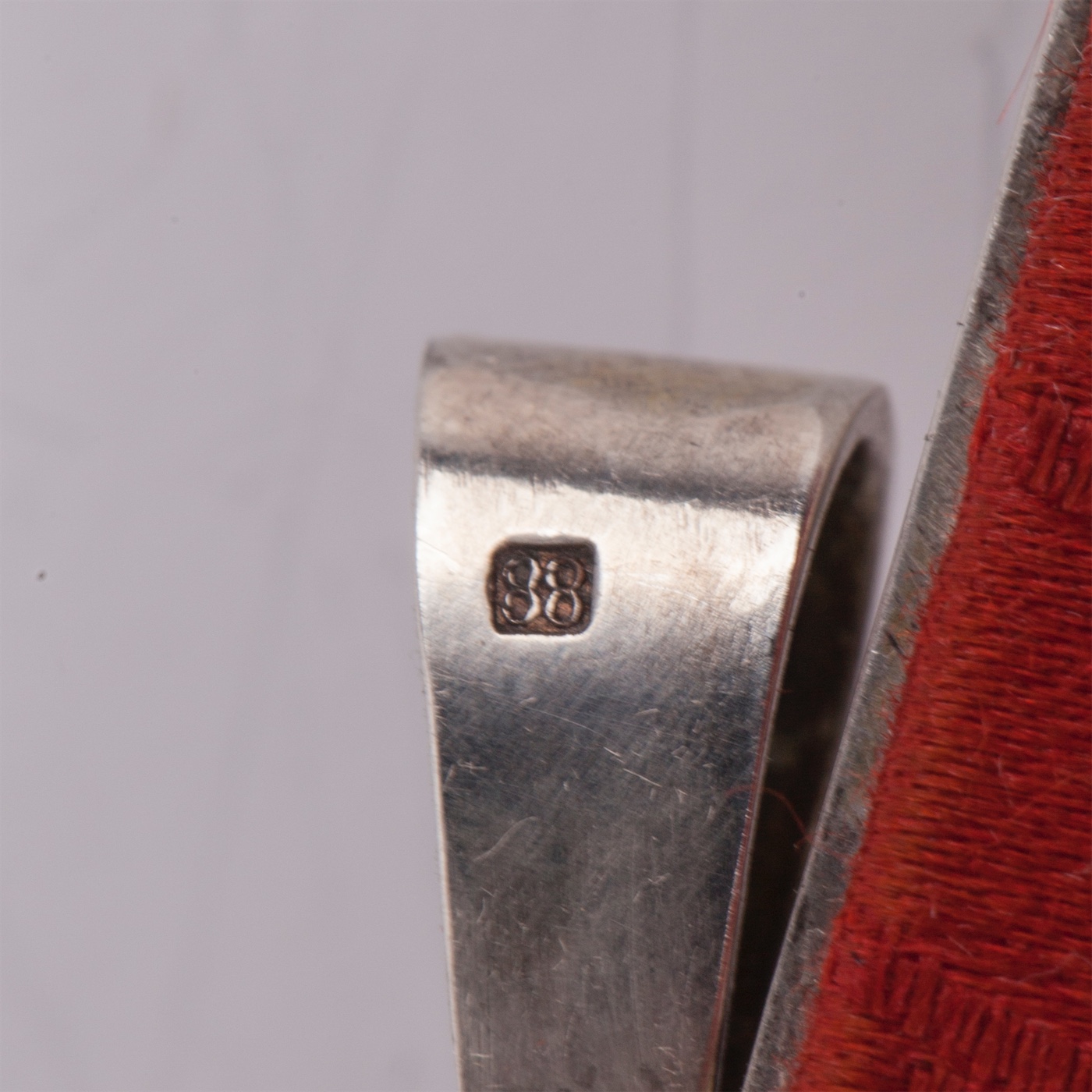
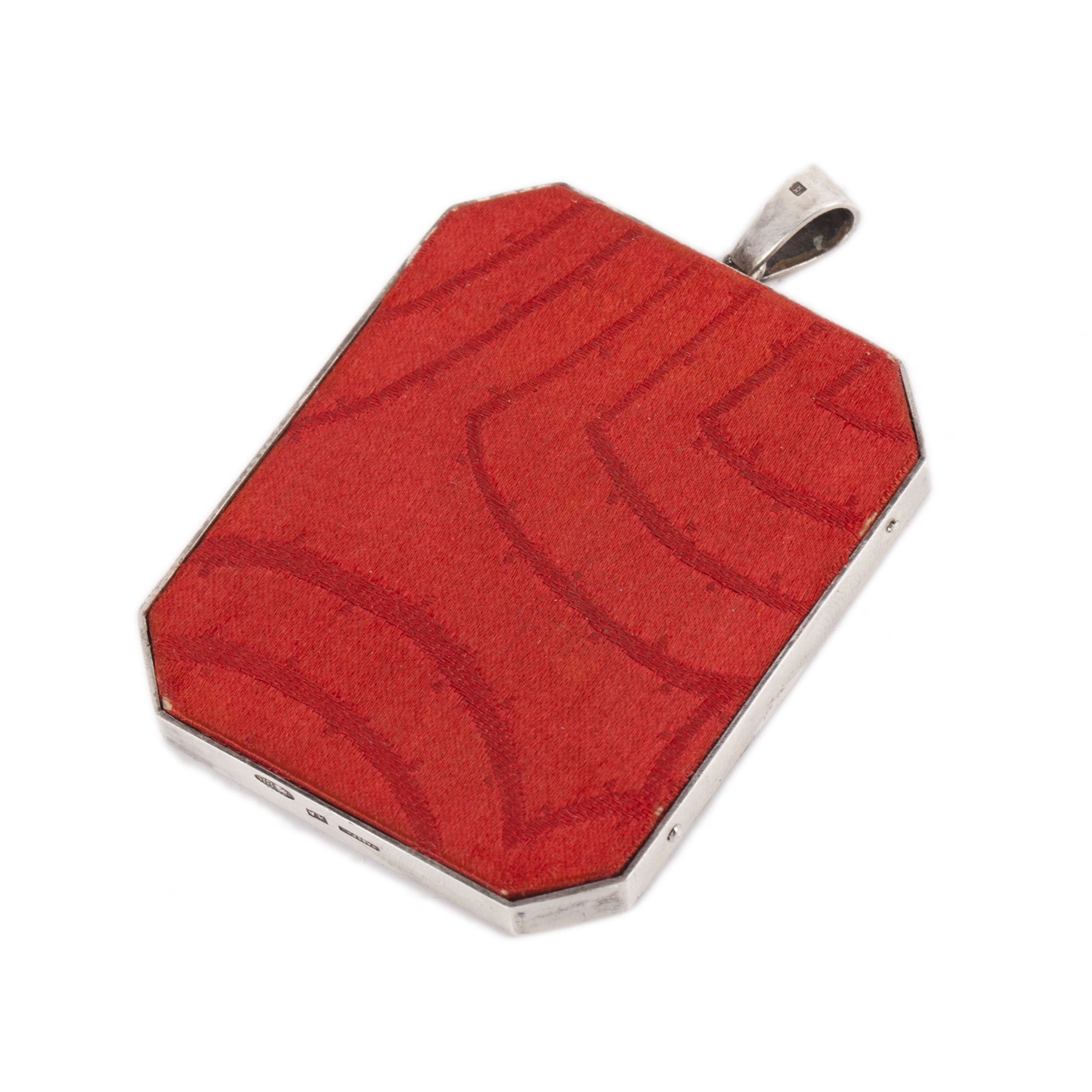
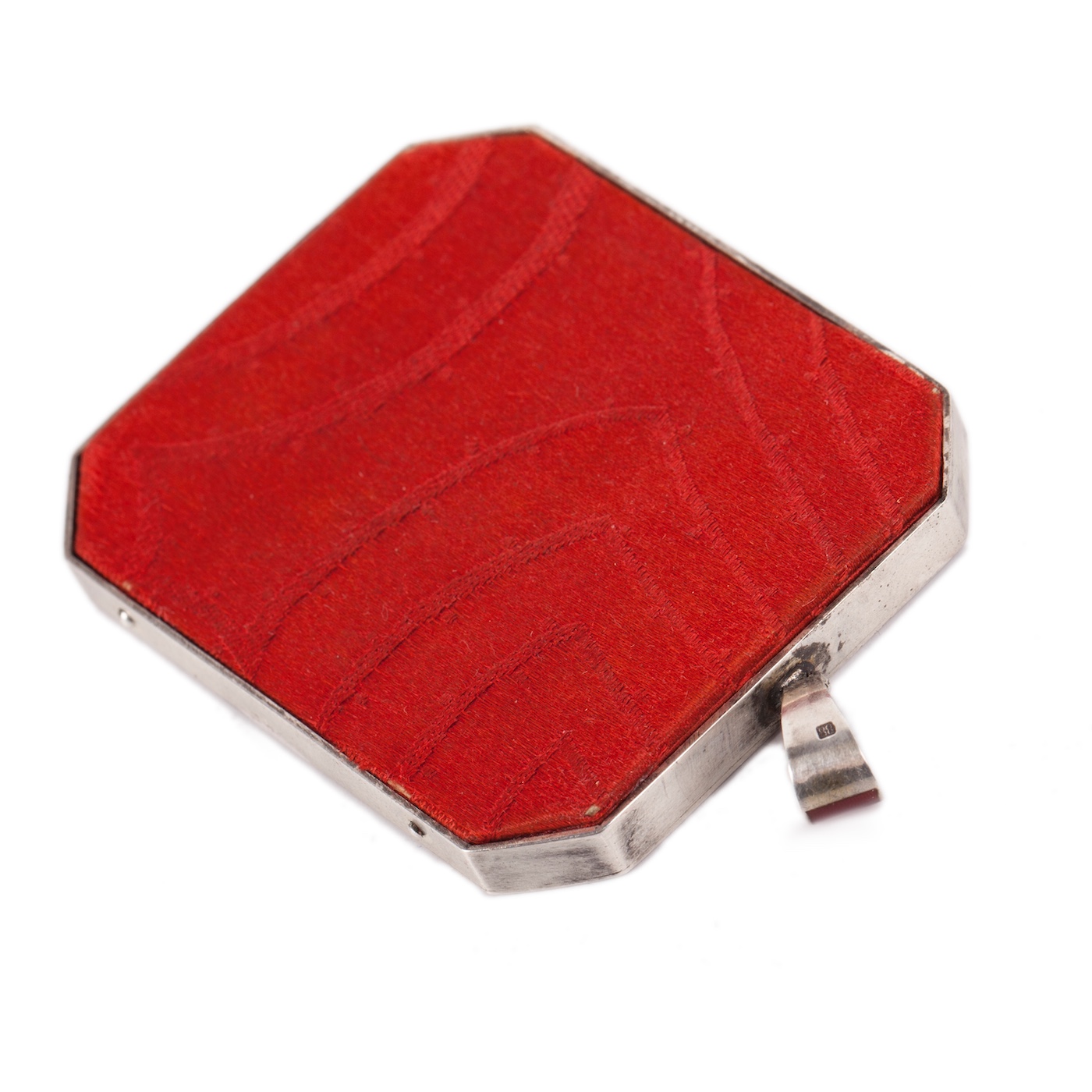
Estimate: 5000-7000€An elegant Fabergé silver and guilloché enamel photo frame in its original fitted case. Workmaster Karl Gustaf Hjalmar Armfeldt, St. Petersburg, 1908–1917.
Dimensions: 7.5 x 5 cm. Total weight: 39 g.
Karl Gustaf (Gustav) Hjalmar Armfeldt (1873–1959) was a Finnish silversmith and Fabergé workmaster, using the Cyrillic mark ЯА. Born in Artjärvi, Finland, he apprenticed in 1886 under the silversmith Paul Sohlman in St. Petersburg. After completing his studies, Armfeldt joined the Fabergé firm in 1895, becoming one of its prominent masters. He initially worked with Antti Nevalainen, later taking over the workshop of Johan Victor Aarne in 1904.For Fabergé, Armfeldt created a wide range of luxury objects: gem-set miniature frames, silver-mounted birchwood frames, hardstone pieces, enameled gold articles, and silver figures on hardstone bases. He remained active with the firm until 1916. After returning to Finland in 1920, he continued his career with several leading companies, including Oy Taito Ab and Kultakeskus Oy, and remained active in the trade until the 1940s.
Starting price: 4000€
Estimate: 5000-7000€
Hammer Price: Not sold -
Lot 0200
Imperial Russian Round Box with Portrait Miniature, Carl Johann Bock, St Petersburg, late 19th–early 20th century
Estimate: 4500-6000€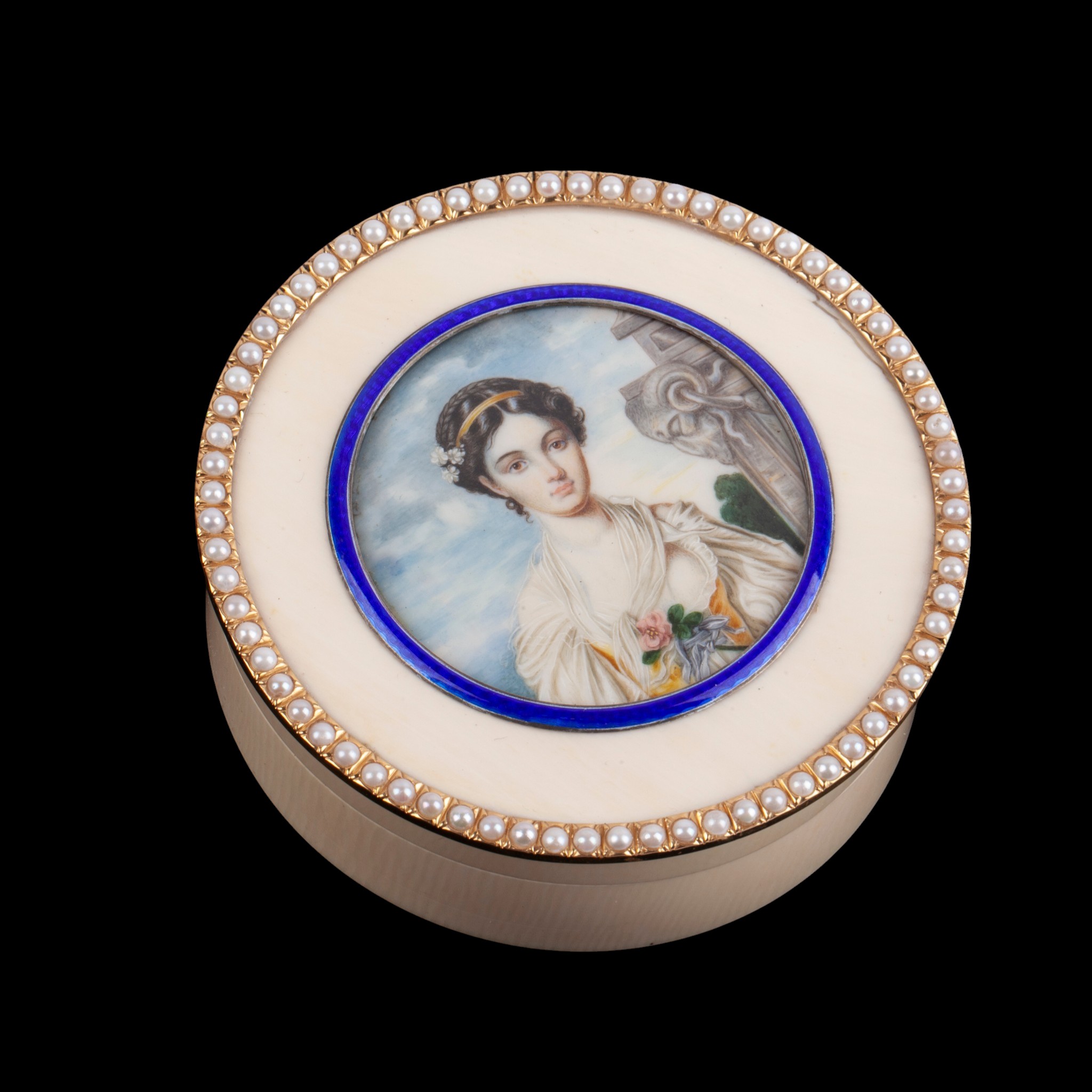
Lot 0200
Imperial Russian Round Box with Portrait Miniature, Carl Johann Bock, St Petersburg, late 19th–early 20th century
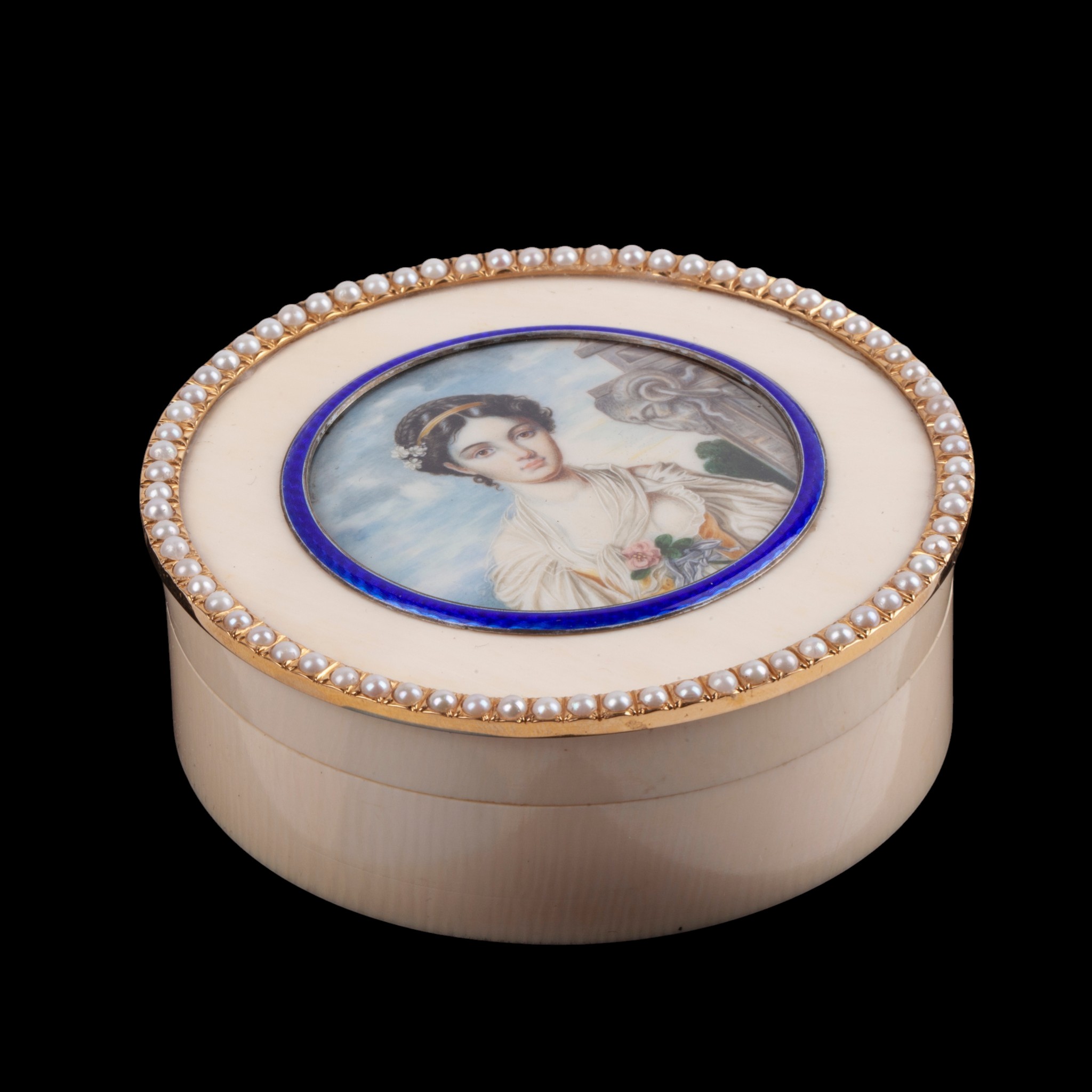
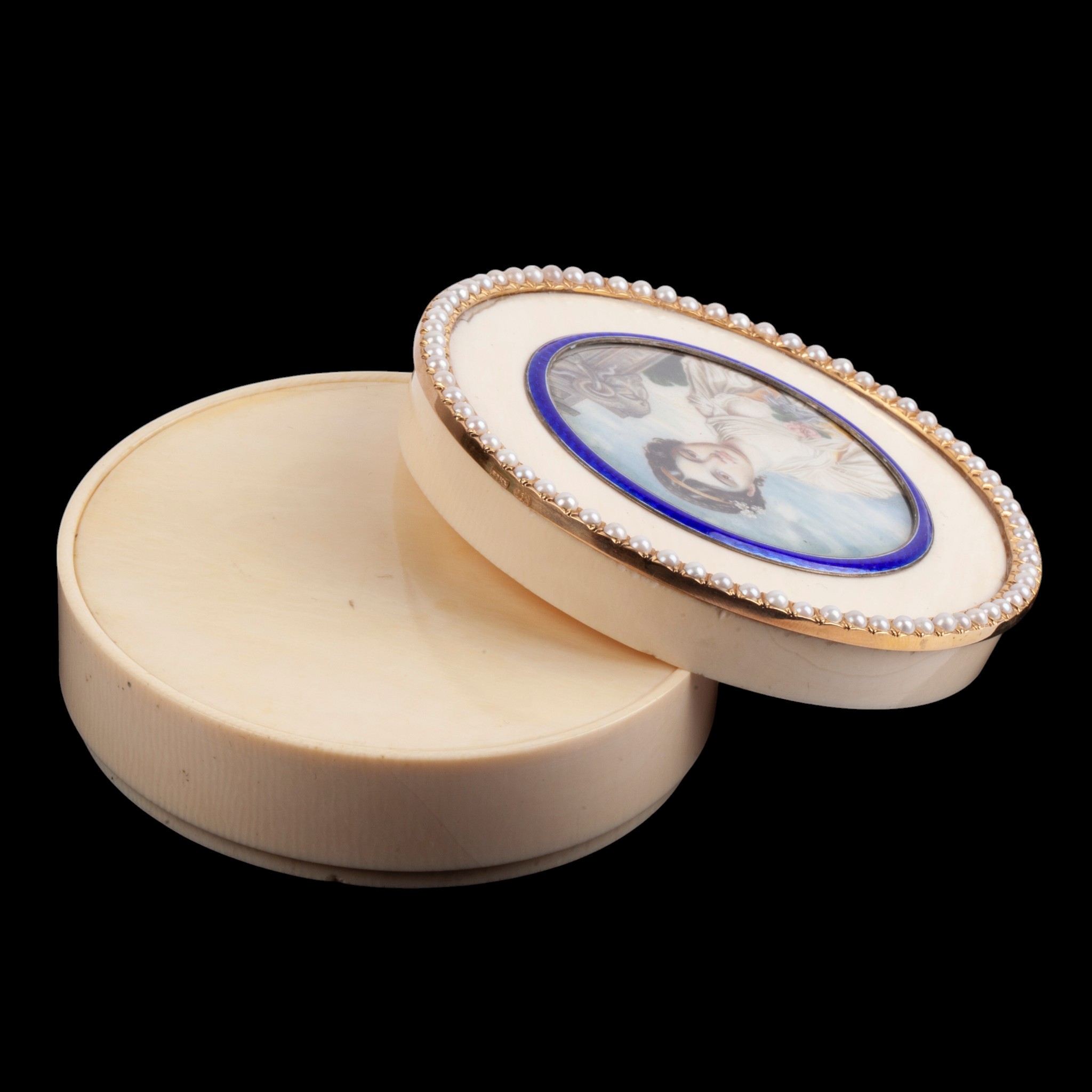
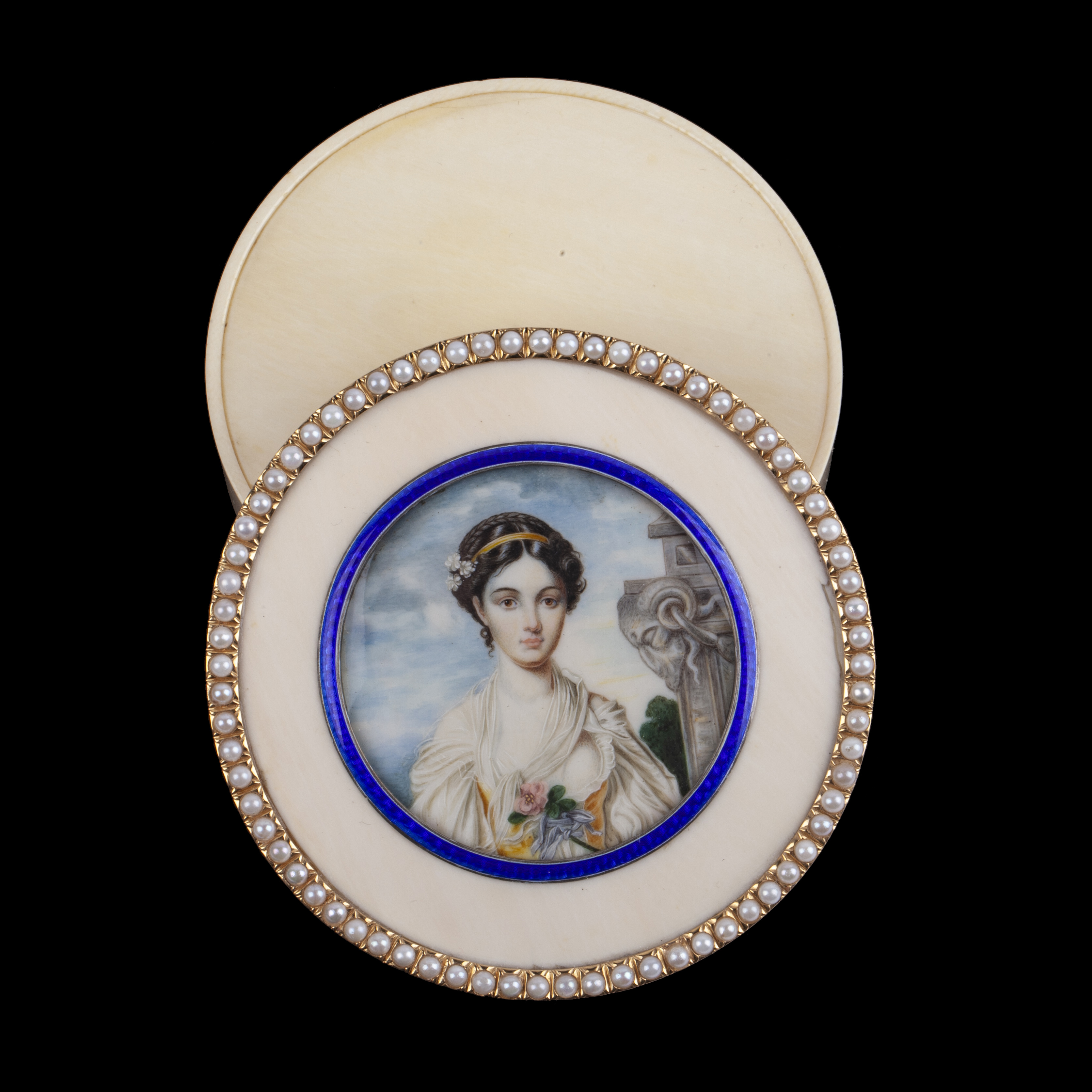
Estimate: 4500-6000€IMPERIAL RUSSIAN ROUND BOX WITH A PORTRAIT OF A YOUNG NOBLEWOMAN St Petersburg, workshop of Carl Johann Bock, late 19th to early 20th century.
White material, gold, pearls, guilloché enamel, painted miniature.
Weight: 120 g. Dimensions: 3,2 x 9 x 9 cm.
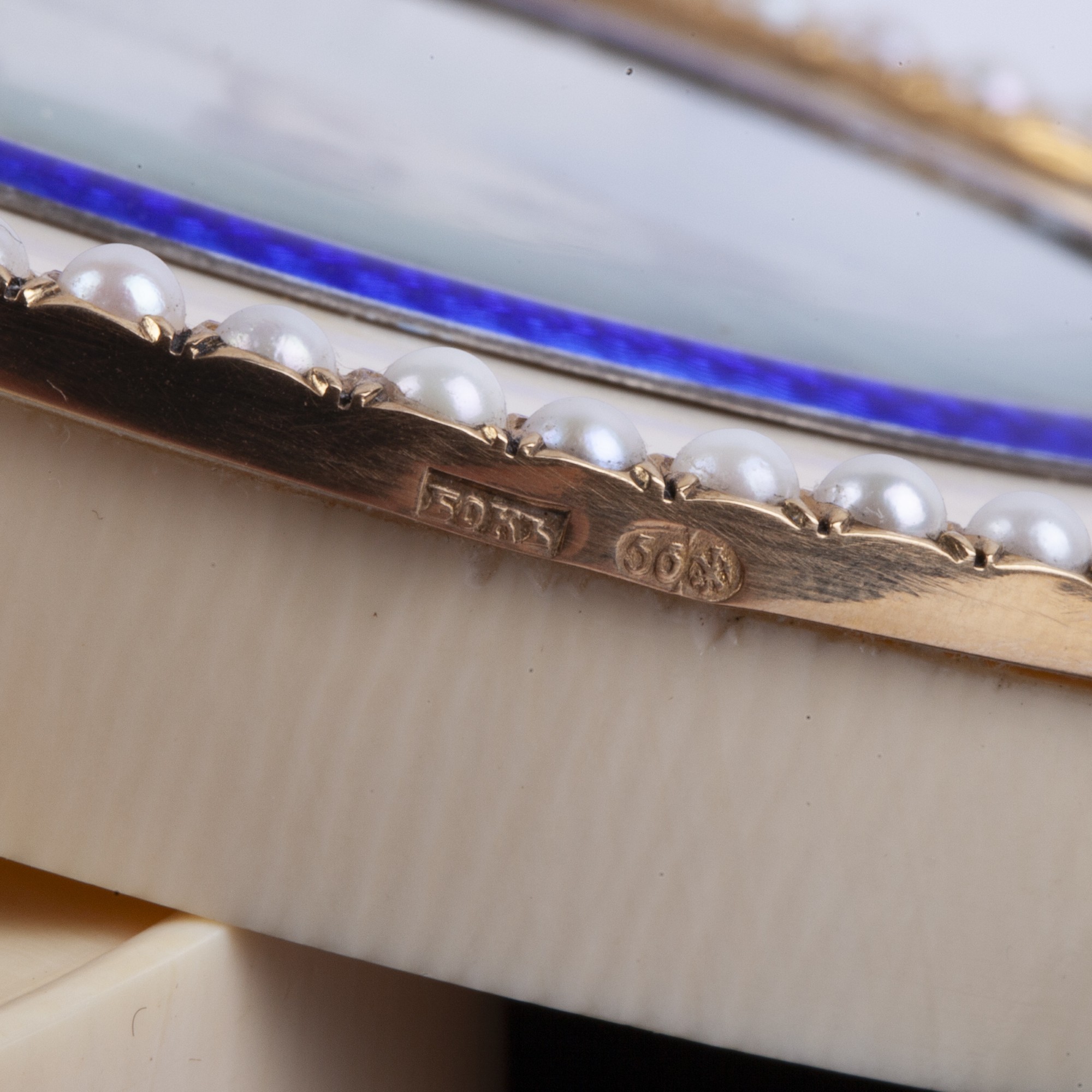
Marks: firm stamp “K.Bock”, assay mark of St. Petersburg, 56 gold standart.
A refined circular box of white material, the lid centered with an oval portrait miniature of a young aristocratic lady shown half-length against a pale sky and beside a classical masacorone. The miniature is enclosed within a vivid cobalt-blue guilloché enamel border, itself framed by a delicate outer surround of closely set seed pearls in gold.
The box was made by the workshop of Carl Johann Bock (1851-after 1917), one of the notable St Petersburg jewellers of the late Imperial period. He inherited both the commercial establishment and workshop traditions linked to earlier masters serving elite clients and, from 1887 to 1917, conducted business at 9 Bolshaya Morskaya Street. Bock’s workshop achieved distinction at major exhibitions, including Nizhny Novgorod and Paris, and in 1901 he was granted the title of Supplier to the Imperial Court. His firm was known for technically accomplished goldsmiths’ work and objects combining courtly refinement with impeccable craftsmanship.
This box is a characteristic example of that milieu: intimate in scale, aristocratic in taste, and executed with the meticulous precision expected of a leading Petersburg jewellerStarting price: 3500€
Estimate: 4500-6000€
Hammer Price: Not sold

Providing Antique Auctions