-
Lot 0041
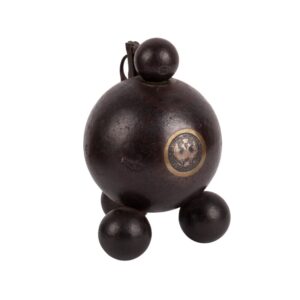
Crimean War Souvenir Lighter with Imperial Russian Coin, Mid-19th Century
Estimate: 800-1500€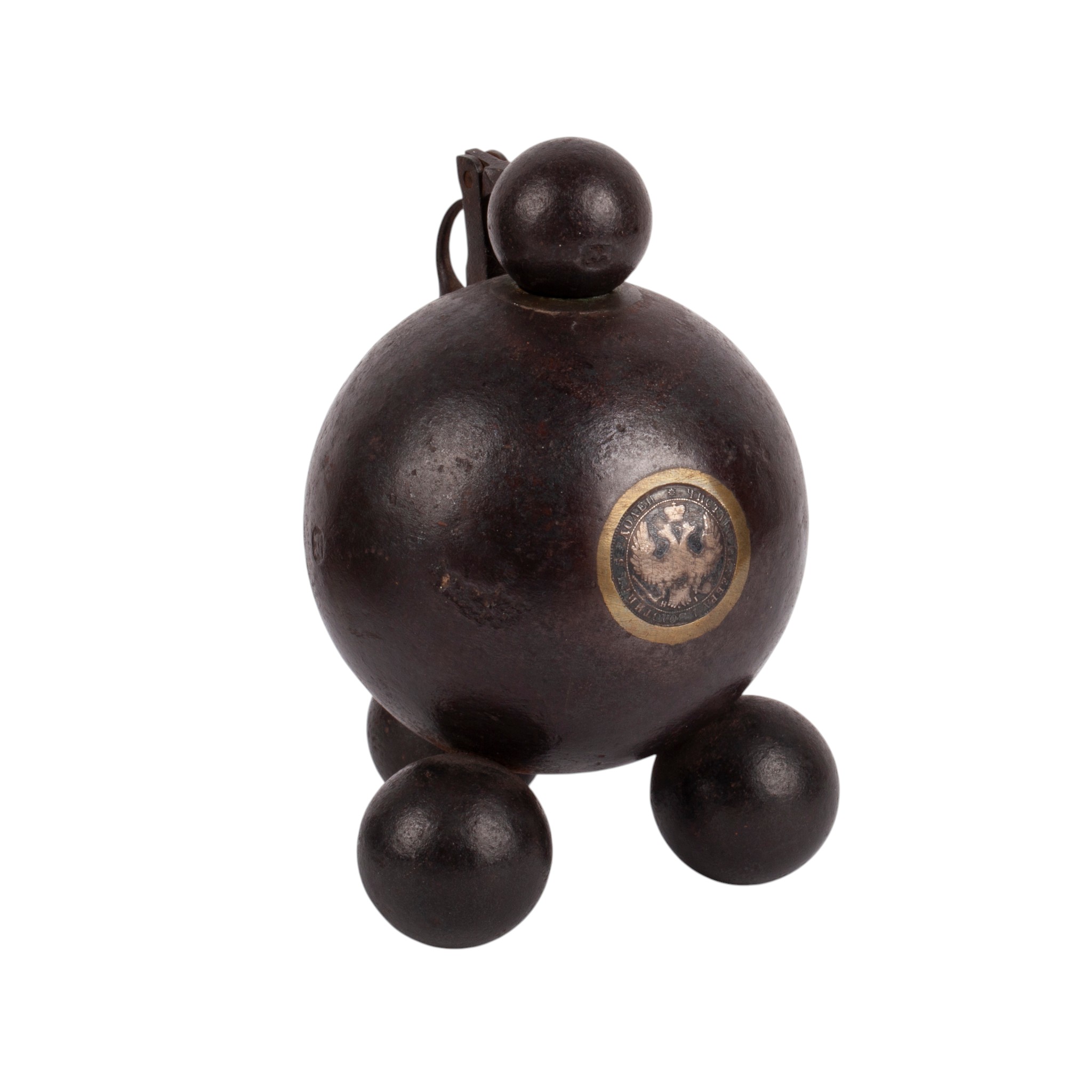
Lot 0041
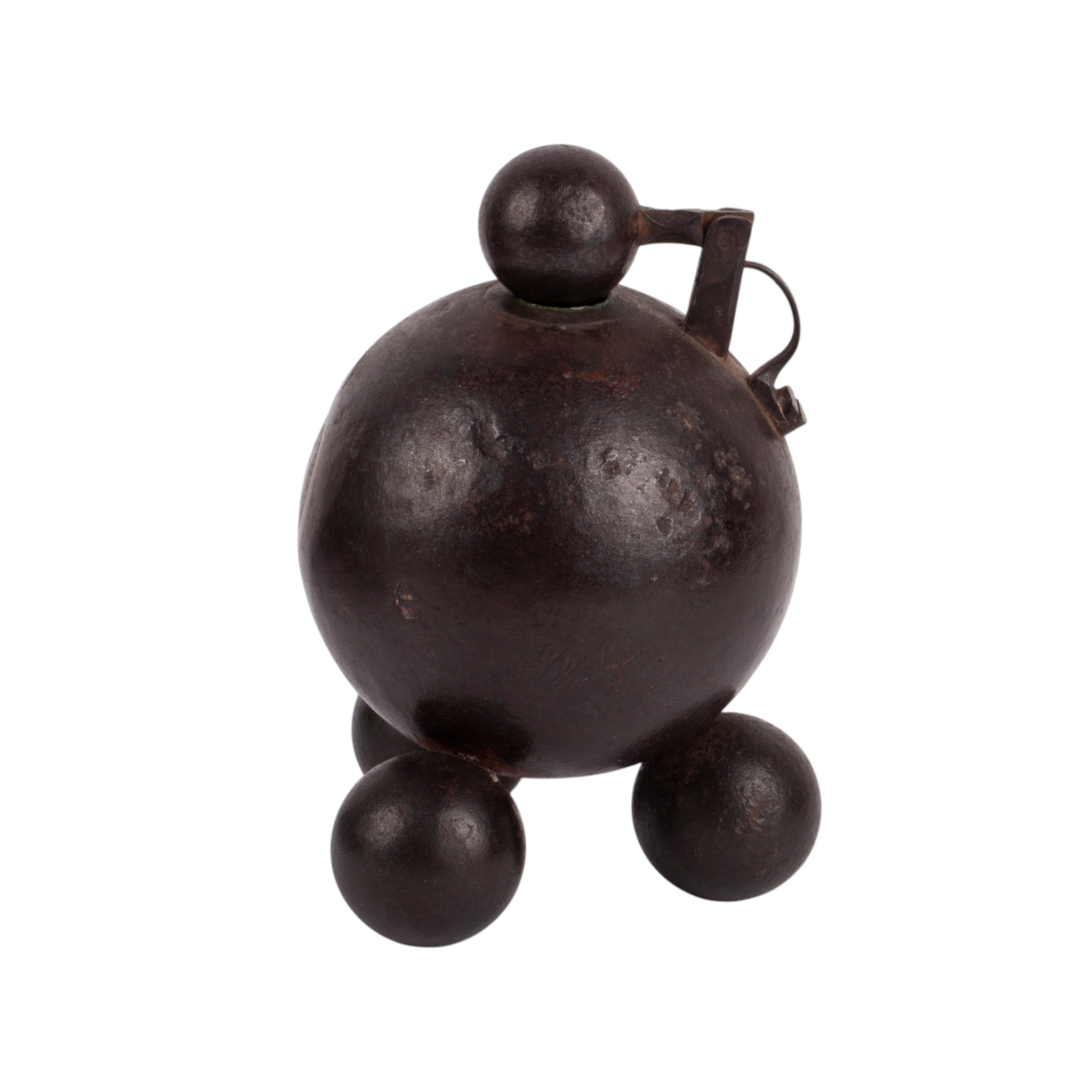
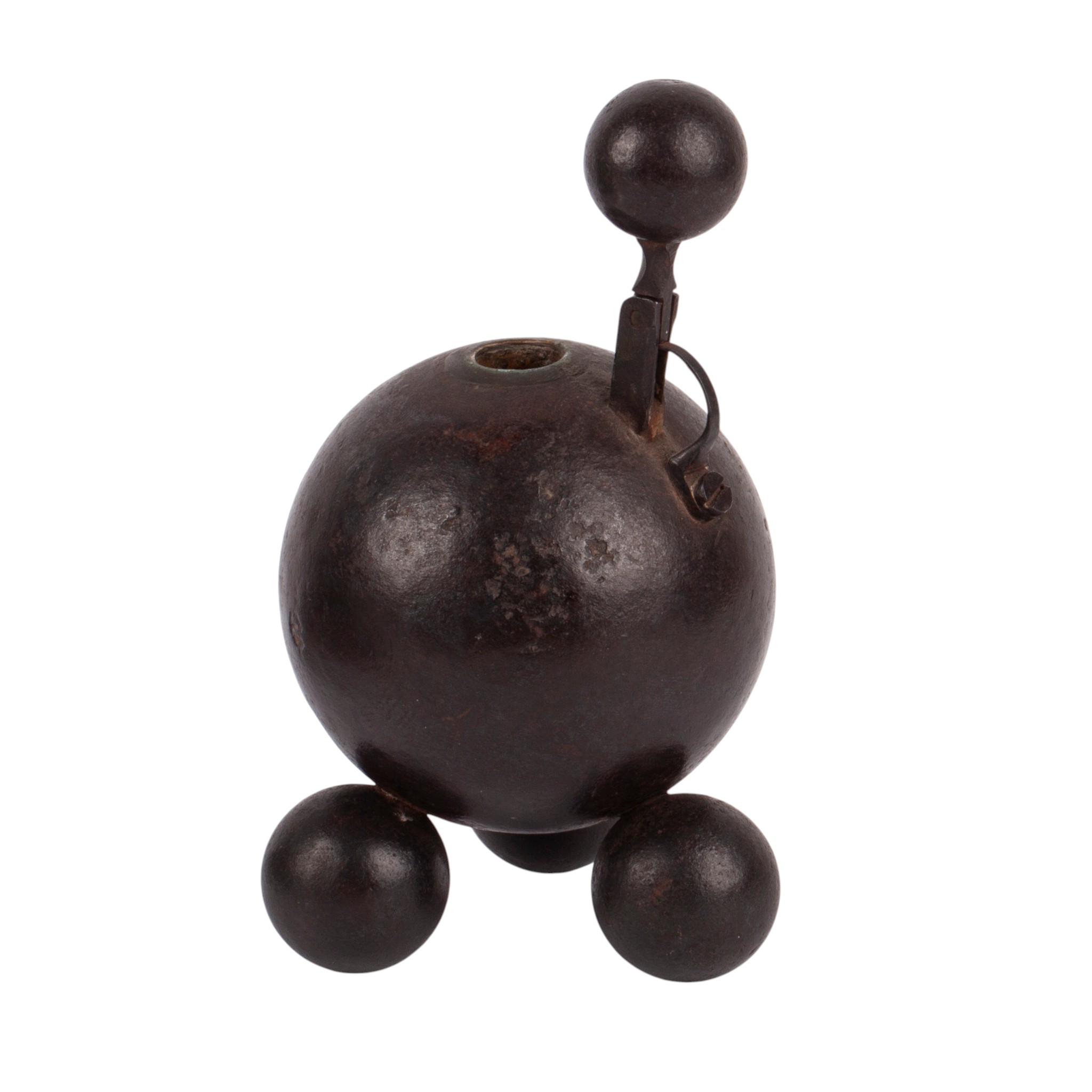
Crimean War Souvenir Lighter with Imperial Russian Coin, Mid-19th Century
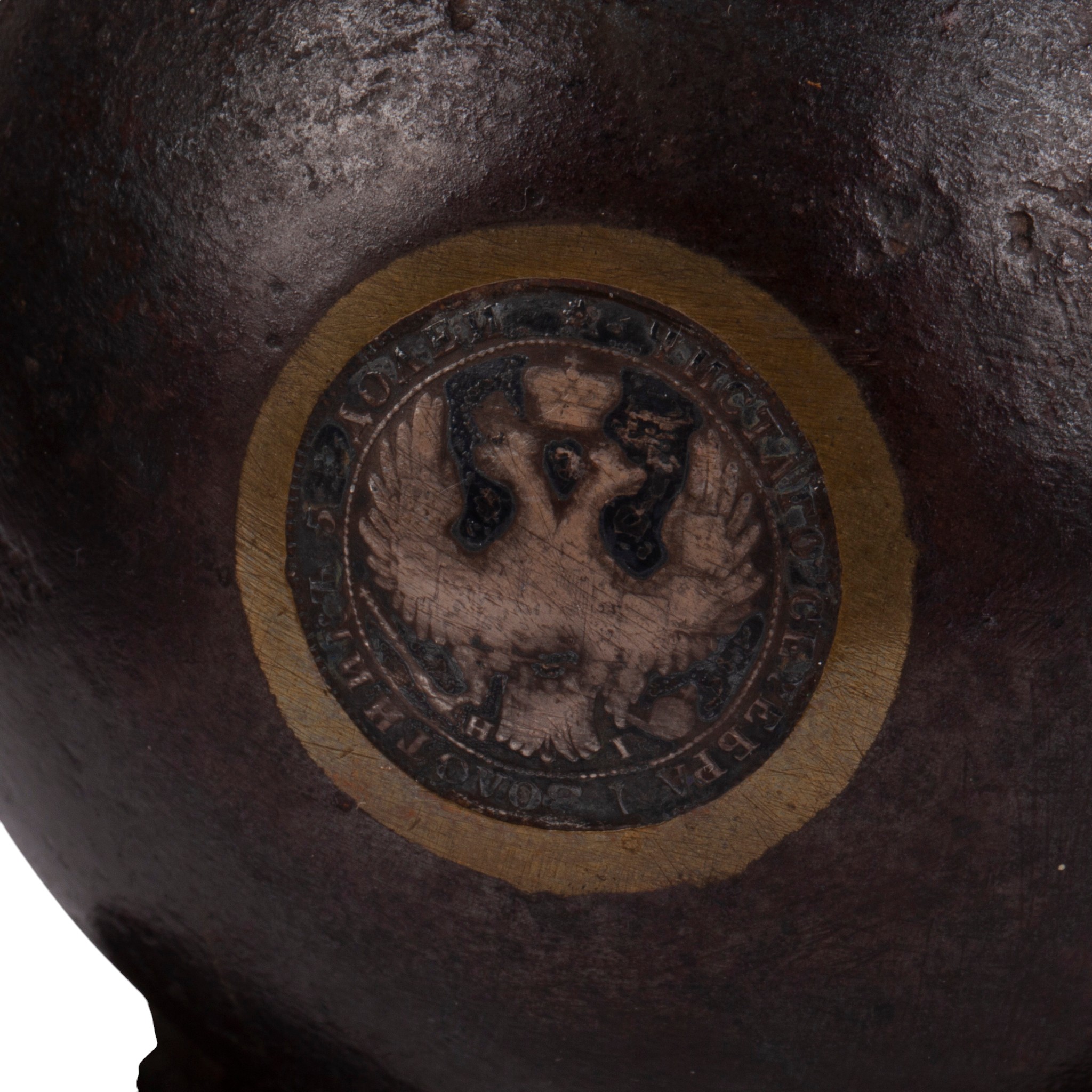
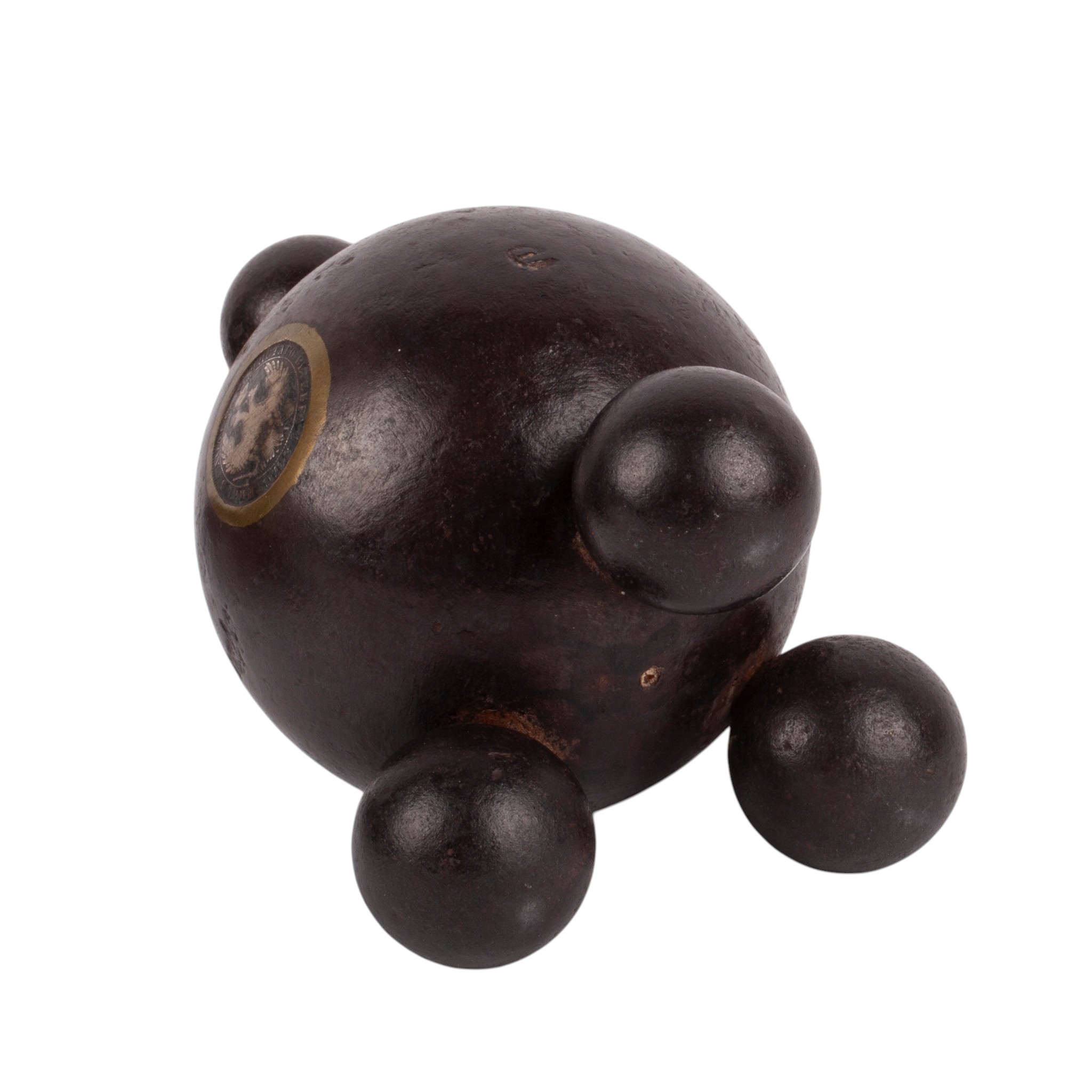
Estimate: 800-1500€Crimean War souvenir lighter, mid-19th century, incorporating an inset Imperial Russian silver coin, likely of the Nicholas I period (1830s–1840s). Made in the form of a cannonball or grenade, raised on three ball feet, with metal fitting above. An unusual military-related desk or cabinet souvenir.
Dimensions: 12 × 9 × 9 cm.Starting price: 600€
Estimate: 800-1500€
Hammer Price: Not sold -
Lot 0042
Russian Business Card Case and Stamp Dispenser “FM”, Israel Szekman, Warsaw, 1908–1917
Estimate: 600-700€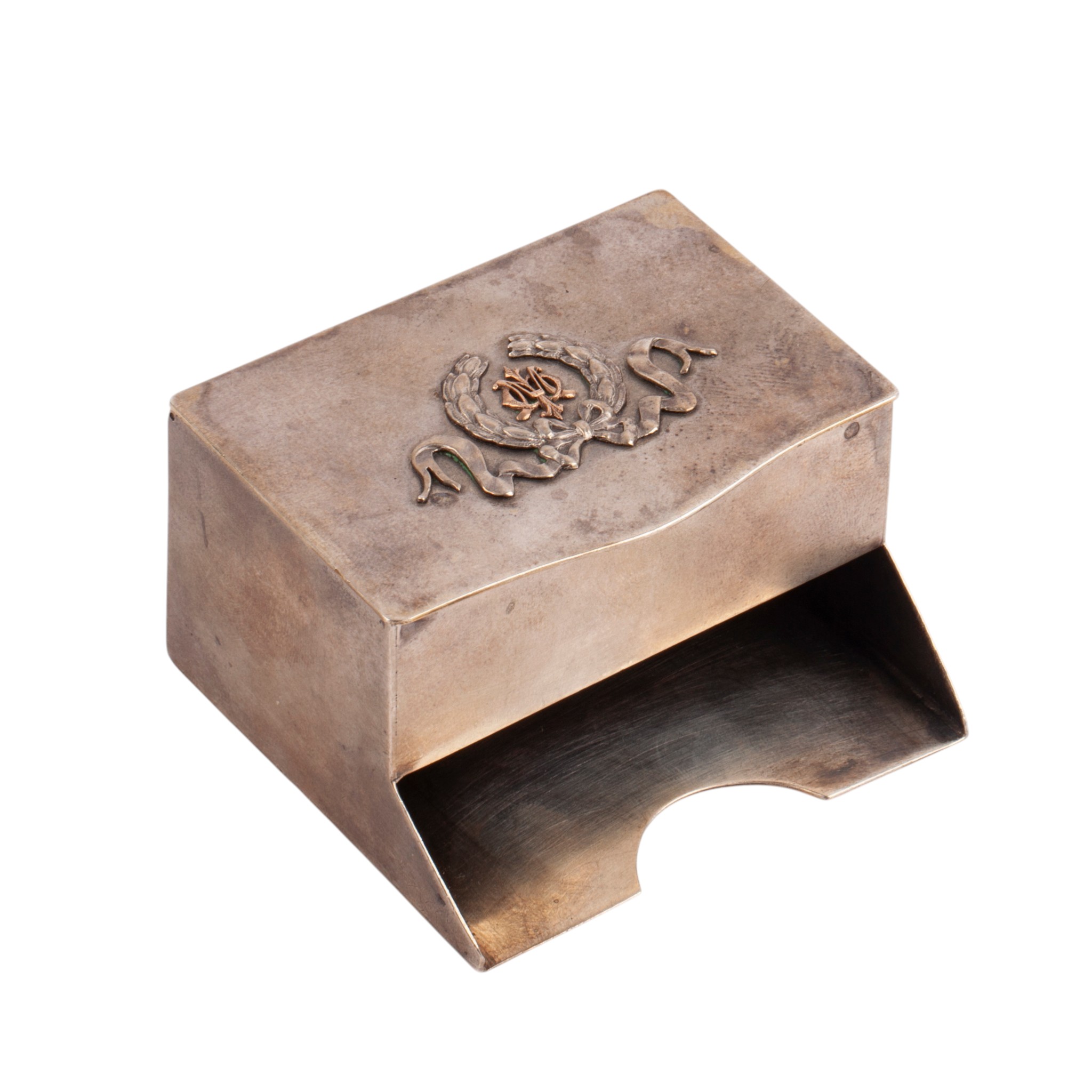
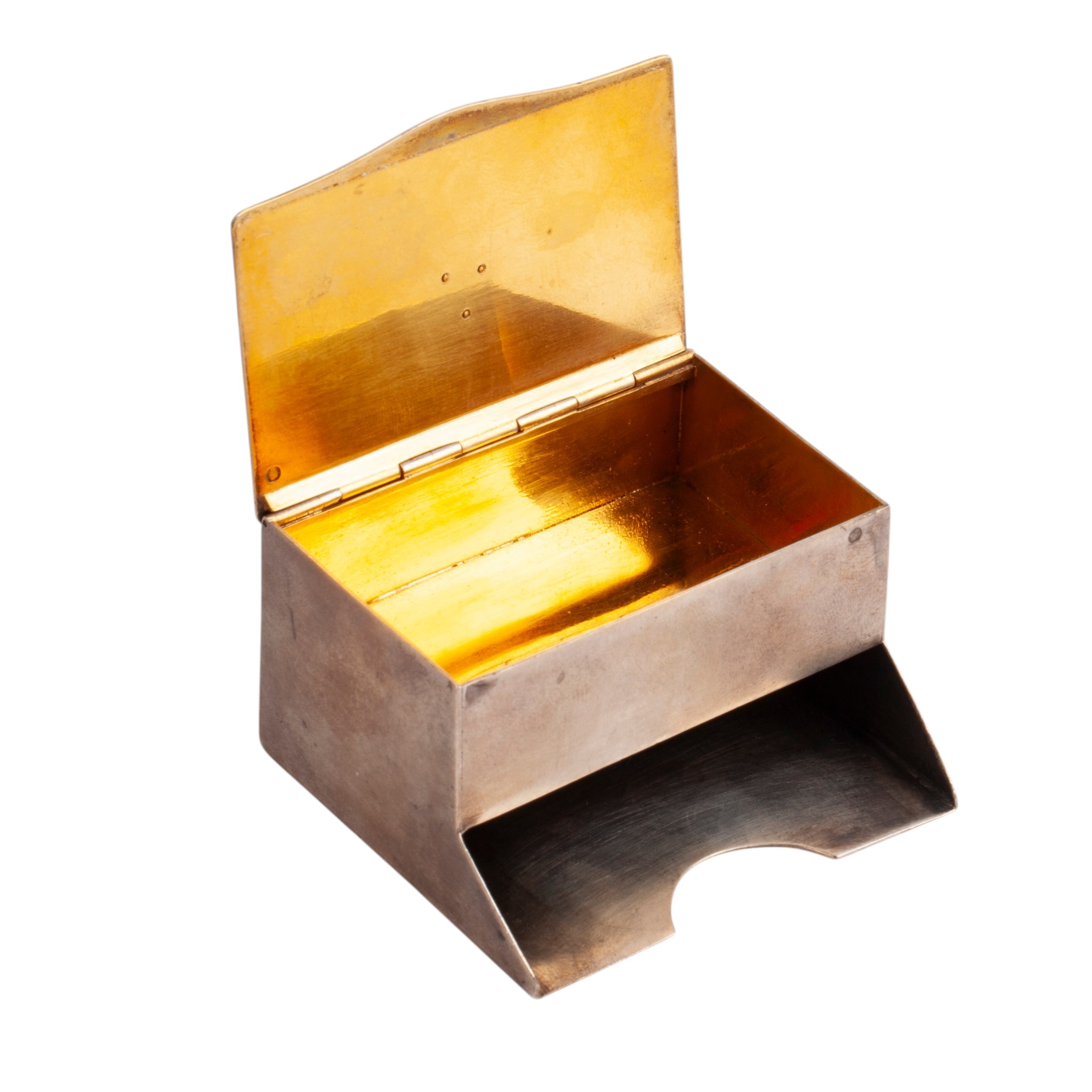
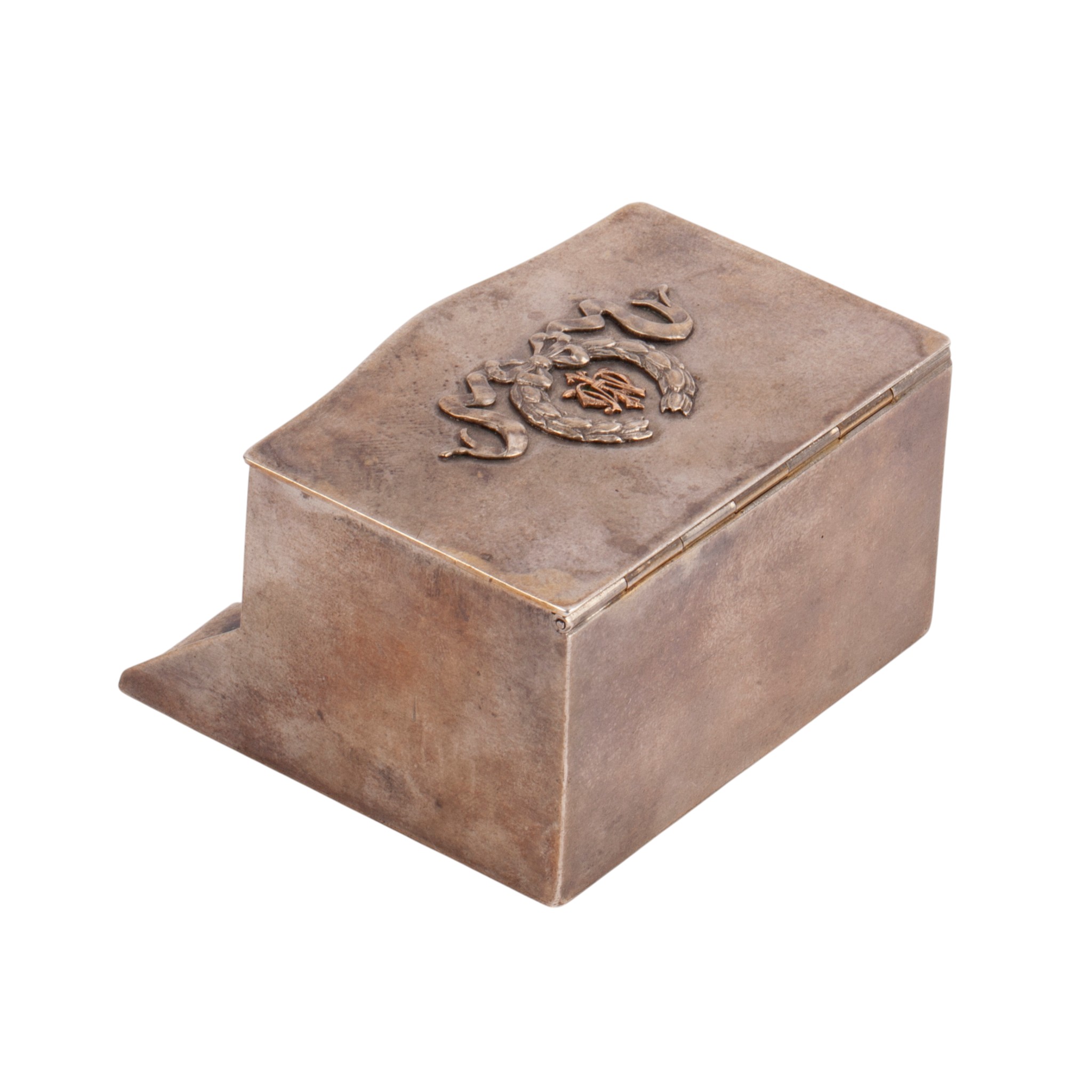
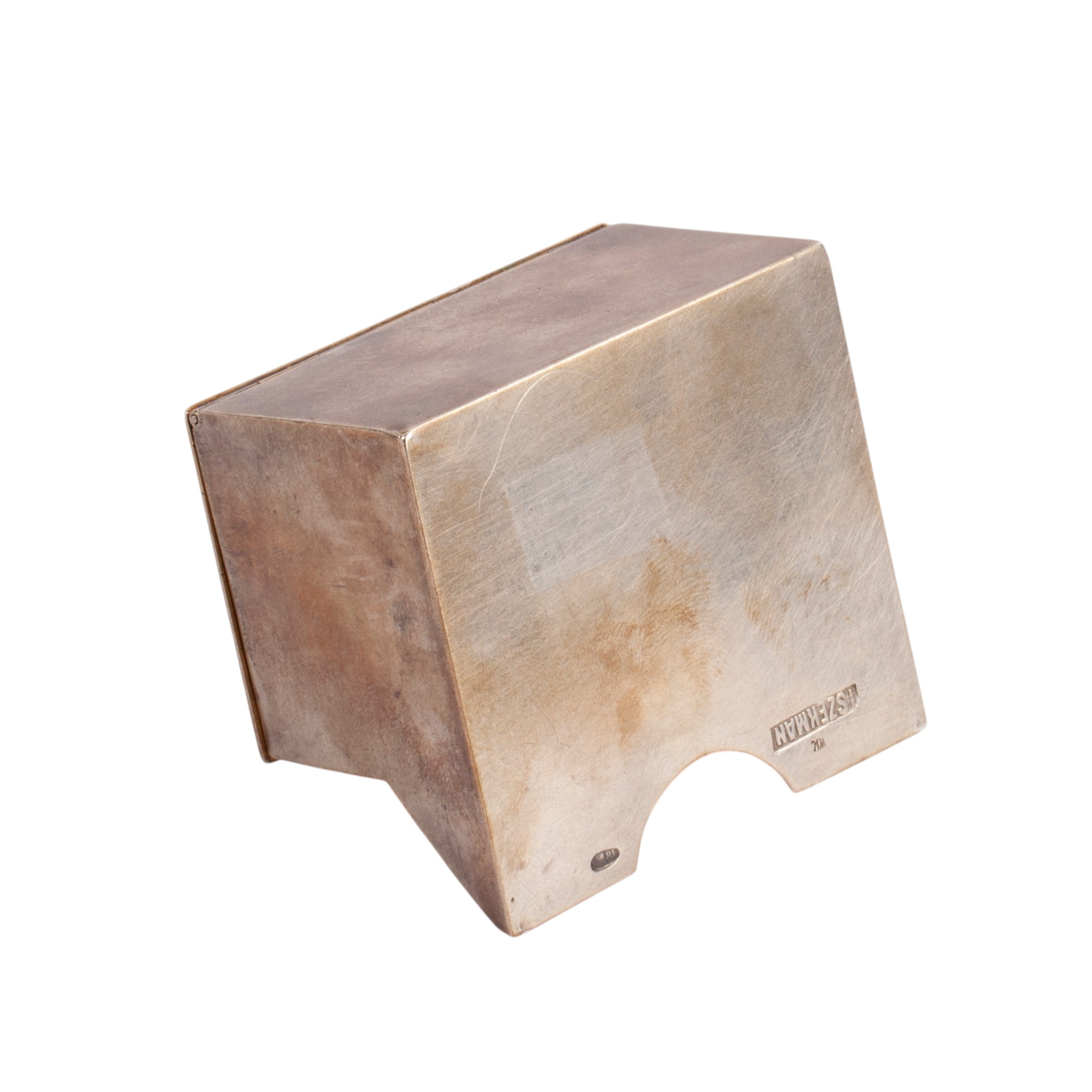
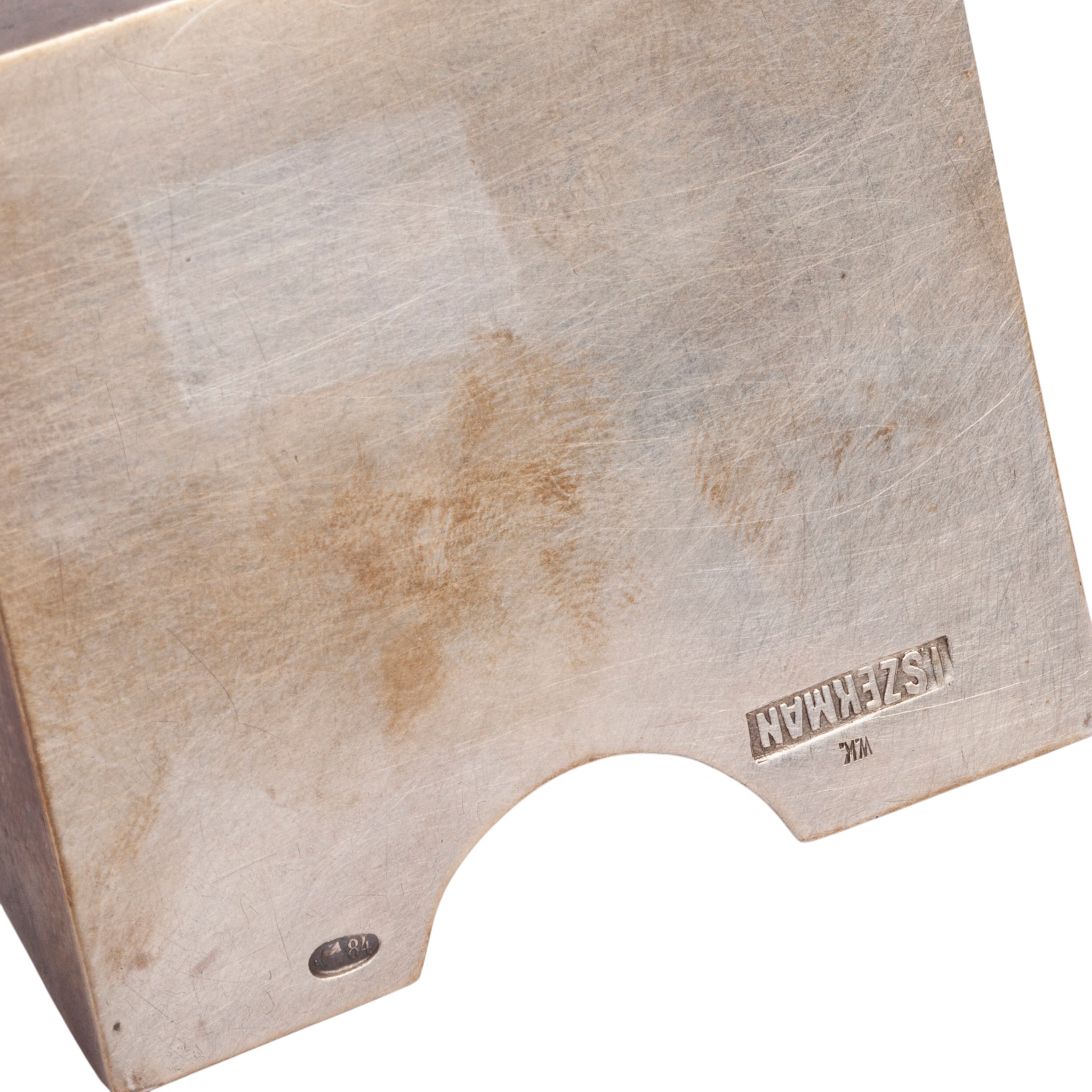
Lot 0042
Russian Business Card Case and Stamp Dispenser “FM”, Israel Szekman, Warsaw, 1908–1917
Estimate: 600-700€A Russian business card case and stamp dispenser, with the monogram “FM”. Warsaw, Russian Empire, firm of Israel Szekman, 1908–1917.
Silver, gilding. Dimensions: 3.5 × 6.0 × 6.0 cm. Weight: 95 g.
Marks: maker’s mark “W.K.”; firm’s stamp “I. SZEKMAN”; Warsaw assay mark for 1908–1917.
A compact, architecturally shaped table accessory formed as a closed, two-tier box: the upper compartment intended for post stamps, while the lower, forward-sloping bay functions as an accessible dispenser for visiting cards. Israel Szekman was among the leading Warsaw silversmith-entrepreneurs of the late 19th to early 20th century. He opened a shop in 1886 specialising in applied metal fittings, and in 1891 established a factory producing plated and silver objects. By the mid-1890s the workforce numbered about twenty, later fluctuating between ten and twenty. By 1914 the factory’s output included silver and metal goods, among them lamps and shades. Around 1919 the firm’s management appears to have passed within the family, later to Szekman’s sons and, by the late 1920s, to the brothers Berish and Zyskind Szekman.Starting price: 500€
Estimate: 600-700€
Hammer Price: Not sold -
Lot 0043
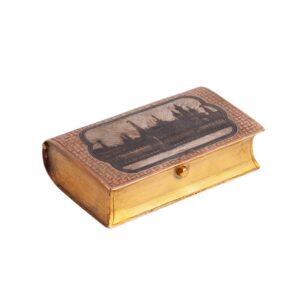
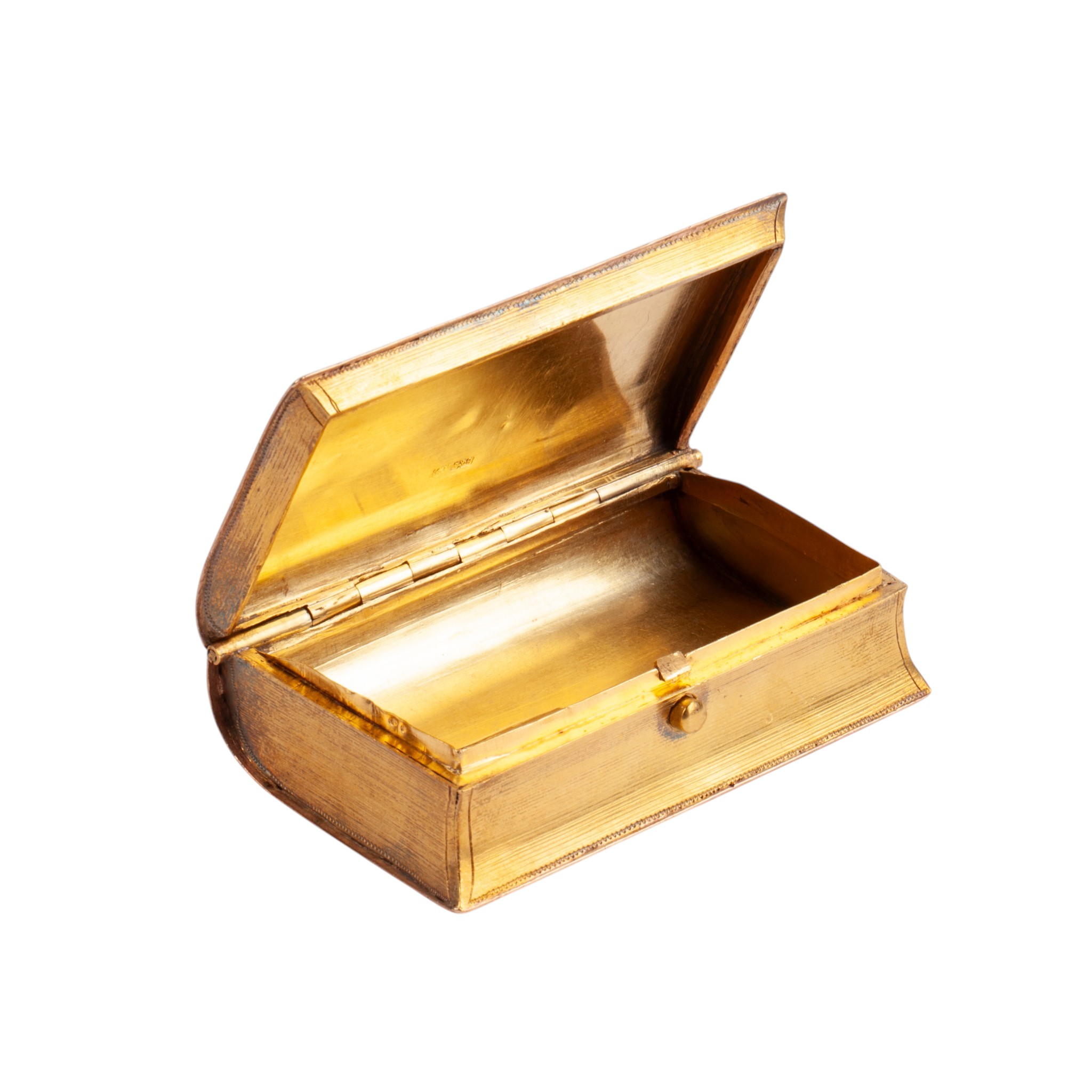
Trompe-l’oeil Silver Snuff Box in the Form of a Book with Niello View of the Moscow Kremlin, Moscow, 1883
Estimate: 1500-1700€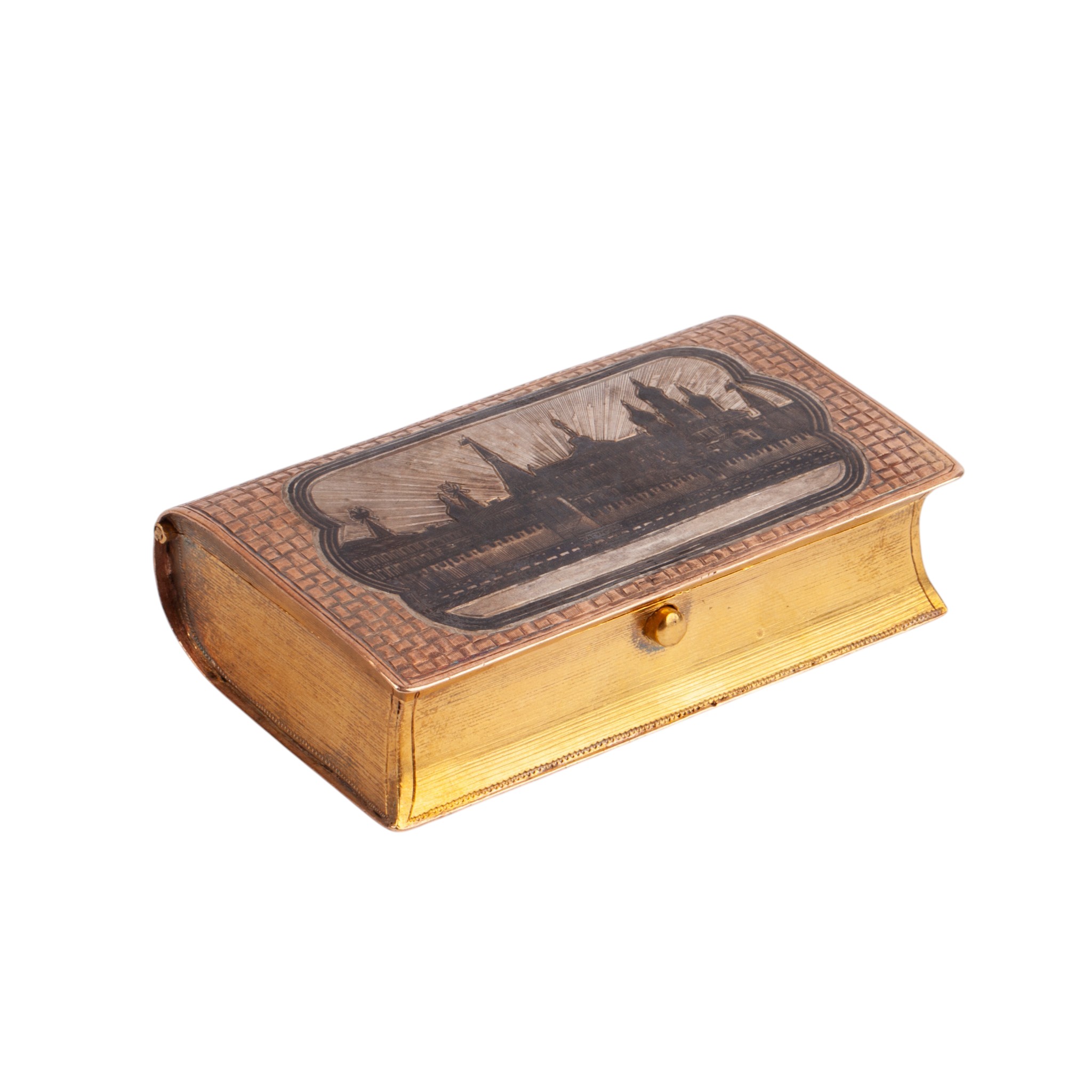
Lot 0043
Trompe-l’oeil Silver Snuff Box in the Form of a Book with Niello View of the Moscow Kremlin, Moscow, 1883
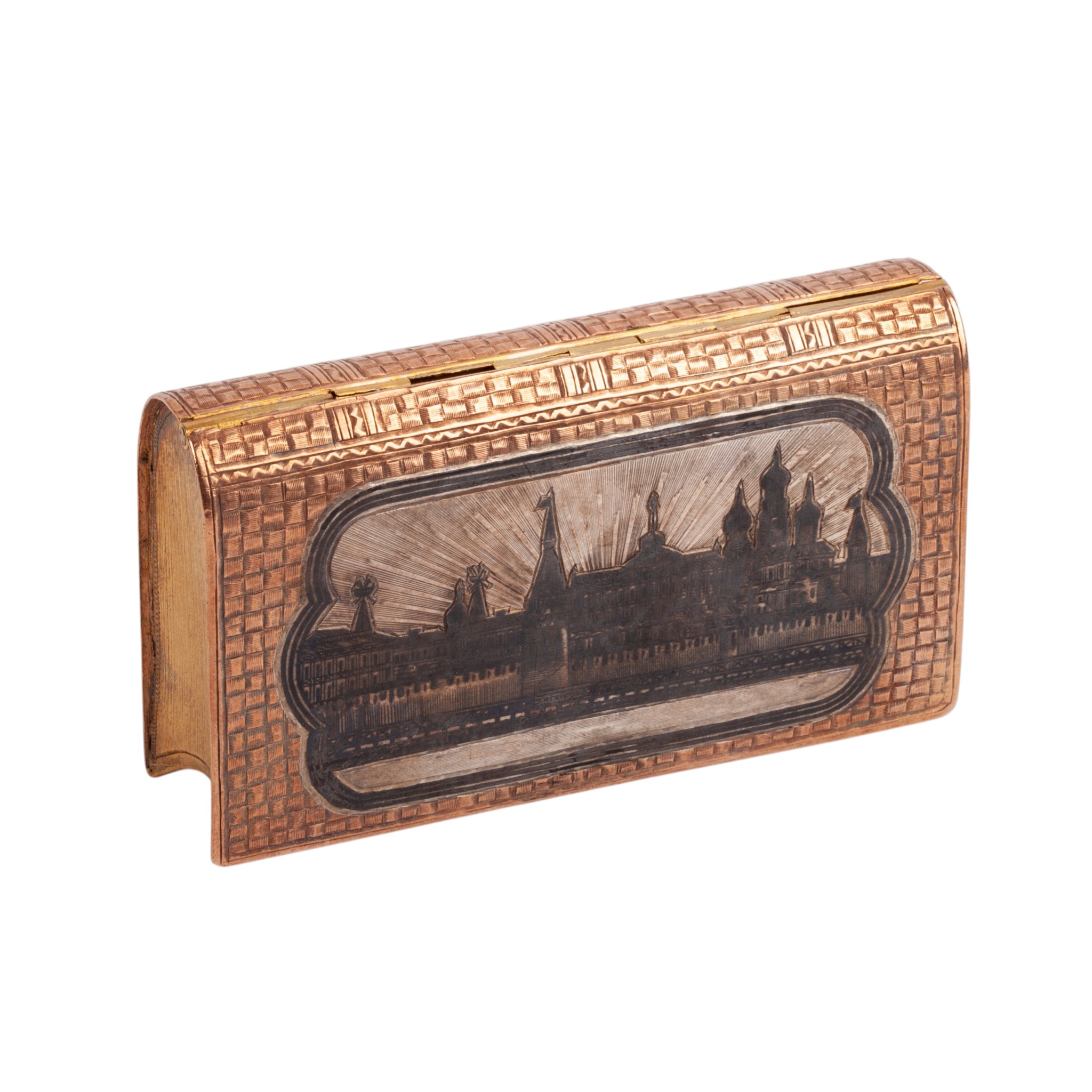
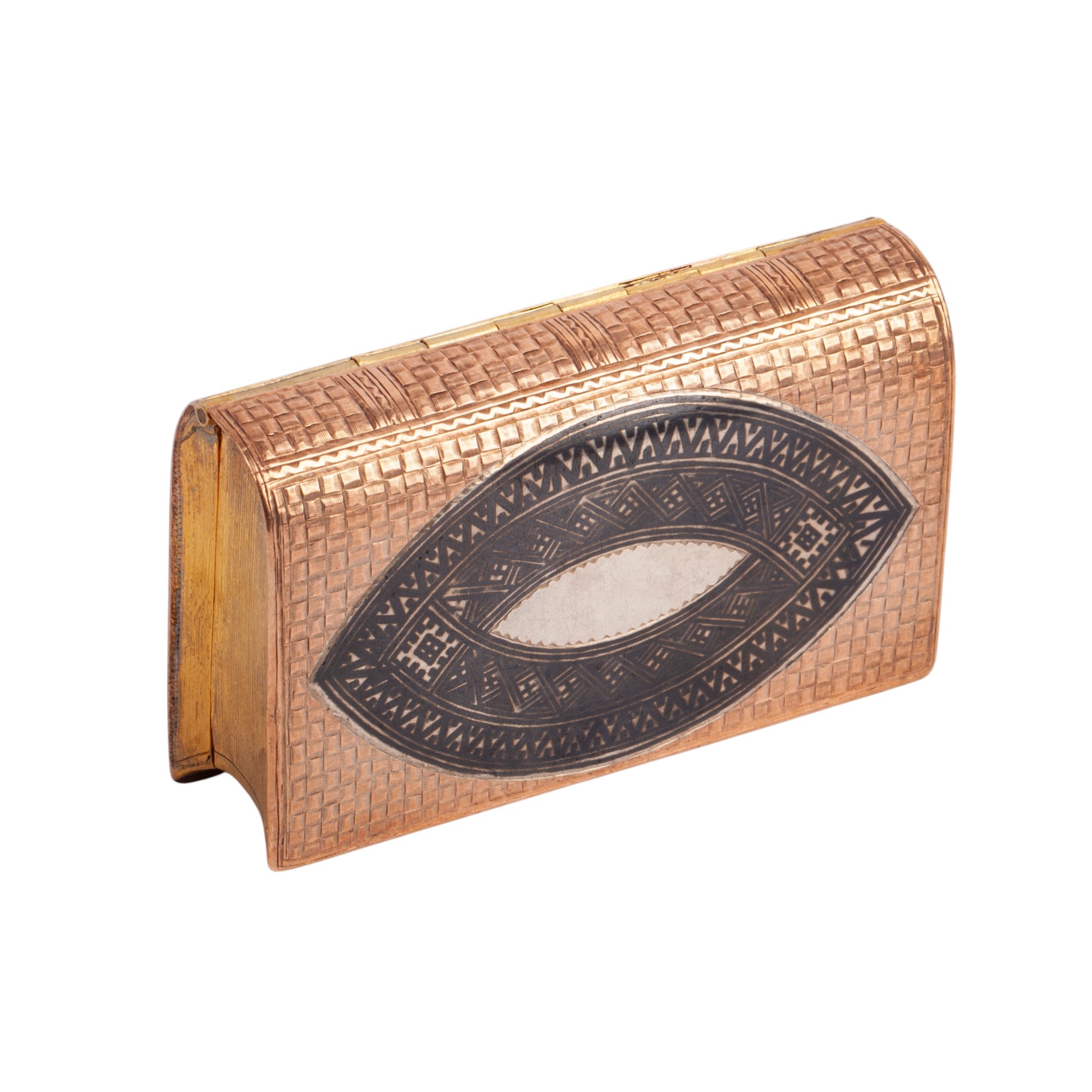
Estimate: 1500-1700€Trompe-l’oeil Snuff Box in the Form of a Little Book with a Niello View of the Moscow Kremlin
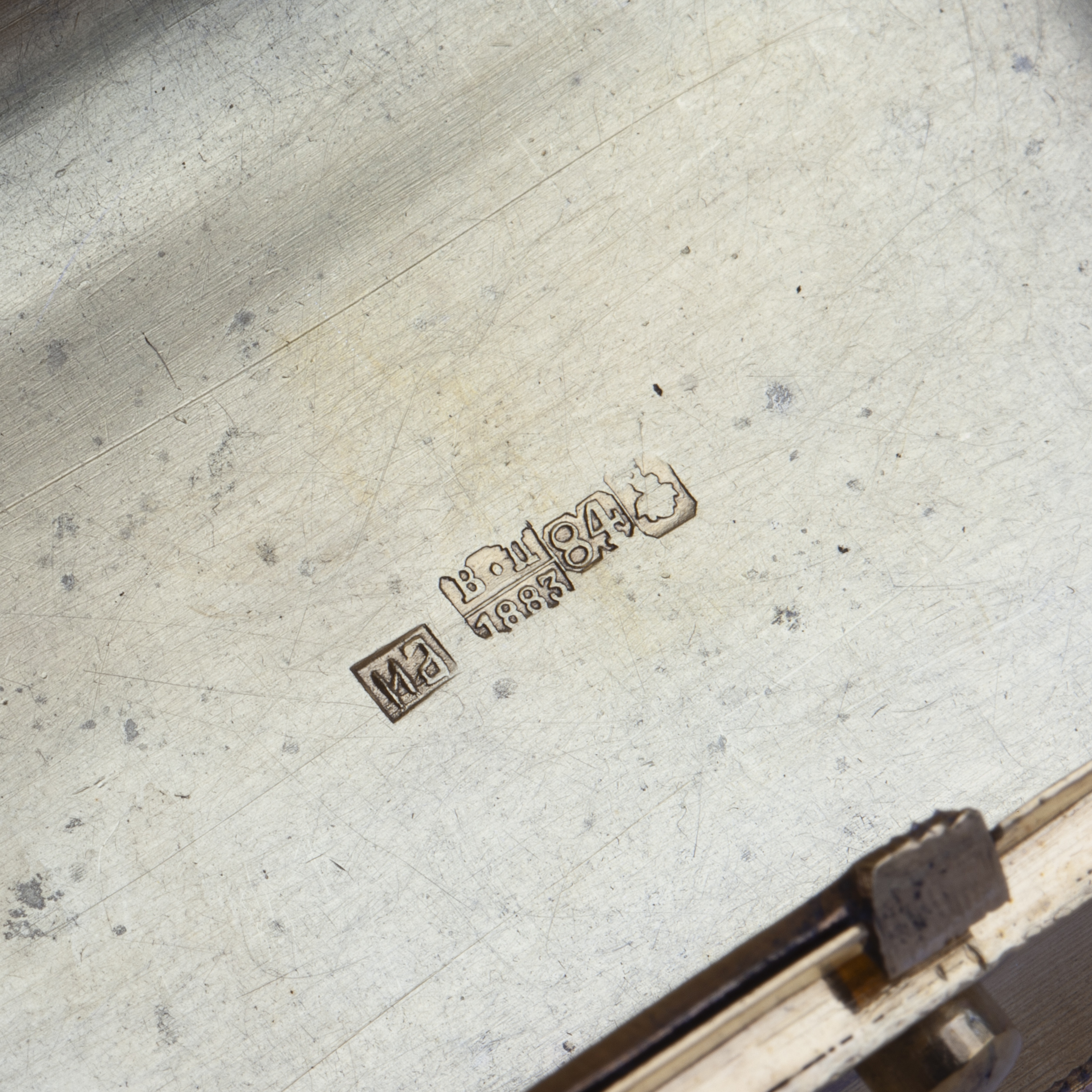
Moscow, master “IA”, 1883.
Silver, niello, gilding, engraving.
Size: 5.5 × 9.4 × 2.5 cm. Weight: 119 g.
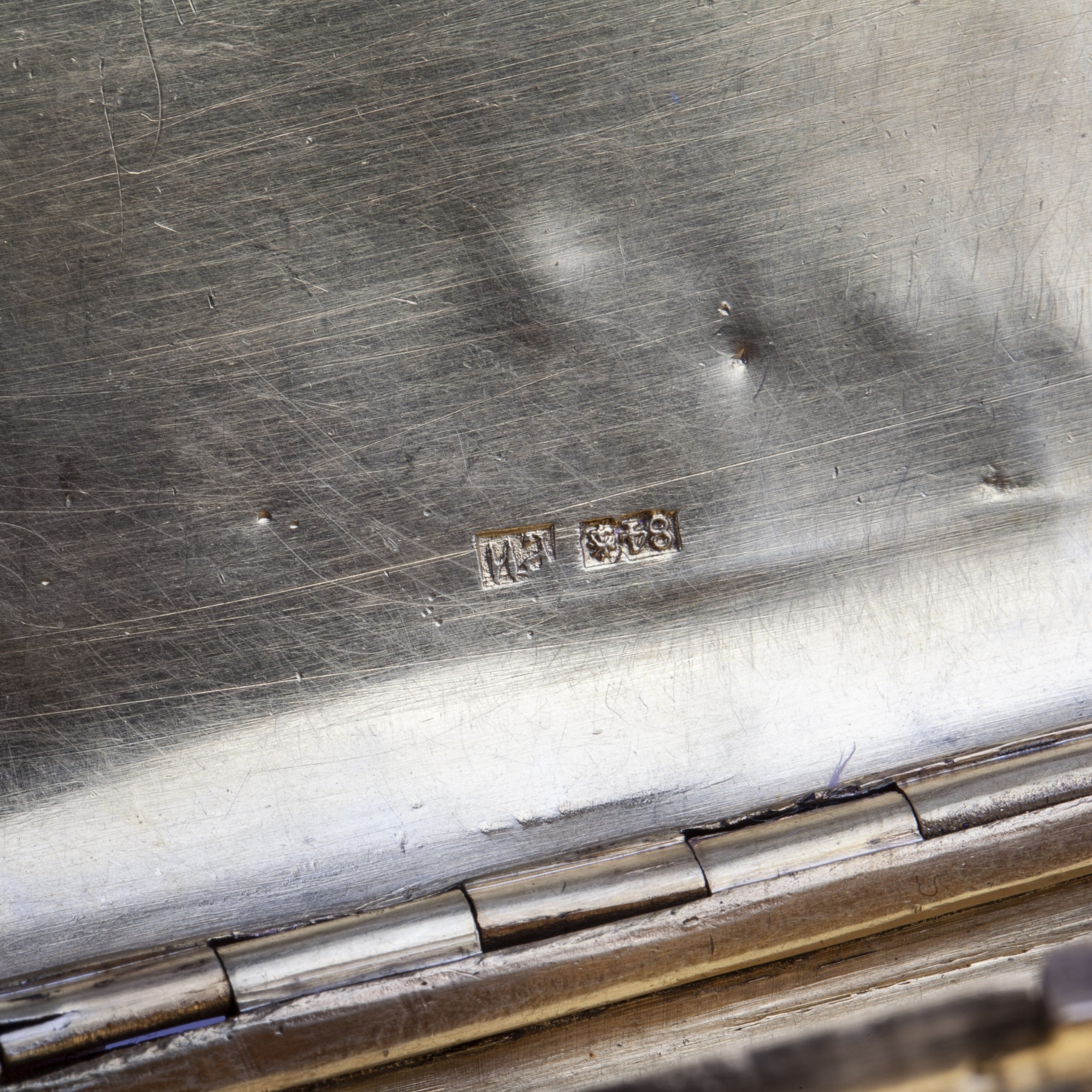
Marks: maker’s mark “IA”; Moscow assay mark, 84 zolotnik silver standard.
A finely executed silver snuff box designed in the trompe-l’oeil manner as a small antique book, its compact rectangular form ingeniously articulated with a curved spine and gilt “page” edges. The cover is centred with a carefully engraved and nielloed panoramic view of the Moscow Kremlin, enclosed within a scalloped cartouche and set against a richly textured ground imitating woven ornament.
The reverse is decorated with an elaborate ornamental panel in the Pan-Slavic taste, further enriching the object’s historicising character.Starting price: 1300€
Estimate: 1500-1700€
Hammer Price: Not sold -
Lot 0044
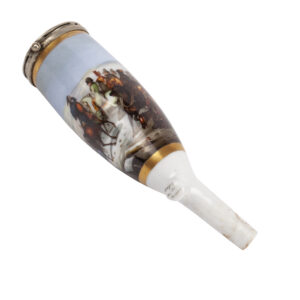
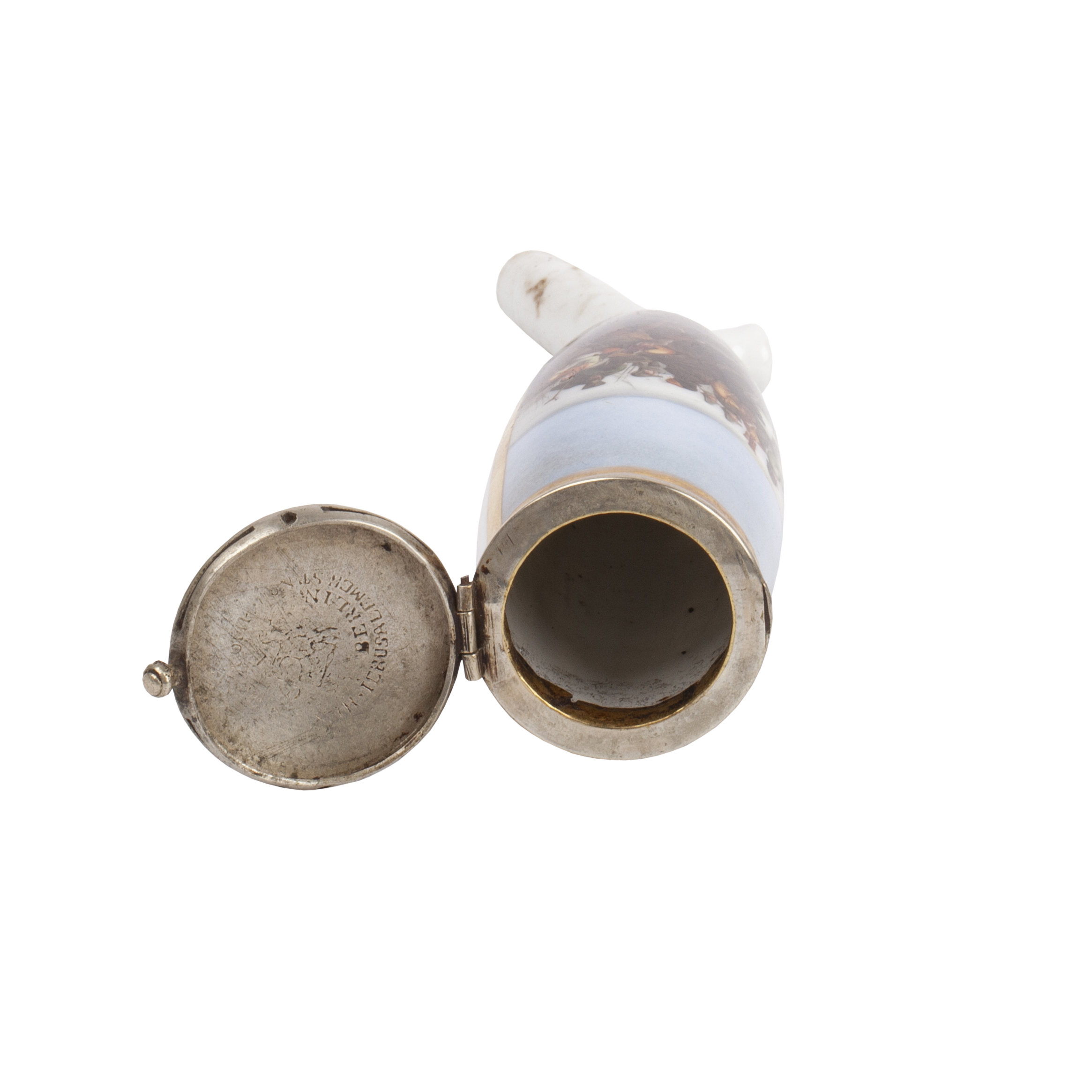
Porcelain Tobacco Pipe, The Bowl Finely Painted with a Miniature Scene of the Battle of Berezina (1812)
Estimate: 600-800€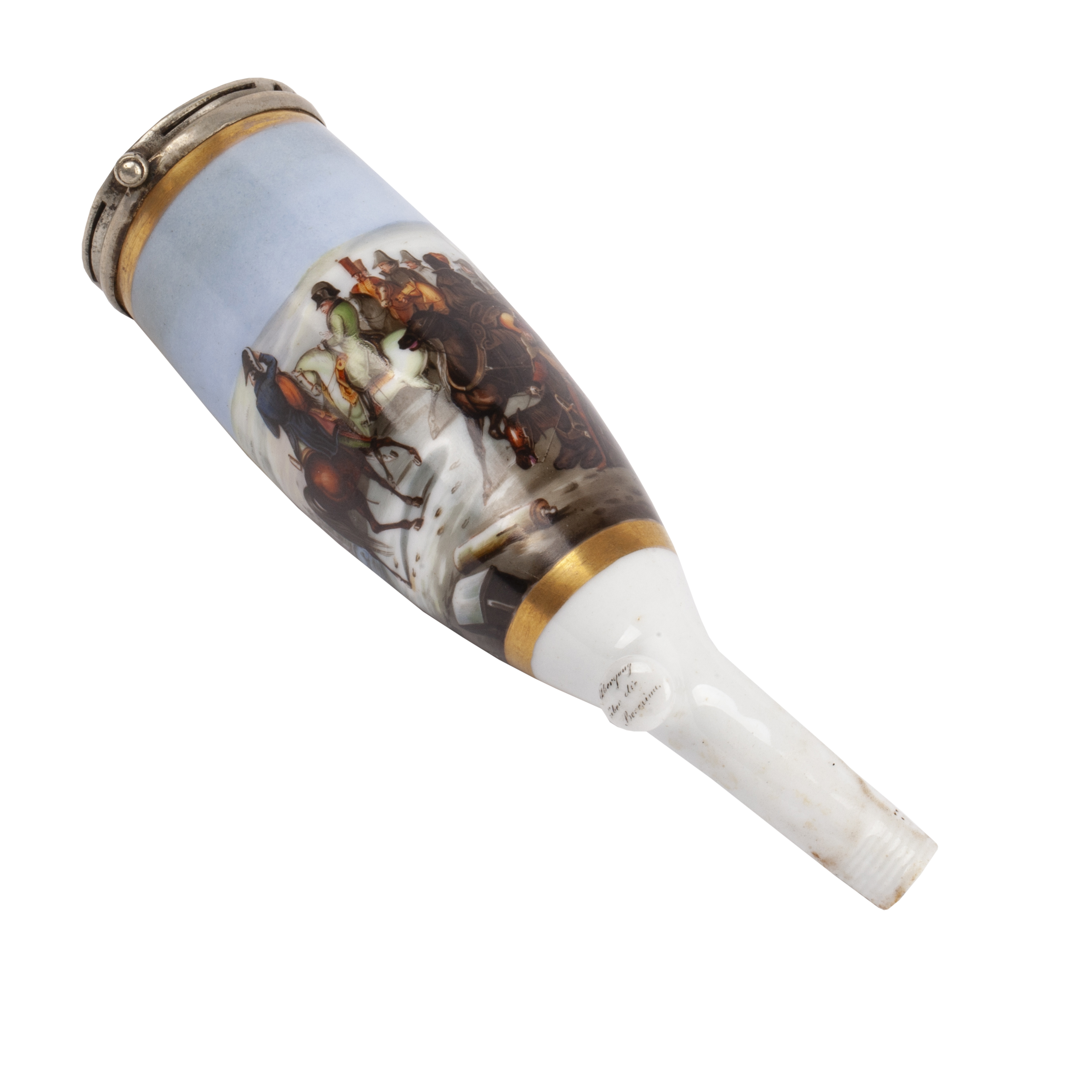
Lot 0044
Porcelain Tobacco Pipe, The Bowl Finely Painted with a Miniature Scene of the Battle of Berezina (1812)
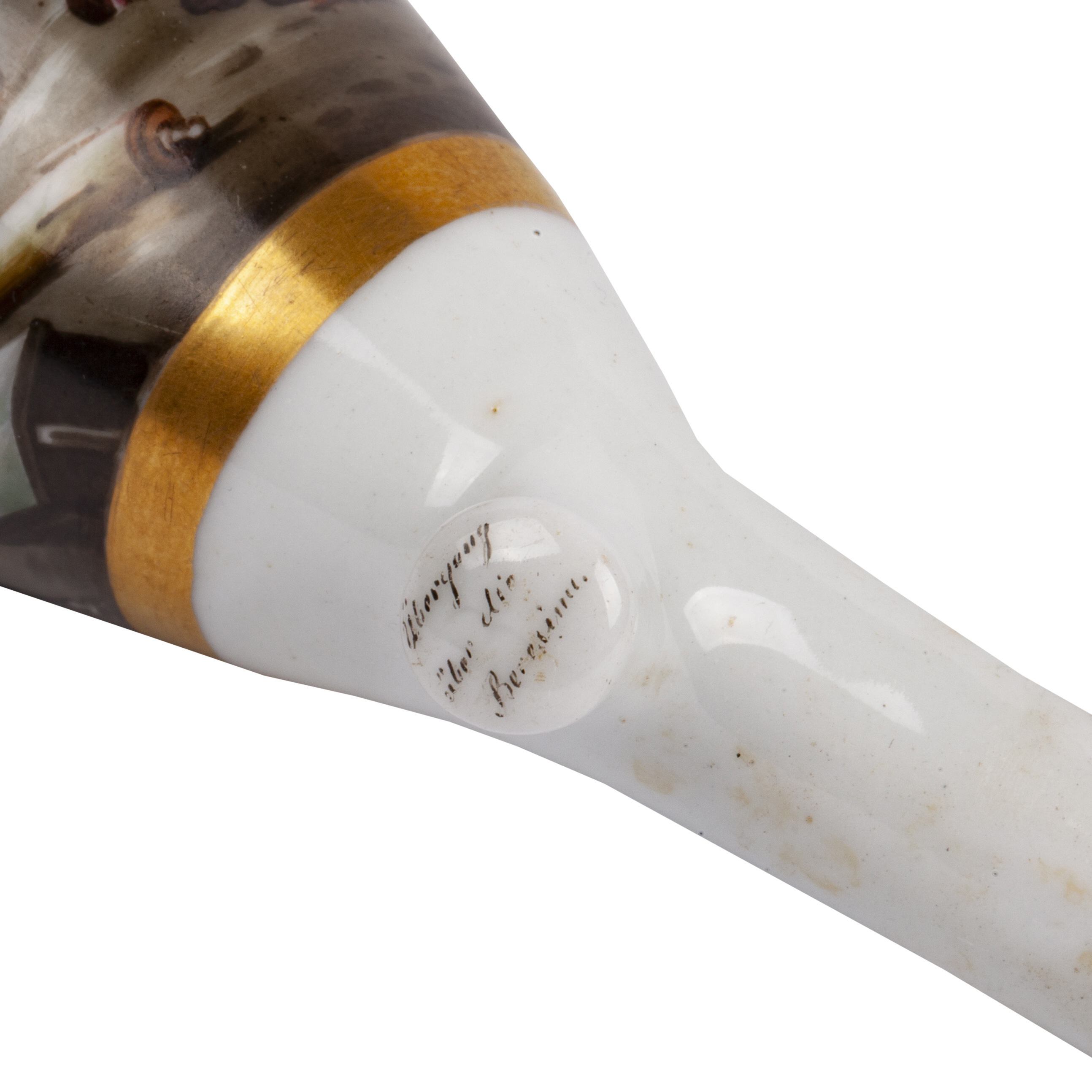
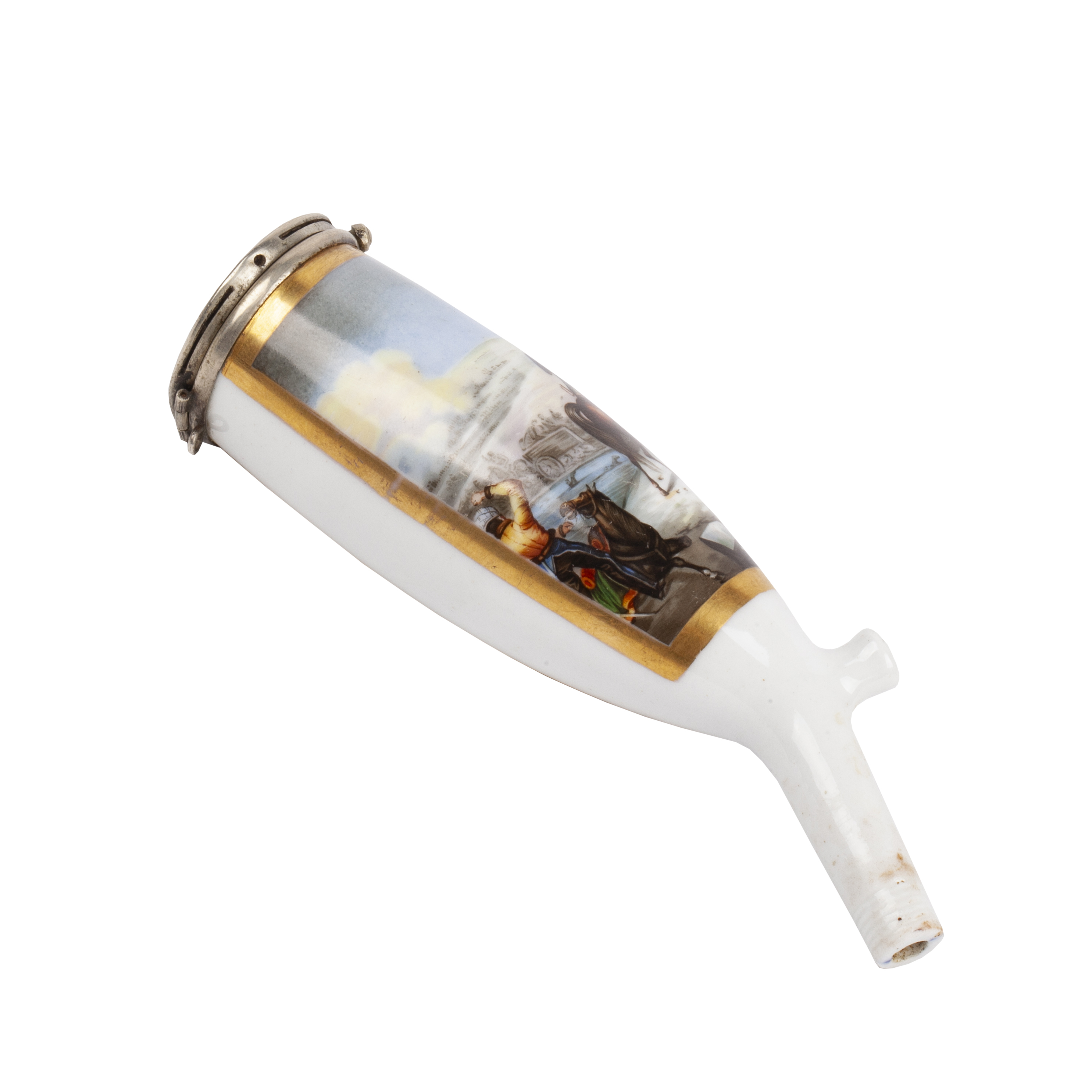
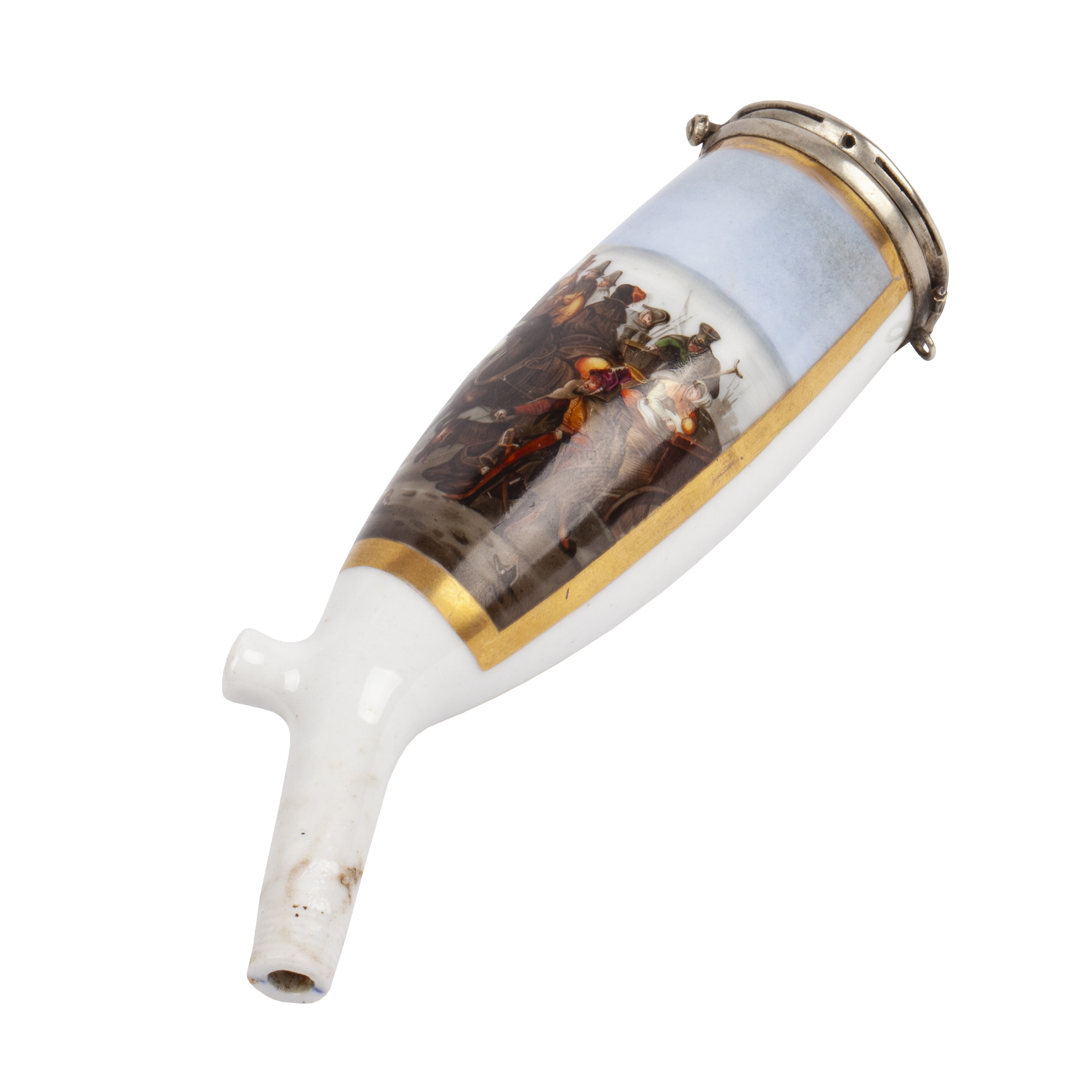
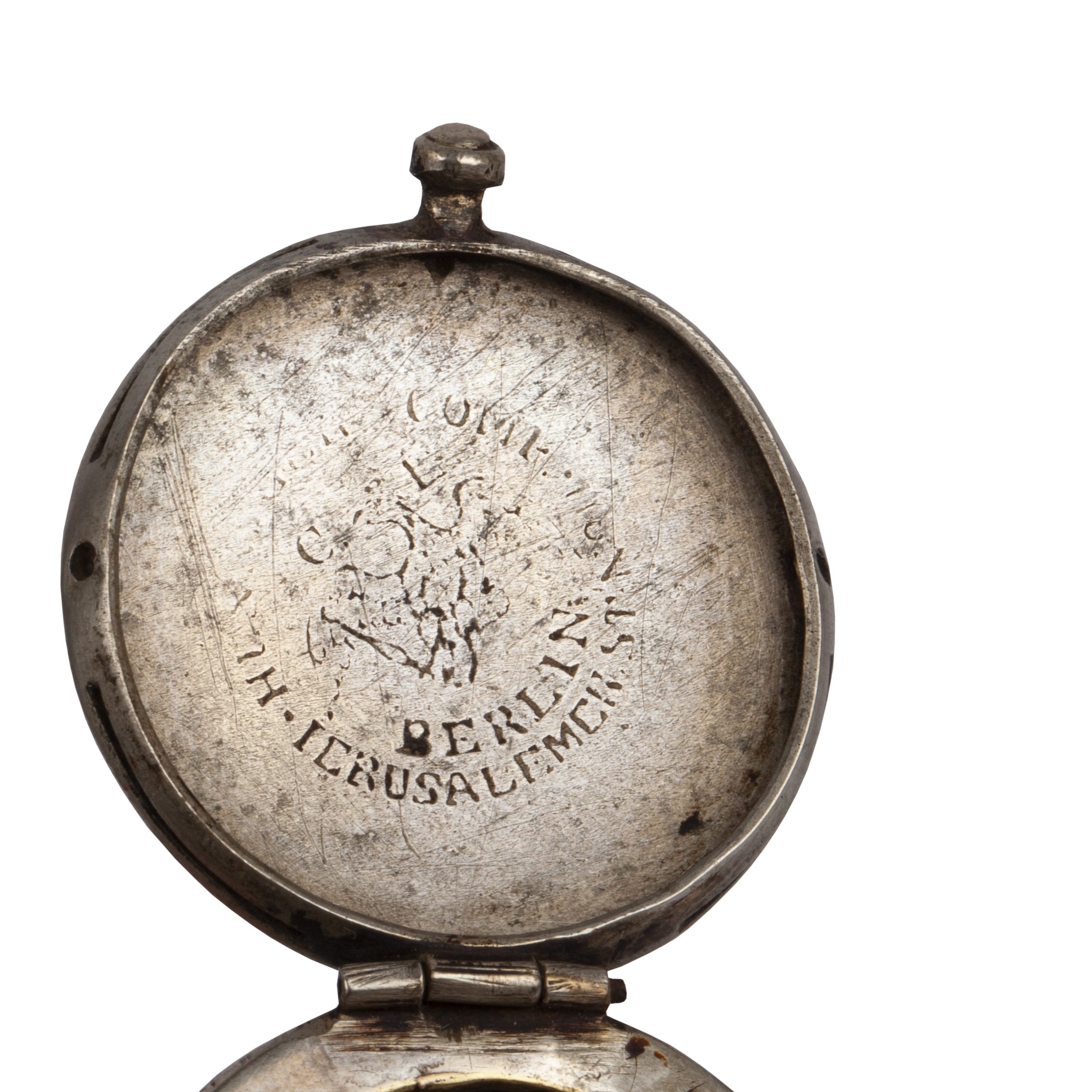
Estimate: 600-800€A porcelain tobacco pipe, the bowl finely painted with a miniature scene of the Battle of Berezina (1812) between Napoleon’s retreating army and Russian forces. The decoration is heightened with gilding, the mount fitted with a metal rim.
Material: porcelain, painting, metal.
Dimensions: 13 × 3.5 cm.The pipe bowl is made in the most famous porcelain pipe form, the stummel — an oval bowl with a knob heel and a short stem, originally derived from the Gouda clay pipe. Its shape made it especially suitable for miniature painting, and from around 1780 workshops such as Meissen and the Königliche Porzellan Manufaktur in Berlin perfected the art of lifelike decoration, often based on contemporary engravings. Painted subjects included portraits, landscapes, and historical events such as the Napoleonic Wars.
Such stummel pipes were highly valued as gifts, sometimes inscribed with the names of donor and recipient, and decorated with imagery reflecting the recipient’s interests or family crest. This example, with its depiction of the Battle of Berezina, belongs to that tradition of commemorative and collectible painted porcelain pipes.
Starting price: 500€
Estimate: 600-800€
Hammer Price: Not sold -
Lot 0045
Russian Elegant Gold Cigarette Case, Moscow, Ivan Tarabrov Factory, 1908–1917
Estimate: 3500-4500€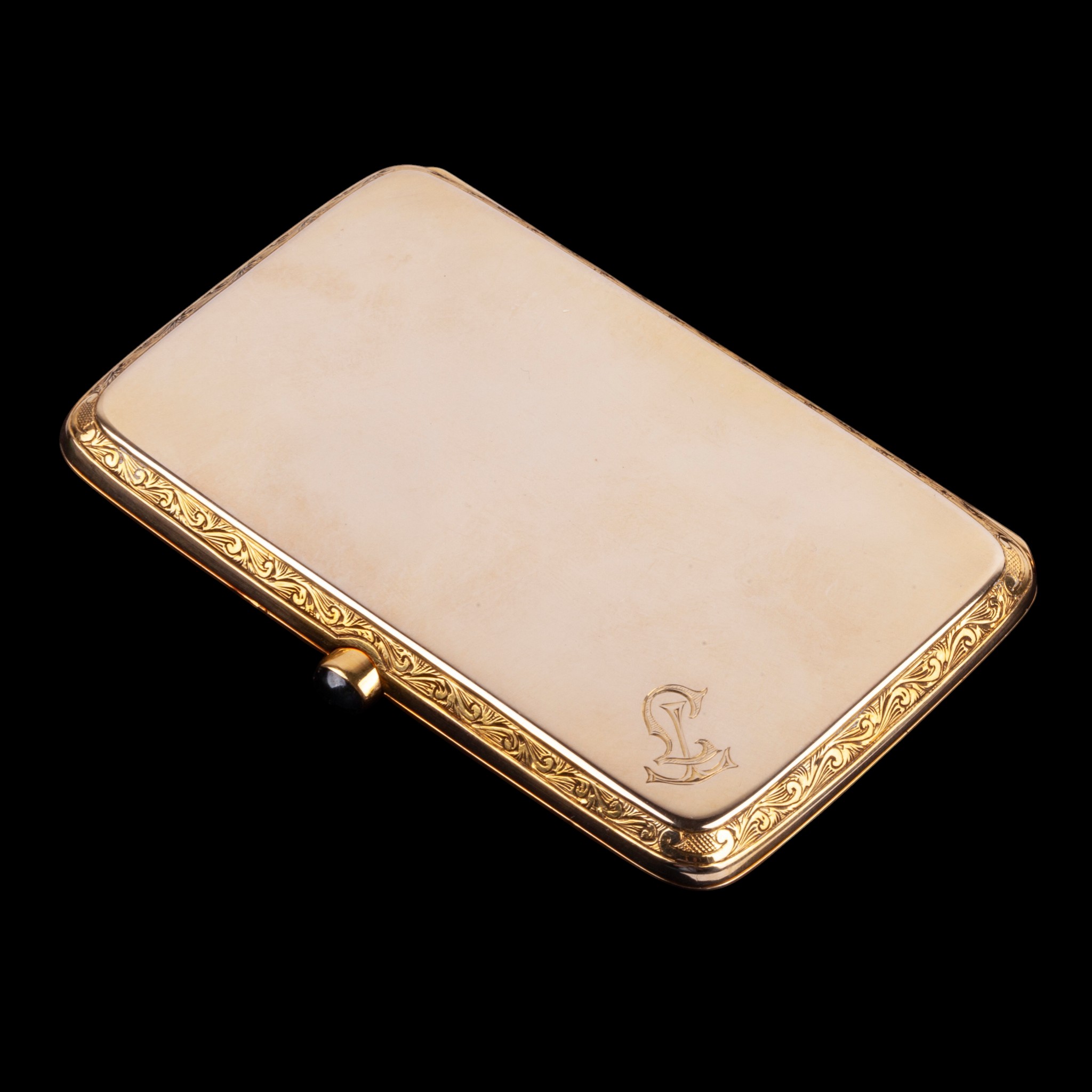
Lot 0045
Russian Elegant Gold Cigarette Case, Moscow, Ivan Tarabrov Factory, 1908–1917
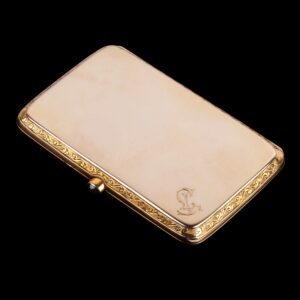
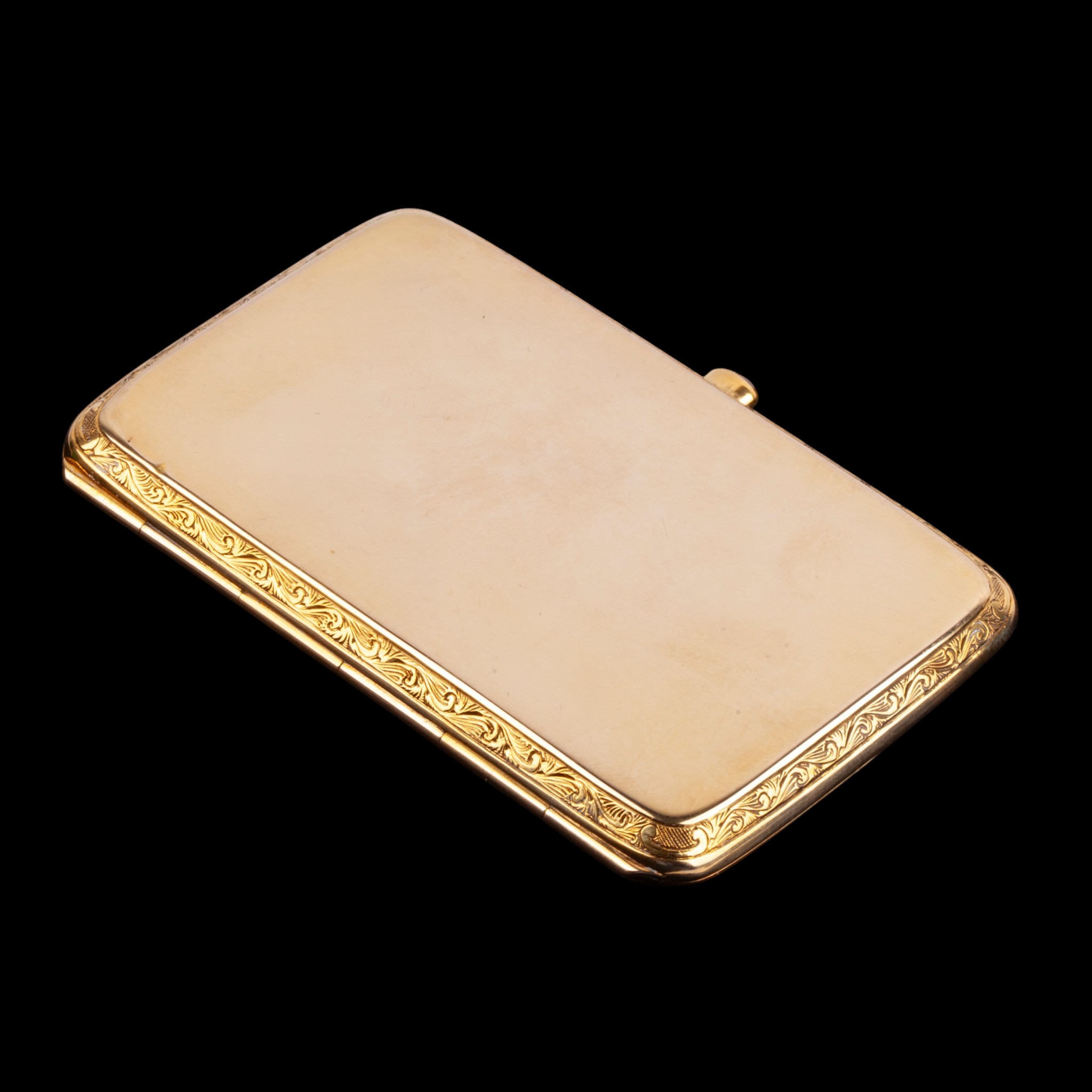
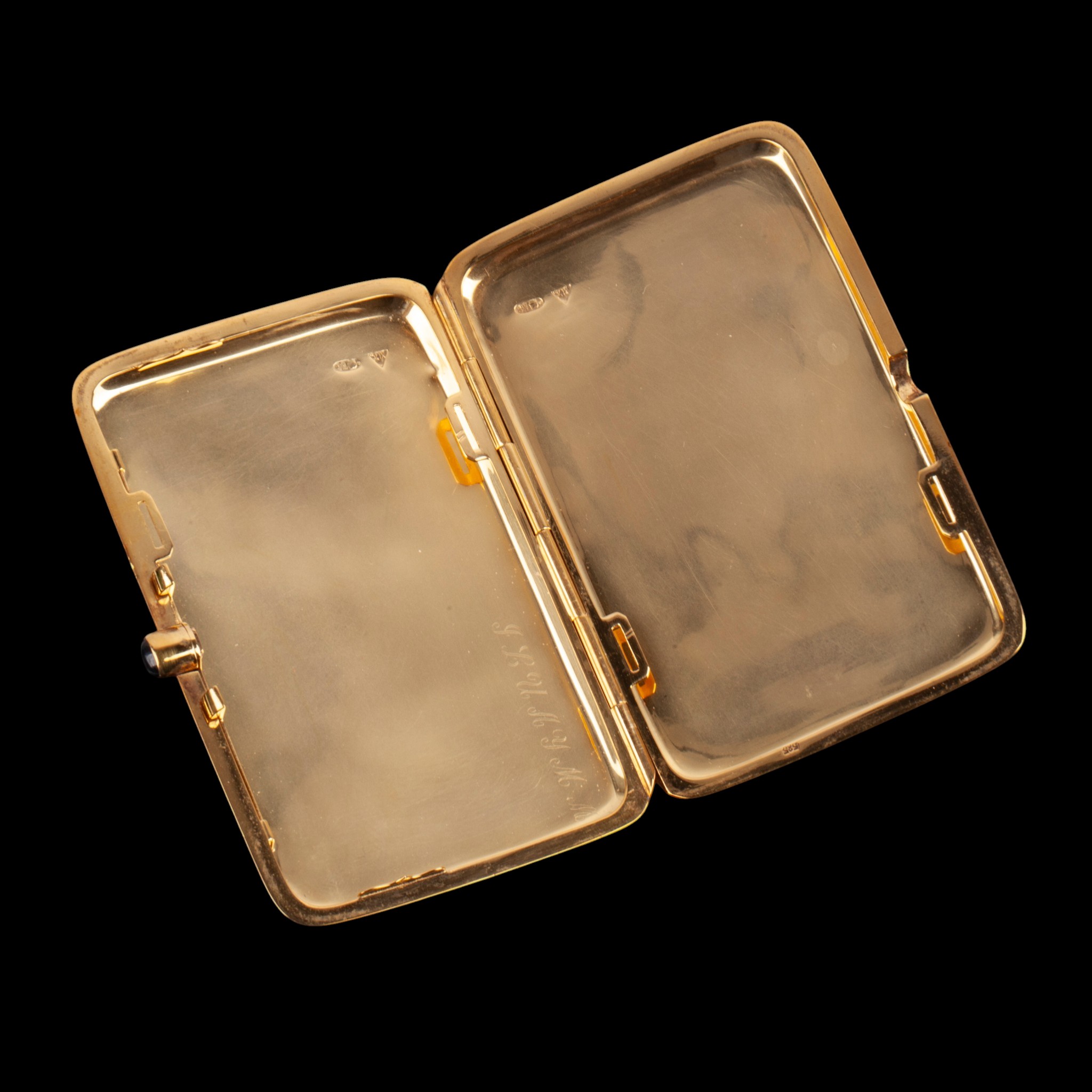
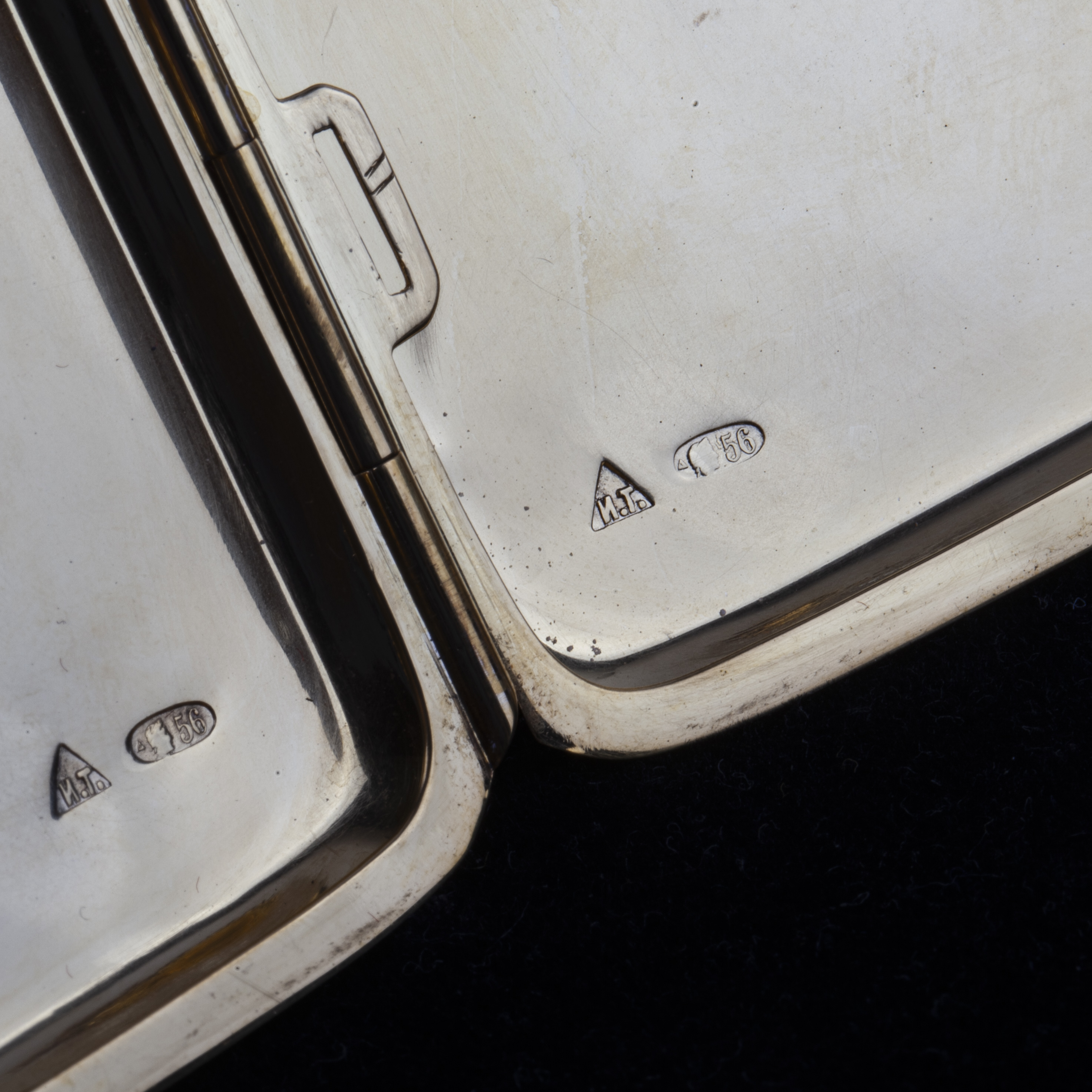
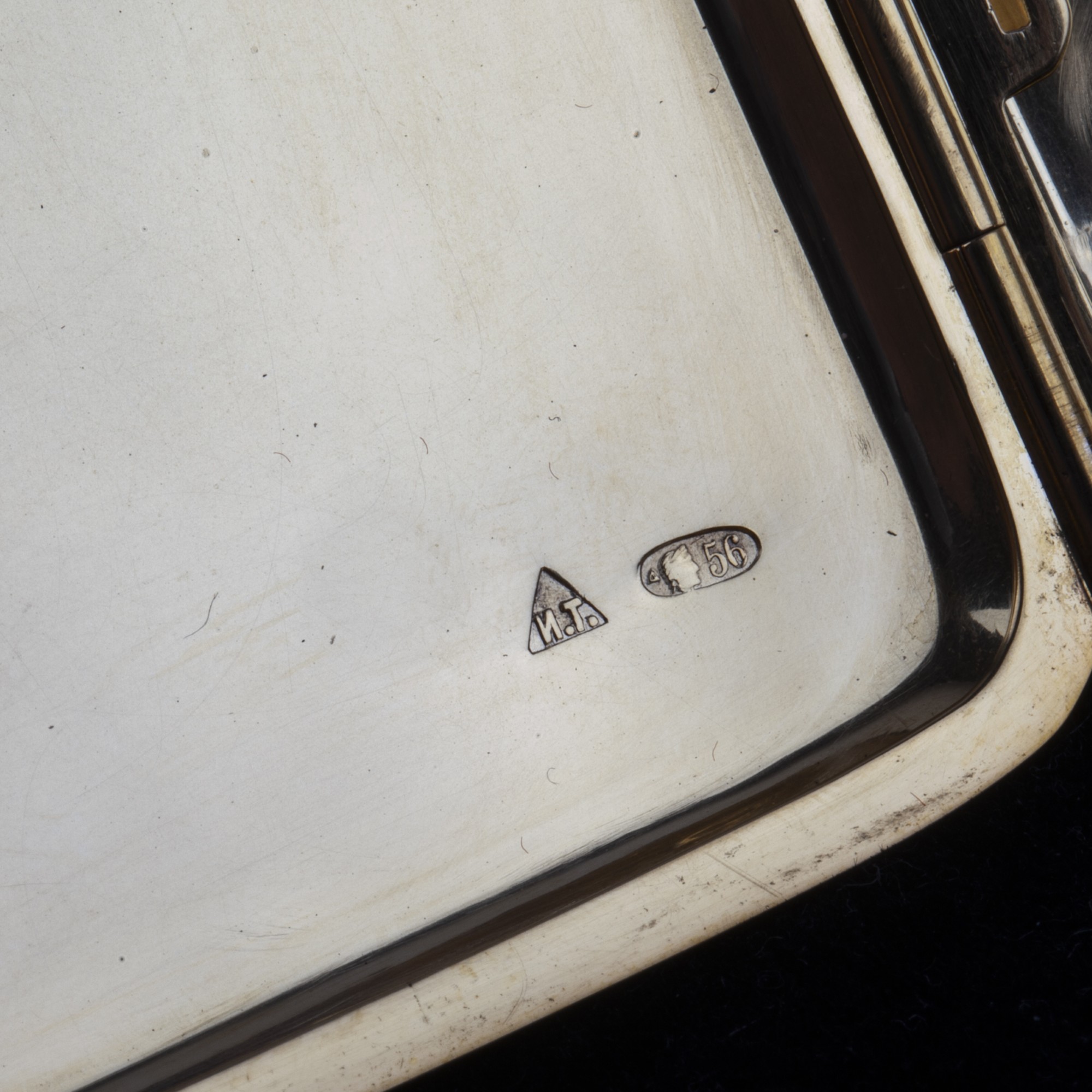
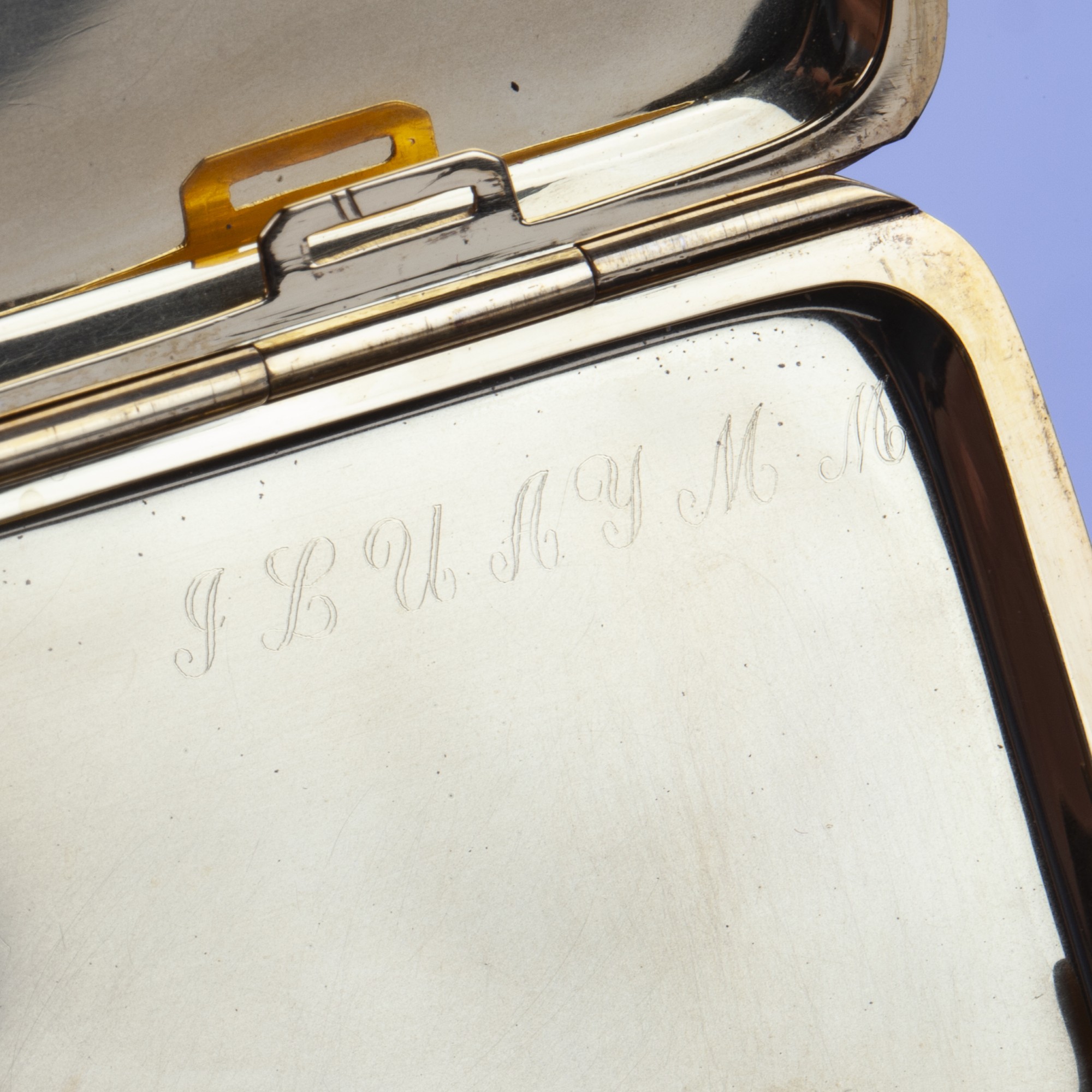
Estimate: 3500-4500€A Russian elegant gold cigarette case. Moscow, Factory of Ivan Tarabrov, 1908-1917. Gold; engraving, polishing. Weight: 74 g. Dimensions: 1 x 5,8 x 8,4 cm. Marks: maker’s mark “I.T.” in a triangular cartouche; Moscow assay mark; 56 zolotnik gold standard.
An elegant gold cigarette case of rectangular form with softly rounded corners. The broad, unadorned panels emphasize the intrinsic value and luminous surface of the gold, while the narrow engraved border lends the object a subtle ornamental frame.
The piece belongs to the Moscow factory of Ivan Filippovich Tarabrov. The factory was founded in Moscow in 1893, was among the notable Russian workshops of the late 19th and early 20th centuries, renowned for its refined gold and silver objects, jewellery, personal accessories, icon covers, and decorative wares produced for both private and ecclesiastical patrons. Initially located on Krasnokholmskaya Street and later transferred to Tarabrov’s own house on Bolshaya Dvoryanskaya Street, the enterprise had grown by 1897 to employ forty-six workers, with an annual production valued at 52,000 roubles. The factory was distinguished by its skilful metalwork, fine engraving, chasing, and enamelling, including the use of translucent green enamel, polychrome accents, and, in certain works, red enamel laid over gold foil to achieve a luminous effect. Its artistic language combined technical precision with elegant ornament, often drawing on the Art Nouveau vocabulary of asymmetry, stylized vegetal motifs, trefoil forms, and lobed borders, qualities that gave Tarabrov’s production its recognisable character and secured its place within the history of Russian jewellers’ art.Starting price: 3000€
Estimate: 3500-4500€
Hammer Price: 3 250 € -
Lot 0046
Fabergé. Art Nouveau Silver Cigarette Case. Moscow, 1899–1908
Estimate: 2500-3500€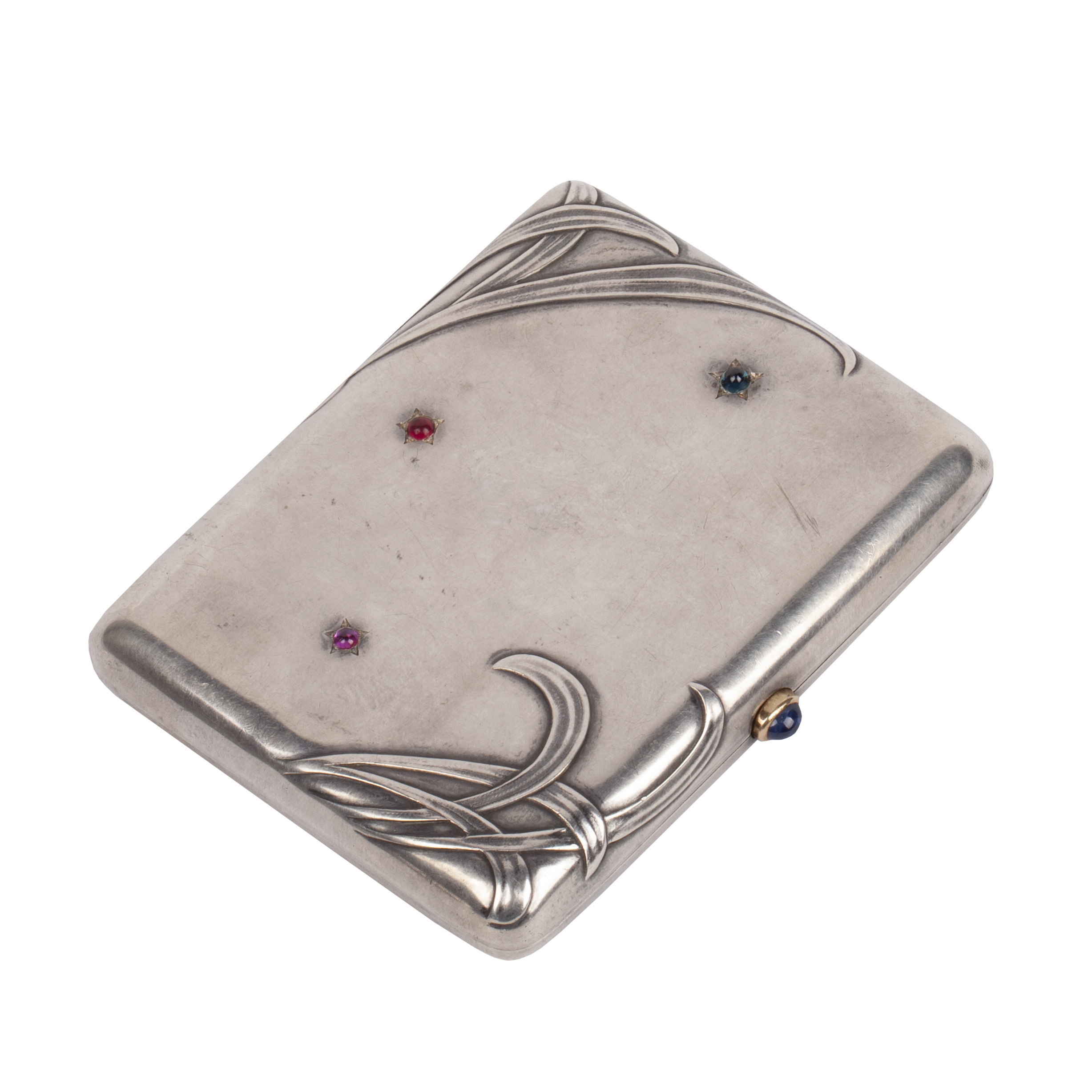
Lot 0046
Fabergé. Art Nouveau Silver Cigarette Case. Moscow, 1899–1908
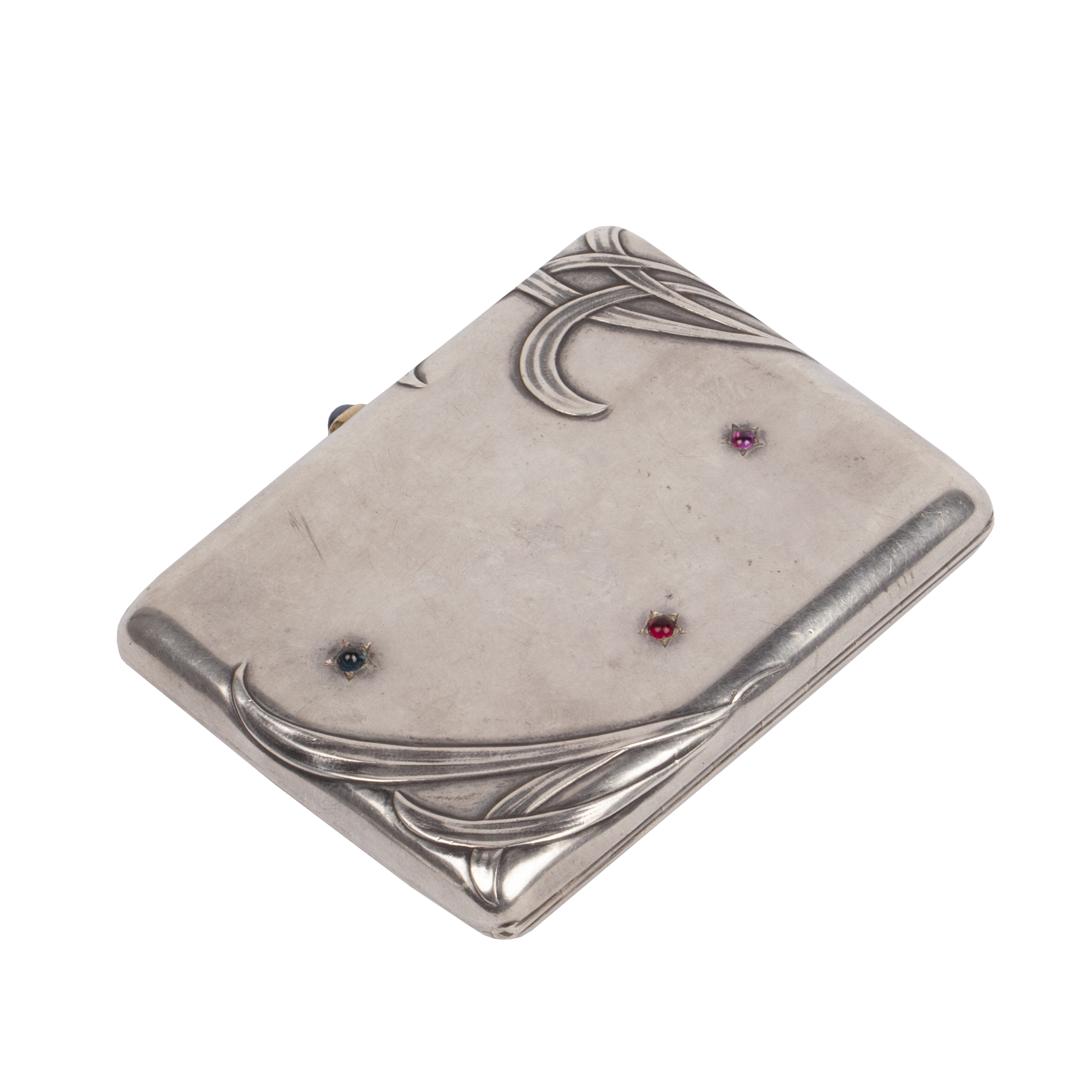
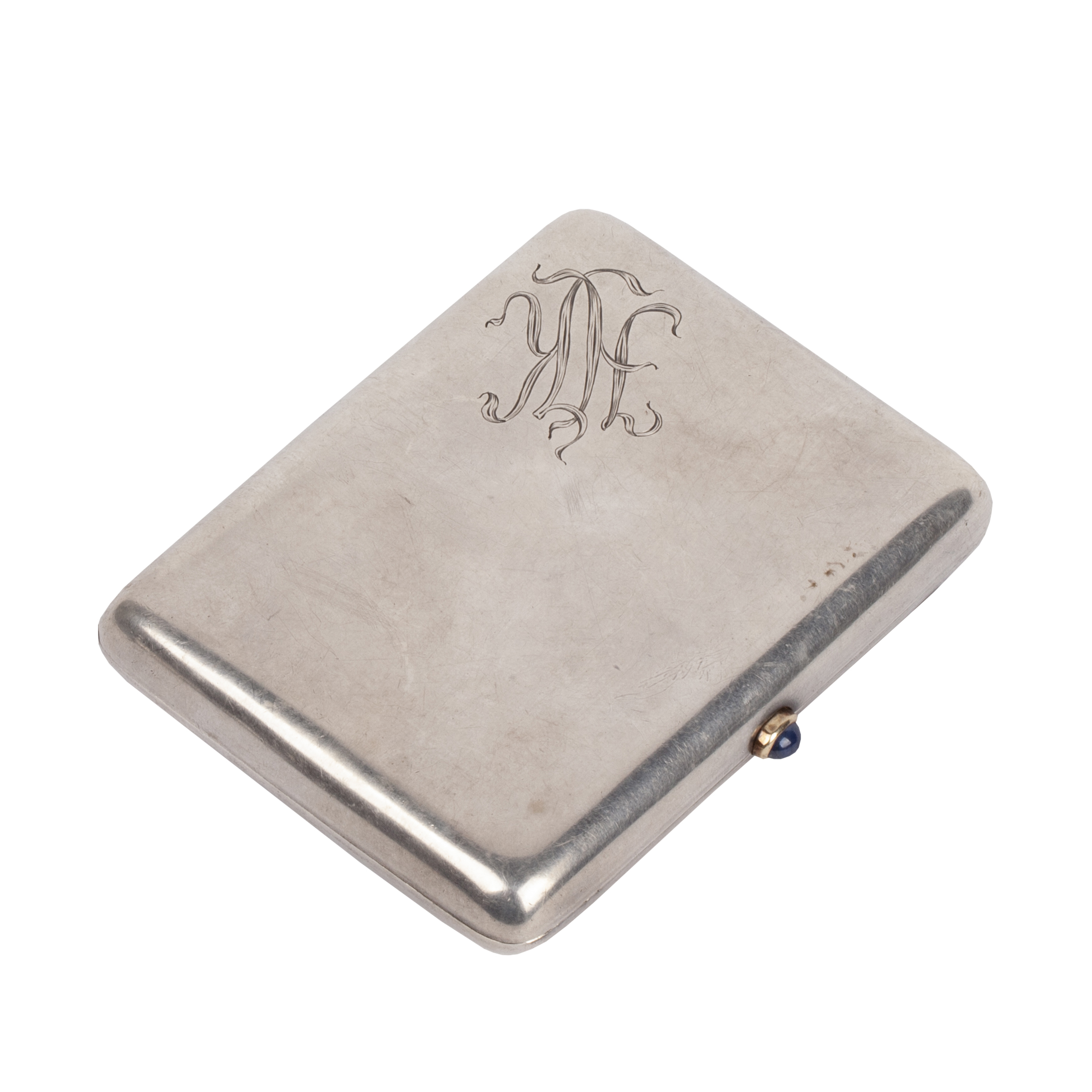
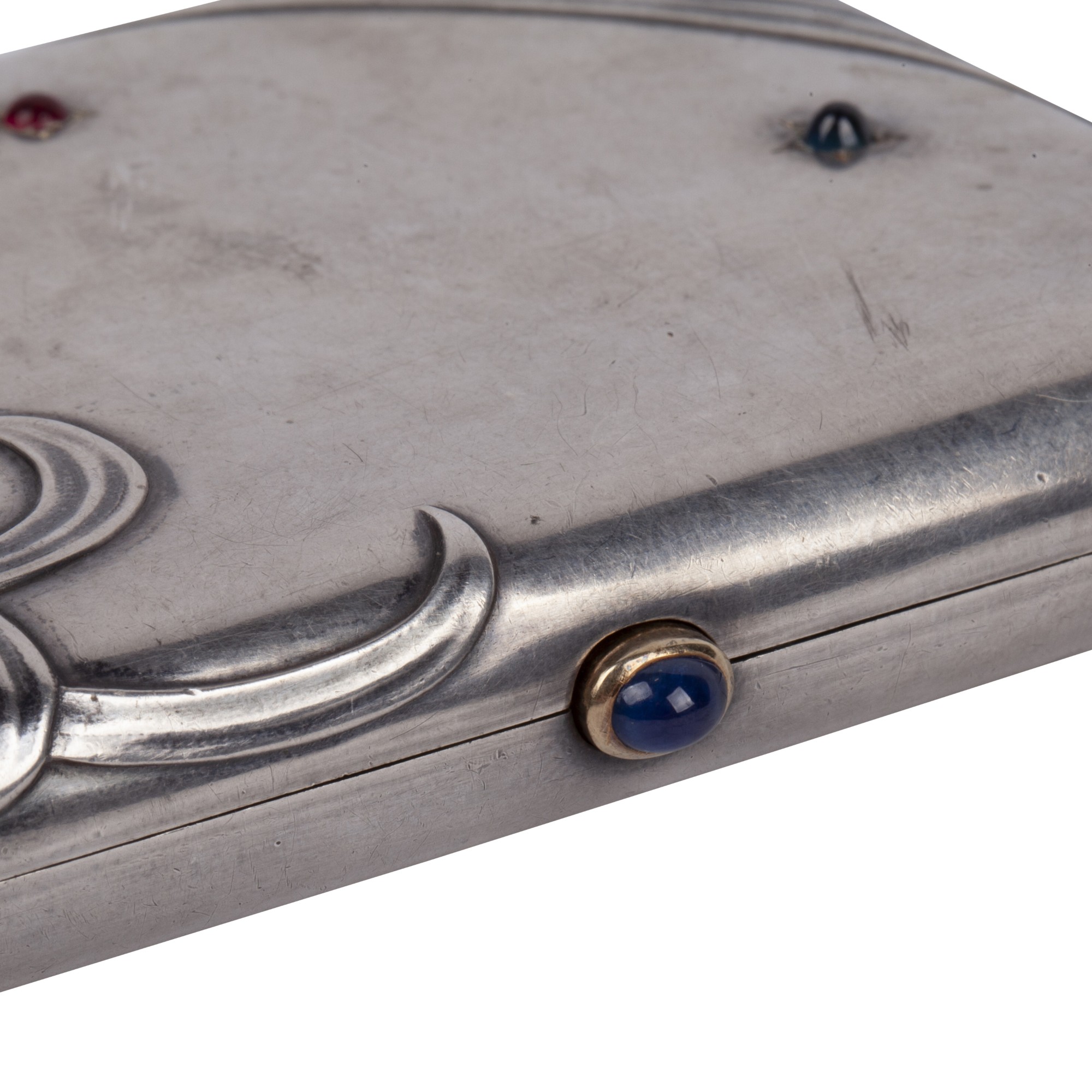
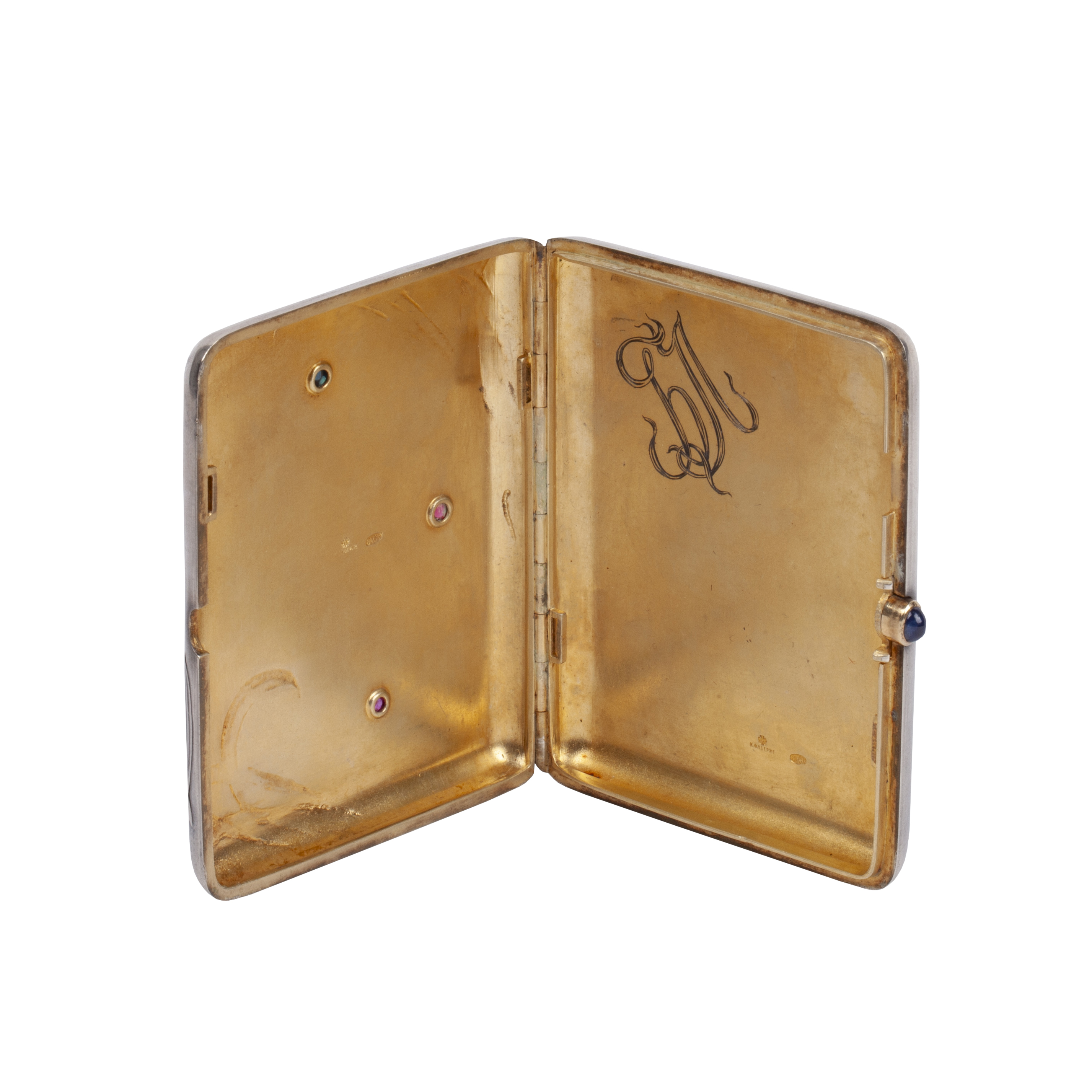
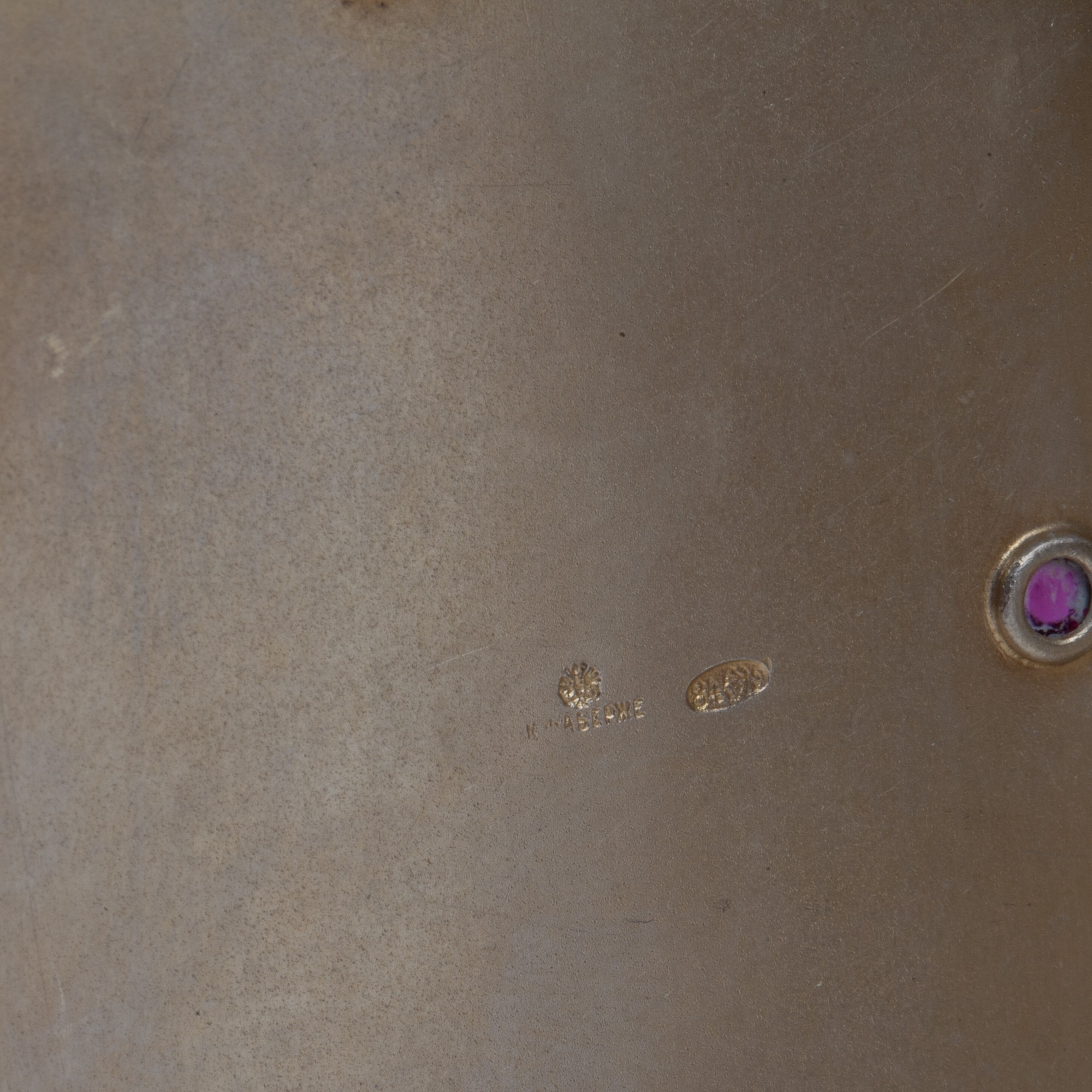
Estimate: 2500-3500€Faberge. Cigarette case in Art-nouveau style
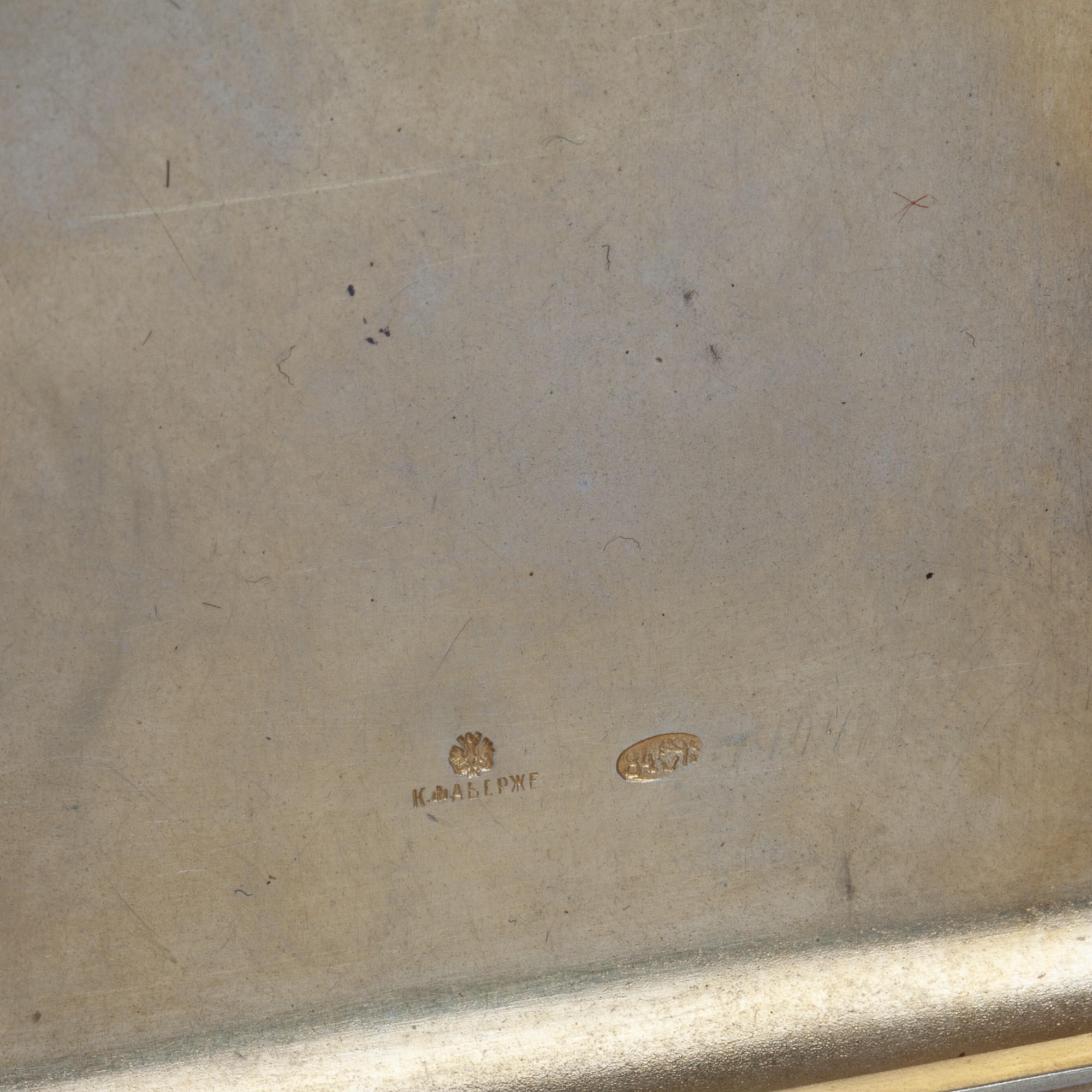
Silver, gold, chasing, gilding, sapphire and rubies. Dimensions: 9.5 x 7.7 x 2 cm. Total weight: 149 g. Inventory number 14041
Makers mark of «K. Faberge» with Imperial warrant and scratched inventory number 14041. Moscow, 1899-1908.
Rectangular silver cigarette case with rounded corners, decorated in the Art Nouveau style. The lid is adorned with flowing linear ornament in relief, resembling stylised plant forms, and set with small ruby cabochon stones in star-shaped casts. The clasp with gold rim is mounted with a cabochon sapphire.Starting price: 2000€
Estimate: 2500-3500€
Hammer Price: 2 500 € -
Lot 0047
Russian Silver-Gilt Nécessaire, St Petersburg, 1908–1917, Ivan Brytzin
Estimate: 4000-5000€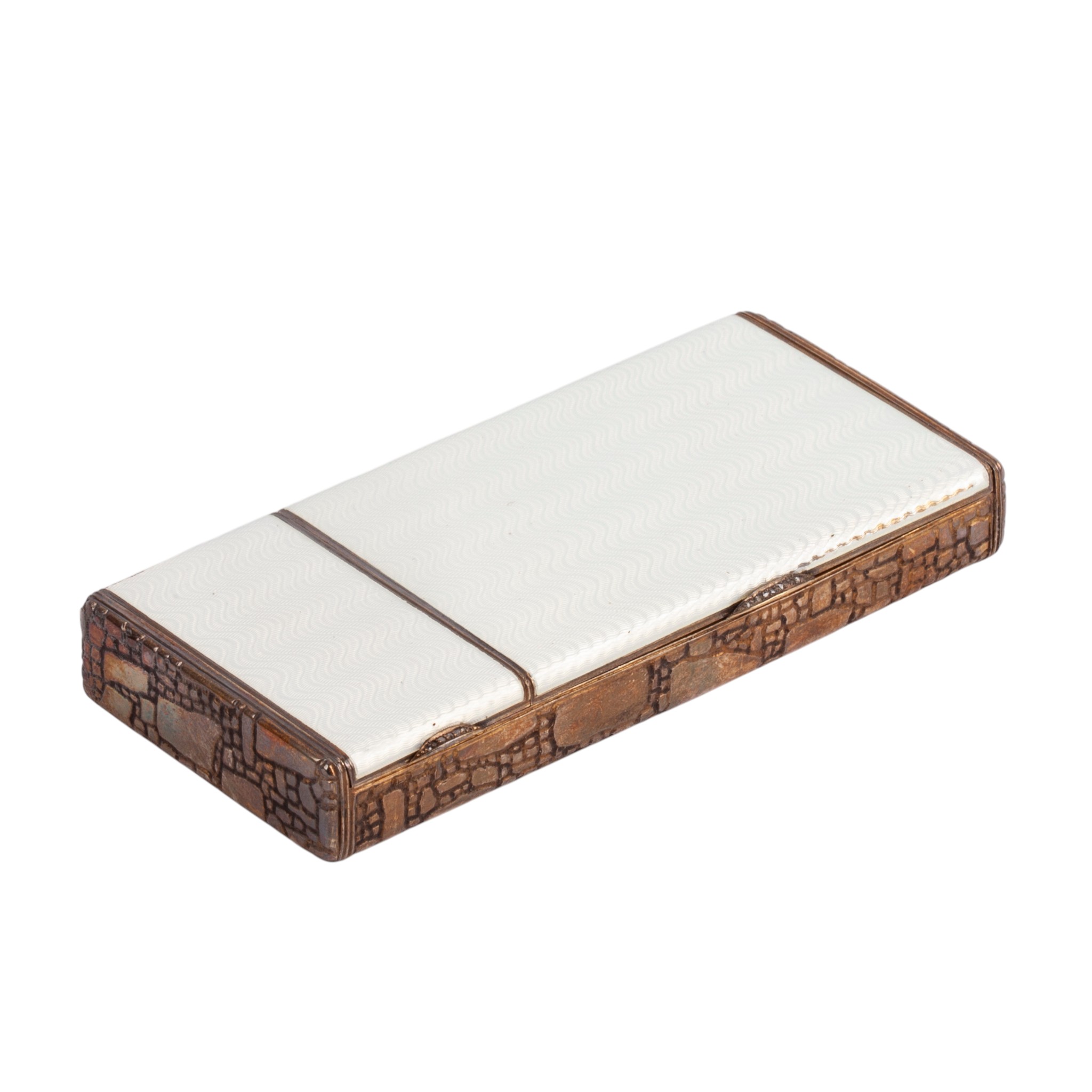
Lot 0047
Russian Silver-Gilt Nécessaire, St Petersburg, 1908–1917, Ivan Brytzin
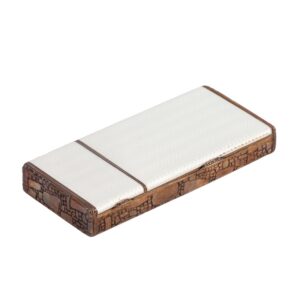
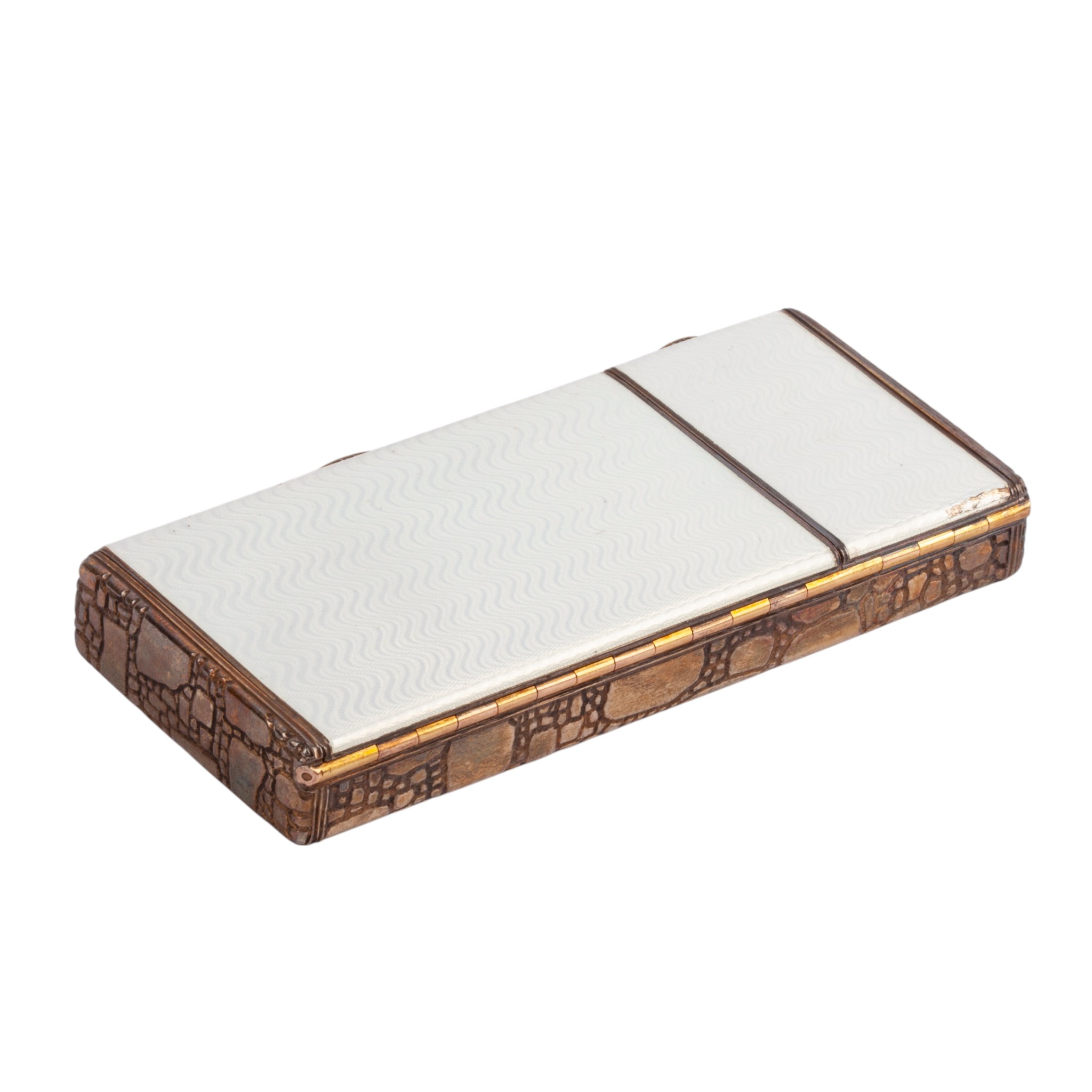
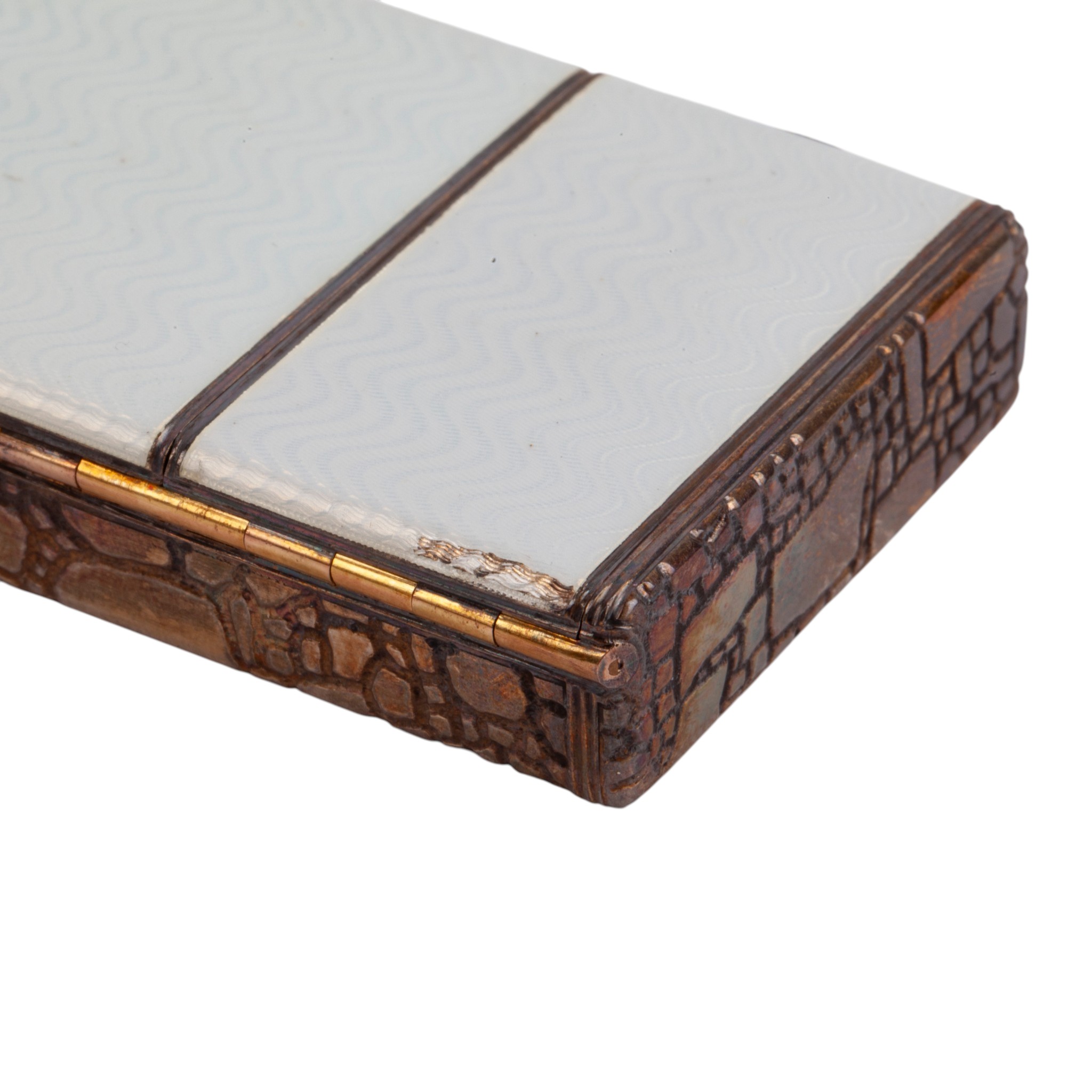
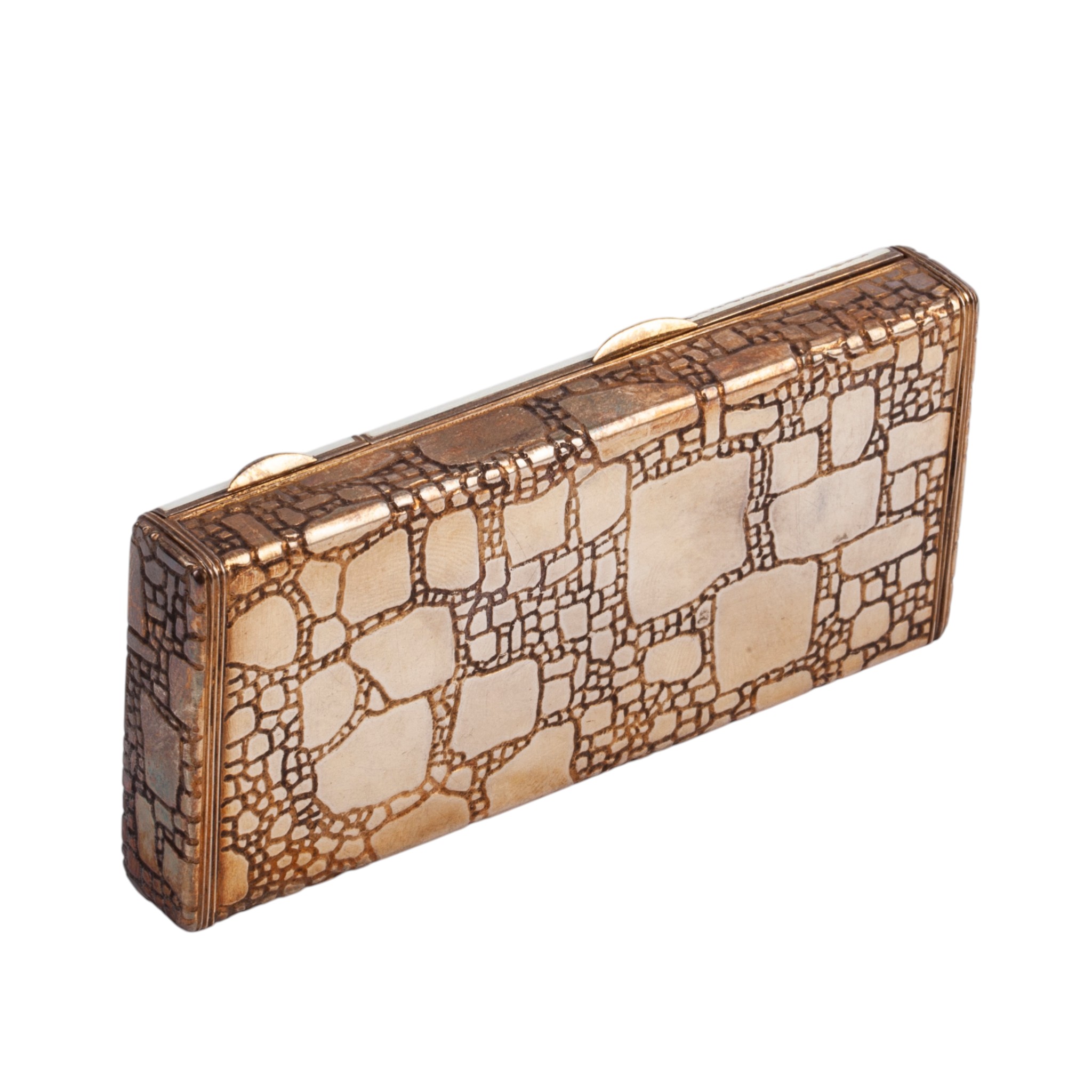
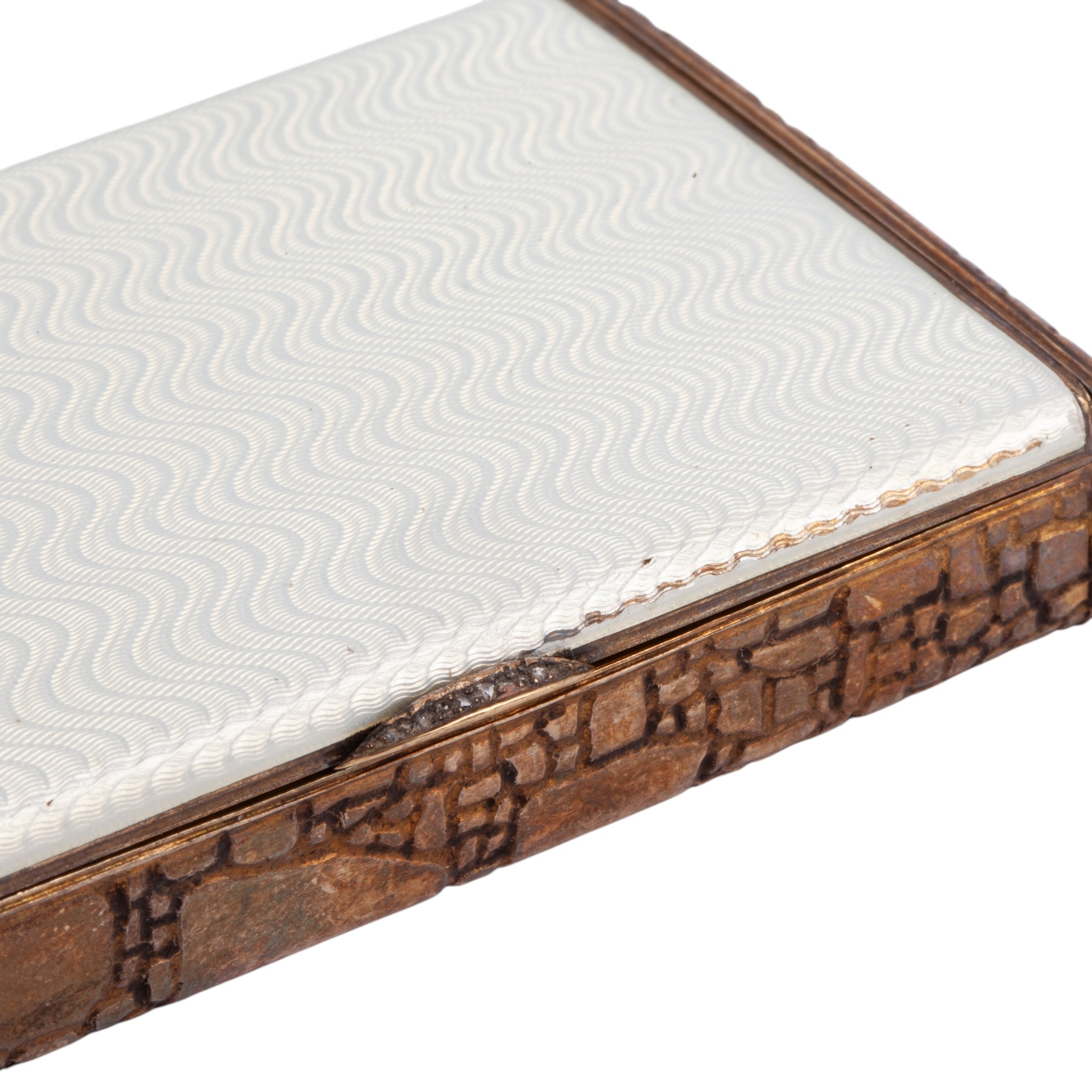
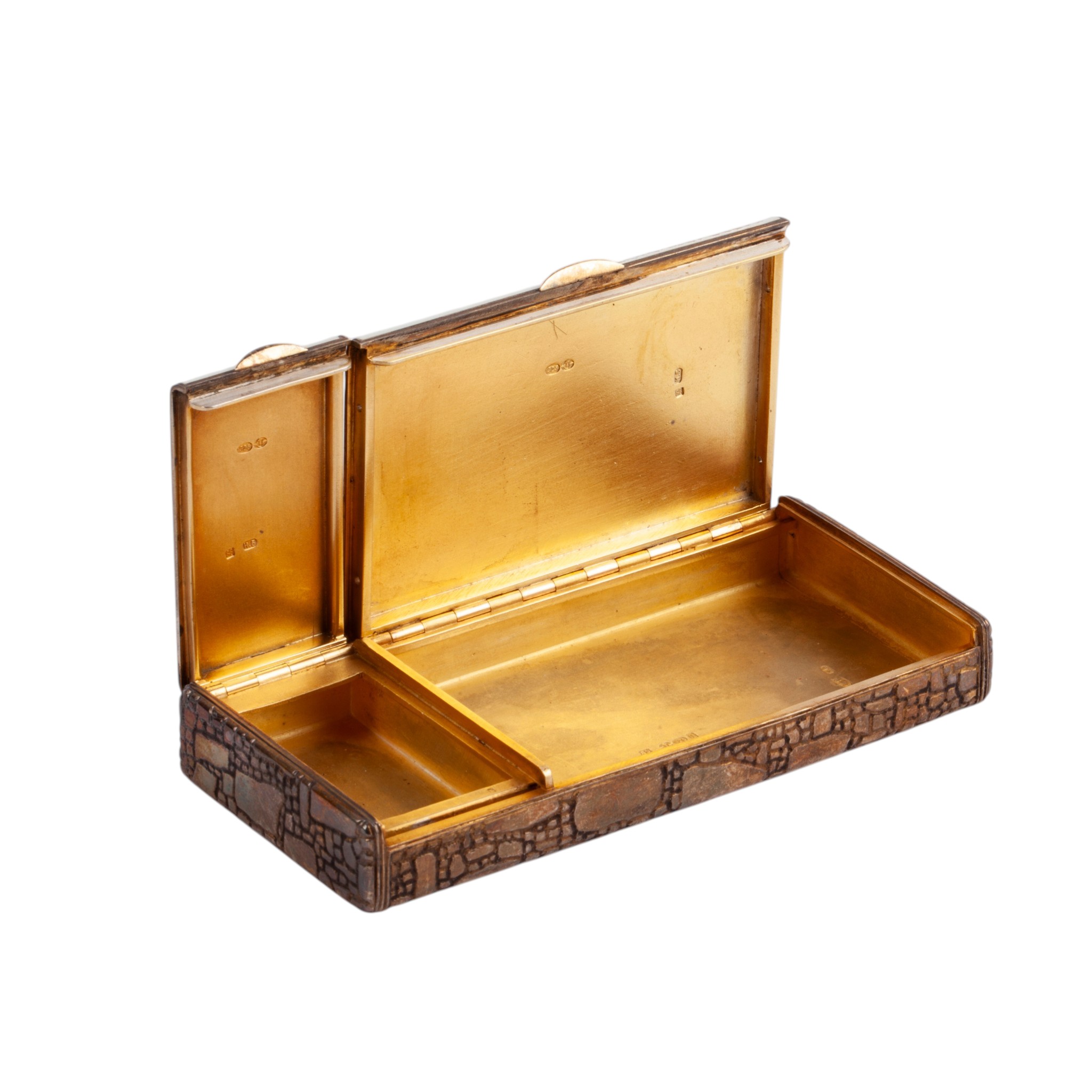
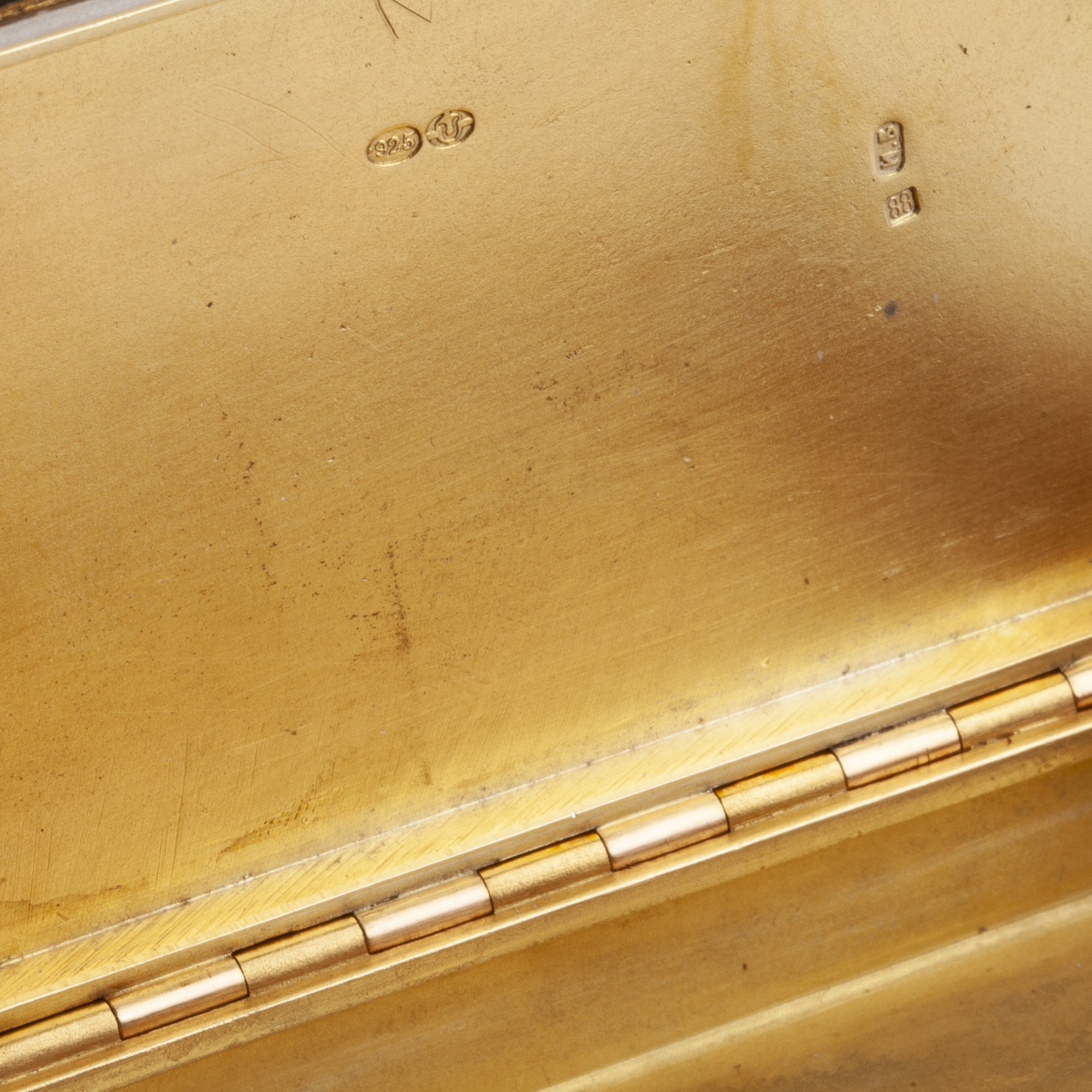
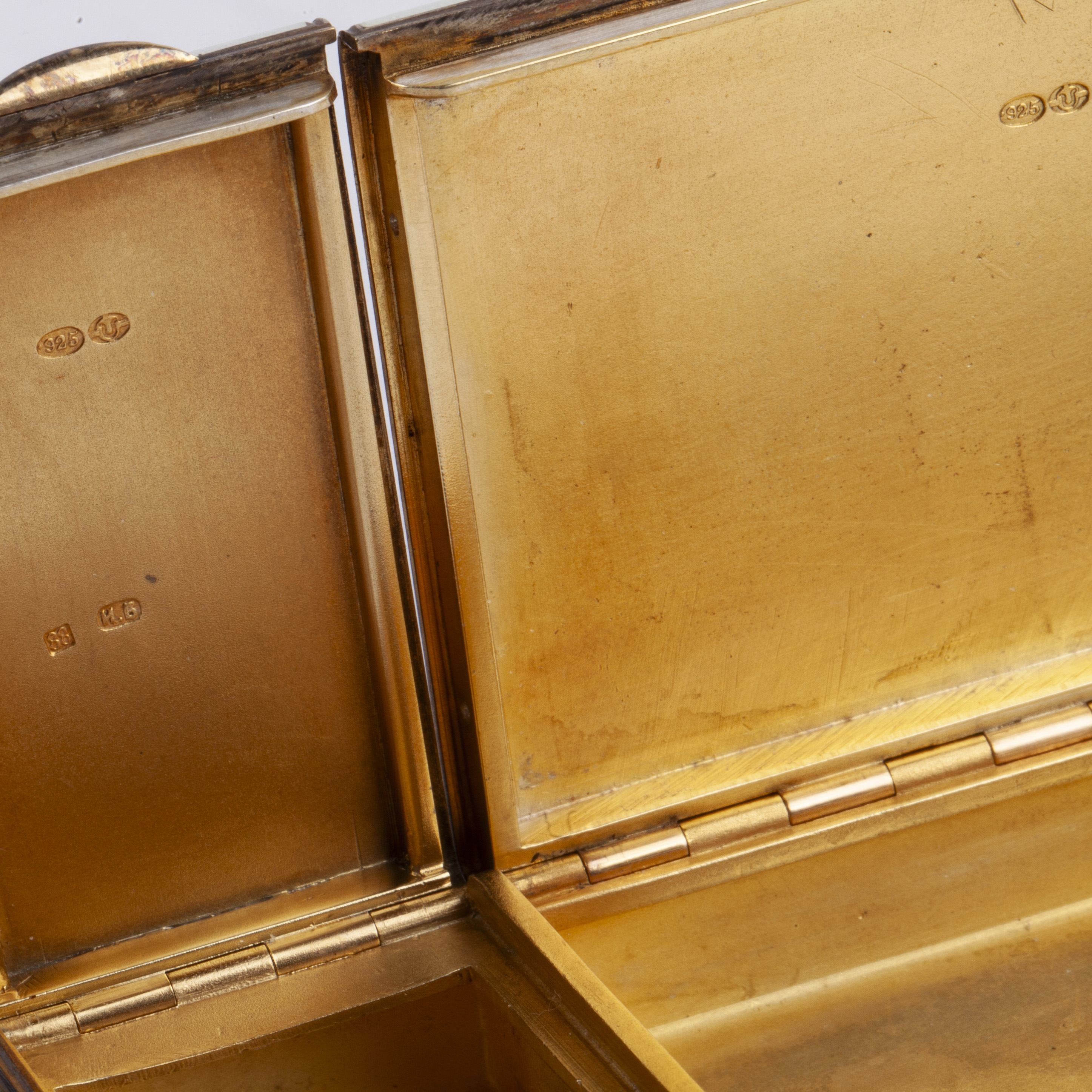
Estimate: 4000-5000€A Russian silver-gilt nécesaire. St Petersburg, 1908–1917.
Silver, gilding; guilloché translucent enamel; chasing and engraving. Weight: 118 g, Dimensions: 1,5 x 4,9 x 10,2 cm.
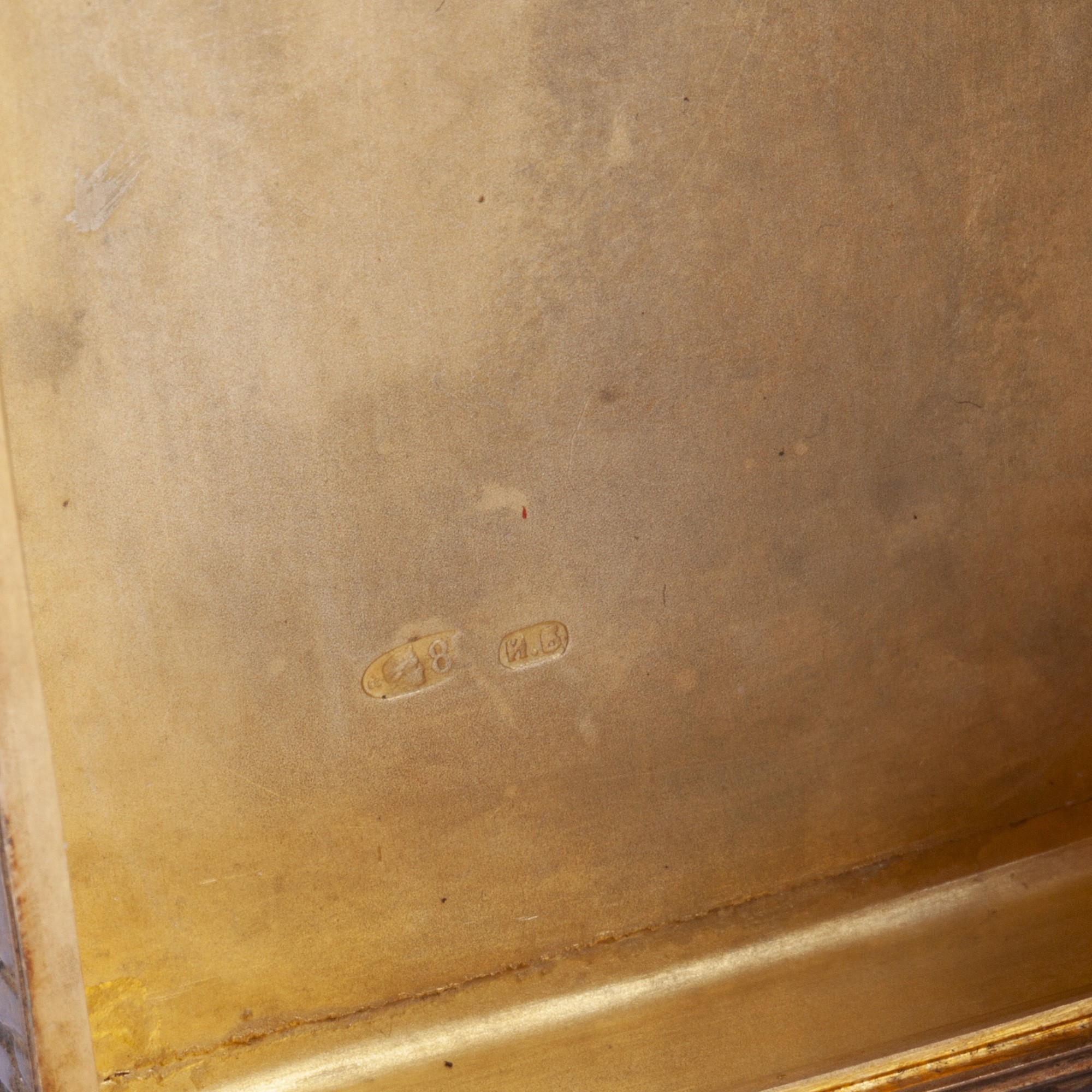
Marks: maker’s of Ivan Brytzin; St Petersburg assay marks (1908–1917). A rectangular, palm-sized nécesaire with two compartments. One face is covered with a pale, white opal toned translucent enamel laid over a finely turned wavy guilloché ground.
The reverse is treated in deliberate contrast: a silver-gilt field worked in the so-called “samorodok” manner. Ivan Savelyevich Brytzin (1870–1952), a former employee of Fabergé in St Petersburg, qualified as a master goldsmith in 1903 and soon opened his own workshop “Russkaya Emal” (Malaya Konyushennaya ul., 12). His firm granted a gold medal at the St Petersburg Crafts Exhibition in 1909, and in 1910–1917 he supplied works to members of the Imperial family and to the Cabinet of His Majesty. Brytzin’s objects bears steady demand on the English market; he also worked with stone and purpurin and collaborated with A. Sumin. After 1917 he continued to practise, though documentation of his later activity is fragmentary.Starting price: 3500€
Estimate: 4000-5000€
Hammer Price: Not sold -
Lot 0048
Russian Silver and Niello Snuff Box with View of Vologda, Sakerdon Skripitsyn, 1838
Estimate: 7000-9000€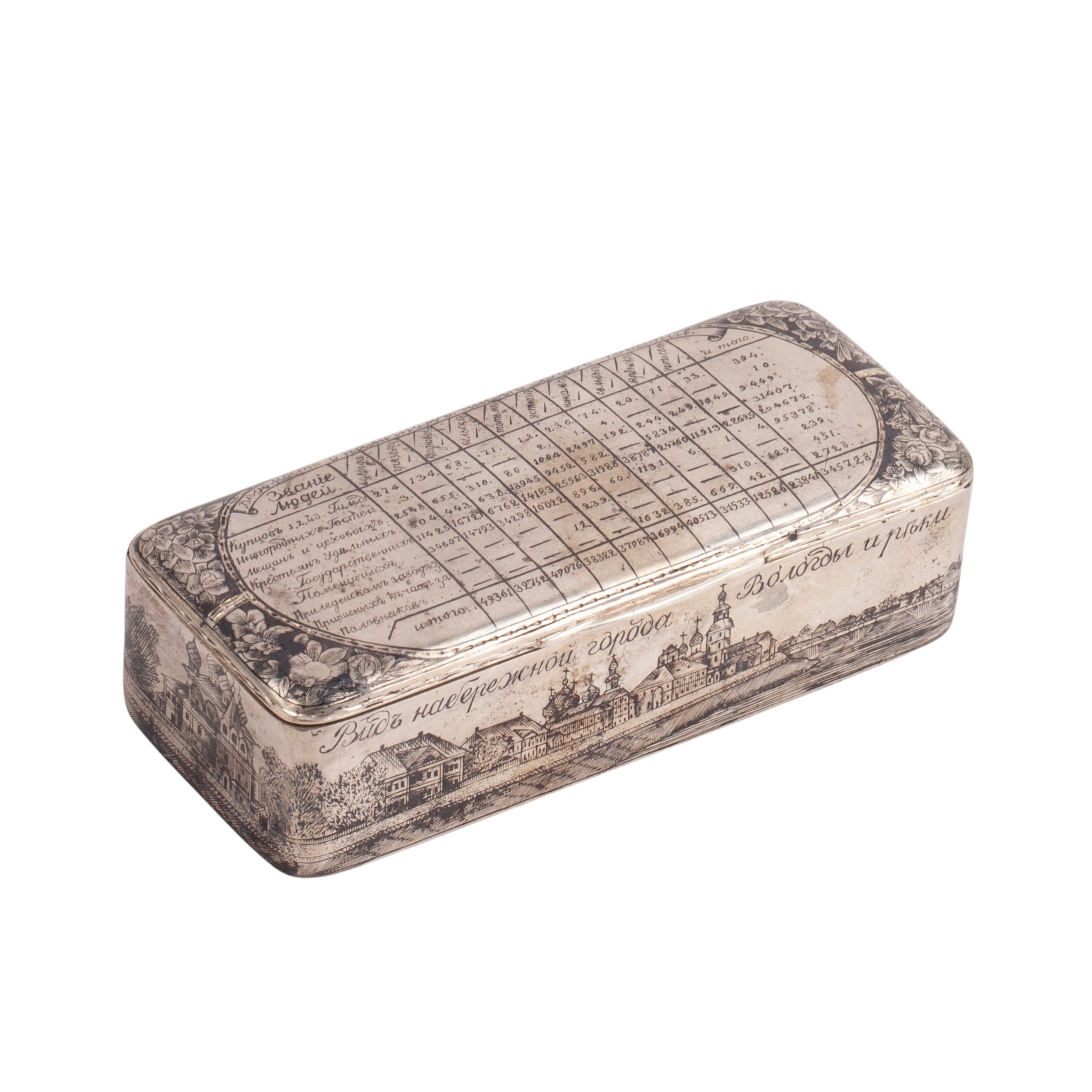
Lot 0048
Russian Silver and Niello Snuff Box with View of Vologda, Sakerdon Skripitsyn, 1838
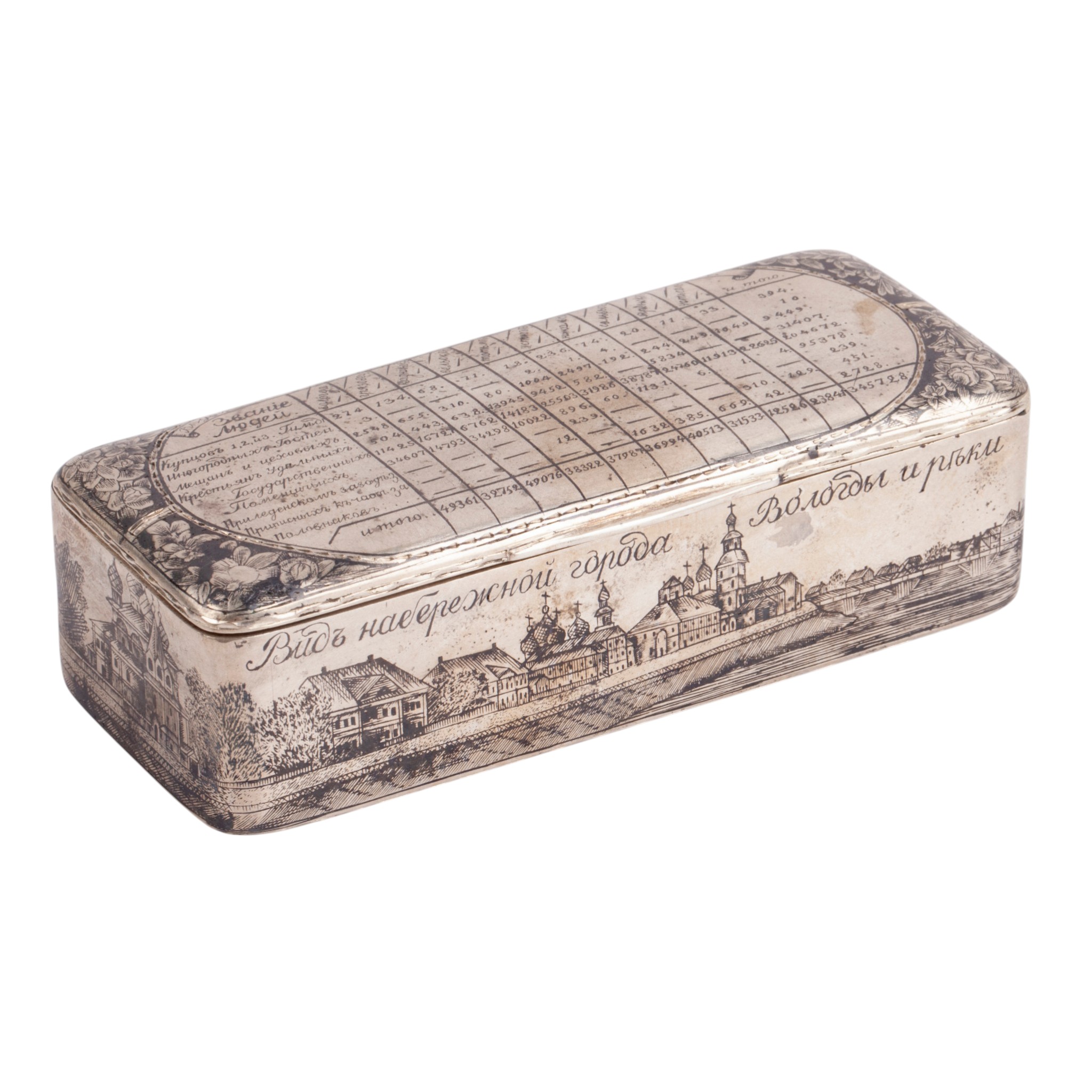
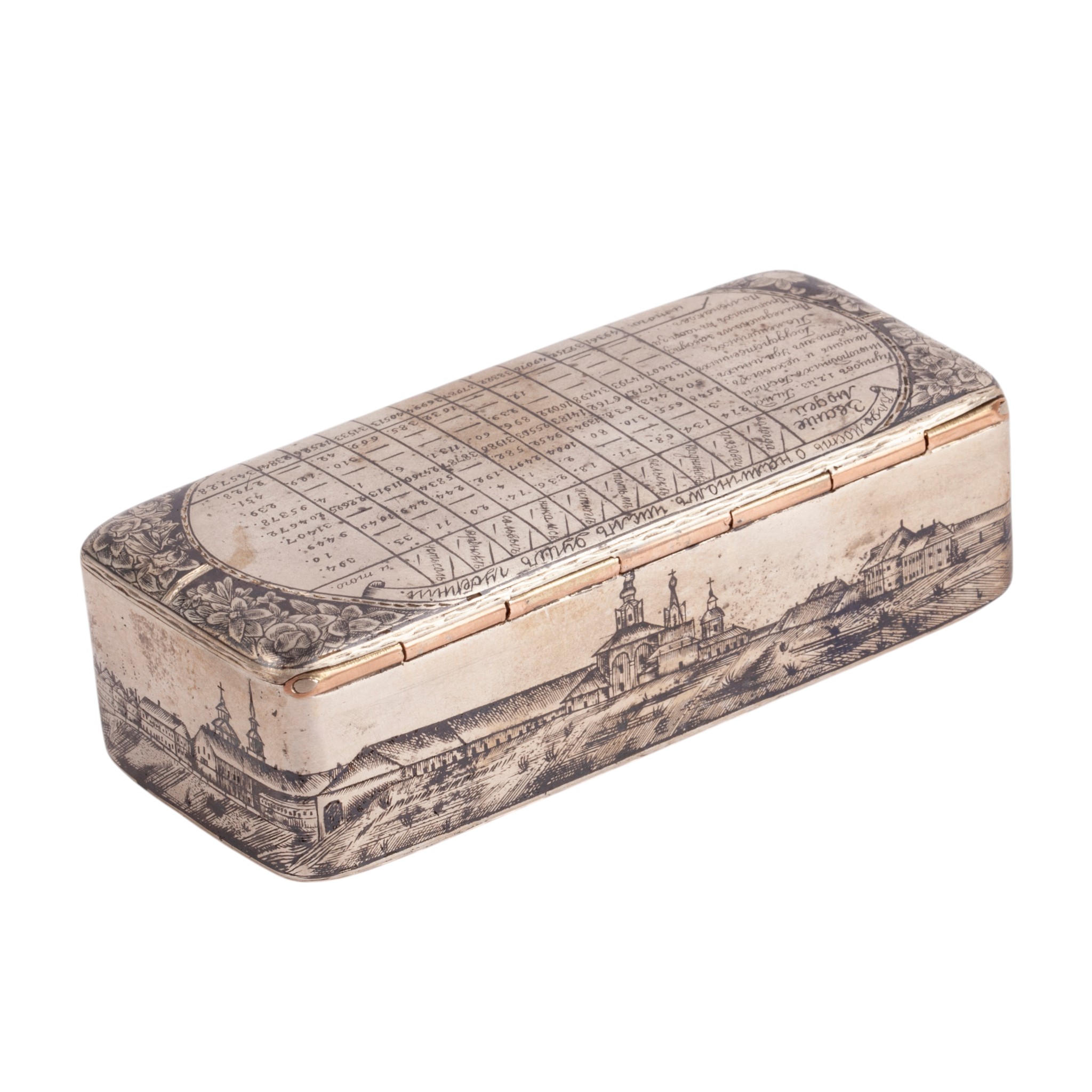
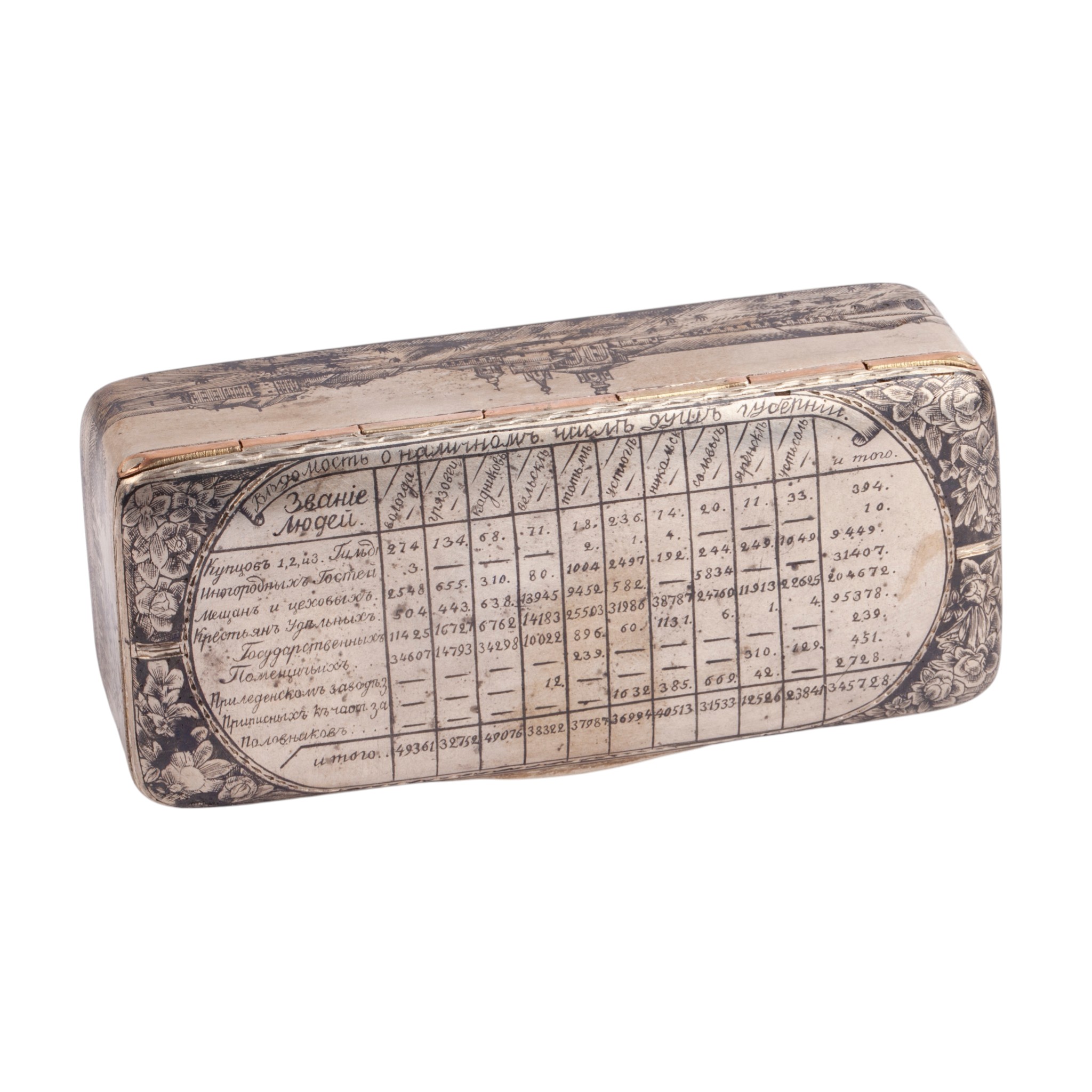
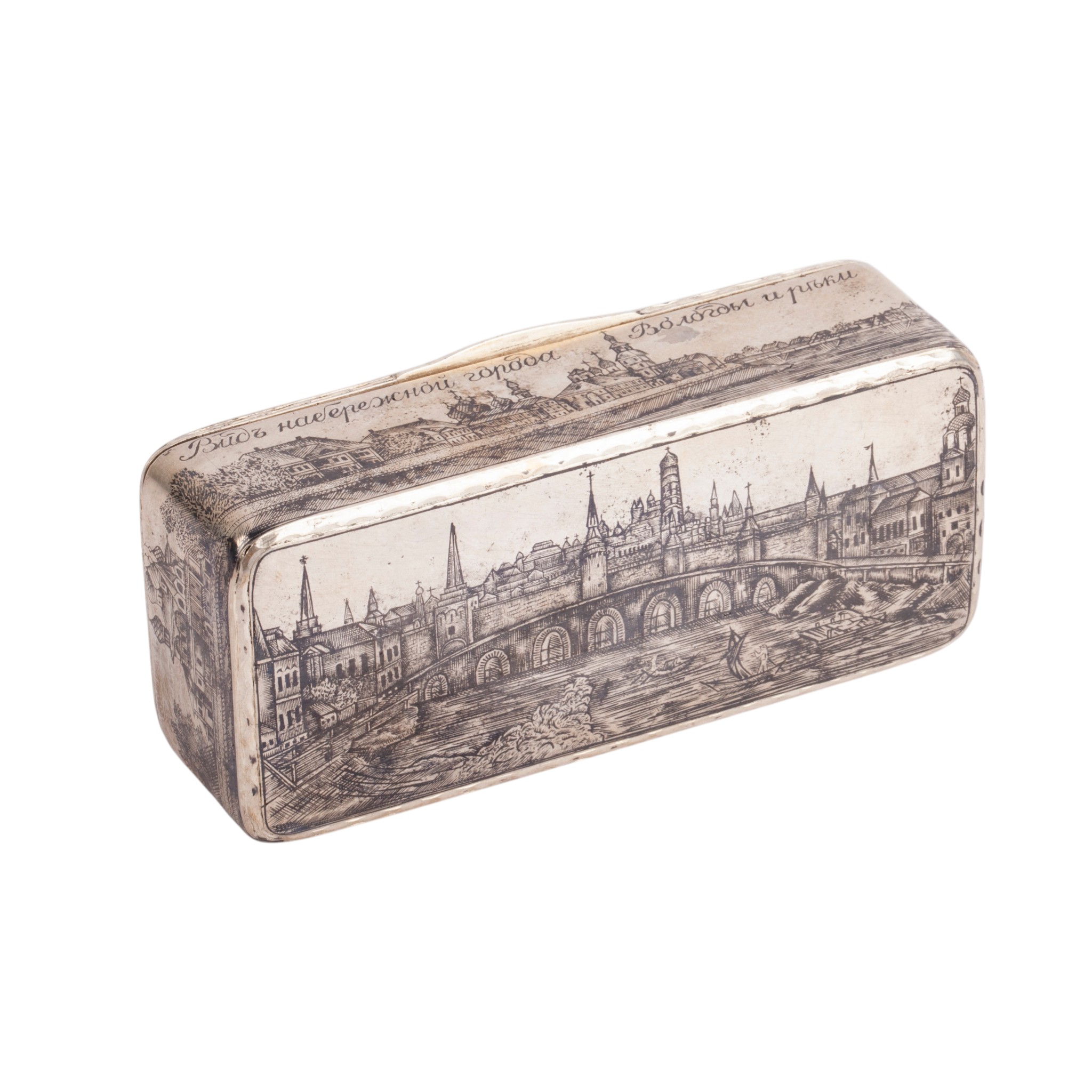
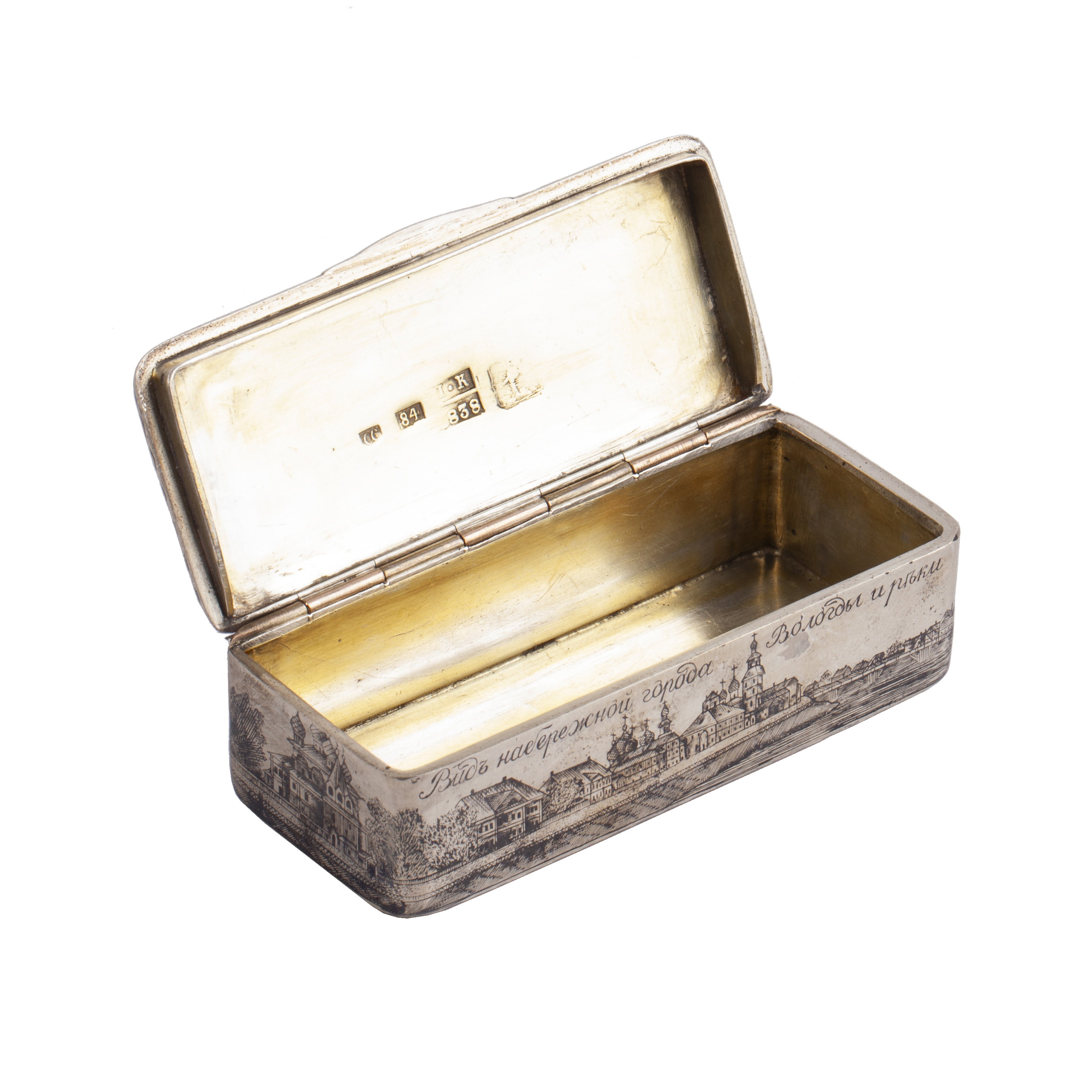
Estimate: 7000-9000€A rare Russian silver and niello snuff-box with city view of Vologda. Vologda, master Sakerdon Skripitsyn, 1838
Silver, engraving, blackening
Dimensions: 4.0 × 9.3 × 2.7 cm; weight: 131 g
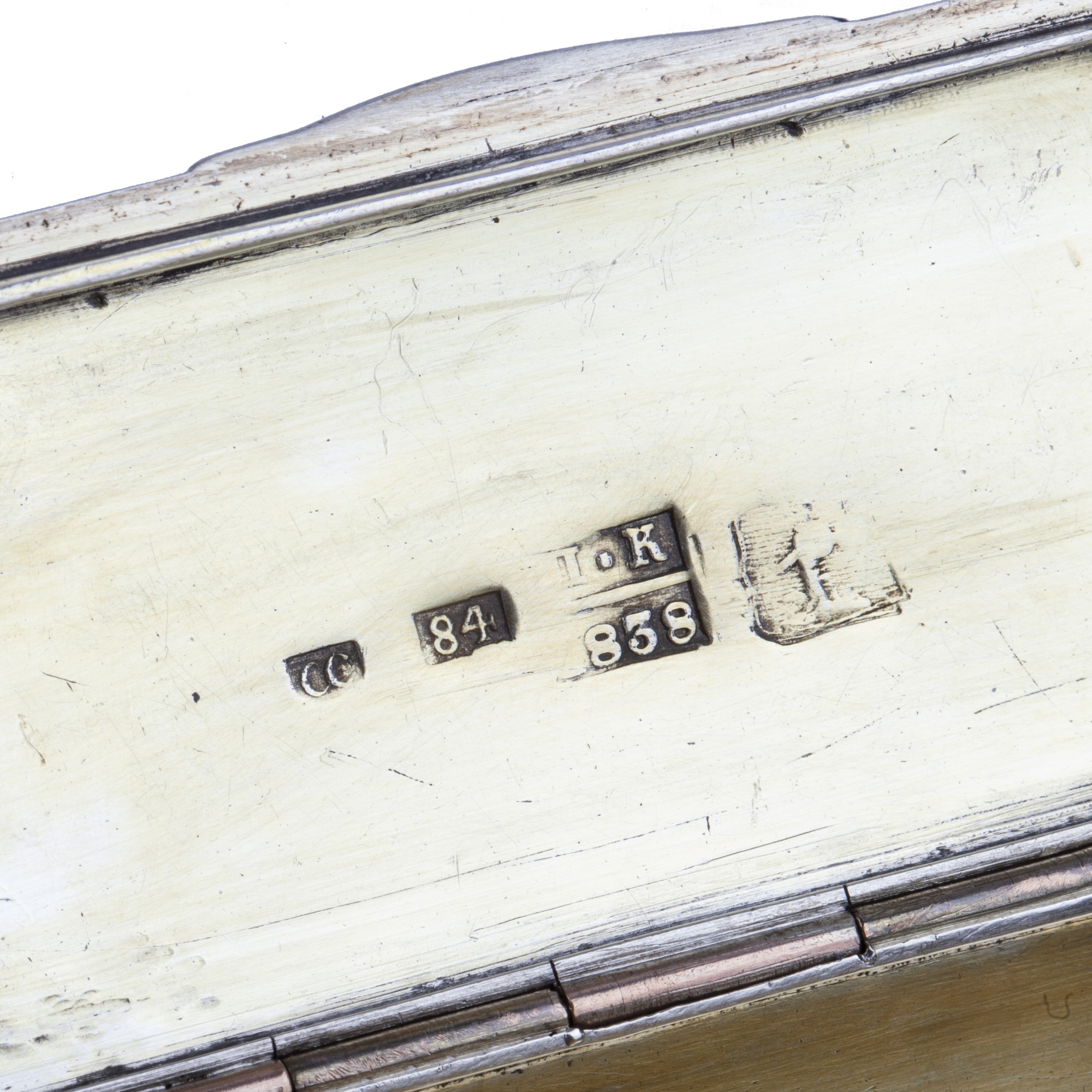
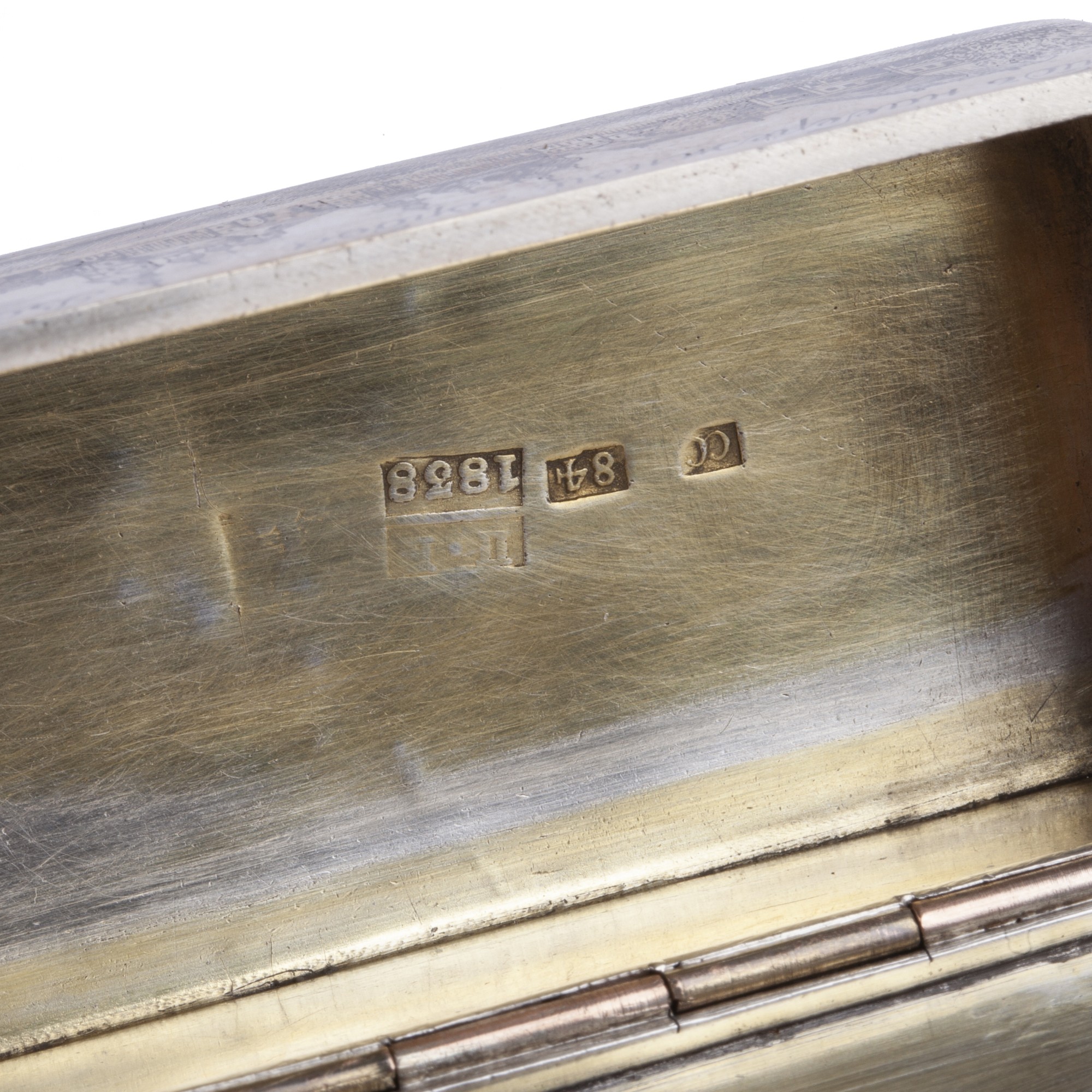
Marks: “СС”, 84 zolotnik silver standard, assay mark of Vologda
The snuff box features an intricate engraving with neillo coated details. The lid displays a historical table titled “Vѣдомость о наличномъ числѣ душъ губерніи” (List of the Current Population of the Province). The sides and bottom are decorated with a panoramic view of the embankment of Vologda city and its river, finely etched with topographical accuracy.
A remarkable example of Vologda silver craftsmanship from the first half of the 19th century, this snuff box made by the honorable silversmith Sakerdon Skripitsyn. The work is an exquisite instance of deep engraving, a popular technique of the era, filled with niello details. The lid’s engraved table is a unique historical document, reflecting the administrative interest in statistics and state accounting during the Emperor Nicholas I era. The fine engraving captures the architectural landscape of Vologda in the 1830s, adding historical value to the piece.
Sakerdon Ivanovich Skripitsyn was a talented master of both silver and niello work from Vologda. His artistry was not limited to engraving; he also created gilded silver frames and decorative items in the neoclassical style. His works often borrowed themes from foreign engravings. For example, his silver plates from 1840, depicting views of Zurich, Lausanne, and Lake Brienz, are in the State Hermitage collection.
Skripitsyn’s finest works, such as the 1841 glass with a beautifully composed niello engraving, demonstrate his mastery as both an engraver and a sensitive artist. His pieces are highly valued in the antique market, with examples fetching high prices at international auctions.
This snuff box represents an exceptional work from Skripitsyn’s limited known output and is rare in the antique market.
Comparable item: https://www.sothebys.com/en/auctions/ecatalogue/2011/russian-works-of-art-faberg-and-icons-l11113/lot.455.htmlStarting price: 6000€
Estimate: 7000-9000€
Hammer Price: Not sold -
Lot 0049
Fabergé. Match Holder for the 300th Jubilee of the House of Romanov, Moscow, circa 1913
Estimate: 7000-9000€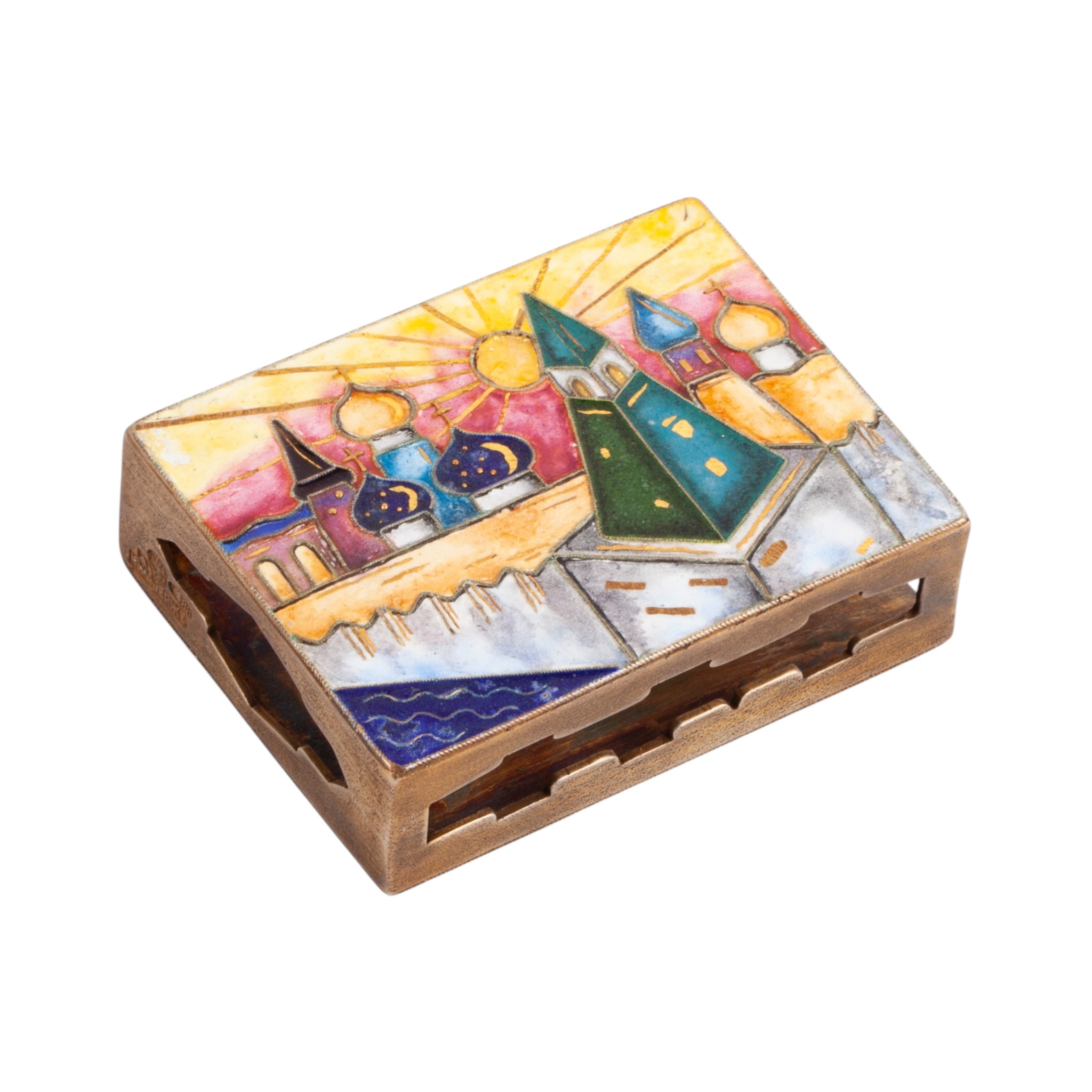
Lot 0049
Fabergé. Match Holder for the 300th Jubilee of the House of Romanov, Moscow, circa 1913
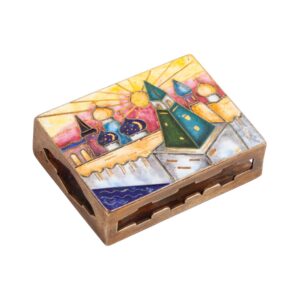
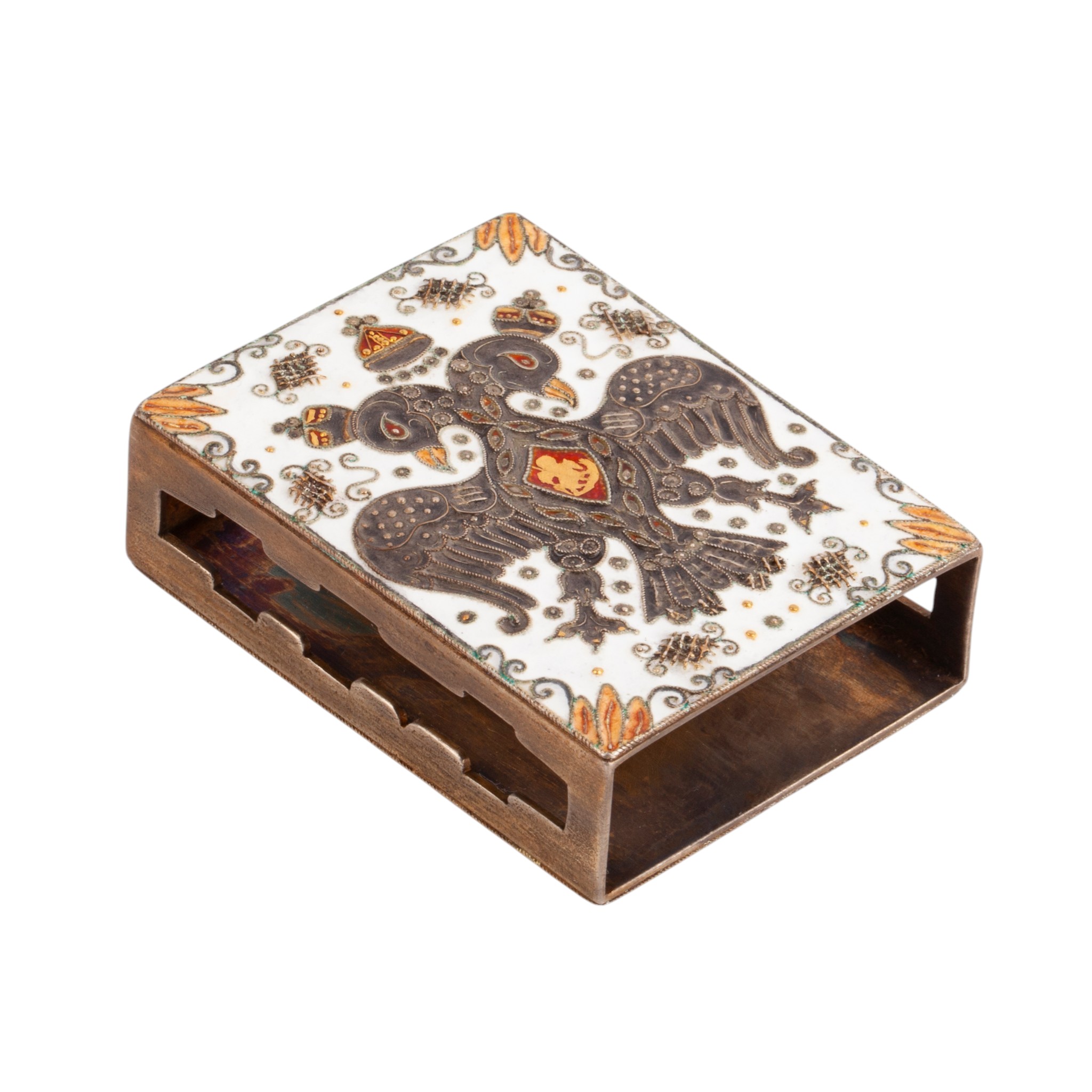
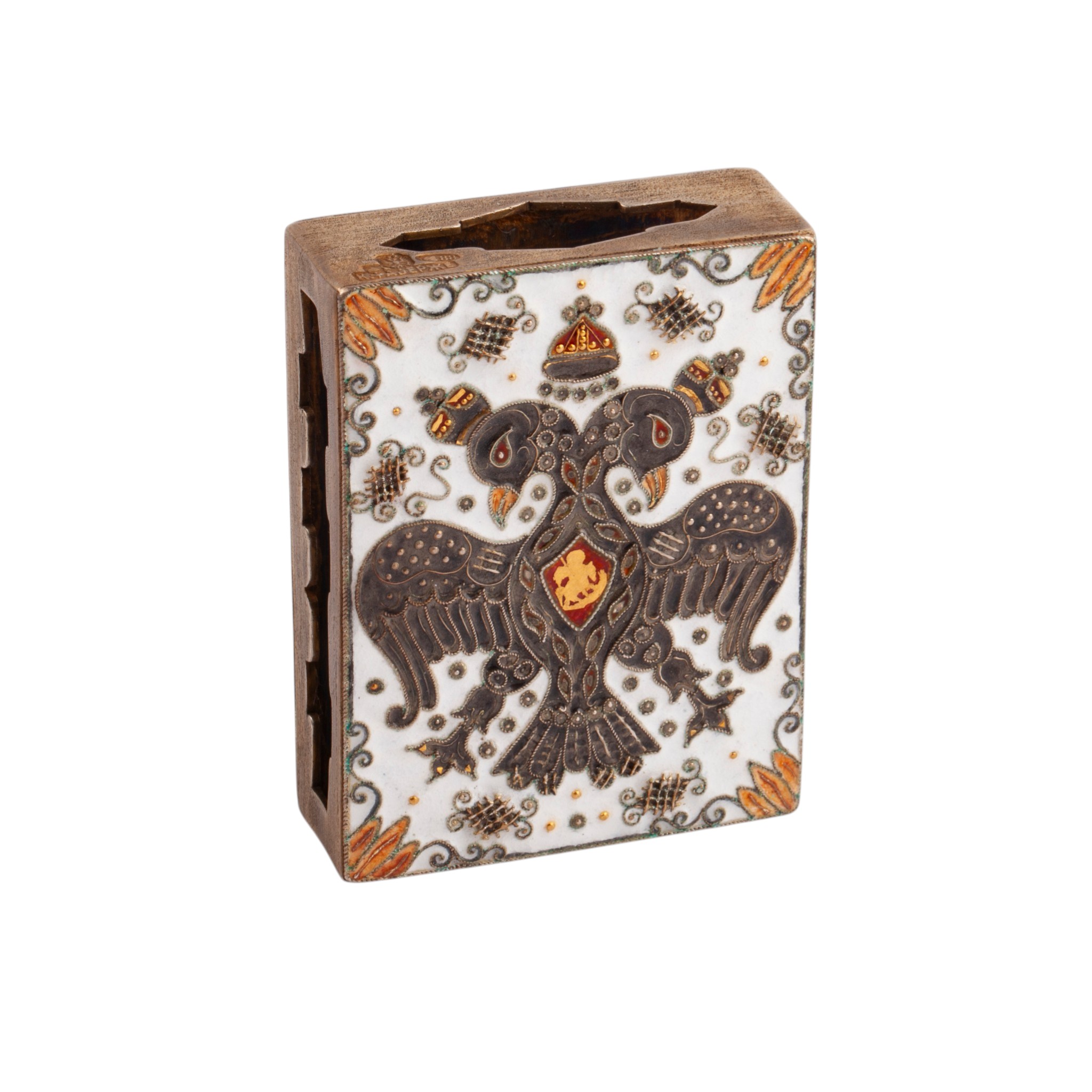
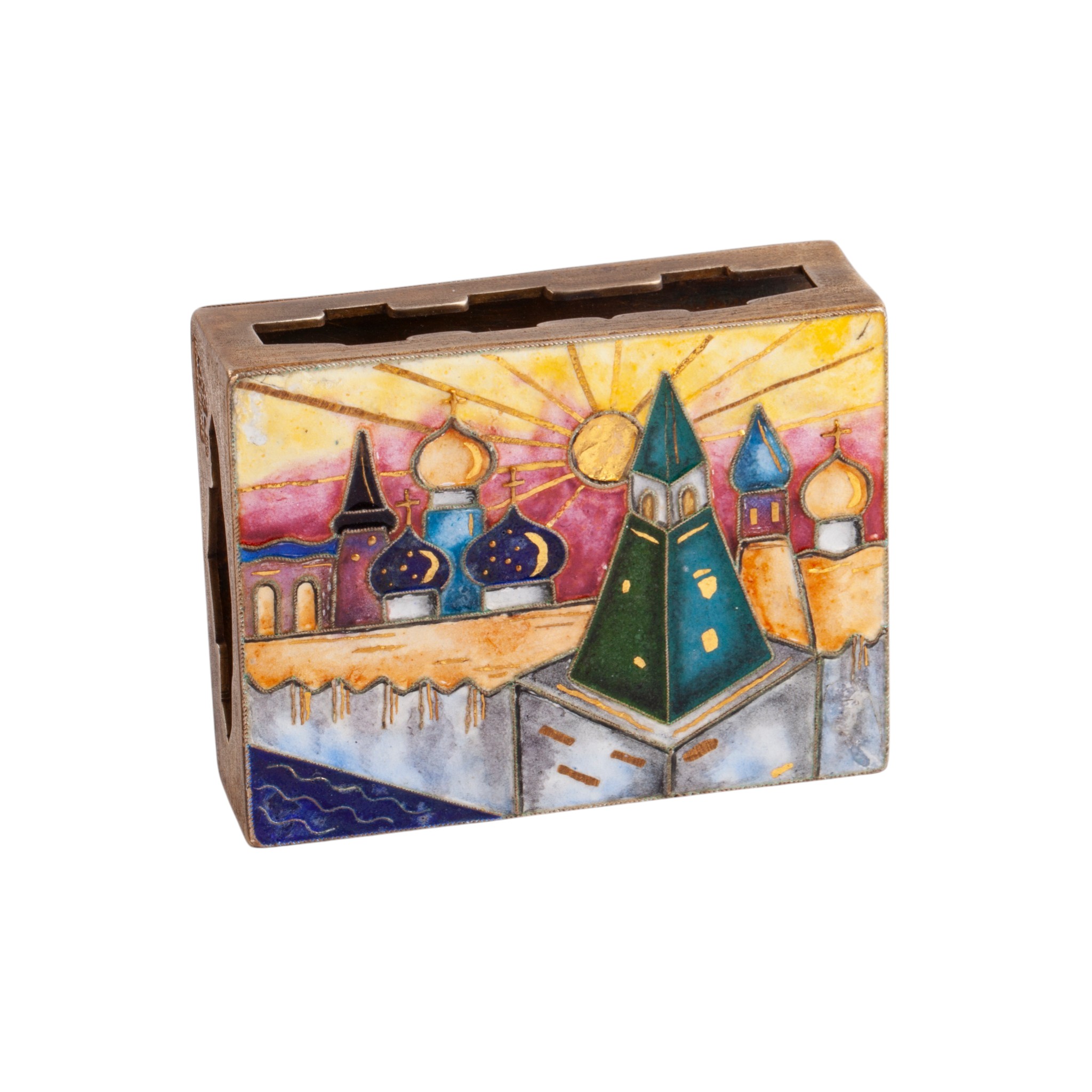
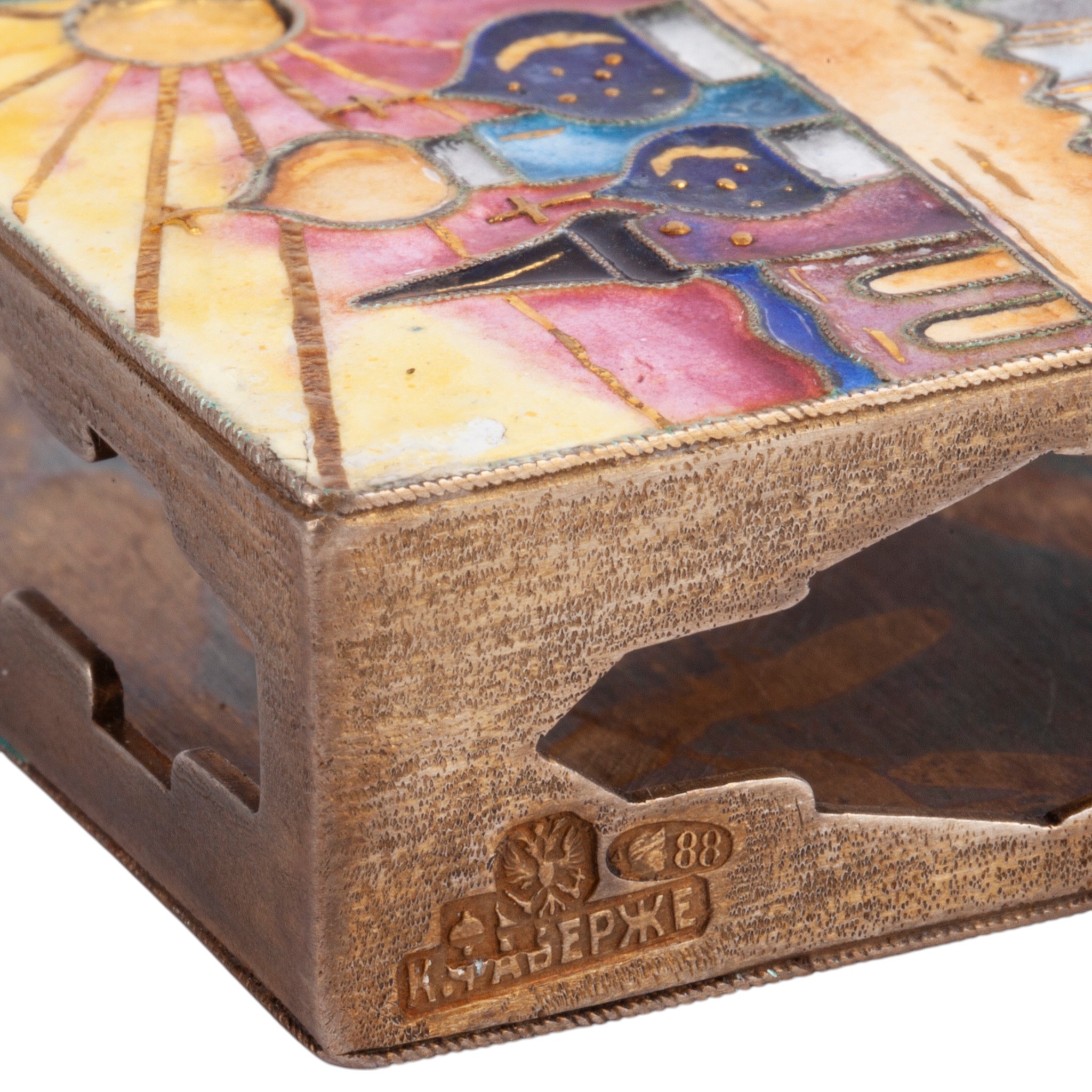
Estimate: 7000-9000€Rare Faberge match holder in the honour 300 years jubilee of House of Romanov (1613–1913). Moscow, Feodor Rückert workshop; retailed by Carl Fabergé, circa 1913.
Silver; cloisonné enamel; gilding; chased and engraved details. Weight: 82 g. Dimensions: 4,6 x 6 x 2 cm.
Marks: in a rectangular stamp C. Fabergé, under the punch of FR; Moscow assay mark (1908-1917).
A compact silver match holder conceived as a small-scale monument to Imperial Moscow. One side bears a panoramic enamel view of the Kremlin: The reverse is dominated by a double-headed eagle in the Neo-Russian manner, executed in relief and graphic line over a milky white enamel ground. The imperial emblem is enriched with stylised crowns and shield, while the surrounding field is filled with Pan-Slavic ornamental vocabulary: scrolling tendrils, geometric rosettes, and golden accents arranged like a ceremonial textile.
Feodor Rückert (1840–1918) (Feodor Ivanovich Rückert; born Friedrich Moritz Rückert in Alsace) was a leading Moscow silversmith and enameller, closely associated with the Neo-Russian style. Having arrived in Russia as a teenager, he established his own workshop in Moscow in 1886 (Vorontsovskaya St., 29). From 1887 he maintained a long collaboration with Carl Fabergé and, though not formally on the firm’s staff, became one of its principal suppliers of cloisonné enamelwork for more than three decades.
Rückert’s maker’s mark “Ф.Р.” appears on works retailed by Fabergé and other major firms. His studio, known for technical refinement in cloisonné and miniature painted enamels, produced a wide range of silver objects, often combining folkloric and historical motifs with a modern decorative sensibility. During World War I he was persecuted as an “enemy alien”; his workshop declined and was largely lost. Rückert died in Moscow in 1918. His enamels are represented today in major museum and royal collections worldwide.
Comparable item:
https://www.christies.com/en/lot/lot-5016902Starting price: 6000€
Estimate: 7000-9000€
Hammer Price: 9 000 € -
Lot 0050
Fabergé. Silver Ashtray Commemorating the War of 1914, Moscow, 1914
Estimate: 10000-12000€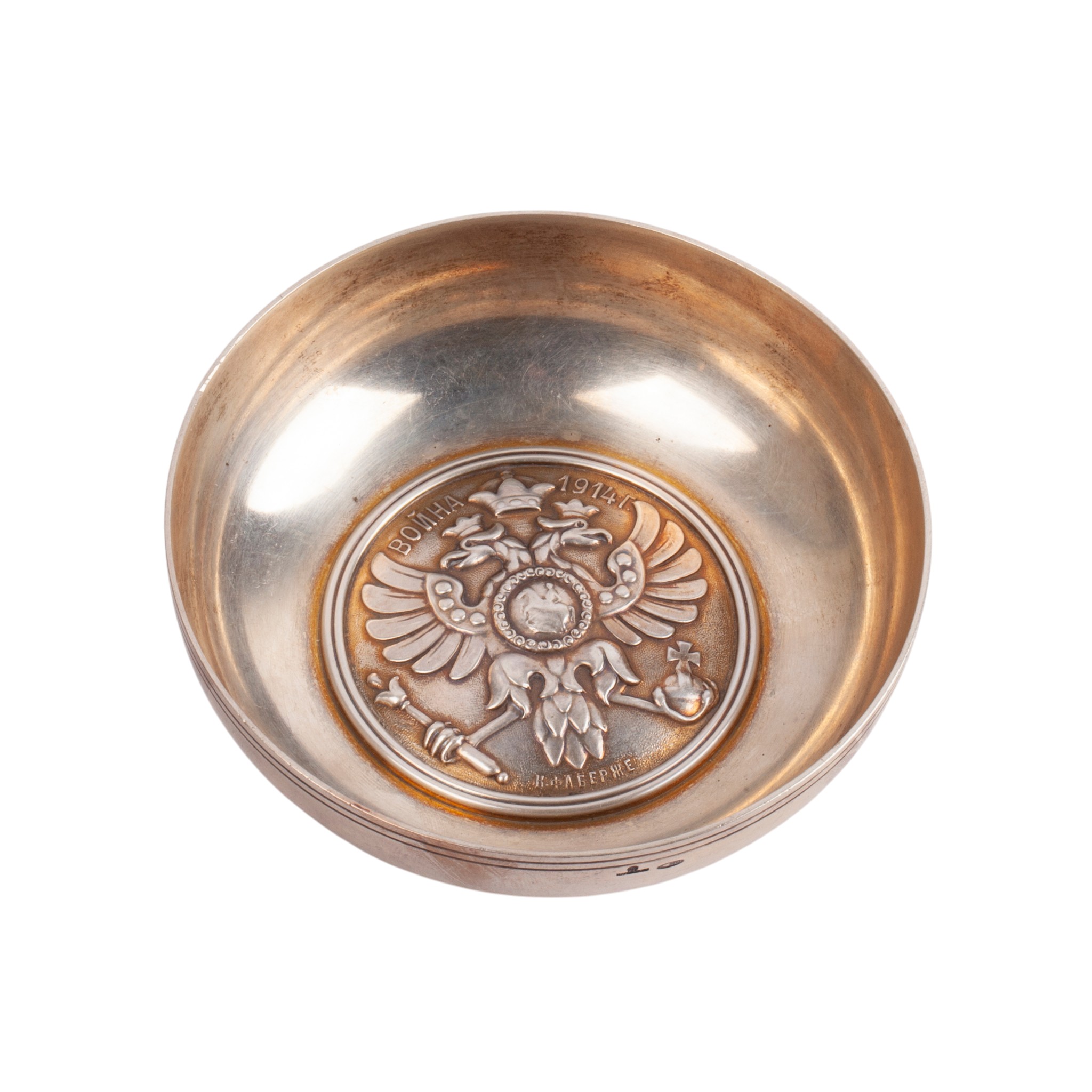
Lot 0050
Fabergé. Silver Ashtray Commemorating the War of 1914, Moscow, 1914
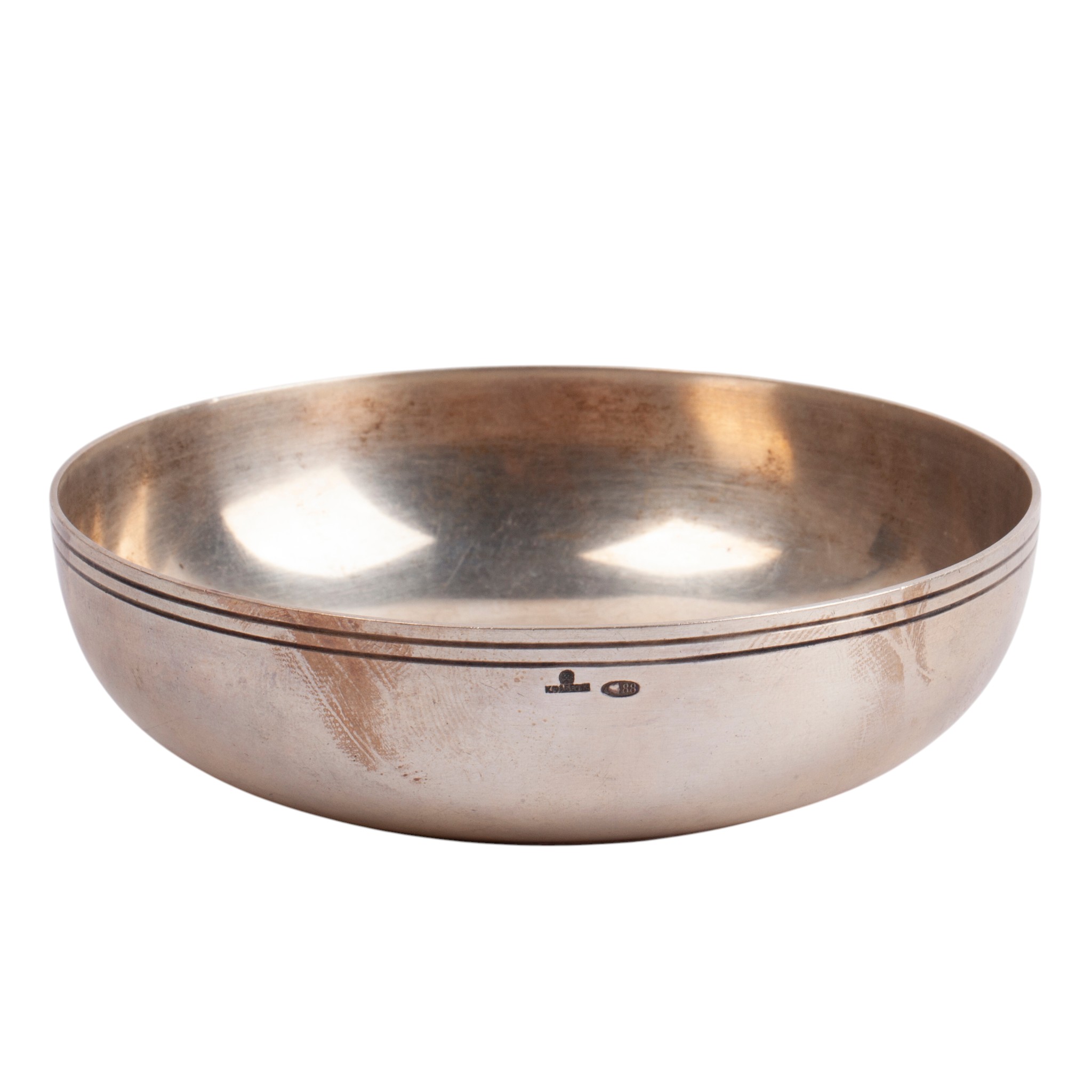
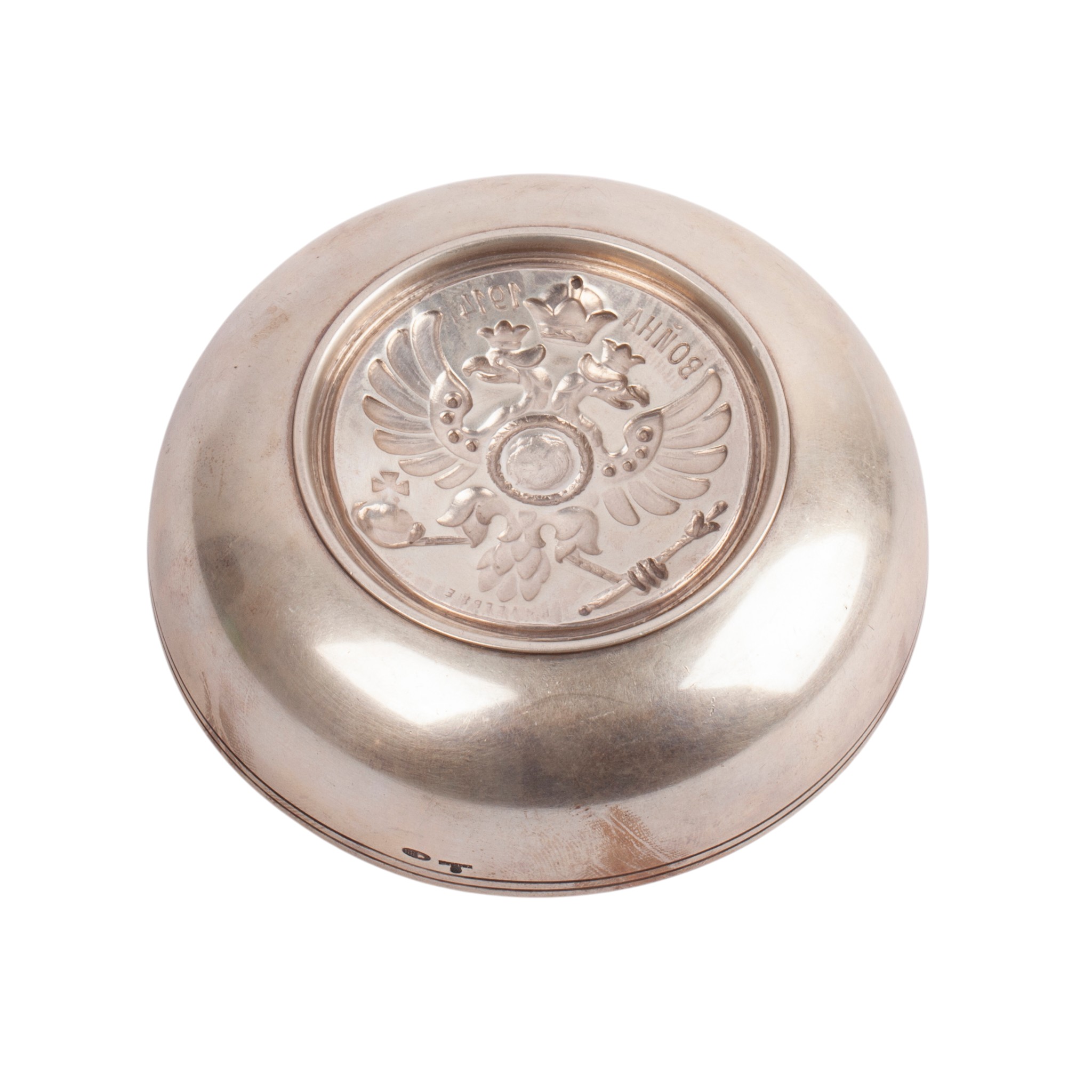
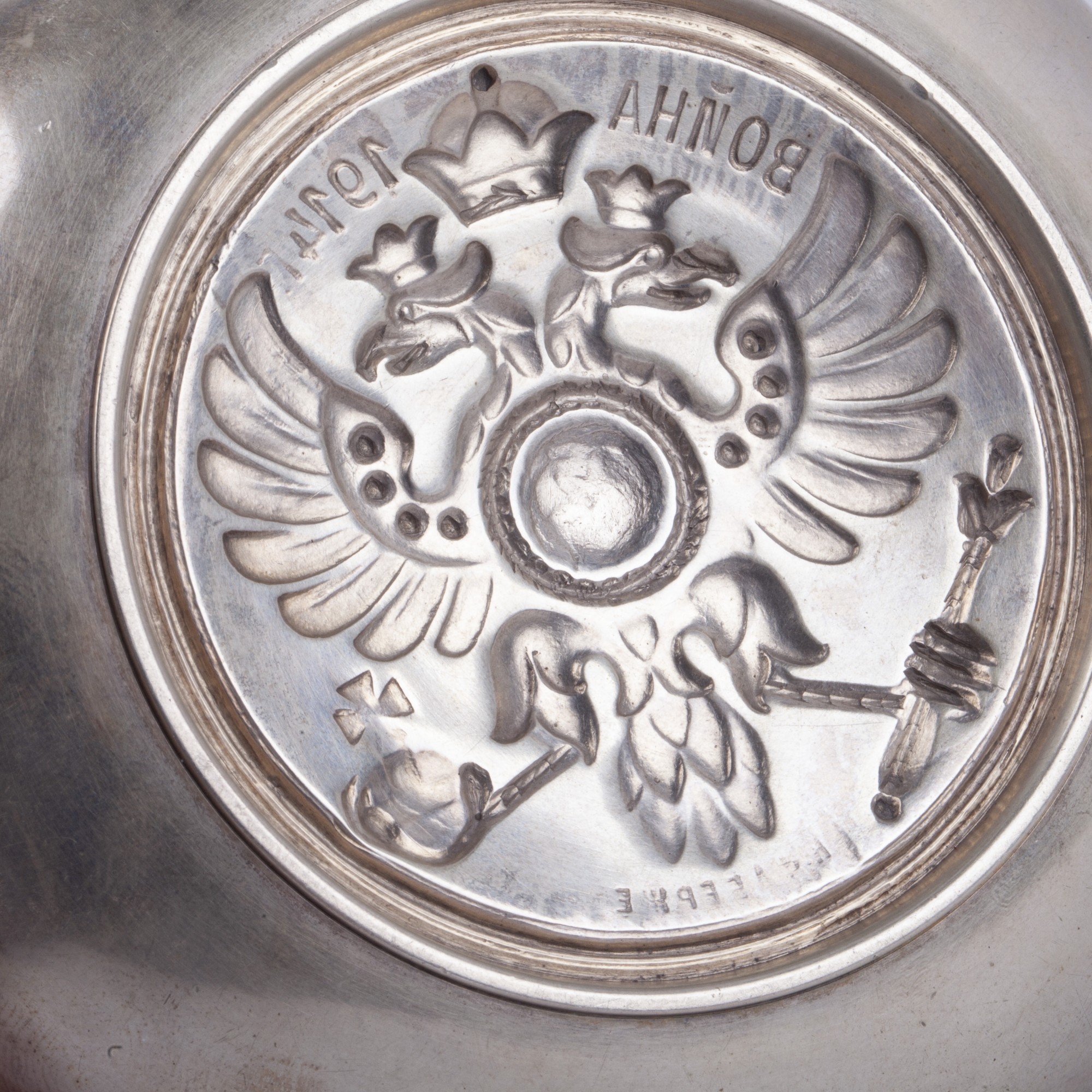
Estimate: 10000-12000€A Rare Russian Silver Ashtray Commemorating the War of 1914.
Moscow, firm of Karl Fabergé, 1914.
Silver; repoussé, chasing, engraving.
Dimensions: 3.2 x 11 x 11 cm. Weight: 145.7 g.
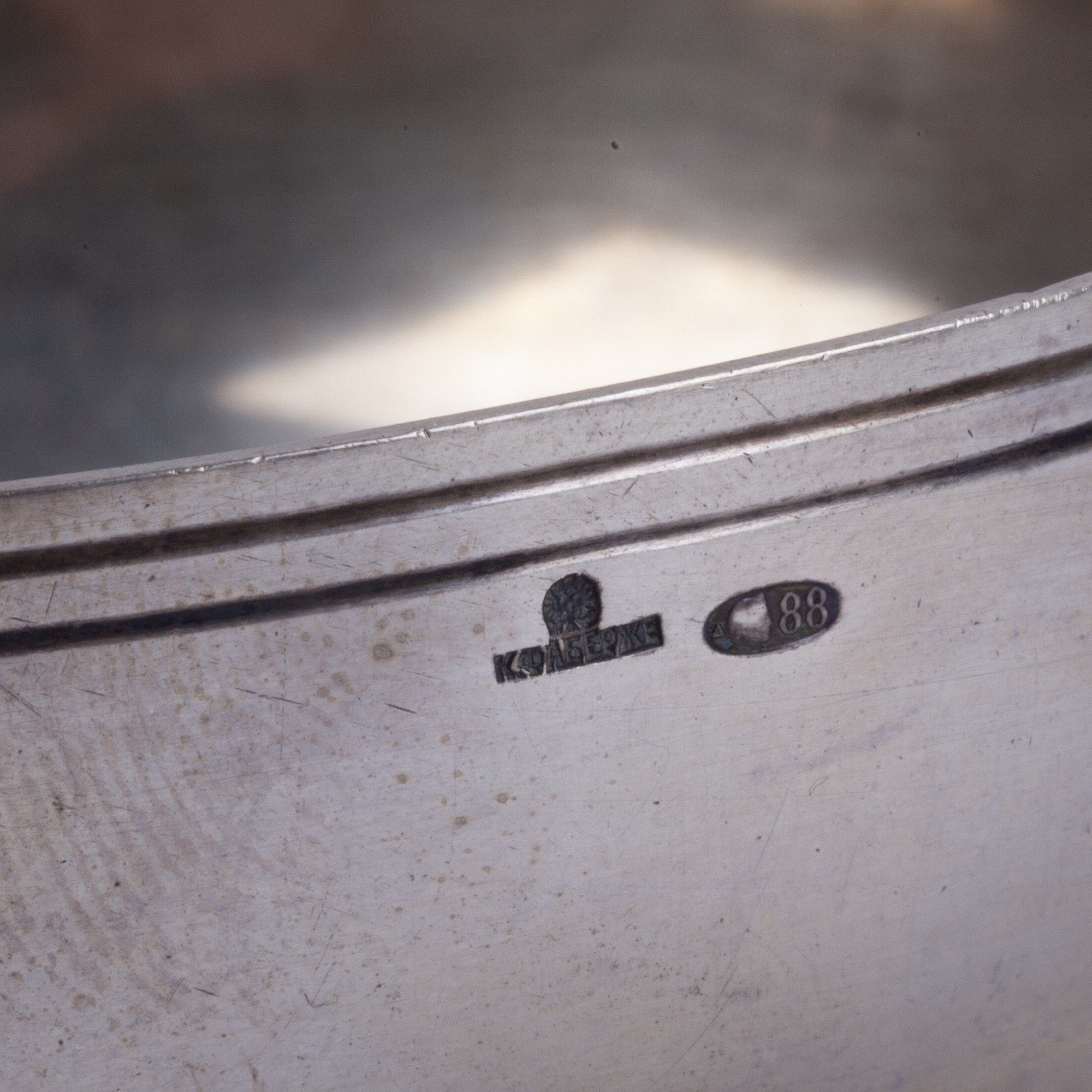
Marks: Fabergé firm mark and Imperial court supplier warrant; Moscow assay mark; 88 zolotniki silver standard.
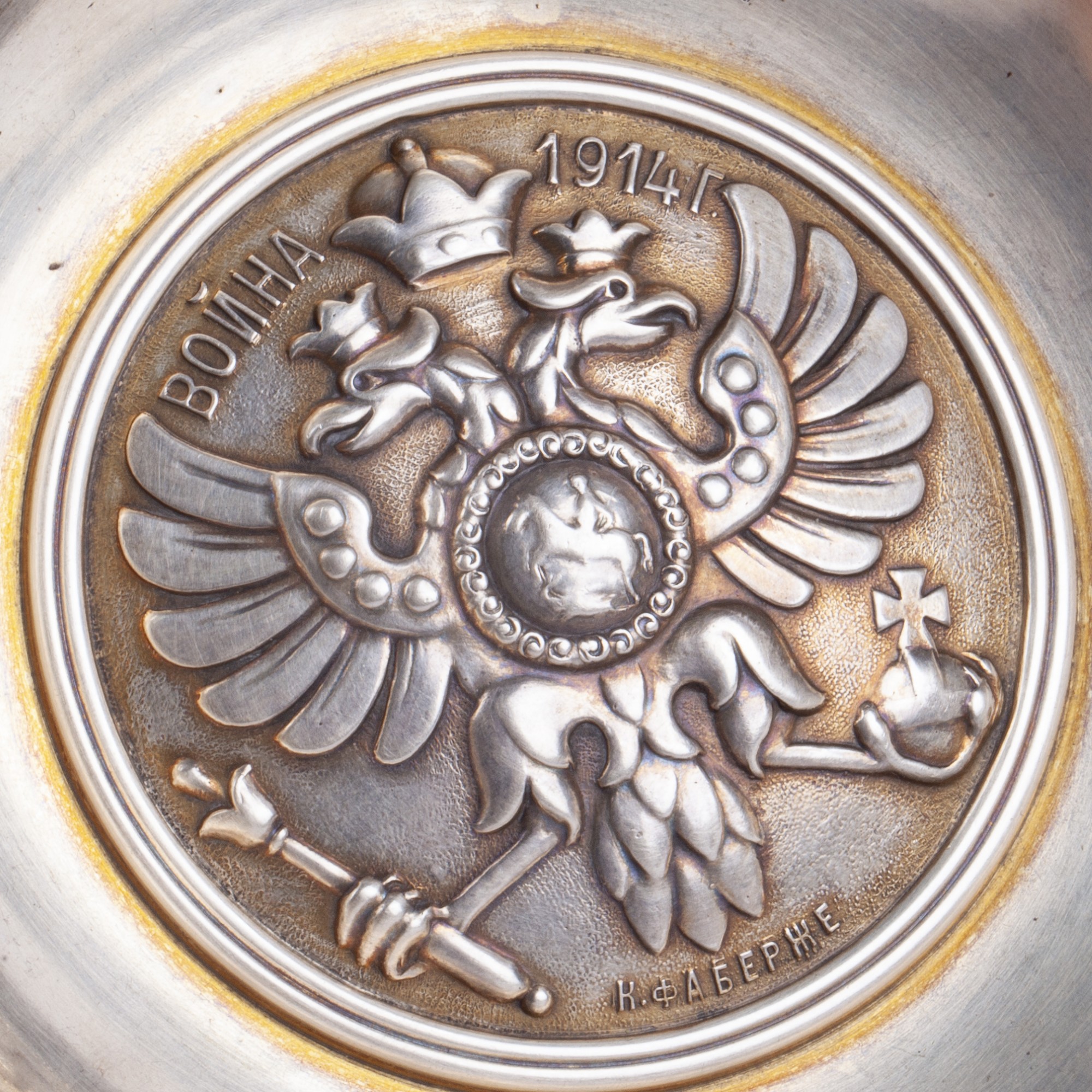
The circular silver ashtray is of shallow bowl form. The centre is decorated in relief with the Russian Imperial double-headed eagle, crowned and displayed with outstretched wings, holding the sceptre and orb. Around the emblem is the commemorative inscription in Cyrillic: «ВОЙНА 1914 г.»
This rare object belongs to the distinctive group of wartime production made by the firm of Karl Fabergé during the First World War. With the outbreak of hostilities in 1914 and the decline in demand for luxury jewellery, Fabergé redirected part of its production toward practical and commemorative objects connected with the army and the front. These included field utensils, mugs, samovars, washstands, cigarette cases, cup-holders and presentation ashtrays.
Objects of this type were often made in copper or more modest metals, bearing the Imperial arms and inscriptions such as “War 1914” or “War 1914-1915.” Silver examples are considerably rarer. Despite their utilitarian function and wartime context, they retain the refinement, clarity of design and technical precision characteristic of Fabergé production.
Such pieces were sometimes presented to soldiers and officers of the active army, including during visits of Emperor Nicholas II to the theatre of war.Starting price: 8000€
Estimate: 10000-12000€
Hammer Price: Not sold -
Lot 0051
Russian Commemorative Cast Silver Tableware Stands in the Form of a Rifles
Estimate: 2000-2500€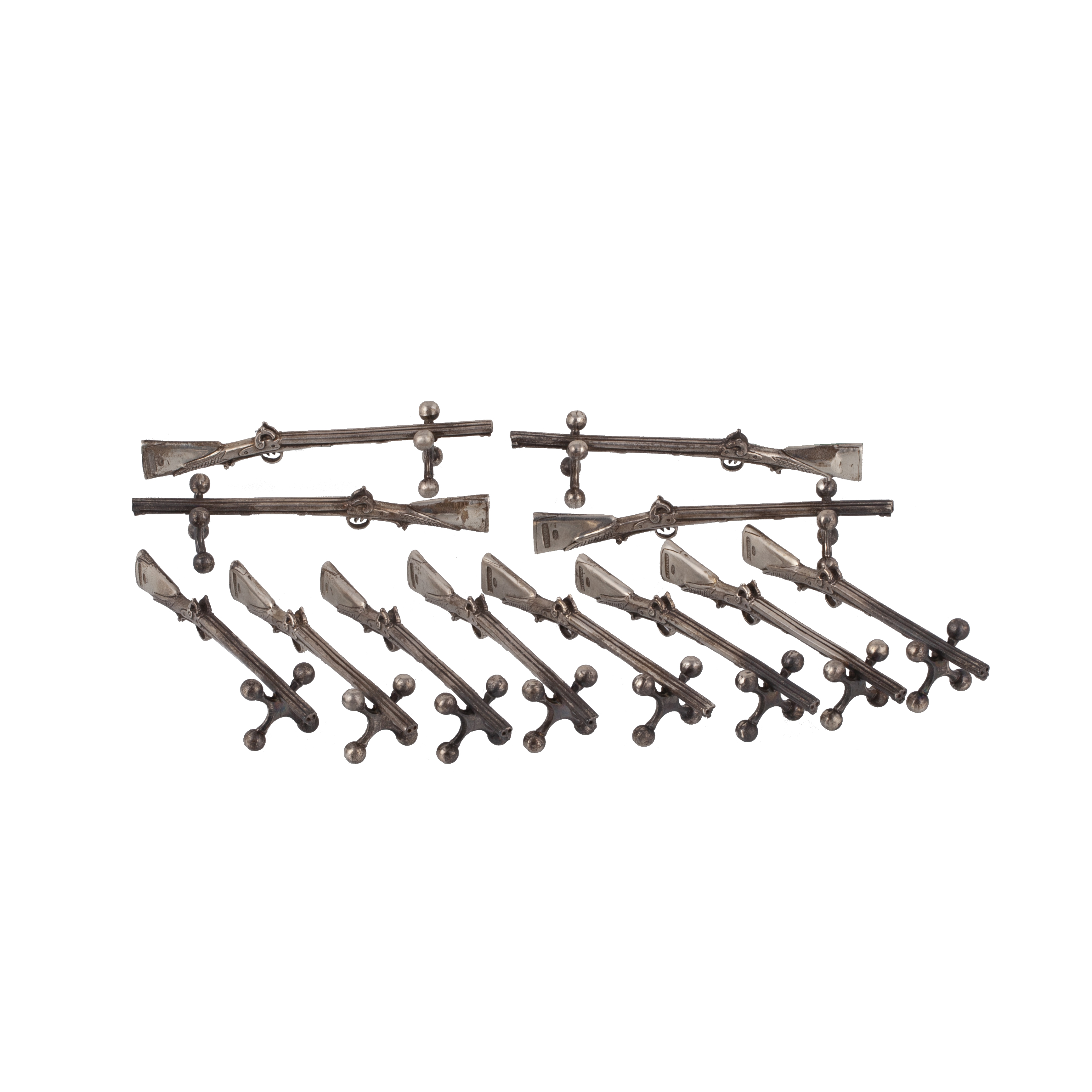
Lot 0051
Russian Commemorative Cast Silver Tableware Stands in the Form of a Rifles
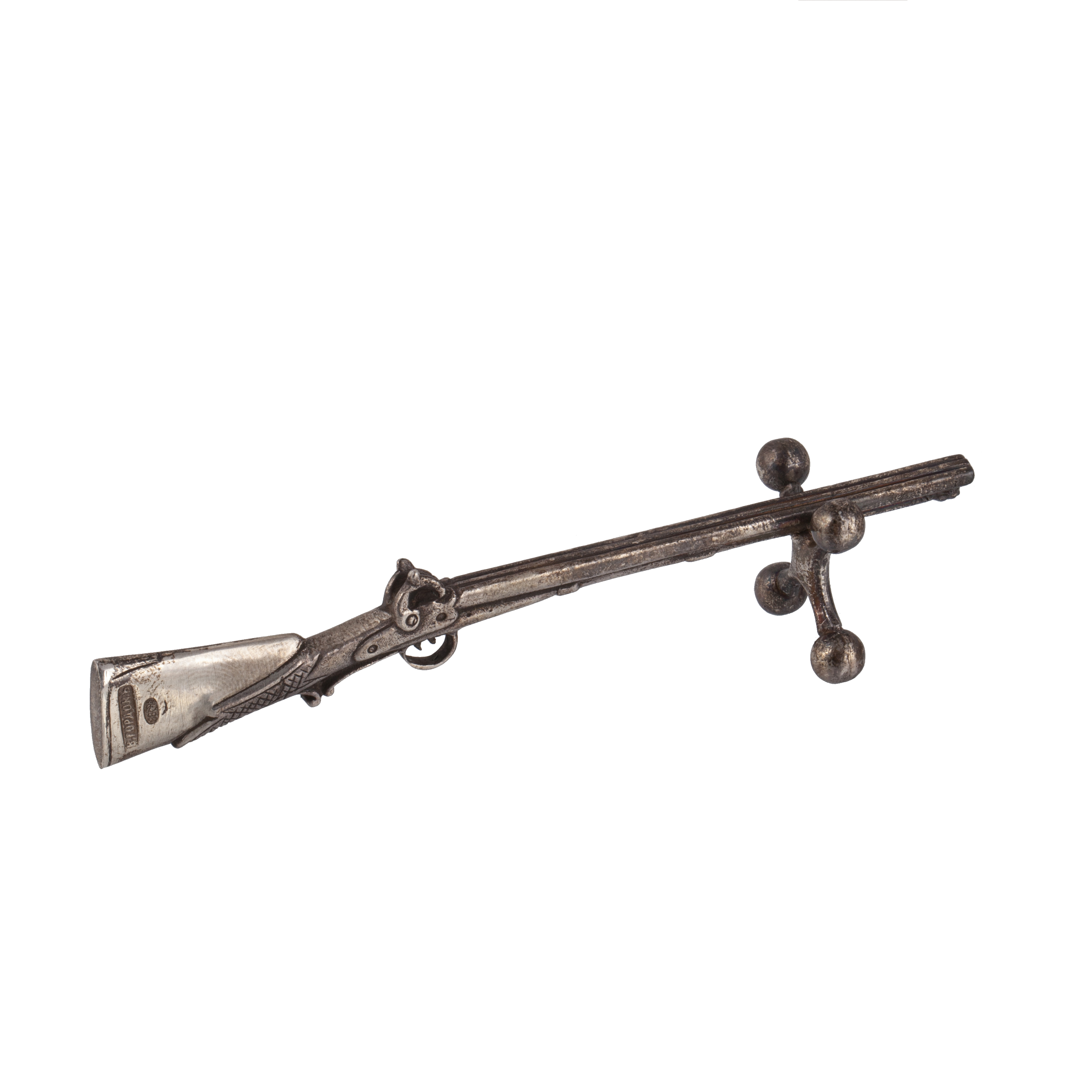
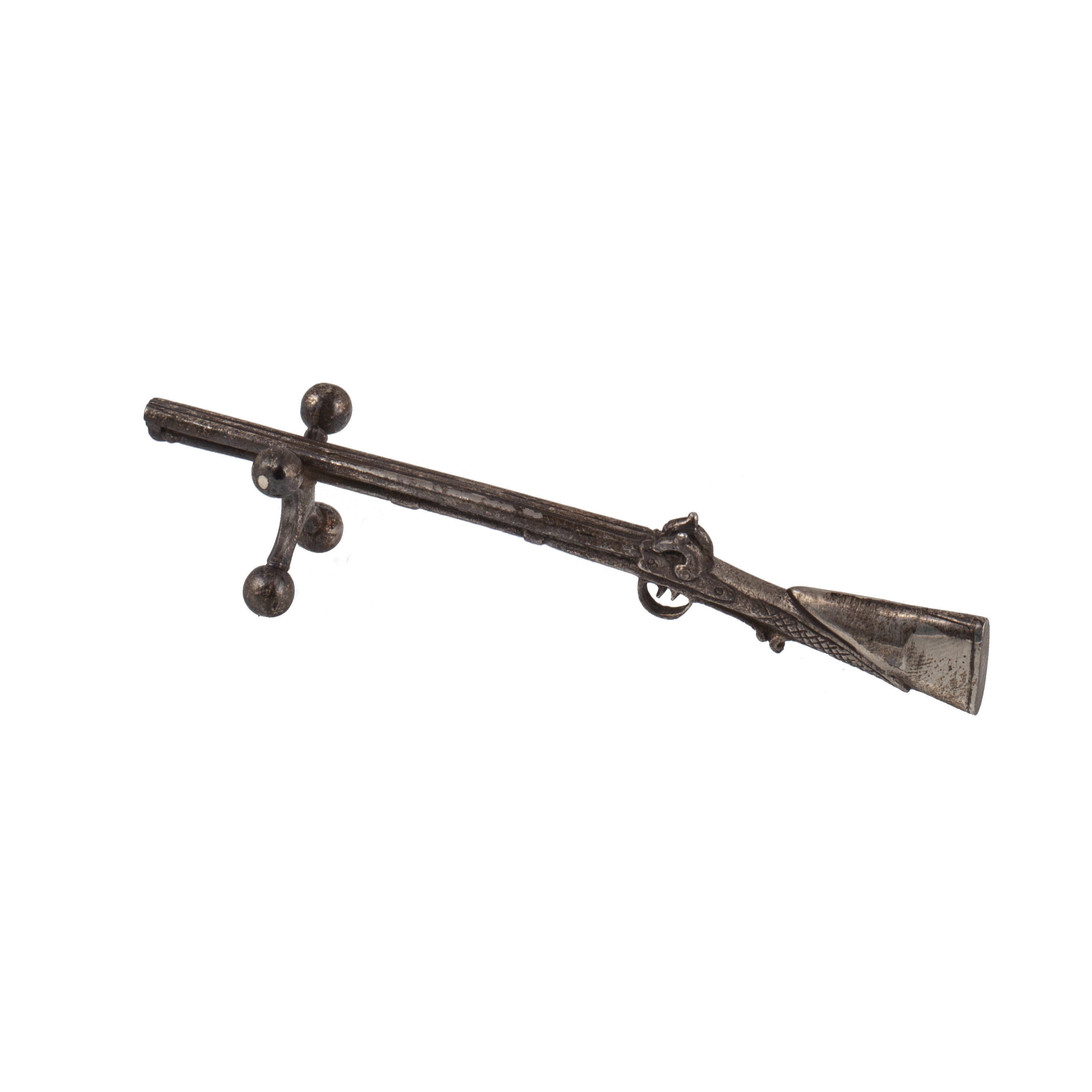
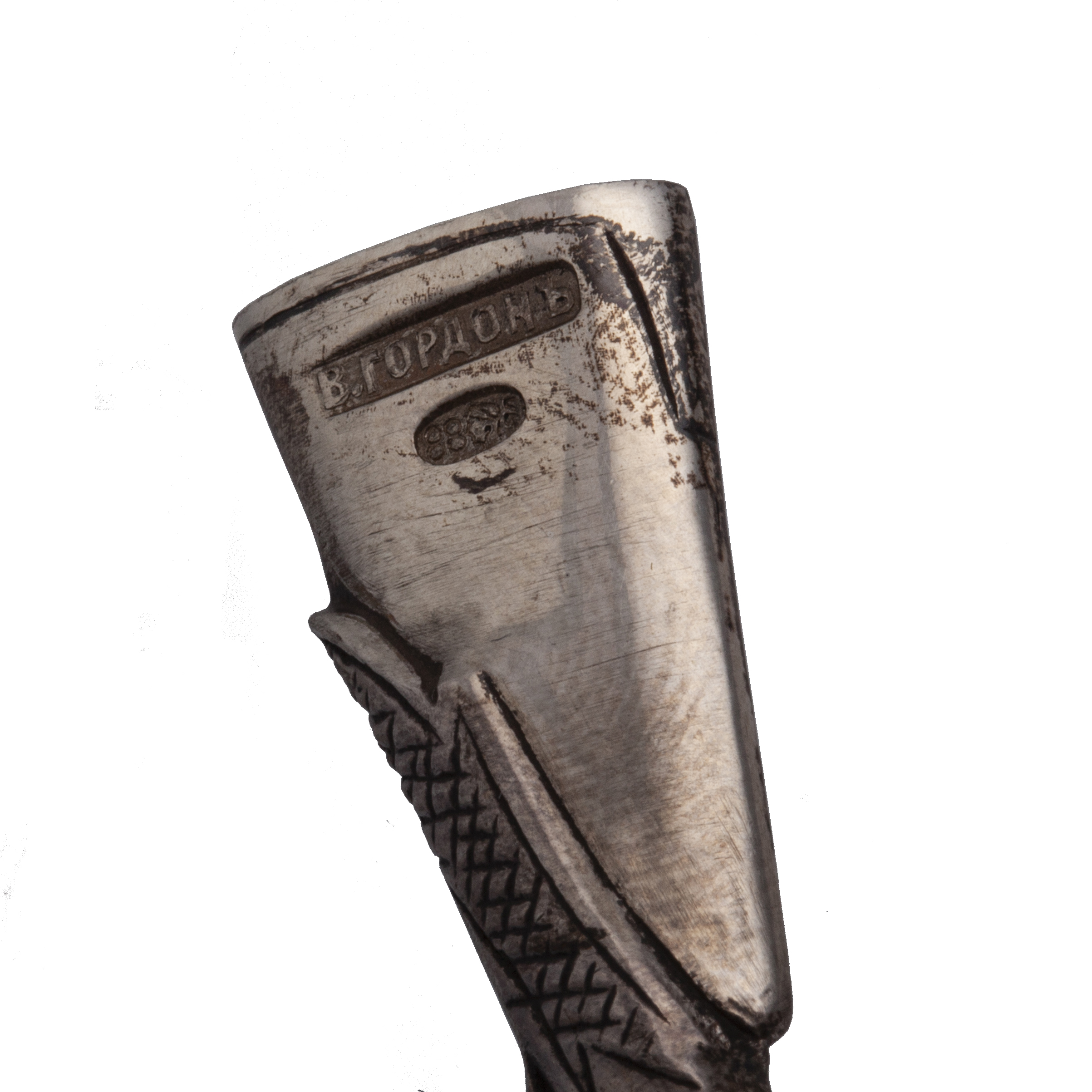
Estimate: 2000-2500€A Russian cast silver set of tableware stands in the form of rifles, presented as a shooting prize from the 85th Imperial Vyborg Infantry Regiment. Maker’s mark of V. Gordon firm, St. Petersburg, 1899–1904.
Dimensions: Length 10.6 cm
Total weight: 392 gVladimir Gordon was a well-known St. Petersburg jeweler whose shop on the Zerkalnaya Line of Gostiny Dvor was widely recognized at the turn of the 20th century. His firm was admired for the richness and variety of its production and enjoyed a solid reputation among the city’s clientele.
Starting price: 1500€
Estimate: 2000-2500€
Hammer Price: Not sold -
Lot 0052
19th Century European Cut Crystal Claret Jug with Silver Mounts
Estimate: 800-1000€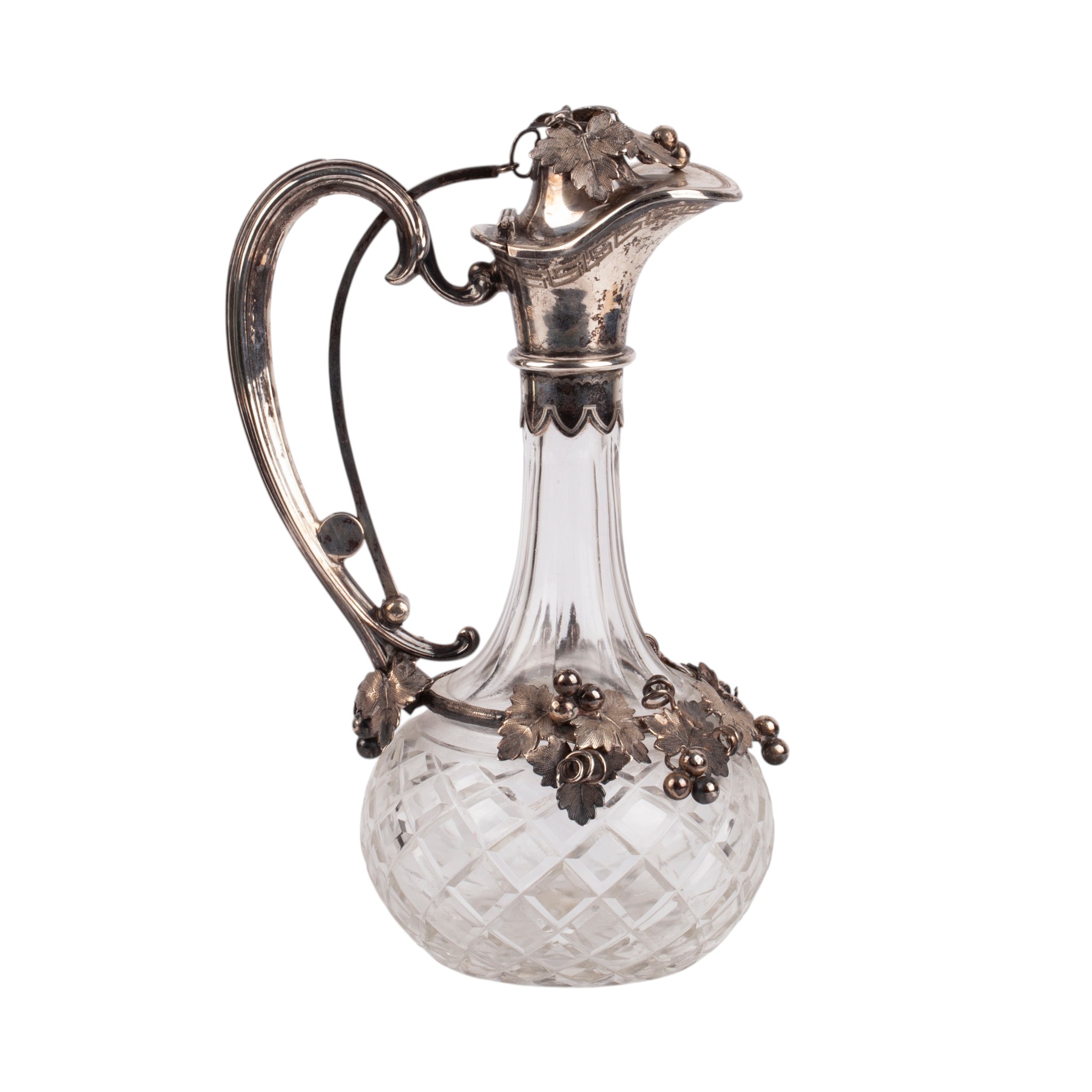
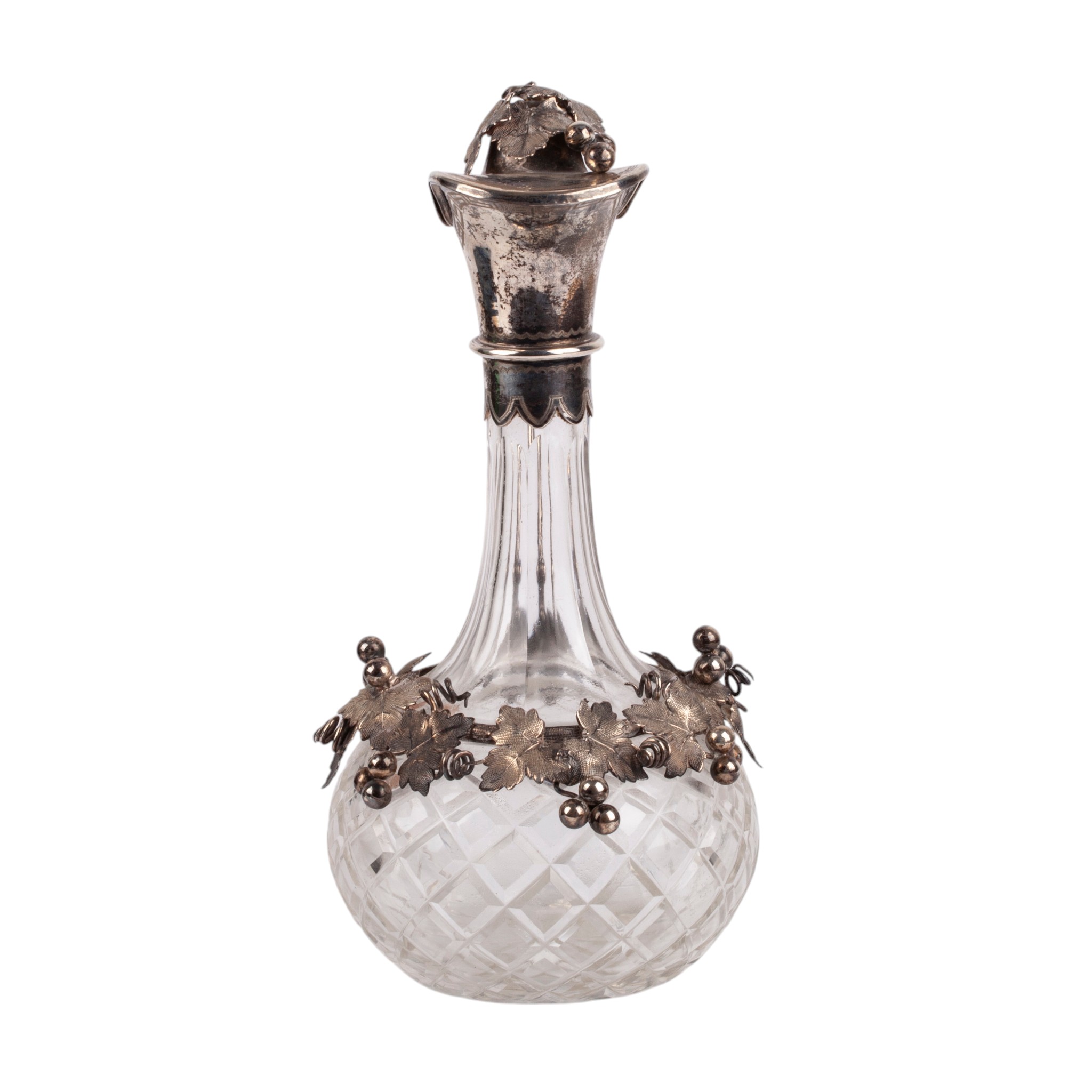
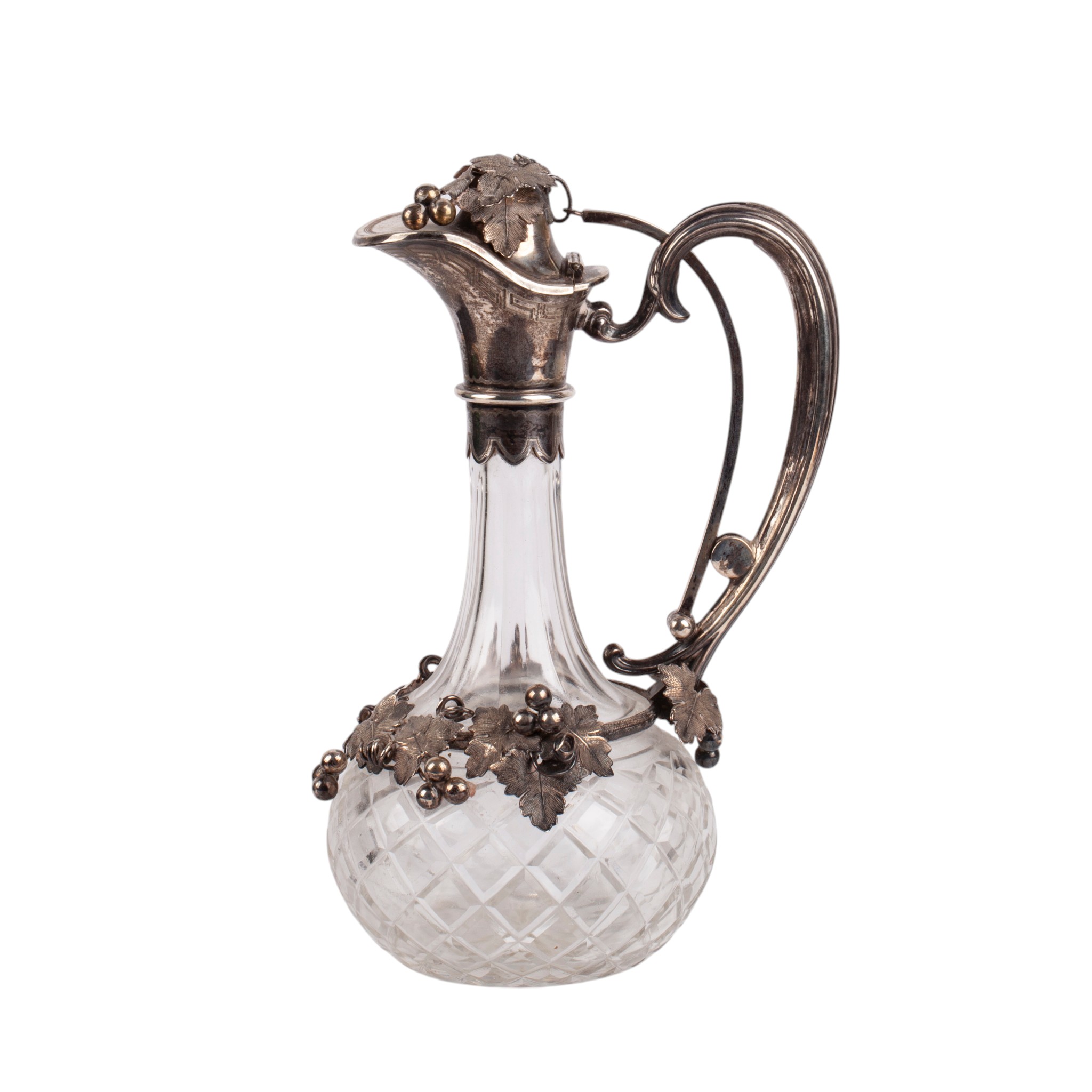
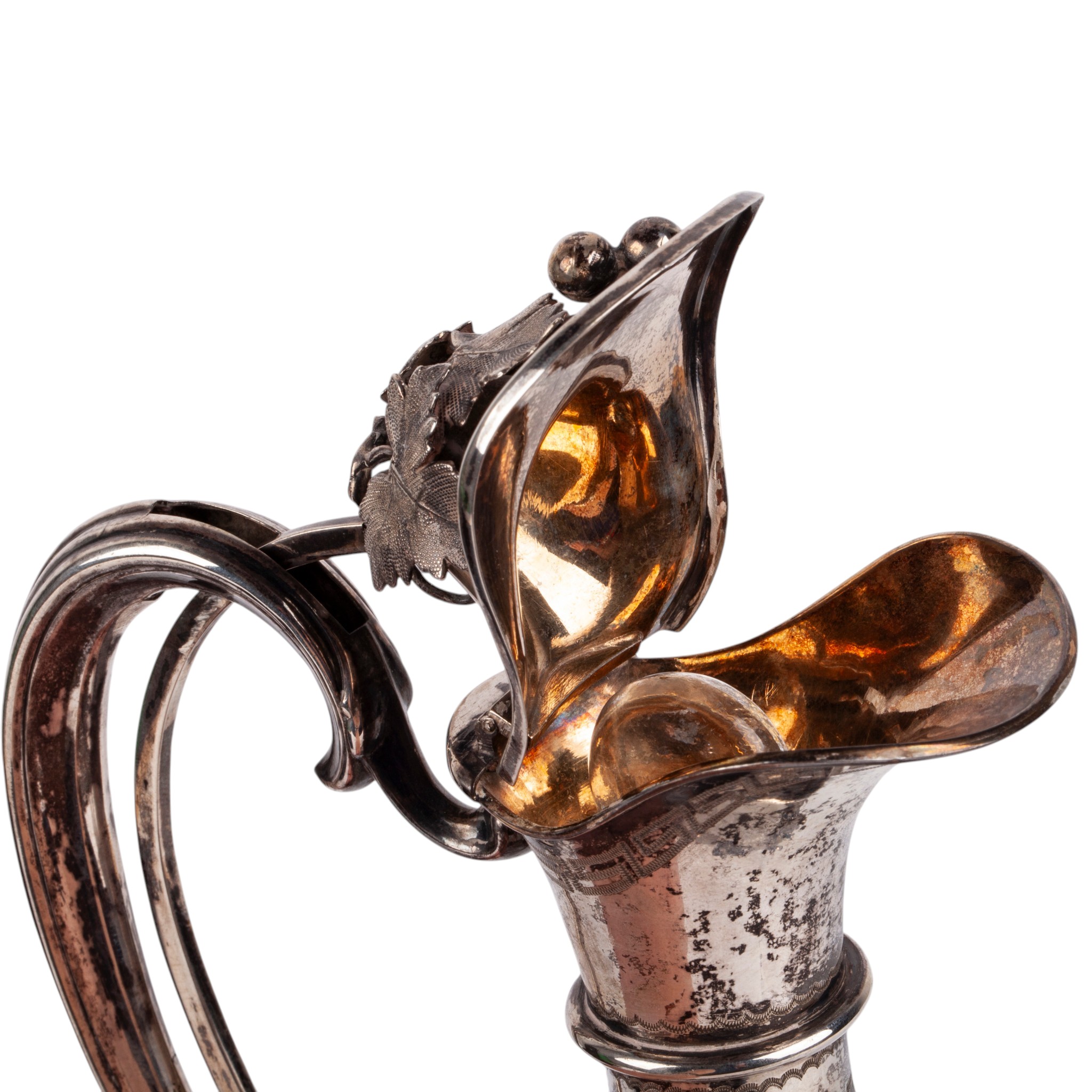
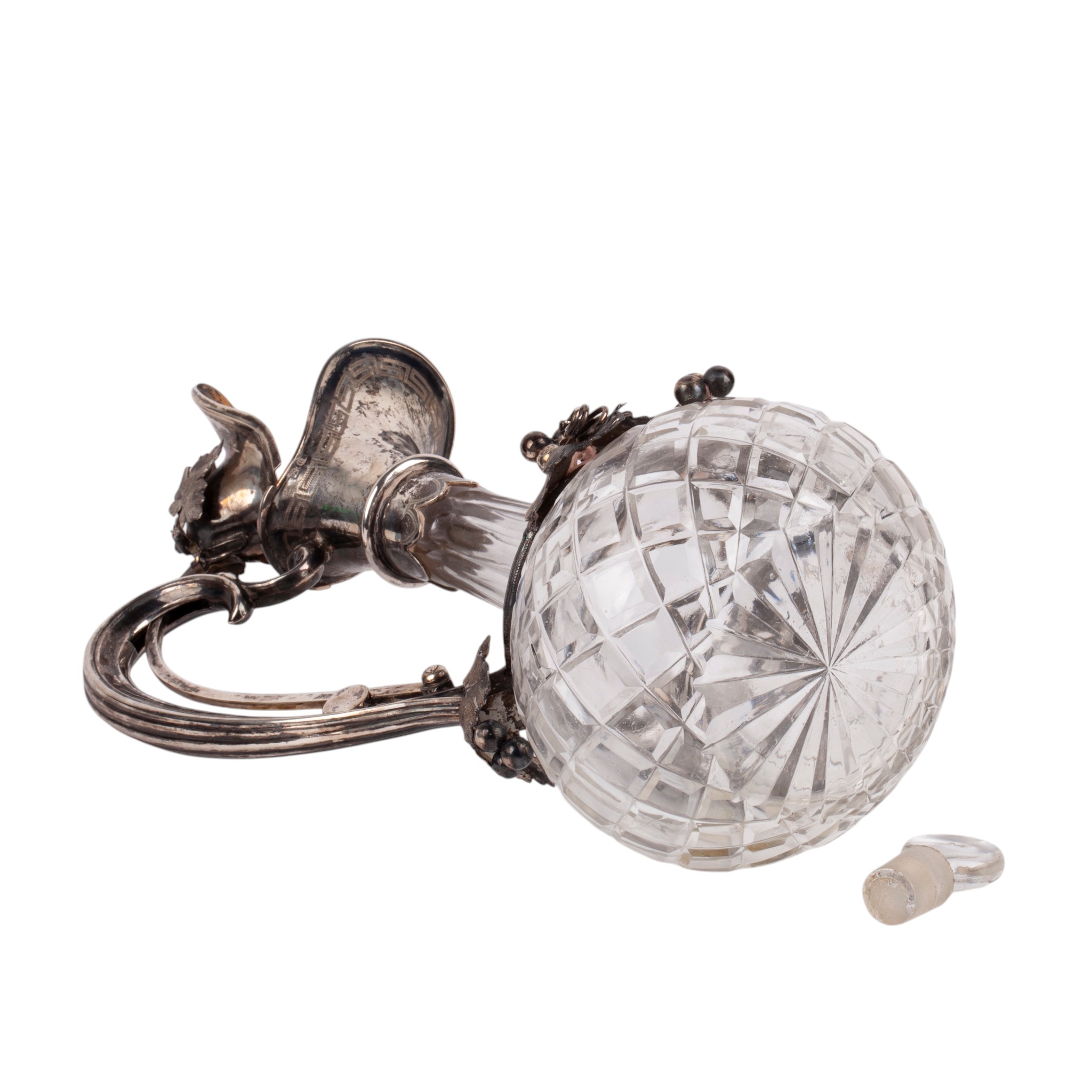
Lot 0052
19th Century European Cut Crystal Claret Jug with Silver Mounts
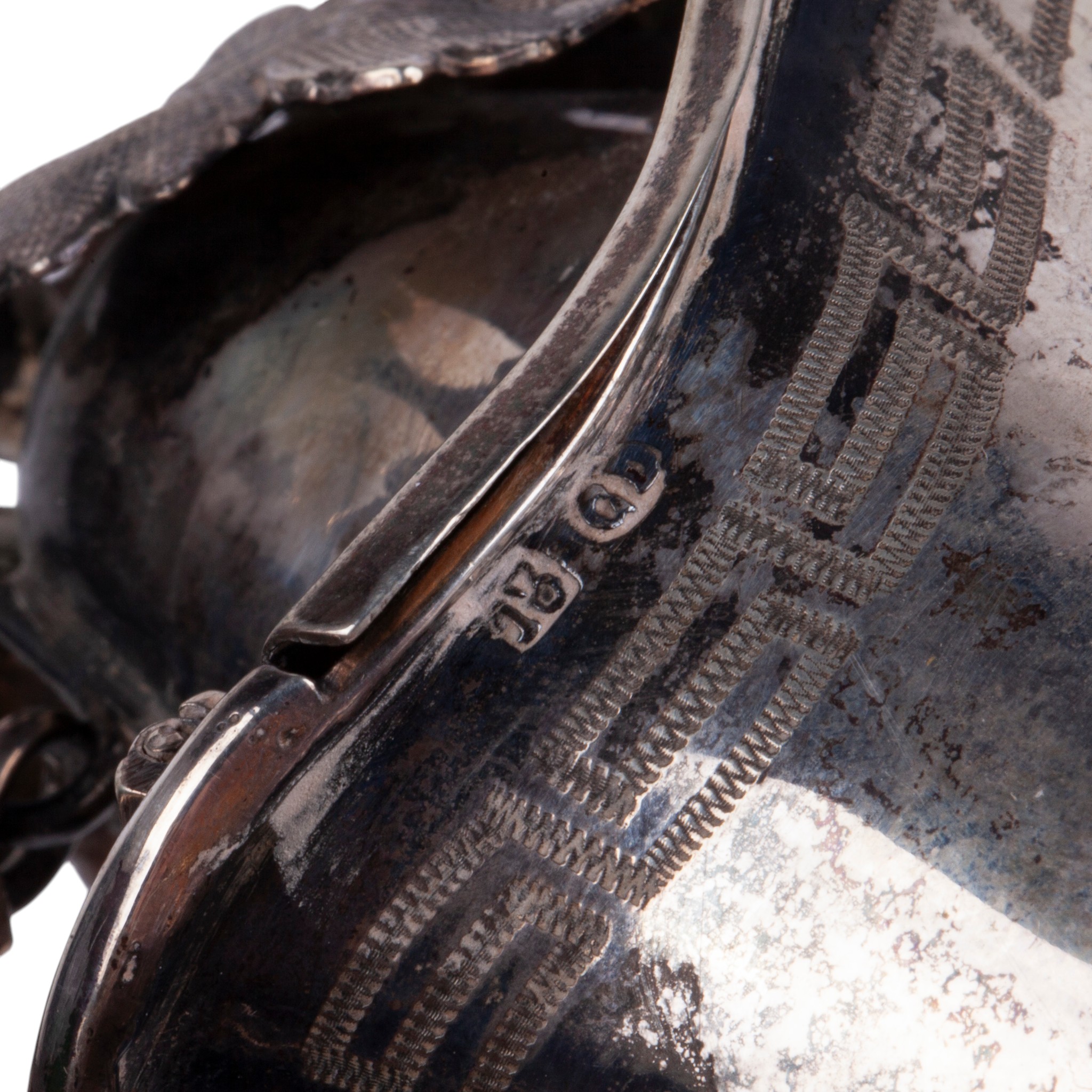
Estimate: 800-1000€A 19th century European cut crystal claret jug with silver mounts, the elegant form enriched with naturalistic vine leaf and grape decoration, hinged cover and sweeping handle. Marked 13 and maker’s mark GD.
Height: 22.5 cm
Starting price: 600€
Estimate: 800-1000€
Hammer Price: Not sold -
Lot 0053
Fabergé silver-mounted cut-crystal fruit bowl.
Estimate: 7000-9000€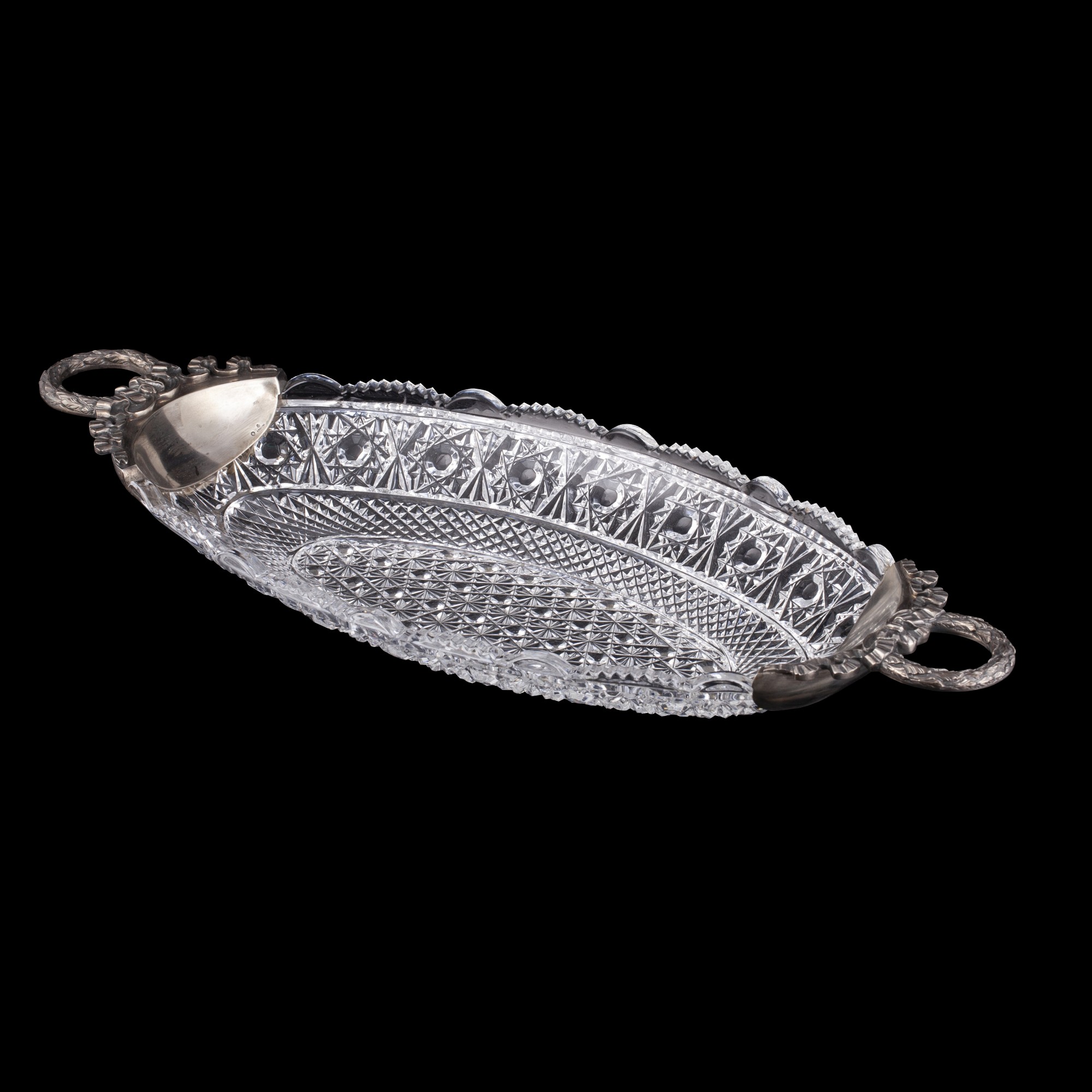
Lot 0053
Fabergé silver-mounted cut-crystal fruit bowl.
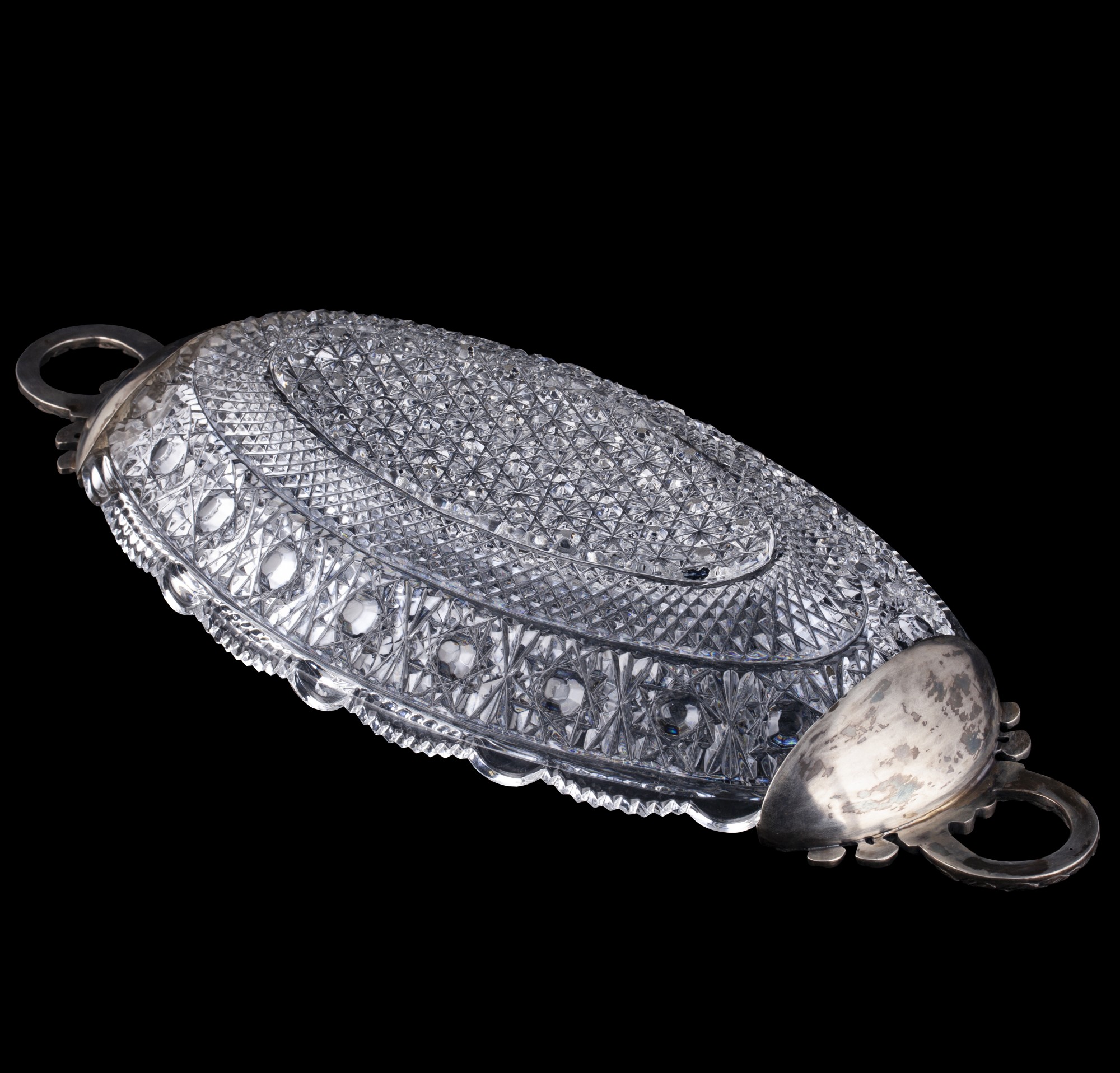
Estimate: 7000-9000€Fabergé silver-mounted cut-crystal fruit bowl.
Russia, Moscow, firm of Fabergé, 1908-1917.
Cut crystal, silver; cutting, polishing, casting, chasing, engraving, mounting.
Size: 46 x 19.8 x 6.5 cm.
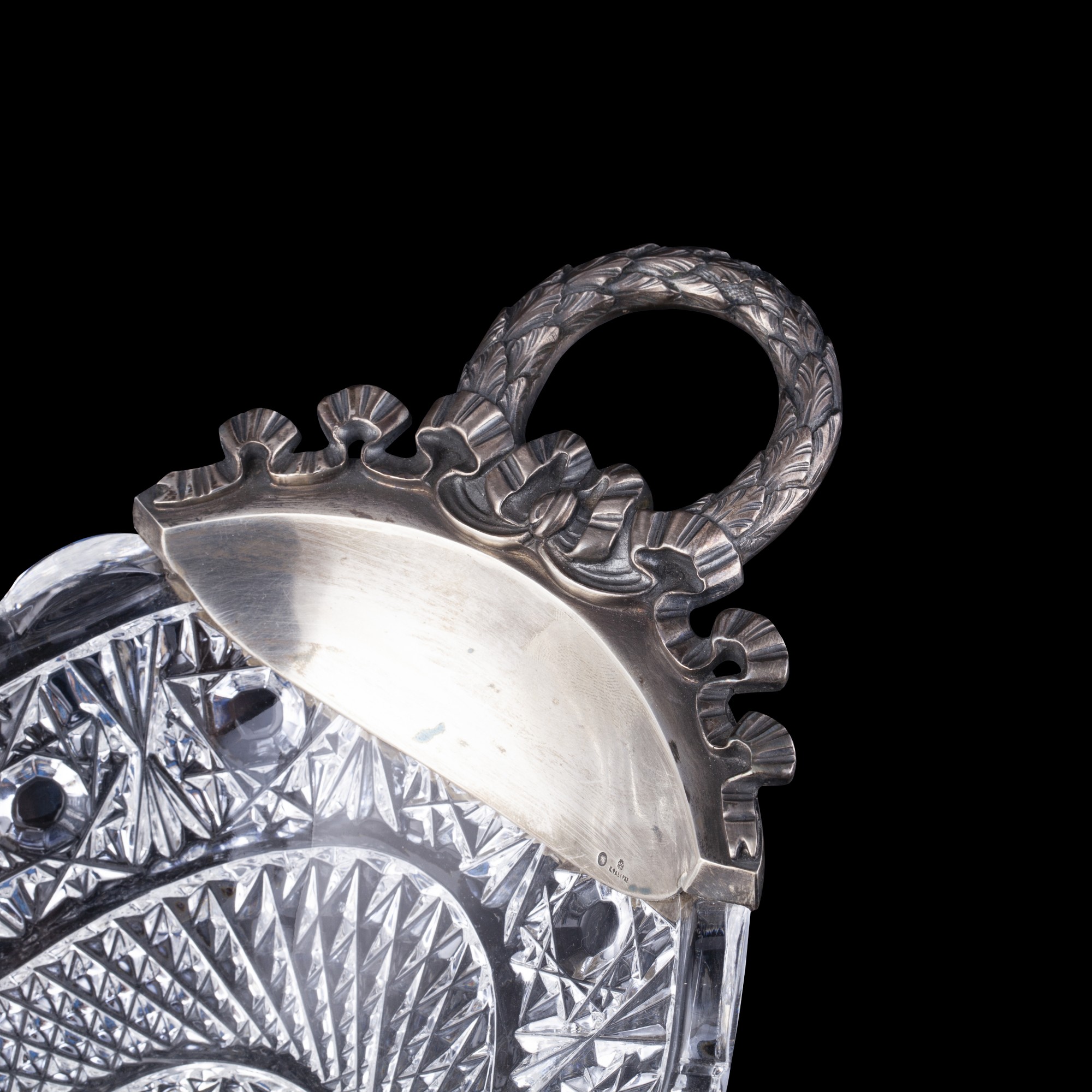
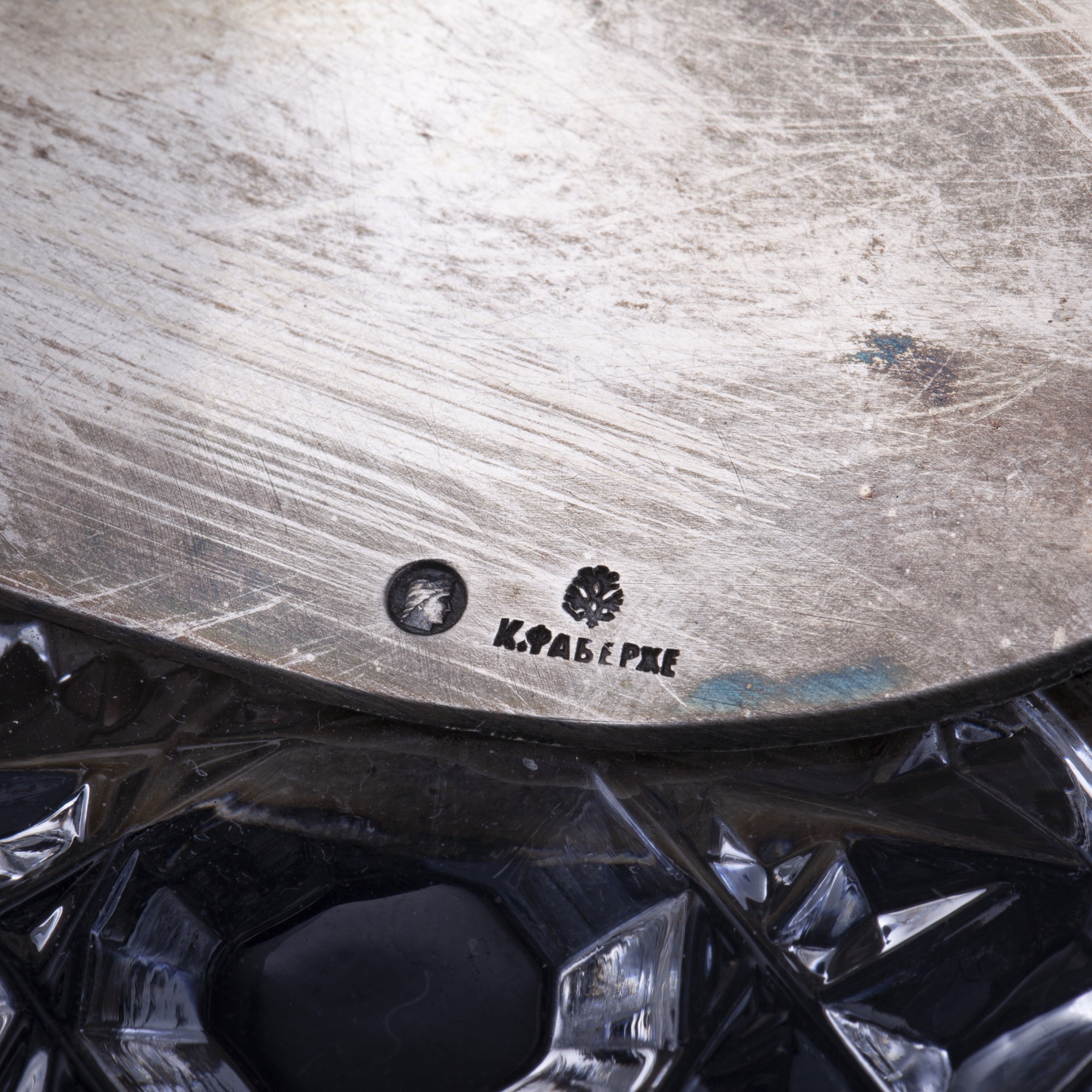
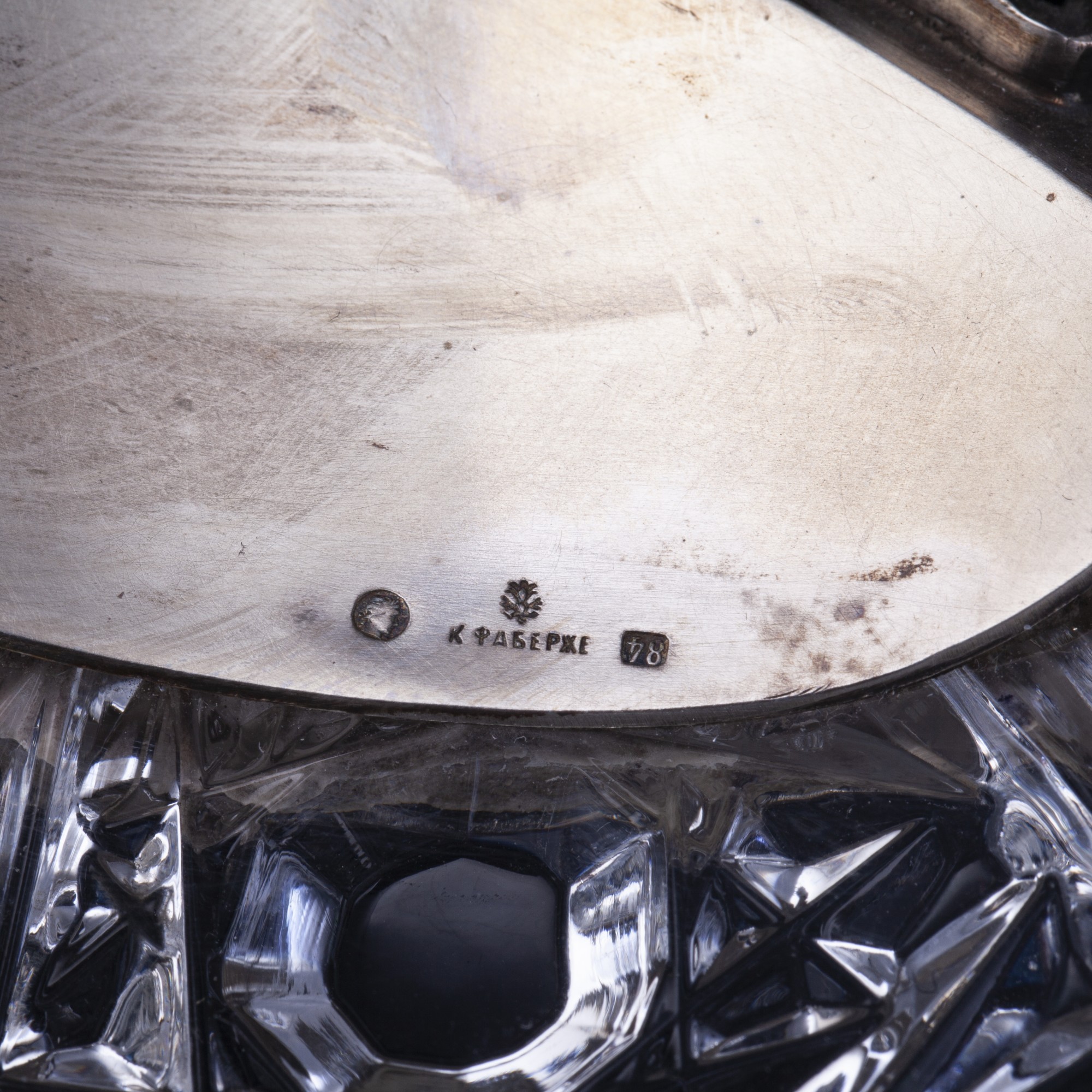
Marks: on the silver mount, Cyrillic mark “К. ФАБЕРЖЕ” beneath the Imperial warrant; Moscow assay mark.
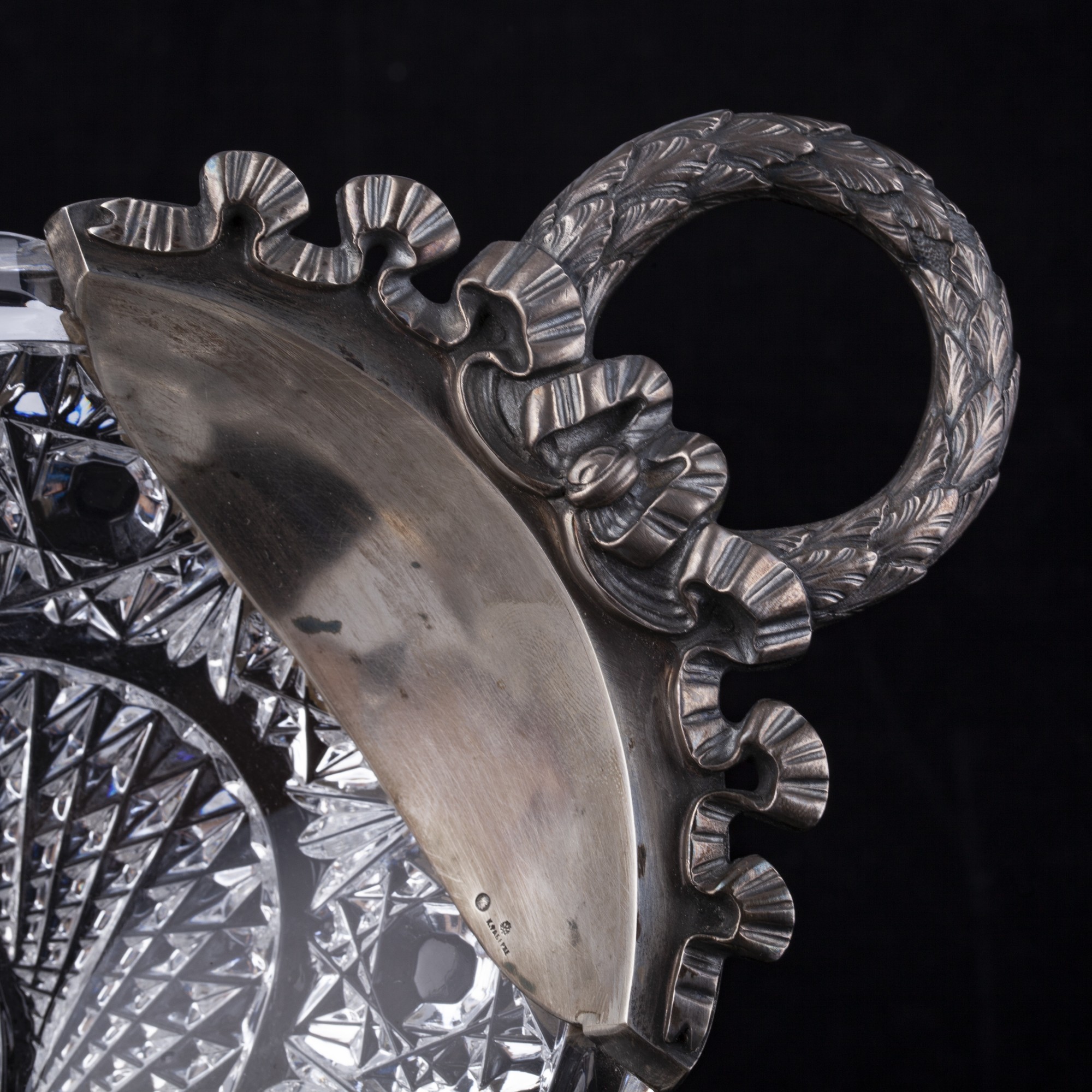
An elongated oval fruit bowl or table centrepiece with a deep cut-crystal body and silver terminal mounts. The crystal vessel is richly cut with radiating star motifs, diamond diaper ornament, faceted reserves and a scalloped rim, creating a brilliant play of light characteristic of late Imperial table glass. The ends are fitted with silver mounts of architectural form: shell-shaped caps, openwork cresting with stylised palmettes, and loop handles chased with laurel foliage.
The Moscow branch of Fabergé was especially active in the production of silver table objects, often combining refined craftsmanship with practical forms intended for the interiors of the educated urban elite, prosperous merchants and aristocratic households.
The design of the silver mounts reflects the restrained historicism typical of Fabergé’s Moscow production: neoclassical laurel ornament, shell motifs and crisp chased borders are balanced by the brilliance of the deeply cut crystal. Unlike the more jewellery-like idiom associated with St Petersburg, the Moscow branch often cultivated a broader decorative language, particularly suited to dining rooms, buffets and formal table settings.Starting price: 6000€
Estimate: 7000-9000€
Hammer Price: Not sold -
Lot 0054
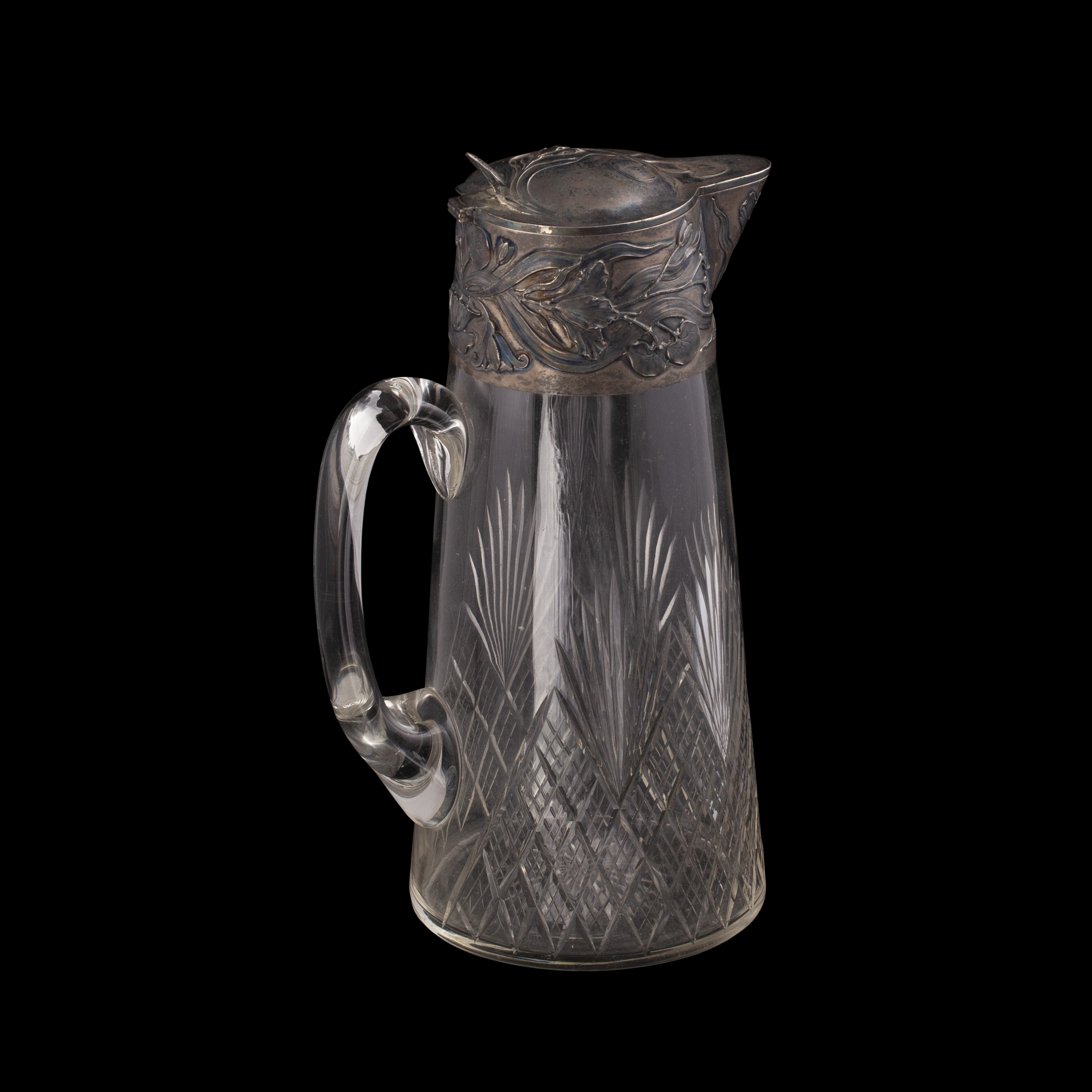
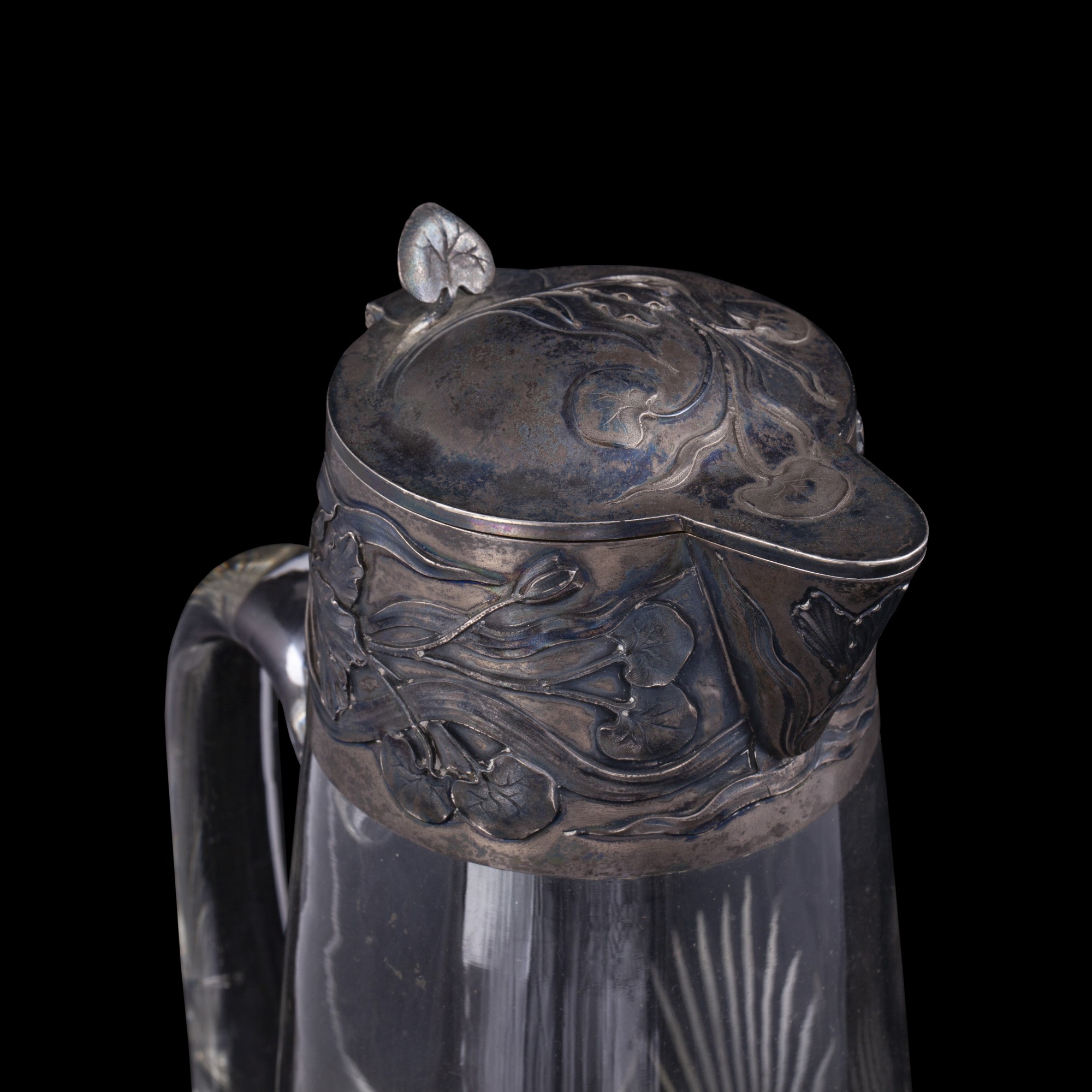
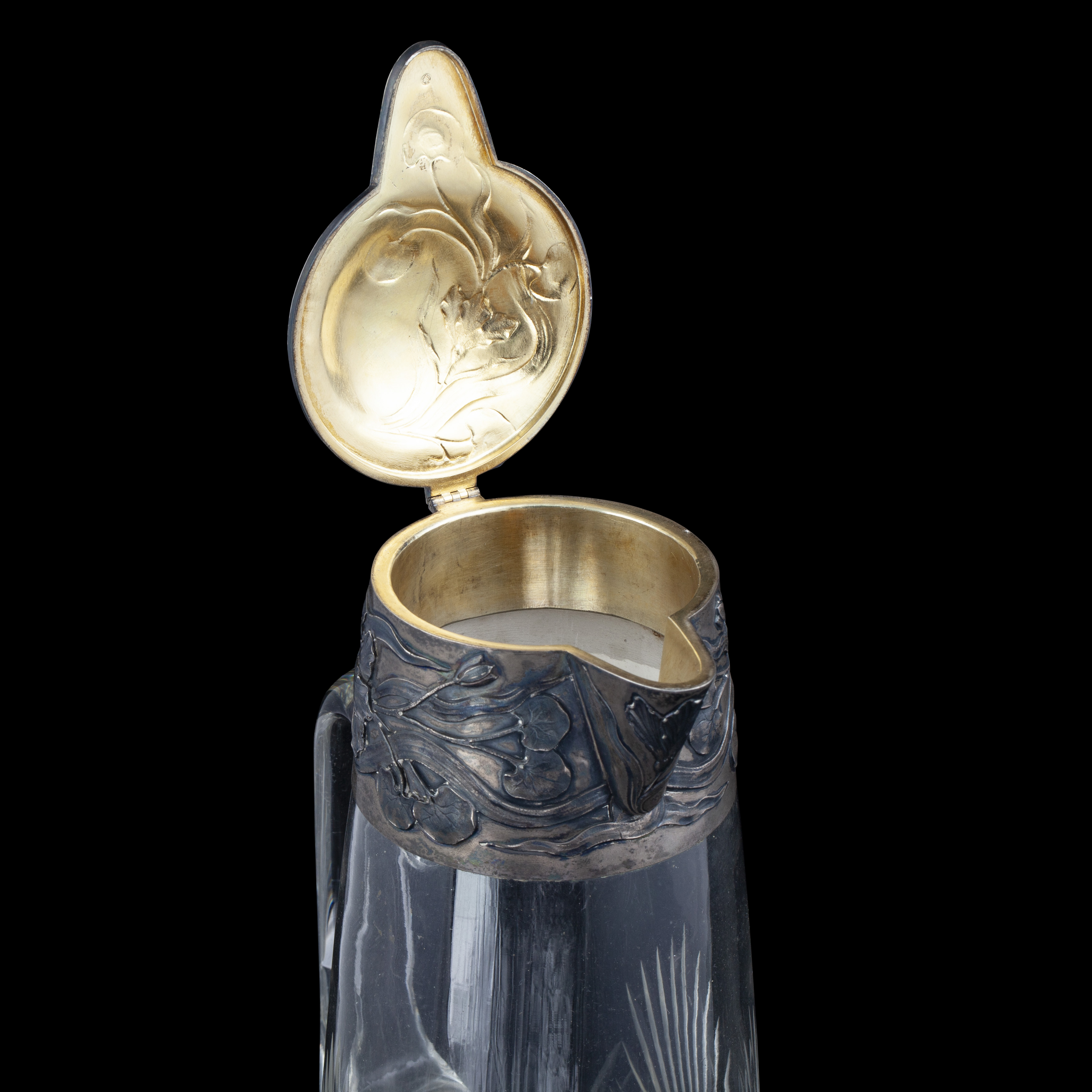
Russian Art Nouveau Silver-Gilt and Cut-Glass Decanter, Moscow, 1899–1908
Estimate: 2500-3500€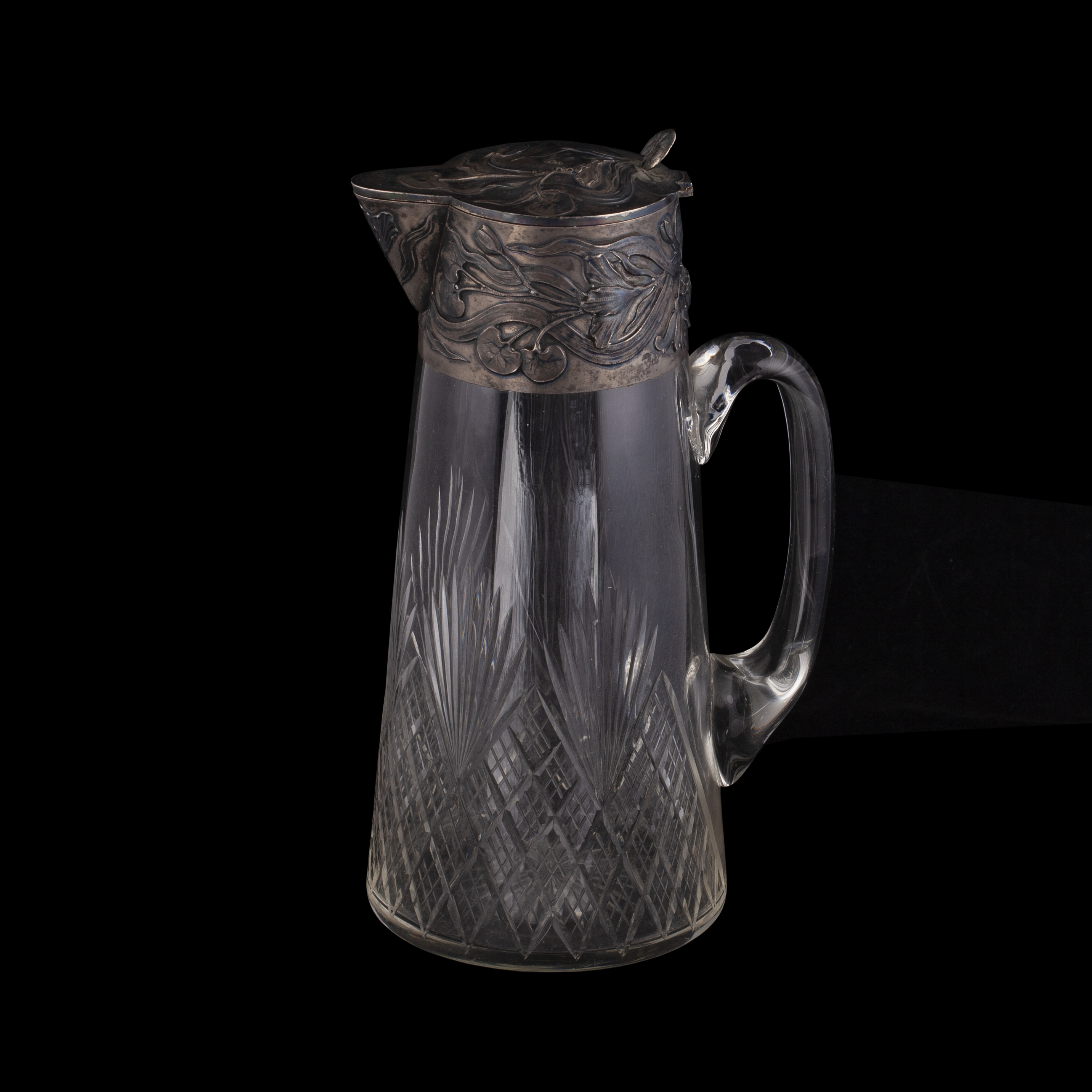
Lot 0054
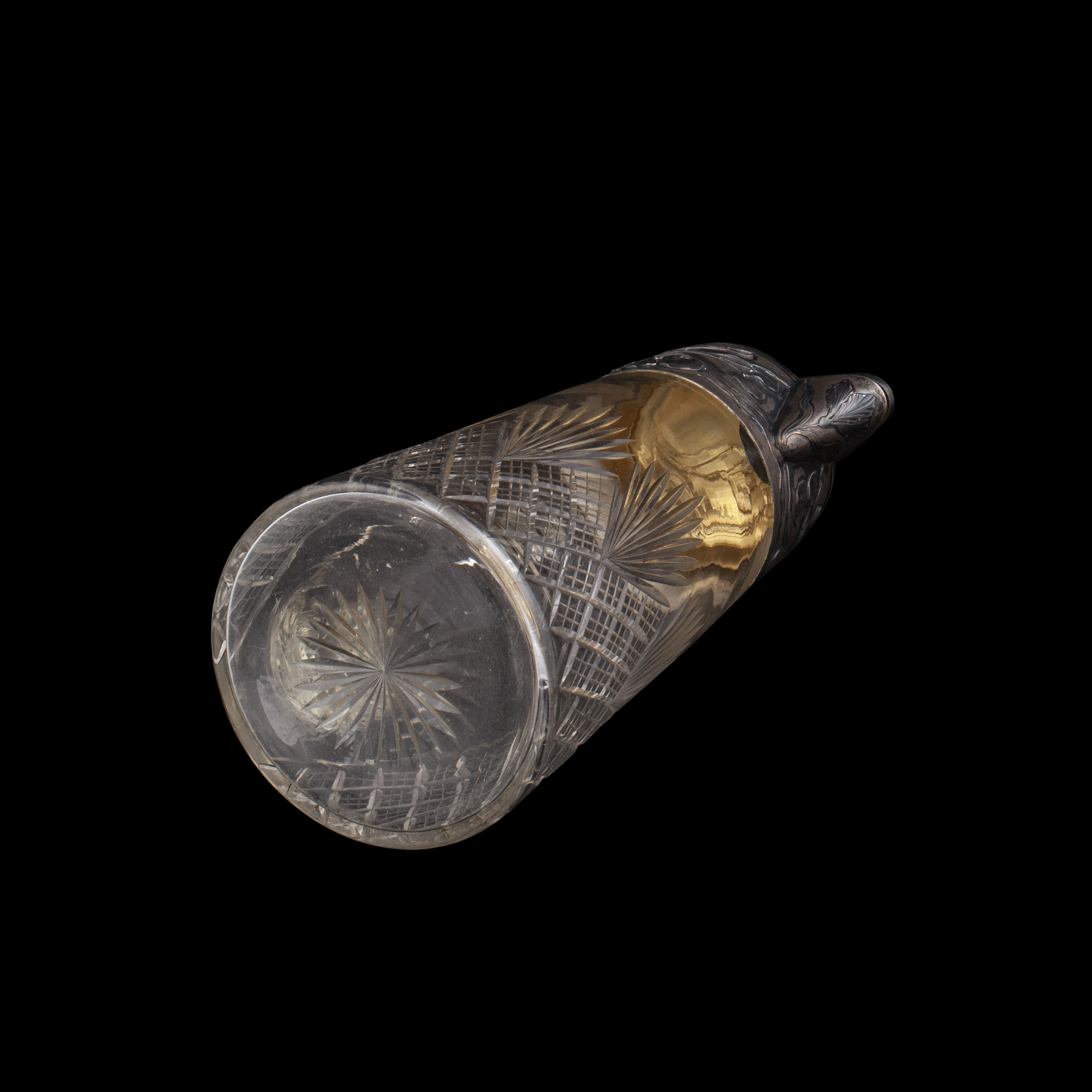
Russian Art Nouveau Silver-Gilt and Cut-Glass Decanter, Moscow, 1899–1908
Estimate: 2500-3500€An Elegant Russian Art Nouveau Silver-Gilt and Cut-Glass Decanter.
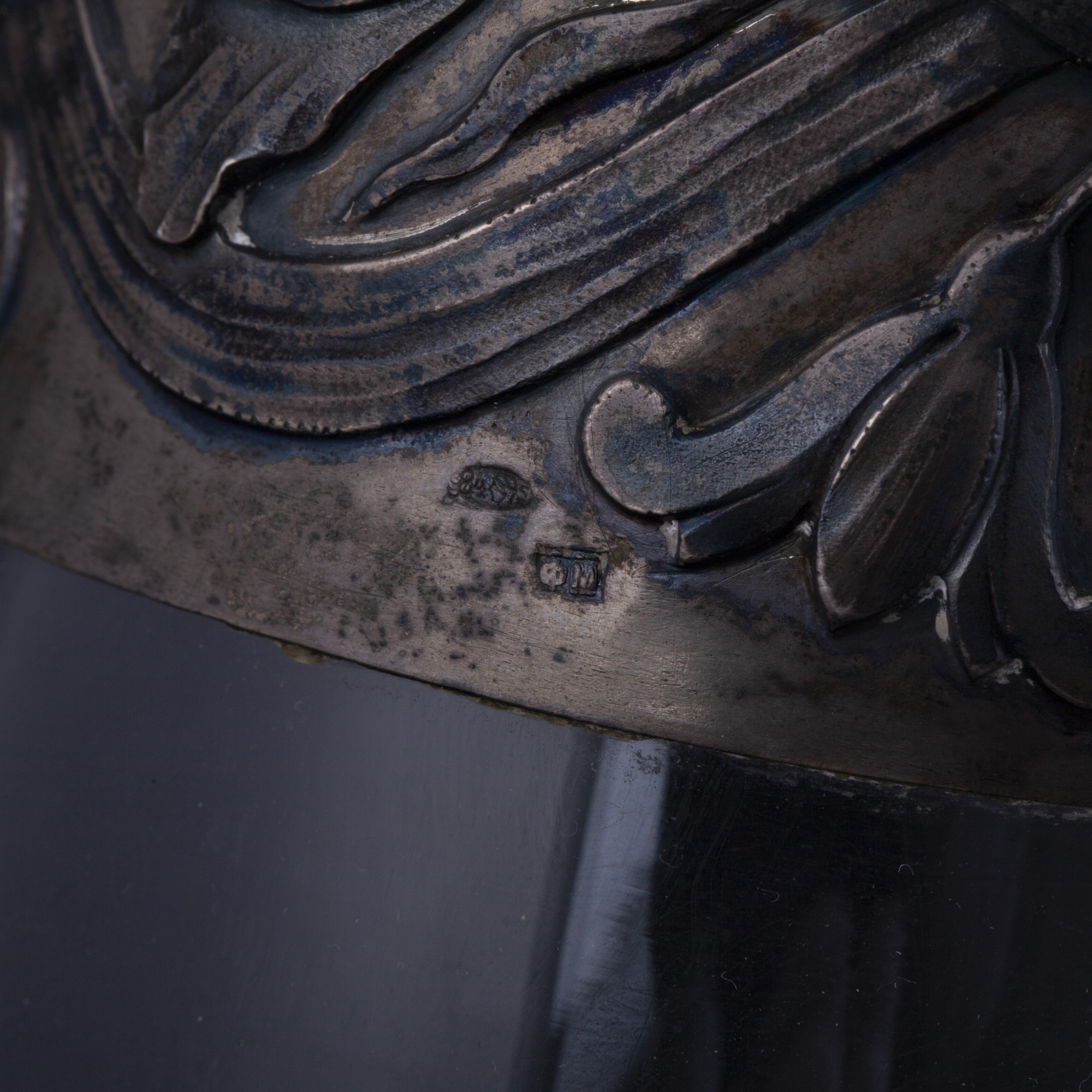
Moscow, maker’s mark “ФМ” in Cyrillic, 1899-1908.
Silver-gilt, cut glass; repoussé, chasing, engraving, gilding, glass cutting.
Height: 27 cm.
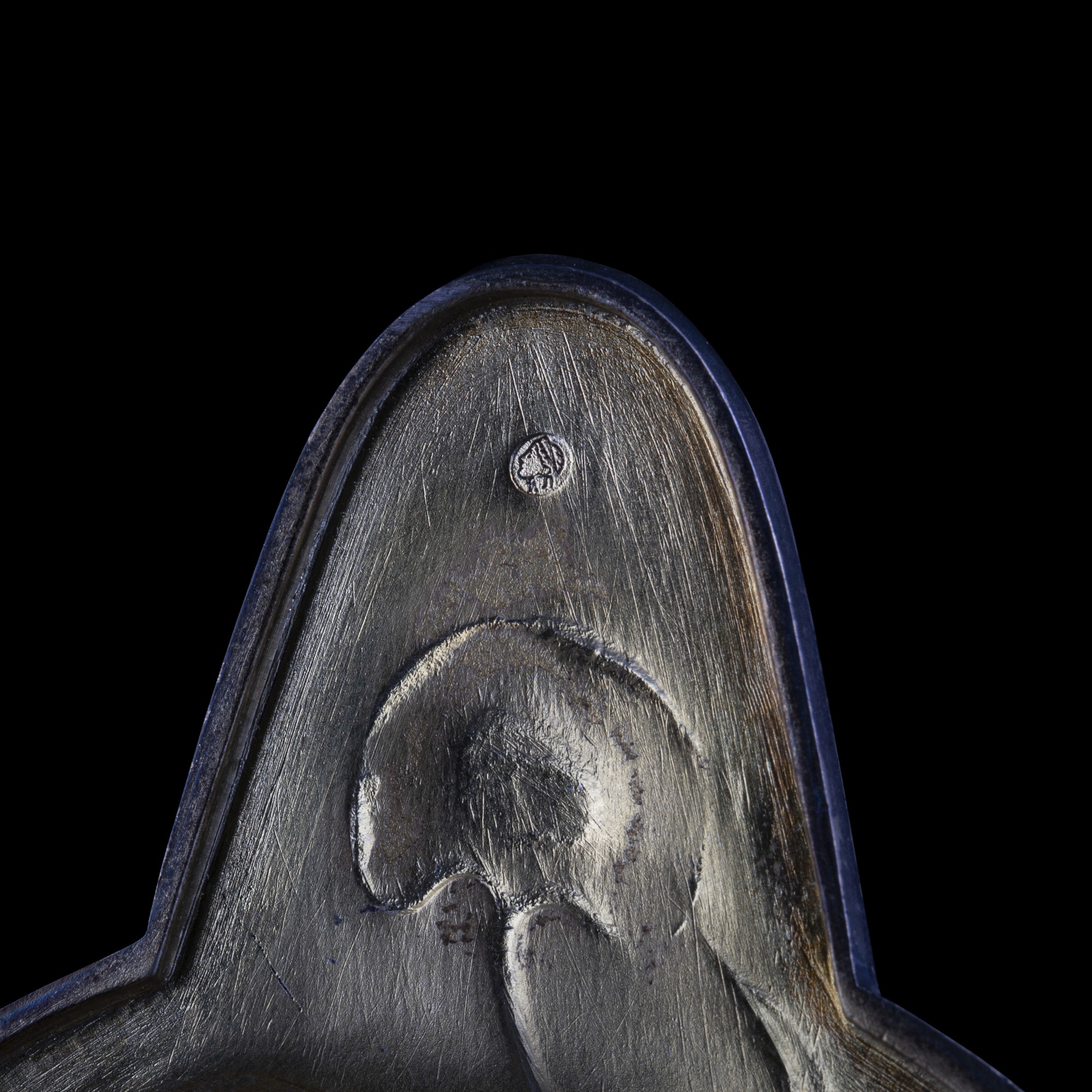
Marks: maker’s mark “ФМ” in Cyrillic; Moscow assay mark, 84 zolotniki silver standard.
The decanter is of tall tapering form, with a clear cut-glass body and applied silver-gilt mount to the neck, spout and hinged cover. The lower part of the glass body is decorated with deep diamond cutting and radiating fan motifs.
The silver mount is designed in the Art Nouveau taste, with a continuous relief ornament of sinuous stems, leaves and stylised flowers.Starting price: 2000€
Estimate: 2500-3500€
Hammer Price: Not sold -
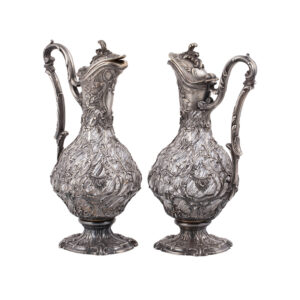
Lot 0055
Fabergé. Pair of Silver-Gilt and Cut-Glass Decanters, Moscow, 1889
Estimate: 35000-40000€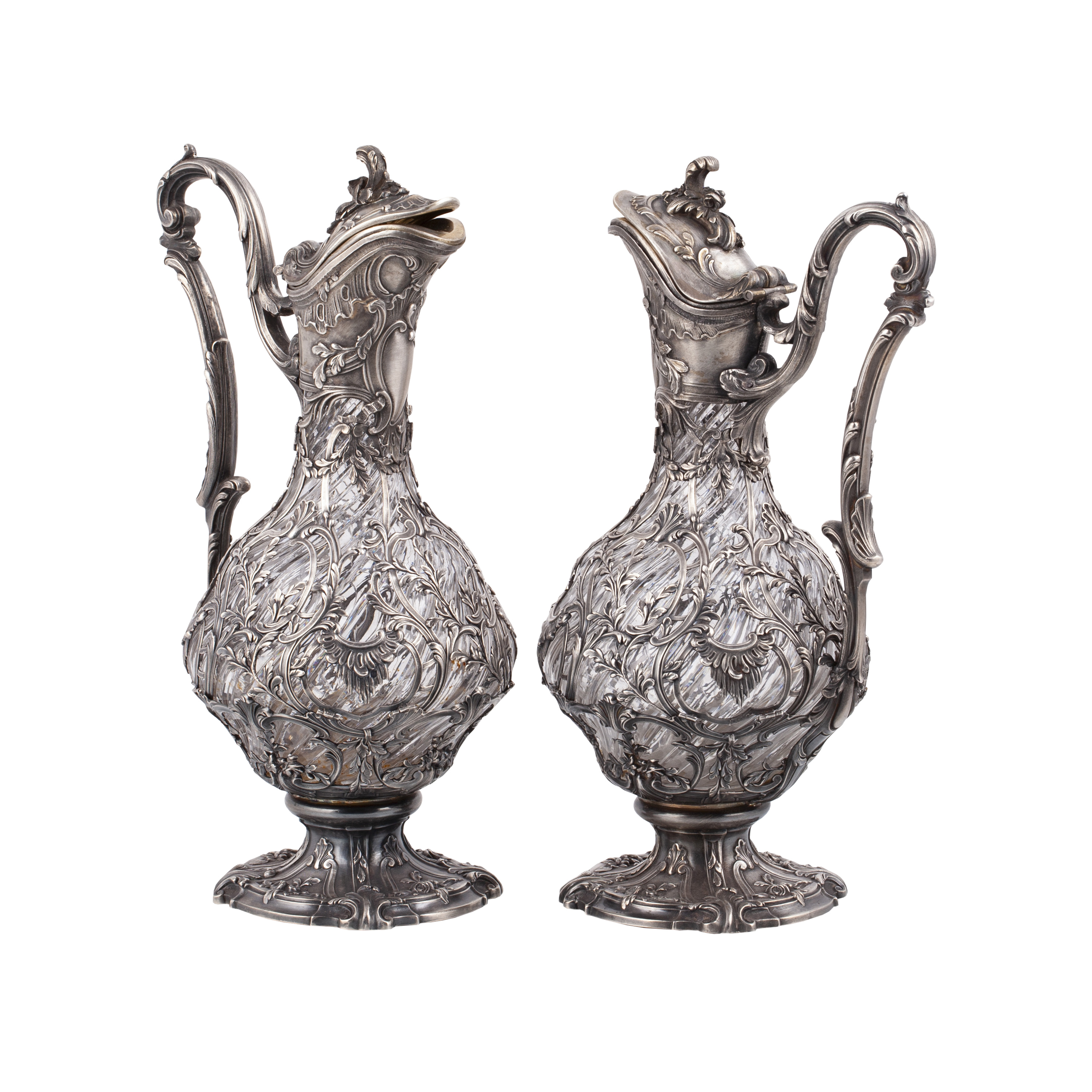
Lot 0055
Fabergé. Pair of Silver-Gilt and Cut-Glass Decanters, Moscow, 1889
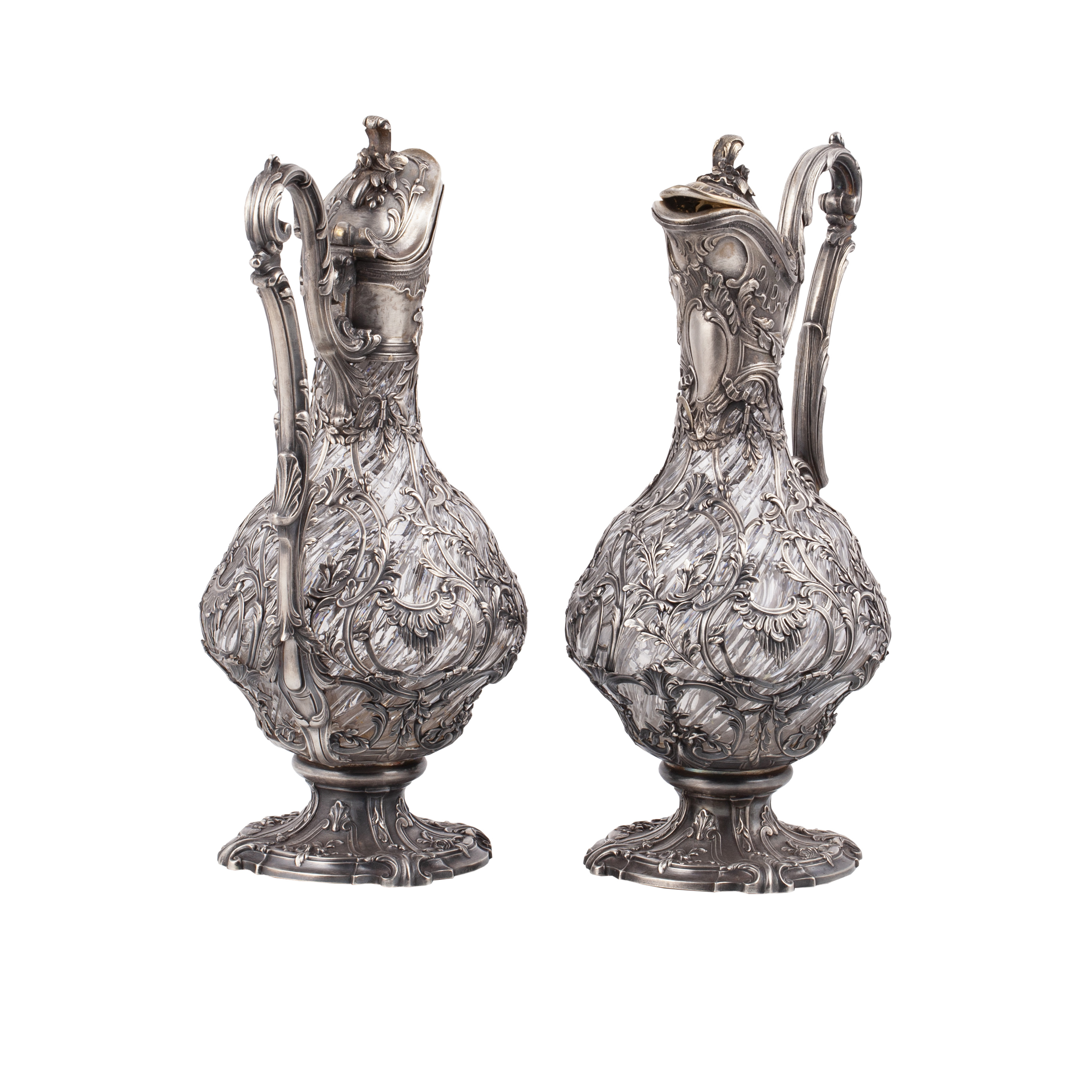
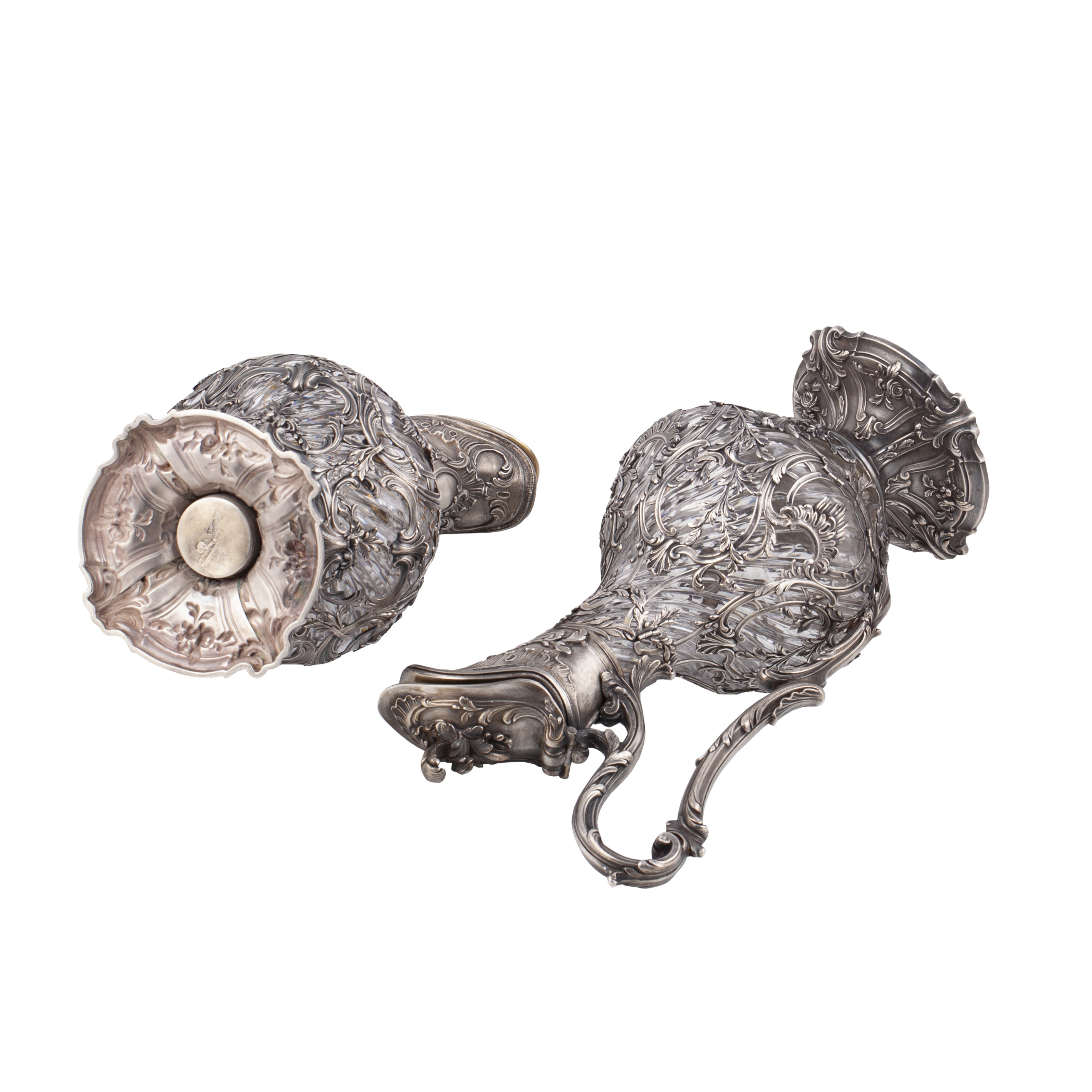
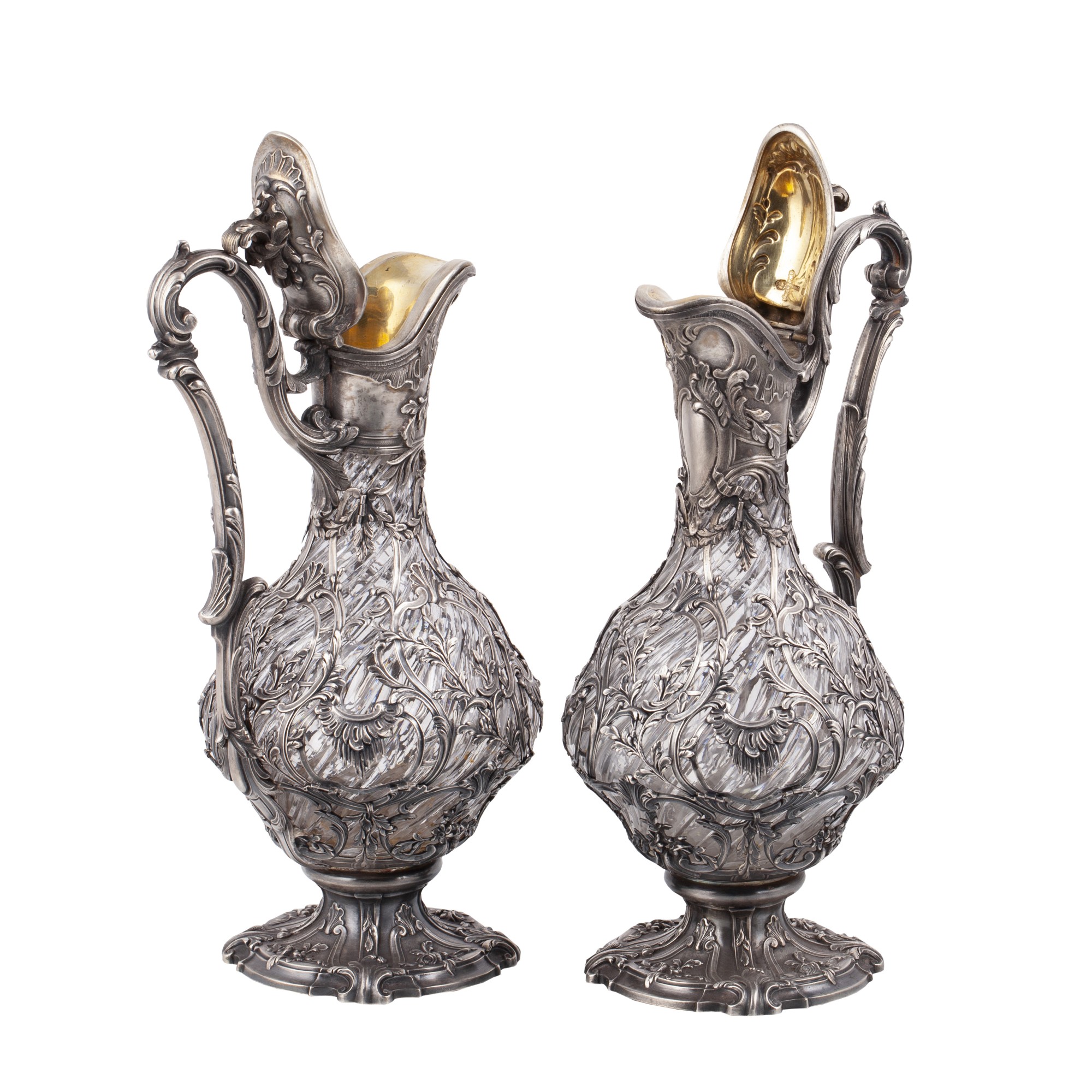
Estimate: 35000-40000€A Pair of Fabergé Silver-Gilt and Cut-Glass Decanters
Moscow, maker’s mark of K. Linke for the Fabergé firm, 1889.
Silver-gilt, cut glass; casting, chasing, repoussé, engraving.
Height: 24.5 cm each.
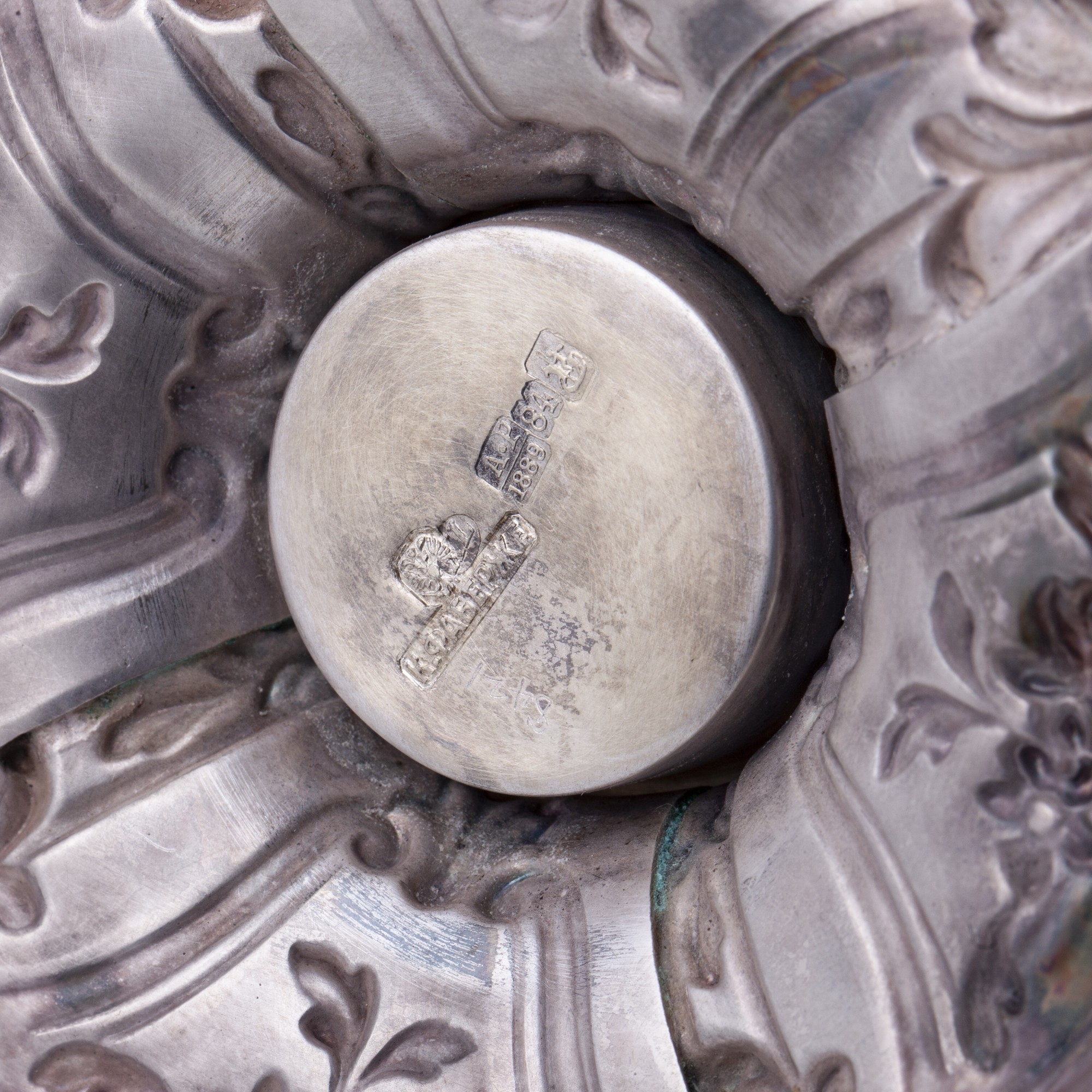
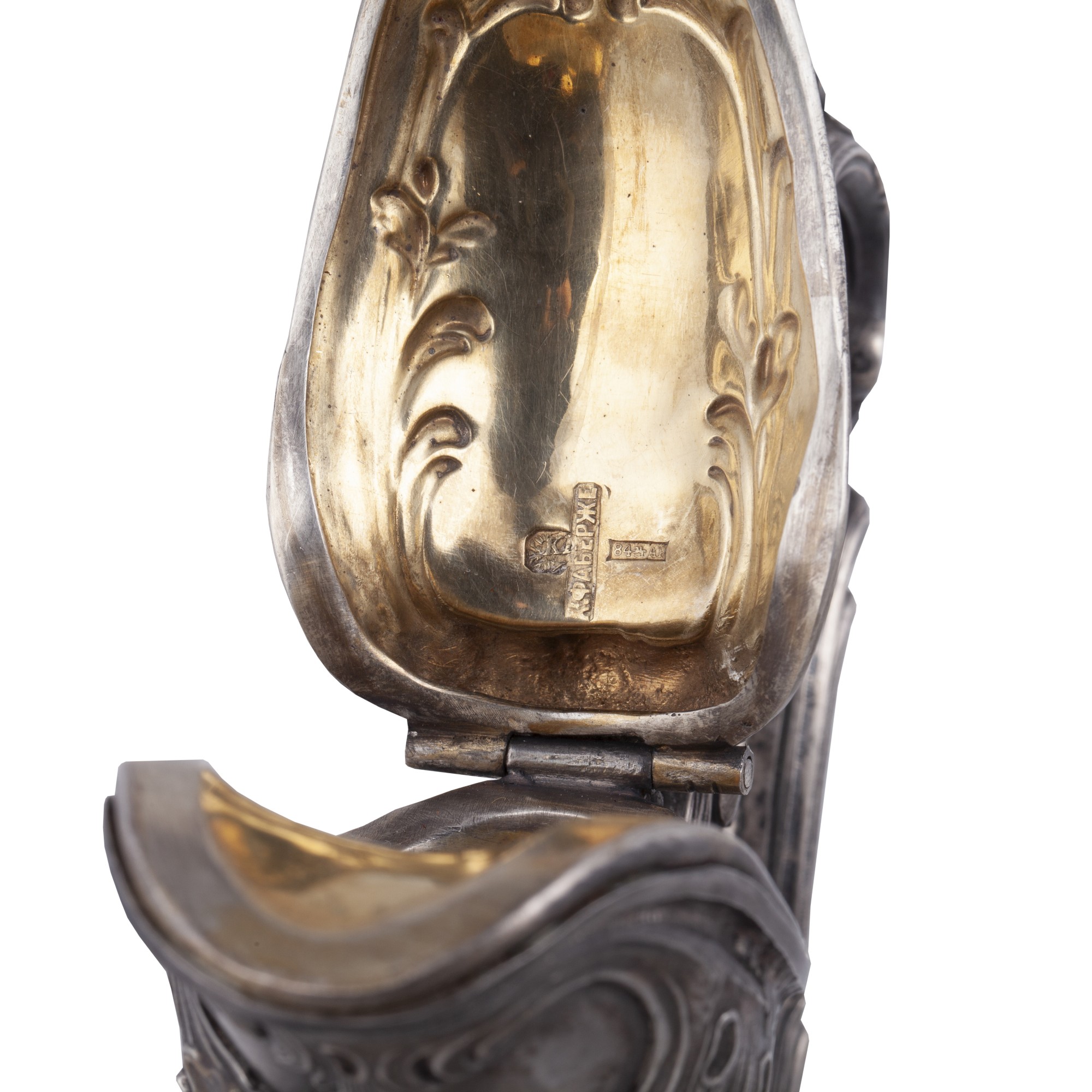
Marks: Fabergé firm mark and Imperial court supplier warrant, maker’s mark of K. Linke; Moscow assay marks; 84 zolotniki silver standard; date mark for 1889.
This impressive pair of decanters is made in the neo-Rococo taste, uniting richly modelled silver mounts with finely cut glass bodies. Each vessel is of elegant pear-shaped form, rising from a spreading domed foot and surmounted by a high asymmetrical neck with scroll handle and hinged cover. The glass bodies are decorated with dense wheel-cut ornament, while the silver-gilt mounts are lavishly chased with scrolling foliage, rocailles and floral sprays, creating a dynamic surface of great decorative richness.
The decanters are marked for K. Linke, that is Konstantin Linke, whose family workshop took an important place among the Moscow suppliers of the Fabergé firm. The history of this family enterprise began with Maria Linke, who registered her own silver workshop in 1866 and received the right to use a personal maker’s mark. By 1889 the workshop already employed a substantial number of craftsmen and maintained close ties with Fabergé. In 1894 the business passed formally to her son Konstantin Linke, who had qualified as a master silversmith in 1883. Works from the Linke workshop were retailed not only by Fabergé, but also by other prominent jewellers, including the firm of Bolin.Starting price: 30000€
Estimate: 35000-40000€
Hammer Price: 30 000 € -
Lot 0056
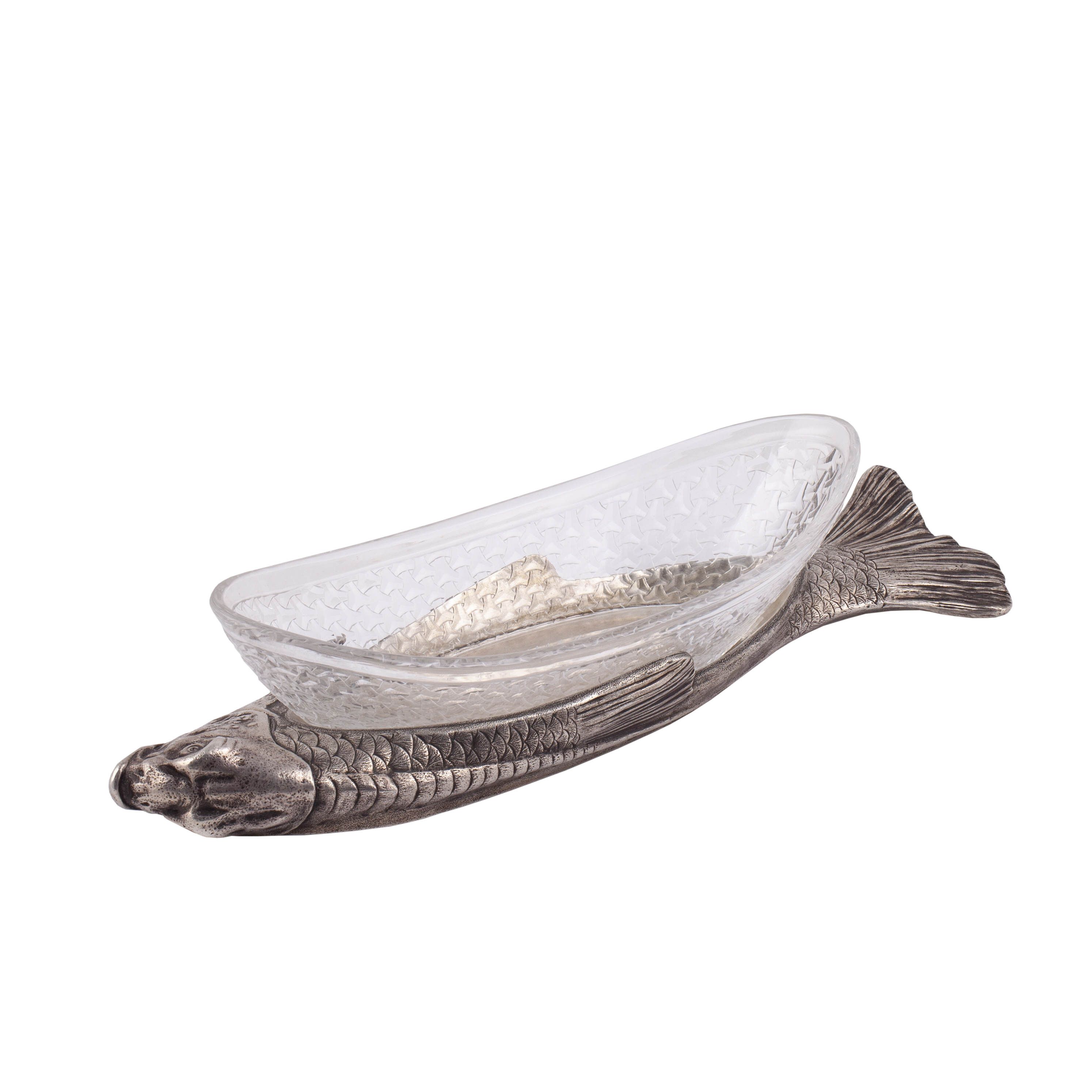
Fabergé. Silver and Glass Caviar Bowl in the Form of a Fish, Moscow, 1899–1908
Estimate: 20000-25000€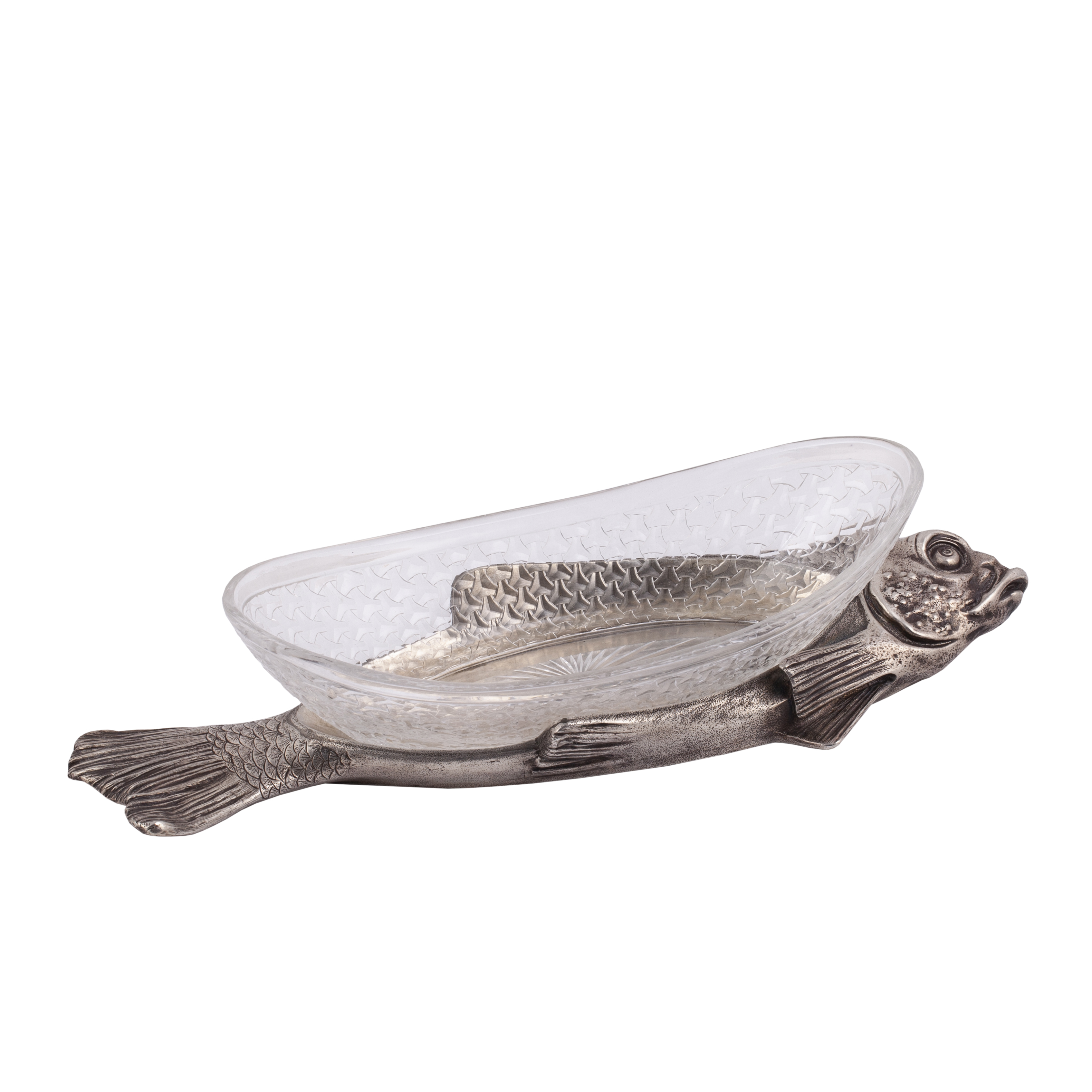
Lot 0056
Fabergé. Silver and Glass Caviar Bowl in the Form of a Fish, Moscow, 1899–1908
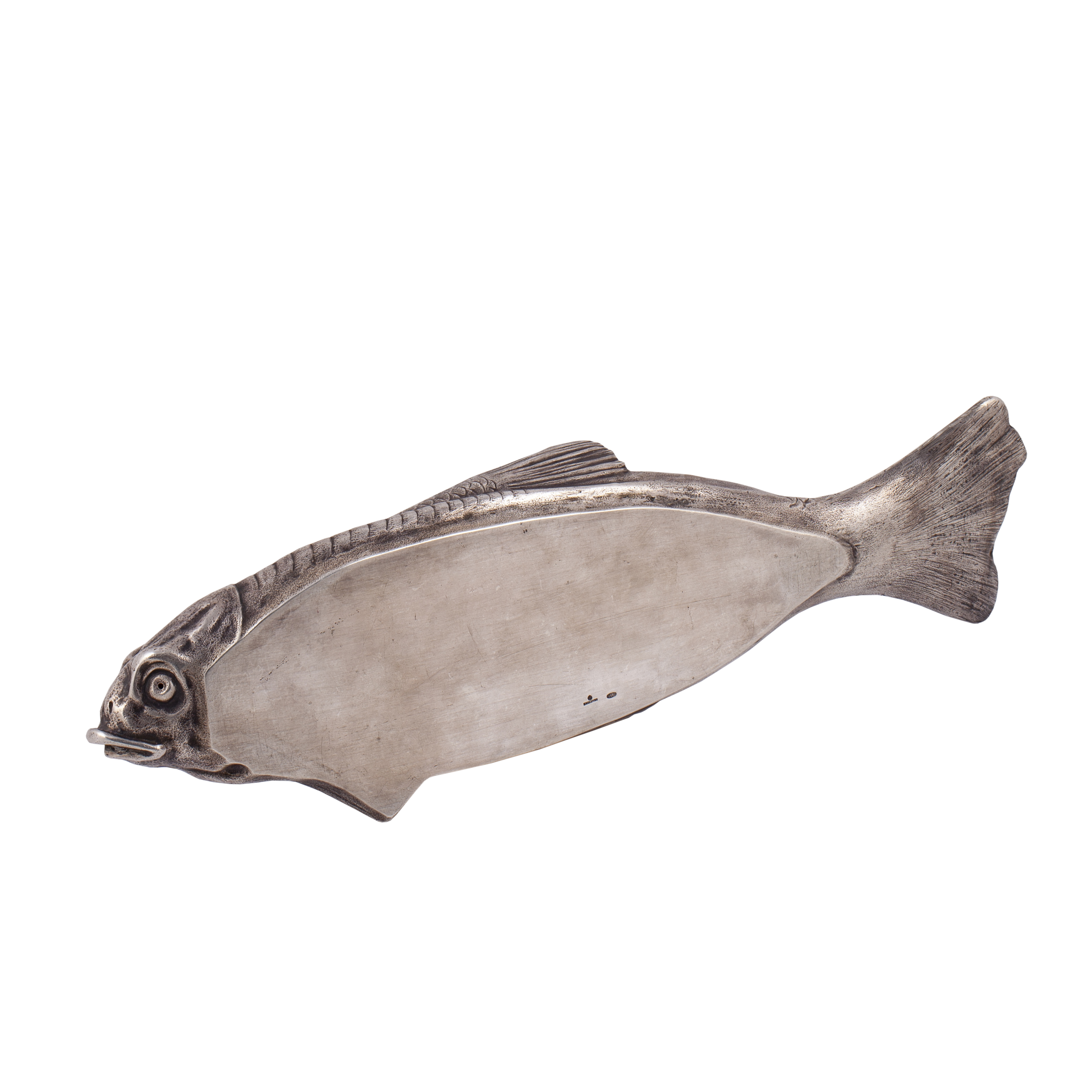
Estimate: 20000-25000€A Rare Fabergé Cast Silver and Glass Caviar Bowl in the Form of a Fish
Moscow, firm of Karl Fabergé, 1899-1908.
Silver, cut glass; casting, chasing, engraving, glass cutting.
Silver weight: 617.5 g.
Dimensions of the silver base: 30.5 × 9 × 3.5 cm.
Dimensions of the glass liner: 22 × 9.3 × 6 cm.
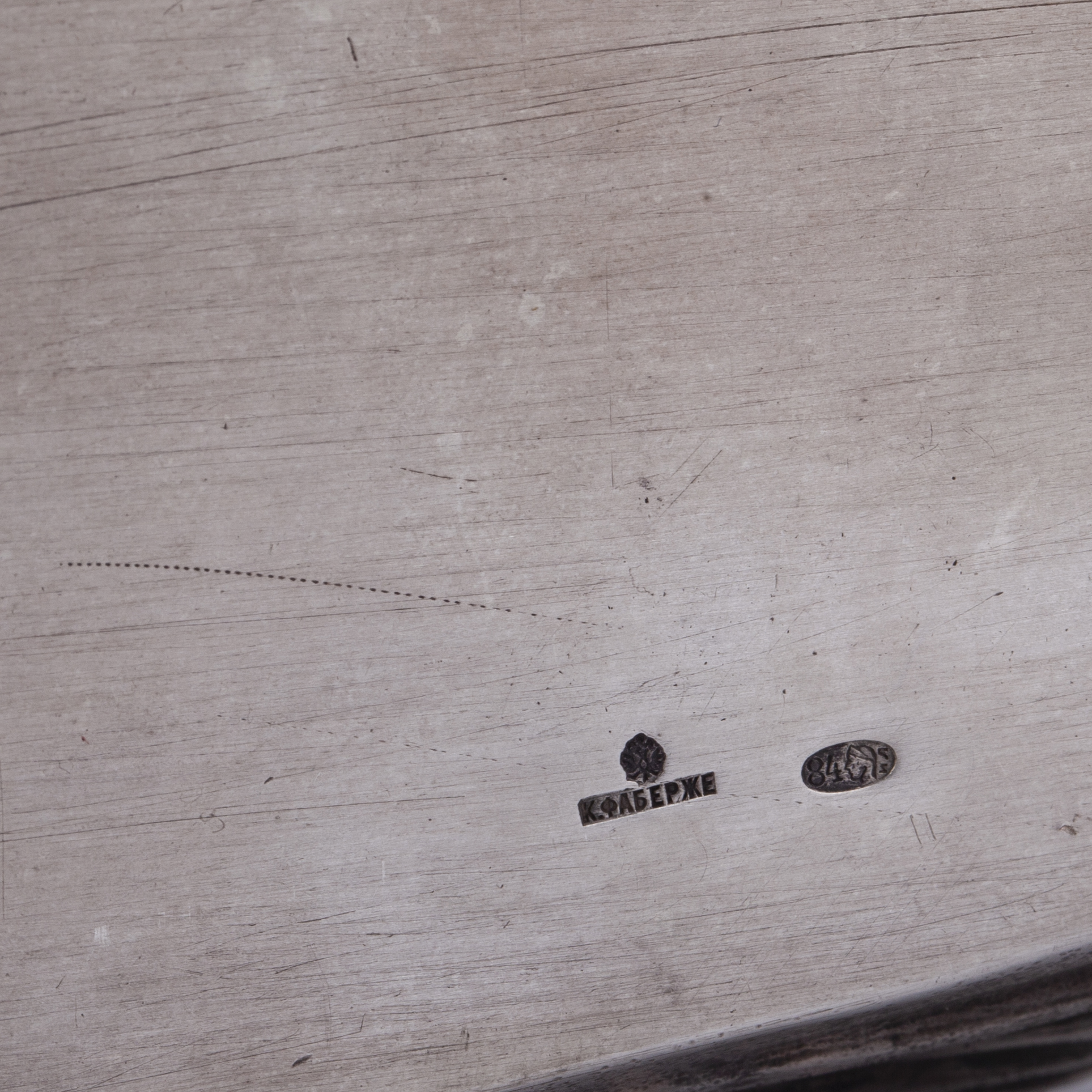
Marks: firm mark К. ФАБЕРЖЕ beneath the Imperial court supplier warrant,; Moscow assay mark; 84 zolotniki silver standard.
A rare Fabergé caviar bowl, conceived as a sculptural table object in the form of a fish. The cast silver base is naturalistically modelled, with elongated body, spread tail and raised head, the surface finely chased to render scales, fins, gills and the expressive eye. The fish supports a removable clear glass liner of elongated oval form, decorated with cut ornament immitated the fish skin.Starting price: 18000€
Estimate: 20000-25000€
Hammer Price: Not sold -
Lot 0057
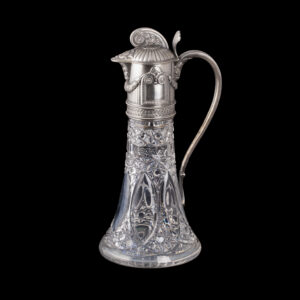
Fabergé. Massive Silver-Gilt Mounted Cut-Crystal Decanter in Neoclassical Style, Moscow, 1908–1917
Estimate: 25000-35000€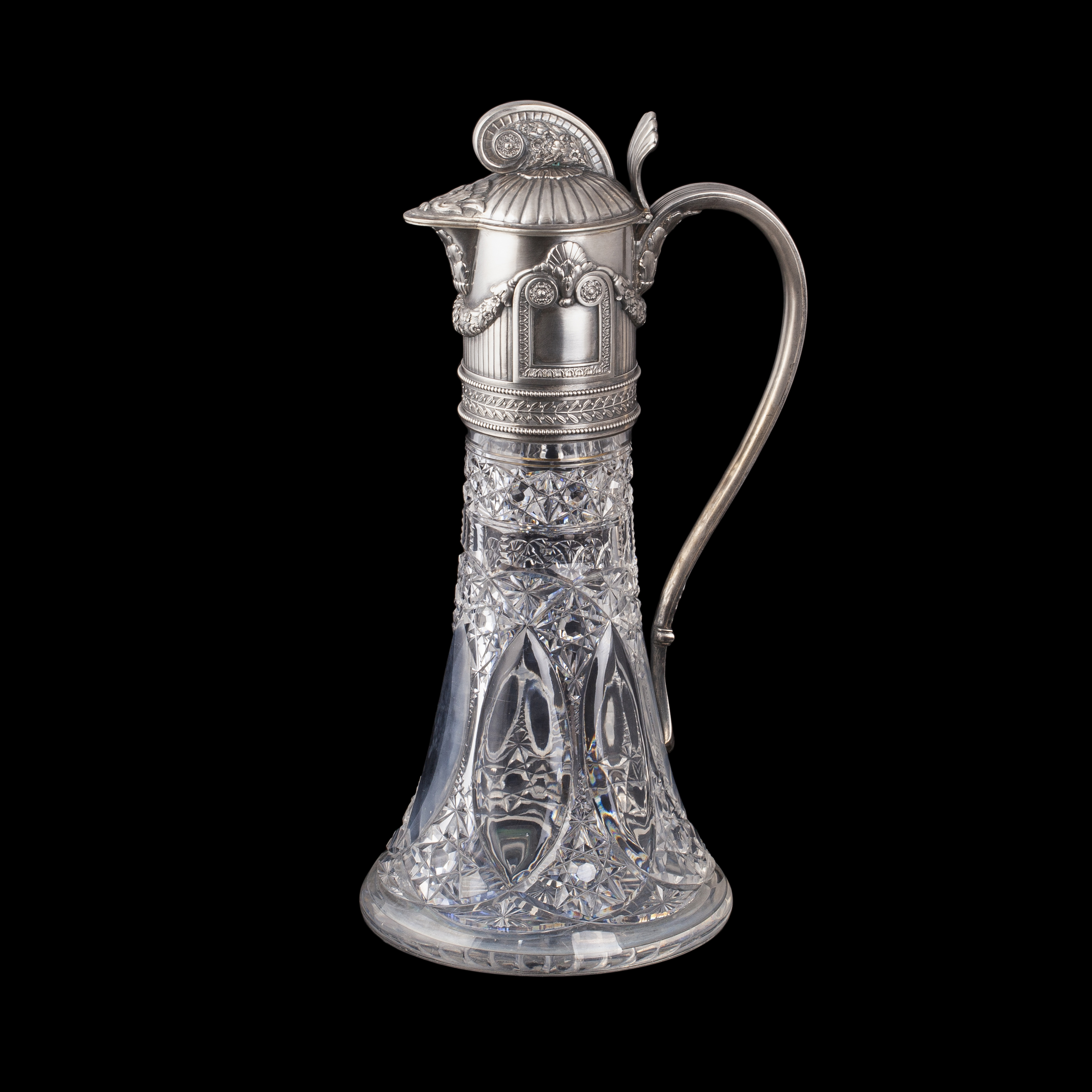
Lot 0057
Fabergé. Massive Silver-Gilt Mounted Cut-Crystal Decanter in Neoclassical Style, Moscow, 1908–1917
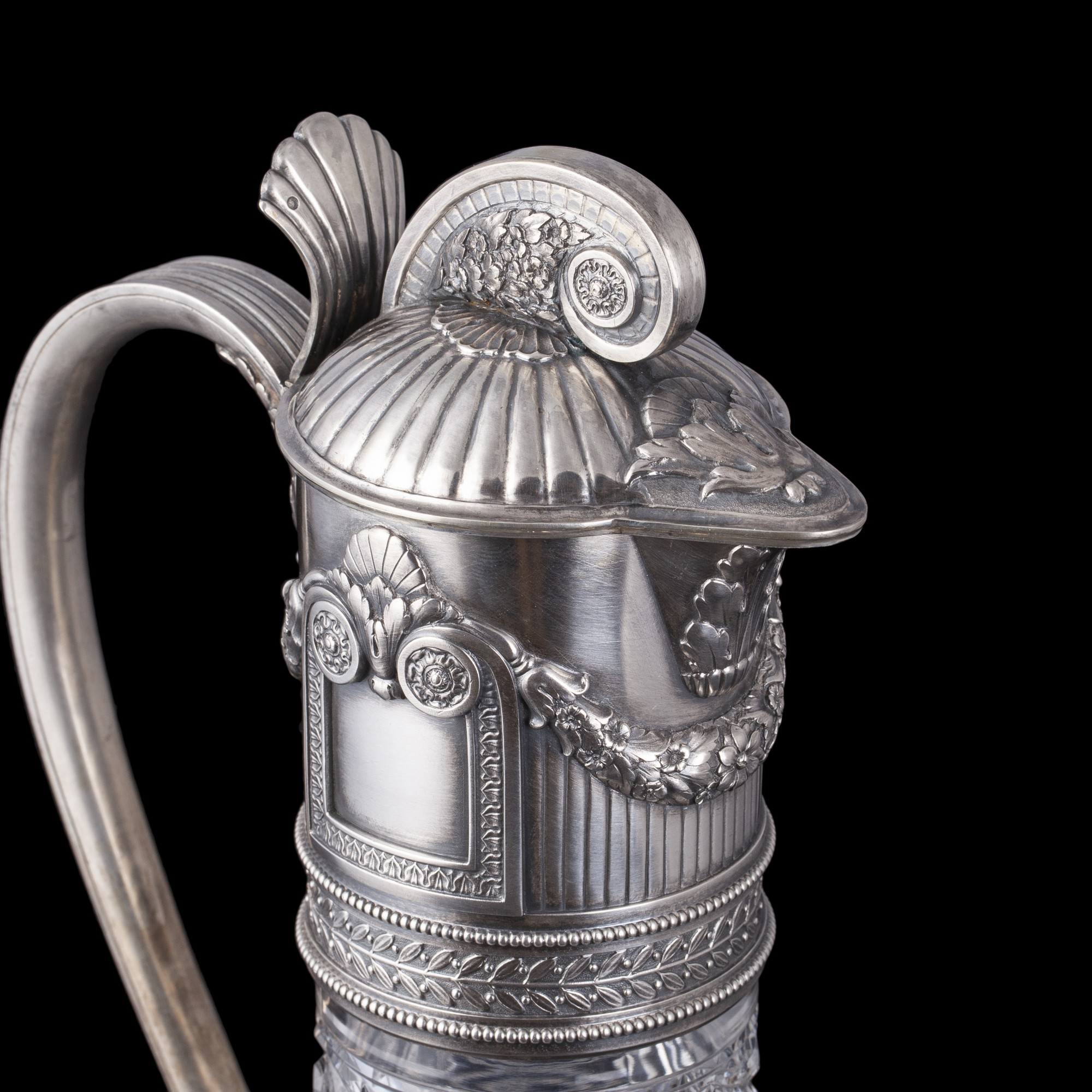
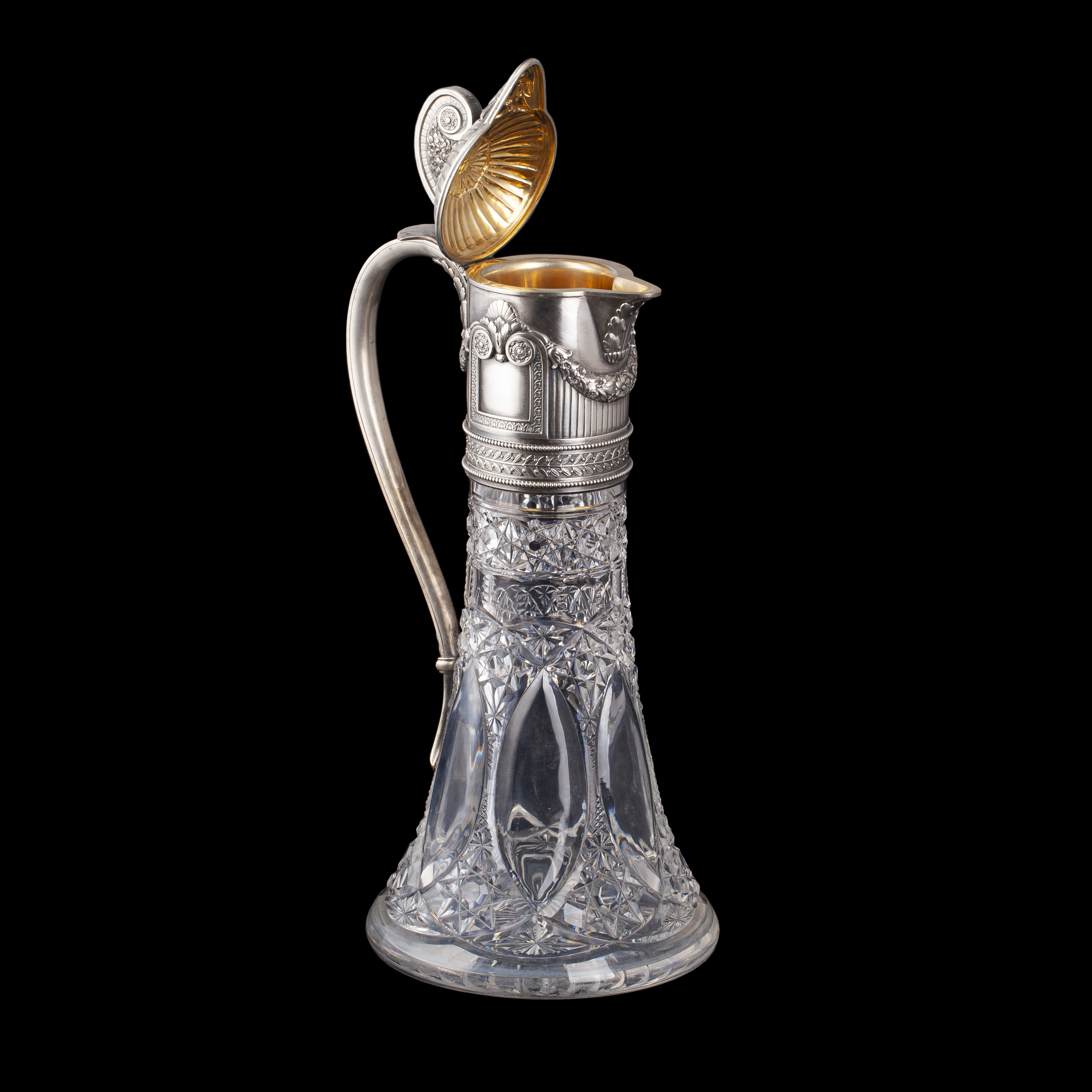
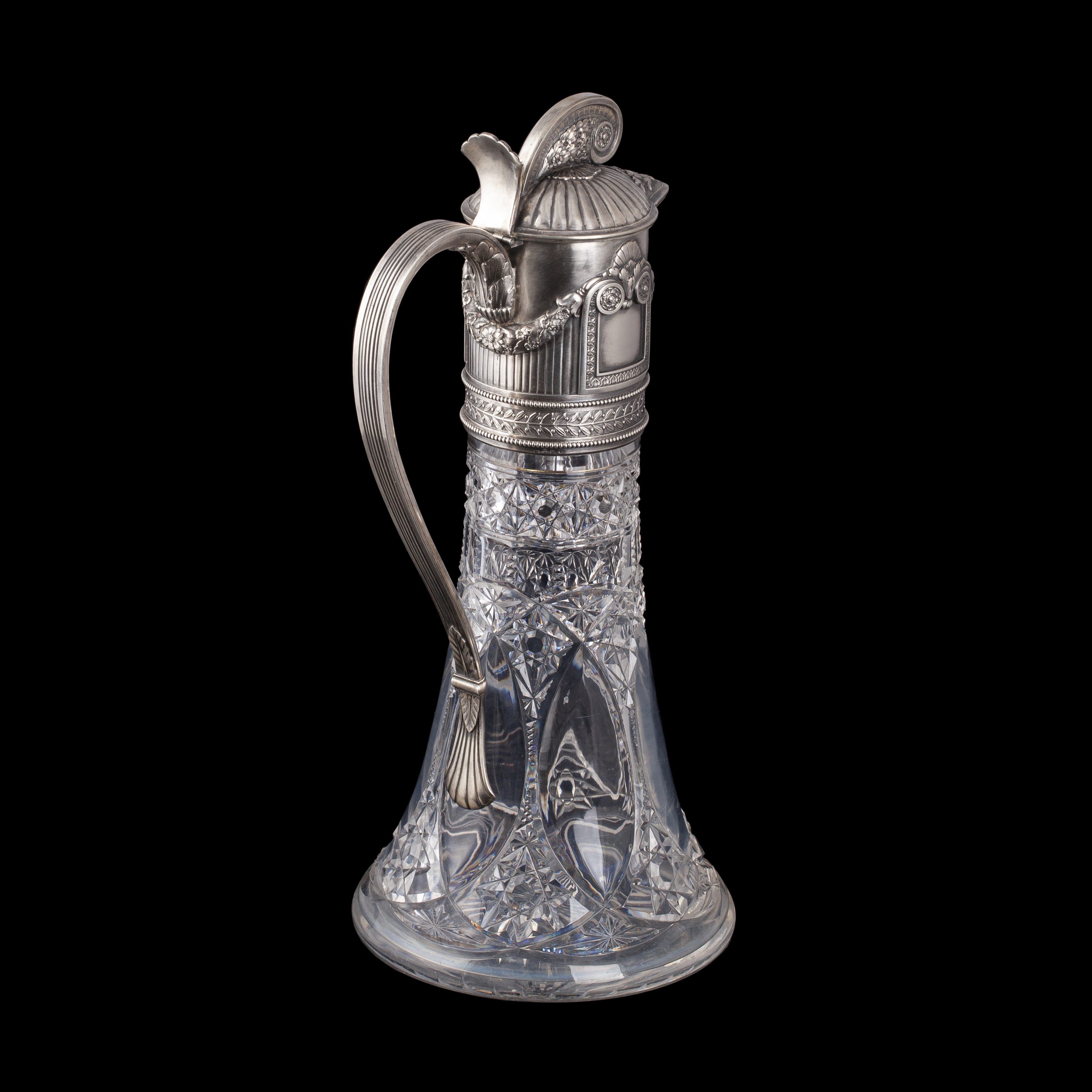
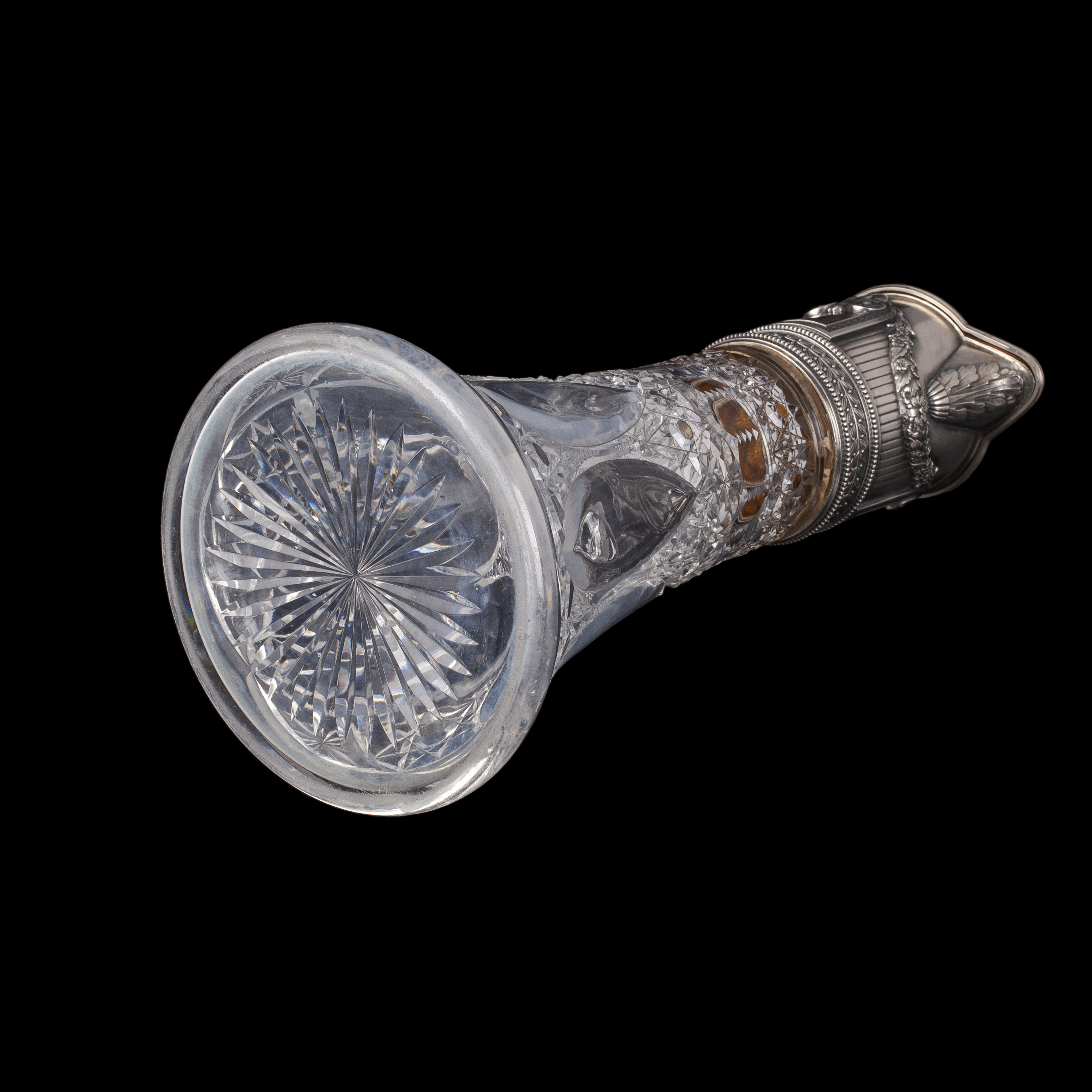
Estimate: 25000-35000€A massive Fabergé silver-gilt mounted cut-crystal decanter in the Neoclassical style.
Moscow, Firm of Fabergé, 1908-1917.
Silver-gilt, cut crystal; casting, chasing, engraving, gilding, hinged construction.
Height: 36.3 cm.
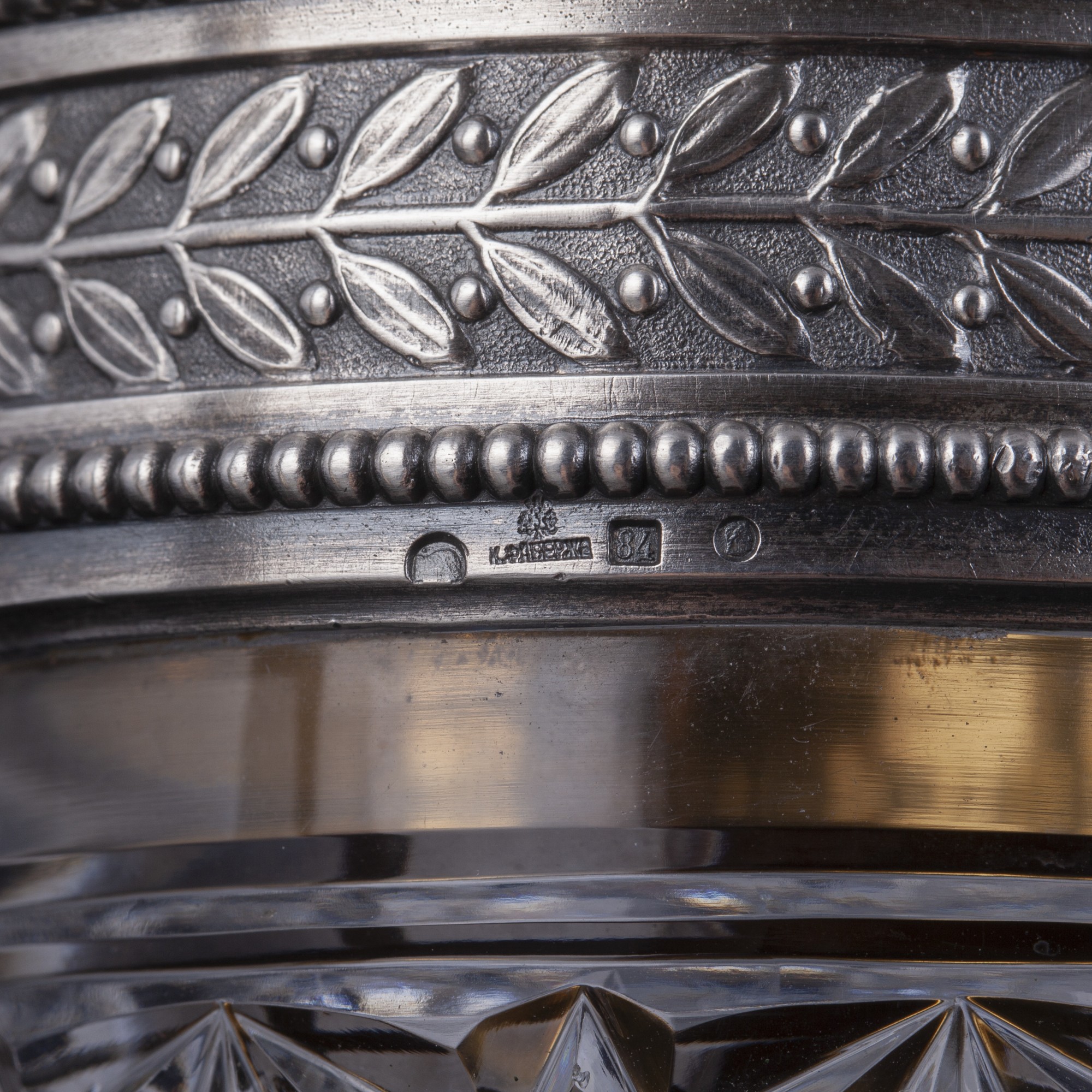
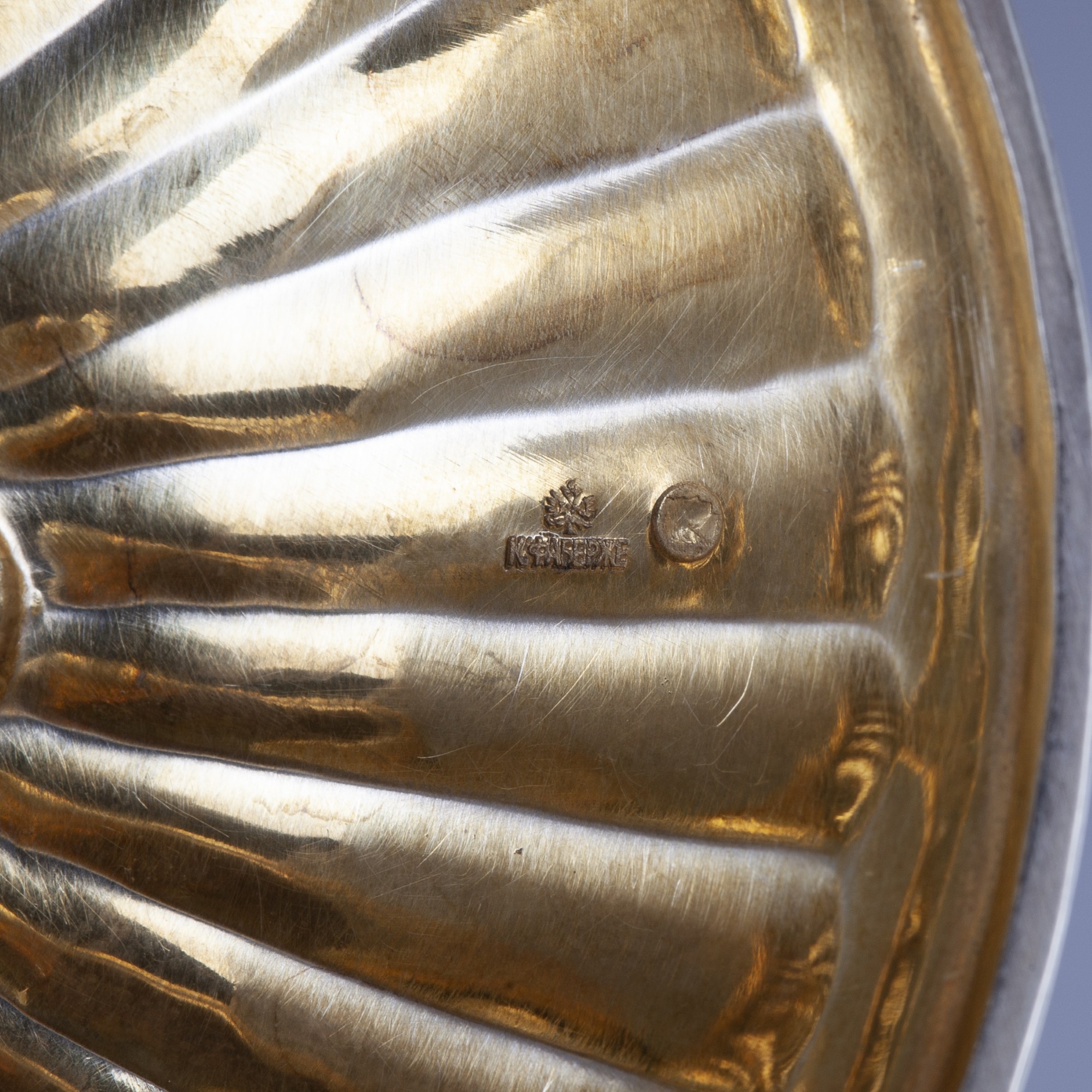
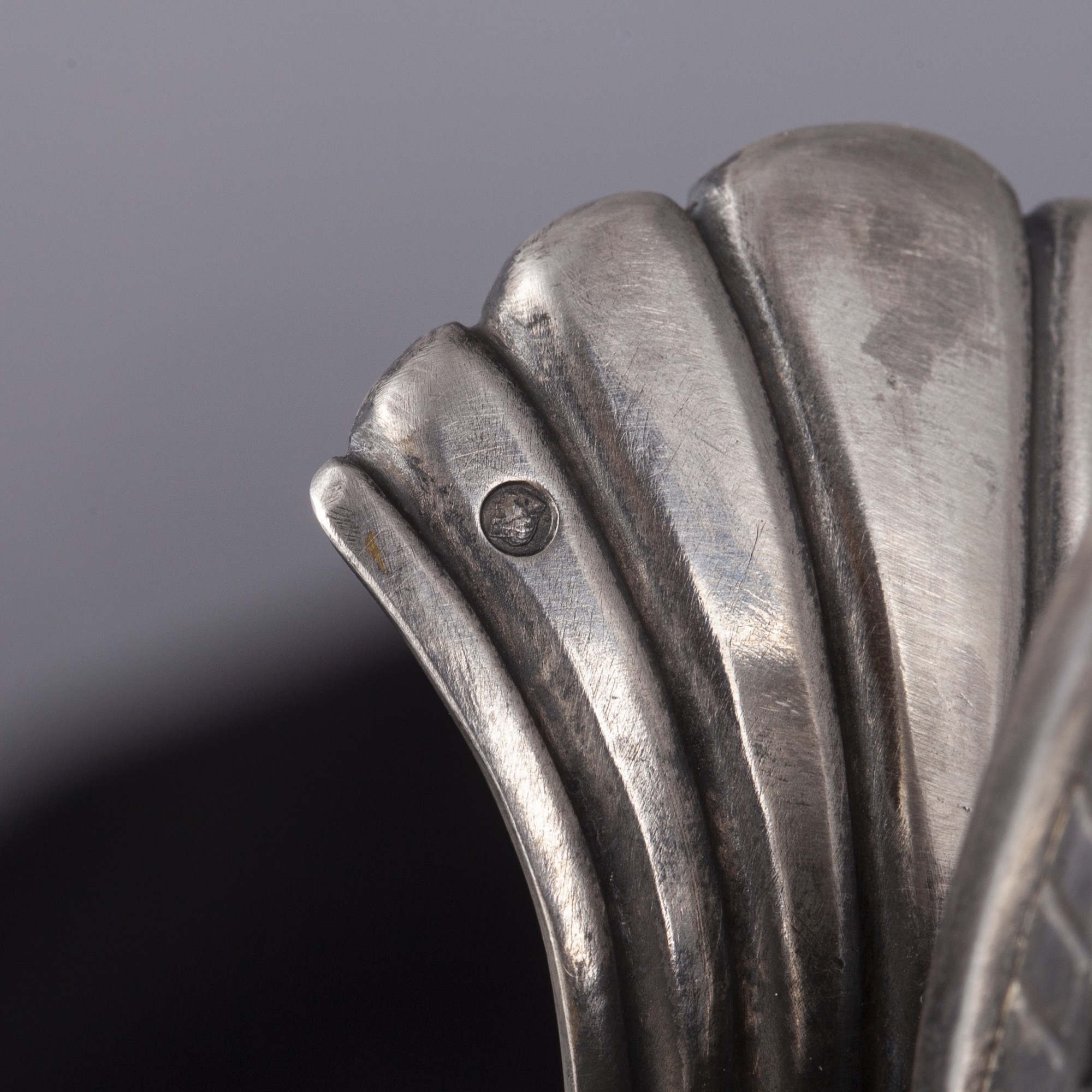
Marks: maker’s mark “К. ФАБЕРЖЕ” beneath the Imperial warrant, 84 standard silver mark, assay marks; scratched inventory number 40748.
Provenance: The decanter bearing inventory number 40748, priced at 1,100 rubles, is recorded among the “crystal decanters” in box 53 of the list of confiscated items from the Moscow Fabergé store, May 1919.
Description:
A monumental cut-crystal decanter with rich silver-gilt mounts, executed in the refined Neoclassical vocabulary characteristic of the Moscow branch of Fabergé in the early twentieth century. Fabergé’s workshops and retail premises opened in Moscow on Kuznetsky Most in 1887, and after 1900 all substantial silver commissions were produced exclusively in Moscow.
The tall, tapering crystal body is cut with deep facets, diamond fields, star motifs and elongated shield-shaped reserves, creating a brilliant play of light and a strong architectural verticality.
The silver-gilt upper mount is conceived as a miniature classical entablature. It is decorated with laurel bands, beaded borders, fluted pilaster-like panels, rosettes and chased floral garlands. The hinged domed cover is formed with radiating flutes and surmounted by a voluted scroll thumbpiece with shell and floral ornament. The long scrolling handle, terminating in a stylised shell motif.Starting price: 20000€
Estimate: 25000-35000€
Hammer Price: Not sold -
Lot 0058
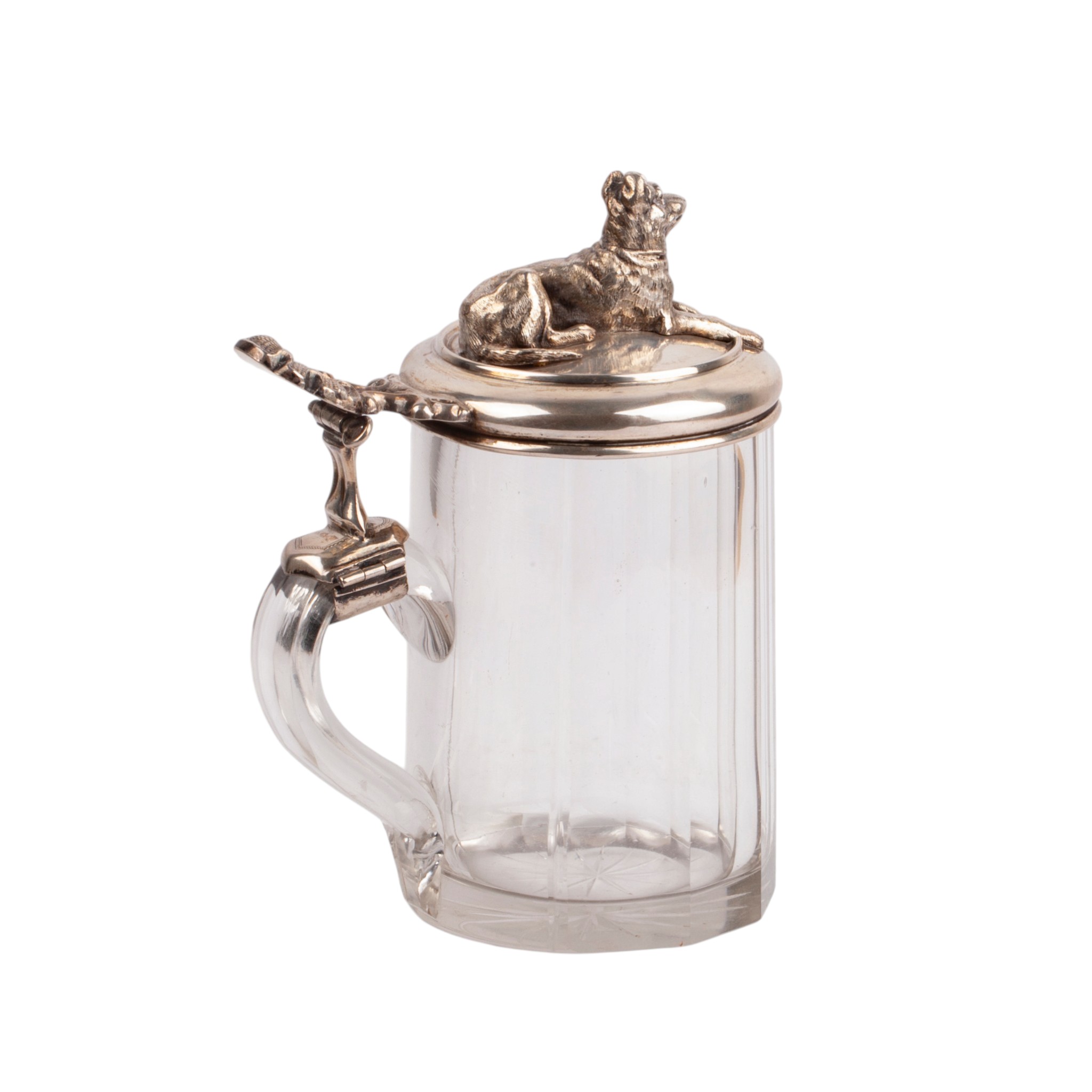
Russian Silver-Mounted Cut-Glass Tankard with Dog Finial
Estimate: 1200-1500€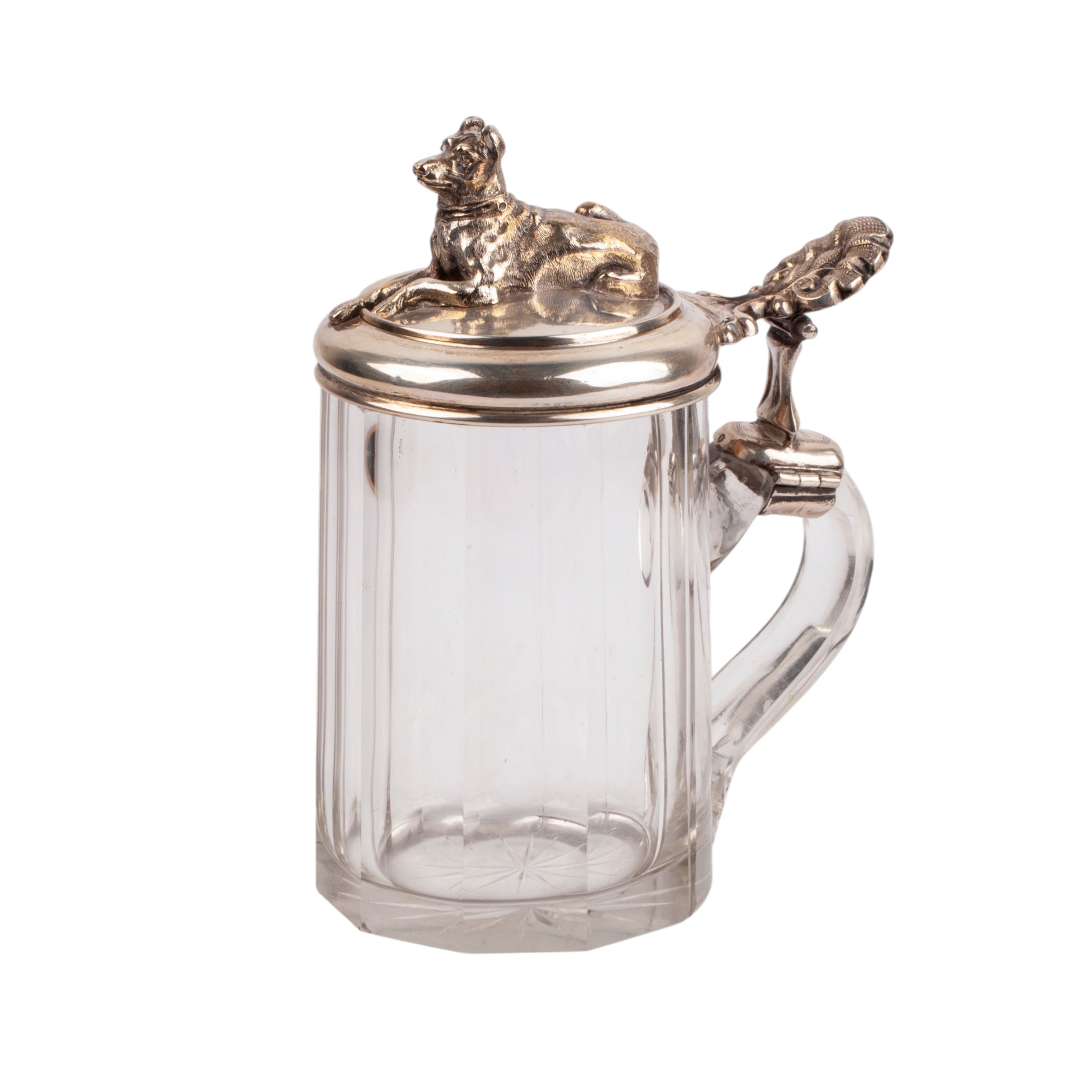
Lot 0058
Russian Silver-Mounted Cut-Glass Tankard with Dog Finial
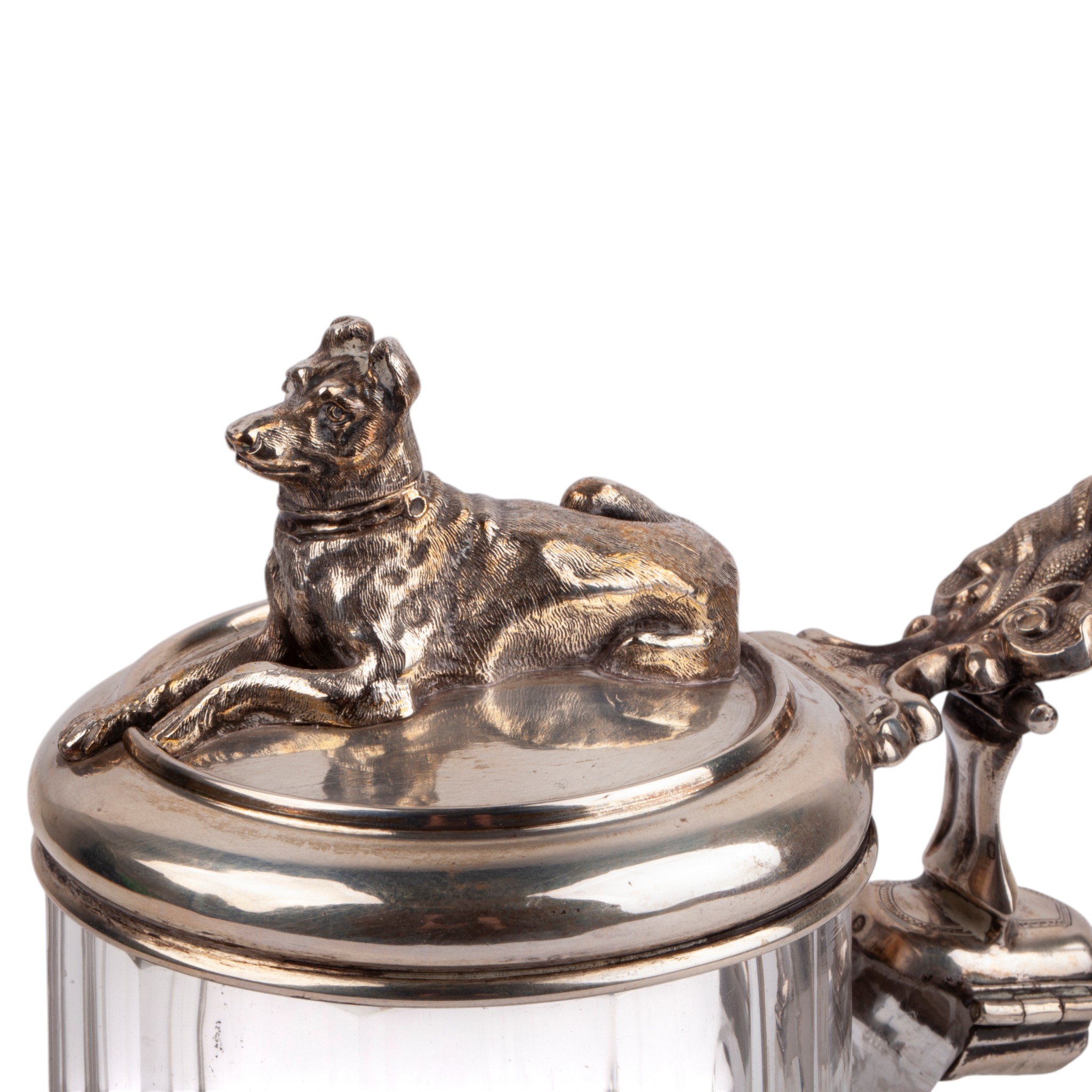
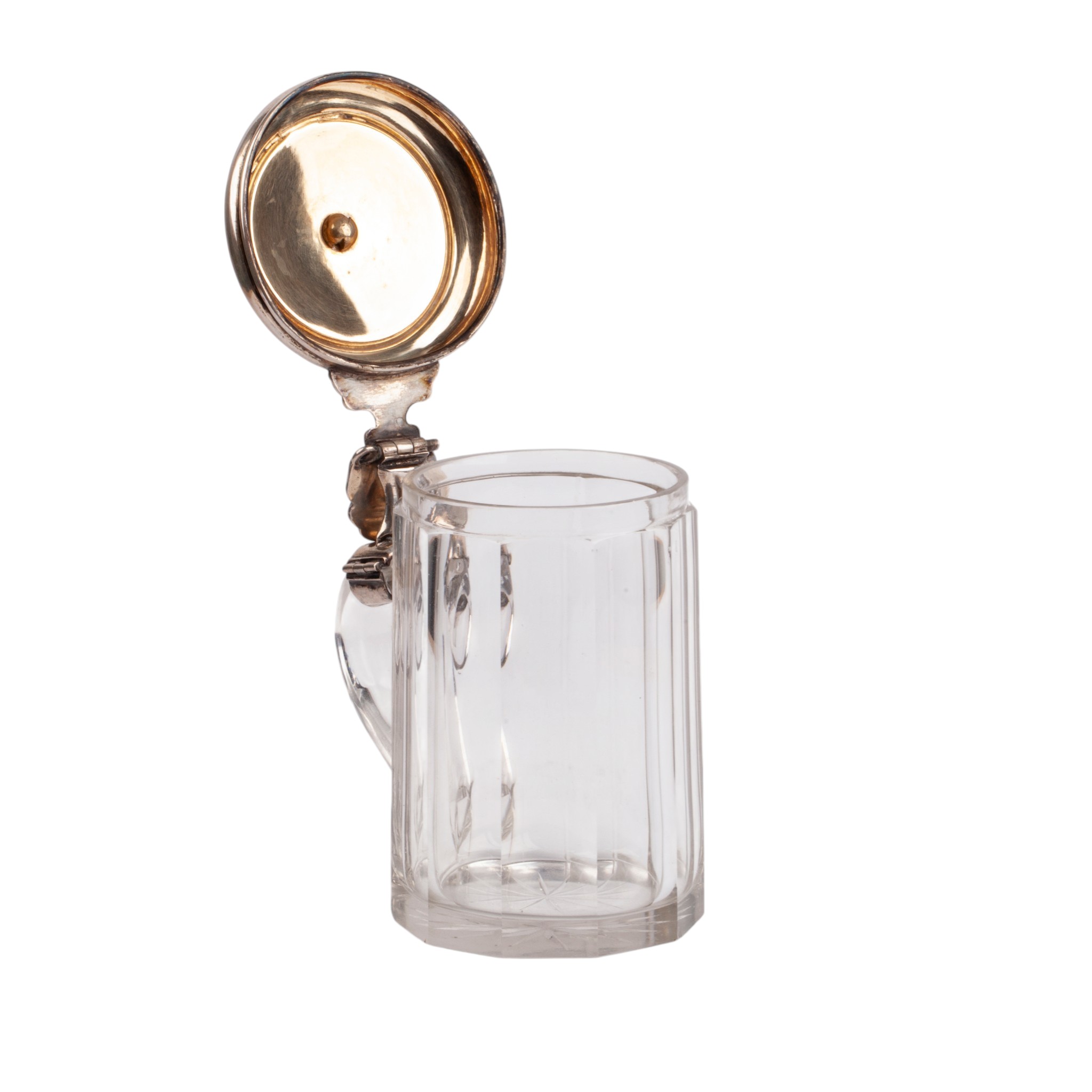
Estimate: 1200-1500€Russian Silver-Mounted Glass Tankard with a Dog
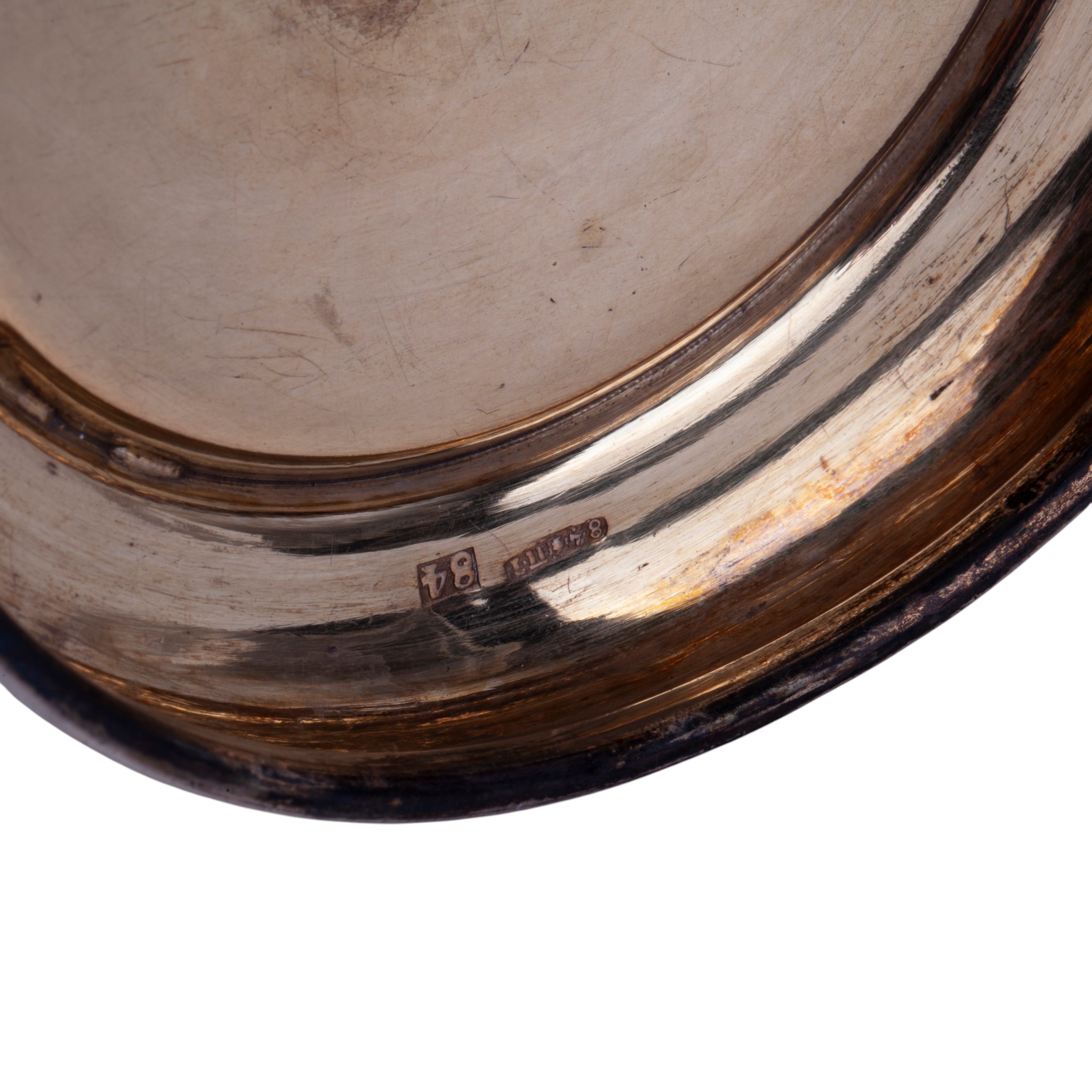
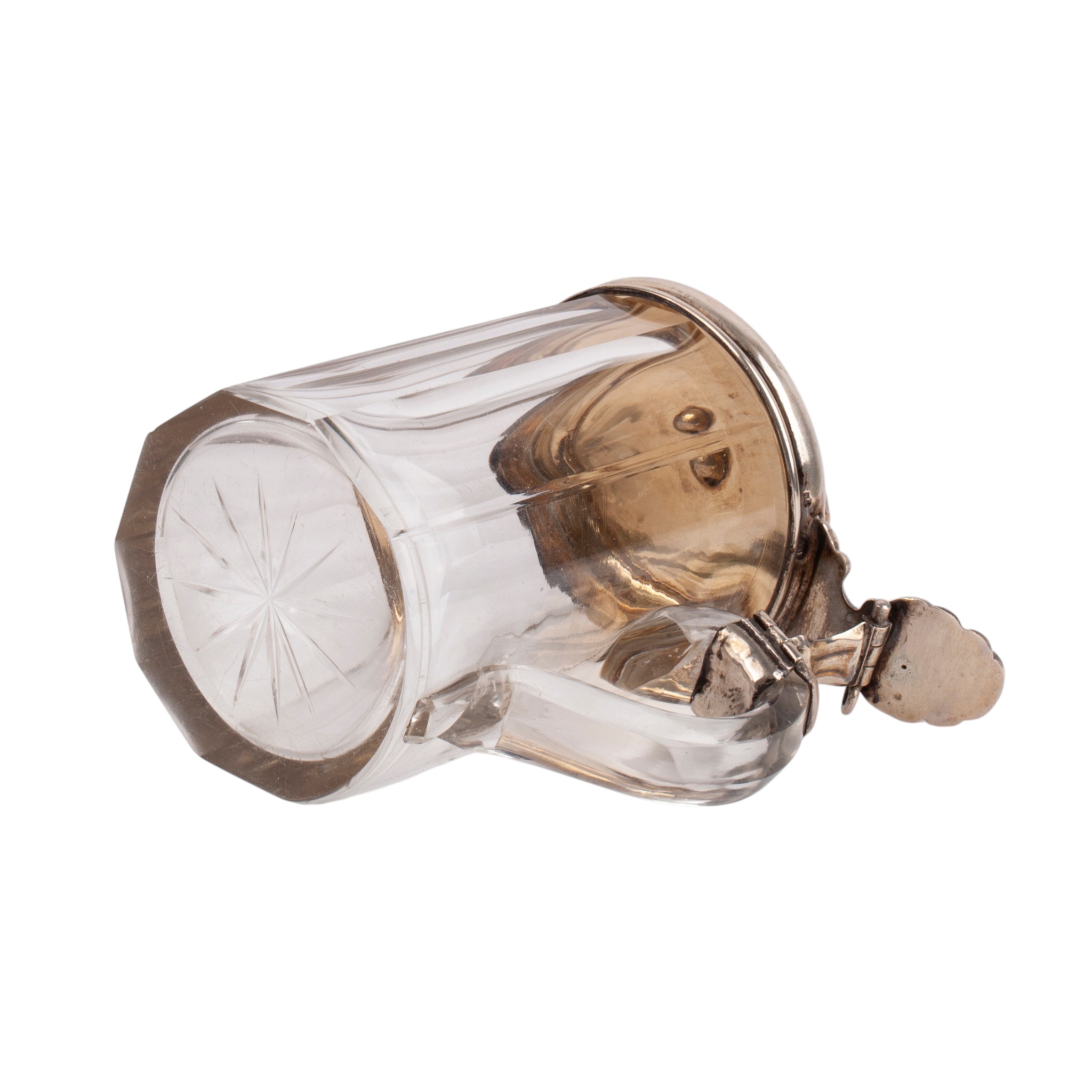
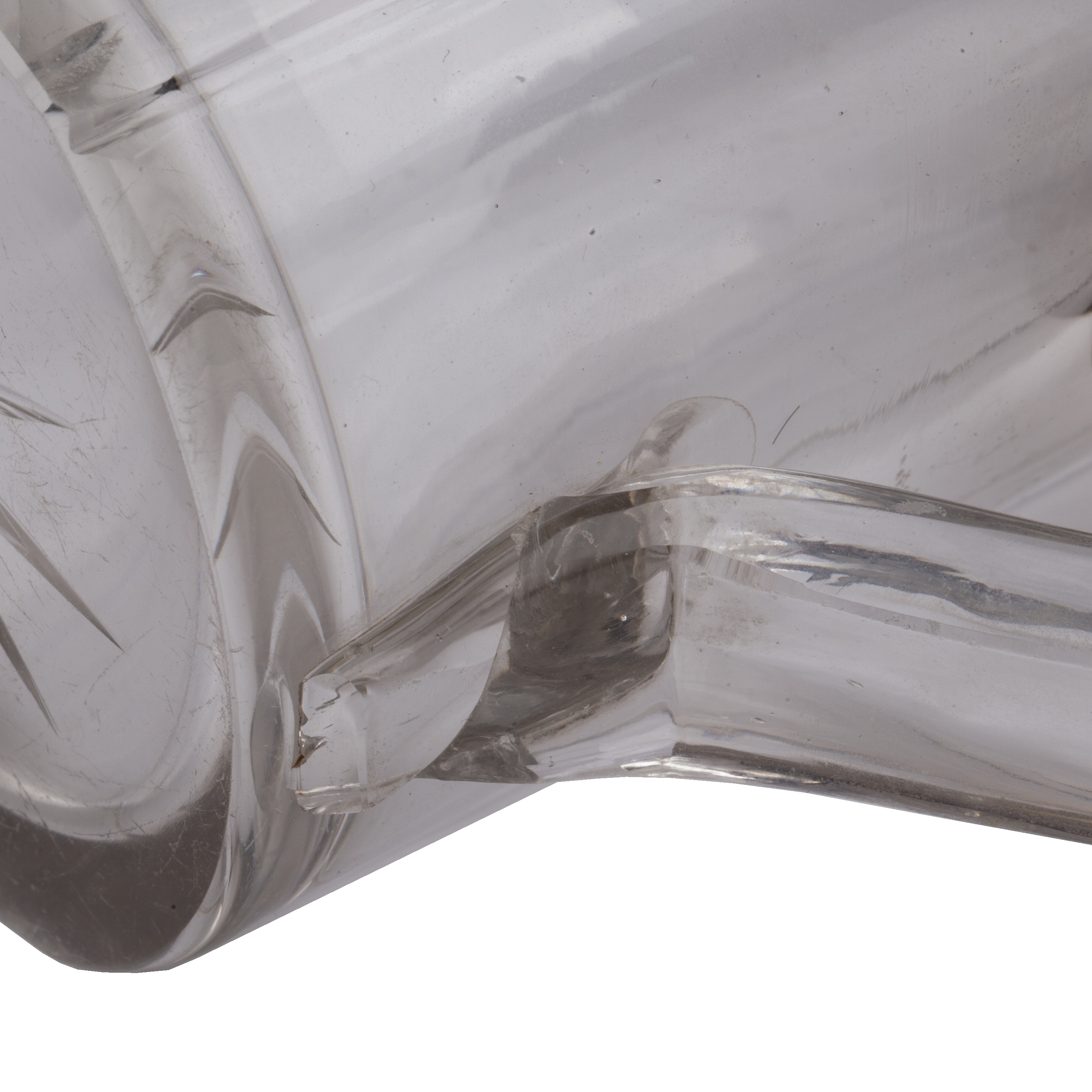
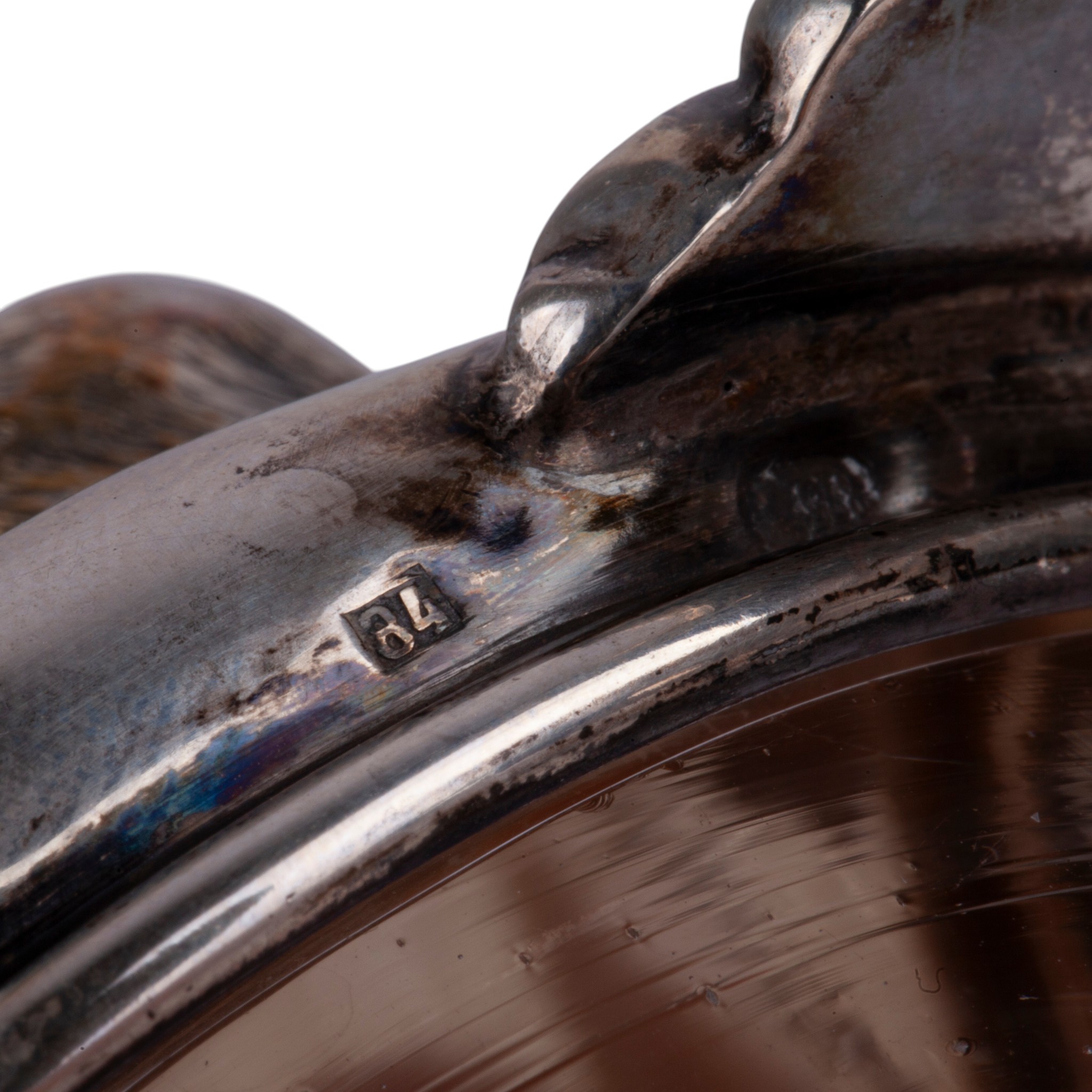
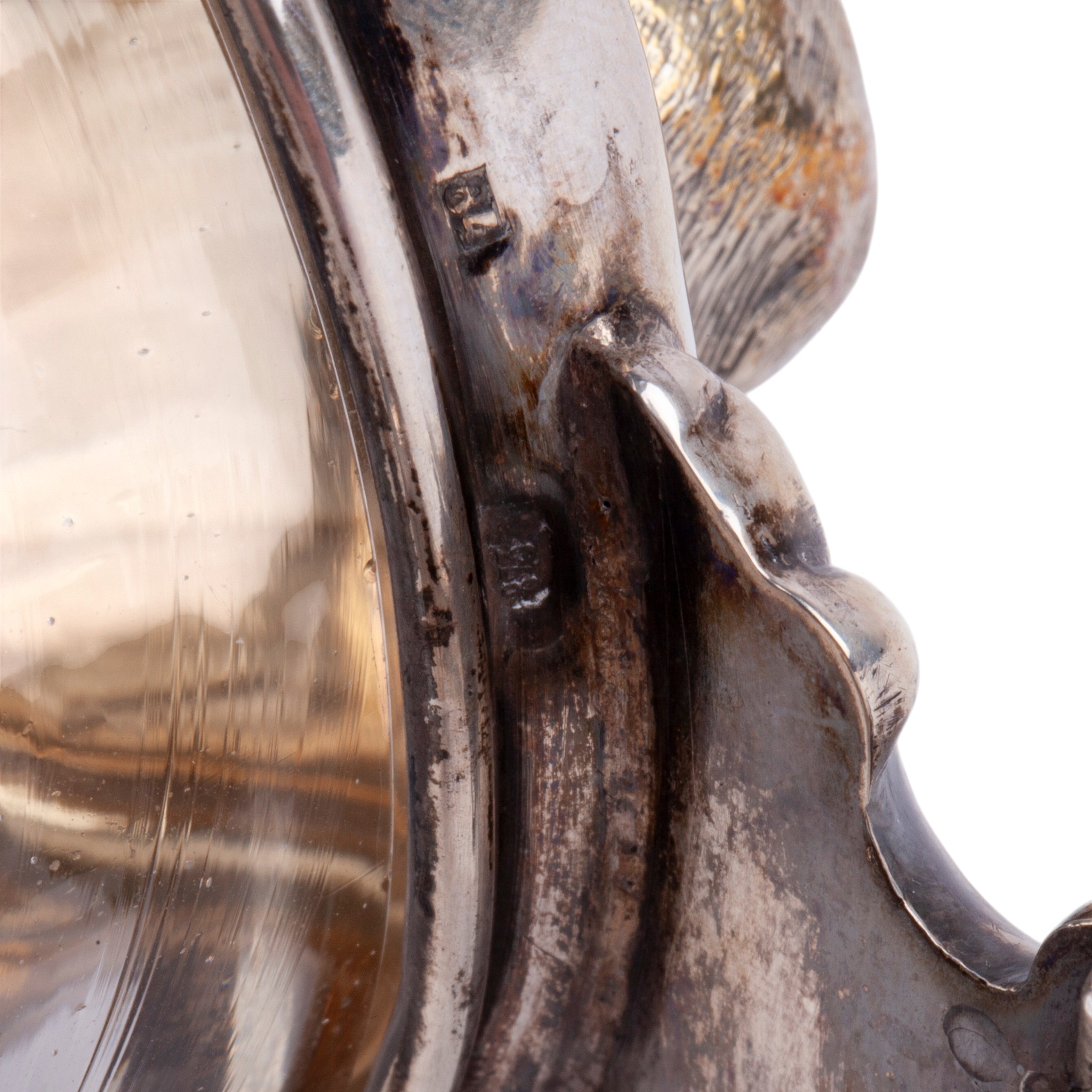
Elegant cut-glass tankard of cylindrical form, fitted with a silver hinged lid surmounted by a finely modeled recumbent dog finial. The handle is mounted with a decorative thumbpiece and the silver mounts bear 84 zolotnik standard marks, indicating Russian silver. A charming and unusual late Imperial Russian drinking vessel, combining substantial faceted glass with expressive animal-form silverwork.
Condition:
Good overall antique condition with wear, scratches, and tarnish to the silver mounts consistent with age and use. Small chip at the base of the handle. Minor expected wear to the glass.Height: 17.5 cm
Material:
Glass, silver-mountedStarting price: 1000€
Estimate: 1200-1500€
Hammer Price: Not sold -
Lot 0059
Pair of Sterling-Mounted Decanters Made for Tiffany & Co., New York, Early 20th Century
Estimate: 3000-3500€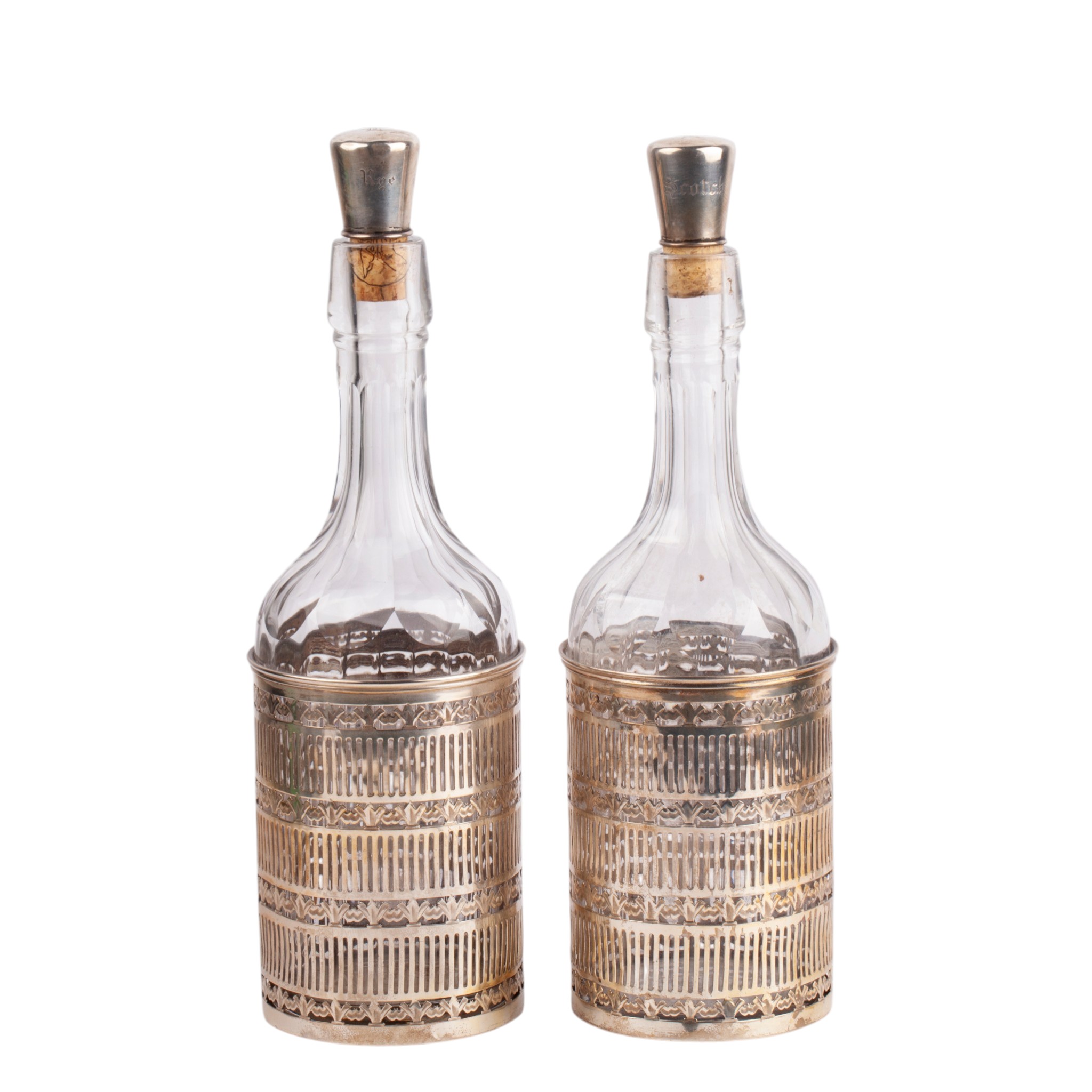
Lot 0059
Pair of Sterling-Mounted Decanters Made for Tiffany & Co., New York, Early 20th Century
Estimate: 3000-3500€Pair of Sterling-Mounted Decanters Made for Tiffany & Co., New York
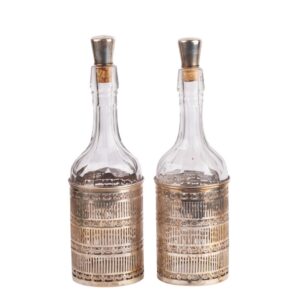
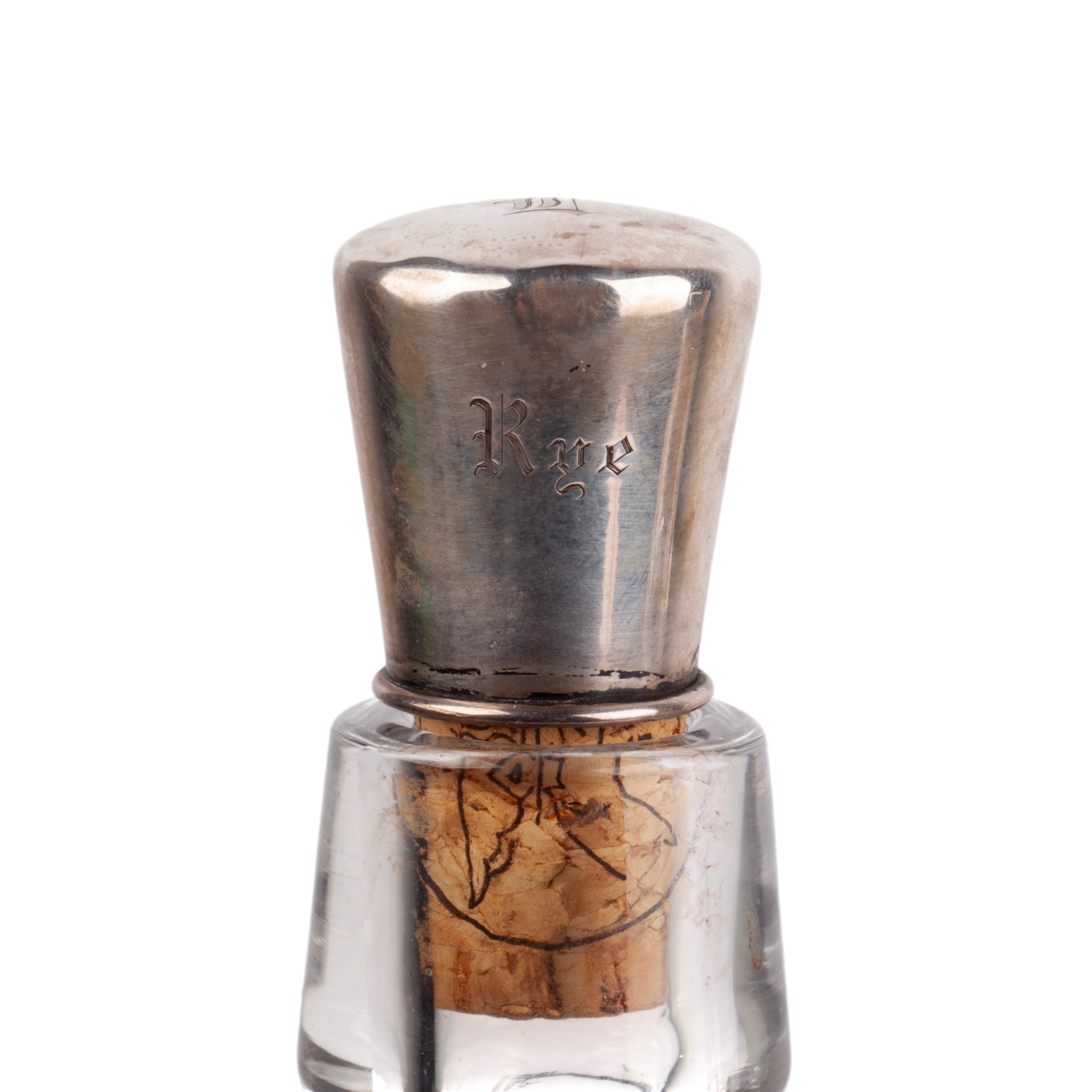
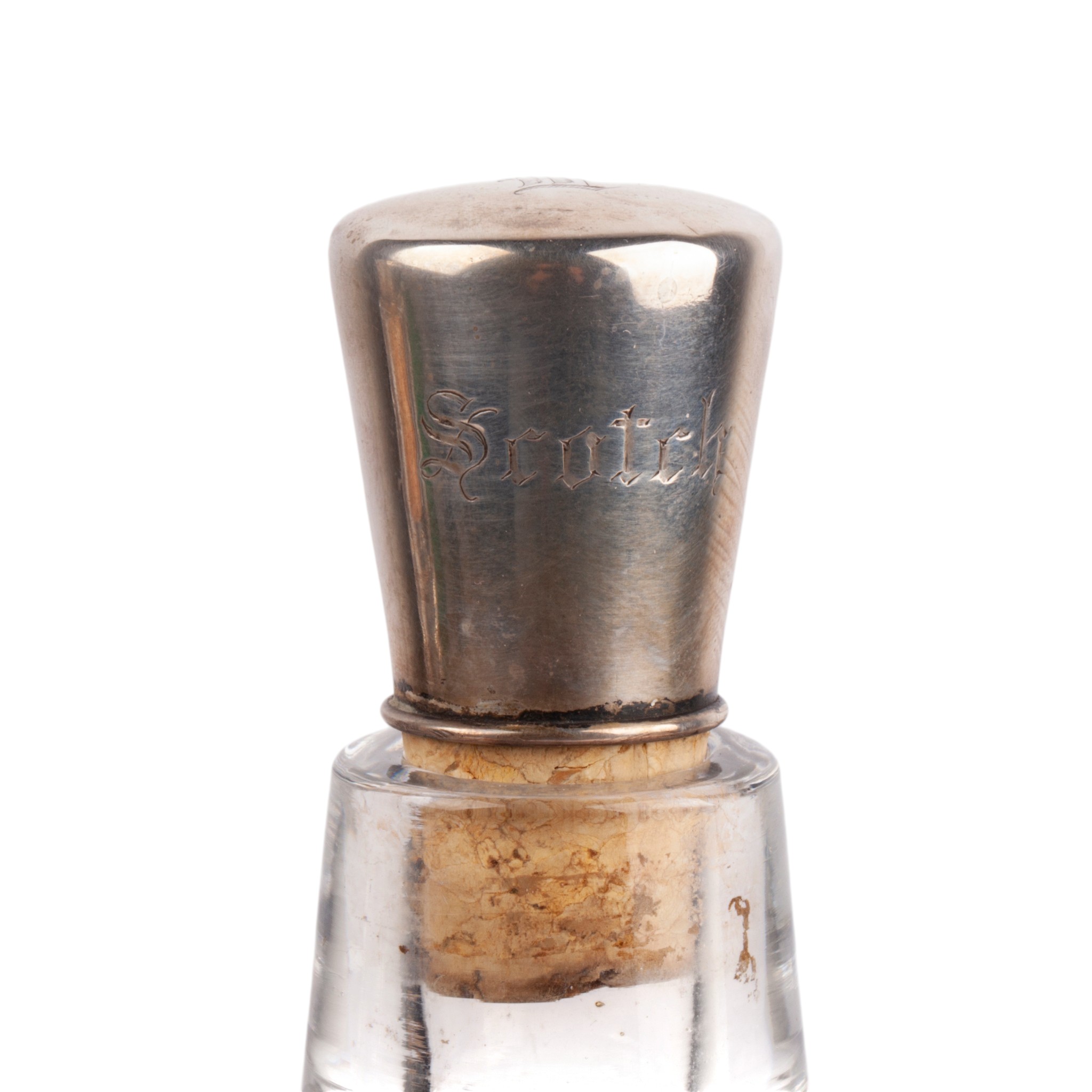
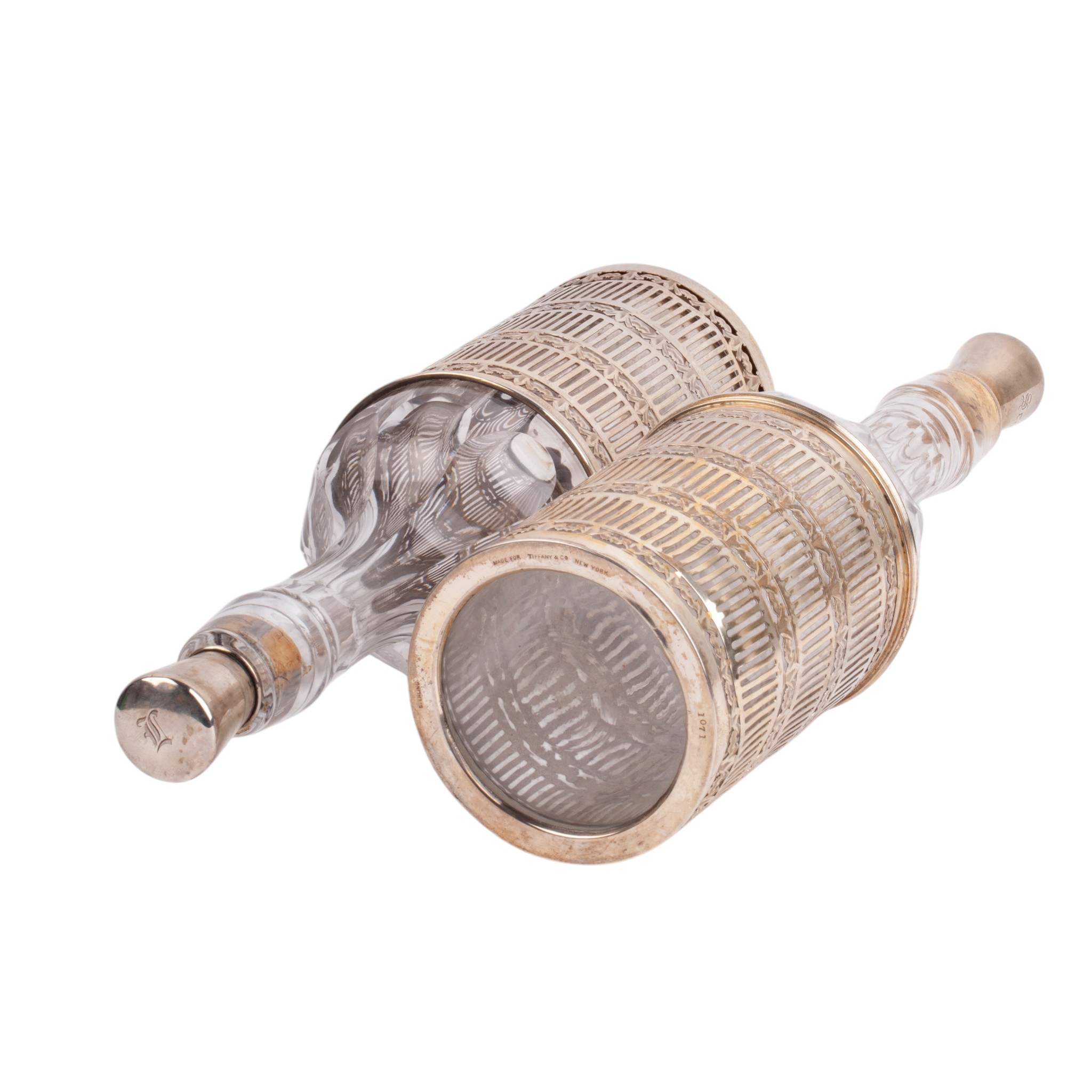
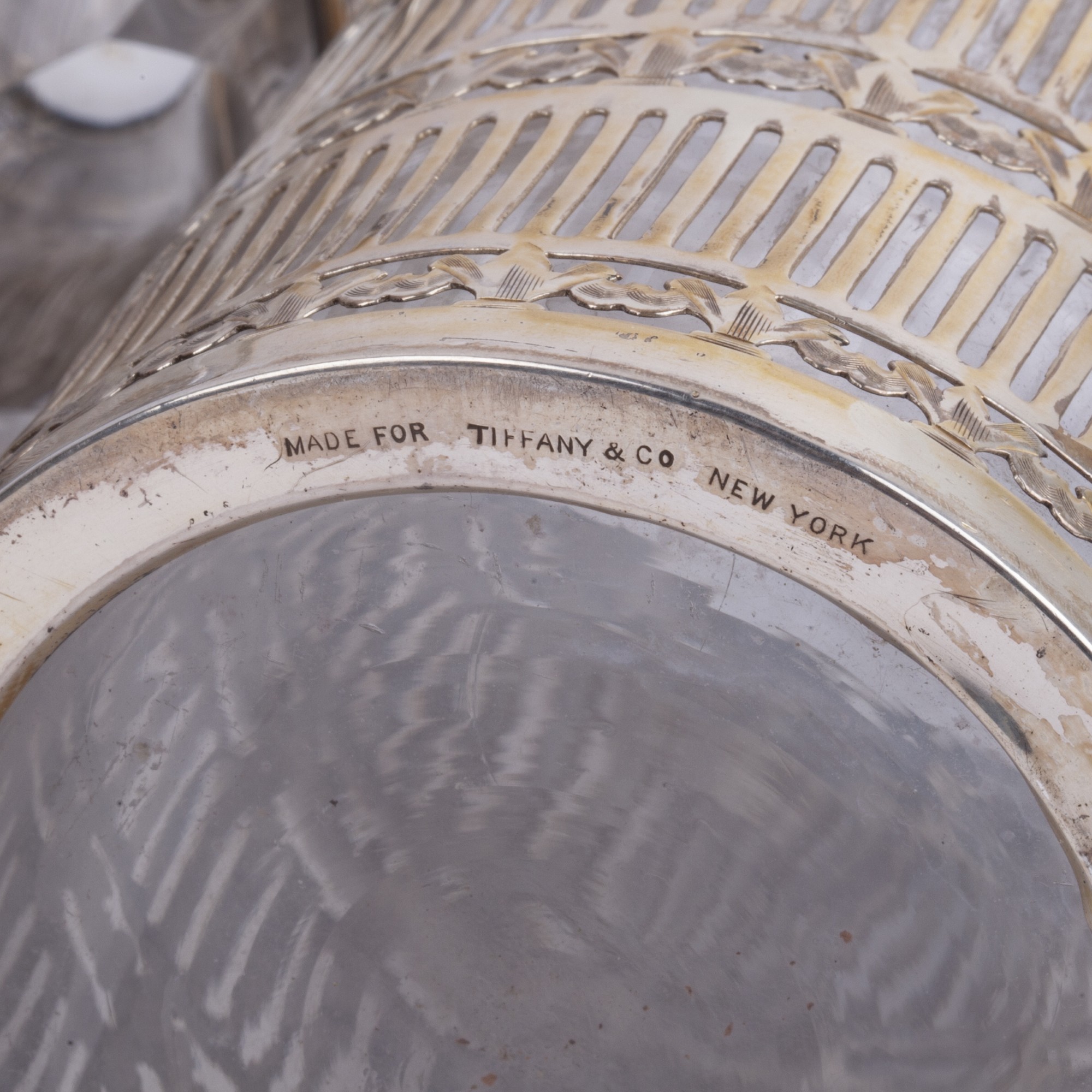
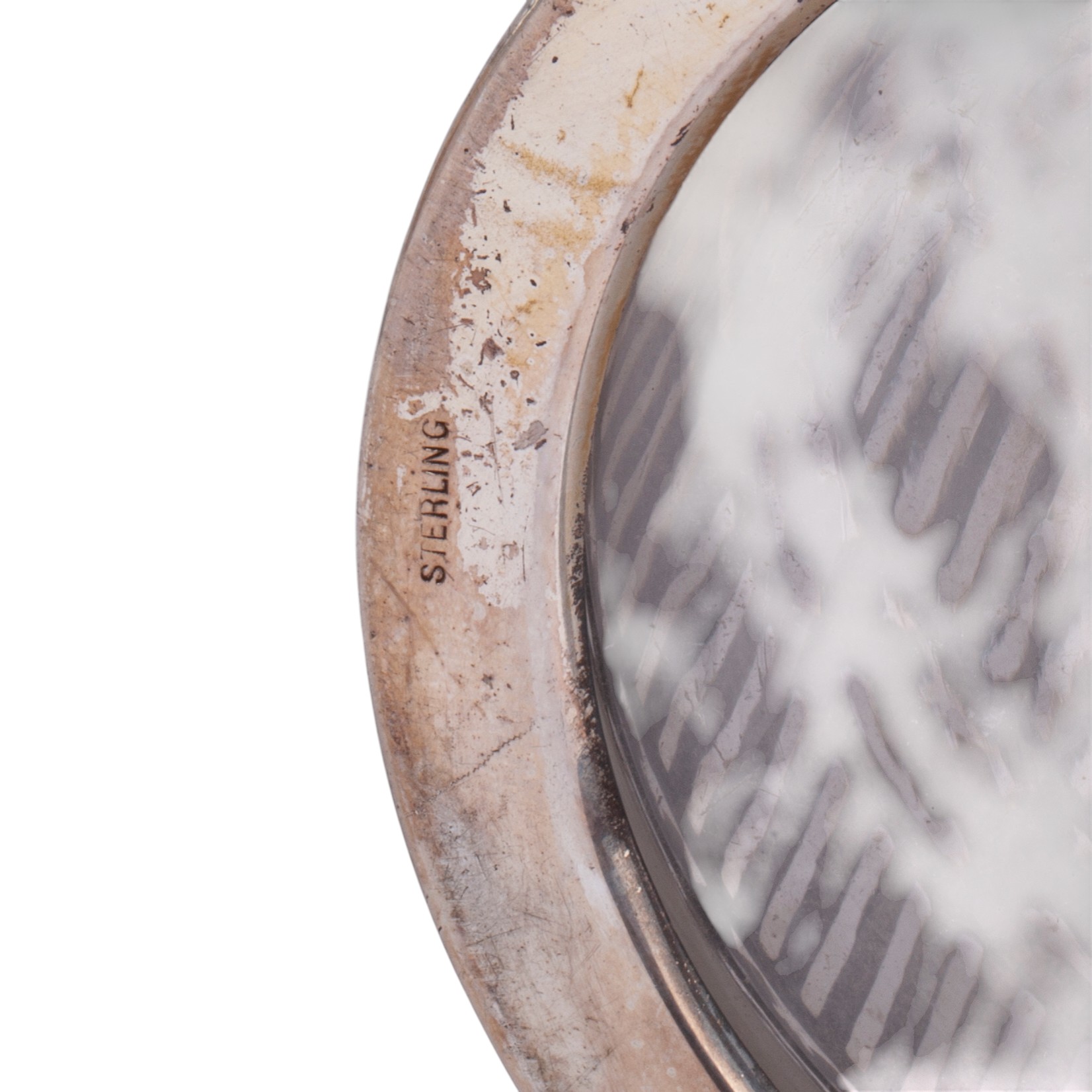
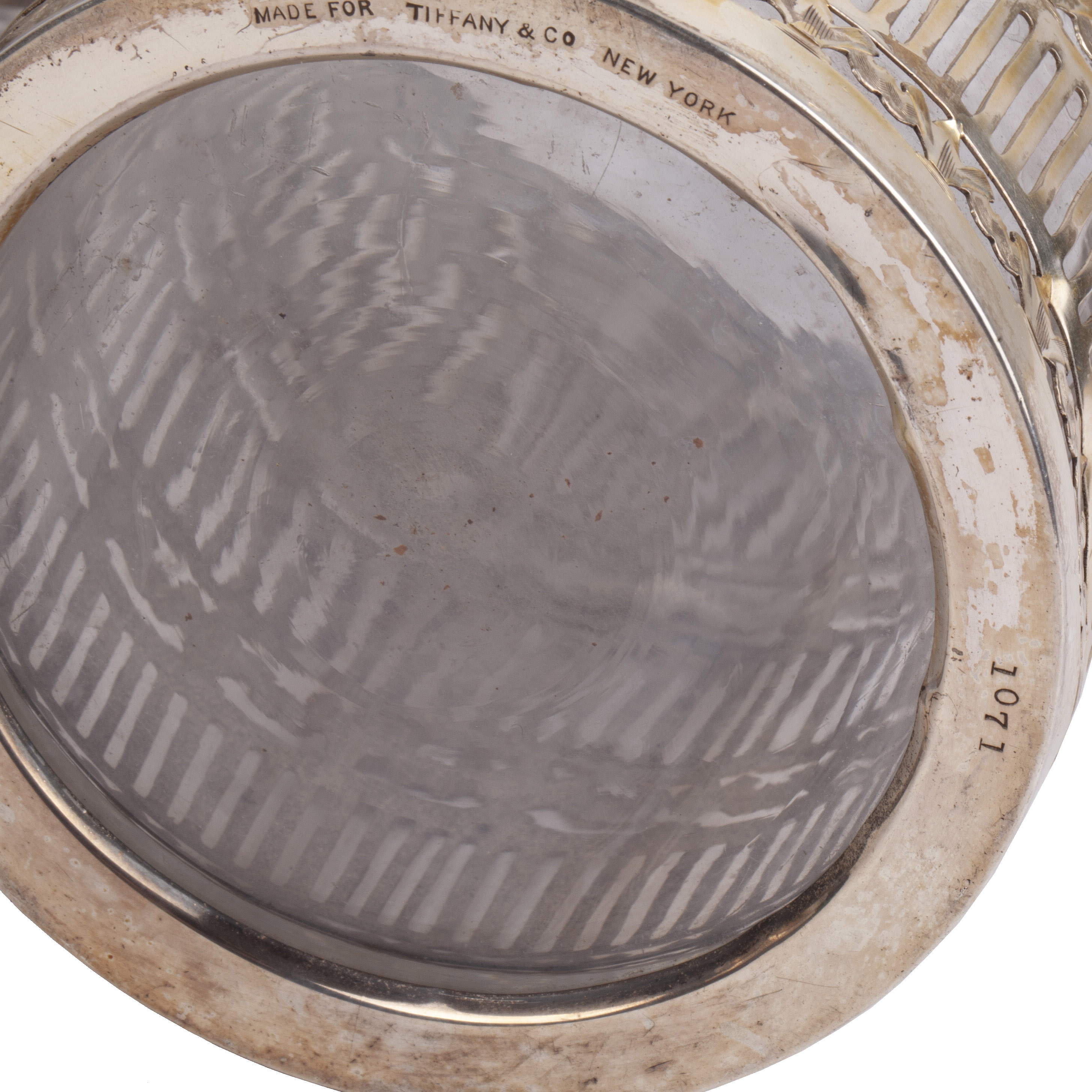
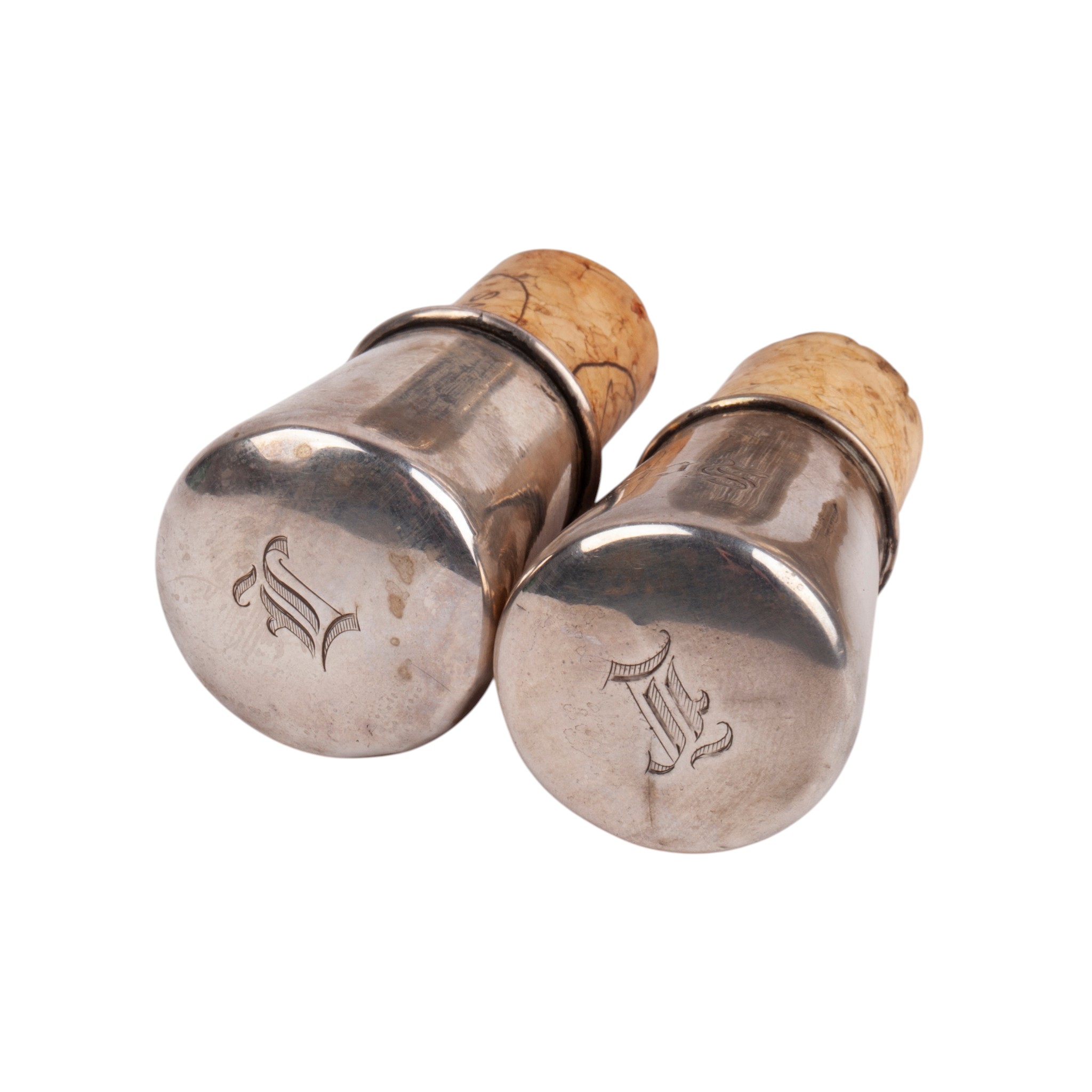
Elegant pair of clear glass decanters in pierced sterling silver sleeves, the undersides stamped STERLING and MADE FOR TIFFANY & CO NEW YORK, each fitted with a silver-mounted stopper. The stoppers are engraved “Rye” and “Scotch”, with matching engraved initials to the tops. A refined and highly decorative bar set, likely American, early 20th century.
Condition:
Good overall antique condition with surface wear, light scratches, and tarnish to the silver. Minor wear and discoloration to the corks consistent with age and use. Glass with expected wear from handling.Height: 31.5 cm (including stoppers)
Material:
Glass, sterling silverNotes:
Marked STERLING and MADE FOR TIFFANY & CO NEW YORK. Monogrammed stoppers engraved “Rye” and “Scotch.”Starting price: 2500€
Estimate: 3000-3500€
Hammer Price: Not sold -
Lot 0060
Pair of Russian Cut-Crystal Vases. Nikolskiy-Bakhmetiev Glass Factory, late 19th century
Estimate: 2000-2500€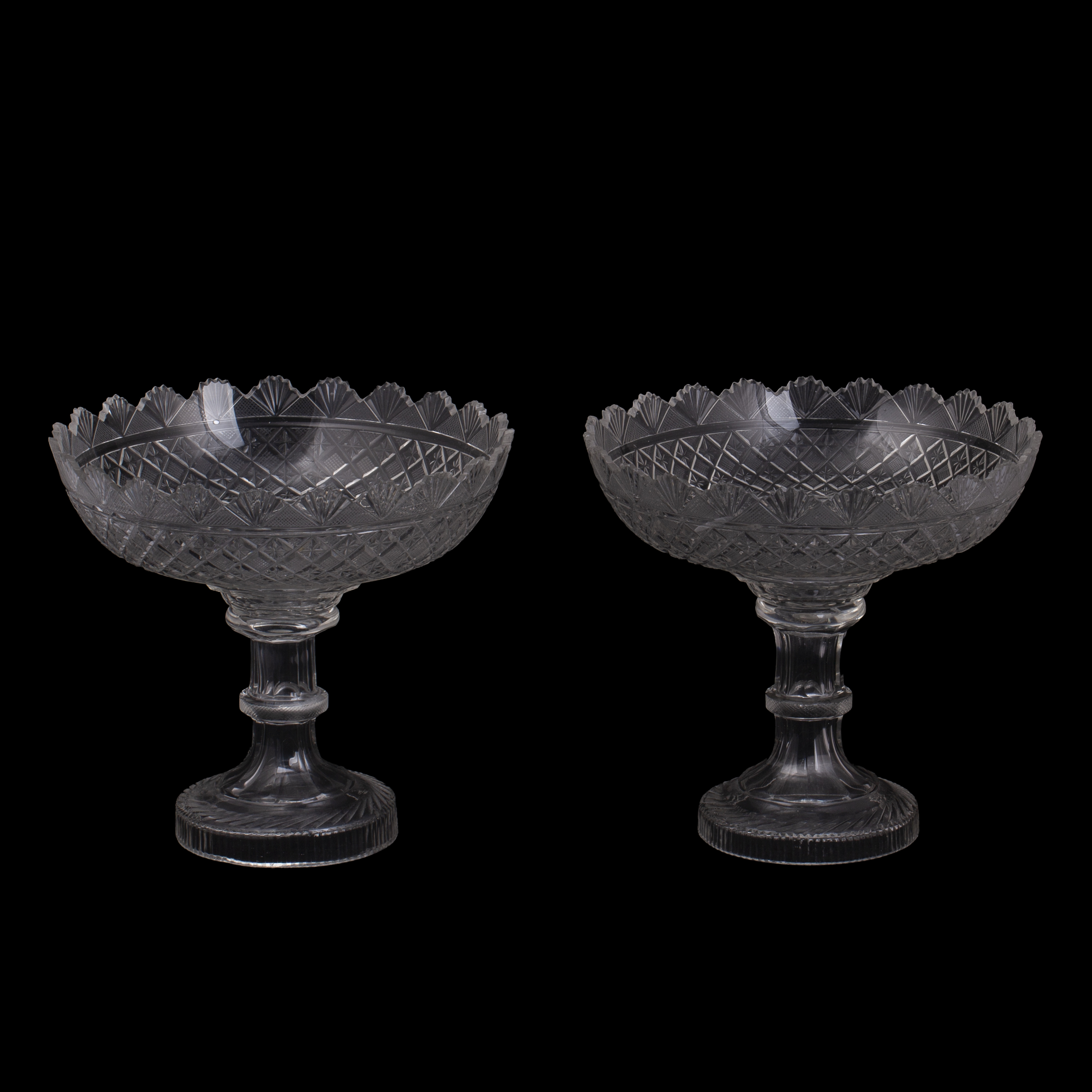
Lot 0060
Pair of Russian Cut-Crystal Vases. Nikolskiy-Bakhmetiev Glass Factory, late 19th century
Estimate: 2000-2500€Pair of Russian Footed Cut-Crystal Vases
Nikolskiy (Bakhmetiev) Glass Factory, Penza Province
Late 19th century
Cut crystal
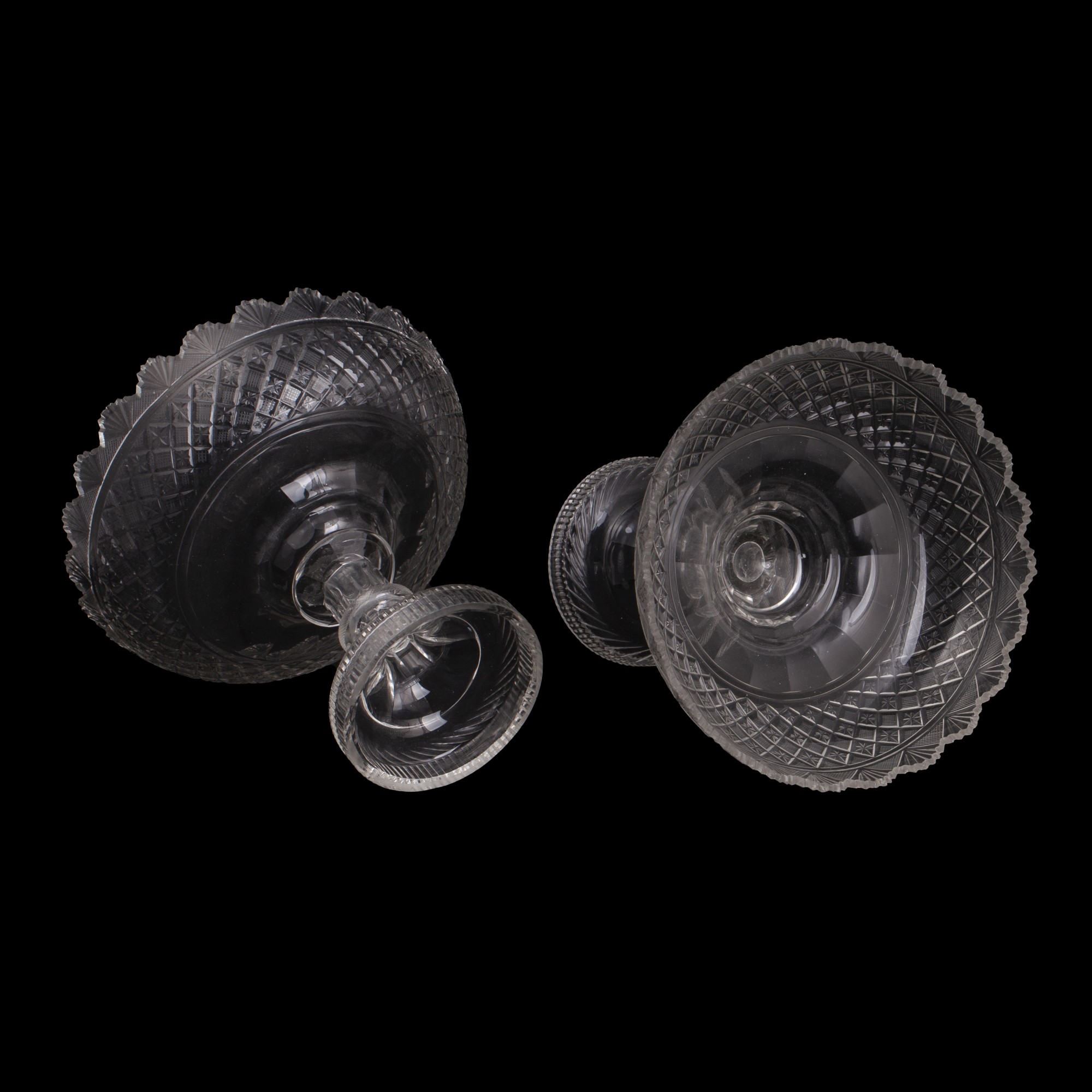
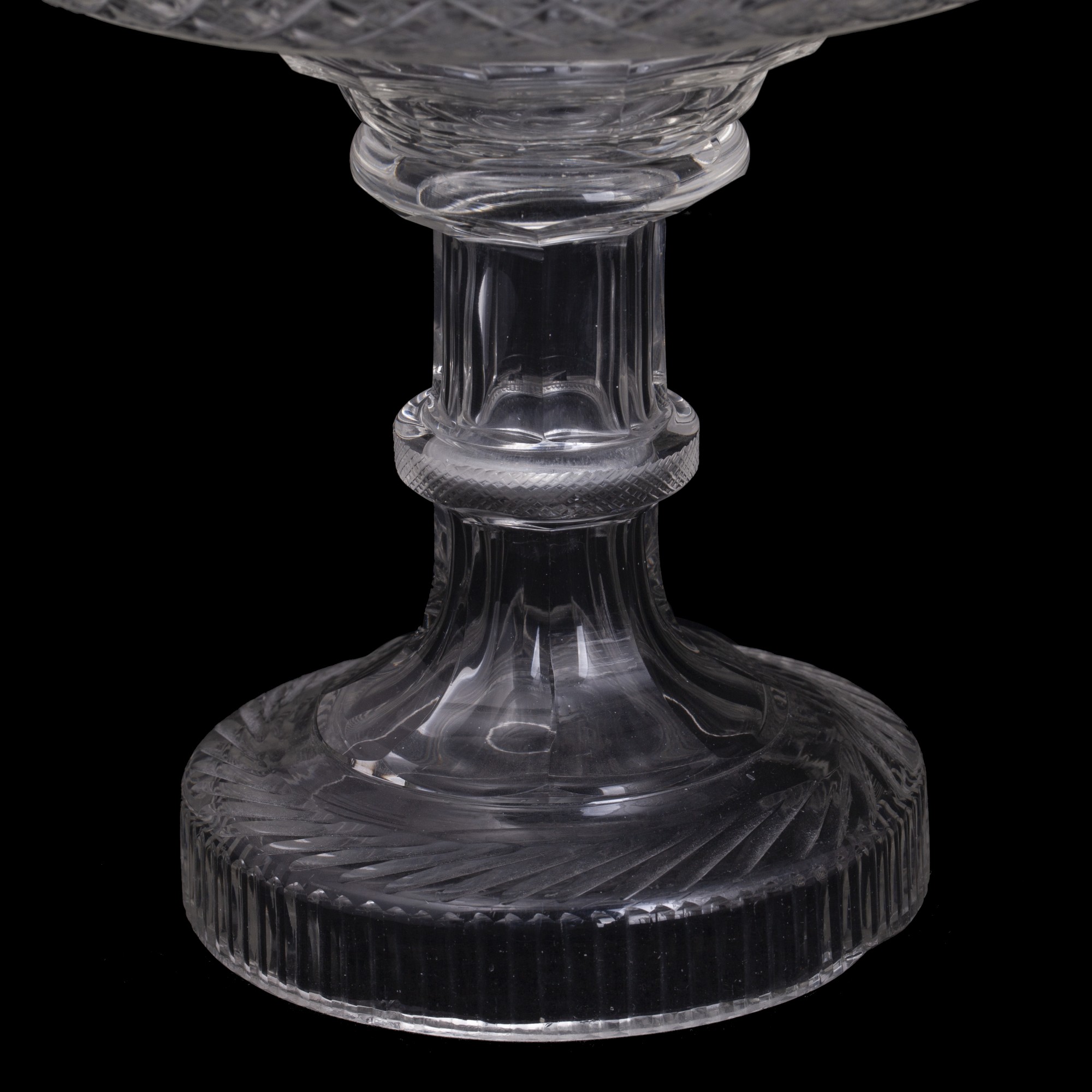
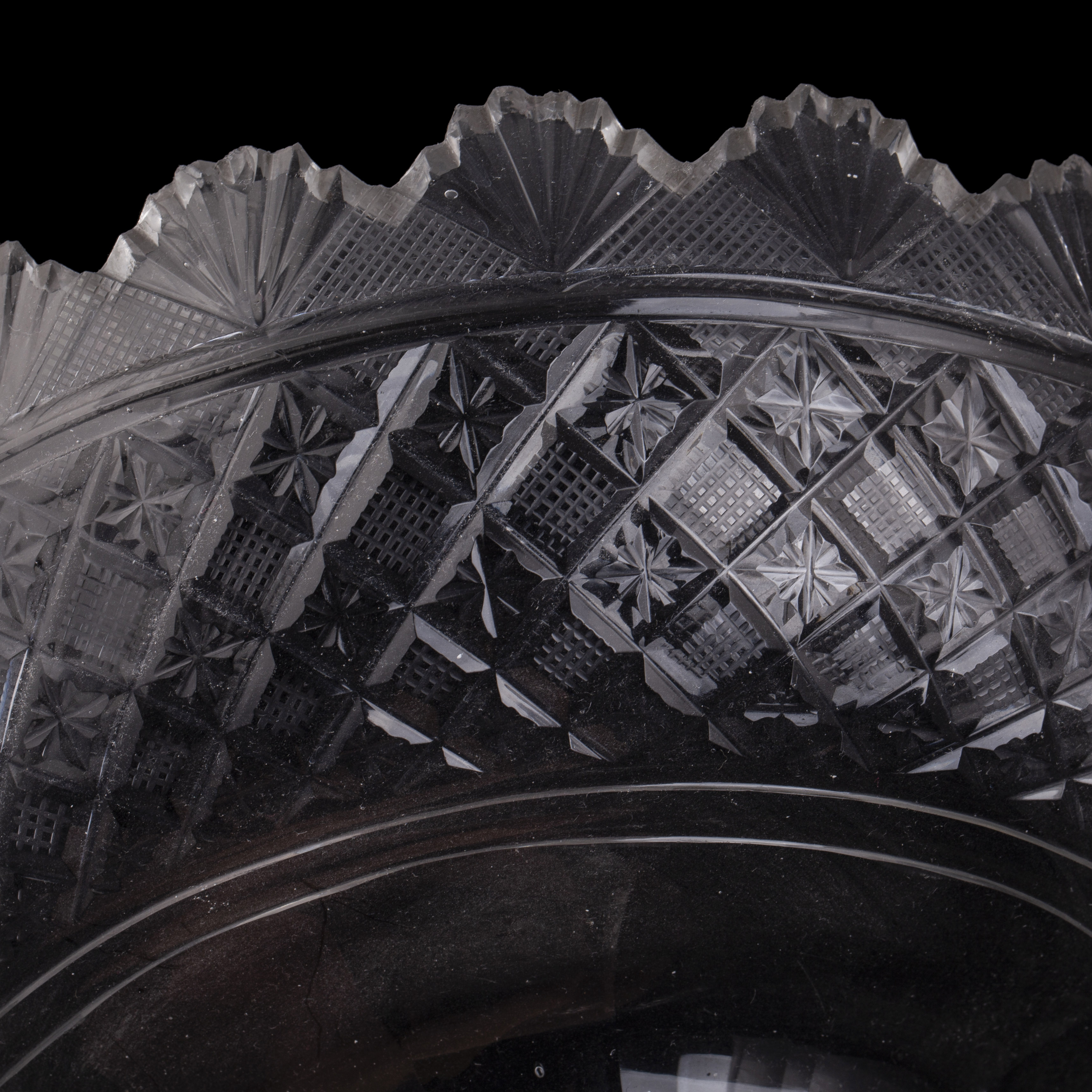
Height: 22 cmA pair of finely cut crystal vases on pedestal bases, produced at the Nikolskiy (Bakhmetiev) Glass Factory in the Penza district. The elegant diamond and fan pattern cutting reflects the refined craftsmanship and decorative traditions of Russian glassmaking in the late 19th century. The factory was founded in 1764 in the Penza province by Alexei Ivanovich Bakhmetev, with the permission of Catherine the Great. Despite being almost destroyed during the Pugachev uprising, the enterprise was rebuilt and by the 1830s had become one of the leading crystal producers in Russia. Its wares ranged from luxurious cut, engraved and enameled vessels for the nobility and the Imperial Court—earning the right in 1836 to mark production with the state emblem—to high-quality household glass admired for clarity, brilliance, and resonant tone.
Under Prince A. D. Obolensky, who took ownership in 1884, the factory expanded, employing nearly 1,000 workers and establishing schools, a hospital, and even a theater. Generations of master craftsmen, such as the celebrated Vershinin-Protasov family, created virtuoso works, including unique double-layered glasses with miniature landscapes between the walls.Starting price: 1500€
Estimate: 2000-2500€
Hammer Price: Not sold -
Lot 0061
Russian Cut-Crystal Compote. A. Maltzov Glass Factory, late 19th–early 20th century
Estimate: 300-350€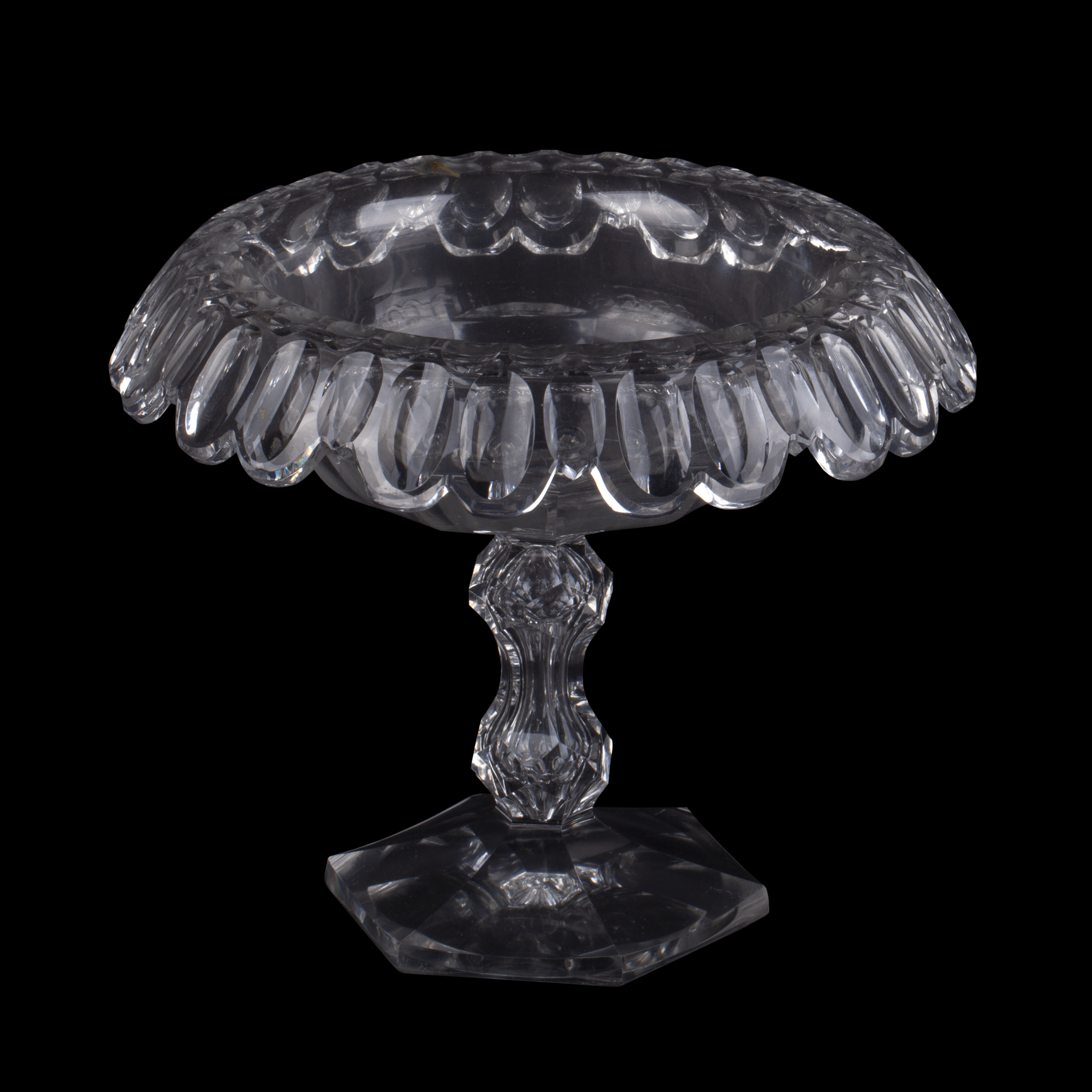
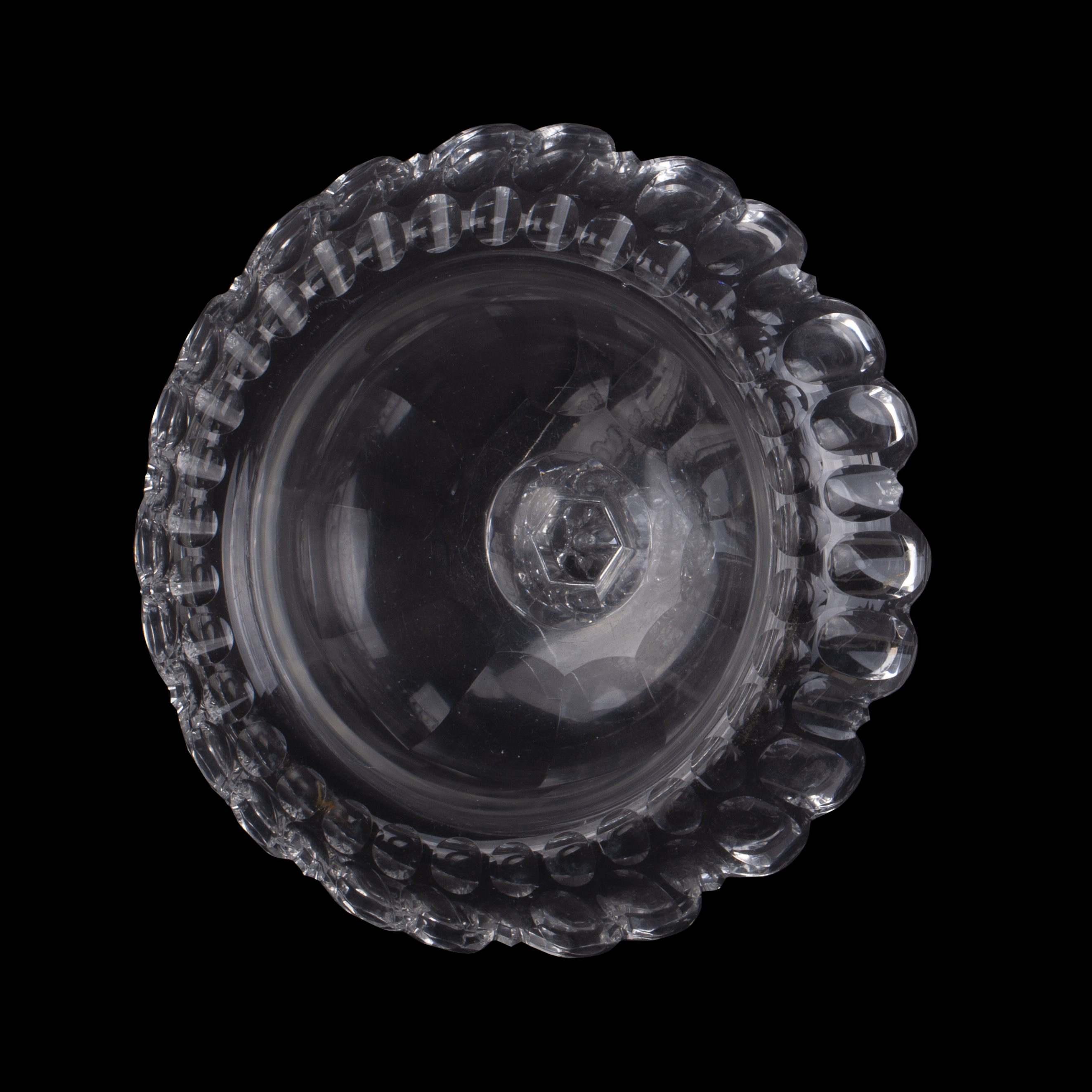
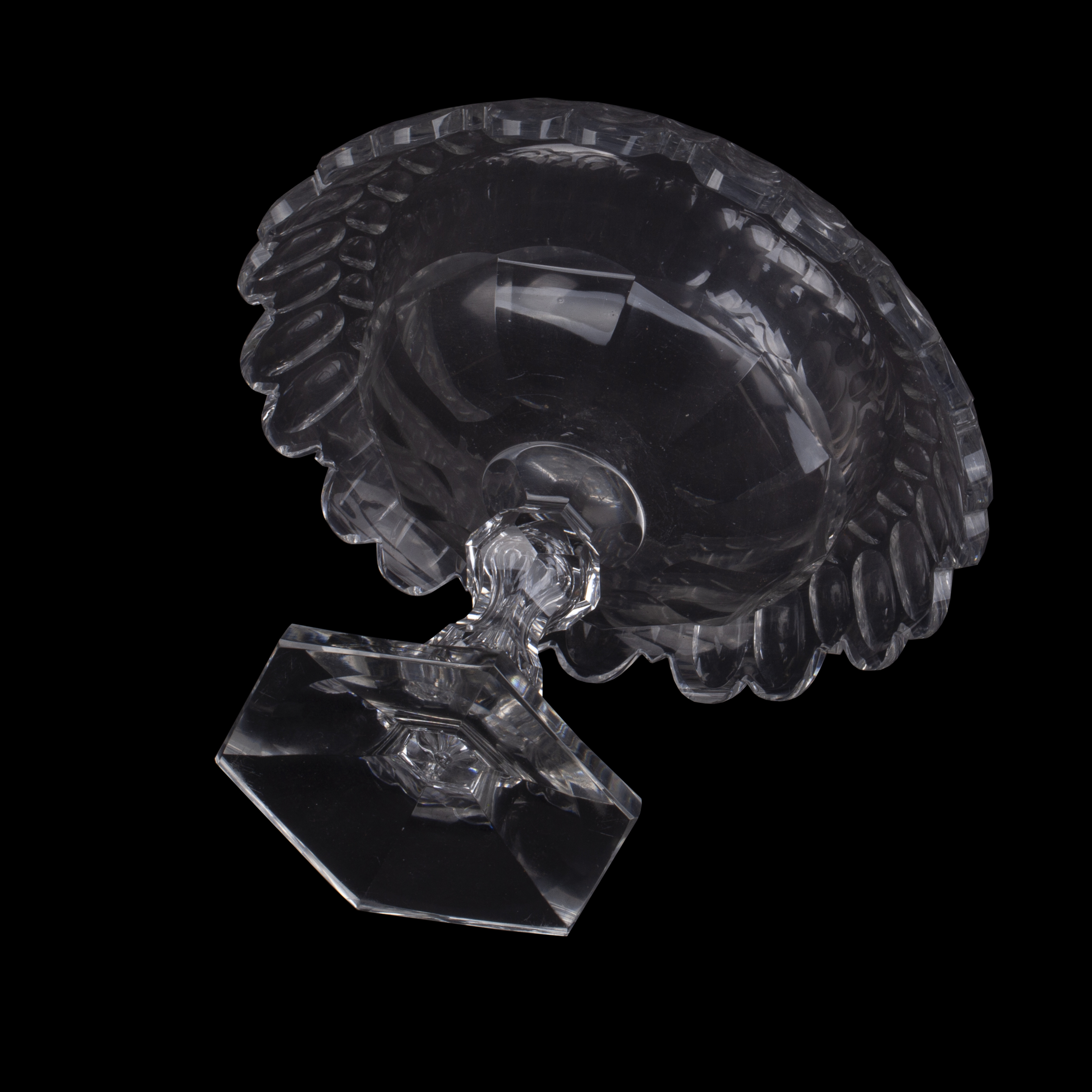
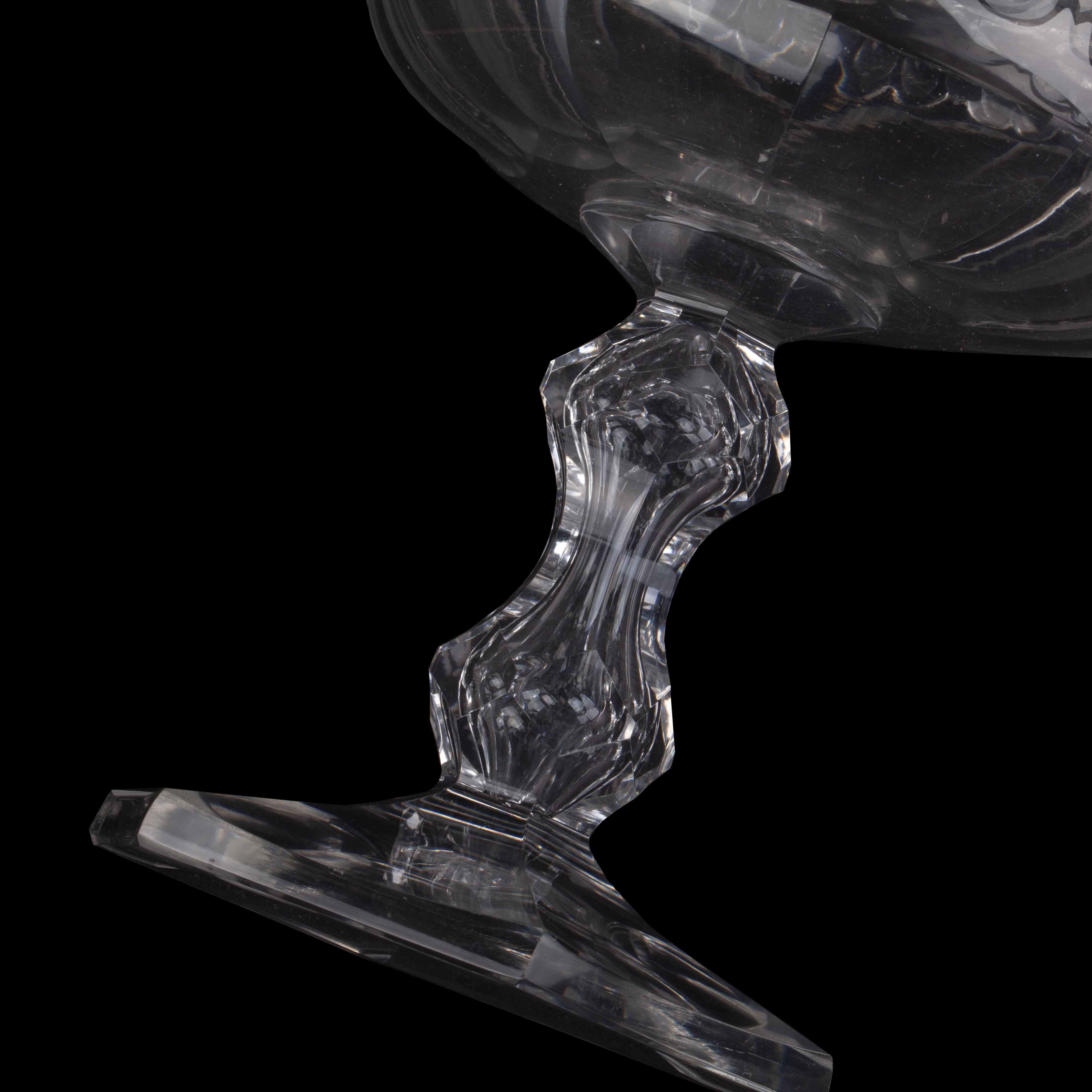
Lot 0061
Russian Cut-Crystal Compote. A. Maltzov Glass Factory, late 19th–early 20th century
Estimate: 300-350€Russian Crystal Compote
A. Maltzov Glass Factory, Gus-Khrustalny, Russia
Late 19th – early 20th centuryCut crystal
Height: 22.5 cm
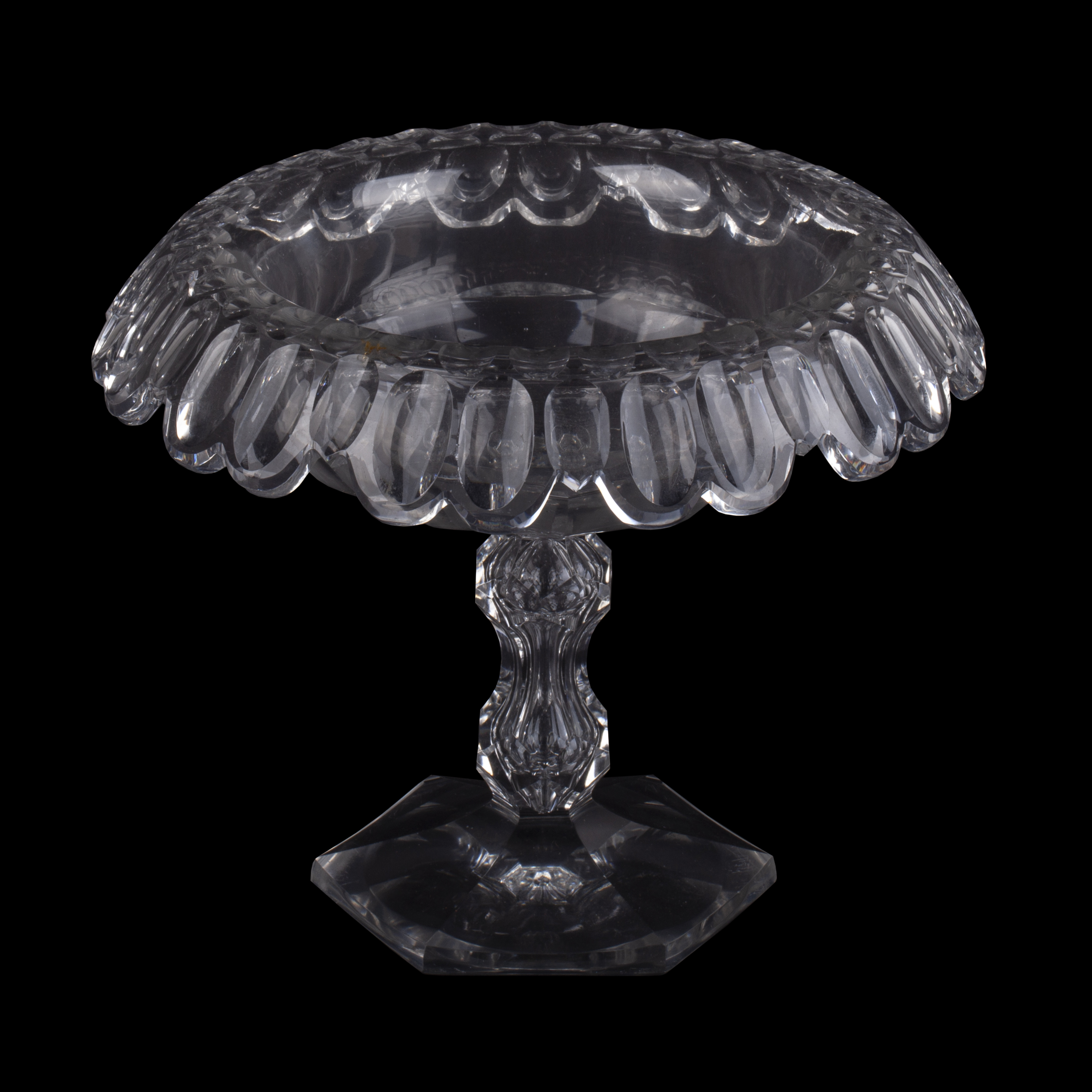
Diameter: 29 cmThis elegant crystal compote demonstrates the high artistic and technical standards of the A. Maltzov Glass Factory in Gus-Khrustalny, one of the leading Russian glassworks of the late Imperial period.
The piece is distinguished by its refined proportions, faceted stem, and meticulously cut scalloped rim, reflecting the exceptional craftsmanship and aesthetic sophistication characteristic of the factory’s production at the turn of the 20th century.
Starting price: 250€
Estimate: 300-350€
Hammer Price: Not sold -
Lot 0062
Crystal Vase by Bakhmetyev Glass Factory, Nikolskoye-Pestrovka
Estimate: 300-350€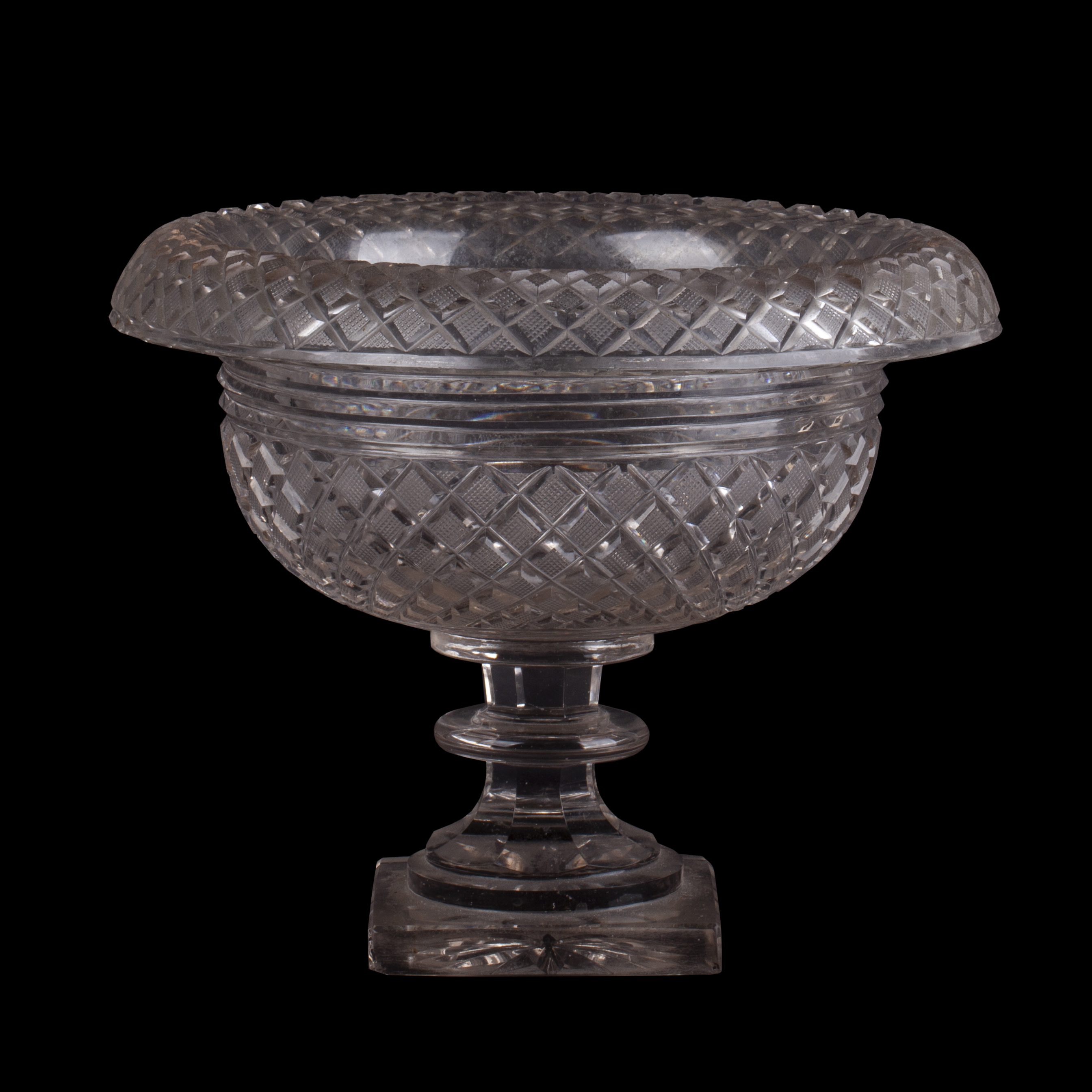
Lot 0062
Crystal Vase by Bakhmetyev Glass Factory, Nikolskoye-Pestrovka
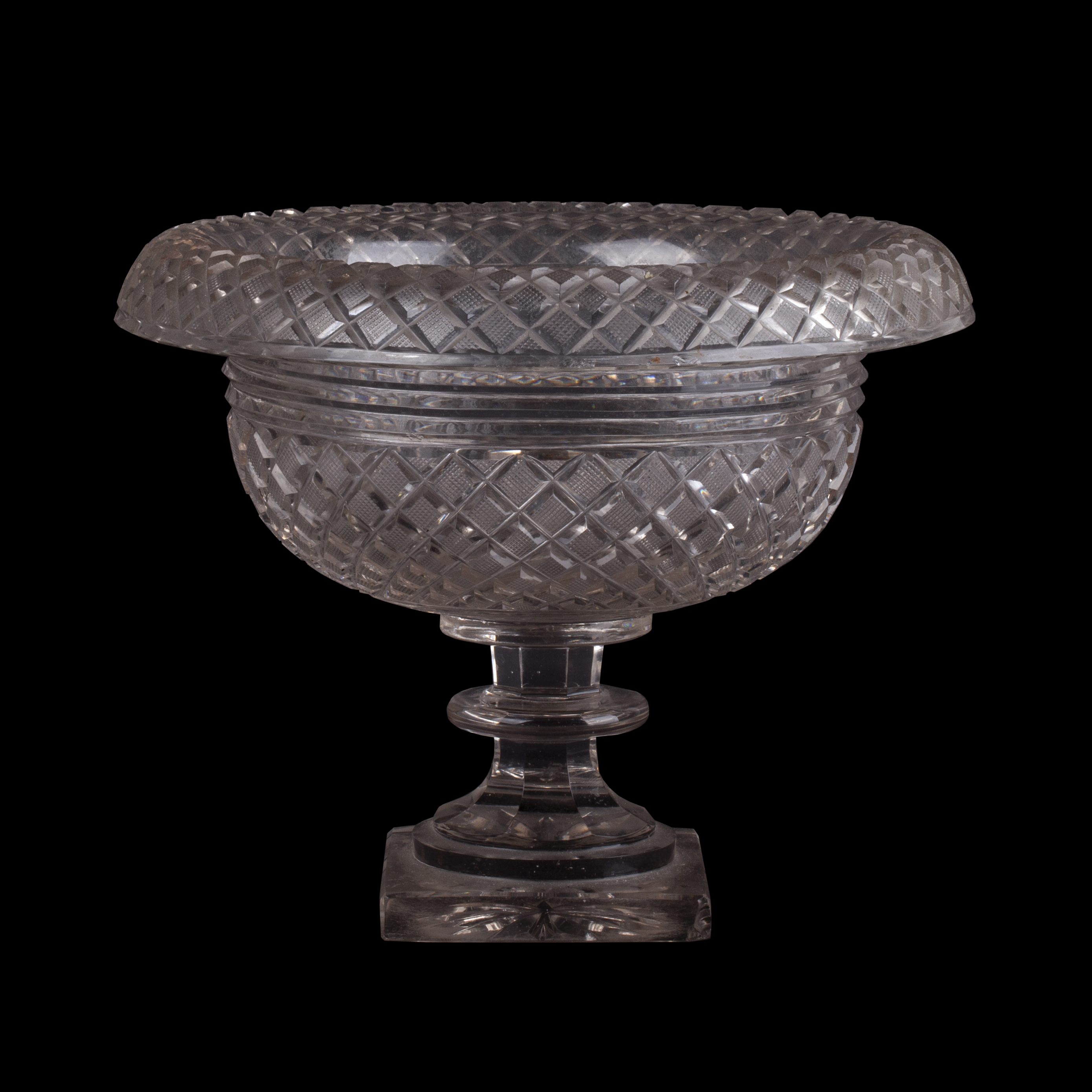
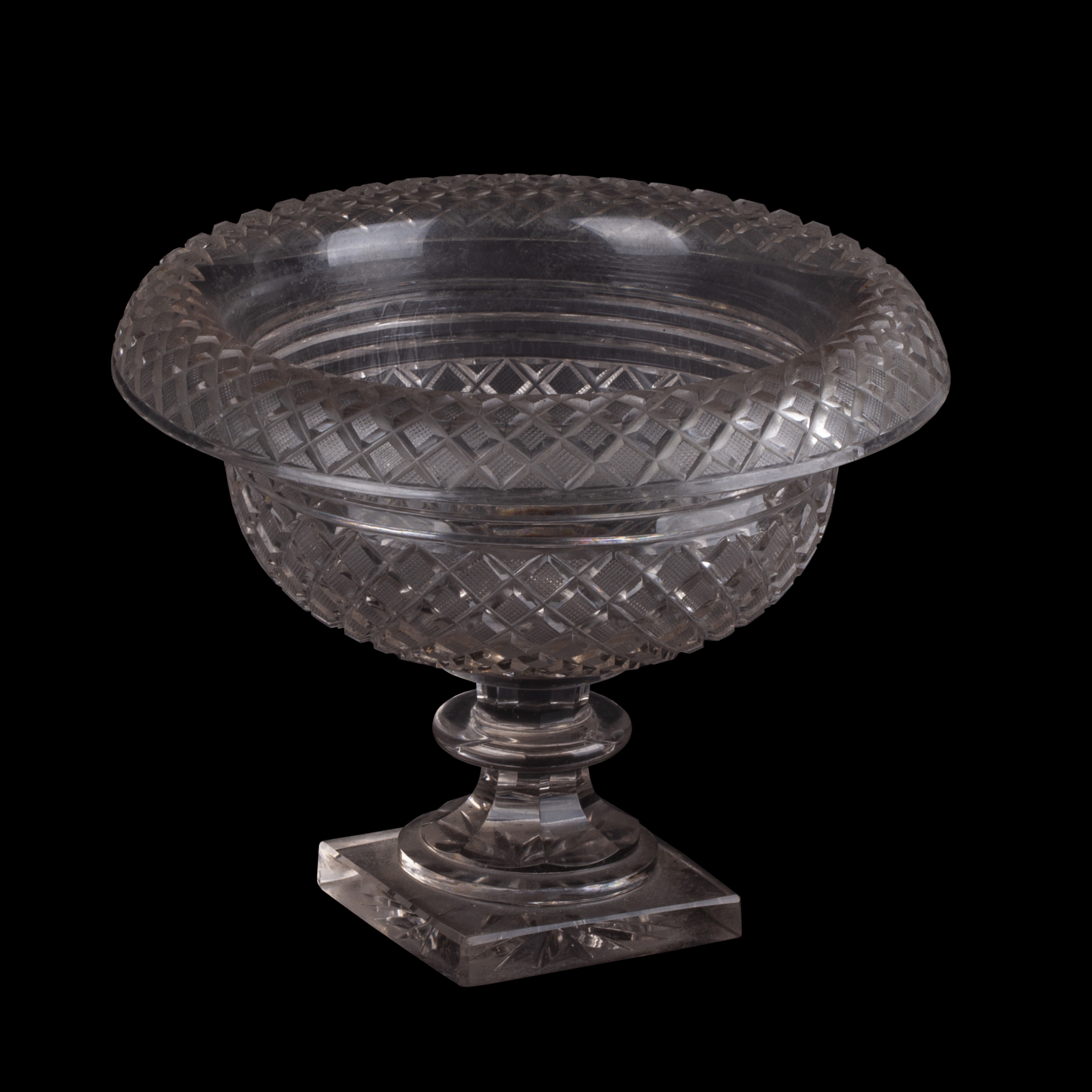
Estimate: 300-350€Crystal Vase
Bakhmetyev Glass Factory, Nikolskoye-Pestrovka, Penza Province, Russia
Mid 19th centuryCut crystal
Height: 19.3 cm
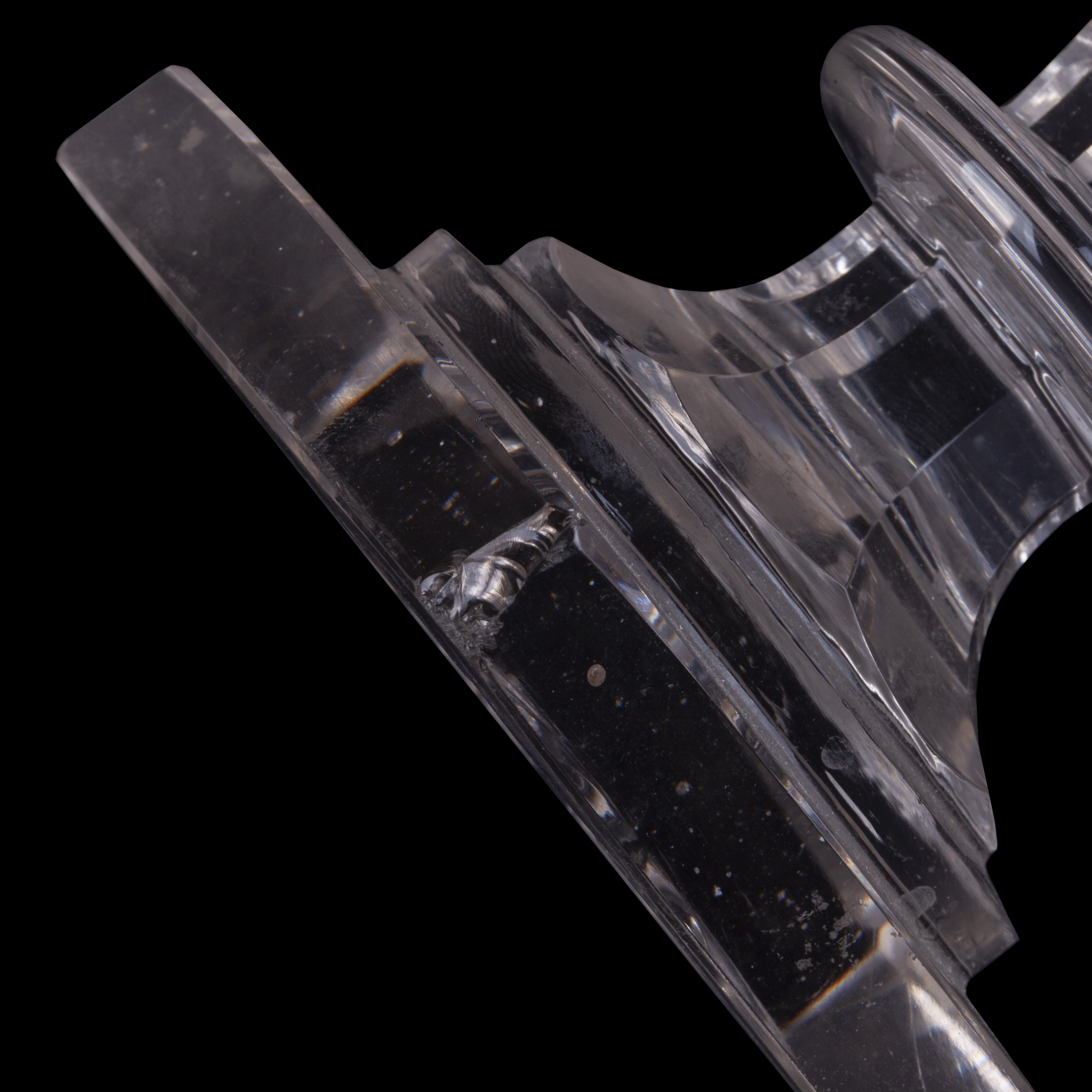
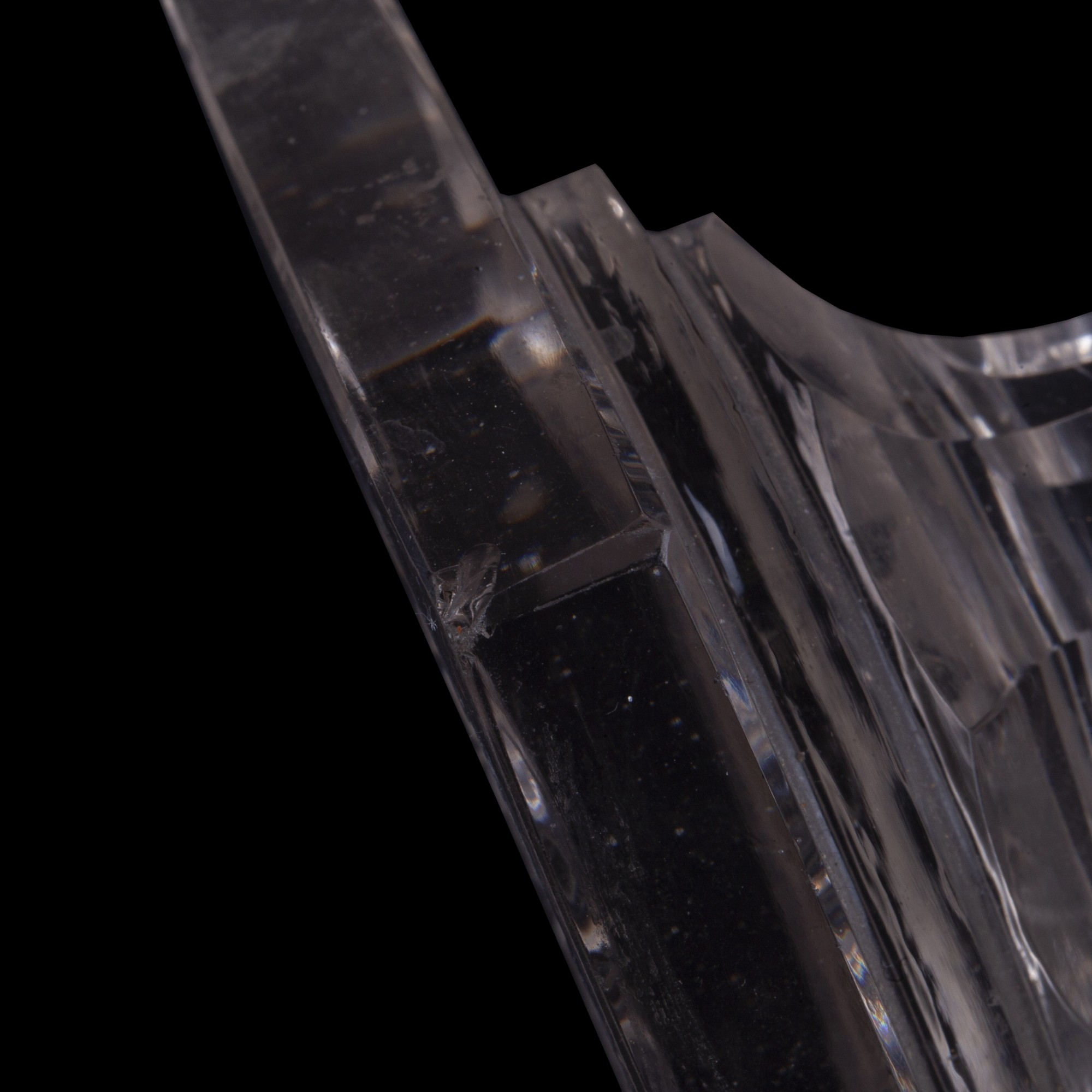
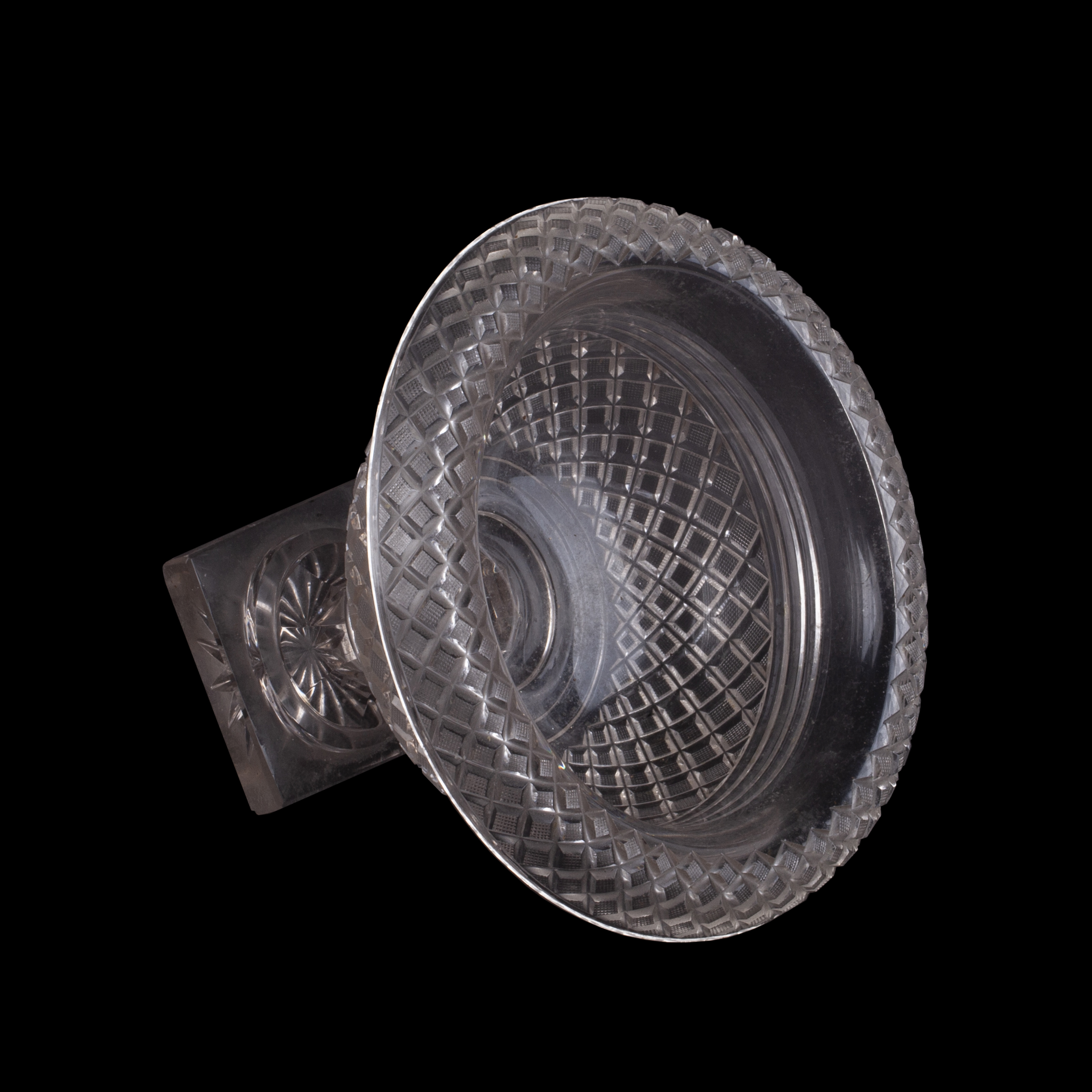
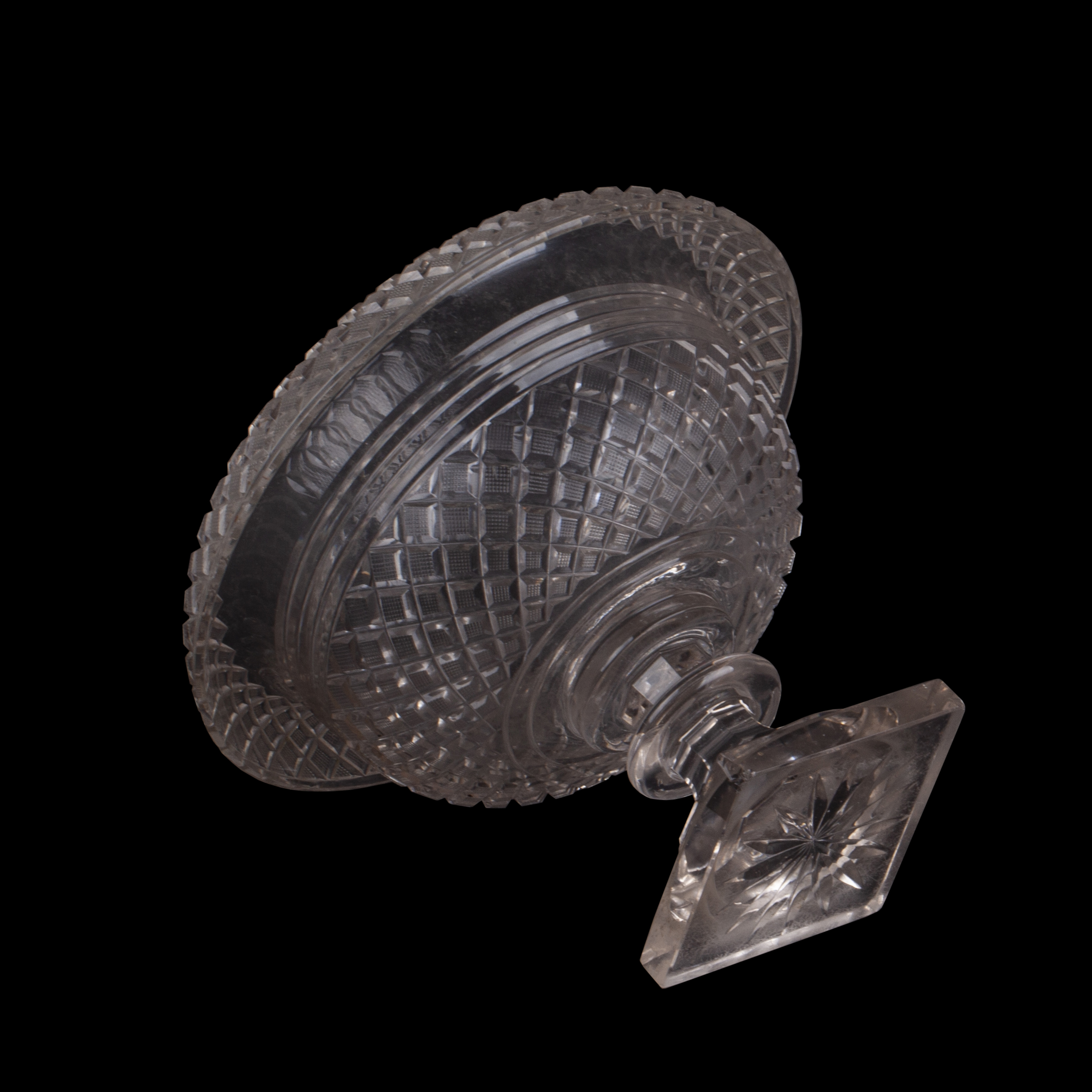
Diameter: 24 cmA finely cut crystal vase of classical form with a rounded bowl and wide rim, raised on a faceted pedestal foot. The body is decorated with an intricate diamond-cut pattern, characteristic of the refined design of the Bakhmetyev Glass Factory.
The factory was founded in 1764 by Alexei Ivanovich Bakhmetyev, a retired officer who received imperial permission from Empress Catherine the Great to establish glass production in Nikolskoye-Pestrovka, Penza Province. The enterprise remained under the Bakhmetyev family until 1884, becoming one of the most distinguished glassworks in Russia.
During the 19th century, the factory produced both luxurious crystal pieces for the aristocracy and the Imperial Court—as well as finely made, affordable glassware for wider use. Its works were noted for exceptional quality and artistic engraving, often decorated with gilding, enamel, or filigree.
By the 1830s, the Bakhmetyev factory had reached its artistic peak and was recognized as a Supplier to the Imperial Court, granted the right to mark its products with the State Coat of Arms (1836).
Starting price: 250€
Estimate: 300-350€
Hammer Price: Not sold -
Lot 0063
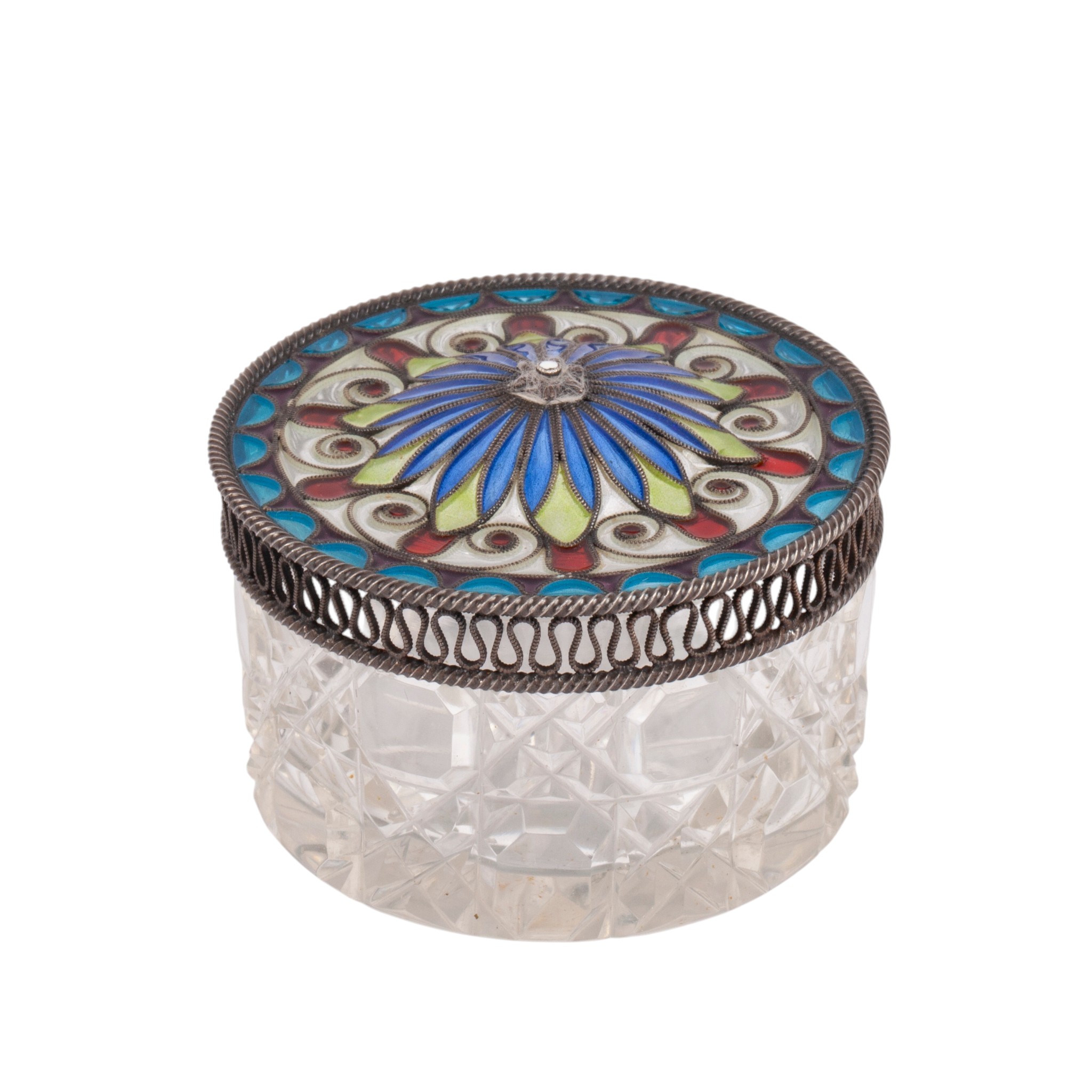
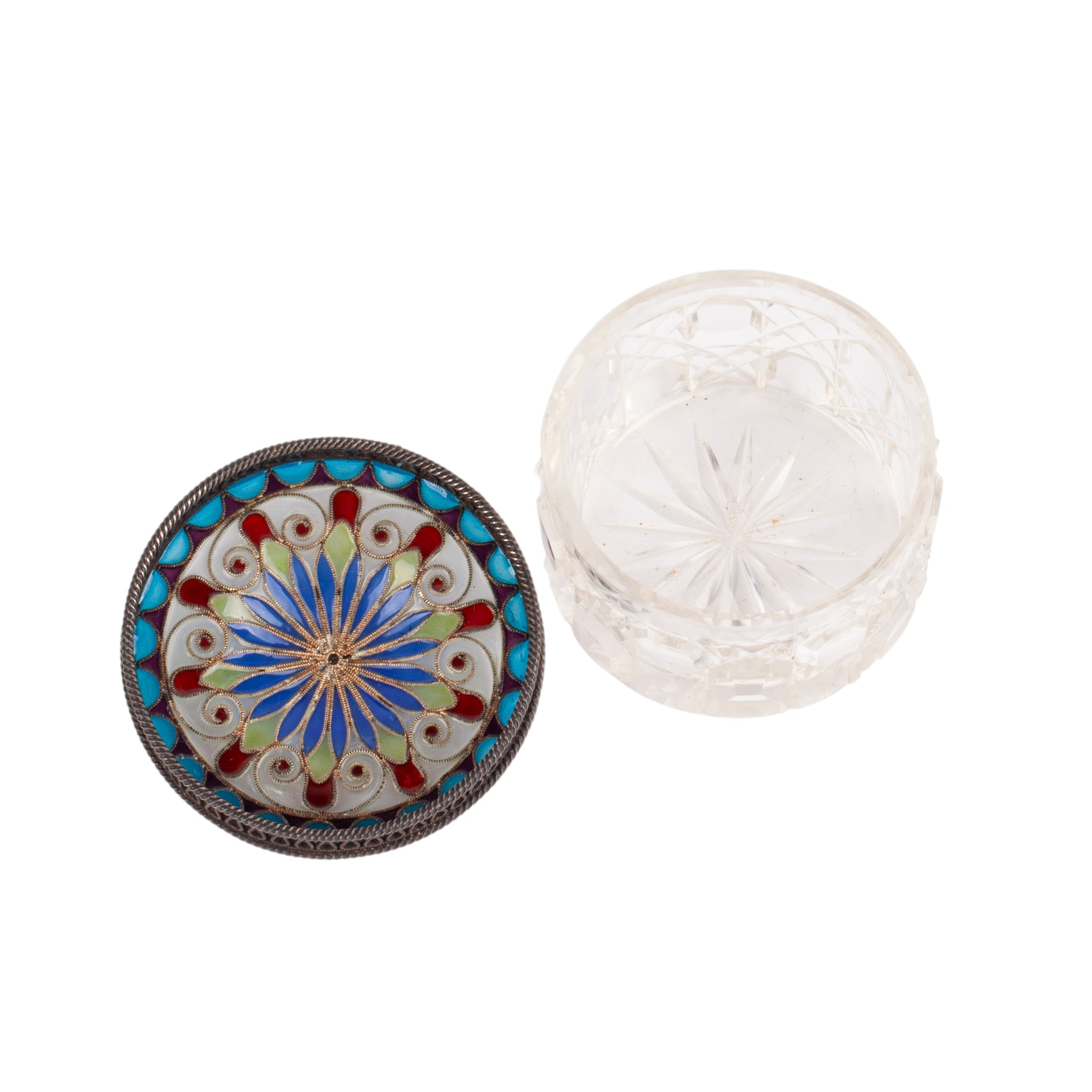
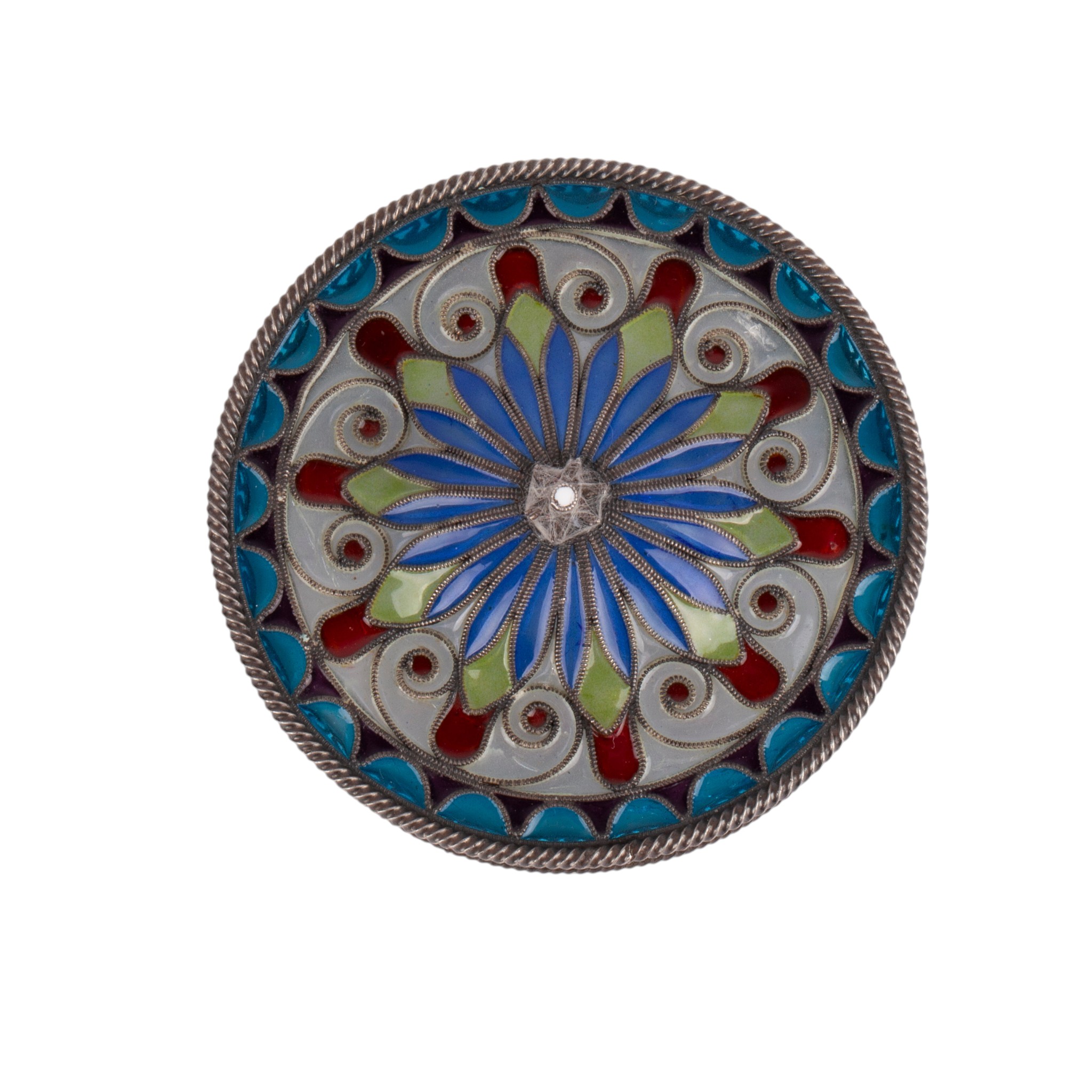
Crystal, Silver and Plique-à-Jour Enamel Snuff Box
Estimate: 300-400€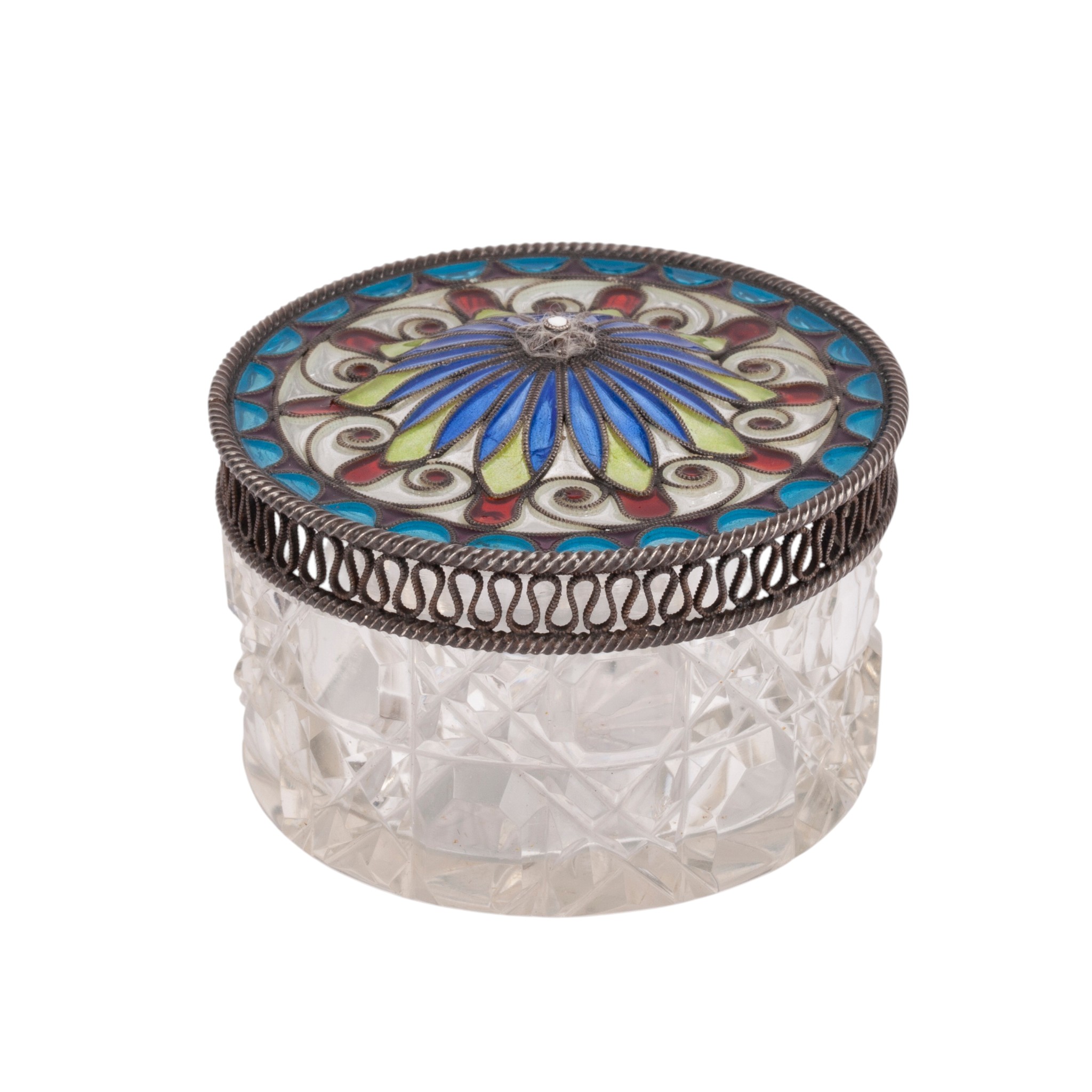
Lot 0063
Crystal, Silver and Plique-à-Jour Enamel Snuff Box
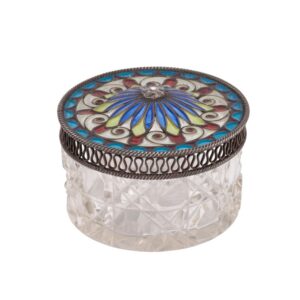
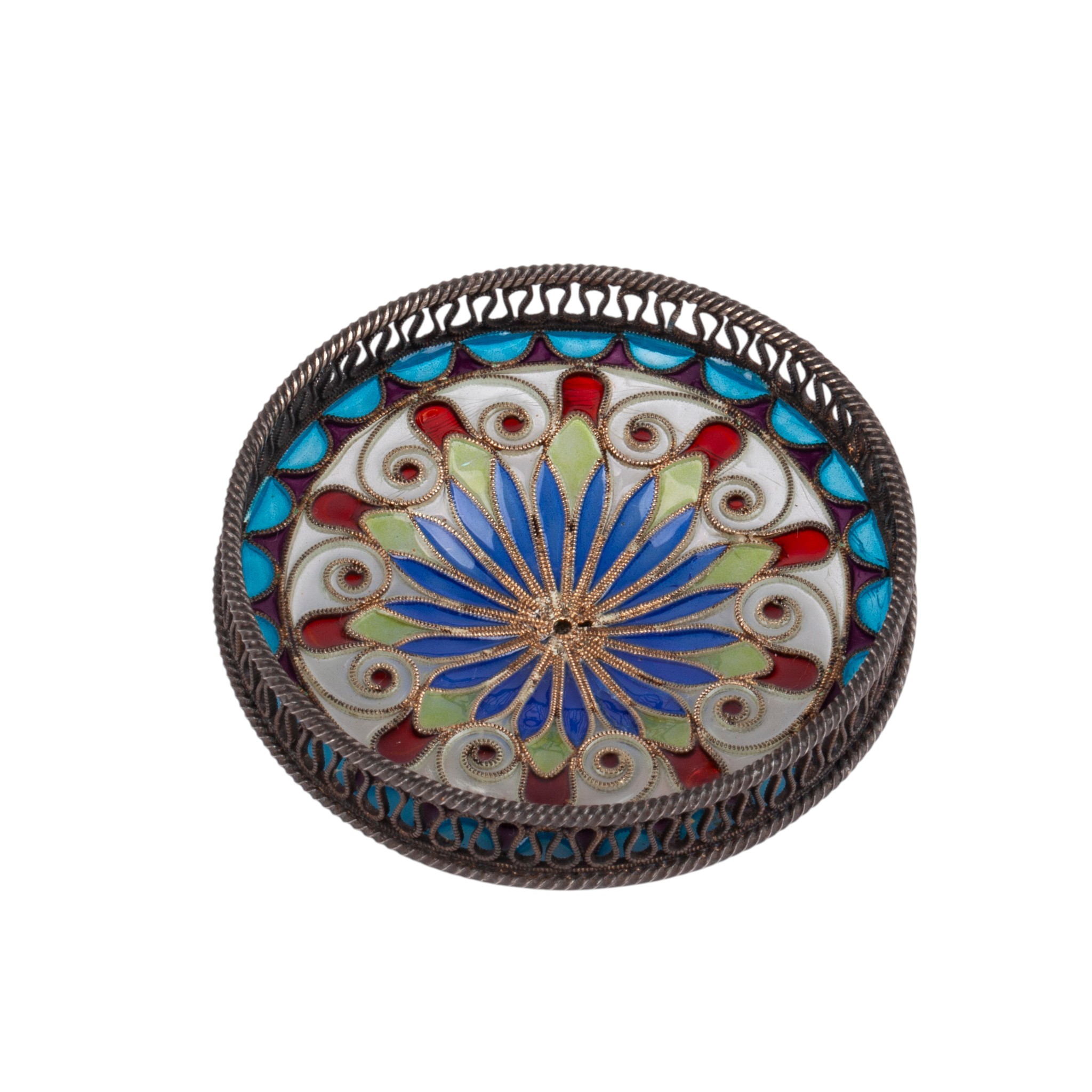
Estimate: 300-400€A fine crystal, silver and plique-à-jour enamel snuff box, the cut crystal body surmounted by an ornate silver lid with polychrome floral enamel decoration in blue, green, red and white. Russia, the end of the 19th century.
Dimensions: 4 × 5.5 × 5.5 cm.Starting price: 200€
Estimate: 300-400€
Hammer Price: Not sold -
Lot 0064
Russian Vase with Snake-Form Handles, Imperial Glass Factory, St Petersburg, 1810s–1820s
Estimate: 8000-9000€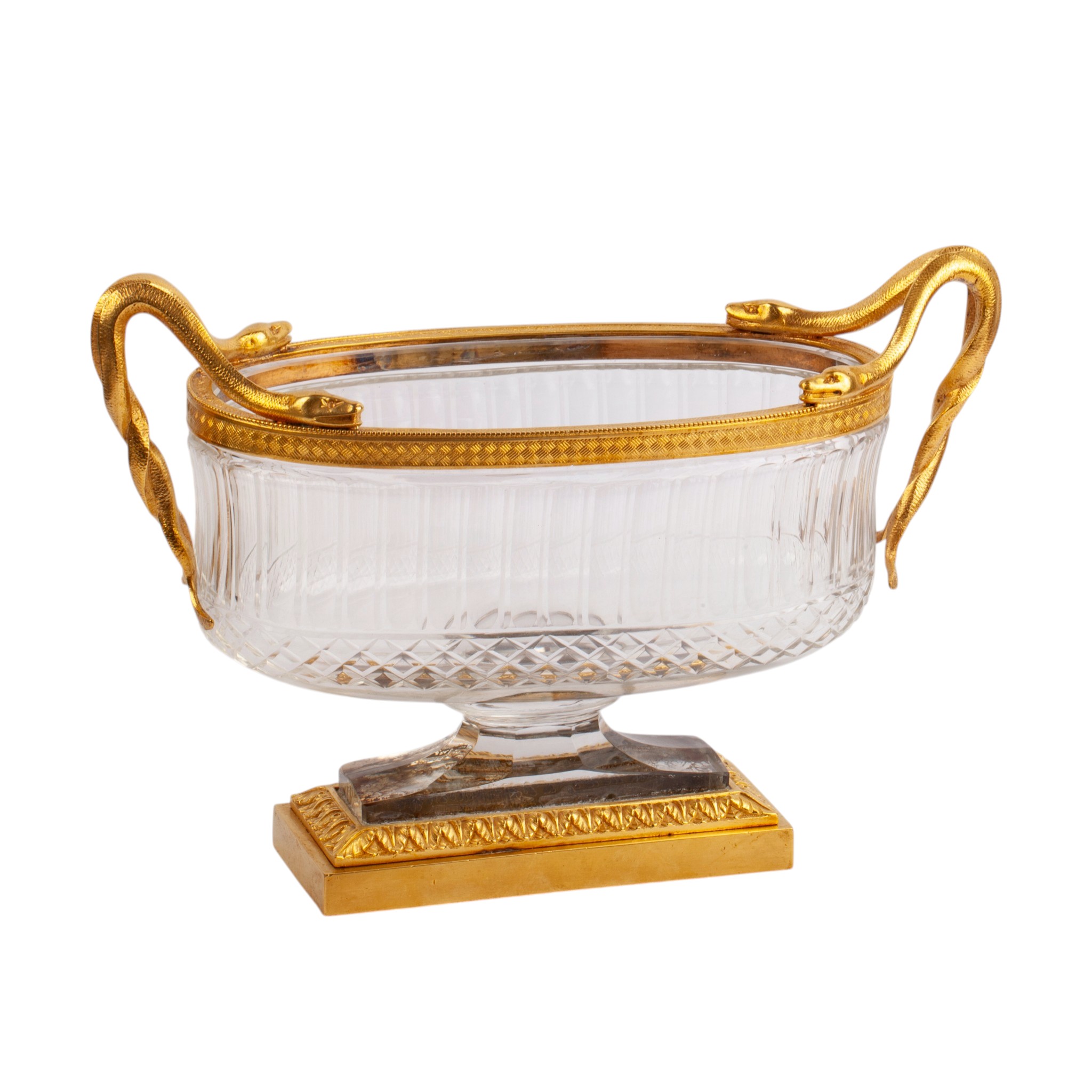
Lot 0064
Russian Vase with Snake-Form Handles, Imperial Glass Factory, St Petersburg, 1810s–1820s
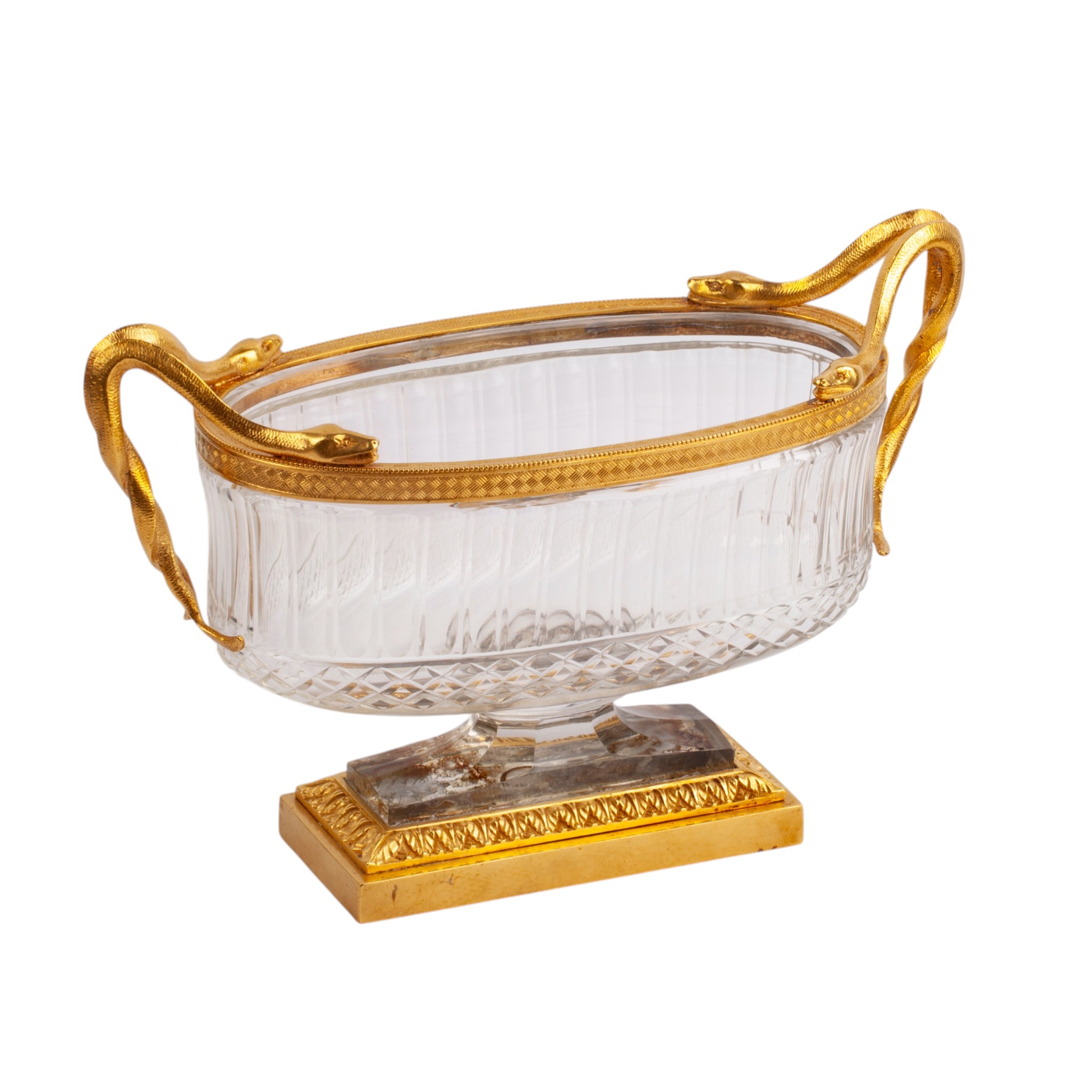
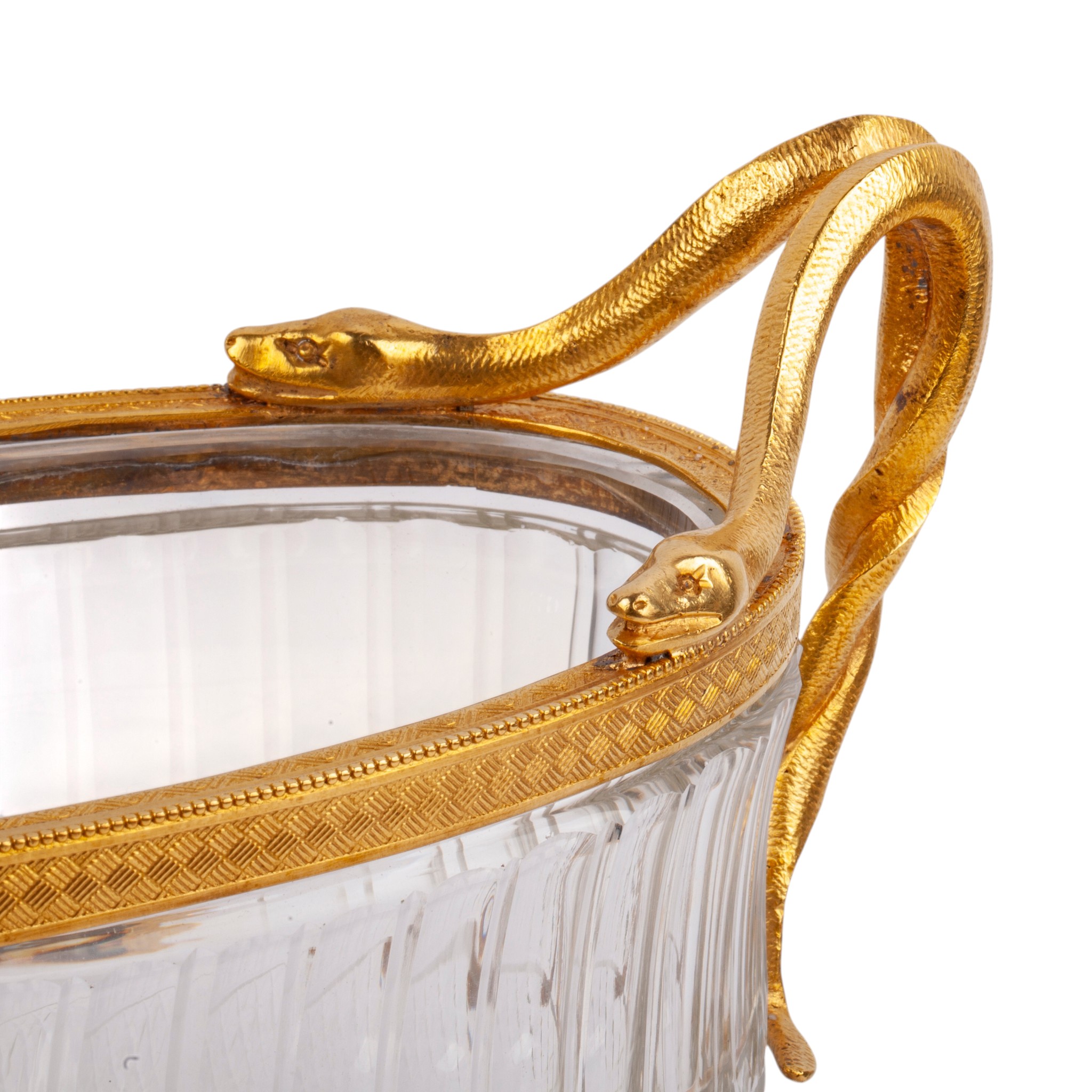
Estimate: 8000-9000€A Rare Russian vase with snake-form handles
After a design by Carlo Rossi (1775-1849).
Imperial Glass Factory, St Petersburg, 1810s-1820s. Dimensions: 20 x 29 x 12 cm.
Crystal glass, gilt bronze; blown, cutting; cast and gilt bronze mounts.
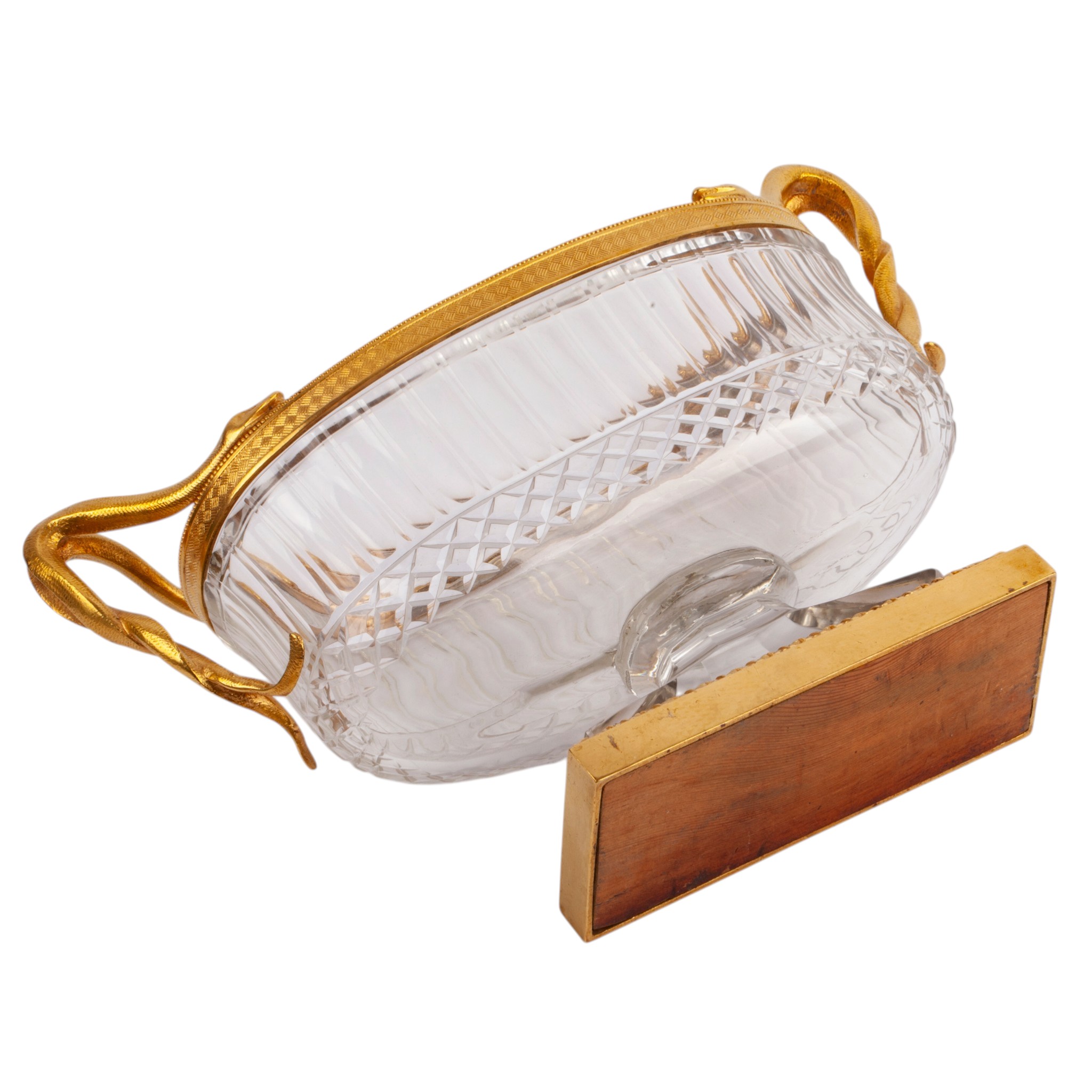
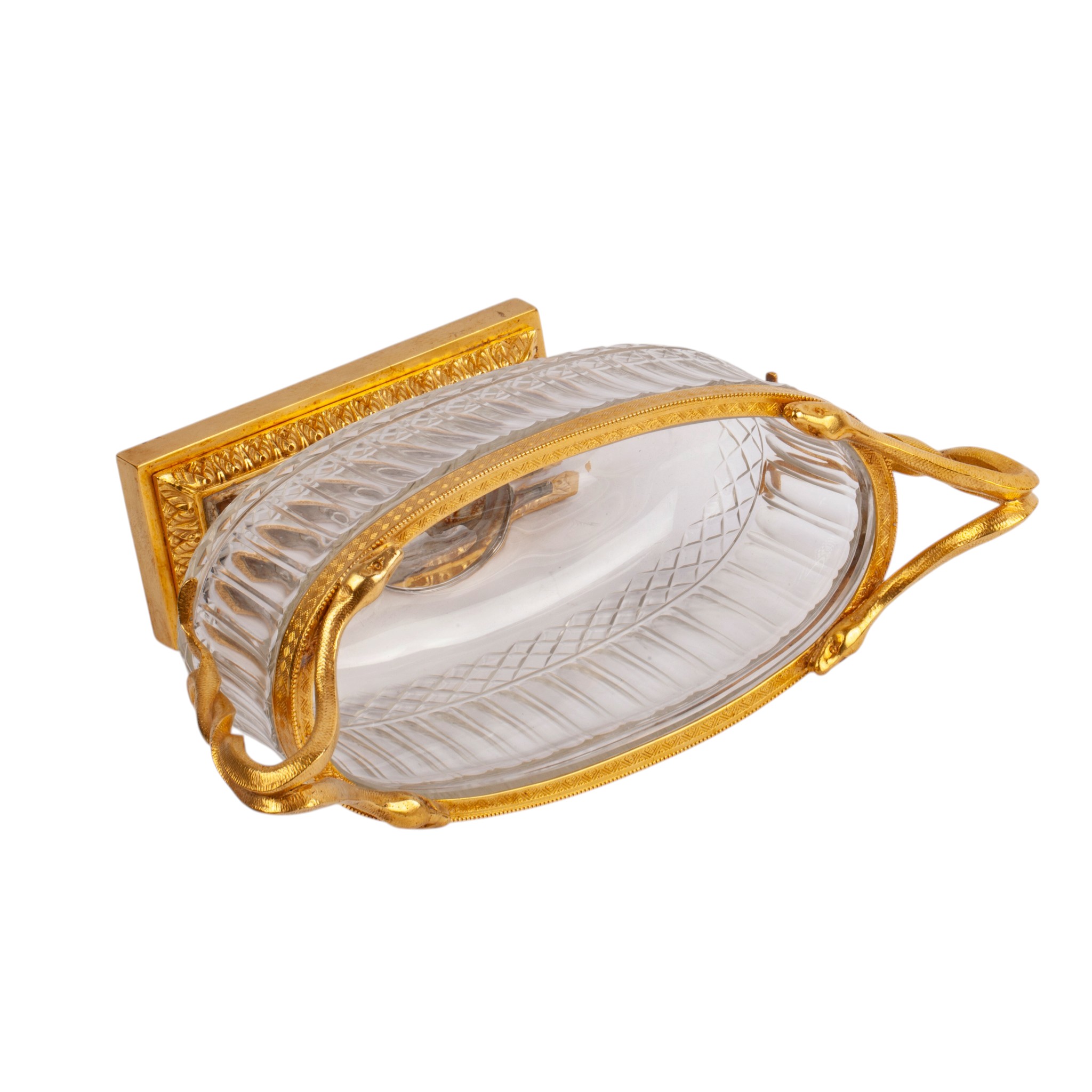
An elegant oval vase-bowl of clear glass, raised on a stepped pedestal foot and mounted with richly gilt bronze rims and handles in the form of entwining snakes. The glass body is articulated by fine vertical pilasters, while the lower zone is finished with a cut diamond band. The restrained clarity of the vessel is set in deliberate contrast with the animated bronze mounts: the serpents, modeled with sinuous bodies and alert, naturalistic heads, transform the utilitarian handles into a distinctly sculptural motif.
The snake, a motif associated in Neoclassical design with antiquity, renewal, and protective force, lends the composition both symbolic resonance and formal dynamism. The combination of transparent crystal glass and finely chased gilt bronze is characteristic of luxury production associated with the Imperial Glass Factory in St Petersburg. The Imperial Glass Factory mastered to a high degree the production of cut crystal, one of the most fashionable materials of the period. In its early years, both the forms and the cutting patterns of its wares were shaped by the influence of English, particularly Irish, crystal. Before long, however, Russian architects, among them Andrei Voronikhin and others, developed new forms previously unknown in European glassmaking, while the factory’s cutters introduced original patterns of faceting, engraving, and painted decoration.
The 1820s marked a flourishing period for artistic glass intended for the interior. Inspired by trophy-like gilt-bronze mounts, Russian architects and St Petersburg bronze-makers began to design new types of palace furnishings, for which crystal elements and supports were produced at the Imperial Glass Factory. These expanded decorative possibilities were further enriched by the wide chromatic range of glass and crystal manufactured there.
A comparable vase is preserved in the collection of the State Hermitage Museum. https://www.hermitagemuseum.org/digital-collection/923774?lng=ruStarting price: 7000€
Estimate: 8000-9000€
Hammer Price: Not sold -
Lot 0065
Russian Vase with Snake-Form Handles, Imperial Glass Factory, St Petersburg, 1810s–1820s
Estimate: 6000-8000€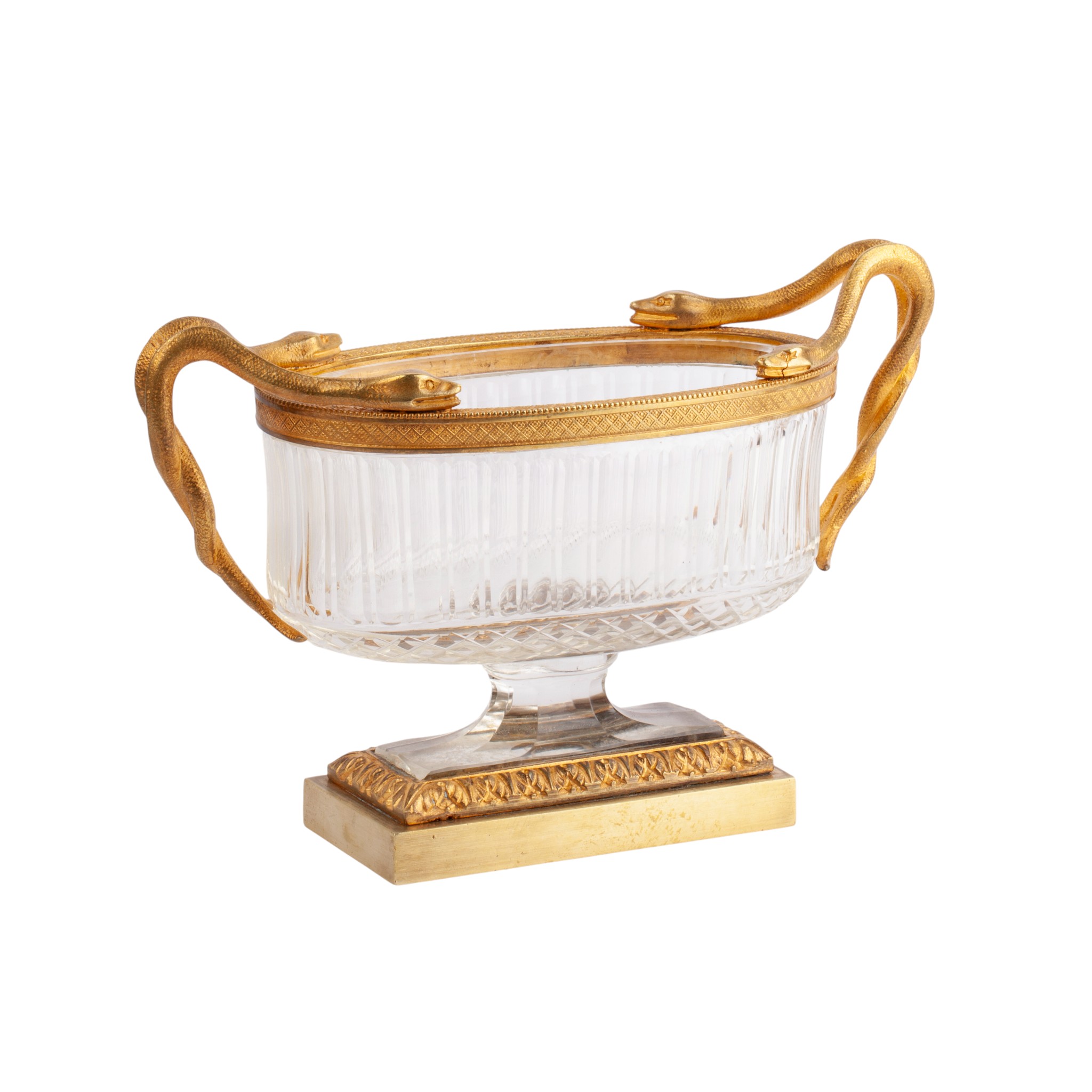
Lot 0065
Russian Vase with Snake-Form Handles, Imperial Glass Factory, St Petersburg, 1810s–1820s
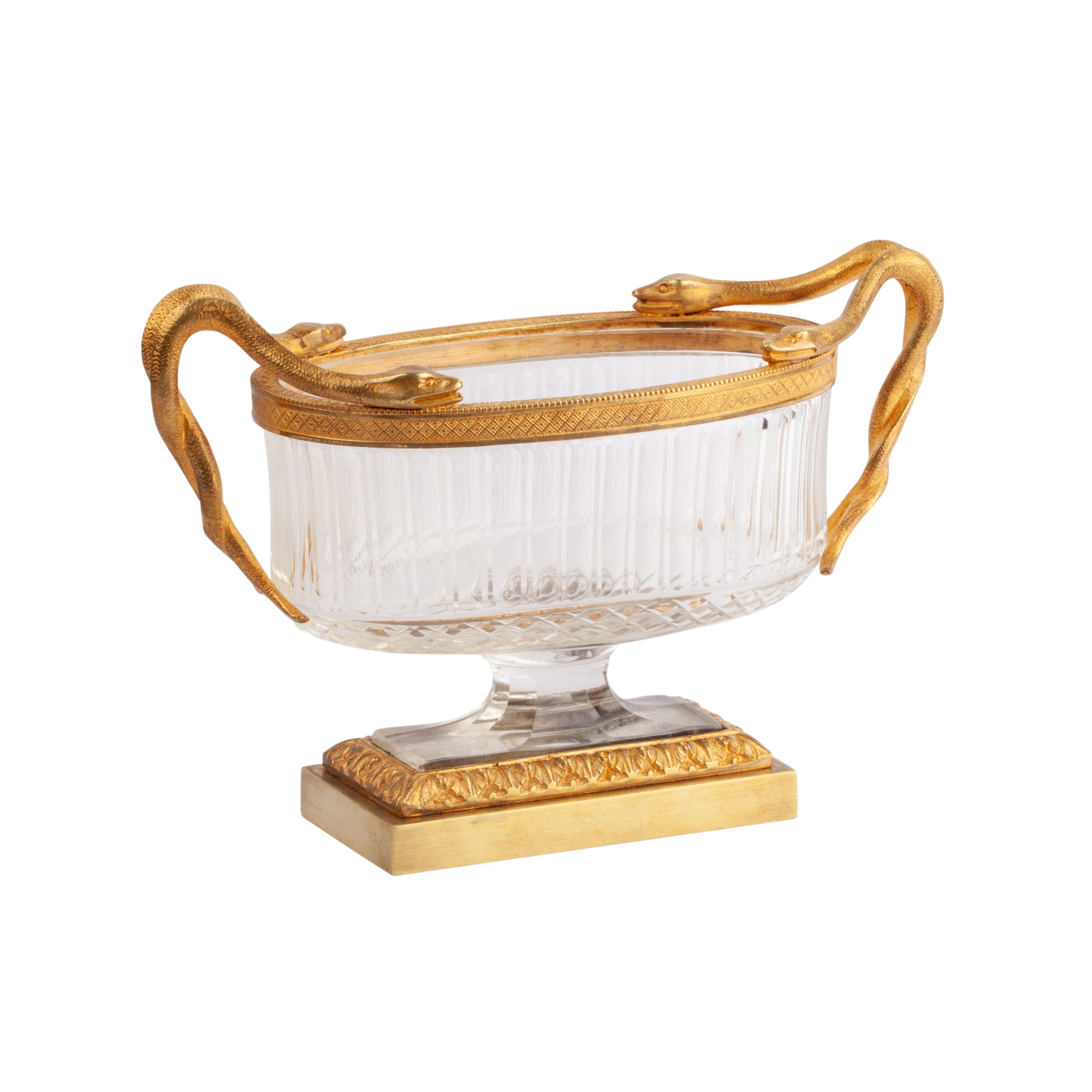
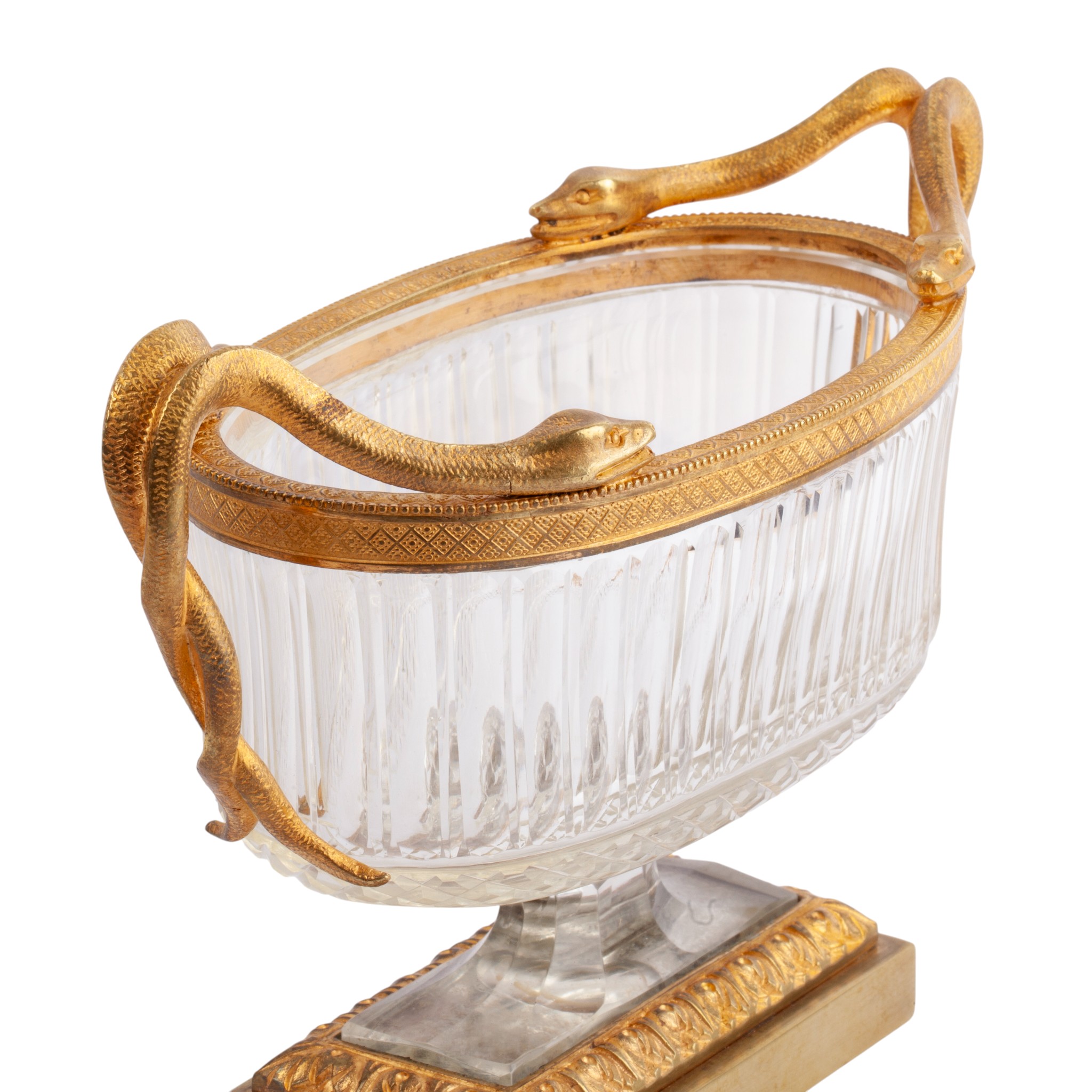
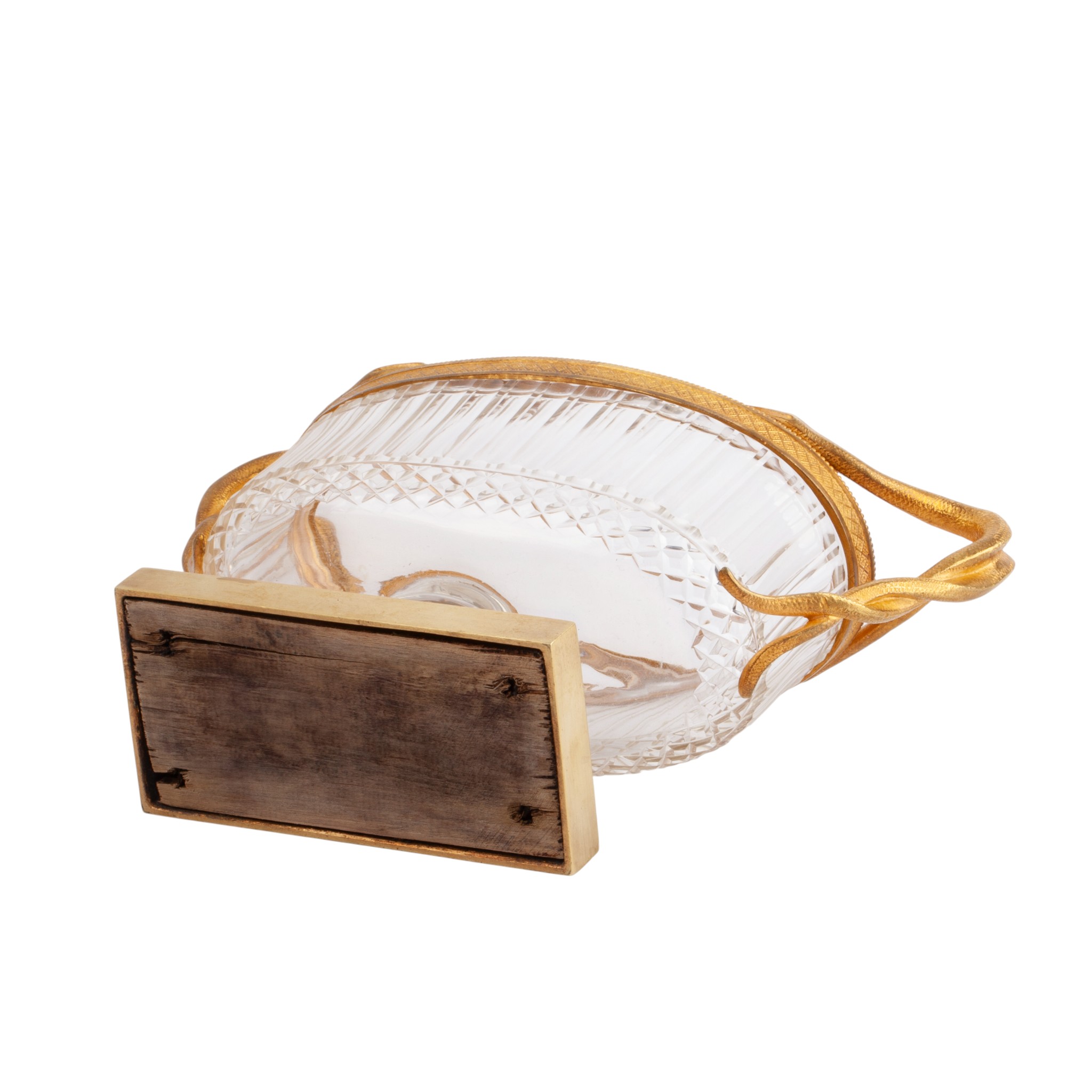
Estimate: 6000-8000€A Rare Russian vase with snake-form handles
After a design by Carlo Rossi (1775-1849).
Imperial Glass Factory, St Petersburg, 1810s-1820s. Dimensions: 14.5 x 22 x 9 cm.
Crystal glass, gilt bronze; blown, cutting; cast and gilt bronze mounts.
An elegant oval vase-bowl of clear glass, raised on a stepped pedestal foot and mounted with richly gilt bronze rims and handles in the form of entwining snakes. The glass body is articulated by fine vertical pilasters, while the lower zone is finished with a cut diamond band. The restrained clarity of the vessel is set in deliberate contrast with the animated bronze mounts: the serpents, modeled with sinuous bodies and alert, naturalistic heads, transform the utilitarian handles into a distinctly sculptural motif.
The snake, a motif associated in Neoclassical design with antiquity, renewal, and protective force, lends the composition both symbolic resonance and formal dynamism. The combination of transparent crystal glass and finely chased gilt bronze is characteristic of luxury production associated with the Imperial Glass Factory in St Petersburg. The Imperial Glass Factory mastered to a high degree the production of cut crystal, one of the most fashionable materials of the period. In its early years, both the forms and the cutting patterns of its wares were shaped by the influence of English, particularly Irish, crystal. Before long, however, Russian architects, among them Andrei Voronikhin and others, developed new forms previously unknown in European glassmaking, while the factory’s cutters introduced original patterns of faceting, engraving, and painted decoration.
The 1820s marked a flourishing period for artistic glass intended for the interior. Inspired by trophy-like gilt-bronze mounts, Russian architects and St Petersburg bronze-makers began to design new types of palace furnishings, for which crystal elements and supports were produced at the Imperial Glass Factory. These expanded decorative possibilities were further enriched by the wide chromatic range of glass and crystal manufactured there.Starting price: 5000€
Estimate: 6000-8000€
Hammer Price: Not sold -
Lot 0066
Russian Cut-Glass Ice Bucket with Gilt-Bronze Handle, Malsov Manufactory
Estimate: 3000-4000€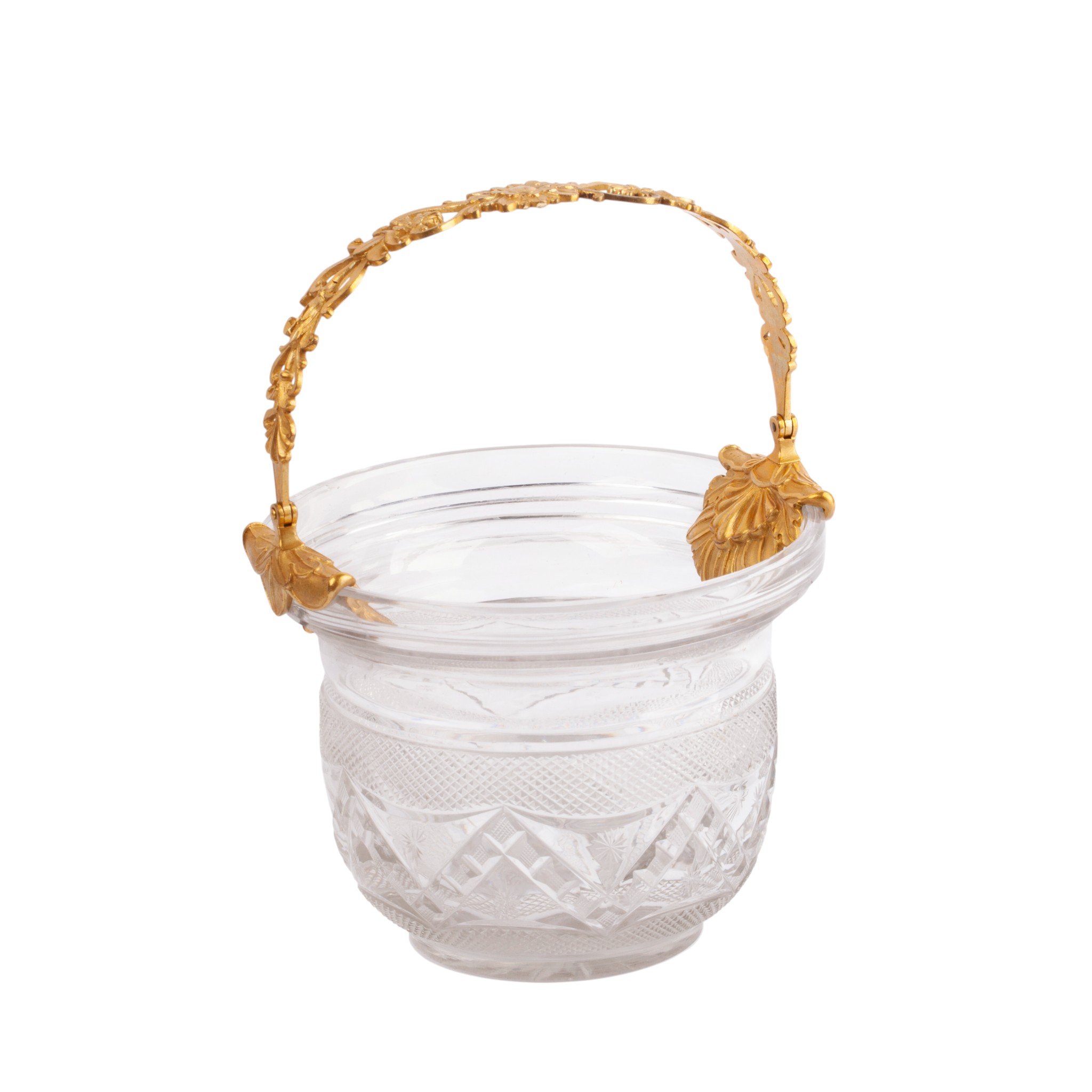
Lot 0066
Russian Cut-Glass Ice Bucket with Gilt-Bronze Handle, Malsov Manufactory
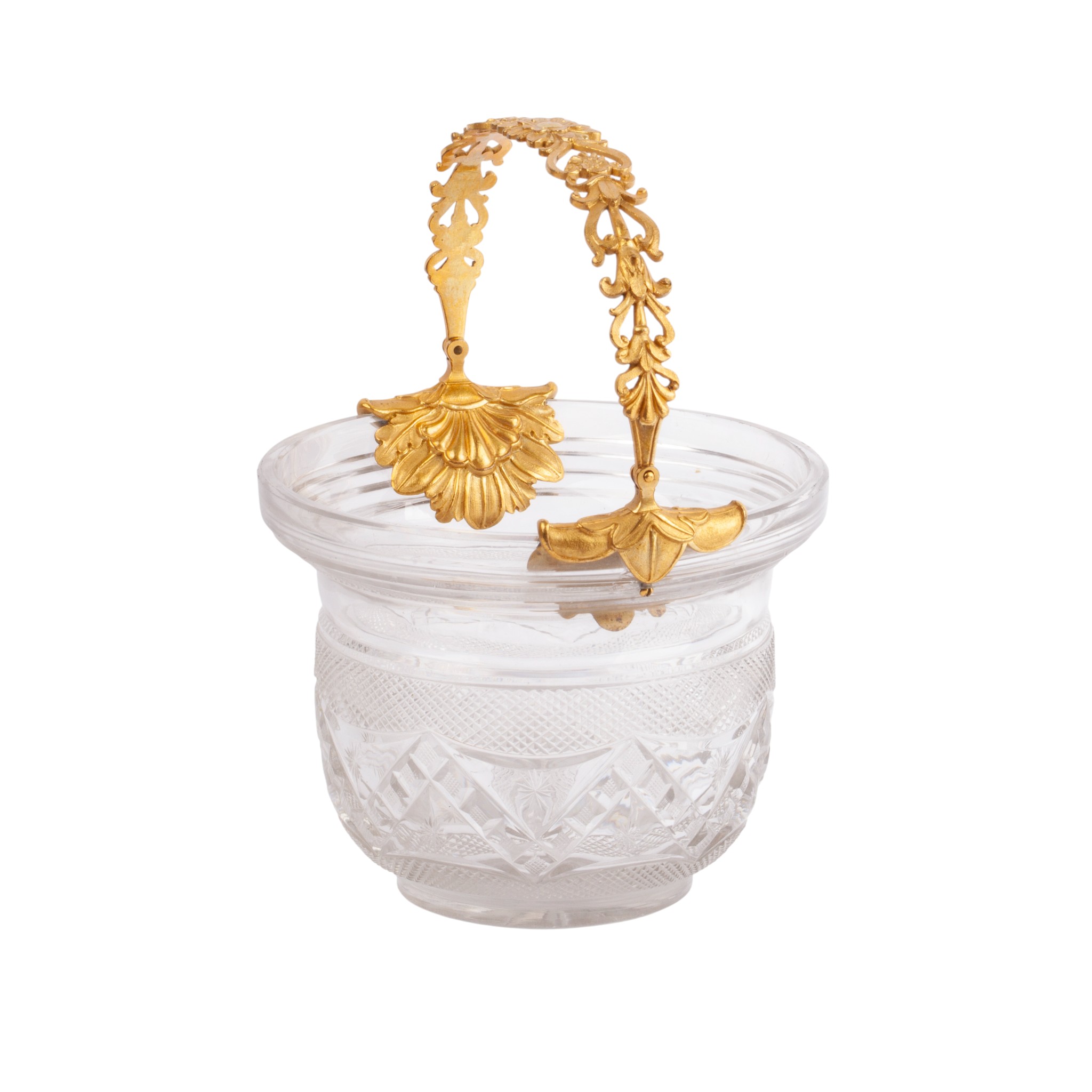
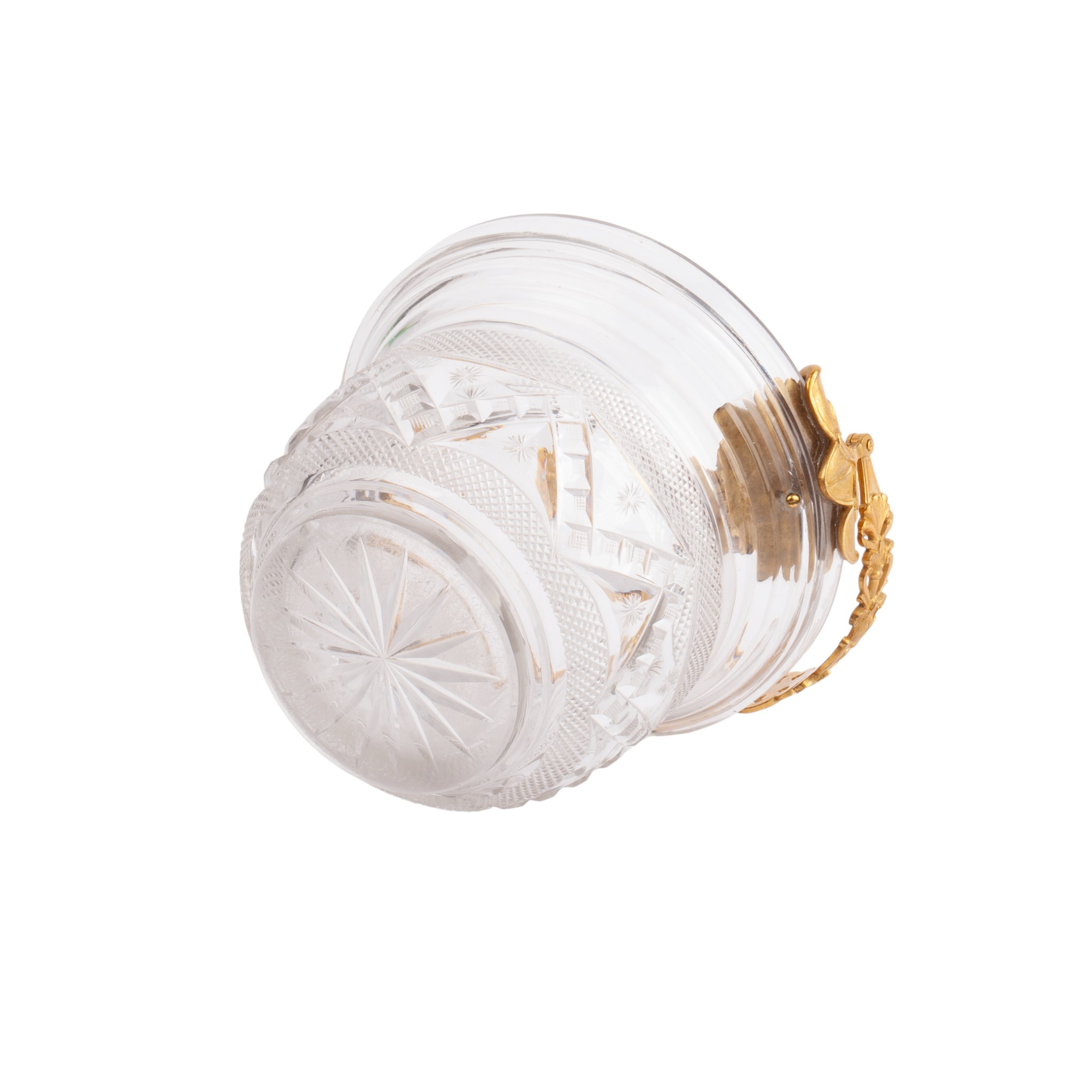
Estimate: 3000-4000€A Russian cut-glass ice bucket with gilt-bronze handle
Russia, Maltsov manufactory. Late 19th century.
Cut glass, gilt bronze; wheel-cut, faceted and polished glass; cast and chased mount. Dimensions: Height with open handle 18 cm. Diameter: 14 x 13 cm.
A compact and finely proportioned ice bucket formed of clear glass with a slightly flared cylindrical body set on a low circular foot. The surface is richly enlivened by bands of geometric cut ornament: a central frieze of alternating “russian diamonds” and triangular motifs, bordered by finely cross-hatched zones and delicate starbursts, while the underside is finished with a radiating cut rosette. The restrained brilliance of the cut glass is set off by an elegant swing handle in gilt bronze, the terminals cast in the form of vine leafs.
Such vessels were intended for the formal dining table as accompaniment of wine and champagne serving. Founded in the 18th century, the Maltsov factories developed into one of the largest glass and crystal manufacturing networks in Imperial Russia. Originating with works established by Vasily Maltsov in the 1730s-1740s, the enterprise was expanded by subsequent generations, notably at Gus-Khrustalny and Dyatkovo. In the 19th century, the Dyatkovo Crystal Factory became one of the leading glassworks in the country. After financial difficulties and reorganization in the late 19th century, the Maltsov industrial complex continued under a joint-stock company until its nationalization in 1918.Starting price: 2500€
Estimate: 3000-4000€
Hammer Price: Not sold -
Lot 0067
Imperial Glass Manufactory Glass with Stand and Cover, after A. Barmin
Estimate: 7000-9000€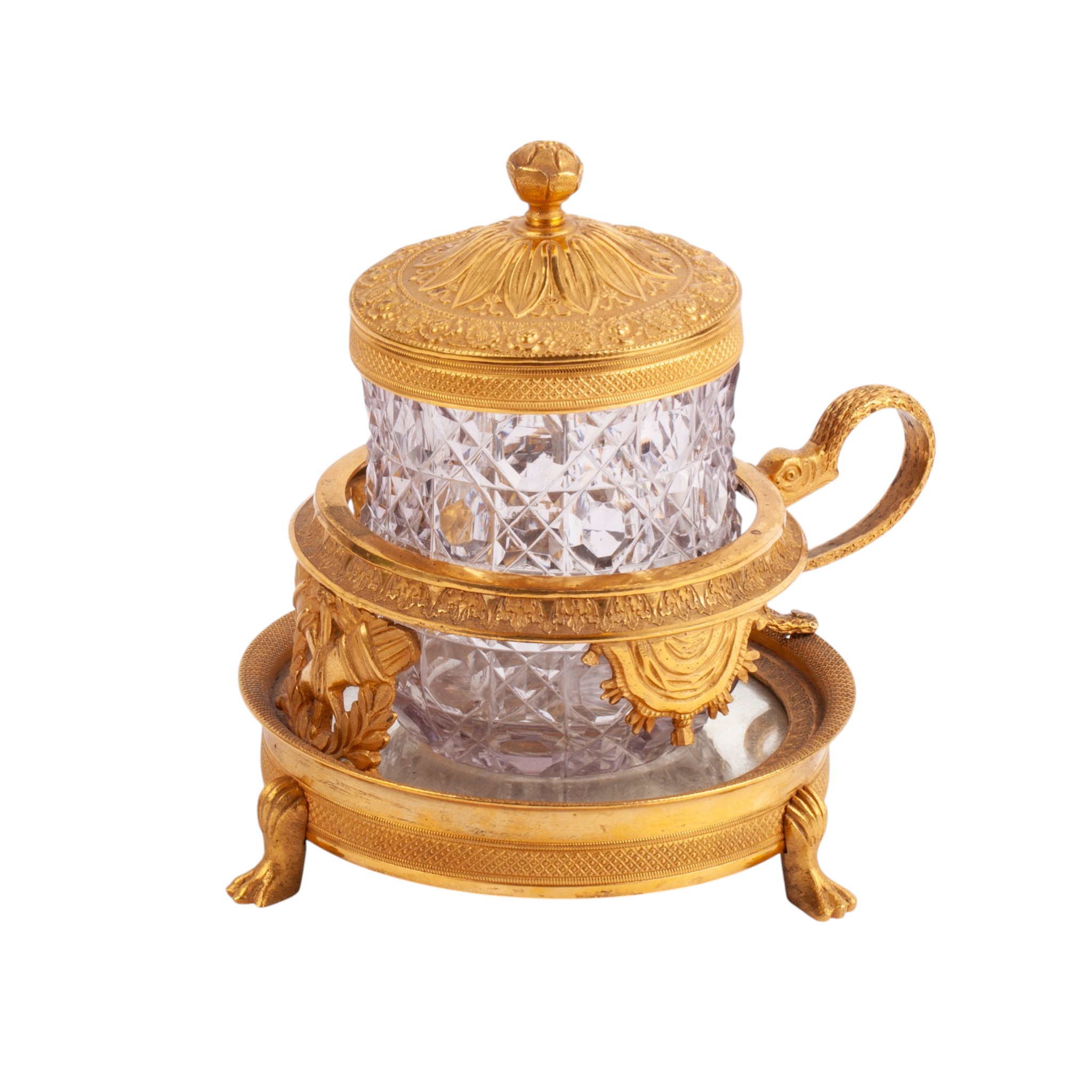
Lot 0067
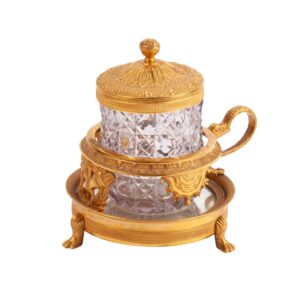
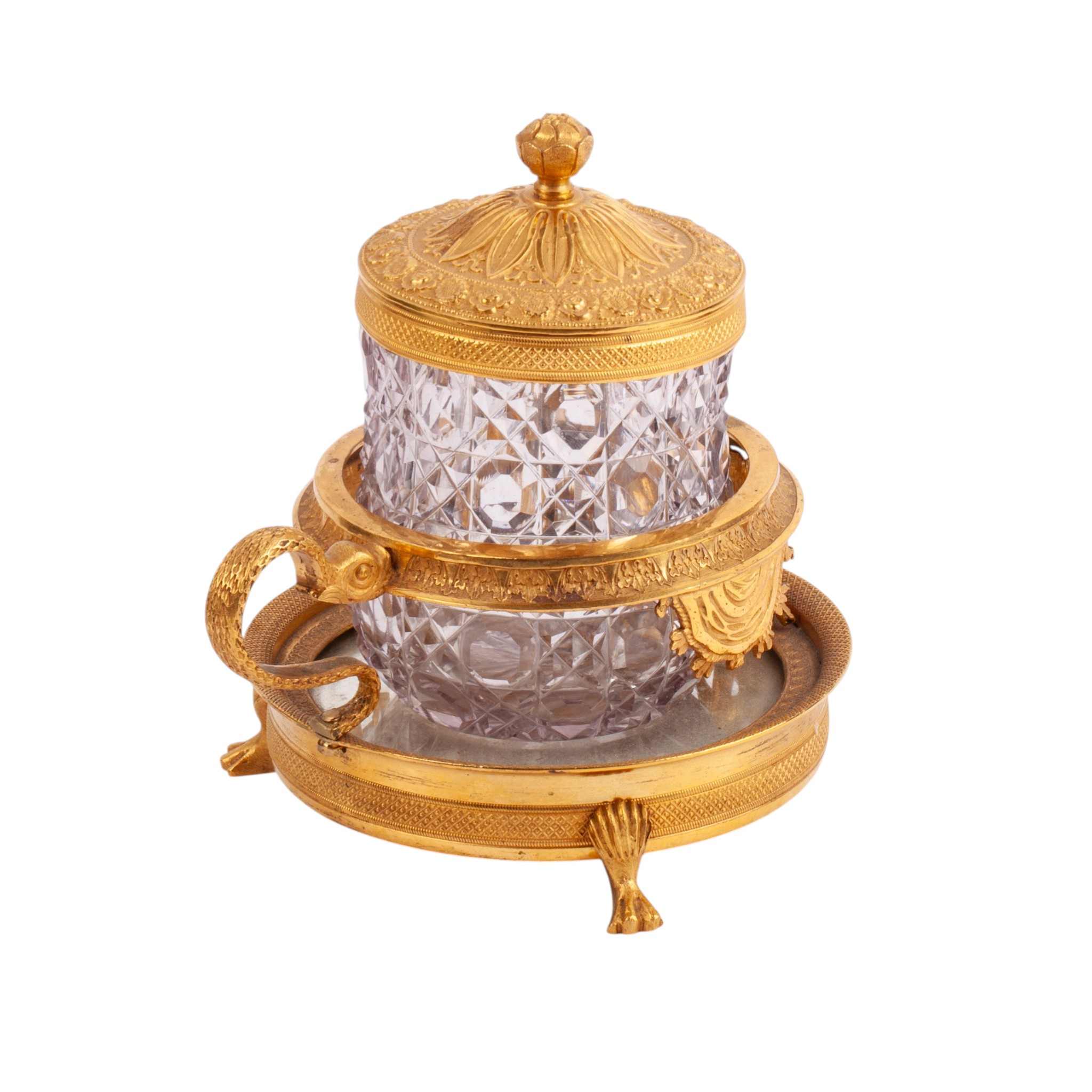
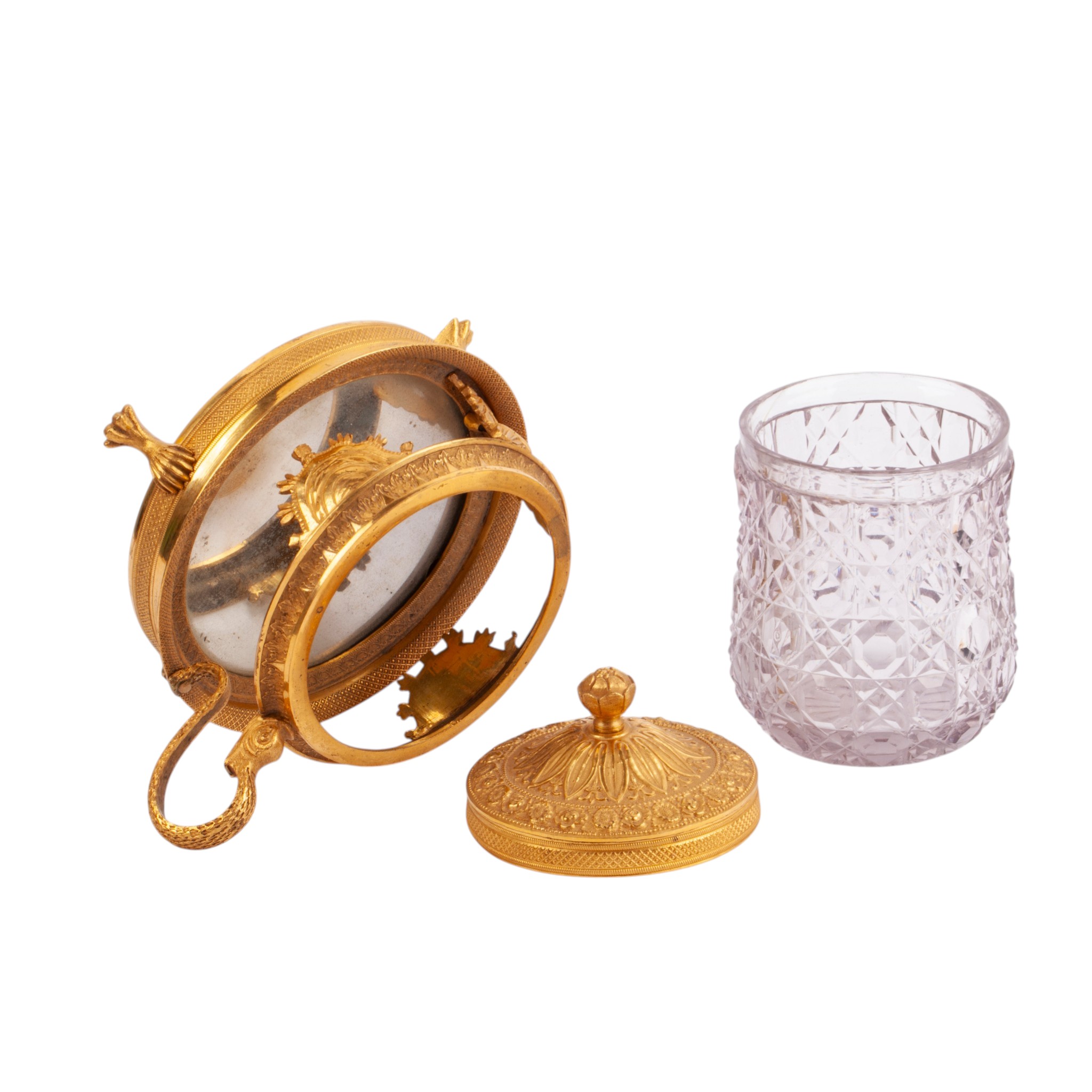
Imperial Glass Manufactory Glass with Stand and Cover, after A. Barmin
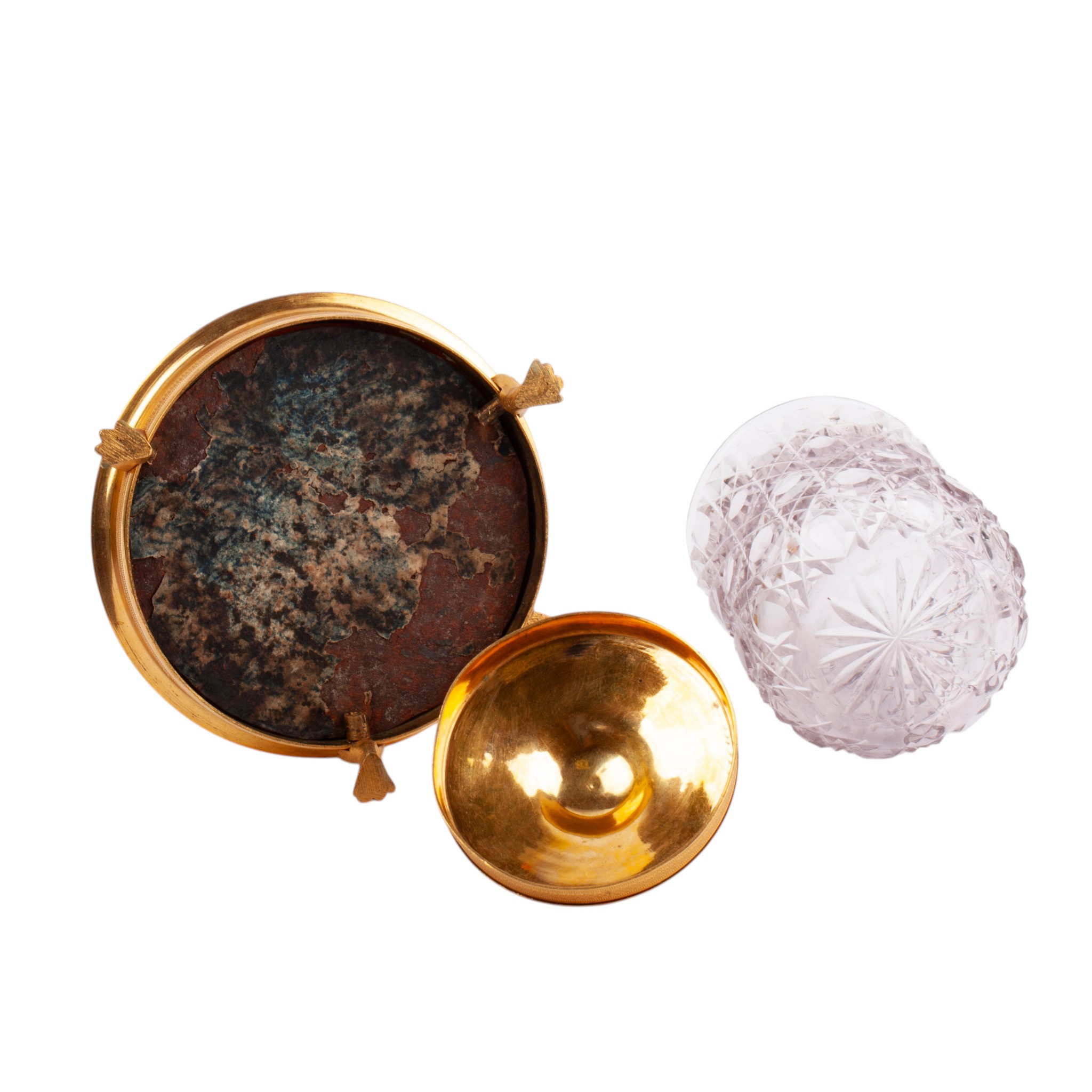
Estimate: 7000-9000€Imperial Glass Manufactory. Glass with Stand and Cover
after a design by A. Barmin
Russia, St Petersburg, 1820.
Gilt bronze, mirror.
Blown glass, cutting in the Russkii kamen’ manner, casting, gilding. Dimensions: 14,5 x 16 x 12,5 cm.
A cylindrical covered glass in finely cut crystal, mounted in an elaborate gilt-bronze stand with integral undertray. Executed after a design by A. Barmin, the piece belongs to the refined early Empire production of the Imperial Glass Manufactory, where architectonic clarity of form was joined to the brilliance of Russian cut crystal and the elegance of gilt-metal mounts.
The vessel is decorated in the so-called “Russian stone” manner, a type of deep geometric cutting intended to imitate the faceted richness and sculptural play of hardstone carving. The crystal body is enlivened by a dense network of intersecting cuts, diamonds, and reserved circular lenses, which catch and refract light with exceptional vividness.
The gilt-bronze mount enhances the ceremonial character of the object. The domed cover is enriched with radiating palm leafs ornament and bordered by a finely chased band; the scrolling snake handle and applied lion’s feet supports are cast with delicacy and precision. See simeilar item in State Hermitage museum collection: https://www.hermitagemuseum.org/digital-collection/35948?lng=ruStarting price: 6000€
Estimate: 7000-9000€
Hammer Price: Not sold -
Lot 0068
Russian Empire Period Vase with Gilt-Bronze Mounts, Imperial Glass Manufactory, Petersburg, 1820s–1830s
Estimate: 9000-12000€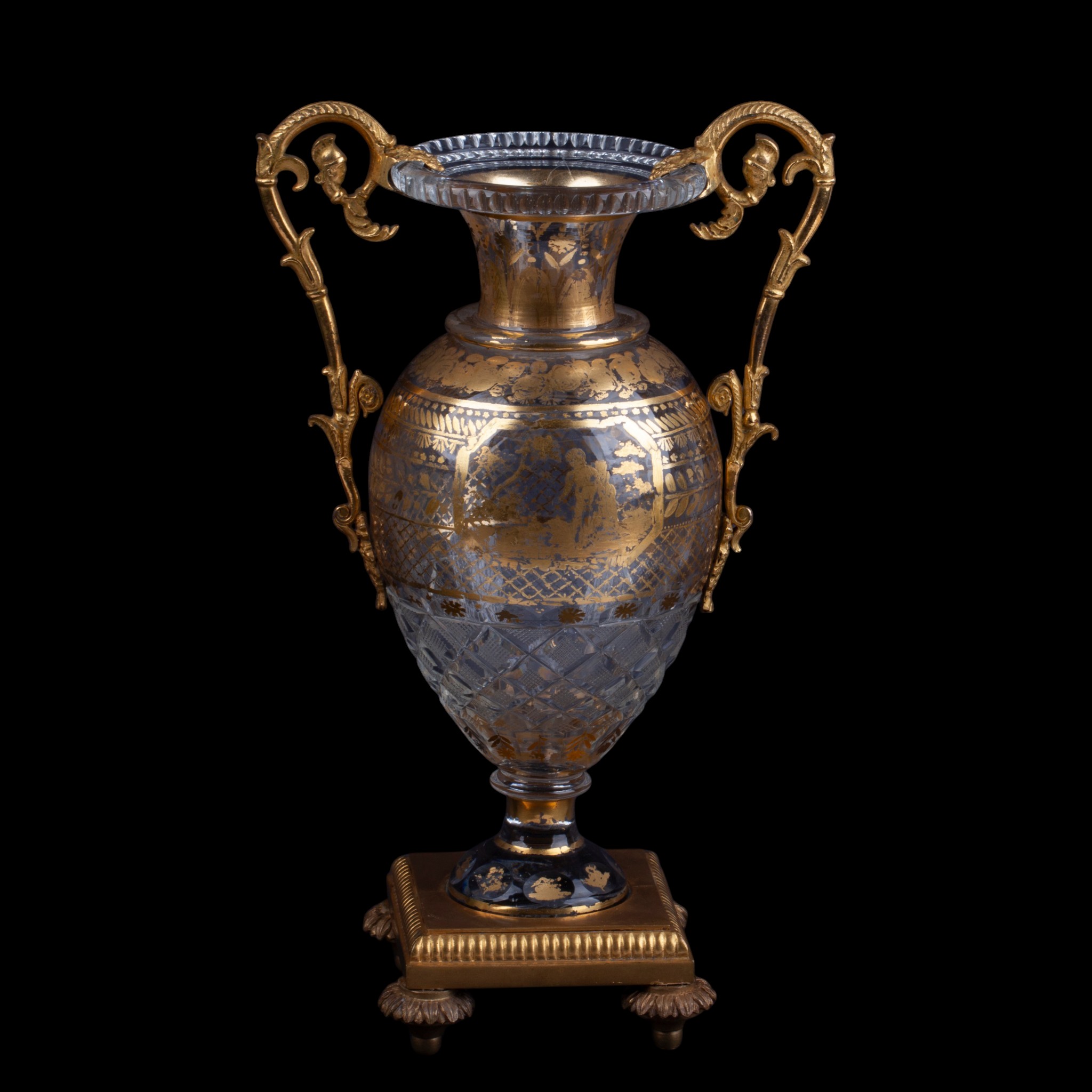
Lot 0068
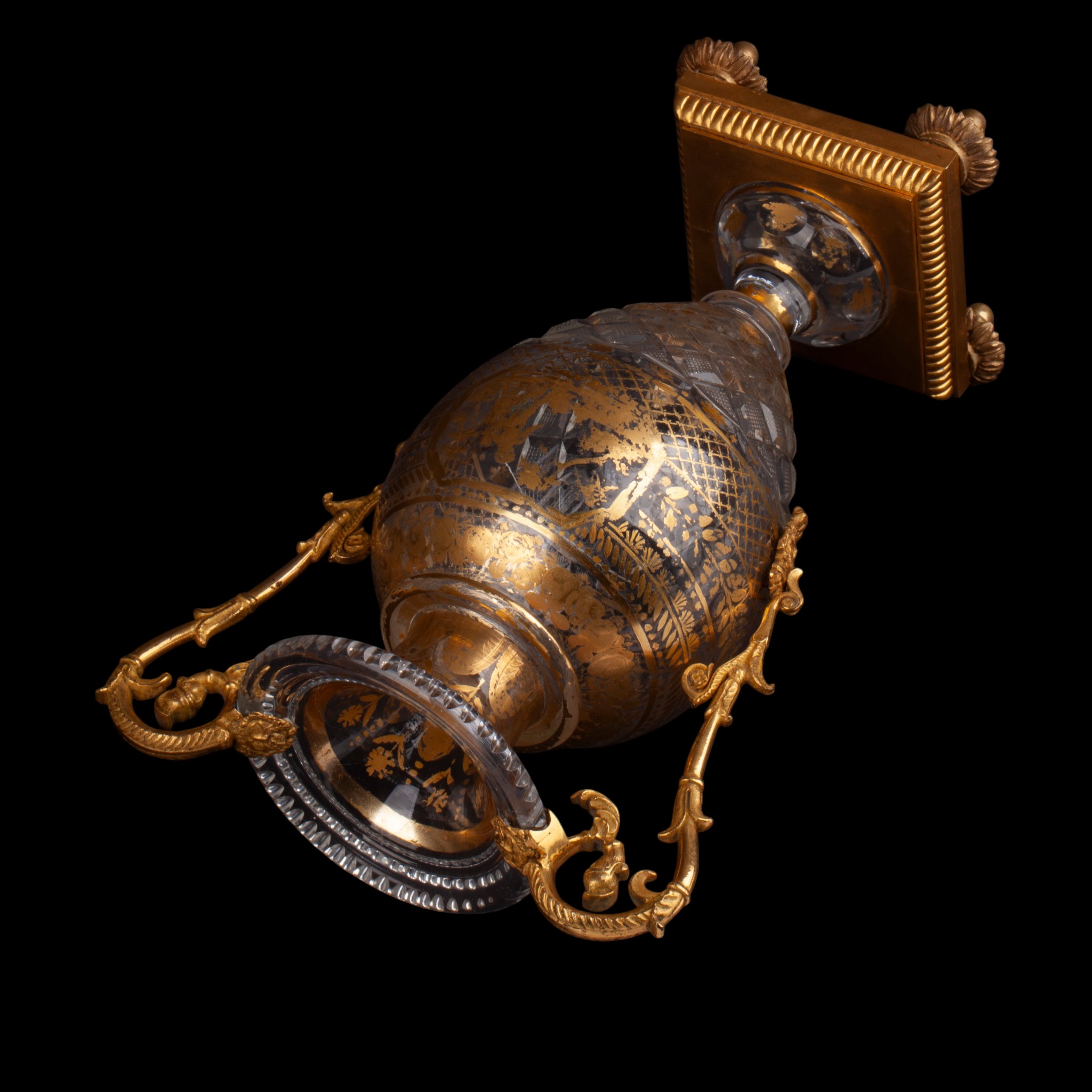
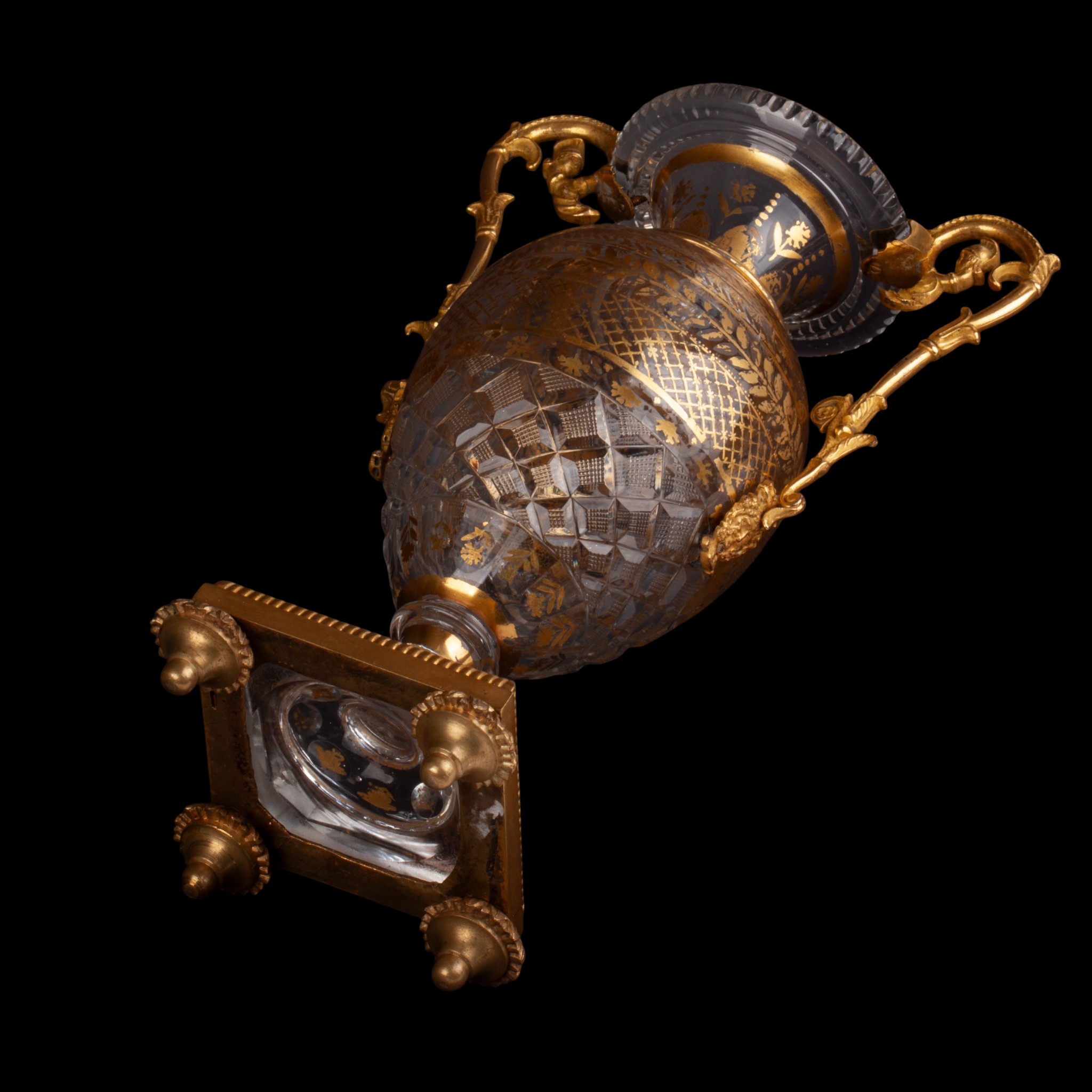
Russian Empire Period Vase with Gilt-Bronze Mounts, Imperial Glass Manufactory, Petersburg, 1820s–1830s
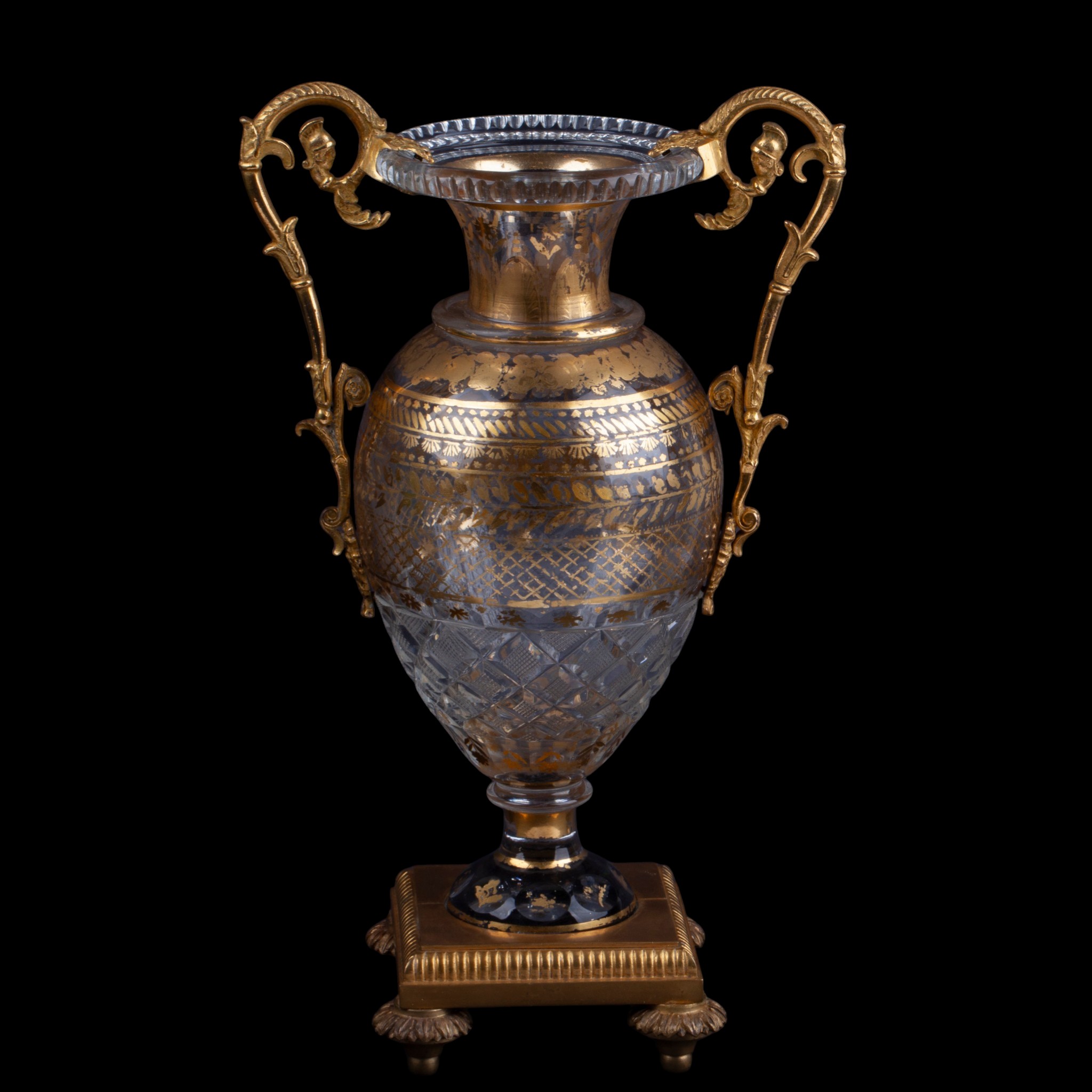
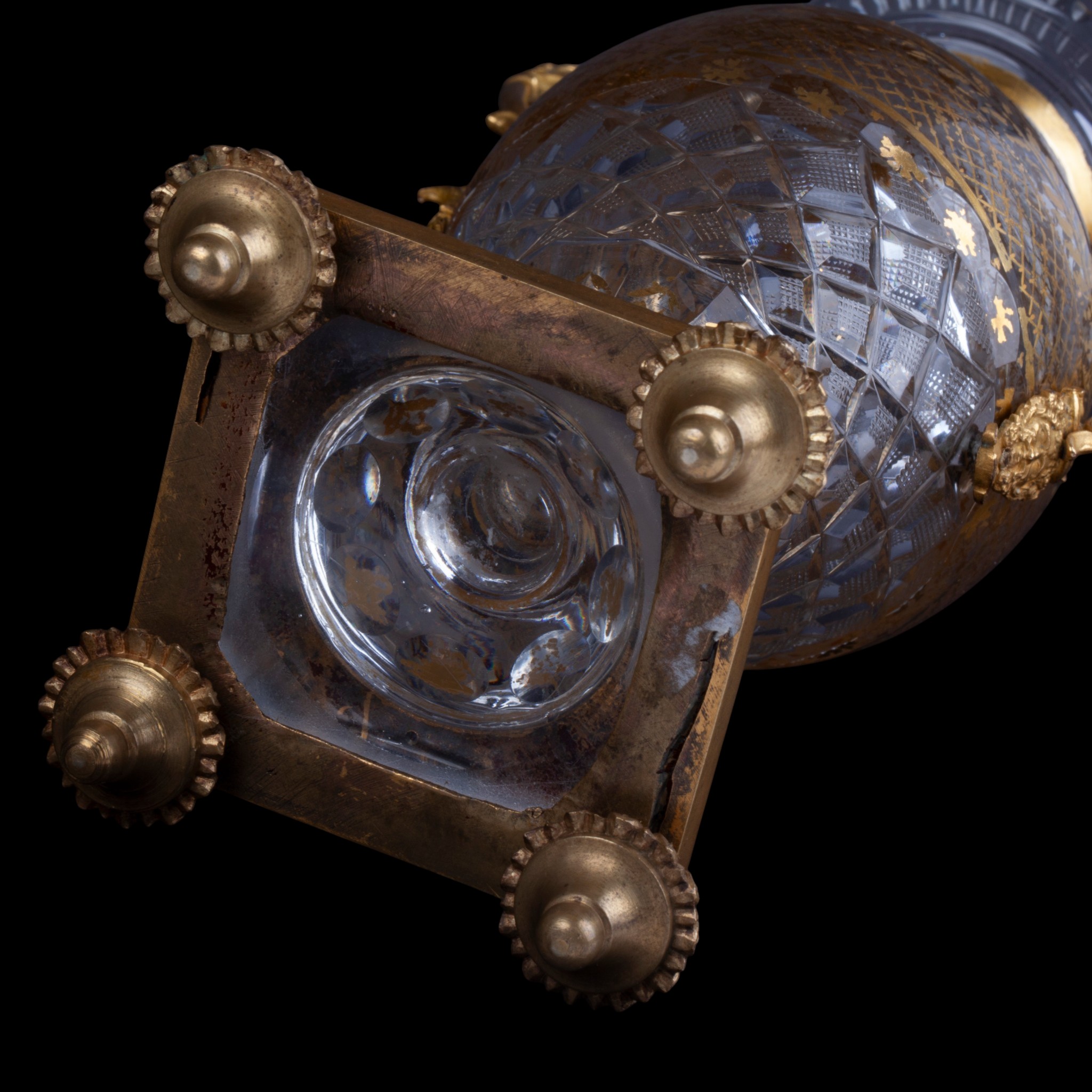
Estimate: 9000-12000€A Rare Empire period Russian vase with gilt-bronze mounts
Imperial Glass Manufactory, Petersburg, 1820s-1830s
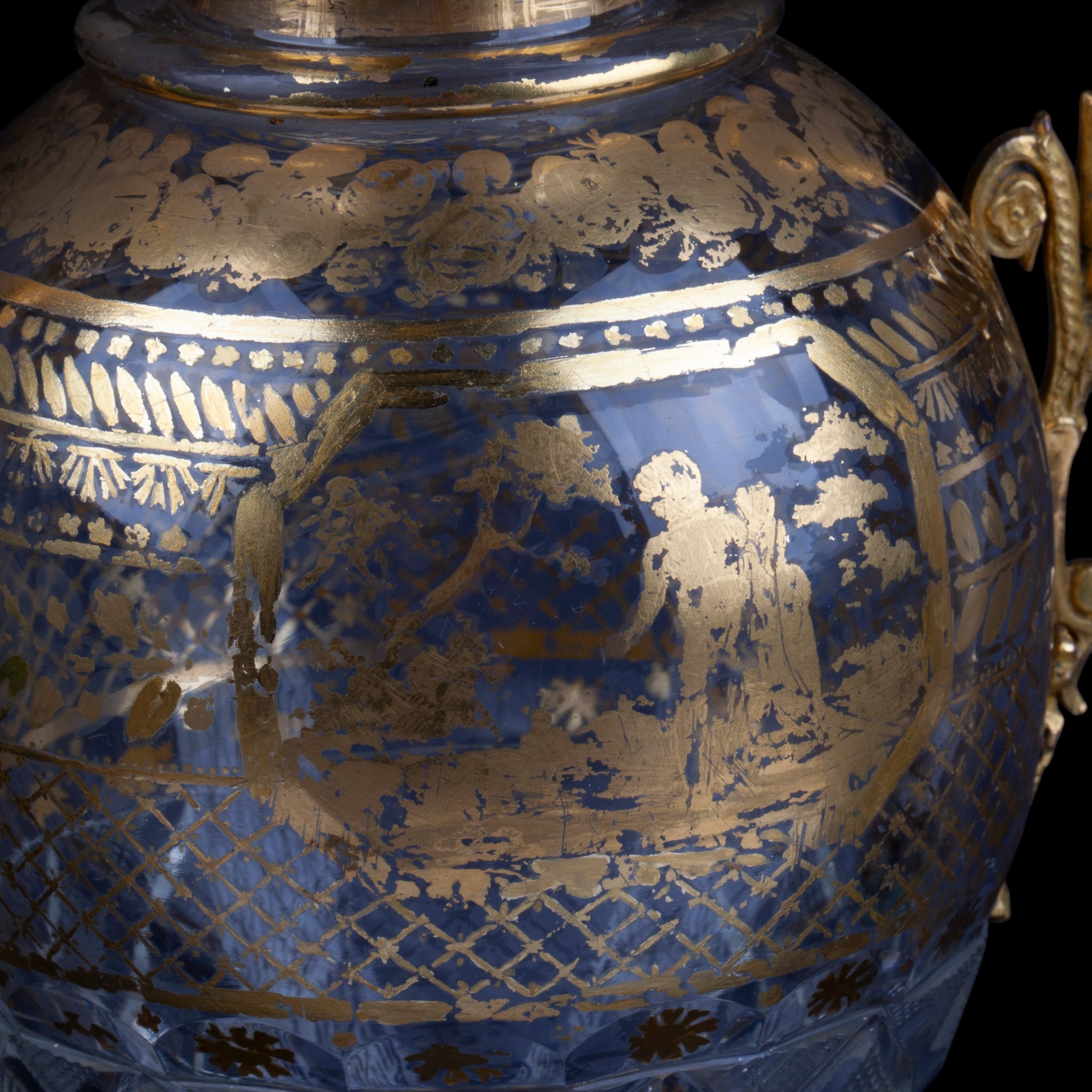
Clear glass, cut and polished, painted in gold and silver; gilt bronze, cast and chased.
Height (including handles): 27 cm.
Base: 9.8 x 9.8 cm.
An elegant ornamental vase of elongated ovoid form, the flaring neck rising above a narrow stem with a moulded ring at the upper section and spreading gently toward a square glass plinth. The rim is cut with a series of vertical concave oval facets. The lower third of the body is enriched with a band of short, smooth vertical facets with arched terminals, beneath which appears a lozenge-cut zone with lattice-like incision; the lower body is further articulated with plain vertical facets. The lower stem is cut with a pattern of large, widely spaced ovals.
The surface is painted in silver and gold. On the neck appears a band of stylized flowers between semicircular strokes. Across the shoulder and central body, one side is decorated with a figural scene in a landscape, while the reverse bears four horizontal ornamental bands composed of pendant floral half-rosettes with leaves, leafy garlands, trellis ornament, and rosettes. Additional stylized flowers appear along the lower facets of the body, while the stem is further accented with rosette motifs.
The vase is fitted with finely cast gilt-bronze mounts: scrolling handles with acanthus volutes terminating in helmeted heads, and a shaped plinth mount with a lobed profile, raised on four feet surmounted by small rosettes.
Produced at the Imperial Glass Manufactory, the vase is conceived in the aesthetic language of the late Empire style, with clear dependence on classical prototypes. Comparable items: https://www.sothebys.com/en/auctions/ecatalogue/2015/collections-silver-vertu-russian-art-n09409/lot.109.html https://www.christies.com/en/lot/lot-5377191Starting price: 8000€
Estimate: 9000-12000€
Hammer Price: Not sold -
Lot 0069
Imperial Glass Manufactory Glass with Stand and Cover, after A. Barmin, St Petersburg, 1820s–1830s
Estimate: 8000-10000€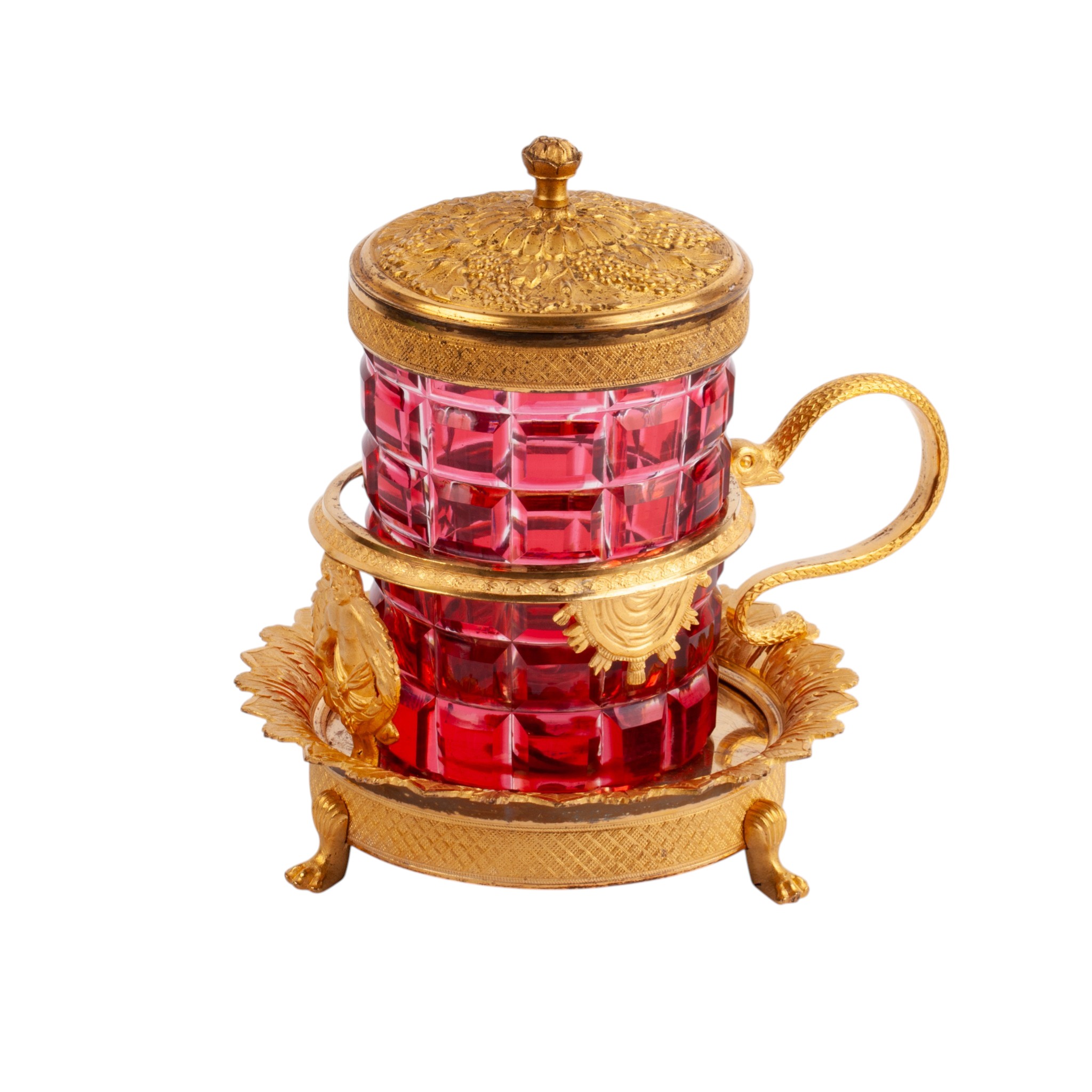
Lot 0069
Imperial Glass Manufactory Glass with Stand and Cover, after A. Barmin, St Petersburg, 1820s–1830s
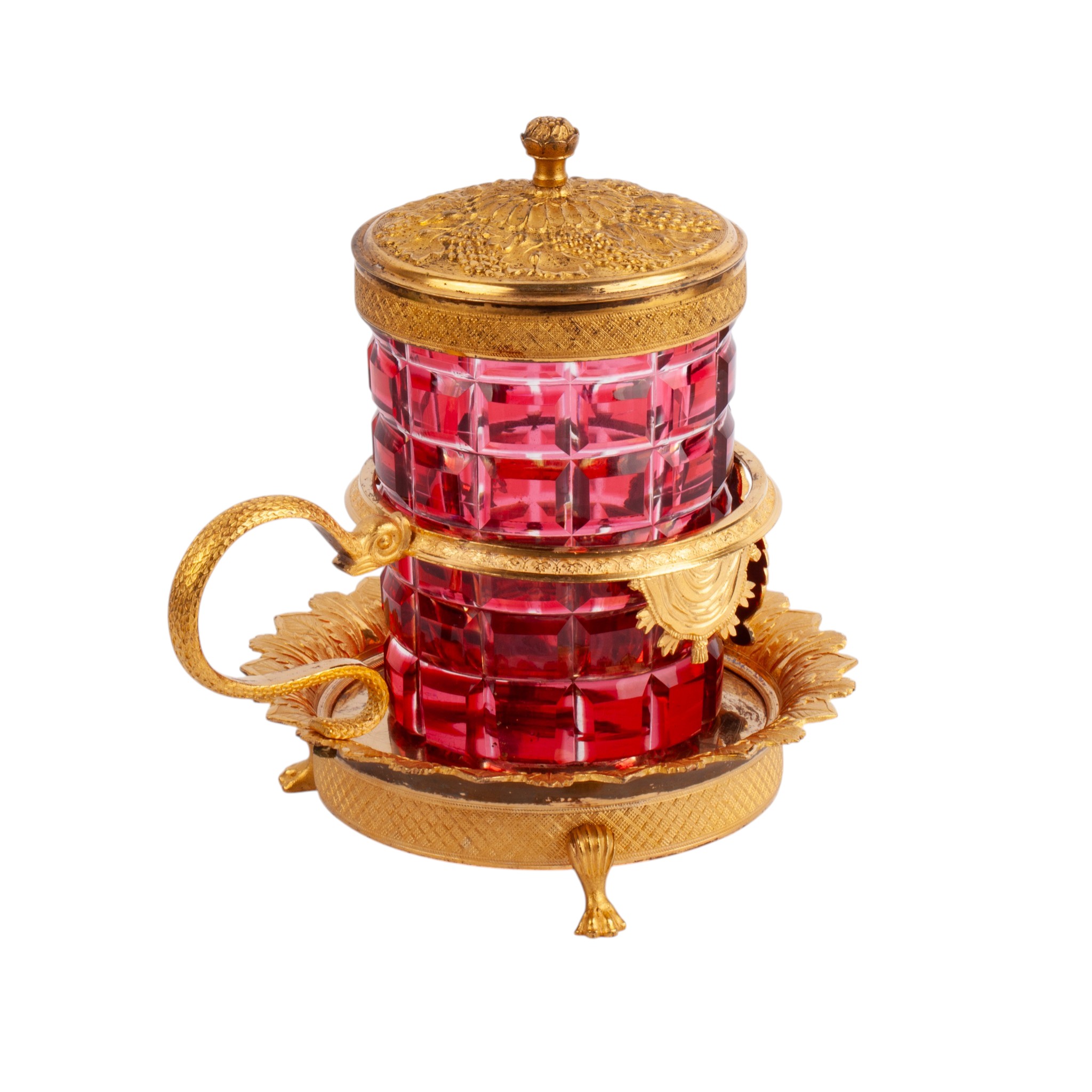
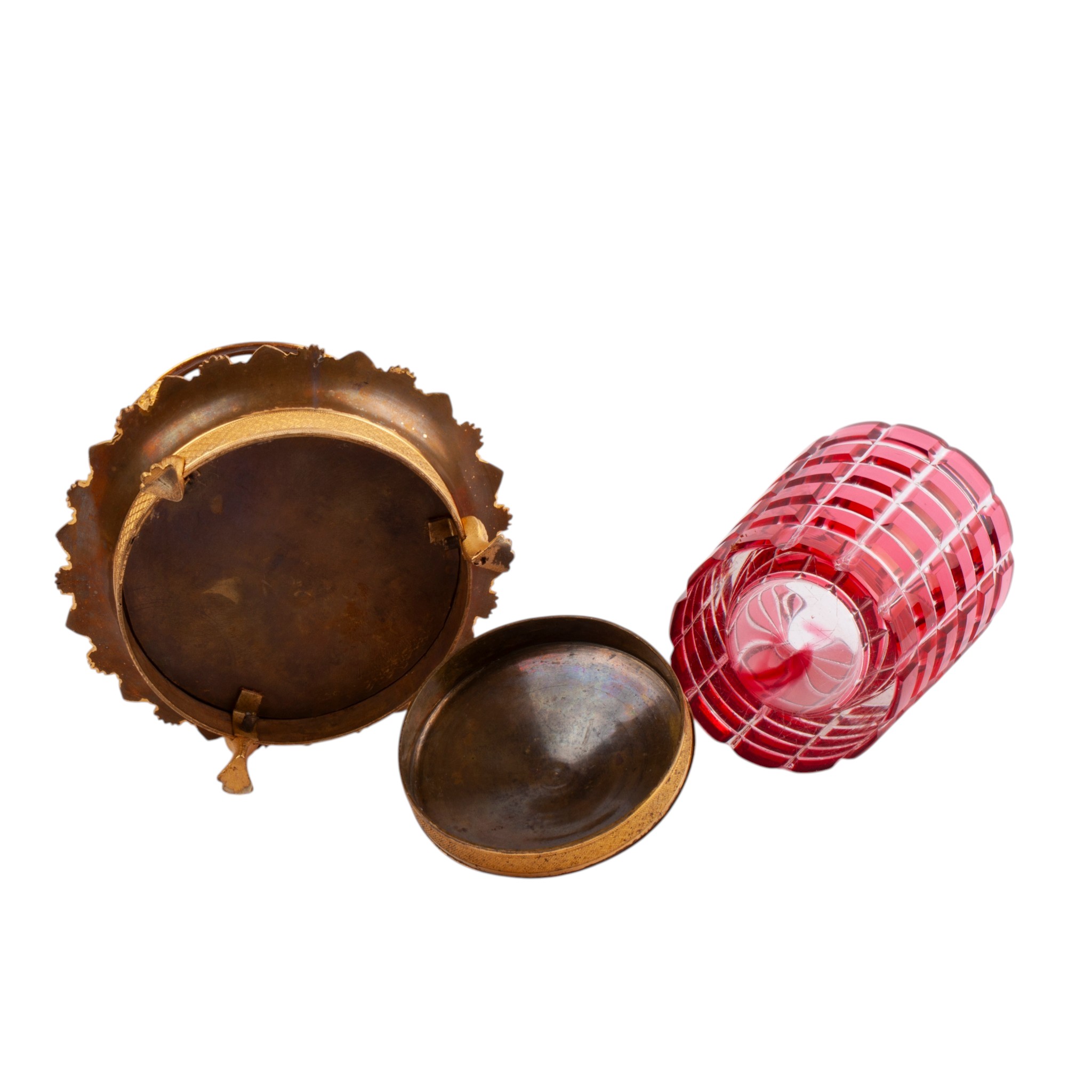
Estimate: 8000-10000€Imperial Glass Manufactory. Glass with Stand and Cover
after a design by A. Barmin
Russia, St Petersburg, 1820s-1830s.
Gold-ruby overlay glass, gilt bronze.
Dimensions: 17 x 17,6 x 14,5 cm.
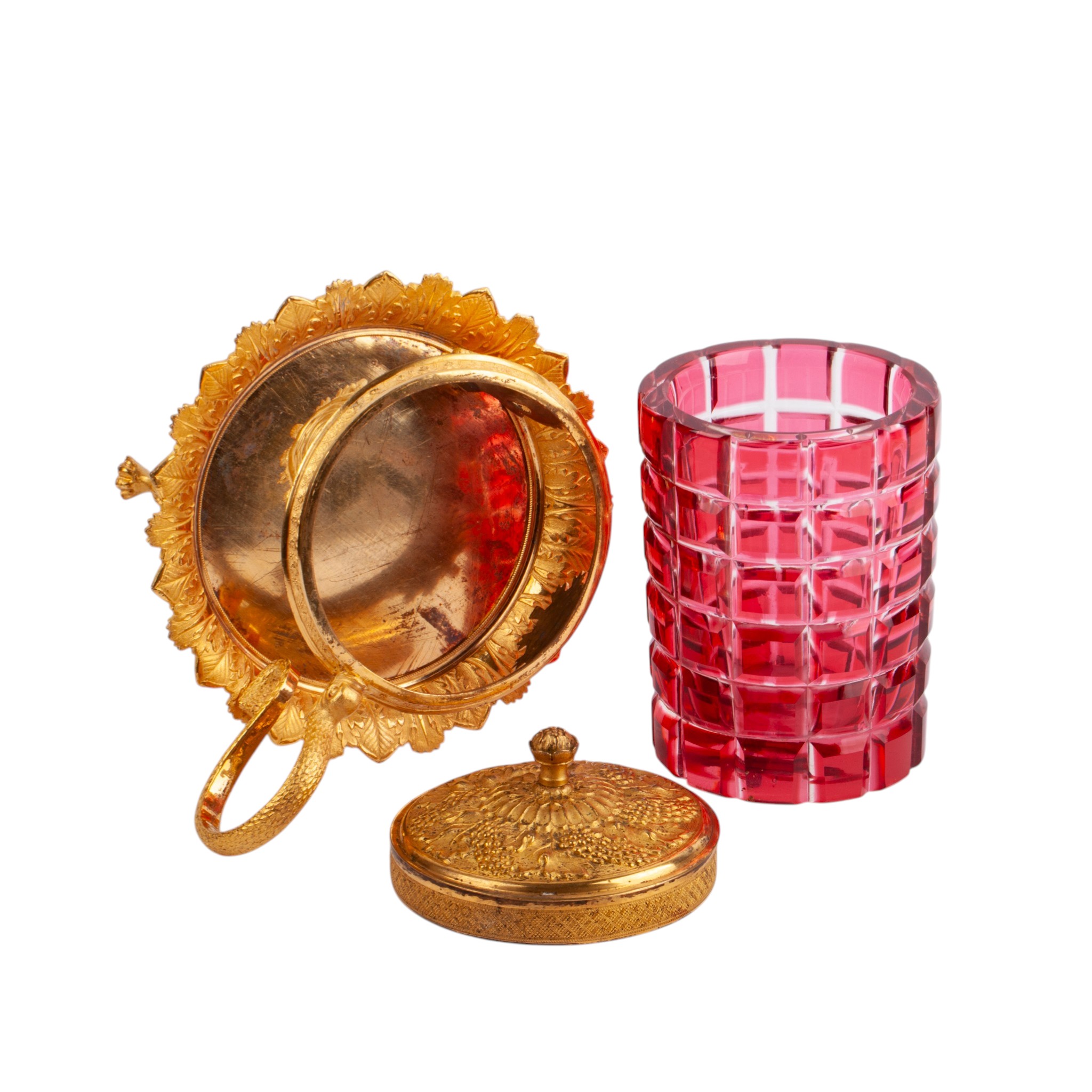
A richly colored glass of cylindrical form in a gilt-bronze stand with matching cover, executed after a design by A. Barmin for the Imperial Glass Manufactory. The vessel belongs to the costly table services produced for the highest segment of the Russian luxury market and demonstrates the manufactory’s mastery in combining brilliant colored glass with refined gilt-metal mounts.
The body is made in the technically demanding process of overlay glass, employing one of the most striking colored glass masses of the period, the so-called gold ruby. Its vivid pinkish-red tonality, deepened by the thickness of the material, is animated by an ordered system of horizontal cut bands. The decoration incorporates characteristic Empire-period motifs: wave cutting, pyramidal facets, lens-like pointed leaves, and smooth vertical planes, all arranged in a rigorously structured ornamental sequence. This disciplined horizontal articulation is especially characteristic of Russian glass of the 1830s.
The gilt-bronze mount reinforces the ceremonial quality of the object. The stand, raised on small lion’s feet and fitted with a scrolling snake handle, frames the glass with restrained elegance, while the domed cover is enriched with finely chased ornament in the form of radiating leaves and clusters, adding a note of decorative abundance to the geometric clarity of the cut vessel.
This glass with stand is a representative example of the Imperial Glass Manufactory’s high-grade production, in which technical sophistication, carefully calibrated color, and architectonic cutting were united in objects intended for aristocratic interiors and formal table display. See simeilar item in State Hermitage museum collection: https://www.hermitagemuseum.org/digital-collection/35948?lng=ruStarting price: 7000€
Estimate: 8000-10000€
Hammer Price: Not sold -
Lot 0070
Imperial Glass Manufactory Beaker with Stand and Cover, St Petersburg, 1830s
Estimate: 6000-8000€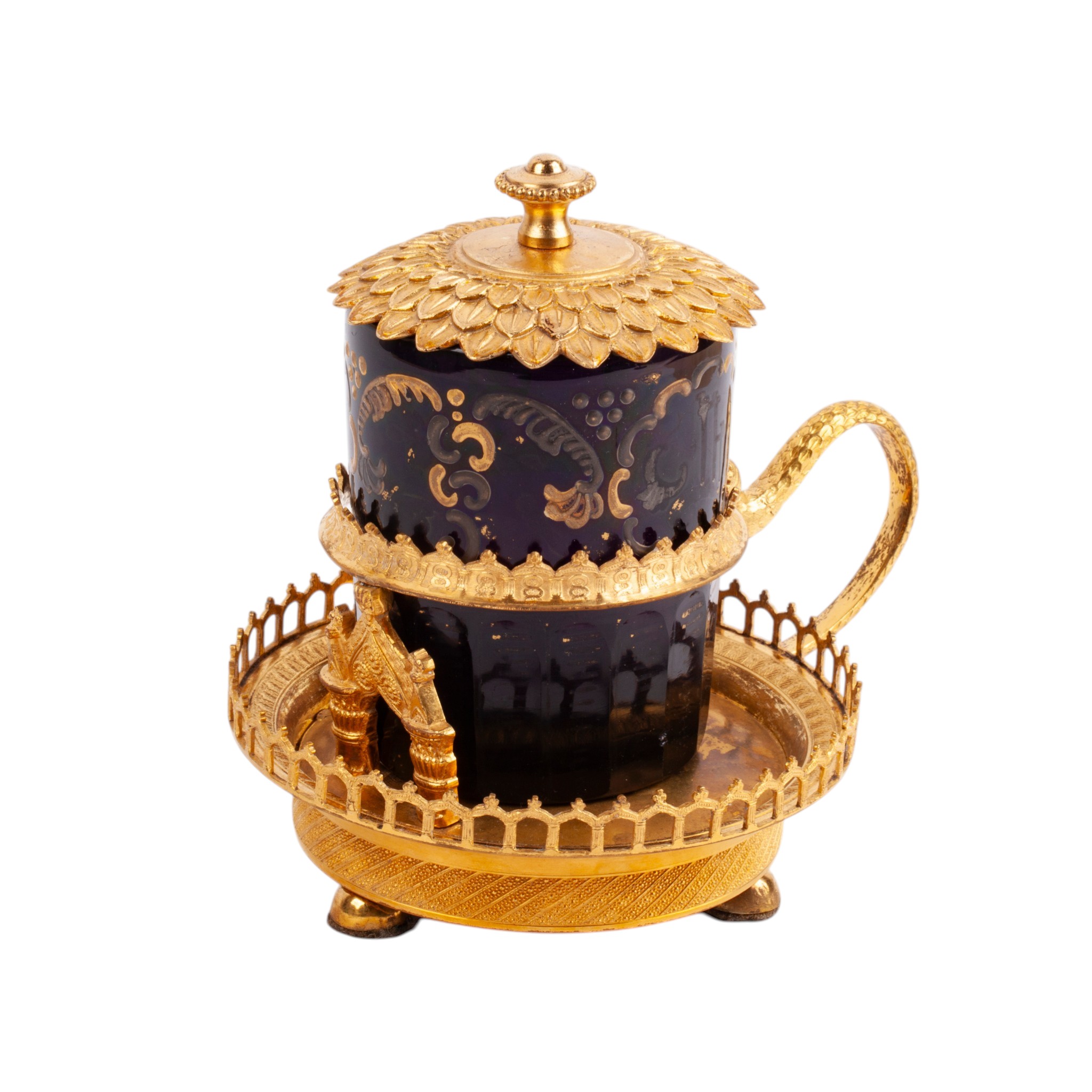
Lot 0070
Imperial Glass Manufactory Beaker with Stand and Cover, St Petersburg, 1830s
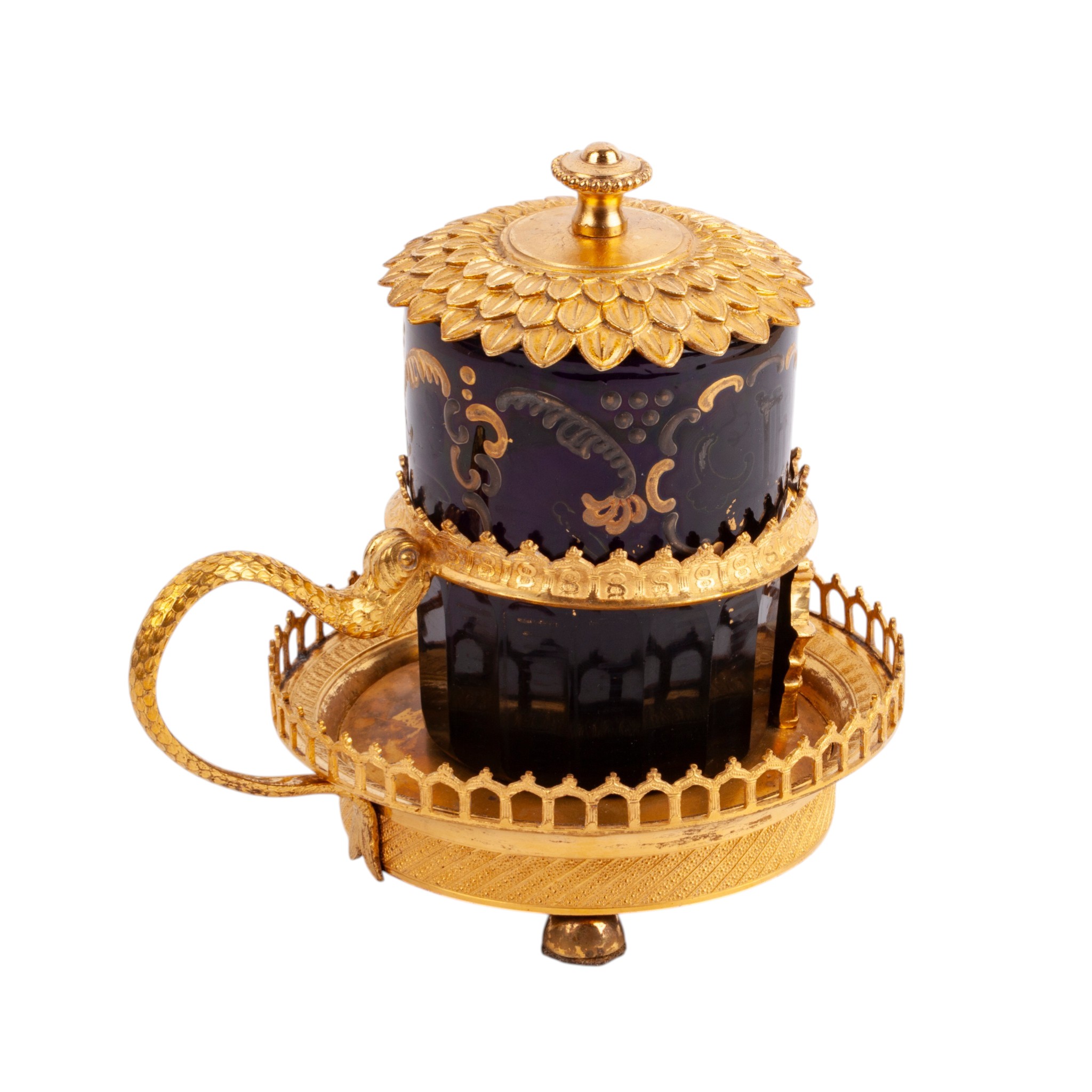
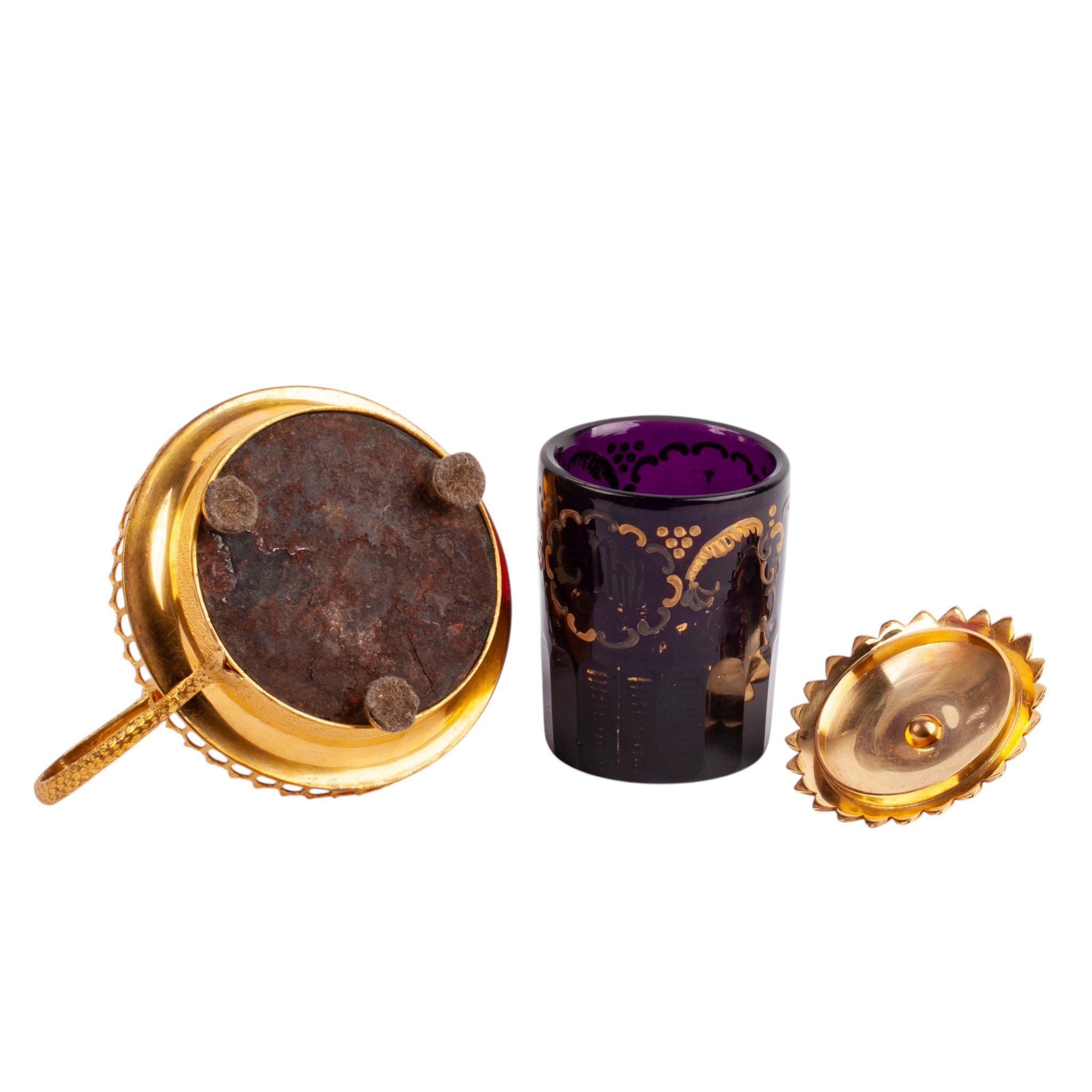
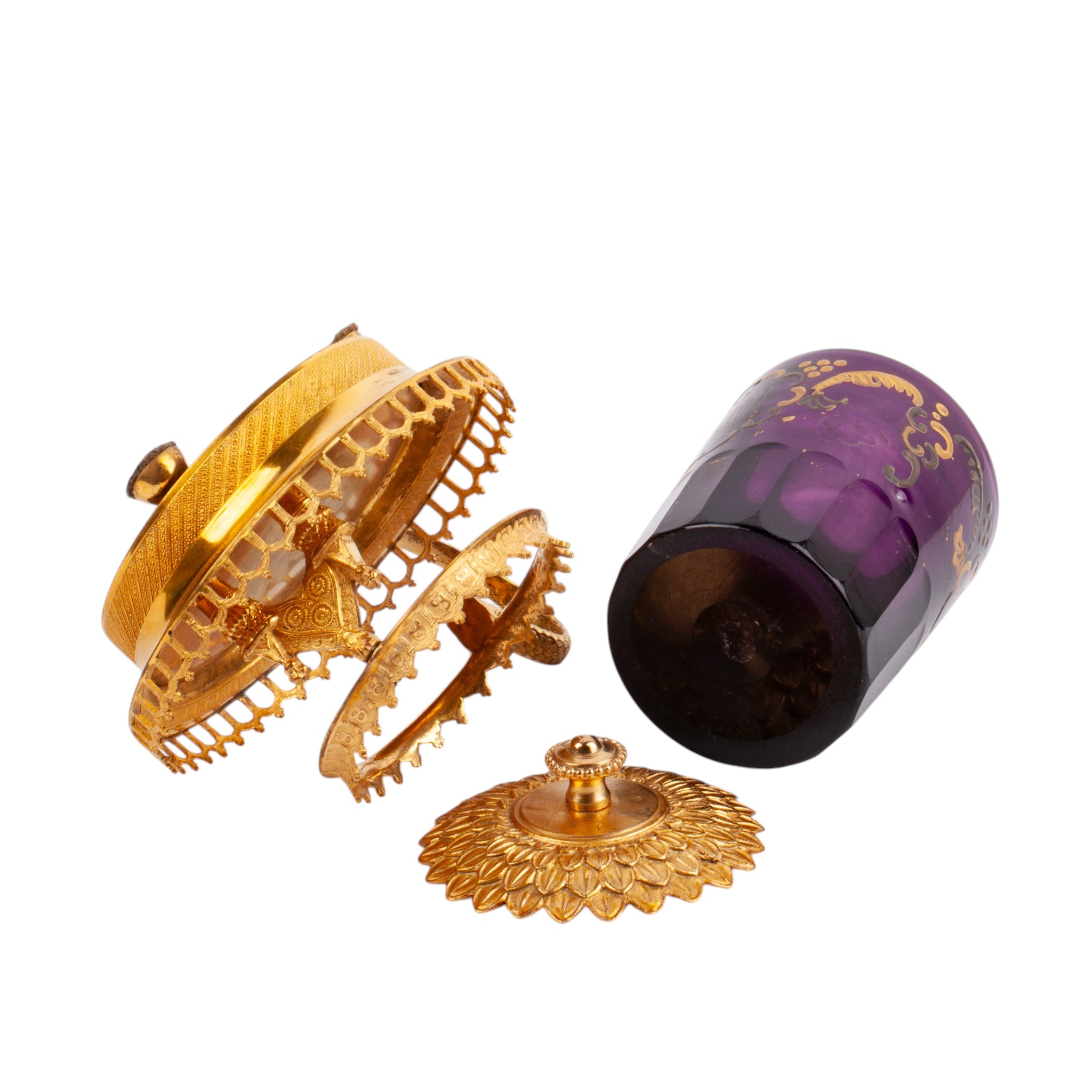
Estimate: 6000-8000€Imperial Glass Manufactory. Beaker with Stand and Cover
St Petersburg, 1830s. Dimensions:15 x 16,5 x 12,5 cm.
Amethyst glass, gilt bronze; cutting, casting, gilding; painted in gold and silver.
A cylindrical beaker of deep amethyst, or manganese, glass, mounted in an elaborate gilt-bronze stand with matching cover. The upper zone of the vessel is decorated with scrolling foliate cartouches executed in gold and silver enamel-like painting, while the lower part is articulated by broad vertical flutes (pilasters).
The gilt-bronze mount is conceived in the spirit of refined historicism and empire style.
Amethyst glass had long been esteemed for its rich, noble color. In nineteenth-century practice, its violet tonality was associated with the use of manganese, which, depending on concentration and firing conditions, could produce shades ranging from light lilac to an intense, almost black purple. In this example, the glassmaker achieved a particularly dense and velvety hue, further enriched by the brilliance of the gilded and silvered painted ornament.
Both by material refinement and by the sophistication of its mount, the piece belongs to the category of highly finished decorative glass intended for aristocratic interiors or for presentation use. Comparable works are preserved in major Russian museum collections, including the State Hermitage Museum and the State Historical Museum in Moscow.Starting price: 5000€
Estimate: 6000-8000€
Hammer Price: Not sold -
Lot 0071
Imperial Glass Manufactory Glass with Stand and Cover, St Petersburg, 1820
Estimate: 6000-8000€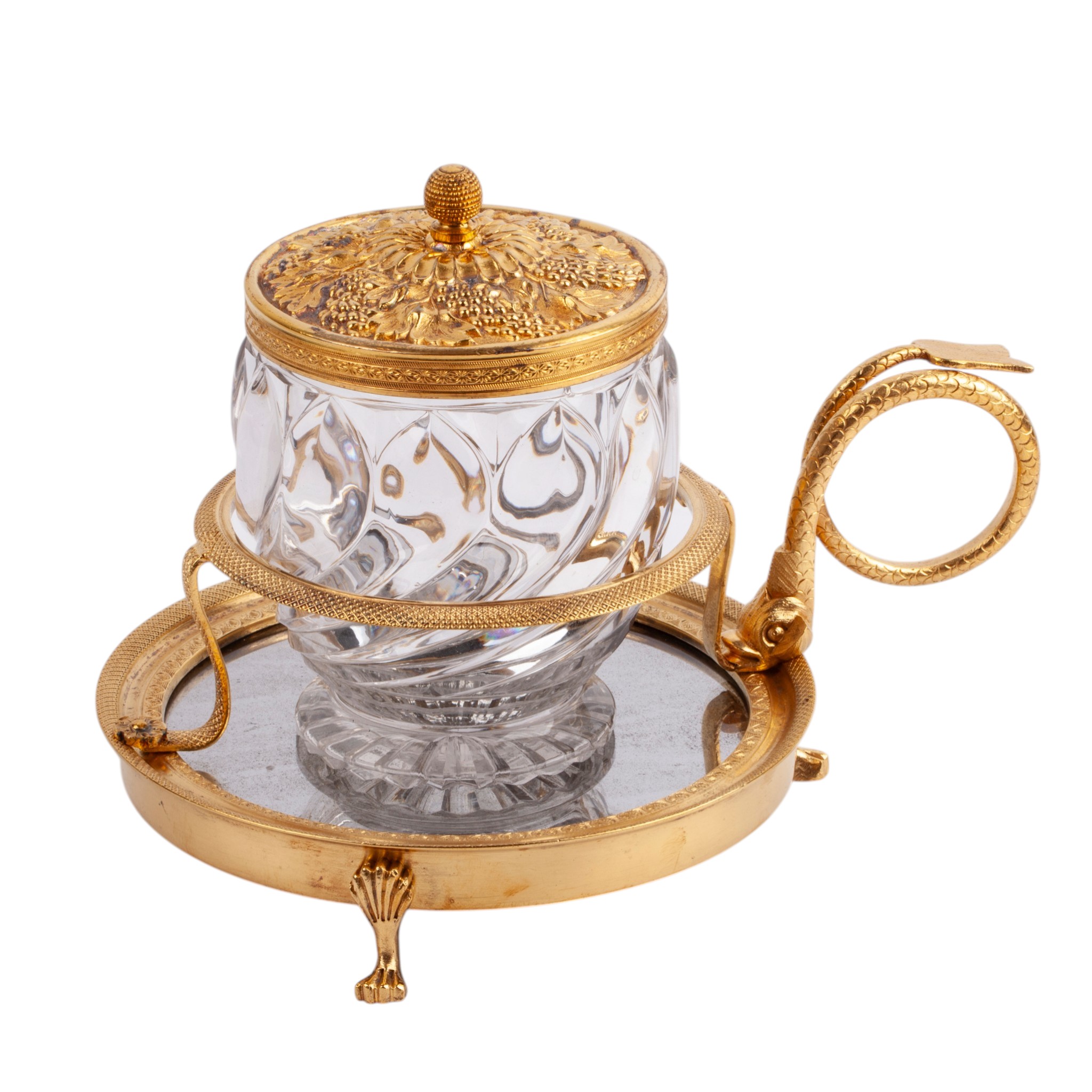
Lot 0071
Imperial Glass Manufactory Glass with Stand and Cover, St Petersburg, 1820
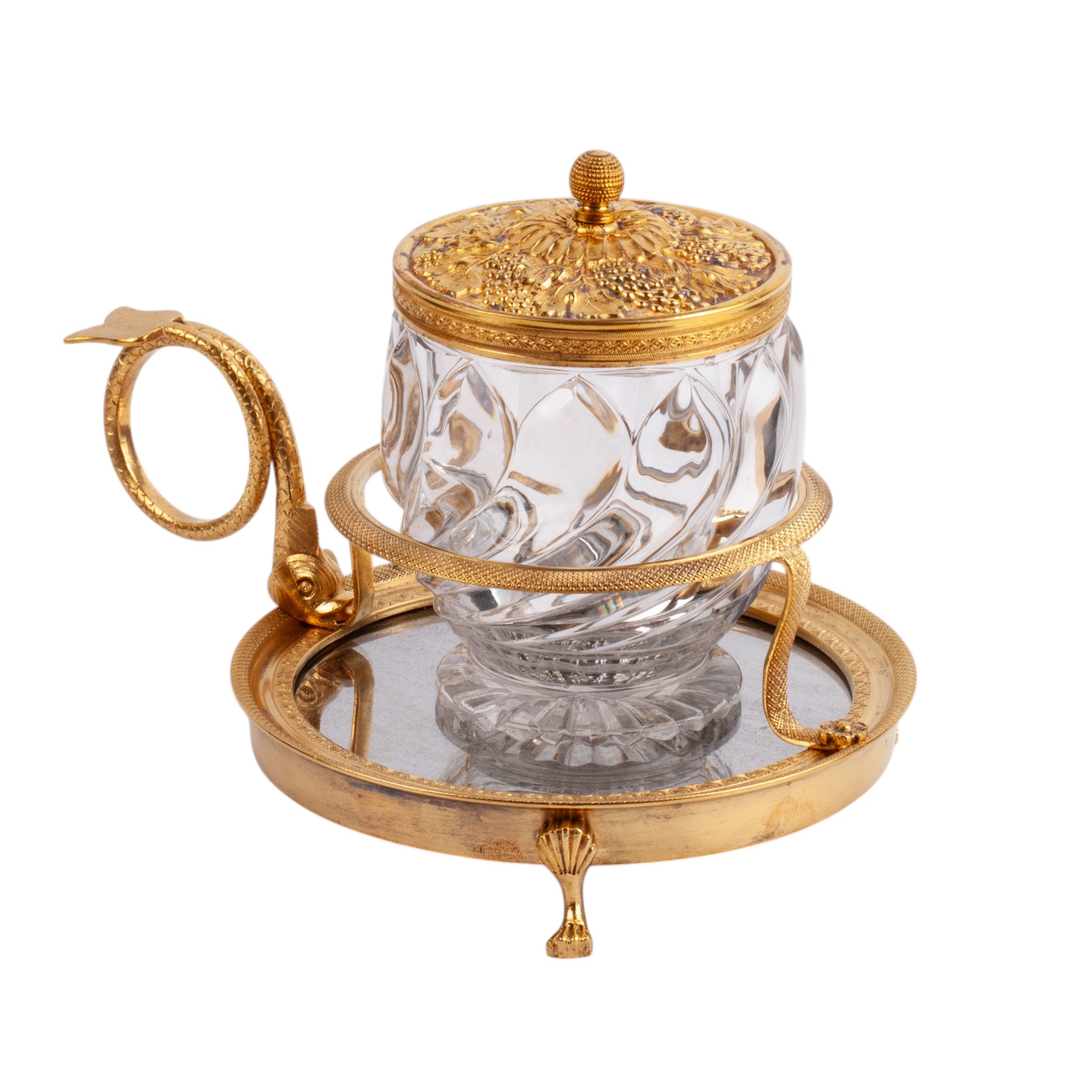
Estimate: 6000-8000€Imperial Glass Manufactory. Glass with Stand and Cover
Russia, St Petersburg, 1820.
Colourless crystal, mirror, gilt bronze.
Blown glass, cut in the peacock feather pattern, casting, gilding.
Dimensions: 15 × 21 × 15 cm.
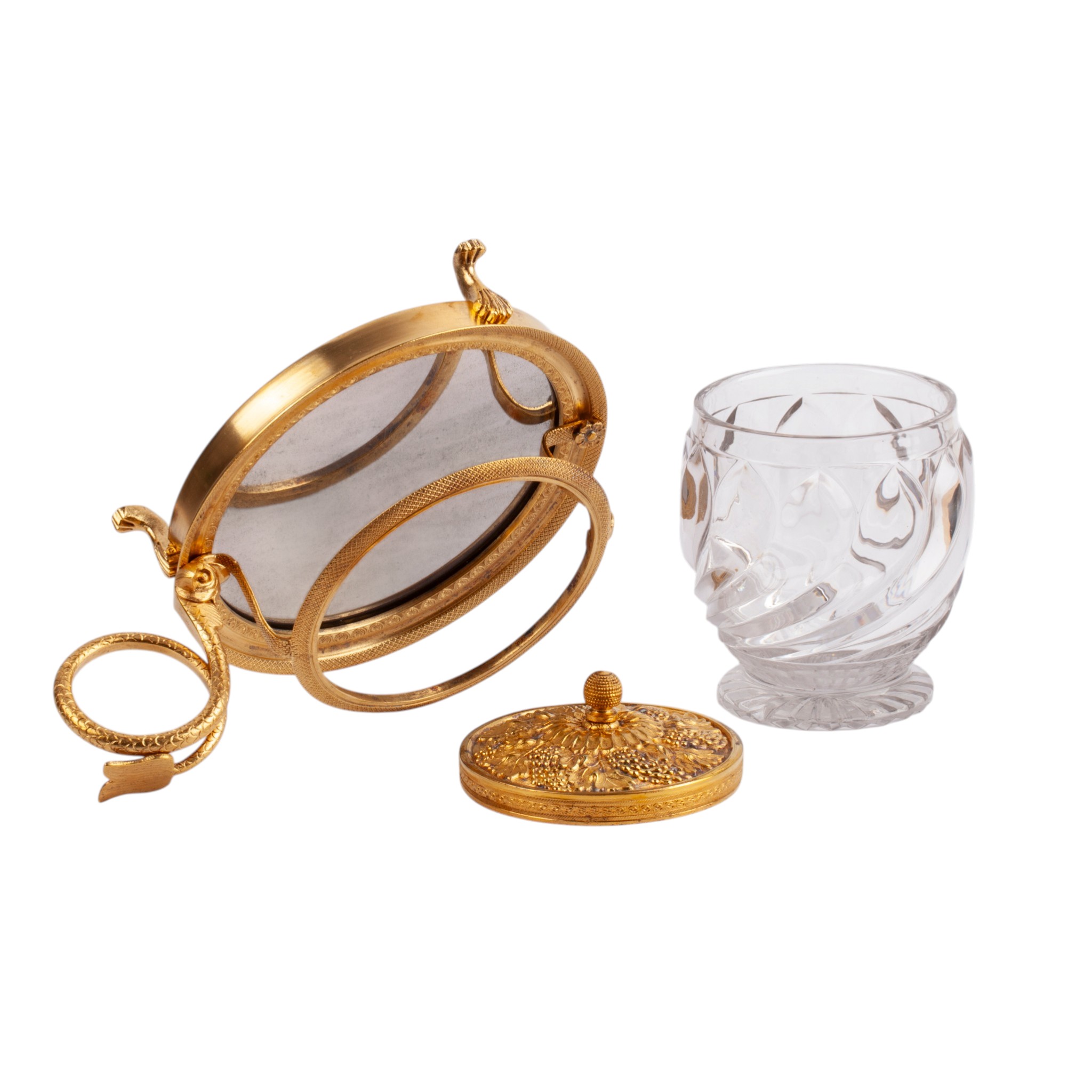
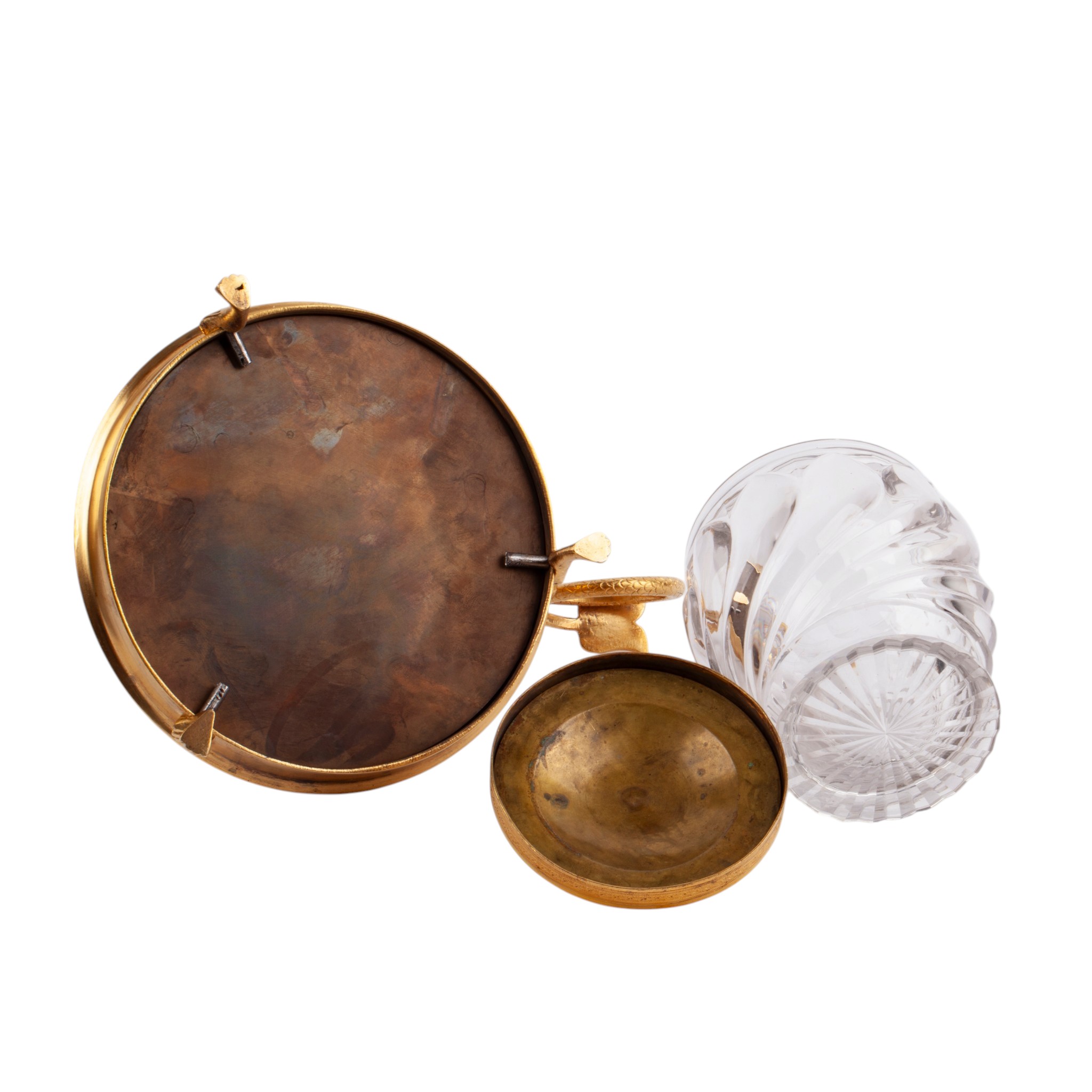
A covered glass with stand, executed in colourless crystal and mounted in gilt bronze, is a refined example of early nineteenth-century production at the Imperial Glass Manufactory. The vessel is set within an elegant circular frame above a mirrored base and accompanied by a richly modeled handle, the whole conceived as a luxurious table object in the Empire taste.
The crystal body is cut in the so-called “peacock feather” pattern, a decorative system in which elongated oval and eye-shaped motifs create a fluid, iridescent play of light across the surface. The lower part of the vessel rises from a faceted foot.
The gilt-bronze mounting is particularly elaborate. The stand rests on three finely cast lions feet and encloses a mirrored plateau that enhances the brilliance of the crystal by multiplying its reflections. The curving handle, cast in the form of a stylized serpent, introduces a dynamic sculptural accent and reflects the Empire fascination with antique and exotic ornamental vocabularies. The domed lid is enriched with radiating floral vine amd clusters ornament and delicate beaded detailing, completing the object with a note of ceremonial richness.
Comparable works are preserved in major Russian museum collections, including the State Hermitage Museum and the State Historical Museum in Moscow.Starting price: 5000€
Estimate: 6000-8000€
Hammer Price: Not sold -
Lot 0072
Imperial Glass Manufactory Glass with Stand and Cover, after A. Barmin, St Petersburg, 1820
Estimate: 8000-9000€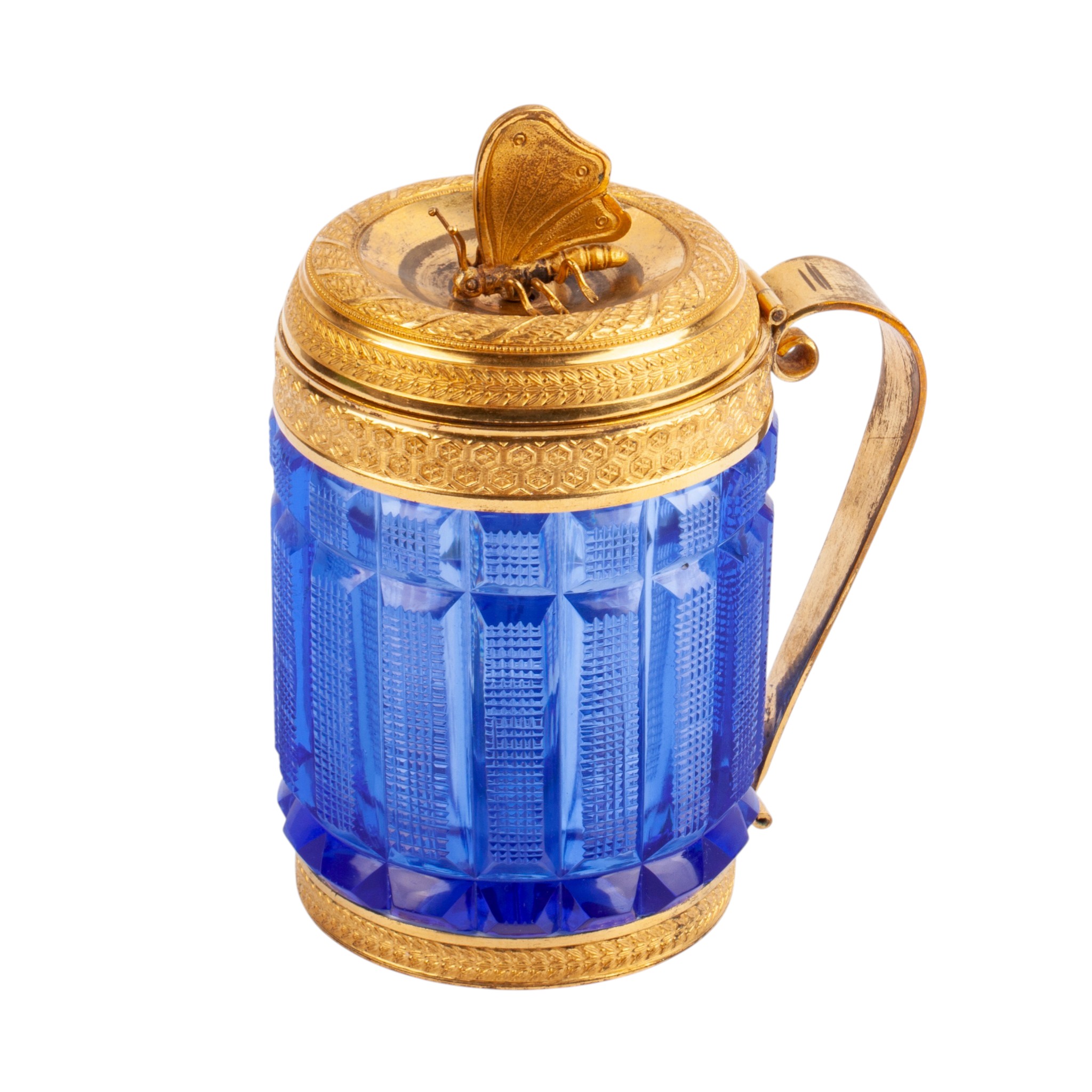
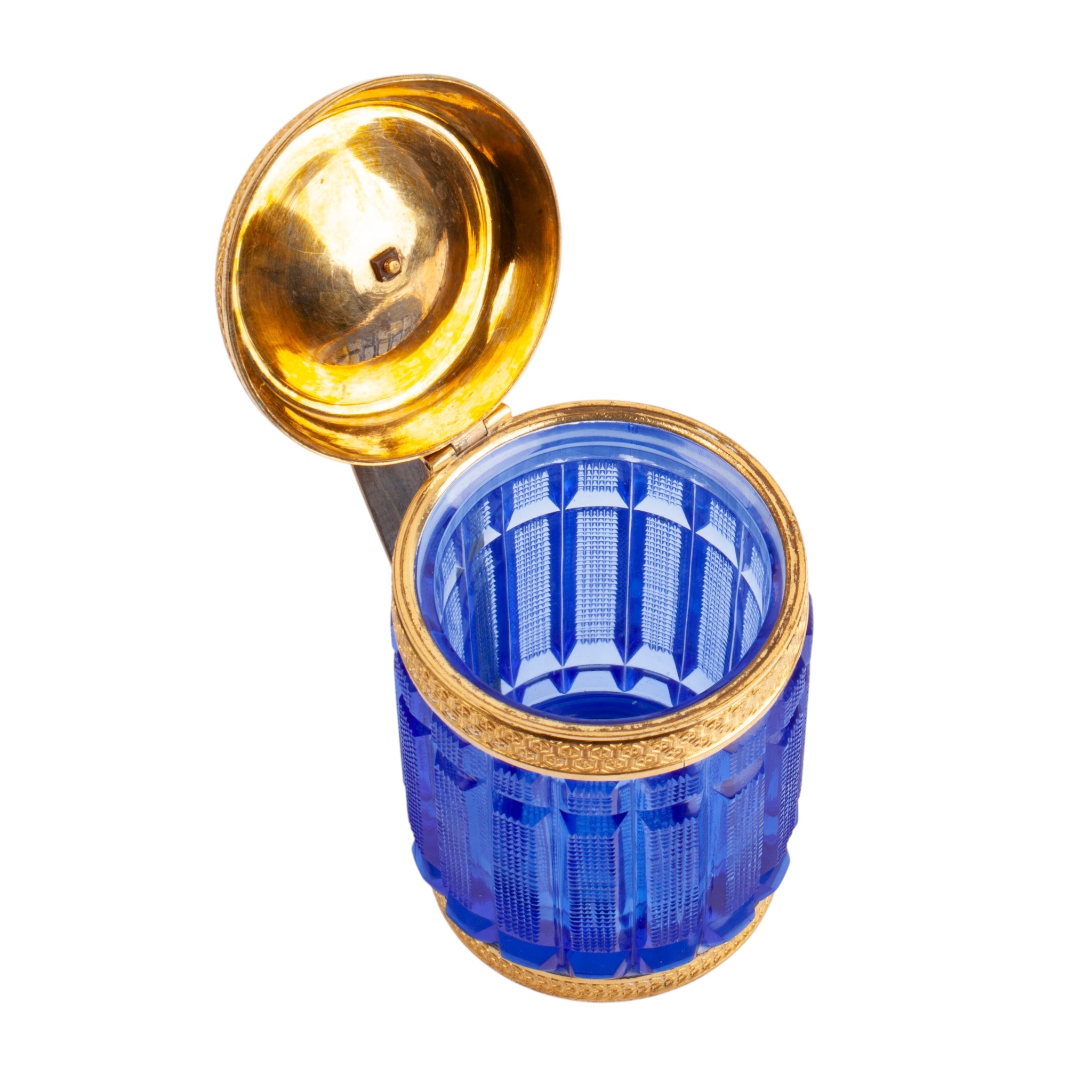
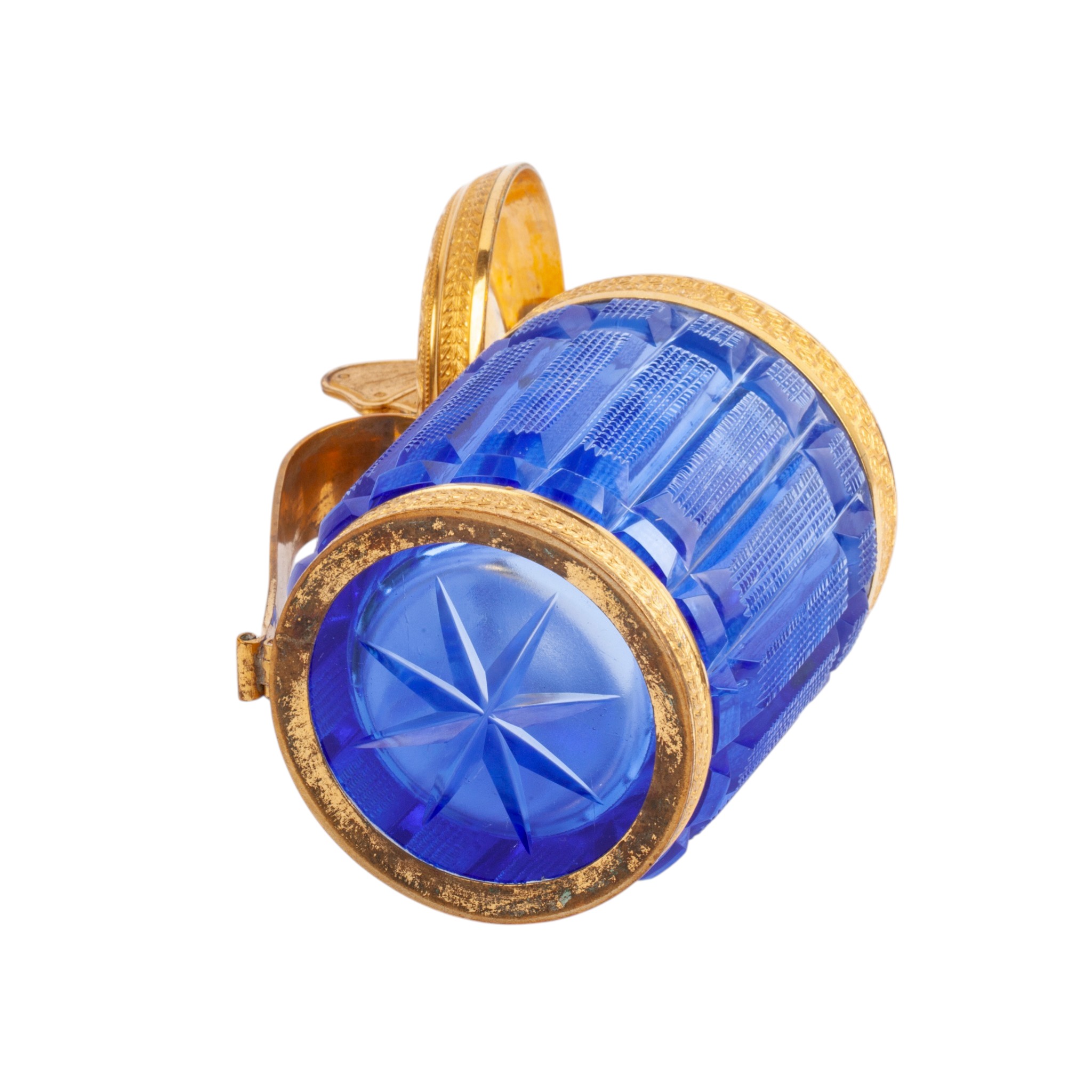
Lot 0072
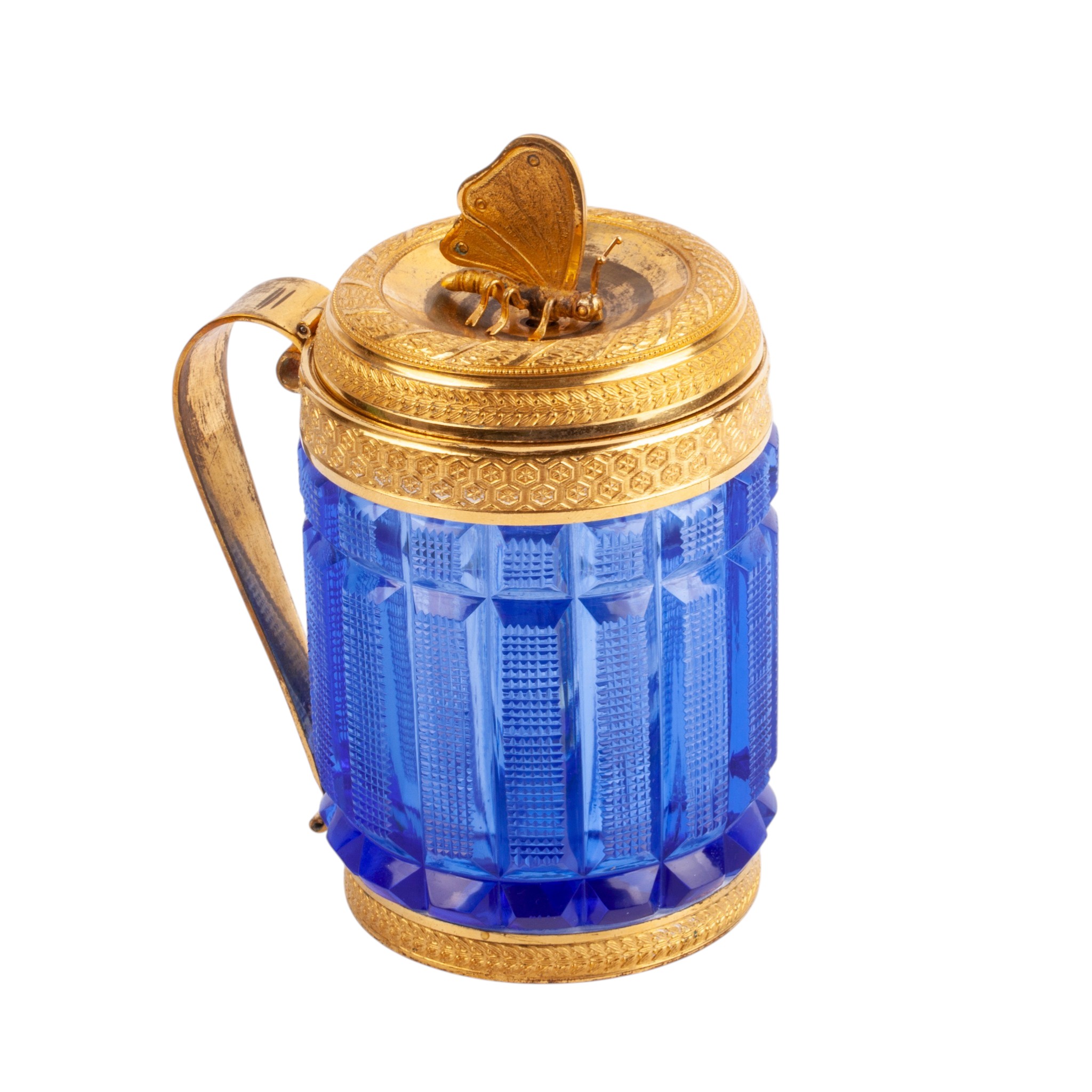
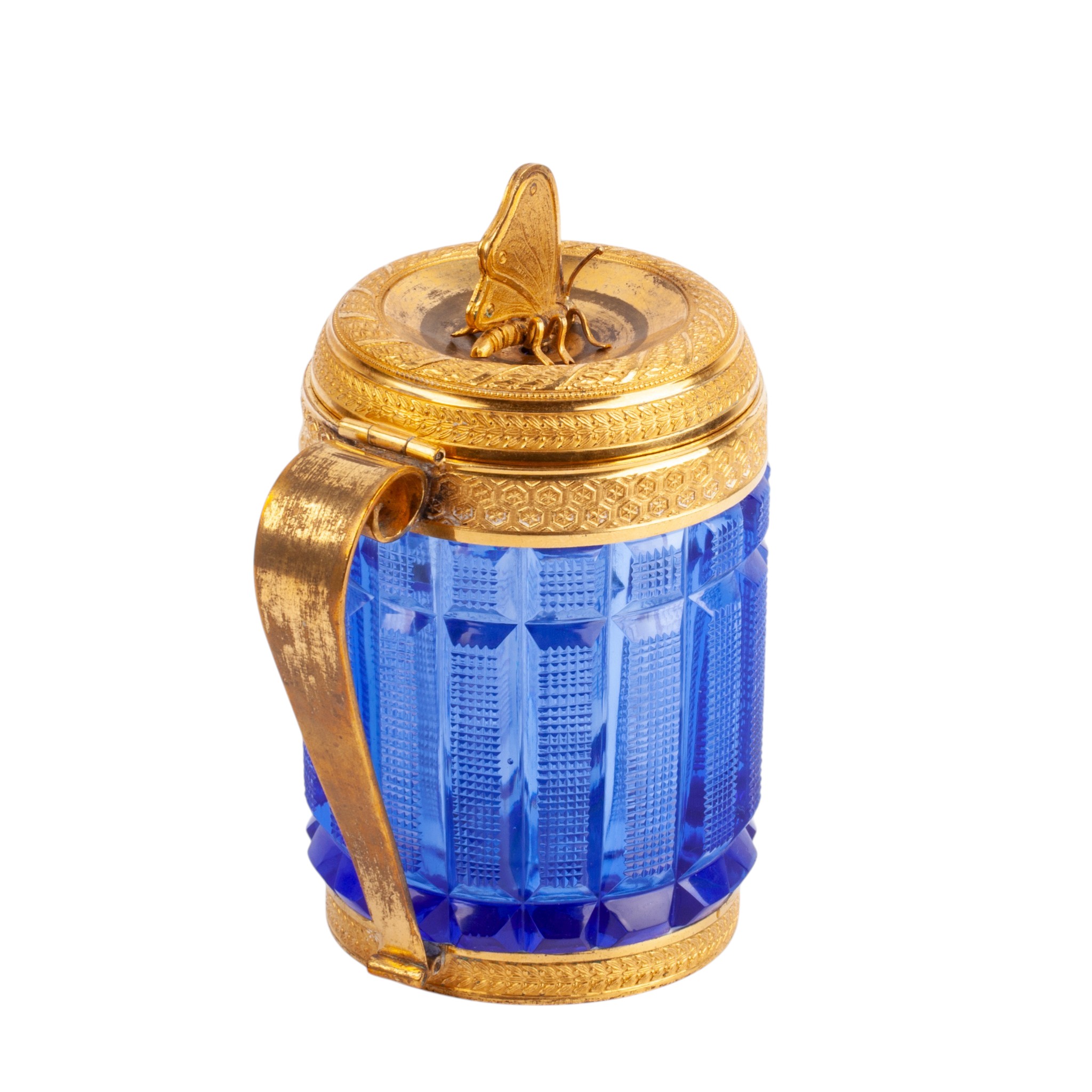
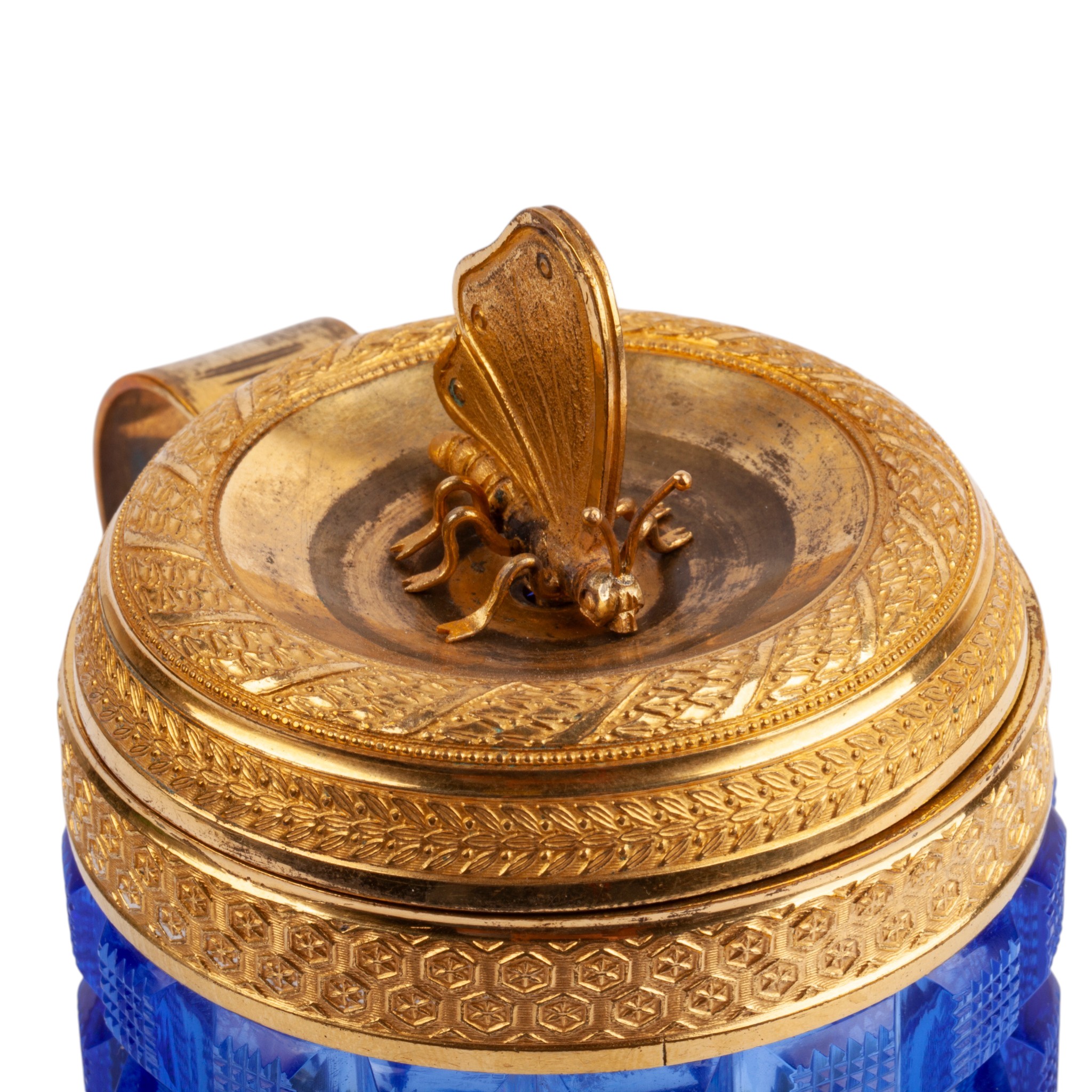
Imperial Glass Manufactory Glass with Stand and Cover, after A. Barmin, St Petersburg, 1820
Estimate: 8000-9000€Imperial Glass Manufactory. Glass with Stand and Cover
after a design by A. Barmin
Russia, St Petersburg, 1820.
Gilt bronze, mirror.
Blown glass, cutting in the Russkii kamen’ manner, casting, gilding. Dimensions: 14,5 x 16 x 12,5 cm.
A cylindrical covered glass in finely cut crystal, mounted in an elaborate gilt-bronze stand with integral undertray. Executed after a design by A. Barmin, the piece belongs to the refined early Empire production of the Imperial Glass Manufactory, where architectonic clarity of form was joined to the brilliance of Russian cut crystal and the elegance of gilt-metal mounts.
The vessel is decorated in the so-called “Russian stone” manner, a type of deep geometric cutting intended to imitate the faceted richness and sculptural play of hardstone carving. The crystal body is enlivened by a dense network of intersecting cuts, diamonds, and reserved circular lenses, which catch and refract light with exceptional vividness.
The gilt-bronze mount enhances the ceremonial character of the object. The domed cover is enriched with radiating palm leafs ornament and bordered by a finely chased band; the scrolling snake handle and applied lion’s feet supports are cast with delicacy and precision. See simeilar item in State Hermitage museum collection: https://www.hermitagemuseum.org/digital-collection/35948?lng=ruStarting price: 7000€
Estimate: 8000-9000€
Hammer Price: Not sold -
Lot 0073
Russian Triple-Layer Glass Tumbler and Saucer with Presentation Inscription, Nikolsko-Pestrovsky Glassworks, 1893
Estimate: 2500-3500€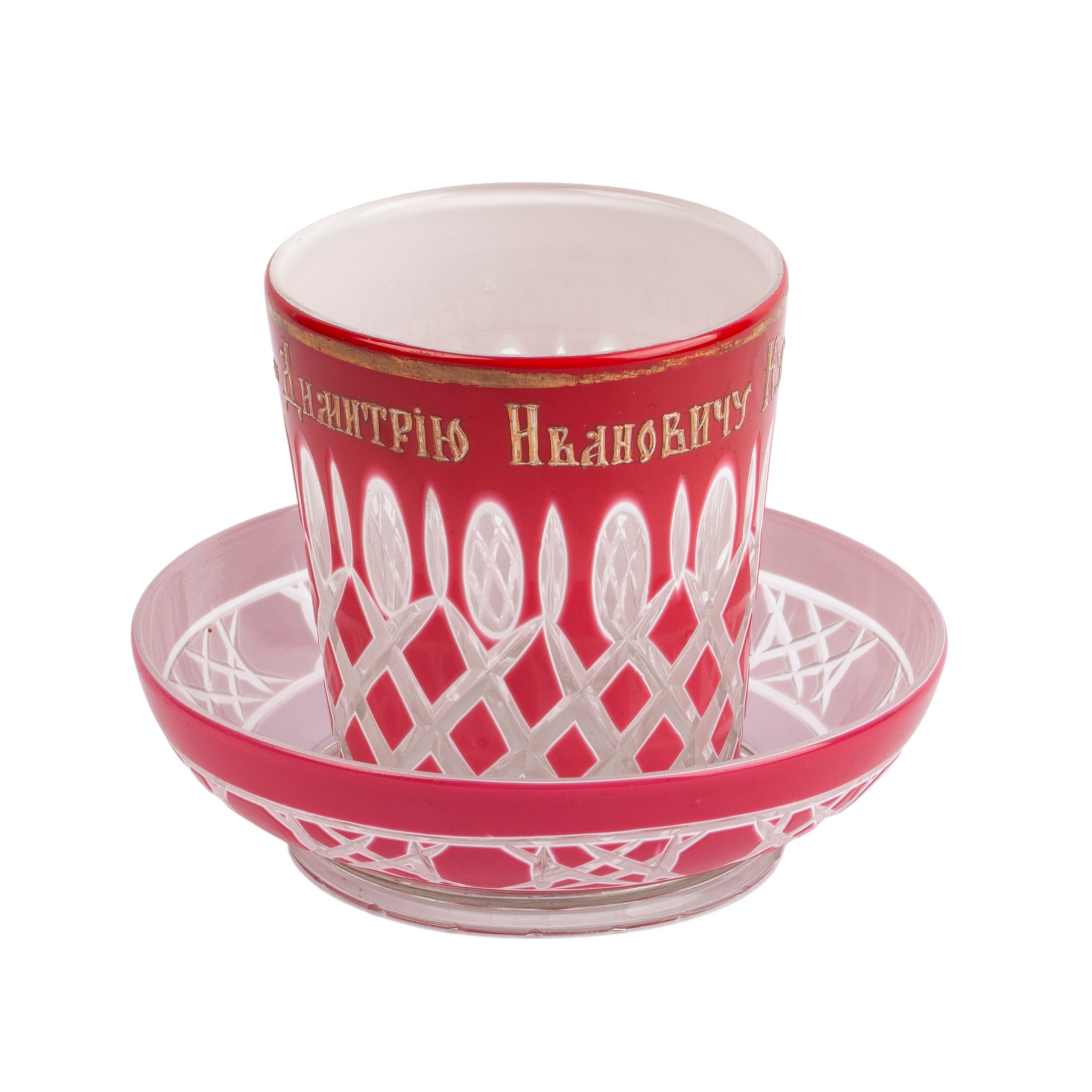
Lot 0073
Russian Triple-Layer Glass Tumbler and Saucer with Presentation Inscription, Nikolsko-Pestrovsky Glassworks, 1893
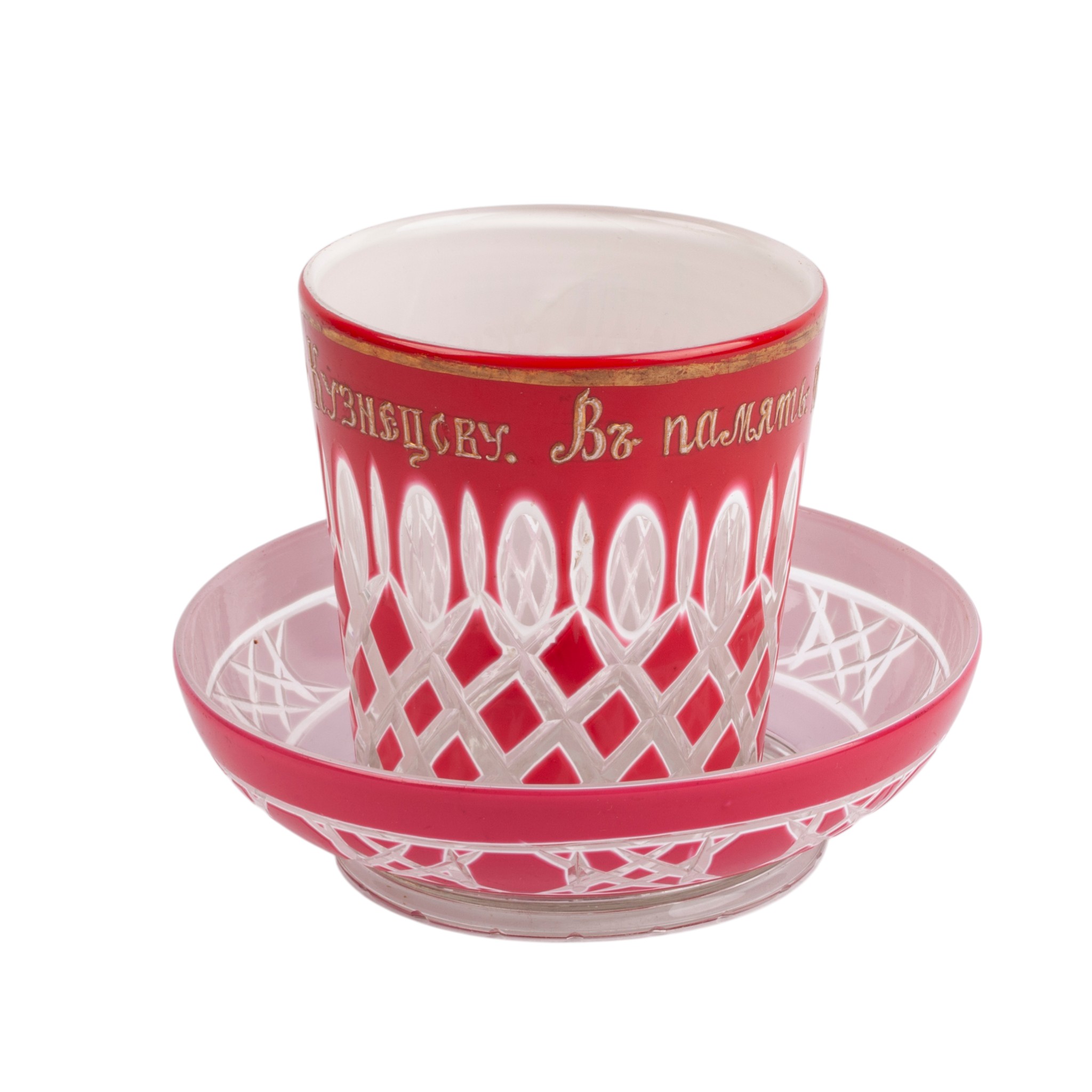
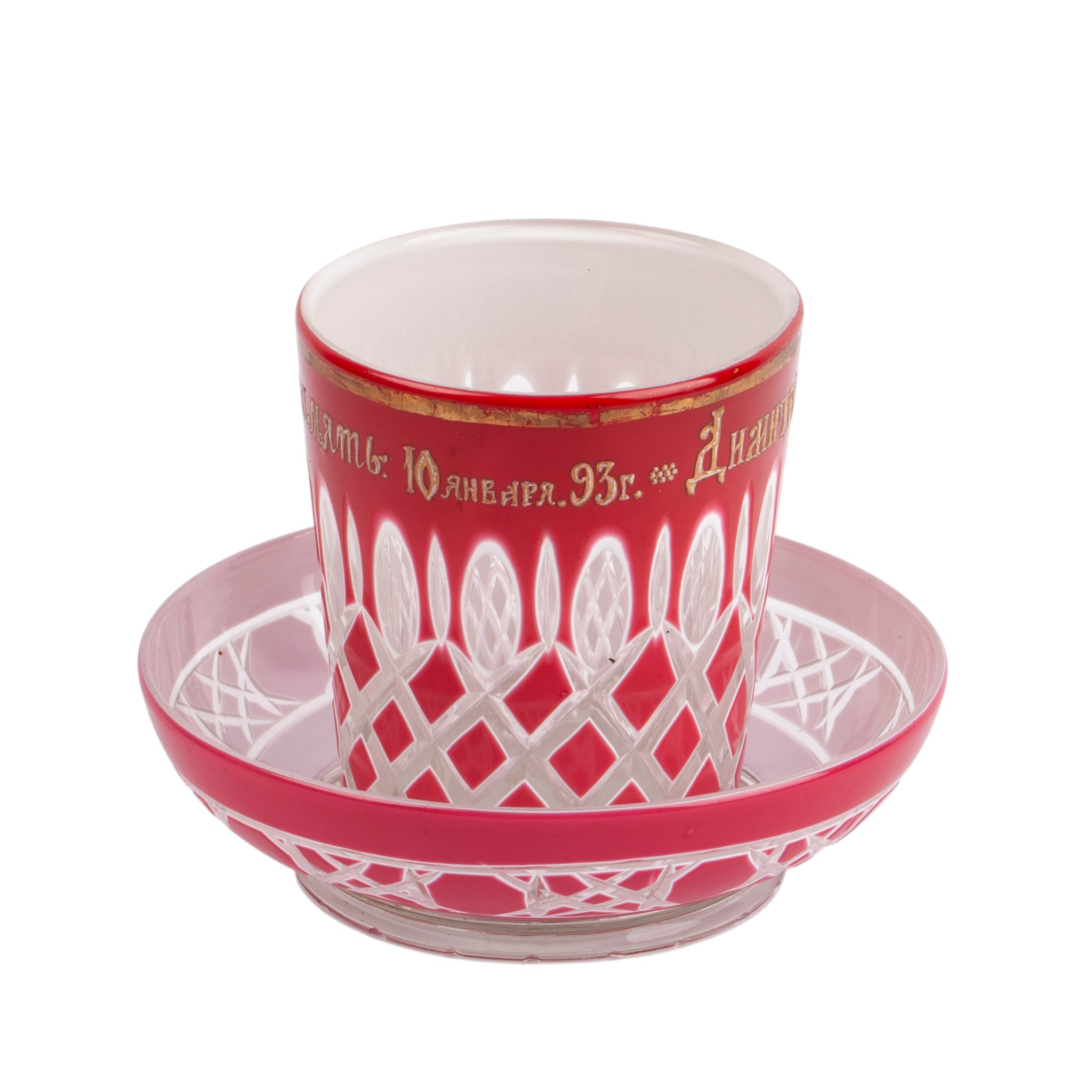
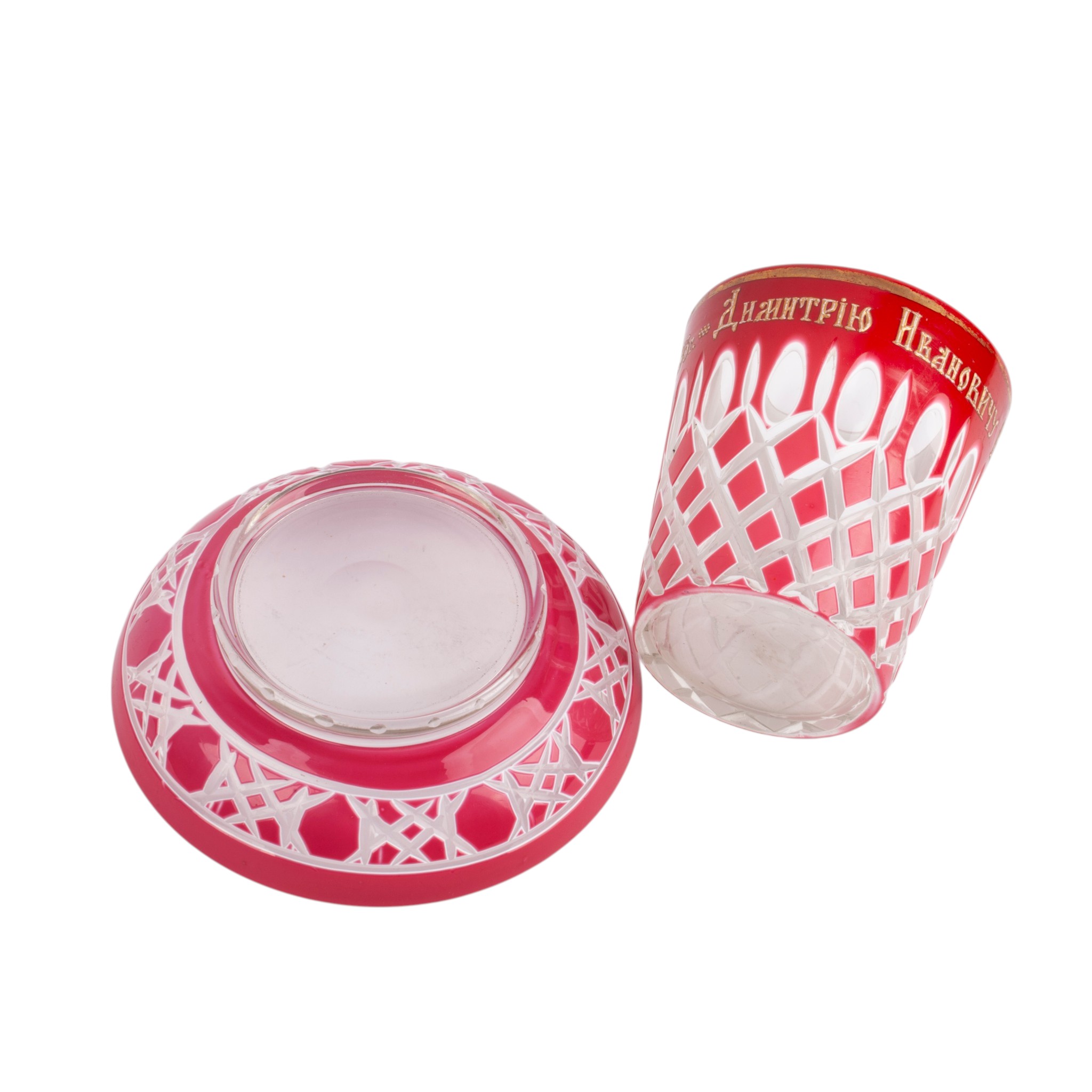
Estimate: 2500-3500€A RUSSIAN GLASS TUMBLER AND SAUCER OF TRIPLE-LAYER GLASS WITH PRESENTATION INSCRIPTION Penza Province, Nikolsko-Pestrovsky Glassworks of the Bakhmetev family, 1893.
Clear glass, milk glass, pink glass; cutting, carving, gilt decoration.
Dimensions
Tumbler: 10 × 9 cm.
Saucer: diameter 14 cm, height 4 cm.
Presentation inscription
In memory of 10 January 1893, to Dmitry Ivanovich Kuznetsov.
A rare tumbler and saucer made in triple-layer glass, combining clear, milk-white, and pink layers. The tumbler is of gently flaring cylindrical form, widening toward the rim. Below a narrow gilt band runs a gilt presentation inscription, encircling the upper register of the vessel. The body is enriched with cut decoration in a lattice pattern alternating with elongated oval reserves, the cutting exposing the contrasting inner layers and creating a lively interplay between the translucent pink outer casing, the opaque white intermediate layer, and the clear glass beneath.
The saucer is conceived en suite, with a broad pink rim and corresponding cut ornament around the well and outer wall.
The Nikolsko-Pestrovsky factory of the Bakhmetev family, founded in 1763, was among the most important Russian glassworks of the 18th and 19th centuries. Renowned for the quality of its crystal, coloured overlays, and virtuoso cutting, the enterprise achieved particular distinction in the 19th century, when it supplied works for aristocratic and courtly patrons. By the late Imperial period, the factory continued to produce highly accomplished pieces uniting technical mastery with elegant decorative effect, to which the present tumbler and saucer belong.
A comparable tumbler of closely related artistic conception is preserved in the State Hermitage Museum, inv. no. ERS-950.Starting price: 2000€
Estimate: 2500-3500€
Hammer Price: Not sold -
Lot 0074
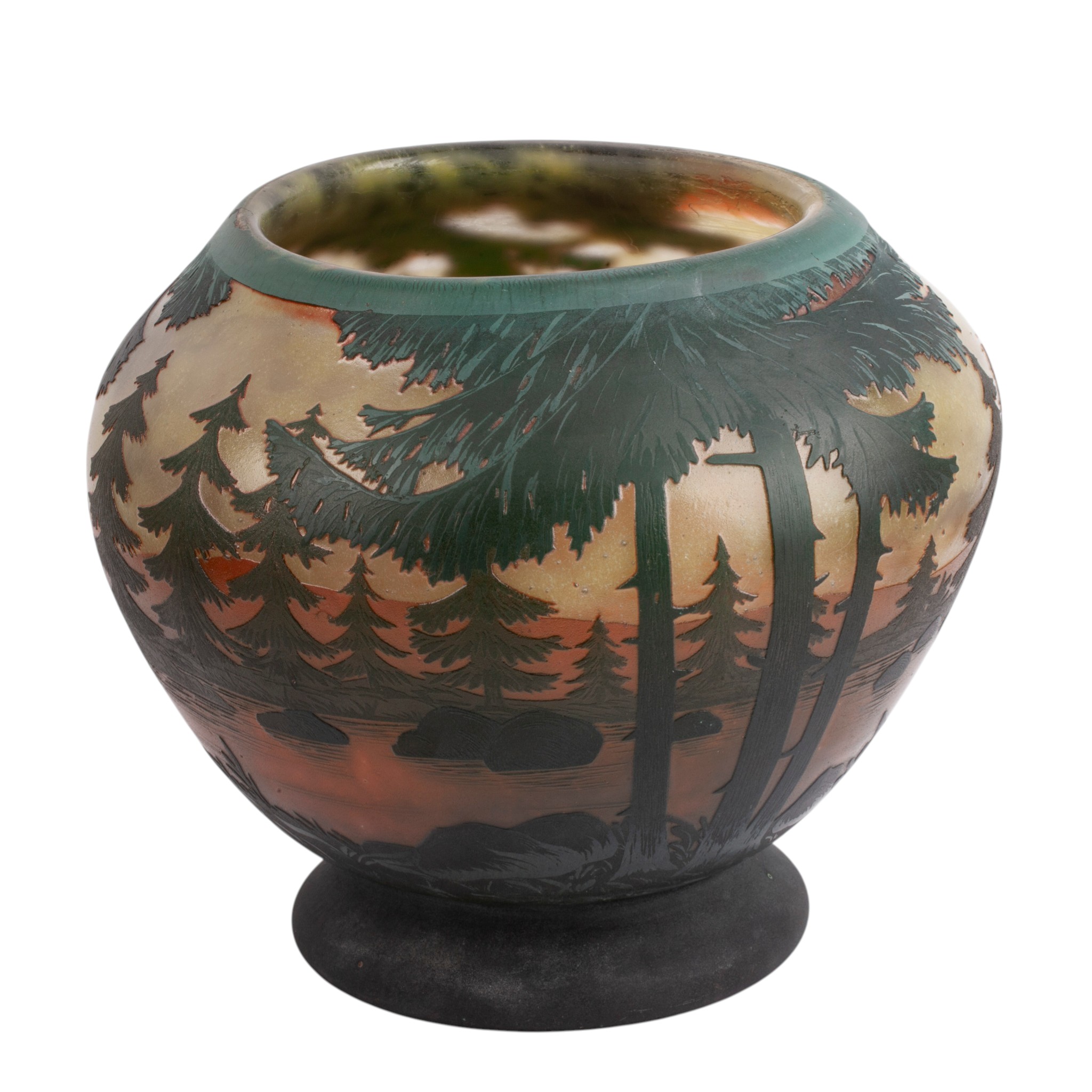
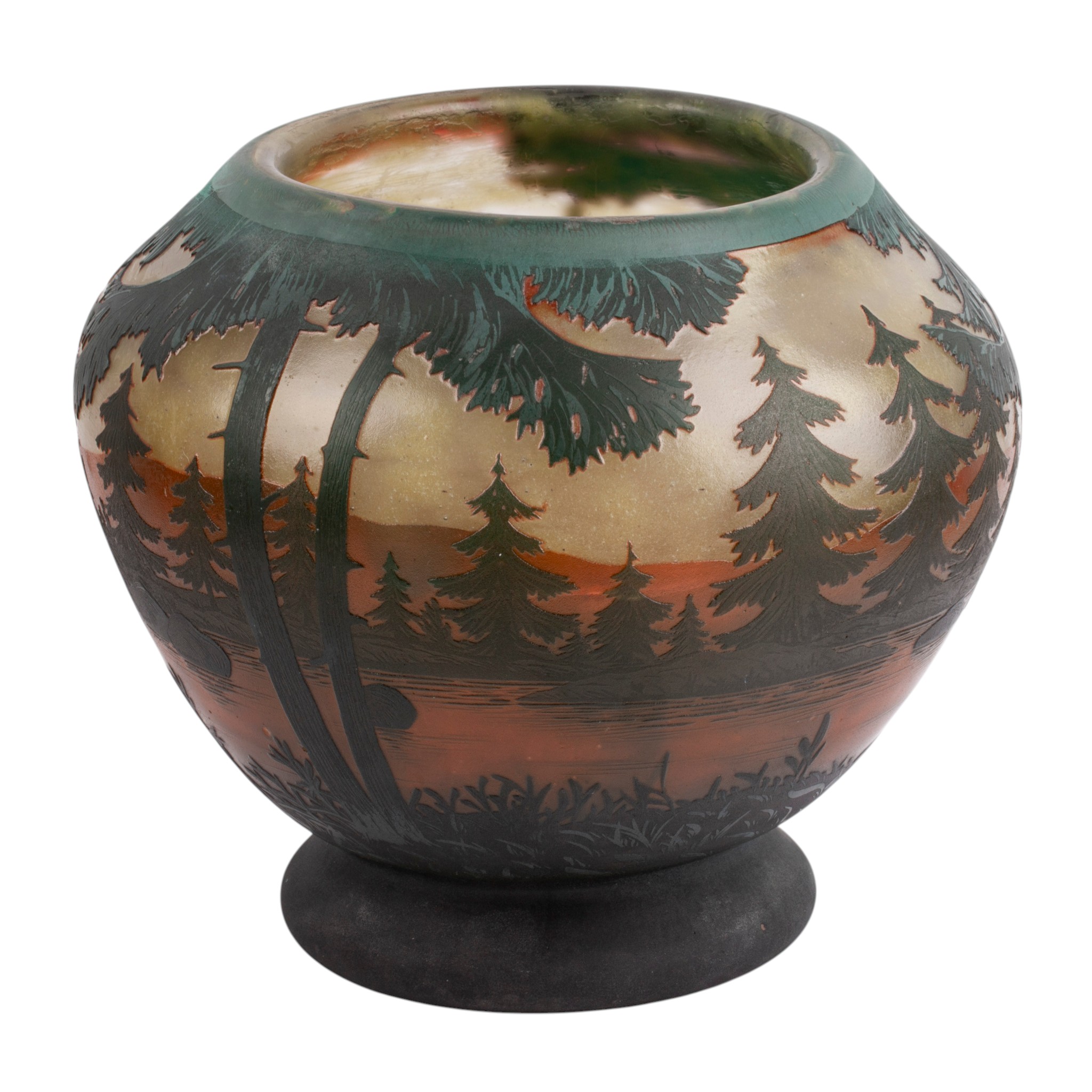
Rare Russian Cameo Glass Vase “Forest Landscape”, Imperial Glass Manufactory, St Petersburg, 1915
Estimate: 17000-22000€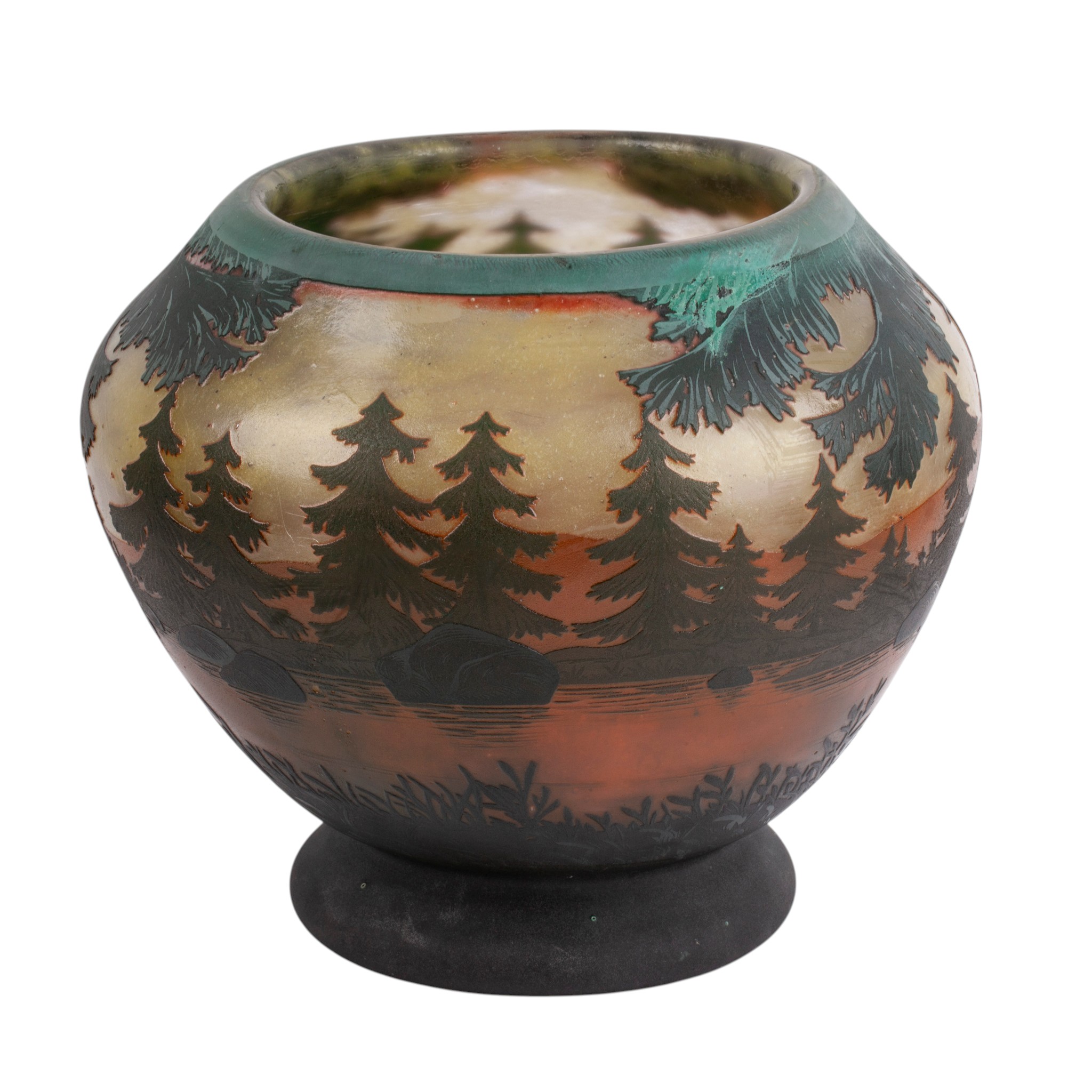
Lot 0074
Rare Russian Cameo Glass Vase “Forest Landscape”, Imperial Glass Manufactory, St Petersburg, 1915
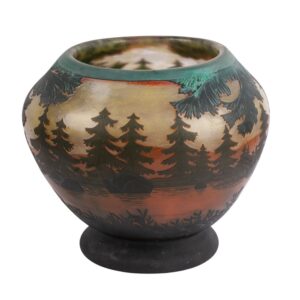
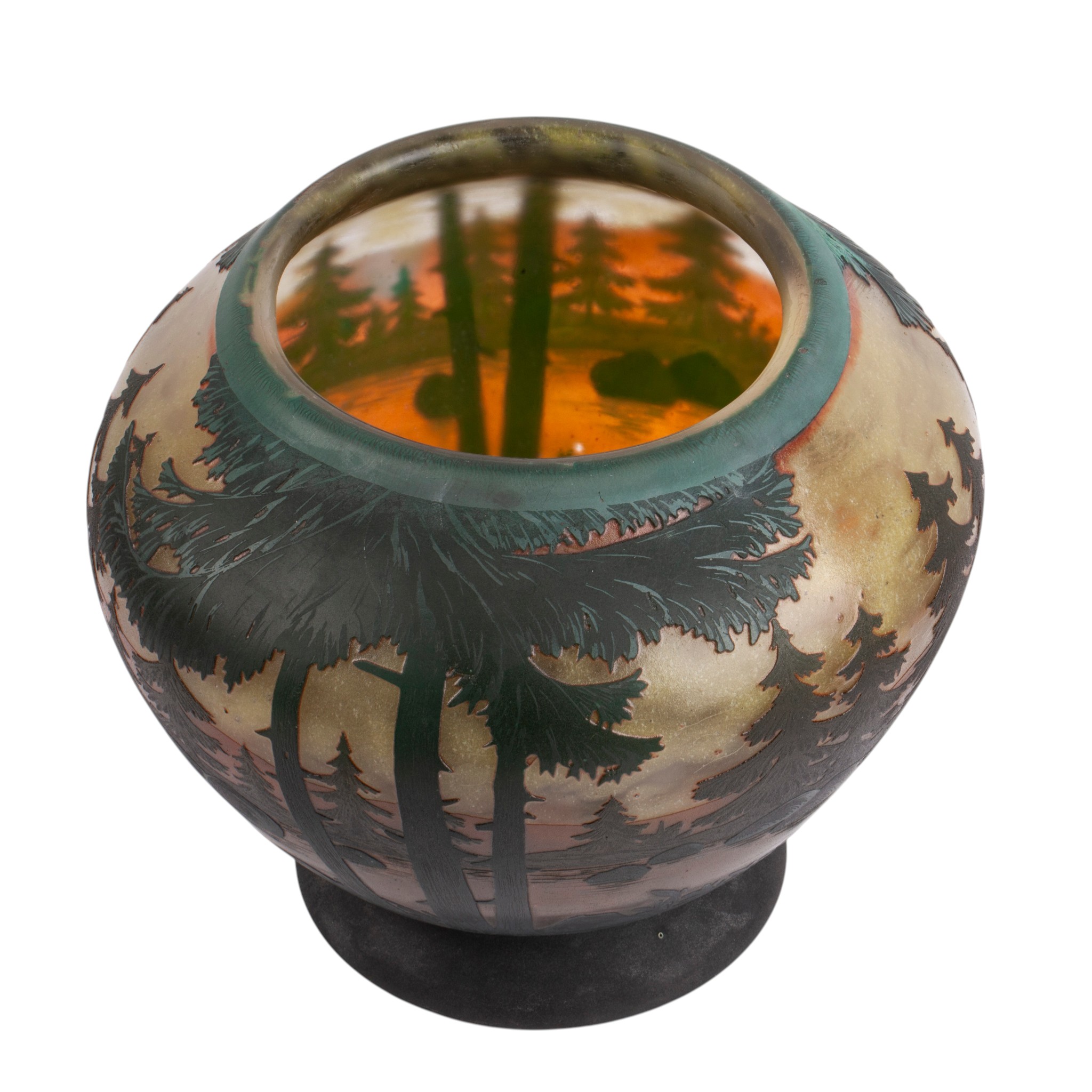
Estimate: 17000-22000€A Rare Russian Cameo Glass Vase “Forest Landscape”
Imperial Glass Manufactory, St Petersburg, 1915
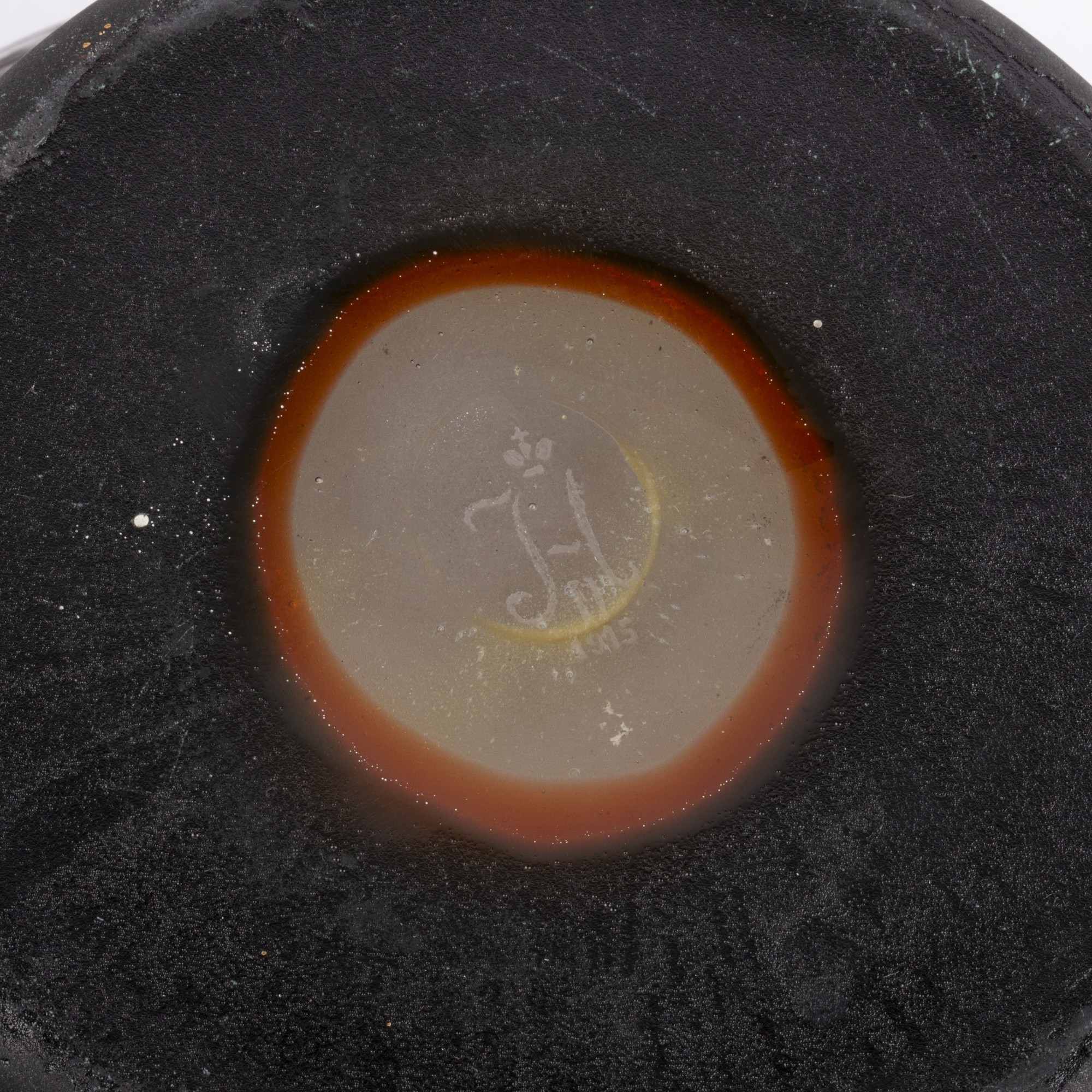
Multi-layer glass, acid-etched, carved.
Height: 23 cm. Diameter: 27 cm.
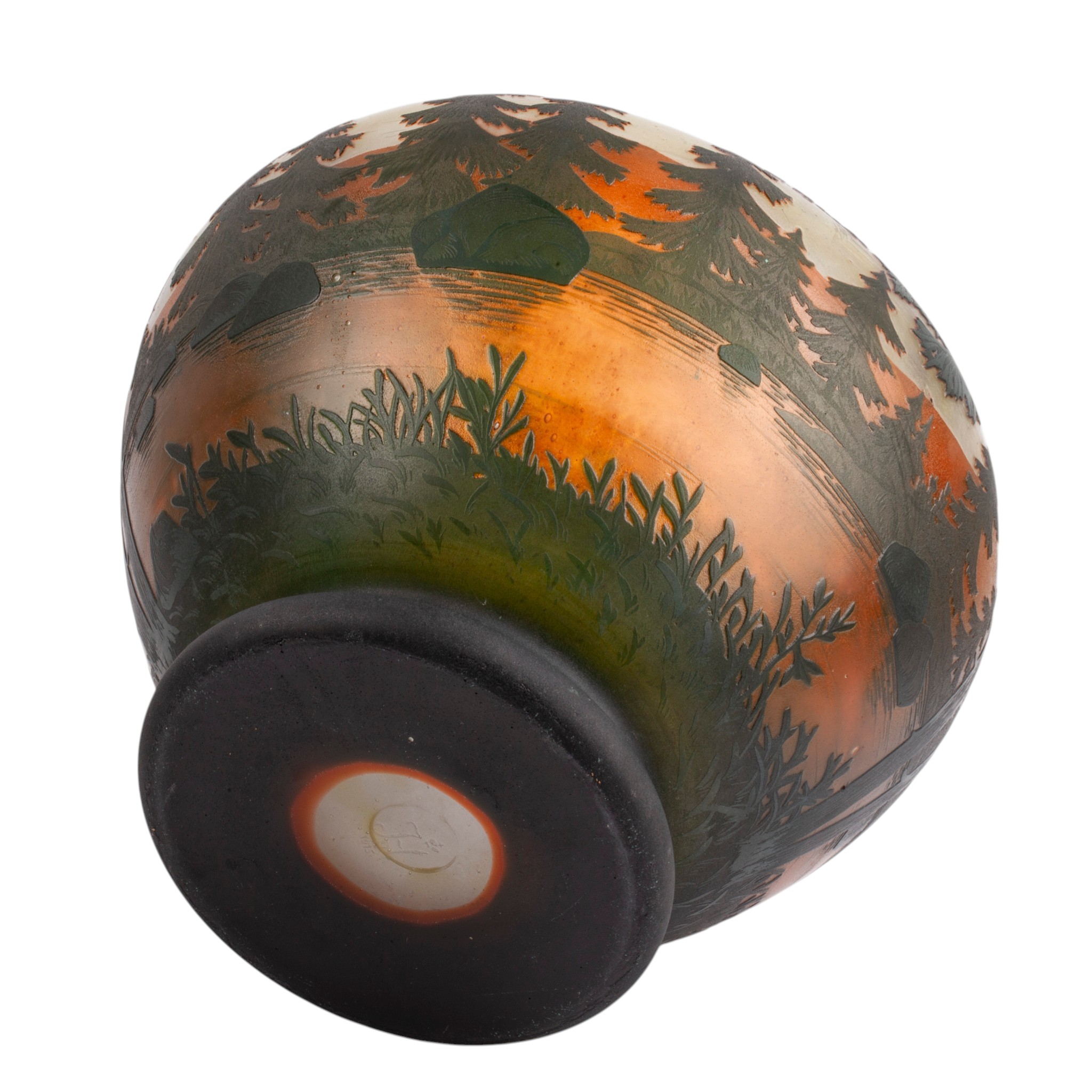
Marked on the underside NII in cyrillic and dated 1915,
A substantial spherical vase on a low spreading foot, conceived as a continuous forest panorama. The body is worked in layered glass of warm amber and reddish-brown tones, over which a dark silhouetted landscape has been etched: serrated fir trees, overhanging pine branches, boulders, reeds, and gently rippling water.
The piece belongs to the artistic vocabulary of Russian Art Nouveau, where glass became a medium of exceptional atmospheric power. Its decorative program is built not on isolated ornament, but on an immersive landscape image unfolding around the entire circumference of the vessel. This continuous treatment of surface, together with the nuanced play of translucency and matte engraving, gives the vase a distinctly painterly character. In the production of the Imperial Glass Manufactory, landscape motifs are comparatively uncommon, which makes this example especially noteworthy.
At the turn of the 19th and 20th centuries, Art Nouveau glass drew on a wide range of sources, from medieval and classical art to folk traditions, but was especially shaped by the growing fascination with the Far East after the Paris World Exhibition, where Japanese decorative art had a profound impact. This influence encouraged an associative, image-based approach to design, in which color and ornament carried symbolic and emotional meaning.
Glass proved an ideal medium for Art Nouveau because of its rich chromatic range, luminosity, translucency, and painterly effects. These qualities gave works an organic, impressionistic expressiveness and made multi-layered cameo glass one of the most powerful vehicles of the new style in Europe and Russia alike.
The Imperial Glass Manufactory produced a remarkably varied range of Art Nouveau objects, characterized by flowing forms, curved ornament, and motifs drawn from nature. Landscape subjects, however, remained extremely rare and are known mainly from the first decade of the 20th century.Starting price: 15000€
Estimate: 17000-22000€
Hammer Price: 19 000 € -
Lot 0075
Imperial Glass Manufactory Beaker “Dance before the Sultan”, St Petersburg, 1840s–1850s
Estimate: 5000-7000€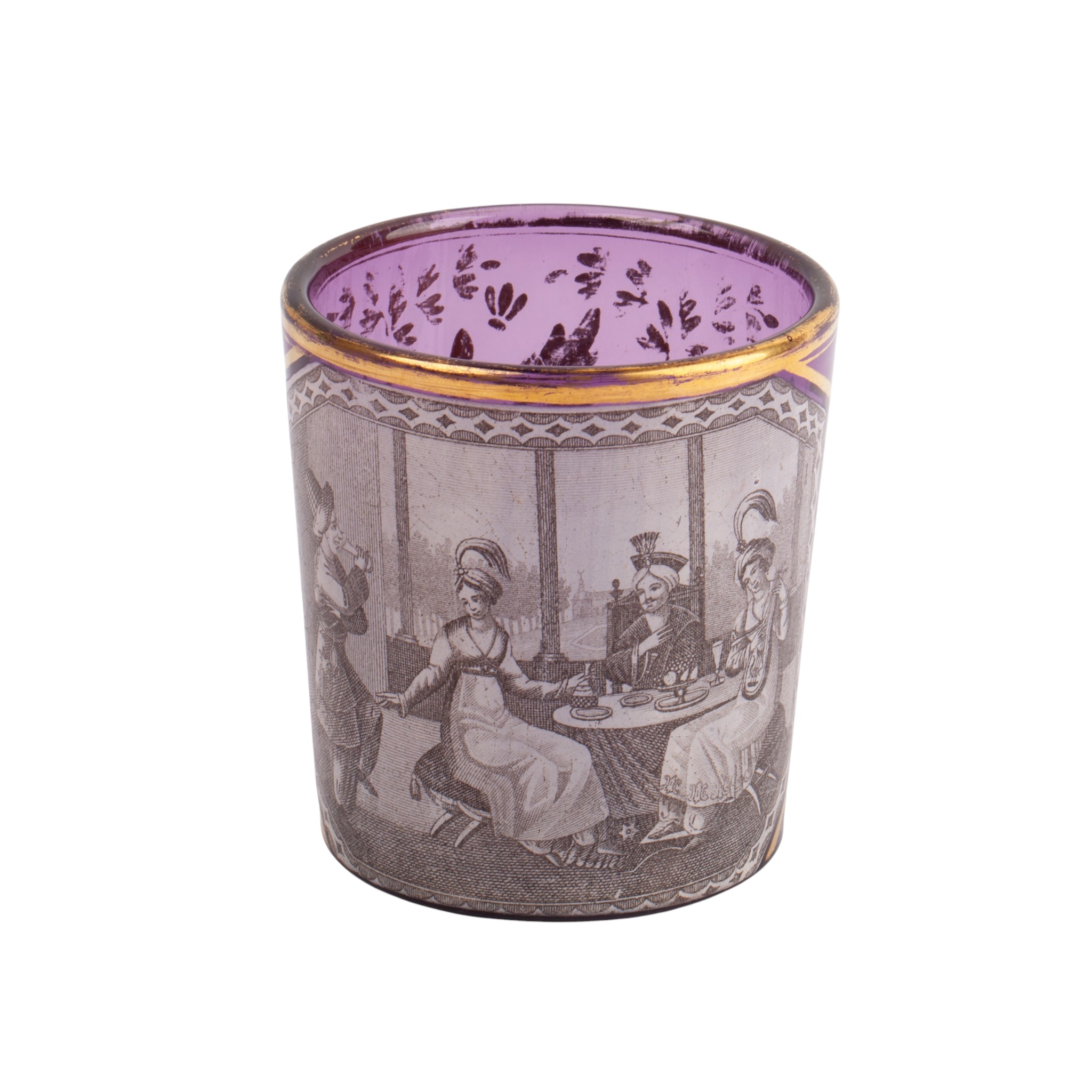
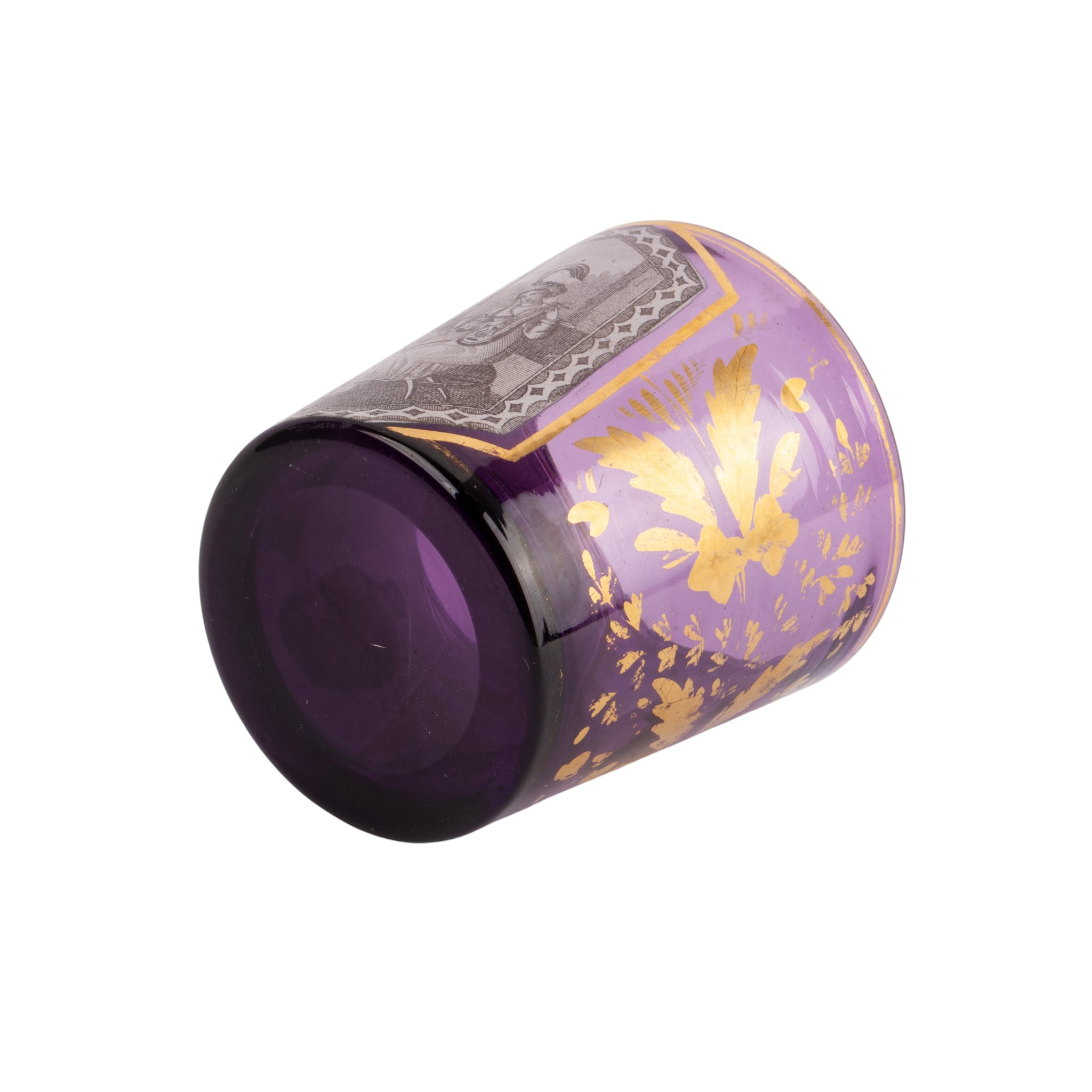
Lot 0075
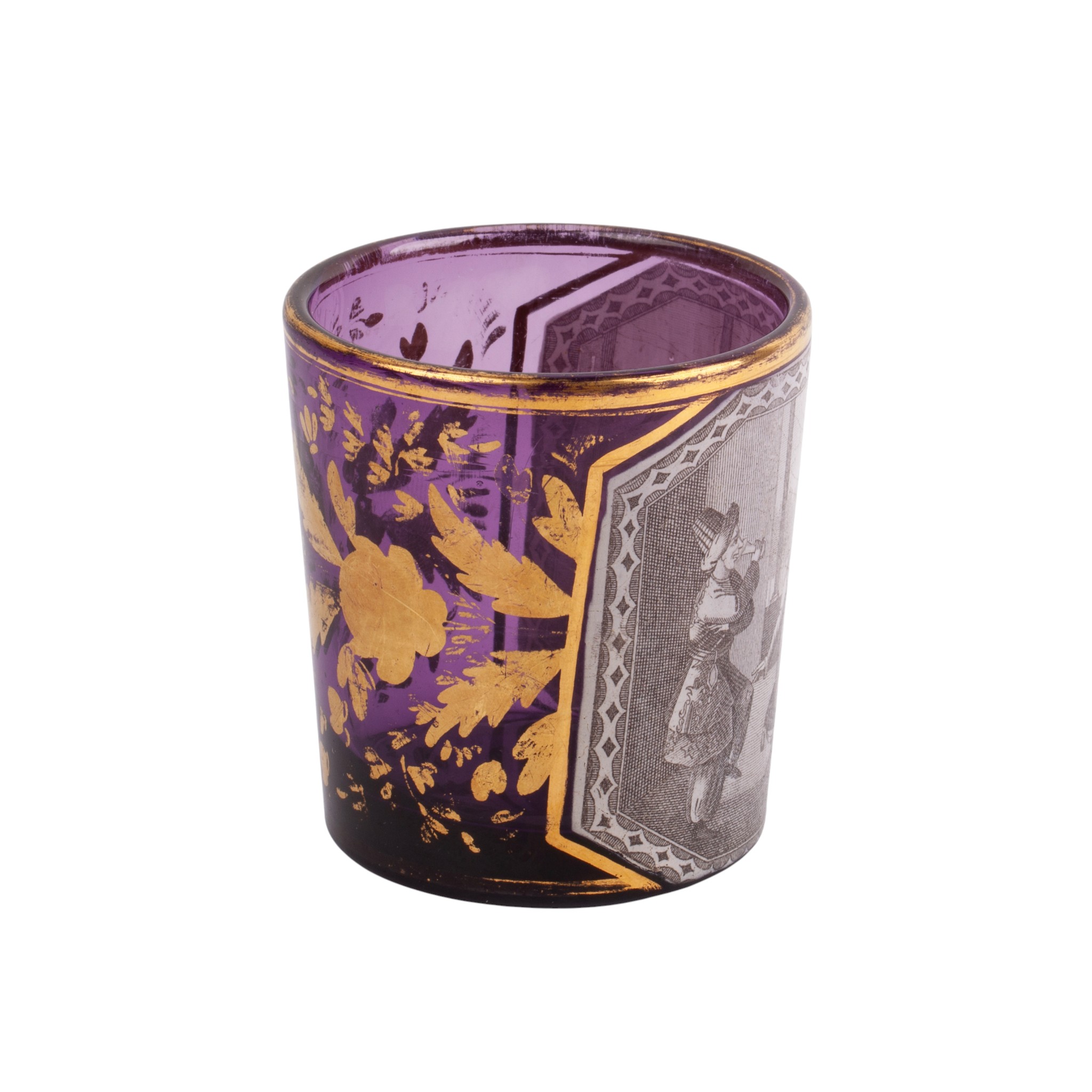
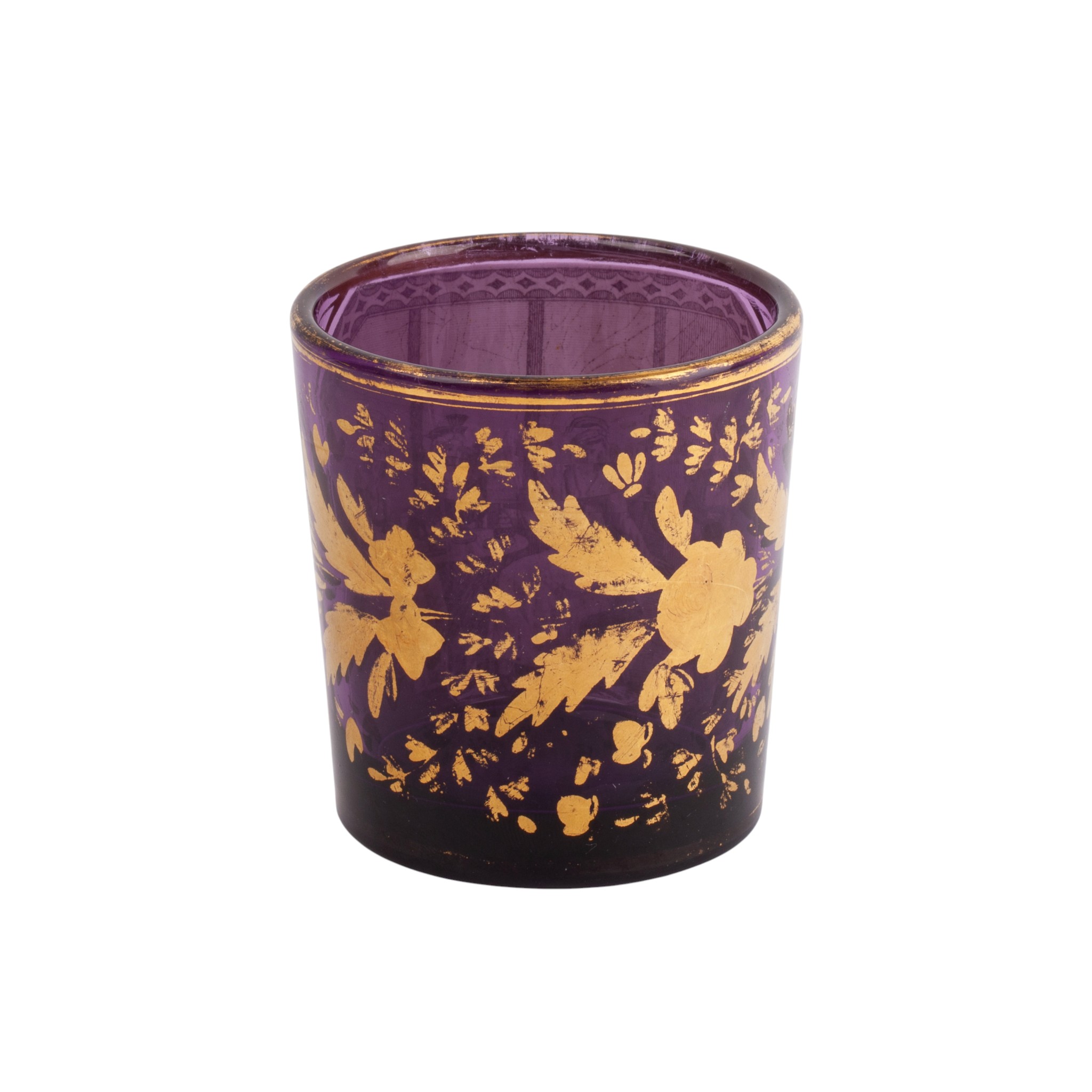
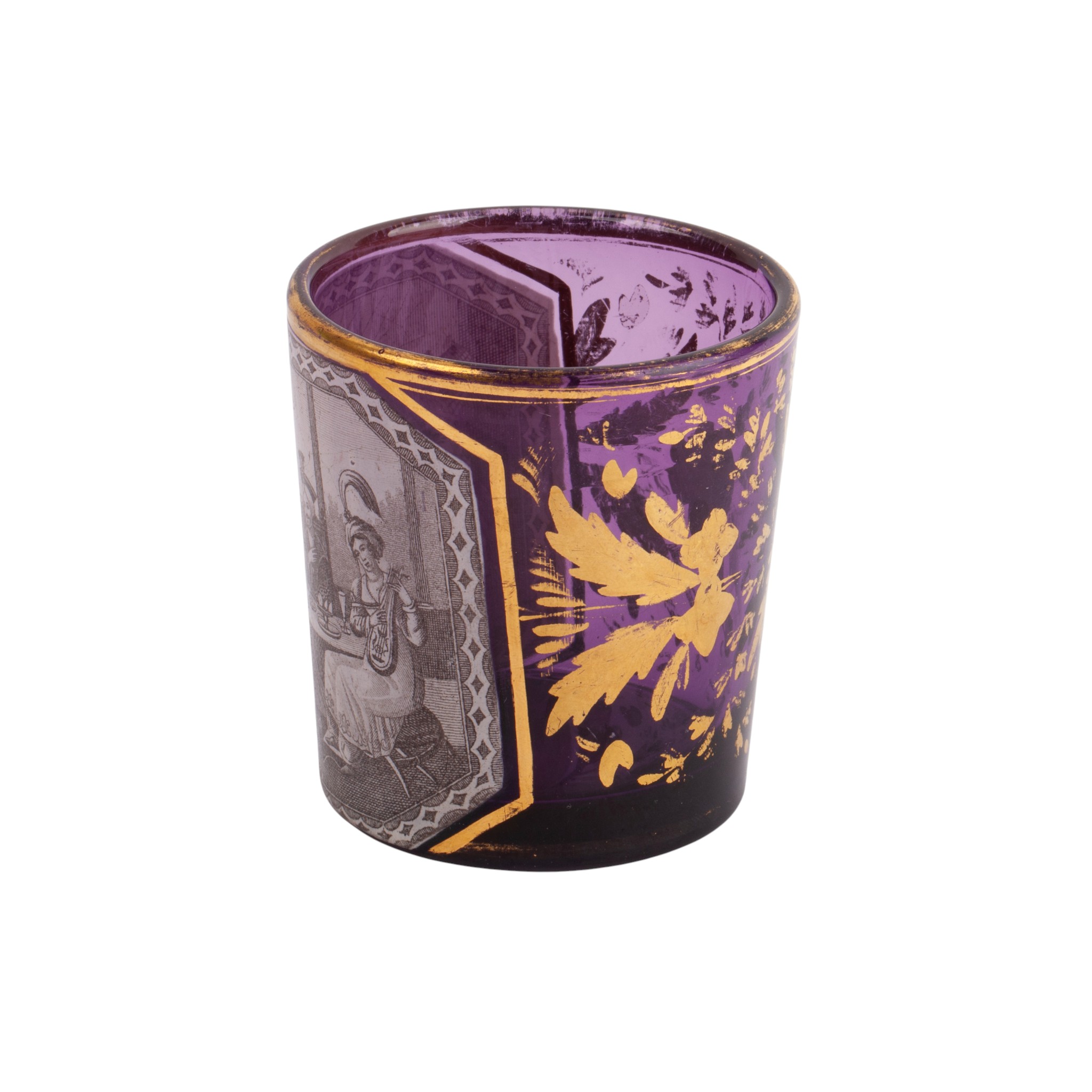
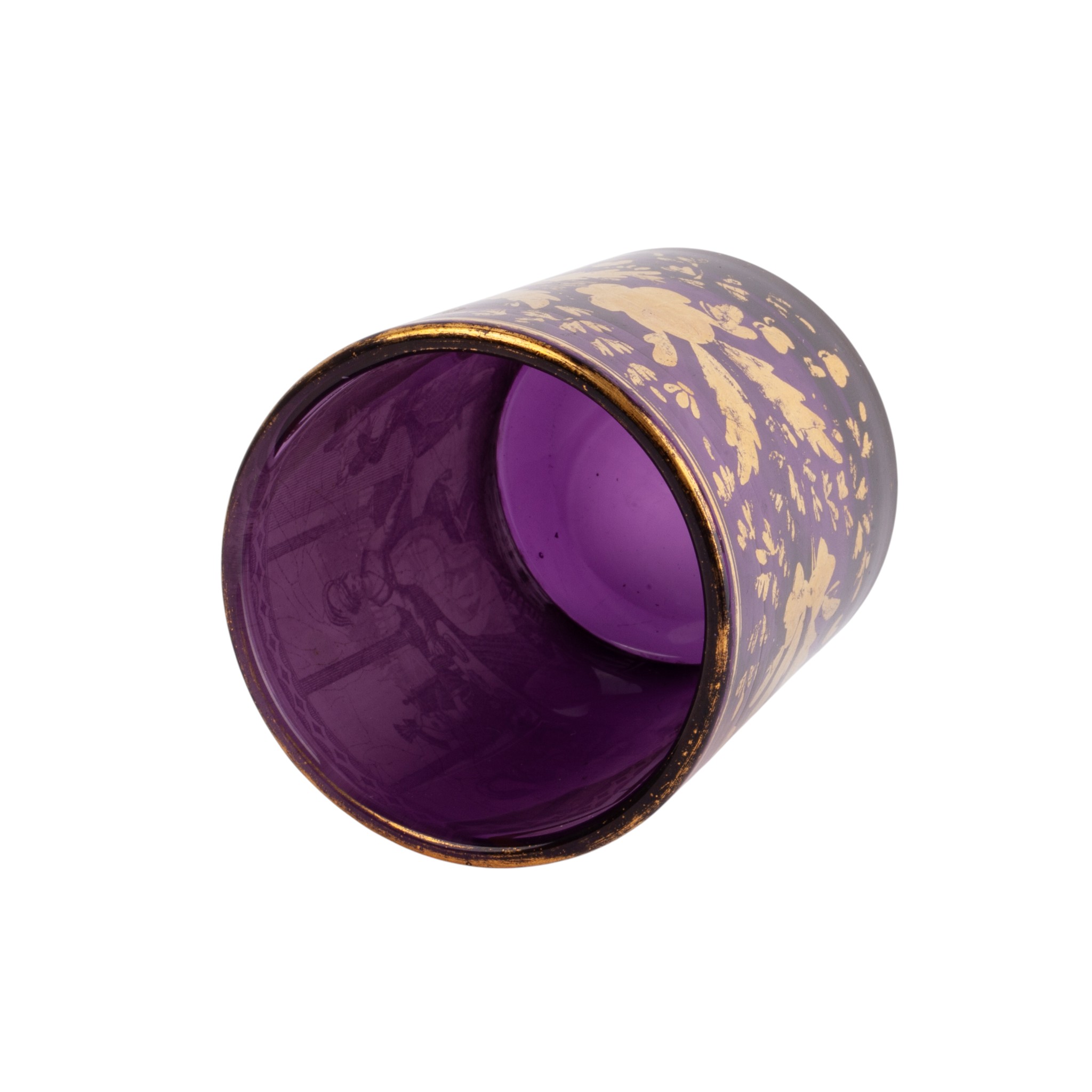
Imperial Glass Manufactory Beaker “Dance before the Sultan”, St Petersburg, 1840s–1850s
Estimate: 5000-7000€Imperial Glass Manufactory. Glass Beaker with the Scene “Dance before the Sultan”
Lithographic Workshop of Terebenev. St Petersburg, 1840s-1850s.
Amethyst glass, transfer-printed decoration, gilding.
Dimensions: 7.5 x 6.8 x 6.8 cm.
A rare amethyst glass beaker decorated with a figural literary scene known as “Dance before the Sultan,” illustrating an episode from Byron’s Don Juan. The cylindrical body is enriched on one side with a transfer-printed composition showing an orientalist feast scene with seated and standing figures in theatrical costume, while the reverse is adorned with a gilt floral spray scattered across the deep violet ground.
The decoration was executed in the technique of decalcomania, or transfer printing, introduced into Russian glassmaking in the 1830s and 1840s. In this process, a lithographed image printed in silicate pigments was first transferred onto paper, then applied to the glass surface and fired, so that the paper burned away and the image remained permanently fixed. This method made it possible to reproduce complex figural and narrative compositions with a degree of precision previously difficult to achieve in glass decoration.
The beaker is associated with the lithographic workshop of K. I. Terebenev and P. P. Semechkin, whose work played an important role in the development of printed decoration on Russian porcelain, faience, and glass. Their workshop specialized in combining lithographed imagery with painted gilding and ornamental embellishment, drawing on literary, allegorical, landscape, and historical subjects, as well as reproductions after European masters. Contemporary critics valued the technique for both its artistic refinement and its capacity to bring complex pictorial sources into the sphere of decorative art.
A comparable example is published in O. M. Polyashova, Russian Glass of the 18th to Early 20th Century, p. 161.Starting price: 4000€
Estimate: 5000-7000€
Hammer Price: Not sold -
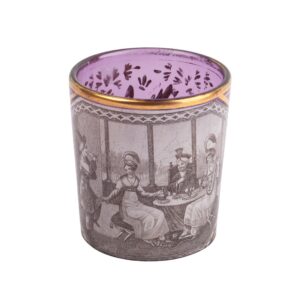
Lot 0076
Imperial Glass Manufactory Glass Beaker with the Scene “Dance before the Sultan”, Lithographic Workshop of Terebenev, St Petersburg, 1840s–1850s
Estimate: 5000-7000€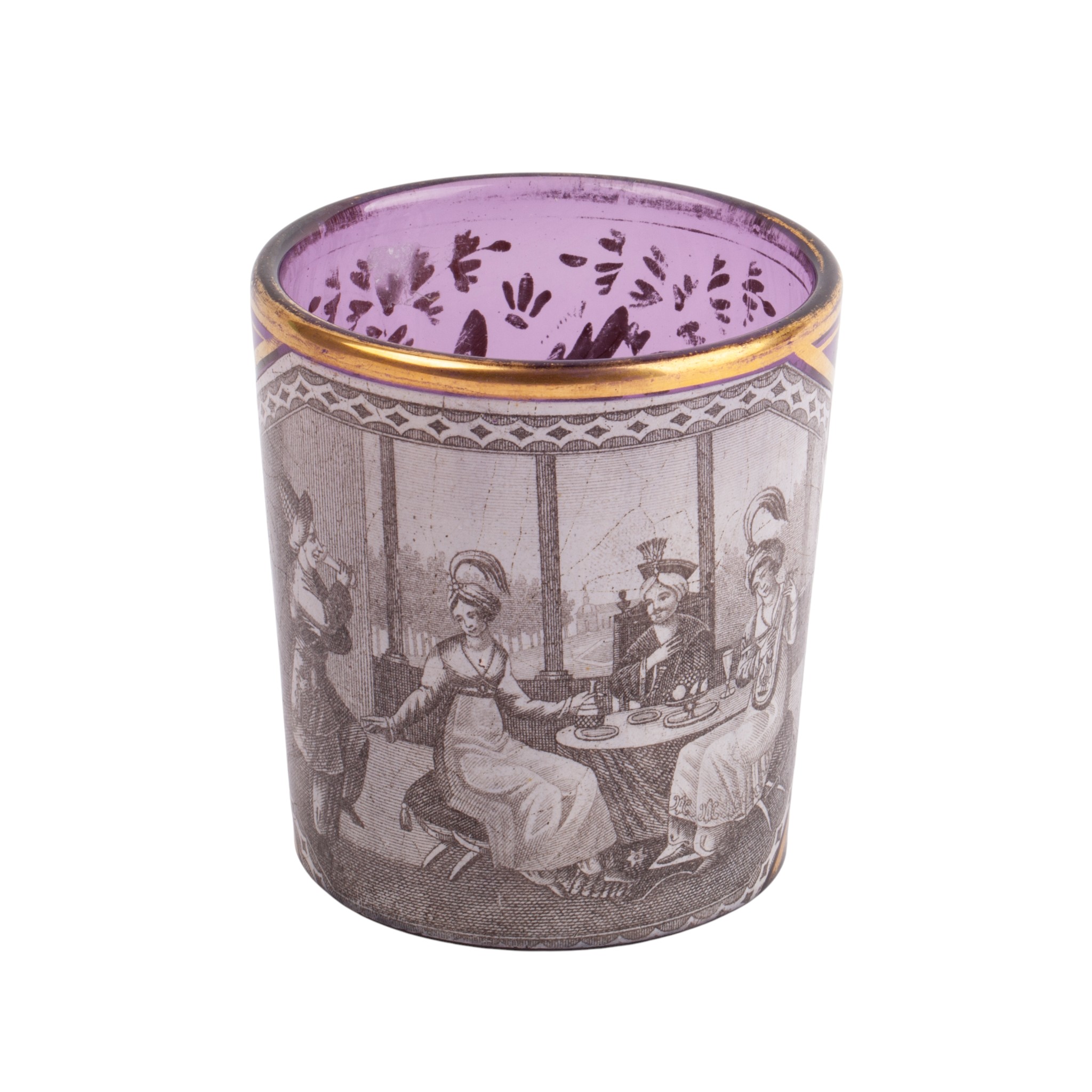
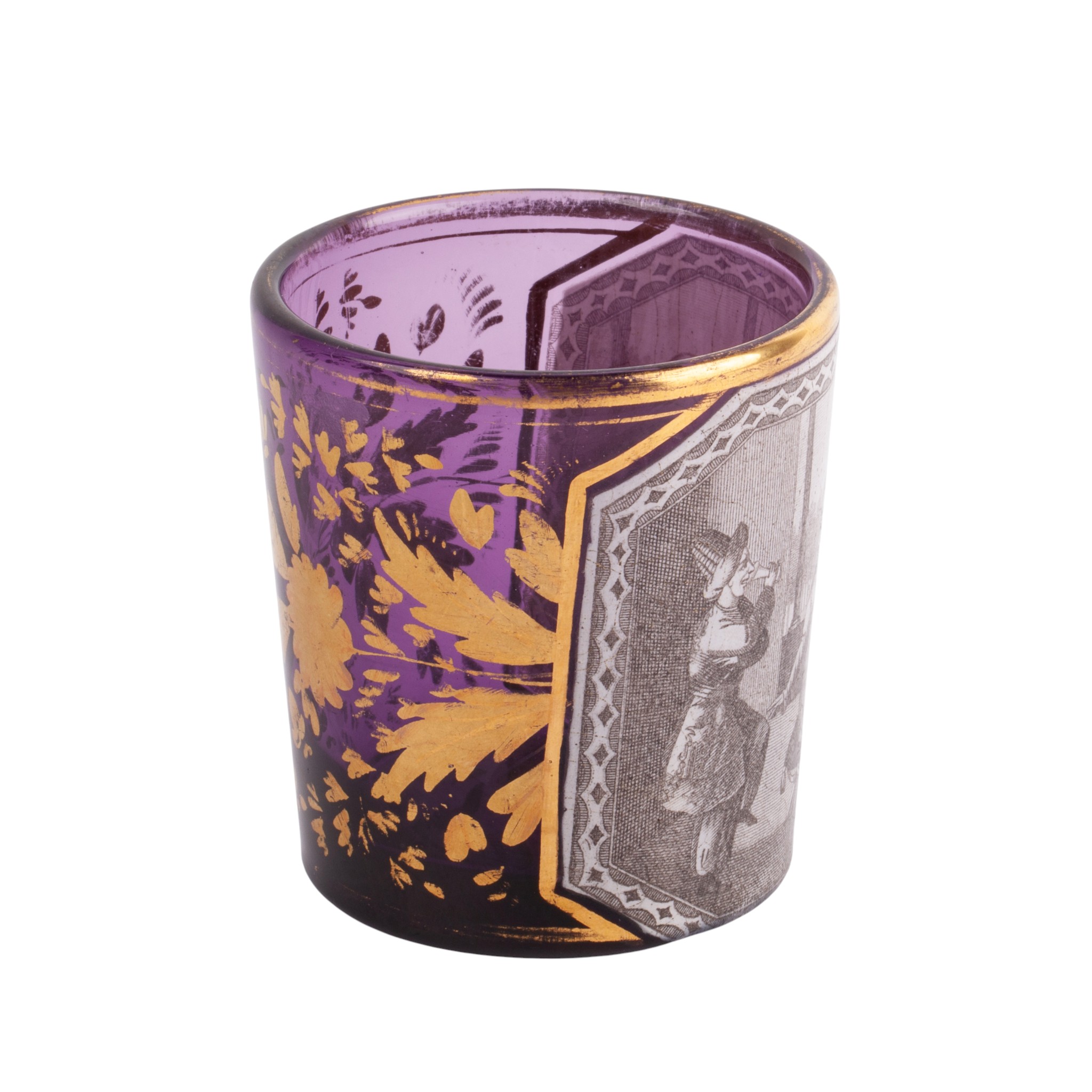
Lot 0076
Imperial Glass Manufactory Glass Beaker with the Scene “Dance before the Sultan”, Lithographic Workshop of Terebenev, St Petersburg, 1840s–1850s
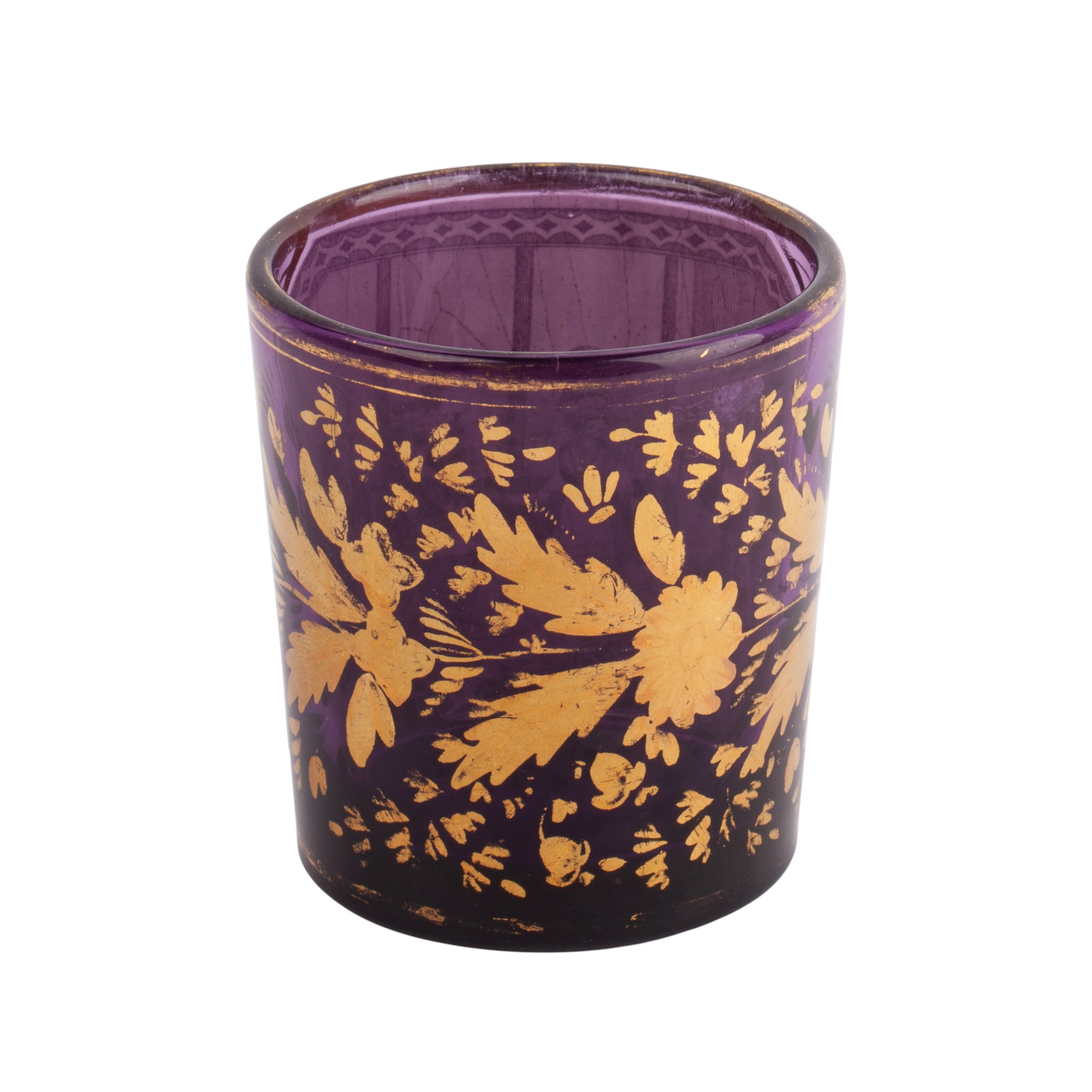
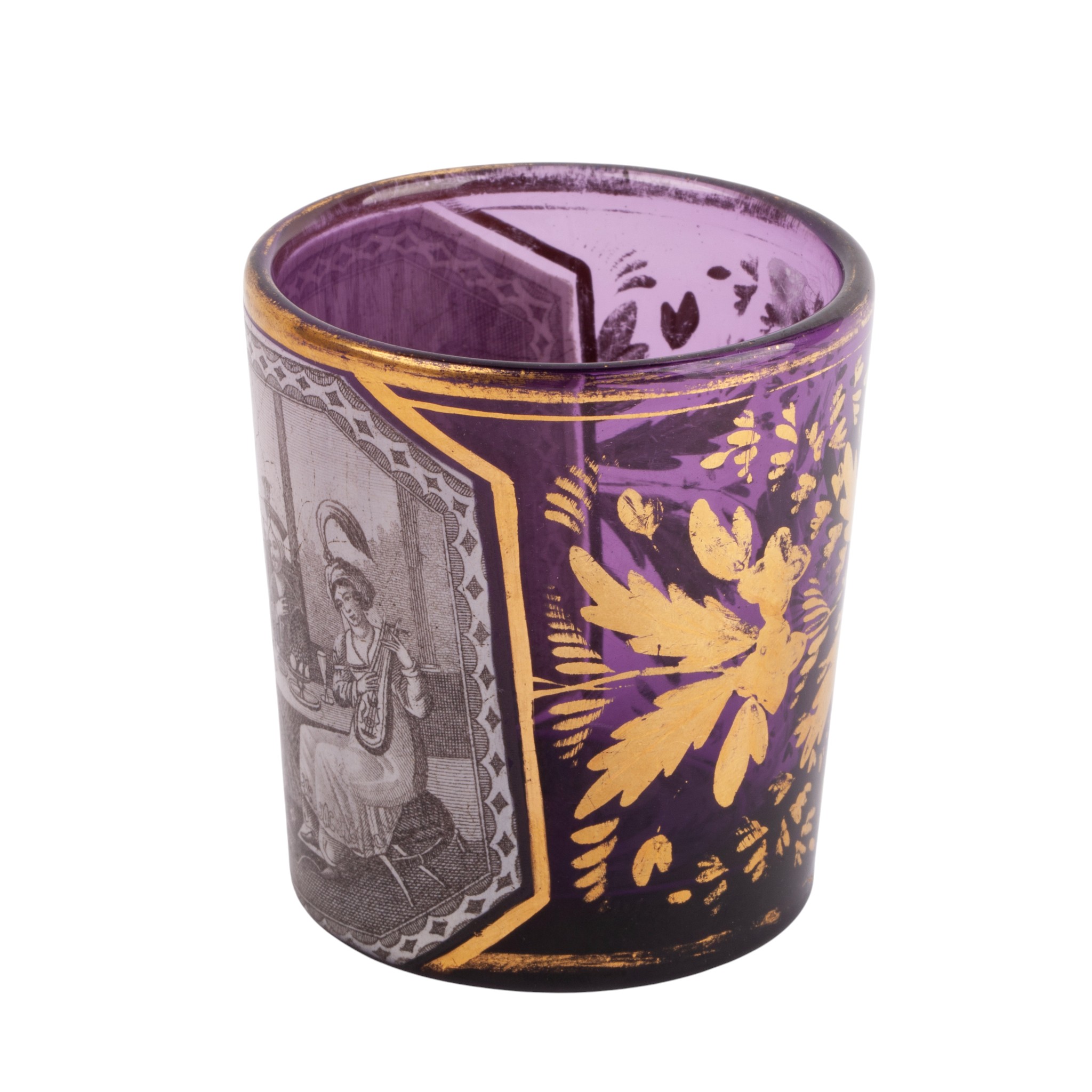
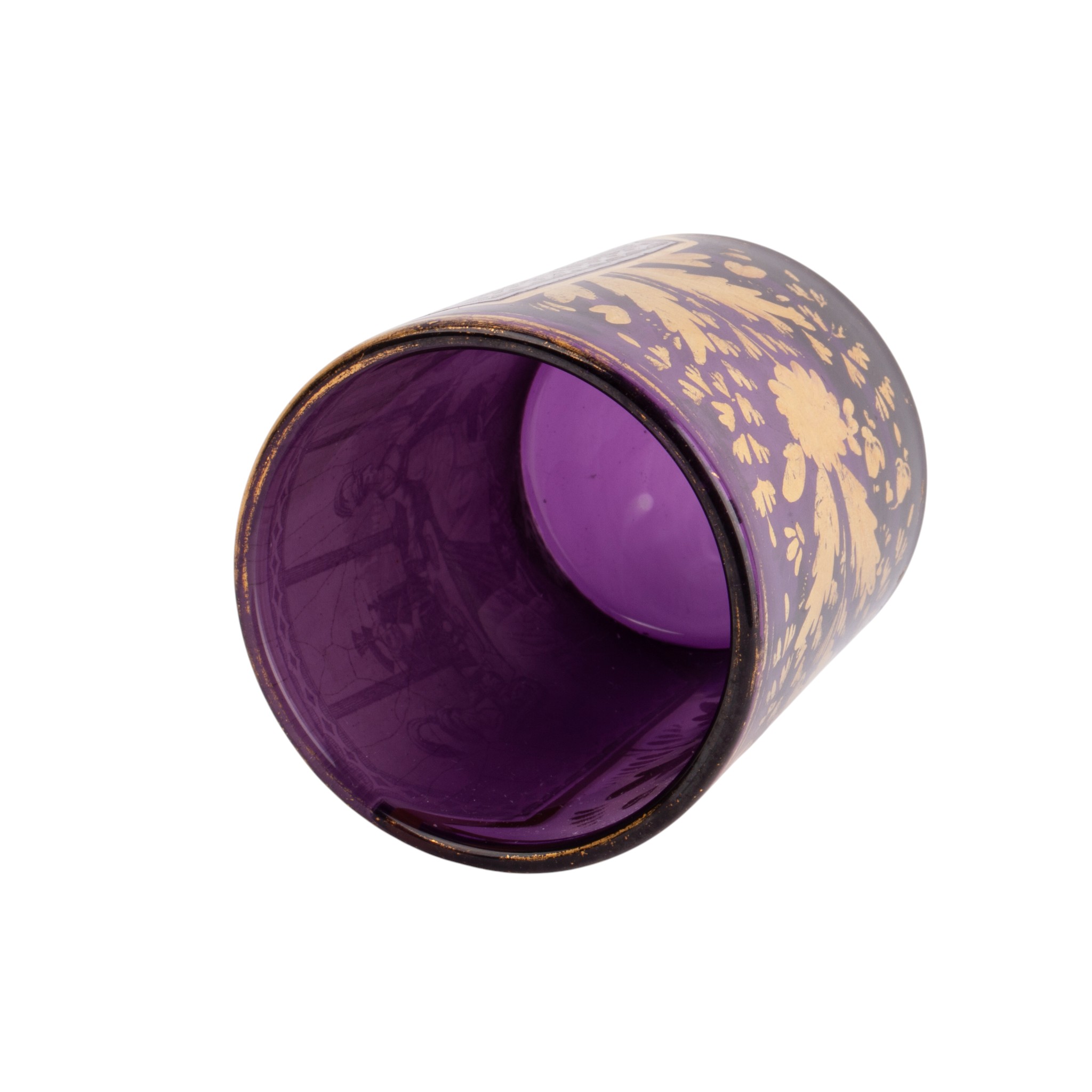
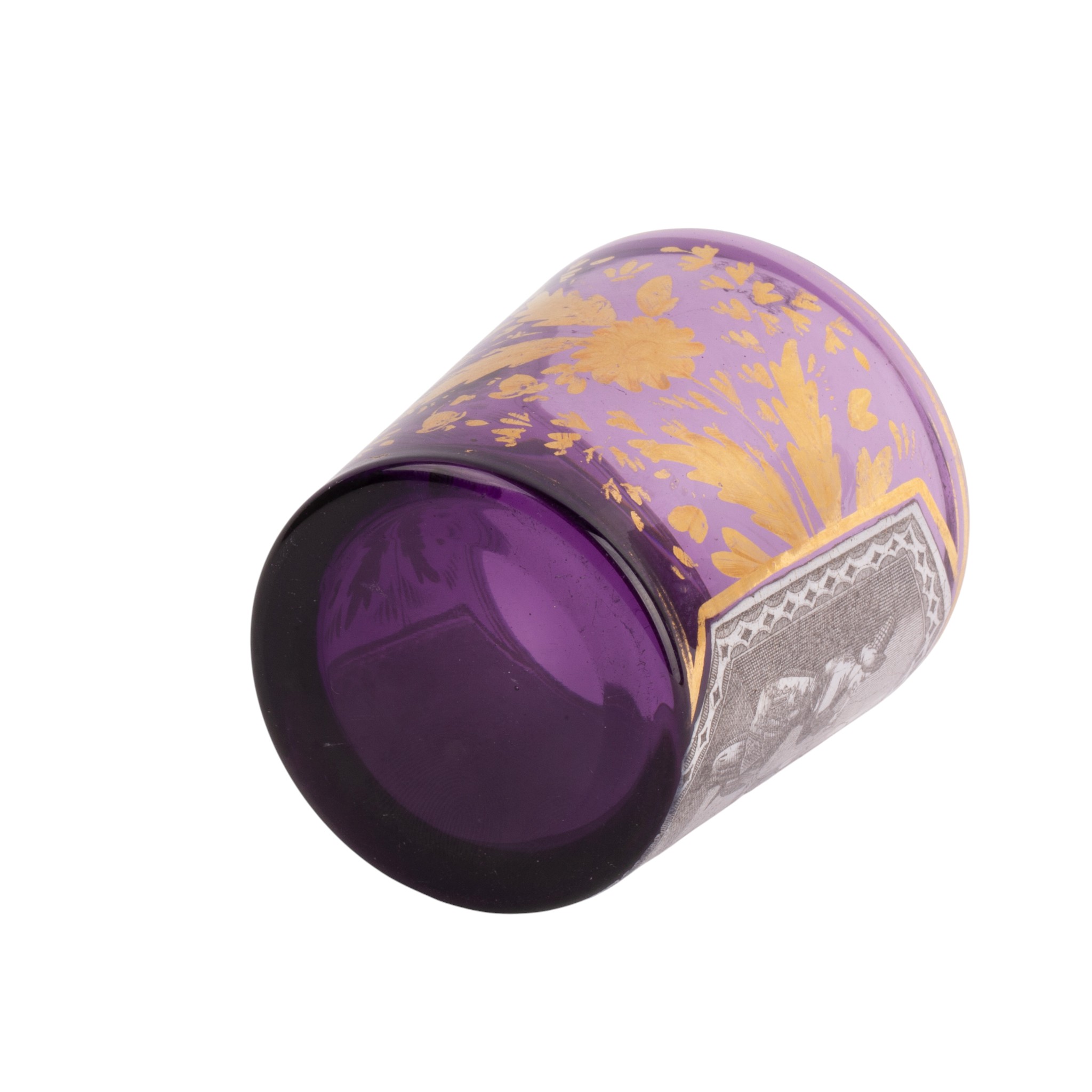
Estimate: 5000-7000€Imperial Glass Manufactory. Glass Beaker with the Scene “Dance before the Sultan”
Lithographic Workshop of Terebenev. St Petersburg, 1840s-1850s.
Amethyst glass, transfer-printed decoration, gilding.
Dimensions: 7.5 x 6.8 x 6.8 cm.
A rare amethyst glass beaker decorated with a figural literary scene known as “Dance before the Sultan,” illustrating an episode from Byron’s Don Juan. The cylindrical body is enriched on one side with a transfer-printed composition showing an orientalist feast scene with seated and standing figures in theatrical costume, while the reverse is adorned with a gilt floral spray scattered across the deep violet ground.
The decoration was executed in the technique of decalcomania, or transfer printing, introduced into Russian glassmaking in the 1830s and 1840s. In this process, a lithographed image printed in silicate pigments was first transferred onto paper, then applied to the glass surface and fired, so that the paper burned away and the image remained permanently fixed. This method made it possible to reproduce complex figural and narrative compositions with a degree of precision previously difficult to achieve in glass decoration.
The beaker is associated with the lithographic workshop of K. I. Terebenev and P. P. Semechkin, whose work played an important role in the development of printed decoration on Russian porcelain, faience, and glass. Their workshop specialized in combining lithographed imagery with painted gilding and ornamental embellishment, drawing on literary, allegorical, landscape, and historical subjects, as well as reproductions after European masters. Contemporary critics valued the technique for both its artistic refinement and its capacity to bring complex pictorial sources into the sphere of decorative art.
A comparable example is published in O. M. Polyashova, Russian Glass of the 18th to Early 20th Century, p. 161.Starting price: 4000€
Estimate: 5000-7000€
Hammer Price: Not sold -
Lot 0077
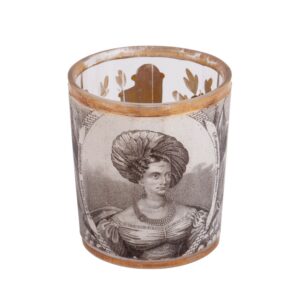
Russian Imperial Glasswork Glass with a Portrait of Empress Alexandra Feodorovna, Workshop of P. P. Semechkin and K. I. Terebenev, Petersburg, 1840s
Estimate: 5500-6500€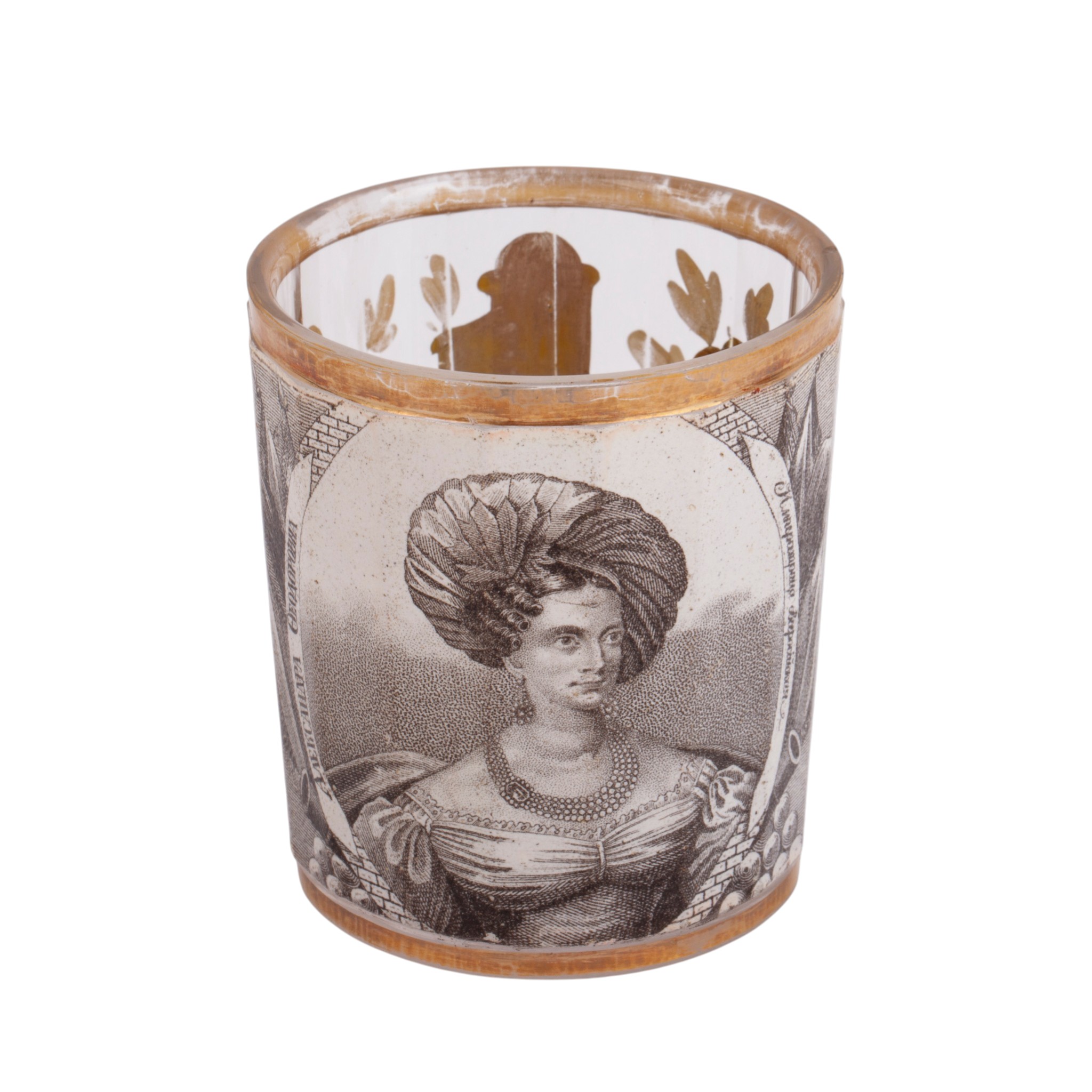
Lot 0077
Russian Imperial Glasswork Glass with a Portrait of Empress Alexandra Feodorovna, Workshop of P. P. Semechkin and K. I. Terebenev, Petersburg, 1840s
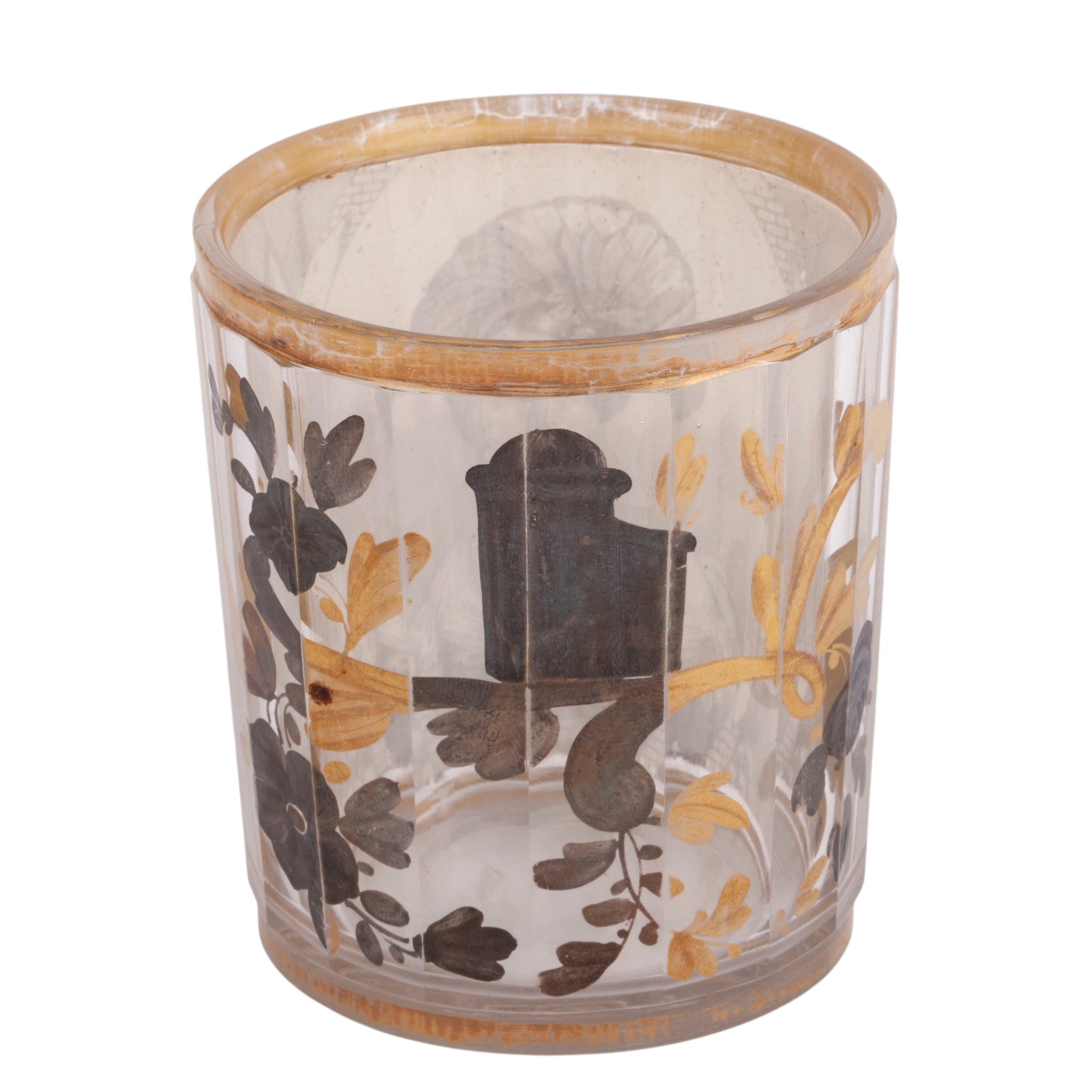
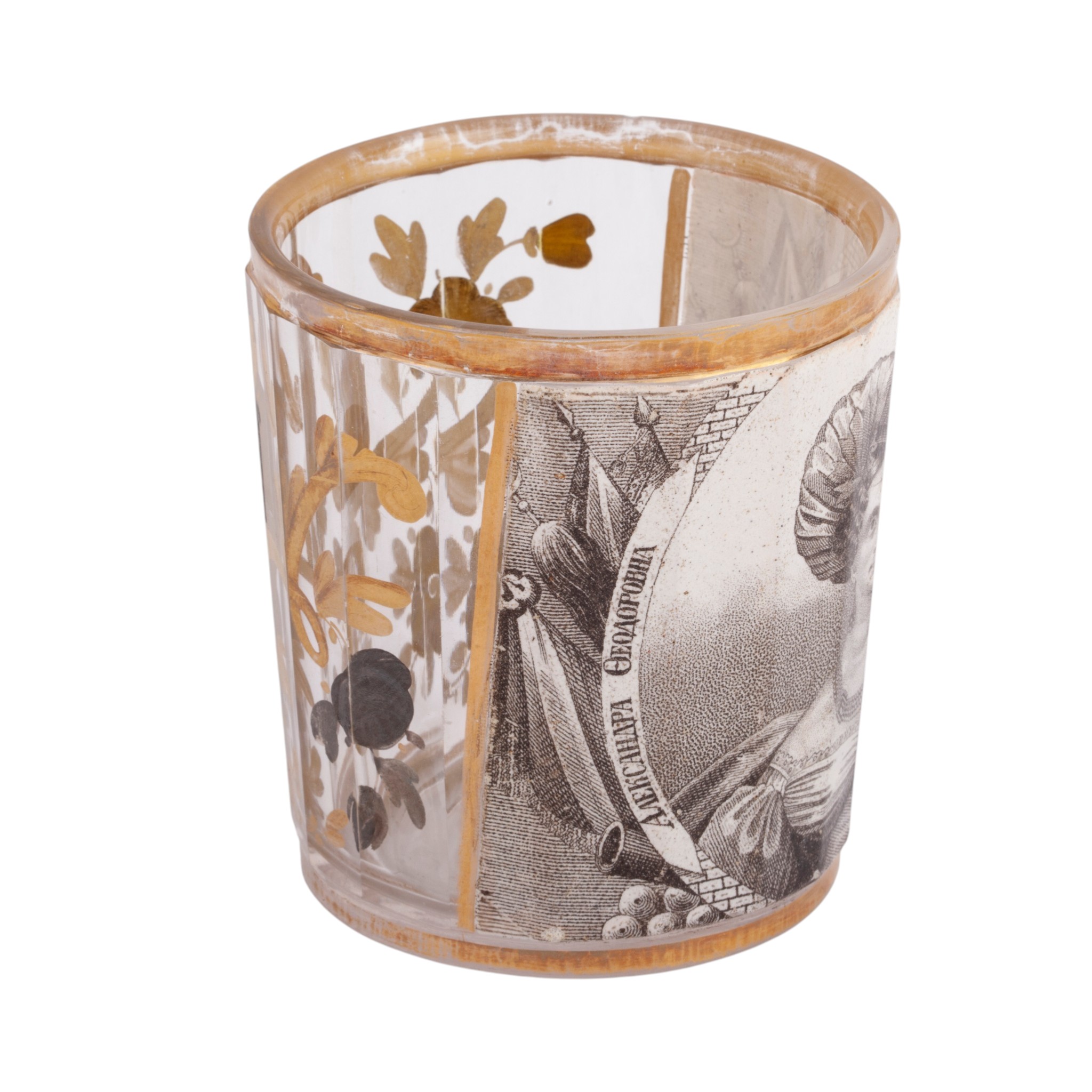
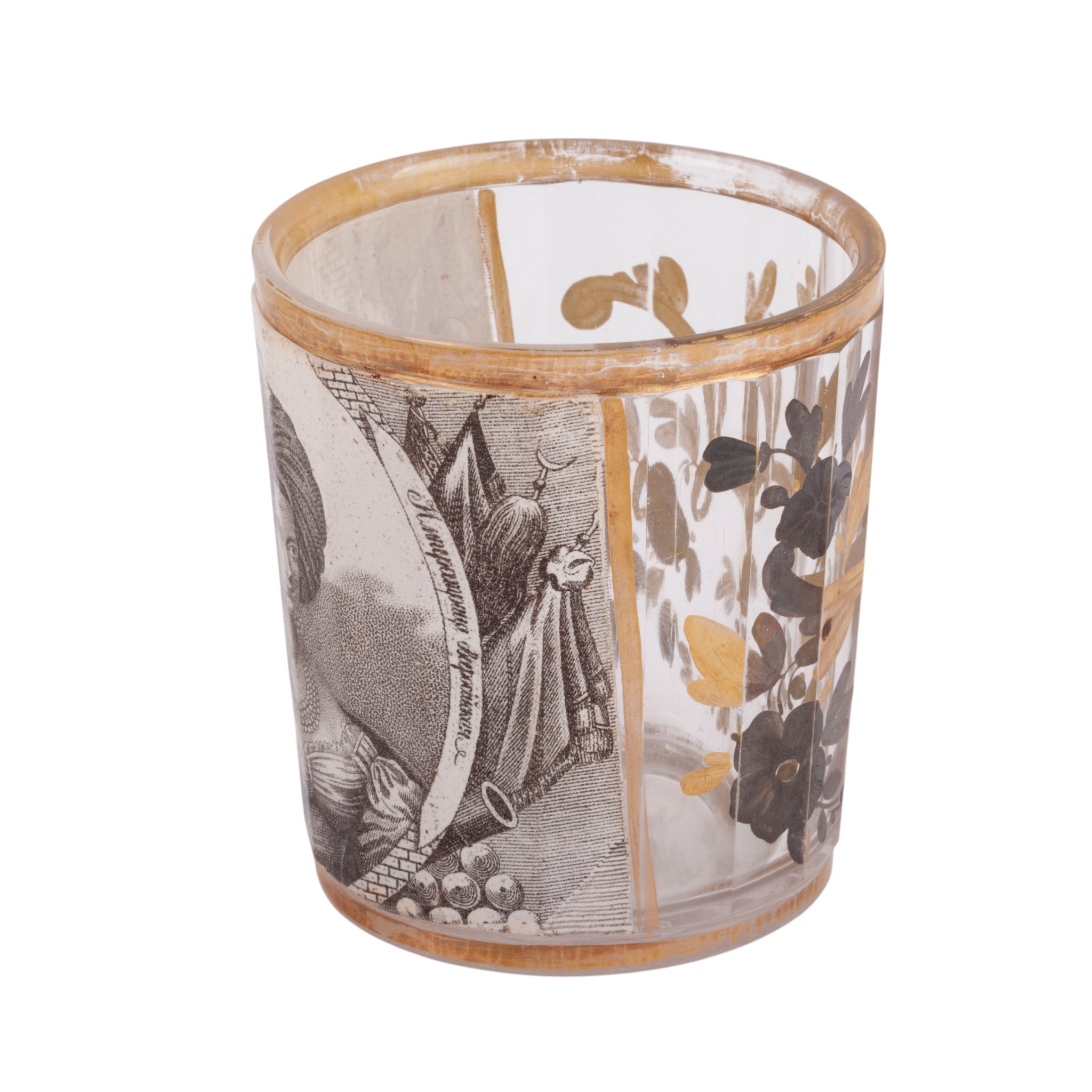
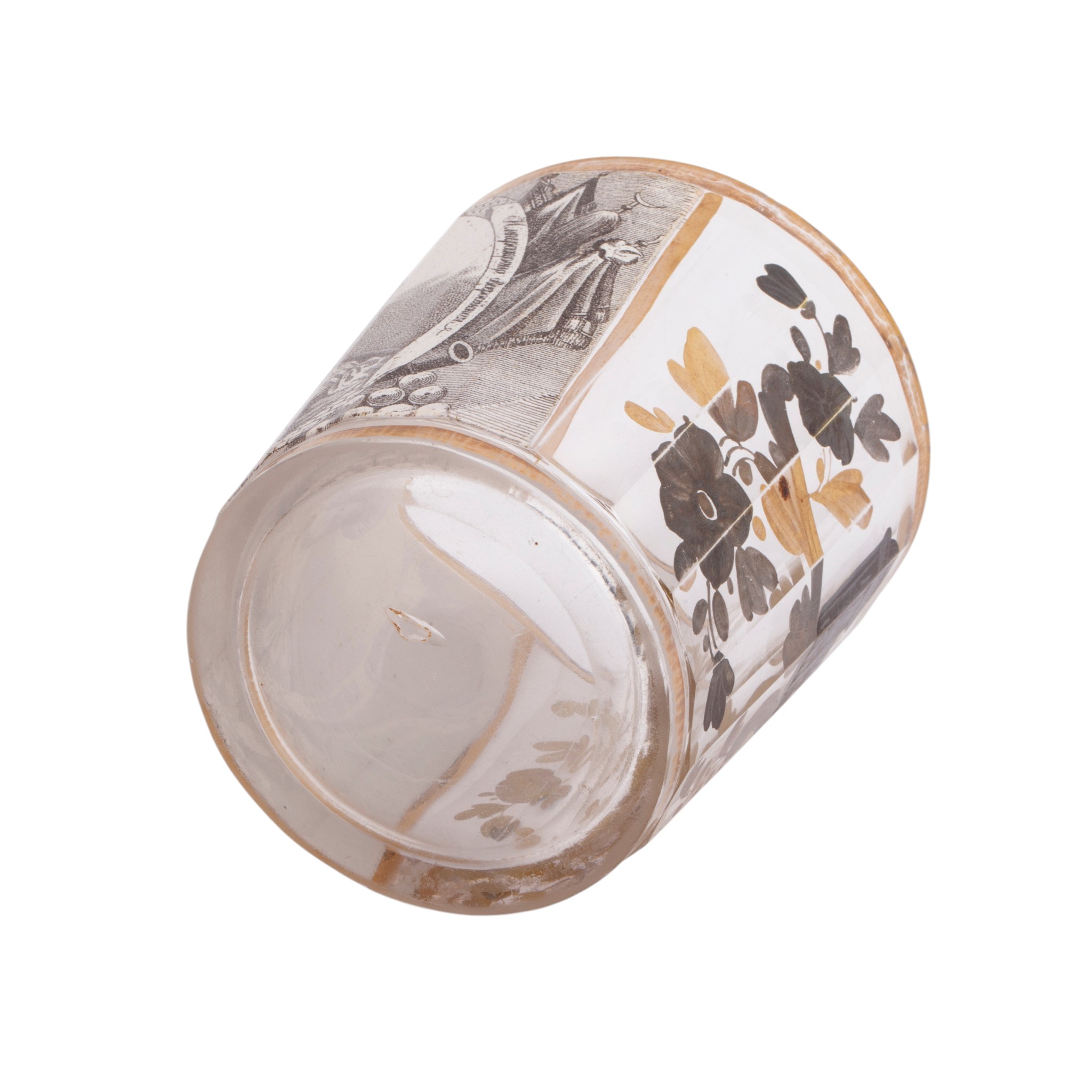
Estimate: 5500-6500€Russian Imperial Glasswork. Glass with a Portrait of Empress Alexandra Feodorovna
Imperial glass manufactory. Glass decorated with a portrait of Empress Alexandra Feodorovna . Workshop of P. P. Semechkin and K. I. Terebenev. Petersburg, 1840s
Transparent glass with transfer-printed decoration and gilding.
Dimensions: 7.7 x 6 cm.The glass is adorned with a well-known printed image of Empress Alexandra Feodorovna, after the painted original by artist P. I. Razumihin (1812–1848), from the collection of the State Historical Museum. The portrait is framed by a wreath of oak and laurel leaves. Below is the double-headed eagle with scepter and orb; above the garland rises the imperial crown. Oak branches extend to the sides, flanked by four banners on either side of the wreath.
This work exemplifies the lithographic decoration developed by the Terebenev and Semechkin workshop, which specialized in applying portraits of members of the Imperial family to glass, porcelain, and faience objects in combination with gilded ornamentation.Starting price: 5000€
Estimate: 5500-6500€
Hammer Price: Not sold -
Lot 0078
Russian Imperial Glasswork Glass Beaker with the Scene “Dance before the Sultan”, Lithographic Workshop of Terebenev, St Petersburg, 1840s–1850s
Estimate: 4000-5000€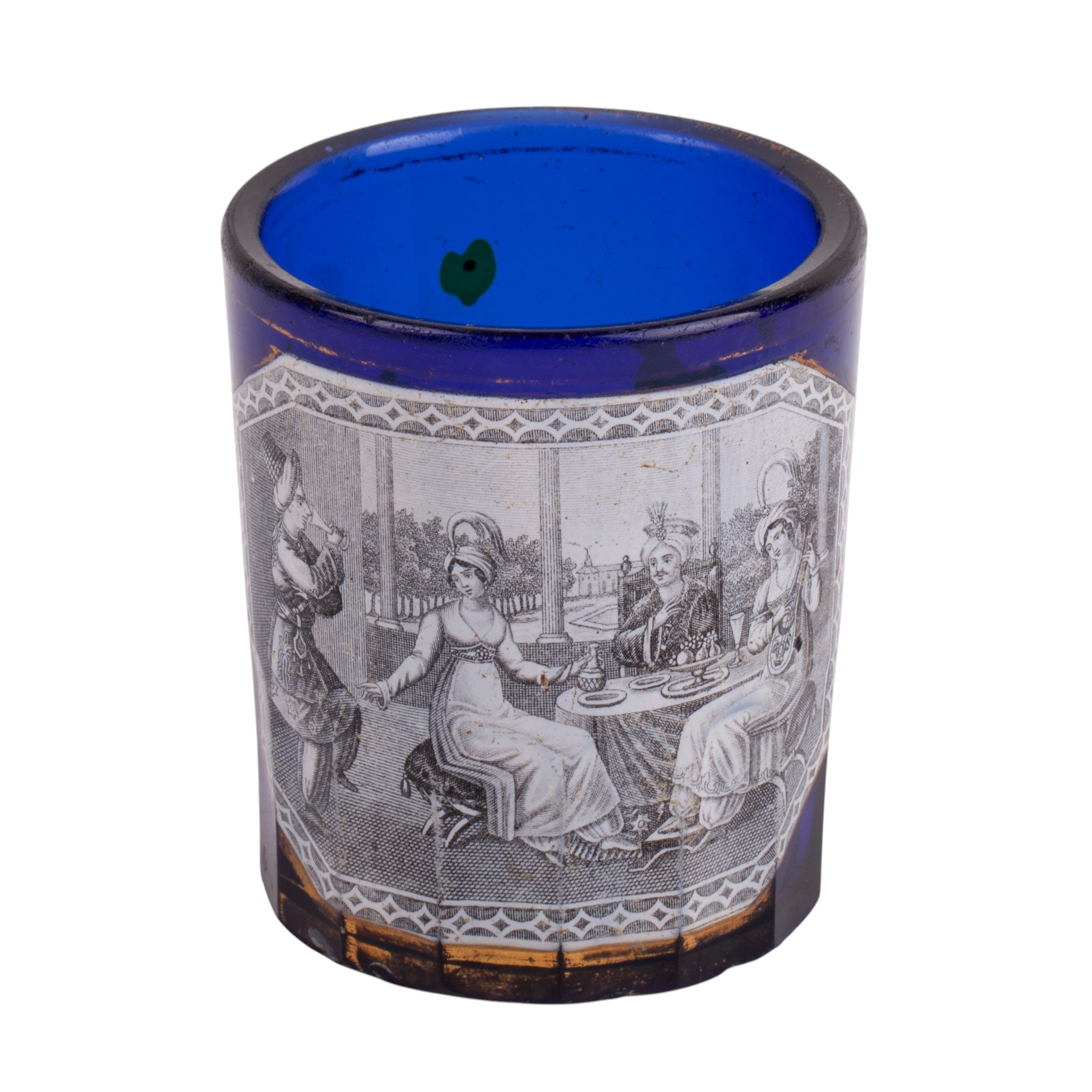
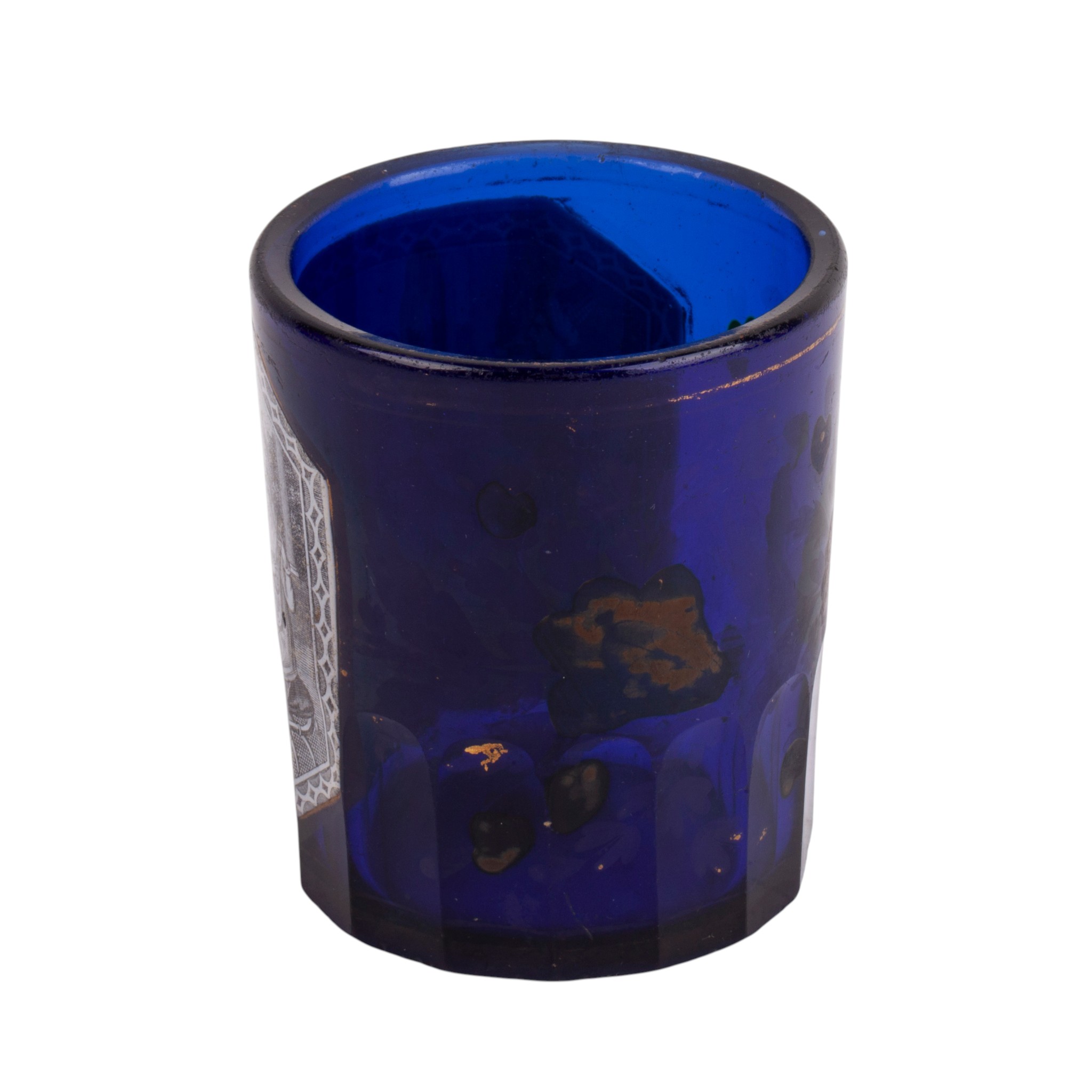
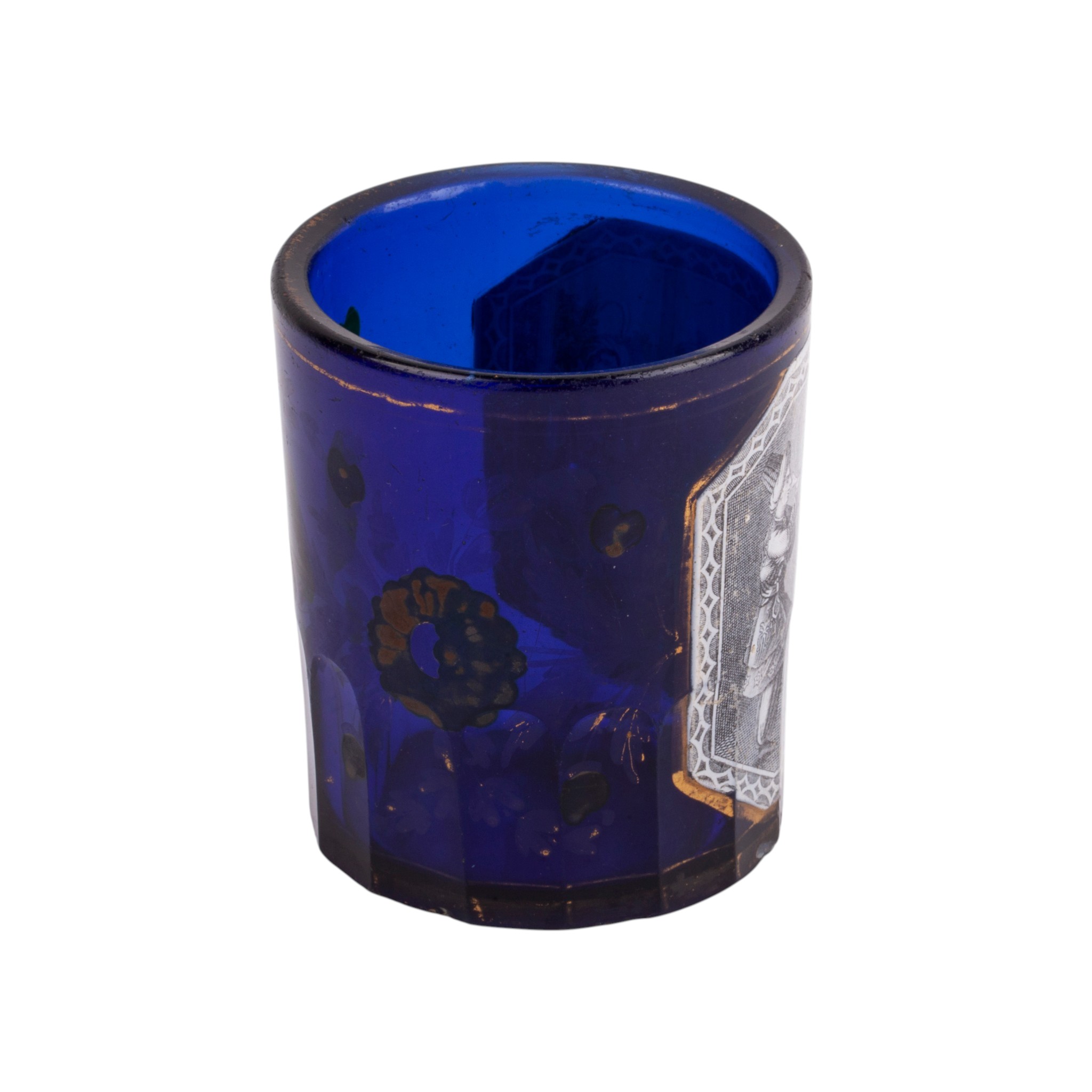
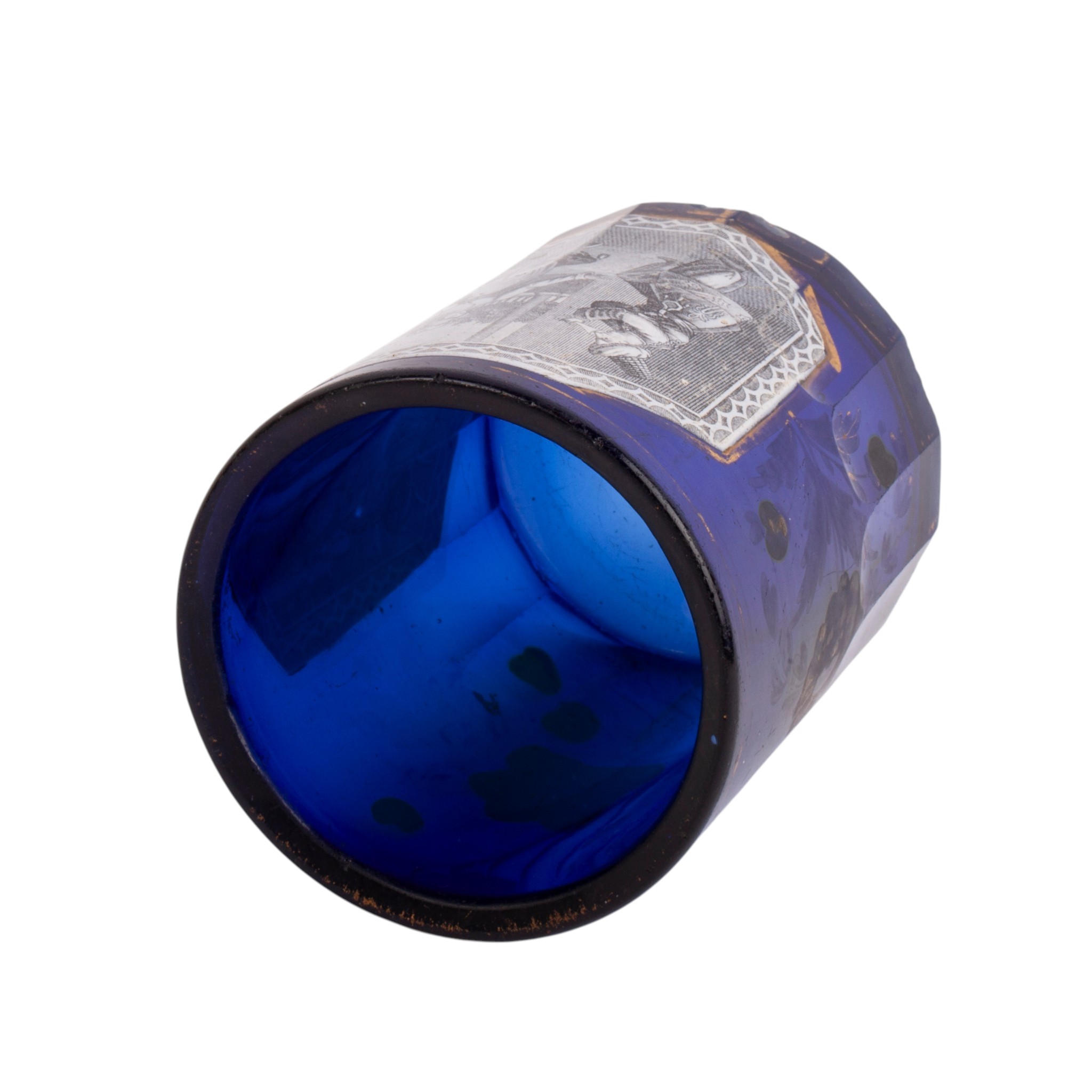
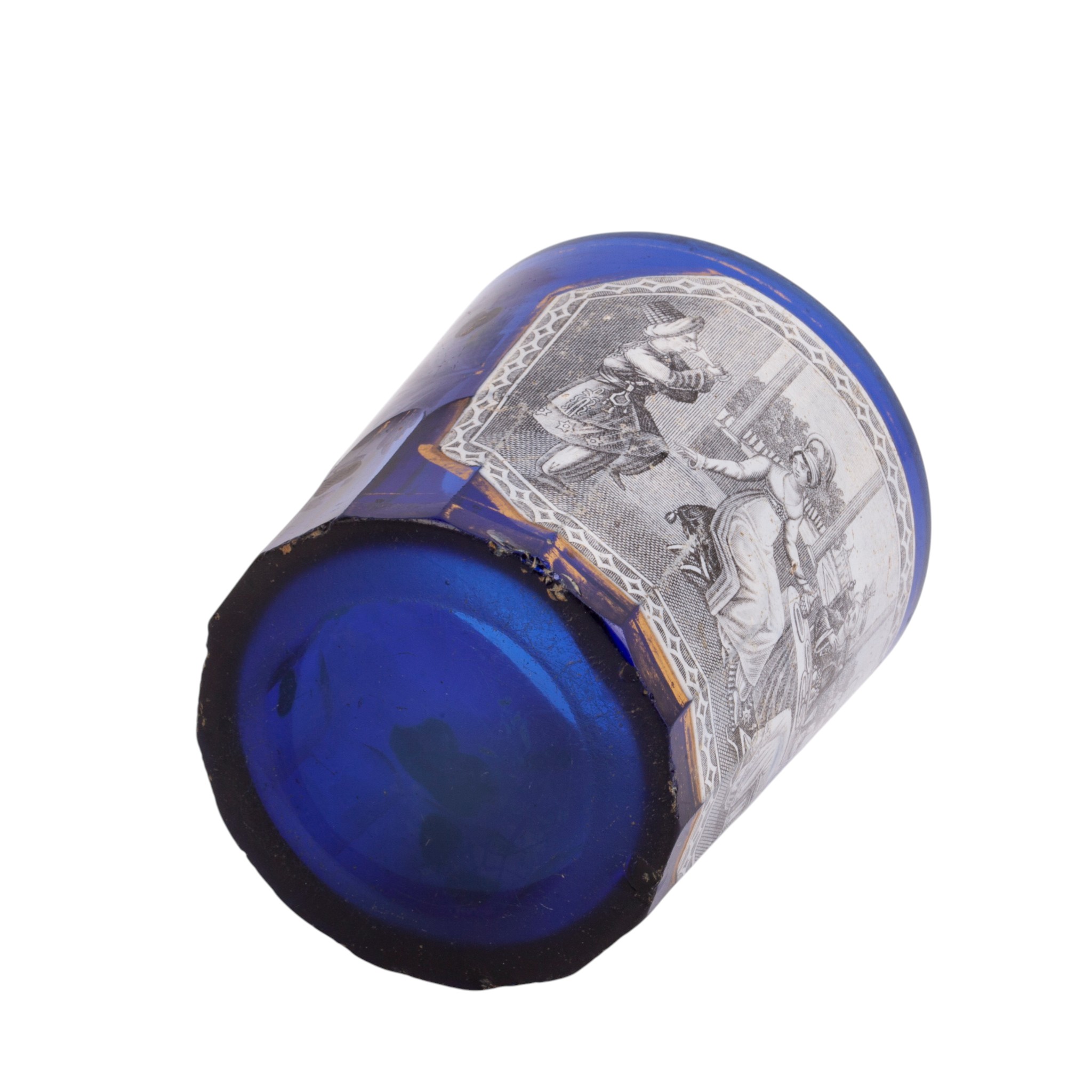
Lot 0078
Russian Imperial Glasswork Glass Beaker with the Scene “Dance before the Sultan”, Lithographic Workshop of Terebenev, St Petersburg, 1840s–1850s
Estimate: 4000-5000€Russian Imperial Glasswork. Glass Beaker with the Scene “Dance before the Sultan”
Lithographic Workshop of Terebenev. St Petersburg, 1840s-1850s.
Cobalt-blue glass with gilt rim and lithographed decoration over glaze, gilding.
Dimensions: 8,2 x 7,2 x 7,2 cm
A cobalt-blue glass beaker decorated with a figural literary scene known as “Dance before the Sultan,” illustrating an episode from Byron’s Don Juan. The cylindrical body is enriched on one side with a transfer-printed composition showing an orientalist feast scene with seated and standing figures in theatrical costume.
The decoration was executed in the technique of decalcomania, or transfer printing, introduced into Russian glassmaking in the 1830s and 1840s. In this process, a lithographed image printed in silicate pigments was first transferred onto paper, then applied to the glass surface and fired, so that the paper burned away and the image remained permanently fixed. This method made it possible to reproduce complex figural and narrative compositions with a degree of precision previously difficult to achieve in glass decoration.
The beaker is associated with the lithographic workshop of K. I. Terebenev and P. P. Semechkin, whose work played an important role in the development of printed decoration on Russian porcelain, faience, and glass. Their workshop specialized in combining lithographed imagery with painted gilding and ornamental embellishment, drawing on literary, allegorical, landscape, and historical subjects, as well as reproductions after European masters. Contemporary critics valued the technique for both its artistic refinement and its capacity to bring complex pictorial sources into the sphere of decorative art.
A comparable example is published in O. M. Polyashova, Russian Glass of the 18th to Early 20th Century, p. 161.Starting price: 3500€
Estimate: 4000-5000€
Hammer Price: Not sold -
Lot 0079
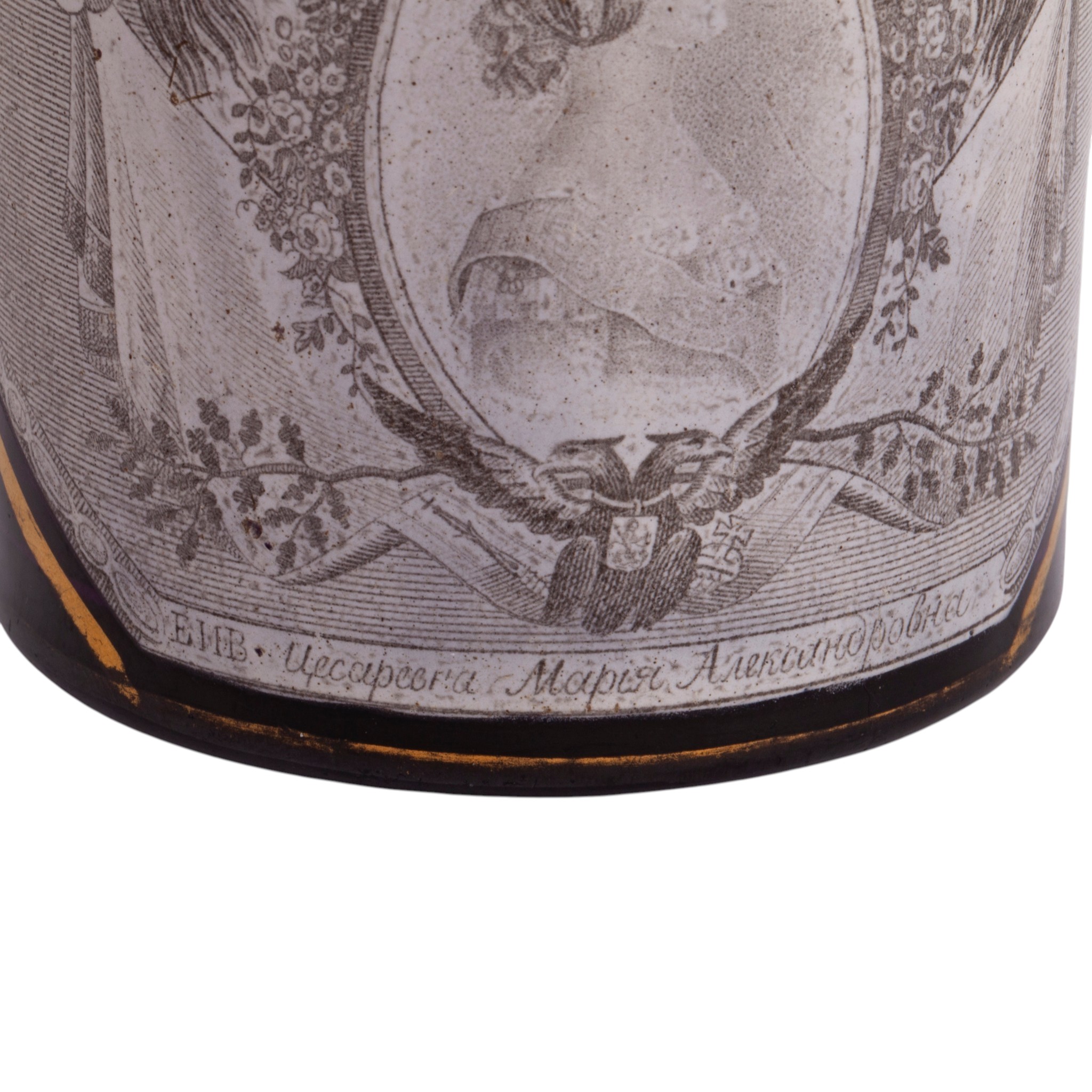
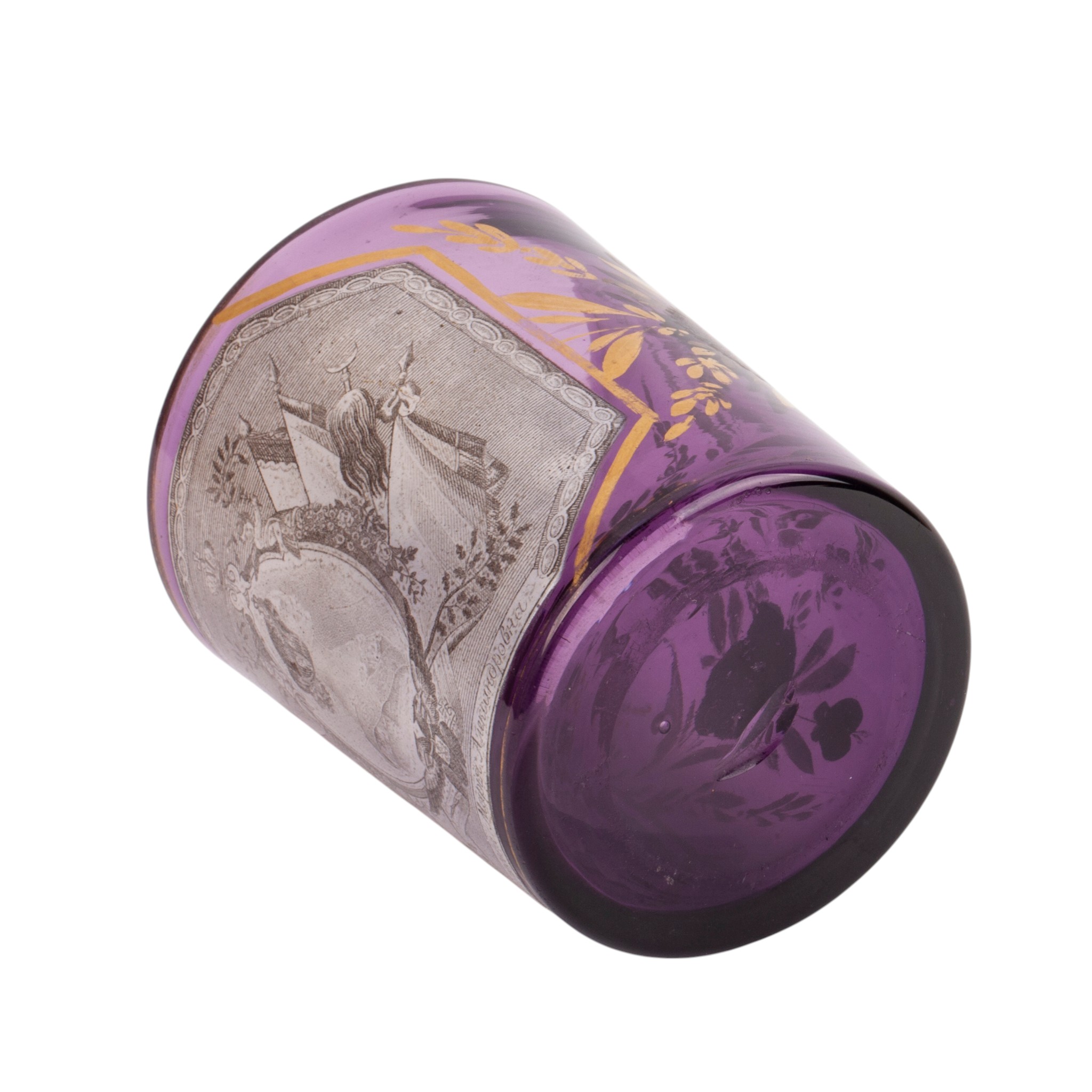
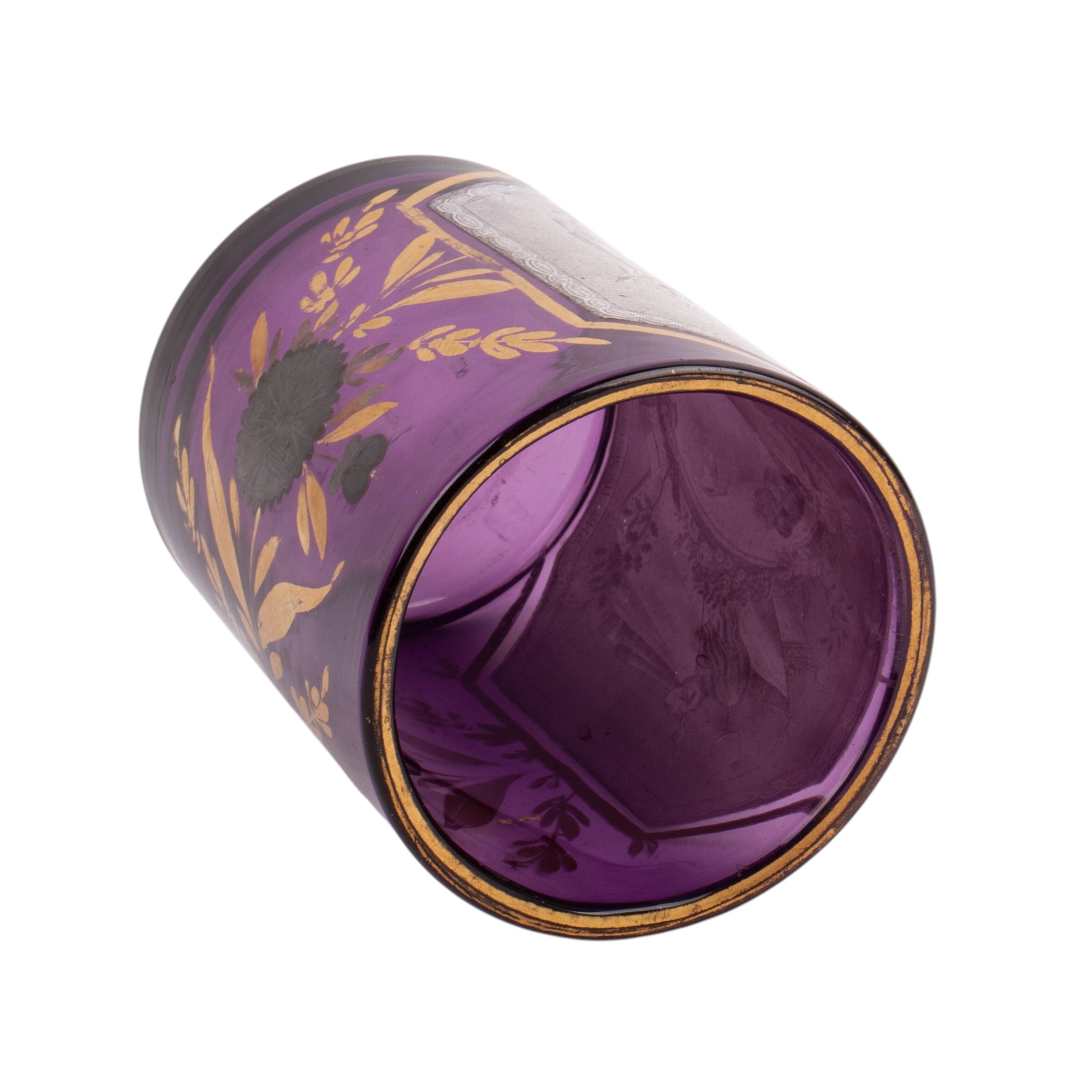
Imperial Glass Manufactory Glass with a Portrait of Empress Maria Alexandrovna, Workshop of P. P. Semechkin and K. I. Terebenev, Petersburg, 1840s
Estimate: 5000-6000€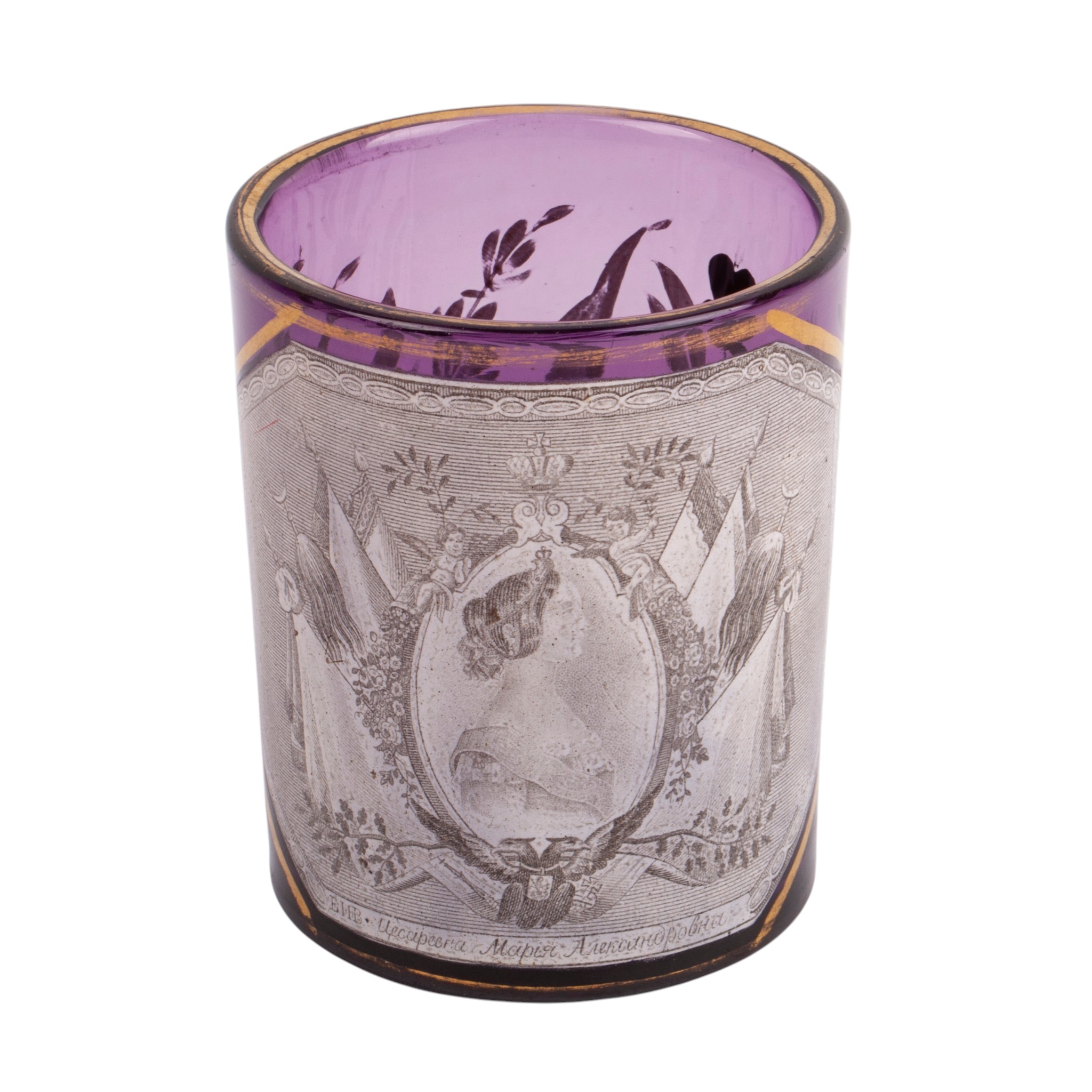
Lot 0079
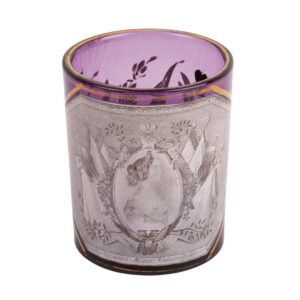
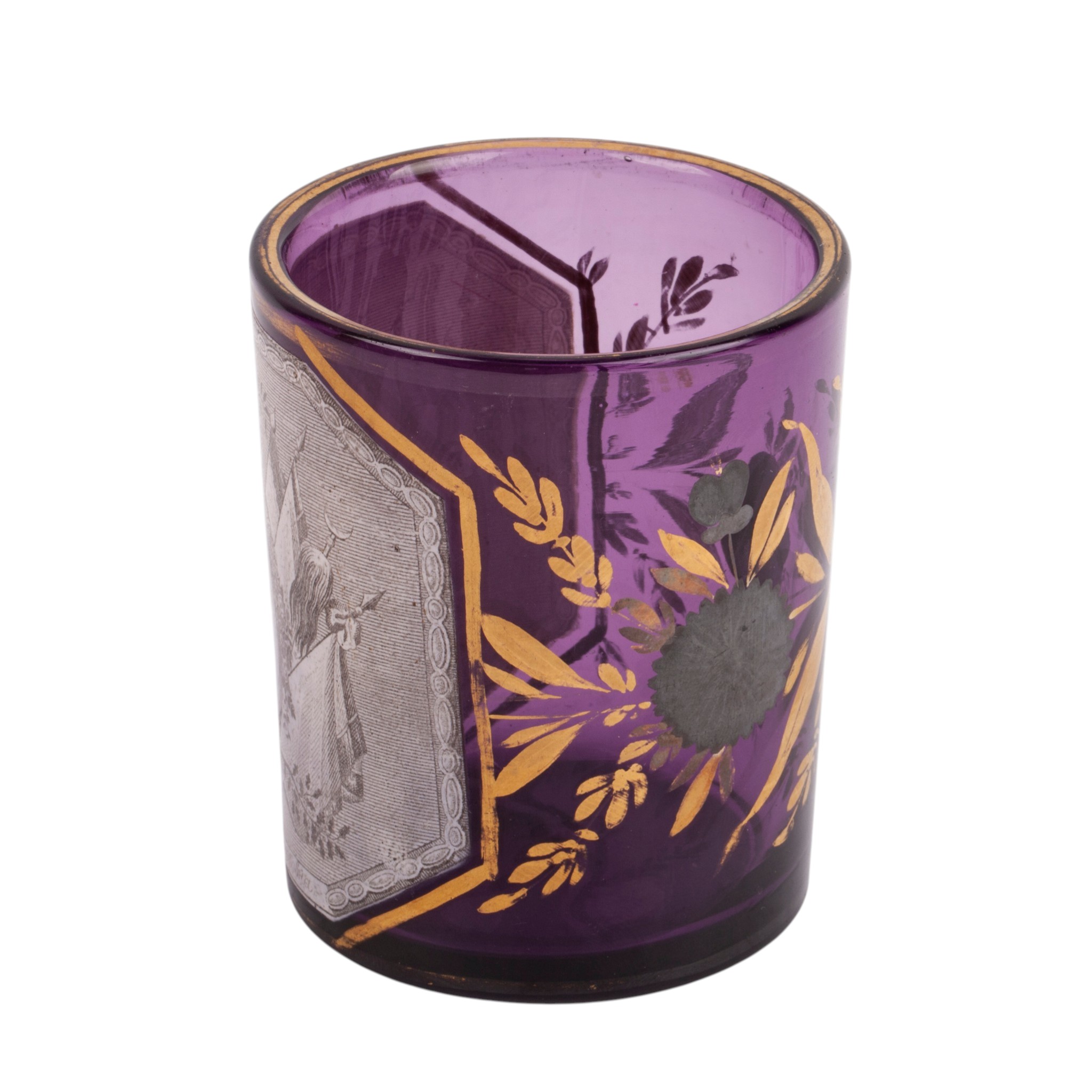
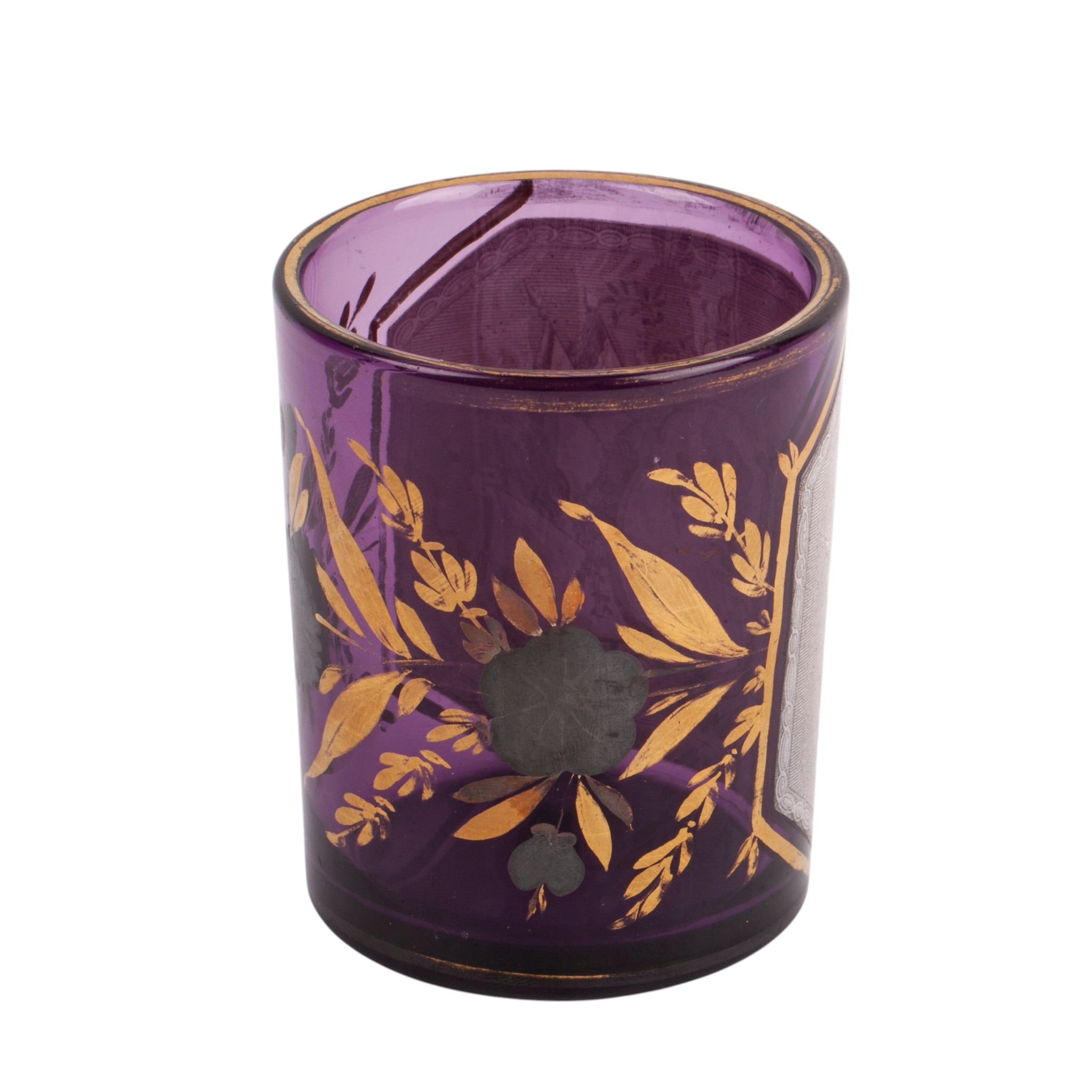
Imperial Glass Manufactory Glass with a Portrait of Empress Maria Alexandrovna, Workshop of P. P. Semechkin and K. I. Terebenev, Petersburg, 1840s
Estimate: 5000-6000€Imperial Glass Manufactory. Glass with a Portrait of Empress Maria Alexandrovna
Imperial glass manufactory. Glass with a portrait of Empress Maria Alexandrovna. Workshop of P. P. Semechkin and K. I. Terebenev. Petersburg, 1840s
Amethyst-colored glass with gilt rim and lithographed decoration over the glaze.
Dimensions: 8,5 x 7,2 x 7 cm,This glass is a vivid example of the production of the renowned St. Petersburg workshop of P. P. Semechkin and K. I. Terebenev, which specialized in decorating glass, porcelain, and faience with lithographed images combined with gilded and silver-painted floral and ornamental motifs. Among the most favored subjects were portraits of members of the Imperial family.
The decoration features a rare portrait of Grand Duchess Maria Alexandrovna (1824–1880; from 1855, Empress of Russia). The image is based on a lithograph executed in 1841 by R. F. Dragunov to commemorate the marriage of Grand Duke Alexander Nikolaevich (the future Emperor Alexander II) to Princess Maximiliane Wilhelmine Augusta Sophia Maria of Hesse-Darmstadt, baptized into Orthodoxy as Maria Alexandrovna.Starting price: 4500€
Estimate: 5000-6000€
Hammer Price: Not sold -
Lot 0080
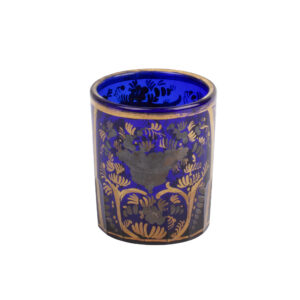
Glass Beaker. Russian Empire, 1830s
Estimate: 2000-2500€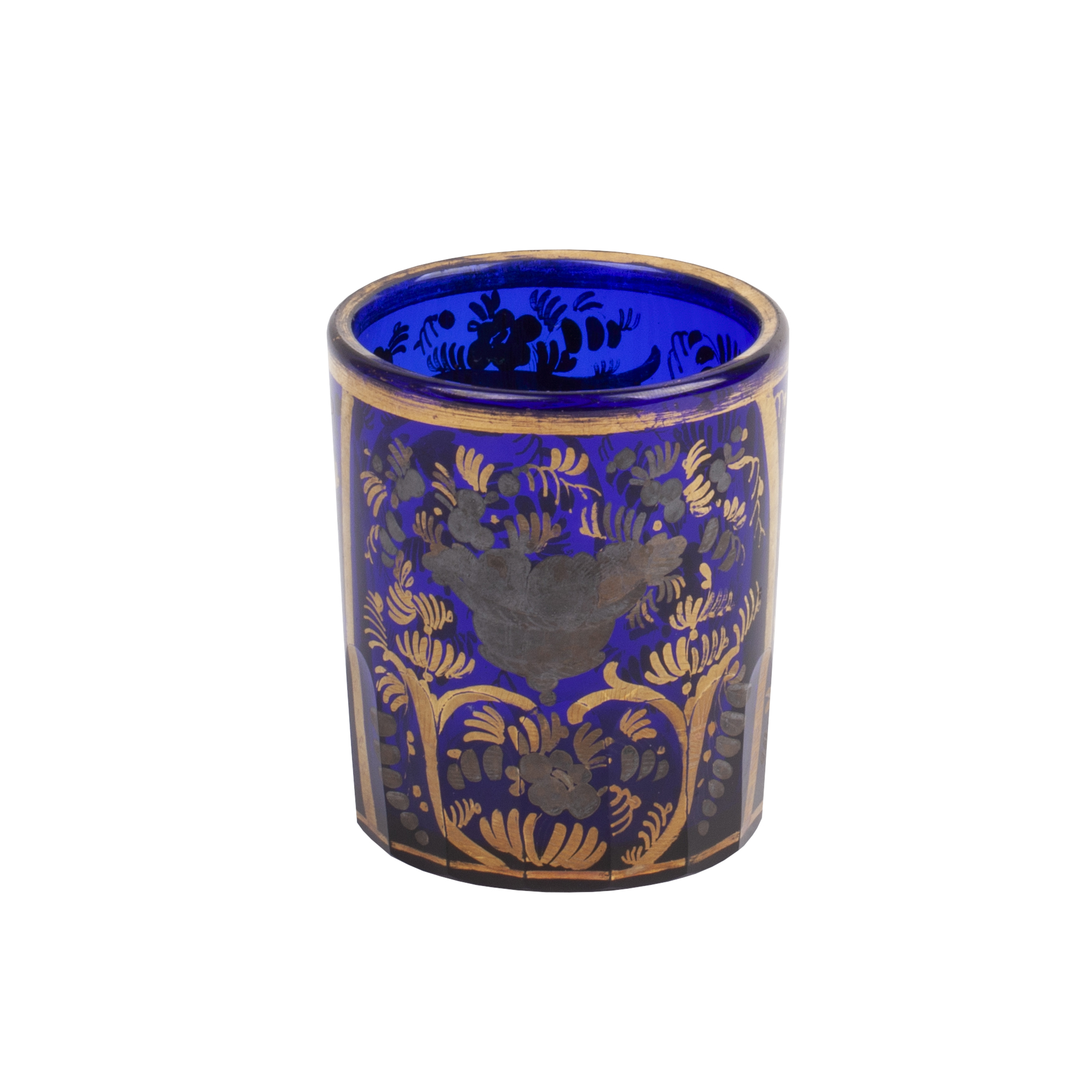
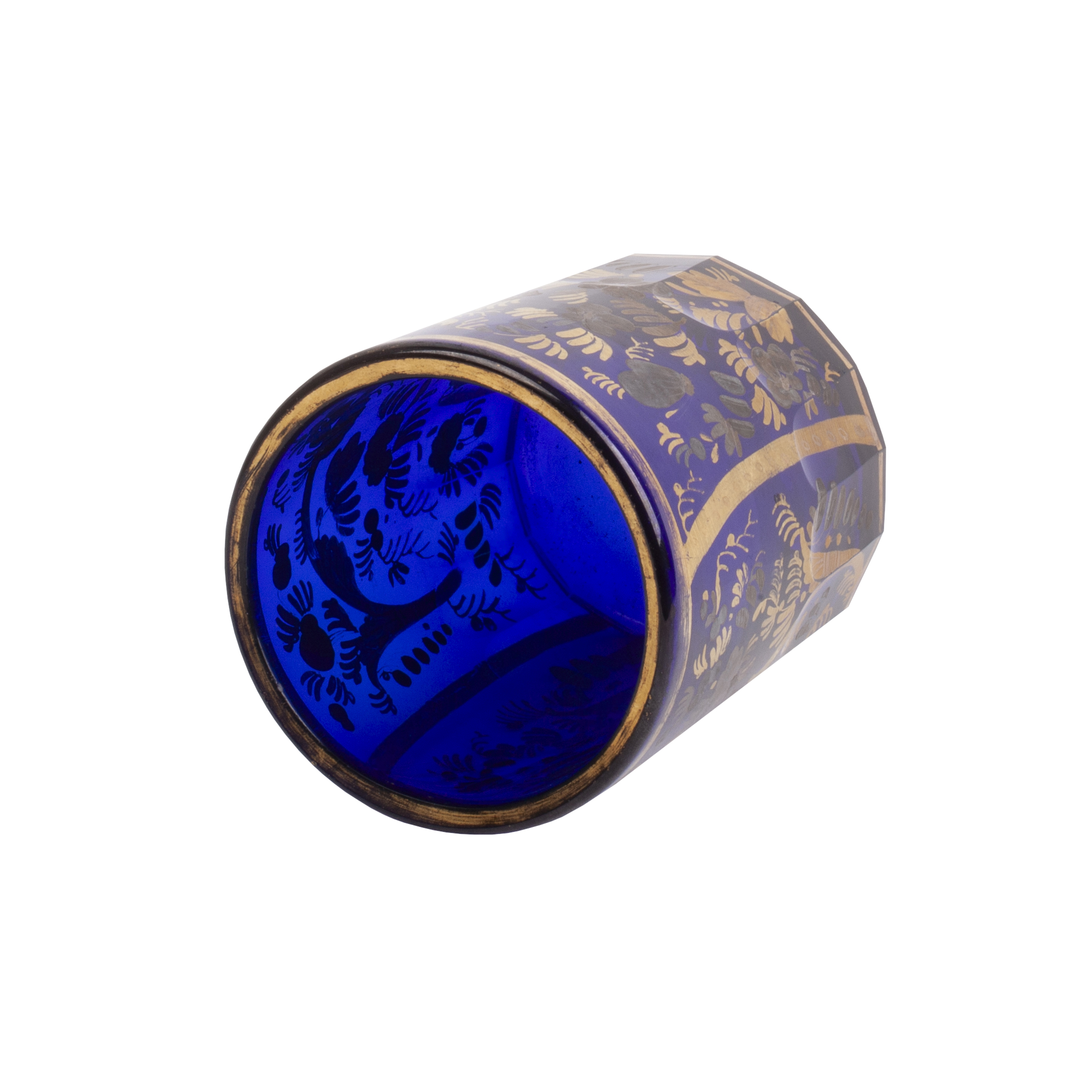
Lot 0080
Glass Beaker. Russian Empire, 1830s
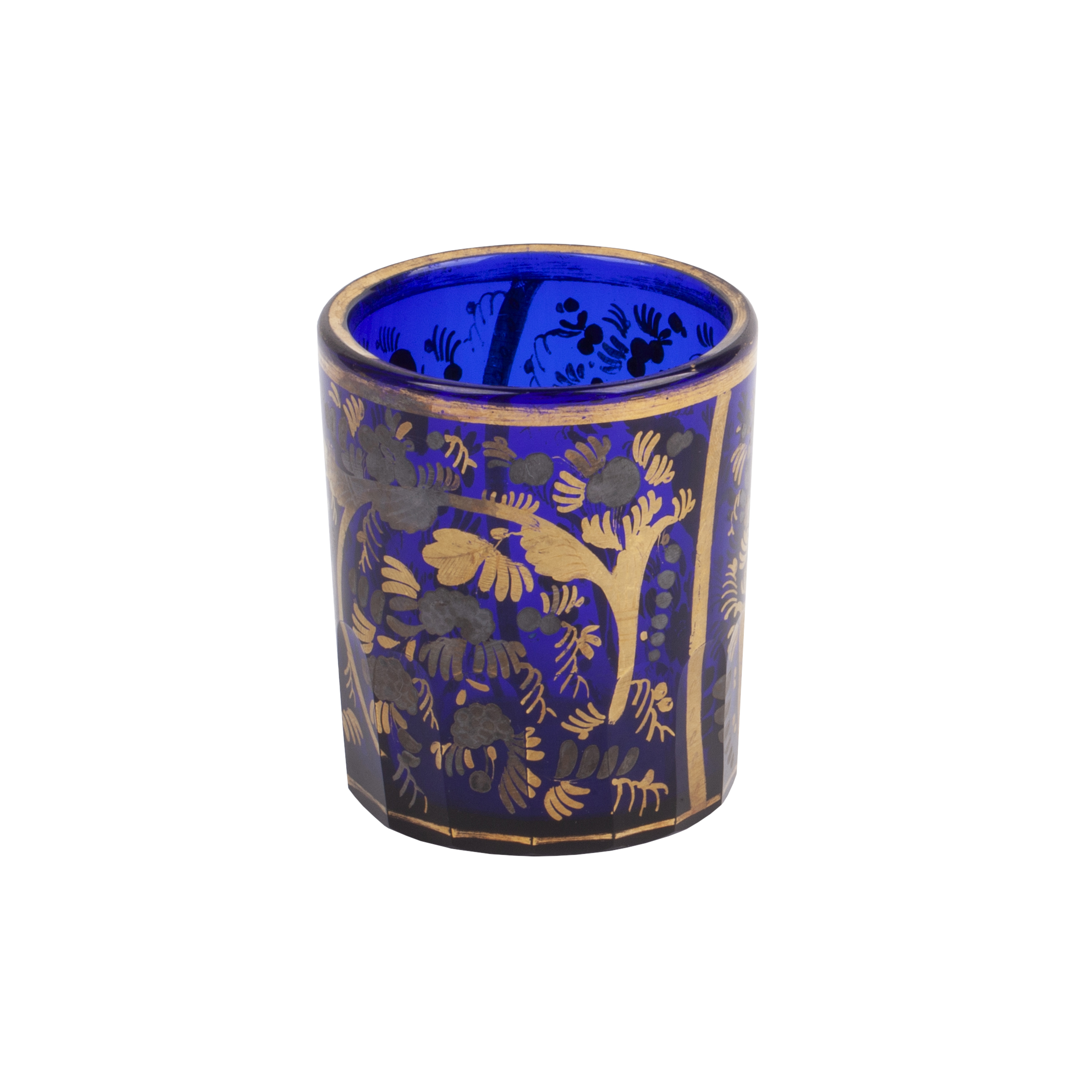
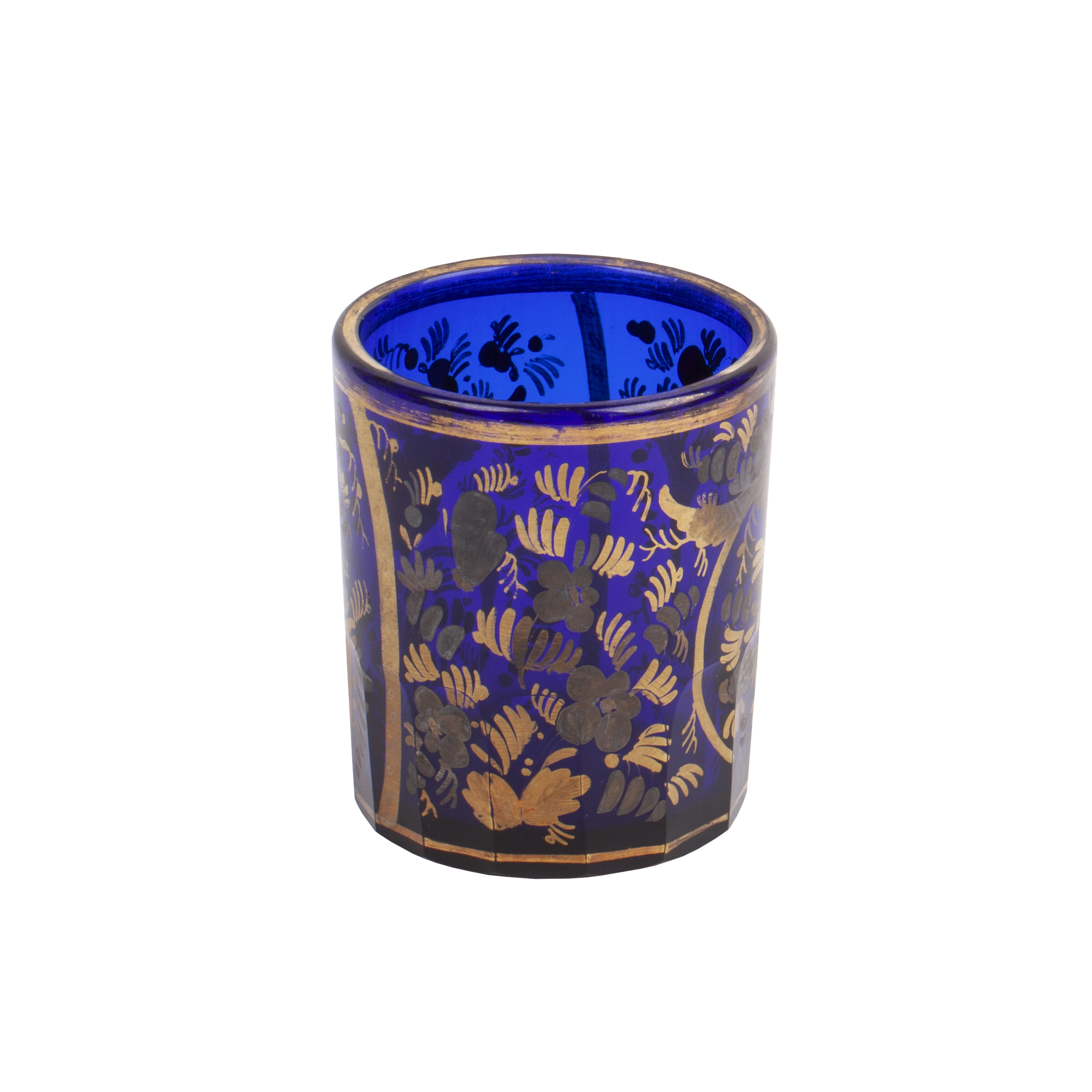
Estimate: 2000-2500€Glass Beaker
Russian Empire, 1830s
Cobalt glass, silver and gilt painting
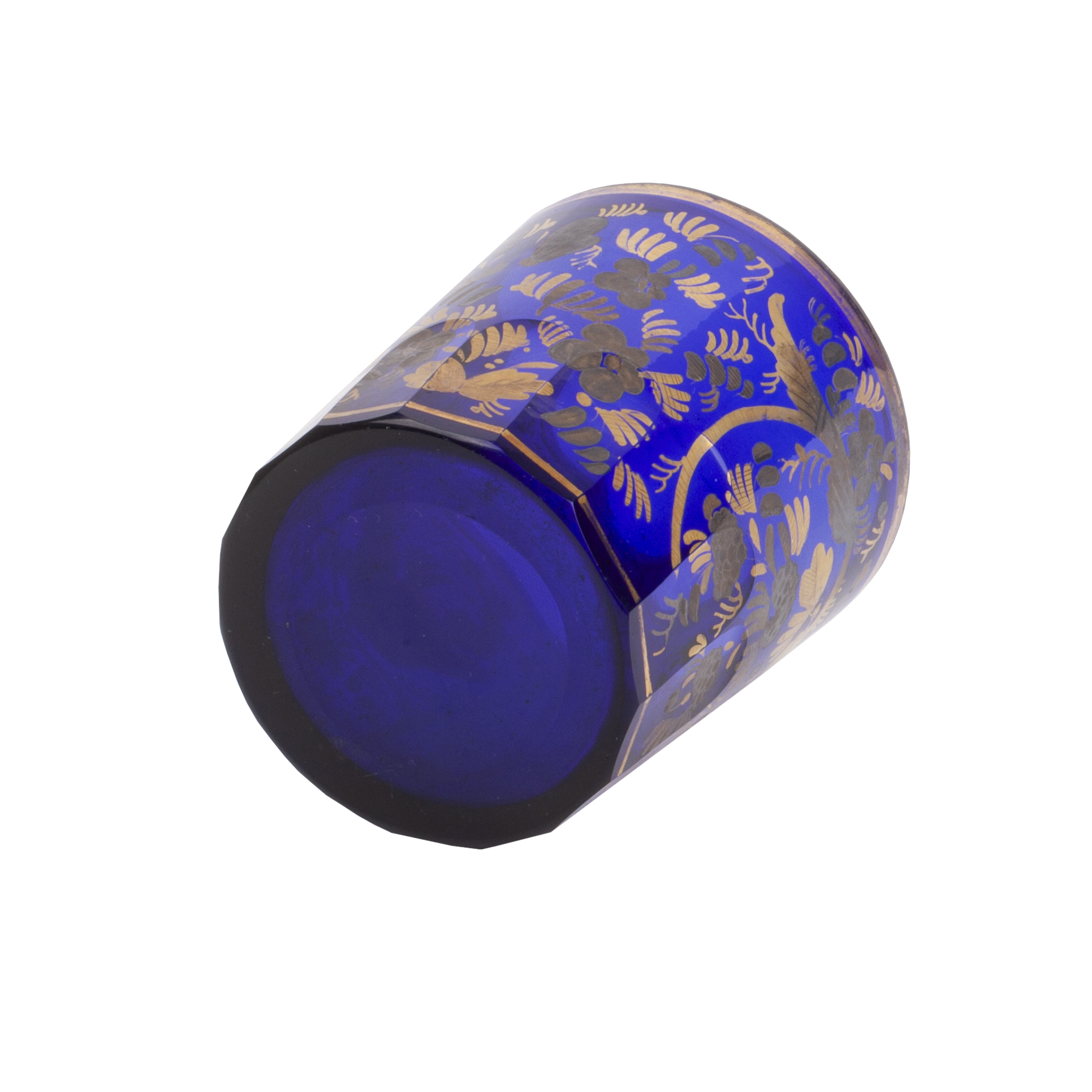
Dimensions: 8.5 x 7.5 cm.A cylindrical beaker with a cannelated lower section, decorated with large bouquets and floral sprigs executed in gold over a silver ground. The rich cobalt tone combined with the shimmering metallic ornamentation reflects the opulent decorative style of Russian glassmaking in the early 19th century, when floral gilding was often used to enhance the depth and brilliance of colored glass.
Cobalt, or blue glass – also known as smalta – is produced by adding cobalt compounds (such as cobalt oxide or cobalt carbonate) to molten glass. Cobalt is a highly concentrated coloring agent, and only a very small amount is needed to achieve its deep, saturated hue.
Starting price: 1500€
Estimate: 2000-2500€
Hammer Price: Not sold

Providing Antique Auctions