-
Lot 0001
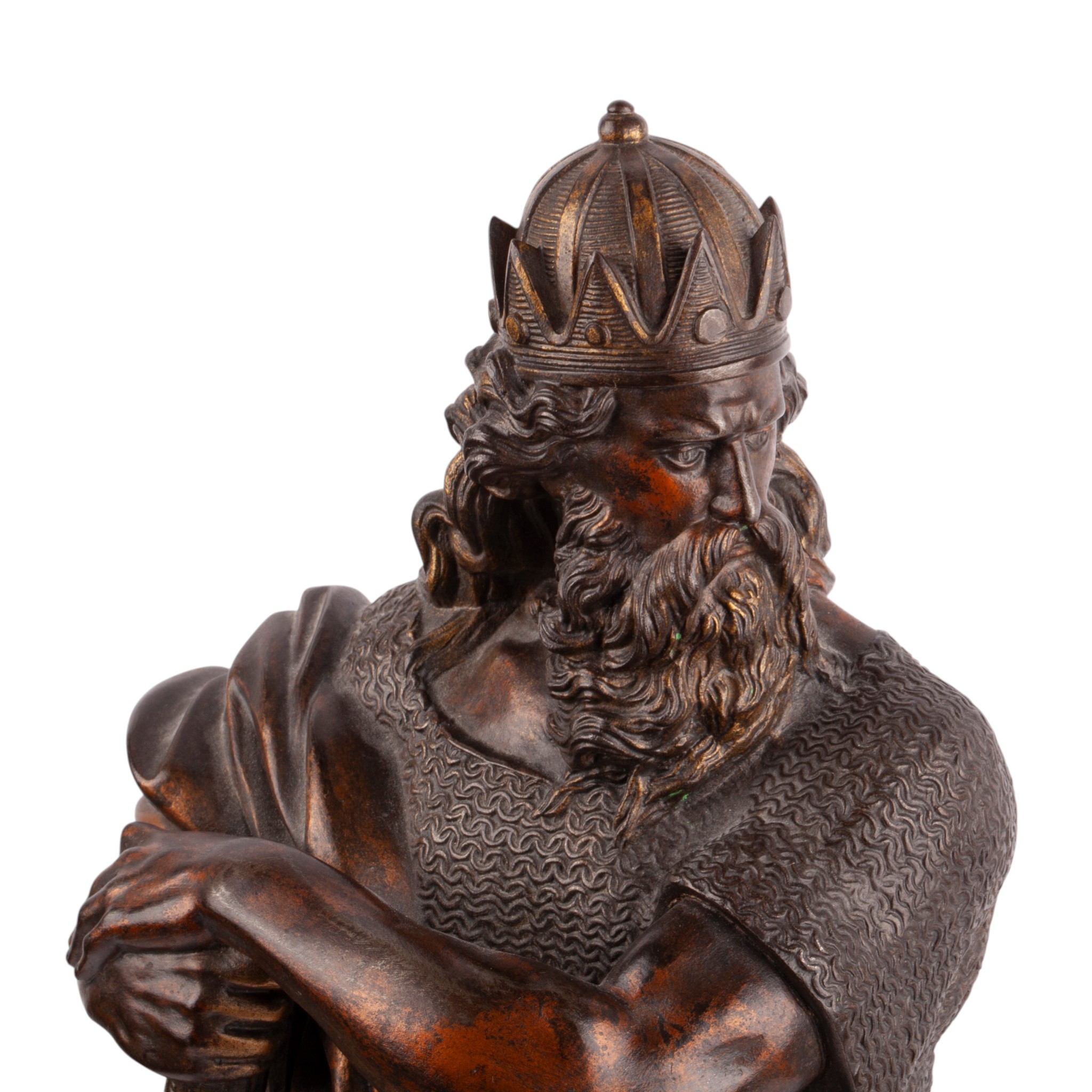
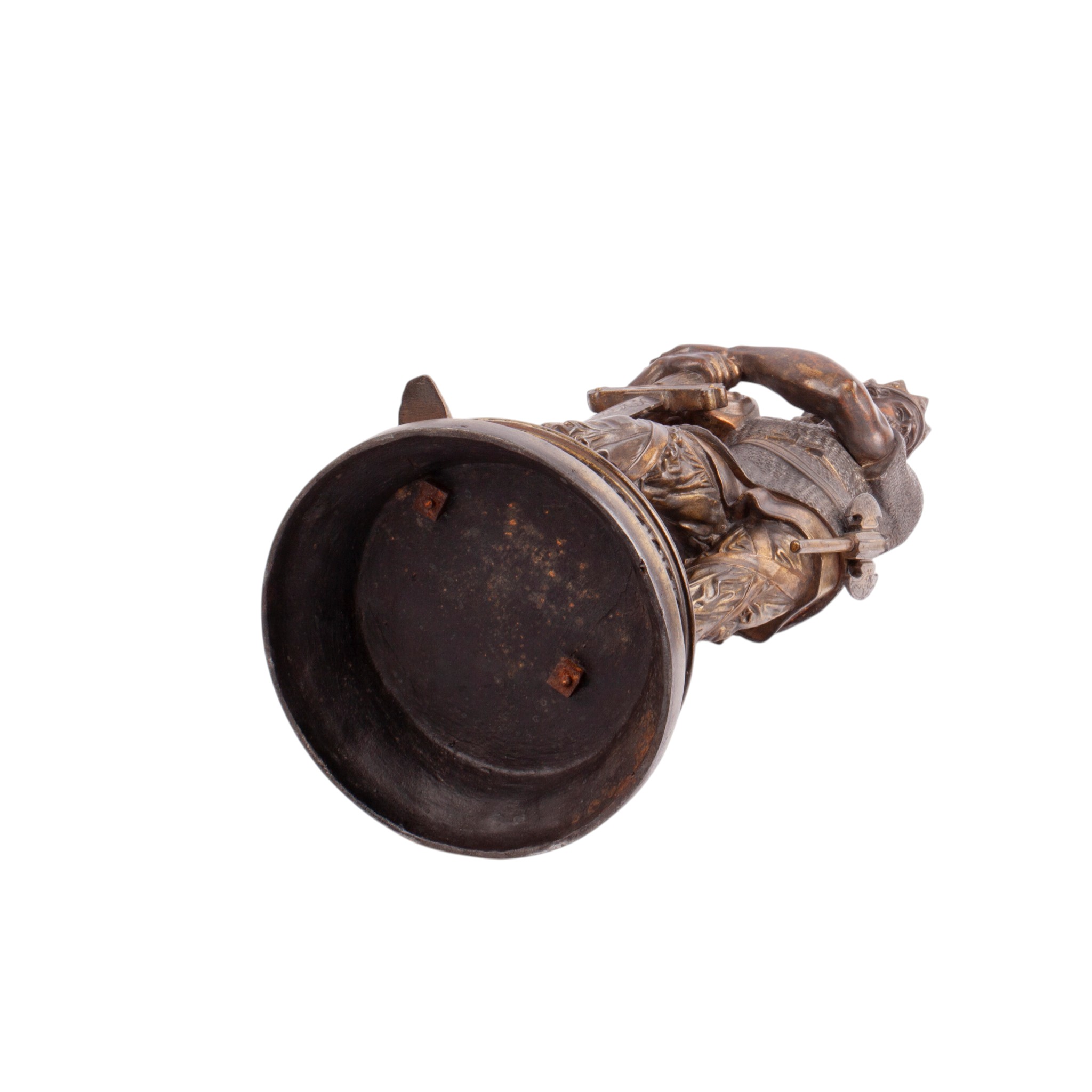
French cast iron figure of a warrior king, probably Vercingetorix, circa 1900
Estimate: 800-1000€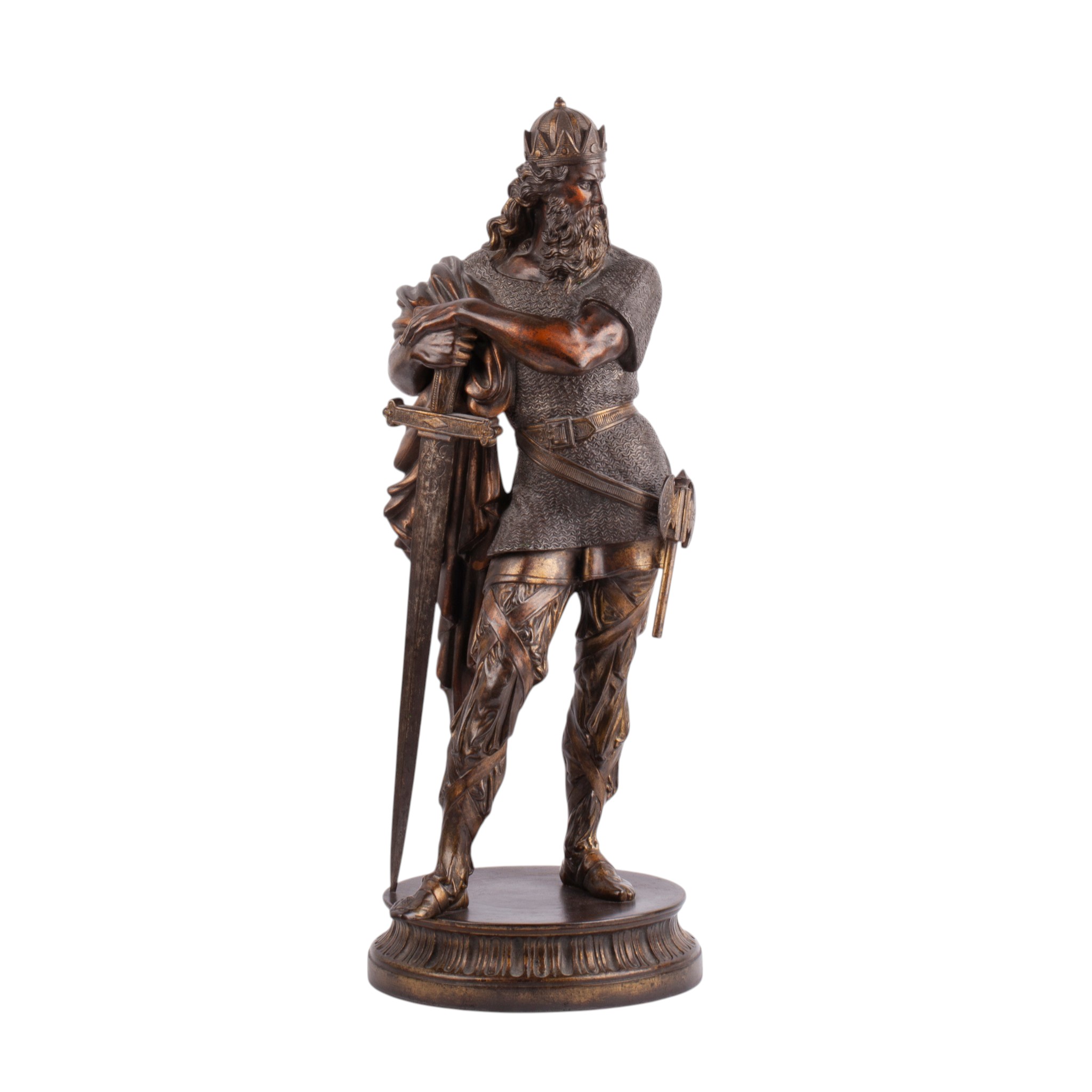
Lot 0001
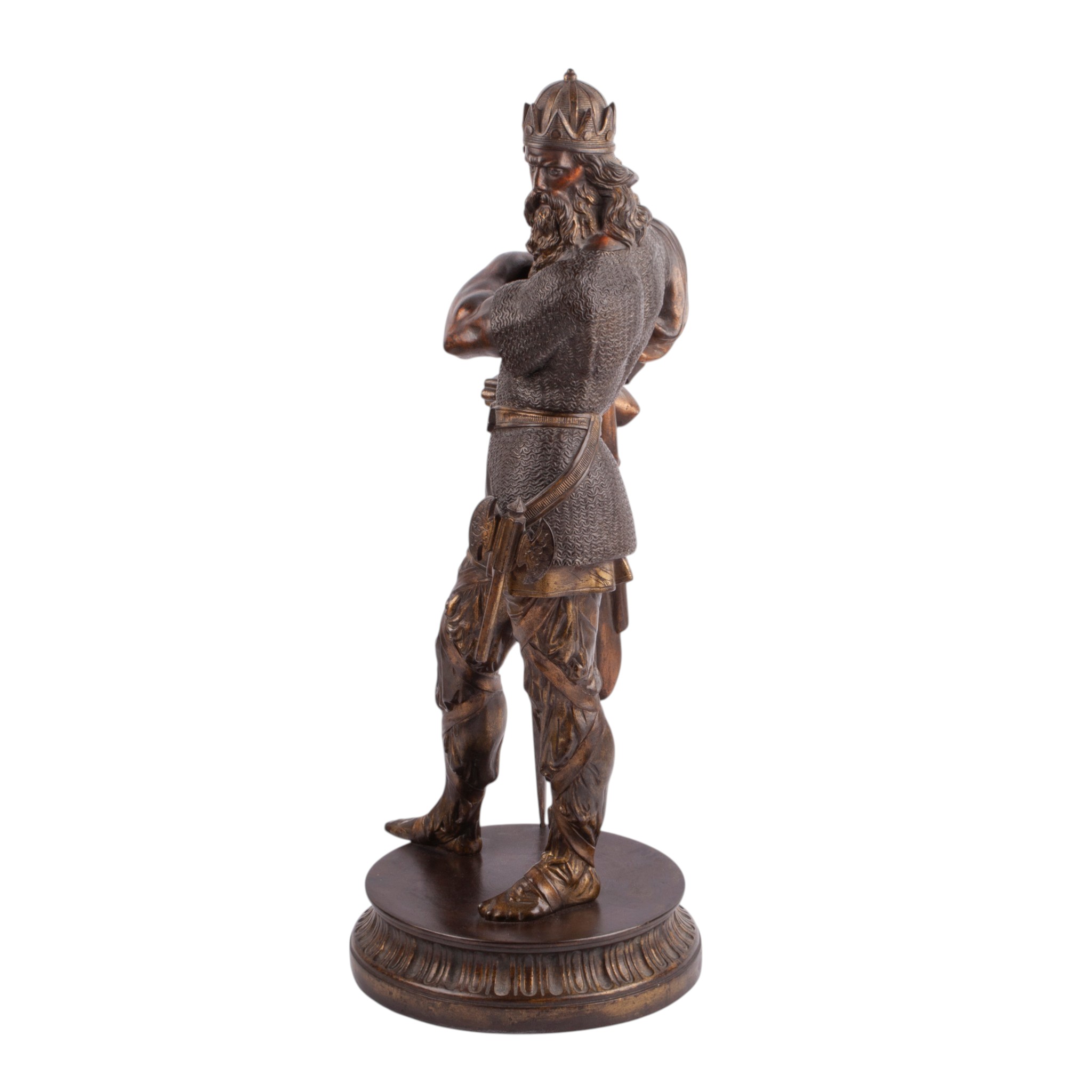
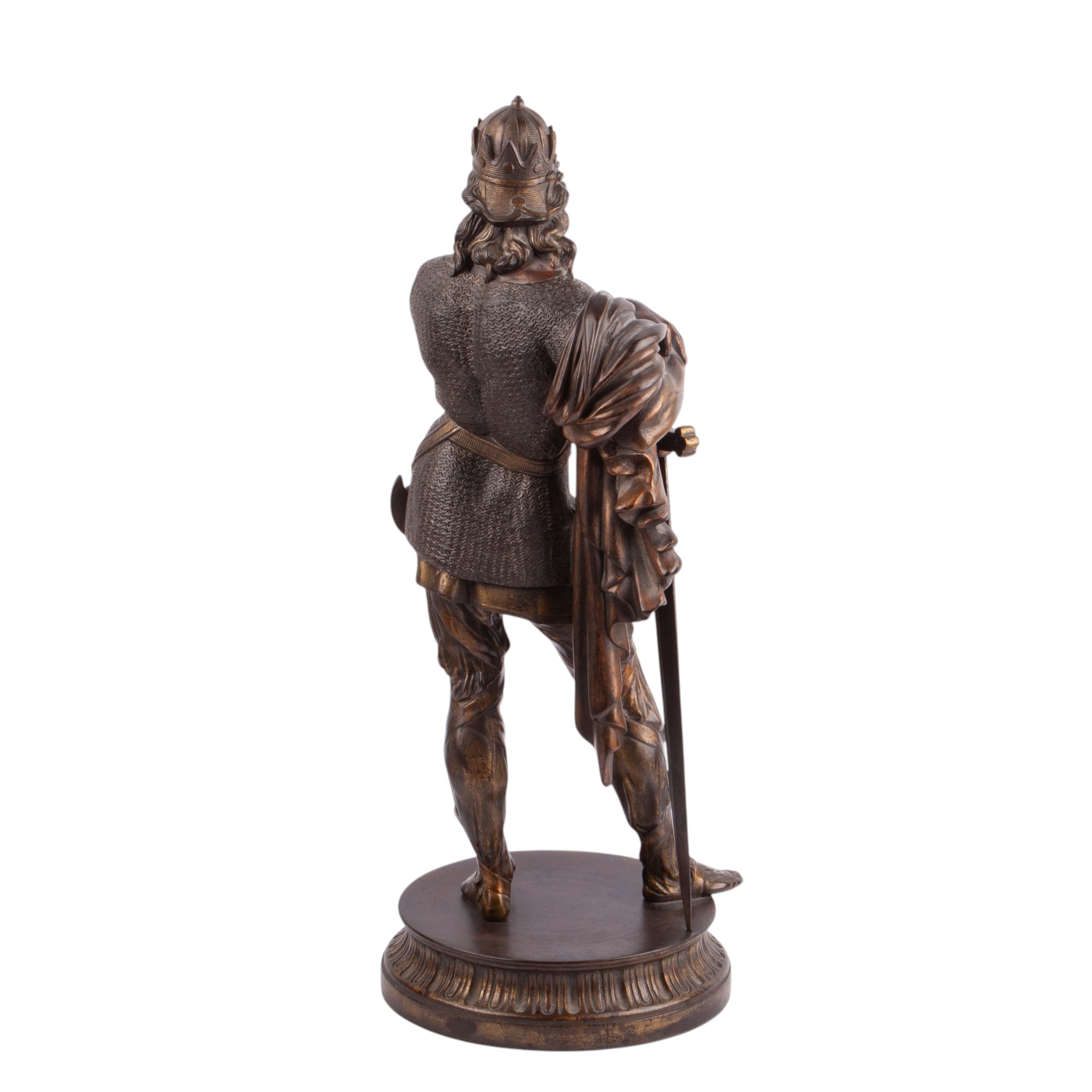
French cast iron figure of a warrior king, probably Vercingetorix, circa 1900
Estimate: 800-1000€French cast iron figure of a warrior king, probably Vercingetorix, circa 1900
A finely modelled French decorative figure of a crowned bearded warrior standing with his hands resting on the hilt of a sword, raised on a circular base. Probably inspired by Vercingetorix, the Gallic leader later celebrated as a French national hero. An unusual example in iron, a material less commonly encountered for figures of this type.
Height: 50 cm.
France, circa 1900.Starting price: 600€
Estimate: 800-1000€
Hammer Price: Not sold -
Lot 0002
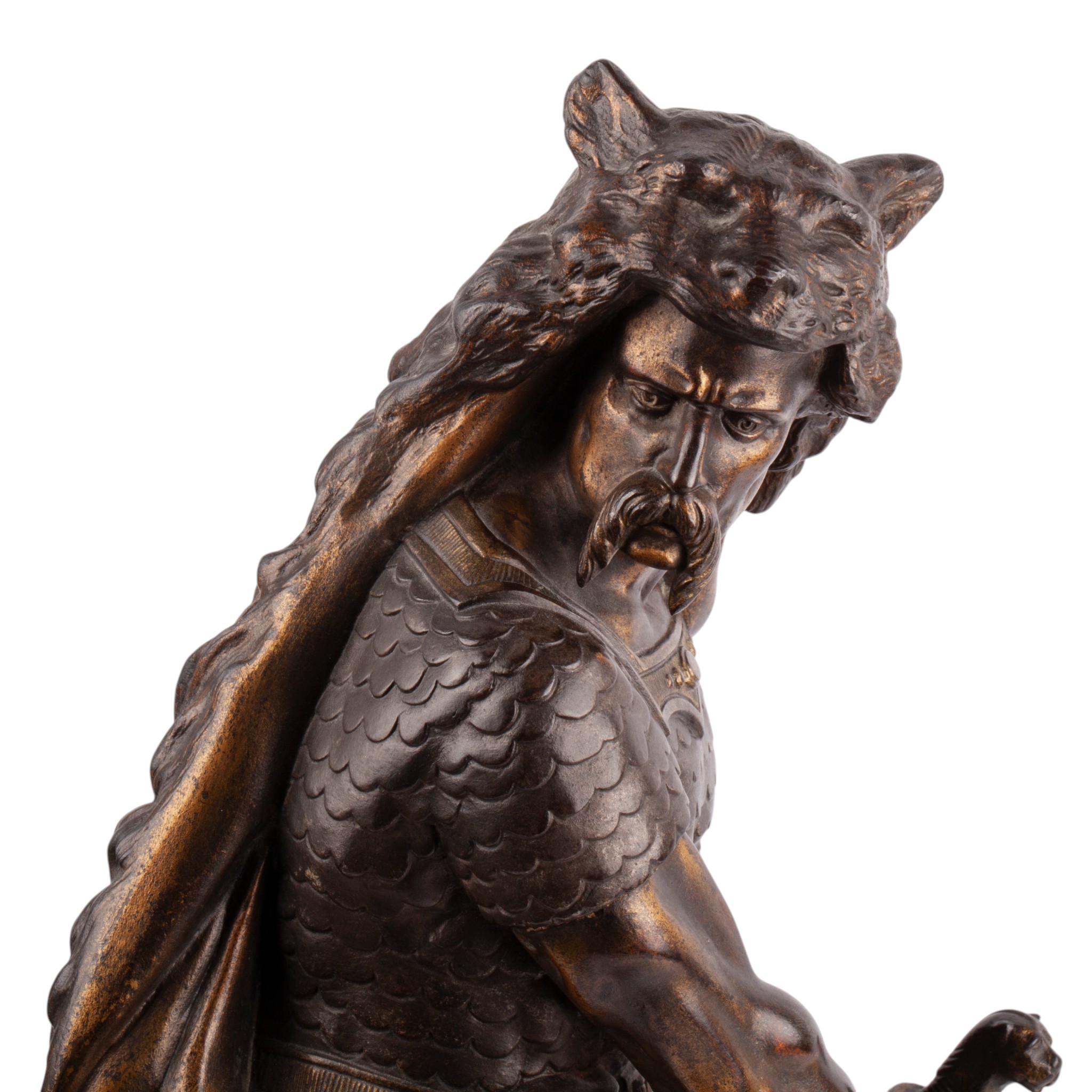
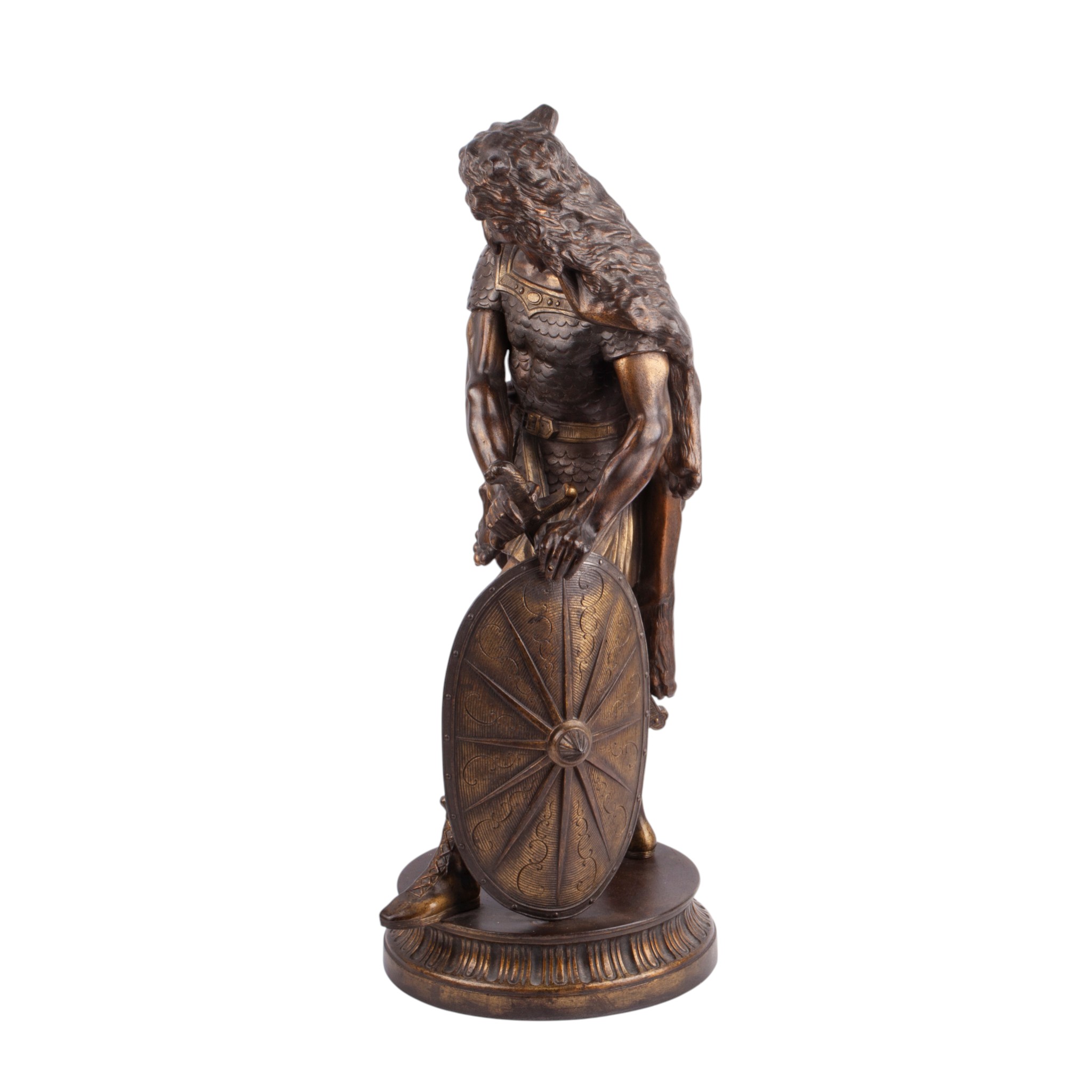
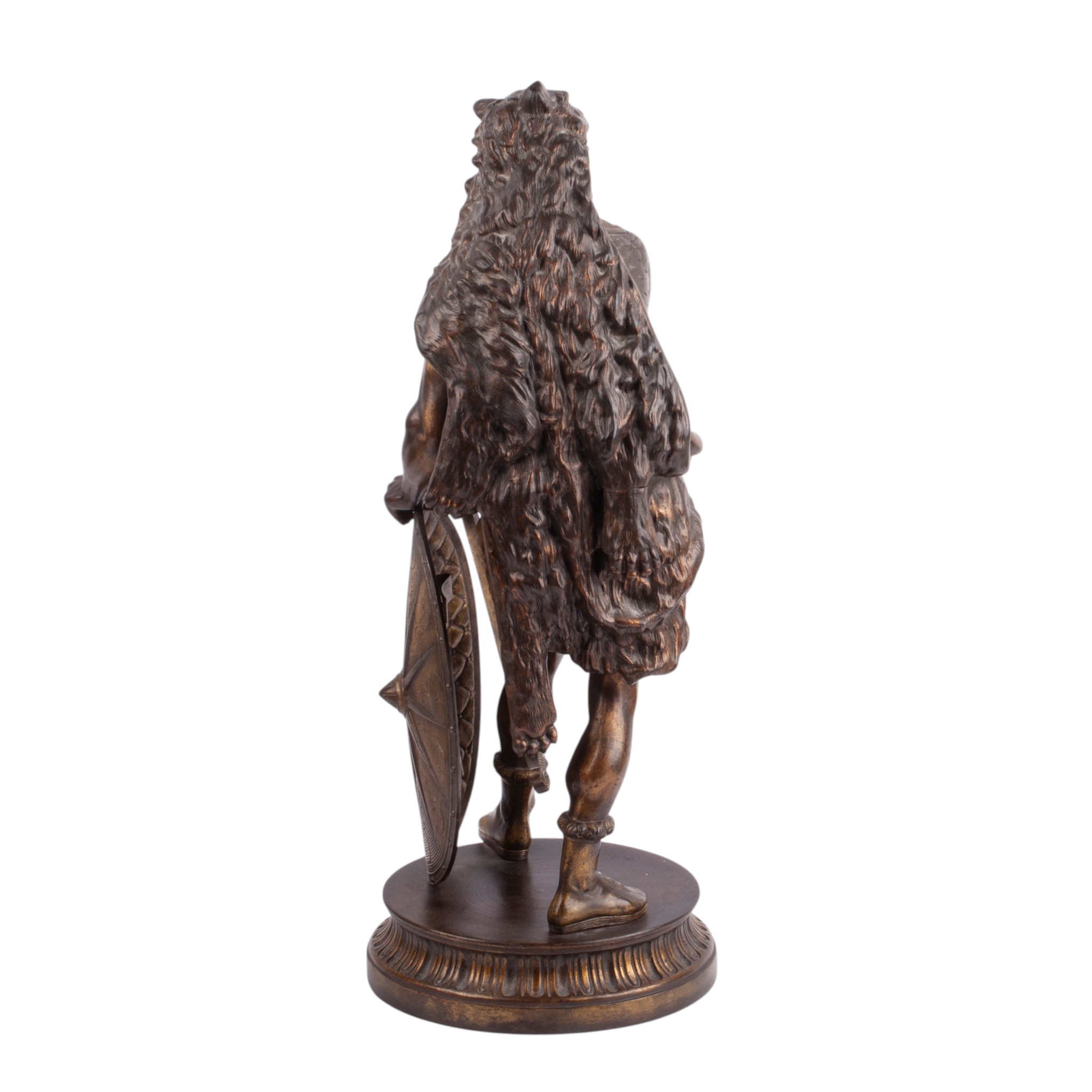
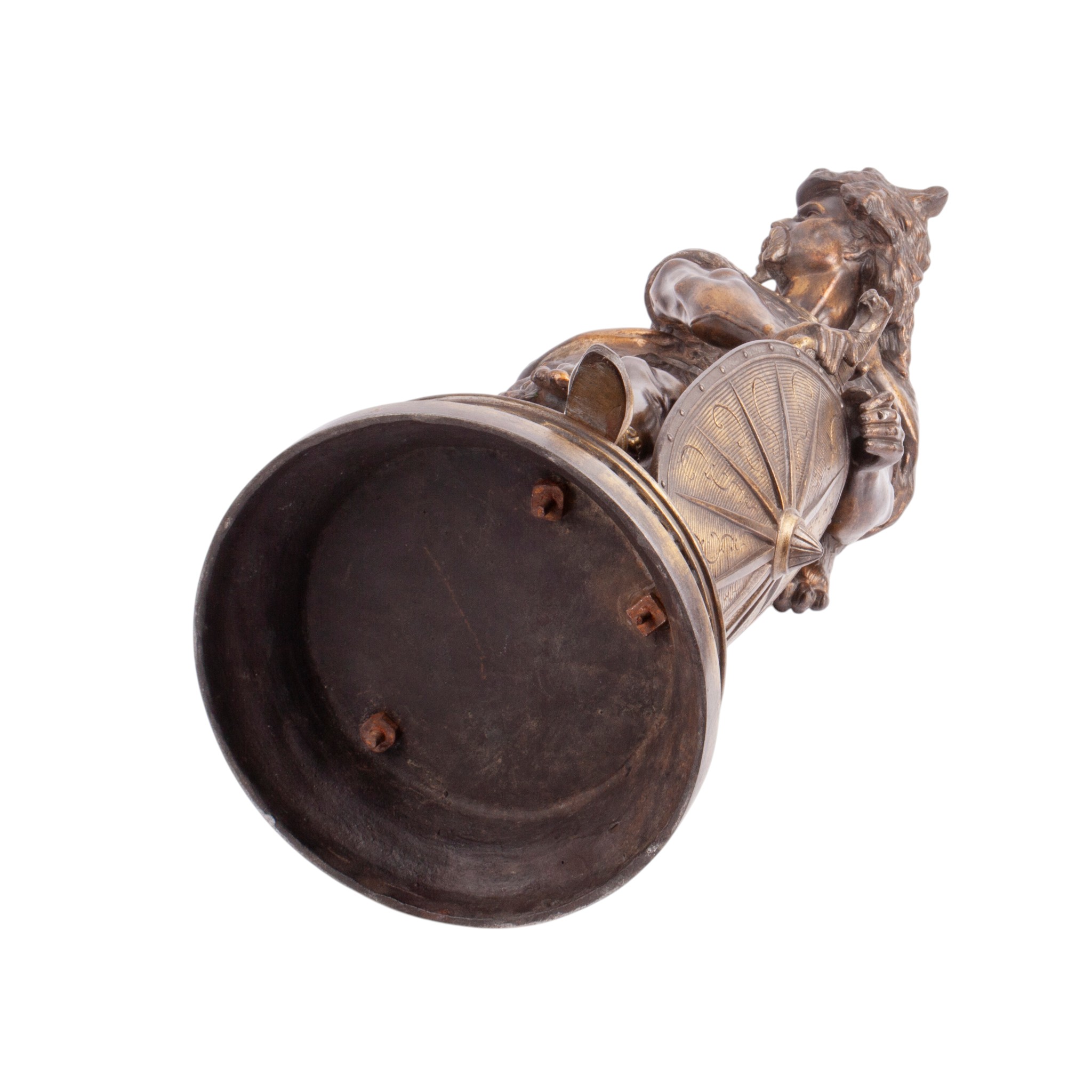
French cast iron figure of a Gallic warrior, circa 1900
Estimate: 800-1000€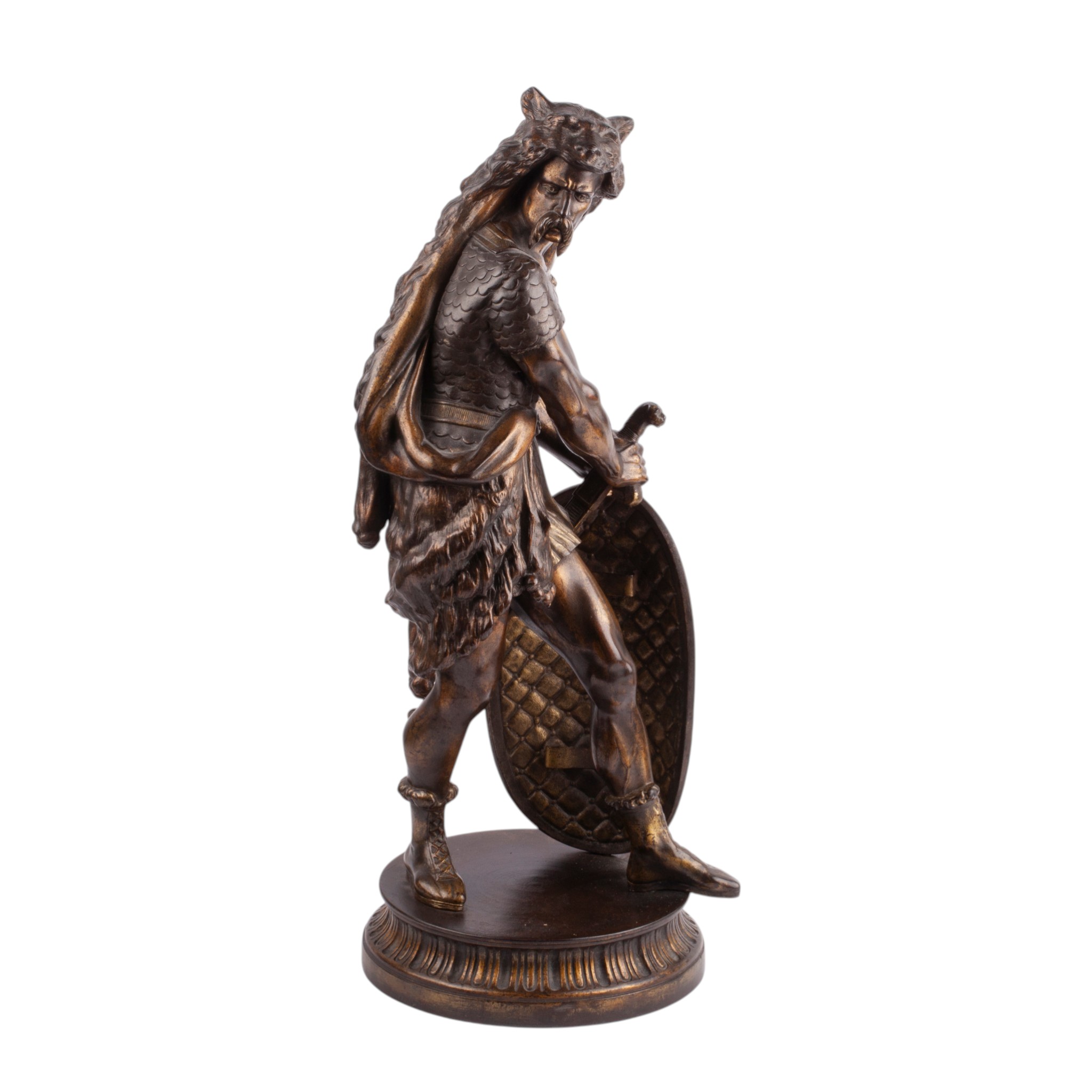
Lot 0002
French cast iron figure of a Gallic warrior, circa 1900
Estimate: 800-1000€French cast iron figure of a Gallic warrior, circa 1900
A striking French decorative figure of a warrior in scale armour and wolf-skin headdress, shown with sword and shield on a circular moulded base. Richly detailed and expressive in character. A comparatively unusual example in iron, as figures of this type are more often found in spelter or bronze.
Height: 50 cm.
France, circa 1900.Starting price: 600€
Estimate: 800-1000€
Hammer Price: Not sold -
Lot 0003
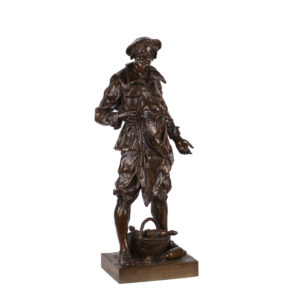
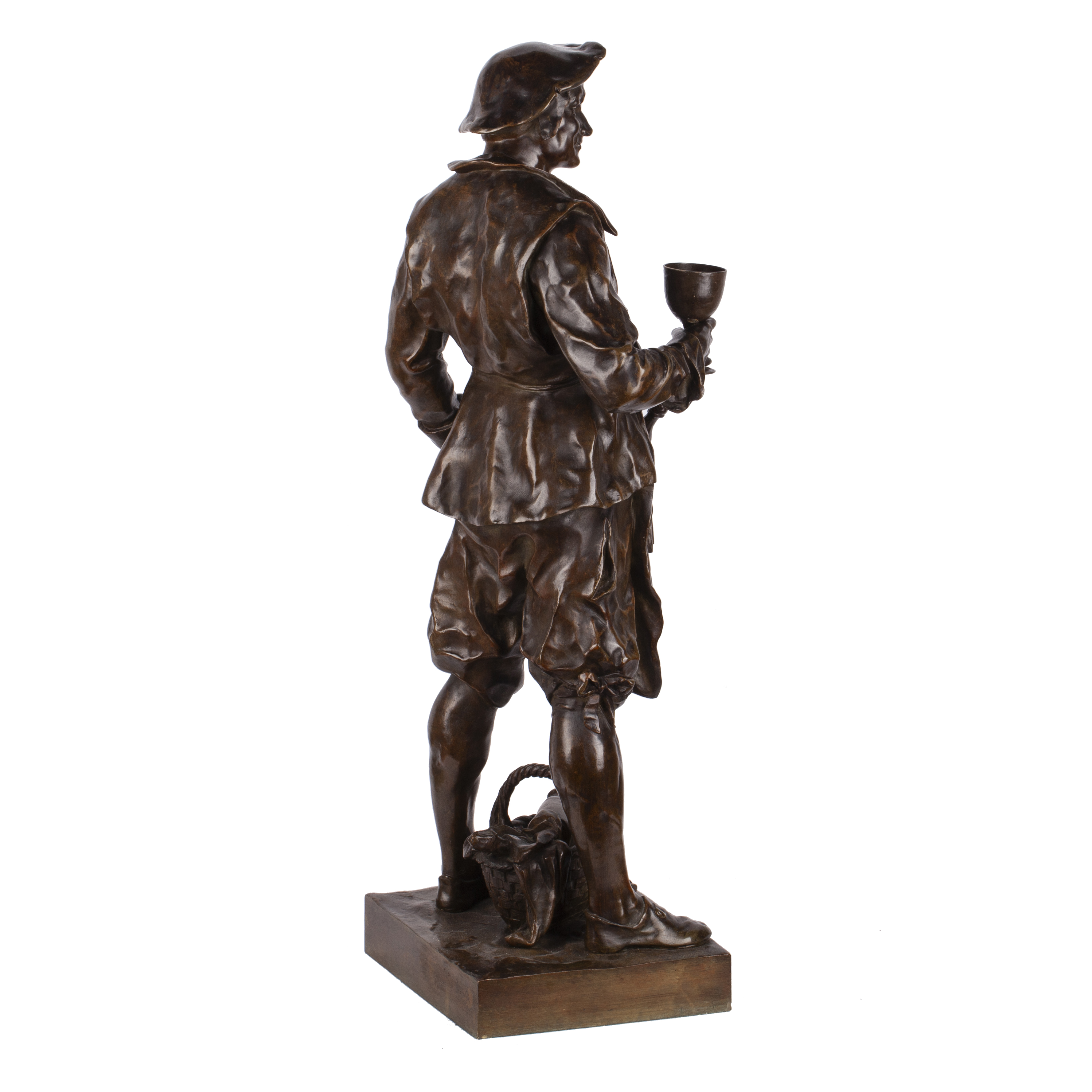
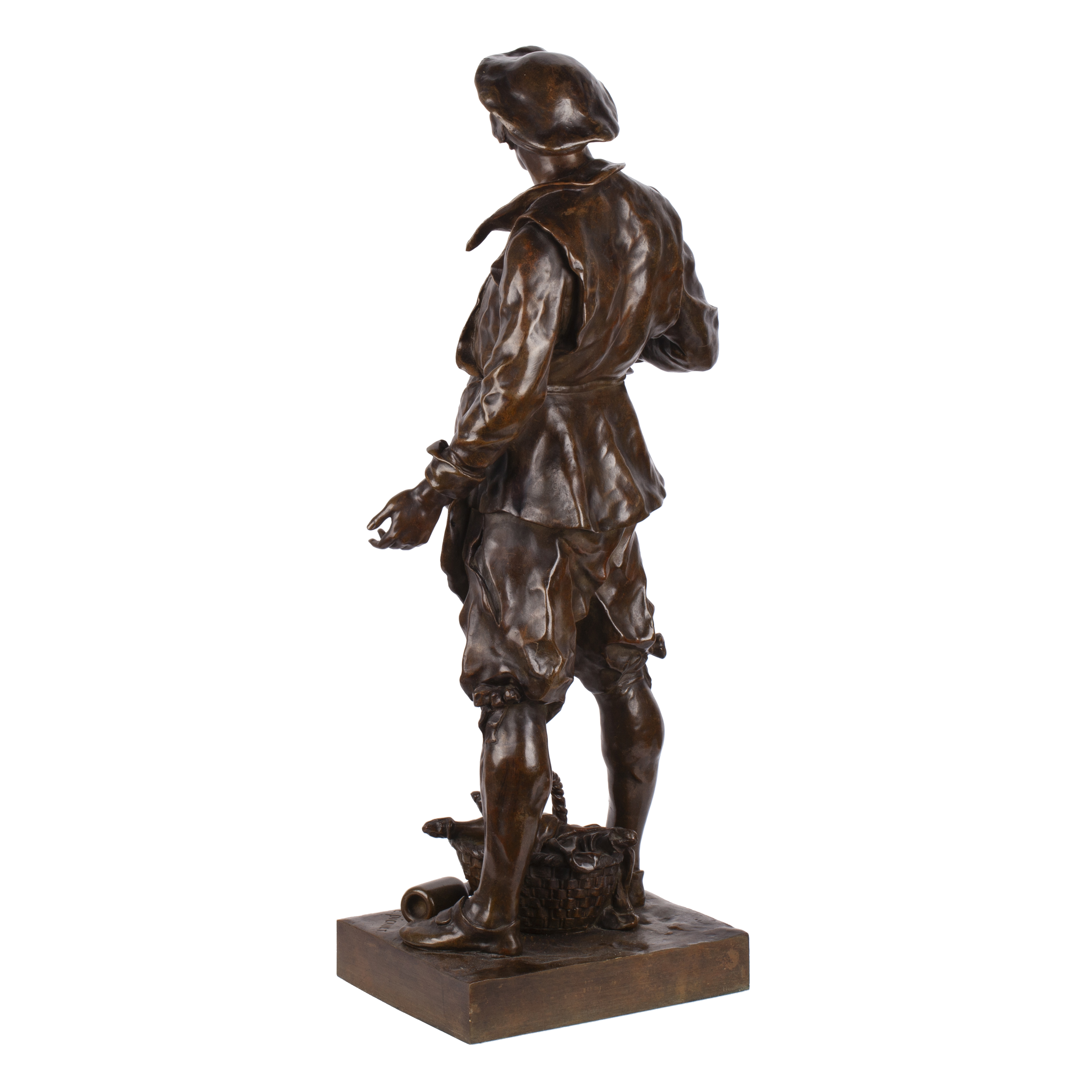
Exceptional Rare Bronze Sculpture “LE SOMMELIER” by Emile Picault
Estimate: 6000-7000€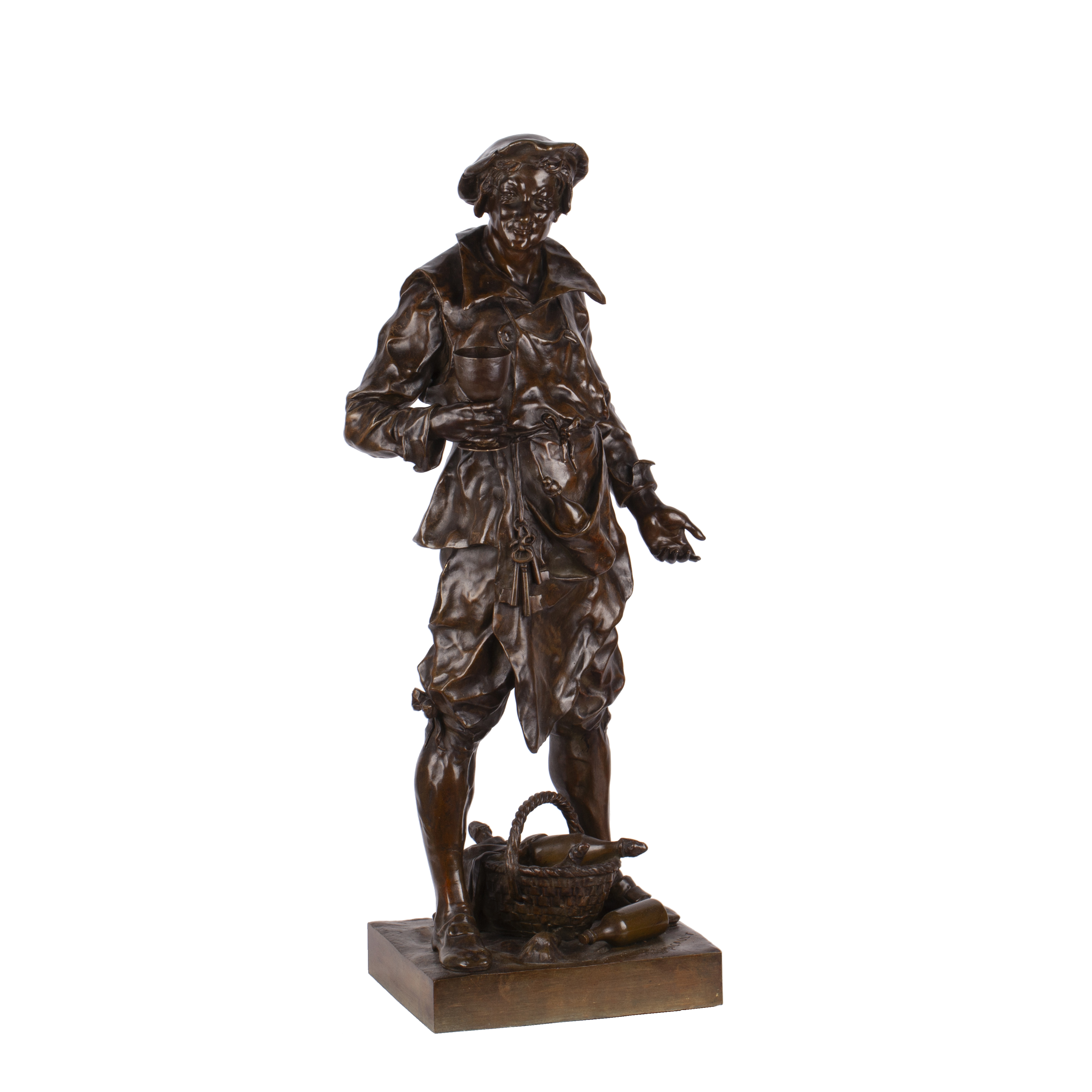
Lot 0003
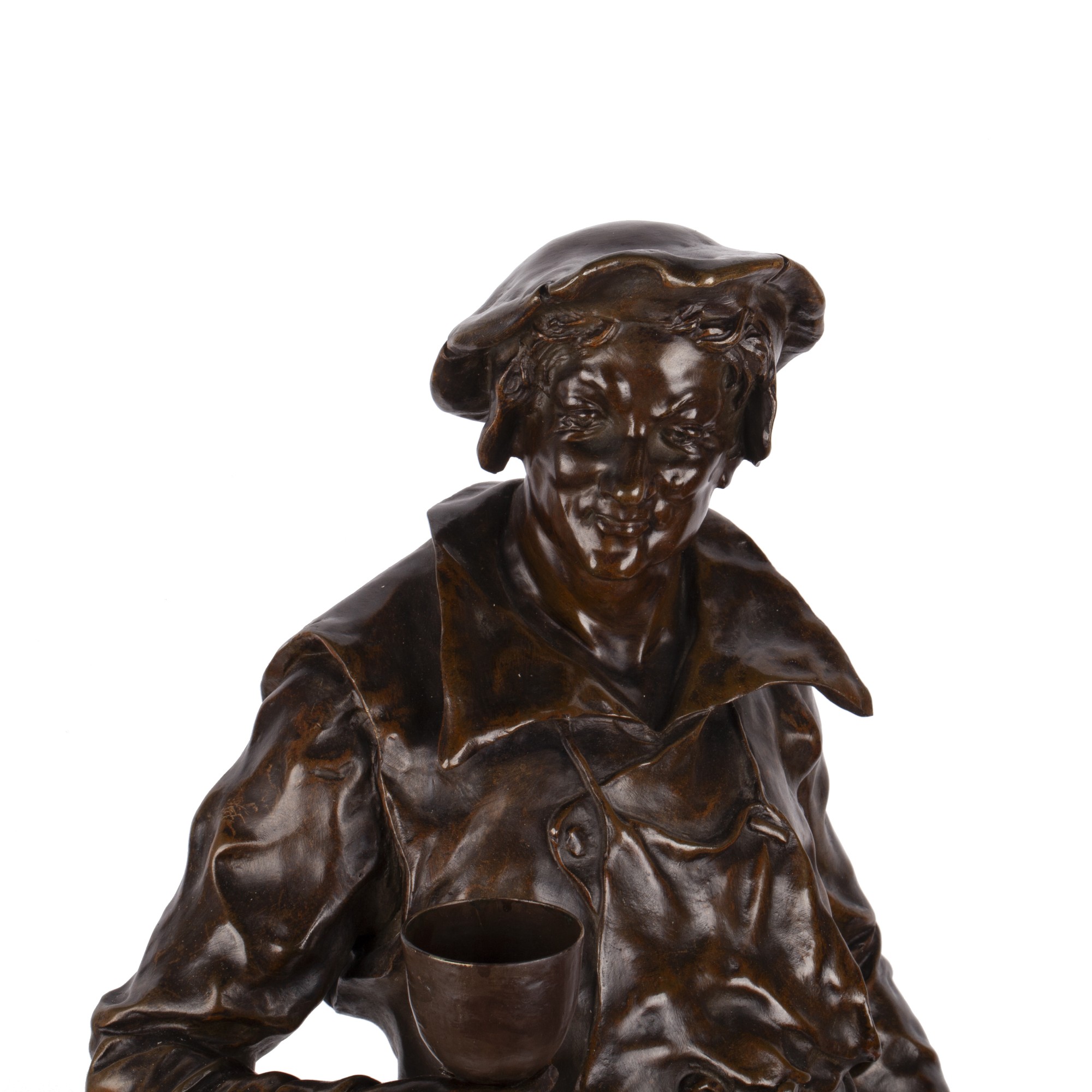
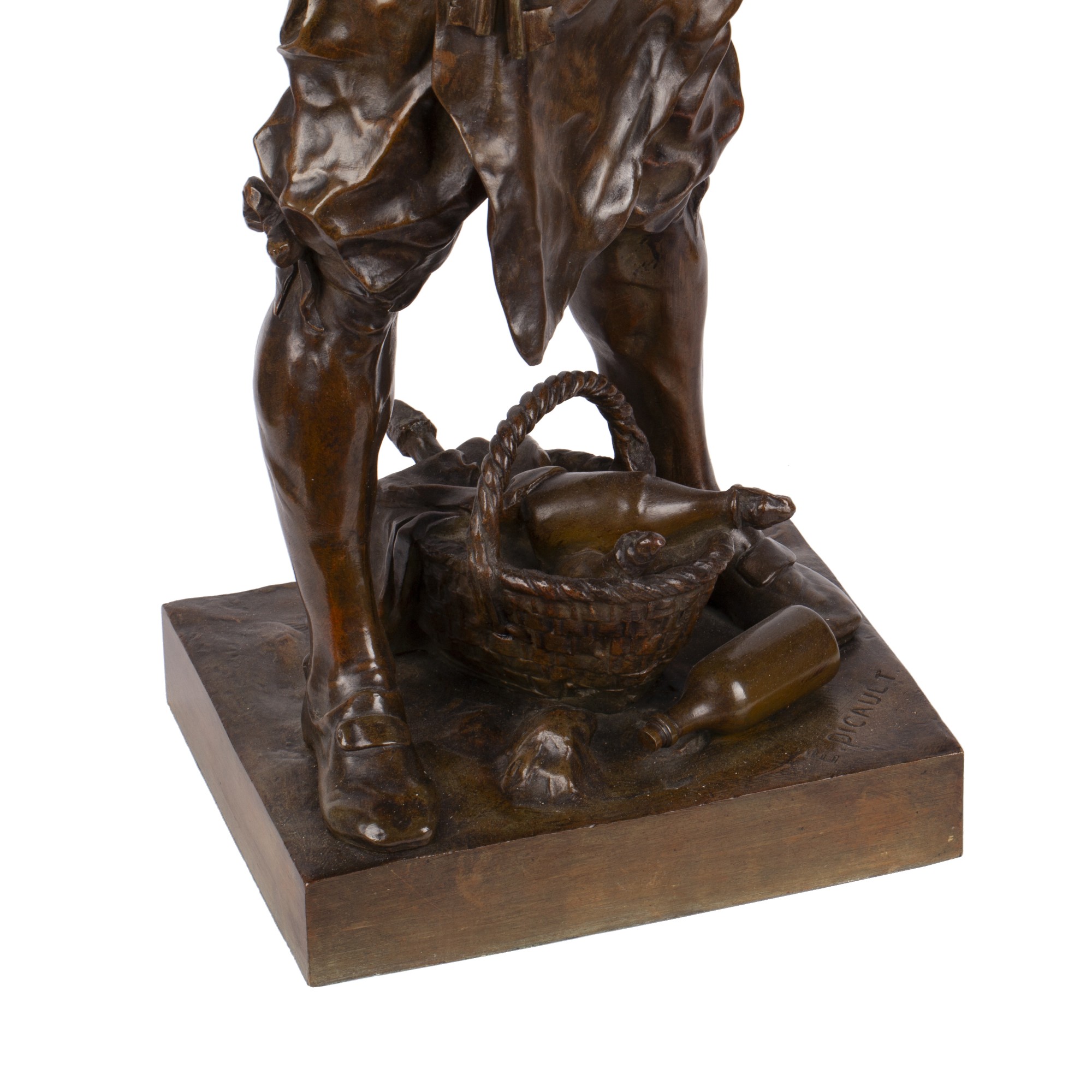
Exceptional Rare Bronze Sculpture “LE SOMMELIER” by Emile Picault
Estimate: 6000-7000€Émile Louis Picault (1833–1915)
“Le Sommelier” (The Wine Steward)
France, late 19th century
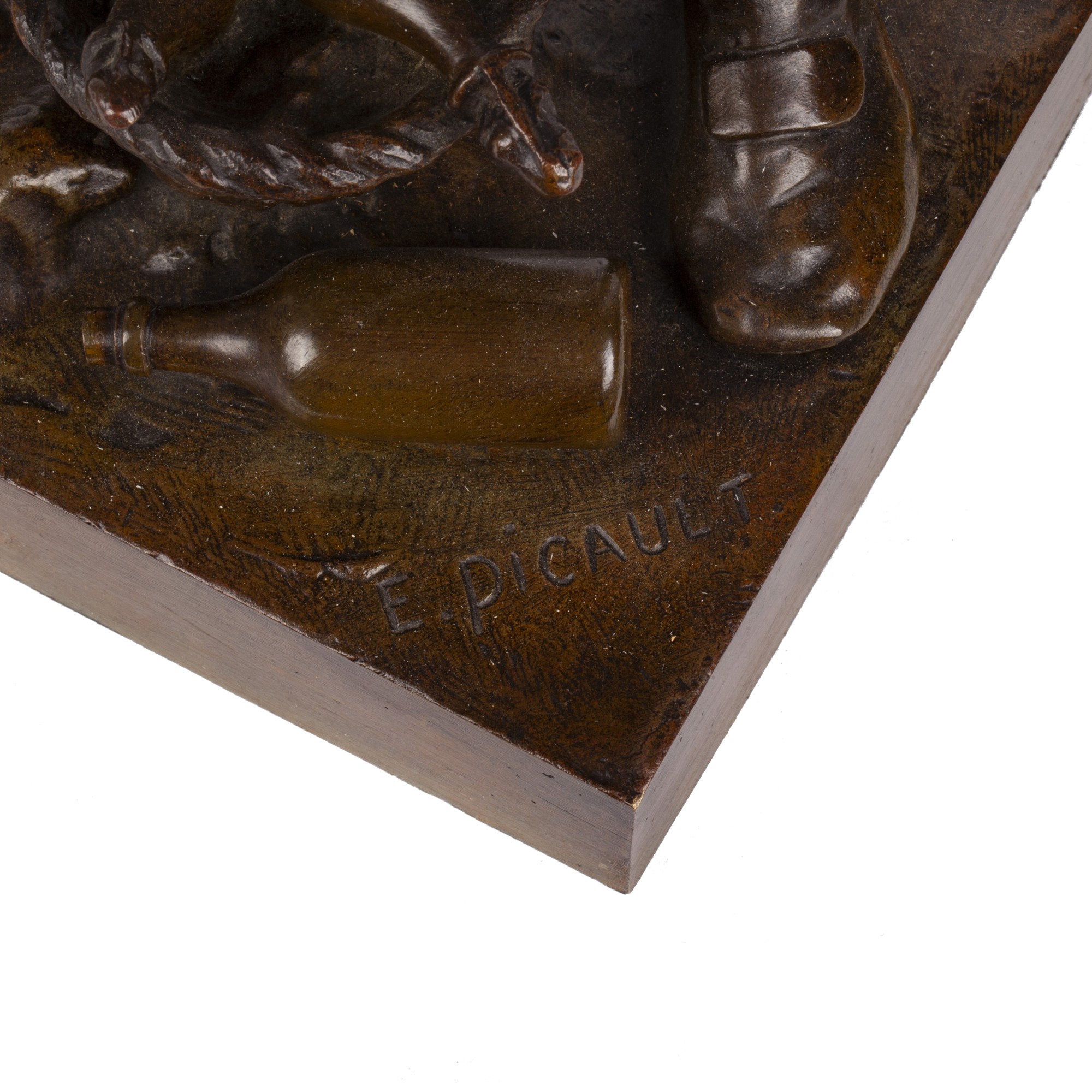
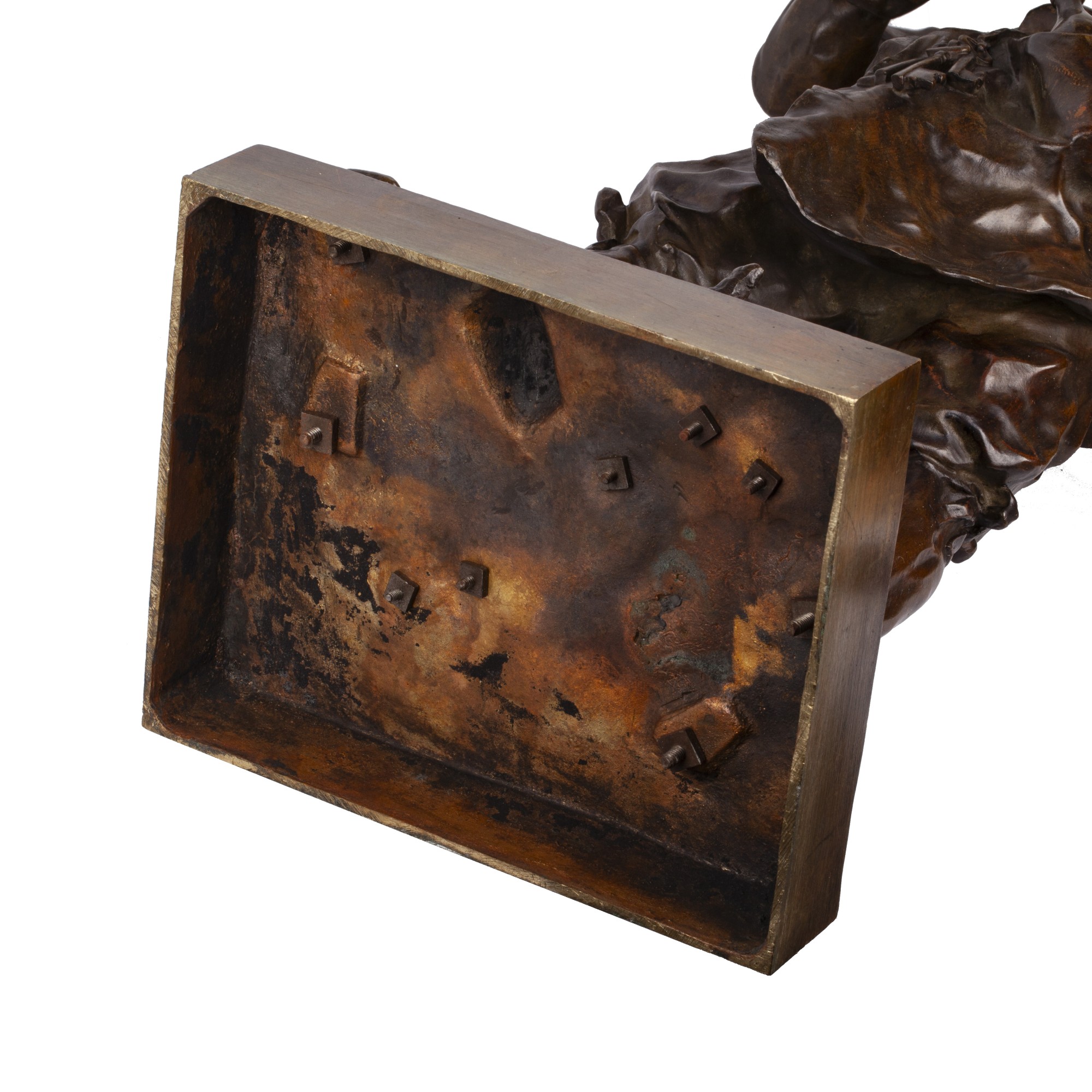
Patinated bronze, signed E. Picault
Height: 70 cm.An exceptional and rare bronze sculpture by Émile Louis Picault, one of the most prolific and expressive French sculptors of the 19th century. Le Sommelier portrays a jovial wine steward, standing in a relaxed pose with a basket of bottles at his feet — a masterful celebration of craftsmanship, hospitality, and the human spirit.
Rendered with Picault’s characteristic attention to anatomical precision and expressive gesture, the figure combines naturalistic observation with a subtle sense of narrative humor. The folds of the clothing, the lively expression, and the casual stance capture the charm of everyday life, elevating a humble profession into an emblem of pride and artistry.
Émile Louis Picault, trained in Paris and active from 1863, achieved international acclaim for his allegorical, patriotic, and mythological subjects. Over the course of his long career, he produced more than 500 models, many of which were exhibited at the Paris Salon. His works are represented in several French museum collections, including Chambéry, Clermont-Ferrand, Maubeuge, and Troyes.”
Starting price: 5000€
Estimate: 6000-7000€
Hammer Price: Not sold -
Lot 0004
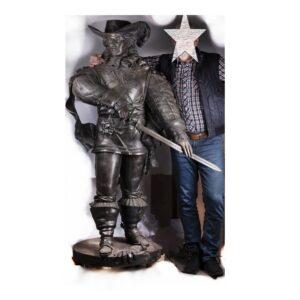
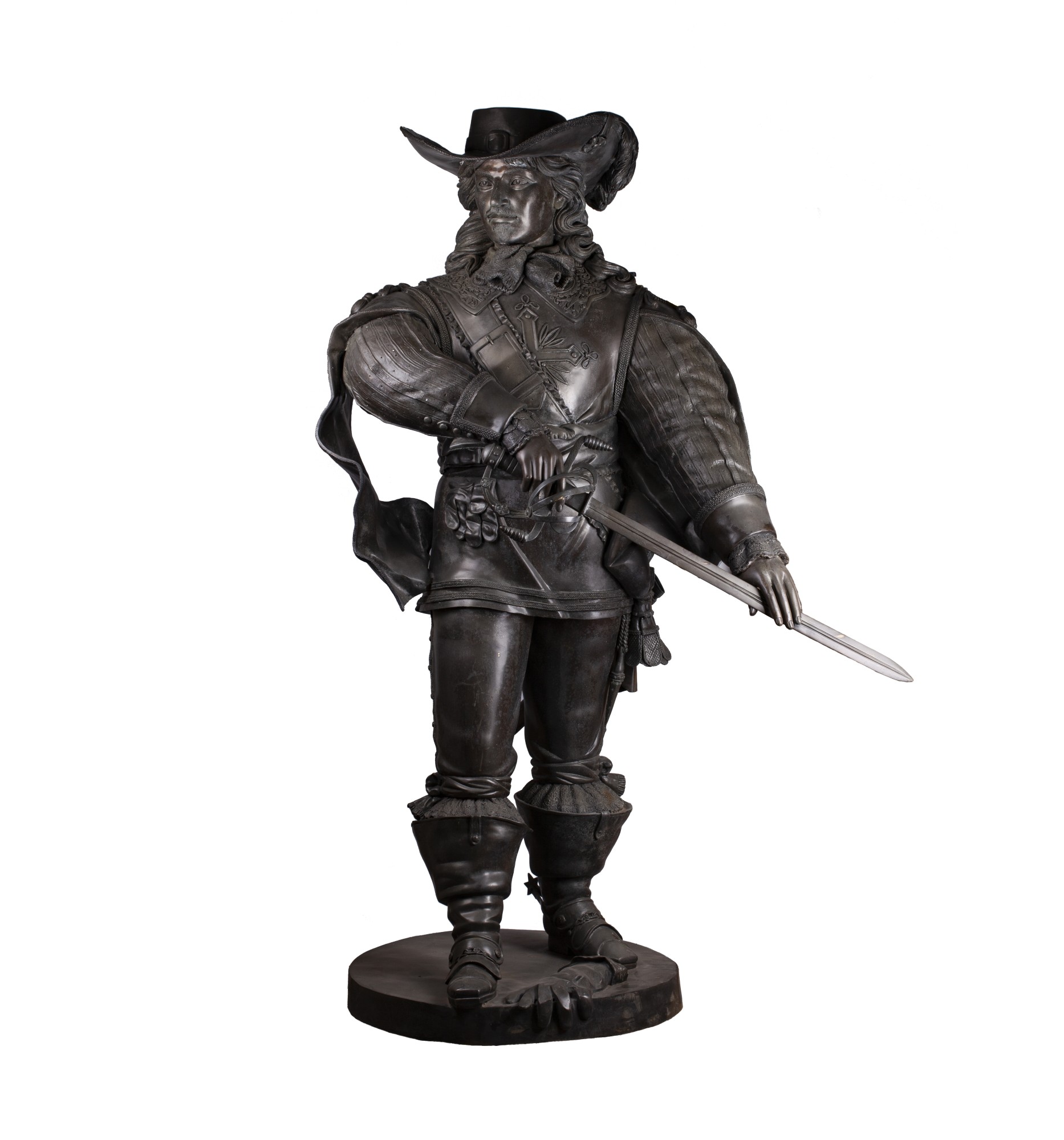
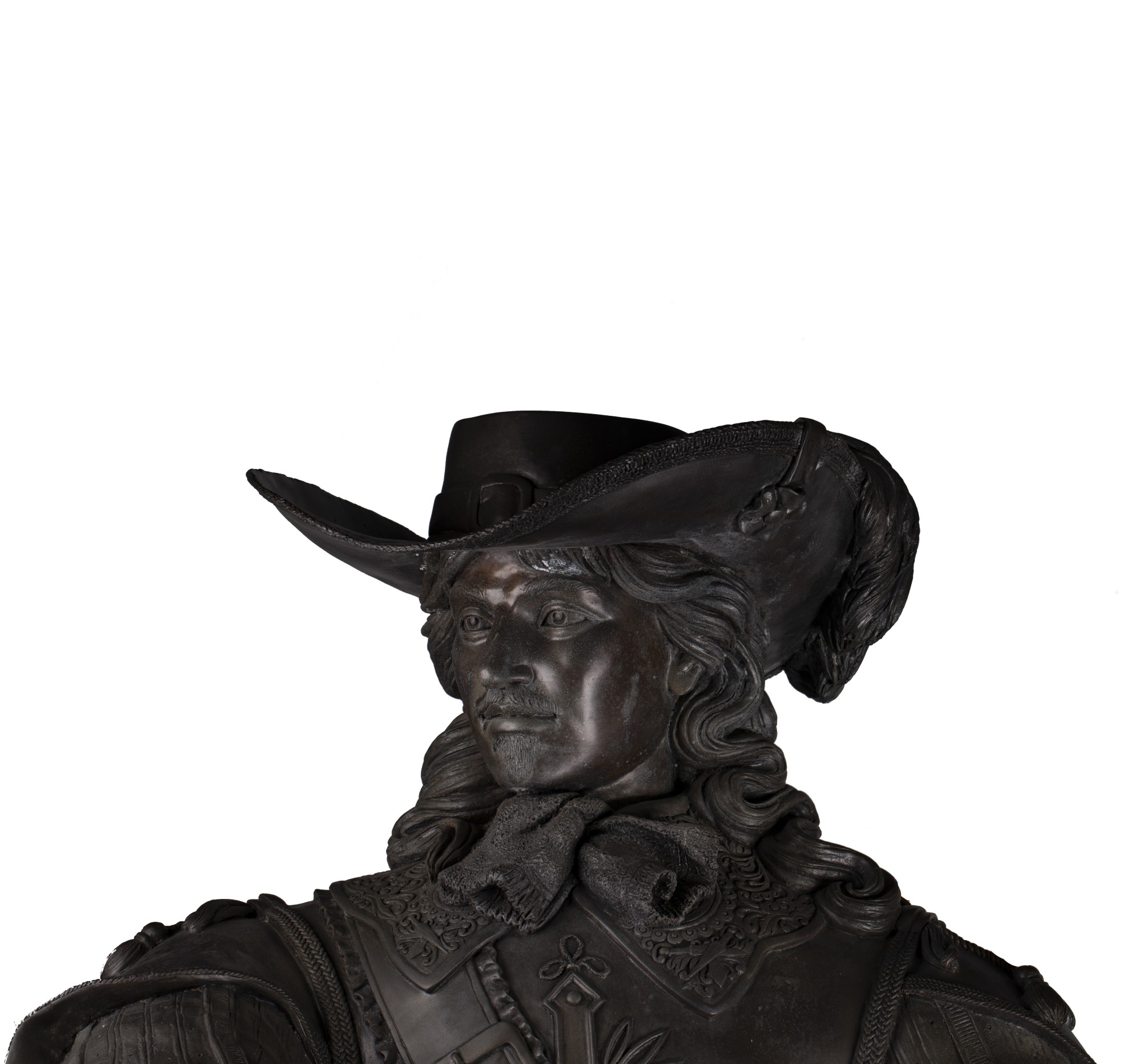
Bronze Sculpture of a d’Artagnan Musketeer in Full Human Growth
Estimate: 6000-8000€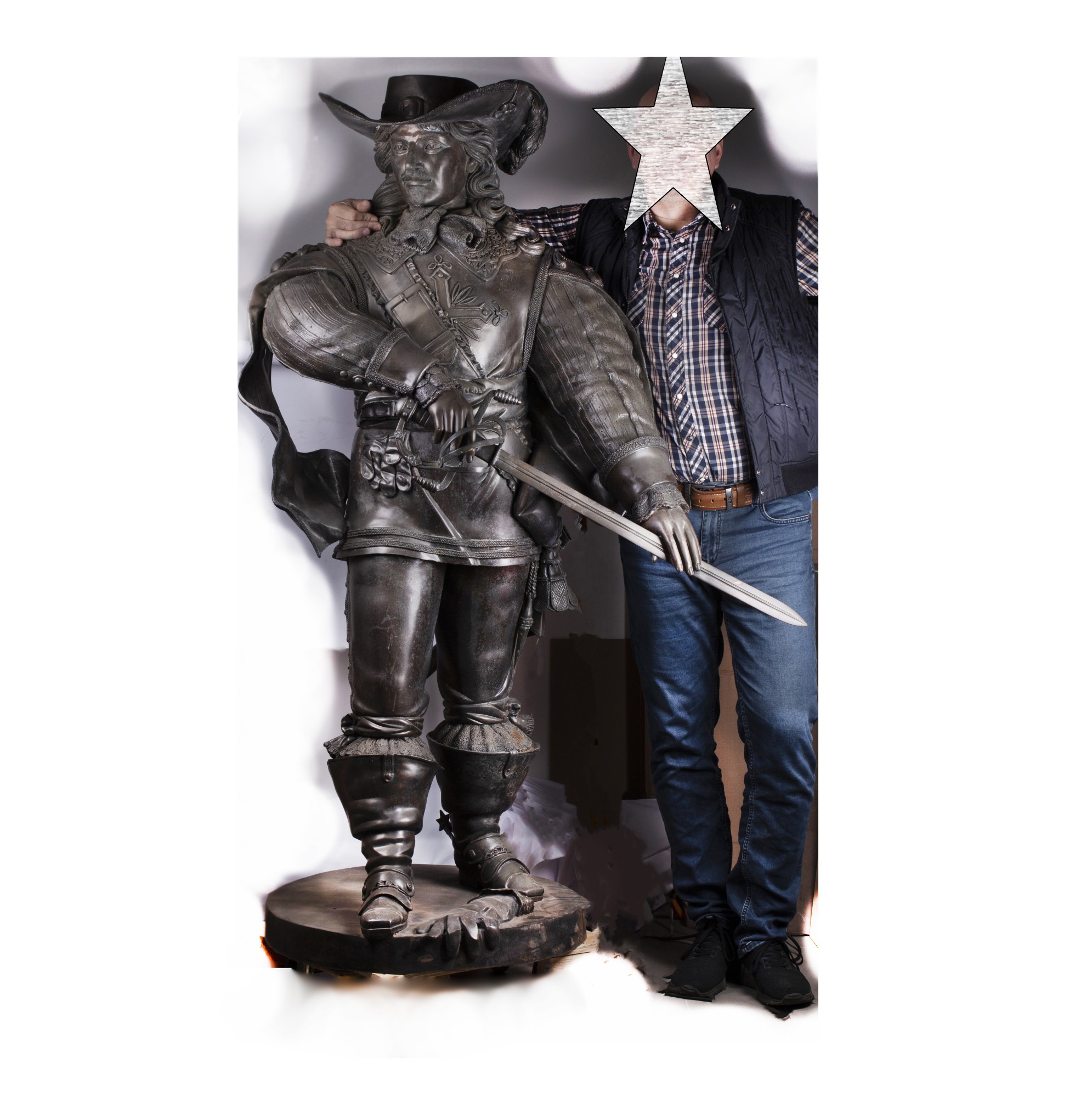
Lot 0004
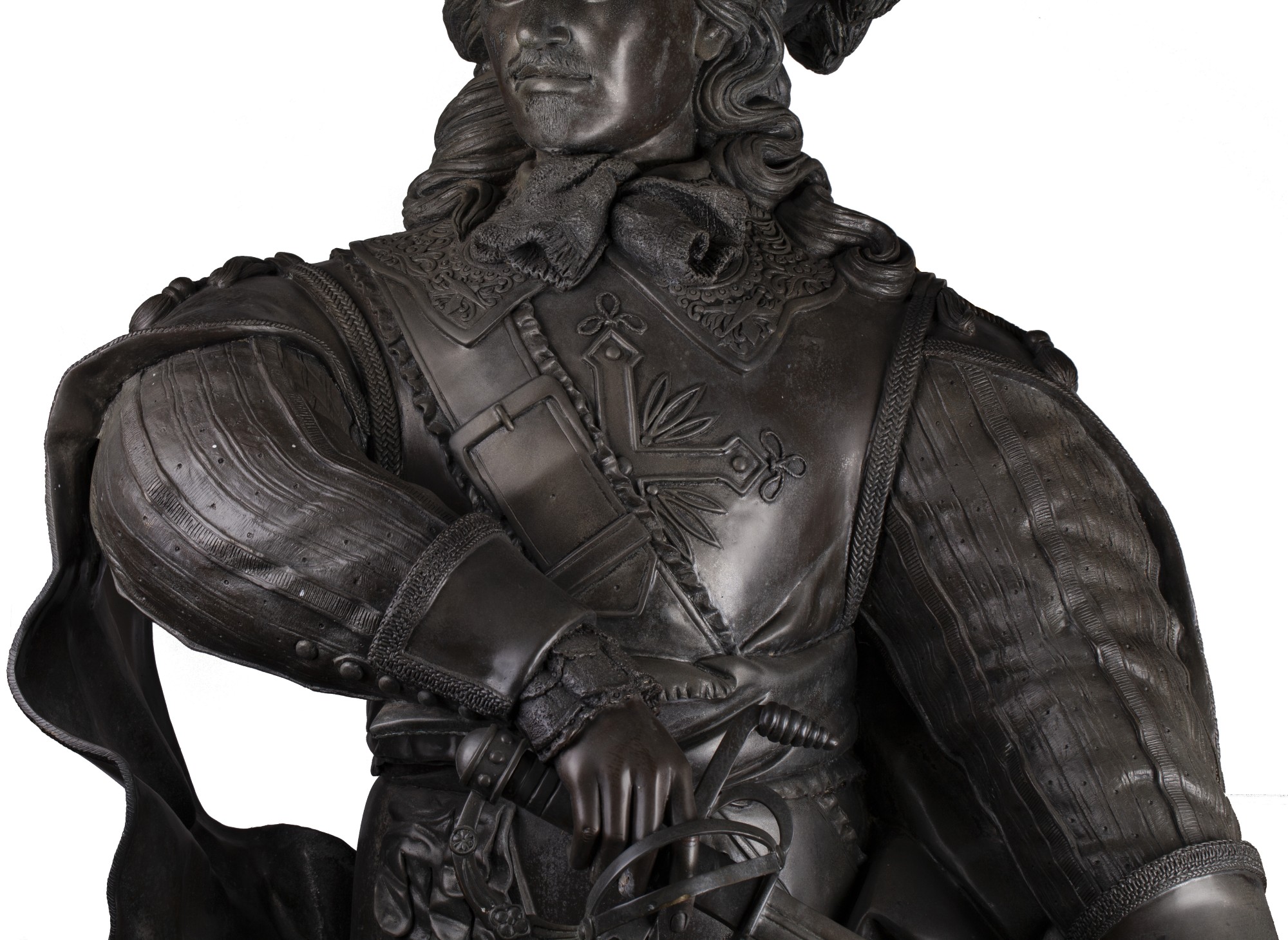
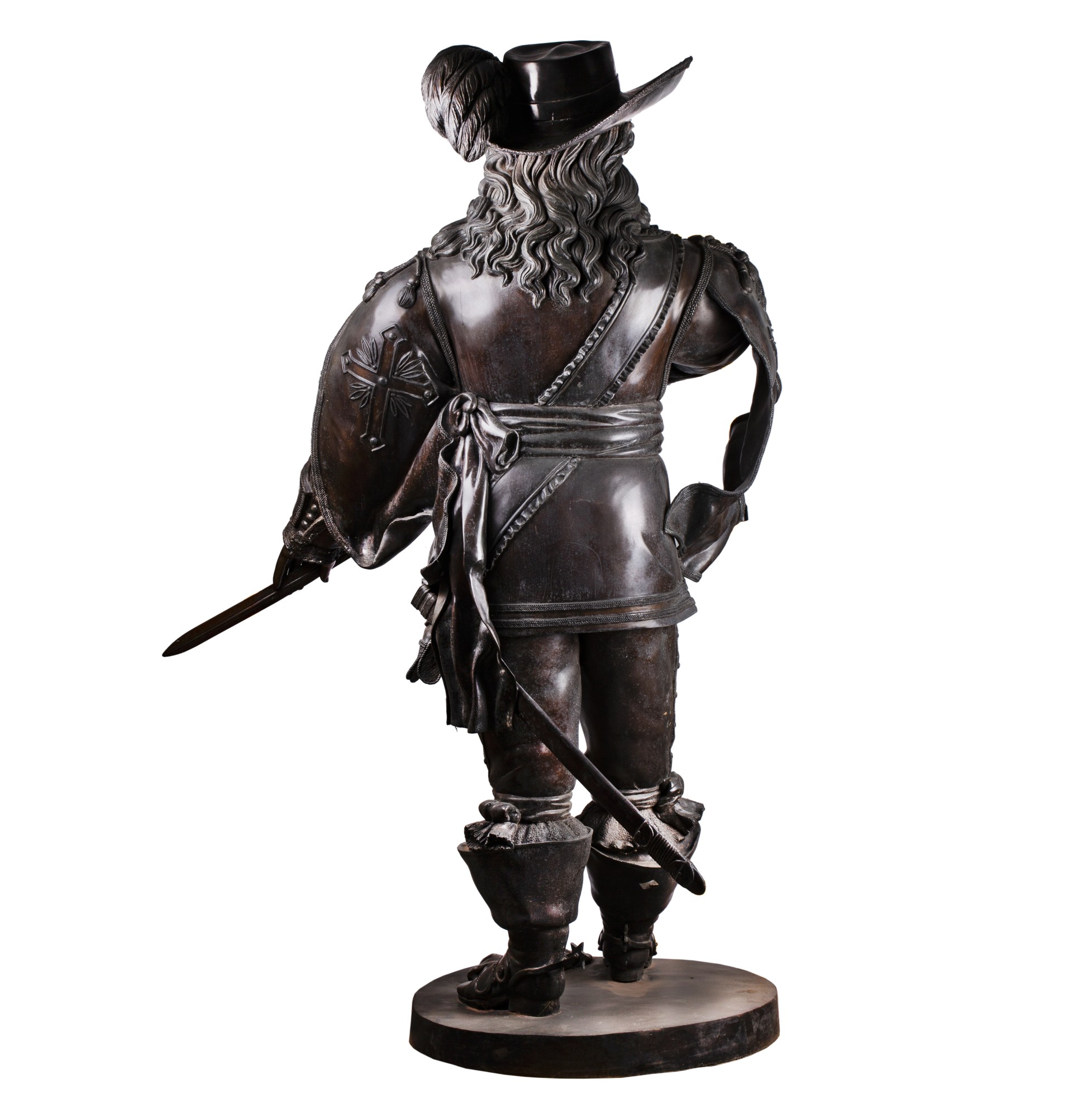
Bronze Sculpture of a d’Artagnan Musketeer in Full Human Growth
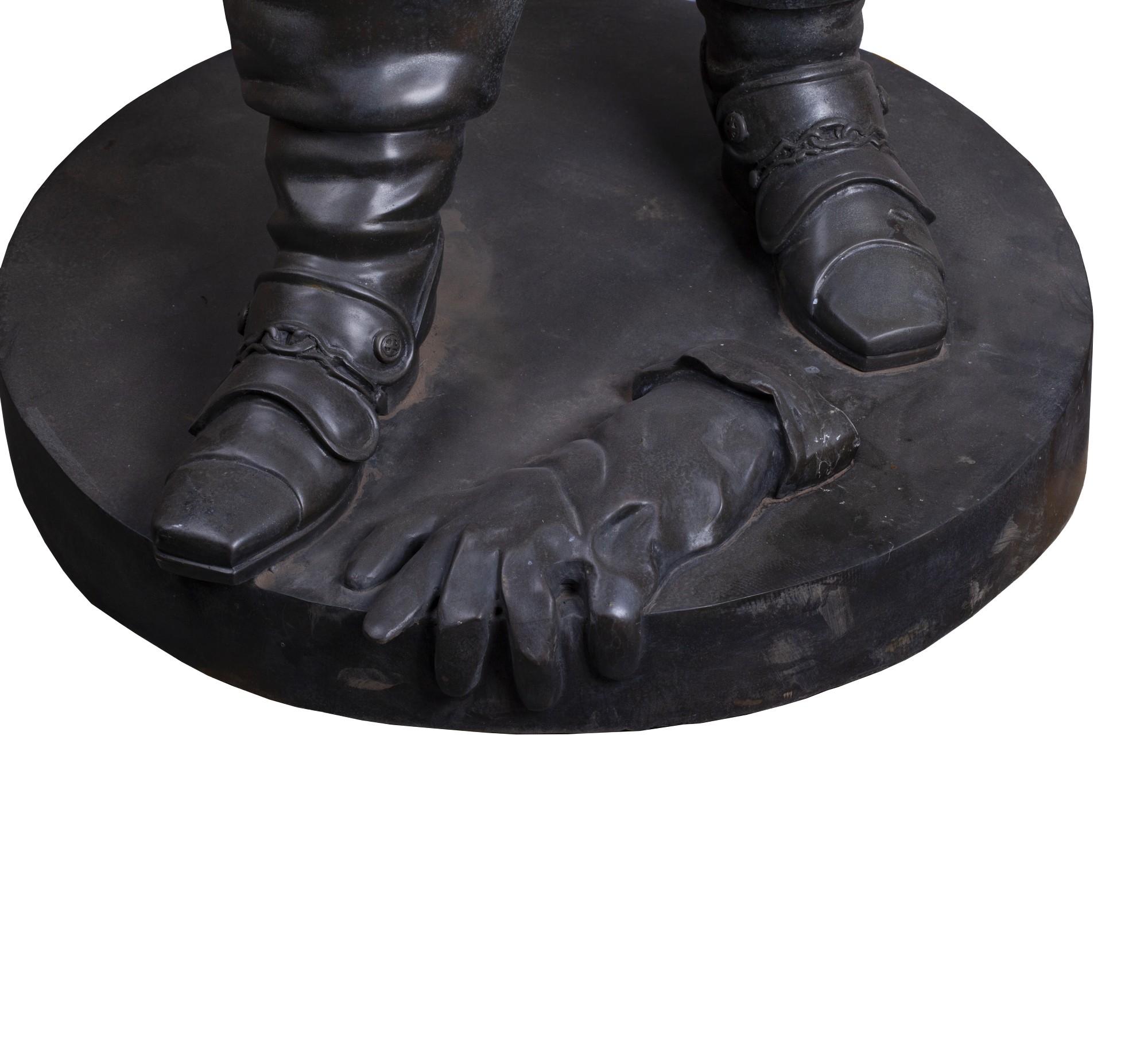
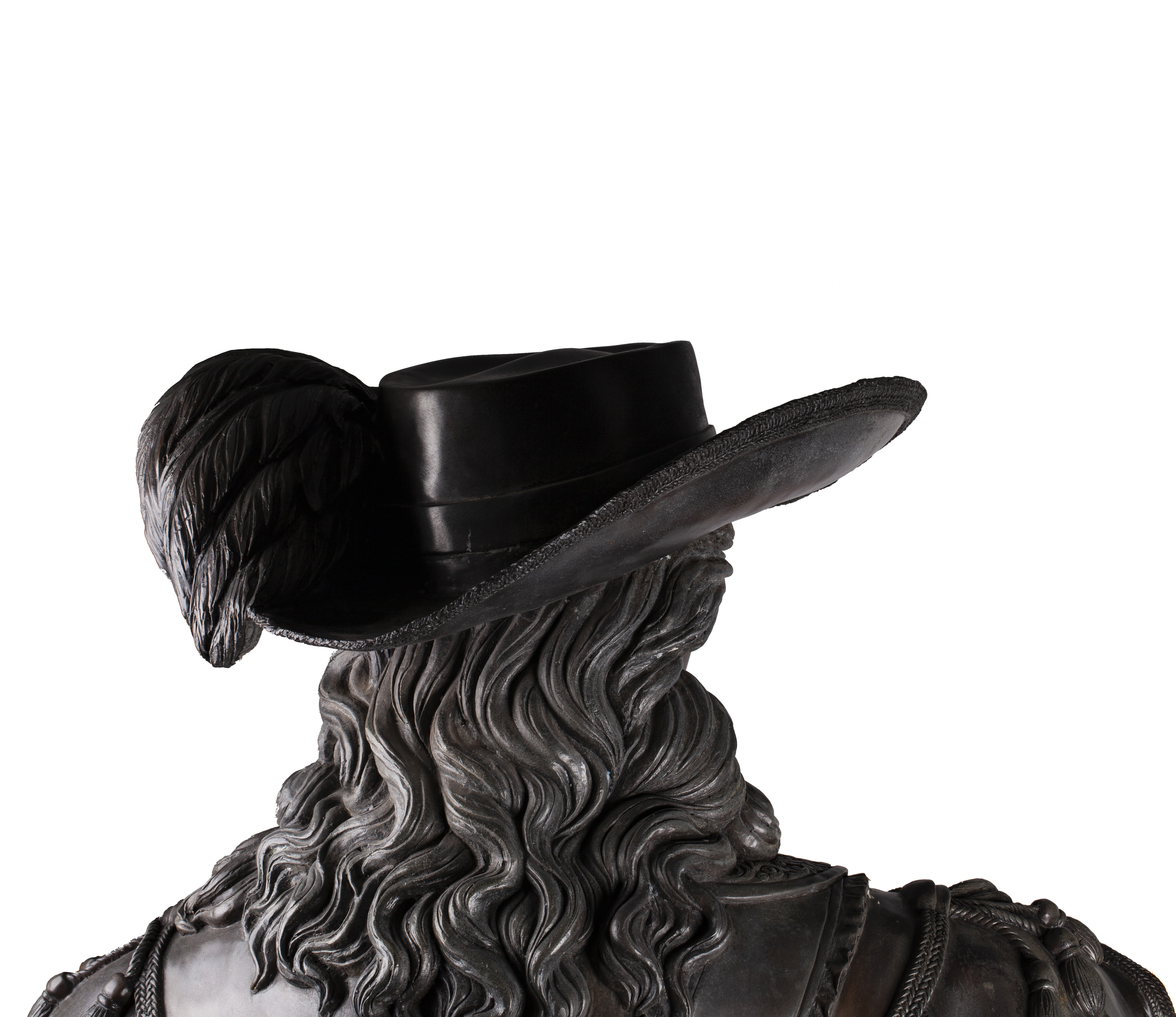
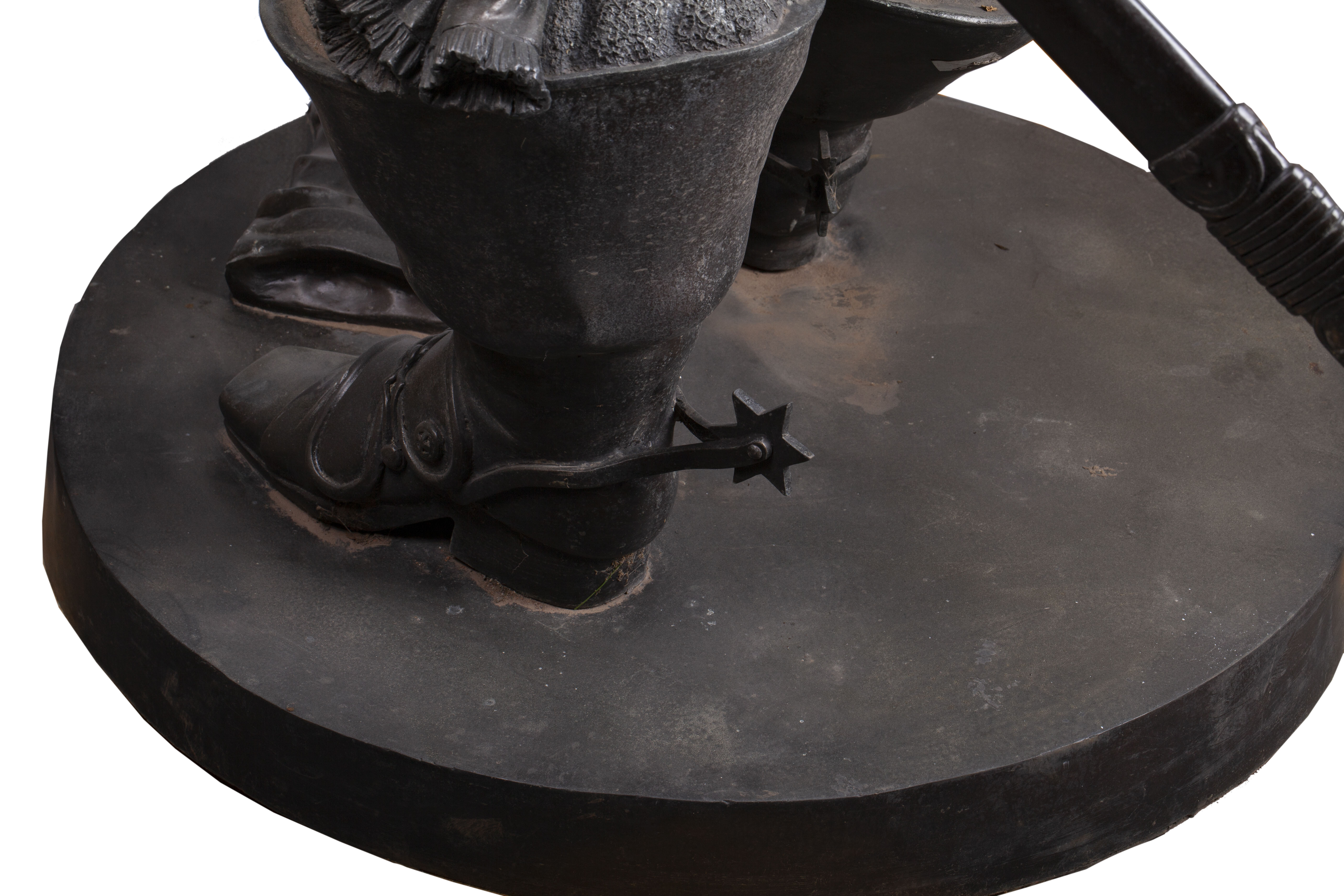
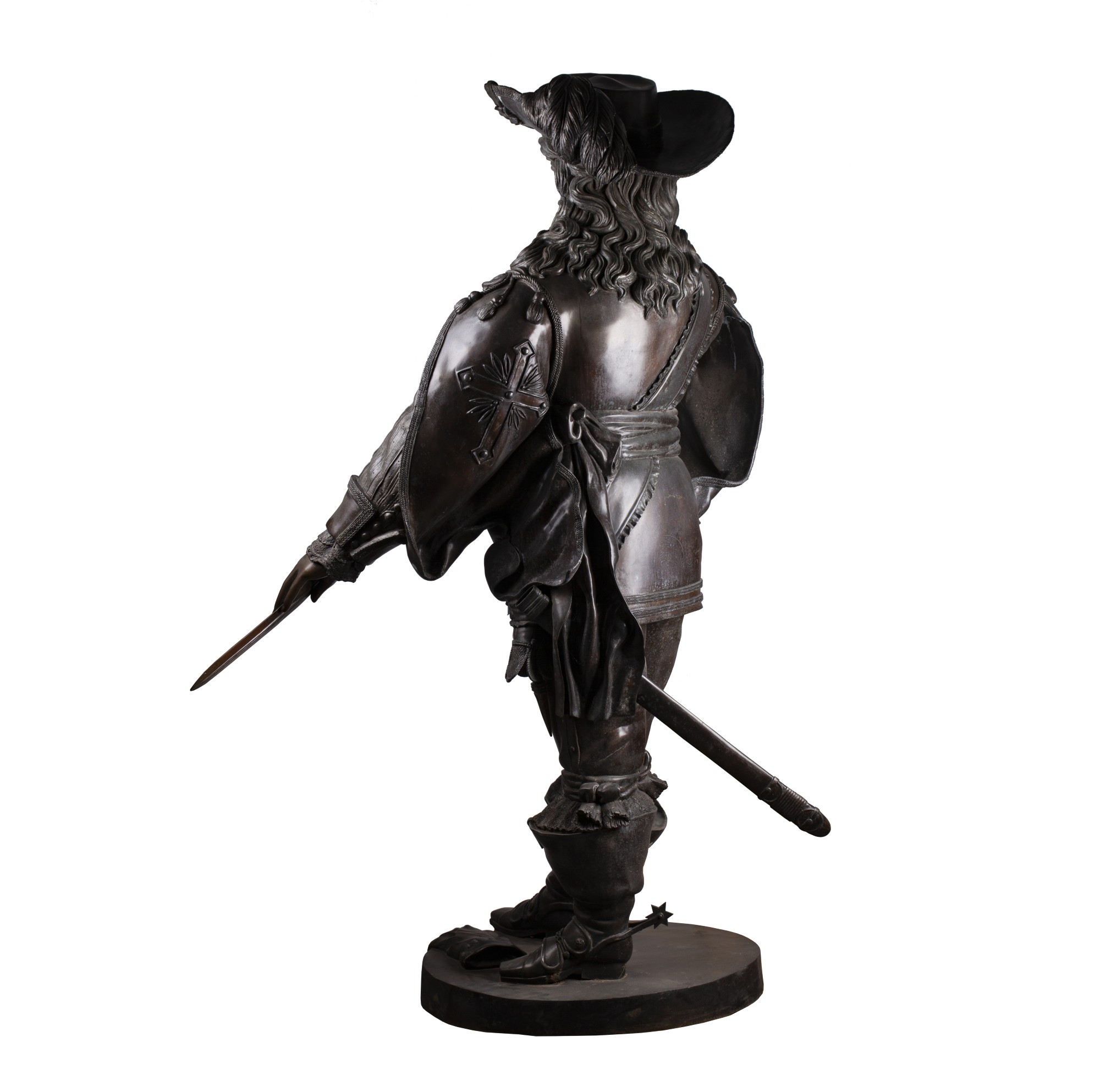
Estimate: 6000-8000€Bronze sculpture of a d’Artagnan musketeer in full human growth. Very detailed and well made.
Great for home or garden decoration or restaurant decoration.
20th century.
The similar in Netherlands, Maastricht: statue of Netherlands, Maastricht: statue of d’Artagnan, known as d’Artagnan.
https://maastrichtvestingstad.nl/en/ontdek/dartagnan/Figure height: 175 cm.
Weight approx: 80-100 kg.Starting price: 5000€
Estimate: 6000-8000€
Hammer Price: Not sold -
Lot 0005
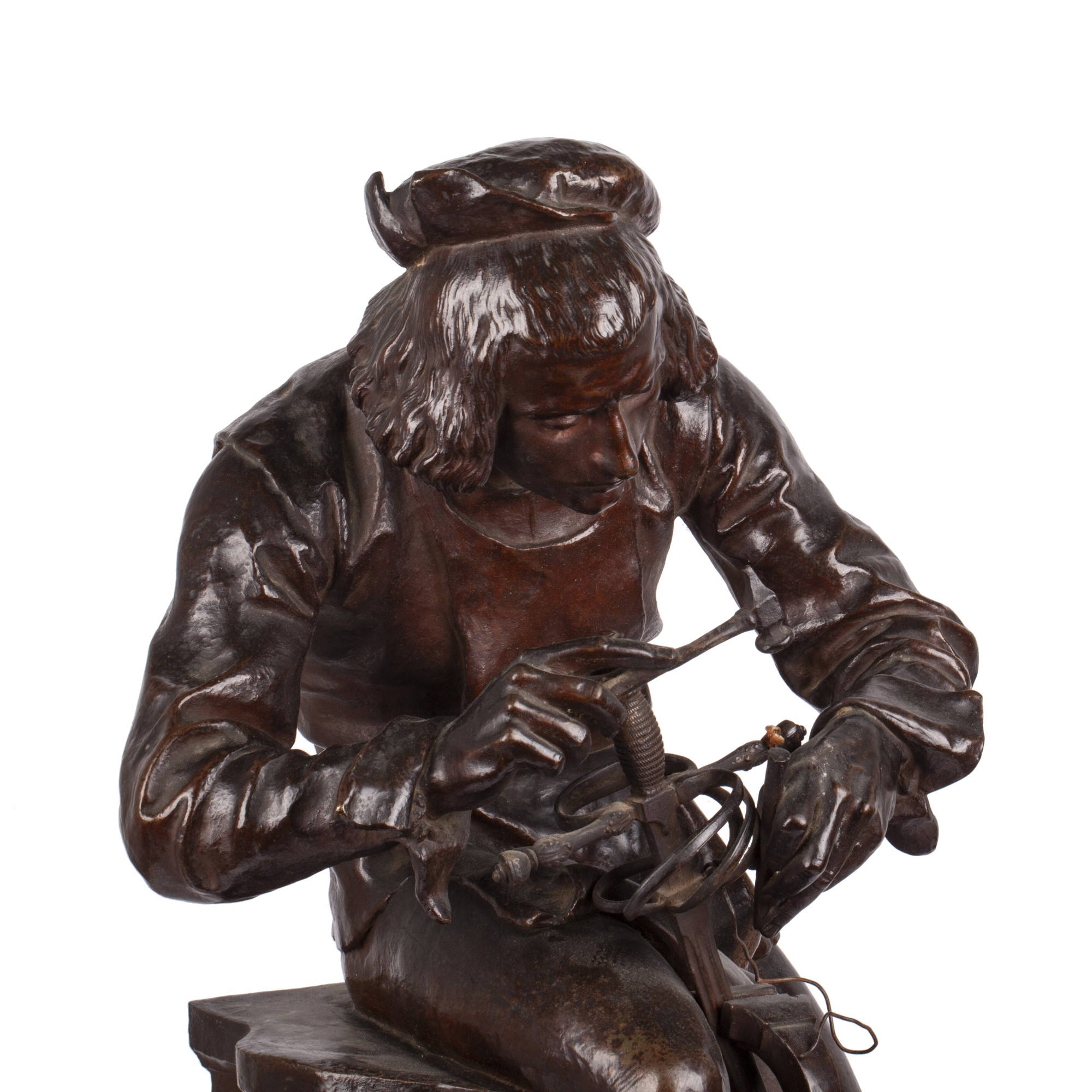
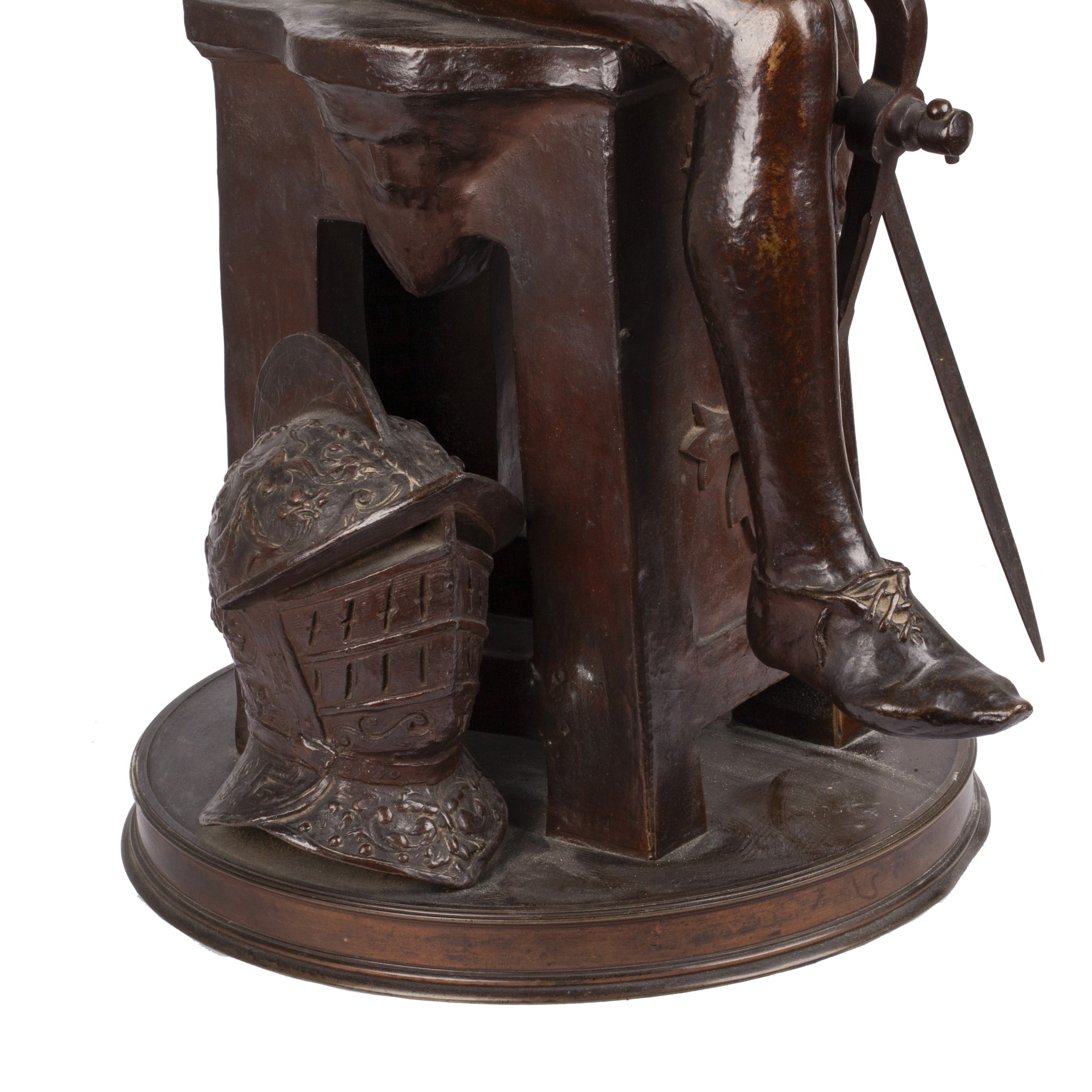
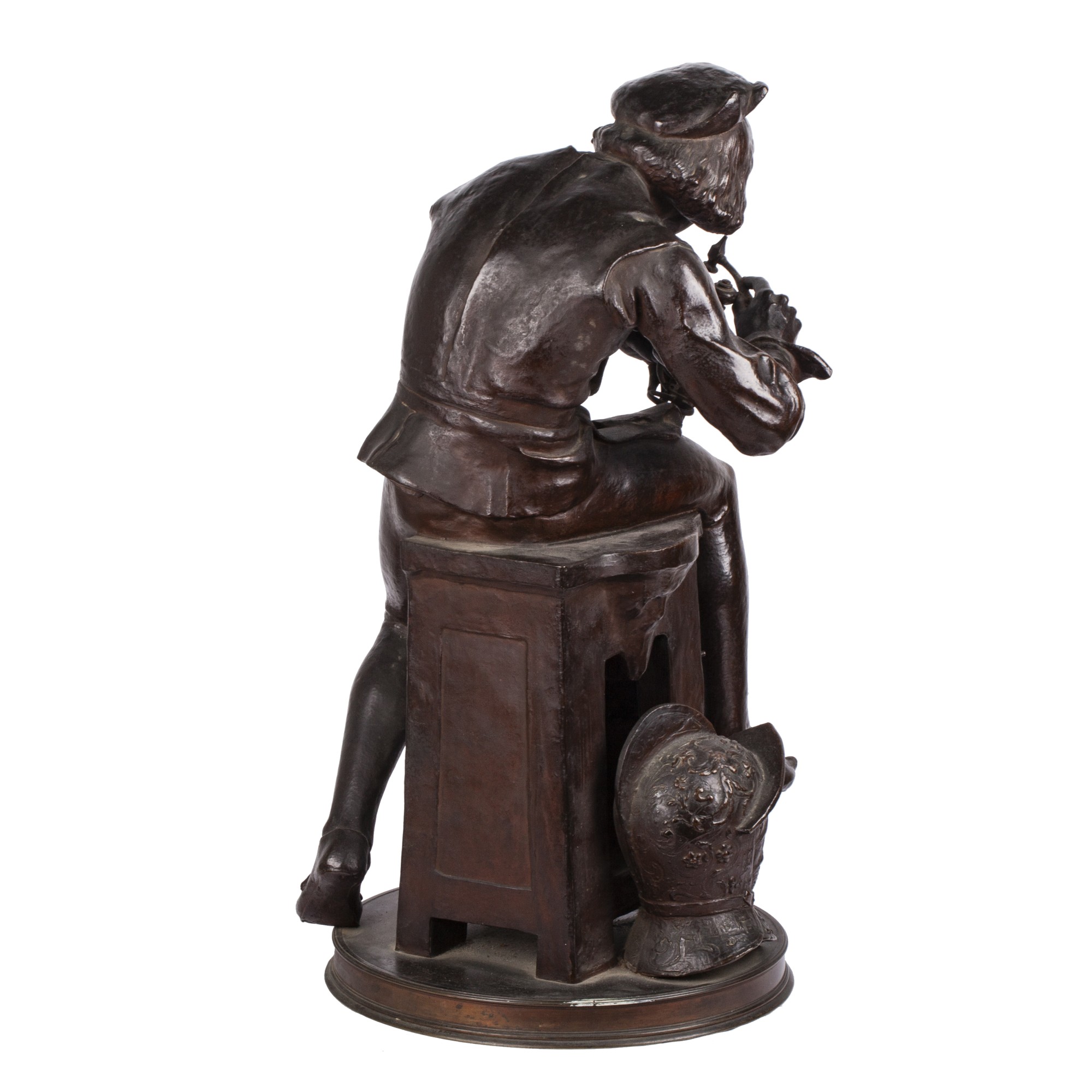
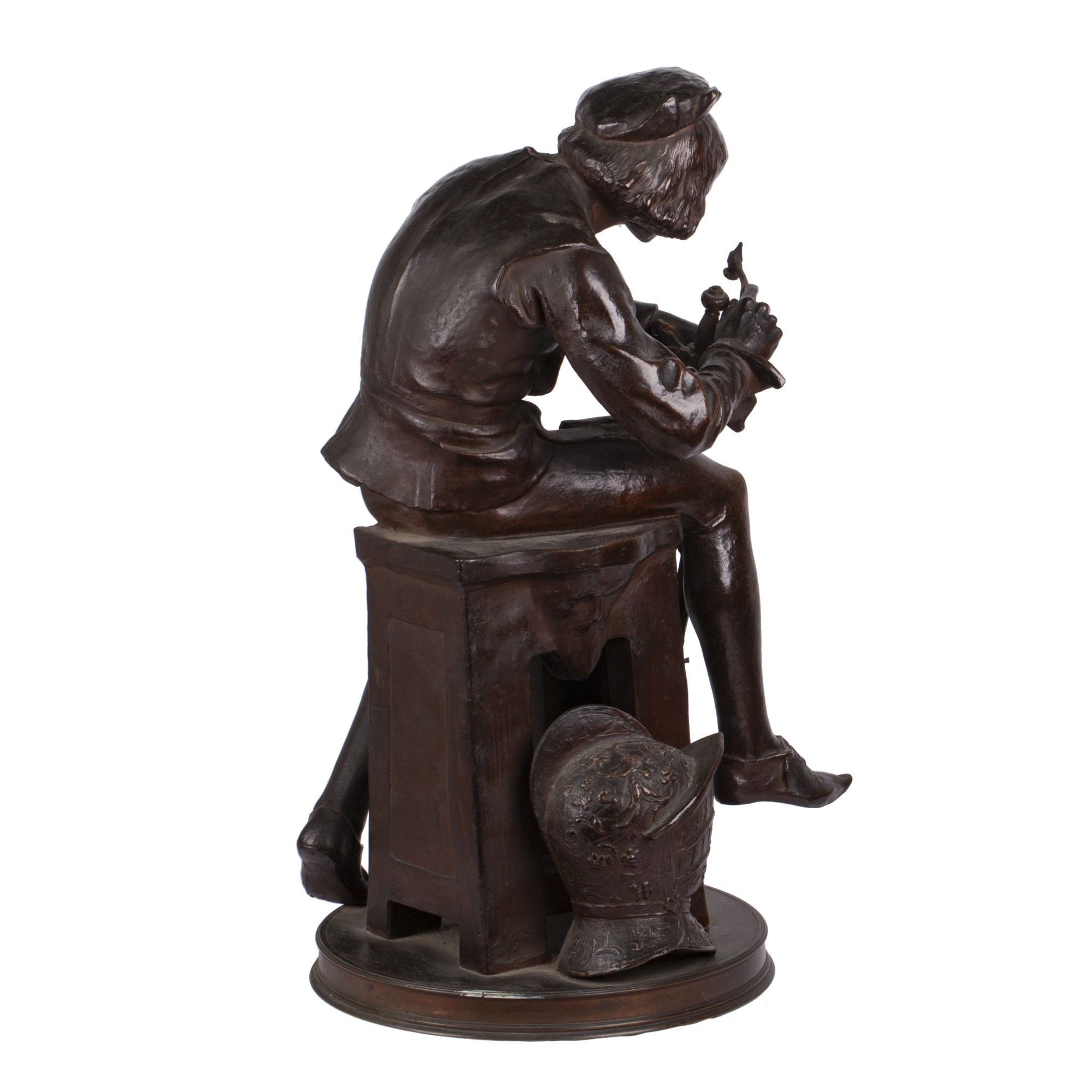
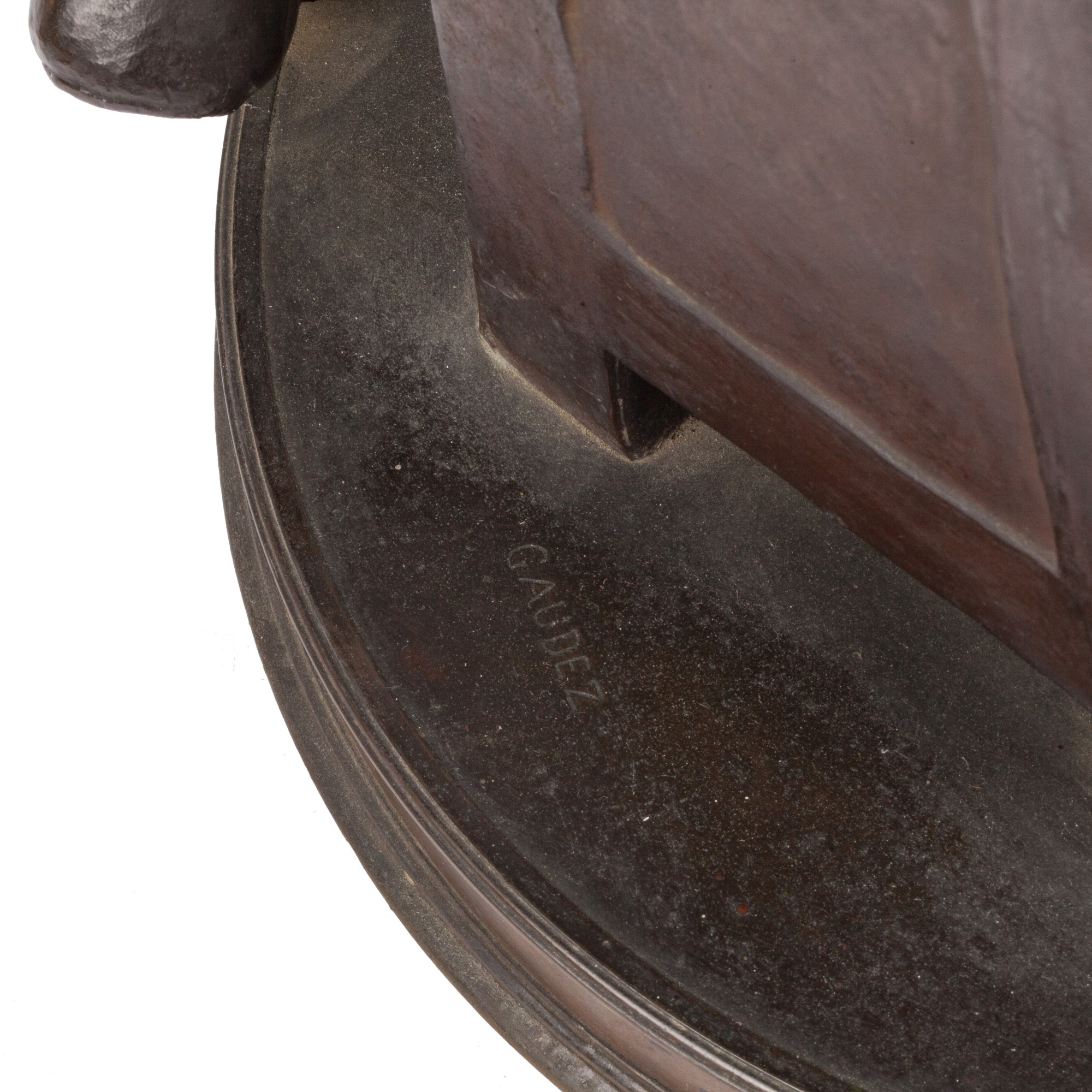
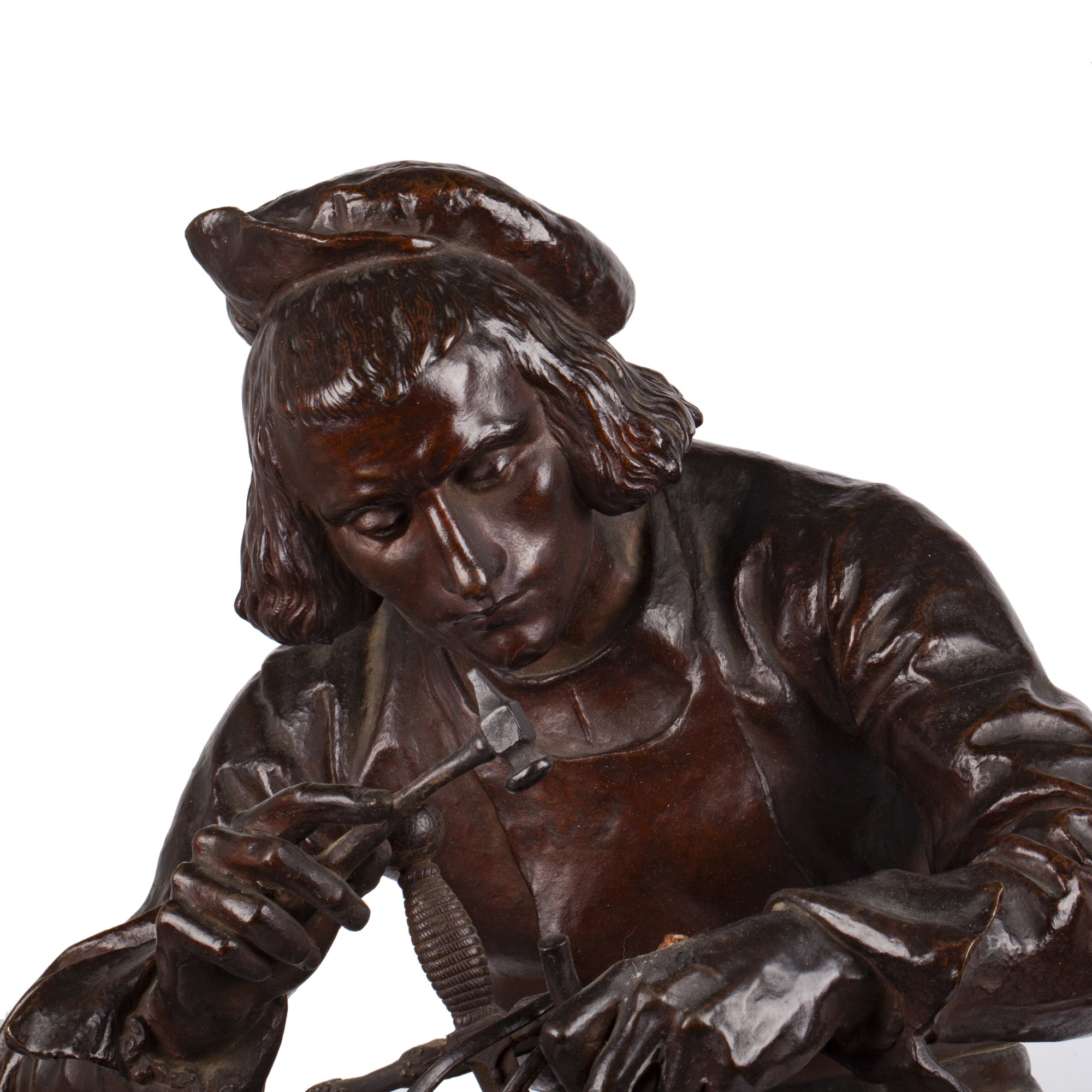
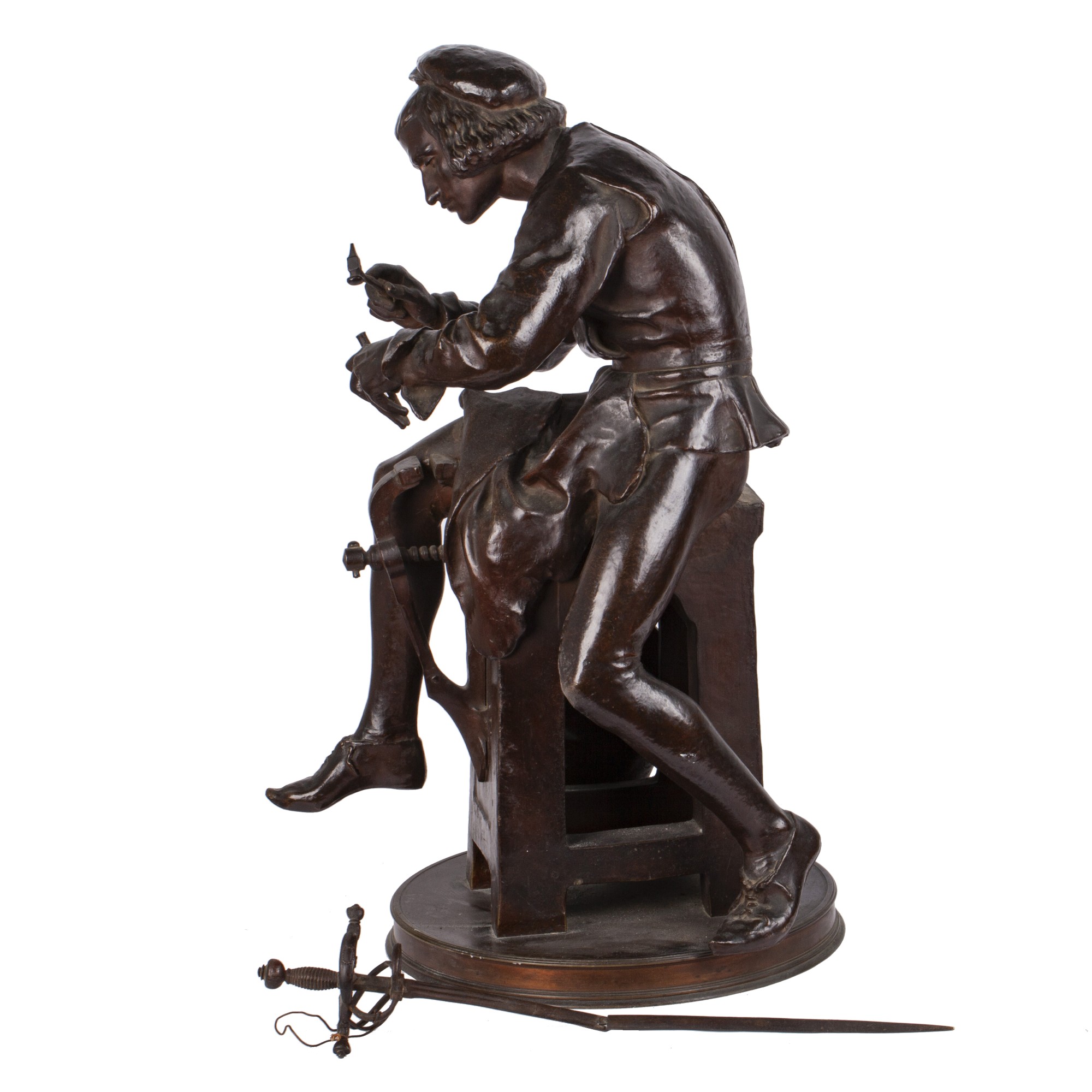
Bronze Sculpture “The Gunsmith” by Adrien Gaudez (1845–1902)
Estimate: 3000-3500€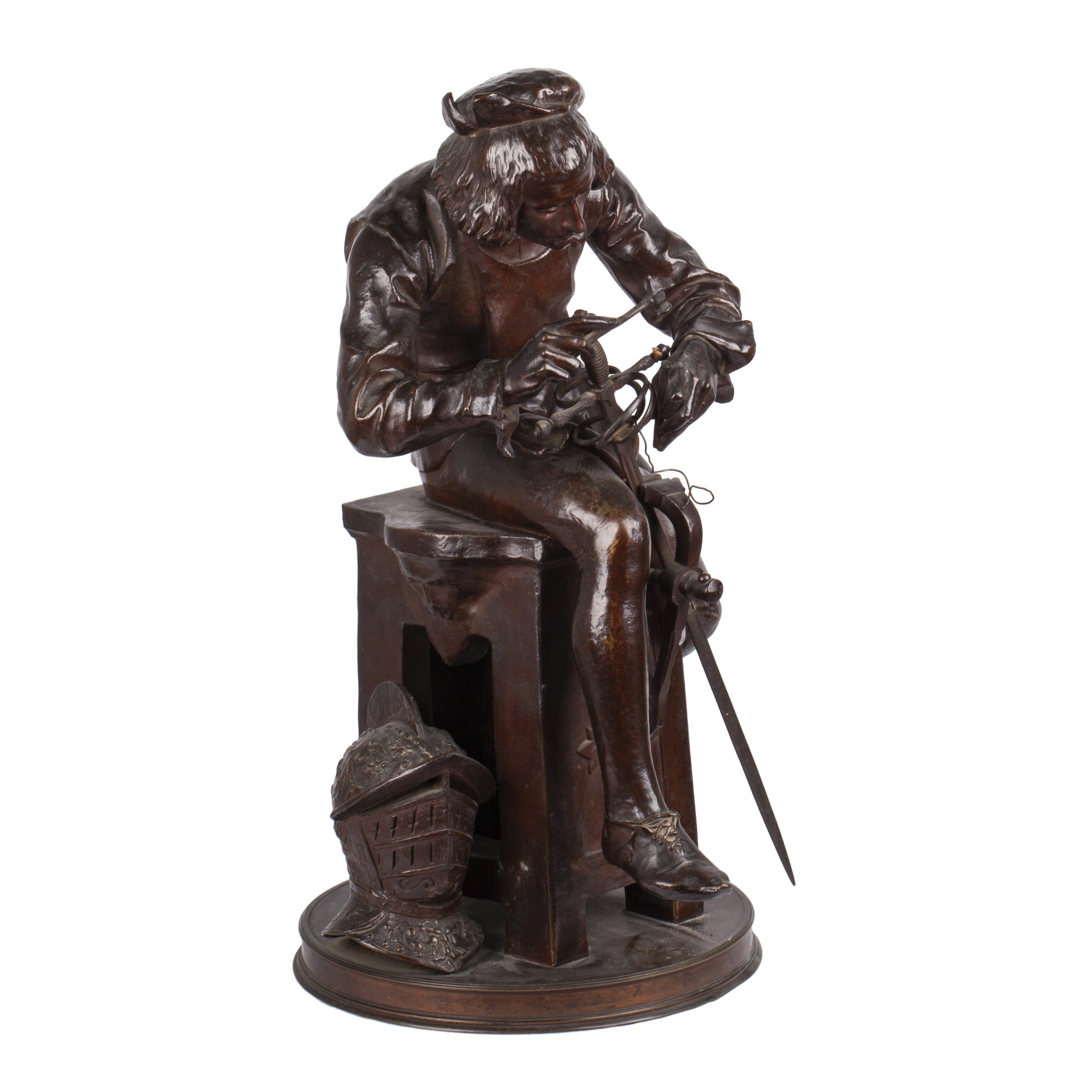
Lot 0005
Bronze Sculpture “The Gunsmith” by Adrien Gaudez (1845–1902)
Estimate: 3000-3500€Adrien Gaudez (1845–1902)
L’Armurier (The Gunsmith)
France, late 19th – early 20th century
Bronze
Height: 65 cmThis striking bronze sculpture, L’Armurier (“The Gunsmith”), is a masterful example of Adrien Gaudez’s ability to infuse technical realism with expressive vitality. The figure of a craftsman at work embodies both physical strength and concentration, capturing the dignity of manual labor and the artistry of creation.
A graduate of the École des Beaux-Arts in Paris, Gaudez debuted at the Paris Salon in 1864 and continued to exhibit there throughout his career. Initially influenced by classical traditions, he later incorporated the fluid lines and naturalistic movement characteristic of late 19th-century French sculpture.
Following his imprisonment during the Franco-Prussian War (1870–1871), Gaudez produced several commemorative works, including a monument to fallen French soldiers (1892). His oeuvre encompasses portraits, allegorical figures, and monuments distinguished by meticulous modeling and emotional depth.
L’Armurier reflects Gaudez’s fascination with the nobility of craftsmanship — a recurring theme in his work — and stands as a testament to the transition from academic classicism to the more dynamic and expressive forms of the Belle Époque.
Starting price: 2500€
Estimate: 3000-3500€
Hammer Price: Not sold -
Lot 0006
Marcel Début. Bronze Sculpture “Robinson with Dog”
Estimate: 4000-5000€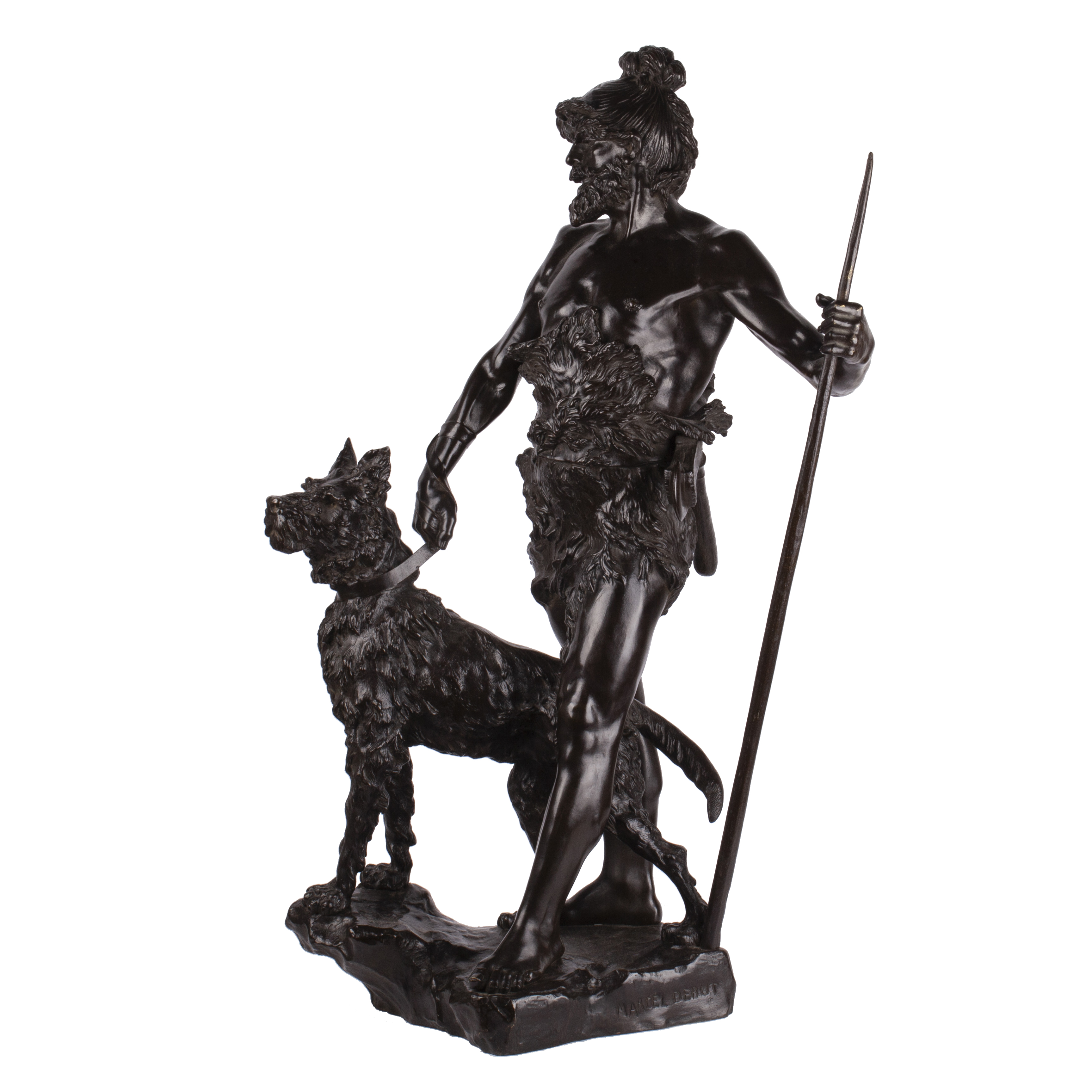
Lot 0006
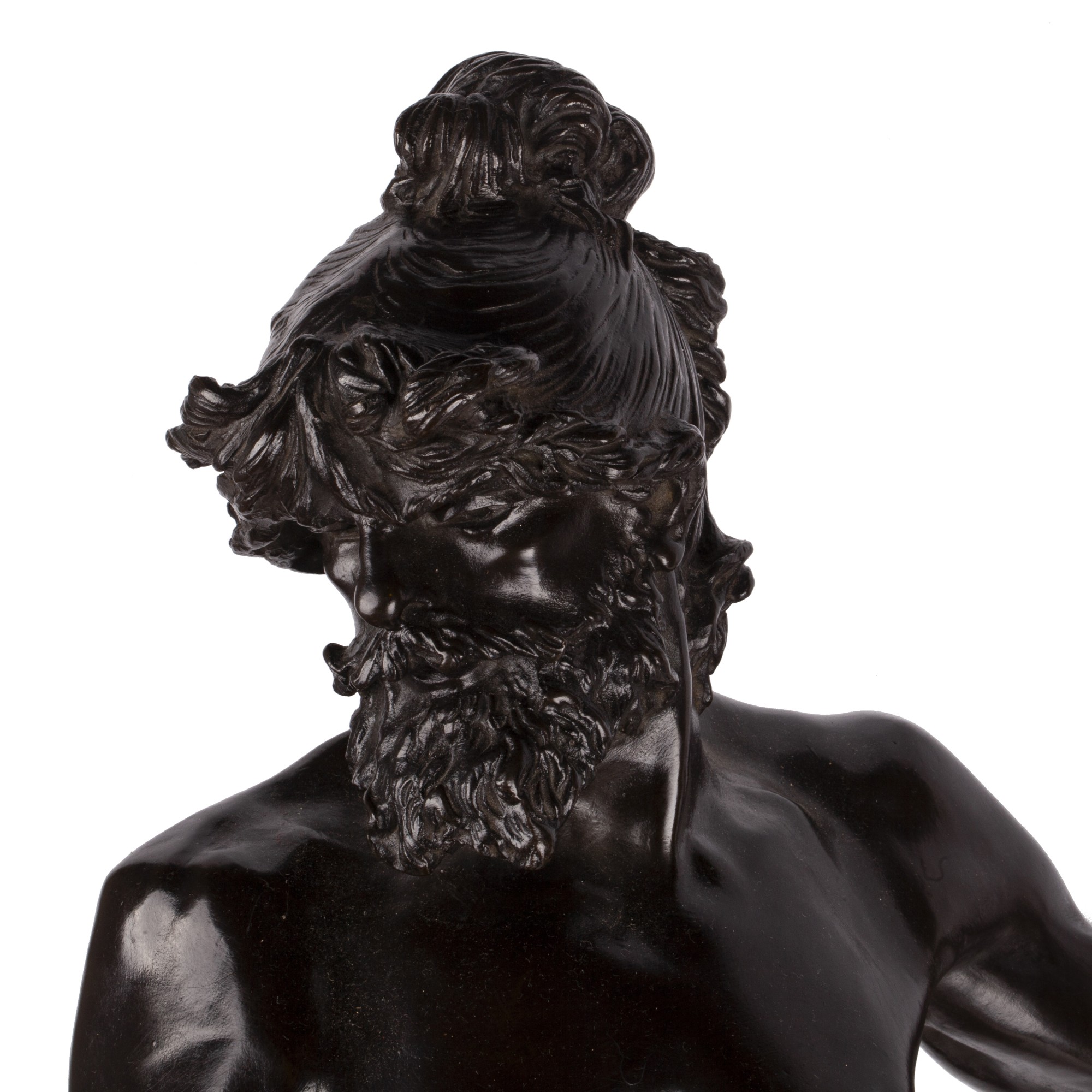
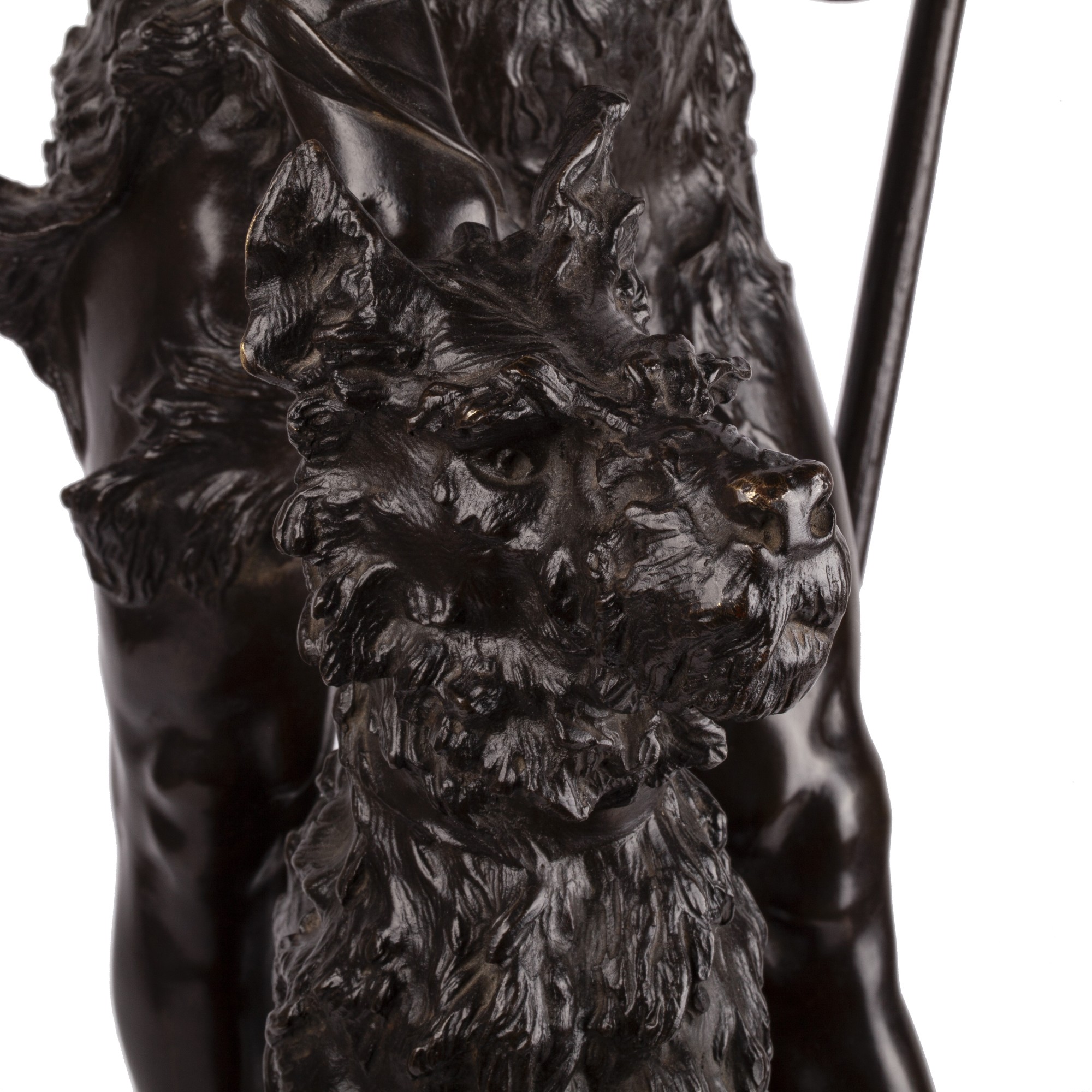
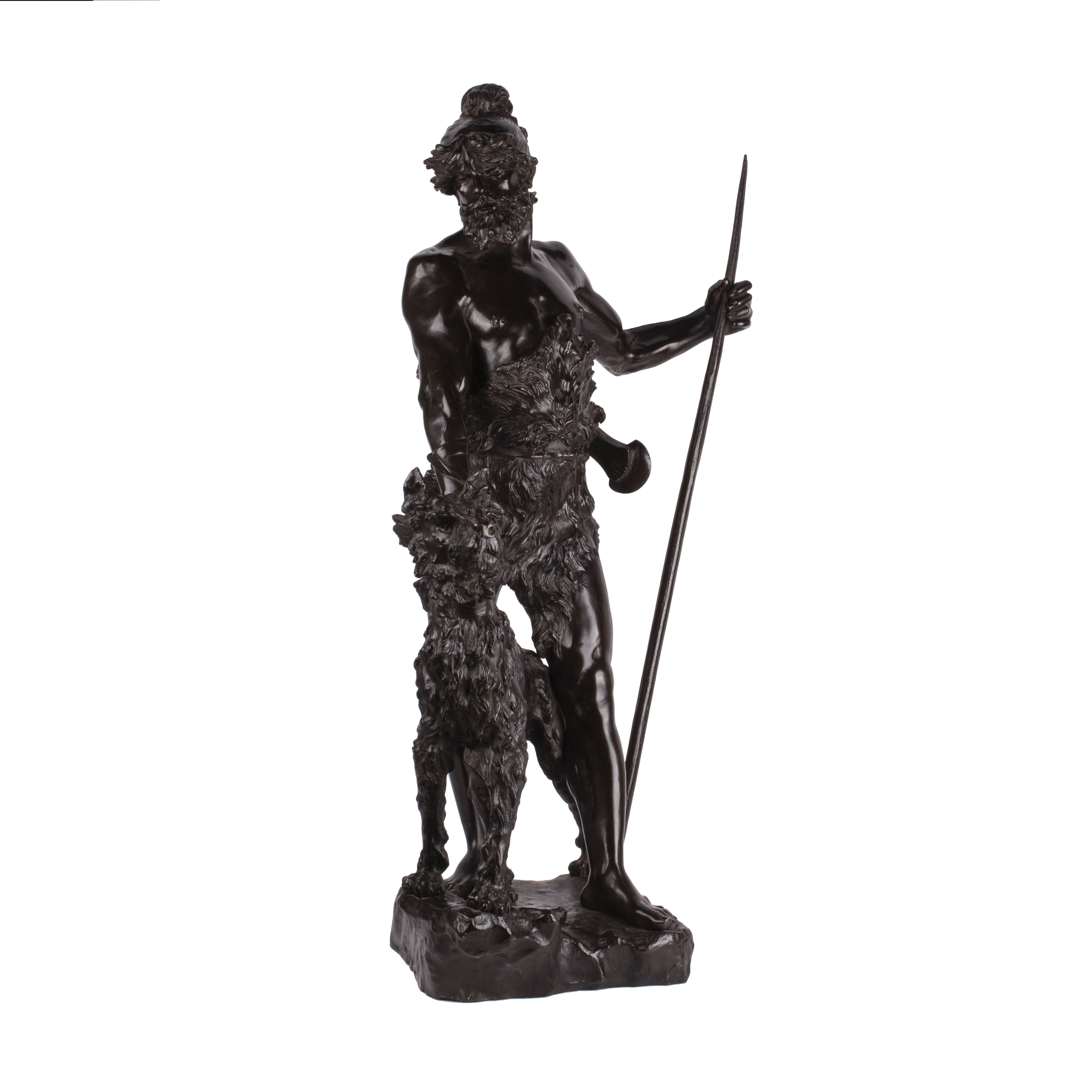
Marcel Début. Bronze Sculpture “Robinson with Dog”
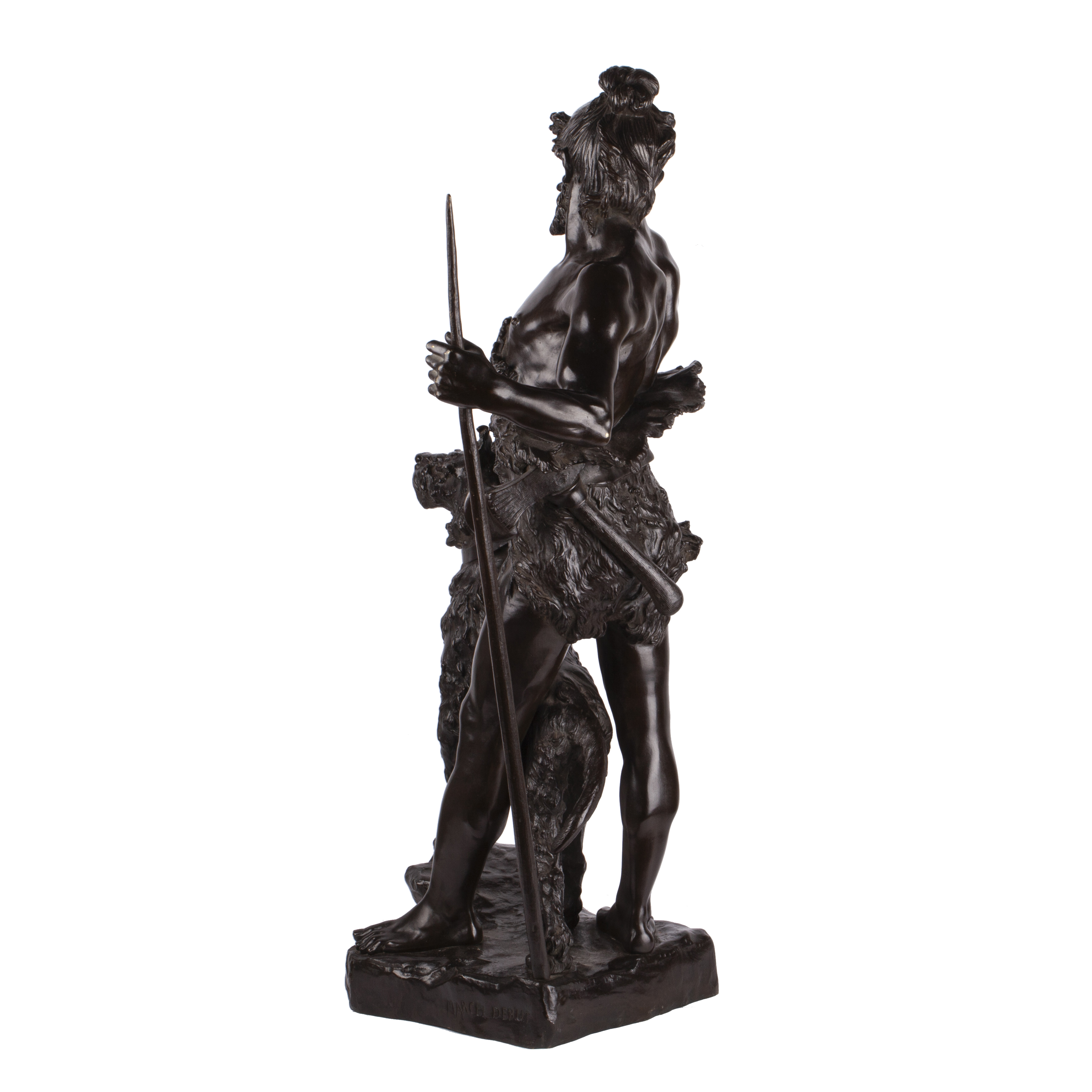
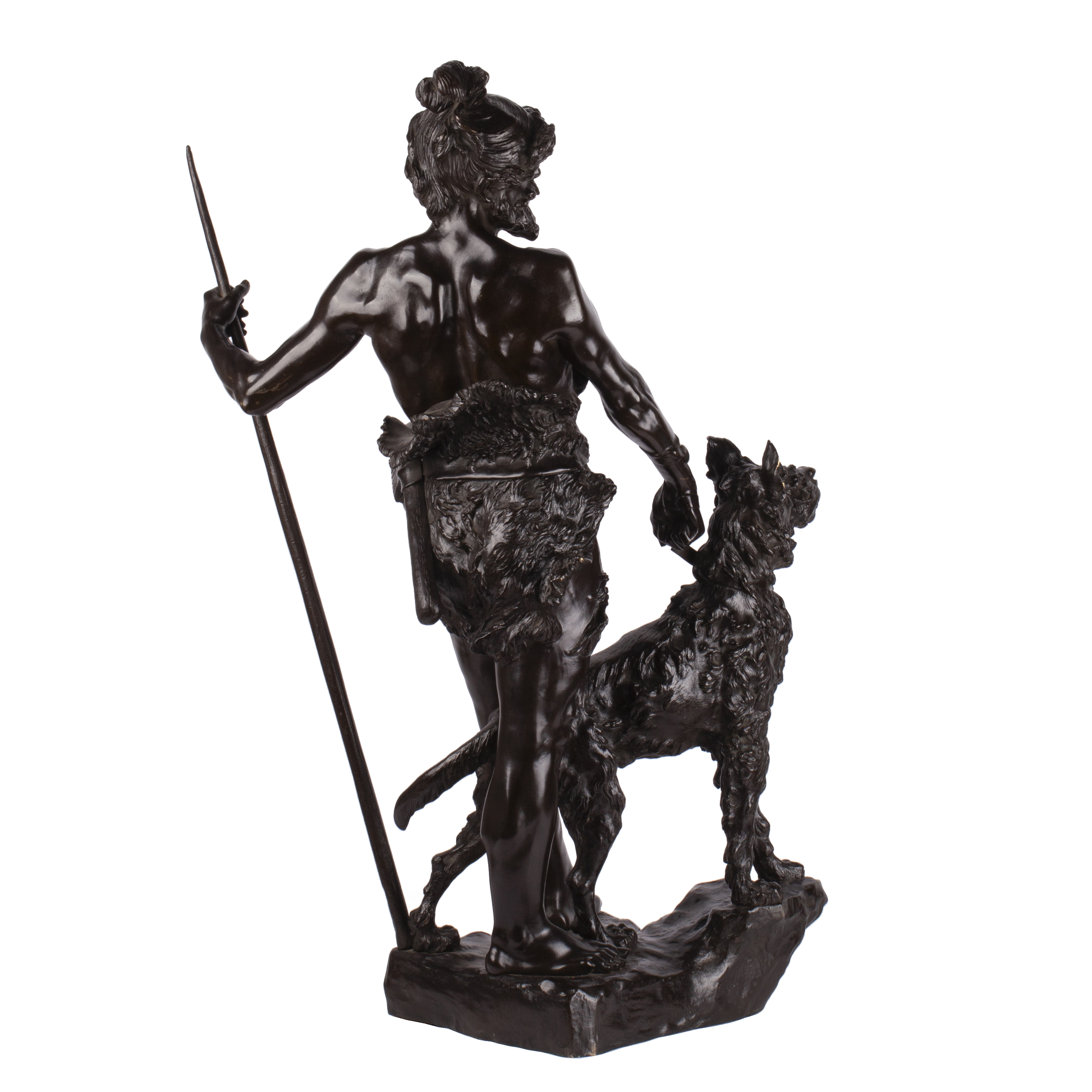
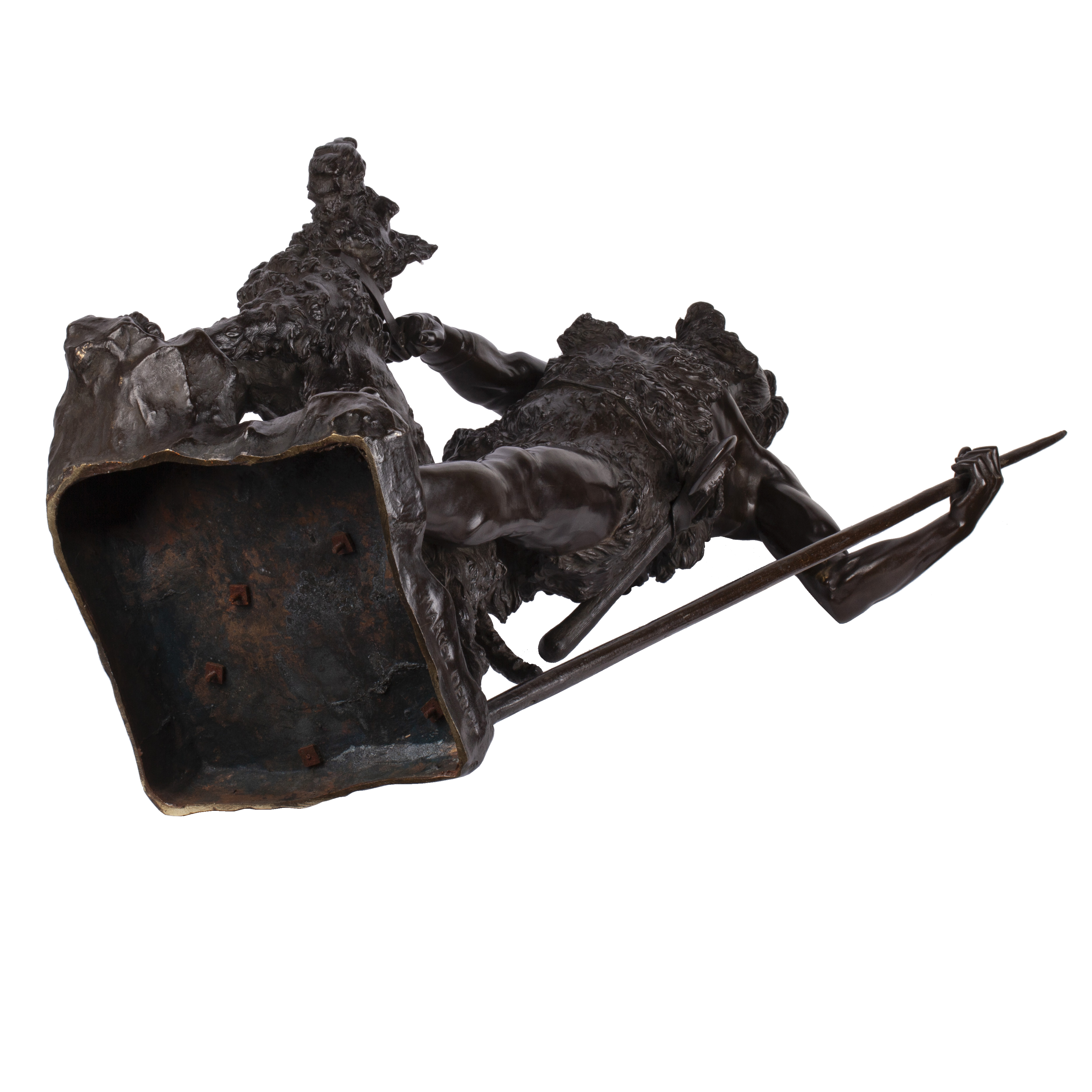
Estimate: 4000-5000€Standing Robinson with Dog, France, circa 1900, Marcel Début (French, born 1865)
Burnished bronze
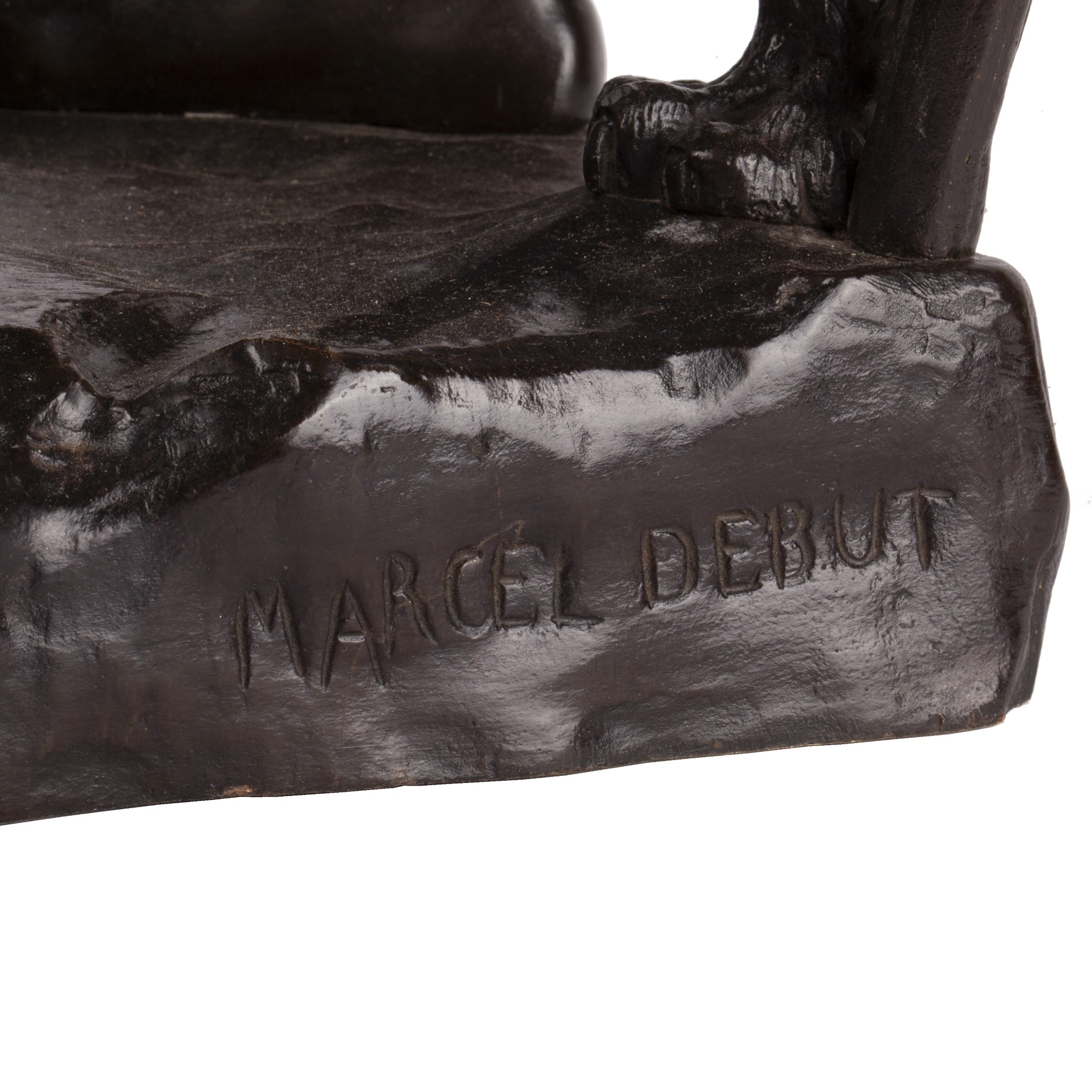
Signed MARCEL DEBUT
Height: 80 cmA finely modeled bronze sculpture depicting a standing figure of Robinson, dressed in a short fur garment and holding a staff and axe, accompanied by a large dog beside him. The composition rests upon a naturalistic, rock-like base, showcasing Début’s remarkable skill in anatomical detail and texture. This work reflects the artist’s academic training and the late 19th-century French fascination with adventure and heroism.
Starting price: 3500€
Estimate: 4000-5000€
Hammer Price: Not sold -
Lot 0007
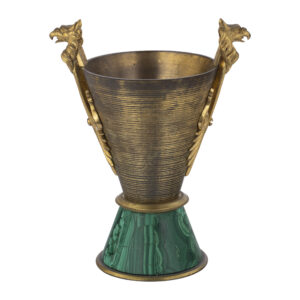
Russian Ormolu and Malachite Neo-Russian Pen Holder
Estimate: 2500-3000€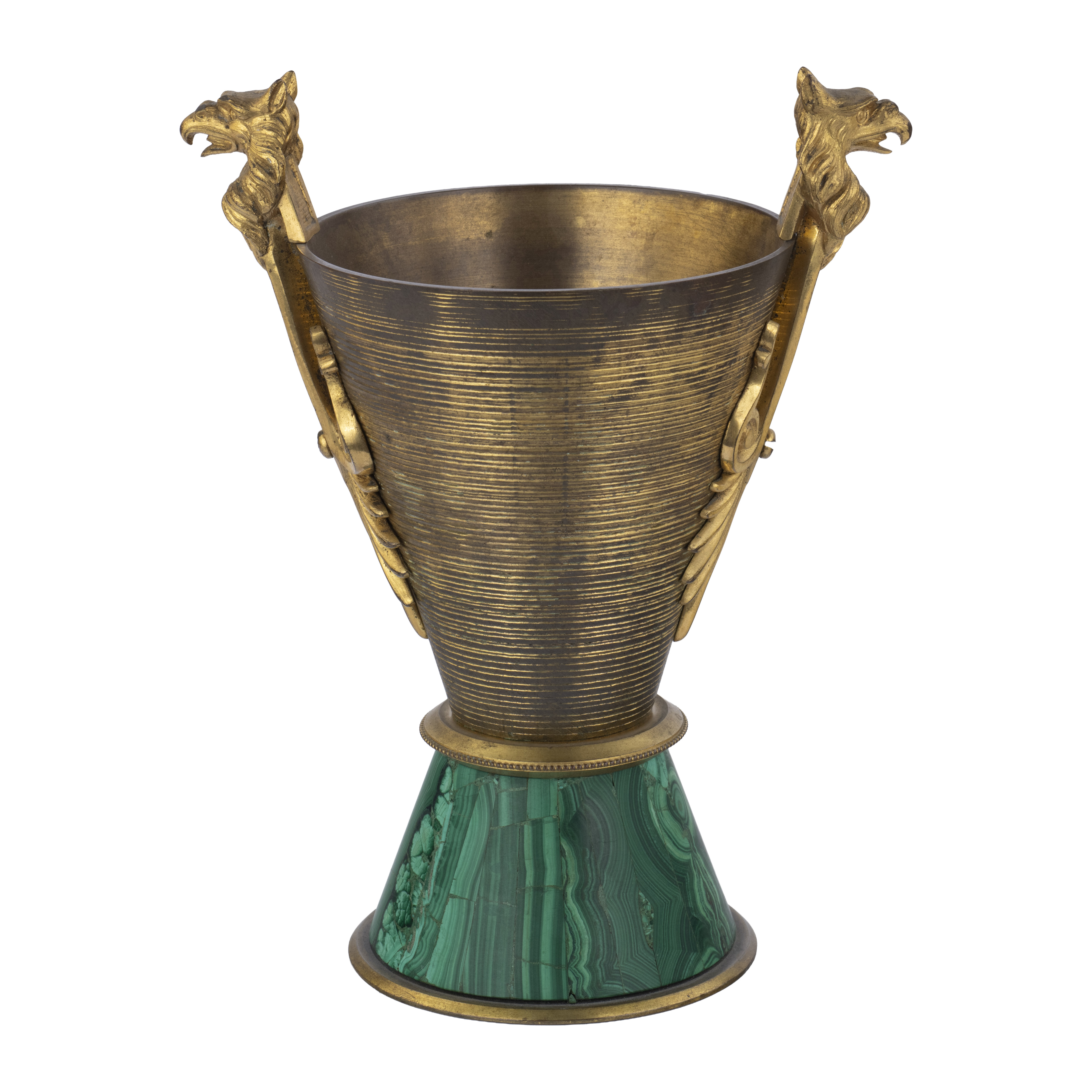
Lot 0007
Russian Ormolu and Malachite Neo-Russian Pen Holder
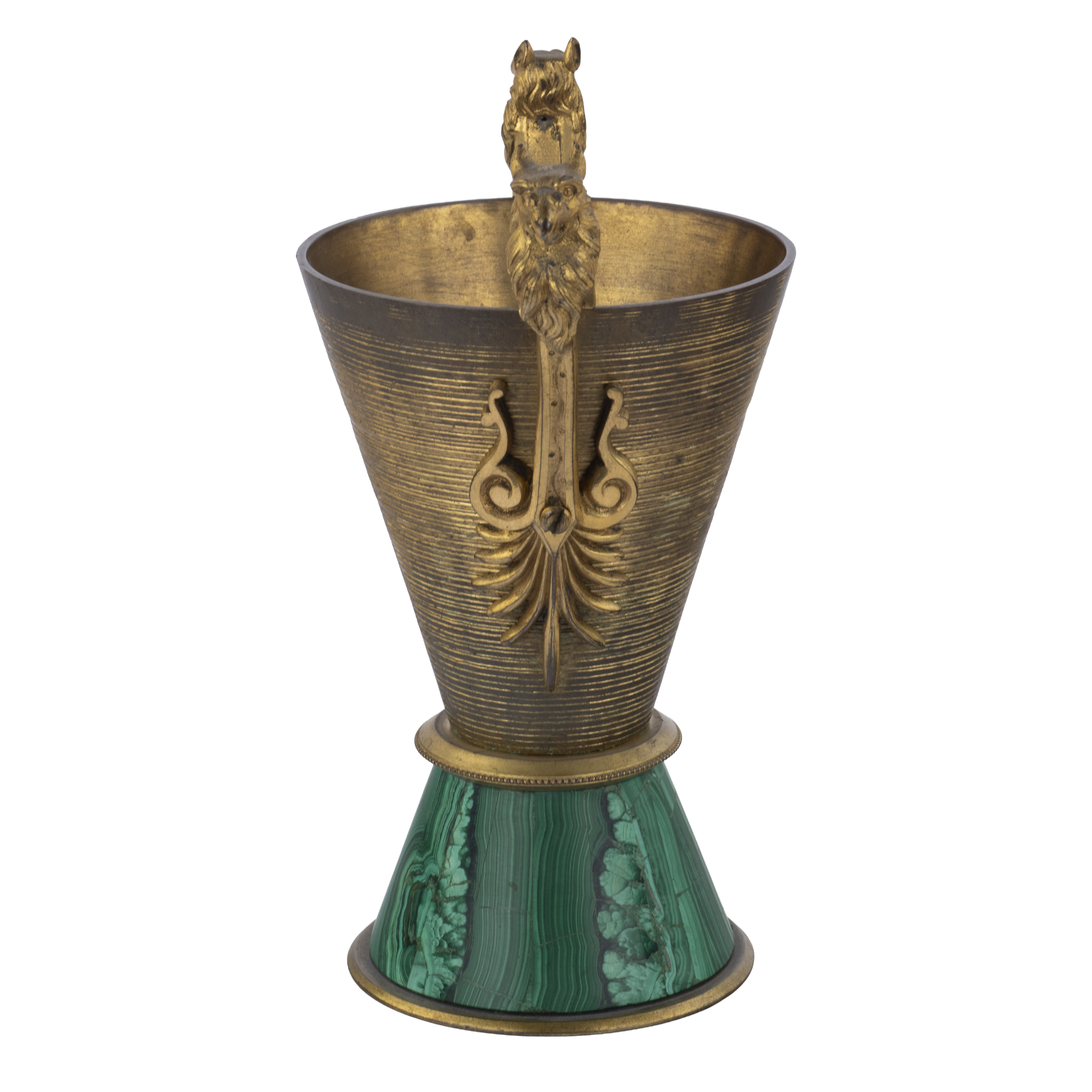
Estimate: 2500-3000€Russian Ormolu and Malachite Pen Holder . Russia, late 19th century.
Gilt bronze, malachite; cast, chased, engraved, polished. Dimensions: 20 x 16.
A striking desk pen holder conceived in the Neo-Russian taste, combining the warm lustre of gilt bronze with the richly banded surface of malachite. The upper holder is formed as a flaring conical vessel with a finely striated surface, raised on a truncated malachite pedestal mounted within bronze rims. Its architectonic silhouette is enlivened by applied mounts and zoomorphic finials, which lend the object a distinctly archaizing and ornamental character.
The design draws upon motifs associated with traditional Russian wooden architecture, particularly the carved decoration of window surrounds and nalichniki. The scrolling side ornaments and stylized animal-head mounts translate the vocabulary of vernacular woodcarving into metalwork, creating an effect at once monumental and decorative.Starting price: 2000€
Estimate: 2500-3000€
Hammer Price: Not sold -
Lot 0008
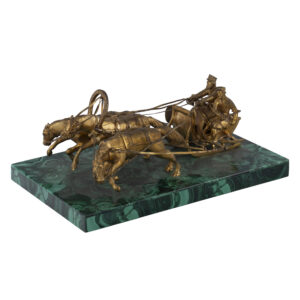
Russian Gilt Bronze Troika on Malachite Base, after Grachev
Estimate: 6000-8000€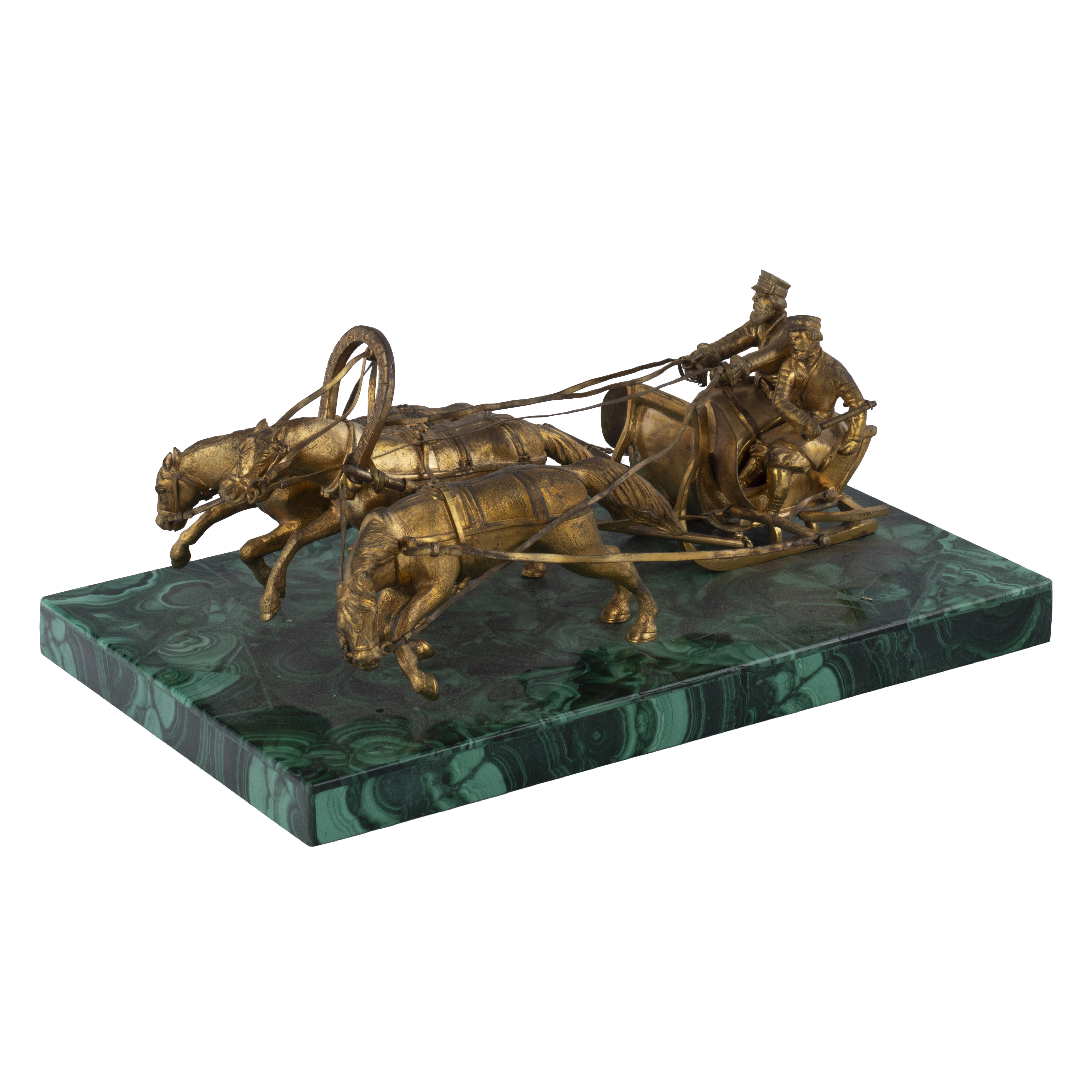
Lot 0008
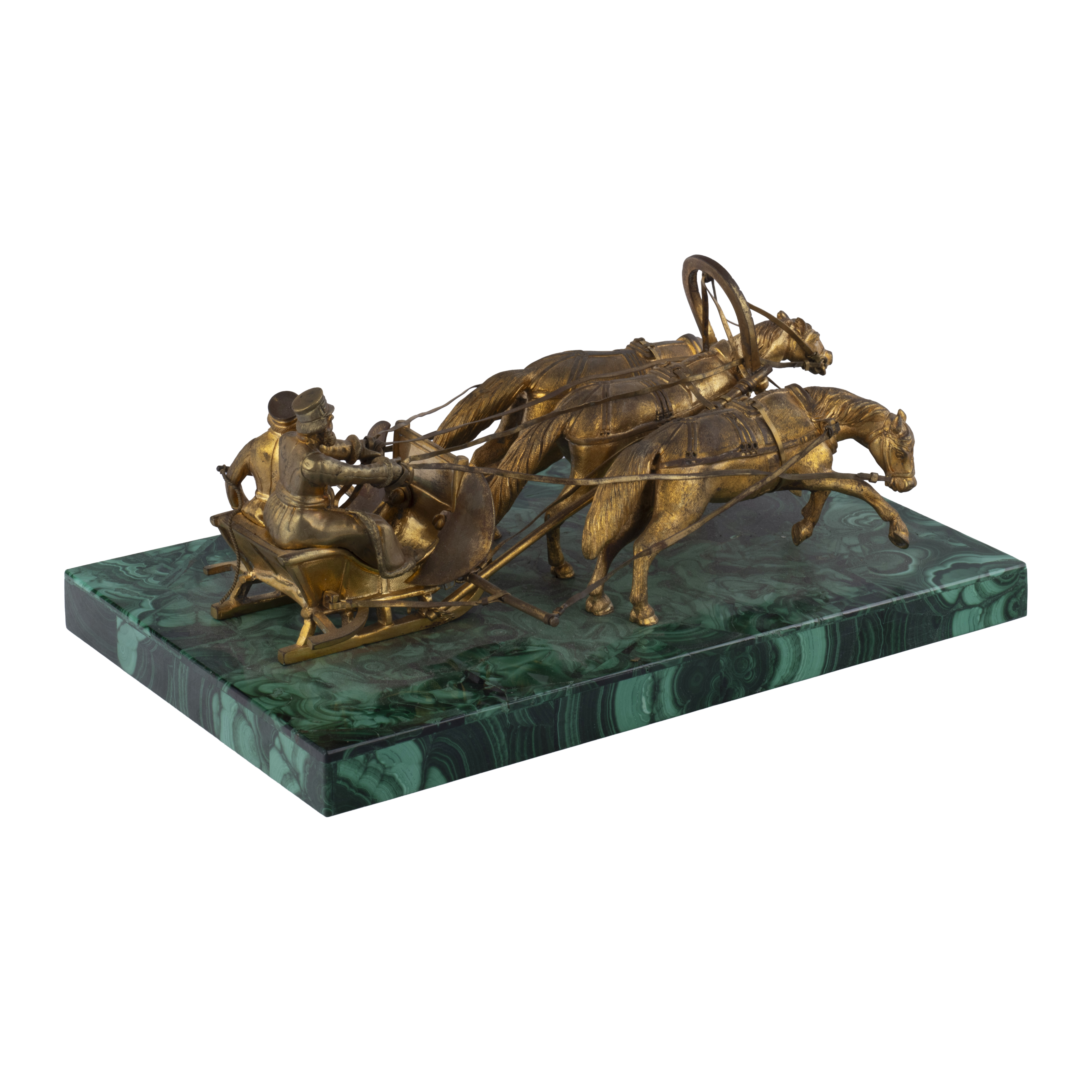
Russian Gilt Bronze Troika on Malachite Base, after Grachev
Estimate: 6000-8000€After Vasily Yakovlevich Grachev (1831-1905) Troika on a Malachite Base. St Petersburg, second half of the 19th century. Gilt bronze, malachite; casting, chasing, gilding, mounted on a polished malachite plinth. Dimensions: 24 x 8 cm.
A dynamic cabinet sculpture representing a Russian troika in full motion, with two drivers seated in a sleigh drawn by a team of three horses. The composition is conceived with pronounced forward thrust: the horses are shown at different angles and in varied strides, while the taut reins and diagonally arranged harnesses heighten the sense of speed and tension.
The model relates to the work of Vasily Yakovlevich Grachev, one of the notable sculptors of realist orientation active in the field of Russian cabinet bronze. Largely self-taught, Grachev became famous for his small-scale sculptural models in the Russian manner, especially scenes drawn from national life. Complex multi-figure groups of this kind were beyond the technical scope of his own workshop after its establishment in 1885 and are therefore closely associated with casts produced at the St Petersburg foundry of Carl Woerfell, where a number of Grachev’s models were cast.Starting price: 5000€
Estimate: 6000-8000€
Hammer Price: Not sold -
Lot 0009
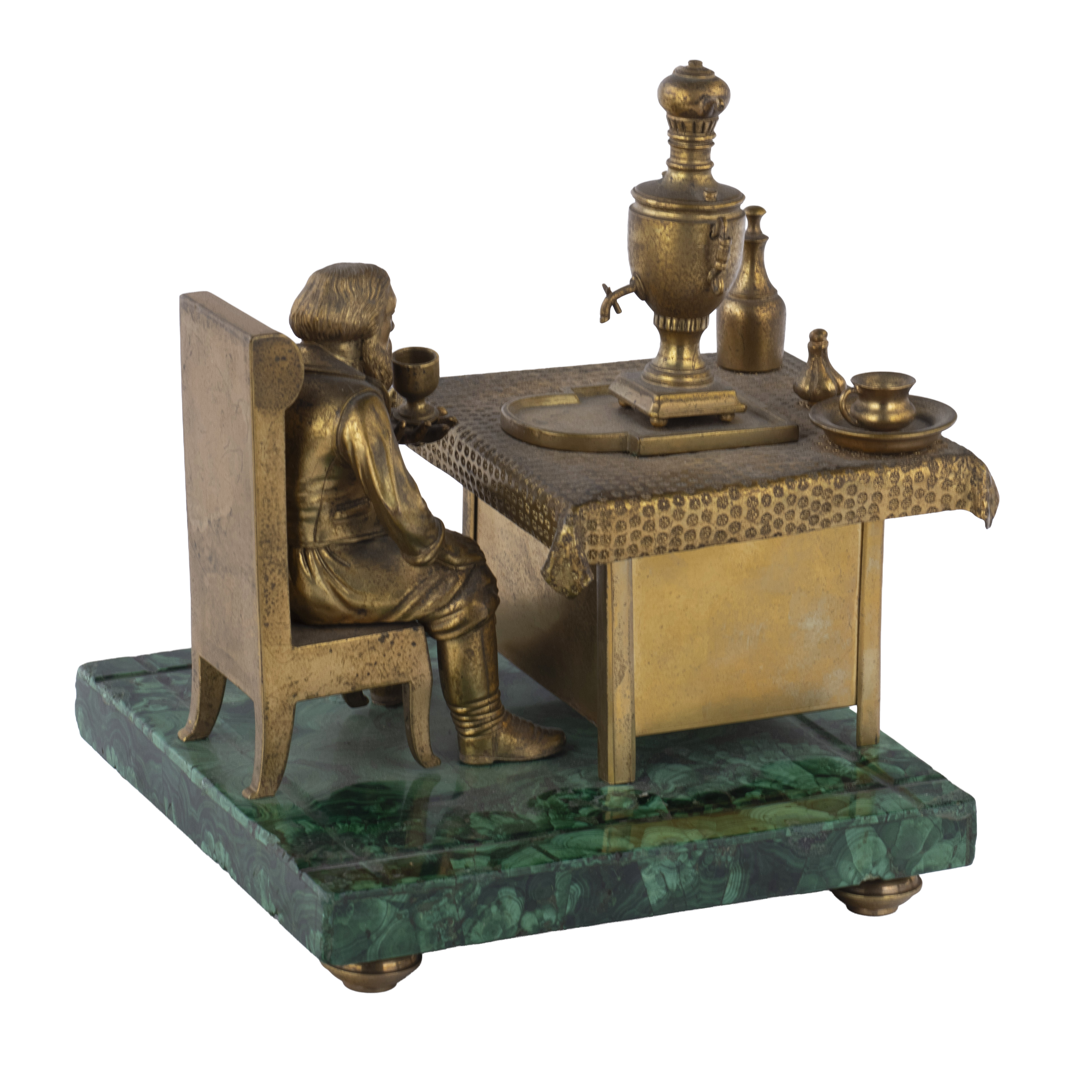
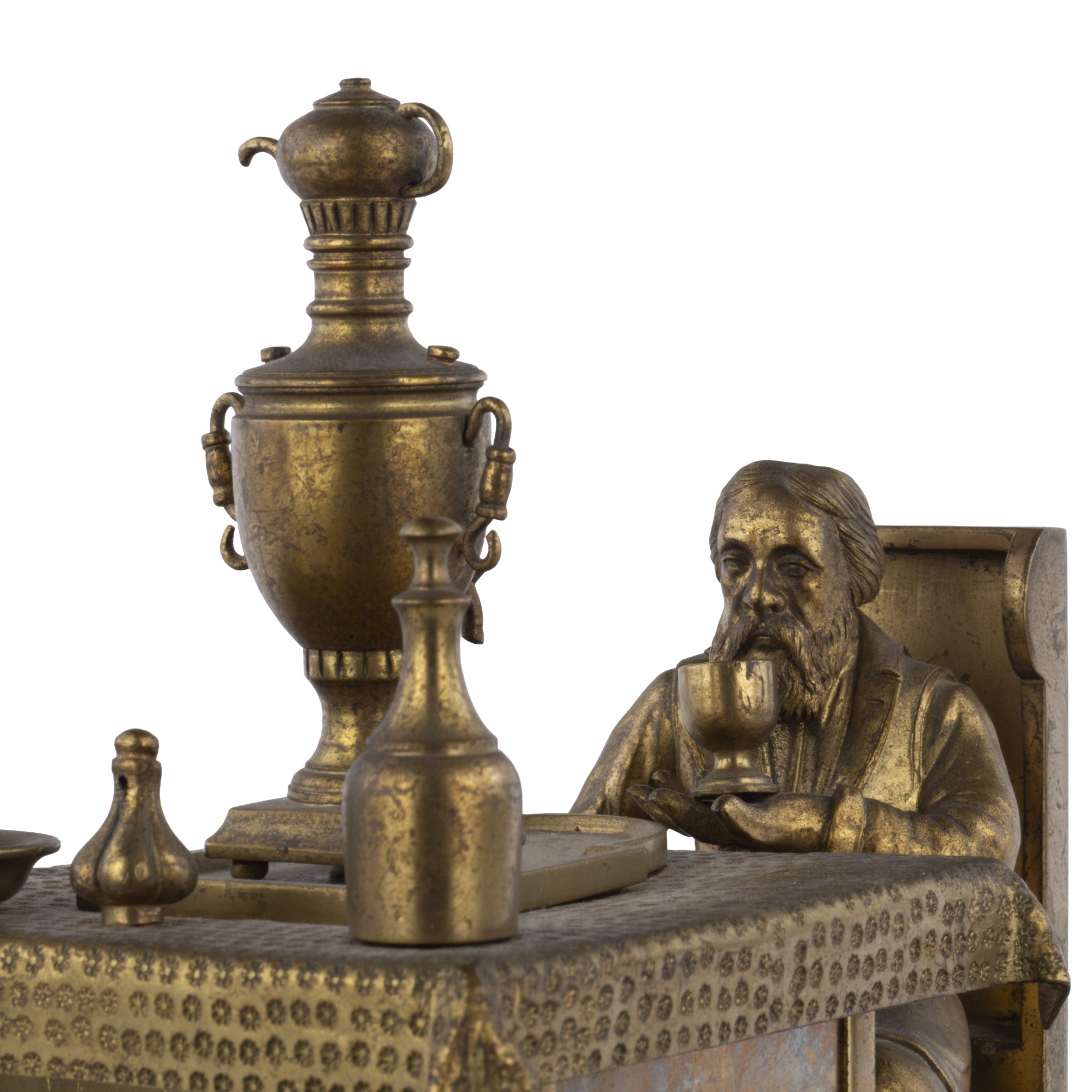
Rare Russian Bronze and Malachite Tea-Drinking Inkstand
Estimate: 6000-8000€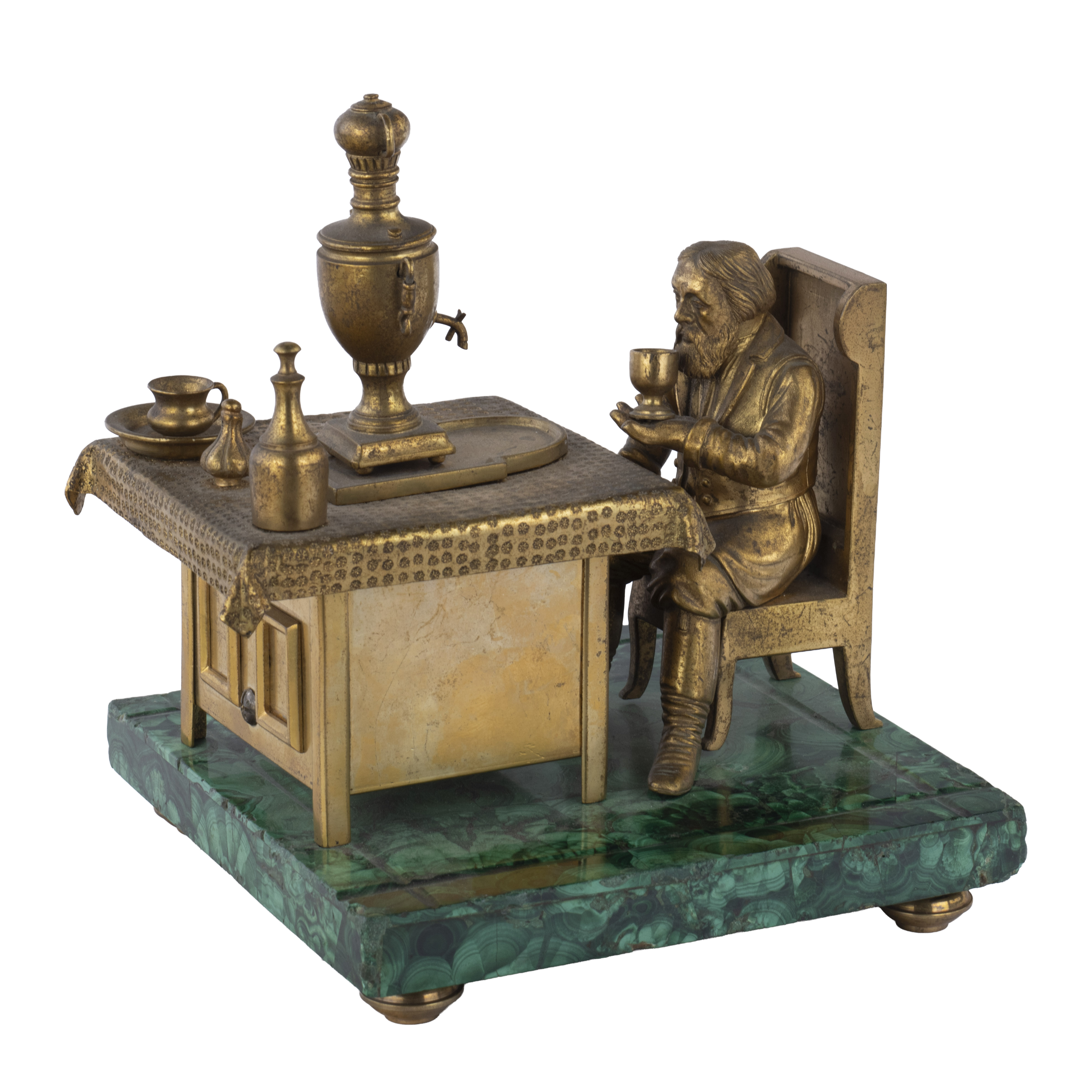
Lot 0009
Rare Russian Bronze and Malachite Tea-Drinking Inkstand
Estimate: 6000-8000€A Rare Russian Inkstand with Tea-Drinking Scene Moscow (?), 1850s. Bronze, malachite, glass; casting, gilding, malachite mosaic. Dimensions: 19 x 16 cm.
This rare inkstand is conceived as a compact genre scene centered on the ritual of Russian tea-drinking. A bearded seated figure, shown in quiet concentration with a teacup in hand, is placed beside a table covered with a cloth and set with a samovar, cup with saucer, and small vessels. The writing implements are ingeniously absorbed into the composition, so that the object unites narrative detail with practical function in the manner characteristic of mid-19th-century Russian cabinet bronzes.
Such objects belong to the important development of Russian genre bronze in the pre-Reform decade, when the amusing peasant types of earlier decades gradually gave way to more varied and observant scenes drawn from everyday national life. In works of this kind, functional desk accessories were transformed into miniature sculptural tableaux, combining ornamental purpose with storytelling.
Comparable item in Russian State Historical museum: https://catalog.shm.ru/entity/OBJECT/2870625?query=чаепитие&index=42Starting price: 5000€
Estimate: 6000-8000€
Hammer Price: Not sold -
Lot 0010
Russian Ormolu and Malachite Pastoral Cabinet Bronze
Estimate: 2500-3000€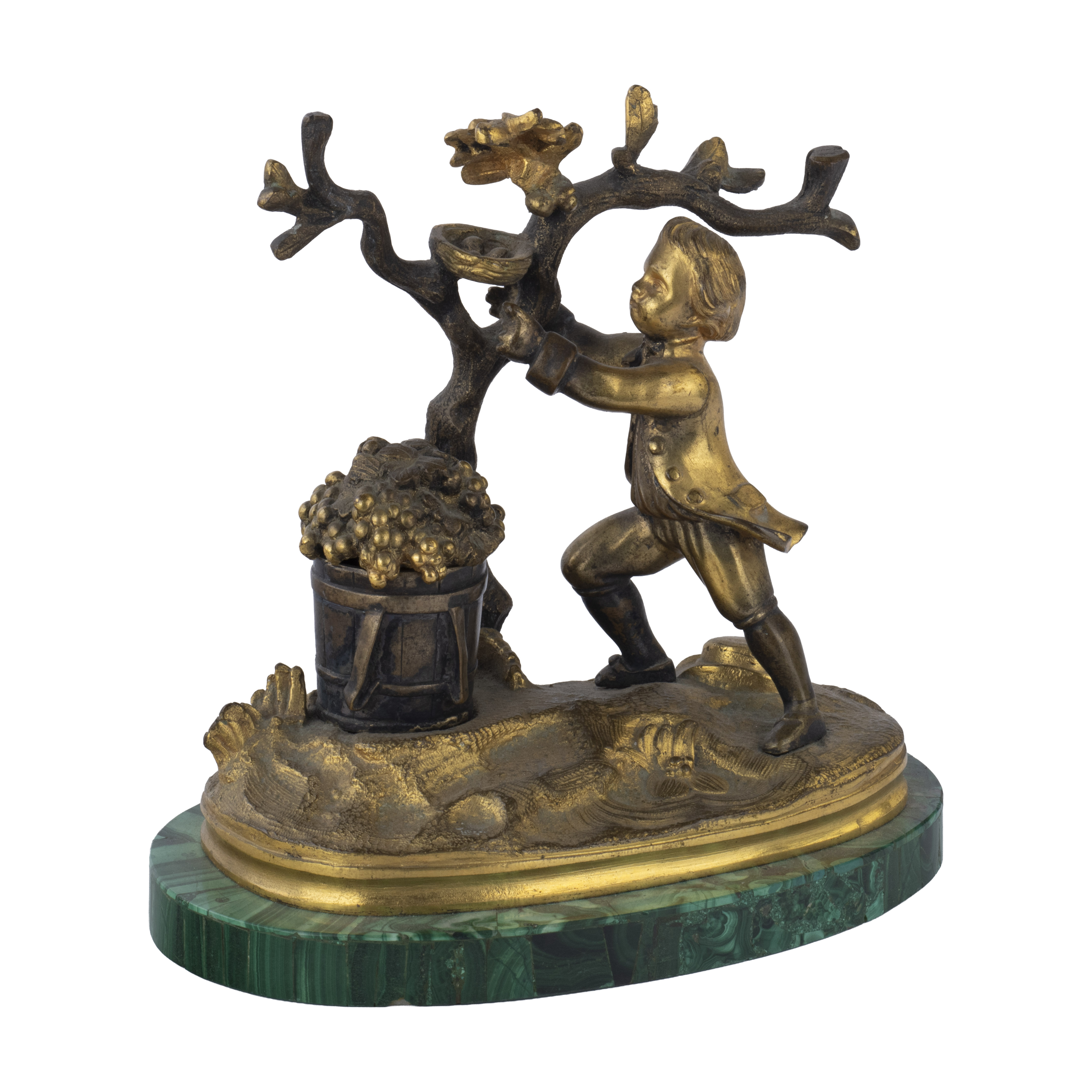
Lot 0010
Russian Ormolu and Malachite Pastoral Cabinet Bronze
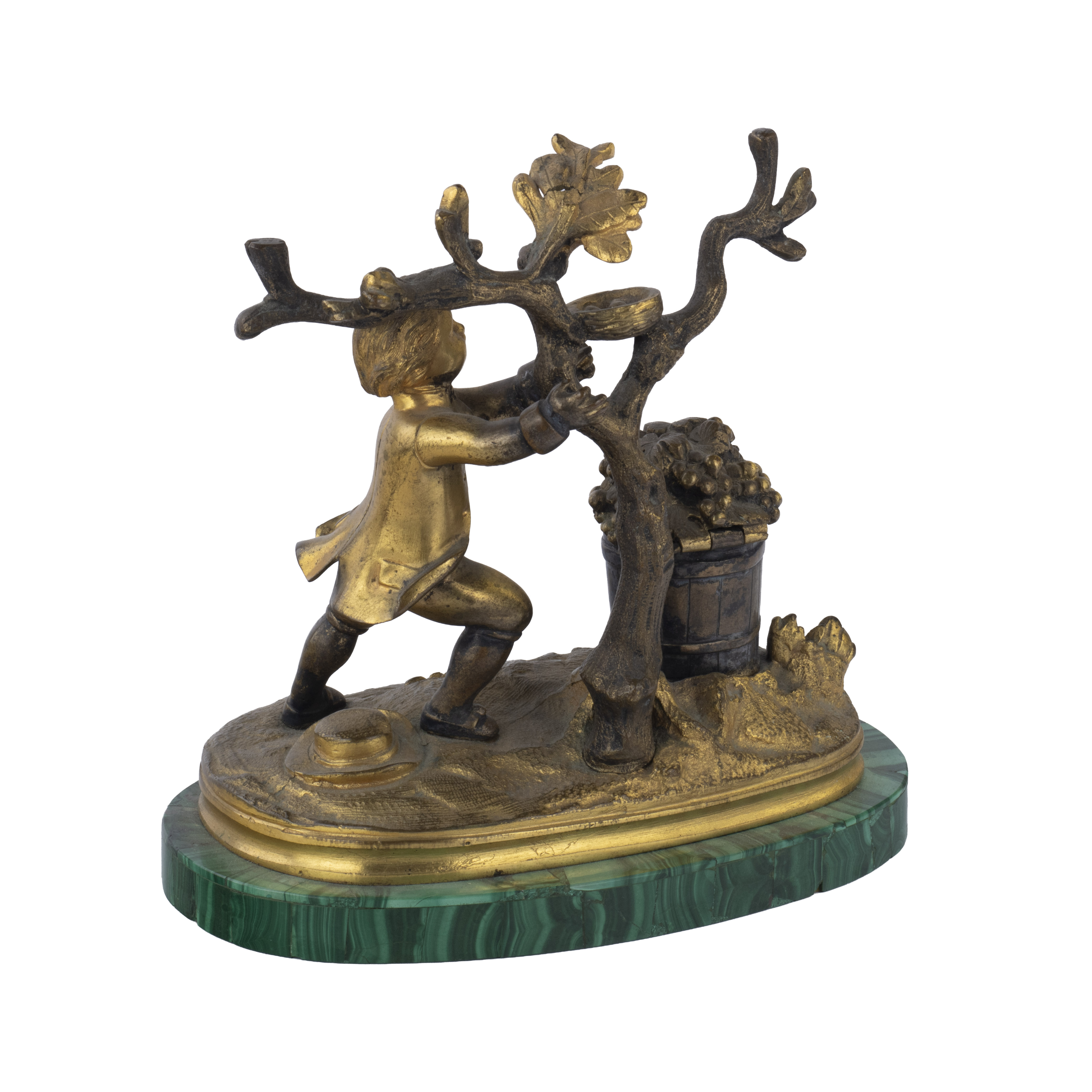
Estimate: 2500-3000€Russian Ormolu and Malachite Pastoral Scene inkstand. St Petersburg, mid-19th century. Bronze, malachite; casting, chasing, gilding, carved and veneered malachite base. Dimensions: 15 x 17 cm.
A refined cabinet bronze depicting a pastoral genre scene with a young boy standing beside a fruiting tree, set upon an oval malachite plinth. The composition unites the narrative charm of small-scale sculpture with the decorative richness of Russian hardstone work: the warm surface of gilded bronze is set in striking contrast to the deep green malachite base.
Such combined works in gilt bronze and malachite became especially honoured in St Petersburg workshops in the mid-19th century. In the early years of the factory directed by Carl Woerfell, production focused largely on objects made in bronze and malachite, and it was quickly understood that sculptural groups mounted on stone bases possessed a greater appeal than plain bronze alone. Animalier and genre subjects, when enriched by malachite plinths or other ornamental stones, acquired a more luxurious and distinctly Russian character. The present model belongs to this important tradition of cabinet sculpture, in which bronze was consciously paired with precious ornamental materials to heighten both its artistic presence and commercial desirability.Starting price: 2000€
Estimate: 2500-3000€
Hammer Price: Not sold -
Lot 0011
Russian Ormolu and Malachite Model of a Muzhik and Boy Sledding Paperweight
Estimate: 1500-2000€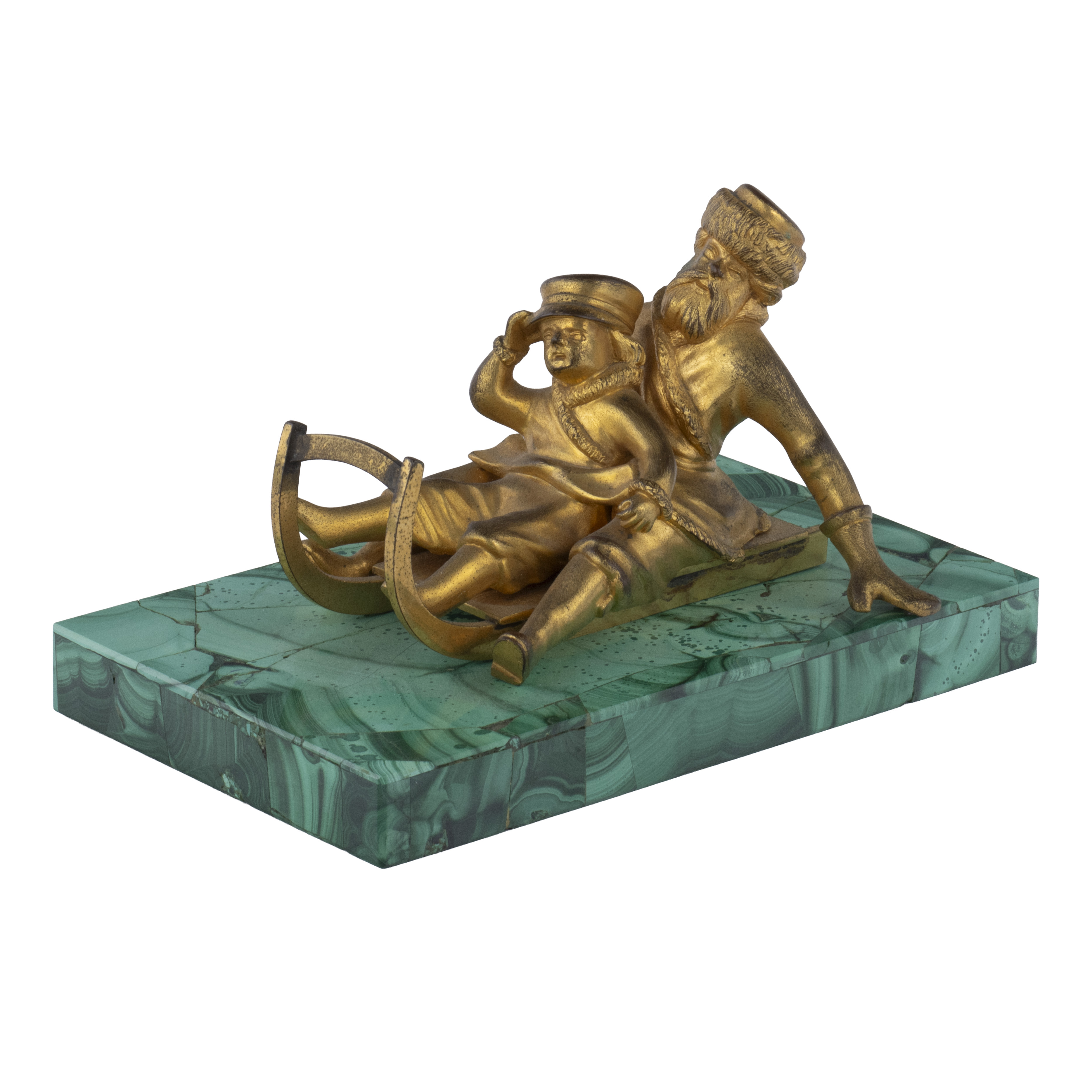
Lot 0011
Russian Ormolu and Malachite Model of a Muzhik and Boy Sledding Paperweight
Estimate: 1500-2000€Russian Ormolu and Malachite Model of a Muzhik and Boy Sledding
Paperweight
Russia, 1830s-1840s. Dimensions: 10 x 15 cm
Bronze, malachite; casting, chasing, gilding, malachite mosaic.
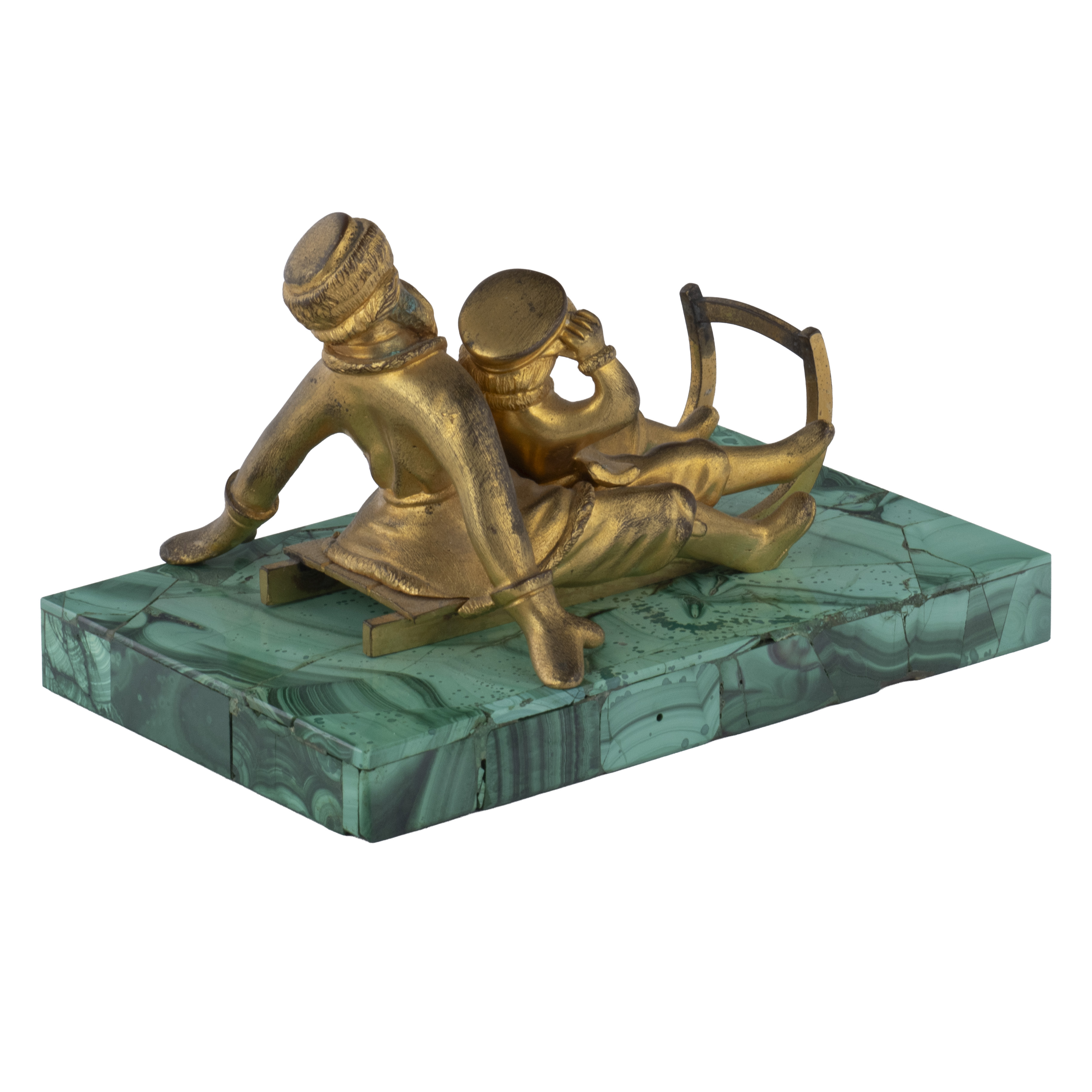
A finely modeled Russian paperweight in the form of a peasant and a boy seated on a small sled, arranged as a compact genre group upon a rectangular malachite base. The elderly muzhik, with pronounced beard and traditional cap, braces himself behind the child, who raises one hand to his hat in a lively, almost theatrical gesture.
Folk themes entered artistic bronze of St. Petersburg in the late 1840s, in the context of a broader democratization of Russian art and culture. Bronze figures of vendors, peddlers, coachmen, and other popular urban types began to appear, echoing the imagery of genre painting and literary sketches devoted to everyday life. A landmark moment came at the Great Exhibition in London in 1851, where two large Demidov compositions of dancing peasants and street figures on malachite bases introduced European audiences to the distinctive combination of Russian bronze, malachite, and national genre subjects. By the 1850s, some of these multi-figure models were also reproduced as small individual bronzes, often made for use as paperweights.Starting price: 1000€
Estimate: 1500-2000€
Hammer Price: Not sold -
Lot 0012
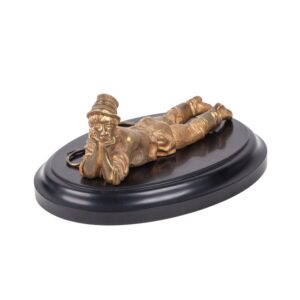
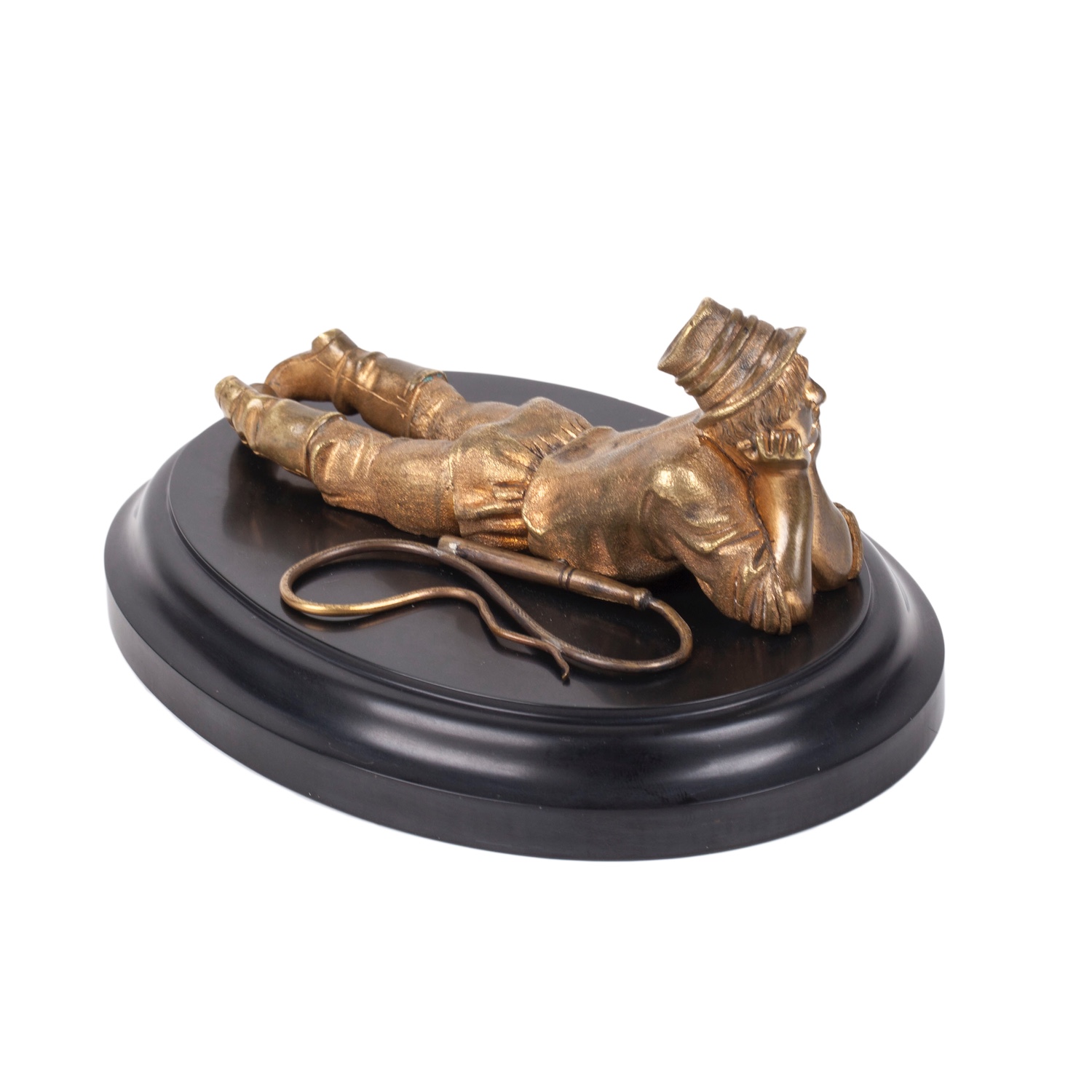
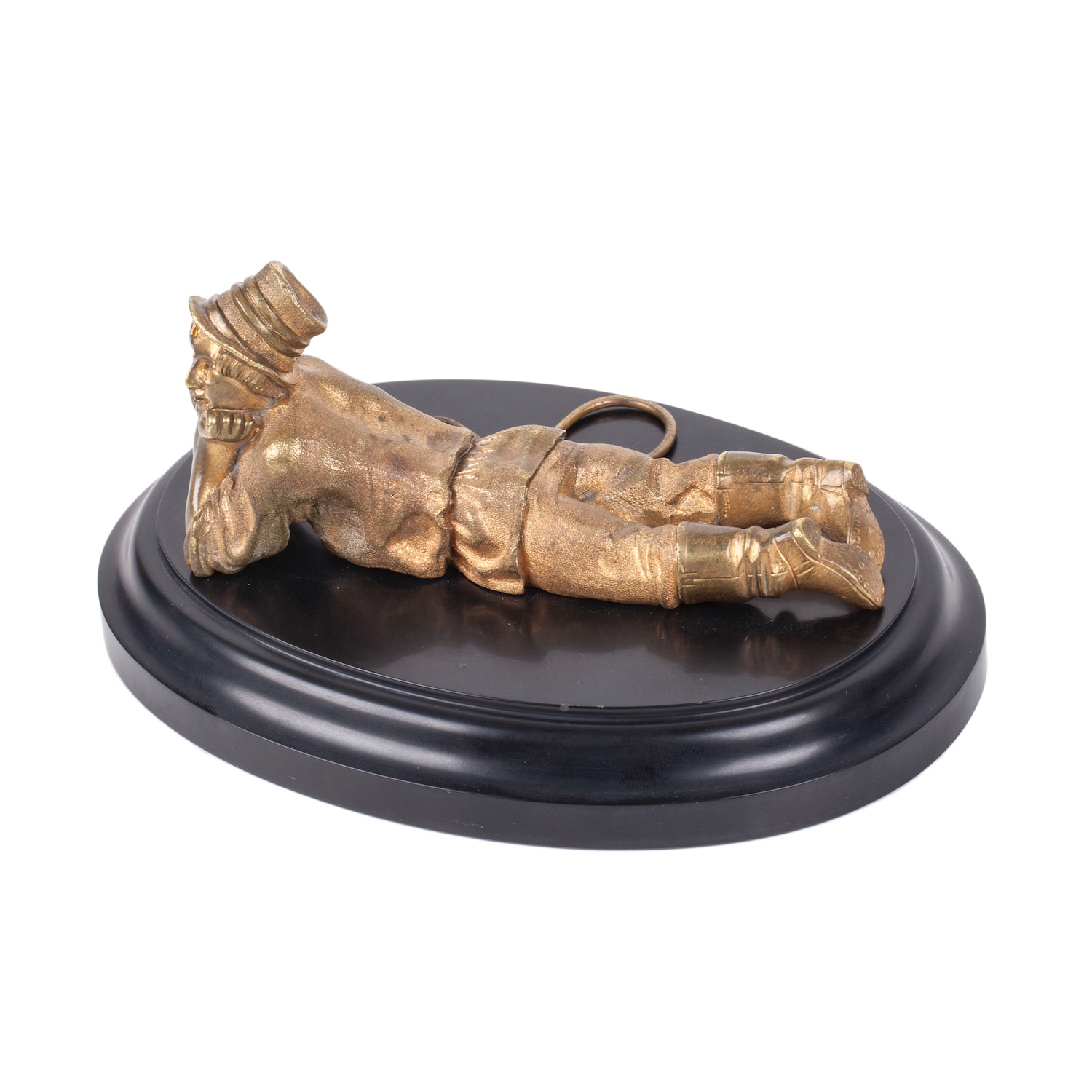
Evgeny Lanceray. Bronze and Marble Composition “Young Shepherd”
Estimate: 400-600€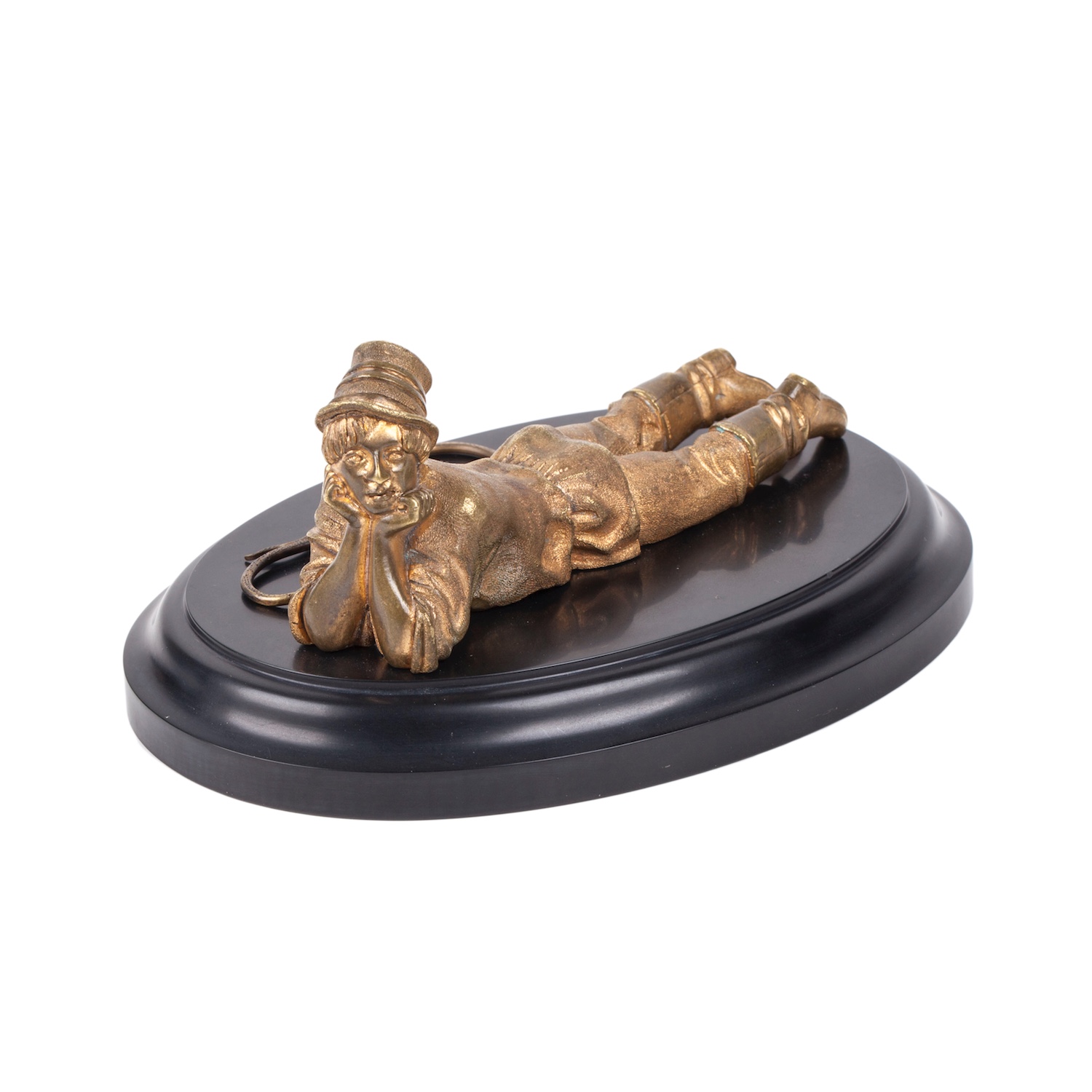
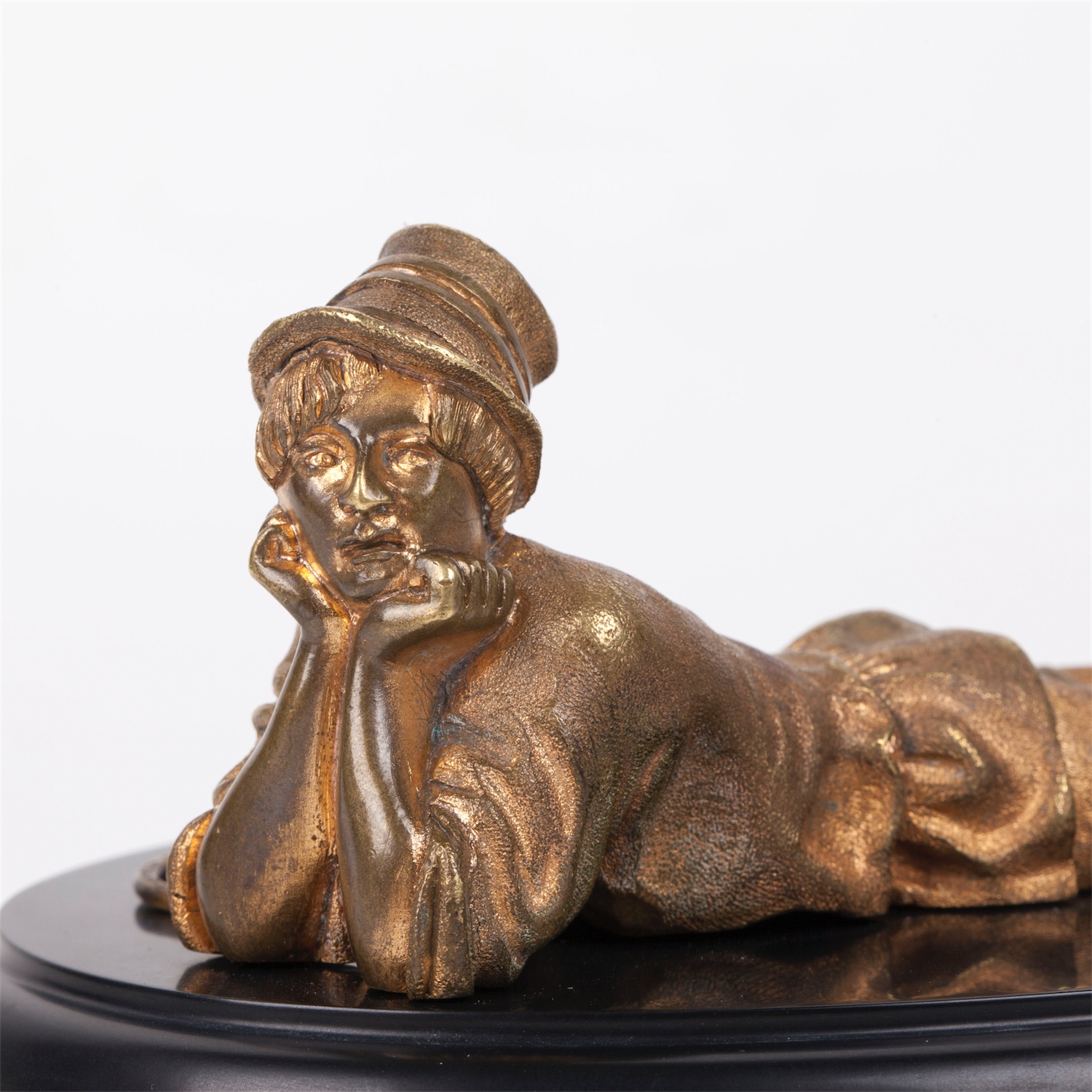
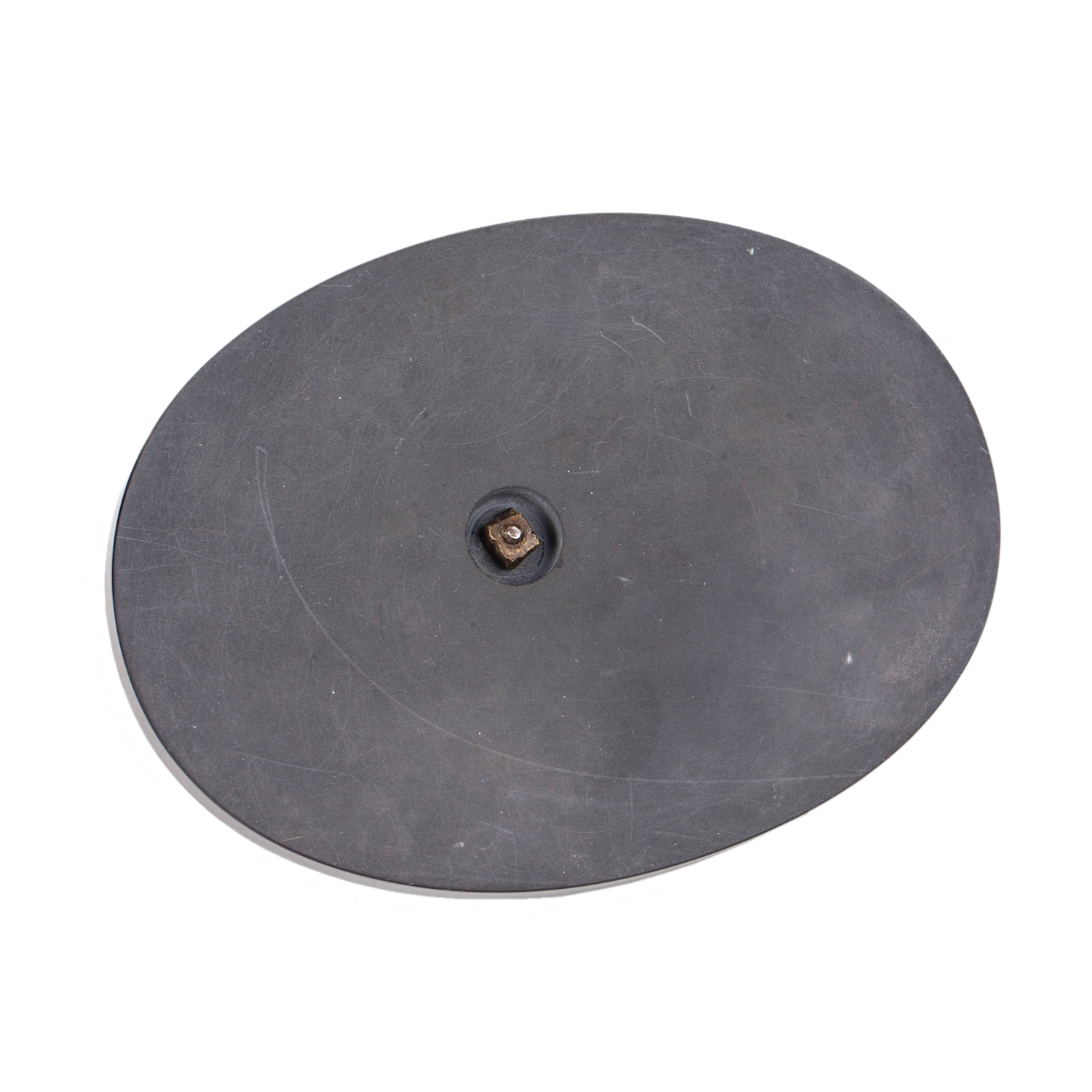
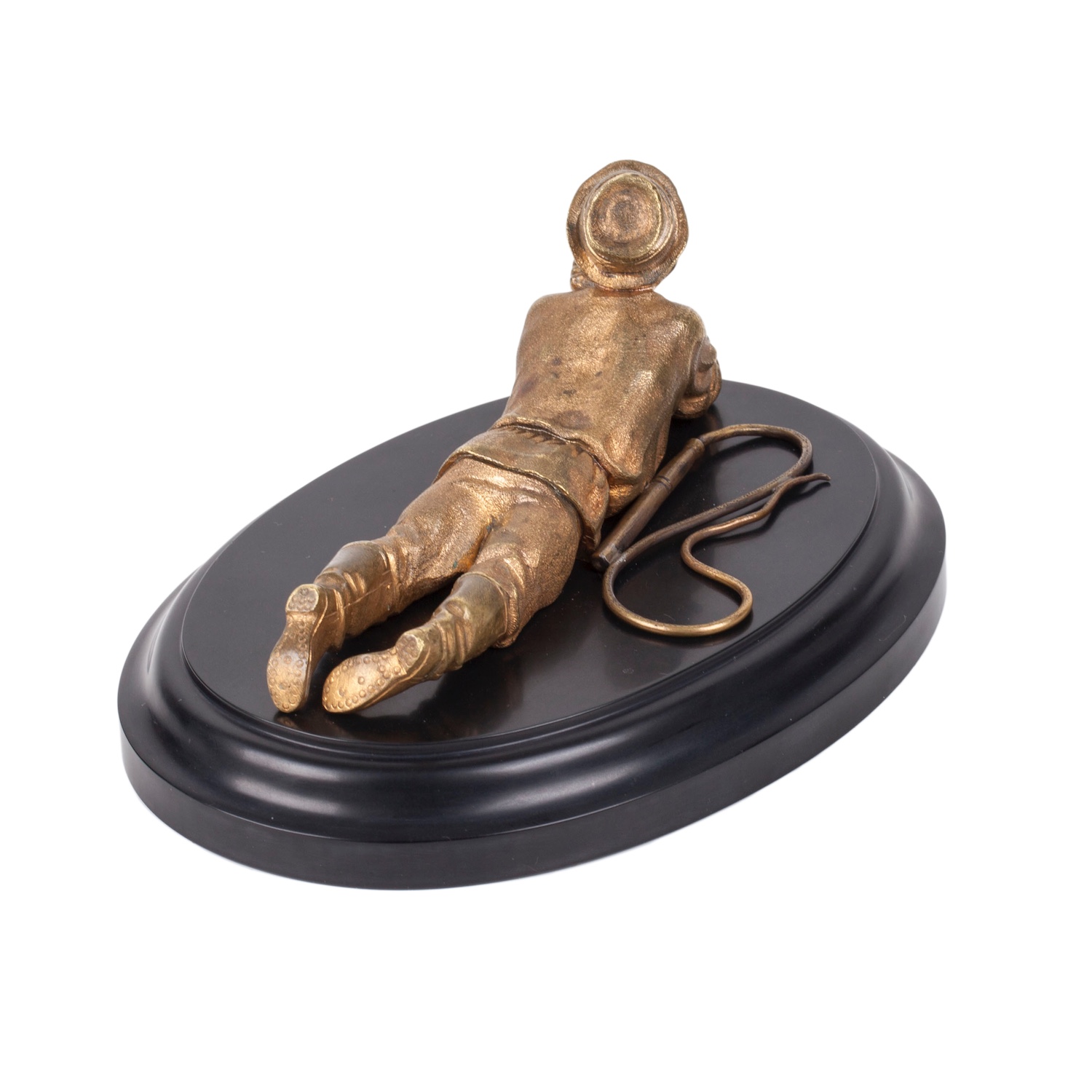
Lot 0012
Evgeny Lanceray. Bronze and Marble Composition “Young Shepherd”
Estimate: 400-600€Evgeny Lanceray. Young Shepherd
Bronze and marble, Dimensions: 7.5 × 16 × 12 cmRussia, late 19th century
This small bronze composition depicts a shepherd boy lying on the ground, resting his head in his hands in a relaxed, contemplative pose. The figure is mounted on a polished marble base.
Evgeny Lanceray (1848–1886), one of the most prominent Russian sculptors of the 19th century, was celebrated for his finely detailed genre scenes and portrayals of everyday rural life.
Starting price: 350€
Estimate: 400-600€
Hammer Price: Not sold -
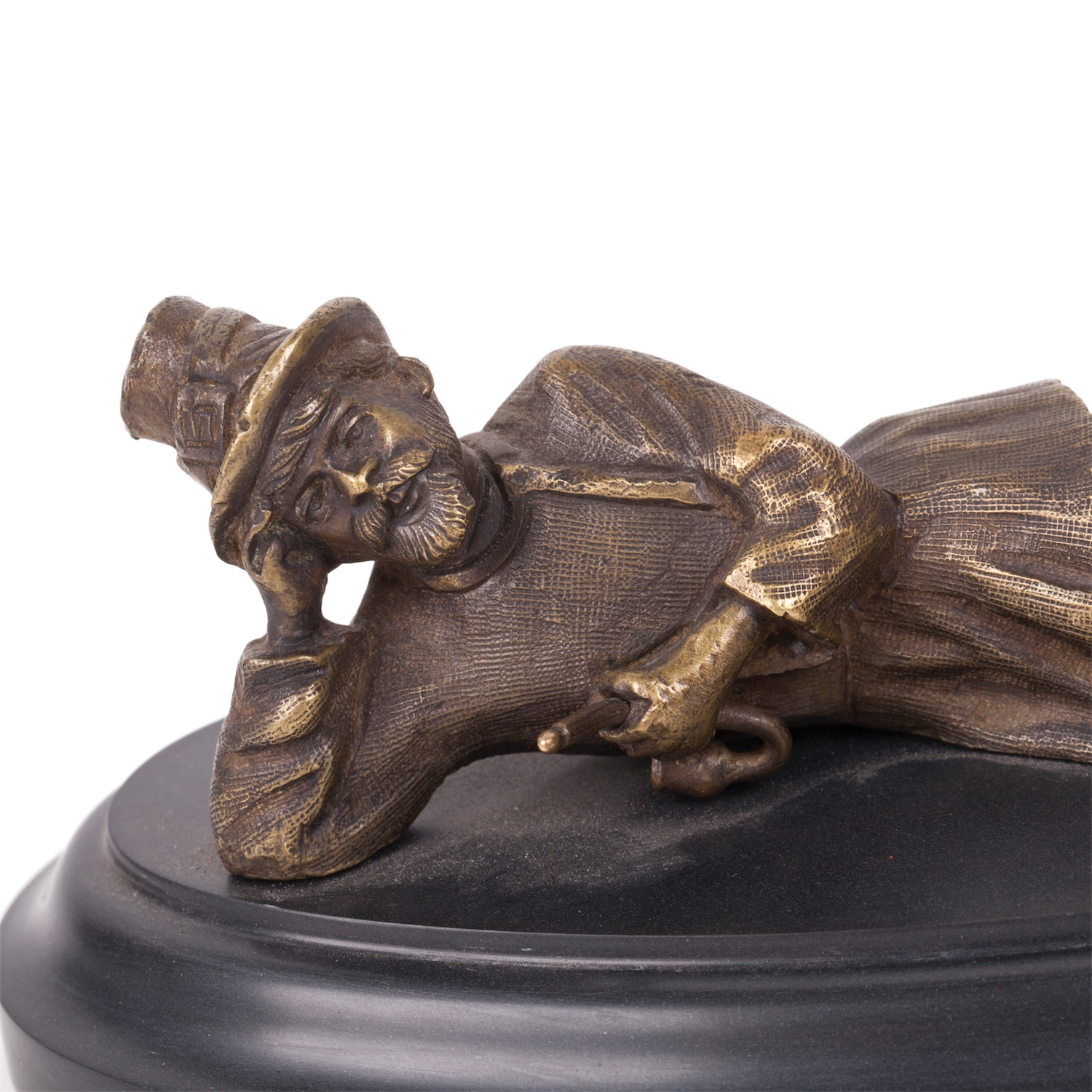
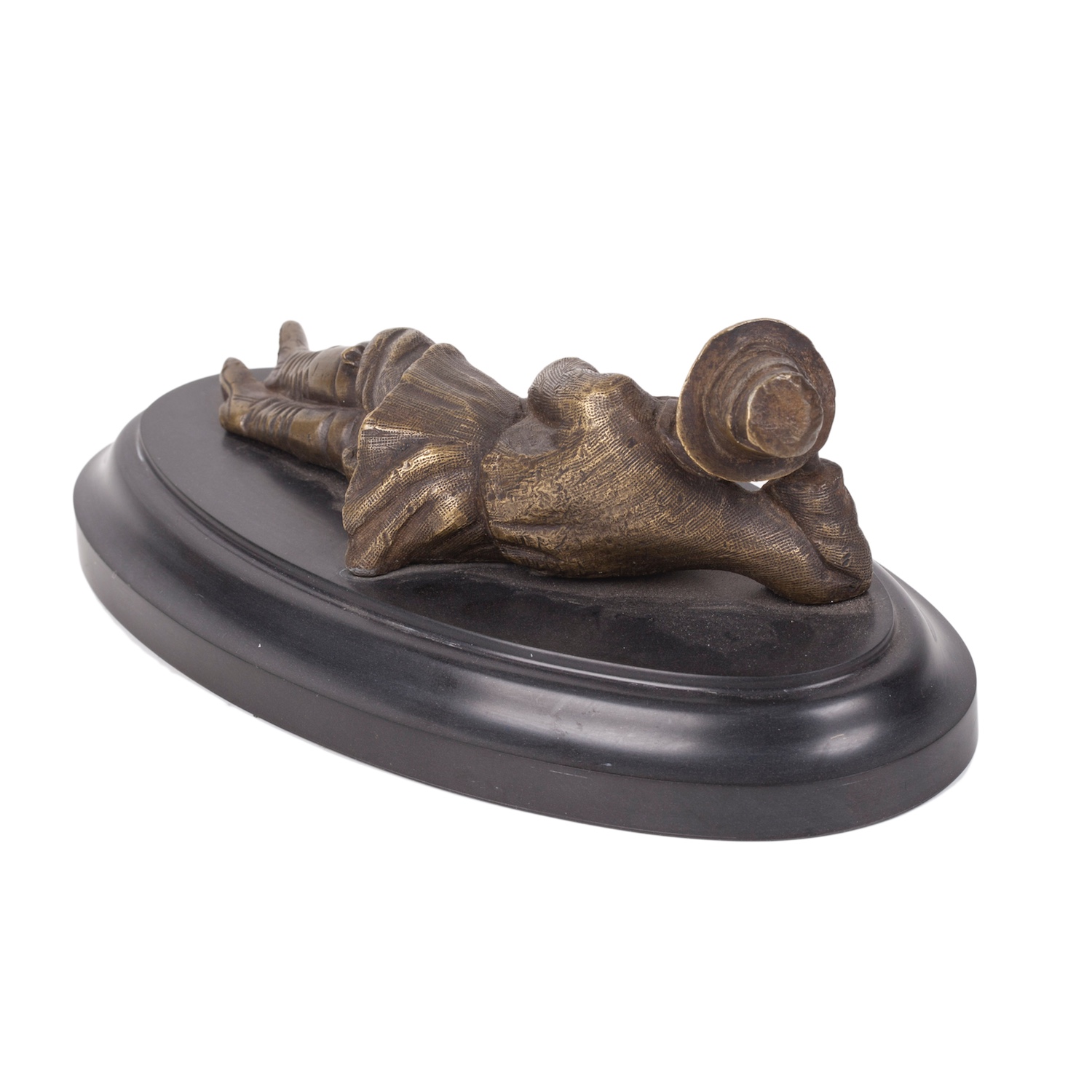
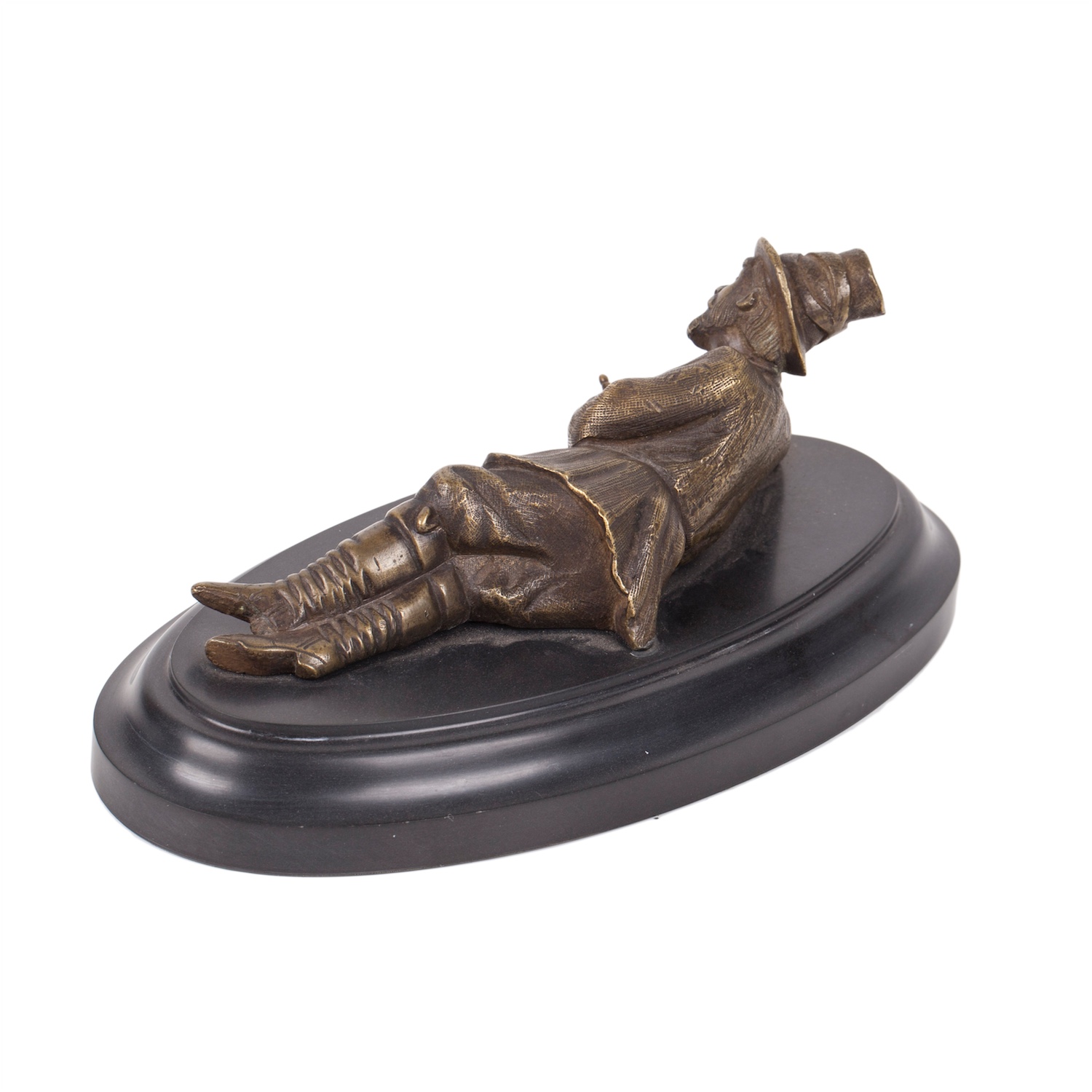
Lot 0013
Evgeny Lanceray. Russian Bronze Composition “Relaxing Shepherd”
Estimate: 500-700€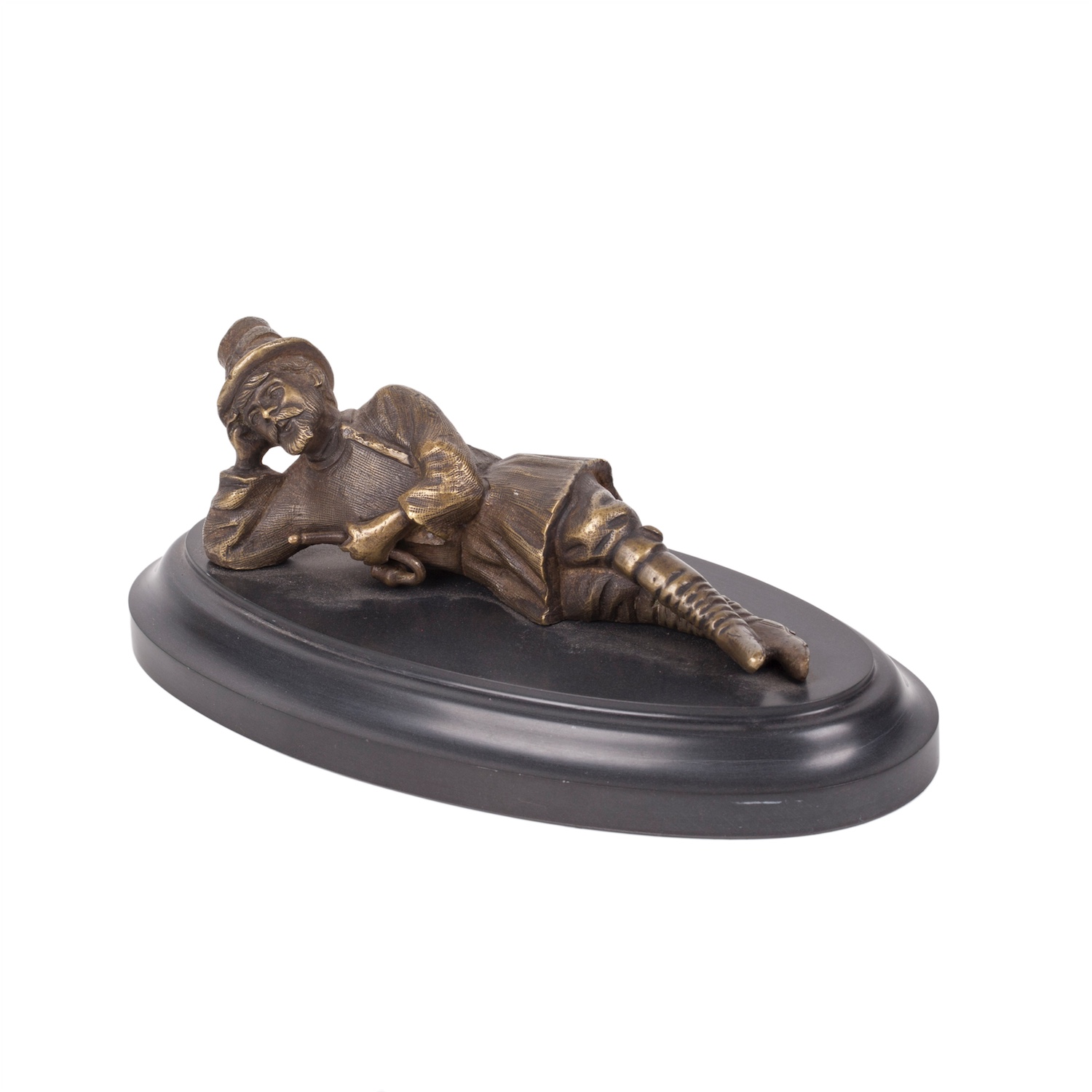
Lot 0013
Evgeny Lanceray. Russian Bronze Composition “Relaxing Shepherd”
Estimate: 500-700€Evgeny Lanceray. Relaxing Shepherd
Bronze and marble. Dimensions: 6 x 17.5 x 8.7 cm.
Russia, late 19th centuryThis small bronze sculpture shows a shepherd reclining at ease, his head resting on one hand while the other holds a crook. The figure’s casual pose and expressive details reflect Lanceray’s gift for capturing everyday rural life with warmth and naturalism.
Starting price: 400€
Estimate: 500-700€
Hammer Price: Not sold -
Lot 0014
Russian Gilt Bronze Paperweight “Circassian with the Pipe”
Estimate: 300-450€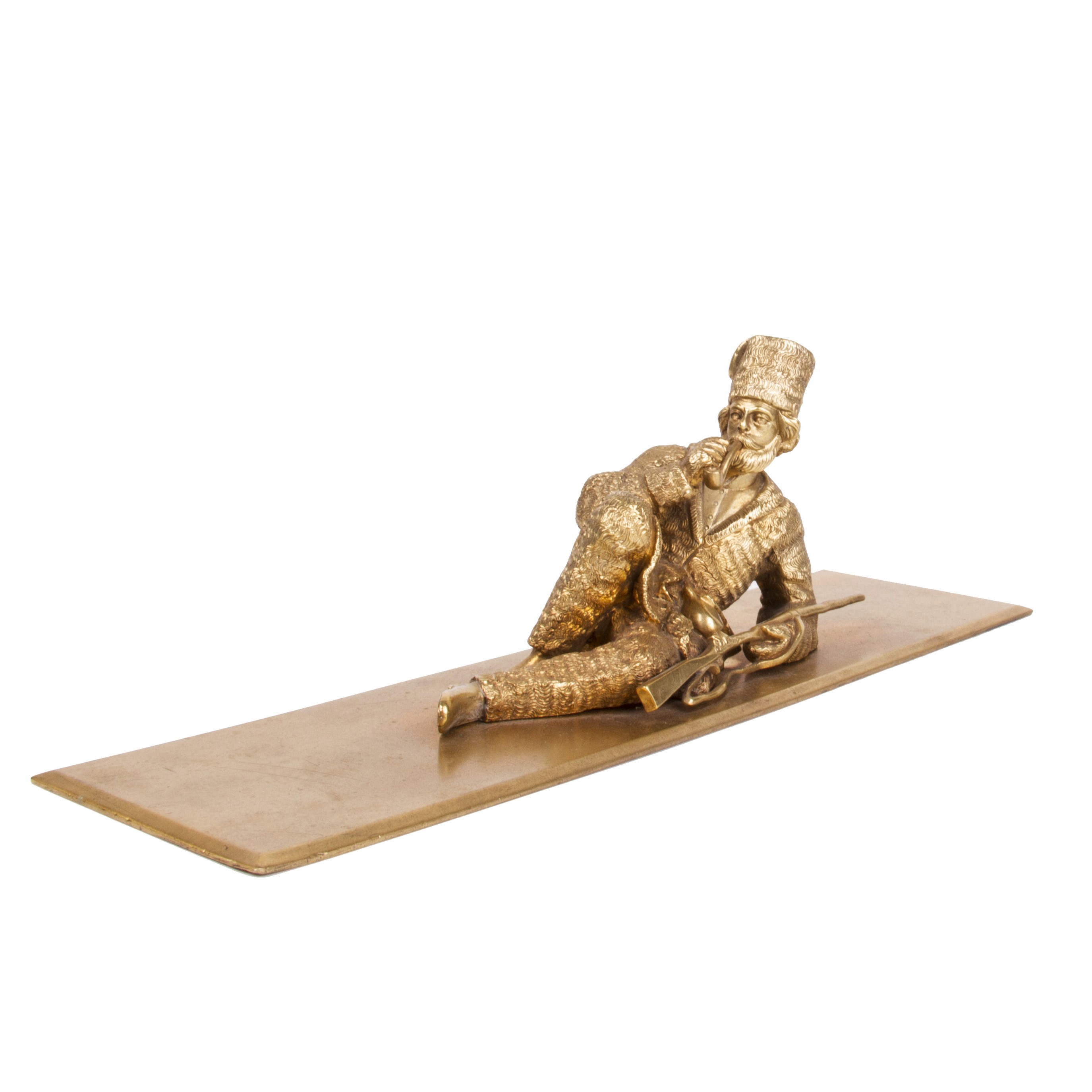
Lot 0014
Russian Gilt Bronze Paperweight “Circassian with the Pipe”
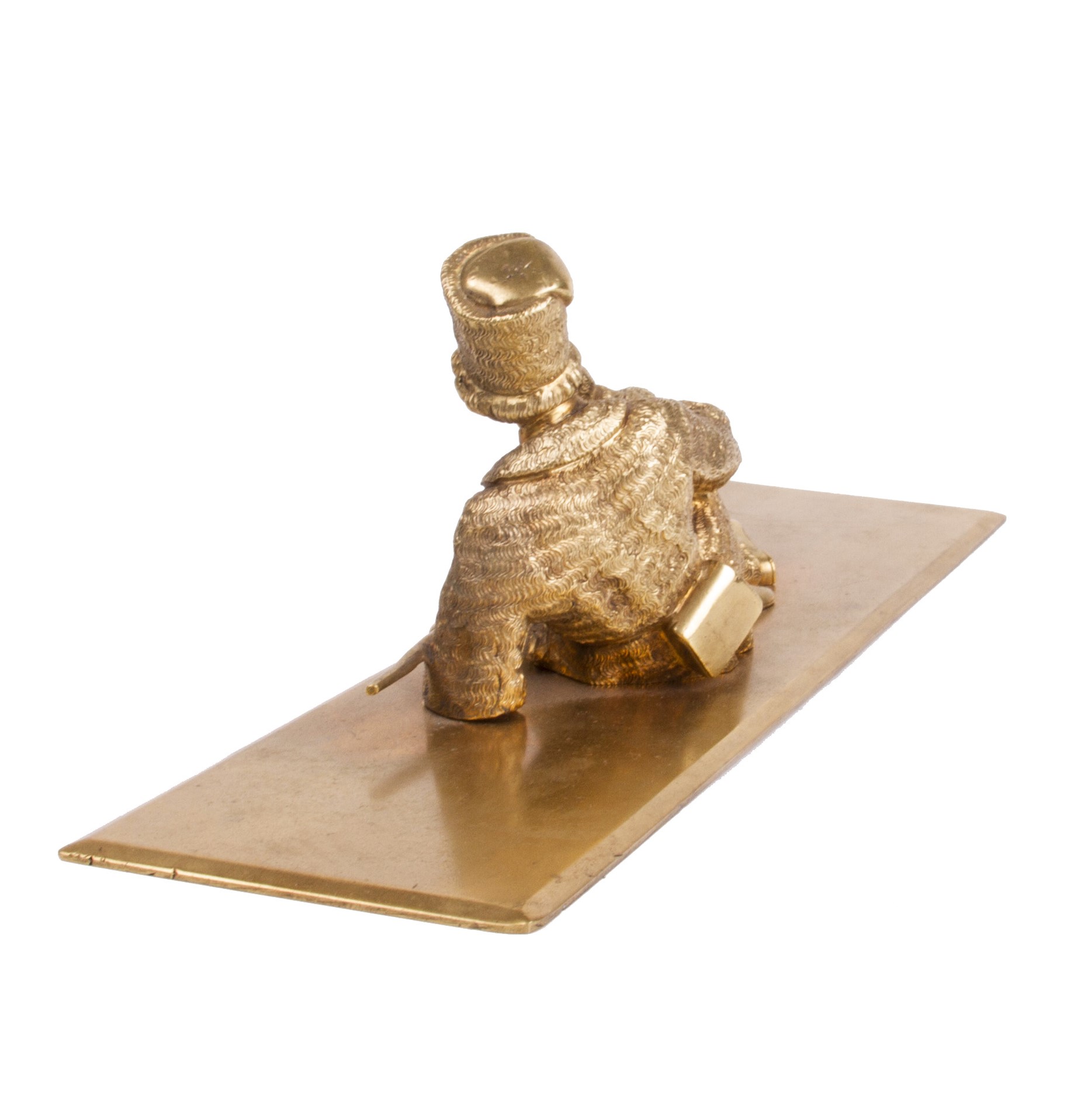
Estimate: 300-450€A Russian gilt bronze paperweight. Circassian with a Pipe
Second half of the 19th century
Dimensions: 8 × 24 × 7 cmThis finely cast gilt bronze paperweight represents a reclining Circassian figure, dressed in traditional attire, holding a rifle and a pipe. Objects of this kind were popular decorative desk accessories in 19th-century Russia, reflecting both interest in the Caucasus region and the era’s fascination with exotic and ethnographic themes.
Starting price: 250€
Estimate: 300-450€
Hammer Price: Not sold -
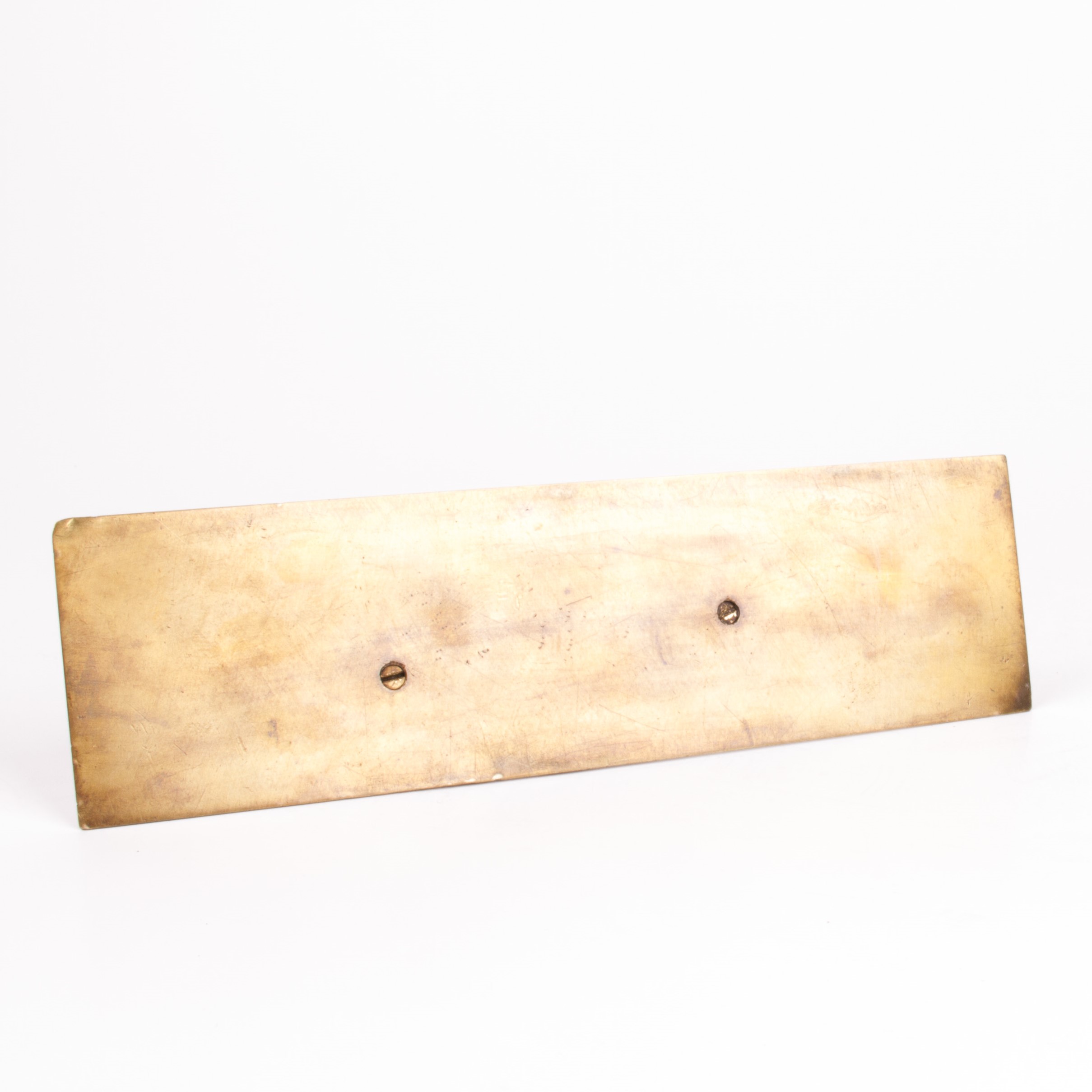
Lot 0015
Russian Bronze Desk Pen Stand in the Shape of a Horseshoe
Estimate: 100-150€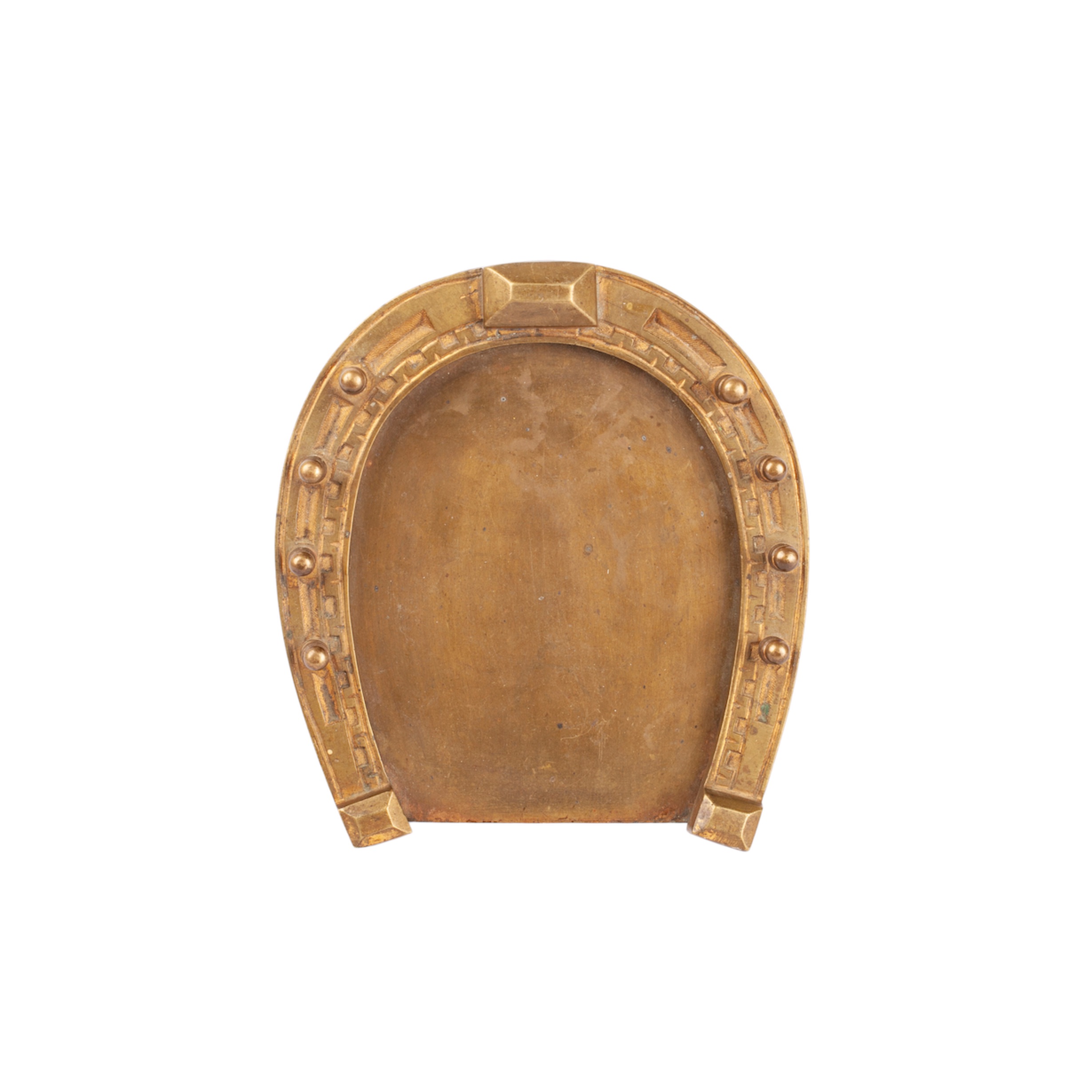
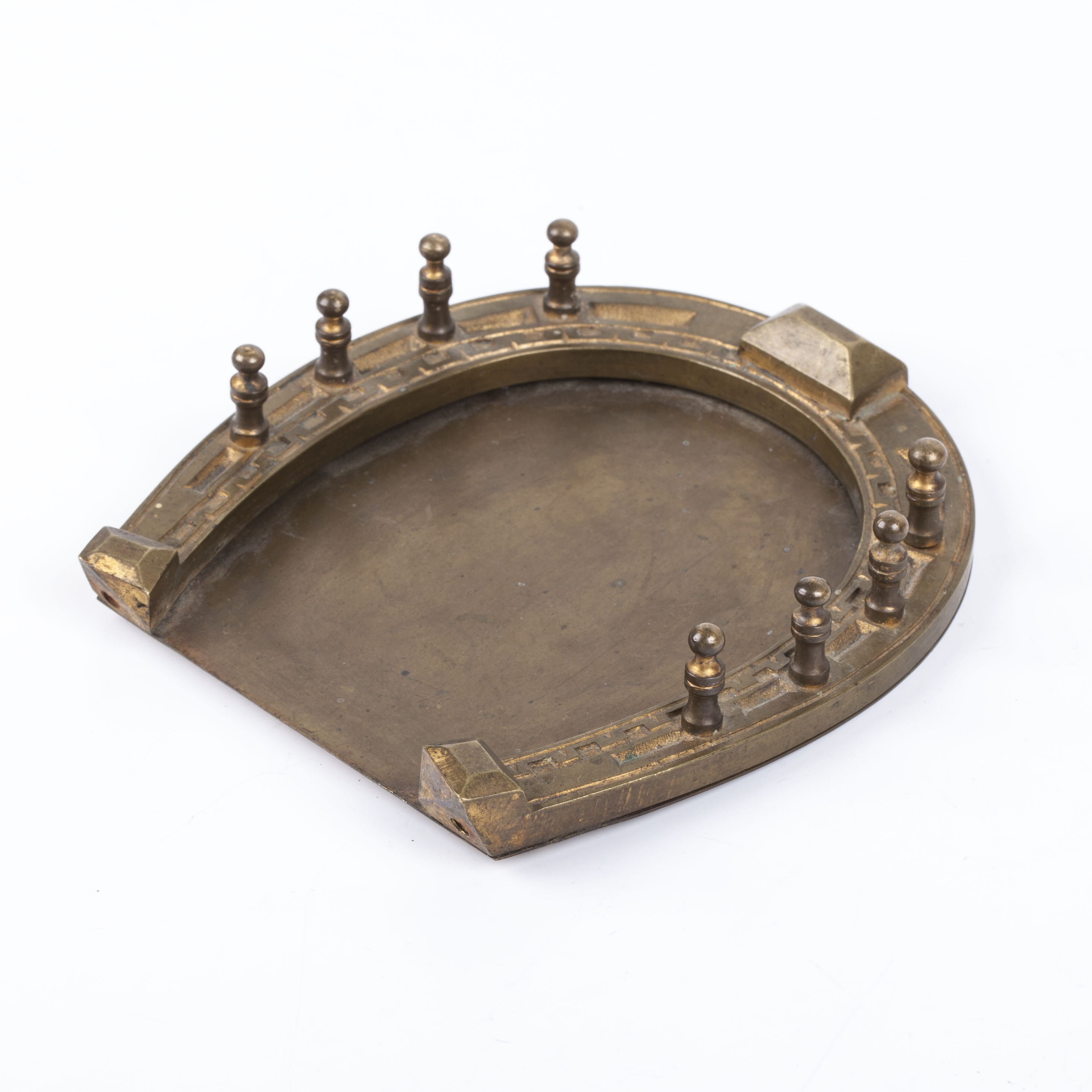
Lot 0015
Russian Bronze Desk Pen Stand in the Shape of a Horseshoe
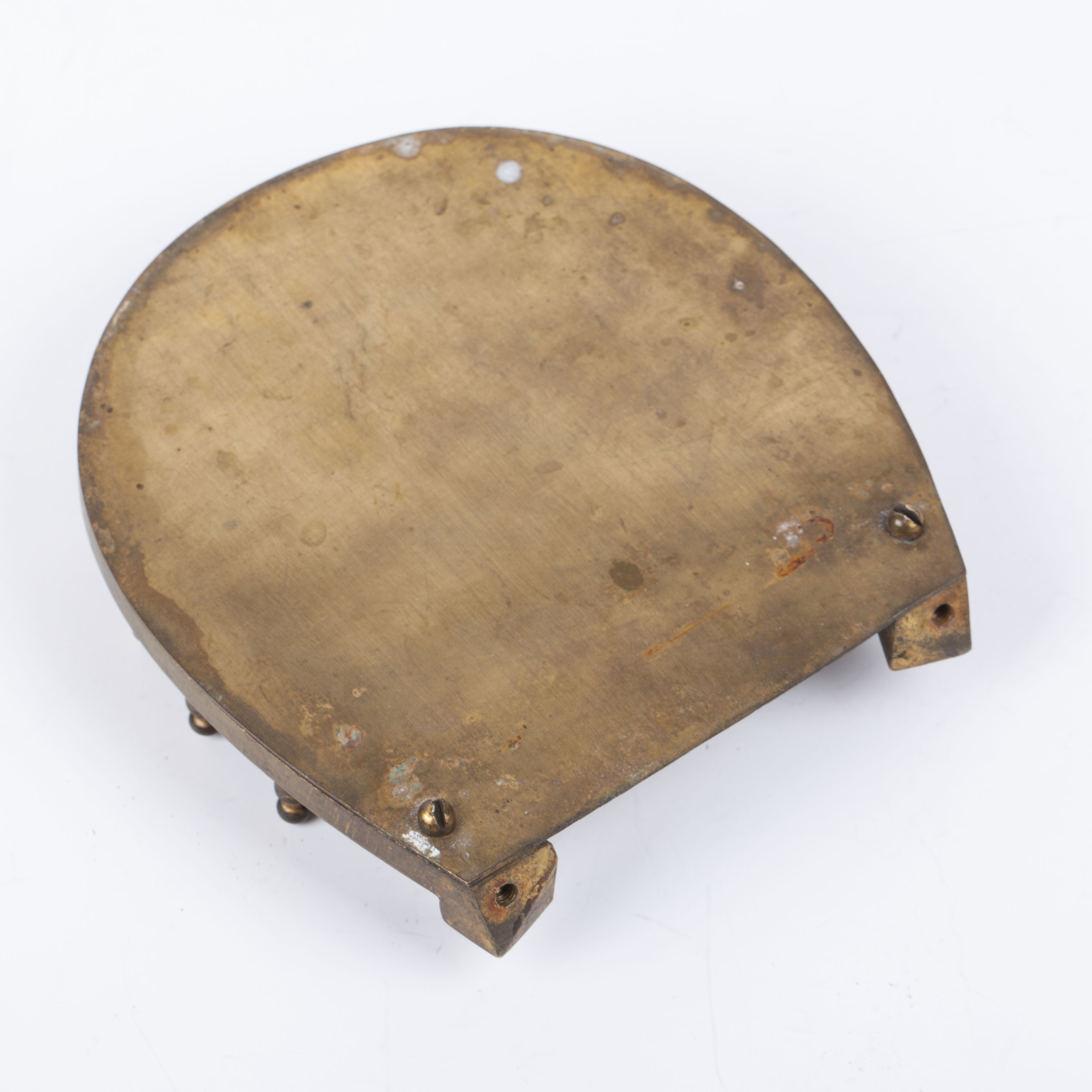
Estimate: 100-150€Desk Pen Stand in the Shape of a Horseshoe
Russian bronze, 19th century
Dimensions: 2.9 × 14 × 13.5 cmThis bronze desk accessory is designed in the form of a horseshoe, a traditional symbol of good luck. Small finials placed along the rim were intended to hold pens. Such objects combined practicality with decorative symbolism and were popular in Russian interiors of the 19th century.
Starting price: 80€
Estimate: 100-150€
Hammer Price: Not sold -
Lot 0016
Russian Bronze Composition by Vasiliy Grachev
Estimate: 6000-8000€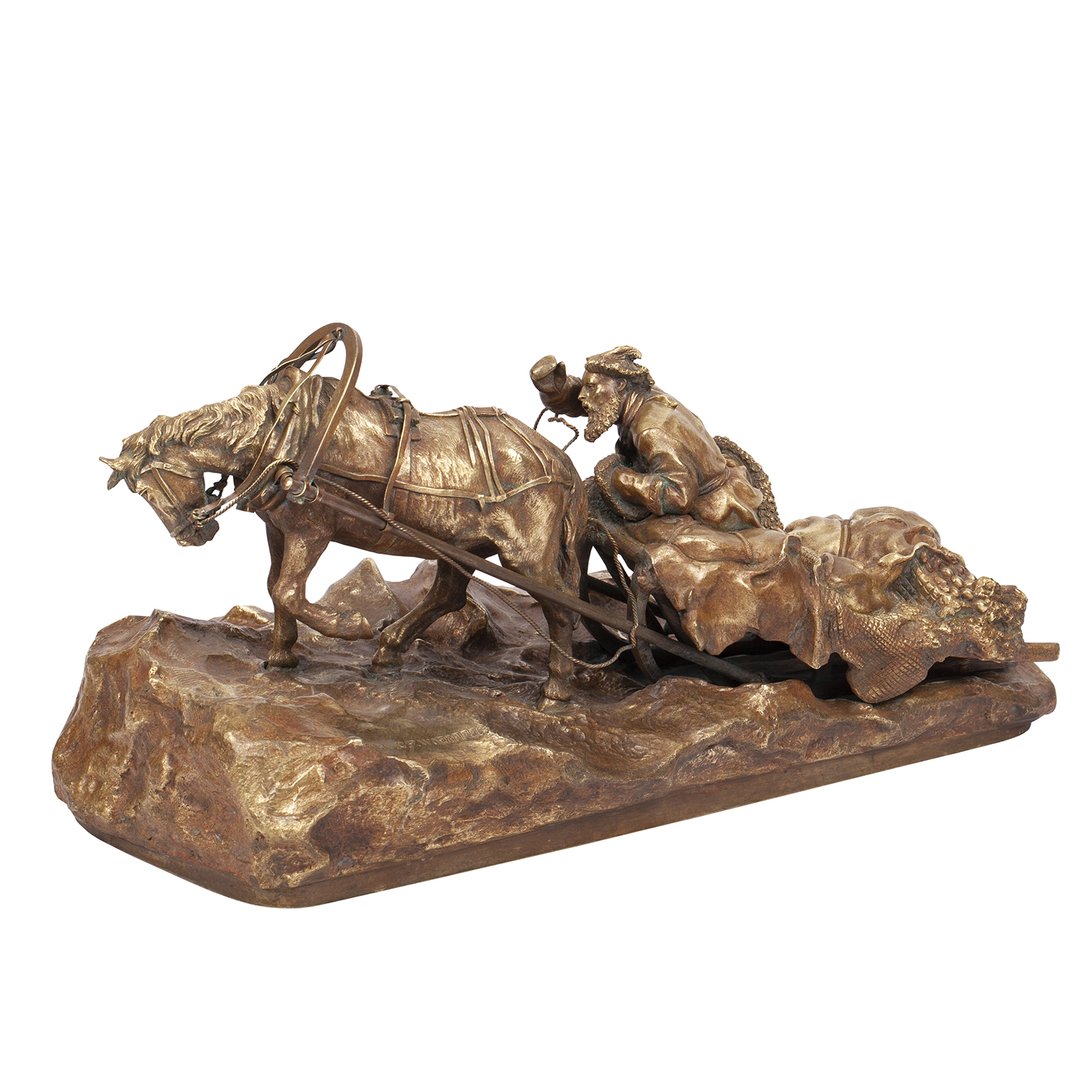
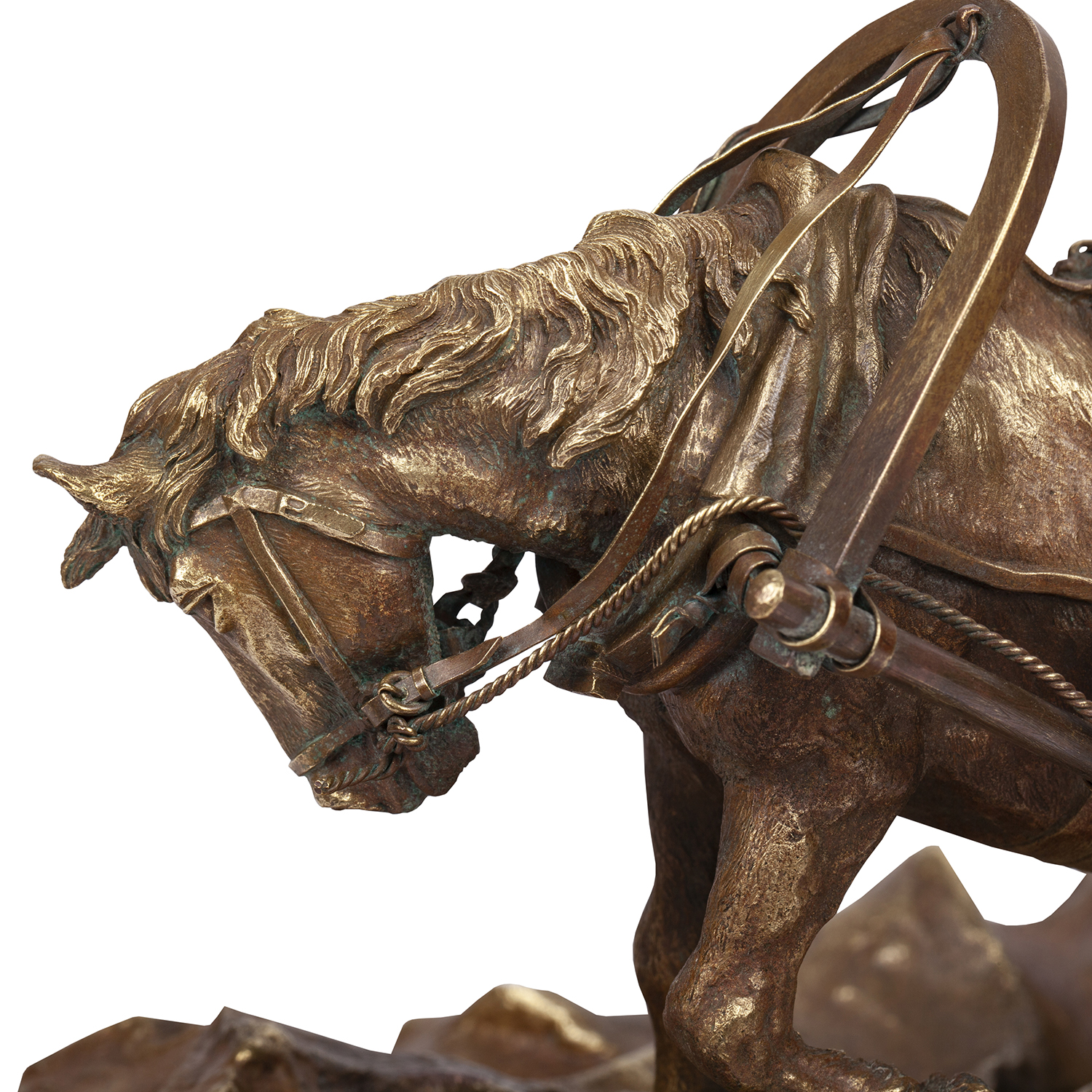
Lot 0016
Russian Bronze Composition by Vasiliy Grachev
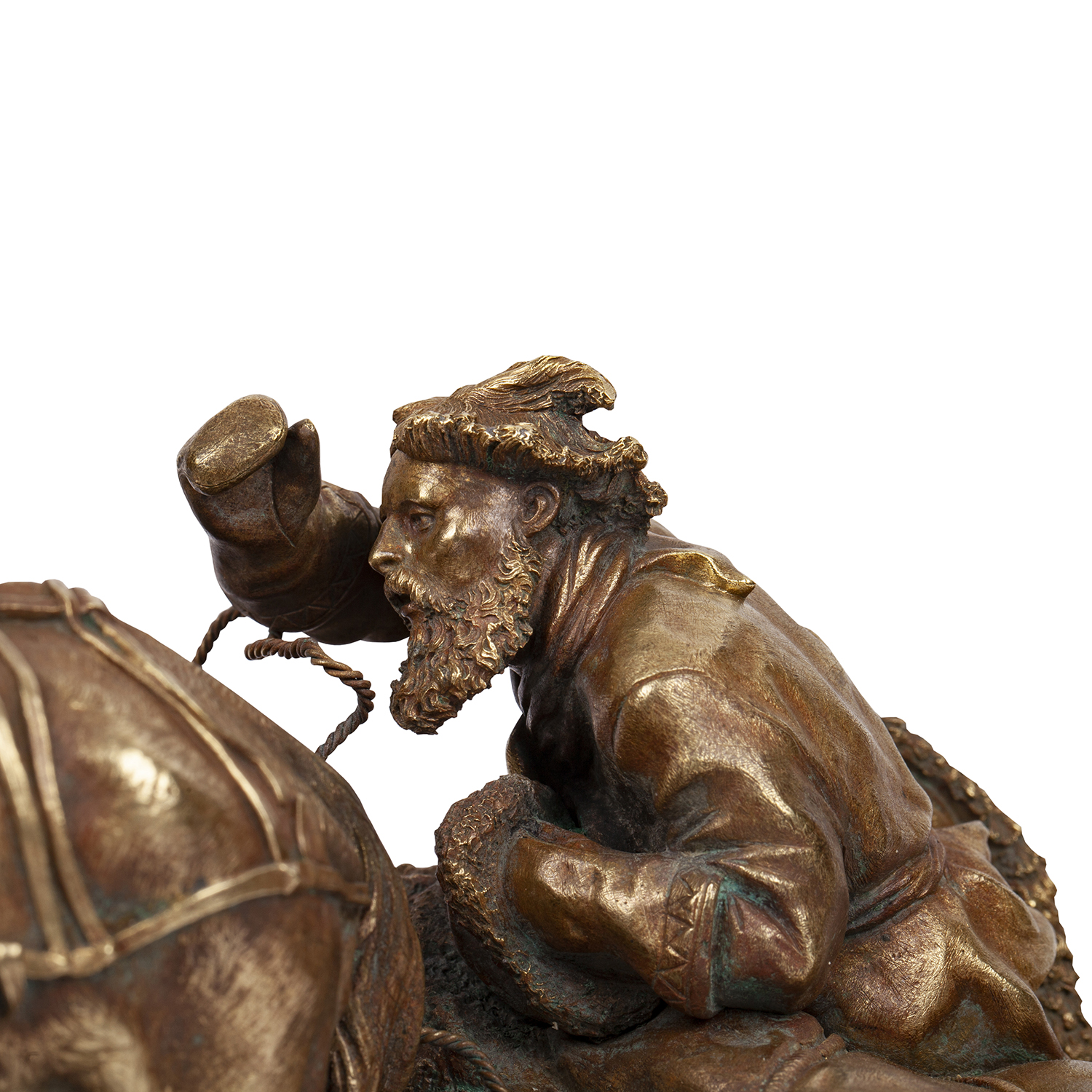
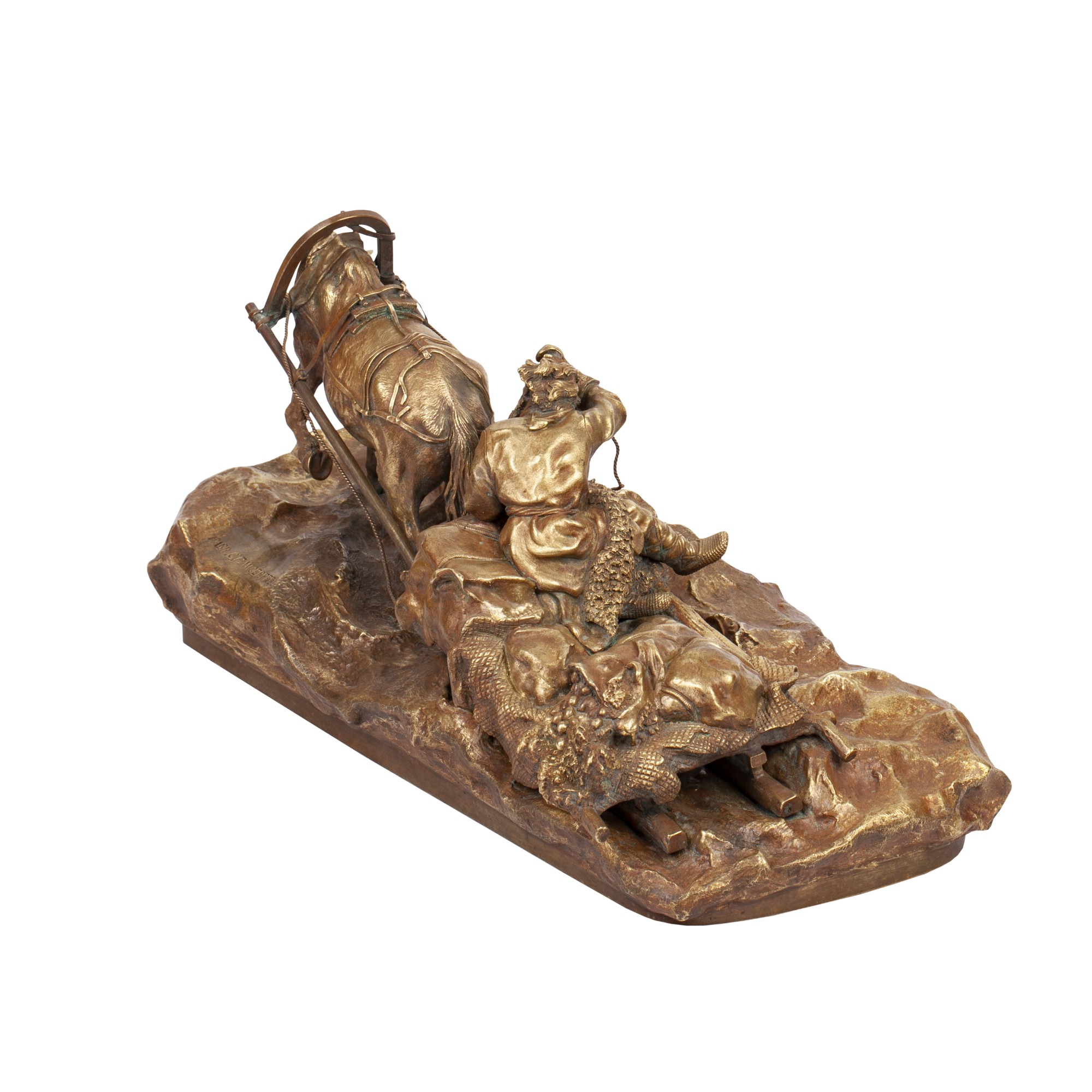
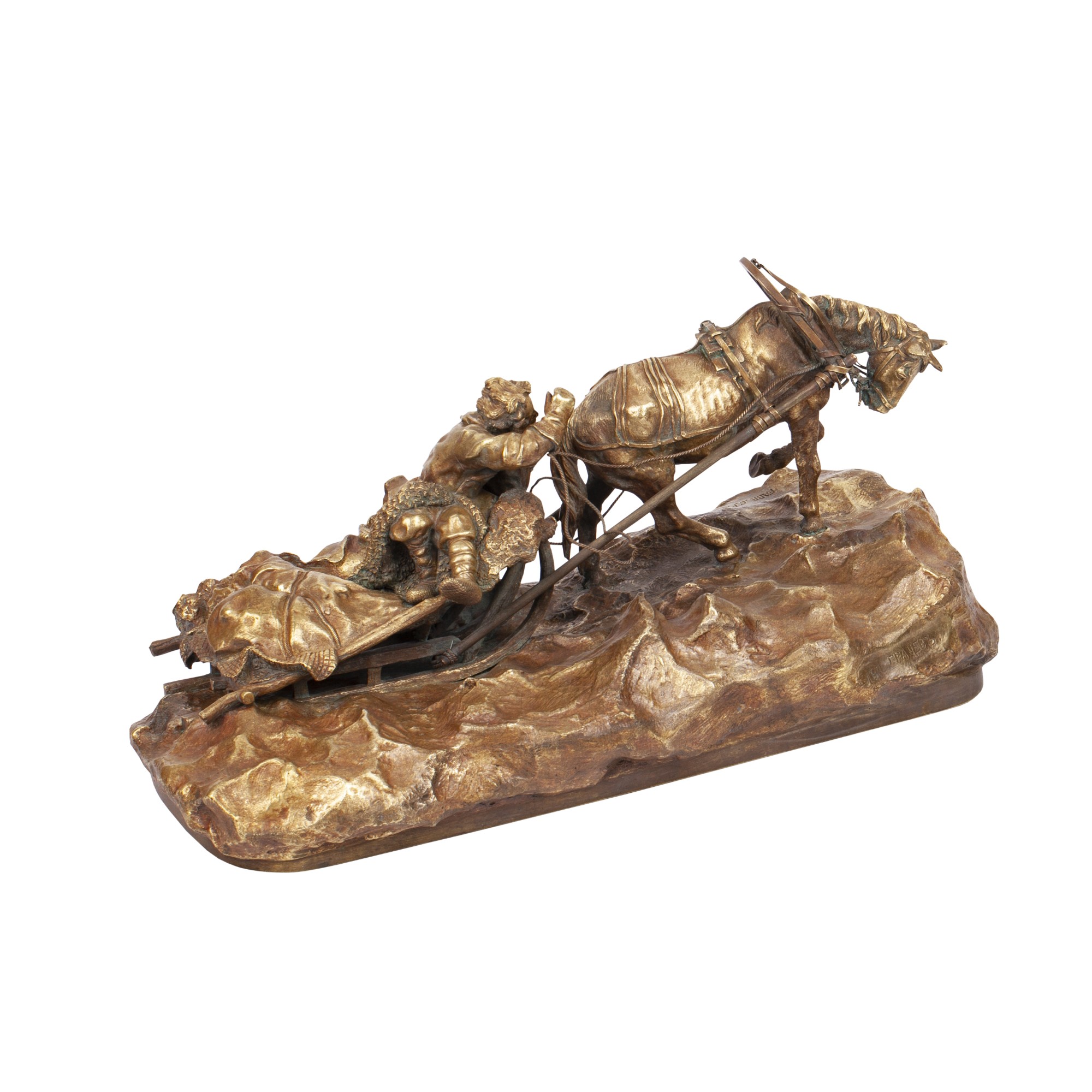
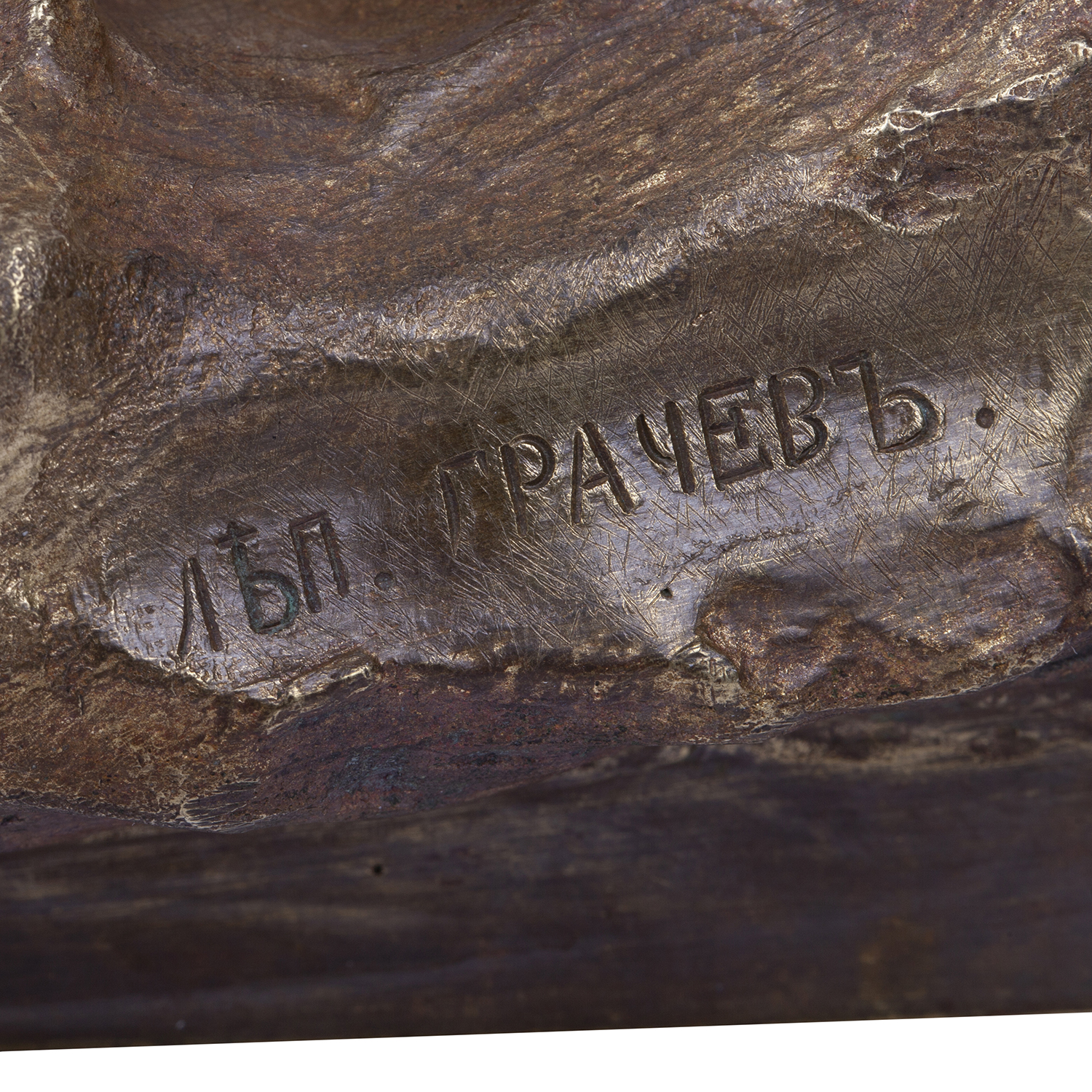
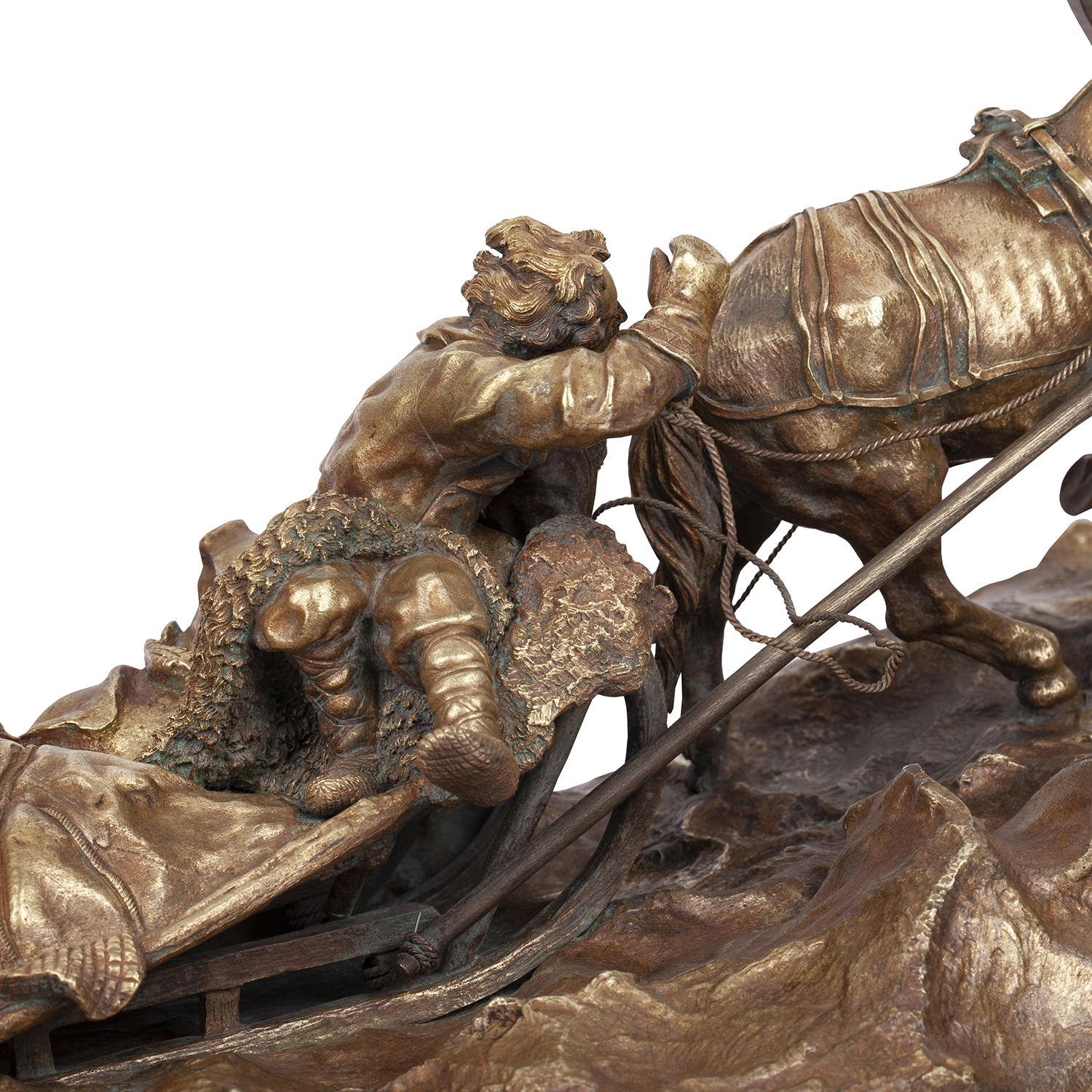
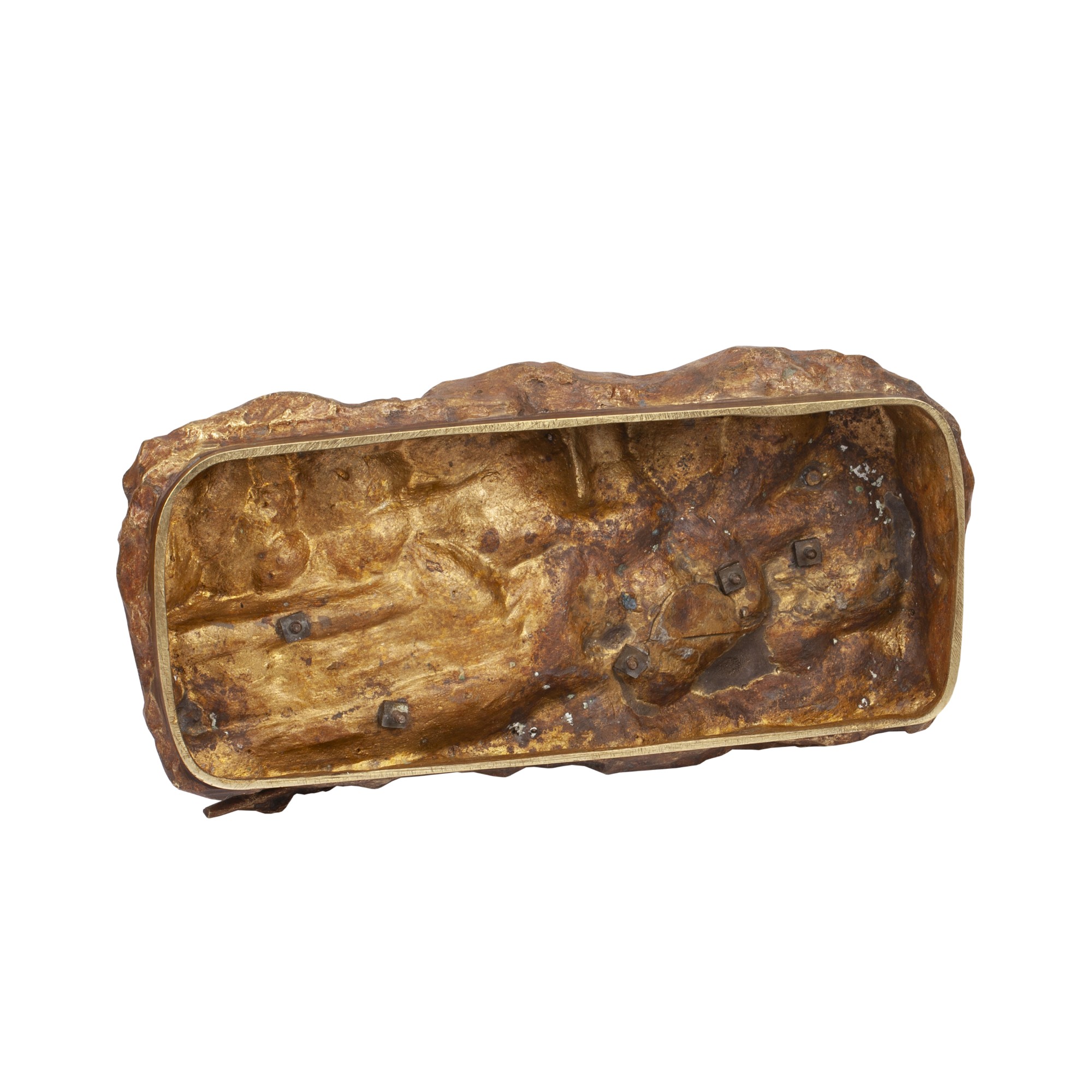
Estimate: 6000-8000€Vasily Grachev. Peasants’ Sleigh on the Winter Road
Bronze, Dimensions: 17 × 33.5 × 17 cm
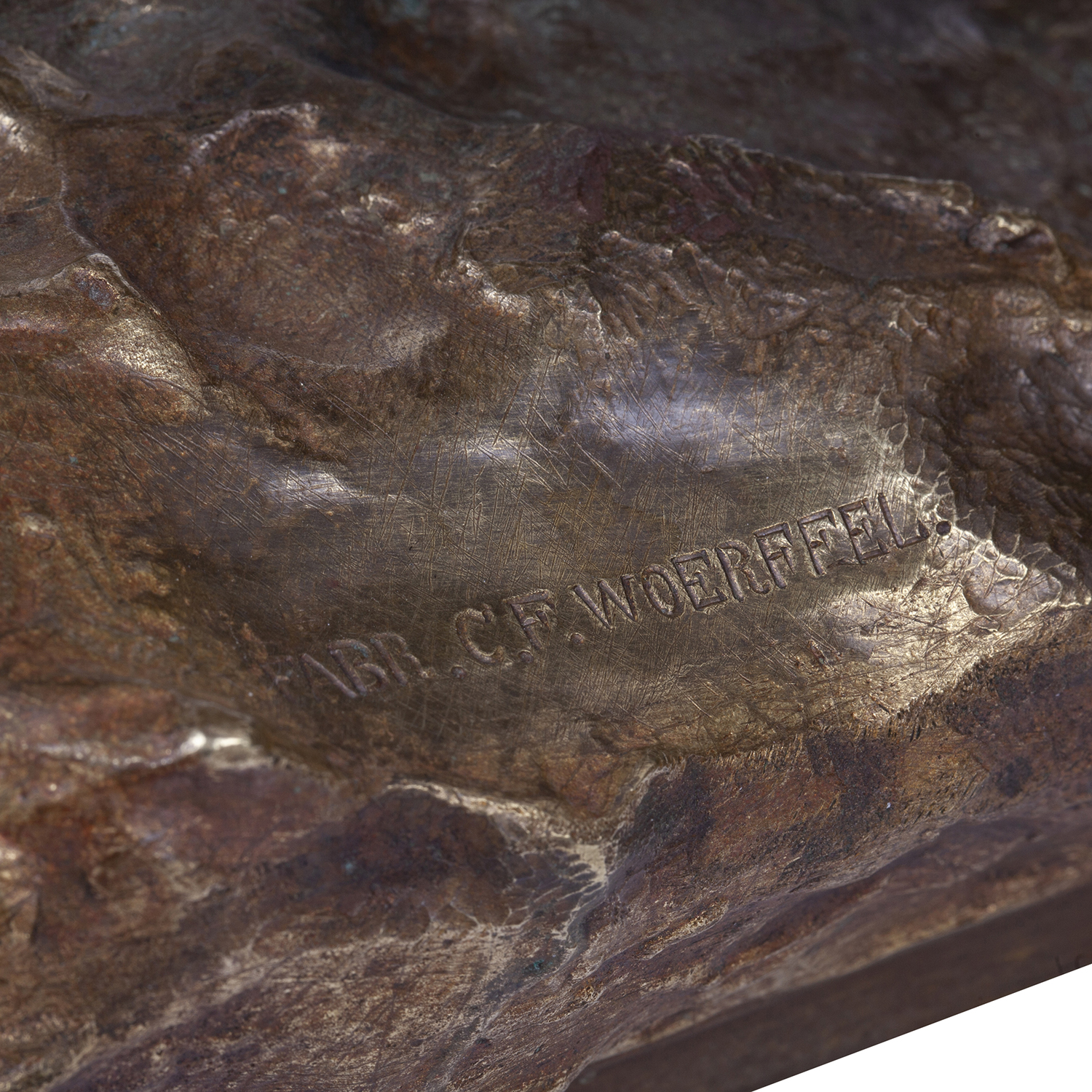
Cast by C. Woerffel Foundry, St. Petersburg
Late 19th centuryThis rare bronze composition by Vasily Grachev depicts a lively winter scene of peasants riding a sleigh along a rugged road. The dynamic pose of the horse, the expressive gestures of the driver, and the detailed rendering of clothing and sleigh bring to life the rhythm of rural Russia in the 19th century. Grachev often collaborated with the renowned Woerffel foundry in St. Petersburg, whose fine castings helped preserve the precision and vitality of his models.
Vasily Grachev (1831–1905):
Born into a family of state peasants, Grachev was apprenticed as a boy to the court craftsman Andreev in St. Petersburg, where he trained in chasing for six years. He later worked for prominent silversmiths, including I. S. Sazikov. Sculpture became his true vocation, though he pursued it largely as a self-taught artist.Grachev created wax models for major Russian manufacturers such as C. F. Woerffel, P. A. Ovchinnikov, and I. P. Khlebnikov, whose workshops produced his works in both bronze and silver. In 1885 he established his own studio in St. Petersburg. That same year he exhibited at the Artistic and Industrial Exhibition in the city, where his composition At the Watering Place was awarded a silver medal.
Starting price: 4000€
Estimate: 6000-8000€
Hammer Price: Not sold -
Lot 0017
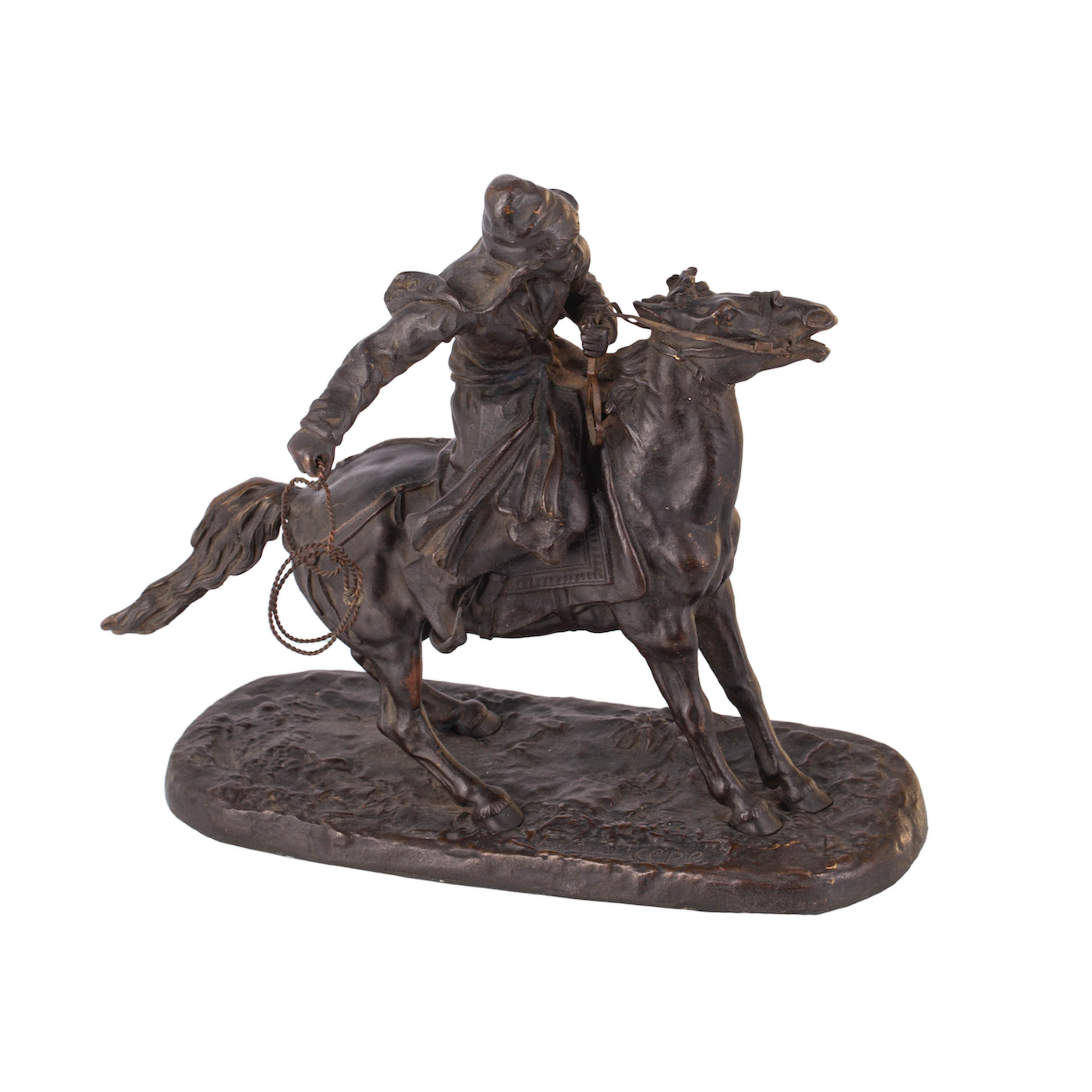
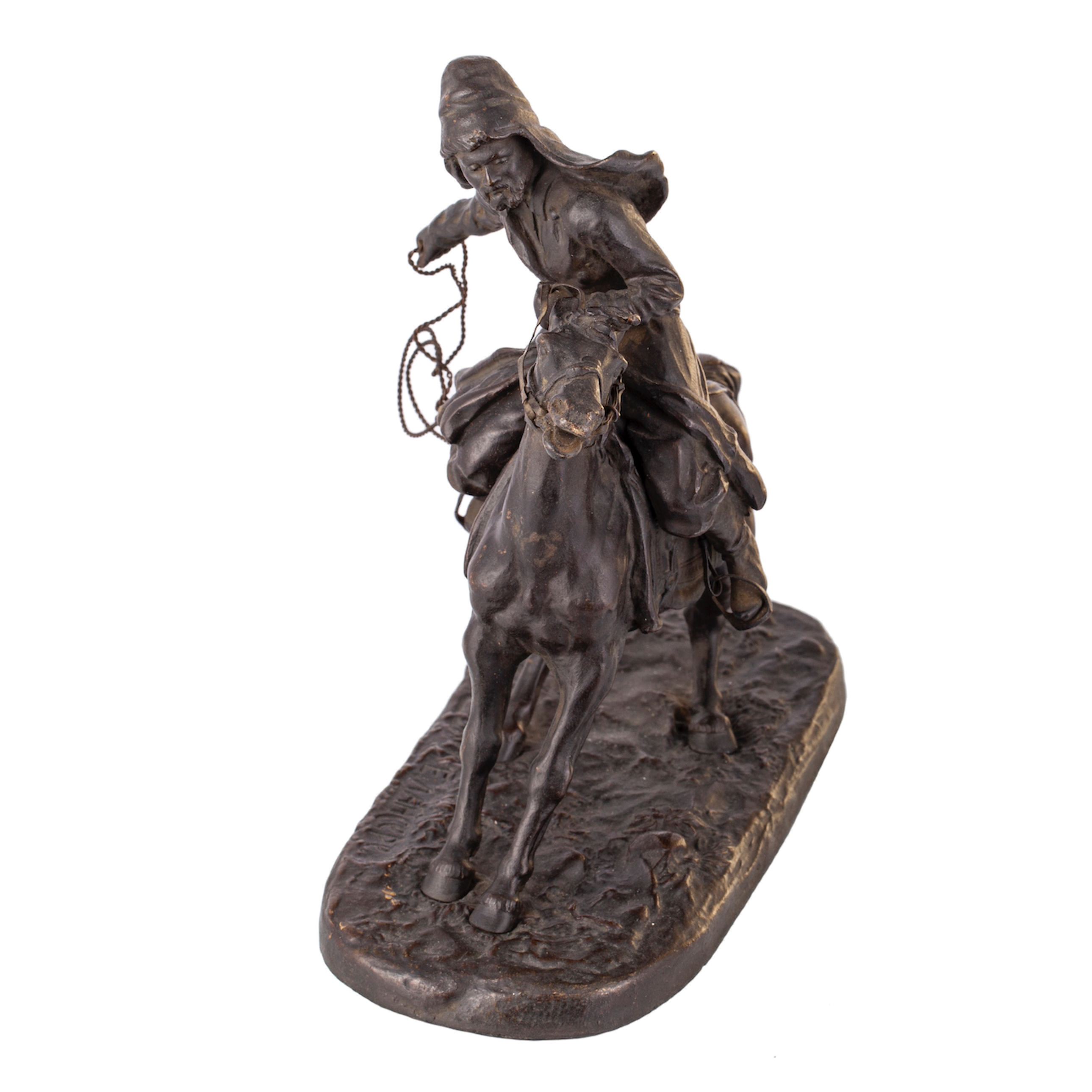
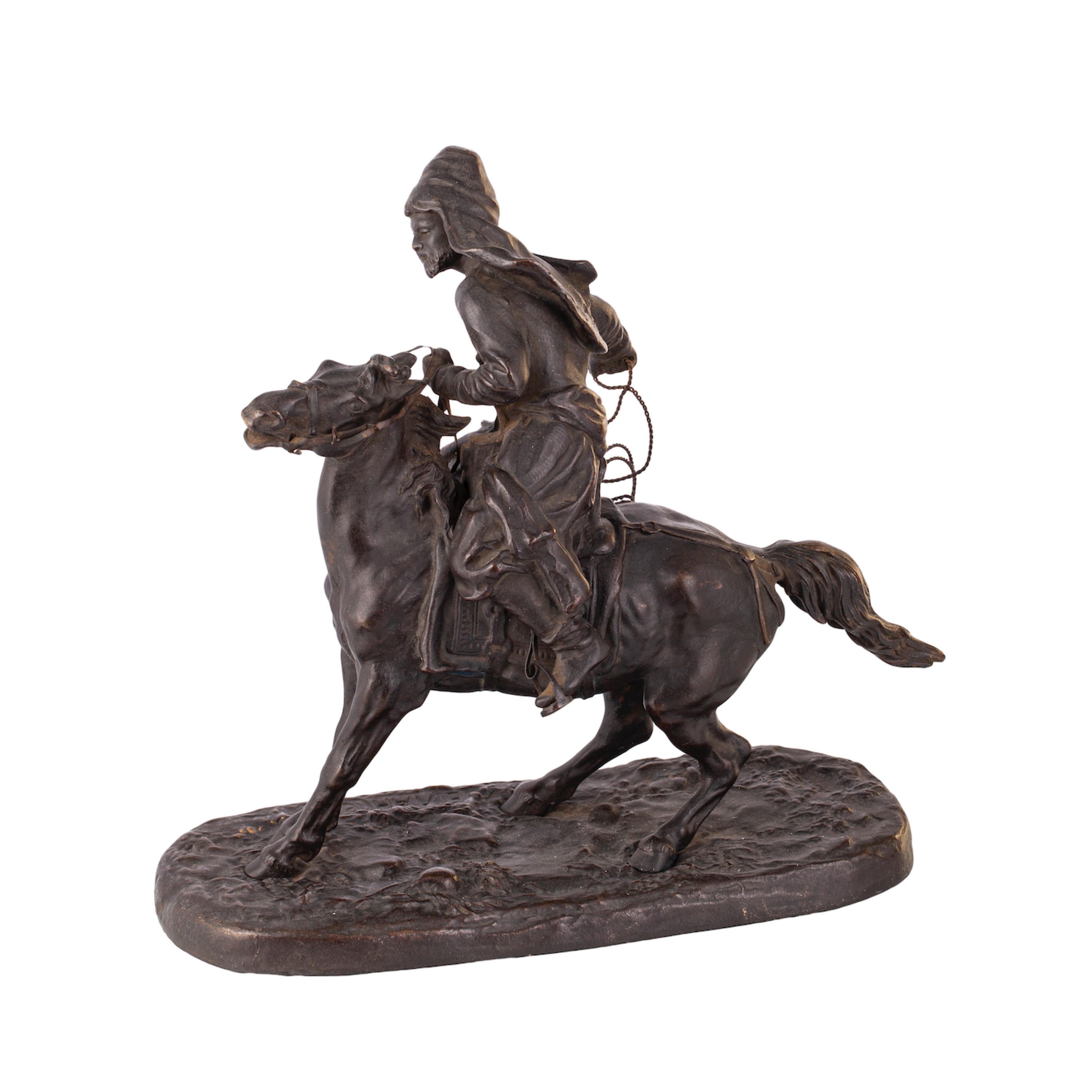
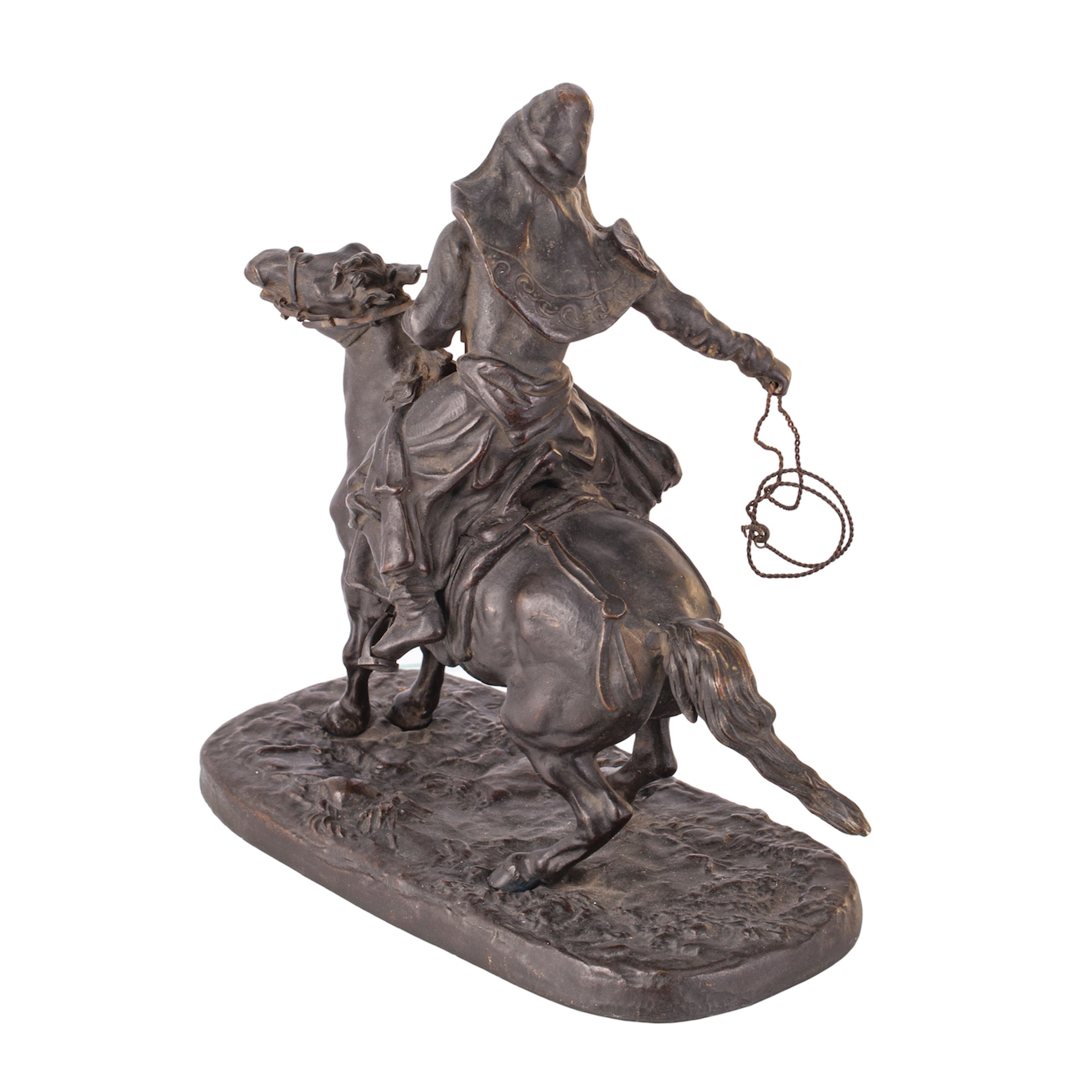
Evgeny Lanceray. Russian bronze composition “Little Kyrgyz or Bashkir the herdsman”
Estimate: 2000-3000€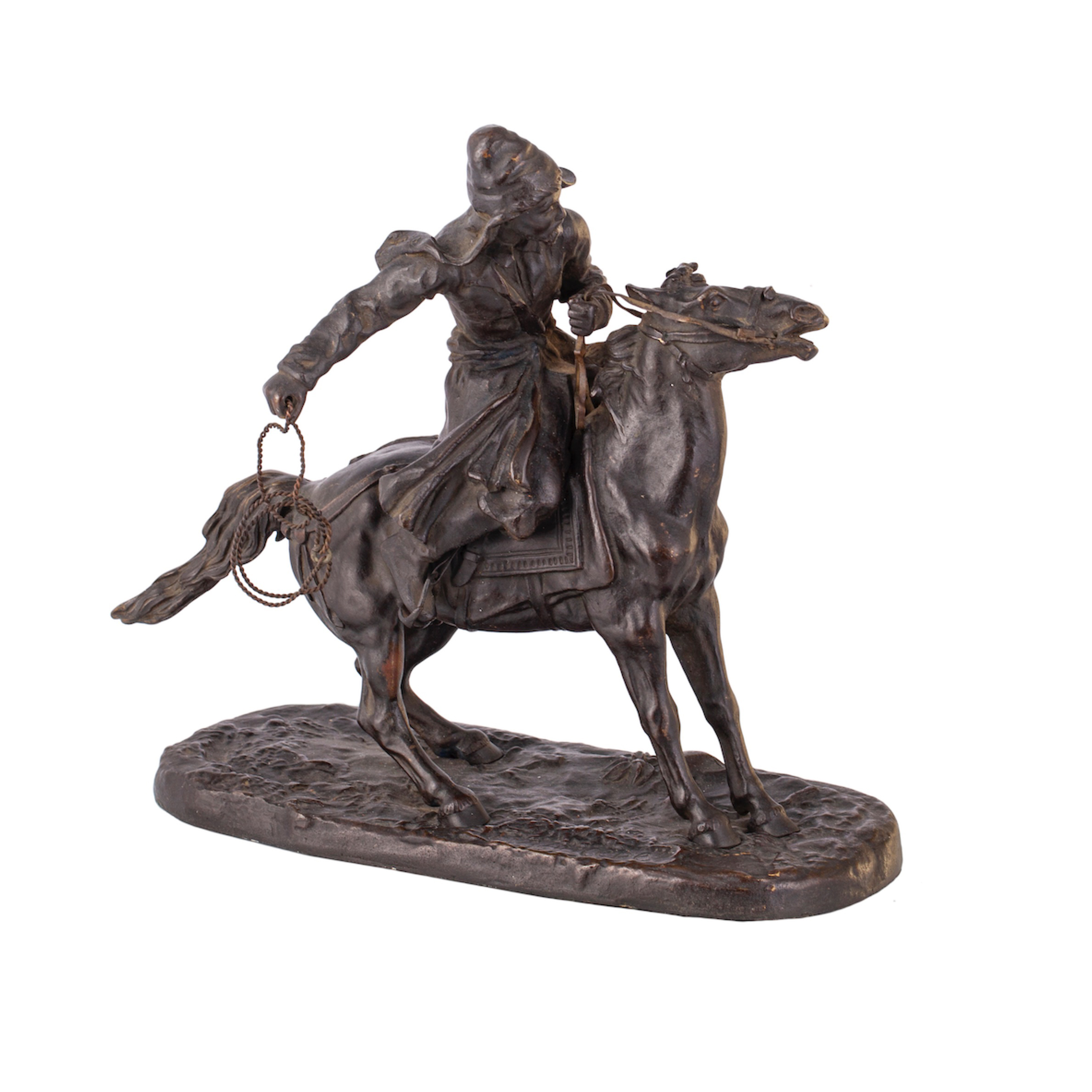
Lot 0017
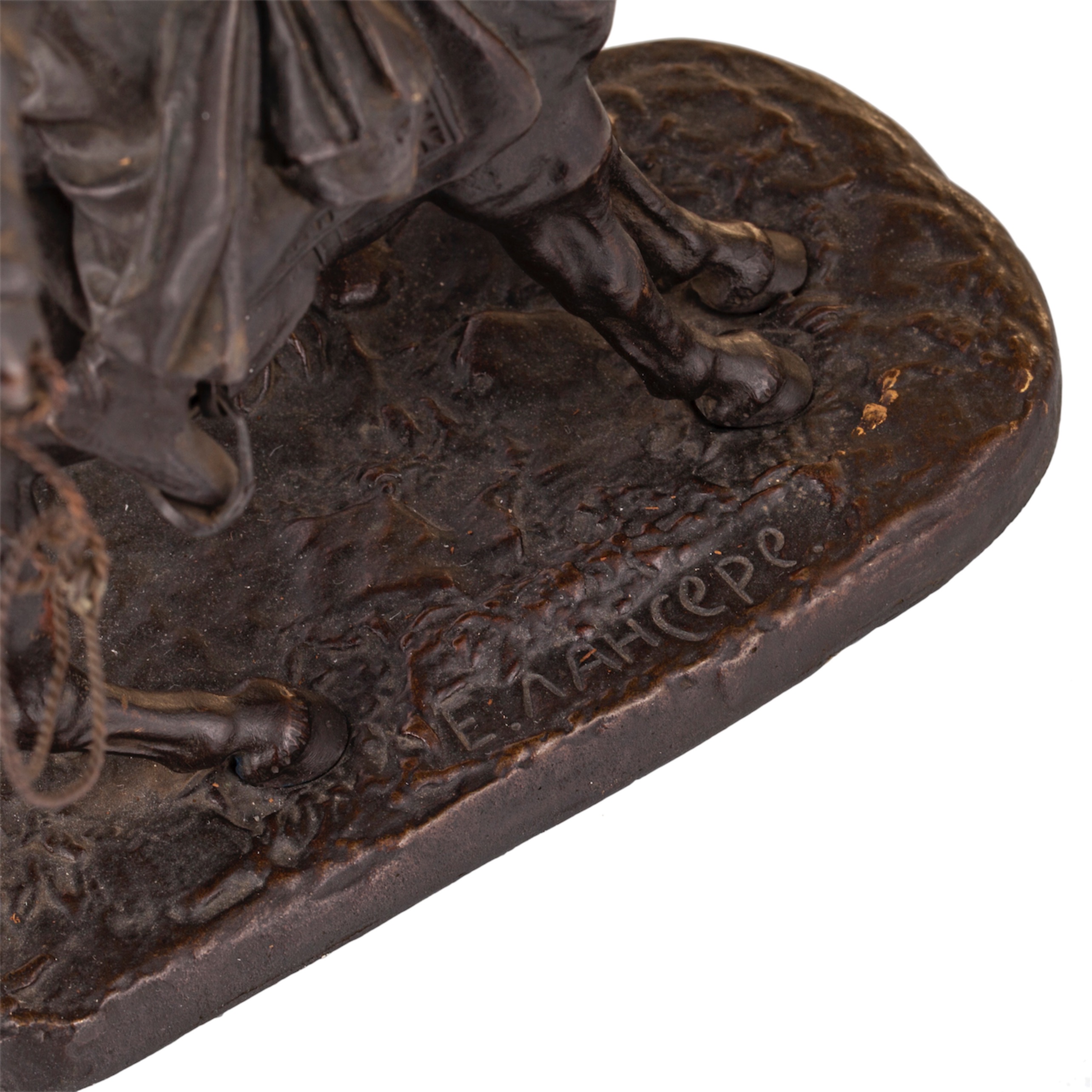
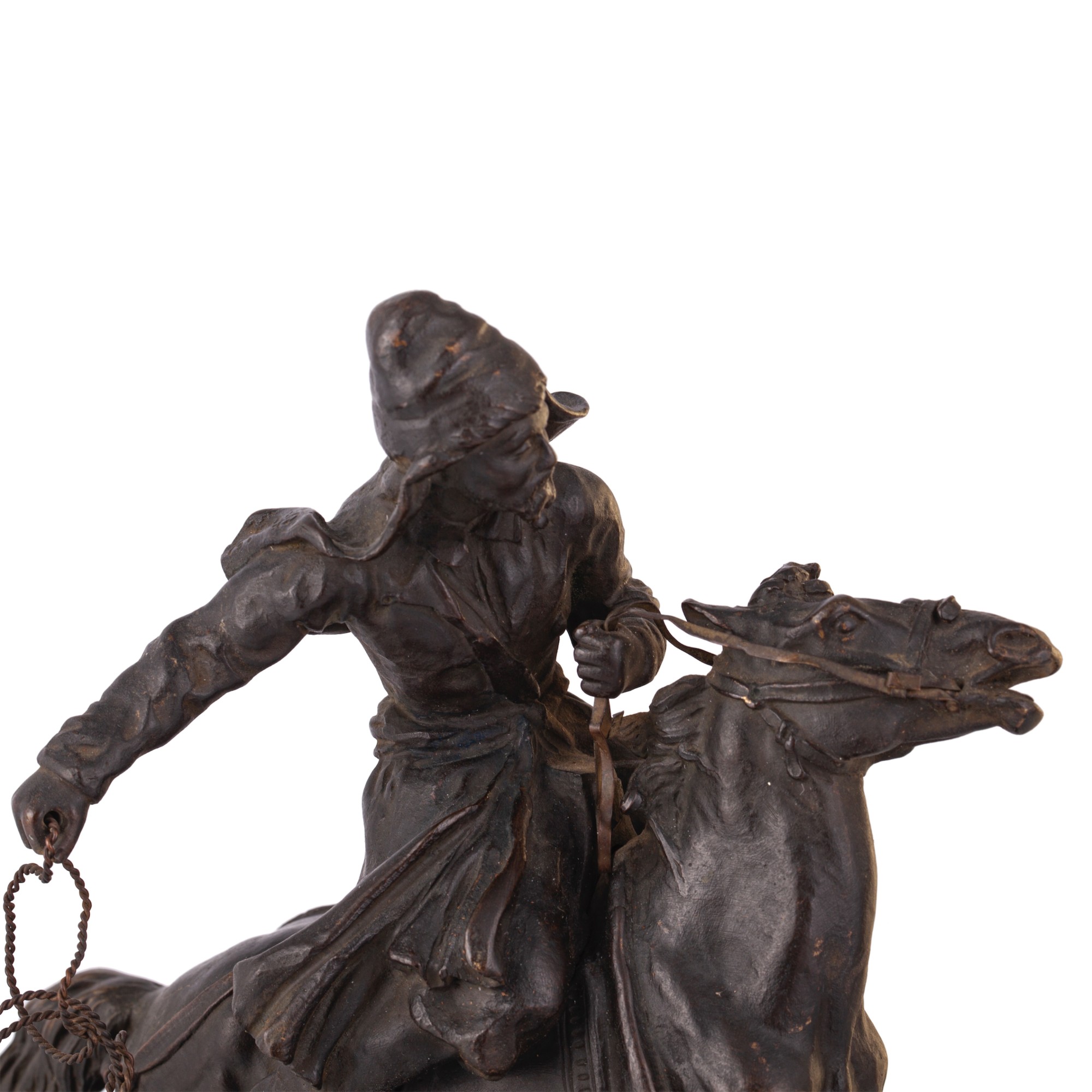
Evgeny Lanceray. Russian bronze composition “Little Kyrgyz or Bashkir the herdsman”
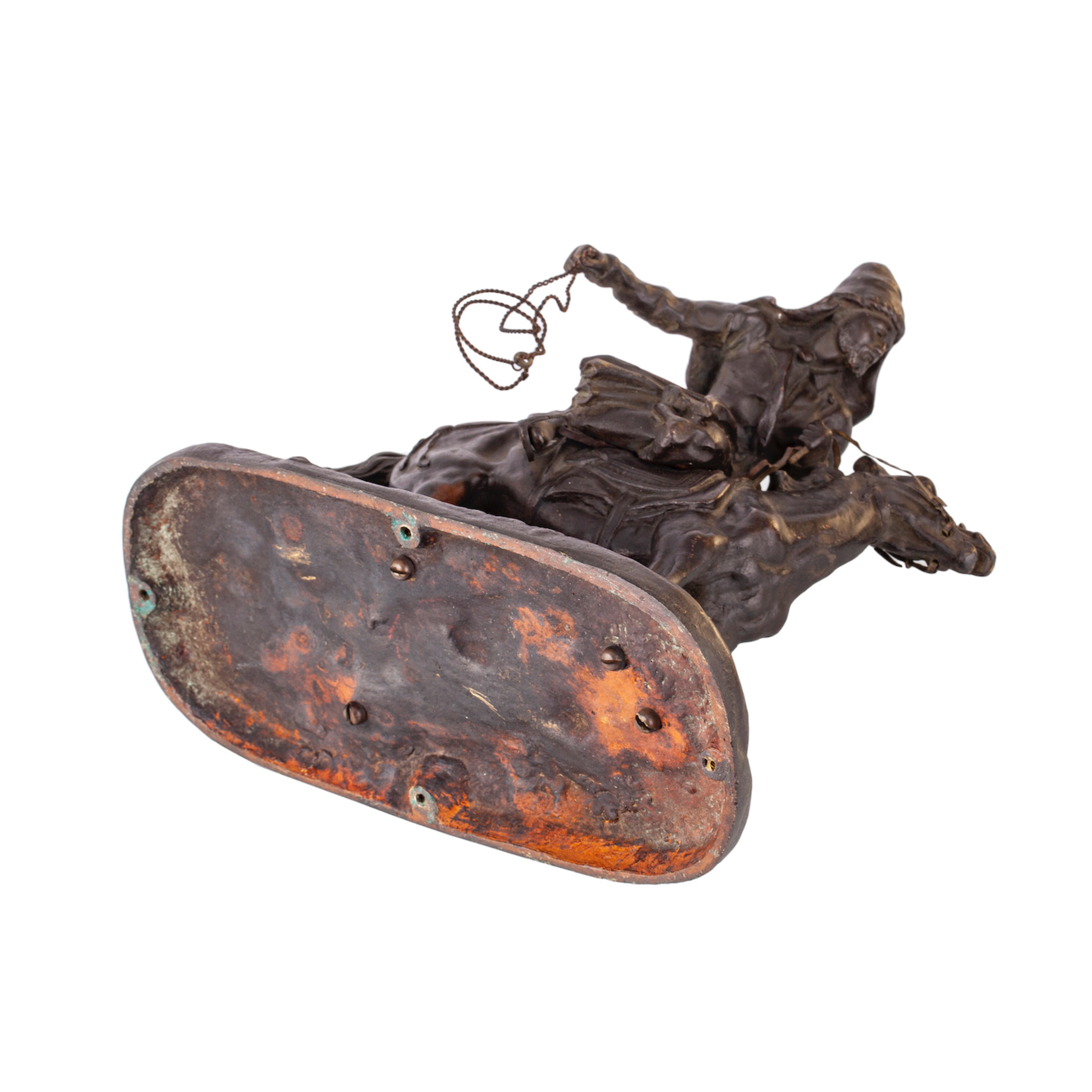
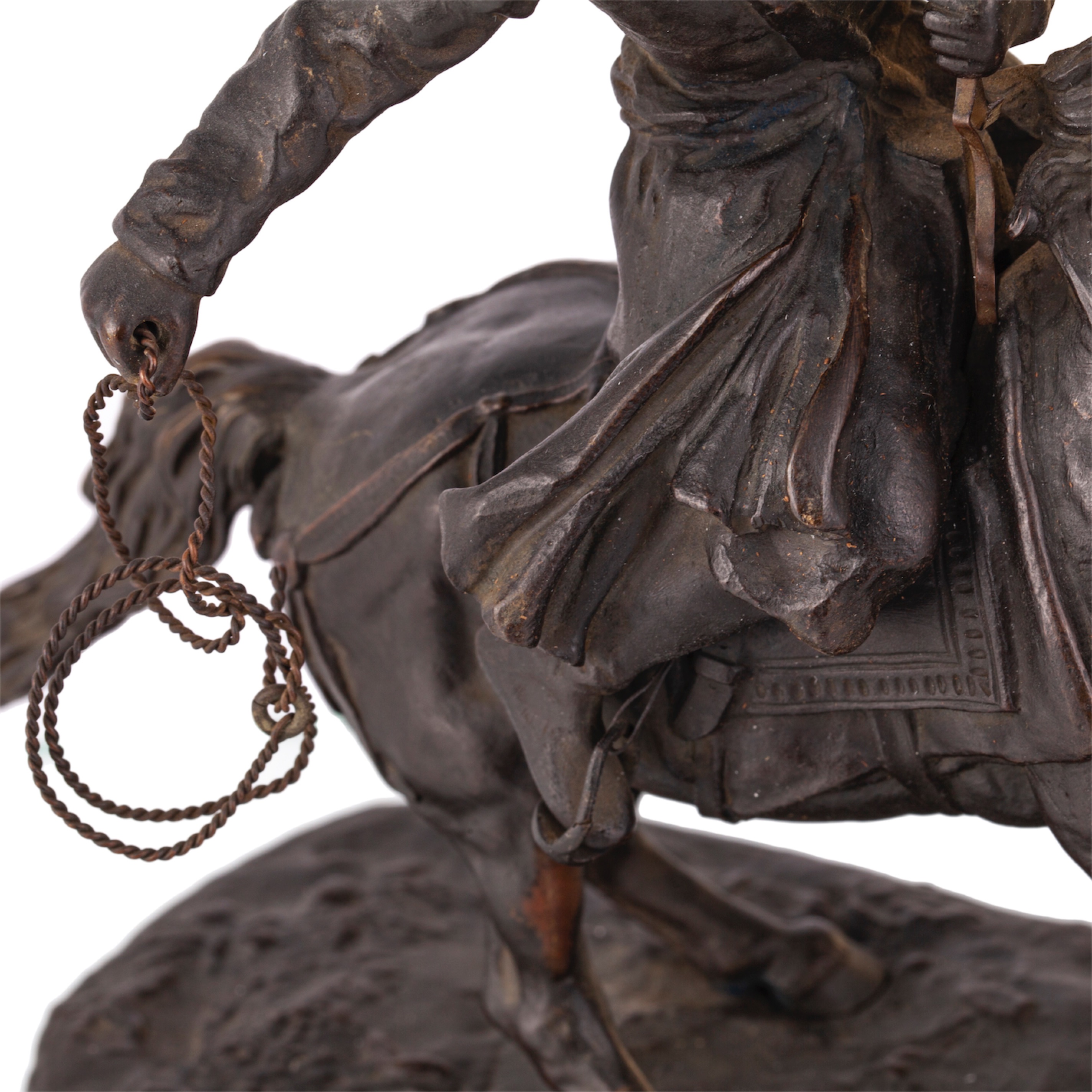
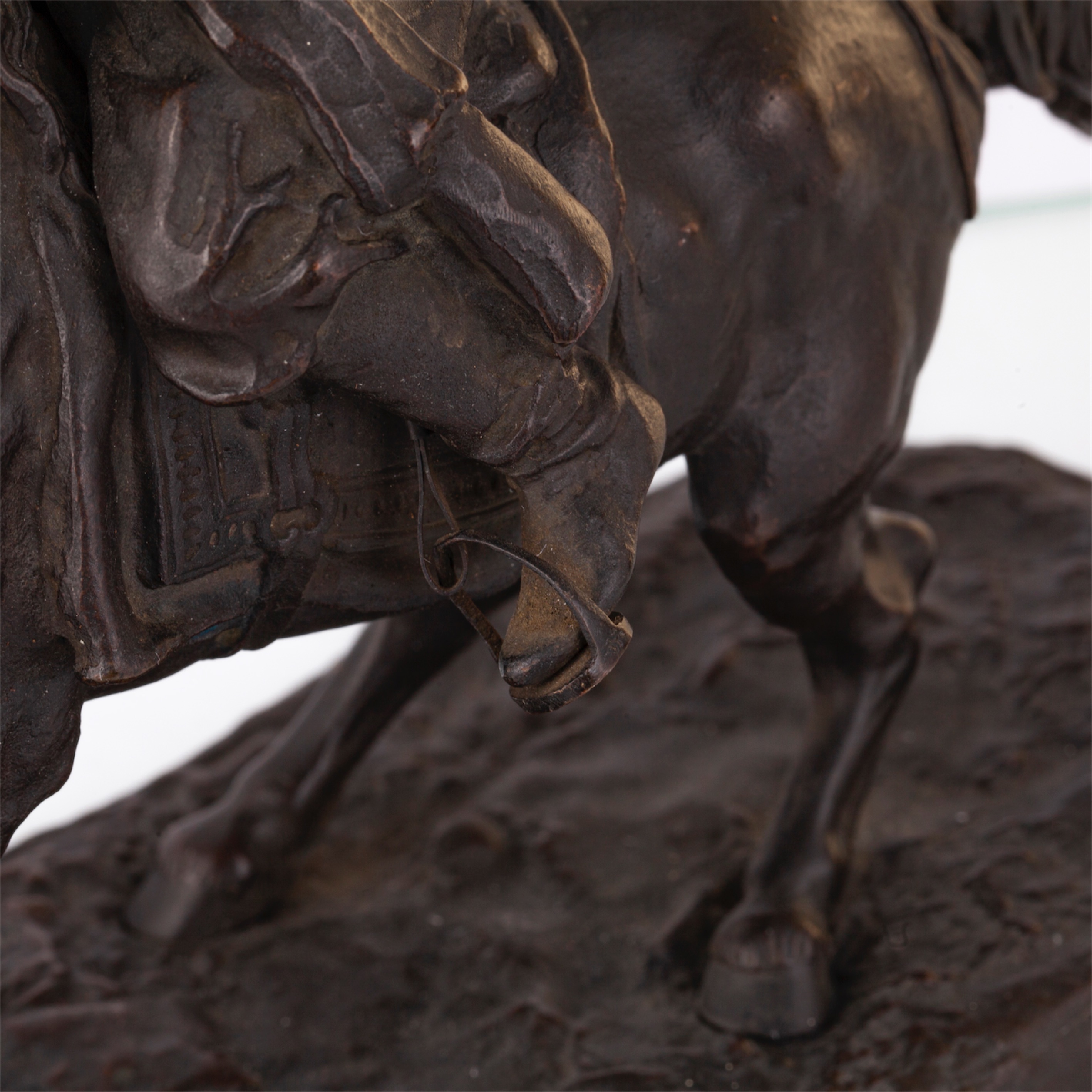
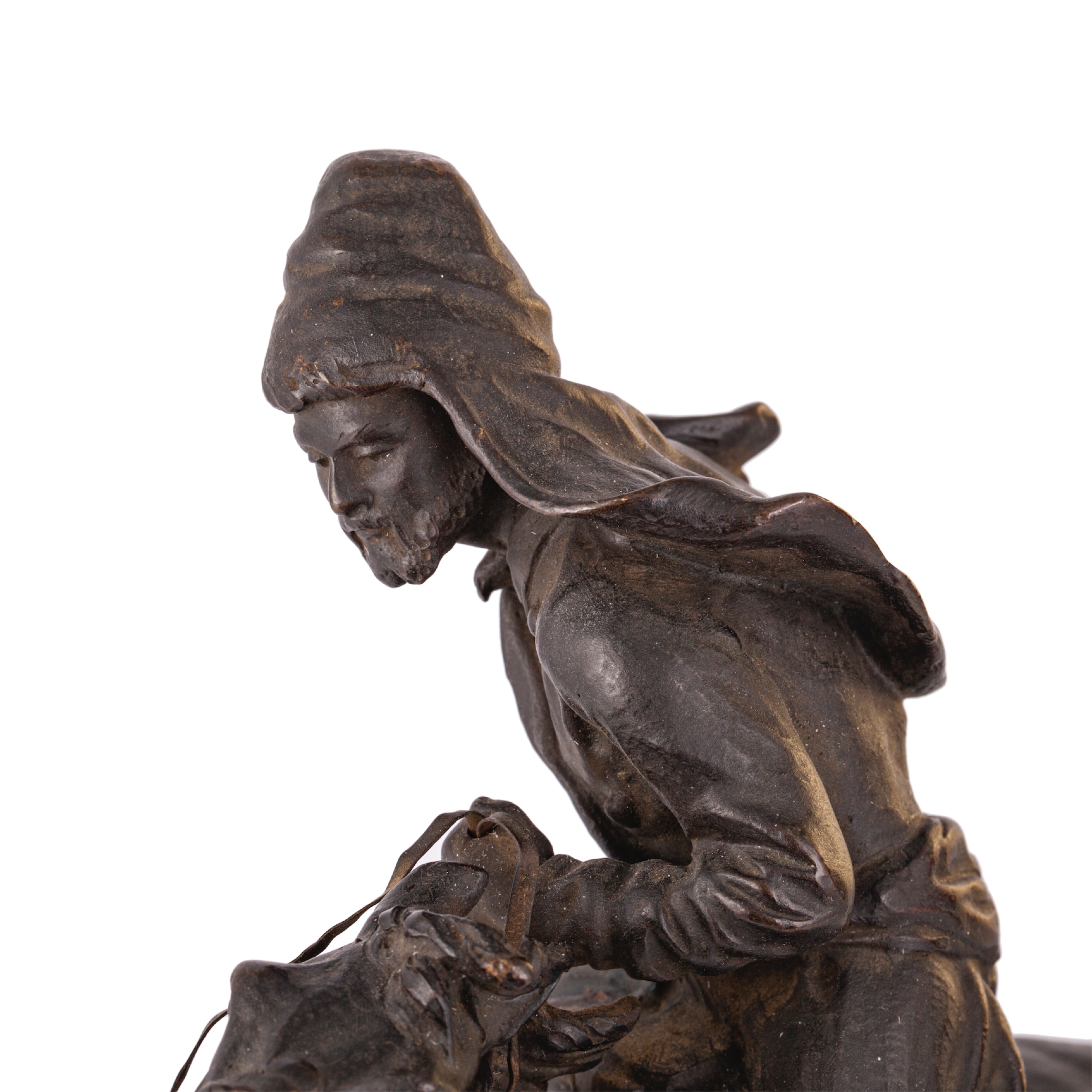
Estimate: 2000-3000€Evgeny Lanceray. Little Kyrgyz (or Bashkir Herdsman)
Model 1879
Bronze. Dimensions: 19 × 23 × 10 cm
St. Petersburg, late 19th centuryThis bronze composition by Evgeny Lanceray represents a mounted Bashkir herdsman, shown in dynamic motion, holding a lasso in his hand. The work belongs to Lanceray’s celebrated ethnographic series, inspired by his extensive travels across Russia and its borderlands.
The model was created in 1879 but reflects impressions from an earlier journey to Bashkiria in the early 1870s. Like many of Lanceray’s works, The Bashkir Herdsman combines vivid ethnographic detail with the sculptor’s gift for narrative and movement, making it one of his best-known works of small-scale realist sculpture.
During the sculptor’s lifetime and in the late 19th century, the composition was cast at the Chopin and Shtange foundries in St. Petersburg. In the early 20th century, it was also reproduced without foundry marks, both by large firms such as the Moscow workshop of A. M. Postnikov and by smaller private foundries in Moscow and St. Petersburg.
Starting price: 1500€
Estimate: 2000-3000€
Hammer Price: Not sold -
Lot 0018
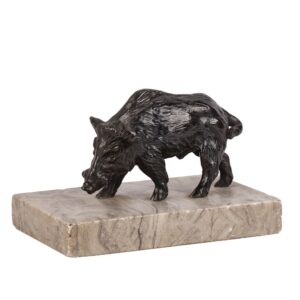
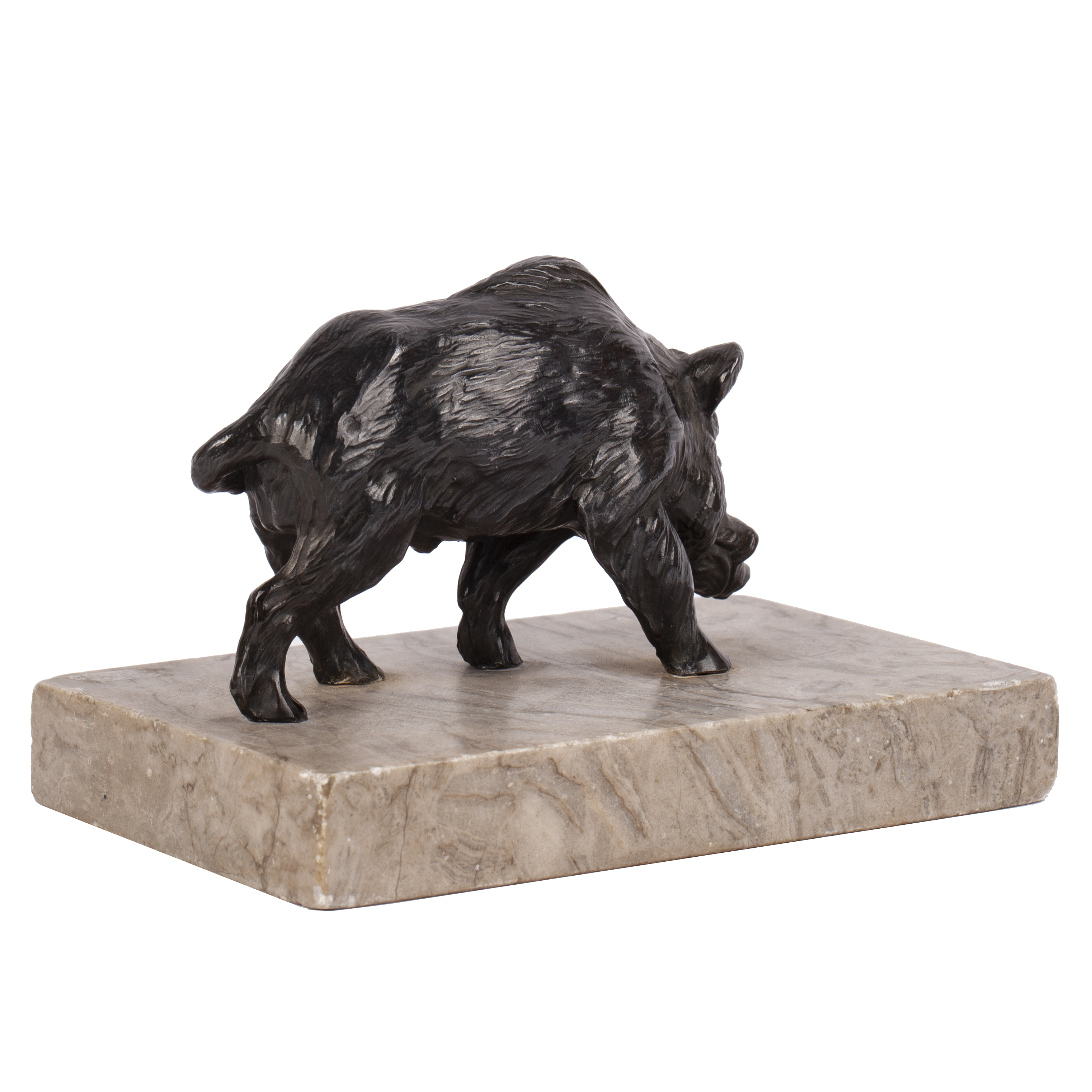
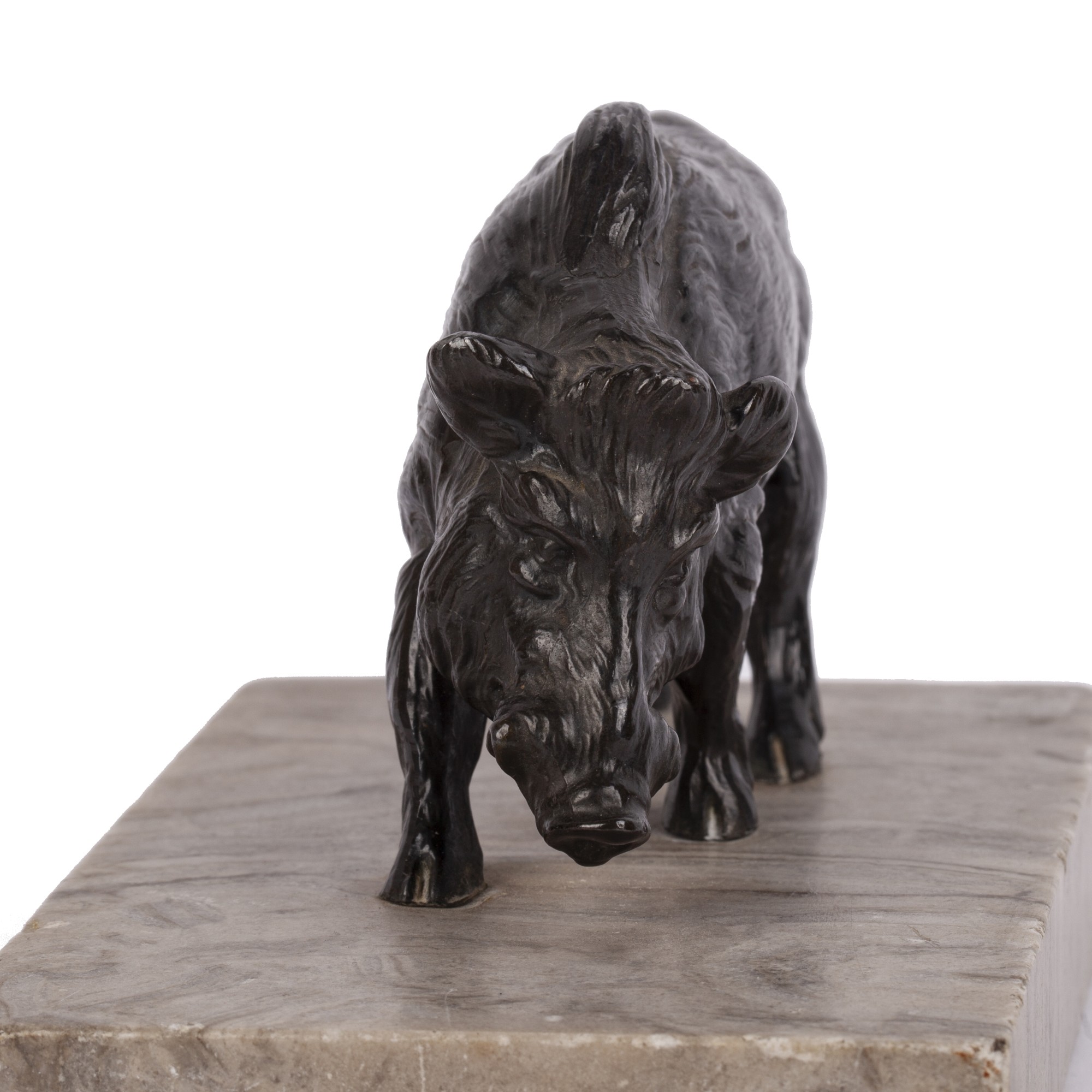
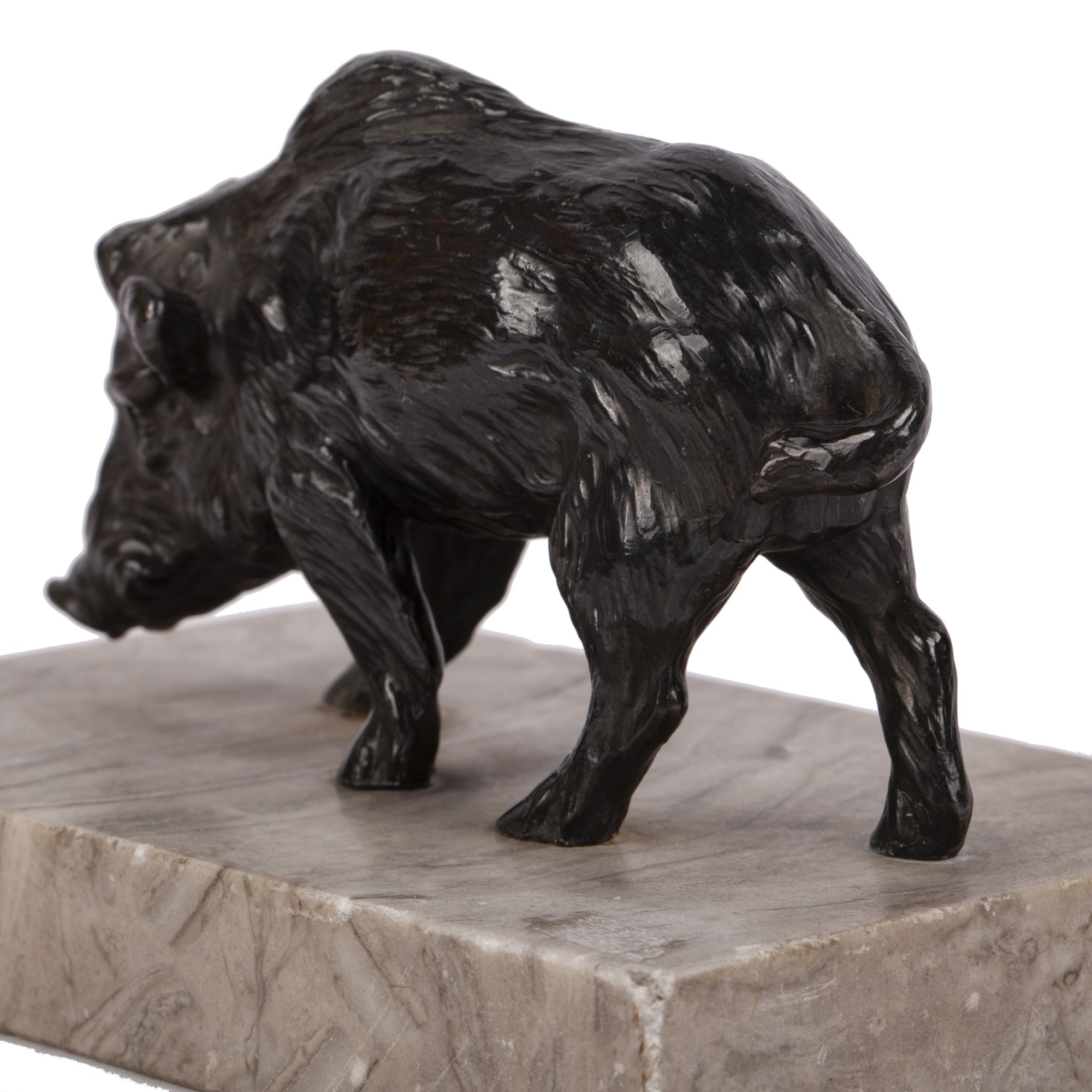
Miniature Bronze Sculpture Depicting a Wild Boar
Estimate: 150-200€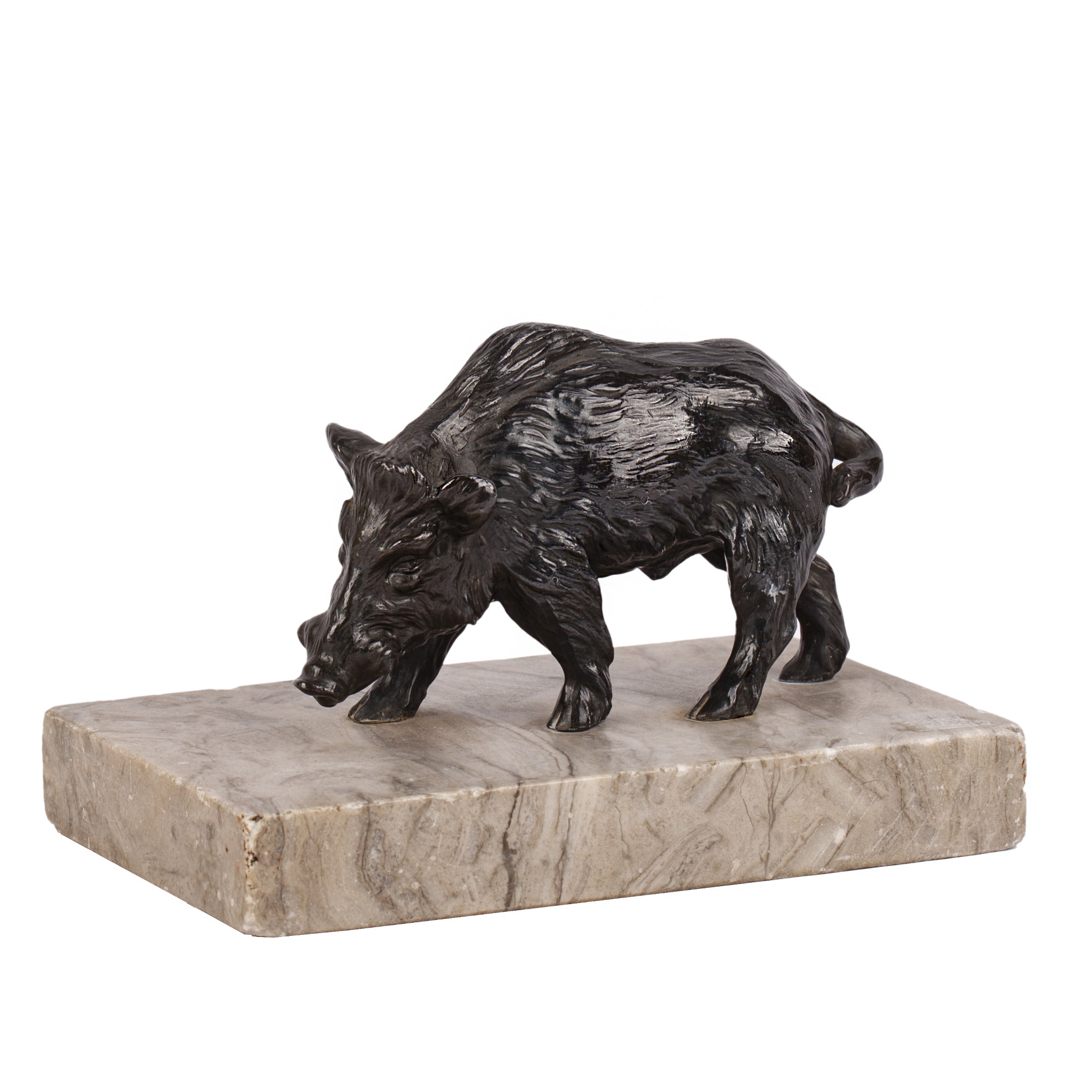
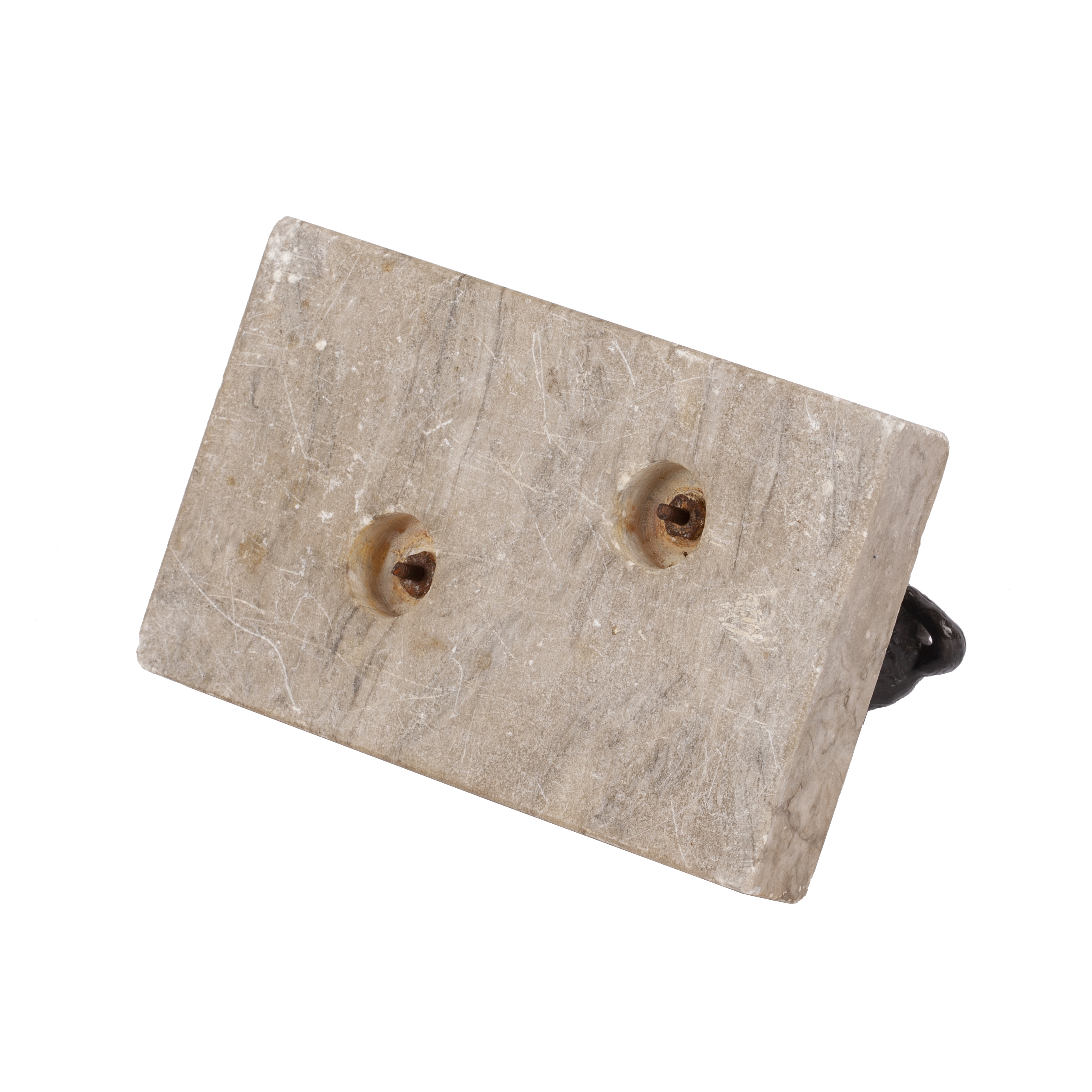
Lot 0018
Miniature Bronze Sculpture Depicting a Wild Boar
Estimate: 150-200€A miniature bronze sculpture depicting a wild boar, set on a stone base. The overall dimensions, including the stand, measure 15 x 10 cm.
Starting price: 100€
Estimate: 150-200€
Hammer Price: Not sold -
Lot 0019
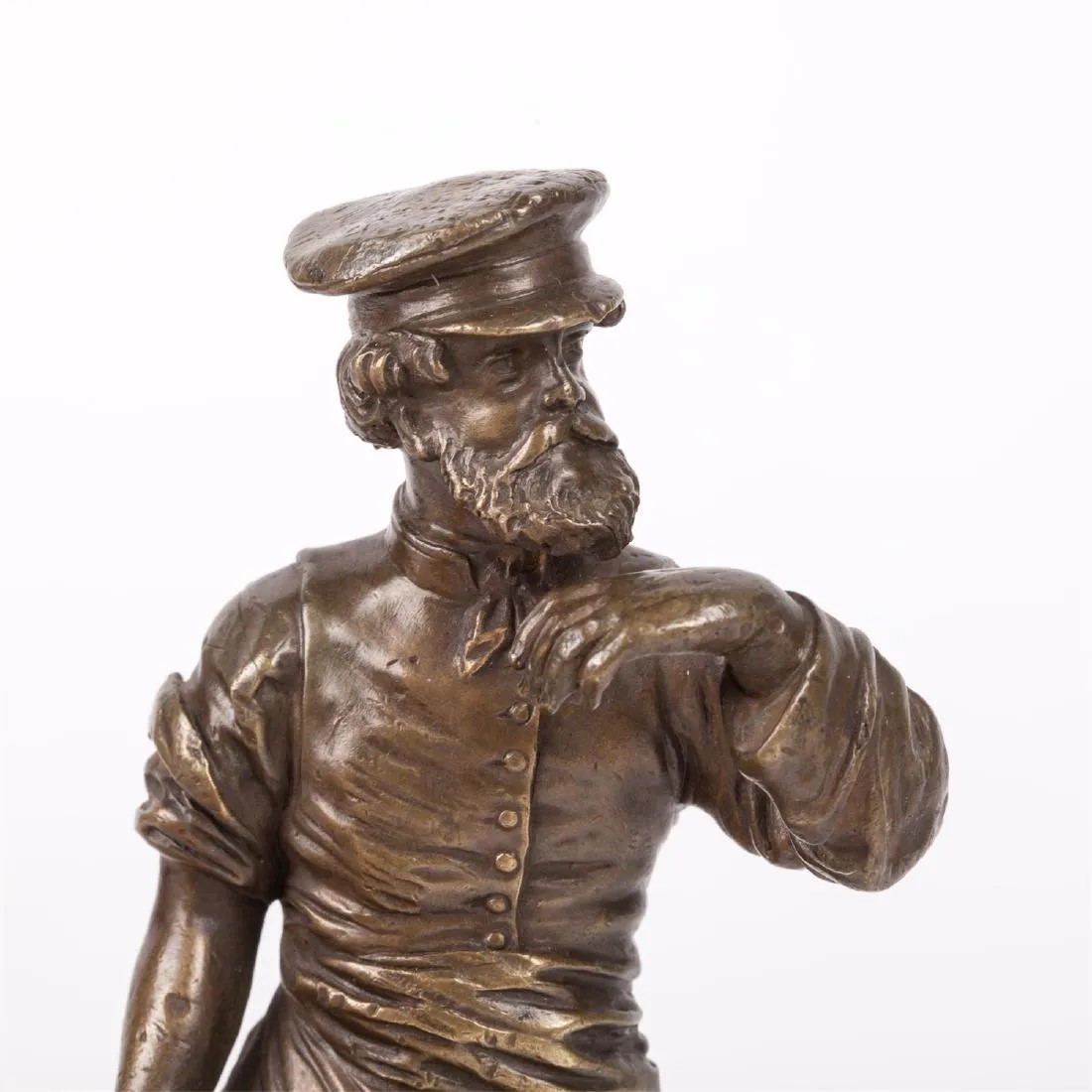
Russian Bronze Composition “Dancing Peasant”
Estimate: 600-800€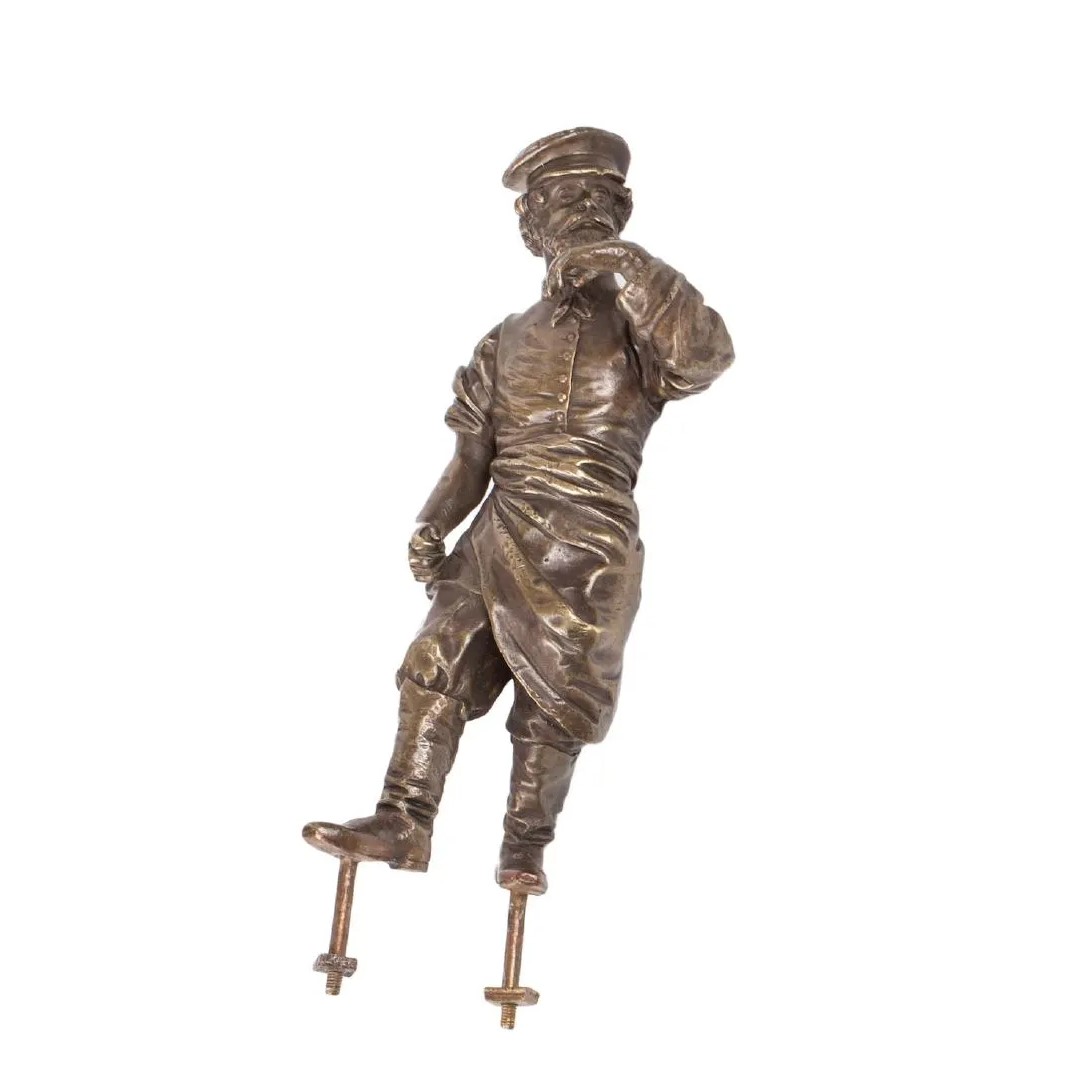
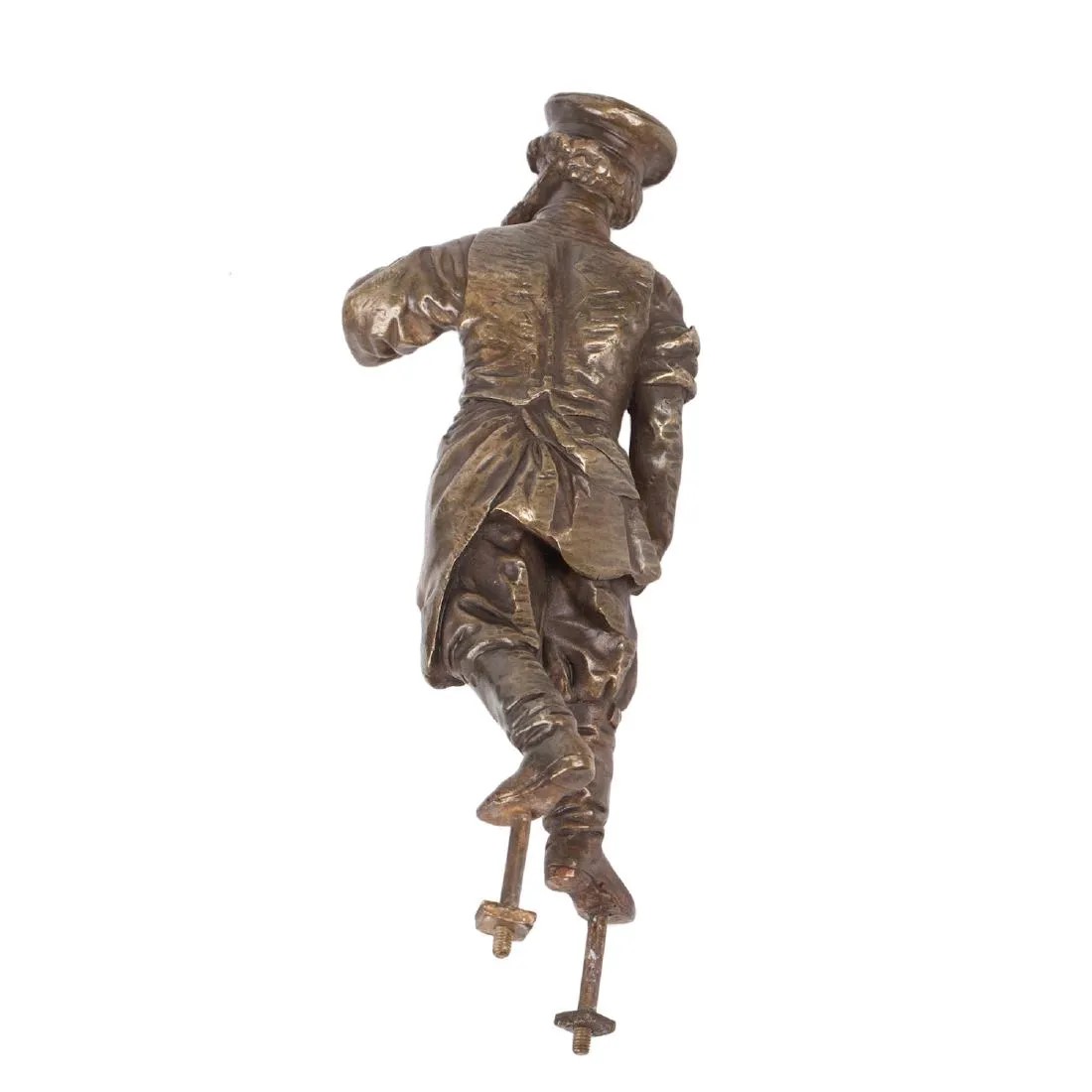
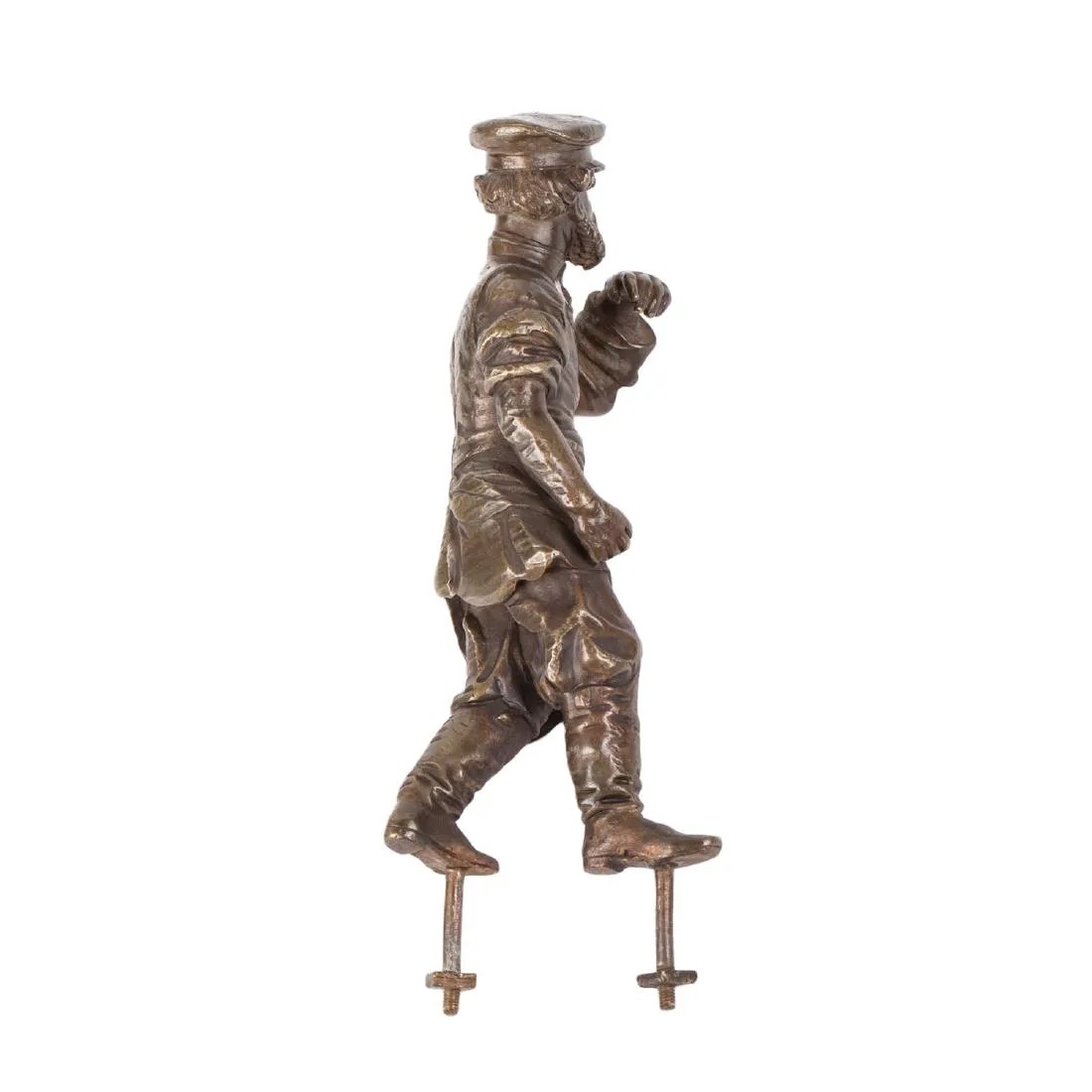
Lot 0019
Russian Bronze Composition “Dancing Peasant”
Estimate: 600-800€Dancing Peasant
Russian bronze composition
Mid-19th century
Height: 13 cmThis small bronze figure depicts a peasant caught mid-step in a lively dance, his posture animated and expressive. Works of this type reflected the 19th-century fascination with scenes from folk life, capturing the vitality and humor of rural traditions in miniature sculptural form.
Starting price: 500€
Estimate: 600-800€
Hammer Price: Not sold -
Lot 0020
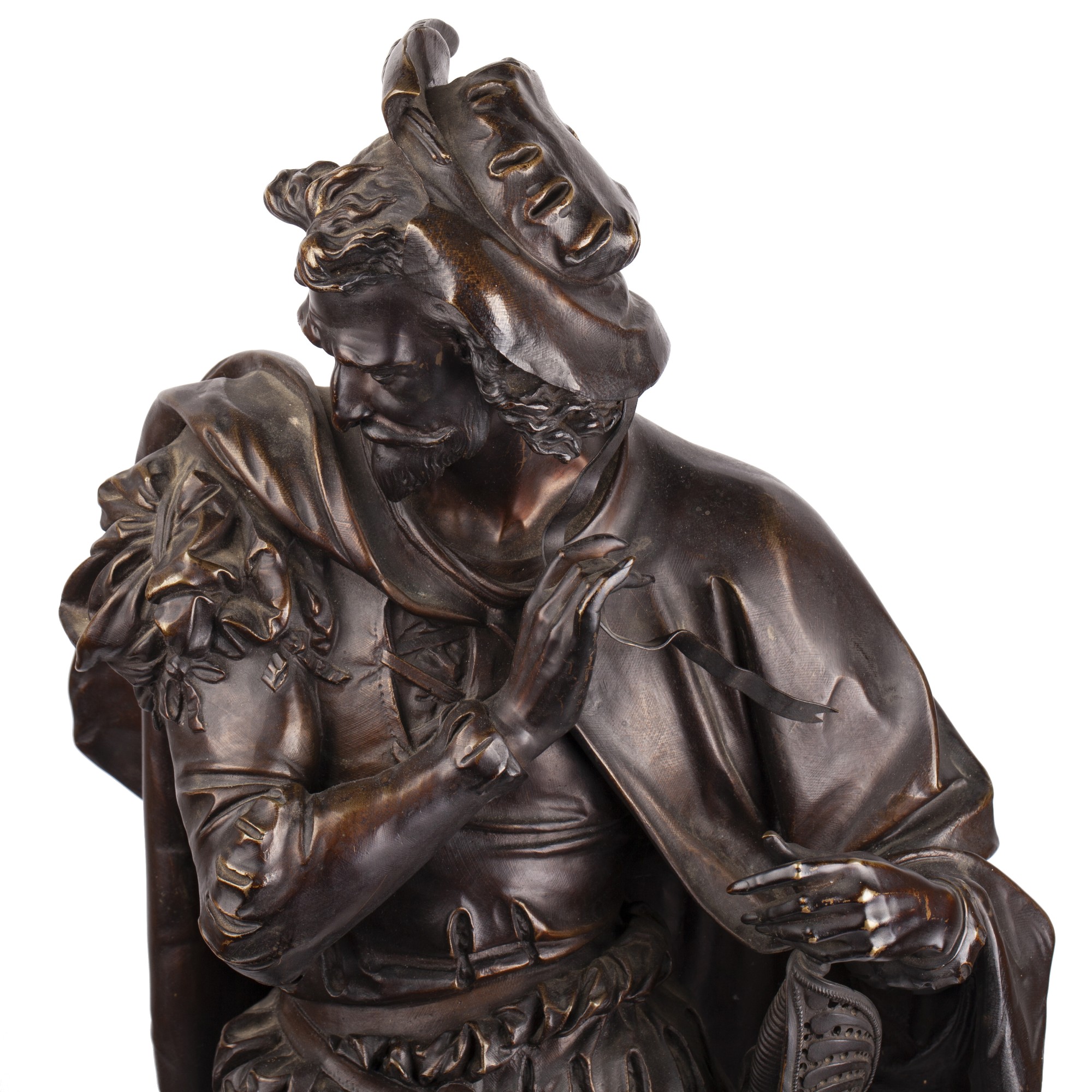
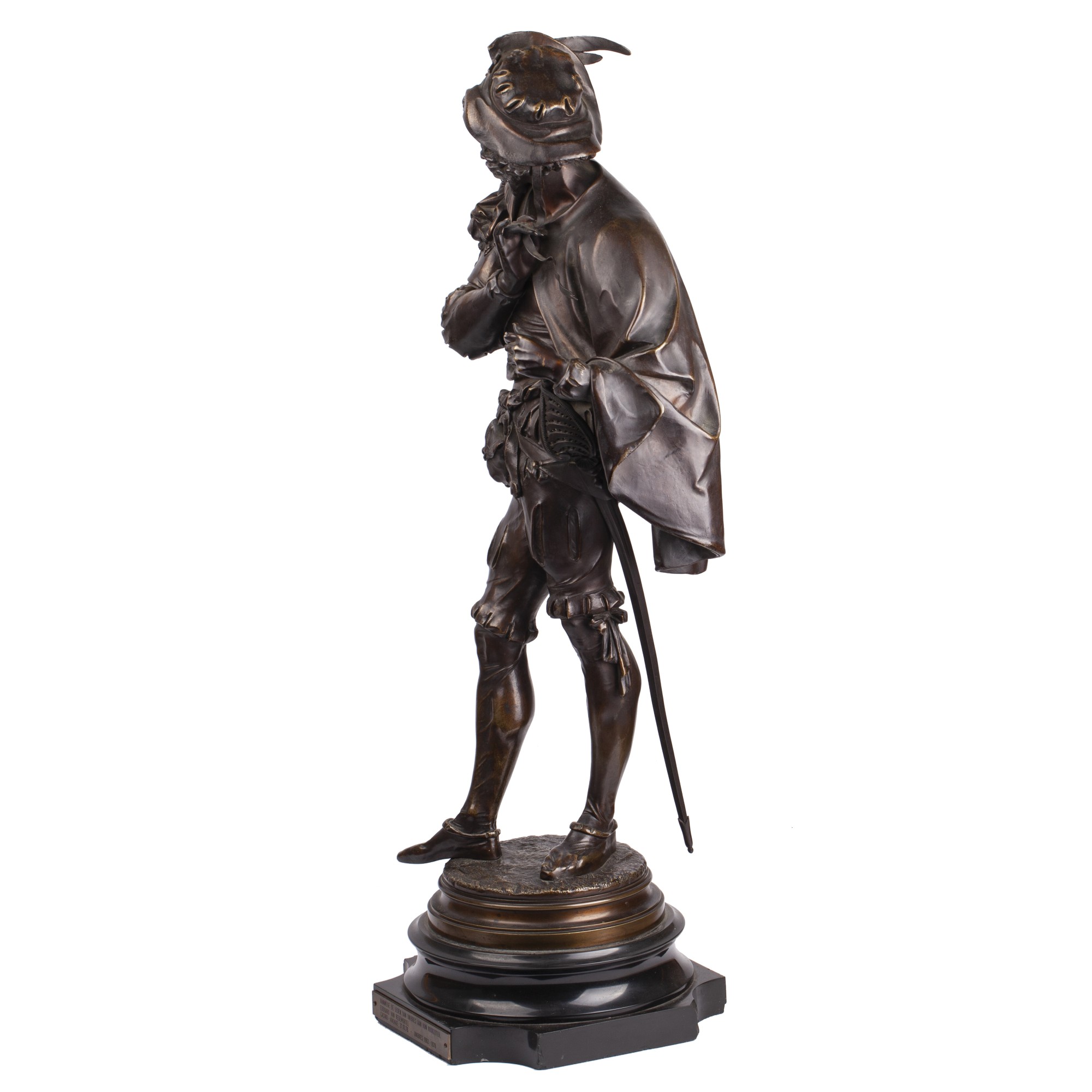
Antique Bronze Sculpture of Musketeer by Auguste Joseph CARRIER (1800-1875)
Estimate: 4000-5000€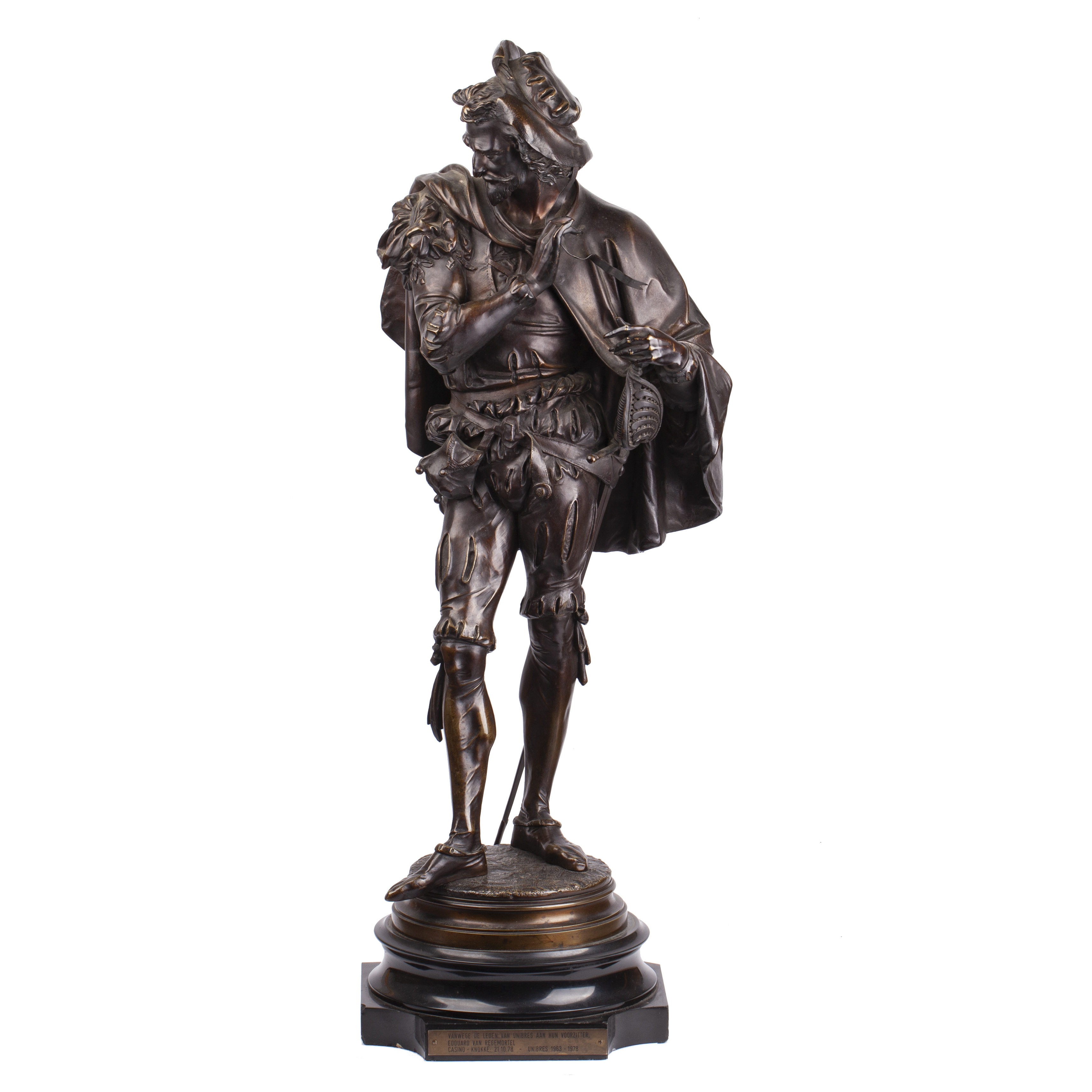
Lot 0020
Antique Bronze Sculpture of Musketeer by Auguste Joseph CARRIER (1800-1875)
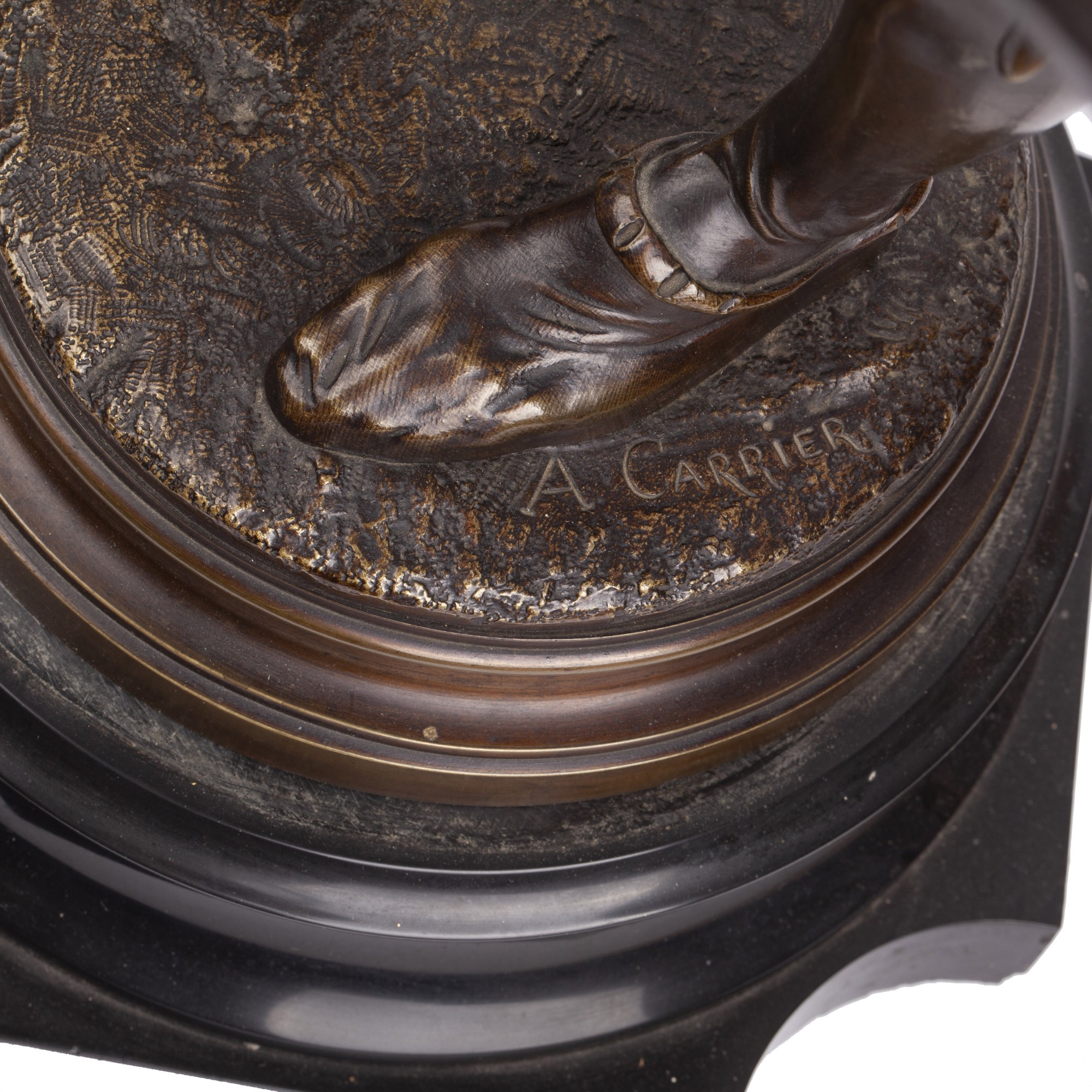
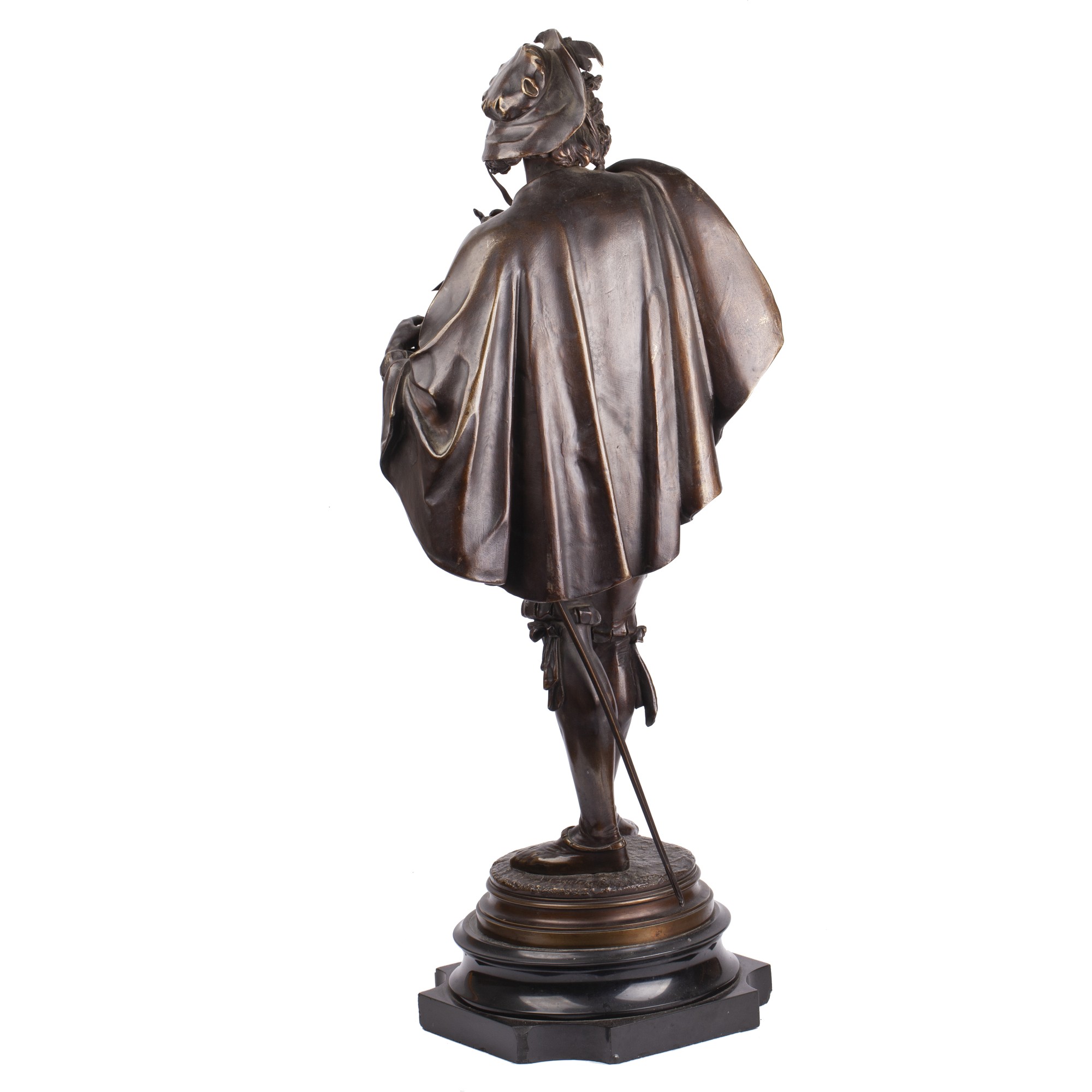
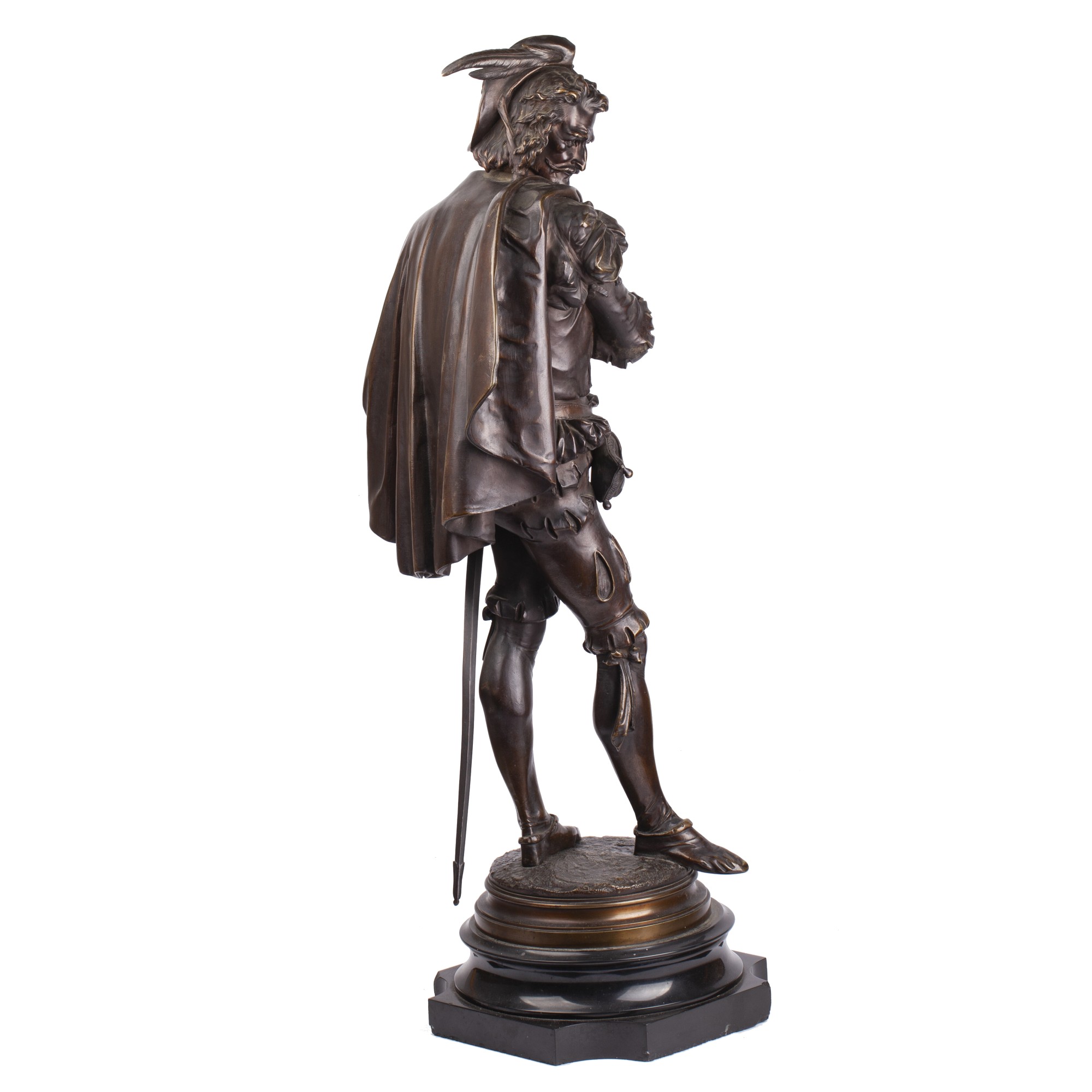
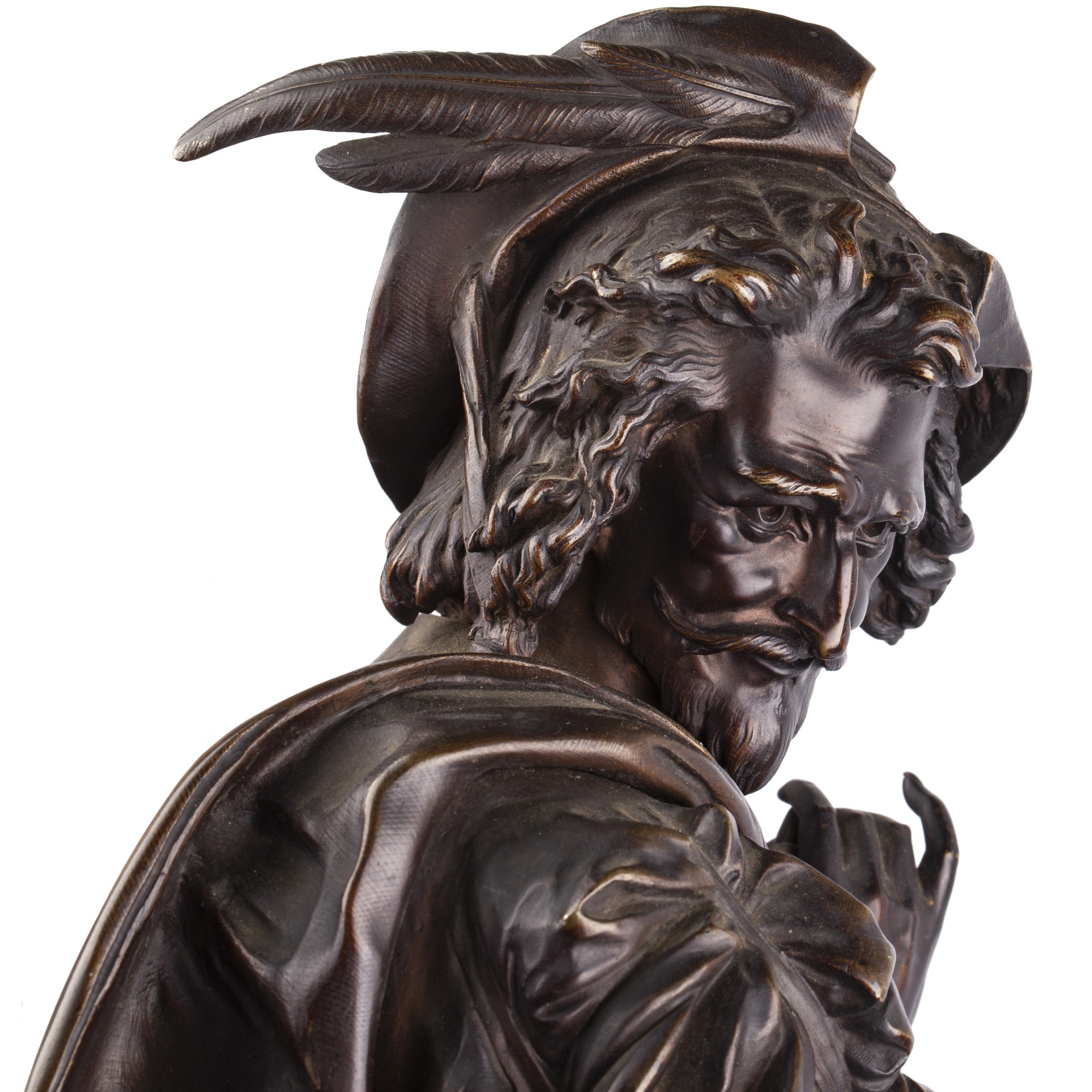
Estimate: 4000-5000€Auguste Joseph Carrier (1800–1875)
The Musketeer
France, 19th century
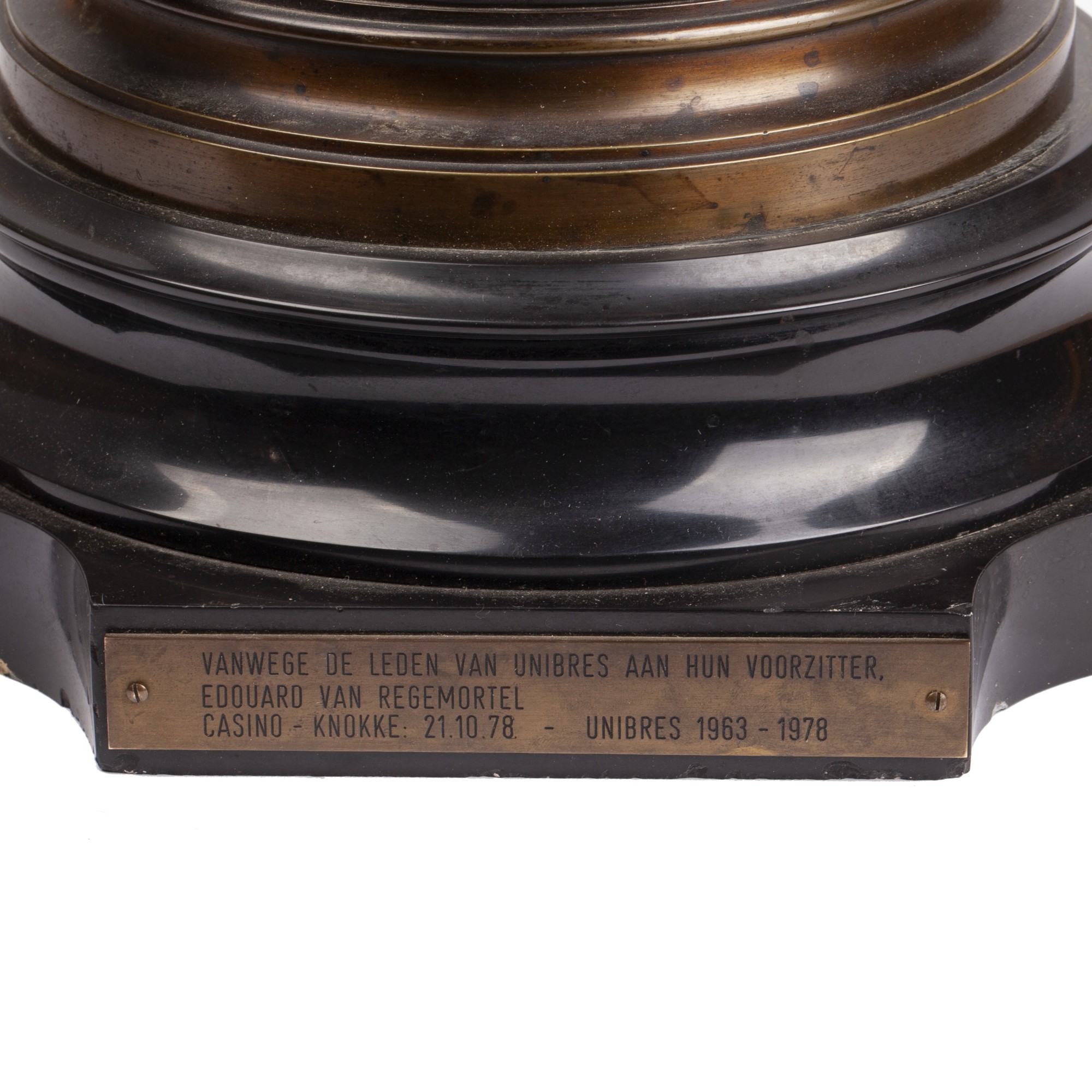
Patinated bronze on black stone baseHeight with the stone: 79.5 cm.
Height without the stone: 72 cm.
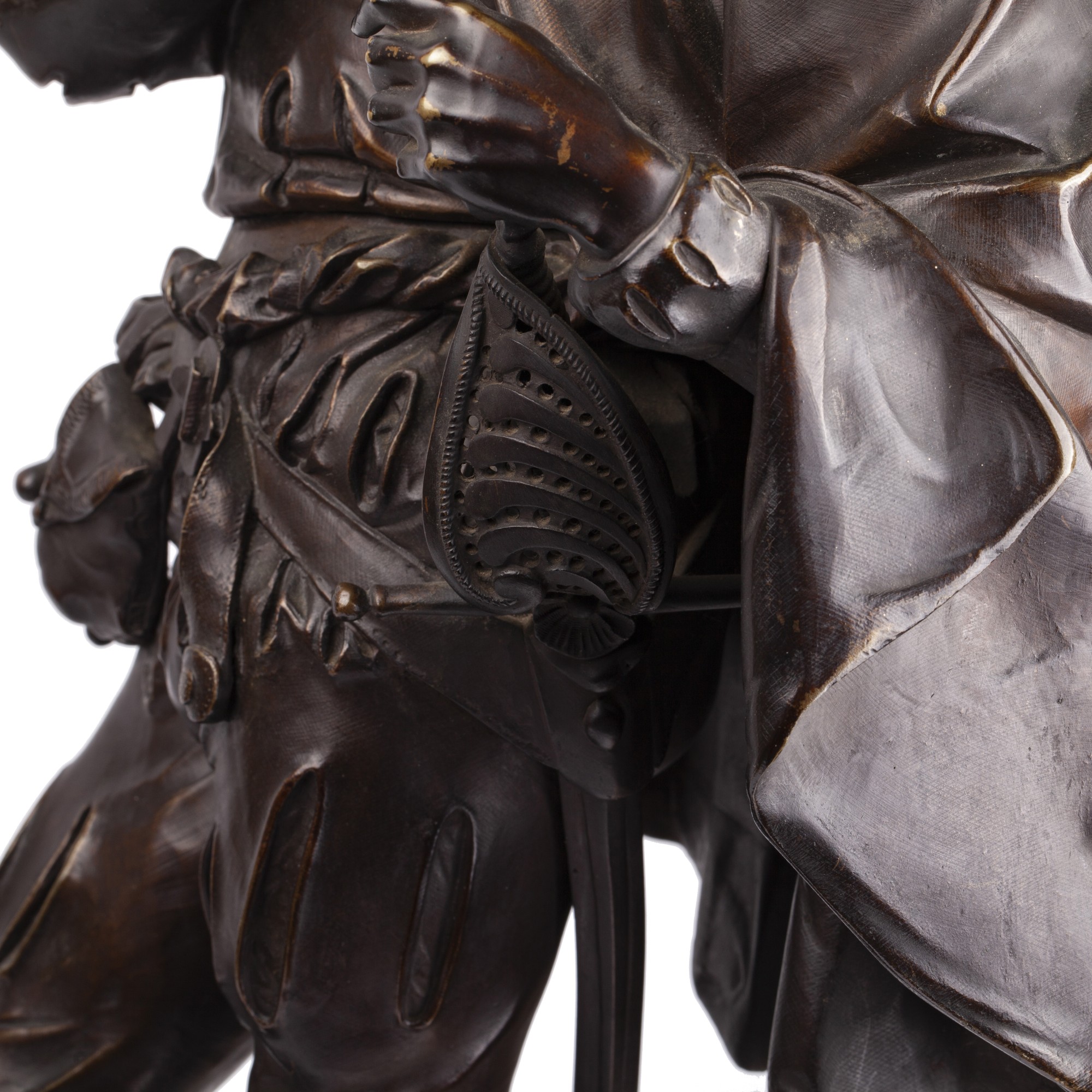
This finely modeled bronze by Auguste Joseph Carrier depicts a musketeer, elegantly dressed in Renaissance attire, captured in a moment of composed confidence. The figure’s detailed costume — complete with plumed hat, cloak, and sword — reflects the romantic fascination with chivalric and historical themes that characterized 19th-century French sculpture.The sculpture rests on a black stone base showing minor age-related cracks, which do not detract from its strong aesthetic presence.
Auguste Joseph Carrier (1800–1875) was a French sculptor and painter, active during the mid-19th century. His works, often allegorical or historical in subject, reveal the refined academic tradition of French art during this era.
Starting price: 3000€
Estimate: 4000-5000€
Hammer Price: Not sold -
Lot 0021
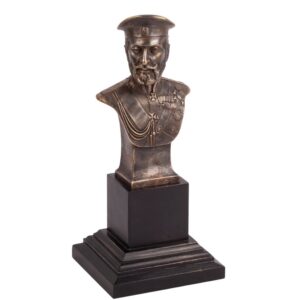
Rare Russian Bronze Bust of Grand Duke Nikolai Nikolaevich, Bylewski
Estimate: 9000-12000€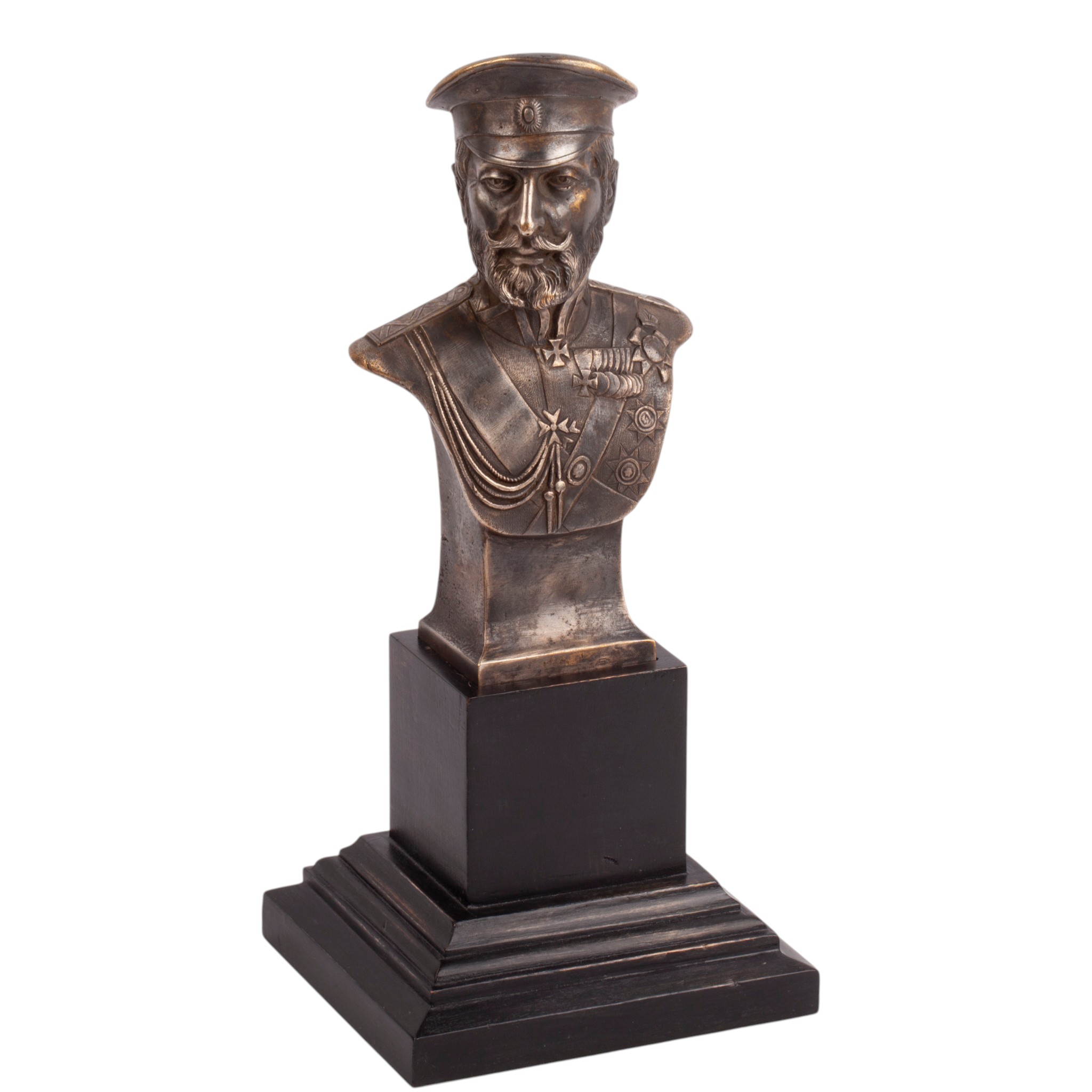
Lot 0021
Rare Russian Bronze Bust of Grand Duke Nikolai Nikolaevich, Bylewski
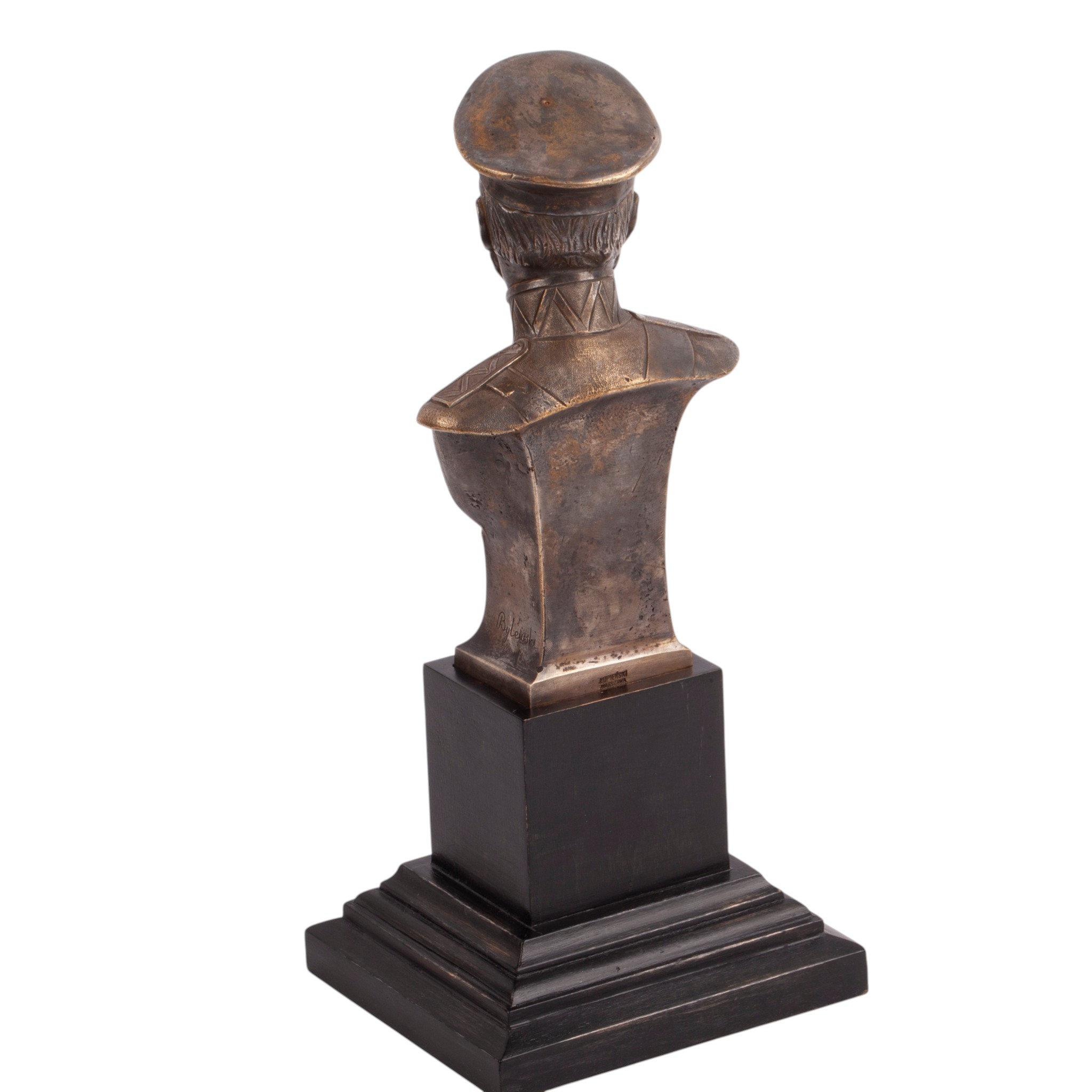
Estimate: 9000-12000€A Rare Russian Bust of Grand Duke Nikolai Nikolaevich the Younger
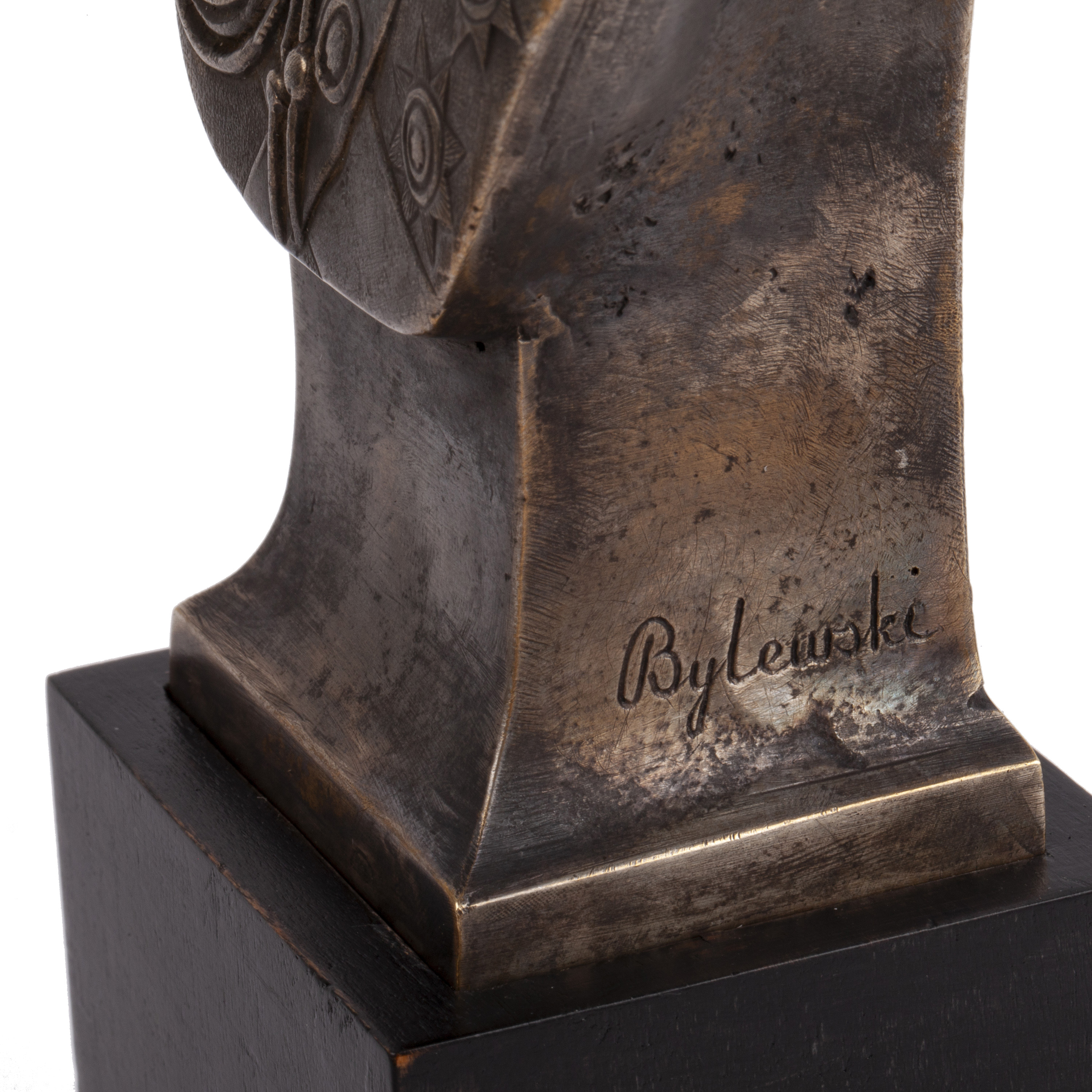
Russia, St Petersburg, sculptor Faddei S. Bylewski; cast in Warsaw, Lopienski Brothers Foundry, 1914-1916
Bronze, cast, chased, silvered.
Dimensions: 16.5 x 9.0 x 4.5 cm (with stand).
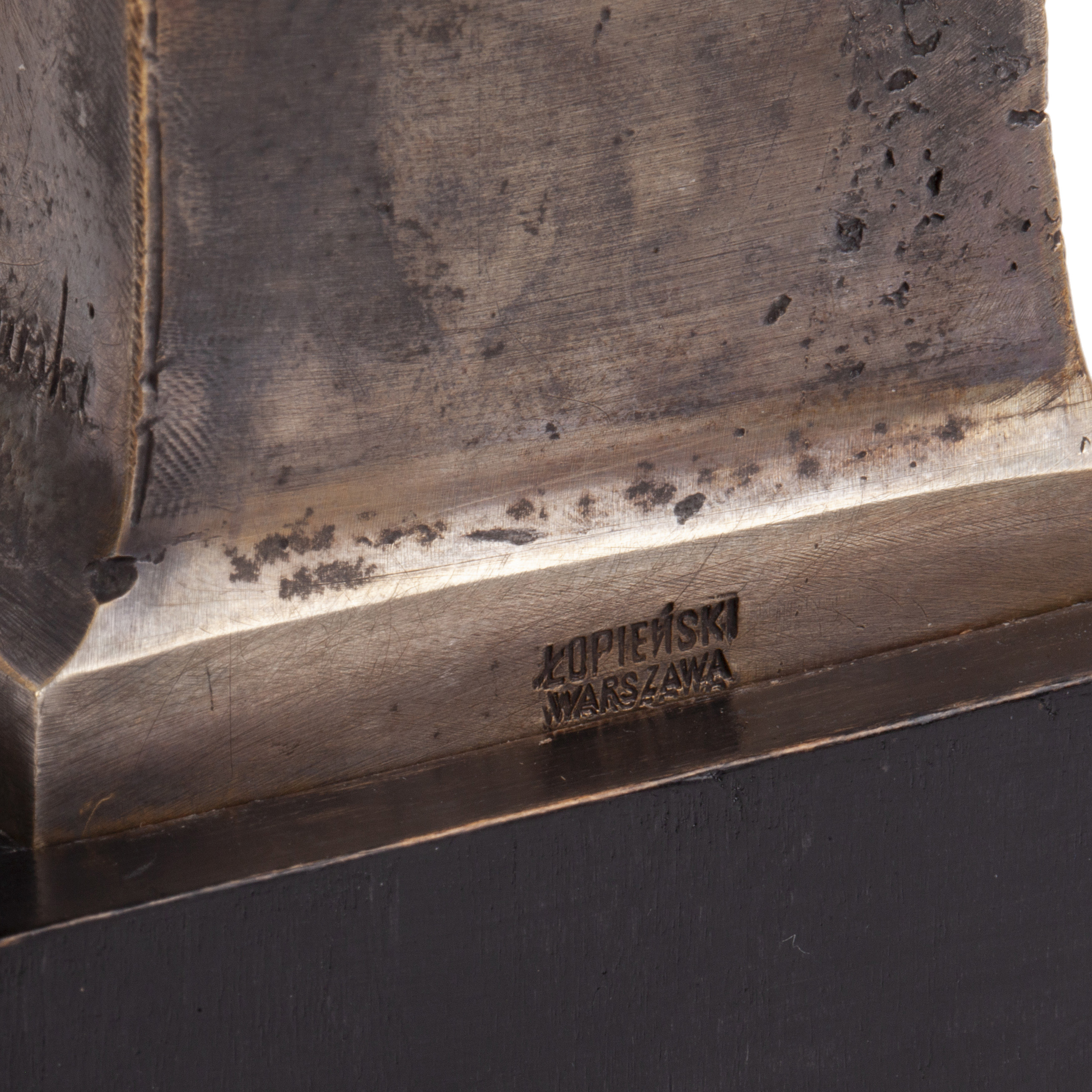
Marks: cast facsimile signature “BYLEWSKI” on the right side of the base; stamped foundry mark “LOPIENSKI / WARSZAWA” on the reverse of the plinth.
A rare example of late Imperial Russian cabinet sculpture, this bust depicts Grand Duke Nikolai Nikolaevich the Younger (1856-1926), one of the leading military figures of the Romanov dynasty during the First World War. Shown half-length, with the head turned slightly to the left, he wears full dress uniform with cockaded cap, general’s epaulettes, aiguillette, sash, decorations, medals, and breast stars. The sculpture follows the official wartime portrait type widely circulated in prints and phototypes at the beginning of the war.
The bust was created by Faddei (Tadeusz) S. Bylewski (1866-1939), a sculptor of Polish origin and Major General in the Russian army, whose work often centered on military subjects. It was cast by the renowned Lopienski Brothers in Warsaw, among the most important artistic bronze founders in Poland in the late 19th and early 20th centuries.Starting price: 8000€
Estimate: 9000-12000€
Hammer Price: 10 000 € -

Lot 0022
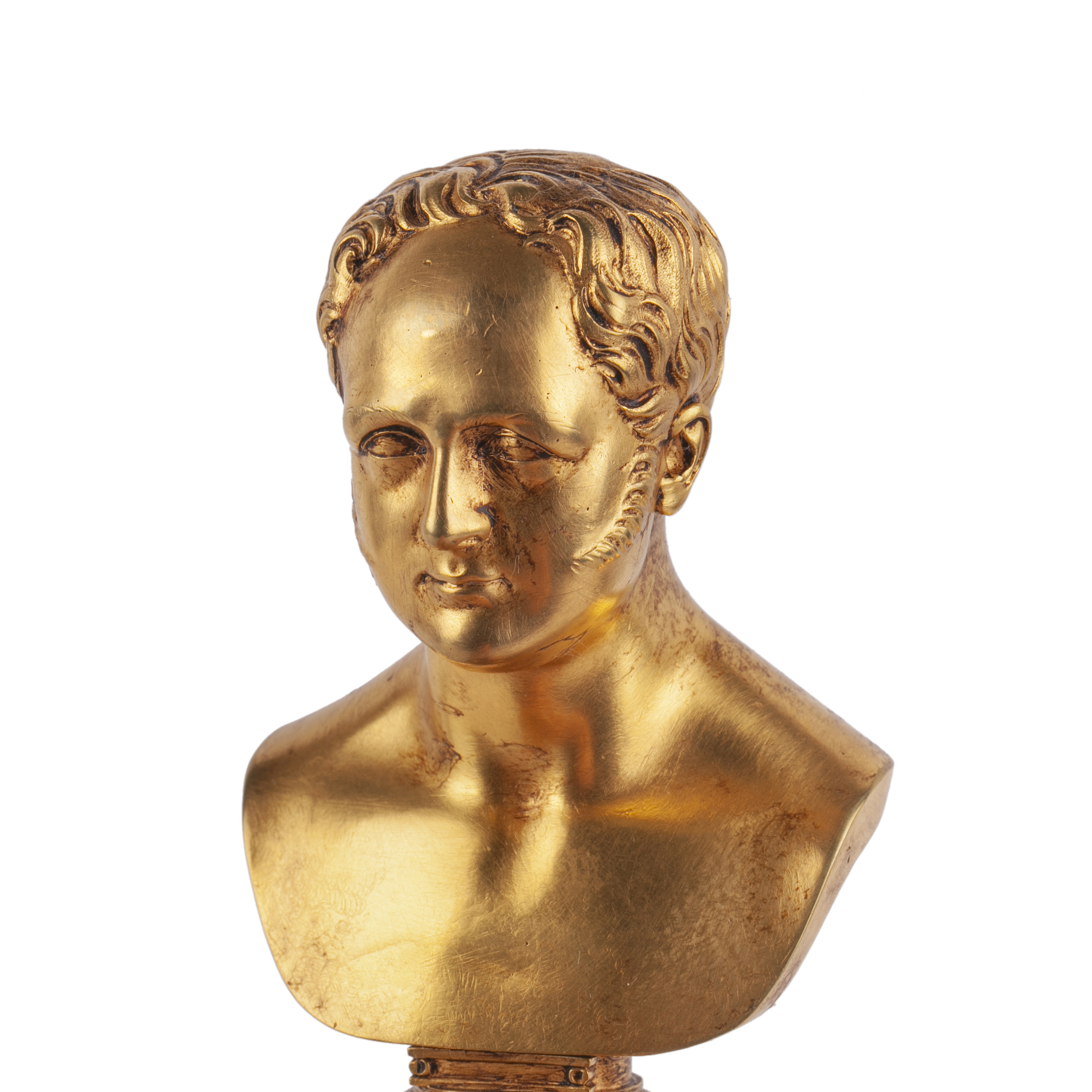
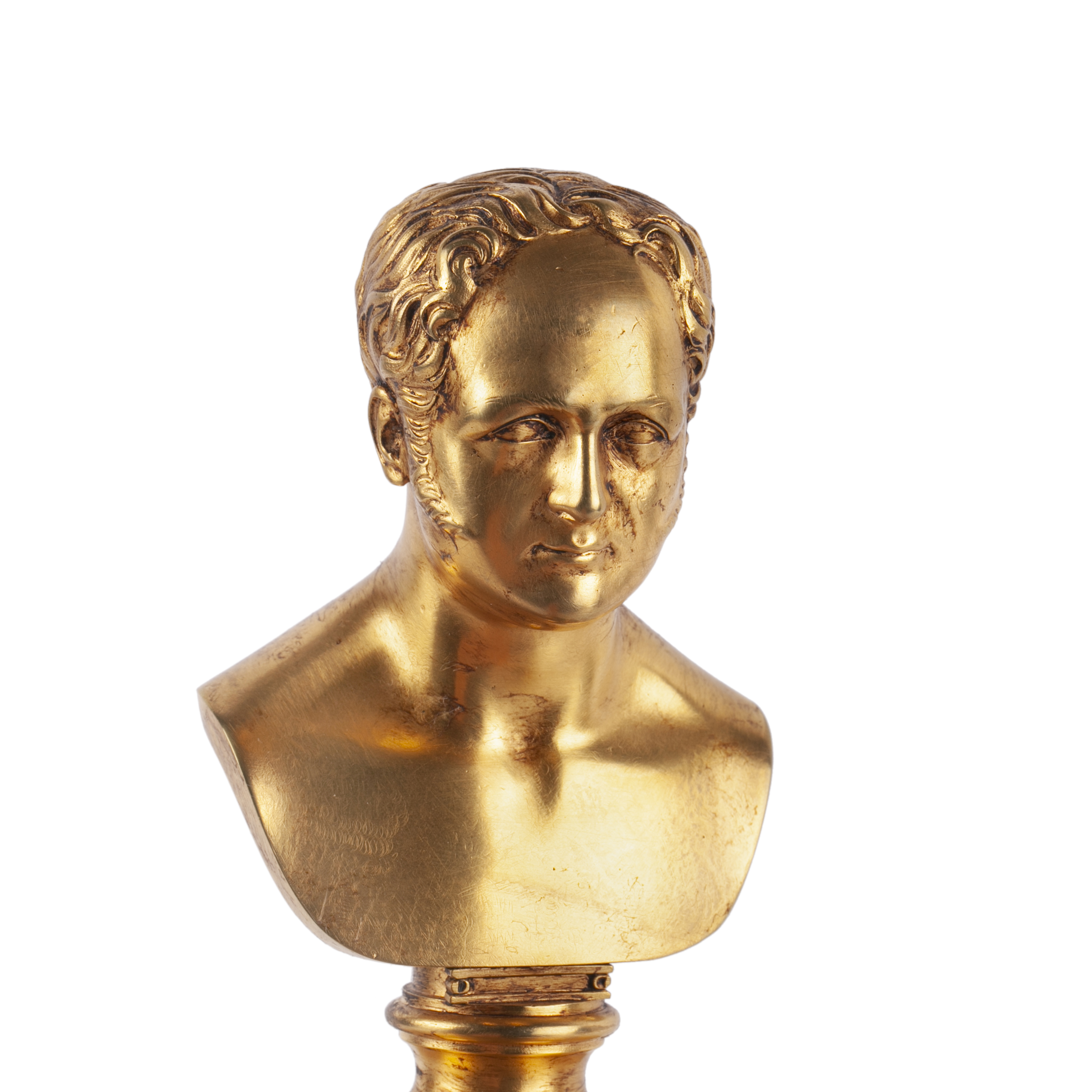
Fedor Ivanovich Kovshenkov – Bronze Bust of Emperor Alexander I, St. Petersburg, 1827
Estimate: 2500-3000€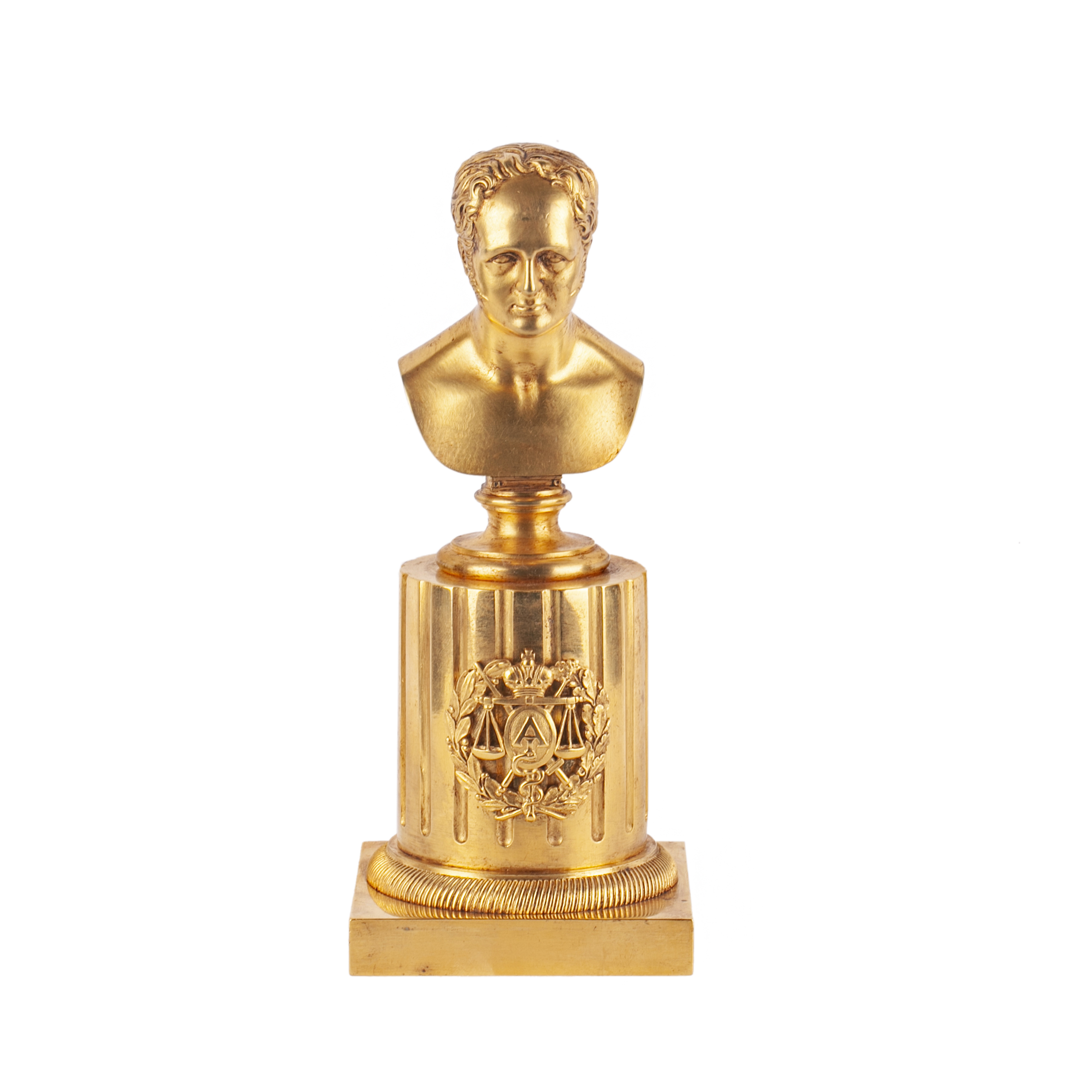
Lot 0022
Fedor Ivanovich Kovshenkov – Bronze Bust of Emperor Alexander I, St. Petersburg, 1827
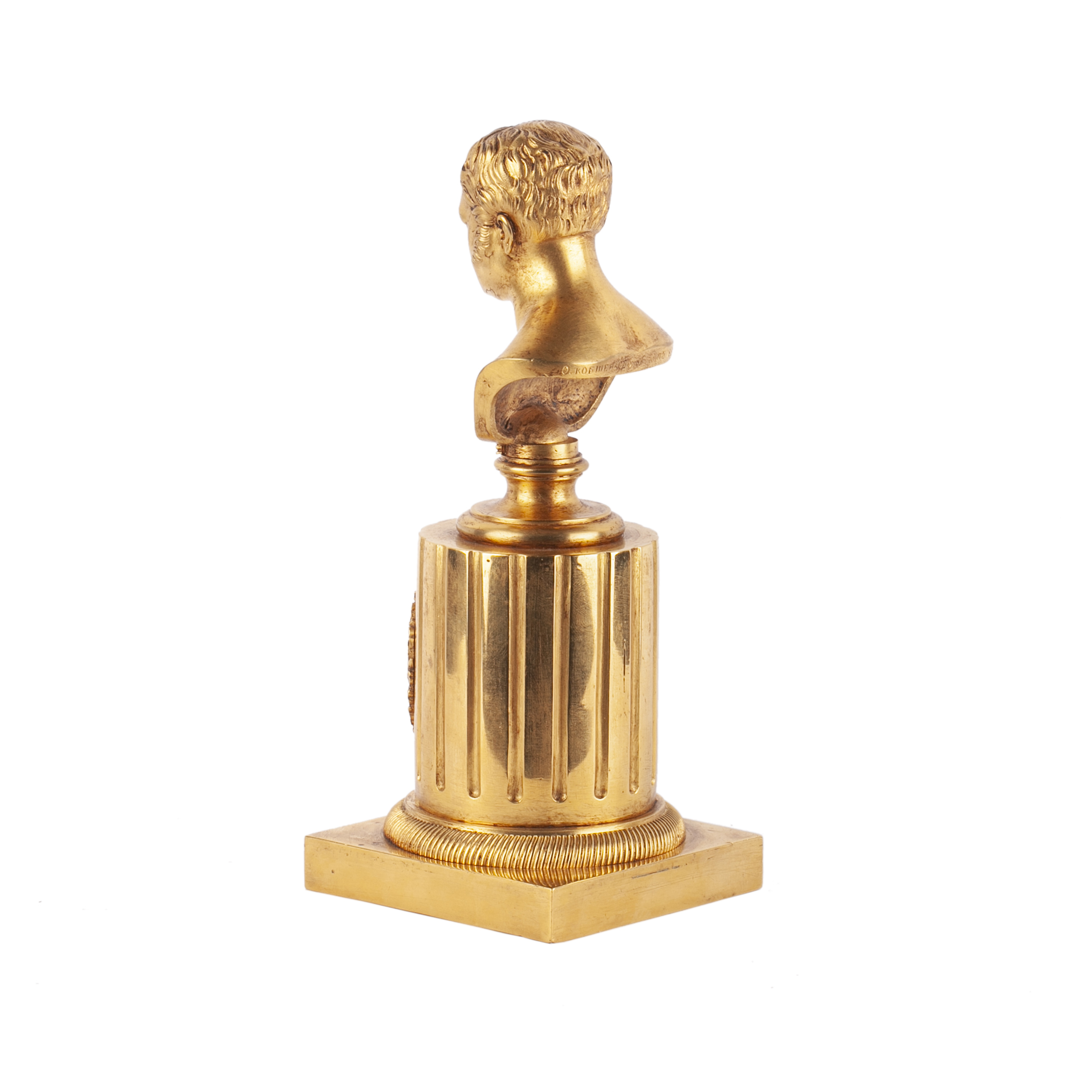
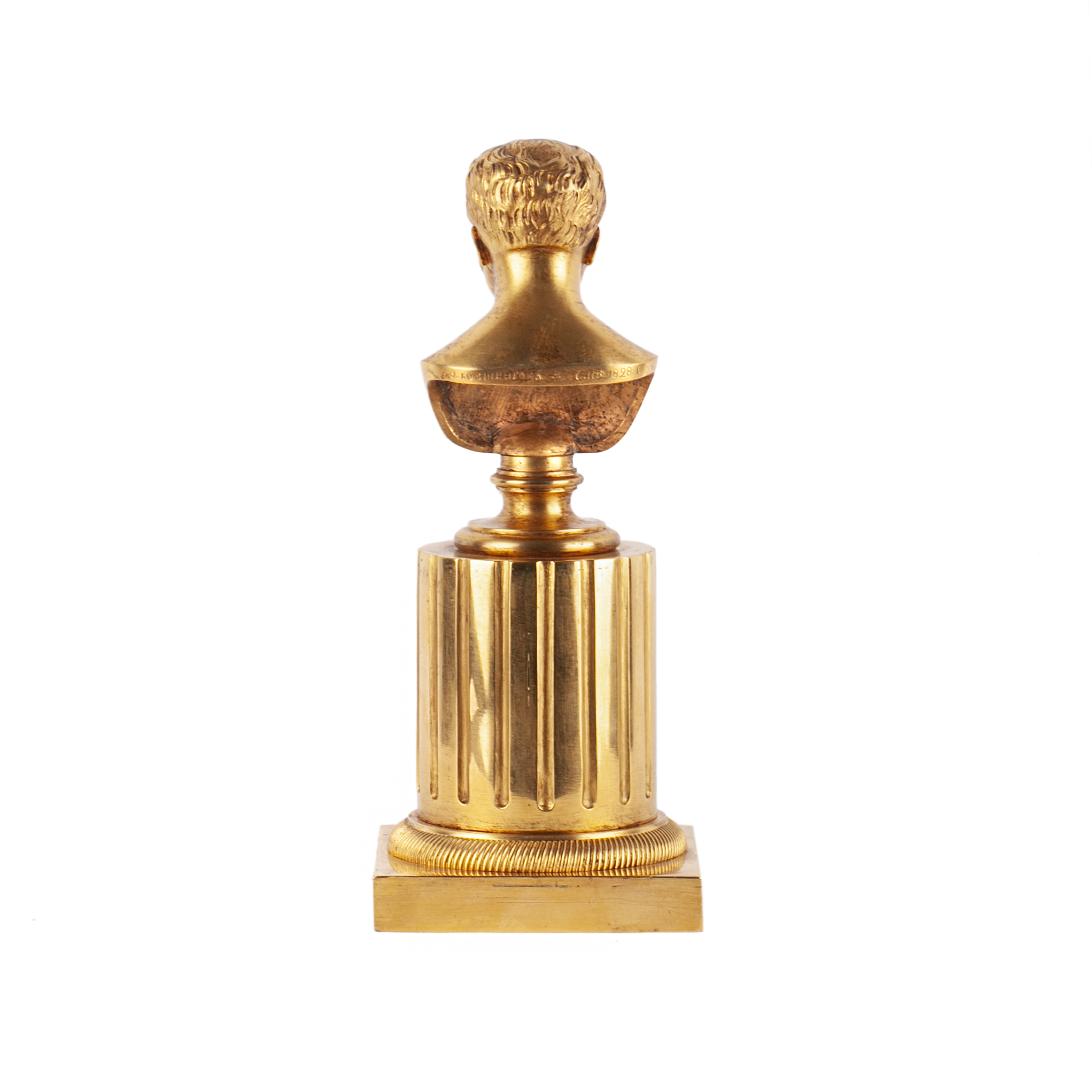
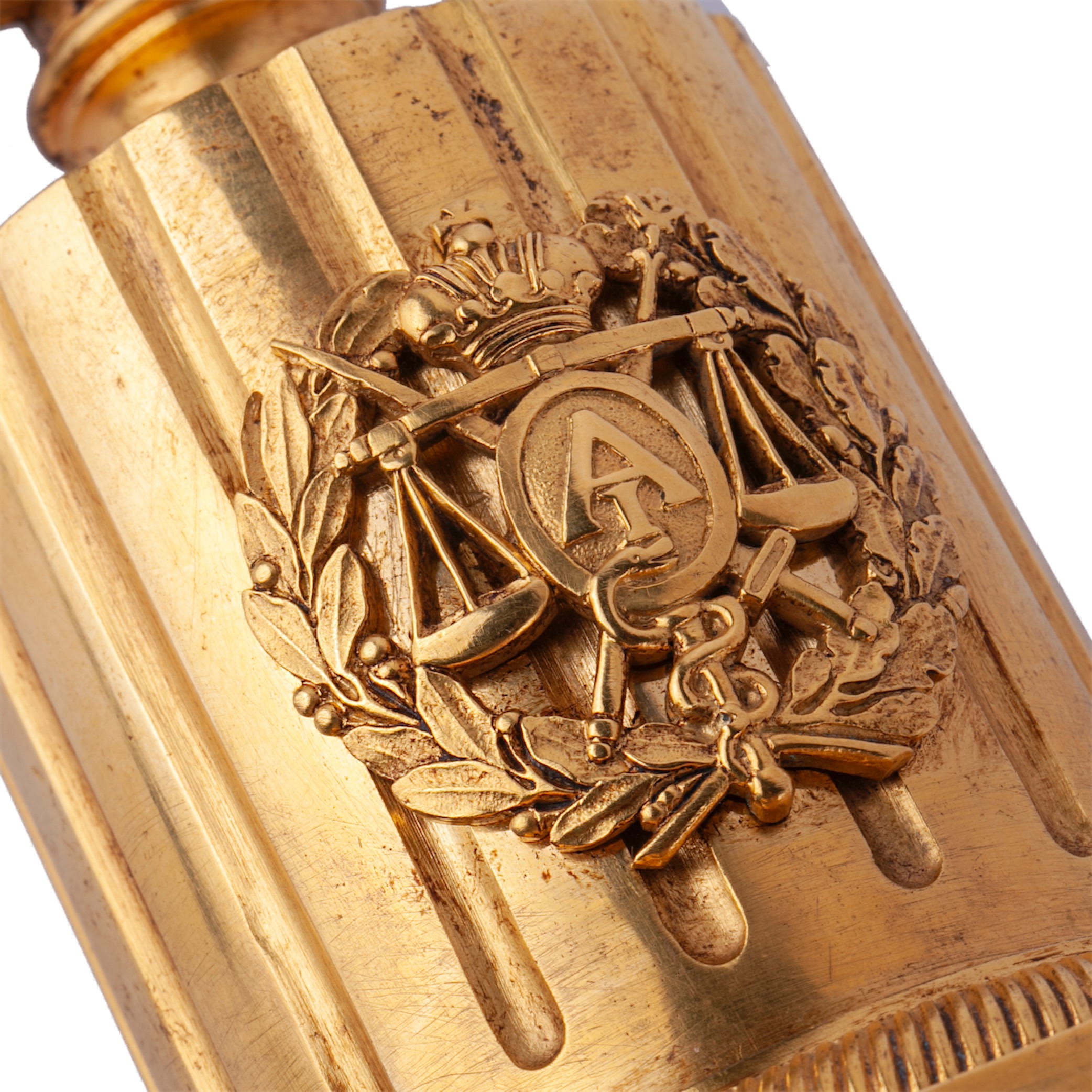
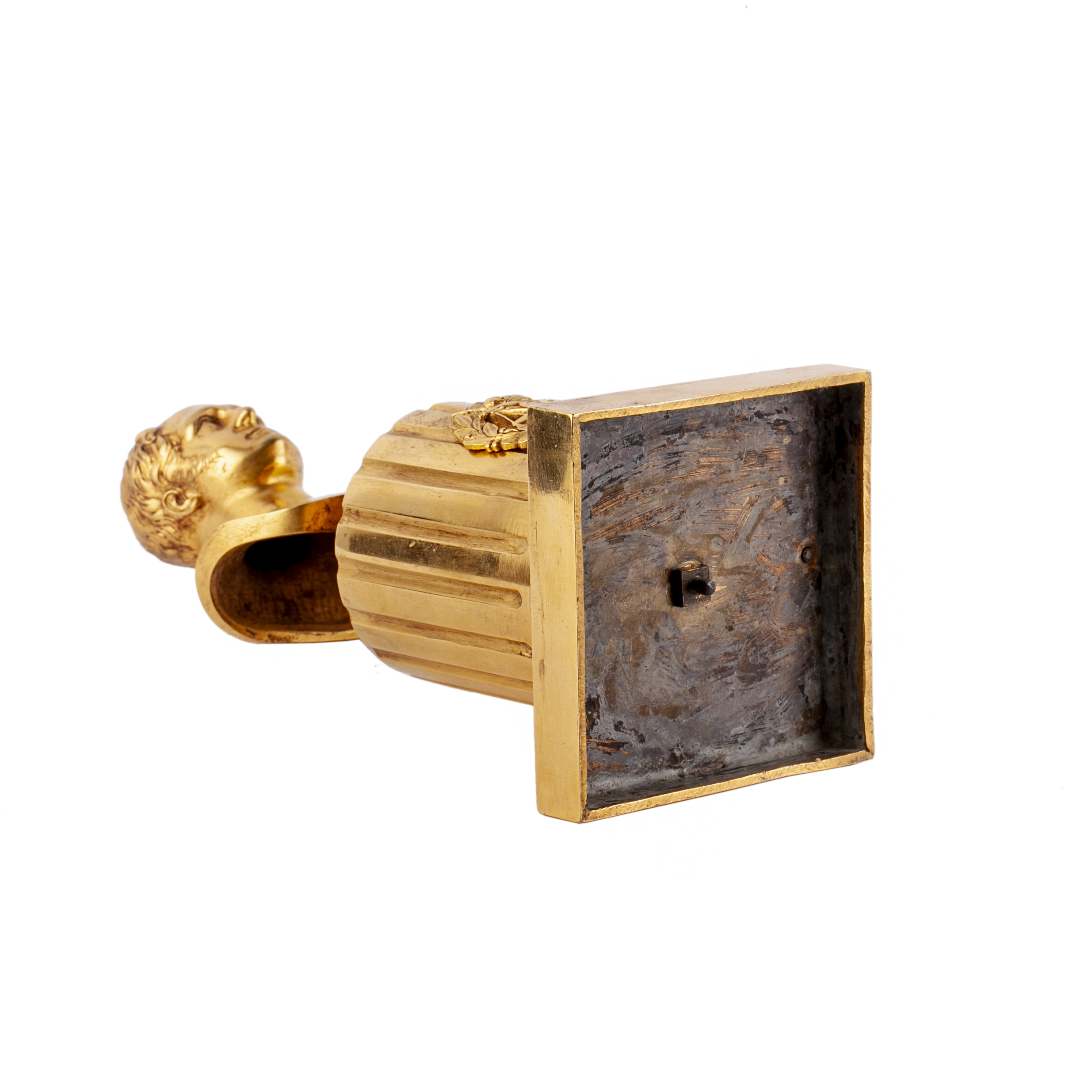
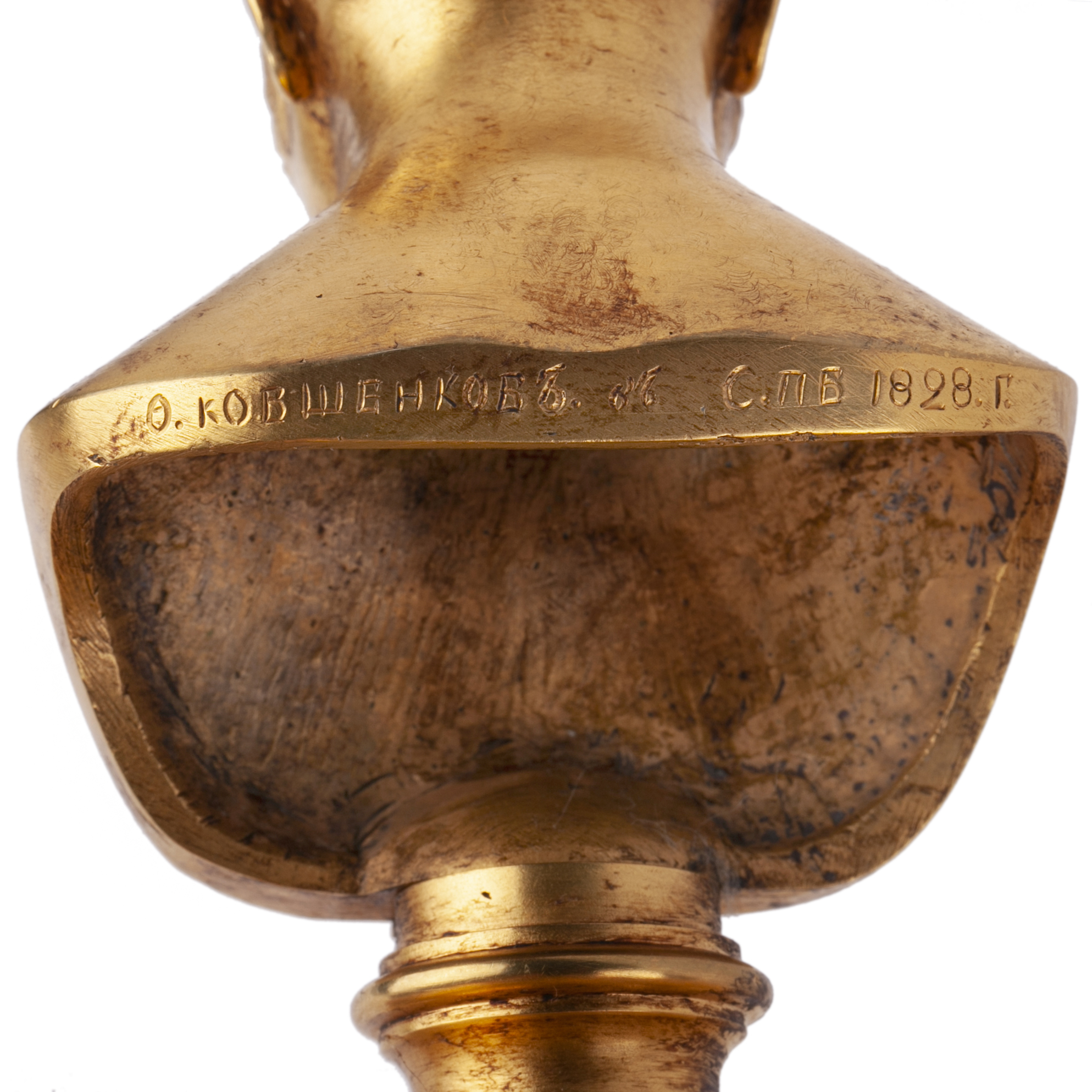
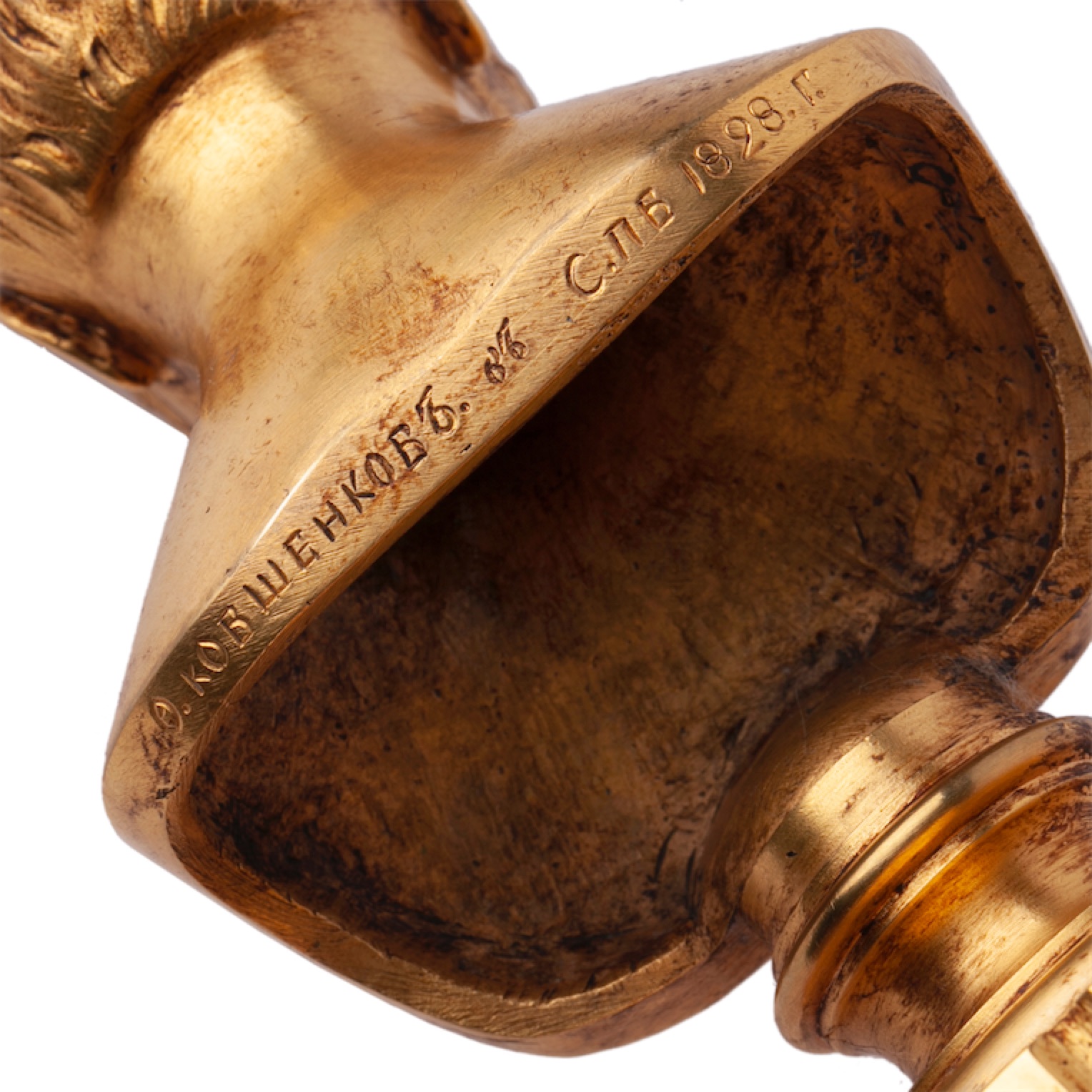
Estimate: 2500-3000€Bust of Emperor Alexander I
Russian Empire, St. Petersburg, 1827
Author: Fedor Ivanovich Kovshenkov (1785–1850)
Bronze, casting, patination
Dimensions: 19.5 x 8.5 x 8.5 cm.This finely executed bust of Emperor Alexander I was created by Fedor Kovshenkov, a master bronzeworker who had once been a serf. In 1822, the Emperor himself recognized Kovshenkov’s talent and freed him from serfdom, appointing him as a bronze master during the construction of the Kazan Cathedral.
In 1826, as an expression of gratitude, Kovshenkov produced his first bust of Alexander I, and he returned to this theme multiple times throughout his career. Several examples in bronze and cast iron are preserved today in the State Russian Museum, alongside his busts of Emperor Nicholas I and Grand Duke Mikhail Pavlovich. A comparable piece is held in the State Literary-Memorial and Natural Museum-Reserve of Alexander Pushkin “Boldino” in the Nizhny Novgorod region.
Fedor Ivanovich Kovshenkov (1785–1850)
Originally a serf, Kovshenkov’s exceptional skill in bronze chasing brought him to the attention of Emperor Alexander I, who liberated him. He went on to create portrait busts of members of the imperial family and other distinguished figures, establishing his reputation within the St. Petersburg artistic milieu of the first half of the 19th century.Starting price: 2000€
Estimate: 2500-3000€
Hammer Price: Not sold -
Lot 0023
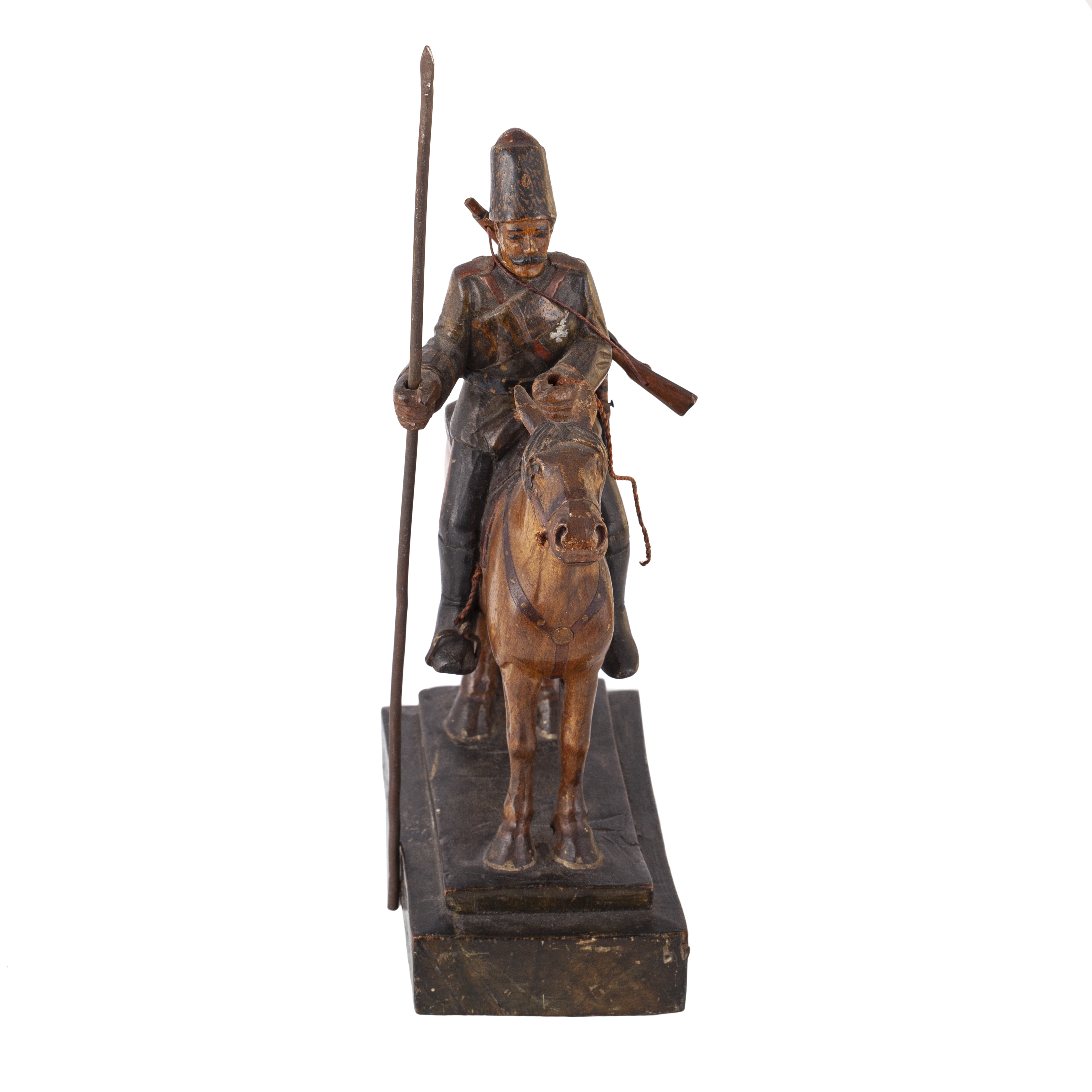
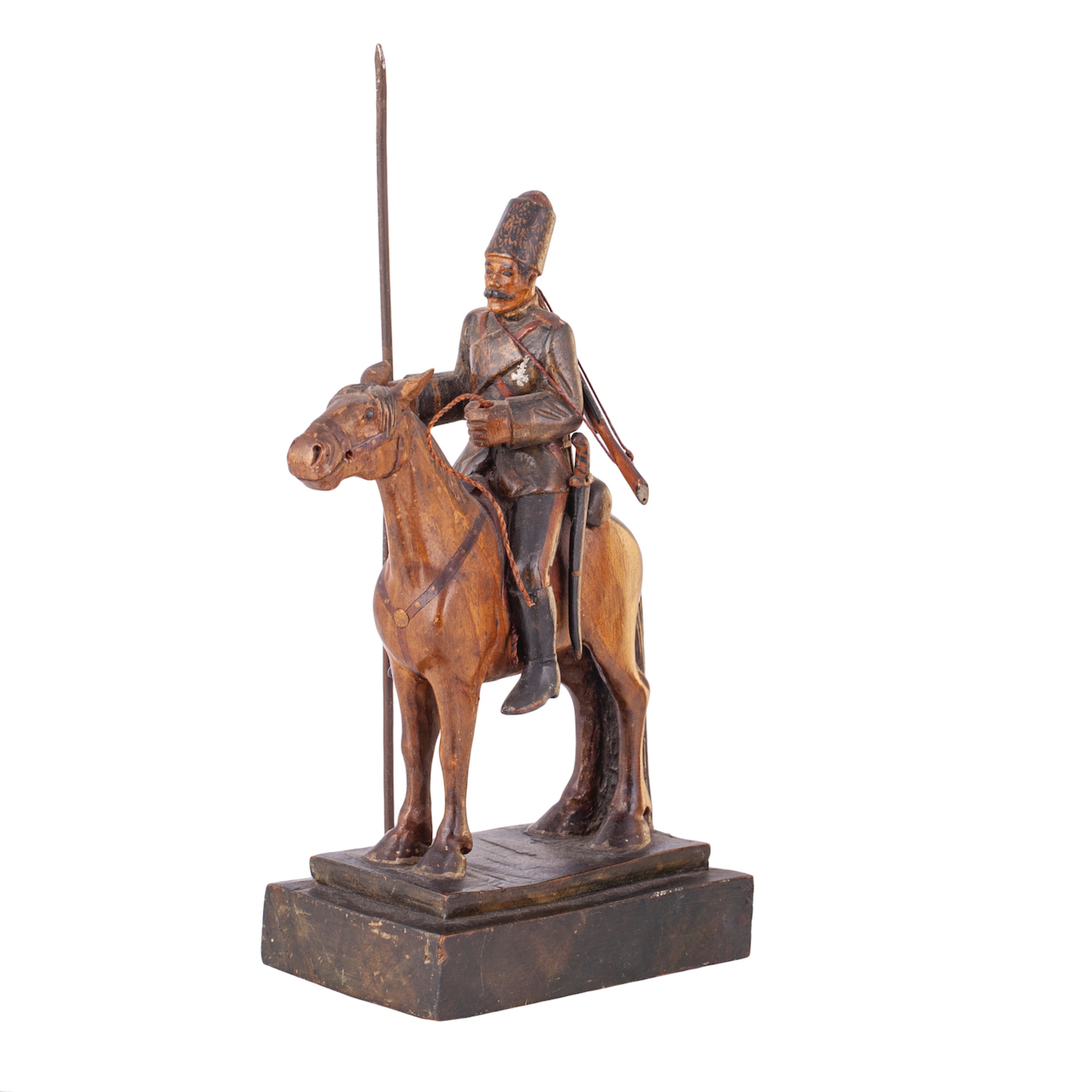
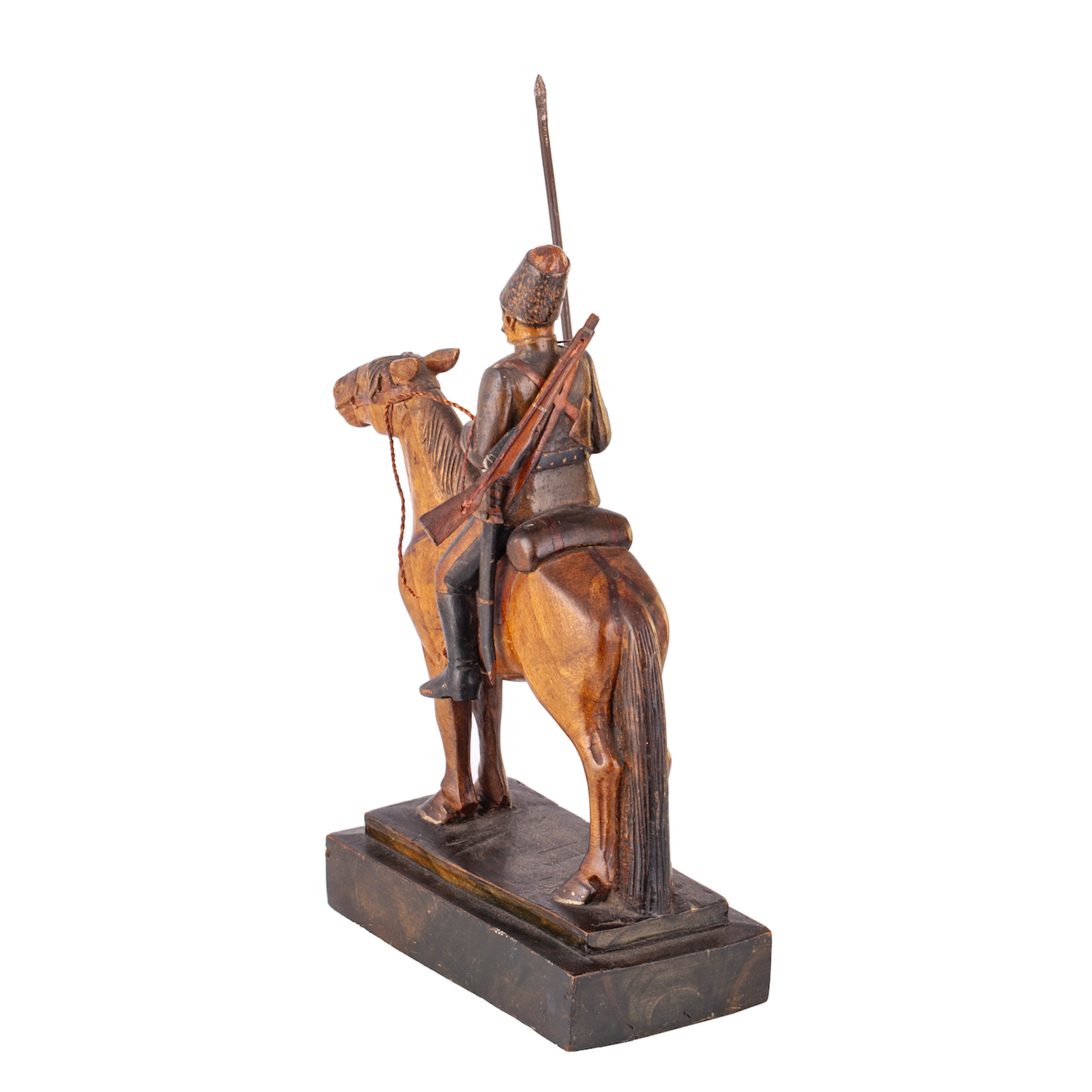
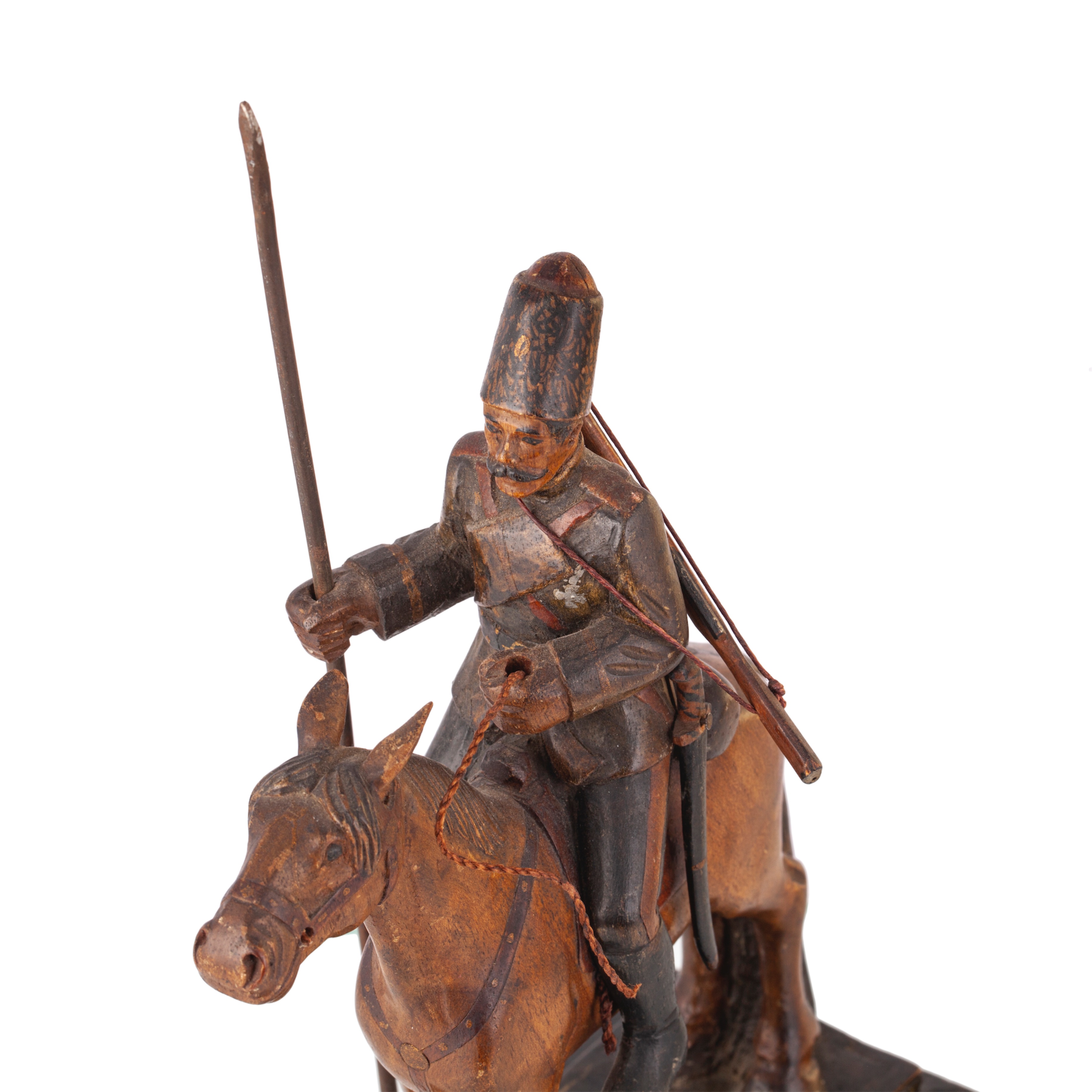
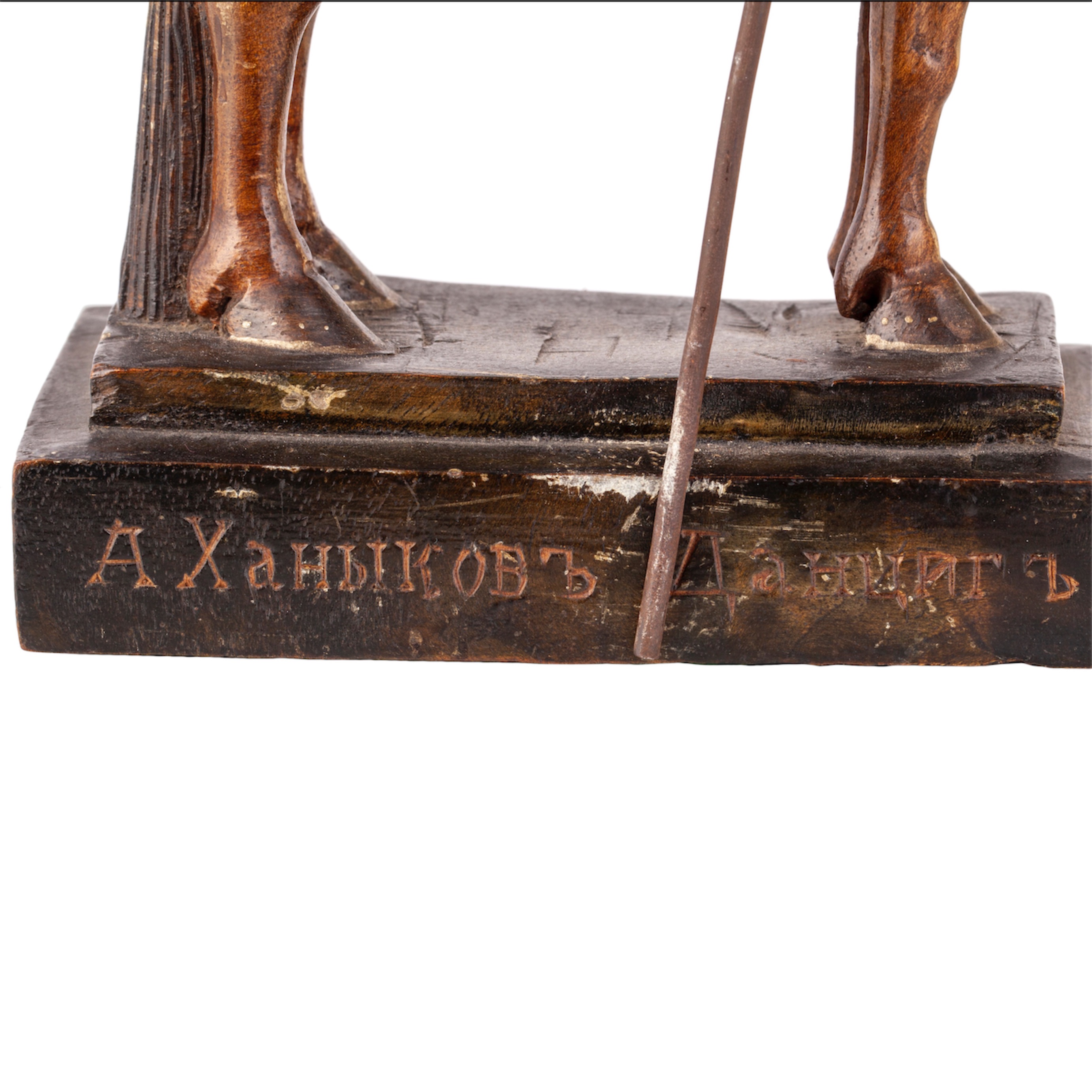
Carved Wooden Cossack on Horseback, Danzig, inscribed A. Khanykov
Estimate: 500-600€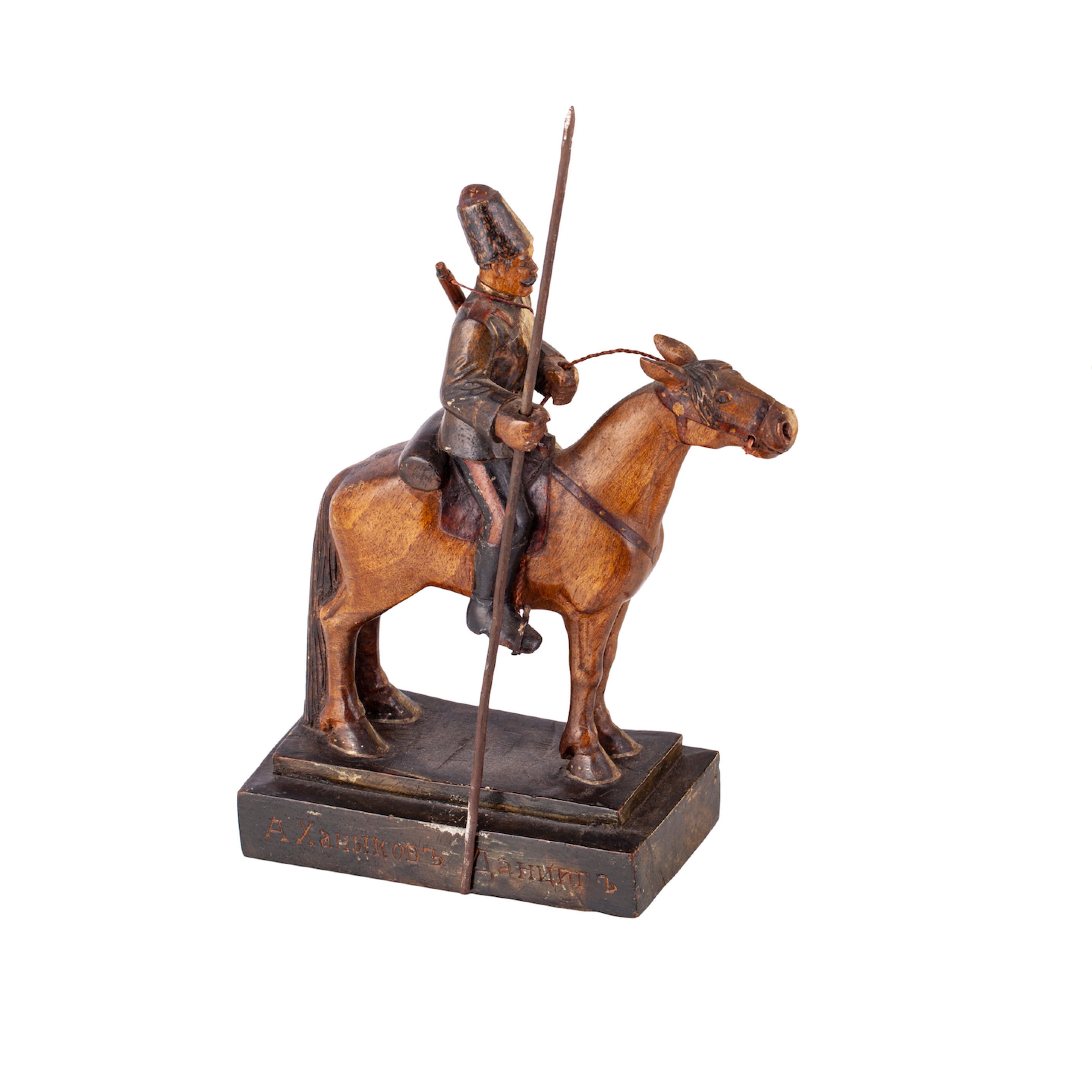
Lot 0023
Carved Wooden Cossack on Horseback, Danzig, inscribed A. Khanykov
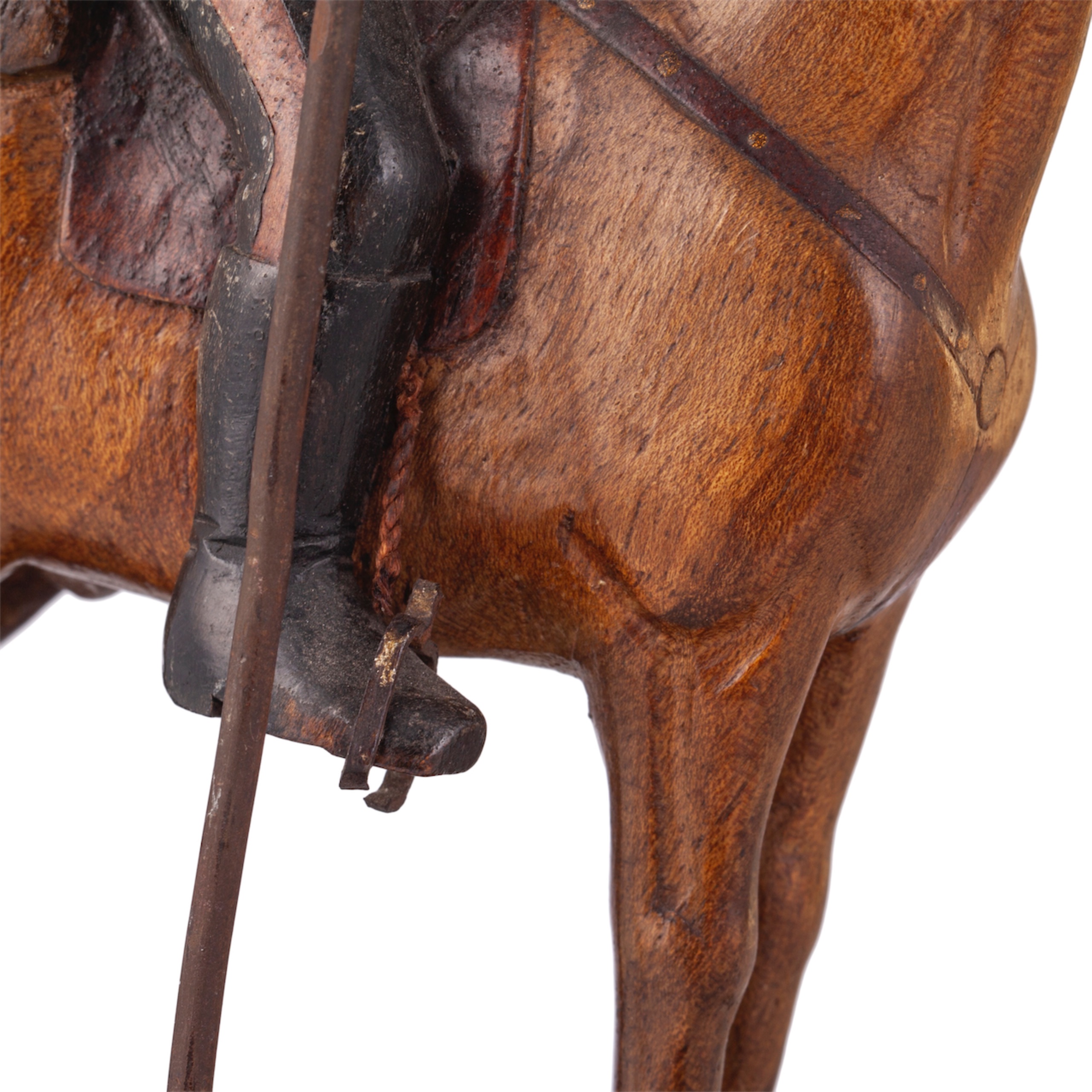
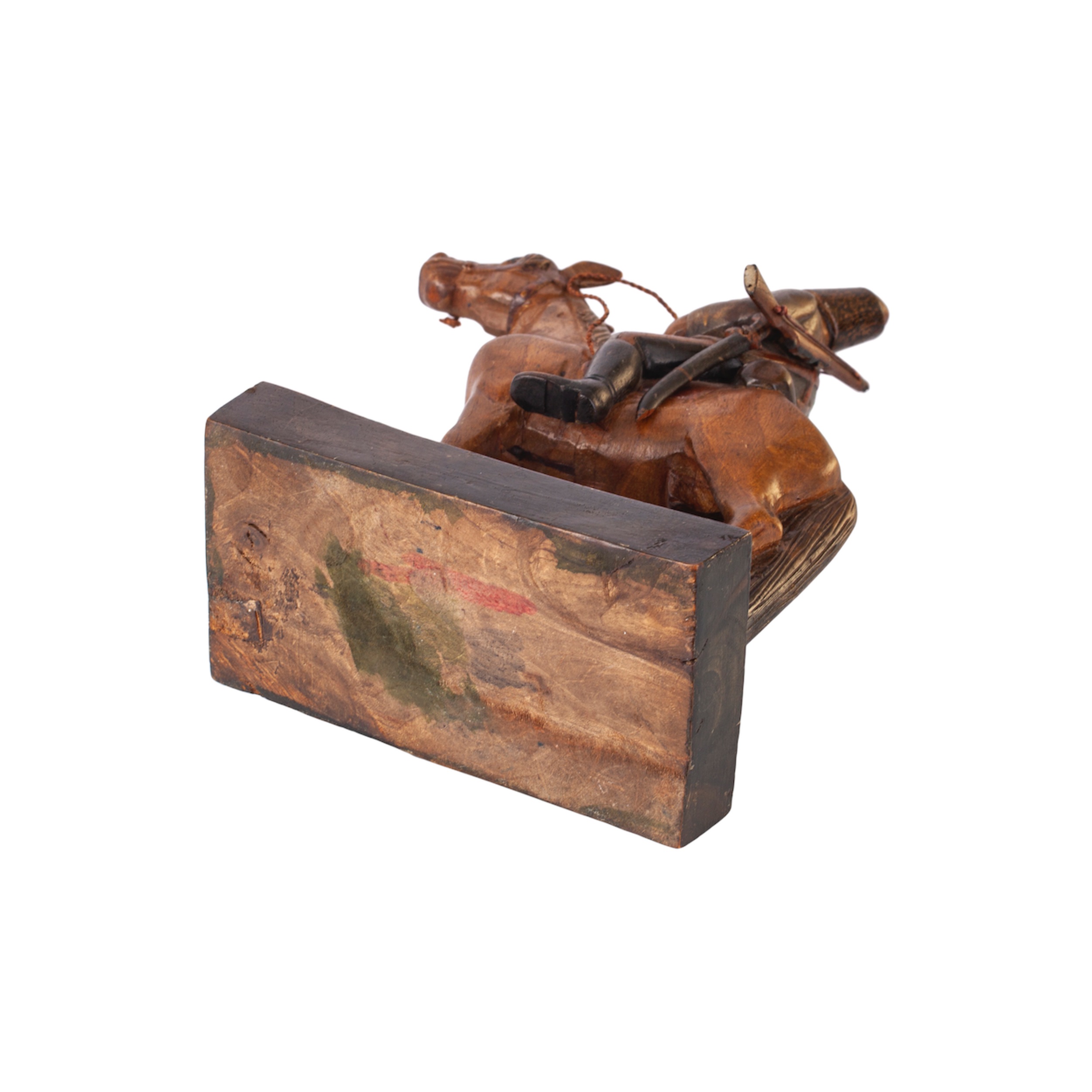
Estimate: 500-600€Cossack on Horseback
Russia (Danzig [Gdańsk], then part of the Russian Empire), late 19th century
Wood, metal
Dimensions: 21.5 x 16 x 7 cm
Inscribed: “А. Ханыковъ. Данцигъ”A finely carved wooden composition depicting a Cossack horseman, holding a lance and seated on a spirited mount. The sculpture bears a dedication to Alexander Vladimirovich Khanykov (1825–1853) — a noted Russian revolutionary and member of the Petrashevsky Circle, an intellectual and reformist movement in mid-19th century St. Petersburg.
Khanykov, a volunteer student at the St. Petersburg University, was an active participant in the philosophical and political circles of Mikhail Petrashevsky and Nikolai Kashkin. A passionate advocate of Charles Fourier’s socialist ideas, Khanykov delivered a public speech in memory of Fourier on April 7, 1849. That same year, he was arrested in connection with the Petrashevsky case, sentenced to death (later commuted to exile as a private in the Orenburg line battalions).
In exile, Khanykov initiated a secret Russo–Polish–Ukrainian circle, which likely included the poet Taras Shevchenko, also serving in Orenburg. Members of the group held political discussions, wrote satirical pamphlets against the imperial government, and circulated banned literature on economics, geography, and history. Khanykov also compiled a clandestine manuscript on world history praising popular sovereignty and the ideals of the French Revolution of 1789 and 1848, expressing sympathy for Christian socialism.
This wooden sculpture — created in Danzig (now Gdańsk) — appears to be a commemorative or symbolic representation of Khanykov’s revolutionary courage and his association with the frontier and Cossack imagery.
Starting price: 400€
Estimate: 500-600€
Hammer Price: Not sold -
Lot 0024
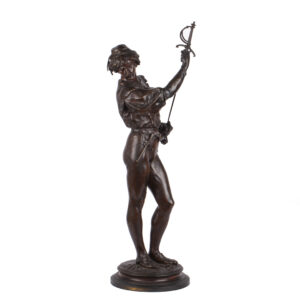
Émile Louis Picault Bronze “The Fencer”, late 19th century
Estimate: 2000-2500€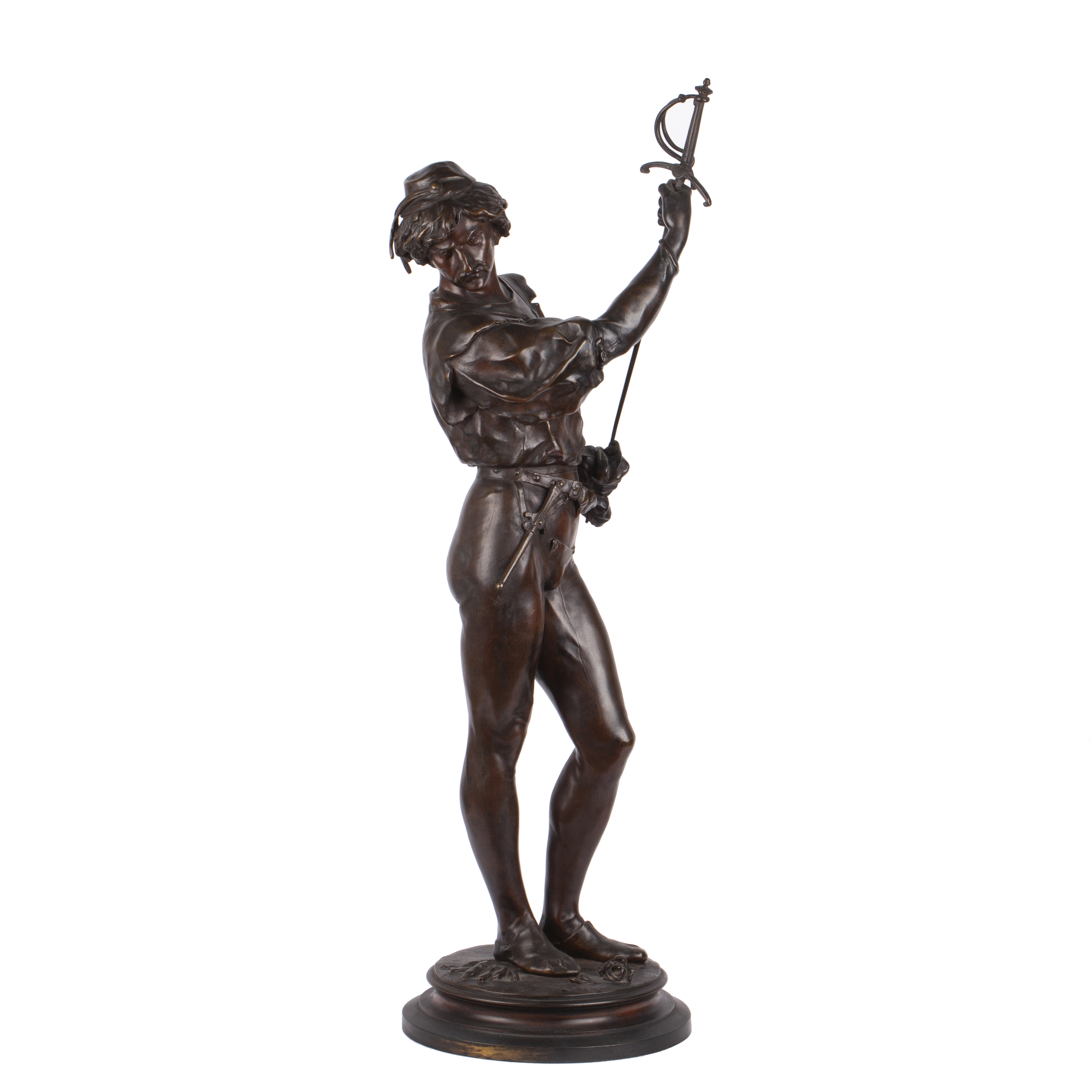
Lot 0024
Émile Louis Picault Bronze “The Fencer”, late 19th century
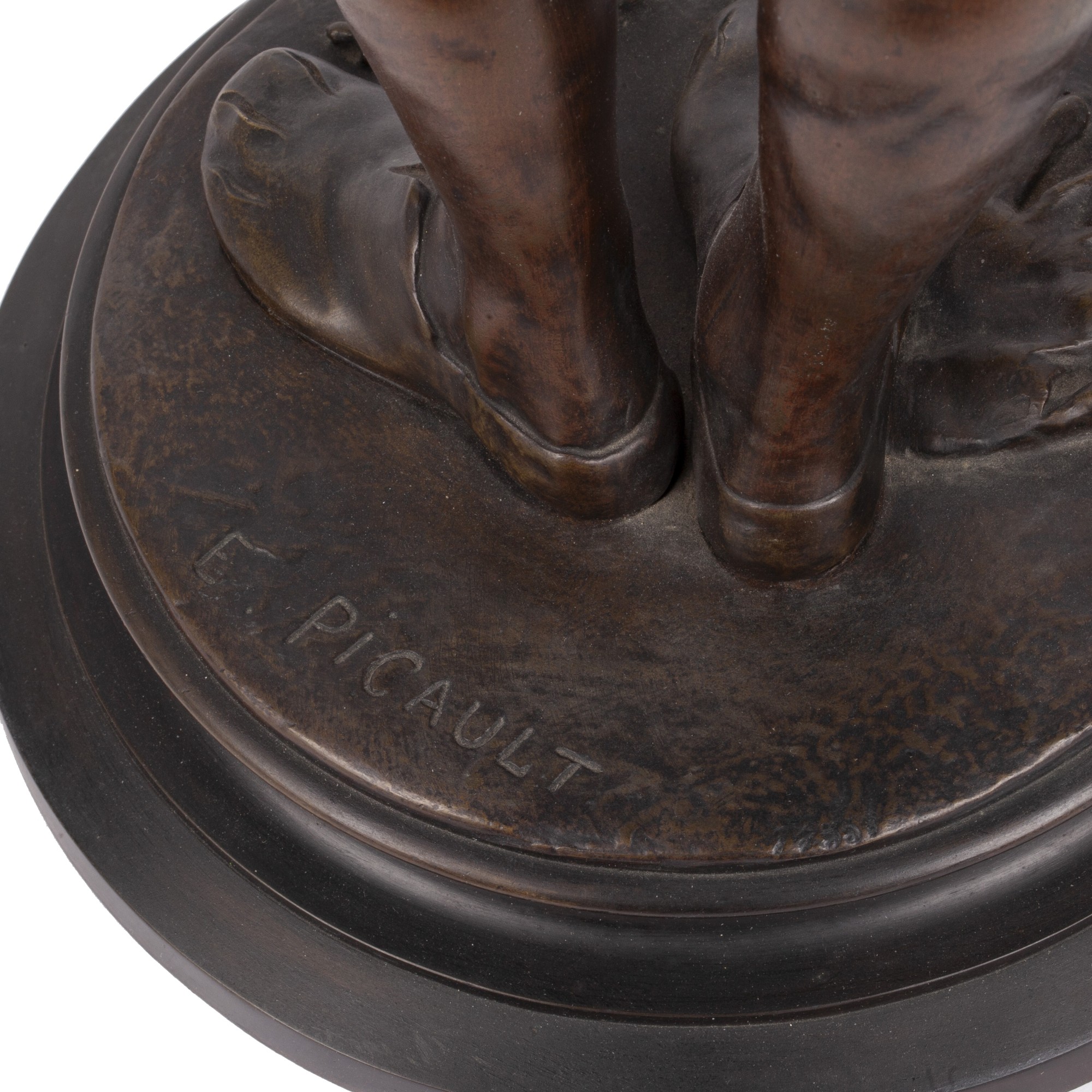
Estimate: 2000-2500€Émile Louis Picault (1833–1915)
The Fencer (Le Tireur)
France, late 19th century
Patinated bronze, signed “E. Picault”
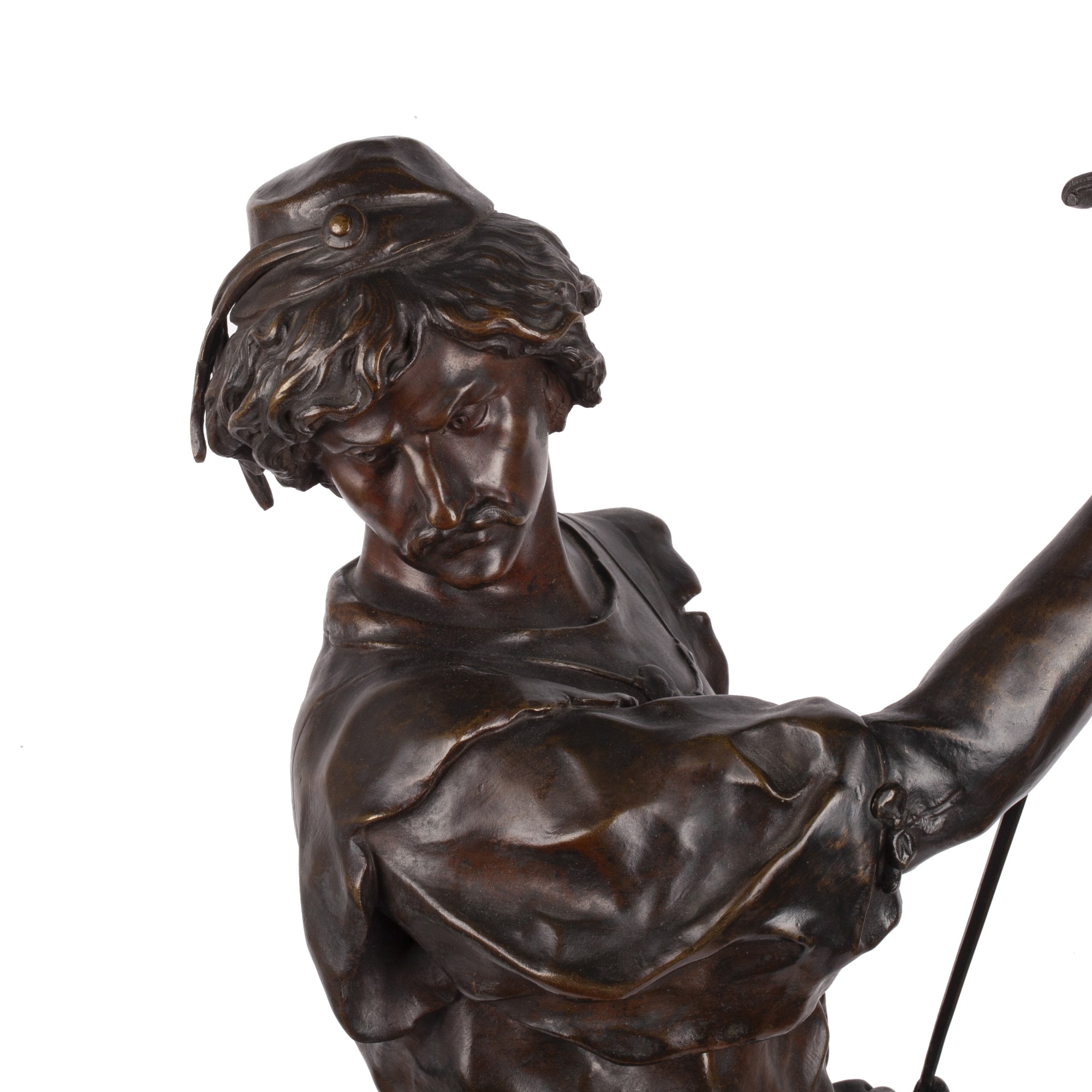
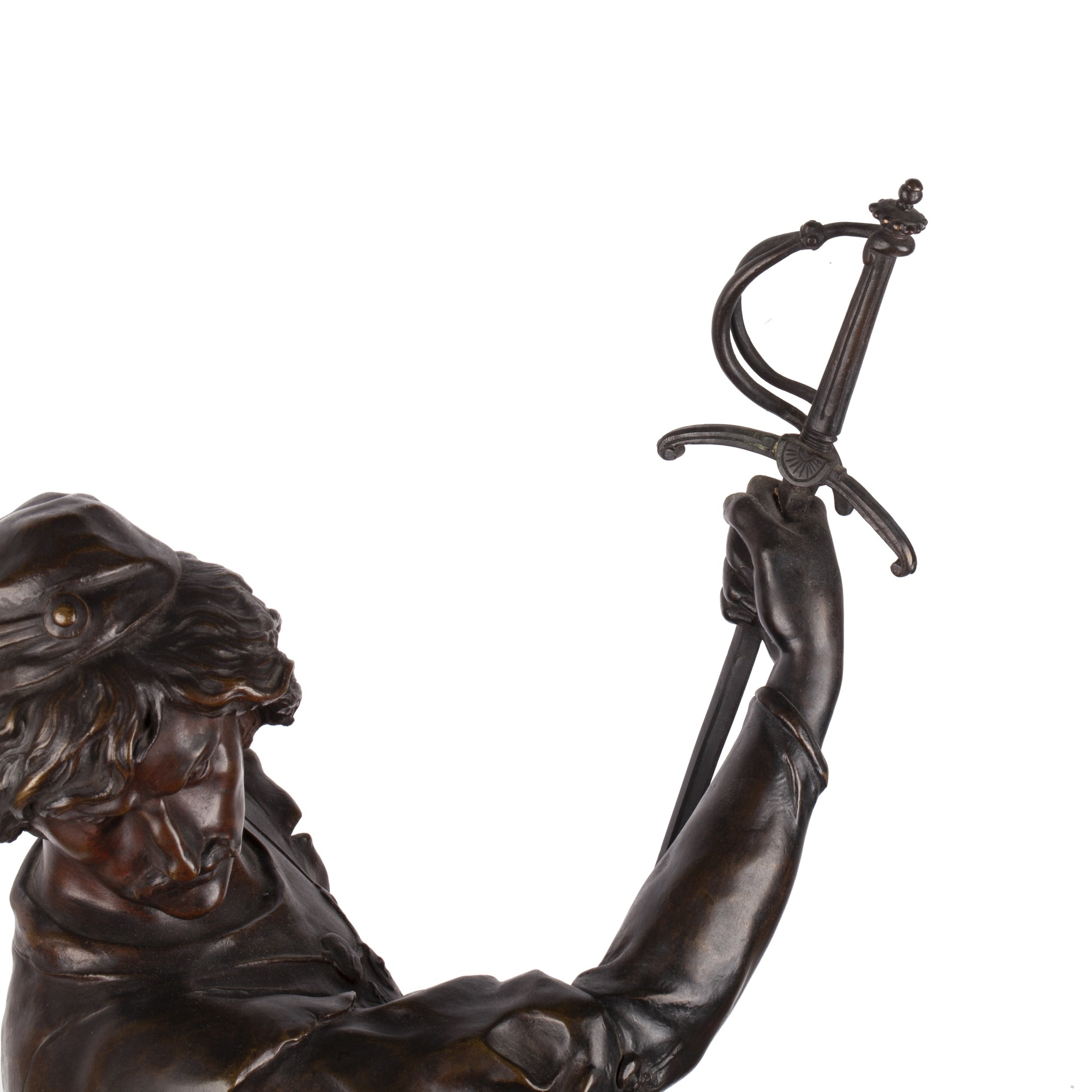
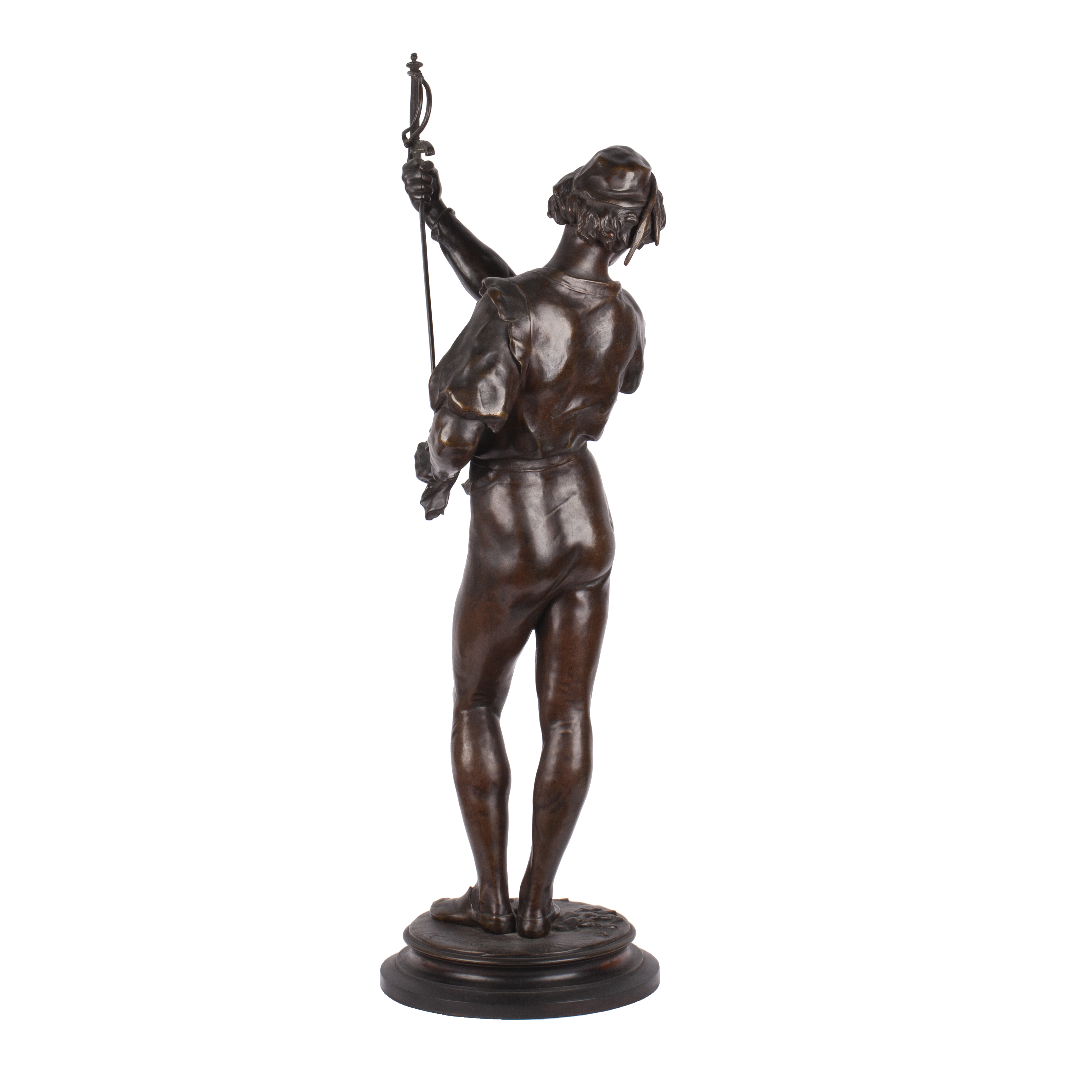
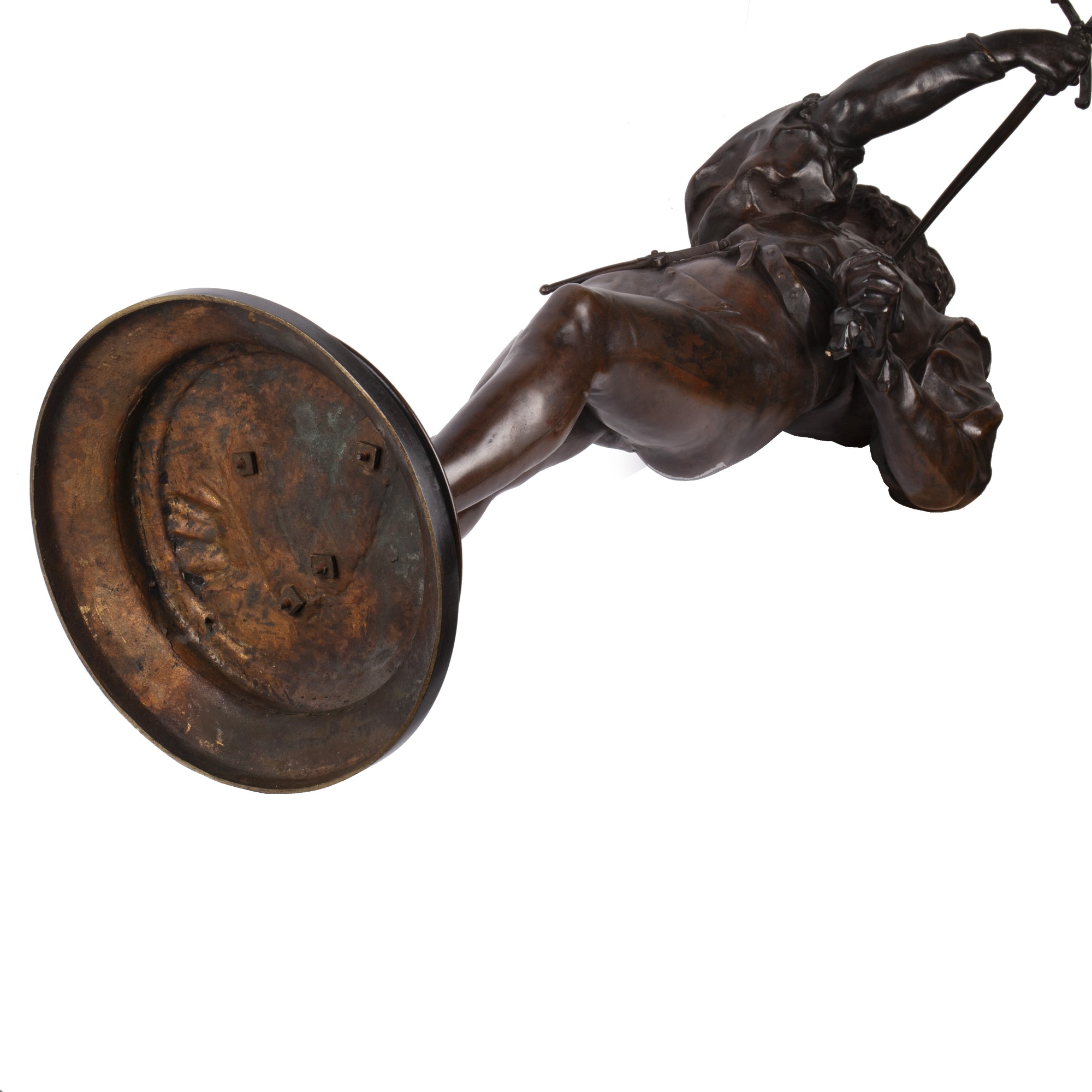
Height: 72 cmAn exceptional bronze sculpture by Émile Louis Picault, one of France’s most prolific and celebrated 19th-century sculptors. The Fencer (Le Tireur) depicts a duelist captured in a moment of poised triumph, raising his sword aloft in salute or victory. The figure’s dynamic anatomy, tense musculature, and richly modeled costume reflect Picault’s masterful balance between Neoclassical idealism and the Romantic fascination with heroism and individuality.
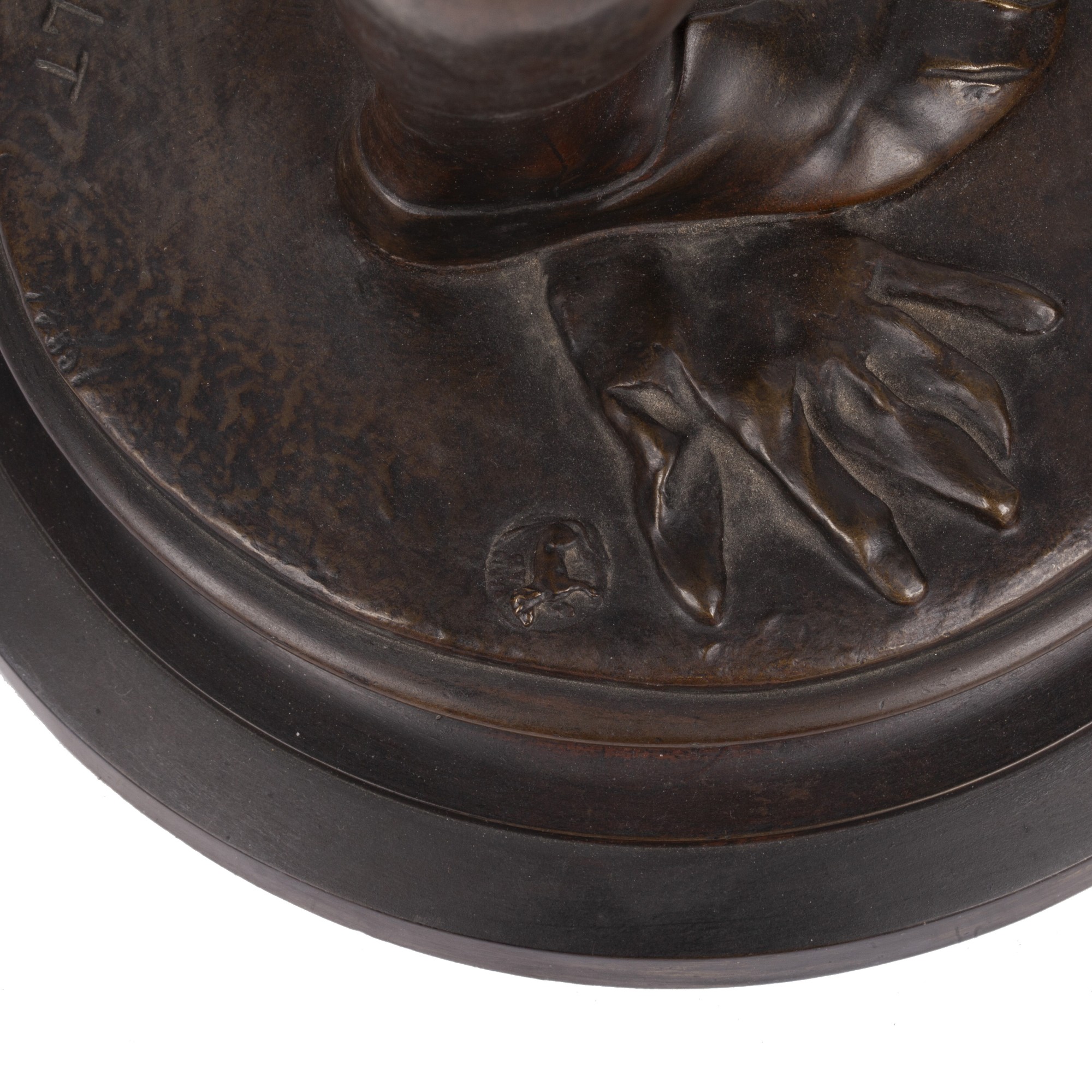
The bronze is finished in a deep brown patina with superb surface detailing. Foundry marks confirm its 19th-century origin. This composition belongs to Picault’s series of martial and allegorical works, which celebrate discipline, courage, and the dignity of human effort — recurring themes throughout his oeuvre.
Émile Louis Picault studied under Louis Royer and exhibited regularly at the Paris Salon from 1863 to 1909. His works, numbering over five hundred models, are represented in museum collections including Chambéry, Clermont-Ferrand, Maubeuge, and Troyes.
Starting price: 1500€
Estimate: 2000-2500€
Hammer Price: Not sold -
Lot 0025
VLADIMIR BEKLEMISHEV (1861–1920), FEMALE BUST
Estimate: 7000-9000€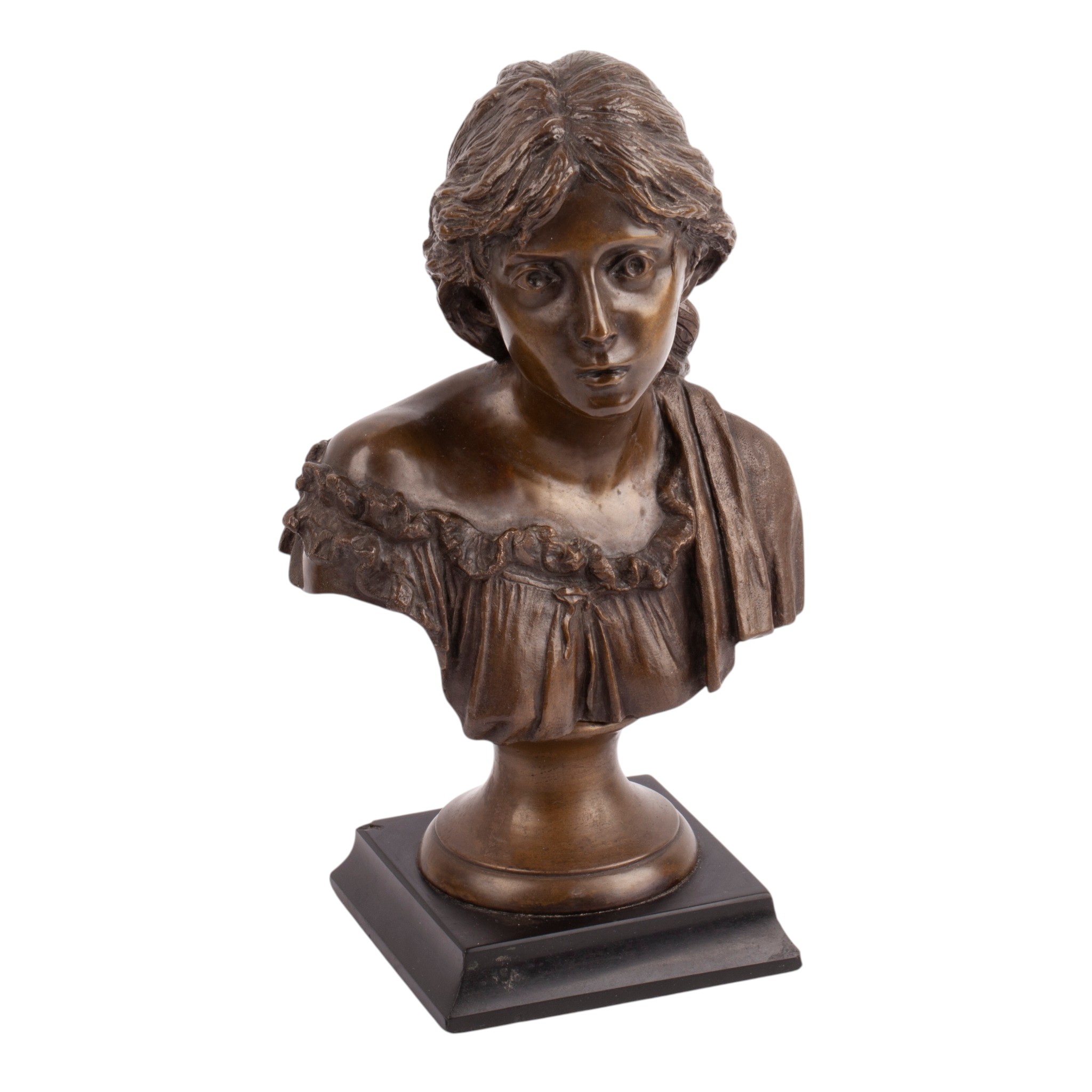
Lot 0025
VLADIMIR BEKLEMISHEV (1861–1920), FEMALE BUST
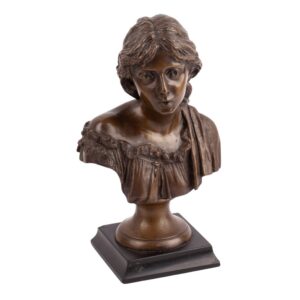
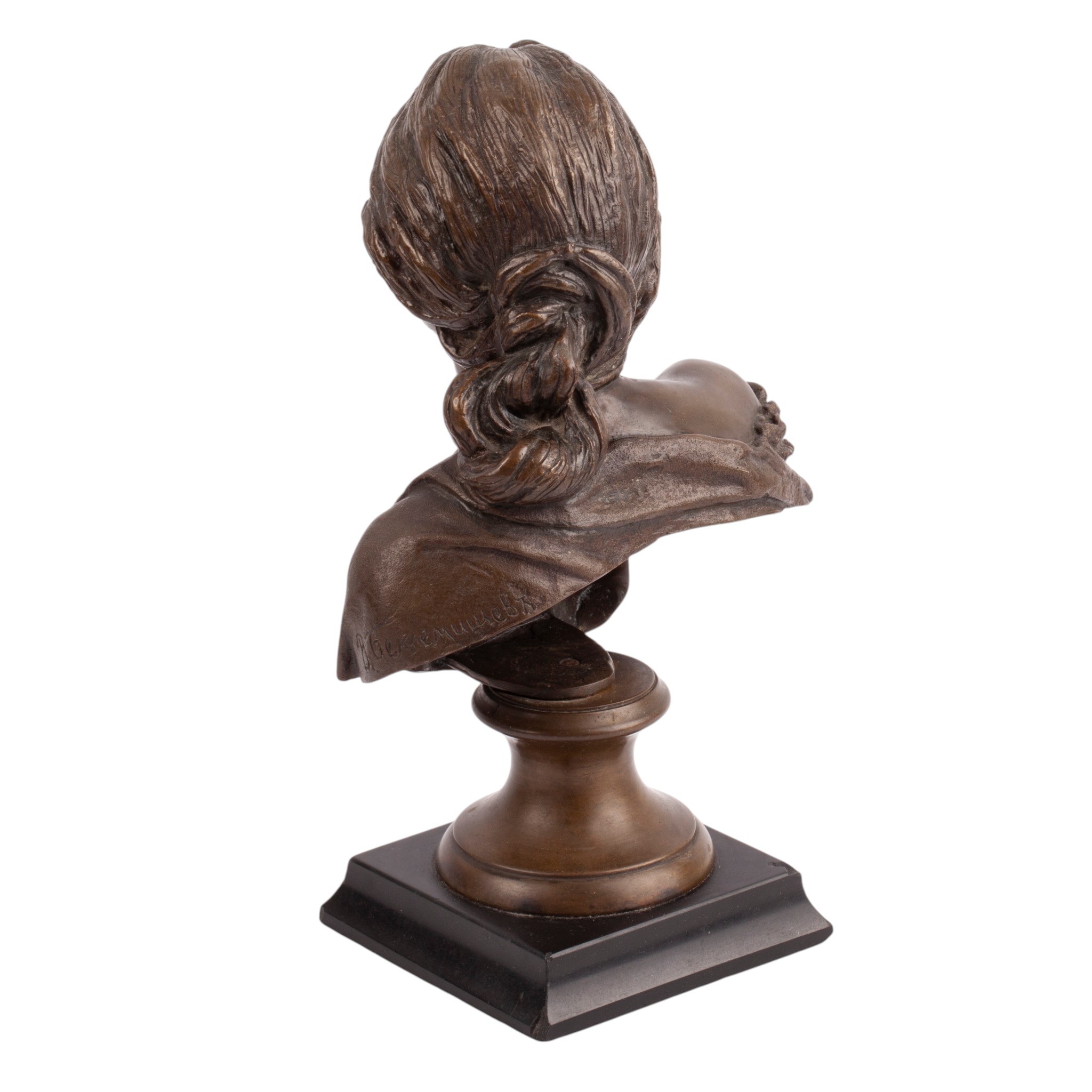
Estimate: 7000-9000€A Russian Female Bust from the Composition How Beautiful, How Fresh Were the Roses… VLADIMIR BEKLEMISHEV (1861-1920)
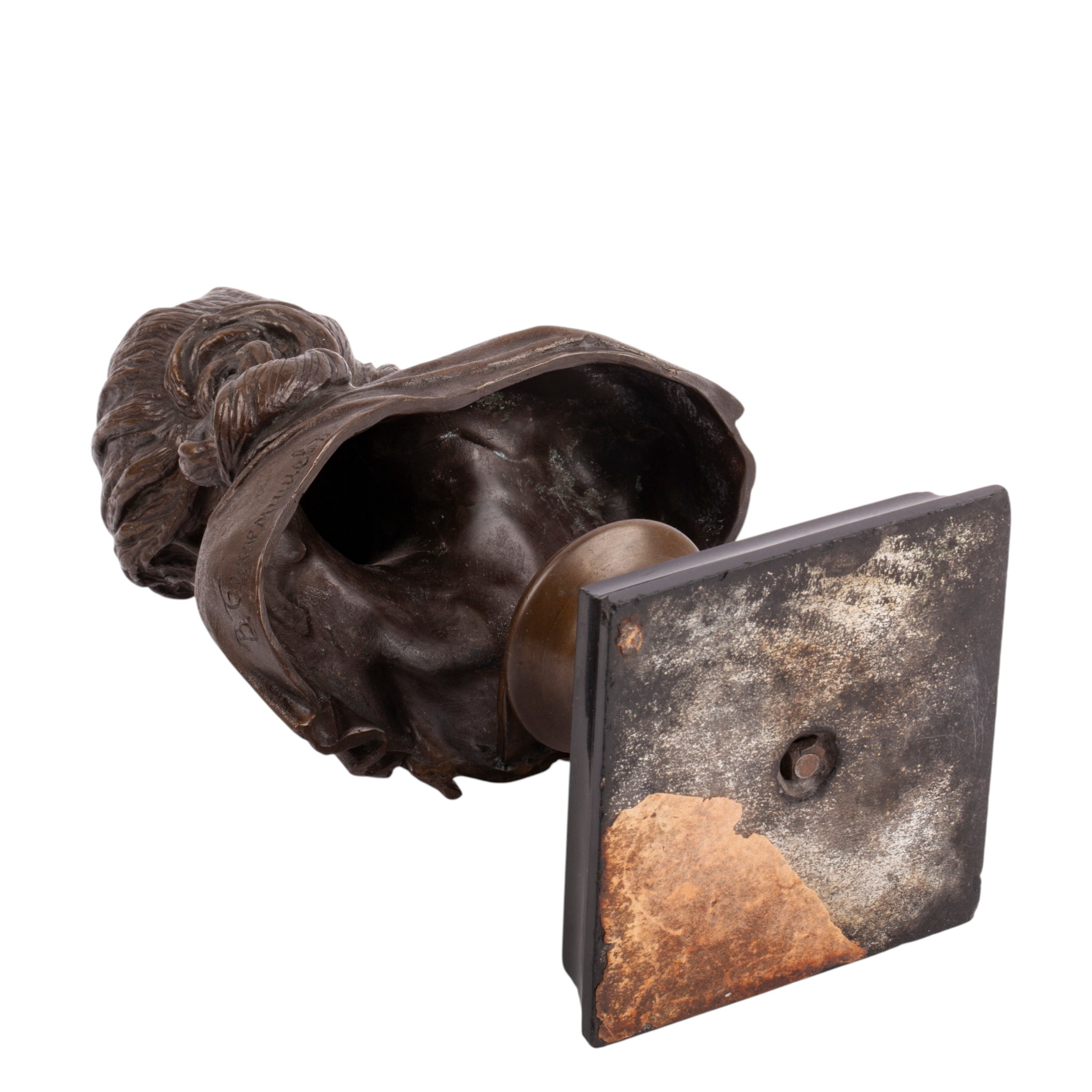
Bronze, cast and patinated; mounted on a shaped square base. Height with a stand: 24 cm.
After the model by Vladimir Beklemishev, late 19th to early 20th century.
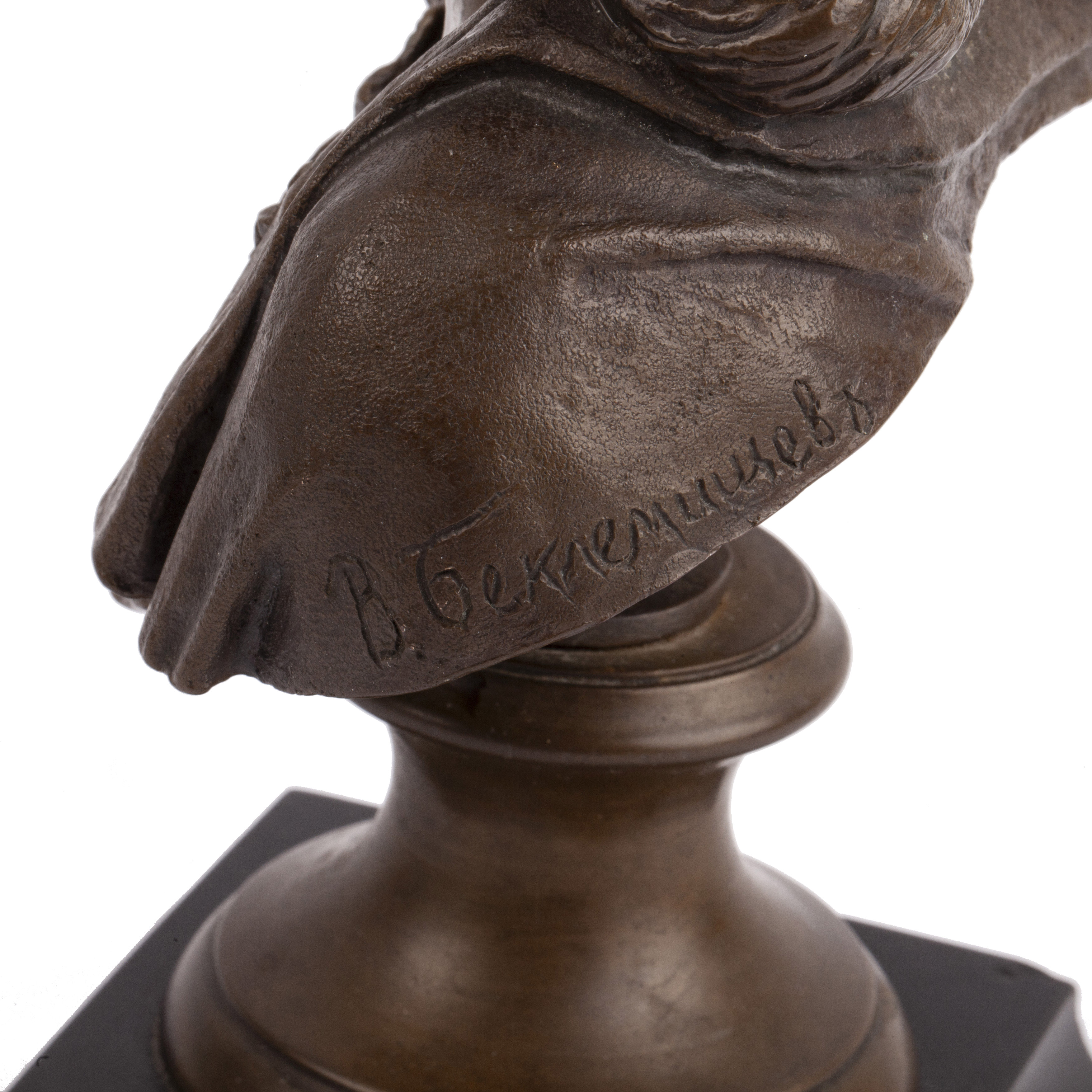
Signed in Cyrillic on the reverse: V. Beklemishev.
A sensitively modeled bronze bust of a young woman, shown with her head slightly inclined and her gaze lifted in an expression of quiet reverie. Her softly parted lips and wide, luminous eyes lend the figure an inward, emotional presence, while the loose treatment of the hair, gathered at the nape, and the falling drapery across one shoulder reinforce the intimate, lyrical character of the image. The low neckline of her dress, edged with a ruffled border, introduces a note of informal naturalism that is characteristic of late Russian academic sculpture when it turns toward genre sentiment.
The bust derives from Vladimir Beklemishev’s famouse composition How Beautiful, How Fresh Were the Roses…, a work associated with the melancholy poetic line popularized by Ivan Turgenev in his prose poem of the same title. The phrase, itself originating in the poem Roses by Ivan Myatlev, became in Russian culture a symbol of tender remembrance and sorrow for vanished youth, beauty, and happiness. Beklemishev translated this literary theme into sculpture with particular refinement, creating a female image poised between portrait, allegory, and emotional genre scene. Beklemishev studied at the Imperial Academy of Arts in St Petersburg from 1878 to 1887 under N. A. Laveretsky and A. R. von Bock, receiving numerous academic distinctions, culminating in the Grand Gold Medal in 1887 for The Entombment. That same year he was awarded the title of Class Artist of the First Degree, briefly taught at the Drawing School of the Society for the Encouragement of the Arts, and was then sent abroad as an Academy pensioner. In 1892 he became adjunct professor and was elected Academician for works including The Fugitive Slave and Christian Woman of the Early Centuries.
From 1894 he served as professor and head of the sculpture studio at the Higher Art School of the Imperial Academy, and was rector in 1900-1903 and 1906-1911. Among his pupils were A. S. Golubkina, S. T. Konenkov, M. G. Manizer, and L. V. Sherwood. One of the most sought-after Russian sculptors of his day, Beklemishev also served in 1917 as commissioner for the protection of monuments of antiquity and art in Petrograd.Starting price: 6000€
Estimate: 7000-9000€
Hammer Price: 9 000 € -
Lot 0026
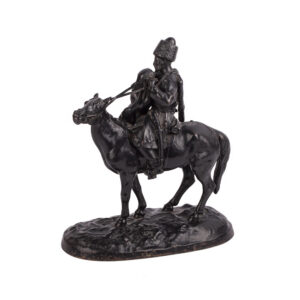
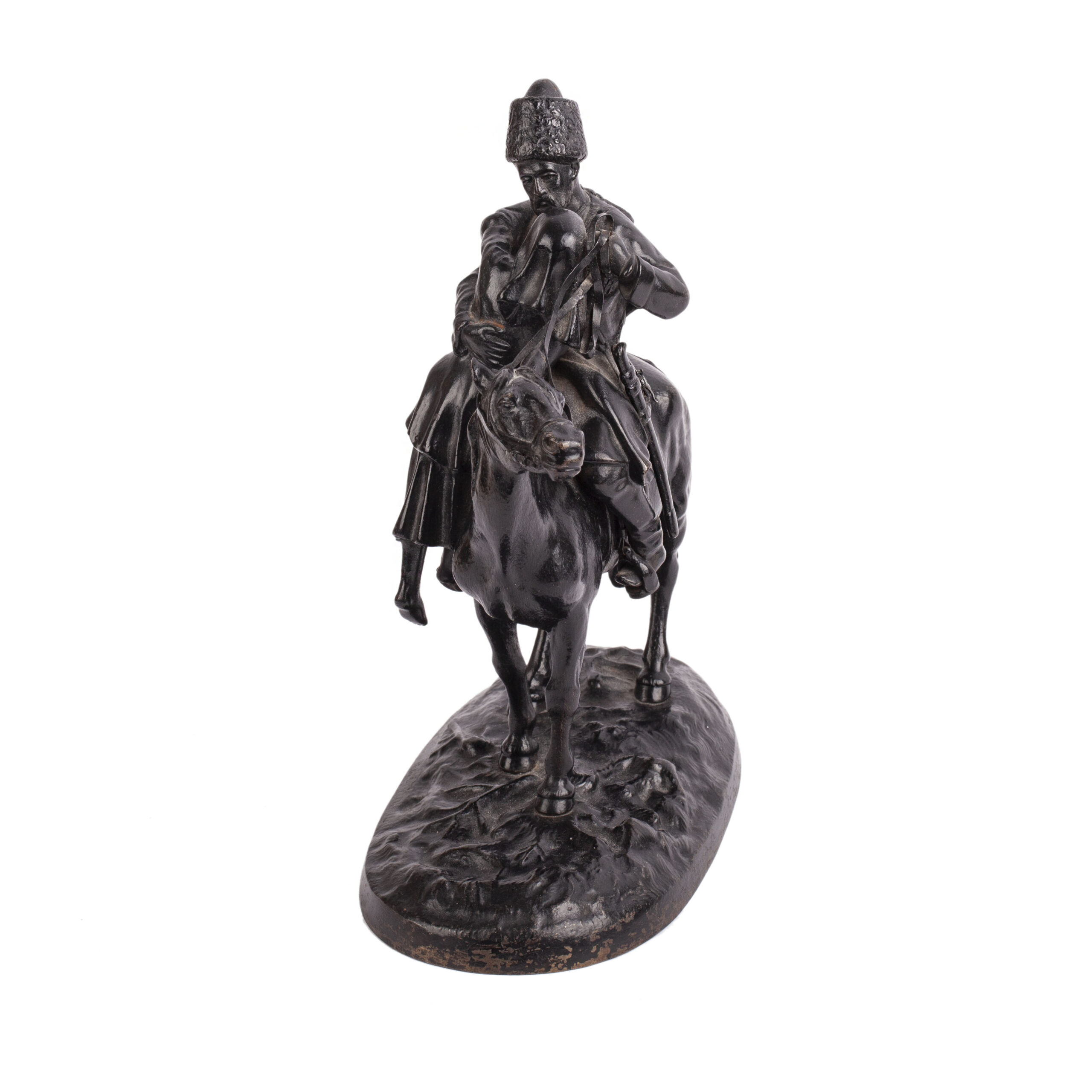
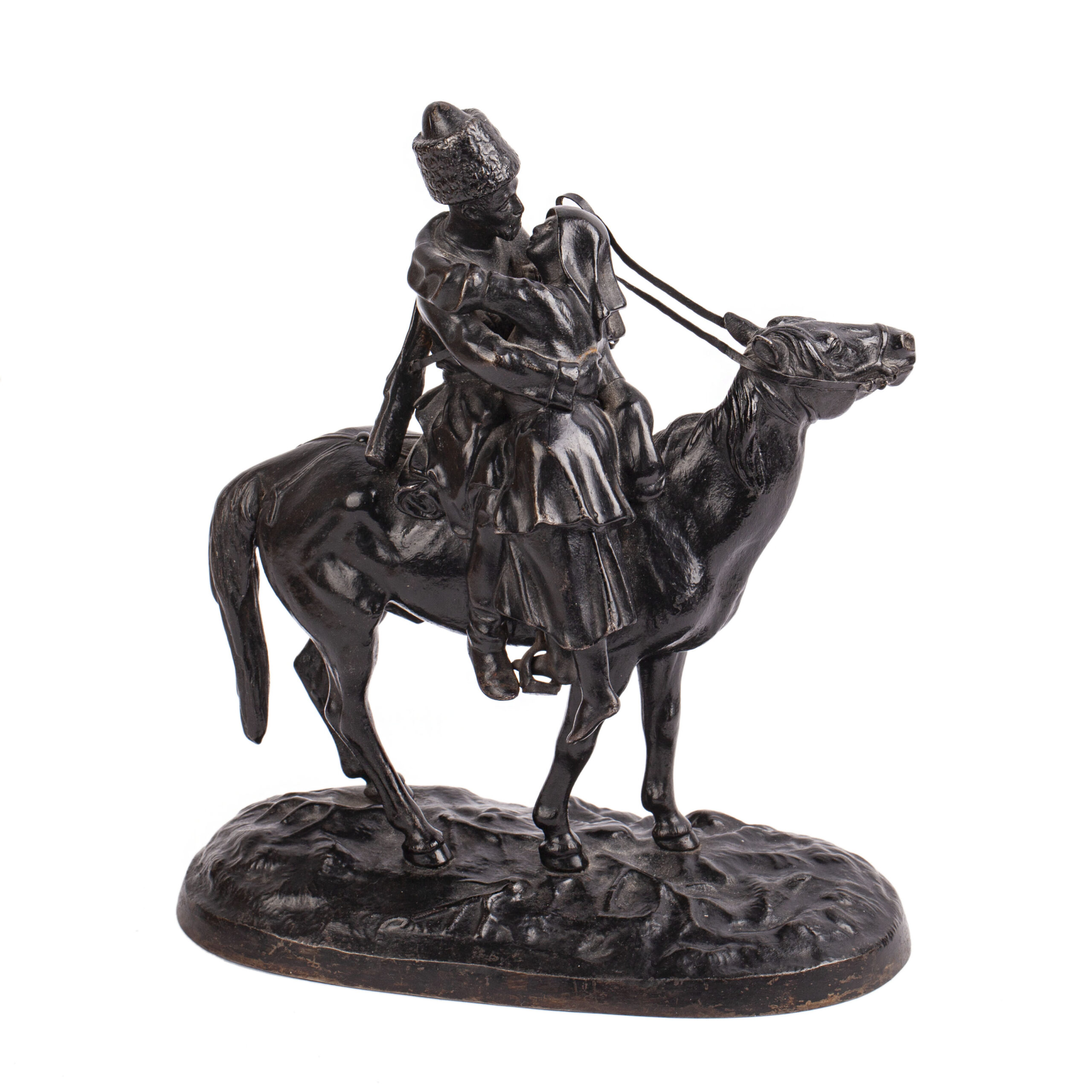
Evgeny Lanceray. Kasli Cast-Iron Sculpture “Farewell of a Cossack to a Cossack Woman”
Estimate: 700-800€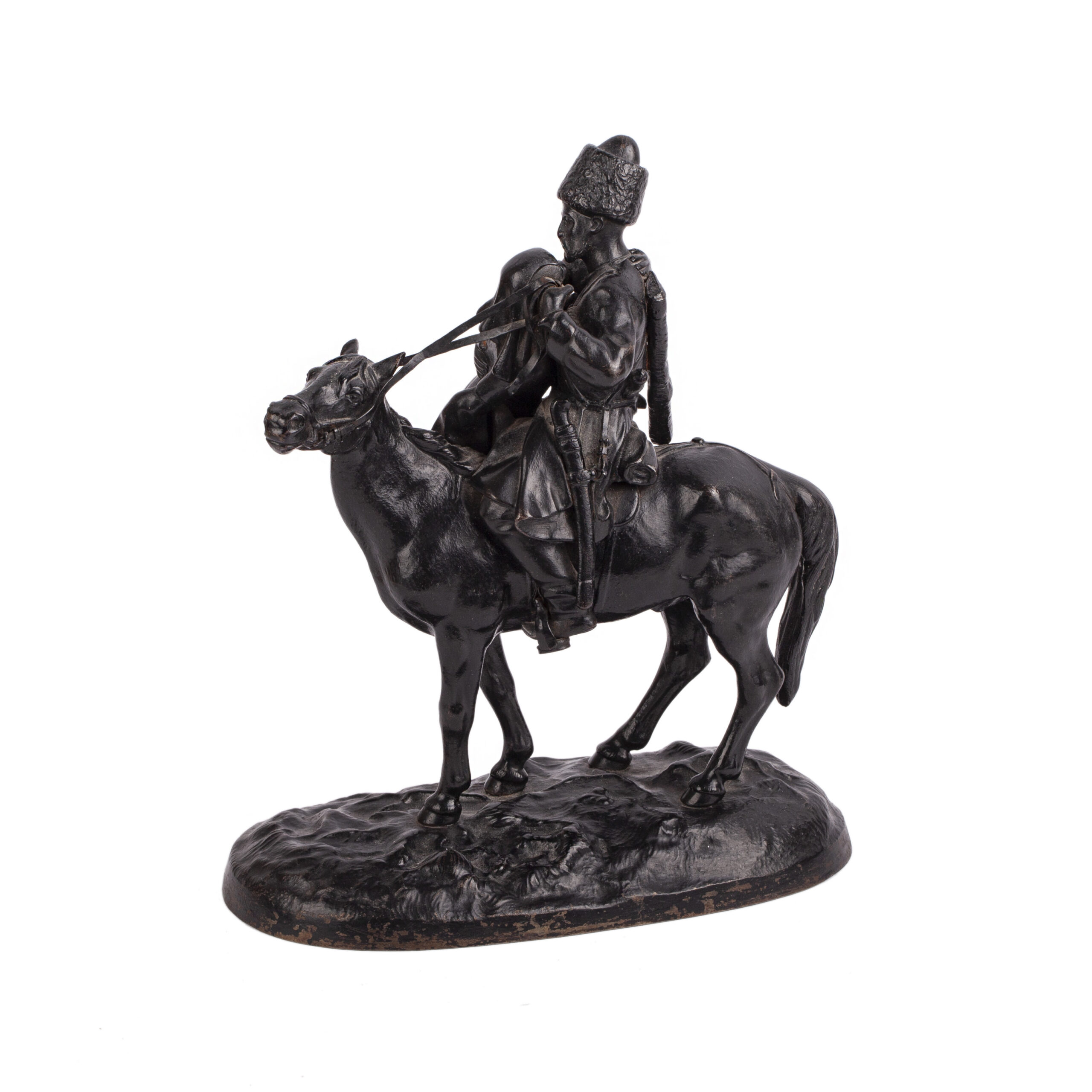
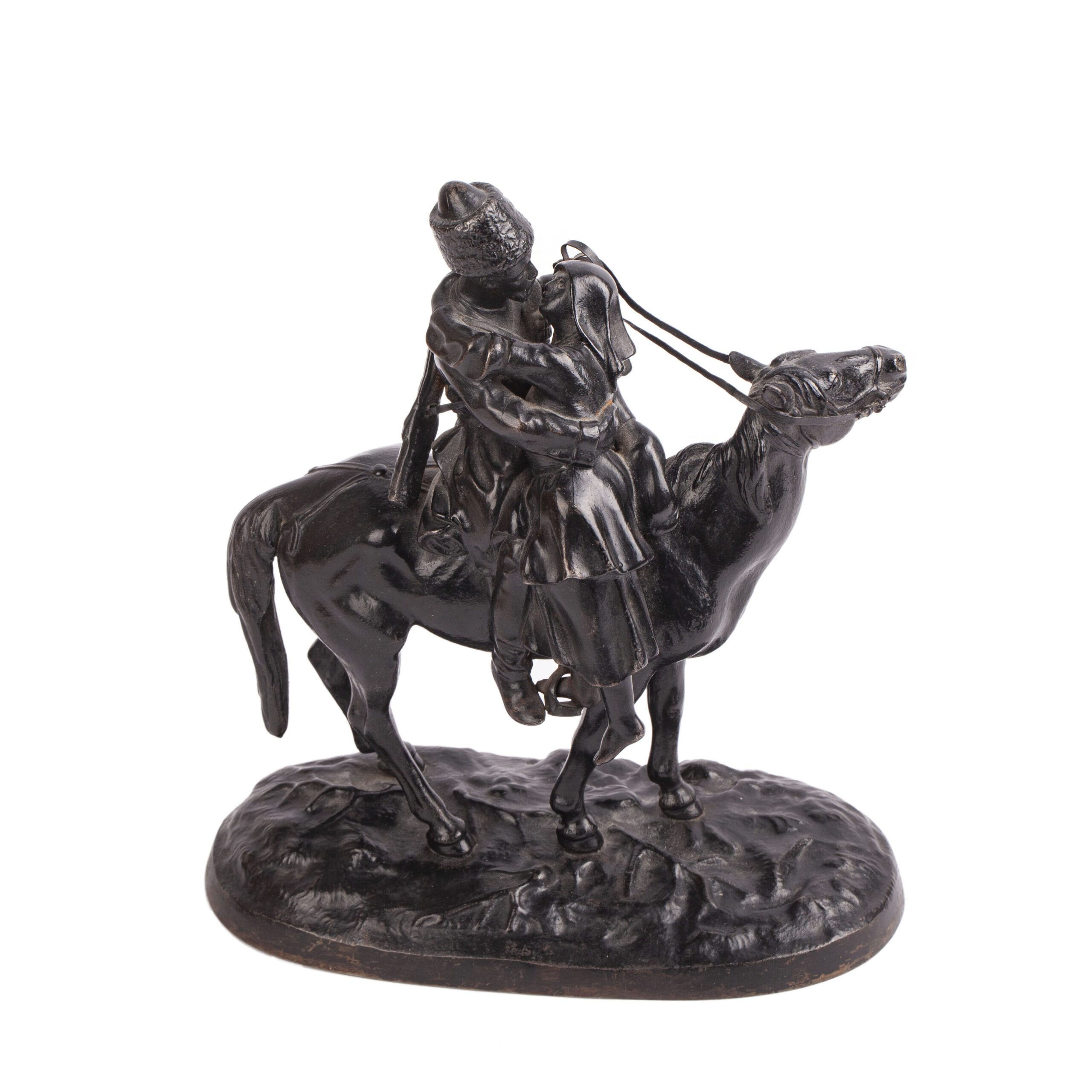
Lot 0026
Evgeny Lanceray. Kasli Cast-Iron Sculpture “Farewell of a Cossack to a Cossack Woman”
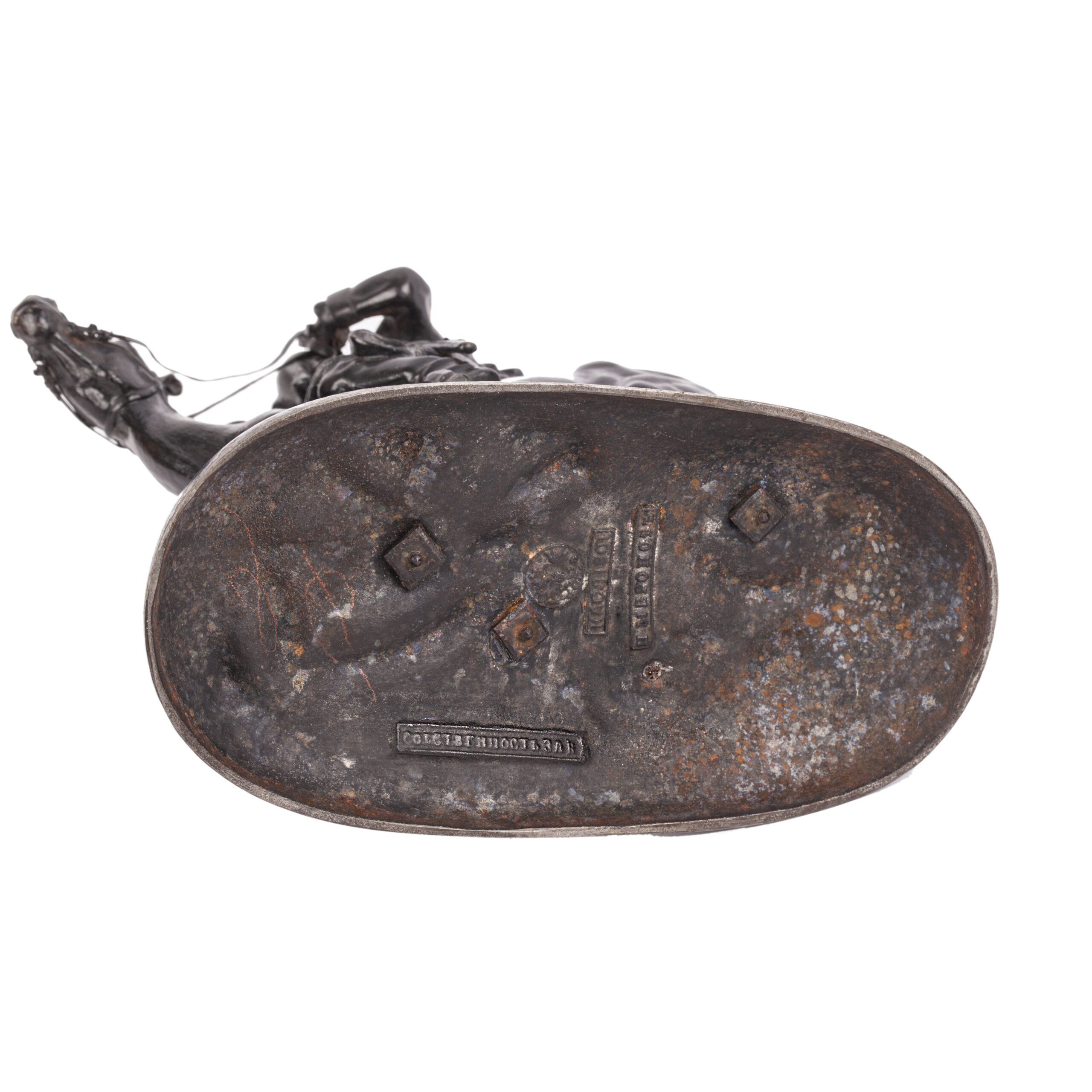
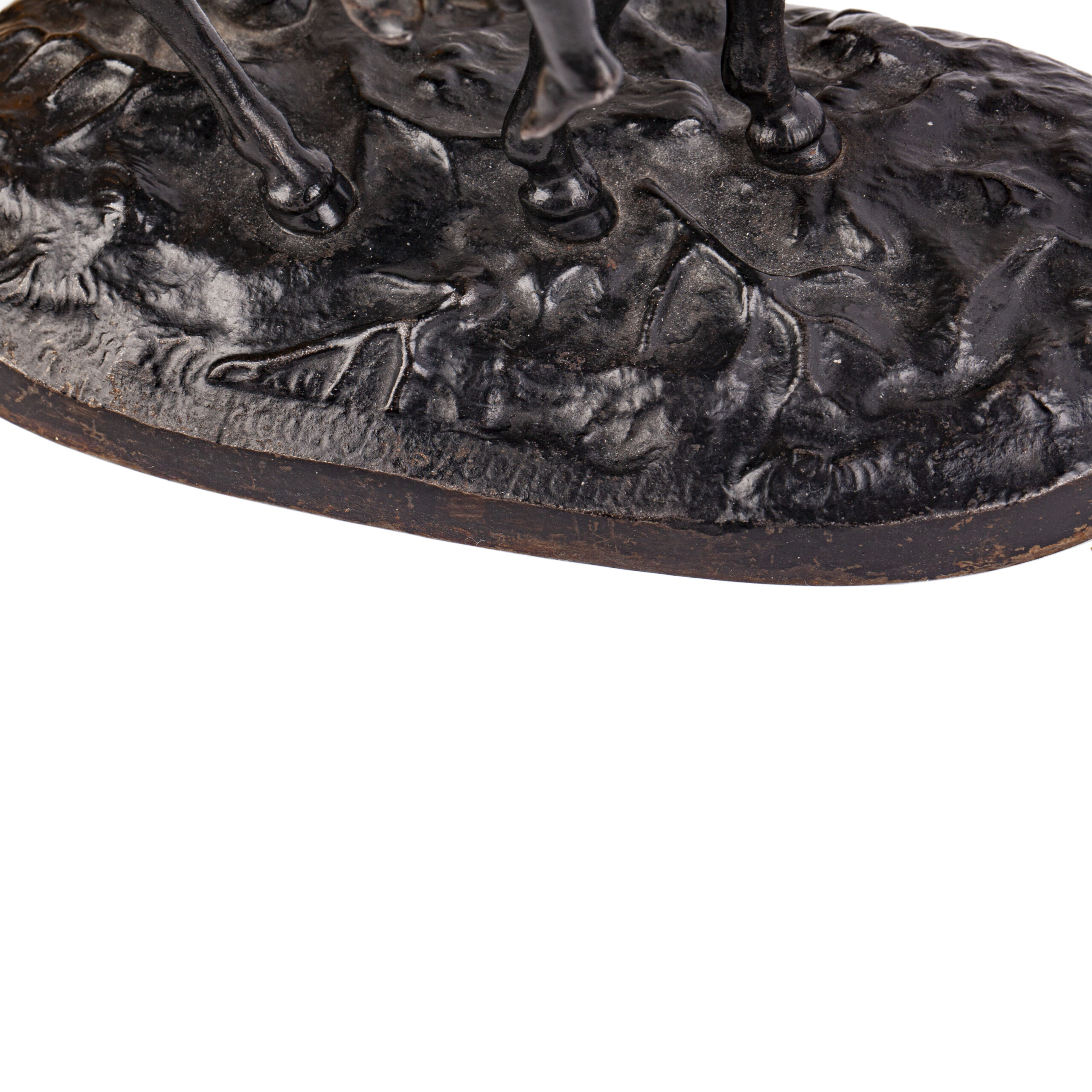
Estimate: 700-800€Farewell of a Cossack and a Cossack Woman
Ural, Kasli Iron Foundry, after a model by Evgeny Lanceray (1848–1886)
Cast iron, casting, painting
Dated 1901 (Tsarist period)
Height: 21.5 cm; base length: 18 cmThis sculptural composition depicts a poignant farewell scene: a Cossack, seated on horseback with a rifle in a case slung over his back, embraces his wife who rises toward his stirrup. The subject reflects the traditional role of the Cossacks, a privileged military estate in the Russian Empire from the 18th to early 20th centuries, who served as a stronghold of autocracy and were often mobilized in wartime.
The model was created by Evgeny Alexandrovich Lanceray in 1878, inspired by his impressions of the Don Cossack Host. The Kasli Iron Foundry, one of Russia’s most renowned centers of artistic iron casting, reproduced this piece in the early 20th century, as evidenced by the factory marks preserved on the underside and base.
Evgeny Alexandrovich Lanceray (1848–1886)
A Russian sculptor and animalier, Lanceray was an honorary member of the Imperial Academy of Arts and a master of small-scale narrative sculpture. His works, often centered on historical, ethnographic, folkloric, and everyday themes, brought international recognition to Russian sculpture. He participated in numerous World’s Fairs and created not only bronze figures and groups but also decorative and applied art objects. His compositions were cast at all the leading foundries of his time, including Chopin, Shtange, Moran, Berto, and the Ural iron foundries.Starting price: 500€
Estimate: 700-800€
Hammer Price: 750 € -
Lot 0027
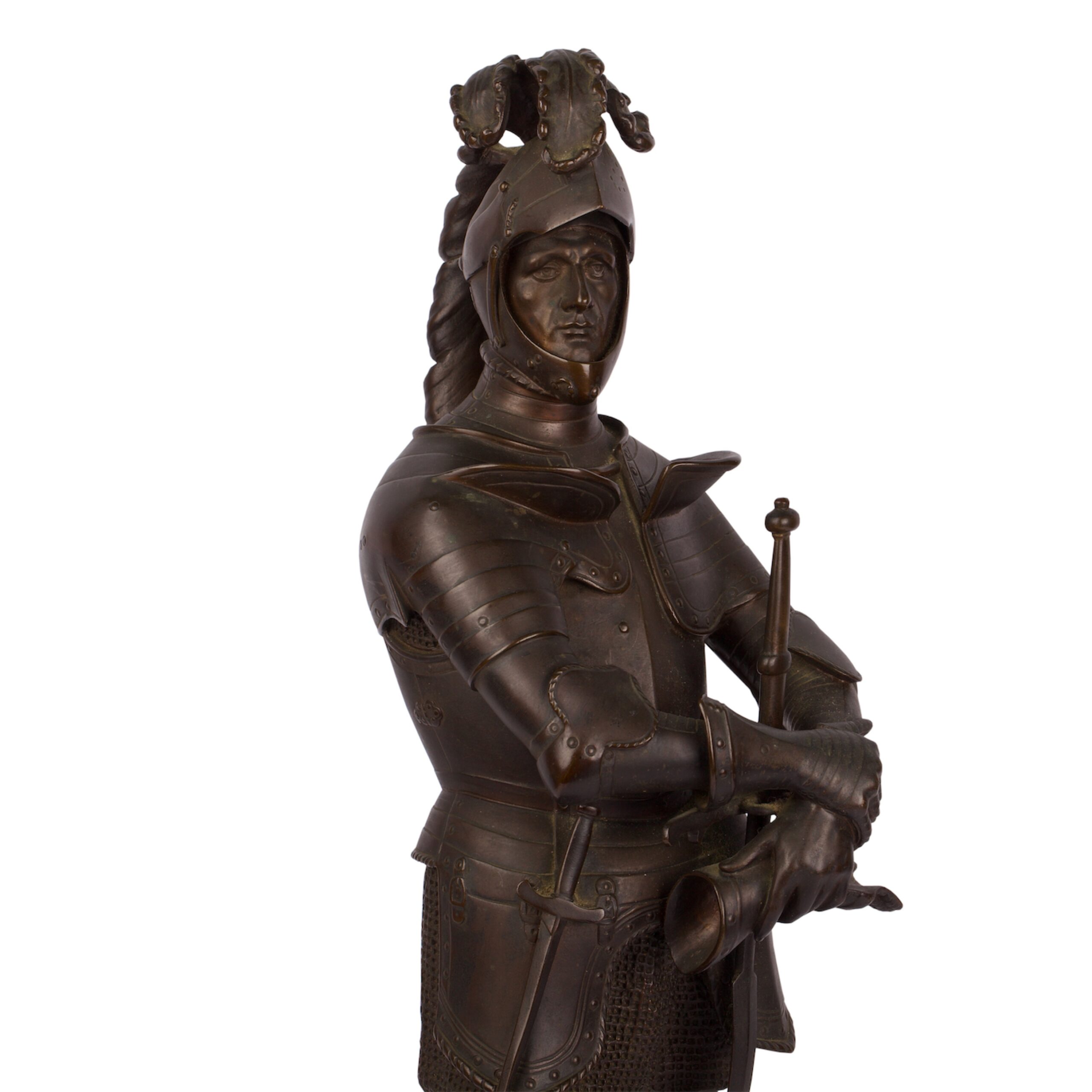
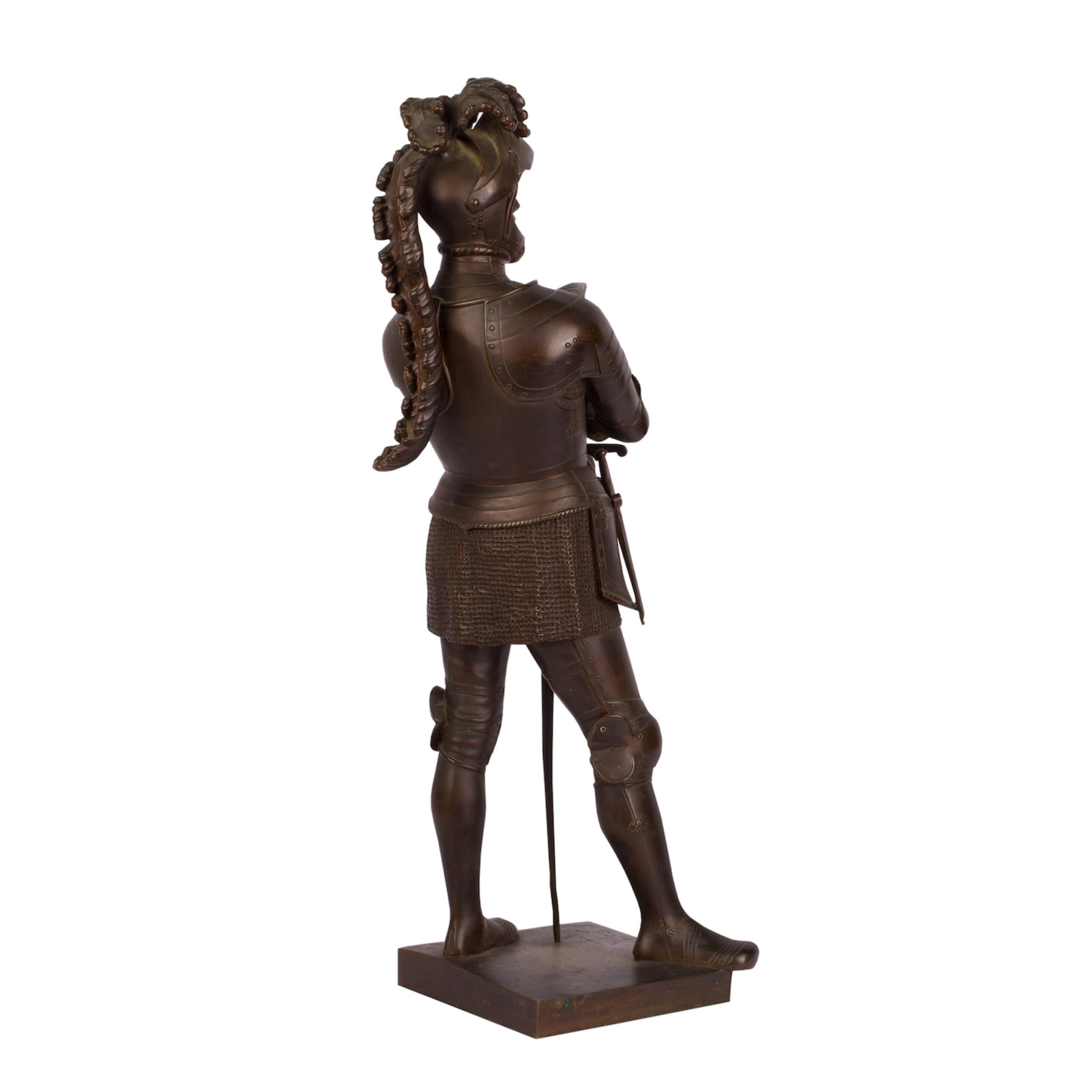
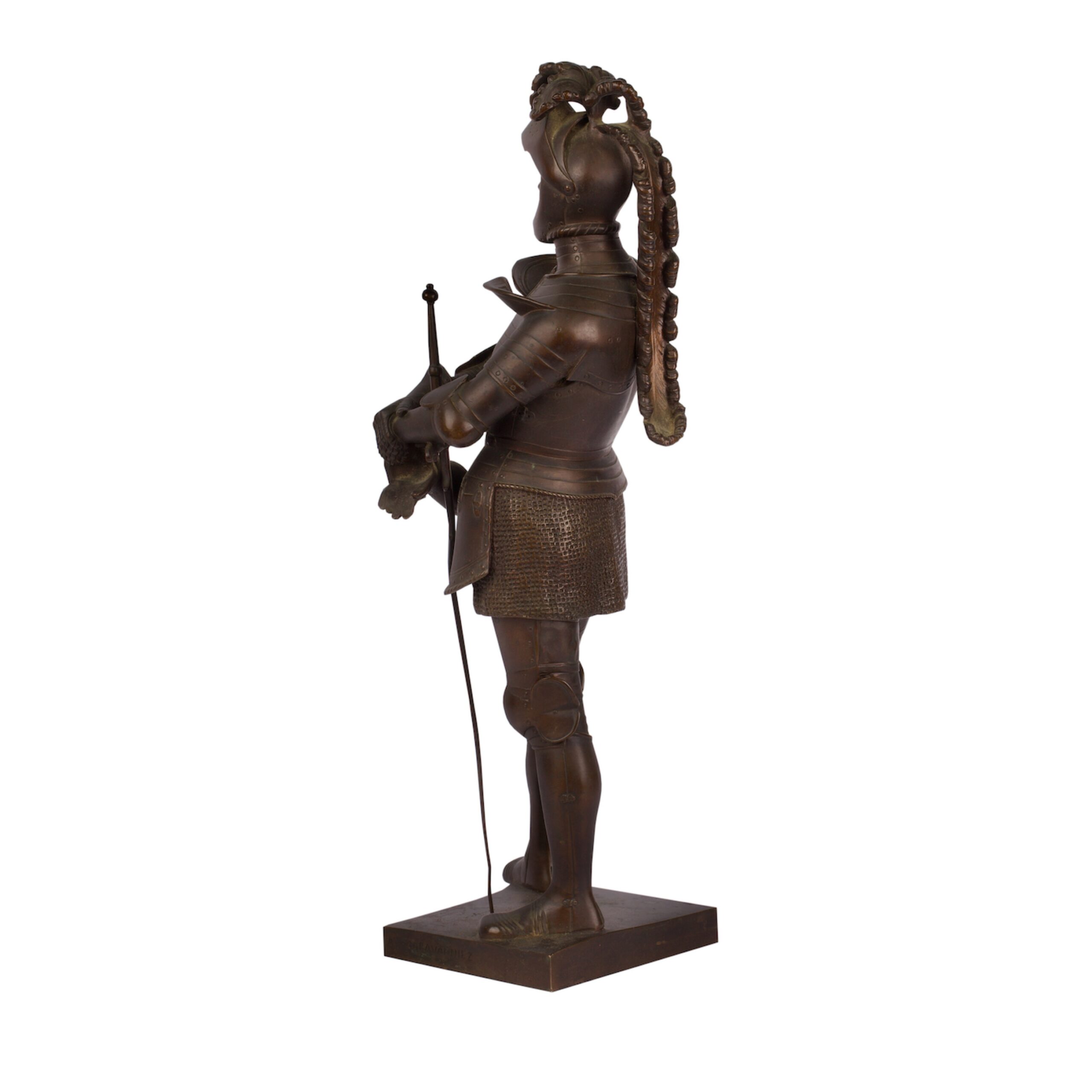
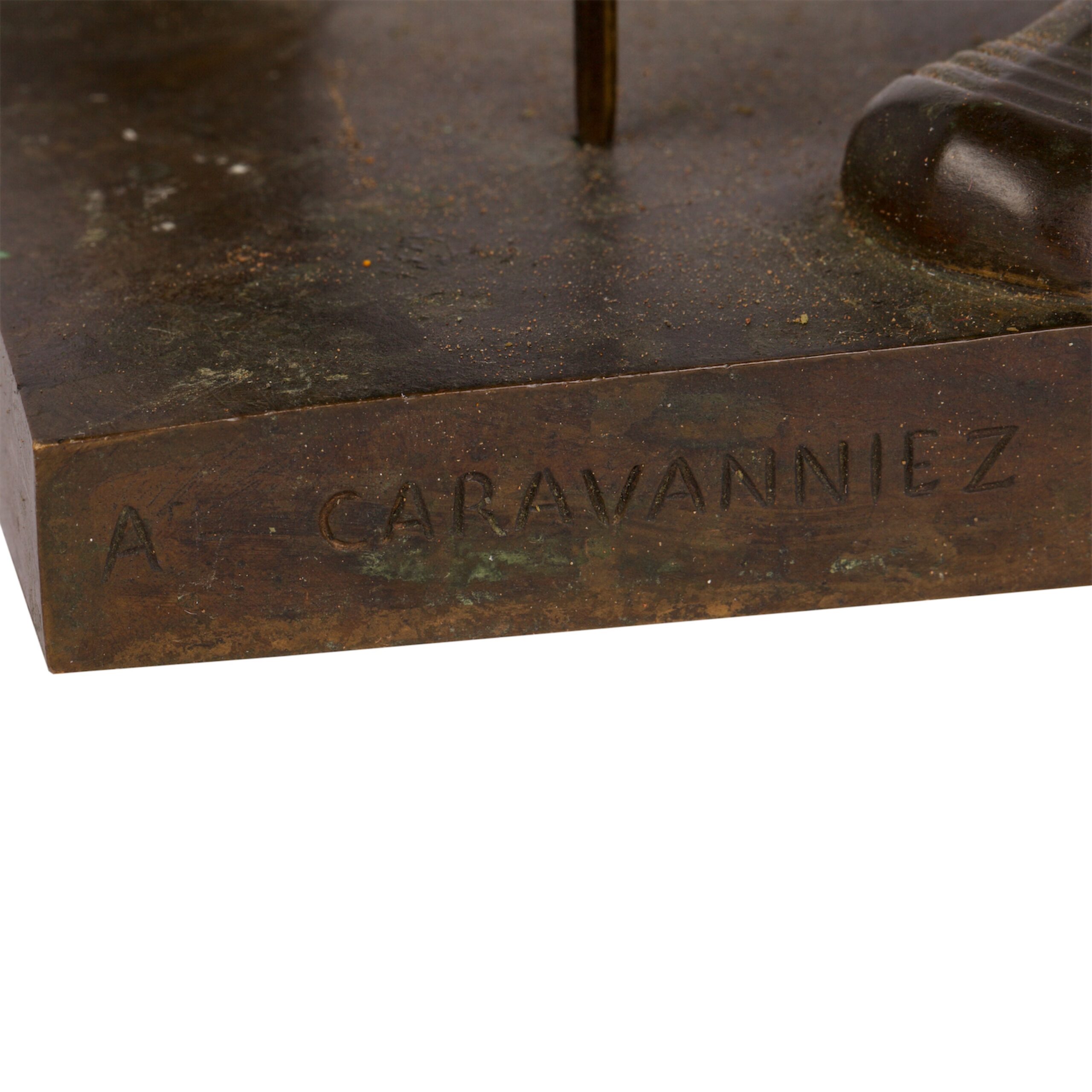
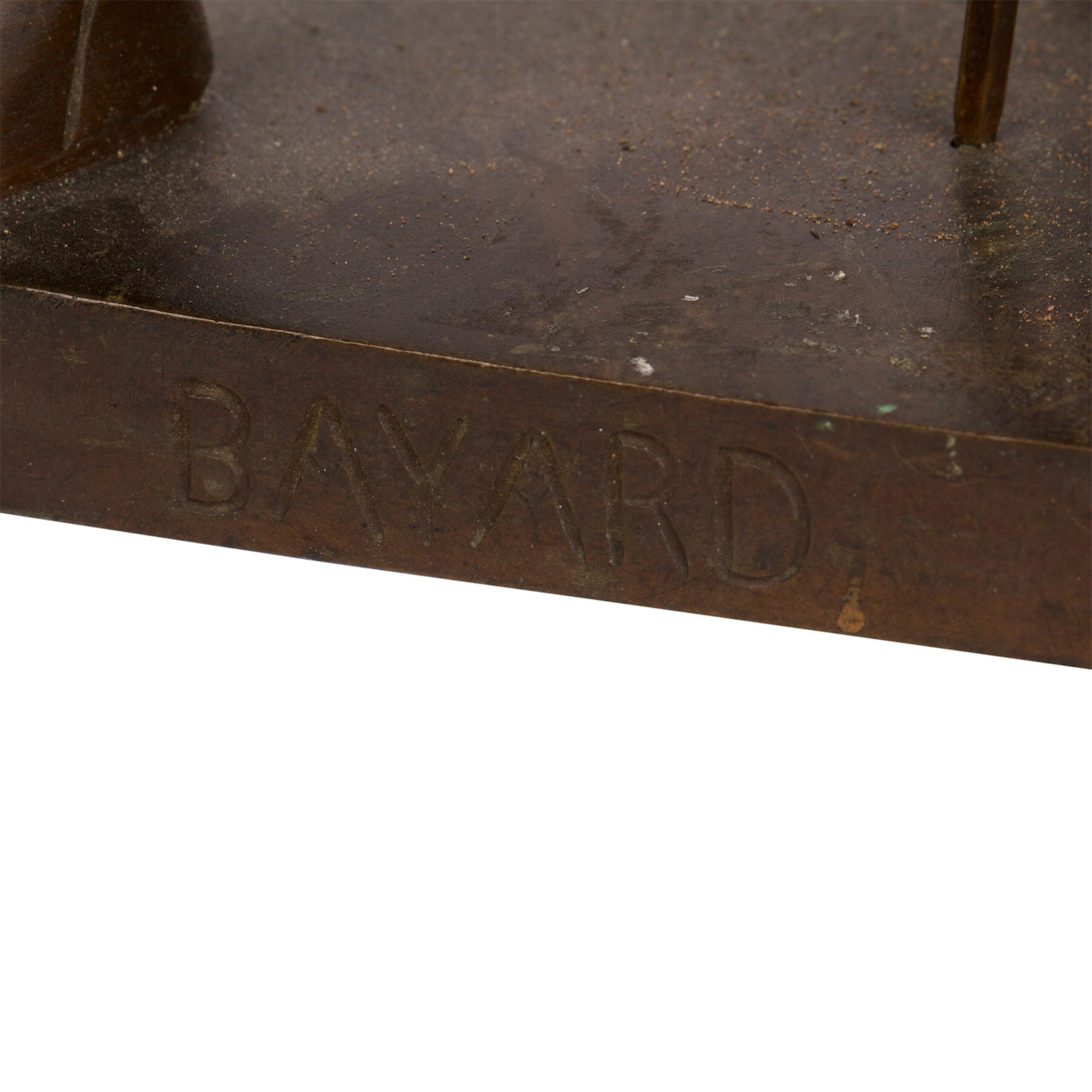
Alfred Caravanniez. French Patinated Bronze Sculpture “Bayard”
Estimate: 5000-6000€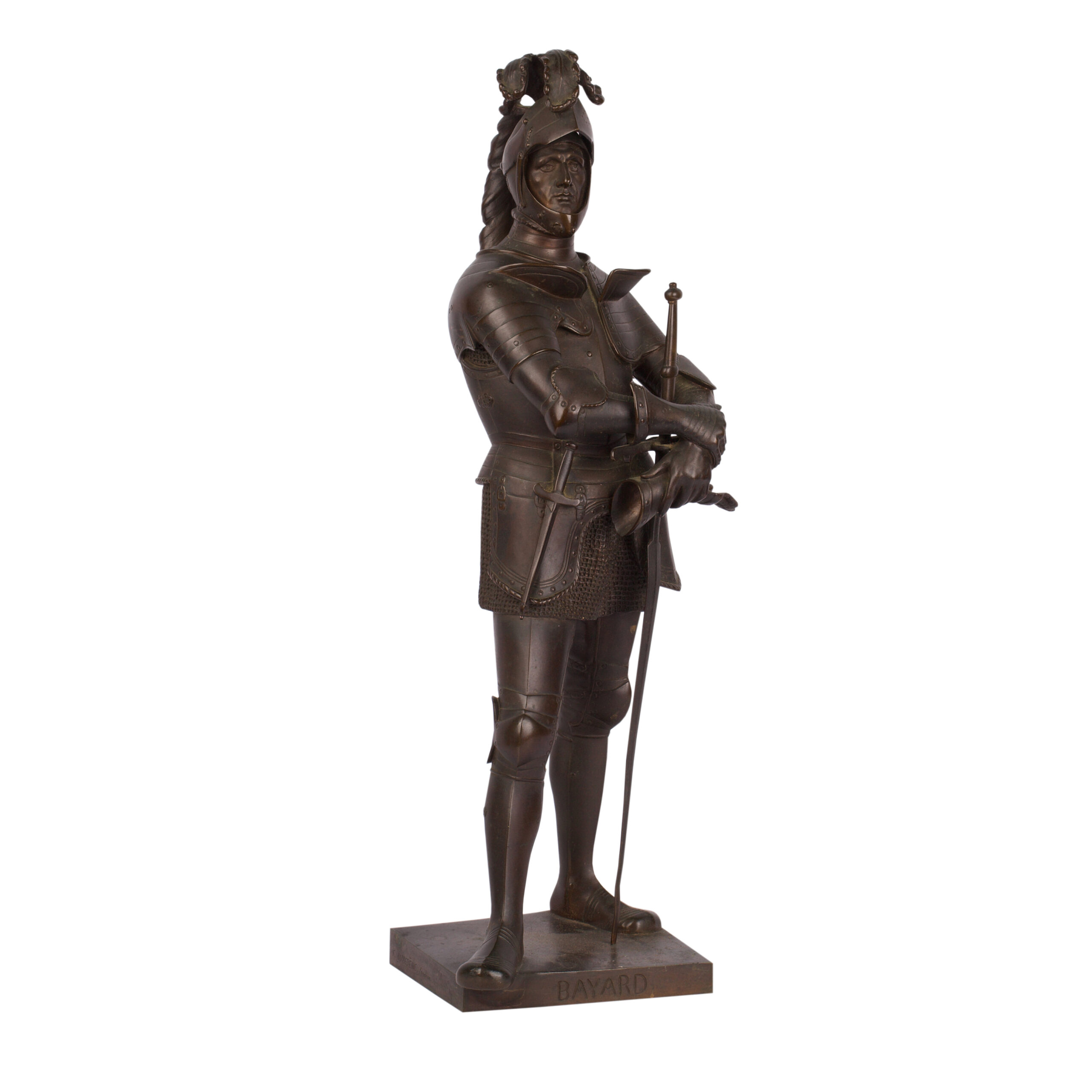
Lot 0027
Alfred Caravanniez. French Patinated Bronze Sculpture “Bayard”
Estimate: 5000-6000€Alfred Caravanniez (1855–1917)
“Bayard”
France, late 19th century
Patinated bronze, cast by Barbedienne Foundry
Signed and stamped.
Height: 42 cmThis finely cast bronze depicts Pierre Terrail, seigneur de Bayard (1473–1524) — the legendary French knight celebrated as “le chevalier sans peur et sans reproche” (“the knight without fear and beyond reproach”). The sculpture presents Bayard in full Renaissance armor, standing proudly with folded arms and sword at his side, embodying ideals of honor, loyalty, and martial virtue.
Created by Alfred Caravanniez, a French sculptor trained under Aimé Millet at the École des Arts Décoratifs in Paris, the work exemplifies the historical realism and patriotic romanticism characteristic of late 19th-century French bronze statuary. Cast by the renowned Barbedienne Foundry, it reflects the superior quality and finish that made the firm one of the most respected bronze ateliers of its time.
Caravanniez’s public works include monuments and statues in Saint-Malo, Nantes, Cholet, and Sainte-Anne-d’Auray, most notably the monumental statue of corsair Robert Surcouf (1903) in Saint-Malo, also executed in bronze by Barbedienne.
Starting price: 4000€
Estimate: 5000-6000€
Hammer Price: Not sold -
Lot 0028
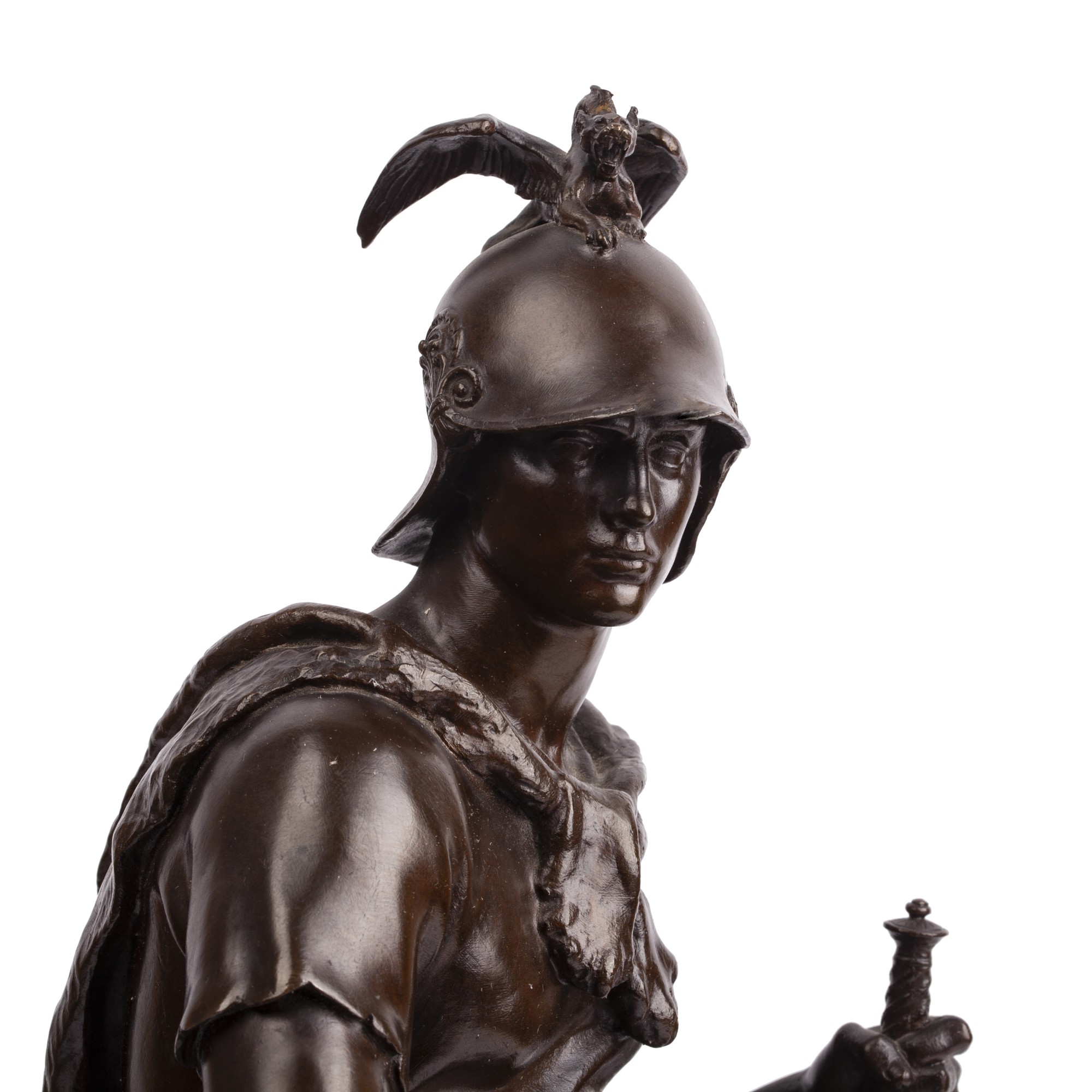
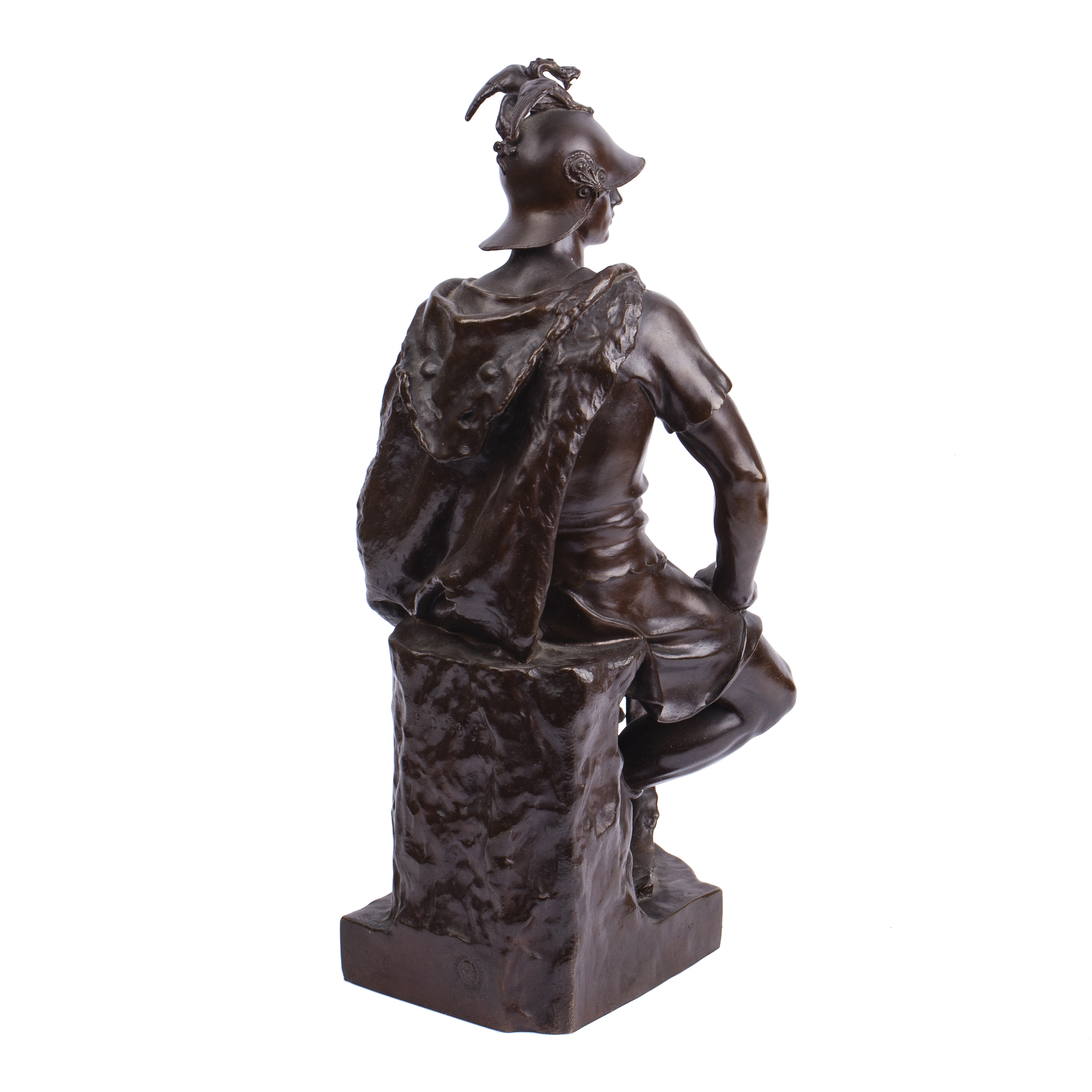
Paul Dubois. Bronze Sculpture “Le courage militaire”
Estimate: 2500-3000€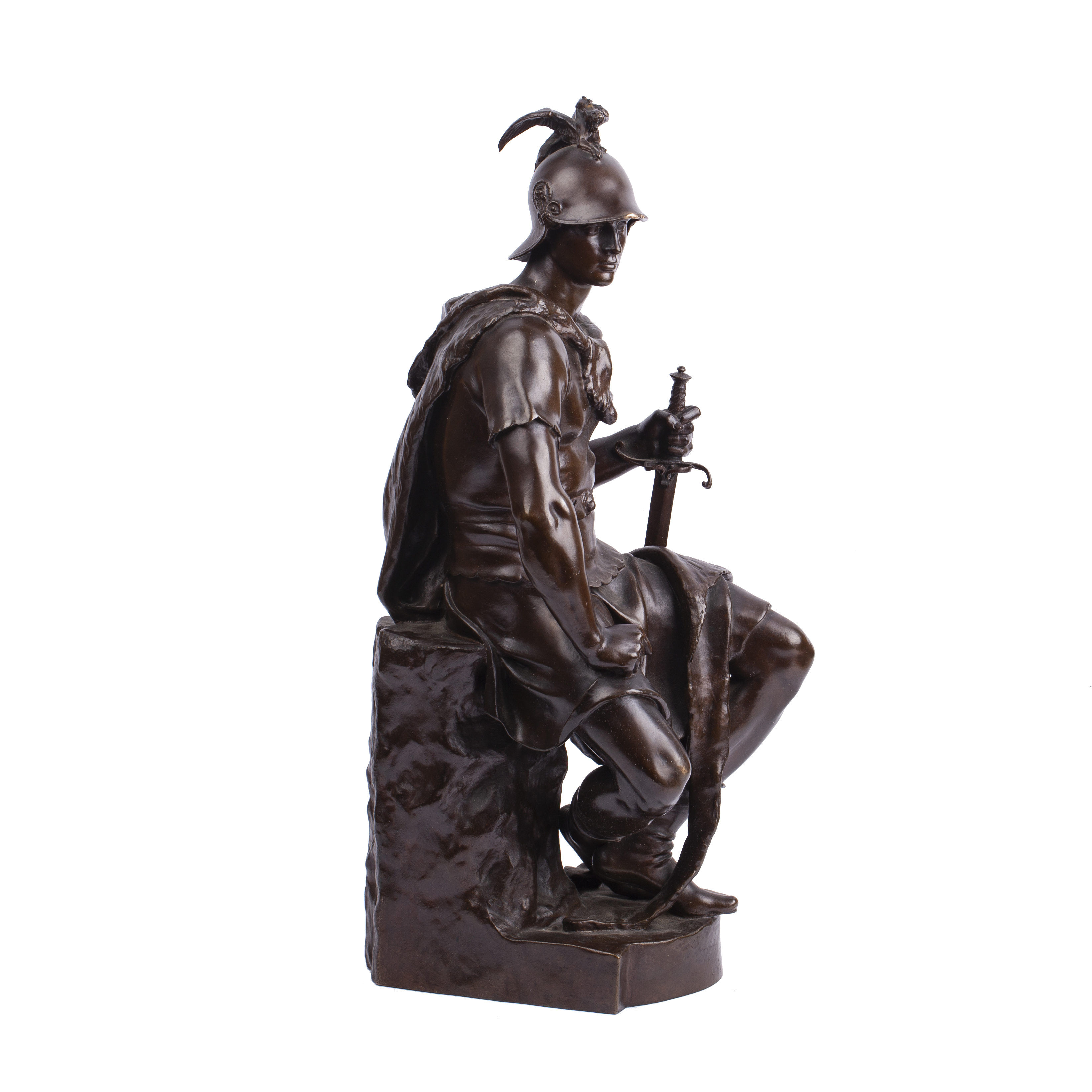
Lot 0028
Paul Dubois. Bronze Sculpture “Le courage militaire”
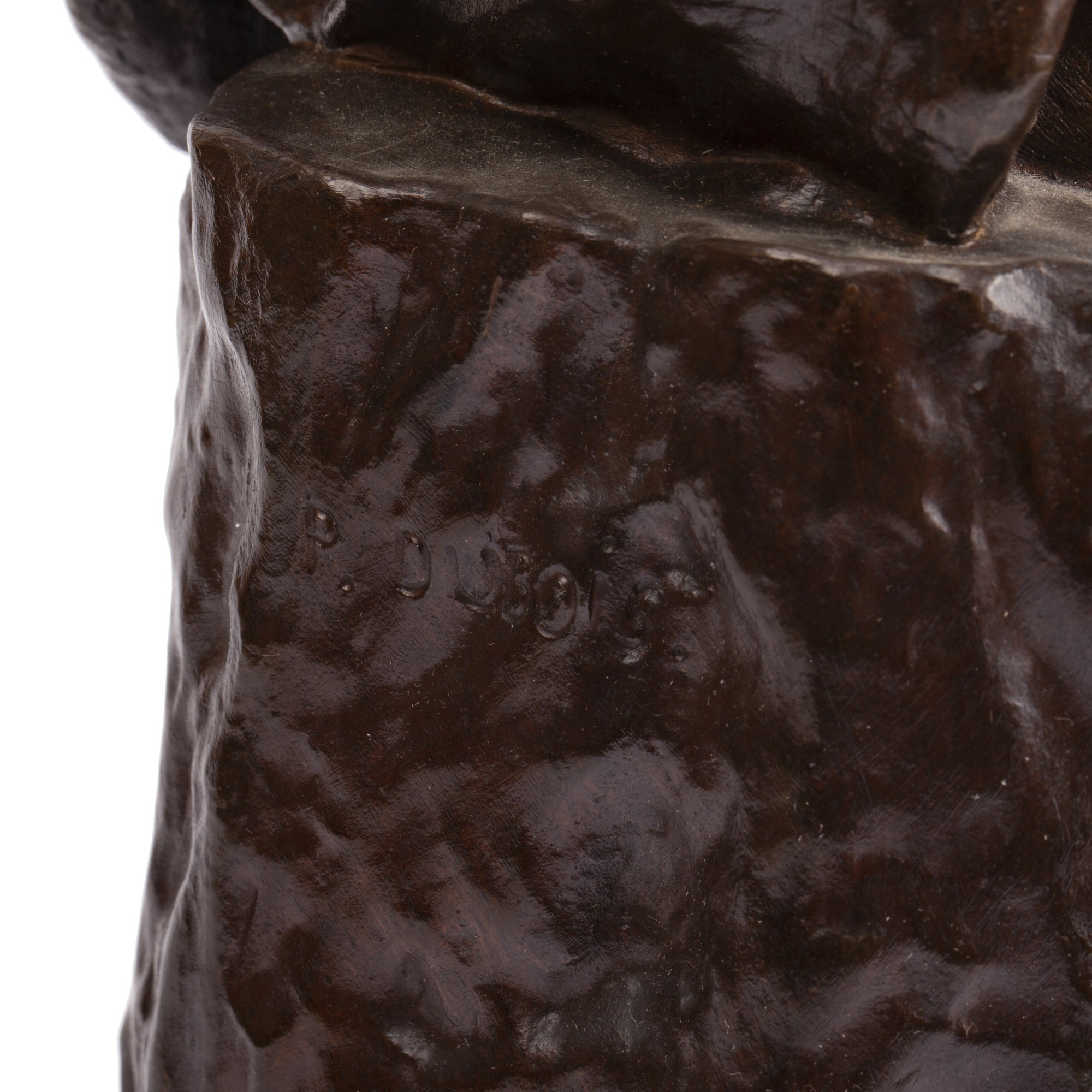
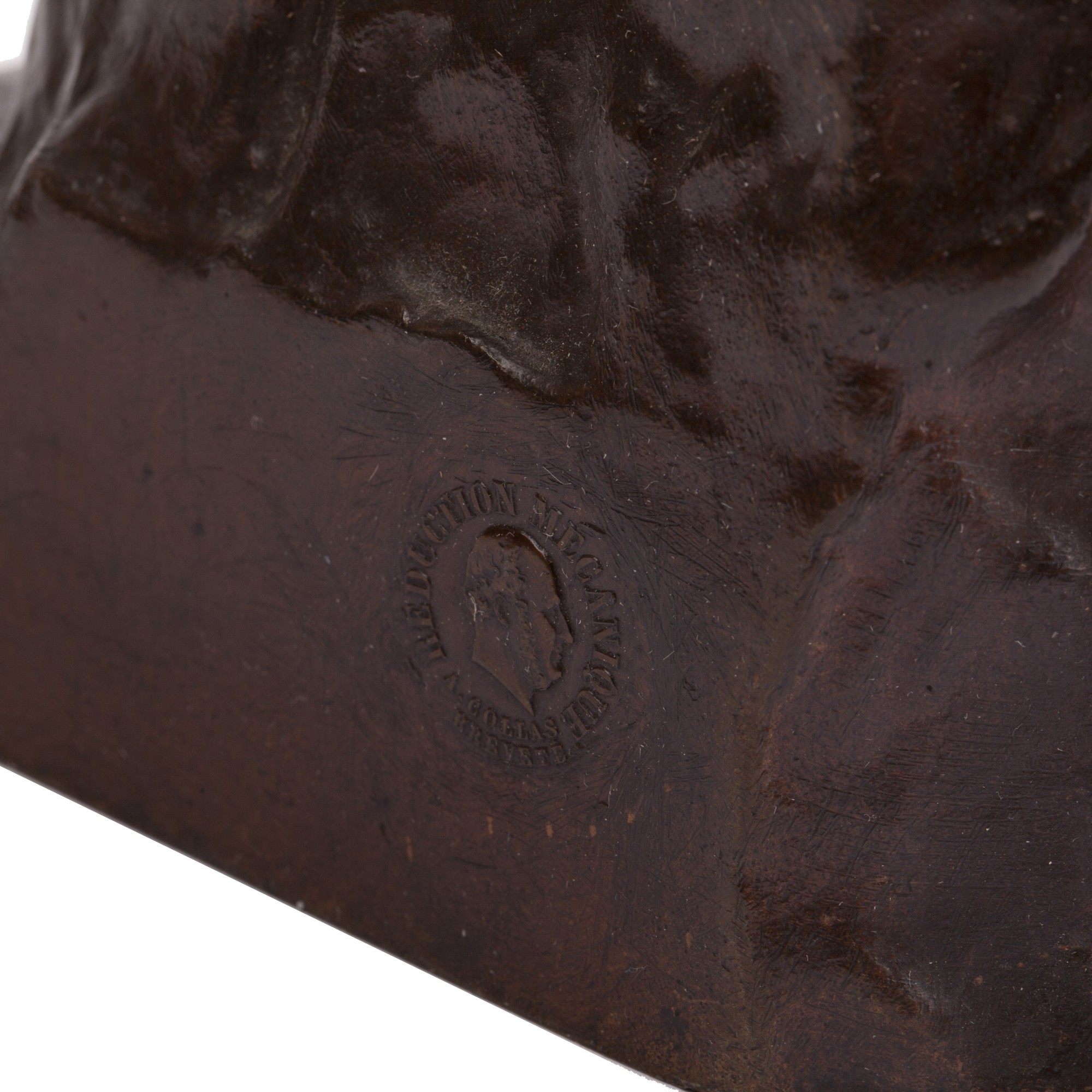
Estimate: 2500-3000€Paul Dubois (1829–1905)
“Le Courage Militaire” (Military Courage)
France, circa 1880
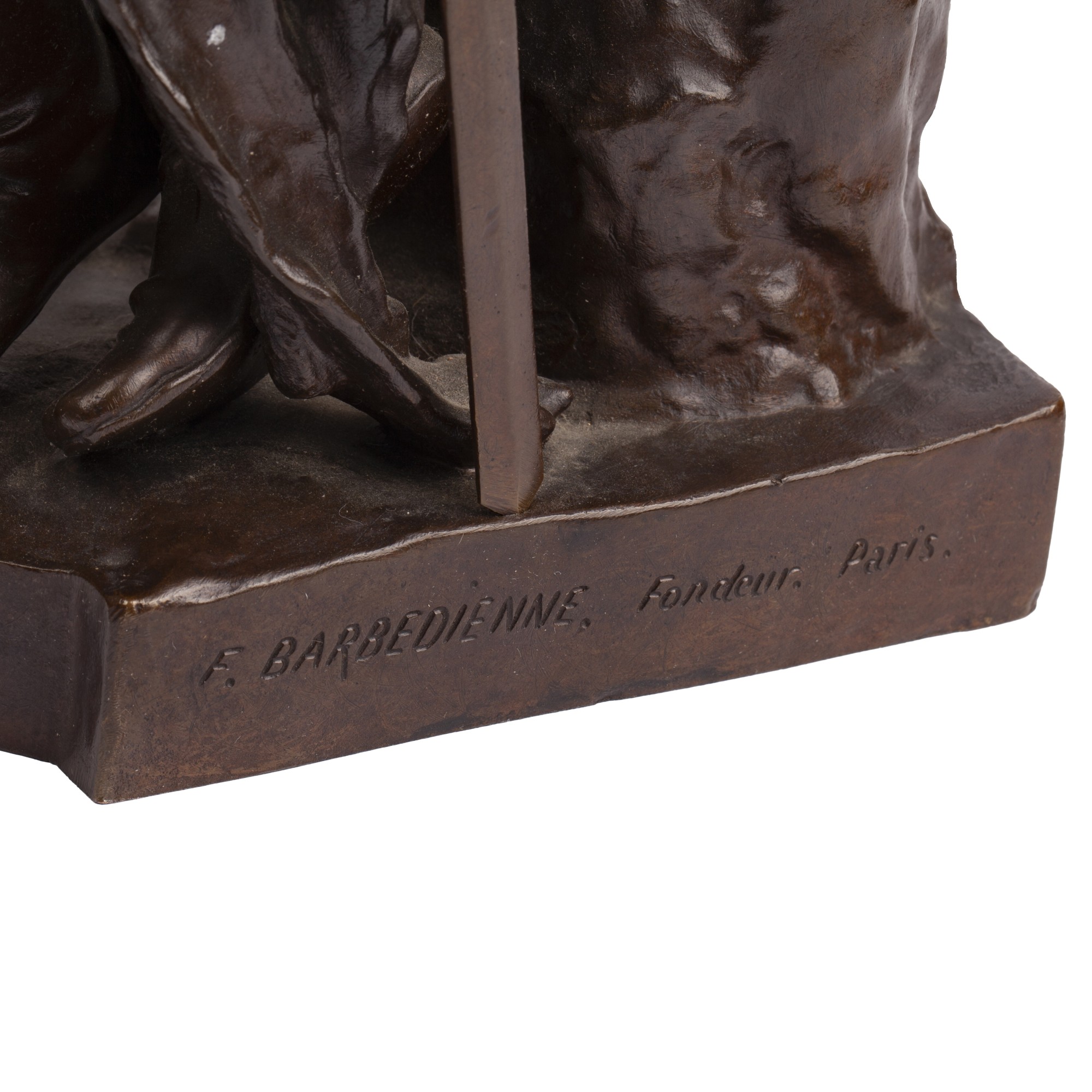
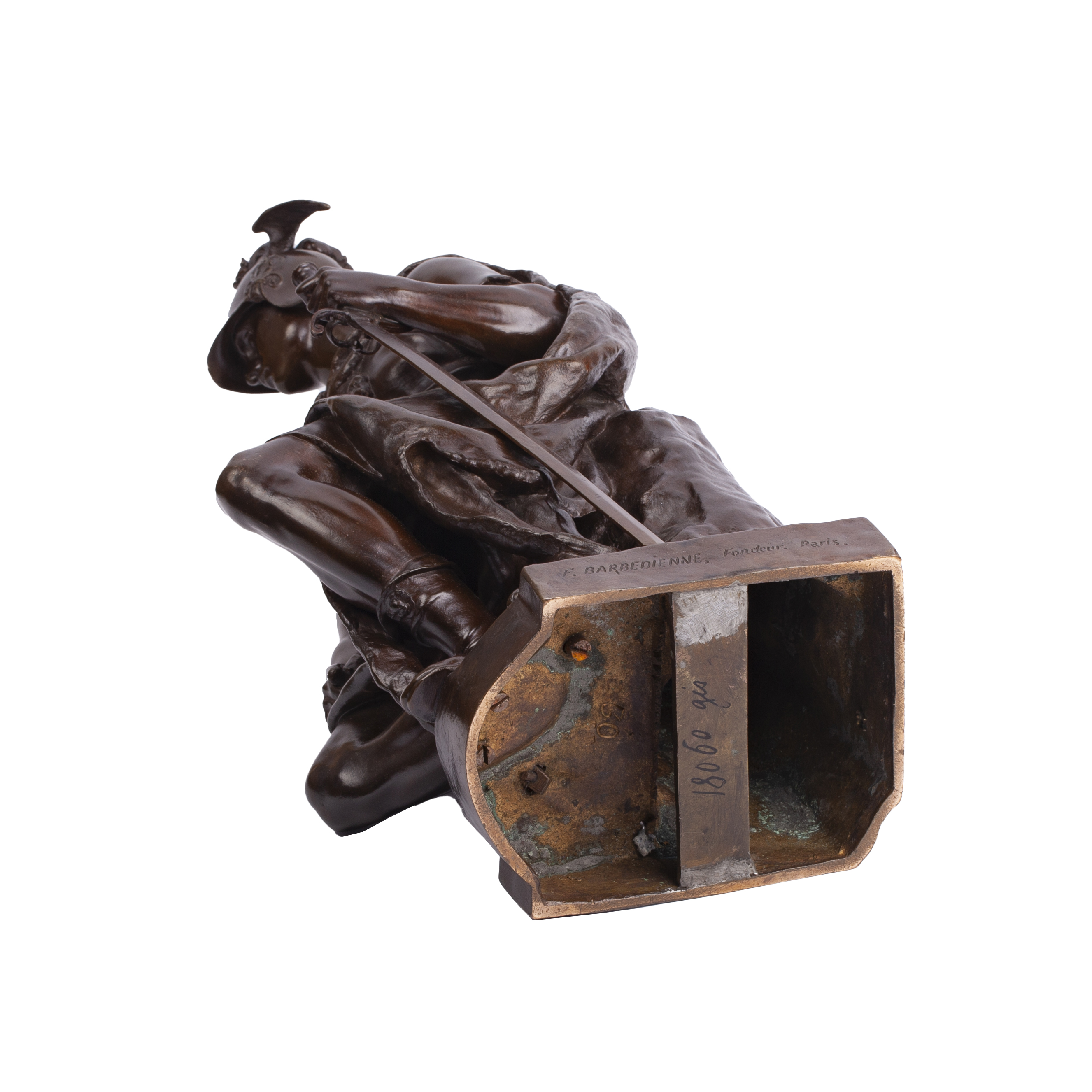
Patinated bronze, signed “F. Barbedienne, Fondeur”
Height: 38 cmThis exceptional bronze, cast by the renowned Barbedienne Foundry, represents “Le Courage Militaire” (Military Courage) — one of the four allegorical figures created by Paul Dubois for the cenotaph of General Juchault de La Moricière in the Cathedral of Nantes.
Depicted as a seated Roman warrior, the figure embodies noble restraint and strength through a masterful synthesis of naturalism and classical idealization. The serene dignity of the soldier’s pose and the finely rendered drapery are hallmarks of Dubois’s distinctive “Neo-Florentine” style, blending Renaissance influence with French academic sculpture of the 19th century.
Paul Dubois, both a sculptor and painter, studied in Rome and gained prominence with his Saint John the Baptist (1861), exhibited at the Paris Salon. His refined, spiritual approach to allegorical subjects earned him widespread acclaim, including médaille d’honneur at the Salon des Beaux-Arts in 1865 and 1876.
Dubois’s works — including Military Courage, Faith, Charity, and Meditation — are represented in leading French institutions such as the Musée d’Orsay and the Musée Camille Claudel in Nogent-sur-Seine
Starting price: 2000€
Estimate: 2500-3000€
Hammer Price: Not sold -
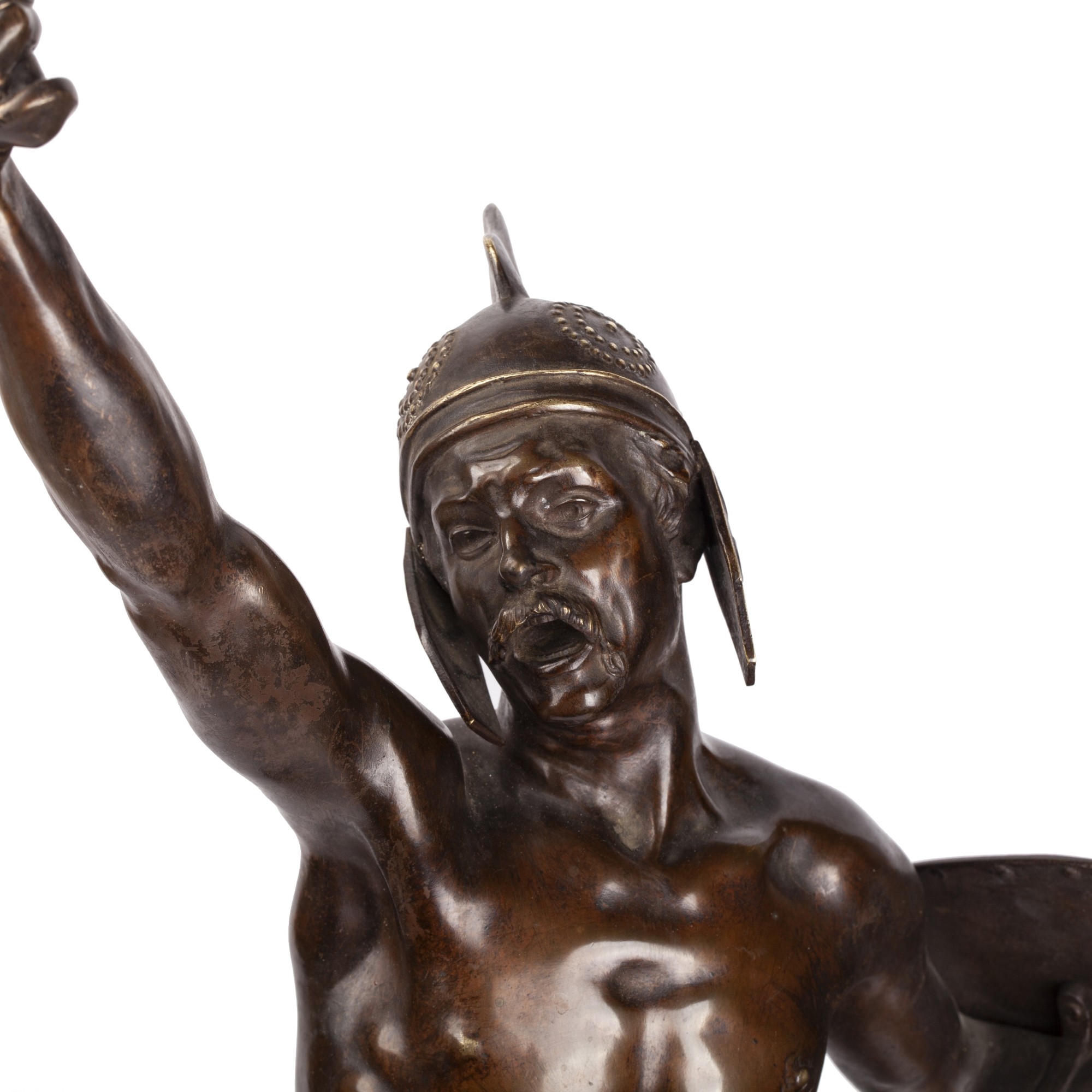
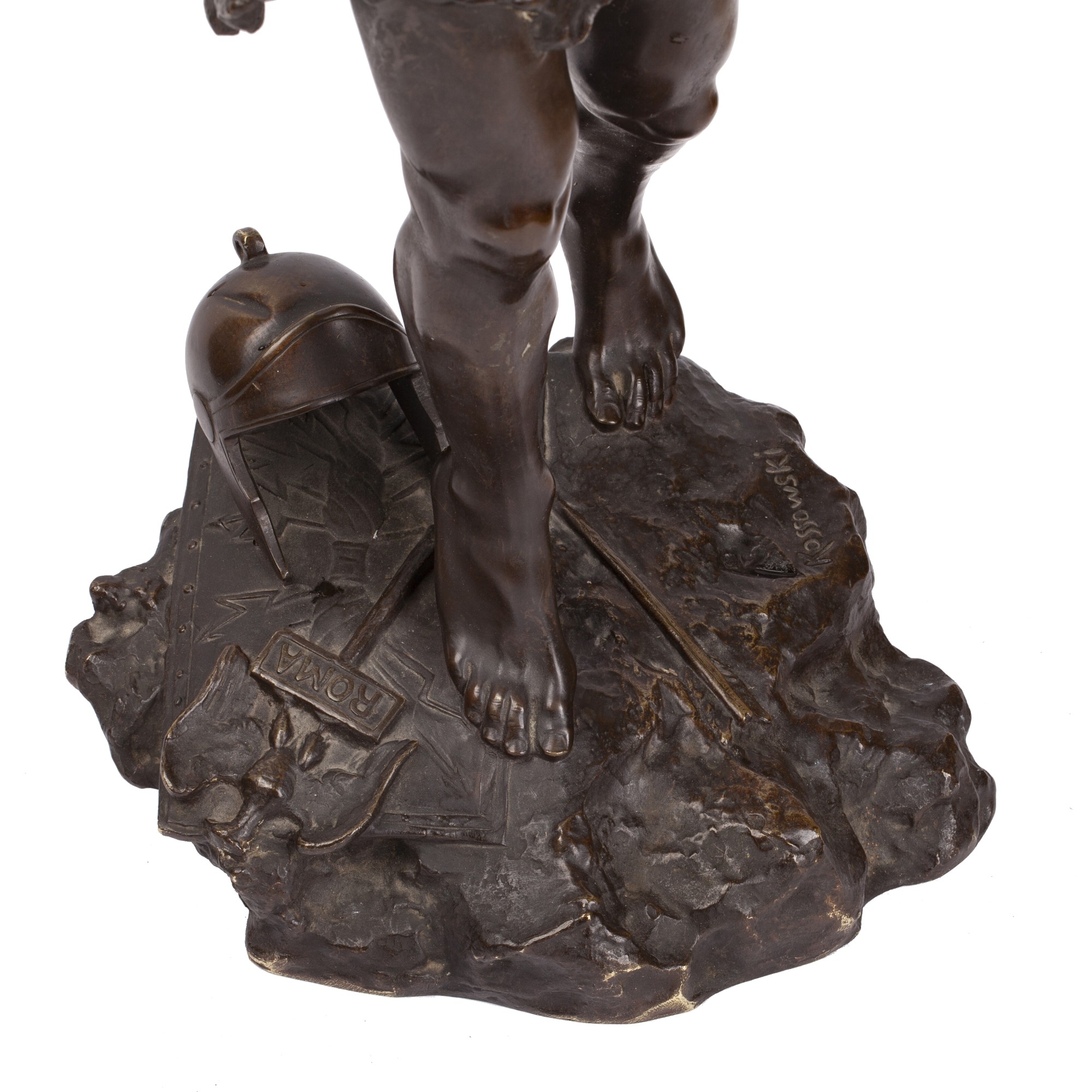
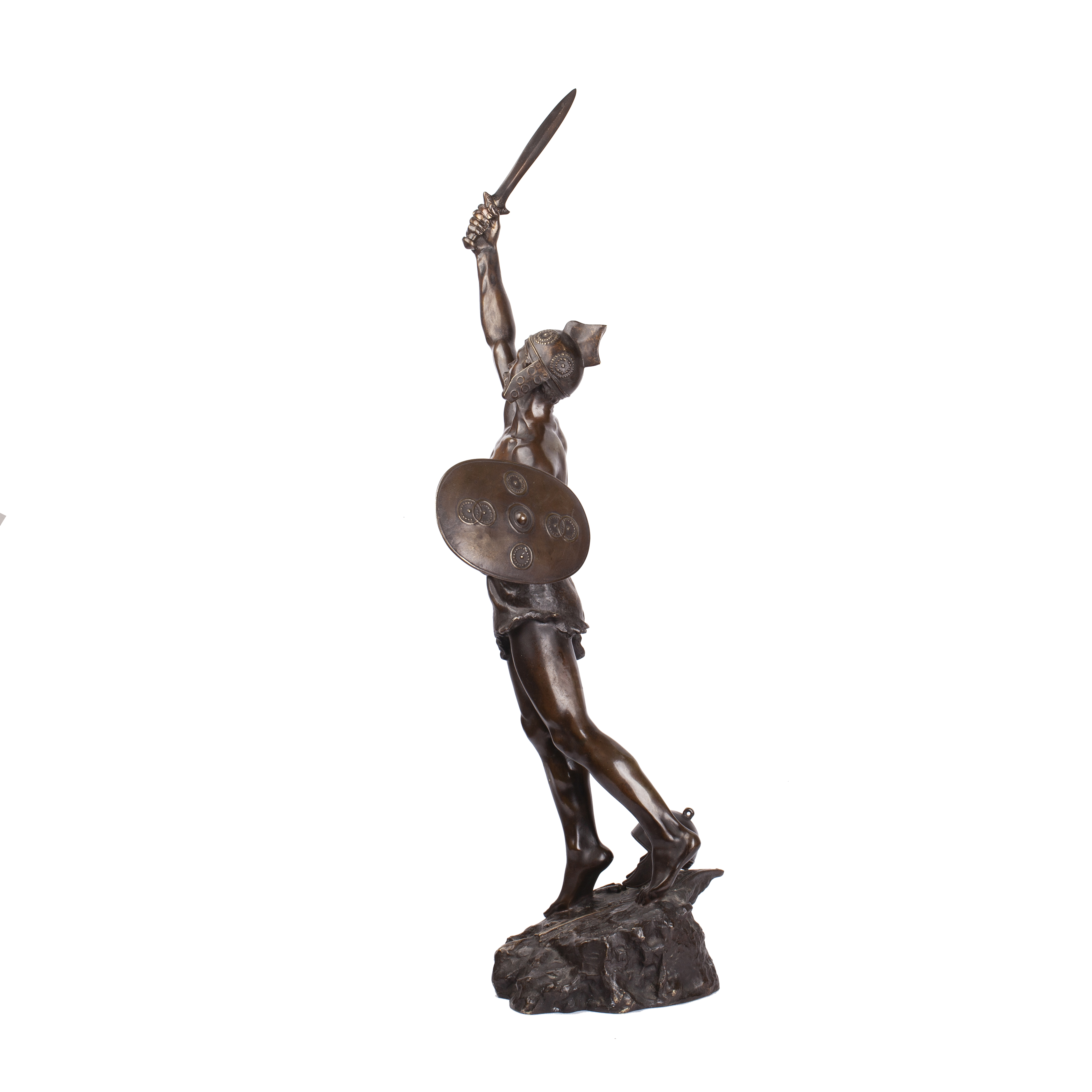
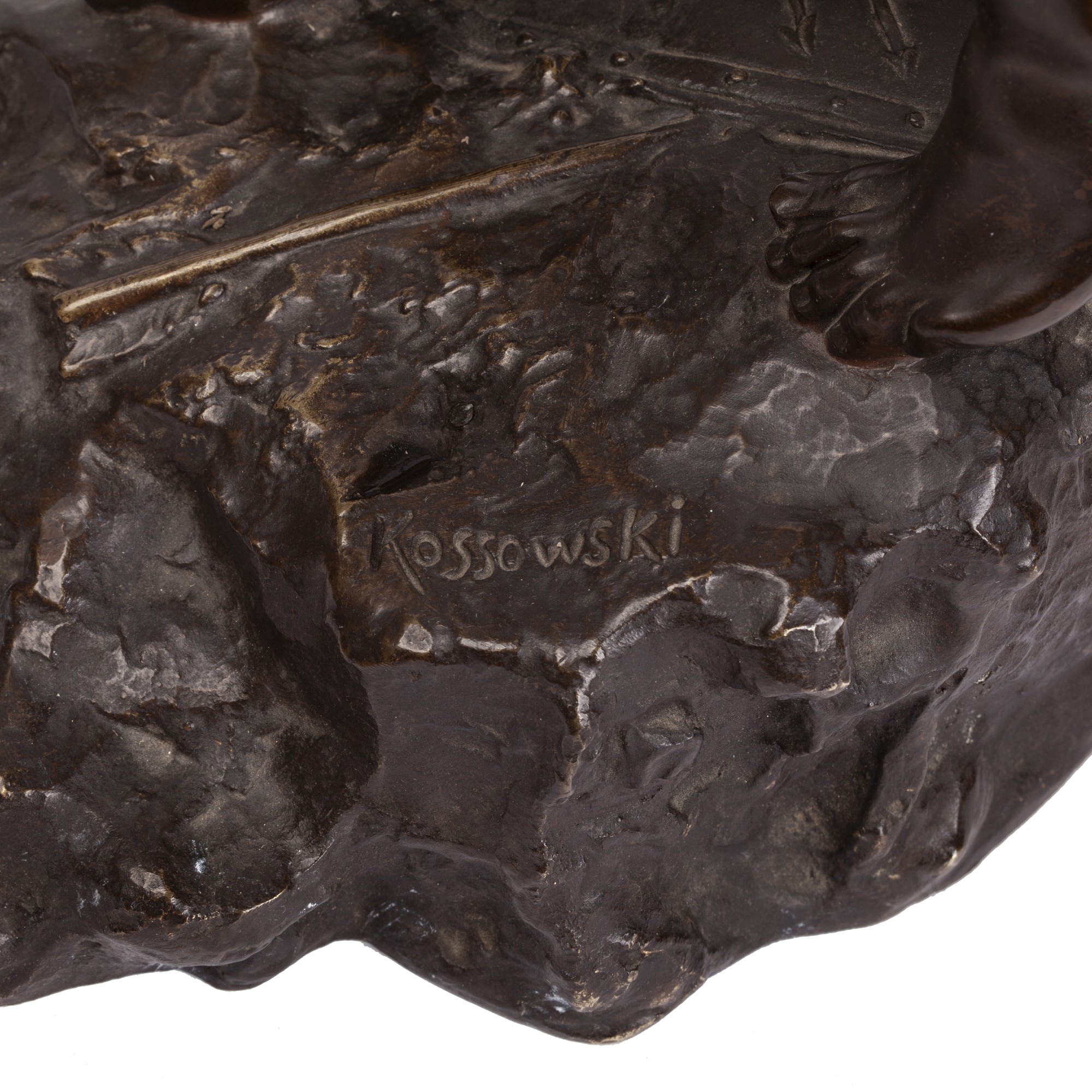
Lot 0029
Bronze Figure of Vercingetorix Triumphant Against the Romans by Henryk KOSSOWSKI II (1855-1921)
Estimate: 2500-3000€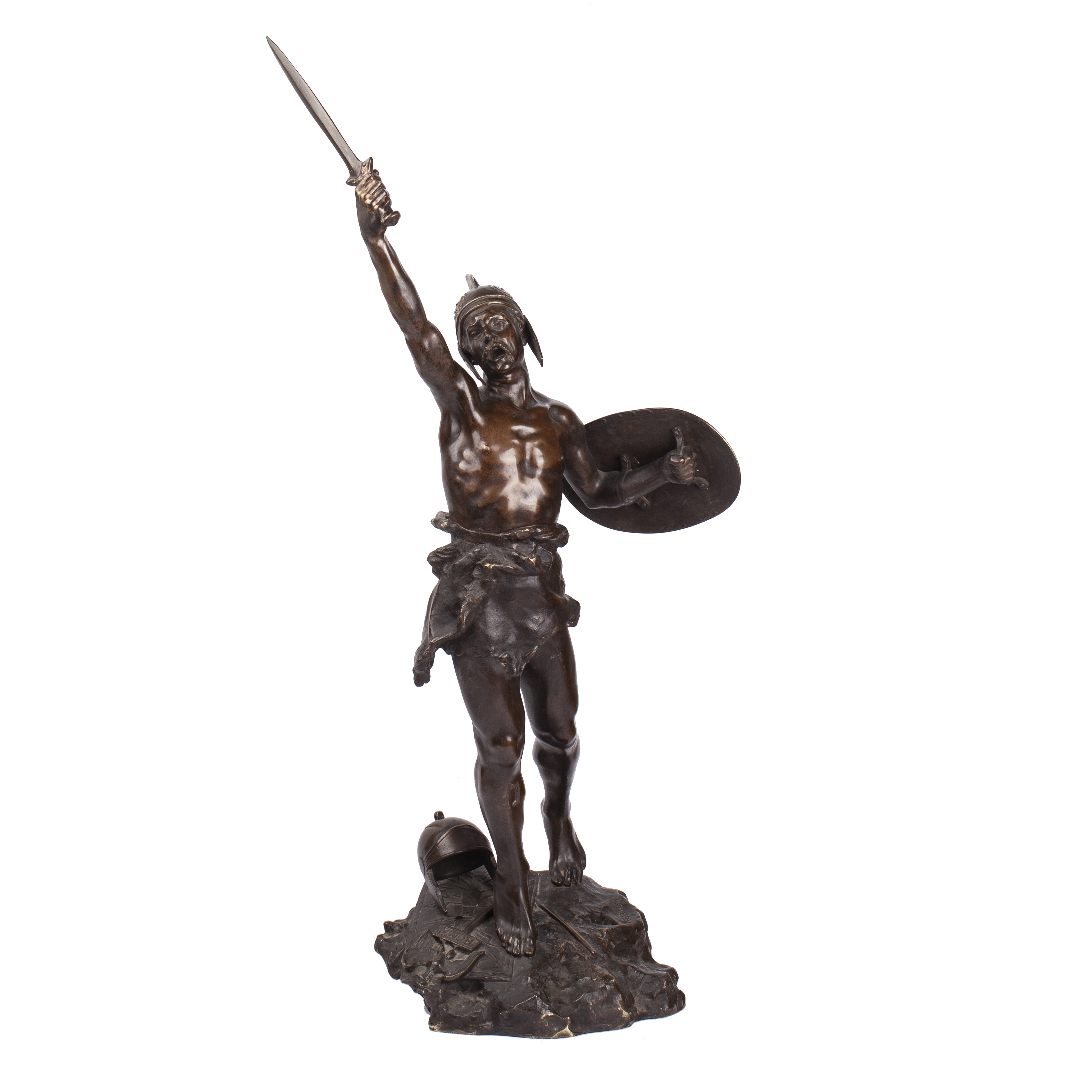
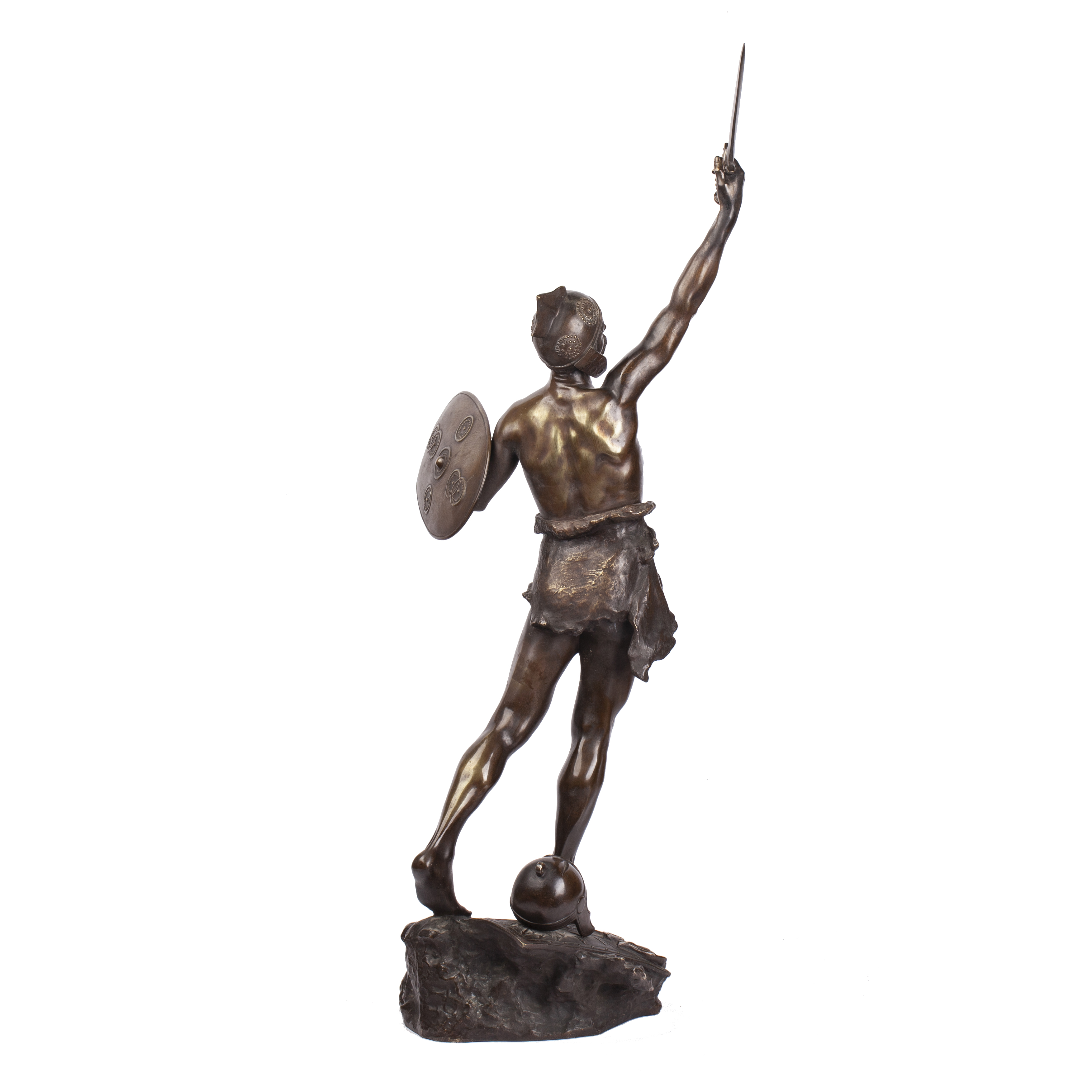
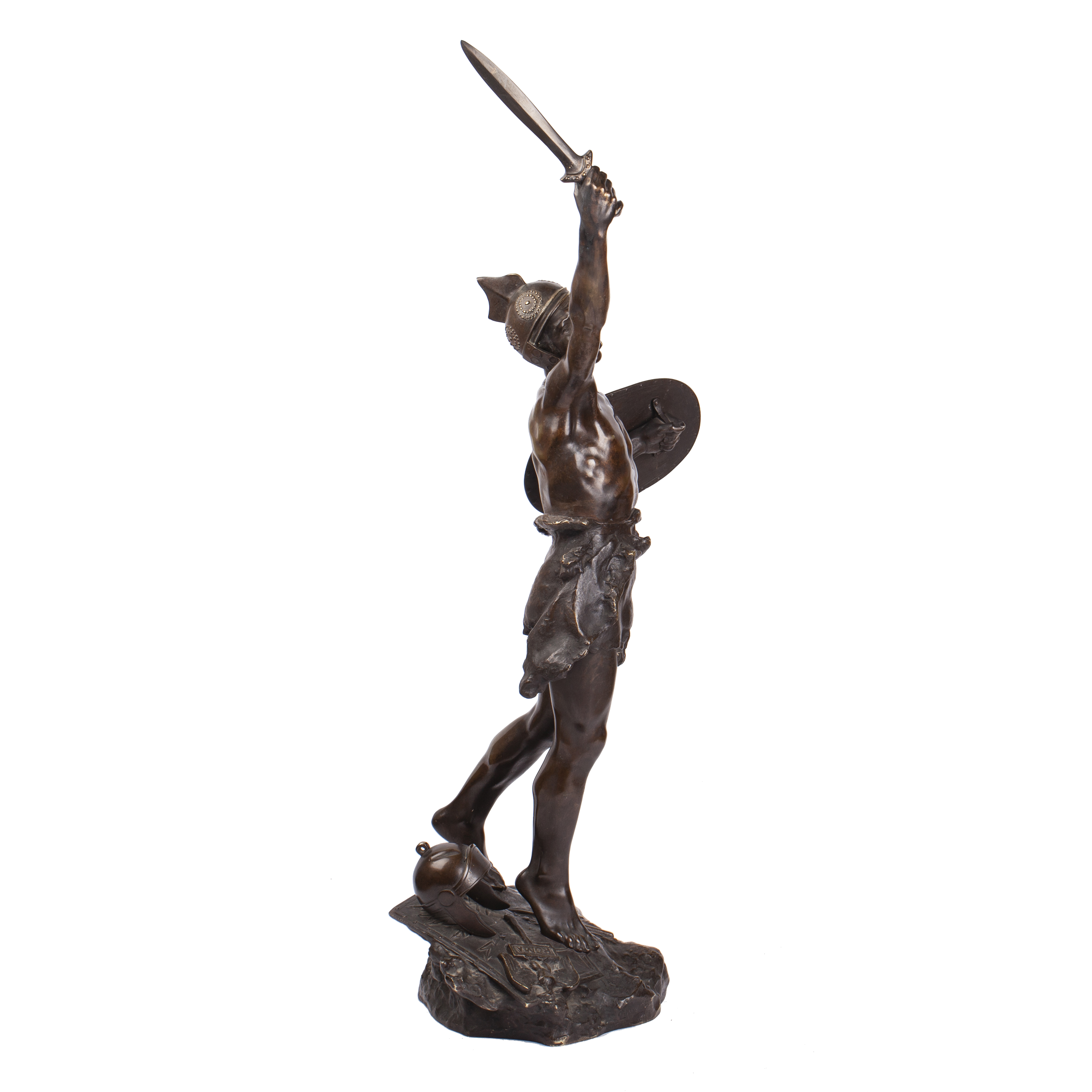
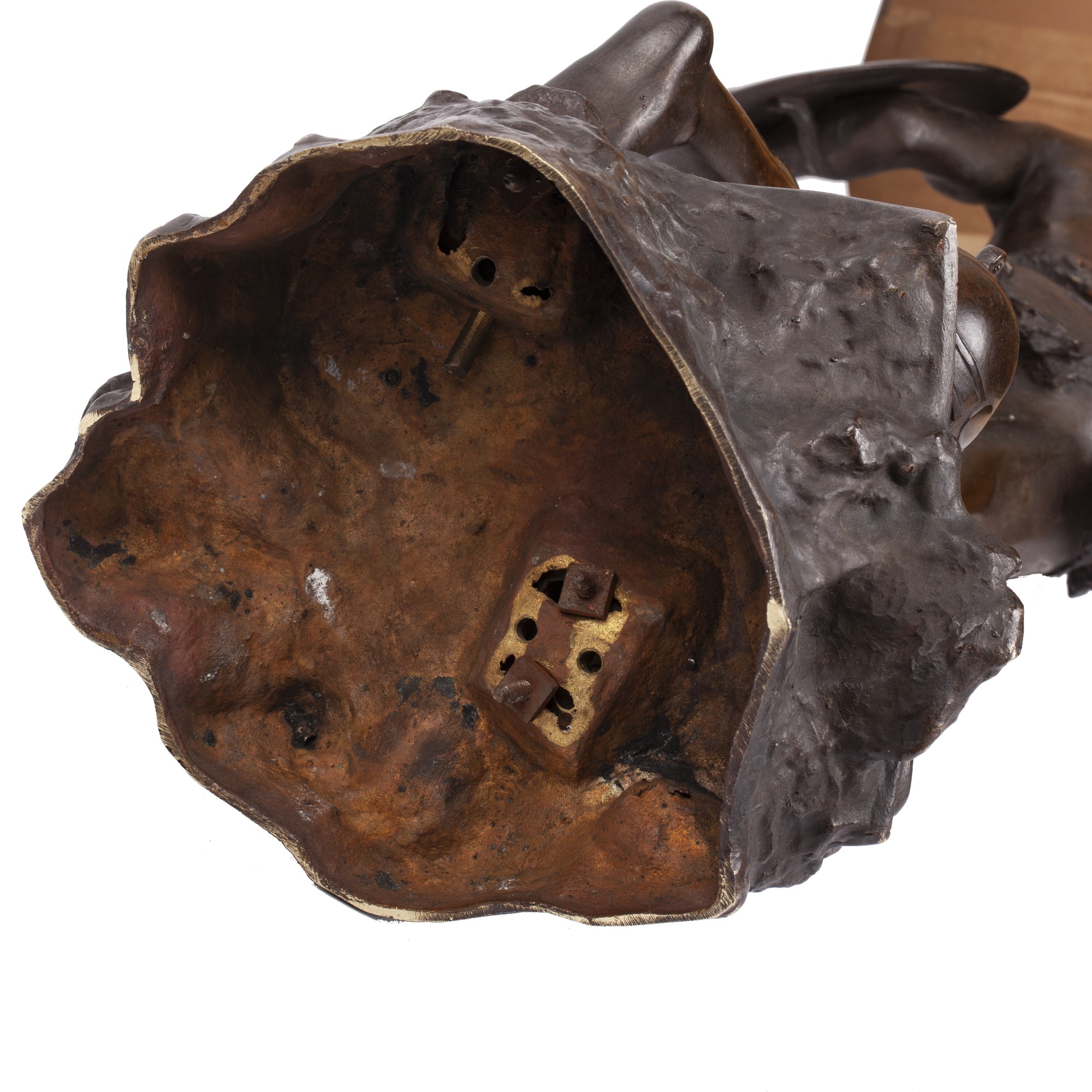
Lot 0029
Bronze Figure of Vercingetorix Triumphant Against the Romans by Henryk KOSSOWSKI II (1855-1921)
Estimate: 2500-3000€Henryk Kossowski II (1855–1921)
Vercingetorix Triumphant Against the Romans
France (or Poland–France), late 19th century
Patinated bronze, signed on the base
Height: 79.5 cmThis powerful bronze by Henryk Kossowski II depicts Vercingetorix, the Gallic chieftain celebrated for his defiant stand against Julius Caesar during the Gallic Wars (52 BCE). Captured in a moment of victorious exaltation, the figure raises his sword to the sky, his shield and discarded Roman helmet at his feet symbolizing courage, rebellion, and national pride.
Kossowski renders the warrior’s anatomy with exceptional vitality, combining Romantic expressiveness with the academic precision characteristic of late 19th-century sculpture. The dynamic upward gesture and intense facial expression evoke the ideals of liberty and sacrifice, themes deeply resonant in the national art of occupied Poland and in French historical imagination alike.
Born in Poland, Henryk Kossowski II worked extensively in Paris, where he exhibited at the Salon des Artistes Français from 1877. His oeuvre includes religious, allegorical, and historical subjects, often blending dramatic movement with refined naturalism.
Starting price: 2000€
Estimate: 2500-3000€
Hammer Price: Not sold -
Lot 0030
Juan Clara Ayats – “Girl in a High Chair”, Bronze Sculpture, Signed
Estimate: 400-500€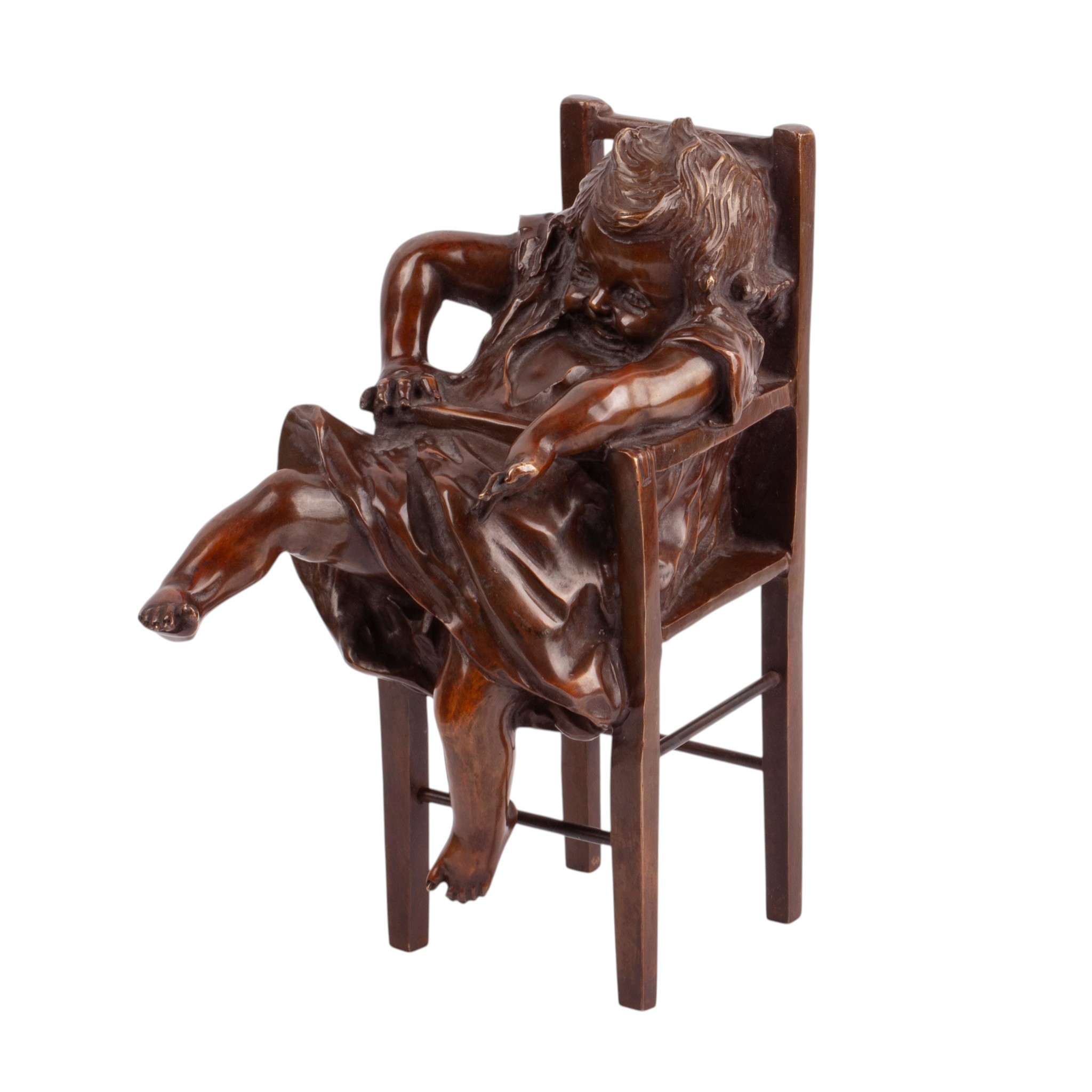
Lot 0030
Juan Clara Ayats – “Girl in a High Chair”, Bronze Sculpture, Signed
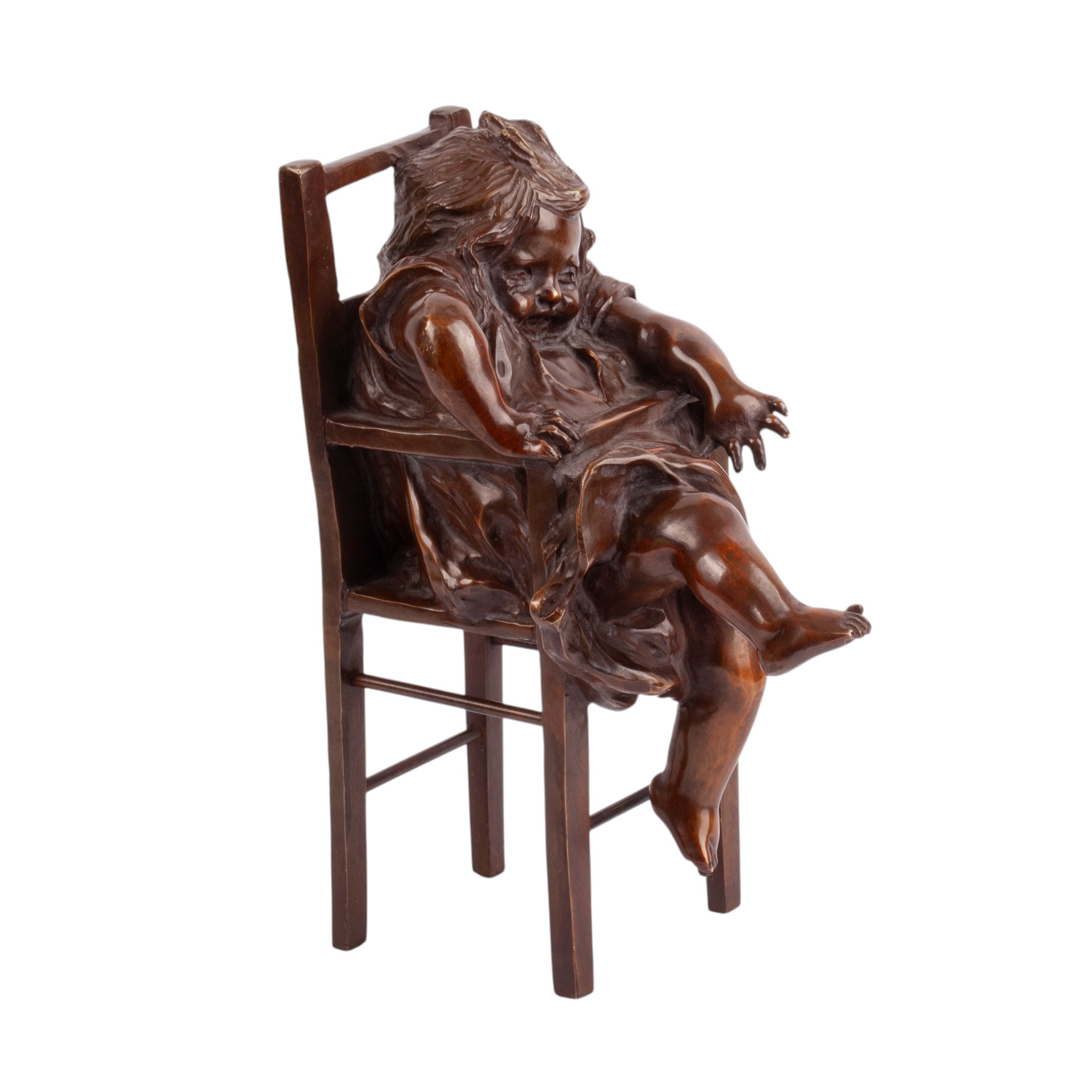
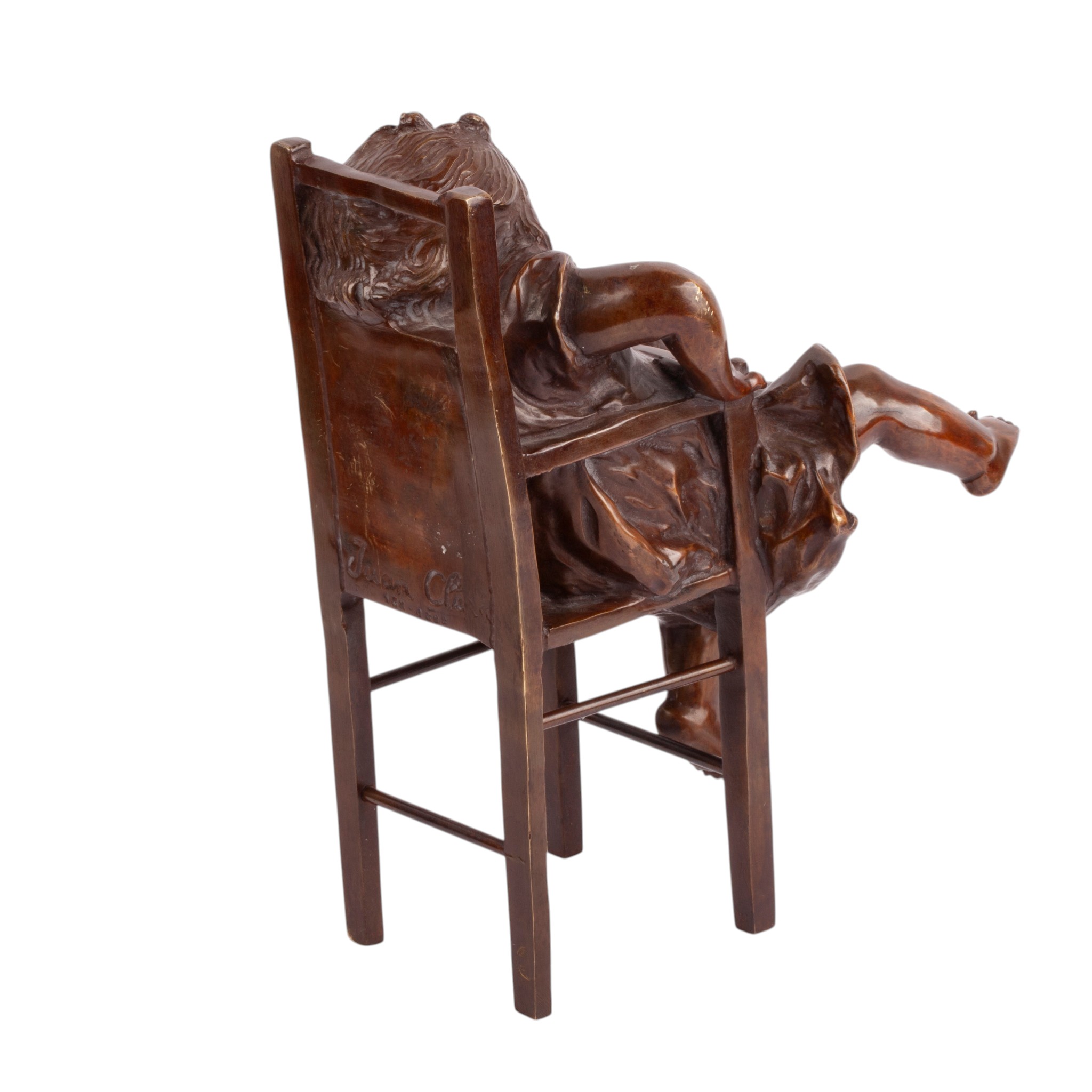
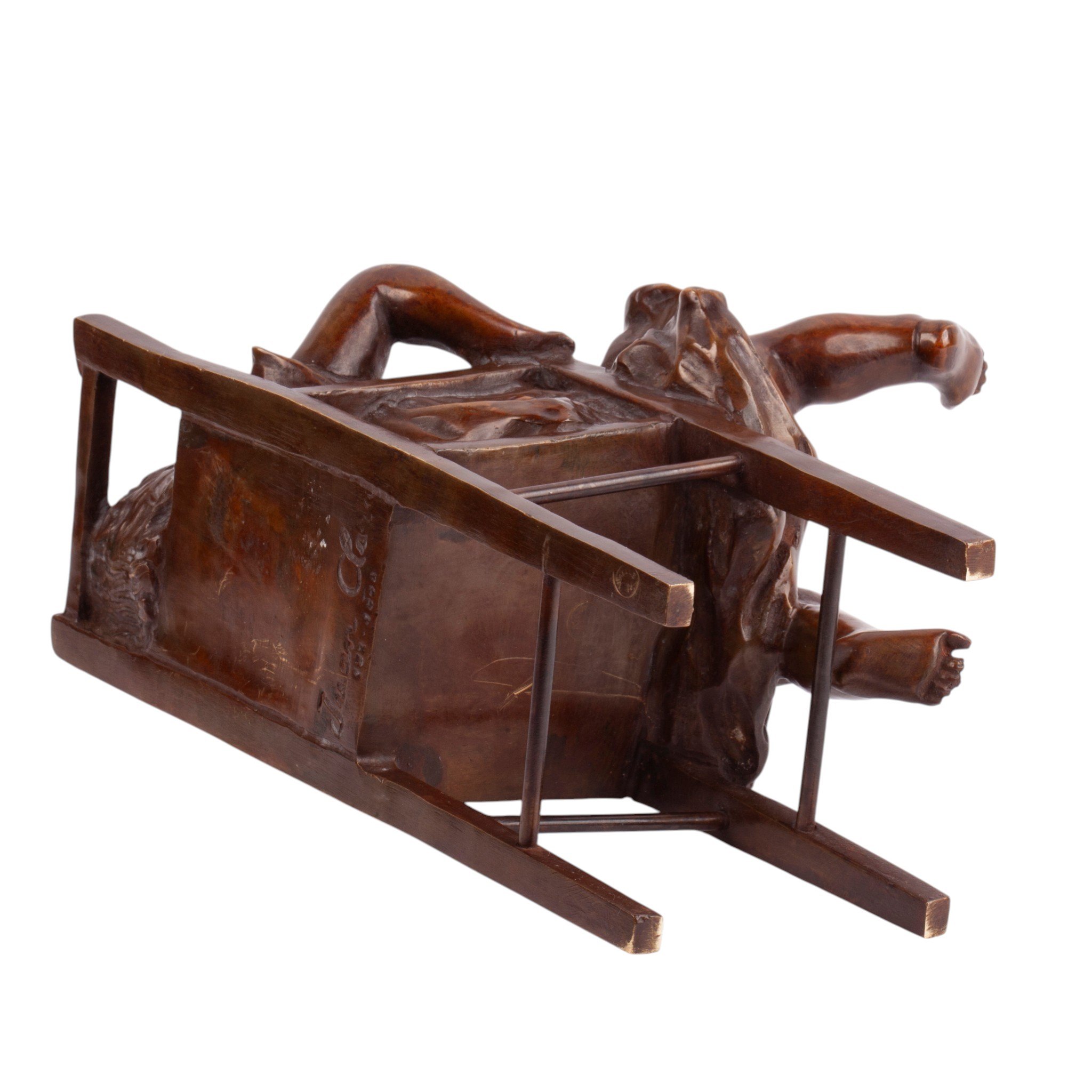
Estimate: 400-500€Juan Clara Ayats. Girl in a High Chair
Spain, first half of the 20th century.
Bronze, cast, chased and patinated. Height: 22 cm.
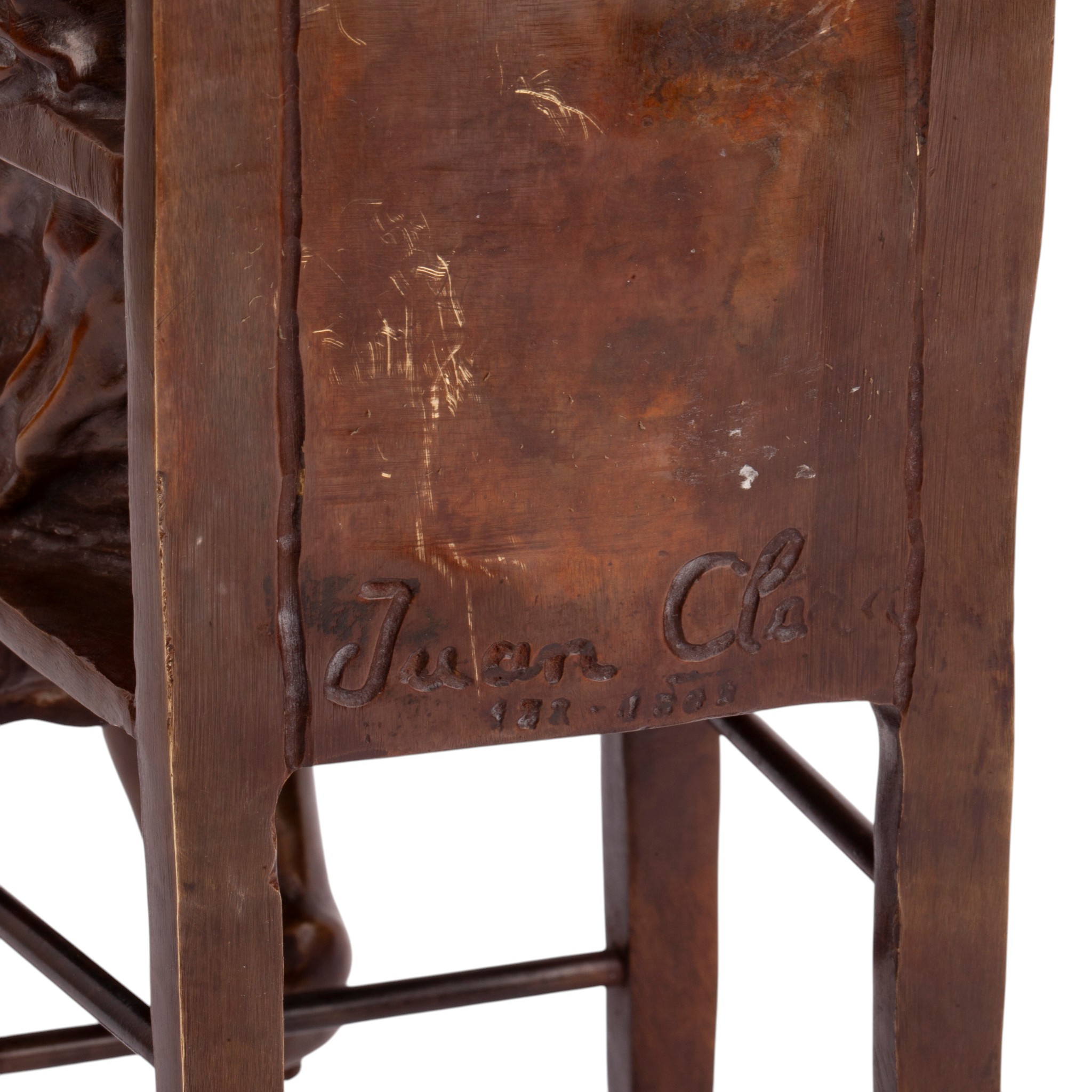
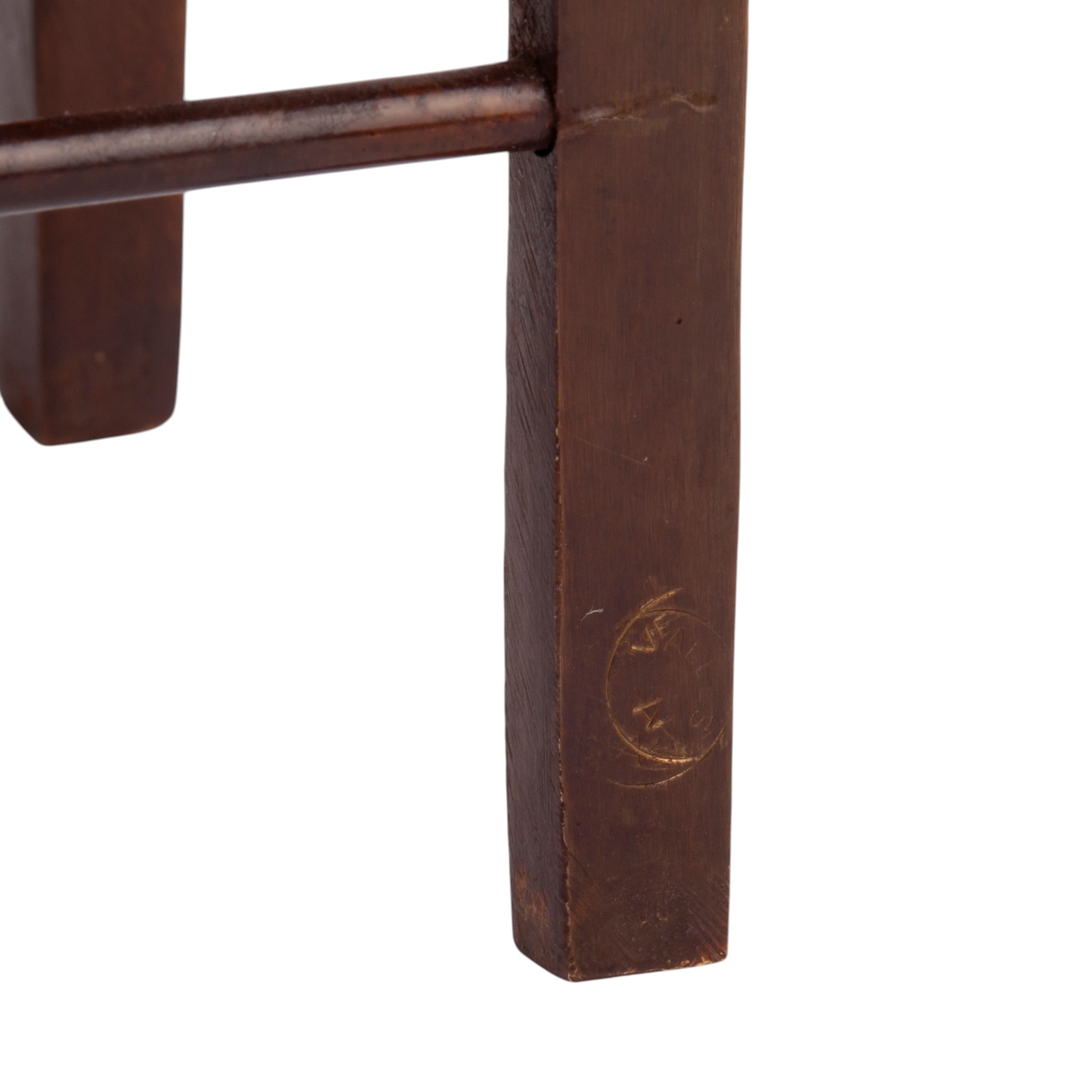
Signed Juan Clara and numbered on the reverse of the chair.
A finely observed cabinet bronze of striking anecdotal charm, this sculpture captures a small child at the instant when passive repose turns into restless movement.
The sculptor treats the figure with notable sensitivity: the tousled hair, rounded cheeks, soft limbs, and loose folds of the dress are rendered with a vivid naturalism that stops short of sentimentality.
This work accords closely with the established oeuvre of Juan Clara Ayats, a Spanish sculptor generally listed as active between 1875 and 1958 and particularly associated with patinated bronze figures of children. Born in Villafranca del Panadés, Clara’s artistic journey began at the Royal Academy of Fine Arts of San Carlos in Valencia. He later moved to Paris, where he flourished as an artist, gaining recognition for his innovative and emotive sculptures. Clara’s works often explored human emotions and the female form, showcasing a blend of classical and modern influences. His notable pieces include “La Bacante” and “Eve,” reflecting a mastery of expressive details and refined craftsmanship. Juan Clara’s legacy endures through his impact on Spanish sculpture, leaving a lastingStarting price: 250€
Estimate: 400-500€
Hammer Price: Not sold -
Lot 0031
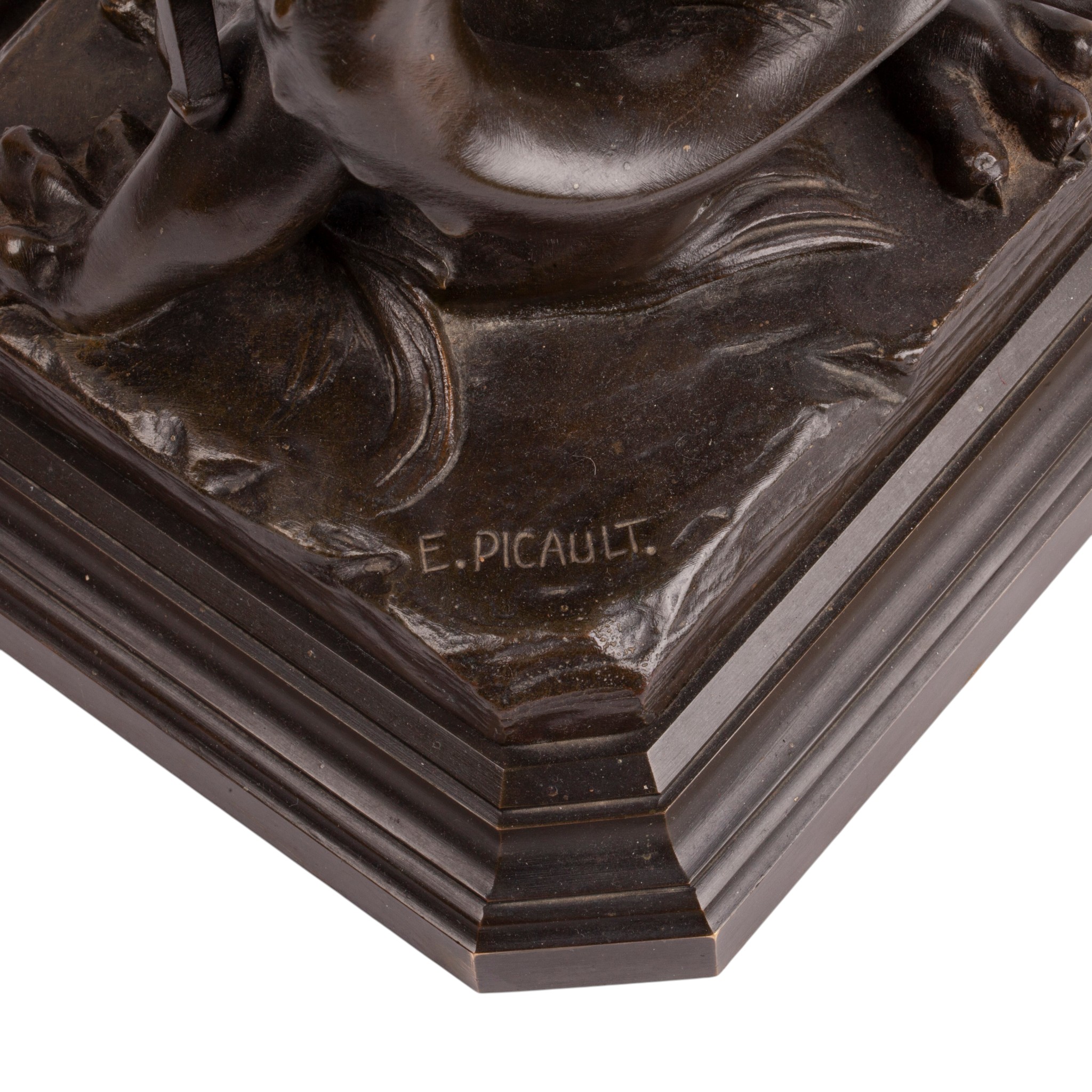
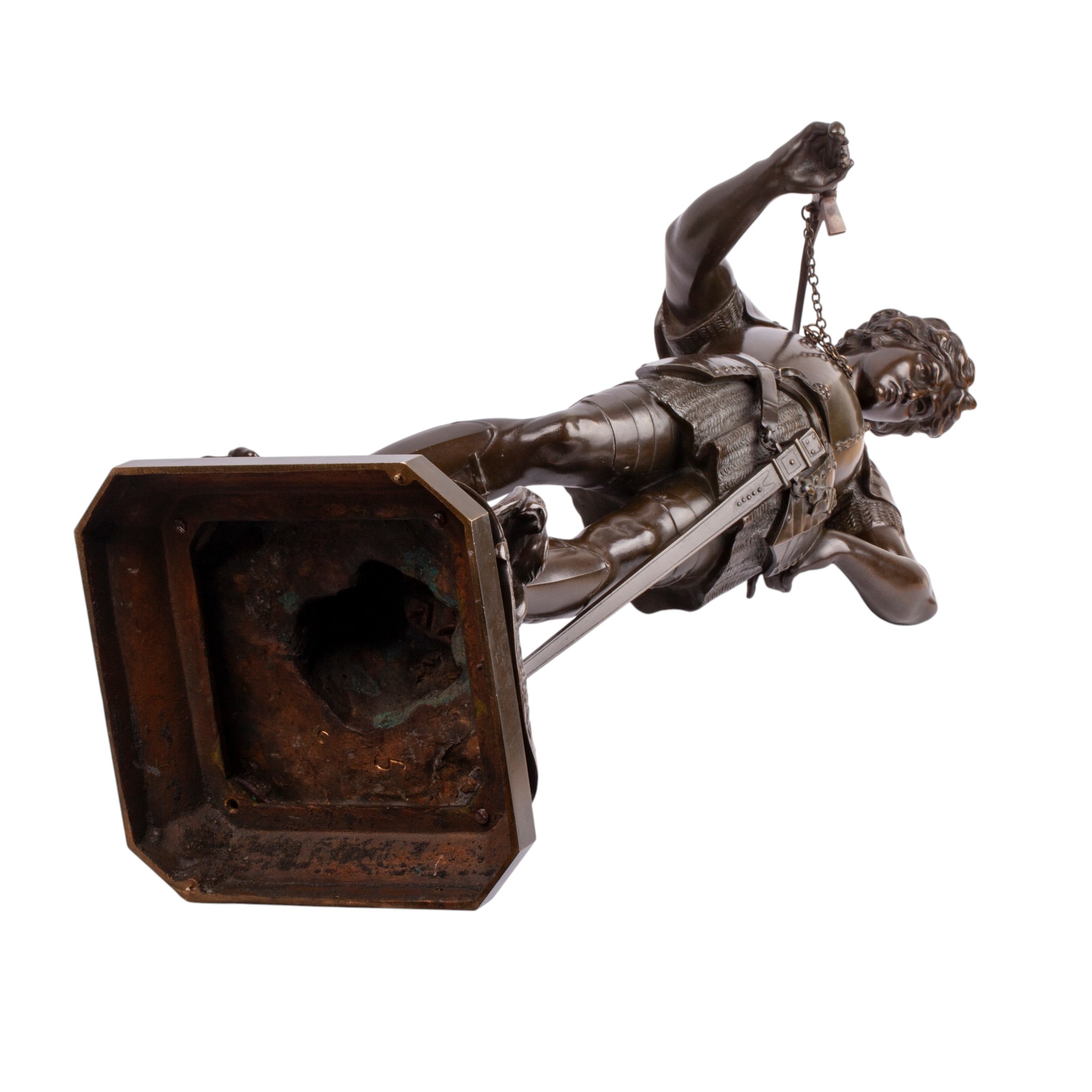
Émile Louis Picault – “Saint George”, Bronze Sculpture, Signed
Estimate: 1200-1500€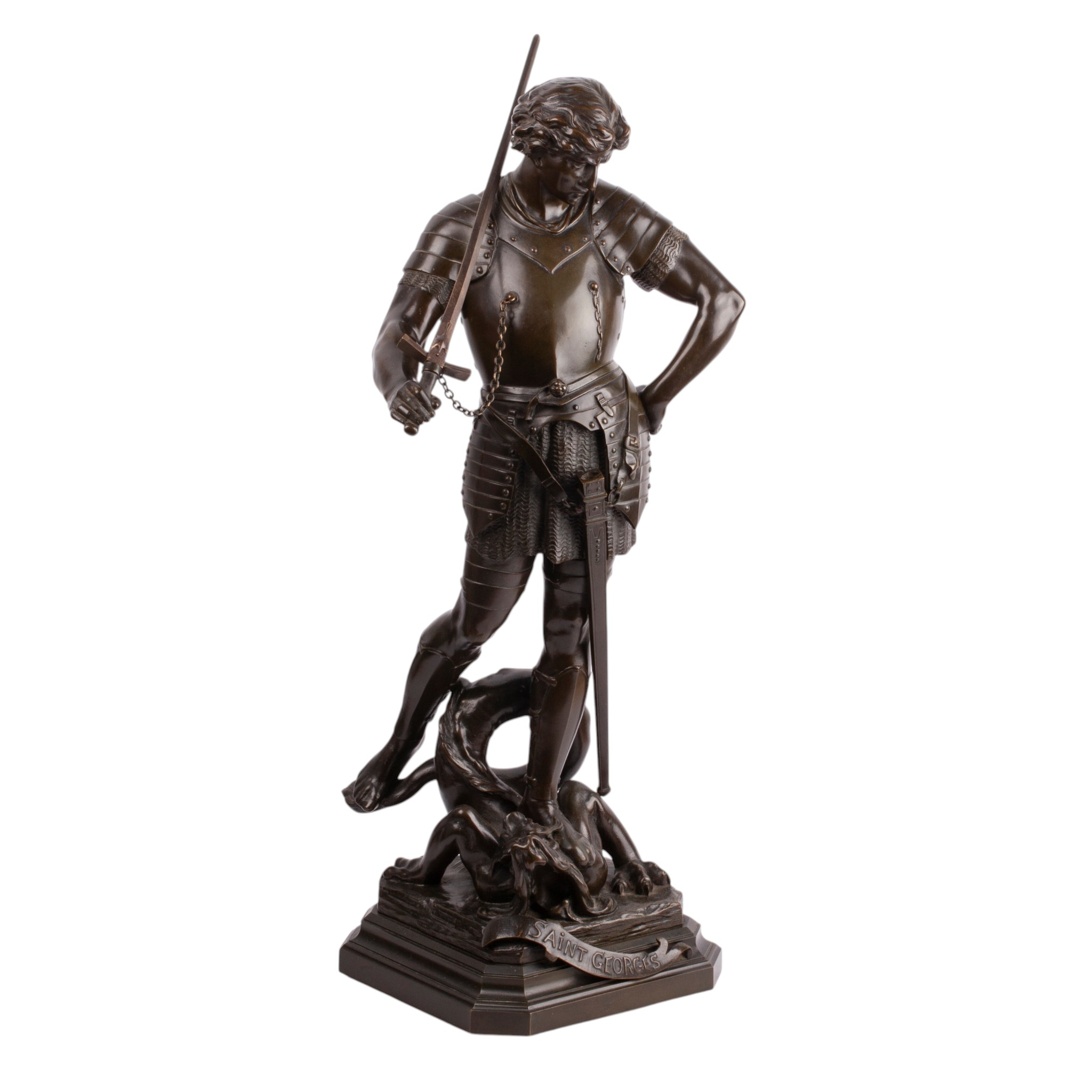
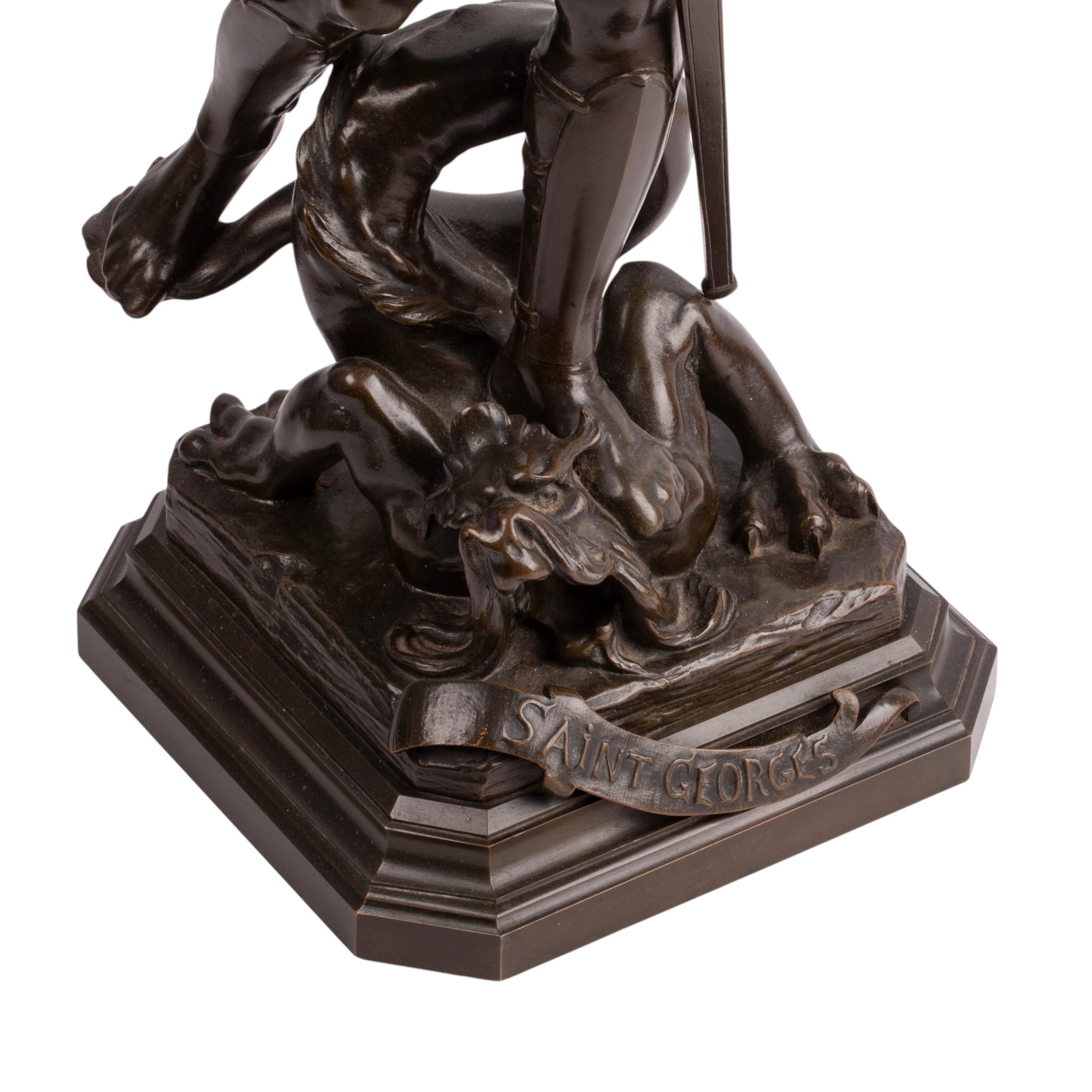
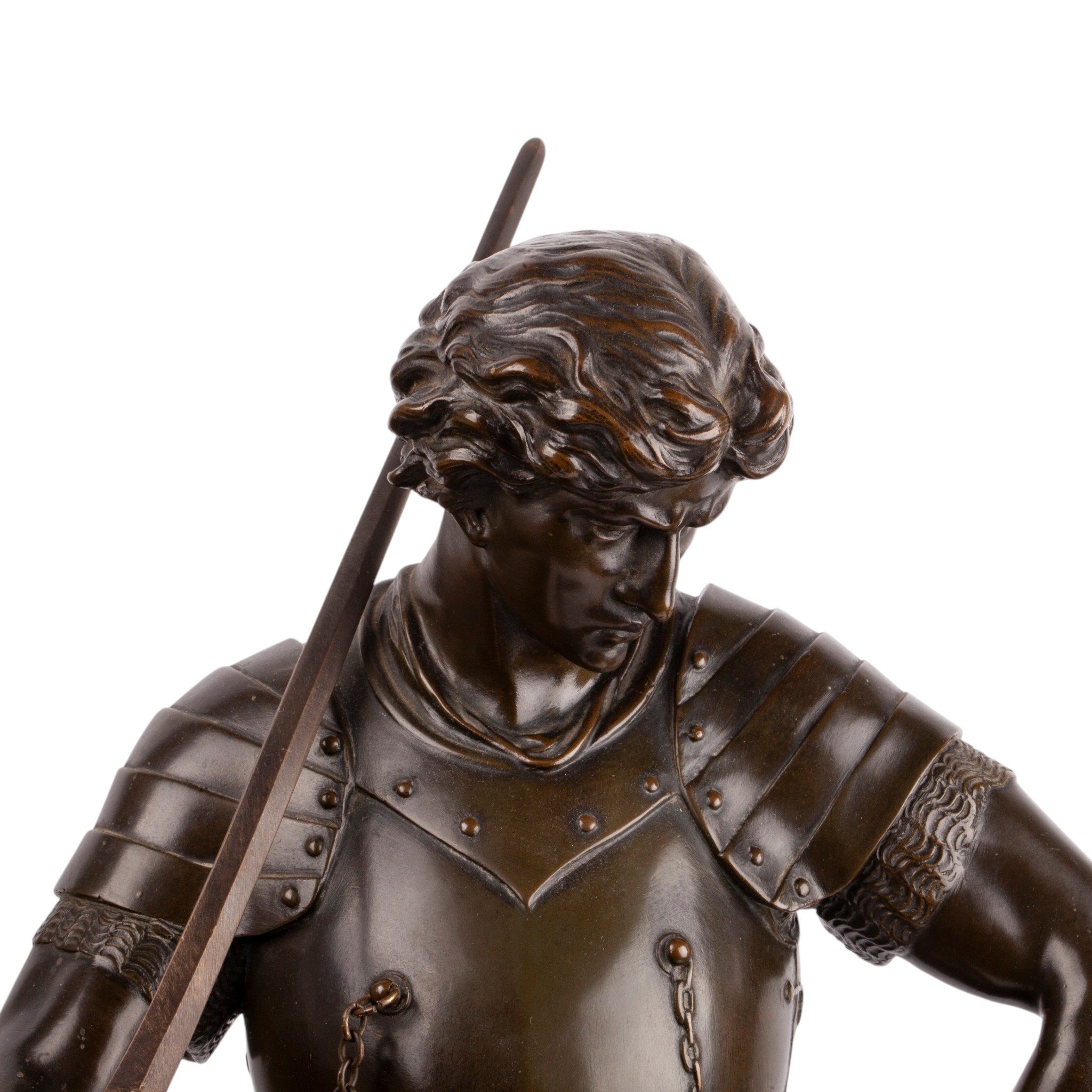
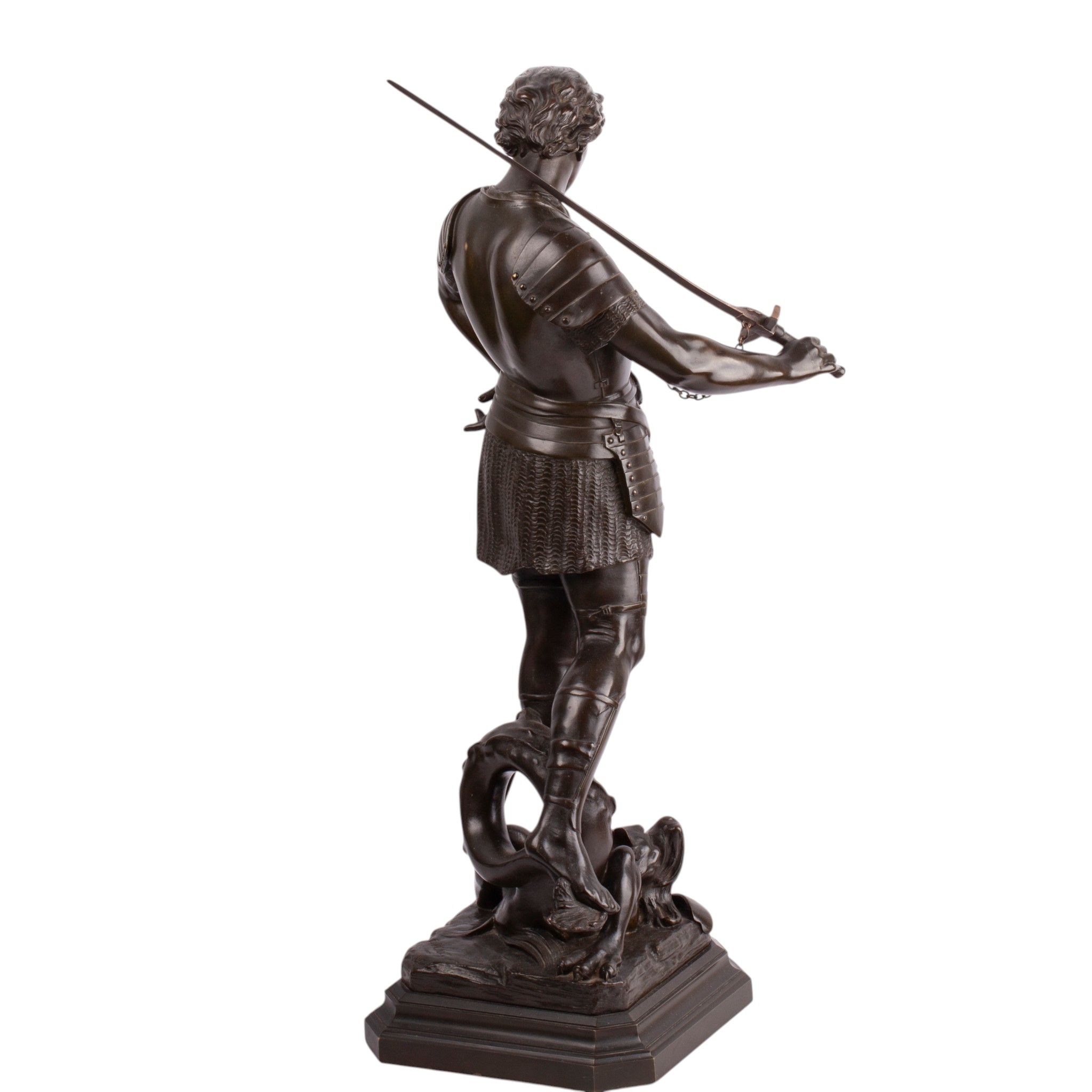
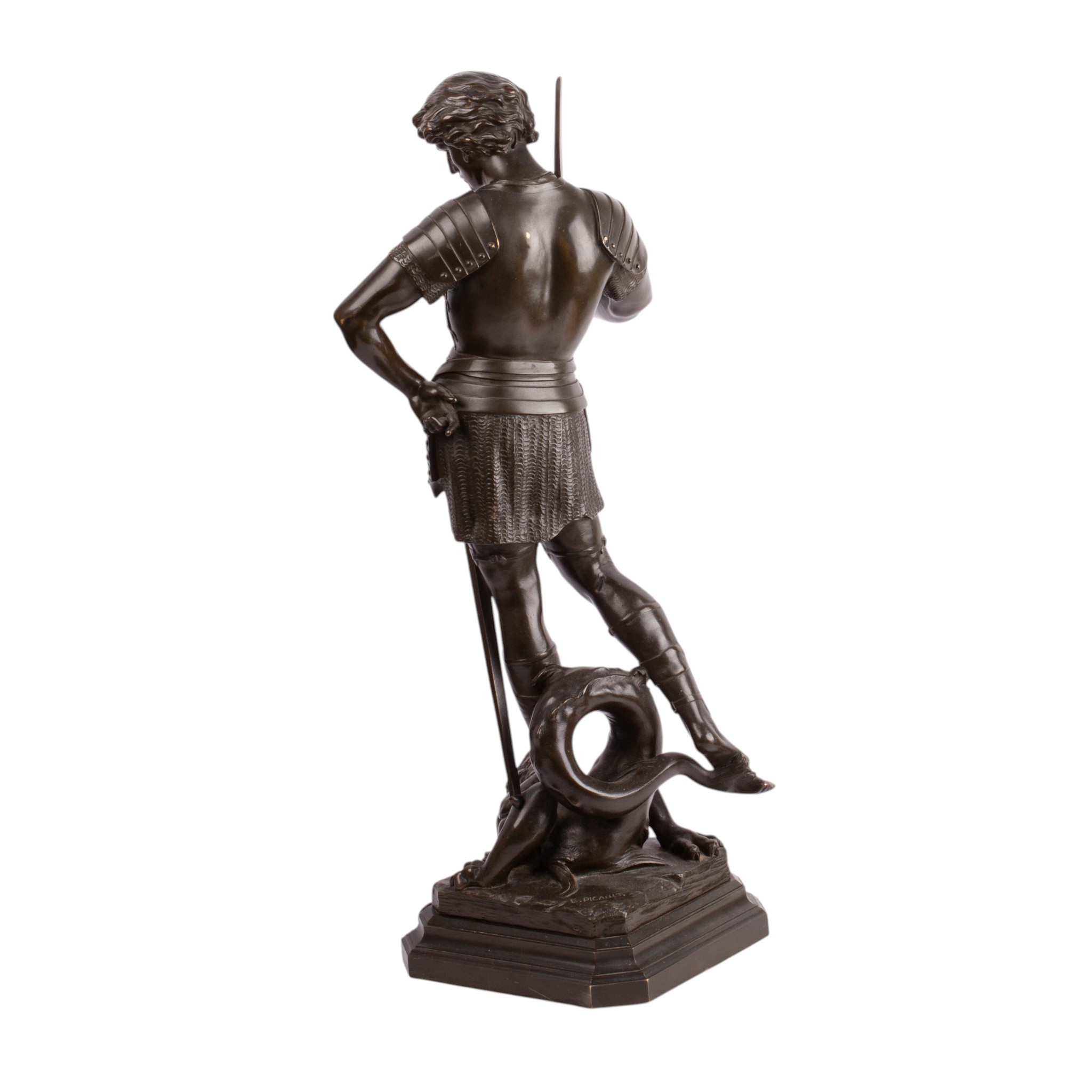
Lot 0031
Émile Louis Picault – “Saint George”, Bronze Sculpture, Signed
Estimate: 1200-1500ۃmile Louis Picault (1833-1915)
Saint George
France, late 19th-early 20th century
Patinated bronze, cast and chased.
Signed E. PICAULT. on the base; titled SAINT GEORGE’S on the front cartouche. Height: 59 cm
A finely cast figure of Saint George shown standing in armor over the slain dragon. Conceived as a victorious knight rather than in the more usual equestrian mode, the saint is rendered with Picault’s characteristic taste for historical theatricality and elegant surface detail. The composition contrasts the calm, self-possessed stance of the hero with the twisting, animated form of the beast beneath his feet, creating a compact yet dramatic silhouette. The carefully articulated cuirass, chain mail, sword belt, and greaves reflect the sculptor’s refined academic manner and his interest in heroic and historicizing subjects. Mounted on an architectural stepped base, the present work is a characteristic example of Picault’s highly successful cabinet sculpture, produced for the late nineteenth-century collector’s market.
Émile Louis Picault was among the most prolific French sculptors of the late nineteenth century, best known for allegorical, patriotic, mythological, and martial subjects. Exhibiting at the Paris Salon from 1863, he achieved wide popularity for cabinet bronzes combining narrative clarity, decorative appeal, and strong sculptural finish.Starting price: 1000€
Estimate: 1200-1500€
Hammer Price: Not sold -
Lot 0032
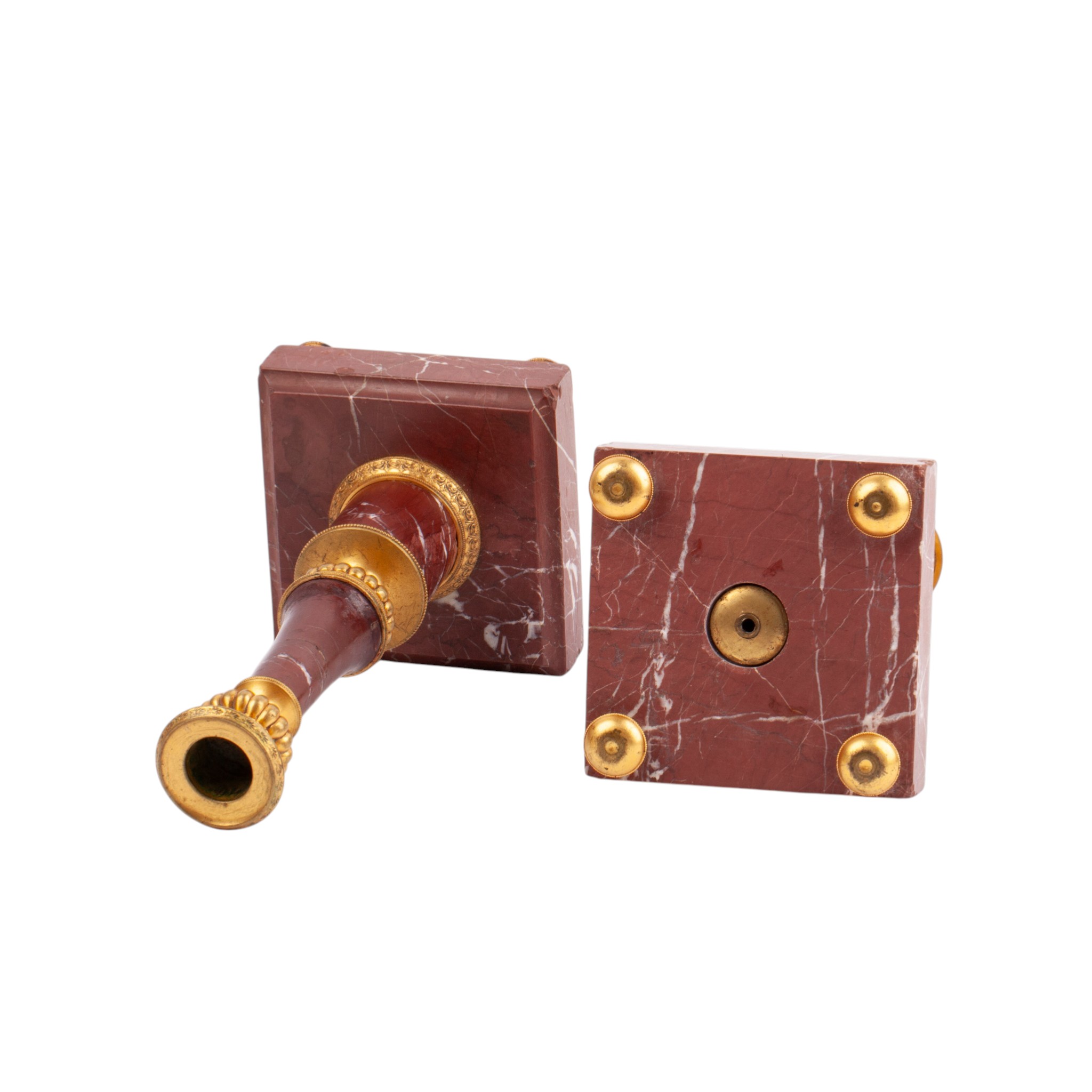
Pair of Russian Empire Style Gilt-Bronze Mounted Red Marble Candlesticks, Pair
Estimate: 1000-1200€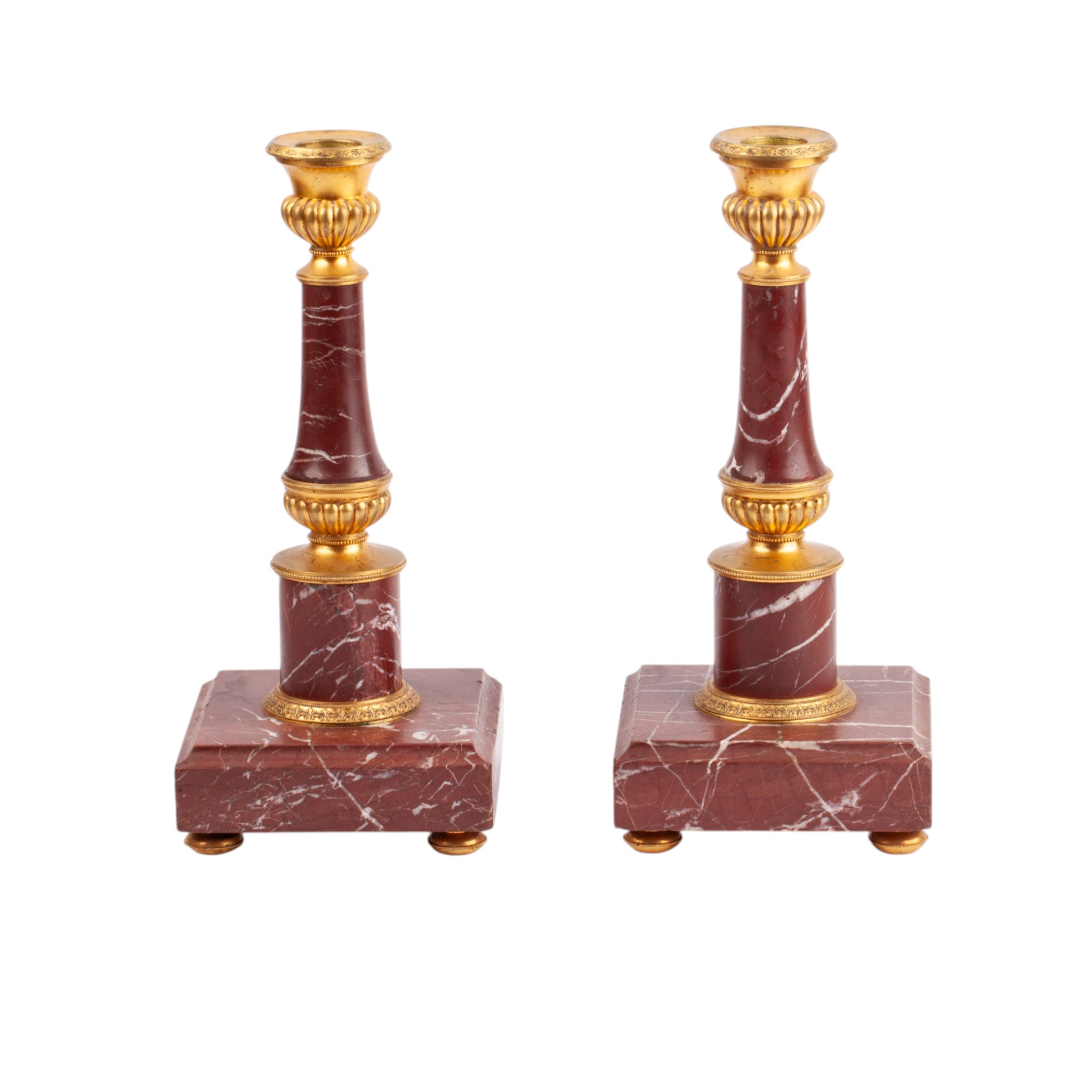
Lot 0032
Pair of Russian Empire Style Gilt-Bronze Mounted Red Marble Candlesticks, Pair
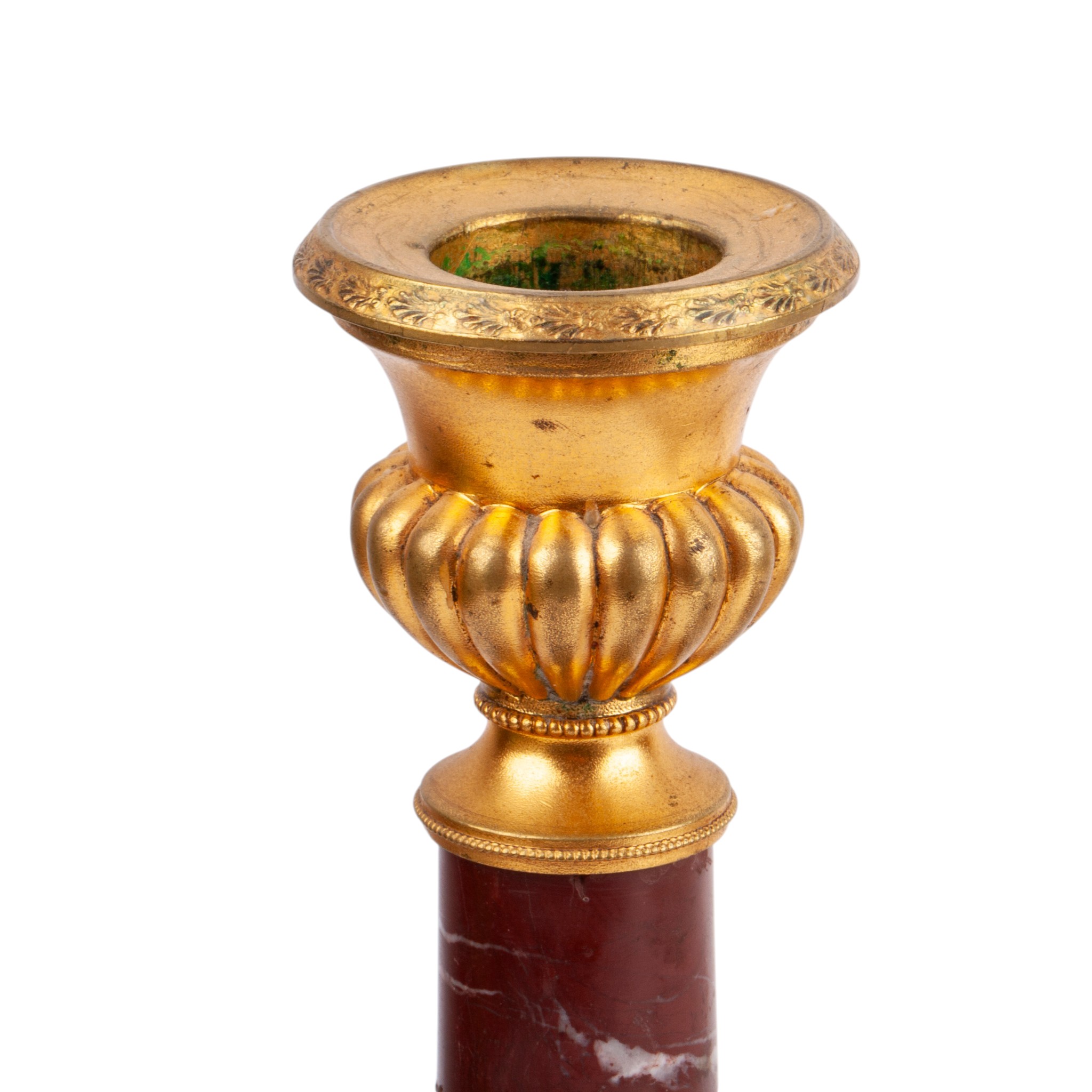
Estimate: 1000-1200€Pair of Russian Empire Style Gilt-Bronze Mounted Red Marble Candlesticks
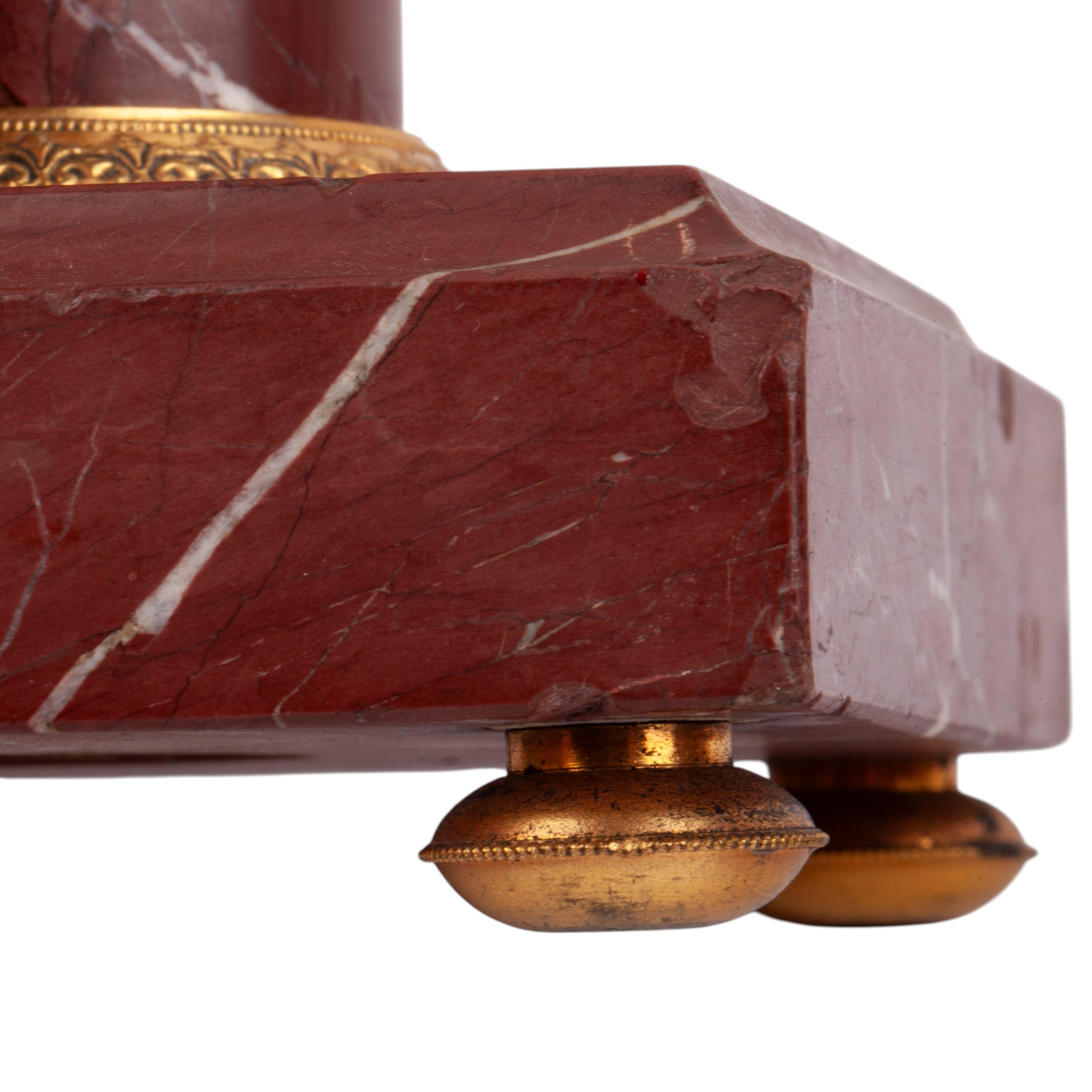
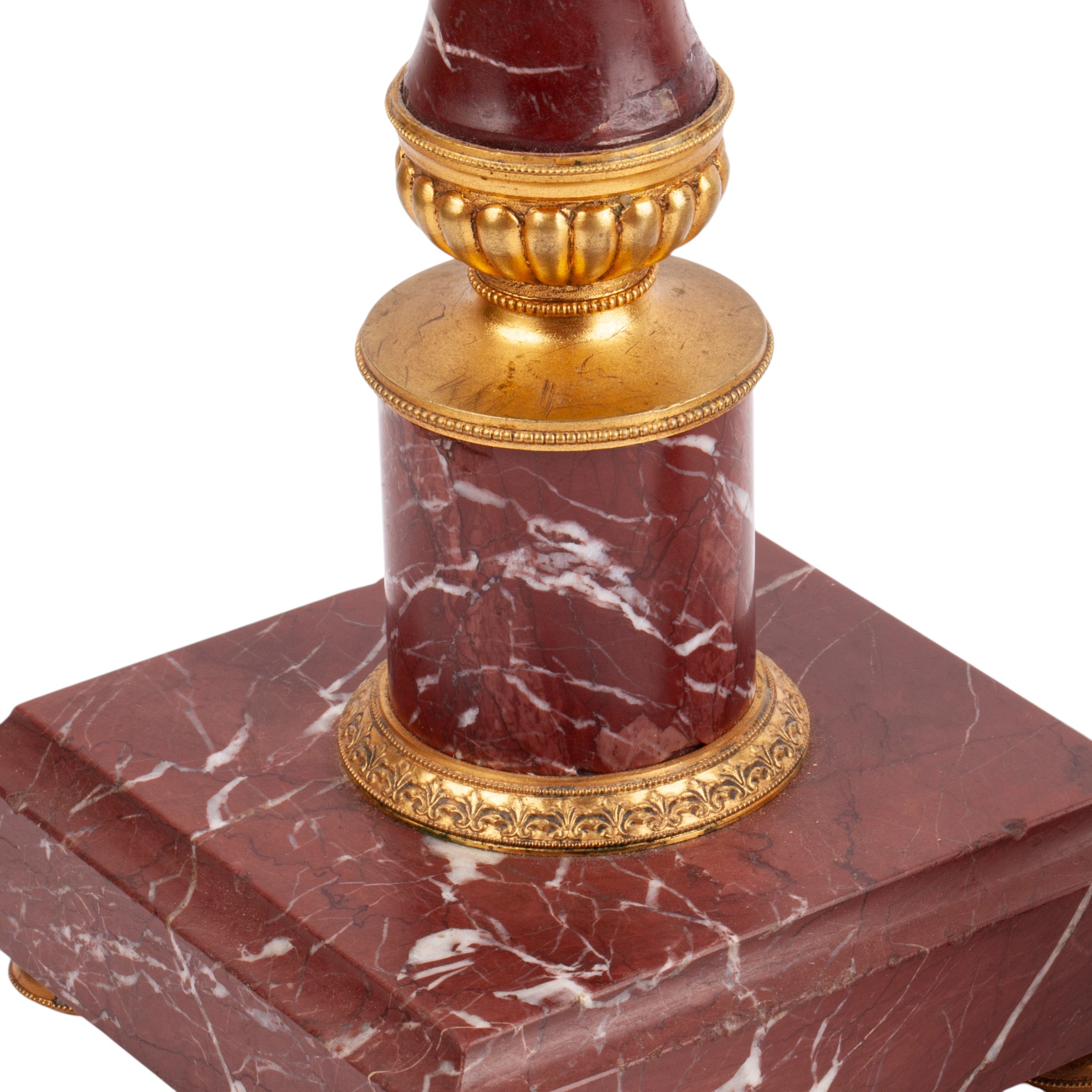
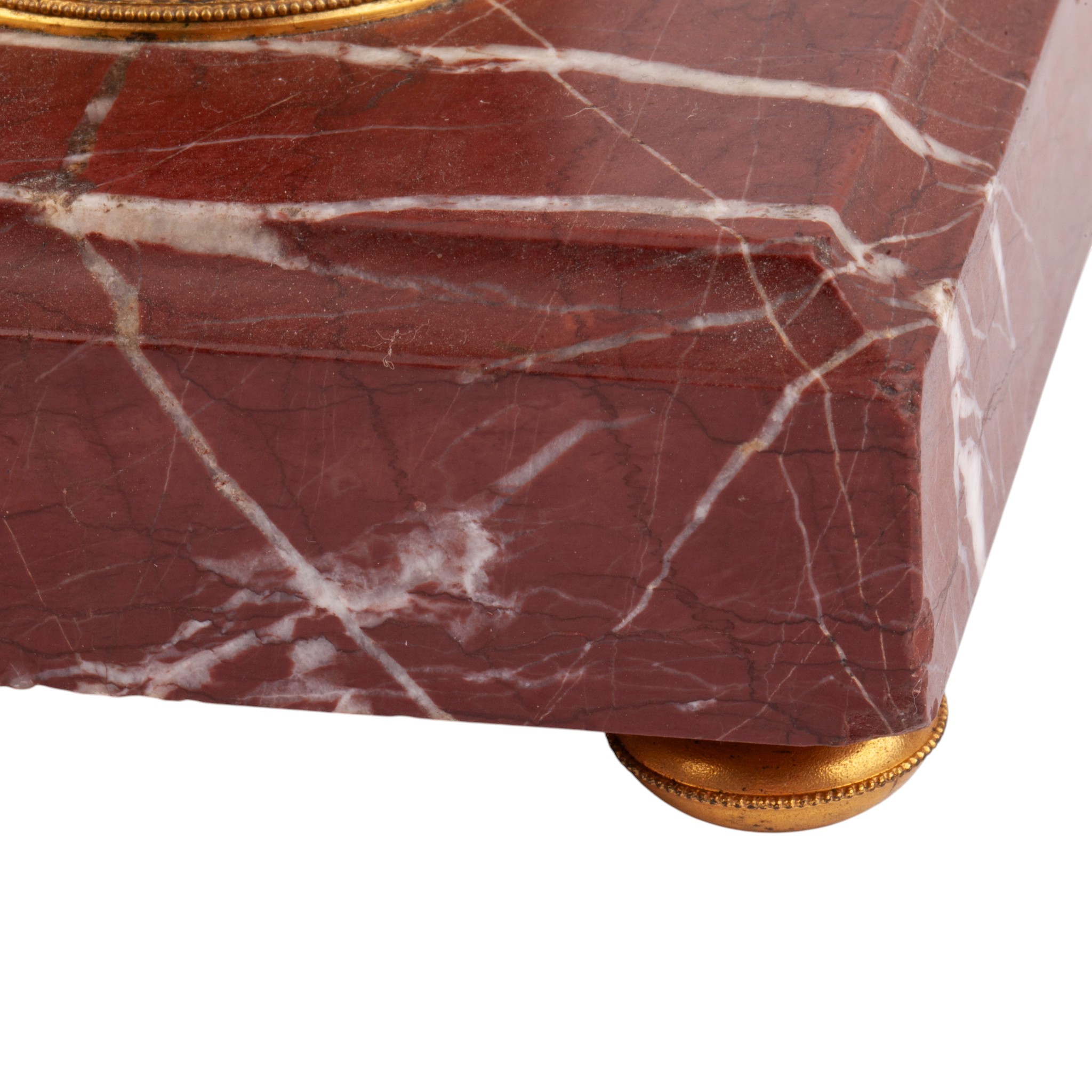
A decorative pair of Russian Empire style candlesticks, each with a tapering red marble shaft set on a cylindrical socle and square stepped base, enriched throughout with gilt-bronze mounts. The elegant urn-form candle sockets, fluted collars, beaded details, and circular feet reflect the restrained neoclassical taste associated with the Empire period.
The deep red marble, striking white veining, and warm gilt-bronze ornament create a refined and highly decorative effect. The pair displays the balanced architectural form characteristic of Empire-inspired interior objects.
Material: red marble and gilt-bronze
Form: pair of candlesticks
Height: 23.5 cm each
Visible wear consistent with age and use. Chips, edge losses, and small damages to the marble bases, especially at the corners, as visible in the photographs. Surface wear and minor oxidation to the gilt-bronze mounts.Starting price: 800€
Estimate: 1000-1200€
Hammer Price: Not sold -
Lot 0033
Decorative Plate with the Arms of the Russian Empire, ISU
Estimate: 150-200€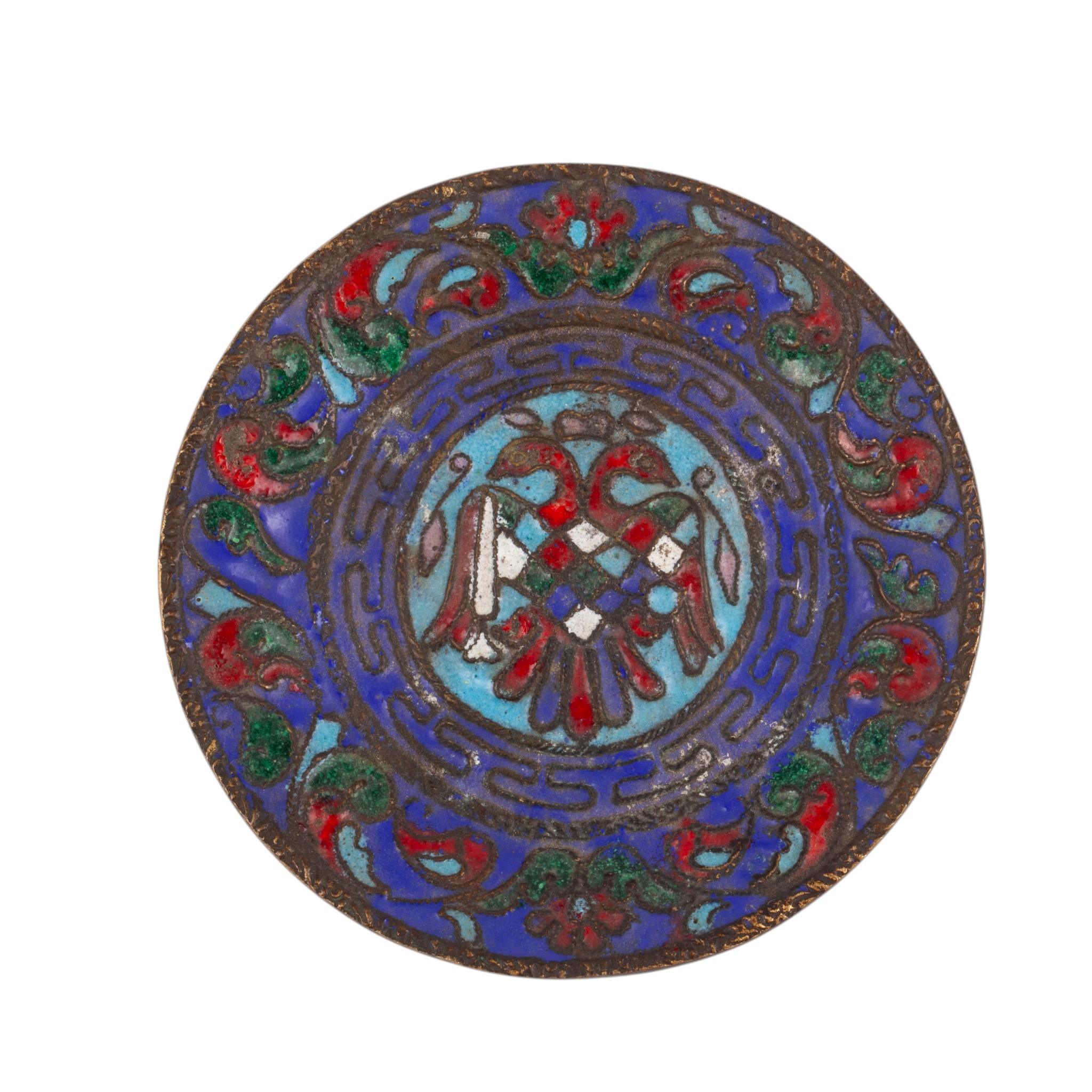
Lot 0033
Decorative Plate with the Arms of the Russian Empire, ISU
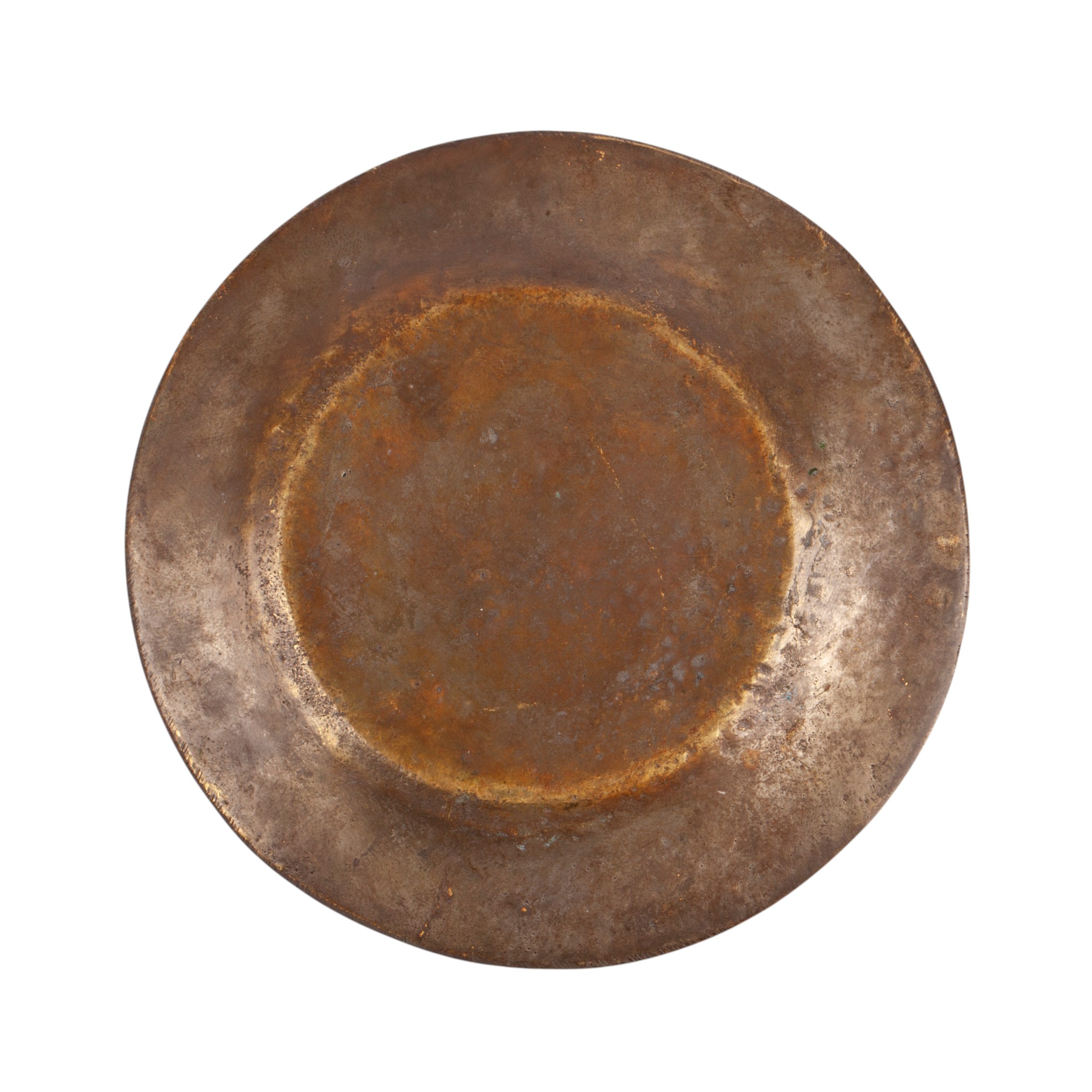
Estimate: 150-200€Decorative Plate with the Arms of the Russian Empire, made for the Tercentenary of the Romanov Dynasty.
Russia, Moscow, Imperial Stroganov School of Technical Drawing, 1913.
Metal alloy; casting, filigree work, polychrome enamelling.
Diameter: 10.5 cm.
A small commemorative decorative plate produced in honour of the celebrations of the 300th anniversary of the House of Romanov in 1913. The central medallion is decorated with the double-headed eagle of the Russian Empire, rendered in polychrome enamel against a turquoise ground. Around it runs a stylised ornamental band with geometric motifs, while the outer border is filled with scrolling foliate ornament in blue, red, green and pale turquoise enamels.
The work belongs to the circle of objects produced in the workshops of the Imperial Stroganov School in Moscow, one of the leading centres of Russian applied art in the early twentieth century. Such pieces were often made by students under the supervision of teachers and workshop masters, or collectively in the specialised departments of the school, including metalwork, chasing, enamelling and mounting.Starting price: 100€
Estimate: 150-200€
Hammer Price: 100 € -
Lot 0034
Fabergé – Silver-Gilt Cigar Box with Double Hinged Lid, Moscow, 1908–1917
Estimate: 25000-35000€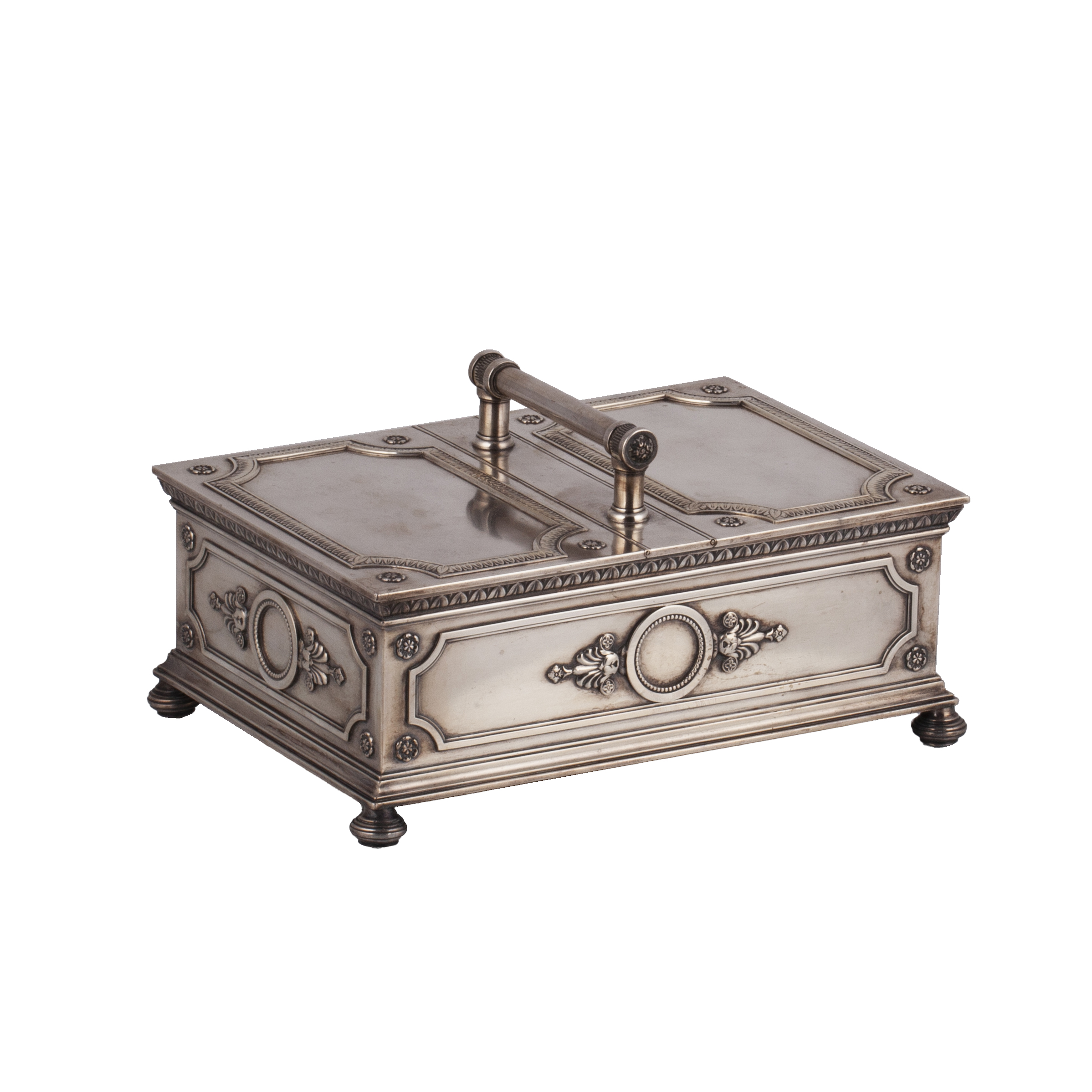
Lot 0034
Fabergé – Silver-Gilt Cigar Box with Double Hinged Lid, Moscow, 1908–1917
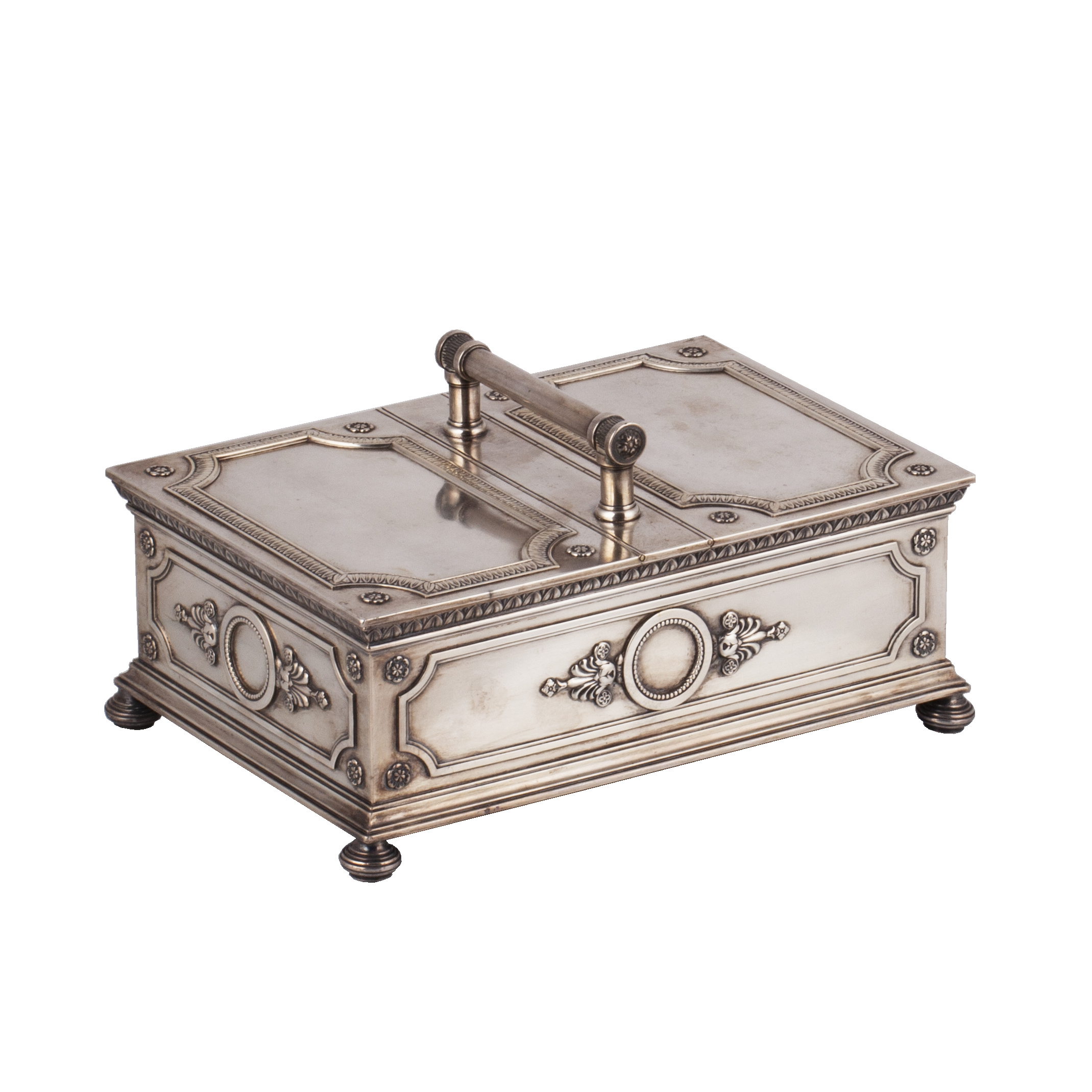
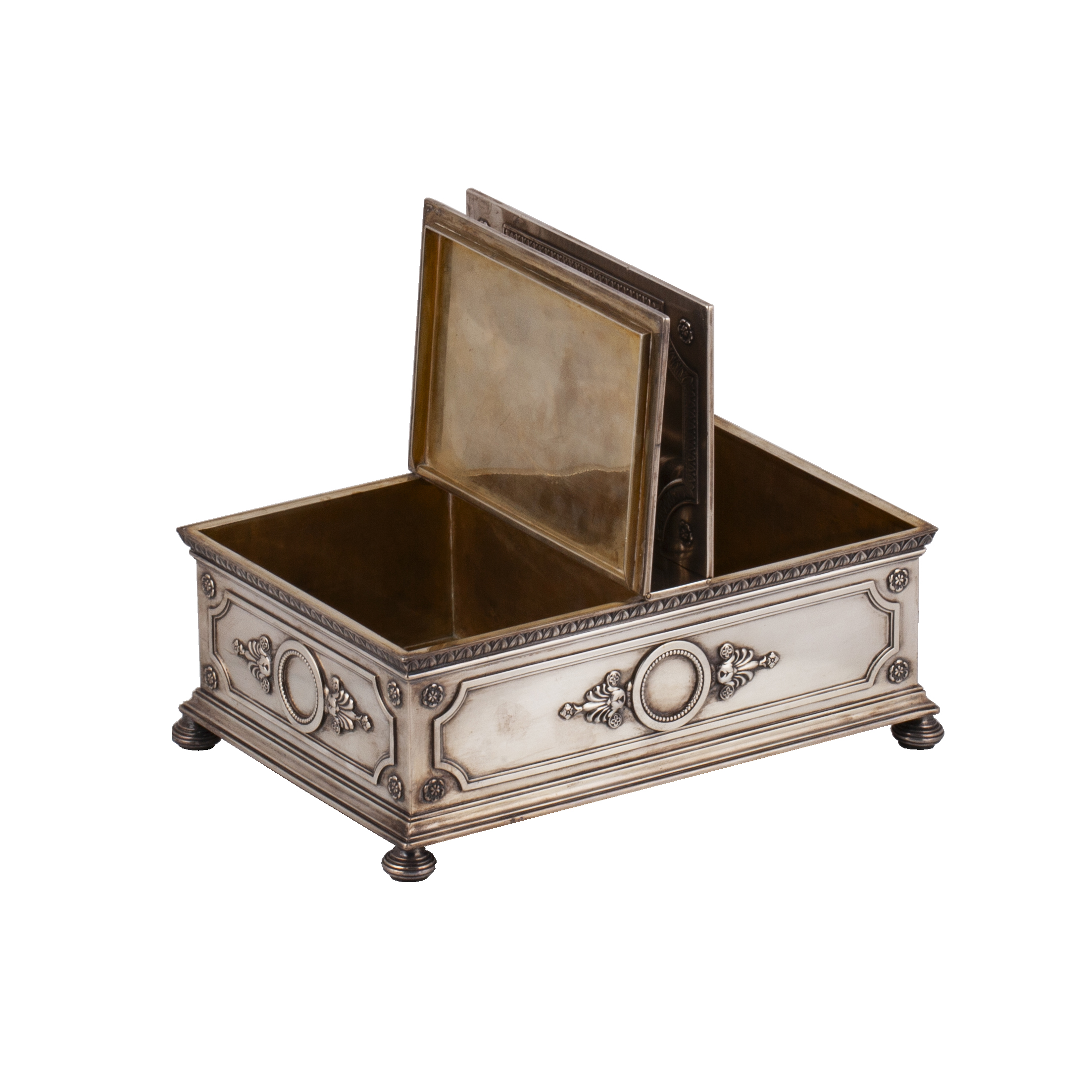
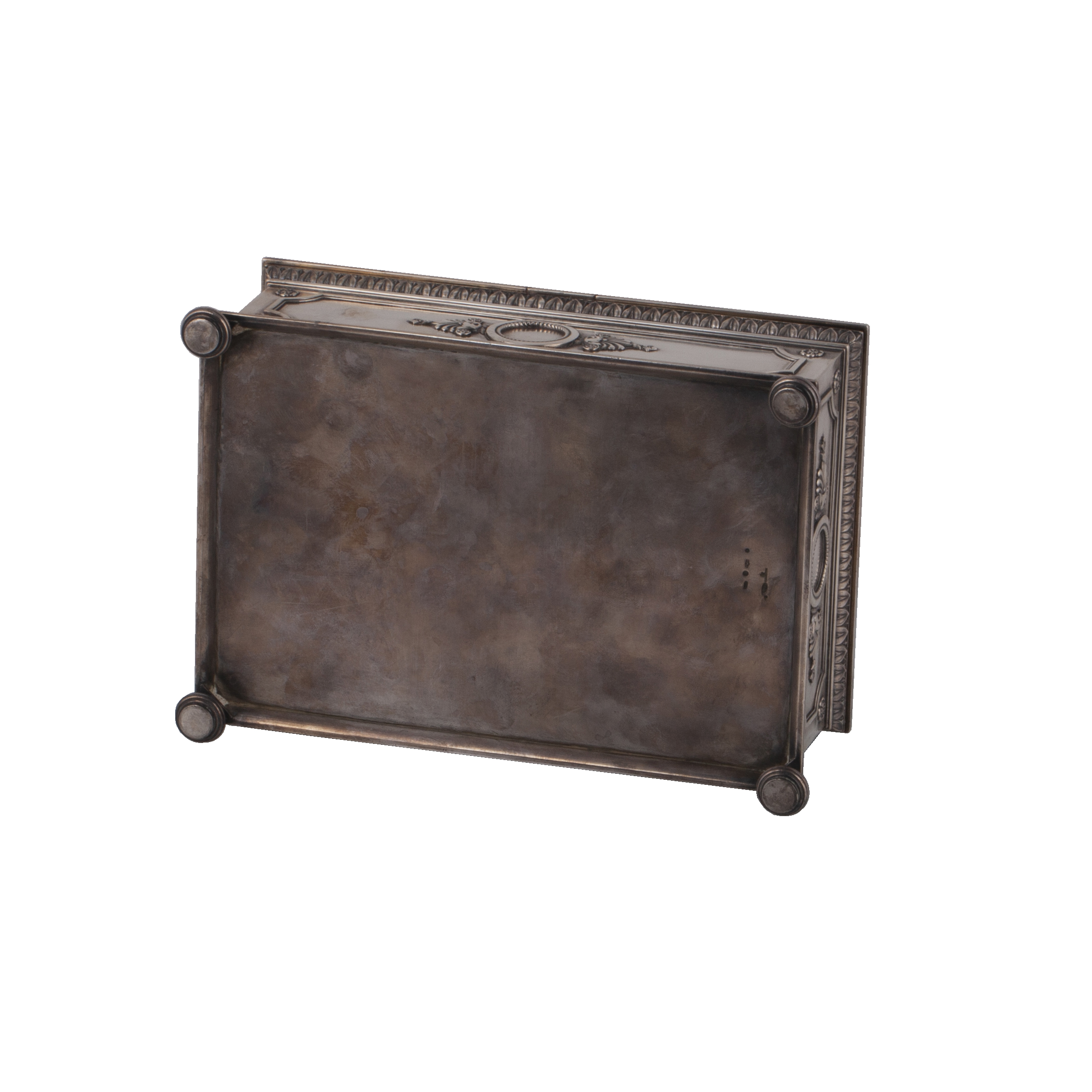
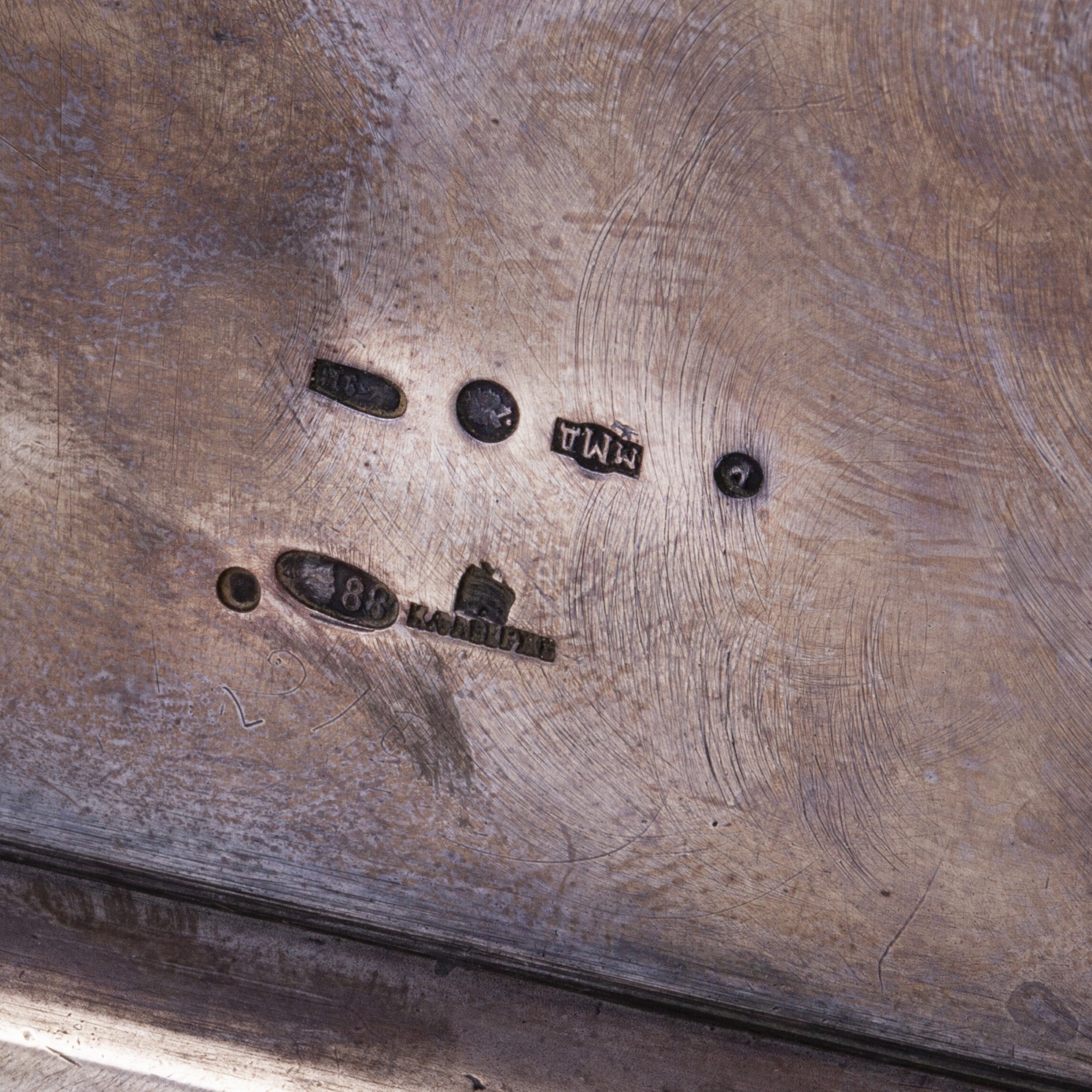
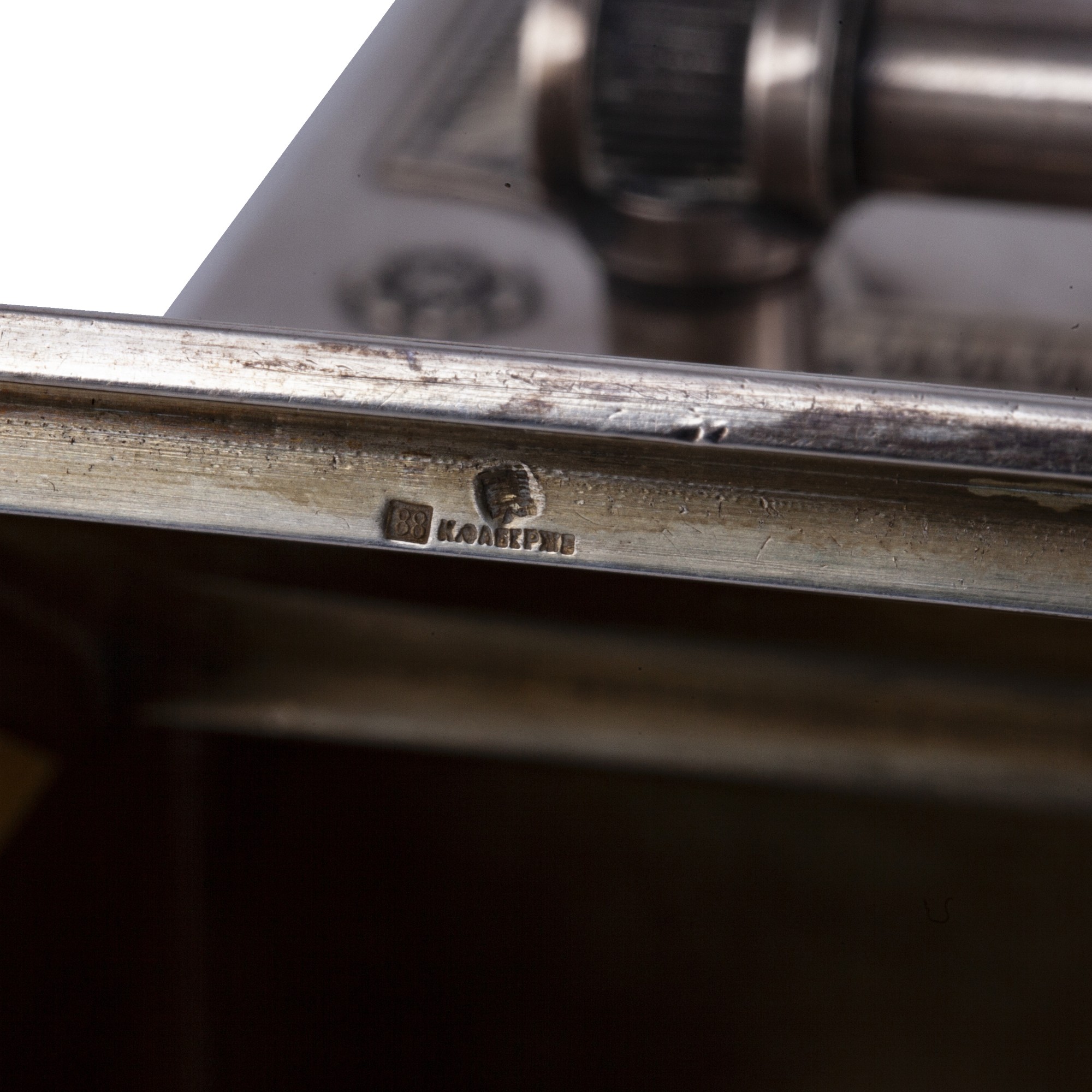
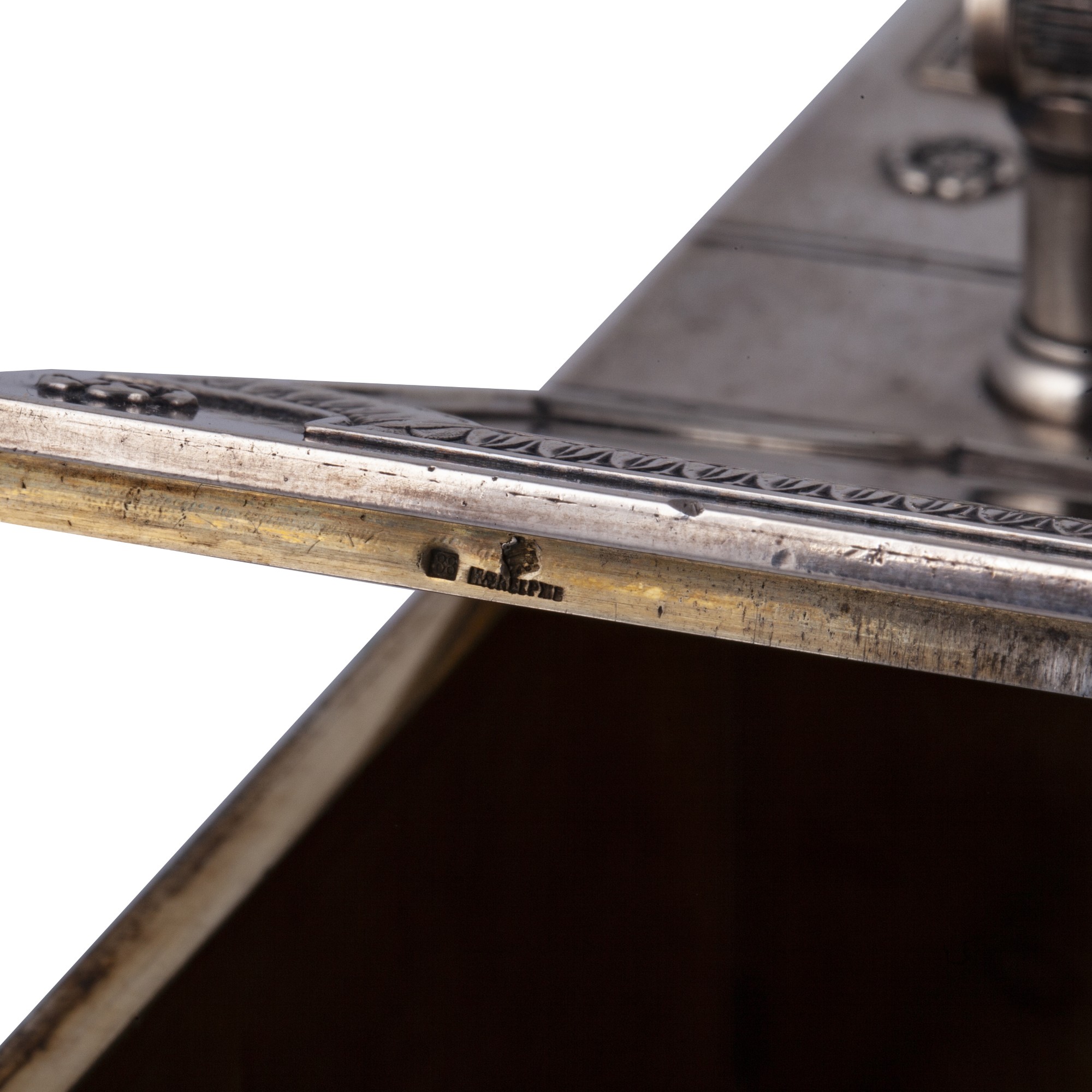
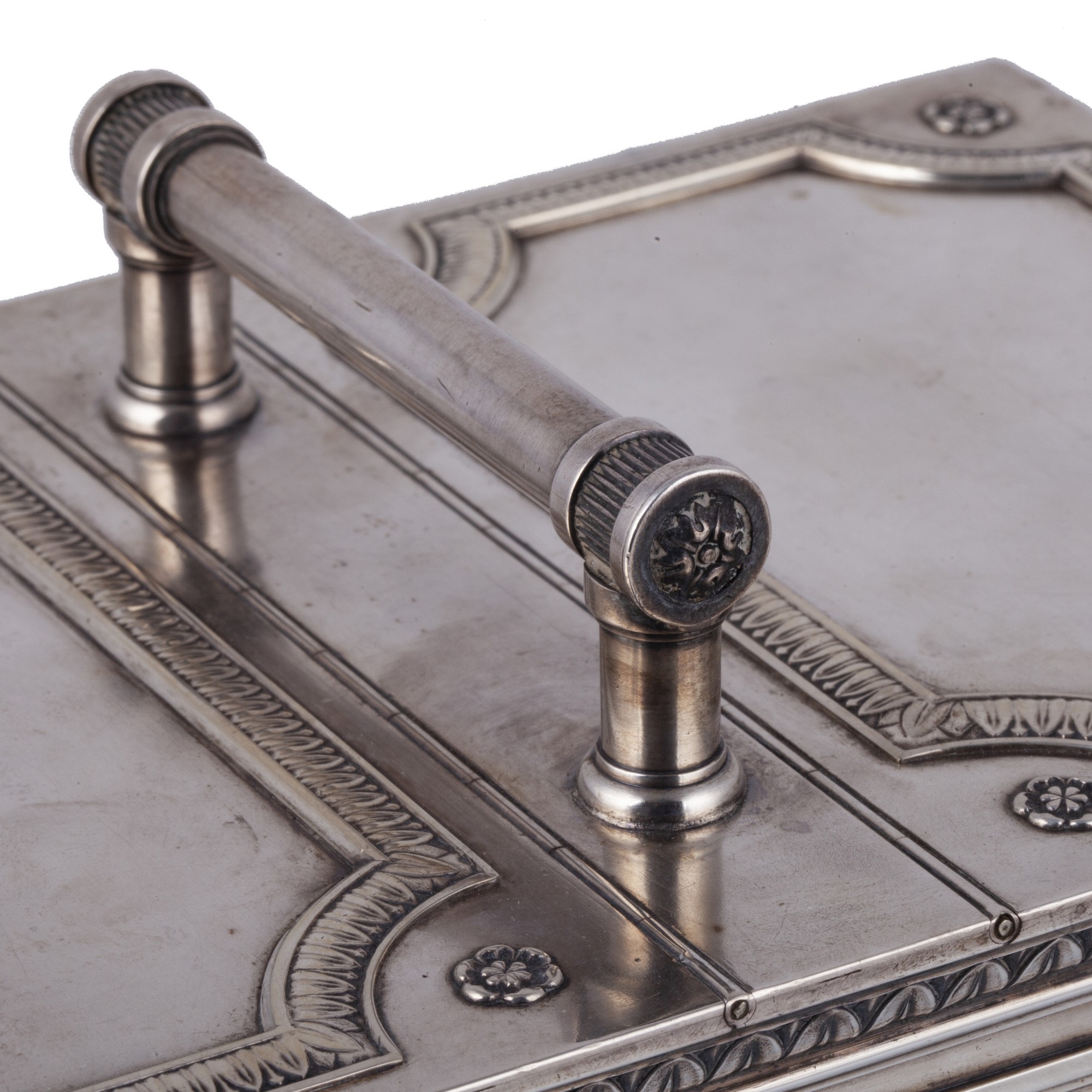
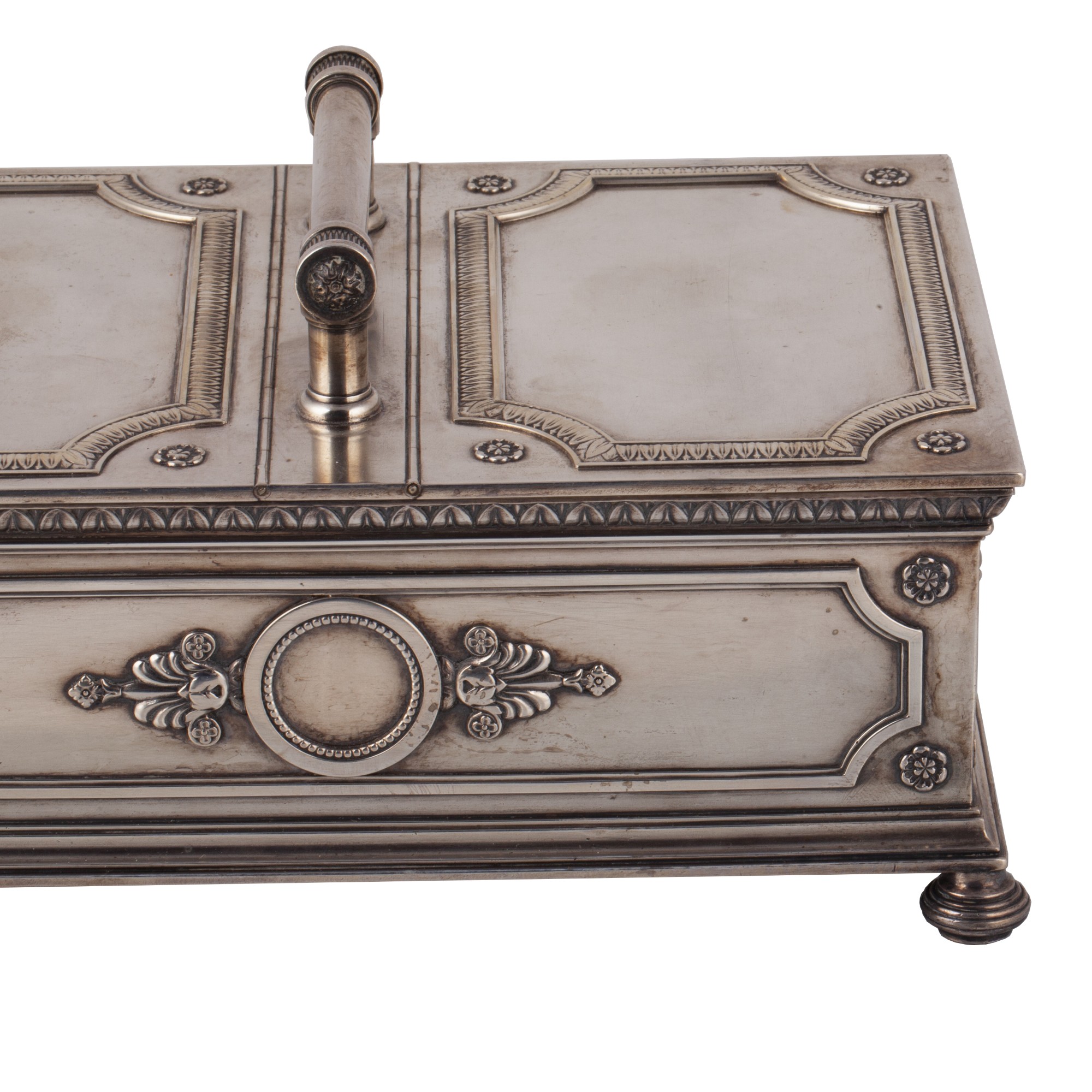
Estimate: 25000-35000€An impressive Fabergé silver-gilt cigar box with double hinged lid, Moscow, 1908–1917. The rectangular form set on four bun feet, the sides and covers richly decorated with neoclassical borders, rosettes, and medallions in relief, and fitted with a central handle. Scratched inventory number 210?.
Dimensions: 22 × 15.2 × 11.3 cm.
Weight: 1547 g.Cigar accessories by Fabergé are extremely rare and highly sought after on the art market, prized both for their craftsmanship and for their scarcity among the firm’s surviving works. One comparable example is a Fabergé silver and en plein enamel cigar box, Moscow, circa 1911, which appeared in a Sotheby’s auction. https://www.sothebys.com/en/buy/auction/2020/russian-works-of-art-faberge-and-icons/a-rare-faberge-silver-and-en-plein-enamel-cigar
Starting price: 20000€
Estimate: 25000-35000€
Hammer Price: Not sold -
Lot 0035
Russian Silver-Gilt Cigar Box, Konstantin Skvortsov, Moscow, 1887–1908, Signed
Estimate: 6000-7000€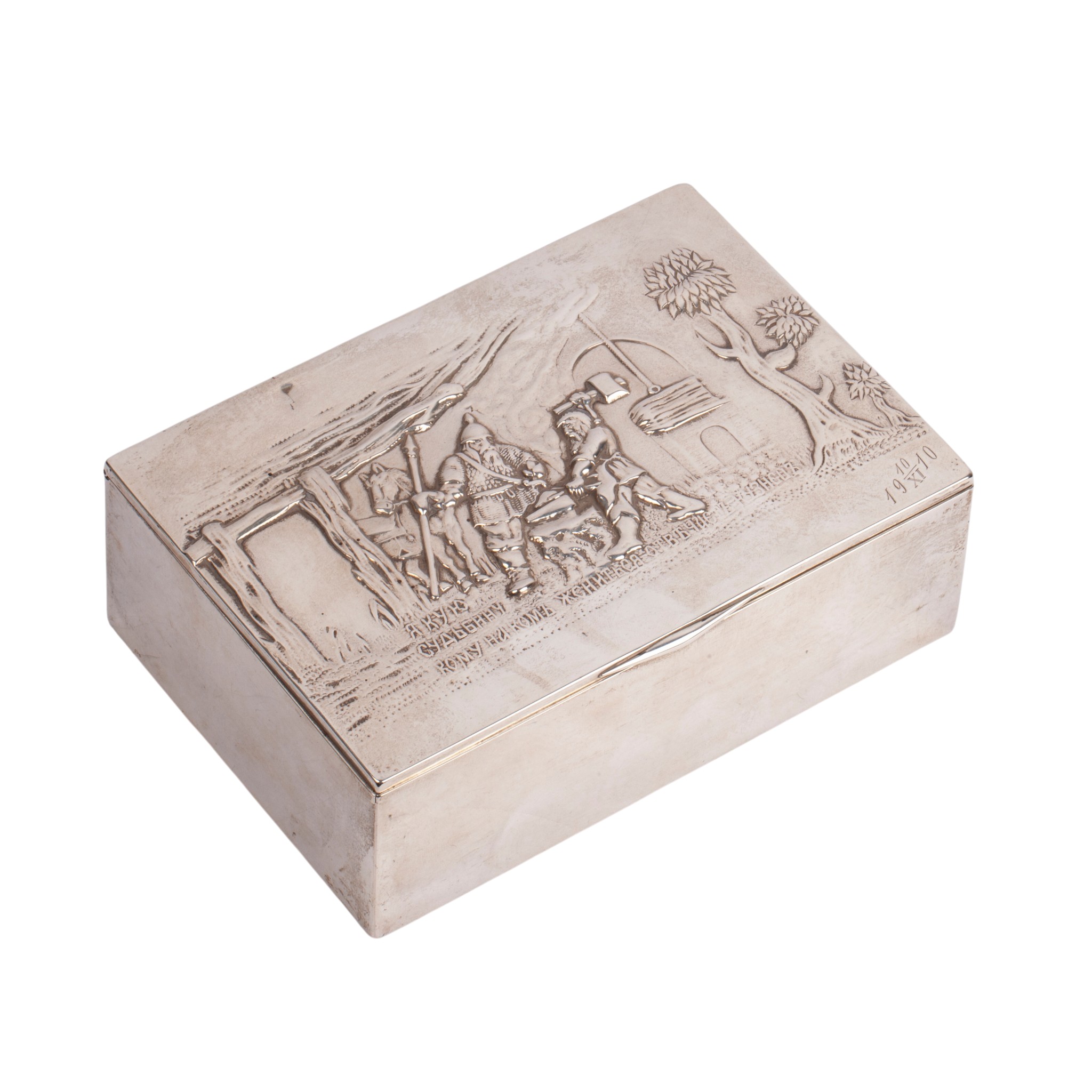
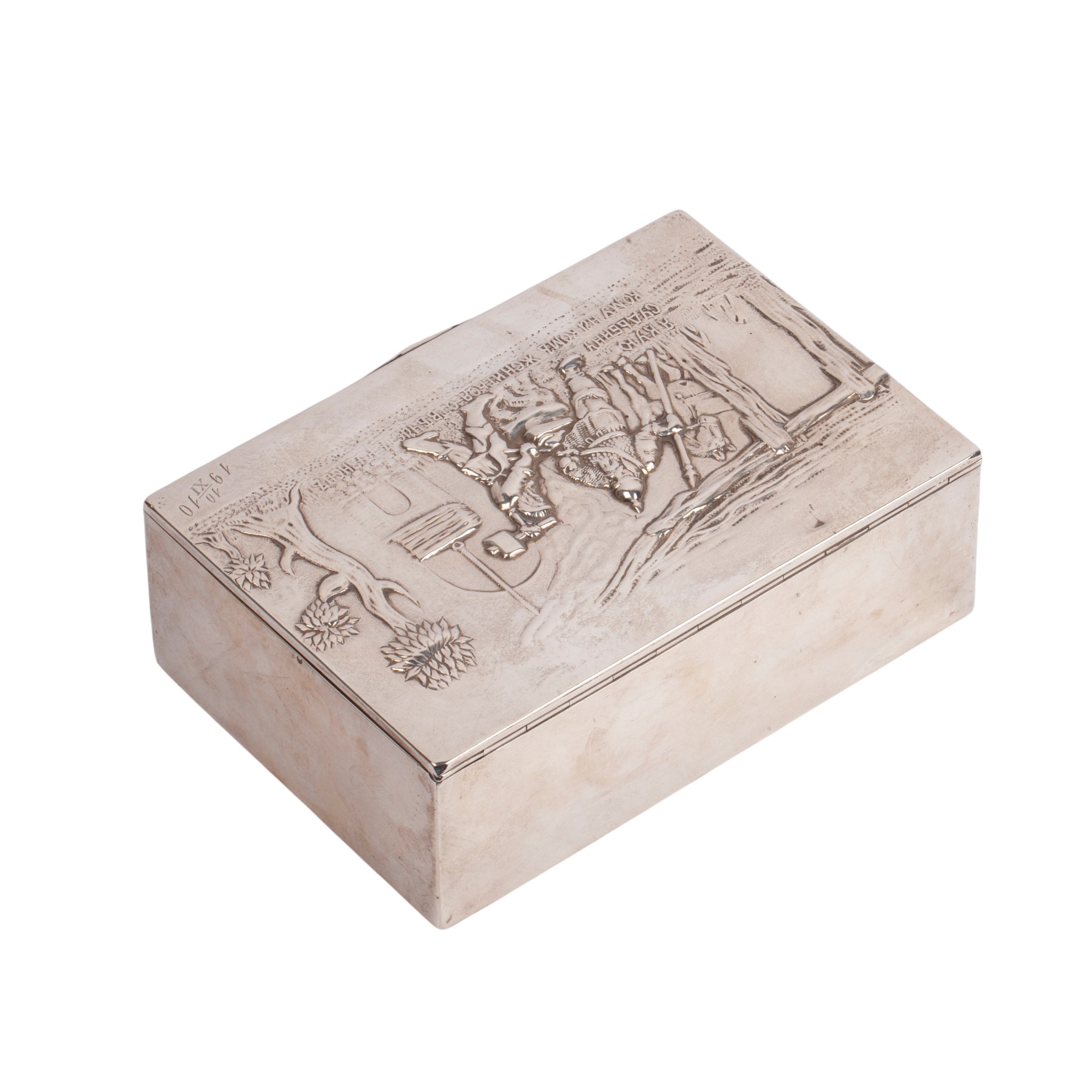
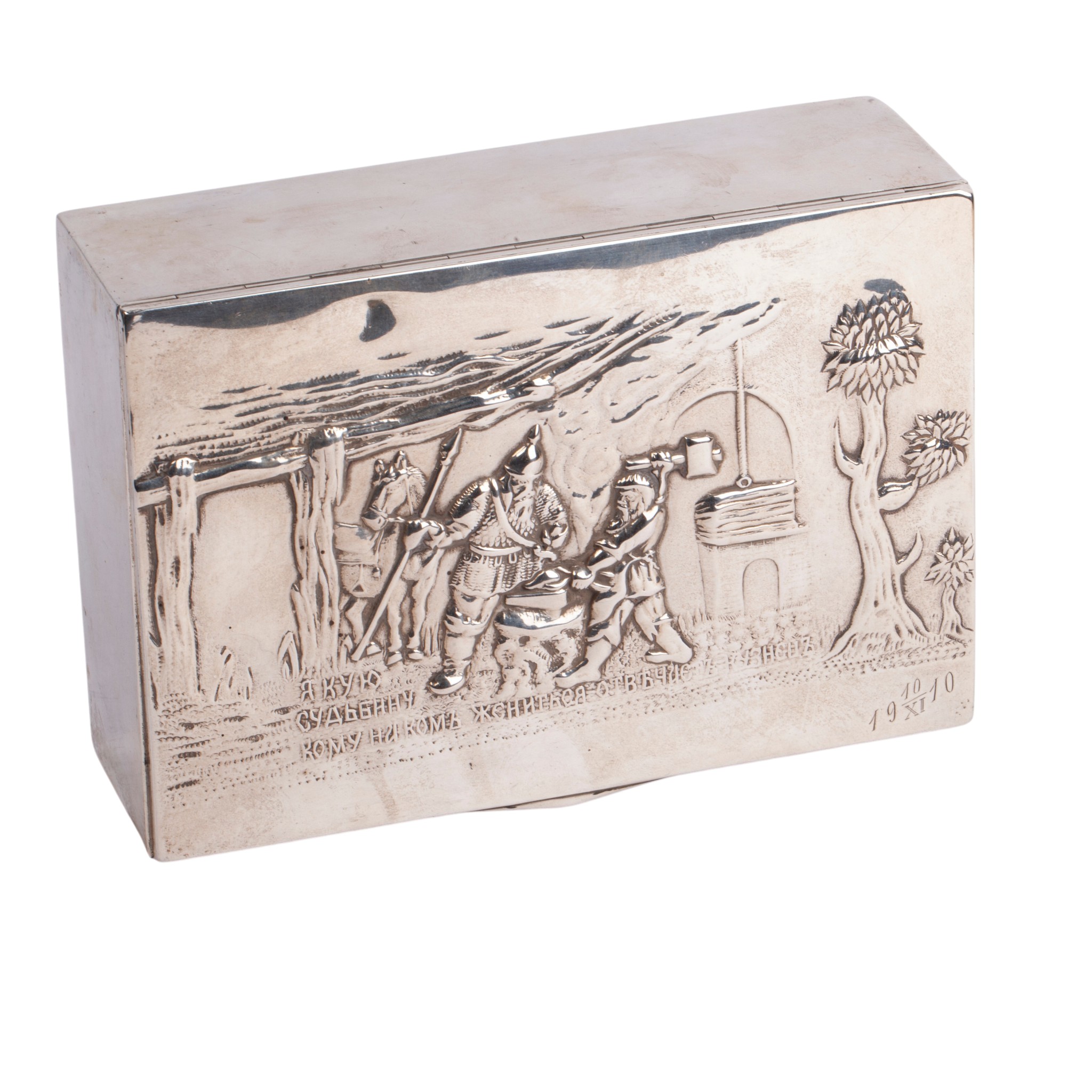
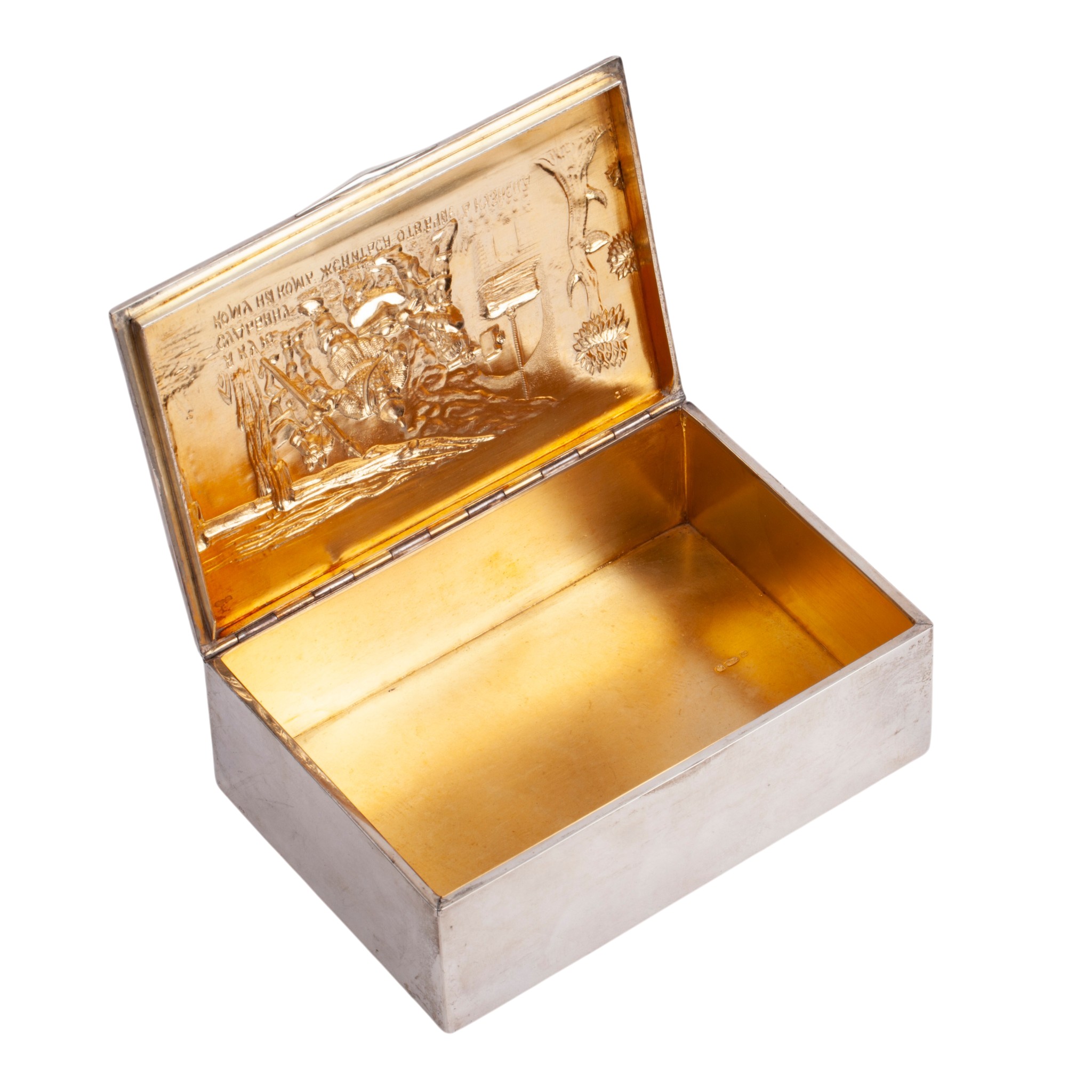
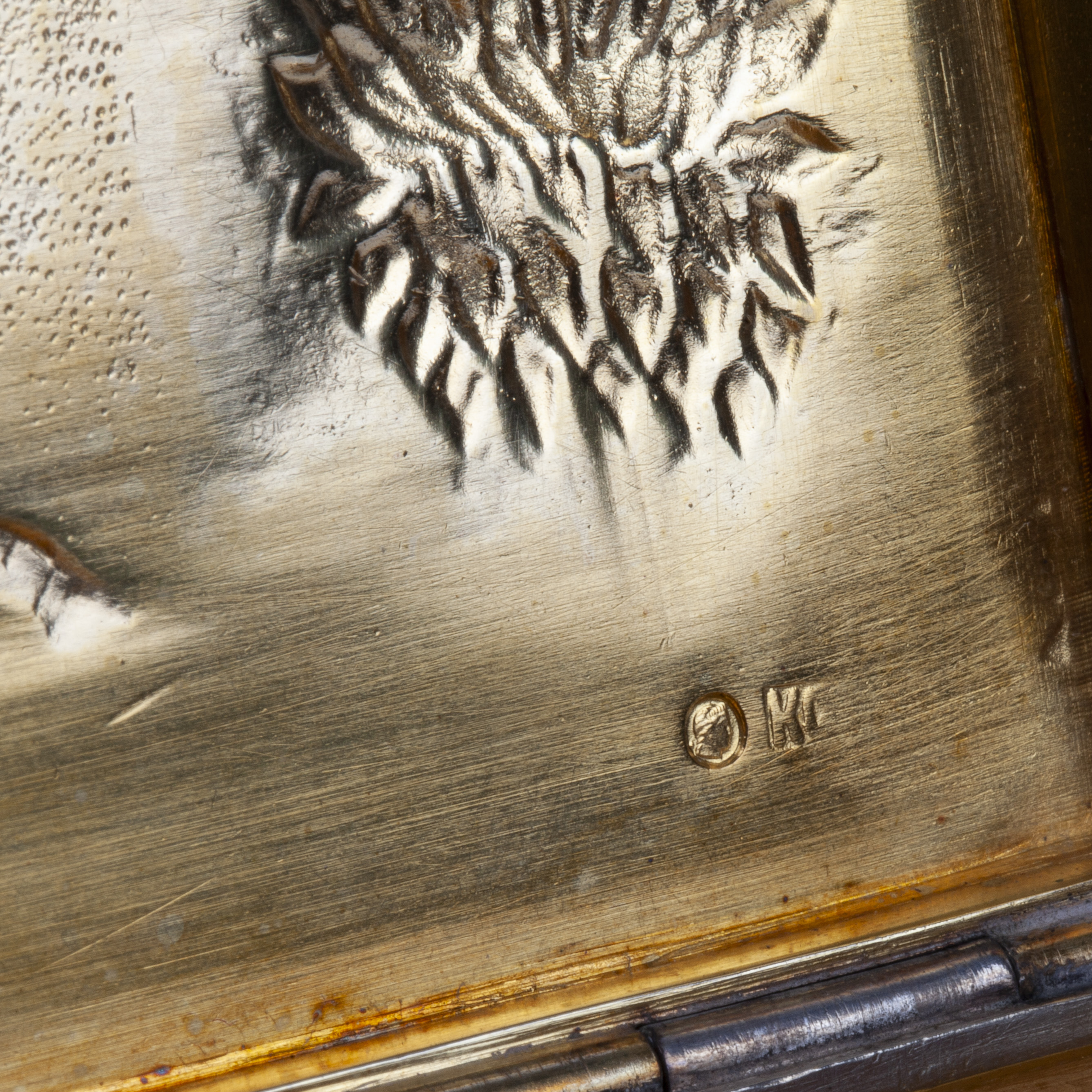
Lot 0035
Russian Silver-Gilt Cigar Box, Konstantin Skvortsov, Moscow, 1887–1908, Signed
Estimate: 6000-7000€An intersting Russian silver-gilt cigar box.
Konstantin Skvortsov, Moscow, 1887-1908
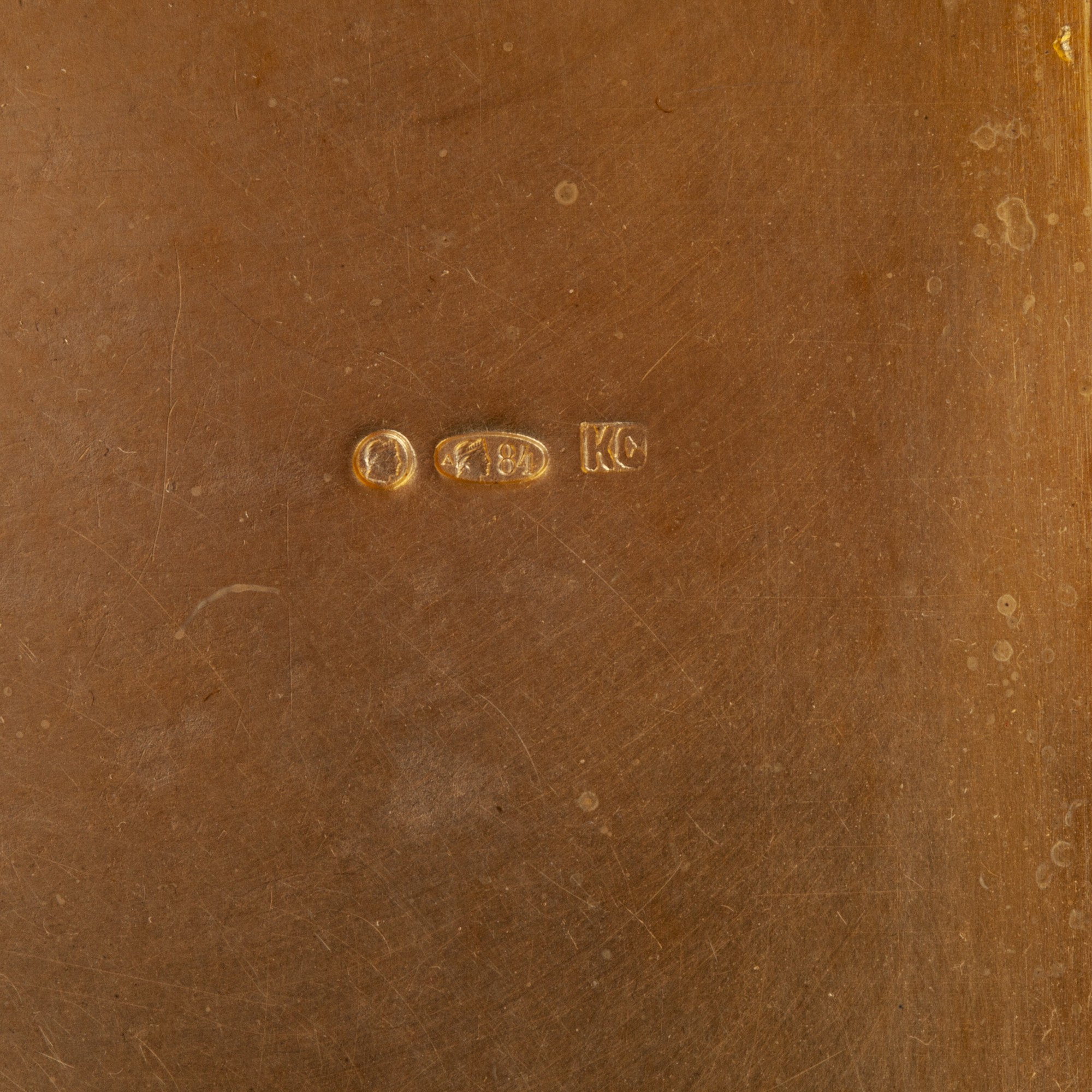
Rectangular, with hinged lid, the interior gilt, the lid chased with a figural scene of a blacksmith’s forge with a mounted warrior, horse, dog, rustic structures, and a Cyrillic proverb below: “I forge human destiny: the blacksmith decides who is to marry whom”, further engraved at right 19/XI/10.
Marked: maker’s mark K. Skvortsov and Moscow assay marks.
Size: 15.5 × 11 × 5.1 cm
Weight: 480.5 g.
A rare example of late Imperial Russian silver cigar accessory, notable for its quality narrative relief and richly gilded interior.Starting price: 5000€
Estimate: 6000-7000€
Hammer Price: Not sold -
Lot 0036
Russian Tula Money Box, Tula, 1850s
Estimate: 3000-3500€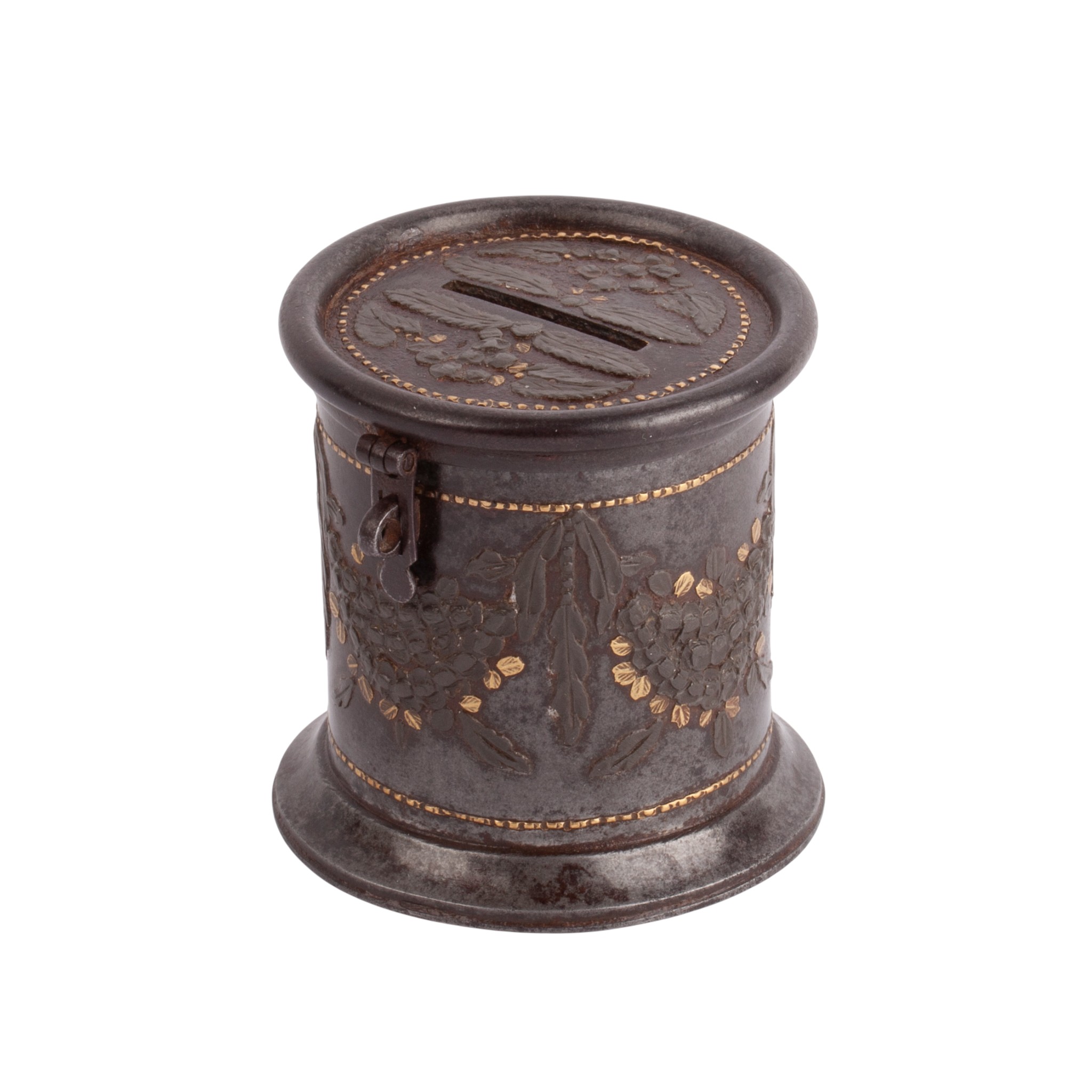
Lot 0036
Russian Tula Money Box, Tula, 1850s
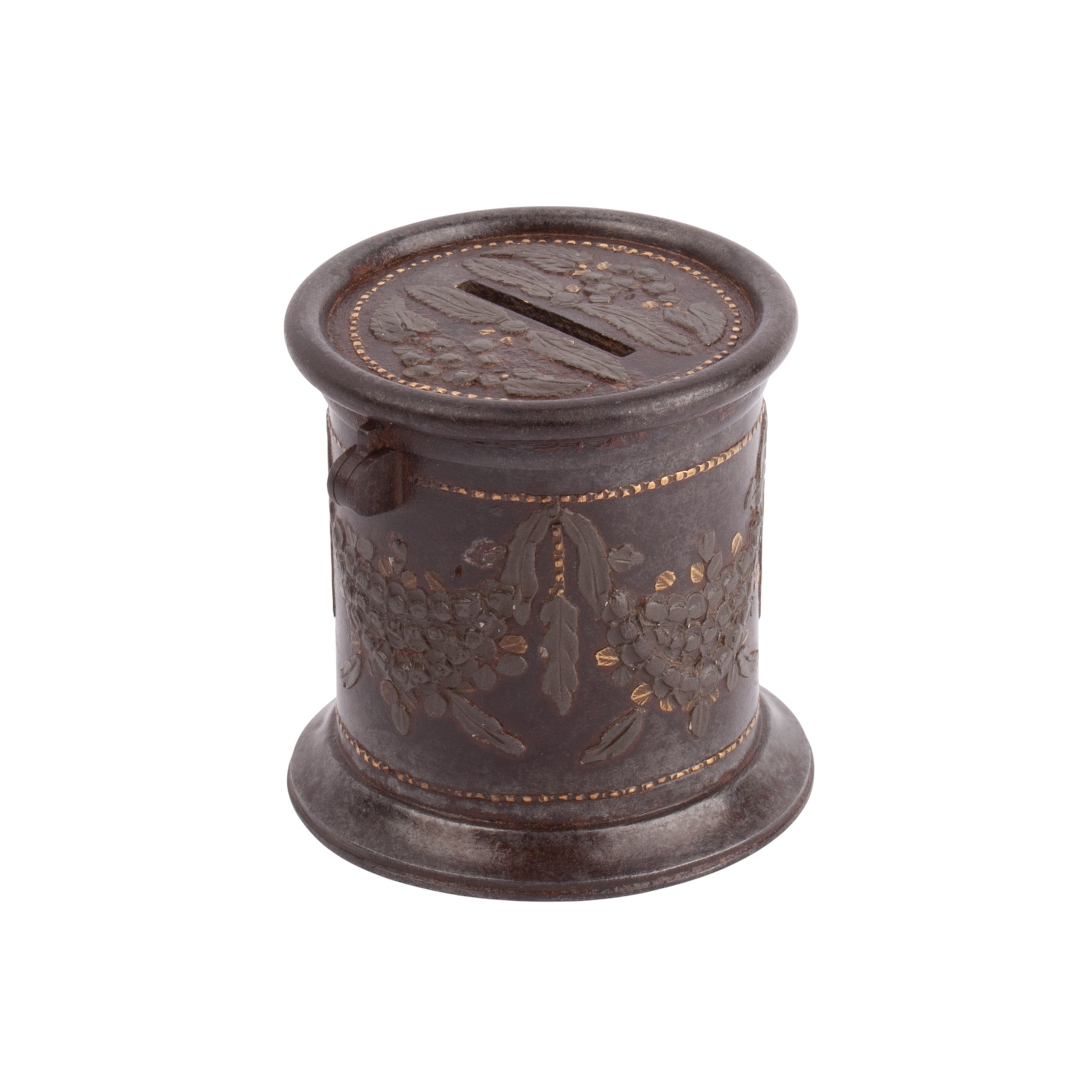
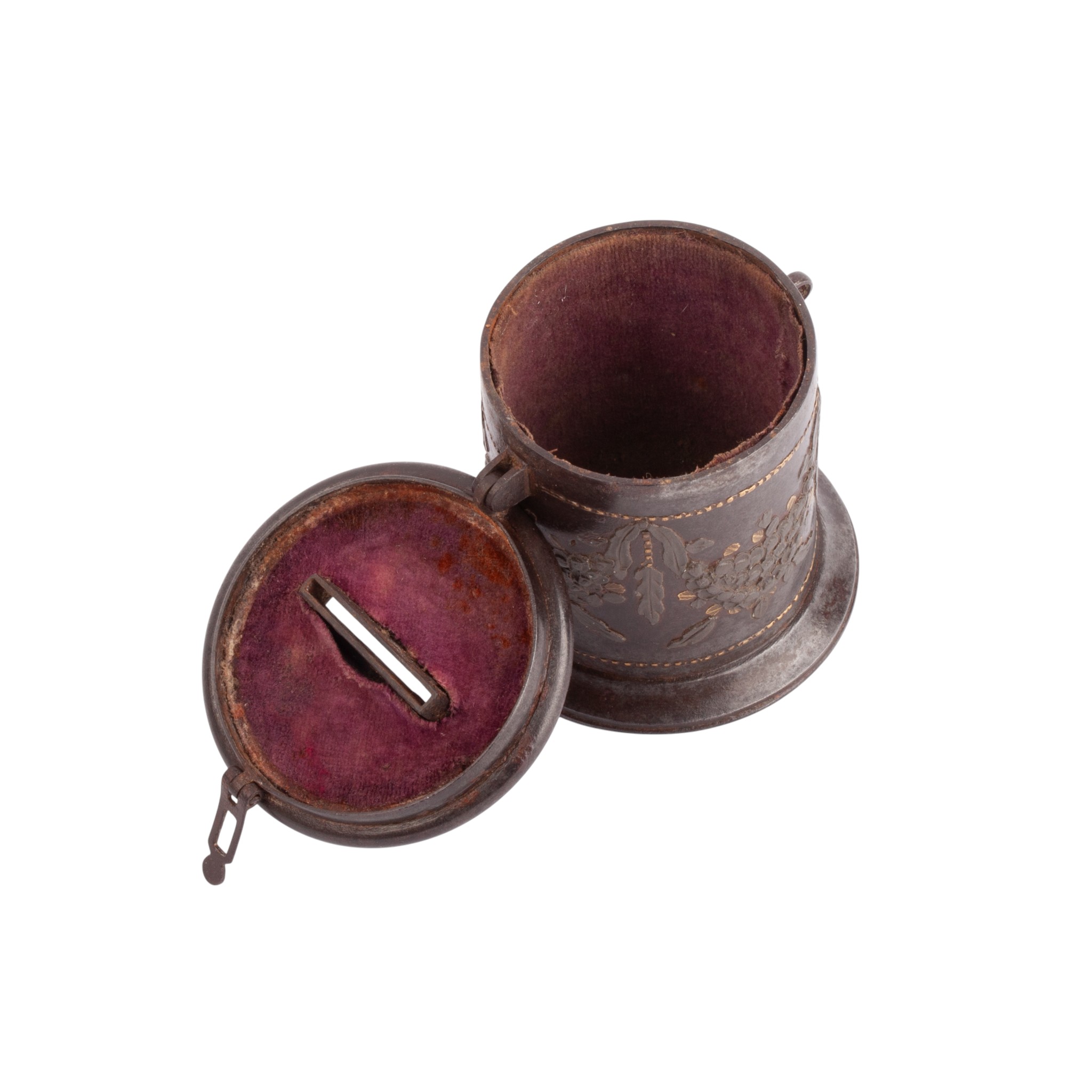
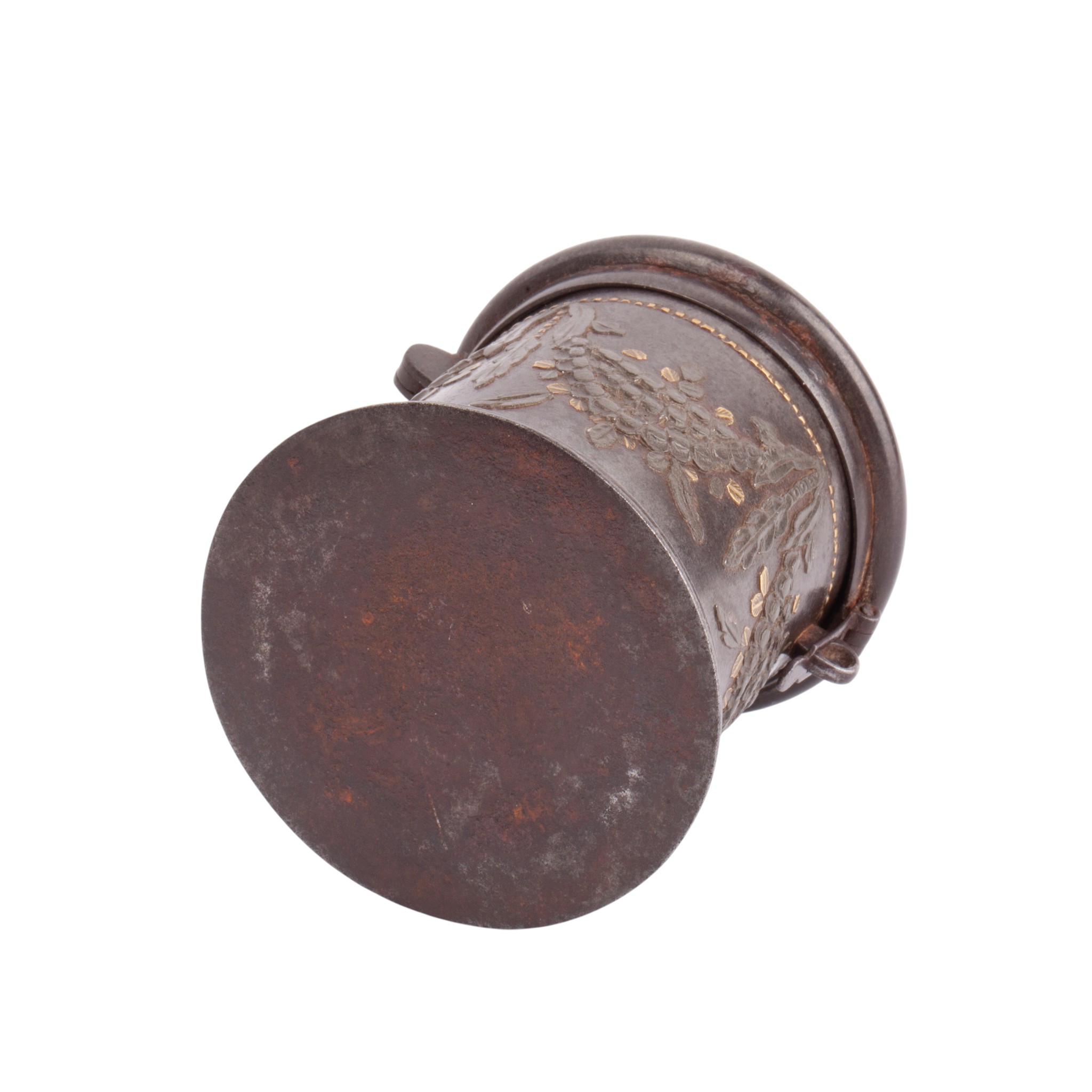
Estimate: 3000-3500€A Russian Tula Money Box
Russia, Tula, 1850s
Steel, tin, brass, copper; forged, inlaid. Dimensions: 6,5 x 6,6 x 6,6 cm.
A cylindrical steel money box with a hinged lid, pierced with a narrow slot for coins and fitted with a hasp for a lock. The lid, formed with a gently raised rounded rim, is ornamented with floral sprays executed in delicate metal inlay. The body is encircled by luxuriant hanging garlands of flowers and leaves, while the upper and lower edges are framed by fine ornamental bands. This piece belongs to the tradition of Tula decorative metalwork, produced by armourers who, alongside weapons, made a wide range of elegant domestic objects in steel. By the late 18th and 19th centuries, Tula had developed a distinctive school of artistic metalworking, celebrated for its virtuoso command of forging, engraving, overlay, and inlay. The State Hermitage Museum has the finest and most comprehensive collection of Tula ornamental steelwork, including both domestic objects and furniture made by Tula armourers in the 18th and 19th centuries. Numbering around 300 pieces, the collection offers an exceptional view of this distinctive tradition within Russian decorative art.Starting price: 2500€
Estimate: 3000-3500€
Hammer Price: Not sold -
Lot 0037
Boucheron – Silver Tray-Ashtray with Naiad Figure, Signed H. Burdy, Paris, 1900s
Estimate: 3500-4500€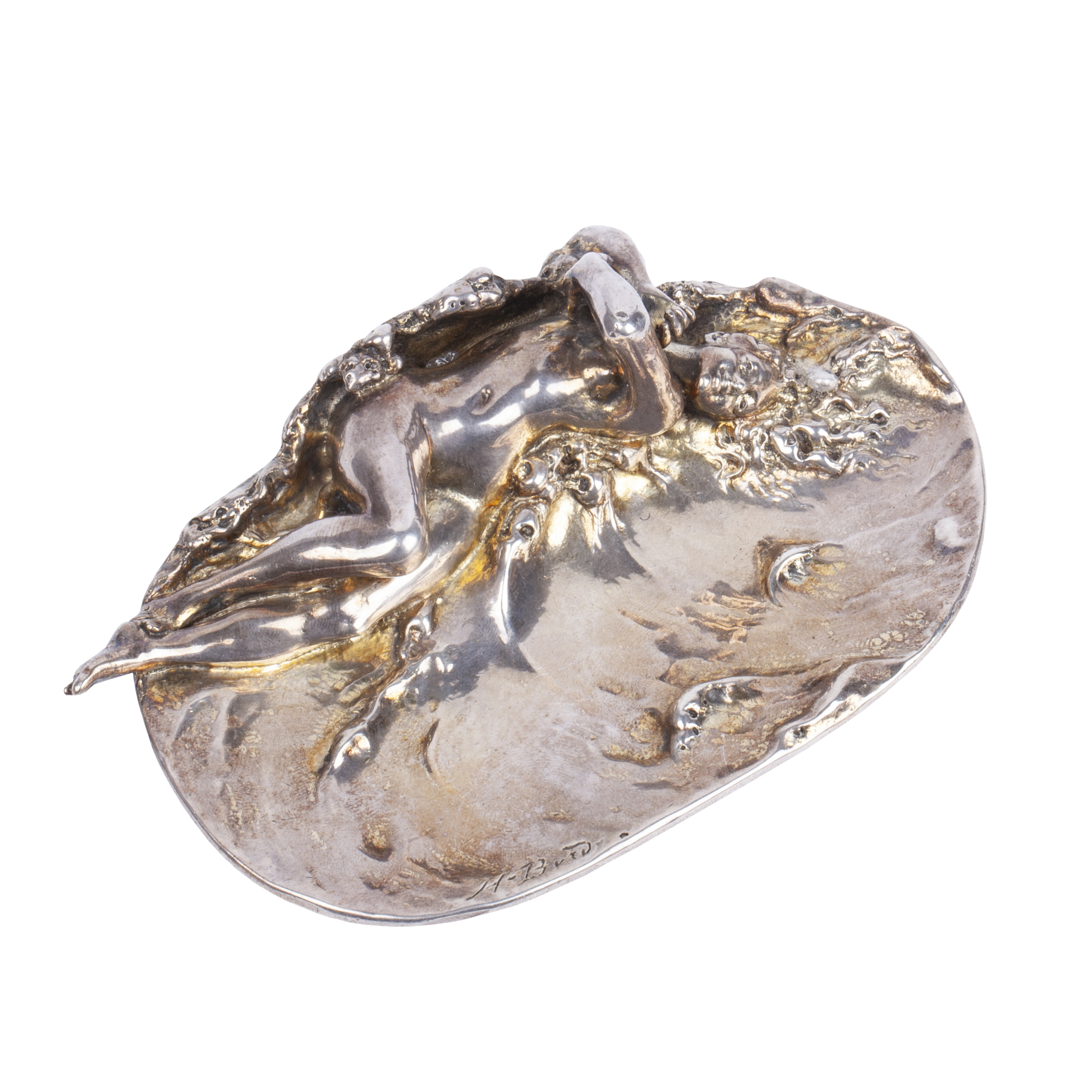
Lot 0037
Boucheron – Silver Tray-Ashtray with Naiad Figure, Signed H. Burdy, Paris, 1900s
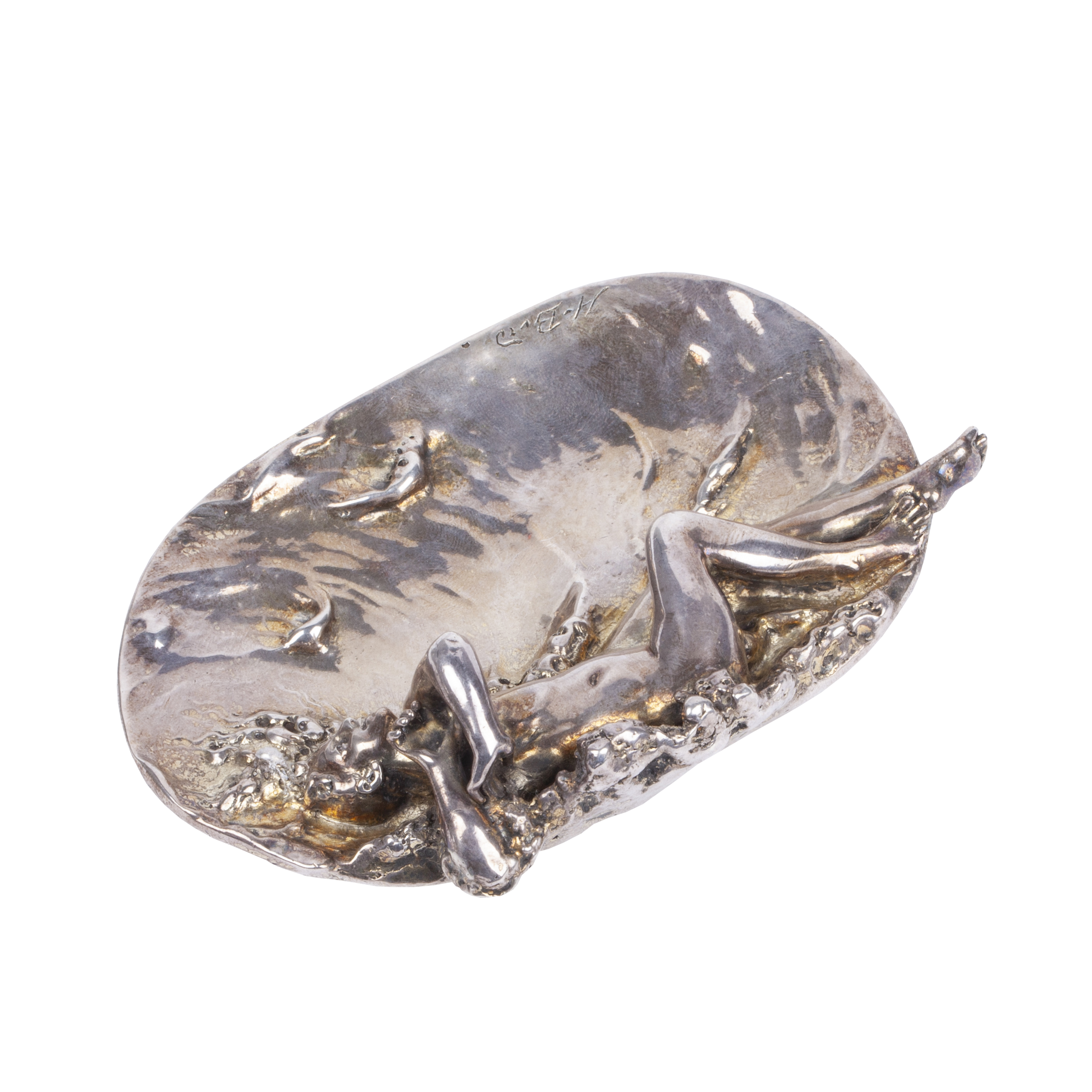
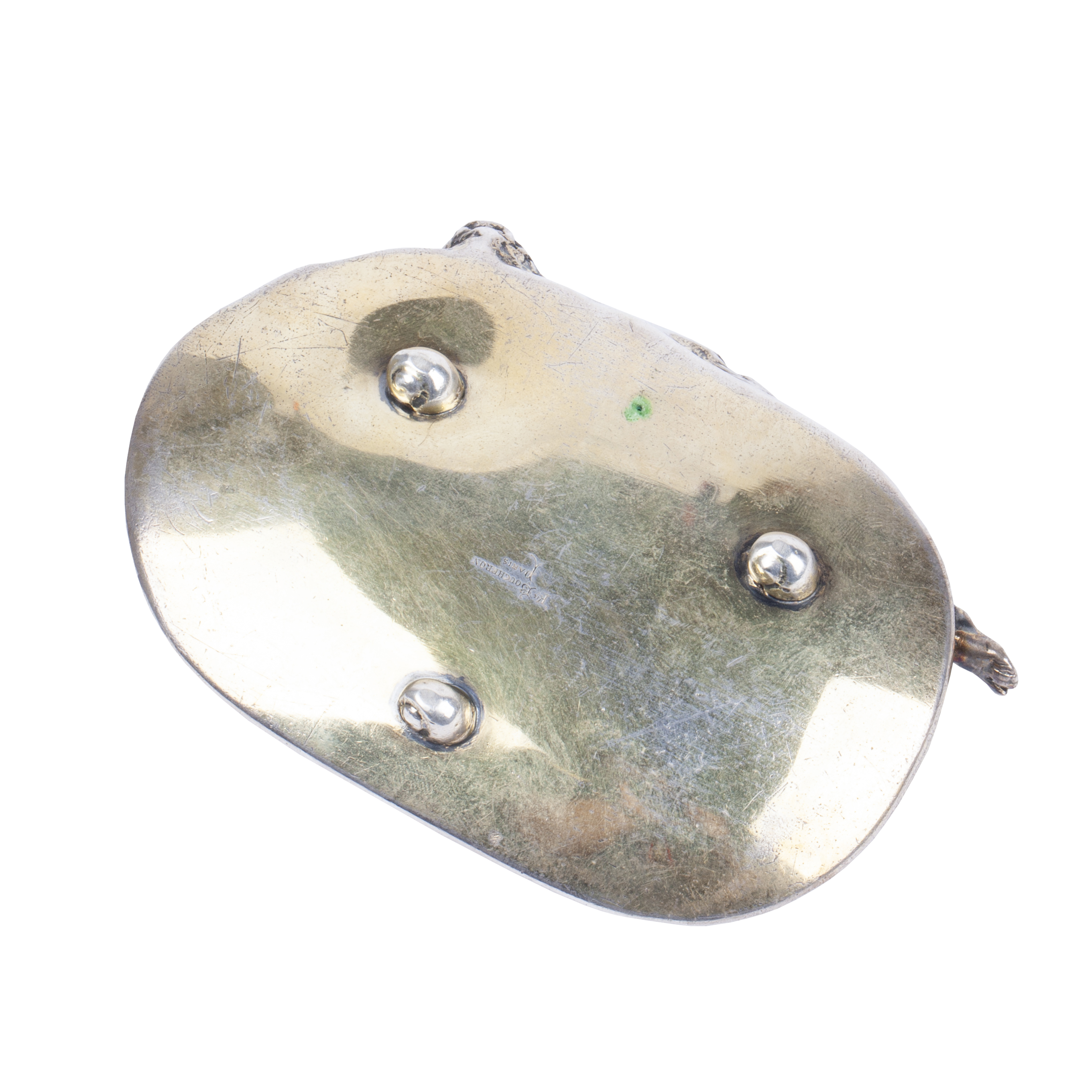
Estimate: 3500-4500€Boucheron. Tray-Ashtray with a Figure of a Naiad
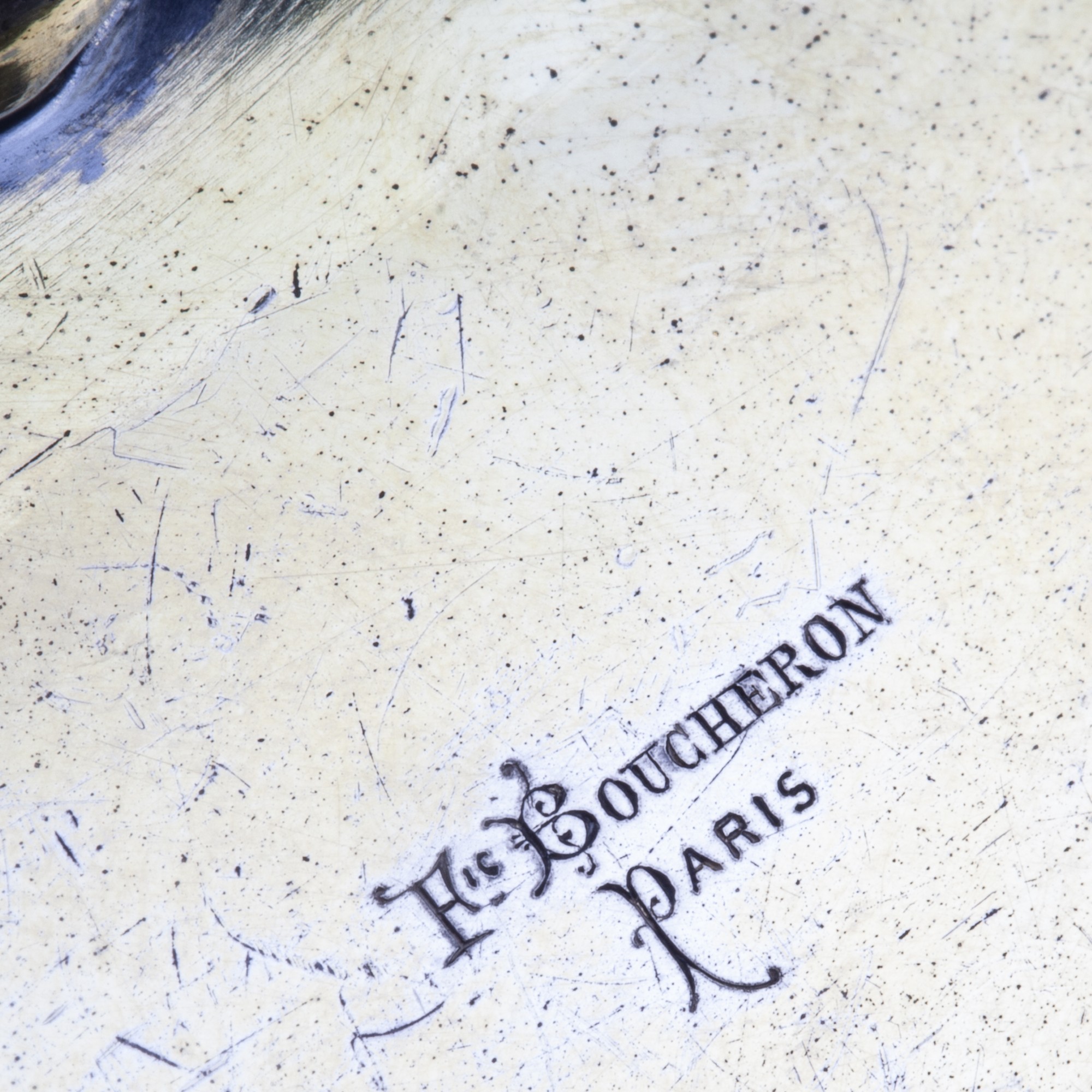
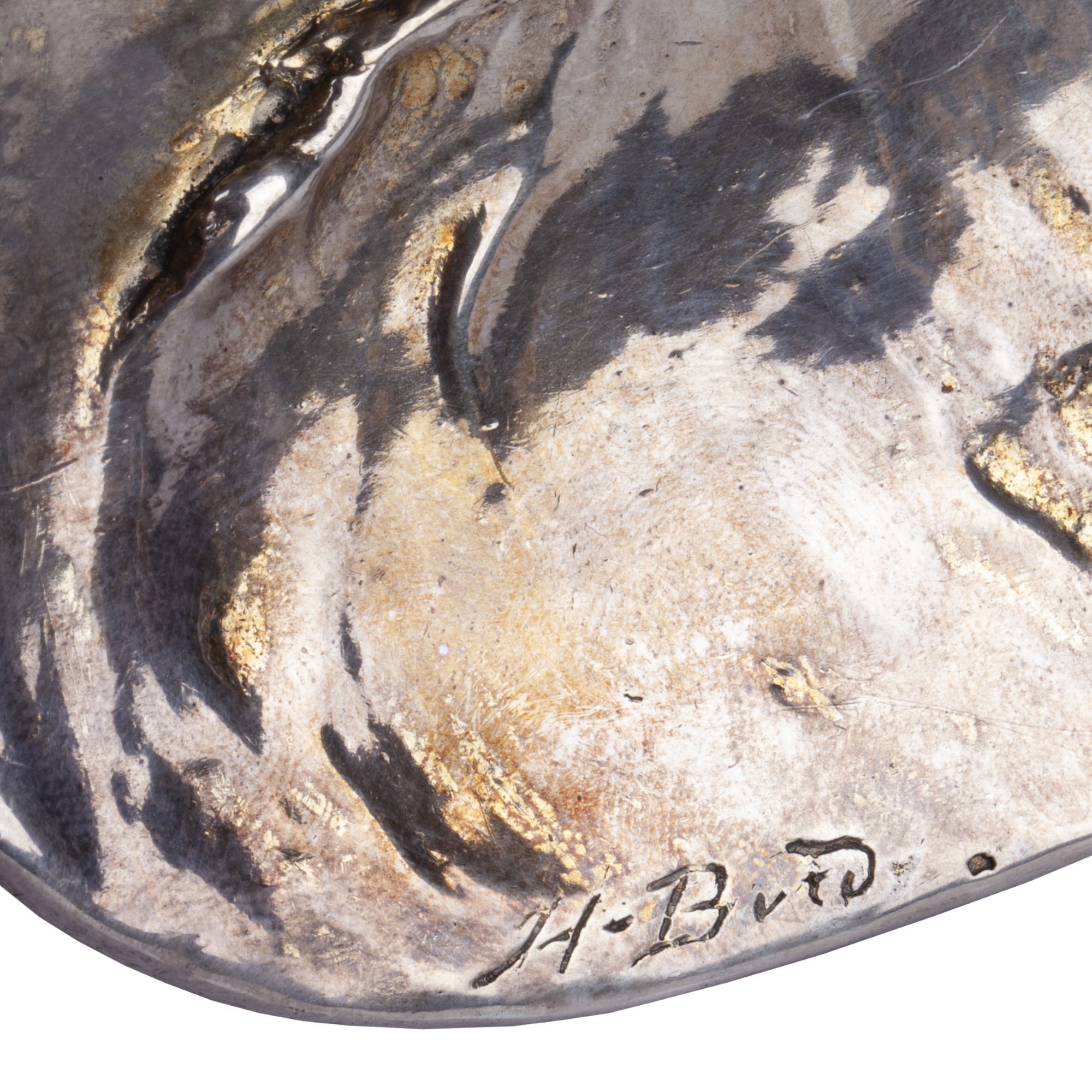
Silver, casting, gilding Signed by the sculptor: H-Bvrdy. Makers mark of «Boucheron Paris», 1900s. Dimensions: 13 x 8.5 x 4 cm. Total weight: 398.4 g.
The model of this tray-ashtray, created after designs by the renowned sculptor Henri Burdy, presents an elegant composition centered on the graceful figure of a Naiad, daughter of Zeus and nymph of a spring. Her body, seemingly woven of light, harmonizes with the refined silver surface.
Founded in 1858 by Frédéric Prudent Boucheron (1830–1902), the celebrated jewelry house not only produced elite jewels but also crafted artistic silver objects in the Art Nouveau and Art Deco styles, including cigarette cases, card holders, and ashtrays. In 1893, the firm established its flagship boutique at 26 Place Vendôme, Paris, where it remains to this day.
Henri Auguste Burdy (1833–1911), a French sculptor and engraver born in Grenoble, studied at the École des Beaux-Arts in Paris. In 1863 he received the second Grand Prix de Rome for his medal Bacchus Forcing a Panther to Drink, which revealed his gift for refined plasticity and mastery of small-scale form. His portrait medals, busts, and statuettes were widely recognized and exhibited at leading art salons. From the late 19th century, Burdy worked extensively in gemstone carving, creating unique pieces that combined jeweler’s precision with sculptural expressiveness. Among his distinguished commissions were works for the House of Boucheron. Notable creations include an emerald lion’s head mounted in a gold buckle with repoussé figures of two panthers, as well as an emerald carved with the head of Julius Caesar, traditionally linked to the collection of Napoleon III.Starting price: 3000€
Estimate: 3500-4500€
Hammer Price: 3 500 € -
Lot 0038
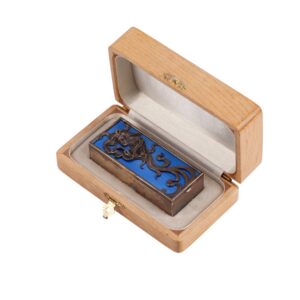
Fabergé – Silver-Gilt and Guilloché Enamel Match Holder, Moscow, 1899–1908, Original Case
Estimate: 5000-7000€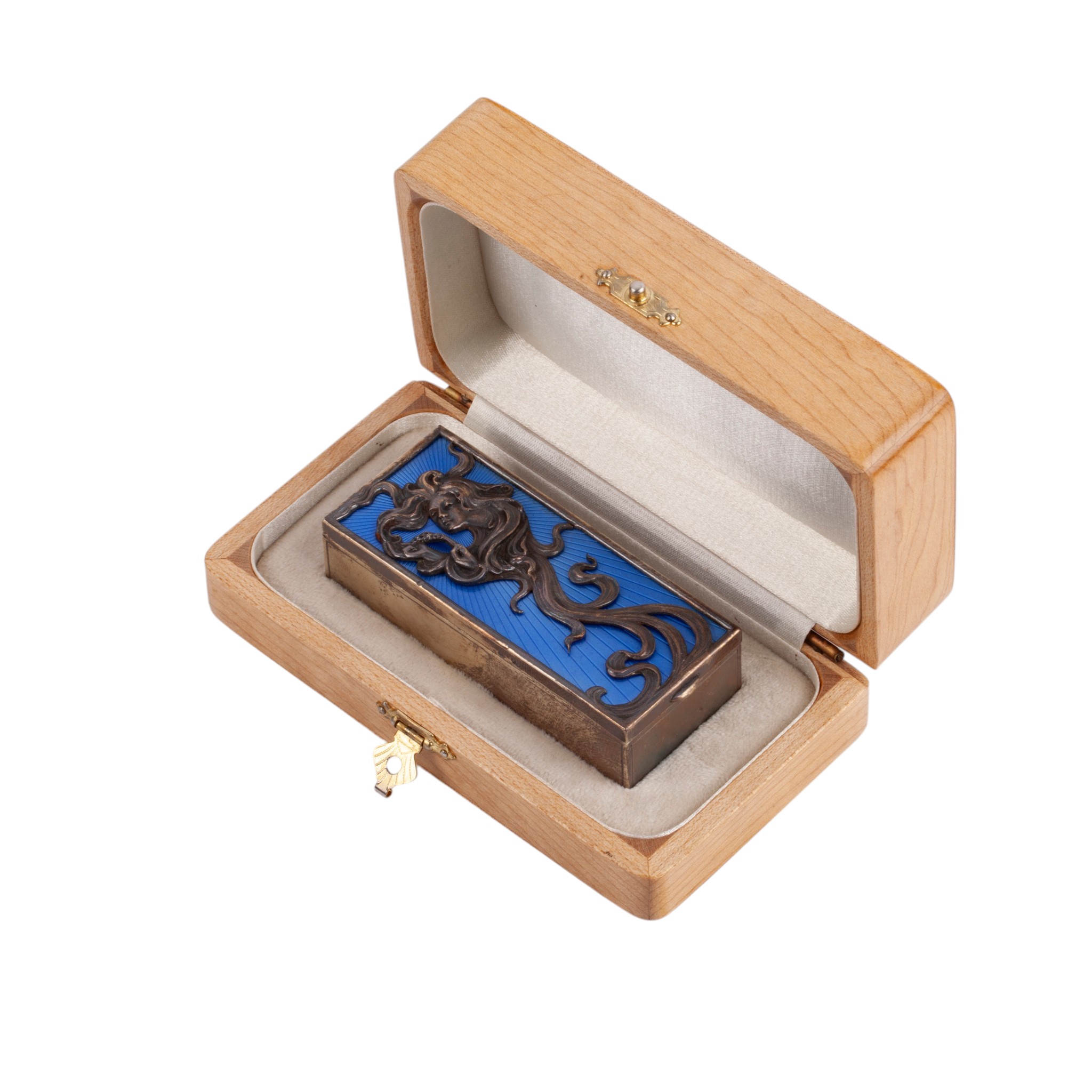
Lot 0038
Fabergé – Silver-Gilt and Guilloché Enamel Match Holder, Moscow, 1899–1908, Original Case
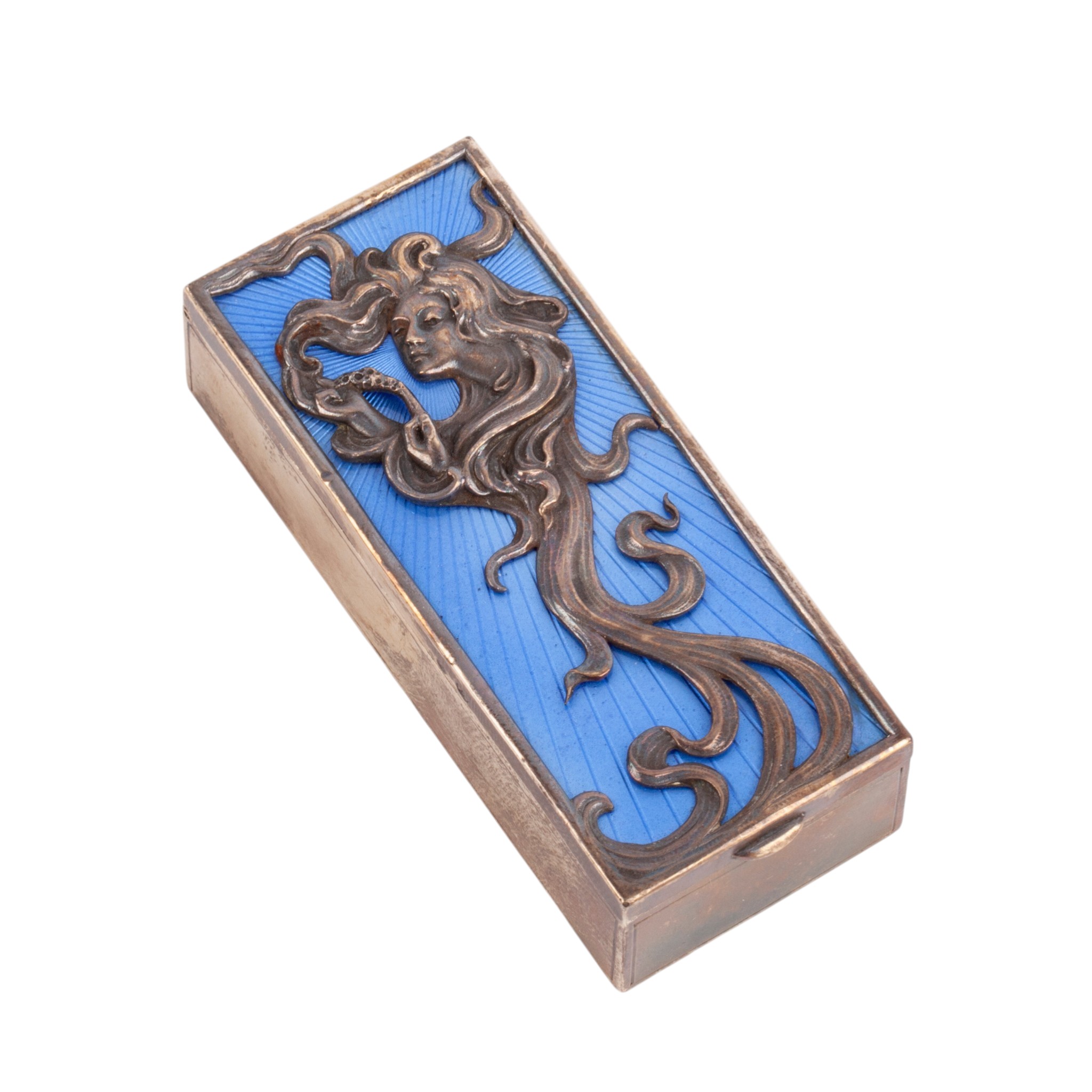
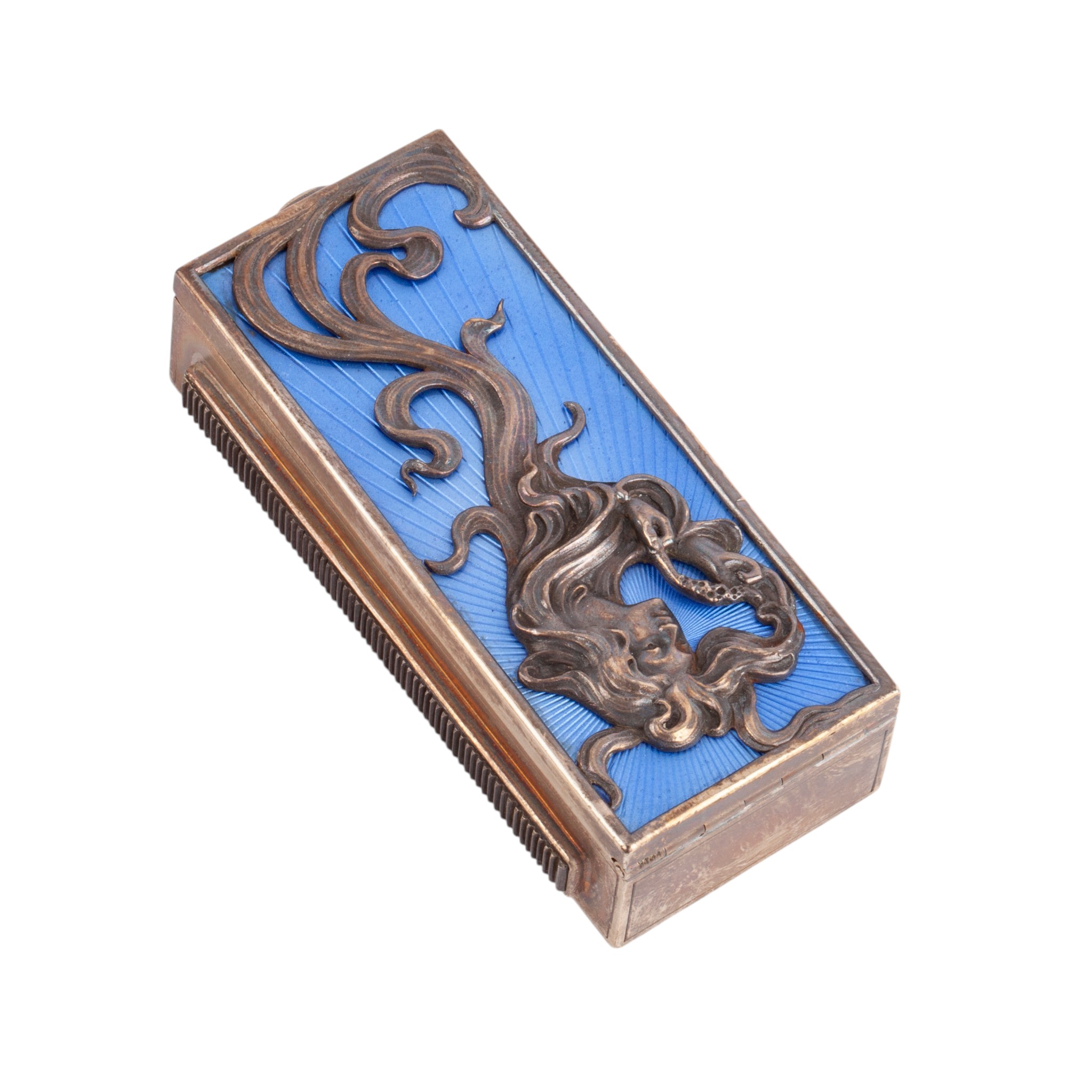
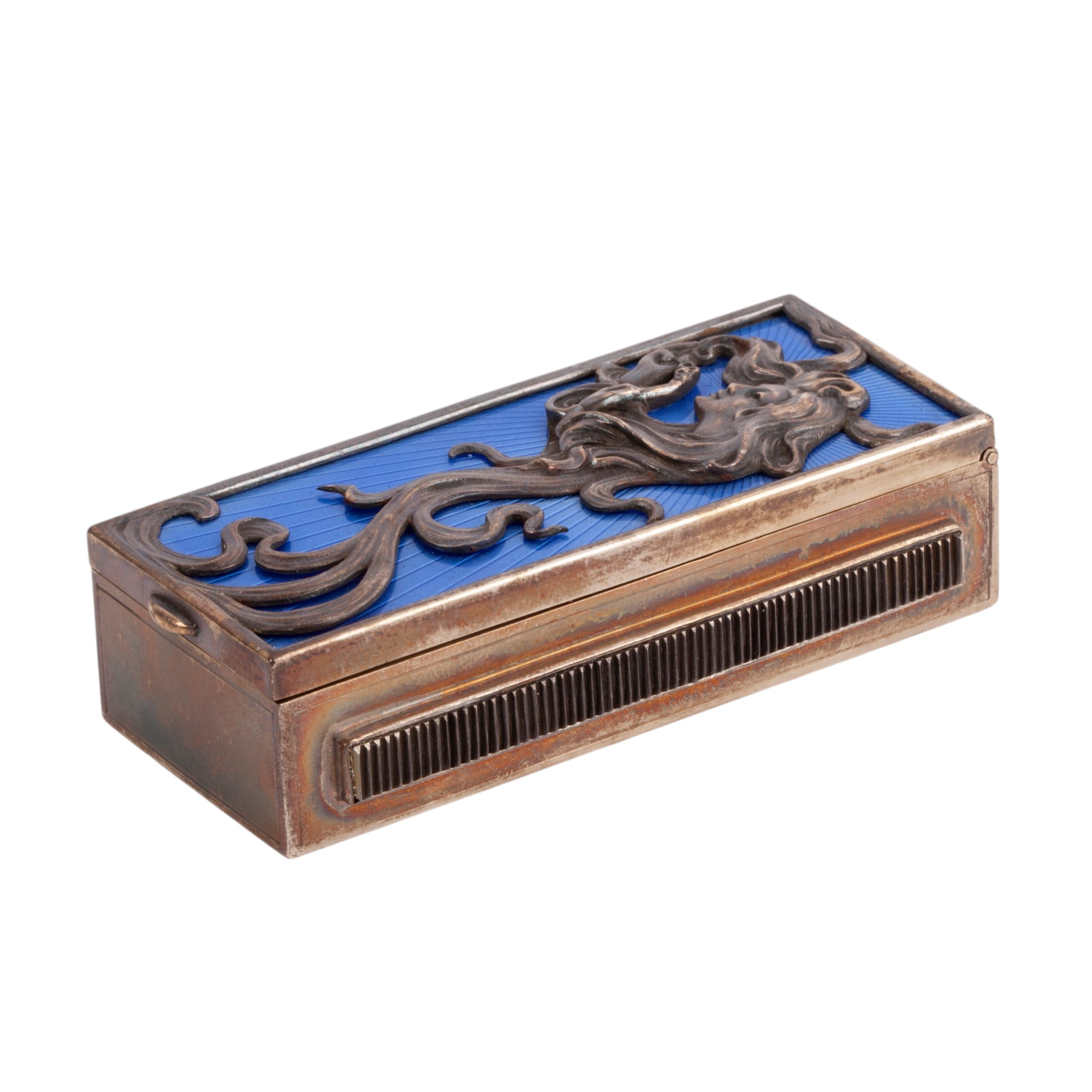
Estimate: 5000-7000€“FABERGÉ. SILVER-GILT AND GUILLOCHÉ ENAMEL MATCH HOLDER IN ORIGINAL CASE Moscow branch of the Fabergé firm, 1899-1908.
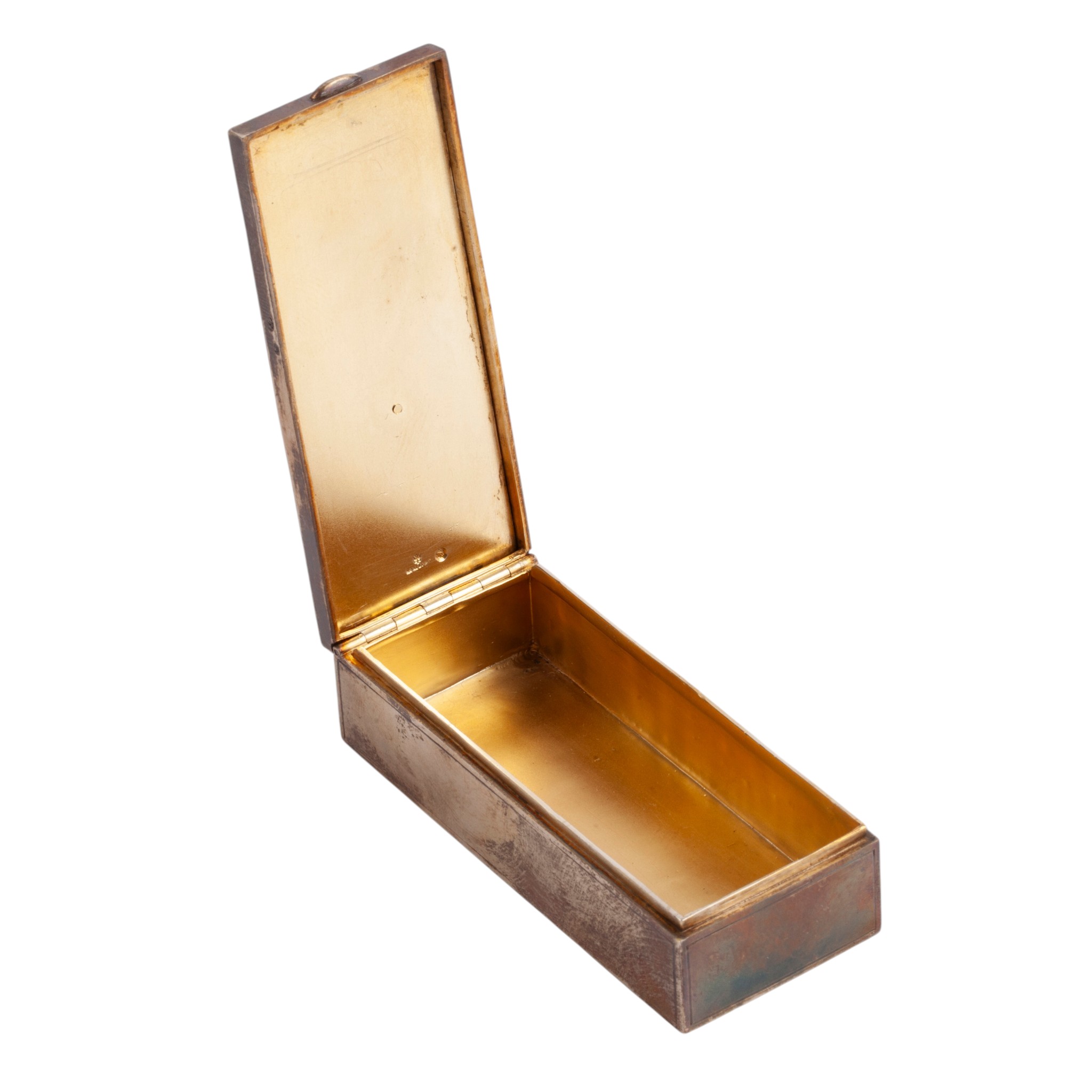
Silver-gilt, guilloché enamel, cast and applied relief; original fitted wooden case. Weight: 98 g. Dimensions: 2.2 x 7.9 x 3.7 cm.
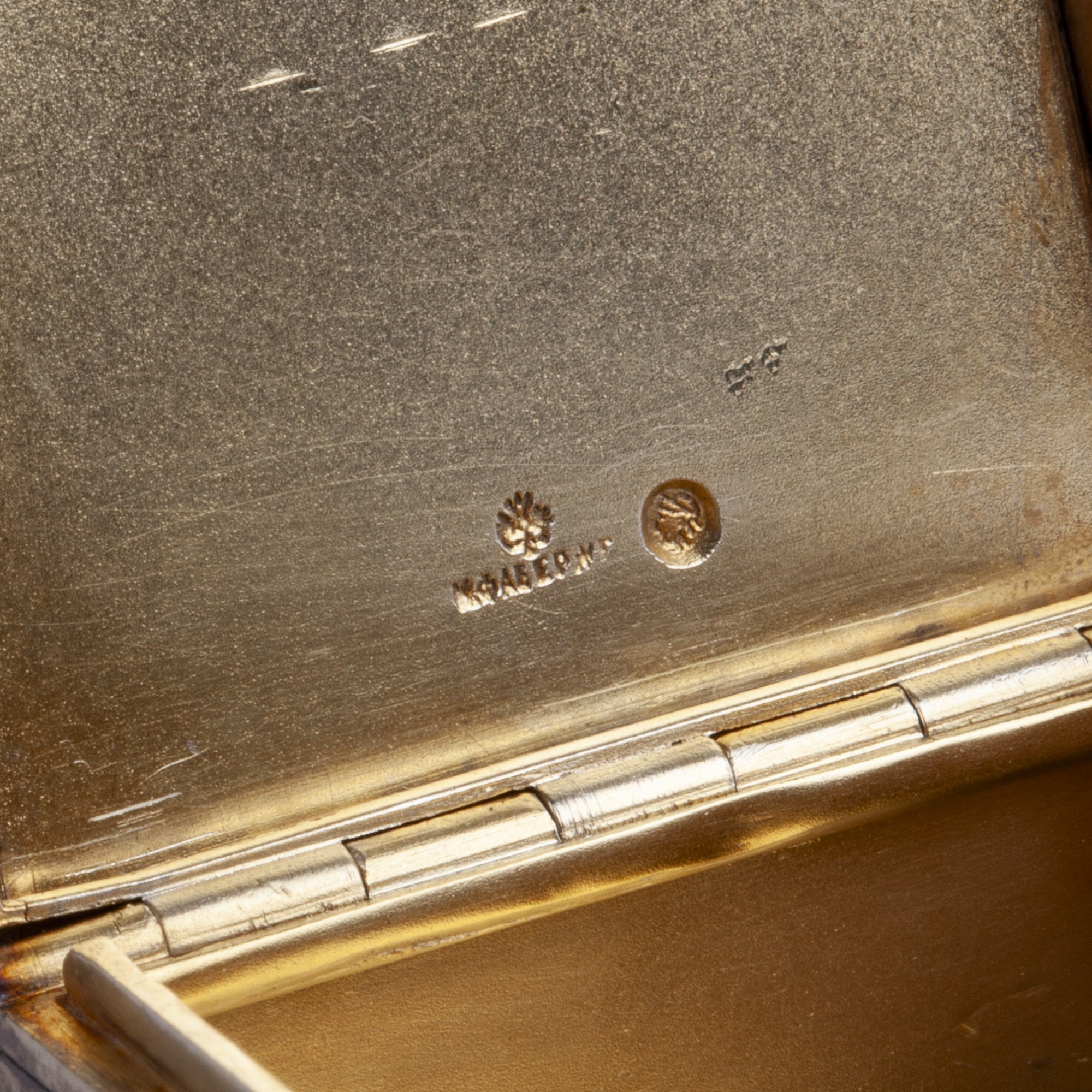
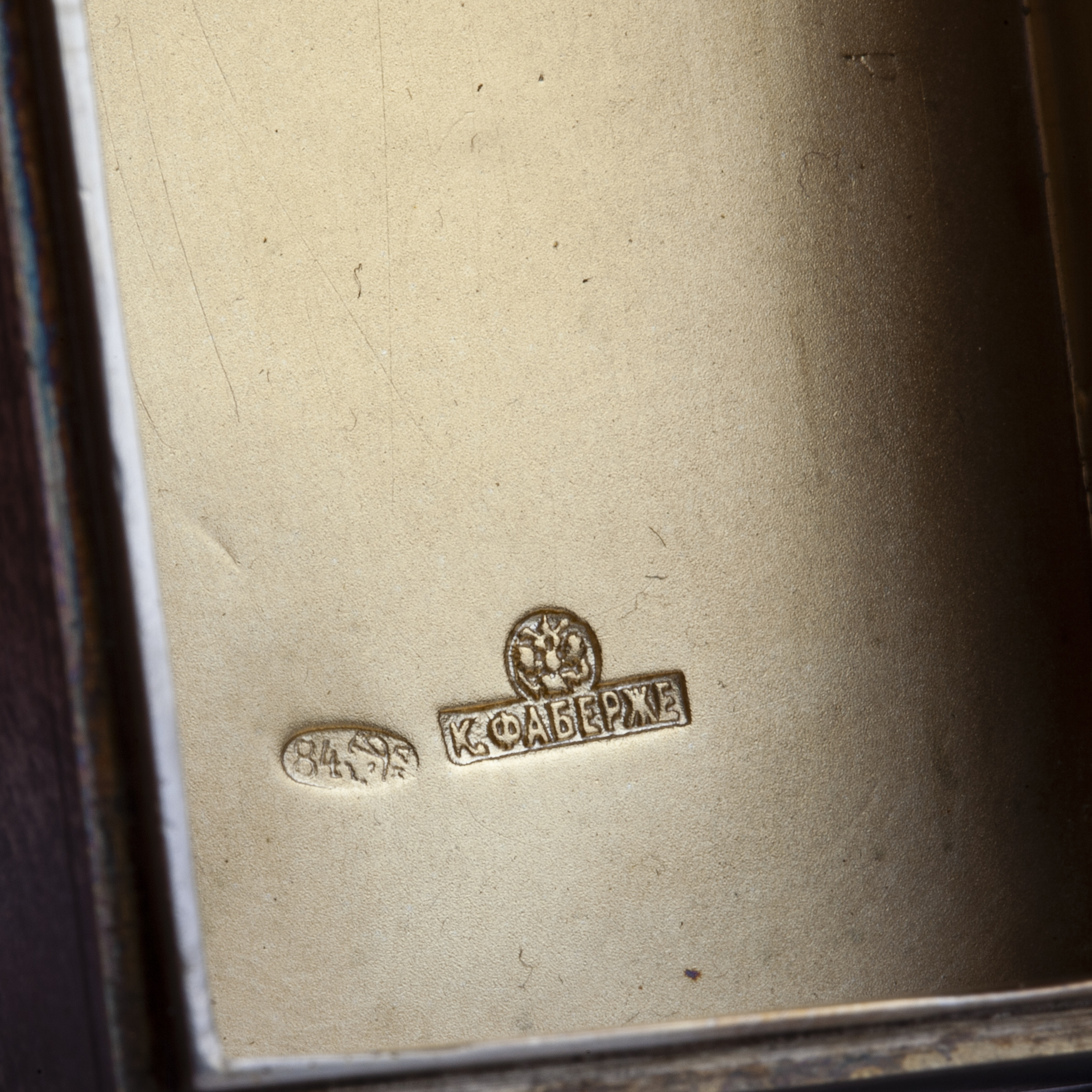
Marks: Faberge with Imperial Warrant, Moscow assay mark, 84 zolotnik standart.
Description
A refined silver-gilt match holder of rectangular form, the hinged lid inset with a vivid blue guilloché enamel ground over which is applied an elegant Art Nouveau relief composition. The ornament takes the form of a female mask with long, fluid hair dissolving into whiplash curves and sinuous tendrils, the whole conceived in the highly expressive linear idiom of the modern style.
One side of the case is fitted with a ribbed striker, confirming the object’s practical function while preserving the precious, jewel-like character typical of Fabergé’s smaller luxury articles. The interior is fully gilt.
This match holder is an eloquent example of the Moscow branch’s response to the aesthetics of Art Nouveau.
The Moscow branch of Fabergé, established by Carl Fabergé with the active participation of the British subject Allan Bowe, developed a distinctive profile within the firm’s wider production. The shop on Kuznetsky Most, in the Merchants’ Society building, operated in the spirit of a metropolitan showcase: Moscow demanded spectacle and strong display effect. A phototype illustration from the 1893 price list records the interior as a demonstration hall, with carpets, velvet banquettes, columns, wall cases displaying silver and mounted crystal, and low table-vitrines filled with jewels in fitted cases.
It was here that the Art Nouveau line, associated with the principle of the very latest fashions, found especially vivid expression. Art Nouveau manifested itself in flowing contours, asymmetry, graphic rhythm, and the treatment of silver surfaces, as well as in motifs of the circle, the wave, and the vegetal scroll. This language found its most organic expression in small-scale objets d’art.
The assortiment responded closely to current taste: objects that had lost their novelty were gathered up and melted down annually, reinforcing the shop’s image as a place of constant renewal. The production base was the Moscow factory in the San Galli house in Bolshoi Kiselny Lane, employing about 300 workers, where silver production was particularly strong”Starting price: 4000€
Estimate: 5000-7000€
Hammer Price: Not sold -
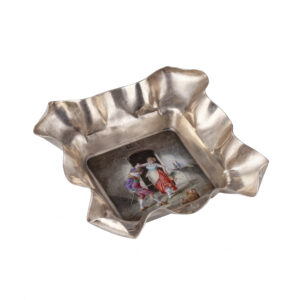
Lot 0039
Silver and En-Plein Enamel Ashtray with a Mediaeval Genre Scene
Estimate: 800-1000€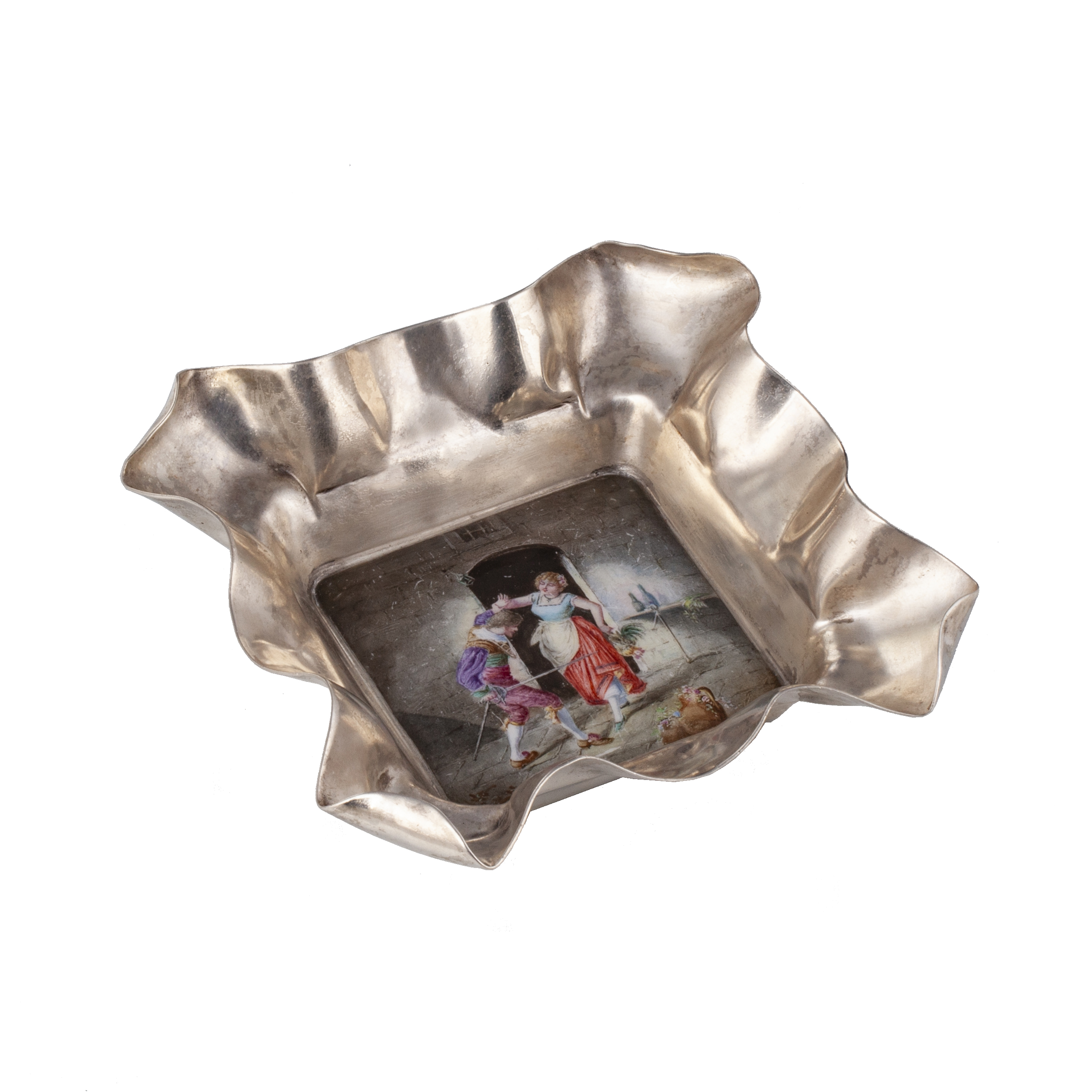
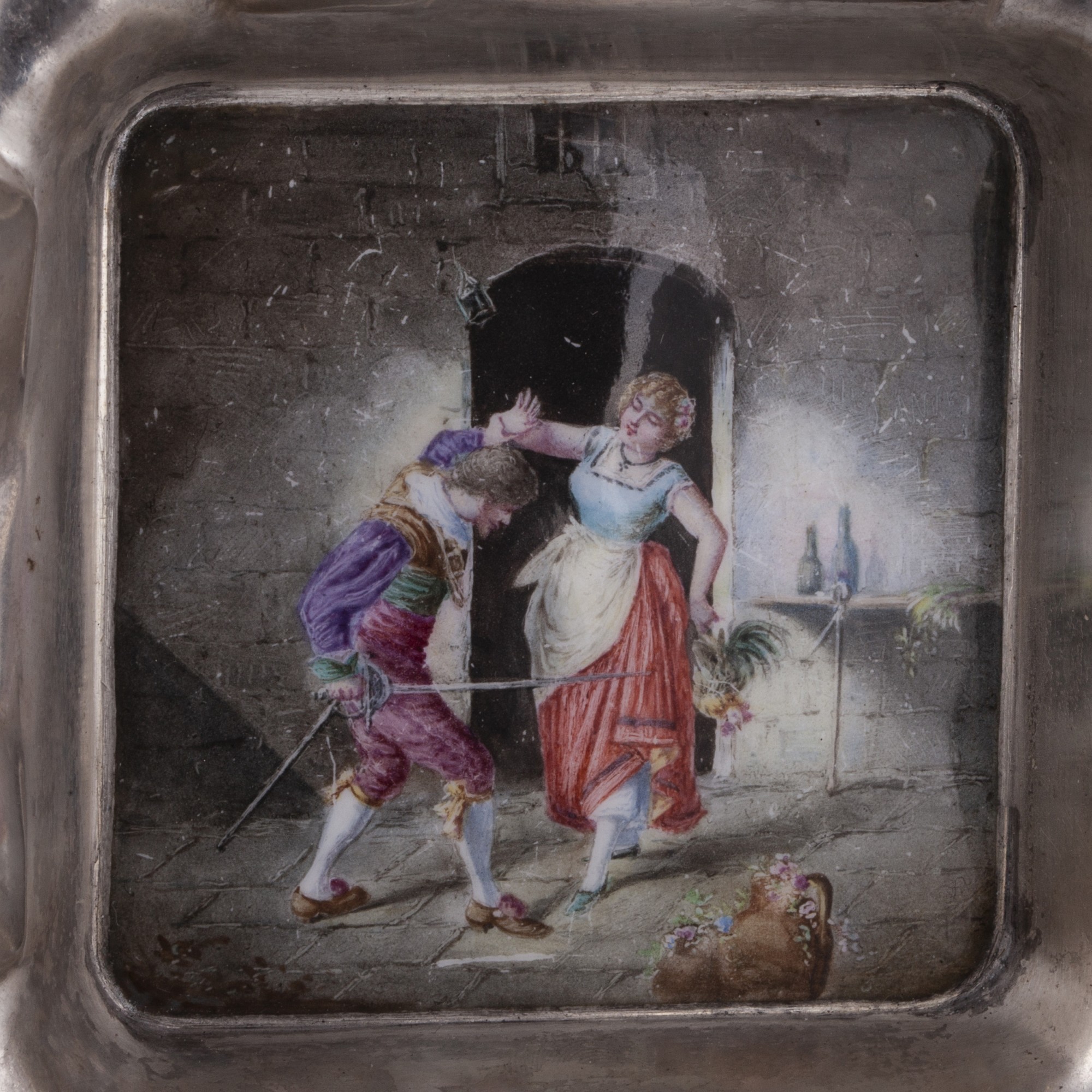
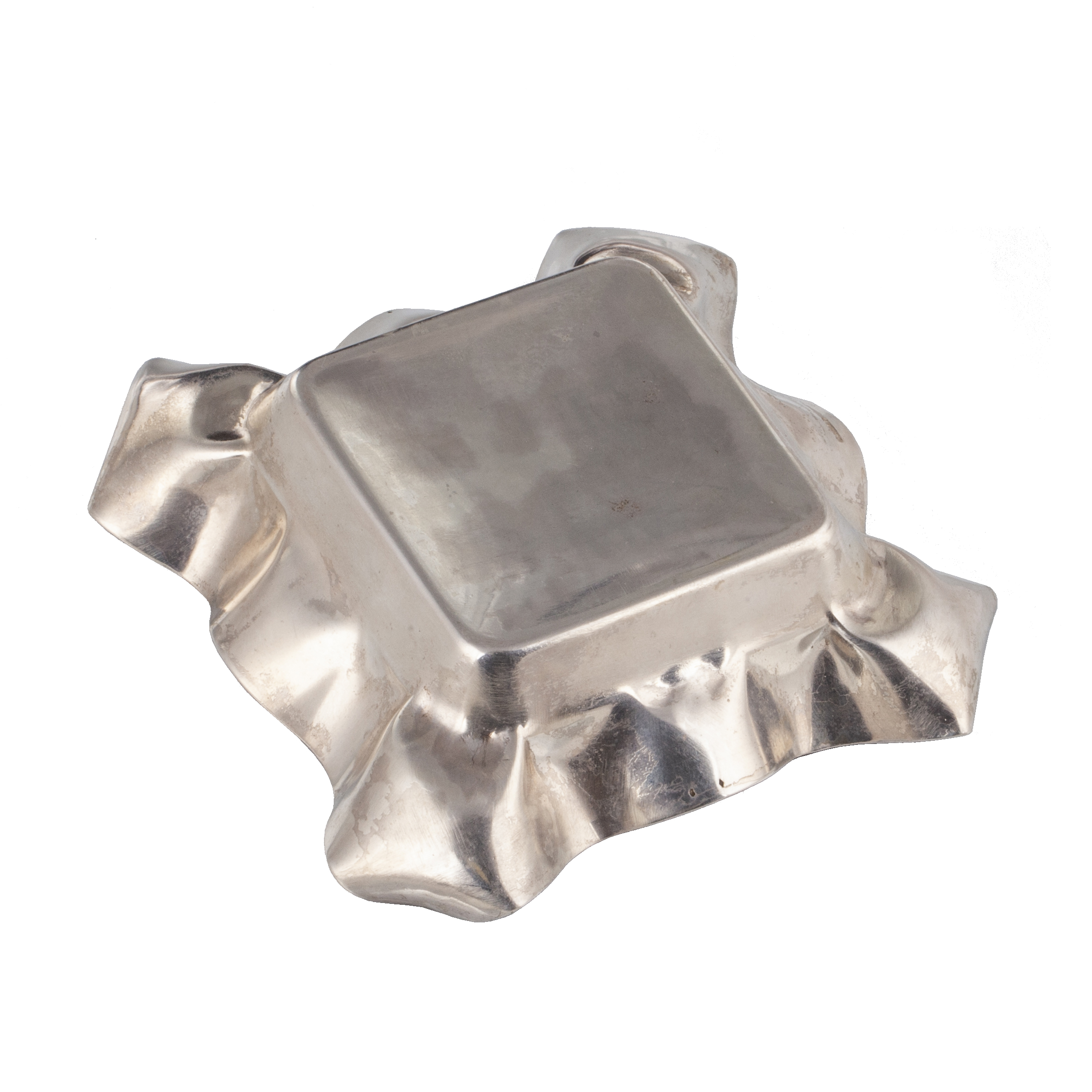
Lot 0039
Silver and En-Plein Enamel Ashtray with a Mediaeval Genre Scene
Estimate: 800-1000€Silver and En Plein Enamel Ashtray
Russia (import marks), late 19th century
Silver (84 zolotniks), en plein enamel
Weight: 161.6 g | Dimensions: 12.8 × 12.8 × 3.3 cmA finely crafted Russian silver ashtray featuring a beautifully executed en plein enamel panel depicting a lively medieval genre scene — a gallant courtier and a young woman engaged in playful conversation at a tavern doorway. The composition, rich in color and theatrical detail, reflects the popular fascination with romanticized historical subjects at the close of the 19th century.
Starting price: 750€
Estimate: 800-1000€
Hammer Price: Not sold -
Lot 0040
Silver-Gilt and Champleve Enamel Ashtray by Emil Radke
Estimate: 600-800€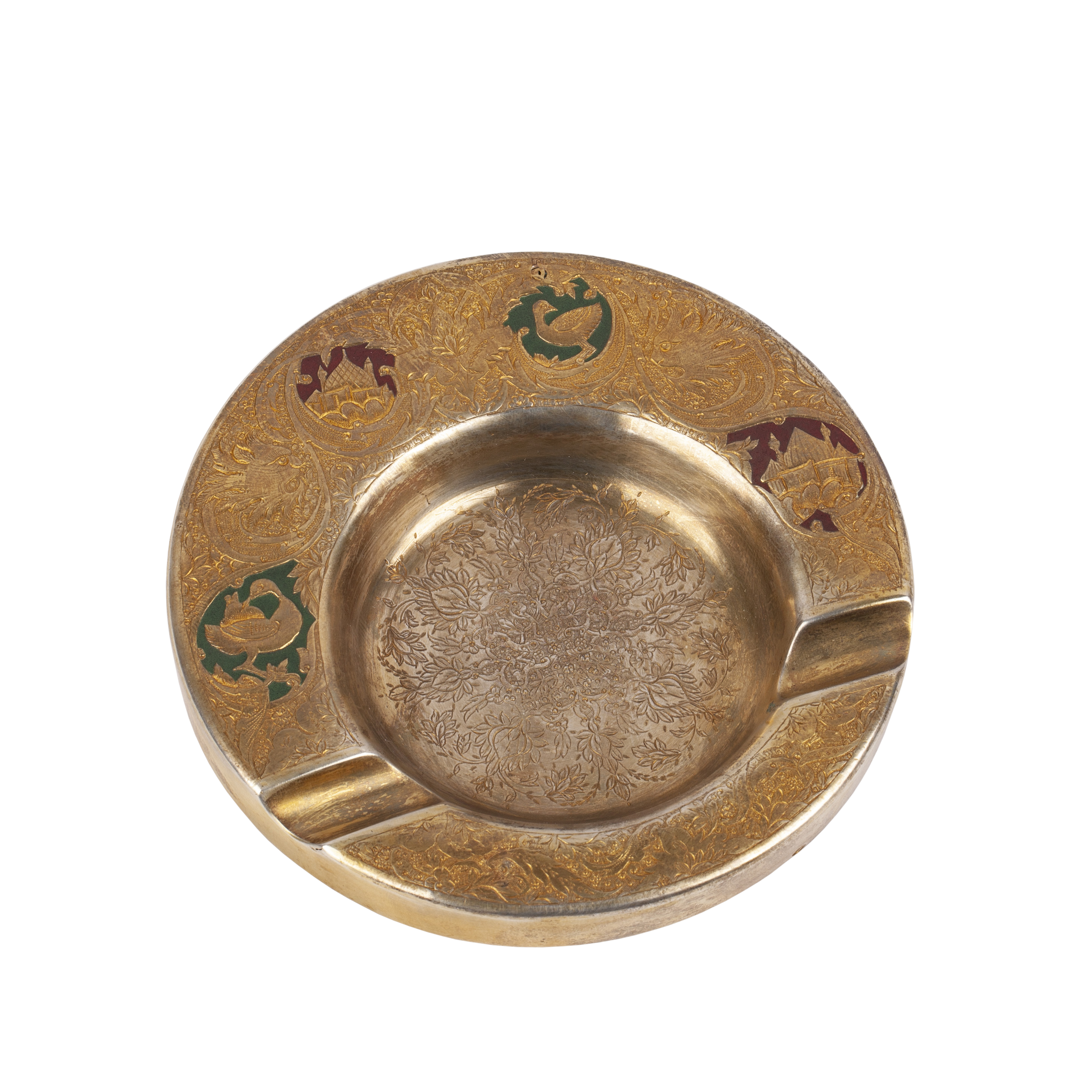
Lot 0040
Silver-Gilt and Champleve Enamel Ashtray by Emil Radke
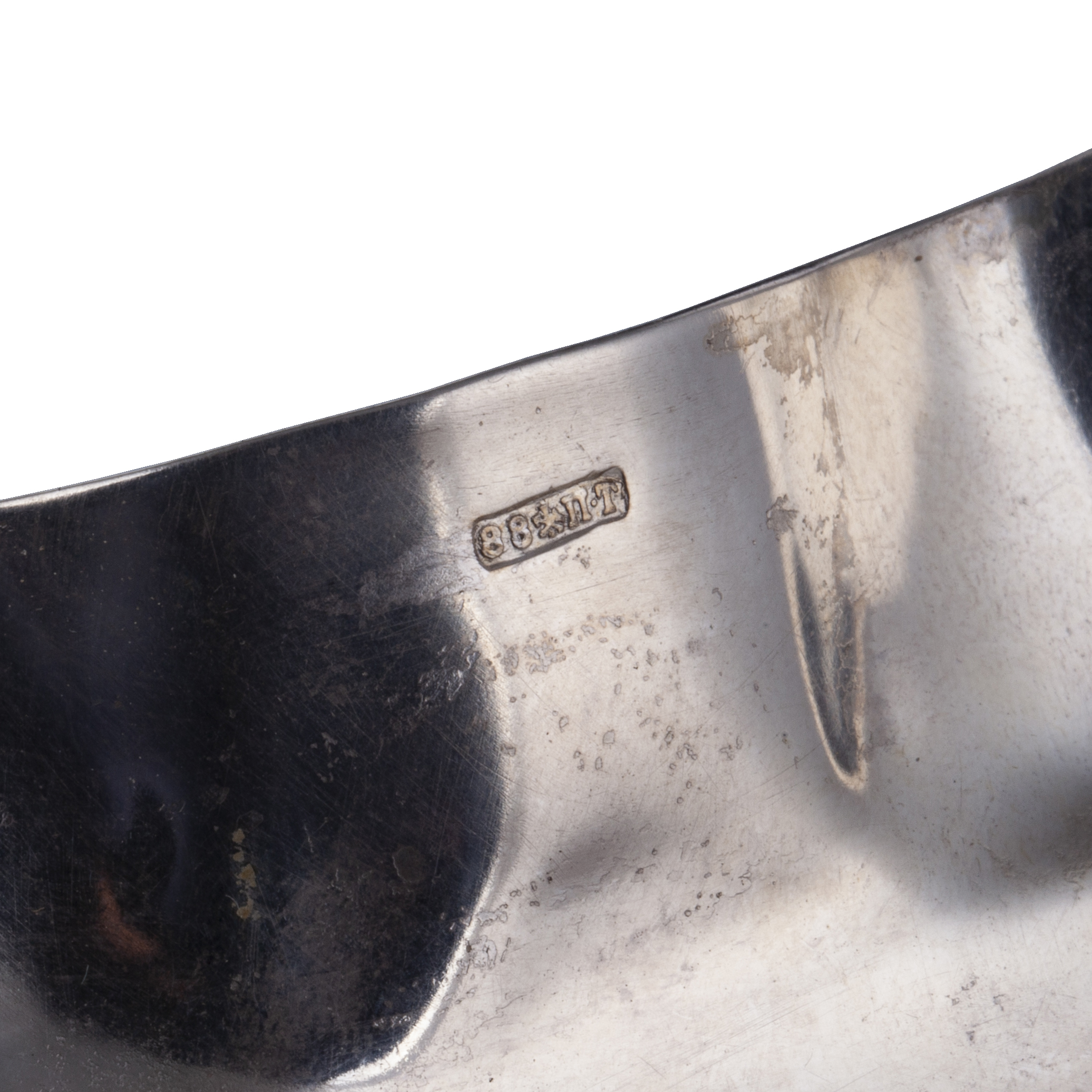
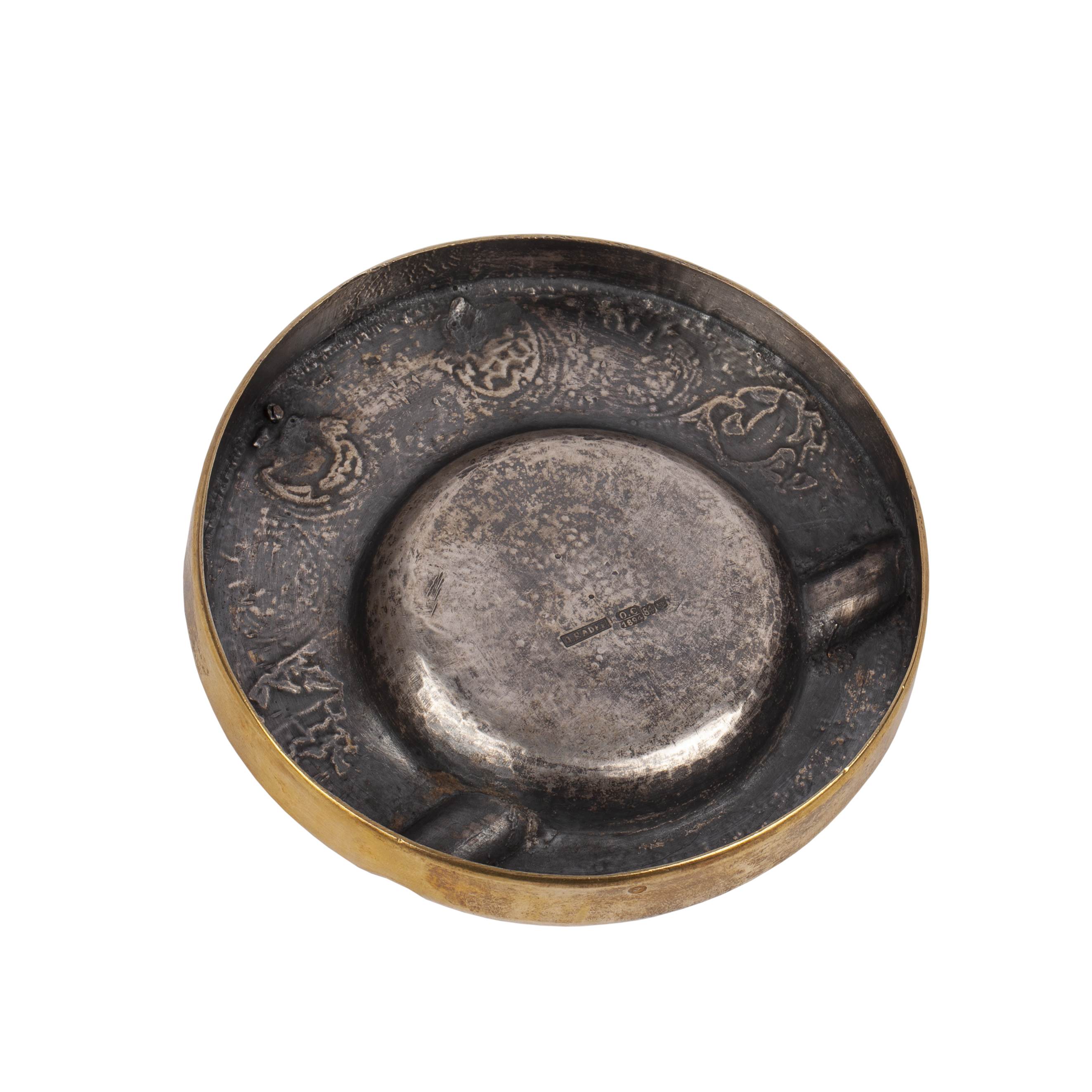
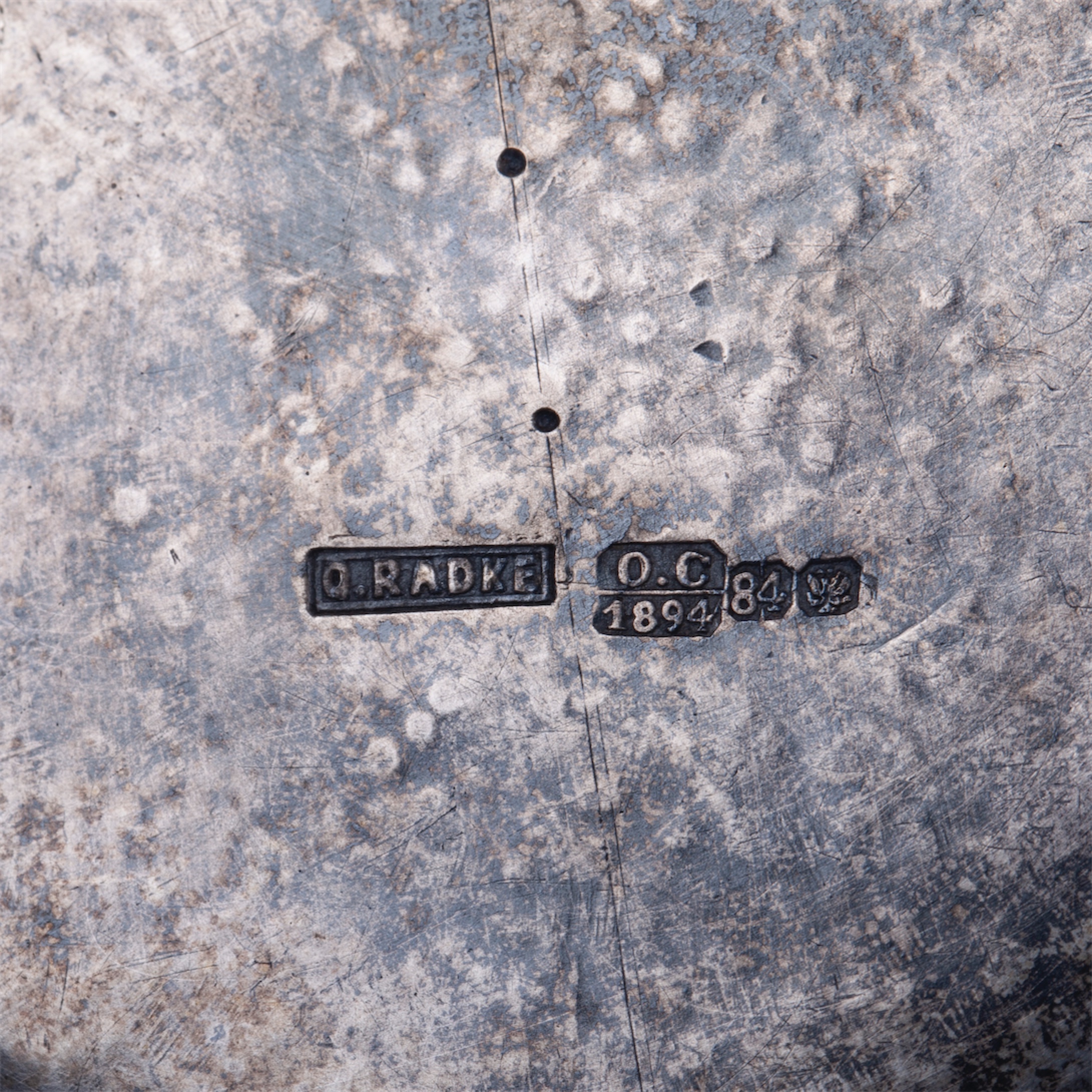
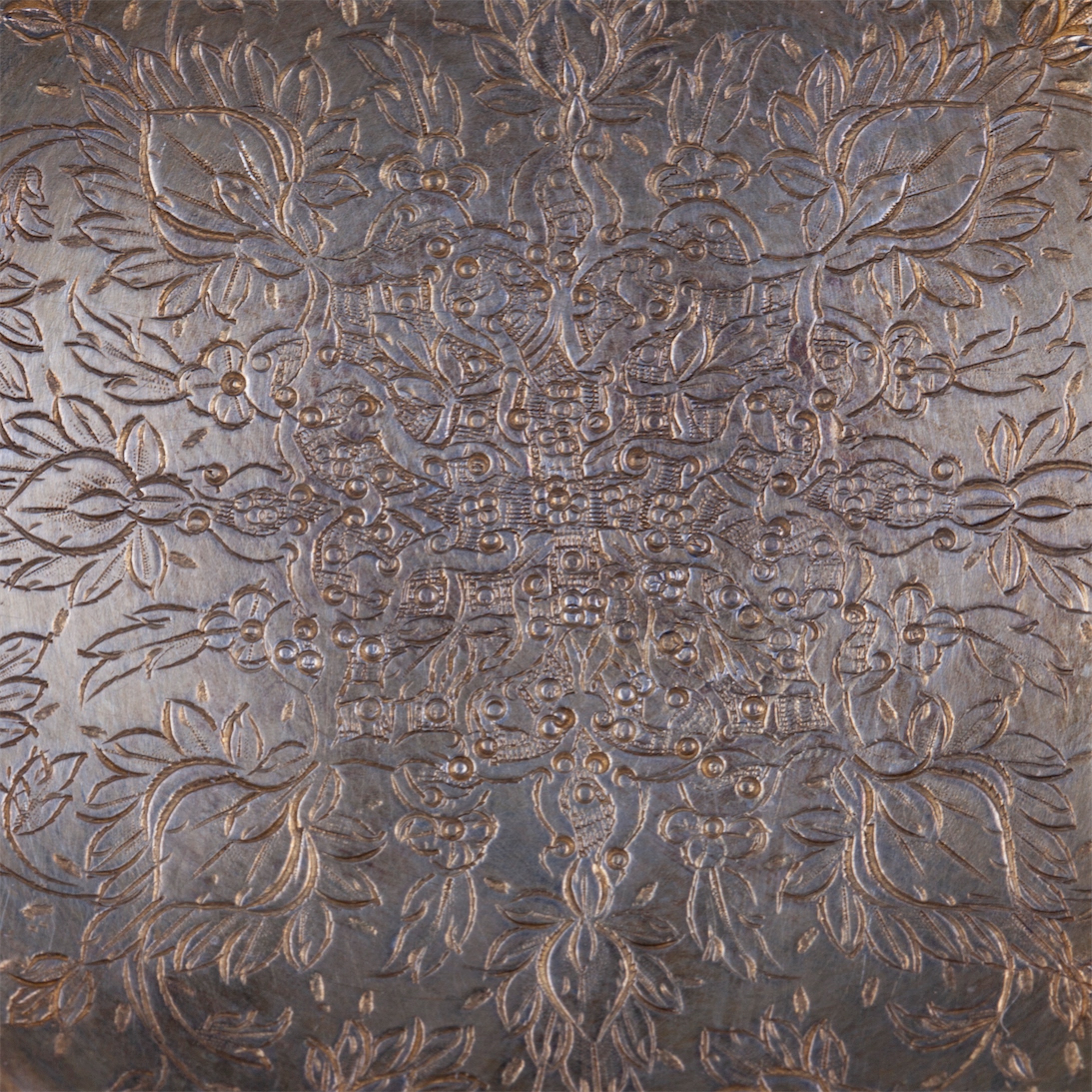
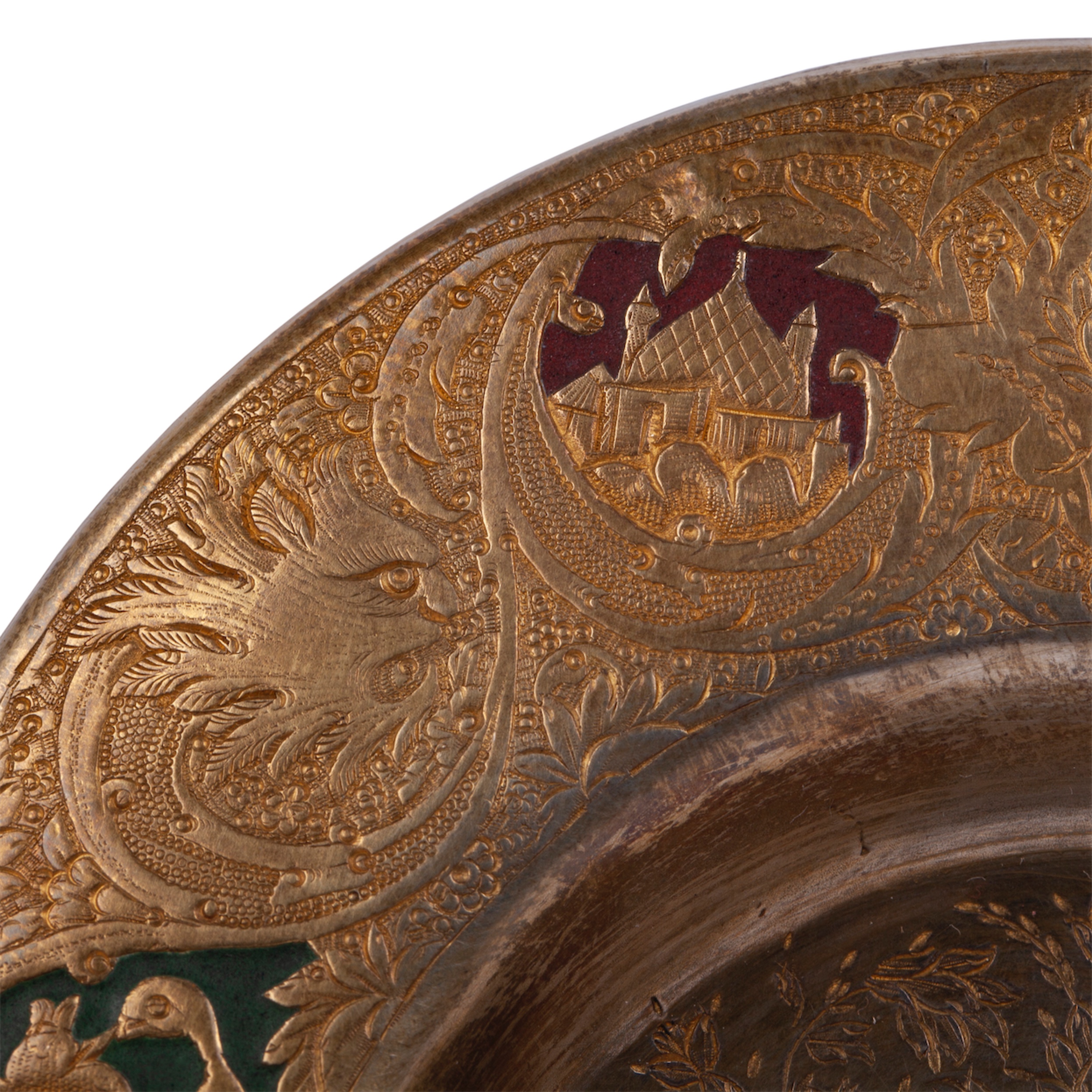
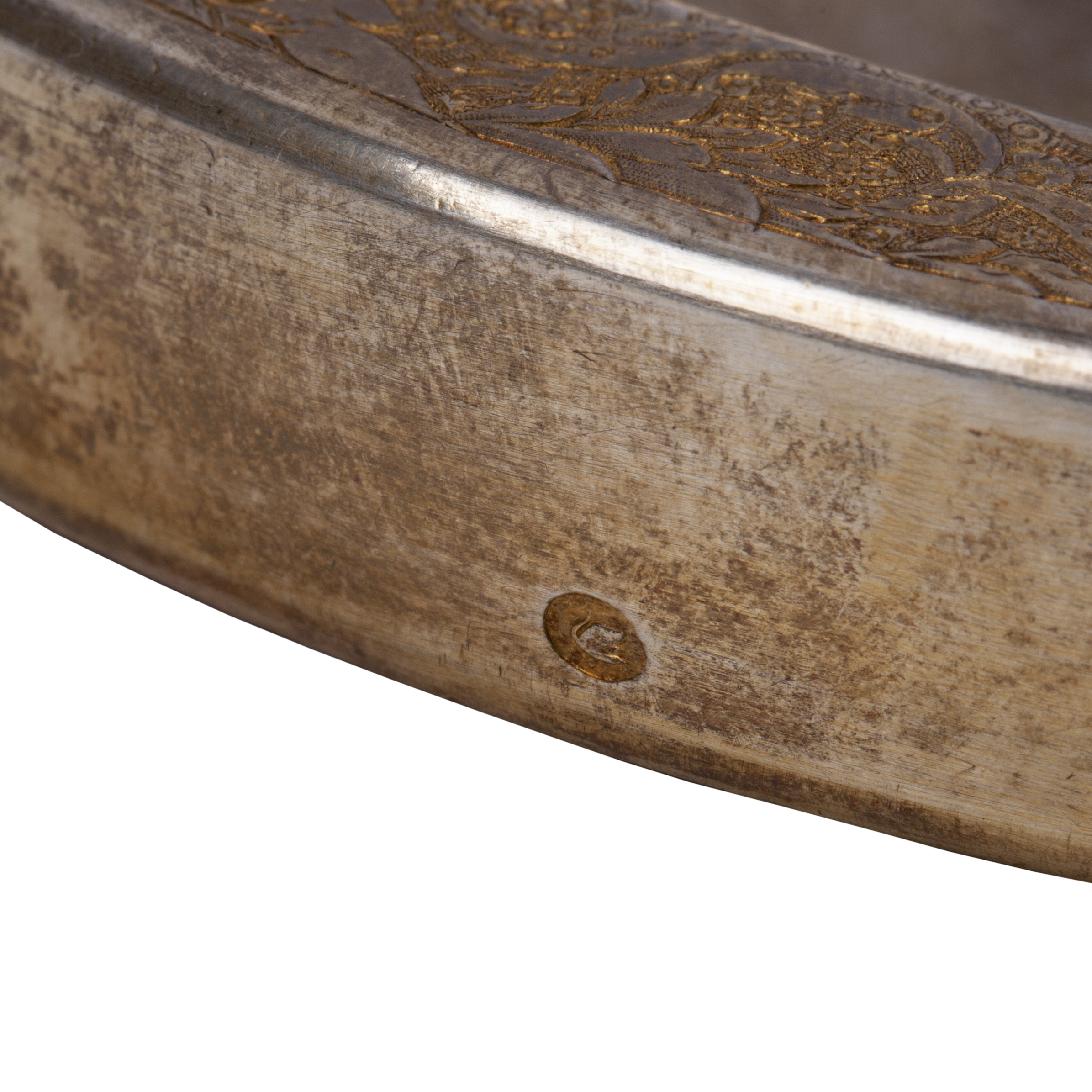
Estimate: 600-800€An interesting silver-gilt and champlevé enamel ashtray, decorated with polychrome enamel motifs and intricate floral engraving. Maker’s mark of Emil Radke, Minsk, 1894. Marked Radke 84.
Diameter: 11 cm.
Weight: 150.6 g.Emil Radke was one of the most prominent silversmiths in Minsk at the end of the 19th century, regarded as the second-best master of his time. A deeply religious Jew, he strictly observed all Jewish traditions and rituals. His workshop produced refined silver objects in the fashionable Art Nouveau style, often combining gilding, niello, and enamel.
This ashtray is a fine example of Radke’s craftsmanship and an excellent collectible piece for enthusiasts of Russian and Eastern European Art Nouveau silver.
Starting price: 500€
Estimate: 600-800€
Hammer Price: Not sold

Providing Antique Auctions