
Lot 0046
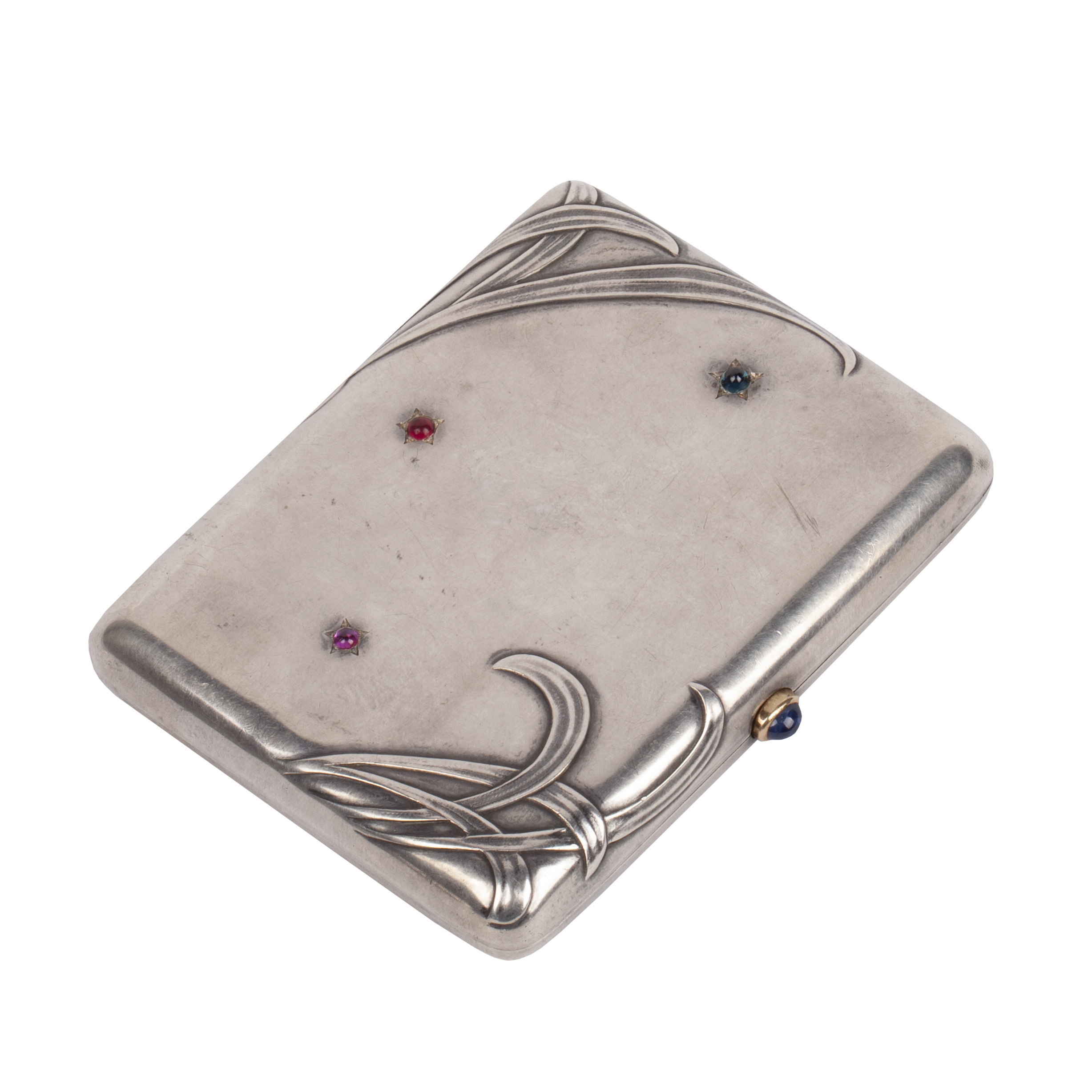
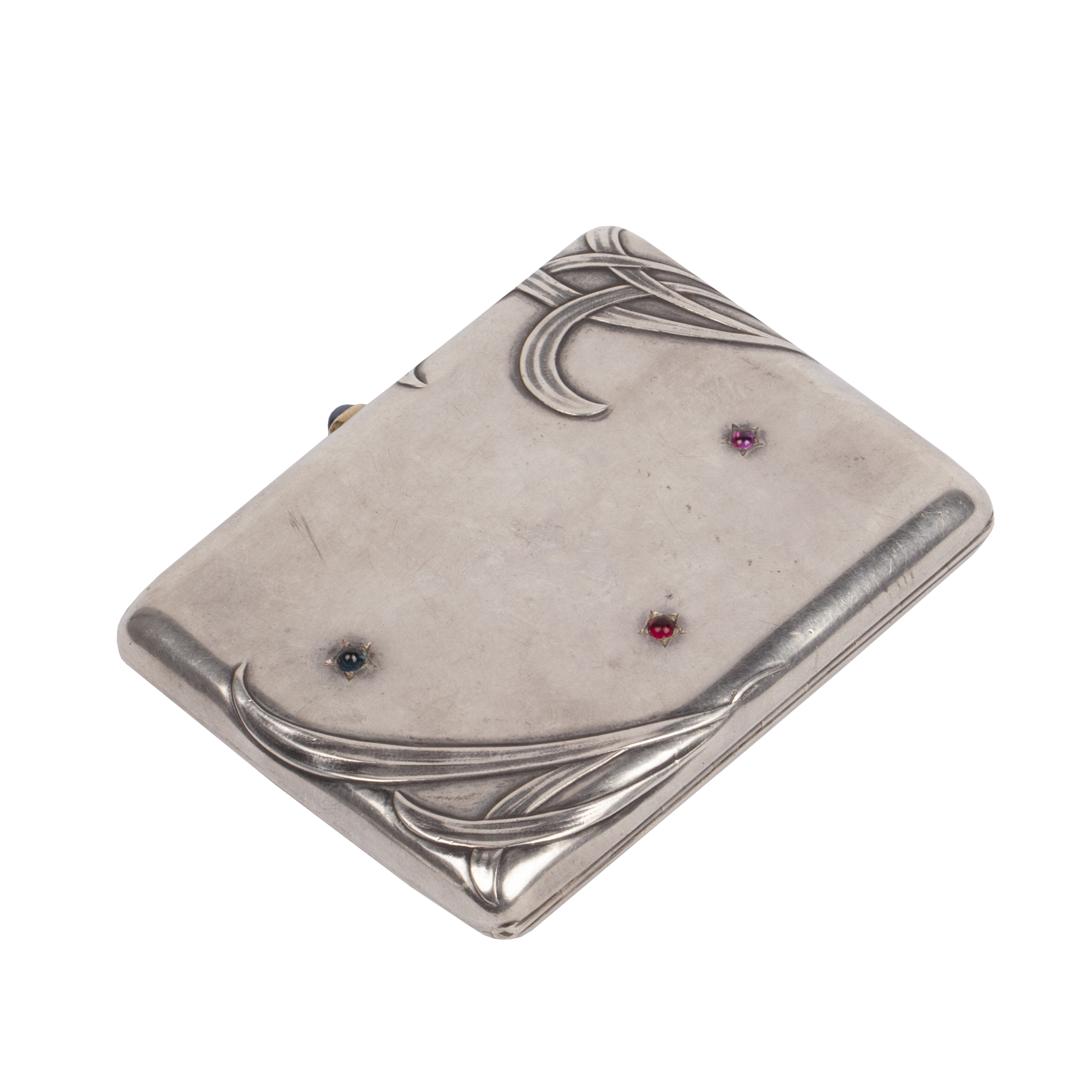
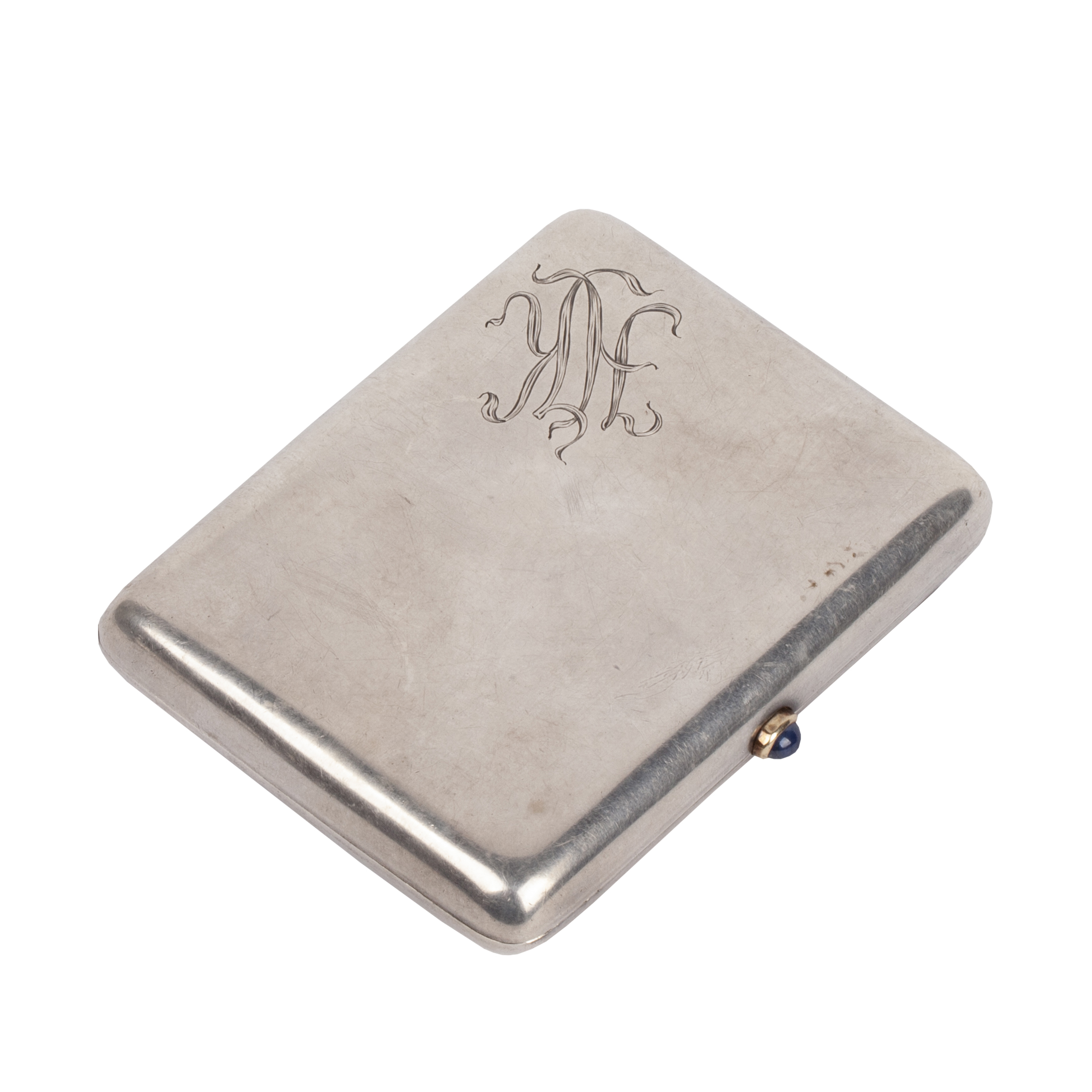
Fabergé. Art Nouveau Silver Cigarette Case. Moscow, 1899–1908
Estimate: 2500-3500€
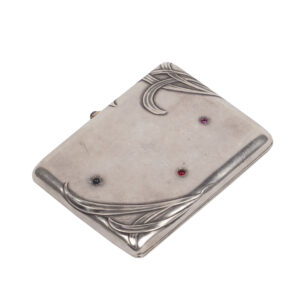
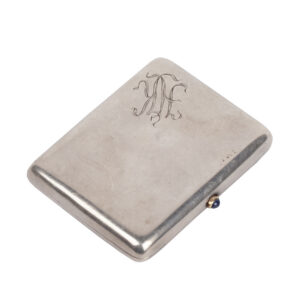
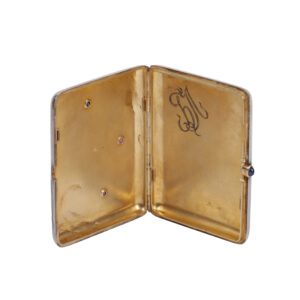
Faberge. Cigarette case in Art-nouveau style
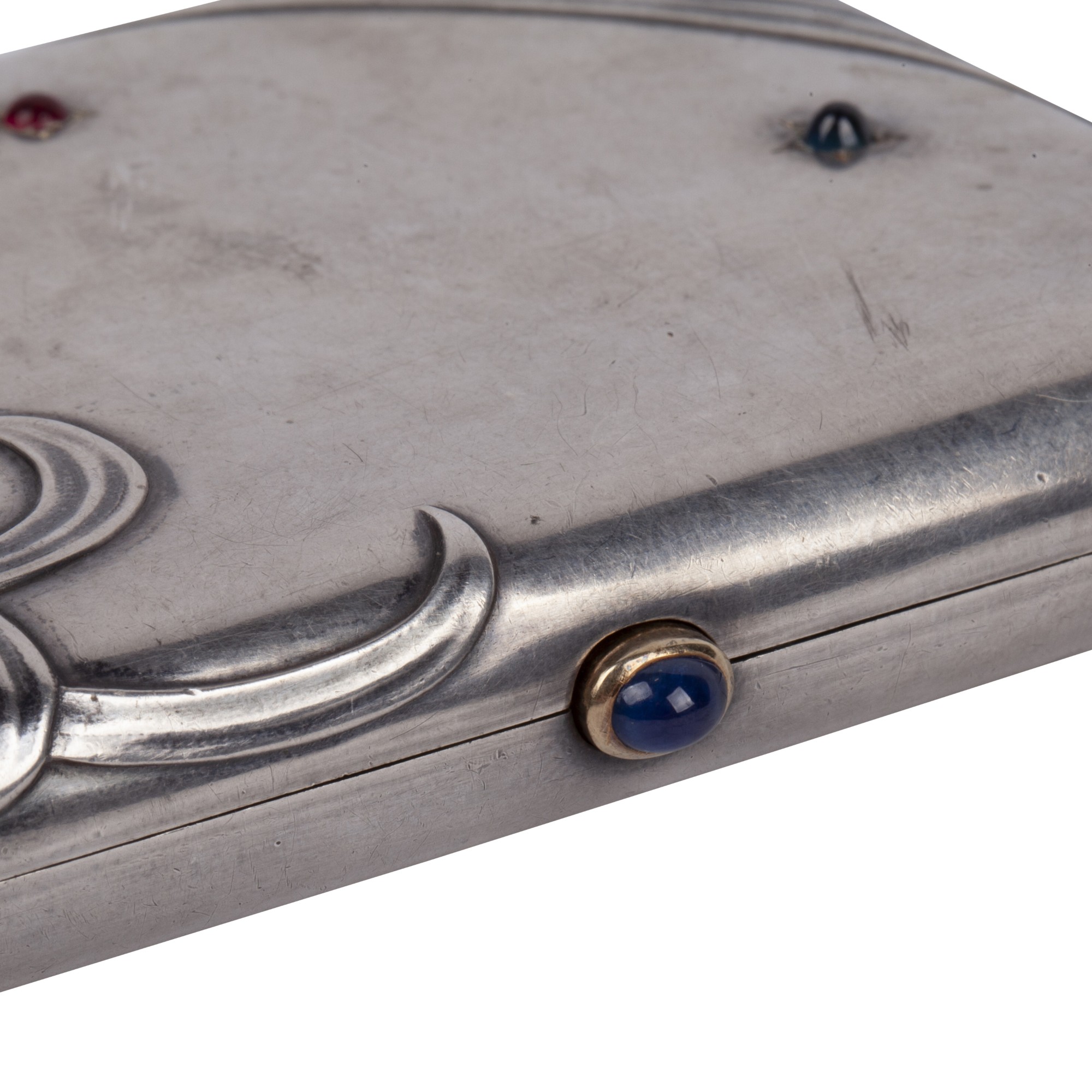
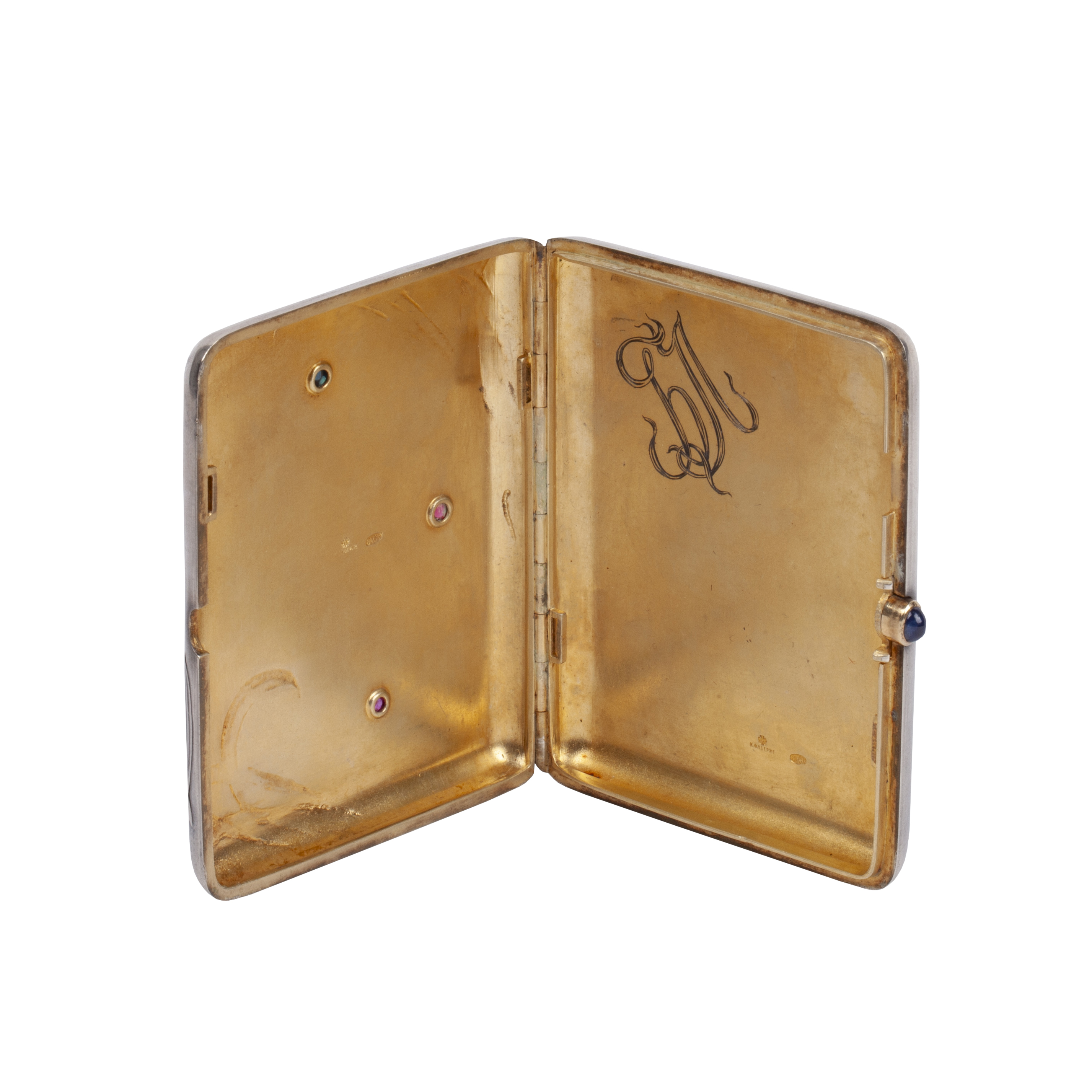
Silver, gold, chasing, gilding, sapphire and rubies. Dimensions: 9.5 x 7.7 x 2 cm. Total weight: 149 g. Inventory number 14041
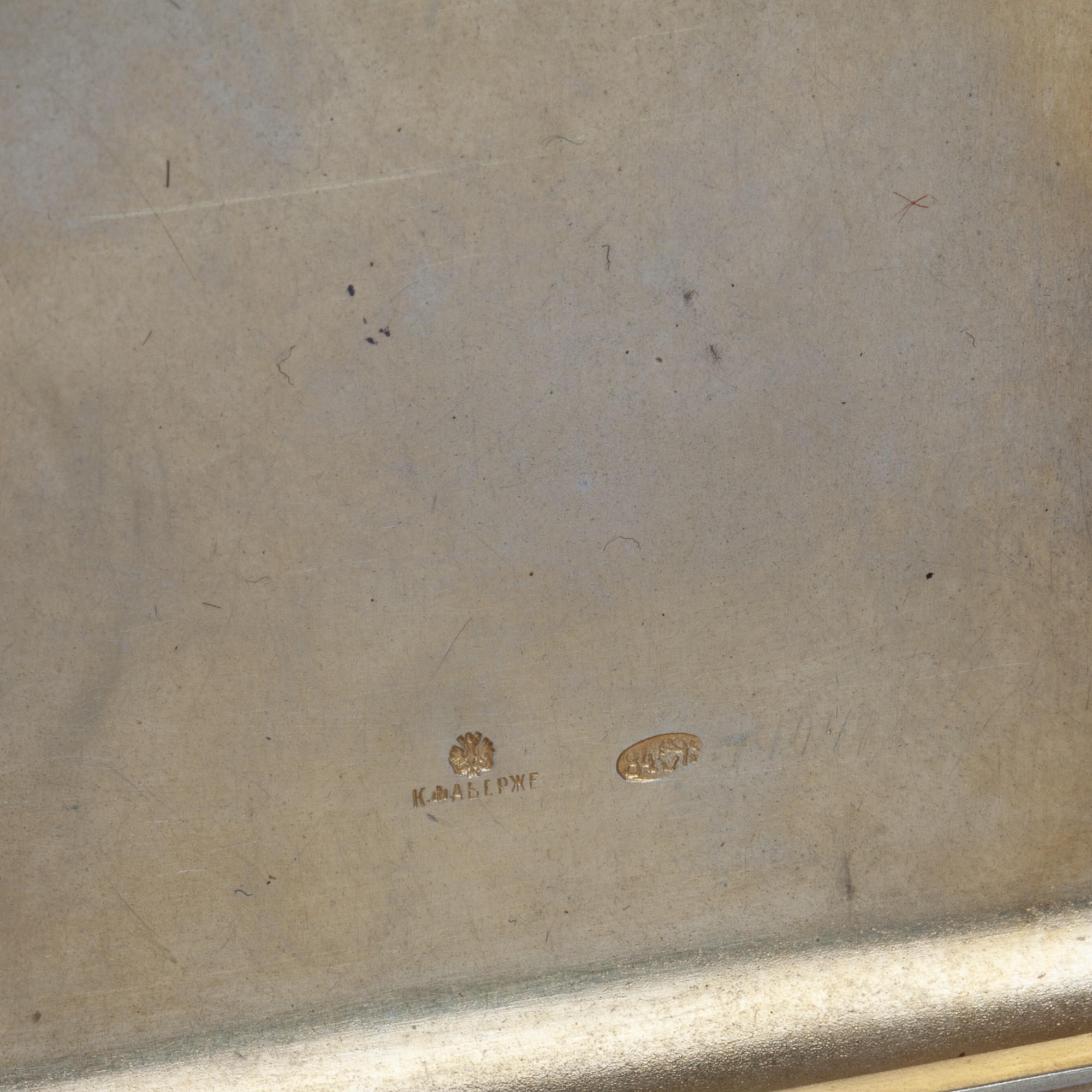
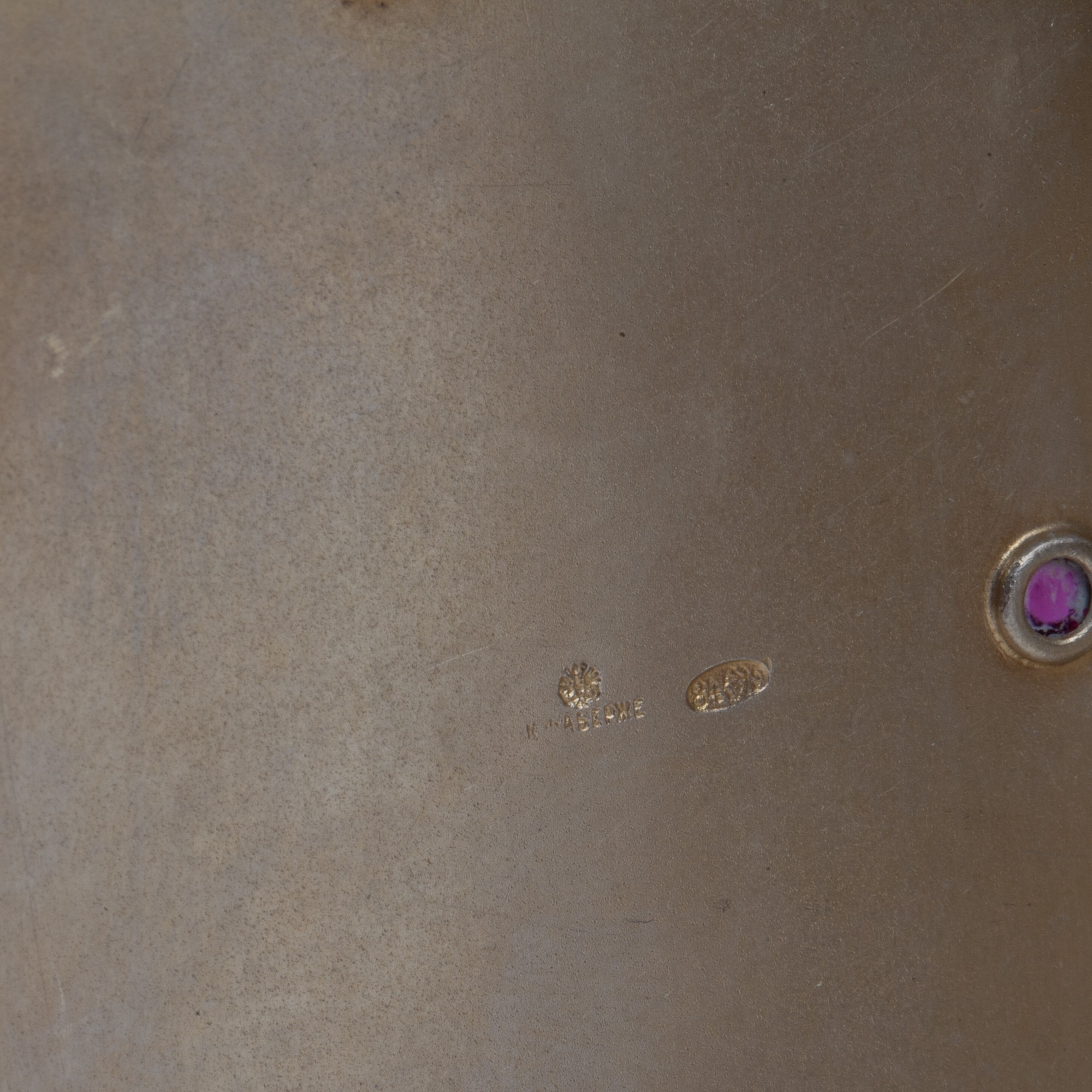
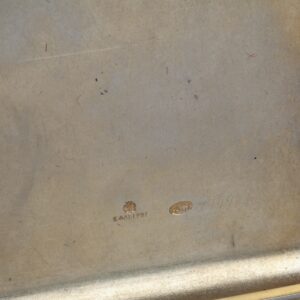
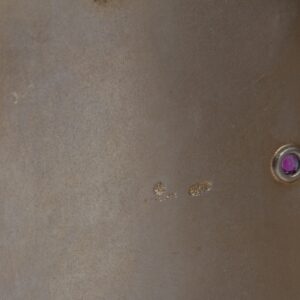
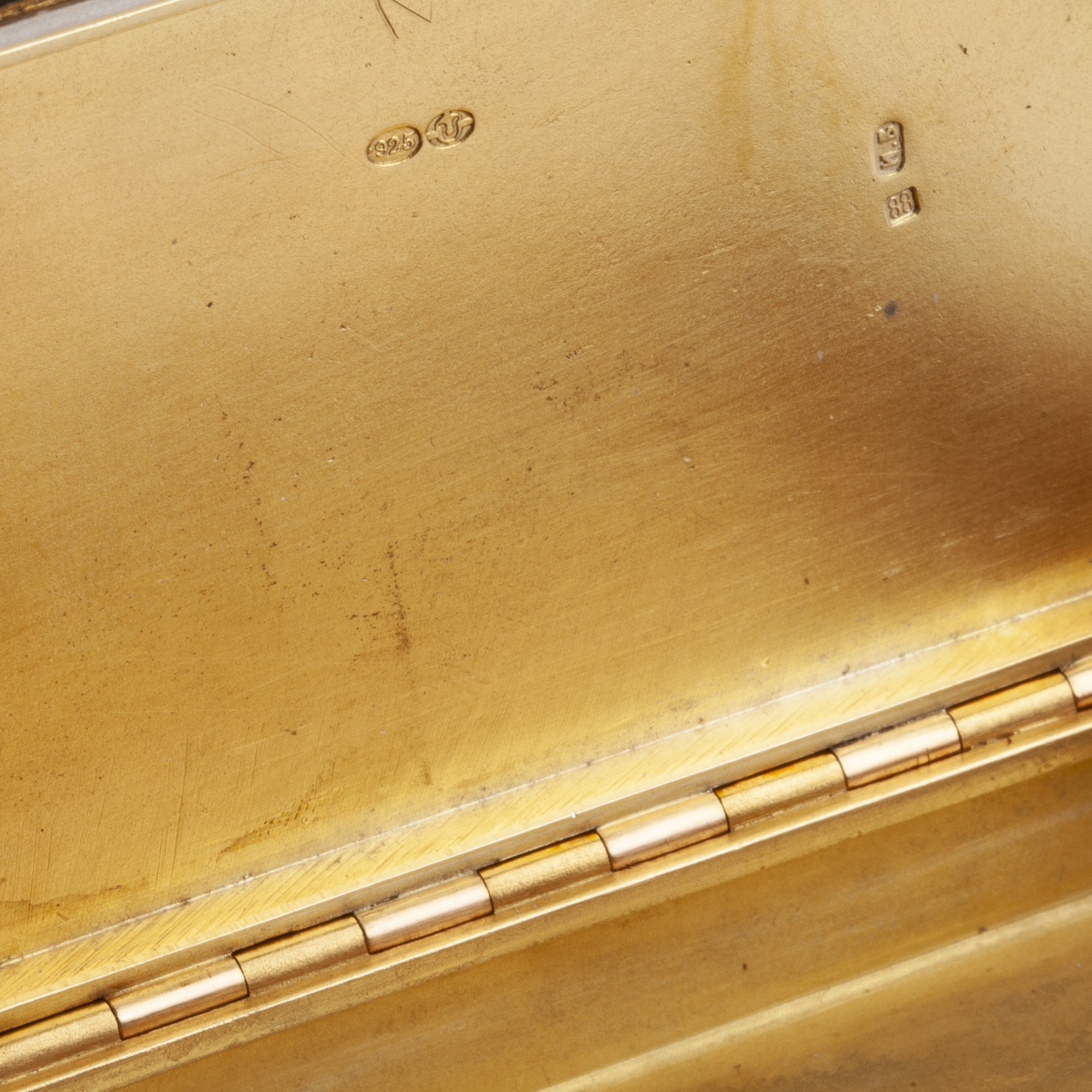
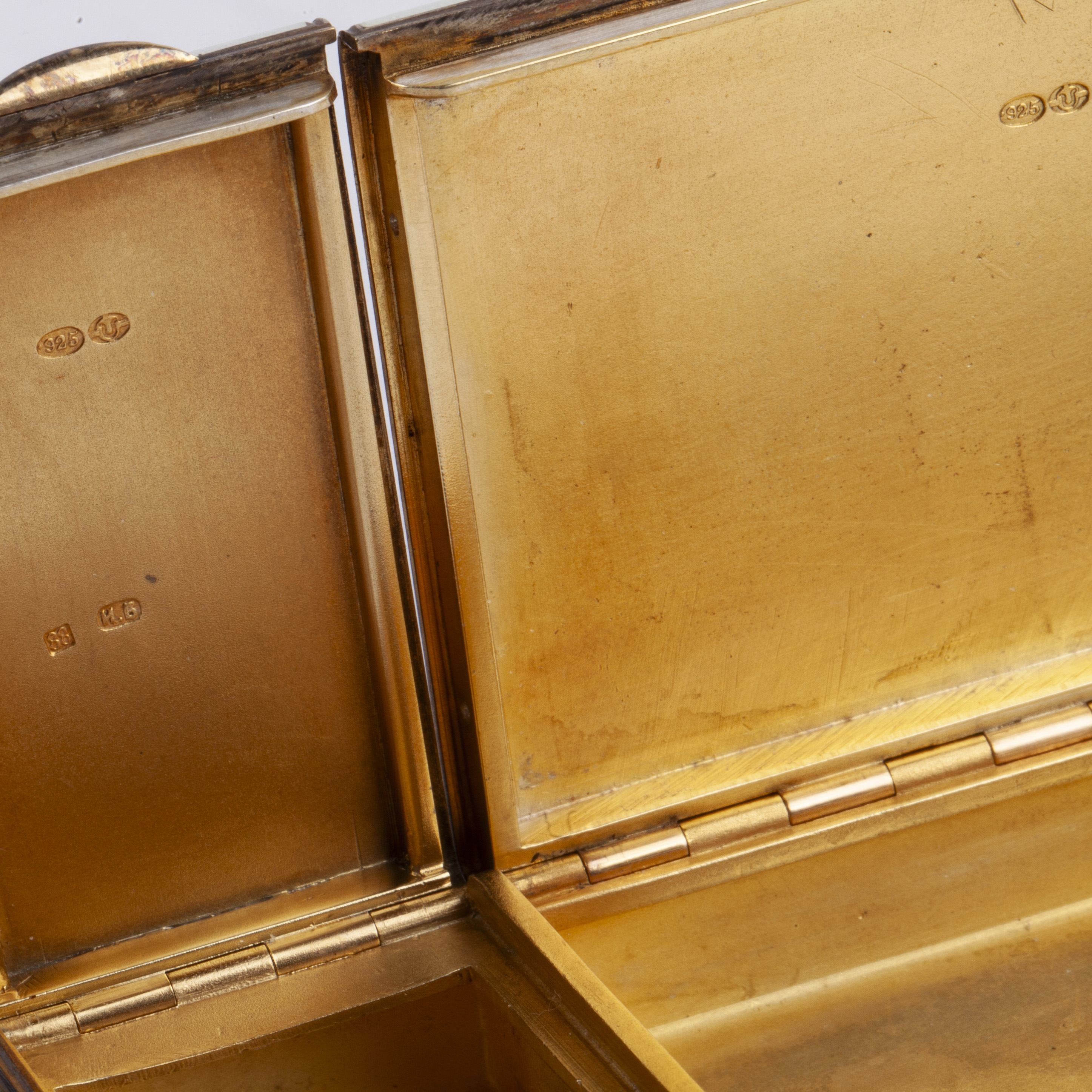
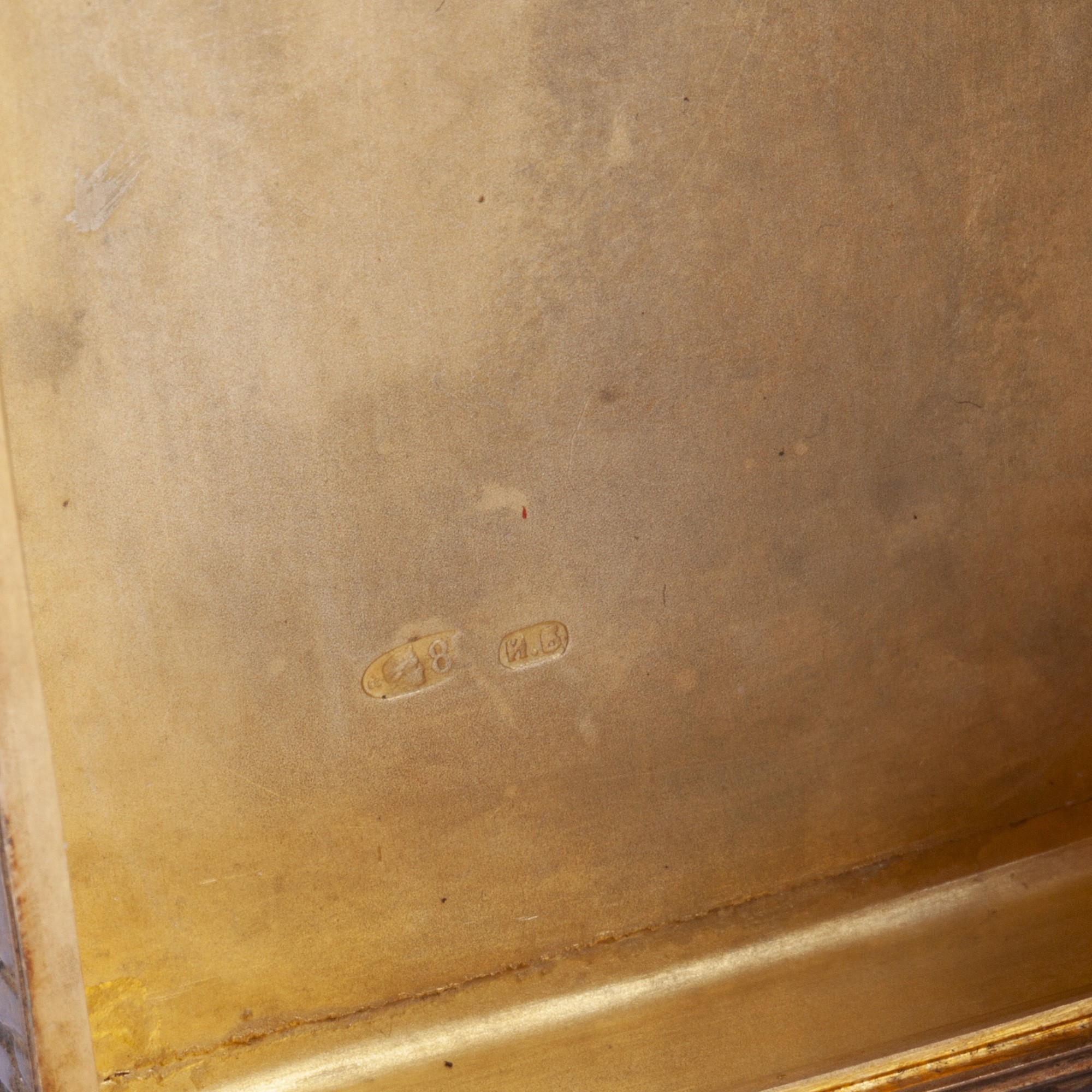
Makers mark of «K. Faberge» with Imperial warrant and scratched inventory number 14041. Moscow, 1899-1908.
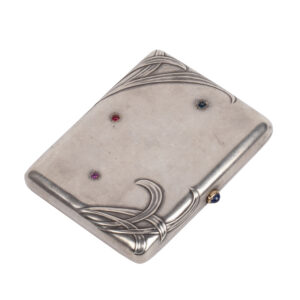
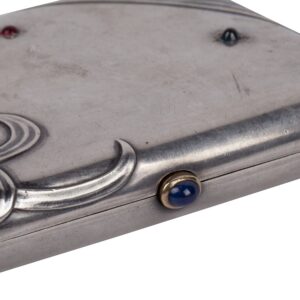
Rectangular silver cigarette case with rounded corners, decorated in the Art Nouveau style. The lid is adorned with flowing linear ornament in relief, resembling stylised plant forms, and set with small ruby cabochon stones in star-shaped casts. The clasp with gold rim is mounted with a cabochon sapphire.
Starting price: 2000€
Estimate: 2500-3500€
Hammer Price: 2 500 €
Related Lots
-
Lot 0045
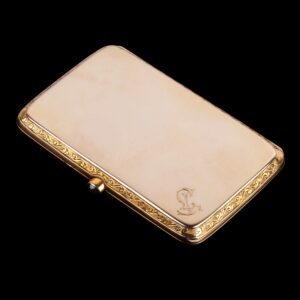
Russian Elegant Gold Cigarette Case, Moscow, Ivan Tarabrov Factory, 1908–1917
Estimate: 3500-4500€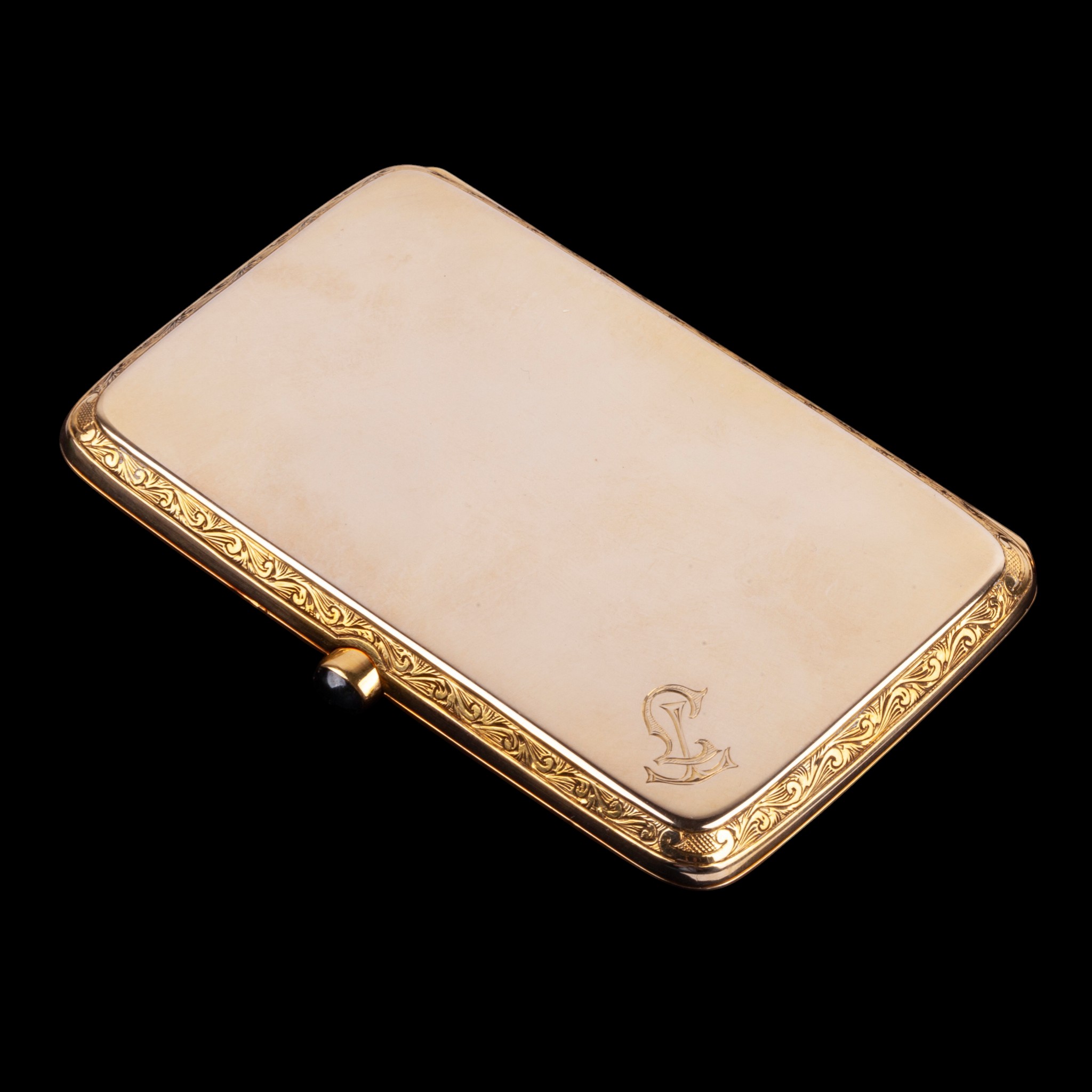
Lot 0045
Russian Elegant Gold Cigarette Case, Moscow, Ivan Tarabrov Factory, 1908–1917
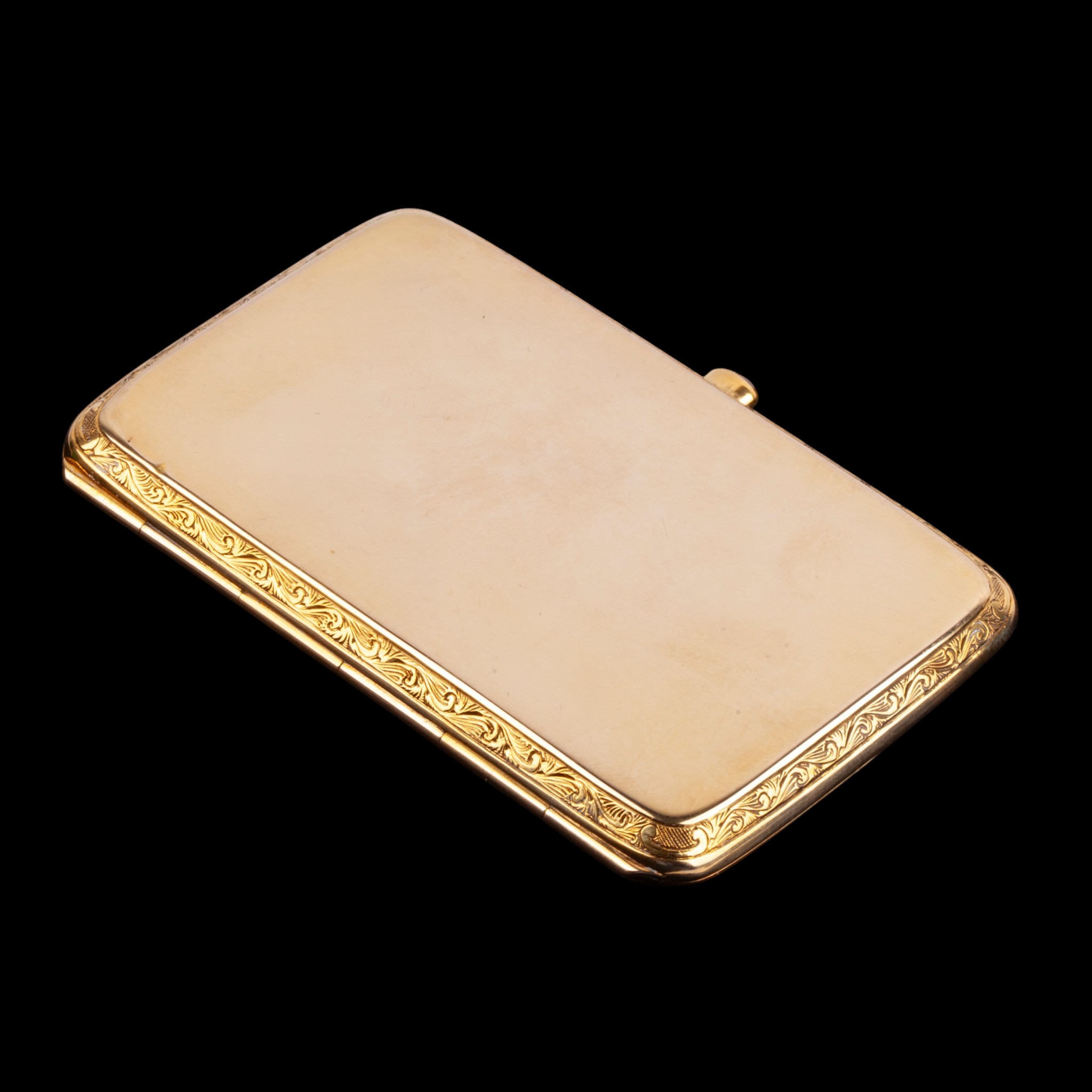
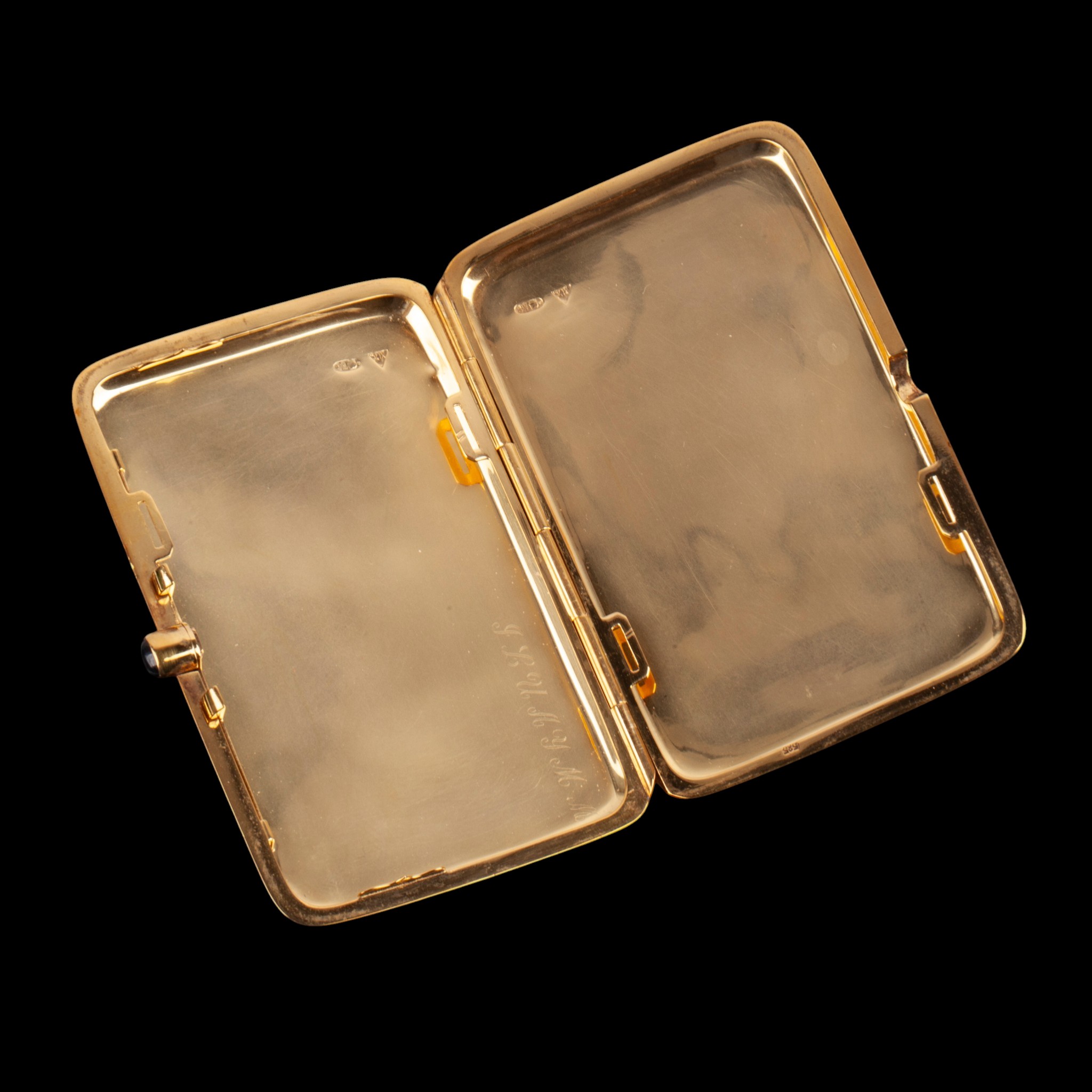
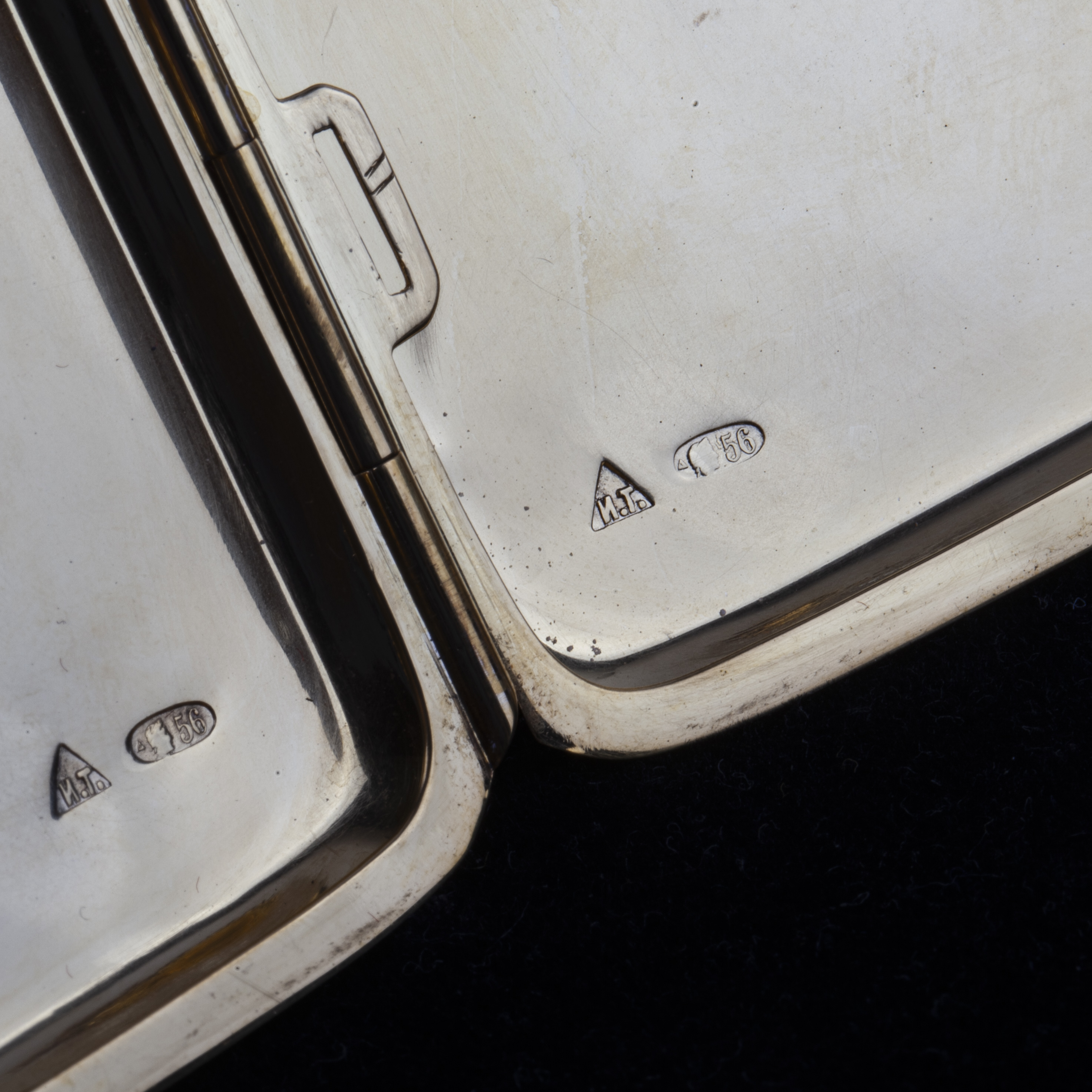
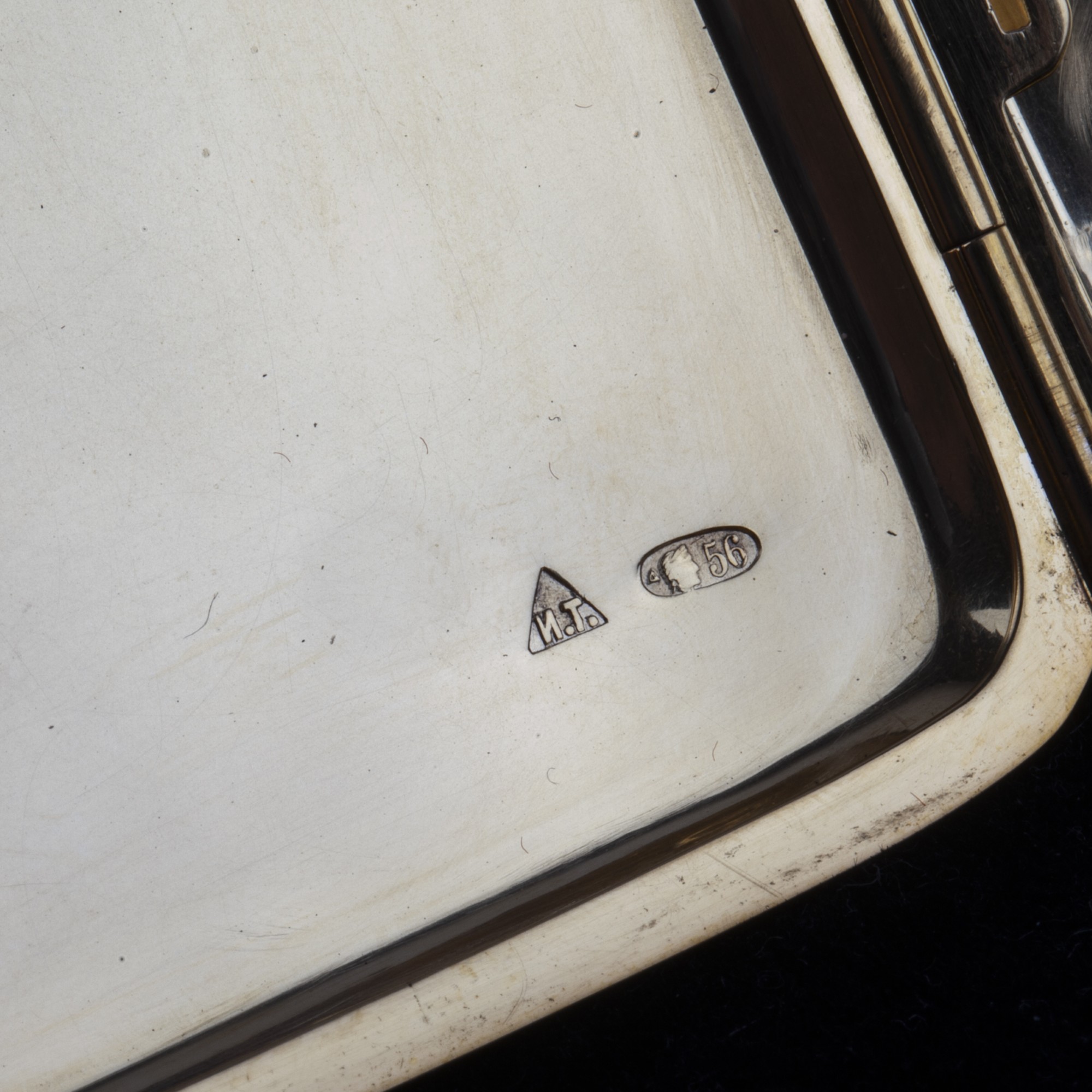
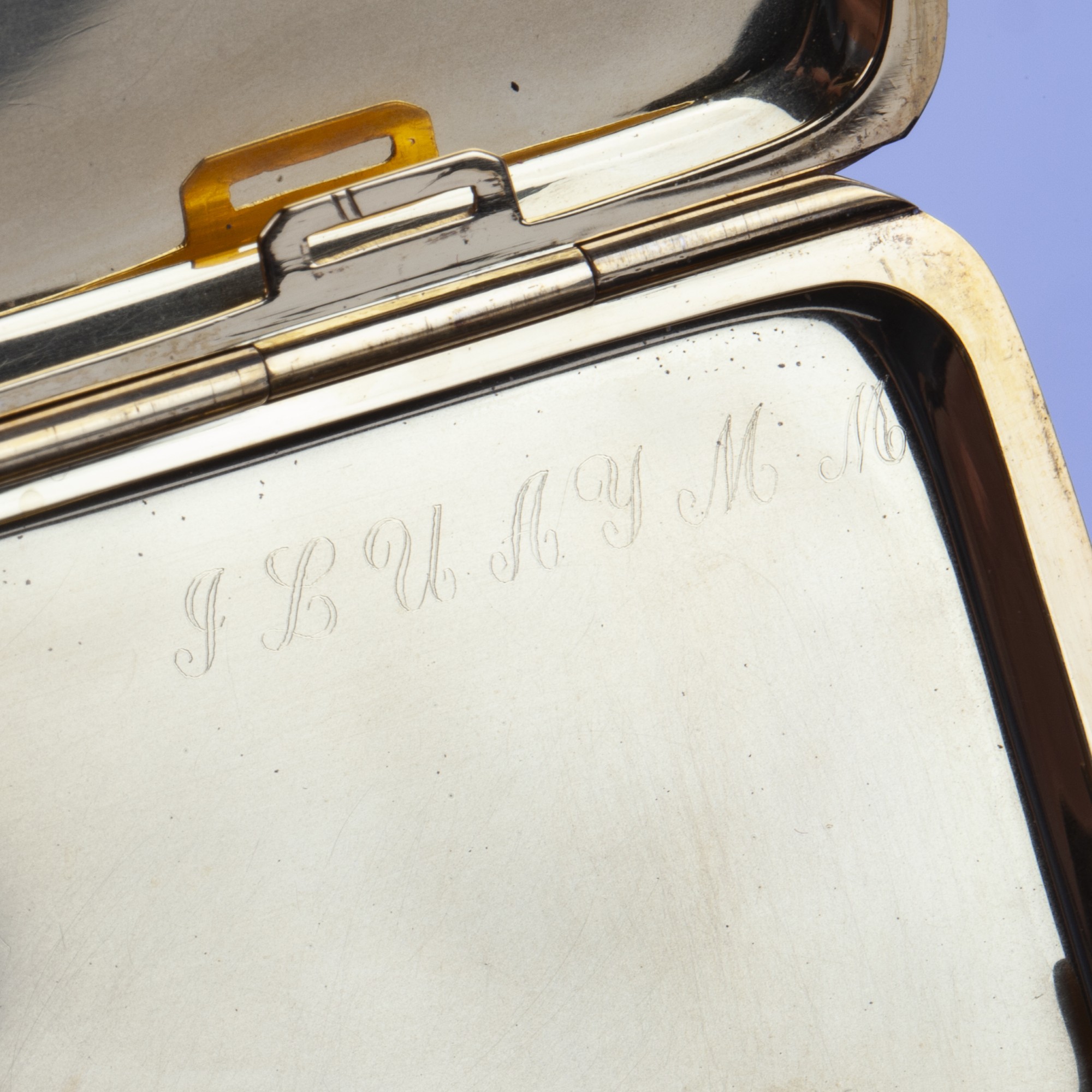
Estimate: 3500-4500€A Russian elegant gold cigarette case. Moscow, Factory of Ivan Tarabrov, 1908-1917. Gold; engraving, polishing. Weight: 74 g. Dimensions: 1 x 5,8 x 8,4 cm. Marks: maker’s mark “I.T.” in a triangular cartouche; Moscow assay mark; 56 zolotnik gold standard.
An elegant gold cigarette case of rectangular form with softly rounded corners. The broad, unadorned panels emphasize the intrinsic value and luminous surface of the gold, while the narrow engraved border lends the object a subtle ornamental frame.
The piece belongs to the Moscow factory of Ivan Filippovich Tarabrov. The factory was founded in Moscow in 1893, was among the notable Russian workshops of the late 19th and early 20th centuries, renowned for its refined gold and silver objects, jewellery, personal accessories, icon covers, and decorative wares produced for both private and ecclesiastical patrons. Initially located on Krasnokholmskaya Street and later transferred to Tarabrov’s own house on Bolshaya Dvoryanskaya Street, the enterprise had grown by 1897 to employ forty-six workers, with an annual production valued at 52,000 roubles. The factory was distinguished by its skilful metalwork, fine engraving, chasing, and enamelling, including the use of translucent green enamel, polychrome accents, and, in certain works, red enamel laid over gold foil to achieve a luminous effect. Its artistic language combined technical precision with elegant ornament, often drawing on the Art Nouveau vocabulary of asymmetry, stylized vegetal motifs, trefoil forms, and lobed borders, qualities that gave Tarabrov’s production its recognisable character and secured its place within the history of Russian jewellers’ art.Starting price: 3000€
Estimate: 3500-4500€
Hammer Price: 3 250 € -
Lot 0047
Russian Silver-Gilt Nécessaire, St Petersburg, 1908–1917, Ivan Brytzin
Estimate: 4000-5000€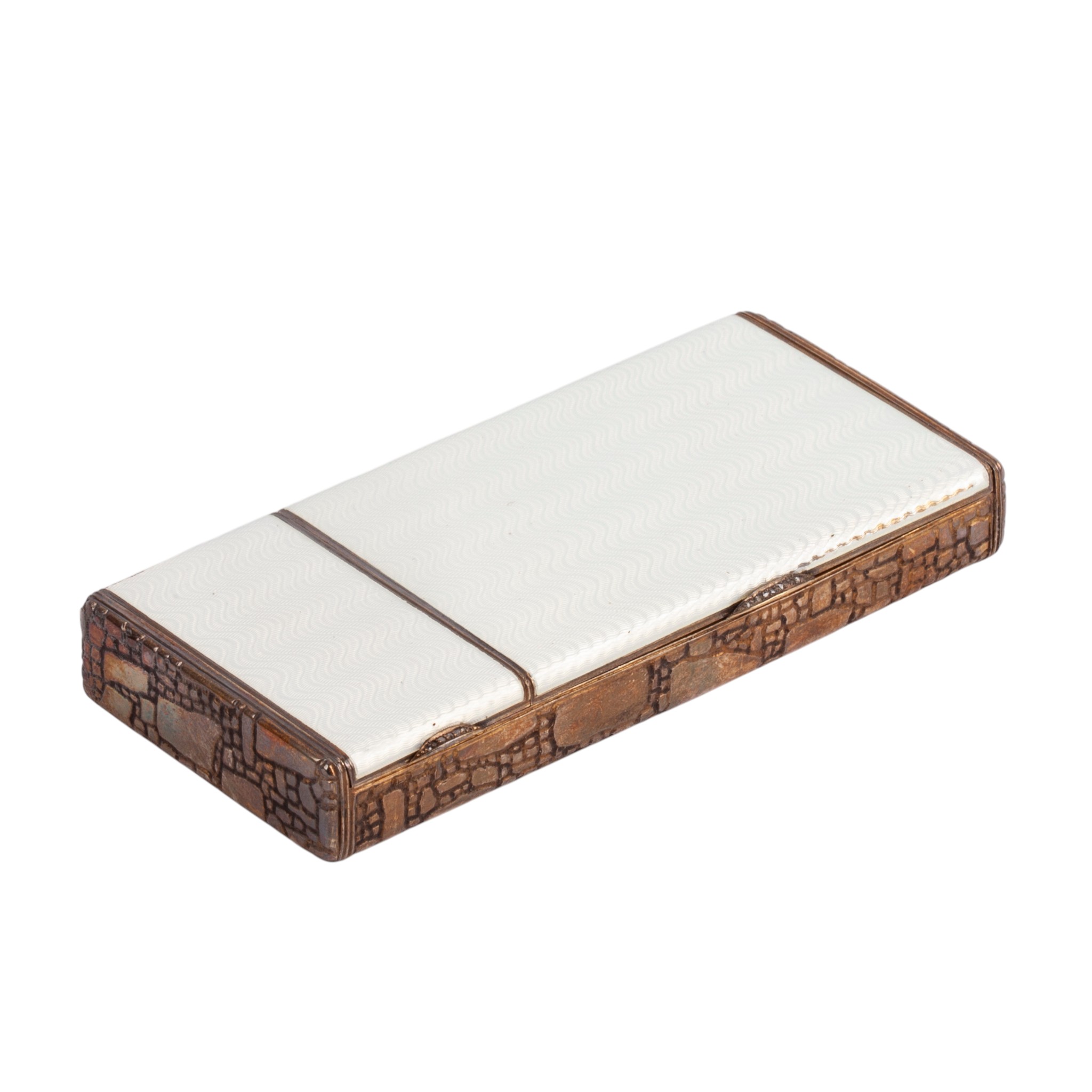
Lot 0047
Russian Silver-Gilt Nécessaire, St Petersburg, 1908–1917, Ivan Brytzin
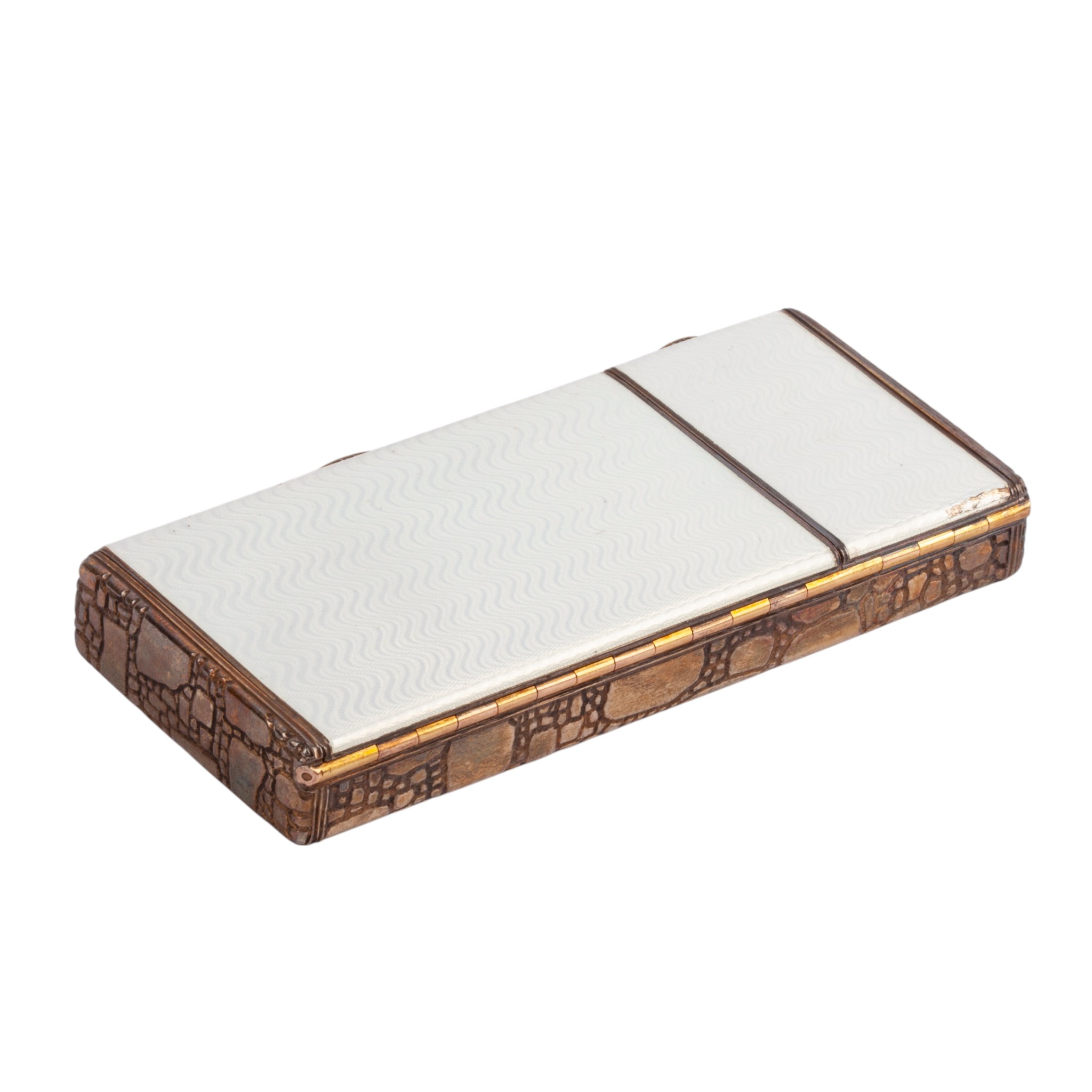
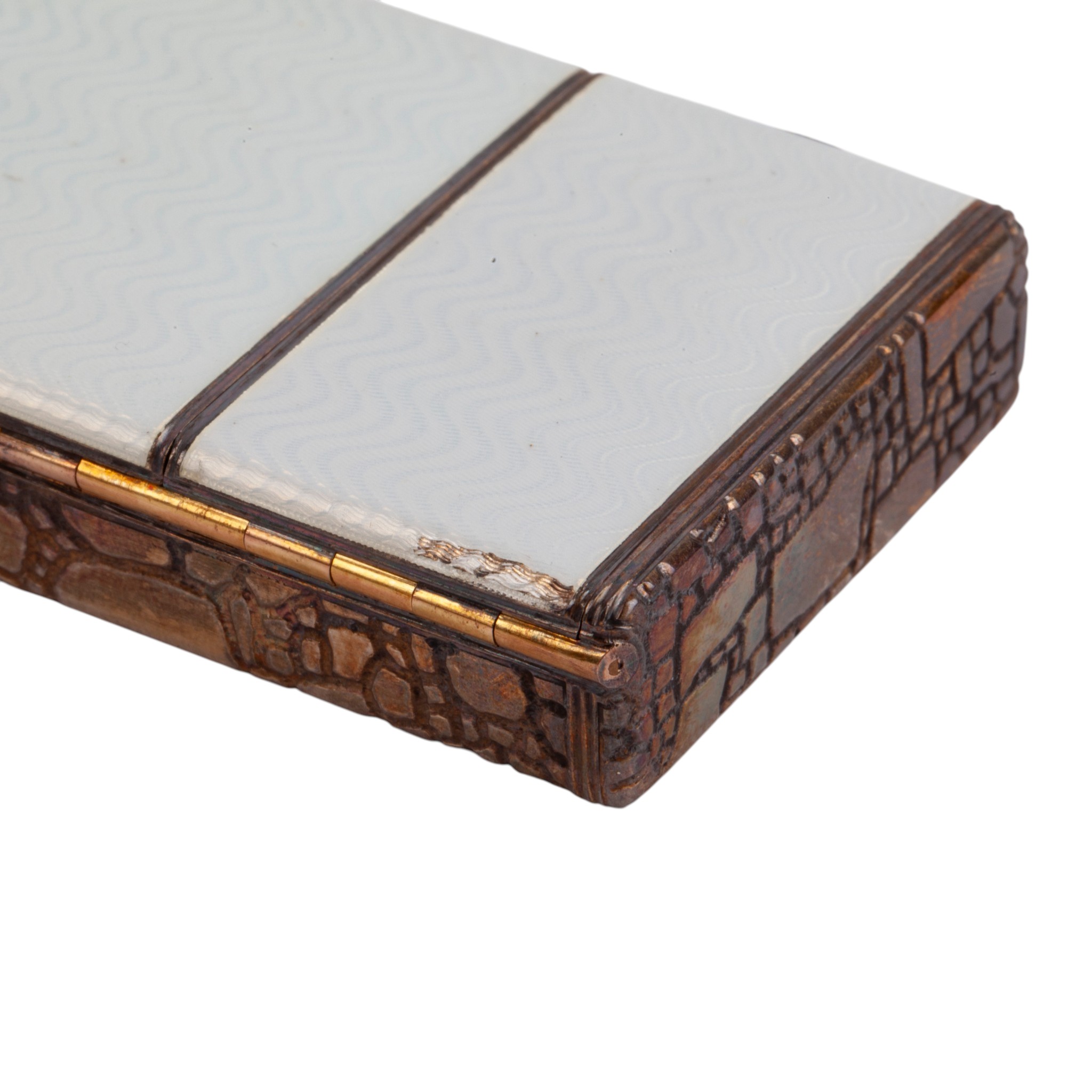
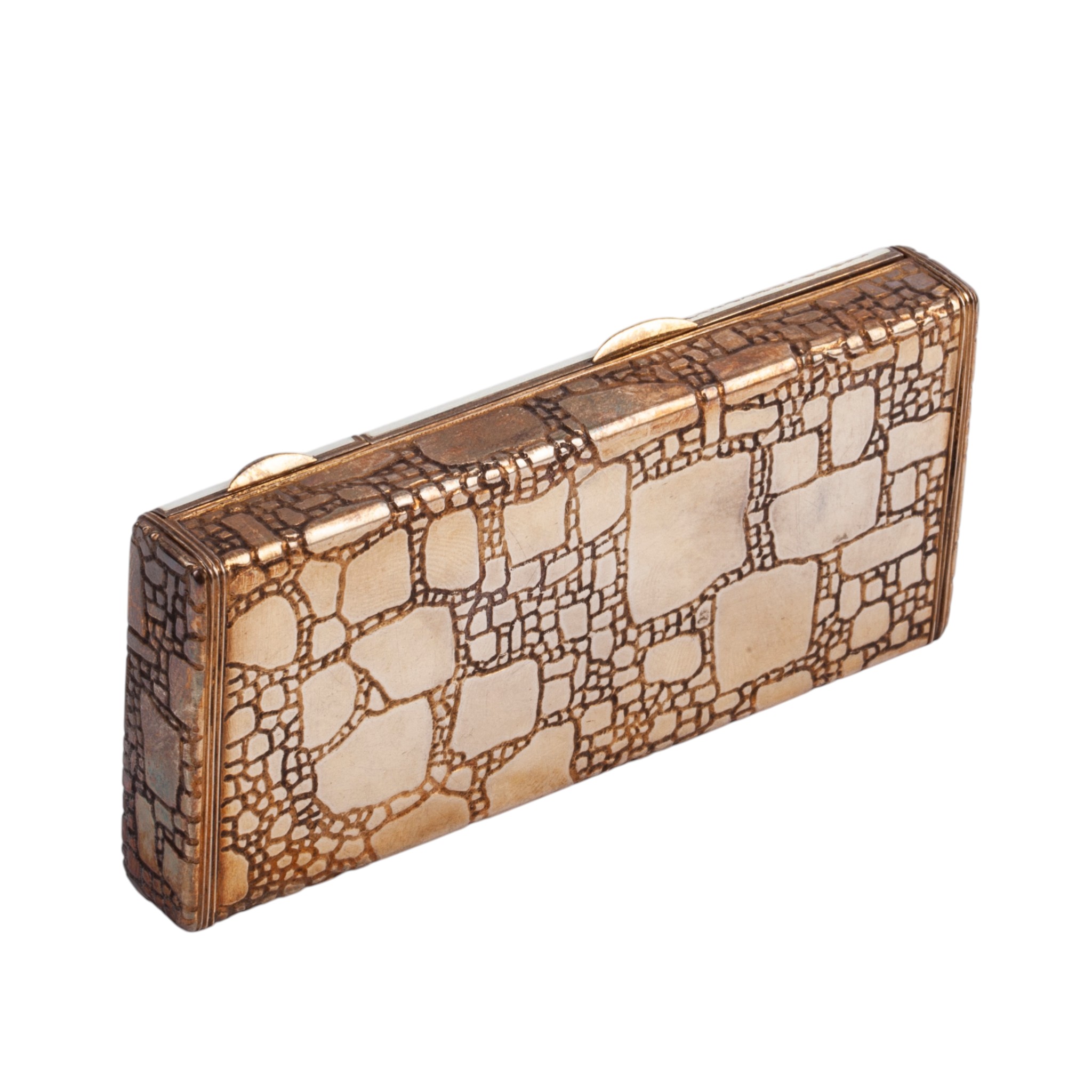
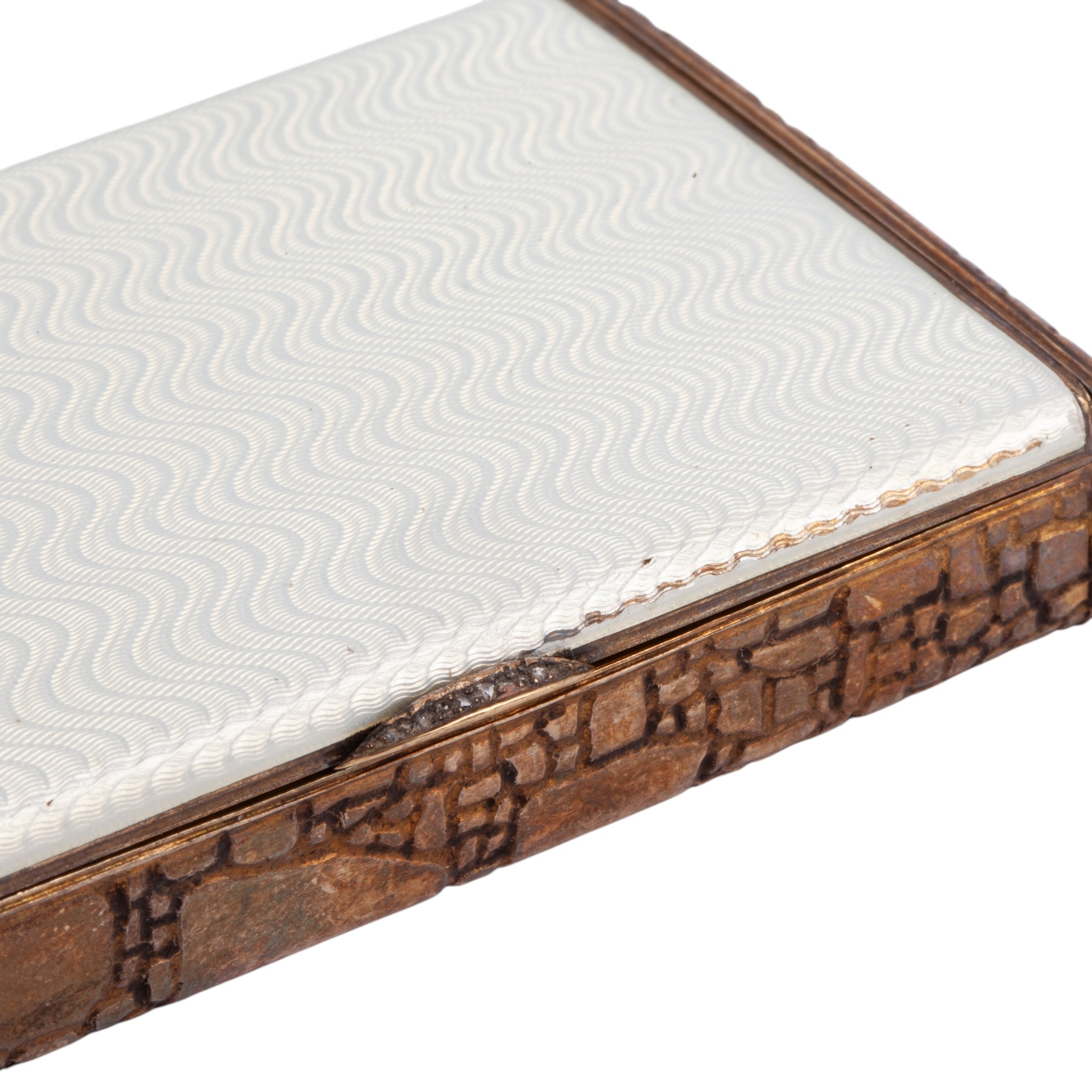
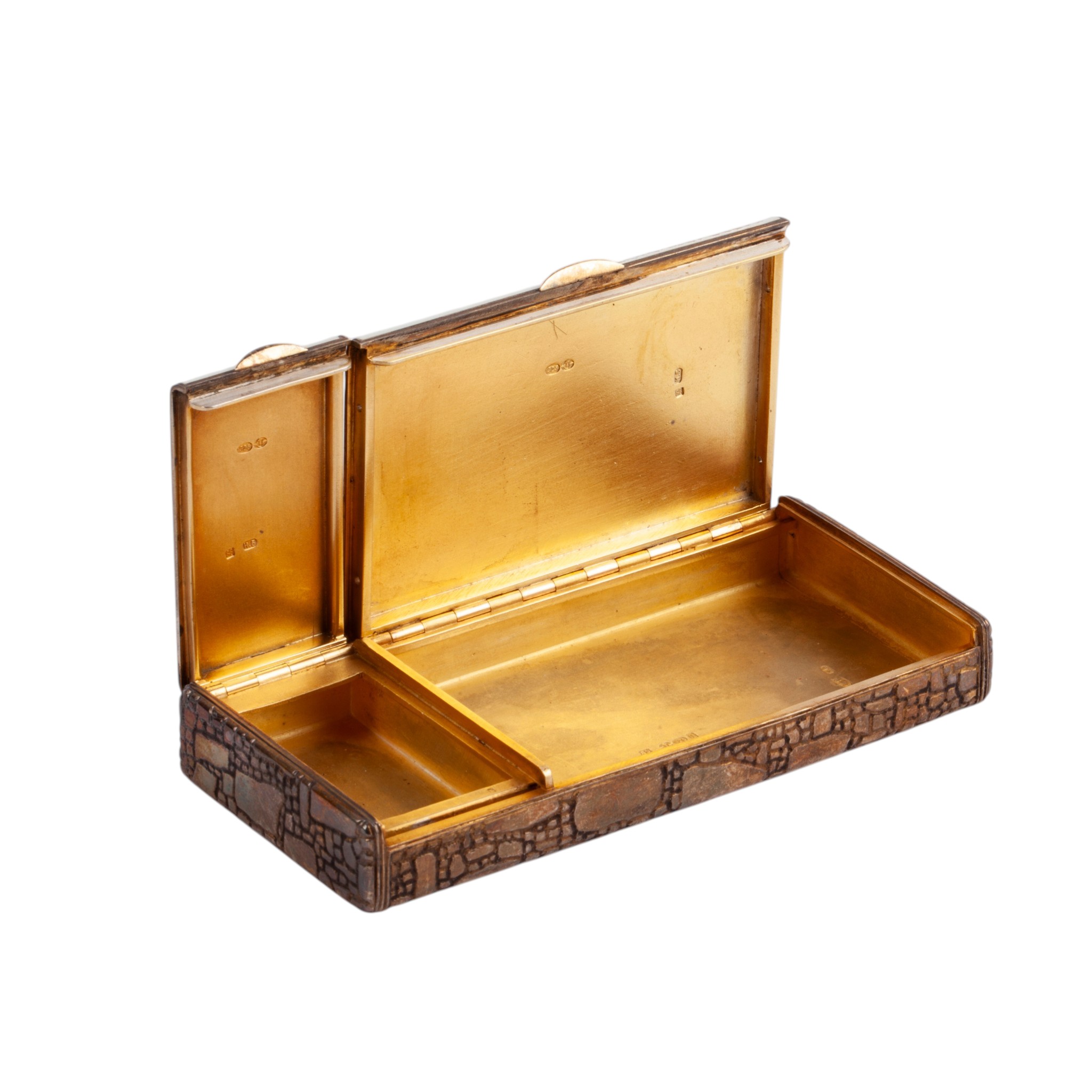
Estimate: 4000-5000€A Russian silver-gilt nécesaire. St Petersburg, 1908–1917.
Silver, gilding; guilloché translucent enamel; chasing and engraving. Weight: 118 g, Dimensions: 1,5 x 4,9 x 10,2 cm.
Marks: maker’s of Ivan Brytzin; St Petersburg assay marks (1908–1917). A rectangular, palm-sized nécesaire with two compartments. One face is covered with a pale, white opal toned translucent enamel laid over a finely turned wavy guilloché ground.
The reverse is treated in deliberate contrast: a silver-gilt field worked in the so-called “samorodok” manner. Ivan Savelyevich Brytzin (1870–1952), a former employee of Fabergé in St Petersburg, qualified as a master goldsmith in 1903 and soon opened his own workshop “Russkaya Emal” (Malaya Konyushennaya ul., 12). His firm granted a gold medal at the St Petersburg Crafts Exhibition in 1909, and in 1910–1917 he supplied works to members of the Imperial family and to the Cabinet of His Majesty. Brytzin’s objects bears steady demand on the English market; he also worked with stone and purpurin and collaborated with A. Sumin. After 1917 he continued to practise, though documentation of his later activity is fragmentary.Starting price: 3500€
Estimate: 4000-5000€
Hammer Price: Not sold -
Lot 0044
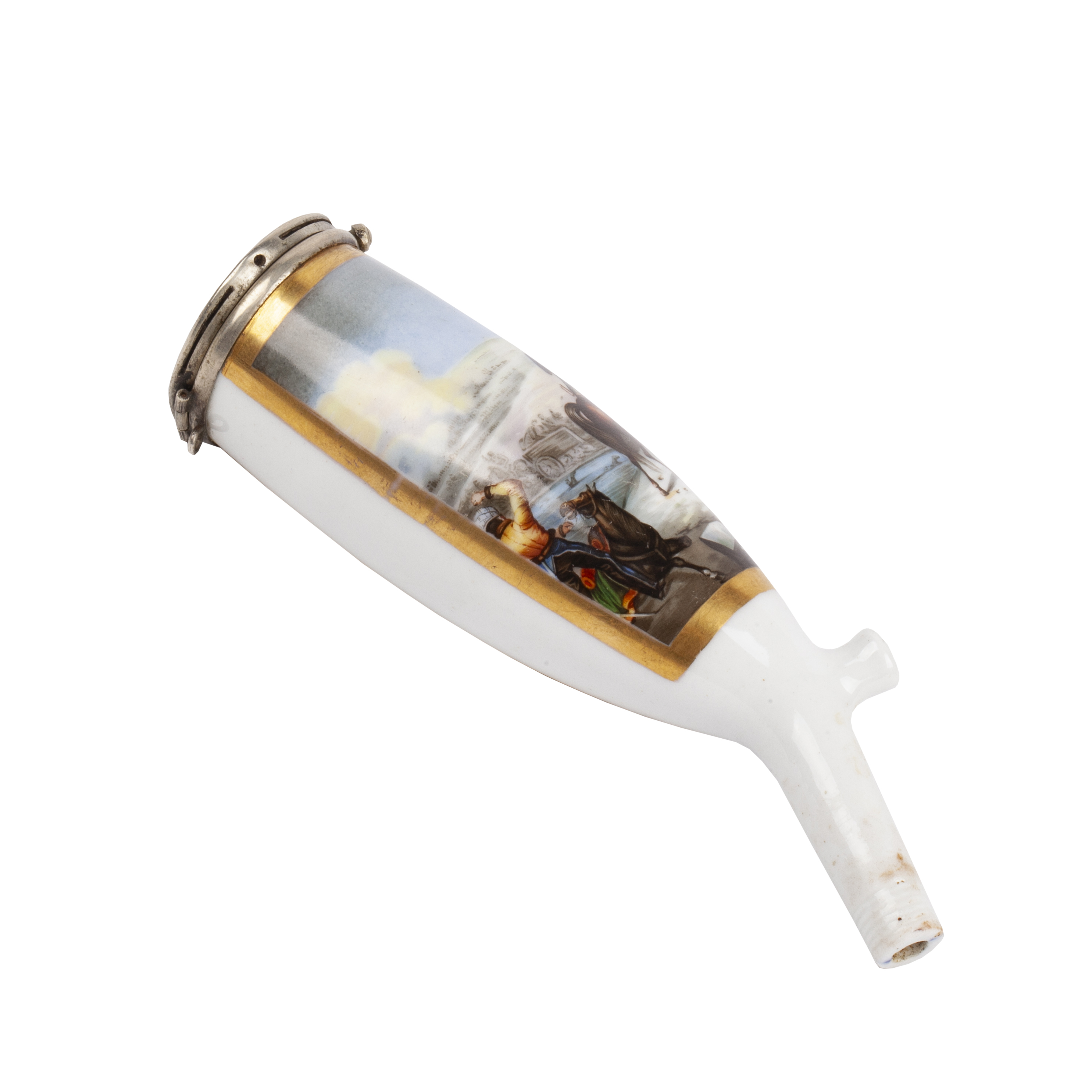
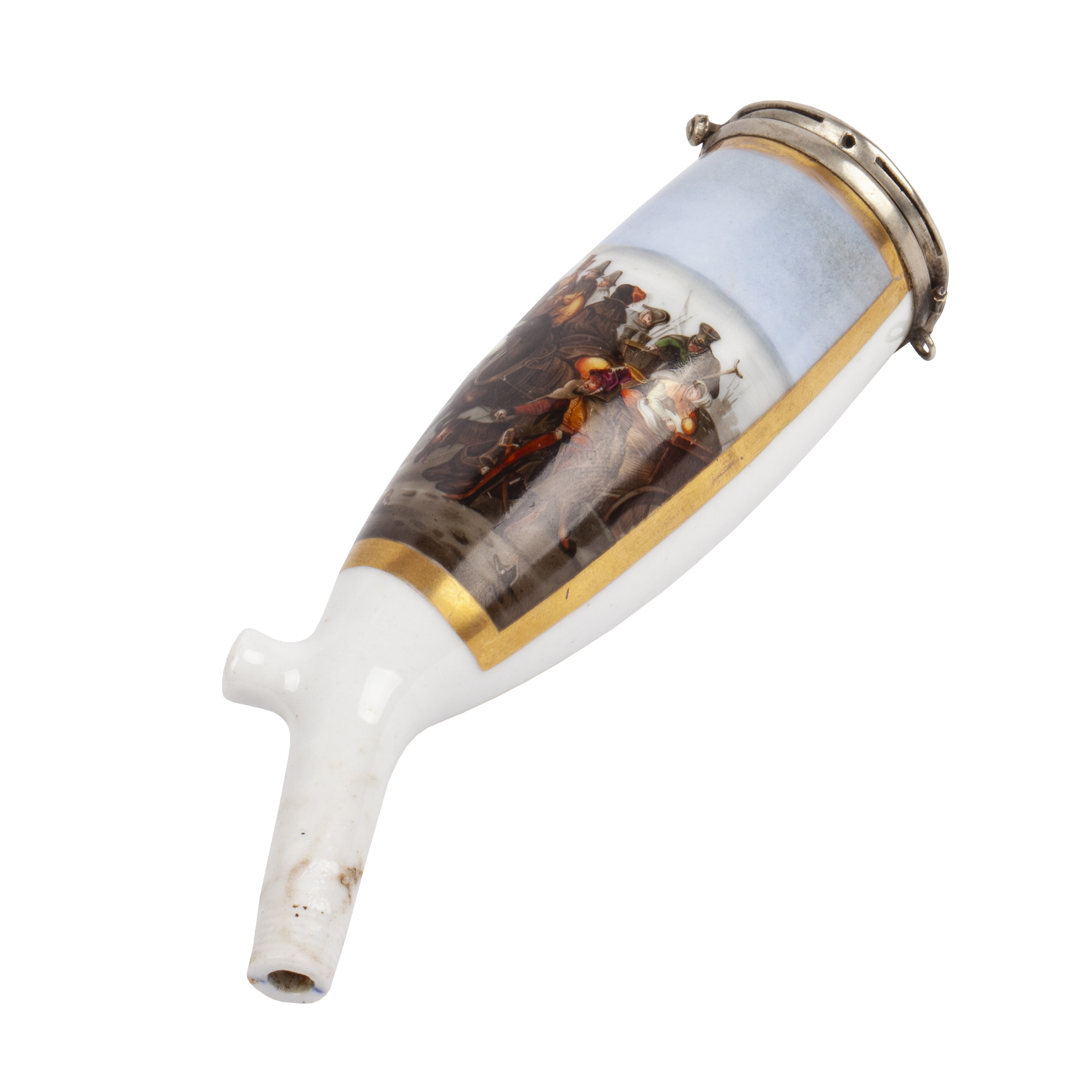
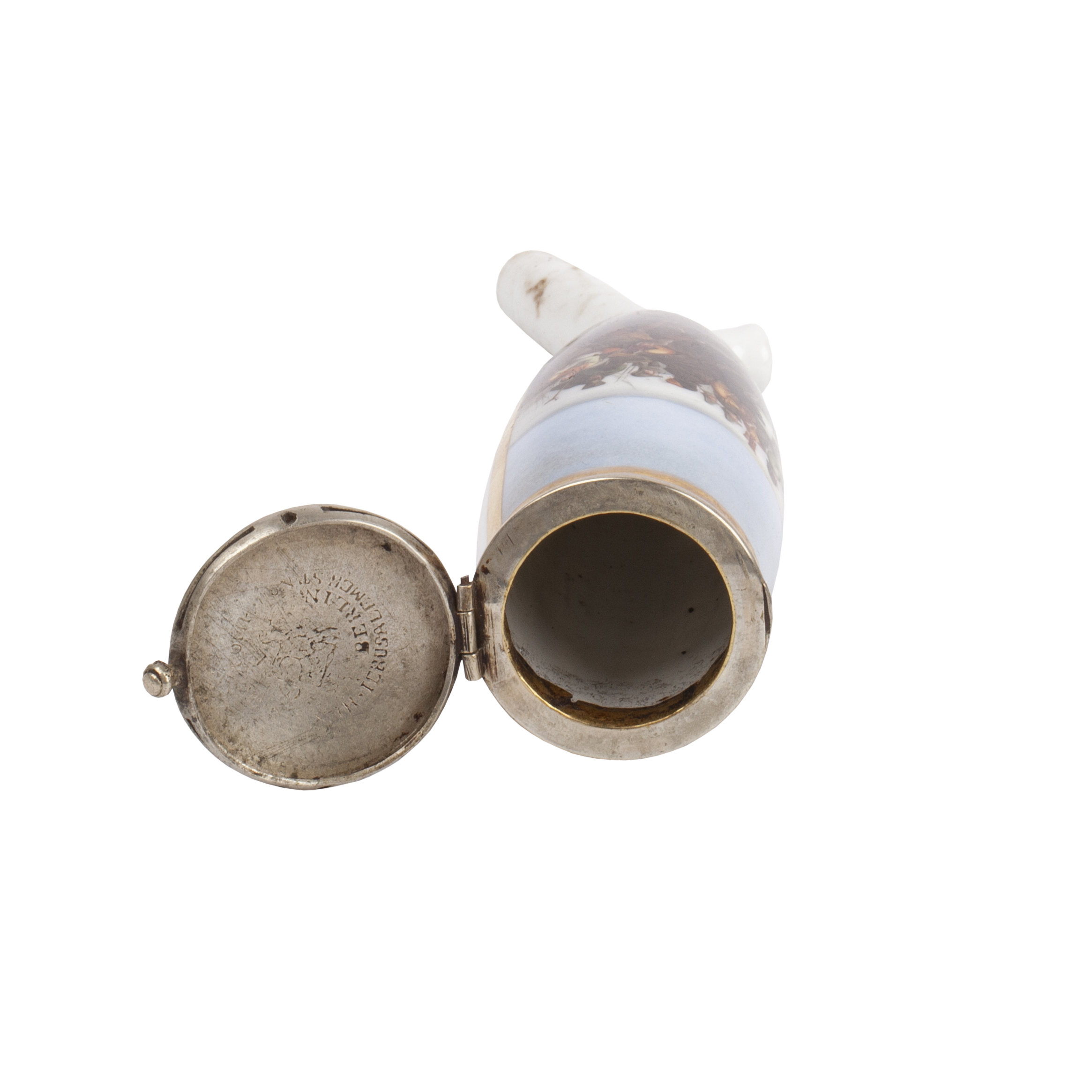
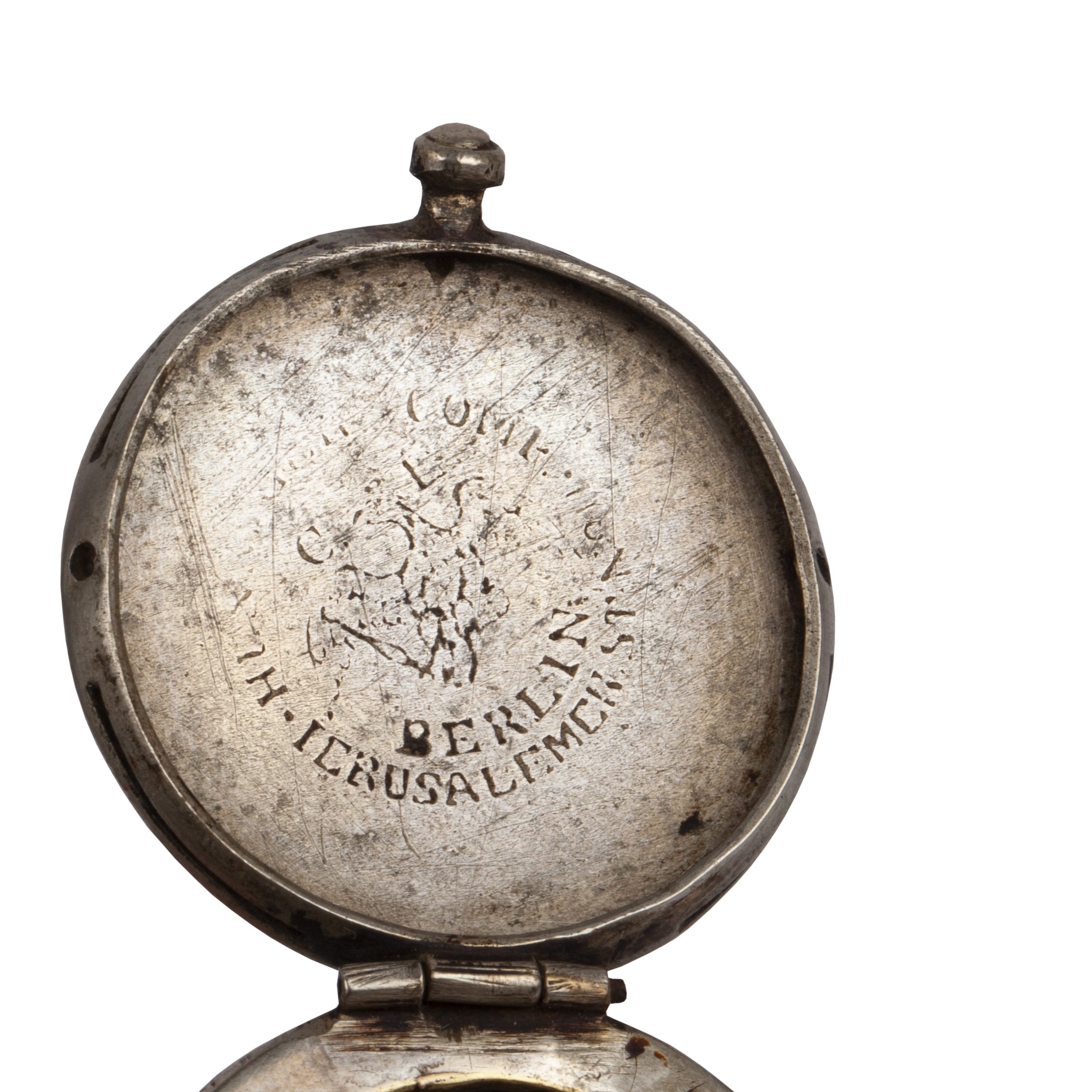
Porcelain Tobacco Pipe, The Bowl Finely Painted with a Miniature Scene of the Battle of Berezina (1812)
Estimate: 600-800€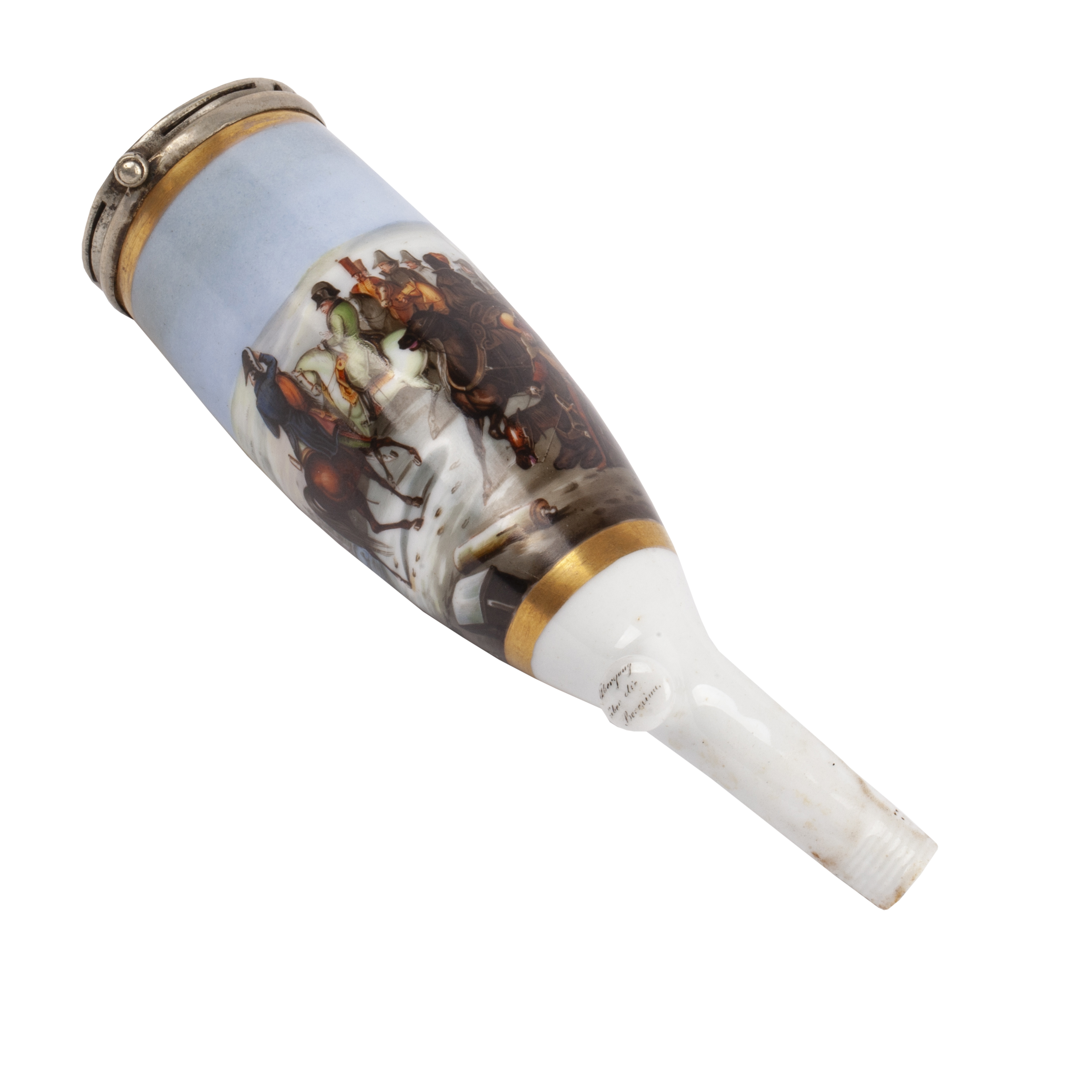
Lot 0044
Porcelain Tobacco Pipe, The Bowl Finely Painted with a Miniature Scene of the Battle of Berezina (1812)
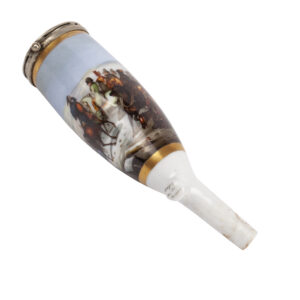
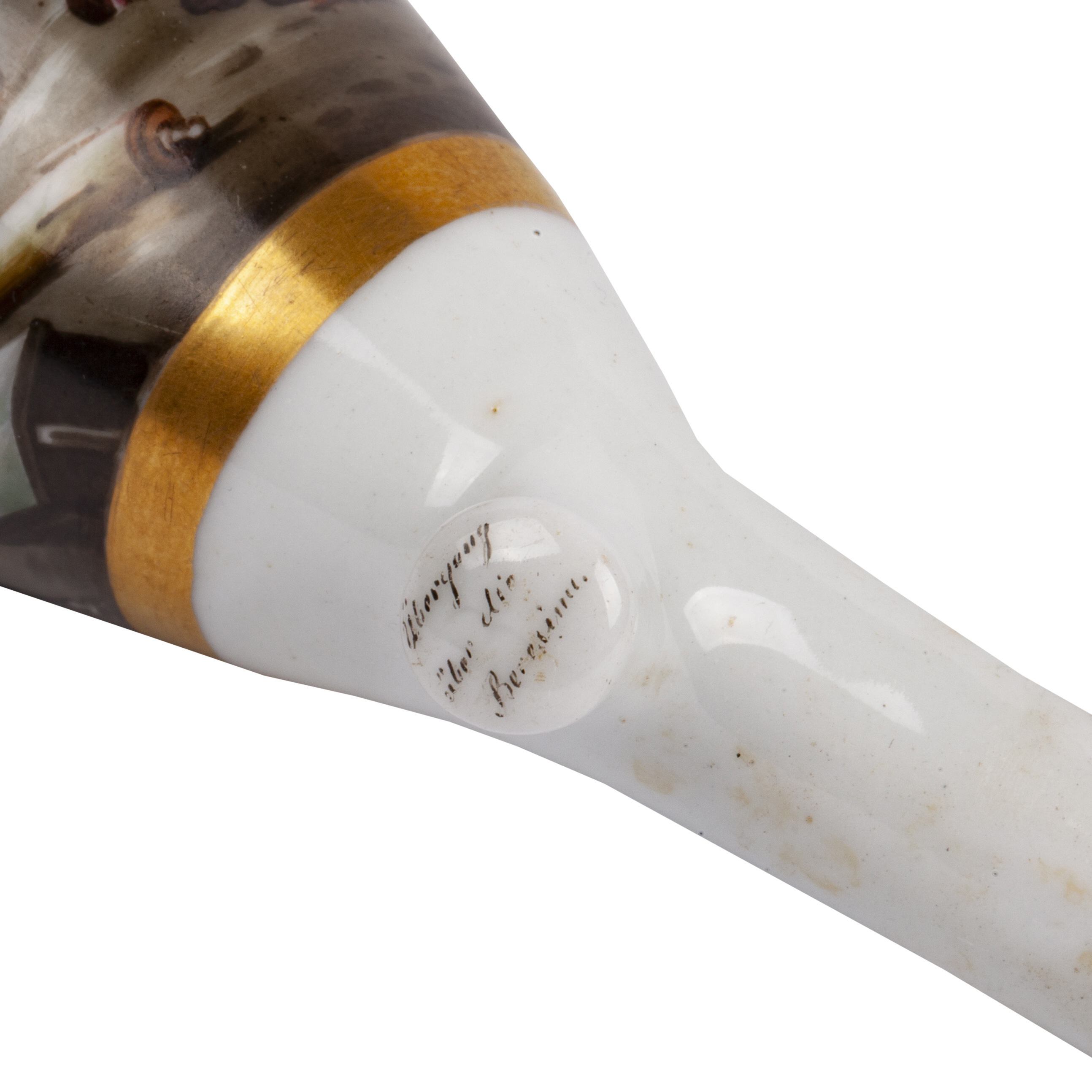
Estimate: 600-800€A porcelain tobacco pipe, the bowl finely painted with a miniature scene of the Battle of Berezina (1812) between Napoleon’s retreating army and Russian forces. The decoration is heightened with gilding, the mount fitted with a metal rim.
Material: porcelain, painting, metal.
Dimensions: 13 × 3.5 cm.The pipe bowl is made in the most famous porcelain pipe form, the stummel — an oval bowl with a knob heel and a short stem, originally derived from the Gouda clay pipe. Its shape made it especially suitable for miniature painting, and from around 1780 workshops such as Meissen and the Königliche Porzellan Manufaktur in Berlin perfected the art of lifelike decoration, often based on contemporary engravings. Painted subjects included portraits, landscapes, and historical events such as the Napoleonic Wars.
Such stummel pipes were highly valued as gifts, sometimes inscribed with the names of donor and recipient, and decorated with imagery reflecting the recipient’s interests or family crest. This example, with its depiction of the Battle of Berezina, belongs to that tradition of commemorative and collectible painted porcelain pipes.
Starting price: 500€
Estimate: 600-800€
Hammer Price: Not sold -
Lot 0048
Russian Silver and Niello Snuff Box with View of Vologda, Sakerdon Skripitsyn, 1838
Estimate: 7000-9000€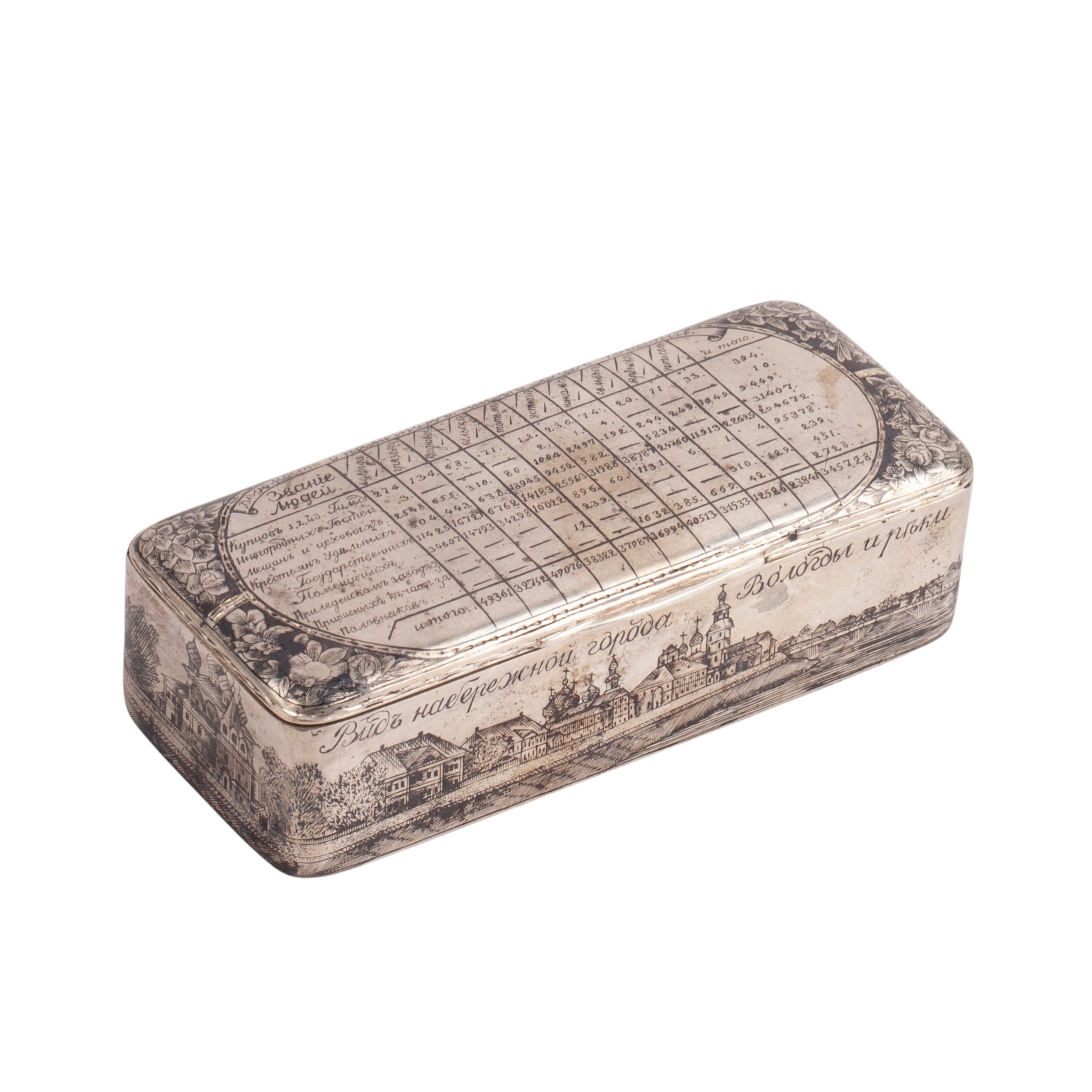
Lot 0048
Russian Silver and Niello Snuff Box with View of Vologda, Sakerdon Skripitsyn, 1838
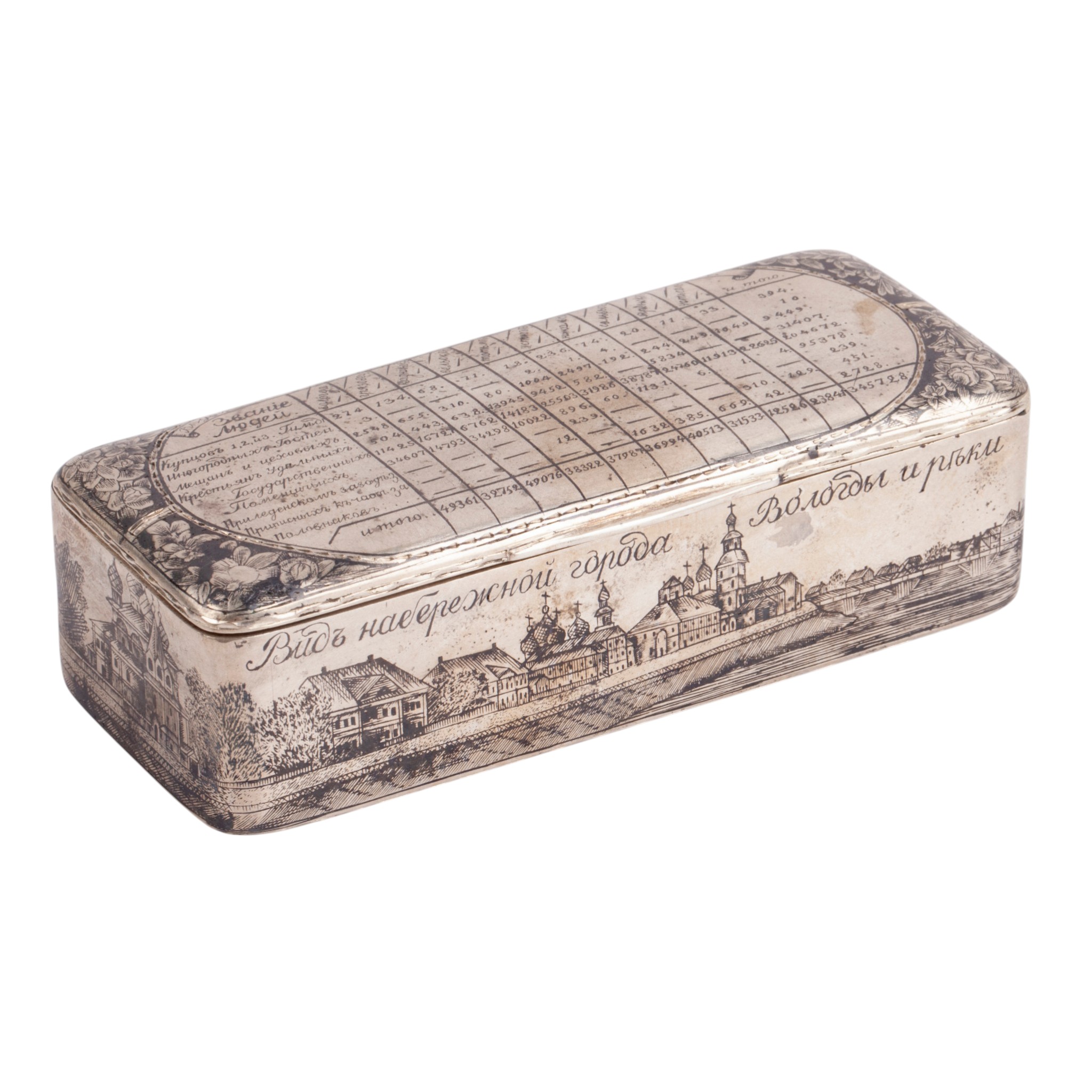
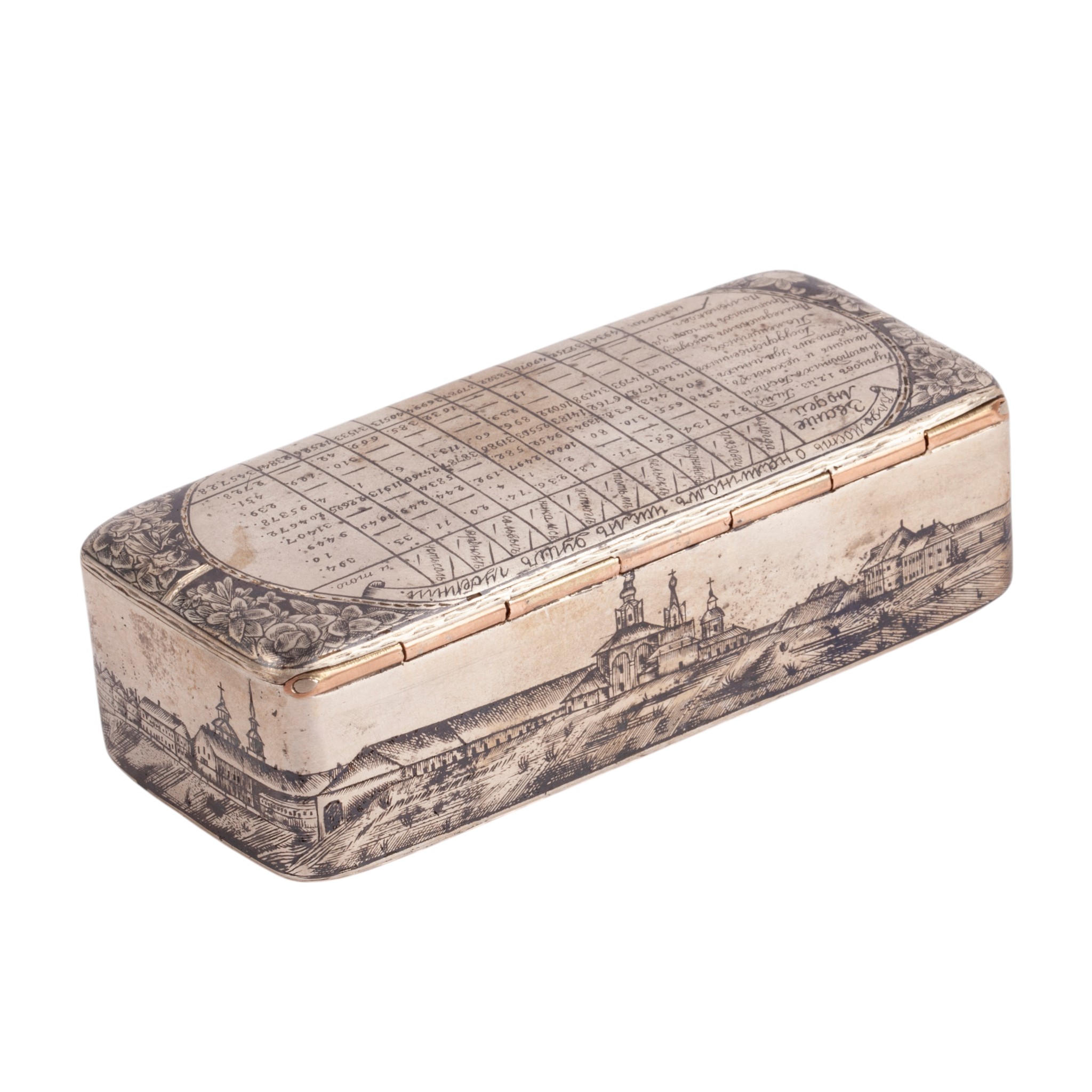
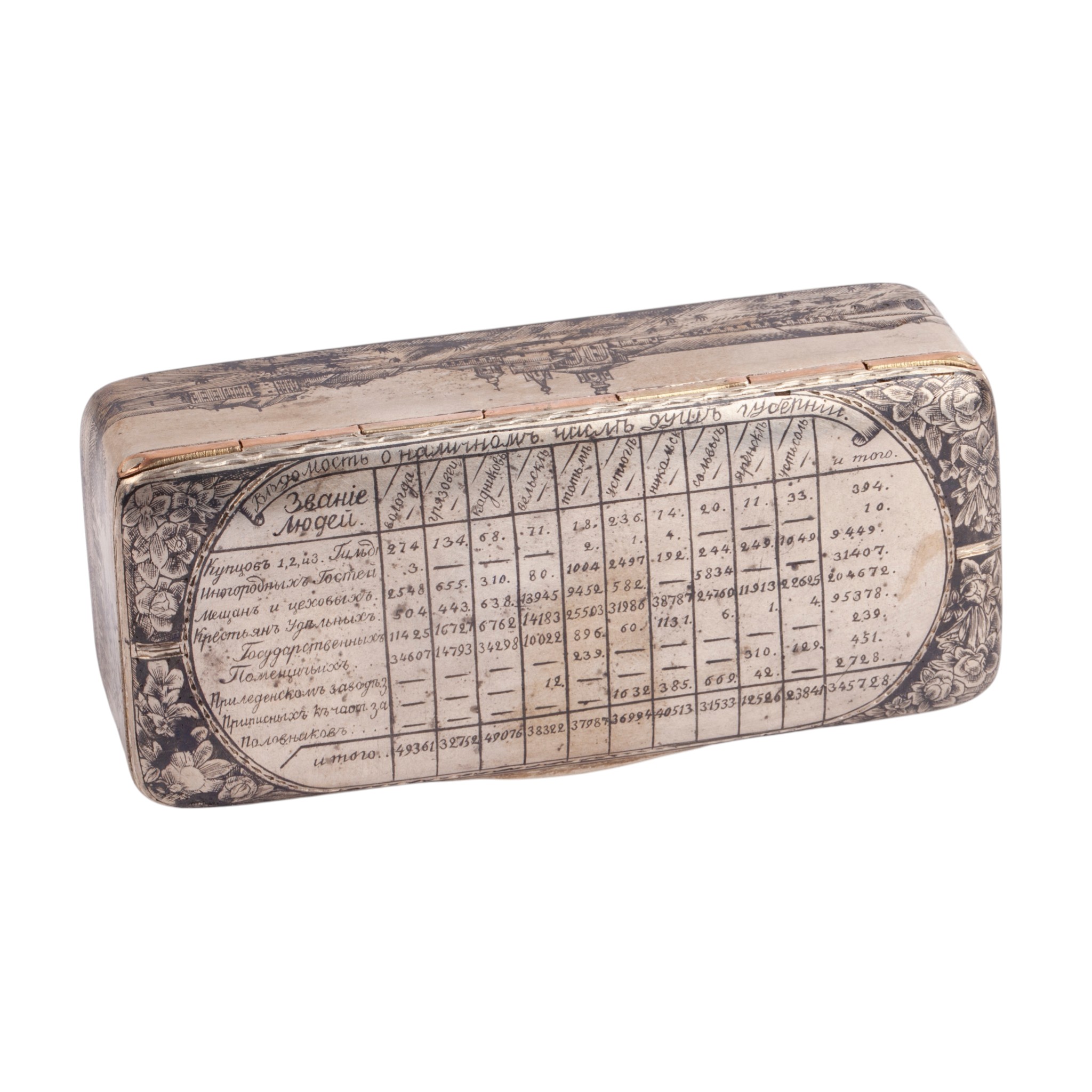
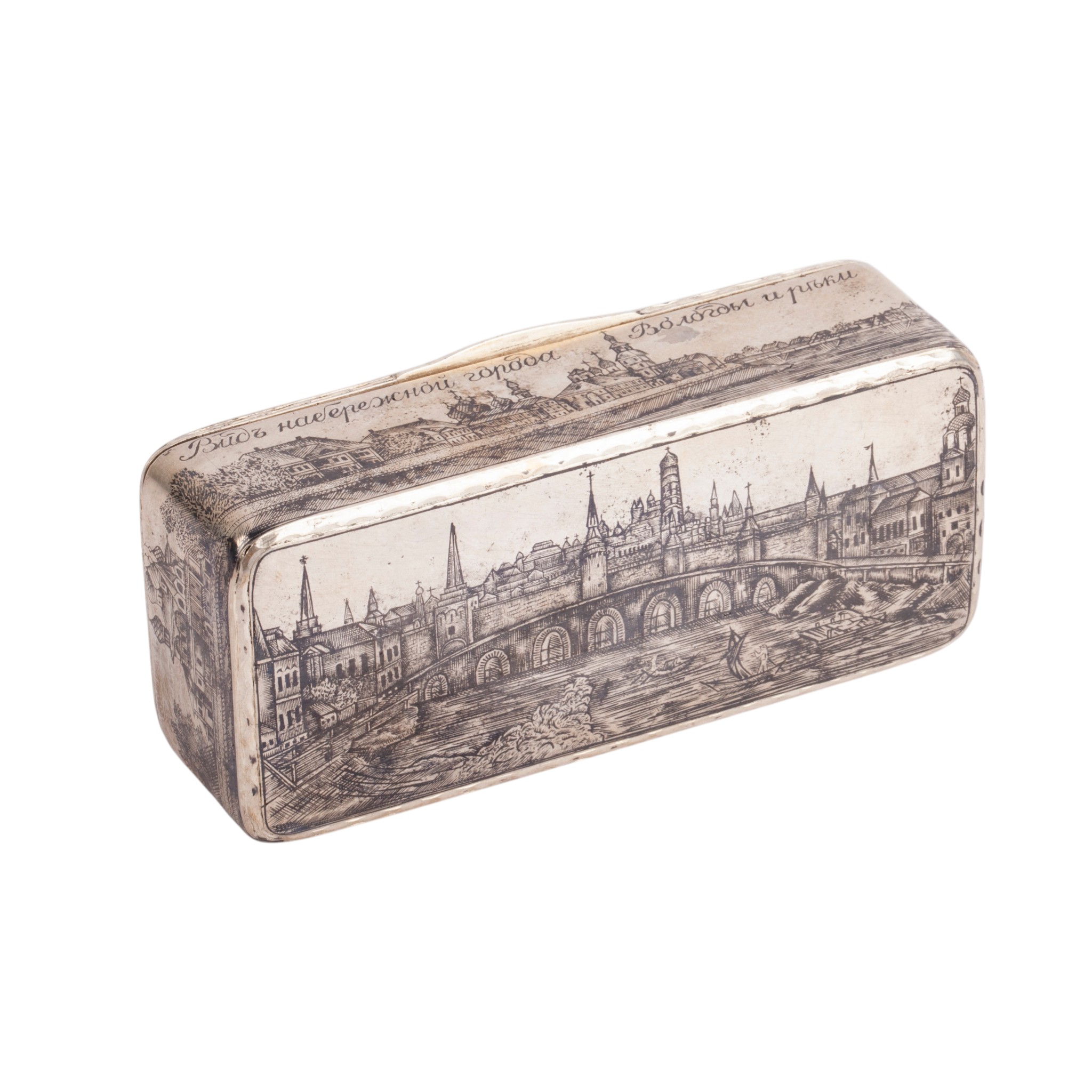
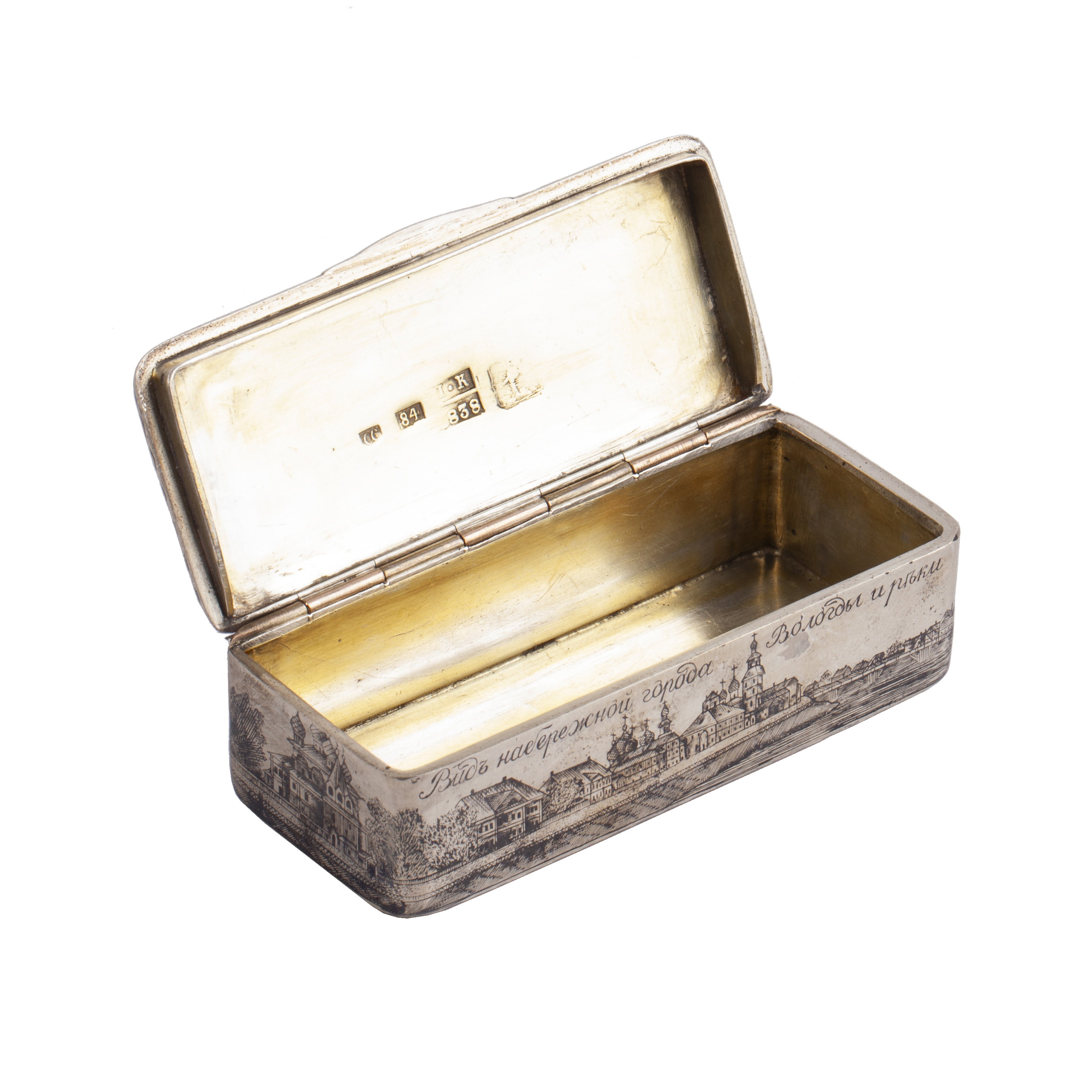
Estimate: 7000-9000€A rare Russian silver and niello snuff-box with city view of Vologda. Vologda, master Sakerdon Skripitsyn, 1838
Silver, engraving, blackening
Dimensions: 4.0 × 9.3 × 2.7 cm; weight: 131 g
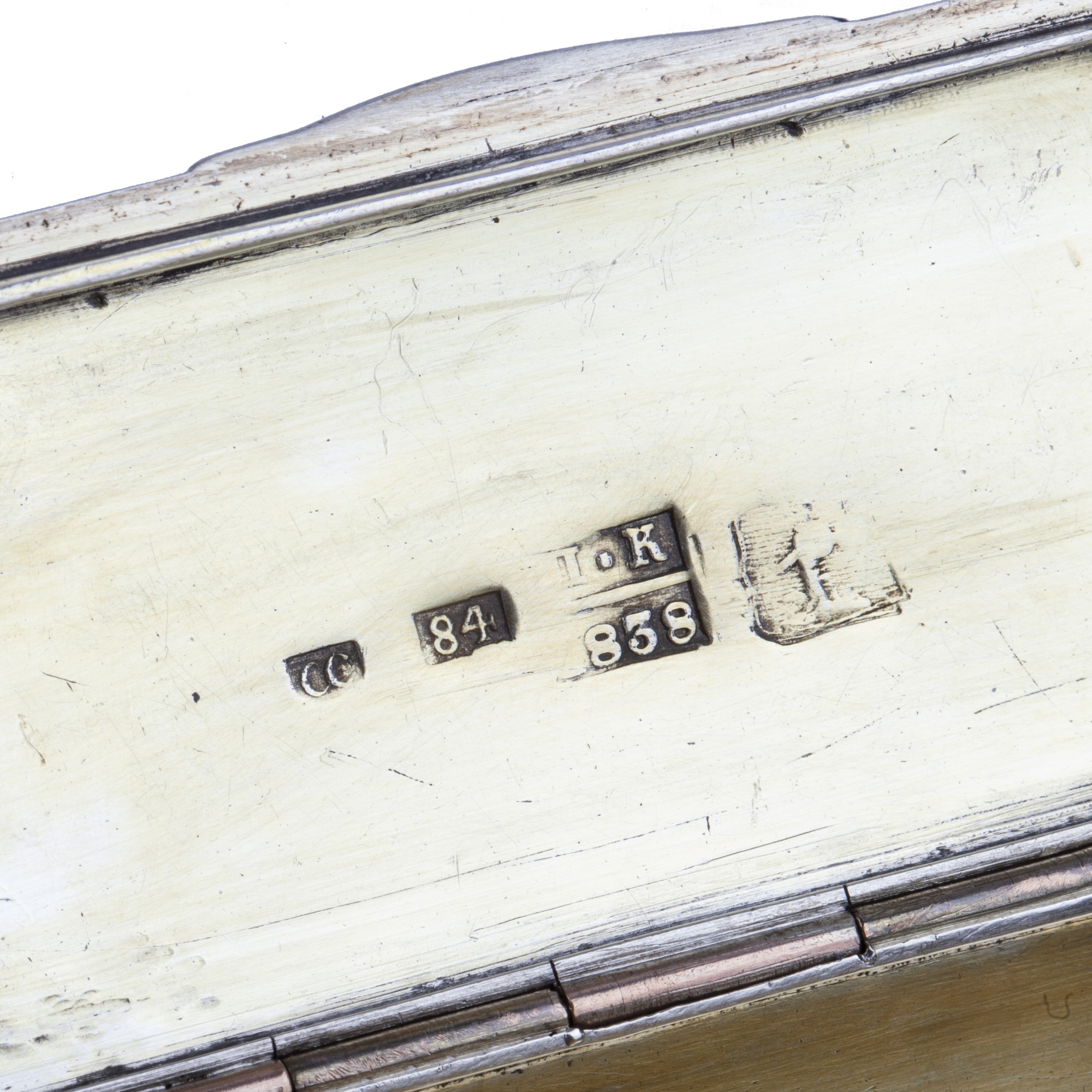
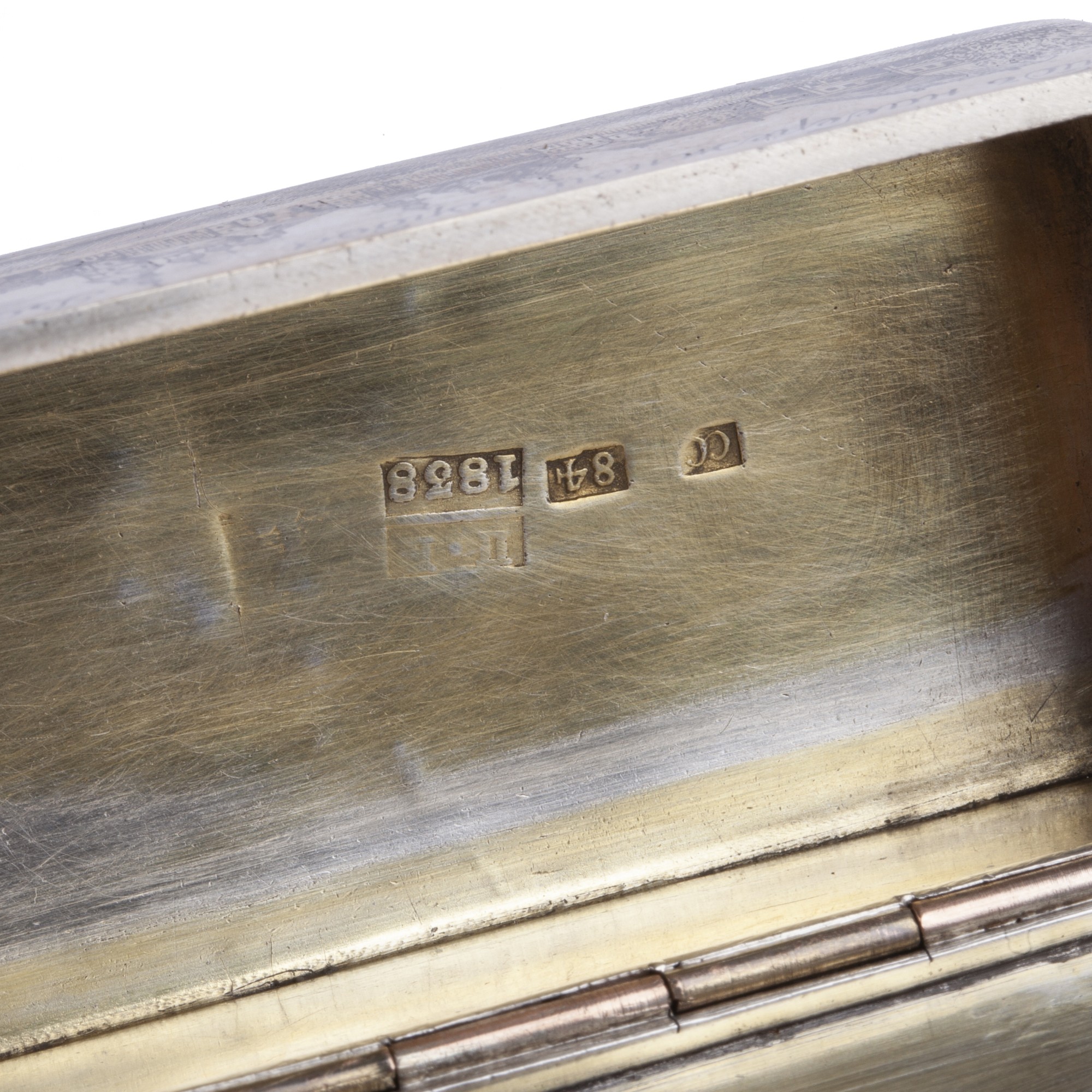
Marks: “СС”, 84 zolotnik silver standard, assay mark of Vologda
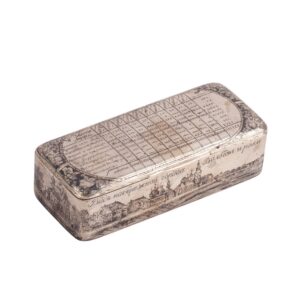
The snuff box features an intricate engraving with neillo coated details. The lid displays a historical table titled “Vѣдомость о наличномъ числѣ душъ губерніи” (List of the Current Population of the Province). The sides and bottom are decorated with a panoramic view of the embankment of Vologda city and its river, finely etched with topographical accuracy.
A remarkable example of Vologda silver craftsmanship from the first half of the 19th century, this snuff box made by the honorable silversmith Sakerdon Skripitsyn. The work is an exquisite instance of deep engraving, a popular technique of the era, filled with niello details. The lid’s engraved table is a unique historical document, reflecting the administrative interest in statistics and state accounting during the Emperor Nicholas I era. The fine engraving captures the architectural landscape of Vologda in the 1830s, adding historical value to the piece.
Sakerdon Ivanovich Skripitsyn was a talented master of both silver and niello work from Vologda. His artistry was not limited to engraving; he also created gilded silver frames and decorative items in the neoclassical style. His works often borrowed themes from foreign engravings. For example, his silver plates from 1840, depicting views of Zurich, Lausanne, and Lake Brienz, are in the State Hermitage collection.
Skripitsyn’s finest works, such as the 1841 glass with a beautifully composed niello engraving, demonstrate his mastery as both an engraver and a sensitive artist. His pieces are highly valued in the antique market, with examples fetching high prices at international auctions.
This snuff box represents an exceptional work from Skripitsyn’s limited known output and is rare in the antique market.
Comparable item: https://www.sothebys.com/en/auctions/ecatalogue/2011/russian-works-of-art-faberg-and-icons-l11113/lot.455.htmlStarting price: 6000€
Estimate: 7000-9000€
Hammer Price: Not sold