
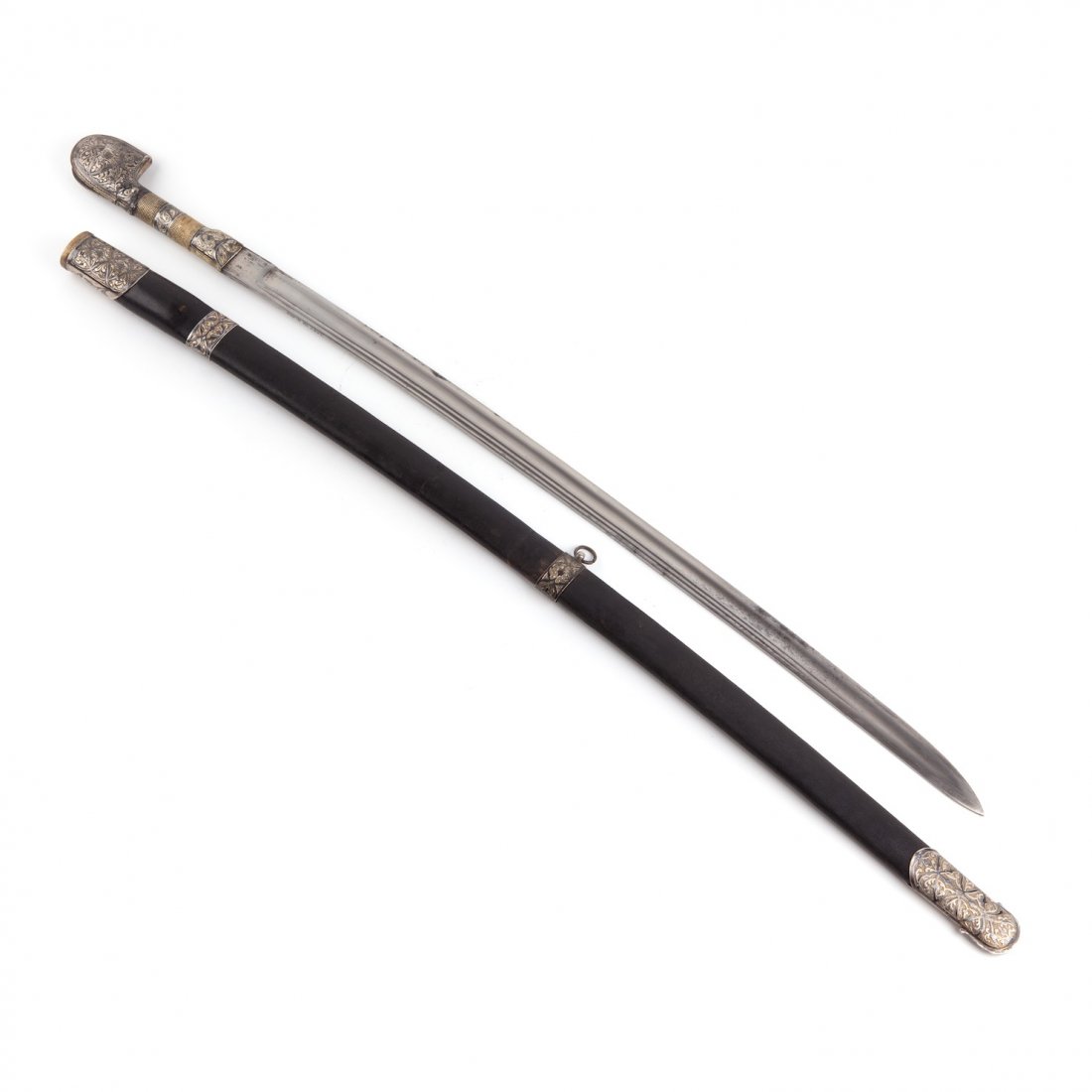
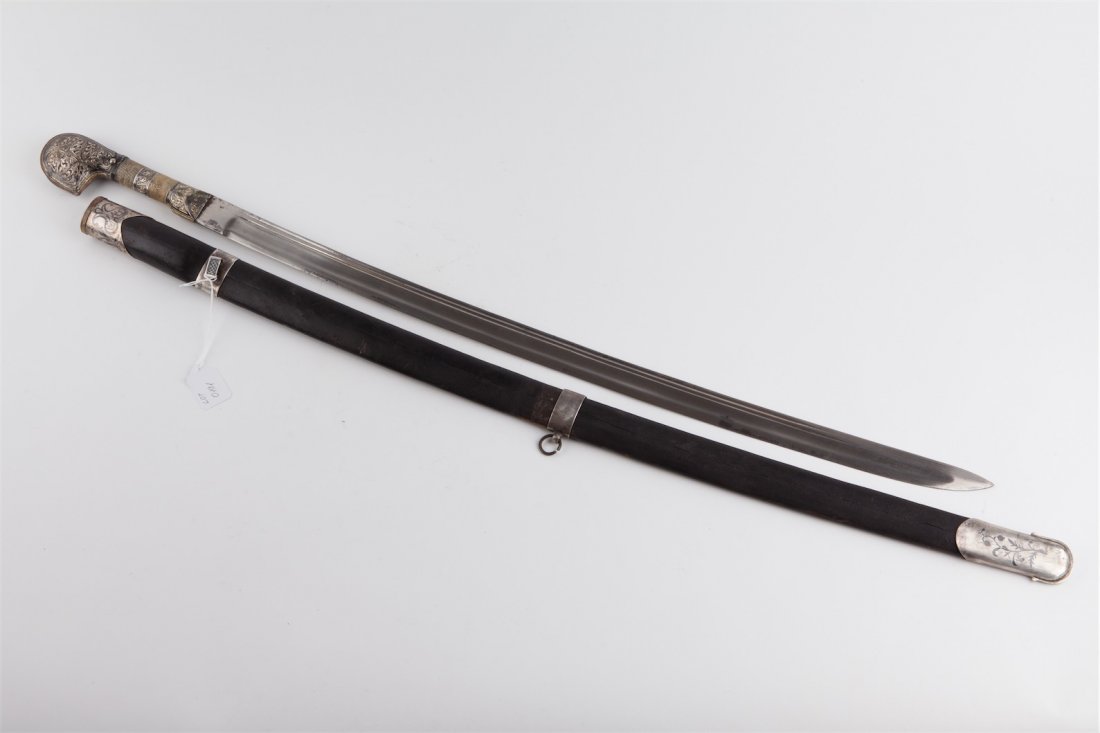
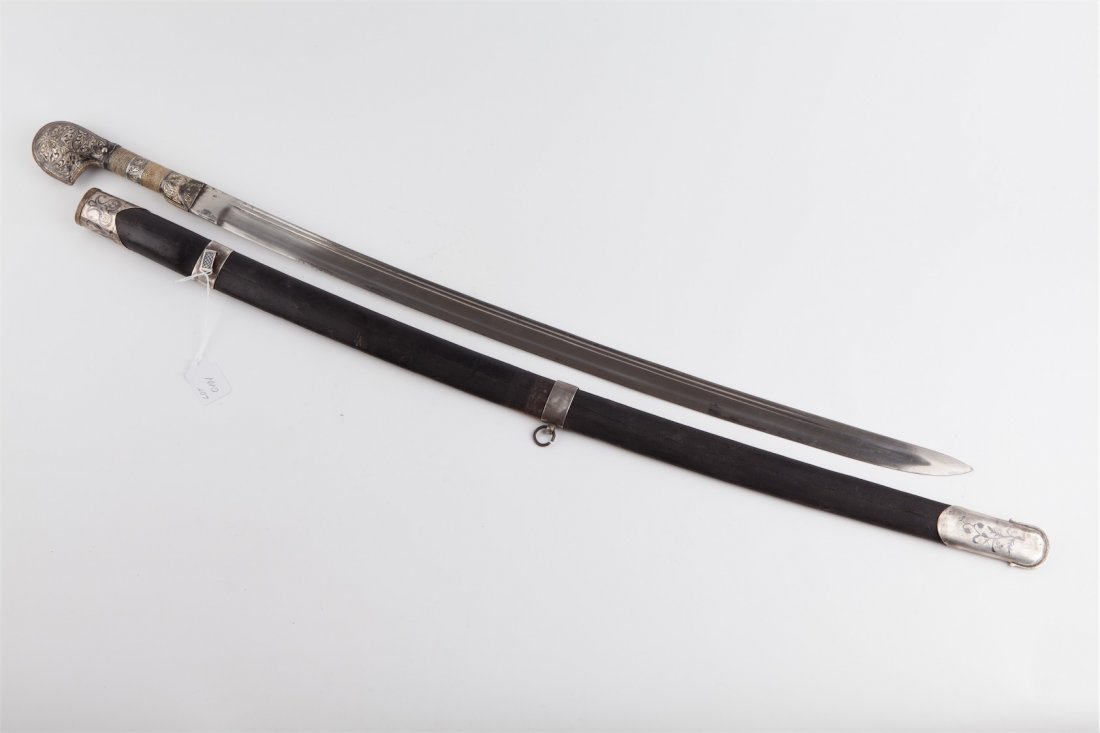
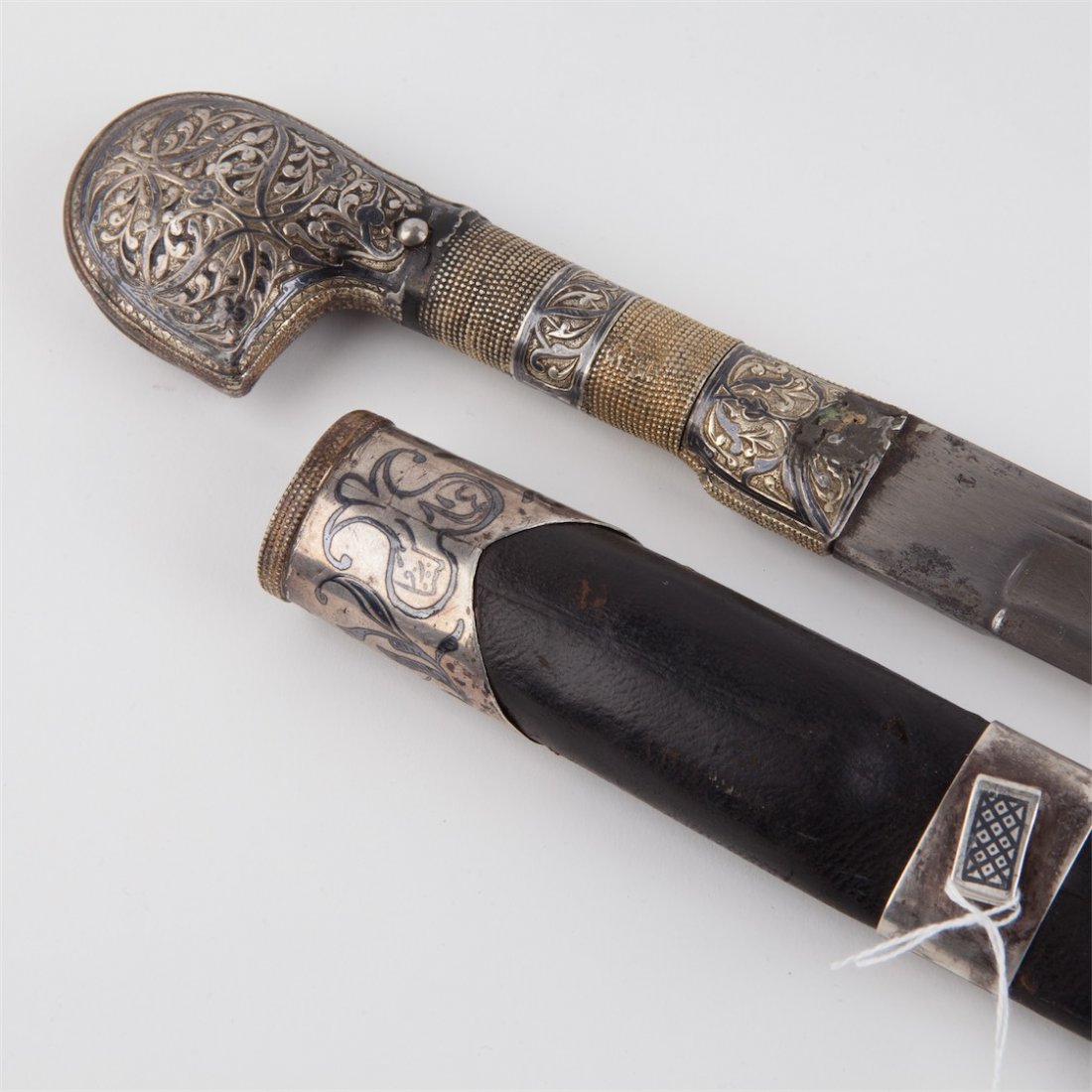
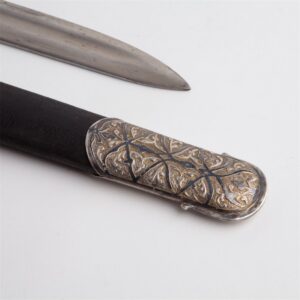
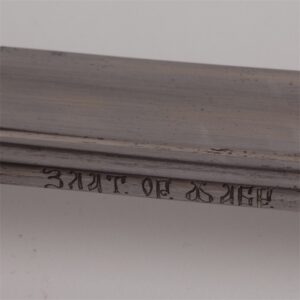
Lot 0191 — Caucasian Russian shashka (sword), Dagestan, Russia — Estimate: €1,500–€2,000
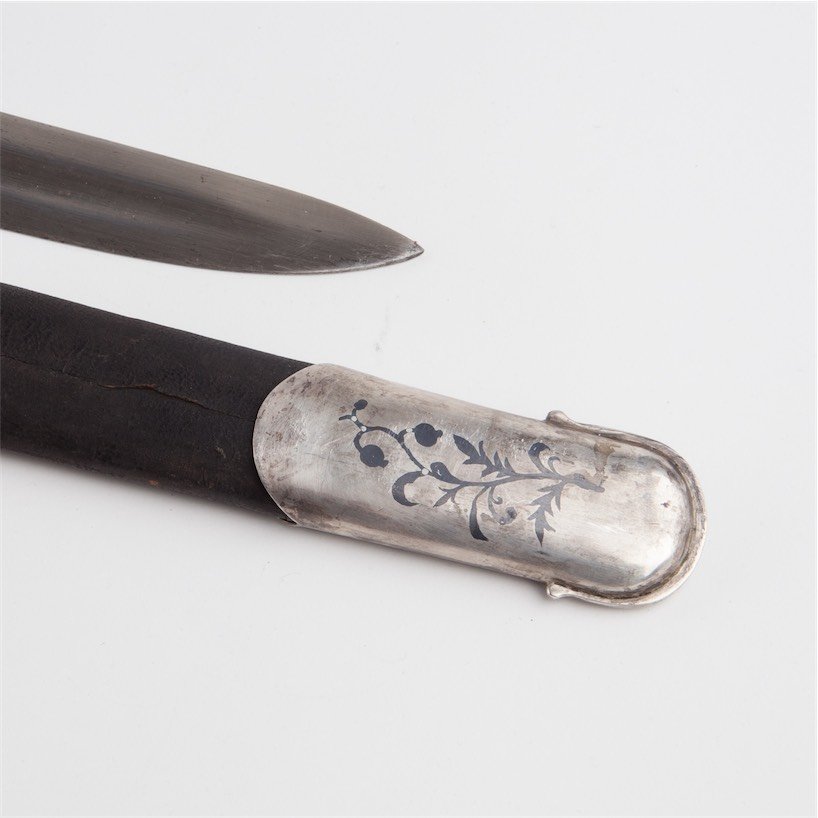
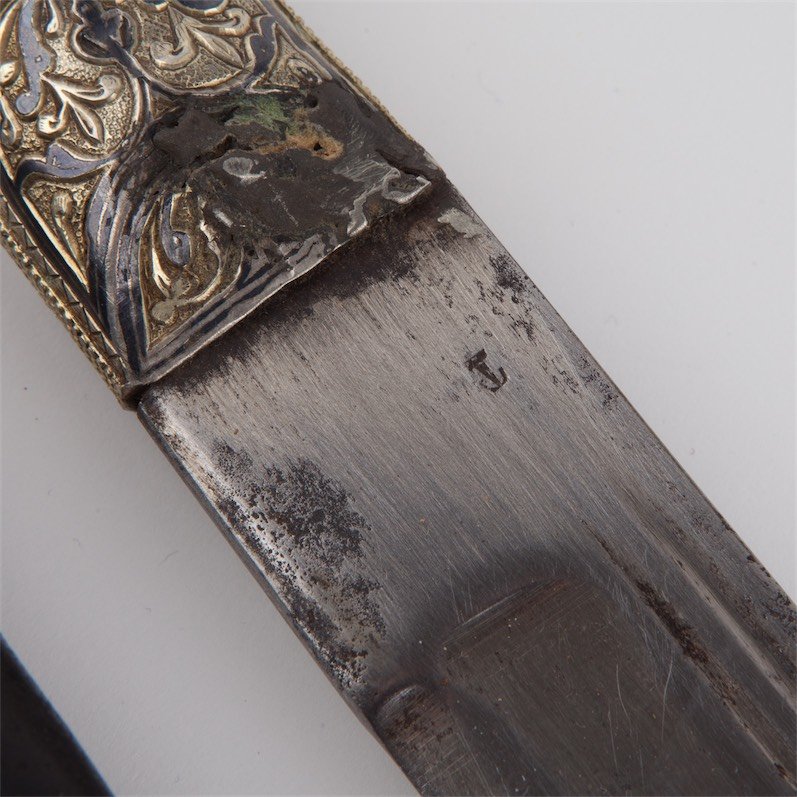
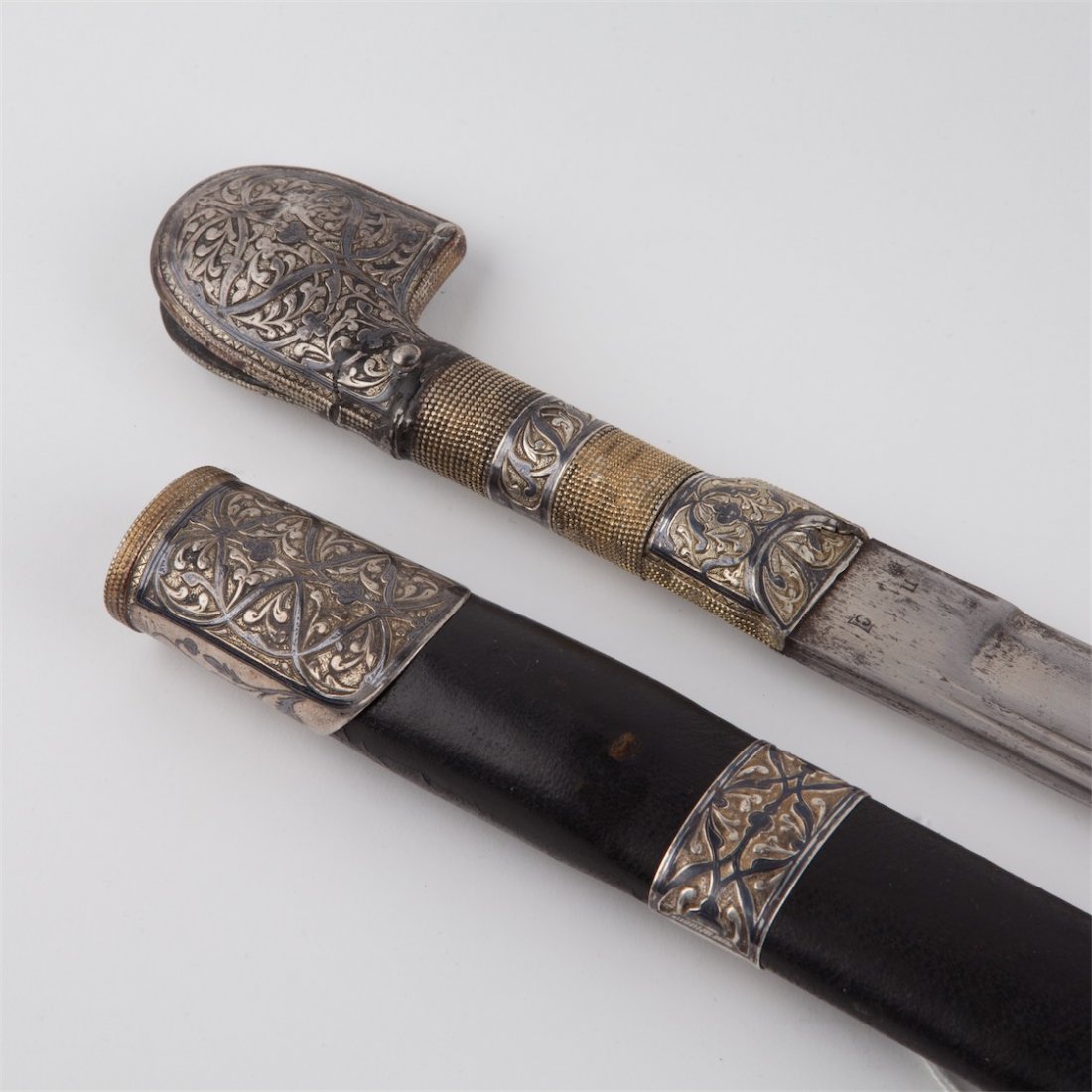
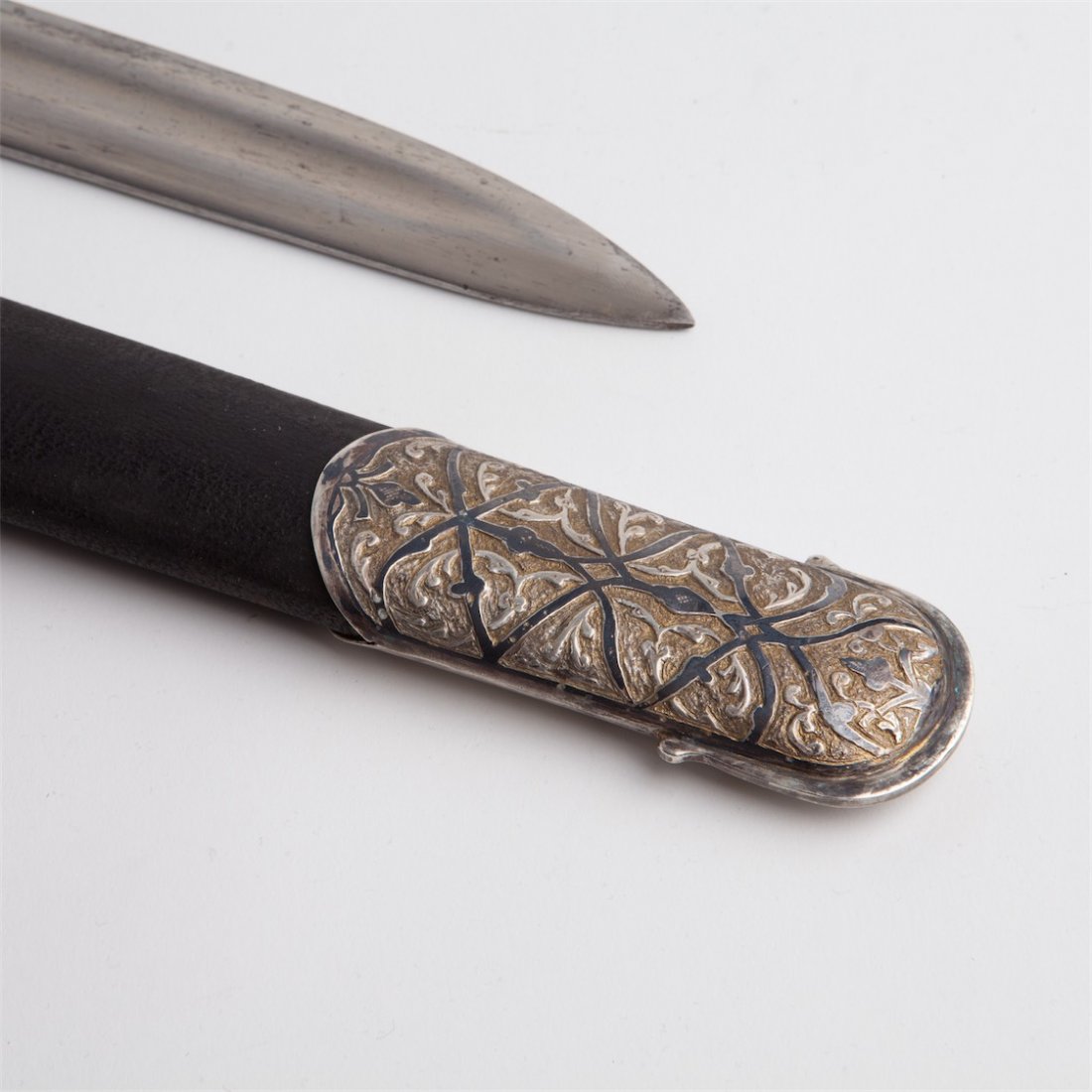
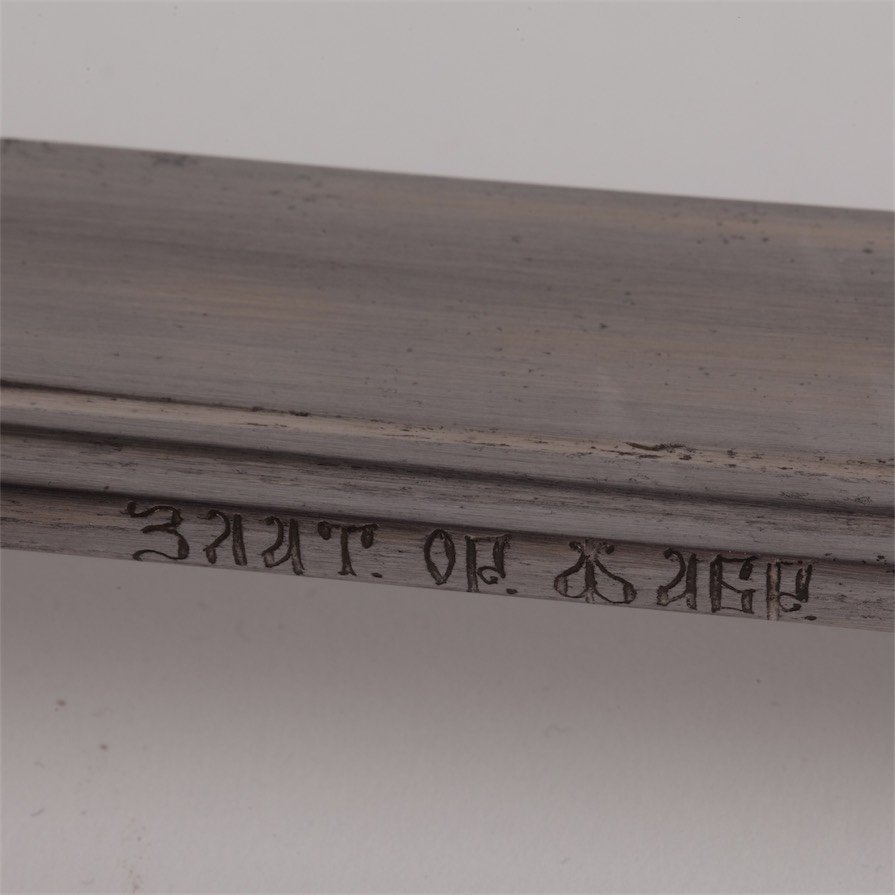
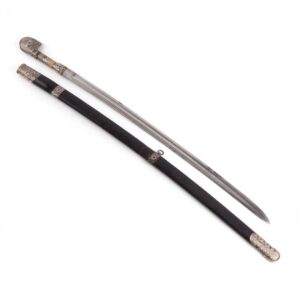
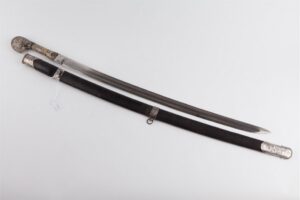
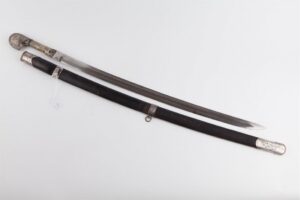
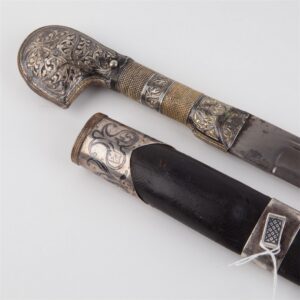
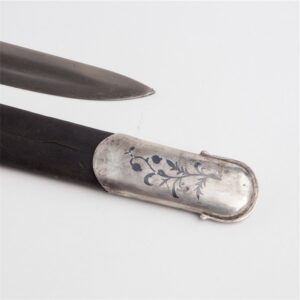
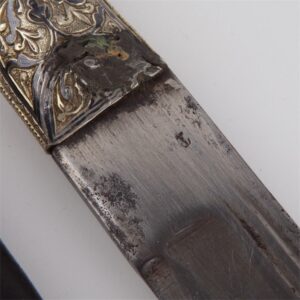
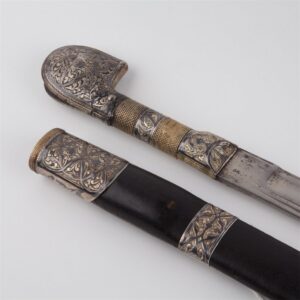
Caucasian Russian shashka (sword), Dagestan, Russia 19th century. This magnificent Dagestani shashka is mounted in gilt Silver decorated with niello work and deep engraving of floral motif. The blade has Russian markings from “Zlatoust” Arms Manufactory. Very good condition. Hard to find an authentic shashka like this one on the antique arms market. Total length: 96 cm.
Starting price: €1,300
Hammer Price: €1,500
Related Lots
-
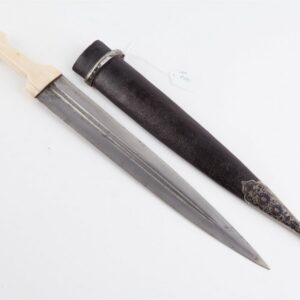
Lot 0190 — Caucasian (Russian) Kindjal dagger. 19th century. — Estimate: €2,500–€3,000
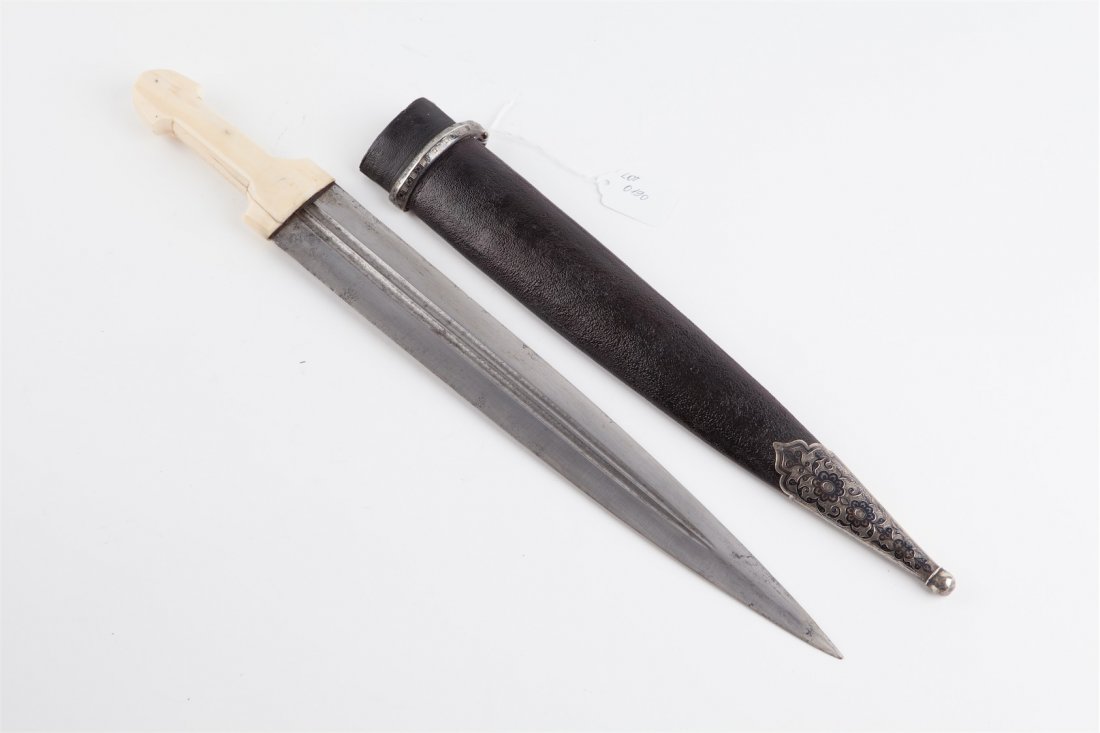
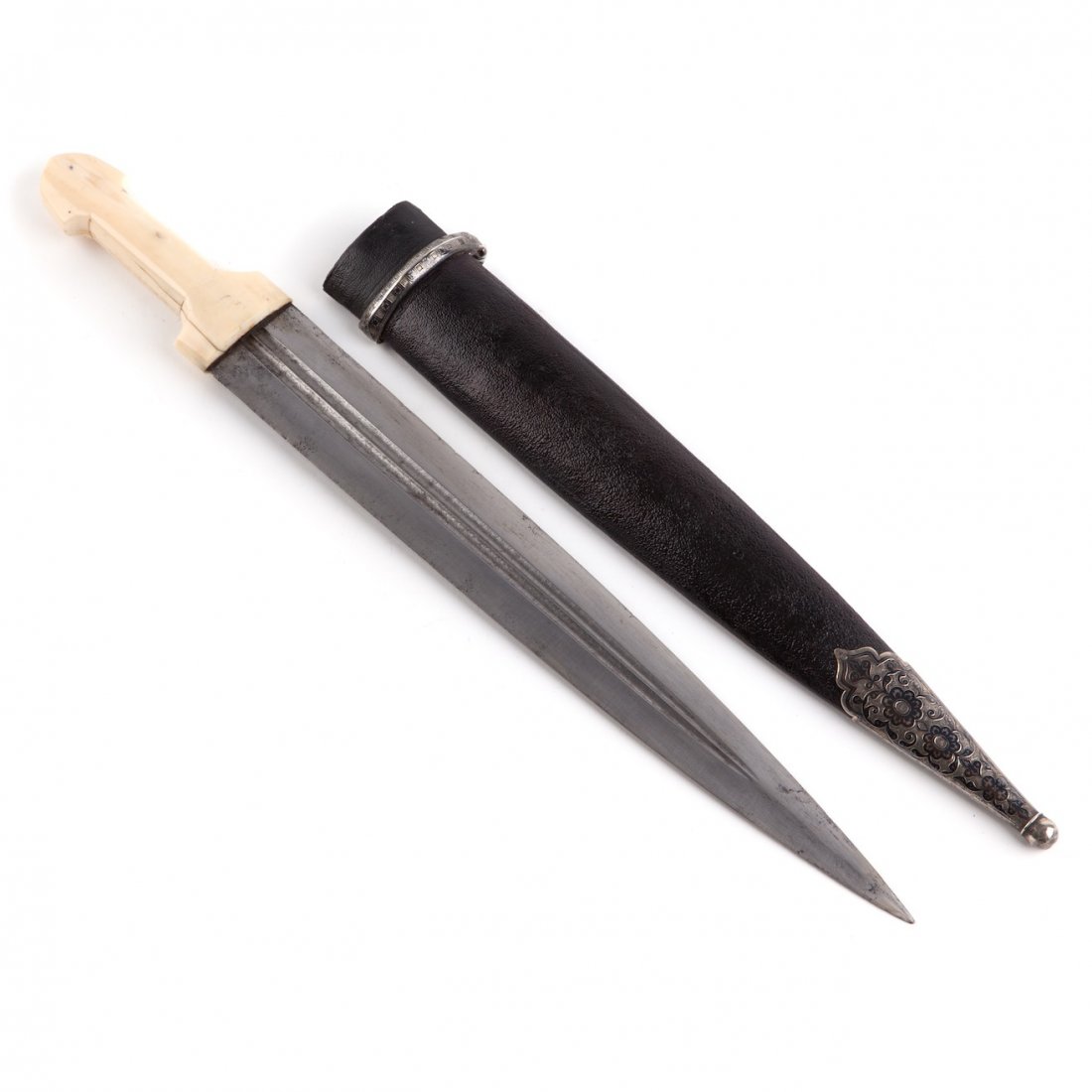
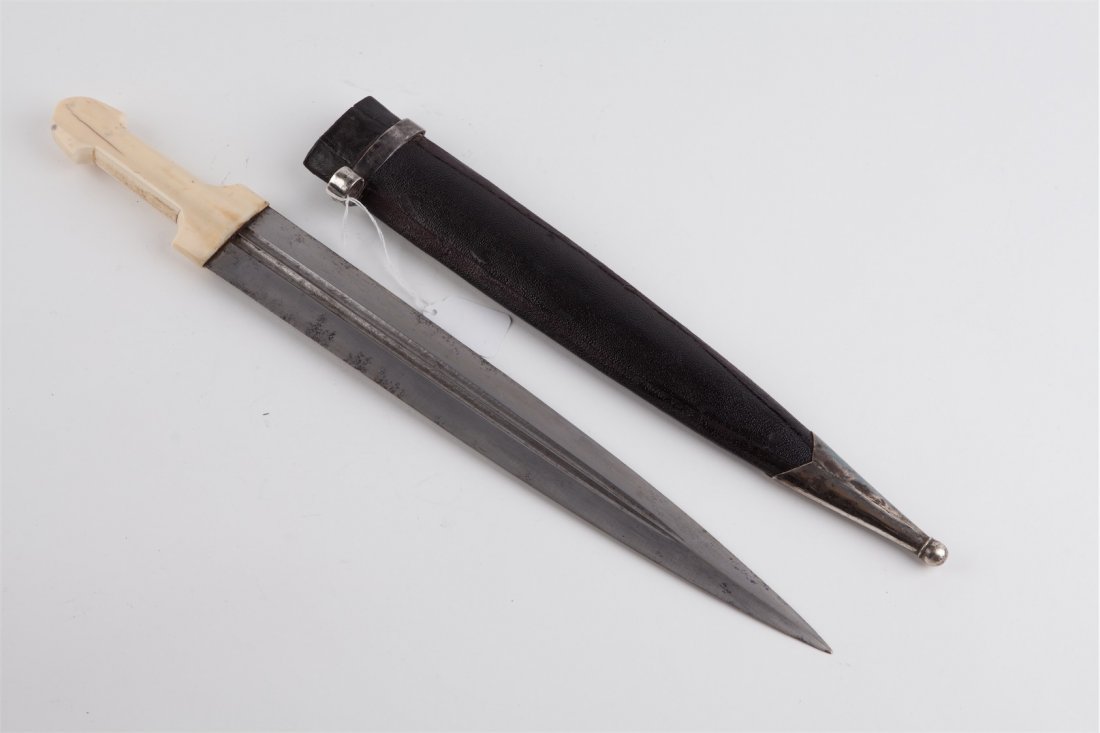
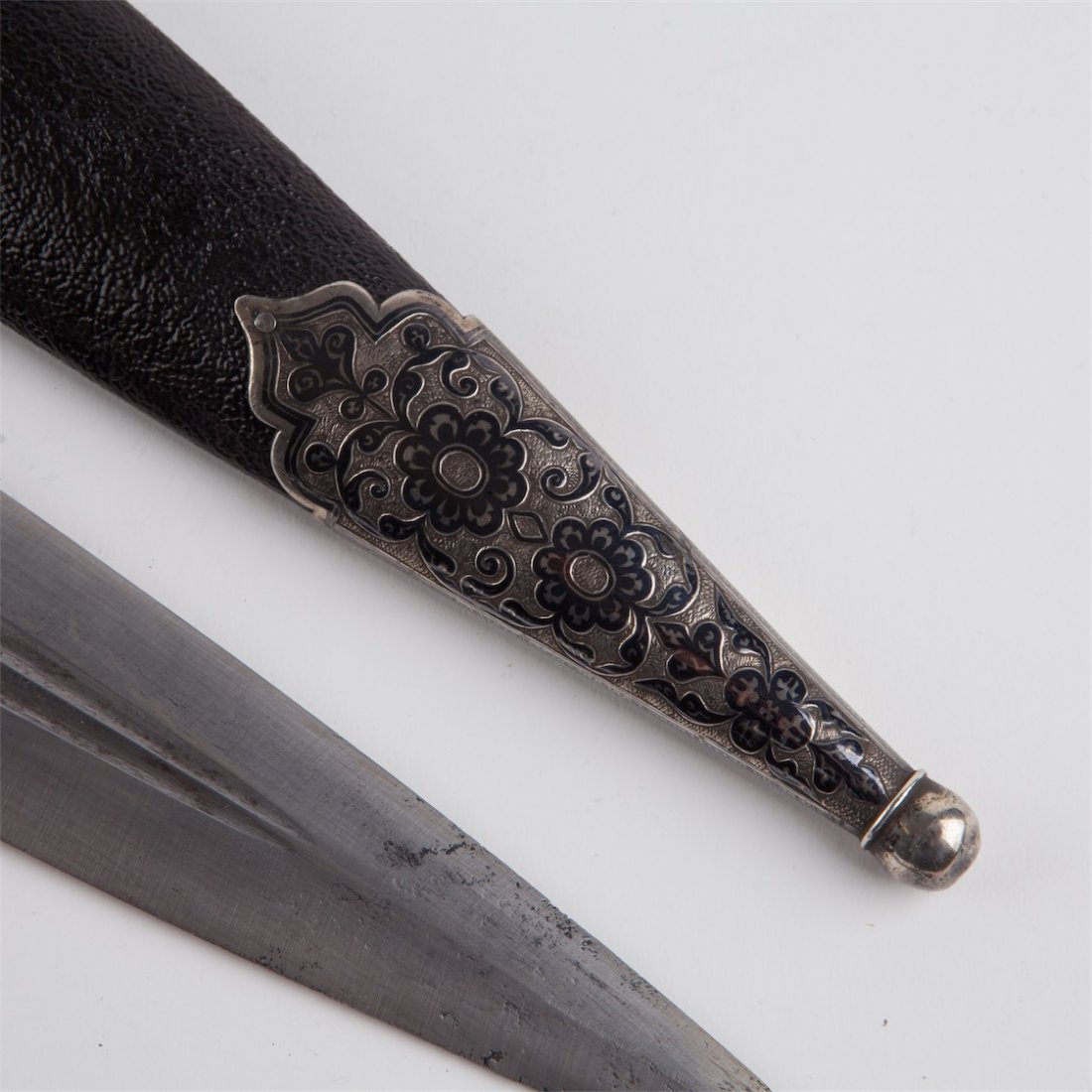
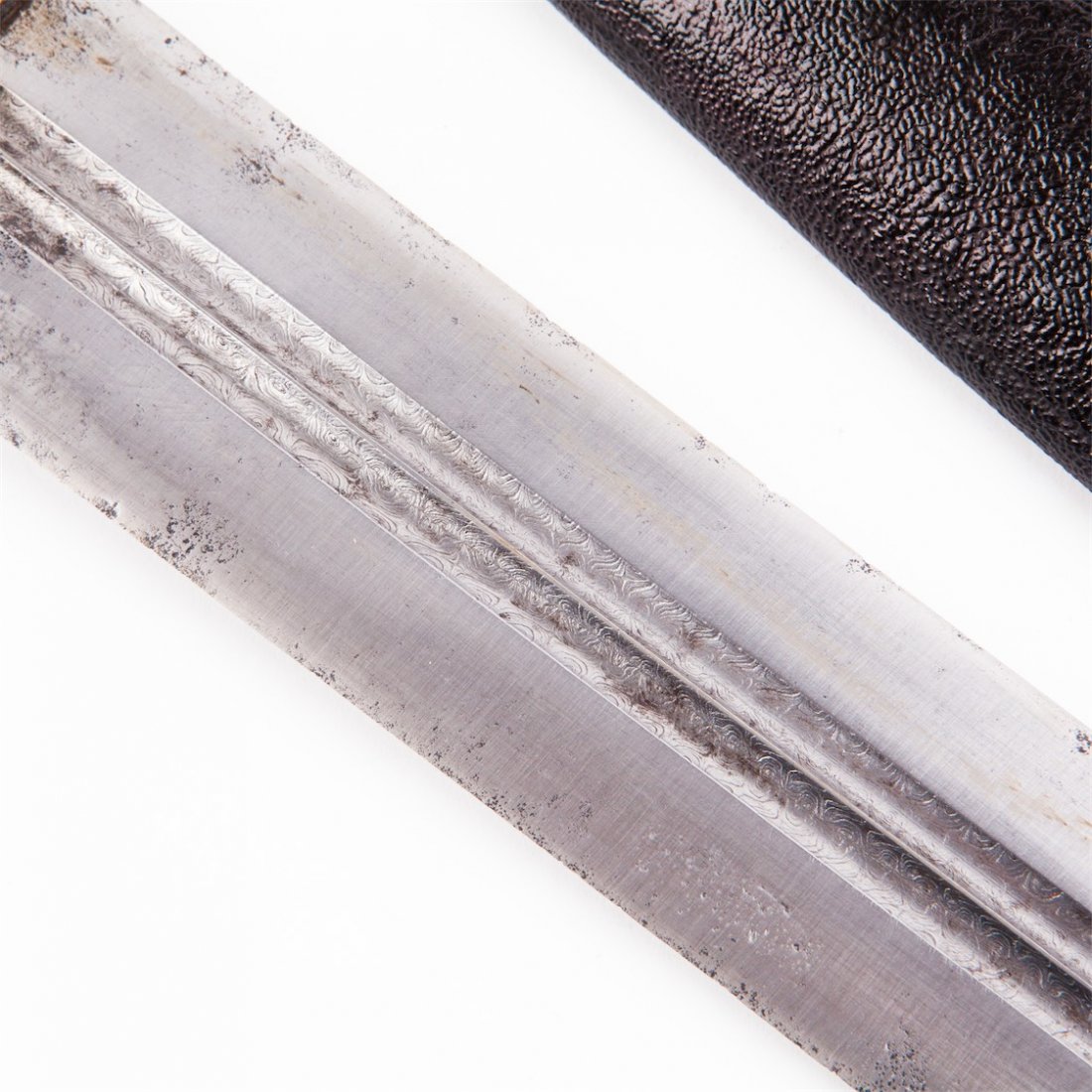
Lot 0190 — Caucasian (Russian) Kindjal dagger. 19th century. — Estimate: €2,500–€3,000
Antique first half of the 19th c. Caucasian (Russian) Kindjal dagger. This unusual kindjal (dagger) was made in Georgia. The double-edged blade is made from watered steel. The grip of the kindjal made of ivory. The mounts are decorated with Silver and niello work of Tiflis style. Overall very Good condition. Total length: 51,5 cm.
Starting price: €2,300
Hammer Price: UNSOLD -
Lot 0193 — Double barrel percussion pistol, second half of the — Estimate: €1,500–€2,000
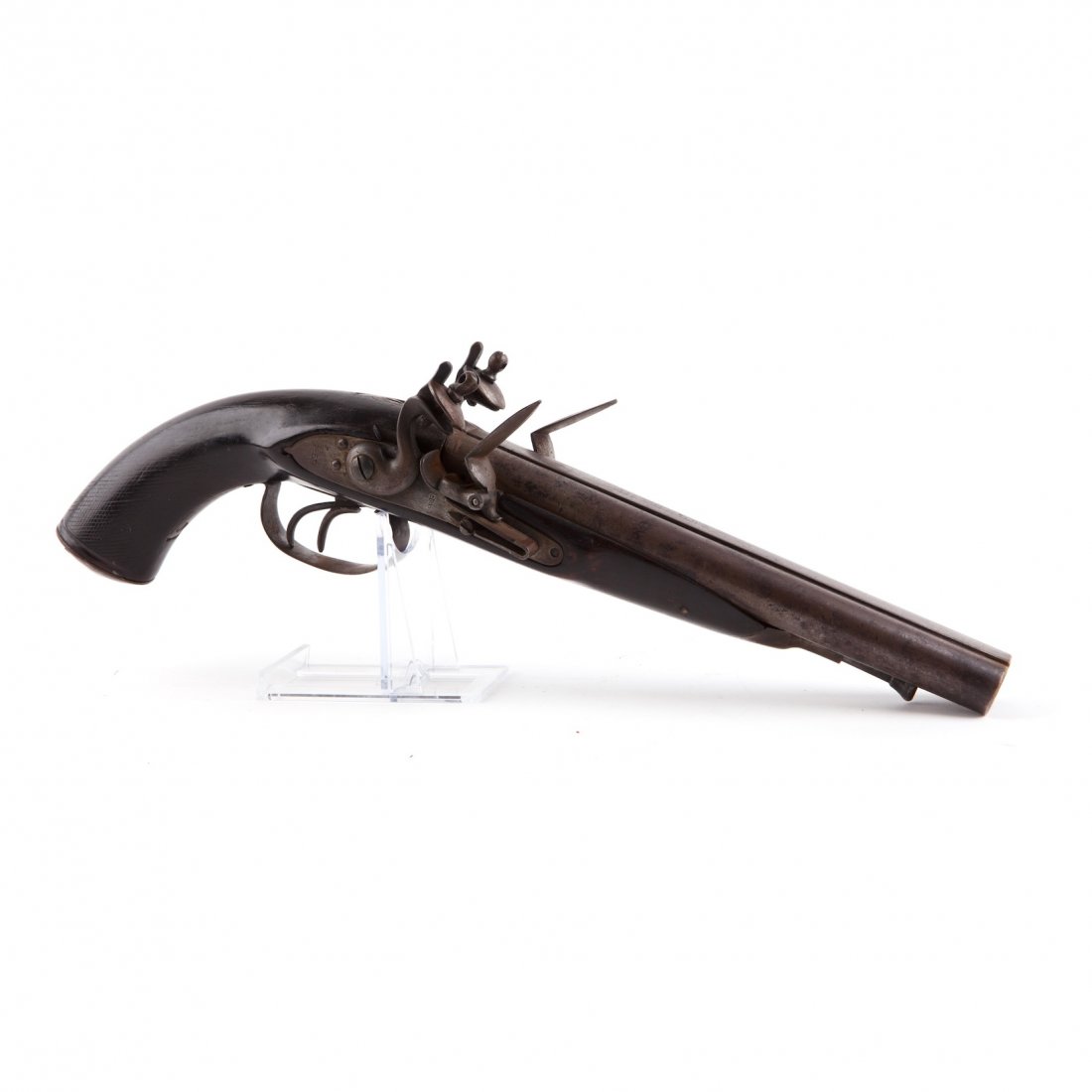
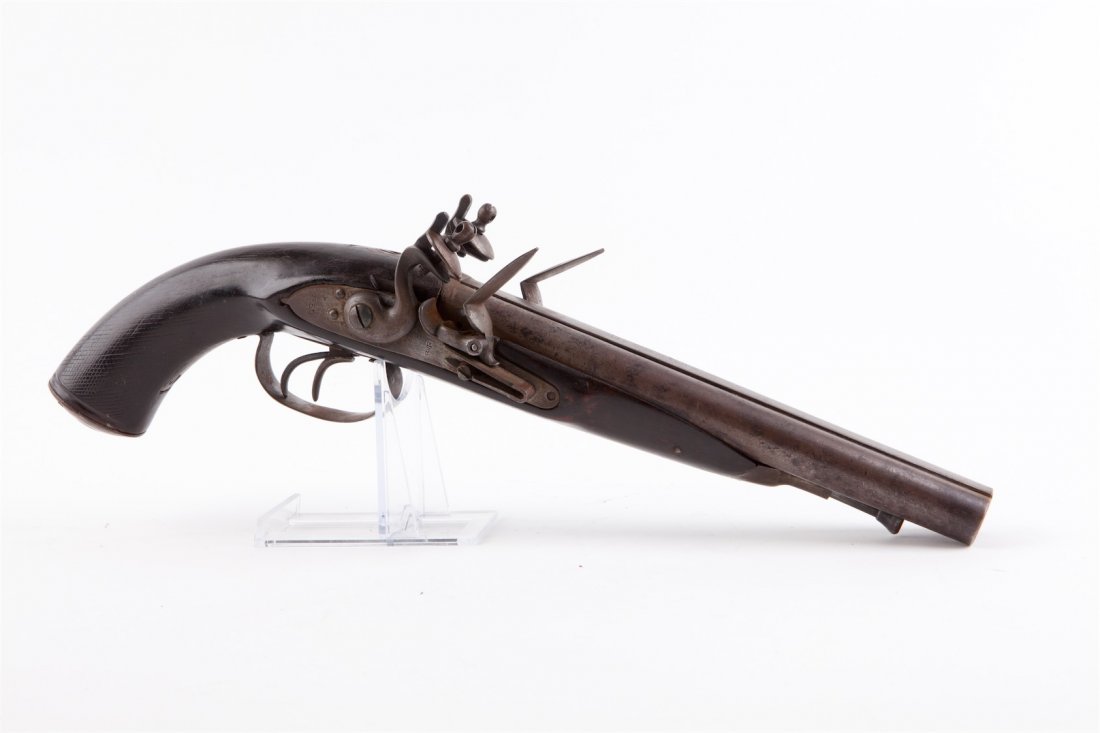
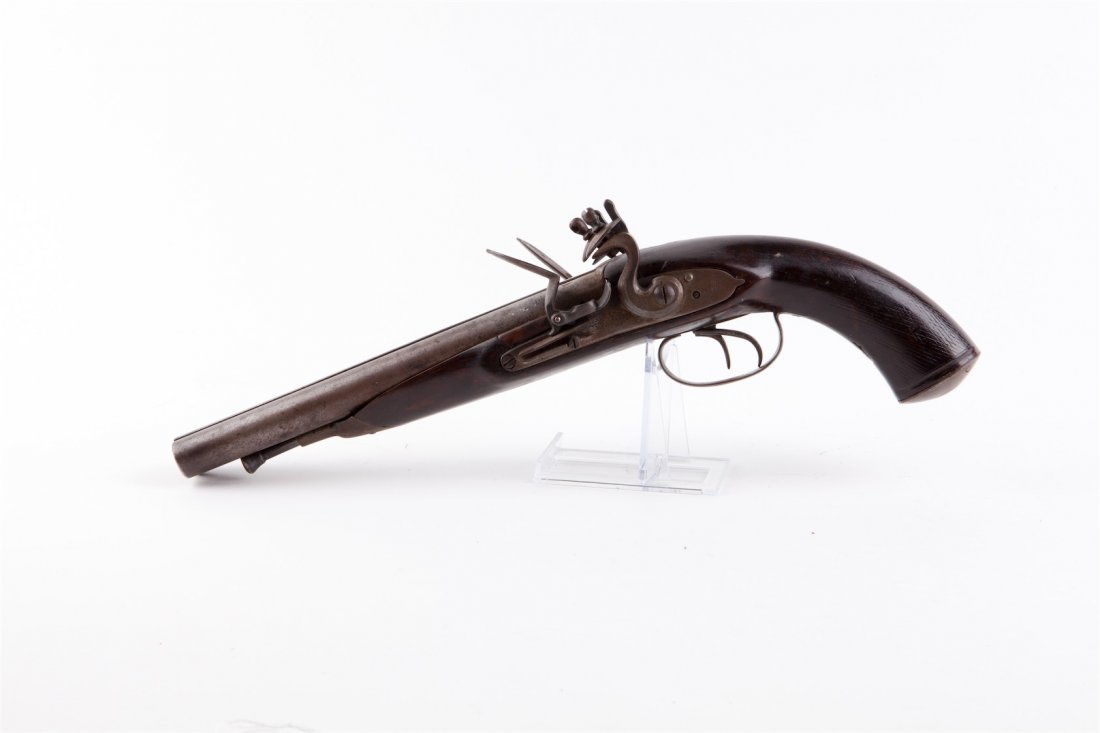
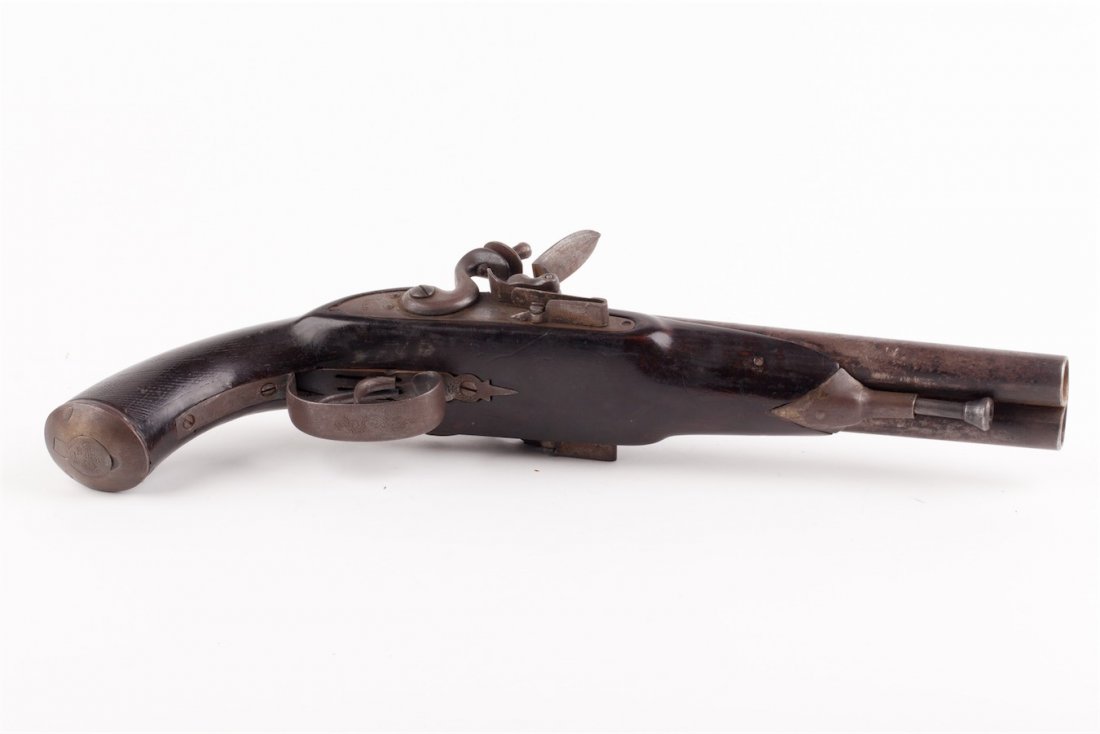
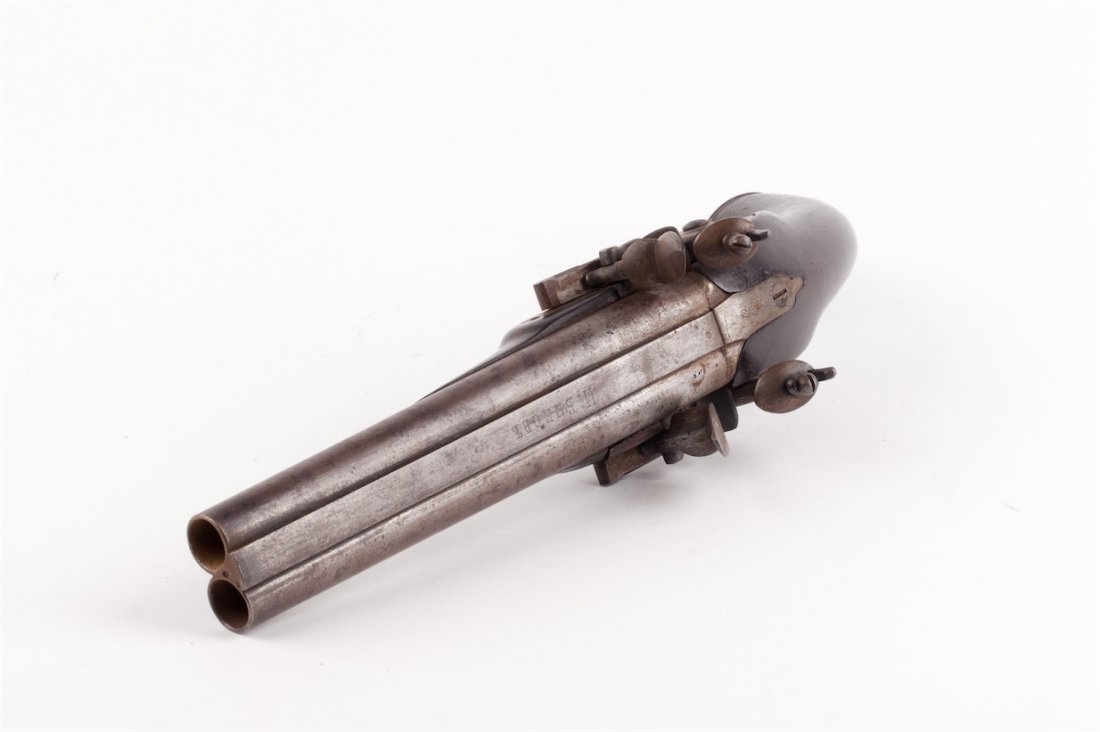
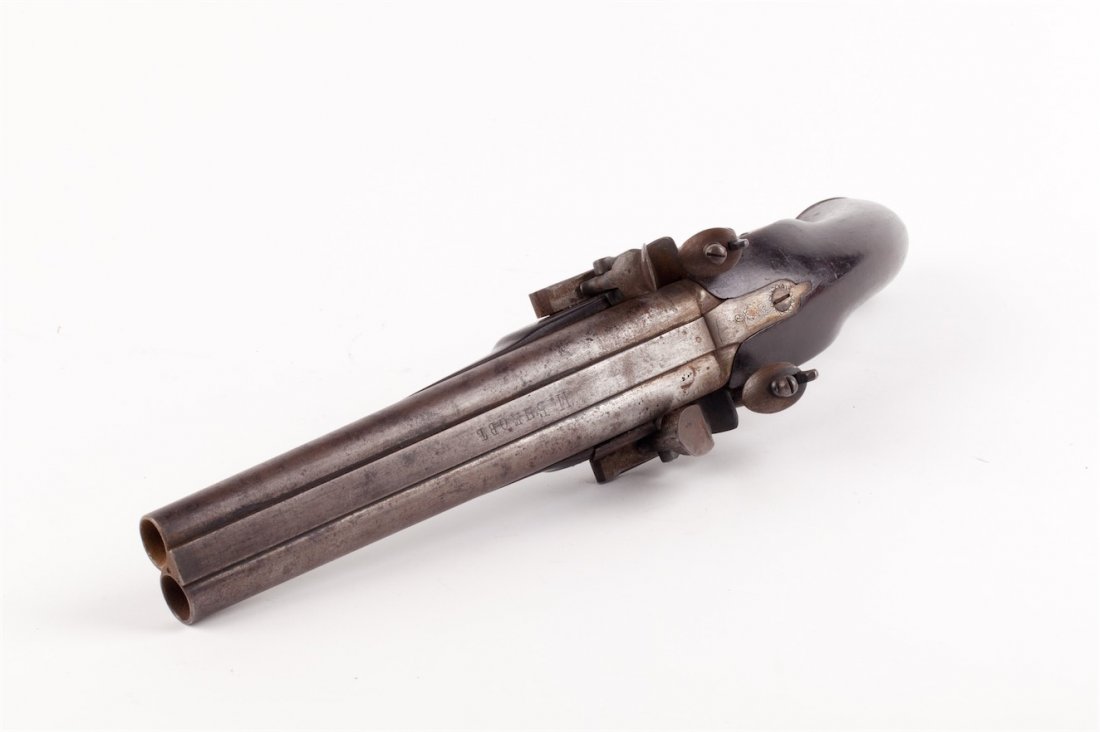
Lot 0193 — Double barrel percussion pistol, second half of the — Estimate: €1,500–€2,000
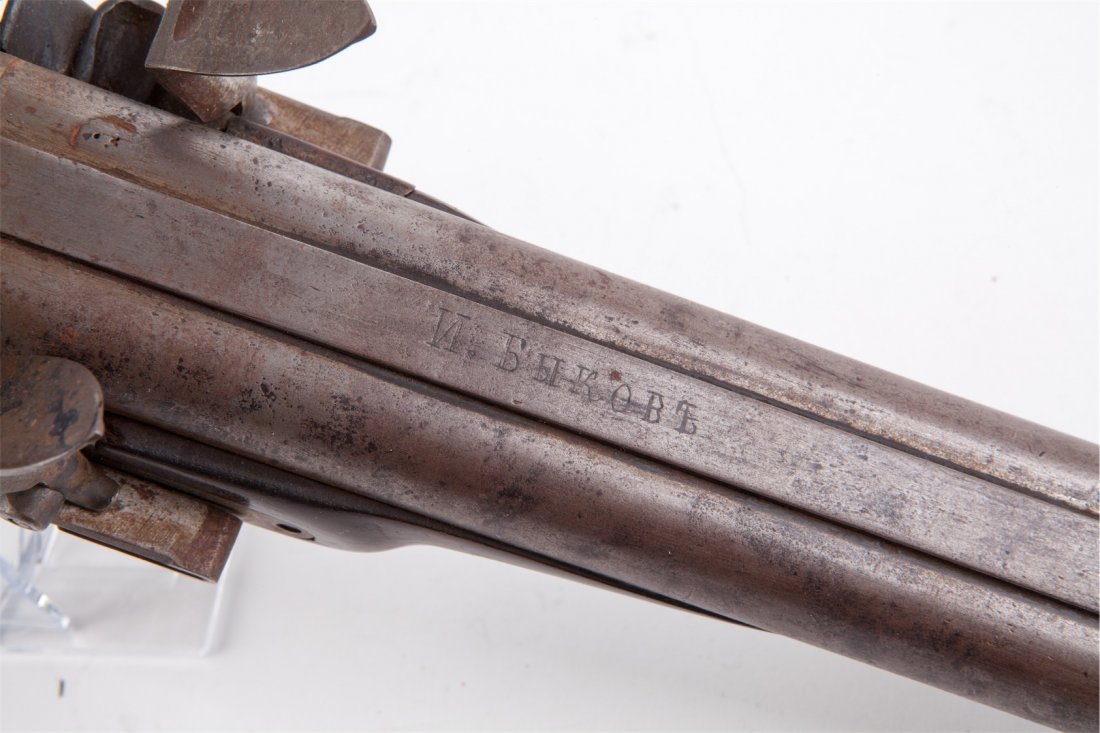
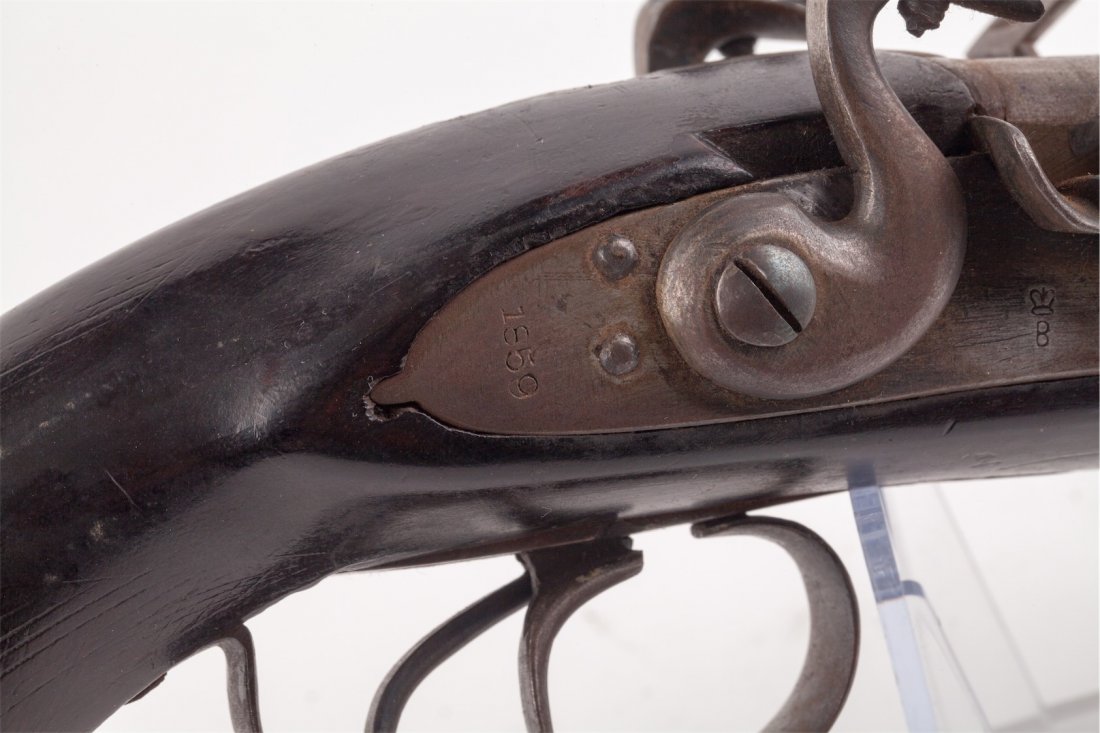
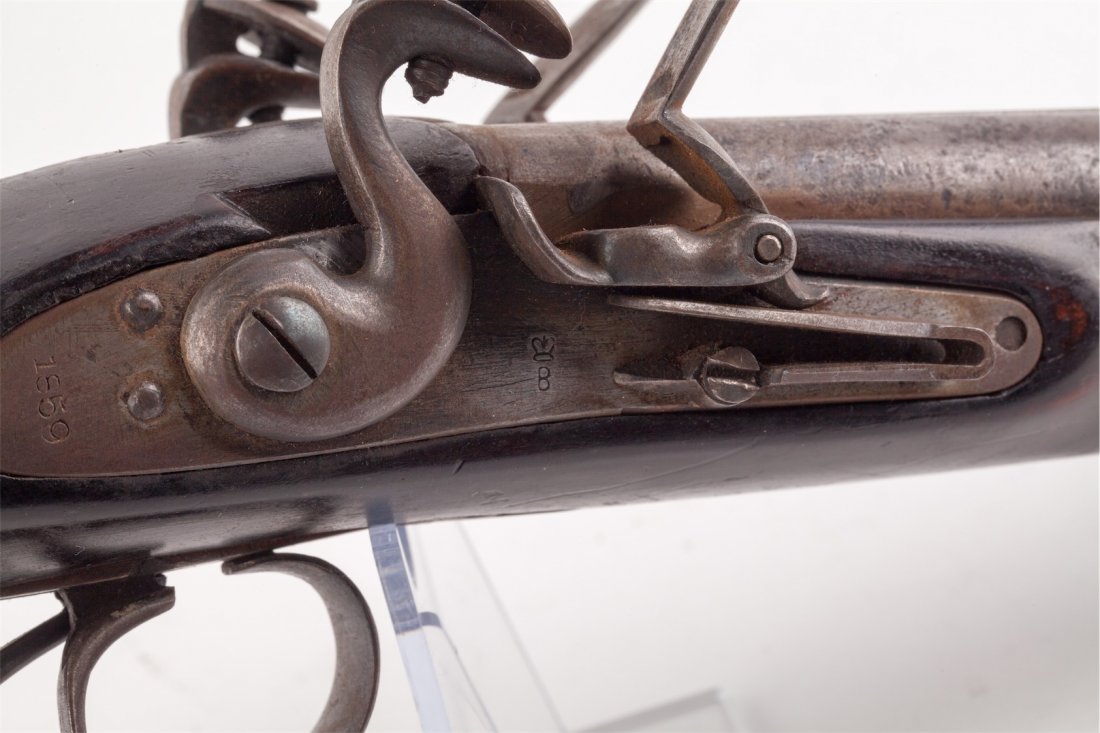
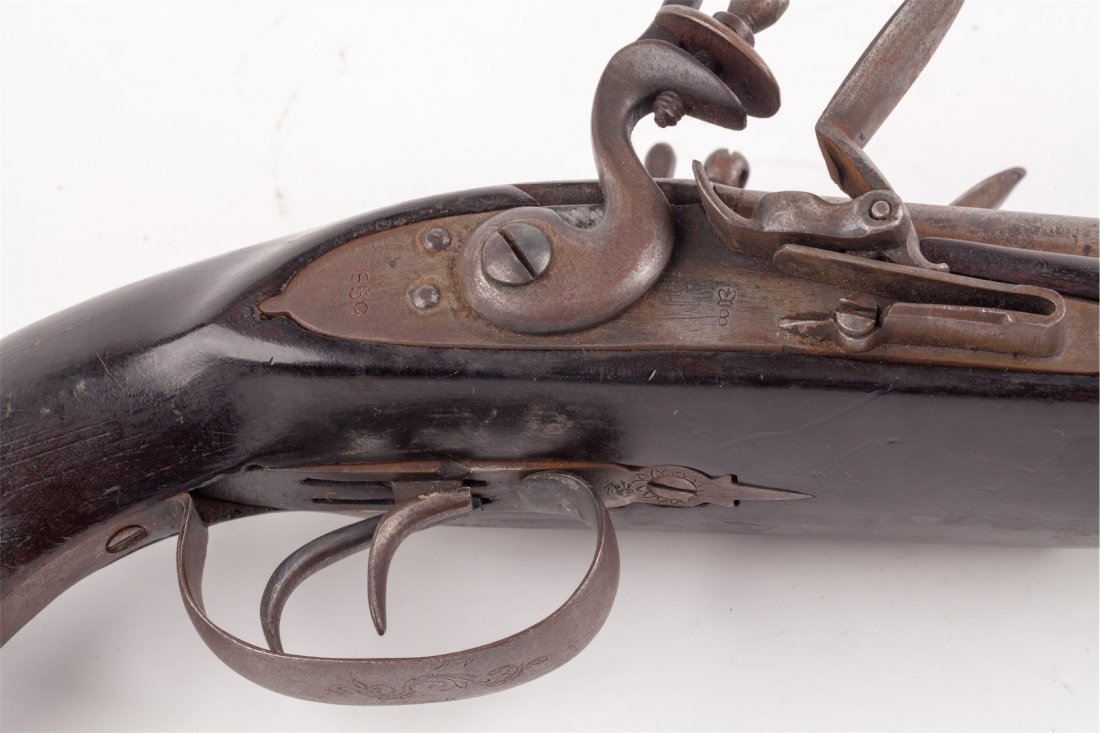
Double barrel percussion pistol, second half of the 19th cen. Probably made in Europe for a customer located in Russia. The pistol was converted back into a flint lock. The pistol could have been used as a hunting weapon as well as self defense. The Russian name between the barrels reads as “I. Bykov (˜. ‘)”. The name belongs to the gunsmith not the owner. In the Russian registry of gun makers of the time, there is a record of A. Bykov probably the father of our pistol maker. Also there is a hunting rifle made by A. Bykov at the State Historical Museum in Moscow. Length: 40 cm.
Starting price: €1,100
Hammer Price: UNSOLD -
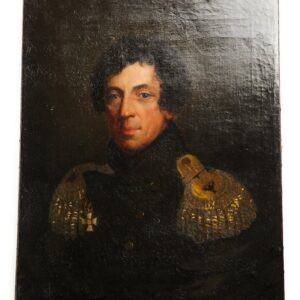
Lot 0189 — Portrait of Aleksey Samuilovich Greig. 1813-1816. — Estimate: €13,000–€18,000
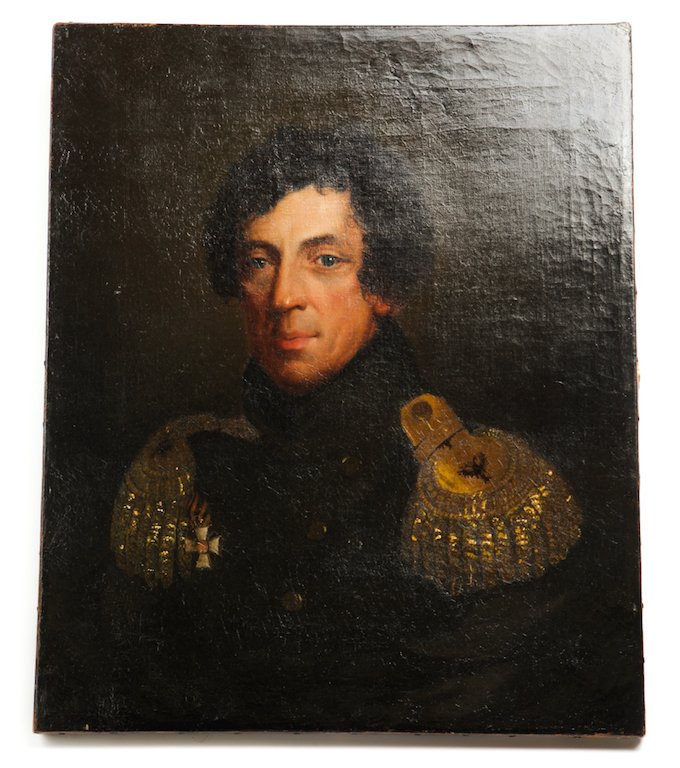
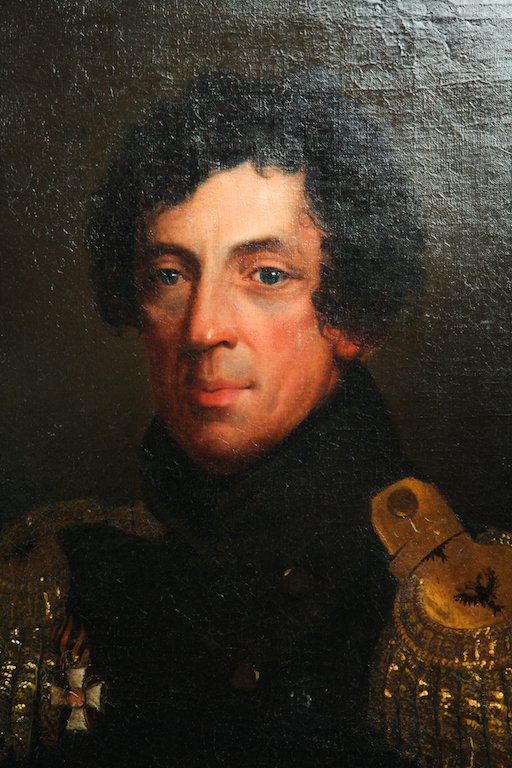
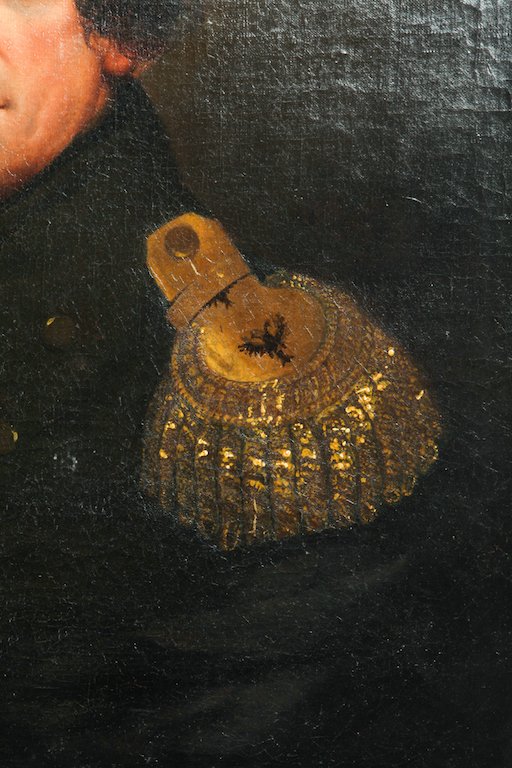
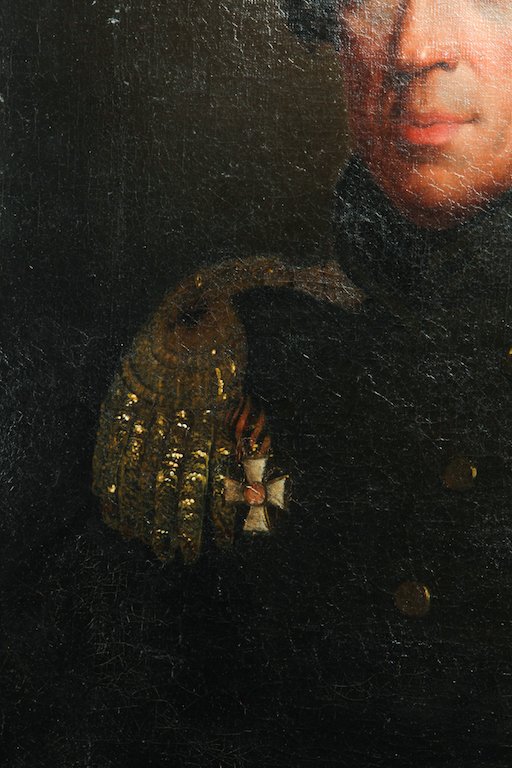
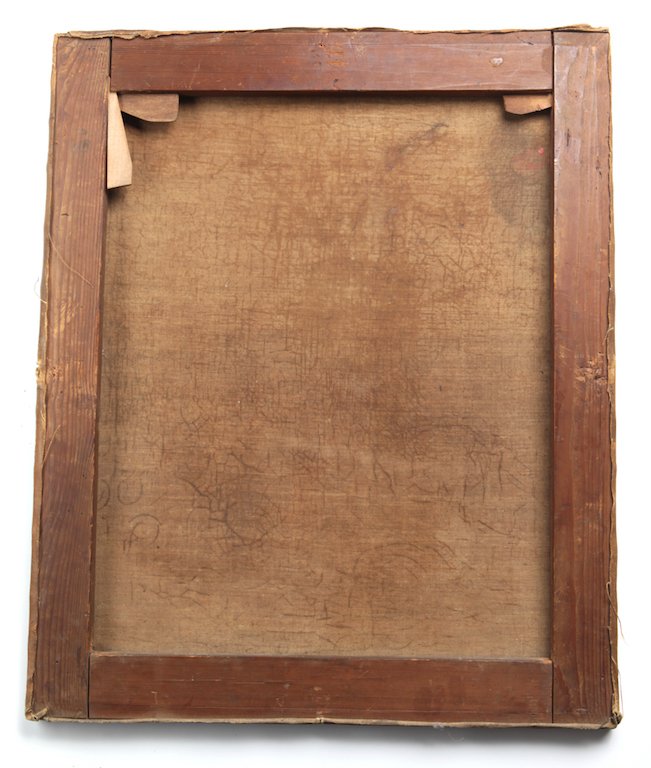
Lot 0189 — Portrait of Aleksey Samuilovich Greig. 1813-1816. — Estimate: €13,000–€18,000
Portrait of Aleksey Samuilovich Greig (Russian: “€) (6 September 1775 €“ 18 January 1845) was an admiral of the Imperial Russian Navy. He was the son of Admiral Samuel Greig, brother-in-law of Mary Somerville, and father of Samuil Greig, Russian Minister of Finance.
He studied at the Royal High School, Edinburgh under the Rector Alexander Adam from 1783 to 1785, and then served as a volunteer on board HMS Culloden, under Captain Thomas Troubridge.
Greig started his career in the British Royal Navy, serving in East India and Europe from 1785 to 1796. He returned to Russia to take part in the Mediterranean expeditions against Revolutionary France in 1798-1800. Under command of Dmitry Senyavin, he distinguished himself in 1807 in the Battle of Athos and Battle of the Dardanelles, which resulted in the Russian occupation of Lemnos and Tenedos. At the close of the Napoleonic Wars, he was placed in command of the sea blockade of Danzig, during the siege of Danzig. When he was a Captain, he and another Scotsman Captain Brown, were involved in some trouble by the wreck of the Imperial frigate Archangel in 1797. In the following year, in the squadron off the Texel, he commanded the 64-gun Retvizan; and Captain Robert Crown, said to be a Scot, had the 74-gun Utislaw. (Edinburgh Herald)
In 1801 he was banished to Siberia for a time, in consequence of boldly remonstrating with the Emperor Paul for his severity to some British naval prisoners.
In 1816, Greig was appointed Commander of the Black Sea Fleet, a post which he kept for 17 years. At the same time, he served as Military Governor of Sevastopol and Nikolayev, introducing so many reforms and improvements that the grateful citizens of Nikolayev erected a statue to his memory in 1873. During the Russo-Turkish War of 1828/29 his bold leadership made itself felt at Varna and Anapa.
In 1828 he was in full command of the Russian fleet at the sieges of Varna and Anapa, whither he had sailed from Sebastopol with forty vessels–eight being of the line acting in conjunction with the troops under Prince Menshikov for three months by sea and land. During these operations the Emperor was his guest on board the Parizh, which had the Diplomatic Chancery and 1,300 persons under her flag (Slade€™s Travels).
In 1833 he was recalled to Saint Petersburg, where the Tsar appointed him a member of the State Council of Imperial Russia and asked him to superintend the construction of the Pulkovo Observatory. Picture was painted between 1813-1816 year. Dimensions: 68 X 56 cm.Starting price: €10,000
Hammer Price: UNSOLD -
Lot 0192 — Caucasian (Circassian) Russian shashka. Second half of — Estimate: €3,500–€4,500
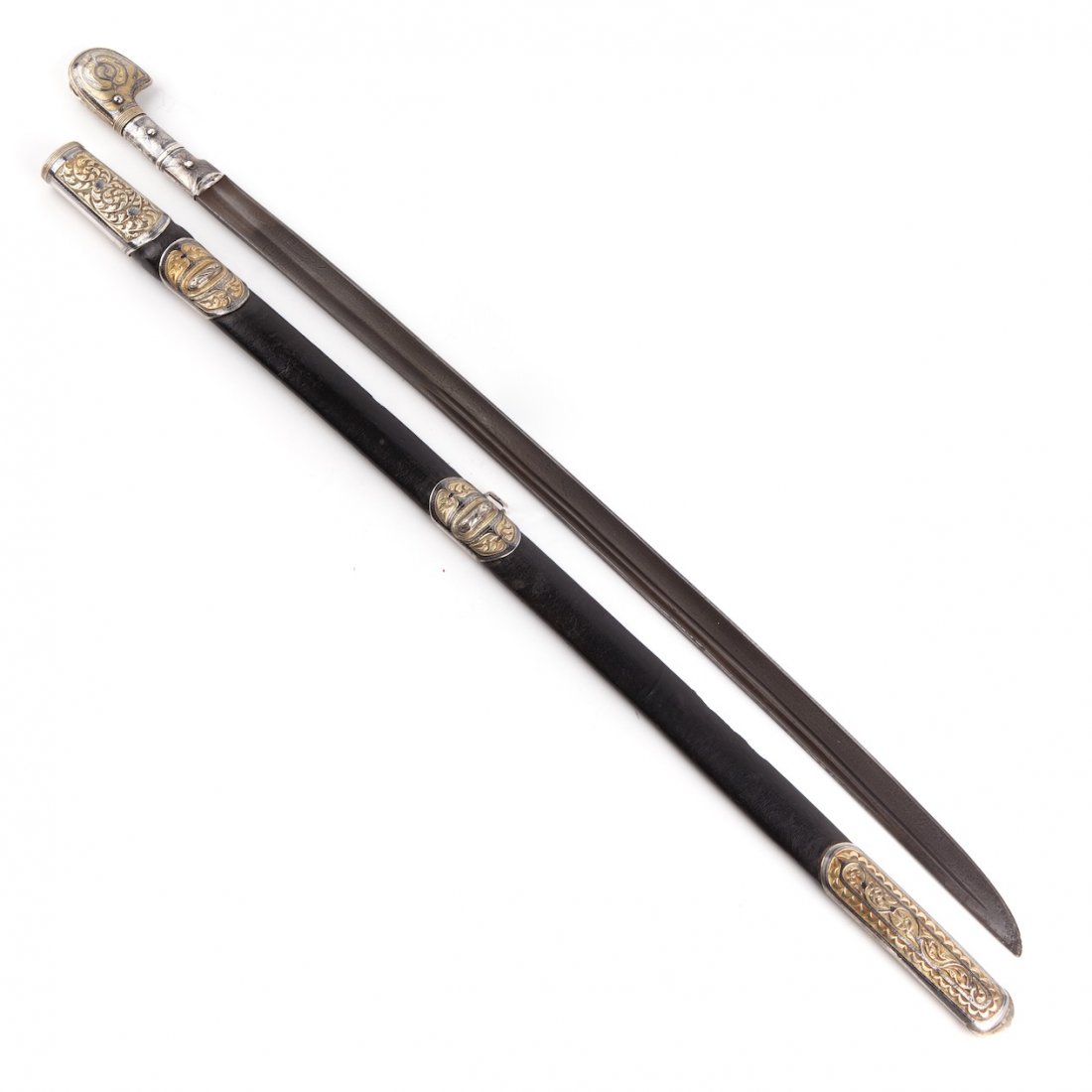
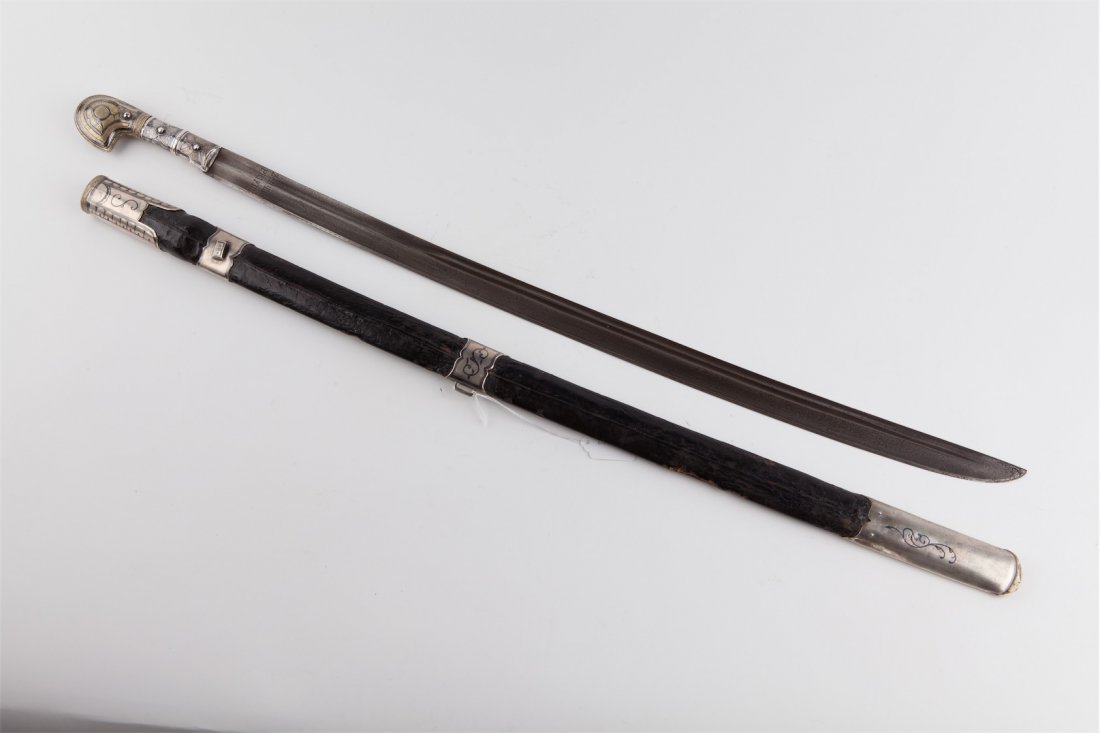
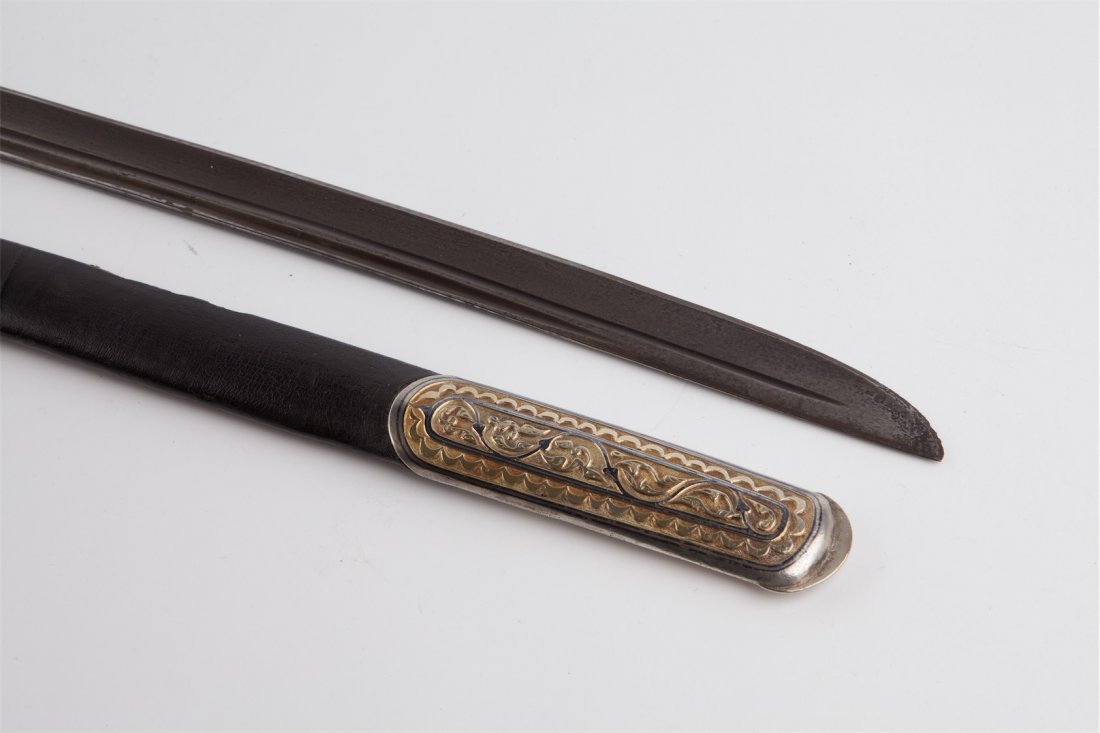
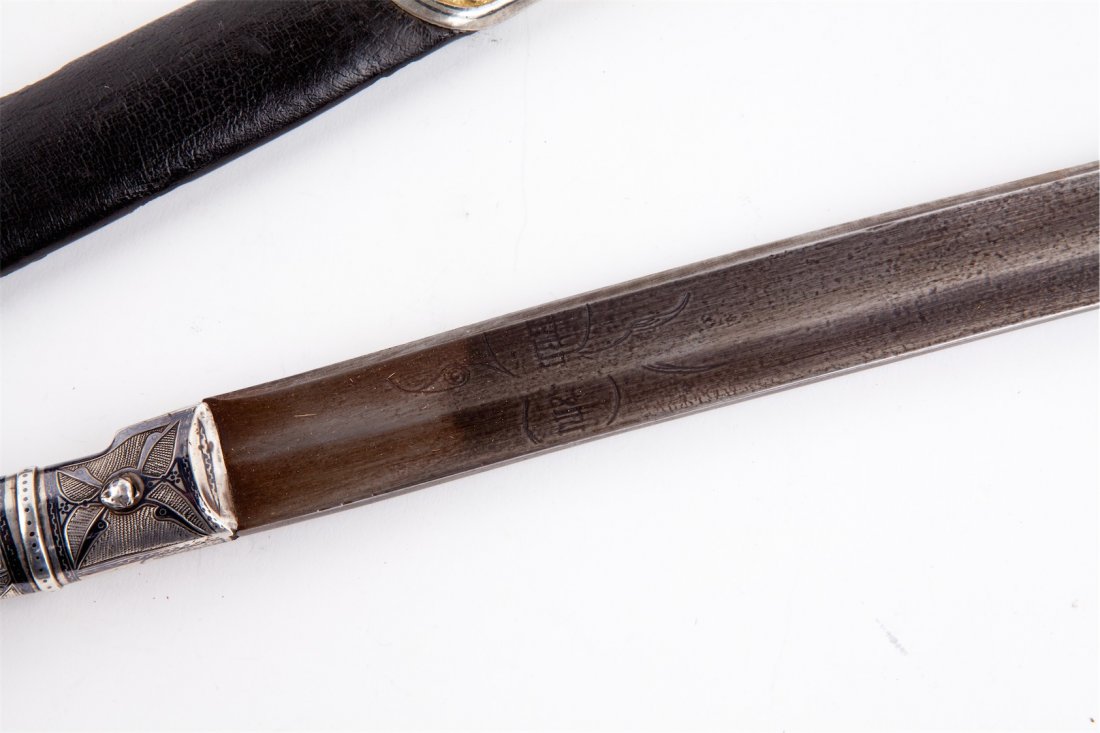
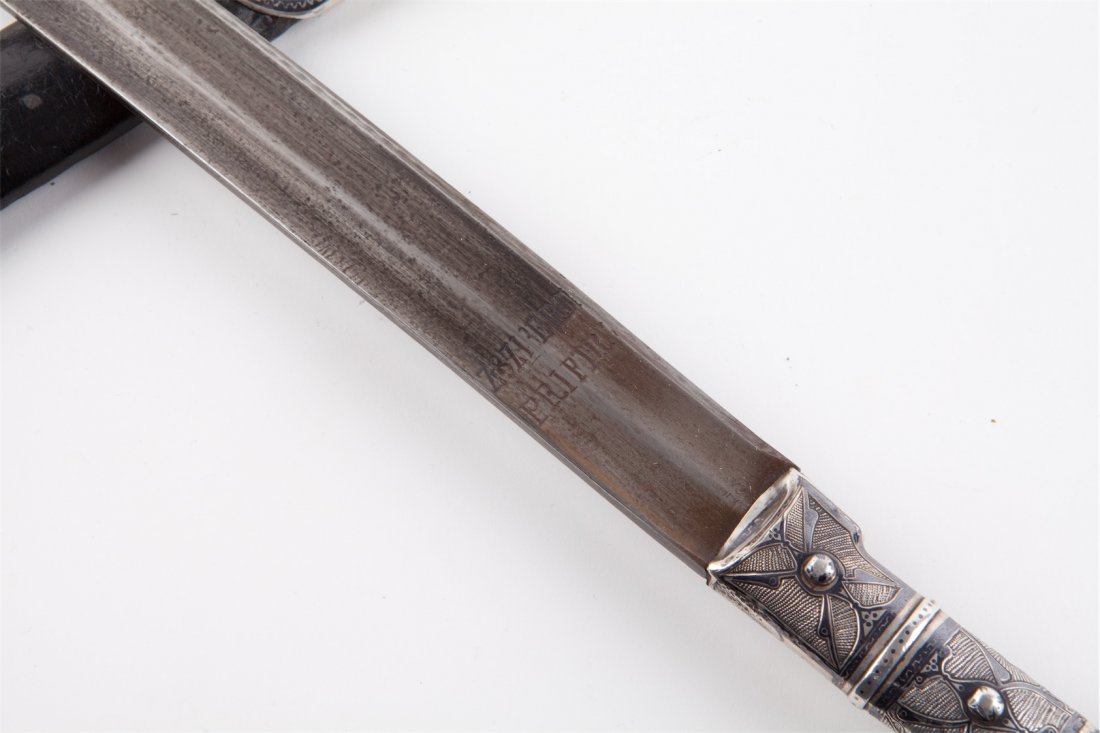
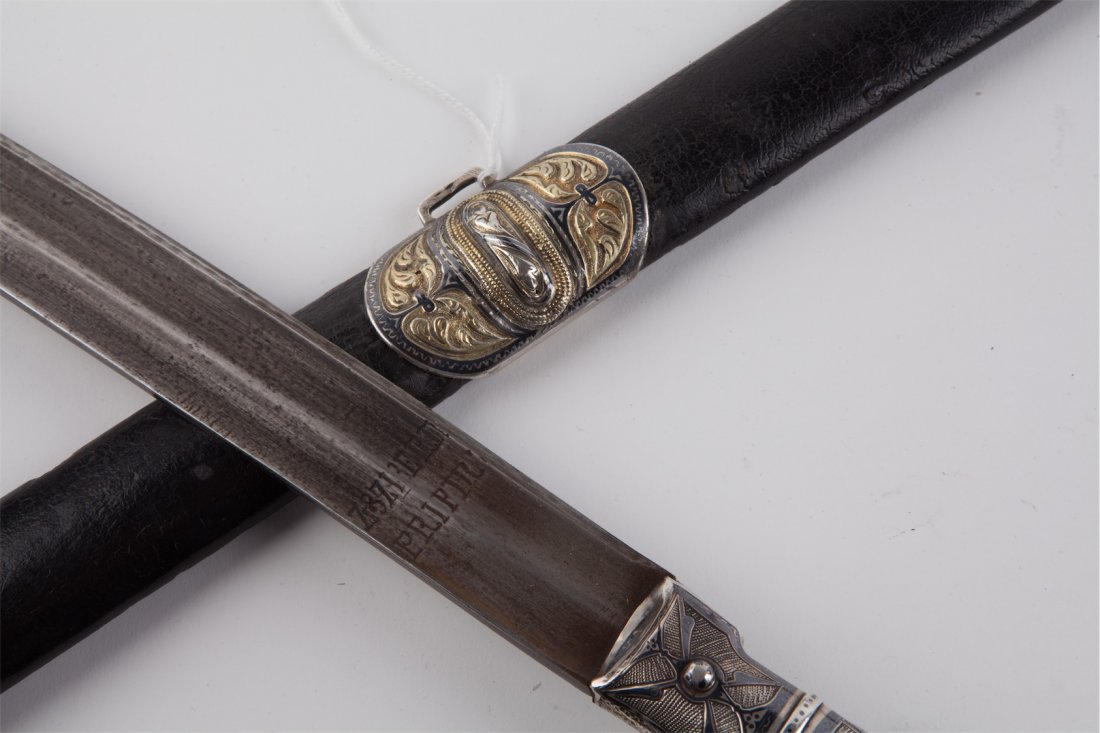
Lot 0192 — Caucasian (Circassian) Russian shashka. Second half of — Estimate: €3,500–€4,500
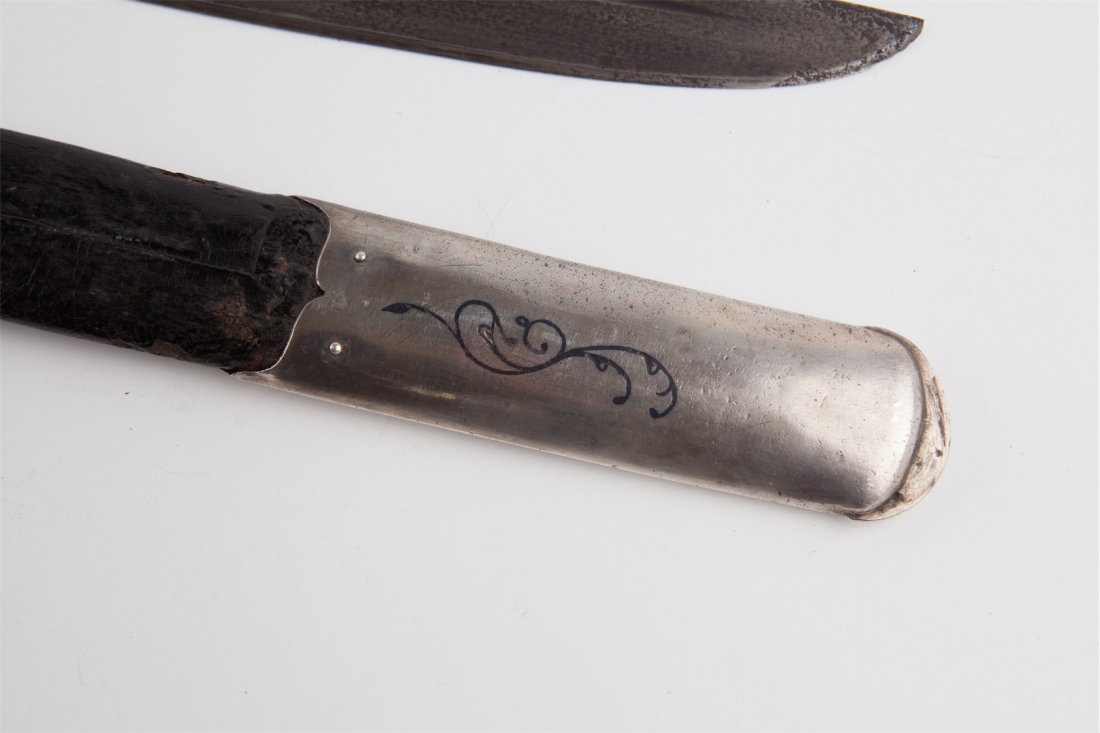
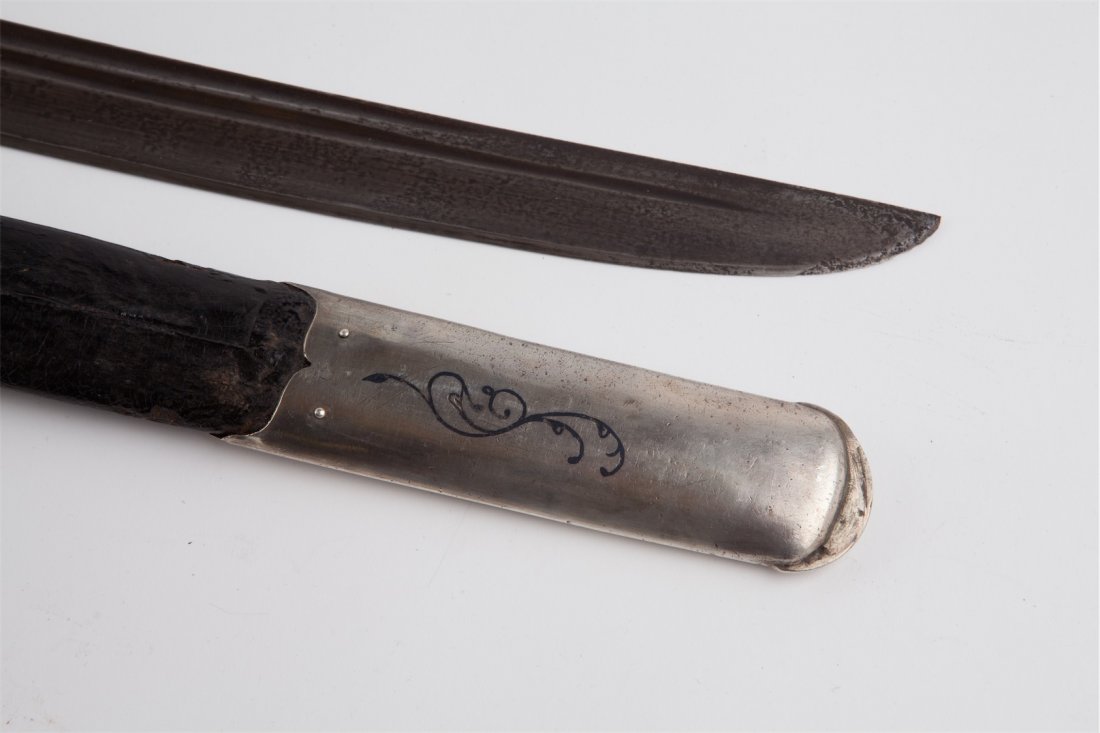
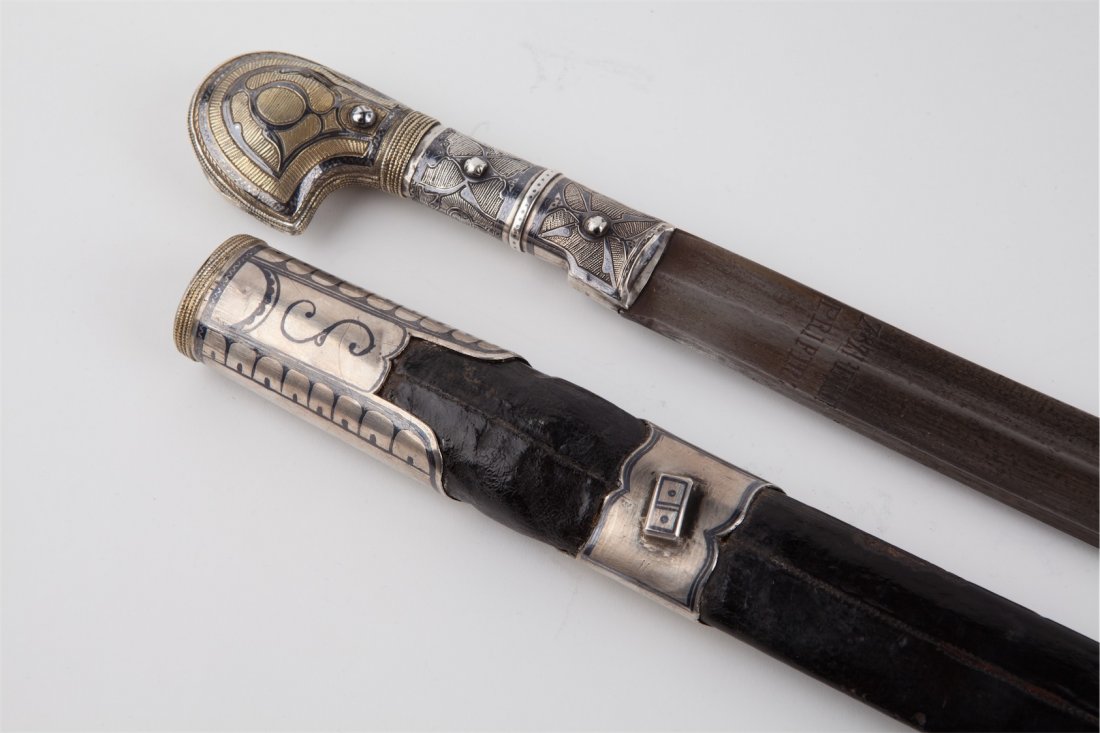
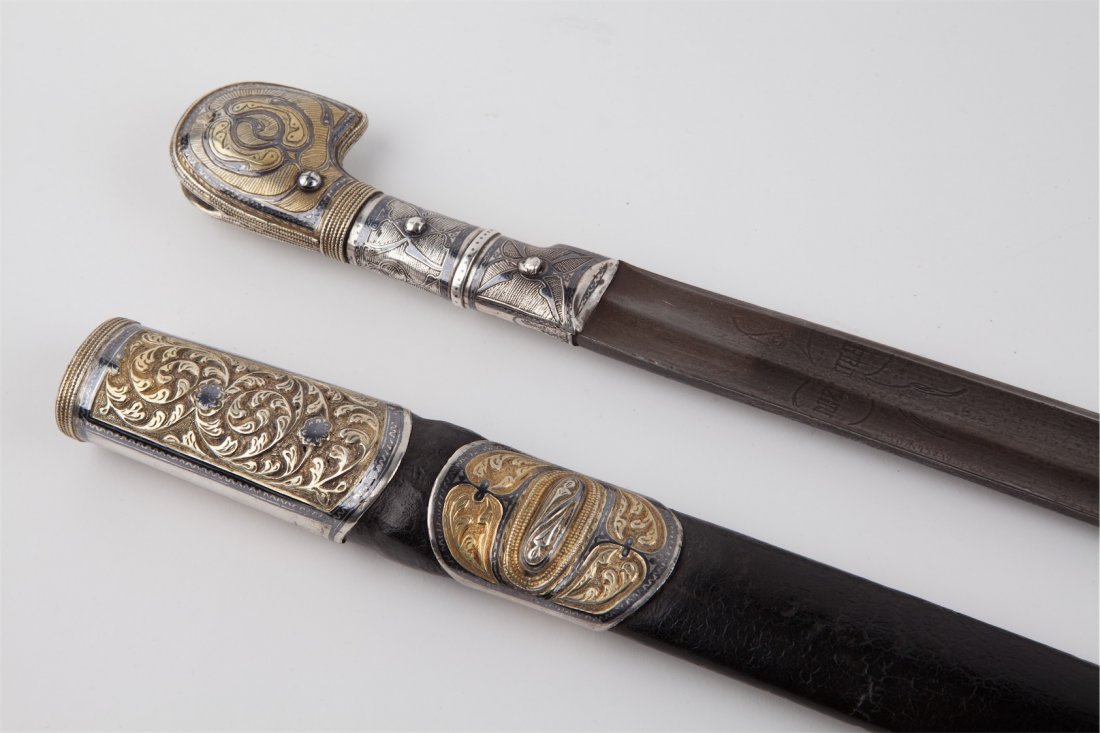
Caucasian (Circassian) Russian shashka. Second half of the 19th c. This rare interesting shashka was made by a Circassian (Cherkess) craftsman in the 19th century. The grip is decorated in typical Circassian style (gilt Silver and niello). The blade has a small script and engraving. The scabbard is mounted in gilt Silver decorated with niello and deep engraving. Very good condition. A nice example of Caucasian shashka sword hard to find on the antique arms market. Total length: 90 cm.
Starting price: €3,250
Hammer Price: UNSOLD