
Lot 0199
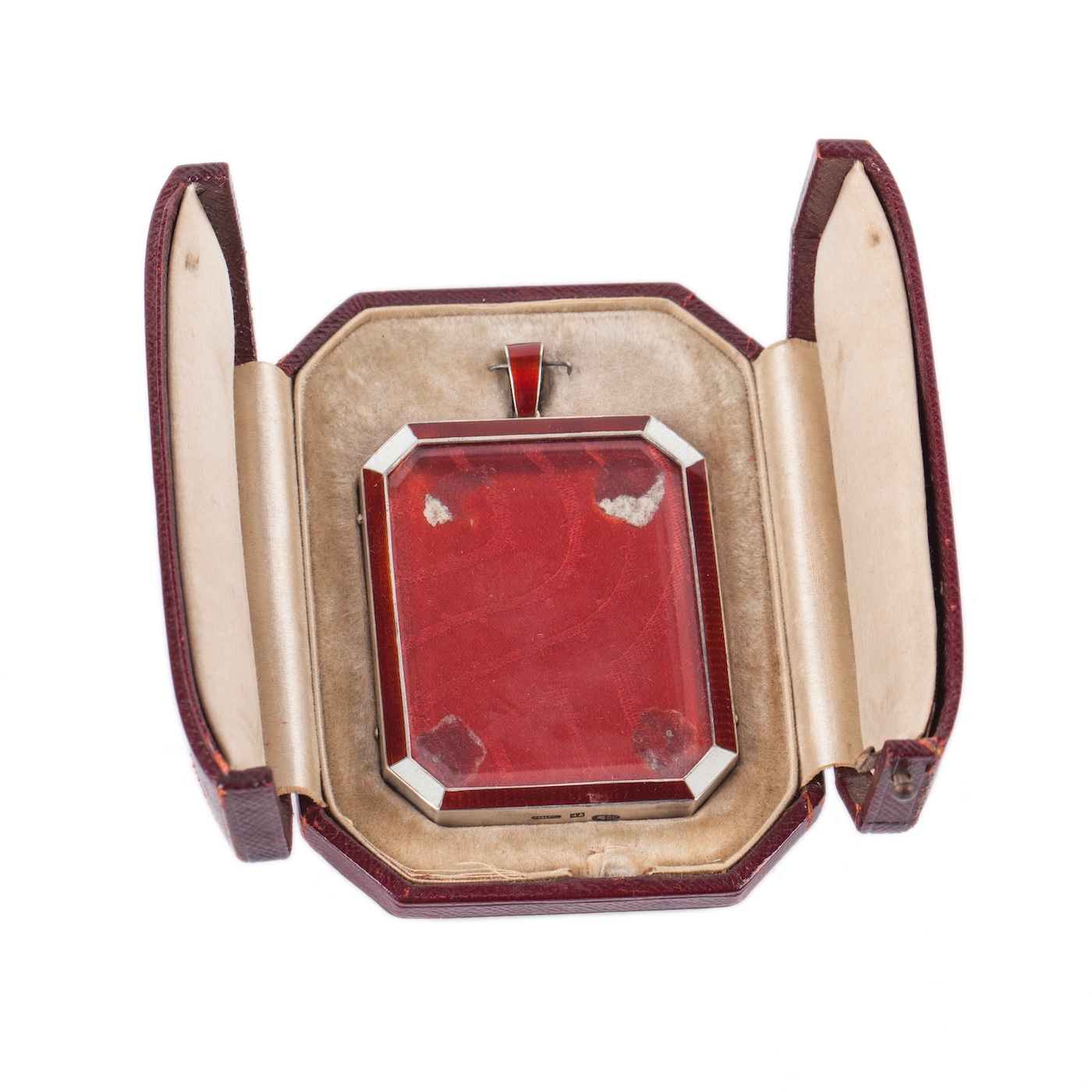
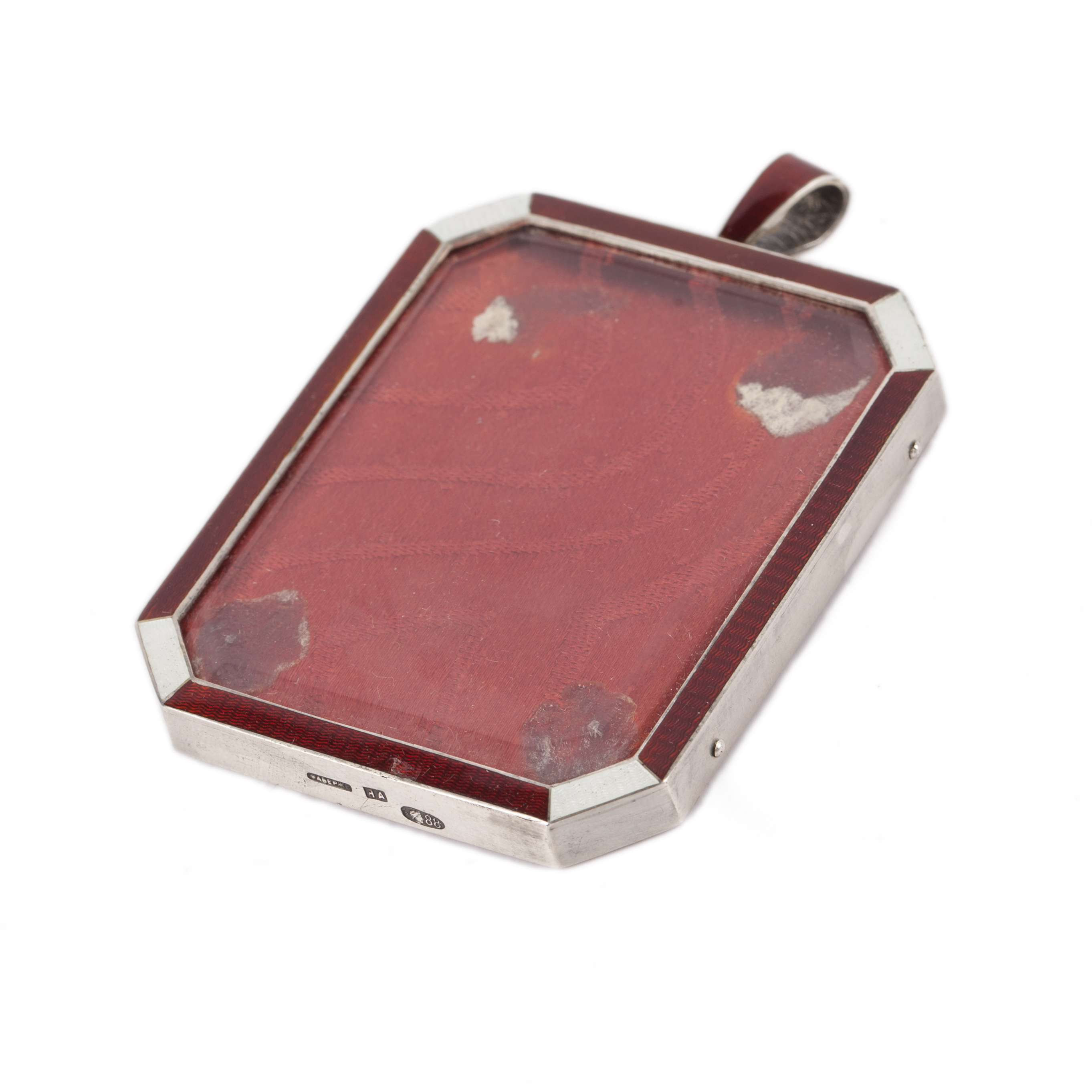
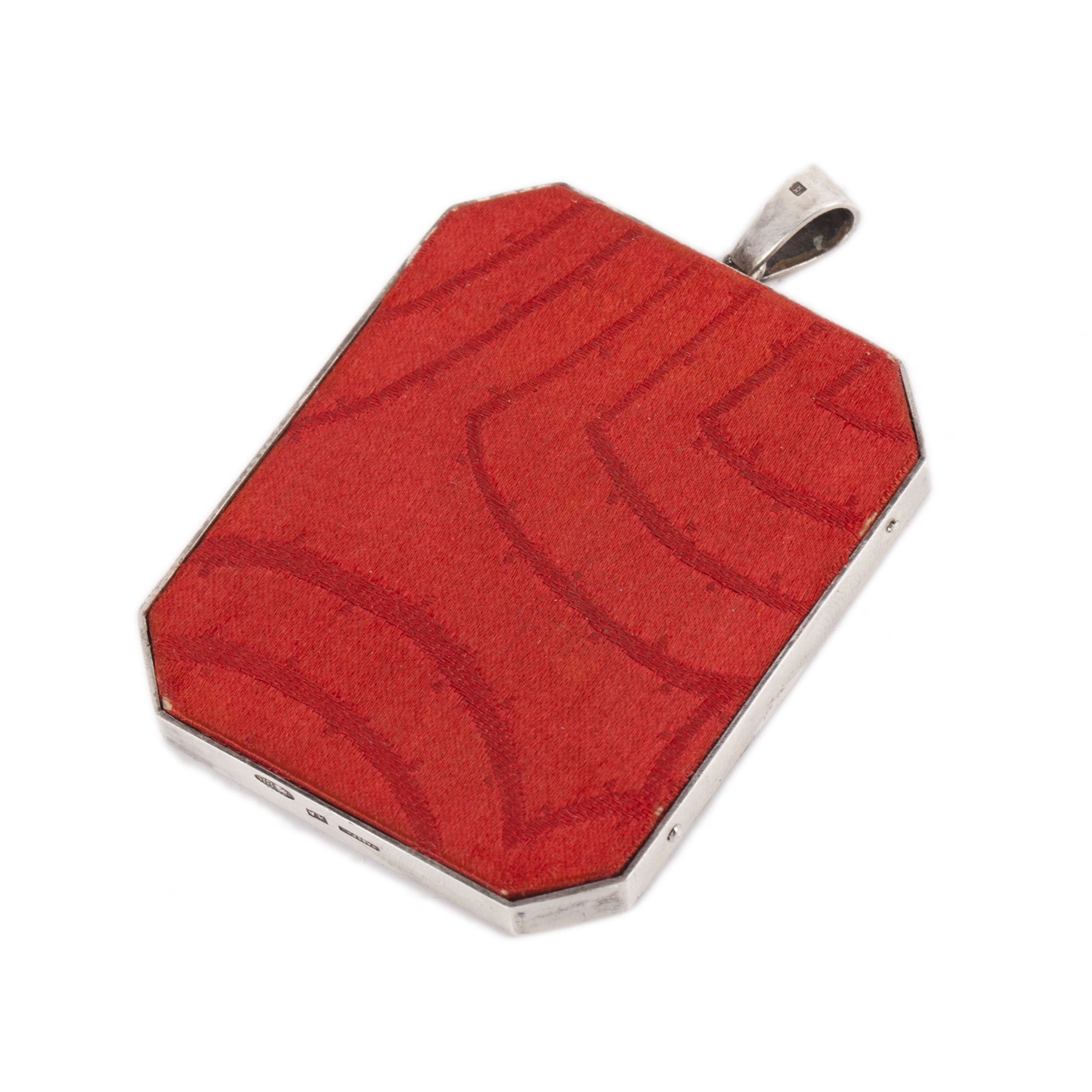
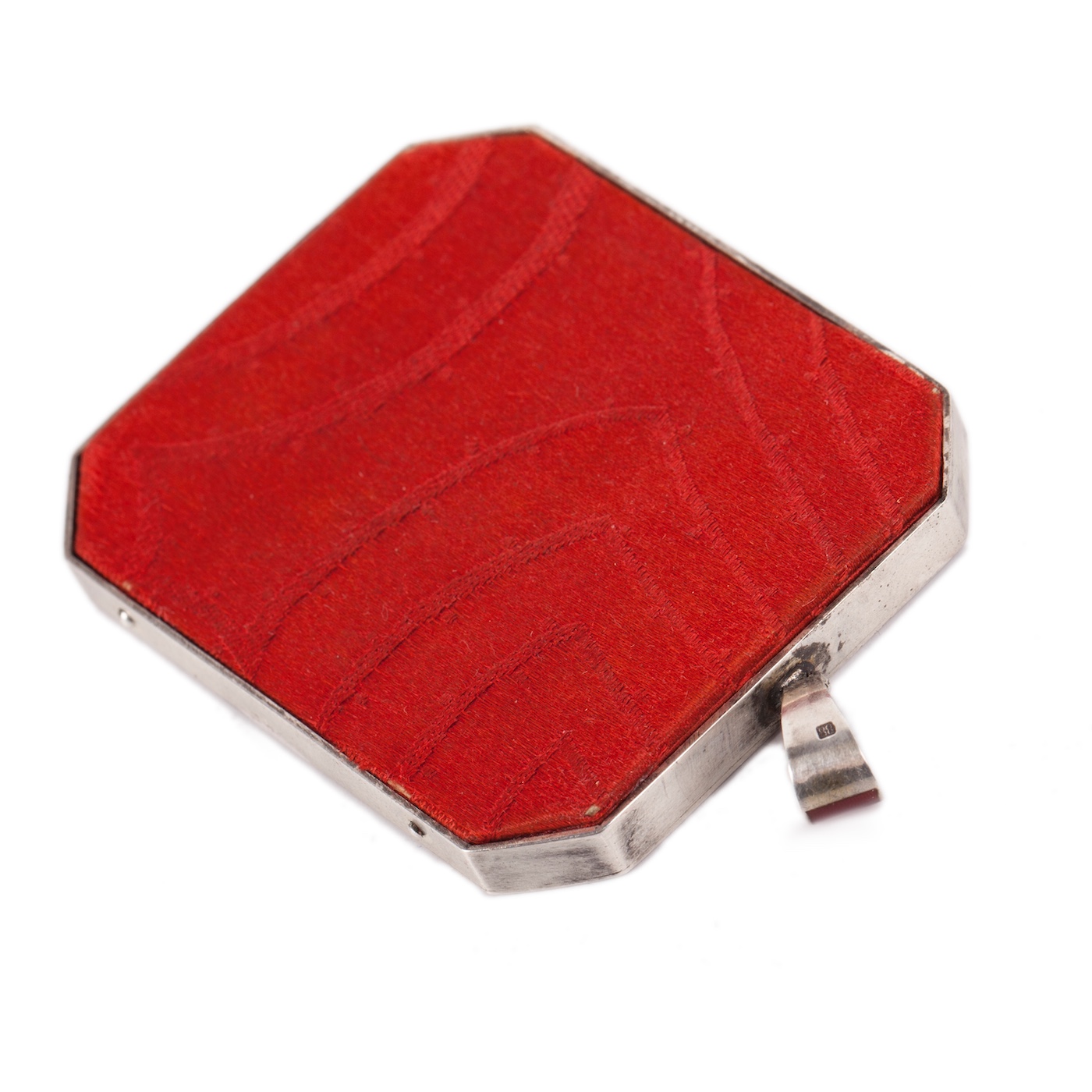
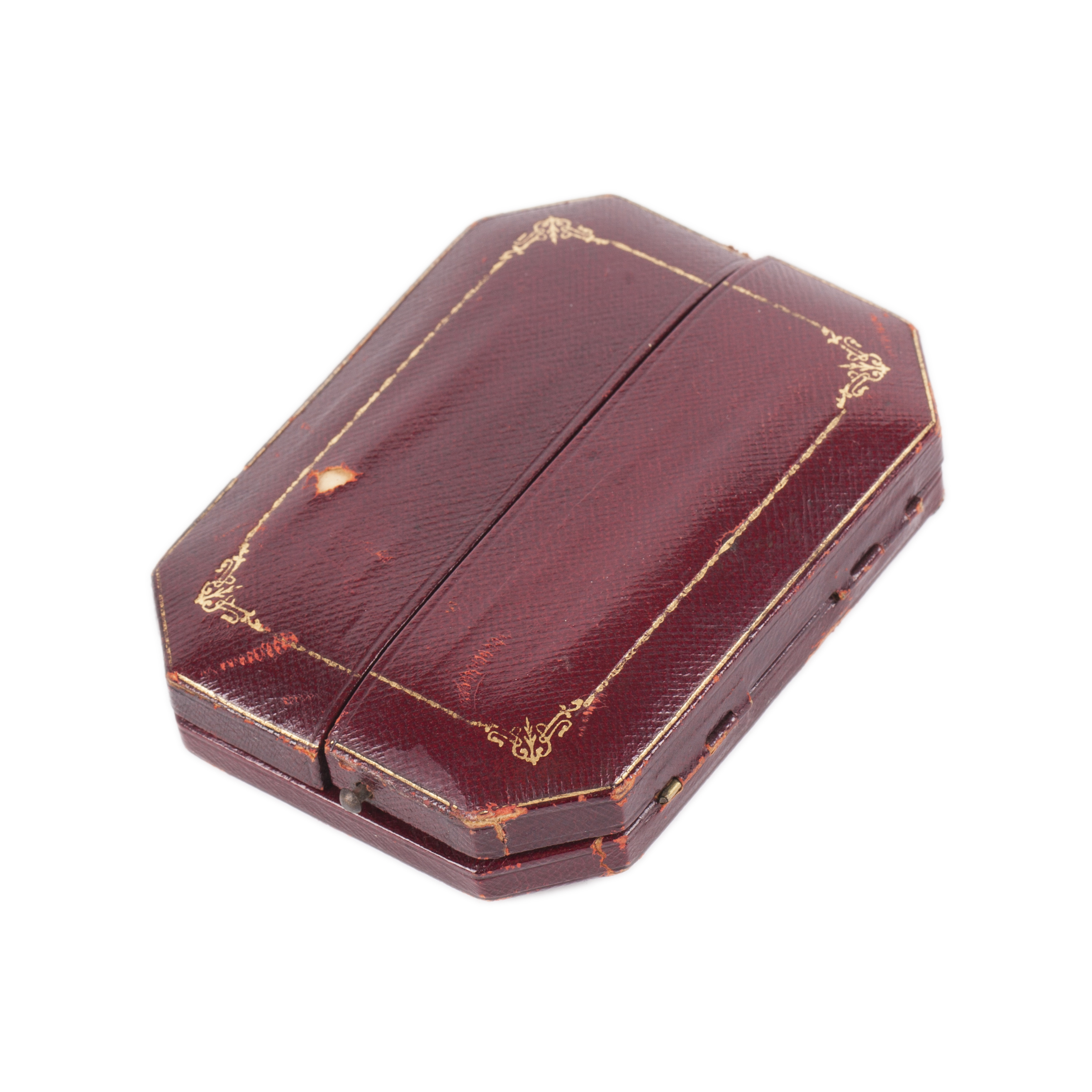
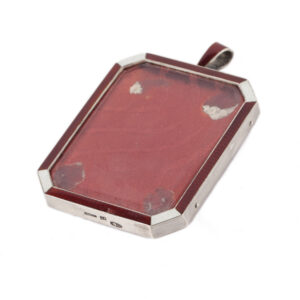
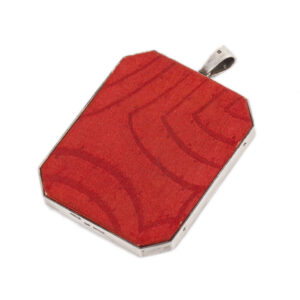
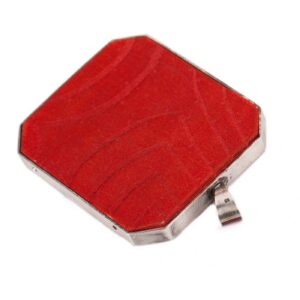
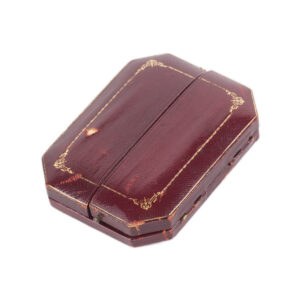
Fabergé Silver and Guilloché Enamel Photograph Frame with Original Case, Armfeldt, St Petersburg, 1908–1917
Estimate: 5000-7000€
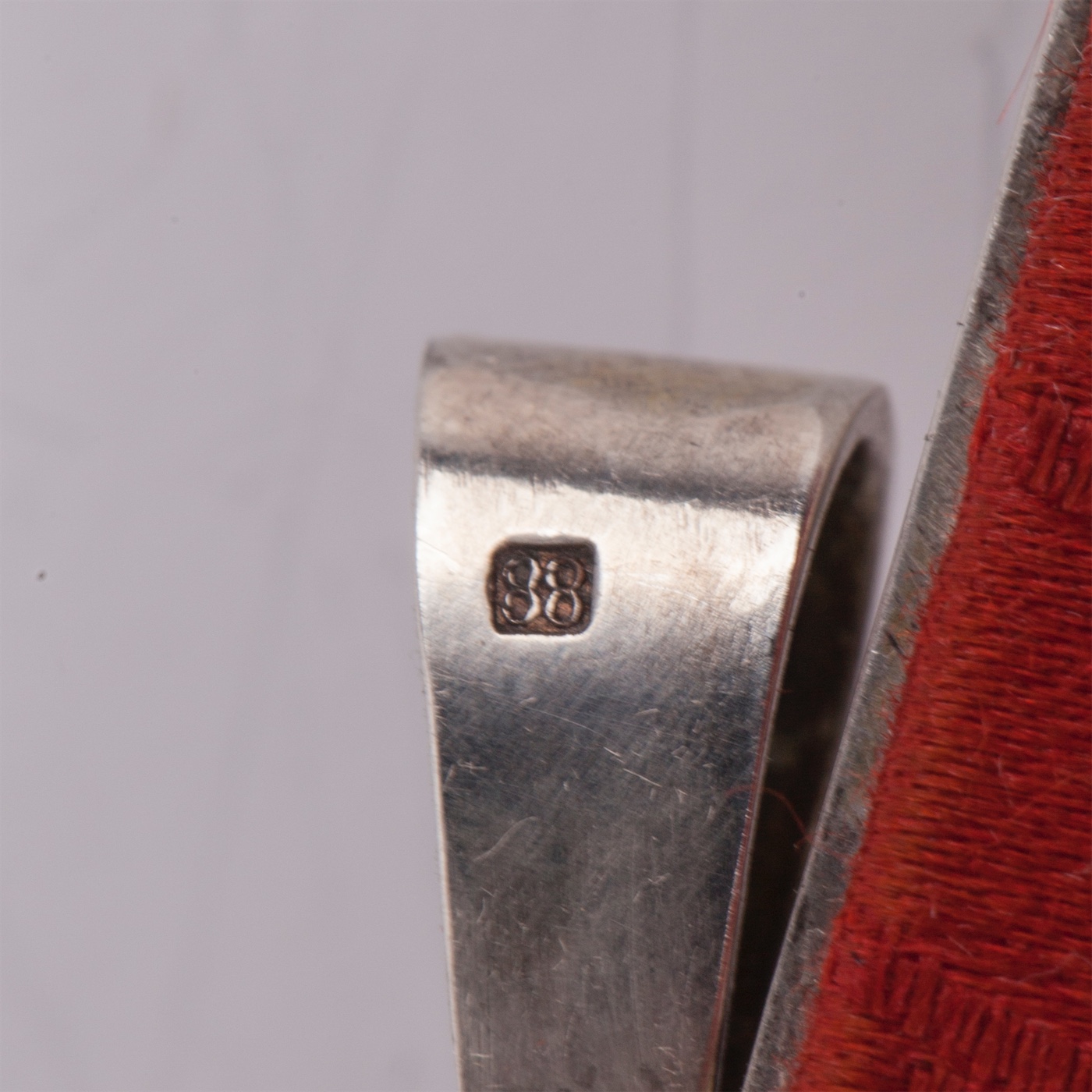
An elegant Fabergé silver and guilloché enamel photo frame in its original fitted case. Workmaster Karl Gustaf Hjalmar Armfeldt, St. Petersburg, 1908–1917.
Dimensions: 7.5 x 5 cm. Total weight: 39 g.
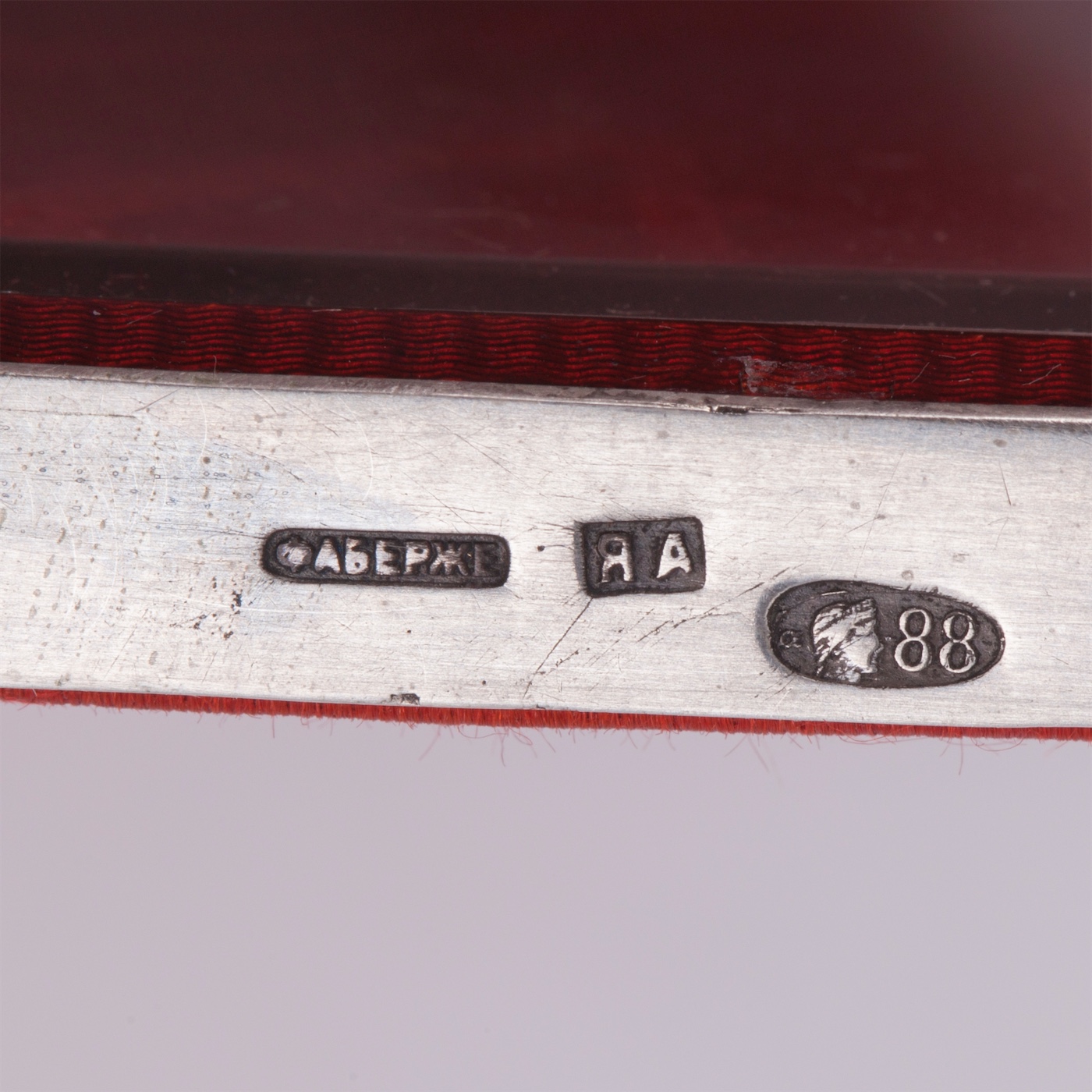
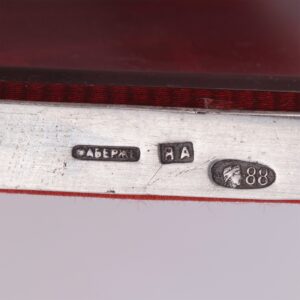
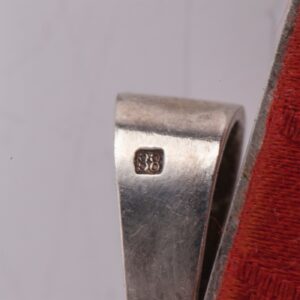
Karl Gustaf (Gustav) Hjalmar Armfeldt (1873–1959) was a Finnish silversmith and Fabergé workmaster, using the Cyrillic mark ЯА. Born in Artjärvi, Finland, he apprenticed in 1886 under the silversmith Paul Sohlman in St. Petersburg. After completing his studies, Armfeldt joined the Fabergé firm in 1895, becoming one of its prominent masters. He initially worked with Antti Nevalainen, later taking over the workshop of Johan Victor Aarne in 1904.
For Fabergé, Armfeldt created a wide range of luxury objects: gem-set miniature frames, silver-mounted birchwood frames, hardstone pieces, enameled gold articles, and silver figures on hardstone bases. He remained active with the firm until 1916. After returning to Finland in 1920, he continued his career with several leading companies, including Oy Taito Ab and Kultakeskus Oy, and remained active in the trade until the 1940s.
Starting price: 4000€
Estimate: 5000-7000€
Hammer Price: Not sold
Related Lots
-
Lot 0198
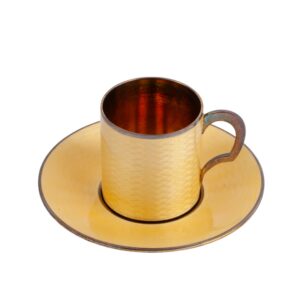
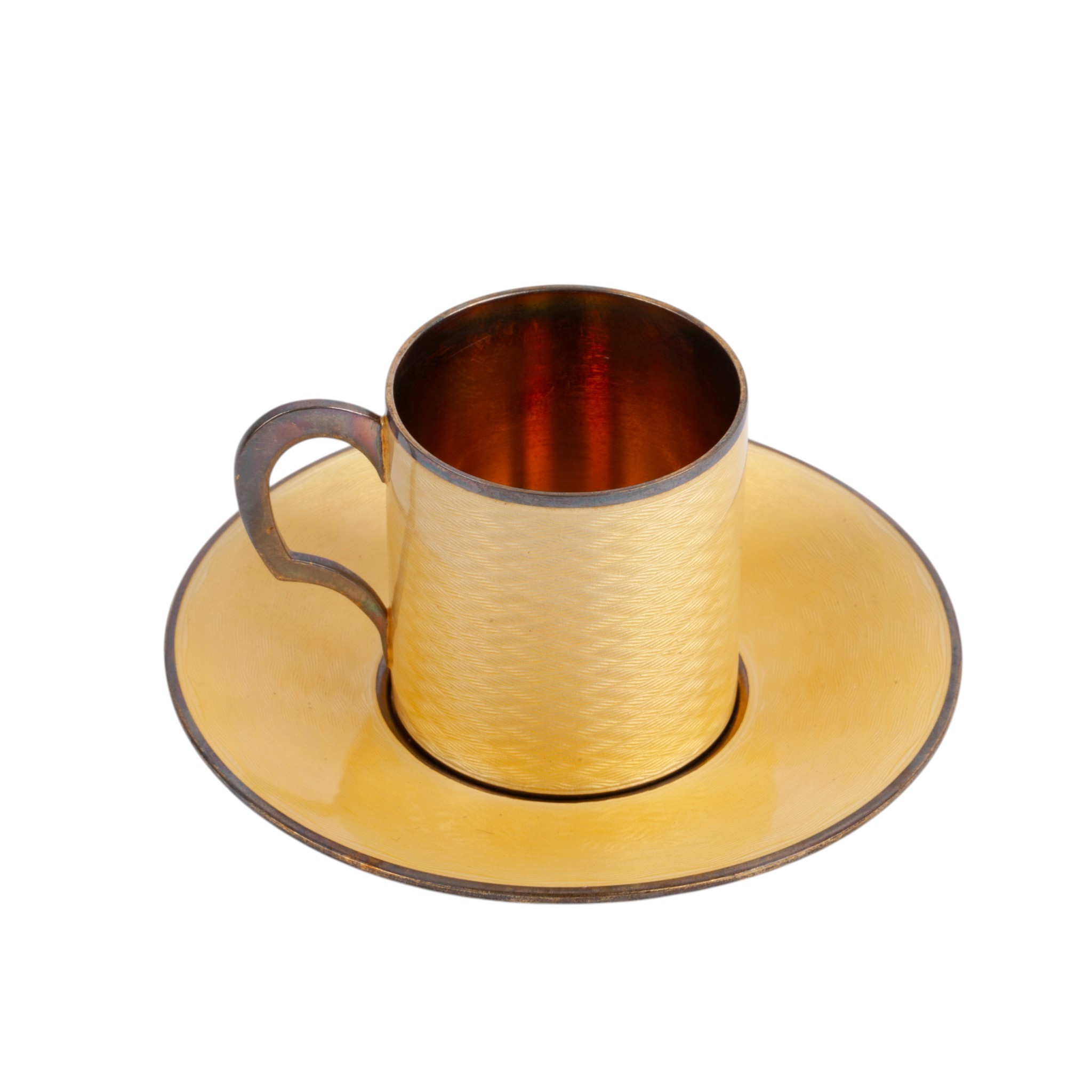
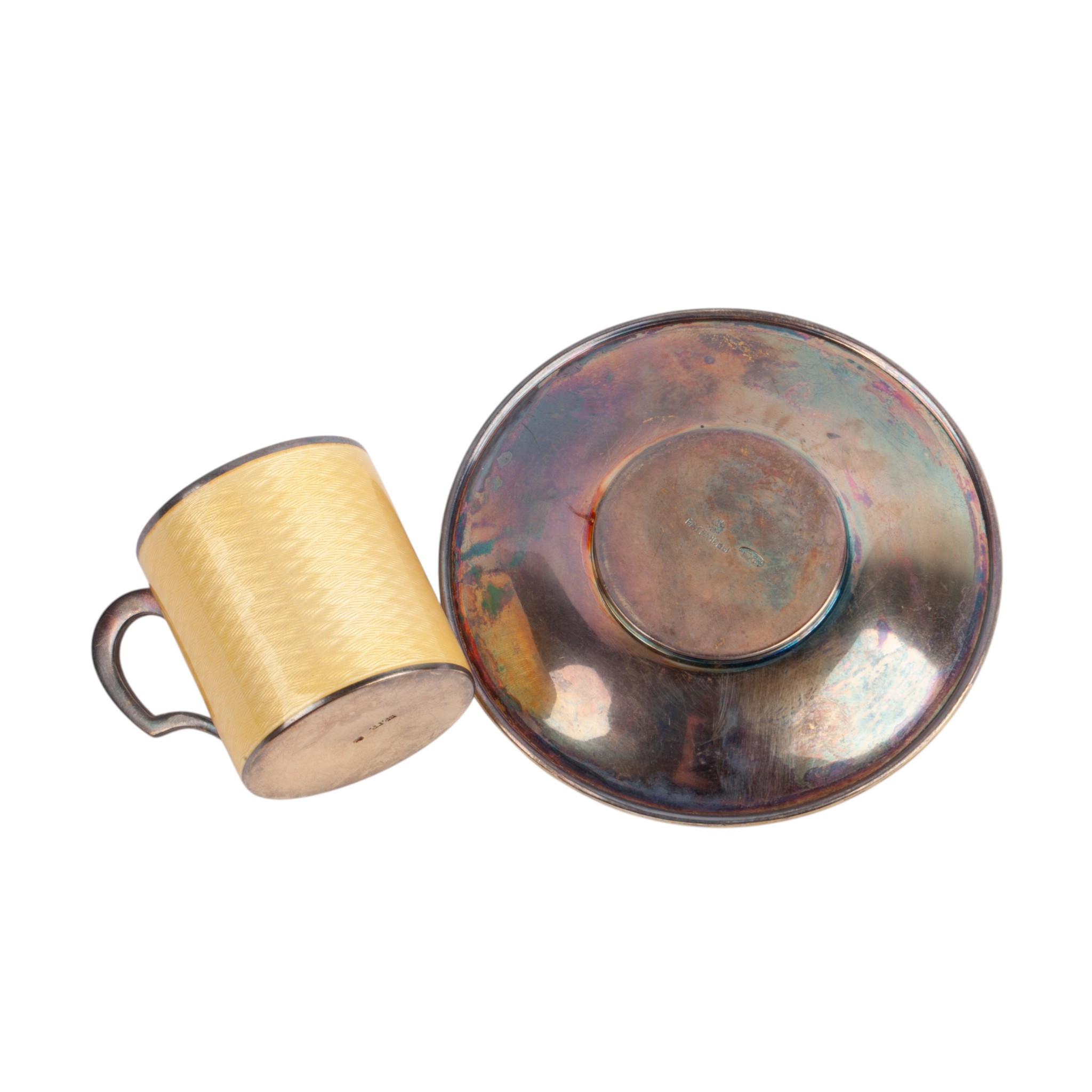
Russian Silver-Gilt Vodka Cup with Saucer and Guilloché Enamel, Grachev Brothers, St Petersburg, 1908–1917
Estimate: 1500-1700€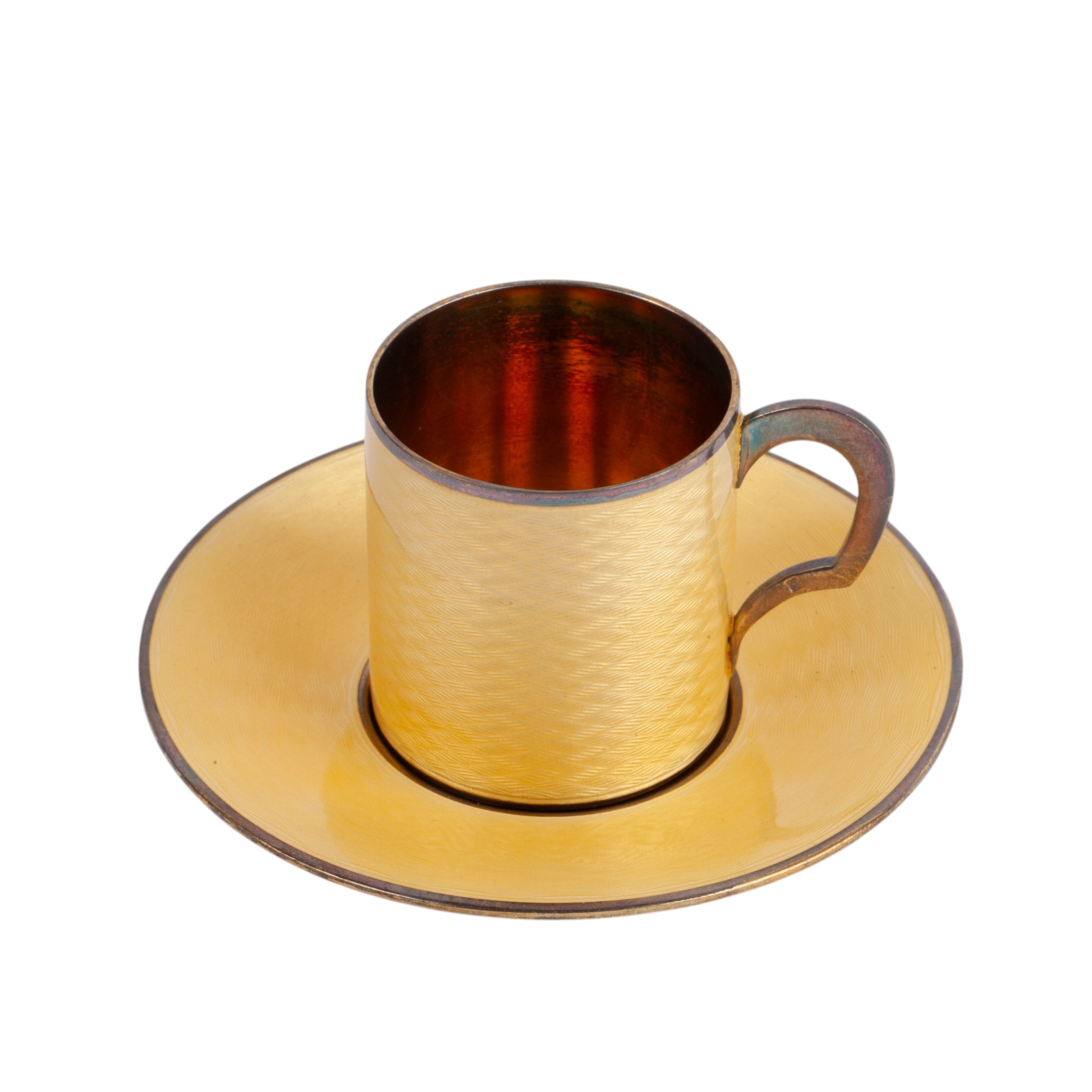
Lot 0198
Russian Silver-Gilt Vodka Cup with Saucer and Guilloché Enamel, Grachev Brothers, St Petersburg, 1908–1917
Estimate: 1500-1700€A Russian silver-gilt vodka cup on stand with guilloché enamel St Petersburg, Grachev Brothers manufactory, 1908-1917.
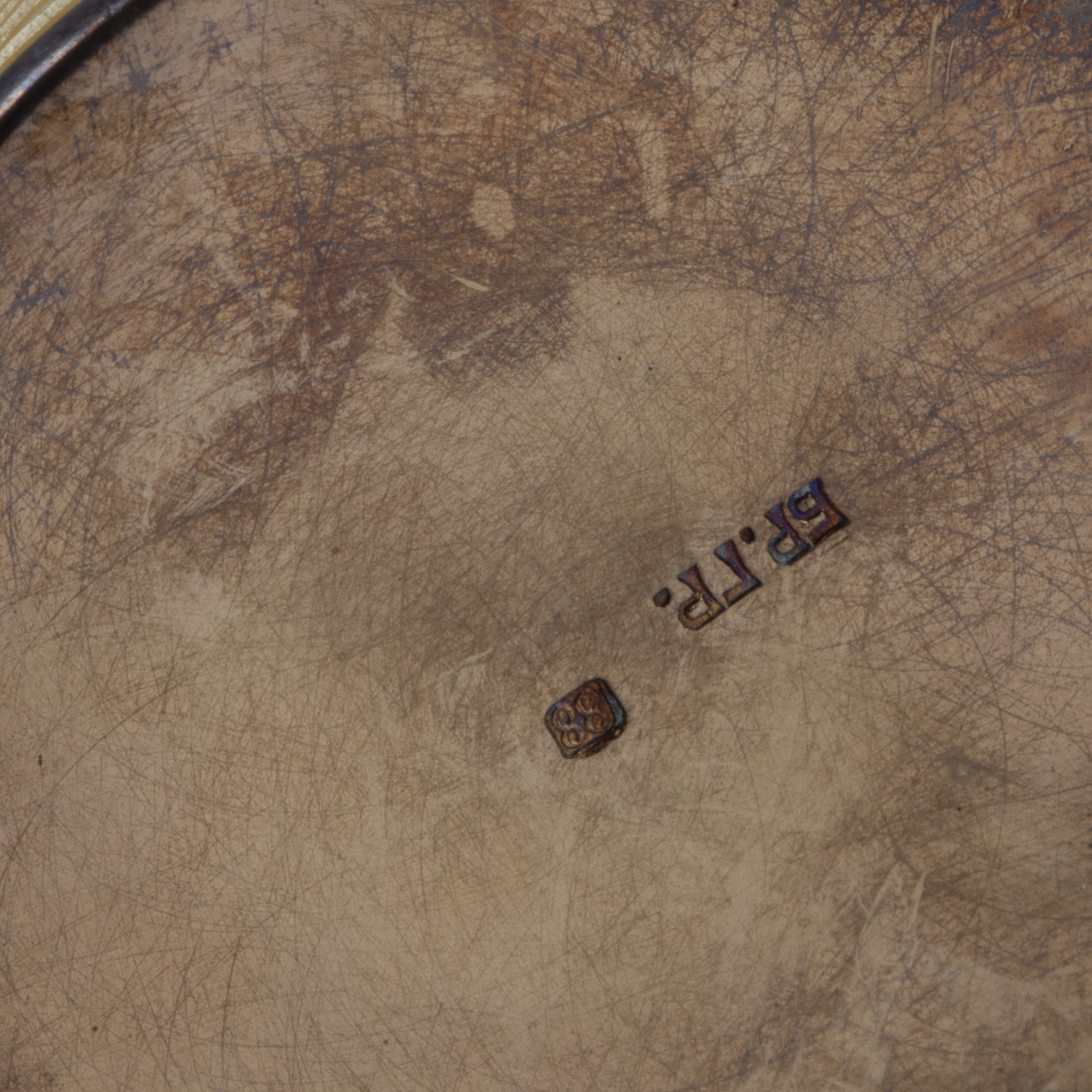
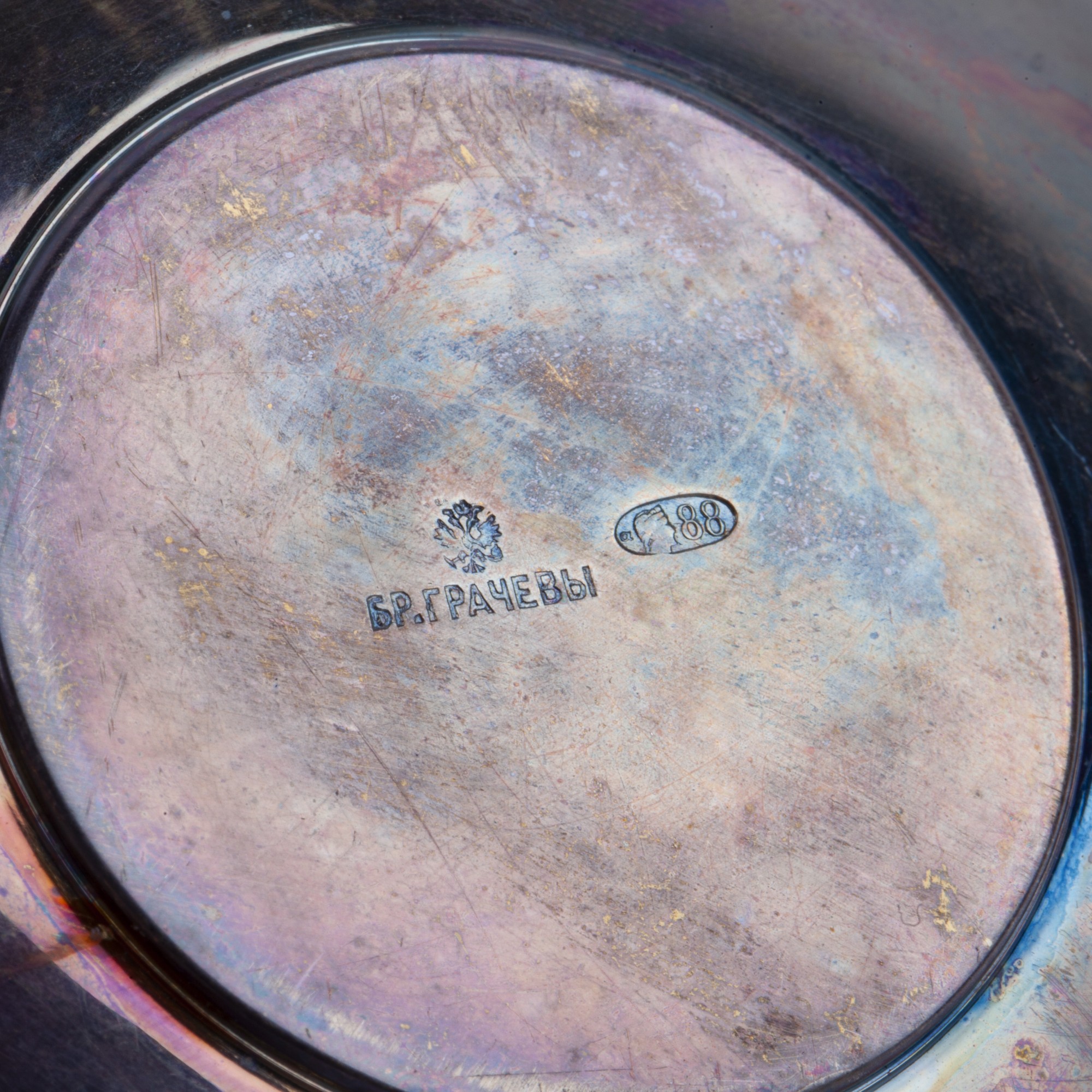
Silver, gilding, guilloché enamel. Marked: firm’s mark Br. Gr& 88 standard; assay mark of St.Petersburg. Weight: 64,1 g. Dimensions of the cup: 3,6 x 5,1 x 3,5 cm. Diameter of the saucer plate: 8 cm.A refined Russian silver-gilt vodka cup with matching plate in the form of tea pair. Both enriched with translucent guilloché enamel over an engine-turned ground. The cup is of slightly tapering cylindrical form with a plain loop handle, while the plate circular echoes its restrained geometry and understated elegance. The luminous lemon-yellow enamel, laid over a finely waved guilloché surface, creates a soft moiré effect that animates the object with subtle movement and depth.
The ensemble was produced by the celebrated St Petersburg firm of the Brothers Grachev, among the leading Russian silver manufacturers of the late Imperial era. Founded in 1866 by Gavriil Petrovich Grachev, the enterprise was subsequently managed by his sons Mikhail, Simon, and Grigory. In 1892 the firm received the distinction of Supplier to the Imperial Court, a title renewed in 1901. Although particularly admired for works in the Russian Revival style, the Grachev workshop also created table silver of refined historicist and early modern character, distinguished by exceptional technical precision and a sophisticated command of enamelling.
This cup and stand belong to the sphere of intimate luxury tableware produced for an affluent urban clientele in the final years of Imperial Russia. Their restrained silhouette, monochrome brilliance, and finely controlled enamel surface exemplify the discreet elegance of St Petersburg silver at the beginning of the 20th century.Starting price: 1200€
Estimate: 1500-1700€
Hammer Price: Not sold -
Lot 0200
Imperial Russian Round Box with Portrait Miniature, Carl Johann Bock, St Petersburg, late 19th–early 20th century
Estimate: 4500-6000€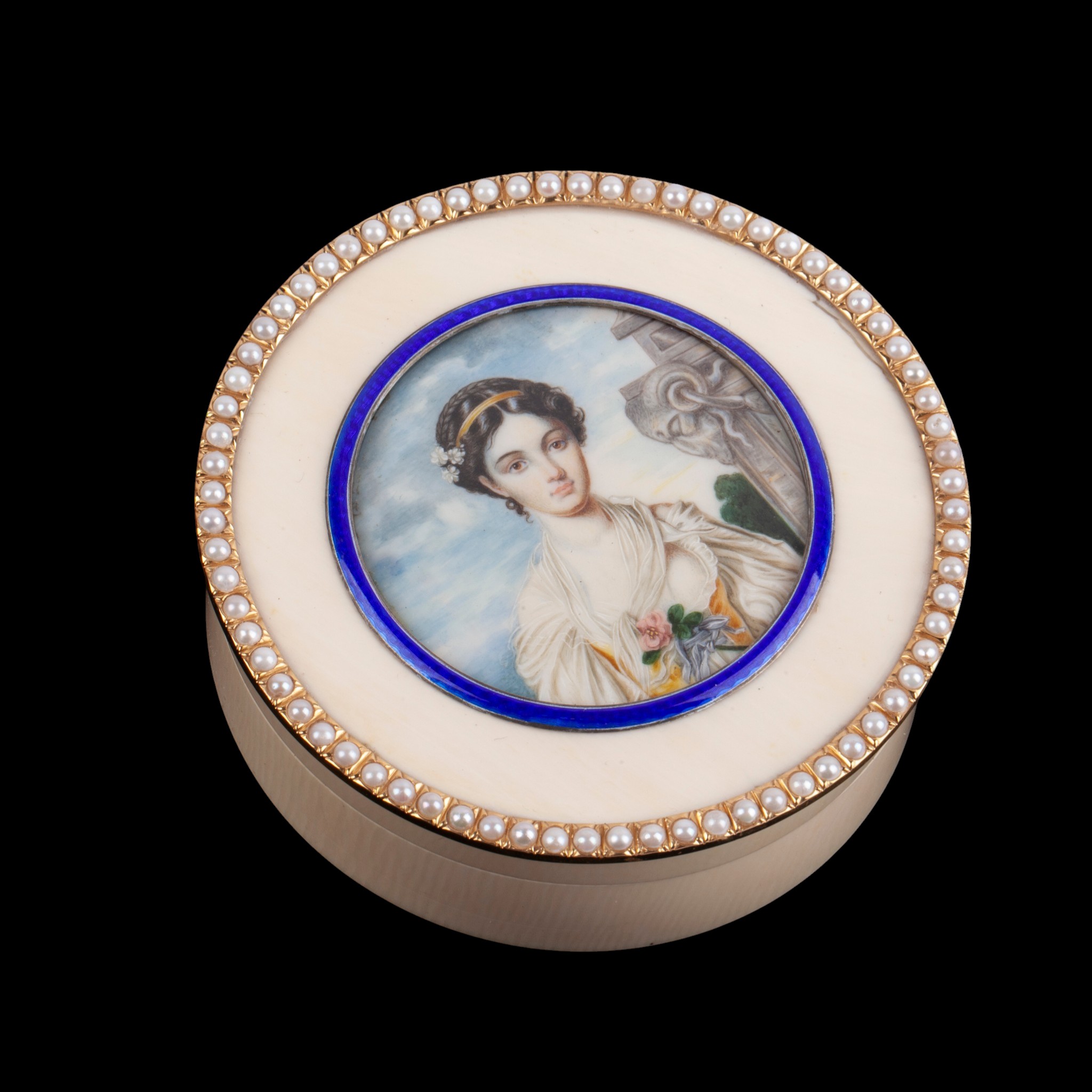
Lot 0200
Imperial Russian Round Box with Portrait Miniature, Carl Johann Bock, St Petersburg, late 19th–early 20th century
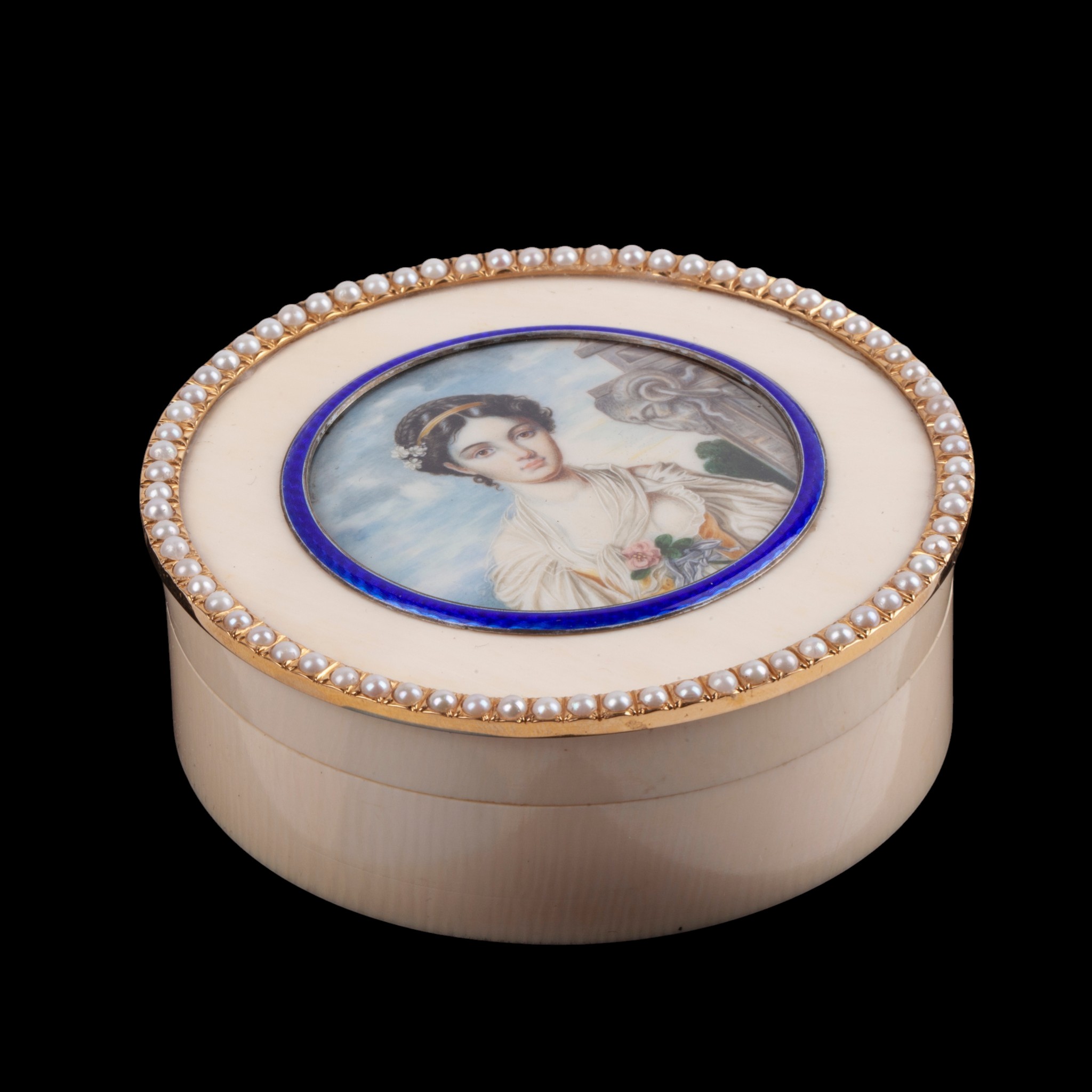
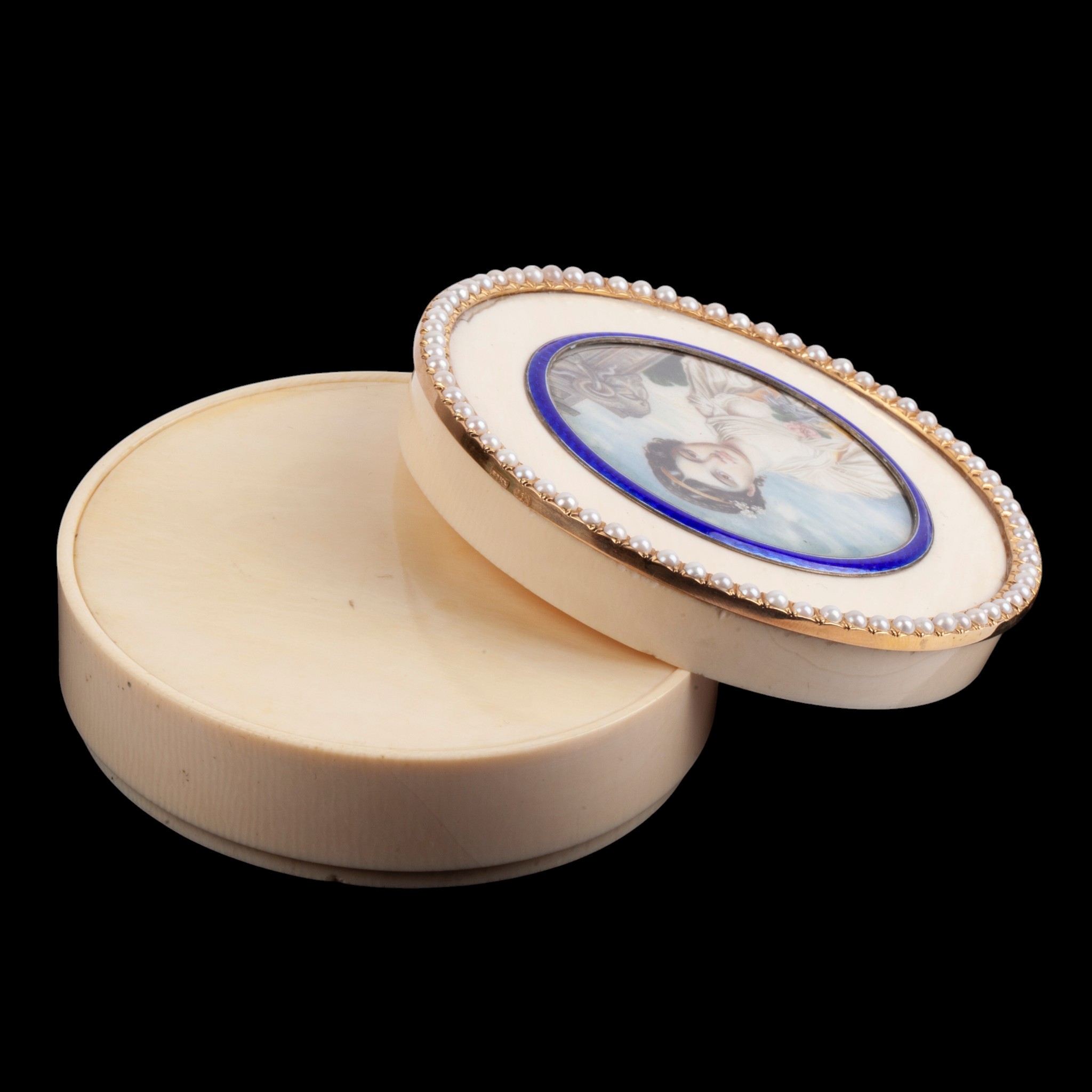
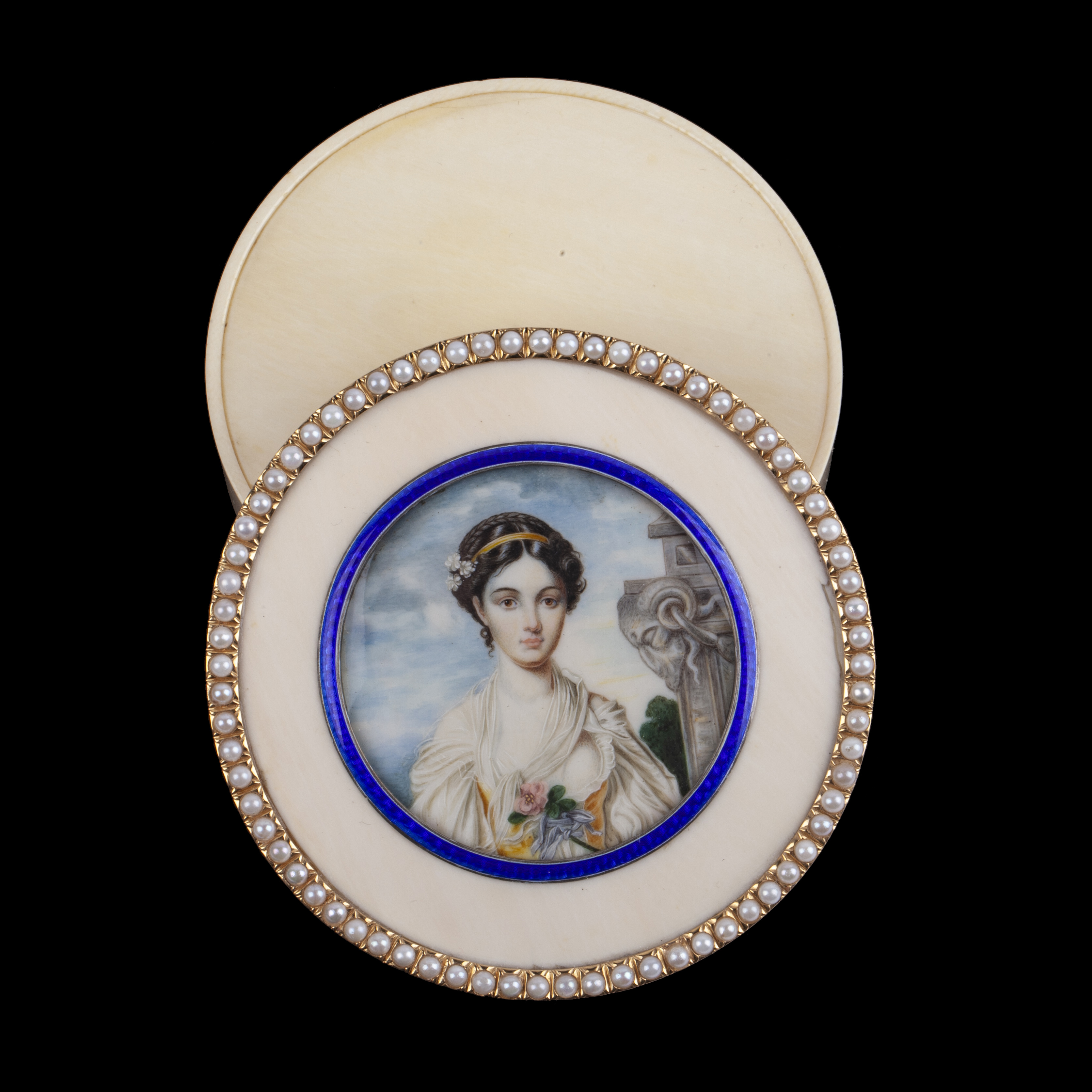
Estimate: 4500-6000€IMPERIAL RUSSIAN ROUND BOX WITH A PORTRAIT OF A YOUNG NOBLEWOMAN St Petersburg, workshop of Carl Johann Bock, late 19th to early 20th century.
White material, gold, pearls, guilloché enamel, painted miniature.
Weight: 120 g. Dimensions: 3,2 x 9 x 9 cm.
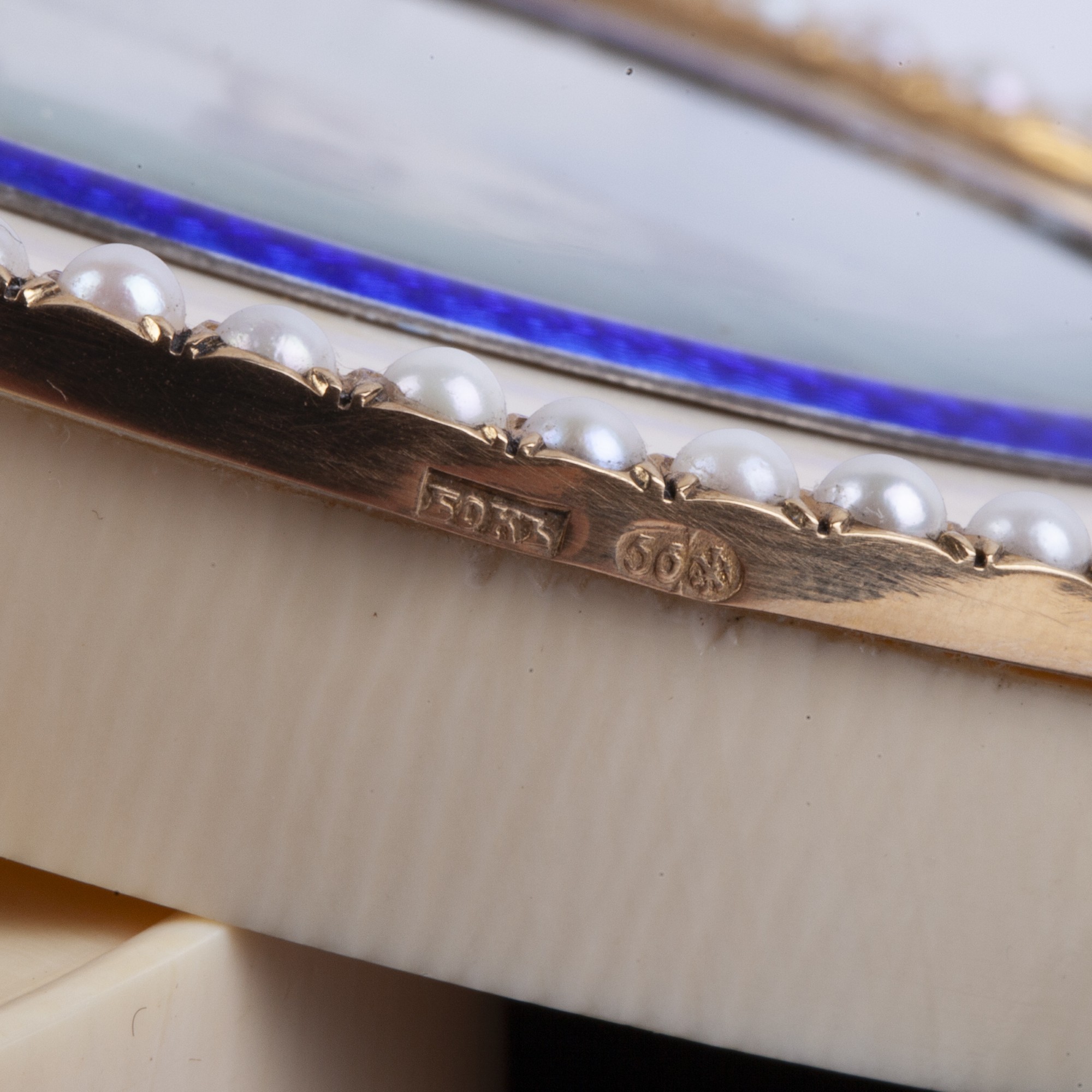
Marks: firm stamp “K.Bock”, assay mark of St. Petersburg, 56 gold standart.
A refined circular box of white material, the lid centered with an oval portrait miniature of a young aristocratic lady shown half-length against a pale sky and beside a classical masacorone. The miniature is enclosed within a vivid cobalt-blue guilloché enamel border, itself framed by a delicate outer surround of closely set seed pearls in gold.
The box was made by the workshop of Carl Johann Bock (1851-after 1917), one of the notable St Petersburg jewellers of the late Imperial period. He inherited both the commercial establishment and workshop traditions linked to earlier masters serving elite clients and, from 1887 to 1917, conducted business at 9 Bolshaya Morskaya Street. Bock’s workshop achieved distinction at major exhibitions, including Nizhny Novgorod and Paris, and in 1901 he was granted the title of Supplier to the Imperial Court. His firm was known for technically accomplished goldsmiths’ work and objects combining courtly refinement with impeccable craftsmanship.
This box is a characteristic example of that milieu: intimate in scale, aristocratic in taste, and executed with the meticulous precision expected of a leading Petersburg jewellerStarting price: 3500€
Estimate: 4500-6000€
Hammer Price: Not sold -
Lot 0197
Russian Silver-Gilt Vodka Cup with Saucer and Guilloché Enamel, Grachev Brothers, St Petersburg, 1908–1917
Estimate: 1500-1700€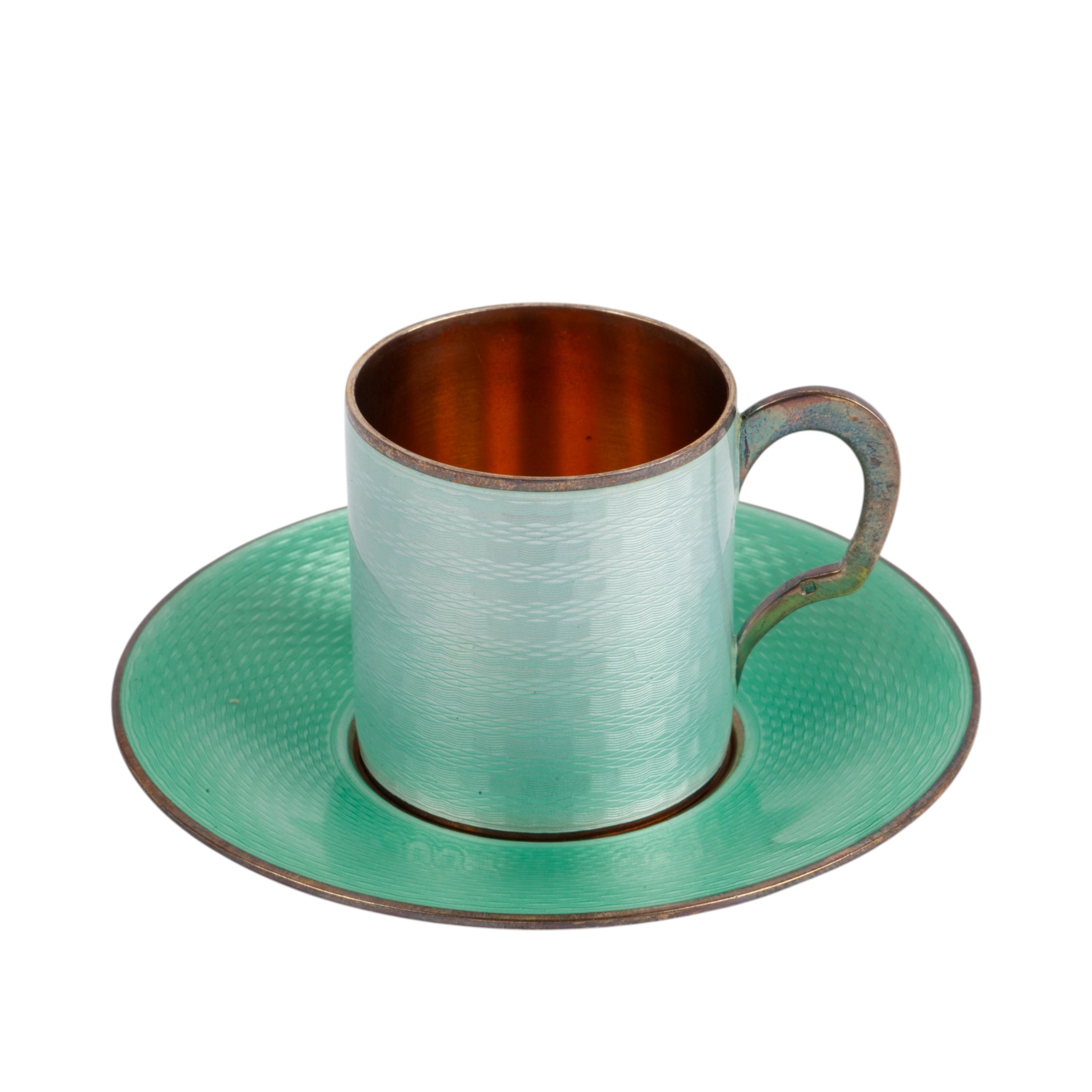
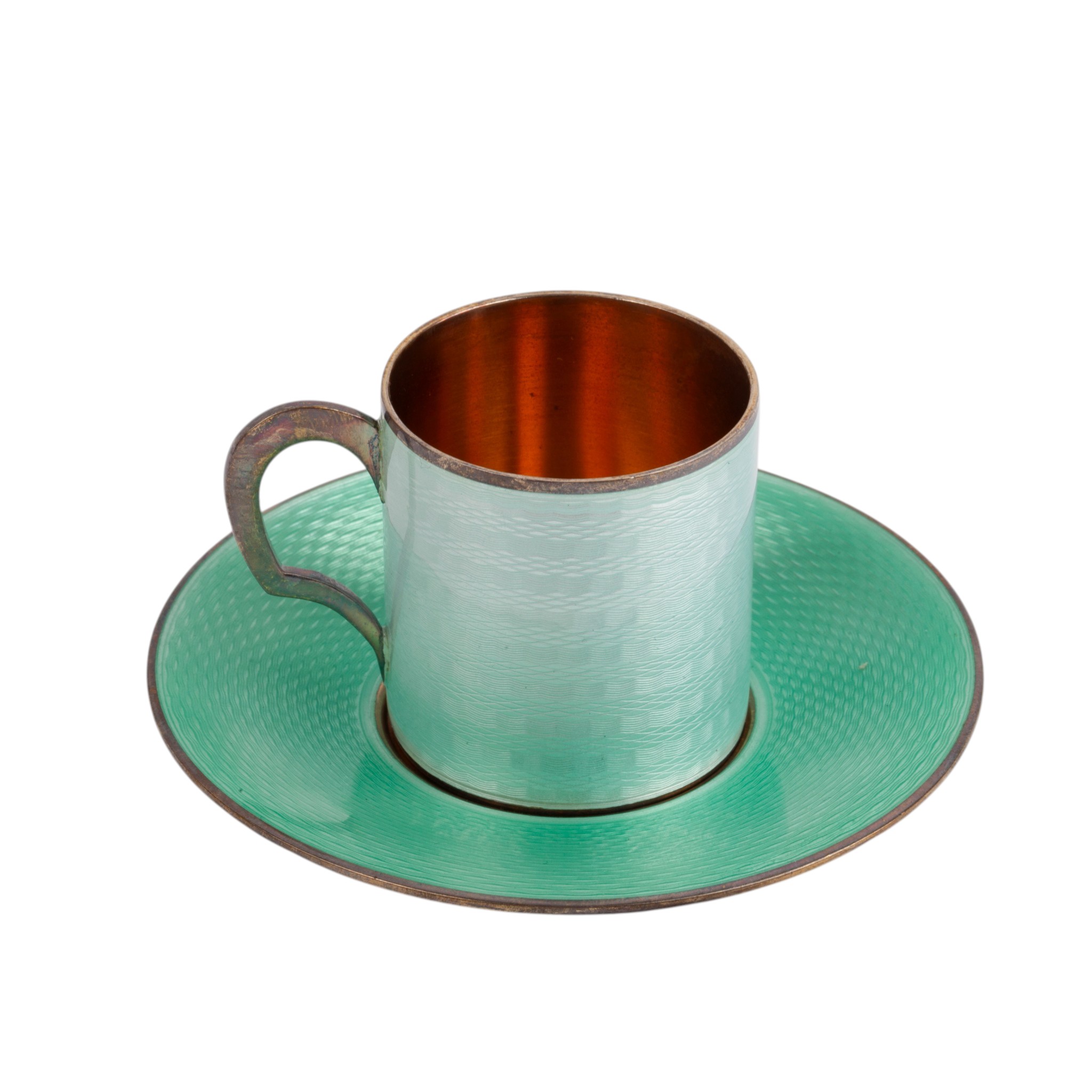
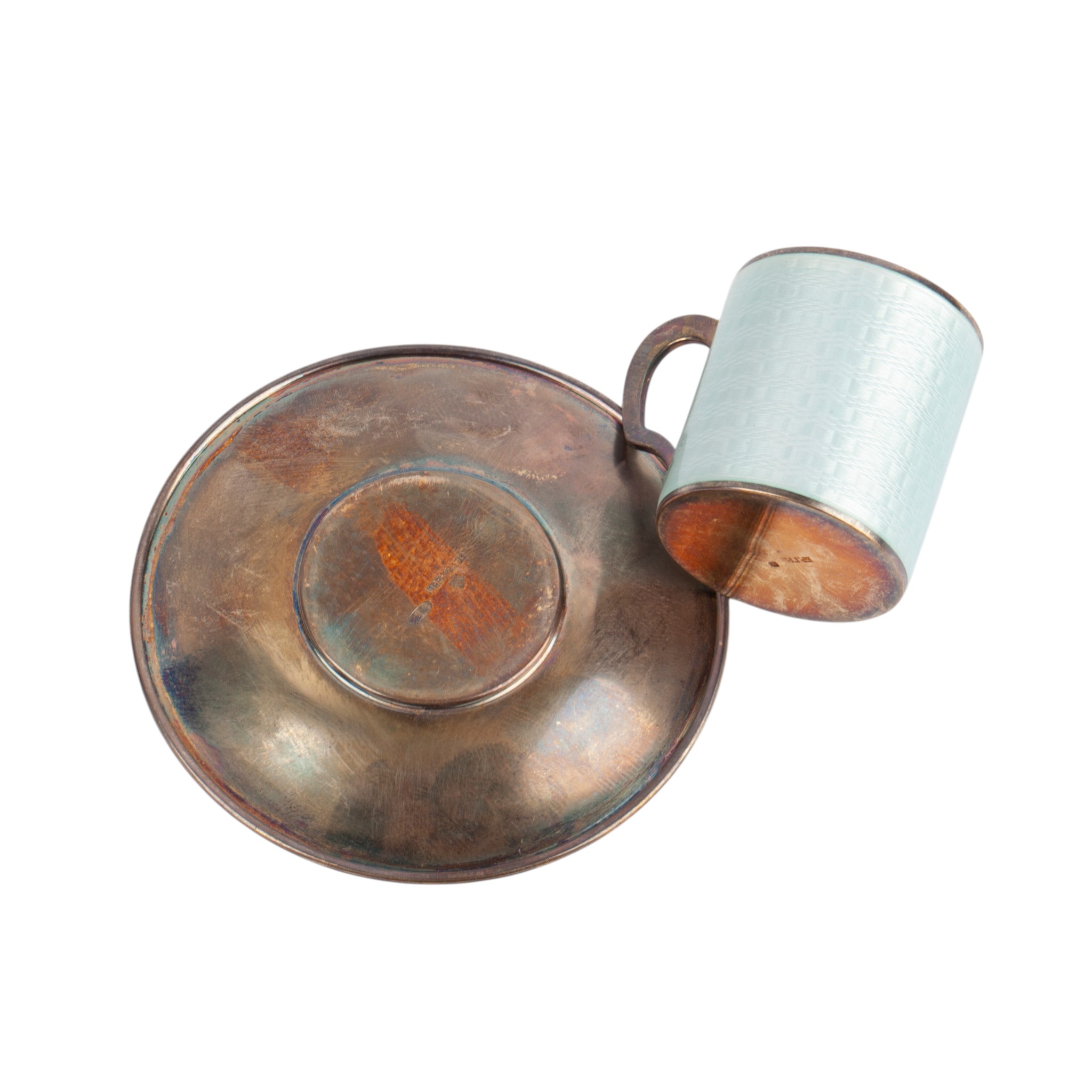
Lot 0197
Russian Silver-Gilt Vodka Cup with Saucer and Guilloché Enamel, Grachev Brothers, St Petersburg, 1908–1917
Estimate: 1500-1700€A Russian silver-gilt vodka cup on stand with guilloché enamel St Petersburg, Grachev Brothers manufactory, 1908-1917.
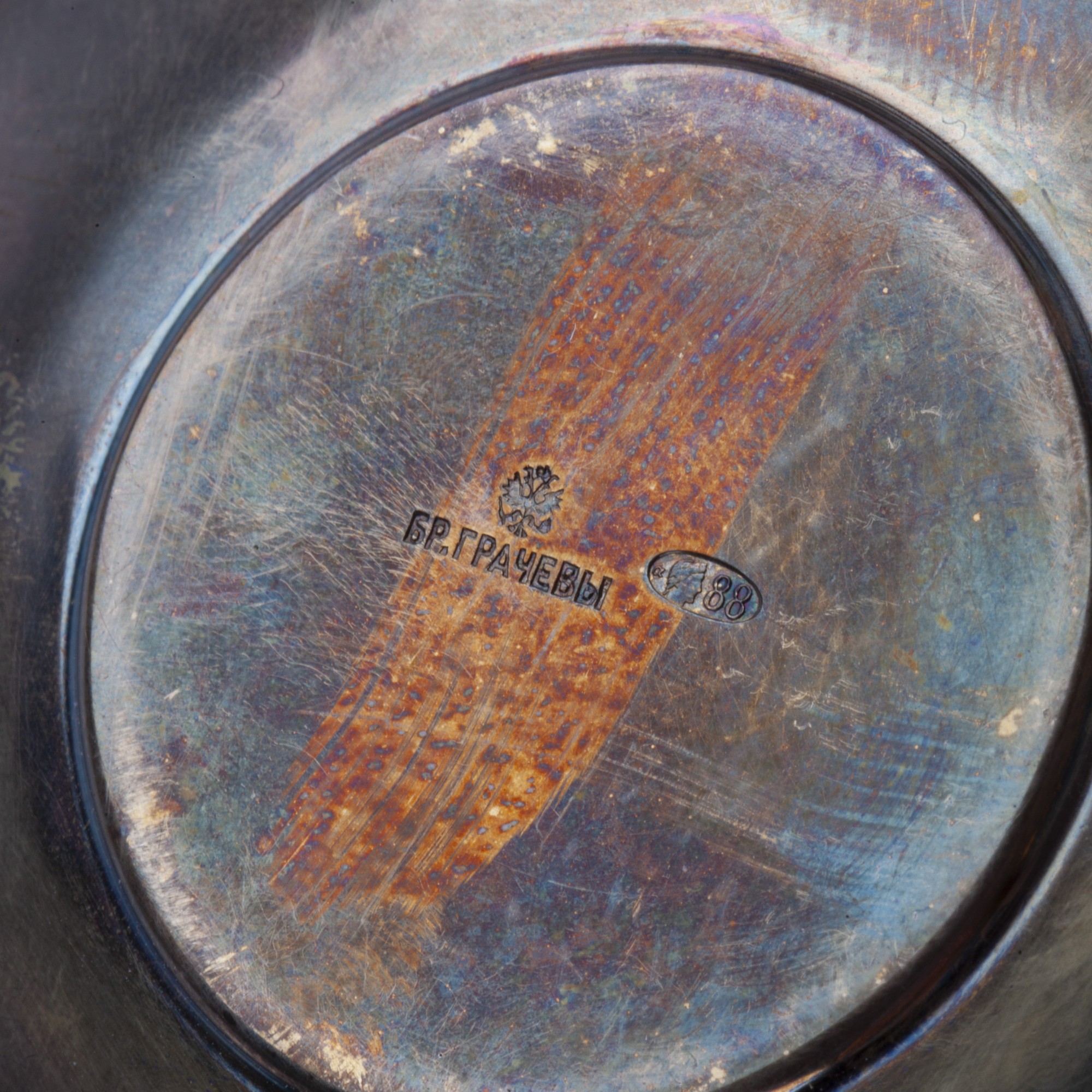
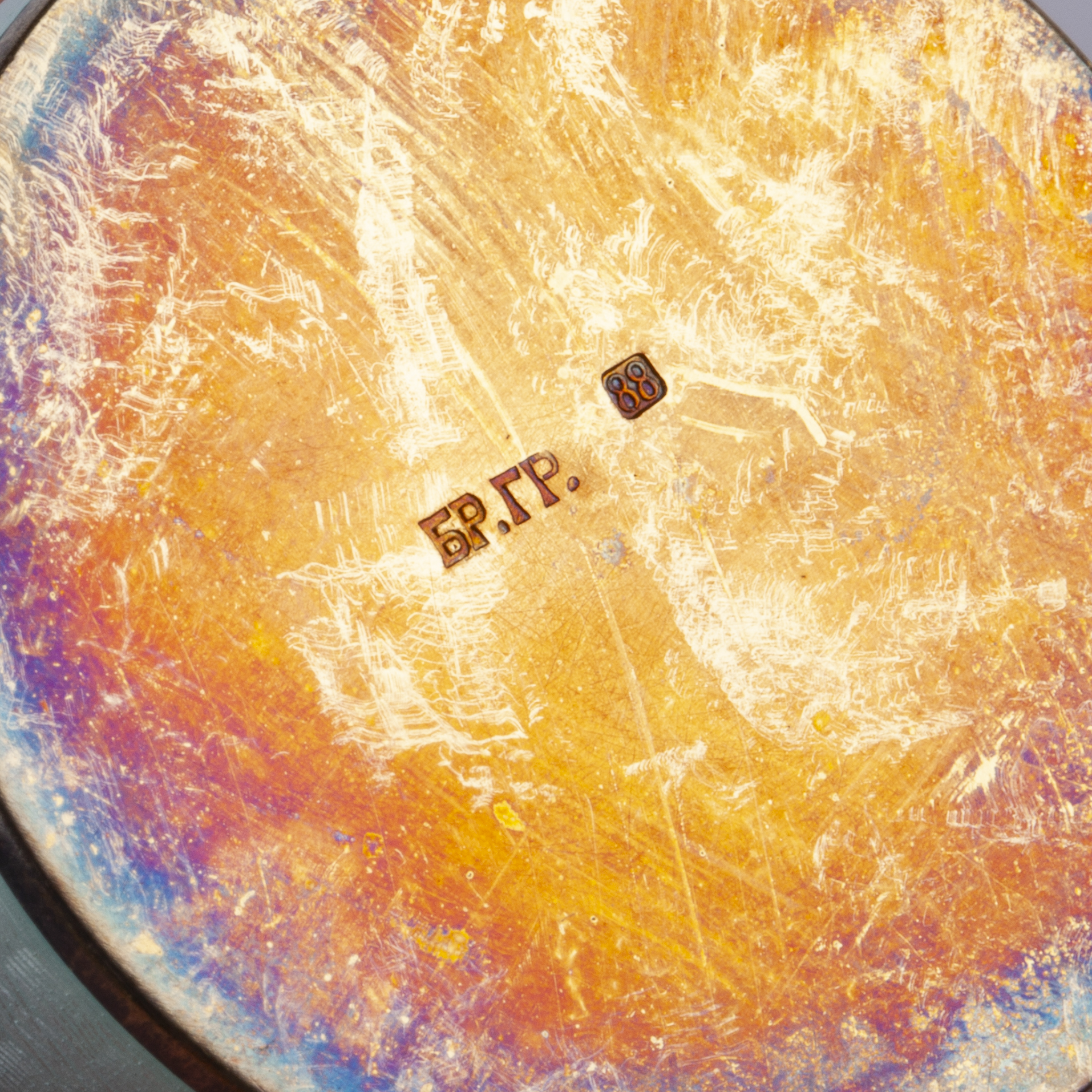
Silver, gilding, guilloché enamel. Marked: firm’s mark Br. Gr, 88 standard; assay mark of St.Petersburg. Weight: 64,4 g. Dimensions of the cup: 3,6 x 5,1 x 3,5 cm. Diameter of the saucer plate: 8 cm.
A refined Russian silver-gilt vodka cup with matching plate in the form of tea pair. Both enriched with translucent guilloché enamel over an engine-turned ground. The cup is of slightly tapering cylindrical form with a plain loop handle, while the plate circular echoes its restrained geometry and understated elegance. The luminous deep blue enamel, laid over a finely waved guilloché surface, creates a soft moiré effect that animates the object with subtle movement and depth.
The ensemble was produced by the celebrated St Petersburg firm of the Brothers Grachev, among the leading Russian silver manufacturers of the late Imperial era. Founded in 1866 by Gavriil Petrovich Grachev, the enterprise was subsequently managed by his sons Mikhail, Simon, and Grigory. In 1892 the firm received the distinction of Supplier to the Imperial Court, a title renewed in 1901. Although particularly admired for works in the Russian Revival style, the Grachev workshop also created table silver of refined historicist and early modern character, distinguished by exceptional technical precision and a sophisticated command of enamelling.
This cup and stand belong to the sphere of intimate luxury tableware produced for an affluent urban clientele in the final years of Imperial Russia. Their restrained silhouette, monochrome brilliance, and finely controlled enamel surface exemplify the discreet elegance of St Petersburg silver at the beginning of the 20th century.Starting price: 1200€
Estimate: 1500-1700€
Hammer Price: Not sold -
Lot 0201
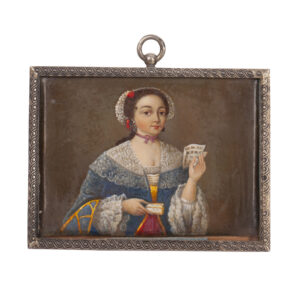
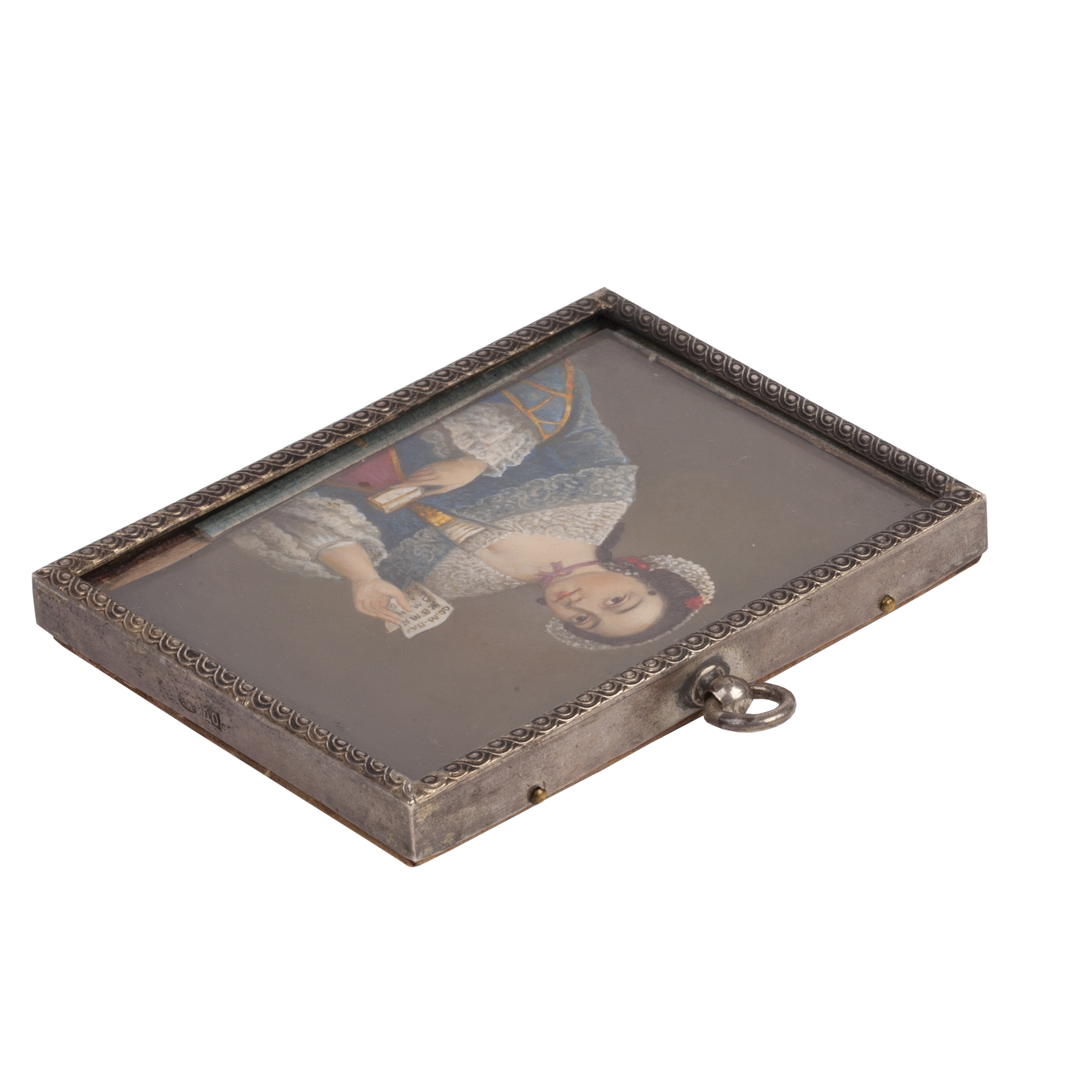
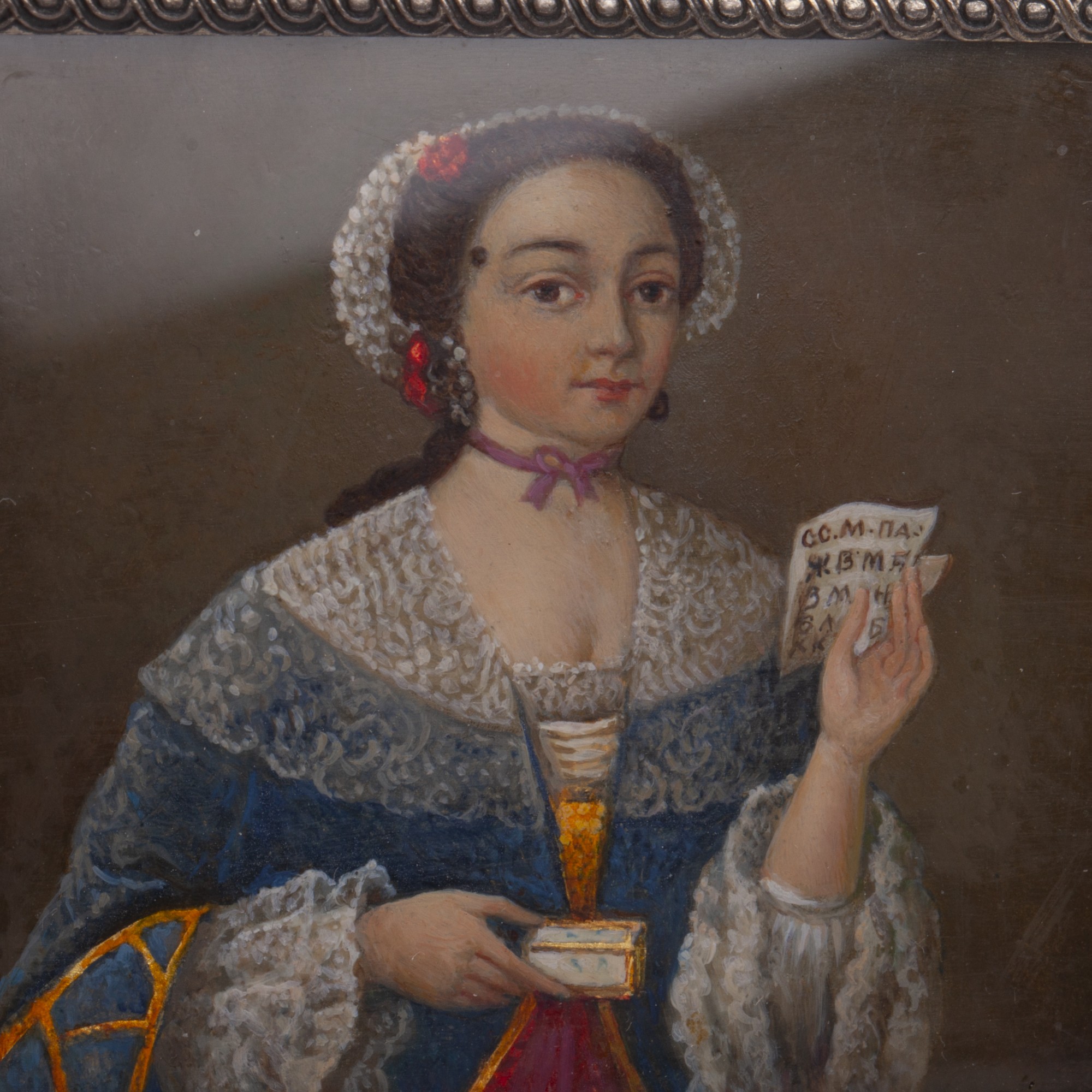
Imperial Porcelain Manufactory Silver-Mounted Porcelain Plaque “Lady Holding a Snuffbox”, 1898–1908 (porcelain 18th century)
Estimate: 1500-2000€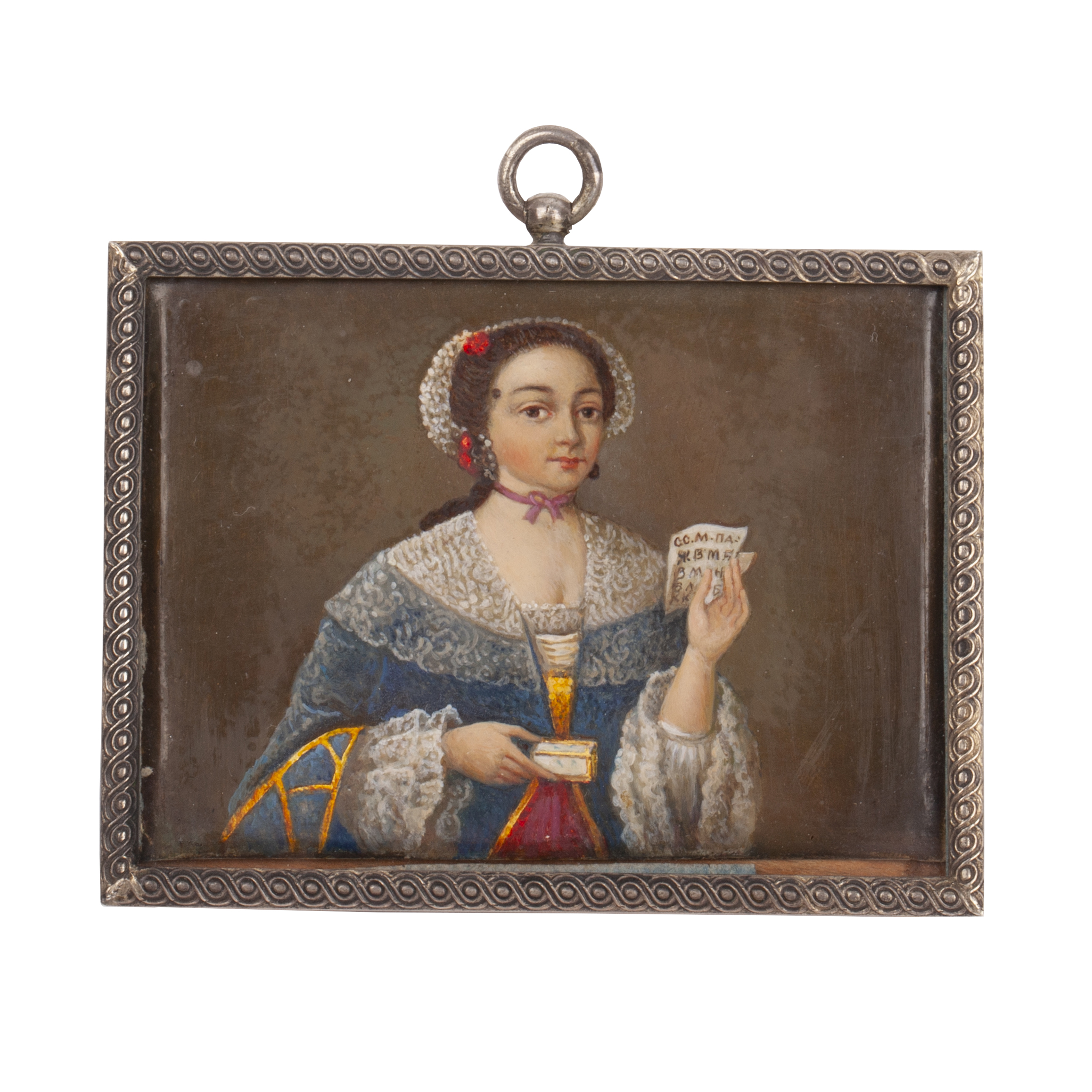
Lot 0201
Imperial Porcelain Manufactory Silver-Mounted Porcelain Plaque “Lady Holding a Snuffbox”, 1898–1908 (porcelain 18th century)
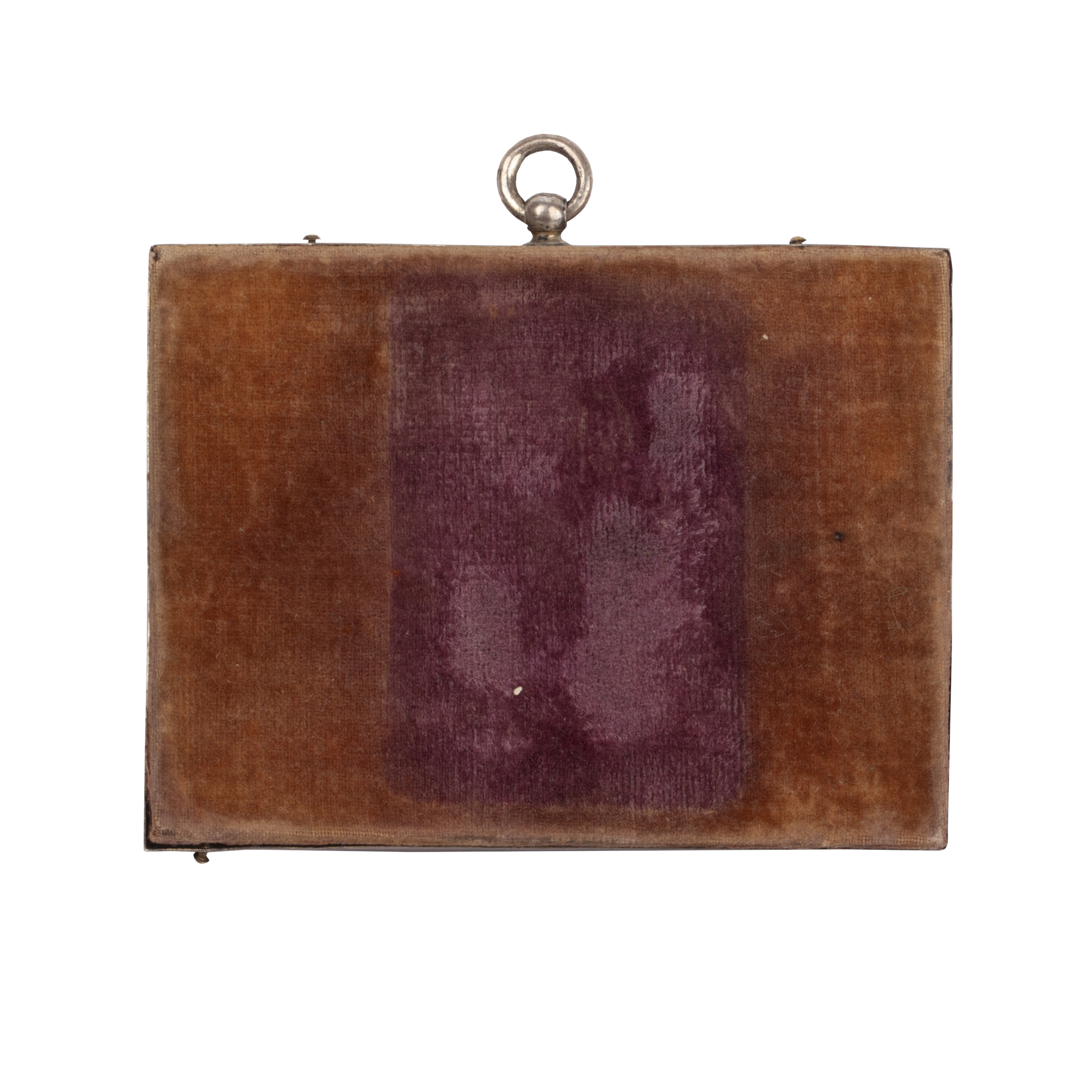
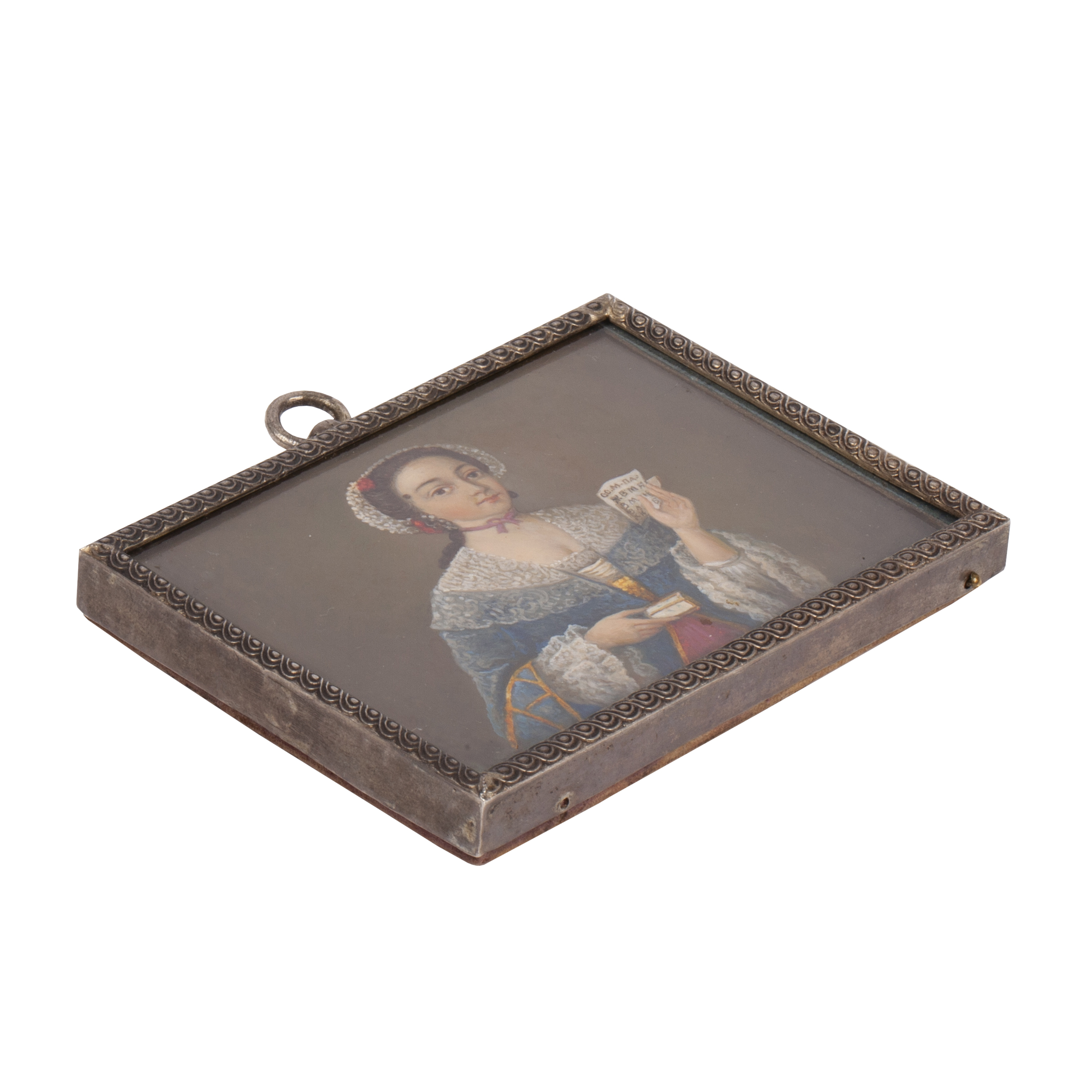
Estimate: 1500-2000€Imperial porcelain manufactory. Plaque «Lady Holding a Snuffbox»
Porcelain, silver, chasing.
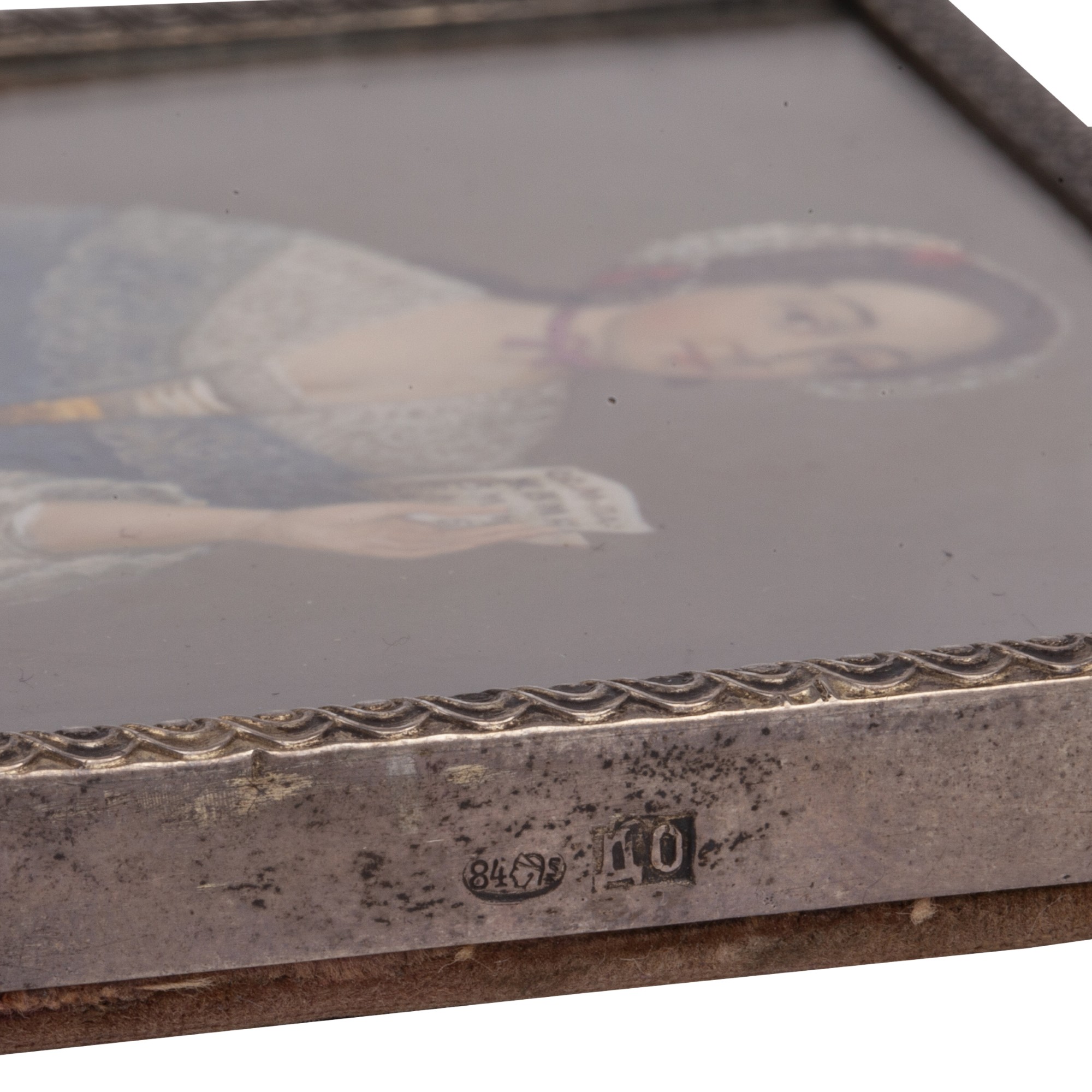
Makers mark of «DO». Porcelain – second half of the 18th century, silver – 1898-1908.
Dimensions: 7.9 x 8.9 x 1.2 cm.
Total weight: 78.3 gPainted porcelain plaque depicting a young woman in a lace bonnet and blue dress, shown holding a small snuffbox and a note inscribed with the recipient’s name, Cabinet Courier Bartenev. This plaque referred to the inner side of the lid of a “Packet” Snuffbox addressed to Cabinet Courier Bartenev (Imperial Porcelain Factory. 1750s). See the attachments.
“Packet” snuffboxes were so called because they resembled small postal envelopes or packets. Such snuffboxes were not only used for storing tobacco, but also as a discreet “love mail” exchange in fashionable society.
Silver Workshop of Dmitry Ivanovich Orlov
Founded by Serpukhov merchant Dmitry Orlov, the workshop grew into one of Moscow’s leading producers of silver church vessels. By the 1870s it employed up to 200 craftsmen and collaborated with artists and sculptors, earning a Large Silver Medal at the 1865 Moscow Manufacturing Exhibition.
References: S. N. Kazakov. “Packet” Snuffboxes of the Imperial Porcelain Factory. St. Petersburg, 1913. P. 173-177.Starting price: 1200€
Estimate: 1500-2000€
Hammer Price: Not sold