

Lot 0191
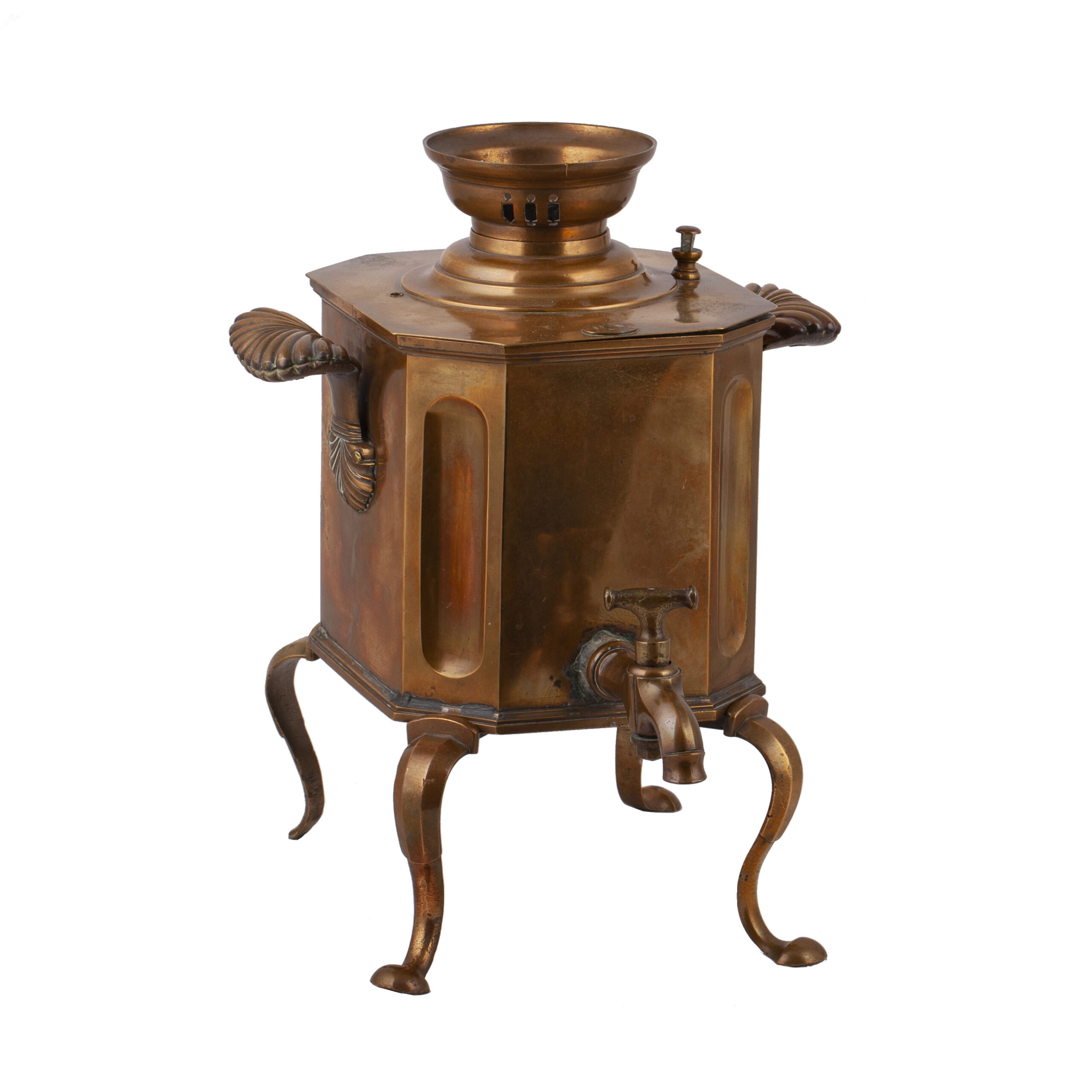
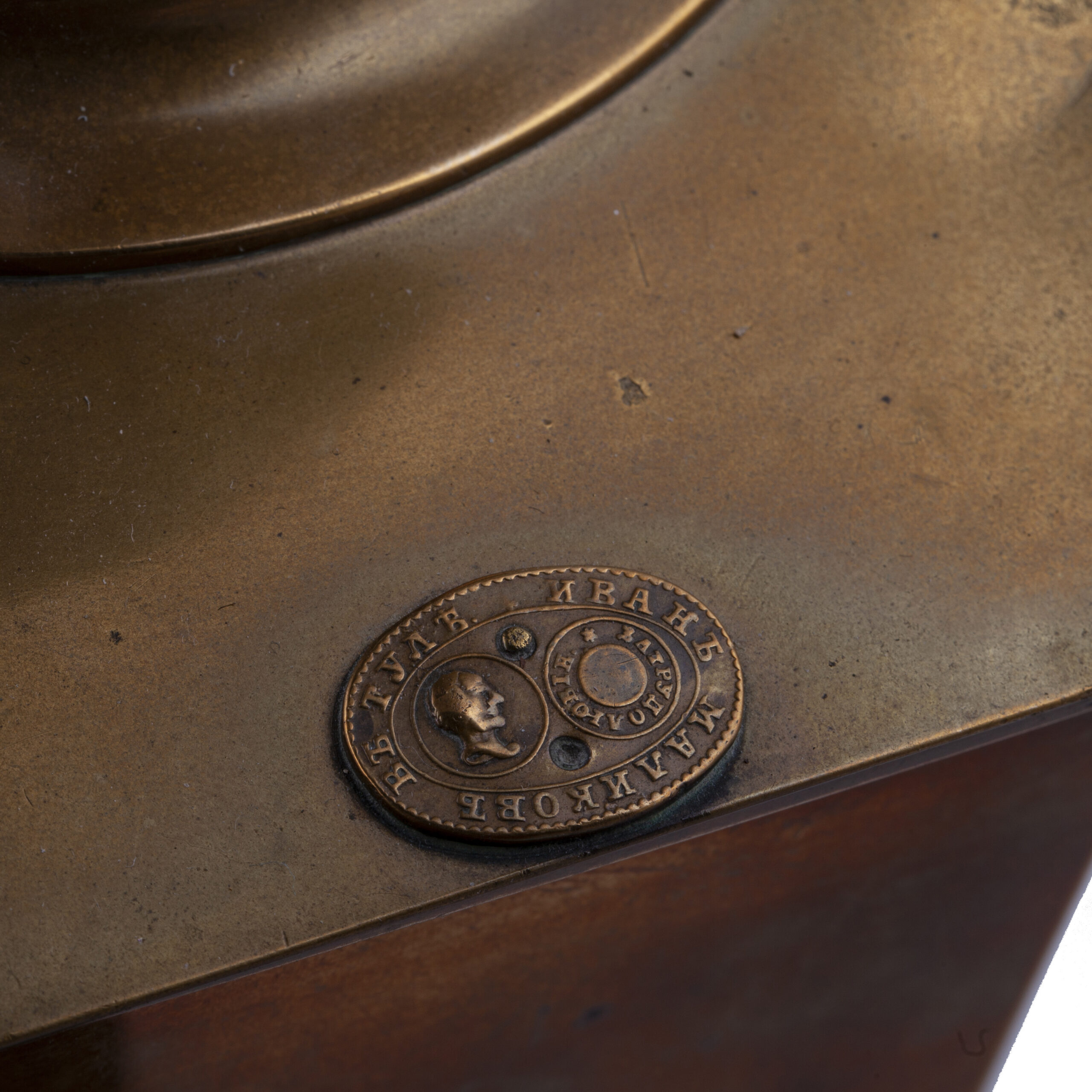
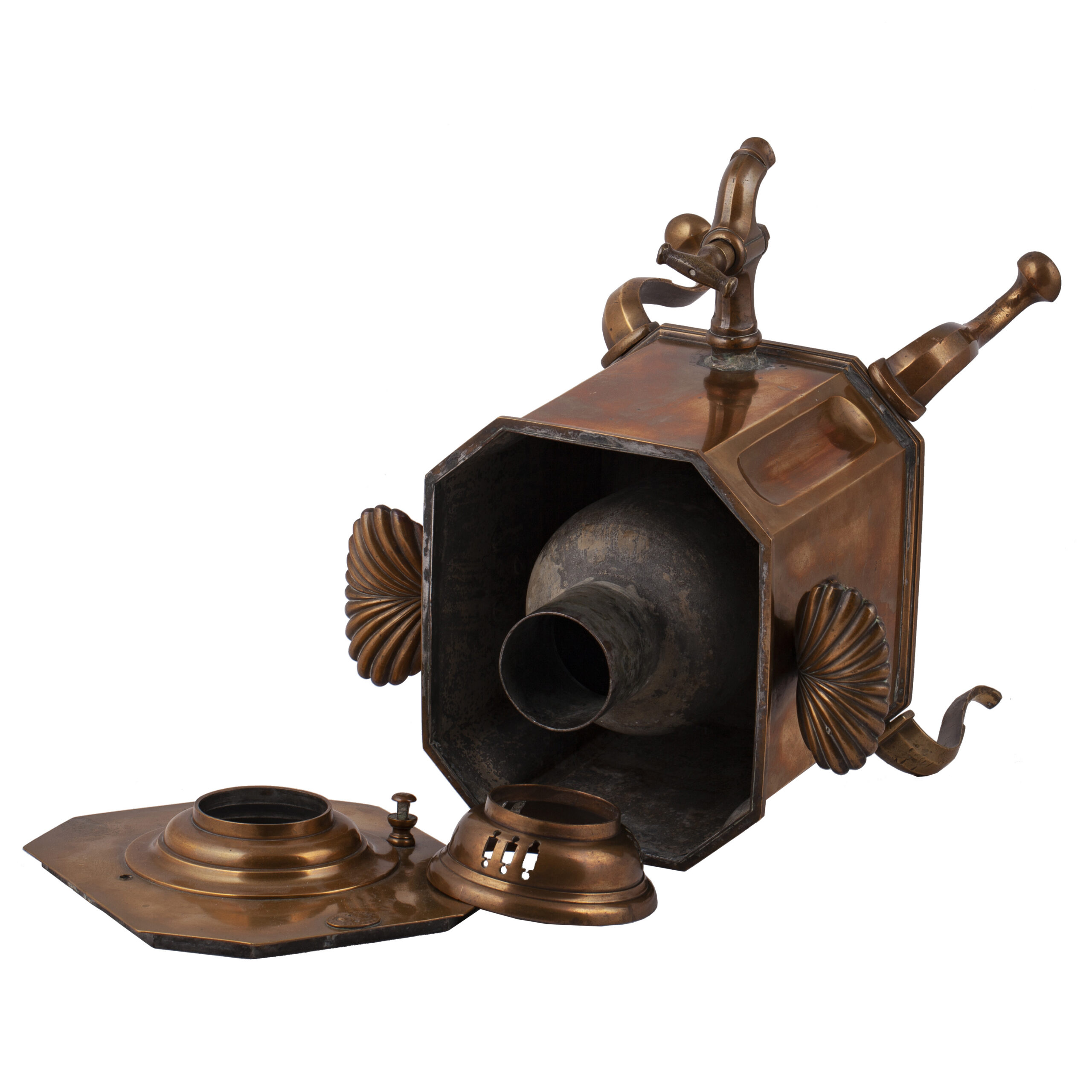
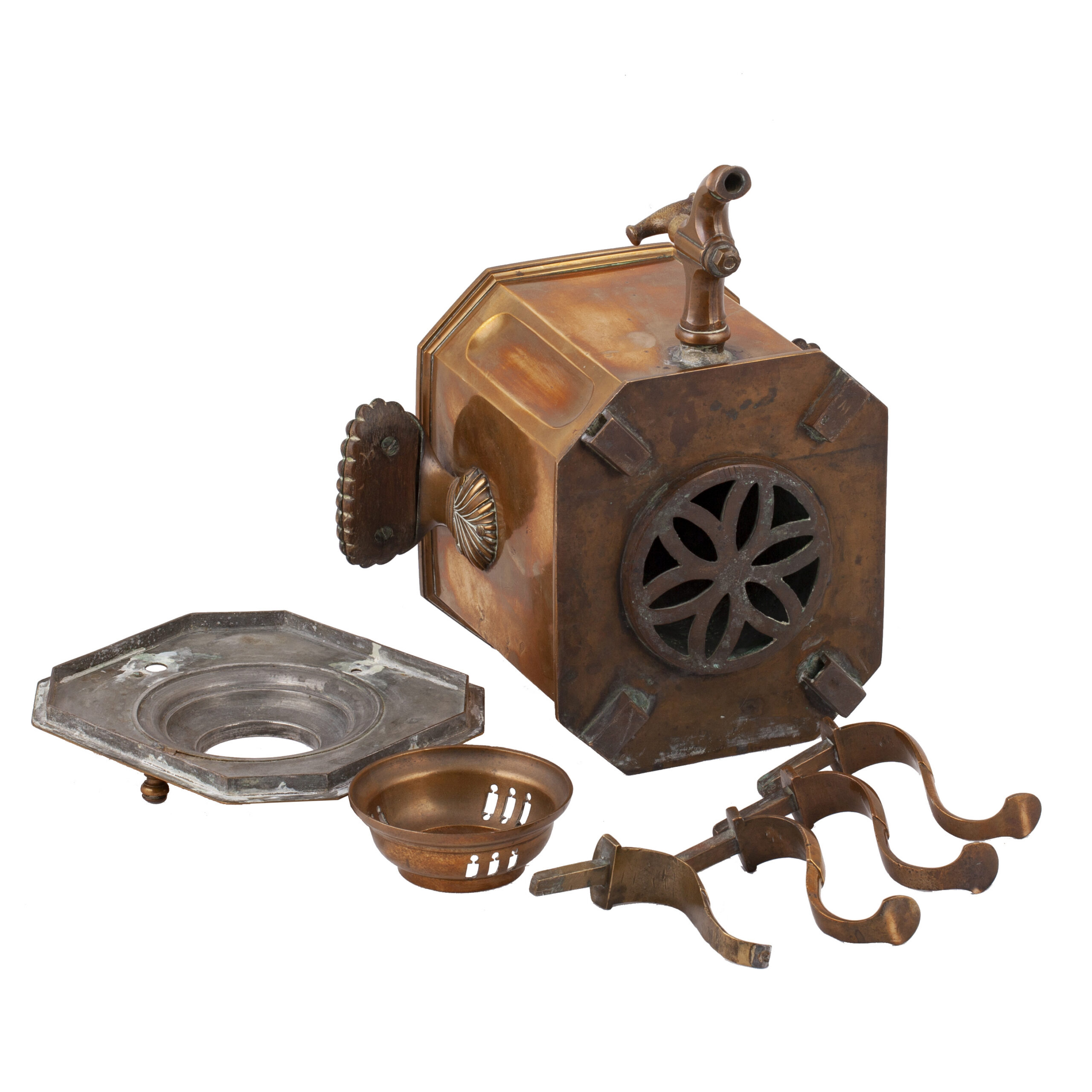
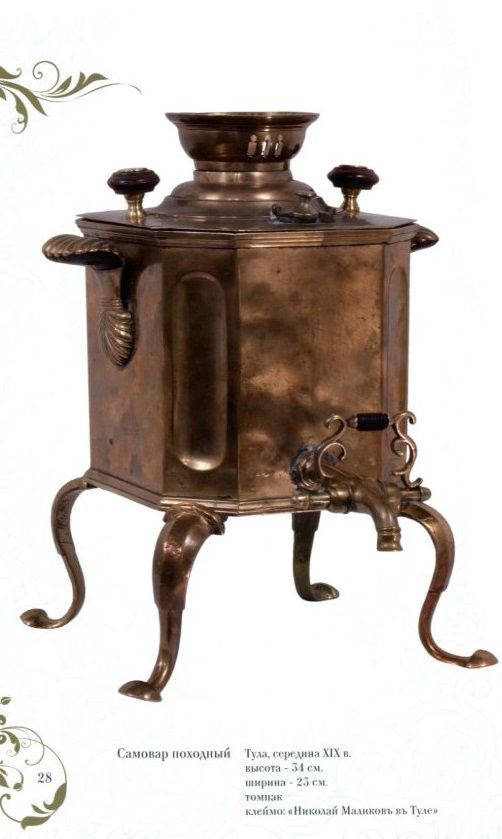
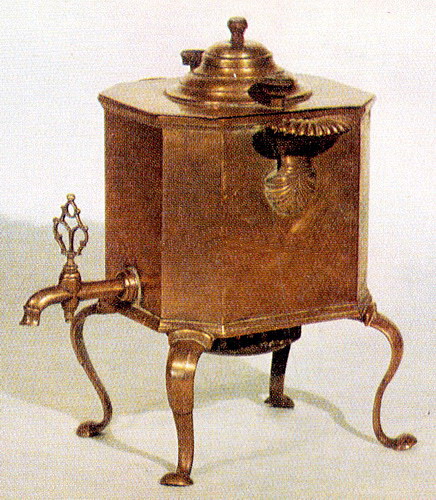
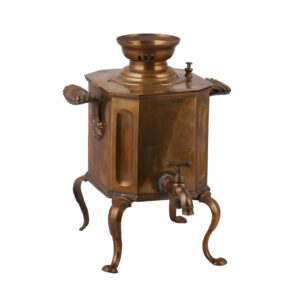
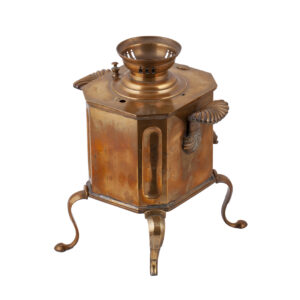
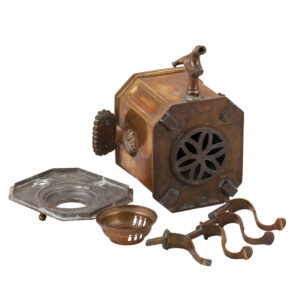
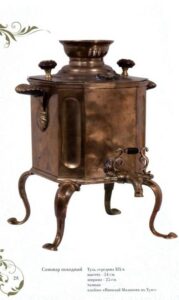
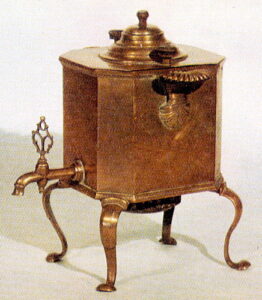
Rare Russian Traveling Brass Samovar. I. Malishev
Estimate: 2500-3000€
Traveling Samovar
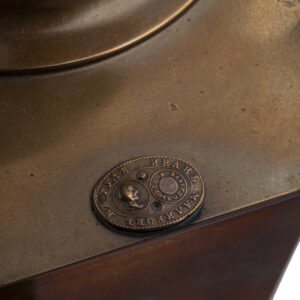
I. Malishev Manufactory, Tula, mid-19th century
Brass
Height: 30 cm
A rare example of a Russian traveling samovar, produced by the I. Malishev manufactory in Tula — the historic center of samovar craftsmanship.
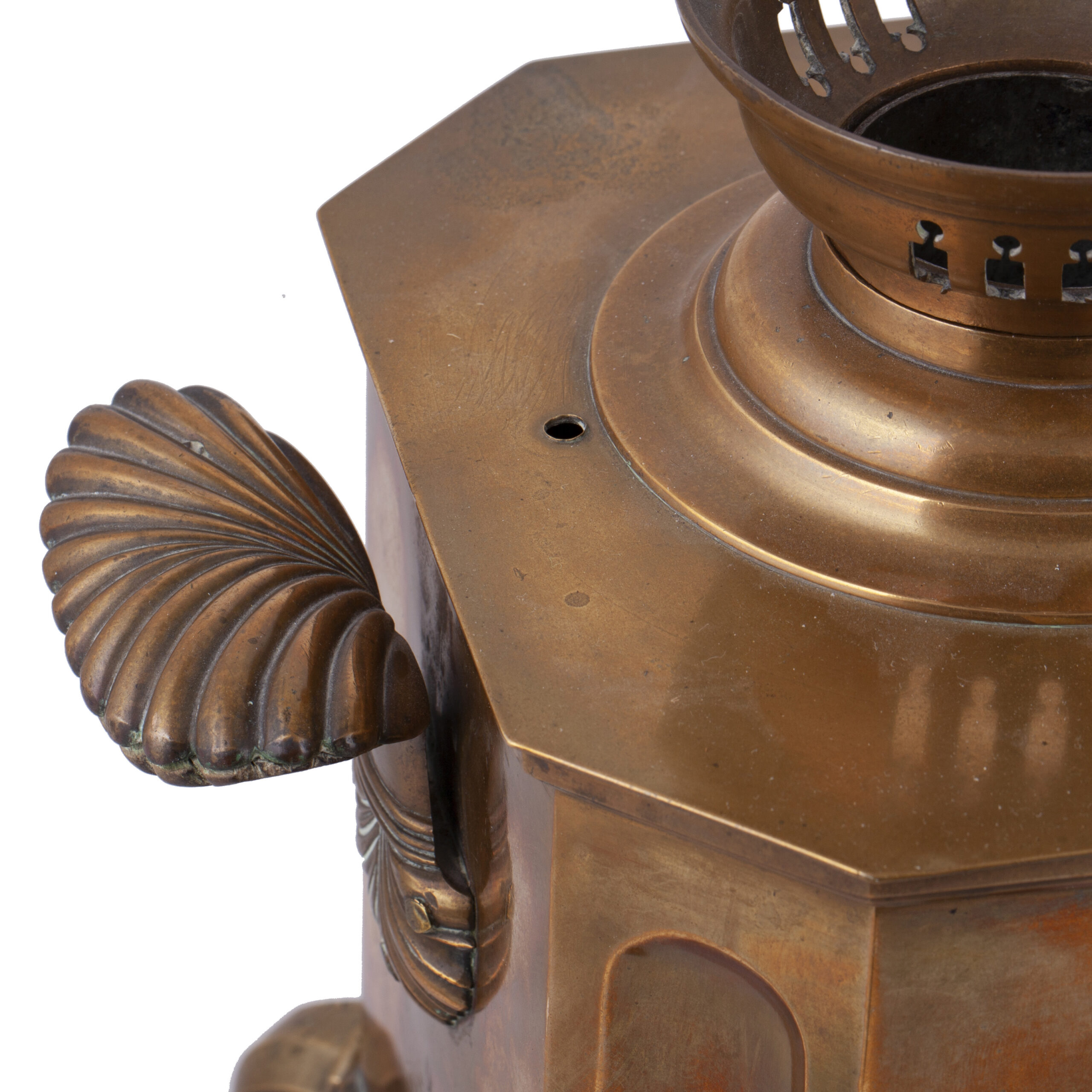
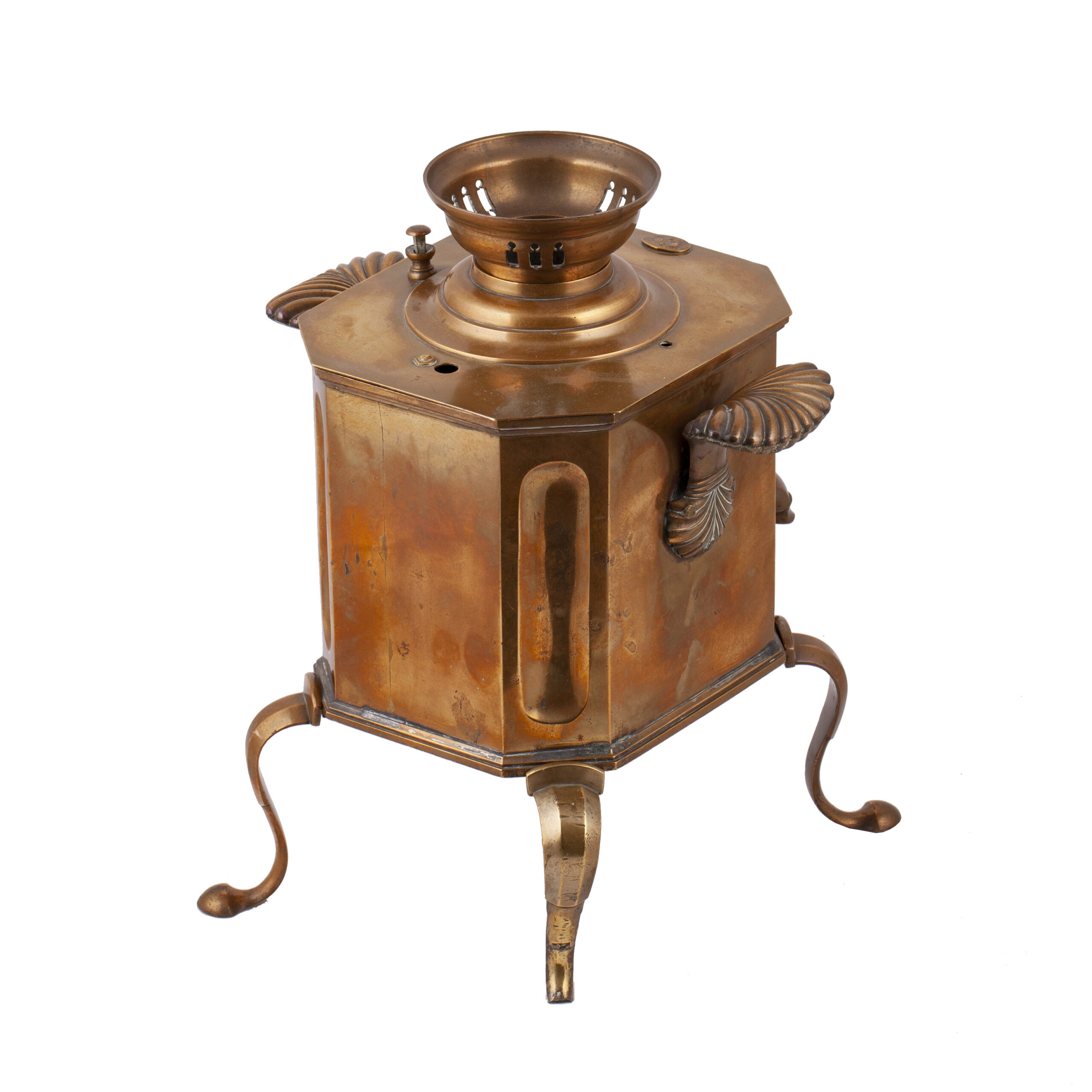
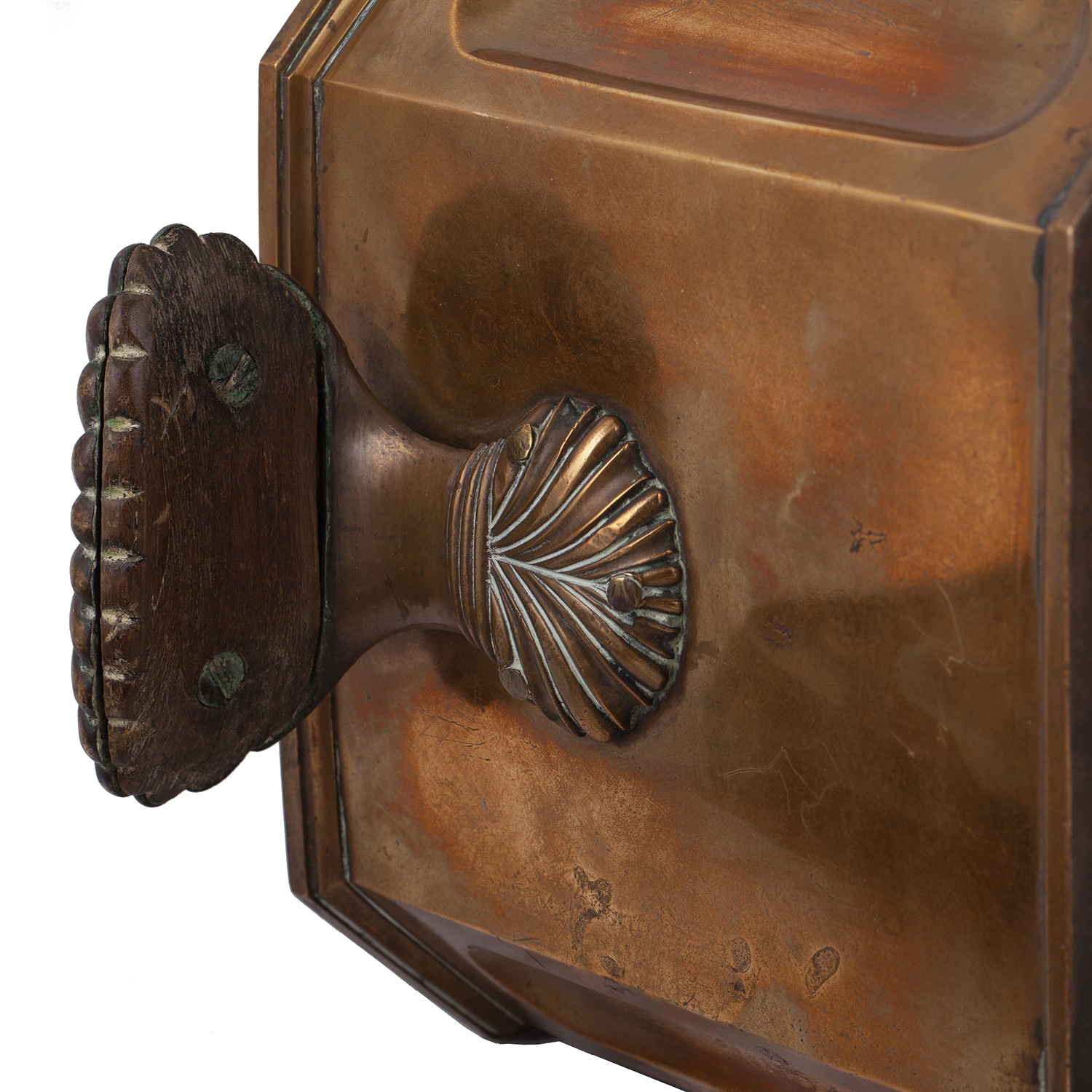
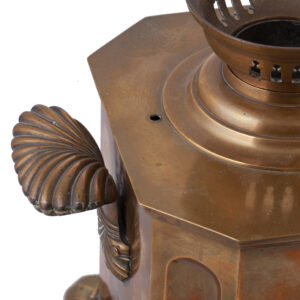
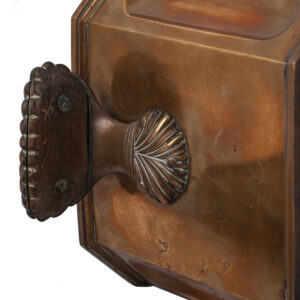
The body is shaped as a rectangular box with beveled corners and smooth walls. The flat lid features a cylindrical chimney with a narrow ringed projection at the center, cast as one piece with the cover. The handles are cast in the form of stylized palmettes. The spout is faceted, ending with a hook-shaped projection. The detachable, curved legs are faceted, with blade-shaped bases — a distinctive element of early traveling samovars.
Compact and durable, samovars of this type were designed for portability and everyday use during journeys, hunting expeditions, or military campaigns. Their simple yet refined proportions reflect mid-19th-century Tula design aesthetics, balancing practicality and ornamentation.
For a comparable example, see: “The Miracle of the Antique Samovar,” Kolomenskoe Museum, Moscow, 2015.
Starting price: 2000€
Estimate: 2500-3000€
Hammer Price: UNSOLD€
Related Lots
-
Lot 0193
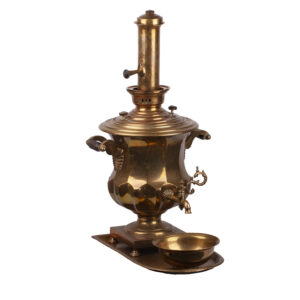
Samovar with Tray and Waste Bowl
Estimate: 1000-1200€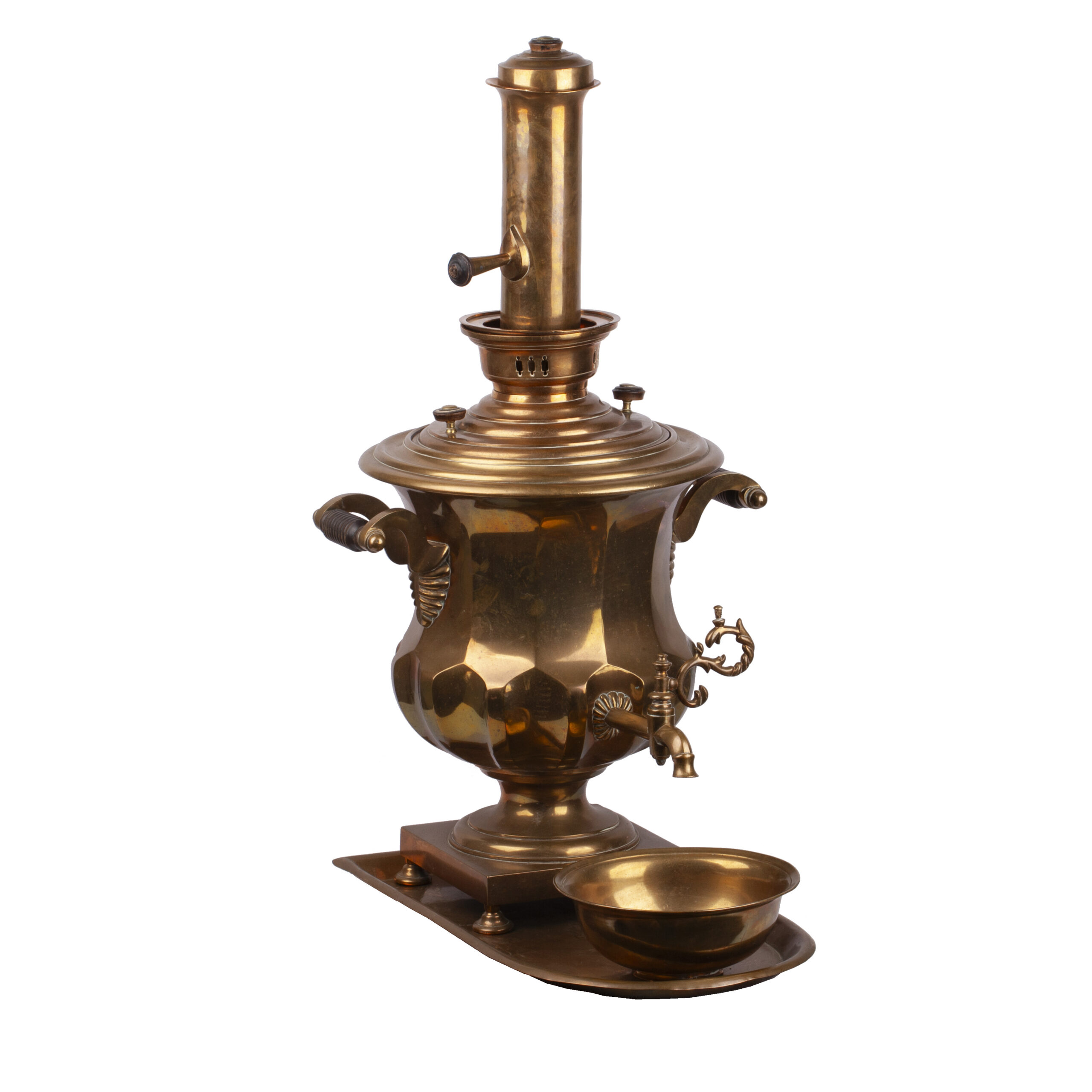

Lot 0193
Samovar with Tray and Waste Bowl
Estimate: 1000-1200€Samovar with Tray and Waste Bowl
Malikov Manufactory, Tula, mid-19th century
Brass
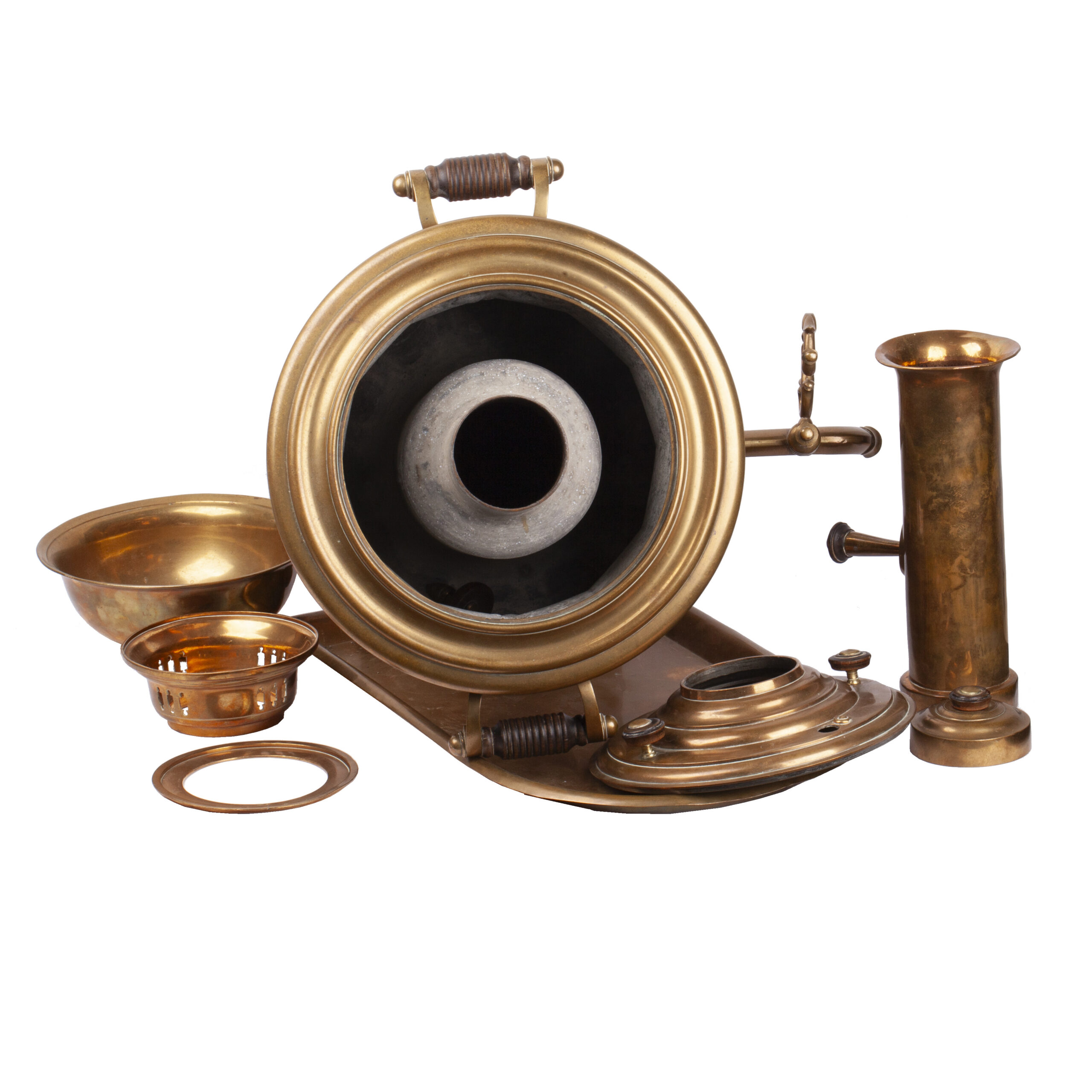
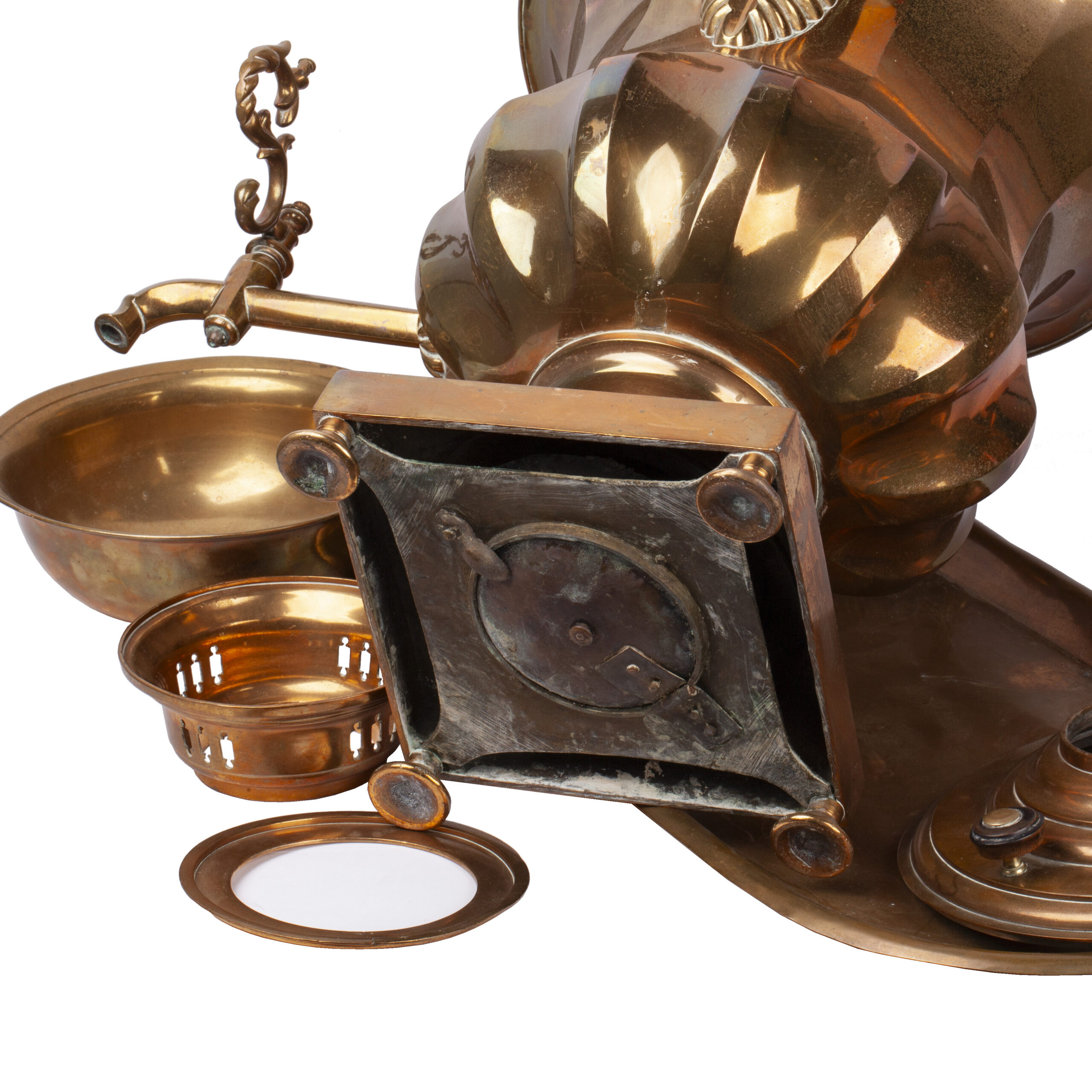
Height (without chimney): 45.5 cmThe body of the samovar is shaped as a vase with a tall neck. The upper section is decorated with faceted panels, while the lower part features concave oval impressions known as “lozhki.” The wide, flat shoulder supports a stepped lid with a central chimney. The paired, upward-curving handles are attached to the body with oval, embossed mounts.
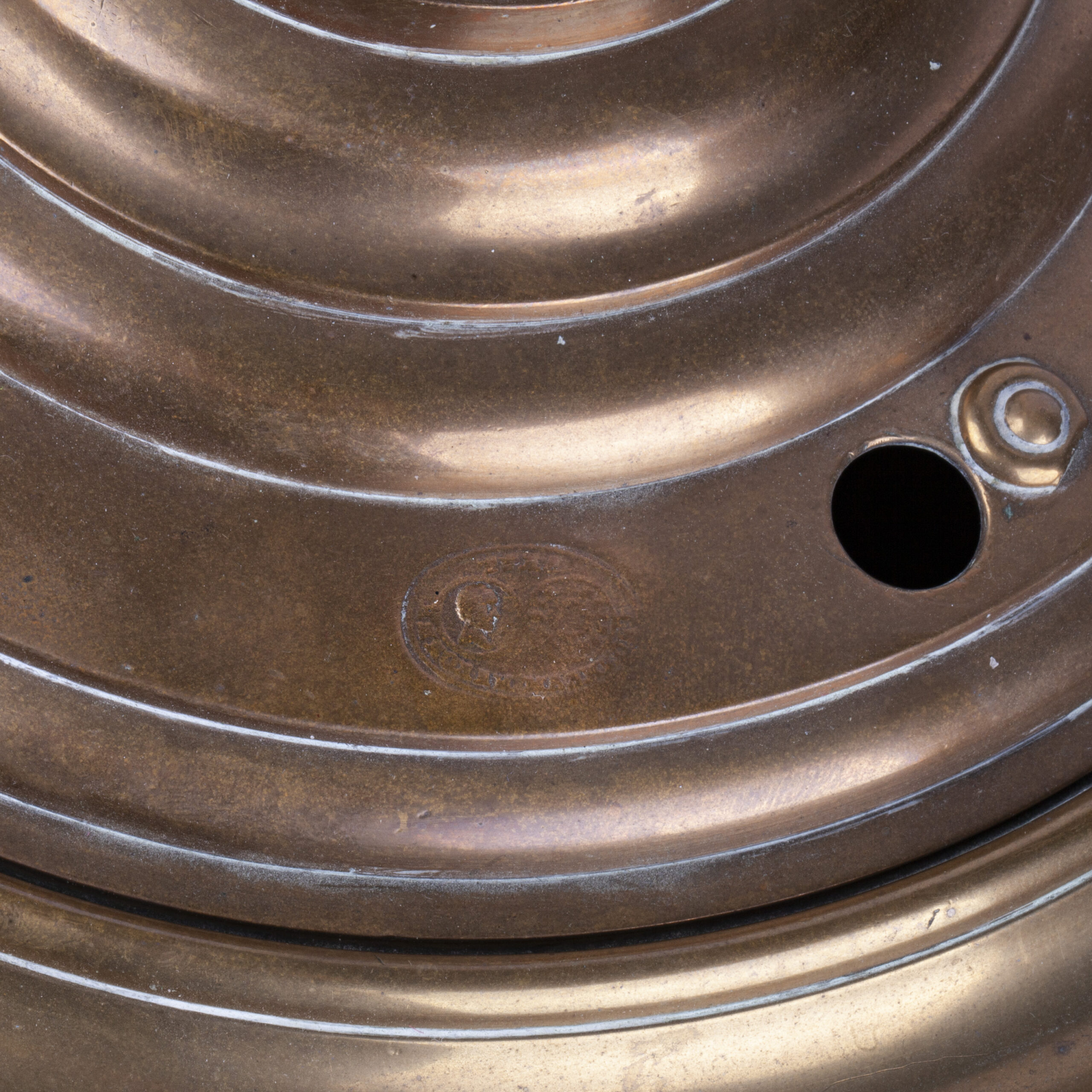
This example belongs to the celebrated Malikov dynasty of Tula samovar makers, whose history dates back to the late 18th century. The founder, Stepan Malikov, was a gunsmith with three sons — Trofim, Ivan, and Dementy. It was Dementy who began samovar production around 1795, at a time when water-heating vessels were becoming increasingly popular in Russia.
The Malikovs were among the first Tula craftsmen to combine weapon and samovar production, often using the same tools and techniques for both trades. By 1803, the Malikov manufactory was one of the eight largest in Tula. During the War of 1812, the factory supplied weapons to the army, temporarily halting samovar production, which later resumed and flourished once again.
In the following decades, the family business passed through several generations, each contributing to its growth and reputation. In 1853, Nikolai Nikolaevich Malikov received a small silver medal at the 10th All-Russian Manufacturing Exhibition in Moscow. By the 1860s, the factory had earned merchant status of the 2nd guild, producing samovars of high quality and refined craftsmanship.
Although the Malikov manufactory ceased operation in 1882, when it was sold to Yegor Vanykin, its legacy remains a cornerstone of Russian metalwork and tea culture. Samovars bearing the Malikov mark are today considered rare examples of early Tula industrial art, combining durability, elegance, and distinctive family style..
Starting price: 800€
Estimate: 1000-1200€
Hammer Price: 800€ -
Lot 0190
Russian Silver-Plated Brass Samovar in the Shape of an Egg
Estimate: 800-1000€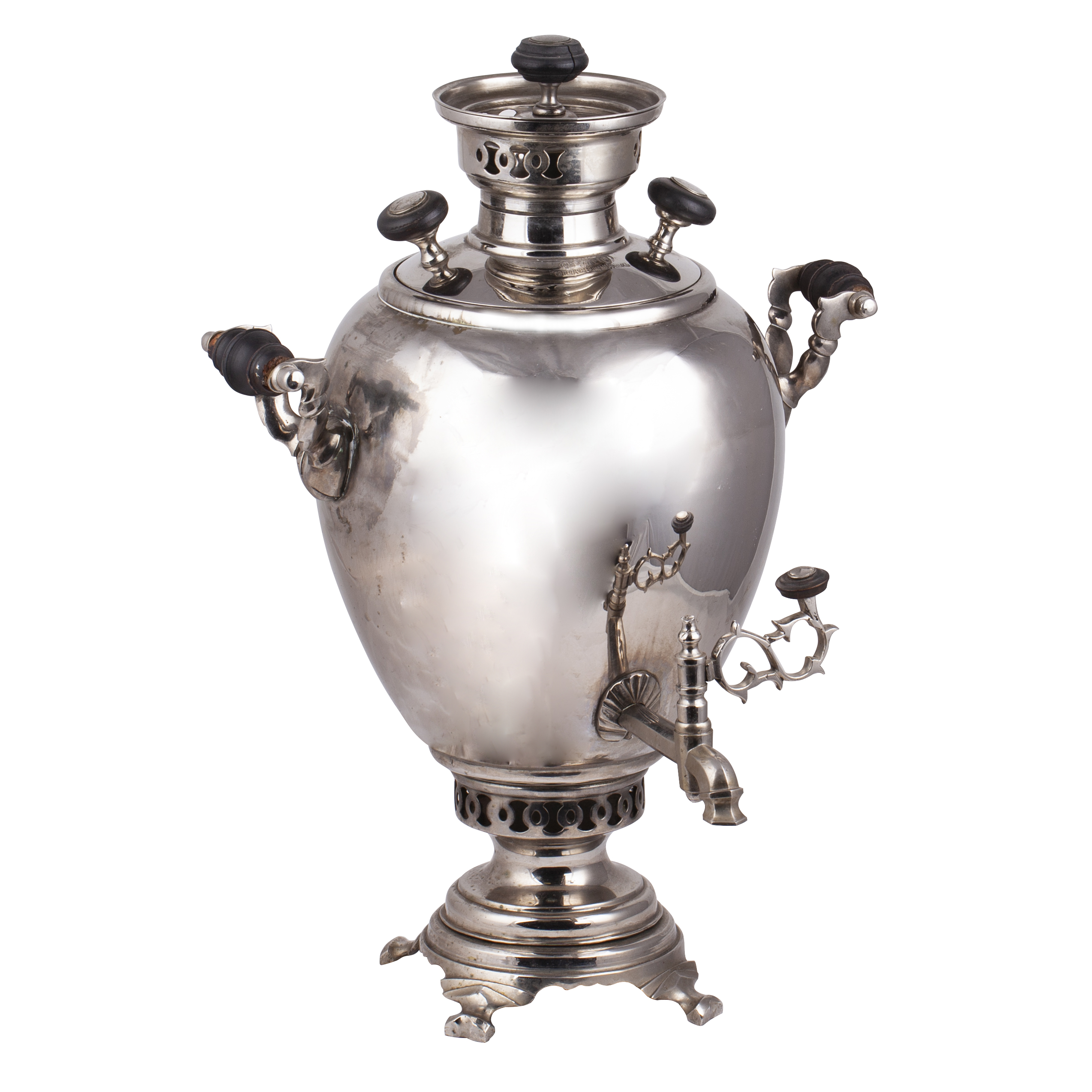

Lot 0190
Russian Silver-Plated Brass Samovar in the Shape of an Egg
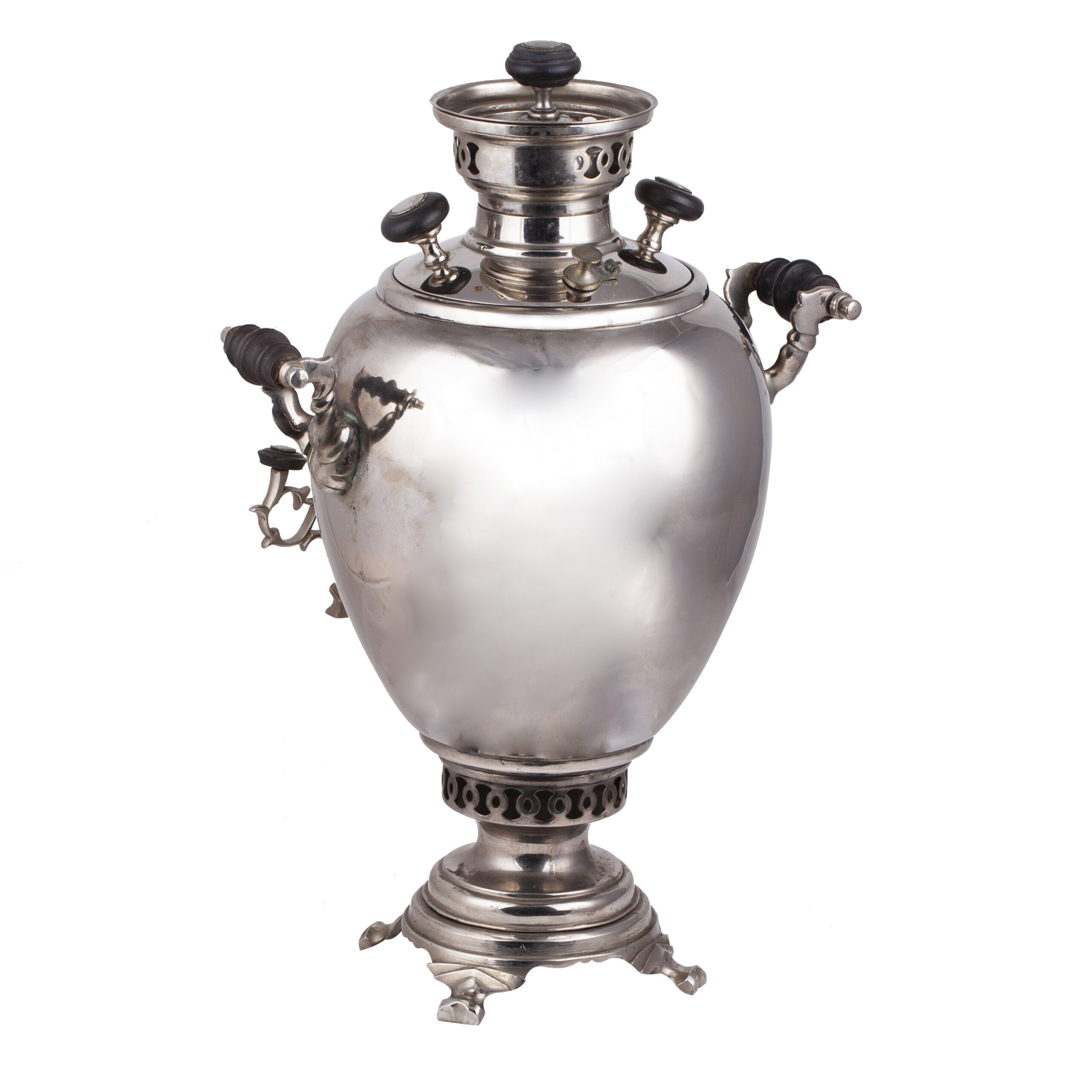
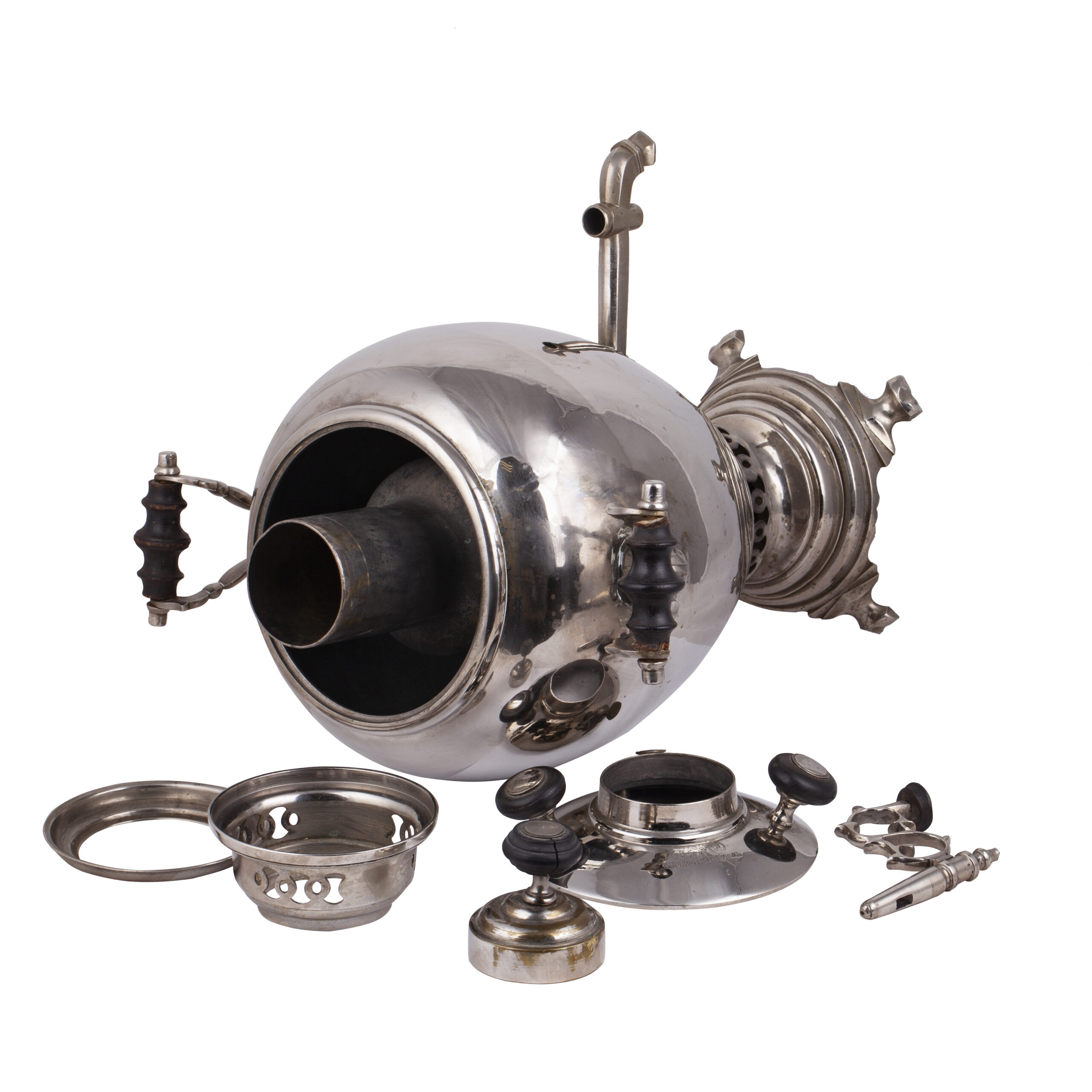
Estimate: 800-1000€Samovar in the Shape of an Egg
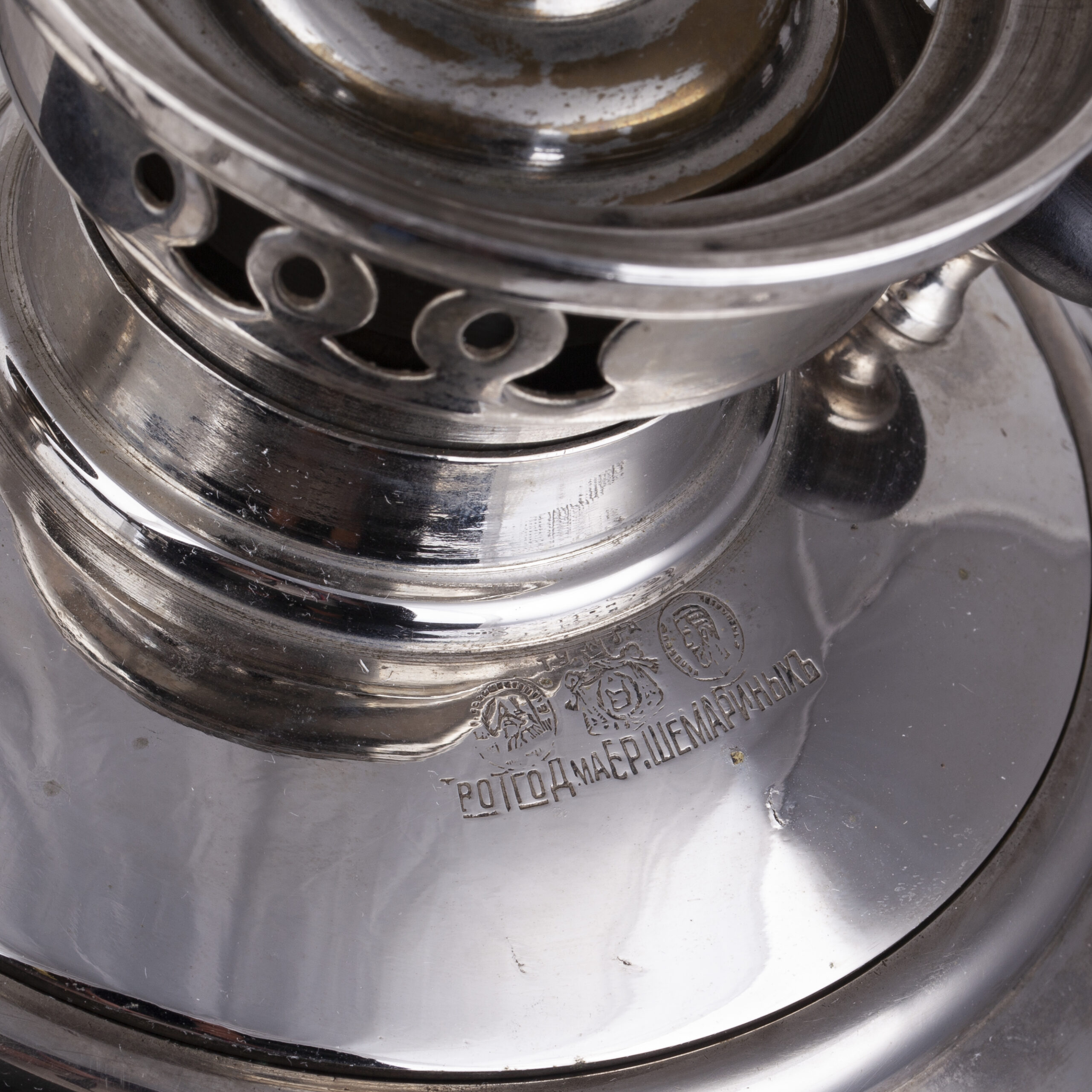
Shemarin Brothers’ Manufactory, Tula, 1880s
Silver-plated brass, wood
Height: 45 cm (including the chimney cap)This silver-plated brass samovar, crafted in the form of an egg, represents the refined aesthetic and exceptional quality of the Shemarin Brothers’ Manufactory in Tula — one of the foremost samovar producers of late Imperial Russia. The harmonious proportions, fine polish, and elegant detailing reflect the high standards of Tula metalwork in the late 19th century.
The Shemarin Brothers manufactured samovars at a time when Russian tea ceremonies had become a hallmark of cultured domestic life. Their samovars were sought after not only by the Russian nobility and intelligentsia but also by Persian shahs, Indian maharajas, and European aristocrats, who appreciated both their craftsmanship and their aura of Russian luxury.
The dynasty began with Ivan Rodionovich Shemarin, a former serf who earned his freedom and, together with his wife Agrippina and five sons, settled in the Tula province. In 1887, the brothers established their own manufactory, which quickly grew into one of the largest in Russia. By 1904, their enterprise ranked second only to the famed Batashev factory, employing over 700 workers and producing up to 6,000 samovars per month.
Their products gained international acclaim, receiving more than ten medals at world fairs — including a silver medal at the 1889 Paris Exposition Universelle and an honorary diploma at the 1901 Glasgow Exhibition. In 1906, the Shemarins were appointed official suppliers to the Shah of Persia, a distinction shared by only a handful of firms worldwide. A year later, they produced several miniature samovars for Emperor Nicholas II.
The factory’s hallmark was variety and precision: more than a hundred models were made, ranging from traditional coal samovars to alcohol-burning and silver-plated types. Each was inspected personally by the eldest brother before leaving the workshop — a testament to their commitment to excellence.
Starting price: 600€
Estimate: 800-1000€
Hammer Price: 600€ -
Lot 0192
Rare Russian Small Brass Samovar “Egoist”
Estimate: 900-1000€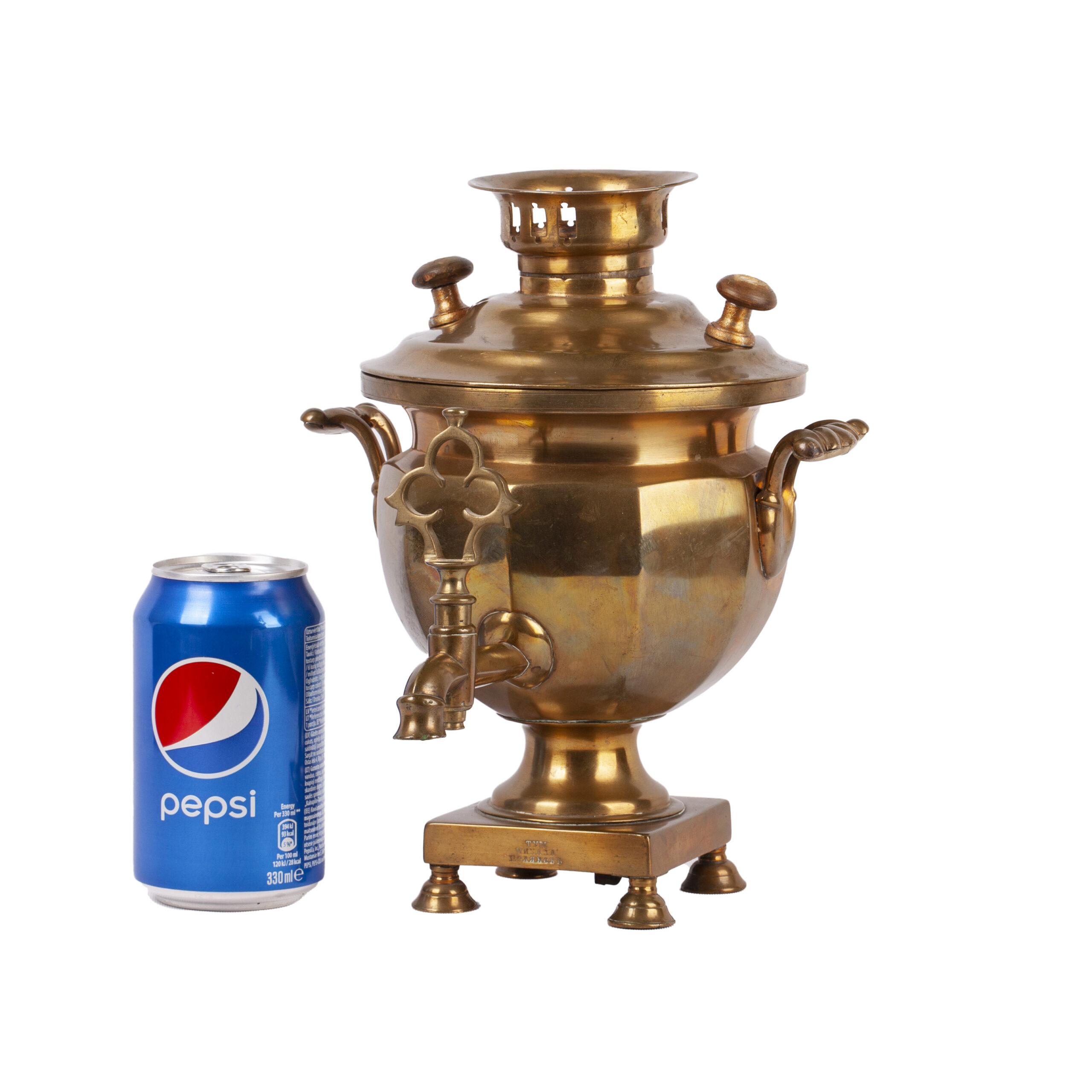

Lot 0192
Rare Russian Small Brass Samovar “Egoist”
Estimate: 900-1000€Small Samovar “Egoist” in the Form of a Faceted Cup
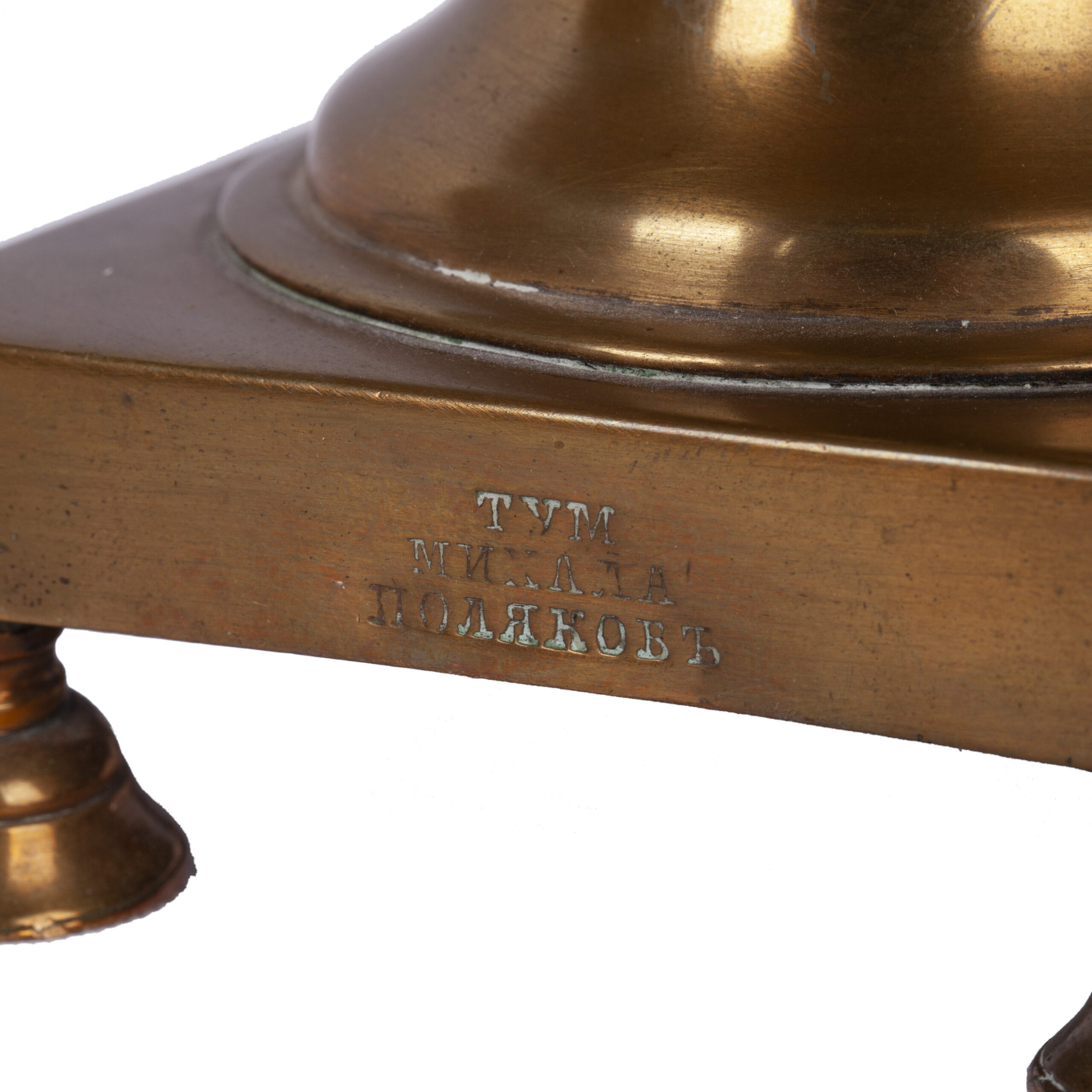
Maker’s mark of TUM (Mikhail Polyakov), Tula, 19th century
Brass
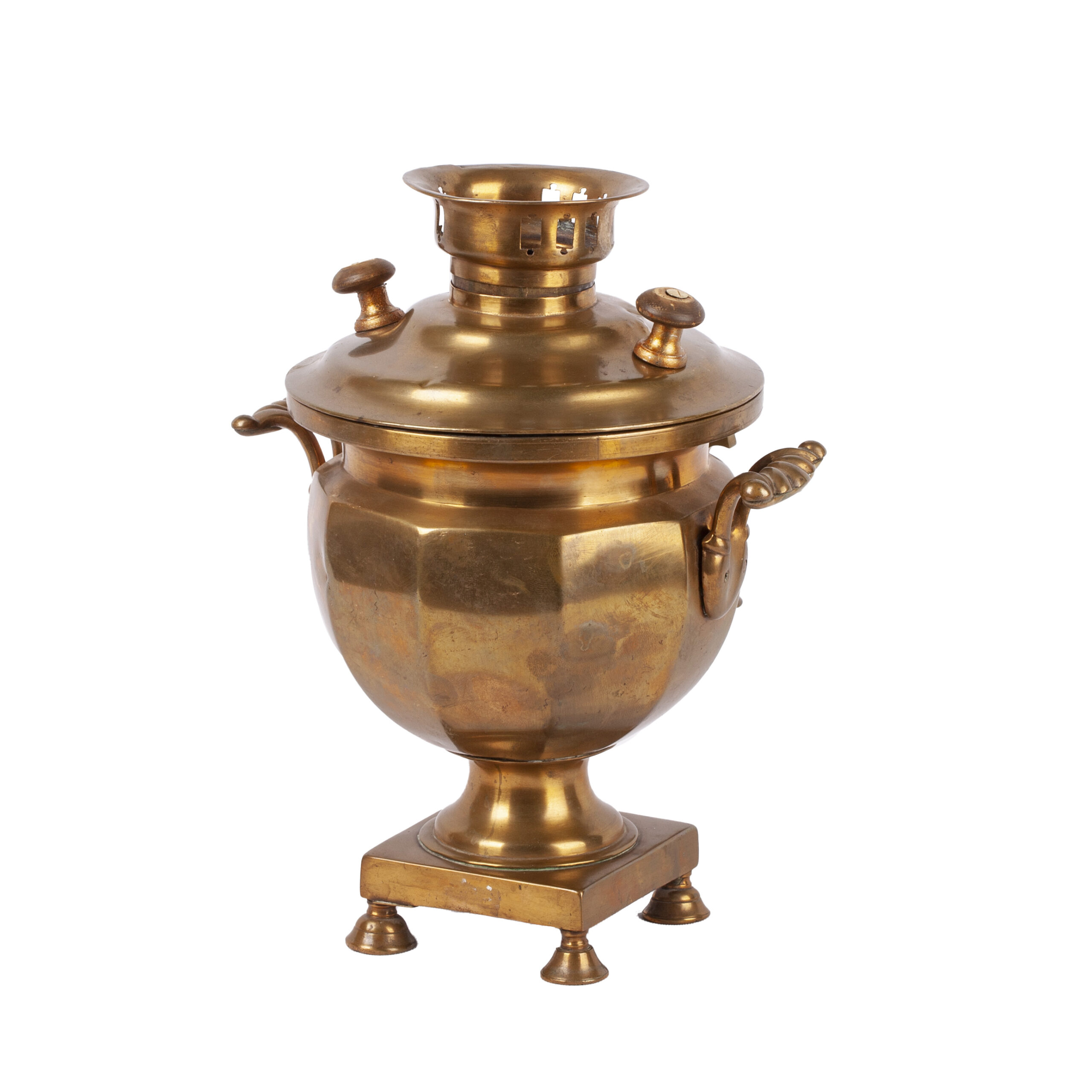
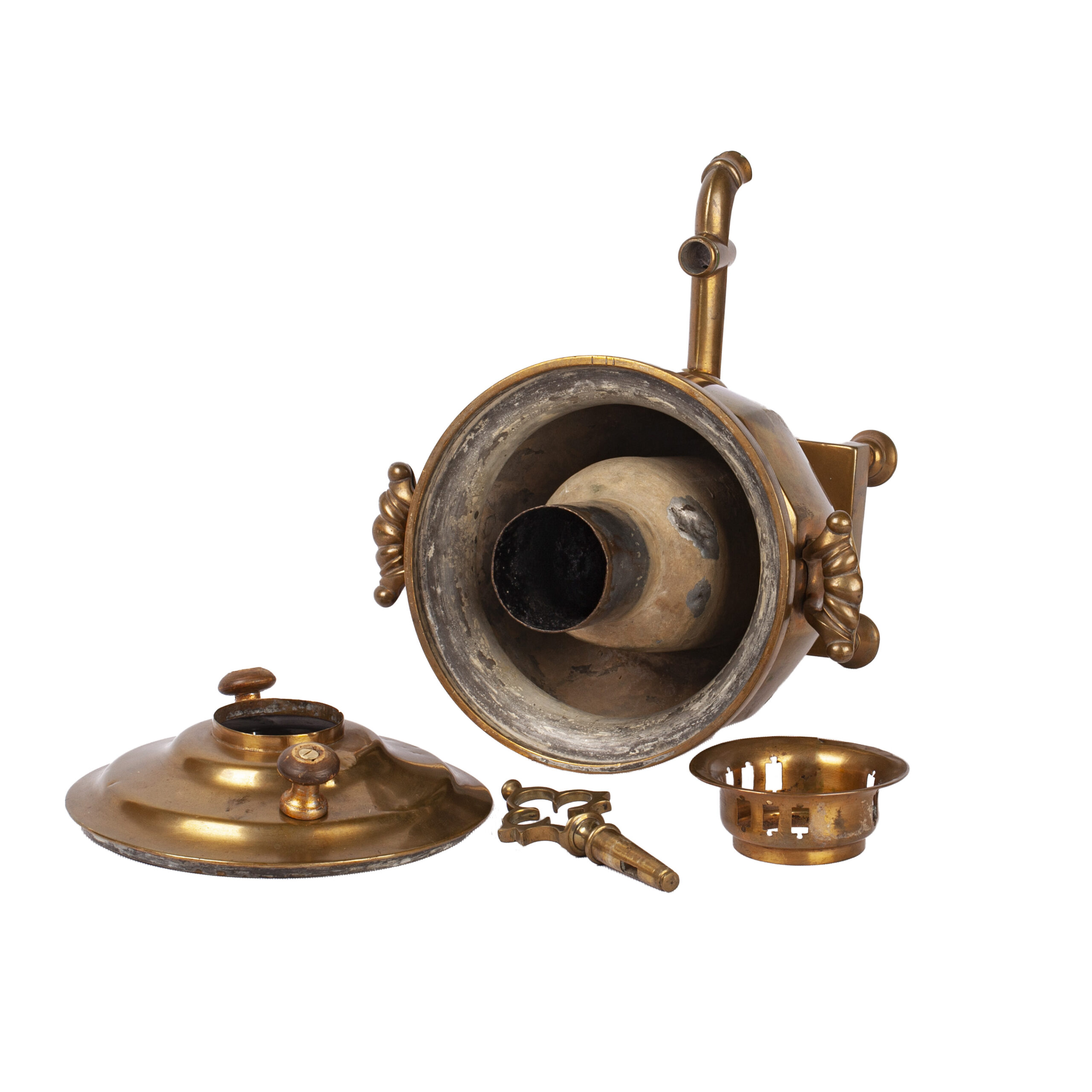
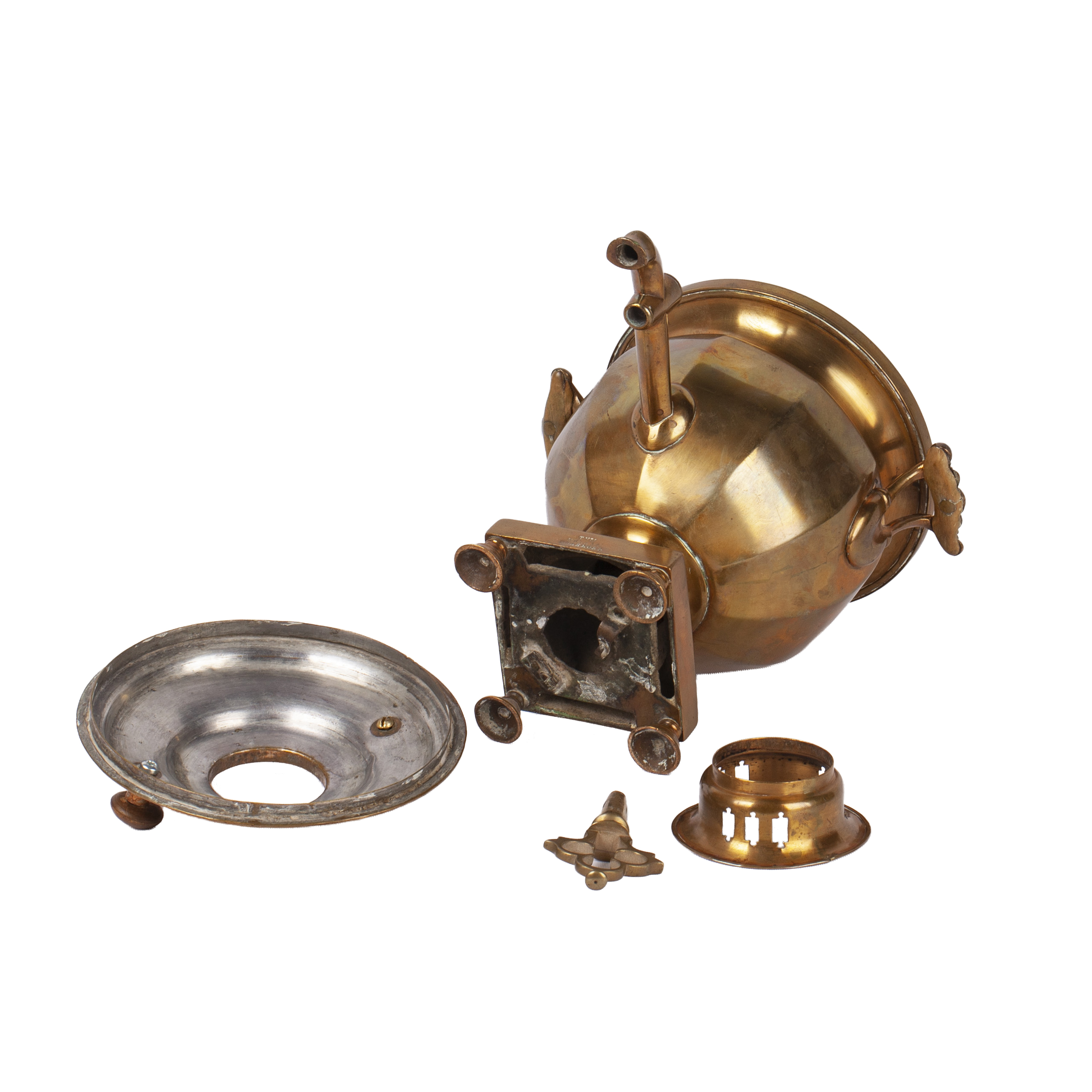
Height: 24.5 cmA rare miniature brass samovar known as an “Egoist”, designed for a single person and holding less than one litre. The body is shaped as a faceted cup with smooth walls, gracefully curved handles, and a square base with turned feet. Despite its modest size, the samovar retains all the classical proportions and decorative elegance typical of full-sized examples.
This piece was made at the Polyakov Manufactory, founded in the 1850s by Grigory Dmitrievich Polyakov, a self-taught craftsman from Tula who transformed his small workshop into a thriving steam-powered factory. The enterprise produced medium and large samovars made of brass and tombac, known for their solid construction, excellent quality, and affordable prices.
By the second half of the 19th century, the factory was managed by Grigory’s son Mikhail Polyakov, whose hallmark “TUM” (Tula Union of Masters) appeared on many fine samovars of the period. His products were widely distributed across Russia and became known for their reliability and elegant simplicity.
The “Egoist” samovars — small, portable, and fuel-efficient — were often owned by bachelors or travelers. They heated quickly, consumed little fuel, and reflected the 19th-century fascination with refined practicality.
Later, the family business was continued by Ivan, Pyotr, Alexander, and Hevronia Polyakov, preserving the traditions of quality and craftsmanship established by their predecessors.
Comparable examples are held in the Museum of Samovars and Kettles, which documents the evolution of Russian tea culture and the artistry of Tula metalwork from the 18th to the 20th centuries.
Starting price: 800€
Estimate: 900-1000€
Hammer Price: UNSOLD€ -
Lot 0189
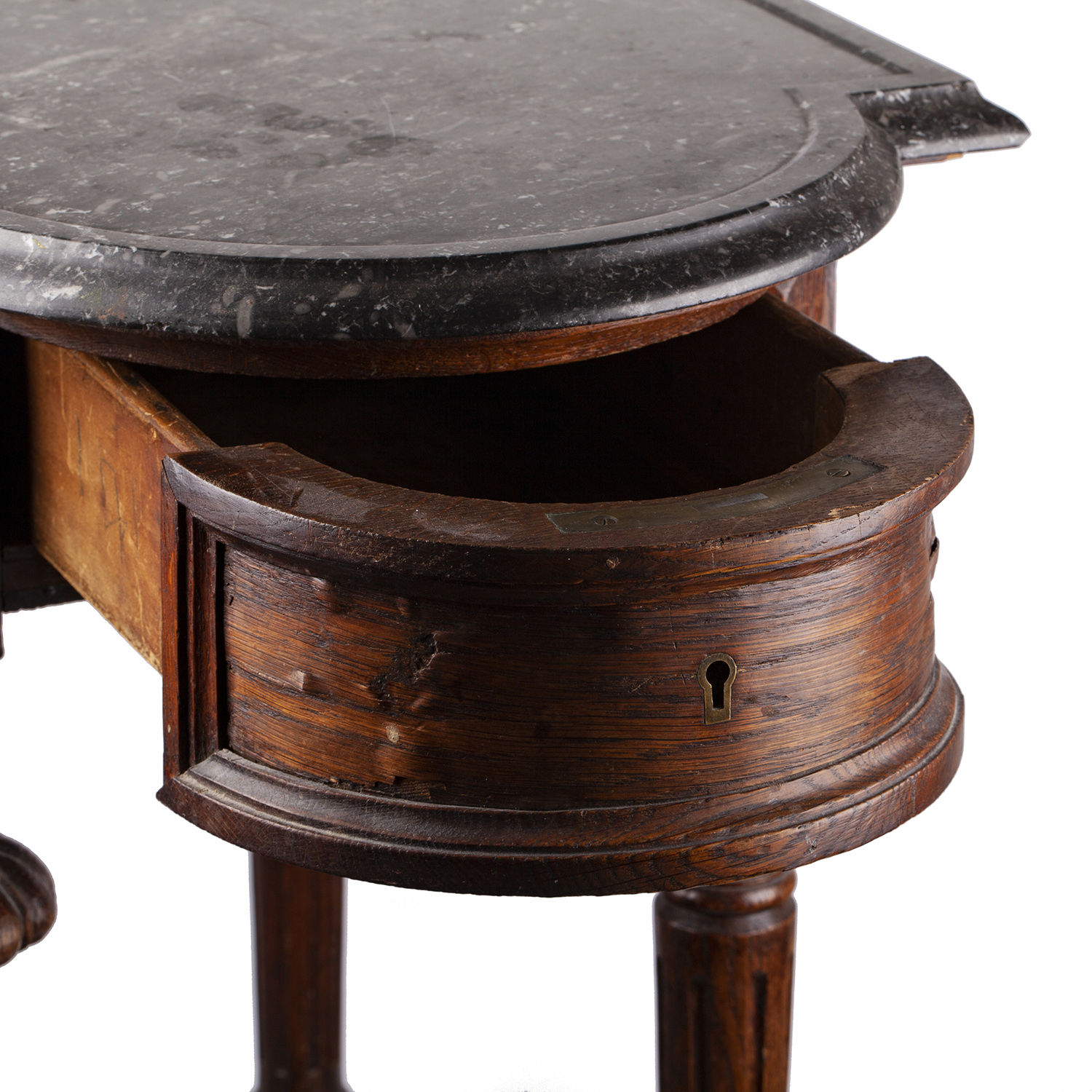
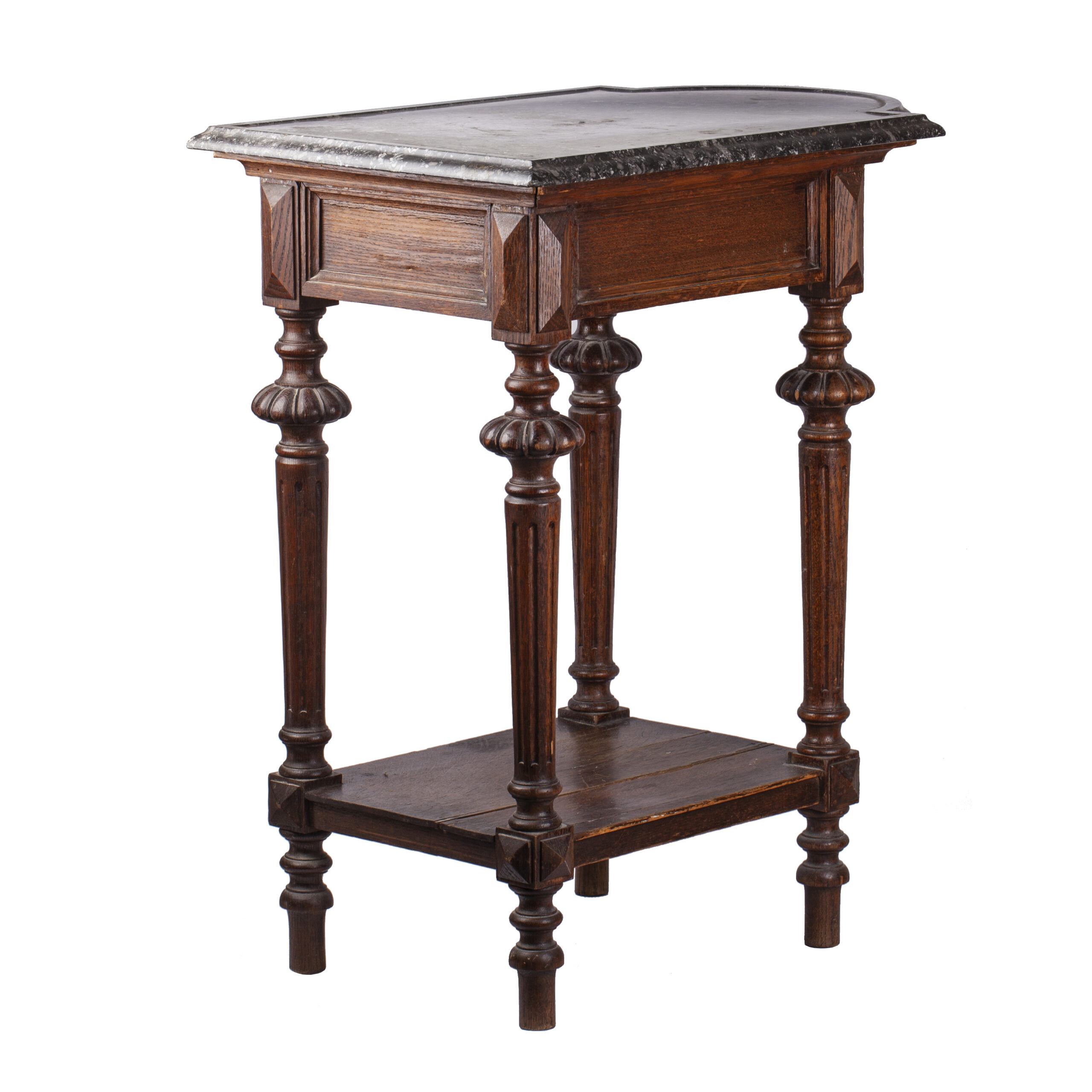
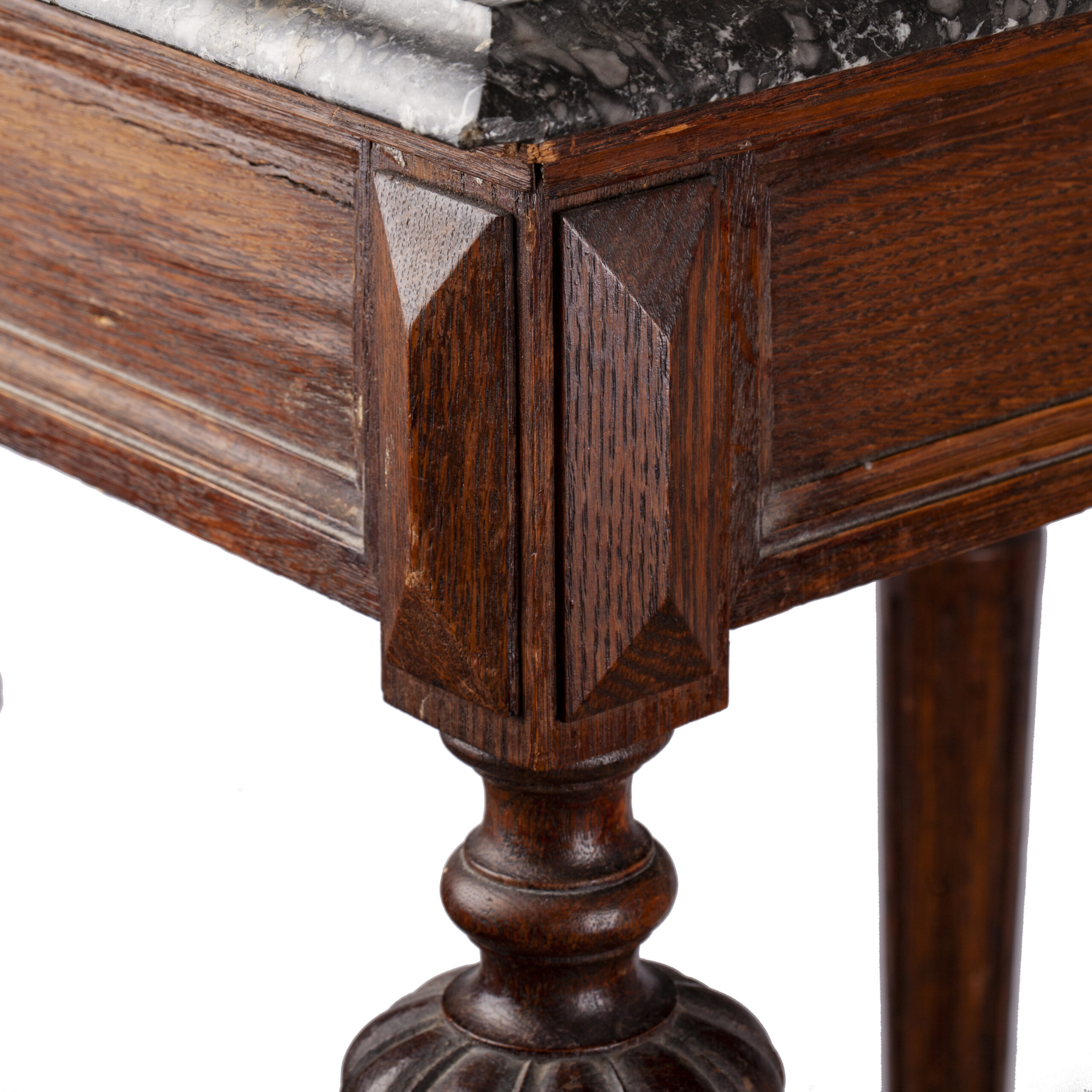
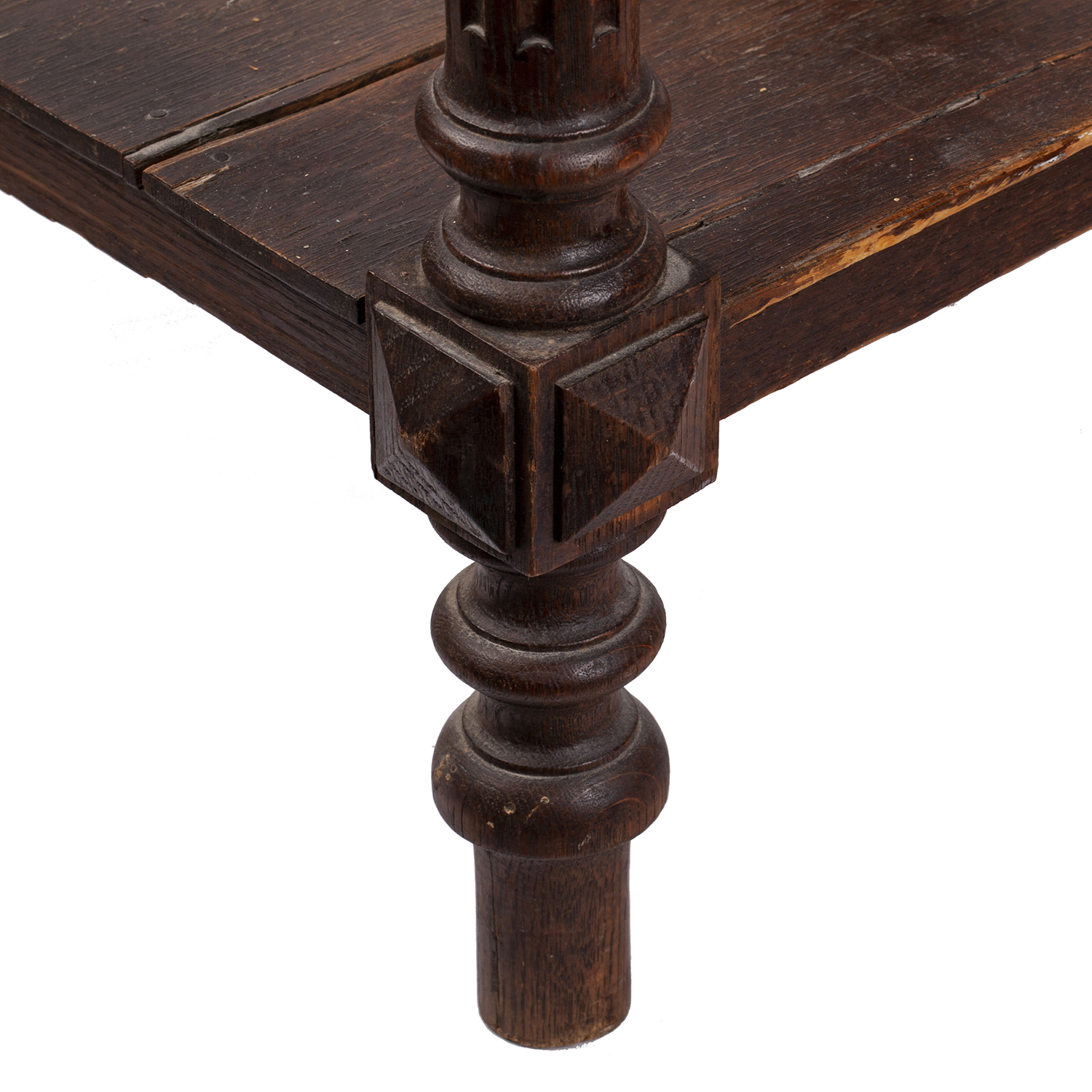
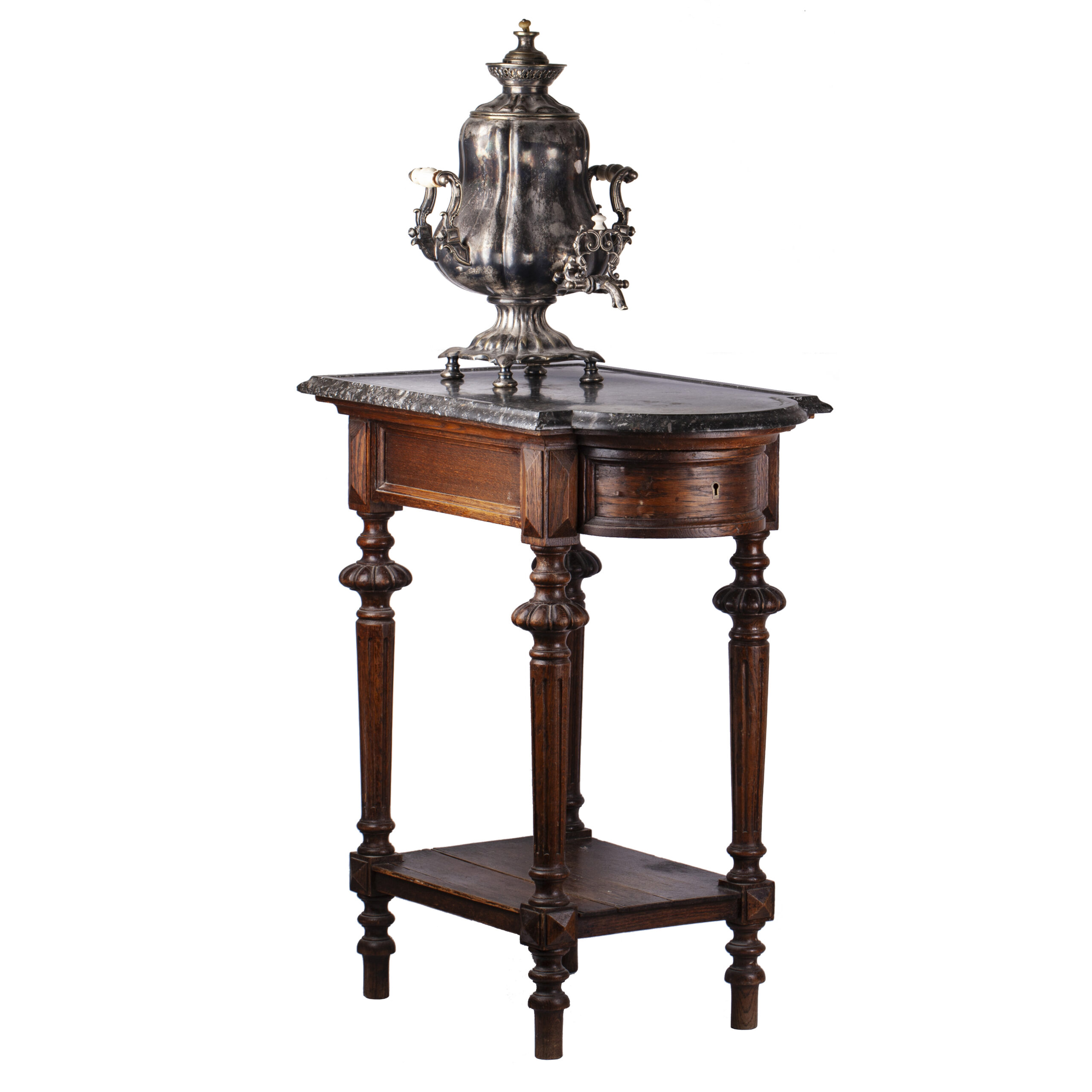
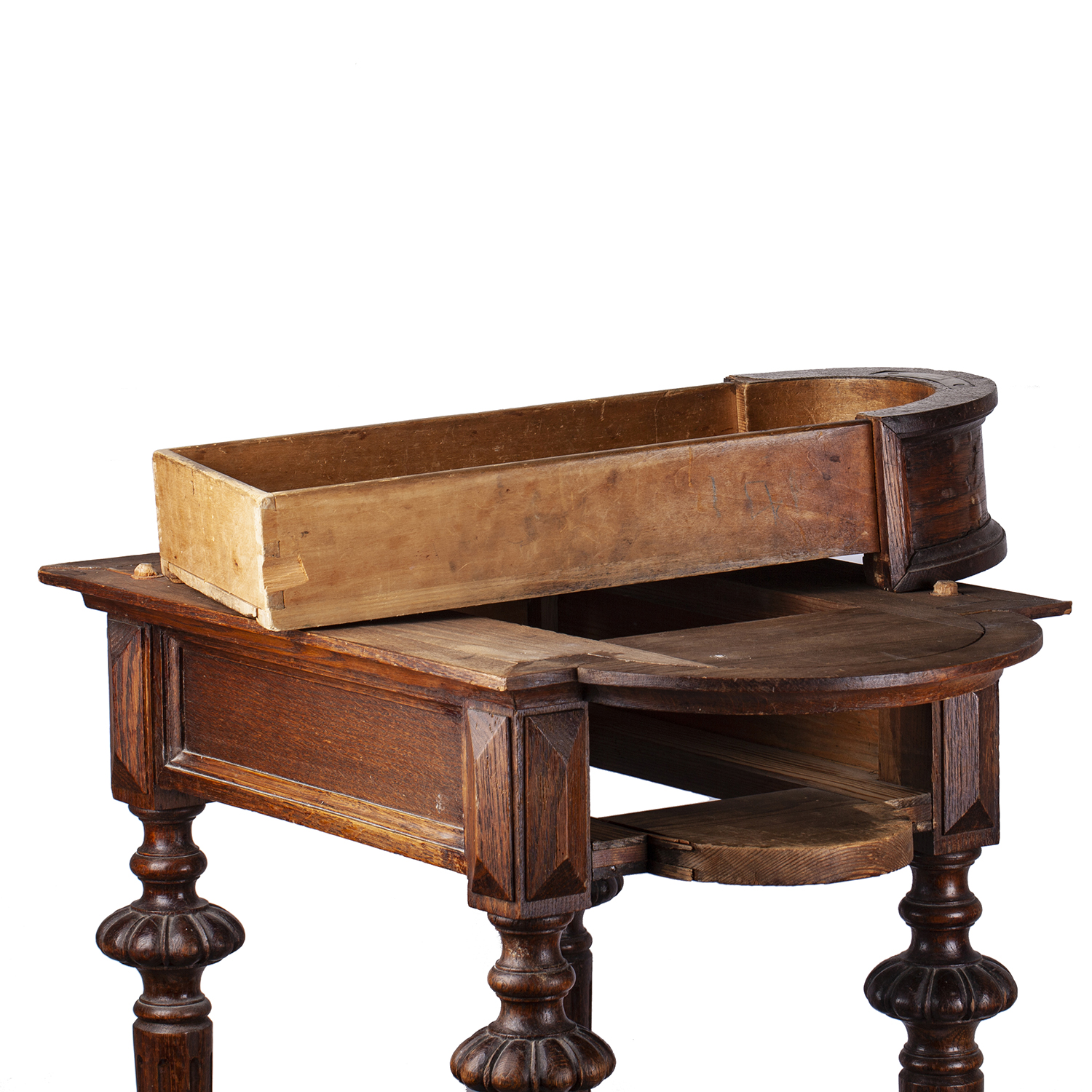
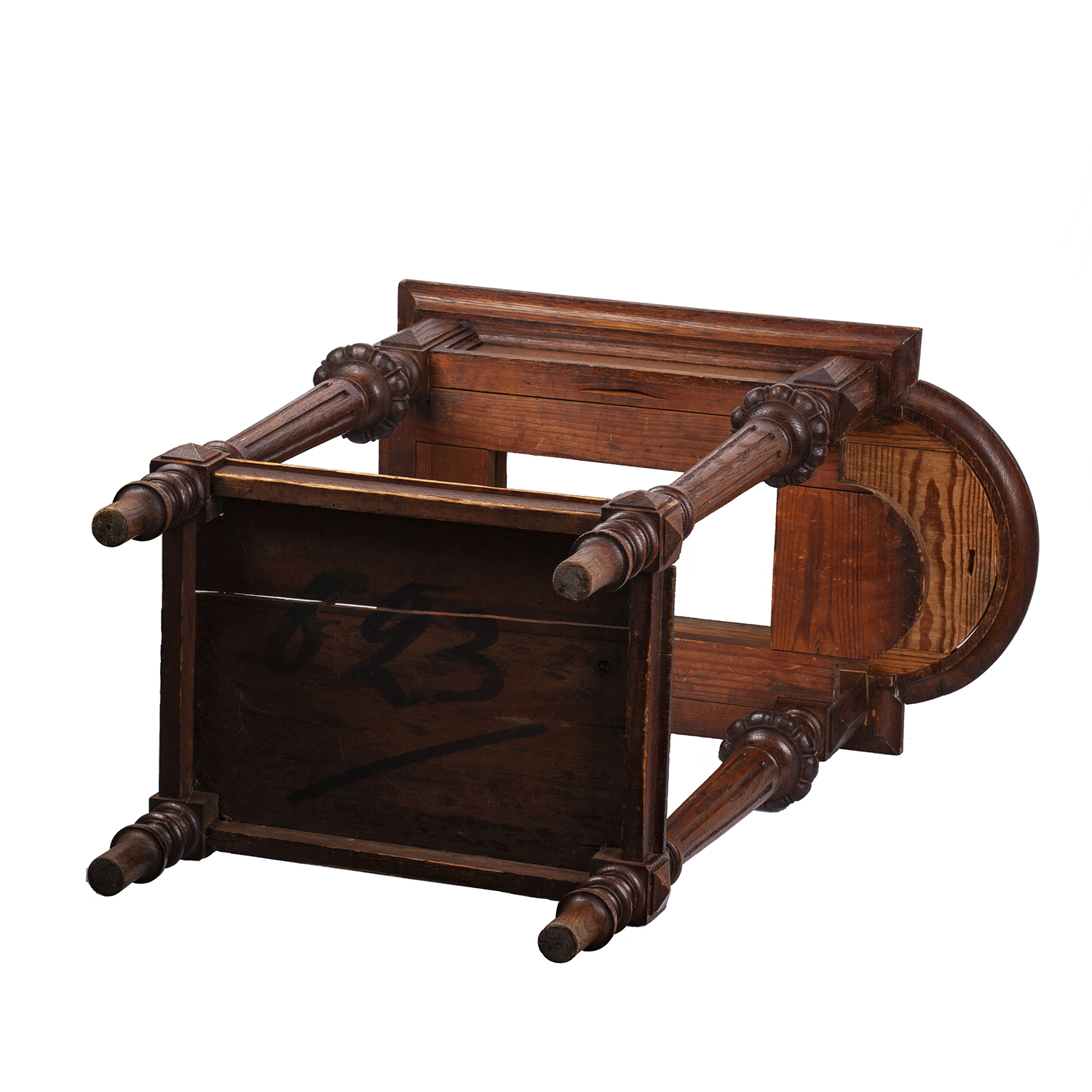
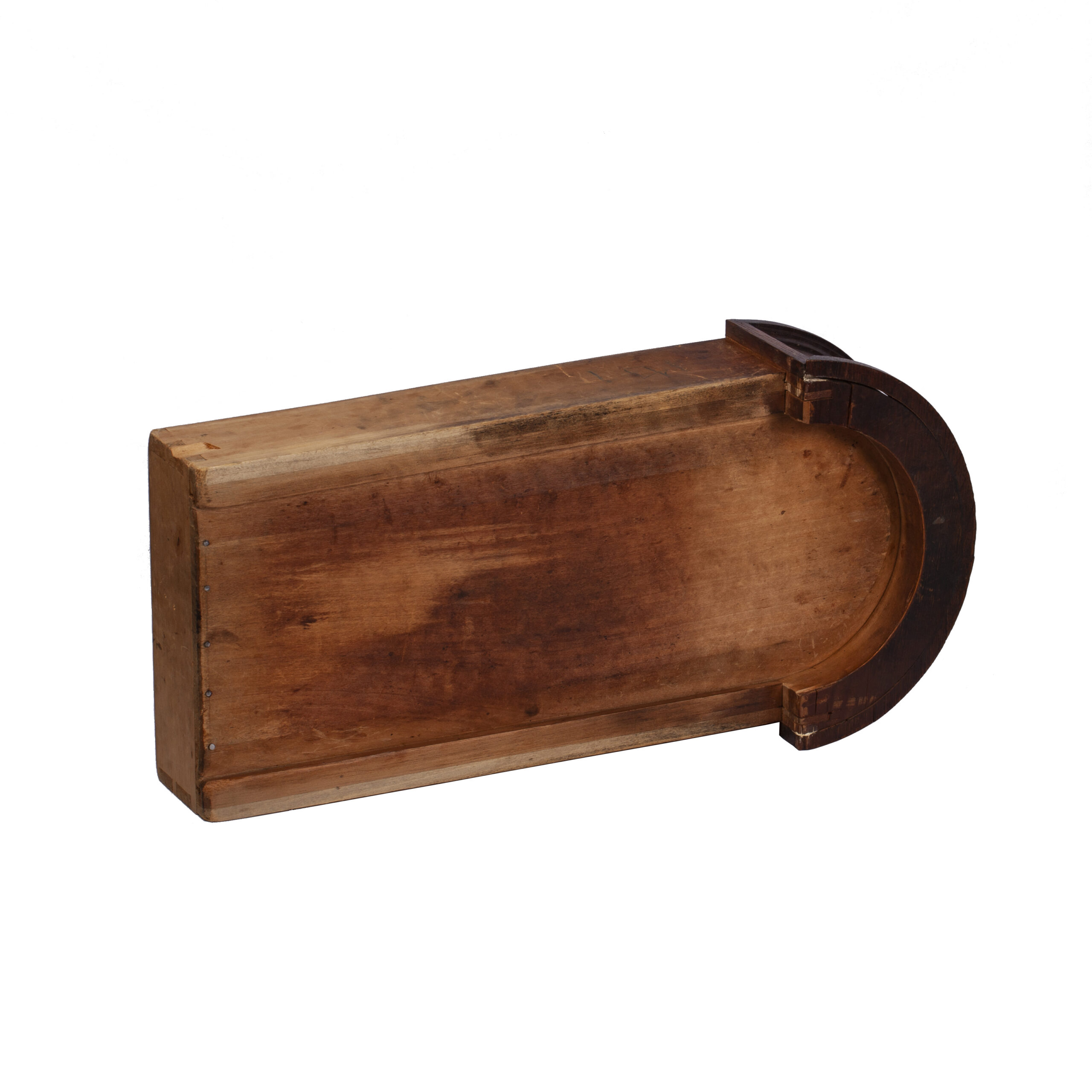
Antique Russian Samovar Table
Estimate: 750-1000€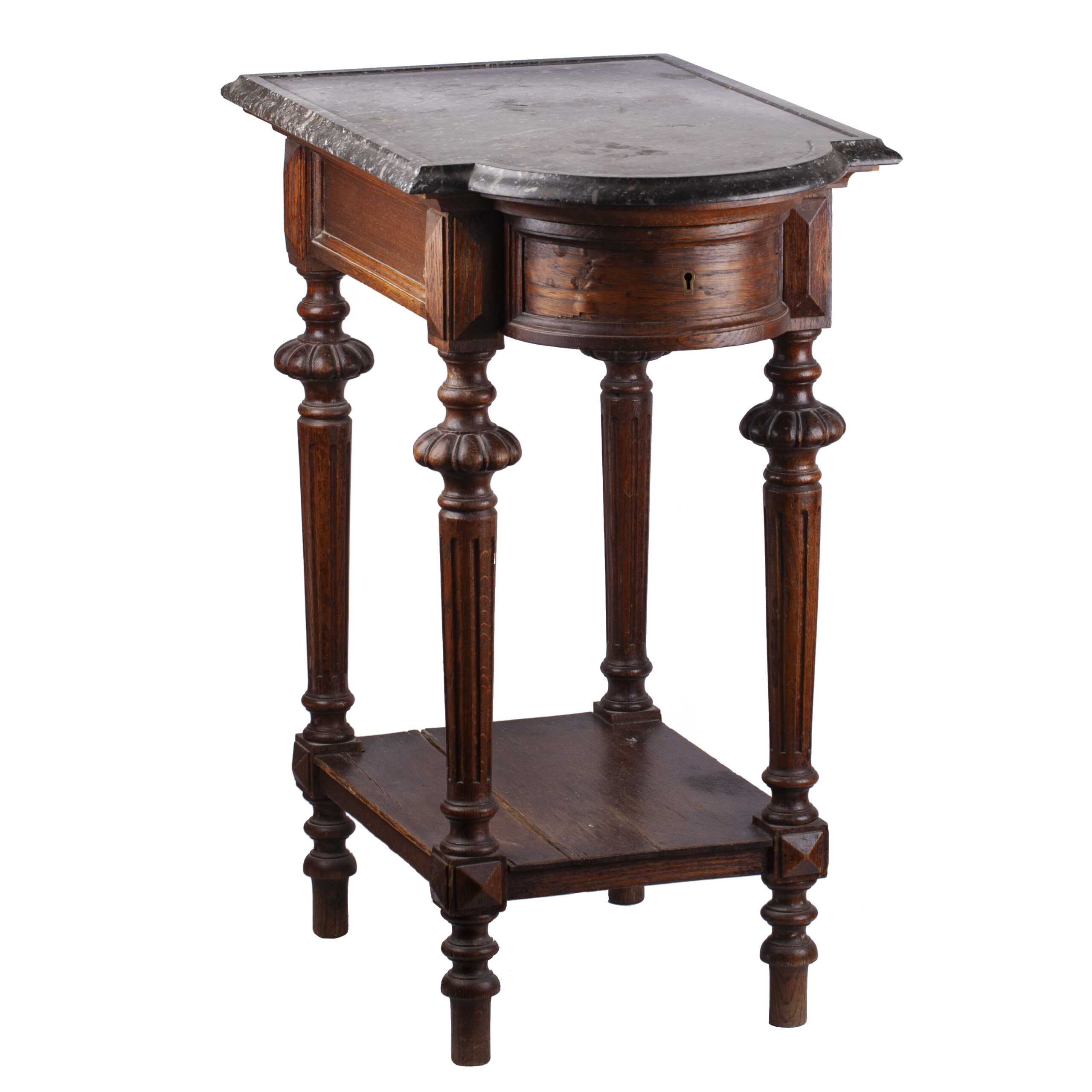

Lot 0189
Antique Russian Samovar Table
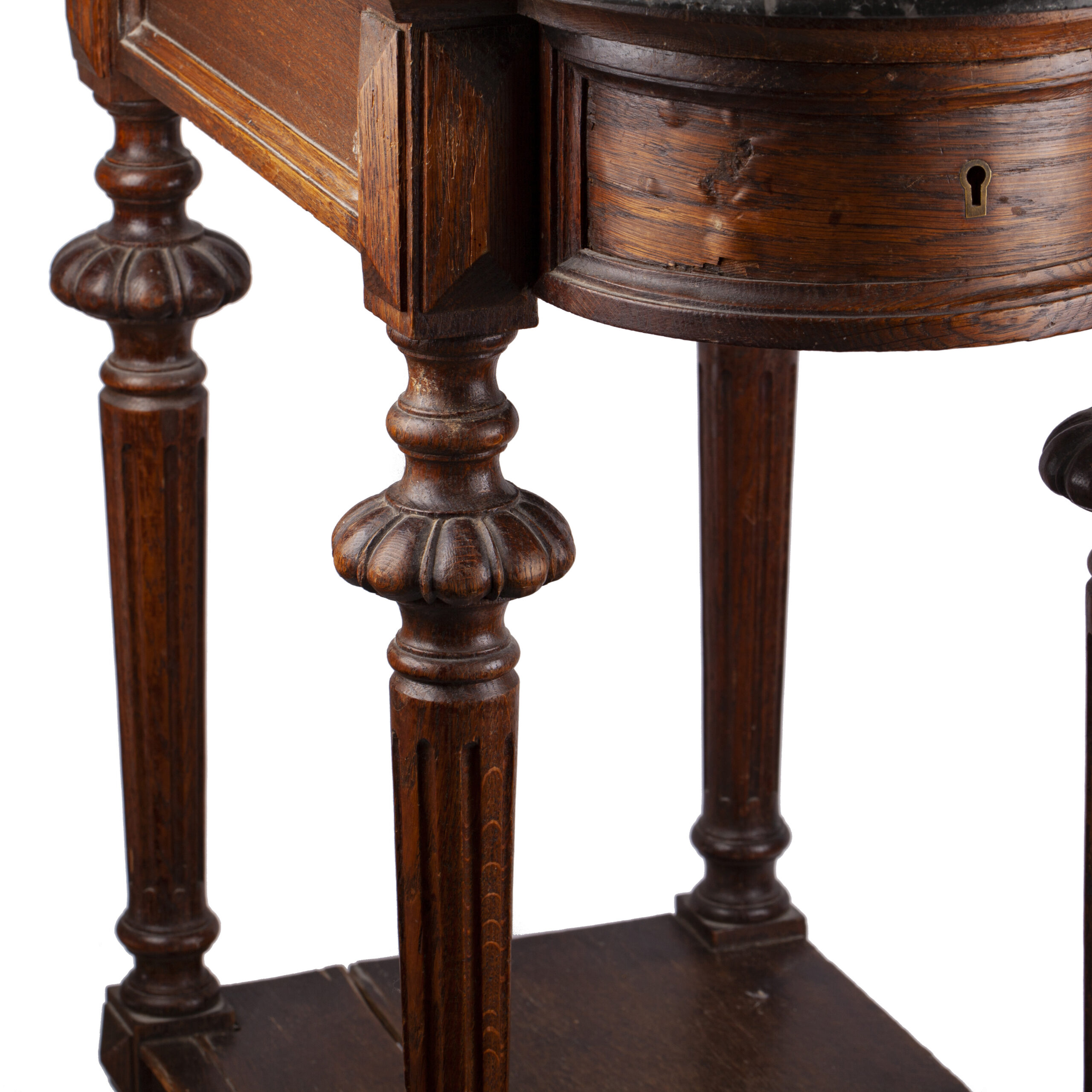
Estimate: 750-1000€Antique Russian samovar table. Wood, marble. The mid of the 19th century.
Dimensions: 77 x 65 x 43 cm.Starting price: 650€
Estimate: 750-1000€
Hammer Price: UNSOLD€