




Lot 0104
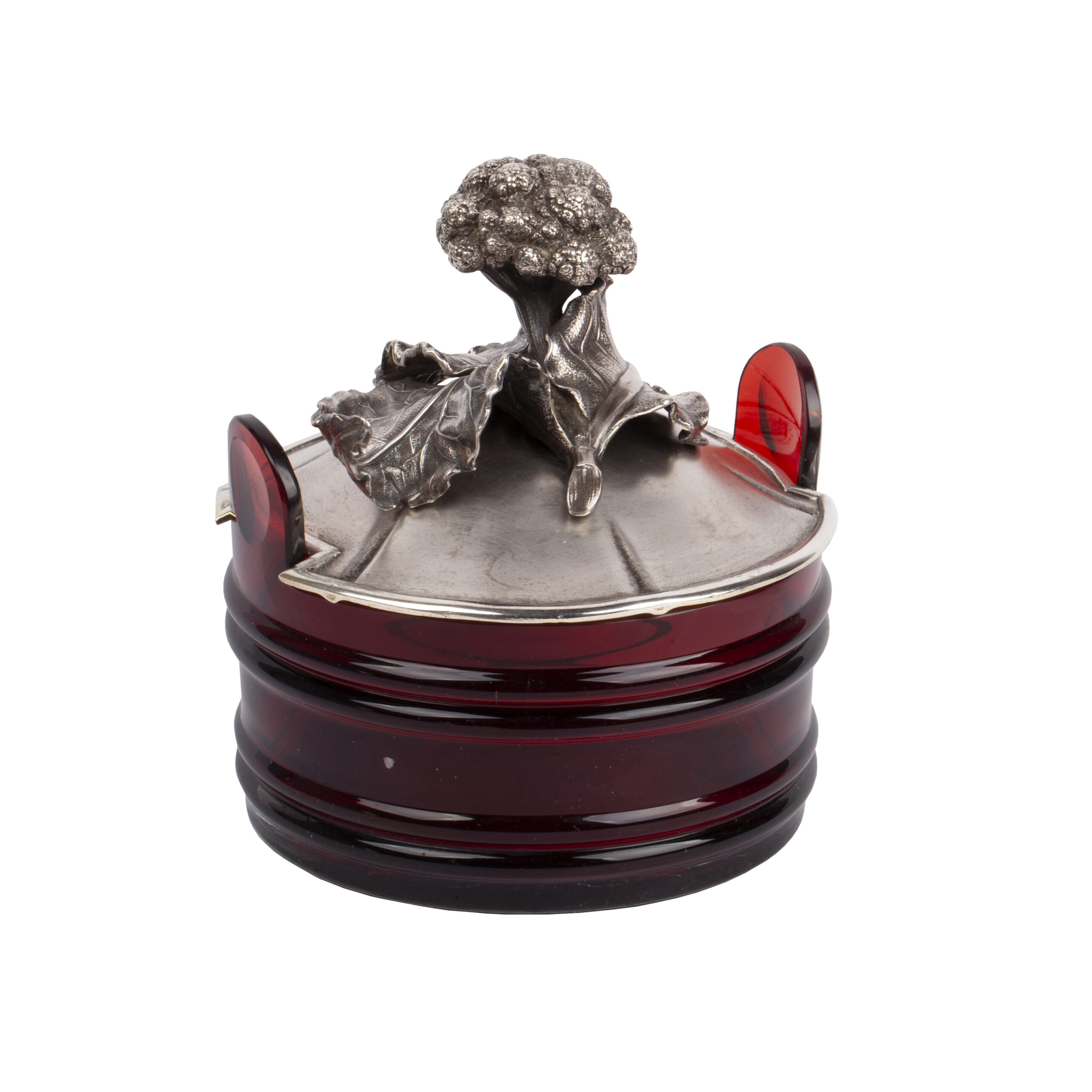
Bragin. Covered Jar in the Form of Ushat
Estimate: 4500-6000€
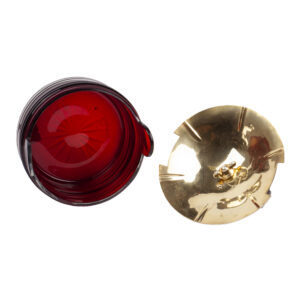
Bragin. Covered jar in the form of ushat.
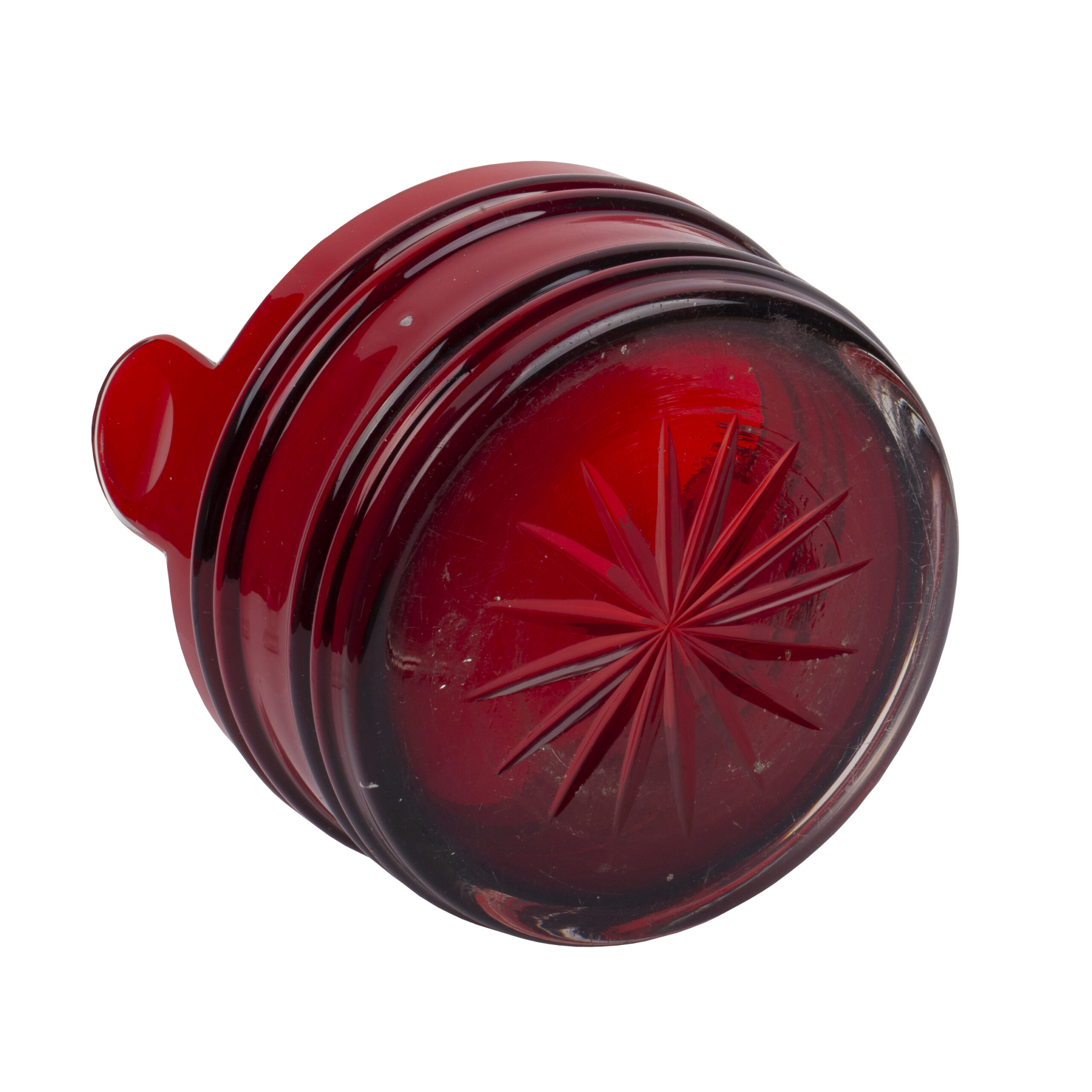
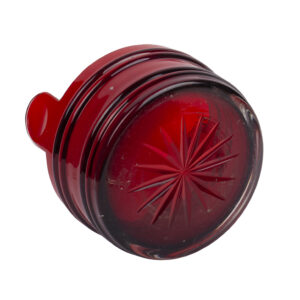
Silver, casting, chasing, gilding, copper-ruby glass.
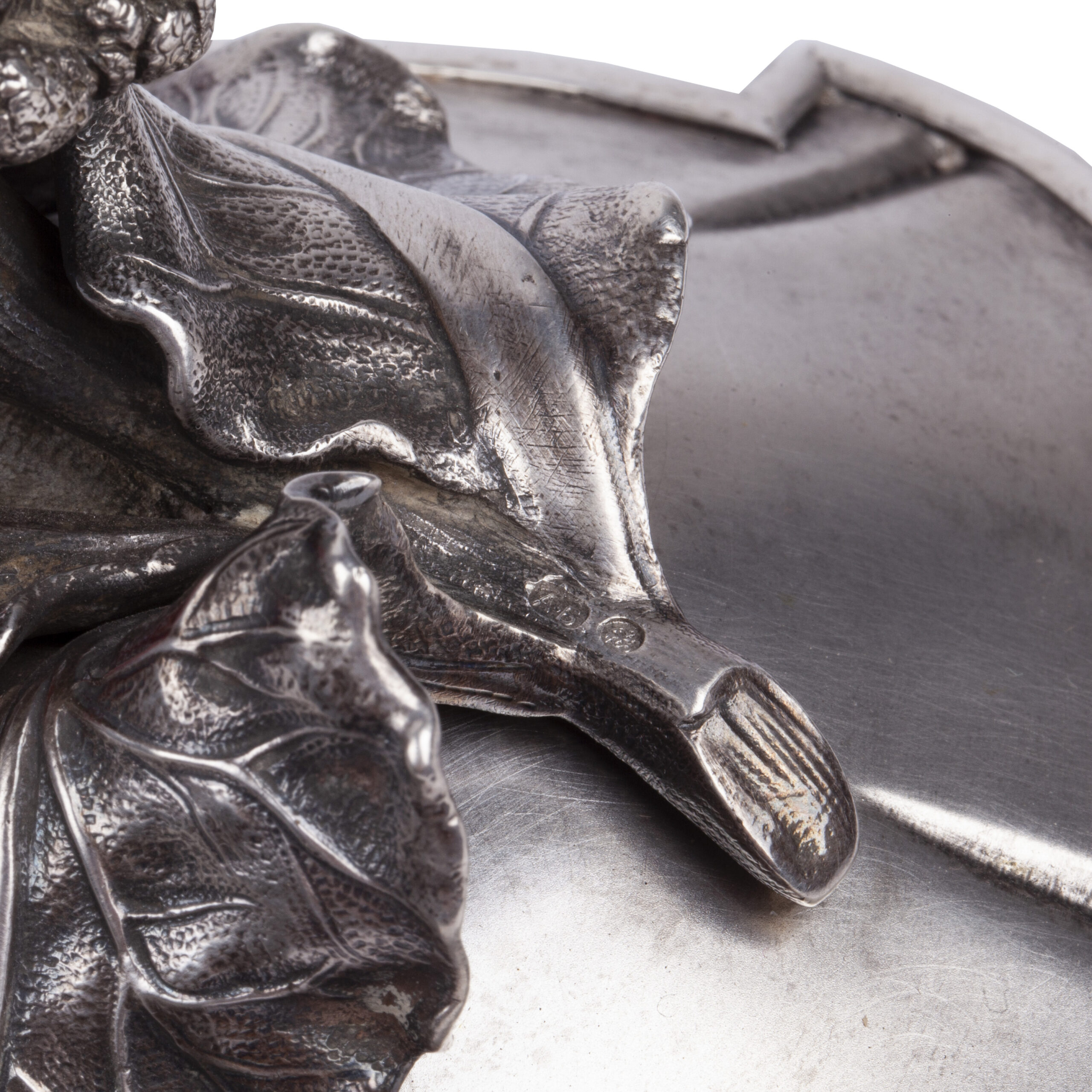
Makers mark of «A.B. Bragin». Petersburg, 1892.
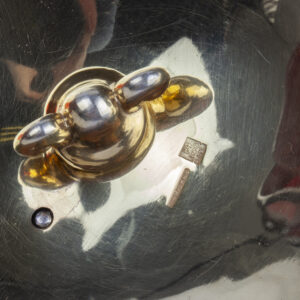
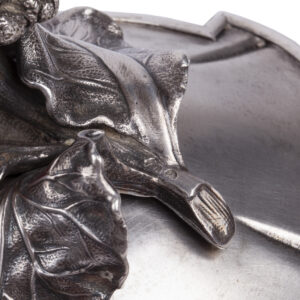
This leaded casket combines deep red copper-ruby glass with finely crafted silver mounts. The lid is topped with a cast silver cauliflower and leaves, serving as both handle and decoration. The transparent red glass body highly like produced by Imperial glass manufactory, shaped in the form of a traditional Russian ushat (water pail).
Andrei Stepanovich Bragin (active late 19th – early 20th century)
A respected St. Petersburg silversmith, Bragin opened his workshop in 1888, producing high-quality silver tableware, flatware, and decorative objects. His pieces, often in the Modern style with Pan-Slavic and natural motifs, gained particular fame for enamelled tea sets inspired by Russian folk embroidery. Though smaller than Fabergé’s firm, Bragin’s workshop earned wide recognition, exhibiting in St. Petersburg and Brussels, and his works are now preserved in major museums and collections. Dimensions: 16.5 x 14.5 x 14.5 cm. Total weight of the lid: 430 g.
Starting price: 3500€
Estimate: 4500-6000€
Hammer Price: UNSOLD€
Related Lots
-
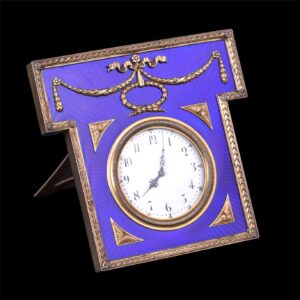
Lot 0102
Extremely Rare Faberge Desk Clock in the Original Case by Mikhail Perchin
Estimate: 45000-65000€


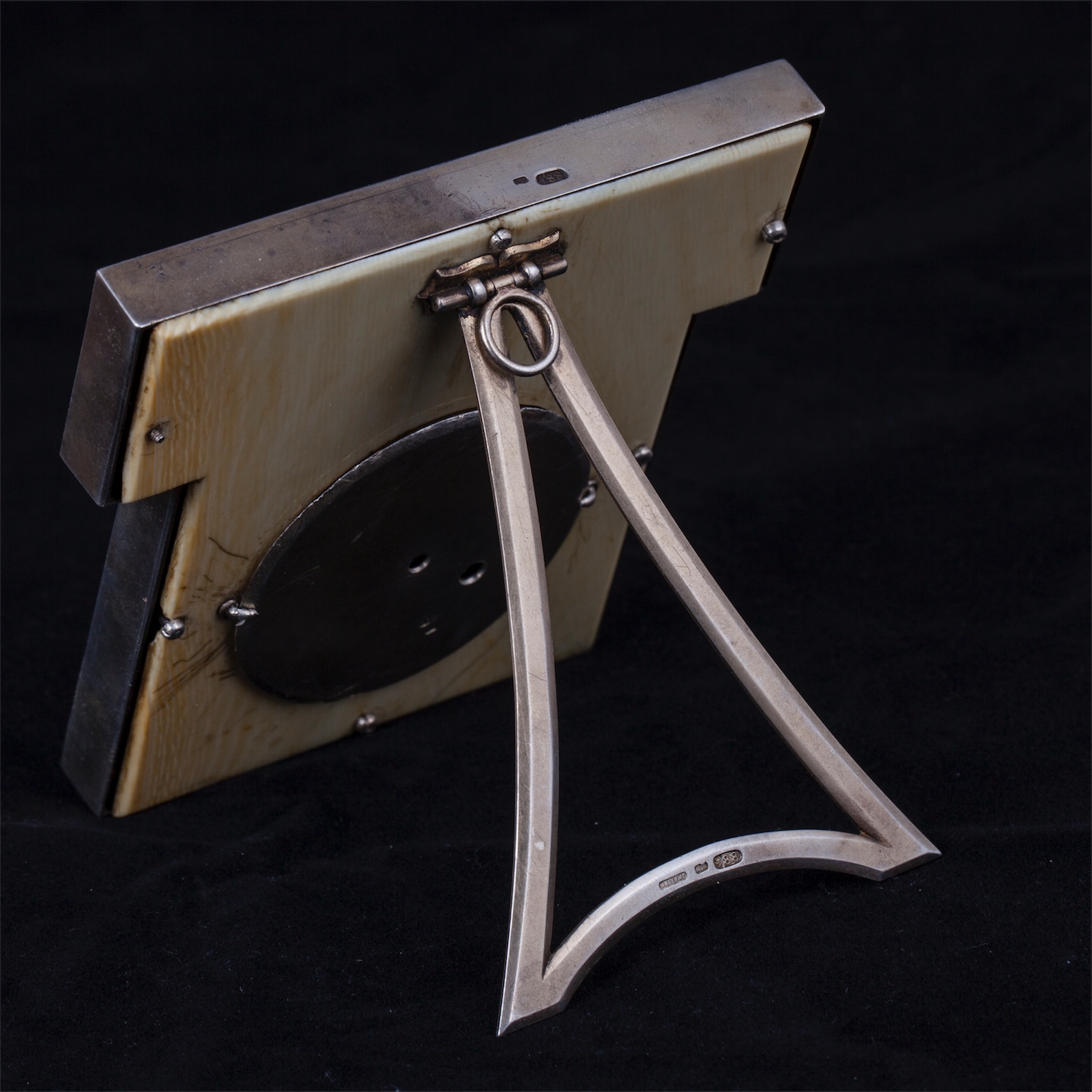
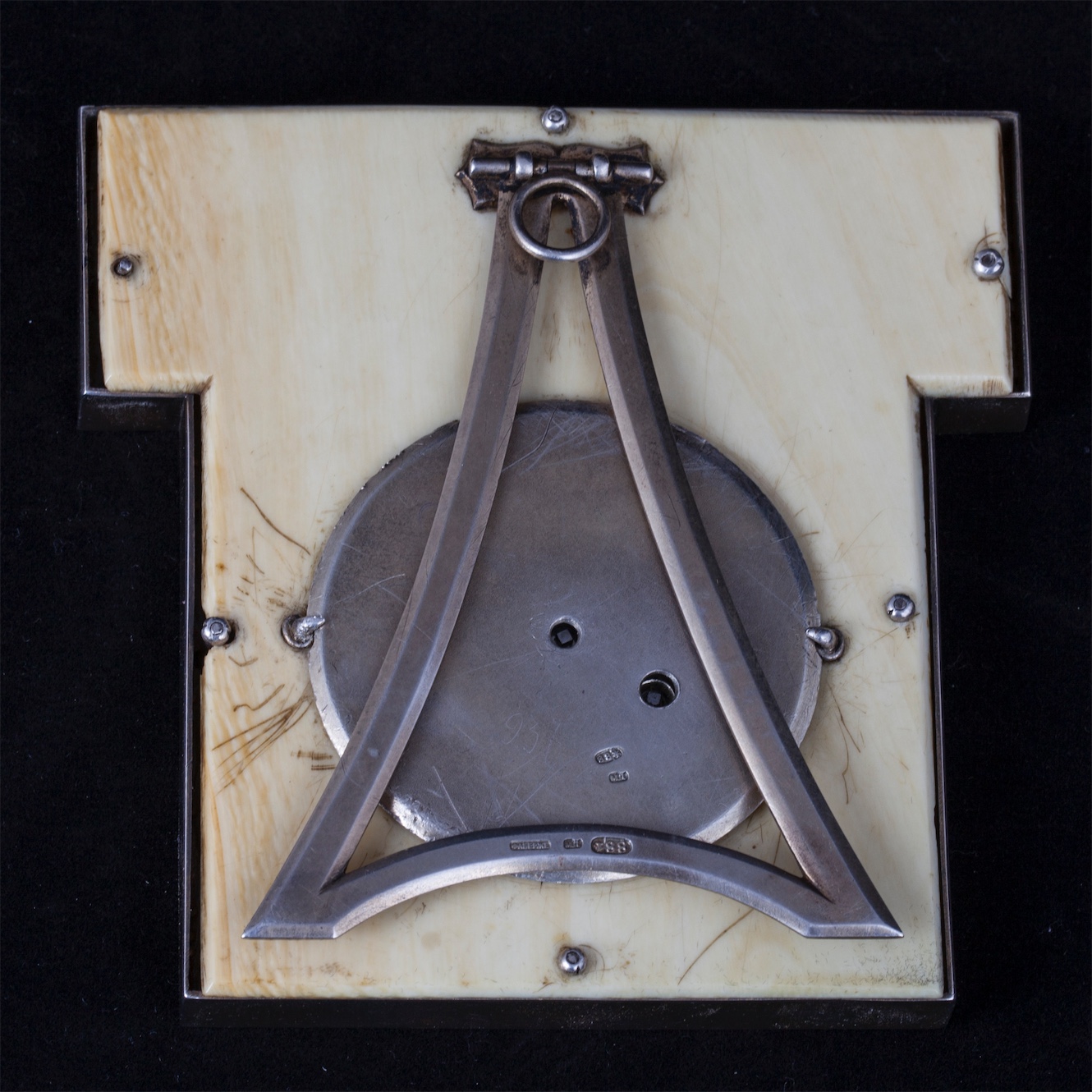

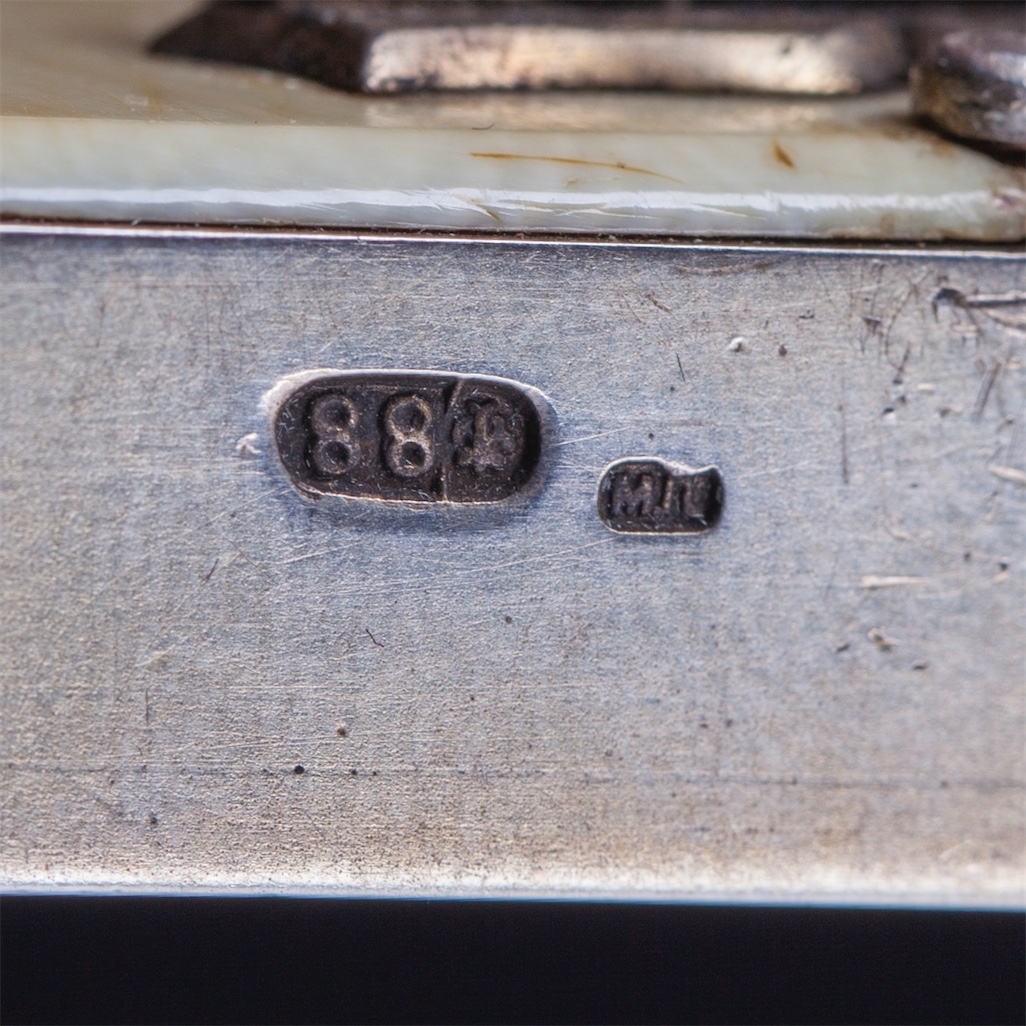
Lot 0102
Extremely Rare Faberge Desk Clock in the Original Case by Mikhail Perchin
Estimate: 45000-65000€An Extremely Rare Fabergé Desk Clock in the Original Case
Workmaster Mikhail Perchin (1860–1903), Fabergé.
Petersburg, late 19th century
Scratched inventory number: 937
Dimensions: 10.2 × 10.4 cmOf shaped rectangular form, enamelled in translucent pale blue over an engine-turned guilloché ground, within a finely chased acanthus border, the corners decorated with gilt triangular rosettes and suspended laurel swags. The circular white enamel dial with Arabic numerals and pierced blued-steel hands is surrounded by a reeded gold bezel. Contained in its original fitted Fabergé case stamped with the Imperial warrant and K. Fabergé, St. Petersburg.
Mikhail Perchin (1860–1903) was one of the most important goldsmiths of the House of Fabergé. Born in the Olonets province of Russia, he moved to St. Petersburg at seventeen, apprenticed with the jeweler Vladimir Finikov of the Bolin firm, and became a certified master goldsmith in 1884.
By 1888, with Carl Fabergé’s support, Perchin opened his own workshop, which employed up to sixty craftsmen. From his workshop came the most celebrated Imperial Easter Eggs—twenty-eight of the fifty commissioned by Emperors Alexander III and Nicholas II—including the Rosebud (1895), Coronation (1897), Lilies of the Valley (1898), and Cockerel (1900) eggs.
Beyond the Imperial commissions, Perchin’s studio produced exquisite presentation gifts, frames, clocks, and objets de fantaisie, marked by his elegant taste, subtle enamel work, and technical perfection. He collaborated closely with miniature painters, lapidaries, and enamellers, setting a standard that defined Fabergé’s golden era.
Perchin’s career was tragically short—he died in 1903 at the age of forty-three—but his artistic legacy shaped Fabergé’s aesthetic identity. After his death, his pupil and close friend Henrik Wigström (1862–1923) took over his workshop, continuing its exceptional output for the Imperial Court.
Comparable Works:
A closely related Fabergé desk clock by Mikhail Perchin, in pale blue guilloché enamel with laurel swags, was sold at Christie’s, The Private Collection of Joan Rivers, New York, 22 October 2016, lot 45.Starting price: 40000€
Estimate: 45000-65000€
Hammer Price: 32500€ -

Lot 0103
Imperial Stroganov School. Bonbonnière with enamel miniature after Boris Kustodiev
Estimate: 3500-4500€


Lot 0103
Imperial Stroganov School. Bonbonnière with enamel miniature after Boris Kustodiev
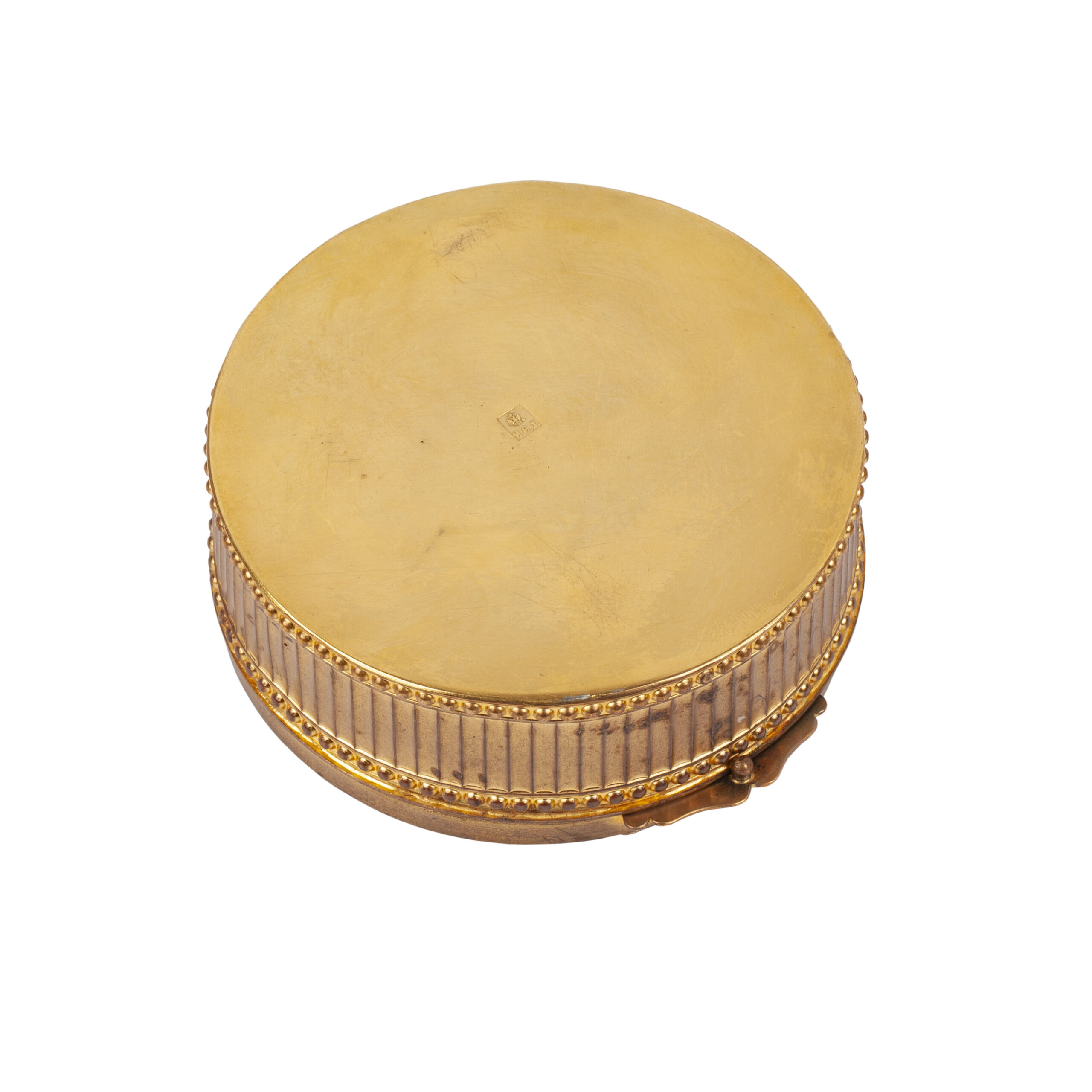
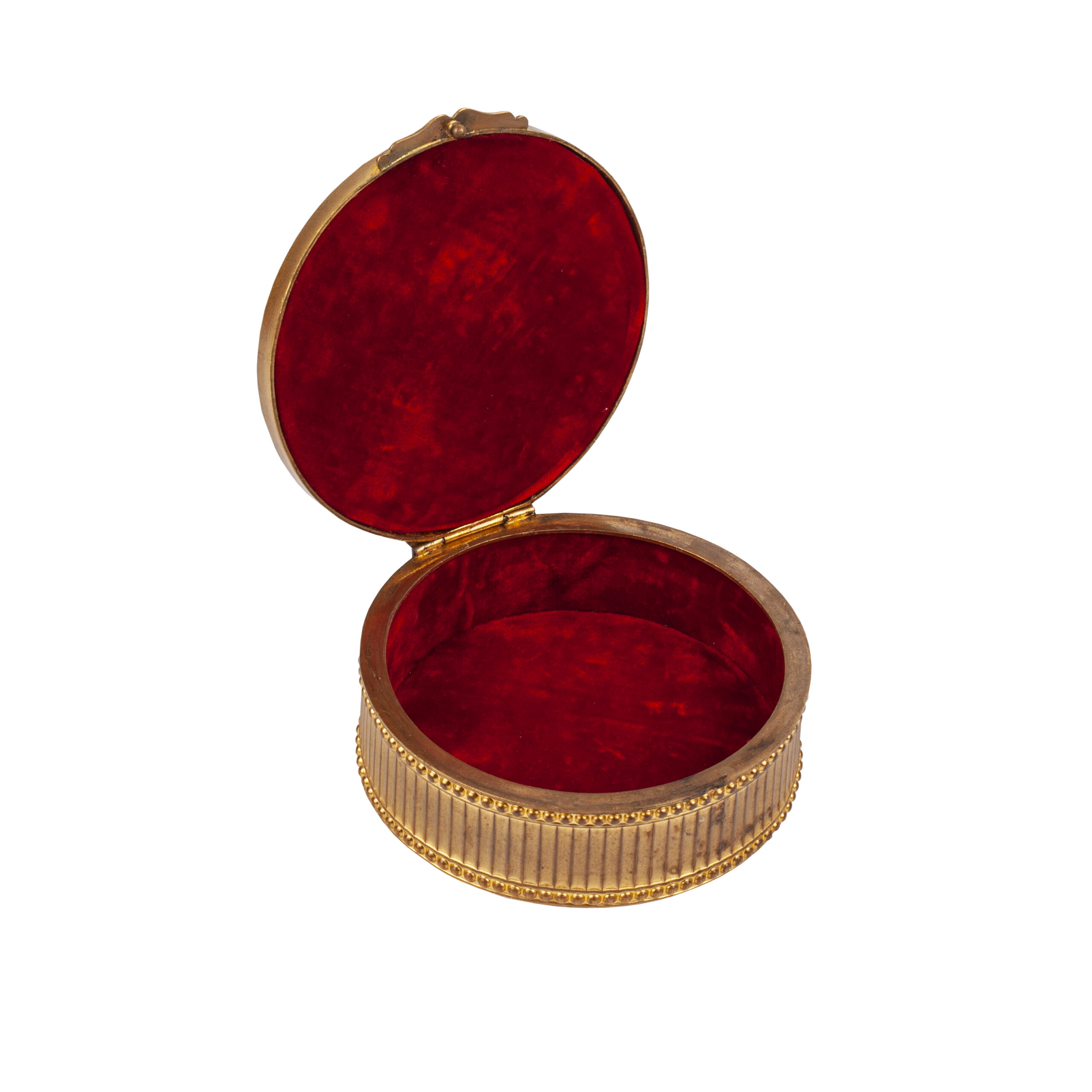
Estimate: 3500-4500€Imperial Stroganov school. Bonbonnière with enamel miniature. Metal, parcel-gilt, cloisonné and en plein enamel
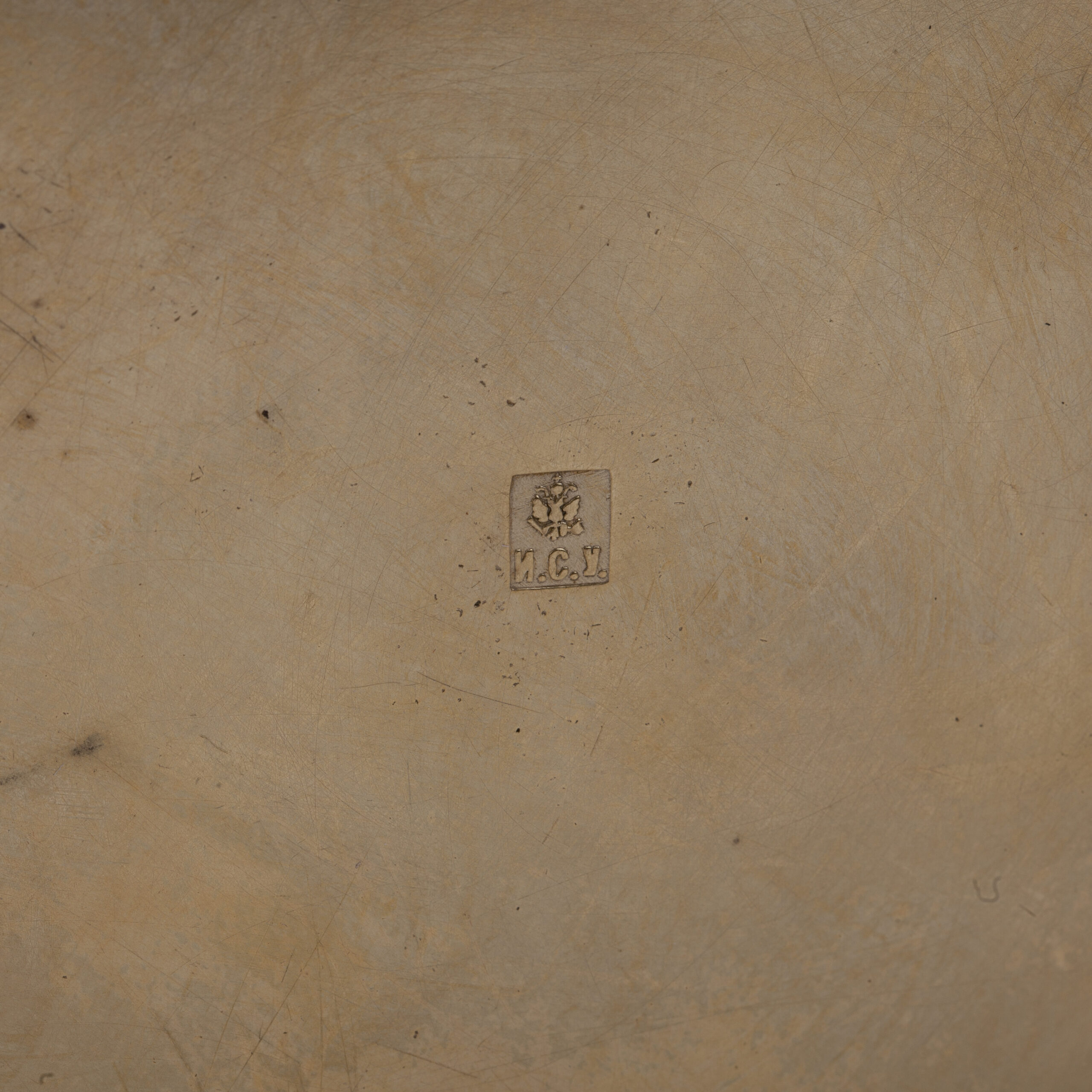
Makers mark of «ISU» with Imperial warrant. Moscow, circa 1900s.
Diameter: 11 cm.
Height: 5 cm.This circular bonbonnière is decorated with a en plein enamel miniature after Boris Kustodiev’s celebrated painting Merchant’s Wife at Tea. The image of the stately beauty at a richly laid tea table, surrounded by fruit and a samovar, became one of the iconic motifs of the Russian Revival in early 20th-century art. The miniature is framed by elaborate cloisonné enamel ornament with stylized floral motifs, characteristic of the Stroganov workshops.
The Imperial Stroganov School, founded in Moscow in 1825 by Count Sergey Grigorievich Stroganov (1794–1882), had become by the end of the 19th century one of Russia’s leading centers of art and design education. The School maintained 29 specialized workshops, equipped with the most advanced technology of the time. Works by its students and masters were exhibited at both national and international exhibitions, sold through the School’s own shop, and enjoyed wide popularity.Starting price: 2500€
Estimate: 3500-4500€
Hammer Price: 3500€ -
Lot 0105
Russian Enamelled Copper Bowl Usolye (Solvychegodsk),18th century
Estimate: 5000-7000€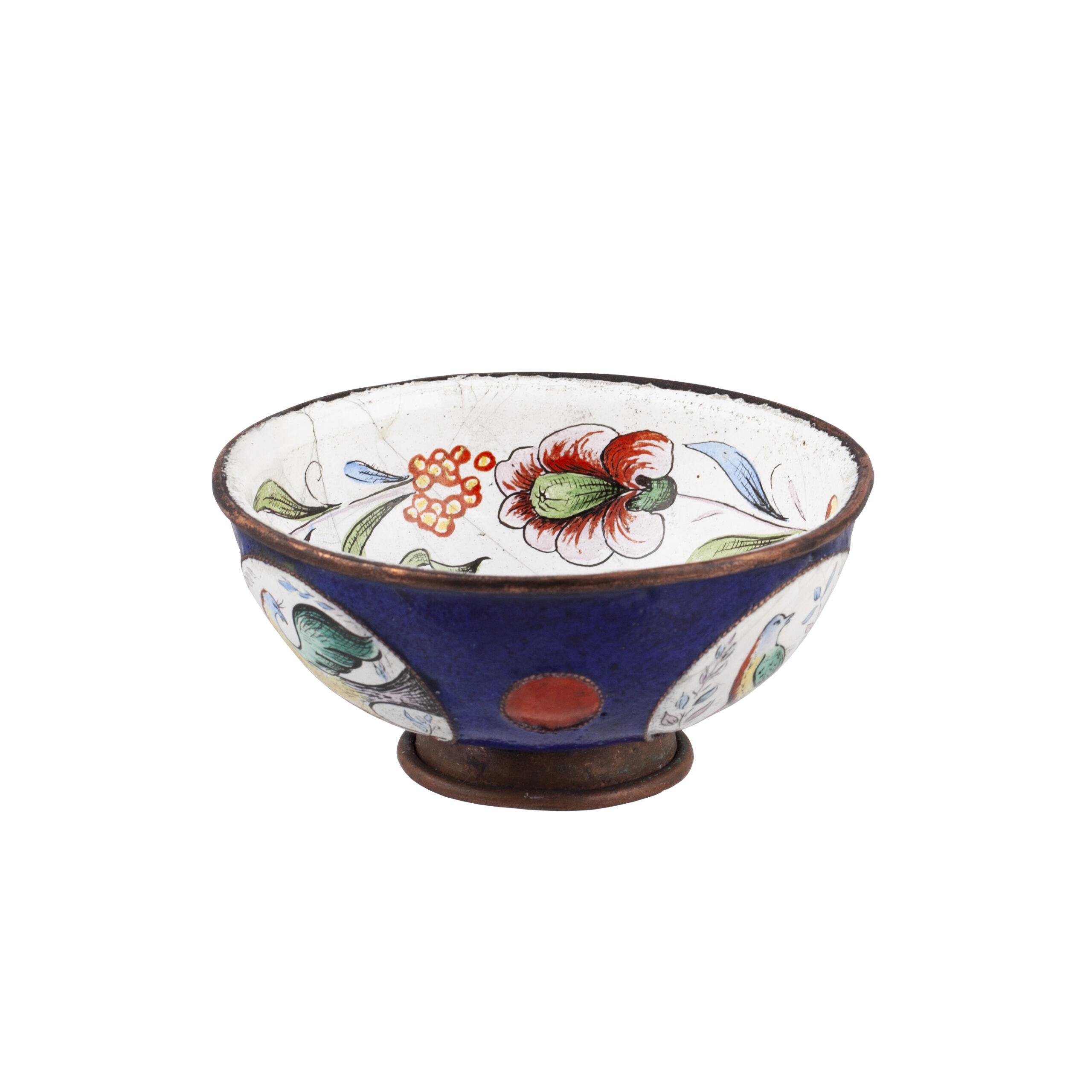
Lot 0105
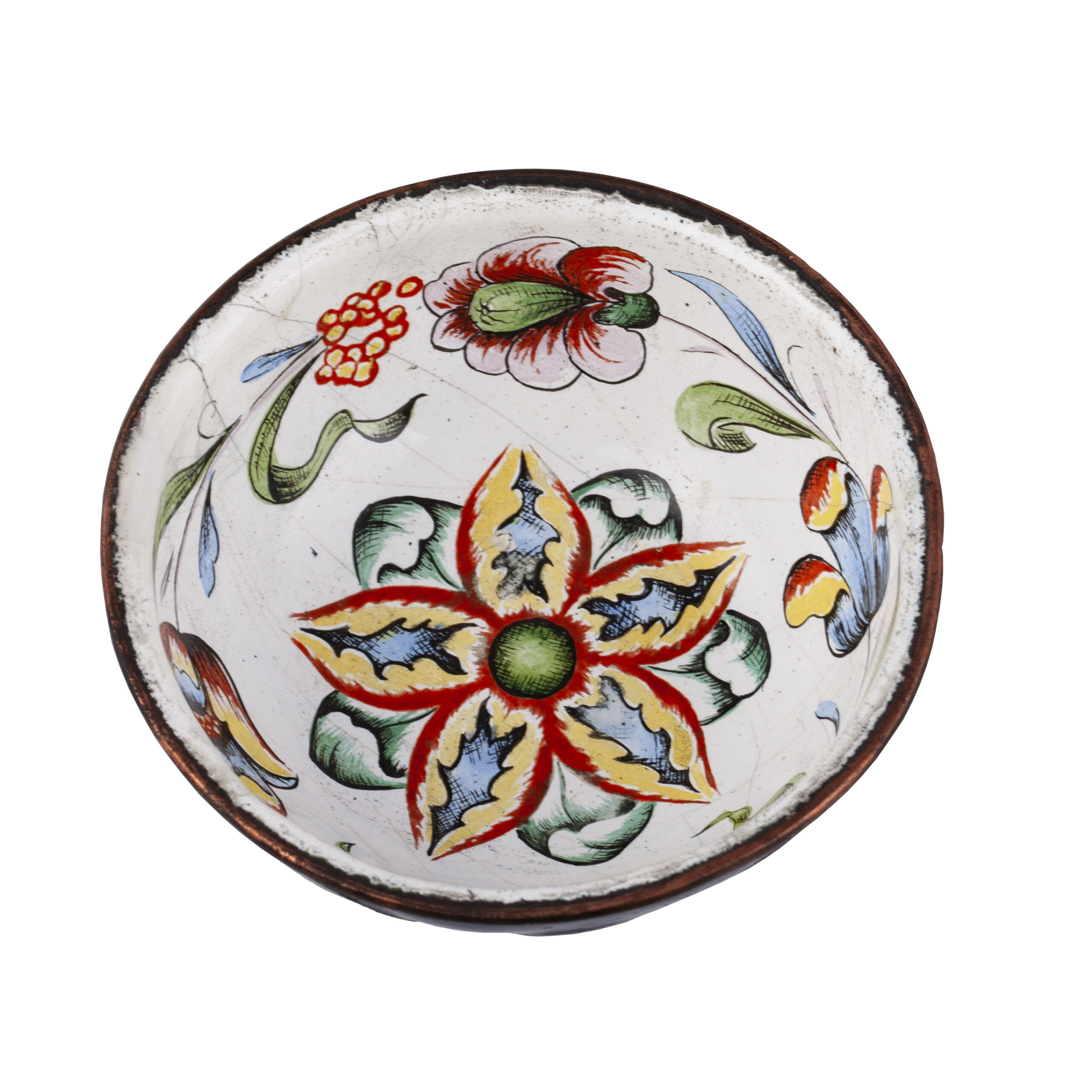
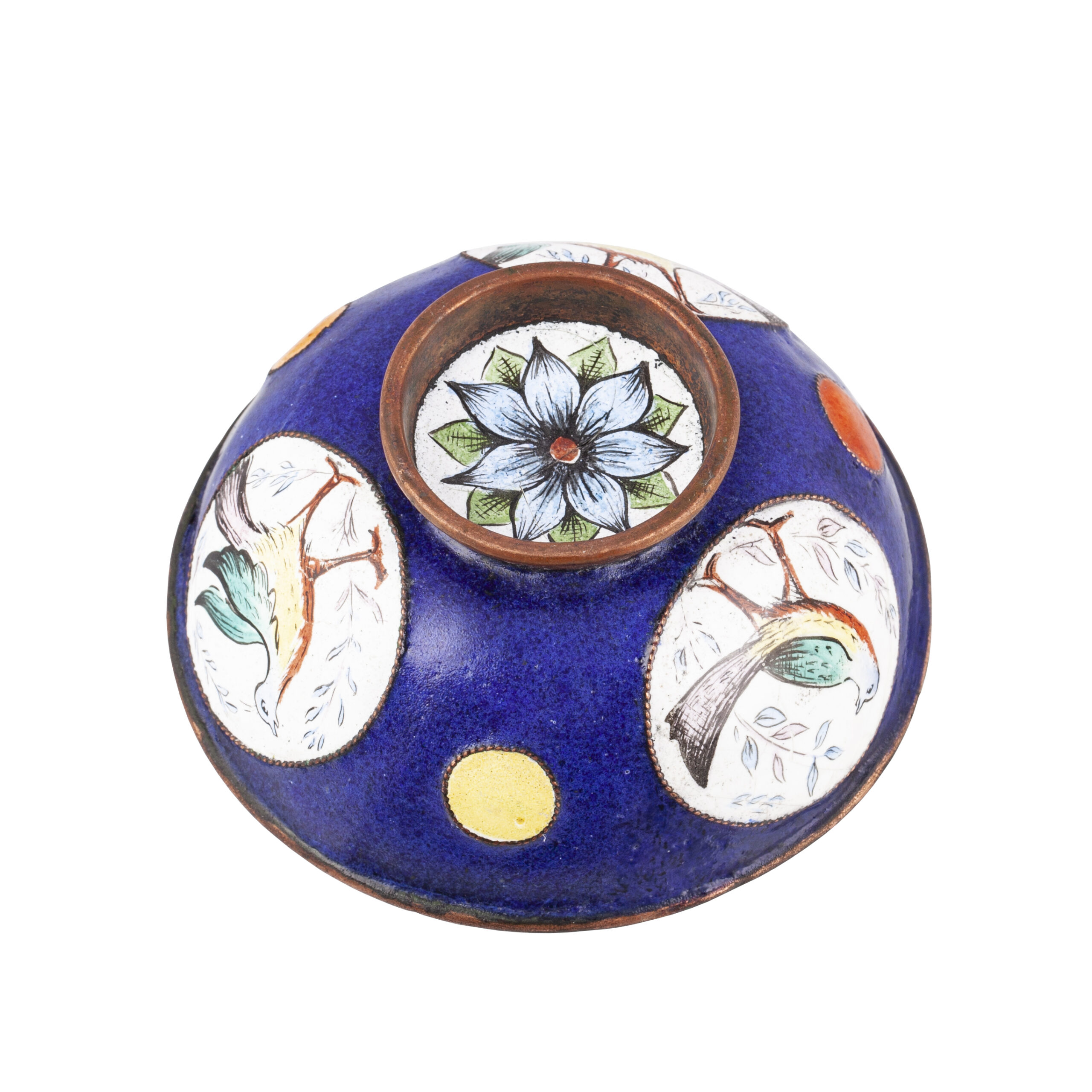
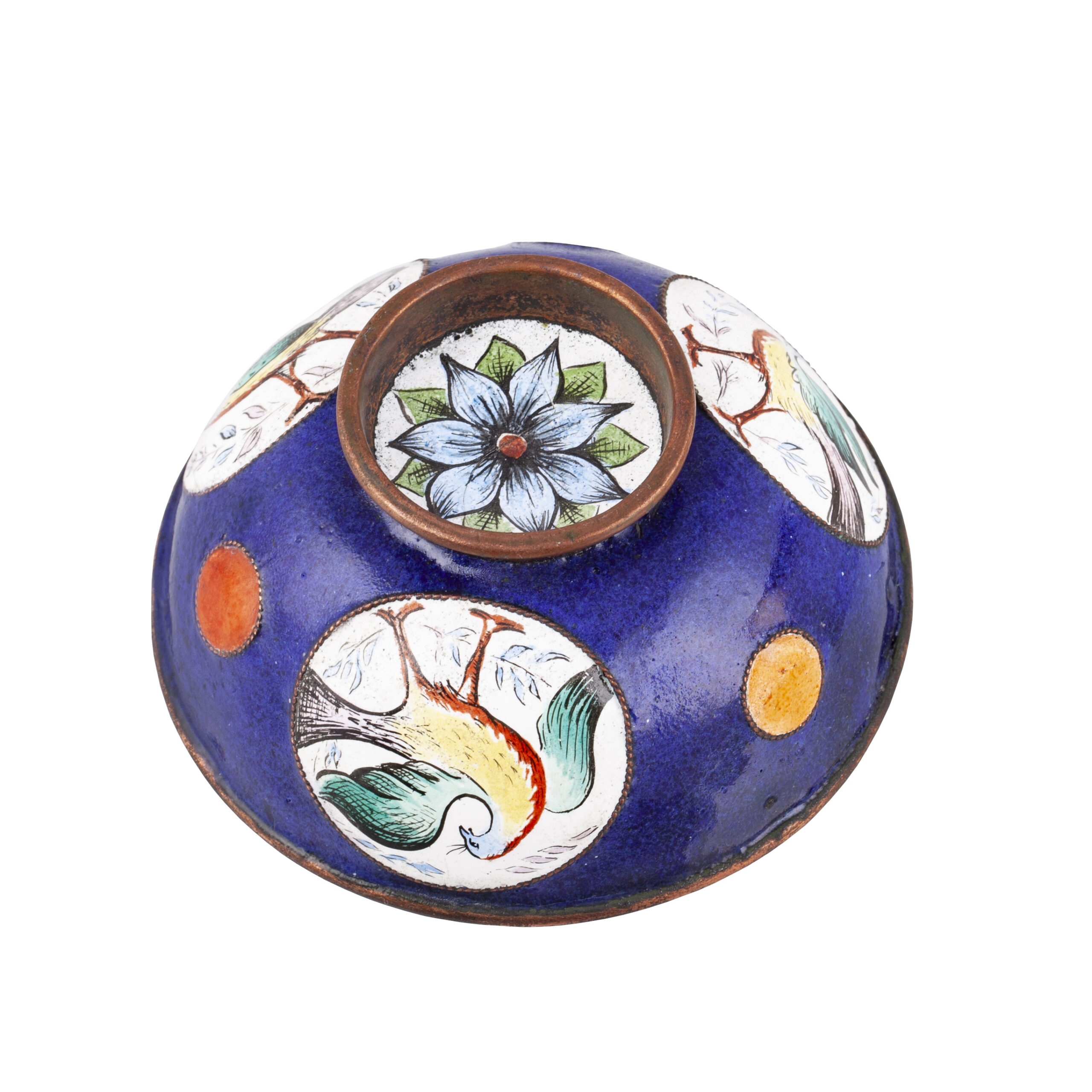
Russian Enamelled Copper Bowl Usolye (Solvychegodsk),18th century
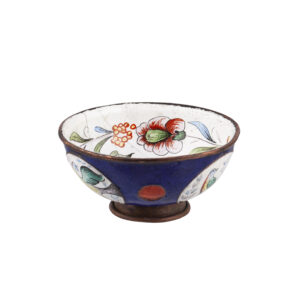
Estimate: 5000-7000€A Russian Enamelled Copper Bowl
Usolye (Solvychegodsk),18th century
Dimensions: 4.5 х 9.5 х 9.5 cm.Finely painted in polychrome enamel with stylized floral and bird motifs on a white ground, framed by circular and oval medallions against a deep cobalt-blue background. The composition combines strong color contrasts and rhythmic ornament, characteristic of the celebrated Usolye enamel tradition of northern Russia.
Usolye (then known as Solvychegodsk) emerged as one of the principal centers of Russian enamel art in the sixteenth and seventeenth centuries, founded under the patronage of the Stroganov merchant family. The early workshops, originally staffed by Novgorod craftsmen, developed a distinct regional style distinguished by vivid color palettes and expressive linework.
By the mid-seventeenth century, Usolye enamellers mastered painted enamel on copper, depicting large-scale floral and zoomorphic compositions—tulips, sunflowers, birds, and animals—set against white enamel grounds and separated by twisted filigree borders. These works were prized for their decorative richness and often adorned festive cups, caskets, mirrors, and domestic vessels.
Comparable enamelled wares from Usolye are preserved in the collections of the State Historical Museum, Moscow, and the Armoury Chamber of the Moscow Kremlin.
Starting price: 4000€
Estimate: 5000-7000€
Hammer Price: UNSOLD€ -
Lot 0106
A Russian Enamelled Copper Bowl Usolye (Solvychegodsk), 18th century
Estimate: 8000-12000€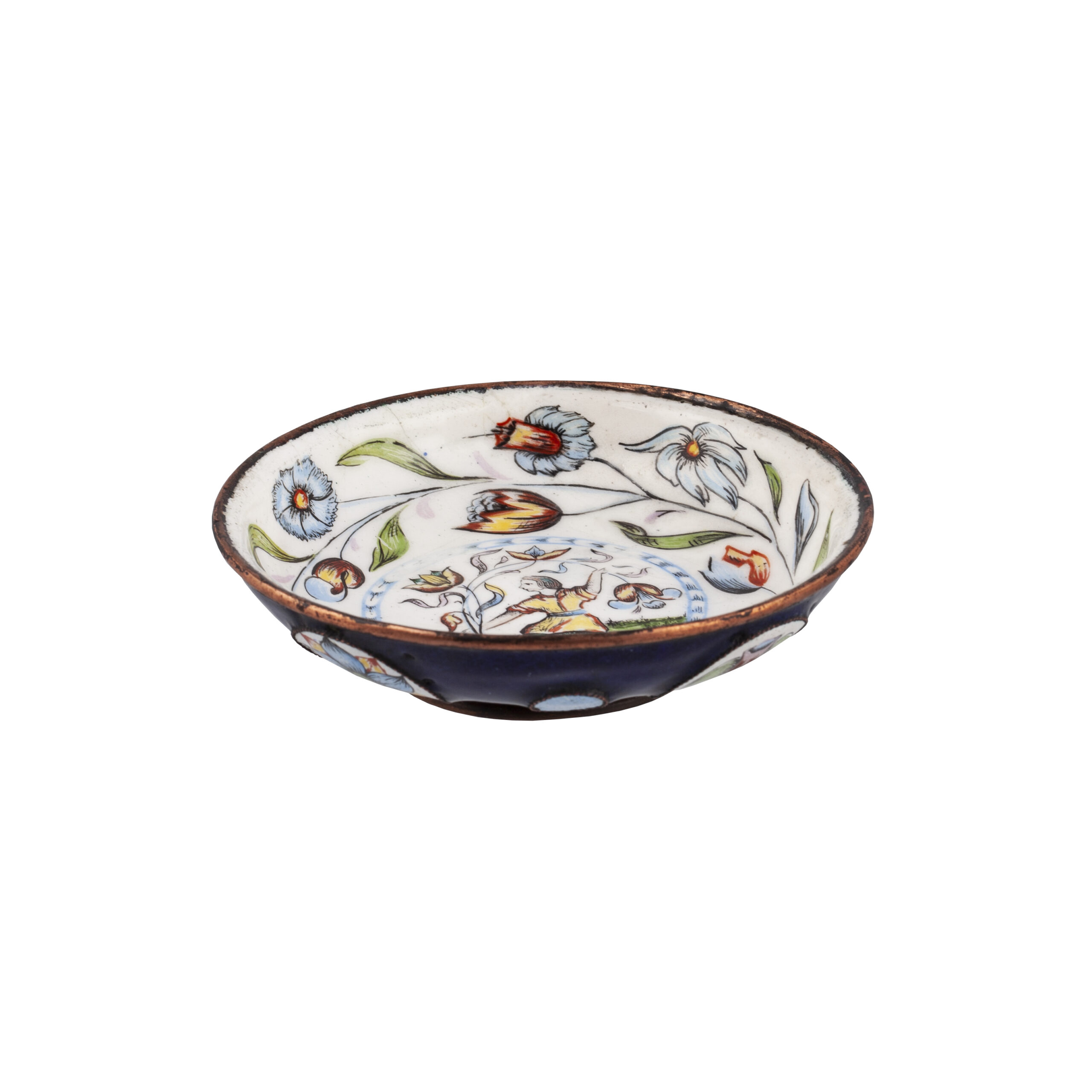
Lot 0106
A Russian Enamelled Copper Bowl Usolye (Solvychegodsk), 18th century
Estimate: 8000-12000€A Russian Enamelled Copper Bowl
Usolye (Solvychegodsk), 18th century
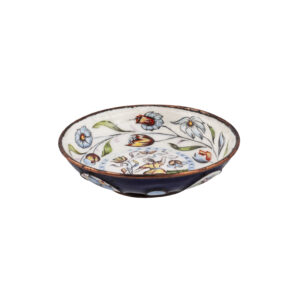
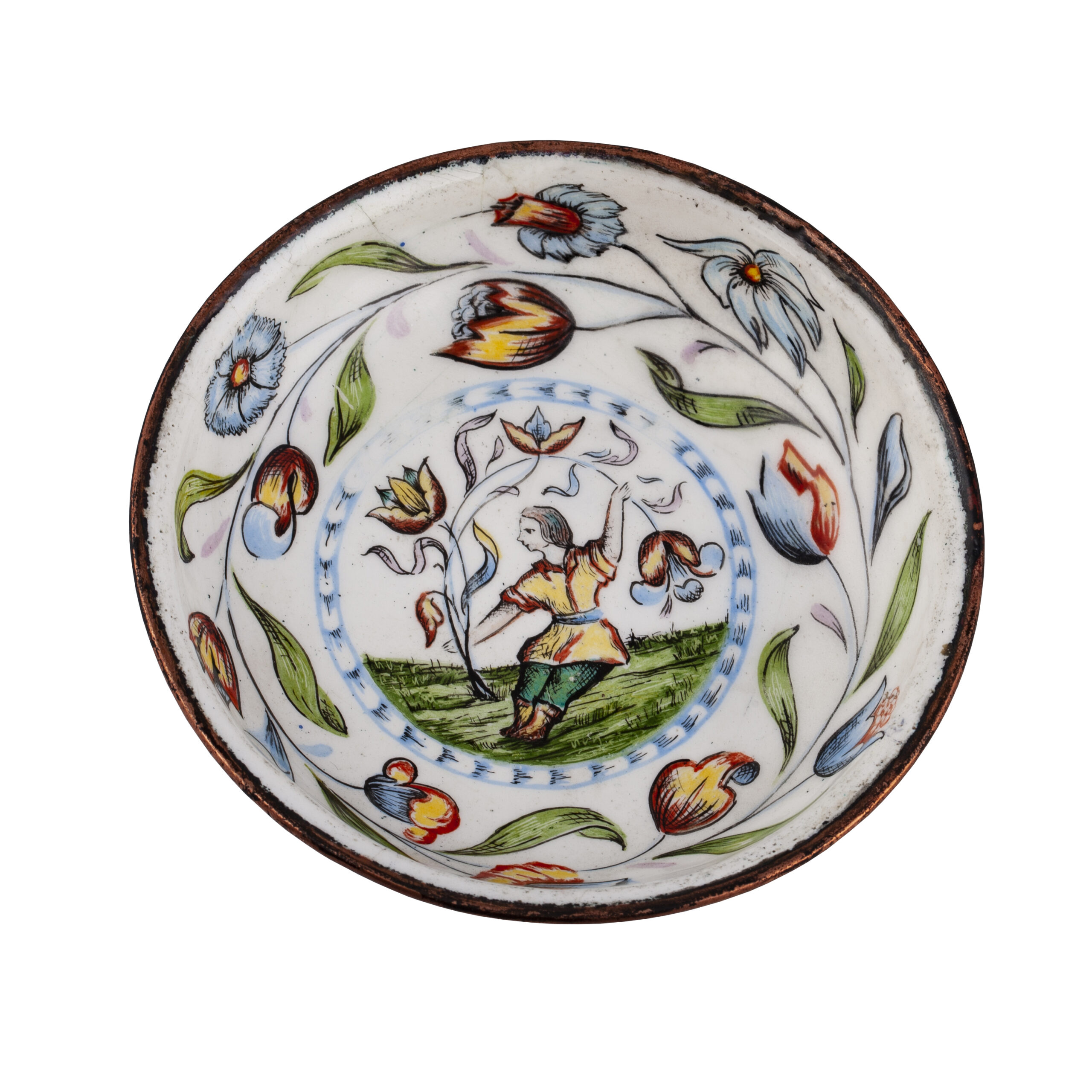
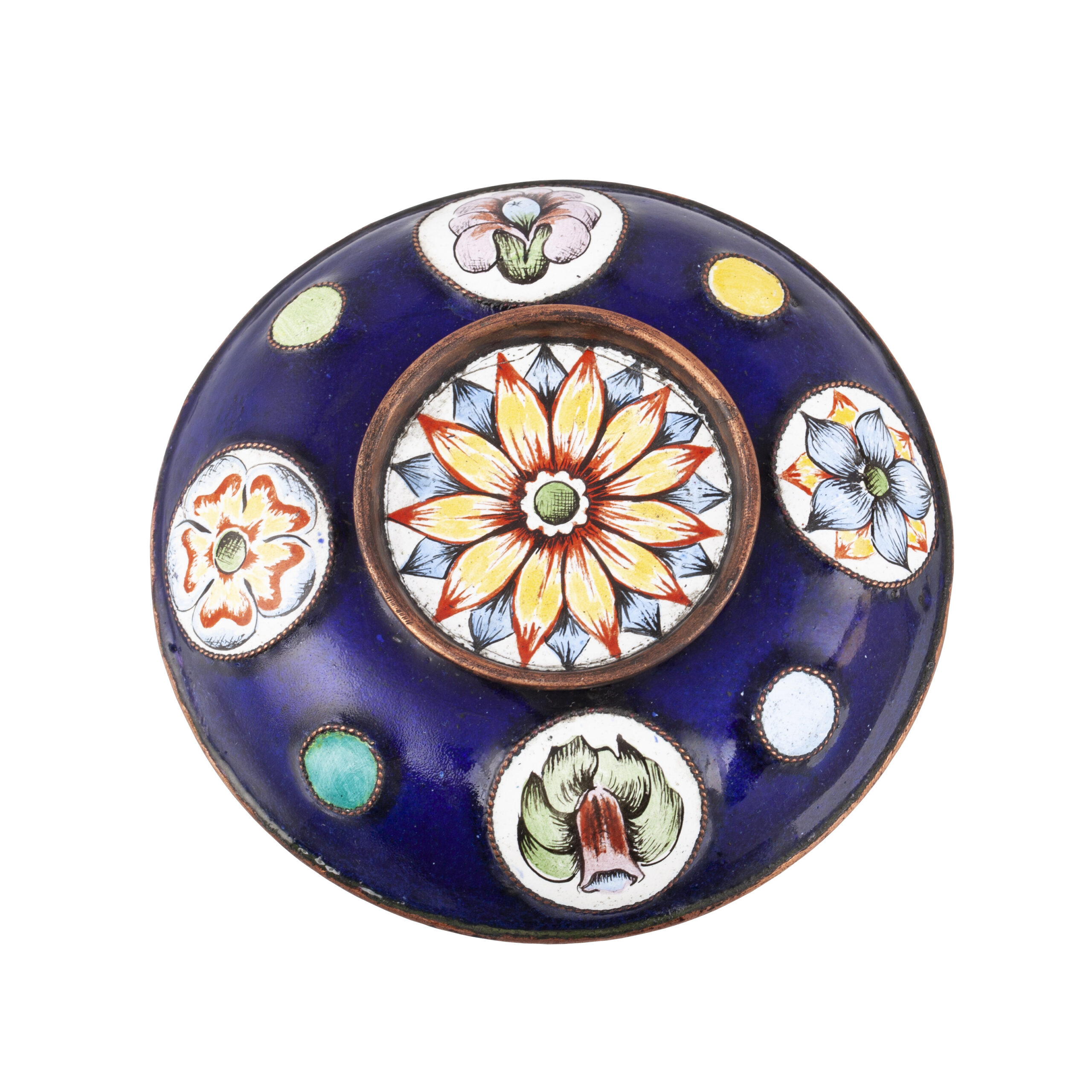
Dimensions: 2.5 х 10 х 10 cm.Painted in vibrant polychrome enamel with a central medallion depicting a dancing figure among tulips and foliage, the interior framed by scrolling floral ornament on a white ground. The exterior is richly decorated with floral motifs in circular reserves against a deep cobalt-blue background.
This bowl exemplifies the artistic excellence of the Usolye (Solvychegodsk) enamelling tradition of northern Russia, which flourished in the seventeenth century under the patronage of the Stroganov family. Originating from workshops established by Novgorod craftsmen in the mid-sixteenth century, the Usolye style is distinguished by its vivid palette, strong contour lines, and decorative rhythm derived from folk and wooden carving traditions.
By the second half of the seventeenth century, Usolye masters perfected the technique of painted enamel on copper, covering entire surfaces with colorful floral designs, birds, and narrative scenes. The favorite motifs included tulips, sunflowers, and whimsical figures inspired by both Russian folklore and Western engravings.
Comparable examples of Usolye enamelled wares are preserved in the State Historical Museum, Moscow, and the Armoury Chamber of the Moscow Kremlin.
Starting price: 6000€
Estimate: 8000-12000€
Hammer Price: UNSOLD€