
Lot 0087
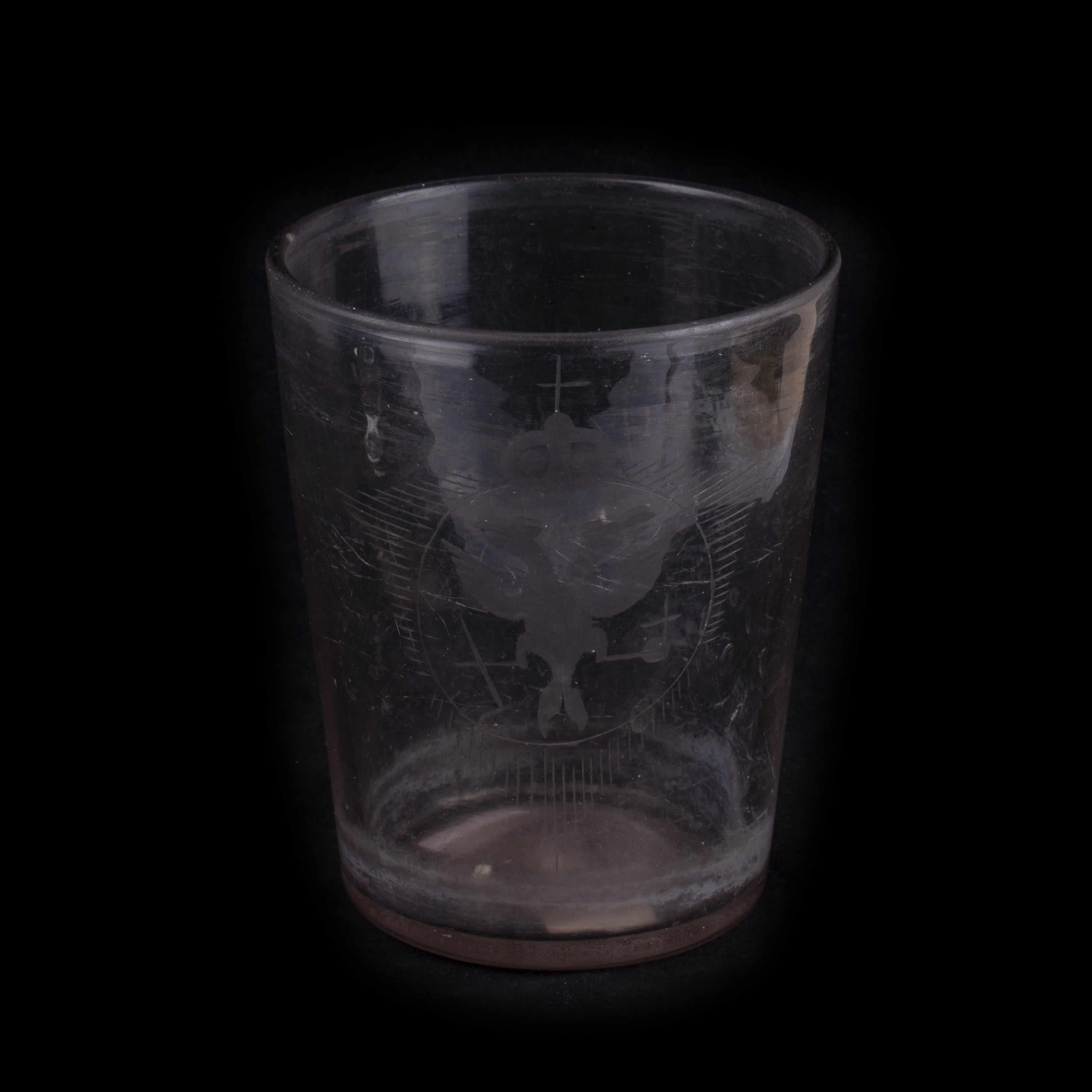
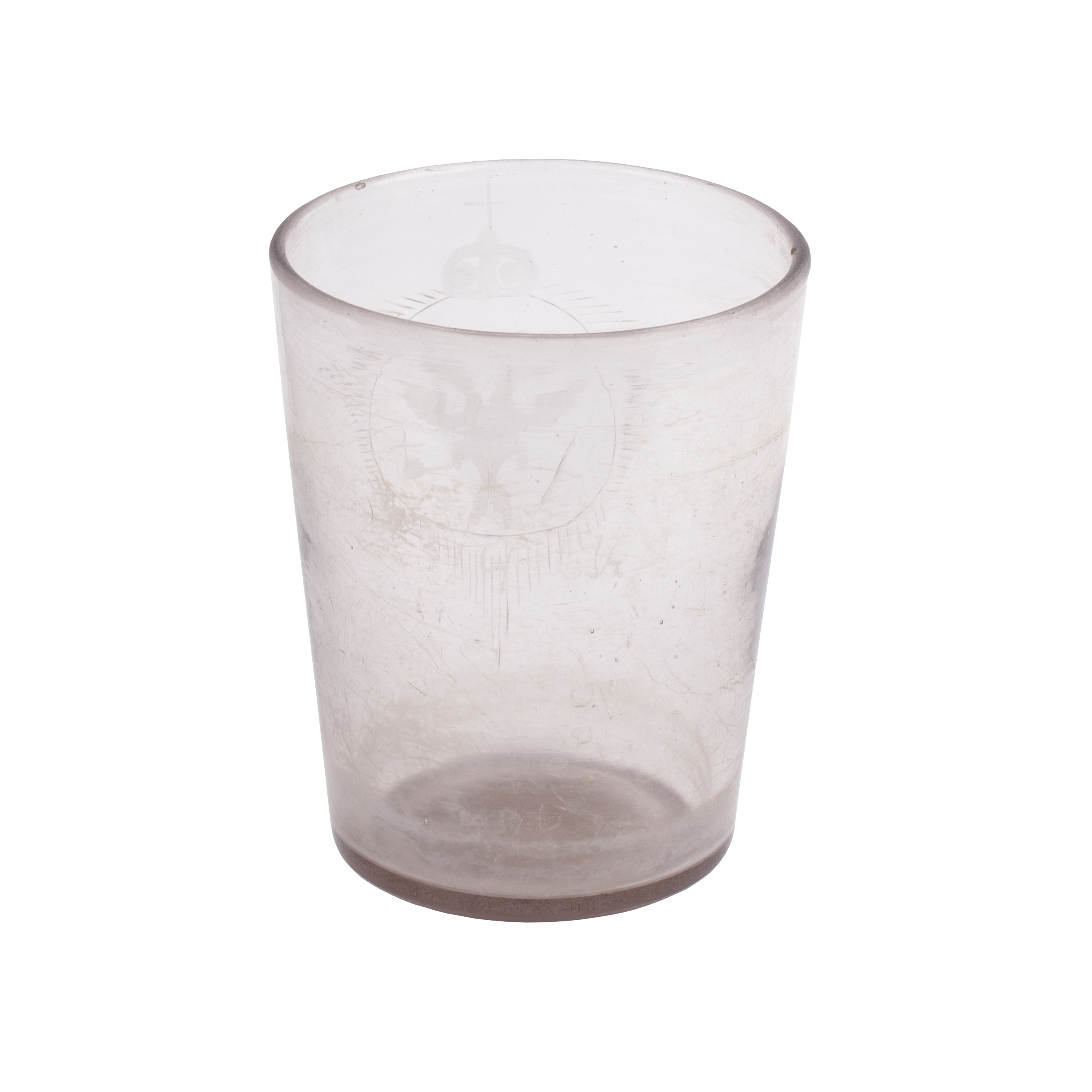
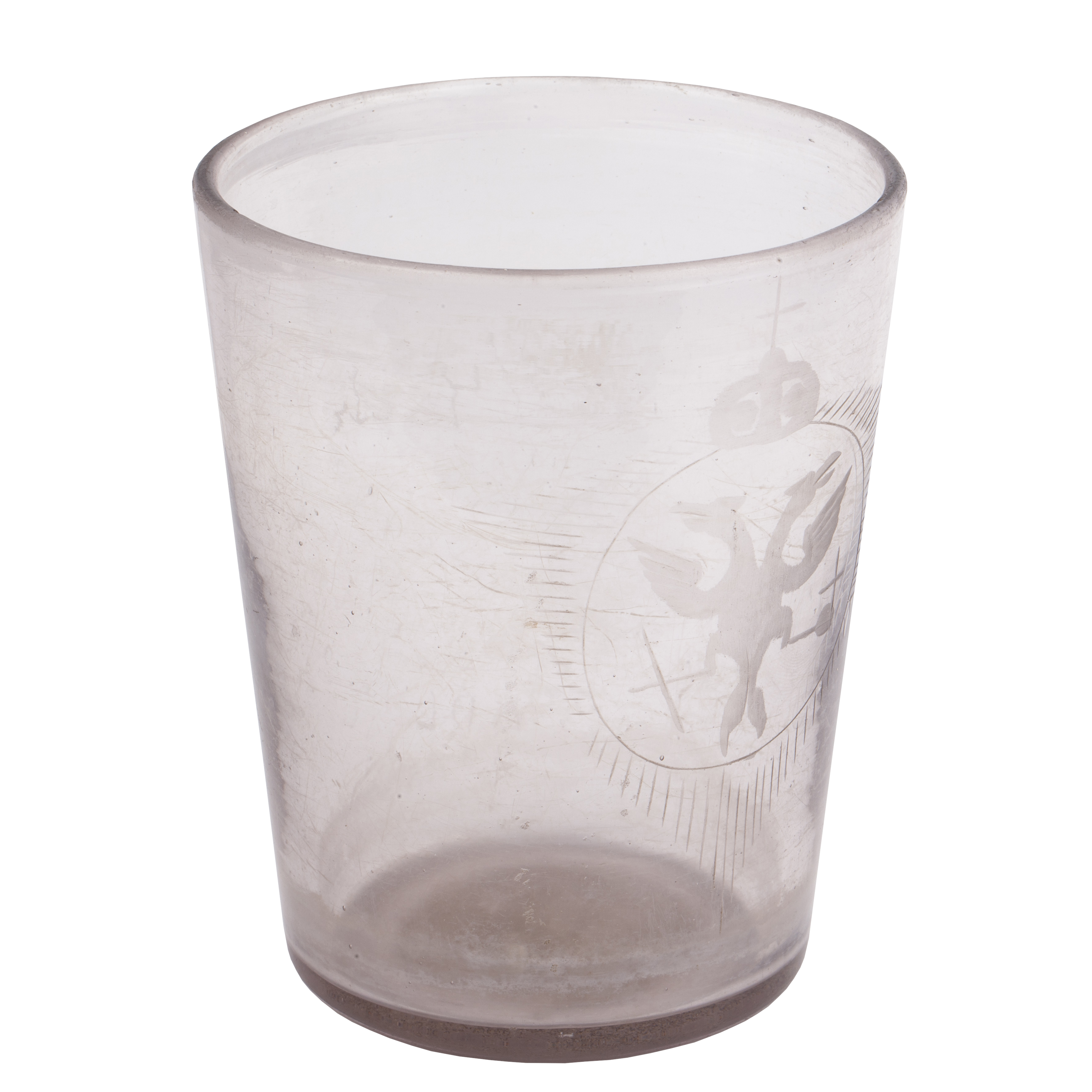
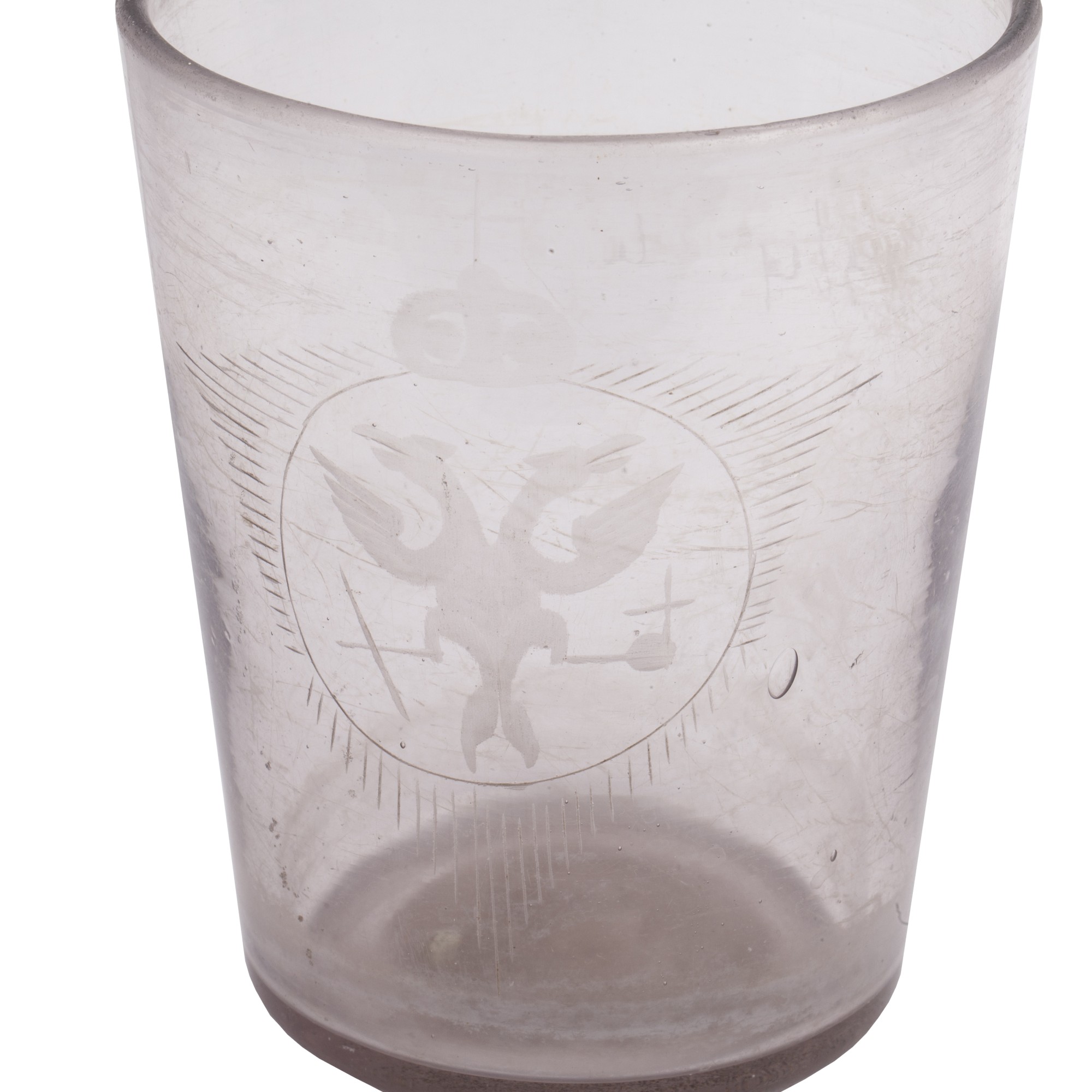
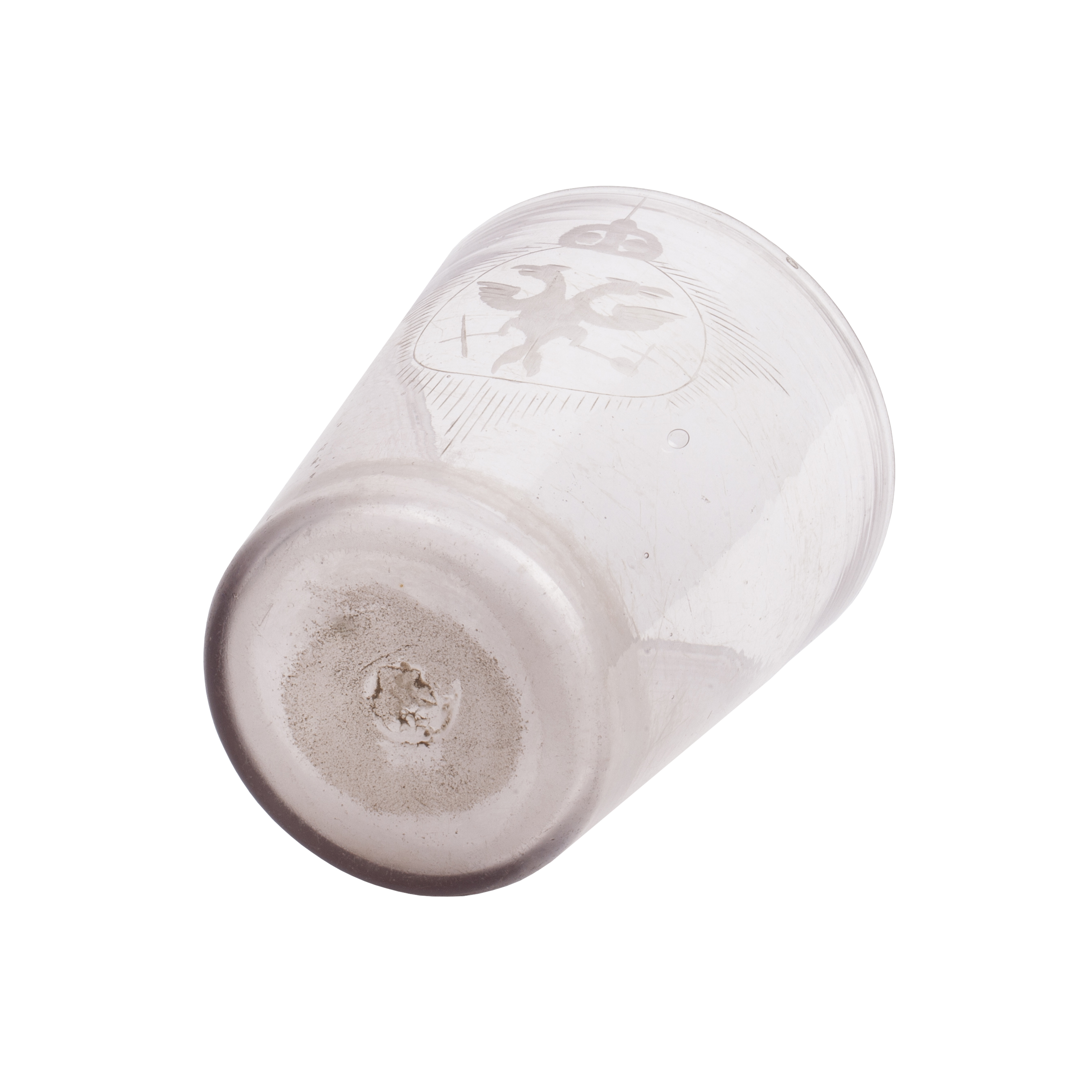
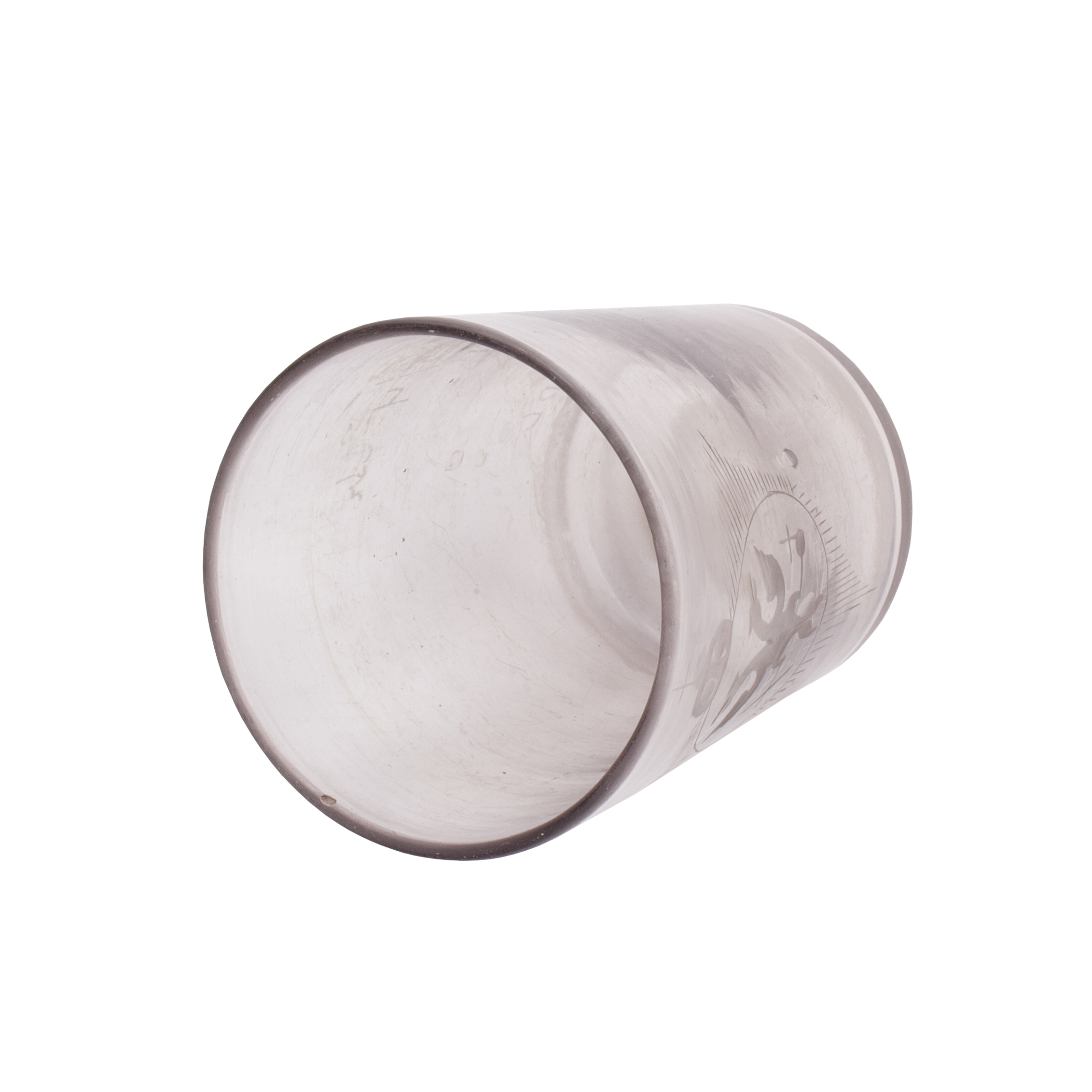
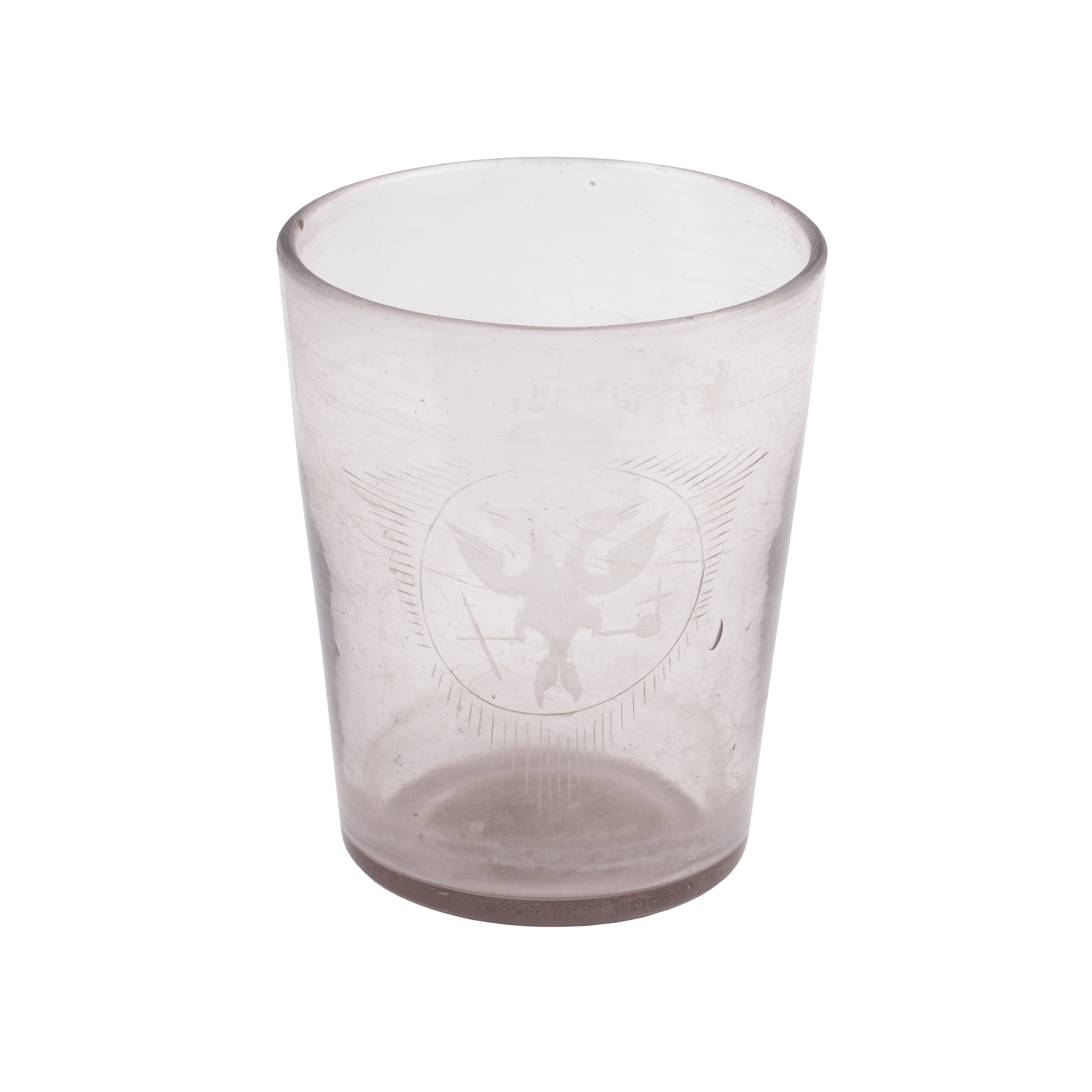
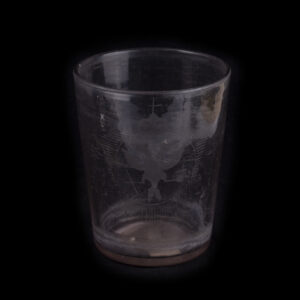
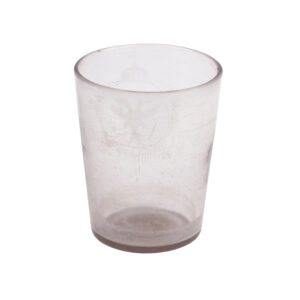
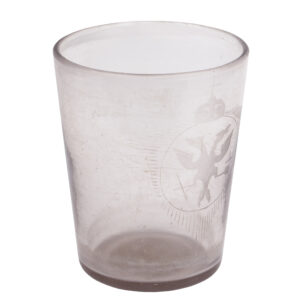
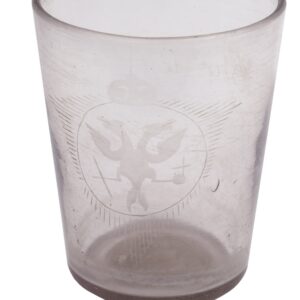
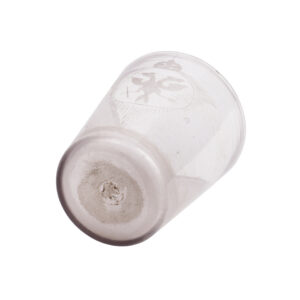
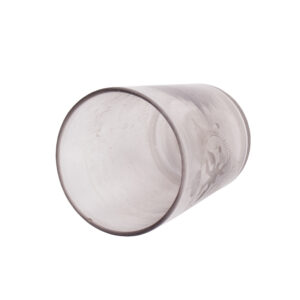
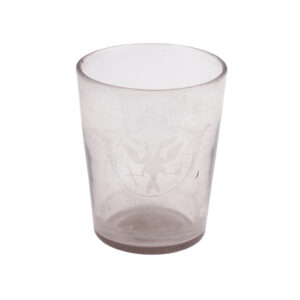
Glass with Double-Headed Eagle. Russia, first half of the 18th century
Estimate: 1000-1500€
Glass with a Double-Headed Eagle
Russia, first half of the 18th century
Transparent glass; blown and engraved
Dimensions:
Height 13.3 cm.
Rim diameter 10.7 cm
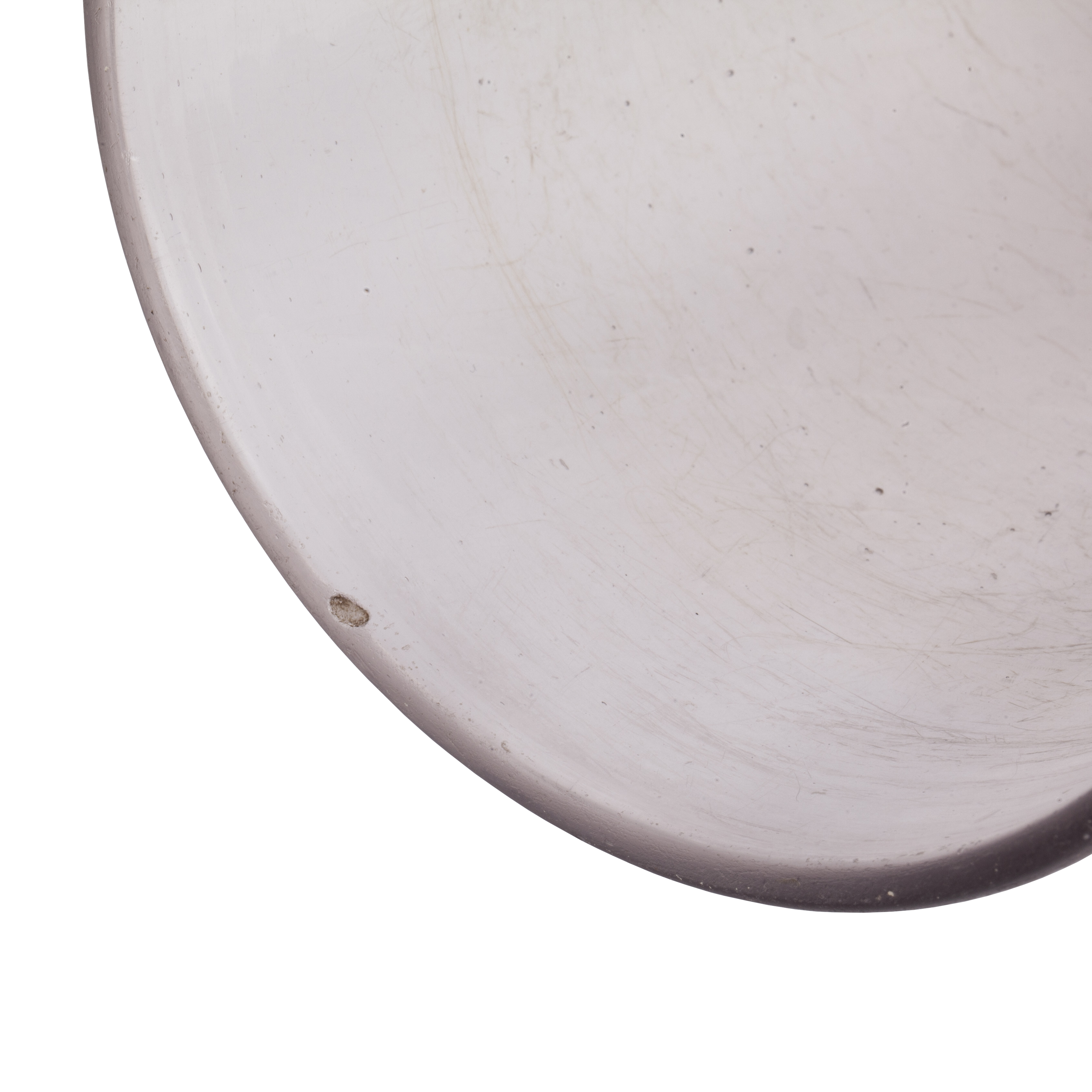
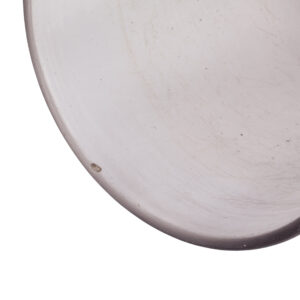
A finely crafted glass featuring an engraved double-headed eagle, a key emblem of the Russian Empire. The depiction stylistically corresponds to the heraldic tradition of the early 18th century. The vessel is well preserved, showing only minor signs of use. Comparable examples are held in the collection of the State Hermitage Museum. See similar https://www.hermitagemuseum.org/digital-collection/921075?lng=ru
Starting price: 800€
Estimate: 1000-1500€
Hammer Price: 800 €
Related Lots
-
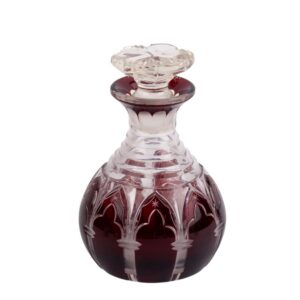
Lot 0089
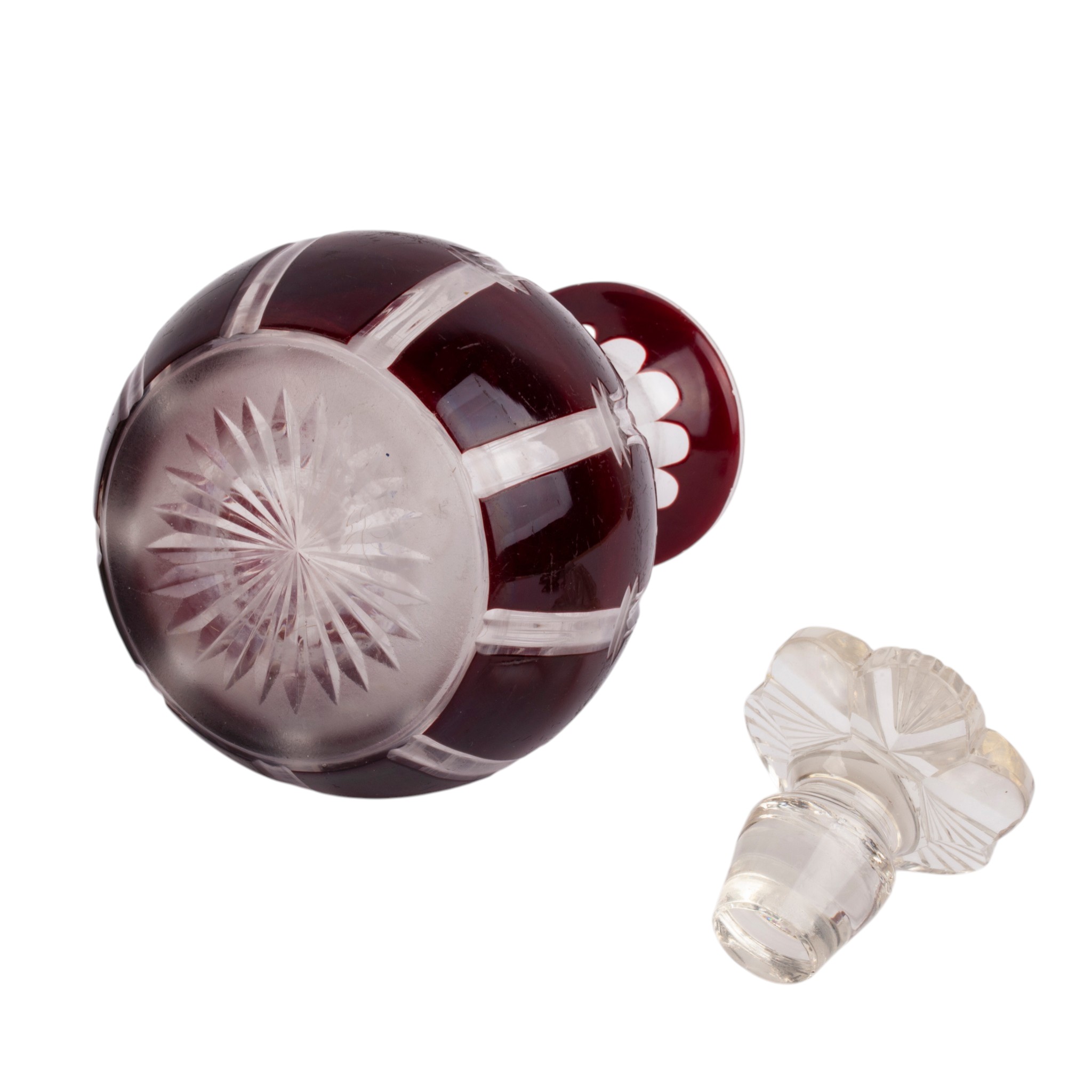
Russian Imperial Decanter for Spirits, Imperial Glass Factory, St Petersburg, 1830s–1840s
Estimate: 1500-1800€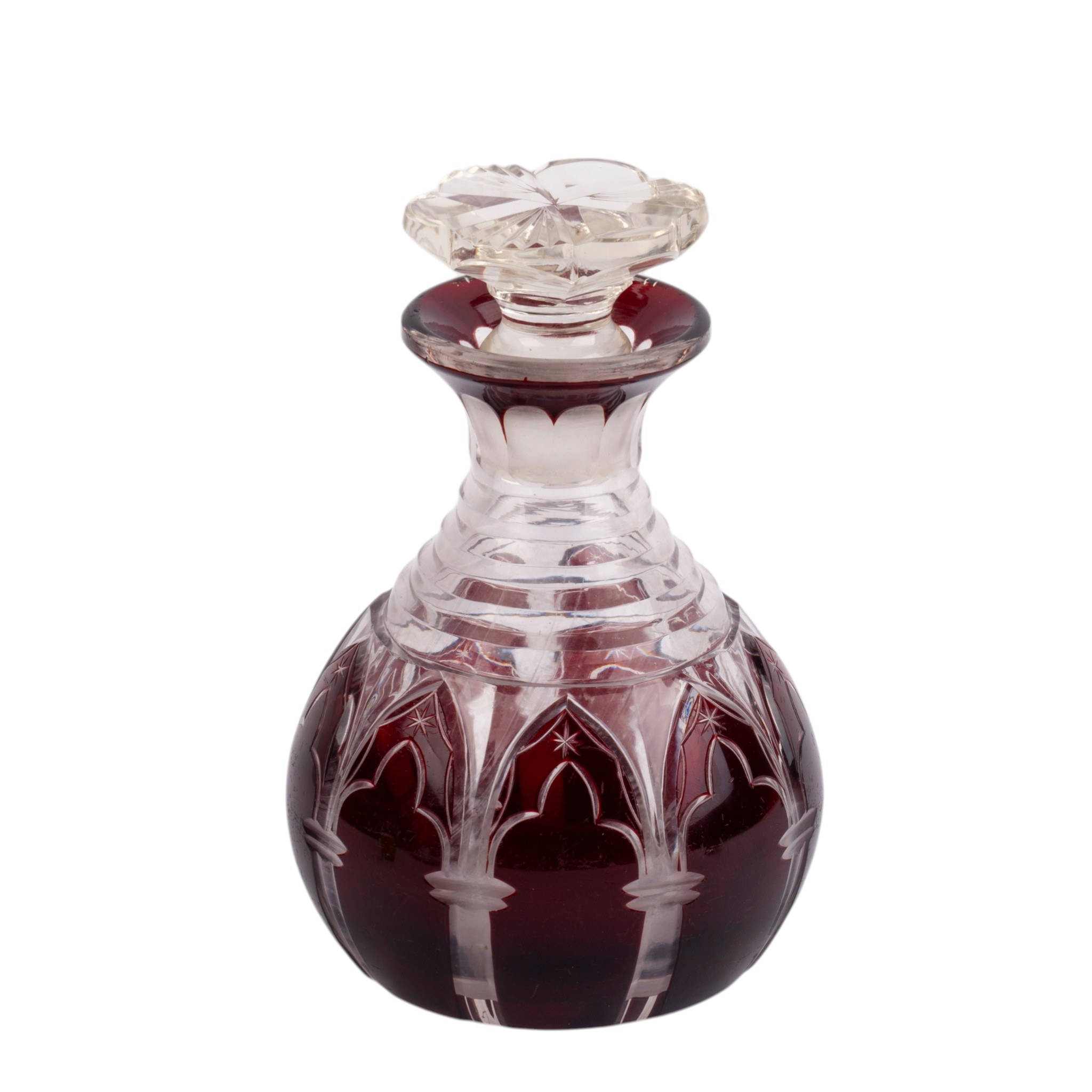
Lot 0089
Russian Imperial Decanter for Spirits, Imperial Glass Factory, St Petersburg, 1830s–1840s
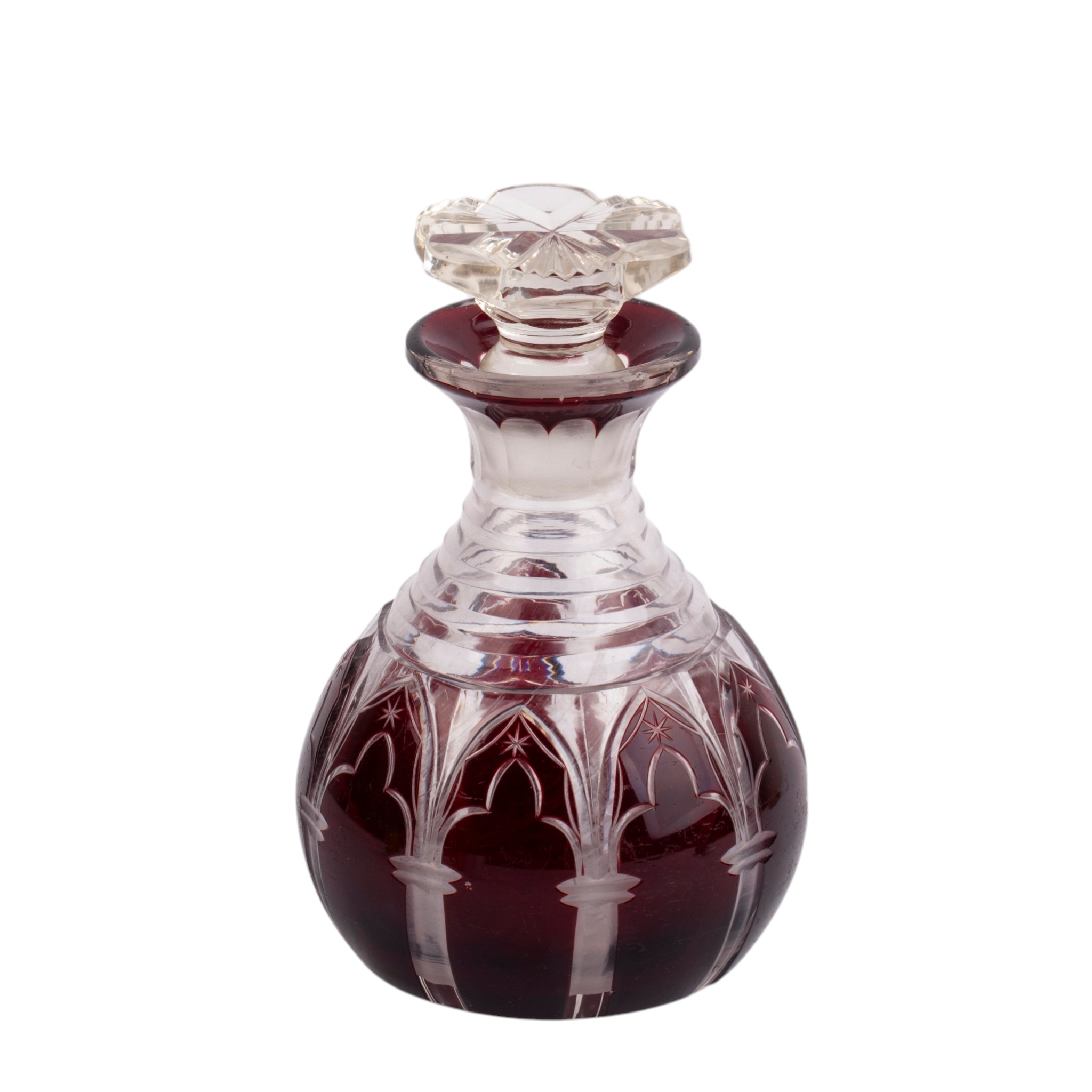
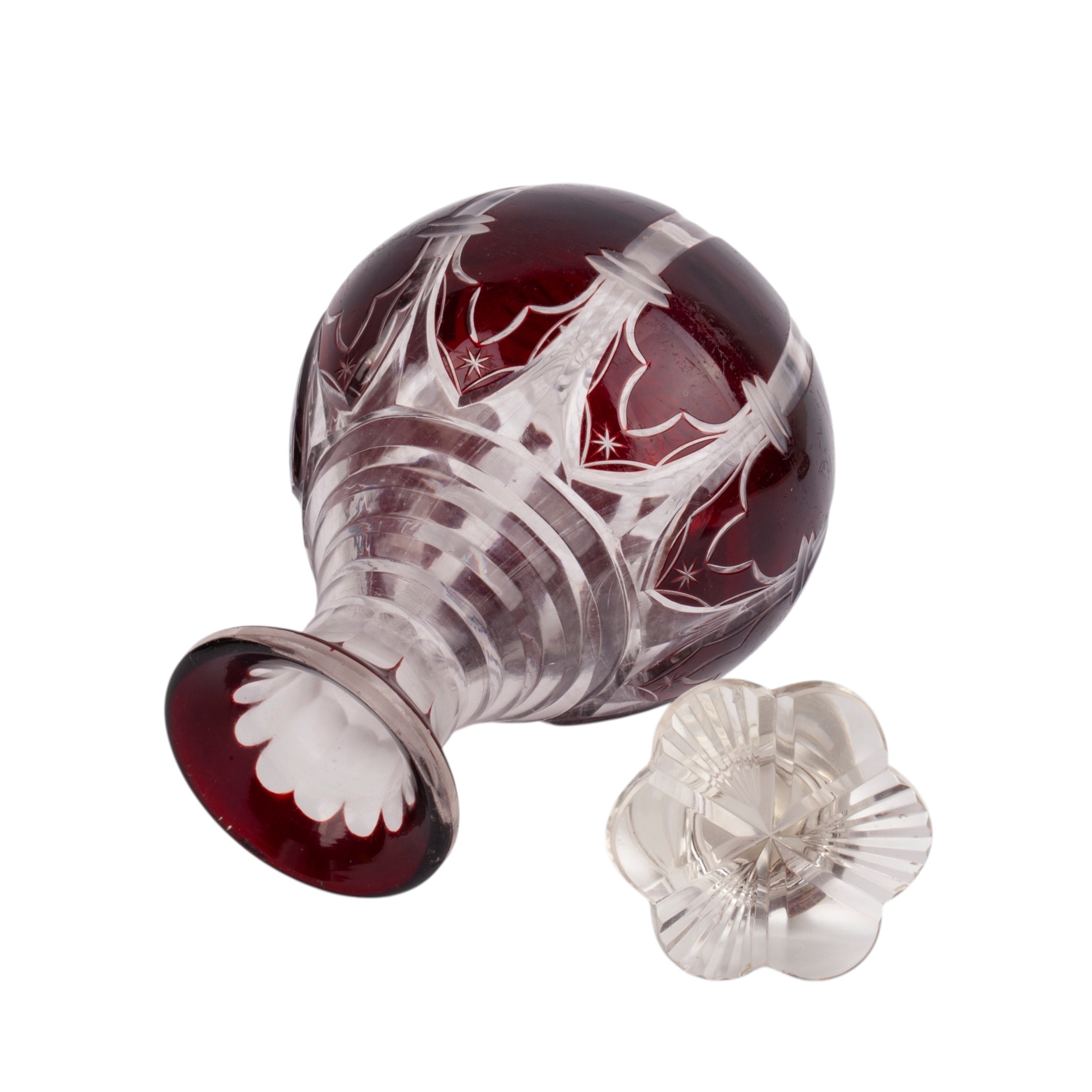
Estimate: 1500-1800€A Russian Imperial Decanter For Spirits St Petersburg, Imperial Glass Factory, 1830s-1840s.
Clear glass and copper-ruby glass; blown, cased glass, deep cutting, polished.
Dimensions
Height 14.5 cm, diameter 10.0 cm.
A small pear-shaped decanter on a circular foot. The body is made of clear glass with an outer layer of copper-ruby overlay. The ornament is cut through the coloured casing by deep wheel-cutting: a tall frieze of pointed Gothic arches, interspersed with delicate multi-rayed stars. The shoulders are encircled by stepped bands of cutting, while the neck opens into a slight flare. The fitted stopper is faceted and echoes the decorative character of the vessel.
The deep dark cherry tone was achieved by colouring the glass mass with colloidal copper. The contrast between the transparent ground and the ruby overlay produces a vivid play of light and strongly emphasizes the Gothic design. Both form and decoration are consistent with the production of the Imperial Glass Factory. Closely comparable examples are founded in the State Historical Museum, Moscow (inv. no. GIM 106603/2), and in the State Hermitage Museum, St Petersburg (inv. no. ERS-3085).
A number of objects in the Gothic style, probably made for the Cottage Palace in Alexandria Park at Peterhof, are displayed in Russian museum collections. Among them are mantel clocks and a lidded tankard with carved and gilded decoration in the form of an ornamental colonnade with pointed arches in the collection of the All-Russian Museum of Decorative, Applied and Folk Art, Moscow. In the present decanter, the motif of the pointed arcade and colonnade is directly adopted, though without gilding.
The Imperial Glass Factory was founded in 1792, when, after the death of Grigory Potemkin, his enterprise was acquired for the treasury by Catherine II. During the 19th century, the factory worked with leading architects and artists, among them Andrei Voronikhin, Thomas de Thomon, Carlo Rossi, Vasily Stasov, Ippolit Monighetti, and Viktor Hartmann, producing exemplary works in glass and crystal to their designs. In 1890 the factory was merged with the Imperial Porcelain Factory, and production ceased at the end of 1918.Starting price: 1200€
Estimate: 1500-1800€
Hammer Price: Not sold -
Lot 0086
Judaica Kiddush Beaker with Menorah Motif, Polish Lands of the Russian Empire, Second Half of the 19th Century
Estimate: 800-1200€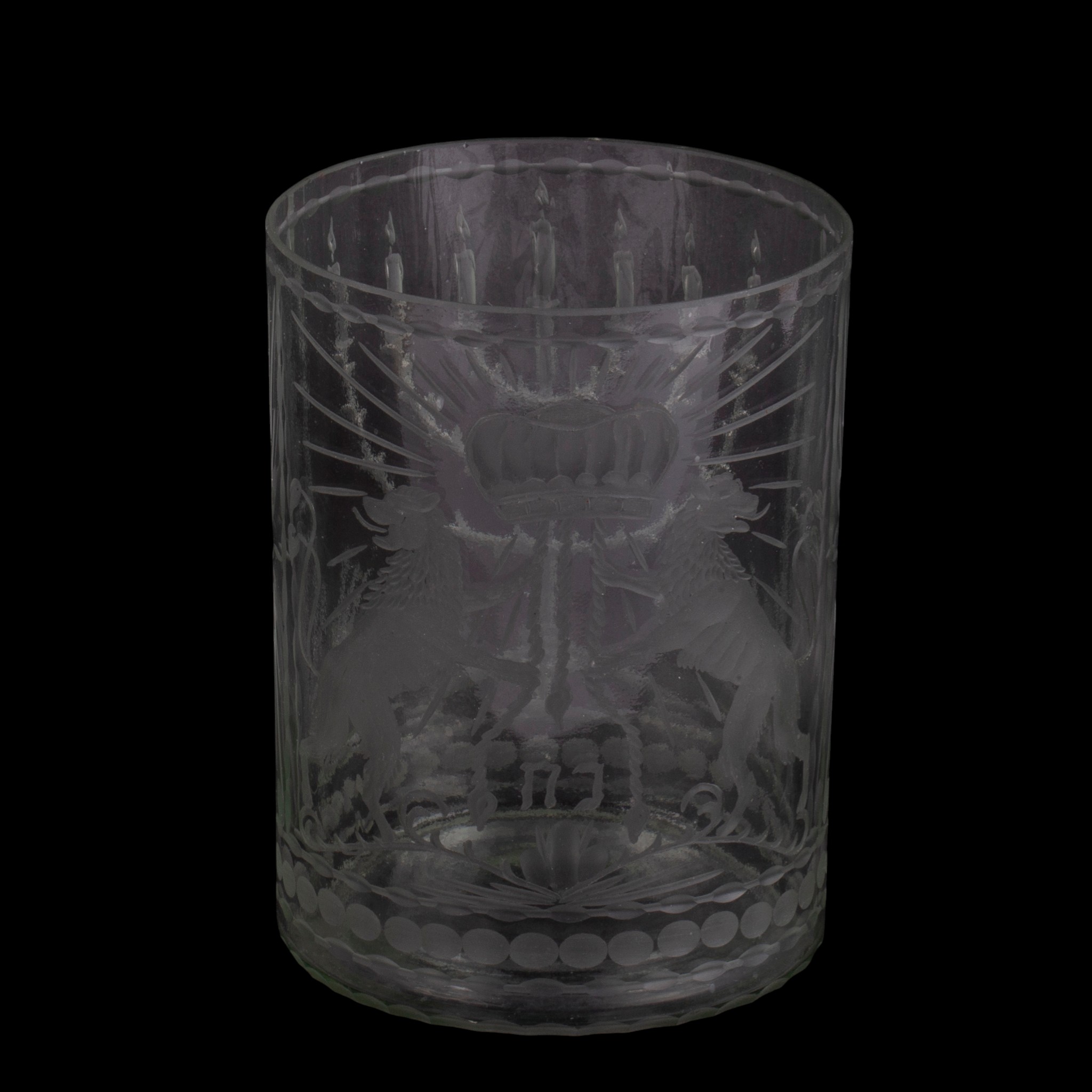
Lot 0086
Judaica Kiddush Beaker with Menorah Motif, Polish Lands of the Russian Empire, Second Half of the 19th Century
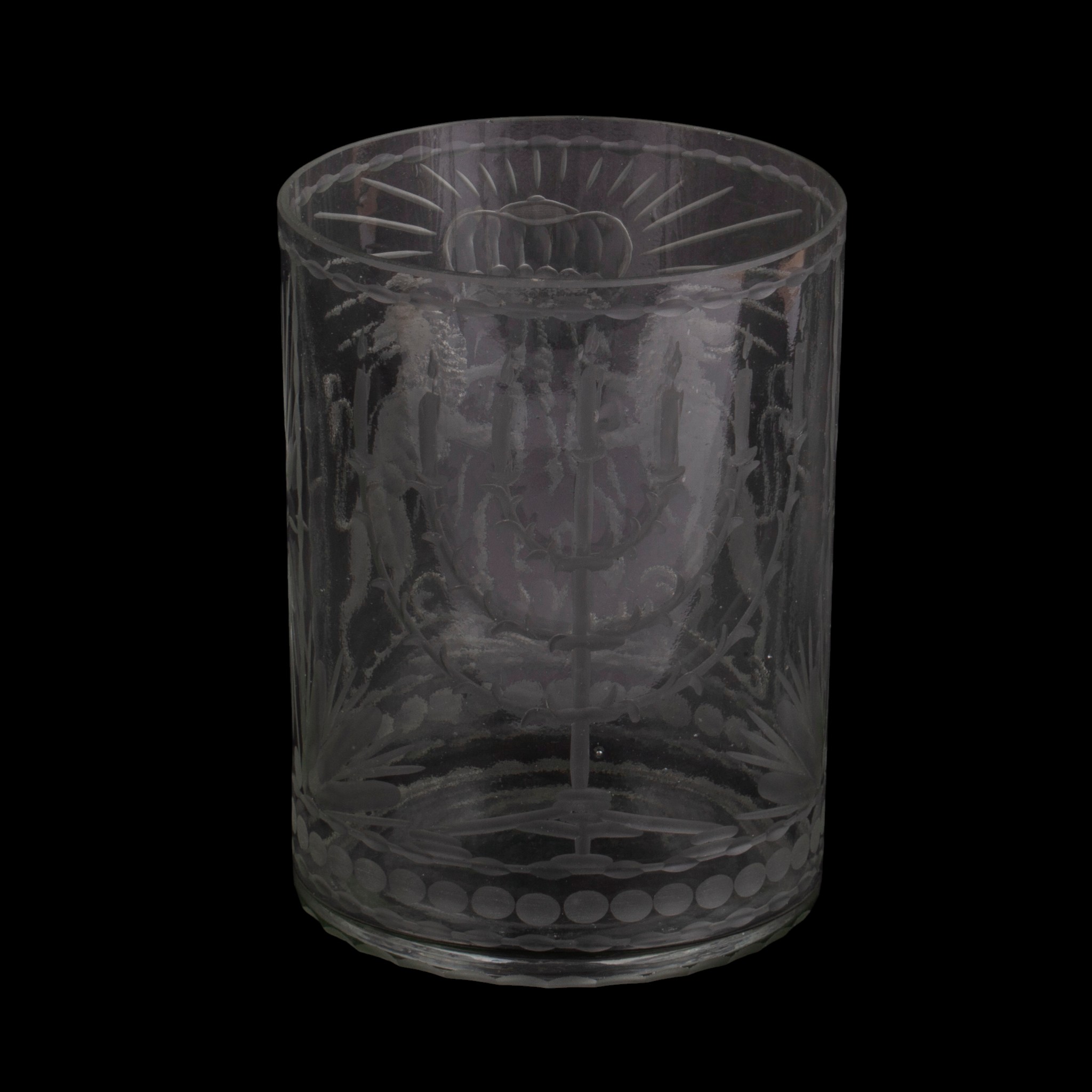
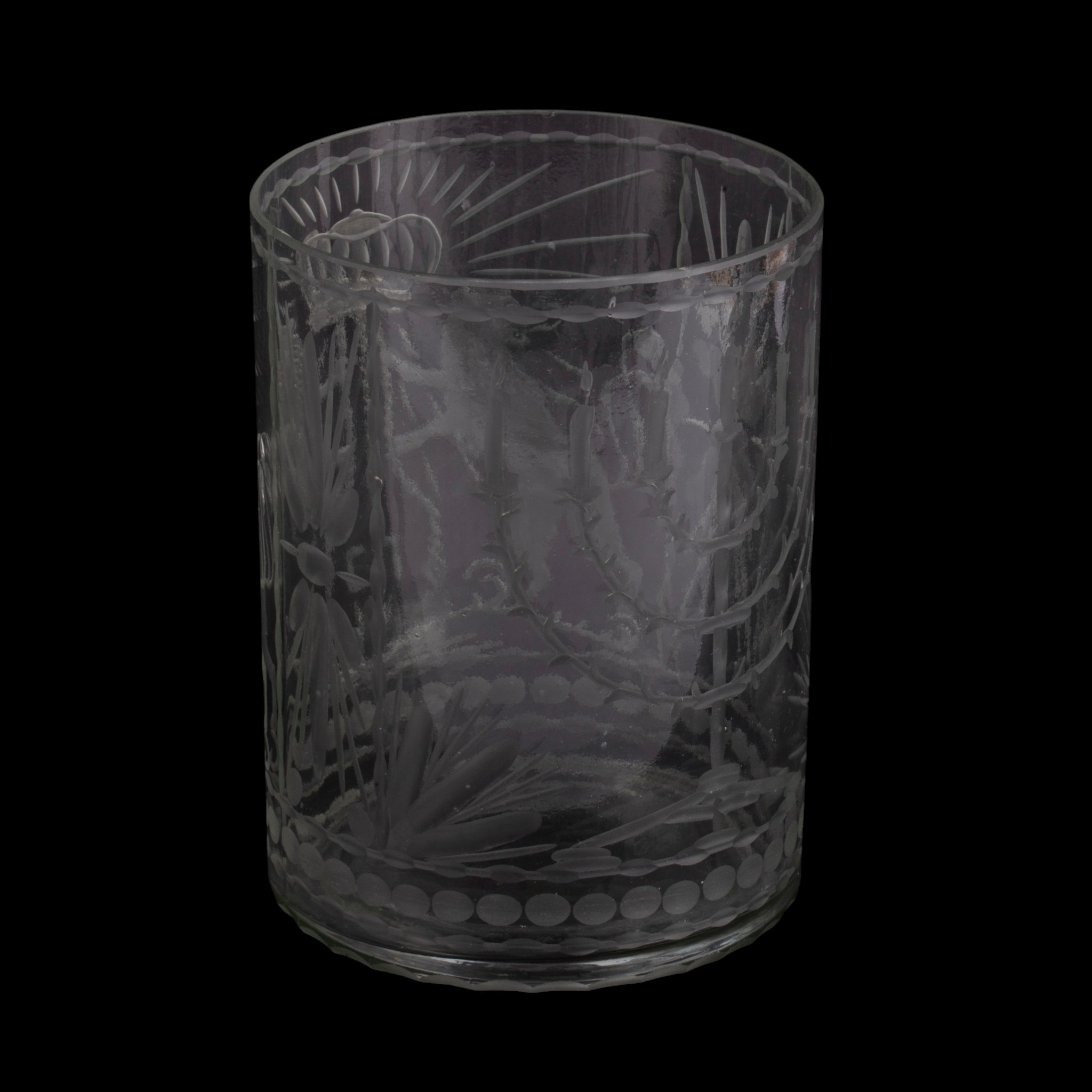
Estimate: 800-1200€Judaica. Kiddush beaker for Sabbath wine, with the image of the Menorah. Polish lands of the Russian Empire, second half of the 19th century.
Glass; acid-etching, engraving. Dimensions: 13,3 x 9.8 x 9.8 cm.
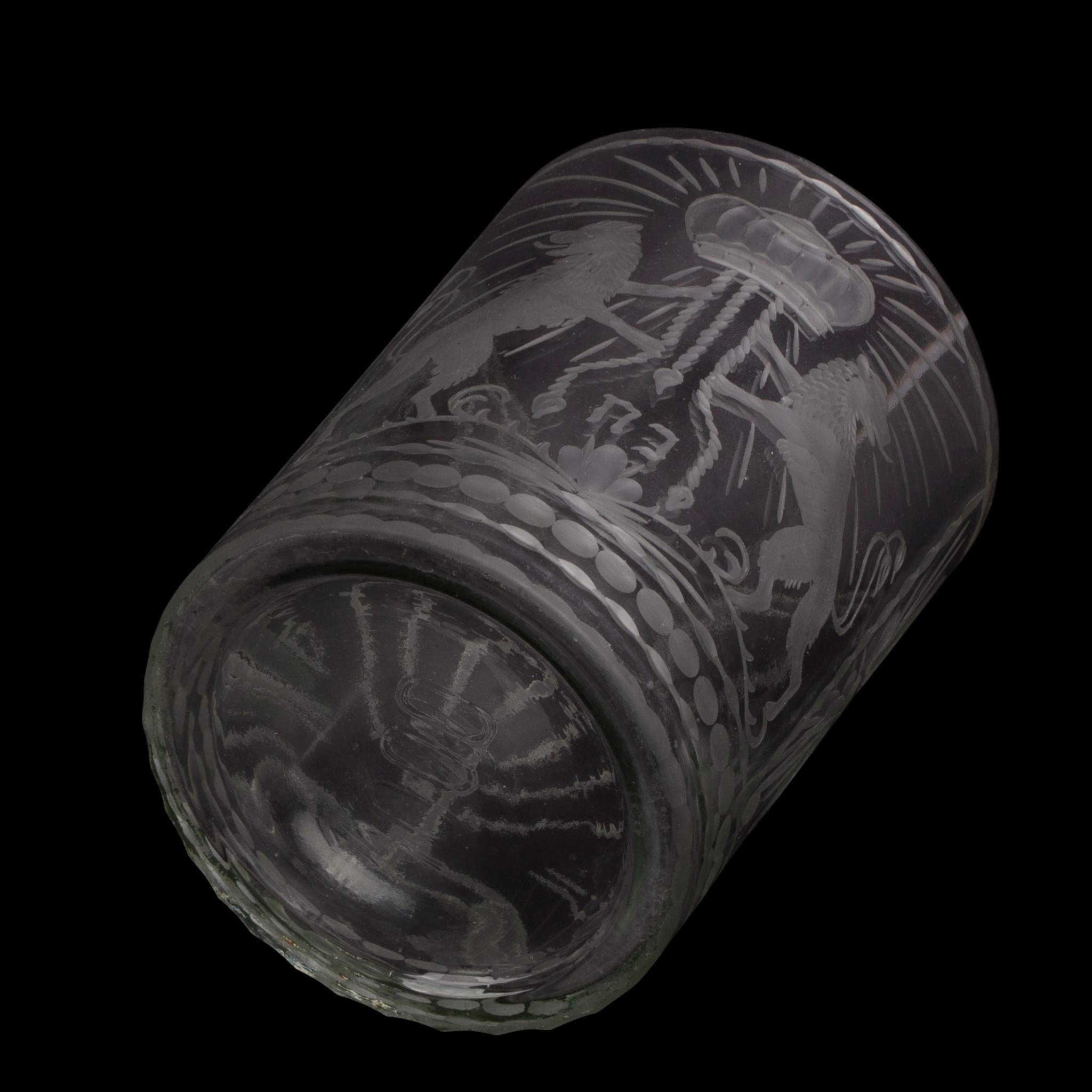
Inscriptions: Hebrew letters נ״ח (“Noah”).
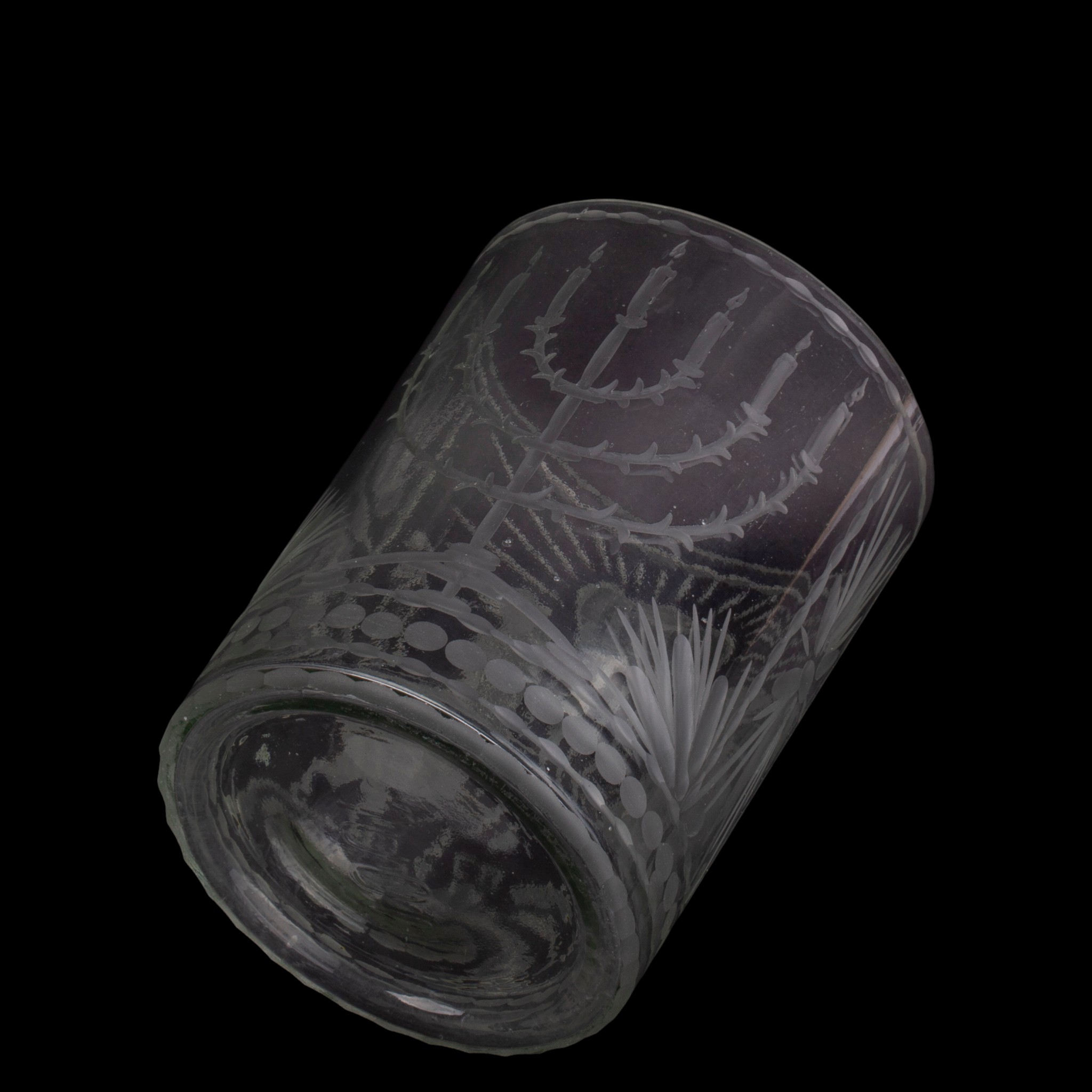
A cylindrical beaker of clear glass, ornamented with a continuous frieze of polished “pearls” around the lower zone and a scalloped band along the rim.
One side bears a frontal seven-branched Menorah with lit lamps, rendered as a ceremonial emblem. In Jewish tradition the Menorah is the principal attribute of the Temple in Jerusalem and a visual sign of divine presence, recalled in the biblical prescription given to Moses (Exodus 25:31, 37). Stylised foliate sprays flank the base, framing the composition in a restrained ornamental register.
The reverse presents a heraldic tableau: two facing lions support a crown, from which cords with tassel-like pendants descend. Radiating strokes around the crown intensify its sacral and emblematic character. Below, the Hebrew abbreviation נ״ח is traditionally read as “Noah”, suggesting an allusion to the biblical narrative, where the righteous patriarch is associated with salvation and renewed covenantal order.
By its iconography and function, the beaker belongs to the material culture of Jewish communities in the Polish provinces of the Empire, intended for the Kiddush blessing over wine on the Sabbath and festivalsStarting price: 700€
Estimate: 800-1200€
Hammer Price: Not sold -
Lot 0088
A RUSSIAN IMPERIAL AMETHYST GLASS VASE
Estimate: 3000-3500€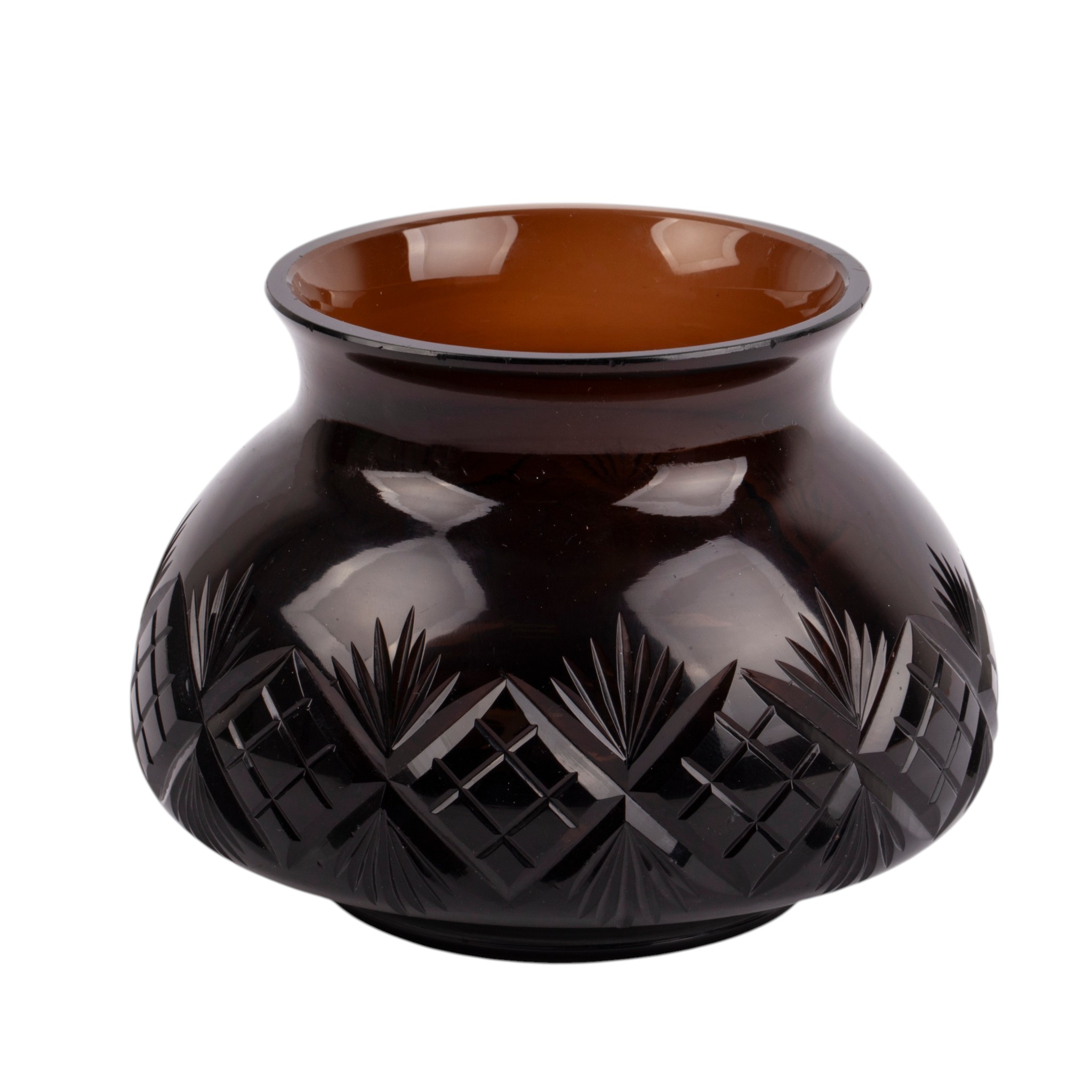
Lot 0088
A RUSSIAN IMPERIAL AMETHYST GLASS VASE
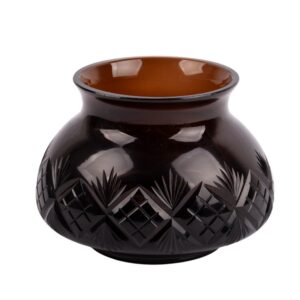
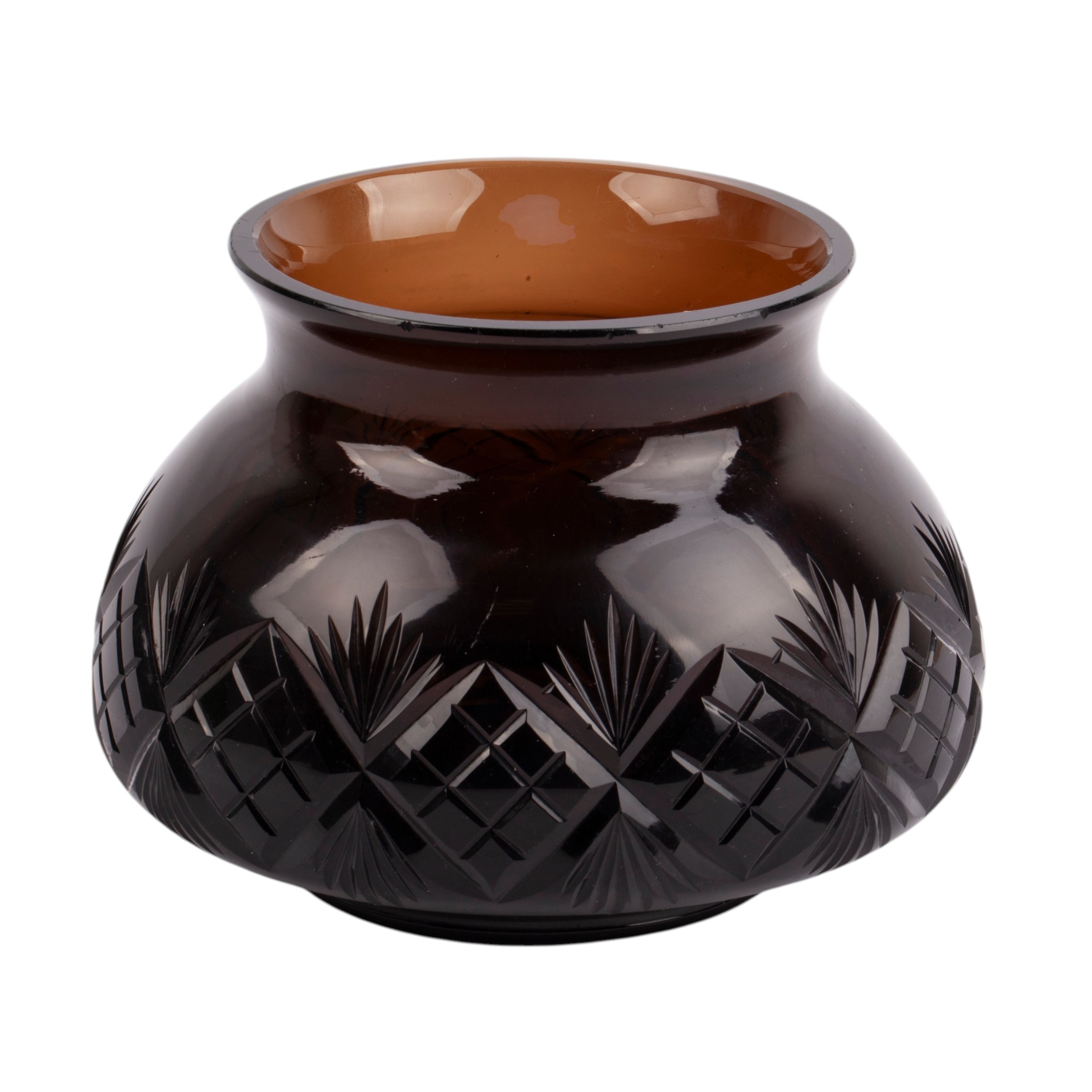
Estimate: 3000-3500€A RUSSIAN IMPERIAL AMETHYST GLASS VASE
Amethyst glass, wheel-cut and polished.
Imperial Glass Manufactory, St Petersburg, period of Emperor Nicholas II, 1908.
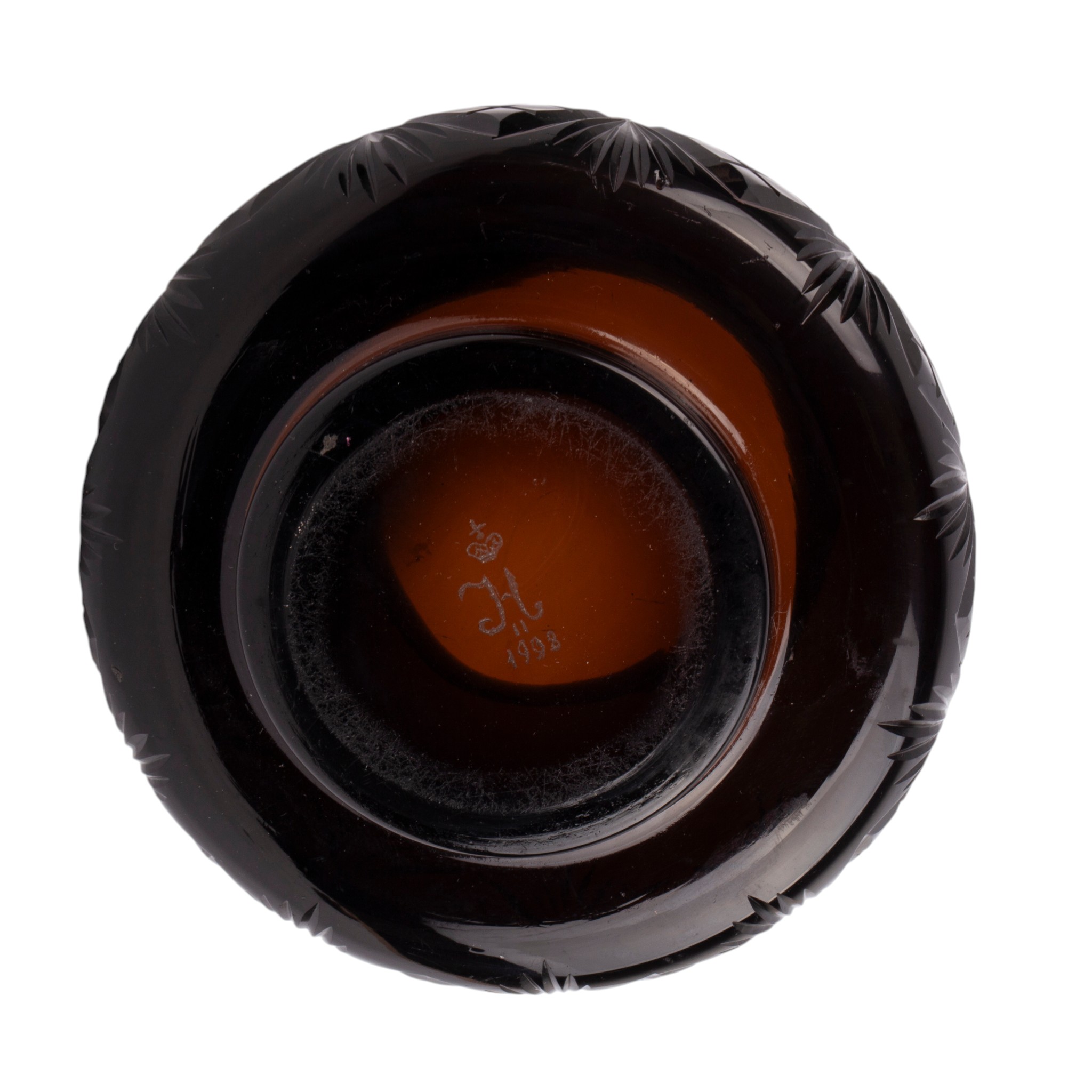
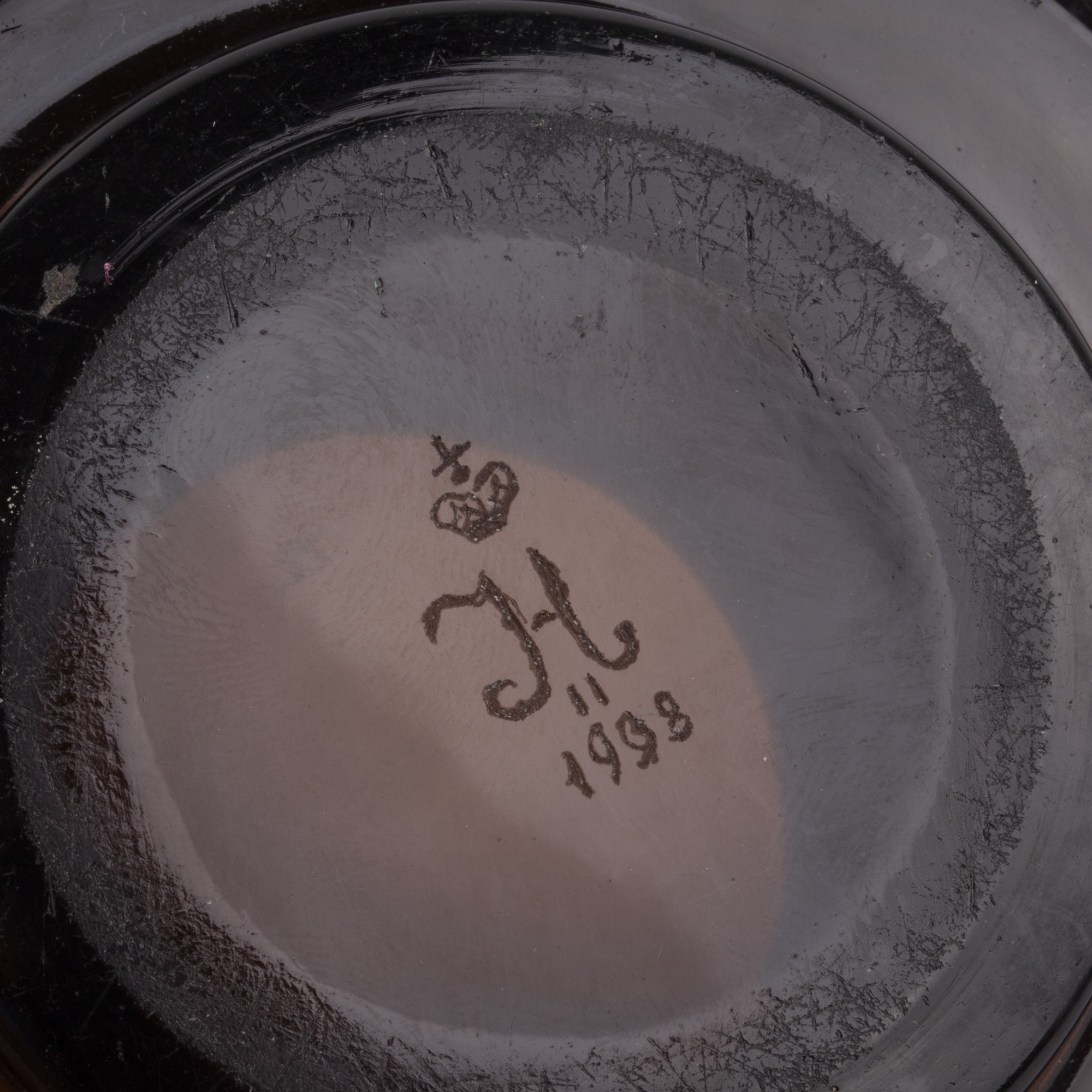
Mark: etched mark to the underside: H2 / 1908.
Height: 9 x 12,5 cm.
A finely proportioned vase of compressed baluster form with a gently flared rim, executed in deep amethyst glass of rich tonality. The lower body is encircled by a broad band of wheel-cut ornament composed of alternating fan and diamond motifs, crisply faceted and highly polished, creating a lively contrast between the glossy surface of the upper wall and the sharp geometry of the cut decoration.
Amethyst glass had long been esteemed in Russian glassmaking for its noble, saturated colour. This effect was achieved through the use of manganese compounds, which, depending on concentration and firing conditions, could lend the glass anything from a faint clarifying tint to a dense violet tone of exceptional intensity. In the present vase, that technical refinement is matched by the precision of the cutting, resulting in an object of strong visual weight and quiet elegance.Starting price: 2500€
Estimate: 3000-3500€
Hammer Price: Not sold -
Lot 0085
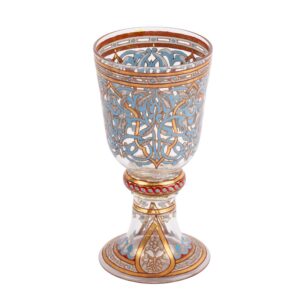
Russian Imperial Glass Goblet, Imperial Glass Factory, St Petersburg, 1880s
Estimate: 6000-8000€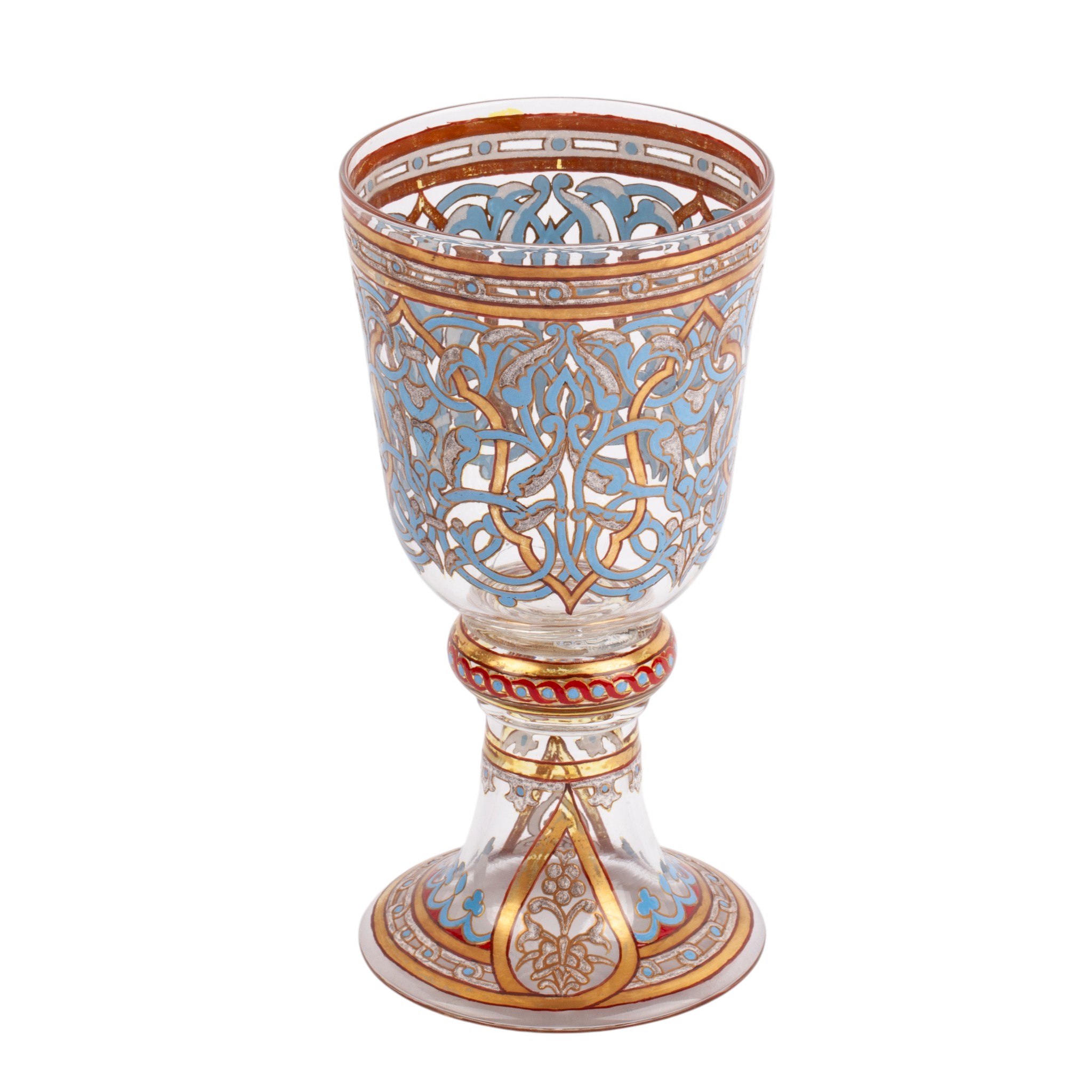
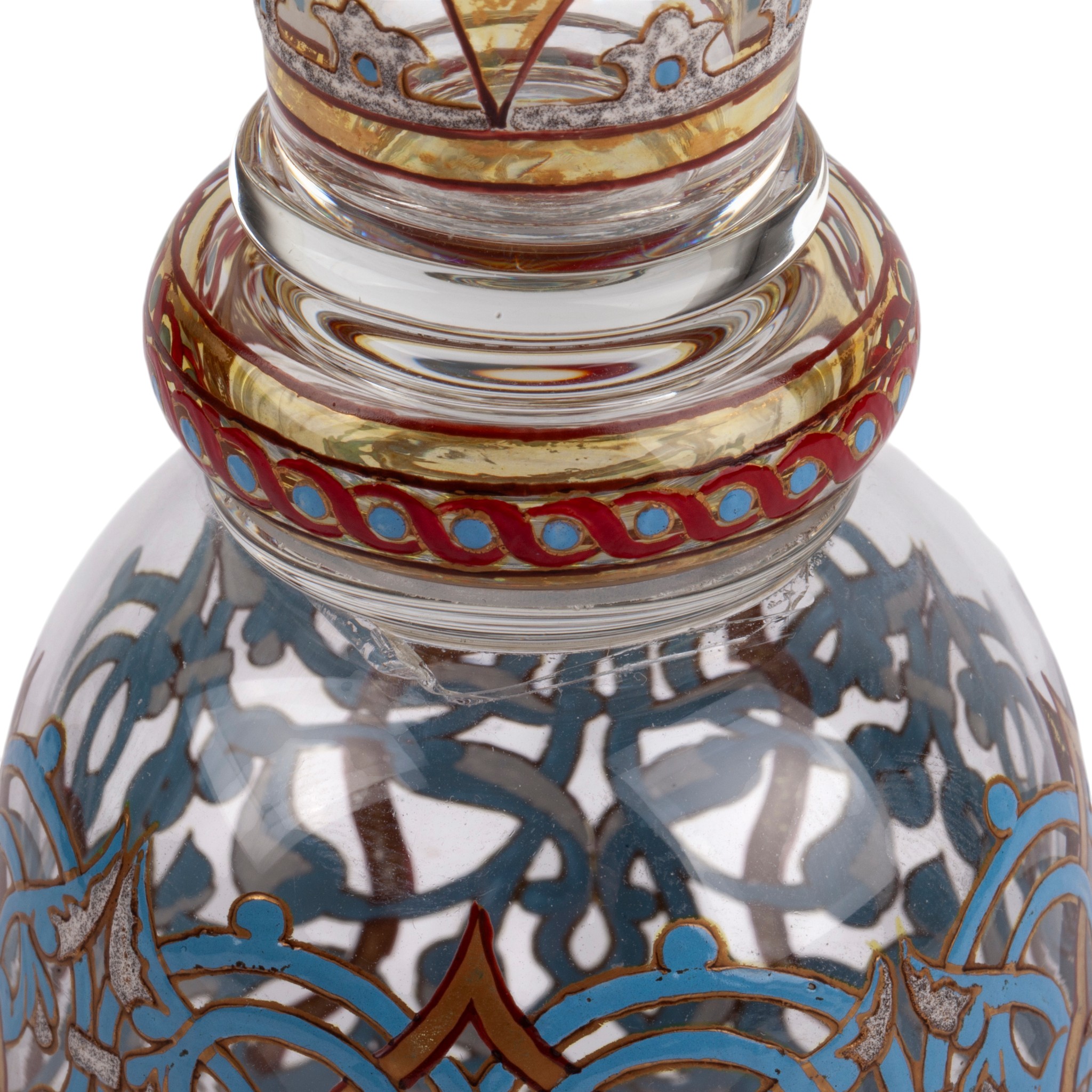
Lot 0085
Russian Imperial Glass Goblet, Imperial Glass Factory, St Petersburg, 1880s
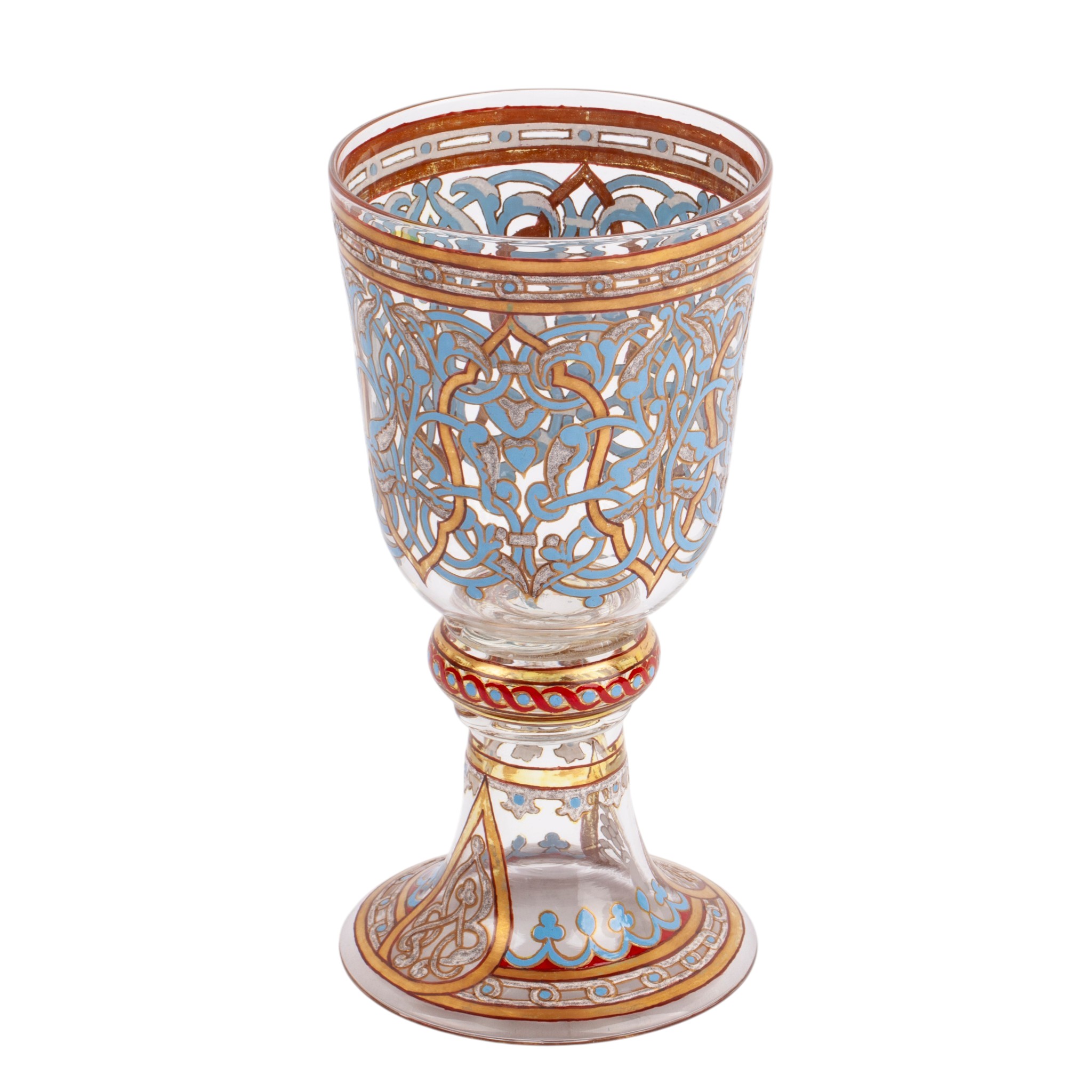
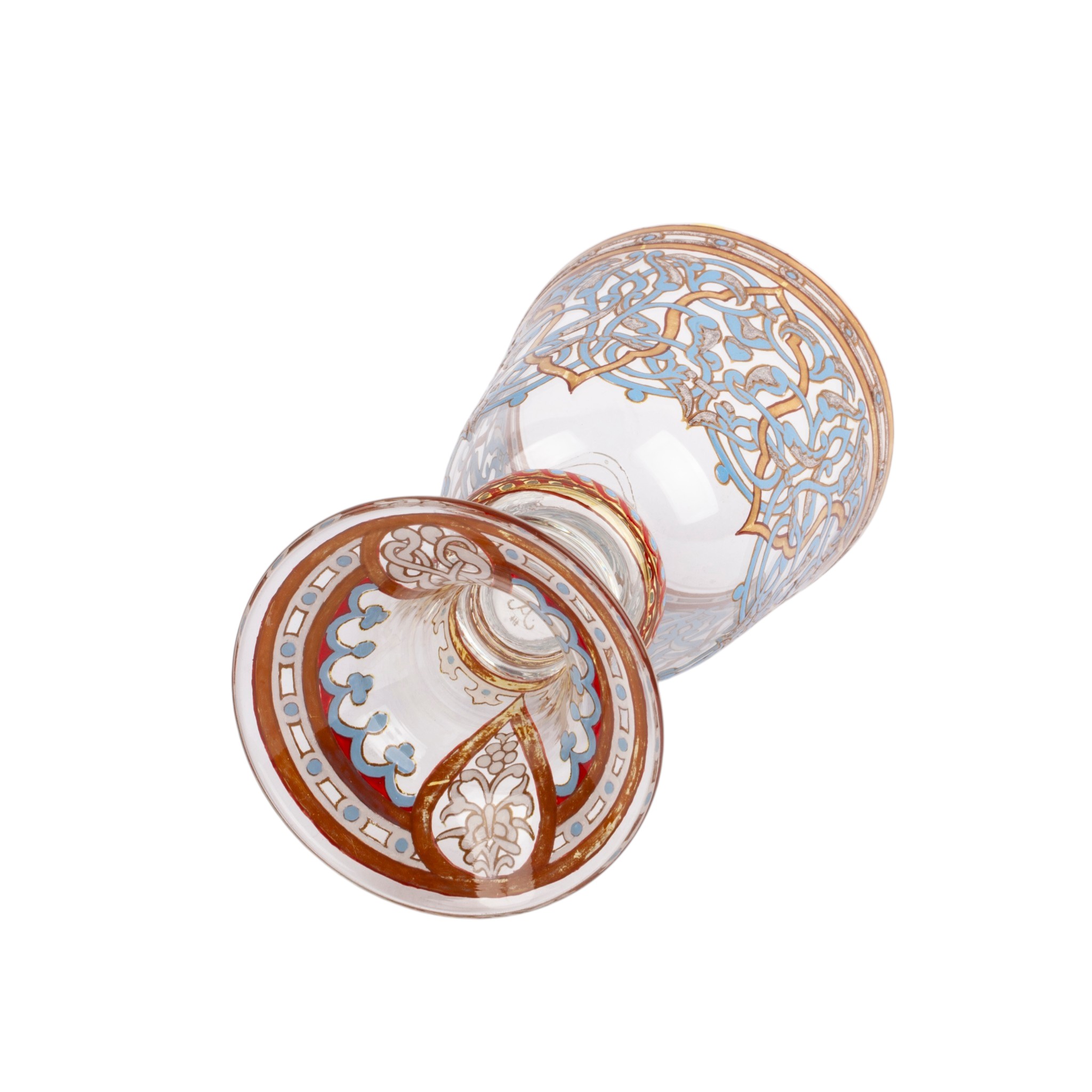
Estimate: 6000-8000€A Russian Imperial Glass Goblet St Petersburg, Imperial Glass Factory, decorated by Ivan I. Murinov, 1880s.
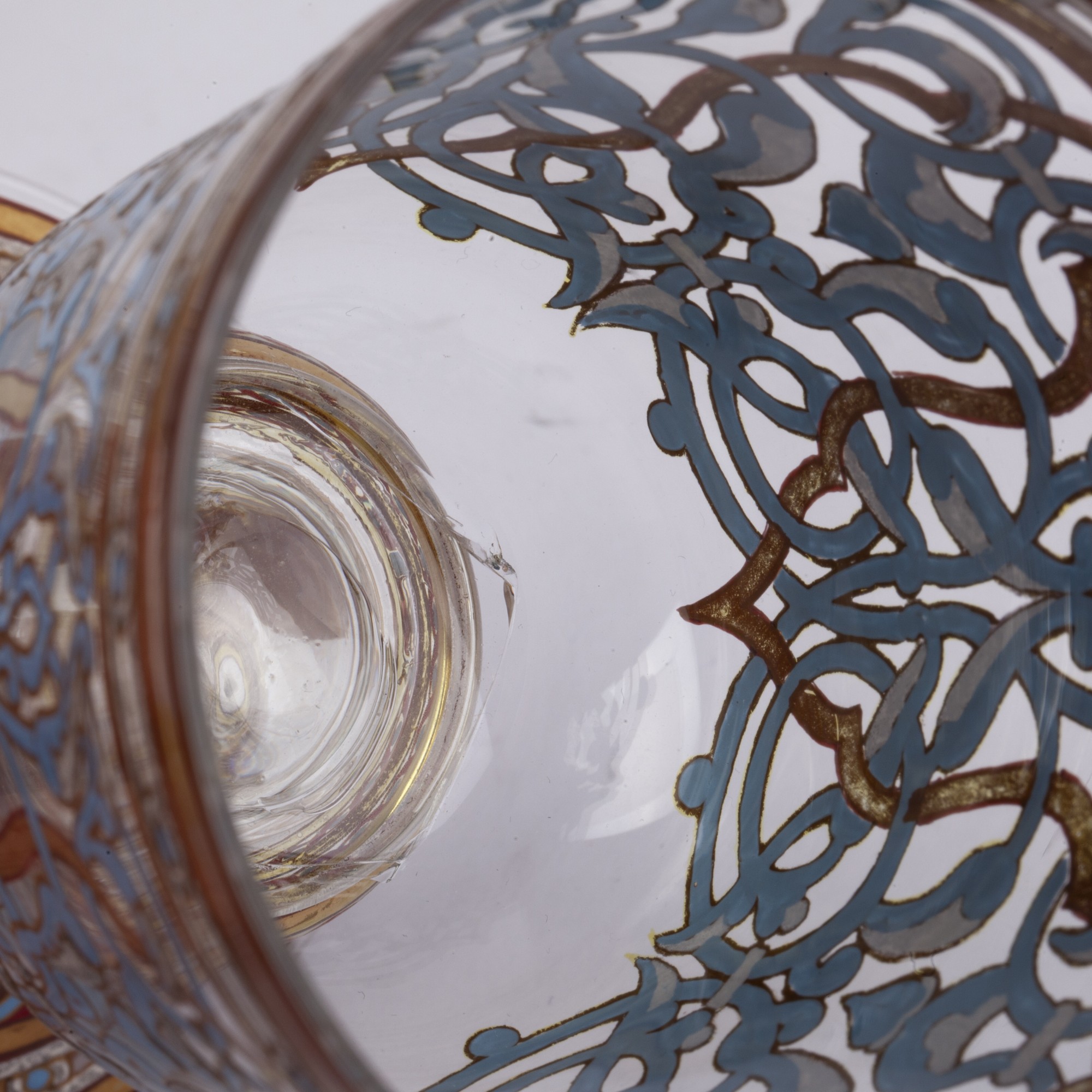
Clear glass; blown, painted with transparent enamels and gold.
Dimensions
Height: 15 cm. Diameter; 7,6 cm.
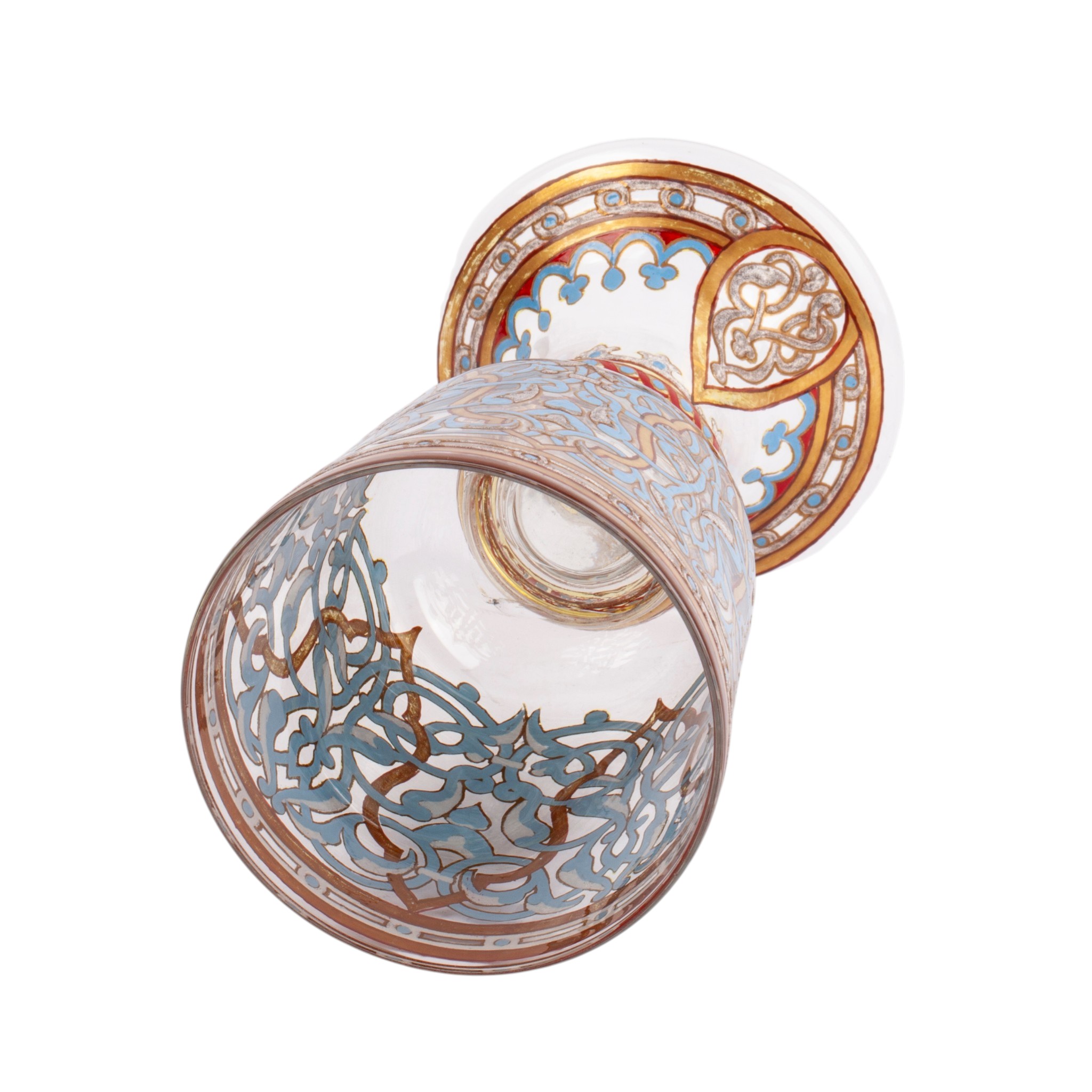
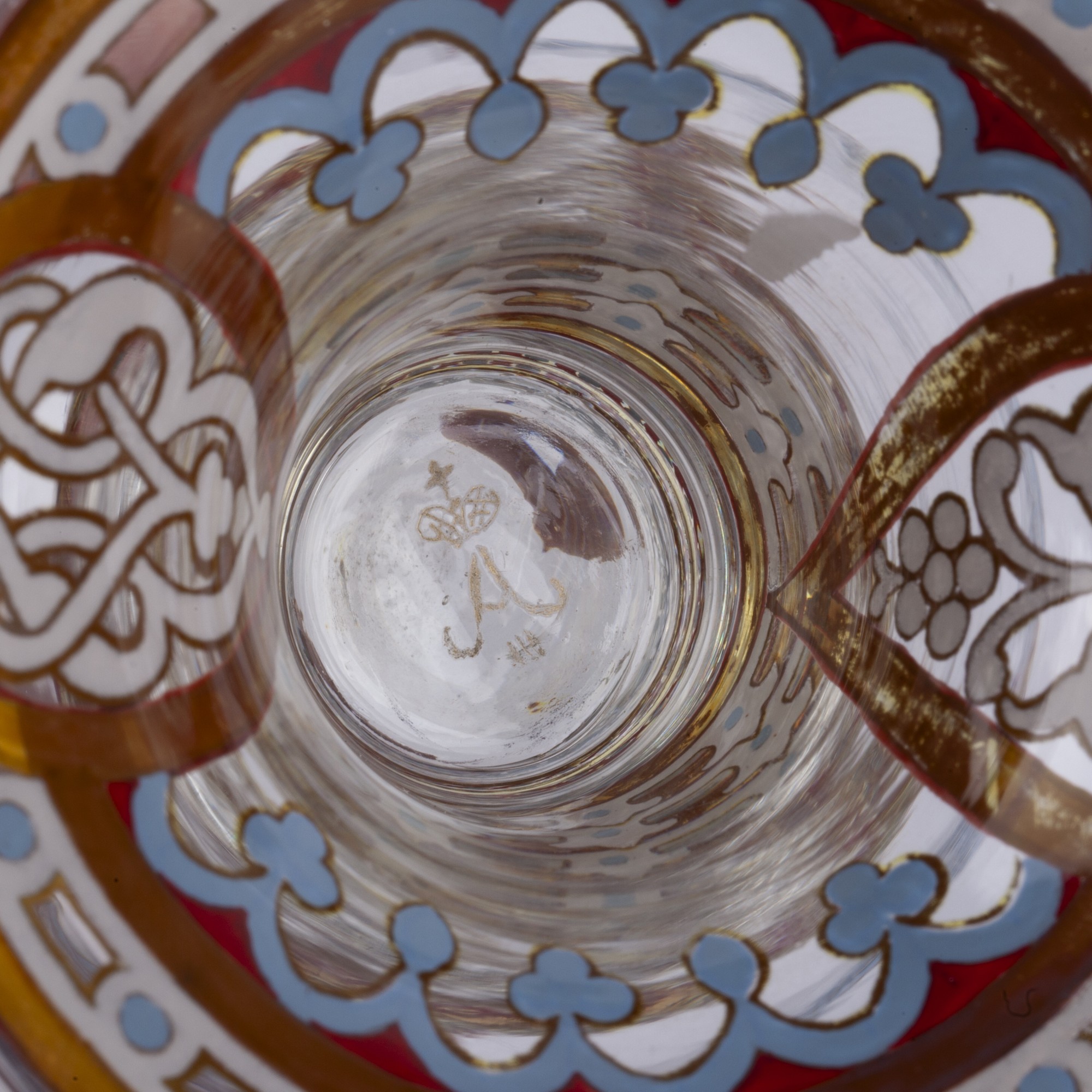
Mark: gold enamel imperial cypher of Alexander III, “A III” beneath a crown, on the underside.
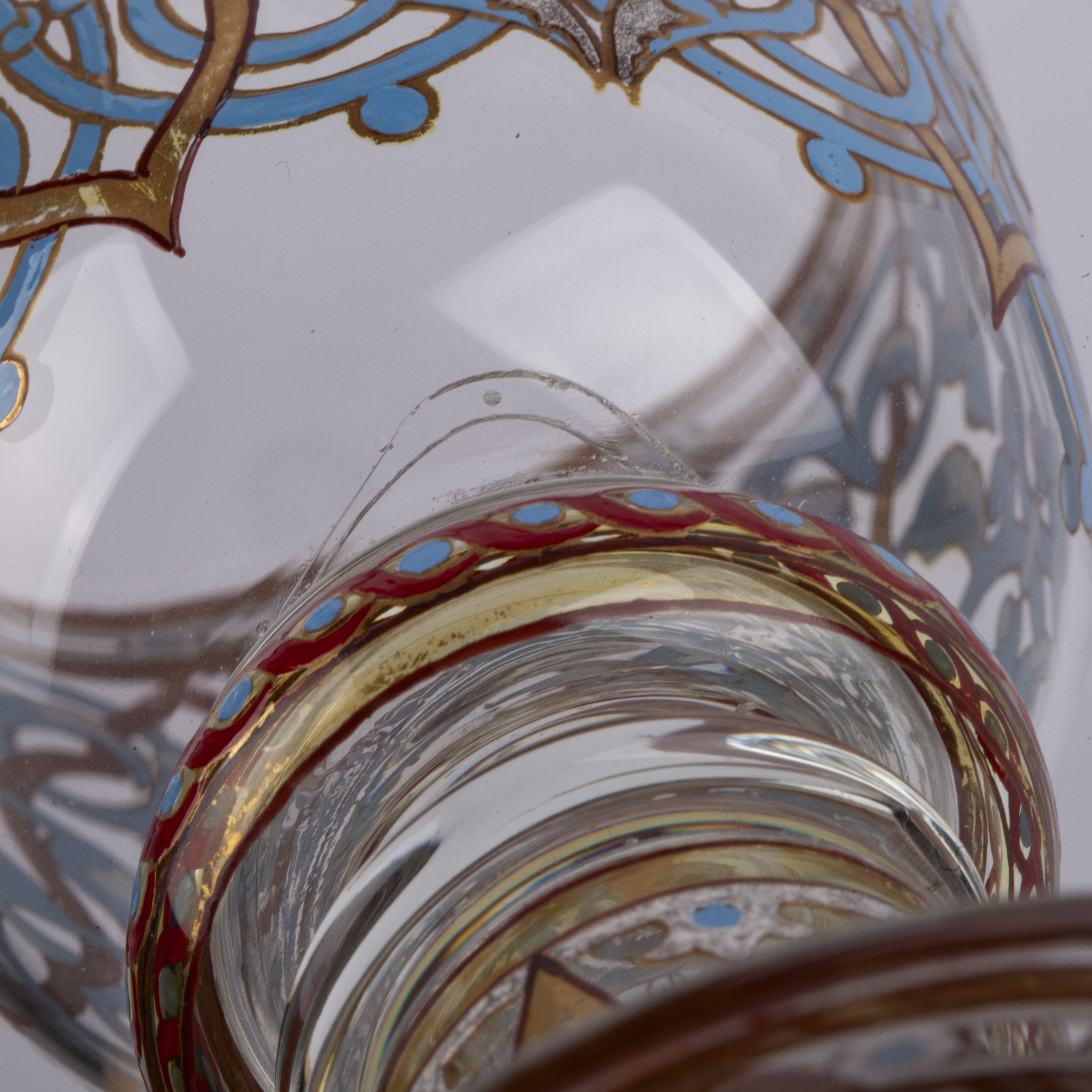
A rare Imperial Russian wine goblet. The vessel has a broad, slightly tapering bowl, a slender stem widening gently toward the base, and a hollow lower section articulated by a decorative knop above the spreading foot.
The surface is richly painted in transparent enamels and gold in a Renaissance Revival manner. Around the bowl runs a wide ornamental band composed of scrolling arabesques, stylized foliage, and symmetrical strapwork motifs in a refined palette of pale blue, red, ochre, and gold. The knop is encircled with a berry-and-leaf ornament, while the foot is decorated with palmettes and a blue beaded border framed by gilt bands.
Renaissance-style painting executed in transparent enamels on clear glass ranks among the most refined historicist directions in the production of the Imperial Glass Factory in the later 19th century. This type of decoration, described in factory records as “Italian” or “Venetian” in style, appears from the turn of the 1860s-1870s and is associated with the flowering of enamel painting at the factory.
Such paintings are closely connected with Ivan Ivanovich Murinov (1843-1901), who headed the painting workshop of the Imperial Glass Factory from 1873 into the 1890s and was especially noted for decorating glass in historical styles. The present example may be attributed to his circle, or executed under his direction. Surviving objects of this kind are uncommon and are usually preserved in museum collections as individual, non-serial pieces. Comparable items: https://www.hermitagemuseum.org/digital-collection/919015?lng=ru https://catalog.shm.ru/entity/OBJECT/5570925?query=муринов&index=0Starting price: 5000€
Estimate: 6000-8000€
Hammer Price: Not sold