
Lot 0086
Egor Cheriatov. Silver Enameled Beaker in Art-Nouveau Style
Estimate: 5000-7000€
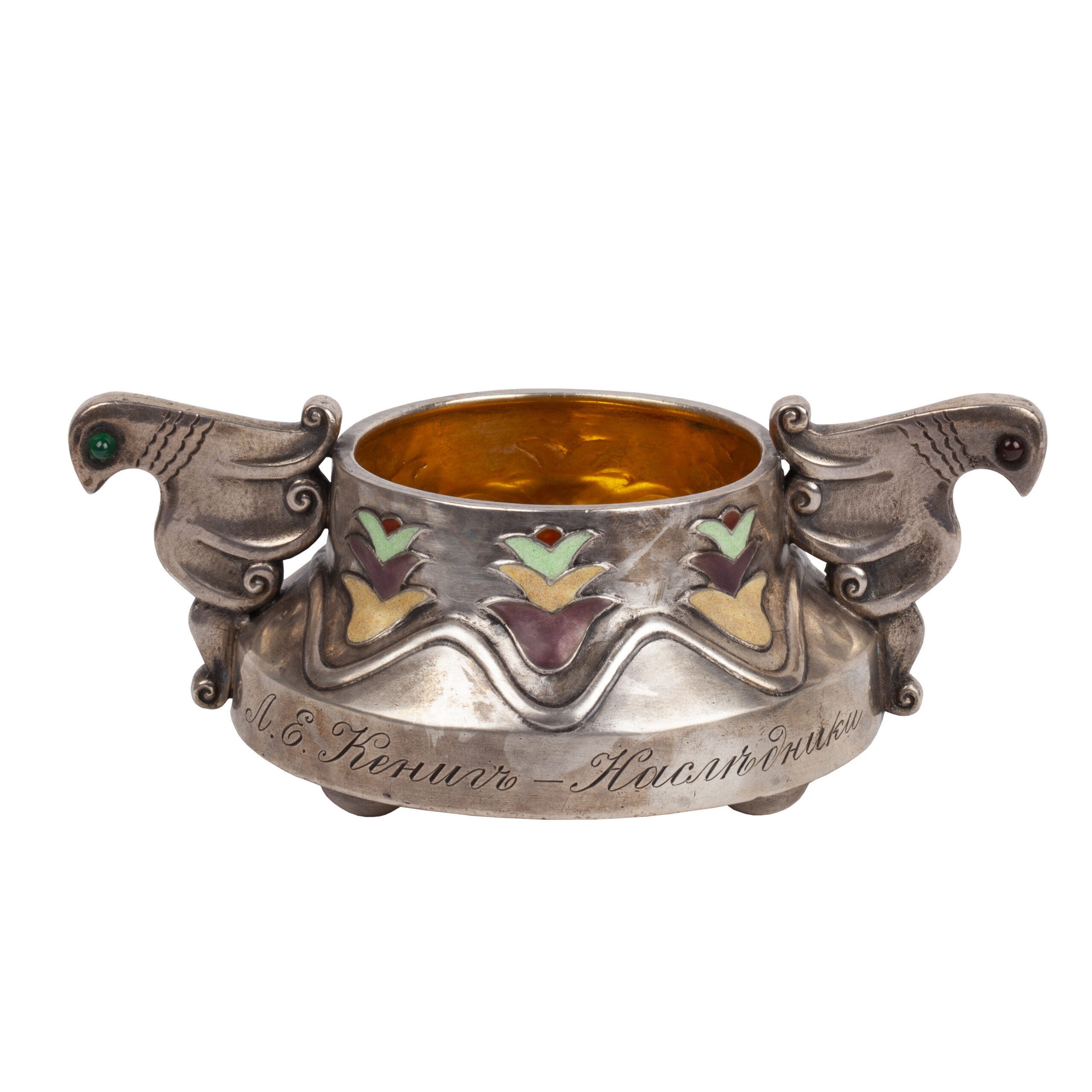
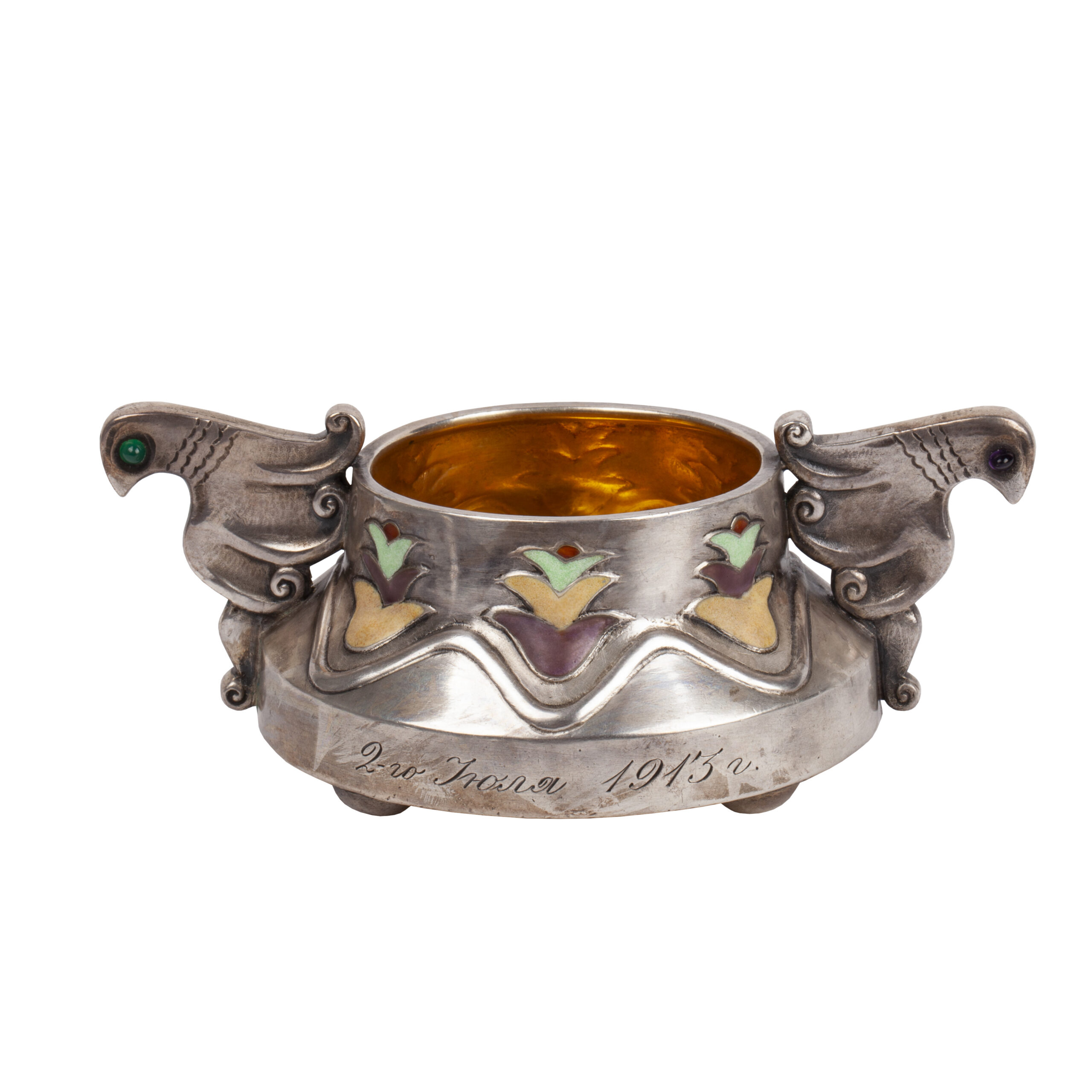
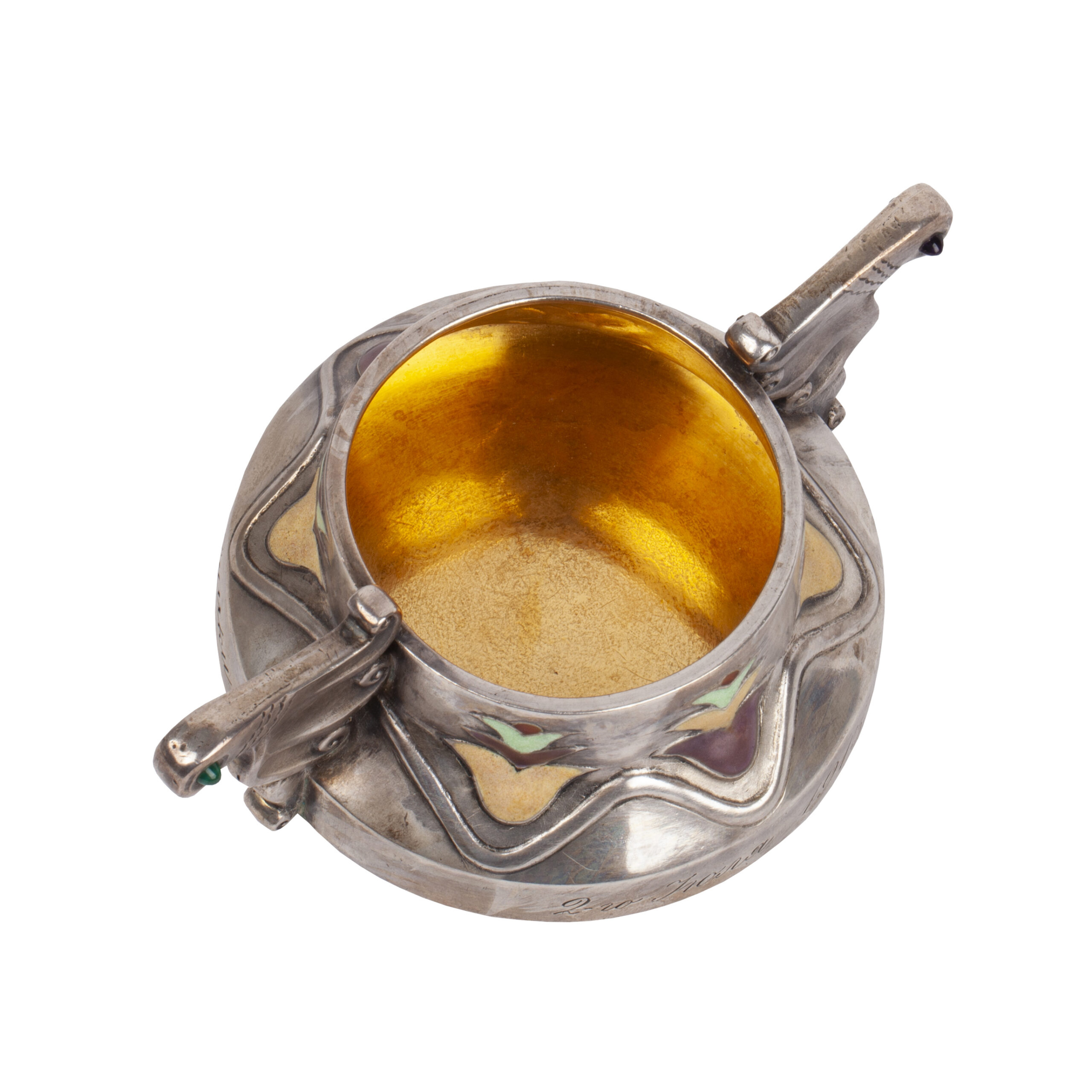
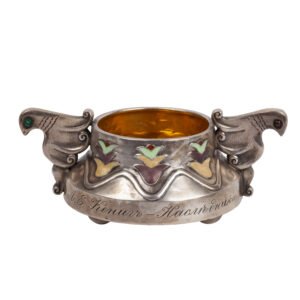
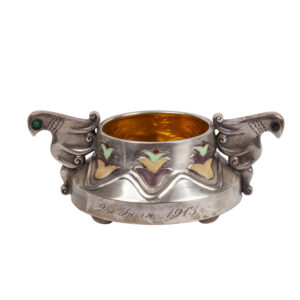
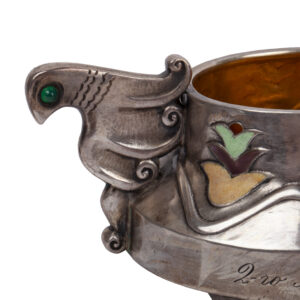
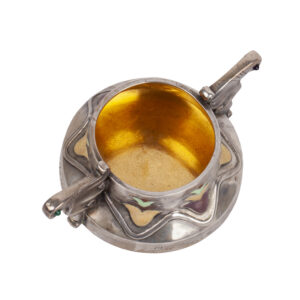
Egor Cheriatov. Silver enameled beaker in art-nouveau style.
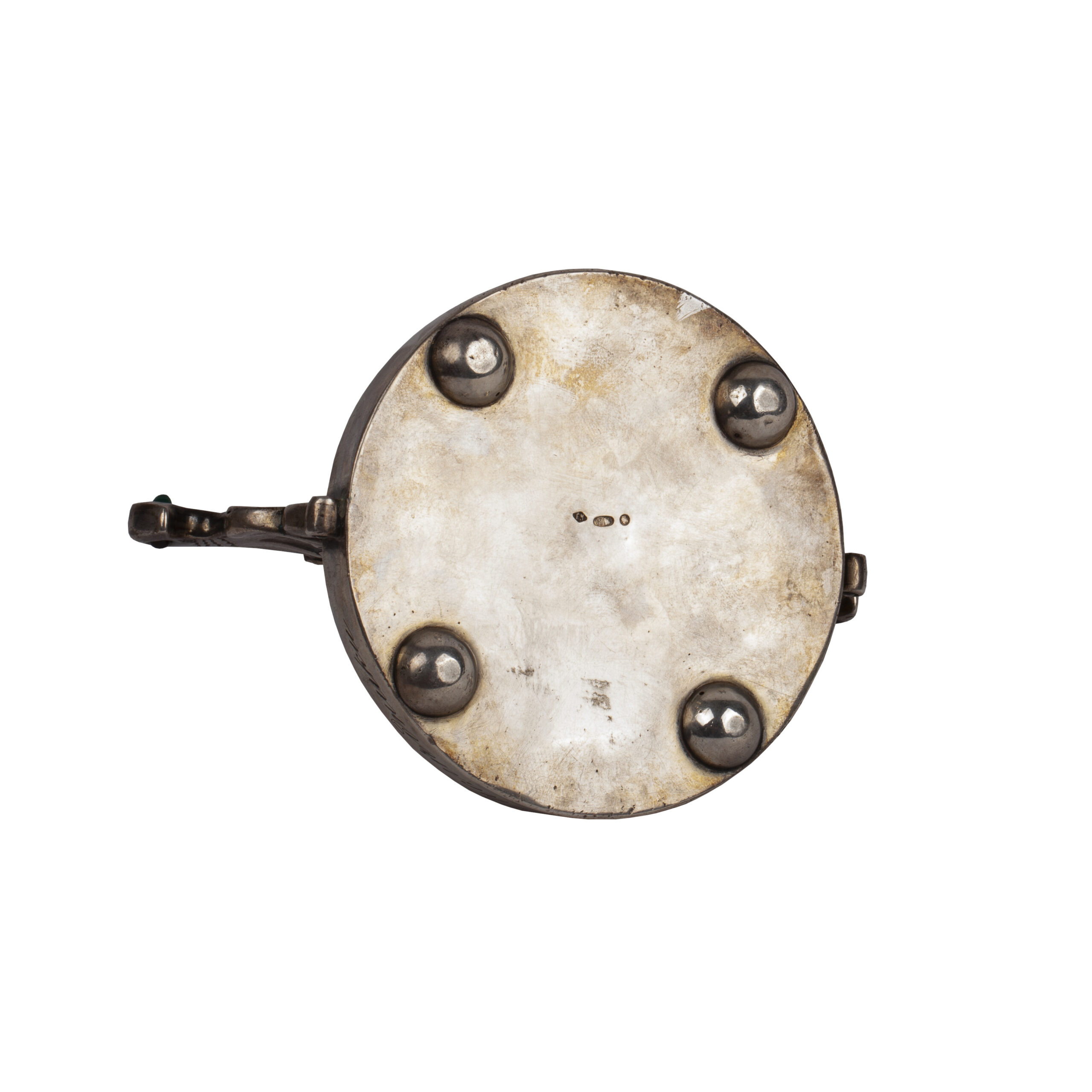
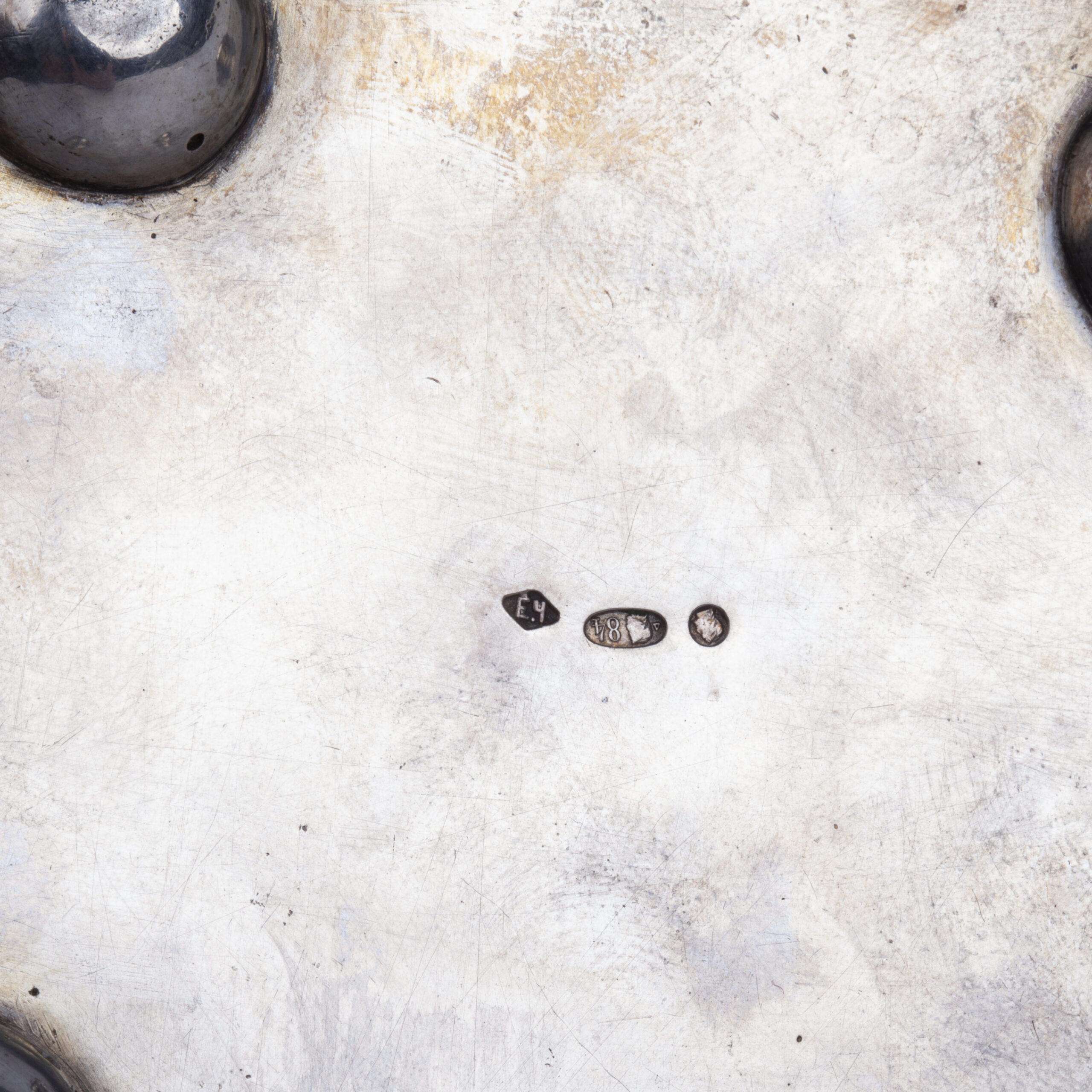
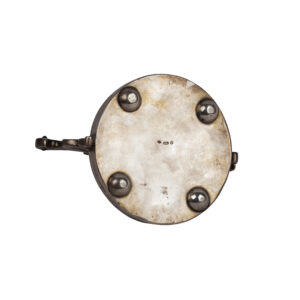
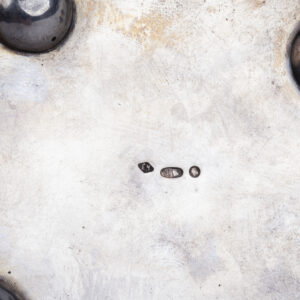
Makers mark of «E. CH.». Moscow, 1913.
Engraving on one rim of “July 2, 1913”, on the other “L.E. Koenig – Heirs”
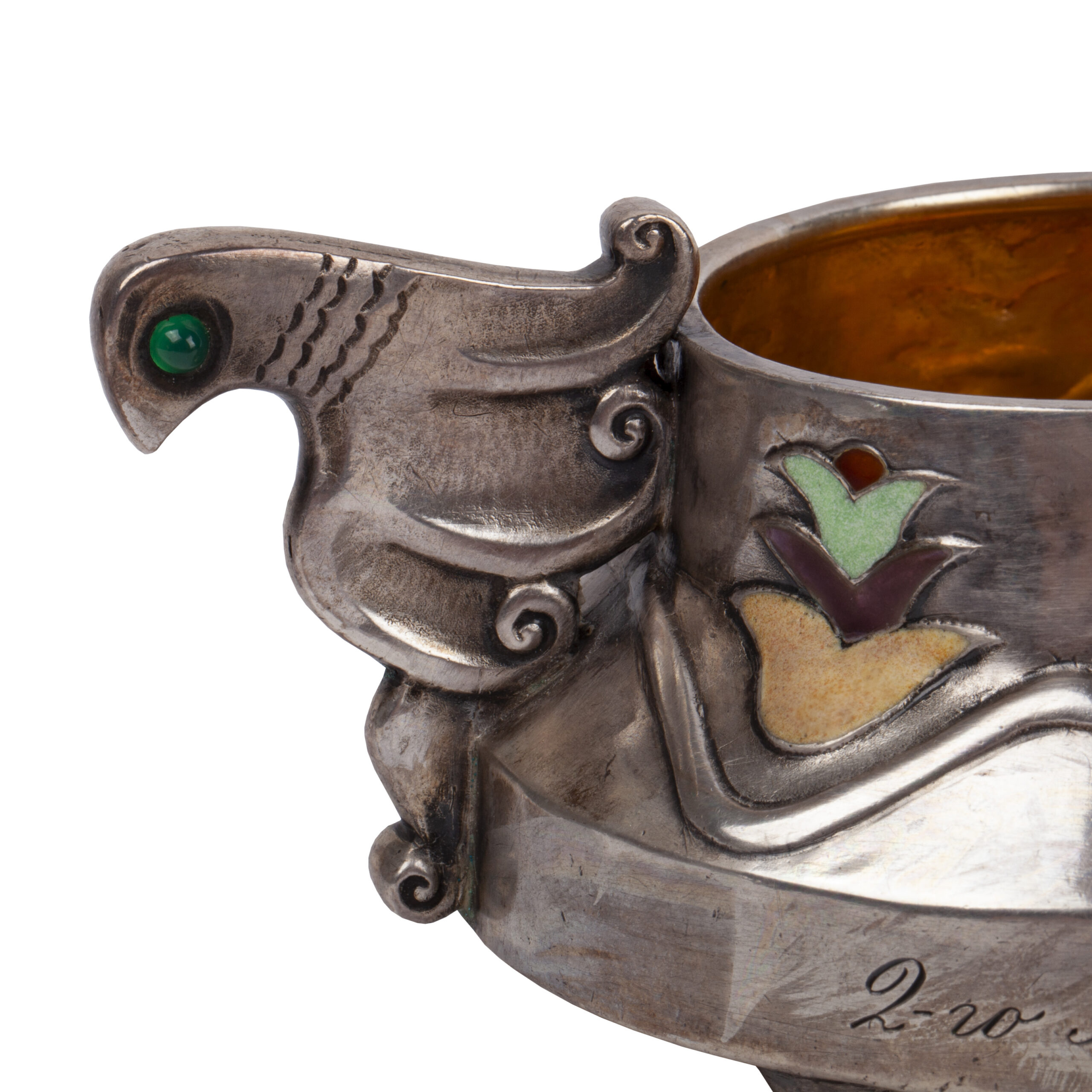
Silver beaker on four ball feet with polychrome opaque enamel decoration.
This remarkable piece, created by the master jeweler Georgy (Egor) Kuzmich Cheryatov, embodies of Russian Art Nouveau style. With the bird-shaped handles with semi-precious cabochon stones incrustation.
Georgy Kuzmich Cheryatov (1873–1947) was head of the silver department of the Moscow jewelry firm Lorie. Trained as a silversmith at the turn of the century, he became one of the prominent exponents of the Neo-Russian style, a branch of national romanticism in decorative arts. Alongside his long-standing collaboration with Lorie, Cheryatov also produced independent works marked by individuality and artistic refinement.
Dimensions: 5.3 x 14.2 x 9.6 cm. Total weight: 206.5 g
Starting price: 4000€
Estimate: 5000-7000€
Hammer Price: 4000€
Related Lots
-
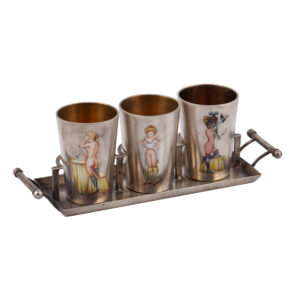
Lot 0084
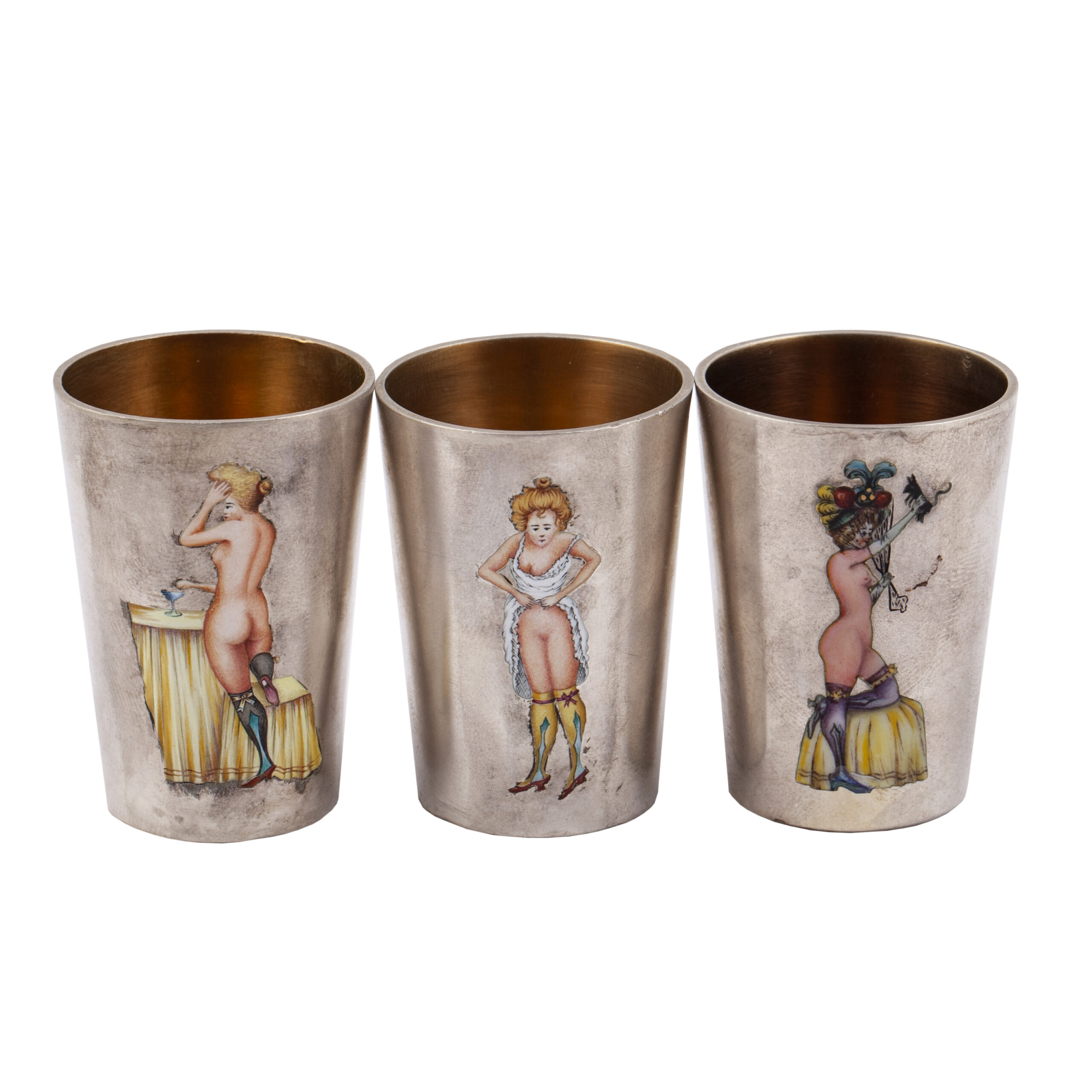
Marshak. Set of Vodka Beakers on a Tray with Erotic Scenes. Silver, Parcel-Gilt, En Plein Enamel
Estimate: 5000-6000€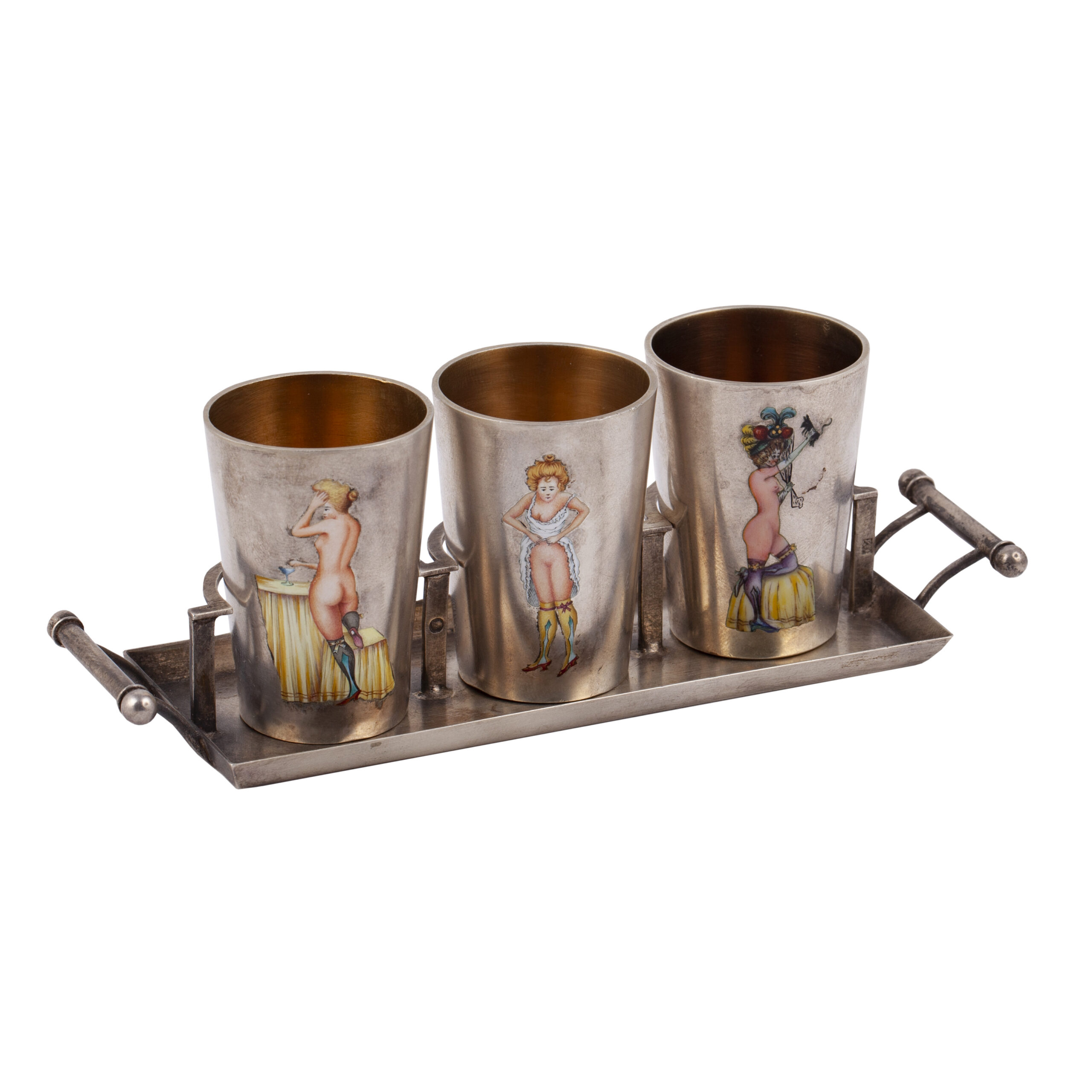
Lot 0084
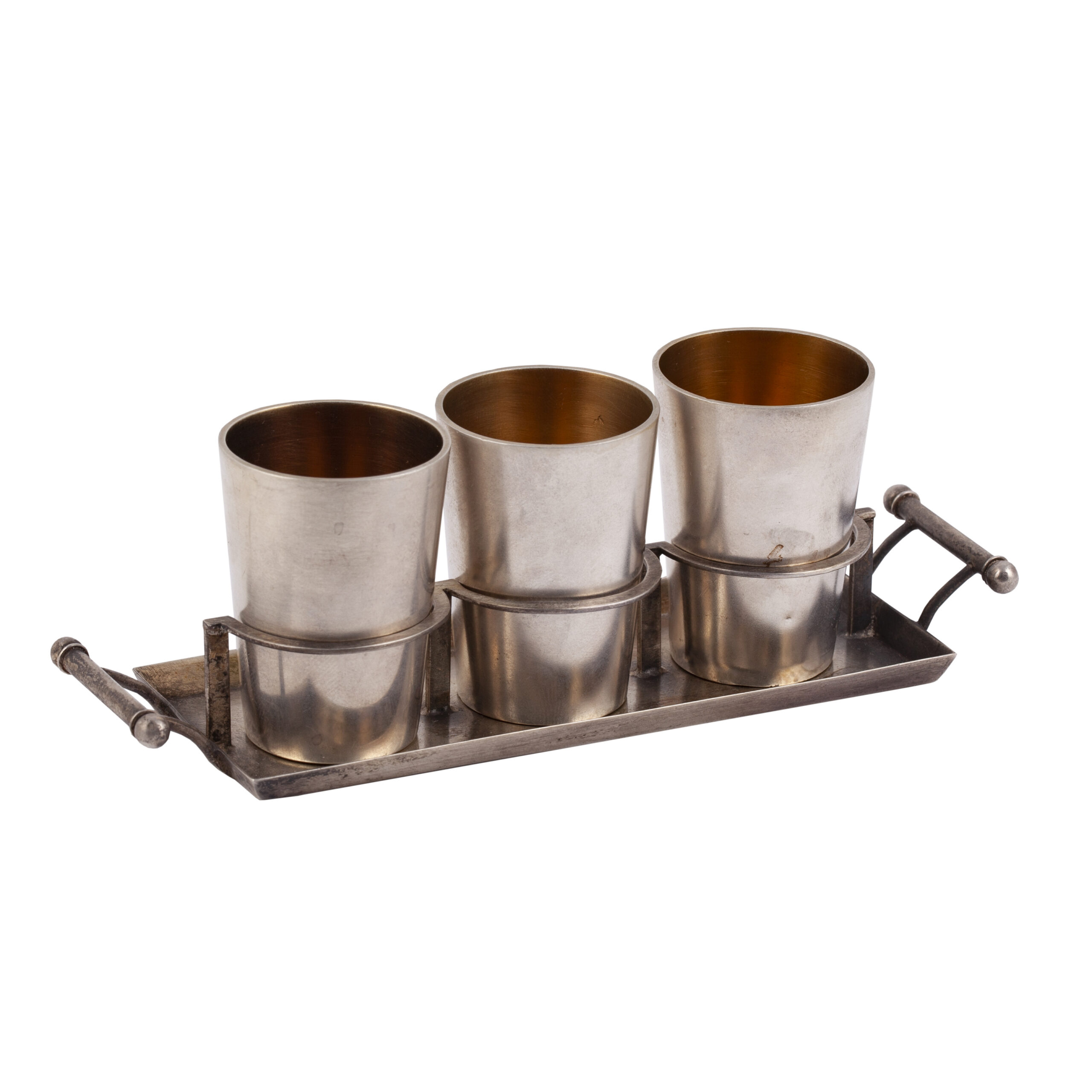
Marshak. Set of Vodka Beakers on a Tray with Erotic Scenes. Silver, Parcel-Gilt, En Plein Enamel
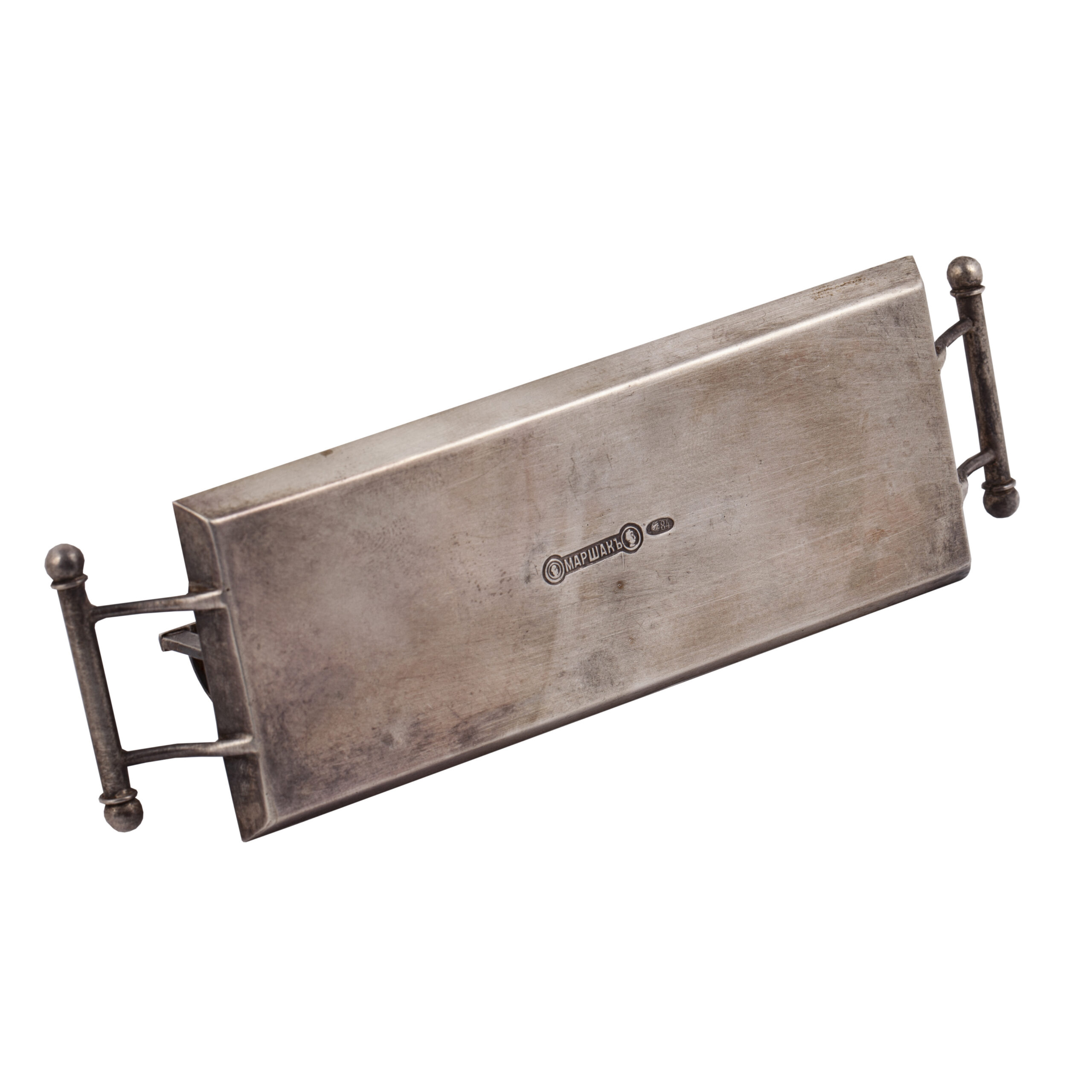
Estimate: 5000-6000€Marshak. Set of Vodka Beakers on a tray with Erotic Scenes. Silver, parcel-gilt, en plein enamel
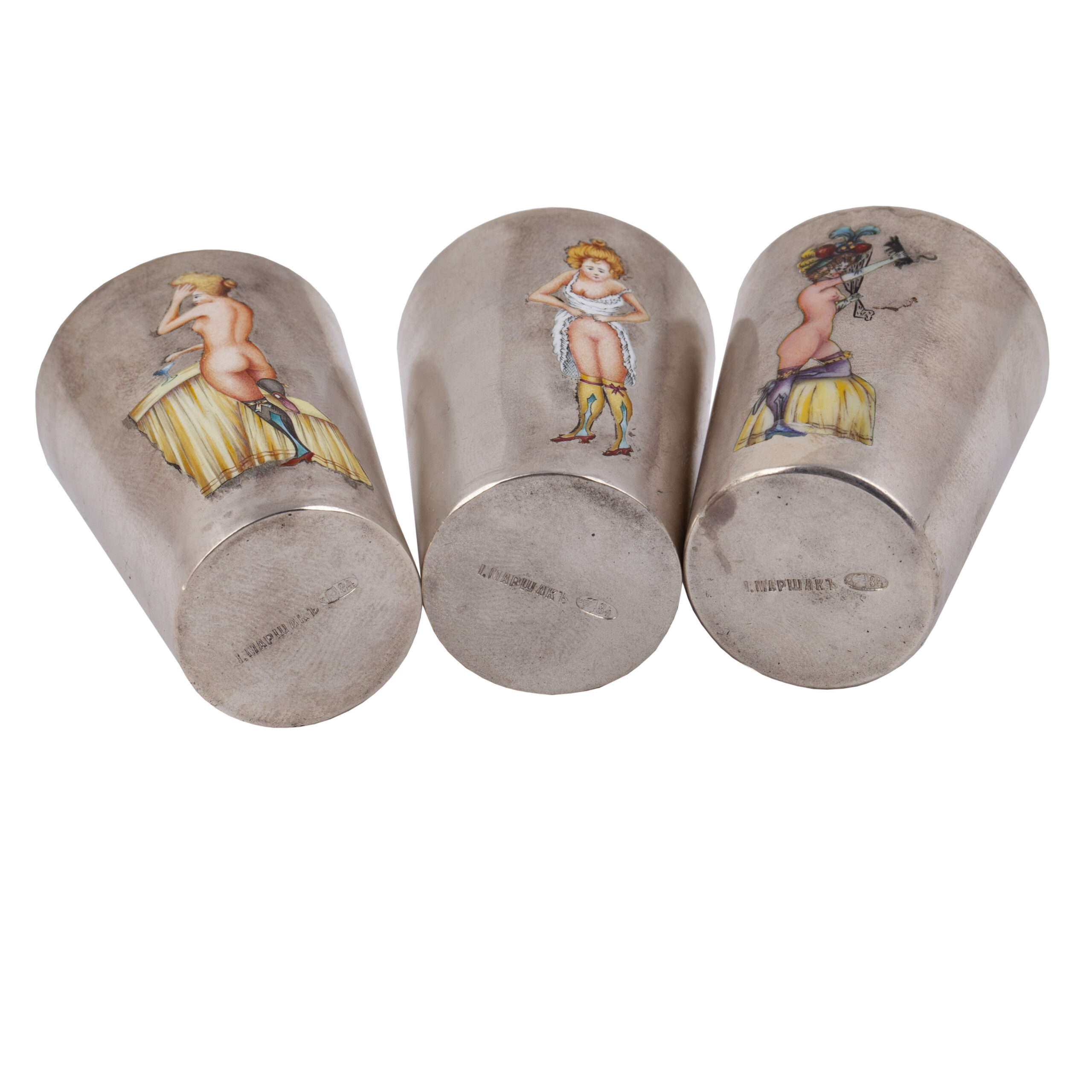
Makers mark of «Marshak». Kiev, 1908-1917. Weight: 134.7 g. Dimensions of the tray with the handles: 13.5 x 4.2 x 2 cm. Height of the glass: 4.4 cm.
A rare set of three vodka beakers on a silver tray, each decorated with finely painted en plein enamel miniatures depicting humorous and erotic scenes of partially undressed women. The lively and playful imagery reflects a popular taste for light-hearted and risqué motifs in art-nouveau style.
Iosif Abramovich Marshak (1854–1918), became one of the leading jewelers of Imperial Russia. Often called the “Cartier of Kiev” or «Ukrainian Faberge» he founded his own workshop in 1878, gradually expanding it into a major enterprise on Khreshchatyk Street.
Marshak introduced modern methods of production, employed both men and women craftsmen, and gained international recognition at exhibitions in Chicago (1893) and Antwerp (1894). His firm produced jewelry, silverware, clocks, and presentation pieces, many of which were purchased by aristocratic families and members of the Imperial court.Starting price: 4000€
Estimate: 5000-6000€
Hammer Price: 5000€ -

Lot 0088
Fabergé Gold, Silver and Enamel Bell Push by Henrik Wigström
Estimate: 10000-12000€


Lot 0088
Fabergé Gold, Silver and Enamel Bell Push by Henrik Wigström
Estimate: 10000-12000€Fabergé Gold, Silver and Enamel Bell Push
Workmaster Henrik Wigström (1862–1923), St. Petersburg, circa 1908–1917
Scratched inventory number: 61848Gold, silver, white guilloché enamel, cabochon garnet
Dimensions: 2.8 х 6 х 6 cm. Total weight: 92.2 g.Circular bell push set with translucent white guilloché enamel over a sunburst ground, centered with a cabochon garnet push piece. The border is decorated with gold chased laurel garlands and reeded edging in neoclassical taste.
Marked on the underside with Fabergé and workmaster’s initials H.W. for Henrik Wigström, and St. Petersburg assay marks for 56 zolotniks (15ct gold) and 88 silver zolotnik.
Henrik Wigström (1862–1923) is regarded as one of Fabergé’s most important workmasters, succeeding Michael Perkhin in 1903. Under his direction, the Fabergé workshops produced some of their most sophisticated creations in Louis XVI and neoclassical styles, including many of the Imperial Easter Eggs and objets de fantaisie crafted between 1904 and 1917.
Comparable examples:
A similar bell push by Wigström, with related enamel decoration and laurel motifs, was sold at Sotheby’s, London, Russian Sale – Works of Art, Fabergé, 2007, lot 499.Starting price: 8000€
Estimate: 10000-12000€
Hammer Price: UNSOLD€ -

Lot 0087
Elegant Russian Gold and Agate Cameo Brooch Featuring a Nude Figure
Estimate: 2500-3500€


Lot 0087
Elegant Russian Gold and Agate Cameo Brooch Featuring a Nude Figure
Estimate: 2500-3500€A. Sumin. Cameo Brooch with Nude in Original Case
Gold, chasing, agate.
Makers mark of «AK» and «Sumin». Petersburg, 1908-1914.
An elegant rectangular gold-mounted cameo brooch finely carved in banded agate, depicting a reclining nude holding a flower. The frame is decorated with chased foliate ornament and retains its original fitted leather case.
The brooch bears the maker’s mark of Andrey Karpenko, working for the renowned jeweler Avenir Sumin, one of the leading stonecutters of Imperial St. Petersburg. Avenir Sumin was the son of Ivan Sumin, a master stonecutter originally from the Imperial Lapidary Factory in Ekaterinburg who later established his own workshop in St. Petersburg under the name Siberian–Ural Stones. The firm gained recognition at national and international exhibitions, and after Ivan’s death in 1894 was continued by Avenir.
Trained under the jeweler Karl Werfel, Avenir Sumin expanded the workshop, located on Nevsky Prospect, and became best known for hardstone animal figures and luxury objects often compared to those of Fabergé. While his works matched Fabergé in quality, they were initially more affordable, leading to both competition and frequent confusion between the two firms. In 1913 Sumin was appointed official supplier to Empress Alexandra Feodorovna.
Weight: 30.6 g. Dimensions: 4.7 x 5.7 x 1.5 cm. Dimensions of the box: 7 x 7.5 x 3 cm.Starting price: 2000€
Estimate: 2500-3500€
Hammer Price: 2000€ -
Lot 0085
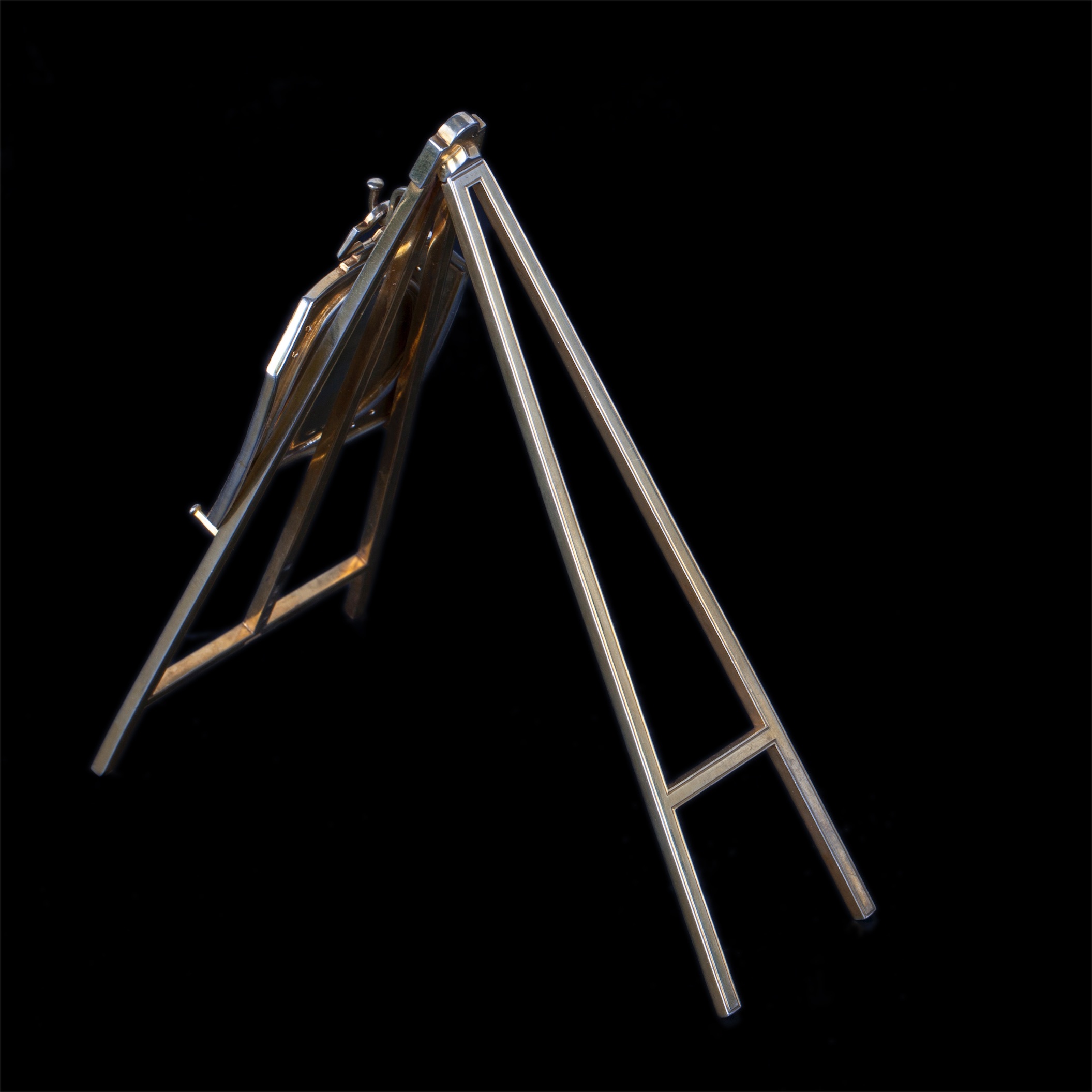
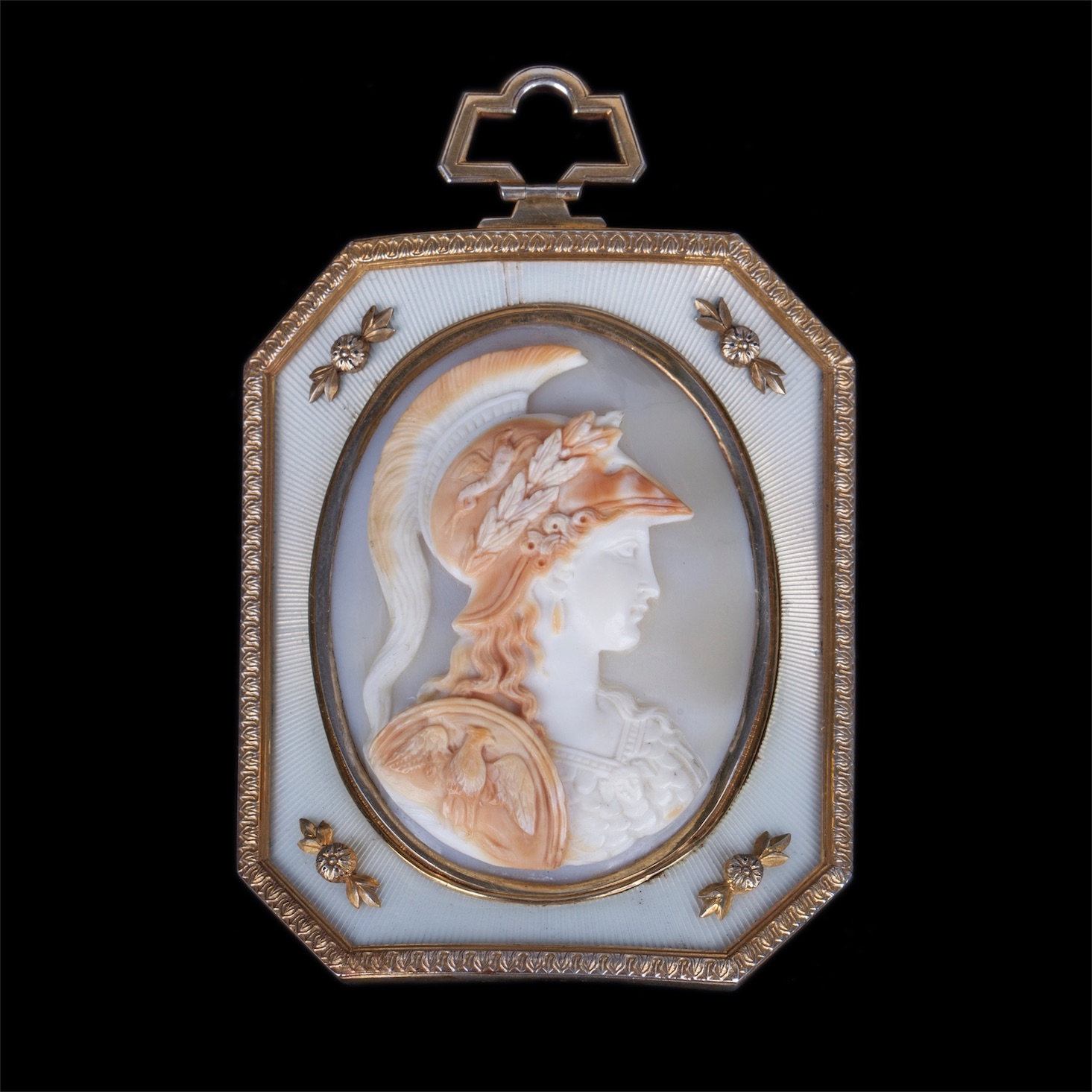
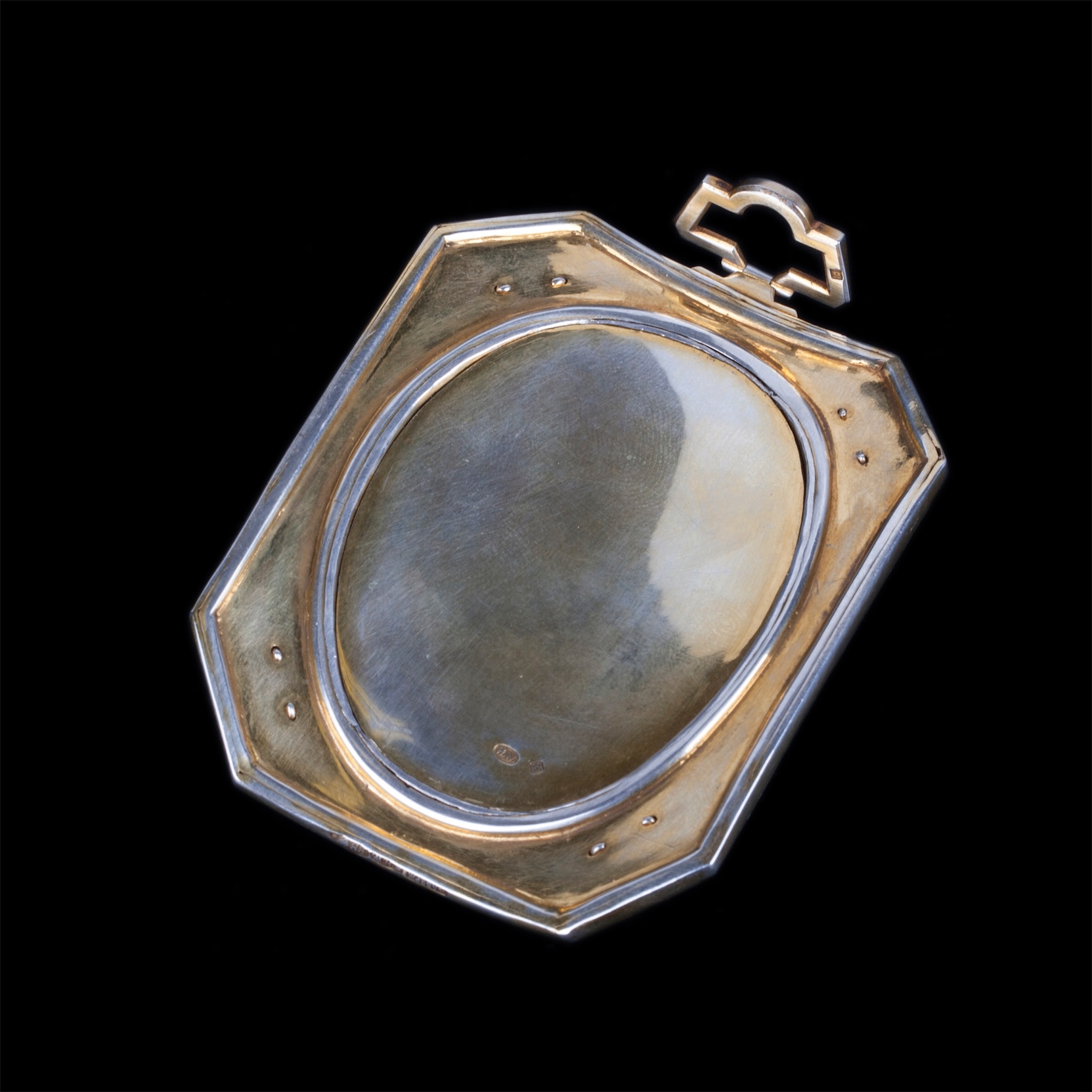
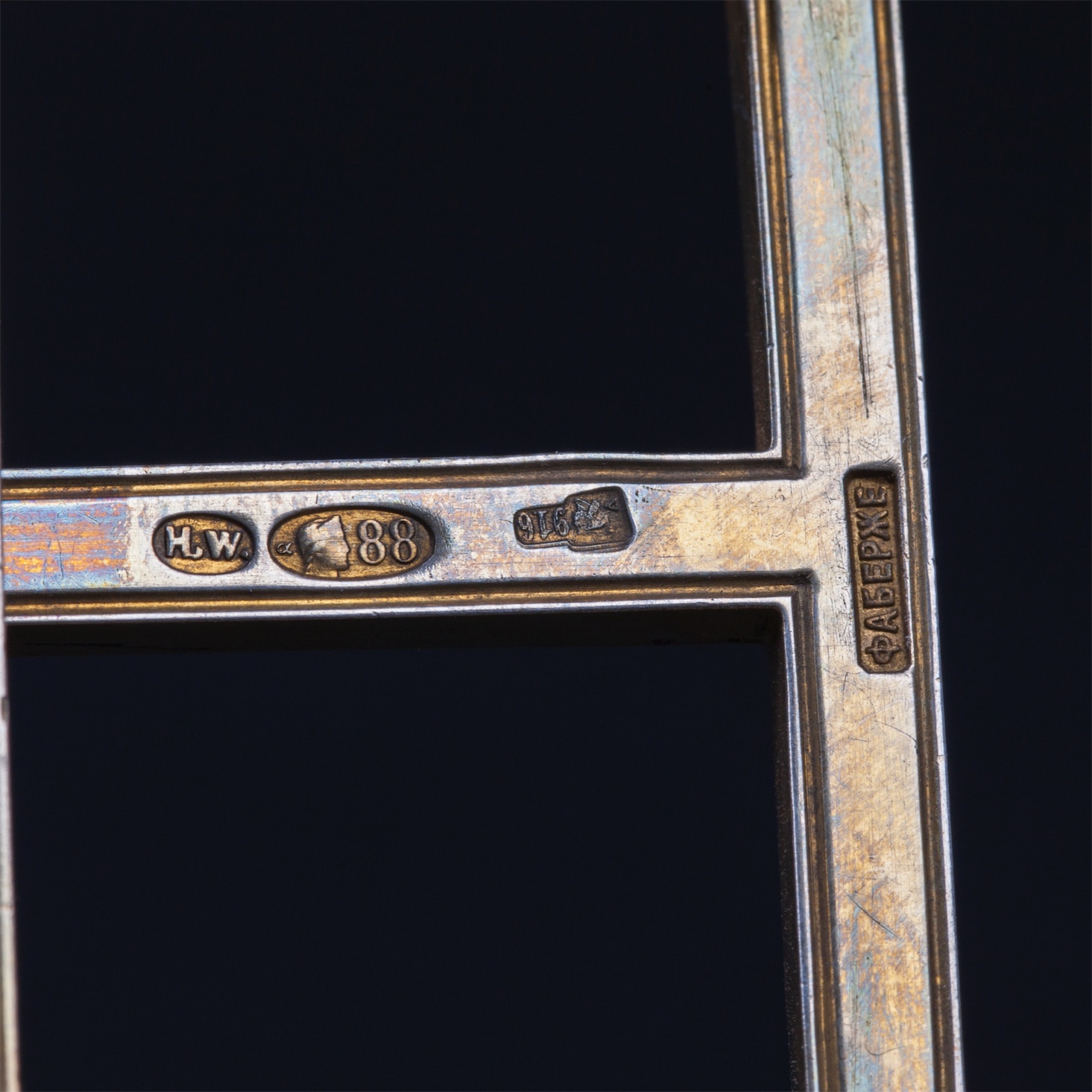
Very Rare Fabergé Medallion with a Minerva Cameo on a Stand in the Shape of an Easel by Henrik Wigström
Estimate: 35000-45000€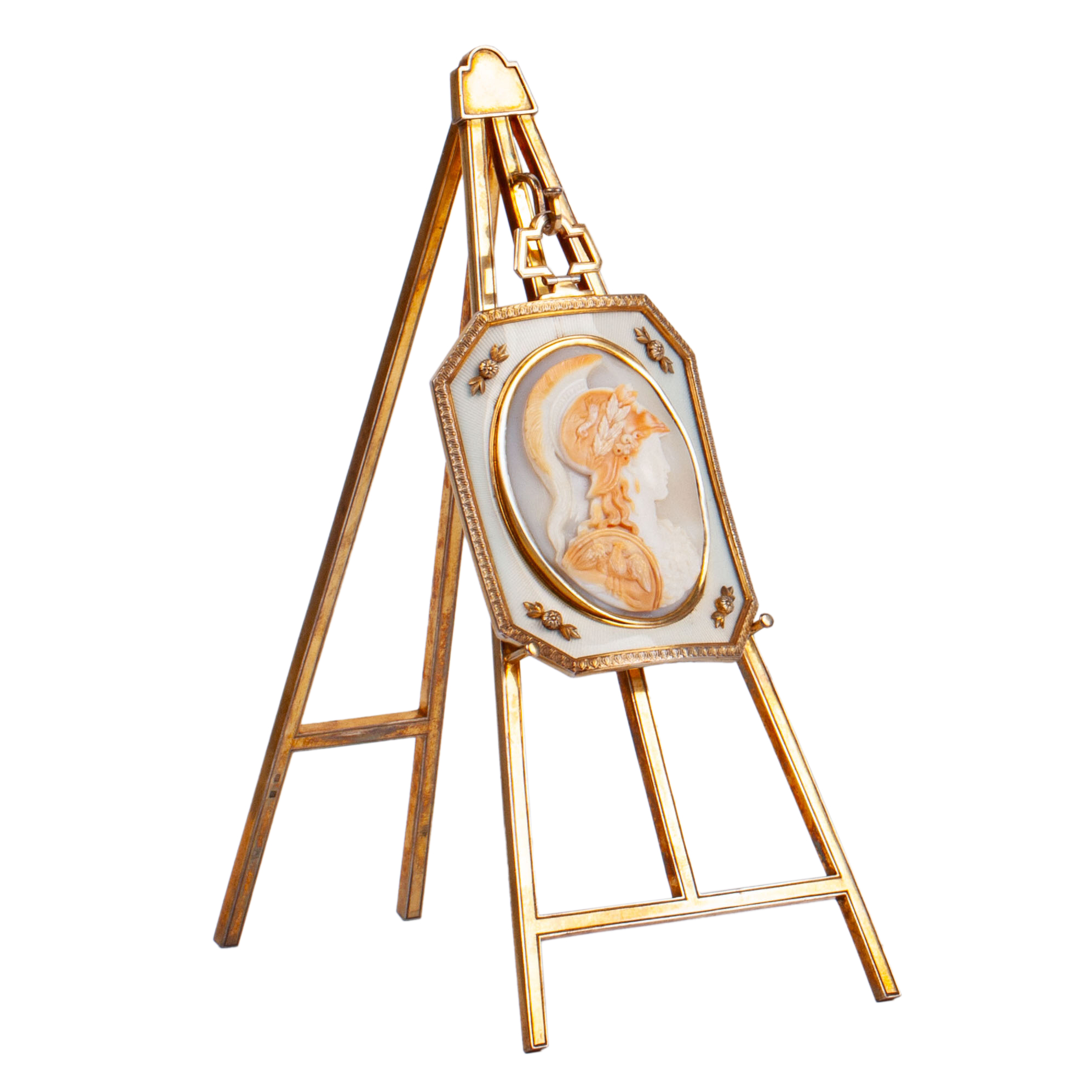
Lot 0085
Very Rare Fabergé Medallion with a Minerva Cameo on a Stand in the Shape of an Easel by Henrik Wigström
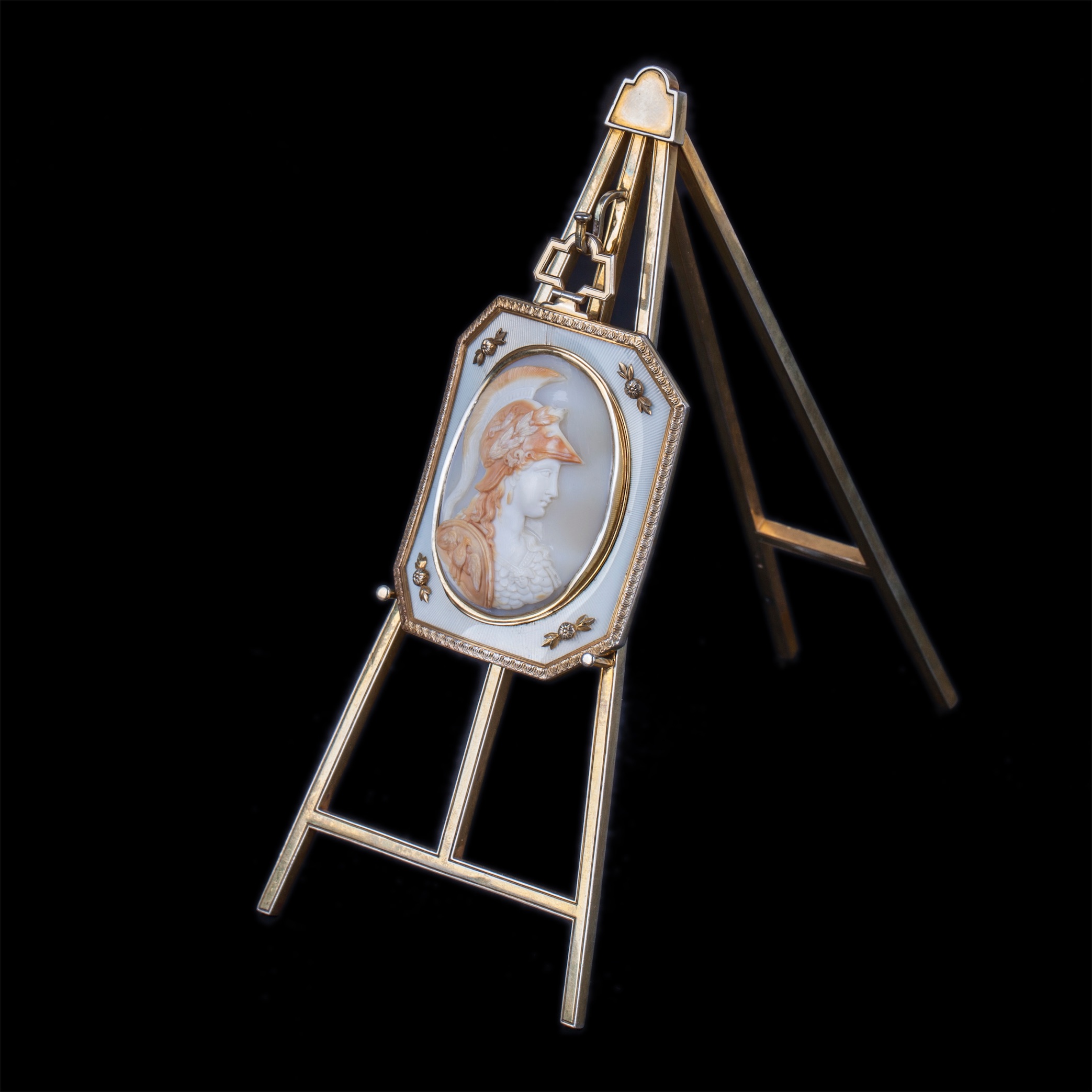
Estimate: 35000-45000€A rare Fabergé Medallion with Minerva Cameo on Easel Stand . Workmaster Henrik Wigström, St. Petersburg, 1908–1917 . Silver, gilt, guilloché enamel, carved cameo. Easel dimensions: 18.5 × 8 cm; medallion: 8.6 × 6 cm
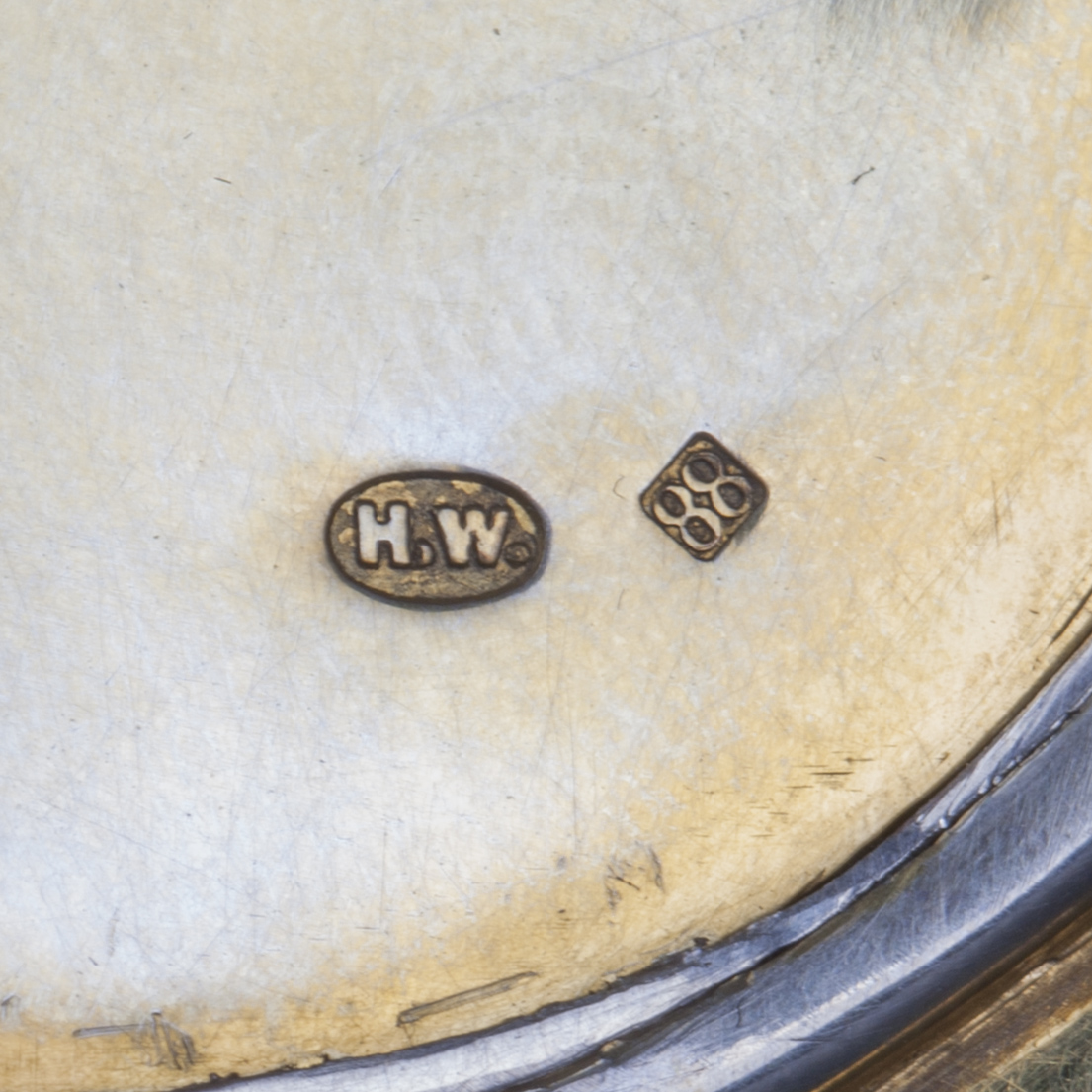
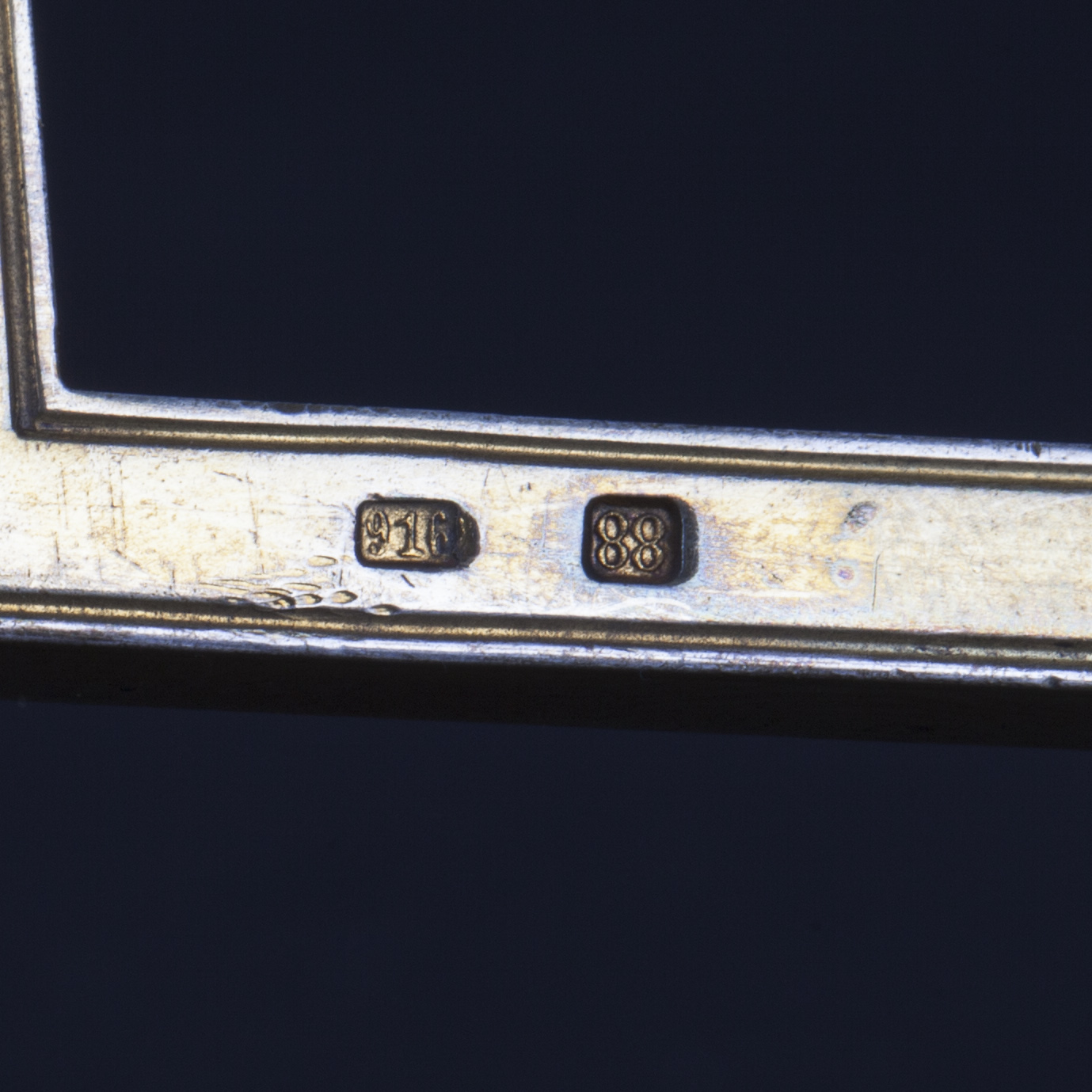
A highly rare Fabergé creation, this object unites a finely carved cameo of Minerva, goddess of wisdom and war, with an elegant silver-gilt easel mount enriched with translucent guilloché enamel. Designed by the firm’s chief workmaster Henrik Wigström, the piece exemplifies Fabergé’s ability to combine classical imagery with refined decorative settings. Comparable examples are known only from the most distinguished collections, including a related work sold at Christie’s (A Selection of Fabergé Masterpieces from the Harry Woolf Collection, 9 November 2021, lot 32 SOLD GBP 137,500). Henrik Wigström is regarded as one of the most important workmasters of the House of Fabergé, alongside his predecessor Michael Perkhin. Born in Finland, Wigström began his training as an apprentice to the local jeweler and goldsmith Peter Madsen. Through Madsen’s professional connections in Russia, he moved to St. Petersburg in 1886, where he joined the Fabergé workshops as an assistant to Perkhin, the firm’s leading workmaster at the time. Following Perkhin’s death in 1903, Wigström succeeded him as head workmaster.Under his supervision, Fabergé’s workshops produced some of their most sophisticated creations in the Louis XVI and Neoclassical styles. He was highly prolific: approximately half of the Imperial Easter Eggs, as well as the majority of miniature hardstone animals, flowers, boxes, and cigarette cases made between 1904 and 1917, bear his mark “H.W.”
Wigström was also responsible for a remarkable series of objets de fantaisie, including miniature furniture inspired by 18th-century European decorative arts. These delicate, doll-like creations—crafted in gold and enamel—blur the line between functional objects and pure ornament.
One notable example is the bonbonnière in the form of an Empire-style gondola chair, produced around 1911–1912 and now in the Fabergé Museum Collection.
Starting price: 30000€
Estimate: 35000-45000€
Hammer Price: UNSOLD€