
Lot 0077
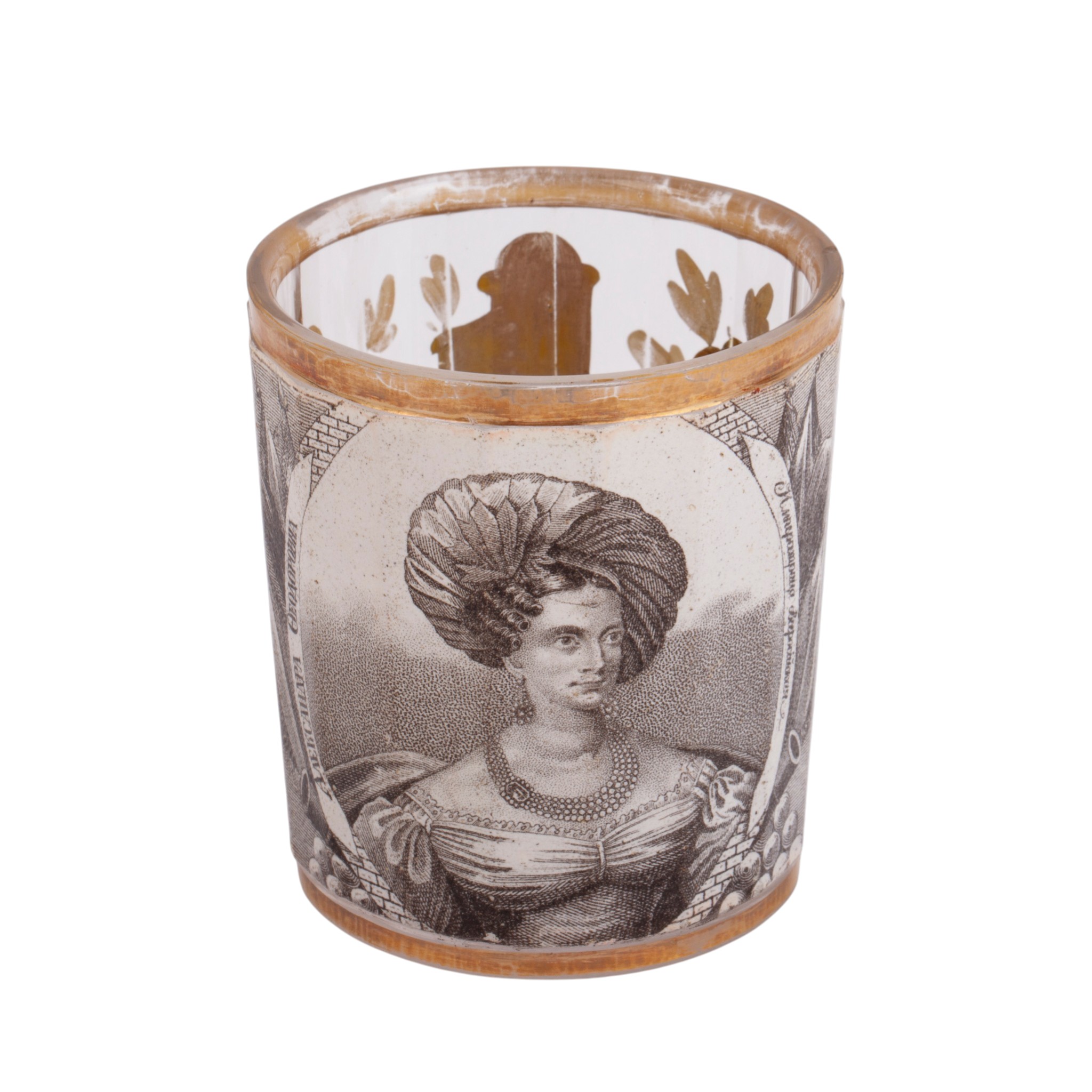
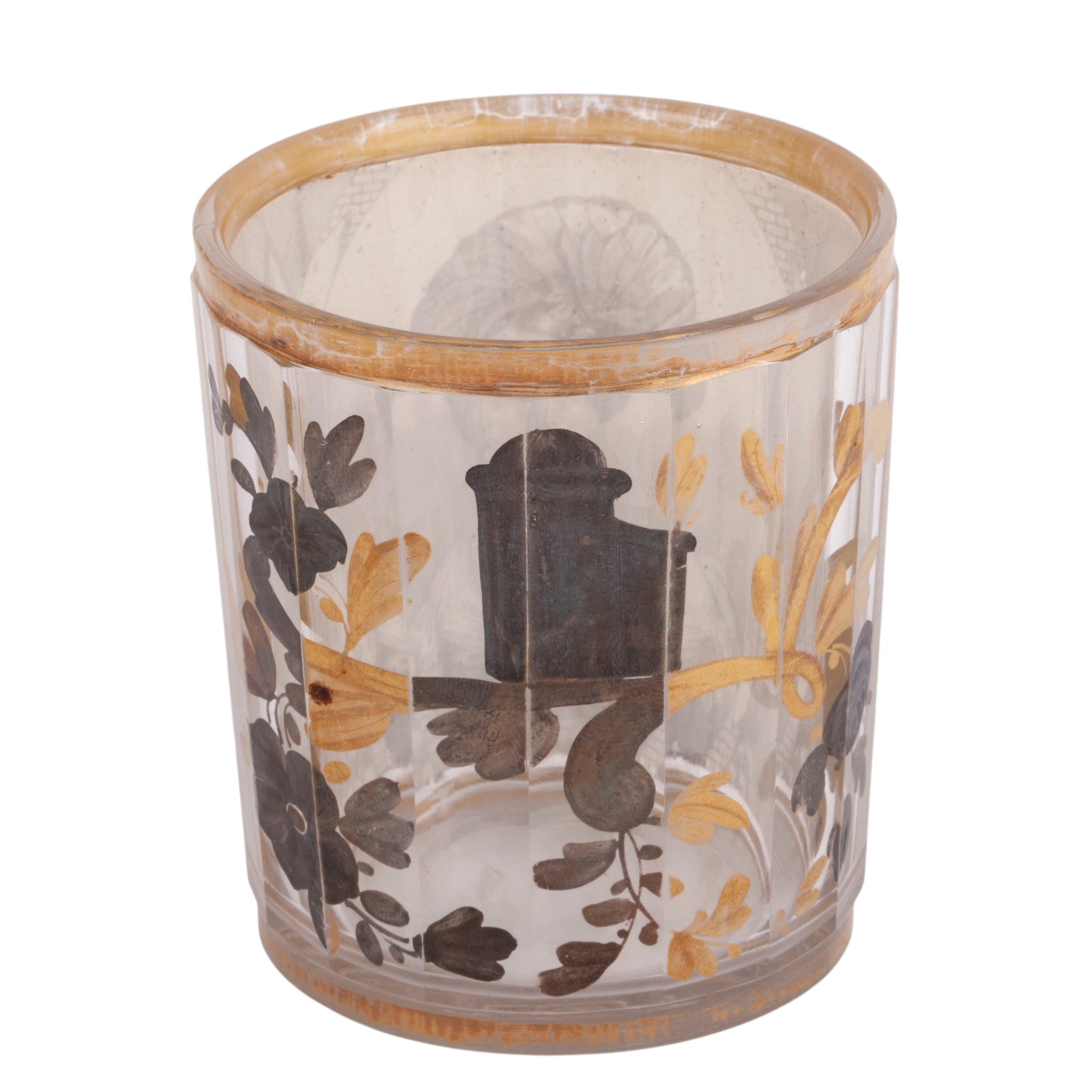
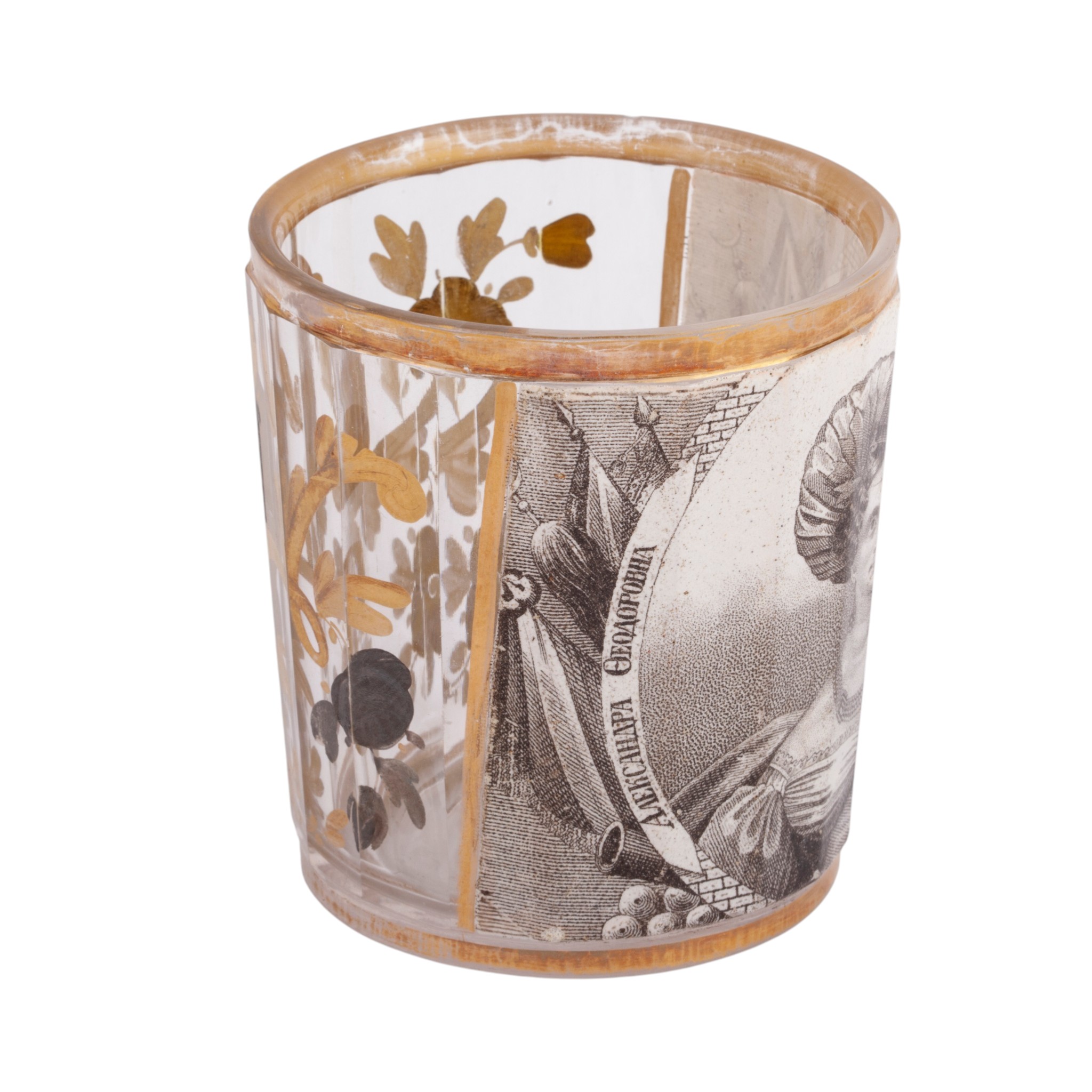
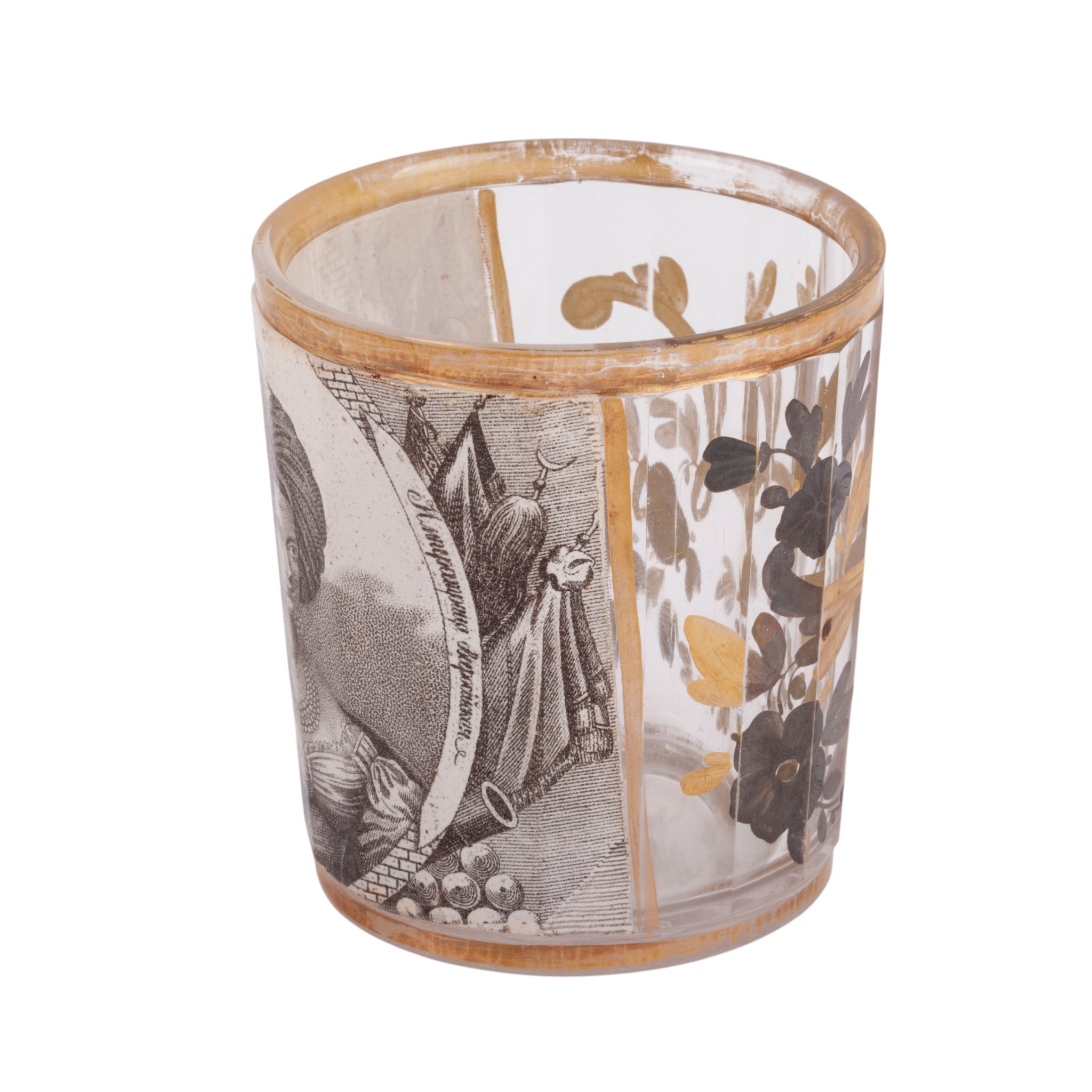
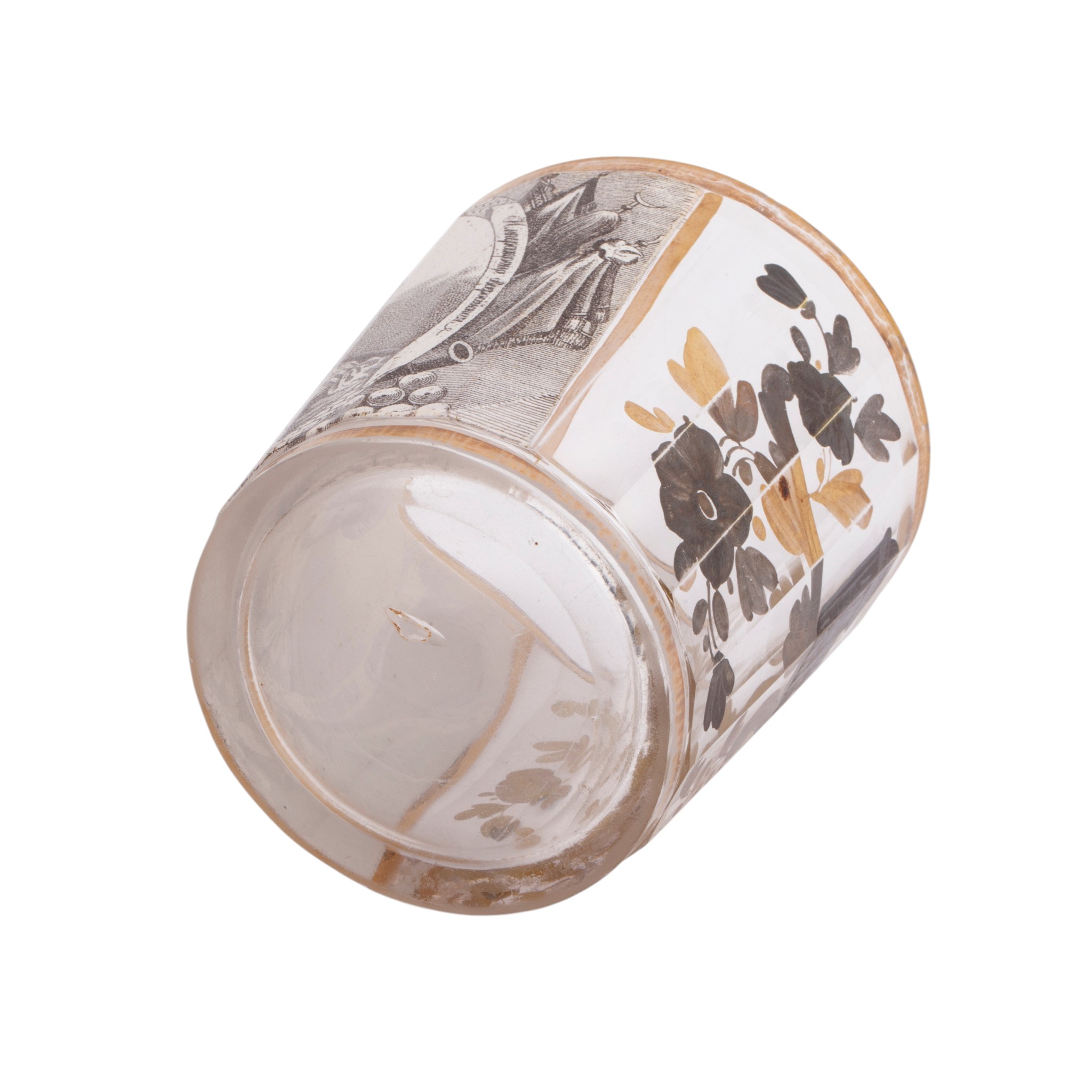
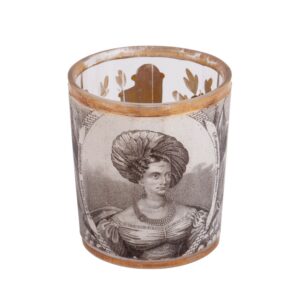
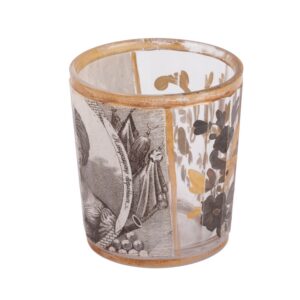
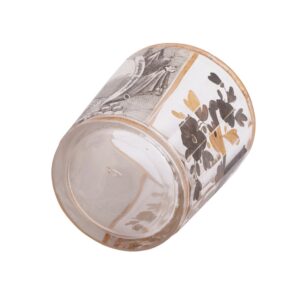
Russian Imperial Glasswork Glass with a Portrait of Empress Alexandra Feodorovna, Workshop of P. P. Semechkin and K. I. Terebenev, Petersburg, 1840s
Estimate: 5500-6500€
Russian Imperial Glasswork. Glass with a Portrait of Empress Alexandra Feodorovna
Imperial glass manufactory. Glass decorated with a portrait of Empress Alexandra Feodorovna
. Workshop of P. P. Semechkin and K. I. Terebenev. Petersburg, 1840s
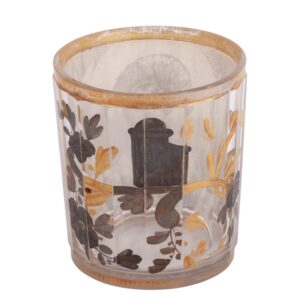
Transparent glass with transfer-printed decoration and gilding.
Dimensions: 7.7 x 6 cm.
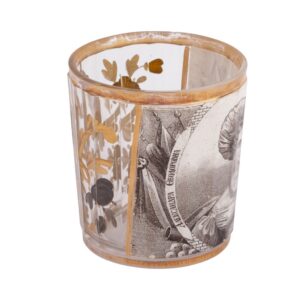
The glass is adorned with a well-known printed image of Empress Alexandra Feodorovna, after the painted original by artist P. I. Razumihin (1812–1848), from the collection of the State Historical Museum. The portrait is framed by a wreath of oak and laurel leaves. Below is the double-headed eagle with scepter and orb; above the garland rises the imperial crown. Oak branches extend to the sides, flanked by four banners on either side of the wreath.
This work exemplifies the lithographic decoration developed by the Terebenev and Semechkin workshop, which specialized in applying portraits of members of the Imperial family to glass, porcelain, and faience objects in combination with gilded ornamentation.
Starting price: 5000€
Estimate: 5500-6500€
Hammer Price: Not sold
Related Lots
-
Lot 0075
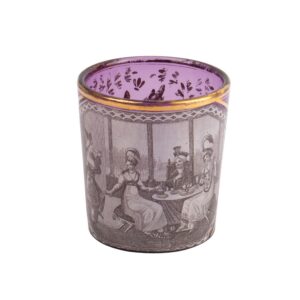
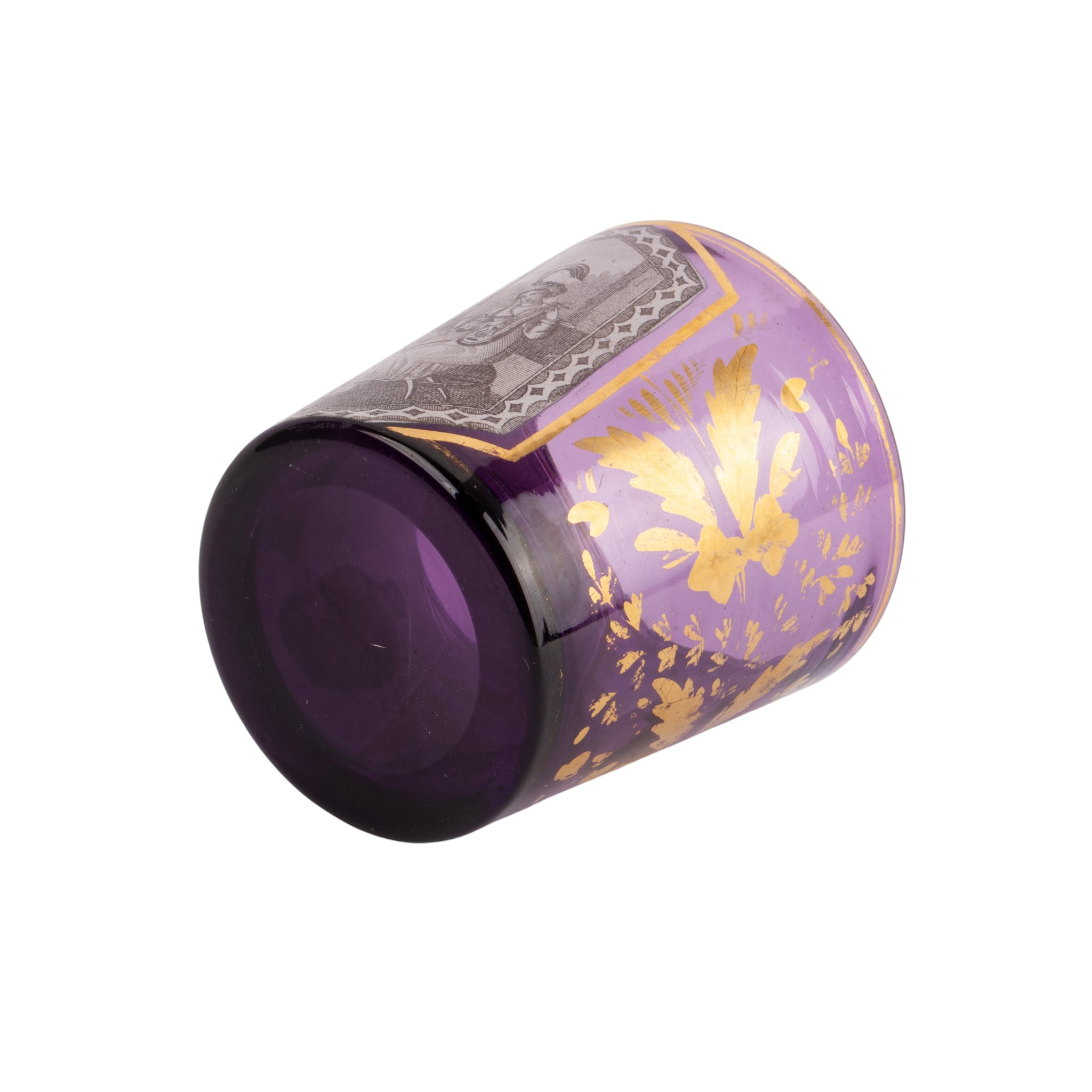
Imperial Glass Manufactory Beaker “Dance before the Sultan”, St Petersburg, 1840s–1850s
Estimate: 5000-7000€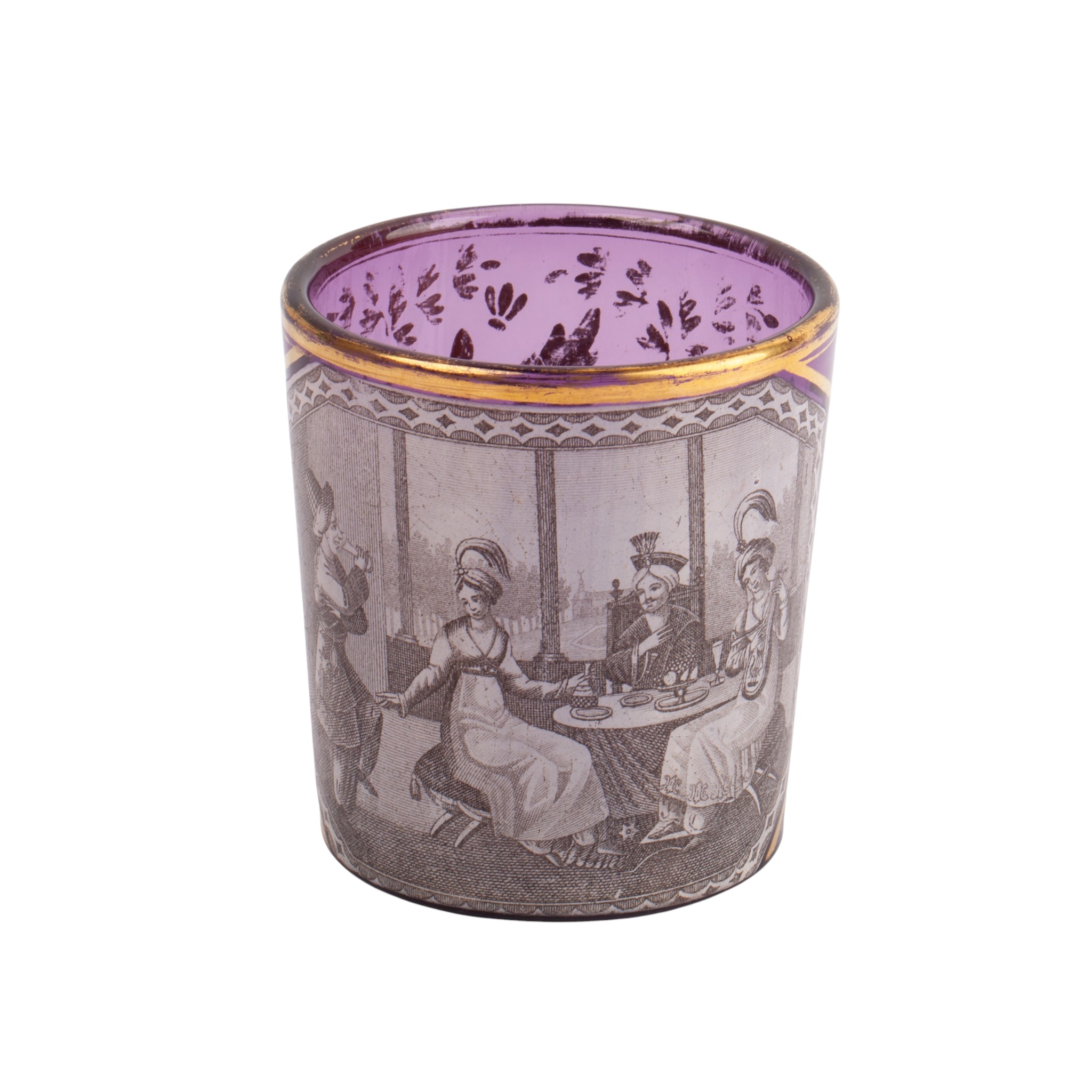
Lot 0075
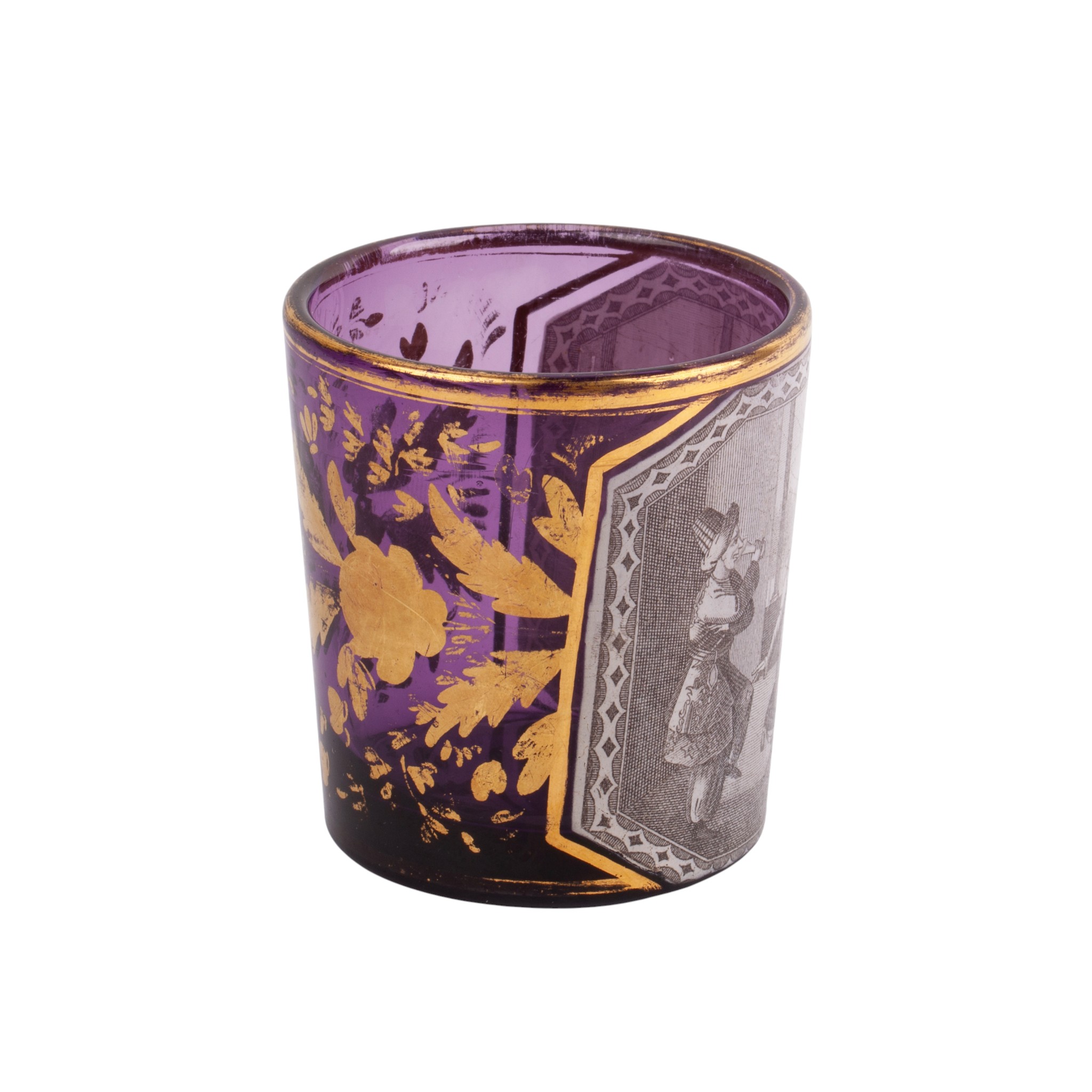
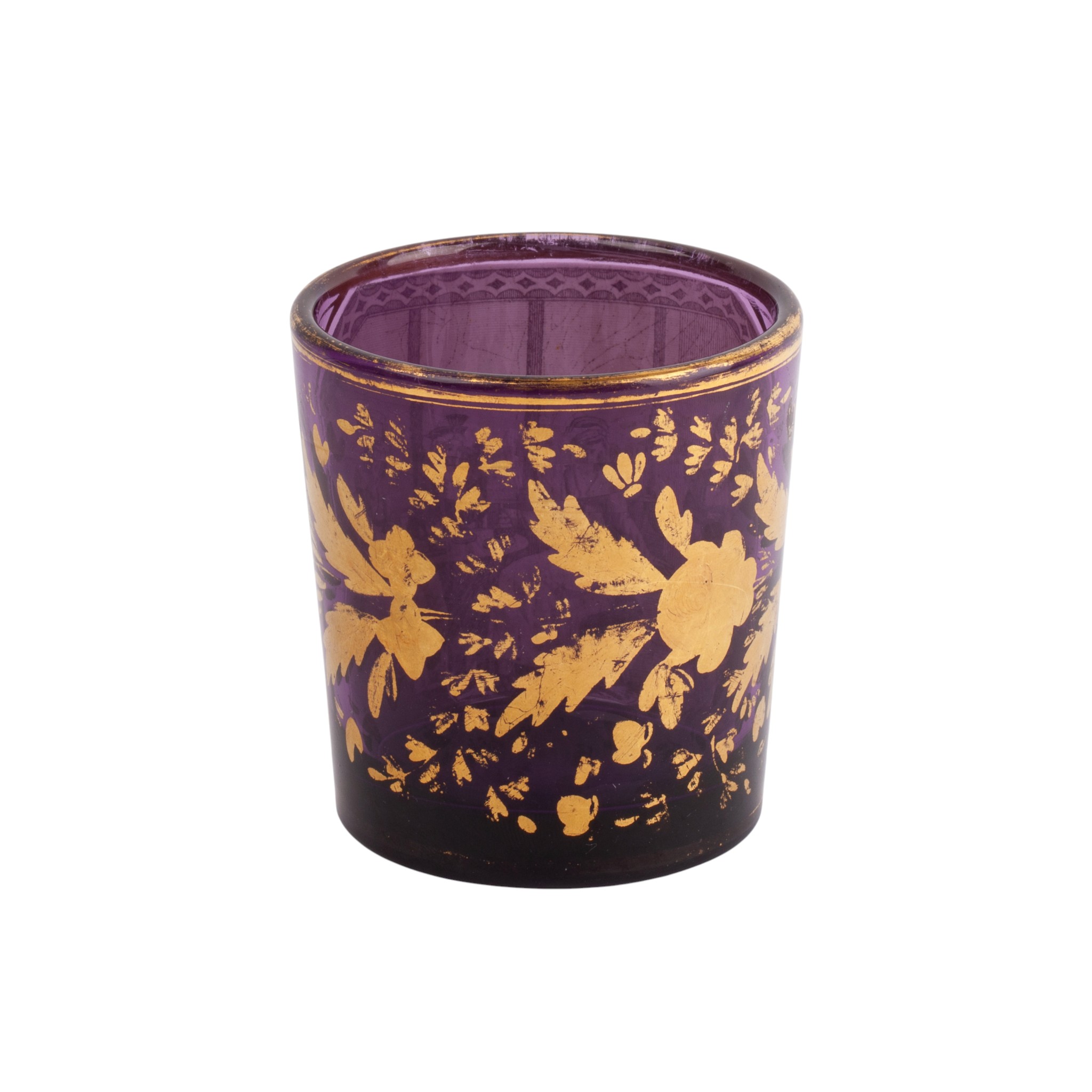
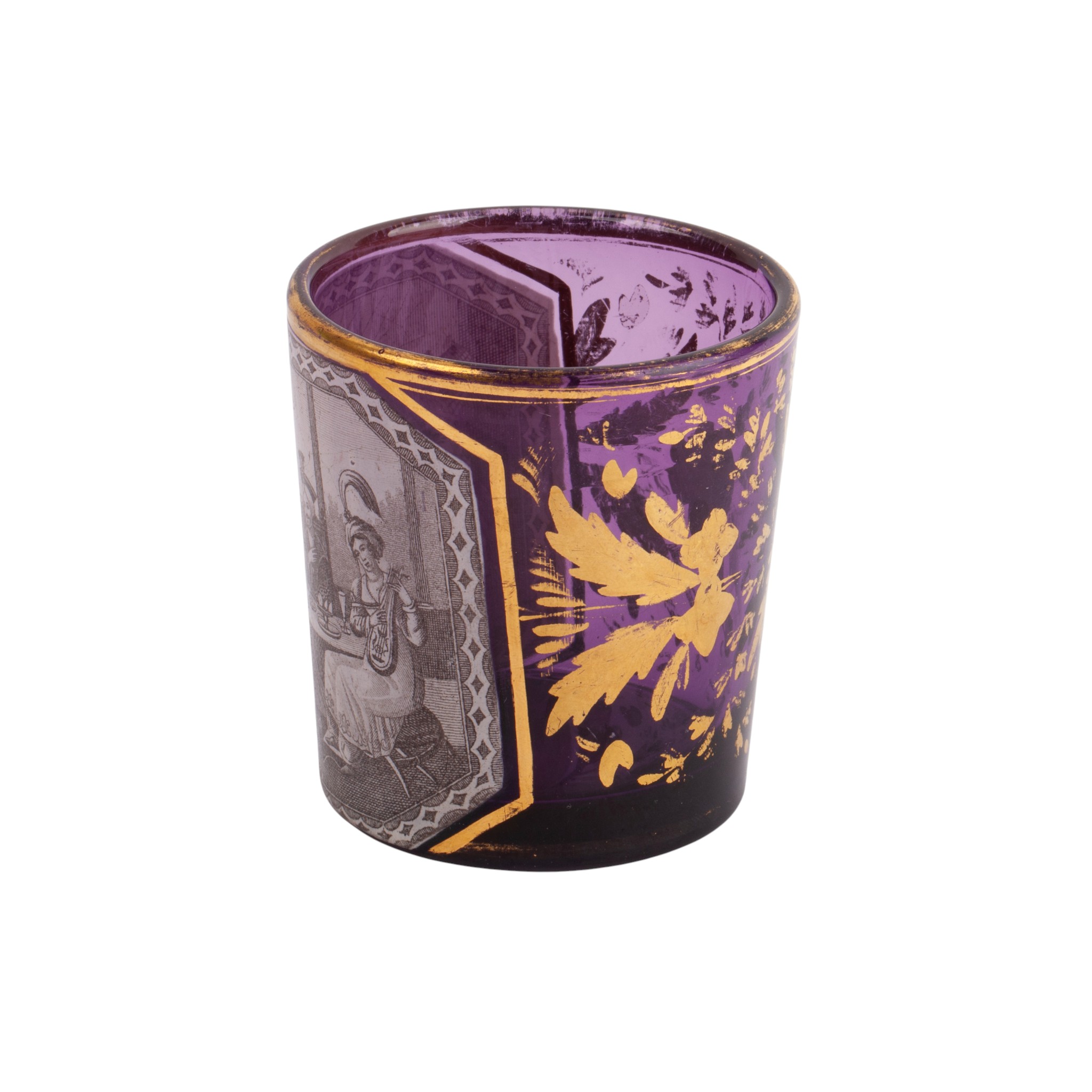
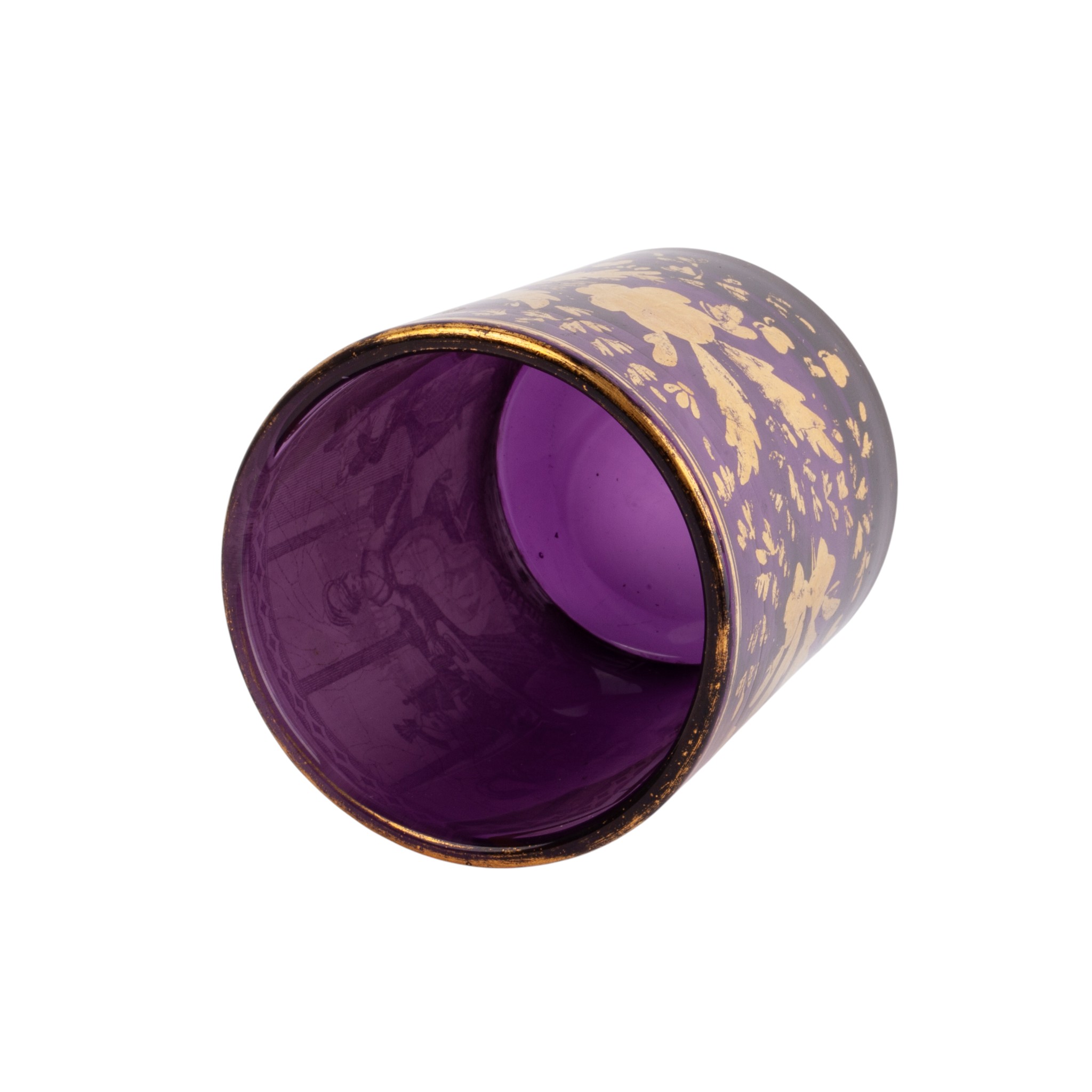
Imperial Glass Manufactory Beaker “Dance before the Sultan”, St Petersburg, 1840s–1850s
Estimate: 5000-7000€Imperial Glass Manufactory. Glass Beaker with the Scene “Dance before the Sultan”
Lithographic Workshop of Terebenev. St Petersburg, 1840s-1850s.
Amethyst glass, transfer-printed decoration, gilding.
Dimensions: 7.5 x 6.8 x 6.8 cm.
A rare amethyst glass beaker decorated with a figural literary scene known as “Dance before the Sultan,” illustrating an episode from Byron’s Don Juan. The cylindrical body is enriched on one side with a transfer-printed composition showing an orientalist feast scene with seated and standing figures in theatrical costume, while the reverse is adorned with a gilt floral spray scattered across the deep violet ground.
The decoration was executed in the technique of decalcomania, or transfer printing, introduced into Russian glassmaking in the 1830s and 1840s. In this process, a lithographed image printed in silicate pigments was first transferred onto paper, then applied to the glass surface and fired, so that the paper burned away and the image remained permanently fixed. This method made it possible to reproduce complex figural and narrative compositions with a degree of precision previously difficult to achieve in glass decoration.
The beaker is associated with the lithographic workshop of K. I. Terebenev and P. P. Semechkin, whose work played an important role in the development of printed decoration on Russian porcelain, faience, and glass. Their workshop specialized in combining lithographed imagery with painted gilding and ornamental embellishment, drawing on literary, allegorical, landscape, and historical subjects, as well as reproductions after European masters. Contemporary critics valued the technique for both its artistic refinement and its capacity to bring complex pictorial sources into the sphere of decorative art.
A comparable example is published in O. M. Polyashova, Russian Glass of the 18th to Early 20th Century, p. 161.Starting price: 4000€
Estimate: 5000-7000€
Hammer Price: Not sold -
Lot 0079
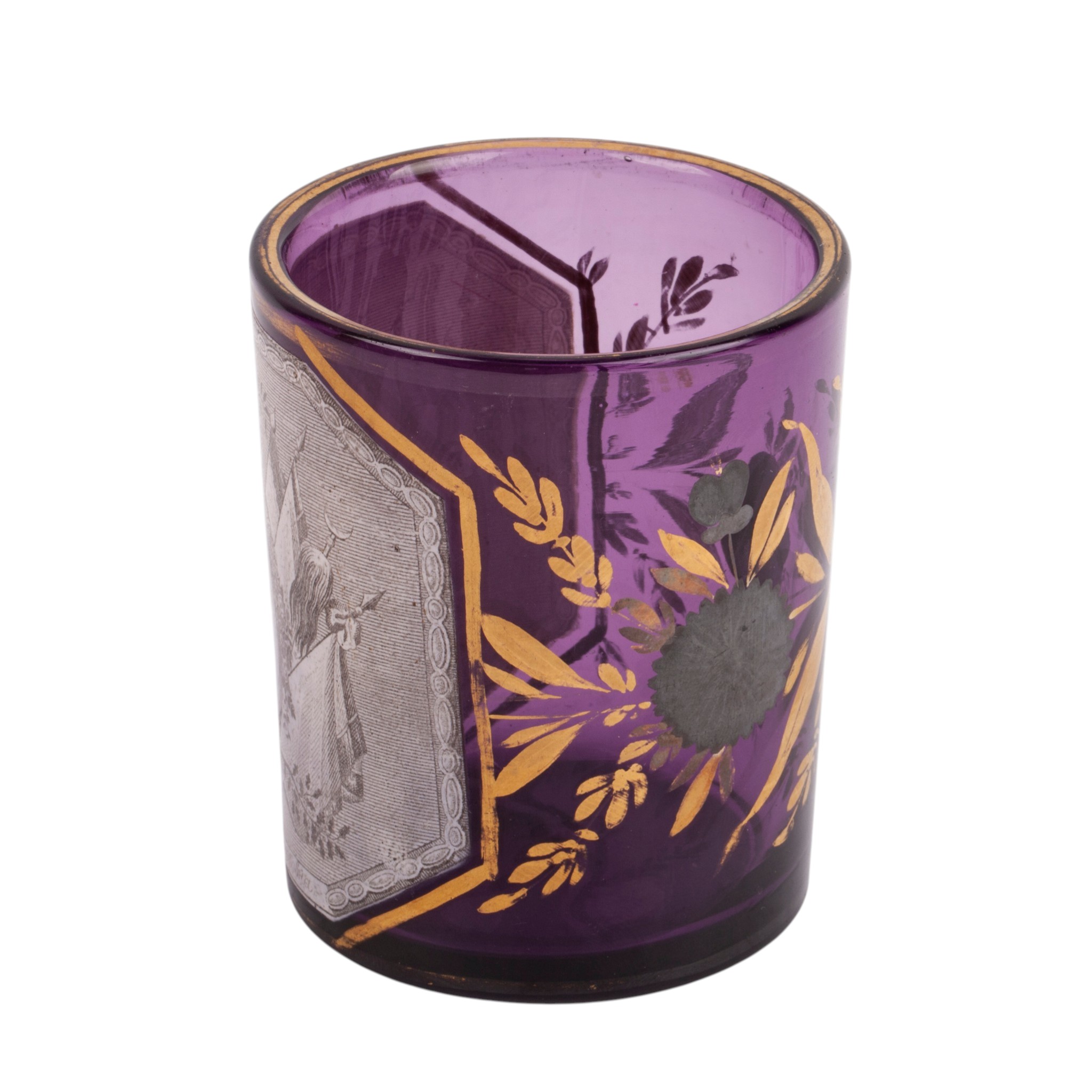
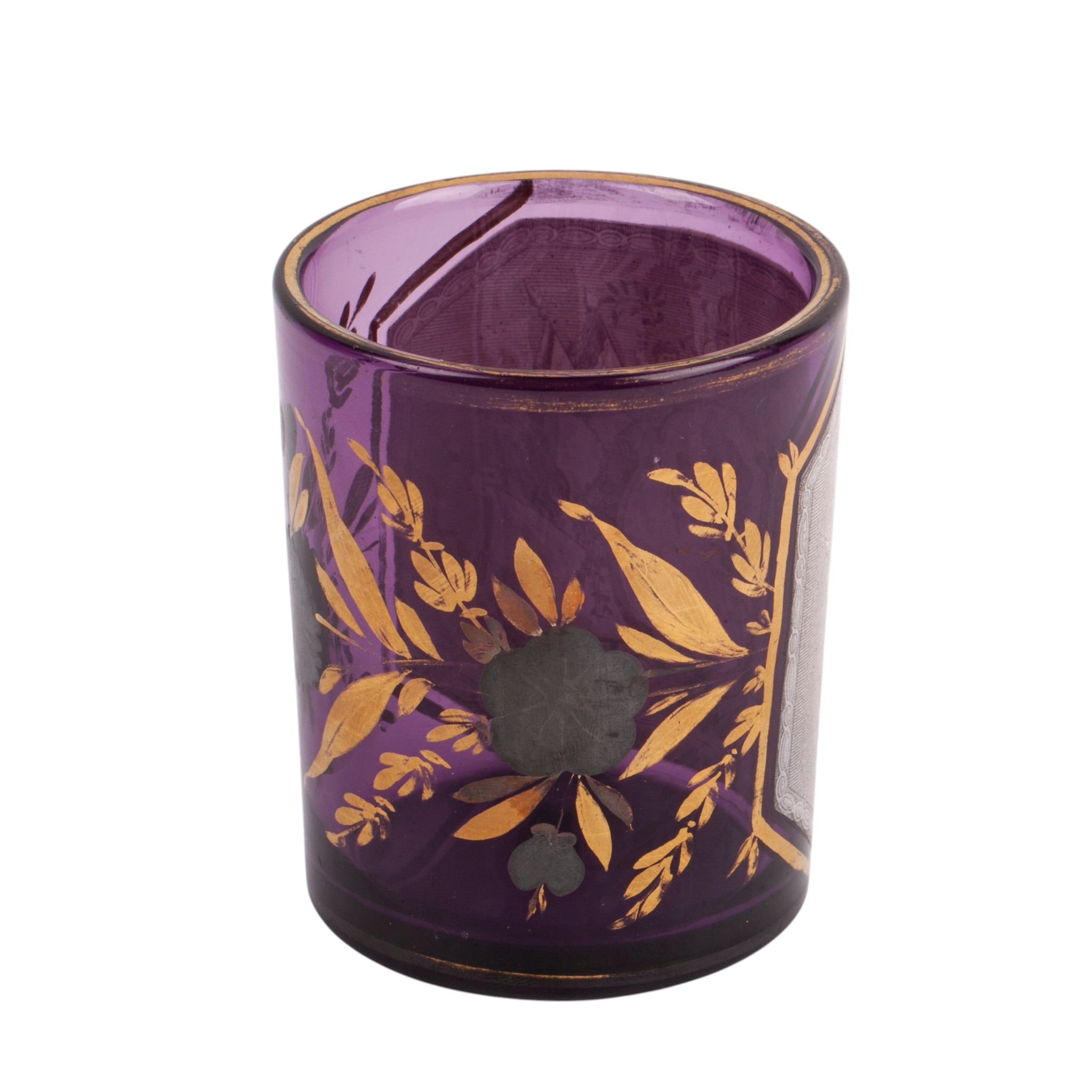
Imperial Glass Manufactory Glass with a Portrait of Empress Maria Alexandrovna, Workshop of P. P. Semechkin and K. I. Terebenev, Petersburg, 1840s
Estimate: 5000-6000€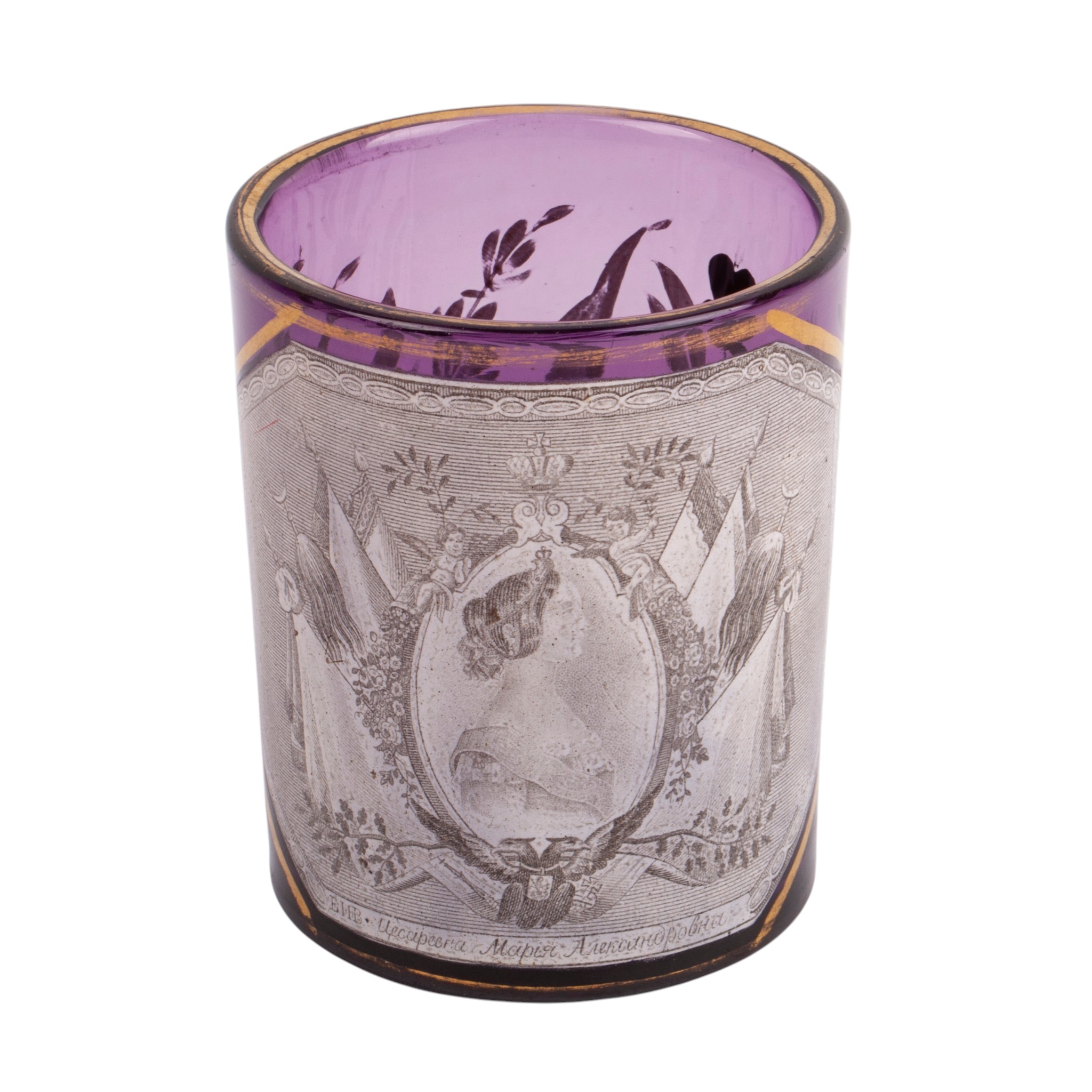
Lot 0079
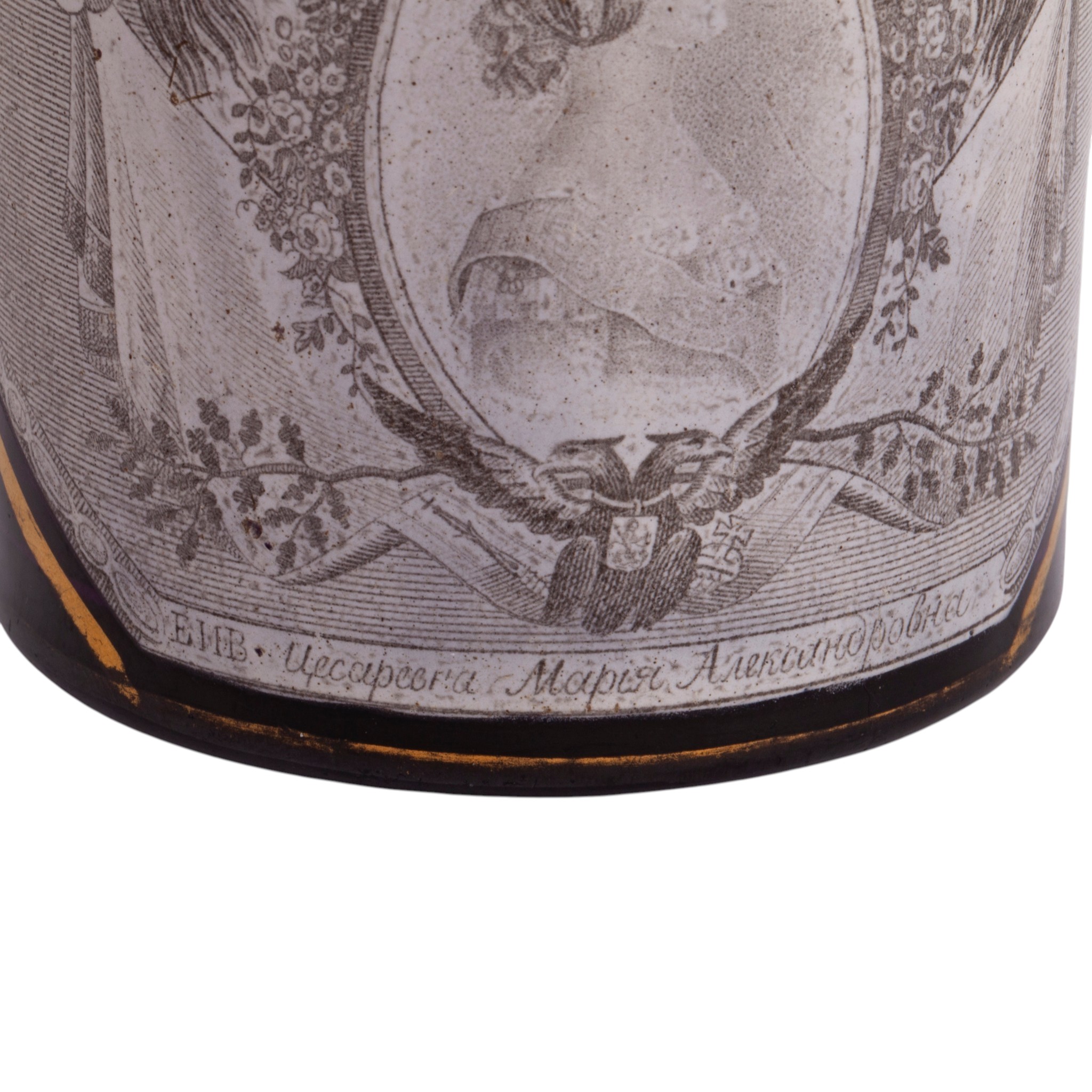
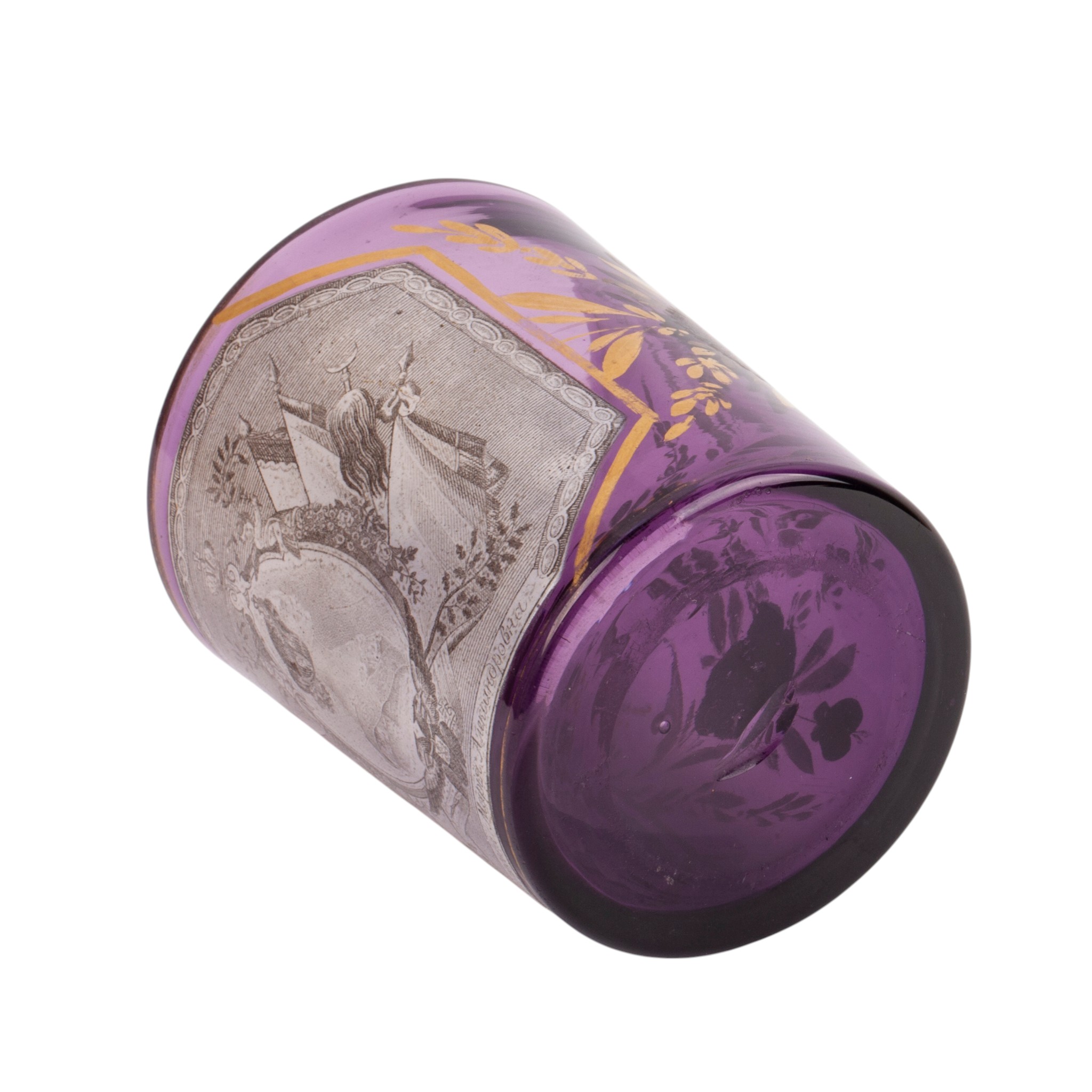
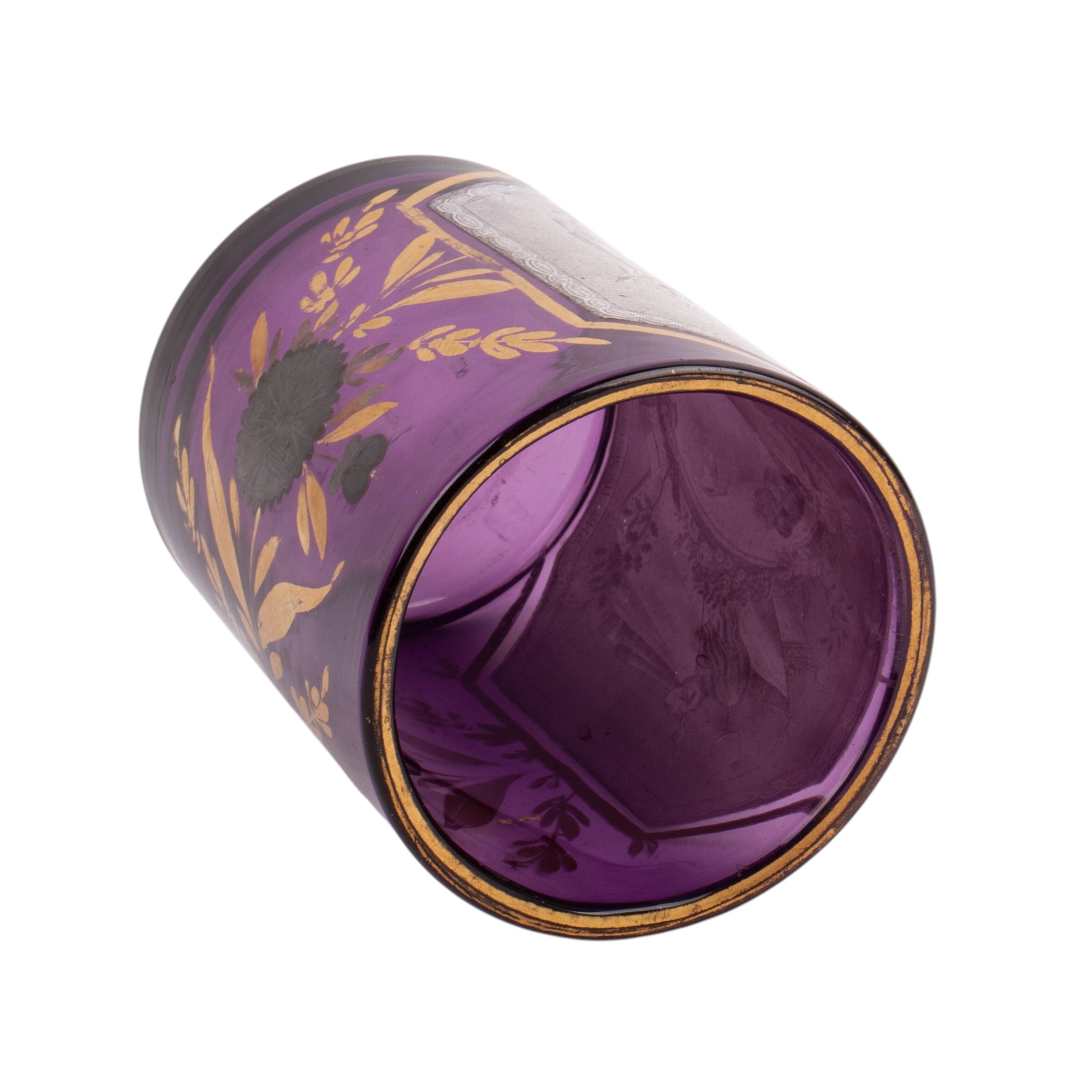
Imperial Glass Manufactory Glass with a Portrait of Empress Maria Alexandrovna, Workshop of P. P. Semechkin and K. I. Terebenev, Petersburg, 1840s
Estimate: 5000-6000€Imperial Glass Manufactory. Glass with a Portrait of Empress Maria Alexandrovna
Imperial glass manufactory. Glass with a portrait of Empress Maria Alexandrovna. Workshop of P. P. Semechkin and K. I. Terebenev. Petersburg, 1840s
Amethyst-colored glass with gilt rim and lithographed decoration over the glaze.
Dimensions: 8,5 x 7,2 x 7 cm,This glass is a vivid example of the production of the renowned St. Petersburg workshop of P. P. Semechkin and K. I. Terebenev, which specialized in decorating glass, porcelain, and faience with lithographed images combined with gilded and silver-painted floral and ornamental motifs. Among the most favored subjects were portraits of members of the Imperial family.
The decoration features a rare portrait of Grand Duchess Maria Alexandrovna (1824–1880; from 1855, Empress of Russia). The image is based on a lithograph executed in 1841 by R. F. Dragunov to commemorate the marriage of Grand Duke Alexander Nikolaevich (the future Emperor Alexander II) to Princess Maximiliane Wilhelmine Augusta Sophia Maria of Hesse-Darmstadt, baptized into Orthodoxy as Maria Alexandrovna.Starting price: 4500€
Estimate: 5000-6000€
Hammer Price: Not sold -
Lot 0078
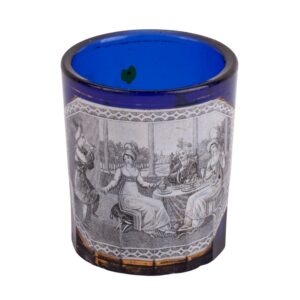
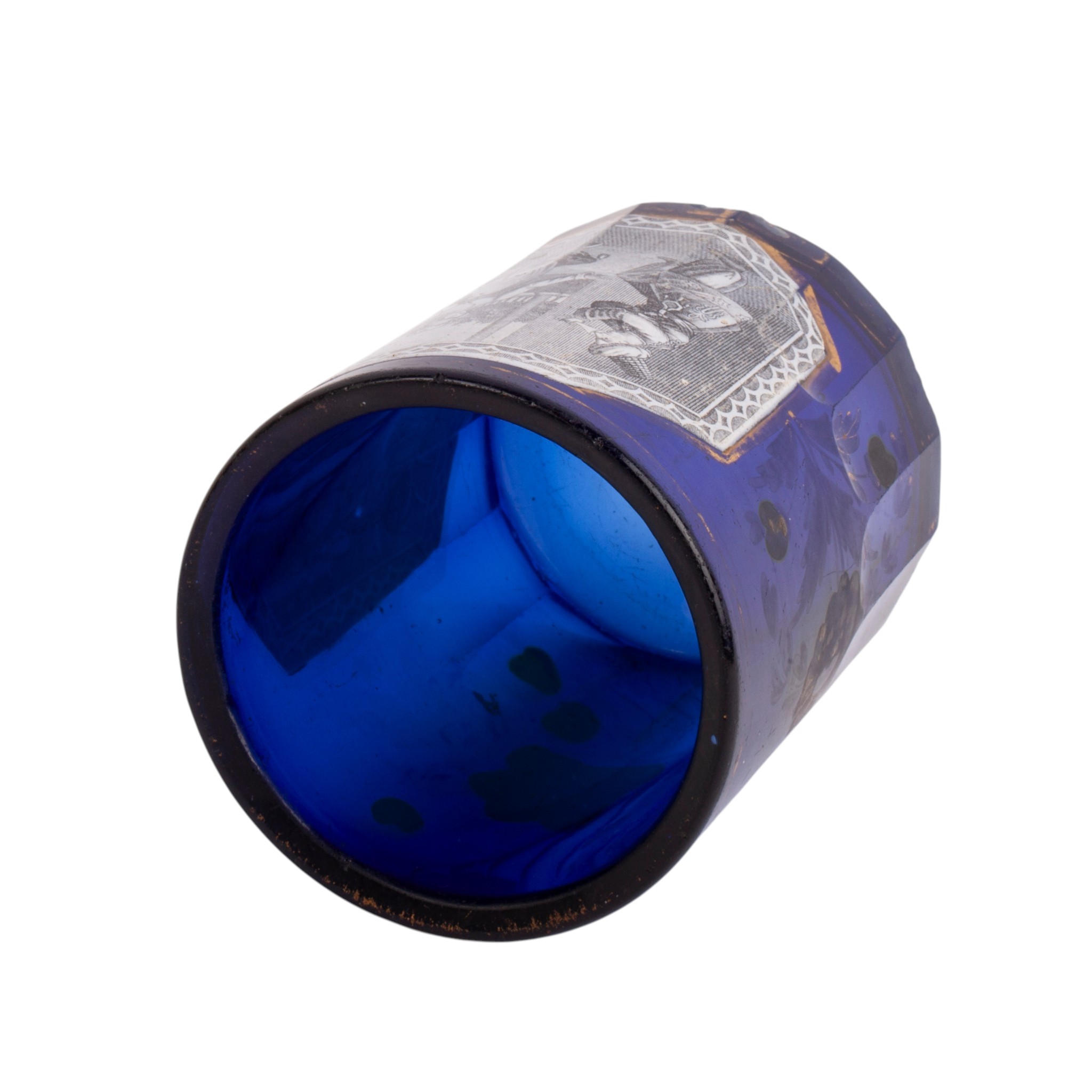
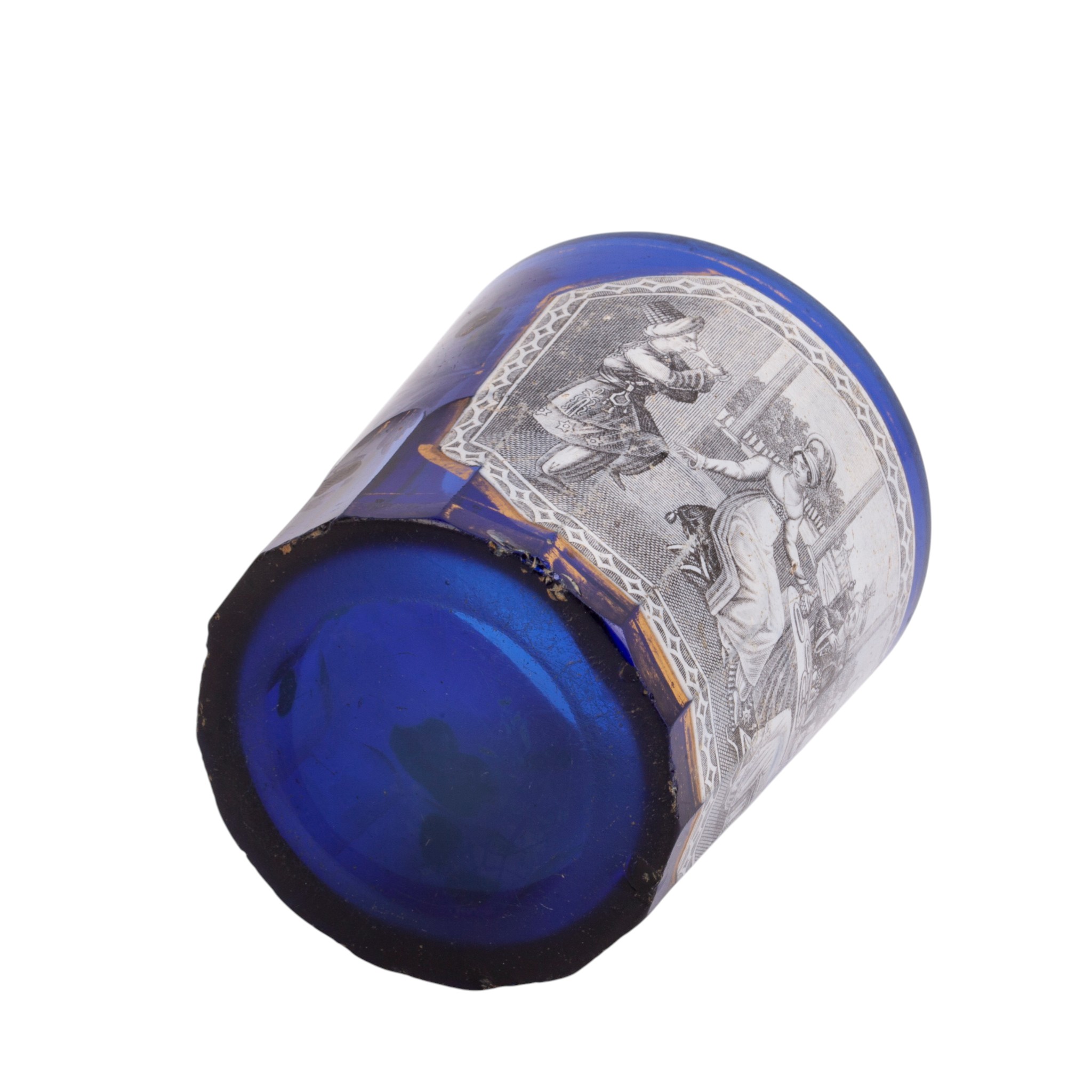
Russian Imperial Glasswork Glass Beaker with the Scene “Dance before the Sultan”, Lithographic Workshop of Terebenev, St Petersburg, 1840s–1850s
Estimate: 4000-5000€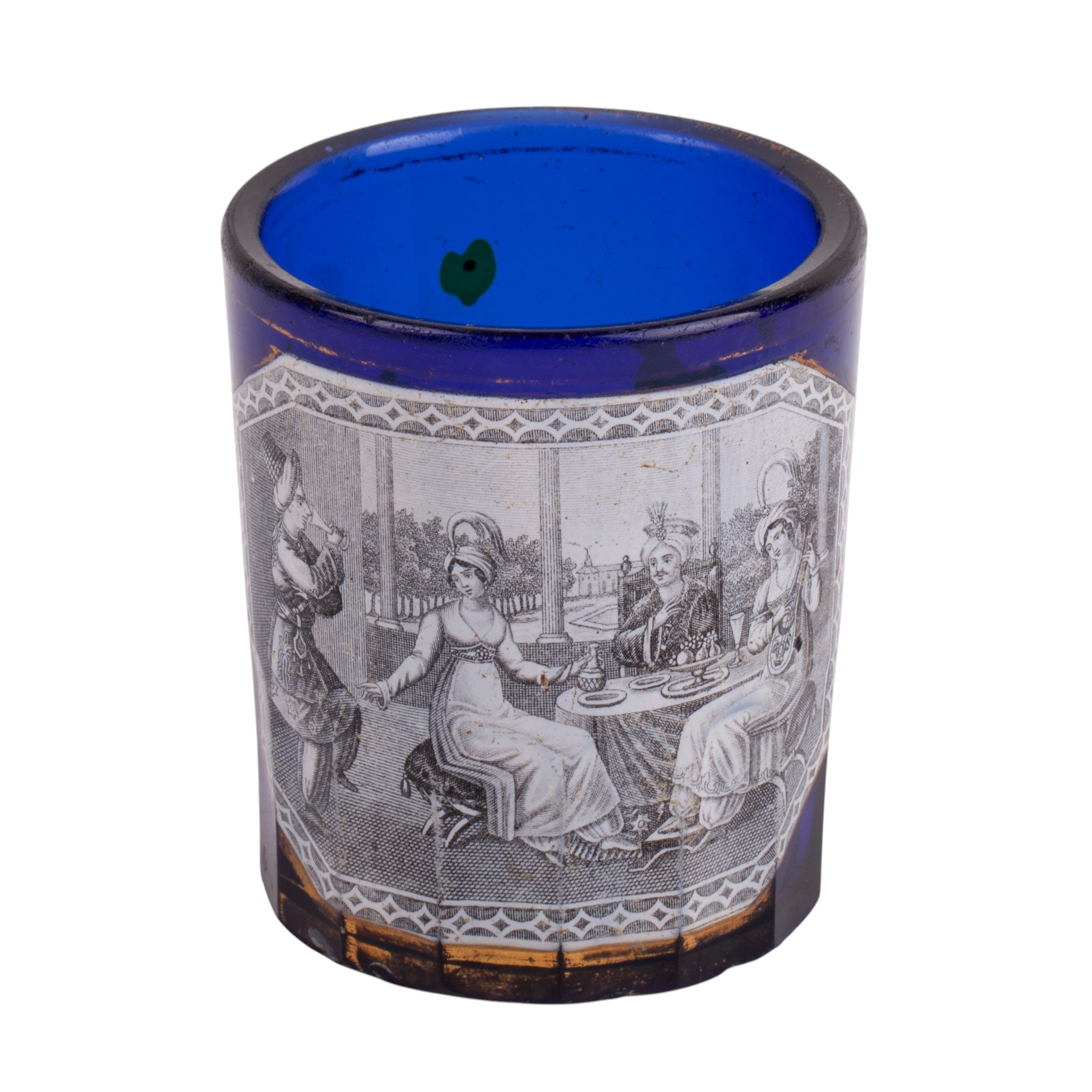
Lot 0078
Russian Imperial Glasswork Glass Beaker with the Scene “Dance before the Sultan”, Lithographic Workshop of Terebenev, St Petersburg, 1840s–1850s
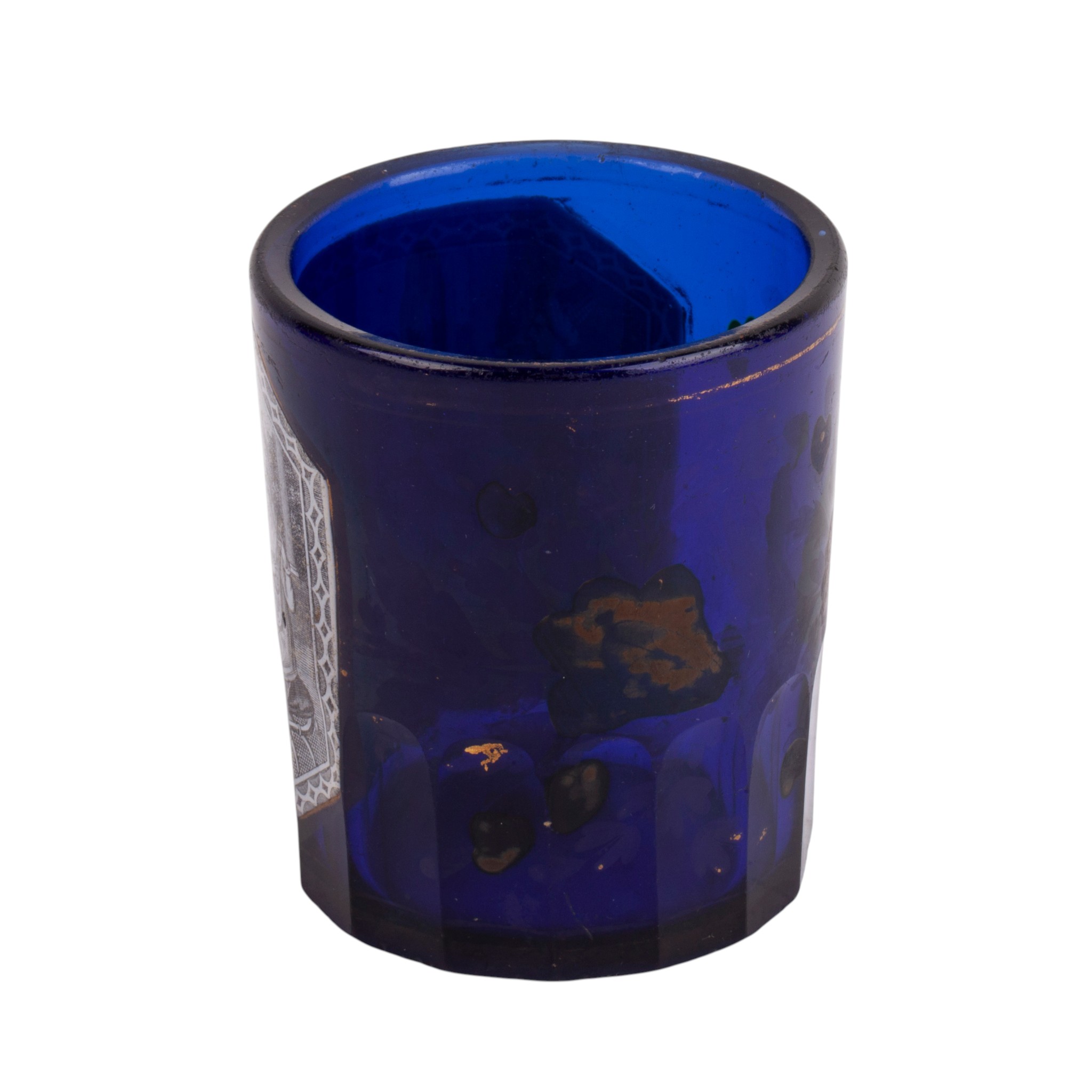
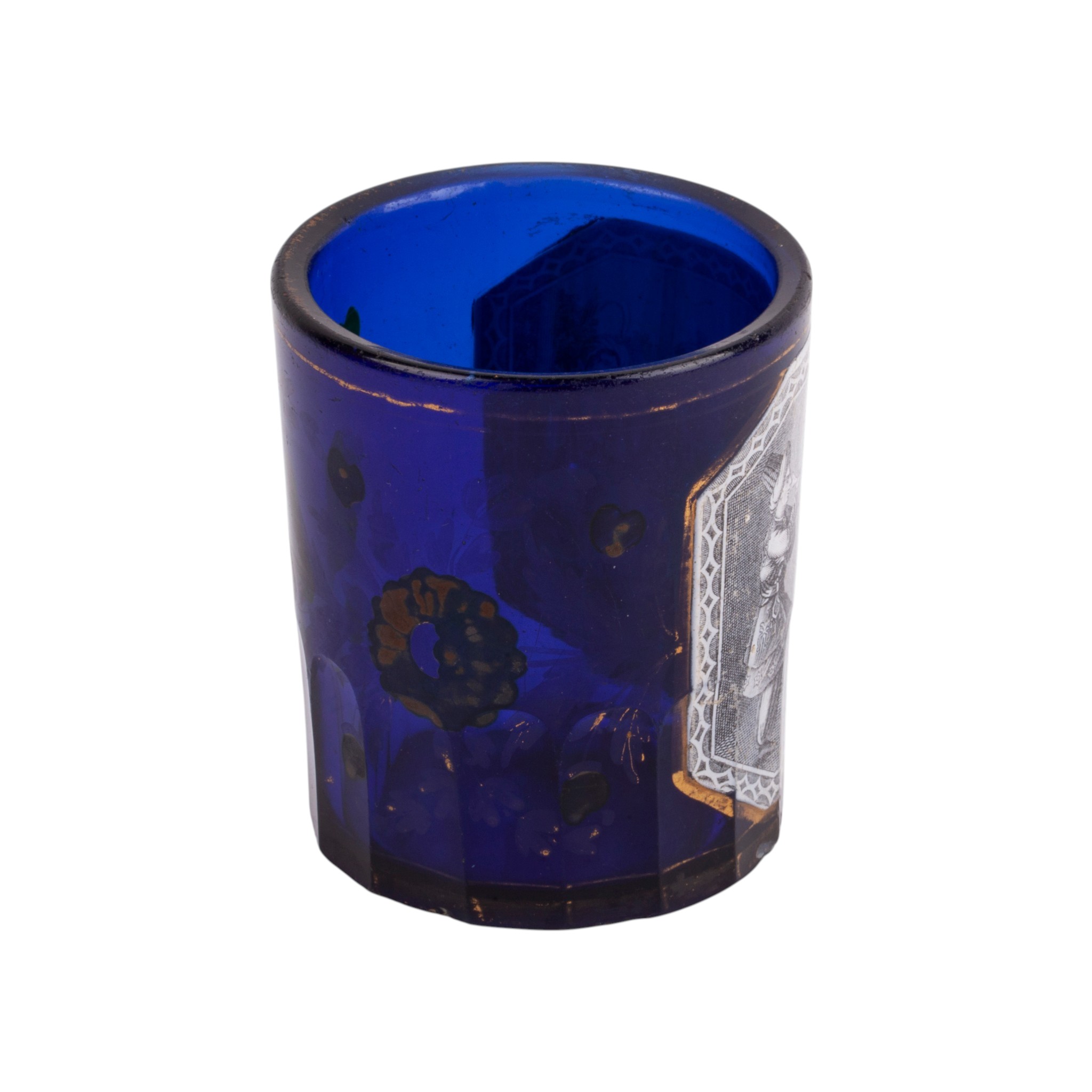
Estimate: 4000-5000€Russian Imperial Glasswork. Glass Beaker with the Scene “Dance before the Sultan”
Lithographic Workshop of Terebenev. St Petersburg, 1840s-1850s.
Cobalt-blue glass with gilt rim and lithographed decoration over glaze, gilding.
Dimensions: 8,2 x 7,2 x 7,2 cm
A cobalt-blue glass beaker decorated with a figural literary scene known as “Dance before the Sultan,” illustrating an episode from Byron’s Don Juan. The cylindrical body is enriched on one side with a transfer-printed composition showing an orientalist feast scene with seated and standing figures in theatrical costume.
The decoration was executed in the technique of decalcomania, or transfer printing, introduced into Russian glassmaking in the 1830s and 1840s. In this process, a lithographed image printed in silicate pigments was first transferred onto paper, then applied to the glass surface and fired, so that the paper burned away and the image remained permanently fixed. This method made it possible to reproduce complex figural and narrative compositions with a degree of precision previously difficult to achieve in glass decoration.
The beaker is associated with the lithographic workshop of K. I. Terebenev and P. P. Semechkin, whose work played an important role in the development of printed decoration on Russian porcelain, faience, and glass. Their workshop specialized in combining lithographed imagery with painted gilding and ornamental embellishment, drawing on literary, allegorical, landscape, and historical subjects, as well as reproductions after European masters. Contemporary critics valued the technique for both its artistic refinement and its capacity to bring complex pictorial sources into the sphere of decorative art.
A comparable example is published in O. M. Polyashova, Russian Glass of the 18th to Early 20th Century, p. 161.Starting price: 3500€
Estimate: 4000-5000€
Hammer Price: Not sold -
Lot 0076
Imperial Glass Manufactory Glass Beaker with the Scene “Dance before the Sultan”, Lithographic Workshop of Terebenev, St Petersburg, 1840s–1850s
Estimate: 5000-7000€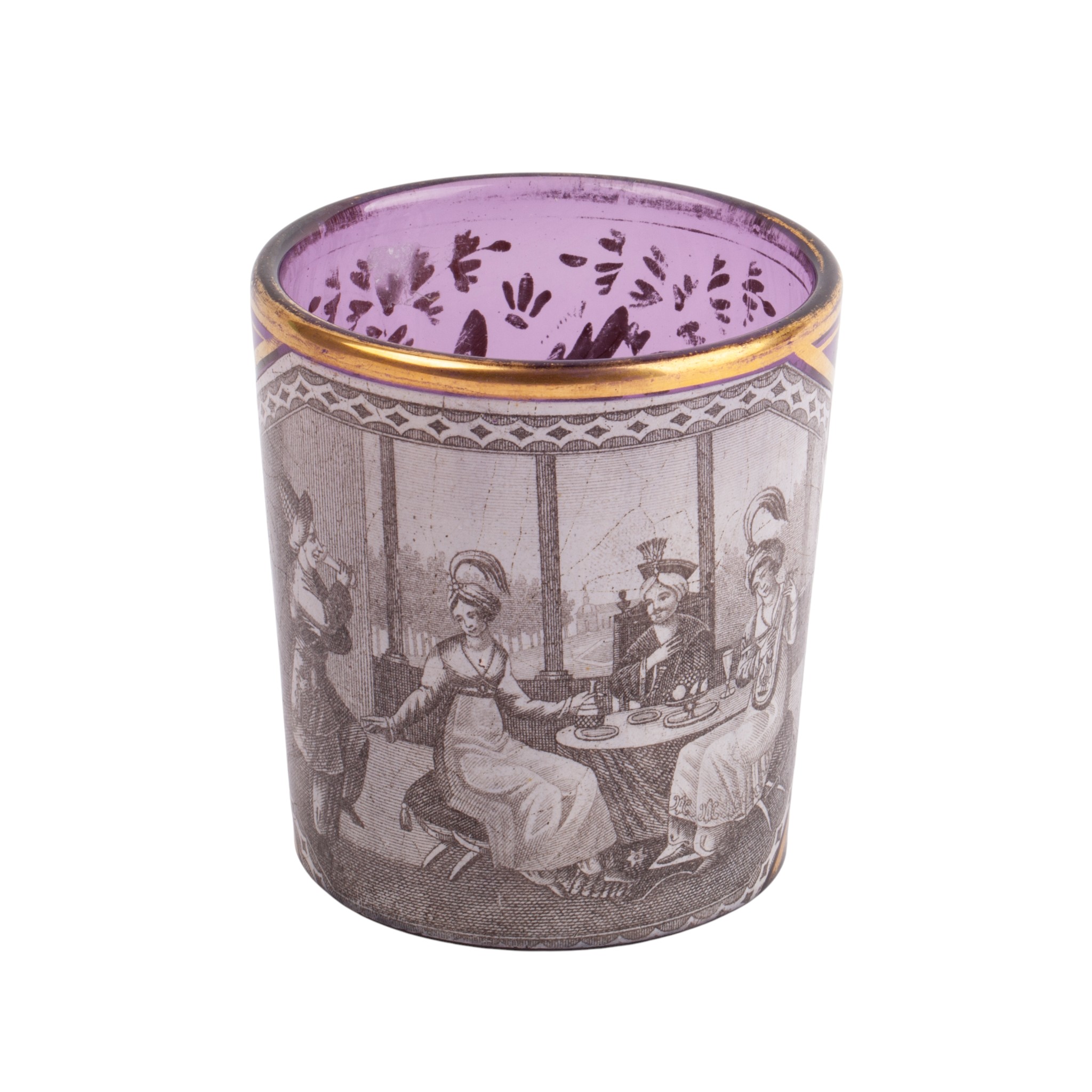
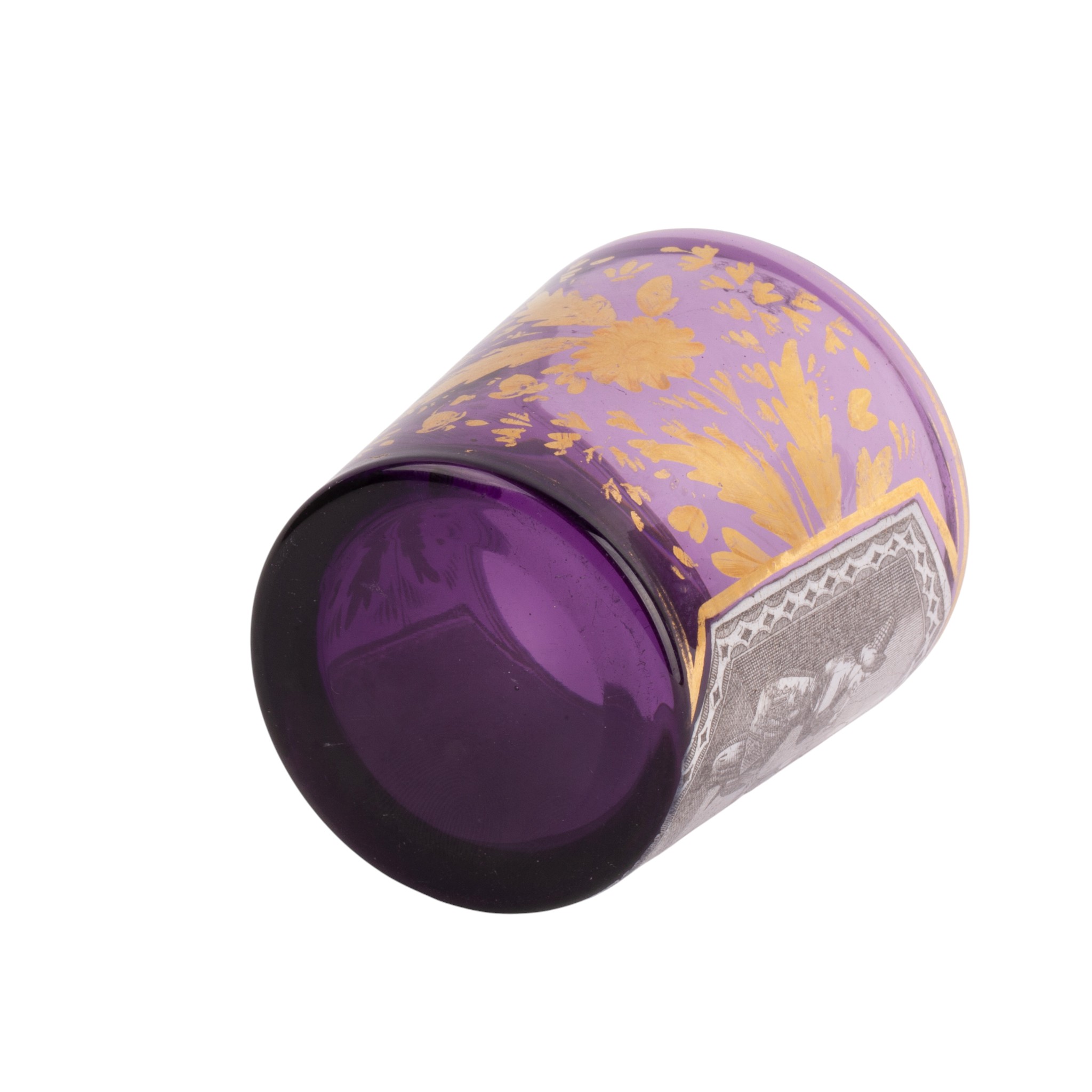
Lot 0076
Imperial Glass Manufactory Glass Beaker with the Scene “Dance before the Sultan”, Lithographic Workshop of Terebenev, St Petersburg, 1840s–1850s
Estimate: 5000-7000€Imperial Glass Manufactory. Glass Beaker with the Scene “Dance before the Sultan”
Lithographic Workshop of Terebenev. St Petersburg, 1840s-1850s.
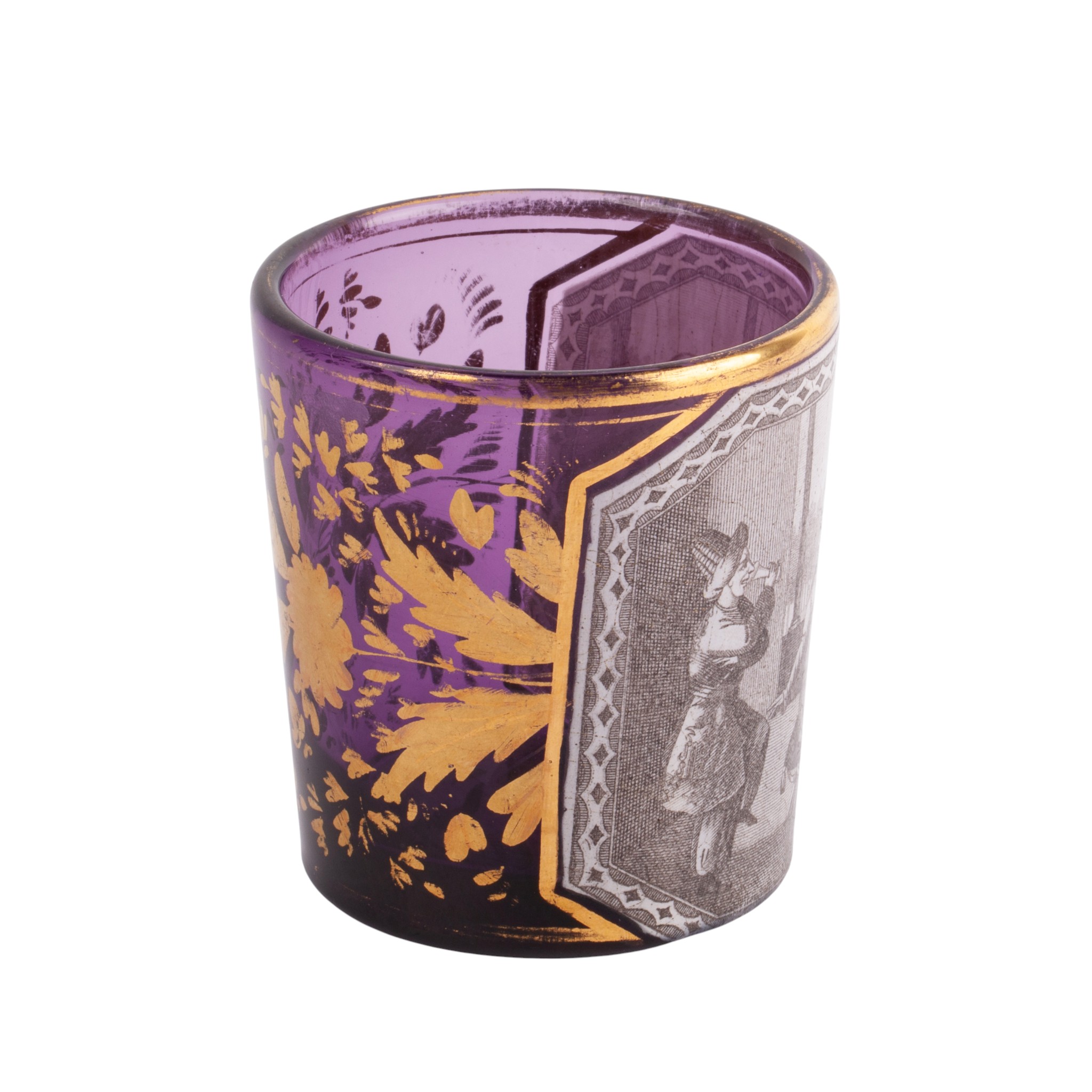
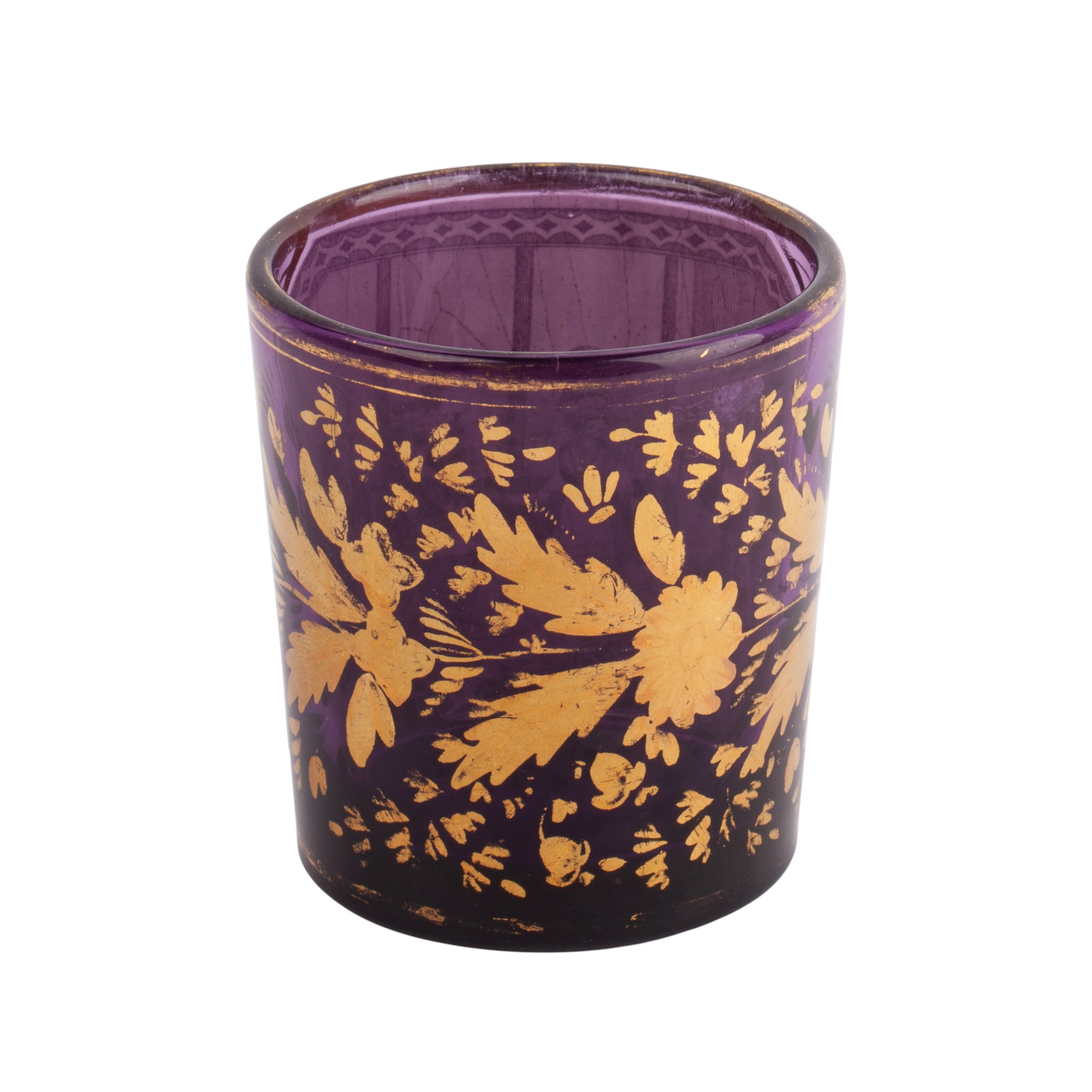
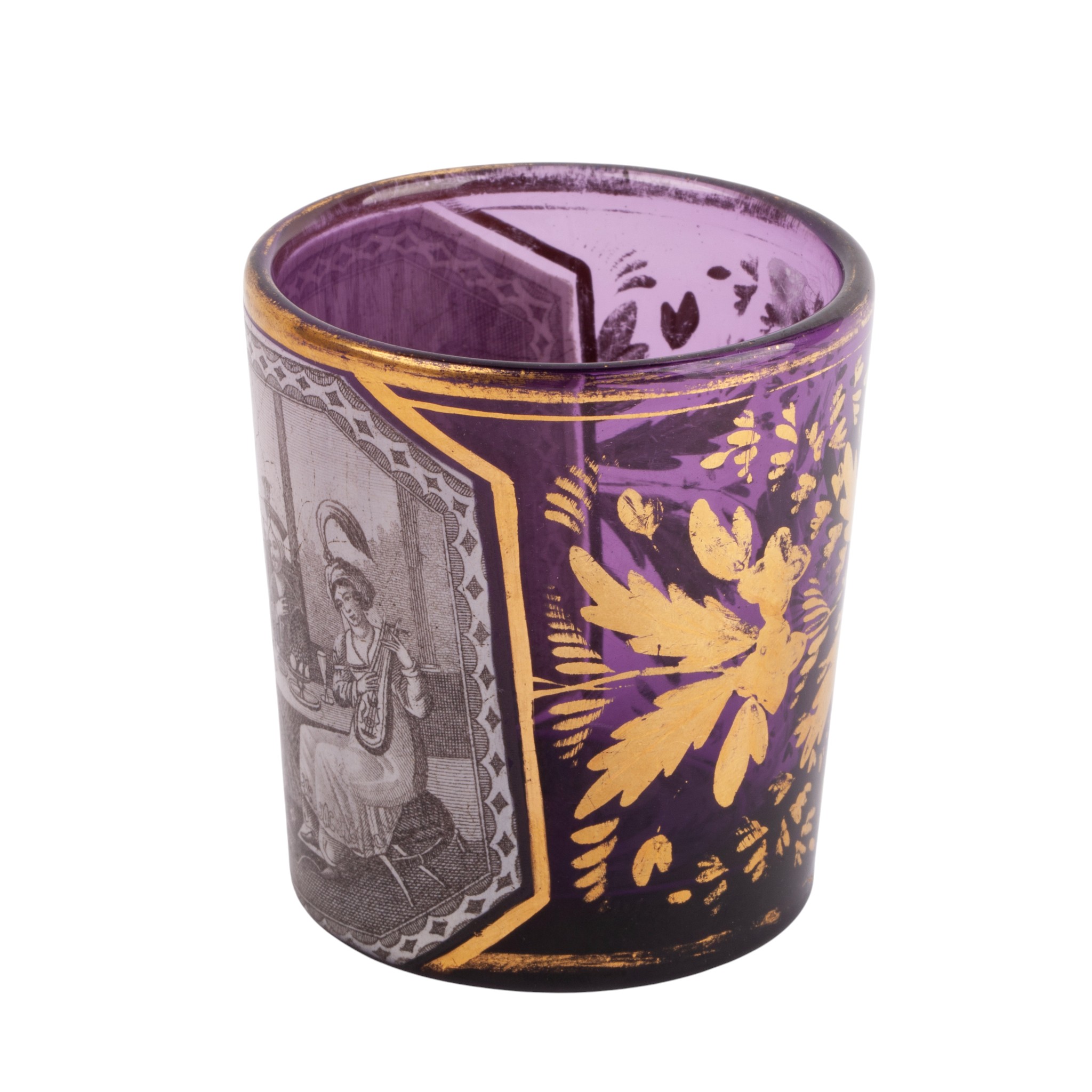
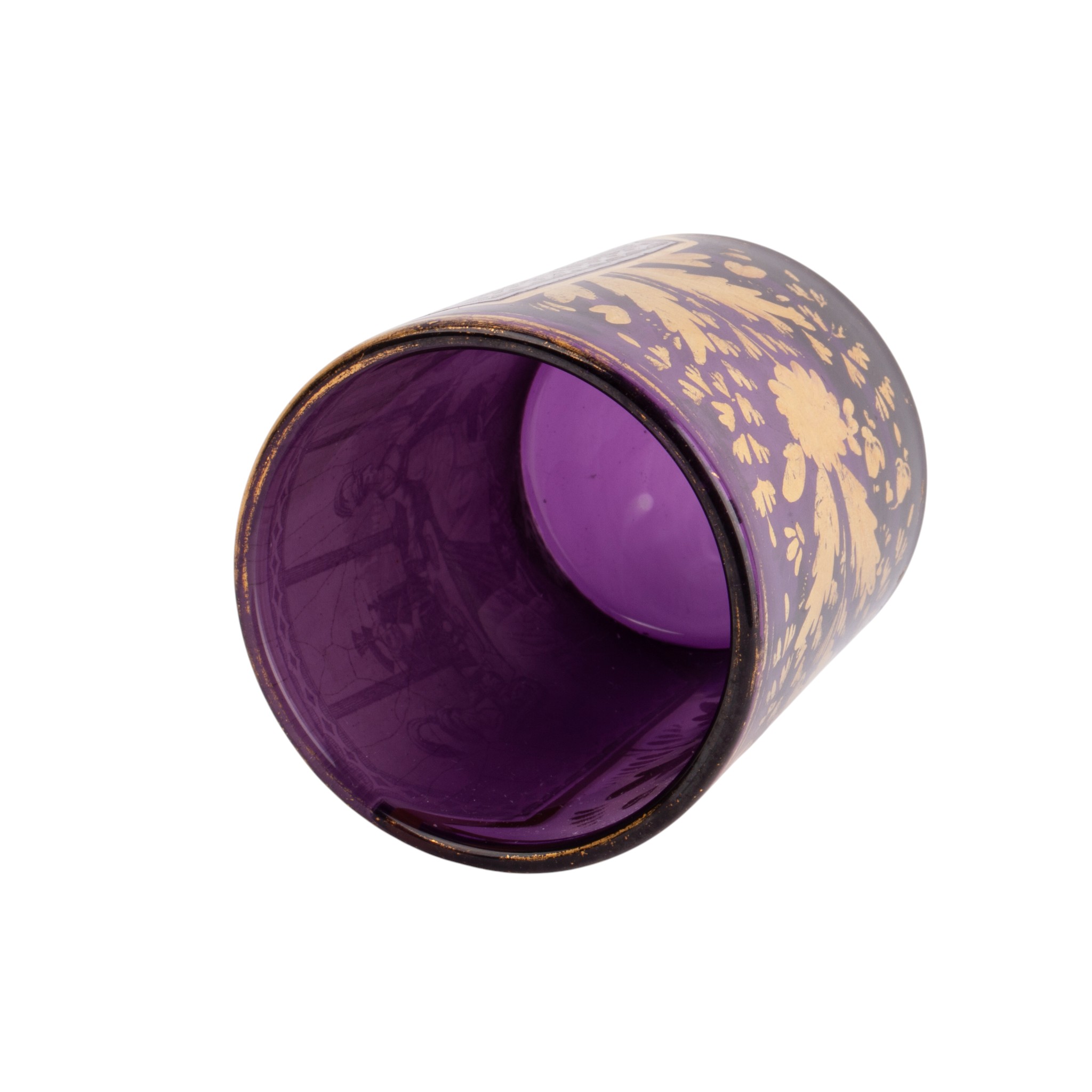
Amethyst glass, transfer-printed decoration, gilding.
Dimensions: 7.5 x 6.8 x 6.8 cm.
A rare amethyst glass beaker decorated with a figural literary scene known as “Dance before the Sultan,” illustrating an episode from Byron’s Don Juan. The cylindrical body is enriched on one side with a transfer-printed composition showing an orientalist feast scene with seated and standing figures in theatrical costume, while the reverse is adorned with a gilt floral spray scattered across the deep violet ground.
The decoration was executed in the technique of decalcomania, or transfer printing, introduced into Russian glassmaking in the 1830s and 1840s. In this process, a lithographed image printed in silicate pigments was first transferred onto paper, then applied to the glass surface and fired, so that the paper burned away and the image remained permanently fixed. This method made it possible to reproduce complex figural and narrative compositions with a degree of precision previously difficult to achieve in glass decoration.
The beaker is associated with the lithographic workshop of K. I. Terebenev and P. P. Semechkin, whose work played an important role in the development of printed decoration on Russian porcelain, faience, and glass. Their workshop specialized in combining lithographed imagery with painted gilding and ornamental embellishment, drawing on literary, allegorical, landscape, and historical subjects, as well as reproductions after European masters. Contemporary critics valued the technique for both its artistic refinement and its capacity to bring complex pictorial sources into the sphere of decorative art.
A comparable example is published in O. M. Polyashova, Russian Glass of the 18th to Early 20th Century, p. 161.Starting price: 4000€
Estimate: 5000-7000€
Hammer Price: Not sold