
Lot 0063
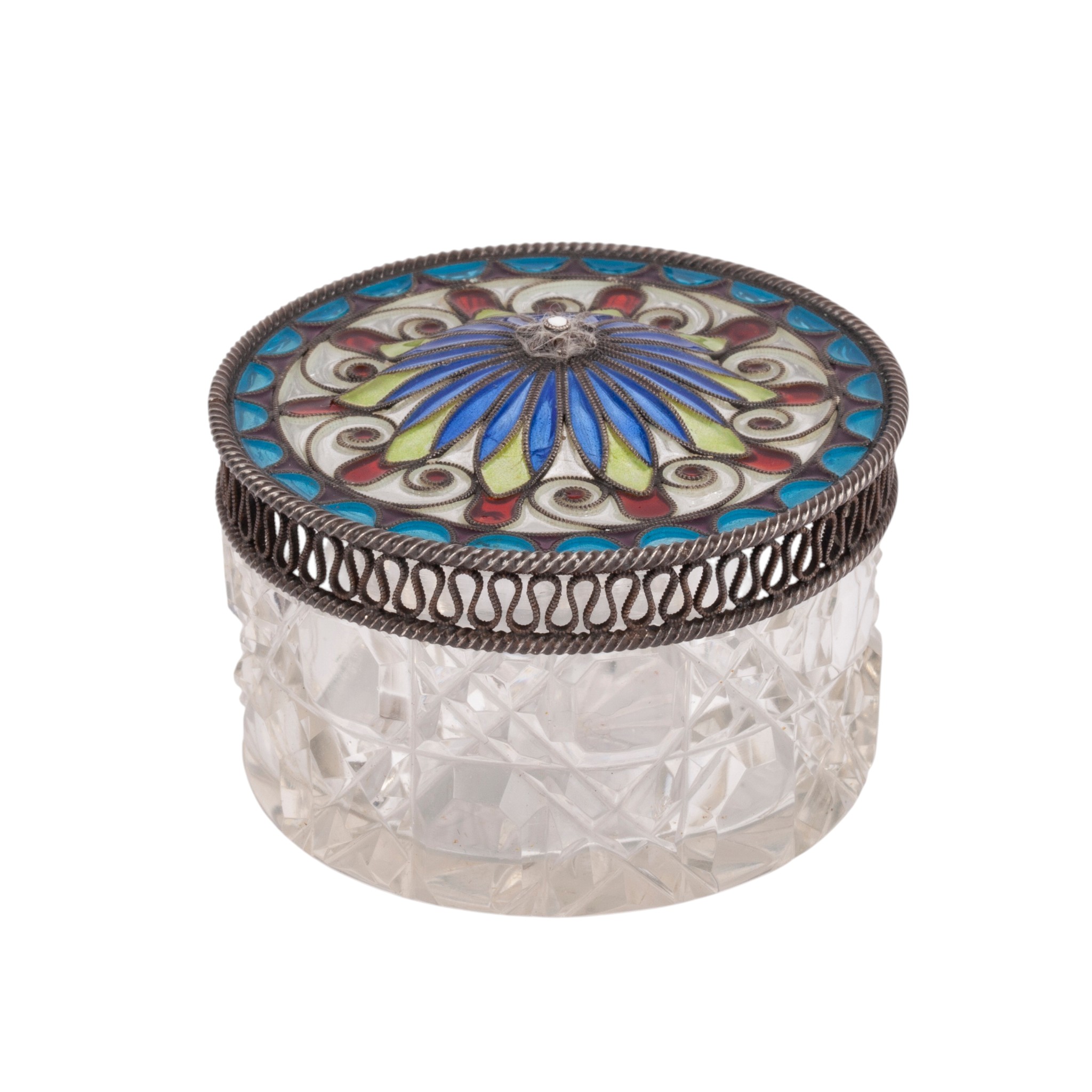
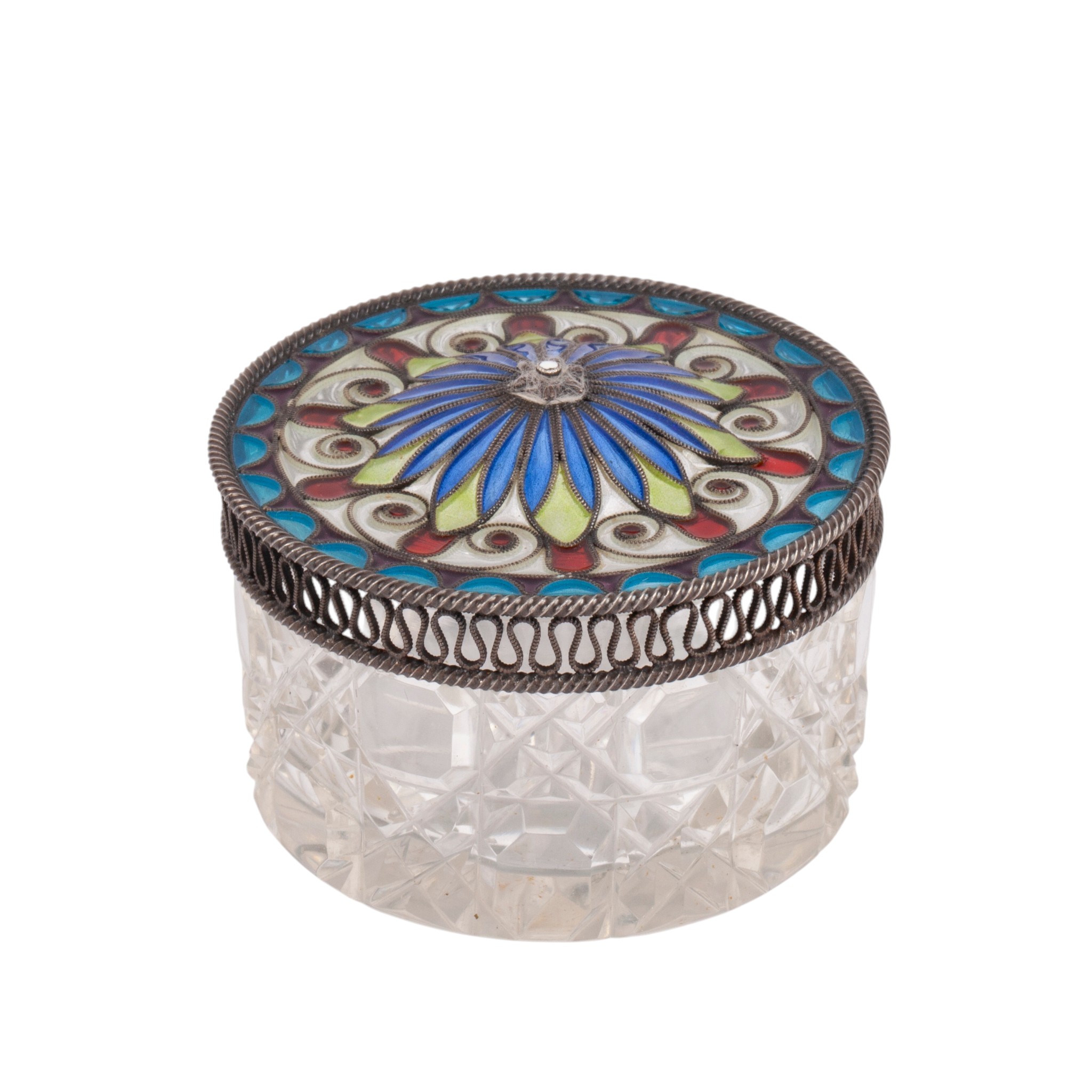
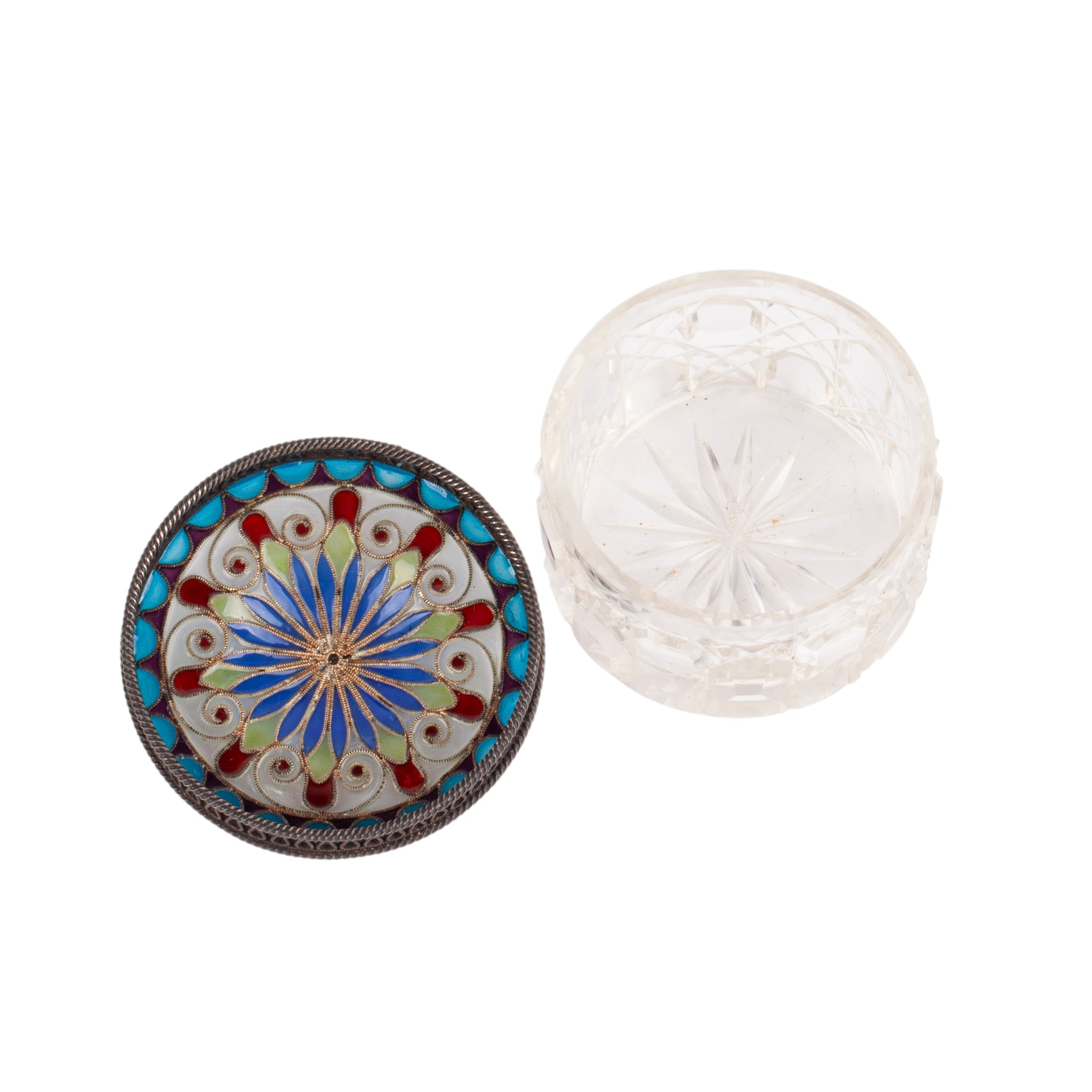
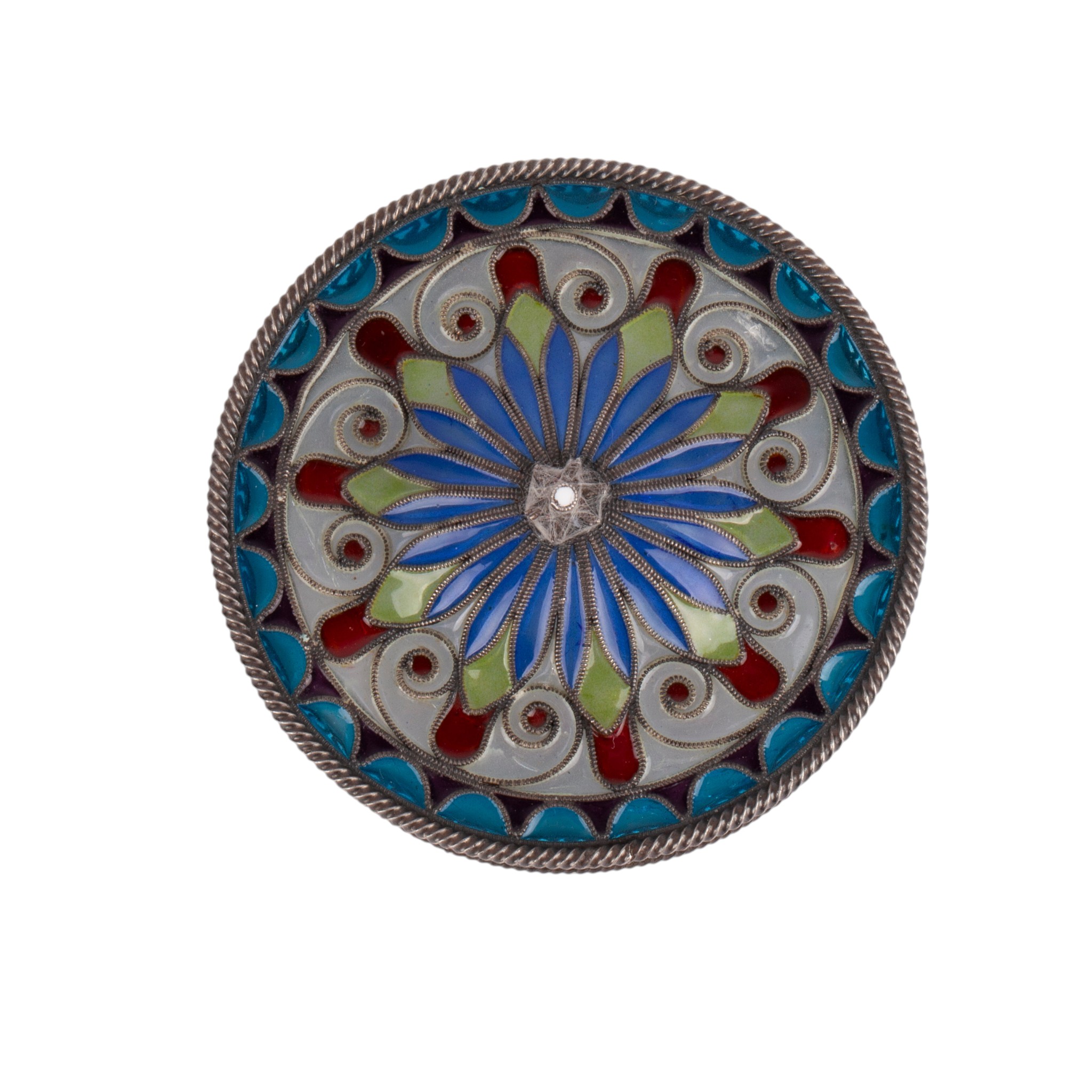
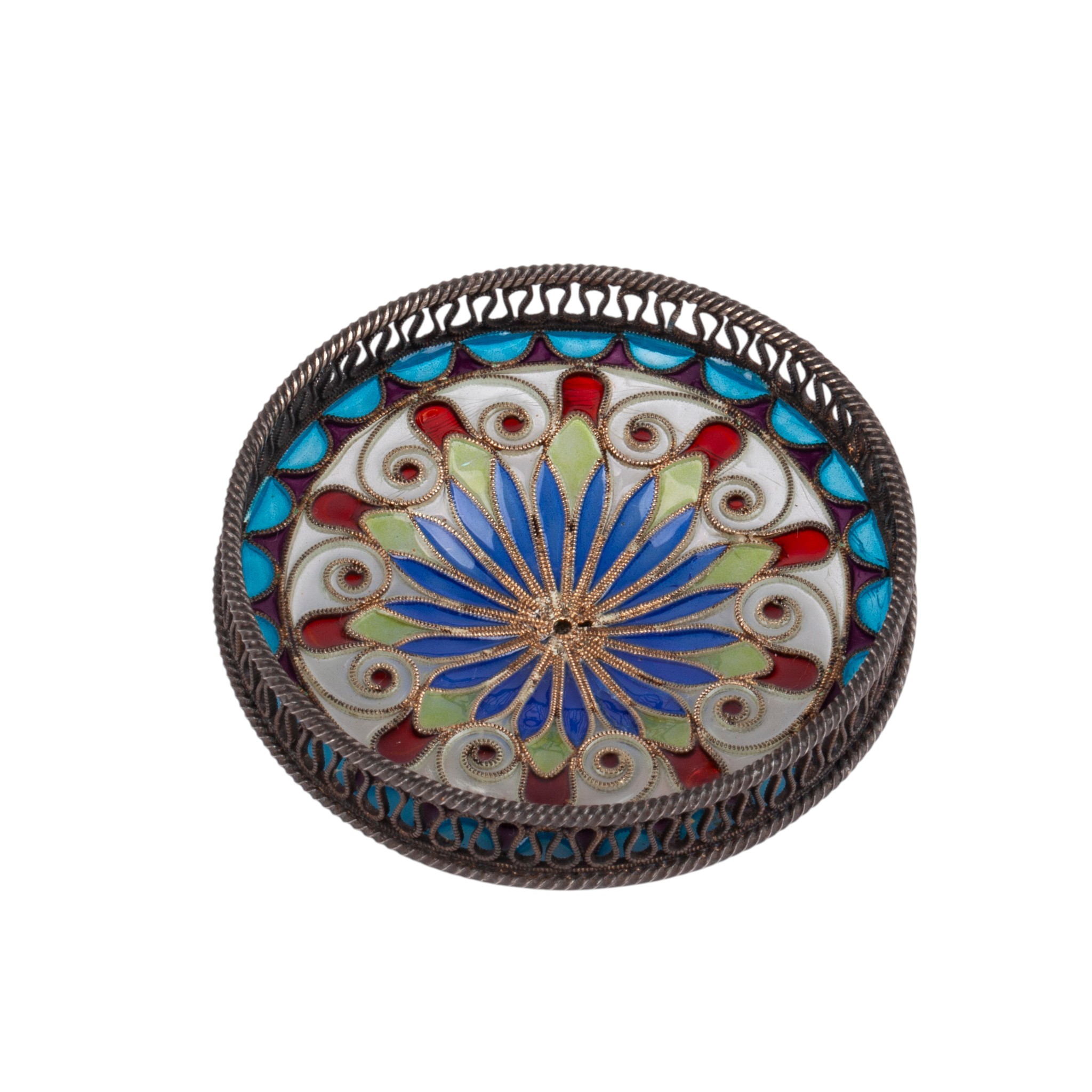
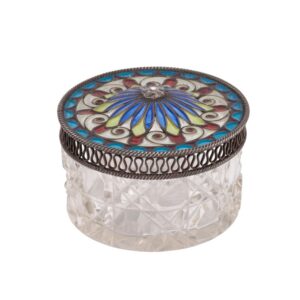
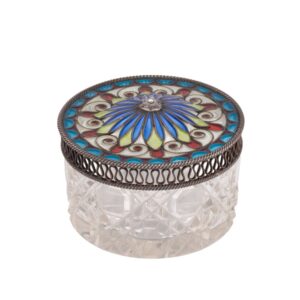
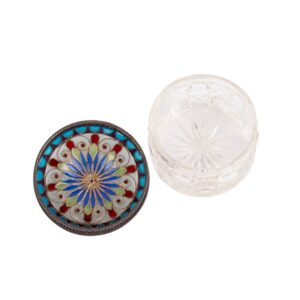
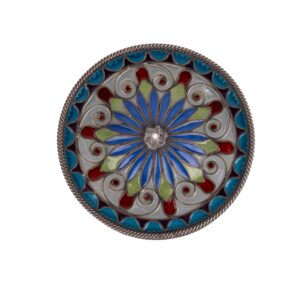
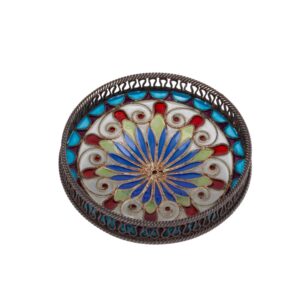
Crystal, Silver and Plique-à-Jour Enamel Snuff Box
Estimate: 300-400€
A fine crystal, silver and plique-à-jour enamel snuff box, the cut crystal body surmounted by an ornate silver lid with polychrome floral enamel decoration in blue, green, red and white. Russia, the end of the 19th century.
Dimensions: 4 × 5.5 × 5.5 cm.
Starting price: 200€
Estimate: 300-400€
Hammer Price: Not sold
Related Lots
-
Lot 0064
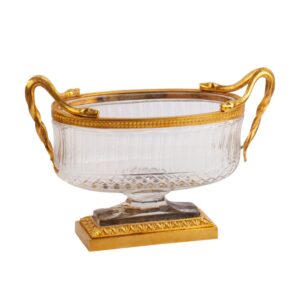
Russian Vase with Snake-Form Handles, Imperial Glass Factory, St Petersburg, 1810s–1820s
Estimate: 8000-9000€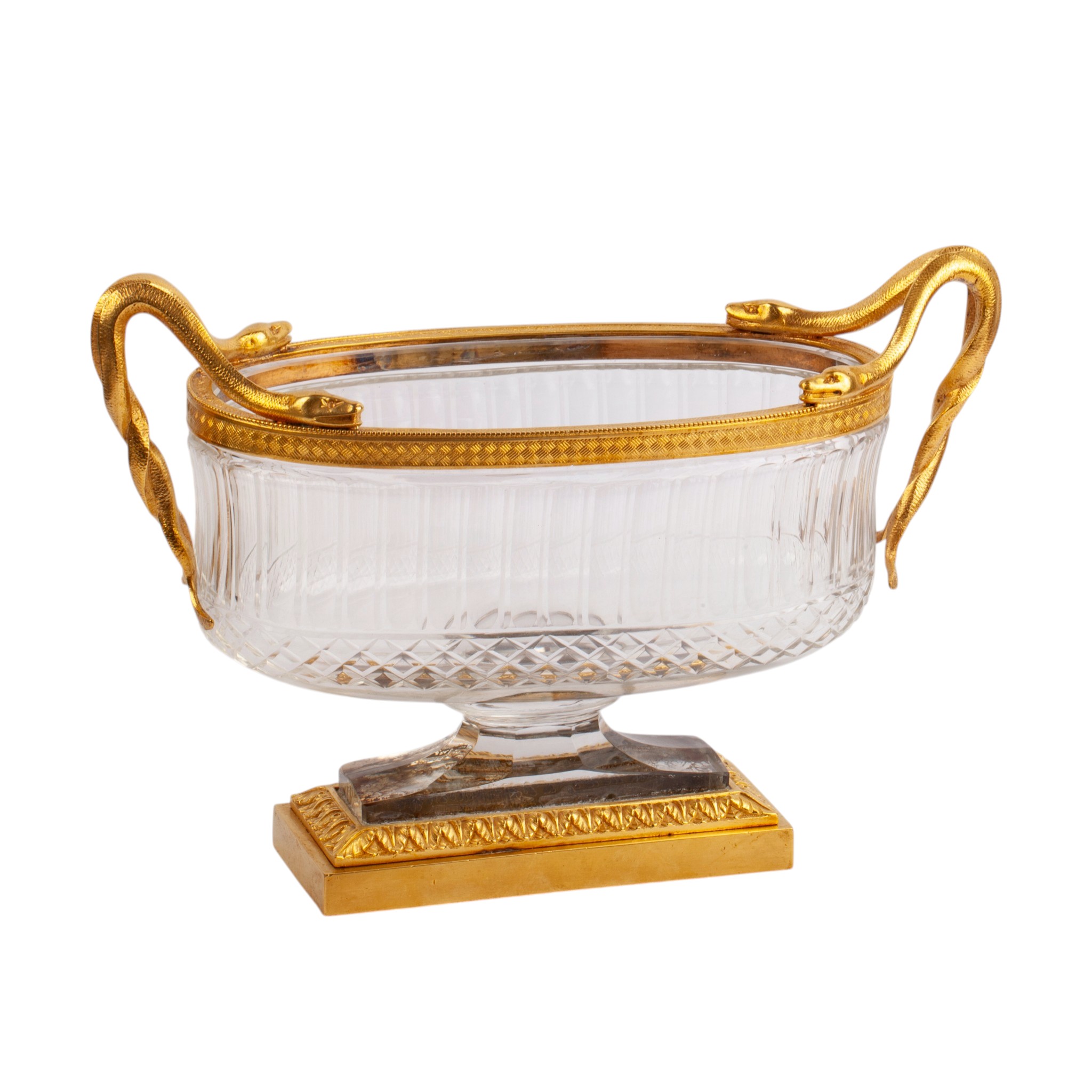
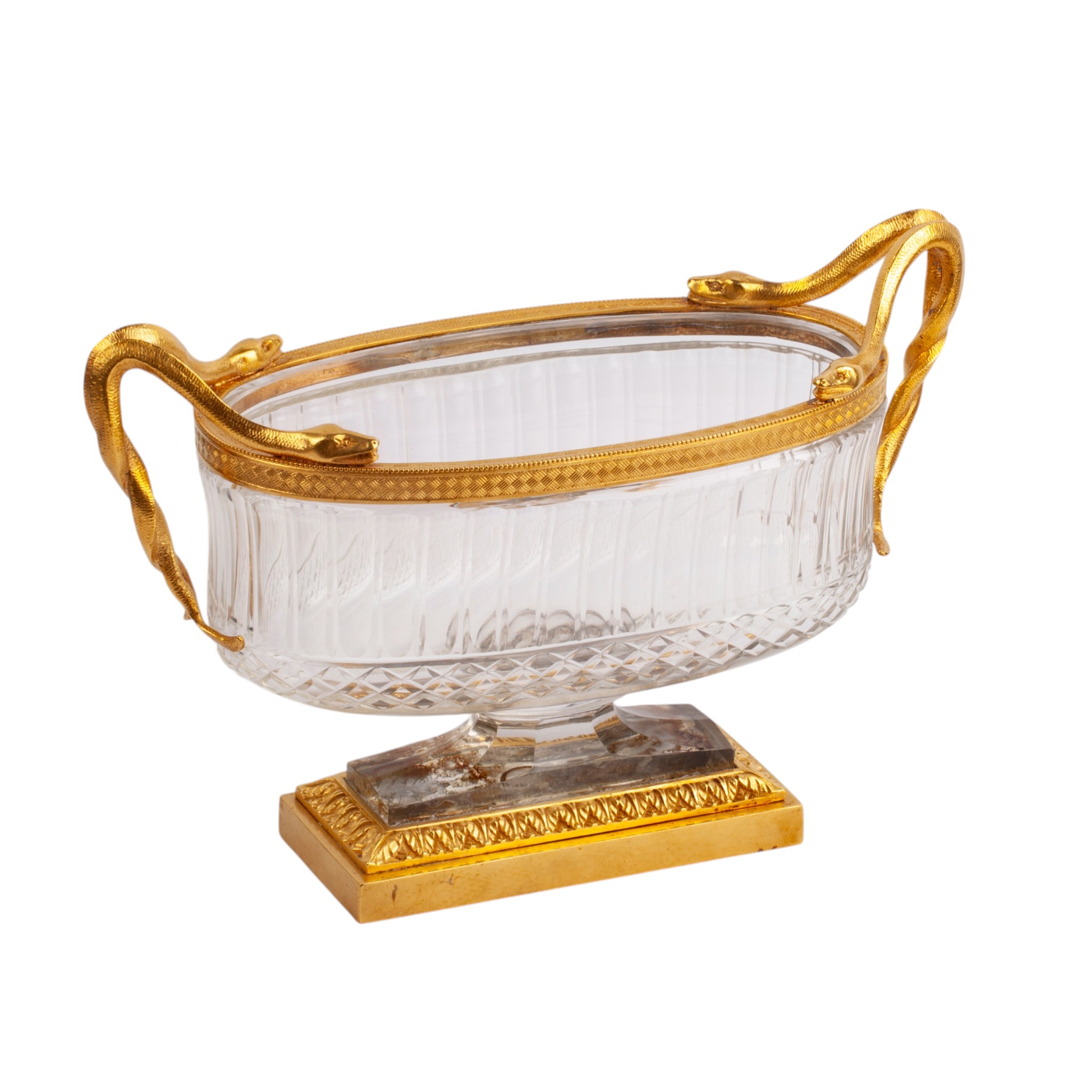
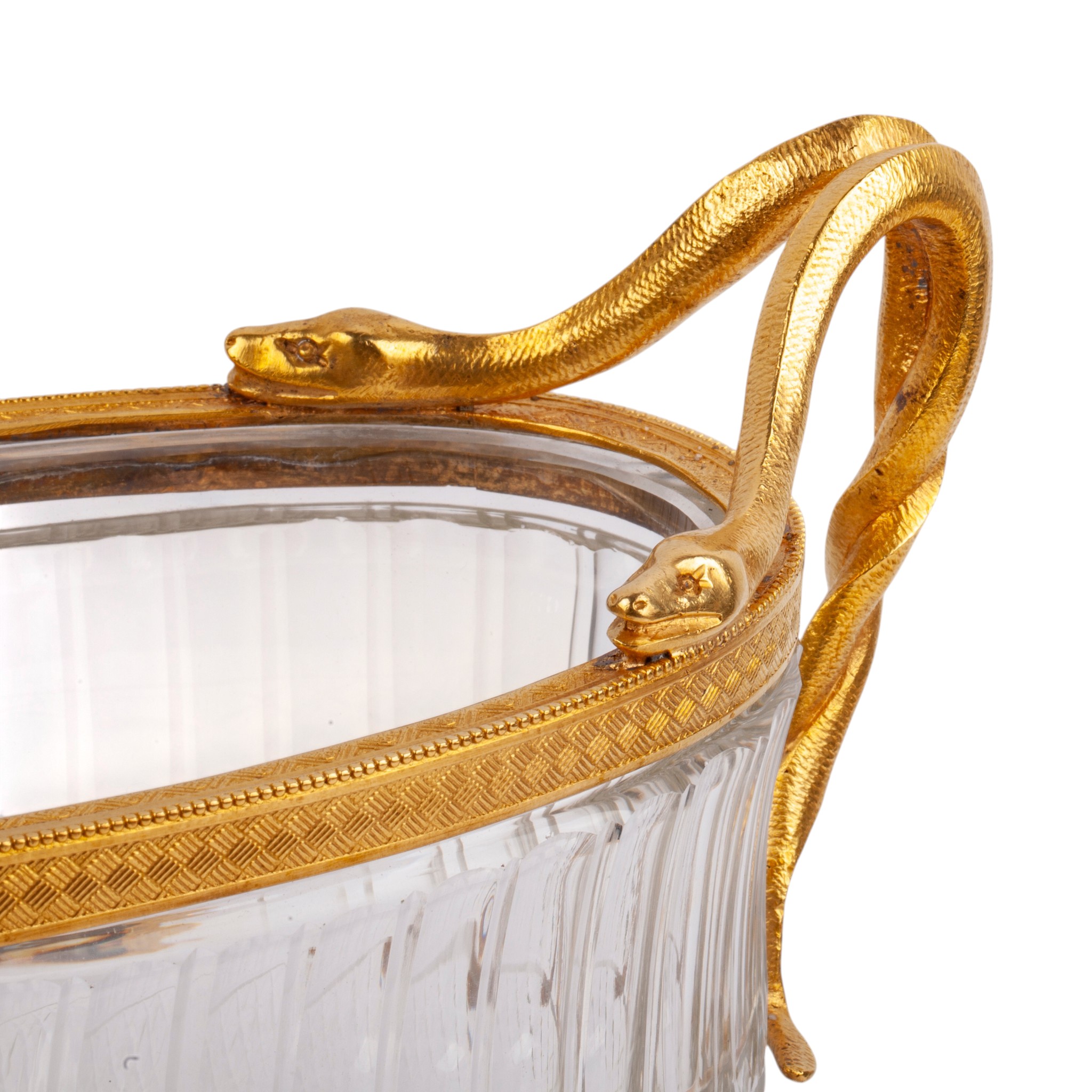
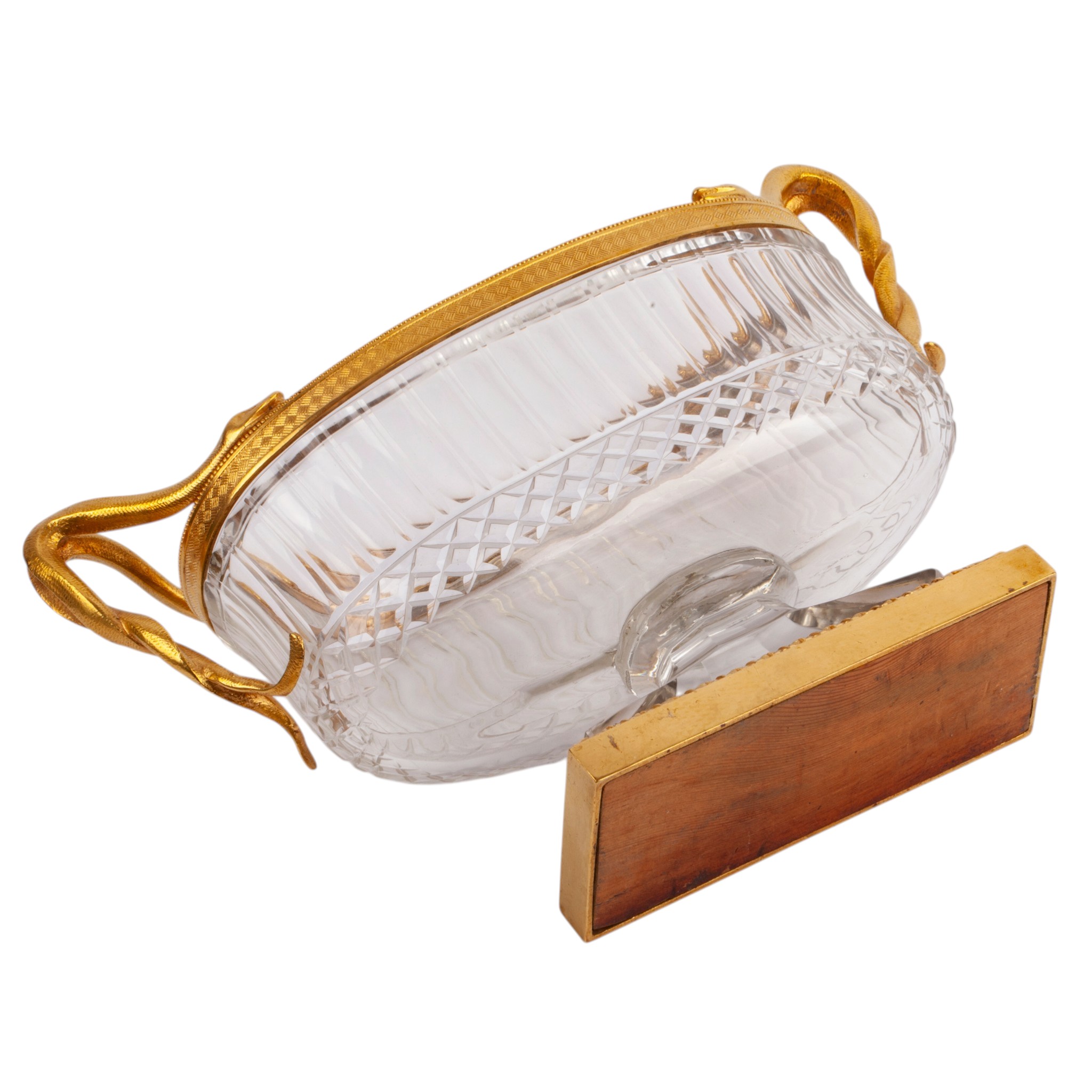
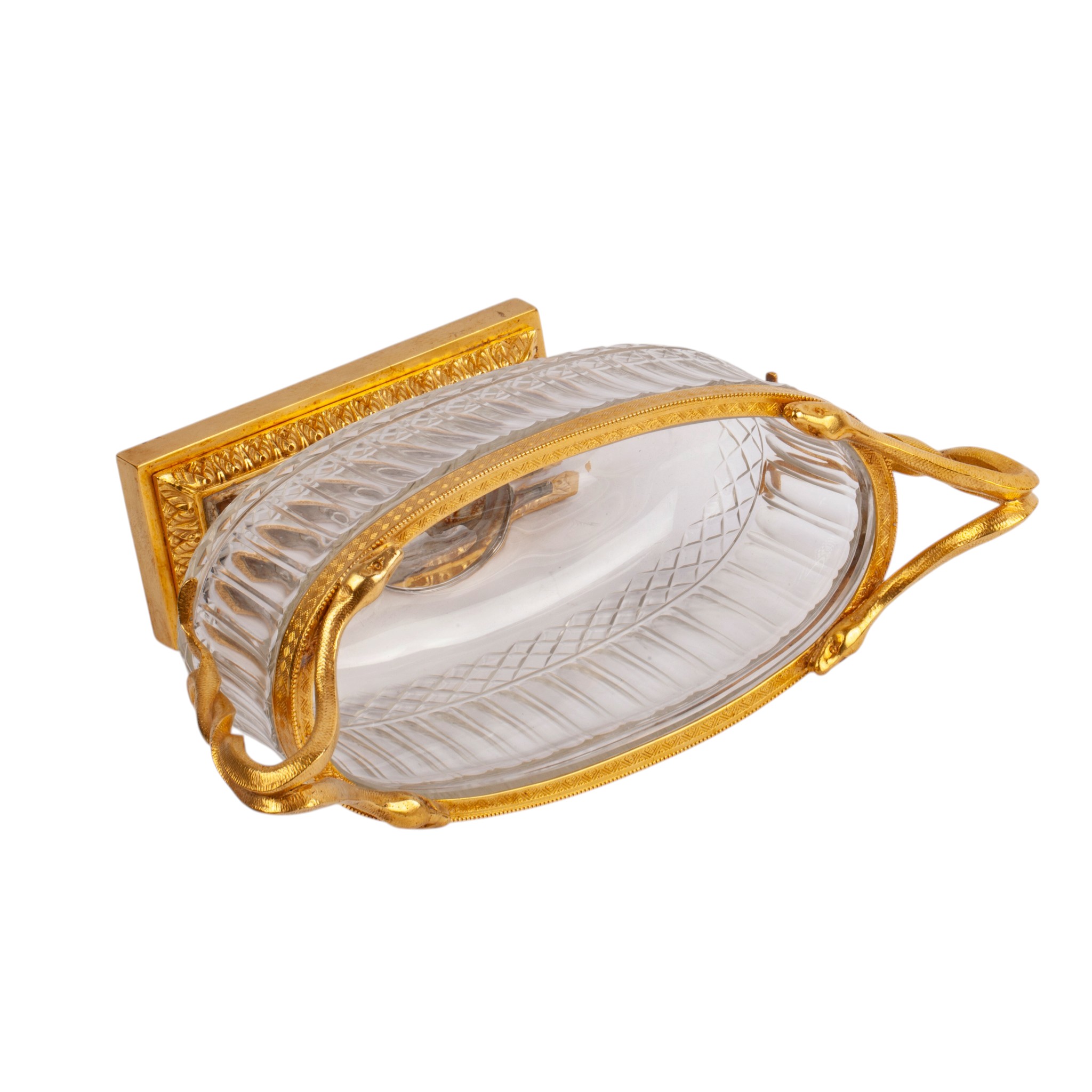
Lot 0064
Russian Vase with Snake-Form Handles, Imperial Glass Factory, St Petersburg, 1810s–1820s
Estimate: 8000-9000€A Rare Russian vase with snake-form handles
After a design by Carlo Rossi (1775-1849).
Imperial Glass Factory, St Petersburg, 1810s-1820s. Dimensions: 20 x 29 x 12 cm.
Crystal glass, gilt bronze; blown, cutting; cast and gilt bronze mounts.
An elegant oval vase-bowl of clear glass, raised on a stepped pedestal foot and mounted with richly gilt bronze rims and handles in the form of entwining snakes. The glass body is articulated by fine vertical pilasters, while the lower zone is finished with a cut diamond band. The restrained clarity of the vessel is set in deliberate contrast with the animated bronze mounts: the serpents, modeled with sinuous bodies and alert, naturalistic heads, transform the utilitarian handles into a distinctly sculptural motif.
The snake, a motif associated in Neoclassical design with antiquity, renewal, and protective force, lends the composition both symbolic resonance and formal dynamism. The combination of transparent crystal glass and finely chased gilt bronze is characteristic of luxury production associated with the Imperial Glass Factory in St Petersburg. The Imperial Glass Factory mastered to a high degree the production of cut crystal, one of the most fashionable materials of the period. In its early years, both the forms and the cutting patterns of its wares were shaped by the influence of English, particularly Irish, crystal. Before long, however, Russian architects, among them Andrei Voronikhin and others, developed new forms previously unknown in European glassmaking, while the factory’s cutters introduced original patterns of faceting, engraving, and painted decoration.
The 1820s marked a flourishing period for artistic glass intended for the interior. Inspired by trophy-like gilt-bronze mounts, Russian architects and St Petersburg bronze-makers began to design new types of palace furnishings, for which crystal elements and supports were produced at the Imperial Glass Factory. These expanded decorative possibilities were further enriched by the wide chromatic range of glass and crystal manufactured there.
A comparable vase is preserved in the collection of the State Hermitage Museum. https://www.hermitagemuseum.org/digital-collection/923774?lng=ruStarting price: 7000€
Estimate: 8000-9000€
Hammer Price: Not sold -
Lot 0061
Russian Cut-Crystal Compote. A. Maltzov Glass Factory, late 19th–early 20th century
Estimate: 300-350€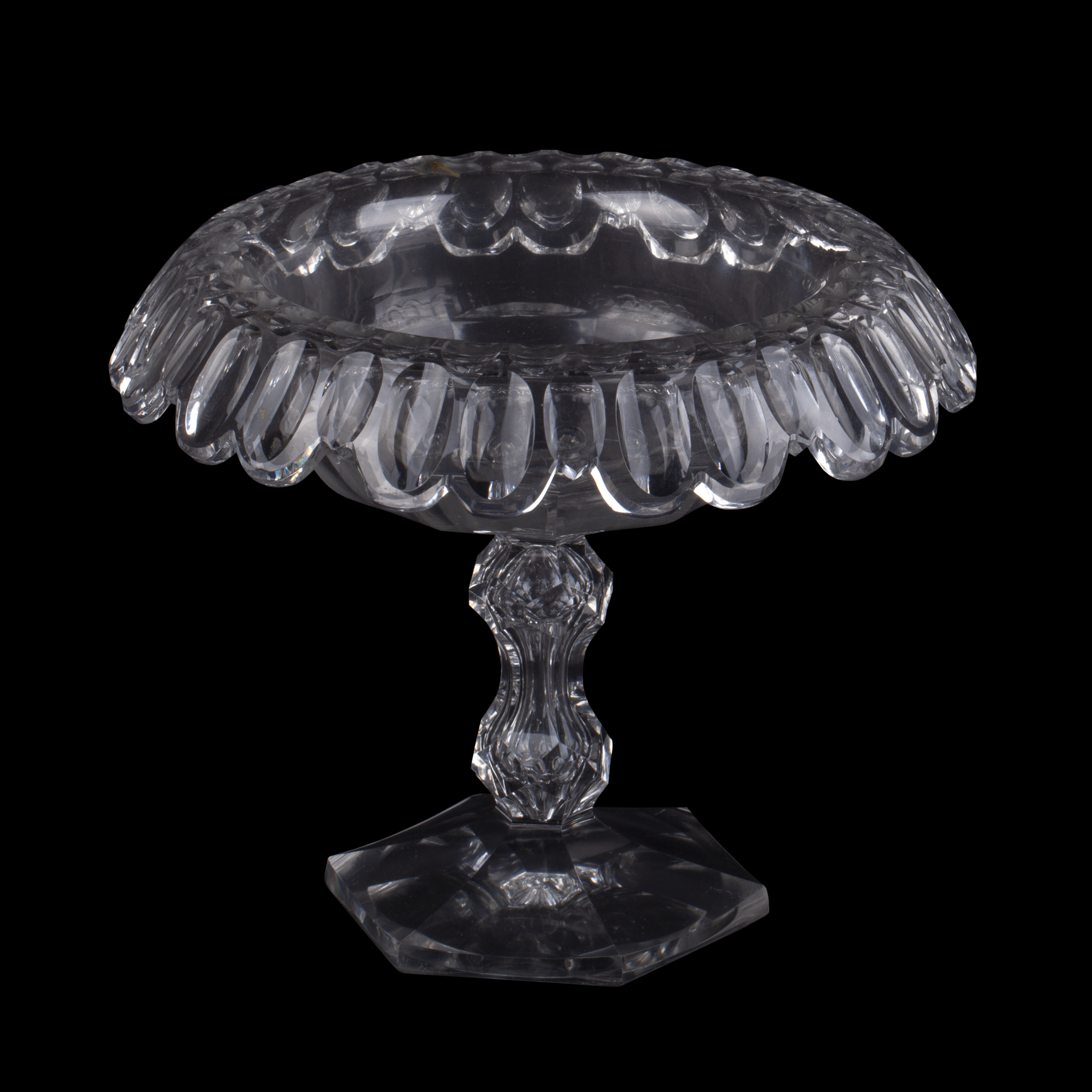
Lot 0061
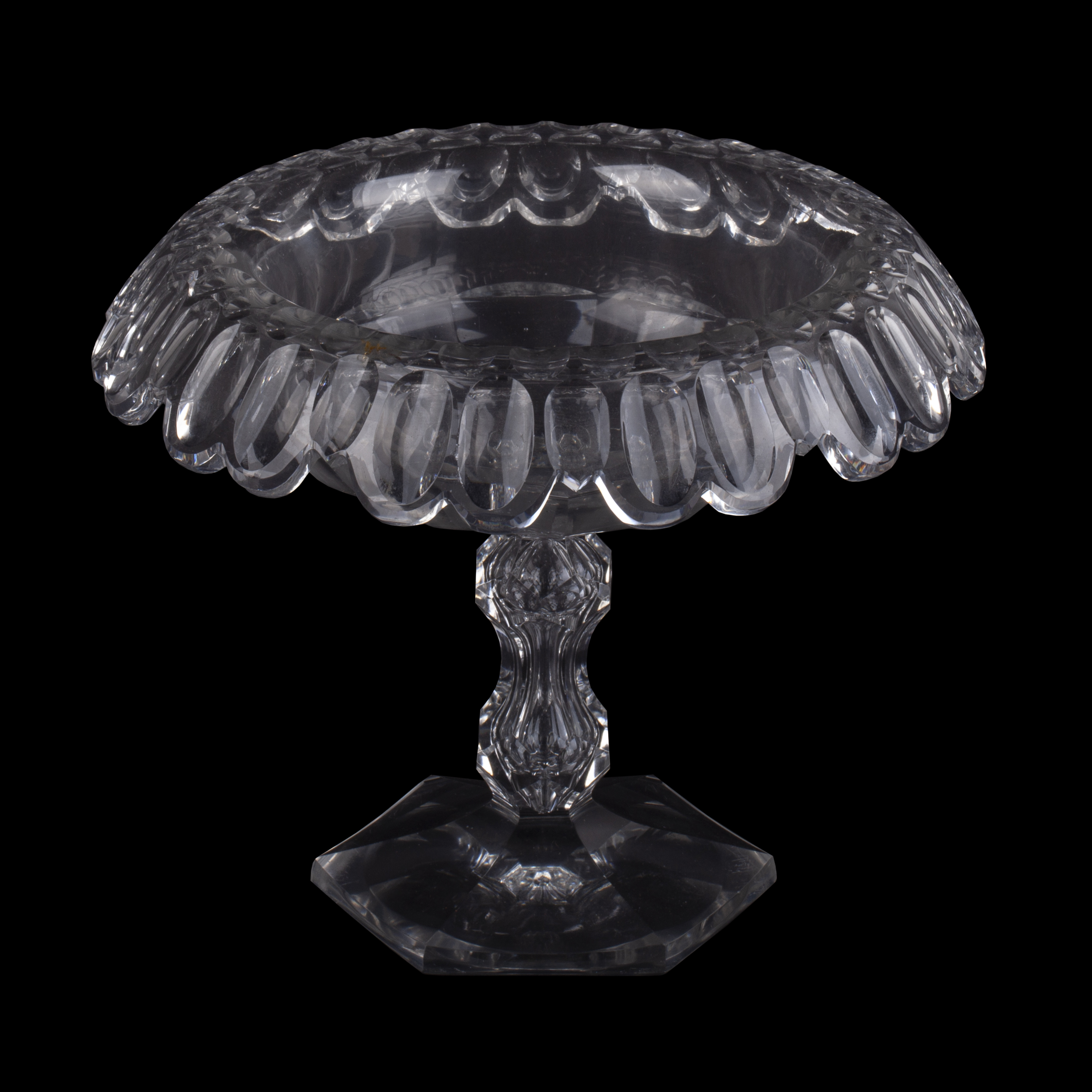
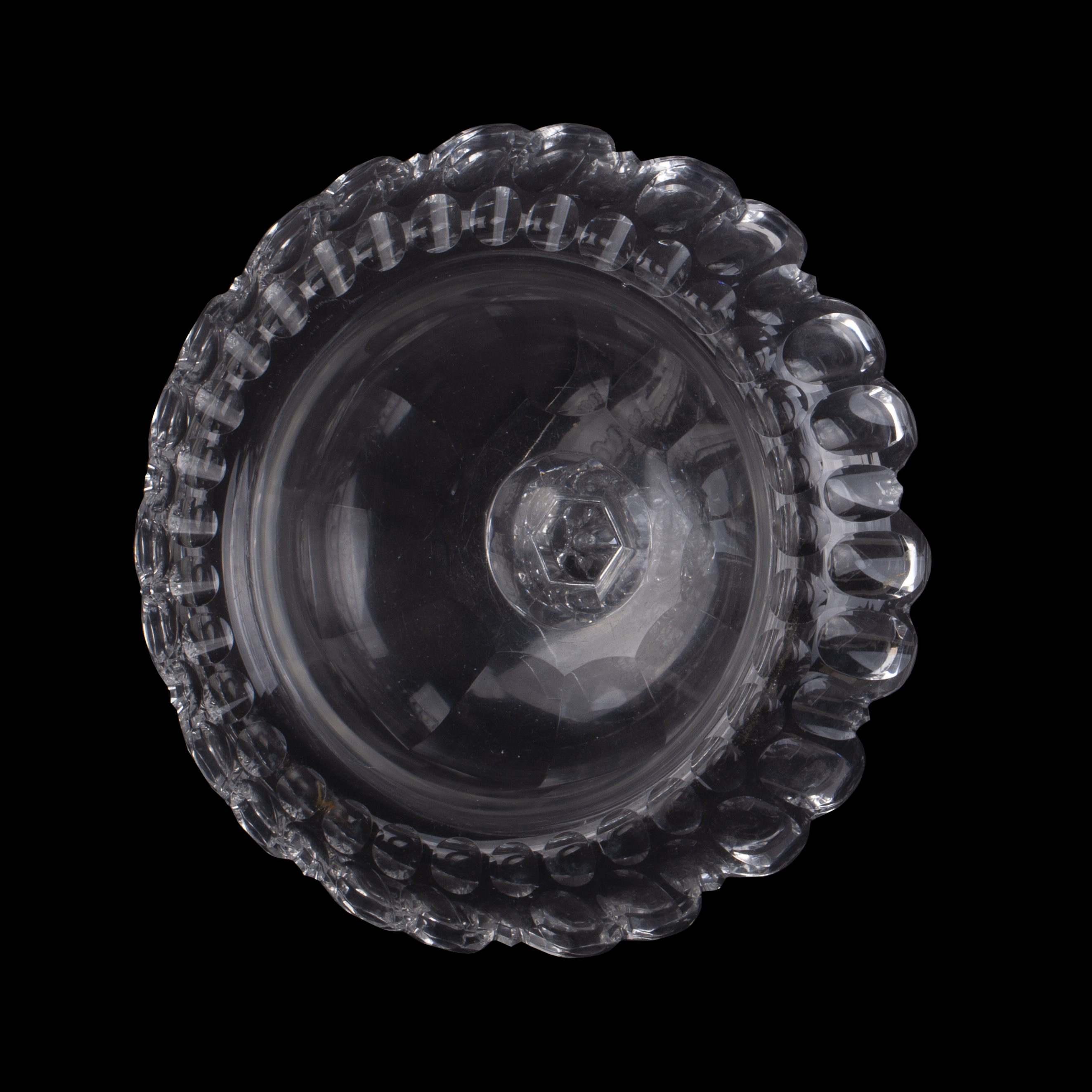
Russian Cut-Crystal Compote. A. Maltzov Glass Factory, late 19th–early 20th century
Estimate: 300-350€Russian Crystal Compote
A. Maltzov Glass Factory, Gus-Khrustalny, Russia
Late 19th – early 20th centuryCut crystal
Height: 22.5 cm
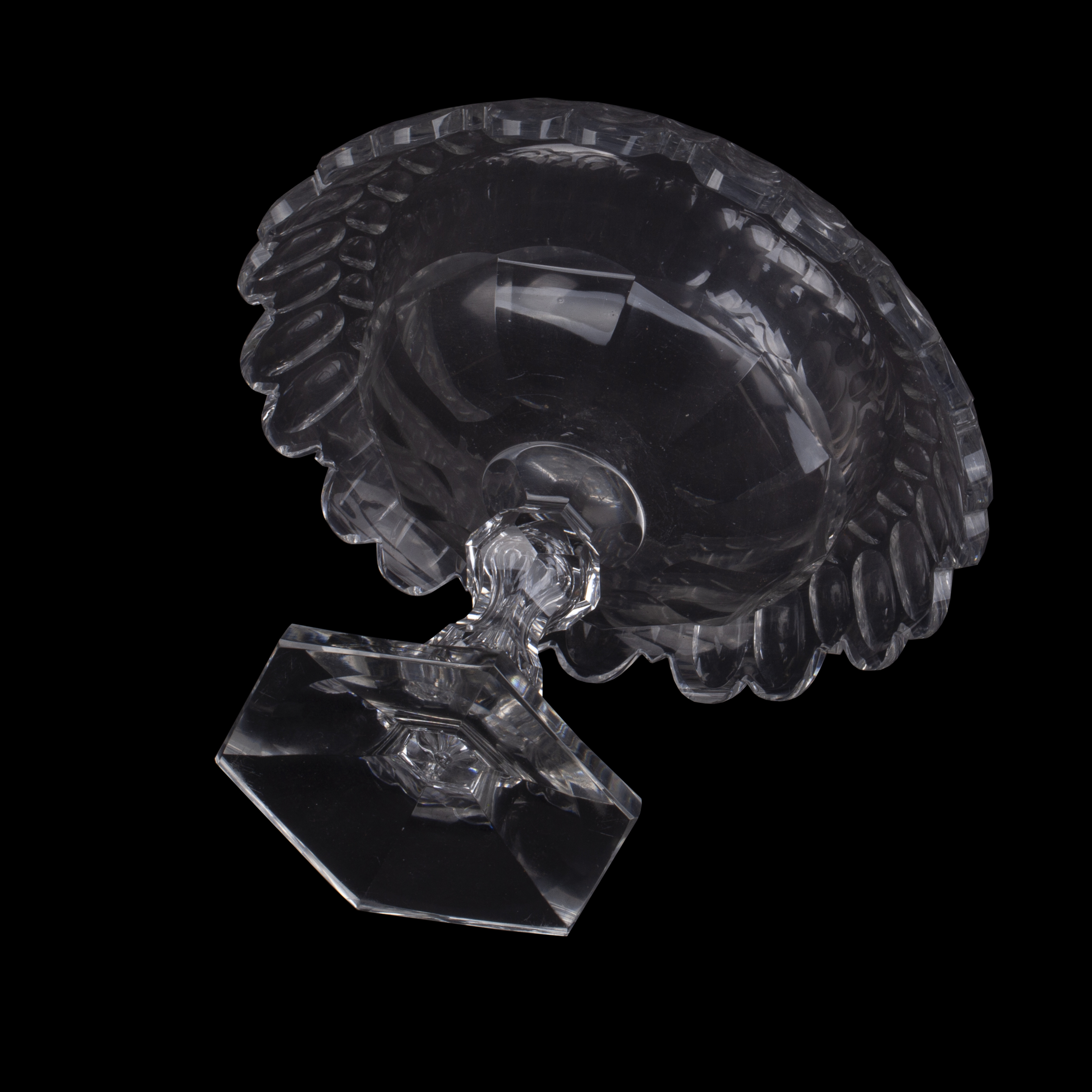
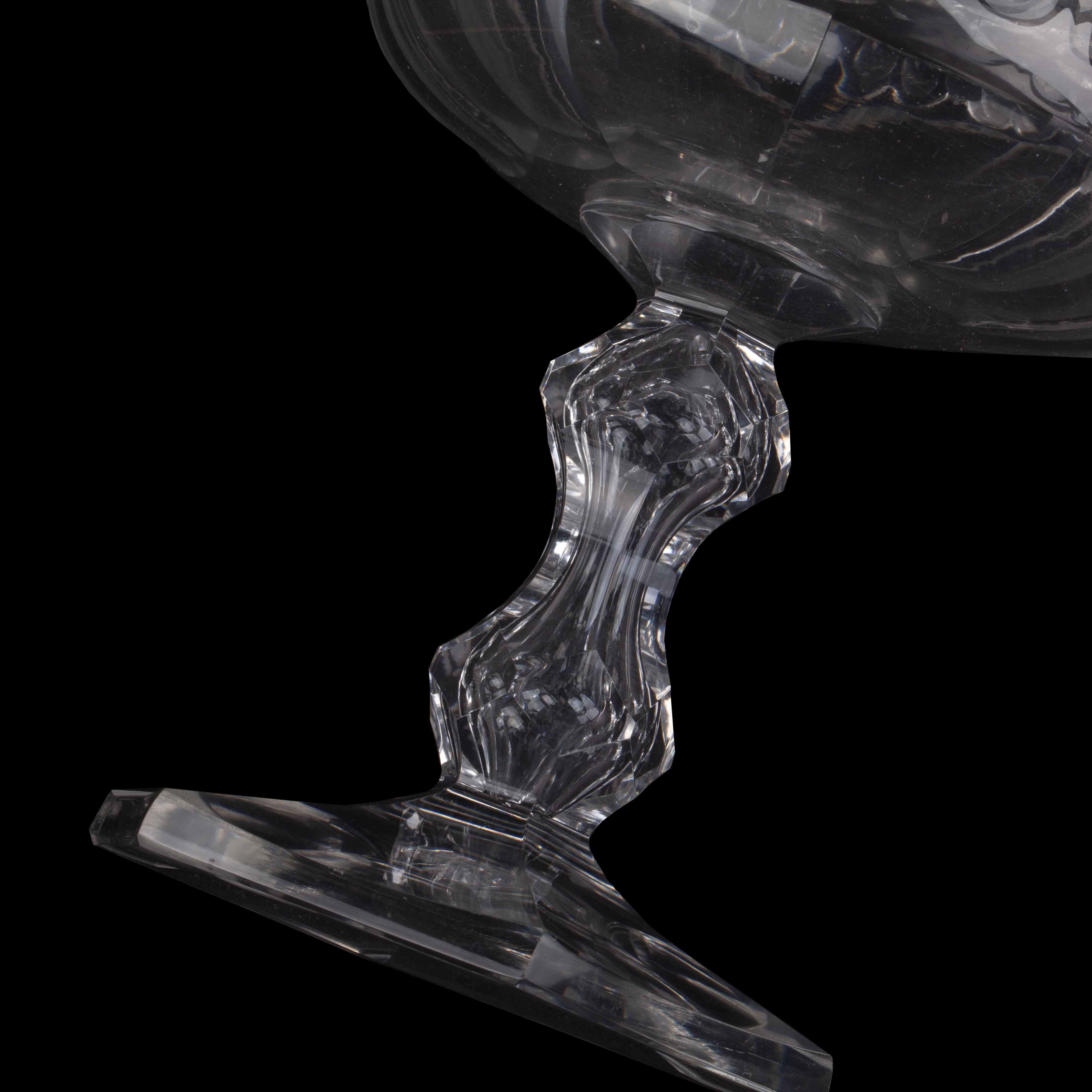
Diameter: 29 cmThis elegant crystal compote demonstrates the high artistic and technical standards of the A. Maltzov Glass Factory in Gus-Khrustalny, one of the leading Russian glassworks of the late Imperial period.
The piece is distinguished by its refined proportions, faceted stem, and meticulously cut scalloped rim, reflecting the exceptional craftsmanship and aesthetic sophistication characteristic of the factory’s production at the turn of the 20th century.
Starting price: 250€
Estimate: 300-350€
Hammer Price: Not sold -
Lot 0065
Russian Vase with Snake-Form Handles, Imperial Glass Factory, St Petersburg, 1810s–1820s
Estimate: 6000-8000€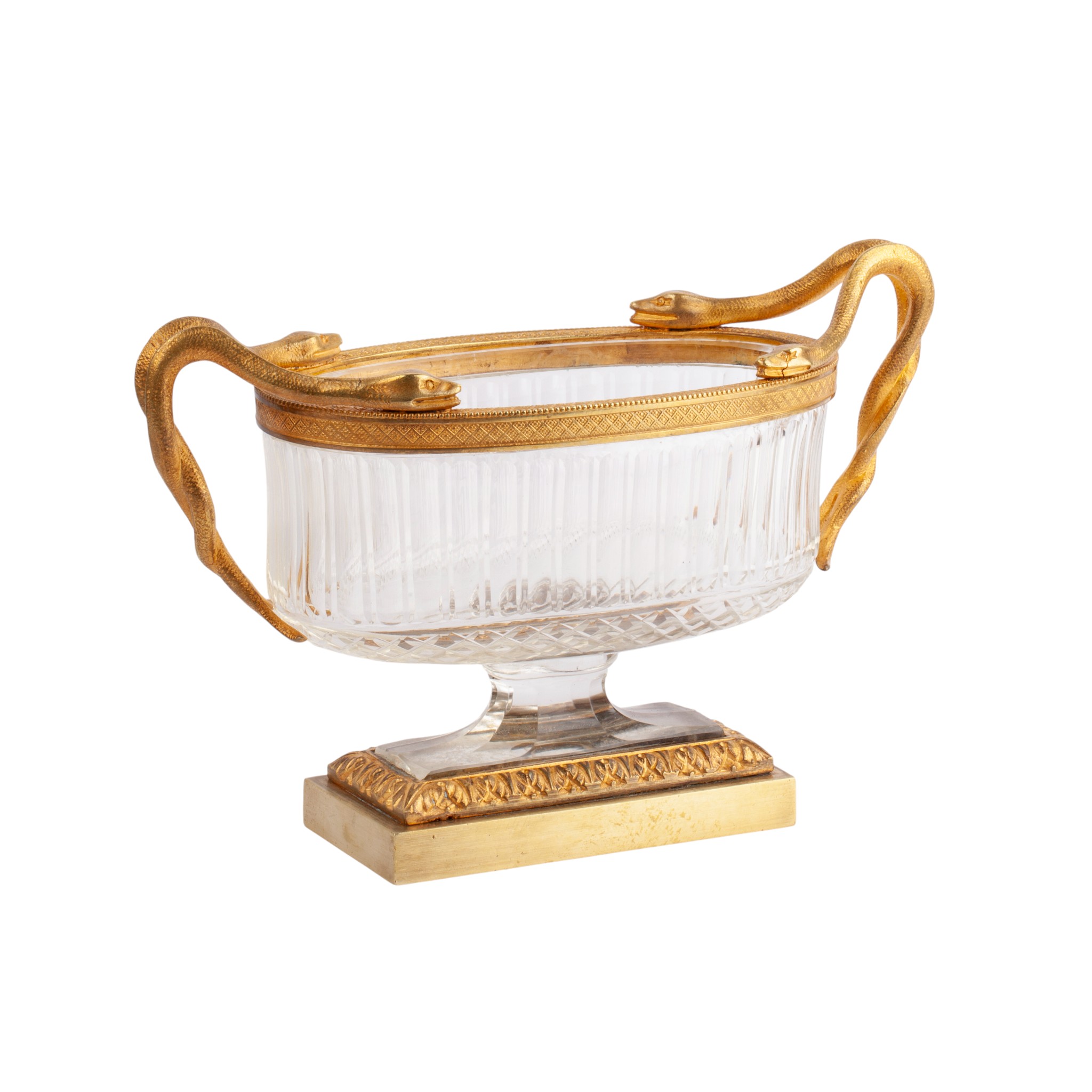
Lot 0065
Russian Vase with Snake-Form Handles, Imperial Glass Factory, St Petersburg, 1810s–1820s
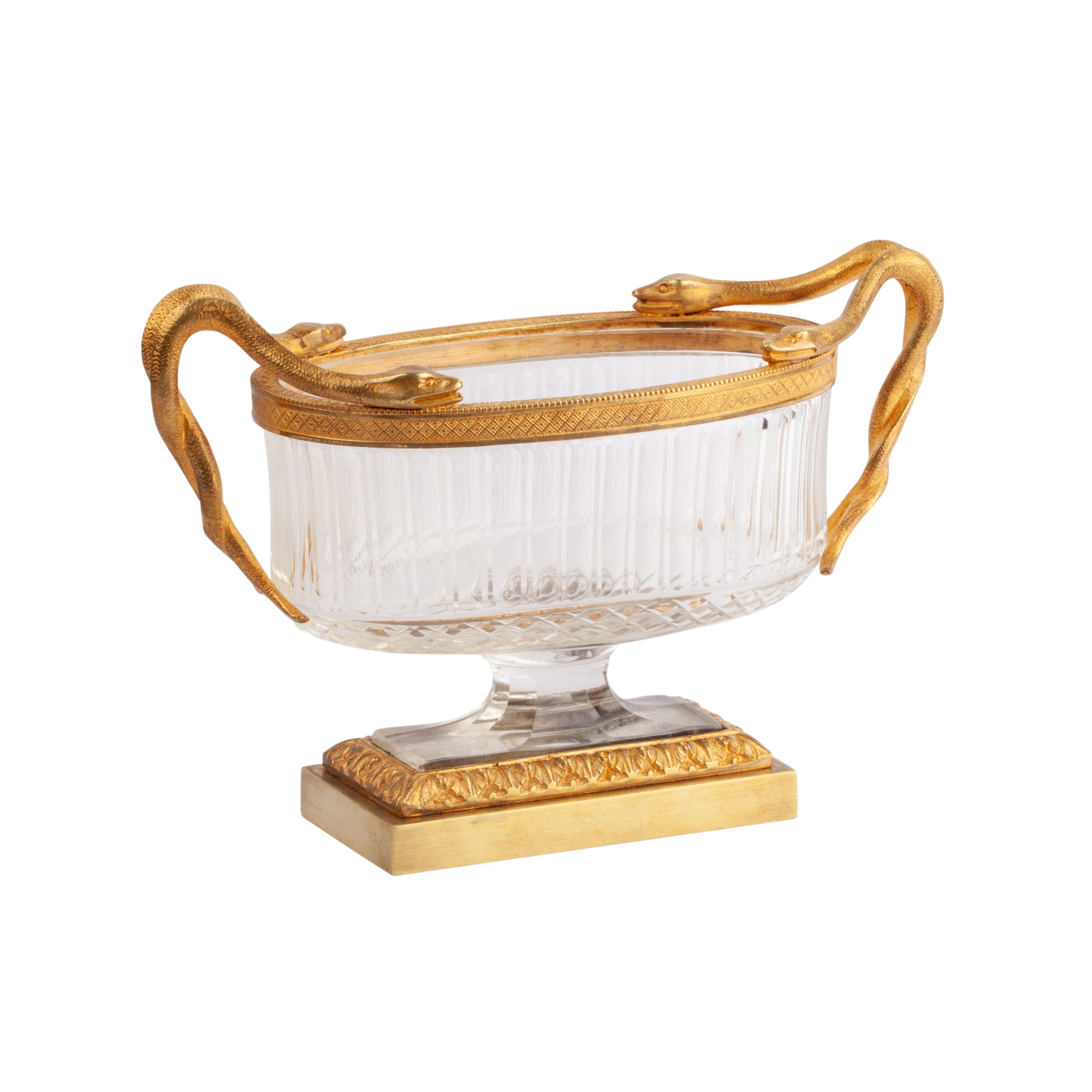
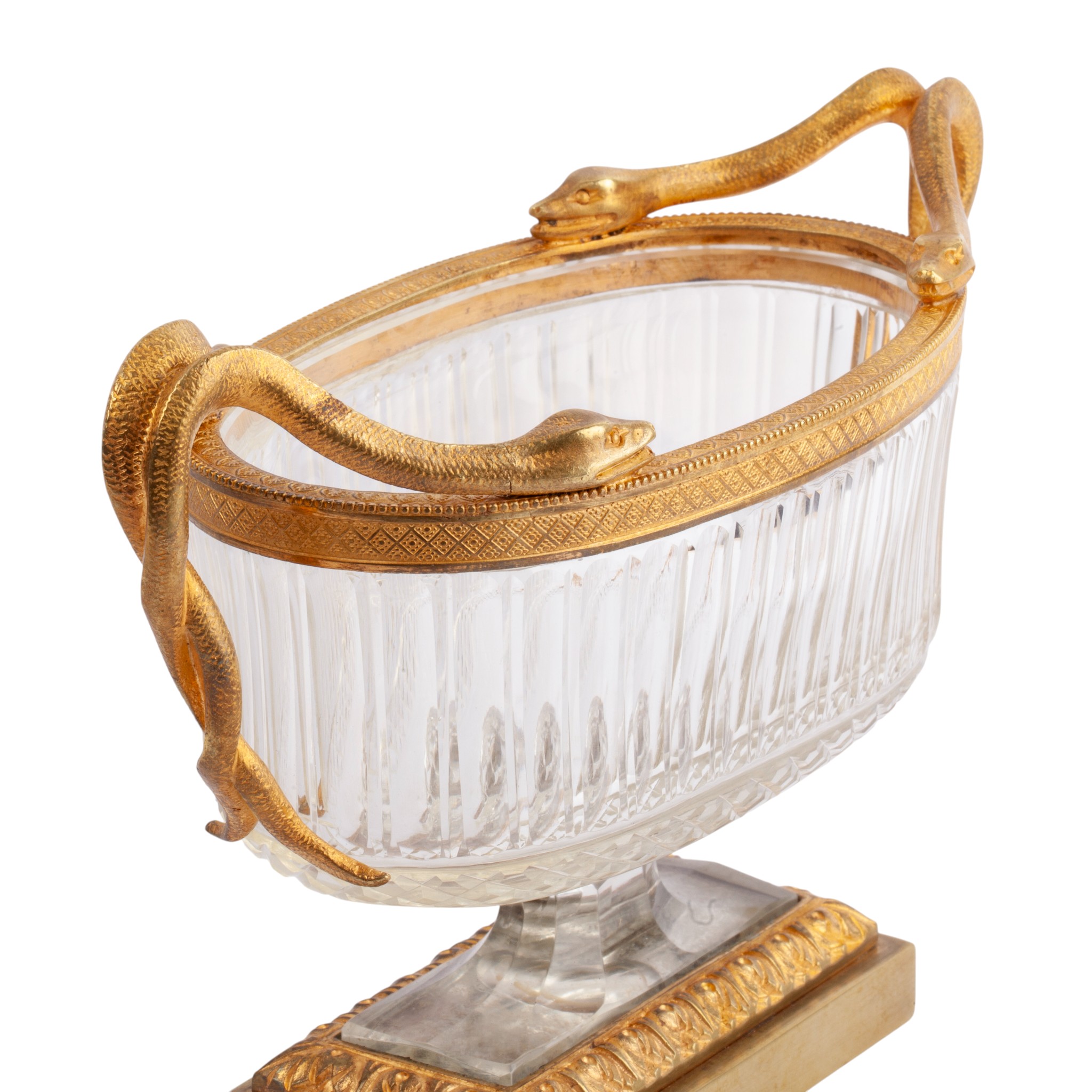
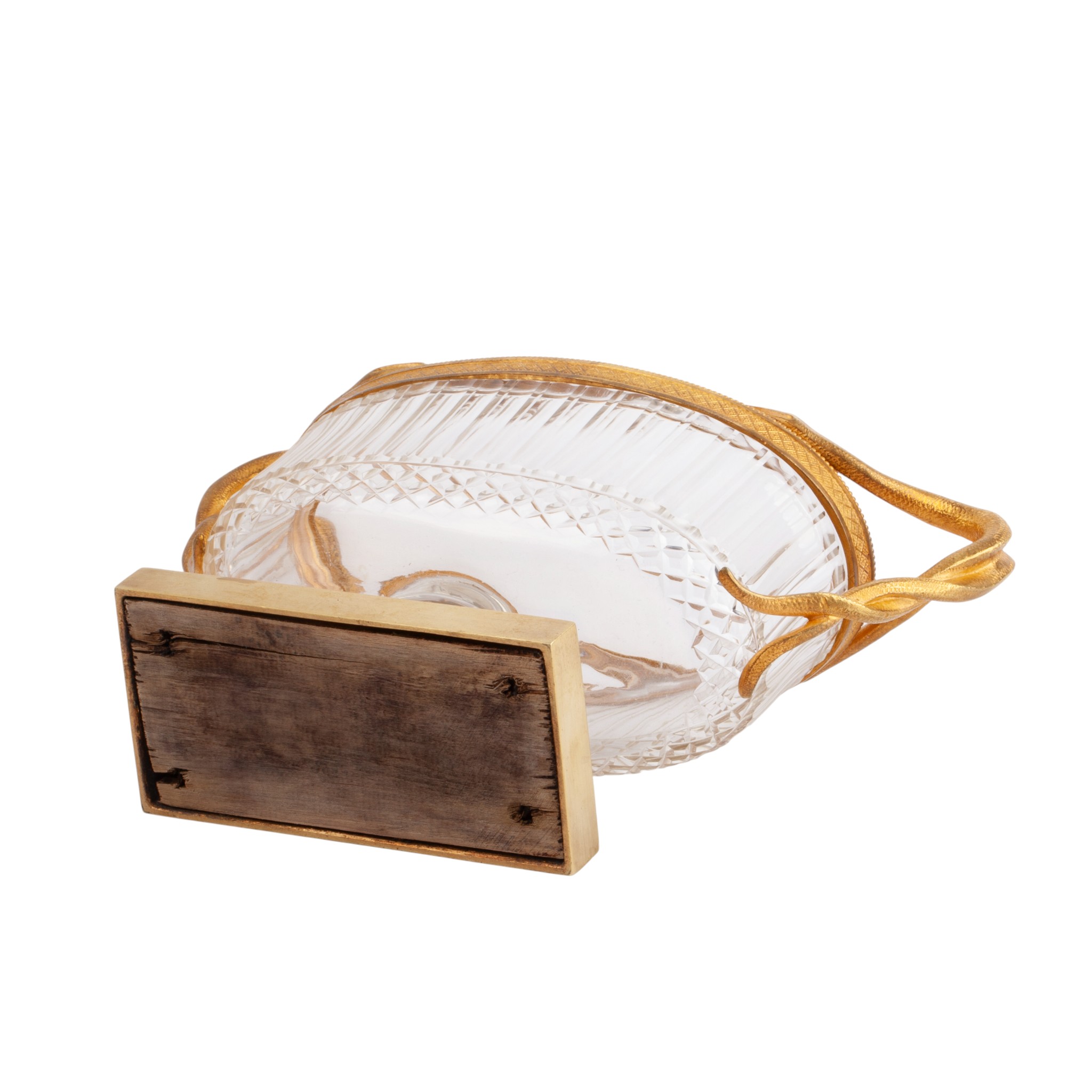
Estimate: 6000-8000€A Rare Russian vase with snake-form handles
After a design by Carlo Rossi (1775-1849).
Imperial Glass Factory, St Petersburg, 1810s-1820s. Dimensions: 14.5 x 22 x 9 cm.
Crystal glass, gilt bronze; blown, cutting; cast and gilt bronze mounts.
An elegant oval vase-bowl of clear glass, raised on a stepped pedestal foot and mounted with richly gilt bronze rims and handles in the form of entwining snakes. The glass body is articulated by fine vertical pilasters, while the lower zone is finished with a cut diamond band. The restrained clarity of the vessel is set in deliberate contrast with the animated bronze mounts: the serpents, modeled with sinuous bodies and alert, naturalistic heads, transform the utilitarian handles into a distinctly sculptural motif.
The snake, a motif associated in Neoclassical design with antiquity, renewal, and protective force, lends the composition both symbolic resonance and formal dynamism. The combination of transparent crystal glass and finely chased gilt bronze is characteristic of luxury production associated with the Imperial Glass Factory in St Petersburg. The Imperial Glass Factory mastered to a high degree the production of cut crystal, one of the most fashionable materials of the period. In its early years, both the forms and the cutting patterns of its wares were shaped by the influence of English, particularly Irish, crystal. Before long, however, Russian architects, among them Andrei Voronikhin and others, developed new forms previously unknown in European glassmaking, while the factory’s cutters introduced original patterns of faceting, engraving, and painted decoration.
The 1820s marked a flourishing period for artistic glass intended for the interior. Inspired by trophy-like gilt-bronze mounts, Russian architects and St Petersburg bronze-makers began to design new types of palace furnishings, for which crystal elements and supports were produced at the Imperial Glass Factory. These expanded decorative possibilities were further enriched by the wide chromatic range of glass and crystal manufactured there.Starting price: 5000€
Estimate: 6000-8000€
Hammer Price: Not sold -
Lot 0062
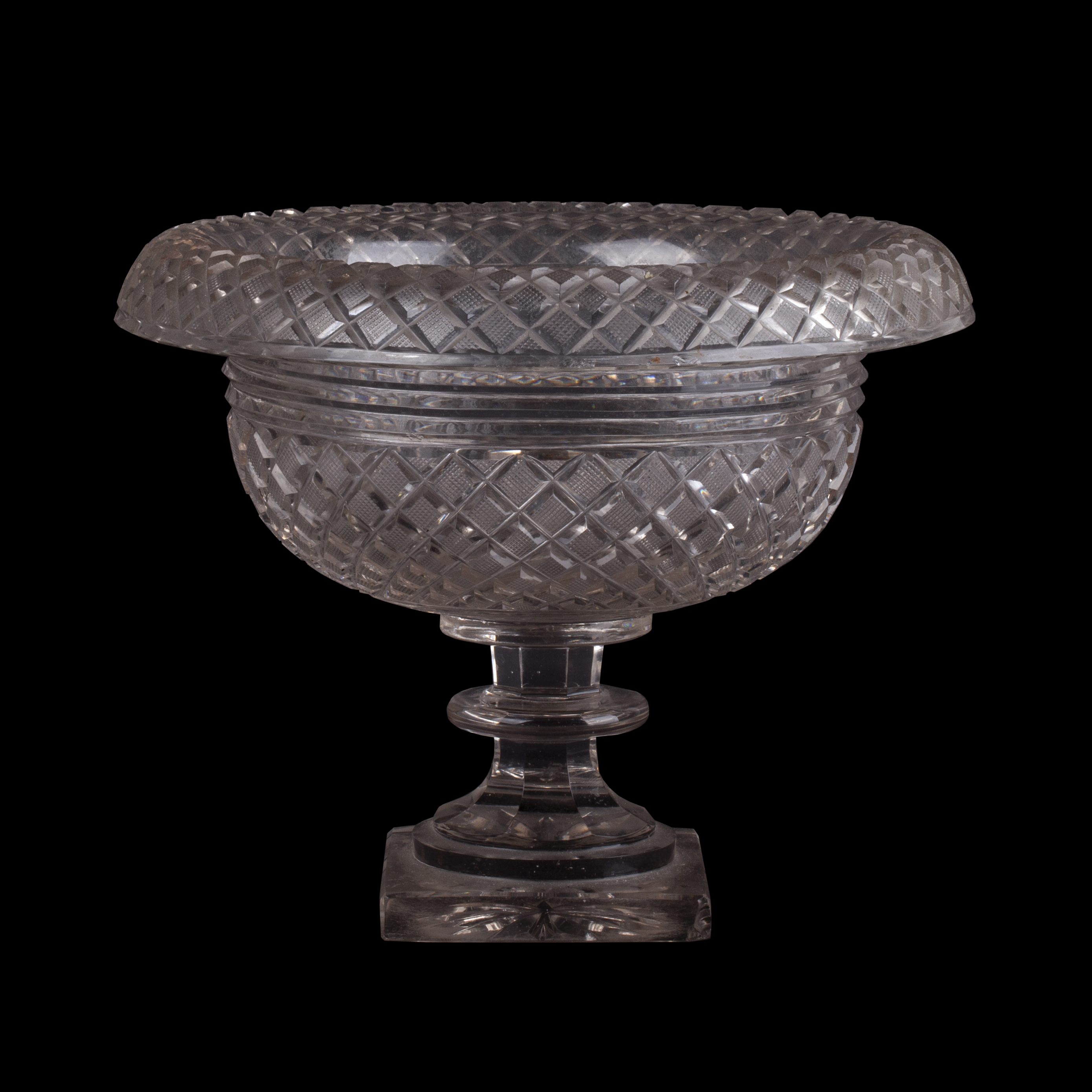
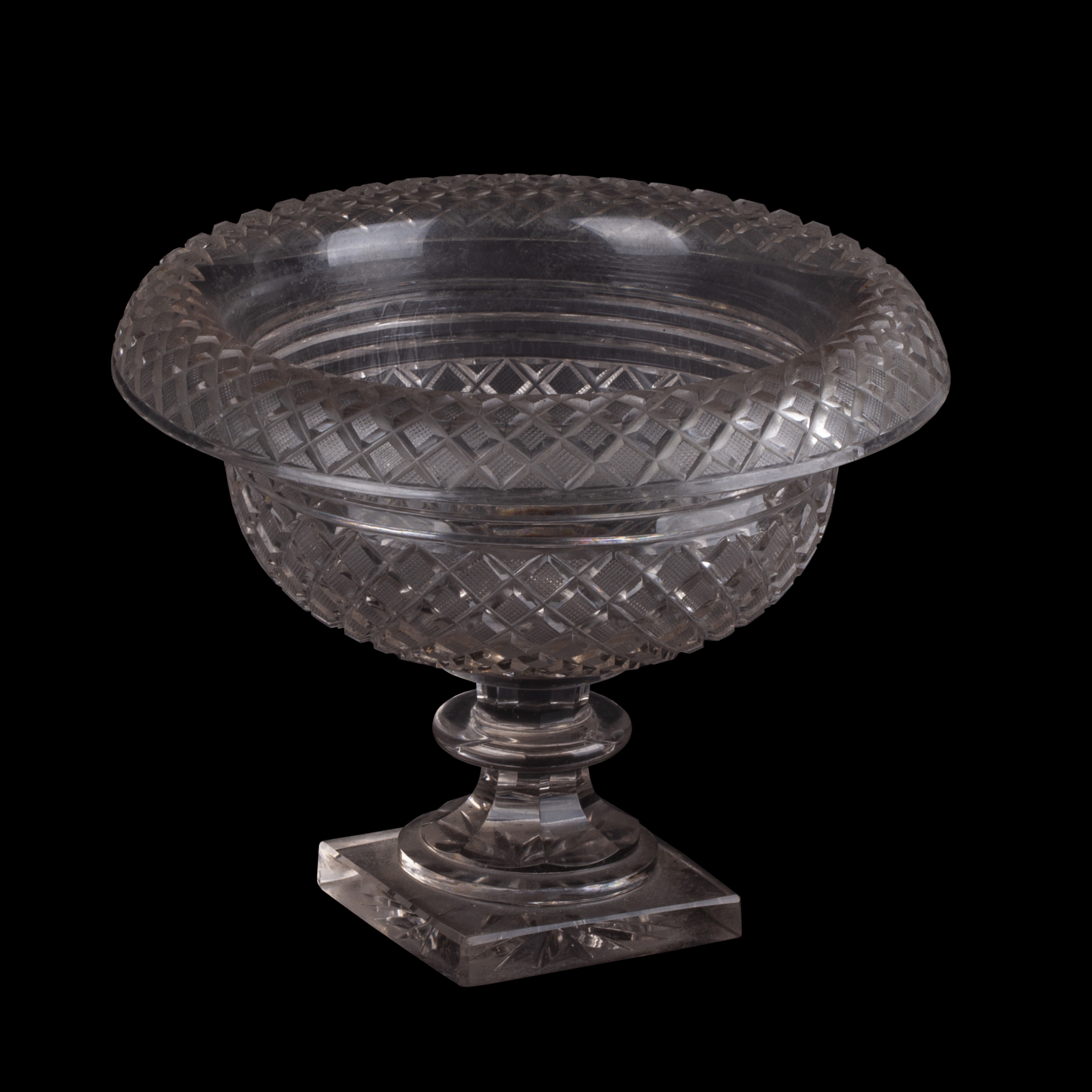
Crystal Vase by Bakhmetyev Glass Factory, Nikolskoye-Pestrovka
Estimate: 300-350€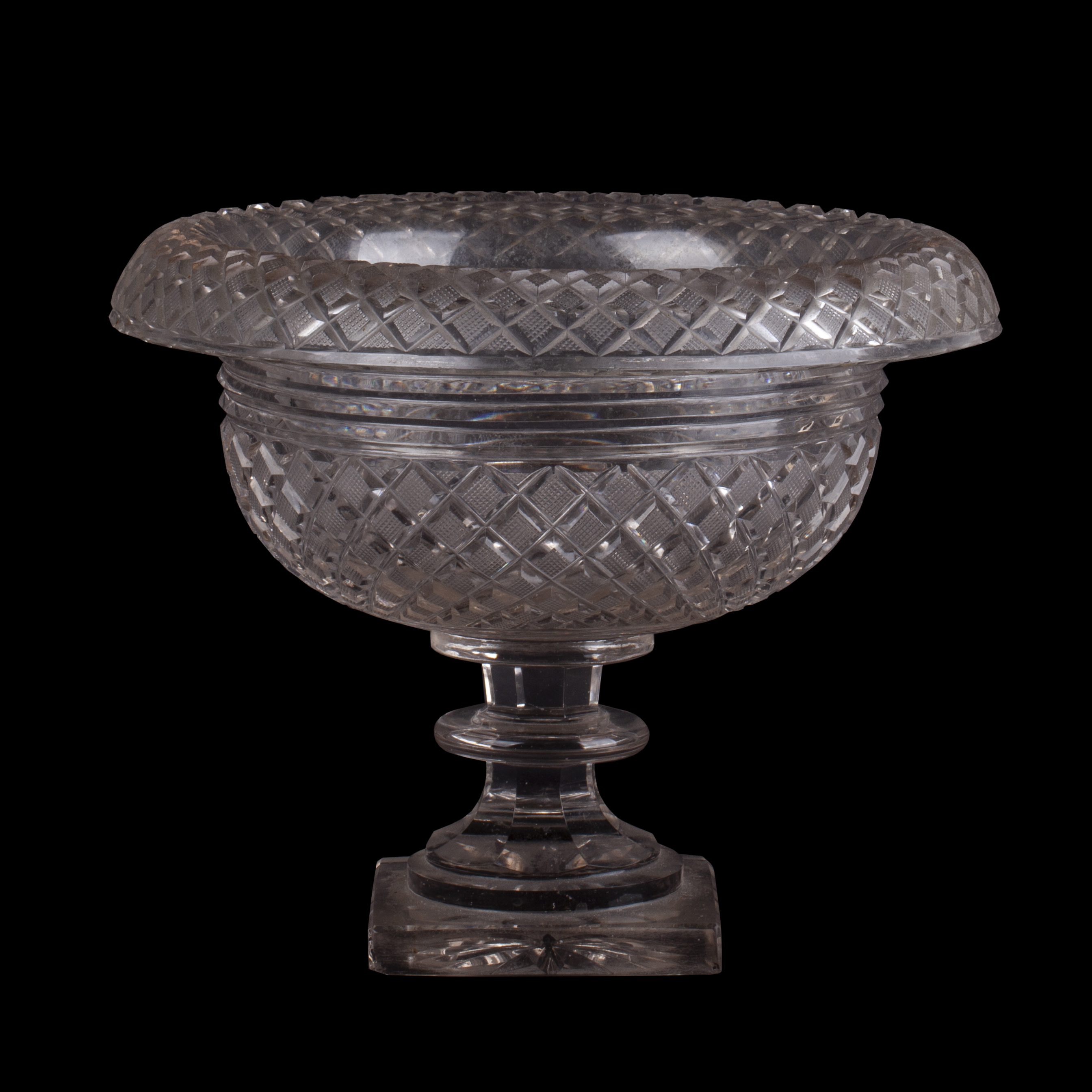
Lot 0062
Crystal Vase by Bakhmetyev Glass Factory, Nikolskoye-Pestrovka
Estimate: 300-350€Crystal Vase
Bakhmetyev Glass Factory, Nikolskoye-Pestrovka, Penza Province, Russia
Mid 19th centuryCut crystal
Height: 19.3 cm
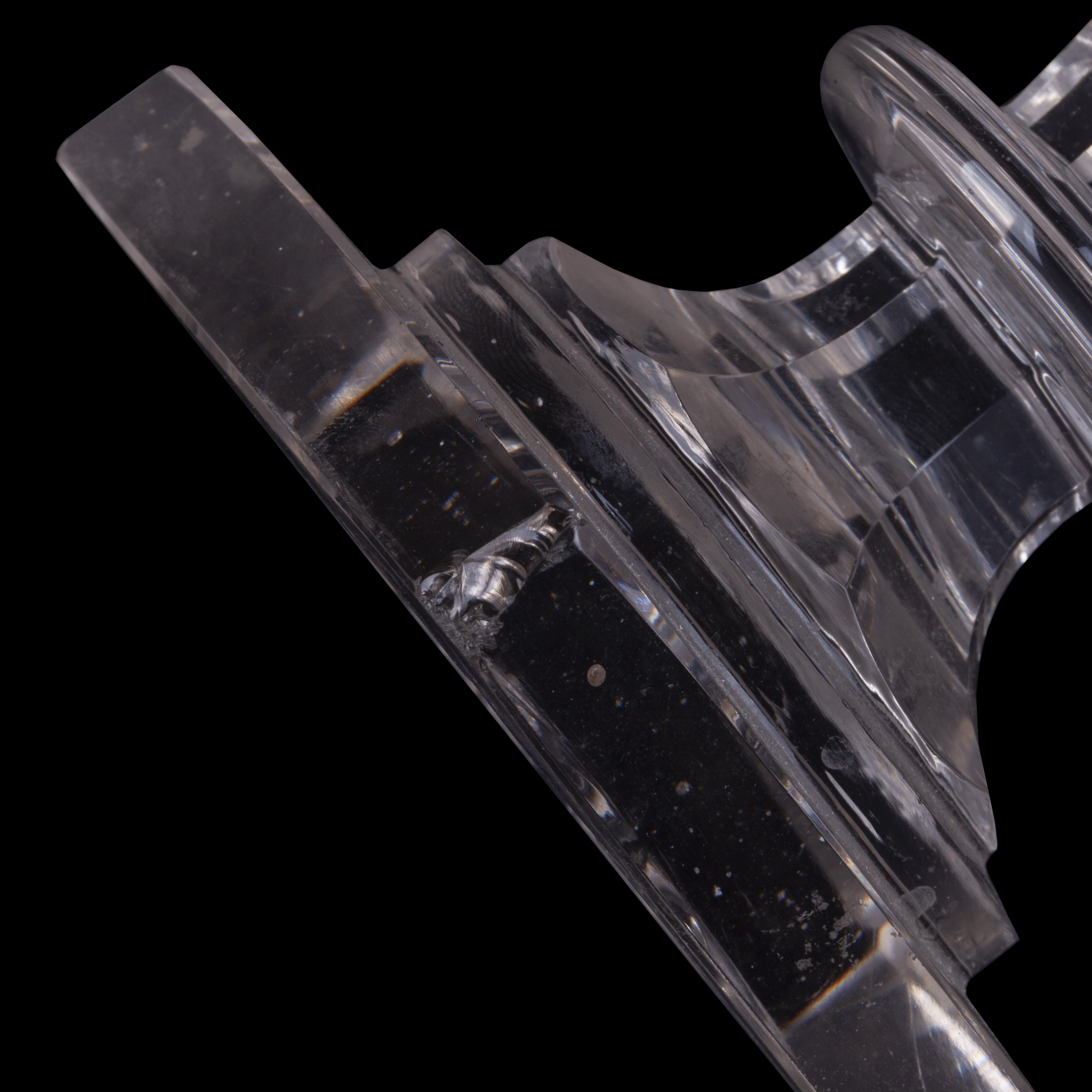
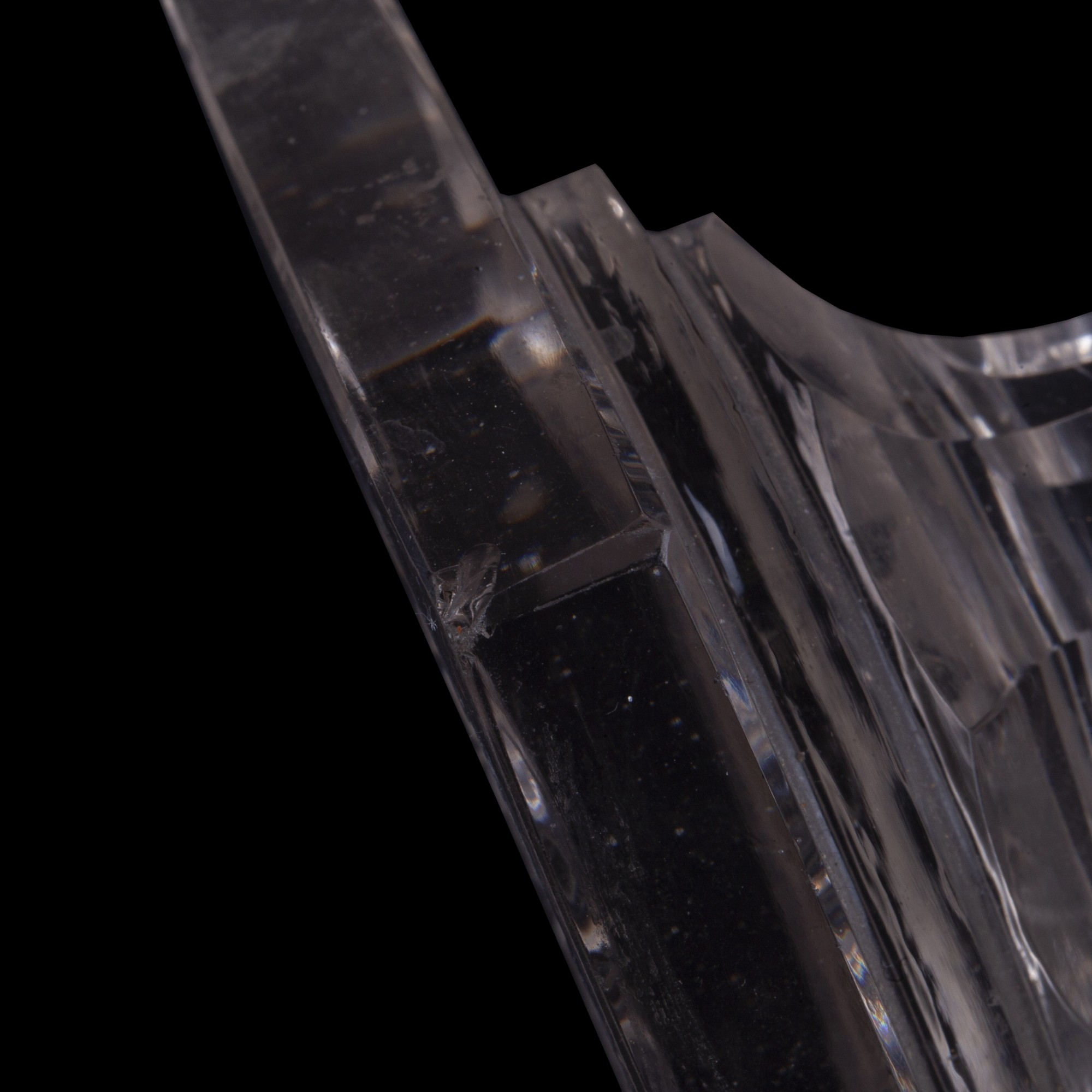
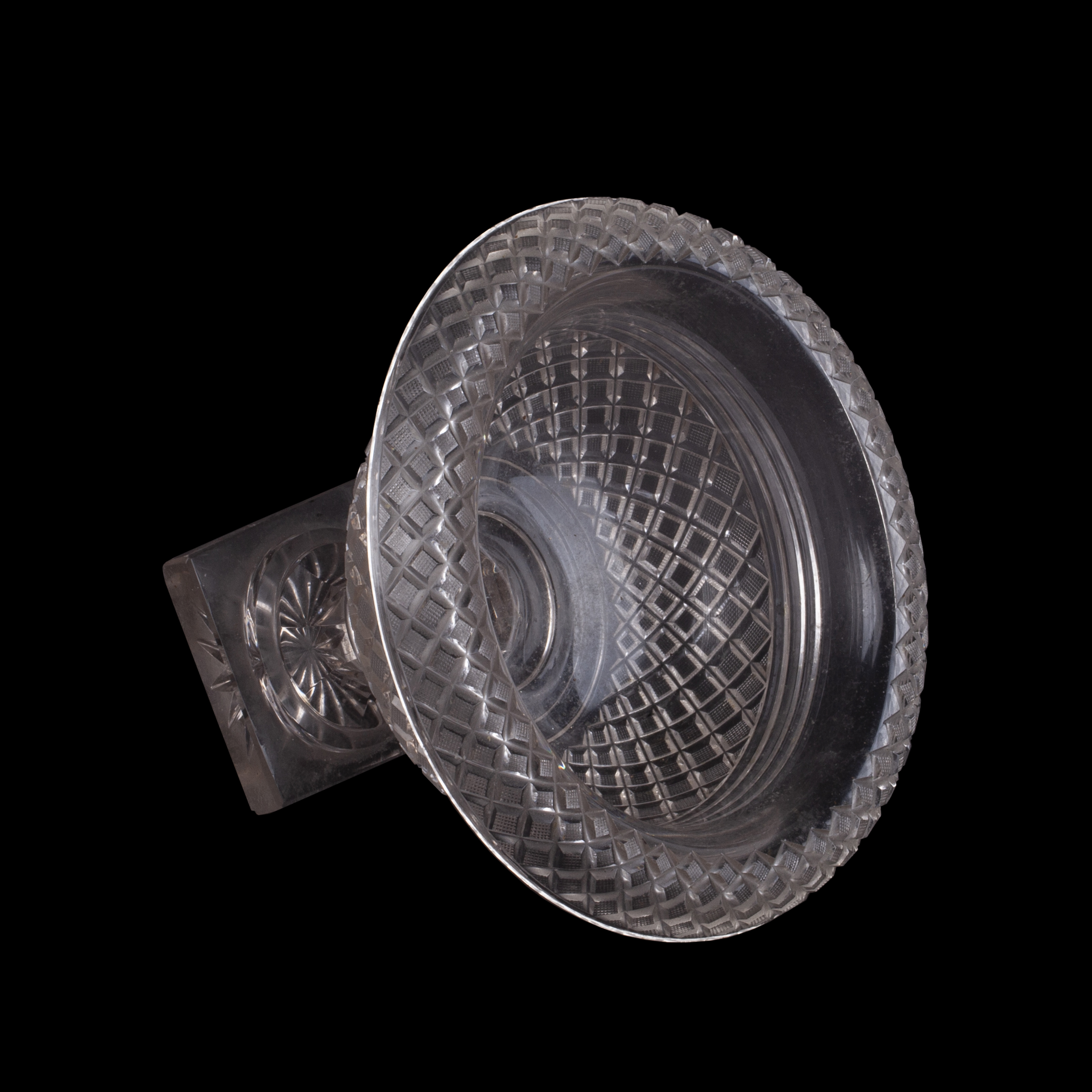
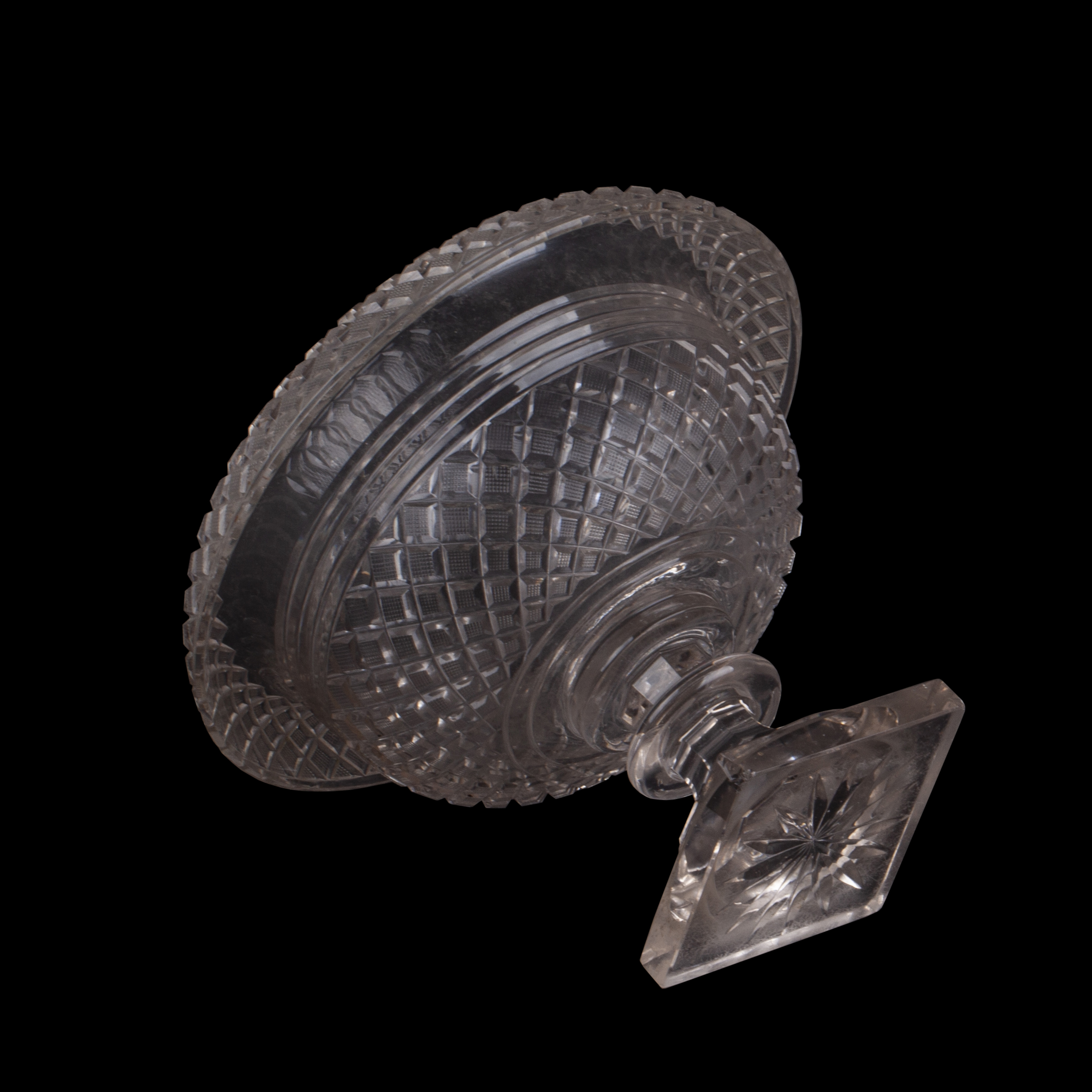
Diameter: 24 cmA finely cut crystal vase of classical form with a rounded bowl and wide rim, raised on a faceted pedestal foot. The body is decorated with an intricate diamond-cut pattern, characteristic of the refined design of the Bakhmetyev Glass Factory.
The factory was founded in 1764 by Alexei Ivanovich Bakhmetyev, a retired officer who received imperial permission from Empress Catherine the Great to establish glass production in Nikolskoye-Pestrovka, Penza Province. The enterprise remained under the Bakhmetyev family until 1884, becoming one of the most distinguished glassworks in Russia.
During the 19th century, the factory produced both luxurious crystal pieces for the aristocracy and the Imperial Court—as well as finely made, affordable glassware for wider use. Its works were noted for exceptional quality and artistic engraving, often decorated with gilding, enamel, or filigree.
By the 1830s, the Bakhmetyev factory had reached its artistic peak and was recognized as a Supplier to the Imperial Court, granted the right to mark its products with the State Coat of Arms (1836).
Starting price: 250€
Estimate: 300-350€
Hammer Price: Not sold