
Lot 0052
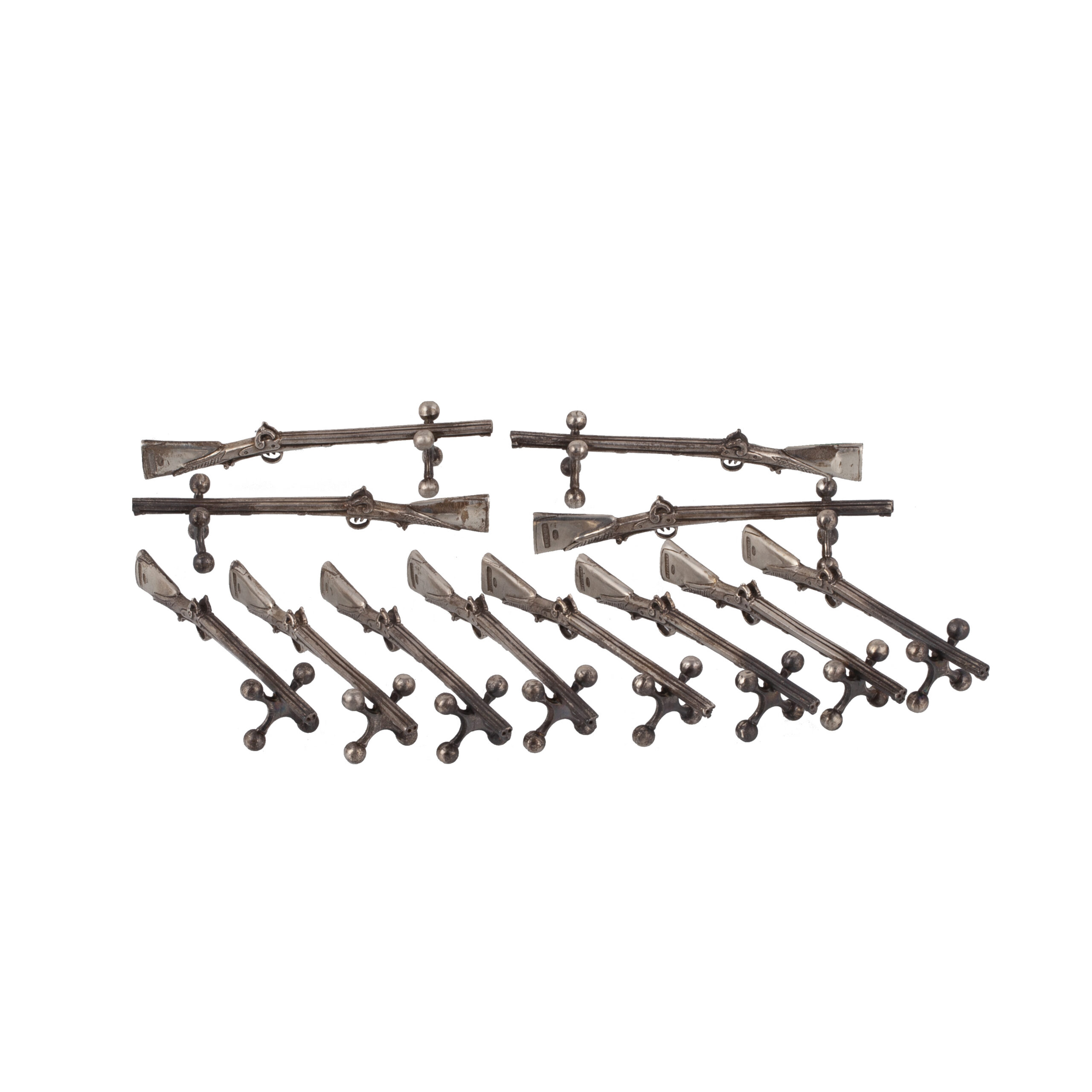
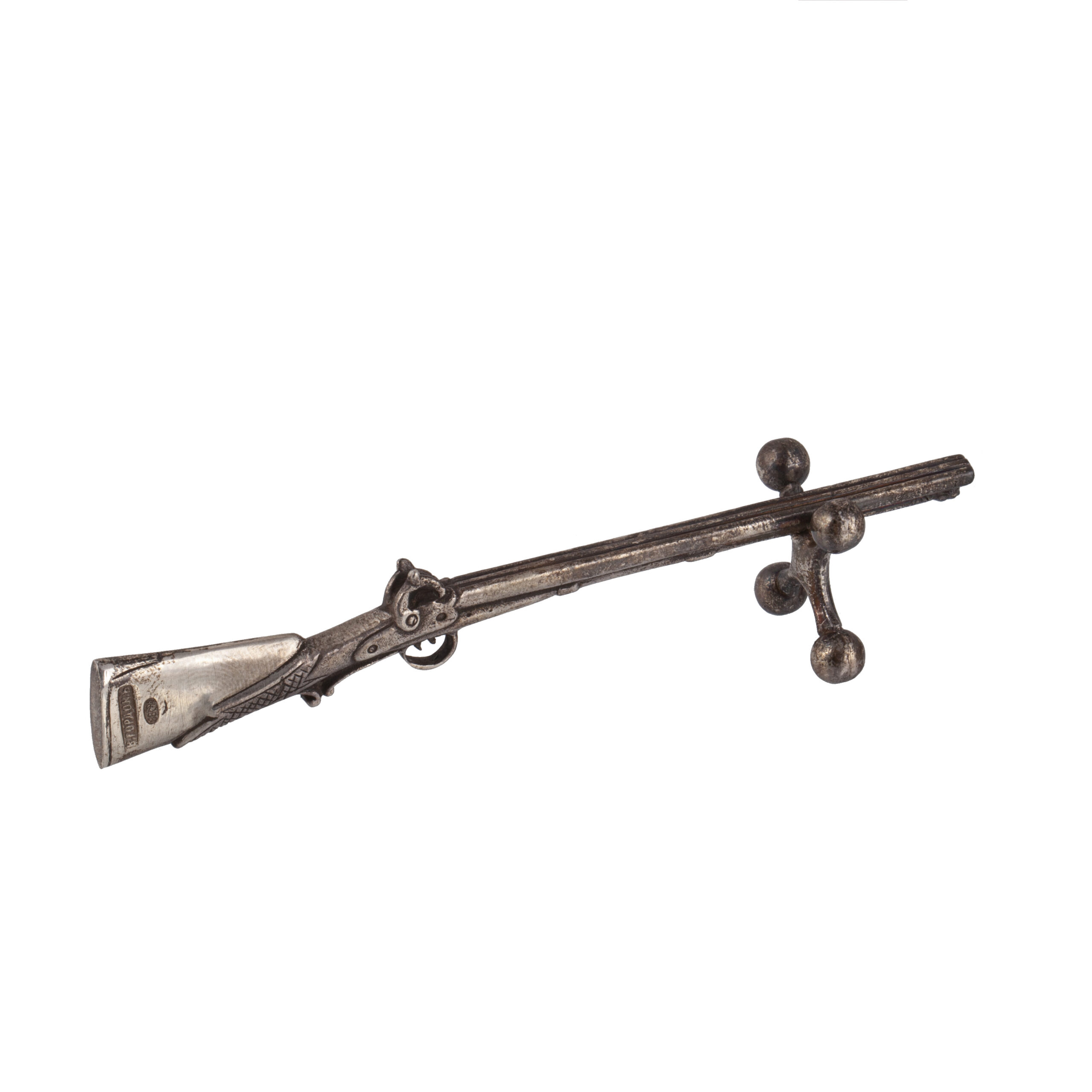
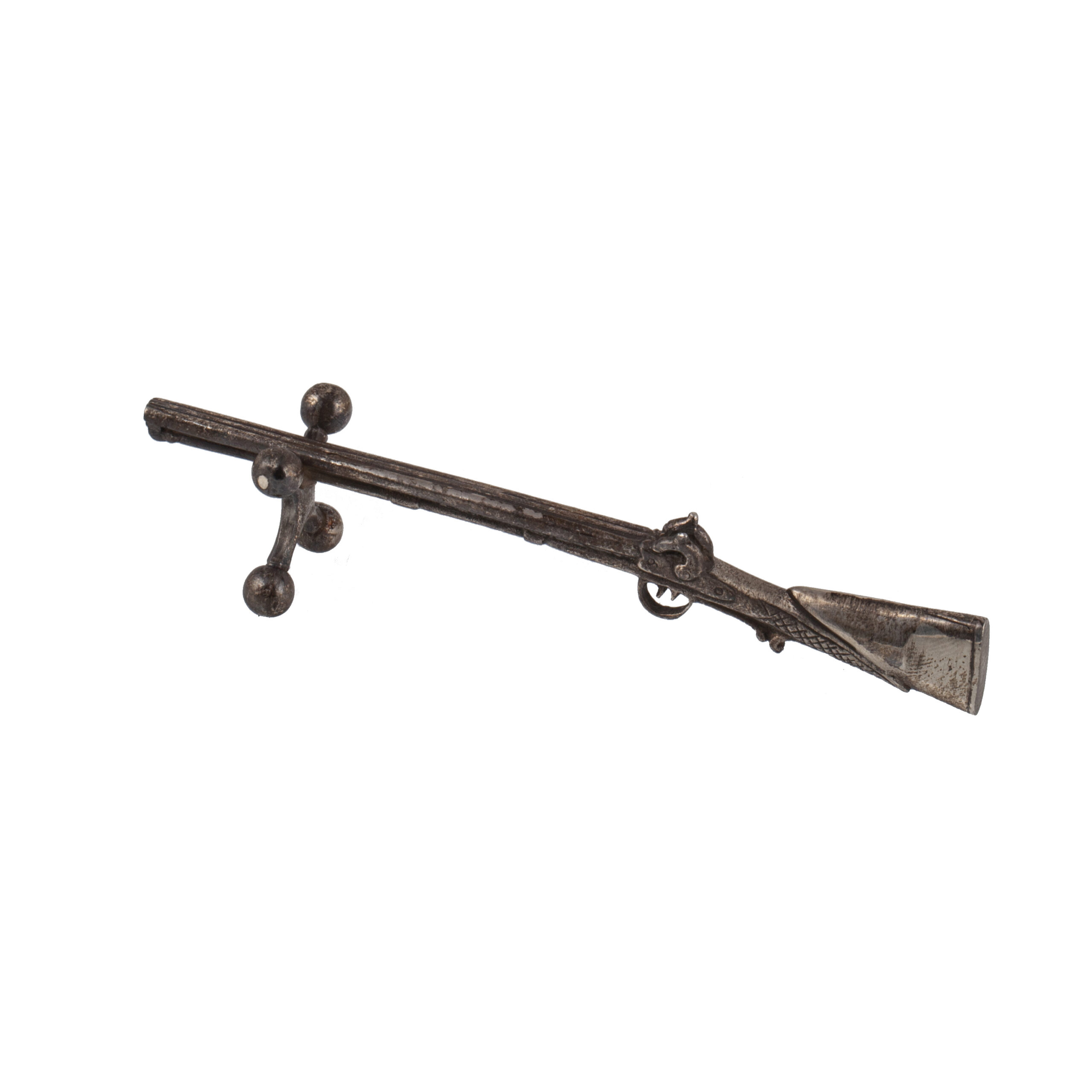
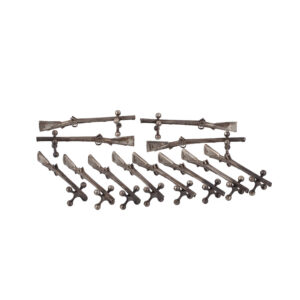
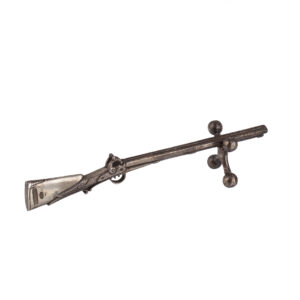
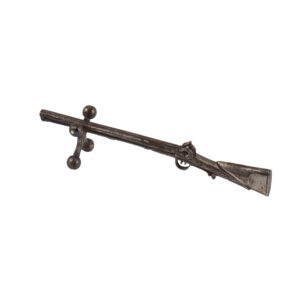
Russian Commemorative Cast Silver Tableware Stands in the Form of a Rifles
Estimate: 2000-2500€
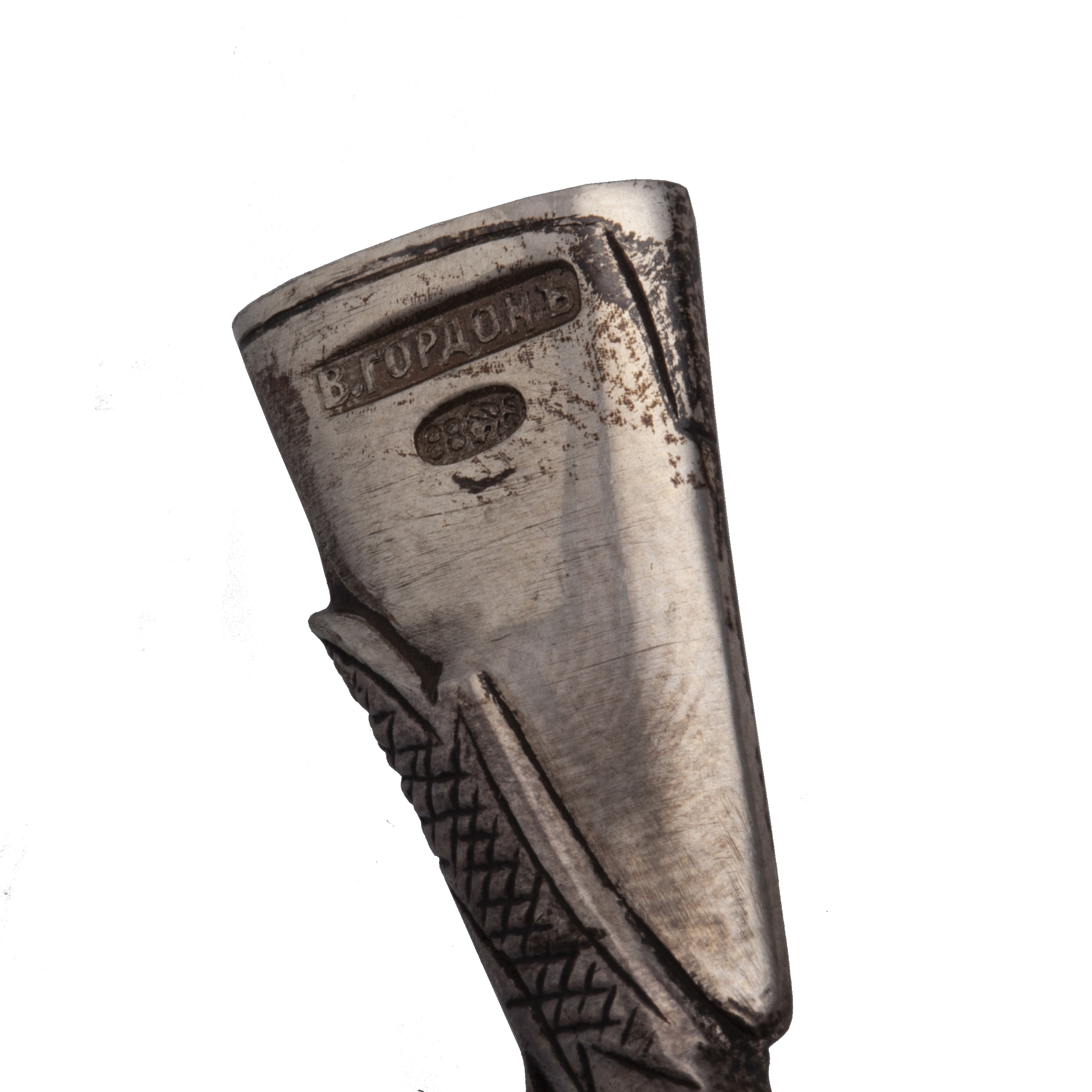
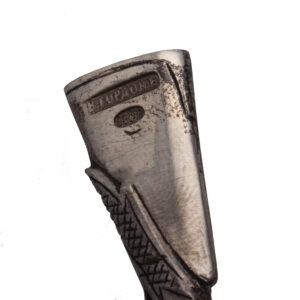
A Russian cast silver set of tableware stands in the form of rifles, presented as a shooting prize from the 85th Imperial Vyborg Infantry Regiment. Maker’s mark of V. Gordon firm, St. Petersburg, 1899–1904.
Dimensions: Length 10.6 cm
Total weight: 392 g
Vladimir Gordon was a well-known St. Petersburg jeweler whose shop on the Zerkalnaya Line of Gostiny Dvor was widely recognized at the turn of the 20th century. His firm was admired for the richness and variety of its production and enjoyed a solid reputation among the city’s clientele.
Starting price: 1500€
Estimate: 2000-2500€
Hammer Price: UNSOLD€
Related Lots
-
Lot 0050
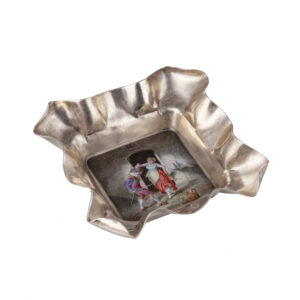
Silver and En-Plein Enamel Ashtray with a Mediaeval Genre Scene
Estimate: 800-1000€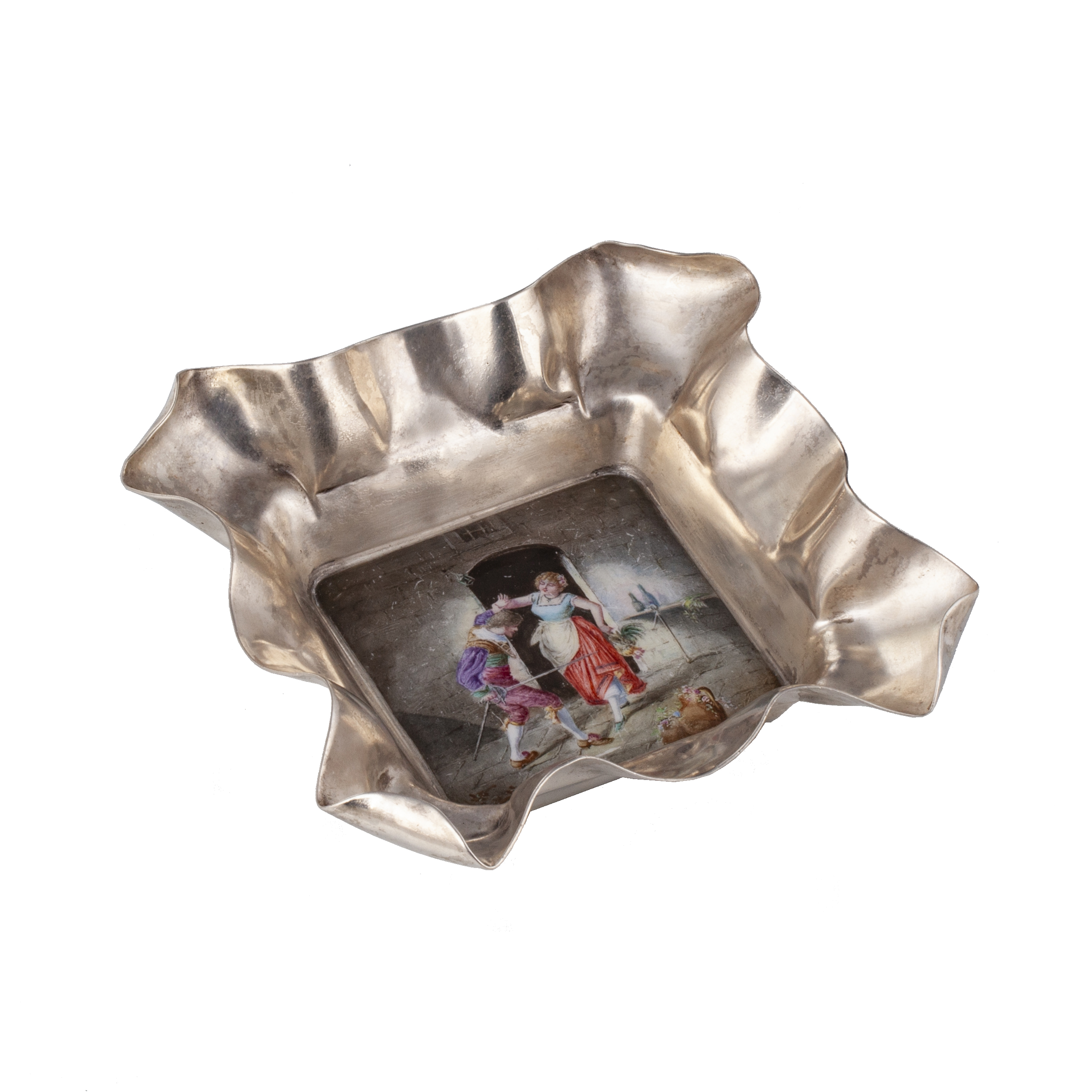
Lot 0050
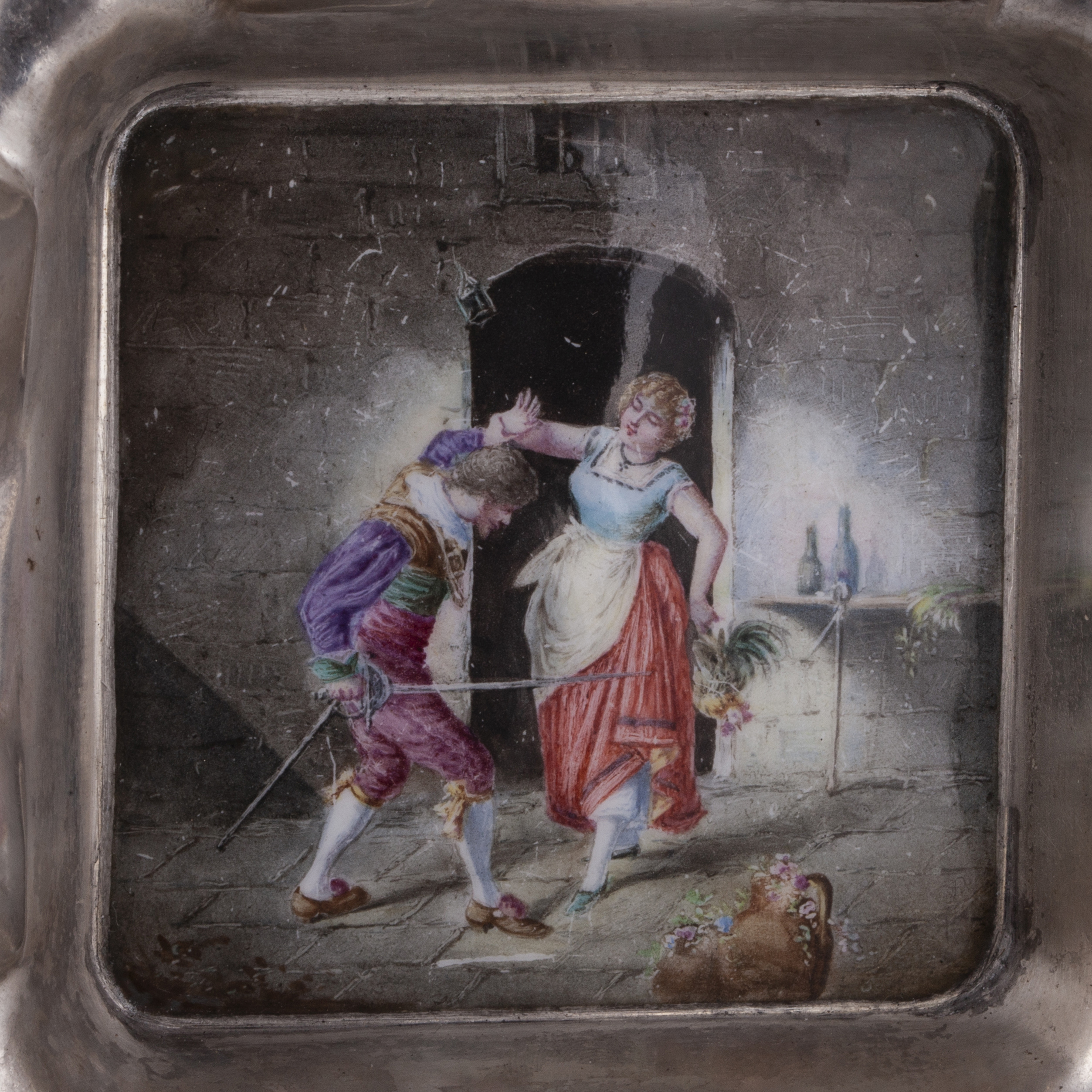
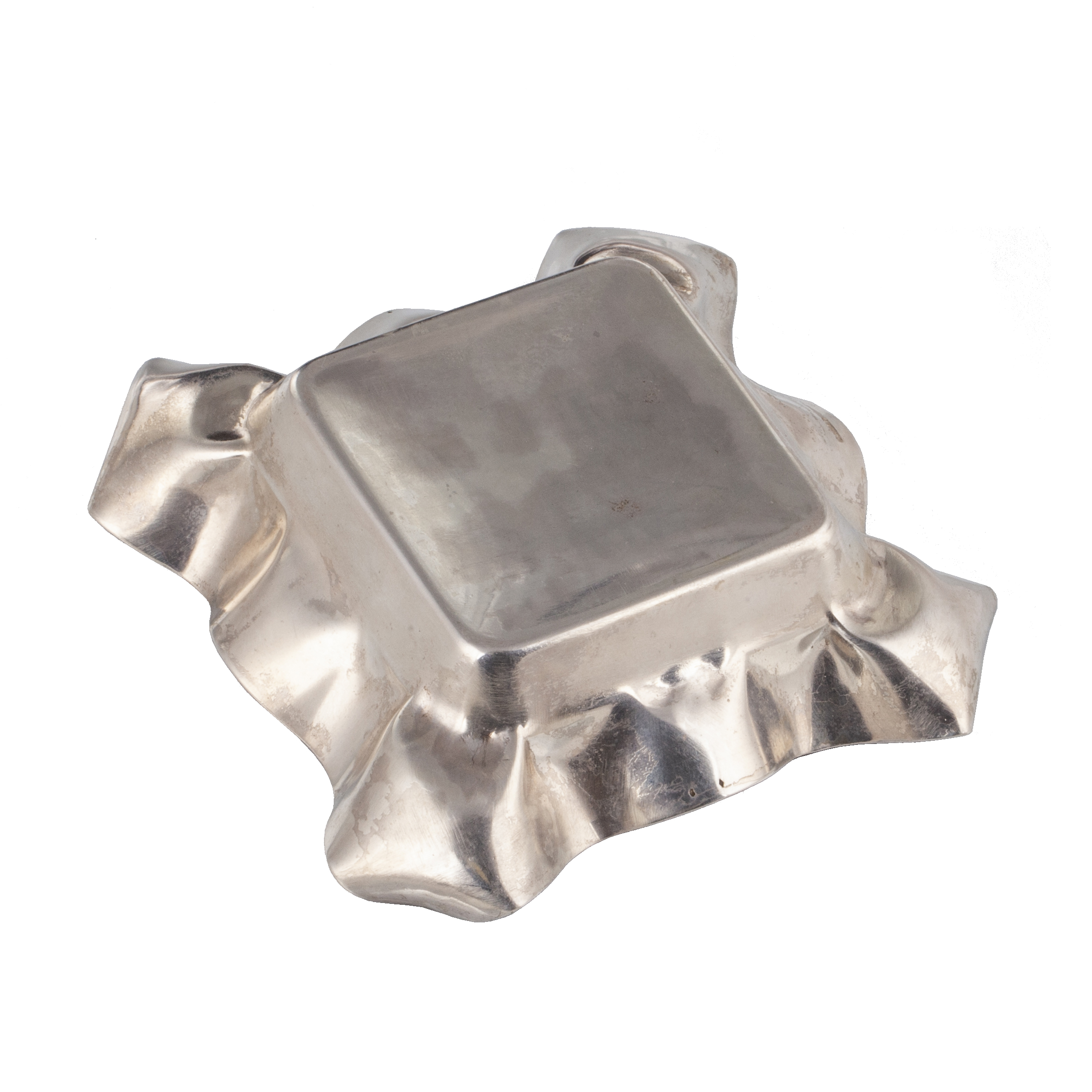
Silver and En-Plein Enamel Ashtray with a Mediaeval Genre Scene
Estimate: 800-1000€Silver and En Plein Enamel Ashtray
Russia (import marks), late 19th century
Silver (84 zolotniks), en plein enamel
Weight: 161.6 g | Dimensions: 12.8 × 12.8 × 3.3 cmA finely crafted Russian silver ashtray featuring a beautifully executed en plein enamel panel depicting a lively medieval genre scene — a gallant courtier and a young woman engaged in playful conversation at a tavern doorway. The composition, rich in color and theatrical detail, reflects the popular fascination with romanticized historical subjects at the close of the 19th century.
Starting price: 750€
Estimate: 800-1000€
Hammer Price: UNSOLD€ -
Lot 0051
Russian Imperial Commemorative Silver-Gilt Imperial Shooting Prize by Bragin
Estimate: 3500-4500€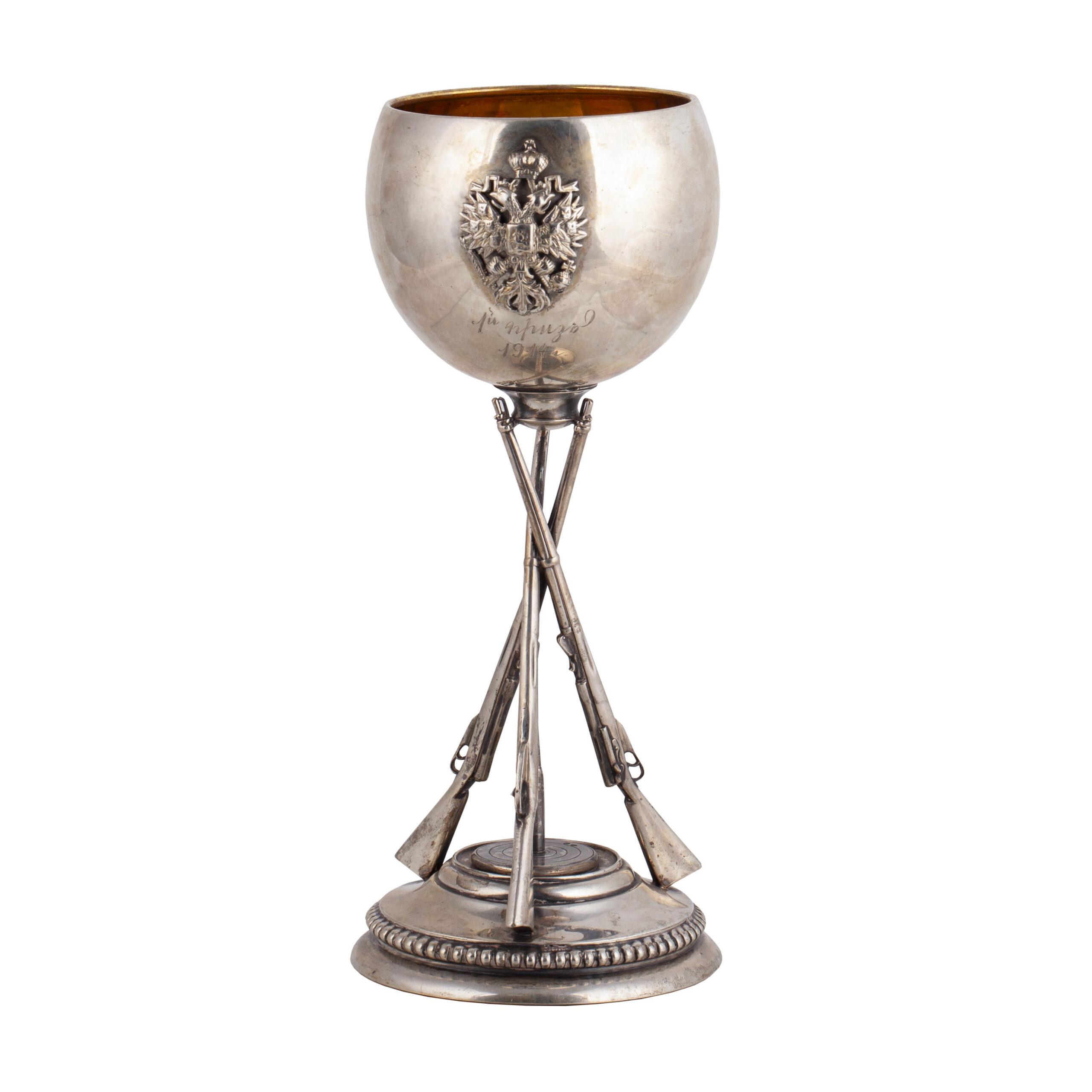
Lot 0051
Russian Imperial Commemorative Silver-Gilt Imperial Shooting Prize by Bragin
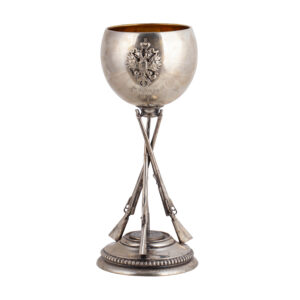
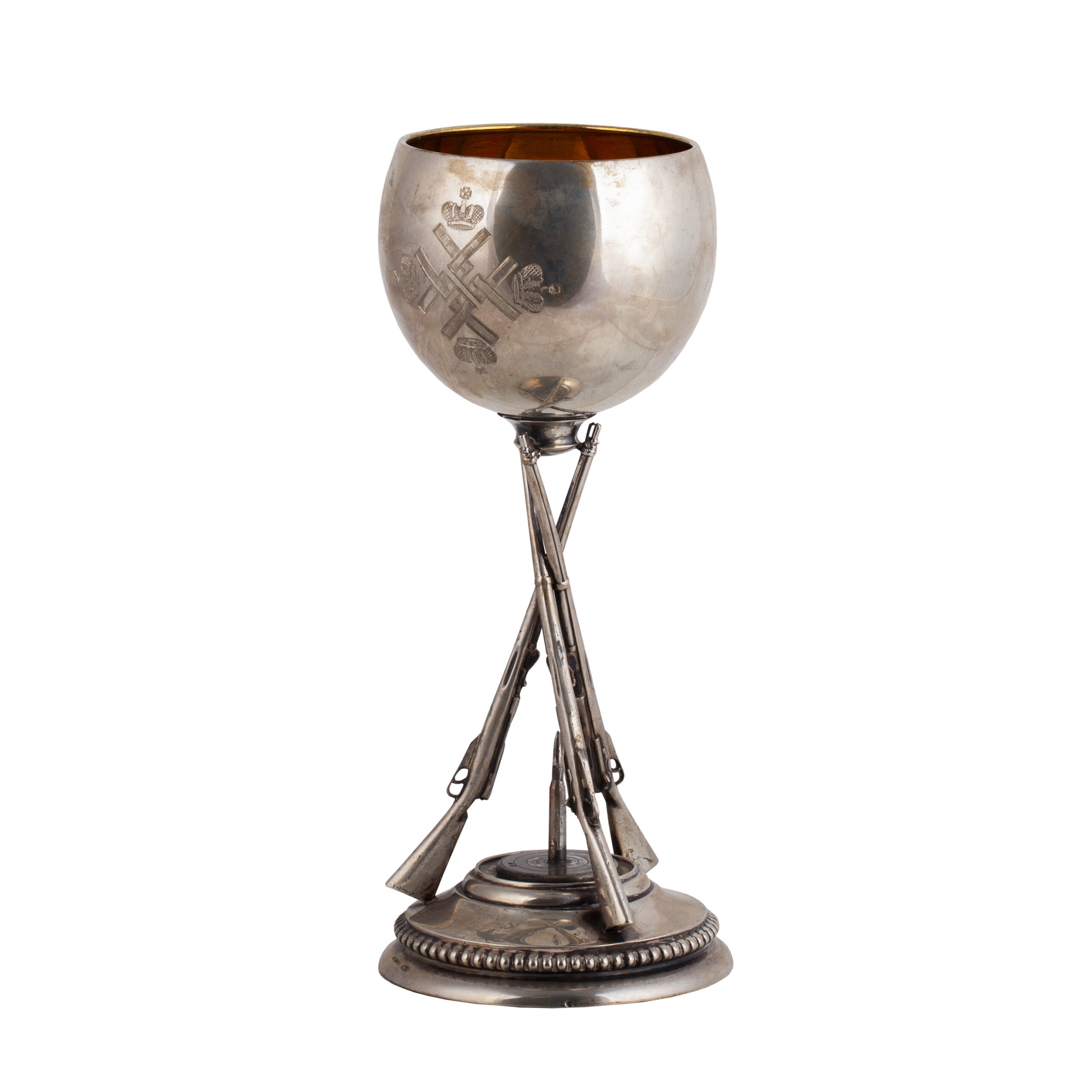
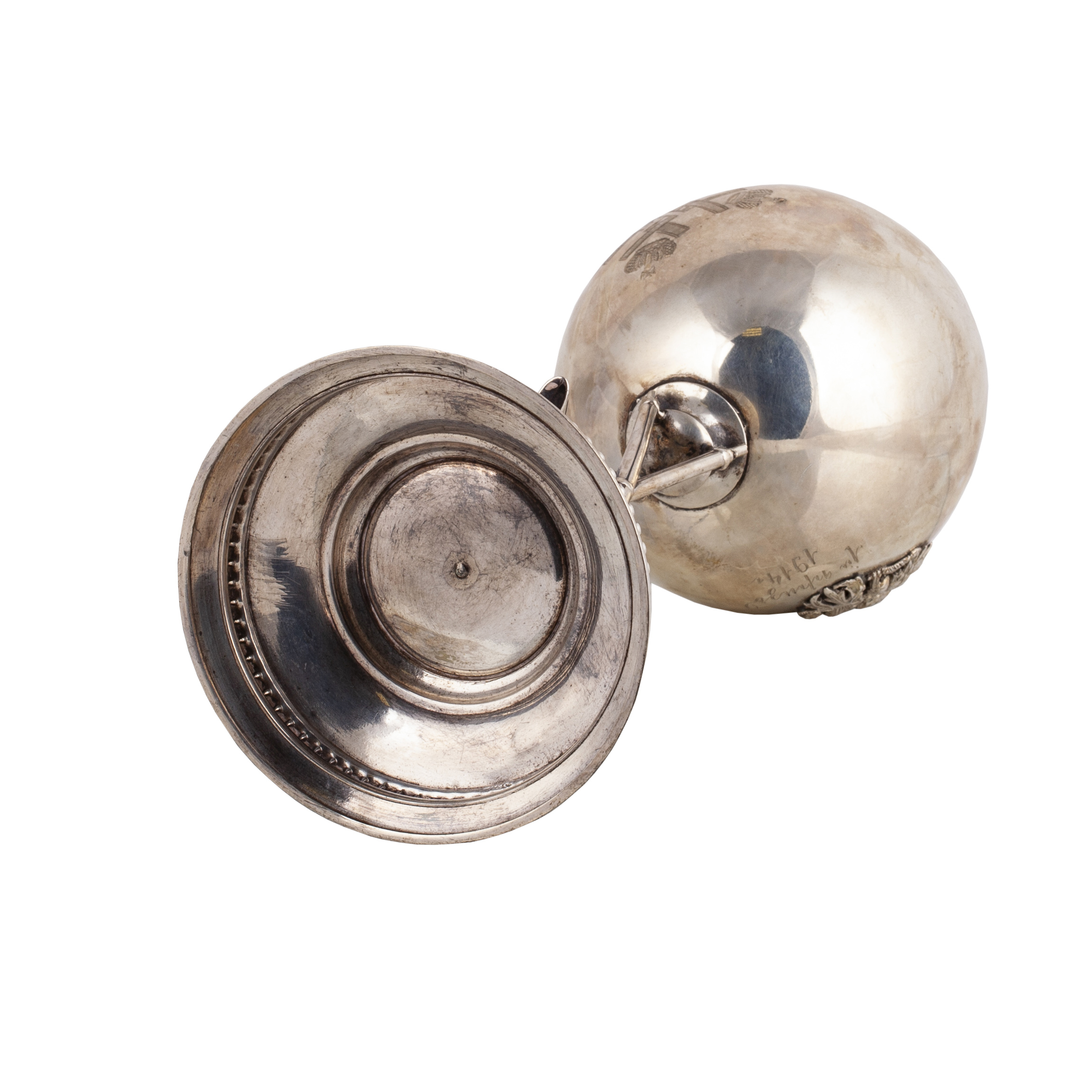
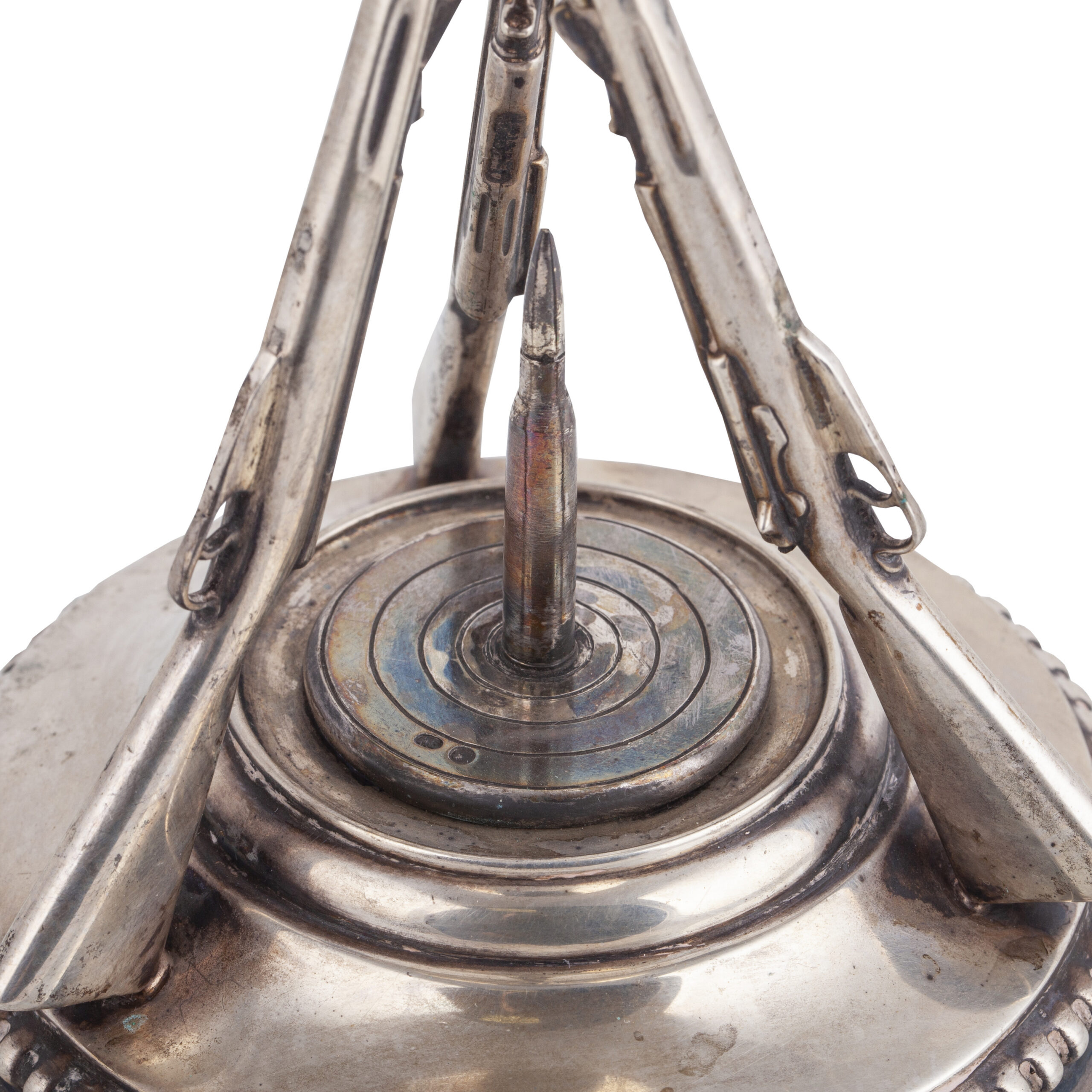
Estimate: 3500-4500€A Russian silver-gilt Imperial shooting prize.
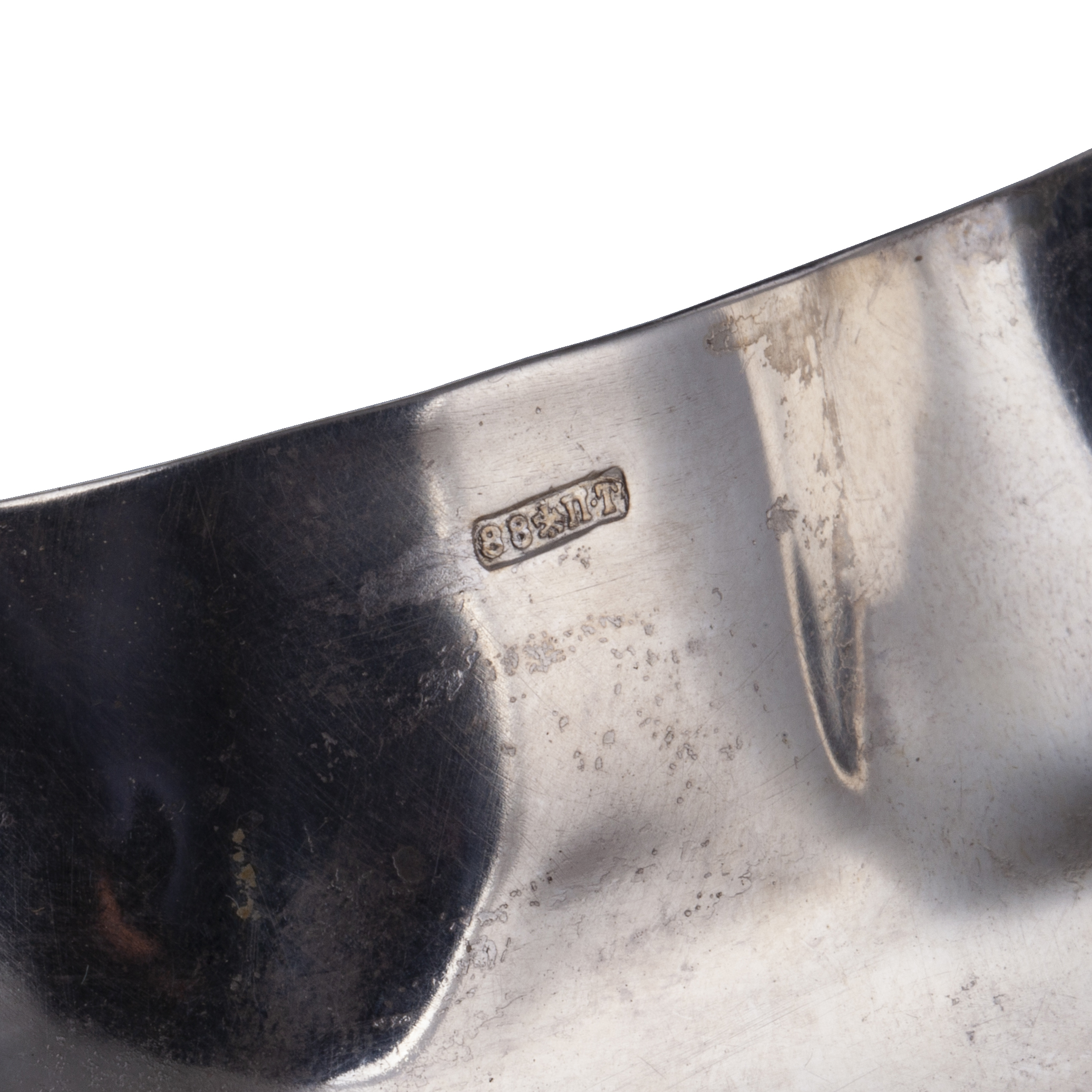
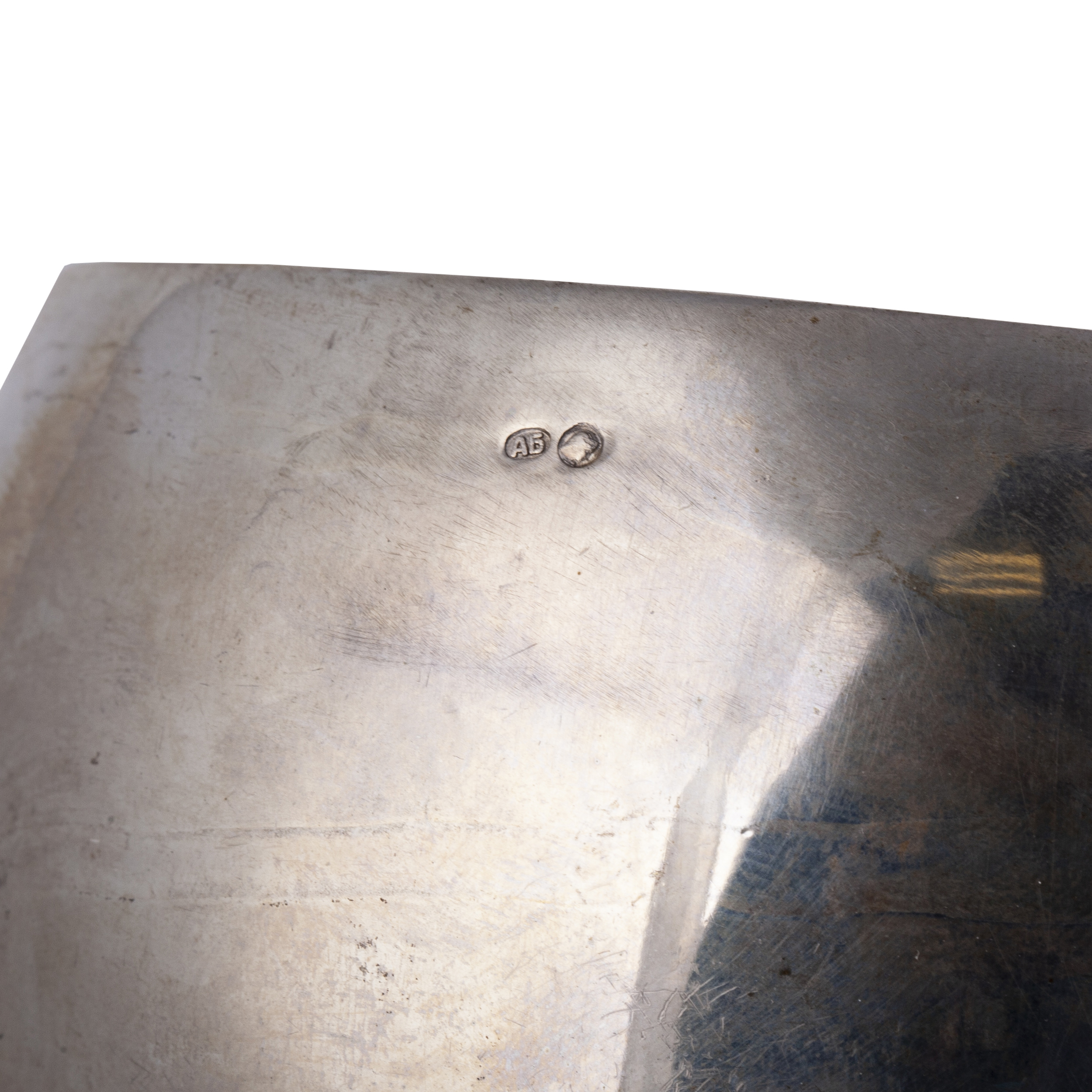
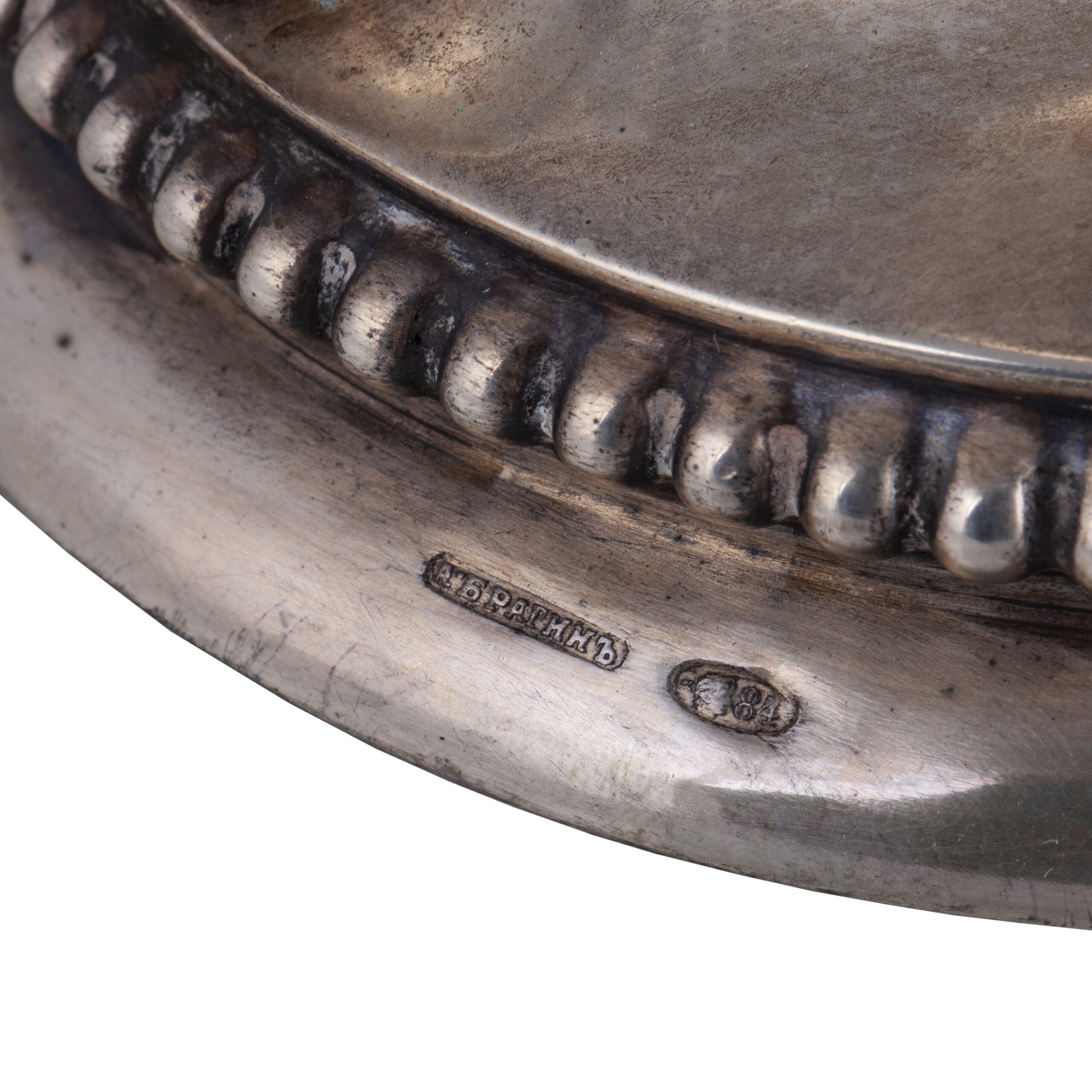
Maker’s mark of A. Bragin firm. St. Petersburg, 1908–1917.
Dimensions: Height 24.5 cm. Diameter 10.5 cm. Weight: 262.6 g.
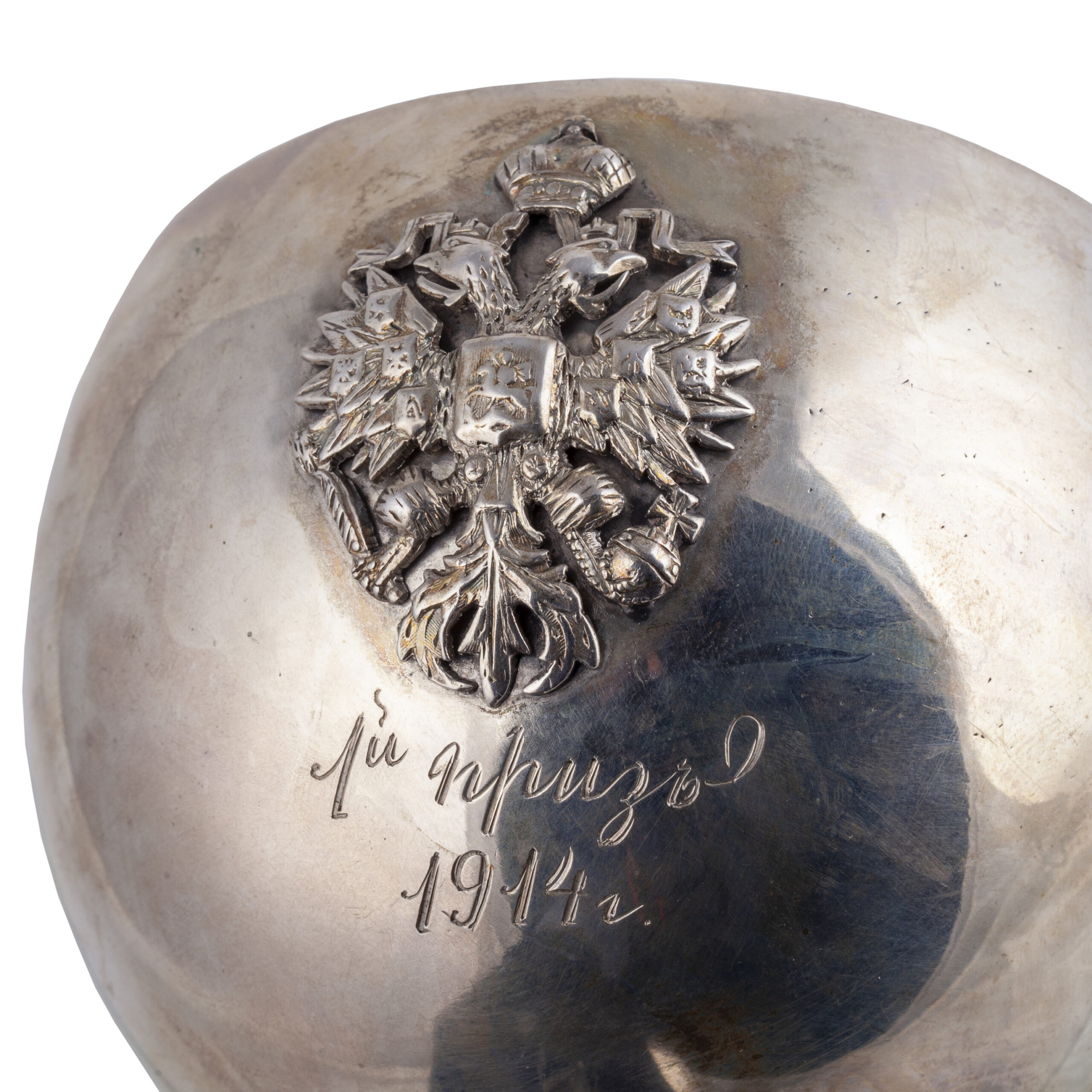
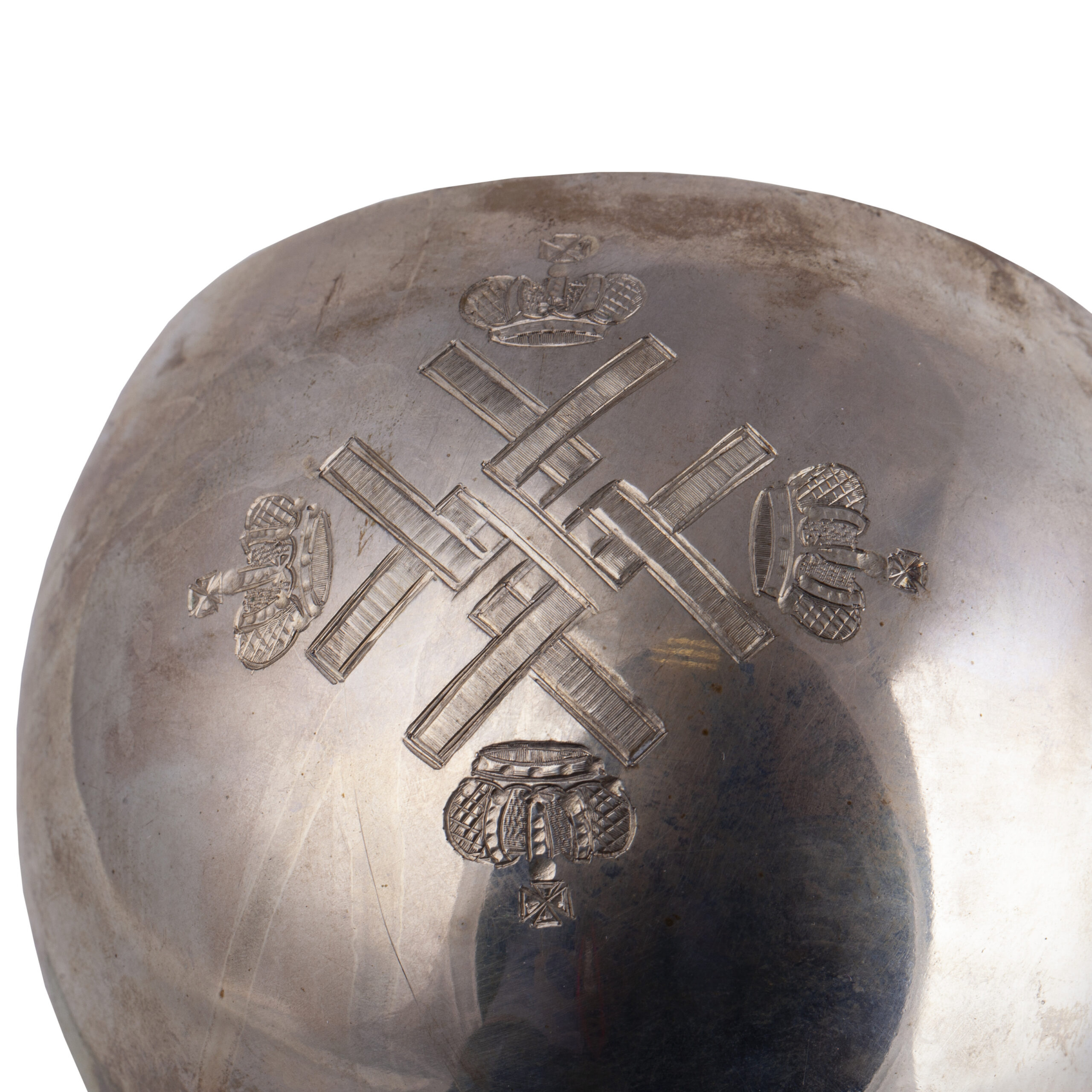
The prize goblet is designed in the form of a cup supported by three crossed rifles, set on a circular stepped base with a beaded rim. The bowl is engraved with crossed rifles beneath Imperial crowns, while the reverse is applied with the Russian Imperial double-headed eagle and the inscription “1-й призъ, 1914 г.” (“1st Prize, 1914”).
Of particular importance is the monogram of Grand Duke Nikolai Nikolaevich Romanov, Commander-in-Chief of the Russian Imperial Army, engraved on the cup. This monogram emphasizes the high status of the trophy and its direct connection to the Imperial House during the First World War.
Such shooting trophies were traditionally presented by the Imperial court and elite hunting societies, reflecting the prestige of marksmanship in military and aristocratic culture of late Imperial Russia. Andrei Stepanovich Bragin (1852–1908) was one of the most respected and experienced silversmiths in St. Petersburg at the turn of the century. He completed his apprenticeship in 1852 and opened his own workshop in 1888. By 1897 the firm employed 25 craftsmen with an annual turnover of 7,600 rubles. For comparison, the House of Fabergé employed 204 craftsmen and had an annual turnover of 164,000 rubles.
Although relatively small, Bragin’s workshop was highly esteemed for the excellent quality and refined design of its silver.
The Bragin firm regularly participated in both national and international exhibitions, including Brussels (1897) and St. Petersburg (1903).Starting price: 3000€
Estimate: 3500-4500€
Hammer Price: 3500€ -
Lot 0053
Faberge. Neoclassical Style Fruit Vase
Estimate: 4000-6000€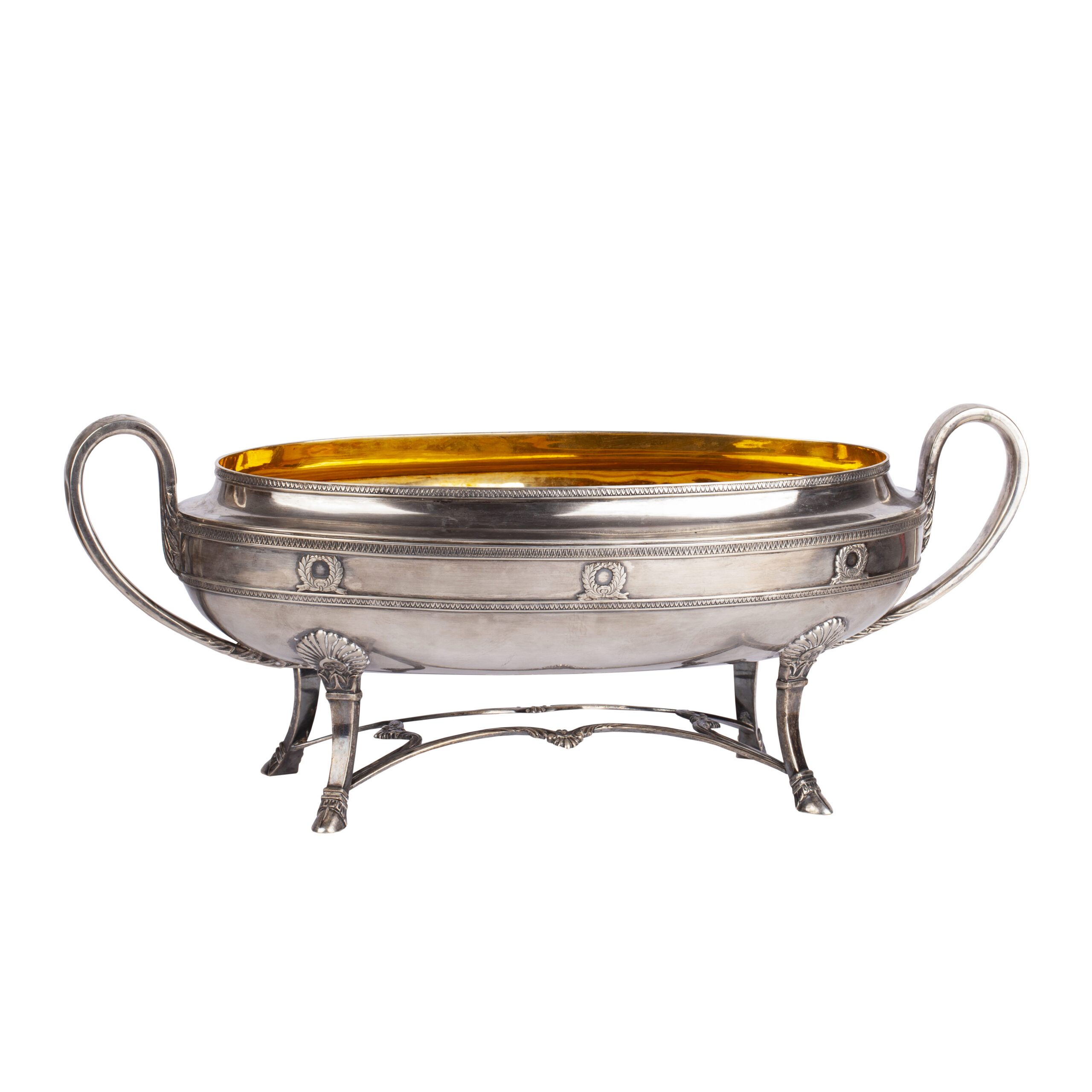
Lot 0053
Faberge. Neoclassical Style Fruit Vase
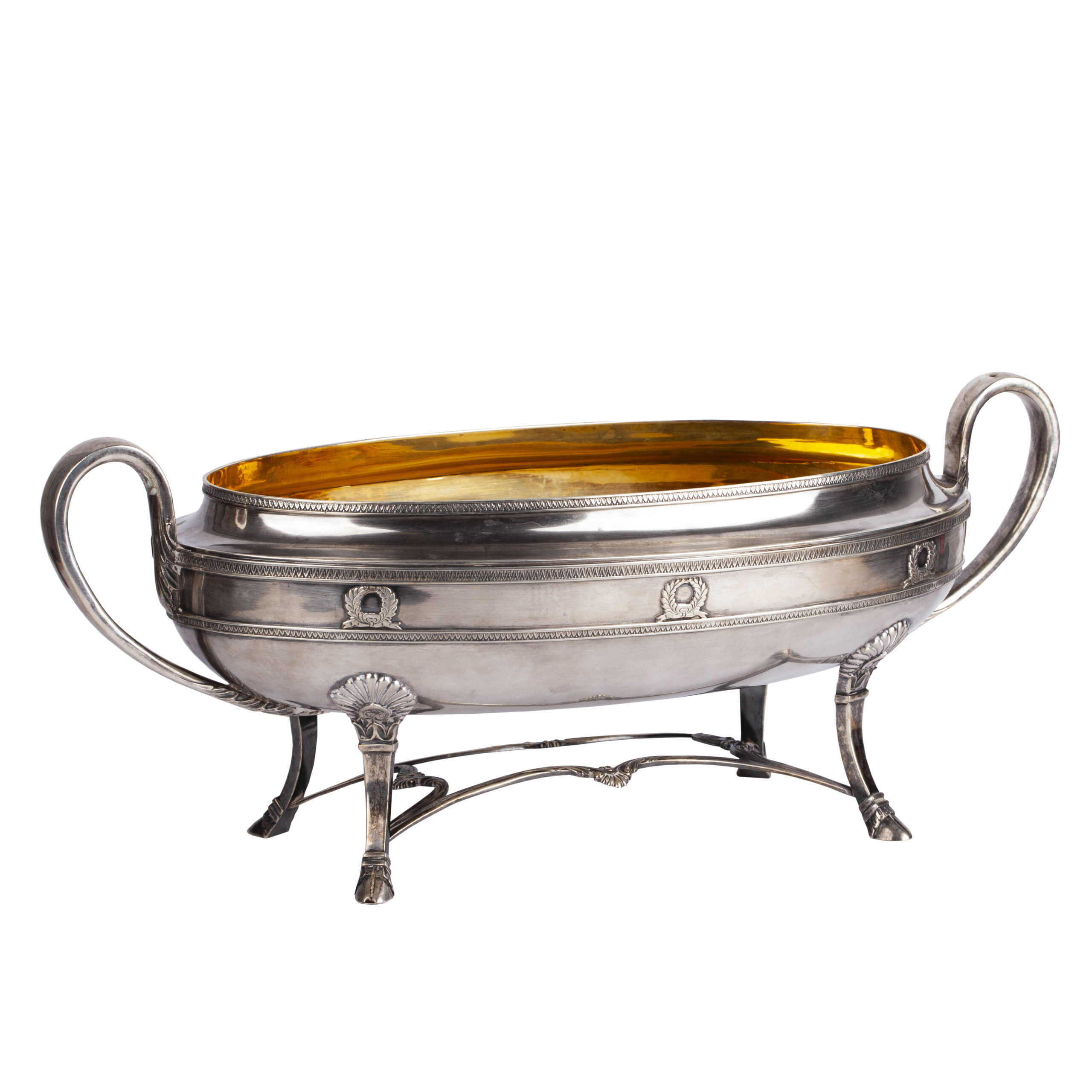
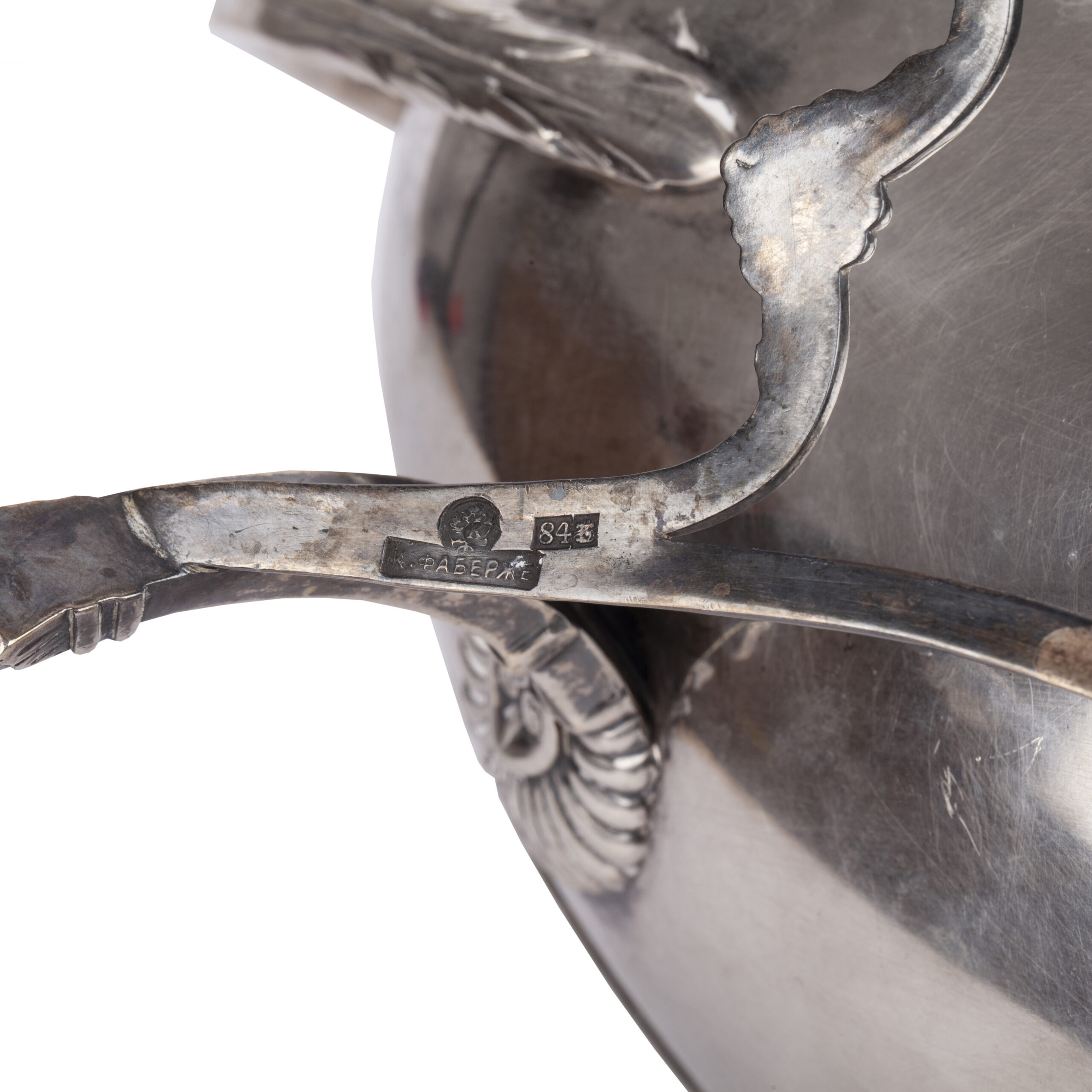
Estimate: 4000-6000€Faberge. Neoclassical style fruit vase.
Silver, parcel-gilt, chasing.
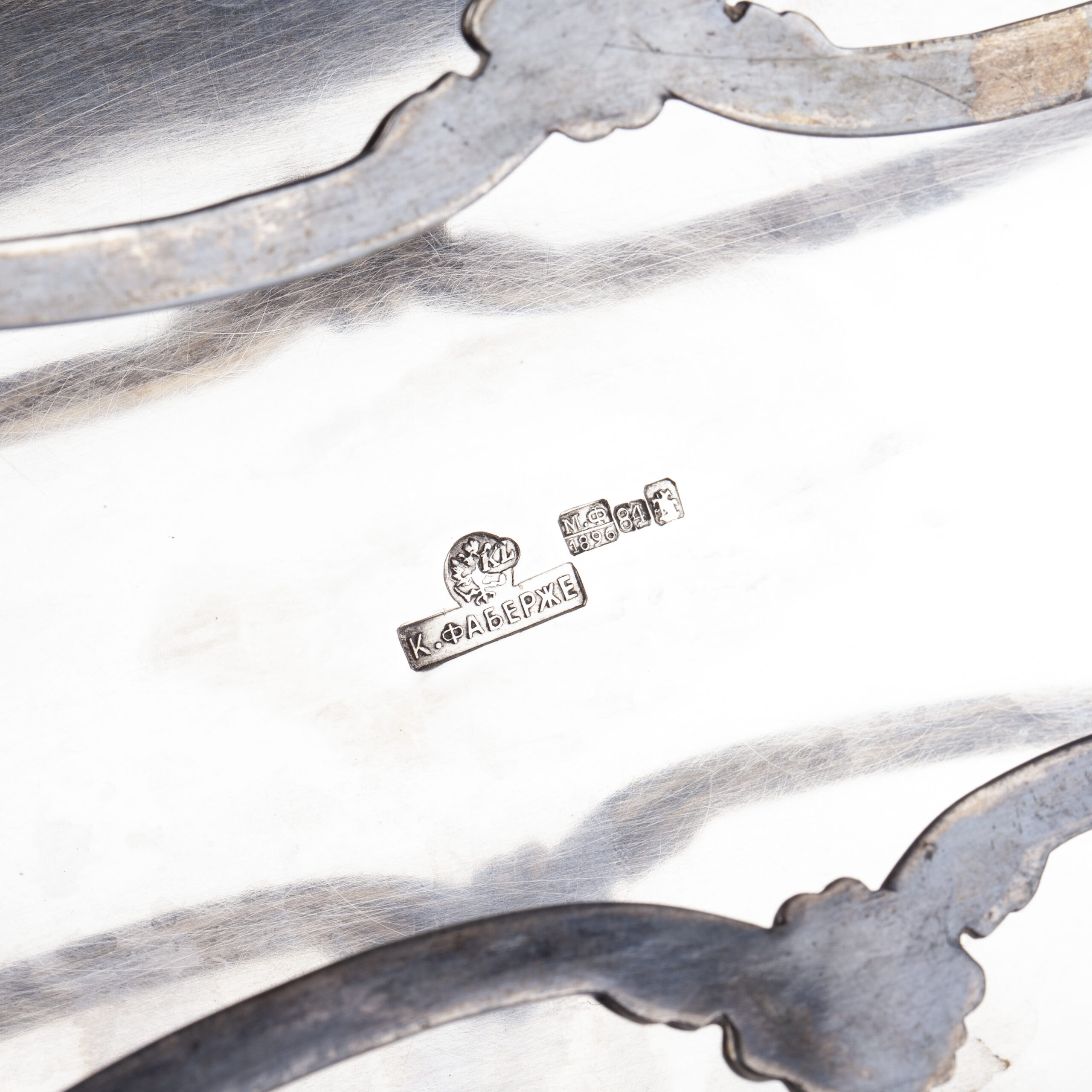
Makers mark of “KL” and «K.Faberge» with Imperial warrant. Moscow, 1896. Dimensions: 18 x 46 x 20.5 cm. Weight: 1311 g.
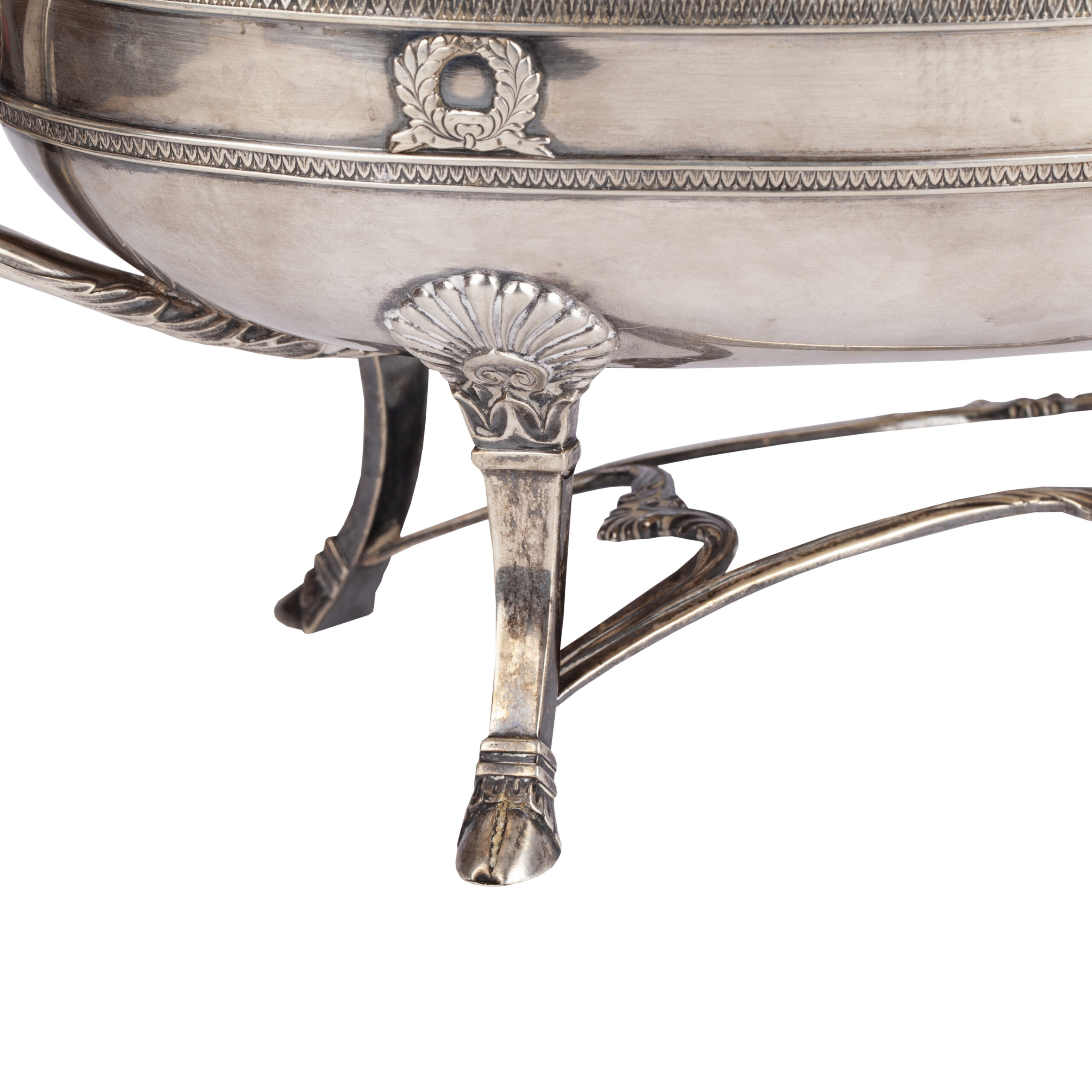
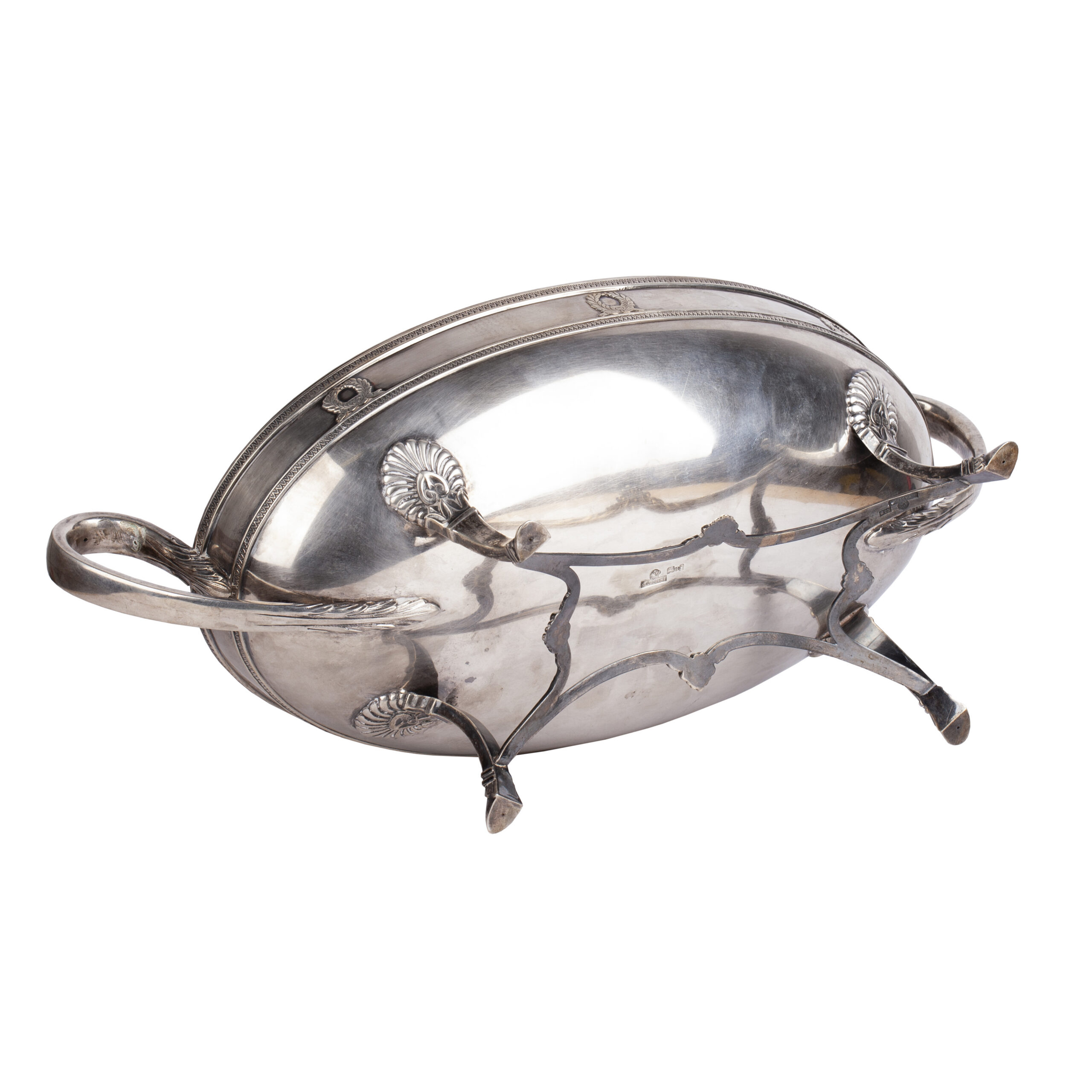
An elegant oval silver vase with two sweeping handles, raised on four shell-capped supports joined by a stretcher. The body is encircled by a delicate frieze of laurel wreaths and beading, while the interior is richly gilded.
The Moscow Branch of Fabergé
Founded in 1887, the Moscow branch of Fabergé quickly became the largest center of the firm’s production. Located on Kuznetsky Most, it catered to the city’s wealthy clientele with both luxurious jewels and more affordable pieces. Its factory, employing about 300 workers, specialized in silver and liturgical objects and produced nearly all of Fabergé’s major silver commissions after 1900. The branch played a key role in expanding the firm’s reach beyond St. Petersburg and establishing its reputation throughout the Russian Empire.Starting price: 3500€
Estimate: 4000-6000€
Hammer Price: UNSOLD€ -
Lot 0054
Russian Enamel Beaker with a “Sadko” Scene by Sazikov
Estimate: 2000-3000€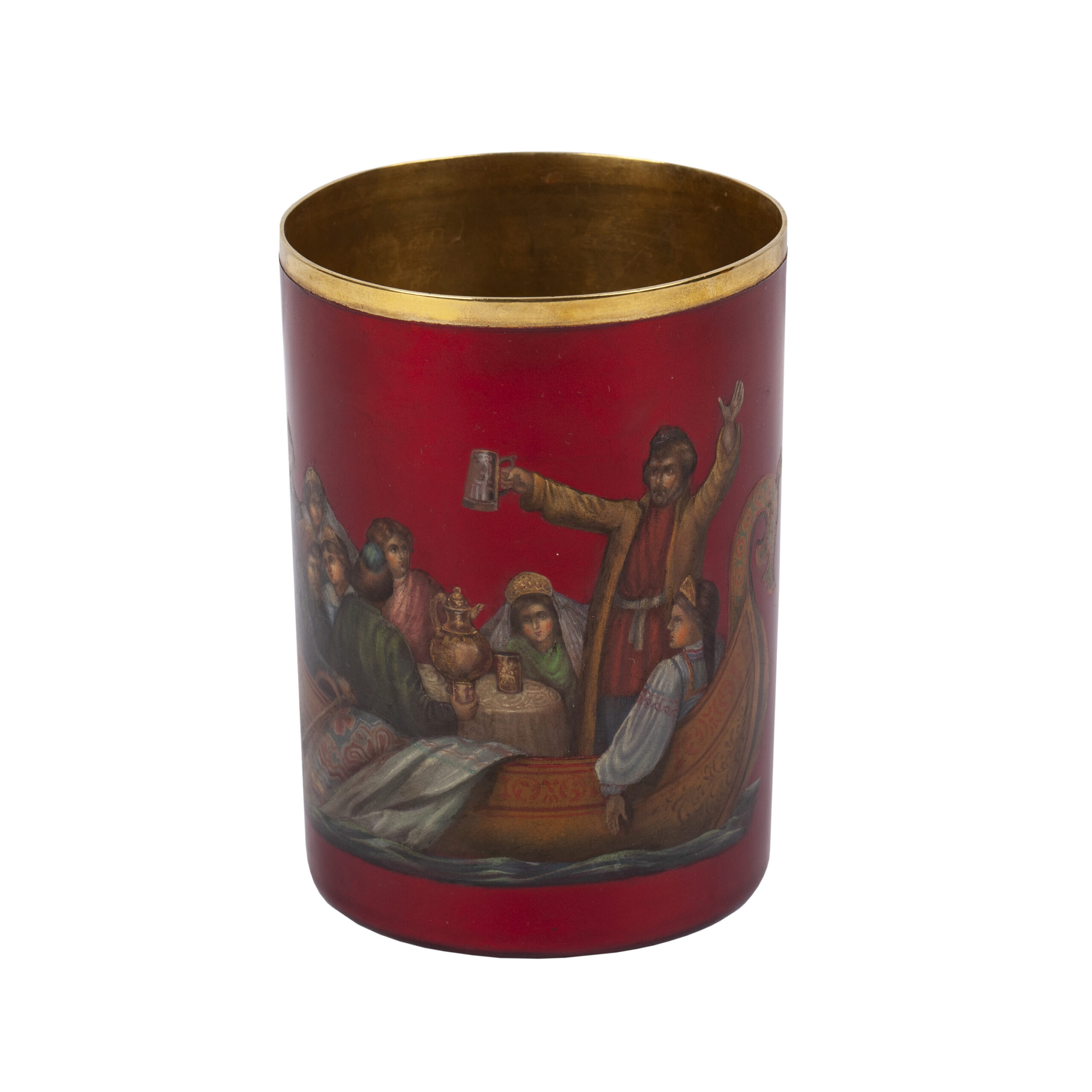
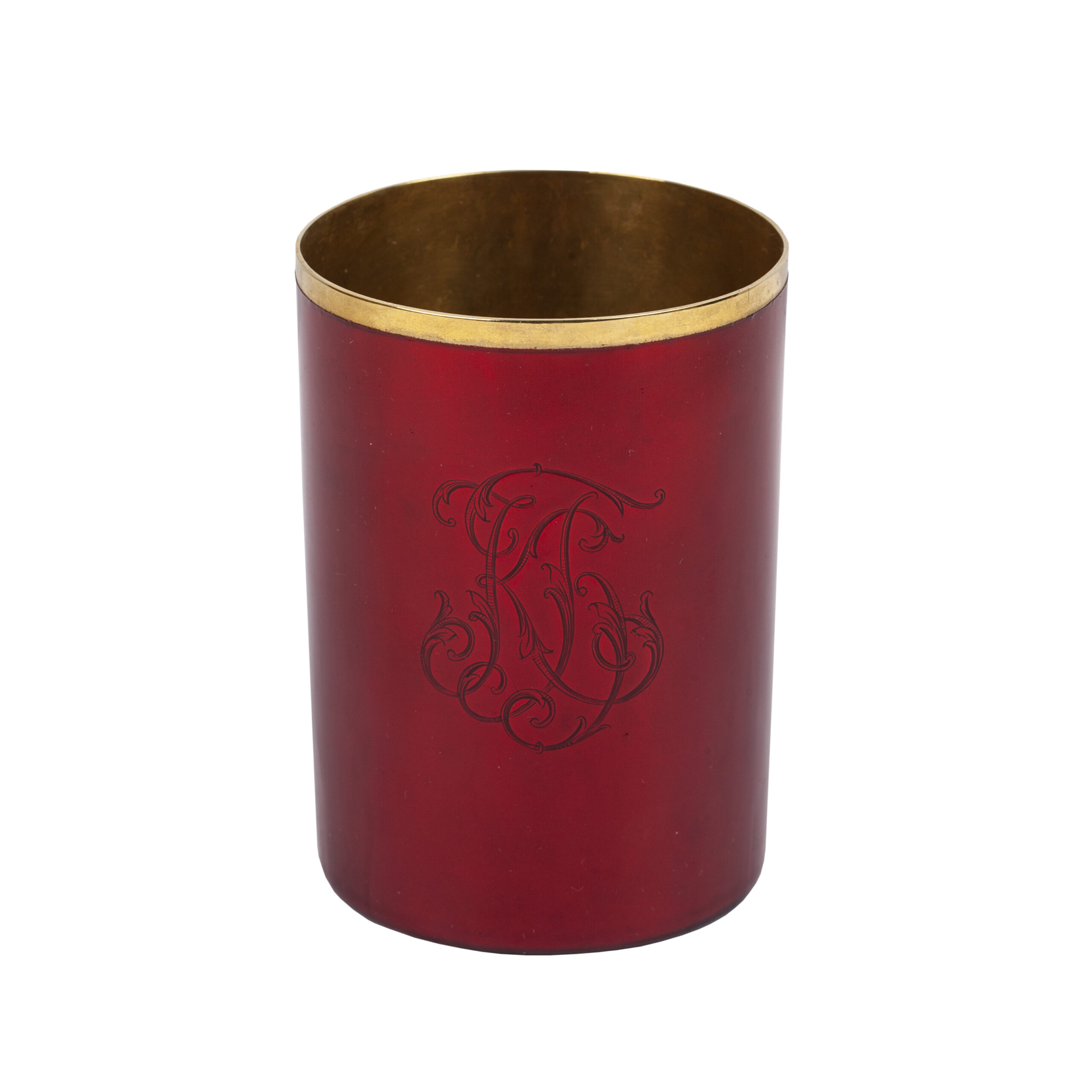
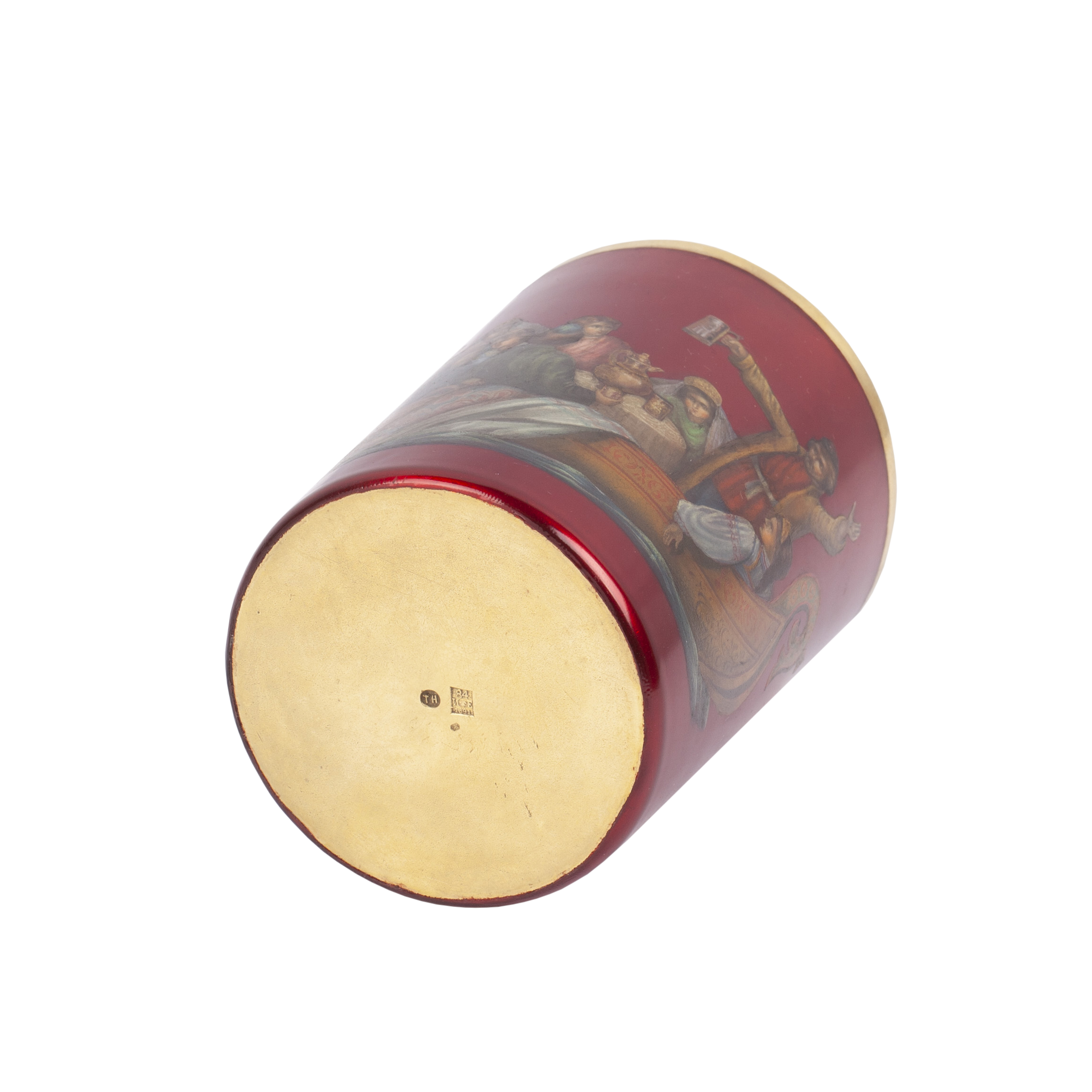
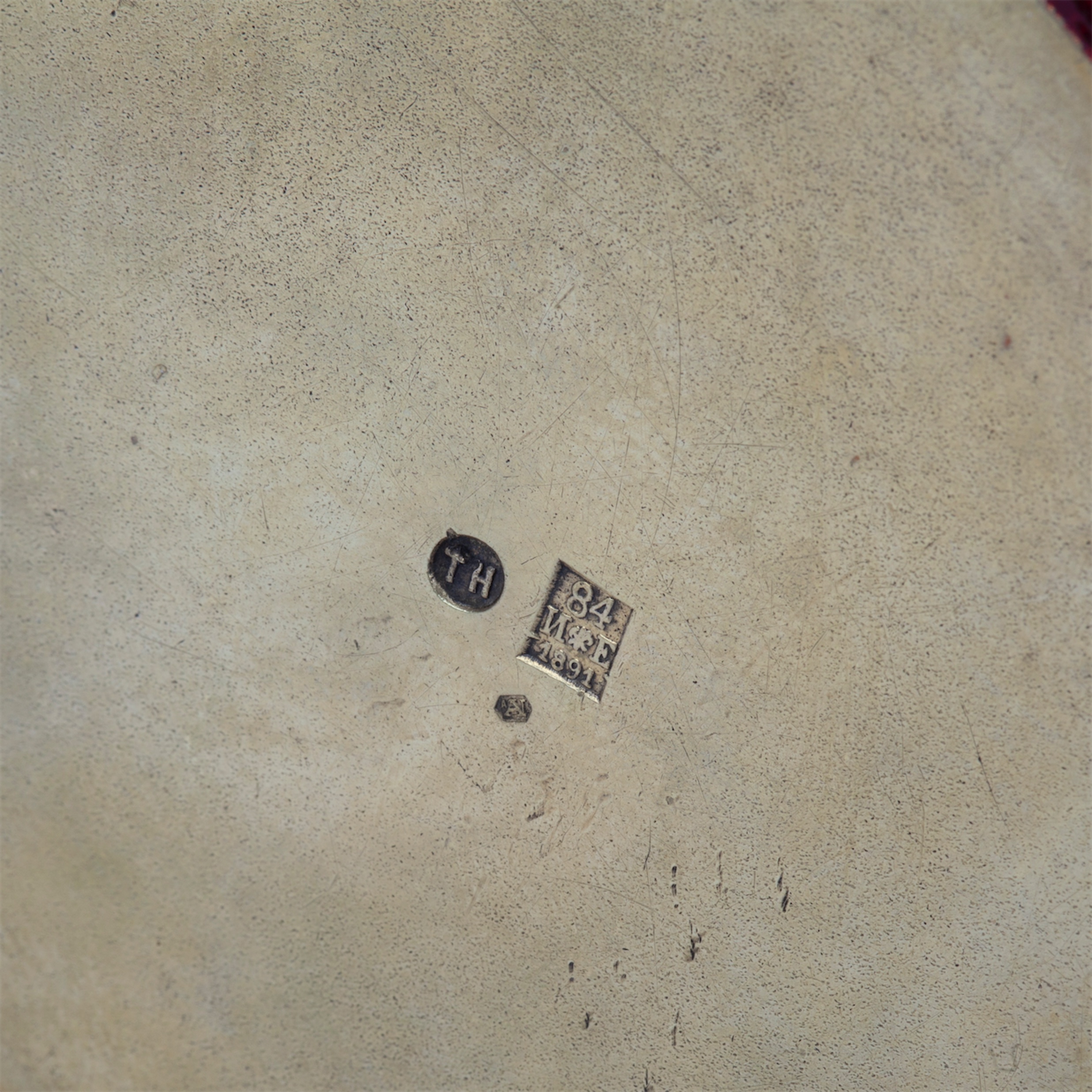
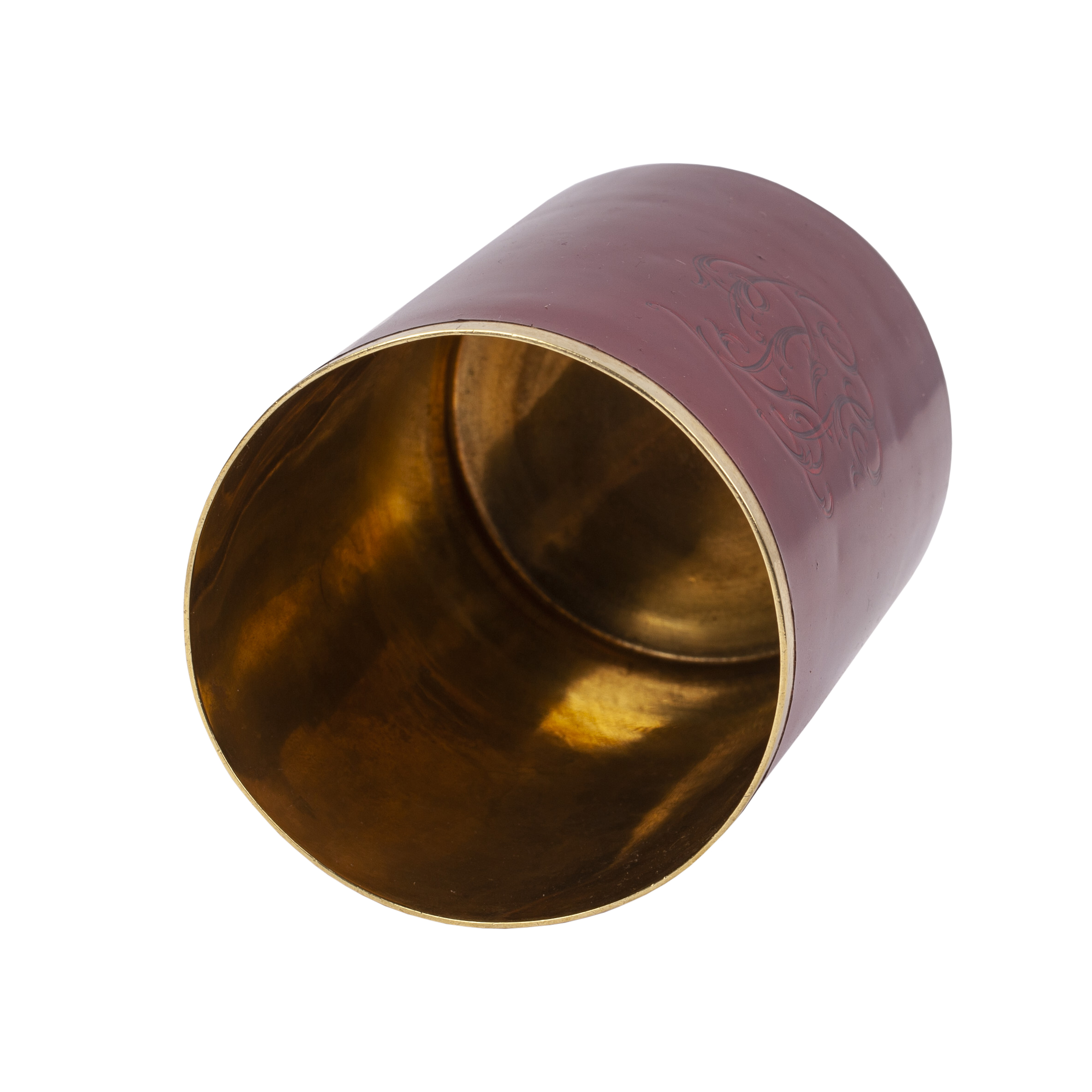
Lot 0054
Russian Enamel Beaker with a “Sadko” Scene by Sazikov
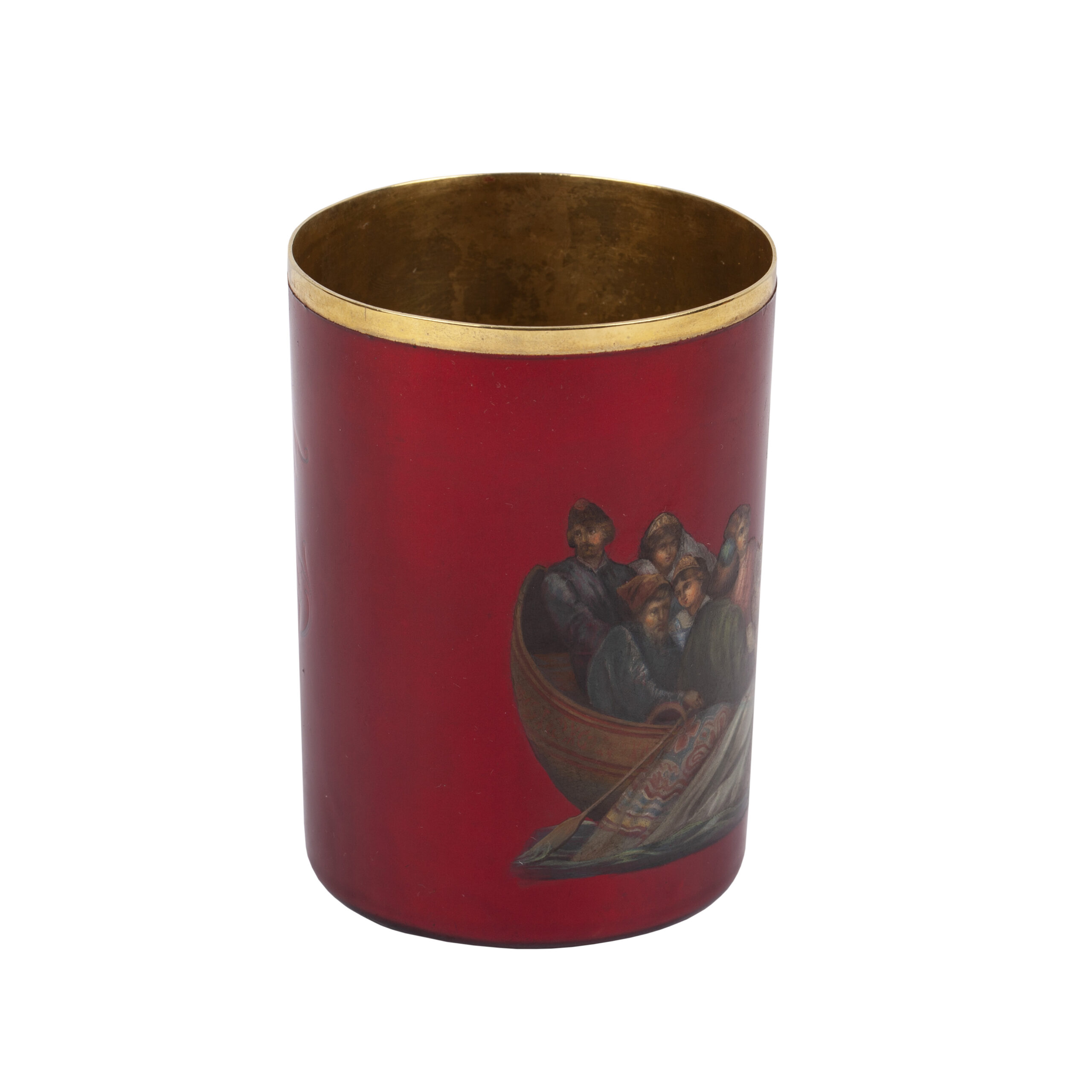
Estimate: 2000-3000€A Russian silver-gilt and lacquered enamel beaker, the cylindrical body decorated with a finely painted scene from the epic tale of Sadko, the legendary Novgorod merchant and gusli player who journeyed to the underwater kingdom. Maker’s mark of Timofey Keskes, who also collaborated with the renowned Sazikov firm. St. Petersburg, 1891.
Height: 10.6 cm
Weight: 130 g
The Sazikov Firm was founded in Moscow in 1793 by Pavel Fedorovich Sazikov, a silversmith and merchant. In 1810 he opened a factory and shop for silverware, later inherited by his son Ignaty Pavlovich Sazikov (1793–1868), who became one of the most distinguished jewelers of mid-19th century Russia. Under his leadership, the firm expanded production, introduced specialization of labor, modern equipment, and created a training department for young craftsmen. He also invited prominent artists and sculptors, such as Ivan Vitali and Pyotr Klodt, to design models.By the mid-19th century, Sazikov was considered among the finest Russian jewelers and a pioneer of the national style in decorative arts. The firm earned numerous gold medals at Russian industrial exhibitions (1835–1865), as well as international acclaim, including a gold medal and the Order of the Legion of Honor at the 1851 London and 1867 Paris World Exhibitions. Sazikov’s works in small-scale sculpture on Russian themes became especially famous.
After Ignaty’s death in 1868, the firm was managed by his sons Sergei, Pavel, and Valentin, with branches in both Moscow and St. Petersburg, until 1887, when the business was sold to Ivan Khlebnikov’s firm.
Starting price: 1500€
Estimate: 2000-3000€
Hammer Price: UNSOLD€