
Lot 0188
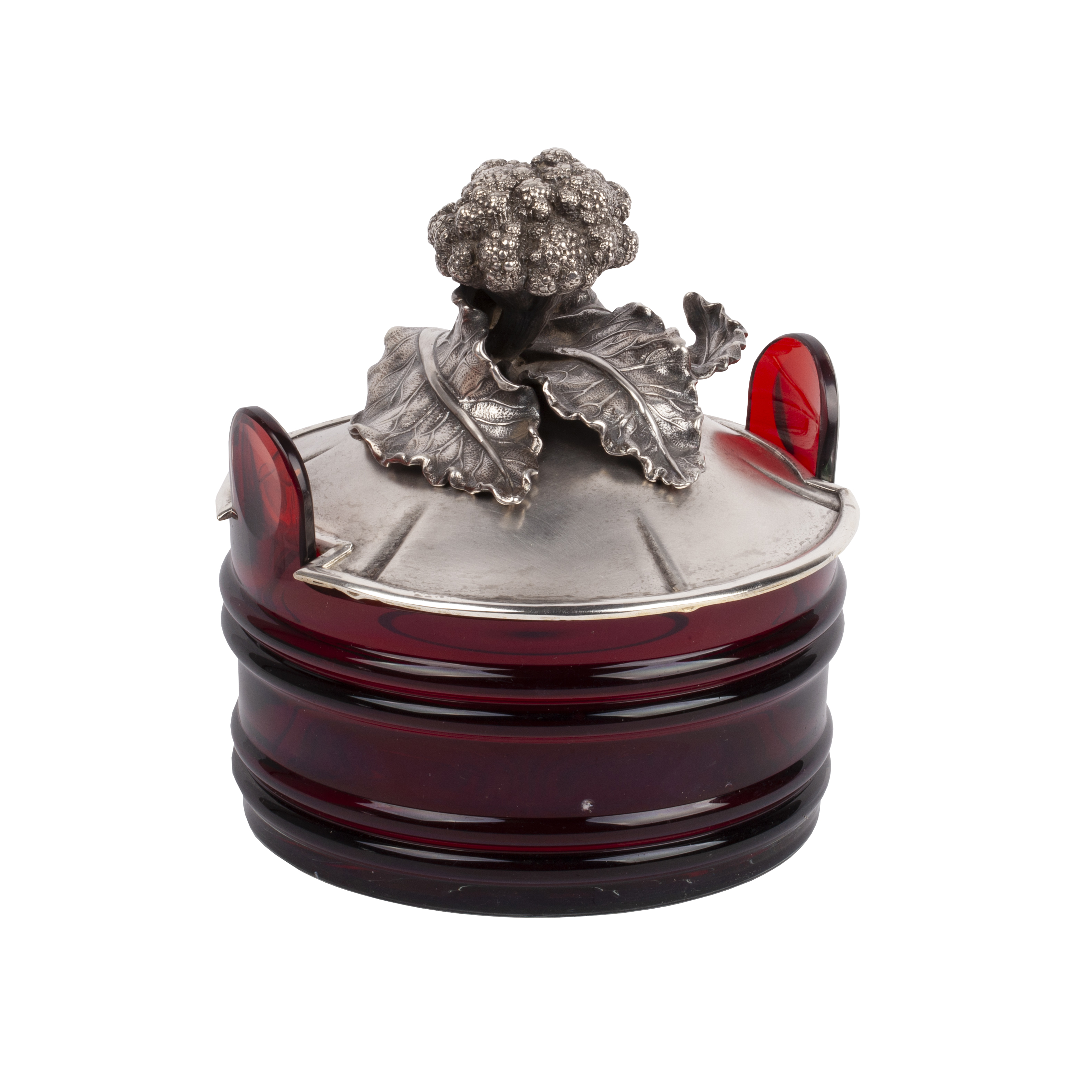
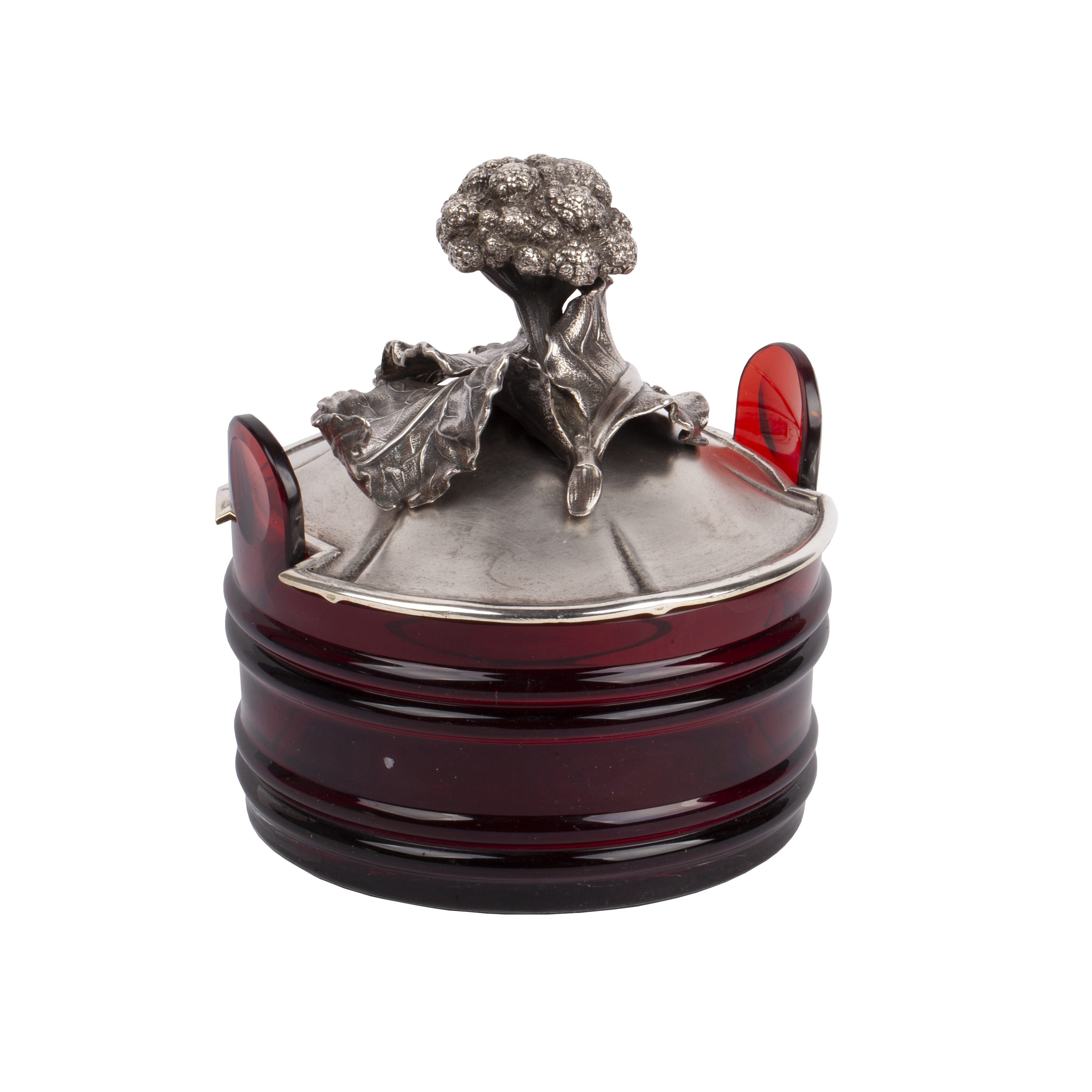
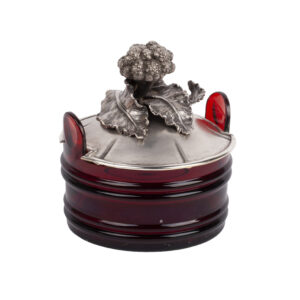
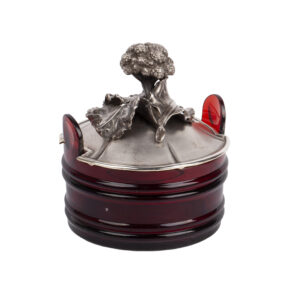
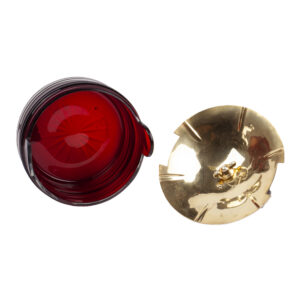
Bragin Covered Jar in the Form of an Ushat, St Petersburg, 1892
Estimate: 4500-6000€
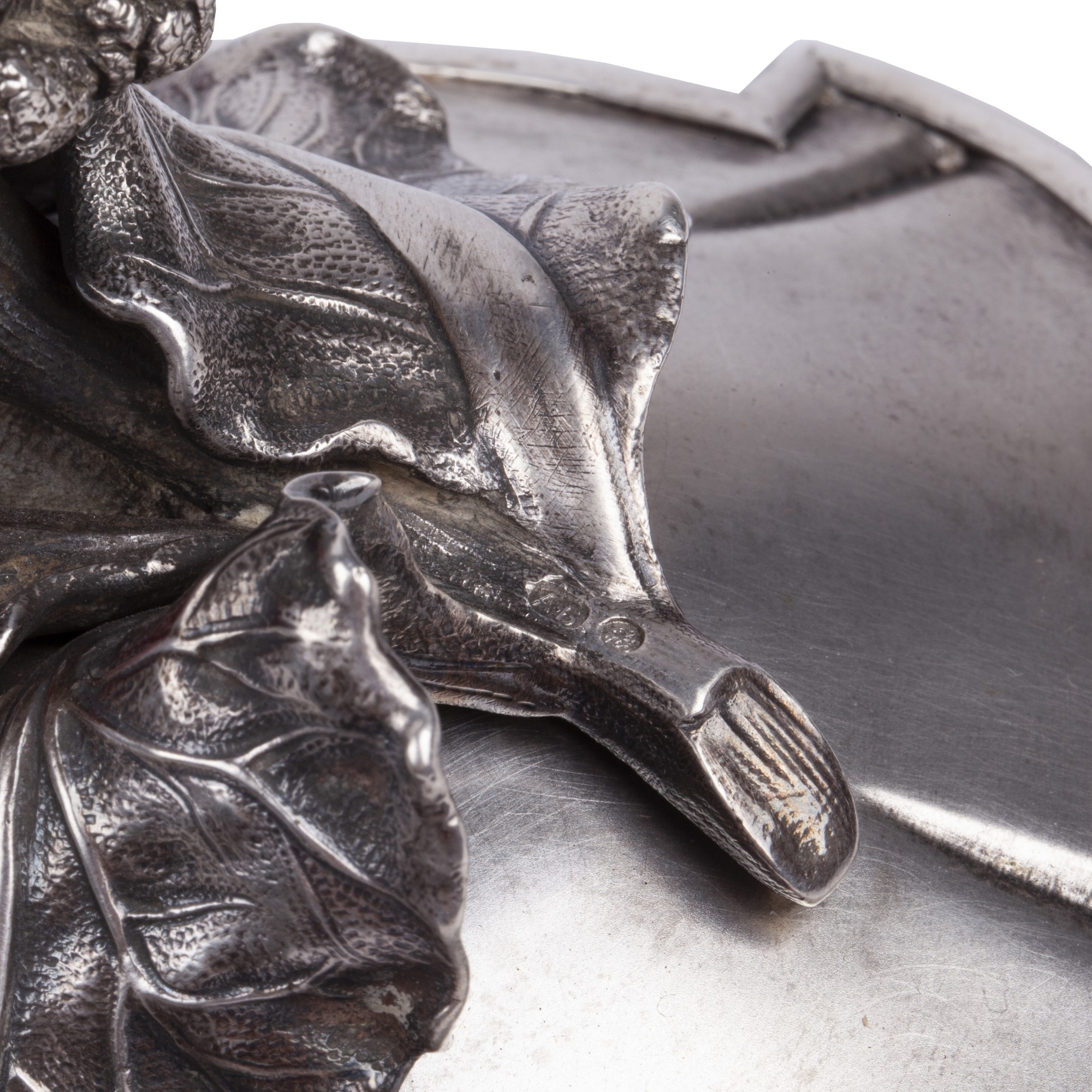
Bragin. Covered jar in the form of ushat.
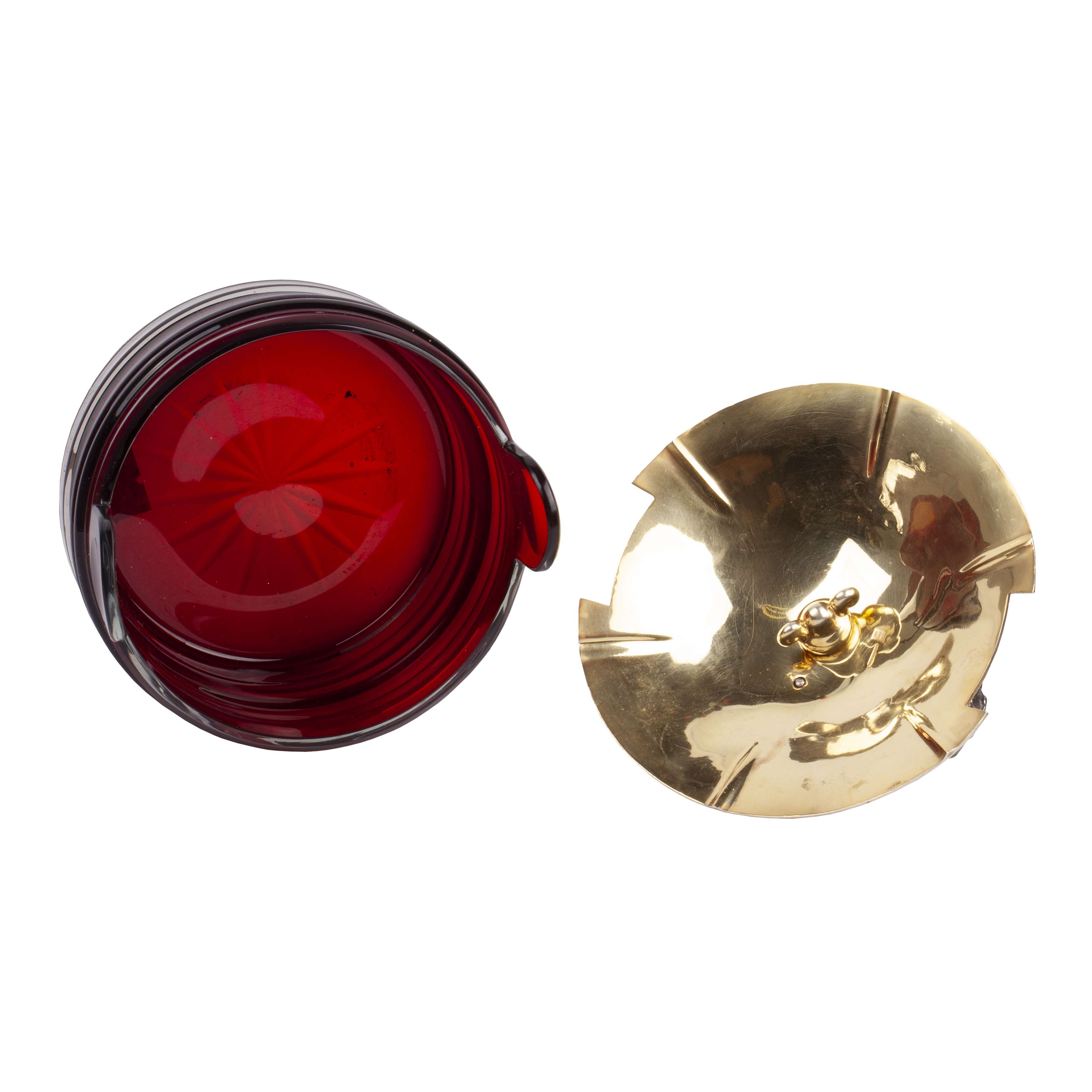
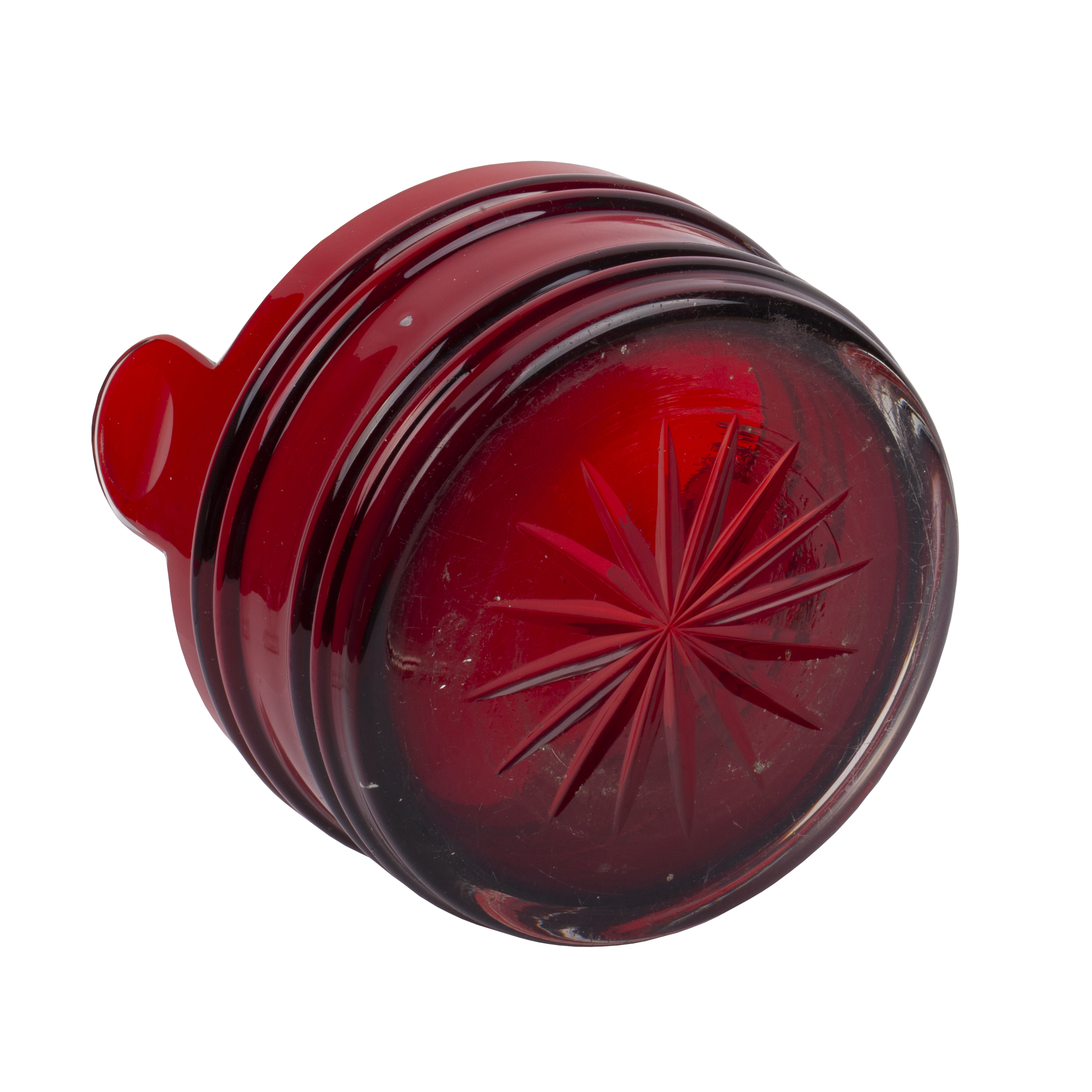
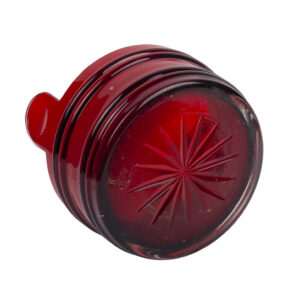
Silver, casting, chasing, gilding, copper-ruby glass.
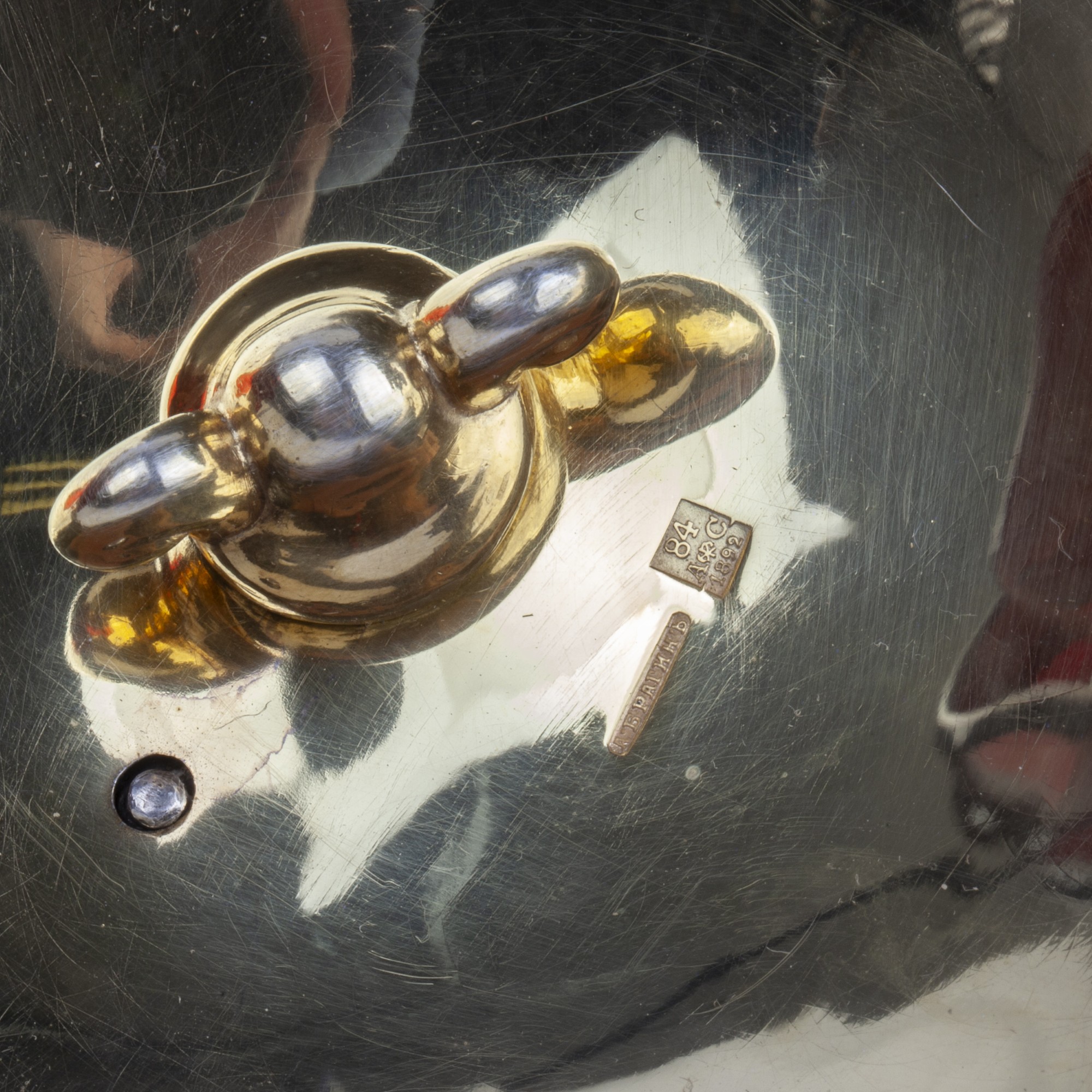
Makers mark of «A.B. Bragin». Petersburg, 1892.
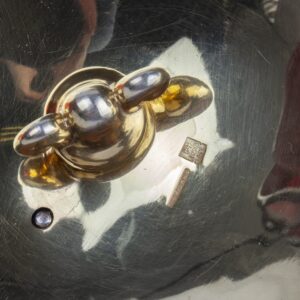
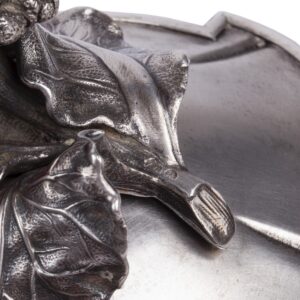
This leaded casket combines deep red copper-ruby glass with finely crafted silver mounts. The lid is topped with a cast silver cauliflower and leaves, serving as both handle and decoration. The transparent red glass body highly like produced by Imperial glass manufactory, shaped in the form of a traditional Russian ushat (water pail).
Andrei Stepanovich Bragin (active late 19th – early 20th century)
A respected St. Petersburg silversmith, Bragin opened his workshop in 1888, producing high-quality silver tableware, flatware, and decorative objects. His pieces, often in the Modern style with Pan-Slavic and natural motifs, gained particular fame for enamelled tea sets inspired by Russian folk embroidery. Though smaller than Fabergé’s firm, Bragin’s workshop earned wide recognition, exhibiting in St. Petersburg and Brussels, and his works are now preserved in major museums and collections. Dimensions: 16.5 x 14.5 x 14.5 cm. Total weight of the lid: 430 g.
Starting price: 3500€
Estimate: 4500-6000€
Hammer Price: Not sold
Related Lots
-
Lot 0189
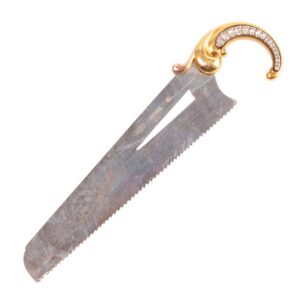
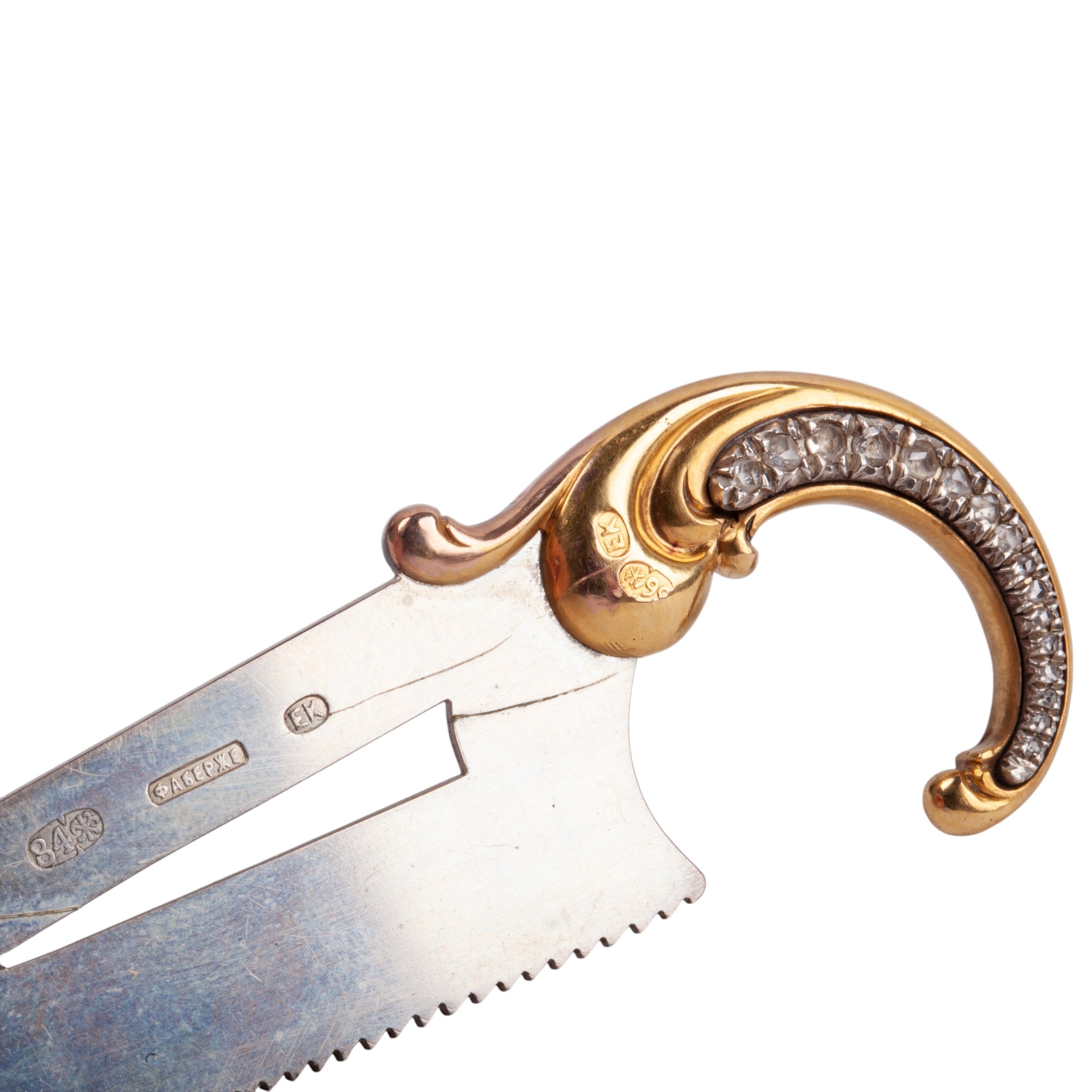
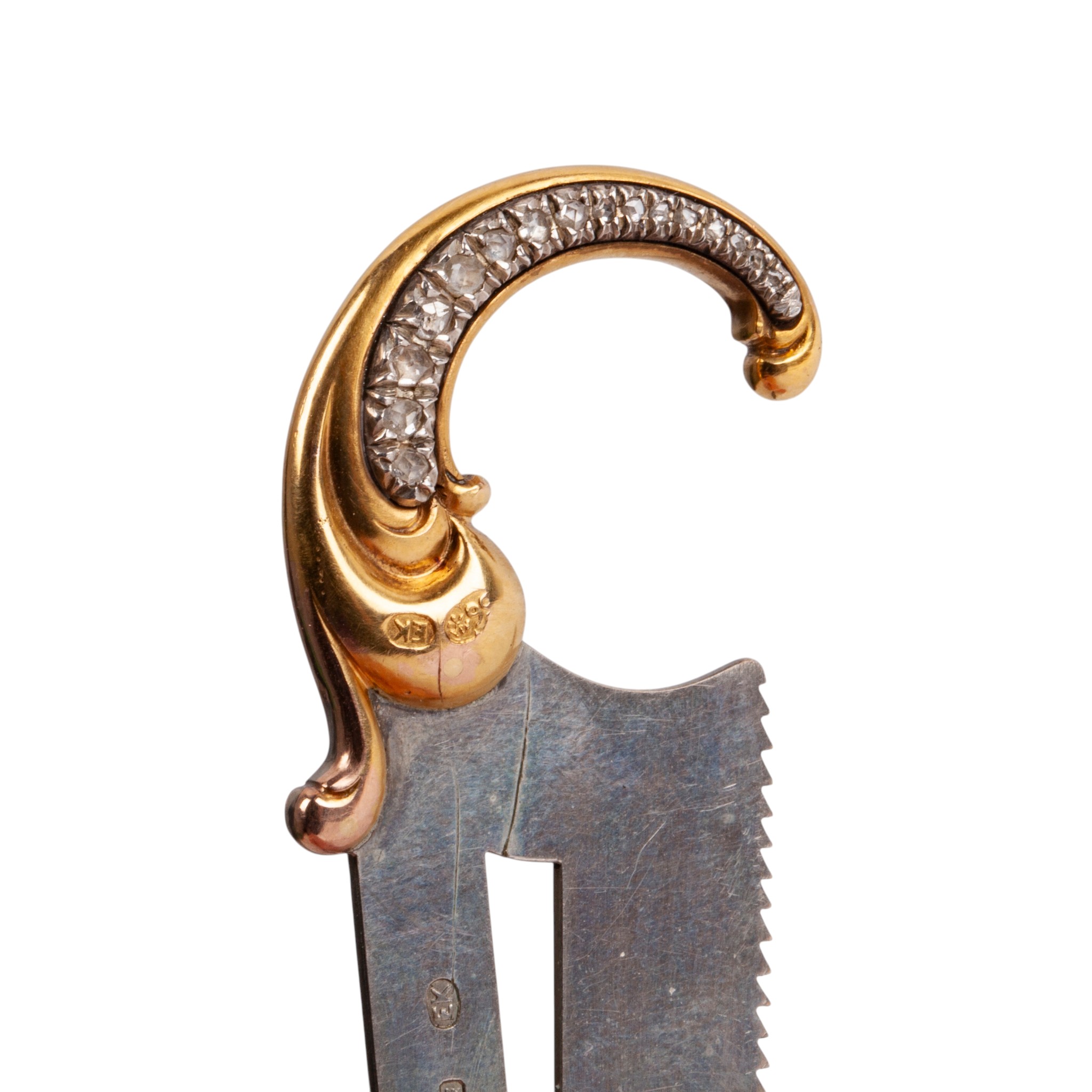
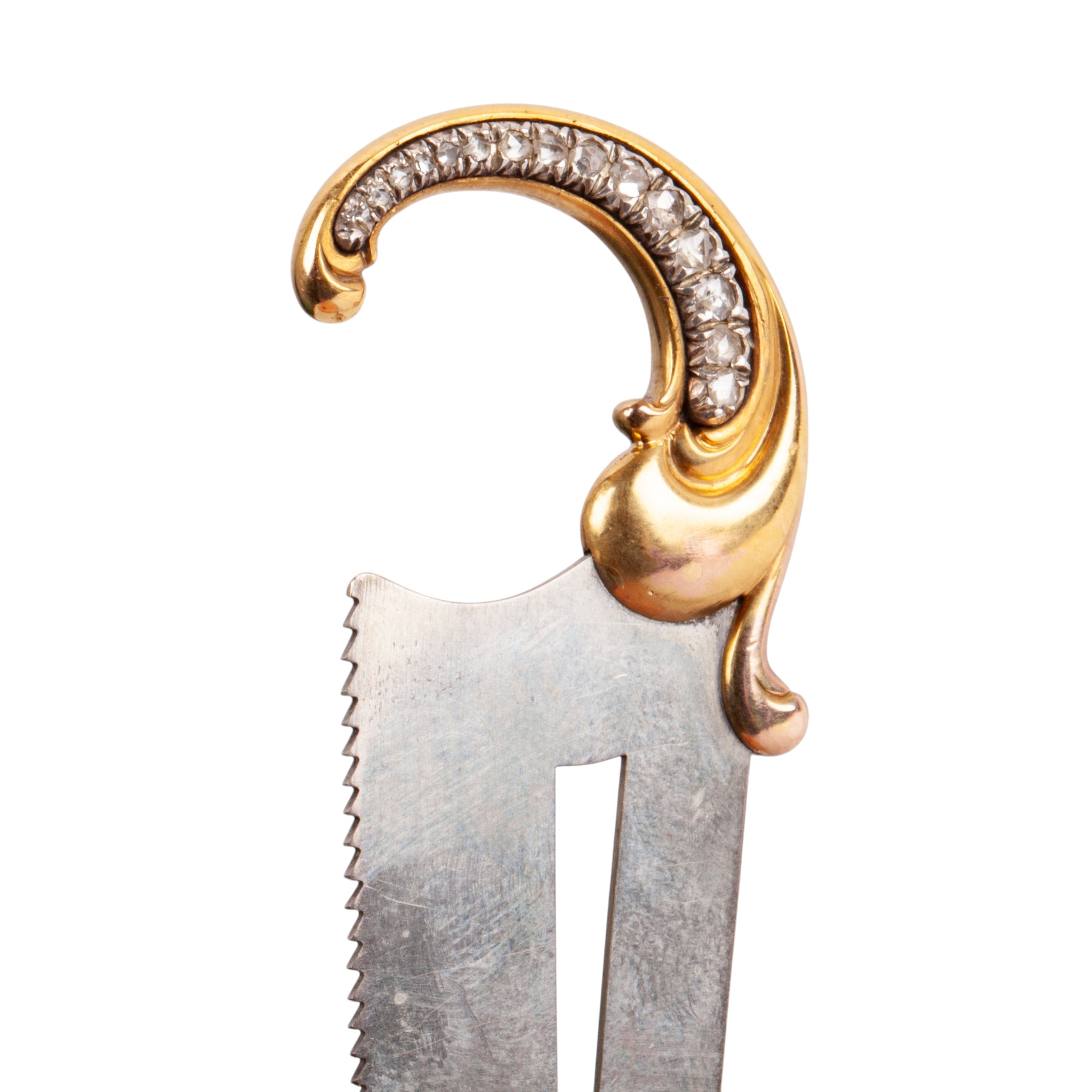
Fabergé Extremely Rare Gem-Set Silver and Gold Cigar Cutter in the Form of a Saw, St Petersburg, c. 1890
Estimate: 15000-17000€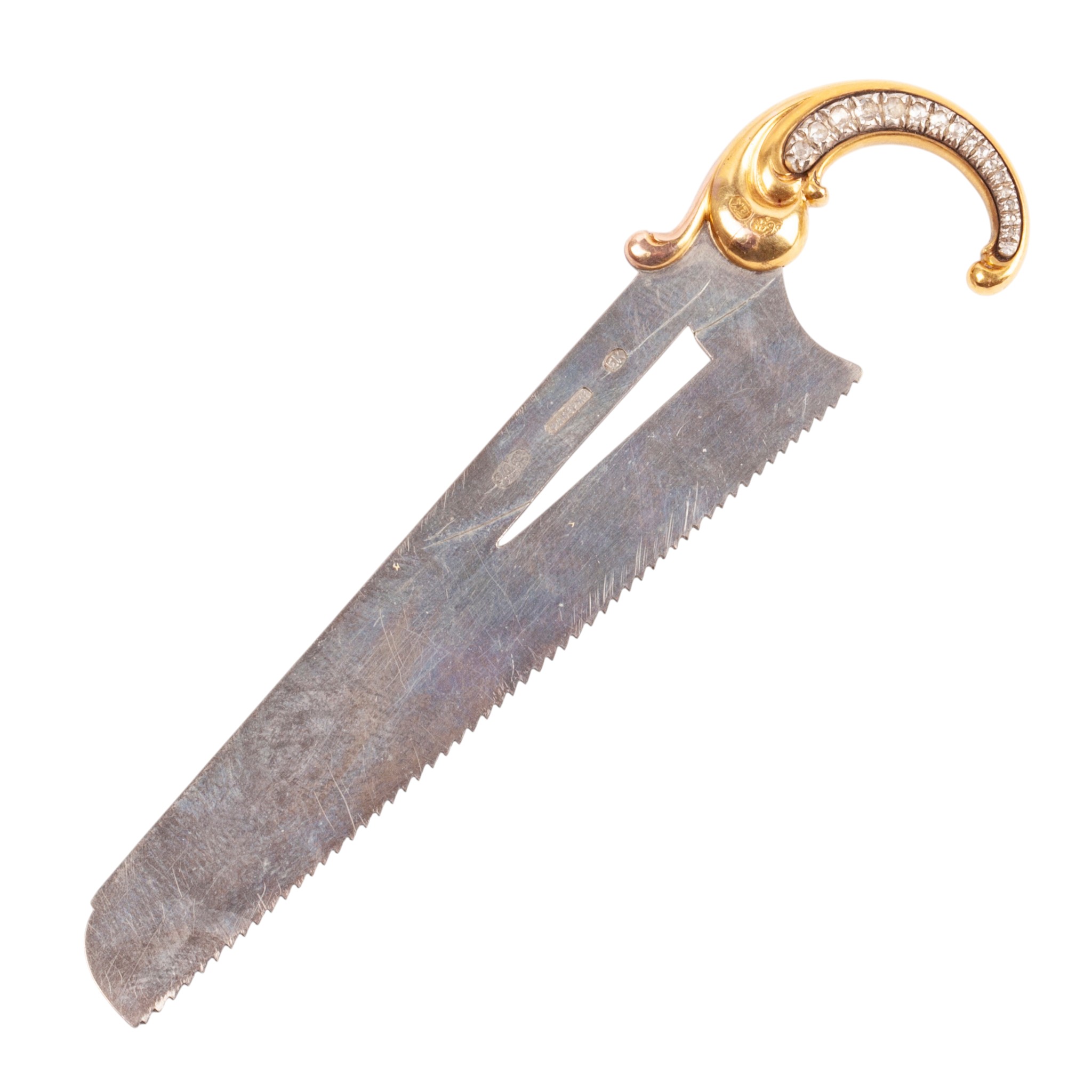
Lot 0189
Fabergé Extremely Rare Gem-Set Silver and Gold Cigar Cutter in the Form of a Saw, St Petersburg, c. 1890
Estimate: 15000-17000€An Extremely Rare Fabergé Gem-Set Silver and Gold Cigar Cutter
St Petersburg, workmaster Erik Kollin, circa 1890.
Silver, gold, diamonds; cutting, casting, chasing, polishing, gem-setting.
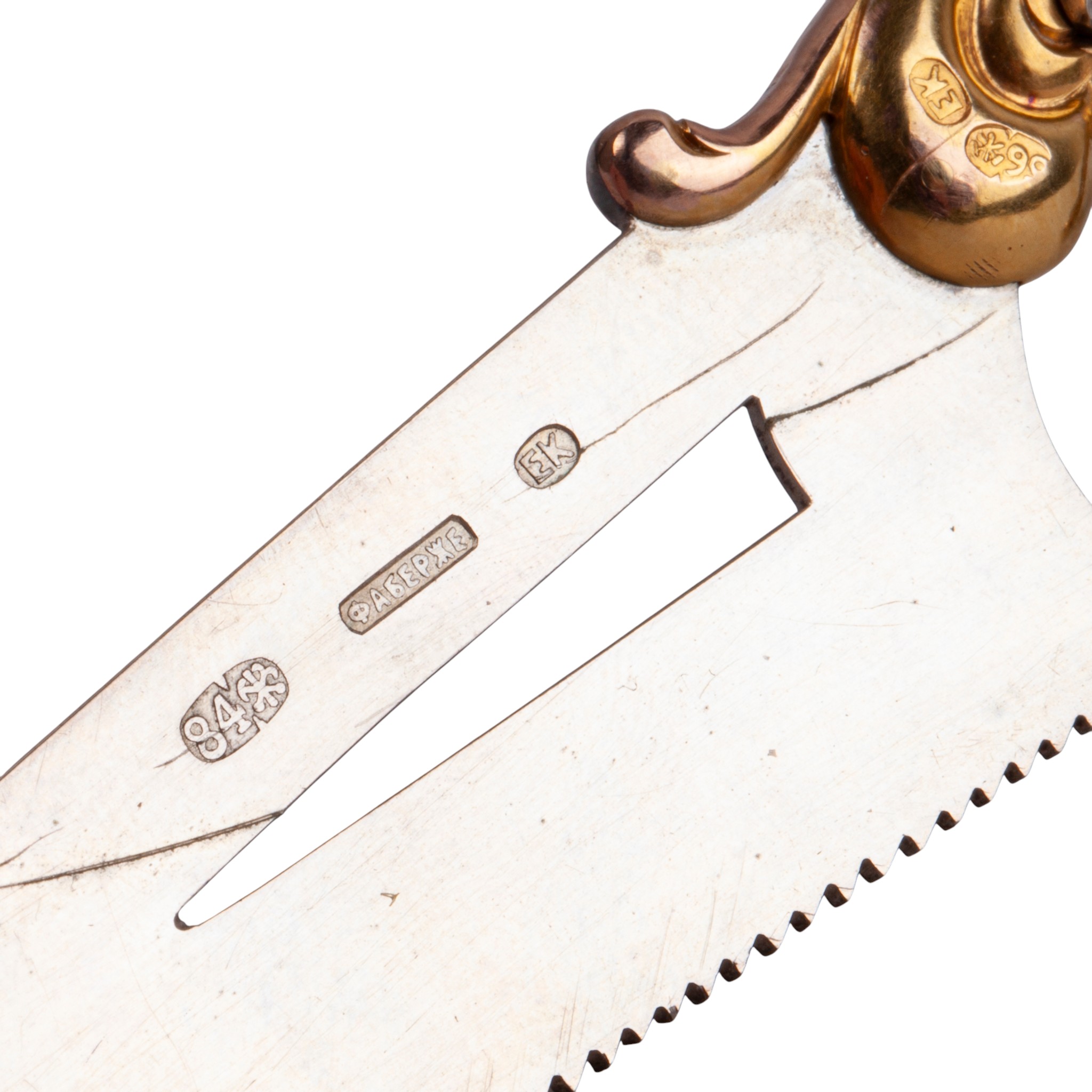
Marks: Faberge firm, workmaster’s mark EK for Erik Kollin; St Petersburg assay marks; 84 zolotniki silver standard, 56 gold standart. Weight: 20.5 g. Dimensions: 12 x 2,6 x 0.4 cm.
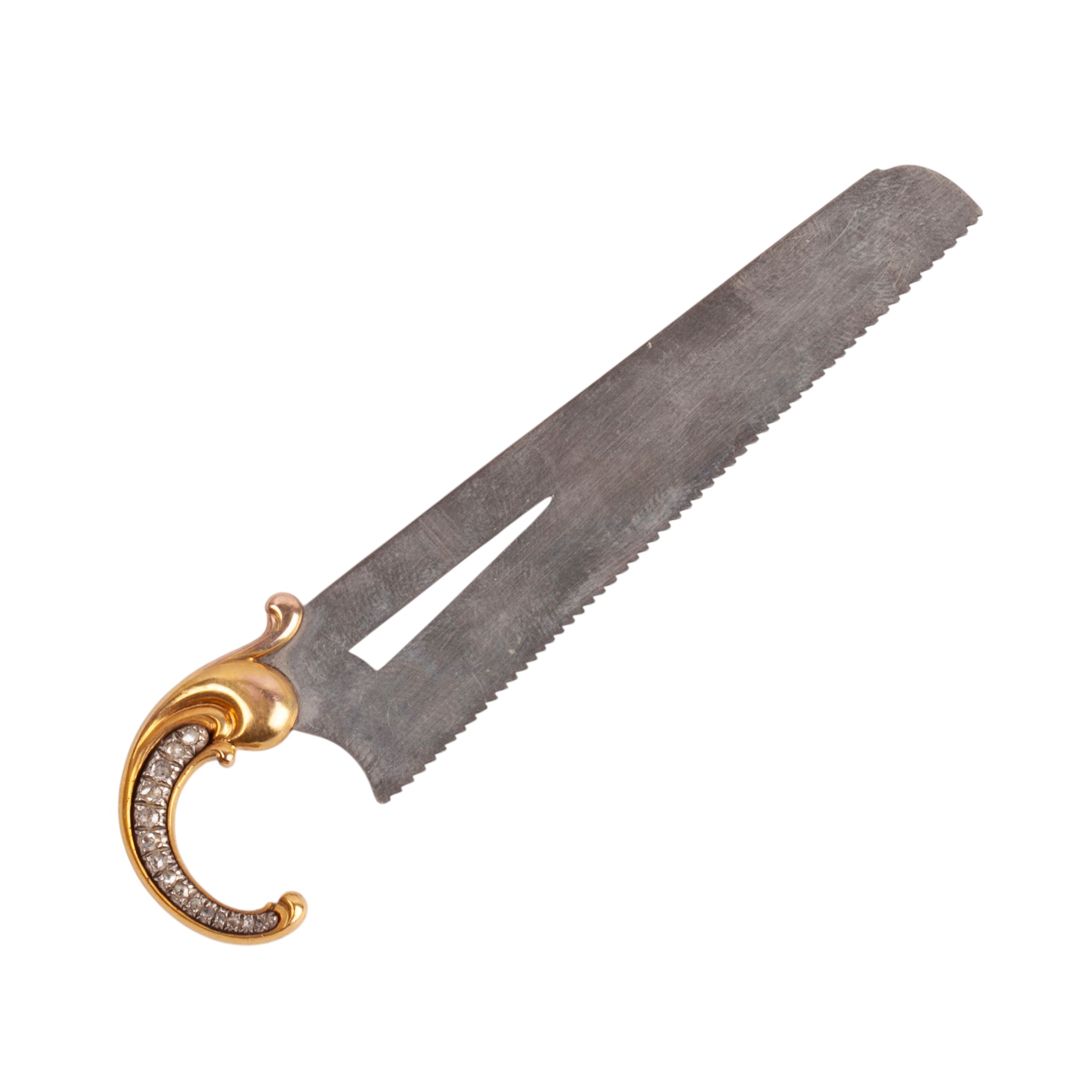
A rare Fabergé cigar cutter designed in the playful form of a miniature saw. The flat silver blade is pierced with an elongated aperture and cut with a serrated edge, directly evoking the functional shape of a carpenter’s tool. The handle is formed in polished gold as a sweeping scroll, its arched upper section set with a graduated row of diamonds.
The deliberately unexpected choice of a saw as the model for a cigar cutter reflects Fabergé’s taste for trompe-l’oeil, humour and technical exactitude. At the same time, the diamond-set gold handle introduces a courtly elegance, turning a gentleman’s smoking accessory into a small work of jewellery.
Erik August Kollin was one of the most important early masters connected with Fabergé. Born in Finland in 1836, he trained as a goldsmith before moving to St Petersburg, where he qualified as a workmaster in 1868. In 1870 he opened his own workshop and soon became Fabergé’s first chief jeweller, overseeing the firm’s workshops until 1886, when he was succeeded by Michael Perchin.
Kollin specialised in gold and silver objects, many of them in the archaic and historical taste characteristic of Fabergé’s early period.Starting price: 12000€
Estimate: 15000-17000€
Hammer Price: Not sold -
Lot 0190
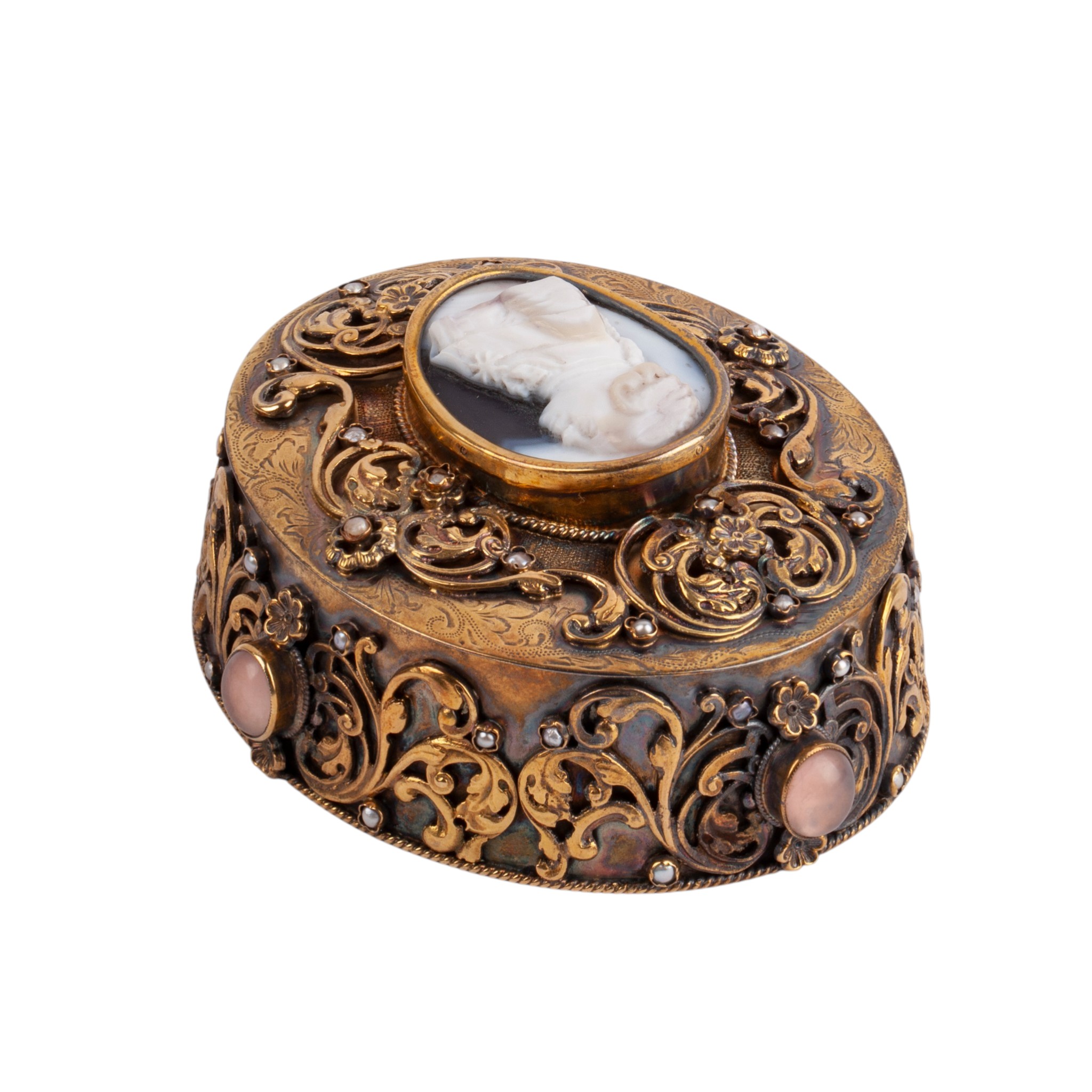
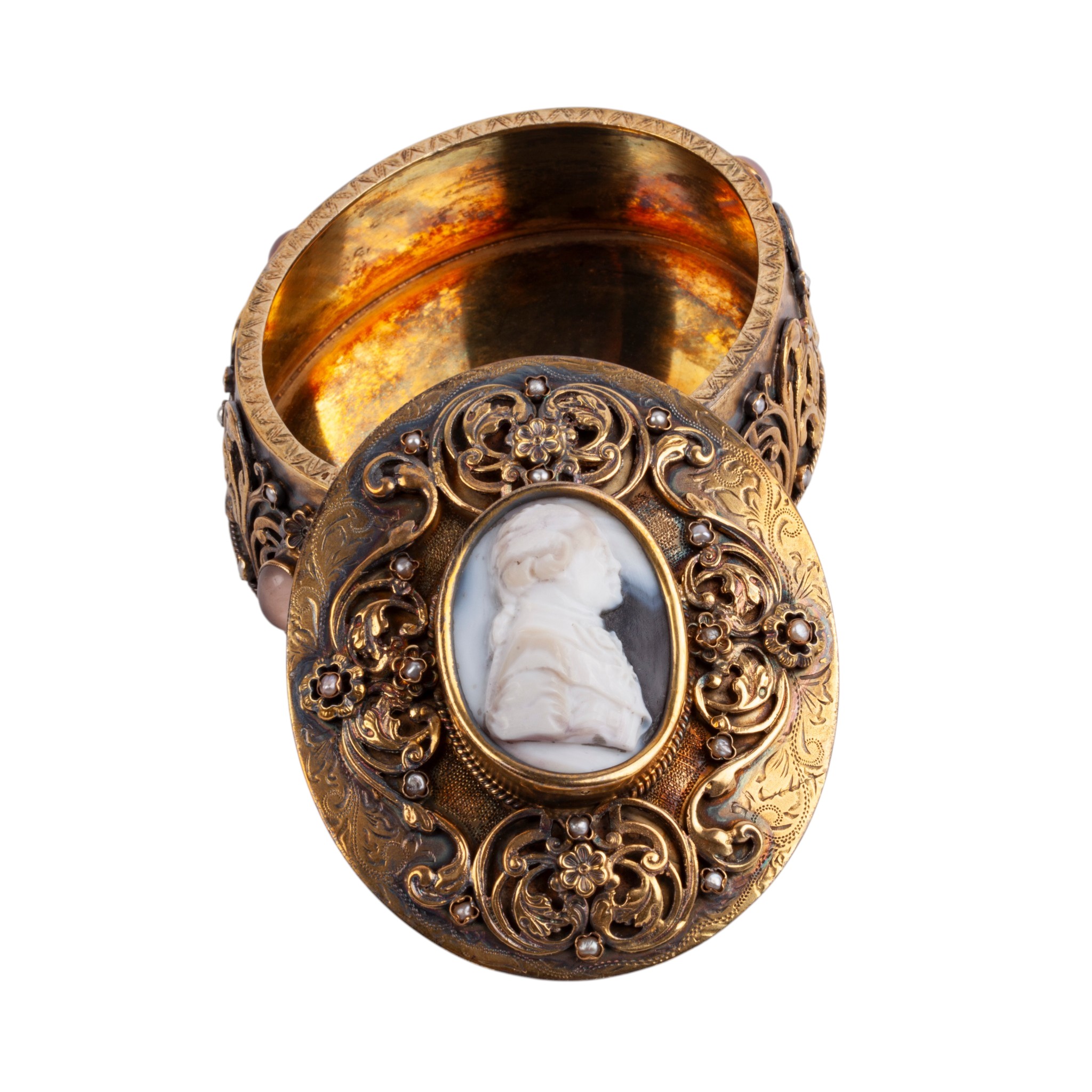
Russian Presentation Box with Hardstone Cameo of Grand Duke Pavel Petrovich, St Petersburg, 1772–1783
Estimate: 6000-8000€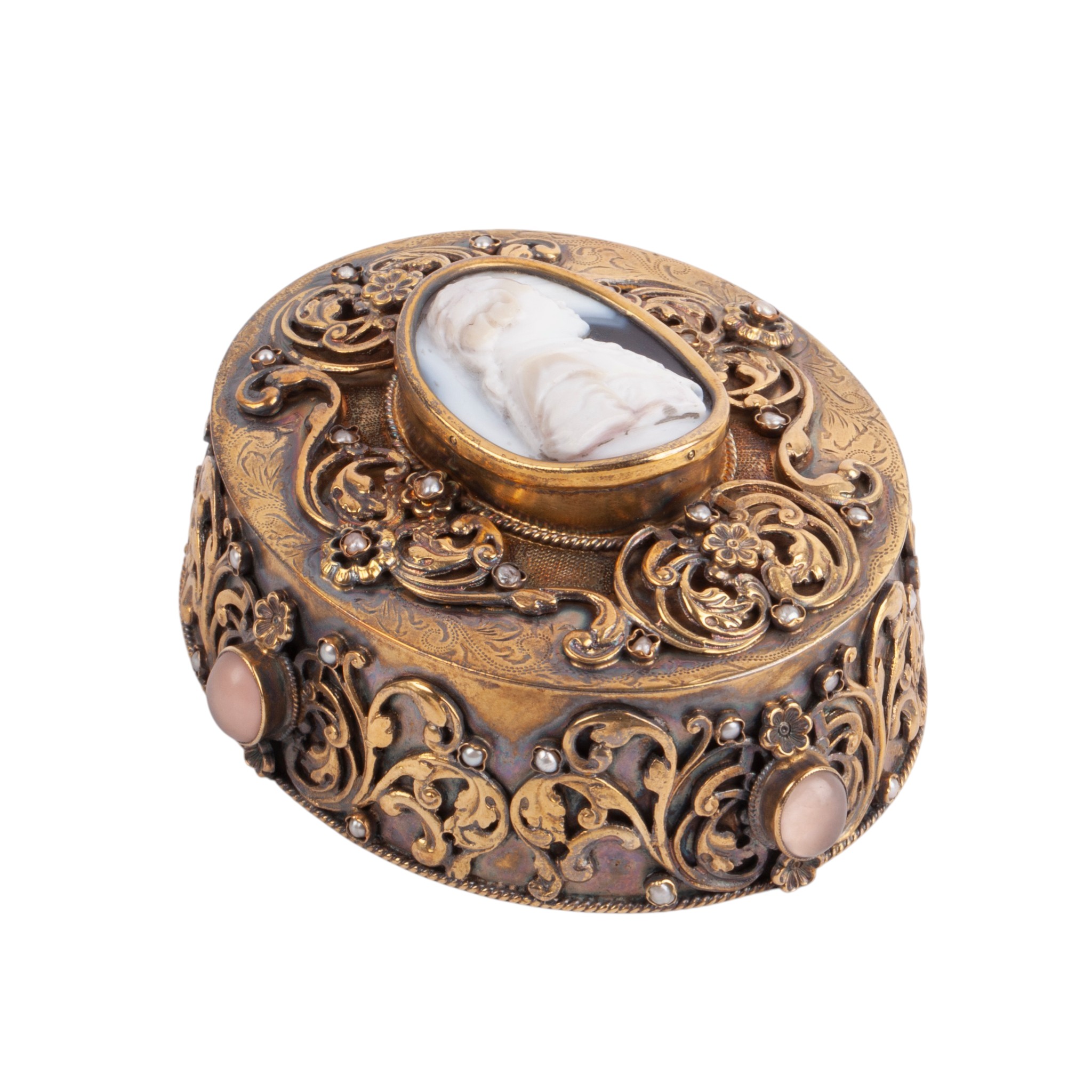

Lot 0190
Russian Presentation Box with Hardstone Cameo of Grand Duke Pavel Petrovich, St Petersburg, 1772–1783
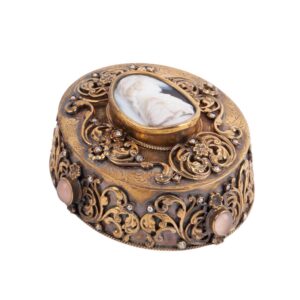
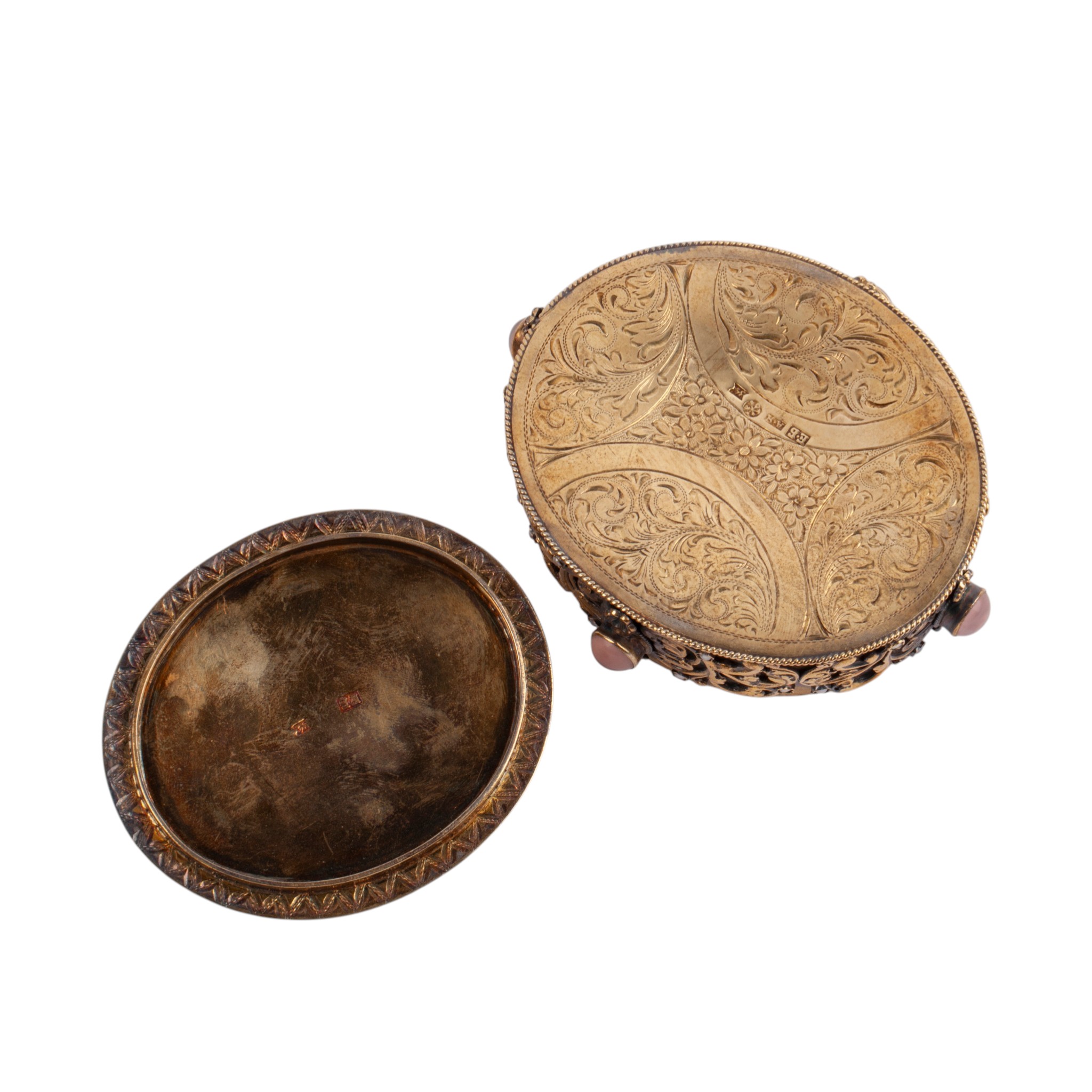
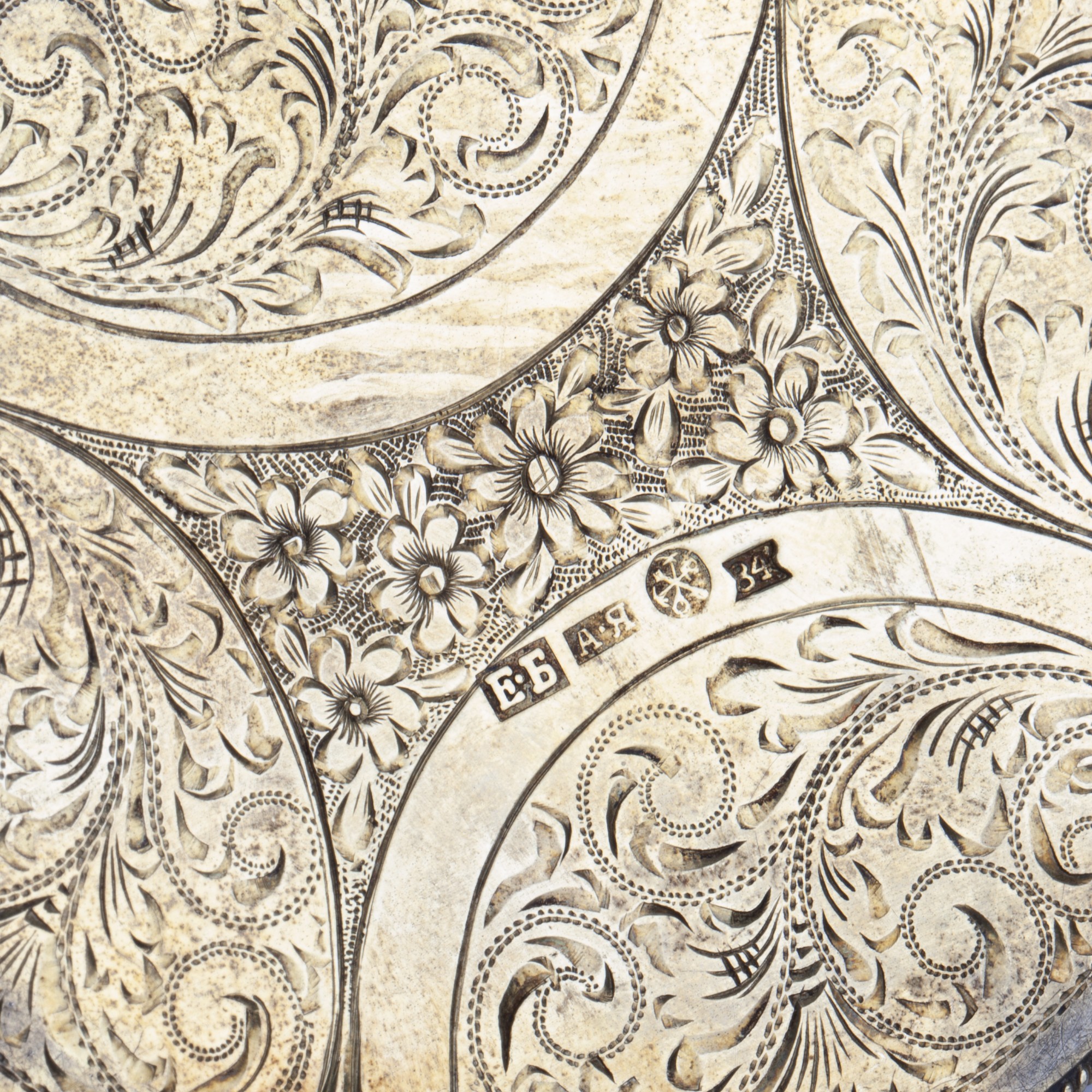
Estimate: 6000-8000€A Russian Presentation Box with Hardstone Cameo of Grand Duke Pavel Petrovich St Petersburg, 1772-1783. Cameo attributed to Giovanni Pichler (1734-1791), gem engraver.
Silver, gilding, engraving, mounting, pearls, cabochons, lapis lazuli carved cameo. Total weight: 259 g. Dimensions: 5 x 11 x 9 cm.
Marks: stamped EB, St. Petersburg assay mark.
An oval presentation box in the Neo-Renaissance taste, executed in richly gilded silver and profusely ornamented with pierced scrollwork, engraved foliage, seed pearls, and cabochon settings. The domed lid is centered with an oval hardstone cameo portraying Grand Duke Pavel Petrovich in profile. The cameo may be attributed to the engraver Giovanni Pichler (1734-1791), one of the most celebrated gem carvers of the later eighteenth century, whose works were prized in aristocratic and courtly circles for their refined classicism and sculptural precision.
The box unites the arts of glyptic carving and goldsmith’s work in a single ceremonial object. The austere profile portrait, rendered in the language of antique-inspired court representation, is set within an elaborate ornamental framework of Renaissance-derived scrolls and rosettes.
By artistic level and character, the piece belongs to the category of precious presentation boxes intended for courtly gift exchange or cabinet display.Starting price: 5000€
Estimate: 6000-8000€
Hammer Price: Not sold -
Lot 0187
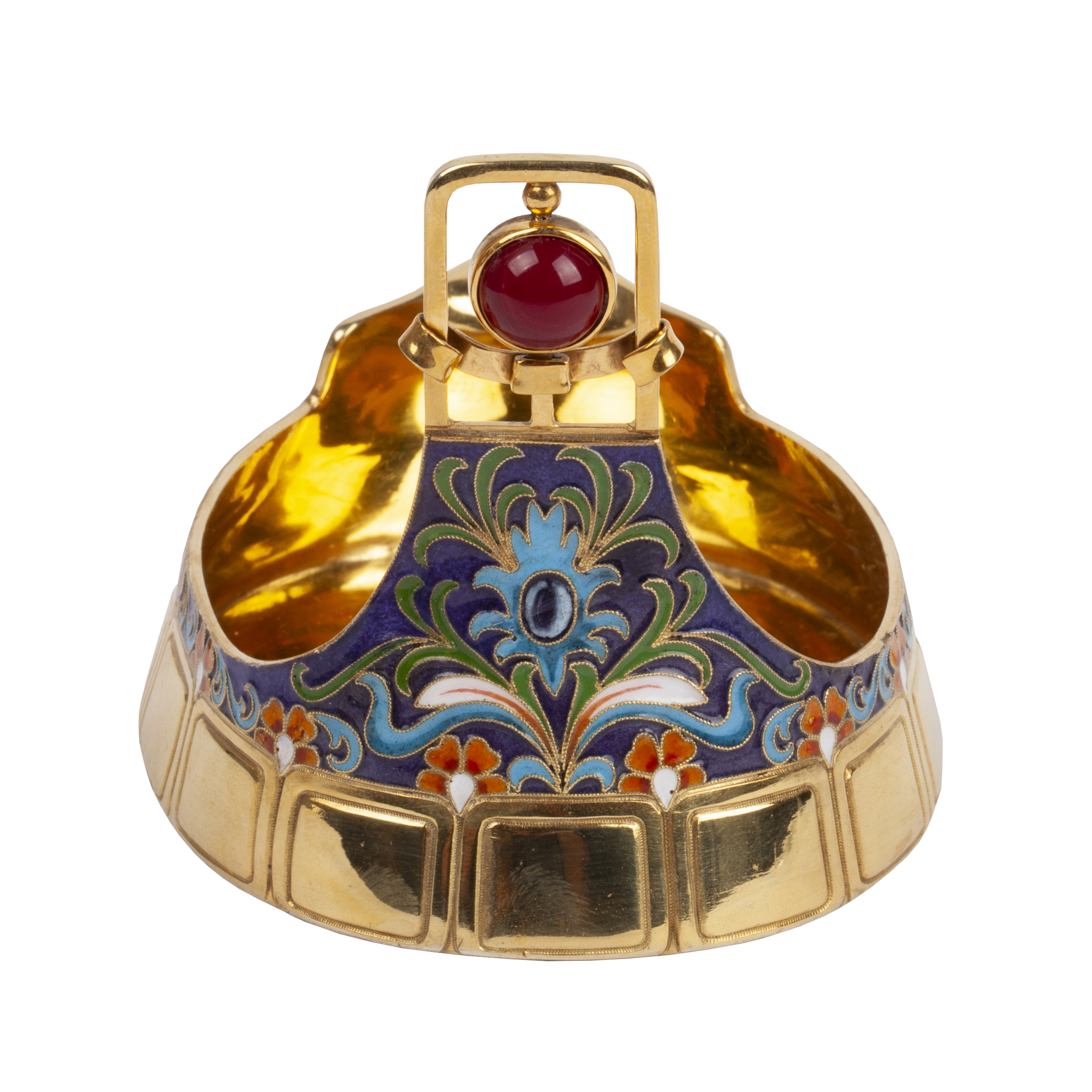
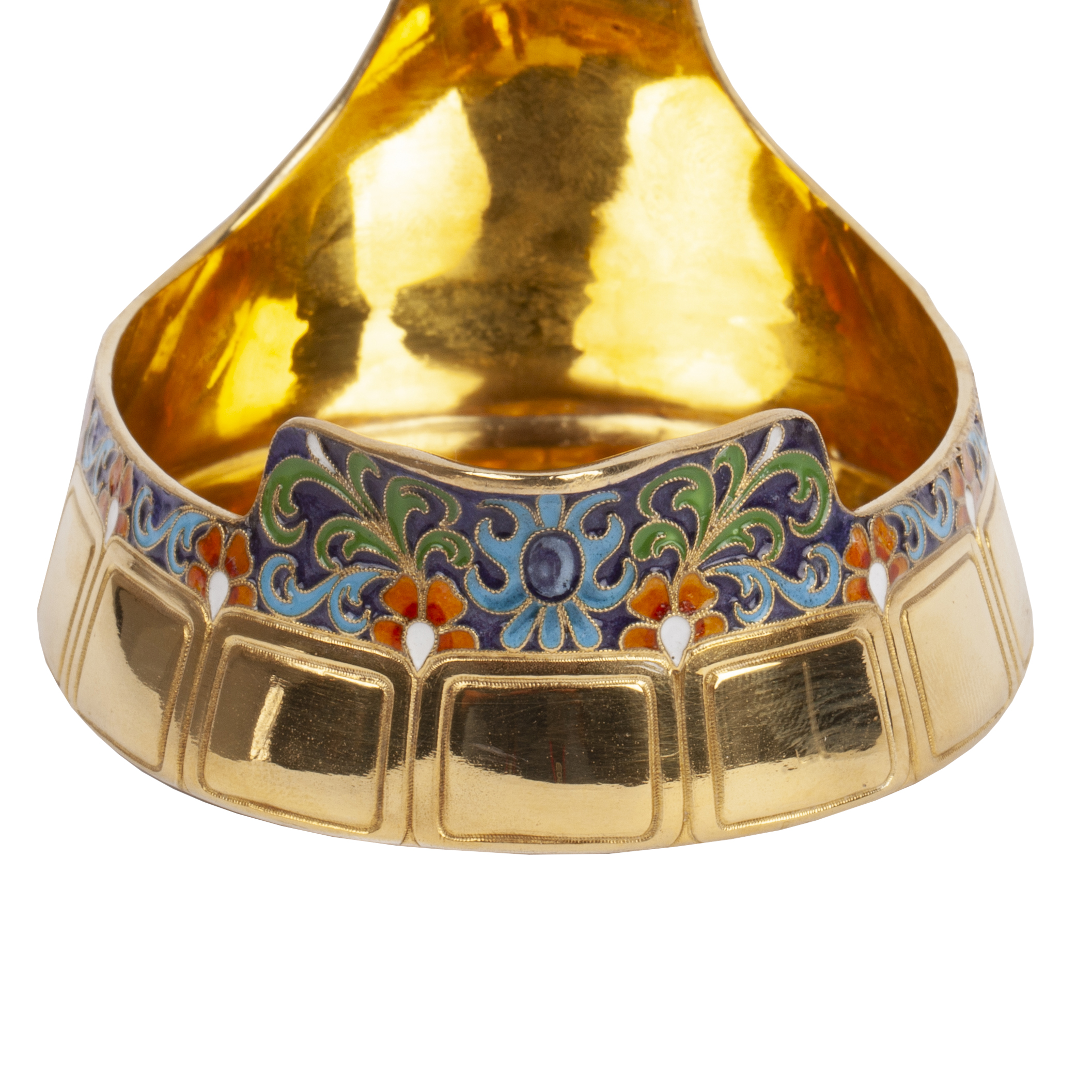
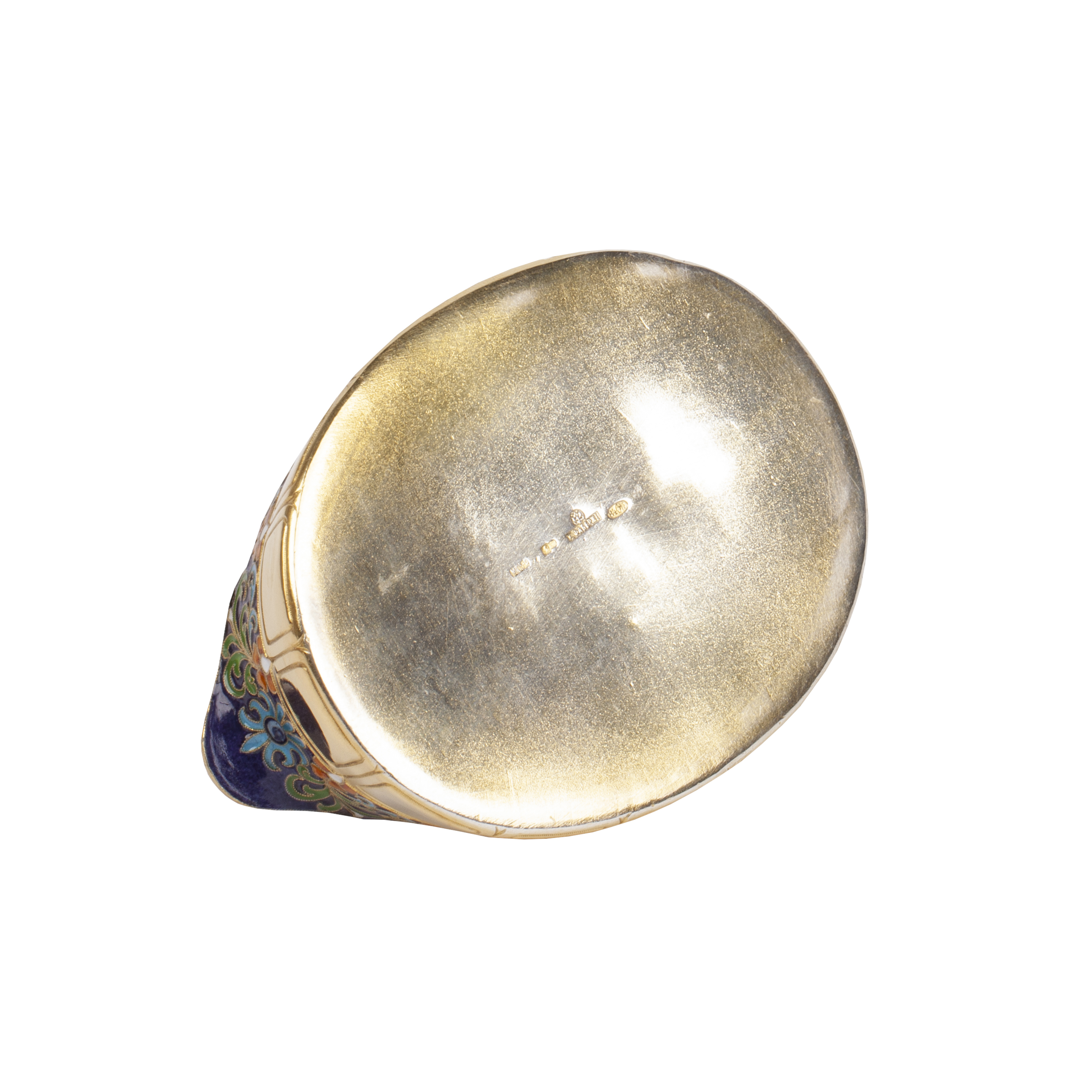
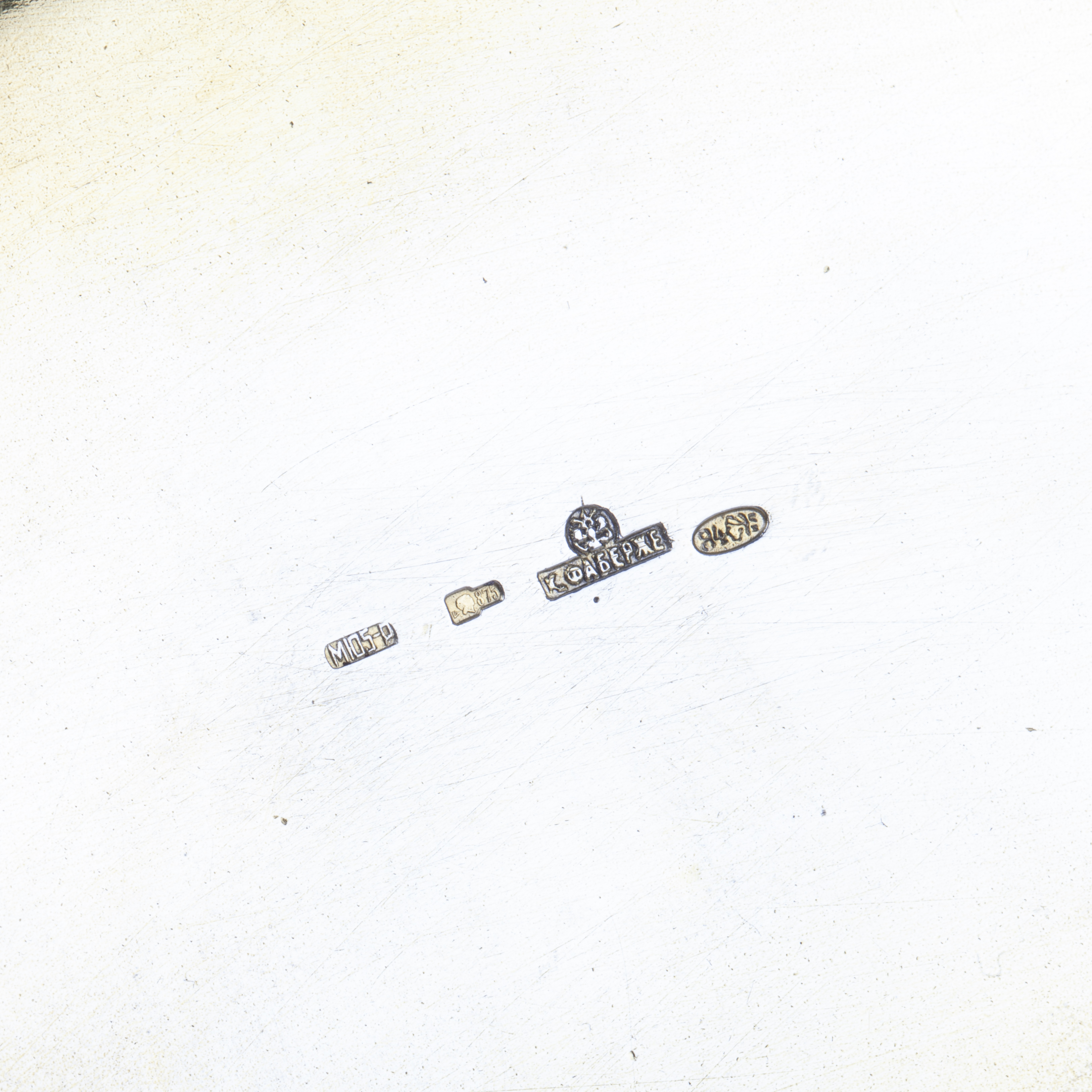
Fabergé Rare Silver Kovsh in Historicist Style, Moscow, 1898–1908
Estimate: 6000-8000€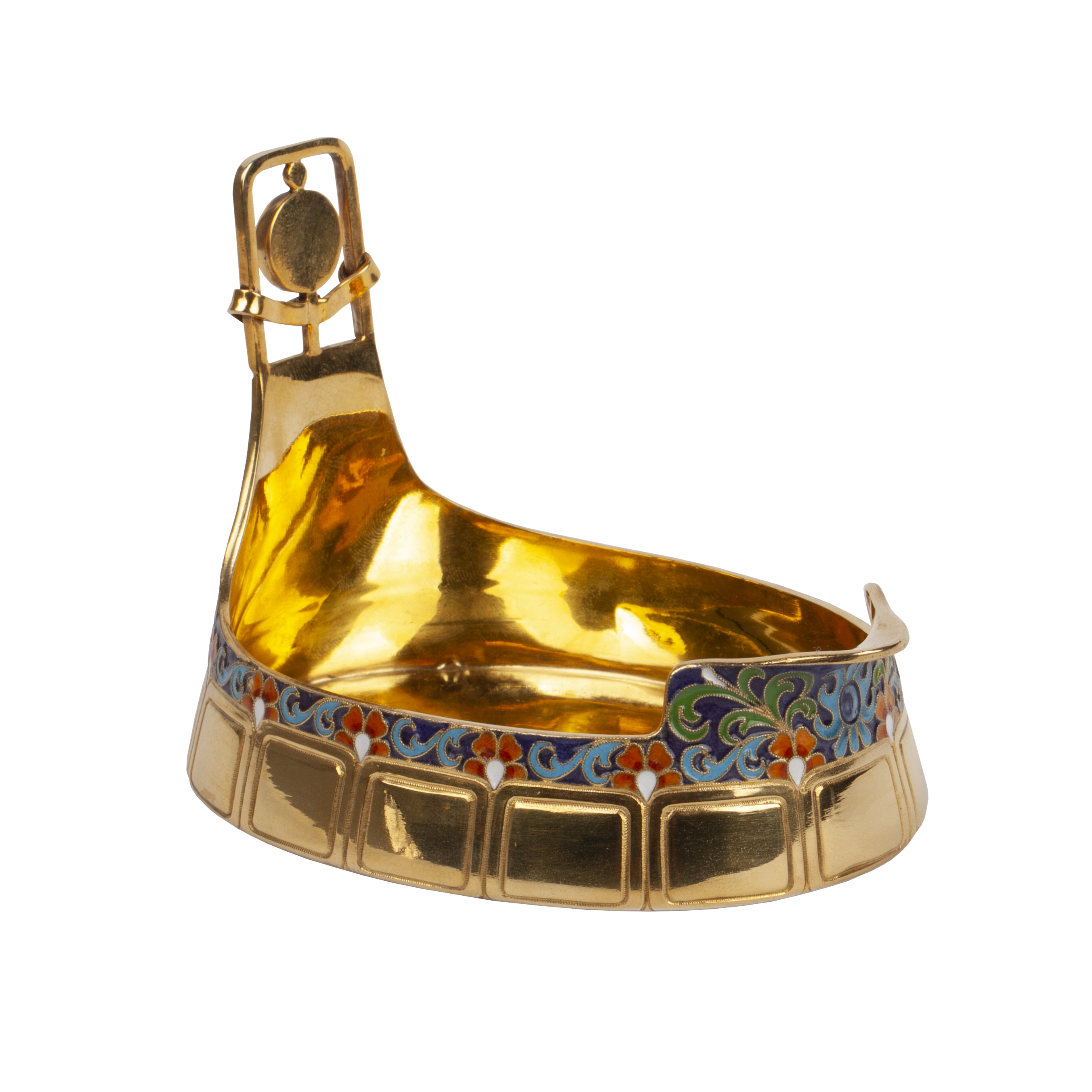
Lot 0187
Fabergé Rare Silver Kovsh in Historicist Style, Moscow, 1898–1908
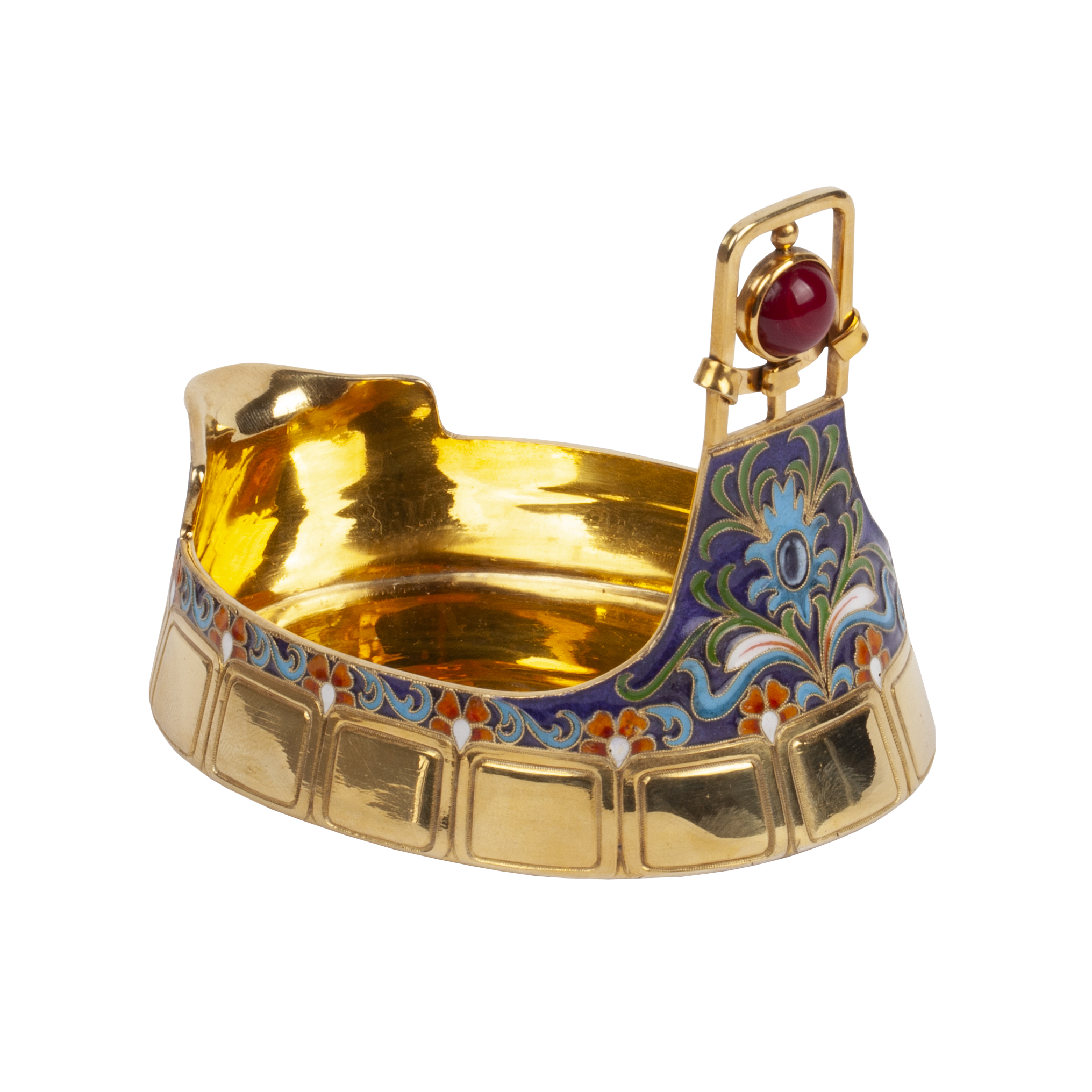
Estimate: 6000-8000€Faberge. A Rare Russian kovsh in historism style. Silver, chasing, gilding, cloisonné enamel, purpurine. Makers mark of «K. Faberge» with Imperial warrant. Moscow, 1898-1908. Of traditional boat-shaped form (ladya) with a handle, the exterior decorated with a frieze of opaque cloisonné enamel in tones of blue, green, and orange against a gilded ground. At the turn of the 20th century, Moscow branch of Fabergé firm embraced the Russian Revival, creating kovshi, cups, icon covers, and tableware inspired by medieval and folk traditions. Silver with filigree, en-plein and polychrome enamels reproduced stylized plant and geometric motifs reminiscent of embroidery and woodcarving. These pieces combined national forms with refined craftsmanship, appealing to the Imperial court and aristocracy. Comparable high-quality silver and enamel kovshes s have been offered at major auctions—see for example a related work in the 2013 Sotheby’s Russian Works of Art & Silver sale, lot 82, and a later example in Sotheby’s 2007 Russian Art sale, lot 570. Dimensions: 10.5 x 7.5 x 7.5 cm. Total weight: 131.2 g.
Starting price: 5000€
Estimate: 6000-8000€
Hammer Price: Not sold -
Lot 0186
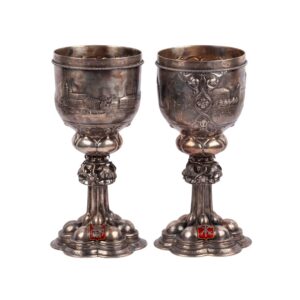
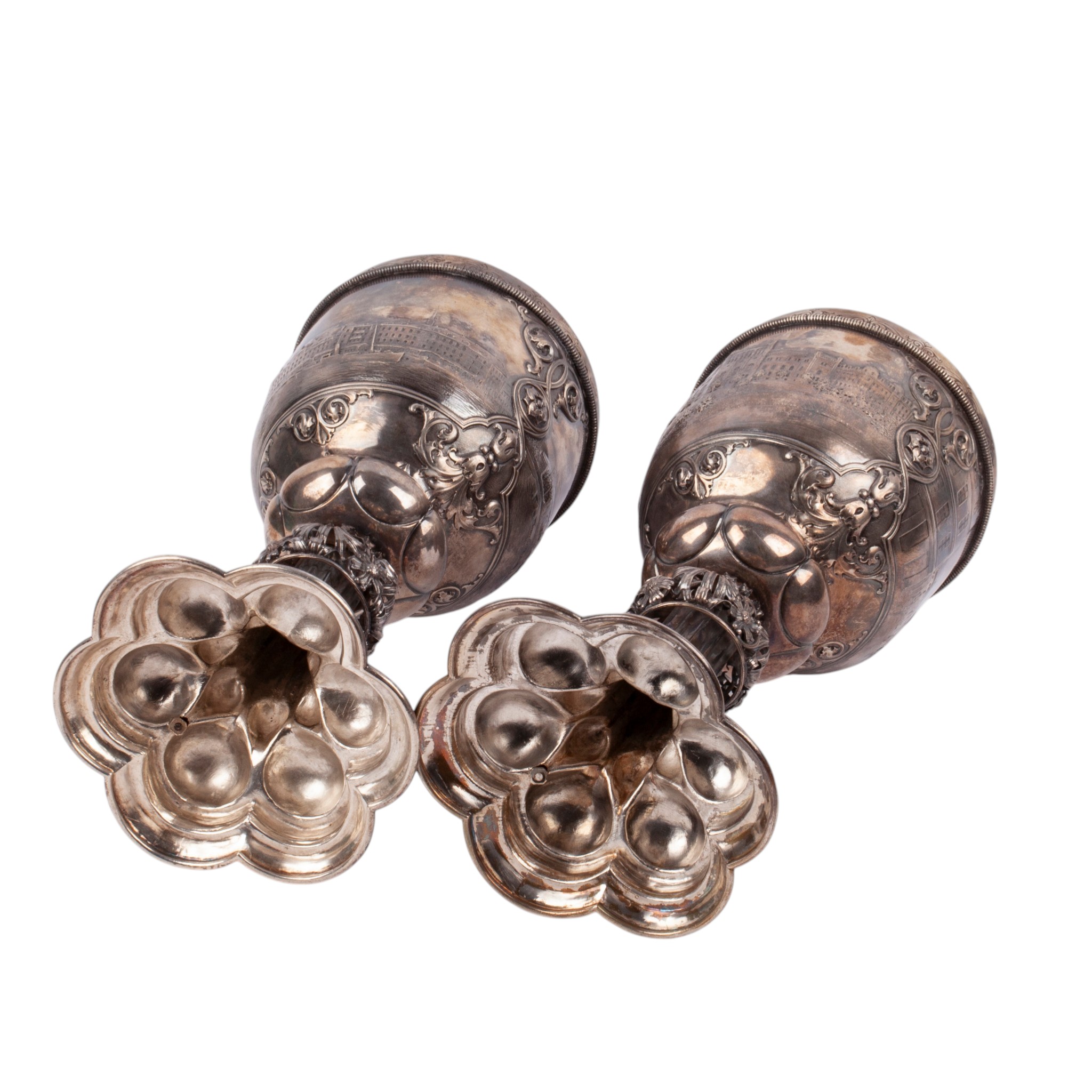
Pair of Russian Commemorative Silver Goblets with Views of Moscow and St Petersburg, Y. Rabinovich, Vilnius, 1896
Estimate: 12000-15000€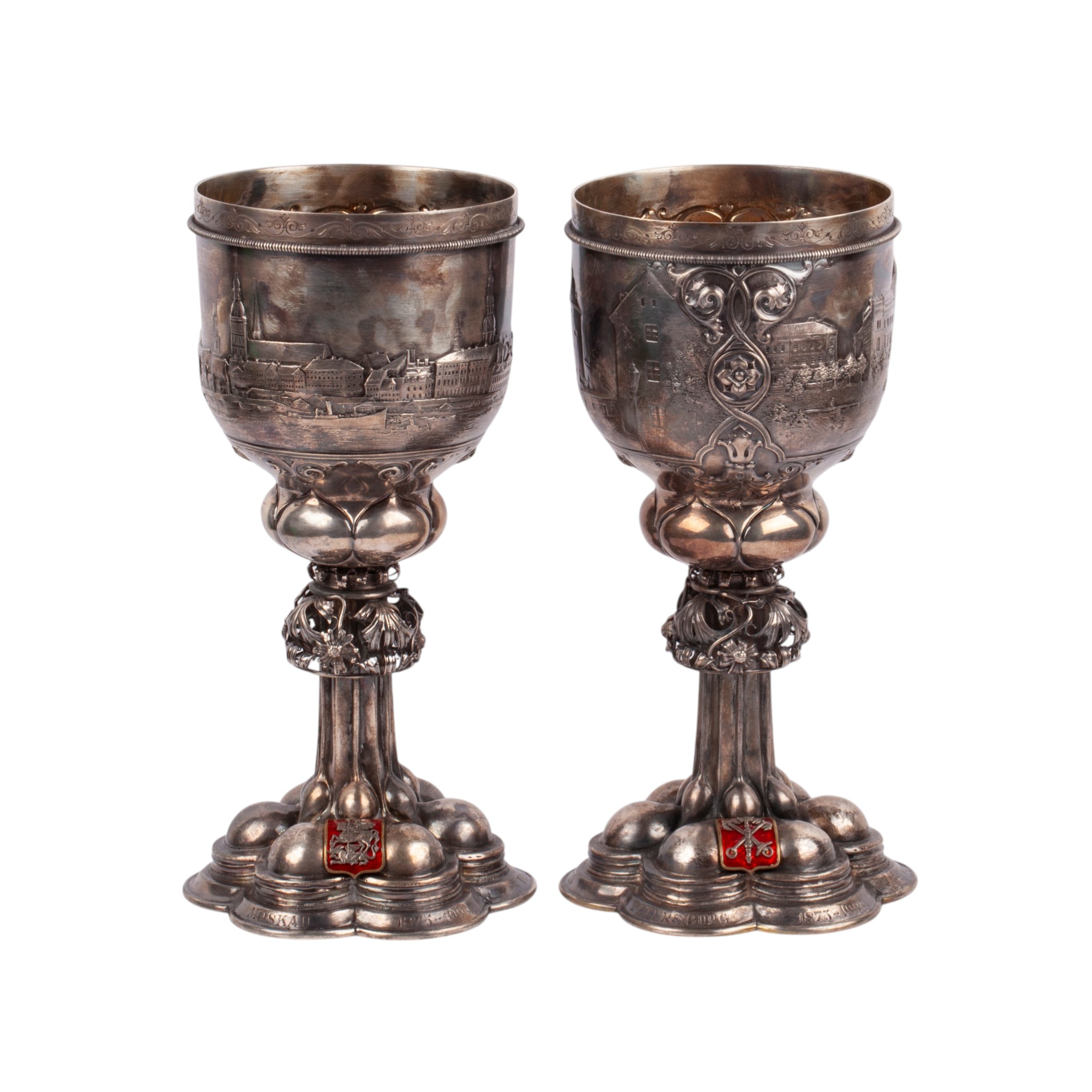
Lot 0186
Pair of Russian Commemorative Silver Goblets with Views of Moscow and St Petersburg, Y. Rabinovich, Vilnius, 1896
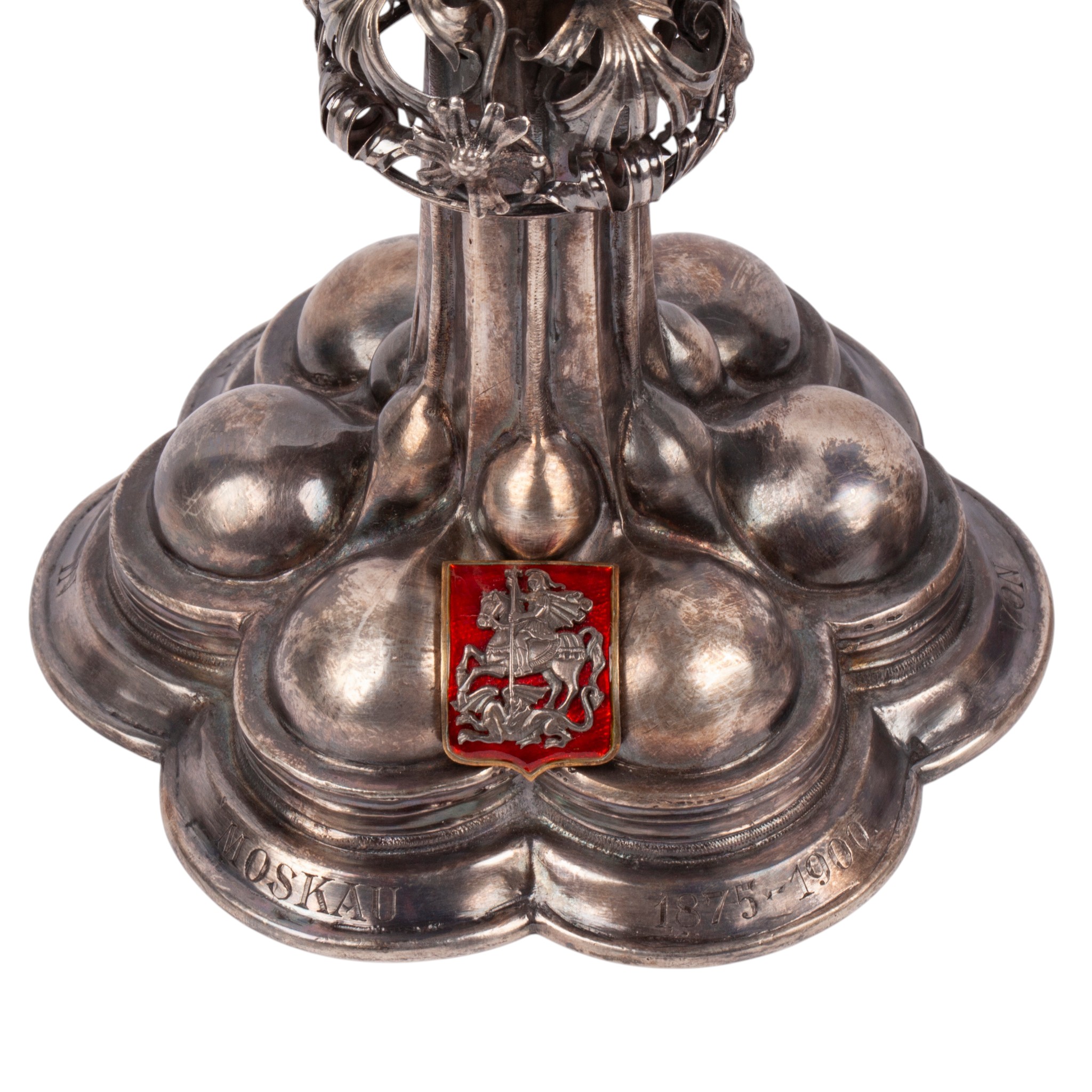
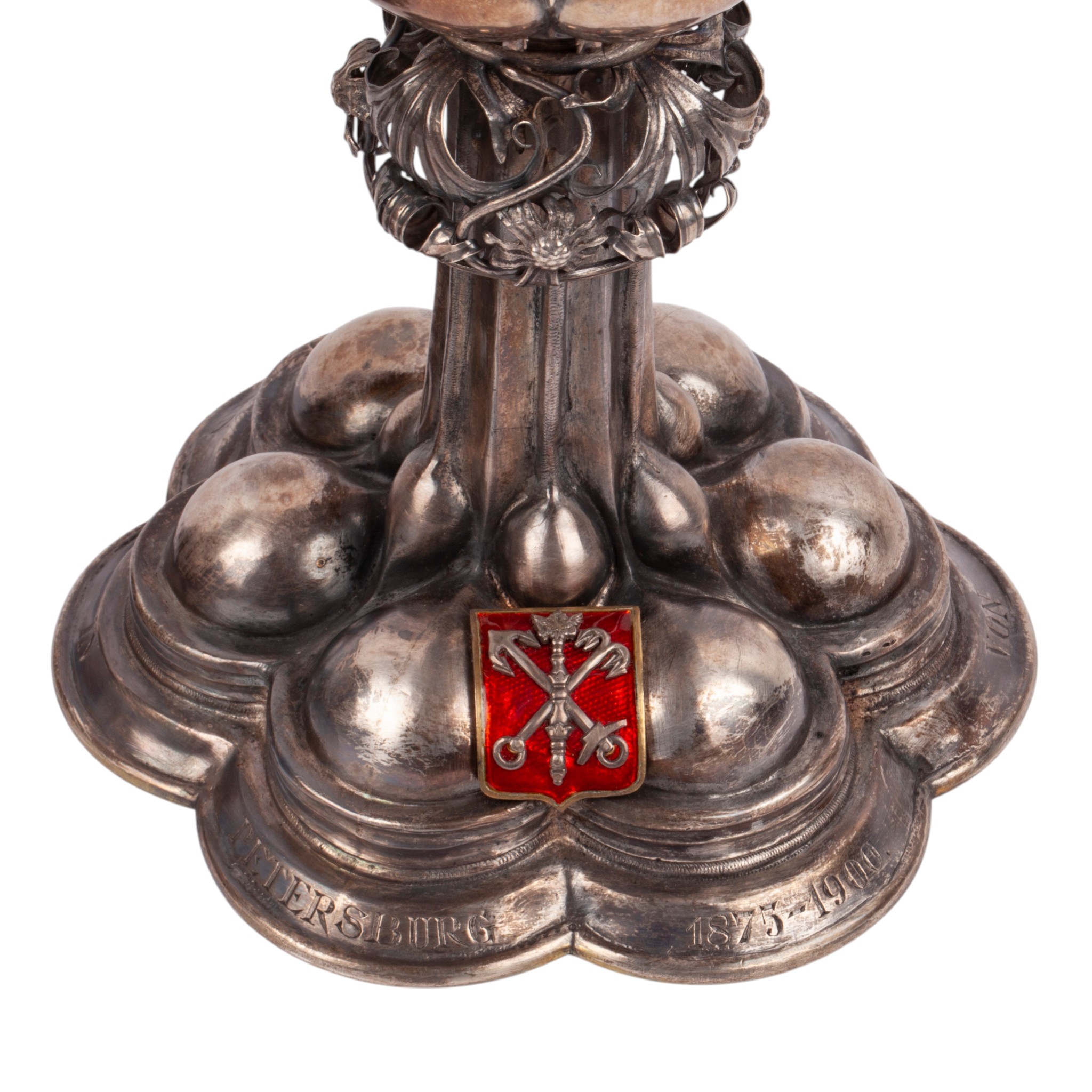
Estimate: 12000-15000€Pair of Russian commemorative goblets with views of Moscow and St Petersburg
Wilna (Vilnius) , workshop of Y. Rabinovich, 1896
Silver, gilding, guiloche enamel; casting, chasing, engraving.
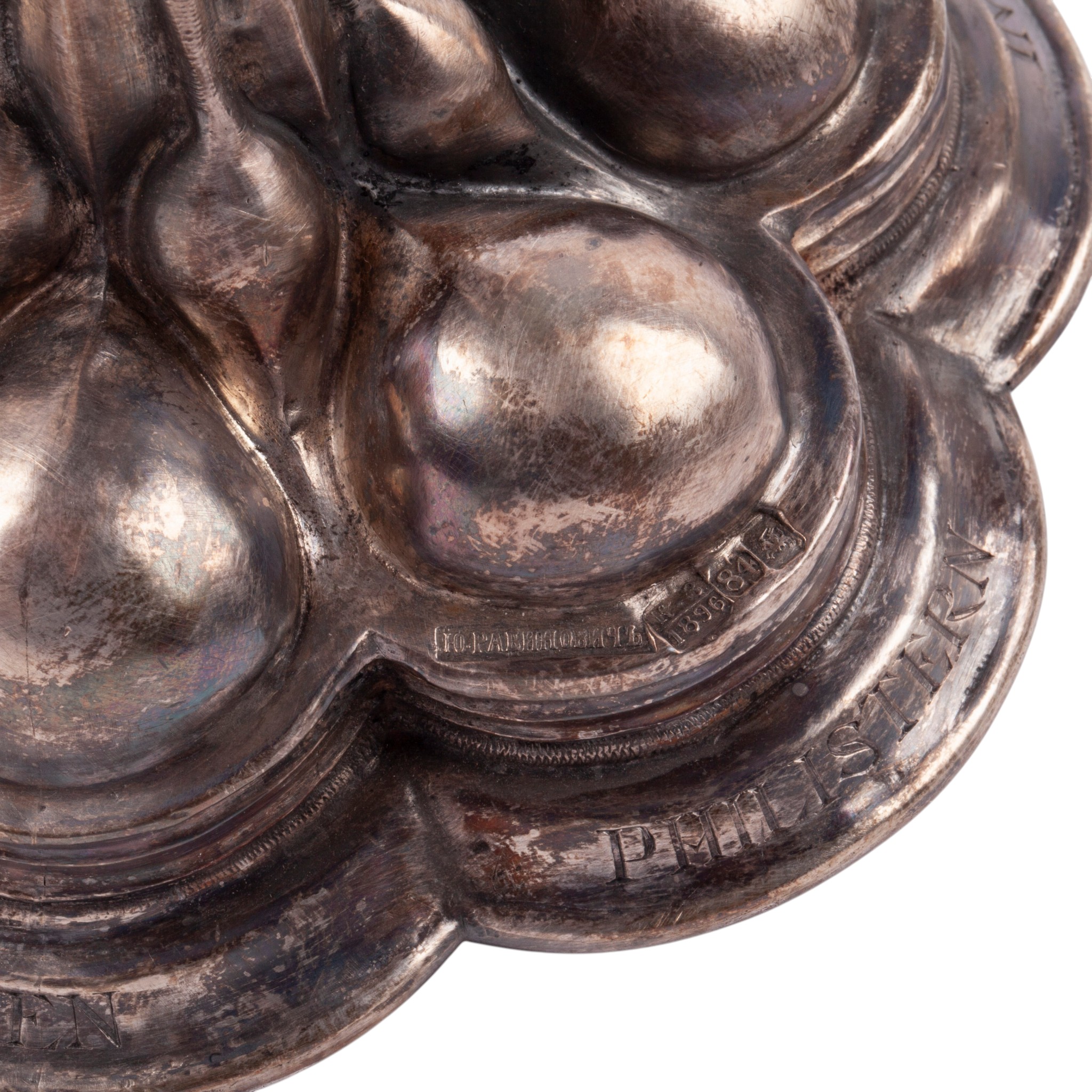
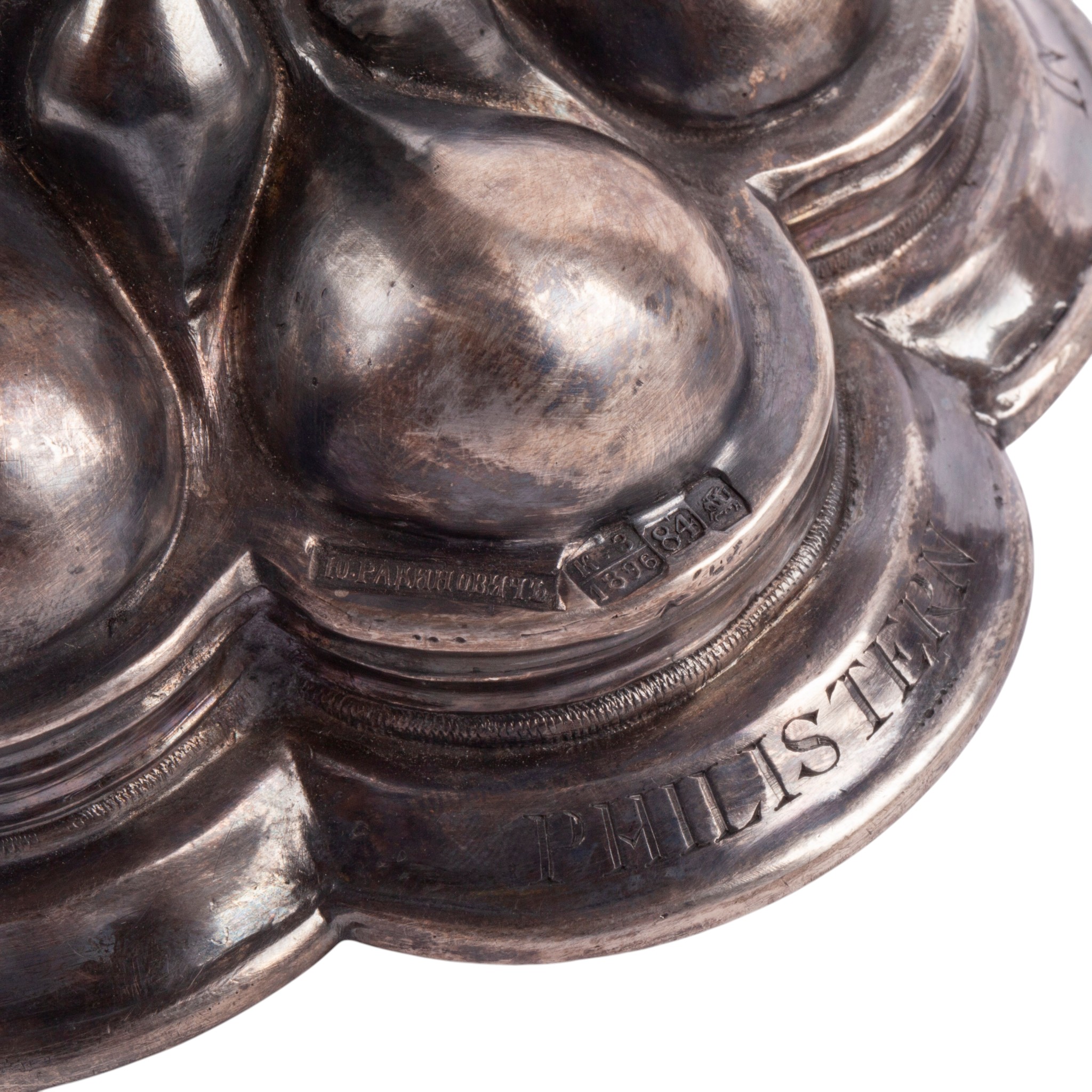
Marked: maker’s mark “Ю. РАБИНОВИЧЬ”; 84 standard silver mark; assay mark. Total weight: 1182 g. Height: 26,5 cm. Diameter: 12,8 cm.
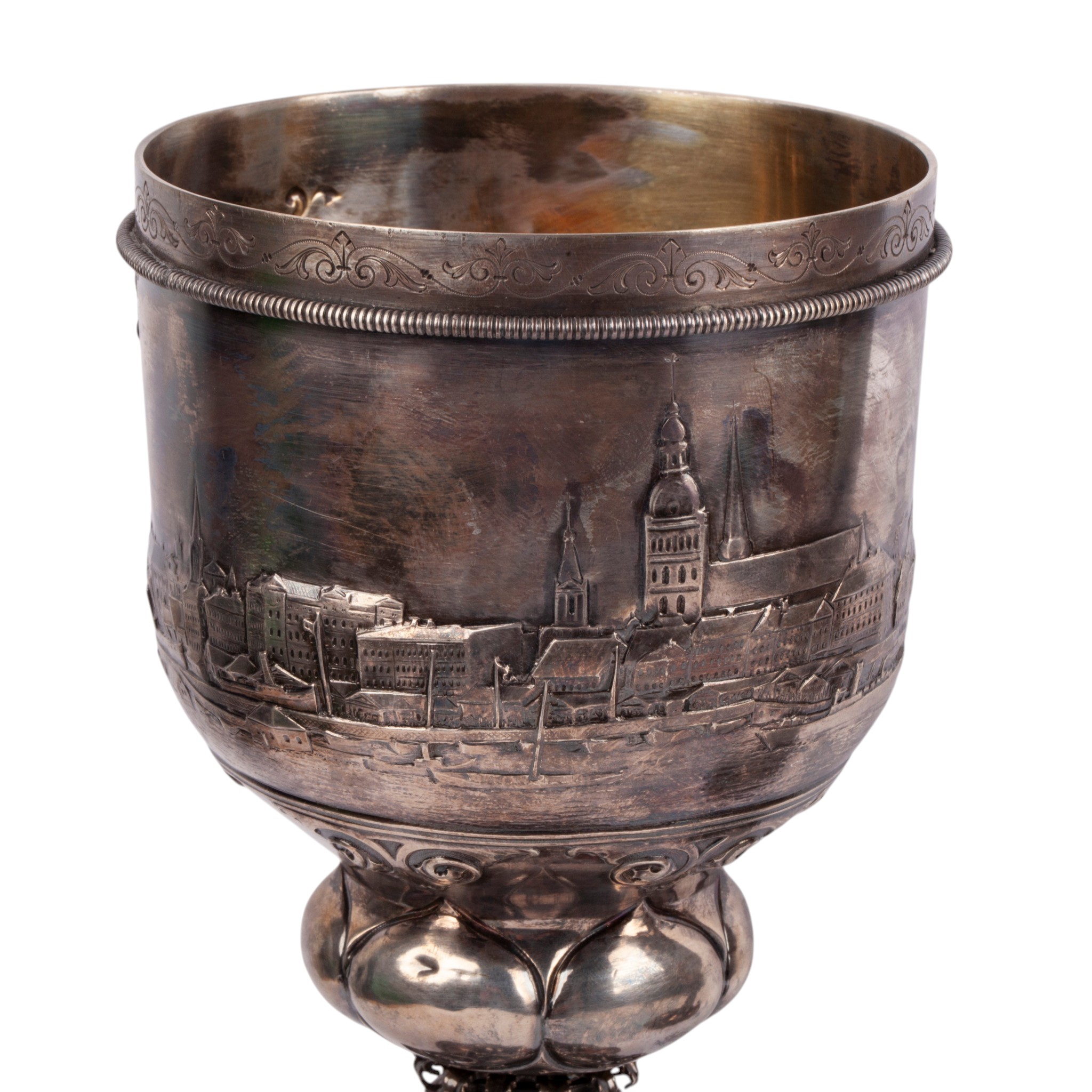
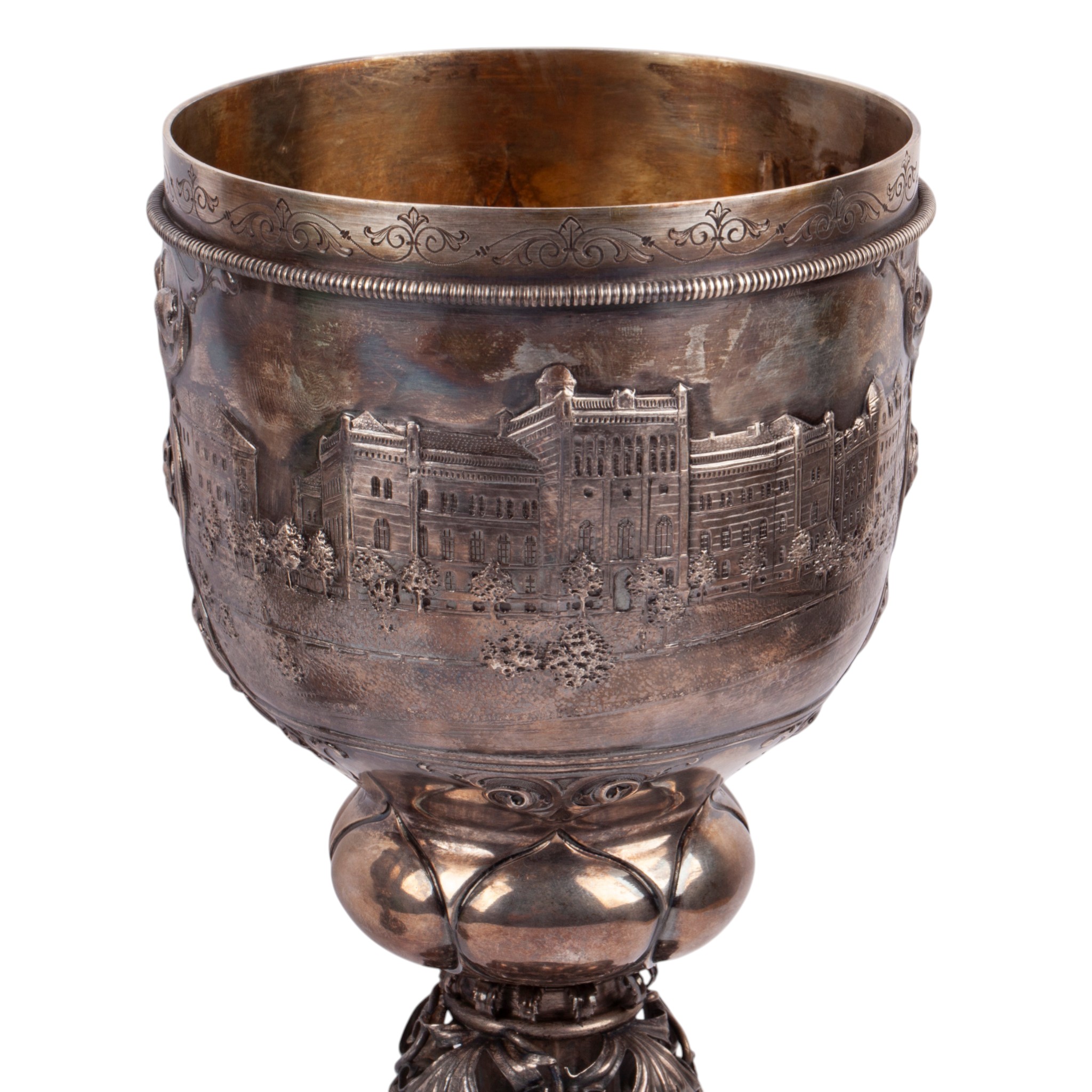
A striking pair of commemorative silver goblets modeled in the Pseudo-Russian style, their forms combining late nineteenth-century historicism with motifs drawn from the ornamental vocabulary of seventeenth-century Russian silverwork. Each goblet is raised on a broad lobed foot and a slender stem enriched with openwork foliate ornament, while the lower body is articulated by bulbous gadroons recalling the plastic, spoon-like chased decoration characteristic of old Russian ceremonial plate (potirs).
The principal decorative field of each vessel is occupied by finely chased panoramic city views. One goblet is dedicated to Moscow, the other to St Petersburg, as indicated by the engraved inscriptions (in German) on the foot rims and by the applied enamelled shields bearing the respective civic emblems. The relief views are rendered with notable topographical clarity, translating urban silhouettes and monumental architecture into a continuous frieze encircling the cups. These commemorative images are paired with scrolling ornamental frames and stylised floral details that reinforce the historicising character of the design. The pair also belongs to a broader and important tradition of Jewish silversmithing in Eastern Europe. Writing on Jewish jewellers of the region, the Ukrainian art historian Pavlo Zholtovsky noted that their works were distinguished by delicacy, elegance, and, above all, harmony of form and ornament. That observation is especially apt here. Jewish masters across the lands of the former Polish-Lithuanian Commonwealth were celebrated for their command of chasing, filigree, and engraving, producing both secular luxury objects and ritual silver. Often working outside the formal guild structure, they preserved workshop practices marked by technical finesse and ornamental sensitivity. In this context, the work of Rabinovich stands within a long and distinguished lineage of Jewish metalworkers active in Vilna and throughout Eastern Europe.
These goblets are therefore significant not only as examples of late Imperial commemorative silver, but also as works that embody several intersecting histories: the Russian national revival in the decorative arts, the representation of the empire’s two capitals, and the enduring contribution of Jewish silversmiths to the artistic culture of Eastern Europe.Starting price: 10000€
Estimate: 12000-15000€
Hammer Price: Not sold