
Lot 0157
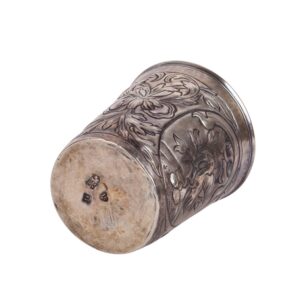
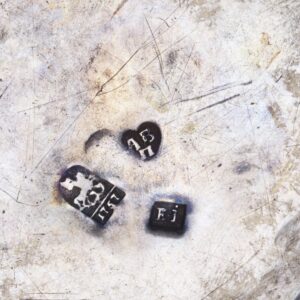
Russian Silver Stopka (Charka), Moscow, Russia, 1757, 18th Century
Estimate: 1000-1200€
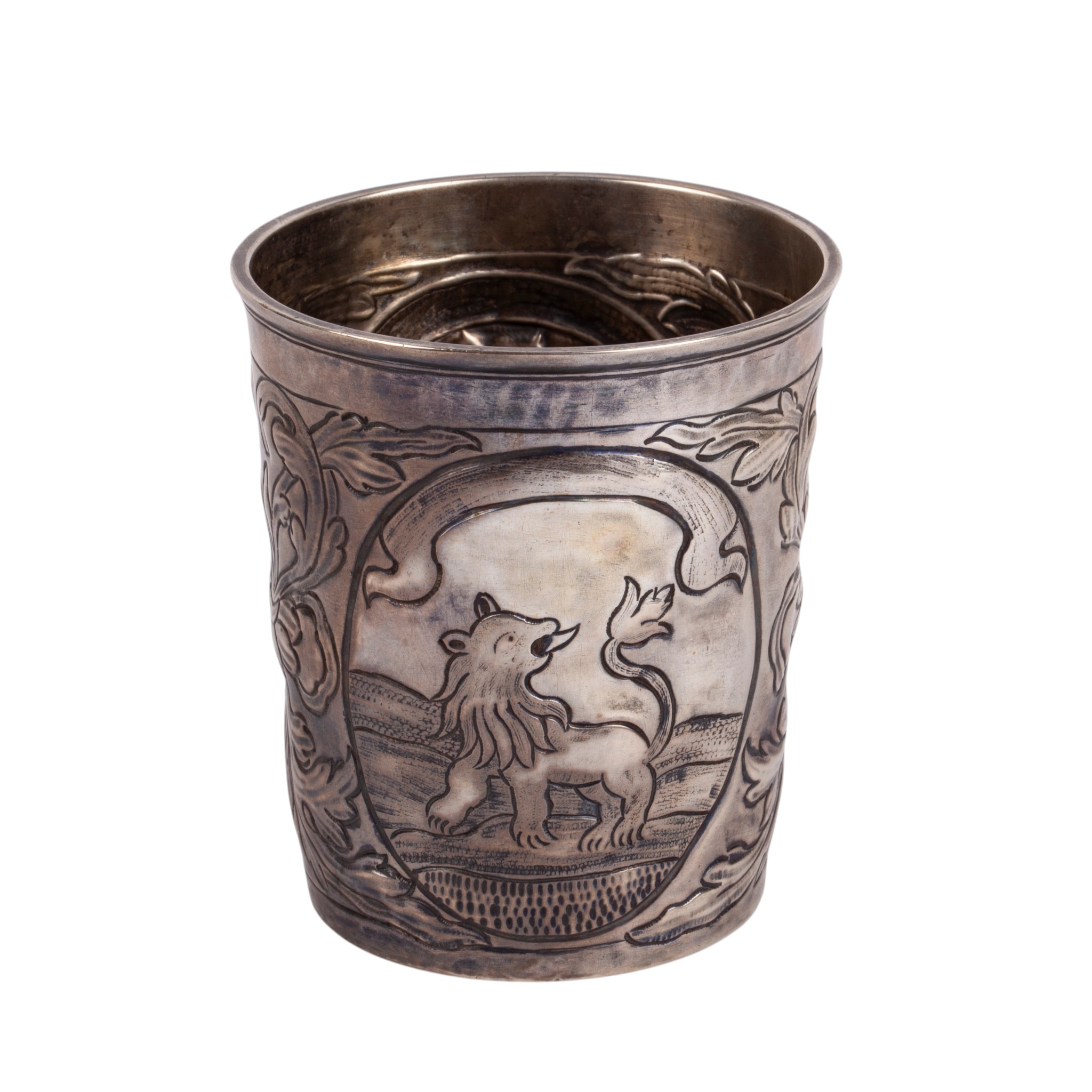
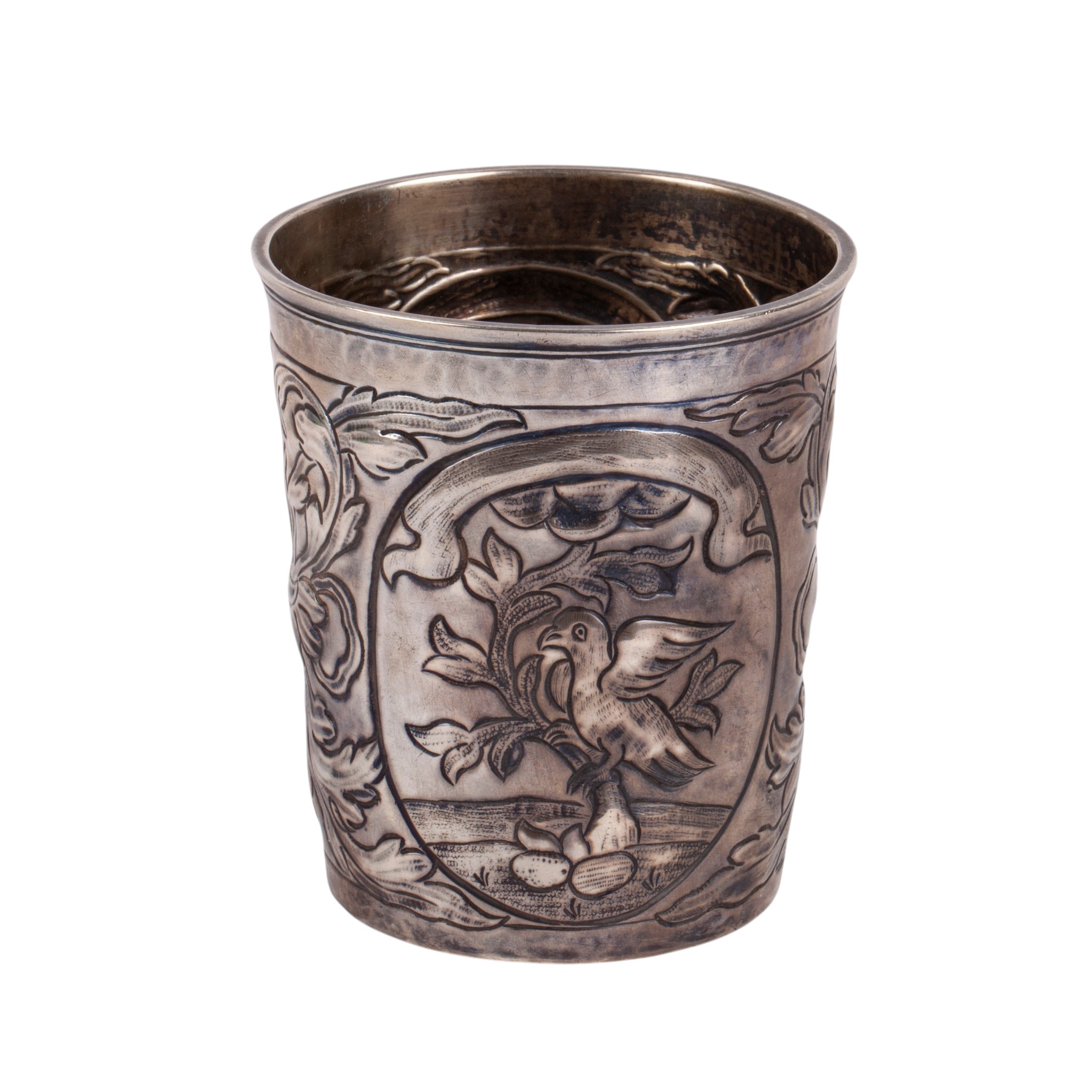
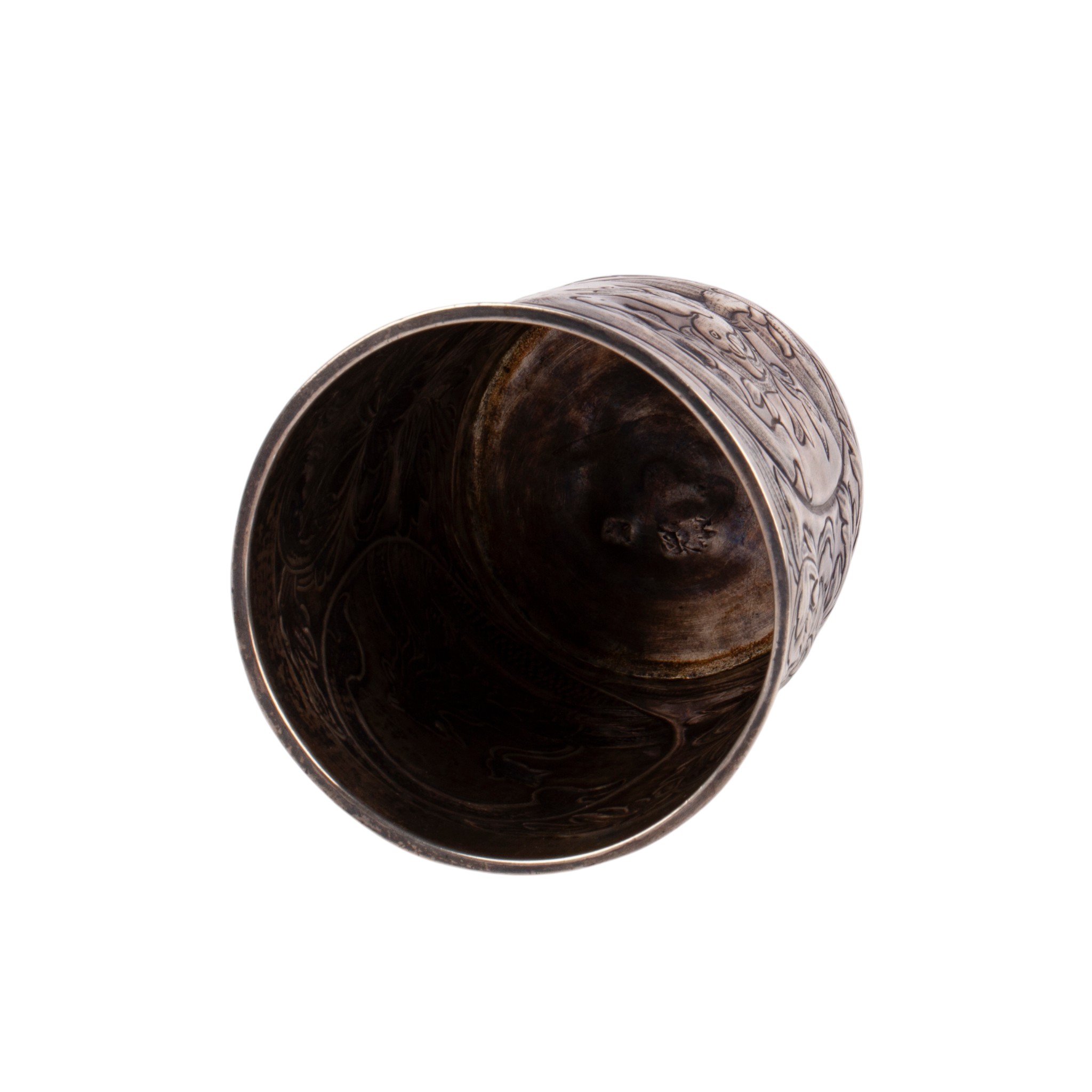
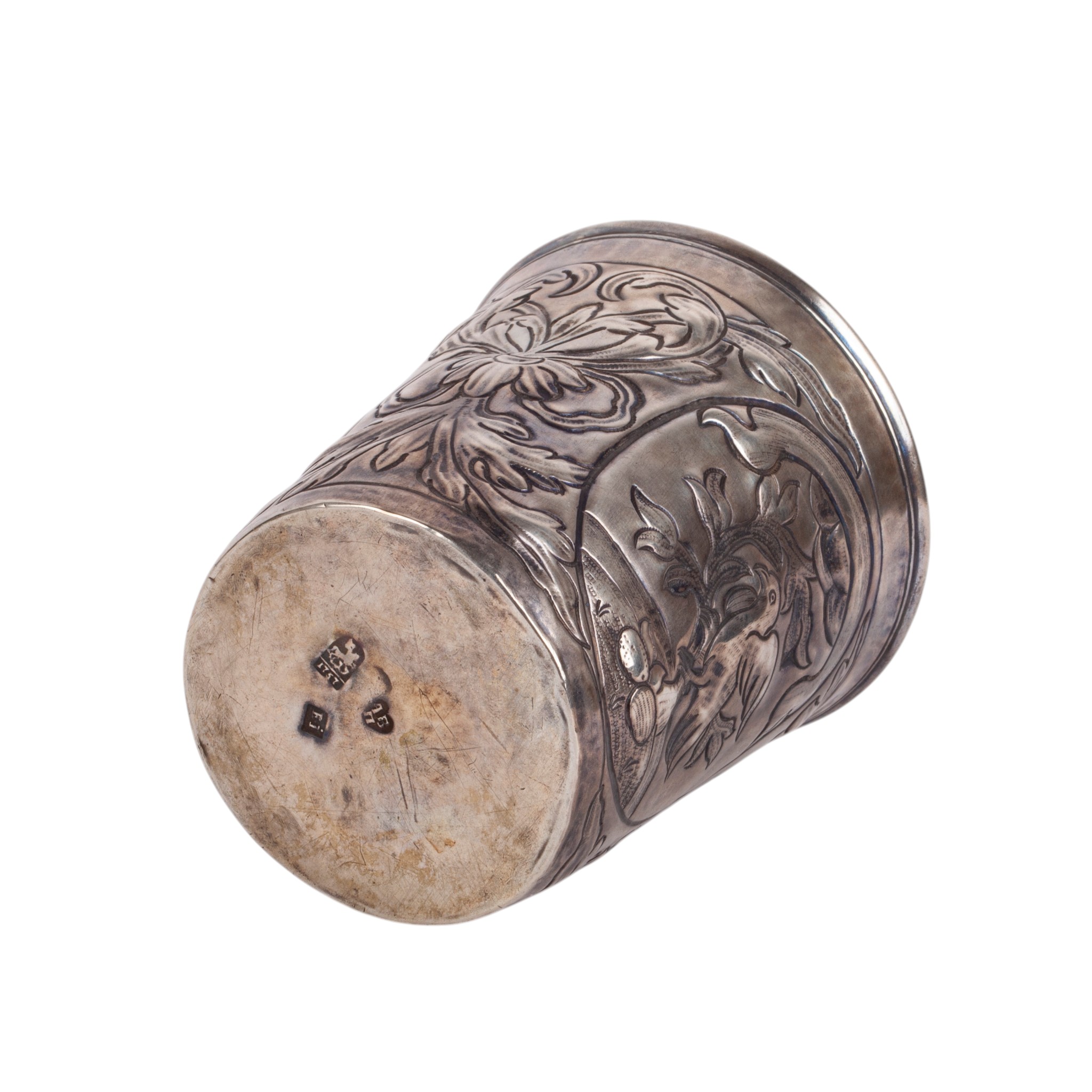
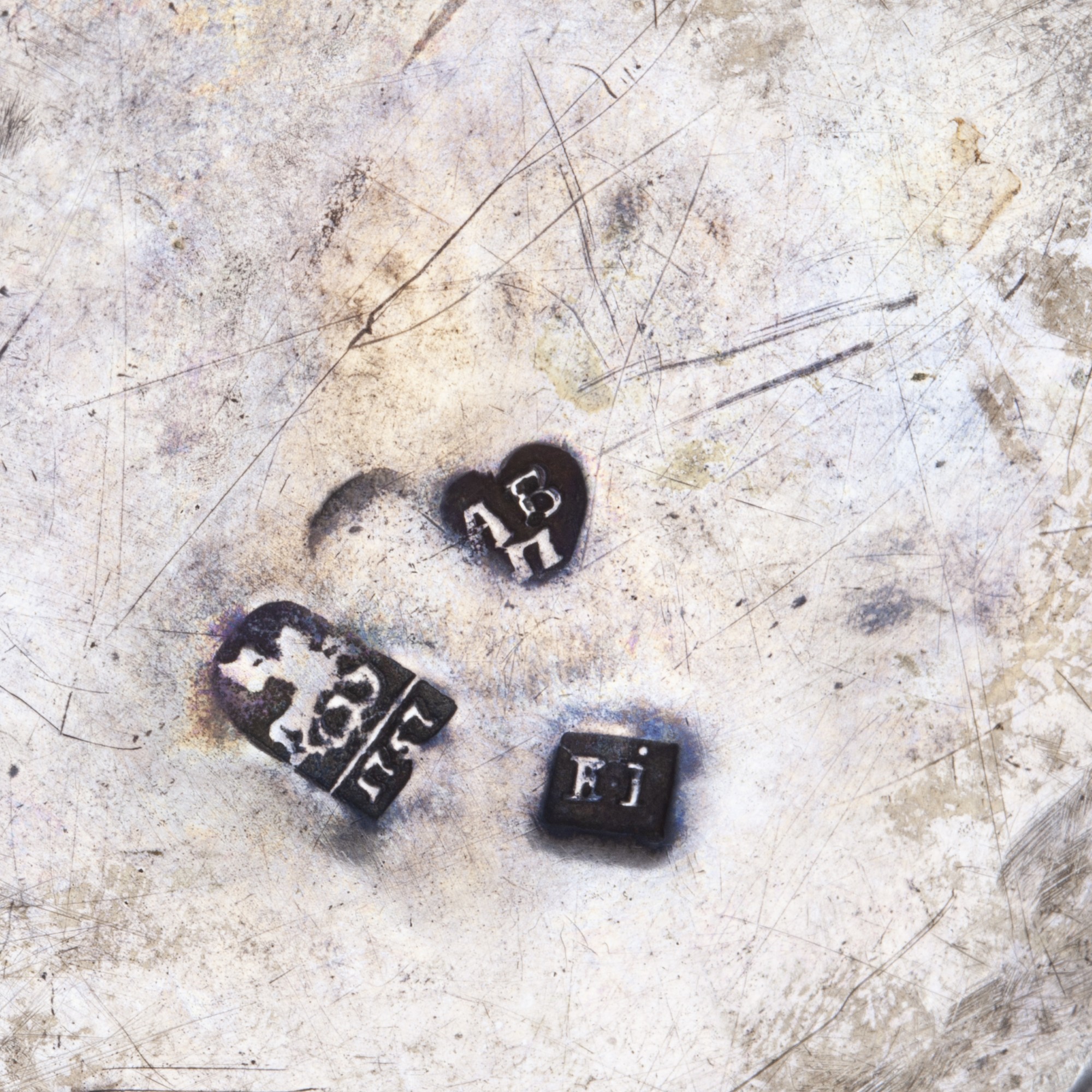
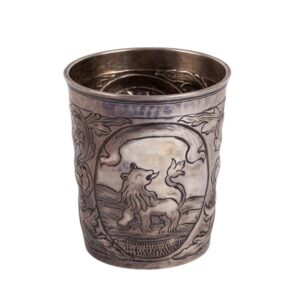
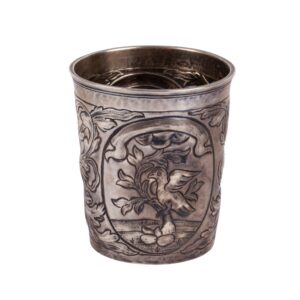
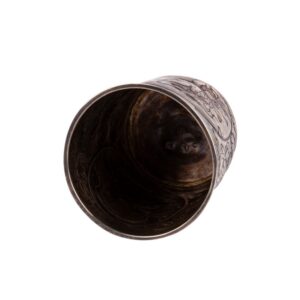
Russian silver stopka / charka, Moscow, 1757, 18th century. Of tapering cylindrical form, finely chased and engraved with rocaille ornament and cartouches enclosing allegorical and heraldic-style motifs, including a lion and a bird among floral scrollwork. A fine mid-18th century drinking vessel with gilt interior.
Height: 8 cm
Weight: 84.4 g
Starting price: 700€
Estimate: 1000-1200€
Hammer Price: Not sold
Related Lots
-
Lot 0159
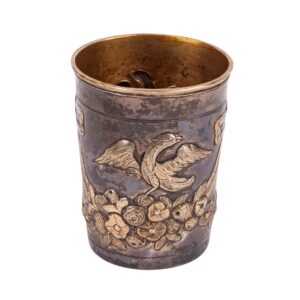
Russian Silver Stopka (Charka), Moscow, Russia, 1781, 18th Century
Estimate: 1100-1300€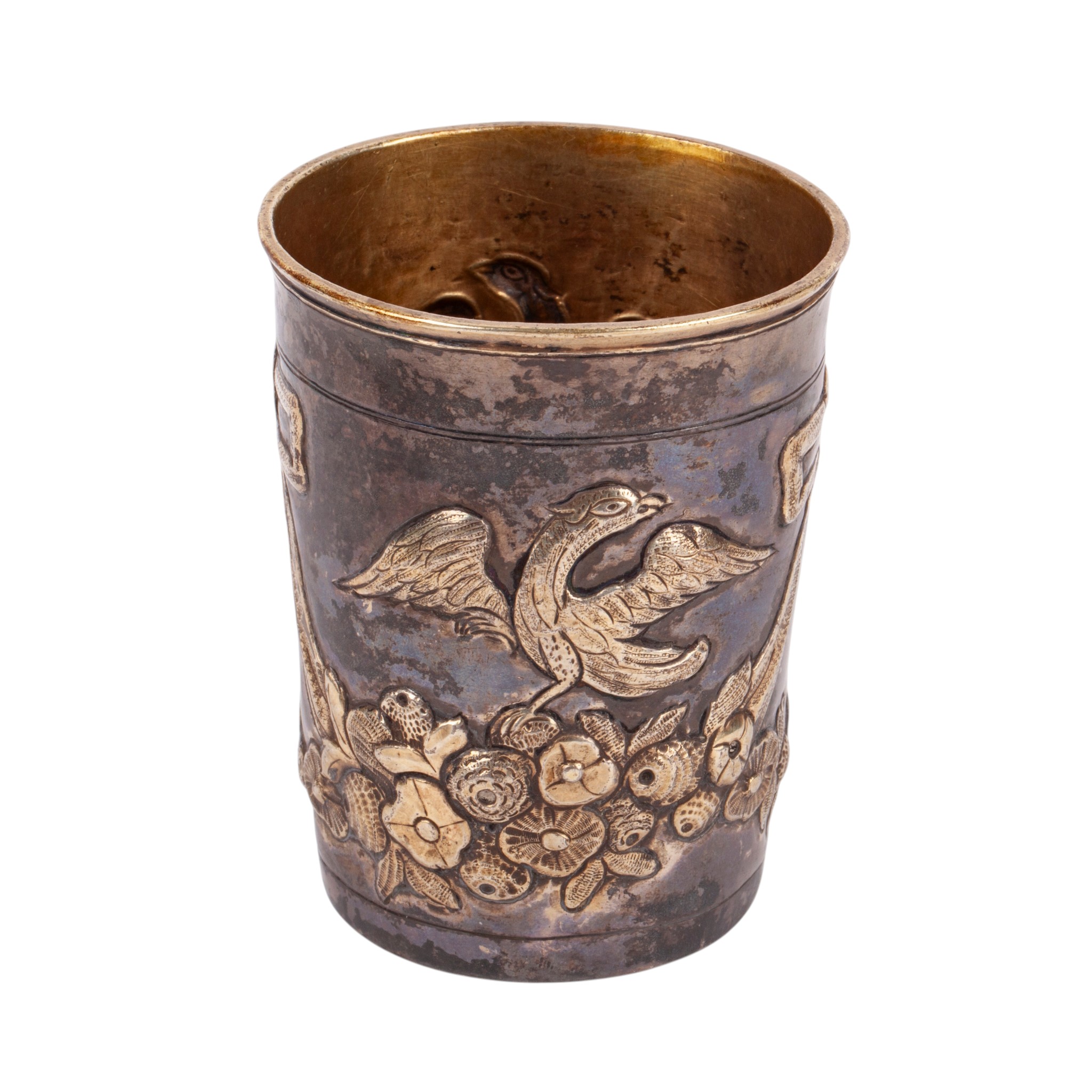
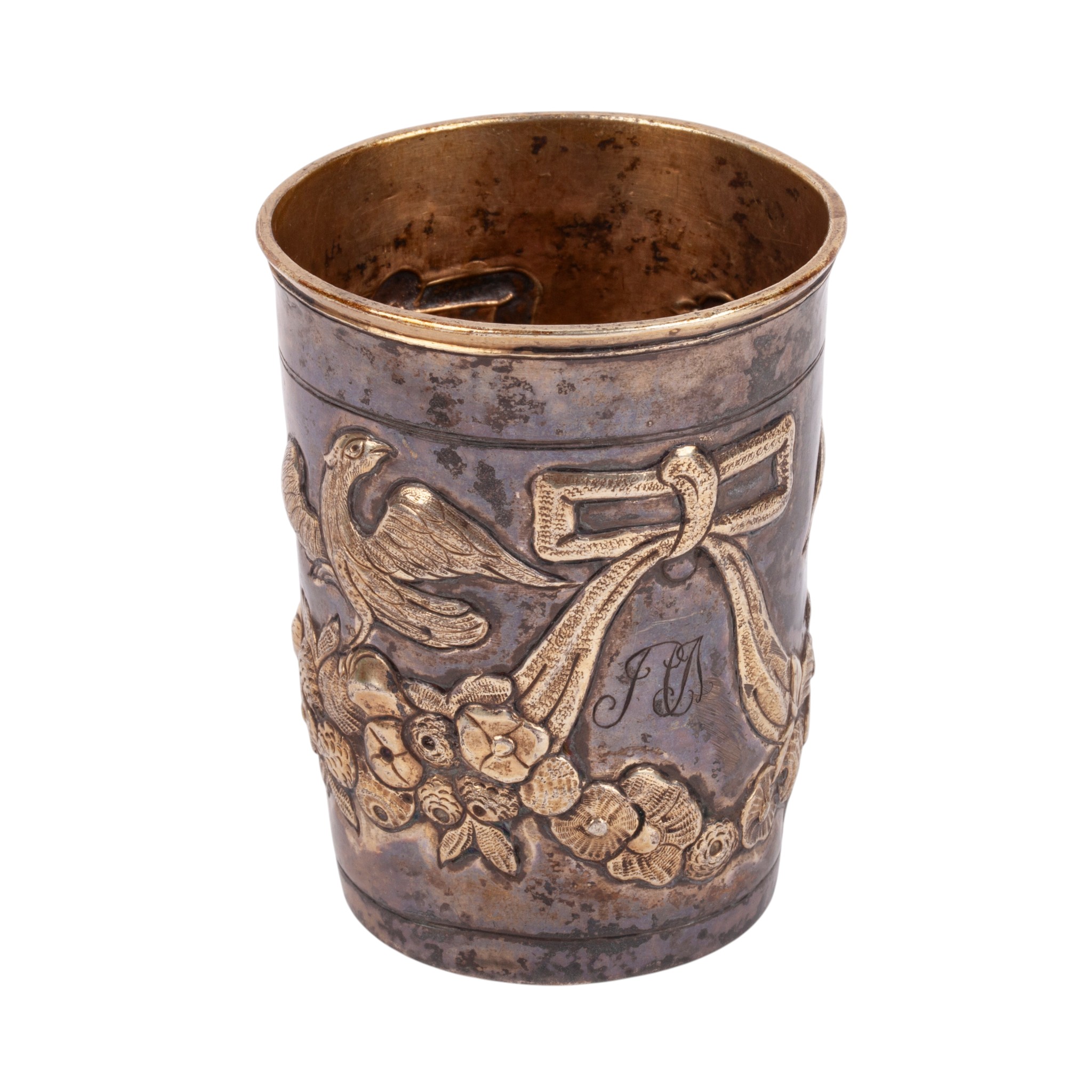
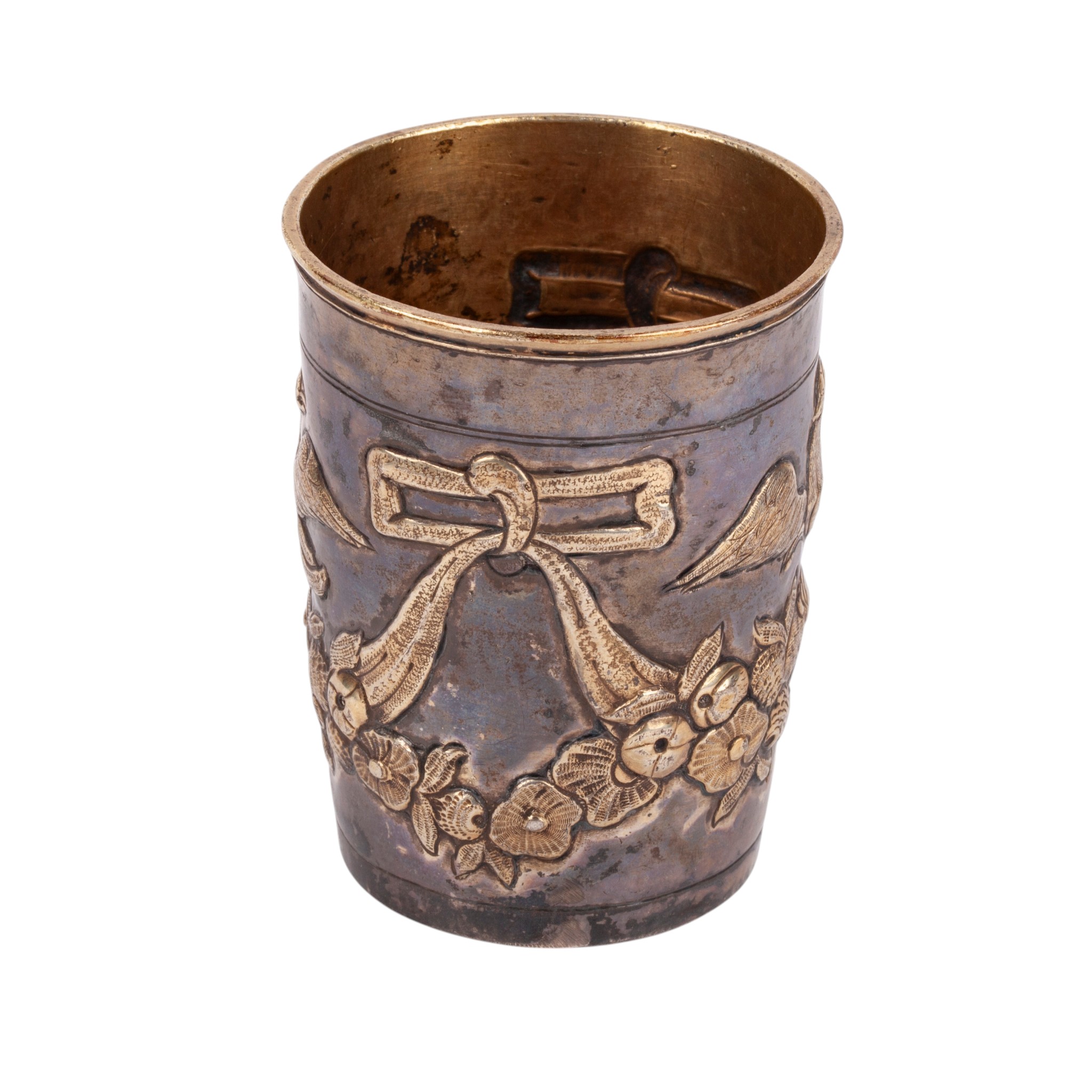
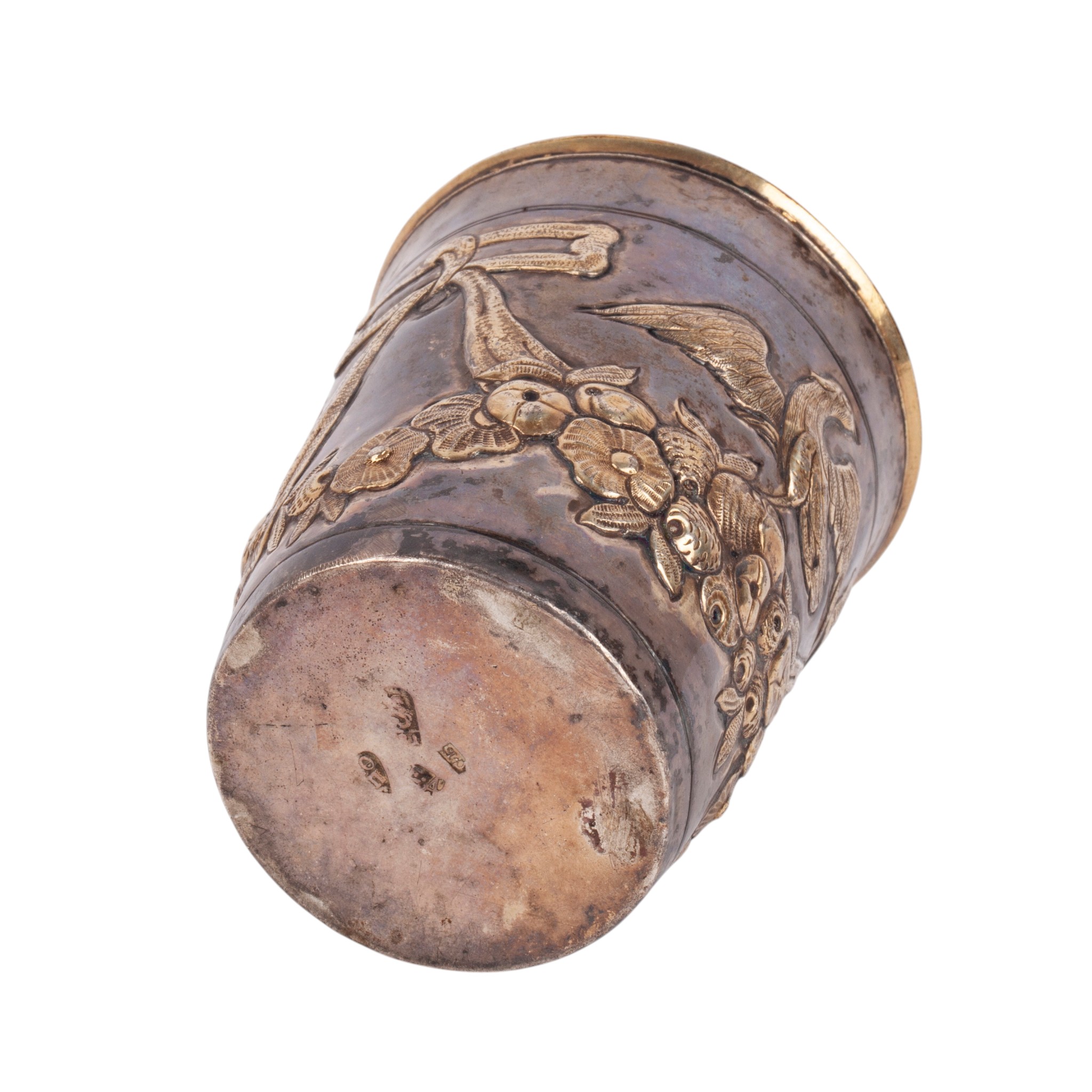
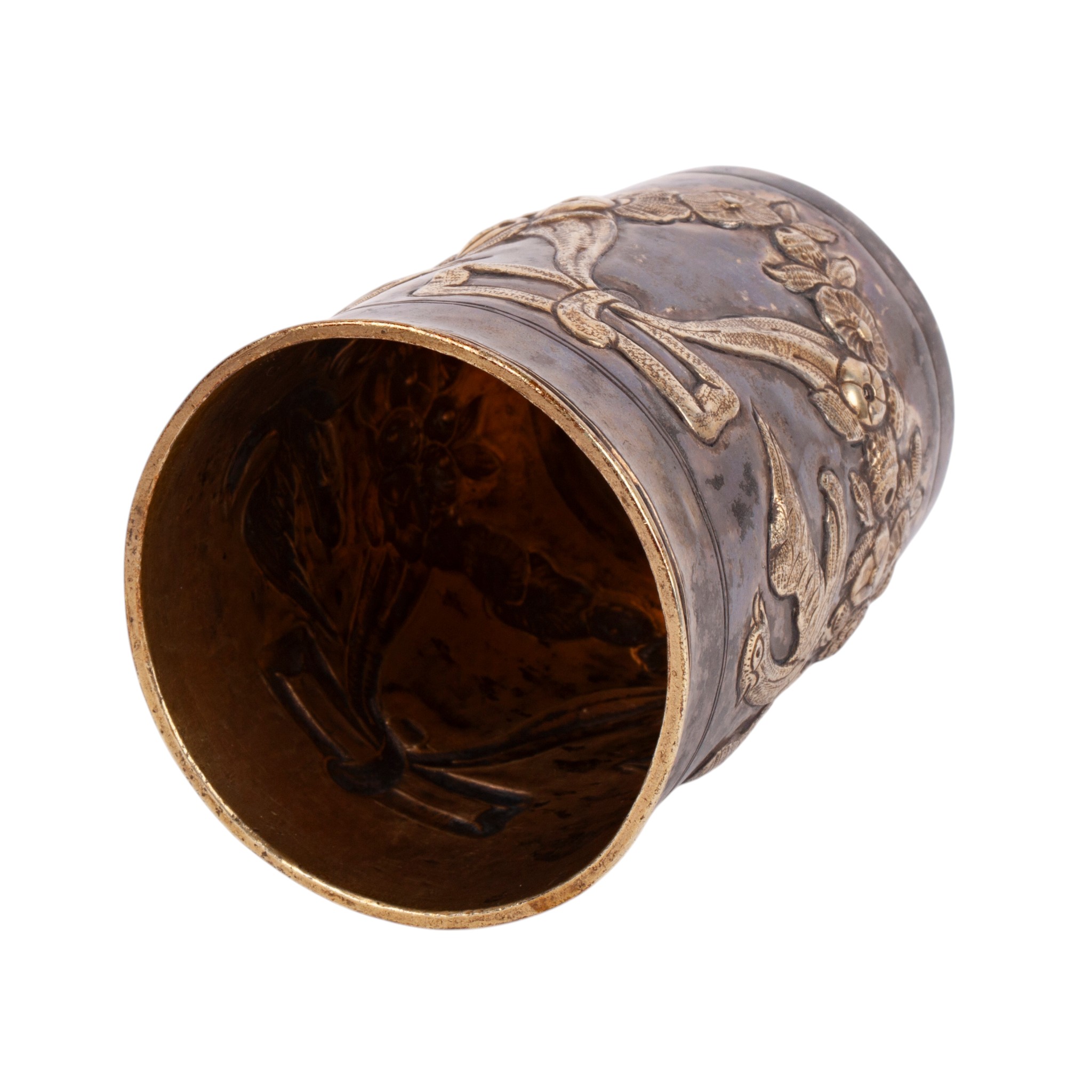
Lot 0159
Russian Silver Stopka (Charka), Moscow, Russia, 1781, 18th Century
Estimate: 1100-1300€Russian silver stopa / charka, Moscow, 1781, 18th century. Of cylindrical form with gilt interior, richly decorated in relief with birds, ribbons and floral garlands, and engraved with monogram PA. Marked to the base.
Height: 8 cm
Weight: 75 gStarting price: 900€
Estimate: 1100-1300€
Hammer Price: Not sold -
Lot 0156
Russian Silver-Gilt and Cloisonné Enamel Beaker Set in Case (2 pcs), Moscow, 1908–1917
Estimate: 12000-15000€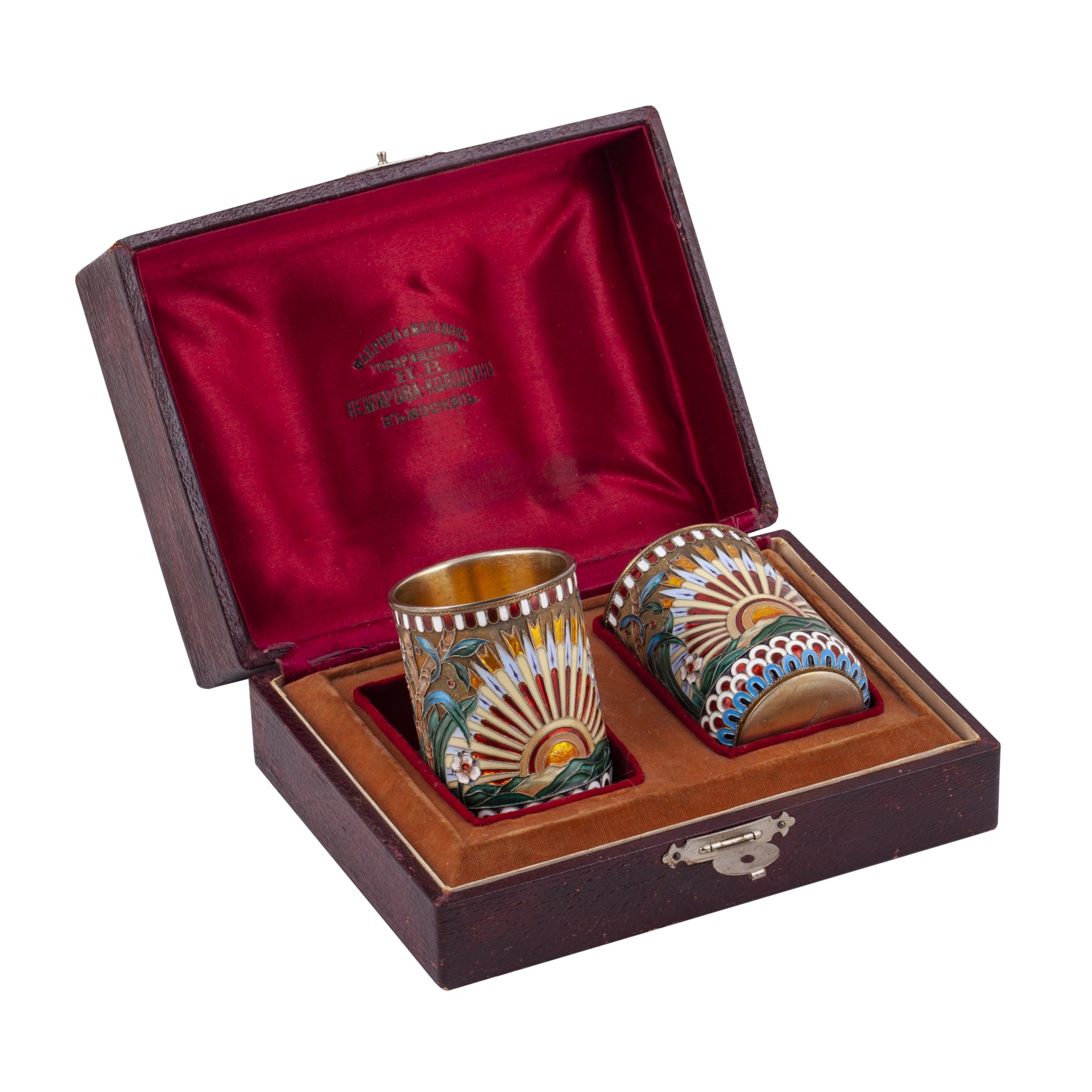
Lot 0156
Russian Silver-Gilt and Cloisonné Enamel Beaker Set in Case (2 pcs), Moscow, 1908–1917
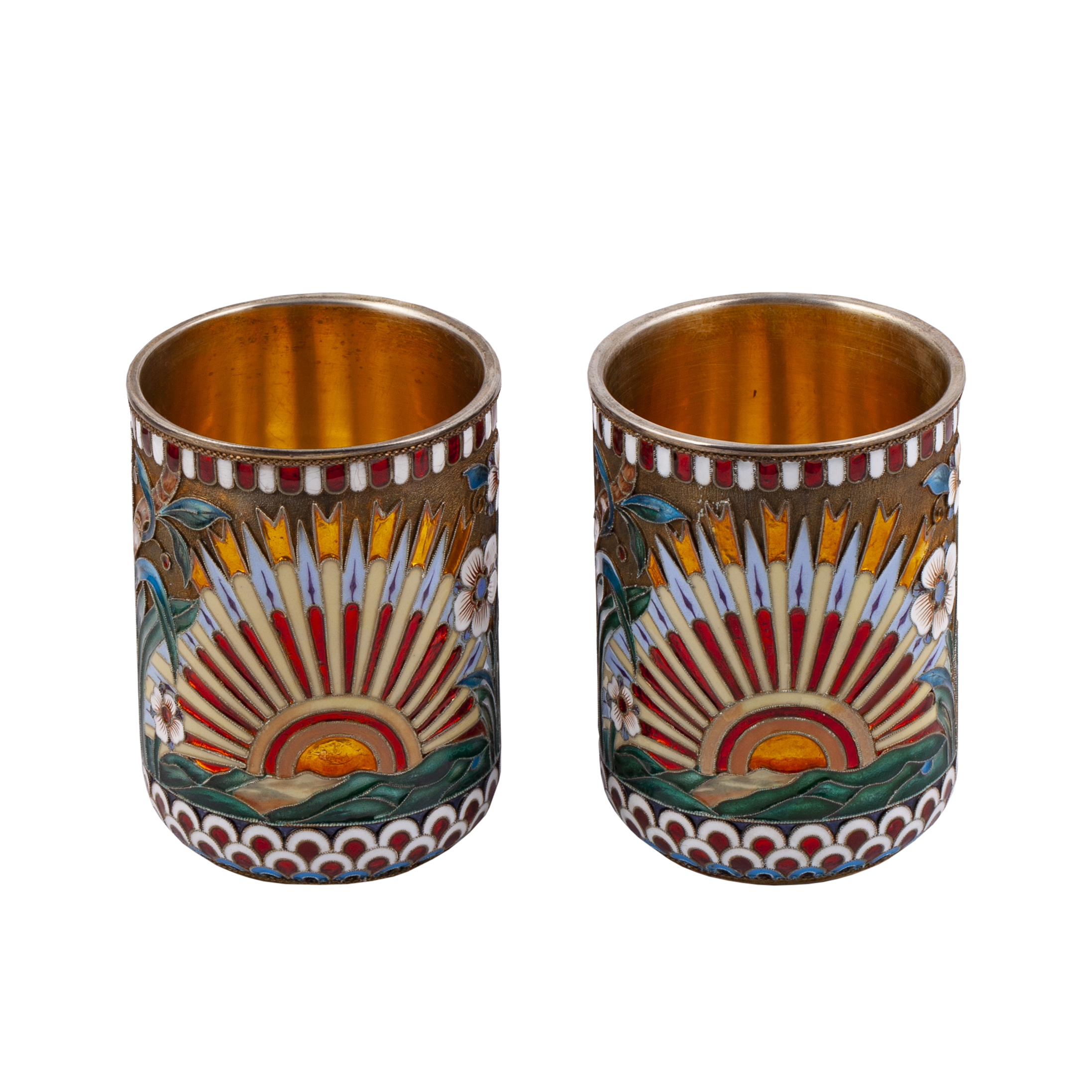
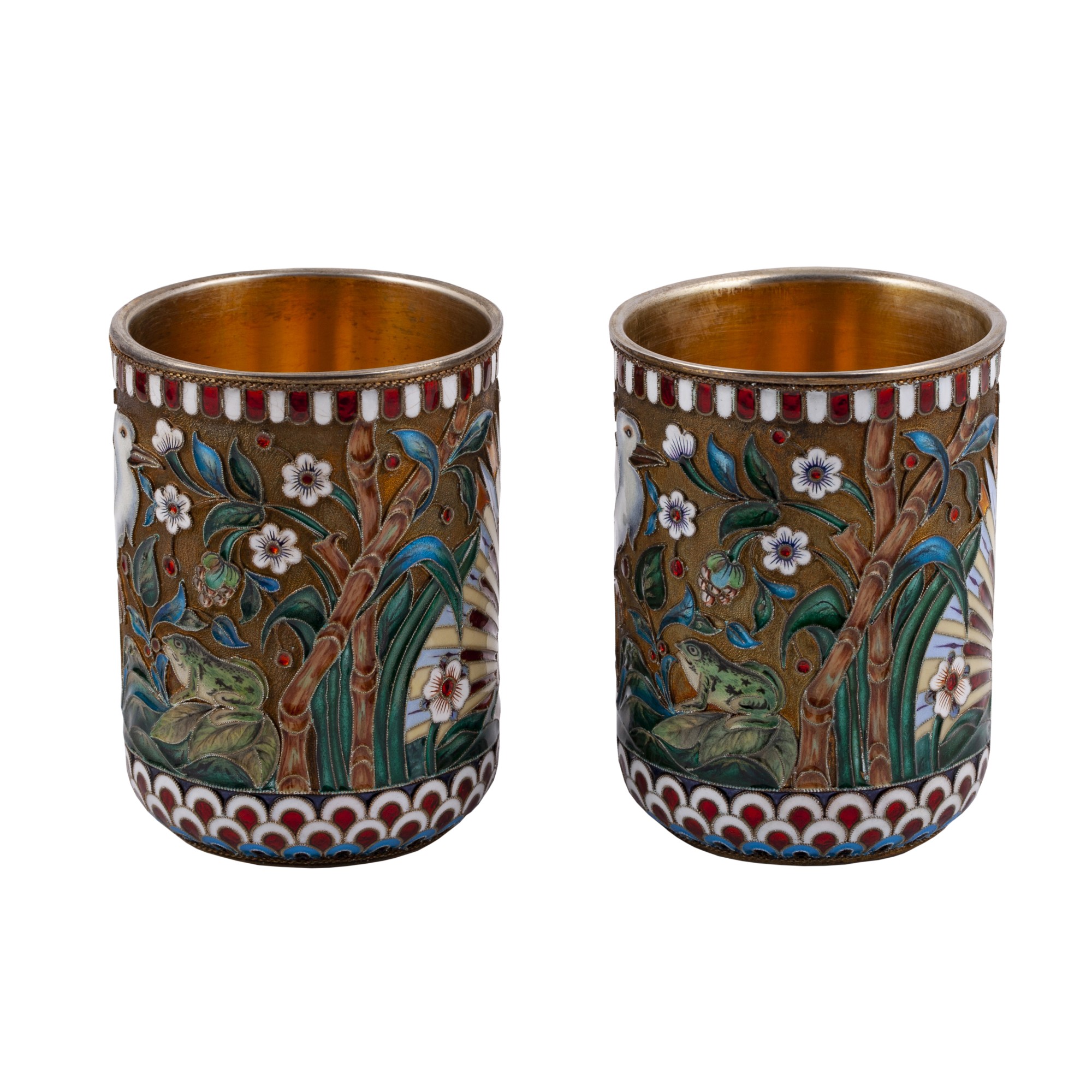
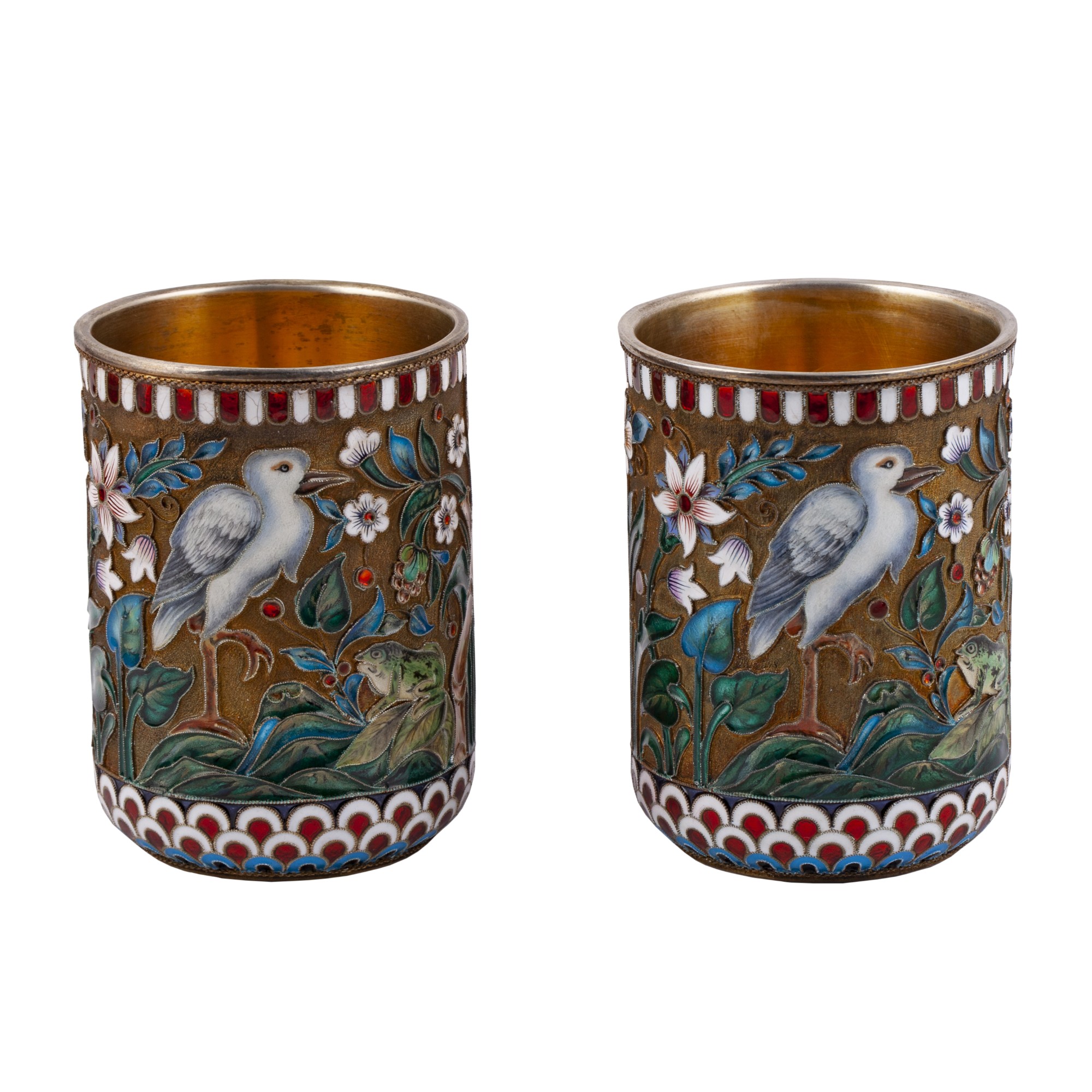
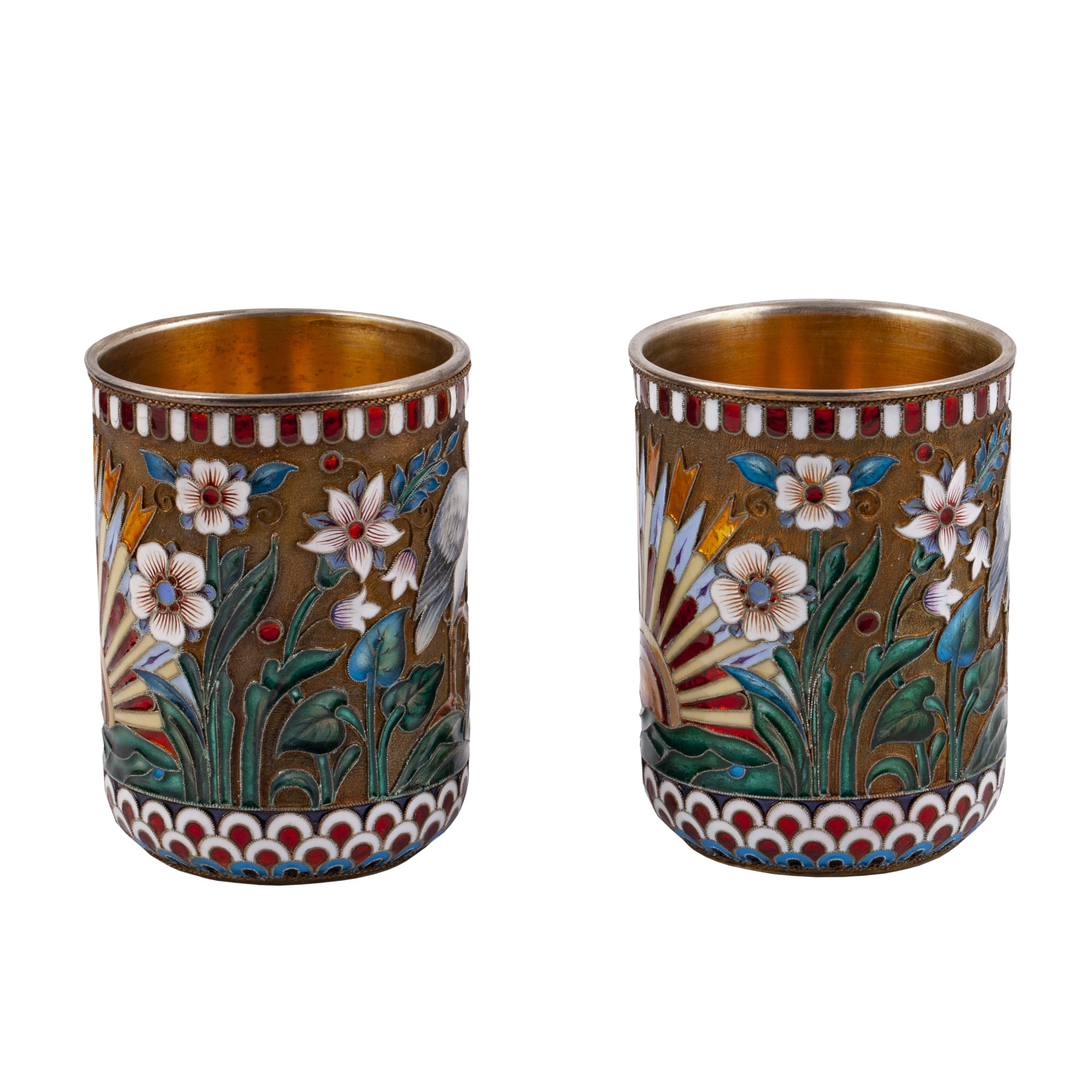
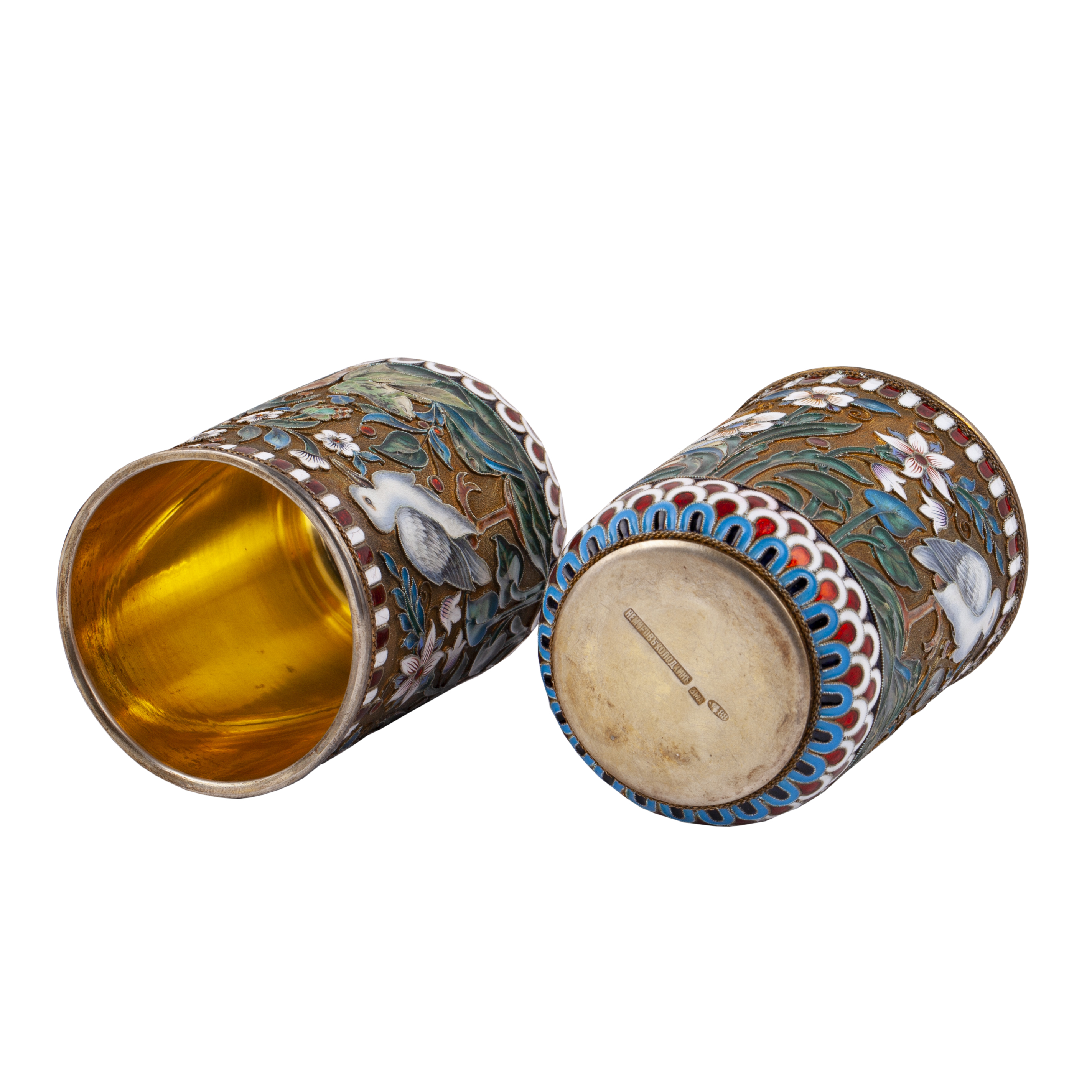
Estimate: 12000-15000€A rare Russian silver-gilt and cloisonné enamel beaker set, in the original fitted case.
Moscow, Third Moscow Artel, retailed by the firm of N. V. Nemirov-Kolodkin, 1908-1917.
Silver, gilding, cloisonné enamel; repoussé, filigree, enamelling, gilding.
Height of each beaker: 7.5 cm.
Total silver weight: 282.6 g.
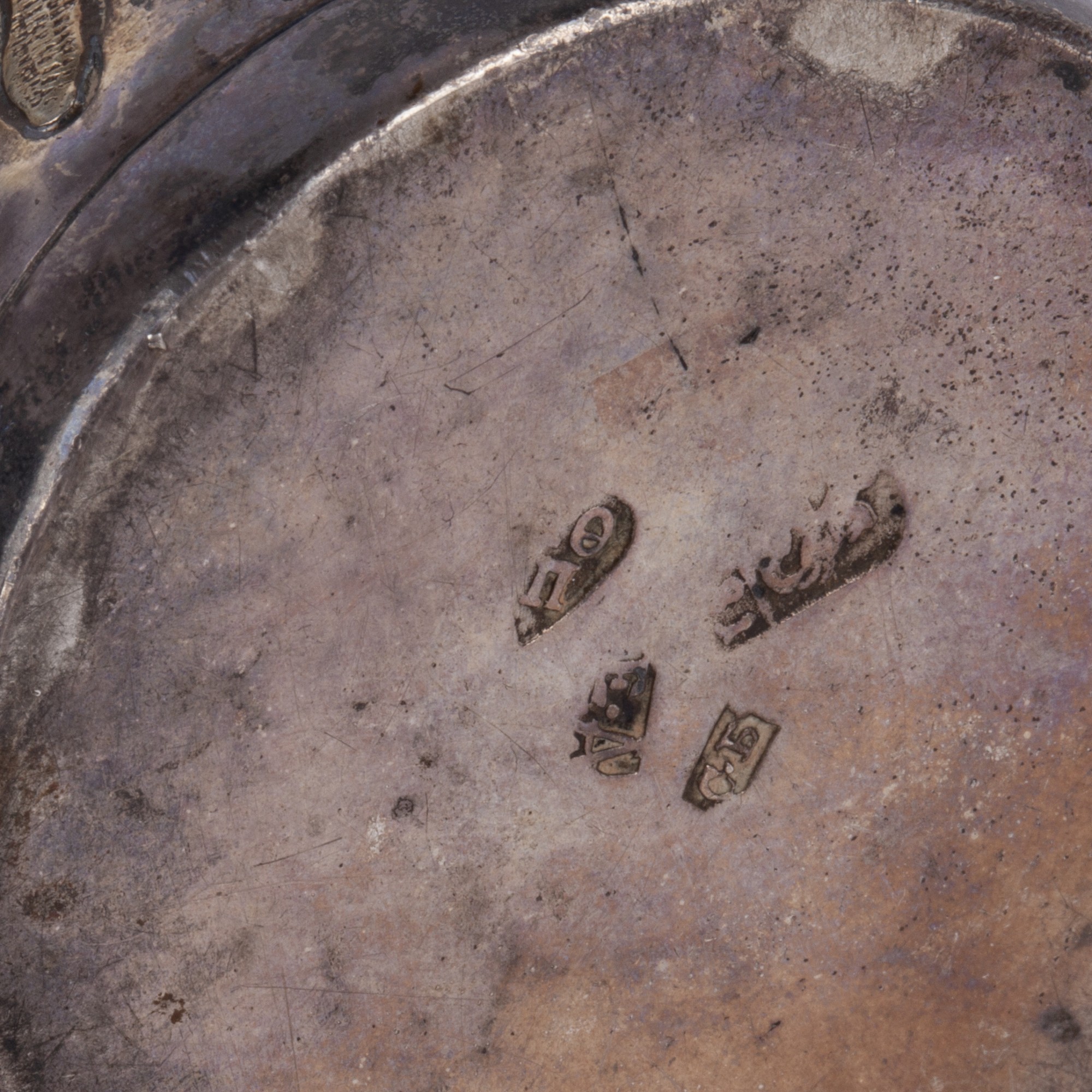
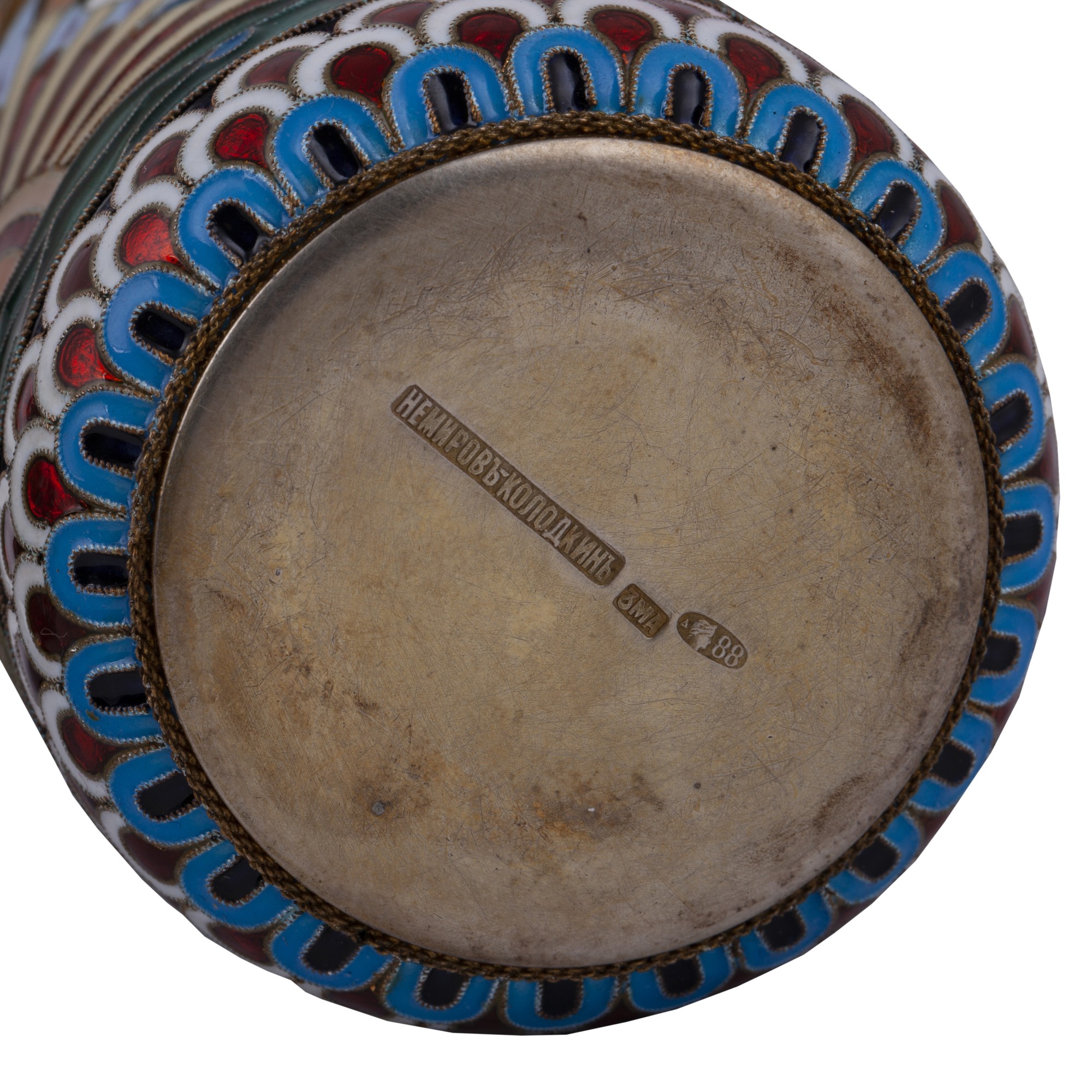
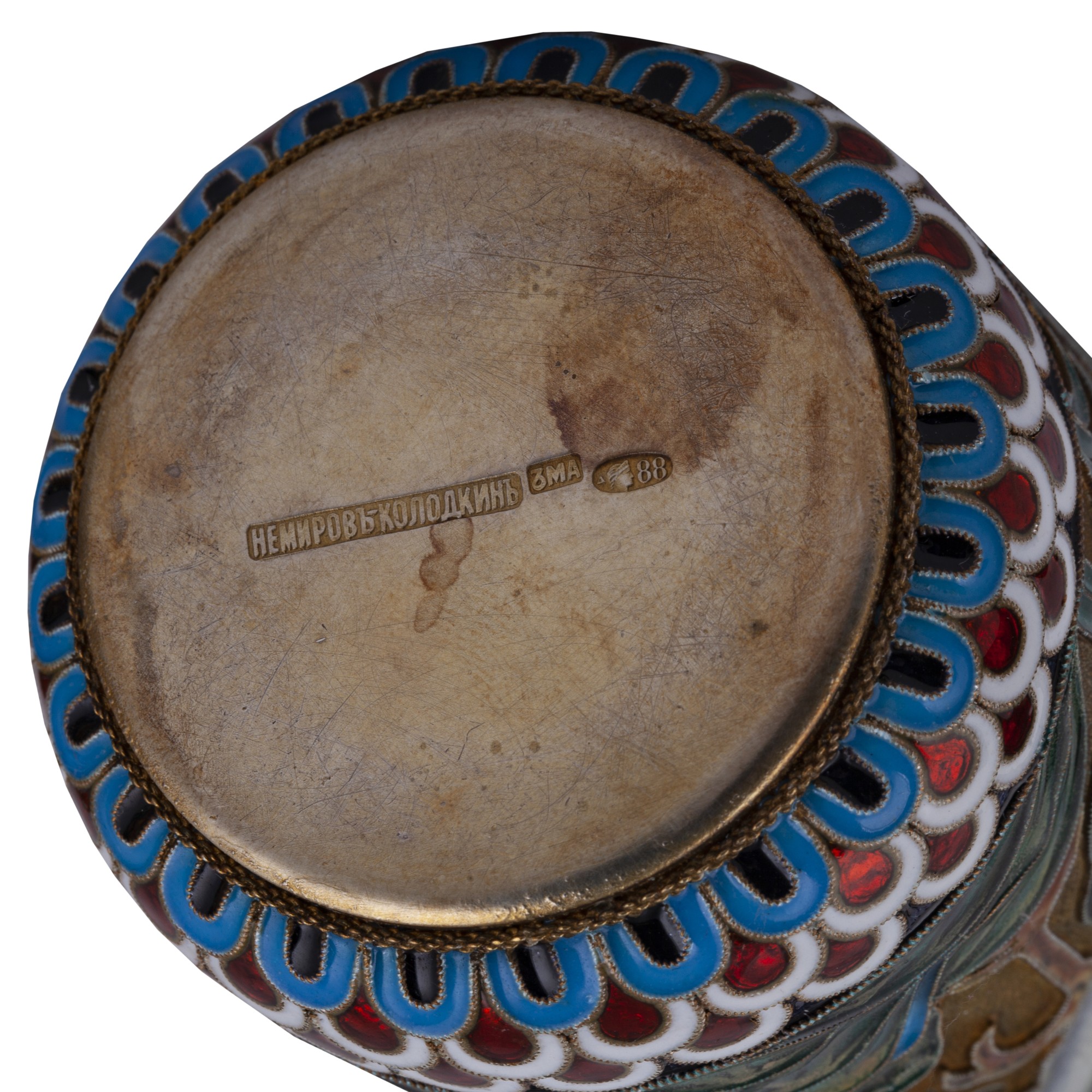
Marks: maker’s mark of the Third Moscow Artel, “3МА”; Moscow assay mark with 88 zolotnik silver standard; retailer’s mark “Немировъ-Колодкинъ”.
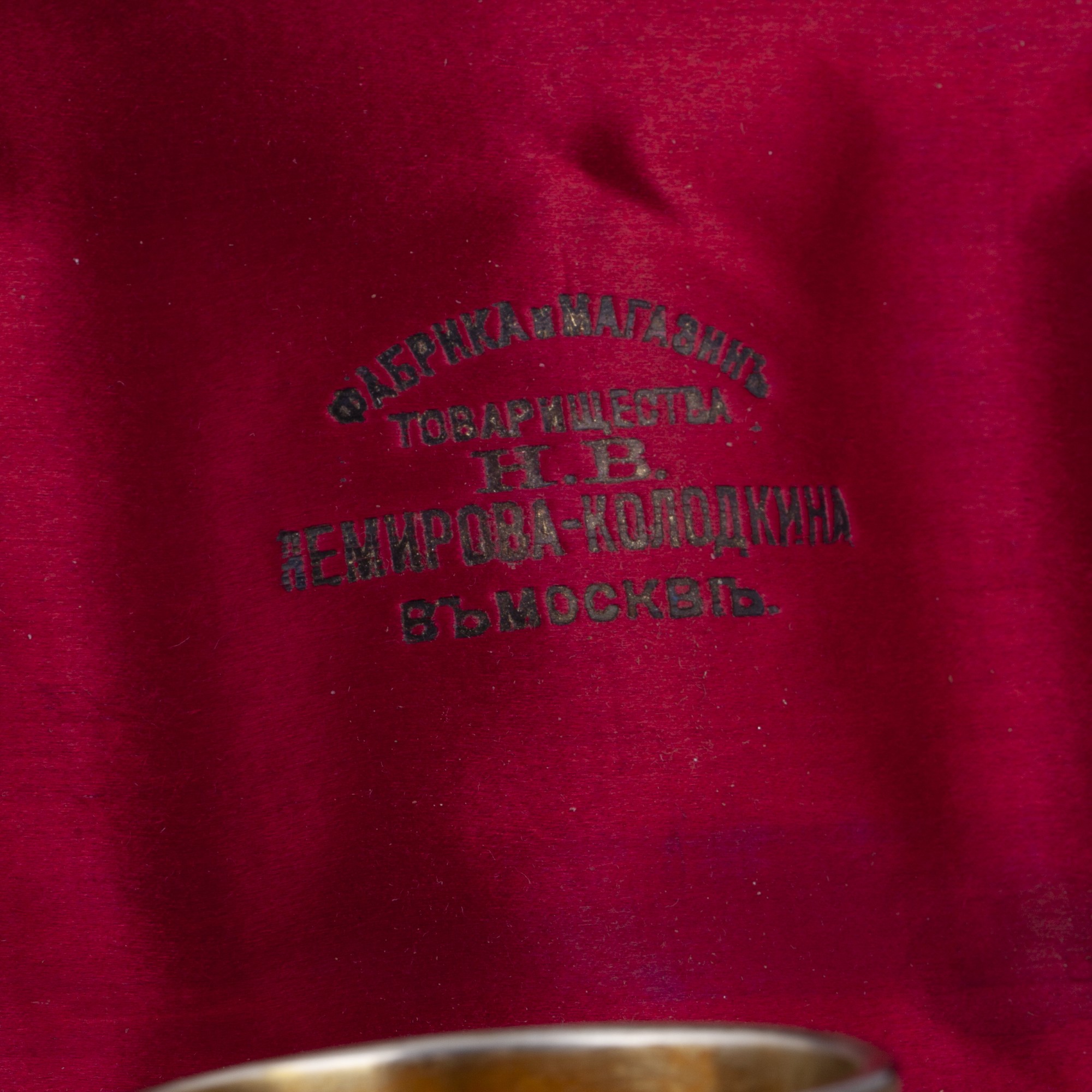
Case: original fitted wooden case, the interior stamped in Cyrillic: “Фабрика и магазинъ Товарищества Н. В. Немирова-Колодкина въ Москвѣ”.
A pair of cylindrical silver-gilt beakers, richly decorated in polychrome cloisonné enamel and holds in the original fitted presentation case.
The principal reserve is made by a stylised sunrise over rolling hills, its radiating rays rendered in red, cream, pale blue and amber enamel. The reverse side is decorated with a poetic naturalistic scene: a white bird standing among flowering branches and broad green leaves, with a small frog below. The composition combines the ornamental language of the neo-Russian style with the decorative refinement of Moscow Art Nouveau. The upper and lower borders are formed by repeated scalloped and arched enamel motifs in white, red, turquoise and dark blue, creating a rhythmic frame around the central scenes.
The set was produced by the Third Moscow Artel, one of the most accomplished Moscow silver workshops of the late Imperial period. Artel production occupied a significant place in Russian decorative art of the early twentieth century, particularly in the field of enamelled silver. Many such workshops were connected with the same professional milieu that supplied or had previously worked for the great Moscow and St Petersburg firms, including Fabergé, Ovchinnikov and Khlebnikov.
The retailer, N. V. Nemirov-Kolodkin, belonged to the important circle of Moscow suppliers of silver and luxury objects. Founded by Nikolai Vasilievich Nemirov-Kolodkin, merchant, jeweller and philanthropist, the firm became known for high-quality silver tableware and presentation pieces. From the late nineteenth century it supplied silver objects for the Imperial household, commissioning work from selected Moscow workshops and artels according to the character of each order.Starting price: 10000€
Estimate: 12000-15000€
Hammer Price: Not sold -
Lot 0158
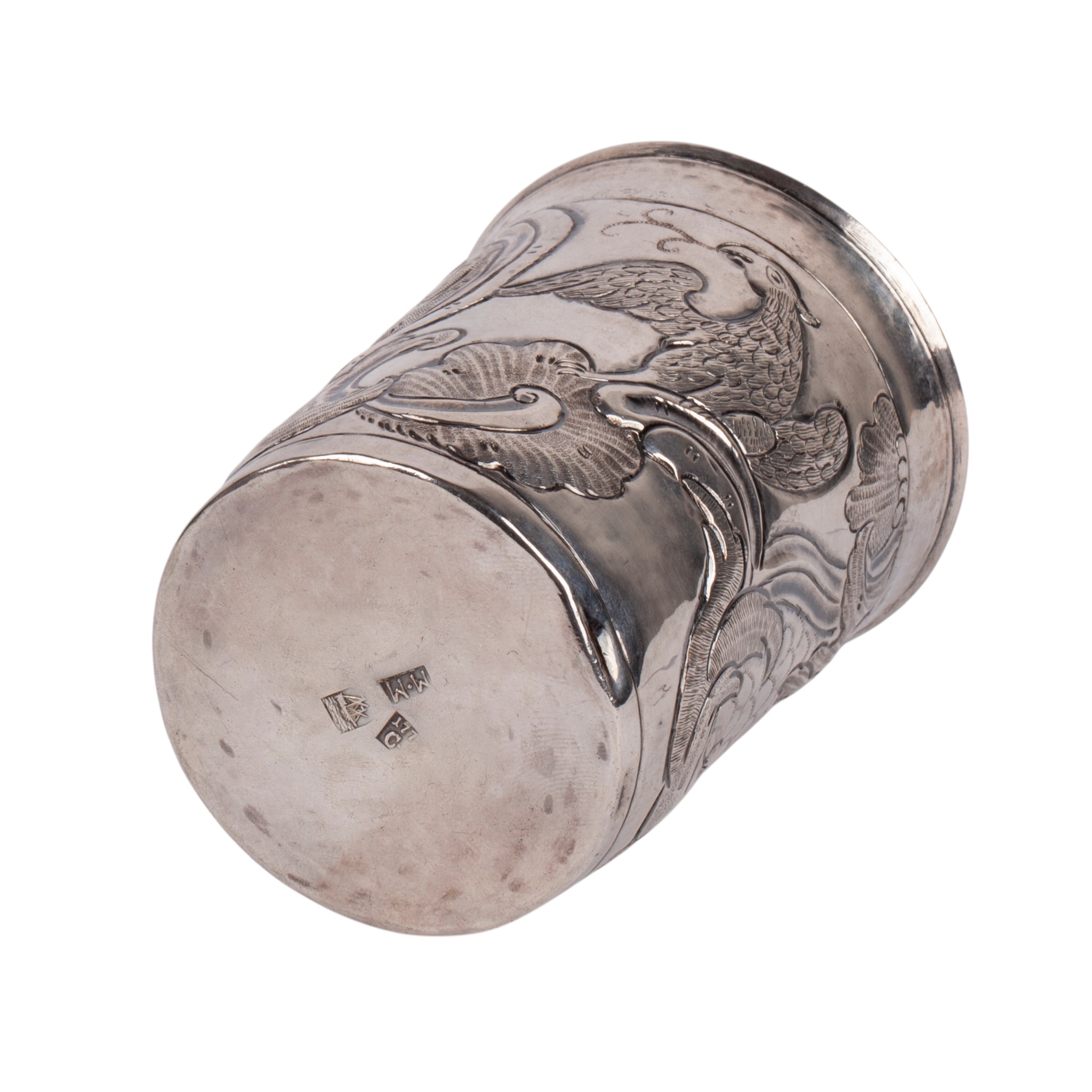
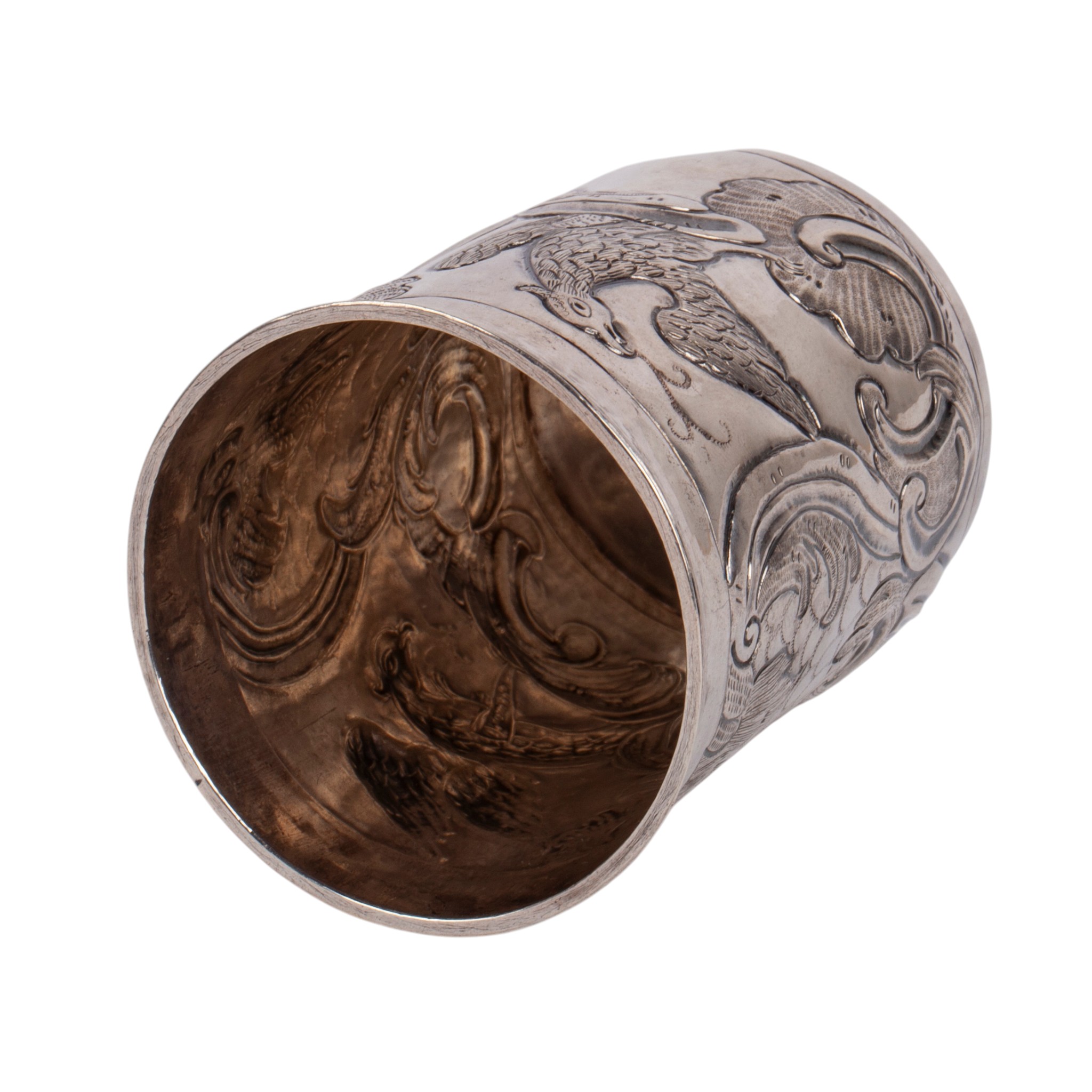
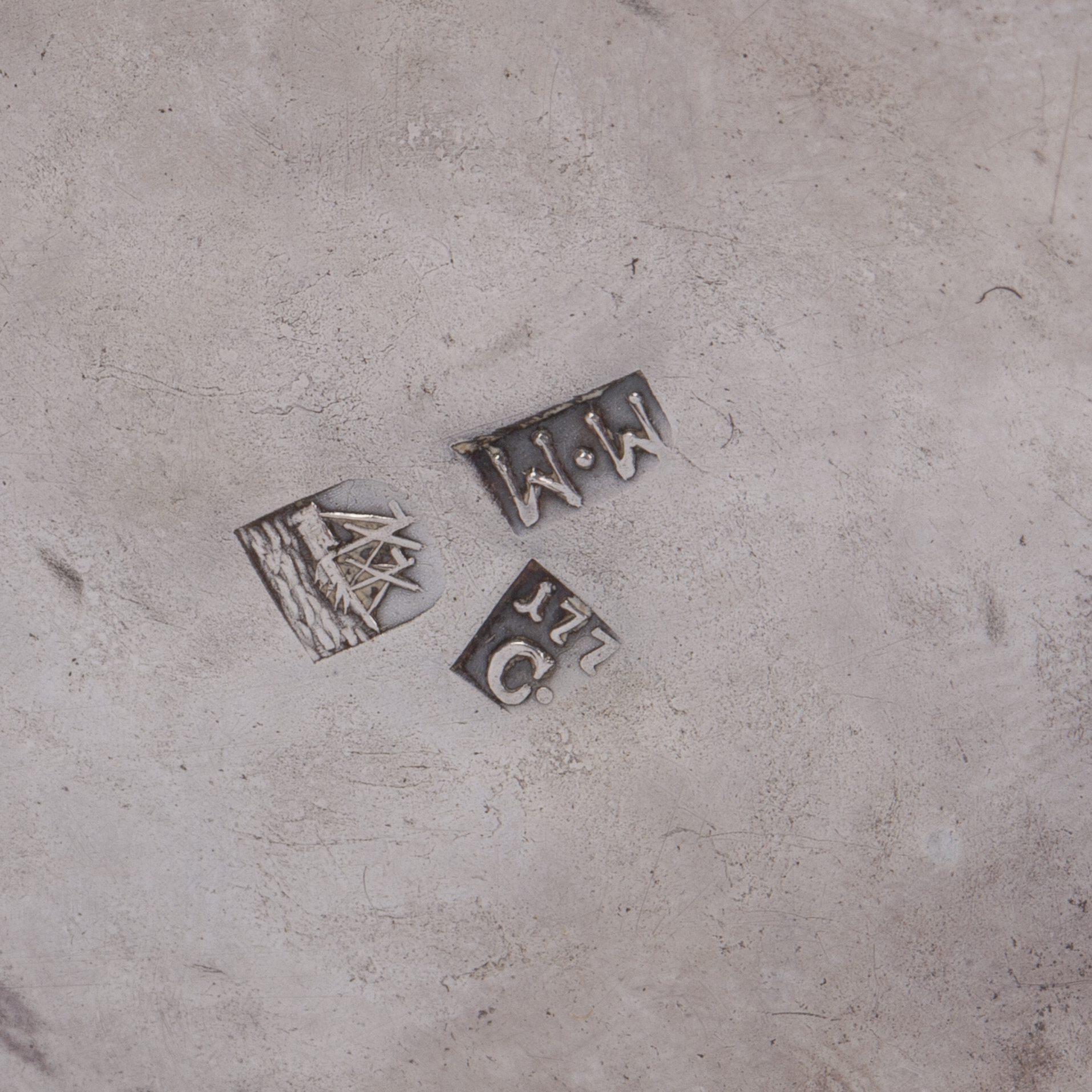
Russian Silver Stopka (Charka), Kostroma, Russia, 1769–1813, 18th–Early 19th Century
Estimate: 1000-1200€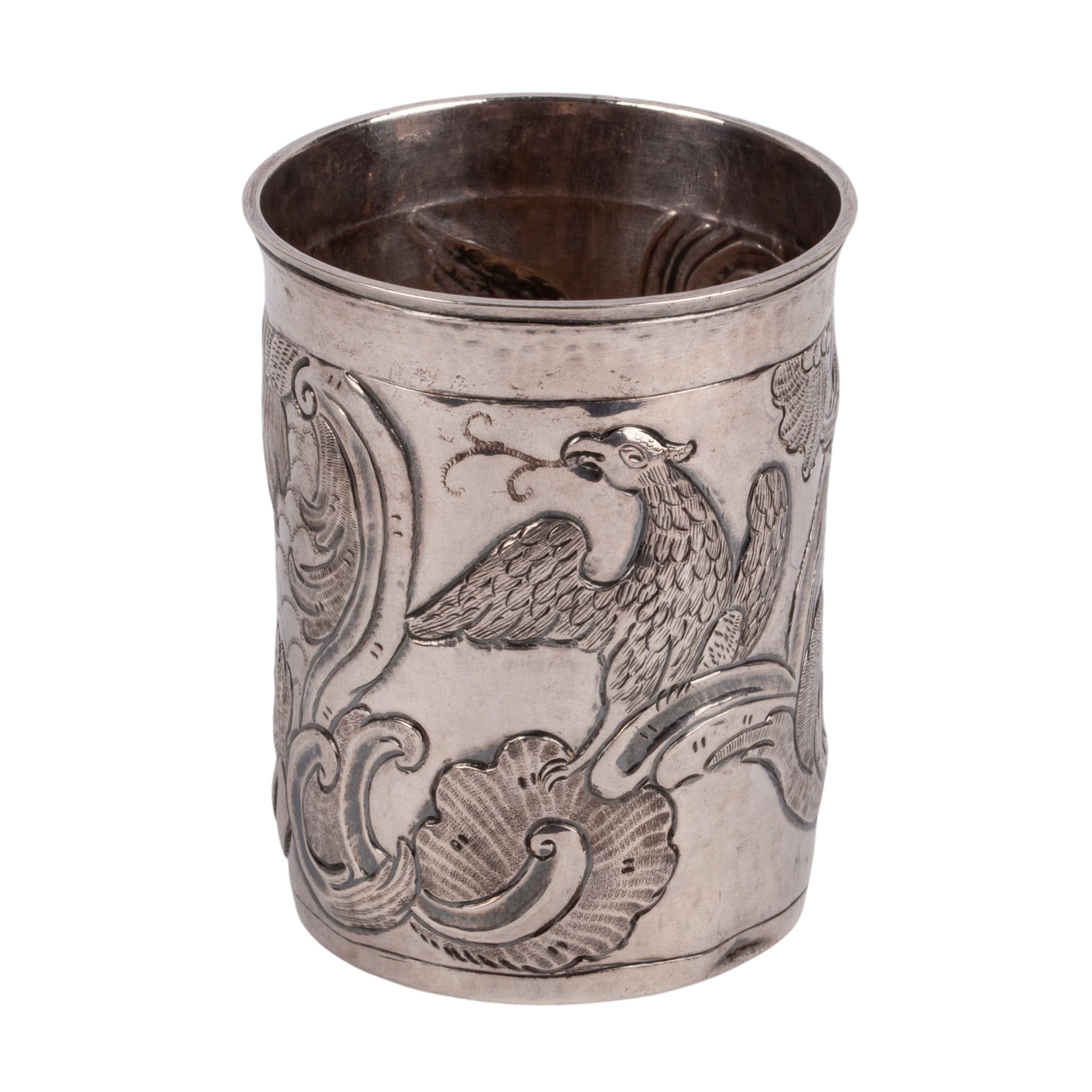
Lot 0158
Russian Silver Stopka (Charka), Kostroma, Russia, 1769–1813, 18th–Early 19th Century
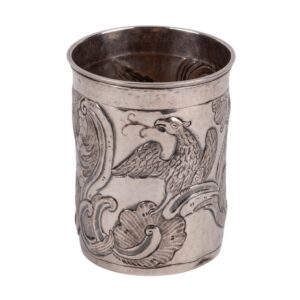
Estimate: 1000-1200€Russian silver stopa / charka, Kostroma, 1769–1813, 18th–early 19th century. Of tapering cylindrical form, finely engraved and chased with bold scrolling ornament and cartouches enclosing stylized birds and foliate motifs. Gilt interior.
Height: 7.6 cm
Weight: 68.2 gStarting price: 800€
Estimate: 1000-1200€
Hammer Price: Not sold -
Lot 0155
Russian Fabergé Jewelled Silver-Mounted Ceramic Kovsh, Moscow, 1908–1917
Estimate: 9000-12000€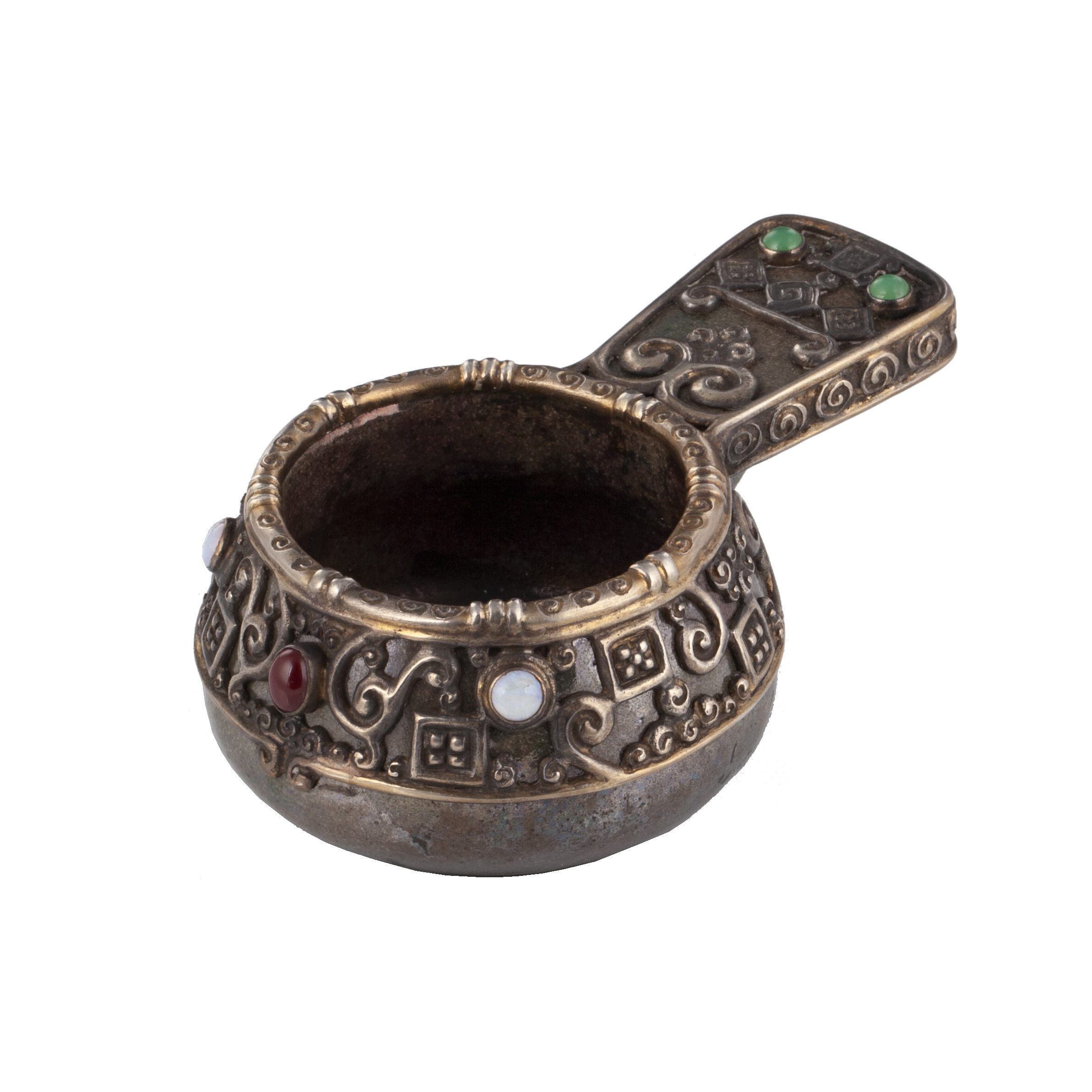
Lot 0155
Russian Fabergé Jewelled Silver-Mounted Ceramic Kovsh, Moscow, 1908–1917
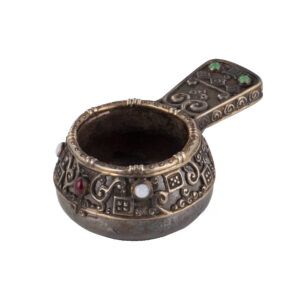
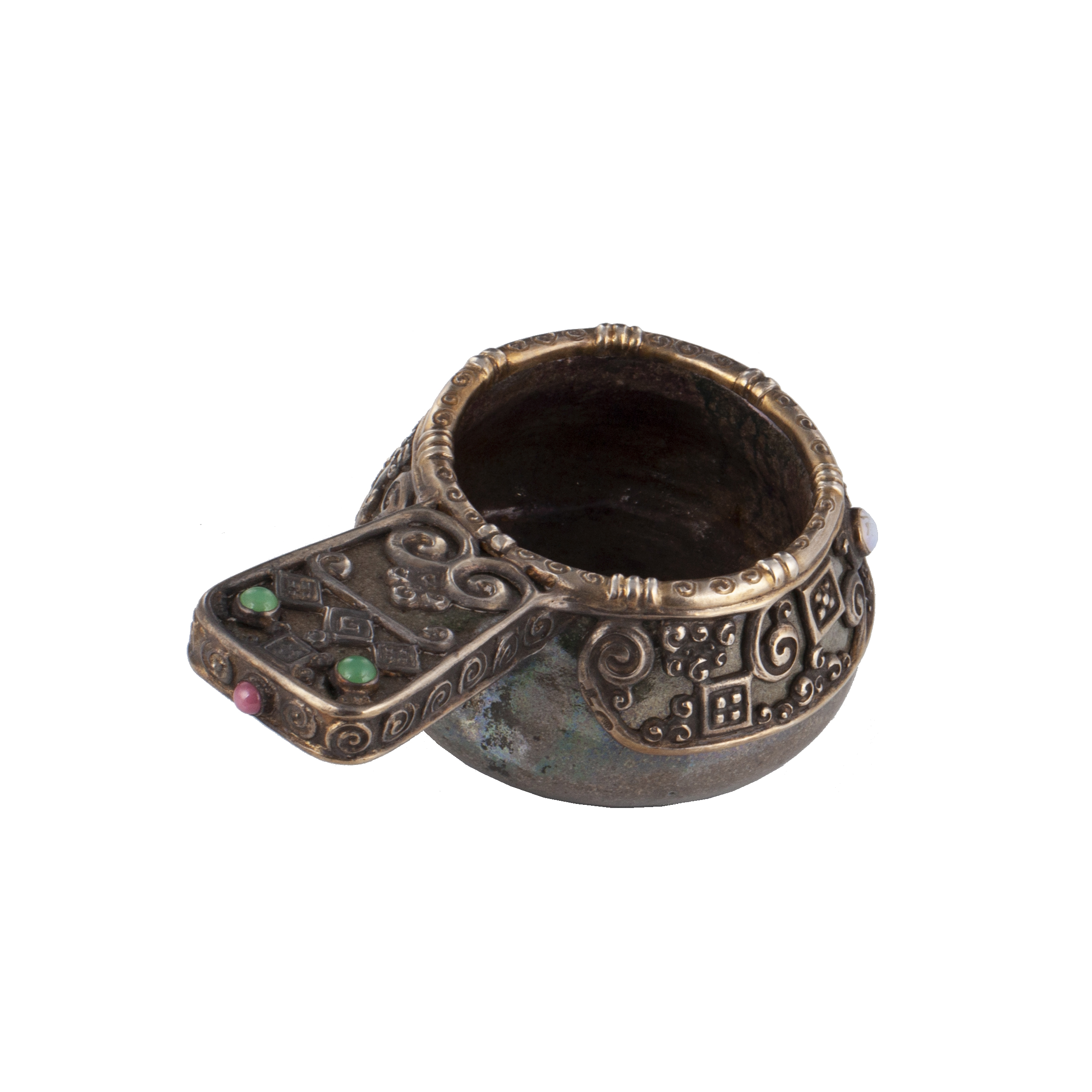
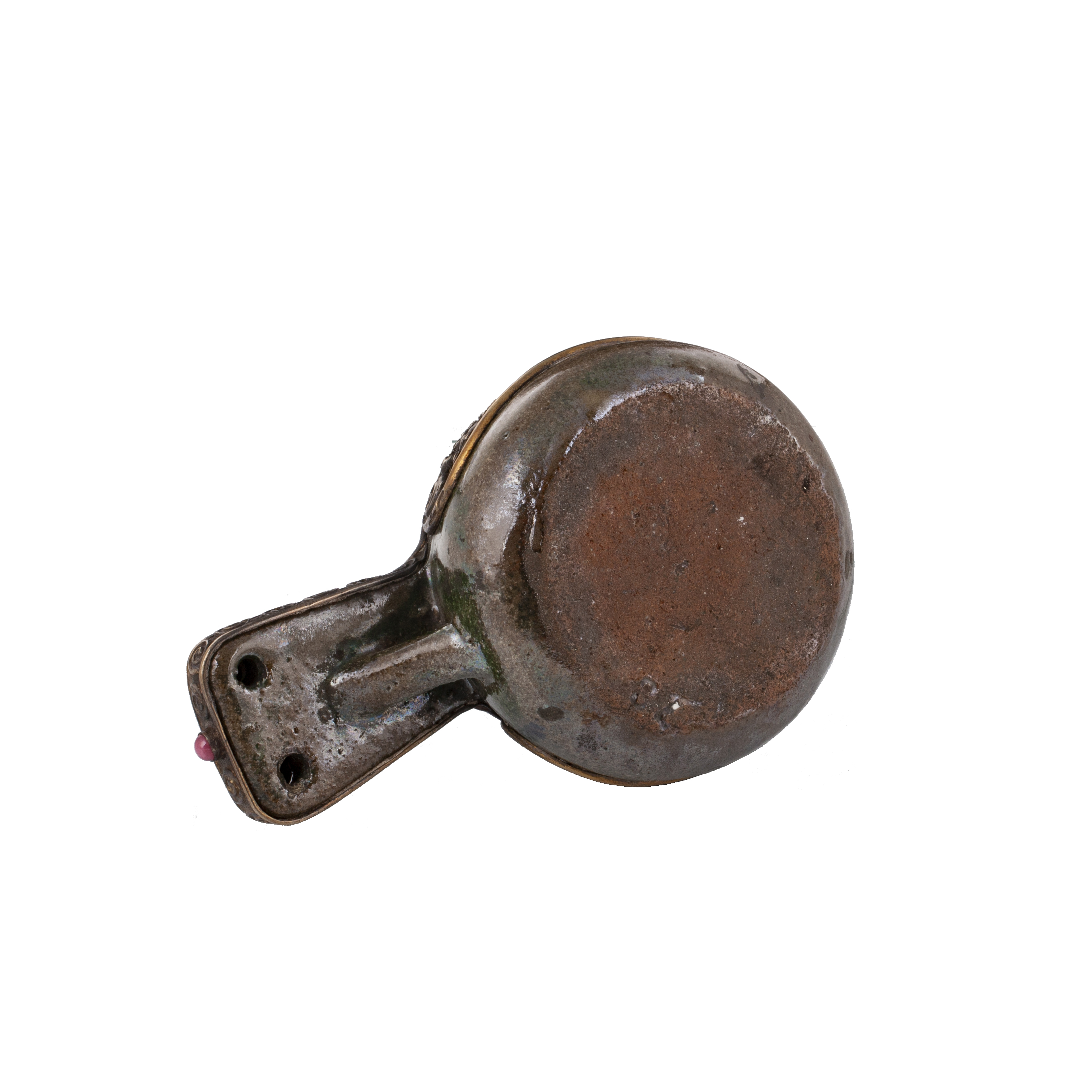
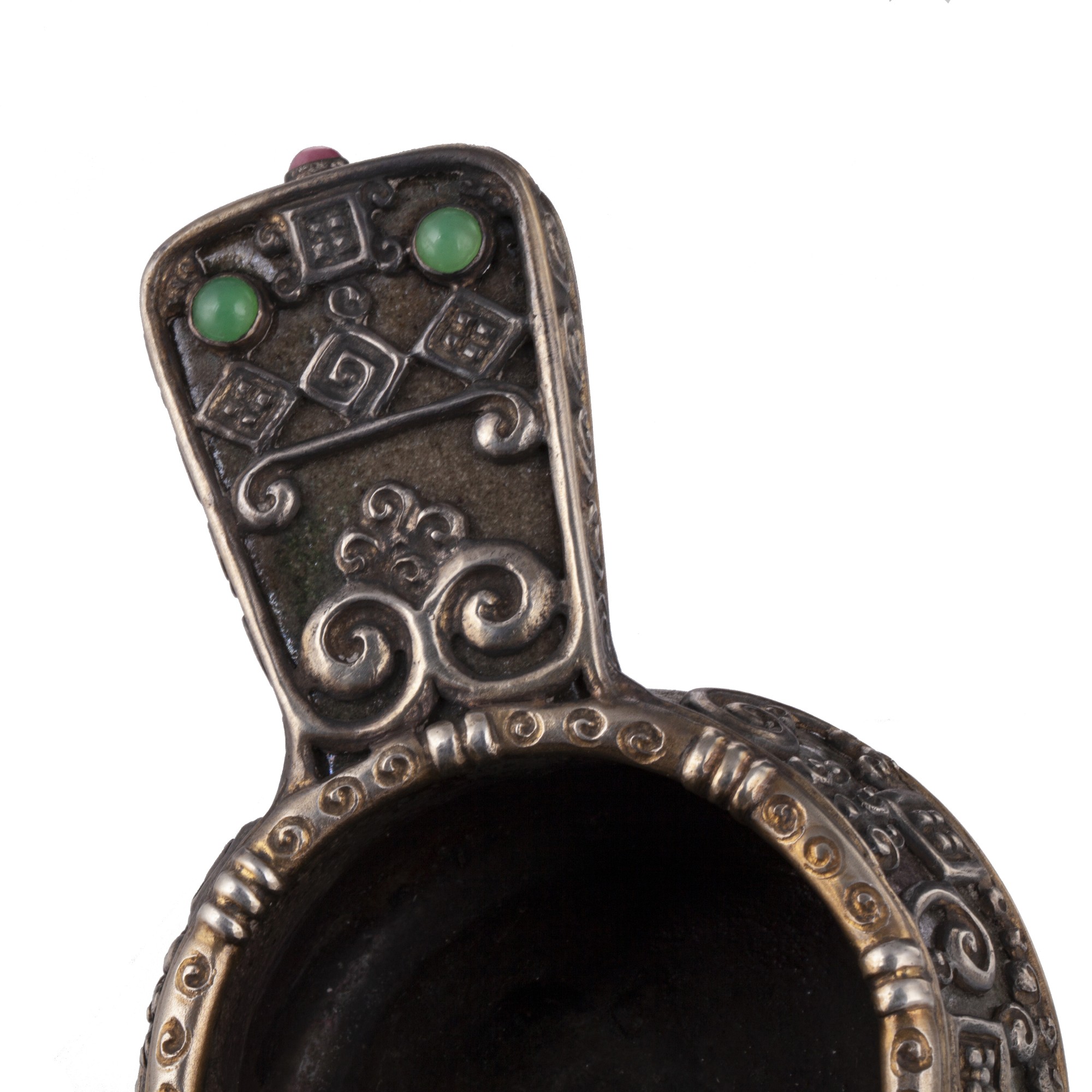
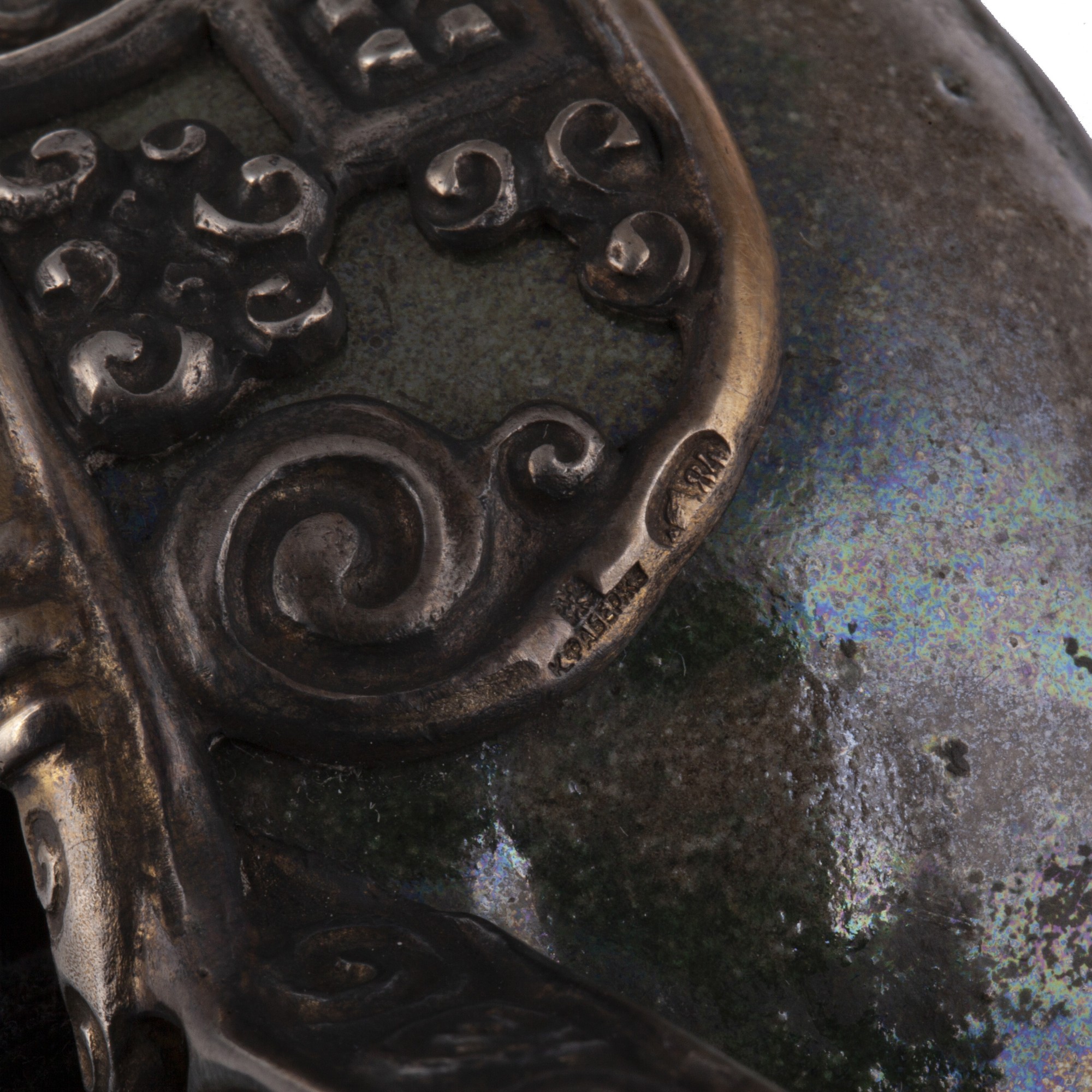
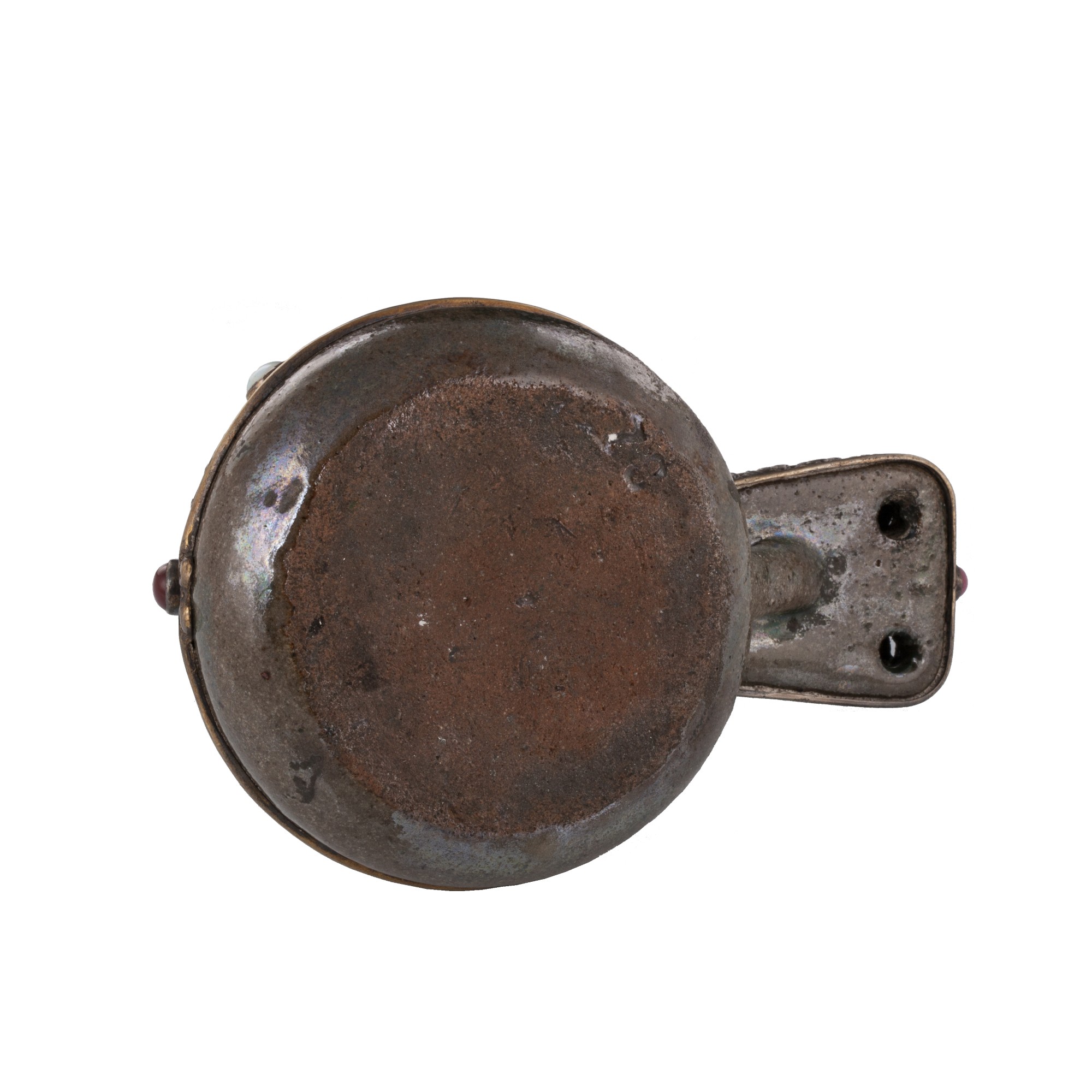
Estimate: 9000-12000€A Rare Fabergé Jewelled Silver-Mounted Ceramic Kovsh
Moscow, firm of Karl Fabergé, ceramic body attributed to the Imperial Stroganov School, 1908-1917.
Ceramic, silver, cabochon stones; moulding, glazing, casting, chasing, repoussé, stone setting.
Dimensions: 5.4 × 14.2 × 9 cm.
Marks: firm mark К. ФАБЕРЖЕ beneath the Imperial warrant; Moscow assay mark; 84 zolotniki silver standard.
A rare kovsh of rounded bowl form with a broad flat handle, combining a dark glazed ceramic body with a richly worked silver mount. Around the upper register runs an applied silver band with dense relief ornament of scrolling tendrils, stylised geometric motifs and small cabochon stones, including green and red accents. The handle continues the same ornamental language, with raised silver scrolls and inset green cabochons.
The form refers to the traditional Russian kovsh, a ceremonial drinking vessel deeply associated with Muscovite court culture and national decorative idioms. Here, however, the type is reinterpreted through the artistic language of the early twentieth century: heavy ceramic mass, dark glaze, abstracted ornament and jewelled silver mounts create an object that belongs equally to the world of historical revival and Russian Art Nouveau.
The ceramic body associated with the production of the Imperial Stroganov School, whose workshops played an important role in the renewal of Russian applied arts around 1900. Such ceramic objects were sometimes mounted in silver by leading Moscow workshops, among them the firm of Fabergé.
The Moscow branch of Fabergé differed from the St Petersburg establishment in its stronger engagement with Russian national style and silver production. This was partly due to Moscow’s long-standing position as a centre of silversmithing and decorative metalwork. The firm employed and collaborated with artists and craftsmen connected with the Stroganov School, whose training combined drawing, modelling, metalwork, enamel and practical workshop experience. Students and teachers of the school worked with major Moscow firms, and the influence of the Stroganov artistic environment is clearly felt in the national-romantic and ornamental character of many Fabergé Moscow objects.
See similar objects: https://www.christies.com/en/lot/lot-5564848 https://www.sothebys.com/en/auctions/ecatalogue/2008/russian-art-n08428/lot.403.htmlStarting price: 8000€
Estimate: 9000-12000€
Hammer Price: 12 000 €