
Lot 0091
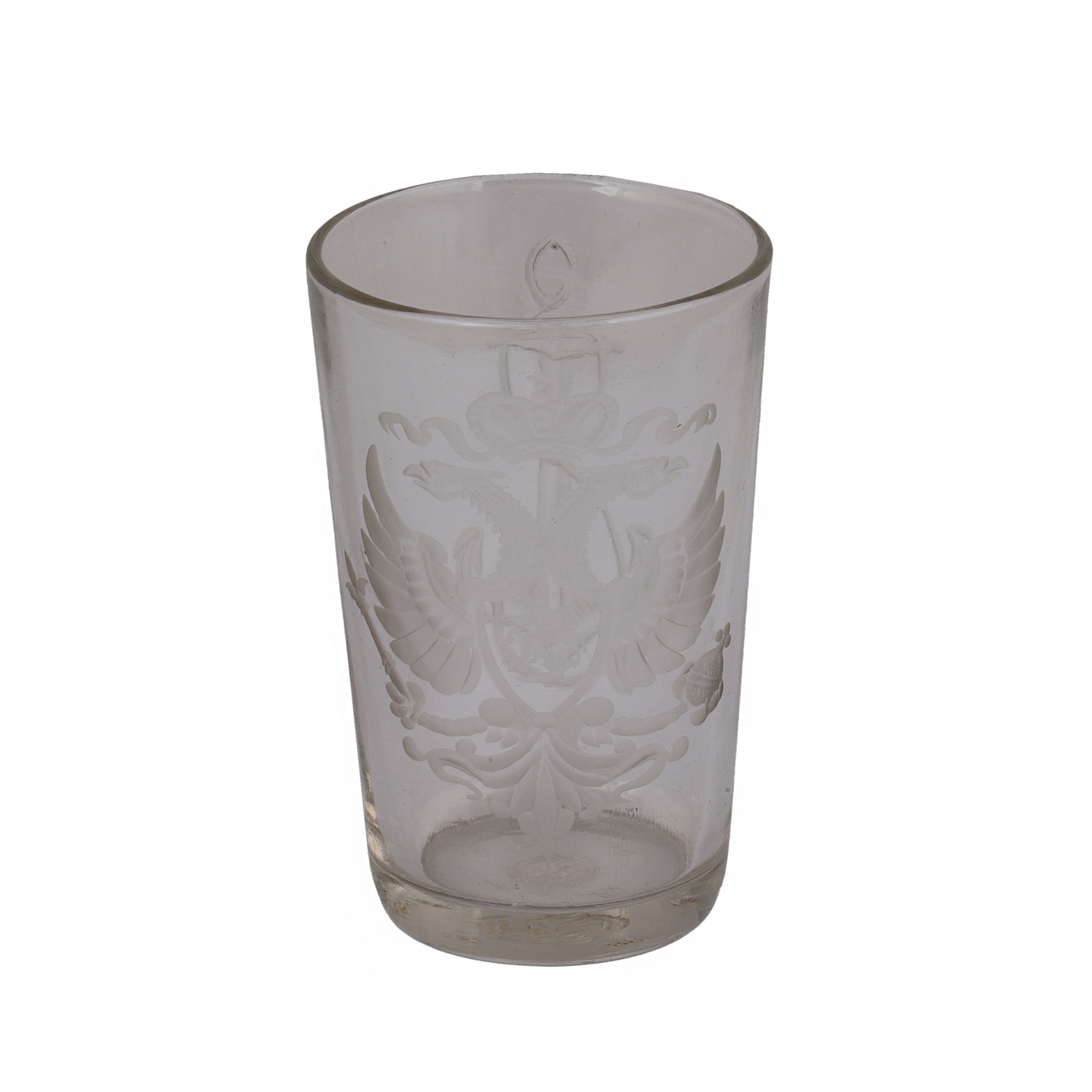
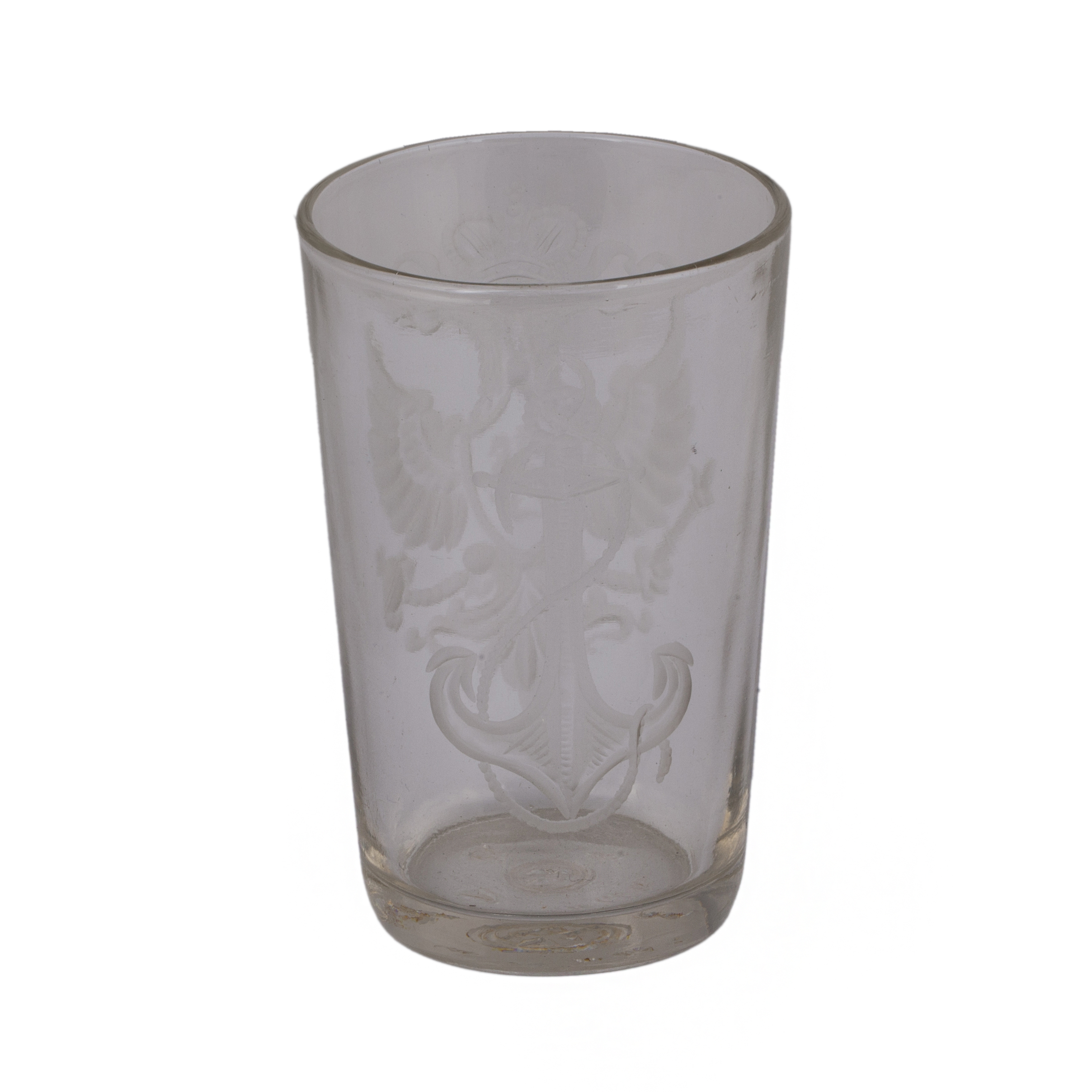
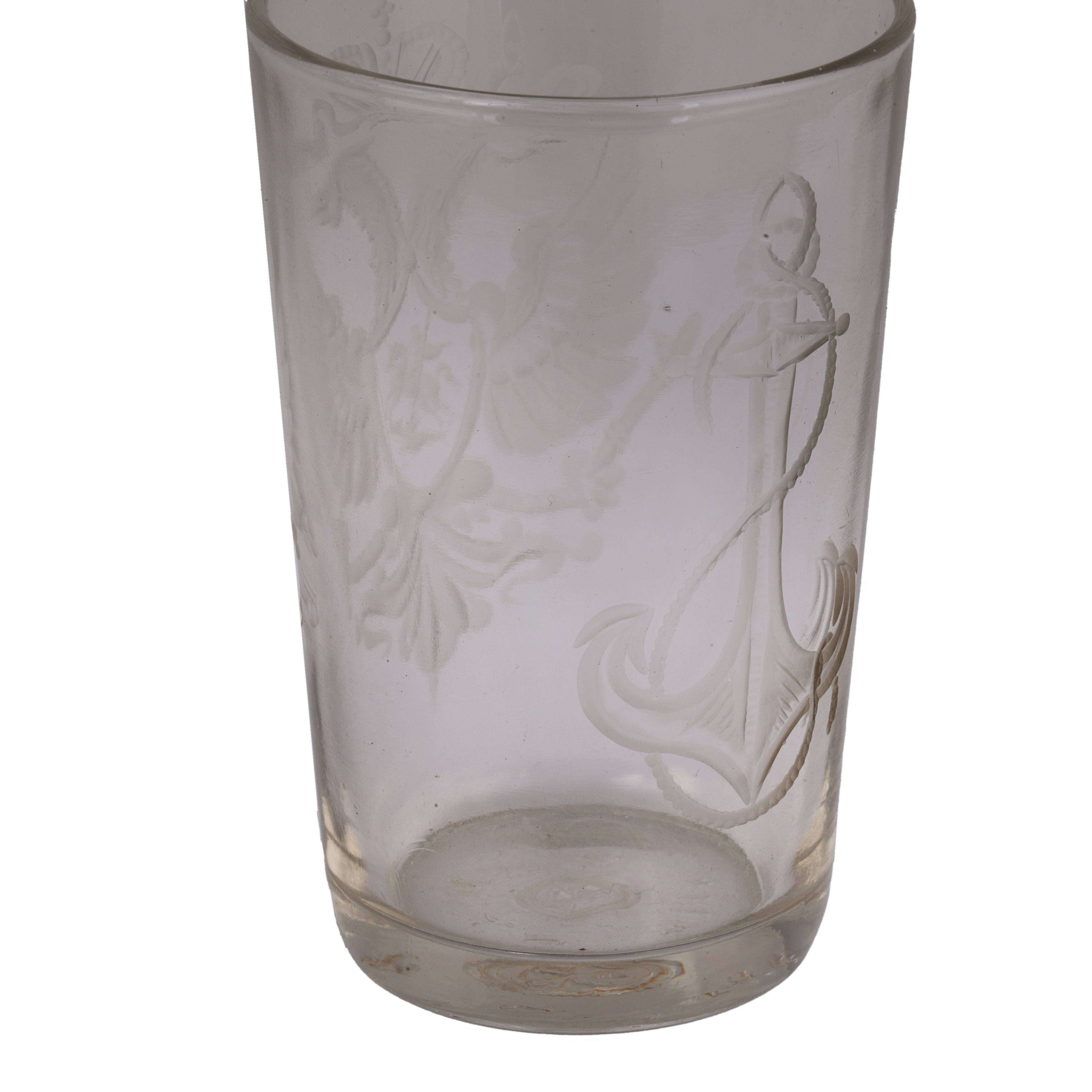
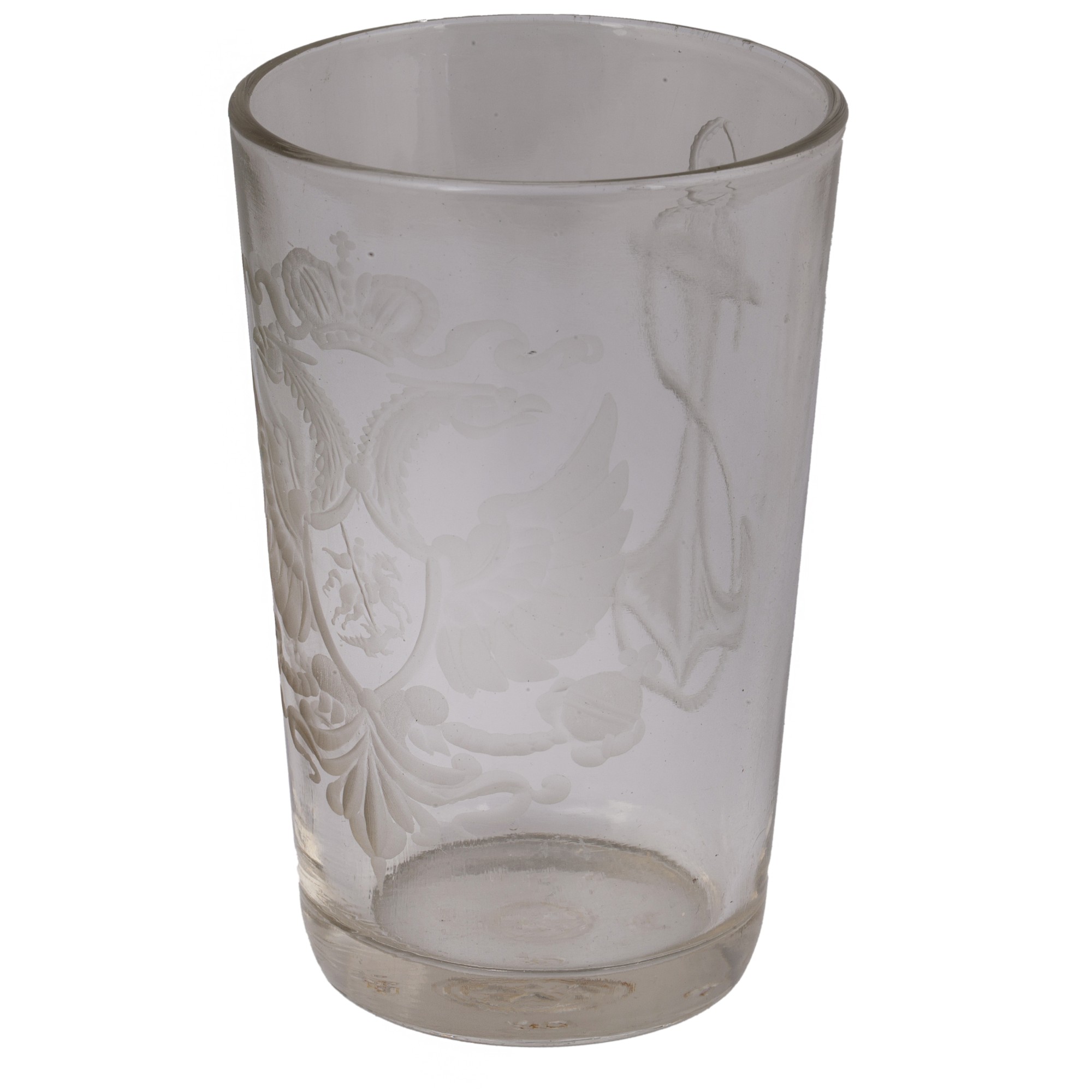
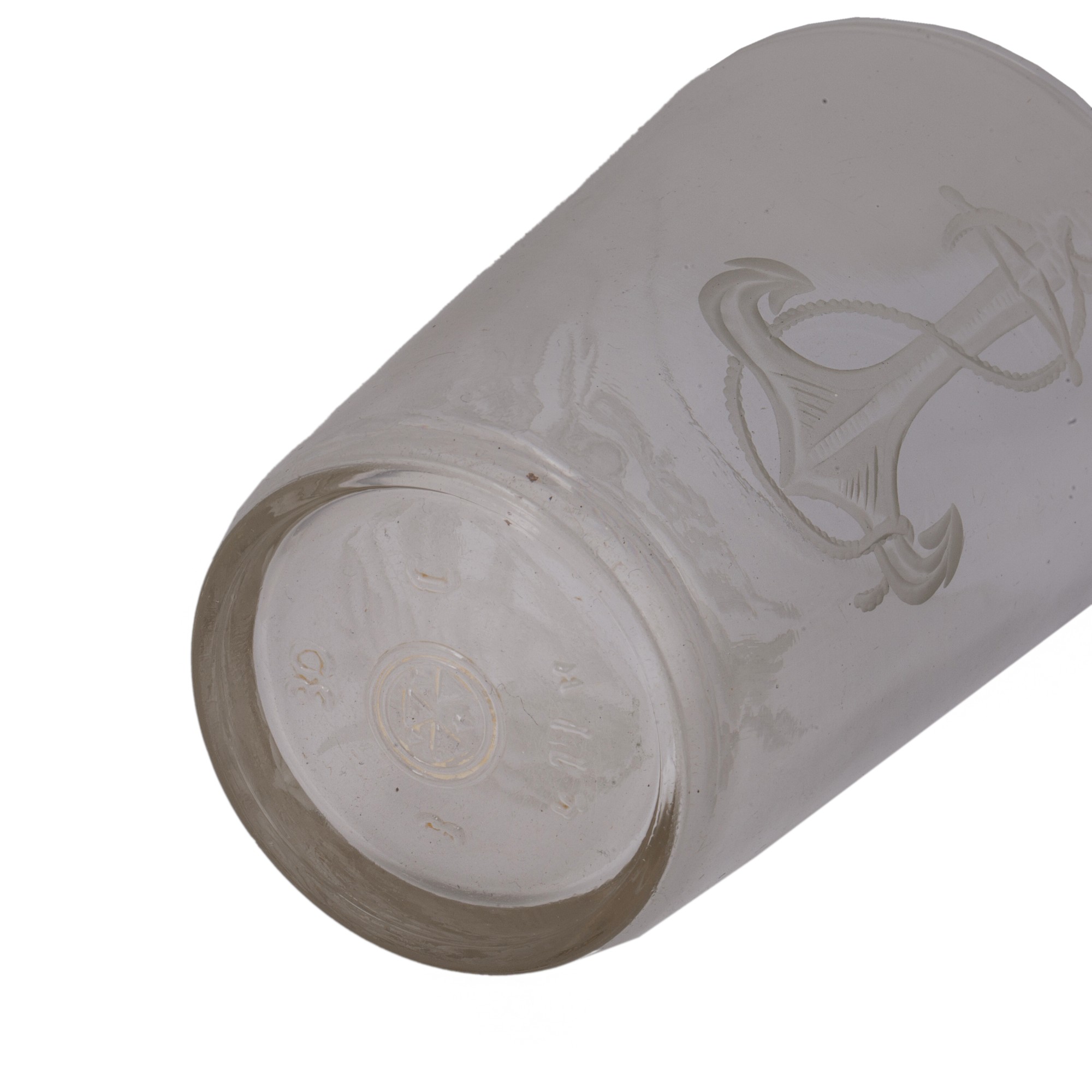
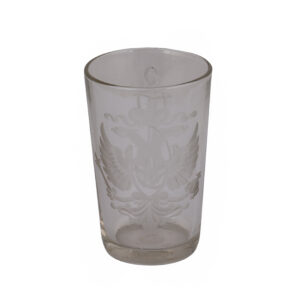
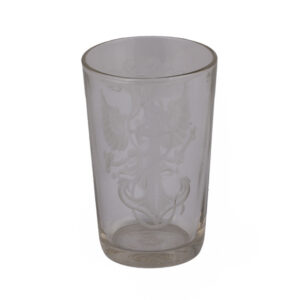
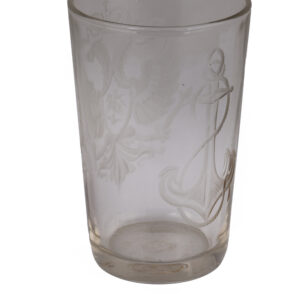
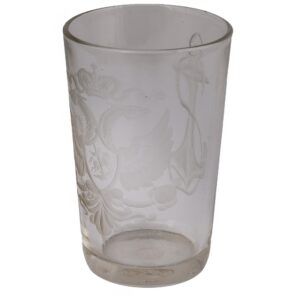
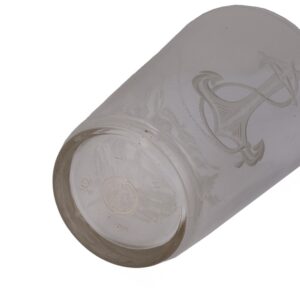
Glass Beaker with Double-Headed Eagle. Russia
Estimate: 250-300€
A clear glass beaker with engraved Imperial double-headed eagle.
Russia, 18th century.
Colourless glass with a faint smoky tint; blown glass, wheel-engraving, polishing.
Height: 9.8 cm.
A cylindrical clear glass beaker of slightly tapering form, with a thick rounded rim and a heavy circular foot. The body is finely engraved with a large Russian Imperial double-headed eagle, placed within an oval reserve and surmounted by the Imperial crown.
Starting price: 200€
Estimate: 250-300€
Hammer Price: 200 €
Related Lots
-
Lot 0093
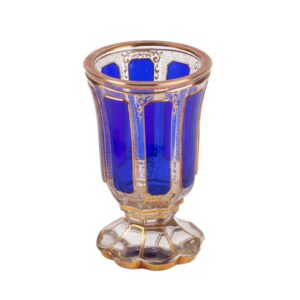
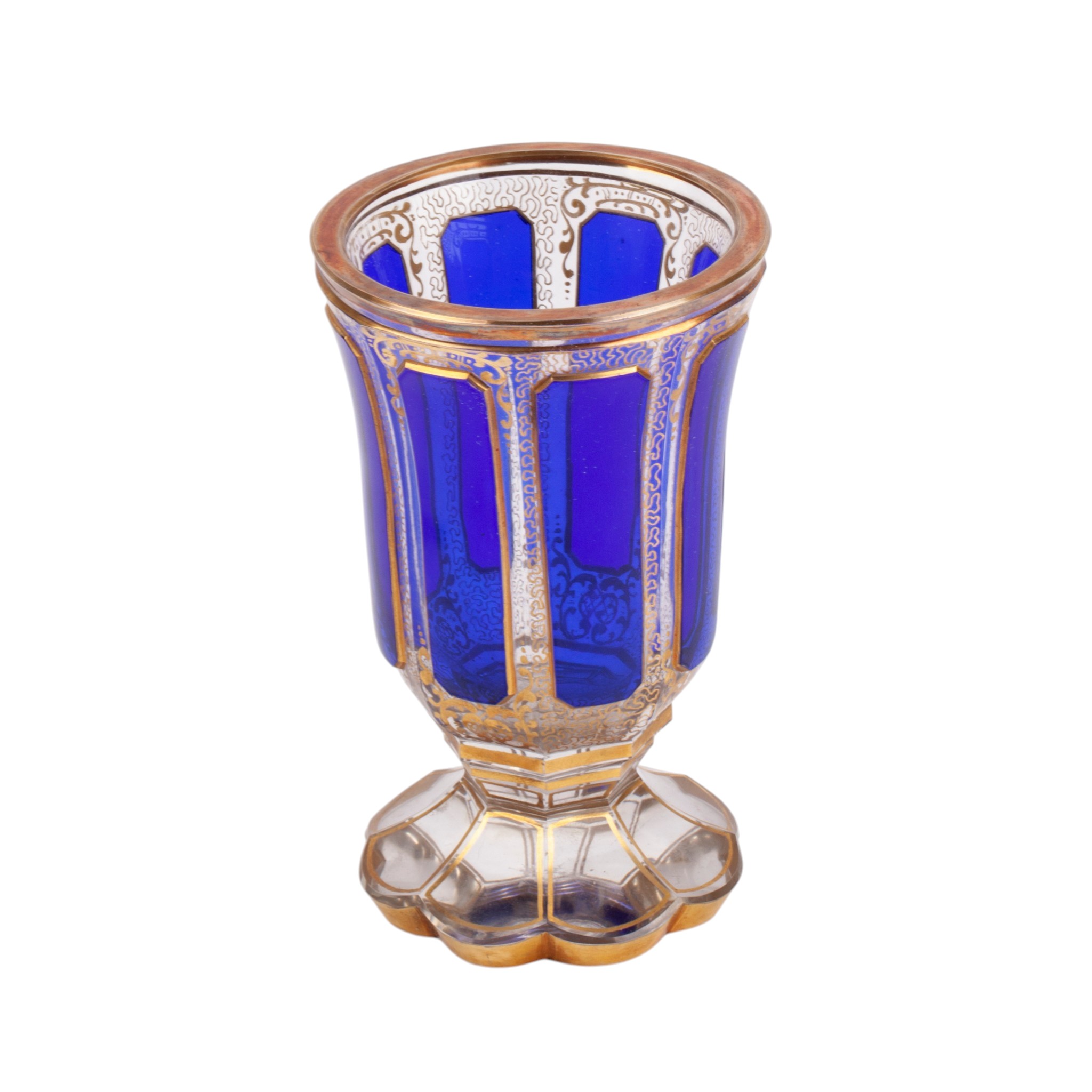
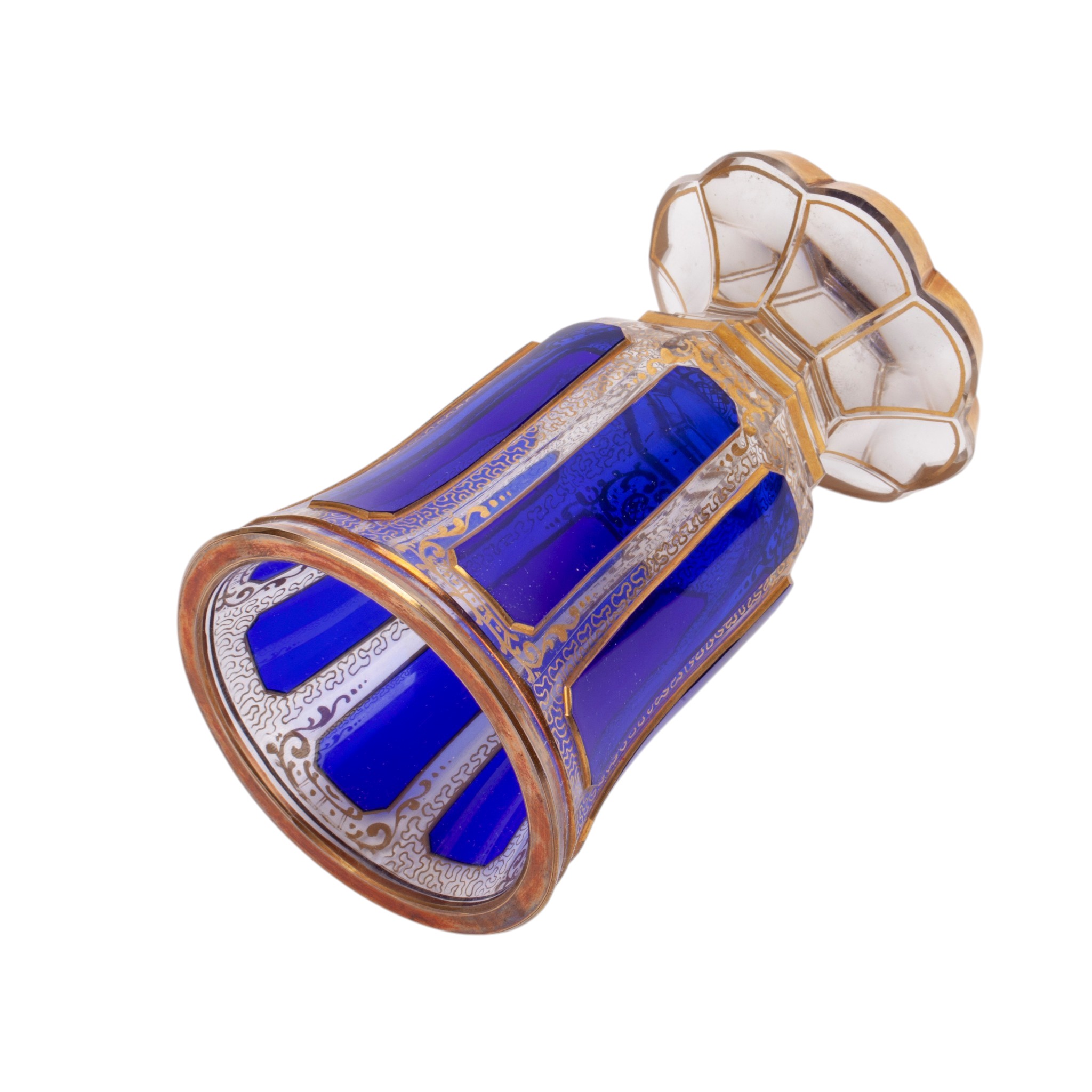
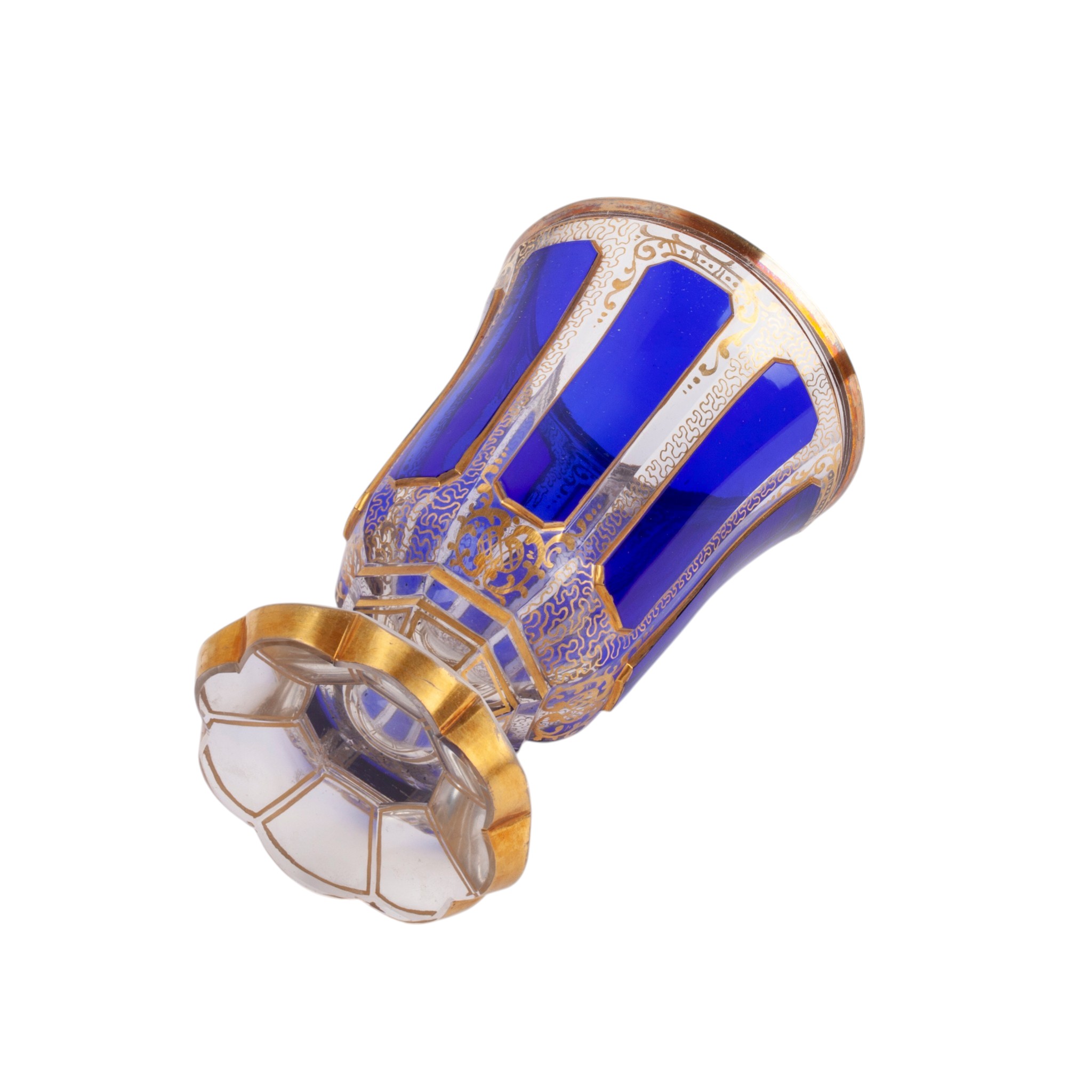
Cobalt Blue Bohemian Art Glass Goblet, Attributed to Moser, Late 19th–Early 20th Century
Estimate: 350-400€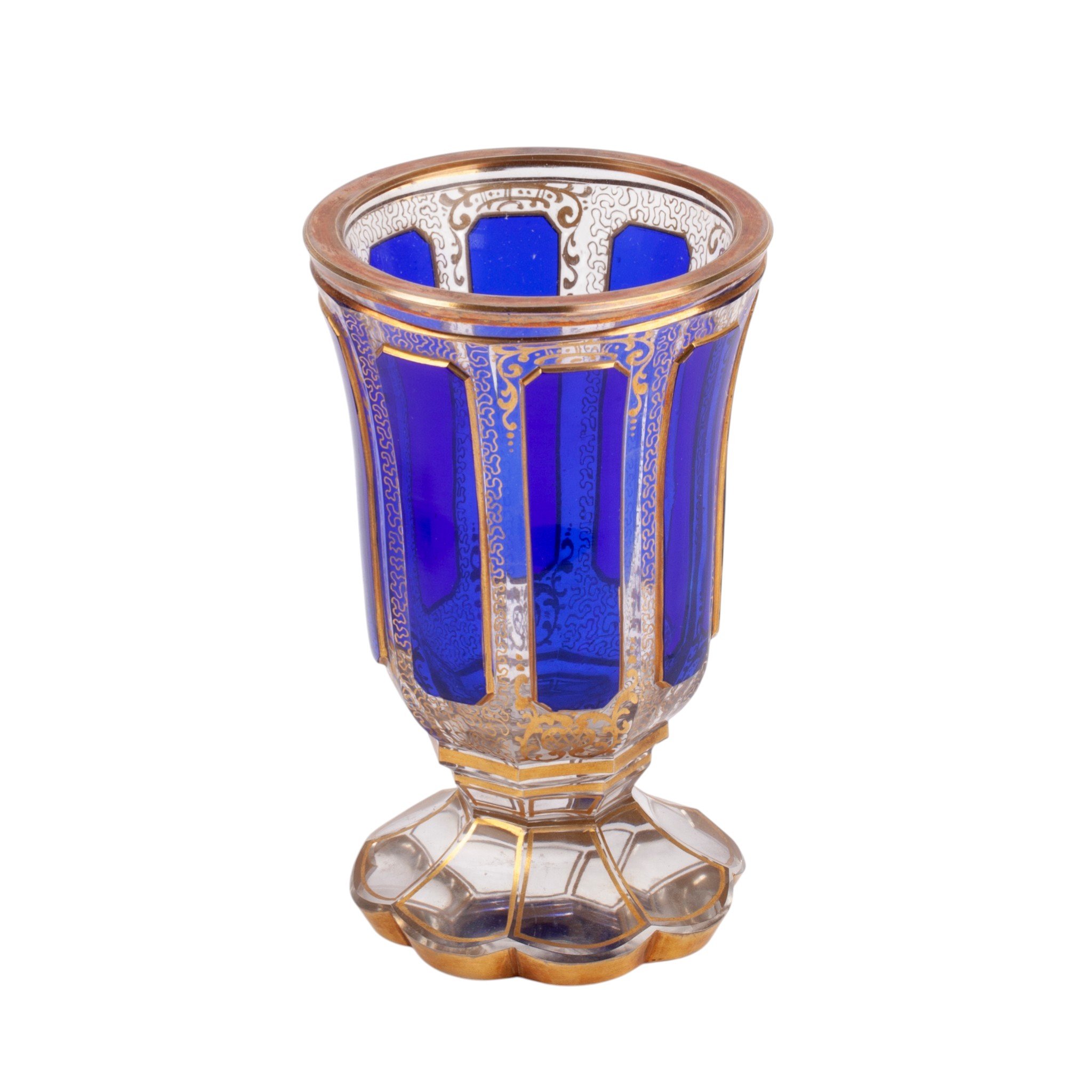
Lot 0093
Cobalt Blue Bohemian Art Glass Goblet, Attributed to Moser, Late 19th–Early 20th Century
Estimate: 350-400€Cobalt blue Bohemian art glass goblet, attributed to Moser, late 19th to early 20th century.
Elegant faceted goblet in deep cobalt blue glass, richly decorated with gilded foliate and geometric ornament, raised on a shaped scalloped foot. A fine example of Bohemian luxury glass in the Moser taste.Height: 14.6 cm. Diameter: 9 cm.
Starting price: 300€
Estimate: 350-400€
Hammer Price: Not sold -
Lot 0089
Russian Imperial Decanter for Spirits, Imperial Glass Factory, St Petersburg, 1830s–1840s
Estimate: 1500-1800€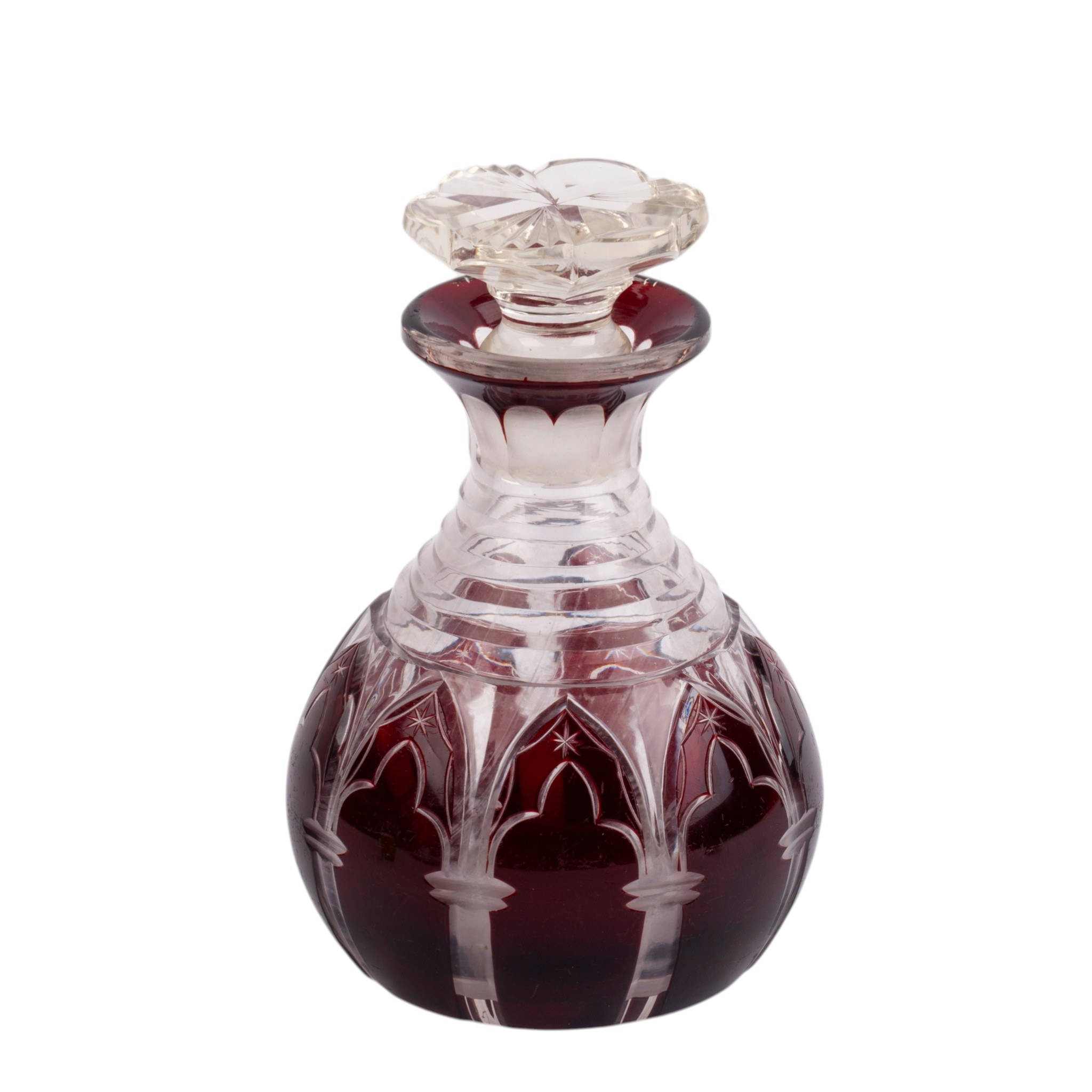
Lot 0089
Russian Imperial Decanter for Spirits, Imperial Glass Factory, St Petersburg, 1830s–1840s
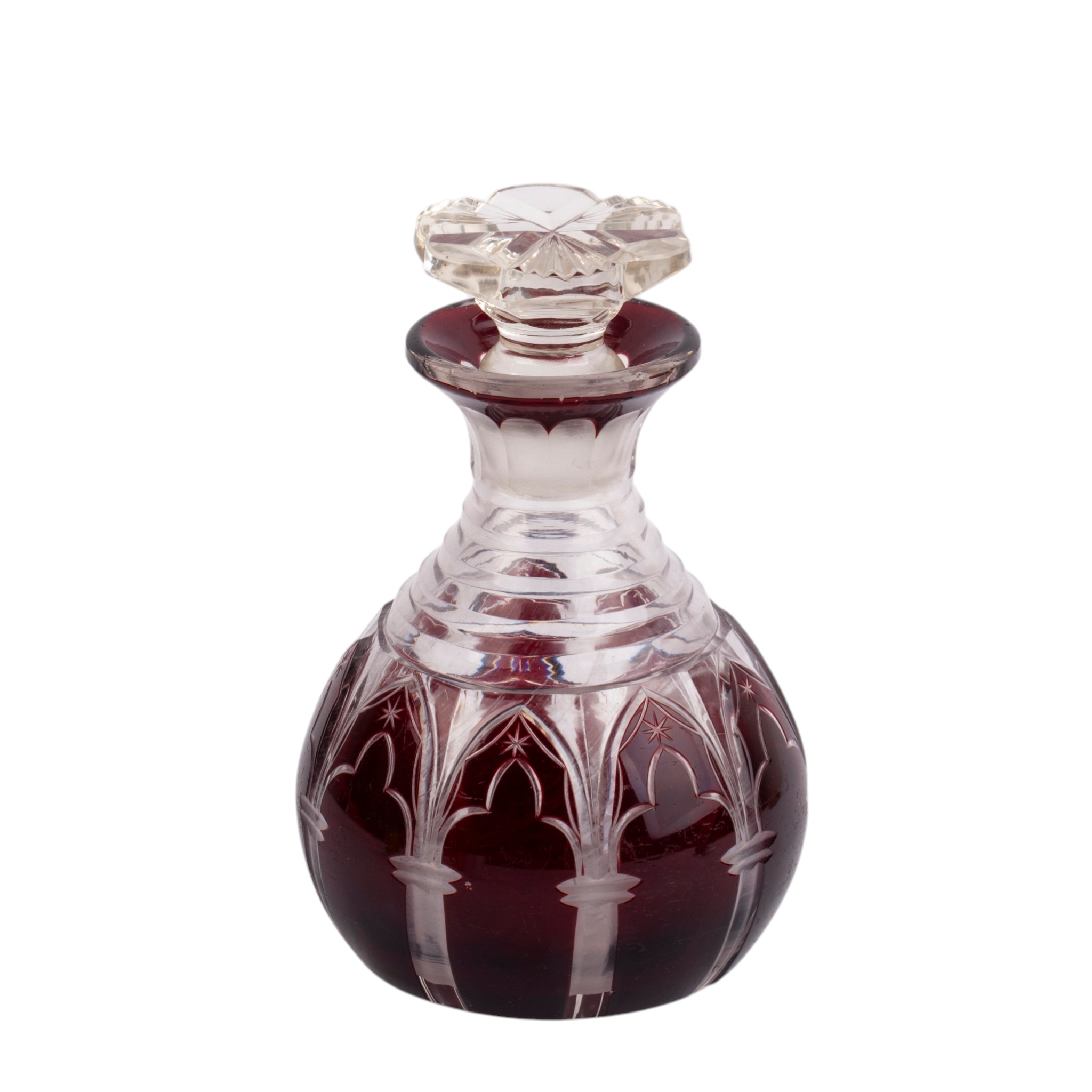
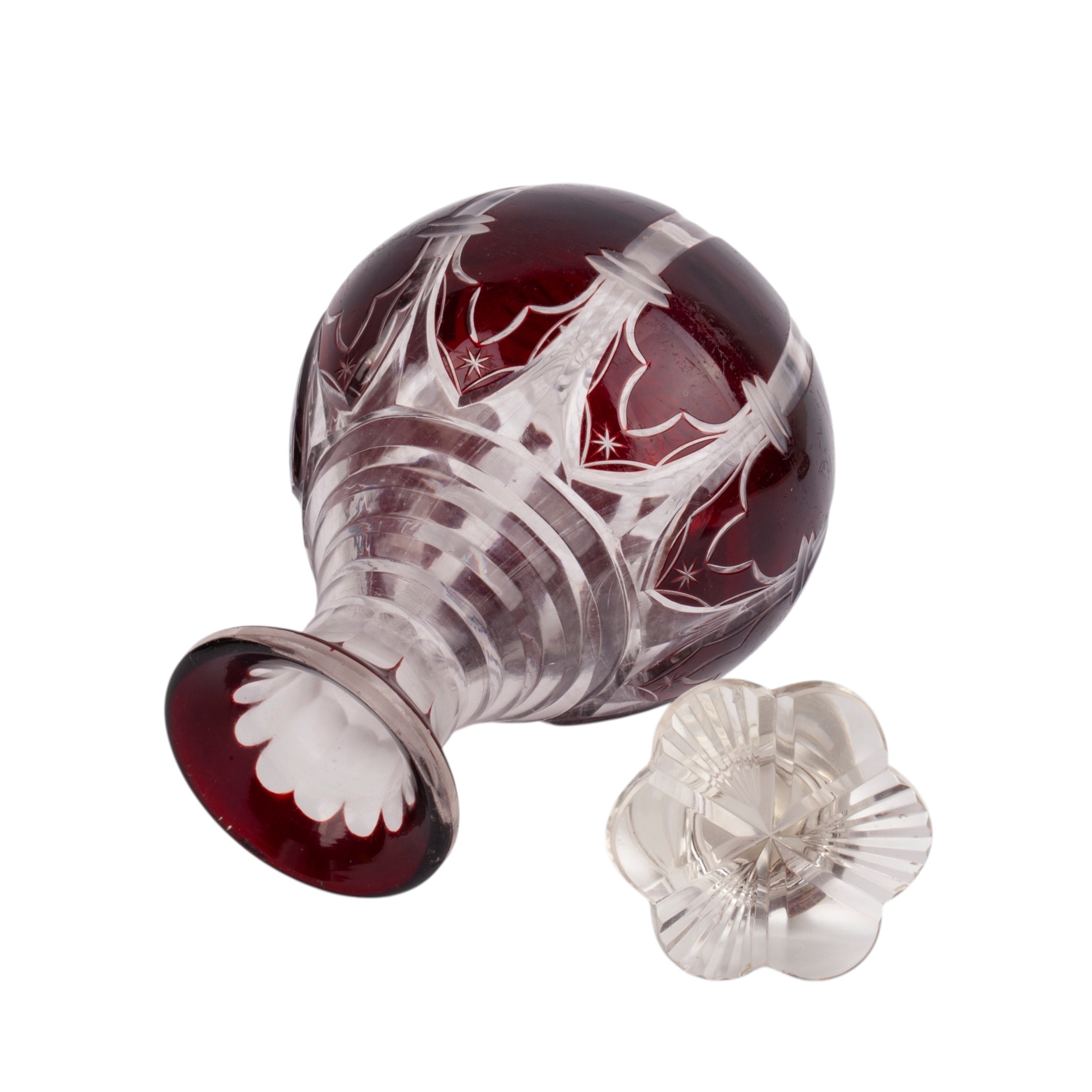
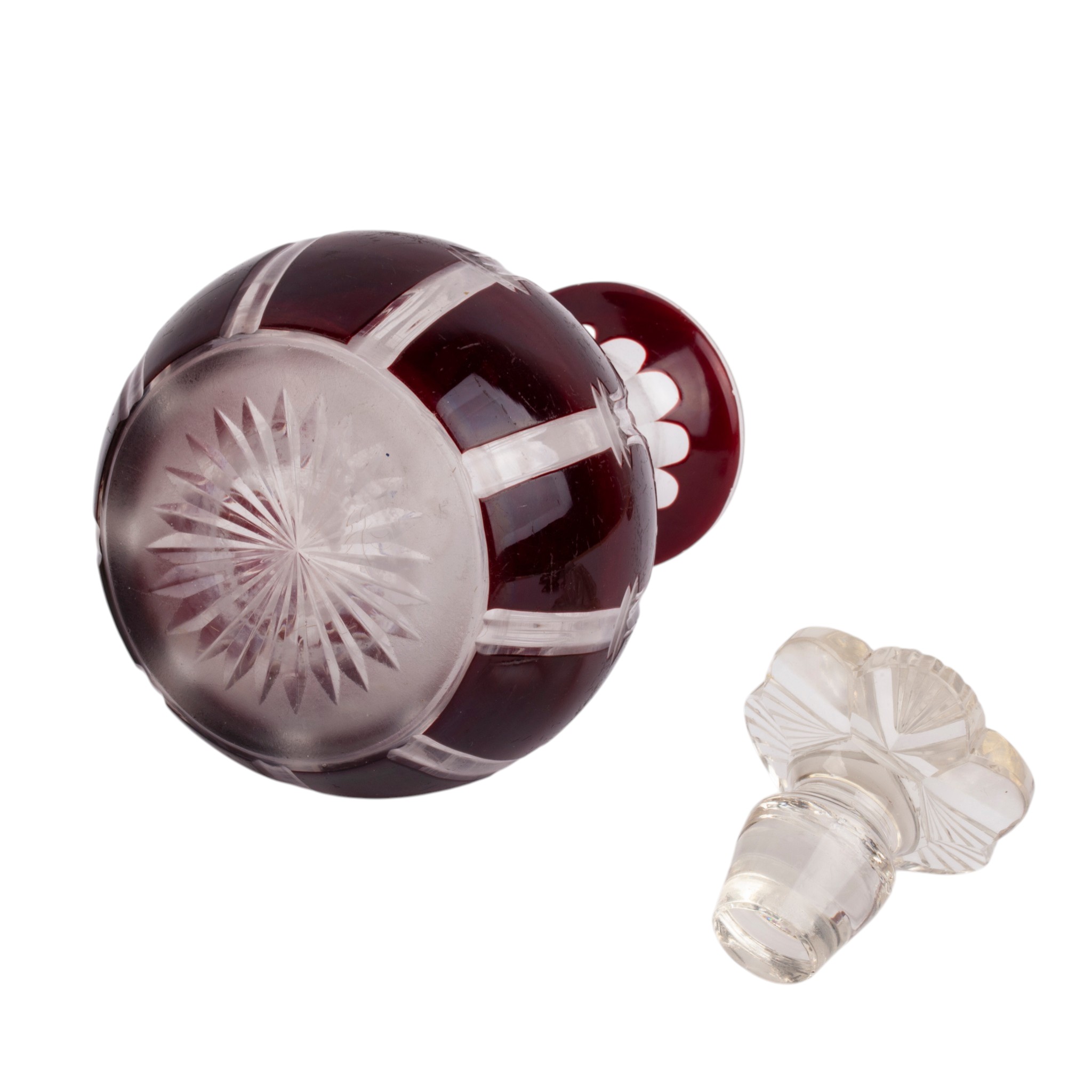
Estimate: 1500-1800€A Russian Imperial Decanter For Spirits St Petersburg, Imperial Glass Factory, 1830s-1840s.
Clear glass and copper-ruby glass; blown, cased glass, deep cutting, polished.
Dimensions
Height 14.5 cm, diameter 10.0 cm.
A small pear-shaped decanter on a circular foot. The body is made of clear glass with an outer layer of copper-ruby overlay. The ornament is cut through the coloured casing by deep wheel-cutting: a tall frieze of pointed Gothic arches, interspersed with delicate multi-rayed stars. The shoulders are encircled by stepped bands of cutting, while the neck opens into a slight flare. The fitted stopper is faceted and echoes the decorative character of the vessel.
The deep dark cherry tone was achieved by colouring the glass mass with colloidal copper. The contrast between the transparent ground and the ruby overlay produces a vivid play of light and strongly emphasizes the Gothic design. Both form and decoration are consistent with the production of the Imperial Glass Factory. Closely comparable examples are founded in the State Historical Museum, Moscow (inv. no. GIM 106603/2), and in the State Hermitage Museum, St Petersburg (inv. no. ERS-3085).
A number of objects in the Gothic style, probably made for the Cottage Palace in Alexandria Park at Peterhof, are displayed in Russian museum collections. Among them are mantel clocks and a lidded tankard with carved and gilded decoration in the form of an ornamental colonnade with pointed arches in the collection of the All-Russian Museum of Decorative, Applied and Folk Art, Moscow. In the present decanter, the motif of the pointed arcade and colonnade is directly adopted, though without gilding.
The Imperial Glass Factory was founded in 1792, when, after the death of Grigory Potemkin, his enterprise was acquired for the treasury by Catherine II. During the 19th century, the factory worked with leading architects and artists, among them Andrei Voronikhin, Thomas de Thomon, Carlo Rossi, Vasily Stasov, Ippolit Monighetti, and Viktor Hartmann, producing exemplary works in glass and crystal to their designs. In 1890 the factory was merged with the Imperial Porcelain Factory, and production ceased at the end of 1918.Starting price: 1200€
Estimate: 1500-1800€
Hammer Price: Not sold -
Lot 0090
Shot Glass from the Imperial Yacht “Polar Star”, Imperial Glass Factory, St Petersburg
Estimate: 300-350€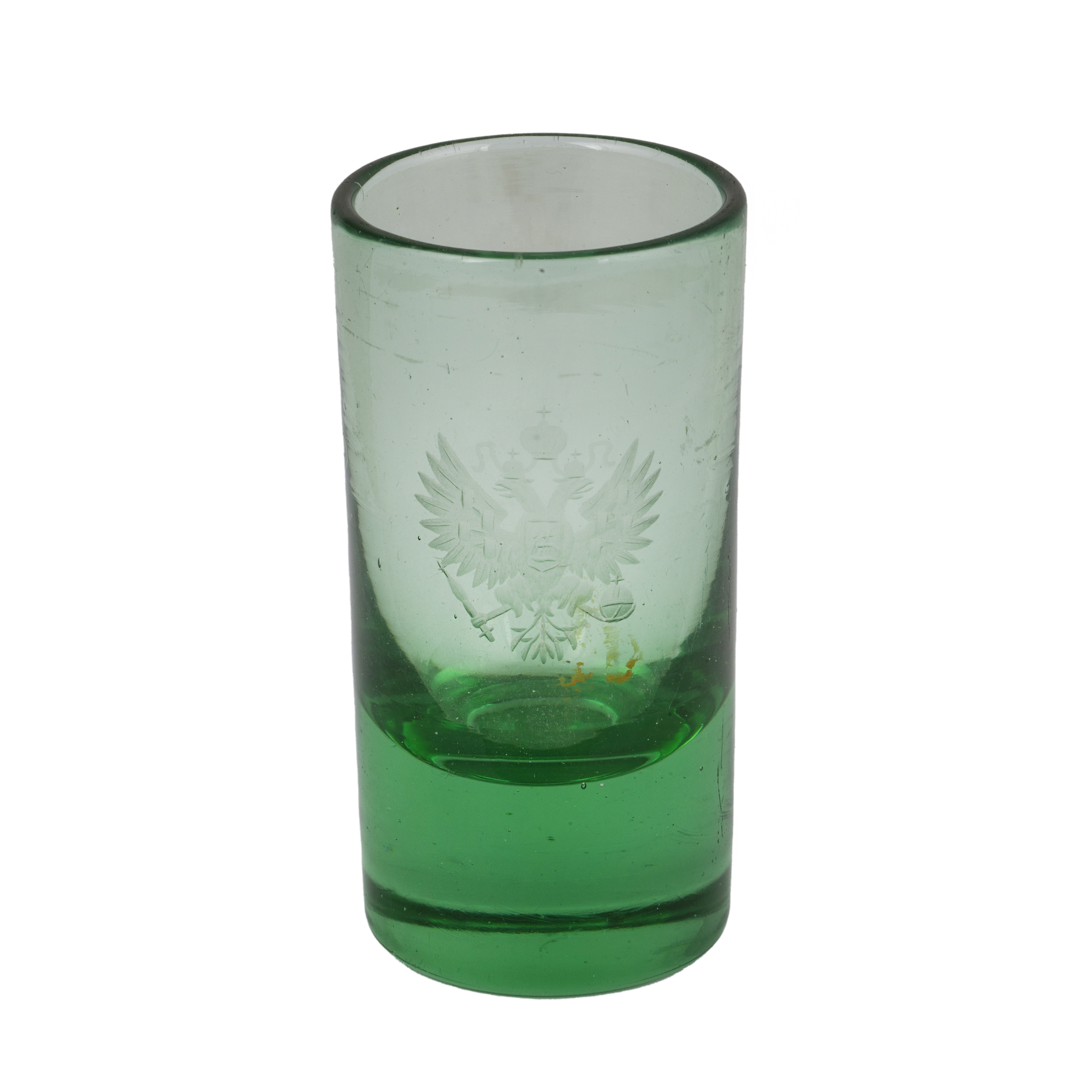
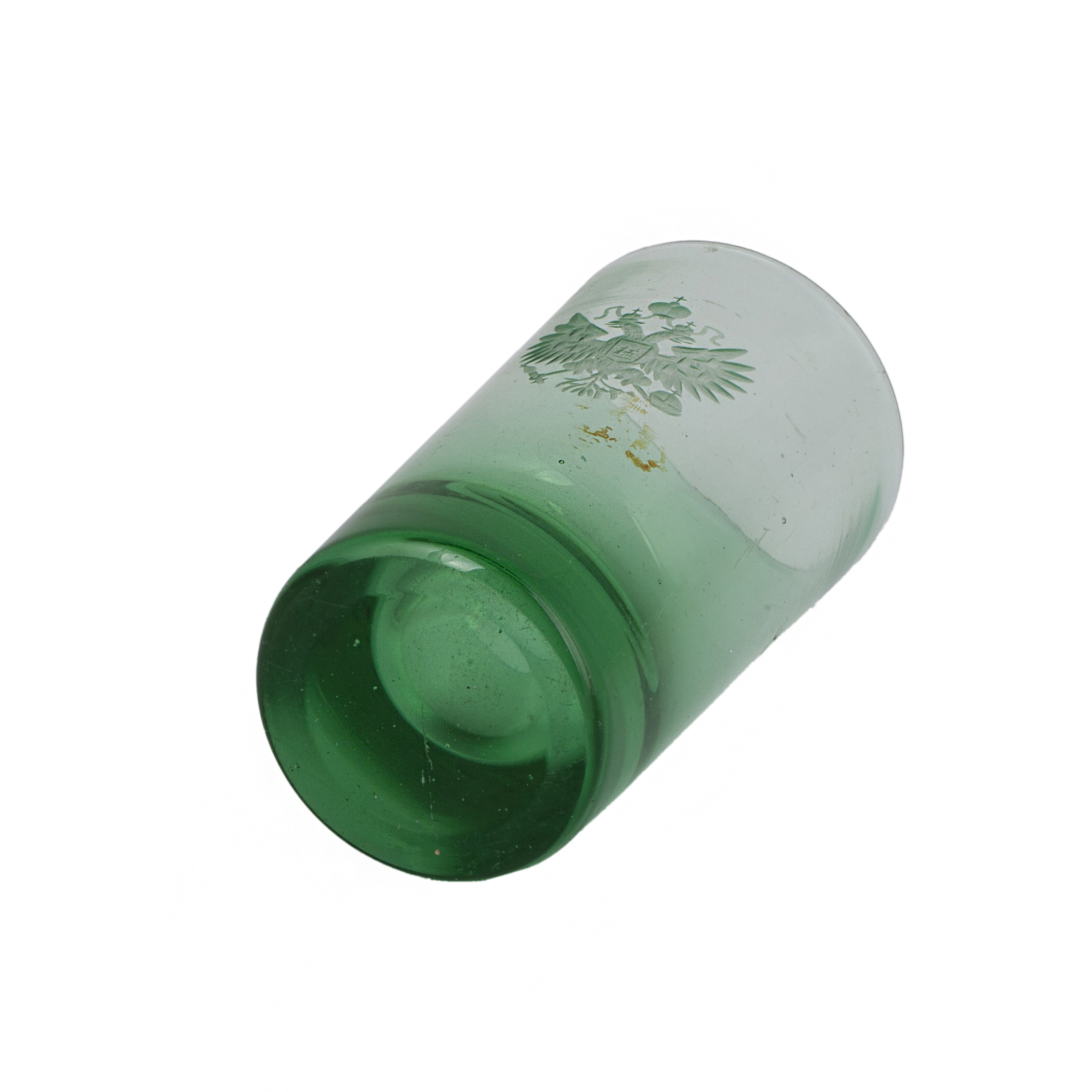
Lot 0090
Shot Glass from the Imperial Yacht “Polar Star”, Imperial Glass Factory, St Petersburg
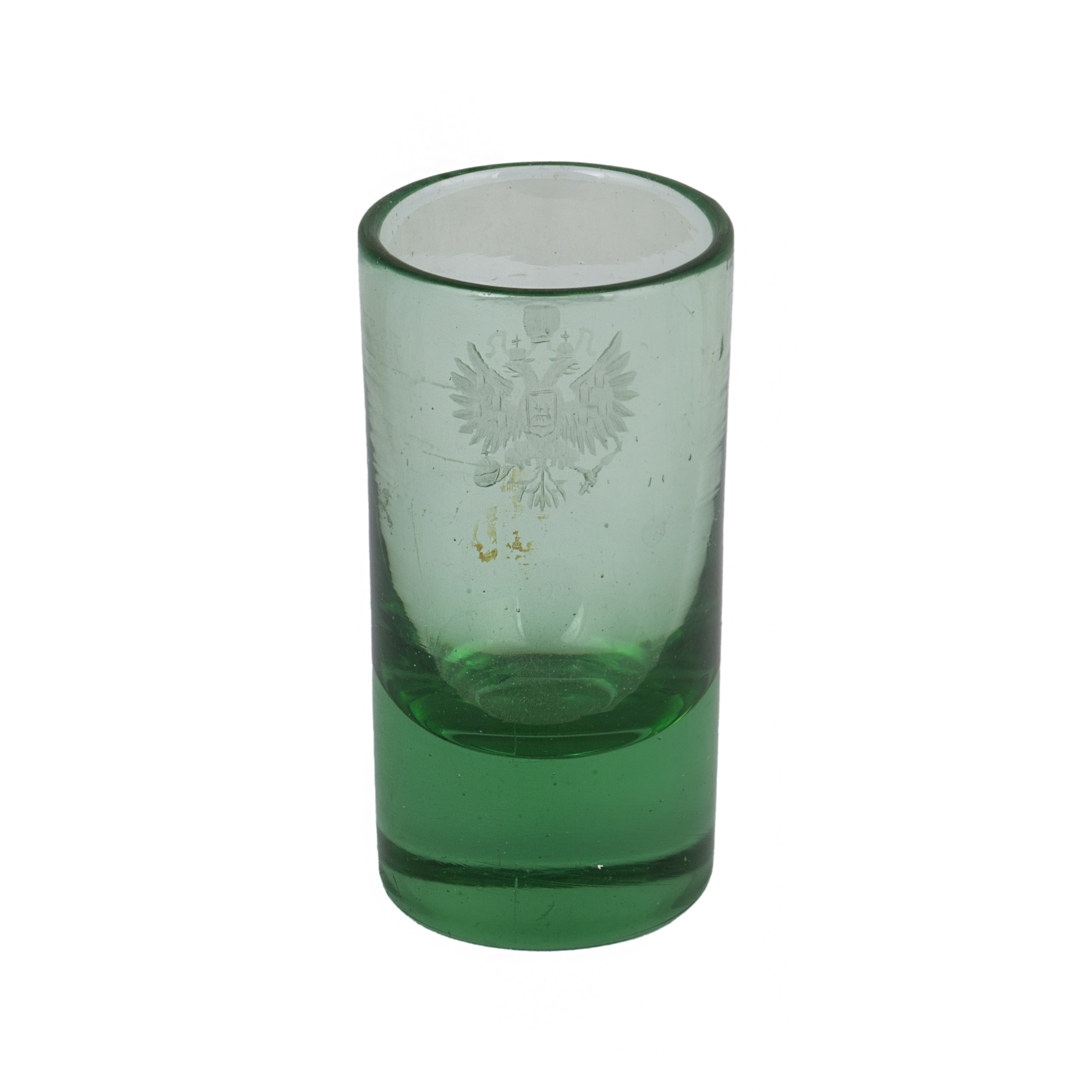
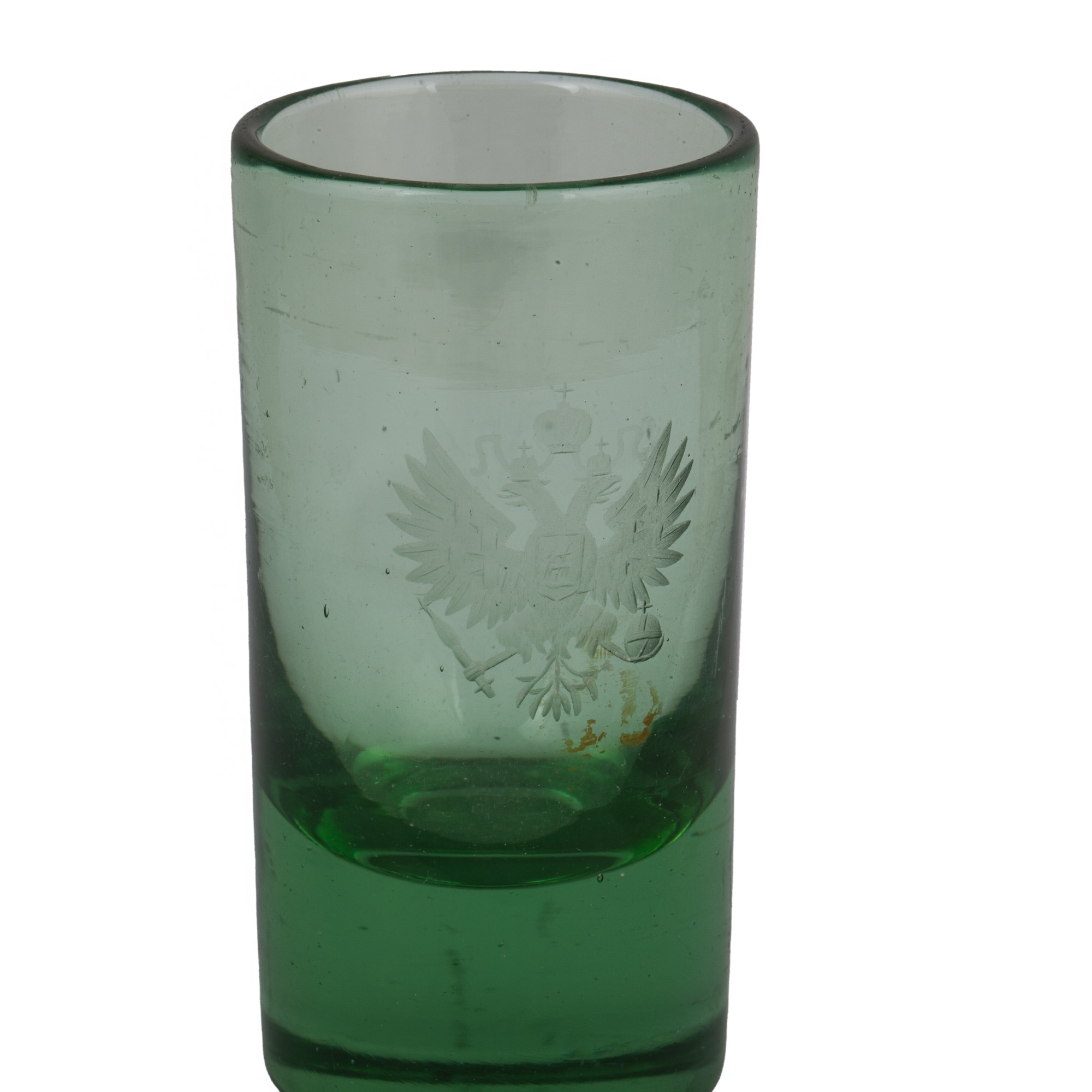
Estimate: 300-350€A Shot Glass from the Imperial Yacht Polar Star
Imperial Glass Factory, St Petersburg, early 20th century.
Green glass; blown, tooled, wheel-engraved.
A rare shot glass associated with the Imperial yacht Polar Star (Polyarnaya Zvezda), one of the most celebrated vessels of the Russian Imperial court. Of plain cylindrical form with a heavy applied base in deep emerald-green glass, the vessel is engraved with the Russian Imperial double-headed eagle, denoting its connection with official court service.
The yacht Polar Star, built at the Baltic Shipyard and launched in 1890, served Alexander III and Nicholas II as the principal imperial yacht for voyages, naval reviews and diplomatic visits. Its interiors, renowned for their comfort and artistic refinement, rivalled those of contemporary palaces. In the years before the First World War the vessel was closely associated with the travels of the Imperial family, especially the dowager Empress Maria Feodorovna, and became one of the most recognizable symbols of the ceremonial life of the late Russian court. Height: 11.2 cm.Starting price: 250€
Estimate: 300-350€
Hammer Price: 550 € -
Lot 0092
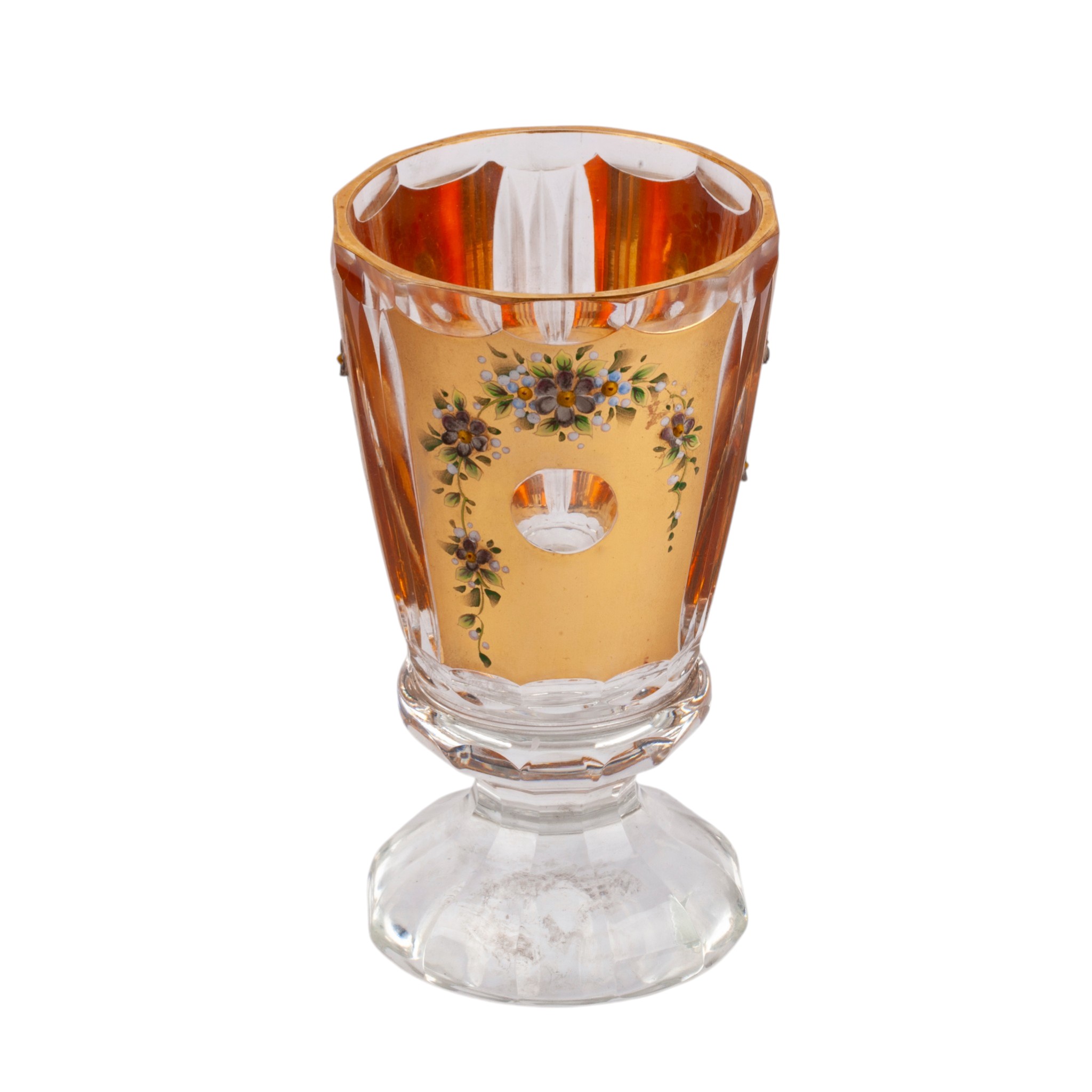
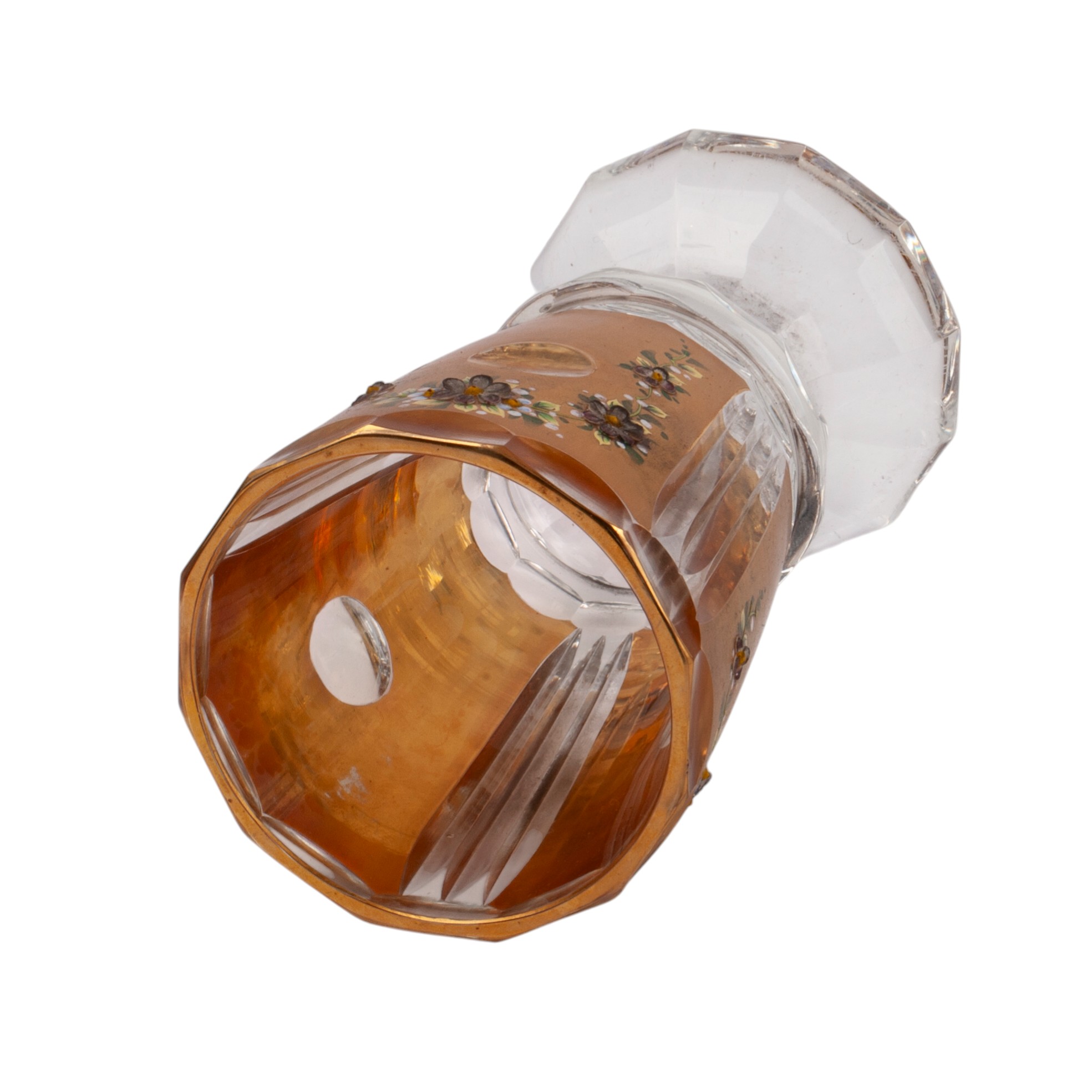
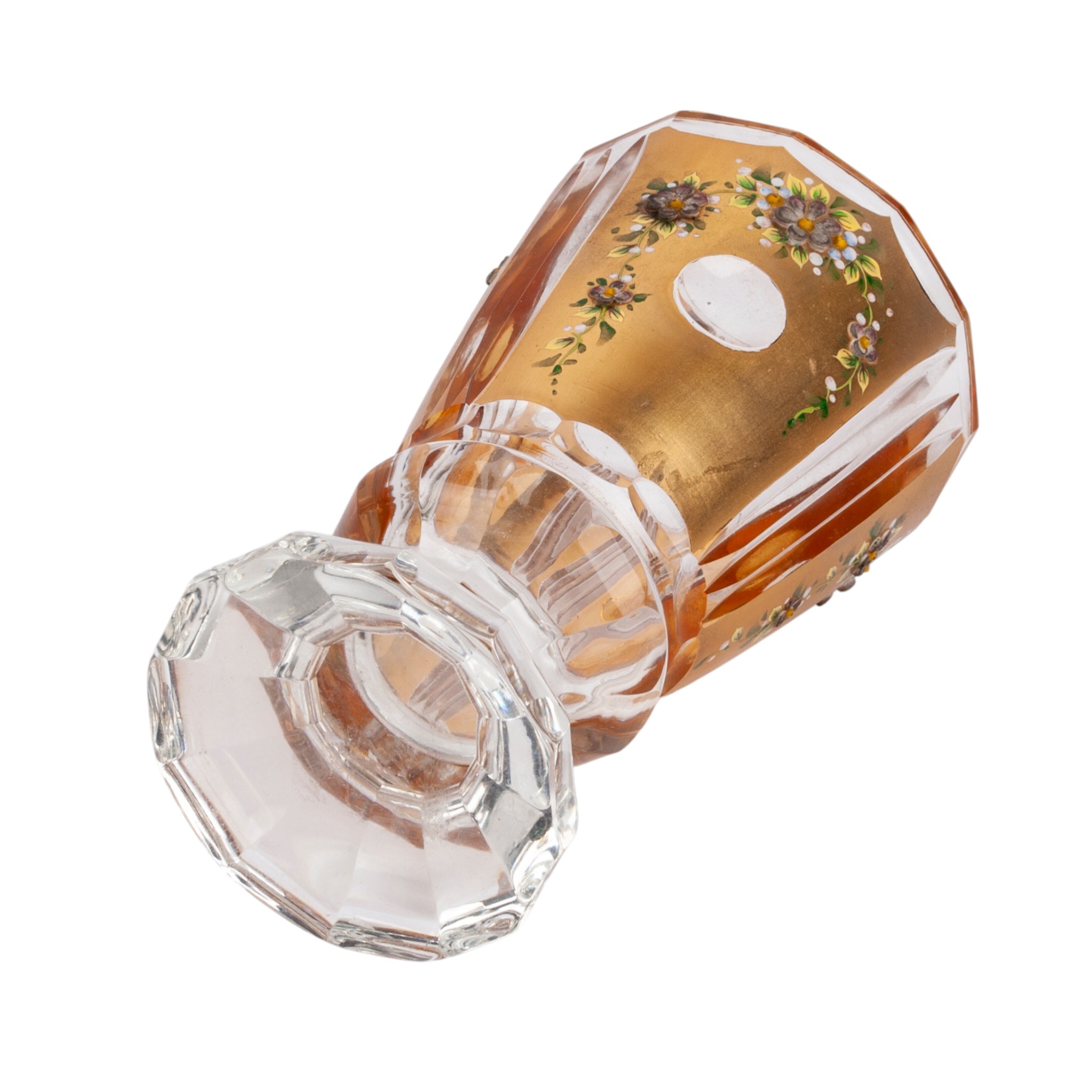
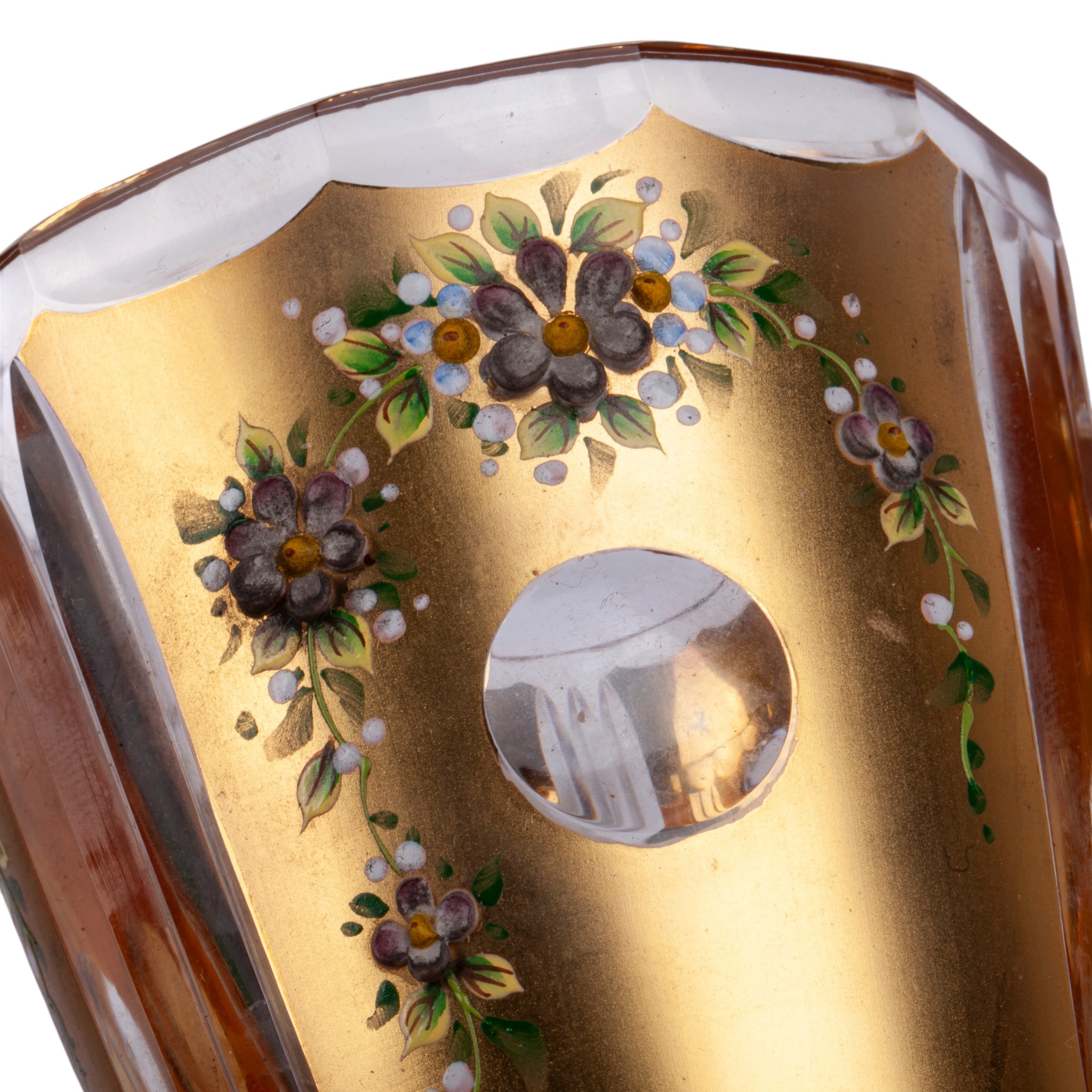
Amber-Stained and Gilt Enamel Glass Goblet, Late 19th–Early 20th Century
Estimate: 250-300€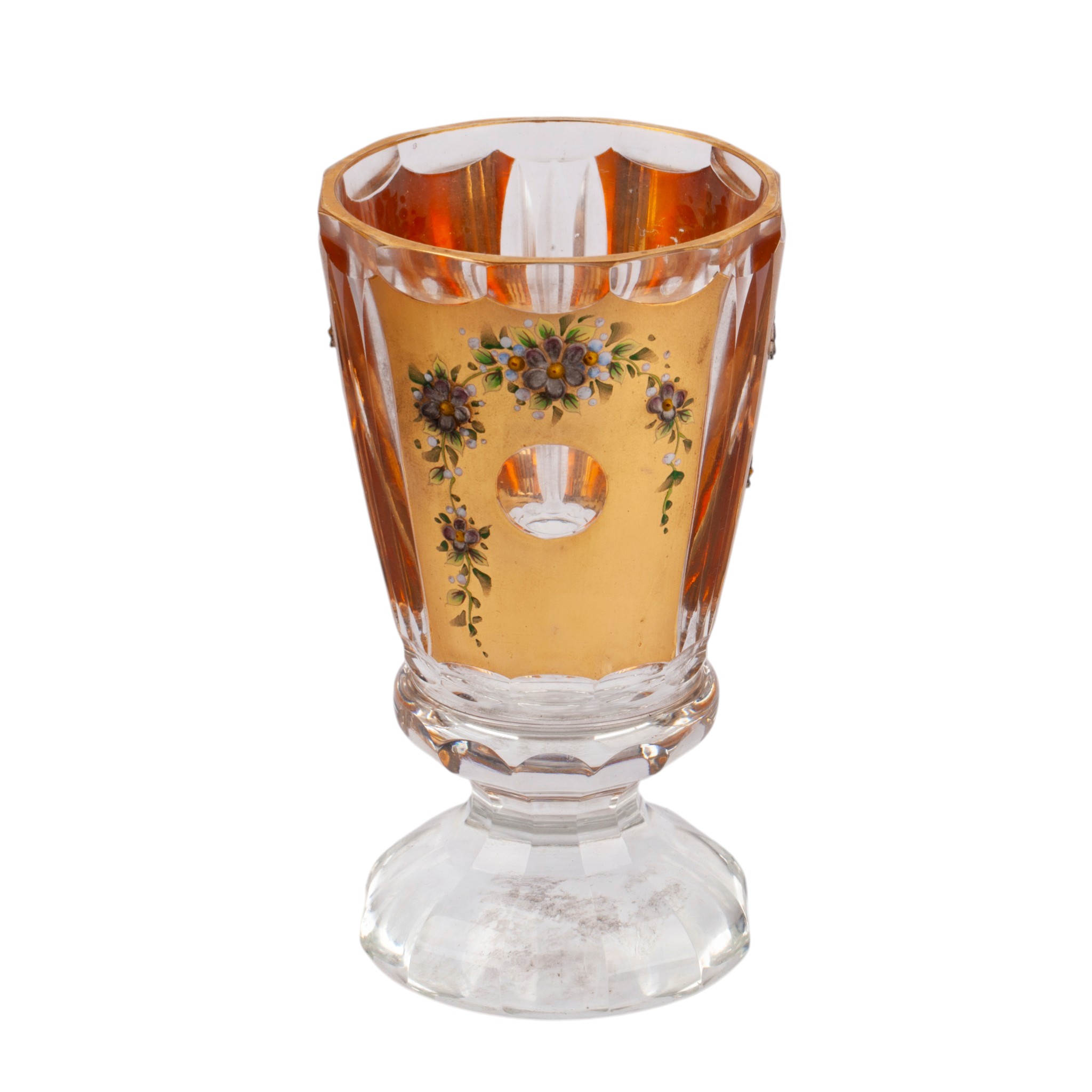
Lot 0092
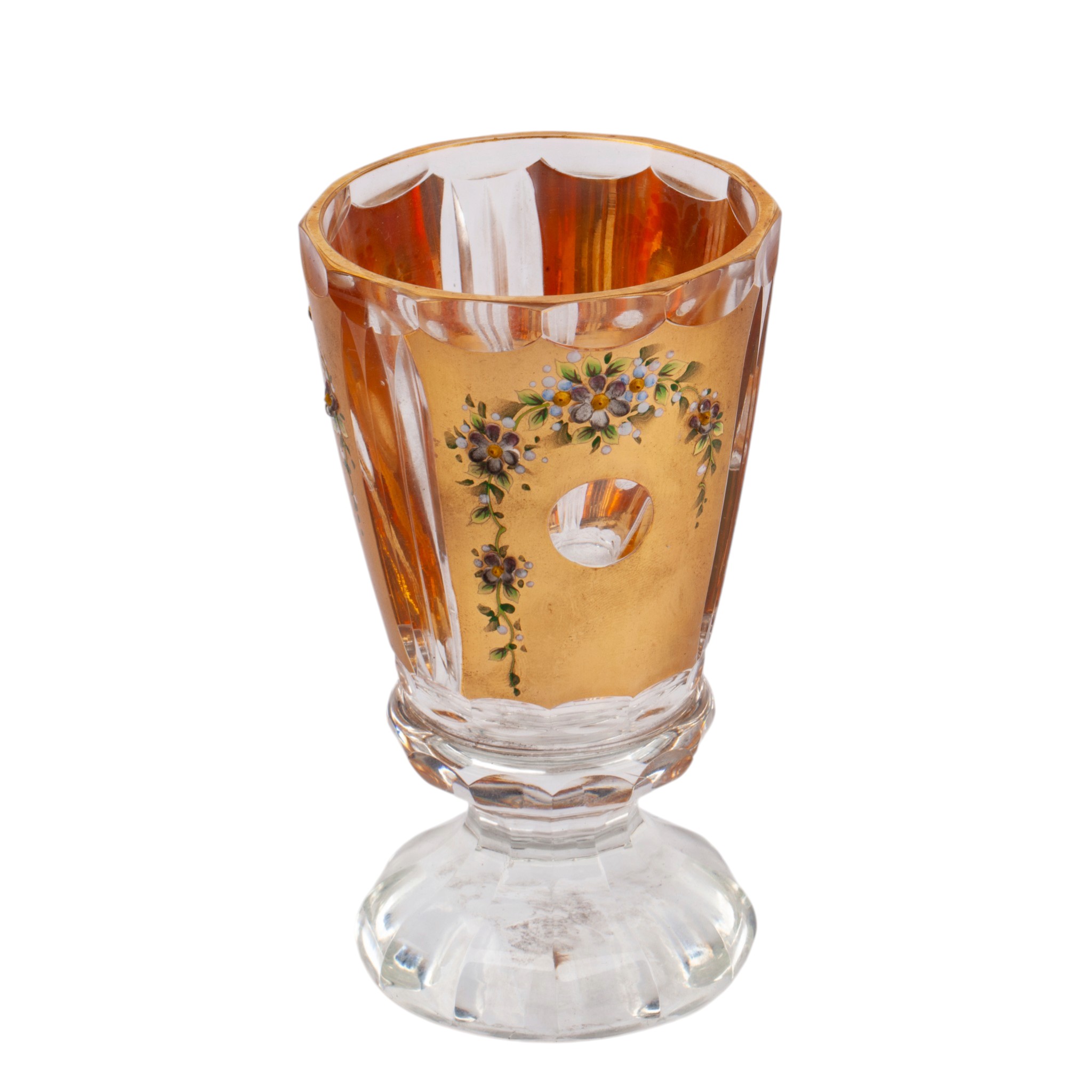
Amber-Stained and Gilt Enamel Glass Goblet, Late 19th–Early 20th Century
Estimate: 250-300€Amber-stained and gilt enamel glass goblet, late 19th to early 20th century.
A handsome faceted goblet with a wide gilt band and hand-painted floral garlands in soft polychrome enamel. The warm amber tint and refined decoration are typical of Central European art glass of the period.Height: 13.2 cm. Diameter: 7 cm.
Starting price: 200€
Estimate: 250-300€
Hammer Price: Not sold