
Lot 0040
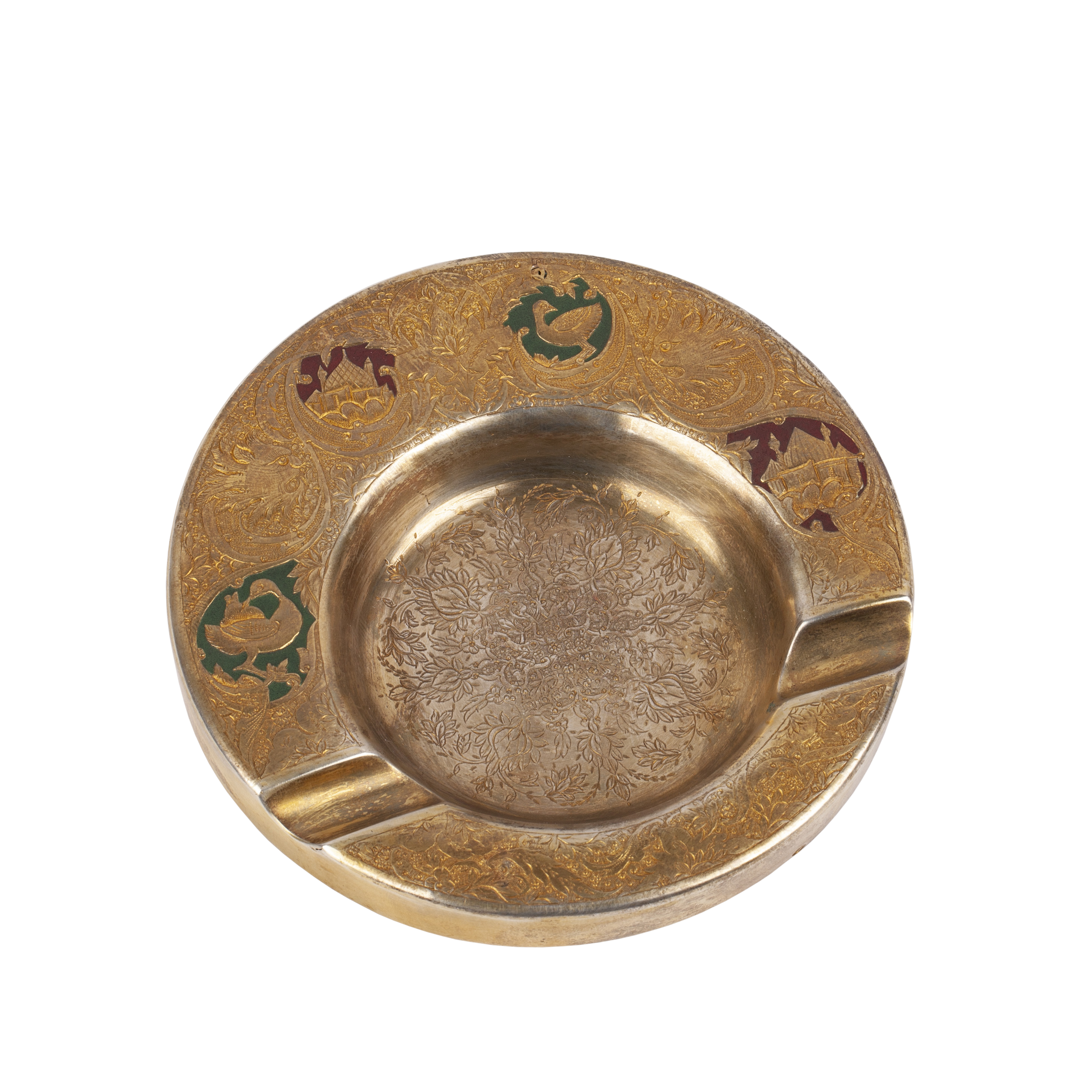
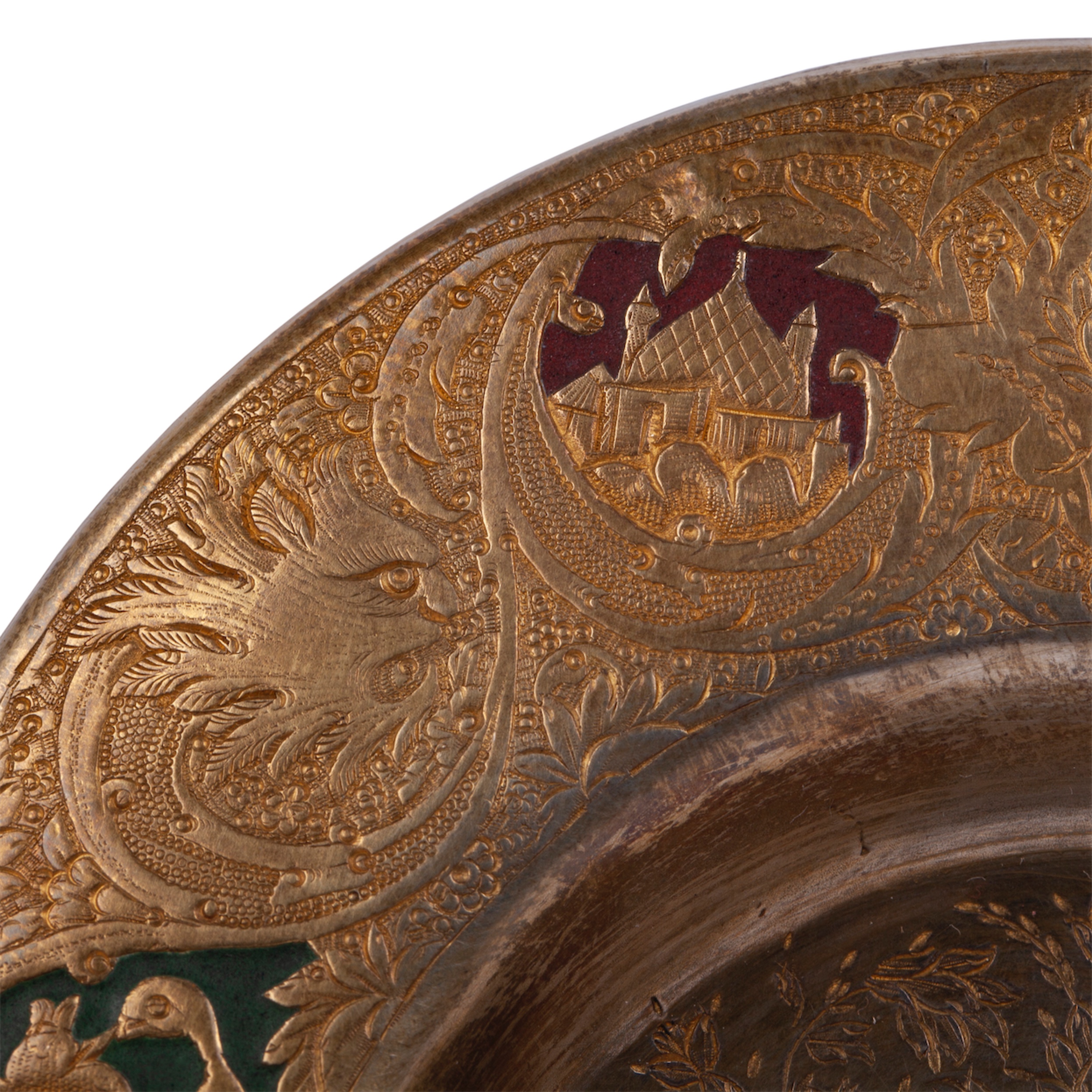
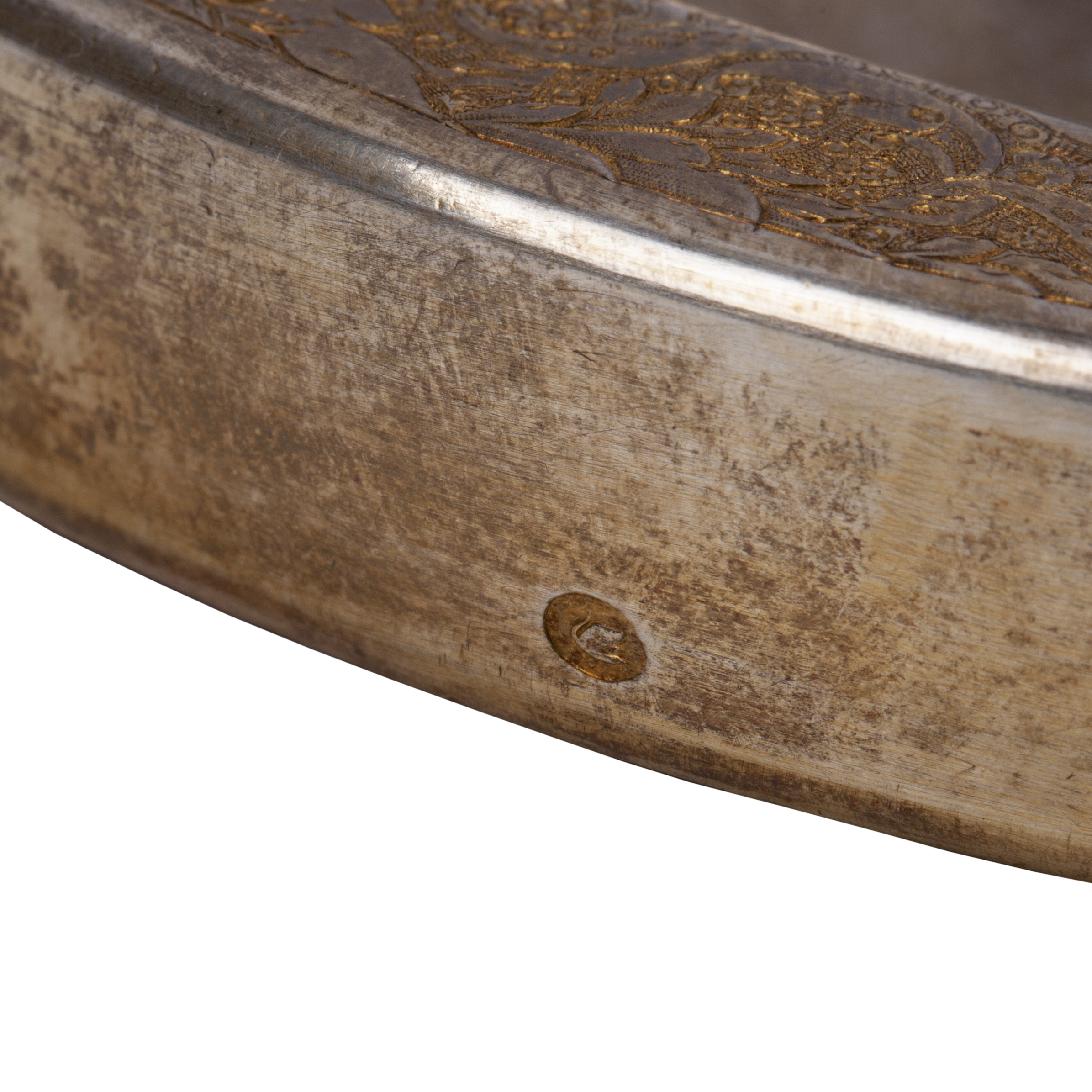
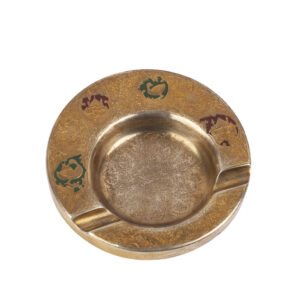
Silver-Gilt and Champleve Enamel Ashtray by Emil Radke
Estimate: 600-800€
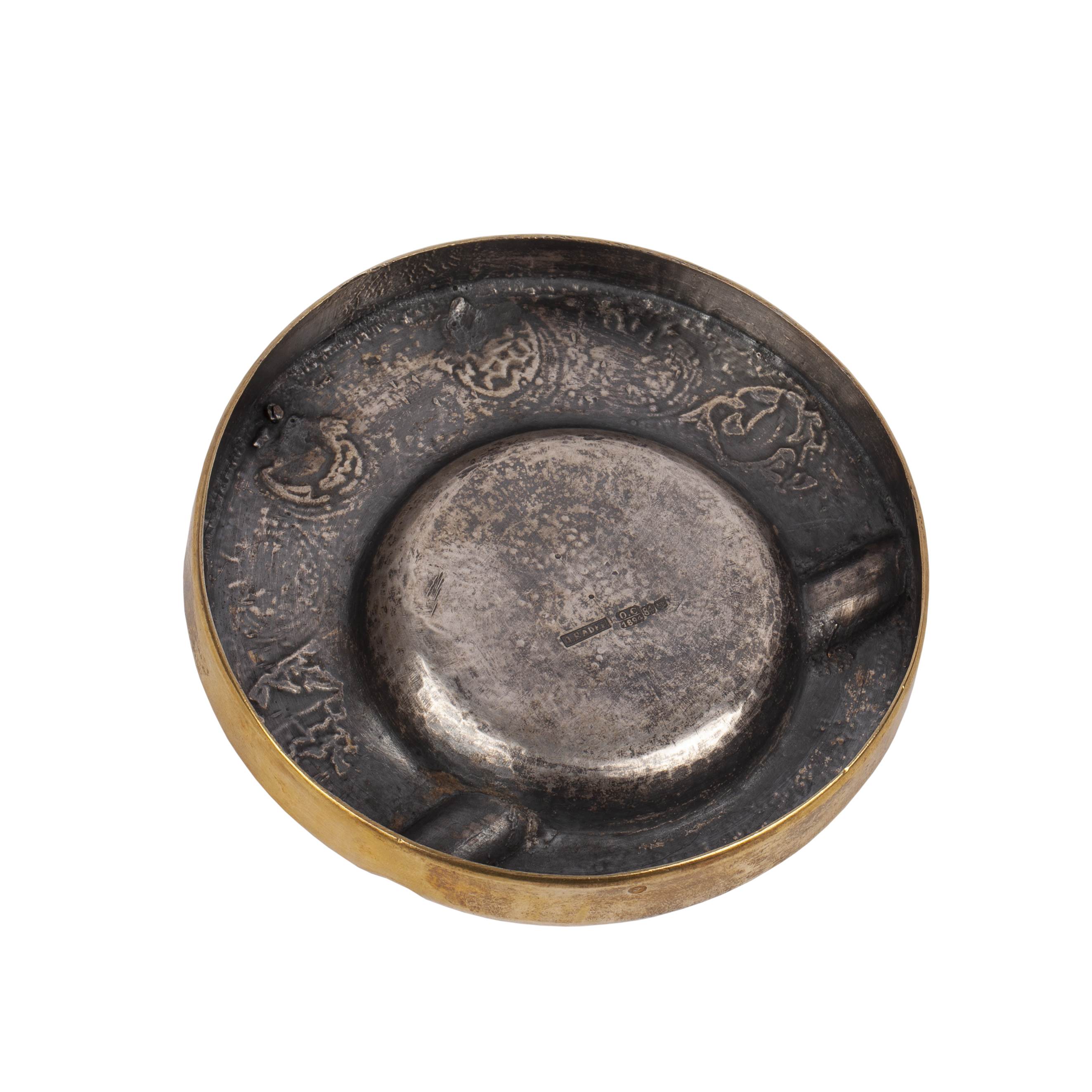
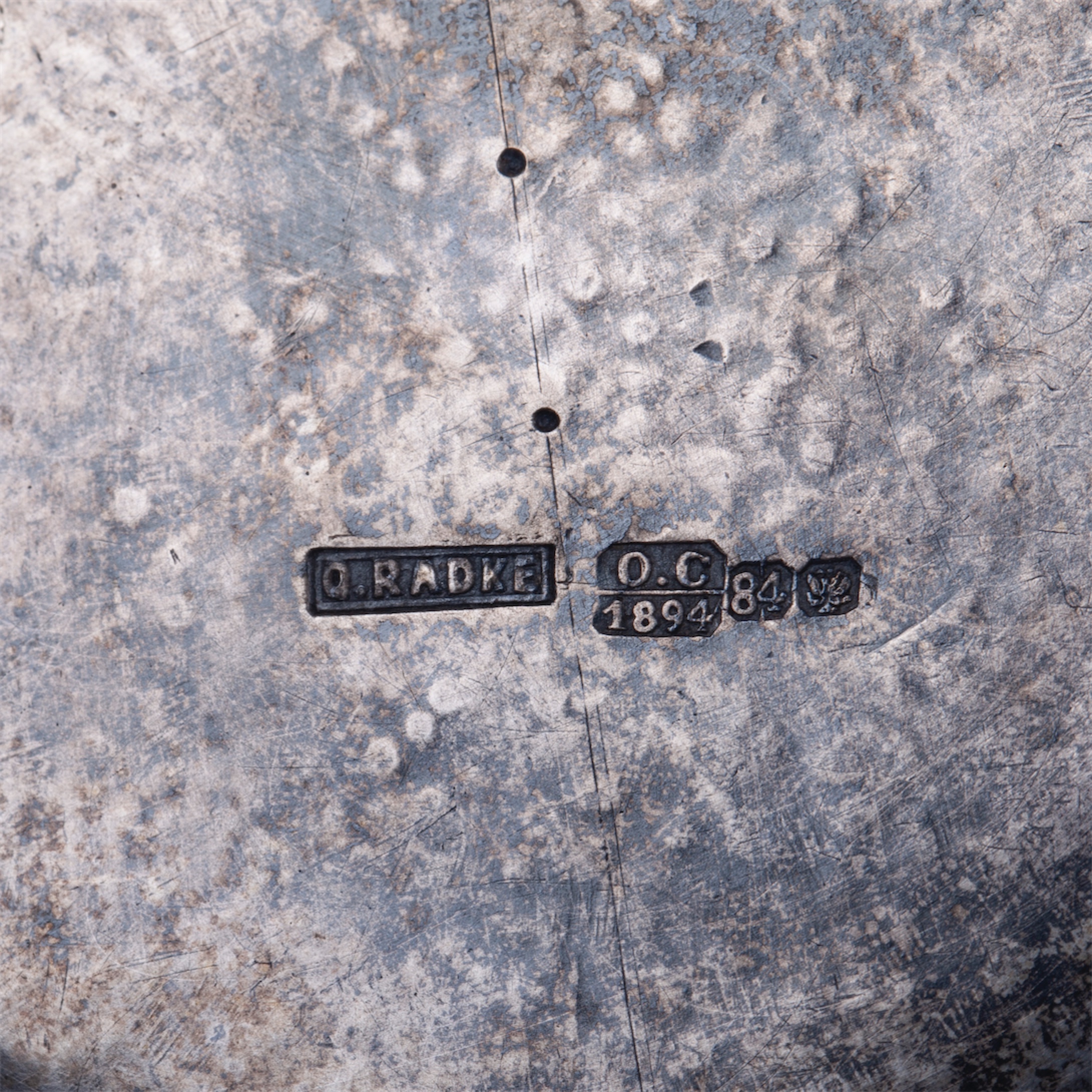
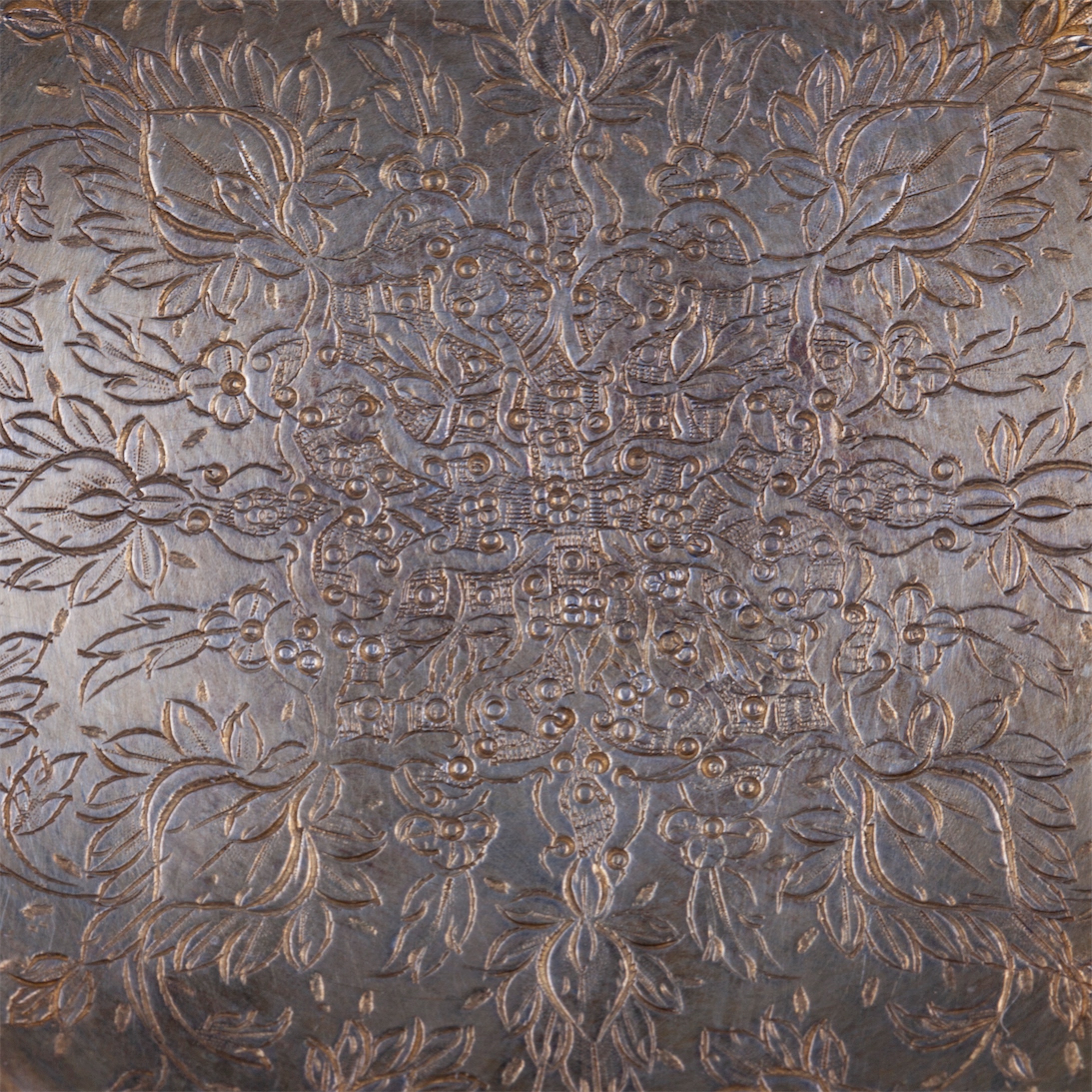
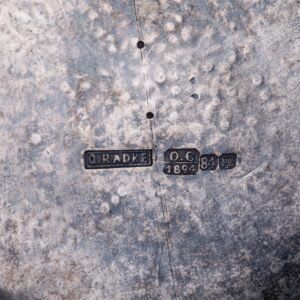
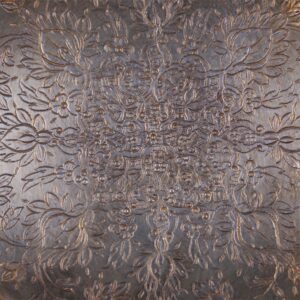
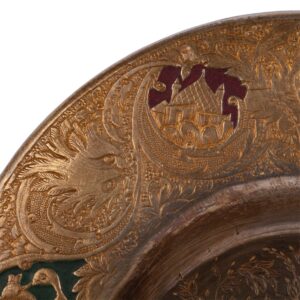
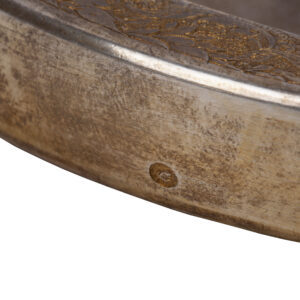
An interesting silver-gilt and champlevé enamel ashtray, decorated with polychrome enamel motifs and intricate floral engraving. Maker’s mark of Emil Radke, Minsk, 1894. Marked Radke 84.
Diameter: 11 cm.
Weight: 150.6 g.
Emil Radke was one of the most prominent silversmiths in Minsk at the end of the 19th century, regarded as the second-best master of his time. A deeply religious Jew, he strictly observed all Jewish traditions and rituals. His workshop produced refined silver objects in the fashionable Art Nouveau style, often combining gilding, niello, and enamel.
This ashtray is a fine example of Radke’s craftsmanship and an excellent collectible piece for enthusiasts of Russian and Eastern European Art Nouveau silver.
Starting price: 500€
Estimate: 600-800€
Hammer Price: Not sold
Related Lots
-
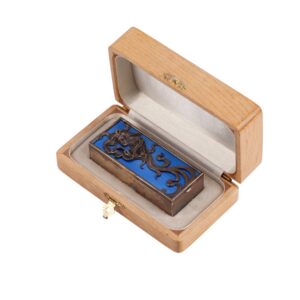
Lot 0038
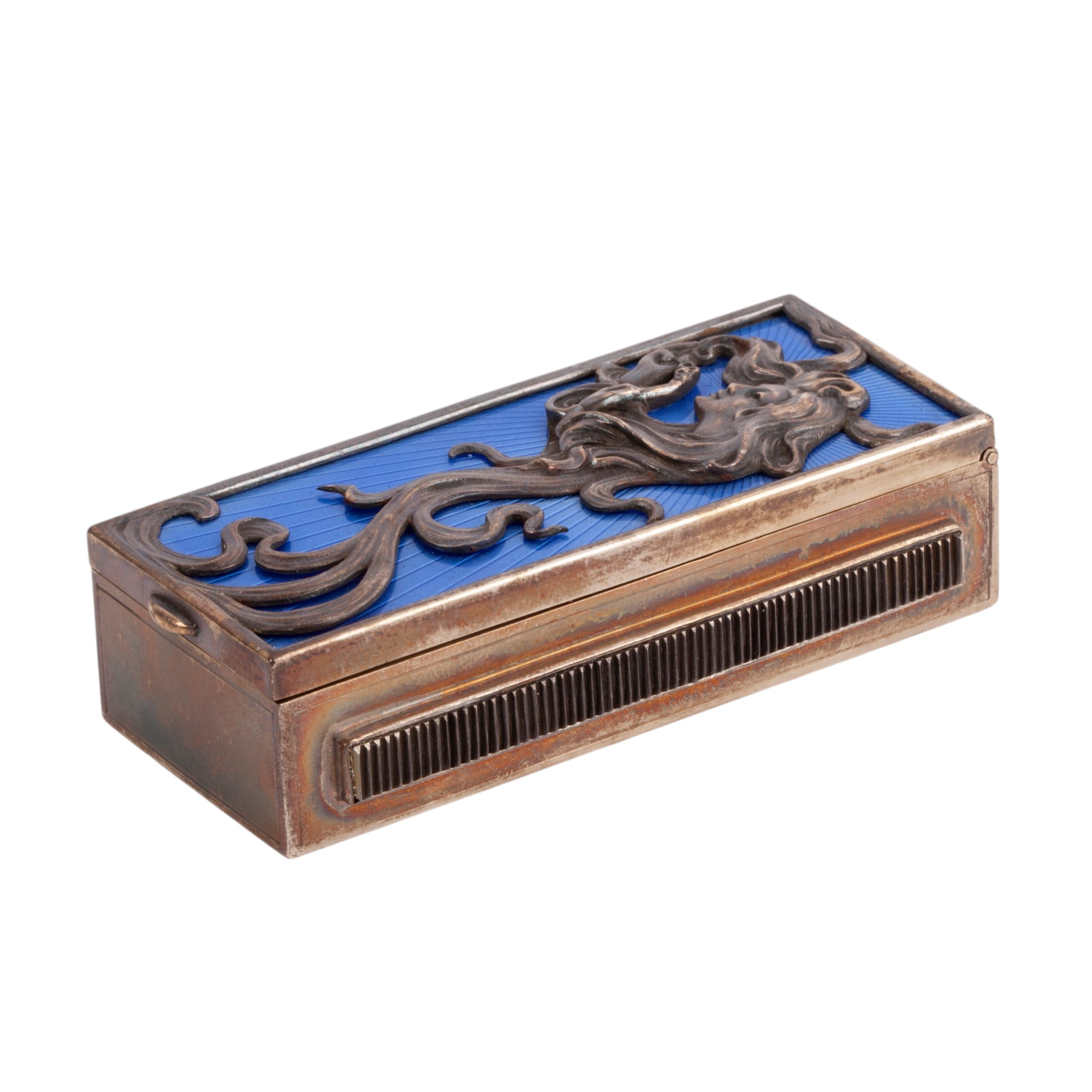
Fabergé – Silver-Gilt and Guilloché Enamel Match Holder, Moscow, 1899–1908, Original Case
Estimate: 5000-7000€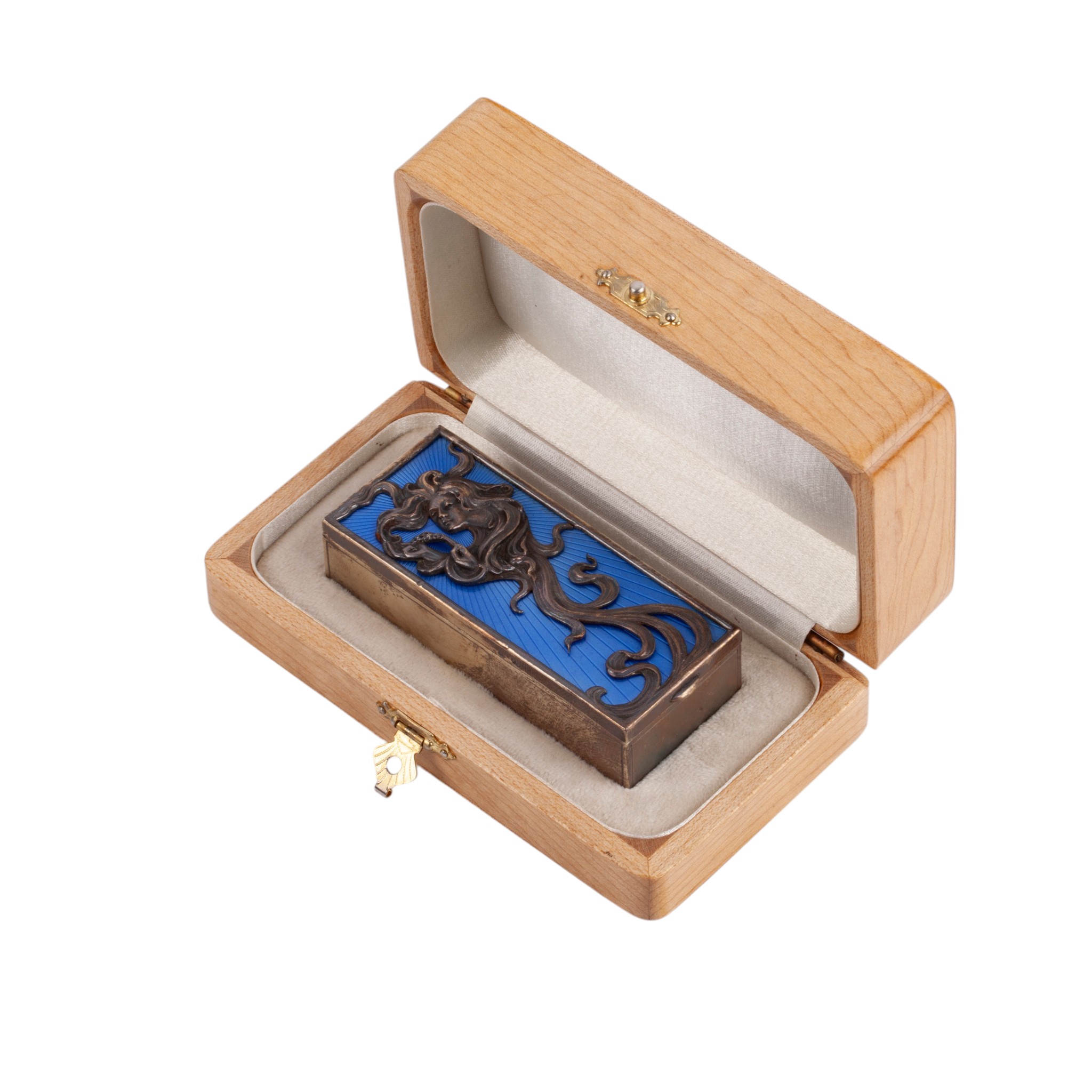
Lot 0038
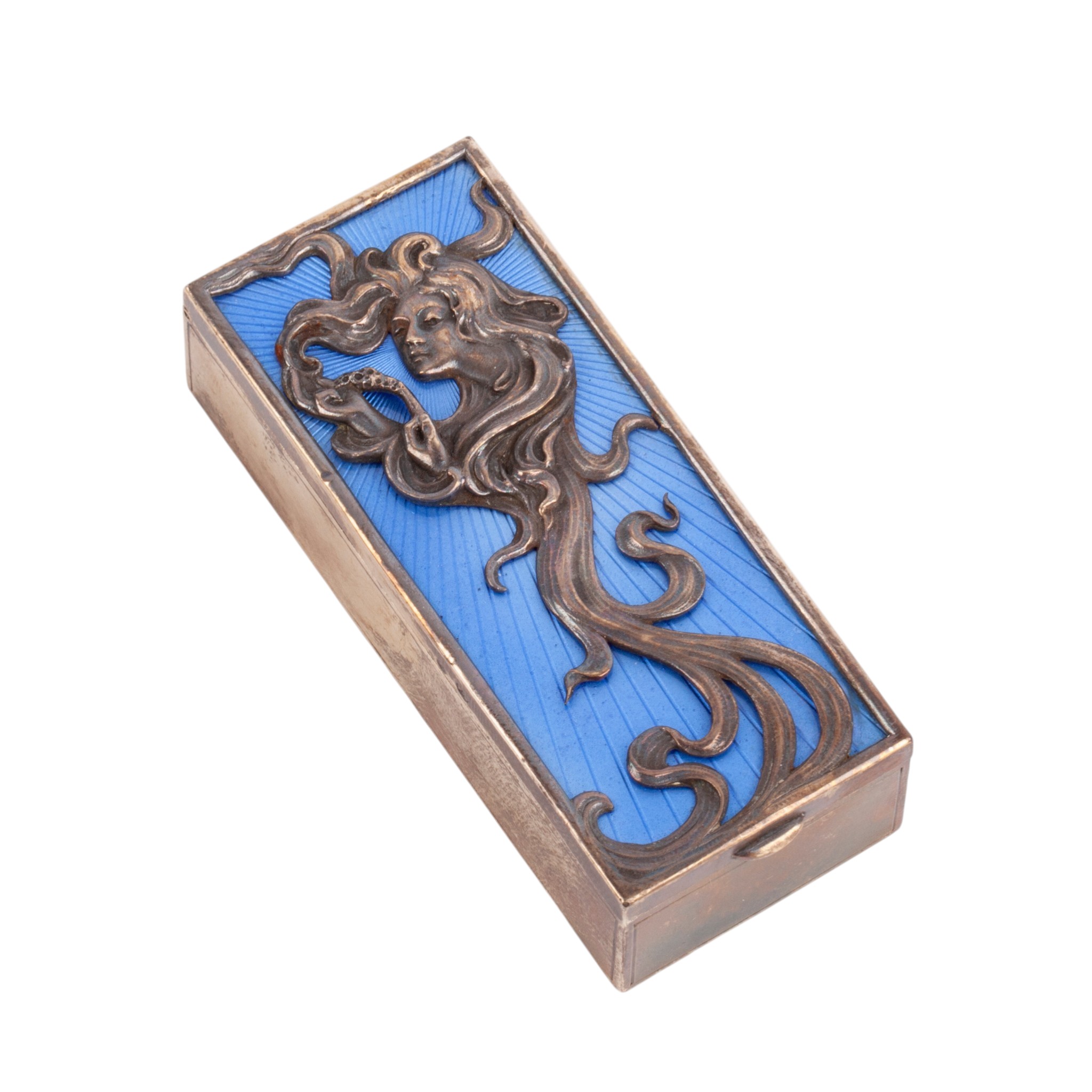
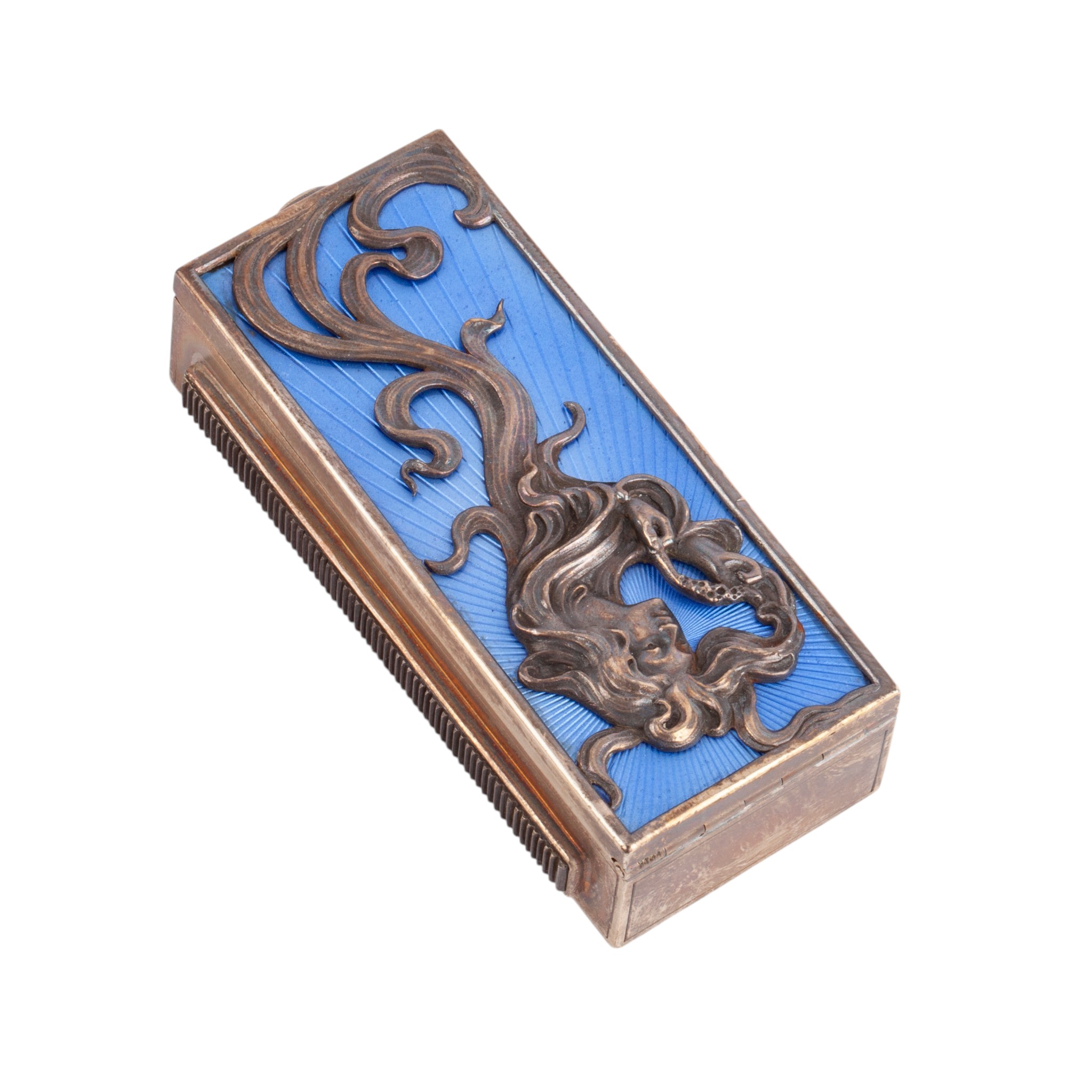
Fabergé – Silver-Gilt and Guilloché Enamel Match Holder, Moscow, 1899–1908, Original Case
Estimate: 5000-7000€“FABERGÉ. SILVER-GILT AND GUILLOCHÉ ENAMEL MATCH HOLDER IN ORIGINAL CASE Moscow branch of the Fabergé firm, 1899-1908.
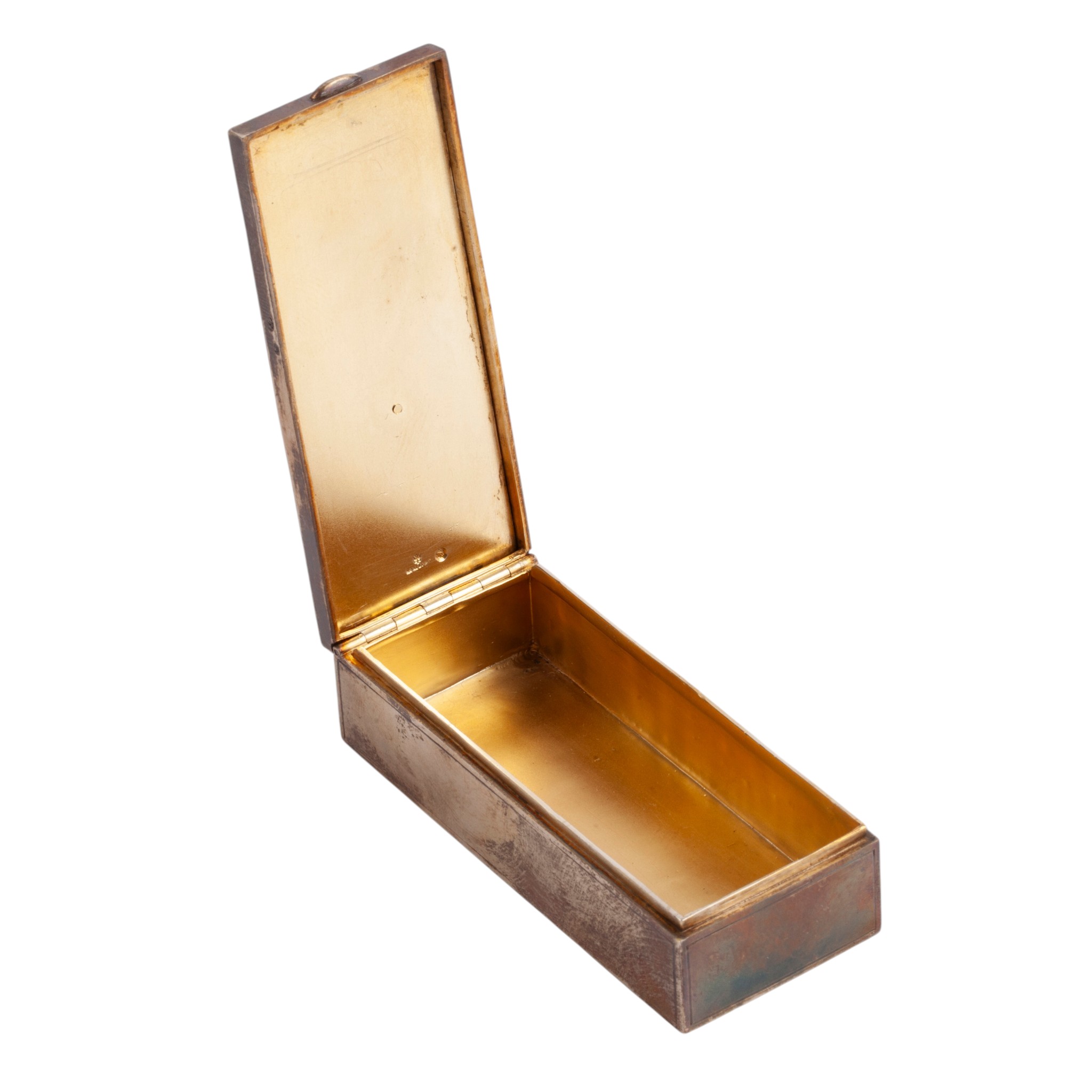
Silver-gilt, guilloché enamel, cast and applied relief; original fitted wooden case. Weight: 98 g. Dimensions: 2.2 x 7.9 x 3.7 cm.
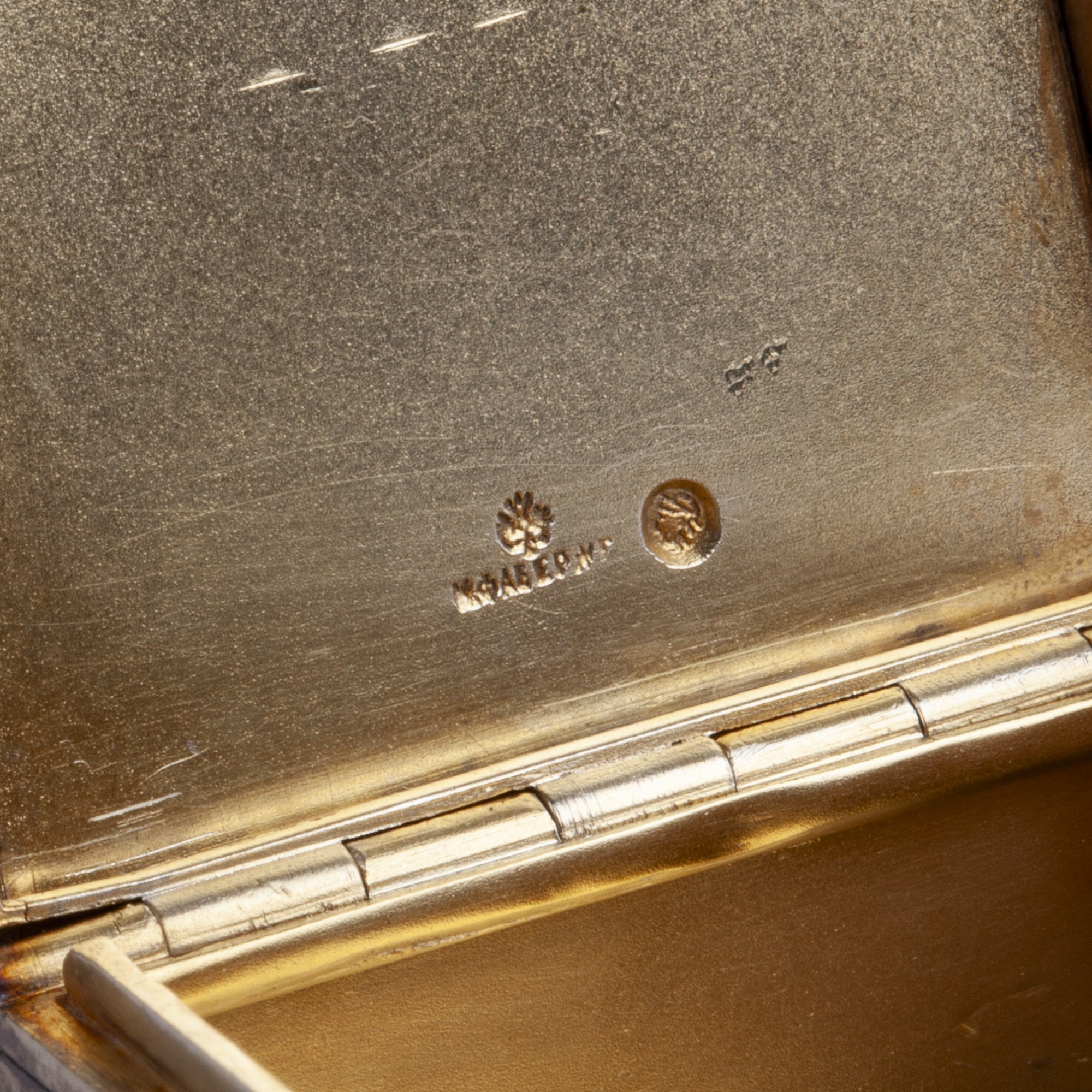
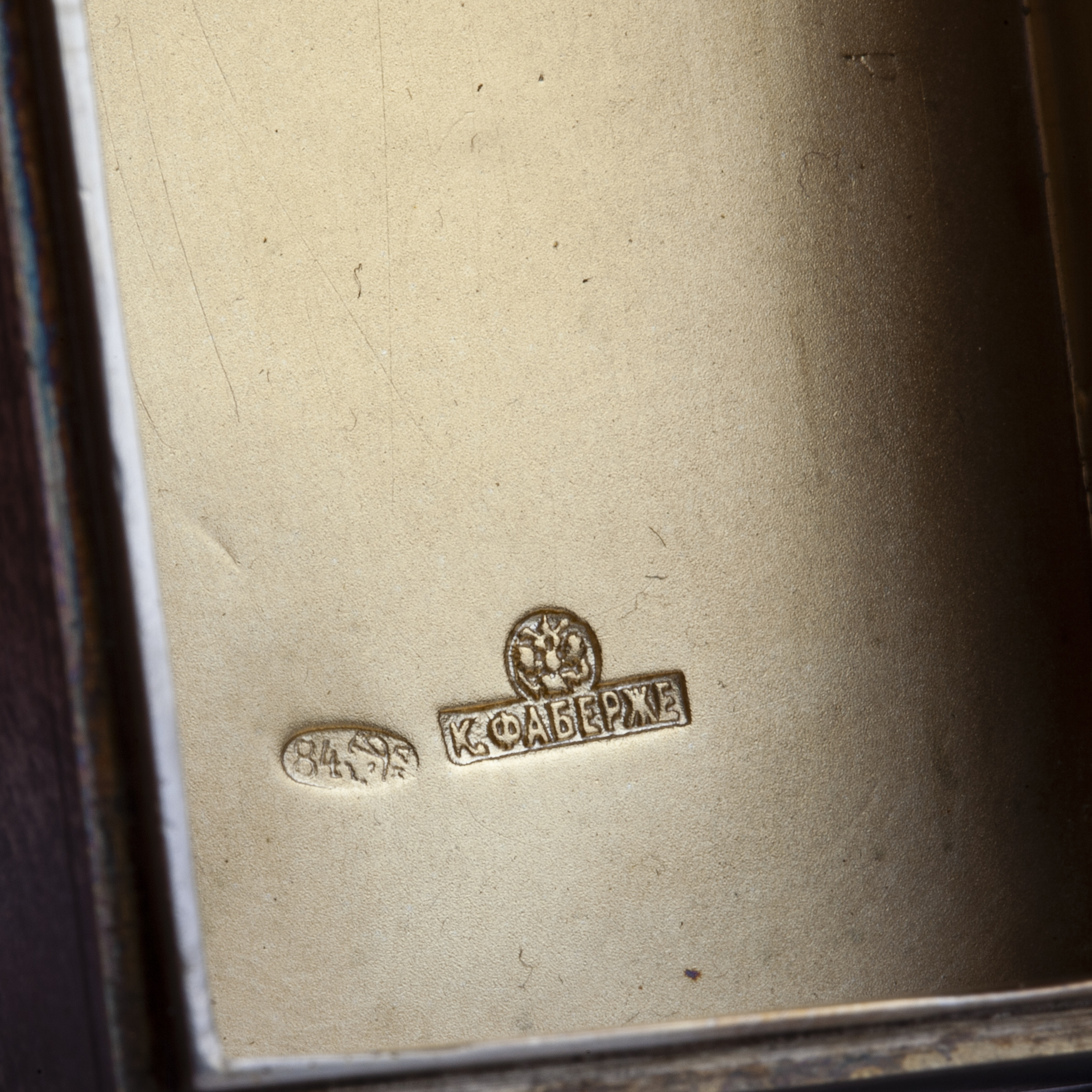
Marks: Faberge with Imperial Warrant, Moscow assay mark, 84 zolotnik standart.
Description
A refined silver-gilt match holder of rectangular form, the hinged lid inset with a vivid blue guilloché enamel ground over which is applied an elegant Art Nouveau relief composition. The ornament takes the form of a female mask with long, fluid hair dissolving into whiplash curves and sinuous tendrils, the whole conceived in the highly expressive linear idiom of the modern style.
One side of the case is fitted with a ribbed striker, confirming the object’s practical function while preserving the precious, jewel-like character typical of Fabergé’s smaller luxury articles. The interior is fully gilt.
This match holder is an eloquent example of the Moscow branch’s response to the aesthetics of Art Nouveau.
The Moscow branch of Fabergé, established by Carl Fabergé with the active participation of the British subject Allan Bowe, developed a distinctive profile within the firm’s wider production. The shop on Kuznetsky Most, in the Merchants’ Society building, operated in the spirit of a metropolitan showcase: Moscow demanded spectacle and strong display effect. A phototype illustration from the 1893 price list records the interior as a demonstration hall, with carpets, velvet banquettes, columns, wall cases displaying silver and mounted crystal, and low table-vitrines filled with jewels in fitted cases.
It was here that the Art Nouveau line, associated with the principle of the very latest fashions, found especially vivid expression. Art Nouveau manifested itself in flowing contours, asymmetry, graphic rhythm, and the treatment of silver surfaces, as well as in motifs of the circle, the wave, and the vegetal scroll. This language found its most organic expression in small-scale objets d’art.
The assortiment responded closely to current taste: objects that had lost their novelty were gathered up and melted down annually, reinforcing the shop’s image as a place of constant renewal. The production base was the Moscow factory in the San Galli house in Bolshoi Kiselny Lane, employing about 300 workers, where silver production was particularly strong”Starting price: 4000€
Estimate: 5000-7000€
Hammer Price: Not sold -
Lot 0041
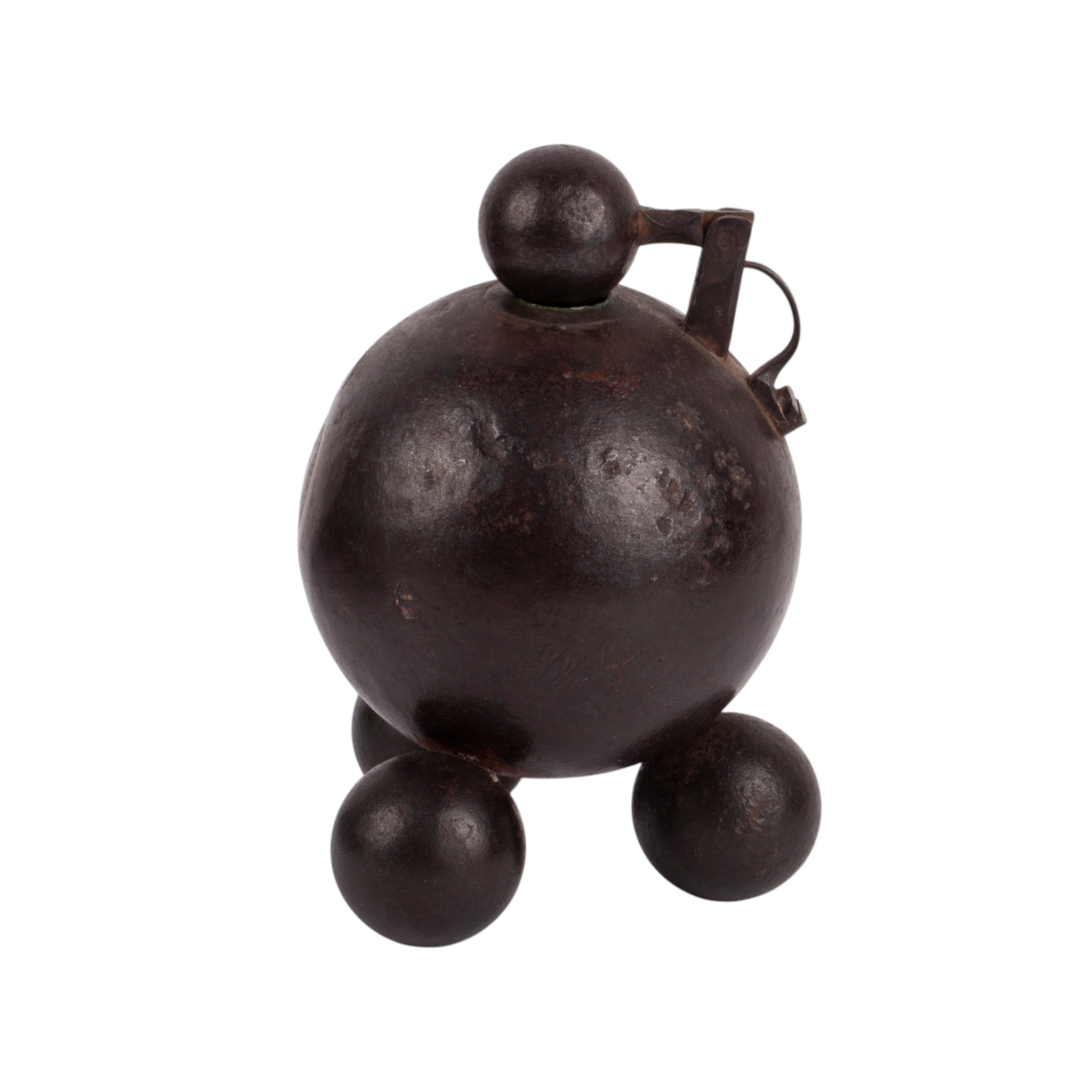
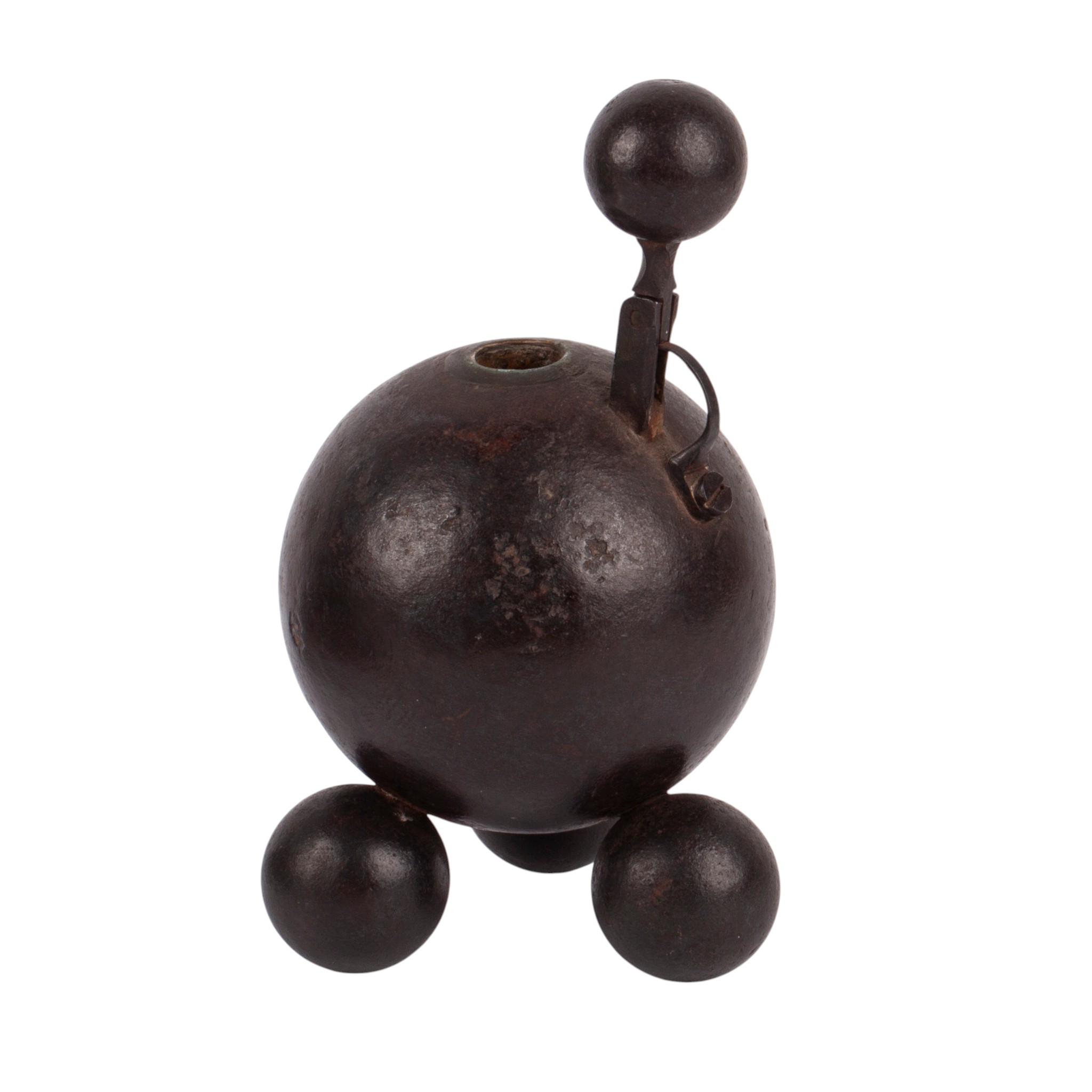
Crimean War Souvenir Lighter with Imperial Russian Coin, Mid-19th Century
Estimate: 800-1500€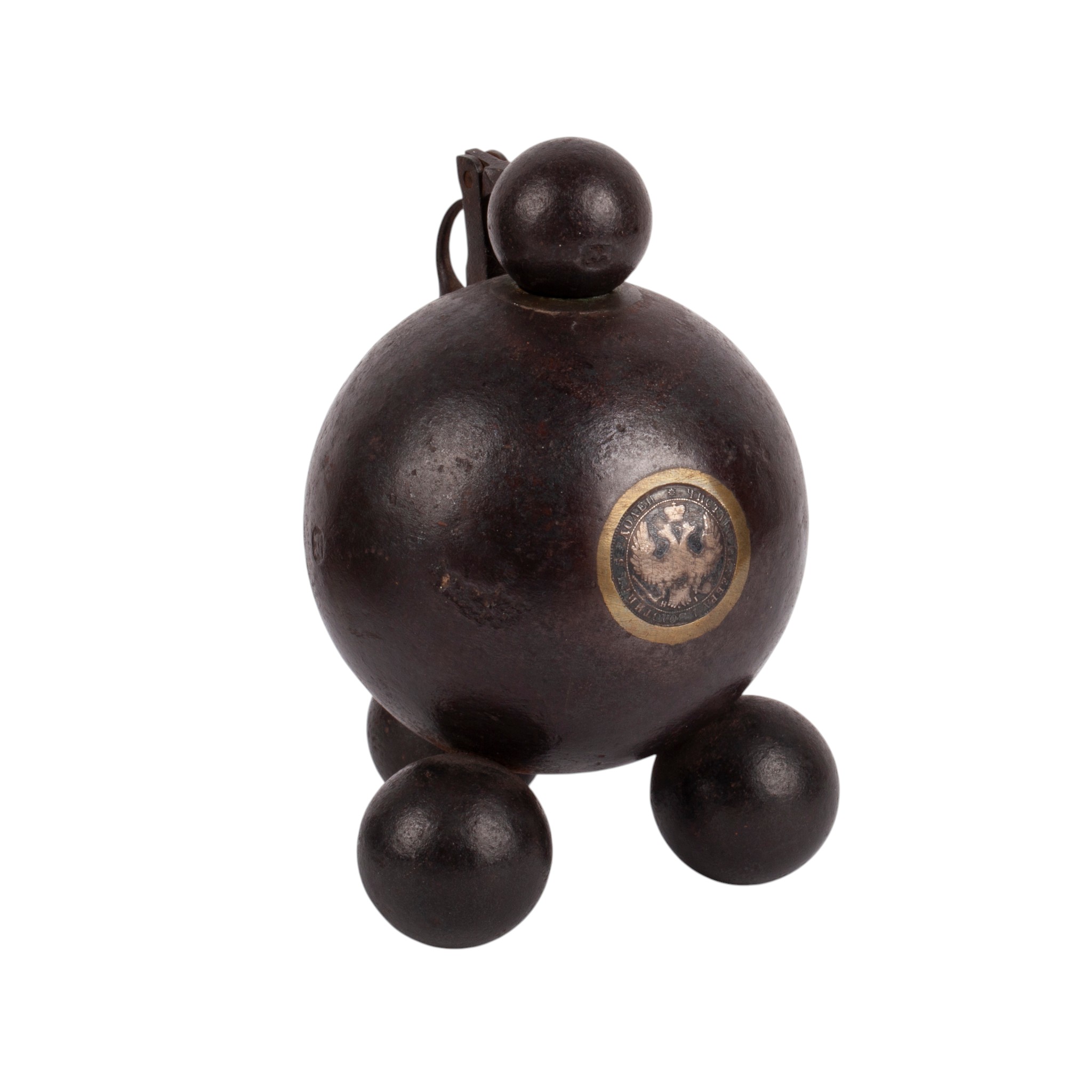
Lot 0041
Crimean War Souvenir Lighter with Imperial Russian Coin, Mid-19th Century
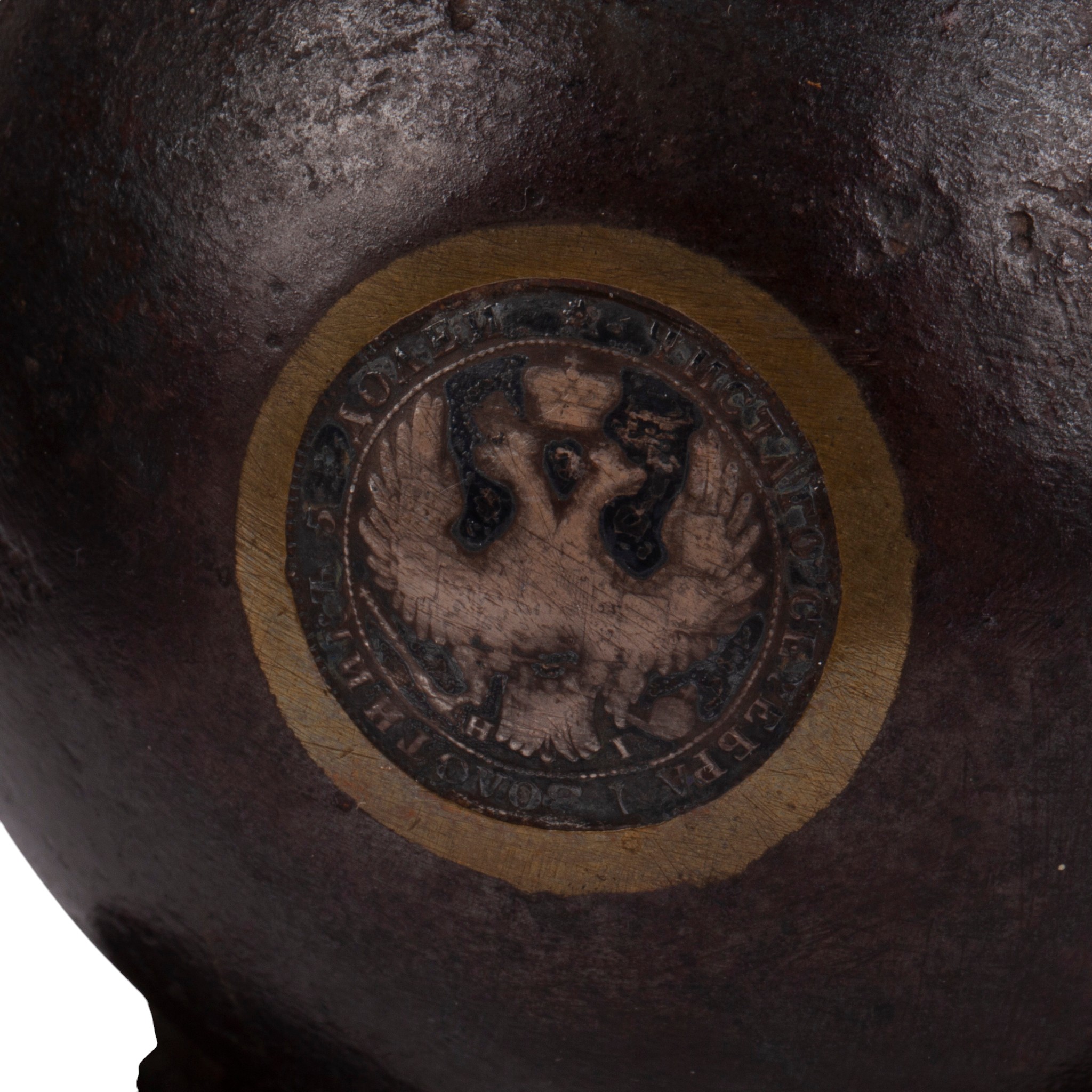
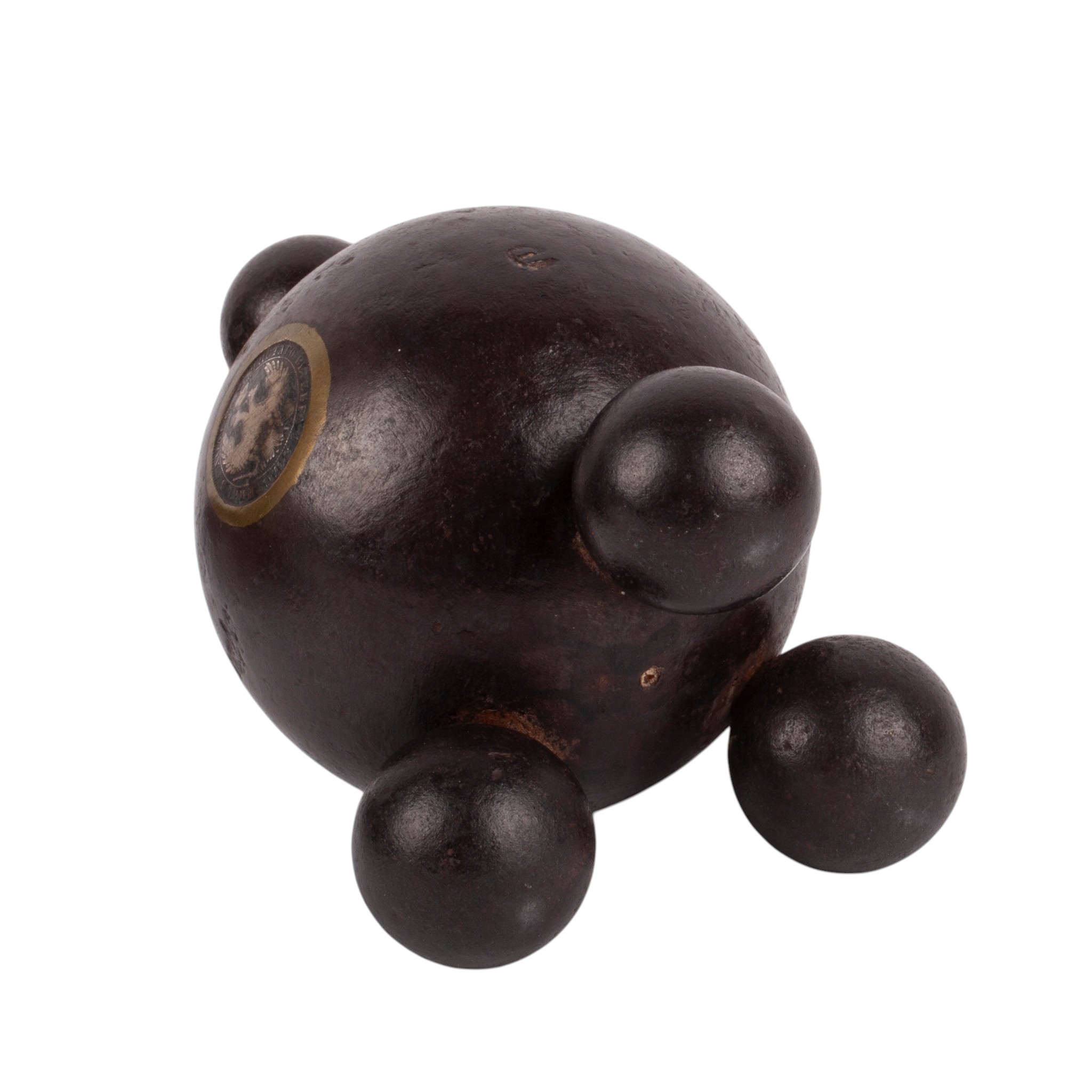
Estimate: 800-1500€Crimean War souvenir lighter, mid-19th century, incorporating an inset Imperial Russian silver coin, likely of the Nicholas I period (1830s–1840s). Made in the form of a cannonball or grenade, raised on three ball feet, with metal fitting above. An unusual military-related desk or cabinet souvenir.
Dimensions: 12 × 9 × 9 cm.Starting price: 600€
Estimate: 800-1500€
Hammer Price: Not sold -
Lot 0039
Silver and En-Plein Enamel Ashtray with a Mediaeval Genre Scene
Estimate: 800-1000€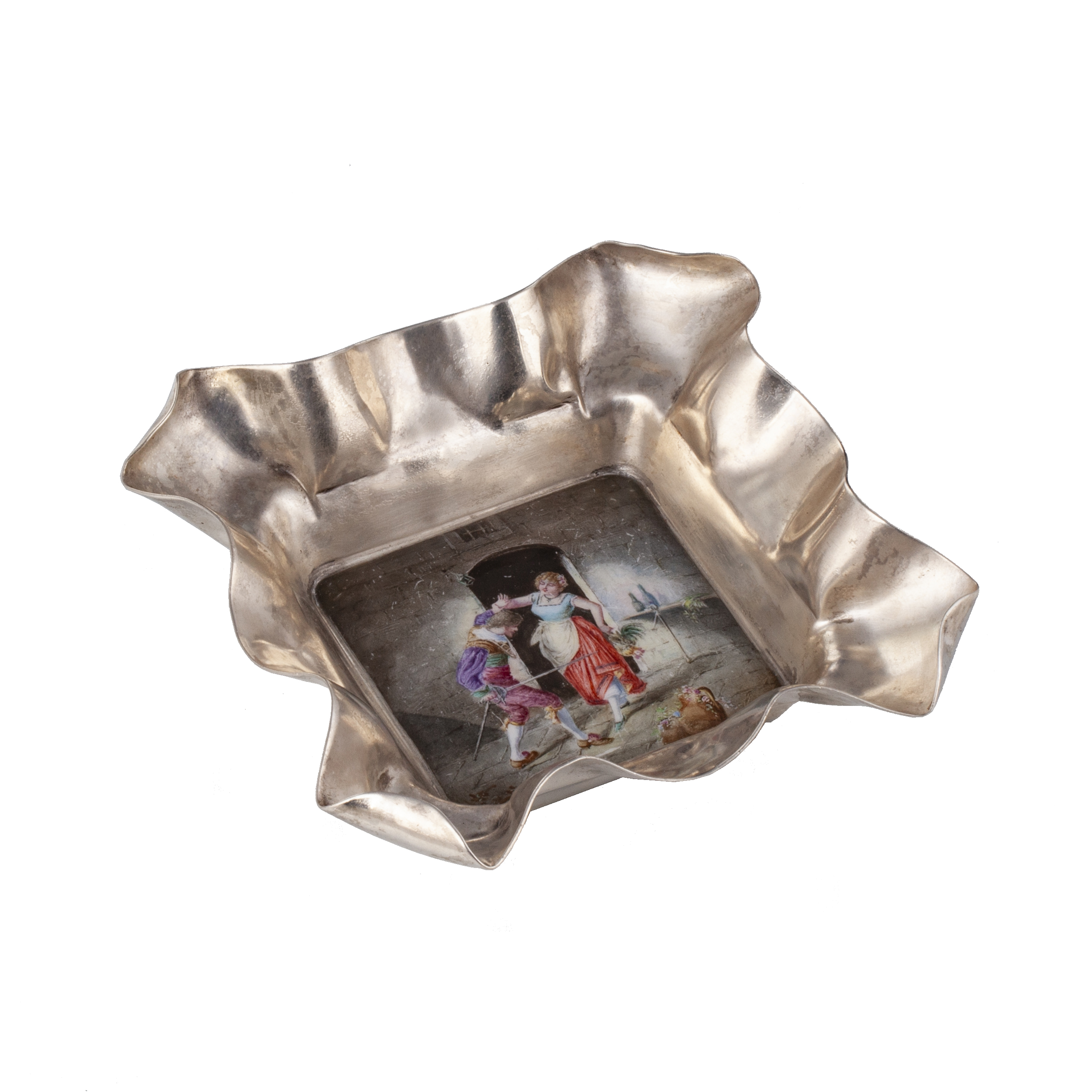
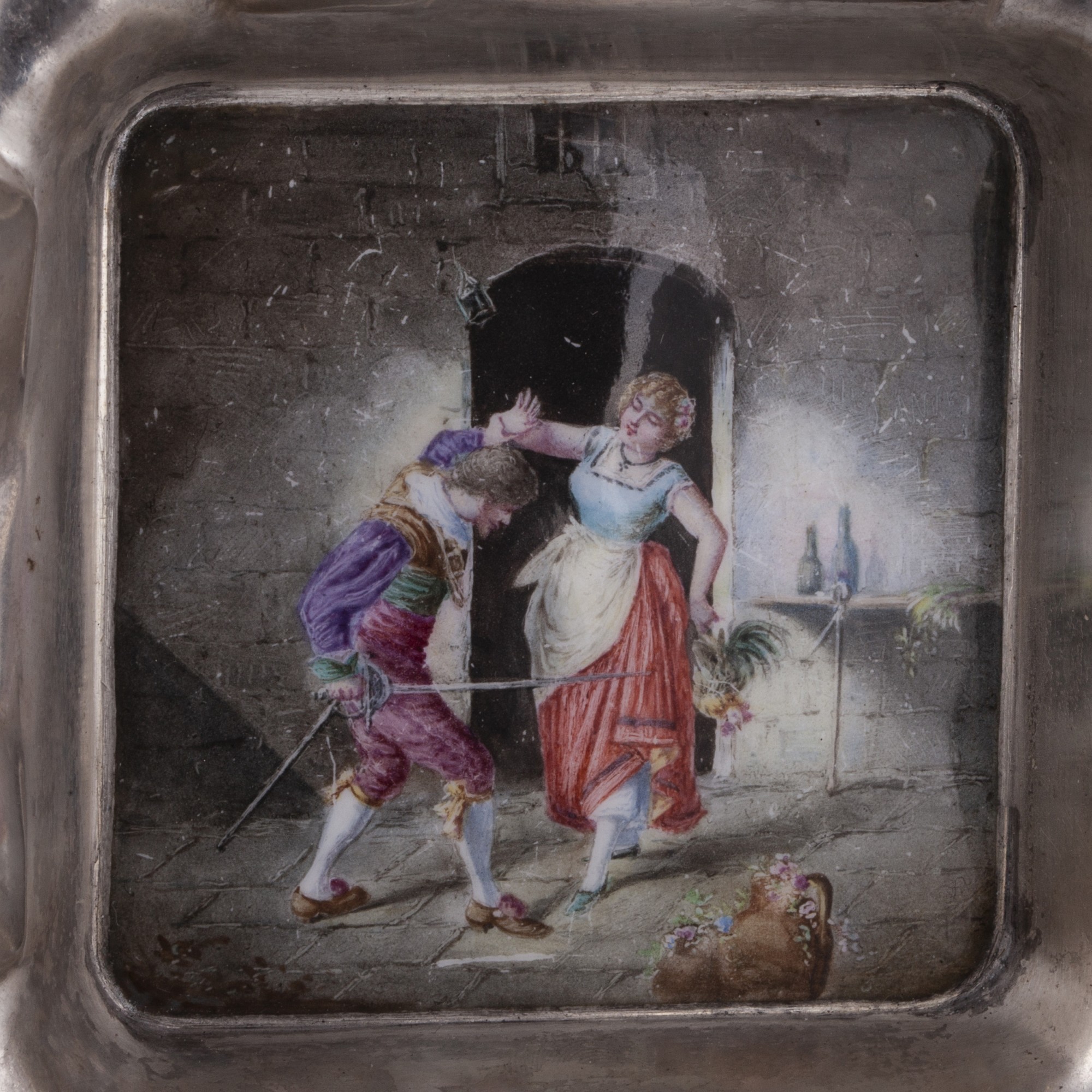
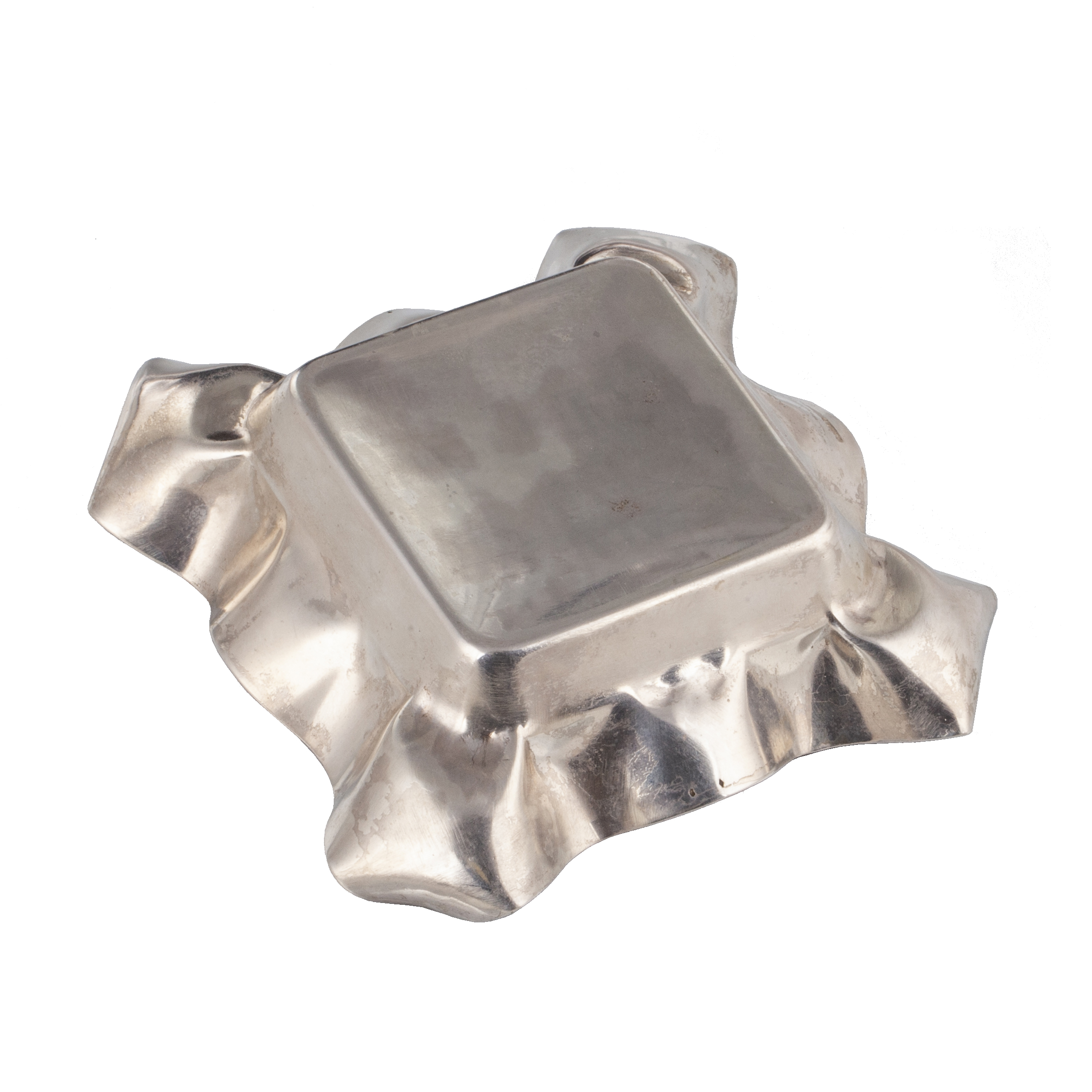
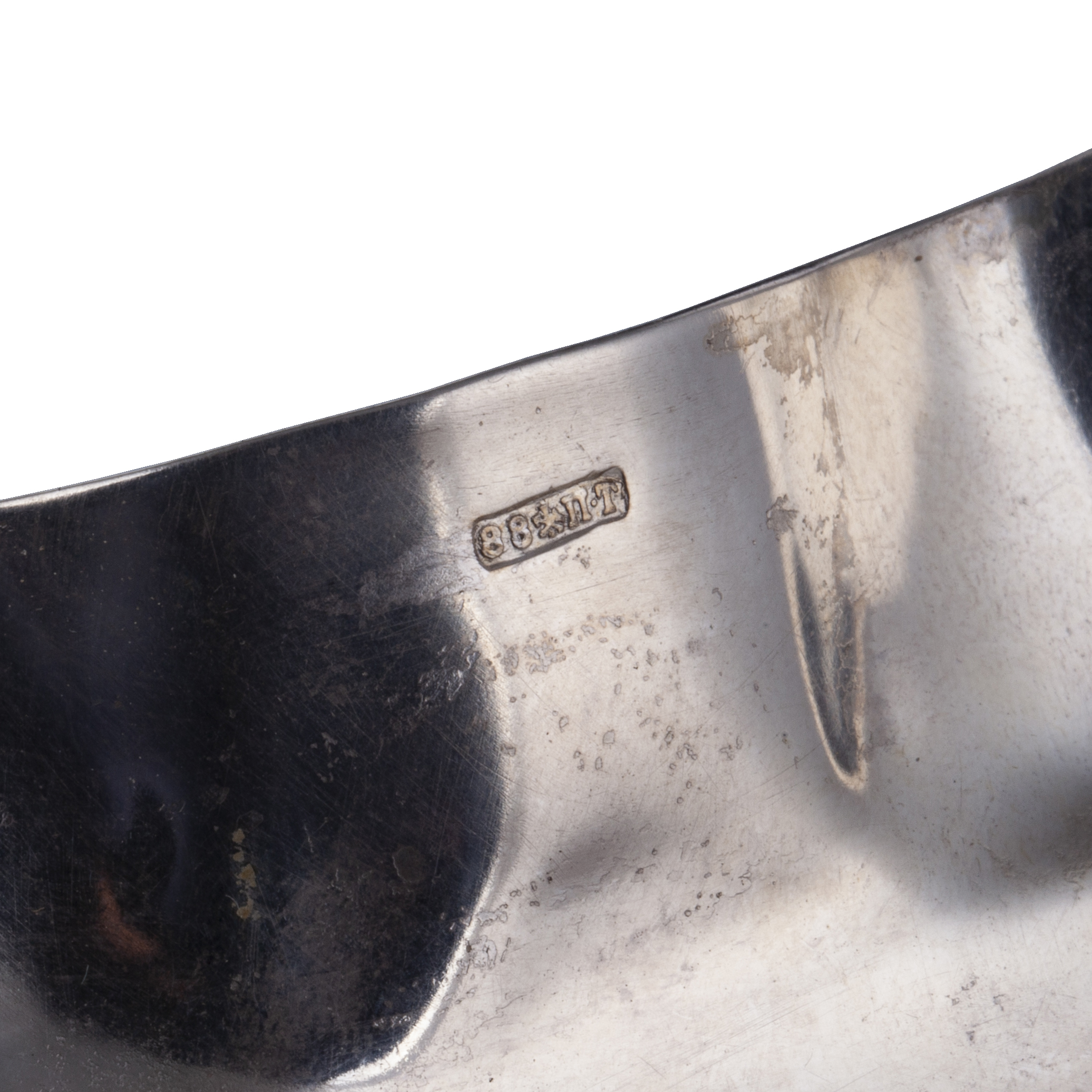
Lot 0039
Silver and En-Plein Enamel Ashtray with a Mediaeval Genre Scene
Estimate: 800-1000€Silver and En Plein Enamel Ashtray
Russia (import marks), late 19th century
Silver (84 zolotniks), en plein enamel
Weight: 161.6 g | Dimensions: 12.8 × 12.8 × 3.3 cmA finely crafted Russian silver ashtray featuring a beautifully executed en plein enamel panel depicting a lively medieval genre scene — a gallant courtier and a young woman engaged in playful conversation at a tavern doorway. The composition, rich in color and theatrical detail, reflects the popular fascination with romanticized historical subjects at the close of the 19th century.
Starting price: 750€
Estimate: 800-1000€
Hammer Price: Not sold -
Lot 0042
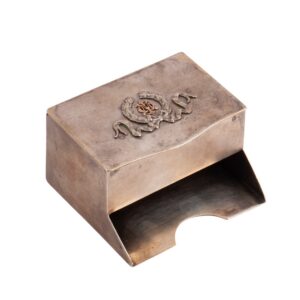
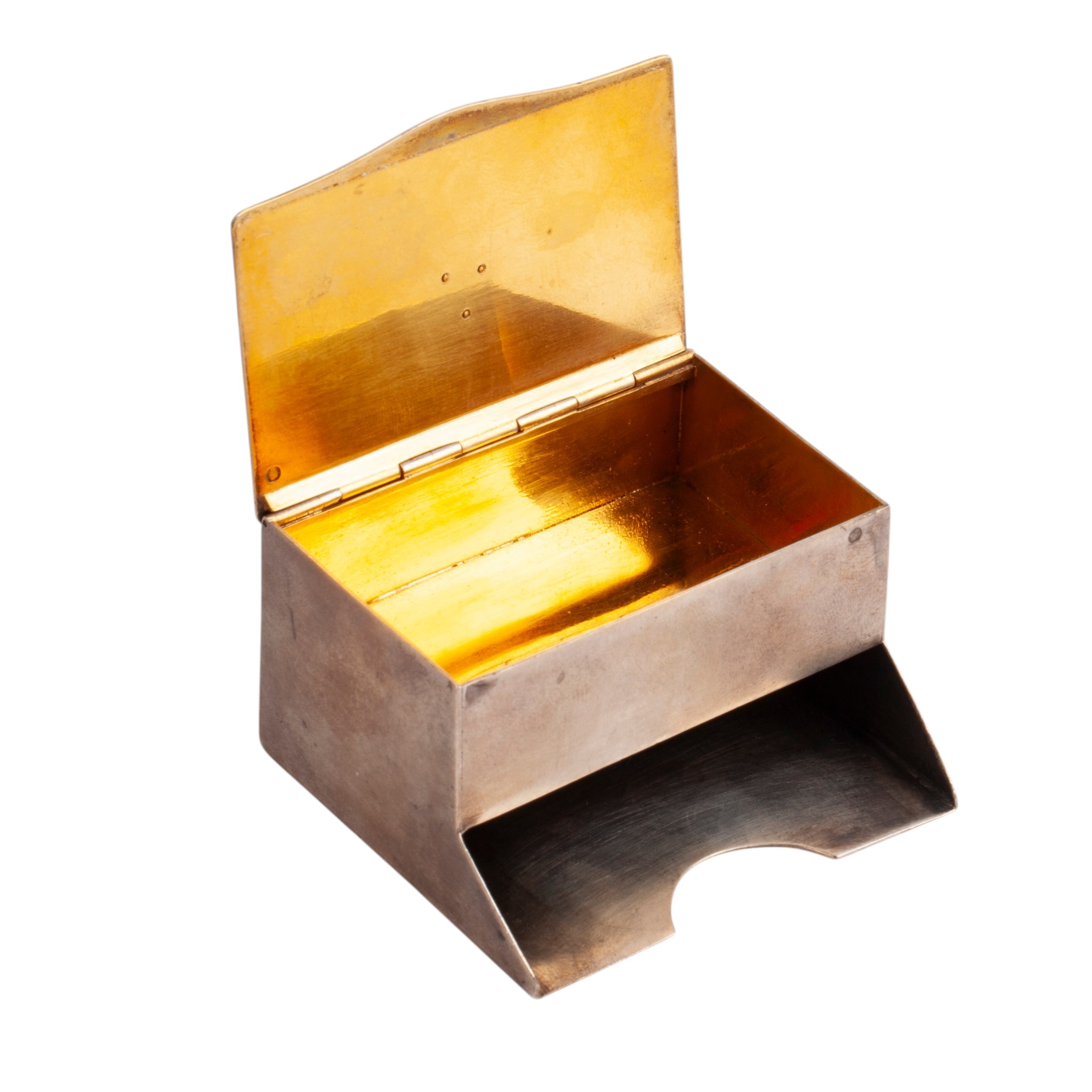
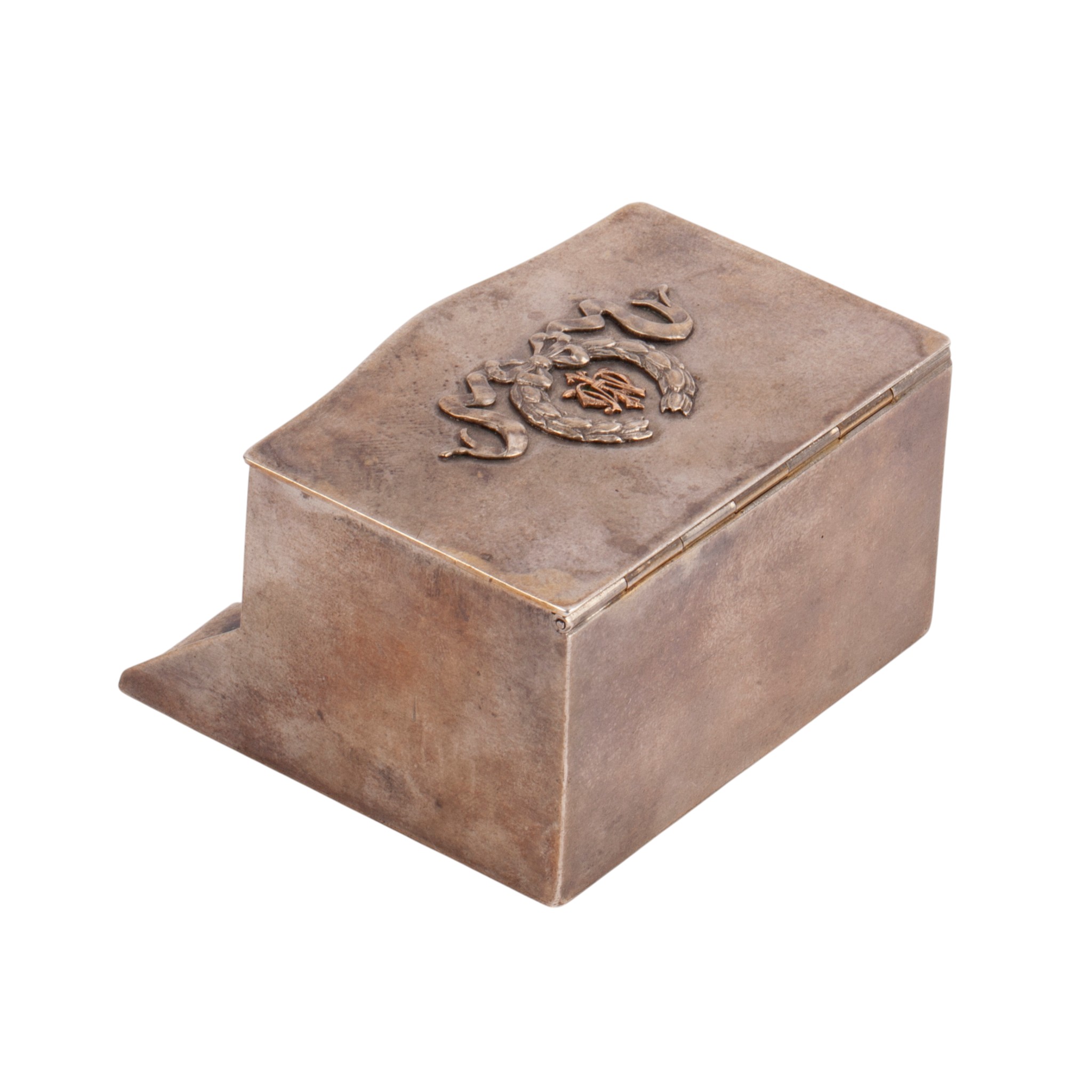
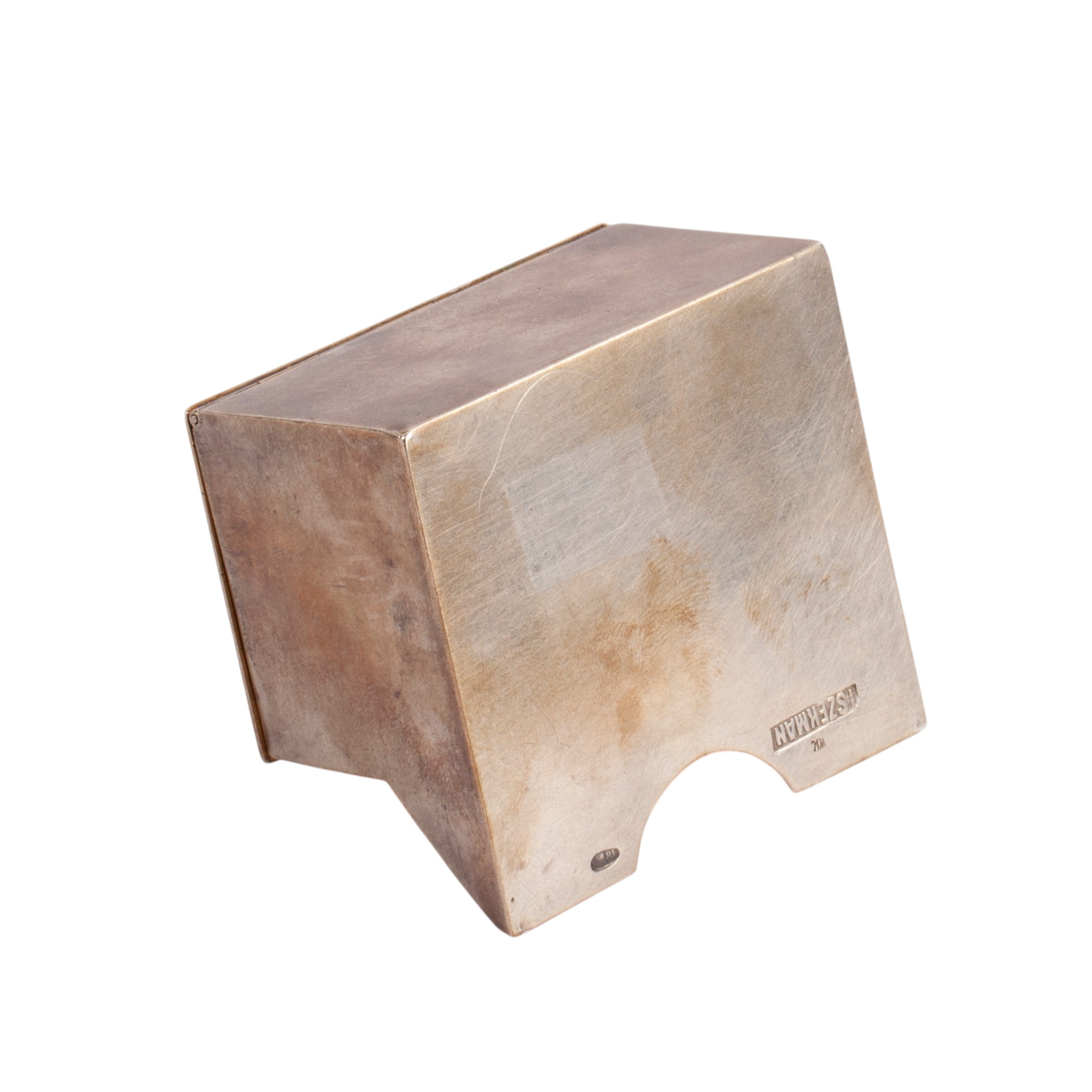
Russian Business Card Case and Stamp Dispenser “FM”, Israel Szekman, Warsaw, 1908–1917
Estimate: 600-700€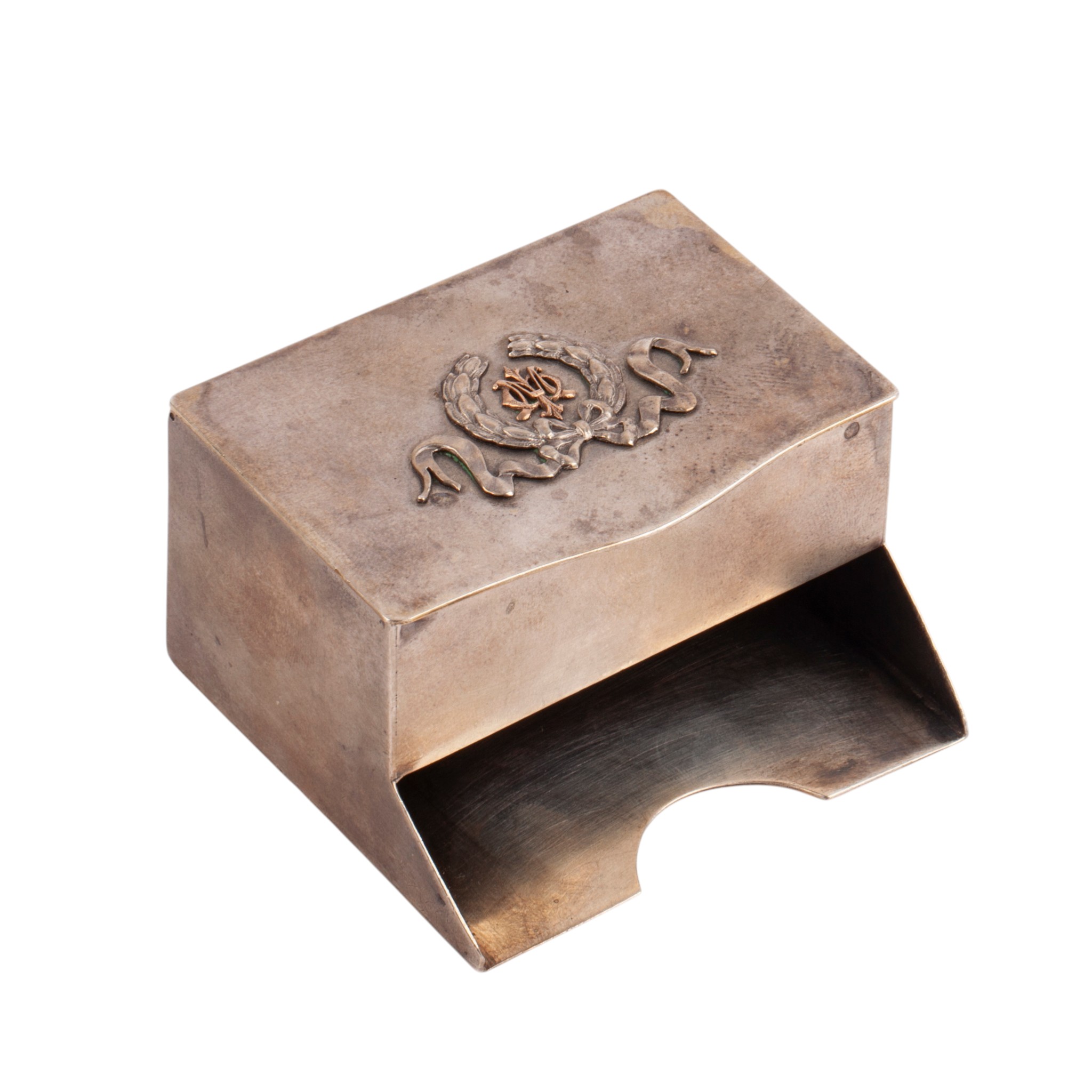
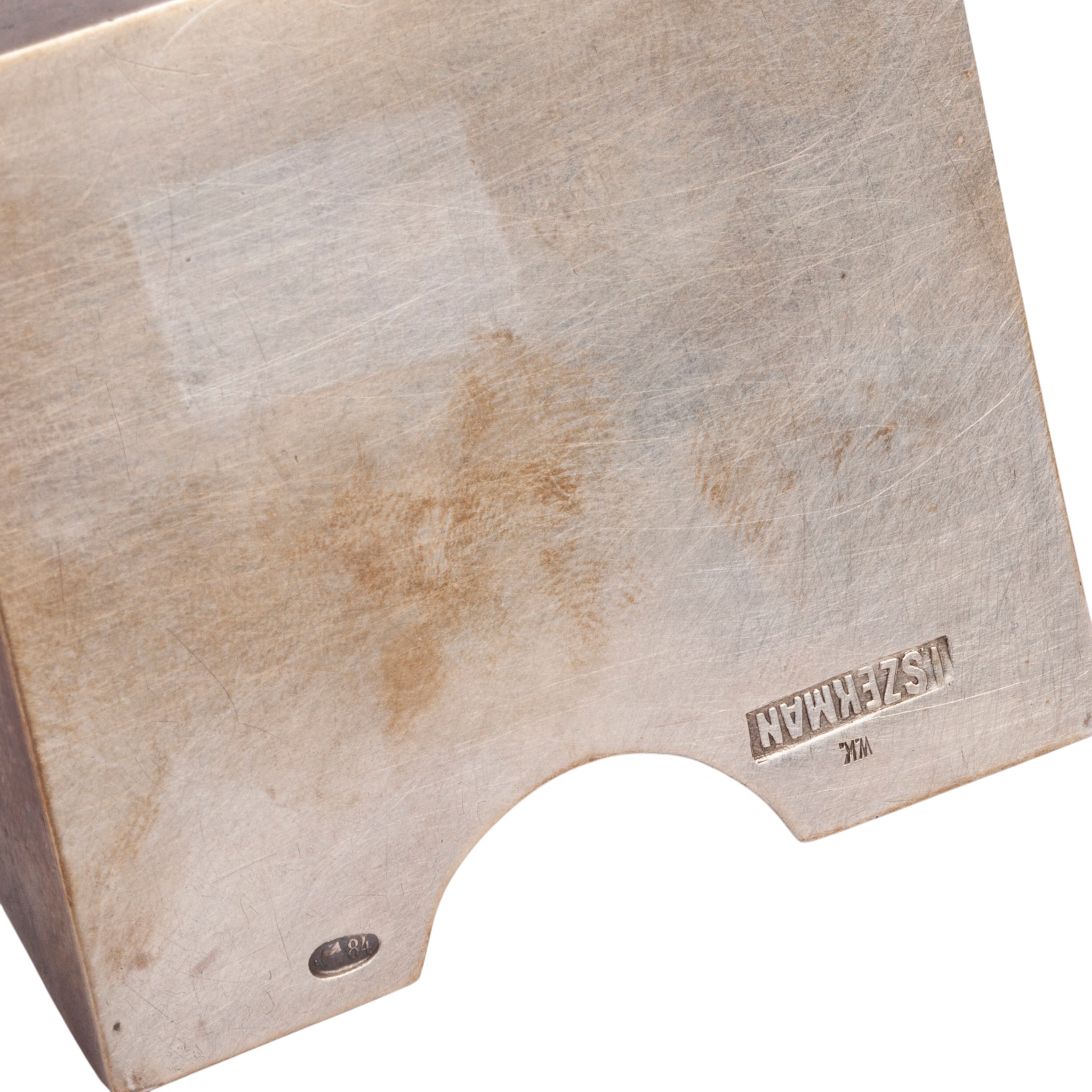
Lot 0042
Russian Business Card Case and Stamp Dispenser “FM”, Israel Szekman, Warsaw, 1908–1917
Estimate: 600-700€A Russian business card case and stamp dispenser, with the monogram “FM”. Warsaw, Russian Empire, firm of Israel Szekman, 1908–1917.
Silver, gilding. Dimensions: 3.5 × 6.0 × 6.0 cm. Weight: 95 g.
Marks: maker’s mark “W.K.”; firm’s stamp “I. SZEKMAN”; Warsaw assay mark for 1908–1917.
A compact, architecturally shaped table accessory formed as a closed, two-tier box: the upper compartment intended for post stamps, while the lower, forward-sloping bay functions as an accessible dispenser for visiting cards. Israel Szekman was among the leading Warsaw silversmith-entrepreneurs of the late 19th to early 20th century. He opened a shop in 1886 specialising in applied metal fittings, and in 1891 established a factory producing plated and silver objects. By the mid-1890s the workforce numbered about twenty, later fluctuating between ten and twenty. By 1914 the factory’s output included silver and metal goods, among them lamps and shades. Around 1919 the firm’s management appears to have passed within the family, later to Szekman’s sons and, by the late 1920s, to the brothers Berish and Zyskind Szekman.Starting price: 500€
Estimate: 600-700€
Hammer Price: Not sold