
Lot 0024
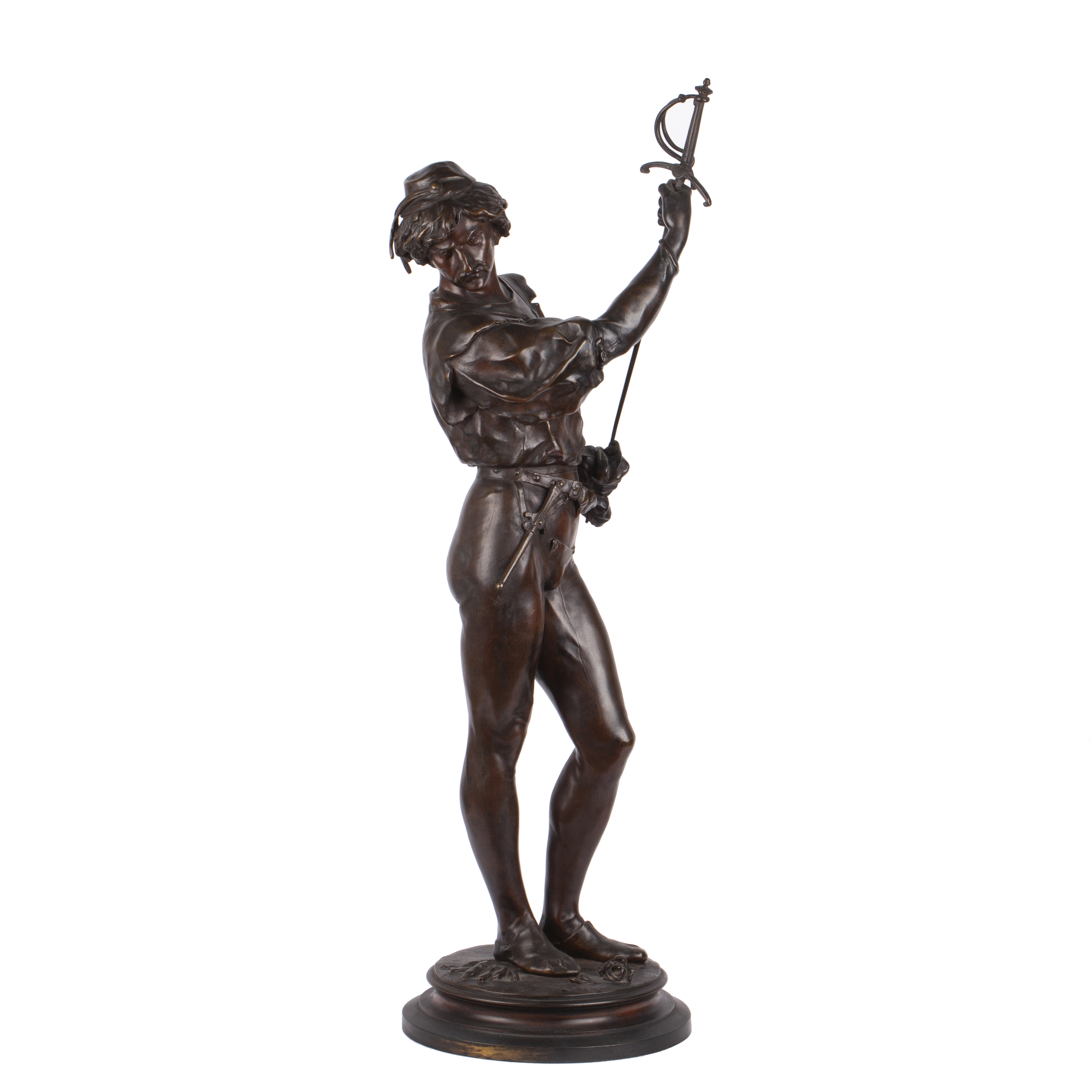
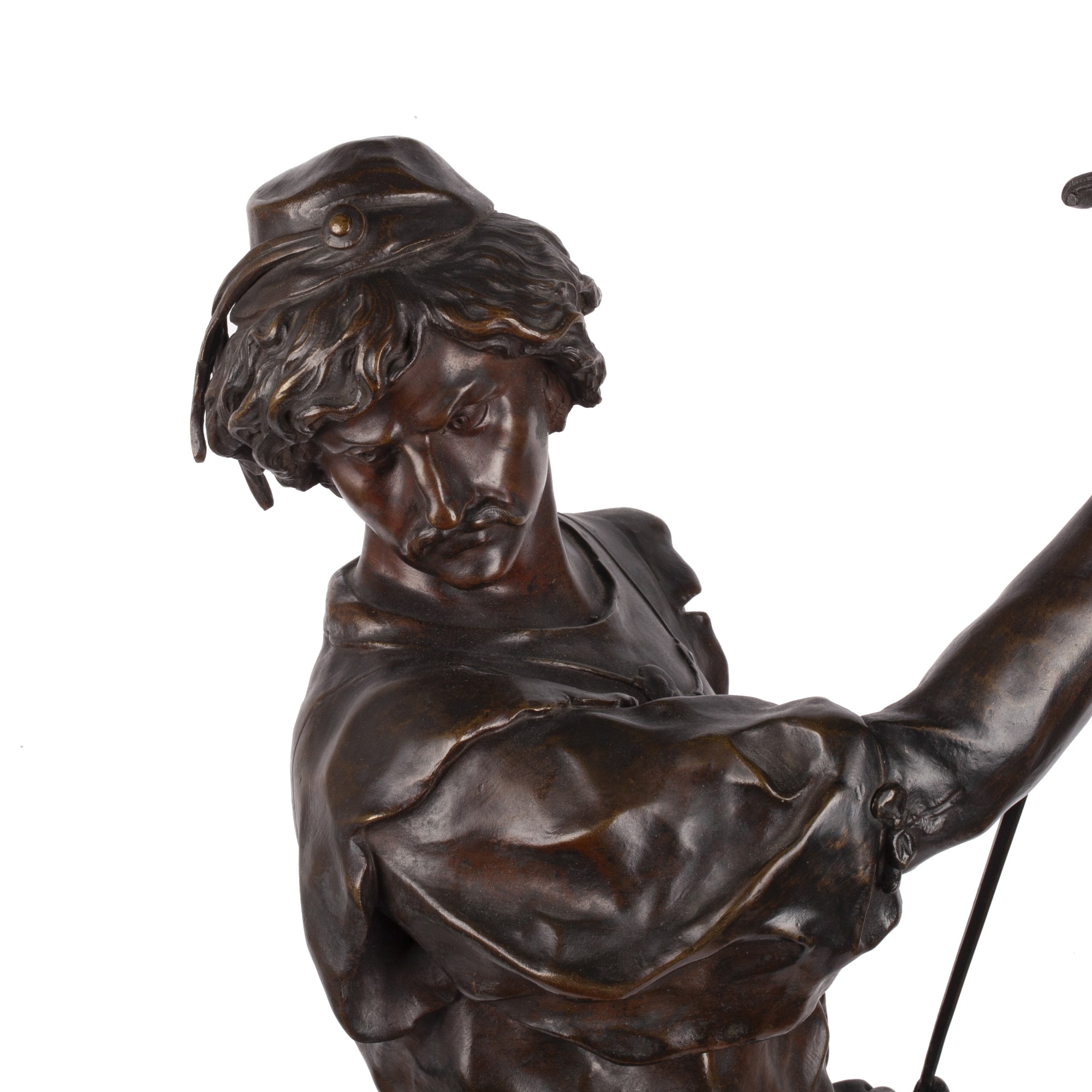
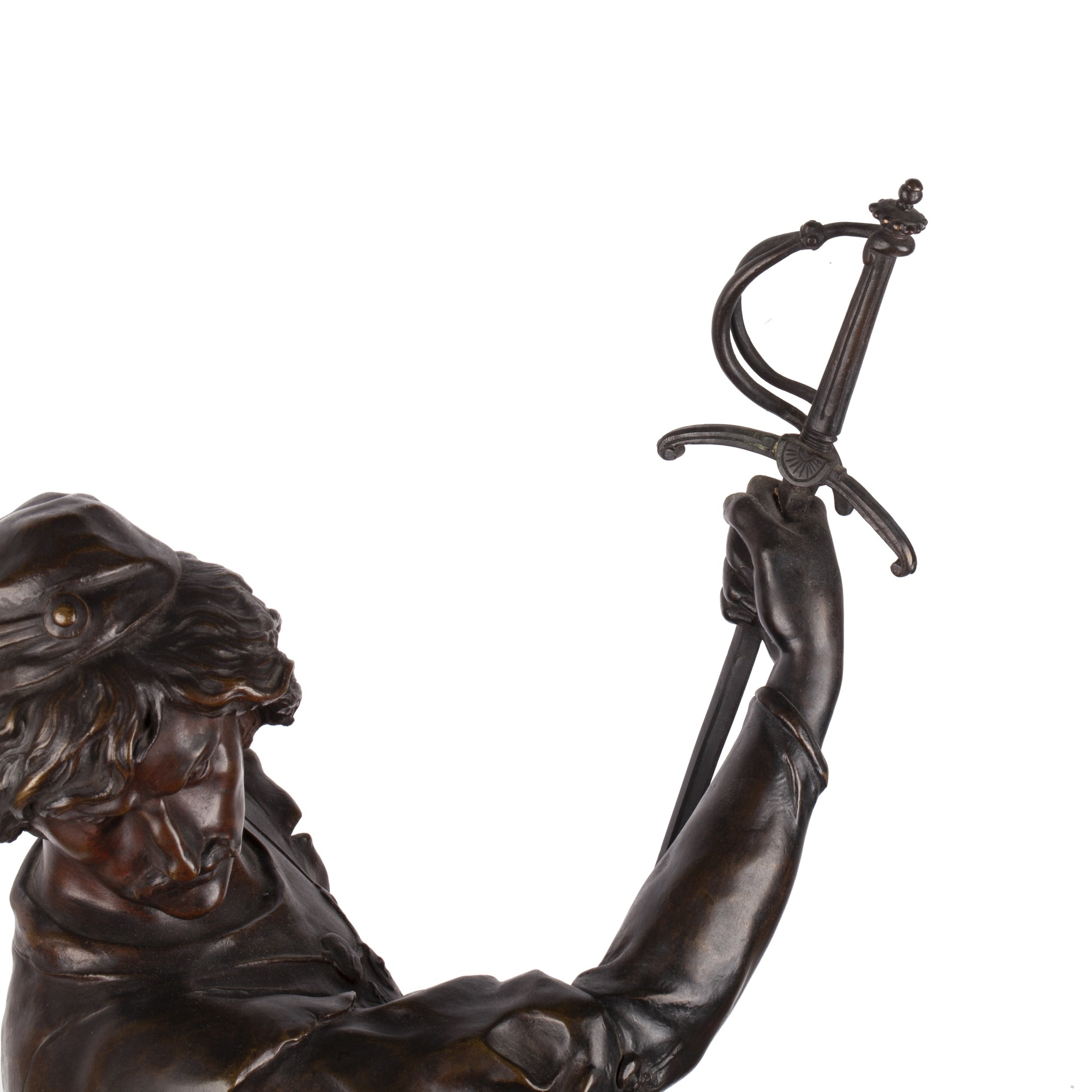
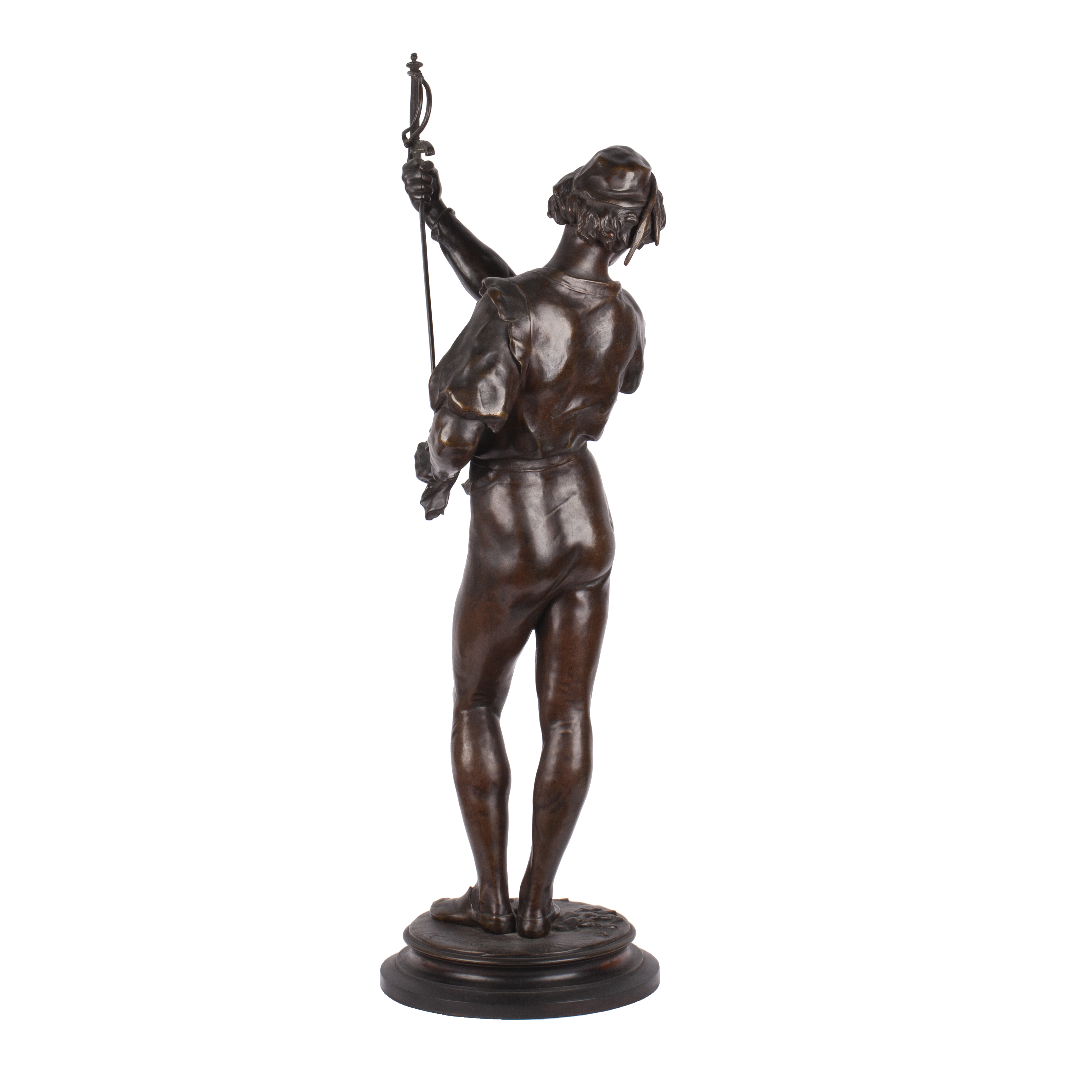
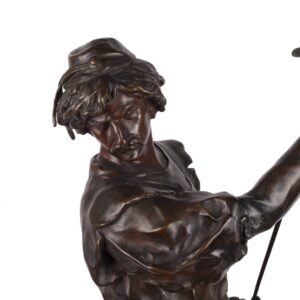
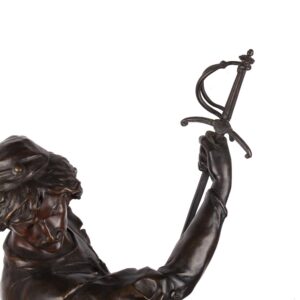
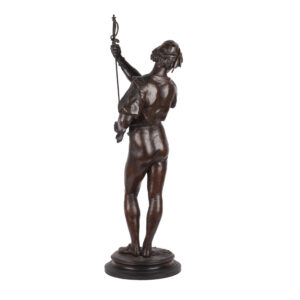
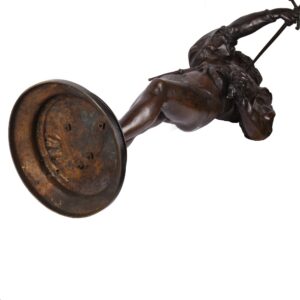
Émile Louis Picault Bronze “The Fencer”, late 19th century
Estimate: 2000-2500€
Émile Louis Picault (1833–1915)
The Fencer (Le Tireur)
France, late 19th century
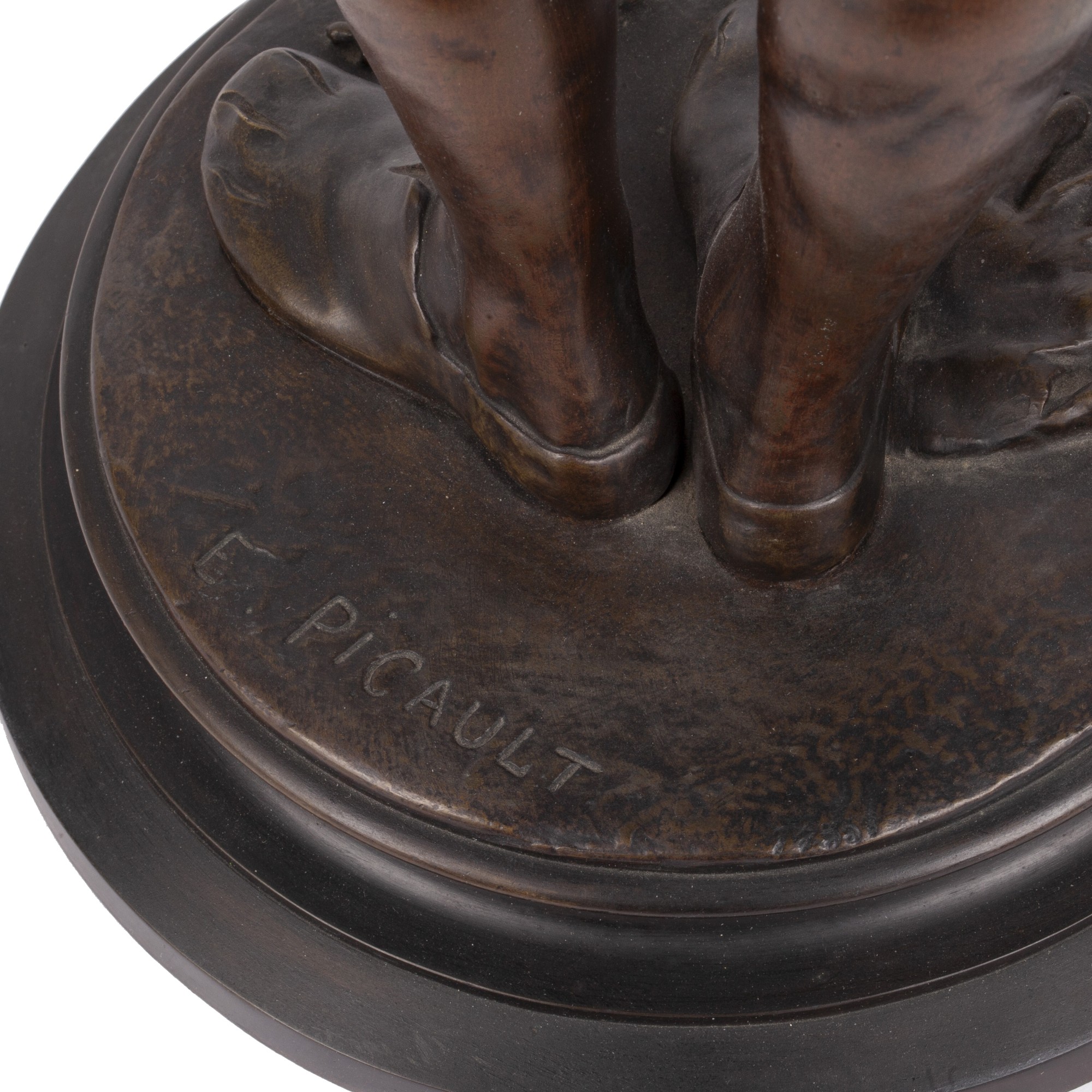
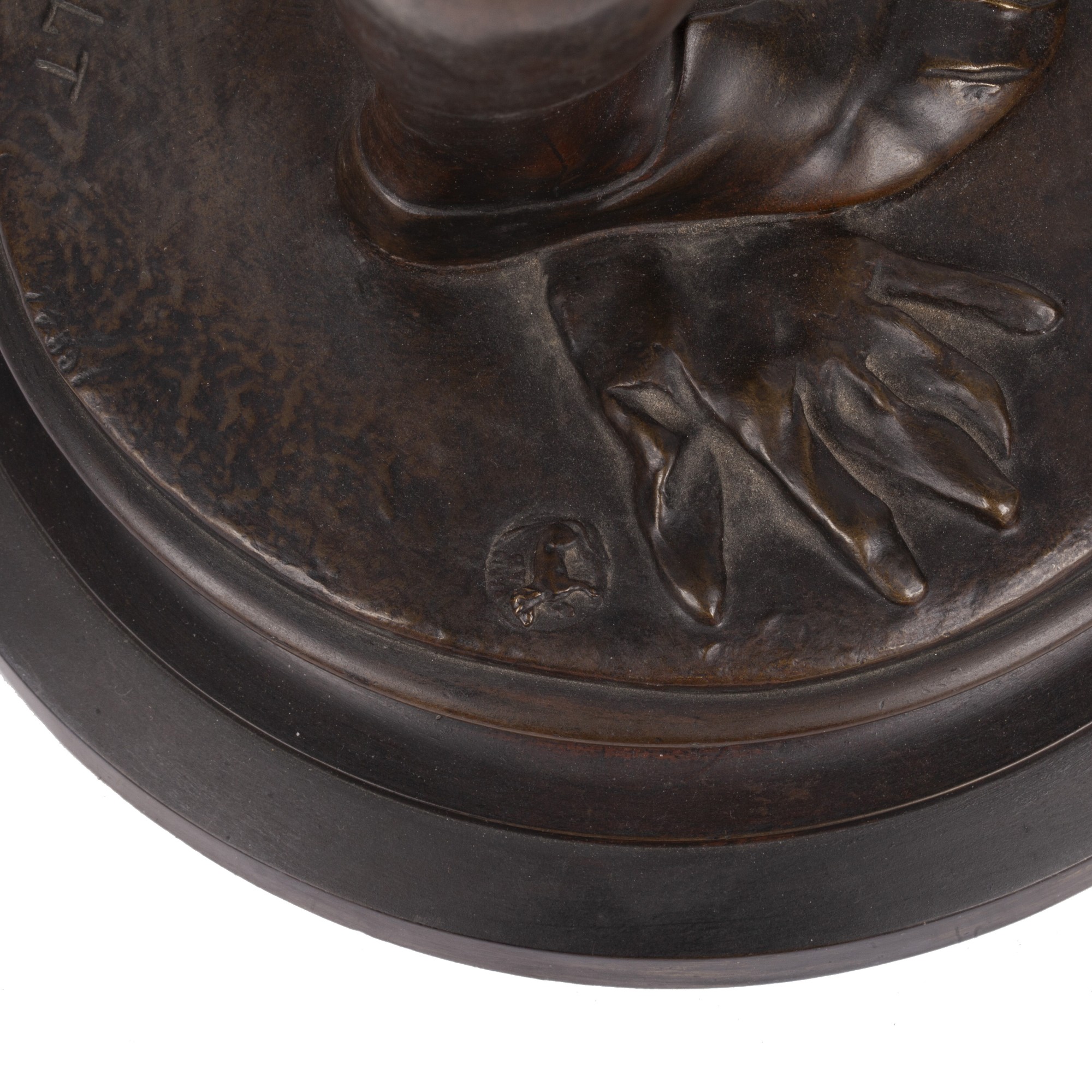
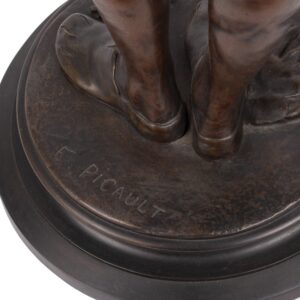
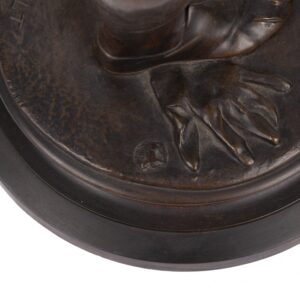
Patinated bronze, signed “E. Picault”
Height: 72 cm
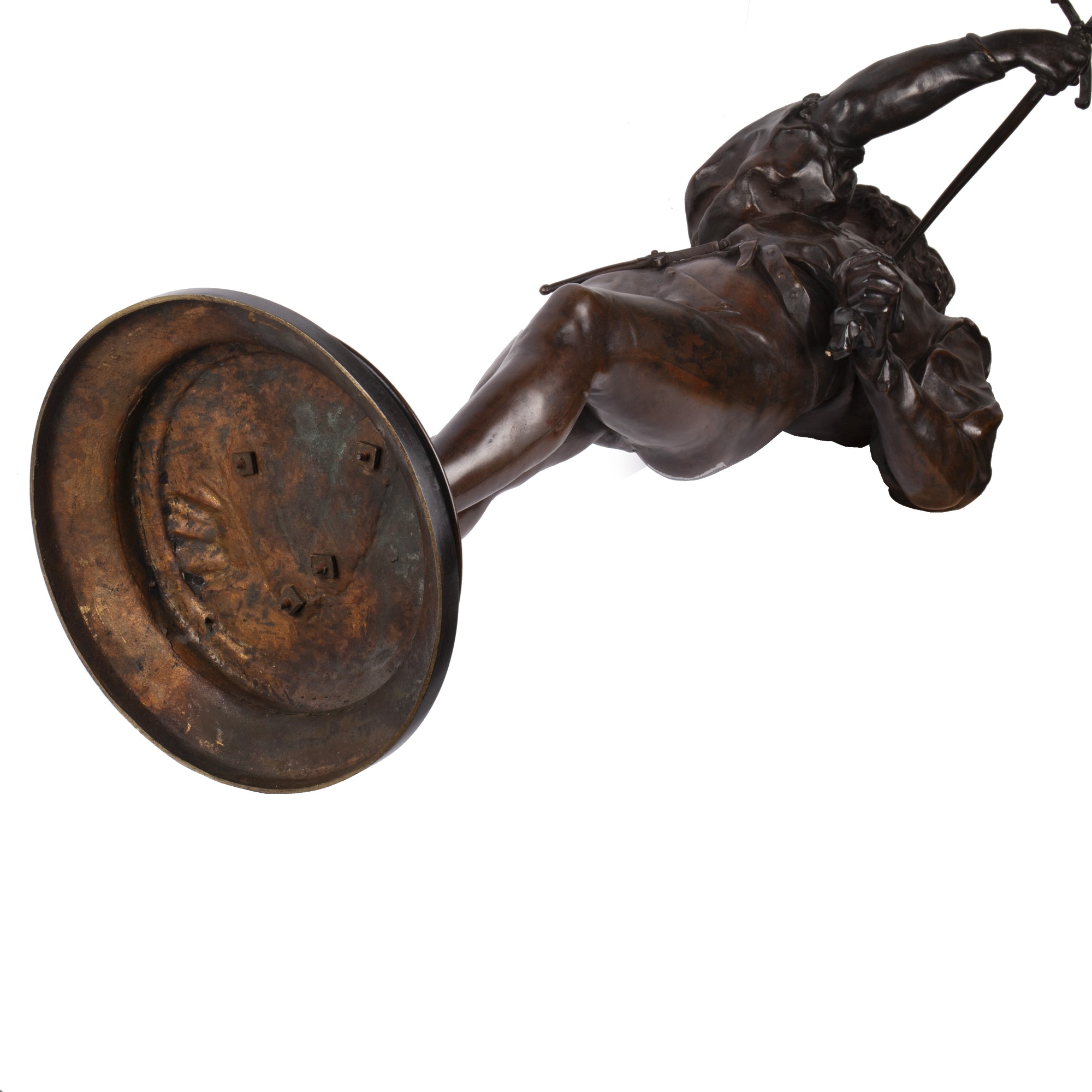
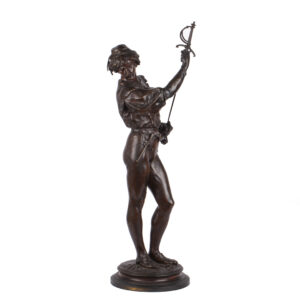
An exceptional bronze sculpture by Émile Louis Picault, one of France’s most prolific and celebrated 19th-century sculptors. The Fencer (Le Tireur) depicts a duelist captured in a moment of poised triumph, raising his sword aloft in salute or victory. The figure’s dynamic anatomy, tense musculature, and richly modeled costume reflect Picault’s masterful balance between Neoclassical idealism and the Romantic fascination with heroism and individuality.
The bronze is finished in a deep brown patina with superb surface detailing. Foundry marks confirm its 19th-century origin. This composition belongs to Picault’s series of martial and allegorical works, which celebrate discipline, courage, and the dignity of human effort — recurring themes throughout his oeuvre.
Émile Louis Picault studied under Louis Royer and exhibited regularly at the Paris Salon from 1863 to 1909. His works, numbering over five hundred models, are represented in museum collections including Chambéry, Clermont-Ferrand, Maubeuge, and Troyes.
Starting price: 1500€
Estimate: 2000-2500€
Hammer Price: Not sold
Related Lots
-
Lot 0026
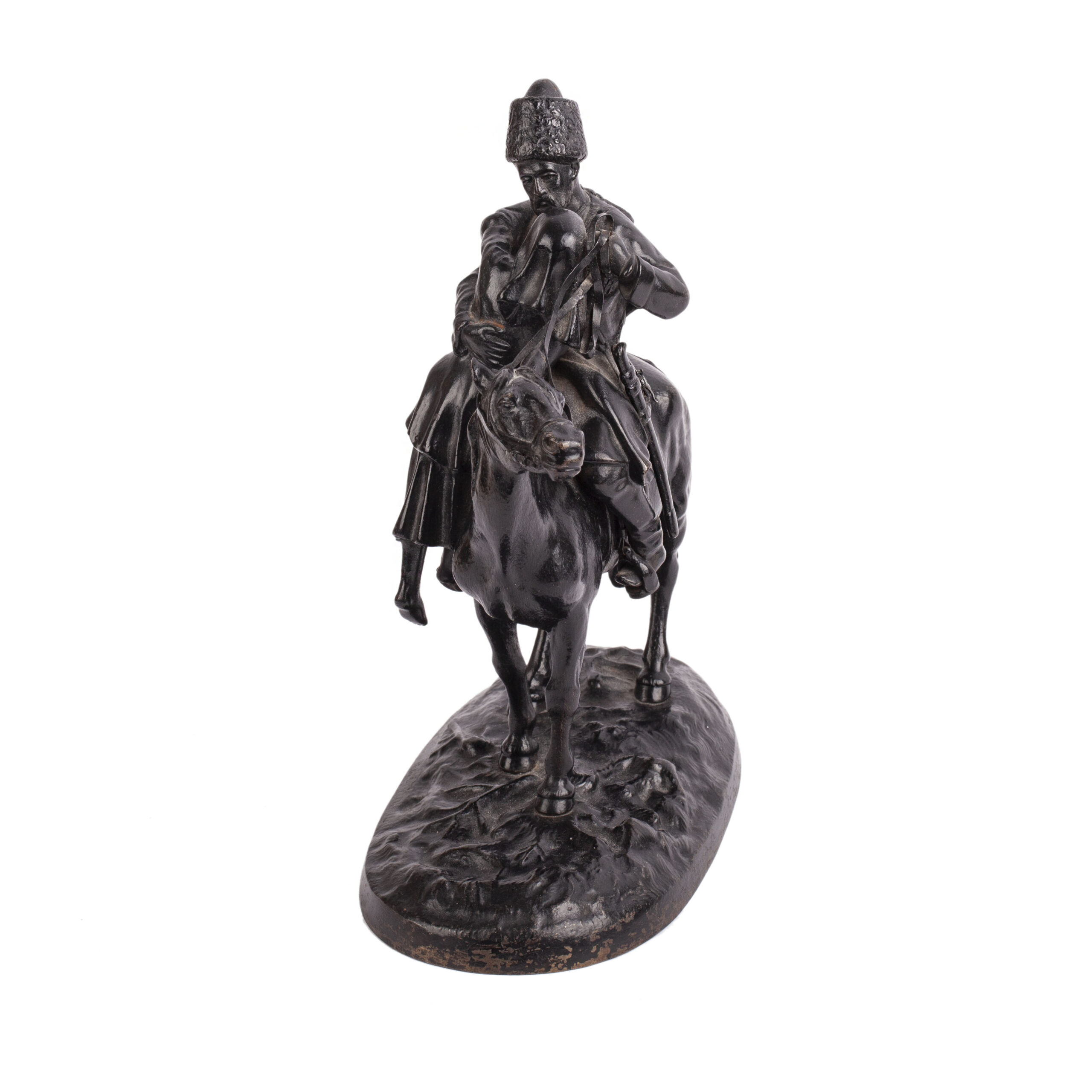
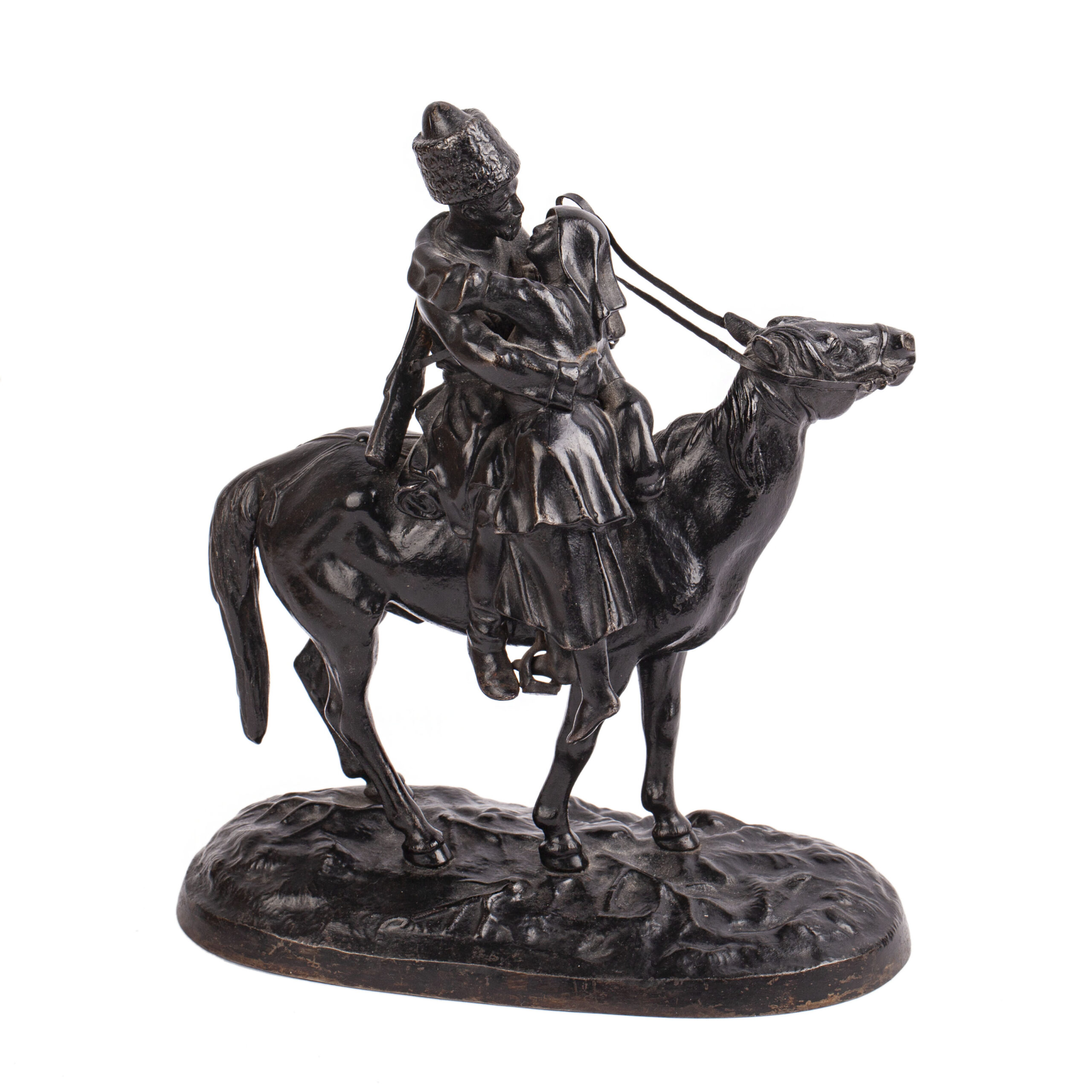
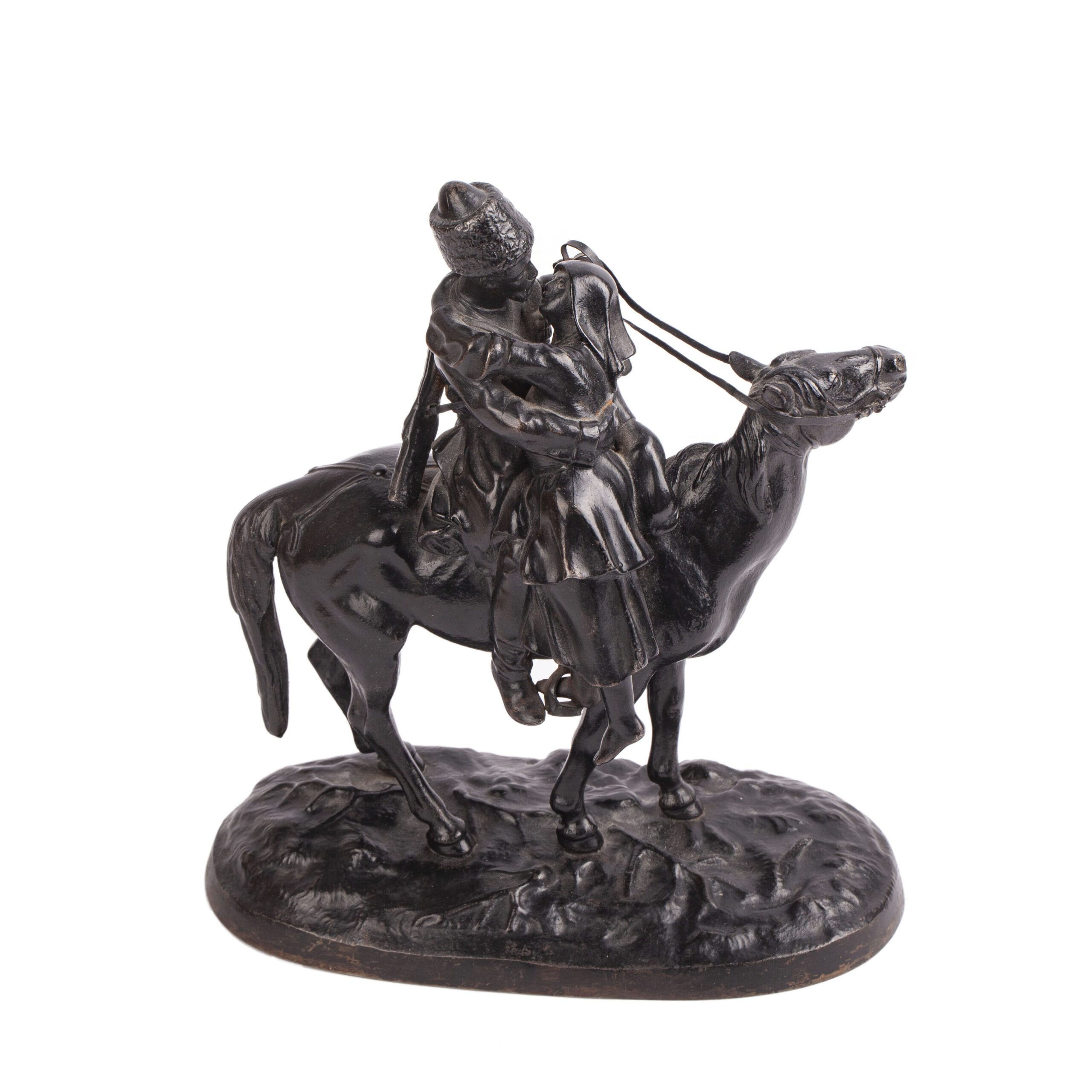
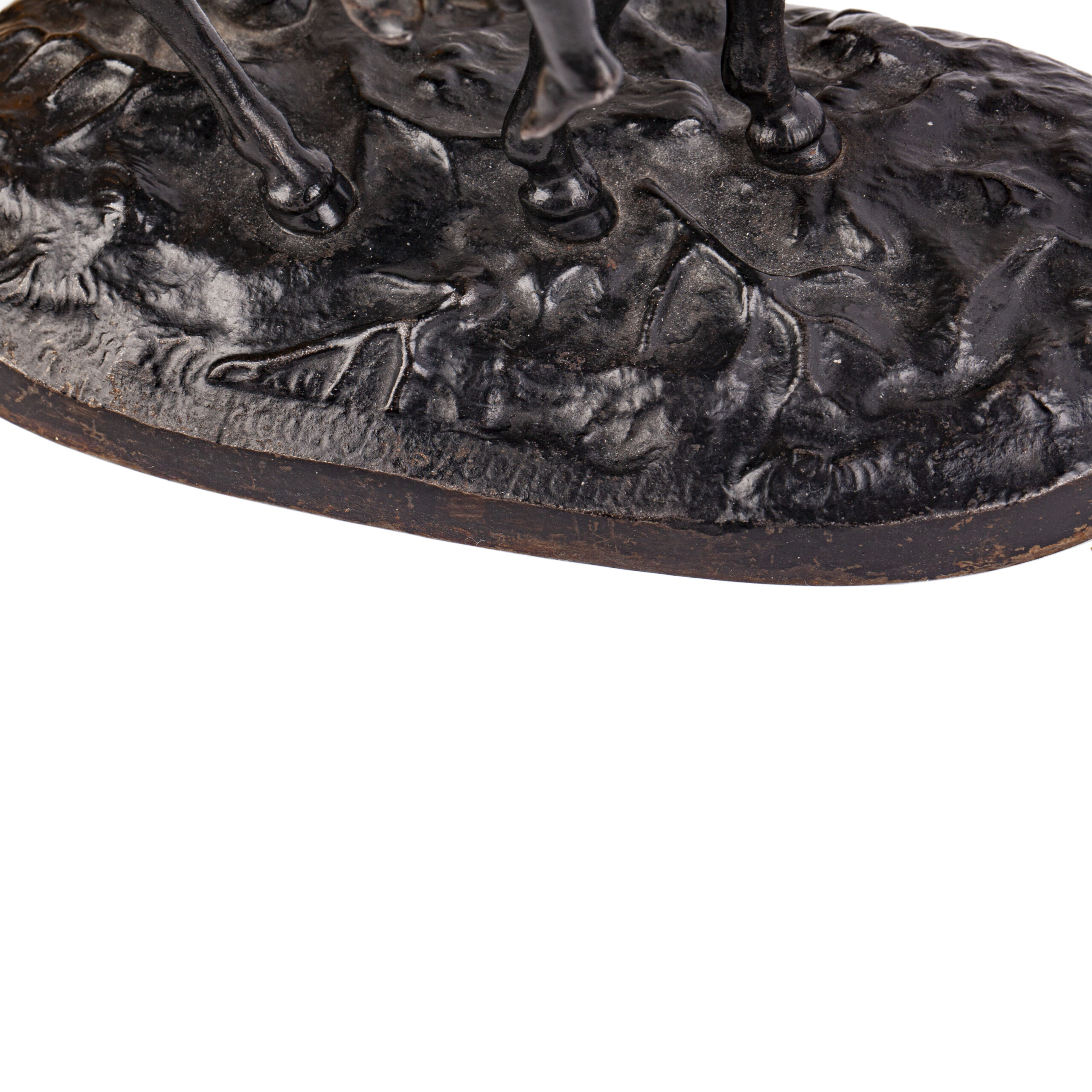
Evgeny Lanceray. Kasli Cast-Iron Sculpture “Farewell of a Cossack to a Cossack Woman”
Estimate: 700-800€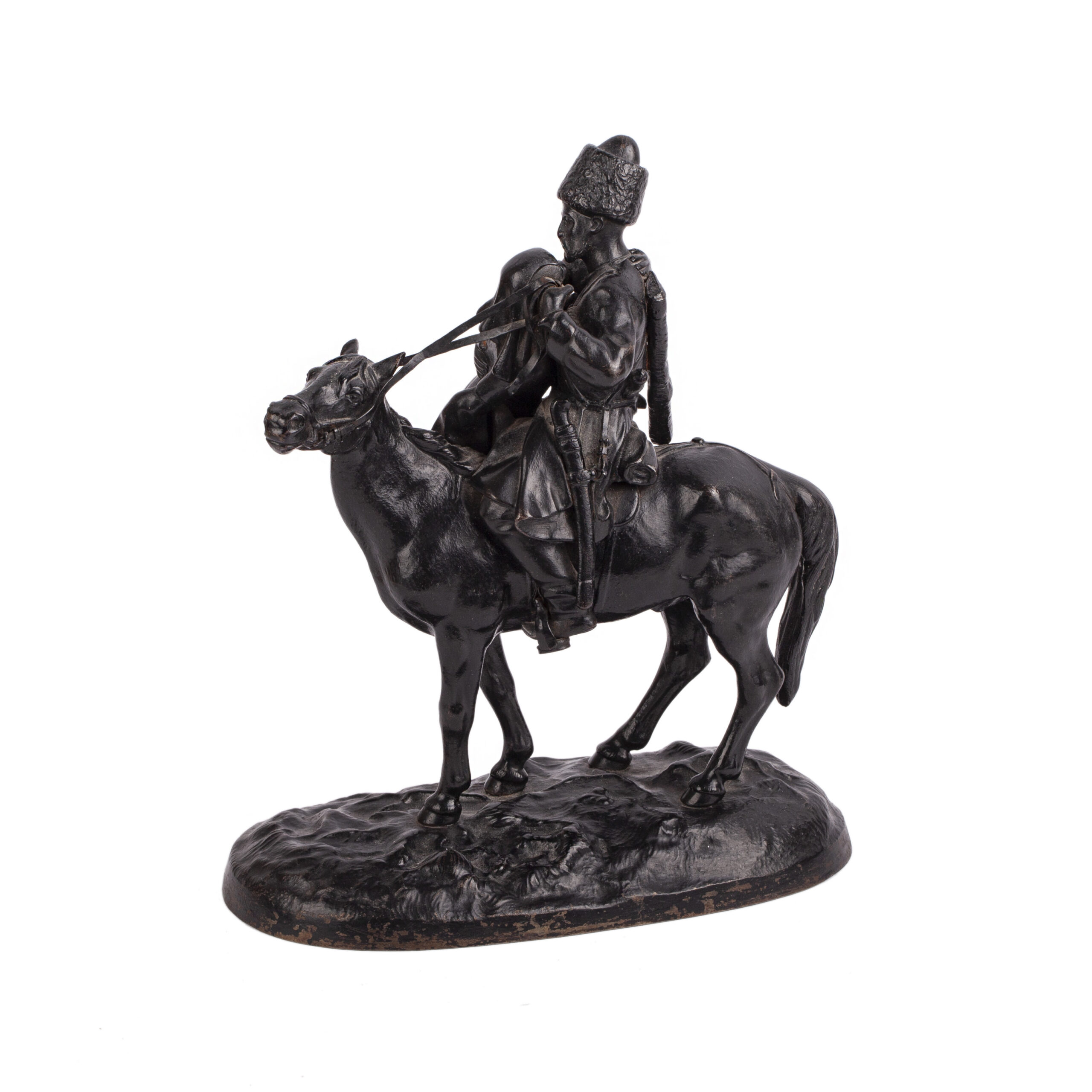
Lot 0026
Evgeny Lanceray. Kasli Cast-Iron Sculpture “Farewell of a Cossack to a Cossack Woman”
Estimate: 700-800€Farewell of a Cossack and a Cossack Woman
Ural, Kasli Iron Foundry, after a model by Evgeny Lanceray (1848–1886)
Cast iron, casting, painting
Dated 1901 (Tsarist period)
Height: 21.5 cm; base length: 18 cmThis sculptural composition depicts a poignant farewell scene: a Cossack, seated on horseback with a rifle in a case slung over his back, embraces his wife who rises toward his stirrup. The subject reflects the traditional role of the Cossacks, a privileged military estate in the Russian Empire from the 18th to early 20th centuries, who served as a stronghold of autocracy and were often mobilized in wartime.
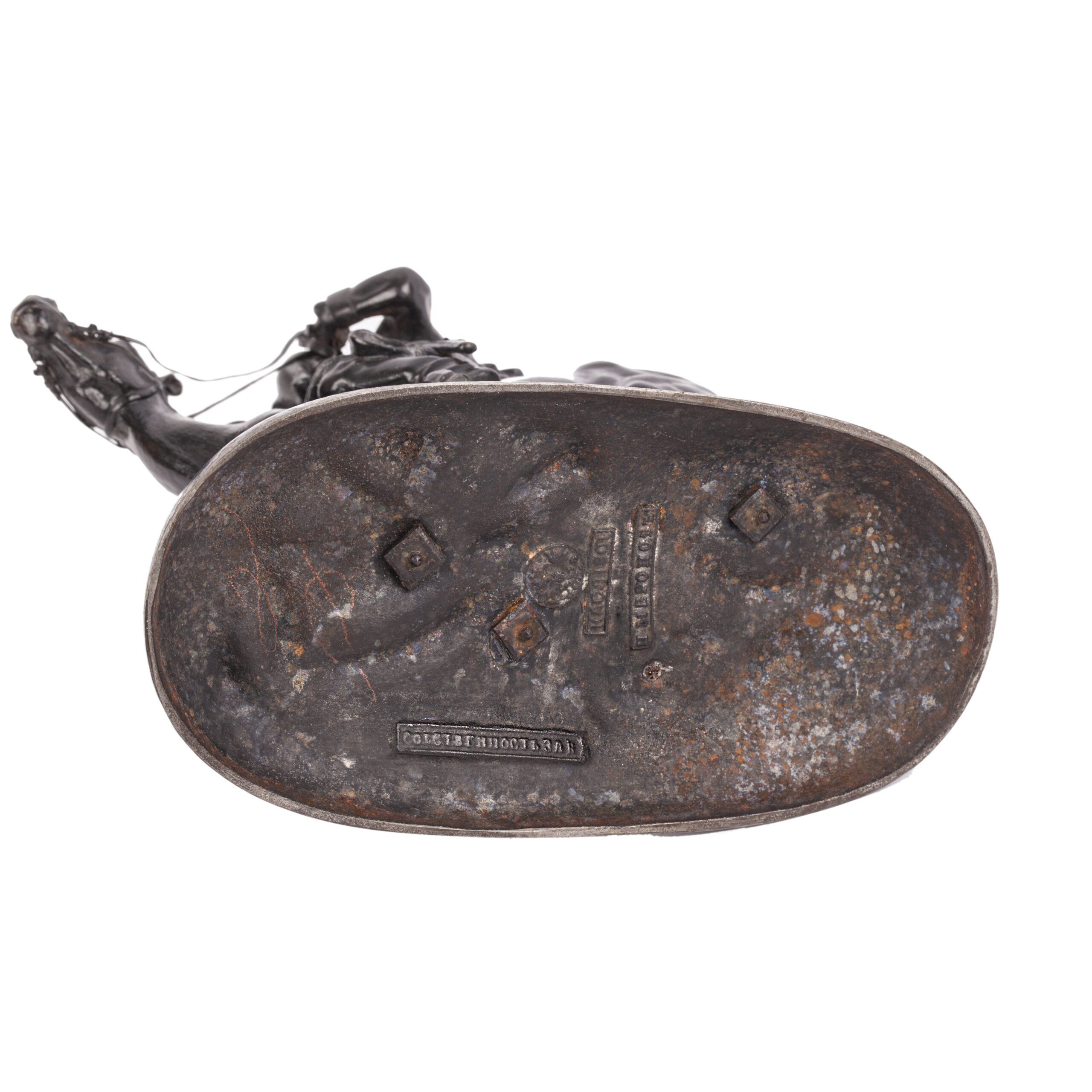
The model was created by Evgeny Alexandrovich Lanceray in 1878, inspired by his impressions of the Don Cossack Host. The Kasli Iron Foundry, one of Russia’s most renowned centers of artistic iron casting, reproduced this piece in the early 20th century, as evidenced by the factory marks preserved on the underside and base.
Evgeny Alexandrovich Lanceray (1848–1886)
A Russian sculptor and animalier, Lanceray was an honorary member of the Imperial Academy of Arts and a master of small-scale narrative sculpture. His works, often centered on historical, ethnographic, folkloric, and everyday themes, brought international recognition to Russian sculpture. He participated in numerous World’s Fairs and created not only bronze figures and groups but also decorative and applied art objects. His compositions were cast at all the leading foundries of his time, including Chopin, Shtange, Moran, Berto, and the Ural iron foundries.Starting price: 500€
Estimate: 700-800€
Hammer Price: 750 € -
Lot 0025
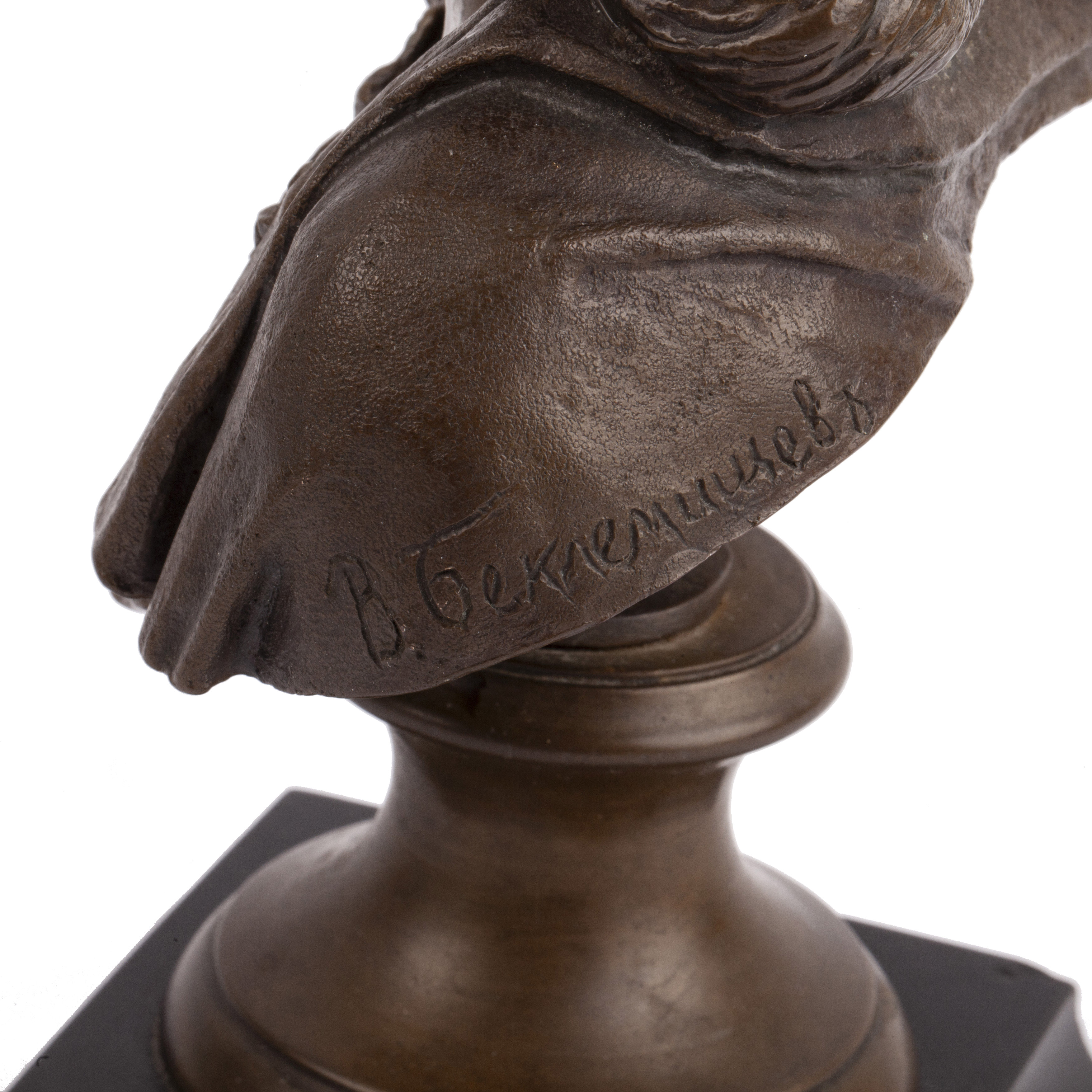
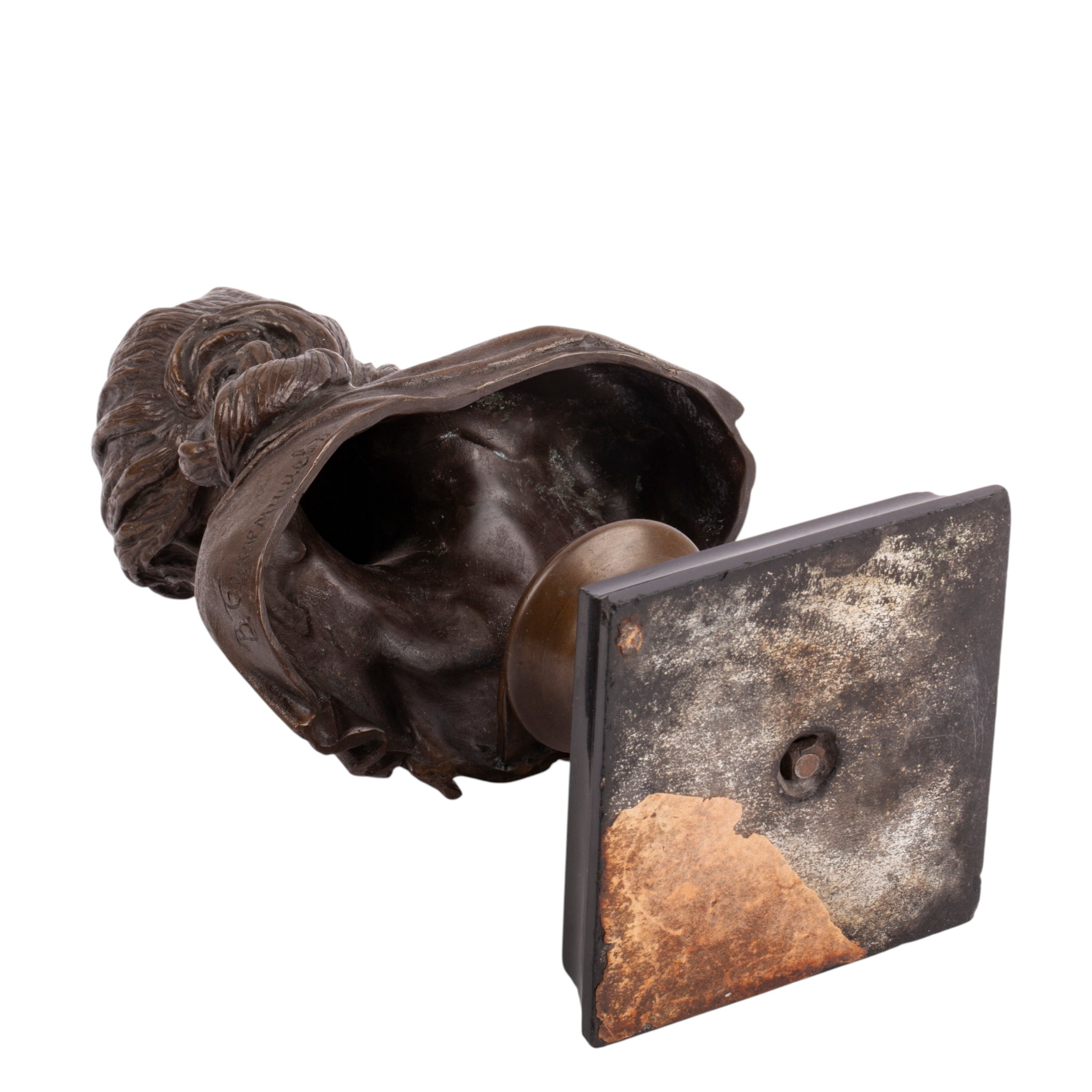
VLADIMIR BEKLEMISHEV (1861–1920), FEMALE BUST
Estimate: 7000-9000€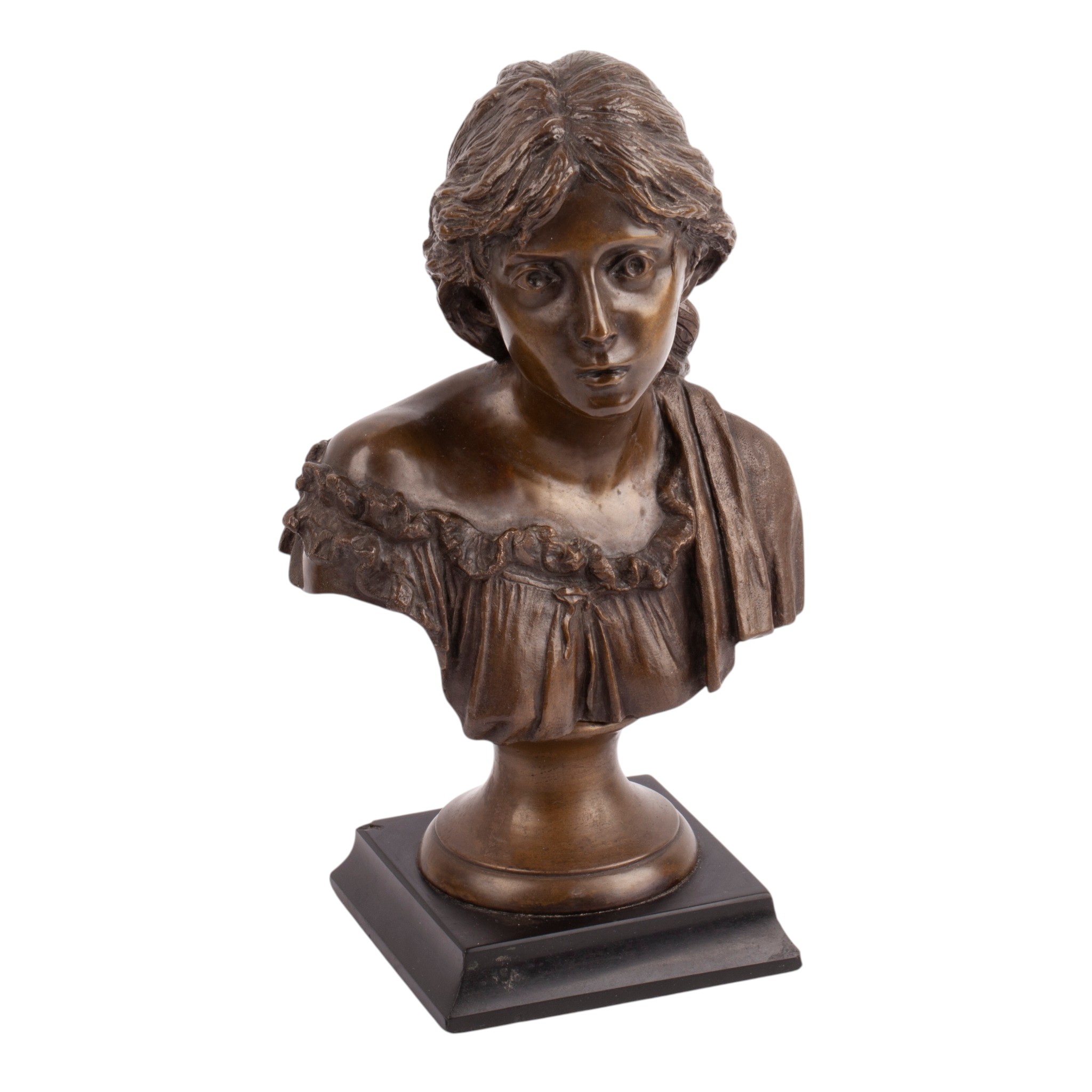
Lot 0025
VLADIMIR BEKLEMISHEV (1861–1920), FEMALE BUST
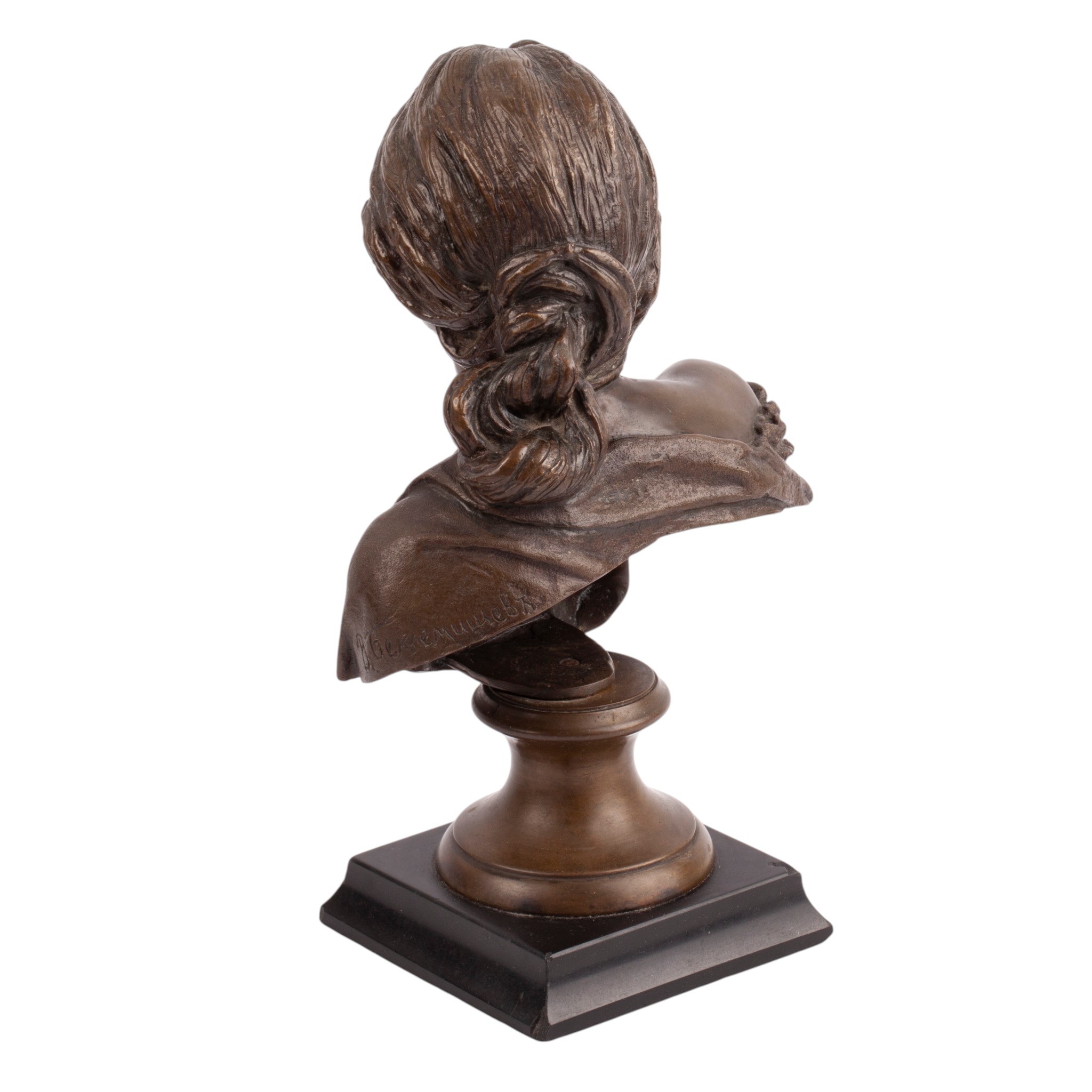
Estimate: 7000-9000€A Russian Female Bust from the Composition How Beautiful, How Fresh Were the Roses… VLADIMIR BEKLEMISHEV (1861-1920)
Bronze, cast and patinated; mounted on a shaped square base. Height with a stand: 24 cm.
After the model by Vladimir Beklemishev, late 19th to early 20th century.
Signed in Cyrillic on the reverse: V. Beklemishev.
A sensitively modeled bronze bust of a young woman, shown with her head slightly inclined and her gaze lifted in an expression of quiet reverie. Her softly parted lips and wide, luminous eyes lend the figure an inward, emotional presence, while the loose treatment of the hair, gathered at the nape, and the falling drapery across one shoulder reinforce the intimate, lyrical character of the image. The low neckline of her dress, edged with a ruffled border, introduces a note of informal naturalism that is characteristic of late Russian academic sculpture when it turns toward genre sentiment.
The bust derives from Vladimir Beklemishev’s famouse composition How Beautiful, How Fresh Were the Roses…, a work associated with the melancholy poetic line popularized by Ivan Turgenev in his prose poem of the same title. The phrase, itself originating in the poem Roses by Ivan Myatlev, became in Russian culture a symbol of tender remembrance and sorrow for vanished youth, beauty, and happiness. Beklemishev translated this literary theme into sculpture with particular refinement, creating a female image poised between portrait, allegory, and emotional genre scene. Beklemishev studied at the Imperial Academy of Arts in St Petersburg from 1878 to 1887 under N. A. Laveretsky and A. R. von Bock, receiving numerous academic distinctions, culminating in the Grand Gold Medal in 1887 for The Entombment. That same year he was awarded the title of Class Artist of the First Degree, briefly taught at the Drawing School of the Society for the Encouragement of the Arts, and was then sent abroad as an Academy pensioner. In 1892 he became adjunct professor and was elected Academician for works including The Fugitive Slave and Christian Woman of the Early Centuries.
From 1894 he served as professor and head of the sculpture studio at the Higher Art School of the Imperial Academy, and was rector in 1900-1903 and 1906-1911. Among his pupils were A. S. Golubkina, S. T. Konenkov, M. G. Manizer, and L. V. Sherwood. One of the most sought-after Russian sculptors of his day, Beklemishev also served in 1917 as commissioner for the protection of monuments of antiquity and art in Petrograd.Starting price: 6000€
Estimate: 7000-9000€
Hammer Price: 9 000 € -
Lot 0022
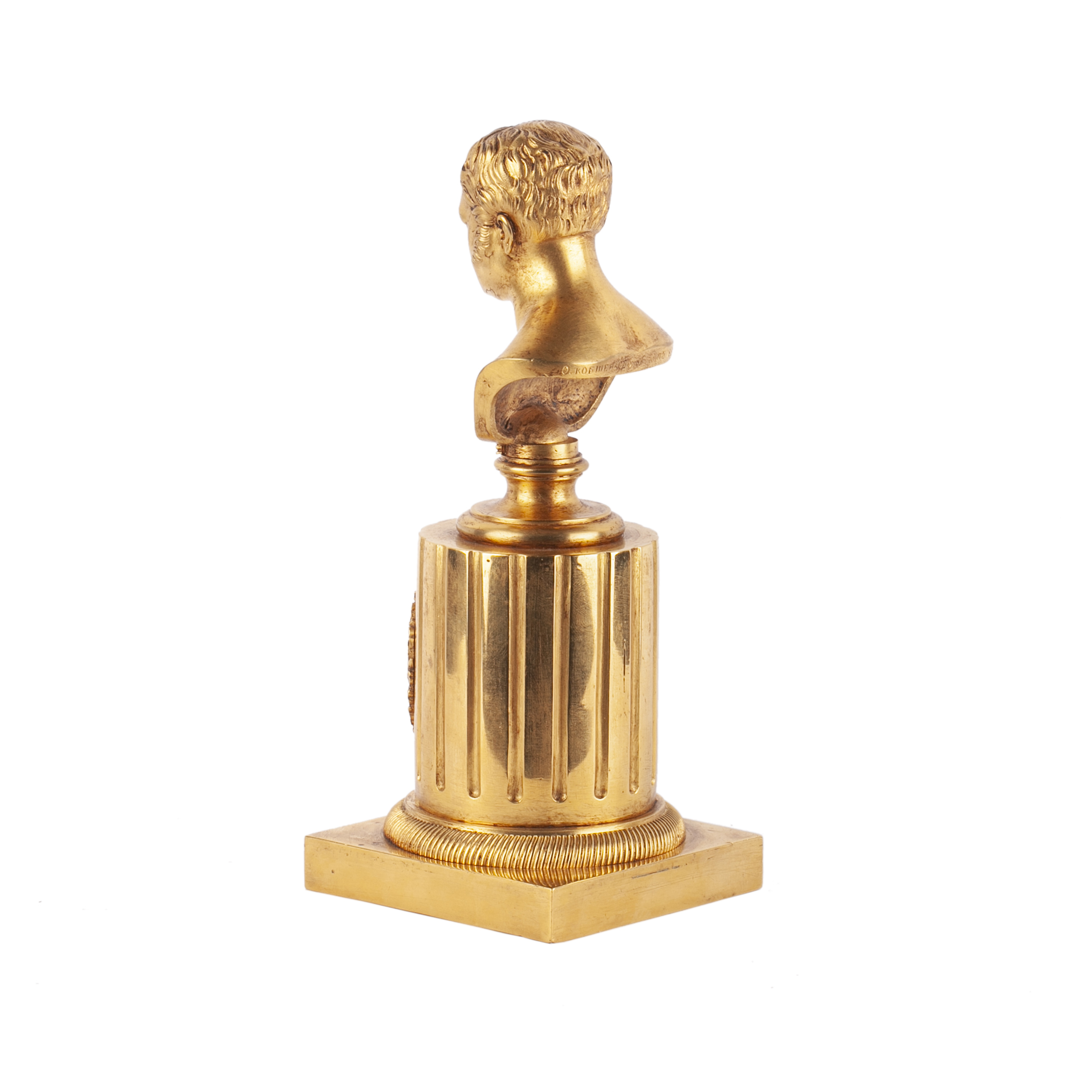
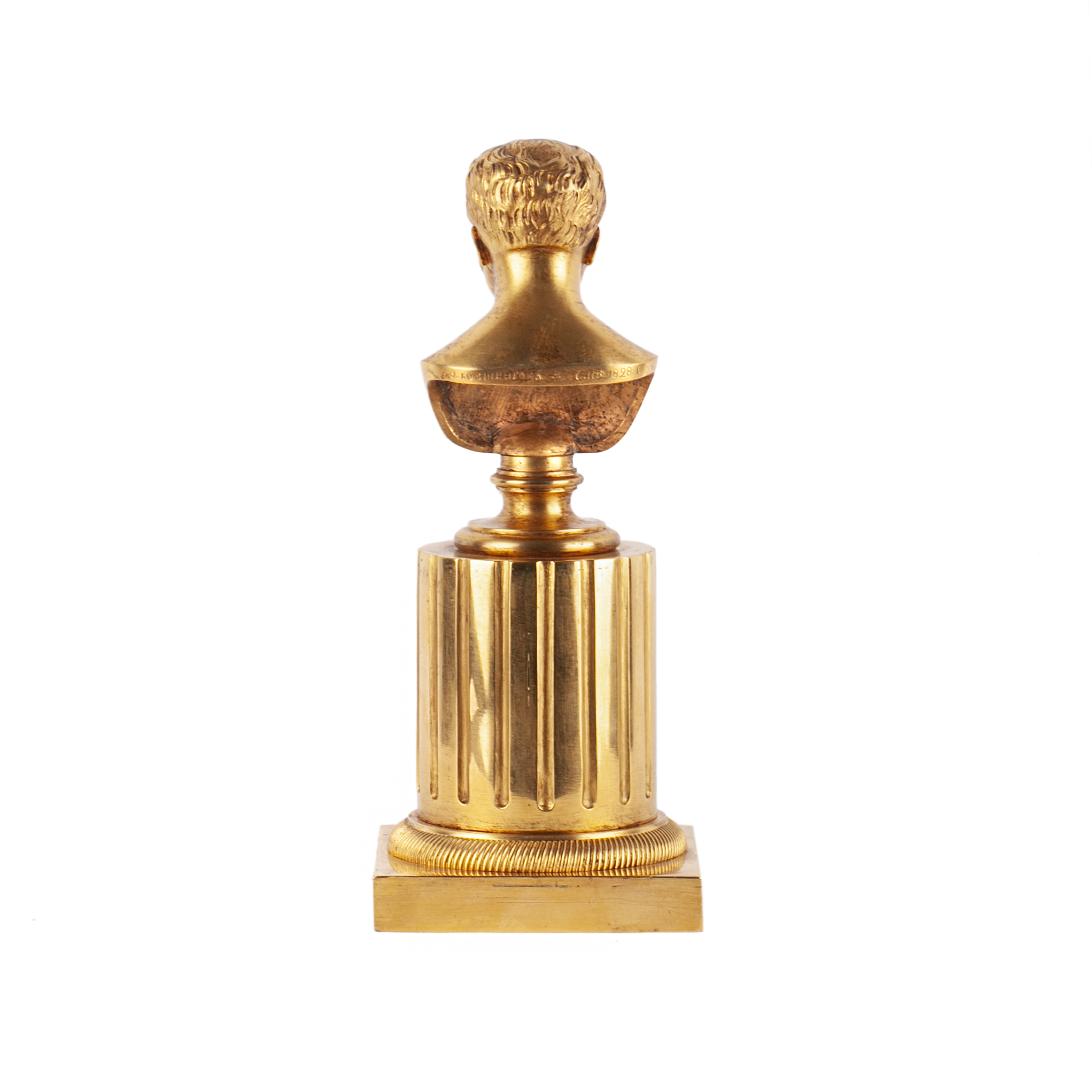
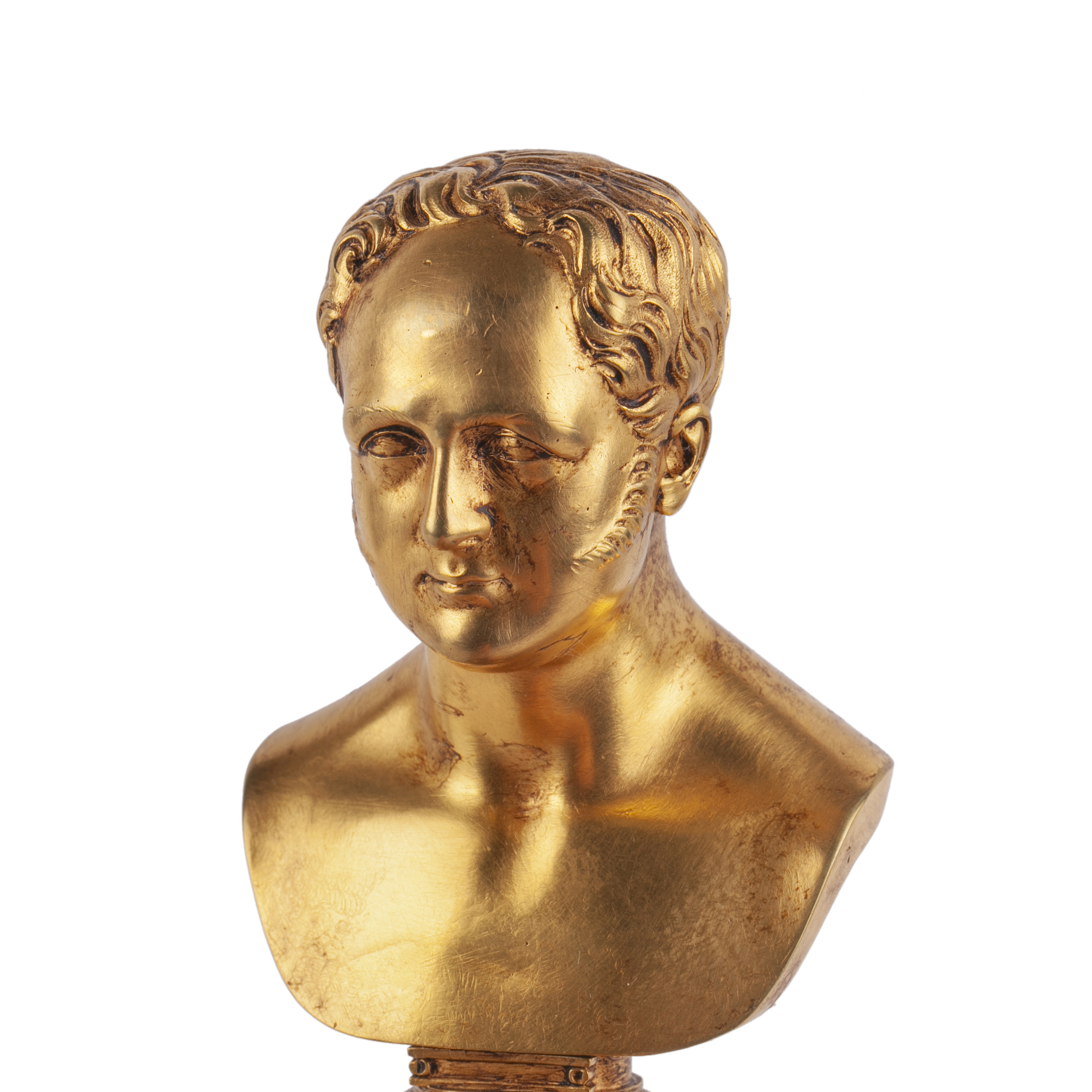
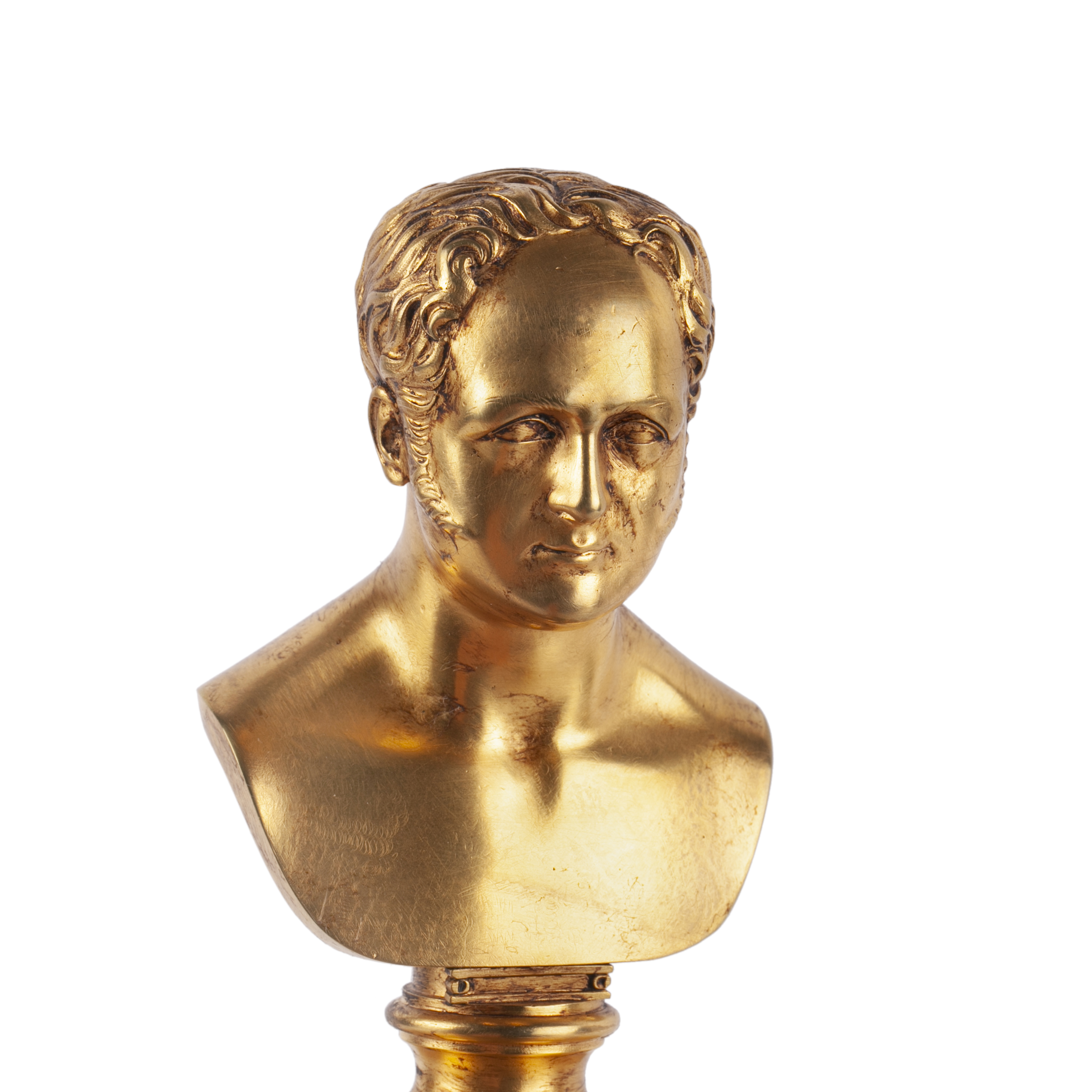
Fedor Ivanovich Kovshenkov – Bronze Bust of Emperor Alexander I, St. Petersburg, 1827
Estimate: 2500-3000€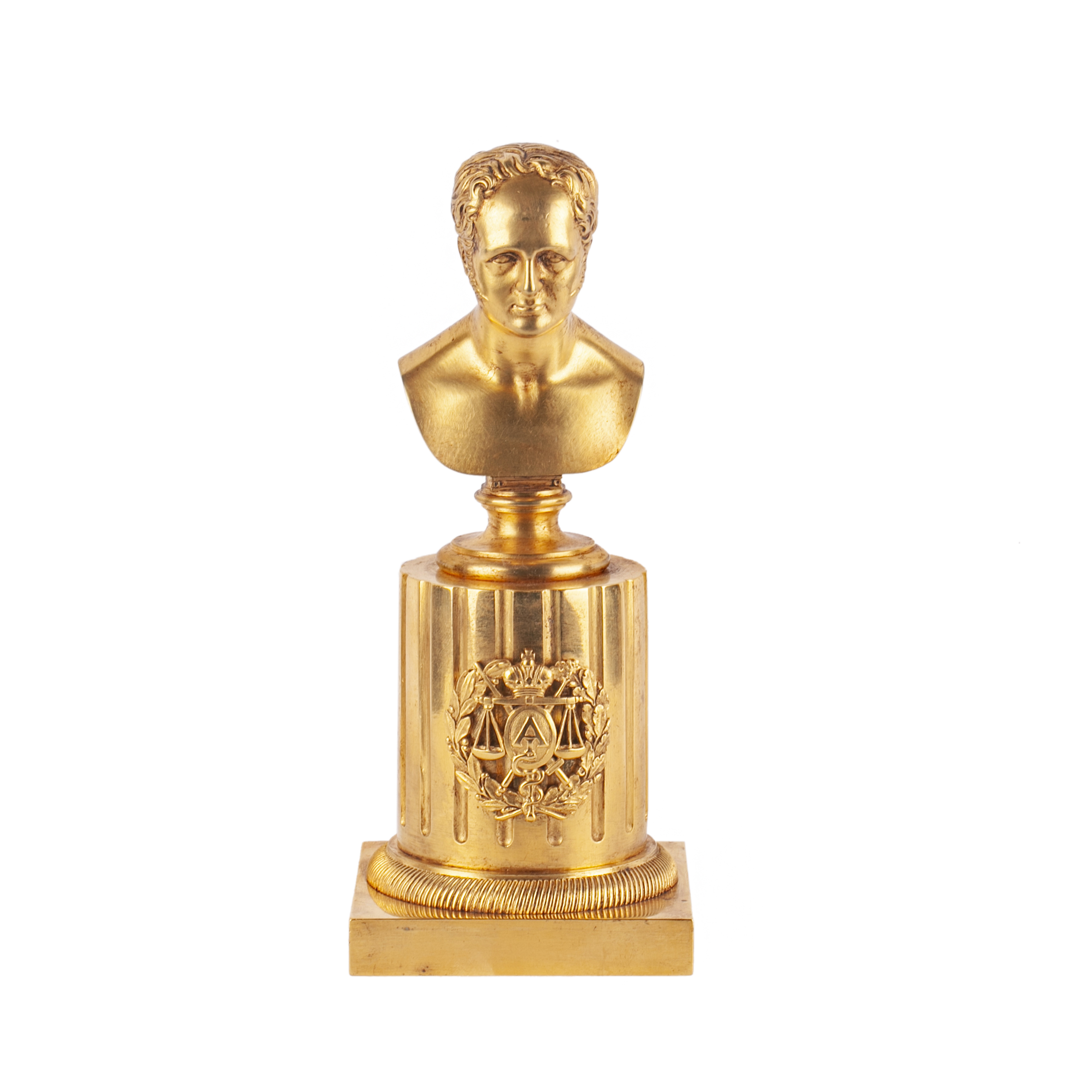
Lot 0022
Fedor Ivanovich Kovshenkov – Bronze Bust of Emperor Alexander I, St. Petersburg, 1827
Estimate: 2500-3000€Bust of Emperor Alexander I
Russian Empire, St. Petersburg, 1827
Author: Fedor Ivanovich Kovshenkov (1785–1850)
Bronze, casting, patination
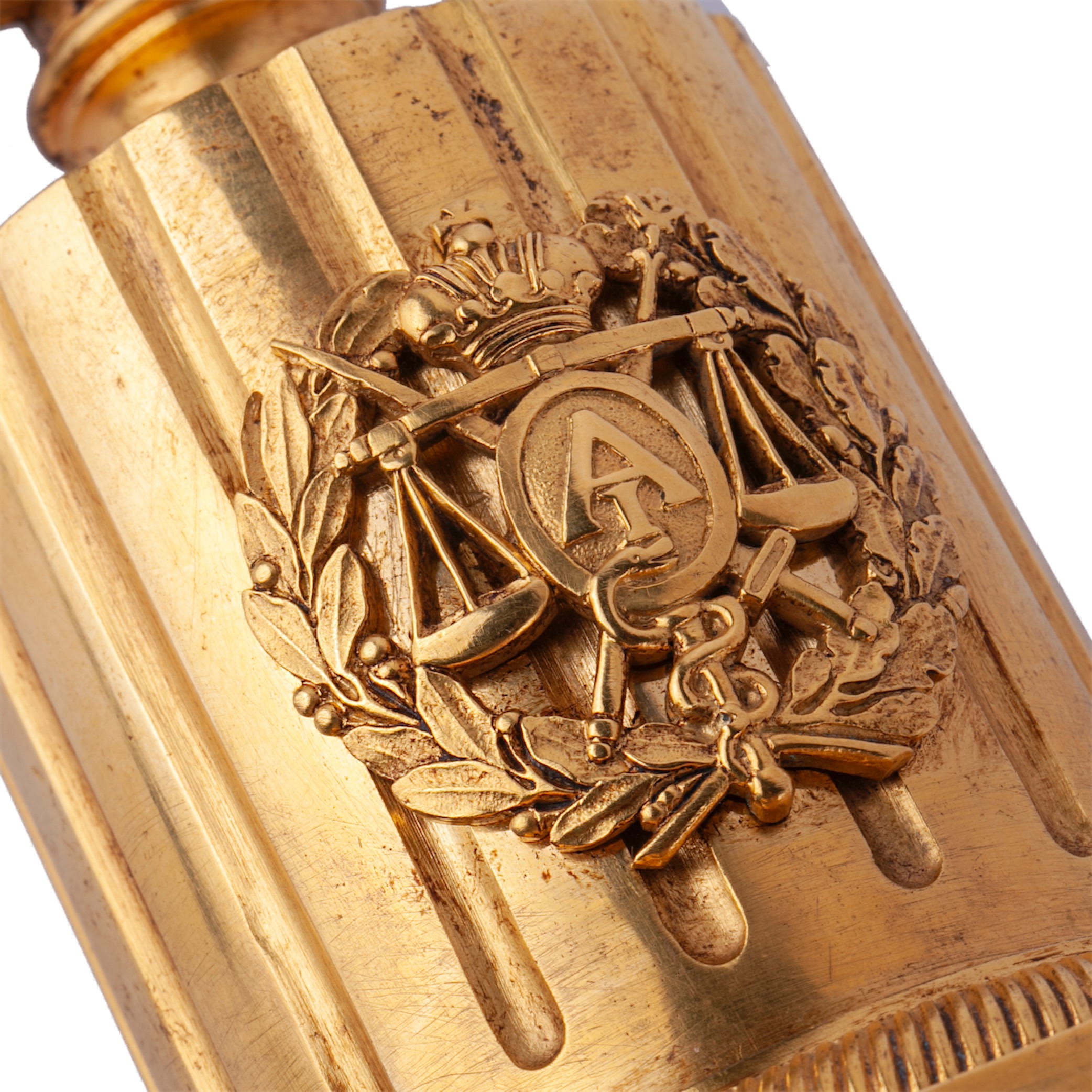
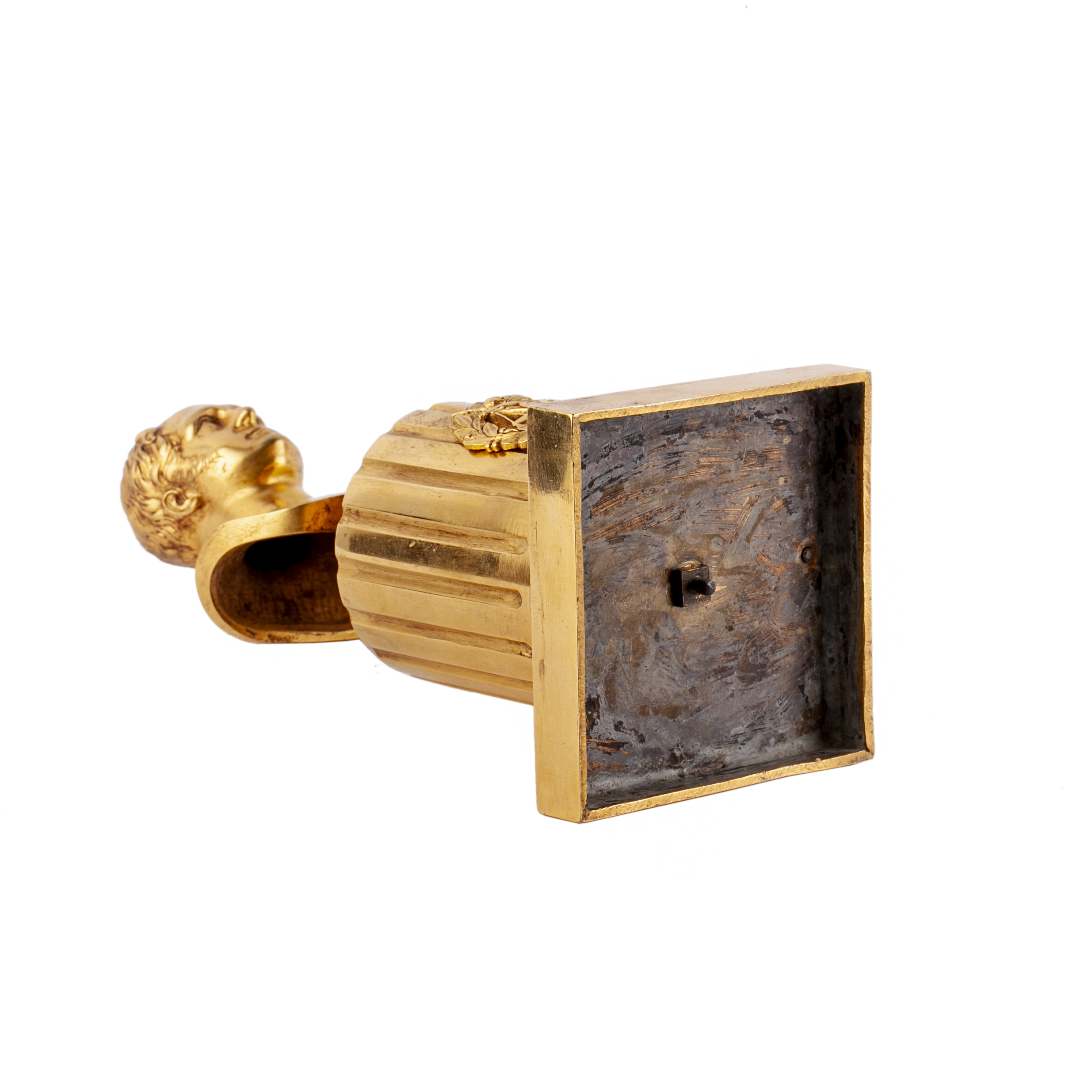
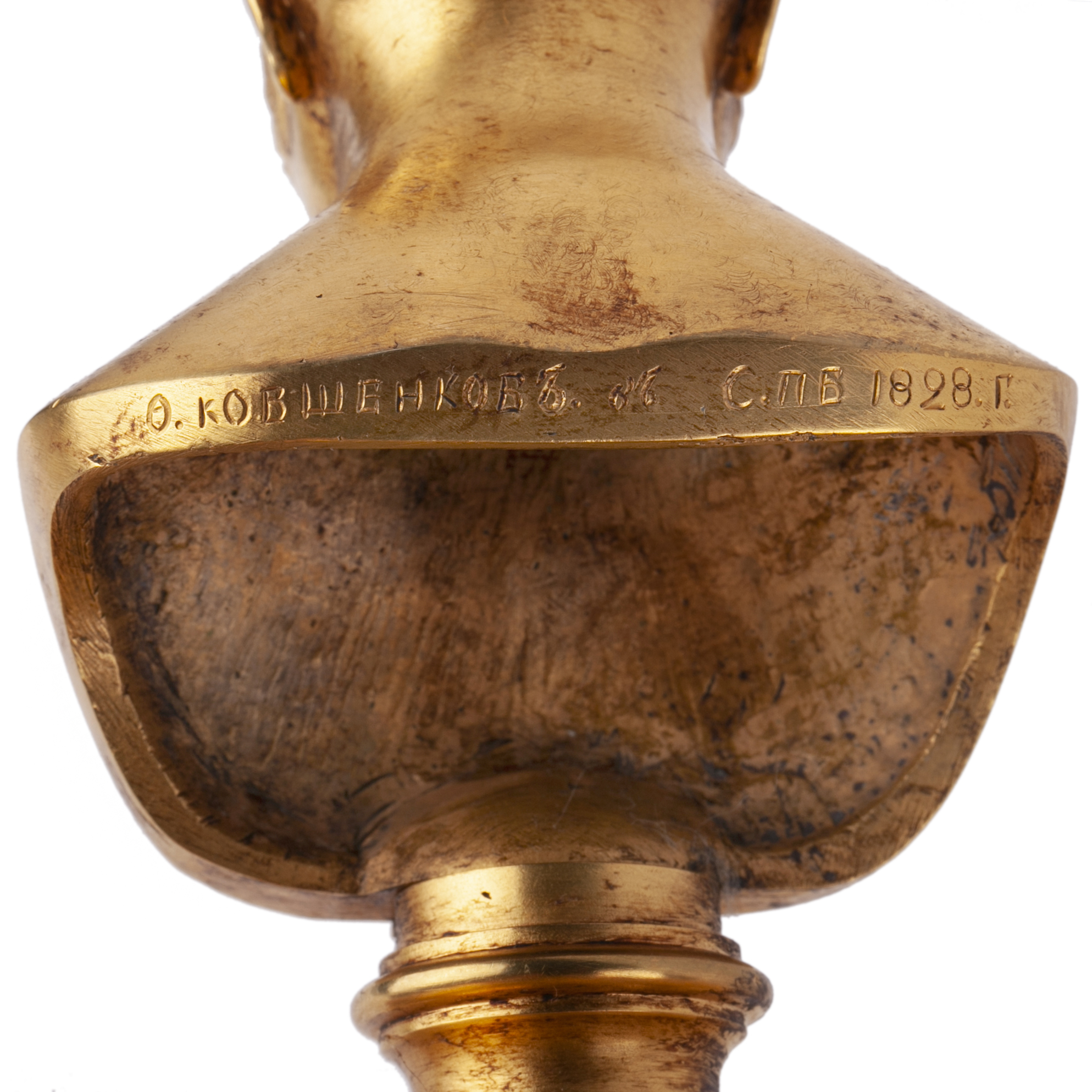
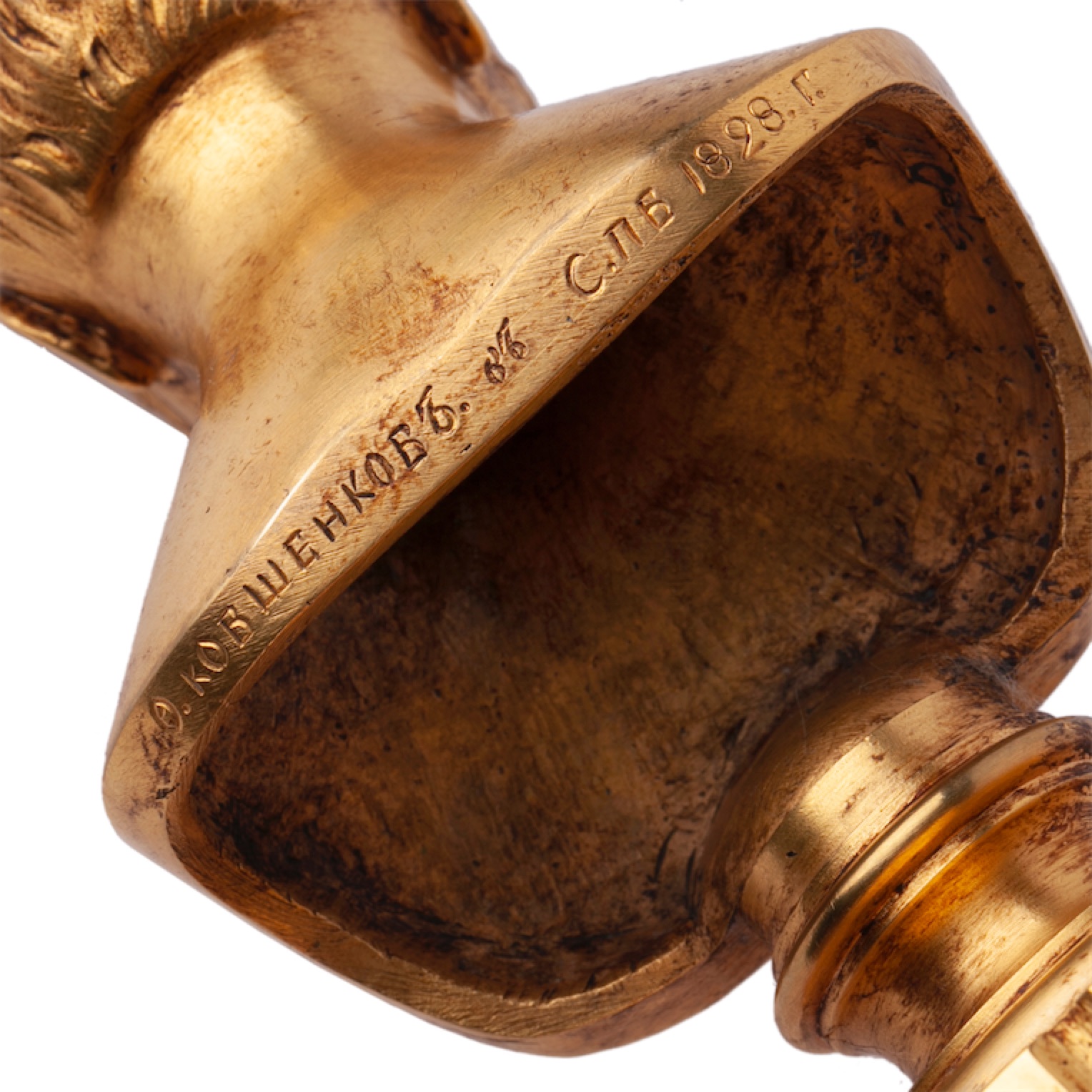
Dimensions: 19.5 x 8.5 x 8.5 cm.This finely executed bust of Emperor Alexander I was created by Fedor Kovshenkov, a master bronzeworker who had once been a serf. In 1822, the Emperor himself recognized Kovshenkov’s talent and freed him from serfdom, appointing him as a bronze master during the construction of the Kazan Cathedral.
In 1826, as an expression of gratitude, Kovshenkov produced his first bust of Alexander I, and he returned to this theme multiple times throughout his career. Several examples in bronze and cast iron are preserved today in the State Russian Museum, alongside his busts of Emperor Nicholas I and Grand Duke Mikhail Pavlovich. A comparable piece is held in the State Literary-Memorial and Natural Museum-Reserve of Alexander Pushkin “Boldino” in the Nizhny Novgorod region.
Fedor Ivanovich Kovshenkov (1785–1850)
Originally a serf, Kovshenkov’s exceptional skill in bronze chasing brought him to the attention of Emperor Alexander I, who liberated him. He went on to create portrait busts of members of the imperial family and other distinguished figures, establishing his reputation within the St. Petersburg artistic milieu of the first half of the 19th century.Starting price: 2000€
Estimate: 2500-3000€
Hammer Price: Not sold -
Lot 0023
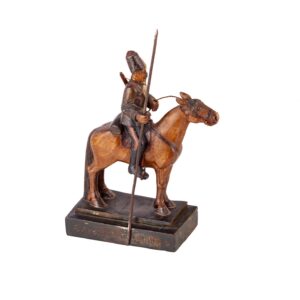
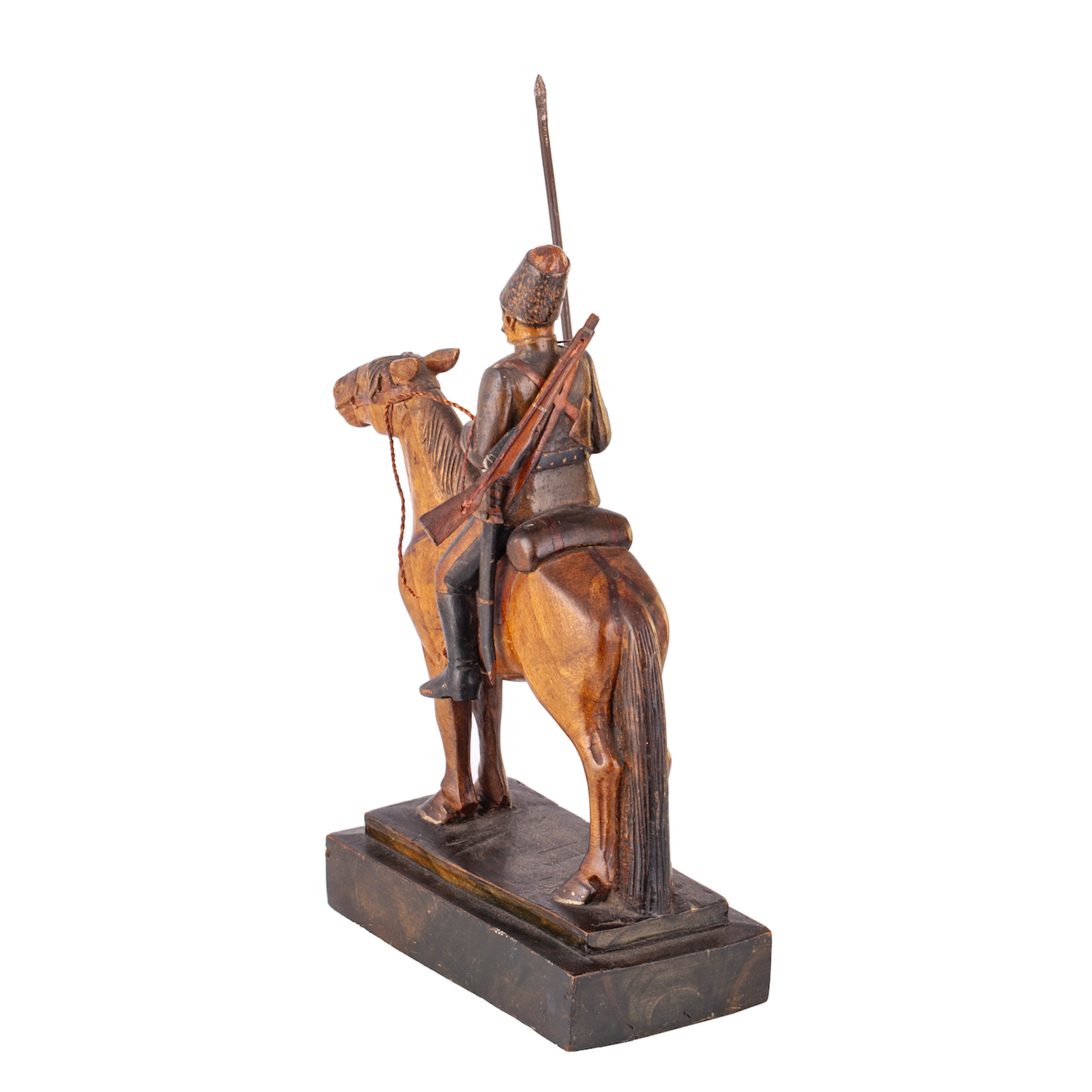
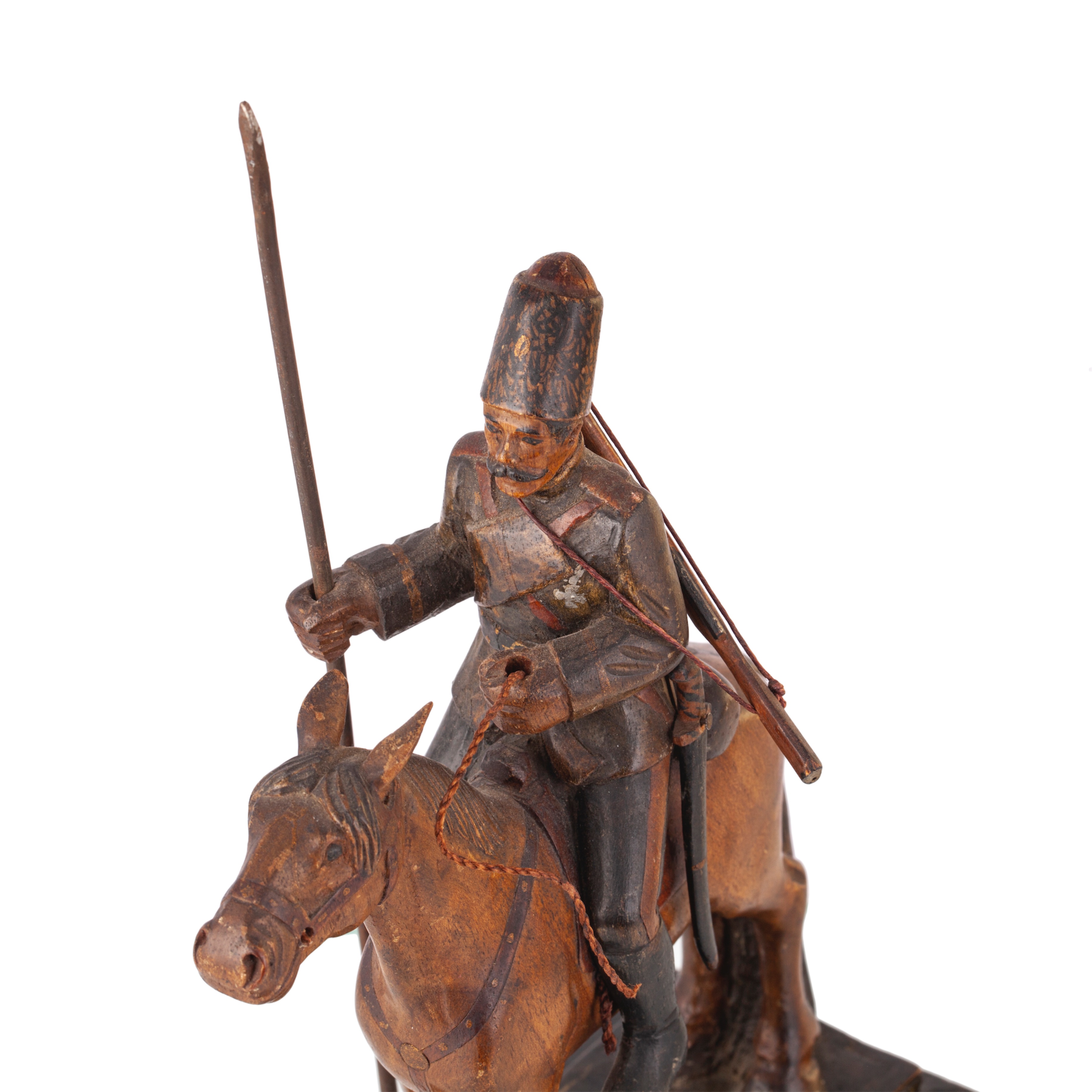
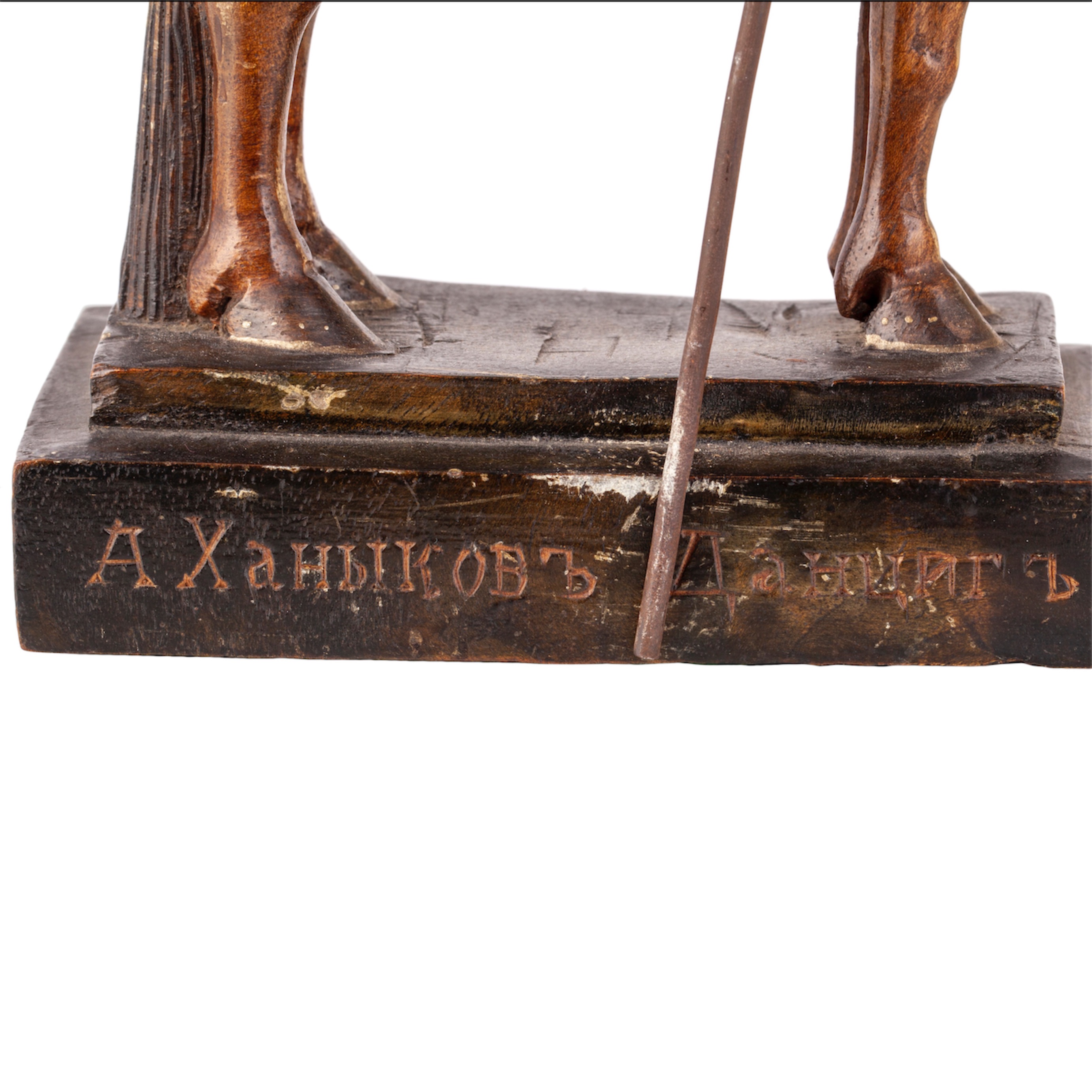
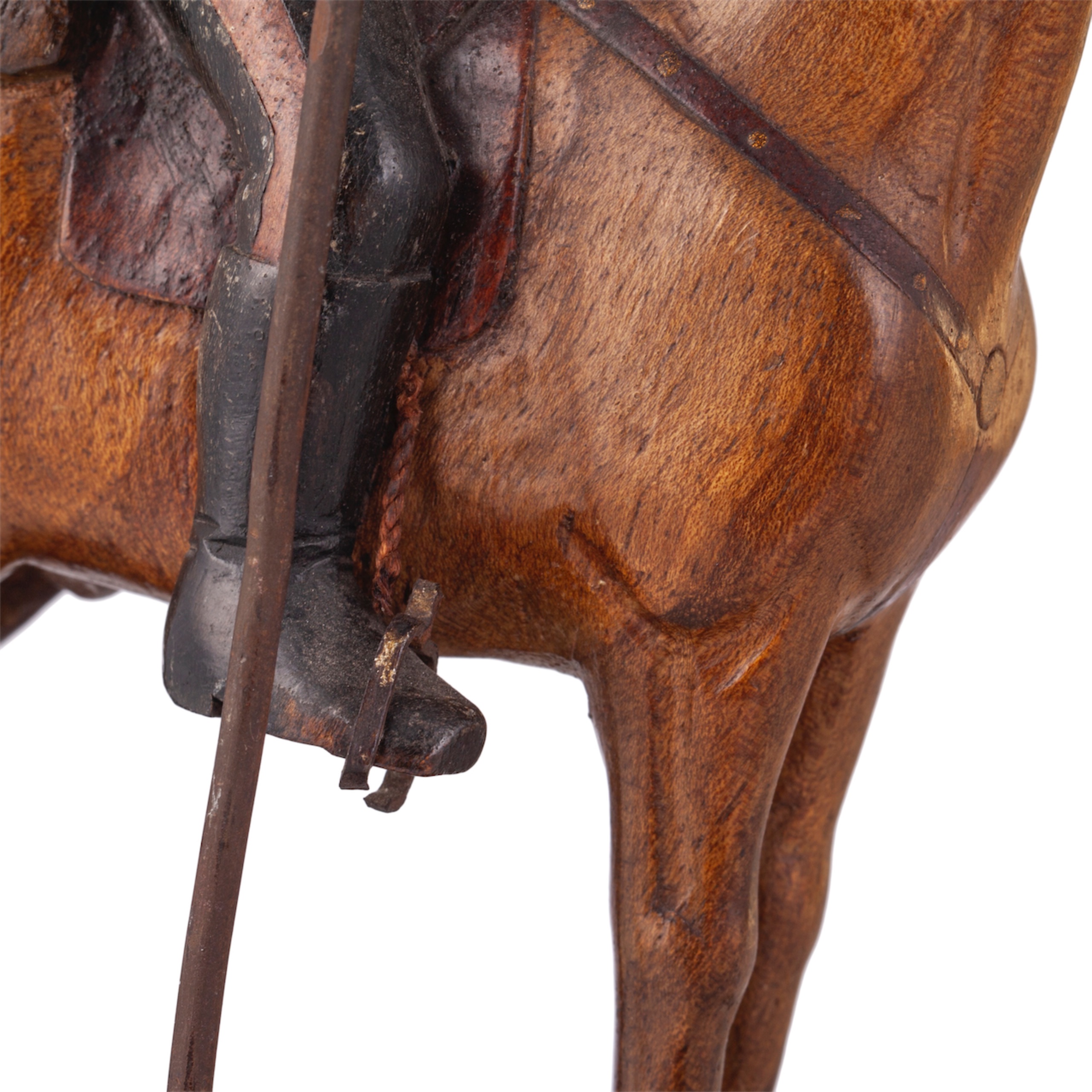
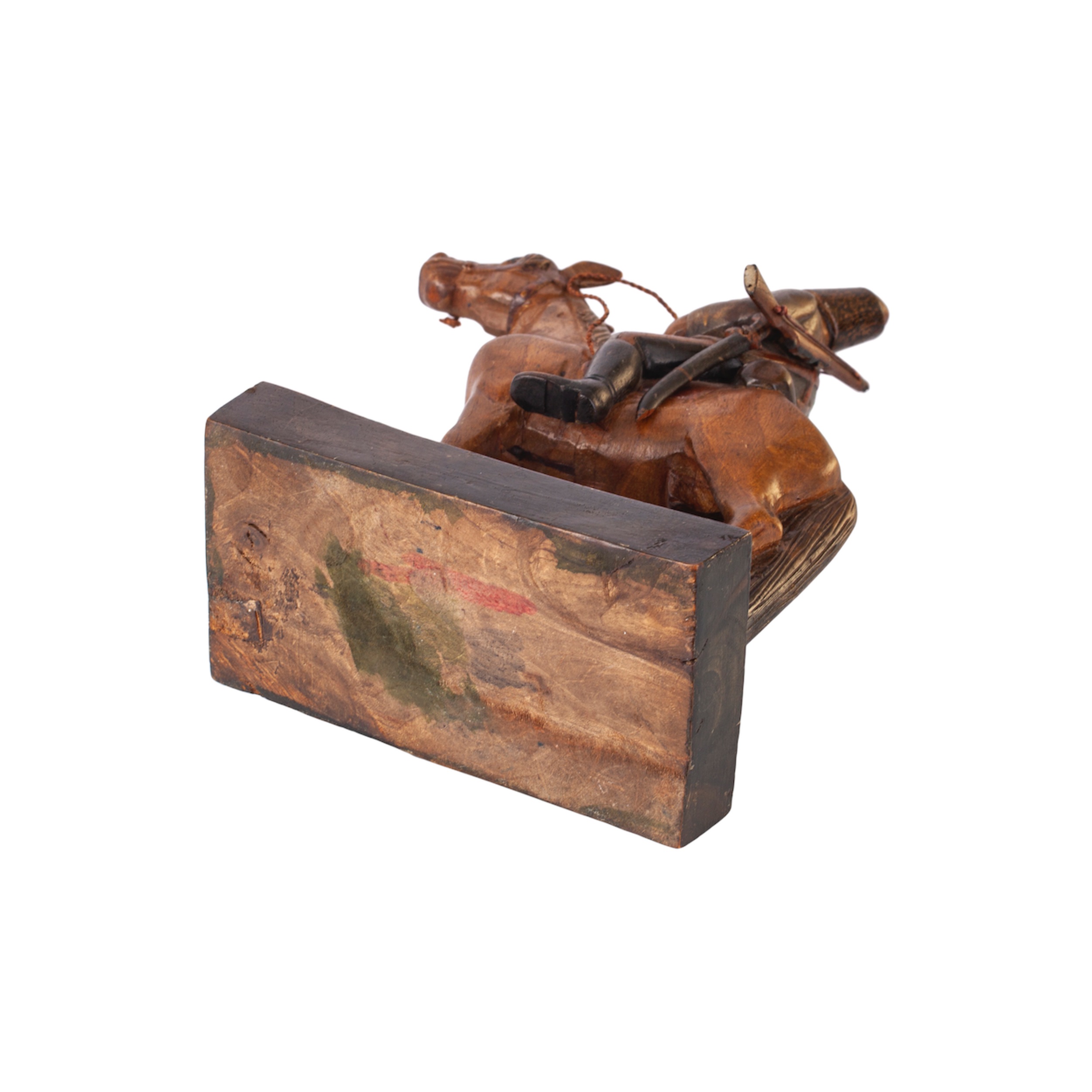
Carved Wooden Cossack on Horseback, Danzig, inscribed A. Khanykov
Estimate: 500-600€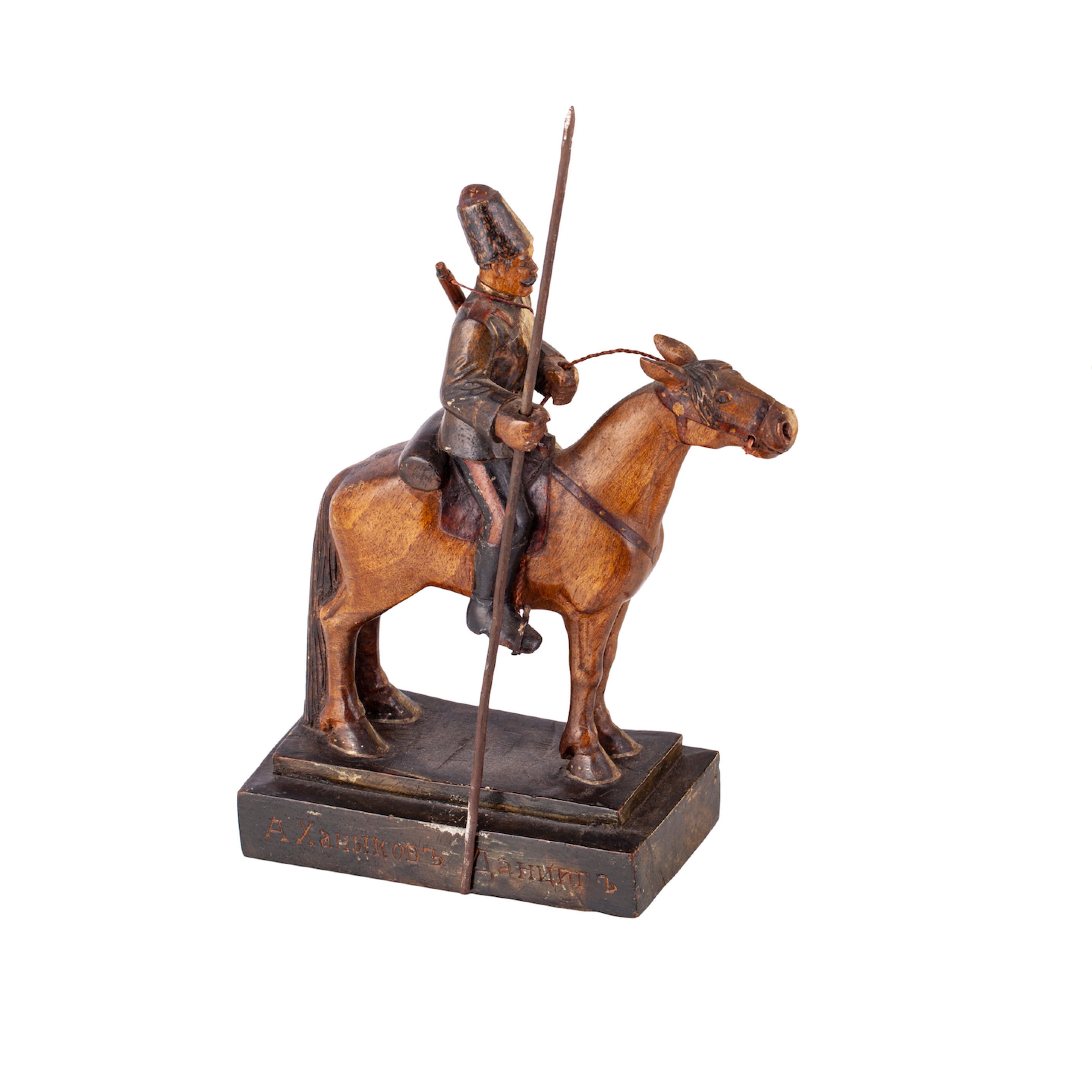
Lot 0023
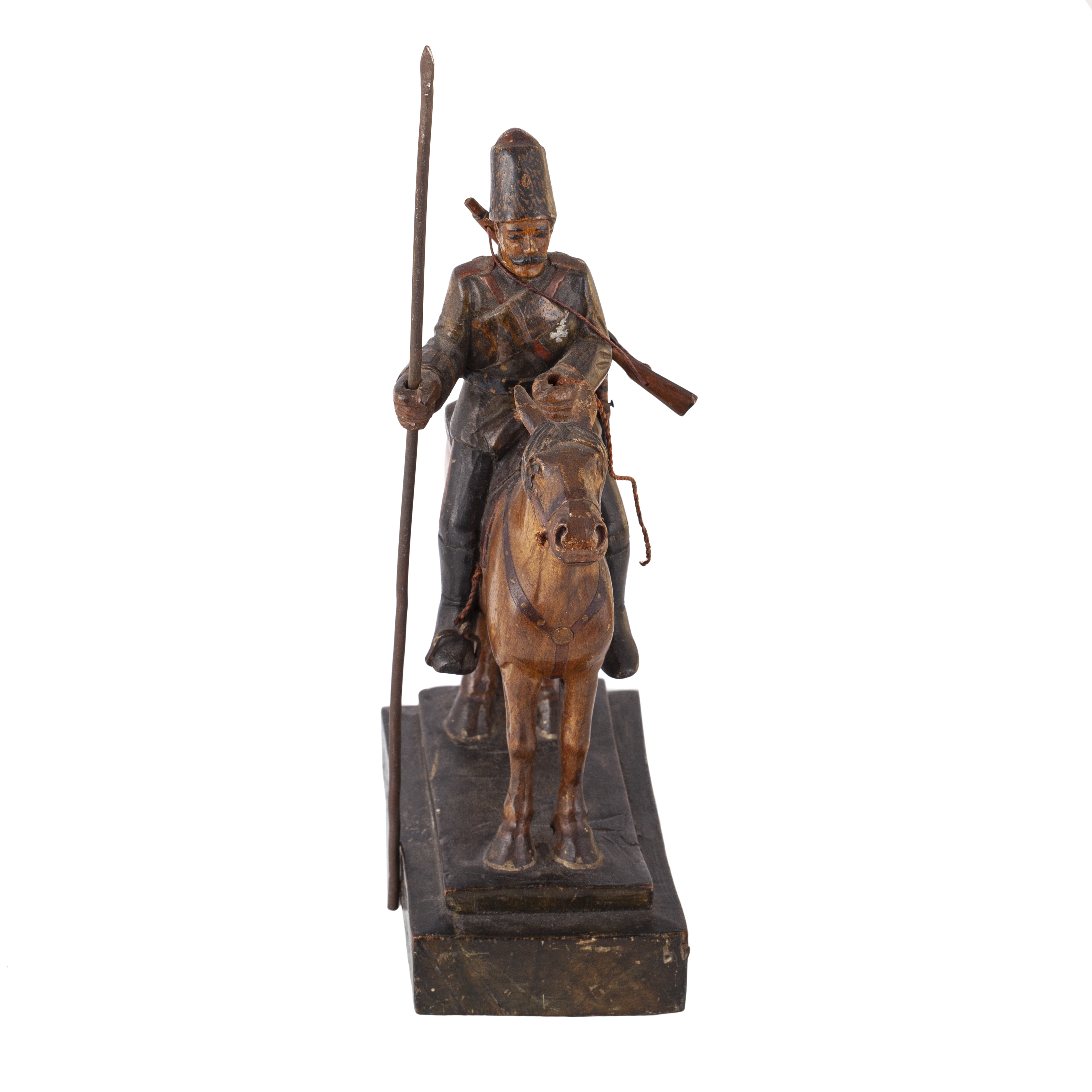
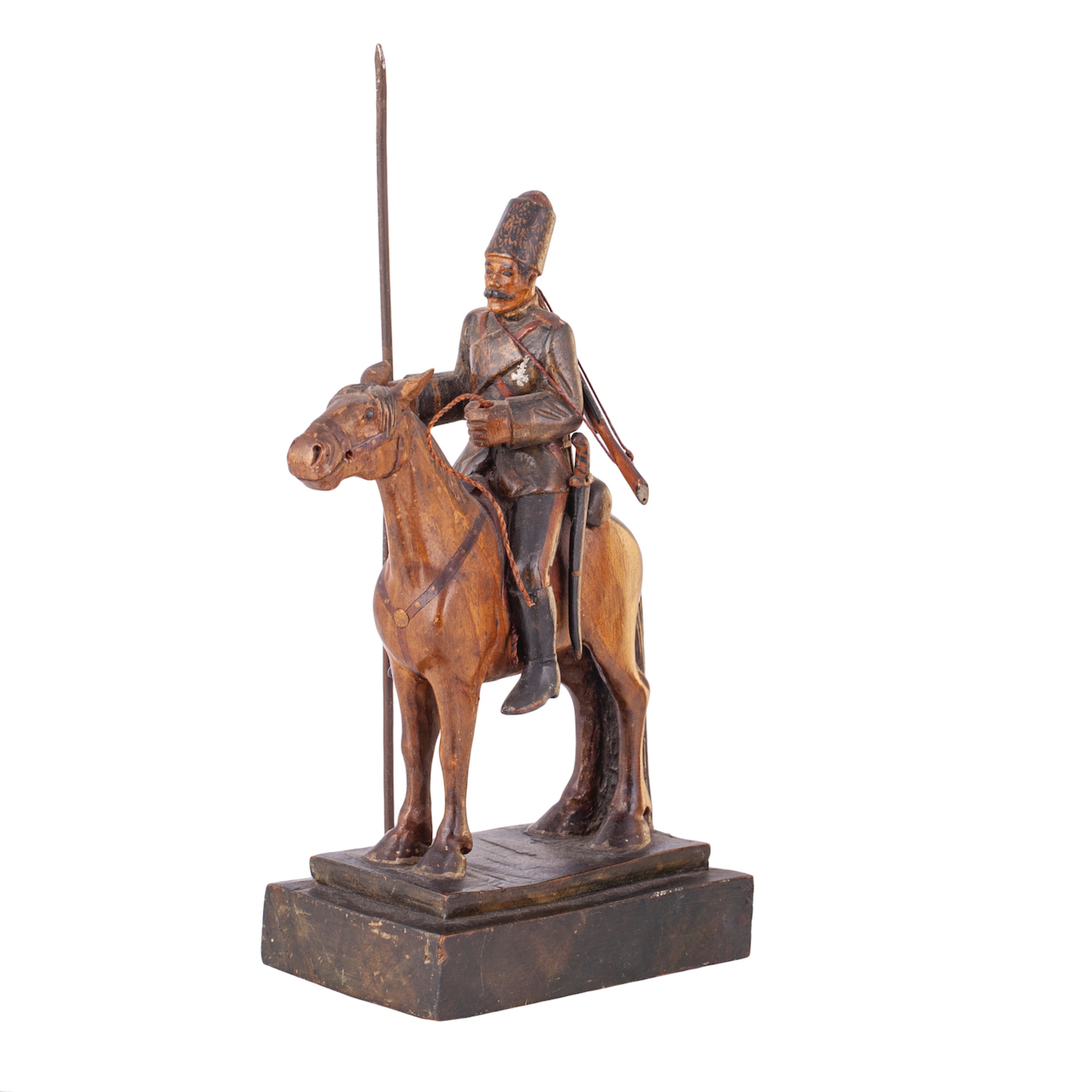
Carved Wooden Cossack on Horseback, Danzig, inscribed A. Khanykov
Estimate: 500-600€Cossack on Horseback
Russia (Danzig [Gdańsk], then part of the Russian Empire), late 19th century
Wood, metal
Dimensions: 21.5 x 16 x 7 cm
Inscribed: “А. Ханыковъ. Данцигъ”A finely carved wooden composition depicting a Cossack horseman, holding a lance and seated on a spirited mount. The sculpture bears a dedication to Alexander Vladimirovich Khanykov (1825–1853) — a noted Russian revolutionary and member of the Petrashevsky Circle, an intellectual and reformist movement in mid-19th century St. Petersburg.
Khanykov, a volunteer student at the St. Petersburg University, was an active participant in the philosophical and political circles of Mikhail Petrashevsky and Nikolai Kashkin. A passionate advocate of Charles Fourier’s socialist ideas, Khanykov delivered a public speech in memory of Fourier on April 7, 1849. That same year, he was arrested in connection with the Petrashevsky case, sentenced to death (later commuted to exile as a private in the Orenburg line battalions).
In exile, Khanykov initiated a secret Russo–Polish–Ukrainian circle, which likely included the poet Taras Shevchenko, also serving in Orenburg. Members of the group held political discussions, wrote satirical pamphlets against the imperial government, and circulated banned literature on economics, geography, and history. Khanykov also compiled a clandestine manuscript on world history praising popular sovereignty and the ideals of the French Revolution of 1789 and 1848, expressing sympathy for Christian socialism.
This wooden sculpture — created in Danzig (now Gdańsk) — appears to be a commemorative or symbolic representation of Khanykov’s revolutionary courage and his association with the frontier and Cossack imagery.
Starting price: 400€
Estimate: 500-600€
Hammer Price: Not sold